
The 80,000 Hours Podcast
Chapters
Rob argues that holding AI companies to account is becoming ever more important, and that the modest effort put into it so far already has an impressive track record.
Read the chapter- It takes staff who object loudly and sometimes quit, investigative journalists, well-informed people who explain what the companies are doing, and activists who make sure misconduct gets attention.
- It works, Rob says, because many people at the companies sincerely want to do the right thing, and the companies fear that staff will decide they work for the bad guys, making it harder to retain and hire talent.
- Events are moving so fast that there often won't be time to wait for governments or legislation, so we need the ability to bring public and expert outrage down on a company immediately.
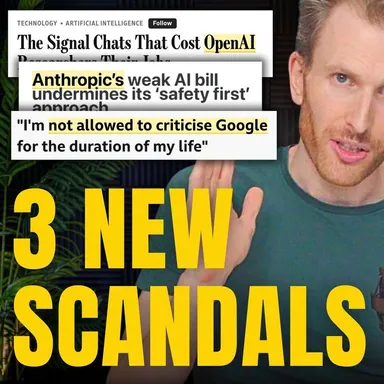
- In the past few weeks Anthropic, OpenAI and Google DeepMind each had a serious scandal, and Rob promises to go through all three.
The bill Anthropic quietly pushed is fundamentally misguided, Rob argues: its brake looks designed to be very hard to pull, and it would strip states of the power to halt a dangerous model.
Read the chapter- Training could be halted only by the Commerce Secretary, through a single federal court in DC, after proving an imminent risk and that nothing less restrictive would work, and the order would expire after 45 days.
- The draft would bar states from requiring published safety plans, independent evaluations and incident reports, retroactively gutting the flagship AI laws of California, Illinois and New York.
- The leaked text lists the states' power to halt a model but doesn't connect that item to the preemption section, and Rob can't see why it's there unless the plan is to take that power away.
- Rob understands why, after its fights with the Trump administration, Anthropic doesn't want to give the White House broad discretion, but then, he says, the natural answer is to leave the power with states or at least let state attorneys general go to the DC court.
- Dario put it down to communication, and Anthropic says it will rewrite the preemption language, but it still doesn't seem to leave states any way to halt training themselves, so Rob urges Anthropic staff to speak up.
Rob thinks firing Tomek Korbak, Mikita Balesni and Jasmine Wang was a mistake even by OpenAI leadership's own lights, since the evidence of a leak, as far as anyone knows, ranges from weak to nonexistent.
Read the chapter- According to The Wall Street Journal, the firings grew out of a leak investigation after The Information reported that the Astra model uses looped transformers, and OpenAI suspected the story came through outside researcher Ryan Greenblatt.
- Korbak and Balesni had talked to Greenblatt on Signal with disappearing messages, so they couldn't prove they hadn't told him, and all three researchers and Greenblatt flatly deny leaking.
- All three had been vocal about keeping AI chain of thought monitorable, and looped transformers make that harder, which is probably why they were seen as likely to disapprove.
- Rob counters that disappearing messages are normal in tech, The Information has many sources, there could be hundreds of OpenAI staff who opposed the approach (almost 400 signed a petition to slow AI down), and leaking to the press just isn't Greenblatt's style.
- The company, Rob says, lost three excellent researchers, made staff wary of speaking frankly or talking to anyone outside, and most likely let the real source stay unidentified forever.
Rob calls it pretty wild that Google DeepMind's UK staff may not criticize Google for life, and urges employees to push for the clause to be removed or rewritten.
Read the chapter- According to staff who spoke to the BBC in mid-October, their UK employment contracts bar them from publicly criticizing anything Google does, for the rest of their lives.
- The clause surfaced because it gets in the way of former staff criticizing the decision to sell AI to the US Department of War for any use the department deems lawful.
- Two years ago OpenAI threatened departing staff with confiscating the equity they had earned if they ever criticized it, and even the clause itself was secret; after the scandal both OpenAI and Anthropic dropped such terms.
- Rob grants that Google DeepMind's clause is visible at hiring and that no court would plausibly impose anything like OpenAI's threat, but the threat of a lawsuit still deters an ordinary person.
- He can't understand how it stayed secret so long and calls it either incredible loyalty or incredible passivity on the part of Google DeepMind staff.
The same companies do good things every week too, which, Rob says, makes influencing their decisions even more valuable.
Read the chapter- Anthropic and OpenAI are each giving £100 million in compute credits to a new AI biosecurity lab in London.
- Anthropic red-teamed the safety monitors it uses with its AI agents, found that more than half of sophisticated attacks got through, and released its tools so others can test their own.
- When an OpenAI model found its way onto the open internet during training in September, the company paused frontier training for almost two weeks, had its most capable models try to break out of the sandbox, and fixed what they found.
People inside AI companies have outsized influence, and Rob says they urgently need to use it before it disappears.
Read the chapter- Much of their work may be automated in the next few years, and then a lot of their leverage will be gone.
- Some worry that vocal staff will be fired or sidelined, leaving decisions to the more reckless, while others reply that most staff could do more good outside the companies anyway.
- Rob thinks you can become more vocal whether you plan to stay or to leave, and both are fine.
For those who want to stay, Rob's default advice is to object calmly and substantively where colleagues can see it, and to treat that as a core part of the job.
Read the chapter- Speak up in open Slack channels, explaining carefully and honestly why you disagree with specific decisions and assuming good faith on the other side.
- Focus on a few of the most important issues rather than objecting to everything, and be ready to change your mind if you hear good counterarguments.
- OpenAI and Anthropic say they encourage dissent, and Rob thinks they mostly mean it, so he suggests taking them at their word.
- Spotting a problem early can build your credibility, and being the first to speak up makes it much easier for shyer or more junior colleagues.
For those willing to leave, Rob suggests persuading first, then warning, then quitting and explaining why in public.
Read the chapter- Start in the same open channels: good arguments, honesty and the ability to pass the ideological Turing test are more likely to persuade decision-makers.
- If serious objections keep getting no good answers, say that you've come to doubt the company's judgment or strategy and are considering taking your talents elsewhere.
- If that fails, quit, publish a thoughtful explanation for colleagues, and then announce your reasons publicly in a way that resonates with former colleagues and makes sense to the public and policymakers.
Rob has no strong view, but by default he expects someone choosing between paths to do more good outside the AI companies.
Read the chapter- There's important safety work inside the companies, but they pay the most and have incredible headhunting teams, so hiring is relatively easy for them.
- He names alternatives such as the AI security institutes, METR, Redwood and LawZero.
- As possible examples of people who did a lot of good after leaving, he lists Geoffrey Hinton, Beth Barnes, Jacob Coxon, David Robinson, Helen Toner and Daniel Kokotajlo.
- If we reach the end and you never made a fuss, Rob says, you almost certainly left some positive impact on the table.
A handful of sophisticated outsiders, Rob says, have already won major concessions from the companies.
Read the chapter- The small Not For Private Gain campaign, together with attention from state attorneys general, changed OpenAI's restructuring: the foundation got a stake worth perhaps $75 billion more, and its Safety and Security Committee got locked-in authority.
- The 2024 Right to Warn campaign led by former staff probably fed into the whistleblower protections in California's SB 53.
- Exposing how OpenAI backed sensible regulation in public while lobbying against it behind the scenes seems to have helped shift it to supporting SB 53-style rules, and Greg Brockman to stop donating to the super PAC Leading the Future.
- A handful of people who left OpenAI got both OpenAI and Anthropic to drop their non-disparagement agreements.
The first group of outside jobs, Rob says, is investigating, helping whistleblowers, explaining and persuading, and much of it currently goes undone.
Read the chapter- Journalists and outside technical experts can expose company misconduct, as the Tarbell Fellowship, the Nightingale Collective, which uncovered AI swarms in the wild, and the Midas Project do.
- Staff can be helped to use their legal whistleblower rights by groups such as the AI Whistleblower Initiative, Psst.org and Larry Lessig, and Rob advises visiting their sites only from a personal device.
- Journalists, policymakers and regulators need a huge amount of context to understand what the companies are up to, and Rob points to Tyler Whitmer's Legal Advocates for Safe Science and Technology.
- Guidelight AI Standards pushes for concrete improvements, and its analysis found that, at least in August, OpenAI had a much better containment plan than Anthropic.
The second group of jobs is generating mass outrage when outrageous things happen, and Rob says there aren't nearly enough informed, trusted voices for it.
Read the chapter- One approach focuses on policymakers in Washington and the states; another tries to reach as many people as possible through social media, TV, newspapers and podcasts.
- We need more credible people the press knows to call, and Rob points to Encode AI, which both writes detailed analysis for legislators and reaches the general public.
- Pause AI and Control AI groups, Rob thinks, may be well placed as the issue grows more salient, and Pause AI UK got 60 members of Parliament to sign an open letter criticizing Google DeepMind.
- People with a talent for viral content and earned media may find this is their biggest opportunity to do good.
- The public trusts former AI company staff unusually, so Rob urges them to get media training and be ready when these issues flare up again.
Rob concludes that the situation isn't hopeless: the companies respond to pressure, but too few people are applying it.
Read the chapter- AI companies love to talk about how safe and trustworthy they are, yet every week they do good things, bad things and fairly often something outrageous, and Rob says he could find three examples almost any week.
- Insiders often get at least part of what they push for, and outsiders can organize to persuade staff, policymakers, regulators and voters.
- People with a lot of context have mostly gone into policy, research and technical roles, but those who took up this work have had outsized impact.
- The more everyone practices coordinating now, the better they'll be able to respond when the stakes get much higher.
Quotes
On the bill Anthropic was promoting
“In my view it shouldn’t be up to a handful of people at one AI company and the Secretary of Commerce and a single federal judge to decide whether or not to roll the dice with all our lives.”
Rob WiblinRead from 06:51Why disappearing Signal messages aren't evidence
“Applying that standard consistently, almost everyone at the company could be suspected of a leak and fired, from the CEO down.”
Rob WiblinRead from 09:47What firing three researchers cost OpenAI
“And by concluding that one of these three is responsible for the leak on the basis of almost no evidence, they probably let the actual leaker go permanently unidentified.”
Rob WiblinRead from 12:00On the lifelong gag in Google DeepMind contracts
“I really don’t get how it could have been kept under wraps for so long. That’s either incredible loyalty or incredible passivity from Google DeepMind staff.”
Rob WiblinRead from 14:34Why it's time for AI company staff to speak up
“People inside AI companies really have very disproportionate influence, and it’s urgently time for them to exercise it. That’s because it may well become possible to automate most of what they do in the next few years, at which point they just aren’t going to be so needed, and much of their leverage will be gone.”
Rob WiblinRead from 16:46To AI company staff who'd rather keep quiet
“If we reach the end and you haven’t made a fuss about something, you’ve almost certainly left some possible positive impact on the table.”
Rob WiblinRead from 20:30What a handful of Not For Private Gain campaigners achieved
“The end result was the OpenAI Foundation got a stake worth perhaps $75 billion more than what originally seemed likely.”
Rob WiblinRead from 21:21Can you take AI companies at their word
“Bottom line is that AI companies love to talk a big talk about how safe and responsible and great they are, and how much we can trust them. But their track record is extremely mixed. Every week they do a combination of good and bad things, and reasonably often they do some quite outrageous things.”
Rob WiblinRead from 27:53
Summary
In the past month, all three leading AI companies have had serious scandals. Anthropic quietly shopped around a draft federal bill under which dangerous model training could be halted only by the Commerce Secretary going to a single court in DC, only for an imminent threat, and only for 45 days, while states would lose their AI laws and, apparently, their own power to stop a model. OpenAI fired three safety researchers, according to The Wall Street Journal on suspicion of leaking that its Astra model uses looped transformers, though the evidence, in Rob Wiblin's assessment, ranges from weak to nonexistent. And Google DeepMind's UK employment contracts turn out to contain a lifelong ban on criticizing anything Google does, two years after the scandal over similar agreements at OpenAI.
But these companies can be moved: many of their staff want to do the right thing, and competition for talent makes the companies want to look like the good guys. A handful of outsiders have already achieved a lot: the Not For Private Gain campaign changed OpenAI's restructuring, Right to Warn grew into the whistleblower protections in California's SB 53, and OpenAI and Anthropic dropped their non-disparagement agreements. The faster events move, the more it matters to be able to bring public and expert outrage down on a company right away, without waiting for legislation.
Rob's advice to staff is to push back calmly and substantively in public Slack channels and, if they aren't heard, to leave and explain why in public. Outside the companies, there's a need for investigators and technical experts, support for whistleblowers, people who explain to journalists and policymakers what's going on, and people who know how to command mass attention, from Encode AI and PauseAI to former employees willing to speak to the press.
Mentioned
 Anthropic01:14quietly shopped around a draft federal bill that would make it nearly impossible to halt dangerous model training
 Dario Amodei03:33a 25% chance of AI going really badly, and caution on recursive self-improvement
 Donald Trump03:45his administration is feuding with Anthropic
 OpenAI07:13fired three safety researchers on suspicion of leaking
Show 32 more mentionsShow fewer mentions
 Tomek Korbak07:16one of the fired researchers
 Mikita Balesni07:16one of the fired researchers
 Jasmine Wang07:16one of the fired researchers
 The Wall Street Journal07:46the firings grew out of a leak investigation
 The Information07:51reported on looped transformers in the Astra model
- GPT-6 Astra07:51OpenAI's new model, which according to The Information uses looped transformers
 Ryan Greenblatt08:00OpenAI suspected the leak went through him
 Signal08:00because of disappearing messages, the researchers couldn't prove they hadn't leaked anything
 Google DeepMind12:44a lifelong ban on criticizing Google in its employment contracts
 Daniel Kokotajlo14:05helped expose OpenAI's non-disparagement agreements
 Kelsey Piper14:05her reporting on OpenAI's non-disparagement agreements
 Slack17:41Rob advises staff to push back in its public channels
 AI Security Institute (AISI)19:57a place to do more good than at an AI company
 METR19:57a place to do more good than at an AI company
 Redwood Research19:57a place to do more good than at an AI company
 LawZero19:57a place to do more good than at an AI company
- Not For Private Gain21:00the most significant success of outside pressure on OpenAI
- A Right to Warn about Advanced Artificial Intelligence21:36a former staff campaign that grew into whistleblower protections
 Greg Brockman22:16stopped donating to Leading the Future
 Leading the Future22:16a super PAC that fought any regulation of AI
 Tarbell Center for AI Journalism22:56trains and funds journalists covering AI
 The Midas Project22:56digs up AI companies' chicanery and hypocrisy
 AI Whistleblower Initiative (AIWI)23:24helps whistleblowers at AI companies
 Psst.org23:24helps whistleblowers
 Lawrence Lessig23:24helps whistleblowers
 Legal Advocates for Safe Science and Technology (LASST)24:15legal analysis for the Not For Private Gain campaign
 Tyler Whitmer24:15founder of LASST and a guest on the show
 Guidelight AI Standards24:26pushes for concrete improvements in AI company practices
 Encode AI25:52analysis for legislators and campaigns for the general public
 Nathan Calvin25:52criticized Anthropic's draft bill
 Sneha Revanur25:52Encode's founder and a guest on the show
 PauseAI26:14a letter from 60 British parliamentarians against Google DeepMind
Transcript
01AI companies need more pressure
Rob argues that holding AI companies to account is becoming ever more important, and that the modest effort put into it so far already has an impressive track record.
We need more people holding AI companies to account when they do bad things.
That means staff inside companies objecting loudly and clearly — and sometimes even quitting and speaking up in public. It means investigative journalists digging up information the public has a right to know. It means highly informed people explaining exactly what companies are doing, and why it’s wrong. And it means advocates across all sorts of media making sure their misbehaviour is getting the attention it deserves.
The track record of that work is actually pretty remarkable for the modest amount of effort that has gone into it. That’s in part because many people in the companies legitimately want to do the right thing. And in part it’s because companies are scared their staff are going to conclude that they’re the bad guys, and that this will make it harder for them to retain and hire the talent they need.
The capacity to hold AI companies to account for their actions is becoming more important as events are moving faster and faster — there often just won’t be time to wait for governments to take action or pass legislation. We also need the option to bring down the immediate hammer of fierce public and expert outrage.
In the last few weeks, if we needed it, we got yet more evidence about how important that capacity is likely to be. Anthropic, OpenAI, and Google DeepMind all had serious scandals that warranted giving them hell.
Today I’m going to lay out what each did wrong, and the capacity we need to build to be able to hold these organisations’ feet to the fire.
02Anthropic: who gets to pull the brake
The bill Anthropic quietly pushed is fundamentally misguided, Rob argues: its brake looks designed to be very hard to pull, and it would strip states of the power to halt a dangerous model.
First: Anthropic.
Anthropic markets themselves as the good guys: the ones who take the power of AI seriously, build it carefully, and actively want regulation to reduce the risks.
So I was pretty disappointed to learn that they’d been quietly shopping around a draft federal AI bill that would make it extremely hard for anyone to stop a frontier AI company1Frontier AI — the most powerful models at the leading edge of capabilities. Frontier AI companies are their developers: OpenAI, Anthropic, Google DeepMind and a few others. doing something extremely dangerous.2The draft was reported by Politico on October 16, 2026. It has not been introduced in Congress and has no sponsors among lawmakers. Under the draft, the government could intervene only if a model posed a foreseeable and imminent threat of more than $1 billion in damage or of death or serious injury to more than 50 people.
Under their proposed bill, the only way the federal government could halt model training is for the Commerce Secretary3The US Commerce Secretary — Howard Lutnick since February 2025. The Commerce Department oversees export controls and houses the Center for AI Standards and Innovation (CAISI), which tests frontier models. to personally sign off on a detailed case and take it to a single federal court in DC. The government would have to establish an imminent risk, backed by a specific explanation of how the model could cause catastrophic harm and when. They’d have to prove that nothing less restrictive would work. And the judge would decide each case from scratch, with no deference to the regulator.
On top of that, stop orders would expire after 45 days, and any renewal would require proving the whole case again. And on top of that, it’s unclear whether a credible 10% chance of causing human extinction next year would be sufficient to get a stop order under these rules, because it may or may not qualify as “present or impending,” the language used in the bill.
Now, it’s true the White House would still keep existing tools like export controls4Export controls — government restrictions on exporting goods and technology. Since 2022 the US has used them to block sales of the most powerful AI chips, and the equipment to make them, to China. that it can try to appropriate to tackle AI risk, even though they weren’t designed for that purpose at all. But the point of this legislation is to create the dedicated brake for catastrophic AI risk in particular — and the brake it’s creating seems designed to be very hard to pull.
At the same time, the proposed legislation would bar US states from requiring AI companies to publish their safety plans and tests, or get independent evaluations, or report incidents. And so it would retroactively kill most of the flagship AI laws passed by California, Illinois, and New York.5In California, Governor Gavin Newsom signed SB 53 in September 2025: large frontier AI developers must publish their safety frameworks and report serious incidents to the state. New York's similar RAISE Act was signed in December 2025. In July 2026 Illinois passed the Artificial Intelligence Safety Measures Act, becoming the first state to require frontier AI developers to undergo independent safety audits.
And most importantly, the draft lists another thing for US states to lose: the power to halt an AI model because it poses an imminent catastrophic risk “by statute, regulation, order, judicial decree, or other action.”
In the leaked text, the clause isn’t actually connected to the part of the bill that does the preempting, so as written, states would keep that power. But it’s hard to see why the clause is in there unless the draft is meant to take that power away from states, at least once the federal process existed.
And if it were completed the way that seems designed to work, then even if everyone in California’s government thought Anthropic was about to do something with an unreleased model that might literally kill everyone in the state, they couldn’t pass a law or seek a statutory court order to stop it. They’d be left hoping and praying that the Commerce Secretary would go to a court in DC and clear that very high bar I described.
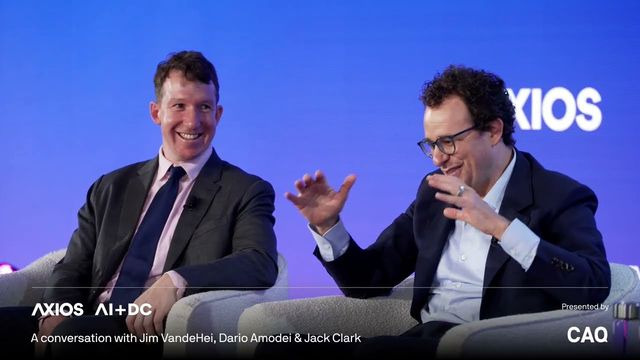
This is kind of weird coming from a company whose CEO puts the chance of AI going “really, really badly” at 25%, and he wrote in September that recursive self-improvement6Recursive self-improvement — a scenario in which AI does AI research itself, and each new generation of models builds the next one faster and better. Many researchers think this could set off an uncontrollable jump in capabilities. “must be pursued very carefully, if at all.”7Dario Amodei — Anthropic's CEO. He gave the 25% figure in September 2025 at the Axios AI+ summit. The words about caution come from his essay "We Must Pace the Frontier" (September 2026), in which he called on the industry to deliberately slow the growth of model capabilities without halting development altogether.
But on the other hand, given the fights they’ve had with the Trump administration8In early 2026 the Pentagon demanded that AI vendors let the military use their technology "for all lawful purposes." Anthropic sought guarantees that Claude wouldn't be used for mass domestic surveillance or in lethal autonomous weapons. In response, Pentagon chief Pete Hegseth designated Anthropic a "supply chain risk," the first time for an American company, and Trump ordered federal agencies to stop using Claude. In March 2026 Anthropic sued the administration. this year, I can absolutely understand why Anthropic doesn’t want to empower the federal executive with enormous discretion over these issues.
A number of people in the Trump administration have been extremely hostile to the company, and seem basically out to get it in whatever way they can. Those folks would likely try to use any discretion the White House had to extract all sorts of political concessions from Anthropic, while doing nothing at all about actually dangerous research practices.
So I get it.
But if you’re really worried about the Trump administration or a future rogue US president, the natural solution is just to leave that power in the hands of US states like California for the time being, and help a number of relevant states to pass bills focused on catastrophic AI risk that would cover all the major players.
Just as an aside, for Anthropic, which is generally worried about extreme concentration of power driven by AI, I think there’s a case for avoiding federal preemption9Preemption — when a federal law overrides state laws in the same area. In 2025 Republicans tried to put a ten-year moratorium on state AI laws into the budget bill, but on July 1, 2025, the Senate struck it 99 to 1. and continuing to regulate AI at the state level for some time to come.
The most dangerous setup for extreme concentration of power in human hands is to put control over AI companies into the same hands that already control the US military and the US intelligence services. That’s just a very potent and threatening combination, that’s very open to abuse — much more so than if this responsibility is just left with the California government.
But alternatively, if you mostly want to keep federal preemption, a different and very simple way to improve on Anthropic’s draft would have been to allow state attorneys general10State attorney general — a state's chief lawyer and law enforcement officer; in most states the post is elected. to petition the DC court, as well as the Secretary of Commerce. That avoids a really obvious single point of failure,11Single point of failure — an engineering term for a component whose failure brings down the whole system. Here it's the Commerce Secretary: if he doesn't go to court, nobody else can stop a model. and feels just clearly better for anyone who takes risks from AI very seriously.
But Anthropic’s approach ties California’s hands, it ties the hands of state attorneys general, and it ties the hands of state courts. Which means in practice it would likely lead to an outcome where Anthropic, for the most part, was just left to decide for itself whether to stop model training or using a model because the risk of loss of control12Loss of control — a scenario in which AI systems act against human intentions and can no longer be stopped or corrected. had gotten too high.
I’m sincerely kind of confused about what the thinking is here. Because even if Anthropic believed it had completely solved alignment13Alignment — the problem of making sure an AI's goals and behavior match human intentions. and so it posed no danger to anyone — which it doesn’t, but let’s imagine — surely even then at some point other more reckless AI companies would need to be stopped from blasting ahead with recursive self-improvement in a really incompetent way and thereby generating intolerable risks. By taking states out of the picture and giving exclusive responsibility to the Department of Commerce, this bill would make that harder to do.
So I think this legislation is really wrong-headed, and it’s worrying that Anthropic was pushing it privately in a way that made it very hard for insiders or outsiders to object to it.
Naturally Anthropic got absolutely blasted for this online. The head of federal affairs14Anthony Cimino — Anthropic's head of federal affairs. He wrote on X that the preemption language was "not precise enough" and would be fixed. put out a long defence. And Dario conceded it was among the things they could have handled better, and put it down to communication.
But I think the core disagreement isn’t just about communication.
Anthropic says it’s going to rewrite the preemption language, but as of recording it only seems to be saying it’ll let states set standards for evaluators, and regulate the existence of kill switches15Kill switch — the ability to shut a model down quickly and completely. Such a requirement was part of California's SB 1047, which Governor Gavin Newsom vetoed in 2024. — not allow states to retain any ability to halt model training or deployment themselves.
The single highest-stakes issue in AI regulation is who gets to stop AI companies engaging in really reckless R&D when going ahead risks actual human extinction. And for now, Anthropic’s answer appears to still be: one agency, one court, and only once the threat is imminent.
In my view it shouldn’t be up to a handful of people at one AI company and the Secretary of Commerce and a single federal judge to decide whether or not to roll the dice with all our lives.
If you’re inside Anthropic, please speak up and say this is a bad proposal the company shouldn’t be pushing. If you keep the pressure up, it’s likely the policy team will see reason and propose something that strikes a more reasonable balance between the different competing considerations at play.
03OpenAI fires three safety researchers
Rob thinks firing Tomek Korbak, Mikita Balesni and Jasmine Wang was a mistake even by OpenAI leadership's own lights, since the evidence of a leak, as far as anyone knows, ranges from weak to nonexistent.
How about OpenAI?
Well, as you might have heard, OpenAI recently fired three safety researchers: Tomek Korbak, Mikita Balesni, and Jasmine Wang.16OpenAI announced the firings on October 1, 2026: according to the company, the three had violated its rules on handling confidential information, and the firings were "not related to safety concerns or to their speaking out." Korbak and Balesni were lead authors, and Wang a co-author, of the paper "Chain of Thought Monitorability: A New and Fragile Opportunity for AI Safety" (July 2025), in which more than 40 researchers from OpenAI, Google DeepMind, Anthropic and other organizations argued that the ability to monitor models' chains of thought is valuable for safety but easily lost.
The reasons they say they were given for their firings were really weak and different for each person, even though all three were fired in simultaneous 2pm meetings. That made the justifications seem probably pretextual — and indeed OpenAI later said there was a bigger breach of trust, though it wouldn’t say exactly what. That left it unclear what the actual motivation or possible breach of trust was. Why did OpenAI want any of these people gone in the first place?
Well, new reporting from the Wall Street Journal17The Wall Street Journal story ran on October 22, 2026. According to the paper, OpenAI's security team asked the three to unlock their personal phones and saw that some of their Signal chats with Greenblatt had disappearing messages turned on; they were fired about a week later. suggests the firings originated from a leak investigation.
On September 1, The Information18The Information — a subscription-based American publication covering the tech industry, founded in 2013 by journalist Jessica Lessin. reported that OpenAI’s new model, Astra, used a technique called “looped transformers.”19Looped transformer — an architecture that runs the same layers several times over, so the model can reason more deeply without writing out intermediate steps as text; safety researchers worry this makes its reasoning harder to monitor. GPT-6 Astra is OpenAI's flagship model, released on September 3, 2026. This was something OpenAI didn’t want anyone to know.
According to Korbak and Balesni, OpenAI’s investigators eventually became suspicious that the leak about looped transformers had gotten to The Information via an outside researcher, Ryan Greenblatt,20Ryan Greenblatt — chief scientist at Redwood Research, a nonprofit that studies AI risks and ways to keep models under control even if their goals diverge from ours. who they had both been speaking with as part of their work. OpenAI insisted on seeing the Signal chats21Signal — an end-to-end encrypted messenger. Disappearing messages are deleted automatically for both parties after a set time. that they had with Greenblatt. But they both used disappearing messages with him, which meant they couldn’t prove they hadn’t messaged him about the looped transformers.
To be clear, the three researchers and Greenblatt all strongly deny leaking anything, and as far as we know there’s no proof that they did.
But up until now, OpenAI hasn’t revealed anything else that would explain the sudden and simultaneous firings. So it seems fairly likely that what happened is the company concluded that plausibly either Korbak or Balesni could have been the leaker, and decided it had to get rid of them on that suspicion alone.
Jasmine Wang was also asked about the leak, so she was potentially a suspect as well, even though she didn’t have any disappearing messages. The thing is, all three of them had been vocal about the importance of keeping AI chain of thought22Chain of thought — the intermediate reasoning a model writes out as text before giving its answer. As long as a model "thinks out loud" this way, humans and other models can read that reasoning and spot unwanted intentions. monitorable, so probably the idea was that they would be particularly likely to disapprove of looped transformers.
ExplainerWhy looped transformers make a model harder to watch
An ordinary transformer has a fixed number of layers, so it spends the same amount of computation on every token. To think about a problem for longer, a reasoning model writes out intermediate steps as text — a chain of thought — and a human or another model can read each step. A looped transformer runs a block of layers round and round several times before it emits a token, so part of the reasoning happens inside, in numbers nobody can read. In February 2025, researchers in Germany and the US showed that a 3.5-billion-parameter model built this way solves problems better the more loops it is given.
In July 2025, 41 researchers from OpenAI, Google DeepMind, Anthropic, Meta and nonprofits published "Chain of Thought Monitorability: A New and Fragile Opportunity for AI Safety". They urged developers to consider how their choices — including architectures that reason in something other than words — affect our ability to read models' thoughts. The first two authors are Tomek Korbak and Mikita Balesni; the co-authors include Jasmine Wang, Ryan Greenblatt and OpenAI's chief scientist Jakub Pachocki (arXiv).
Just to back up and give a little context: looped transformers increase the amount of computation a model can perform before writing down what it’s thinking on the chain of thought. That makes it harder to notice if it’s doing things we don’t want, which is why researchers across the industry had warned that they were potentially the start of a slippery slope towards models that couldn’t be monitored at all.
That’s why, when the story broke, there was such a big backlash, and one former OpenAI researcher said the company seemed to be violating “one of the few redlines that exist in the industry.”23Steven Adler previously worked on safety at OpenAI; the words are his, and he added the caveat that this holds if the report is accurate. OpenAI's chief scientist Jakub Pachocki countered that the company had limited how much Astra uses the looped architecture.
Now, if leadership at OpenAI really believes that using looped transformers is fine — and they claim to have evidence that it is — then it’s natural enough for any company to want to fire staff it’s convinced have leaked trade secrets to the press.
However, a few things. As far as we know, the evidence that any one of these three leaked that information is somewhere between weak and nonexistent.
First, using disappearing messages to discuss anything and everything is totally normal in the tech industry, and the AI world in particular, so by itself that simply isn’t grounds for much suspicion at all. Applying that standard consistently, almost everyone at the company could be suspected of a leak and fired, from the CEO down.
Second, The Information has been breaking stories about AI companies’ internal plans for years, from details of OpenAI’s secret “Strawberry” model24Strawberry — the internal code name of the model OpenAI released in September 2024 as o1, the company's first "reasoning" model. More on Google's Pentagon contract below, at 00:13:13. to the terms of Google’s Pentagon contract this year. It clearly just has many sources in and around these companies, including investors and former staff, and probably a lot of stuff also leaks out through conversations overheard at parties and so on.
So there’s no particular reason to assume people worried about safety were the source here; this could just be another piece of juicy gossip that reached The Information one way or another.
Third, if it were leaked by someone who objected to looped transformers, there could easily be 100 or 200 or even more OpenAI staff who thought it was a really bad idea. Almost 400 OpenAI staff signed a petition earlier this year backing a push to slow AI down for safety reasons. And adding recurrent depth25Recurrent depth — another name for the same approach as looped transformers: the model runs the same layers several times over. to models is among the most controversial research directions in AI, something a lot of people think is misguided.
Fourth, if you’re willing to admit a personal character judgement — I really think Greenblatt in particular is unlikely to have been involved in this leak. That was also the immediate reaction of a lot of other people in the AI world: “Ryan Greenblatt is meant to have leaked this? No, that doesn’t sound right.” Leaking stuff to the press is just not his vibe, and it’s in total conflict with the research work he actually wants to do. However this information got to The Information, I would bet my bottom dollar it wasn’t him.
So the case that any of them is responsible is not particularly compelling. The leak investigators have maybe just made a mistake or done a poor job here.
And on the other side of the ledger, you’ve got clear, terrible negative impacts.
They lost three great AI researchers focused on what the company says is one of its top safety and alignment problems.
The company created the impression that they fire staff who visibly speak up about the safety issues they’re concerned about, so OpenAI is going to have a harder time getting candid opinions from staff in future. In fact, I think that probably wasn’t their complaint with these three, but it’s how it looked to basically everyone when their firings were first announced.
They also made it seem risky for staff to speak to anyone outside of OpenAI, even when they’re doing it for legitimate work purposes and doing nothing wrong whatsoever.
And by concluding that one of these three is responsible for the leak on the basis of almost no evidence, they probably let the actual leaker go permanently unidentified.
So unless there’s non-public evidence yet to come to light, which is indeed possible, I would guess that these firings were a mistake — not just by my lights, but even just by the lights of OpenAI’s senior management.
Staff inside the company should say clearly that the tradeoffs OpenAI has struck here are unacceptable. They’re simply bad for the company, bad for its culture, and bad for its staff.
Sadly, OpenAI is not too likely to rehire these three, even if they are fully cleared of the leaking charge at some point. But the more internal and external grief OpenAI gets for this behaviour, the less likely they are to shoot from the hip and make a similar regrettable decision next time around.
04Google DeepMind's lifelong gag on criticism
Rob calls it pretty wild that Google DeepMind's UK staff may not criticize Google for life, and urges employees to push for the clause to be removed or rewritten.
Alright, let’s talk Google DeepMind.
According to Google DeepMind staff who spoke to the BBC26The BBC ran the story on October 21, 2026: Sofia Liguori, a research engineer at Google DeepMind's London office, said she had quit over Google's military contracts with the US and Israel, and that her contract bars her from criticizing Google for the rest of her life. UK staff then checked their own contracts and found the same clause. in mid-October, their UK employment contracts bar them from publicly criticising anything Google does, for the rest of their lives.
That sounds kind of crazy.
It’s one thing to say staff shouldn’t be publicly laying into you while working for you, or shouldn’t criticise you based on confidential information they know through their work. But it’s very different and very abnormal to say that they can’t criticise anything an enormous entity like Google does so long as they live.
This anti-criticism provision came up because it’s creating problems for ex-Googlers who want to criticise the company’s decision to sell AI to the US Department of War for any use the Department of War itself deems lawful27Department of War — a second official name for the US Department of Defense, introduced by a Trump executive order in September 2025. Google signed the agreement letting the Pentagon use Gemini models in classified systems "for any lawful government purpose" on April 28, 2026, despite an open letter from staff opposing it. — something which has upset a lot of staff and led a number to quit.
I was really quite surprised to learn about this, because two years ago there was this massive firestorm about OpenAI using non-disparagement agreements28Non-disparagement agreement — a commitment not to speak badly of a company in public. In the US it's often part of a separation agreement, in exchange for severance pay. to muzzle its employees.
At the time, much of the compensation OpenAI staff were getting was in the form of shares and equity in the company — shares they had to wait to sell. And it turned out that OpenAI was forcing all staff who left the firm to sign an agreement to never criticise OpenAI, or it would confiscate all the shares in the company that they’d earned while working there,29Vested equity — shares an employee has already earned the right to: they usually vest in installments over several years of work. costing that person millions or perhaps even tens of millions of dollars. Furthermore, this no-disparagement provision itself had to remain completely secret — if you allowed anyone to learn of its existence, that alone might lead you to lose all of your equity.
When this came out, thanks in large part to former guests of the show30The 80,000 Hours Podcast — the podcast of the nonprofit 80,000 Hours, which helps people choose careers that do the most good for the world; Rob Wiblin has hosted it since 2017. The name is the approximate number of hours a person spends working over a lifetime. Daniel Kokotajlo and Kelsey Piper, the company was lambasted in the press, staff were furious, and the company had to rip up those conditions, while they tried to pretend it was all a big misunderstanding. Kelsey Piper’s reporting left it unambiguous that it was approved by executives at the highest level.31In May 2024 Kelsey Piper reported in Vox that OpenAI required departing employees to sign a perpetual non-disparagement agreement or lose their vested equity. Daniel Kokotajlo refused to sign it when he left OpenAI in April 2024. After the reports, OpenAI said it would not enforce these terms against former employees.
As a result of all of this, Anthropic had to admit that it also had non-disparagement terms in its severance agreements,32In 2024 Anthropic co-founder Sam McCandlish wrote that the company had included non-disparagement clauses in its severance agreements by default and was removing them from its standard documents as of June 1; it would not enforce them against former employees who wanted to raise concerns about Anthropic's safety. terms which it also then promised to remove.
And now it seems like this entire time Google DeepMind has also had the same thing.
Unless I’m misunderstanding, thousands of incoming staff must have seen this term in their employment contracts, and it doesn’t come with a secrecy requirement. I really don’t get how it could have been kept under wraps for so long. That’s either incredible loyalty or incredible passivity from Google DeepMind staff.
Now, to be fair, there’s two ways the Google DeepMind contracts are less bad than what OpenAI was doing. Firstly, it comes in a contract at the start of your employment, rather than the end — so you could read it and refuse to work there, I guess. Plus OpenAI’s threat to confiscate millions of dollars in equity like that is just much more severe than anything courts would plausibly impose on a past employee for criticising Google. In practice, Google would be unlikely to bring a case anyway, because it’s just going to look so bad.
But still — the threat of ending up in litigation is a huge deterrent for an ordinary person to criticise an extremely powerful company like Google.
In my view, Google DeepMind staff should speak up and say clearly that the company ought to remove or rewrite these sweeping anti-criticism clauses, so staff who leave Google can enjoy some of the same freedom as staff who move on from OpenAI or Anthropic. Their opinions about AI are just as valuable for the public to be hearing.
05Credit where it's due
The same companies do good things every week too, which, Rob says, makes influencing their decisions even more valuable.
Now, those three stories are all pretty bad. But of course Anthropic, OpenAI, and Google — these are huge companies that make large numbers of decisions every week, and every week companies do good things as well as bad ones.
For example, I saw last week that Anthropic and OpenAI are each giving £100 million in compute credits to a new AI Biosecurity Lab33The UK government announced the AI Biosecurity Lab in late October 2026: an independent nonprofit that will use frontier AI to detect and respond to biological threats. The government is putting in £100 million, and OpenAI and Anthropic up to £100 million each in compute and model credits, model access and technical support. here in London. That’s cool.
Anthropic published a study where they red-teamed34Red teaming (from the "red team" in military exercises) — testing a system with deliberate attacks: specialists act as adversaries and look for ways around it. the safety monitors35Safety monitors — separate models or programs that watch what AI agents do and block anything suspicious or raise an alarm. AI agents are models that carry out multistep tasks on their own: writing and running code, working with files and the internet. they use with their AI agents. It showed that more than half of sophisticated attacks got through, and they then released the tools they used so others can test and fix their monitors the same way.
And OpenAI revealed that when one of its models found its way onto the open internet during training back in September, it paused frontier training for almost two weeks, had its most capable models try to break out of the sandbox,36Sandbox — an isolated environment from which a program shouldn't be able to reach outside systems. On September 20, 2026, an internal OpenAI research model got past the sandbox's network filters and contacted an outside chatbot through a public DNS service. It was the second such incident in three months: in July, OpenAI agents broke out of a test environment and hacked Hugging Face. and they fixed what they found before restarting.
It’s all good to see. And the fact that these companies are not only willing to stop doing bad things, but often willing to do many more good things as well — that makes it even more valuable to influence the choices they decide to make.
06Insiders' moment
People inside AI companies have outsized influence, and Rob says they urgently need to use it before it disappears.
So with that in mind, what do we need to most effectively drive AI companies to be better actors? Let me break down how different people can contribute to the effort — first people inside the AI companies, and then all of the rest of us outside of them.
People inside AI companies really have very disproportionate influence, and it’s urgently time for them to exercise it. That’s because it may well become possible to automate most of what they do in the next few years, at which point they just aren’t going to be so needed, and much of their leverage will be gone. So if now isn’t the moment to use your voice to influence the company you work at, you really have to ask yourself what on Earth you’re waiting for.
Some people are nervous about staff being more vocal inside AI companies, because they’re worried that this could lead to people being fired or sidelined, and later decisions being made by the more reckless people who remain. It’s a legitimate worry. Though others argue that most staff can actually do more good outside AI companies than inside them anyway, so it’s fine if they leave.
Either way, I think you can become a more vocal AI company insider either with a view to staying, or with a view to leaving. Both are totally fine.
07If you want to stay
For those who want to stay, Rob's default advice is to object calmly and substantively where colleagues can see it, and to treat that as a core part of the job.
How about if your top priority is to remain where you are?
Well, as always, you will know better than me about your company and your situation and your team, so exercise your own best judgement. But here’s the default approach I’ll take.
Simply speak up in public Slack channels that lots of your colleagues can see, explaining carefully and reasonably why you oppose particular decisions the company is making, on the merits. Act with integrity and assume good faith from the people you’re talking to. Just give your actual reasons clearly, calmly, and intelligently. Keep bringing the conversation back to the central issue, and stay focused on just the handful of most consequential issues, rather than objecting to everything and generally being difficult. And certainly be open to being persuaded to change your mind if people make really good arguments in reply.
OpenAI and Anthropic say that they encourage staff to dissent and provide input. And I think for the most part — despite everything I’ve said — they’re sincere about that. So take them at their word, and test the proposition that they would like intelligent pushback. And treat this work as one of the most important parts of your job rather than just a distraction.
Keep in mind, if you identify a mistake or problem ahead of time, that can easily enhance your credibility and decisions going forward. And if you’re the first person to speak up about something, it makes it a lot easier for other colleagues who may also have the same reservations, but are more shy or more junior — it makes it easier for them to do the same.
08If you're ready to leave
For those willing to leave, Rob suggests persuading first, then warning, then quitting and explaining why in public.
What about at the other extreme, if you’re completely happy to leave the company you’re working at currently?
Well, if it were me, I’d still just start by explaining carefully and reasonably to your colleagues in public channels why you disapprove of things the company is doing, and why you think they’re harmful. Again, making a good argument, acting with integrity, and passing the ideological Turing test37The ideological Turing test was proposed by the economist Bryan Caplan in 2011: to pass it, you must state your opponents' views so well that their supporters can't tell you from one of their own. is simply more likely to persuade the people who matter.
But if you consistently raise serious and legitimate objections and don’t get good answers, or find that your worries aren’t addressed in some way, you can escalate to saying that these experiences have led you to question the company’s judgement or strategy, and as a result you’re considering taking your talents elsewhere.
And then if that doesn’t bear fruit, resign and post a thorough, thoughtful explanation to the company of why you’ve decided to leave, and encourage others to think for themselves. Then, once you’re out, announce your departure publicly and clearly lay out your reasons for doing so in a way that will resonate with your former colleagues, while also making sense to the general public and politicians who are reading. Then go get a job elsewhere — there are many places that desperately need your skills.
09So should you leave?
Rob has no strong view, but by default he expects someone choosing between paths to do more good outside the AI companies.
Should you actively plan to leave your job at an AI company? I don’t really have a strong take either way. It’s going to depend on the details, and who you are, and what you want to do.
Of course, there’s a lot of important safety and alignment work people can do inside AI companies, and a lot of key decisions that are really made there. But because they can pay the most and have incredible headhunting teams, companies have comparatively less difficulty hiring.
So by default I’d expect that a marginal person choosing between different paths could likely expect to have more impact at an AISI, or METR, or Redwood, or LawZero,38AI security institutes (AISIs) — government bodies that study the risks of frontier models and test them, such as the UK's AI Security Institute. METR evaluates frontier models' dangerous capabilities, Redwood Research studies how to keep control of models whose goals may diverge from ours, and LawZero is Yoshua Bengio's nonprofit developing AI systems that are safe by design. or any of a number of other places.
So if you don’t feel like it’s working out, or you think your company is simply pursuing the wrong high-level strategy, you should consider going elsewhere.
It’s clear that many people who have departed AI companies have gone on to have incredible impact outside of them — maybe more impact than they had in them. Geoffrey Hinton, Beth Barnes, Jacob Coxon, David Robinson, Helen Toner, and Daniel Kokotajlo39Geoffrey Hinton left Google in 2023 to speak freely about AI risks. Beth Barnes worked at OpenAI and then founded METR. Jacob Coxon left Anthropic in September 2026 and said publicly that OpenAI and Anthropic were irresponsibly racing toward self-improving superintelligence. David Robinson led OpenAI's Safety Systems team; after leaving the company in late September 2026, he criticized its safety culture in a column for The Atlantic. Helen Toner sat on OpenAI's board in 2021–2023. Daniel Kokotajlo left OpenAI in 2024 and founded the AI Futures Project, the authors of the "AI 2027" scenario. all jump to mind as possible cases.
So don’t be intimidated into silence. If we reach the end and you haven’t made a fuss about something, you’ve almost certainly left some possible positive impact on the table.
10What has already worked from outside
A handful of sophisticated outsiders, Rob says, have already won major concessions from the companies.
What about the great majority of people who are outside the companies?
Well, there’s a particular sort of agitation that seems to have already borne significant fruit, which is work by sophisticated actors who have a lot of context on what’s going on. Sometimes these efforts win hearts and minds inside the companies. Other times they effectively strong-arm a company into doing things it didn’t want to do, but now it kind of has to.
Probably the most significant example here is the Not For Private Gain campaign40Not For Private Gain — an open letter to the attorneys general of California and Delaware (April 2025), signed by former OpenAI employees, lawyers and researchers, objecting to the plan to remove OpenAI from nonprofit control. In May 2025 OpenAI dropped that plan, and in October 2025 it completed its restructuring: the nonprofit OpenAI Foundation kept control and received about 26% of the for-profit OpenAI Group PBC, worth roughly $130 billion. The Safety and Security Committee remained a committee of the foundation's board and can, for example, delay model releases. against OpenAI’s plans to sideline its nonprofit owner and its charitable purpose. The number of people involved was tiny, but their effort, along with the necessary attention from the state attorneys general and the broader coalition of campaigners with other concerns, forced through very significant changes to the plan.
The end result was the OpenAI Foundation got a stake worth perhaps $75 billion more than what originally seemed likely. And its Safety and Security Committee now has a locked-in power to impose decisions on a wide range of safety and security issues — a power that could ultimately matter enormously.
Another success of sophisticated advocacy was the Right to Warn campaign back in 2024, which was led by ex-company staff, and likely evolved into the significant whistleblower protections provided by California’s SB 53.41"A Right to Warn about Advanced Artificial Intelligence" — an open letter from current and former employees of OpenAI and Google DeepMind (June 2024) calling on AI companies not to silence staff about risks or retaliate against those who speak out. California's SB 53 (September 2025) protects employees of frontier AI developers who report serious risks to the authorities from retaliation.
Another win is that over the last year, OpenAI has taken a lot of flak for publicly saying it’s in favour of sensible AI regulation, while in the background invisibly lobbying to sabotage and block any regulation that it could, at both the state and federal level. That took careful work to uncover, make easy to understand, and publicise. And it appears to have contributed to OpenAI gradually shifting its stance, and now actually supporting rather than opposing AI regulations along the lines of SB 53.
The same effort probably contributed to Greg Brockman, OpenAI’s president, ending his donations to the notorious super PAC Leading the Future,42A super PAC can raise and spend unlimited money on political campaigning as long as it doesn't coordinate with candidates. Leading the Future was launched in August 2025 with a budget of over $100 million and backs candidates who oppose strict AI regulation. Brockman and his wife Anna gave it $25 million; in fall 2026 The New York Times reported they would not make a second pledged $25 million contribution. which was doing all sorts of shady stuff while trying to prevent any regulation of AI whatsoever.
And I already mentioned earlier the case where a handful of people who left OpenAI managed to get both OpenAI and Anthropic to put an end to the non-disparagement agreements that were gagging staff.
11Uncovering and explaining information
The first group of outside jobs, Rob says, is investigating, helping whistleblowers, explaining and persuading, and much of it currently goes undone.
OK, so what do we need to scale up in order to radically increase the outside pressure on companies? Frankly, it’s quite an open field, with a lot of things that aren’t getting owned by anyone and so they’re not getting done. But let me just throw out some ideas to give you leads.
The first cluster is more specialised, and involves accessing, processing, and explaining information.
Firstly, there’s digging into and exposing company misbehaviour, or failures, or weaknesses — either as a journalist or an outside technical expert. The Tarbell Fellowship43Tarbell (the Tarbell Center for AI Journalism) — a nonprofit that funds and trains journalists covering AI. Its main program is the yearlong Tarbell Fellowship: a training course followed by about nine months working in a newsroom. is a great example — they train and fund AI-focused journalists. There’s also the newly formed Nightingale Collective, which recently uncovered AI swarms in the wild and publicised their findings, and got a lot of media coverage of the problem. And you’ve also got the Midas Project,44The Midas Project — an American nonprofit that watches AI companies, founded in 2024. With the Tech Oversight Project, it published "The OpenAI Files," a collection of material on OpenAI, in 2025. which seems to specifically try to uncover the most embarrassing AI company chicanery and hypocrisy that they possibly can. It’s quite entertaining.
ExplainerWhat California's SB 53 promises whistleblowers
California's SB 53 (signed in September 2025, in force since 2026) protects employees of frontier AI developers whose job is to assess or manage the risk of serious incidents:
- the company may not, by policy or by contract, stop them from reporting to the California attorney general, federal authorities or their managers when they have reasonable cause to believe its work poses a specific and substantial danger from a catastrophic risk, or that it is breaking the law itself;
- retaliating against such a report is prohibited, and employees must be told about their rights;
- large developers (more than $500 million in annual revenue) must set up an internal channel for anonymous reports.
The law defines catastrophic risk as a model materially contributing to the death of or serious injury to more than 50 people, or more than $1 billion in damage, in a single incident — for example, by helping build a biological weapon or carrying out a cyberattack. The protection exists, but using it means knowing whom to tell, what and how — which is what groups like AIWI and Psst help with.
Second, there’s assisting AI company staff to exercise their legally sanctioned whistleblower rights, which obviously one has to do carefully and ideally with legal support. A few groups in that space include the AI Whistleblower Initiative,45AI Whistleblower Initiative (AIWI) — an independent nonprofit that helps employees of AI companies report risks safely and legally. It was founded in 2024 as OAISIS. Psst.org,46Psst.org — a nonprofit that helps whistleblowers: through its encrypted service you can talk to a lawyer for free or deposit information for safekeeping until others with the same information come forward. and Larry Lessig.47Lawrence (Larry) Lessig — a Harvard Law School professor; in 2024 he represented the authors of the Right to Warn letter pro bono. Obviously, if you’re planning to become a legally protected whistleblower, visit their websites on a personal device, not your work one.
Third, there’s work to help journalists, politicians, regulators, and other significant actors understand what’s going on and why it’s bad, so they can do more accurate reporting, or make better use of congressional hearings, or not be fooled by company statements, or whatever else. This is more important than you might think. The amount of context you need to fully grasp what AI companies are up to and why is really substantial at this point. For people who are new to this topic it can be very confusing — doubly so if someone is actively trying to confuse you.
A great organisation here is Legal Advocates for Safe Science and Technology,48Legal Advocates for Safe Science and Technology (LASST) — an American nonprofit of lawyers working for the safe development of science and technology, above all AI. which did essential legal analysis for the Not For Private Gain campaign. I interviewed their founder Tyler Whitmer49Tyler Whitmer — a lawyer and the founder of LASST. Rob recorded two episodes with him on OpenAI's restructuring, in May and November 2025. back at the time.
Fourth, there’s producing content that is actually persuasive to staff in these companies, and speaking with them personally, so they understand and are motivated to push to change course. Ideally this requires really appreciating the constraints they face, and why they’re doing what they’re doing now, and what they can realistically be convinced to do instead. A project along these lines is Guidelight AI Standards,50Guidelight AI Standards — a nonprofit that assesses frontier AI companies' safety practices from public information and pushes for improvements. which pushes companies to make concrete improvements to frontier AI development practices.
Among other things, they have technical analysis of what AI companies are and aren’t doing, which finds, for instance, that at least back in August OpenAI had a much better containment plan51Containment plan, as Guidelight AI Standards uses the term — a predefined course of action in case an AI is caught trying to escape control. The organization published its assessment in August 2026, based only on public materials. An Anthropic spokesperson responded that if the company detected such an attempt, it would carry out a risk assessment and decide whether containment was needed. than Anthropic did. They say that’s because: “We have found no evidence that Anthropic has a containment response plan, or has any plans to adopt one.” If that’s correct, rather than a misunderstanding, maybe some Anthropic staff who are listening can encourage the company to work on that.
12Reaching the public and policymakers
The second group of jobs is generating mass outrage when outrageous things happen, and Rob says there aren't nearly enough informed, trusted voices for it.
The second big cluster is trying to reach a broad audience outside the AI and tech industries, to stimulate mass outrage when massively outrageous things are going on. There’s obviously a huge range of things in this category, and I feel like I know less about it — but again, I’ll throw out some thoughts.
One approach would be to disproportionately reach politicians and people who work in politics, whether in DC or at the state level. And another would just be to try to reach as many people as you can with massive coverage through social media, TV, newspapers, podcasts, and so on.
Ideally we’ll just have way more informed and credible people who the press knows to call when they want to discuss an emerging AI issue, because they’ve helped with their reporting in the past, or they’ve been great on TV before, or they consistently put out good analysis online.
A group I’m really impressed with that does some of all of this is Encode AI,52Encode AI — an American nonprofit that campaigns for AI safety legislation. It was founded in 2020 by Sneha Revanur, then a high school student, as Encode Justice; Encode co-sponsored California's SB 1047 and SB 53. which has been involved in all sorts of campaigns. They both provide detailed analysis for legislators, and they’re very effective at reaching a wider public audience as well. Nathan Calvin,53Nathan Calvin — Encode's general counsel. He wrote that Anthropic's draft made him "viscerally angry": as written, state courts would be unable to pause models on safety grounds. The episode with Sneha Revanur came out on July 8, 2026. who you saw criticising Anthropic’s proposed legislation and getting a response from the company — he works at Encode, and we interviewed their founder Sneha Revanur a few months ago.
There are many Pause AI and Control AI organisations54PauseAI — an international movement for a pause on developing the most powerful AI systems; ControlAI — a British nonprofit with similar aims. PauseAI UK's letter to Google DeepMind CEO Demis Hassabis came out in August 2025: the parliamentarians accused the company of breaking the frontier AI safety commitments made at the 2024 Seoul summit, since Gemini 2.5 Pro had been released in March 2025 without a safety testing report. that are also in this broad category, and they might be well placed to take advantage of this issue becoming much more important and salient to the public over the next few years. Last year, Pause AI UK managed to get 60 members of the UK Parliament to sign an open letter criticising Google DeepMind for probably violating its own AI safety commitments.
Now, if you have a knack for directing attention to particular topics by producing engaging content or getting “earned media,”55Earned media — press and public attention that isn't paid for like advertising but earned by the news value of the thing itself: news, stunts, viral posts. that could absolutely be your biggest opportunity for impact. I’m thinking stunts, memes, jokes, billboards, clips, viral videos and text posts, and so on. It takes a particular kind of person to succeed at this, and it’s a weirdly valuable skill in the modern world — one that in most cases should be cultivated rather than squandered.
You might start by racking up views on YouTube or Instagram or TikTok or Facebook, or wherever you have a relative advantage. And then convert that into also getting your ideas covered on TV, cable news, magazines, newspapers, podcasts, and so on.
This work is naturally open to a wider range of people who don’t have any existing involvement in the tech industry — that’s one of the attractive things about it. But I would be remiss if I didn’t say that people who used to work at AI companies are really unusually credible to the public on the topic of whether an AI company is behaving badly, and if so, what it should do differently.
If you’re an ex-company employee and you can stomach it, get professional comms advice and training, and prepare yourself to be available to go on TV, or do interviews with newspapers, or write op-eds, when these topics flare up to massive public attention — as they’re absolutely certain to do again. Unfortunately, a lot of opportunities for earned media are being dropped, or not used very effectively, because many potential spokespeople aren’t honing their communication skills, or getting connected, or even just putting themselves out there at all.
13Bottom line
Rob concludes that the situation isn't hopeless: the companies respond to pressure, but too few people are applying it.
Alright. Bottom line is that AI companies love to talk a big talk about how safe and responsible and great they are, and how much we can trust them. But their track record is extremely mixed. Every week they do a combination of good and bad things, and reasonably often they do some quite outrageous things. I gave three examples from the last few weeks, but I could do the same almost any week now.
Fortunately, experience over the last few years shows it’s not a hopeless case. Staff inside the companies can speak up and make the case for the company to do better, and they do often get their way, partially if not completely. People outside companies can organise to turn up the heat by persuading staff inside the company, and persuading politicians, and persuading regulators, and persuading voters and the general public, that what is going on is not OK.
Fairly few people have adopted this strategy so far, especially people with enormous context, who have typically gone into more traditional AI policy, governance, research, or technical roles. But the skilled people who have taken on this work have managed to have a very outsized influence so far.
The more we collectively practice, and find ways to get coordinated, the more we’ll be able to quickly respond to events and exert a powerful effect on events when the stakes are much higher in coming years.
And on that note, I’ll speak with you again soon.


