Book
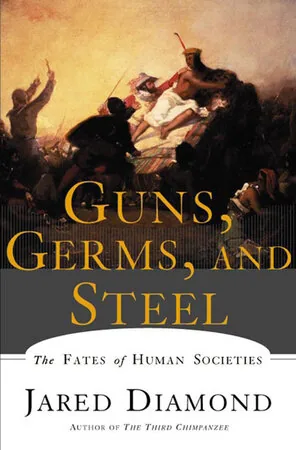
Guns, Germs, and Steel
Jared Diamond's book (1997) about why some societies conquered others. Diamond's explanation is geography: the availability of plants and animals for domestication and the diseases that came with livestock. It won the 1998 Pulitzer Prize.
The book opens with a question put to Diamond by the Papua New Guinean politician Yali: why do white people have so much "cargo" — goods and inventions — while New Guineans have so little? Diamond looks for the answer not in superior minds or genes but in the environment. Eurasia had more wild species suitable for domestication, so farming arose there earlier, and with it dense populations, states, writing and crafts. Eurasia stretches east to west, so crops and livestock spread easily along latitudes with similar climates. Living side by side with livestock gave Eurasians both diseases and immunity to them: epidemics wiped out the native population of the Americas faster than any army.
In Britain the book was subtitled "A Short History of Everybody for the Last 13,000 Years." Besides the Pulitzer, in 1998 it won Britain's Rhône-Poulenc Prize for science books, and in 2005 it was made into a National Geographic documentary series shown on PBS. Specialists in the regions and cultures Diamond writes about have criticized the book for geographic determinism and factual errors: in 2003 the geography journal Antipode devoted a whole set of scathing reviews to it.
In the episodes
2- October 1, 2026Si Sheppard – How did a few hundred Spanish soldiers topple two empires?mentionedDwarkesh Podcast
- 06:02the book that got Sheppard into the subject
- September 9, 2026Jared Diamond on Leaders, Luck, and IrreplaceabilitymentionedConversations with Tyler
- 04:46geography versus leaders; Diamond's own contribution