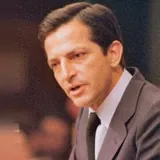
Adolfo Suárez
Spanish politician (1932–2014), prime minister of Spain in 1976–1981. A former official of the Franco regime, he led the transition to democracy, legalized political parties and won the first free elections after Franco in 1977.
Suárez was born in Cebreros (province of Ávila), studied law in Salamanca and built his career inside Franco's National Movement: he was civil governor of Segovia and, from 1969, director general of the state broadcaster RTVE, where he grew close to the future King Juan Carlos. In July 1976 the king unexpectedly appointed the little-known 43-year-old Suárez prime minister, the youngest in 20th-century Spain; the right trusted him as one of its own, and reformers were disappointed. Yet in November 1976 Franco's Cortes voted for his Political Reform Act, a referendum approved it in December, and in spring 1977 Suárez legalized the Socialists and, to the fury of the military, the Communists, recognized trade unions and dissolved the National Movement. In June 1977 his Union of the Democratic Centre won the first free elections in 41 years, and in 1978 Spain adopted a new constitution. Economic crisis, ETA terrorism and splits in his party forced him to resign in January 1981, and a month later, during the vote on his successor, Lieutenant Colonel Tejero and his guardsmen seized parliament: amid the general panic, Suárez and two other deputies stayed in their seats. The king made him a duke; from 2003 Alzheimer's disease kept him out of public life, and after his death Madrid's Barajas airport was named after him.
In the episodes
1- September 30, 2026Luis Garicano on Spain, Europe, and the Future of WorkmentionedConversations with Tyler
- 15:04the prime minister, one of the three heroes of Cercas's book