


Conversations with Tyler
Chapters
After its housing bubble burst, Spain came to associate easy building with corruption and high prices and turned NIMBY, Garicano argues.
Read the chapter- Cowen introduces Luis Garicano as a former member of the European Parliament who taught at Chicago's business school and is now at the LSE for the second time; the occasion is Messy Jobs, written with Jin Li and Yanhui Wu.
- Before the crisis, Garicano says, Spain built up to 800,000 homes a year, and after the crash people linked easy building with corruption and, believe it or not, with high prices.
- Municipalities lost much of their power to decide on land, so fewer than 100,000 homes a year now get built for hundreds of thousands of immigrants, and there is almost no YIMBY movement.
- People crowd into Madrid and Barcelona while the empty land goes to solar farms, a no-build ring around Madrid and biodiversity rules.
Spanish productivity has stalled for thirty years because the country is run by and for retirees, and in Garicano's experience it only reforms in a crisis.
Read the chapter- The economy grows through immigration and tourism, and Garicano says 100 percent of GDP growth since 2008 has gone to pensions.
- Spain has one of the lowest fertility rates and one of the longest life expectancies in the world, while its highways and high-speed rail don't get proper maintenance.
- In the optimistic scenario Garicano pictures Spain as Florida or Austin: solar, wind and nuclear power, empty land and a great life could attract talent and data centers, yet nuclear plants are being closed for political reasons.
- Cowen asks whether comfort works like a resource curse, and Garicano agrees: Spain reformed in '59, in the '80s, before the euro and in 2012, always when the crisis became unsustainable.
Tariffs on Chinese cars won't save Europe's auto industry, Garicano argues, because Europe's real problems are rigid labor markets and a lack of radical innovation.
Read the chapter- Industrial policy works, in Garicano's view, only when losers are allowed to fail and the goal is clear, and Europe has neither.
- All the help goes to legacy carmakers, and Europe's environmental, labor, industrial and security goals contradict one another.
- European companies are getting destroyed in third-world markets: in Latin America and Africa, he says, you only see BYDs now.
- Losing Renault and Michelin would be devastating for his hometown of Valladolid, whose other industry, bureaucracy, is not very promising.
Spanish culture rewards art and sports rather than nonfiction and science, and the civil war still lingers because it never ended in reconciliation.
Read the chapter- None of Spain's 150 or 200 most remarkable books is nonfiction, Garicano says, and to find the last Spanish Nobel laureate in science you have to go back to 1905.
- His favorites in Spanish-language fiction are the Latin American boom (García Márquez, Rulfo, Vargas Llosa) and the poetry of Lorca and Miguel Hernández.
- He recommends Javier Cercas's Anatomía de un instante, about the 1981 coup attempt and three men who betrayed their causes and were the only ones not to dive under the desks when the civil guards stormed in.
- There was no reconciliation, as in South Africa, and no surrender, as in Germany, since Franco died in his bed; still, Garicano thinks the transition was done beautifully and it's time to move on.
Fear of terrorism wrote a Basque tax privilege into the constitution that can't be extended to Catalonia, and Garicano sees no solution to the inequality.
Read the chapter- The Basque Country collects all its own taxes and negotiates its contribution one-on-one with the central government, and Garicano calls the "historical reasons" behind it BS.
- The Basques have enough votes to topple governments and time their negotiations for exactly those moments, so one of Spain's richest regions gets more from Spain than it gives.
- Catalonia wants the same deal, but it is too big: if the two largest regions bargained one-on-one with the state, the budget would collapse.
Chicago economics explains politics well, but only in the European Parliament did Garicano grasp that parties promote the most obedient people, not the most capable.
Read the chapter- Politicians are smart maximizers and voters are rationally inattentive, Garicano says, citing Bryan Caplan's The Myth of the Rational Voter.
- Under proportional representation, the person who moves up is not the smartest voter on the city council but the one who obeyed the party most, someone whose outside option is zero.
- That, he says, is why nobody supporting Prime Minister Sánchez makes any noise while the Socialist Party is mired in corruption scandals.
- National leaders pick a European Commission president who won't overshadow them, which Garicano calls adverse selection by design.
EU unanimity survives because taxes, defense and foreign policy are the core of sovereignty, and in Garicano's view common debt can't work without common revenue.
Read the chapter- Every country wants the last word on defense, so Europe ends up with many different tanks and incompatible shells, and a working group spends weeks arguing over millimeters.
- On taxes, countries like Ireland and Luxembourg block harmonization: as long as there is one loser, only Pareto improvements are possible.
- Asked whether he would press a button abolishing unanimity, Garicano says not everywhere, but yes for the functions the US federal government has.
- He compares eurobonds without common revenue to four housemates sharing a credit card: the recovery fund issued bonds, but the Hamiltonian compromise never came.
European startups lack not money but people who combine money with know-how, and rigid labor markets are costly above all because they raise the cost of mistakes, Garicano argues.
Read the chapter- Europe has money and talent; what's missing, he says, is the former Spotify chief of marketing who has seen companies scale and now funds and advises startups.
- Sweden lets people defer capital gains tax as long as they reinvest in new startups, and that started a snowball in a country once seen as one of Europe's most socialist.
- The EU adds harmonized laws on top of national ones: ESMA gets new powers while national regulators lose none, which only adds obstacles to raising money.
- Denmark makes hiring and firing easy and insures workers generously; Facebook, in Garicano's example, can swap metaverse engineers for AI ones in a week, while Ericsson or Nokia would spend months negotiating with their works councils.
In the lightning round Garicano calls Javier Marías, Extremadura and Let It Be underrated and Sgt. Pepper overrated.
Read the chapter- He rates Rosalía, Penélope Cruz and the painter Antonio Saura about right, while Cowen thinks Saura is underrated outside Spain.
- Extremadura, home of many conquistadors, stopped growing 400 years ago and feels frozen in time, Garicano says, and Cáceres has a three-star restaurant whose name he can't remember.
- He ranks Sgt. Pepper below Abbey Road and Rubber Soul, and Cowen finds "When I'm Sixty-Four" a bit boring.
- His pick for an underappreciated food region is Asturias, where he is recording from.
English is shaping Spanish far more than Latin American immigration is, in Garicano's view.
Read the chapter- Spanish is absorbing English words, expressions and false friends, and ambiguous words are drifting toward their English meaning.
- Cowen notes that Latin Americans use the subjunctive less, but Garicano hasn't heard any change in Madrid, where about one in five people is now Latin American.
- Before saying this with confidence, he jokes, he should check with his favorite LLM.
AI will take the clean jobs, while the rest of work gets messier in ways AI can't handle; that is the core argument of Messy Jobs.
Read the chapter- Cowen sums up the book's thesis, that AI won't cause mass unemployment and maybe not even a rise in unemployment because jobs will get messier, and Garicano agrees.
- Cowen worries that many people want simple jobs and will find messy ones stressful; Garicano answers that people will need a tolerance for relationship work, with its politics and human element.
- The jobs at risk, he says, are the clean ones a company can specify perfectly, like those offshored to India: single-task jobs with verifiable output that can be handed to a reinforcement learning loop.
- AI can streamline contingent messiness, but the messiness of relationships and the knowledge problem of Hayek and Polanyi isn't going away.
Retraining programs for new occupations generally fail, Garicano says, but teaching people to use AI in their current jobs is easier.
Read the chapter- A doctor is hard to retrain as a plumber less because of the skills than because of social identity, and as Kuhn said of scientists, we retrain by dying while new generations do new things.
- Garicano's 84-year-old mother has long conversations with ChatGPT, and the hardest skill, in his view, is knowing what AI can do, which a short targeted lesson for a specific task can teach.
- He thinks the natural rate of unemployment rises mostly because of disability and mental illness rather than a permanent need to retrain.
- AI takes a weak bundle of tasks apart but joins a strong one as a helper, as with a bank relationship manager who preps for client meetings with it without tracking every new frontier model.
The leisure dividend may already be arriving quietly through shadow use of AI, though Garicano himself is working harder than ever.
Read the chapter- A Chinese CEO told Garicano that each of her IT people had become more productive while the department as a whole hadn't: "they are smoking the productivity gains in the corridor."
- A paper at the NBER Summer Institute found doctors adopted AI scribes almost universally and quickly; some scheduled more visits, and a doctor writing in the New York Times said she had more time for yoga.
- People ask their own AI what the corporate one won't allow and gain leisure and less stress, though Garicano says he hasn't worked this much since grad school.
- Cowen likens productivity gains to tax cuts that make people work more; Garicano agrees, noting that his WHOOP says he aged four years in six months because he isn't sleeping.
AI sovereignty is out of reach for Spain and Europe, so Garicano argues for a second-mover strategy: adopt others' models fast, be a big customer and keep the market open.
Read the chapter- Apart from ASML, Europe has nothing in hardware, frontier models or data centers, Garicano says, and Mistral isn't at the level of the Chinese models.
- With Jesús Saa-Requejo he argues Europe should ride the huge American investment in AI, which, like the railroads, may not capture much value but will spread large welfare gains to everyone.
- A big customer gets bargaining power, as China showed with Nvidia, and models should stay interchangeable, which today takes only a change to the API call.
- His son and blog co-author Pieter thinks frontier models are everything, while Luis thinks they matter for research and adversarial fields like war, and that law, medicine and accounting can run on open-weight models three or four months behind.
Above all Garicano wants to get back to economics and work out what stays messy when thinking is cheap.
Read the chapter- Given two or three free weeks, he would go to Vietnam for the food, the landscapes, the people and the chance to watch its economic and technological transition.
- He learned price theory in Chicago from his advisers Becker, Murphy and Rosen, and his years in politics kept him away from the frontier of the field.
- Next he wants to help economics and its students through the transition in which all kinds of research will suddenly speed up.
Quotes
On where Spain's growth went
“Essentially, all the GDP growth we’ve had has gone, 100 percent of the GDP growth we’ve had since 2008 has gone to pensions, to the pensioners.”
Luis GaricanoRead from 05:16On why the civil war still haunts Spain
“Franco died in bed. He started the civil war. He won the civil war. He installed a dictatorship, and he then died in bed.”
Luis GaricanoRead from 16:09On whom European parties promote
“The parties look for people whose outside option is zero in order to make sure that they keep the control.”
Luis GaricanoRead from 20:42On why eurobonds don't work without common revenue
“You cannot have the four housemates of the apartment share the credit card bill without sharing anything about how the money is spent and how the money is raised.”
Luis GaricanoRead from 25:23On the cost of rigid labor markets
“If Facebook makes a mistake, thinks the future is the metaverse, and the metaverse is a completely ridiculous idea, and the future is AI, Facebook can turn on a dime, fire all the engineers in metaverse, and hire all the ones in AI in a week.”
Luis GaricanoRead from 30:01On which jobs AI will take
“If you think of which jobs were offshored, let me say offshored, in the big offshoring wave to India, those are jobs that are not messy. They’re clean.”
Luis GaricanoRead from 35:40On what working with AI did to Garicano's sleep
“I was really very happy with my WHOOP until January this year. I was 53 years old in physical age. Since January, it’s been steadily declining. I’m now 57. I grew four years in six months.”
Luis GaricanoRead from 44:26On whether companies need a frontier model
“You can be three, four months behind the frontier as long as you have the harness in-house, the data in-house.”
Luis GaricanoRead from 47:52
Summary
Tyler Cowen talks with Luis Garicano, a Chicago-trained Spanish economist, former member of the European Parliament and once again a professor at the London School of Economics, on the occasion of his book Messy Jobs, written with Jin Li and Yanhui Wu. The first half is about Spain. After the bubble of the 2000s burst, the country turned NIMBY: easy building came to be linked with corruption and high prices, municipalities lost their power over land, and a nearly empty country builds fewer than 100,000 homes a year while taking in hundreds of thousands of immigrants. Productivity hasn't grown in thirty years, and all GDP growth since 2008 has gone to pensions: the country is run by and for retirees. Spain has good fundamentals (cheap energy, empty land, quality of life), but in Garicano's experience it only reforms in a crisis.
Then literature and politics: why Spaniards read novels rather than nonfiction, Javier Cercas's book about the 1981 coup attempt, a civil war that never ended in reconciliation, and the Basque tax privilege that Catalonia wants to copy but can't. Politics taught Garicano what his Chicago models didn't: parties promote people with no outside option, and national leaders put people at the head of the European Commission who won't get in their way. EU unanimity survives because taxes, defense and foreign policy are the core of sovereignty; European startups lack not money but people who have both money and scaling experience; Danish flexicurity lowers the cost of mistakes. After a round of overrated versus underrated (Rosalía, Penélope Cruz, Javier Marías, Extremadura, Sgt. Pepper) comes the future of the Spanish language.
The main subject is the book. AI, Garicano argues, won't cause mass unemployment: the "clean" jobs will go (well specified, single-task, with verifiable output, the same jobs that once went to India), and the rest of work will get messier: relationships, office politics, the knowledge problem of Hayek and Polanyi, which AI can't solve. Retraining programs generally don't work, but teaching people to use AI in their own jobs is easier. The leisure dividend may already be arriving quietly through shadow use of AI, though Garicano himself is working harder than ever. AI sovereignty for Spain or Europe he considers out of reach, and he proposes a second-mover strategy instead: adopt other people's models fast, be a big customer and keep the market open.
Advice
Teach employees AI on their own tasks: the hardest skill is knowing what a model can do, and a short lesson built around a concrete case, such as ready-made questions for a client meeting, teaches it, while retraining people for a new profession hardly works.
For your own products and research, don't chase the frontier model: keep the harness and the data in-house and use an open-weights model; being three or four months behind matters little, and your data and know-how stay yours.
Mentioned
- Messy Jobs: The Work That AI Cannot Reach00:25Garicano's new book and the occasion for the conversation
 Jin Li00:25coauthor of Messy Jobs
 Yanhui Wu00:25coauthor of Messy Jobs
 Dani Rodrik08:24a review of when industrial policy works
Show 33 more mentionsShow fewer mentions
 TikTok11:21short videos are crowding out reading in Spain too
 Mario Vargas Llosa13:38a favorite writer and a free-market thinker
 Javier Cercas14:13a favorite of both Cowen and Garicano
- The Anatomy of a Moment14:15Cercas's book about the 1981 coup attempt
 Adolfo Suárez15:04the prime minister, one of the three heroes of Cercas's book
- Soldiers of Salamis15:26another Cercas novel Cowen loves
 Francisco Franco16:09died in bed without ever losing
 Santiago Carrillo16:36the communist leader who helped make the transition peaceful
 Bryan Caplan19:06on rationally inattentive voters
- The Myth of the Rational Voter: Why Democracies Choose Bad Policies19:06Garicano cites Bryan Caplan’s book when explaining why individual voters have little incentive to study party platforms.
 Pedro Sánchez20:42nobody in his party objects, despite the scandals
 Ursula von der Leyen21:16an example of a Commission president convenient for national leaders
- Silicon Continent26:24Garicano's blog
 Per Strömberg26:24coauthor of the piece on Sweden's recipe for startups
 Rosalía30:33rated just fine
 Penélope Cruz30:38rated just fine
 Javier Marías30:42underrated
 Antonio Saura30:49big in Spain, underrated abroad
- Sgt. Pepper's Lonely Hearts Club Band31:41overrated, in Garicano's view
- Let It Be32:13the underrated Beatles album
 Friedrich Hayek36:43the problem of dispersed knowledge, which AI doesn't solve
 Michael Polanyi36:43tacit knowledge
 Raffaella Sadun37:35research on retraining programs
 Thomas Kuhn38:21science retrains itself as generations change
 ChatGPT38:21Garicano's 84-year-old mother talks and argues with it at length
 WHOOP44:26Garicano's physiological age rose four years in six months
 ASML45:26Europe's only strong position in AI hardware
 Mistral AI45:26a European model that trails the Chinese ones
 NVIDIA46:40an example of the bargaining power a big customer has
 Pieter Garicano47:17blog coauthor and sparring partner on frontier models
 Gary Becker49:14adviser in Chicago
 Kevin M. Murphy49:14adviser in Chicago
 Sherwin Rosen49:14adviser in Chicago
Transcript
01Why Spain stopped building
After its housing bubble burst, Spain came to associate easy building with corruption and high prices and turned NIMBY, Garicano argues.
Hello, everyone, and welcome back to Conversations with Tyler. Today I am honored to be speaking with Luis Garicano. He is a Spanish economist, one of the best-known and also best economists in Europe. He was also a member of the European Parliament. He taught at the University of Chicago Business School. He is now, for the second time, at London School of Economics.1Luis Garicano (born 1967 in Valladolid) studied in Valladolid, at the College of Europe in Bruges and at the University of Chicago, where he earned his PhD. He taught at the University of Chicago's business school, the London School of Economics and IE Business School in Madrid. In 2015 he went into politics with the Ciudadanos (Citizens) party, served as a member of the European Parliament in 2019–2022, and in summer 2023 returned to the LSE as a professor at its School of Public Policy. Wikipedia. He has a new and excellent book out, as far as I know, the best book on AI and the job market. It is called Messy Jobs, and it is co-authored with Jin Li and Yanhui Wu.2Messy Jobs: The Work That AI Cannot Reach (2026). The coauthors, Jin Li and Yanhui Wu, are economists at the University of Hong Kong. The book's central idea: a job is a bundle of interlocking tasks, and what stays with people is above all its "messy" parts: judgment, coordination, accountability and relationships. Luis, welcome.
Thanks very much for having me. It’s really a pleasure.
We will get to Messy Jobs, but first I have so many questions about Spain. Why is it that Spain has become so NIMBY?3NIMBY (Not In My Back Yard) — local residents' resistance to new construction near them. YIMBY (Yes In My Back Yard) is the movement to build more housing. Before the Great Financial Crisis, there’s so many homes being built, right? There’s overbuilding, everyone goes crazy, and now it seems to be land of NIMBY. What’s been the switch in the political equilibrium?
Source: Observatorio de Vivienda y Suelo, 2024 annual bulletin, table 1.2 — Spain's Ministry of Housing, private and social housing combined
There is part of it which is ideas matter. Spain was pretty permissive about housing. There was a pretty elastic supply,4Elastic supply — supply that responds quickly to rising prices: housing gets more expensive and more gets built right away. When supply is inelastic, rising demand goes into prices rather than new homes. and people were building all over the place, up to 800,000 houses a year, which is a lot for a country. What happened is that we got a housing bubble. It exploded. There was a lot of overbuilding at the time, for many reasons. Basically, there was a triangle between promoters and politicians, local politicians, and the savings banks, a bit like your S&L crisis.5Spain's savings banks (cajas de ahorros) were banks without shareholders, closely tied to regional and local governments. After the bubble burst most of them had to be rescued or merged; the best-known case is Bankia, nationalized in 2012. The US savings and loan crisis of the 1980s and early 1990s ended with the failure of more than a thousand such institutions. People identified easy building with corruption, and people identified easy building with high prices, believe it or not.
There really is a serious debate in the Spanish media. Maybe, I guess, you’re not so surprised with Mamdani in New York.6Zohran Mamdani — a democratic socialist elected mayor of New York in November 2025; among his main promises was a rent freeze for rent-stabilized apartments. There is a very serious debate on whether building more houses would lower prices. There are people saying that, no, it has nothing to do with how many houses you have. People think that building wouldn’t solve it, and they think that you need to restrict tourist flats and so on. There has been some of that.
There has also been, after the bubble, a big restriction on the rights of municipalities to make decisions on land, because it was supposed to lead to corruption. This is something that has happened in many areas, that you’re trying to make people accountable, and you end up making people scared and unempowering the people who could make the decisions. You end up with a completely rigid supply, which is what we have now, hundreds of thousands of immigrants per year, only less than 100,000 houses built per year, and indeed, as you said, no YIMBY movement at all. It’s completely NIMBY. There is nobody in Spain—just a very few people, including me—saying, hey, let’s build more housing.
If you drive through Spain, which I’m sure you’ve done more than I have, a lot of it is really quite empty, right?
Completely.
You see those big billboards with the black bull7The Osborne bulls — huge black bull silhouettes, about 14 meters tall, along Spanish roads. They went up from 1956 as advertising for Osborne brandy; when roadside ads were banned the lettering was painted over, and in the 1990s the bulls themselves were kept as part of the country's cultural heritage. An Osborne bull by the road at Las Cabezas de San Juan (Andalusia). and nothing else for miles. What are you going to do with all that land? What does that equilibrium look like? That simply people crowd into a few cities and the rest just dwindles?
Yes, the current way that housing is built is basically very much by agglomerating in the center. A very large share, I don’t remember the exact number, but a very large share of the densest census tracts in square kilometers in Europe are in Spain, in Madrid, in Barcelona, which is surprising for a country that is completely empty. First, we are putting a lot of solar energy on that empty land. Second, there is a lot of restrictions on what you can do with it because of biodiversity. There’s a ring around Madrid where you cannot build, like around London.8The Metropolitan Green Belt — a ring of land around London where new building is almost entirely prohibited.
Barcelona, people think you couldn’t build. People think Barcelona is full. In fact, all the area around the airport is empty, and it’s green, it’s agricultural land. People in Barcelona are convinced it’s impossible to grow the city. A lot of it has to do with biodiversity regulations and an effort to keep nature, and so on. My other country is England, of course, where I’m working and living right now. In England, the United Kingdom has this view that if you touch any bird, that construction has to be completely stopped.9The "bat tunnel" became a symbol of the British debate: on the HS2 high-speed line under construction, a shed about a kilometer long, built so that trains wouldn't disturb rare bats, cost around £100 million. Spain is not at that extreme, but all of those concerns matter a lot.
02A country of pensioners
Spanish productivity has stalled for thirty years because the country is run by and for retirees, and in Garicano's experience it only reforms in a crisis.
Why is there a current productivity crisis in Spain?
Productivity indeed hasn’t grown for three decades, more or less. We’re currently having extensive growth.10Extensive growth — economic growth that comes from more people working and more resources being put in, rather than from each worker producing more (intensive growth, or productivity growth). We’re having immigration, we’re having tourism, but we don’t really have productivity. A lot of it has to do with the political economy. I think if you want to explain the West, not just Spain, you have to understand who is voting and who is this being governed for. Spain is a particularly low-fertility, high life-expectancy country. We have the fifth-lowest fertility and the fifth-highest life expectancy in the world grosso modo, and very high pensions.
Essentially, all the GDP growth we’ve had has gone, 100 percent of the GDP growth we’ve had since 2008 has gone to pensions, to the pensioners. In terms of investment, there is very little in terms of productive investment. We have this fantastic highway network and this high-speed rail network.11Spain's high-speed rail network — about 4,000 kilometers, the largest in Europe and second in the world after China's. It’s not really getting the maintenance it needs. Just as one example, the country is basically being governed by and for the older retired people.
What does the optimistic scenario look like? You don’t have to predict it’s going to happen, but lay out for me how it could all go well. You would get productivity growth of 1.5 percent a year, and economic growth a bit higher than that.
Spain has amazing fundamentals for the current situation, meaning we could easily be very electricity-energy rich due to solar, wind, and nuclear. We have all this empty space where you could put nuclear plants without much resistance. In fact, we are closing them for political reasons.12Nuclear closures: under a plan agreed in 2019, Spain is to shut all seven of its operating reactors between 2027 and 2035, starting with the Almaraz plant in Extremadura. The energy could be a big advantage. It’s a really amazing place to live. There is no more diverse geography and climate and nature anywhere in Europe, I think, or close to, and beautiful. You could easily see a situation where Spain becomes Florida, or Austin, Texas. Think of Texas. It attracts technology, attracts talent who wants to live there, attracts energy, builds the data centers, et cetera. That scenario is not impossible. The political economy is the tricky part.
Doesn’t that mean you actually don’t have good fundamentals? You said you don’t even have a YIMBY movement. Life there really is quite good. I’ve been many times. It’s one of my favorite countries to visit. Isn’t that like a resource curse13Resource curse — the paradox that countries rich in natural resources often grow more slowly and are governed worse, because easy revenue weakens the incentive to reform. Cowen applies the idea to Spain's climate and comfort. where there’s no sense of crisis? Old people live for a long time. It’s very comfortable. The weather’s great. The food is amazing. Aren’t those, in fact, liabilities in a time of very rapid change?
I think that’s a great point. The political economy is the constraint. We have had reforms in Spain, including during the dictatorship when the crisis situation was unsustainable. Spain opened up under American pressure in ’5914The 1959 Stabilization Plan: with backing from the IMF and the US, Franco's government devalued the peseta, cut spending and opened the economy to foreign capital. In the 1960s and early 1970s Spain grew about 7% a year, a period known as the "Spanish miracle." and had the highest growth rate in the ’60s. It reformed in the mid-’80s and early ’80s with the socialist government that was very actually pro-growth and pro-development, a YIMBY socialist government. Imagine the socialist government that eliminated housing, rent control,15The Boyer Decree of 1985, named after economy minister Miguel Boyer, ended the compulsory renewal of leases, a strict regulation dating back to the Franco era. Felipe González's Socialists had come to power in 1982. which right now is coming back everywhere.
It reformed, again, coming up to the euro, although as Tano Santos and Jesús Fernández-Villaverde [and I] have shown in the Journal of Economic Perspectives article,16"Political Credit Cycles: The Case of the Eurozone" — an article by Jesús Fernández-Villaverde, Luis Garicano and Tano Santos (Journal of Economic Perspectives, 2013): after the euro arrived, cheap credit took off the pressure and Southern European governments abandoned reforms. that pro-reform movement before the euro was gone in all Southern Europe once the euro made the urgency go away. It has reformed again in 201217The 2012 reforms: at the height of the debt crisis, Mariano Rajoy's government passed a labor reform that made layoffs cheaper and let companies opt out of sector-wide collective agreements, and Spain got a credit line of up to €100 billion from the eurozone to rescue its banks. under the euro crisis and Spanish crisis. It could do the reforms it needs. It’s going to have to be through a crisis, I’m afraid.
03Chinese EVs and Valladolid
Tariffs on Chinese cars won't save Europe's auto industry, Garicano argues, because Europe's real problems are rigid labor markets and a lack of radical innovation.
Now, you come from Valladolid, which as you know, for a long time has been an automotive center. Should the European Union impose strict tariffs and quotas on, say, Chinese electric vehicles,18Tariffs on Chinese EVs: the EU imposed them at the end of October 2024, countervailing duties of up to 35.3% on top of the usual 10%, for subsidies the European Commission concluded Chinese makers receive from the state. self-driving cars?
I don’t have a religious view on this and other industrial policies. I think that you have to evaluate them. There is an article by Dani Rodrik and co-authors, recent review,19"The New Economics of Industrial Policy" — a review by Réka Juhász, Nathan Lane and Dani Rodrik (Annual Review of Economics, 2024) summing up new empirical work on industrial policy and revisiting the East Asian experience. which says industrial policies work under some conditions, not under others. We know they have worked in Korea at some point, et cetera. What do they need? They need to be able to have the conditions to let losers fail, and you need to have an objective, a clear-cut objective.
Now, is Europe in a situation to have an industrial policy where losers are allowed to fail in the car industry, and where Europe has a clear view of where we should go? I think the answer is no on both. In terms of what the losers’ power is, basically, any industrial policy would be governed for and by the losers. Basically, as we have seen, the traditional car companies are receiving all the help and all the aid. Whether we know what the objective is, we have a melange of conflicting environmental, labor, industrial security objectives. I wouldn’t be very optimistic about the chance of success of an industrial policy on large scale, tax these cars, try to make these legacy companies suddenly become cutting edge.
I also think that what we are seeing is that European companies are getting destroyed in third-world markets. In Latin America, you only see BYDs20BYD — a Chinese maker of electric and hybrid cars based in Shenzhen; in 2024 it sold more than 4 million vehicles and became the world's largest producer of new-energy vehicles. now; in Africa, everywhere else. I don’t think that would solve much. I can see the short-run pressure, and I understand it. I think our problems are different. Our problems are about labor regulations that allow people to adapt fast, are about lack of innovation, and are about lack of incentives for radical as opposed to incremental innovation. Europe is very good at incremental, little by little innovation. We’re really not good at making radical changes. I think that’s where the problem is.
Let’s say the automotive sector leaves Valladolid, which is a city of what, 300,000, 400,000 people? It’s not huge. It would be a major blow. What would actually replace it? What would the place look like 10 years later?
For Valladolid, it would be devastating. It would be devastating. Both Valladolid and Palencia are big centers for Renault and Michelin,21Renault and Michelin: Renault has assembly plants in Valladolid and Palencia, Michelin a tire factory in Valladolid. the car tire company and the car manufacturing brand. It would be devastating. The other industry that Valladolid has been the capital of Castile and León.22Valladolid was the capital of Spain in 1601–1606, under Philip III. Today it is the seat of the government and parliament of the autonomous community of Castile and León. It’s a very bureaucratic, intensive country. You know Spain had a bureaucracy before anybody else had a bureaucracy. I guess China also had a bureaucracy. That’s the other industry, which is not a very promising industry. I think that what we need to do is to give a chance to innovation and to change. The way we’re doing it is just slowing down all change and all adaptation.
04Books, Cercas and the civil war
Spanish culture rewards art and sports rather than nonfiction and science, and the civil war still lingers because it never ended in reconciliation.
There was a media article recently. It said something like, well, Americans don’t read anymore, texts aside, but the Spanish, they still read. Do you agree? Books and novels, not on your smartphone.
I guess there’s quite a lot of reading among females, much more than men. I think it happens, women more than men. I think it happens everywhere in the world, meaning that also the publishing world is adapting to that. I’m not sure I understand why women are remaining a more loyal constituency of books. I don’t know the figures. My sense is that Spain is going through the same shorter attention span, TikTok short videos. When you’re in the public transport and you see what people are doing, they’re just hitting the videos with the same finger as everywhere else in the world.
If I walk into a bookstore in Spain, I’m struck by how much the front tables are mostly fiction, and there’s a relative paucity of nonfiction.
That’s correct.
The US is actually moving in that direction, but we used to be very much the other way around. Why that difference?
That’s a great question. There is not a long tradition of nonfiction. If you think of what are your remarkable 150 or 200 books from Spain, none of them will be nonfiction. In fact, it is also related to the fact that Spain doesn’t have a big tradition on research and innovation. Spain has always had a humanistic, artistic—think of our powers in the 16th, 17th [centuries], best painters, best writers from Cervantes—I was thinking Velázquez and Goya as painters, Cervantes, Calderón,23Pedro Calderón de la Barca (1600–1681) — a playwright of the Spanish Golden Age, as the 16th and 17th centuries are known, and author of Life Is a Dream. Diego Velázquez (1599–1660) and Francisco Goya (1746–1828) were court painters to the Spanish kings. and all the 20th-century fantastic writers from Lorca, et cetera.
If you try to think of, just for example, who is the last Nobel Prize winner in science from Spain, you will have to go back to 1905.24Fact-checkGaricano says 1905, but Santiago Ramón y Cajal received the Nobel Prize in Physiology or Medicine in 1906 (Wikipedia, "Santiago Ramón y Cajal"). Severo Ochoa, who won the same prize in 1959, was born in Spain but was a US citizen by then. It’s really a long time in coming. The culture doesn’t reward a lot nonfiction, science. It rewards sports very well, market-driven excellence, big rewards, big concentration at the top, very large labor mobility. It rewards all these artistic expressions, which, by the way, two things where you won’t see AI encroach, or AI will encroach much more slowly. Maybe that’s protecting Spain.
Other than some obvious choices, like say Cervantes, what in Spanish language fiction is especially meaningful to you?
There is a lot of writing from the Latin American boom25The Latin American Boom — the rise of the Latin American novel in the 1960s and 1970s: Gabriel García Márquez, Mario Vargas Llosa, Julio Cortázar, Carlos Fuentes. The Mexican Juan Rulfo, with his novel Pedro Páramo (1955), is considered its forerunner. that I have enjoyed enormously. I have enjoyed García Márquez. I have enjoyed Rulfo, Pedro Páramo. I have enjoyed Vargas Llosa. I have laughed, I have cried with Vargas Llosa, who, by the way, very free market thinker as well, wrote an essay, a nonfiction collection on liberal thinkers.26Mario Vargas Llosa (1936–2025) — Peruvian writer, winner of the 2010 Nobel Prize in Literature; in 1990 he ran for president of Peru for a center-right coalition. The book on liberal thinkers is La llamada de la tribu (The Call of the Tribe, 2018), on Adam Smith, Ortega y Gasset, Hayek, Popper, Raymond Aron, Isaiah Berlin and Jean-François Revel. I have enjoyed a lot of Latin American writing. In terms of Spanish writing, the poetry from the 1929 generation27Fact-checkGaricano says "the 1929 generation," but the group is called the Generation of '27, after a 1927 event in Seville marking the 300th anniversary of Góngora's death (Wikipedia, "Generation of '27"). Besides Federico García Lorca, it included Rafael Alberti, Vicente Aleixandre, Luis Cernuda, Jorge Guillén and Pedro Salinas. Miguel Hernández (1910–1942) was a younger contemporary close to the circle.—García Lorca, Miguel Hernández, those people are amazing as well.
I like Javier Cercas. Do you like him?
I love Cercas. He has some really good mystery novels,28The mystery novels: Cercas's trilogy about the policeman Melchor Marín: Terra Alta (2019, winner of the Planeta Prize), Independencia (2021) and El castillo de Barbazul (2022). which are fantastic, but he also has this Anatomía de un Instante, this nonfiction novelized book that I would recommend very strongly to people to read about the Spanish coup d’état in 1981.29On February 23, 1981, Civil Guard Lieutenant Colonel Antonio Tejero and a band of guardsmen stormed the Congress of Deputies, which was voting to confirm Leopoldo Calvo-Sotelo as prime minister in place of the resigning Adolfo Suárez. When shots rang out into the ceiling, only three people stayed in their seats: Suárez, deputy prime minister General Manuel Gutiérrez Mellado and the communist leader Santiago Carrillo. Suárez had earlier been secretary general of the National Movement, the only legal political organization under Franco. Javier Cercas's Anatomía de un instante (The Anatomy of a Moment, 2009) is a nonfiction study of that day. He writes from the perspective of three main characters, who are three people coming from the civil war, who were all three betrayers of their own cause, the communist leader who actually was in favor of the monarchy, the secretary general of the party who was the prime minister, who made the transition, and the general who was on the Franco side who made the military accepted transition.
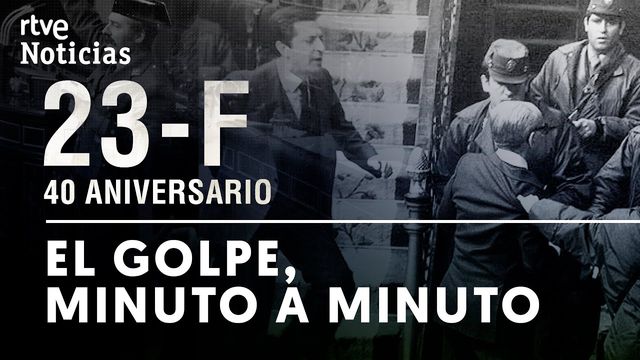
Those were the only three people, coincidentally, who didn’t go under the desks when the guys, the civil guards with the guns came storming into the house, which was in session to vote the successor of Suárez, the prime minister. He manages to weave those lives and that story beautifully. I really recommend that book.
That’s a great book. I also like Soldiers of Salamis and the recent one about the trip with the pope.30Soldiers of Salamis (2001) — a novel about the Falangist writer Rafael Sánchez Mazas, who was spared by a Republican soldier at the end of the civil war. El loco de Dios en el fin del mundo (The Madman of God at the End of the World, 2025) is about Cercas accompanying Pope Francis on his 2023 trip to Mongolia.
Yes, he’s all around really fantastic.
Why is the Spanish civil war still so focal? I’m thinking of your literature, but also your politics. Why is that stuck as such a thing in Spain? It’s a long time ago now.
It’s true. It frustrates me very much, and it frustrates many of us. It probably is because many people think it wasn’t a really well-closed episode. It wasn’t an episode where, if you think of maybe the South Africa reconciliation,31Reconciliation in South Africa: after apartheid ended, the Truth and Reconciliation Commission, chaired by Desmond Tutu, heard victims and perpetrators and could grant amnesty to those who fully confessed to political crimes. there was an explicit reconciliation. If you think of the German dictatorship, there was an actual surrender.
Franco died in bed. He started the civil war. He won the civil war. He installed a dictatorship, and he then died in bed. There was no revolution like in Portugal,32The Carnation Revolution of April 25, 1974, overthrew the Estado Novo regime Salazar had built in Portugal. Franco died on November 20, 1975, still in power. that pushed him out. Many people feel that the transition to democracy33The transition to democracy (la Transición), 1975–1982: after Franco's death, King Juan Carlos and Prime Minister Adolfo Suárez pushed through the Political Reform Act; the first free elections were held in 1977 and a constitution adopted in 1978. The 1977 Amnesty Law closed off prosecution for the regime's crimes, and Franco's remains were moved out of the Valley of the Fallen memorial only in 2019. was not a true people-driven transition, but it was driven by the Franco elites.
The truth is there were many people in Spain at the time, including the communist leader I mentioned, Carrillo, who thought, never again. Let’s try to do things now peacefully and well, and they handled the transition admirably. I think it’s time to put all that behind us.
05The Basques, Catalonia and taxes
Fear of terrorism wrote a Basque tax privilege into the constitution that can't be extended to Catalonia, and Garicano sees no solution to the inequality.
Today, how is it that you understand the public choice economics34Public choice studies politics with the tools of economics: politicians, officials and voters pursue their own interests, just like market participants. One of its main schools is the Virginia school, associated with George Mason University, where Cowen works. of Catalonia?
ExplainerThe Basque "economic agreement" and the Catalan dispute
The Basque Country and Navarre are the only regions of Spain with a special, "foral" financing regime: the first additional provision of the 1978 constitution recognizes the "historical rights" of these territories. Almost all taxes, including income tax, corporate tax and VAT, are collected and to a large extent set there by the provincial authorities, which pay the state a "quota" (cupo) for what it does for the region: defense, foreign policy, running national institutions.
The size of the quota is set by a five-year law negotiated directly between Madrid and the Basque government; under it, the Basque Country's share of such state spending is 6.24%. Critics, Garicano among them, consider the quota too low. All the other regions live under the common regime: the state collects the main taxes and redistributes them among the communities.
In 2012 Catalonia demanded a "fiscal pact" on the Basque model; after Mariano Rajoy refused, Catalan president Artur Mas called early elections, and the "process" toward independence began. In 2024 the Socialists, in exchange for the support of the Catalan Republicans (ERC), promised Catalonia "singular financing" under which it would collect all its own taxes.
There is a very clear historical inequality, which is the Basques had a terrorist movement. Because they had a terrorist movement, they managed to preserve a confederal system of financing in the constitution. They say it’s because of historical reasons. That’s BS. When you do the constitution, you redo the history. You start from scratch. Because people were scared of this terrorist movement, they were allowed the following bizarre exception. Everybody gets financing through the taxation system, and you get some taxes that go to your region and some taxes that go to the central government, except the Basque Country, which has itself collects all the taxes and negotiates bilaterally.35The economic agreement (concierto económico; in Navarre, convenio): under the first additional provision of the 1978 constitution, which recognizes the "historical rights" of territories with special status, the Basque Country and Navarre collect almost all taxes themselves and pay the state the cupo, a fee for what the center does for them. Other regions are funded through the common financing system. The Basque terrorist group ETA was active from 1959 and announced its dissolution in 2018.
Imagine Texas negotiating bilaterally with the US government, how much Texas is going to contribute to the US budget. Now, here’s the smart thing, or the terrible thing. They have enough votes to flip government every few years.36The Basque Nationalist Party (PNV) has more than once decided the fate of governments in Madrid. In May 2018 it struck a last-minute deal with Mariano Rajoy and secured passage of his budget, then a week later backed a no-confidence motion against him that made Pedro Sánchez prime minister. They wait for that negotiation till the moment when they actually can decide that this government is going to continue, is going to drop. They do always the negotiation in that moment, which means that what is called the cupo, the contribution of the Basque Country to Spain, is basically frozen. In fact, even when the pensions go up, the rest of the country pays them. The Basques don’t actually pay more.
They actually are net recipients from Spain, even though they are one of the richest regions. Catalonia sees this and says, hey, we want the same system. The problem is, the Basque Country is small. Catalonia is very large. It’s not sustainable to do a system like that because it would break the budget if you have two of the biggest regions bargaining bilaterally with the state over how much they’re going to contribute every five or 10 years. That’s going to be unsustainable. That’s the reason this basic inequality in the constitution has created a system that is unstable, and that doesn’t actually have any solution at all.
06What politics taught him
Chicago economics explains politics well, but only in the European Parliament did Garicano grasp that parties promote the most obedient people, not the most capable.
What did the University of Chicago teach you about politics that Spain ended up proving wrong?
I think what I learned at the University of Chicago helps very much with understanding politics. Politicians are pretty smart maximizers. I guess voters are pretty inattentive. I think that your colleague, Bryan Caplan, wrote a beautiful book about it, The Myth of the Rational Voter,37Bryan Caplan — an economist at George Mason University. In The Myth of the Rational Voter (2007) he argues that voters aren't just poorly informed but systematically biased: since a single vote decides almost nothing, their errors cost them nothing. He calls this "rational irrationality." which is perfectly rational that they are inattentive. If we doubt why do they have the incentive to stand up and vote, why would they have the incentive to figure out what the program of the different parties is? They’re inattentive. I think that that’s not clear enough from the rational models of political economy.
The thing that I think I understood when I was actually doing politics better than I understood before, and I actually wrote a paper about it, is the importance of the party discipline. The mechanism that connects the voters to the politicians is very weak because we have in many countries in Europe, even in other countries, happens through other means like in the UK, but we don’t need to discuss that, but that mechanism that connects the voters and the parties is a mechanism that is mediated. Sorry, the voters and the law is mediated by internal party discipline.
The parties don’t look for the smartest person for the job or the most competent person for the job or the person who can design the right policy. They actually want people who owe their position to the party so they won’t complain. It’s not the one who in the town hall votes more smartly or proposes the smartest things who gets to the next layer of the proportional representation system.38Proportional representation with closed lists, as in Spain: voters choose a party, and which of its candidates get in depends on the order of the list drawn up by the party leadership. In the UK, which Garicano mentions, MPs are elected in single-member districts. It’s the one who’s been most subordinate to the party decisions.
That’s why the Socialist Party, which is now in enormous corruption scandals, unprecedented in all directions,39The PSOE — Spain's Socialist Workers' Party. Its biggest scandal is the "Koldo case," named after an adviser to former transport minister José Luis Ábalos: Ábalos himself and the party's former organization secretary Santos Cerdán came under investigation. Separate inquiries have touched Pedro Sánchez's wife and brother. there is nobody in the party, and definitely nobody in the Congress supportive of Prime Minister Sánchez, who is actually making any noise because their alternative option is zero. The parties look for people whose outside option is zero in order to make sure that they keep the control. That’s, I think, completely rational, and it would have been predicted by any Chicago economist on the basis of the incentives, but it’s not something that I was as aware of.
For example, how do parties in Europe choose the president of the European Commission? Do they choose the smartest person that is going to make the best calls? No. The leaders of the different countries, they actually want to keep the power. They don’t want somebody in Brussels who is kind of shadowing them. They look for somebody who won’t give them any trouble. We’ve had two Luxembourg people, one failed defense minister from Germany who is the current president.40Commission presidents: the European Commission has been led by Luxembourgers three times: Gaston Thorn (1981–1985), Jacques Santer (1995–1999) and Jean-Claude Juncker (2014–2019). Ursula von der Leyen was Germany's defense minister in 2013–2019, criticized for the poor state of the Bundeswehr and a scandal over consulting contracts; she has been Commission president since 2019. We have people who are just not able to lead, and that is by design.
I think that part of how the party machines and the insight of the way that this promotion, adverse selection,41Adverse selection — an economic term for a selection process that favors the worst candidates. The classic example is insurance, bought most eagerly by those who get sick most often. you could say, this promotion to higher office gets done, was something that I didn’t understand well before politics, I think, not sufficiently well.
07Unanimity, shells and eurobonds
EU unanimity survives because taxes, defense and foreign policy are the core of sovereignty, and in Garicano's view common debt can't work without common revenue.
You’ve served in the European Parliament. Should the EU keep its unanimity rule for major decisions?
The EU has majority rule in single-market decisions and unanimity rules in things that fall out of its core, meaning taxes, defense, foreign policy; in a sense, you could say all the core functions of the state.42Unanimity: under the EU treaties, unanimity in the Council is required for, among other things, tax harmonization, the common foreign and security policy, admitting new members and the multiannual budget. Most single-market decisions are taken by qualified majority. The states don’t want to lose decisions here.
Let me give you an example. Armament procurement. You would say, “Hey, guys, you’re making multiple tanks. You spend many times more in defense than Russia. Just make one tank, make one plane, and one cannon.” What happens? Well, let’s say that Germany wants to export to Israel. France doesn’t want that, let’s say, or Spain doesn’t want that. Germany doesn’t want Spain and France to make a coalition and veto it, and vice versa. What happens is the countries want to have the ultimate right to decide on all defense matters. That means that you get multiple procurement decisions, incompatible shells in the cannons, all of these things.
Now, should we have it? Yes. Should we have the majority vote that you proposed? Yes. Should we understand the politics that make it very hard? Those politics are the core of the state sovereignty, which is taxation, defense, foreign affairs, all this. The functions that the state of 1600 or 1700 had originally are all not in Europe. The politics make it very hard. I told you defense, but I could go through many other examples and show you why even though you would want to think that the gains from a single market, single procurement, et cetera, would be enormous, the politics make it really hard.
Right now, what we’re doing is harmonizing the shells. You have a big meeting group. People, they say, “Oh, I want the 55 millimeters43Fact-checkGaricano says 55 millimeters, but NATO's standard artillery caliber is 155 mm (Wikipedia, "155 mm caliber"). The incompatibility of shells and guns from different European makers became obvious when Europe began supplying ammunition to Ukraine. to be like this.” Somebody says, “No, I want it like this, 55 1/2.” They meet for weeks and weeks and weeks and weeks and come up with pages and pages. People, the citizens are upset. The truth of the matter is there is a political reason for this, and it’s the one I mentioned.
So fiscal—Ireland wants to do a separate tax in Luxembourg, separate tax policy that basically attracts multinationals and lowers the tax base44Tax competition: for years Ireland kept its corporate tax rate at 12.5% and attracted the European headquarters of Apple, Google and Meta; Luxembourg became known for individual tax rulings with multinationals, exposed by the LuxLeaks leak in 2014. and all of those things. The rest would want no arbitration tax bases. This is by unanimity. As long as there’s one loser, no change takes place. In all of these policies, there’s always one loser. Pareto improvements45Pareto improvement — a change that makes someone better off and nobody worse off. are the only ones that can happen.
ExplainerHow the EU Council votes
EU laws are adopted by the European Parliament and the Council of the EU, where ministers from member states sit. In the Council most decisions, including almost everything on the single market, are taken by qualified majority: at least 55% of countries (15 of 27), representing at least 65% of the EU population, must vote in favor. A blocking minority needs at least four countries with more than 35% of the population.
Unanimity, meaning a veto for every country, remains for taxation, the common foreign and defense policy, admitting new members, the multiannual budget and the EU's own resources. An area can be moved to qualified majority without a new treaty, through the "general passerelle" (Article 48(7) of the Treaty on European Union), but the European Council must decide that unanimously too, any national parliament can block it, and defense matters are excluded altogether.
You have your finger on a button, and you can press the button, and the unanimity rule goes away, and it’s replaced by two-thirds majority rule. Do you press the button?
Everything. Not even the US has that, right?
Correct.
Not even the US. Let’s say Europe gets the same commerce clause as the US.46The Commerce Clause of the US Constitution (Article I, Section 8) gives Congress the power to regulate commerce among the states and with foreign nations; a large share of federal powers rests on it. Let me put it like this. On the function that the US government has, Europe loses unanimity, I would say yes.
Could a euro bond47Eurobonds here means joint debt issued by the EU or the euro area, for which countries are liable together (not the older market sense of the word, a bond issued outside the market of its currency). The argument goes back to the euro debt crisis: northern countries don't want to be on the hook for southern debts. work at a significant level under current institutions?
No. You cannot have the four housemates of the apartment share the credit card bill without sharing anything about how the money is spent and how the money is raised. Then the incentives are for all the housemates to go around with the common credit card and spend it.
I’ve been a very big proponent, and I was a proponent of the recovery and reconstruction fund for Europe.48NextGenerationEU — a €750 billion recovery fund (in 2018 prices) agreed in 2020, during the pandemic; to finance it, the European Commission for the first time borrowed on that scale on behalf of the whole EU. We proposed it together with some revenue functions for Europe that would allow for the Hamiltonian compromise.49The Hamiltonian compromise — a reference to the Compromise of 1790: Treasury Secretary Alexander Hamilton got the federal government to take over the states' Revolutionary War debts, along with revenues of its own, chiefly customs duties, to service them. In exchange the South got the capital on the Potomac. In 2020 the recovery fund was hailed as Europe's "Hamiltonian moment." The money gets centralized for some public goods that are European public goods, and you raise it in some European way. That has not happened. We issued those bonds, which we do have, so euro bonds do exist, without really any joint revenue.
08Capital markets and flexicurity
European startups lack not money but people who combine money with know-how, and rigid labor markets are costly above all because they raise the cost of mistakes, Garicano argues.
Capital markets seem to be a big problem. What could we do to make EU capital markets stronger and better?
It’s very interesting because I wrote about this in Silicon Continent, in my Substack, a piece with Per Strömberg.50Silicon Continent — Luis and Pieter Garicano's Substack about why Europe lags the US and Asia in AI, innovation and growth. Per Strömberg is a professor of finance at the Stockholm School of Economics who specializes in private equity and venture capital. Sweden has enough money to fund startups and scale those startups up. Per Strömberg is one of the biggest world experts on private equity, and he happens to be also an expert in Sweden because he’s based in the Stockholm School. The basic story that he tells, and that I wanted to write in a blog for our readers with him, is that it is not really about having the cash. It’s about the cash and the knowledge together.
The money exists. Europe sends the money to the US. We invest in all those startups. The talent exists; all those French and Germans in Anthropic and all these other places. What is missing is the Spotify chief of marketing that actually has seen how companies run, how it’s scaled, et cetera, and now has a lot of money, and starts to fund startups, advise them, and help them.
It’s possible that it is true our capital markets are a problem, but it is possible that just fixing the other aspects, which is at the national level allowing for the big change that Sweden did, is that you don’t pay those taxes on the capital gains as long as they are reinvested in the new startups.51The participation exemption: in Sweden a company pays no capital gains tax when it sells "business-related" holdings in other companies. A founder who sells a startup through a holding company can reinvest the proceeds in new startups tax-free and pays tax only when taking the money out personally. Then you create this ball that starts rolling in which all these startup funders start funding the new startups. You can do it in a country that was supposed to be one of the most socialist in Europe. In fact, it’s a very free market thanks to internal reform.
It’s true the capital markets are not working. It’s also true the capital market changes we’re doing are wrong. The main thing I learned about Europe in that respect is when we do efforts, instead of we put this new law and eliminate the previous ones, the way it often happens in the European Parliament, European Commission, European Council, the European institutions, is we add this new law which is harmonized, but leave all the lower-layer laws there.
For example, we are giving right now in the new capital markets package more power to the European Securities Markets Authority, the ESMA,52ESMA, the European Securities and Markets Authority, has operated in Paris since 2011 and mostly coordinates national regulators, which still supervise most of the market. the SEC at the European level, without removing any power from the SEC at the national level, which means you’re not harmonizing anything. You’re just having more hurdles for people to raise money.
You mentioned your Substack, Silicon Continent. I’m happy to recommend that strongly as well. Now, in labor markets, should severance protection53Severance in Spain grows with tenure: for a dismissal ruled unjustified, 33 days' pay per year of service, capped at 24 months' pay. Before the 2012 reform it was 45 days, capped at 42 months. rise with the tenure of the worker, or why not just let the market handle that?
I have written and argued in favor of more flexible markets. Denmark has found a solution that I think achieves both ends in protecting workers by having relatively or pretty high unemployment insurance, but in making it flexible and able to hire and fire.54Flexicurity — the Danish labor market model: hiring and firing are easy, but people who lose their jobs get generous benefits and help with retraining and finding new work. That would be, to me, the best solution to the current rigidity on European labor markets. The problem is that it costs quite a bit of money because you have to insure people quite significantly to make them be happy to move around.
There are solutions in Northern Europe that allow for this flexicurity, and I would wish that the rest of Europe was adopting them because I do believe that it’s not just that rigid labor markets raise the cost for companies. You can then lower wages and neutralize it. The problem is they increase, hugely, the cost of making mistakes. That’s what a new literature is recognizing. People weren’t clear about that before.
If Facebook makes a mistake, thinks the future is the metaverse,55The metaverse: in October 2021 Facebook renamed itself Meta, betting on virtual reality; its Reality Labs division has since lost more than $10 billion a year. From 2023 the company's main focus became AI. and the metaverse is a completely ridiculous idea, and the future is AI, Facebook can turn on a dime, fire all the engineers in metaverse, and hire all the ones in AI in a week. If Ericsson or Nokia want to do something similar, they’re going to take months and months and months of negotiation with their labor council56Ericsson is a Swedish and Nokia a Finnish maker of telecom equipment. In Sweden the Co-Determination Act (MBL, 1976) requires employers to negotiate with unions before major changes, including layoffs; Finland has a similar Co-operation Act. and so on to the point that they might go under in the meantime.
09Overrated or underrated
In the lightning round Garicano calls Javier Marías, Extremadura and Let It Be underrated and Sgt. Pepper overrated.
Before we get to your new book, Messy Jobs, are you game for a round of overrated versus underrated?57Overrated versus underrated — a regular segment of Conversations with Tyler: Cowen names a person, book, place or dish, and the guest gives a verdict and briefly explains why.
Sure. Go ahead.
Okay. Rosalía58Rosalía (Rosalia Vila Tobella, born 1992) — a Catalan singer who blends flamenco with pop and reggaeton; she broke through internationally with the album El mal querer (2018), followed by Motomami (2022) and Lux (2025).—overrated or underrated?
Rated just fine. She’s amazing.
Penelope Cruz.
Also fine. A very fine actress doing very well.
Javier Marías, the author.
I am a big fan. I would say he deserves wider recognition, so I would say underrated.59Javier Marías (1951–2022) — Spanish novelist and translator, a member of the Royal Spanish Academy, author of A Heart So White (1992) and Tomorrow in the Battle Think on Me (1994); he was often named as a Nobel contender.
The Spanish painter Antonio Saura.
Just fine. Let me just say just fine.60Antonio Saura (1930–1998) — Spanish expressionist painter, a cofounder of the Madrid group El Paso (1957) and brother of the film director Carlos Saura.
I think he’s underrated outside of Spain, for instance.
Yes, he is big in Spain, but I wouldn’t be able to comment on how internationally he’s recognized.
The region of Spain, Extremadura, overrated or underrated?
Underrated. It has some of the best history. Many of the conquistadors came from there.61Extremadura was the birthplace of Hernán Cortés, Francisco Pizarro, Vasco Núñez de Balboa, Francisco de Orellana and Pedro de Valdivia. The old town of Cáceres is a UNESCO World Heritage site. The old town of Cáceres: walls, palaces and towers from the 14th to 16th centuries; a UNESCO World Heritage site since 1986.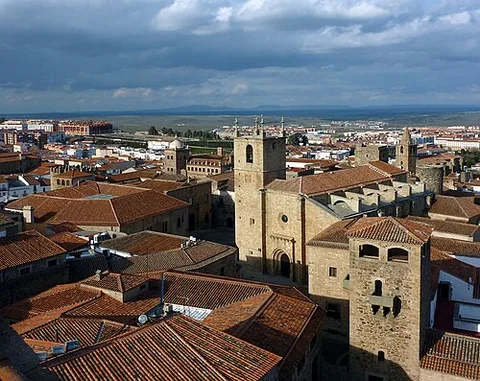 So when they went back, they did a lot of work in making the cities beautiful. The region stopped growing 400 years ago, so it’s all frozen in time, and you have some of the most stunning experiences of walking into a portal toward the past in places like Cáceres, which, by the way, has one of the best restaurants in Spain as well.
What’s it called?
The restaurant in Cáceres, I don’t remember. I ate there a few months ago. It’s a three-star.62Atrio — the three-Michelin-star restaurant in Cáceres run by chef Toño Pérez; it won its third star in November 2022. I don’t remember.
The AIs will know. Within the world of Beatle fandom, is the album Sergeant Pepper overrated or underrated?
I think it’s overrated. I’m not as huge a fan of that as of Abbey Road or of Rubber Soul or, for sure, the earlier ones. I don’t think it’s the biggest piece in the canon.63Sgt. Pepper's Lonely Hearts Club Band (1967) is often called the greatest album in rock history. George Harrison's contribution is the Indian-inspired song "Within You Without You."
There are some weak songs on it. I think the George Harrison contribution is not so wonderful. “When I’m Sixty-Four” is charming, but it bores me a bit.
Yes, I think there is some weakness. I would agree with you.
Is there an underrated Beatles album? Again, this is within the world of Beatle fandom.
People somehow don’t like Let It Be, which I think the post not quite last album, but the really last album. I don’t know why. I always adored it. It’s so relative. Their albums are all hugely appreciated.64Let It Be came out in May 1970, after the band had broken up, and was the last Beatles album released, but it was recorded mostly in January 1969, before Abbey Road.
What is the special food place in Spain that not everyone knows about?
The place where I’m sitting now, I’m in Asturias, recording this from Asturias. It’s the region in the north between Galicia and Cantabria in the Basque country. It’s the oldest bit of Spain in many ways because it was the last place to be conquered by the Islamic invasion in 711.65Fact-checkGaricano says Asturias was the last place conquered in the Islamic invasion, but the Arabs and Berbers who invaded the Iberian Peninsula in 711 never conquered mountainous Asturias: the Asturian victory under Pelagius at Covadonga (around 722) is traditionally seen as the start of the Reconquista (Wikipedia, "Asturias"). Asturias lies between Galicia and Cantabria; the Basque Country is farther east, beyond Cantabria. The churches Garicano mentions are 9th-century Asturian pre-Romanesque architecture, such as Santa María del Naranco, a UNESCO World Heritage site. It’s where the Reconquista started. Historically, it has a long history of Romanic churches and all that, but it also has outstanding food everywhere, wherever you stop. It has amazing nature, unspoiled, beautiful beaches, and it’s completely climate change proof. It has amazing weather.
10How Spanish is changing
English is shaping Spanish far more than Latin American immigration is, in Garicano's view.
How will the Spanish language change?
The way it’s changing is it’s incorporating a lot of English language words and expressions. Probably I am guilty of that as well. People who are very exposed to English introduce expressions and false friends.66False friends — words that look alike in two languages but mean different things: English "actually" means "in fact," while Spanish actualmente means "currently"; English "realize" means "become aware," while Spanish realizar means "carry out." Under English influence, Spanish words start being used in their English sense. We are so careful not to introduce false friends from Spanish into English, and then somehow they come back from English into Spanish, and you see words that are used. If you are English speaker, you realize, “Oh, that’s completely the English usage.” That’s the biggest word. Many words that are ambiguous, instead of shifting toward the Spanish use, they shift toward the English one.
If I’m in Latin America, I notice that the conditional and subjunctive are used much less often than in Spain. Given that Madrid now is, what, 20 percent Latin American, is this going to affect Spanish in Spain?
That’s a great point. We are getting a very big Latin American influx. I haven’t noticed that. I haven’t noticed the change in the use of subjunctive. We use, unlike the French, not just the subjunctive present. I don’t want to discourage our listeners from learning, but we use a lot the compound past subjunctive. If you make a future statement that is hypothetical, the hypothetical future is subjunctive. If I were a rich man—past subjunctive.67The subjunctive: in spoken French practically only the present subjunctive survives, while the imperfect and pluperfect subjunctive live on only in literary language. In Spanish the imperfect and pluperfect subjunctive (hubiera hecho, "would have done") are in constant use, and clauses about the future require the present subjunctive: cuando llegue, "when he arrives." "If I Were a Rich Man" is the song from the musical Fiddler on the Roof. I haven’t noticed people using it less, or at least not among people I hear regularly.
In Mexico, at least nonlearned people, they don’t use the future tense very much. They’ll use the present tense and maybe throw in the word mañana, or it’ll depend on context. Spanish in Spain, is it going to go that way as well?
I haven’t noticed those changes in Spain. I think that the impact of English language is orders of magnitude higher than Latin America. That’s my sense, but I would have to consult my favorite LLM before being so sure.
11Why AI won't bring mass unemployment
AI will take the clean jobs, while the rest of work gets messier in ways AI can't handle; that is the core argument of Messy Jobs.
On Messy Jobs, your new and excellent book, you argue very persuasively, “In my view, AI will not lead to anything like mass unemployment, maybe not even to a rise in unemployment, because jobs will become messier and the AIs won’t be able to do them.” Is that a fair description of part of your argument?
I think that’s completely right. Yes.
Now, I agree with you, but I think my worry is the opposite, that I know a lot of people, they want simple jobs, they’re okay with some measure of tedium, and that if most jobs become messy jobs, for them, that’s quite stressful, and they’re upset and disoriented. Do you worry about that?
I think that we will have to have a tolerance for human relations. Is that what your friends don’t want? We have a tolerance for relational work that is complex, that has politics in it, that has a big human component, and that’s the part that is going to stay. If people just want to be in their desk typing away, I think two good ways to think about it is work from home and outsourcing. If you think of which jobs were offshored, let me say offshored,68Offshoring — moving work to other countries. The big wave came in the 1990s and 2000s, when call centers, back-office work and programming moved to India, where Infosys, Wipro and Tata Consultancy Services grew up. in the big offshoring wave to India, those are jobs that are not messy. They’re clean. The company specifies the jobs. They say, “Okay, we can specify this job perfectly. Let’s ship you up.”
Those jobs are the same exact ones that are under complete threat of disruption. A lot of the work from home, when it doesn’t involve a lot of meetings, I guess, has the same feature. Those jobs are clean, single-task, and very often verifiable. You can just see how the performance is going and have your RL, your reinforcement learning loop69Reinforcement learning (RL) — a model learns by trial and error, rewarded for correct results. It works best where results can be checked automatically, hence Garicano's emphasis on "verifiable" jobs. work on those. I think those are gone.
The messy component that I want to emphasize, many people will say, “Oh, AI will tend to the messiness as well.” I think that there is some messiness that is contingent and that AI can streamline, but there is a lot of messiness that is both relational and has to do with a deeper aspect of the knowledge problem that doesn’t really go away. As AI advances, many aspects of Hayek, Polanyi, and all these knowledge problems are still there.70Friedrich von Hayek, in "The Use of Knowledge in Society" (1945), showed that the knowledge needed for economic decisions is dispersed among many people and tied to particular circumstances of time and place, so it can't be gathered in one center. Michael Polanyi introduced the idea of tacit knowledge: "we can know more than we can tell" (The Tacit Dimension, 1966).
12Retraining and job bundles
Retraining programs for new occupations generally fail, Garicano says, but teaching people to use AI in their current jobs is easier.
How much retraining will be required and how frequent will that retraining have to be? If I think of me working with agents, I have to retrain myself every month or two. That’s difficult for me. It’s not stressful given my position, but I can imagine it would be stressful. Can we really just put a big chunk of the labor force through that?
Raffaella Sadun and others at HBS71Raffaella Sadun — a professor at Harvard Business School who studies management practices and their effect on productivity. have been working on this. One of the things that is frustrating about retraining programs, and not just retraining individuals, but retraining programs, is that they generally don’t work.
The favorite middle-of-the-road free market economist prescription for technological change is let’s retrain people. We find that this is really, really hard to do. Say you wanted to retrain a clinician, a doctor who’s learned to diagnose illnesses, and that suddenly gets very easy—this is not one of our examples, but just to give an example—to become a plumber. It’s not that you couldn’t retrain him because the plumbing skills are so hard, which they probably are, to be honest, but not just that, but because there’s a lot of social identity and other aspects that are tied to the kind of job you do.
Retraining is a huge barrier. The way we retrain ourselves, as Kuhn said, talking about scientists, is by dying, and the new generations do new things.72Planck's principle: a new scientific truth wins not by convincing its opponents but because they eventually die and a new generation grows up familiar with it. The idea goes back to Max Planck; Thomas Kuhn quotes him in The Structure of Scientific Revolutions (1962). I share your concern about how easy it will be to get people to learn new tricks. On the other hand, my Ma is 84 years old, and she talks to ChatGPT all the time. She has good, long conversations. I’ve updated it so that she now has the better version that you can talk over it and argue back, the very recent improvements.
The LLMs are becoming better at eliminating all the prompting skill and all the skill that went into making agents, et cetera. It seems like it’s easier to use. I think the hardest thing about LLMs—maybe that’s easier to retrain—the hardest skill about LLMs is knowing what they can do. Most people have no idea what you could do with your AI. That’s the part where a short focus lesson to a relationship manager at a bank, where you tell him, here’s the case, you’re going to visit your client, here are the six questions you should ask—I’m doing some work with a big bank on this exact topic, a big experiment—here are the questions that you could ask before you have the client meeting, maybe that retraining is easier on the use case as opposed to retraining for new jobs, which I think is very hard.
Do you think the natural rate of unemployment73The natural rate of unemployment — the unemployment that remains even when the economy is running normally, because people are between jobs (frictional) or their skills don't match demand (structural). Cyclical unemployment comes on top of it in downturns. will go up? I don’t mean cyclical, but just due to search, retraining?
My sense is that we have several hundred years of automation, and we do have moments of blips, but I think the natural rate is going up much more due to other things. Well, if you allow me to group participation in, which has to do with disability and mental illness and people not feeling well and all that, rather than to a permanent increase in retraining needs.
We have some degree of recursive self-improvement74Recursive self-improvement — a scenario in which AI helps build the next, stronger versions of AI, and progress accelerates itself. right now. Arguably, there’s more to come. There’s a new model out every month or two. For the most part, they’re much better than the model that existed a month or two earlier. Just how exactly are people supposed to keep up with that? Do the jobs get messier at an equivalently rapid pace?
ExplainerWeak bundles and strong bundles
The idea comes from Garicano, Li and Wu's paper "Weak Bundle, Strong Bundle: How AI Redraws Job Boundaries" (CEPR, May 2026), on which Messy Jobs is built. AI's impact on an occupation is usually measured by the share of its tasks AI can perform. But the labor market pays not for tasks but for jobs, bundles of tasks, and what matters is how costly it is to break a bundle apart.
- Weak bundle: the tasks can be split among different people. AI takes some of them over entirely, the job's boundary shrinks, and if demand for the final product barely grows as it gets cheaper, fewer people are needed: classic substitution.
- Strong bundle: the tasks can't be handed off separately. AI helps inside the job, like a bank's relationship manager who prepares better for a client meeting, but doesn't remove the person from the bundle.
The authors' conclusion: the bundling of tasks protects both jobs and workers' share of revenue.
You lose certain bits of the job. Certain things get unbundled. Other things don’t get unbundled. Jin and Yanhui and me talk about strong bundles and weak bundles. Weak bundles, the job breaks into pieces, and some parts are done by the AI. When the job is a strong bundle, the AI comes into your bundle and helps you, like in a relationship manager, an account manager for a bank who gets to prepare the meetings better, but still needs to have the cognitive task bundled with seeing the clients.
I think that part doesn’t quite require staying as close to the frontier75The frontier — the strongest models available at a given moment, known as frontier models; they come from OpenAI, Anthropic, Google DeepMind and a few Chinese labs. as you and me are staying. I think that part requires knowing that the LLM can help you prepare the client meeting. You ask the LLM, “Please help me prepare this client meeting. Here are the budgets and the balance sheet statements of the client. Help me see which products of the bank I could offer.” I don’t think that needs really to know what the actual frontier model is and how does it differ from the previous ones.
13Where is the leisure dividend?
The leisure dividend may already be arriving quietly through shadow use of AI, though Garicano himself is working harder than ever.
Now, as you well know, virtually all new technologies and productivity improvements, they lead to more leisure over time in a good way. I don’t mean unemployment, but actual enjoyed leisure. If I think of the current day, there’s some people, like the two of us, we choose to work more to learn about AI. Then there’s other people; they feel they have to work more to learn about AI to not lose their jobs. So far, there’s no leisure dividend. People basically are working more. When is the leisure dividend going to arrive?
I’m not sure that’s the case. Let me give you two data points. One is a Chinese CEO I had dinner with. My two co-authors from Hong Kong University and I, we had dinner with this CEO who told us she sees every one of her IT people more productive. She looks at the productivity of the overall IT department, nothing happens. She said to us, “I think they are smoking the productivity gains in the corridor.”
The second is from the recent NBER Summer Institute.76The NBER Summer Institute — an annual multi-week conference of the US National Bureau of Economic Research in Cambridge, Massachusetts, held in July. There was a paper in health which gave doctors scribes77AI scribes (ambient AI scribes) — software that listens to a doctor's conversation with a patient and writes the medical record entry itself; among the most widely used are Microsoft's Dragon Copilot (formerly DAX Copilot) and Abridge. and they all adopted. Adoption is slow. Well, the automated scribes went up to 100 percent of adoption really very quickly. You see doctors scheduling more meetings and doing more stuff. Eventually, and there was a recent New York Times article from a doctor exactly arguing this. She was saying, “I have more time for my yoga classes.” She was actually using the scribe which transcribes the meetings and which stops a lot of the bureaucratic work that is nasty for a doctor. My wife is one, so I know how much they hate that. She was actually doing more yoga. This actually shows up in this paper to some extent.
I do think that what we see with this usage, this shadow usage of AI in the job, which is people have their own computer, and they actually ask questions that maybe their corporate AI doesn’t allow them to ask, has a lot of welfare gains in the form of leisure and lower work stress in the job because you just ask the LLM, you post it there, and you just spend some time browsing the web. I am not as sure that the leisure is not expanding, but definitely not mine. I’ve never worked as much as grad school.
Say in the short run when taxes change, almost always the substitution effect overwhelms the income effect.78Substitution and income effects: when the after-tax pay for an hour of work rises, two effects pull in opposite directions. The substitution effect: an hour of leisure costs more, so working pays better. The income effect: people get richer and can afford more time off. Which one wins determines whether people work more or less. Tax cut, people work more. If taxes go up, people work less. Of course, we see this in Western Europe. Aren’t these AI productivity improvements a bit like tax changes? You’re more productive. In the aggregate, if doctors are more productive, they can earn more; they’ll work harder. I’m not complaining about that fact, but maybe we should expect that instead of a leisure dividend.
Both things can happen. We are seeing Jevons effects79The Jevons paradox: William Stanley Jevons observed in The Coal Question (1865) that more efficient steam engines didn't reduce coal consumption but increased it: coal became more economical, so it was used more widely. in many of our own utilities and in many of our own decisions to work. It’s definitely the case for you and I, as you said. Just for the amusement of our readers, I guess, many of you have a WHOOP. I was really very happy with my WHOOP until January this year. I was 53 years old in physical age. Since January, it’s been steadily declining. I’m now 57. I grew four years in six months.80WHOOP — a screenless fitness band that tracks heart rate, sleep and recovery around the clock. Since 2025 it also calculates a "WHOOP Age," a physiological age based on sleep, strain and heart rate. That’s because I am not sleeping a lot. I am running things into the night and going to bed thinking, “Oh, I should have done this old thing. Why didn’t I try this?” Yes, it definitely happens to me, so why wouldn’t it happen to those doctors?
14AI sovereignty and the second-mover strategy
AI sovereignty is out of reach for Spain and Europe, so Garicano argues for a second-mover strategy: adopt others' models fast, be a big customer and keep the market open.
Is there a plausible scenario whereby Spain in particular, and I don’t mean the EU, I mean Spain, achieves AI sovereignty? You’ve written about this on your Substack, Silicon Continent. What’s your view right now? Keep in mind, the whole stack in some way has to be under your control, right?
Yes, I don’t think that’s a substantive objective, neither for Spain, nor for Europe. Europe as a whole, and Spain in particular, are nowhere on hardware, except for ASML, which does the capital equipment. I’ll go back to ASML, the producer of the machines that make the EUV chips.81ASML — the world's only maker of EUV (extreme ultraviolet) lithography machines, without which the most advanced chips can't be produced. German links in the chain include Zeiss optics and Trumpf lasers. We are nowhere on the language models, the frontier models, neither in open weights,82Open weights — a model whose parameters are published, so it can be downloaded and run on your own servers. Meta (Llama), DeepSeek, Alibaba (Qwen) and Mistral release models this way; closed models are accessible only through the developer's service. nor on closed models. We have Mistral, but it’s not really at the level of the Chinese ones. We are not really there on the data centers.
All the elements that are needed are not there, except for ASML, which is a Dutch company and is not under European jurisdiction, Dutch jurisdiction, if you want. Much of the supply chain is German. What you can aspire to, I’ve been defending the second-mover strategy for Europe83Second-mover strategy — instead of paying to be first, quickly adopt someone else's invention once it has been proven and become cheaper. Garicano compares AI to railroads: investors lost a great deal of money in Britain's "railway mania" of the 1840s, but the lines that were built benefited the whole economy. with my colleague Jesús Saa-Requejo. What we are defending is being a fast implementer, profiting from the gigantic investment that the Americans are making in many things that will actually, like the railroads, eventually not lead to significant value capture, but will generate enormous dissipated welfare gains for everybody.
Let’s be the ones who enjoy those welfare gains by adopting AI very aggressively, becoming big clients. When you’re a big client, like China showed with Nvidia, you have bargaining power because the people who sell to you, your vendors, are going to lobby the government to keep selling to you.84Nvidia and China: after the US restricted sales of AI chips to China, Nvidia and its CEO Jensen Huang lobbied Washington openly for the right to sell at least cut-down versions of its accelerators to Chinese customers. Become a second mover. Try to make sure to have options. Keep it interoperable. Make sure the models can easily be switched, which at the moment is very, very easy. You just need to change the API call, and it becomes seamless. That’s the best that we can do. I don’t think sovereignty is an objective at this moment.
How much bargaining power does Spain lose in this new world?
All countries, except the US and China, will be dependent on AI, which they don’t control. My view is that, and I’ve disagreed with my blog co-author and son, Pieter, on this—this is the one point on which we disagree. He’s very convinced that it’s all about frontier models and he’s written a couple of posts on that. I think that you need frontier models in research and innovation. You need frontier models in some adversary applications like war.
In order to have good law, good professional services, good medicine, good accounting, good companies doing proprietary research in their own servers, you don’t need a frontier model. You can be three, four months behind the frontier as long as you have the harness in-house,85Harness — everything around the model in a product: instructions, tools, data access, checking of results. If the harness is your own, the model underneath can be swapped out. the data in-house. You’re better off without and I think that this letter from very recently that Nvidia CEO and Microsoft CEO stimulated and everybody else wrote goes in this direction. The open weights model allows you to keep proprietary your own data and your own know-how. A country like Spain, or Europe as a whole, could build a strategy on that ability to switch and to keep the market competitive and contestable.86Contestable — in the theory of contestable markets (William Baumol, John Panzar and Robert Willig, 1982), if a market is easy to enter, even a few incumbents have to keep prices at competitive levels, or new players will come in.
15Vietnam and a return to economics
Above all Garicano wants to get back to economics and work out what stays messy when thinking is cheap.
Let’s say you were liberated from your AI learning responsibilities and given two or three free weeks in life, all expenses paid, to explore some corner of the world where you’ve never been. What’s your choice and why?
I think I’ll go to Vietnam. It’s one of the places I’ve been dreaming of going for a long time. I think it has the cuisine, the landscapes, the people, the economic side, the technology to see how they’re doing all this transition, the nature. I think it would be Vietnam.
Final question. What is it you want to learn about next, other than Vietnam?
I am continuously fascinated by economics. I learned a lot of price theory in Chicago from Becker and Murphy and Rosen, and those were my advisers87Gary Becker (1930–2014) — 1992 Nobel laureate who applied economic analysis to the family, discrimination and education; Kevin Murphy — winner of the 1997 John Bates Clark Medal, who studies labor markets and inequality; Sherwin Rosen (1938–2001) — author of work on the economics of superstars and hedonic prices. All three taught at the University of Chicago. and many others. I find that these tools are allowing me to learn much more and to be deeper on many questions and to think harder about what is it that remains messy? What is the knowledge problem once cognition is very cheap, and why is it hard to reproduce with the machine? All of those questions are infinitely interesting. I spent quite a few years outside of economics because of the politics detour.
Of course, I was in charge of economic dossiers in parliament, but I was not in the frontier of economics. I realized how much I like it. My desire is to learn more about economics and help the economics discipline and the students make this beautiful transition that we’re going to see that suddenly it’s going to accelerate all sorts of interesting research.
Luis Garicano, thank you very much.
All right. Thank you, Tyler. It was my pleasure.


