Book
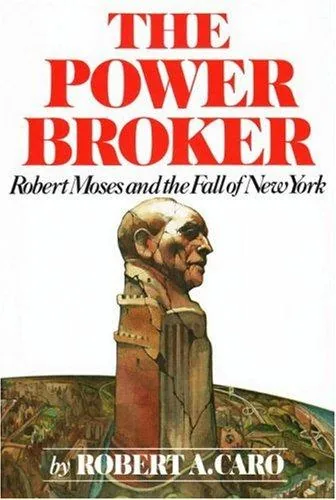
The Power Broker: Robert Moses and the Fall of New York
Robert Caro's biography of Robert Moses (1974), which won the 1975 Pulitzer Prize: the story of how an unelected official reshaped New York for decades, and what it cost the city.
Caro, then a Newsday reporter, became curious about Moses in the early 1960s after watching state legislators obediently vote for his bridge across Long Island Sound. He expected to finish the book in nine months; it took seven years and hundreds of interviews, and his wife Ina sold their house so he could keep going. Moses gave Caro seven interviews but cut them off when the questions got uncomfortable. The manuscript grew to about a million words, and editor Robert Gottlieb had it cut by a third, to 1,336 pages. Caro shows how a young idealistic reformer, beloved for his new parks and bridges, became an official who accumulated power through public authorities he controlled, put cars ahead of public transit and razed whole neighborhoods for expressways. The Modern Library named it one of the 100 best nonfiction books of the 20th century. It is still debated: historian Kenneth Jackson, for one, considers the story that Moses built low overpasses on Long Island parkways to keep buses of poor people away from the beaches a myth.
In the episodes
2- October 30, 2026What Robert Caro learned about power after studying it for 50 yearsmentionedDwarkesh Podcast
- 05:30the book on Moses; some say building got harder after it
- October 29, 2026What I learned about power from LBJ and Robert MosesmentionedDwarkesh Podcast
- 07:58the book that left Moses remembered as the man behind New York's decline