

Conversations with Tyler
Chapters
Cowen proposes escaping the stupidity of current politics with a Conrad novel, and Hanania immediately explains why the book is about politics after all.
Read the chapter- Hanania's new book Kakistocracy is largely about the stupidity of current politics, so Cowen suggested talking about "some other stupidities": Nostromo, which he reread and his guest was reading for the first time.
- Hanania sets the scene: the fictional Costaguana, its Occidental Province on the Pacific, the mine run by the Englishman Charles Gould, an uprising led by the minister of defense Montero, and the seaman Nostromo, tied to the hotel keeper Giorgio Viola and his family.
- Cowen adds that the novel came out in 1904, was long ignored until the critic F. R. Leavis resurrected it, and is now typically considered Conrad's greatest.
- It's one of Cowen's favorite novels, maybe in his top 30, even though he finds it difficult to read.
- Hanania worked through the geography and the characters with the help of AI and a map of Costaguana he found online.
Hanania reads an almost pro-business book, while Cowen sees a critique not only of socialism but of classical liberalism too.
Read the chapter- Hanania was struck by how modern Latin America's dysfunction looks in a 1904 book that barely mentions socialism, and calls it something like "Ayn Rand with less caffeine."
- Poor countries need Western capital and expertise, Hanania says, but nothing is politically less popular than rich foreigners, which makes them easy to demagogue.
- For Cowen, socialism in Conrad is a symptom, a later form of the dead hand of history, rent seeking and corruption, and classical liberalism is another pathology inserted into a hopeless situation.
- Hanania points out that the province grows richer and the miners are loyal enough to Gould to march on the city, and Cowen answers that Conrad cares about moral progress, not living standards, and doesn't see much of it there.
Hanania sees Conrad as a romantic about honor but not about politics, and still a classical liberal, while Cowen finds in him the idea that what is terrible in "savages" recurs in the civilized.
Read the chapter- Conrad, for Hanania, romanticizes honor and love but treats politics as a dirty world, and on a scale where socialism and populism are a one and classical liberalism a four, he still counts as a classical liberal.
- Cowen replies that Conrad's noble savages aren't noble, and what's terrible in them gets recreated in us at higher levels of wealth and power, which Hanania says is most explicit in Heart of Darkness.
- Cowen calls Gould a "pretend Englishman" corrupted by three generations in the place, and Mrs. Gould the noncorrupt Gould, who has no power.
- Hanania objects that without someone like Gould there is no mine, and suspects Rand got the idea of destroying the world and bringing it down with you from Conrad, who does it less cartoonishly.
To Cowen, Nostromo is a rotten guy, a thief and a fraud, while to Hanania he is a vain but decent man whose heart is in the right place.
Read the chapter- Cowen goes through the hero's four names: "our man," the forgotten Italian Gianni Battista, the man of capacity Capataz de Cargadores, and finally Captain Fidanza, "captain of faith," with all the belief in him turning out to be mere faith.
- Hanania sees vanity as Nostromo's chief flaw, not much of a sin in Conrad's time, and calls his theft the most understandable, sympathetic kind imaginable.
- Cowen thinks Teresa Viola has the best critique of him: you only care what people think of you, and you're really a fraud.
- Nostromo's relationship with Viola's daughters is the worst in the novel for Cowen, loveless, mediated through the father, transactional, while Hanania grants that Conrad doesn't admire it but sees a playboy whose heart is in the right place.
Cowen hears Conrad's own voice in a passage saying liberty and democracy in Costaguana taste of folly and murder, and Hanania insists the local demagogues are still far worse than the Western money men.
Read the chapter- Cowen reads the passage "Liberty, democracy, patriotism, government, all of them have a flavor of folly and murder" as the view of a liberal who left Russian tyranny for England and then saw what those principles turn into around the world.
- Hanania calls José Avellanos, a good man who backs Gould, the mine and classical liberalism, the conscience of the novel, and Cowen answers that Conrad mocks him too, since his only remedy is a newspaper called Porvenir, "future."
- The local generals and demagogues, Hanania says, are vain, cowardly and cruel, and Costaguana's homegrown political leadership is "just a horror show."
- Cowen calls his guest a comparativist and reads Conrad as Shakespearean: the point isn't which regime is better but the situation people find themselves in.
The scrambled chronology, the near-total absence of religion and the weight on travel all point, for the two, to Conrad's view of history and of knowledge.
Read the chapter- Hanania enjoys working out where he is on the timeline and sees a meta story in it: looking back, events become a jumble, the way Captain Mitchell's telling leaves his listeners lost.
- There's almost no religion in the novel beyond Nostromo's late churchgoing and the reactionary Father Corbelán, and Cowen ties this to Conrad's sense of tragedy and unbelief, and in Heart of Darkness to Kurtz setting himself up as a god.
- Hanania admires how perceptive Conrad's essay "Autocracy and War," on Russia and Japan, turned out to be, and finds Conrad's nationalism organic and unaggressive, with England as the nation closest to virtue.
- For Cowen, travel and geography are Conrad's most fundamental forms of knowledge, political knowledge included.
Conrad, who had never really been to Latin America, understood it without nostalgia and foresaw that American capital would shape the region, and Panama turned out to be a US intervention that worked.
Read the chapter- To Fredric Jameson's claim that a Latin author could not have written Nostromo, Cowen answers that Conrad has none of García Márquez's misty nostalgia and had never really been to Latin America.
- For Hanania, Latin America in the novel is less a culture than a geographic region where Italians, Englishmen and Indigenous people play against one another.
- Toward the end Conrad seems to see that US capital will transform the region, and Hanania notes that Panama broke off from Colombia with US support just as Conrad was writing.
- Cowen admits that circa 1980 he feared Panama would be "the next Vietnam," but the regime change worked, and it's now one of the wealthiest and most peaceful countries in Latin America.
Both find that the books themselves, a biography and the places described serve better than literary scholarship, and that a good book is worth reading twice in a row.
Read the chapter- Hanania started with the novel cold, then read Conrad's four big novels, Maya Jasanoff's biography and the essay "Autocracy and War," and found the secondary literature not worth reading.
- Of the 16 or so articles Cowen printed from JSTOR, two were good, by Robert D. Kaplan and Claire Rosenfeld, and he suspects many literary scholars don't know the world that well.
- Hanania watched BBC documentaries about the Congo River, and Cowen finds a "very Conradian story" in a country that was probably much richer in 1960 than it is today.
- Cowen recommends reading good books twice in a row, and Hanania's second pass switched between the audiobook and the Kindle.
For Hanania, Latin American crime comes from democracy and civil liberties combined with low state capacity, and Cowen adds incomplete nation-building and housing patterns.
Read the chapter- Costaguana has no street crime, only political violence, and Hanania sees crime as a more modern problem that has gotten worse in many places over the last 30 to 40 years.
- The countries far more violent than their wealth predicts, Hanania says, nearly all have high democracy scores, and cartel bosses run their empires from jail, which would be unthinkable in the Middle East.
- Cowen notes that very poor places are often safe because everyone knows each other, and Hanania recalls his mother's family in rural Jordan, where a criminal would have been disowned by everyone.
- For Colombia and Mexico, Cowen points to incomplete nation-building, rapid urbanization and unsettled questions of who is in charge, while Hanania says Bukele excites people because nobody else has fixed the problem.
- In South Africa the violence is concentrated in the townships, while Brazil's tall apartment blocks mix everyone together, which for Cowen makes Brazil the strongest case against YIMBYism, at least on crime.
Hanania explains that he wasn't badmouthing Shakespeare but denying objective greatness in art, and ends up deferring to the verdict of history.
Read the chapter- The fight began with SBF's musings, after which Hanania wrote that there is no objective greatness aliens would recognize, because we judge art through prestige and social proof.
- Hanania readily grants Shakespeare's innovation for his time and influence on the culture, and on the greatest English-language writer he defers to history, which means Shakespeare.
- He recommends Dennis McCarthy's book arguing that Thomas North actually wrote Shakespeare, and Cowen says he'll ask GPT Pro before deciding whether to read it.
- On a desert island Hanania would take Conrad, and Cowen approves: Conrad is a good reread.
Cowen thinks less of the media than a few years ago, while Hanania still ranks it above Twitter and podcasts and hopes AI can reverse the trend.
Read the chapter- Cowen used to be relatively pro-media, but the AI coverage, some of it hostile, some of it whining, with the New York Times not covering GPT-4 for a week, has lowered his opinion.
- Hanania grants a negativity bias, especially on tech, but says Twitter and podcasts are worse and a world without fact-checkers and journalistic institutions is a terrible place.
- Cowen floats the idea that a general collapse hits the least capitalized places first, like Twitter, Substack and TikTok, and reaches the media last, the way populism reached the Democrats.
- Hanania is optimistic that AI can turn things around, since people trust chatbots and AI patiently takes apart conspiracy theorists' points without condescending to them.
Hanania values populist-right writers who escape partisan bias and credits Trump with the AI boom, but finds the flattery around him degrading.
Read the chapter- Hanania's picks are Steve Sailer, Helen Andrews, though not her writing on feminization, and Dominic Cummings.
- The lowest form of bias, for Hanania, is partisan, "my side is right," which on the right often becomes hatred of liberals, so he looks for writers with some independence.
- Asked why the stock market is so high under the populists, Hanania says it could be better, but Trump deserves credit for the AI boom.
- Trumpism, for Hanania, mixes libertarianism, nativism and personal corruption, and even if it works out economically, the praise at cabinet meetings is degrading.
Liberals live by norms of restraint, Hanania says, while conservatives, as they turn self-consciously anti-liberal, are leaning into human nature.
Read the chapter- Liberal women shake hands because HR norms are stronger among liberals, while conservatives, Hanania says, are "leaning into human nature."
- Cowen thinks right-wing men are bimodal, either like Trump or like Romney, while well-educated Democratic men have awesome results on marriage, children, education and income.
- Hanania adds a third group of right-wing men, incels and shut-ins, and Cowen agrees to "trimodal."
- Whoever conforms to the dominant ideas becomes a liberal, Hanania says, and in grad school he was surprised how seriously his peers took ethics review for a survey.
A book still makes sense for its author, Hanania says, and next he is thinking about fiction and wants to dig into quantum physics at least once in his life.
Read the chapter- Hanania has three books, on foreign policy, civil rights law and populism, and is thinking of trying fiction next.
- For an author, a book consolidates two or three years of thinking and gives people a reason to invite him on podcasts, but as a knowledge-producing device Hanania isn't sure.
- Next he wants to spend a month or two on quantum physics and its philosophical implications, at least once in his life.
Quotes
On Nostromo himself
“Finally, he’s called Captain Fidanza, captain of faith. All the belief in him, all along, was just that of faith. He’s a rotten guy who’s a thief and doesn’t mind killing people.”
Tyler CowenRead from 12:05On politics in Nostromo
“The words one knows so well have a nightmarish meaning in this country. Liberty, democracy, patriotism, government, all of them have a flavor of folly and murder.”
Tyler CowenRead from 17:13On the novel's Western money men and local leaders
“Yes, these are people with flaws, all of them, but just, my God, the domestic, organic political leadership that emerges in Costaguana, it’s just a horror show.”
Richard HananiaRead from 21:07On the US invasion of Panama
“When that happened, I’m thinking like, ‘Oh my goodness, another one of these interventions. This might be the next Vietnam.’ I was wrong. It went very well. Panama is one of the wealthiest nations in Latin America.”
Tyler CowenRead from 32:59Why Latin America has so much crime
“It seems that Latin America actually takes these democracy and civil liberties and these ideas pretty seriously. It seems that they have this combination of democracy and civil liberties, but low state capacity, and that seems to be a bad combination.”
Richard HananiaRead from 40:22On development and street crime
“Brazil has done better for people than South Africa. For crime, Brazil is the strongest case against YIMBYism.”
Tyler CowenRead from 43:52How AI argues with conspiracy theorists
“They know more about a topic than you have, so they’re actually very difficult to argue with, but AI is just going to sit there and take apart their points one by one. It’s not going to condescend to them. It’s not going to tell them that they’re idiots.”
Richard HananiaRead from 53:42On partisan bias
“To me, when you are biased in the direction of ‘my side is right’ on the political spectrum, you’re abdicating being an intellectual. You’re just giving your mind over to the mob.”
Richard HananiaRead from 55:23
Summary
Tyler Cowen and political scientist Richard Hanania, whose new book Kakistocracy argues that populism ends in disaster, set out to take a break from politics by discussing Joseph Conrad's Nostromo (1904), a novel about an invented South American republic, a silver mine and foreign capital. The break doesn't last. Hanania reads the book as almost pro-business: Western "material interests" bring development, while the local general-demagogues are half-literate, vain and cruel, so that by comparison Conrad comes out a classical liberal, if only a four on a scale of one to ten. Cowen thinks Conrad isn't comparing regimes at all but, like Shakespeare, showing tragedy: liberty and democracy in Costaguana have "a flavor of folly and murder," and what is terrible in the "savages" reappears in the "civilized," just at higher levels of wealth and power.
They also argue about Nostromo himself, a rotten thief (Cowen) or a vain but decent man whose heart is in the right place (Hanania), and discuss the novel's scrambled chronology, its near-total absence of religion, Fredric Jameson's claim that no Latin American could have written it, and Panama as an unexpected success of American intervention. Both explain how they prepared: Hanania read four of Conrad's major novels, Maya Jasanoff's biography and the essay "Autocracy and War," while Cowen reread the novel twice in a row and printed out articles from JSTOR, of which two turned out to be useful.
The second half asks why Latin America has so much crime even though it isn't all that poor. For Hanania, it's the combination of democracy and civil liberties with a weak state that can't even control its own prisons; Cowen adds unfinished nation-building, rapid urbanization and Brazil's mixed-up building patterns as an argument against YIMBYism. Then: is Shakespeare objectively great, has the media gotten worse (Hanania still ranks it above Twitter and podcasts and hopes AI can be an antidote to misinformation), who is worth reading on the populist right, why conservative women hug while liberal women shake hands, and what Hanania will do next: perhaps fiction, but first of all quantum physics.
Mentioned
- Kakistocracy: Why Populism Ends in Disaster00:26Richard's new book on populism
 Joseph Conrad00:49author of the novel that fills the first half of the episode
- Nostromo: A Tale of the Seaboard00:49the main subject of the conversation
 Ayn Rand04:20"Ayn Rand with less caffeine" and a hero ready to destroy everything
Show 19 more mentionsShow fewer mentions
- Heart of Darkness09:38Kurtz, who makes himself a god
 William Shakespeare21:51reading Conrad as a Shakespearean, and the argument over objective greatness
- The Secret Agent22:16another political novel by Conrad, about pathetic terrorists
- Lord Jim26:50Richard's favorite Conrad novel
- Autocracy and War27:17a prescient 1905 essay about Russia
 Fredric Jameson30:17could a Latin American have written Nostromo
- The Dawn Watch: Joseph Conrad in a Global World34:20the Conrad biography Richard prepared with
 JSTOR35:15where Cowen looked for articles on Nostromo: of 16, two were worth it
- Amazon Kindle38:46Richard reread the novel alternating between the audiobook and the Kindle
 Nayib Bukele43:02why his crackdown on gangs is so popular
 Sam Bankman-Fried44:38his musings started the Shakespeare argument
 ChatGPT47:14Cowen will ask GPT Pro before reading the book about Thomas North
 Twitter49:35Richard ranks the media above Twitter and podcasts
 Grok53:25people on Twitter ask it whether something is true
 Claude53:25better than Grok, along with ChatGPT, in Richard's view
 Steve Sailer54:42first on Richard's list of the populist right
 Helen Andrews54:42good on crime, worse on feminization
 Dominic Cummings54:42third on Richard's list
 Donald Trump55:47Trumpism: the economy versus honor
Transcript
01Why Nostromo
Cowen proposes escaping the stupidity of current politics with a Conrad novel, and Hanania immediately explains why the book is about politics after all.
Hello, everyone, and welcome back to Conversations with Tyler. Today, I am sitting here live in Arlington1Arlington (Virginia) — a city just across the river from Washington, D.C. It's home to George Mason University's Mercatus Center, which produces the podcast. with Richard Hanania, whose name I often cannot pronounce entirely correctly. Richard has a new book out called Kakistocracy: Why Populism Ends in Disaster.2"Kakistocracy: Why Populism Ends in Disaster" was published on July 7, 2026, by Broadside Books (HarperCollins). Kakistocracy means "government by the worst," from the Greek kakistos, "worst." According to Cowen, the conversation itself was recorded in June 2026. I’m happy to have blurbed that book. A lot of the book is about the stupidity of our current politics.
I decided I was rather sick of the stupidity of our current politics, so I said to Richard, “Why don’t we talk about some other stupidities instead?” We decided jointly we would start off the conversation by discussing Joseph Conrad’s Nostromo, a book which I reread, and he was reading, I think, for the first time. Here we are. Richard, welcome.
It’s a pleasure, Tyler, and I think that was an excellent selection. I think you showed your genius by picking it because it’s perfect for what we’re going to talk about today.
Do you want to start by just giving a very brief sense of where Nostromo starts? What is it about? Where does the novel open?
ExplainerWho's who in Nostromo
Costaguana is an invented South American republic; Sulaco is the main city of its Occidental Province, a port on the Pacific.
Nostromo (Giovanni Battista Fidanza) is an Italian sailor, foreman of the dockworkers in Sulaco. Charles Gould is an Englishman born in Costaguana, owner of the San Tomé silver mine; Mrs. Gould (Emilia) is his wife.
Giorgio Viola is an old Garibaldino who keeps a hotel; Teresa is his wife, Linda and Giselle his daughters. Martin Decoud is a skeptical journalist in love with Antonia, daughter of Don José Avellanos, a statesman who has written a history of the country. Dr. Monygham is a doctor devoted to Mrs. Gould. Captain Mitchell is the steamship company's superintendent in Sulaco.
General Montero and his brother Pedrito lead the uprising; Colonel Sotillo is the officer who tortures the trader Hirsch; Hernández is a bandit.
Yes. It’s in a fictional Latin American country called Costaguana. I think of it as a combination of Colombia, and maybe Argentina, Mexico, and maybe Venezuela. You’re focusing on something called the Occidental Province, which is the West coast of the country, so it’s facing the Pacific Ocean. You basically have this mine that is central to that region. It revolves around a man named Charles Gould, who’s an Englishman, but who has roots in Costaguana, who runs the mine.
He and other, what Conrad calls, material interests, so basically Western money men, are invested in the country. They’re supporting some conservative moderate regime that is letting them develop the country. There’s an uprising basically led by the minister of defense named Montero. That’s the basic conflict of the book. The title [character], Nostromo, is a seaman. He works for the ONS3ONS — in the novel the company is called the O.S.N., the Oceanic Steam Navigation Company. shipping company, which is one of the Western interests. A lot of the story revolves around him and his relationship with Giorgio Viola, who’s a hotel proprietor in the city, and then also his wife and two daughters.
I’ll add just a bit to that. This novel comes out in 1904. It’s published in serialized form.4Serialized — Nostromo first ran in installments in the London weekly T.P.'s Weekly and only later the same year, 1904, came out as a book. Today, it’s typically considered to be Conrad’s greatest novel. I think I agree with that assessment. It was the British literary critic F. R. Leavis5F. R. Leavis (1895–1978) — a Cambridge literary critic. In "The Great Tradition" (1948) he named Jane Austen, George Eliot, Henry James and Joseph Conrad as the great English novelists. who really resurrected the reputation of this book, which for a long time was ignored. It’s not short. In my edition, it’s about 560 pages. I find it difficult to read, but it’s one of my favorite novels. It would be in, say, my favorite 50, maybe even my favorite 30. There’s a lot of different moving pieces. The story does not always come in synchronous form. It’s just, on purpose, a complicated story because the world is a complicated world.
Yes. This is where you’re happy to have AI because you could put things in there, and you could say, “What does this mean? What is it about this? What is this again?” Even the geography, I thought, the first 30 pages or so, where it’s telling you what Costaguana is, because all this stuff is going to be very relevant for the plot. I Googled Costaguana. What is a map? You got a nice map online. Yes, you read it with some aids to actually understand what’s going on.
02Development, socialism and classical liberalism
Hanania reads an almost pro-business book, while Cowen sees a critique not only of socialism but of classical liberalism too.
I’ll give you my answer afterward, but tell me, you reading this for the first time and then hearing it again on audiobook, what most struck you about it? Maybe the word surprise is a little too strong, but what piques your attention so much about Nostromo?
The political angle, I thought, was very interesting in that I think of Latin American dysfunction to be caused by socialism ideas that started to take off in the 20th century, in the second half of the 20th century. It is so modern, even though the word socialism doesn’t appear in the book until near the very end, or not even the concept of socialism in any real sense.
Basically, you have these Western interests. They’re doing things in the country. We’ll get to this. I think it’s a very pro-business book. Maybe I think a little bit of an Ayn Rand6Ayn Rand (1905–1982) — a Russian-born American novelist, author of "The Fountainhead" and "Atlas Shrugged," in which entrepreneurs are heroes and the state and the crowd are their enemies. with less caffeine or something like that. It’s more realistic, more of a realist novel. Yes, just how recognizable it is for anyone who knows anything about Latin American history.
The way I read Conrad, he’s clearly not a socialist, but he views socialism as more of a symptom than a cause. There’s this dead hand of history and rent seeking7Rent seeking — trying to get rich not by creating new wealth but by redistributing existing wealth: through licenses, monopolies, privileges and connections to power. and plutocracy and corruption. Socialism is a particular later form of that. Basically, the place is trapped, and how effectively he portrays a trapped society in a world where a lot of countries do not develop very effectively. Though published in 1904, again, to me also seemed remarkably topical. If you were doing development economics and you were to send people, say, to five novels, A House for Mr. Biswas,8"A House for Mr. Biswas" — V. S. Naipaul's novel (1961) about the life of a man of Indian descent in Trinidad. Naipaul won the Nobel Prize in Literature in 2001. a few others, this would be one of the five.
Yes, I think that’s right. It’s a timeless lesson in that these countries, they need Western capital and Western expertise in order to develop. The problem is there’s nothing politically less popular than just a bunch of rich foreigners coming around and doing a bunch of things. That’s easier to demagogue. That’s the balance. It’s like the mine is bringing development. It’s beloved in the region, at least for the time. Whether that’s the case in the long run, that’s one of the lessons of the book. Then, at the same time, it’s just all the discourse surrounding what’s going on there is just hostile. They’re constantly fending off threats to that ability to develop the country.
Here’s one thing that struck me, and I’m not sure you’ll agree. Early in the novel, there’s all this talk about the Italians and Garibaldi9Giuseppe Garibaldi — the hero of Italian unification; in the novel Giorgio Viola is one of his old comrades-in-arms. and liberty, and the extent to which I think this book is also a critique of classical liberalism10Classical liberalism — the political philosophy of the 18th and 19th centuries (Adam Smith, John Stuart Mill): individual liberty, private property, free markets, limited government and the rule of law. In the US it is distinguished from today's "liberalism," which there means center-left views. is what surprised me reading it for the second time. The first time was probably, I’d guess, 30 years ago, that Conrad is not against the classical liberal prescription, really, but he views it as another pathology inserted into a hopeless situation.
It just morphs into some form of corruption and interest groups. It’s replaced by the autocrats, but it turns out to not really matter more. There’s, again, this dead hand of history. The indigenous groups, their customs, their norms are really what rule the area. The foreigners come and go, and they may steal or extract wealth, but at the end of the day, the talk of liberty and democracy, for him, it’s a kind of fraud. I think it’s also a recognition that imperialism was not going to do the job.
Don’t you think that the Occidental Province had a higher GDP per capita than the rest of the country? It wasn’t just they made money. It seems like there was real wealth. Getting to the end, to the spoilers, the miners actually march on the city because they’re so loyal to Gould. They like what’s going on. There is actual improvement in people’s lives. It’s not that nihilistic, right?
It may be higher GDP, but keep in mind GNP11GDP and GNP: GDP is the value of everything produced inside a country, while GNP is the income of its residents wherever it was earned. The profits of a foreign-owned mine count toward the country's GDP but not its GNP. may be what counts. I don’t think Conrad thought in those terms. I don’t read him as a consequentialist,12Consequentialism — the view in ethics that actions should be judged by their consequences. though I’m mostly one myself. For him, progress is about moral progress. He doesn’t see a lot of moral progress in this setting. The point that that’s not happening is, for him, at least more important than, oh, living standards went up a bit or, well, isn’t this better than the even poorer societies they had earlier on? I think he grew up in what we now call Poland, but then was ruled by Russia.13Conrad (born Józef Teodor Konrad Korzeniowski) was born in 1857 to a Polish family in Berdychiv, then in the Russian Empire, now in Ukraine. His father was exiled to Vologda for his part in the Polish national movement, and the family followed him. Conrad became a British subject in 1886. The idea of foreign rule is something he had such a strong instinctive dislike of. And you see it in his other books as well that he’s a cynic about foreign presence, though I don’t think he’s saying things were better before.
03Noble savages and the price of the mine
Hanania sees Conrad as a romantic about honor but not about politics, and still a classical liberal, while Cowen finds in him the idea that what is terrible in "savages" recurs in the civilized.
No, I don’t think I agree.
I didn’t think you would agree. That’s why I said that.
There is a noble savage14Noble savage — the image of a person untouched by civilization. It's usually associated with Rousseau, though he never used the phrase; in English it first appears in John Dryden's play "The Conquest of Granada" (1672). idea. There’s one part where he goes into the rant when Sotillo,15Fact-checkHanania calls Sotillo a general, but in Nostromo he is a colonel (Wikipedia, "Nostromo"). the general, is torturing Hirsch. I think he goes into a rant about how primitive man did not devise as much sadistic torture, which I don’t think is probably true, but that’s Conrad’s idea. Basically, there’s a kind of innocence there.
I look at the Hernandez and the robbers and the people who are living in the countryside. Those people are purest case of noble savage. There is part of that. You’re right. Conrad is into honor. This is a book about love and men caring about women. There’s Monygham, the doctor’s loyalty to Mrs. Gould, and then Decoud’s loyalty to Antonia. His other books are about this. Yes, he’s a romantic. He’s not a romantic in politics. He thinks politics is a dirty—
Agreed.
—unromantic world. If he thinks socialism and populism on a scale of one to 10 are like a one and classical liberalism is a four, to me, he’s a classical liberal, even though he’s not an eight or a nine on classical liberalism.
I think I read him as believing in contingency as the most important truth of politics and a geographic relativism. I don’t think he has much Rousseau in him of idealizing the noble savages, but he sees the noble savages are not noble. They’re terrible, but what’s terrible in them gets recreated in us at higher levels of wealth and power. That, for him, is the most fundamental truth of politics.
There’s more of that in the Heart of Darkness,16"Heart of Darkness" (1899) — Conrad's novella about a voyage up the Congo River to the ivory trader Kurtz, who has become a demigod to the locals in the wilderness. Conrad himself traveled the Congo in 1890. which is about a guy who just goes crazy and becomes worse than the worst savage.
It’s more explicit, I think.
Yes. Is it here, though? Is Gould a savage? I think they come across well. I think compared to the demagogues, compared to the Montero, these half-literate, various kind of guys who go around torturing people and just trying to grab as much wealth as possible—like Gould, what’s his biggest flaw? He’s not emotionally expressive. There’s the sins of the Western material interests just pale in comparison to what the alternative is.
I think Mrs. Gould comes across as fine. Mr. Gould just seems captured by where he’s lived for, what, now three generations. He’s a pretend Englishman. I think it’s Conrad poking fun at people who are actually Englishmen and have not lived abroad for three generations, but pointing out how quickly they become corrupted by the places they go, which for him would include Malaya,17Malaya — the setting of Conrad's early novels "Almayer's Folly" (1895) and "An Outcast of the Islands" (1896) and the second half of "Lord Jim": European traders and adventurers in the backwaters of the Malay Archipelago. India, many other locations.
What would a noncorrupt Gould look like? What would he have done?
Mrs. Gould is the noncorrupt Gould. Again, I think she’s fine and nice enough—
Could she run the mine?
—but has no power. No.
She couldn’t run the mine, though. You won’t get a mine if you won’t have someone like Gould.
That’s right. That’s the contrast.
Can you run the mine and be better than Gould in the way his wife is? No. It’s a tragic situation, unquestionably. This is in Ayn Rand. There’s so many hints of it. I don’t know what Conrad’s influence on Rand was, but this idea that we’re going to destroy the world and break it down with it,18Bringing the world down: in Nostromo, Gould is ready to blow up the mine with dynamite rather than let the rebels have it. In Ayn Rand's "Atlas Shrugged" (1957), entrepreneurs and inventors go "on strike" and withdraw from the world, and the oilman Ellis Wyatt sets his wells on fire before he leaves. she must have gotten it from him, right?
I don’t know if it’s convergent evolution,19Convergent evolution — a term from biology: unrelated species independently arrive at similar traits, like the wings of birds and bats. Here: Rand may have arrived at the same idea on her own, without Conrad. but it’s not as cartoonish. It is still this man who can accomplish great things and wants to be left alone. He doesn’t cheat his workers. He doesn’t steal their money. He doesn’t whip them. There’s none of this other stuff that you find in people who are more skeptical of Western interests.
04Nostromo: rotten guy or decent man
To Cowen, Nostromo is a rotten guy, a thief and a fraud, while to Hanania he is a vain but decent man whose heart is in the right place.
Keep in mind, the novel is named Nostromo, not Gould. He’s the central character. One thing that struck me is how he has four different names. The first one, Nostromo, it’s like nos, our man,20Nostromo: in Italian, nostromo means "boatswain"; Cowen hears "our man" in the nickname (Italian nostro uomo). The hero's full name is Giovanni Battista Fidanza; fidanza is Italian for "trust, faith." Capataz de Cargadores (Spanish) means "foreman of the dockworkers." you could say, out of Italian and Latin. He’s presented as our man. He turns out to be a fraud. He doesn’t mind the notion of killing Hirsch or, oh, if he’s tortured, maybe we don’t really need to do that. He won’t bless Mrs. Viola.21Mrs. Viola: the dying Teresa Viola begs Nostromo to fetch her a priest, but he refuses: he has been entrusted with saving the mine's silver. He’s a bastard. He cares about his own reputation. He becomes a thief.
His real name, Gianni Battista, gets forgotten that he’s, in fact, from Italy, is part of what’s forgotten in the novel, just like Gould being originally English is forgotten. For a while, he’s called Capataz de Cargadores. He’s the man of capacity. He gets things done. The novel’s always poking fun at that version of Nostromo. Finally, he’s called Captain Fidanza, captain of faith. All the belief in him, all along, was just that of faith. He’s a rotten guy who’s a thief and doesn’t mind killing people.
Is he a rotten guy?
He’s a rotten guy.
I don’t know. Is he a rotten guy? I think Conrad admires him. He’s an antihero, right?
Conrad always has a bit of sympathy for the antihero.
You’re right. He’s a thief, but it’s the most understandable, sympathetic kind of thievery you can imagine. Everyone thinks this thing is sunk. He’s basically sacrificed himself. He’s vain. I think that’s his problem. He’s vain. This is not seen, I think, as much of a sin in Conrad’s time as it would be today. There’s this idea that people basically care about the reputation of others. It’s not like Battista or Nostromo runs away from that. He admits that.
Then Viola, the wife, Teresa, thinks he’s just a fool for this. Still, it’s presented as an acceptable kind of morality. There’s not a sadistic streak. He’s poor. He’s poor up until the point he gets tempted by the silver. He’s not motivated by these venial concerns like these generals are. He’s not self-sacrificial. He’s not a saint or anything. I thought he was a good guy. I don’t think he was a bad guy.
No, I think he’s a bad guy. Teresa has the best critique of him. Oh, you just care what people think of you. People are paid to praise you. You’re really a fraud, she basically says. I think Conrad is showing us he’s a victim of the place he moves to, and he’s not any worse than what surrounds him. He is, in essence, swallowed up by that world, by the silver mine, by the culture surrounding him. Just as Kurtz22Kurtz — the character in "Heart of Darkness," a trading company agent in the Congo who commits atrocities for ivory and becomes almost a deity to the locals. His last words are "The horror! The horror!" goes evil in Heart of Darkness, Nostromo is in a less evil place, but he goes corrupt. I think this is something, maybe in a way, we’re supposed to accept but not approve of.
I don’t know. What would virtue look like to Conrad in someone in Nostromo’s situation? I think that actually being brave, being the kind of person that people look up to for a reason, his reputation is an earned kind of reputation. He’s known for being this guy who seduces women and is brave and is taking care of people. It’s the opposite of a toxic masculinity. It’s a healthier masculinity when you compare it to the other people in the region. I think Nostromo is not an intellectual, he’s not somebody like that, but someone whose instincts and heart are basically in the right place. I disagree strongly on this.
His involvement with women, to me, is a negative. He’s considering the two Viola daughters. They’re called girls, right?
Now, your views on this may not be the normal current views.
How old are they at the end, by the way, when he’s about to marry?
We don’t know. They’re called girls and there is some passage of time, but they’re not that old. I read Nostromo again, this is guessing, as being in his 30s. He’s maybe a 37-year-old. He doesn’t really relate to either girl as a human being.
This is the turn of the century.
But Conrad is disapproving, and it’s superficial, I think. There were real love relationships in the story elsewhere, even the Goulds, right?
Oh, yes.
Or Decoud and the woman he’s in love with. Nostromo has the worst relationship to women. It’s all mediated through the father. He treats the two as interchangeable. He’ll pick at some point. He doesn’t love them. He doesn’t care that they don’t love him. It’s at best transactional or rooted in some desire for sex or domination. Again, I think Conrad is not simply a moralizing author, but he’s observing and showing, and he’s not asking us to admire this.
No, I don’t think he’s asking us to admire what’s going on with the girls. Yes, you’re right. That’s a good point about contrasting the relationships. I still look at this as basically Nostromo’s vain, stop the presses. We know that, right? He’s not out there. There are worse things you can be, right? You can imagine someone being even worse with women. He seems to want to leave them better off.
That one scene that there’s a striking scene in the beginning where she’s like, “Aren’t you my love, Nostromo? Aren’t I your girl?”23"Am I not your girl?" — Richard is recounting a scene from the first part of the novel: a young morenita (a dark-skinned girl) asks Nostromo for a present, and he lets her cut all the silver buttons off his jacket, "so that everyone knows who is your lover today." My reading of that scene is that basically, he wants to elevate her status. It’s a girl, maybe he’s not in love with [her]. It’s not a big deal, but he wants to make her feel good, and he wants to give her the privilege of having known Nostromo. He’s not sacrificing his life to her and making her a wife and having a traditional family and all that stuff. Again, he’s vain. He’s a playboy. His heart is in the right place. I don’t think there’s some terrible sin in that.
I think the Linda thing, where he chooses the younger daughter, I think it’s him being vain and wanting to be unfettered. I feel like he was thinking she was going to nag him for the rest of his life. She loved him too much, right? He wasn’t trying to hurt anyone, though. He’s a limited character, but not a bad guy.
05"A flavor of folly and murder"
Cowen hears Conrad's own voice in a passage saying liberty and democracy in Costaguana taste of folly and murder, and Hanania insists the local demagogues are still far worse than the Western money men.
Let me read you a quotation from Charles Gould, which I think is important, and you tell me what you think of it. I quote, “He would blow everything up from loyalty and from hate, from hate of those liberals, as they call themselves, liberals. The words one knows so well have a nightmarish meaning in this country. Liberty, democracy, patriotism, government, all of them have a flavor of folly and murder.”
I think that’s Conrad telling us what he thinks. Conrad wants to be a liberal, broadly is a liberal, left Russian tyranny for England, preferred England, but he goes around the world, and he sees what those principles are translating into, and he thinks that it all does have the flavor of folly and murder. What’s your take on that passage and my view?
I think you’re right. That is Conrad’s view. Does that mean he thinks classical liberalism is something that you shouldn’t even bother trying to bring to the Third World, or that’s something that is destined to end terribly? I don’t know if it’s that cynical. He has this phrase called Negro liberalism, which I’d never heard before, which I’m not sure exactly what it’s supposed to mean, but to me that strikes me as it’s a bastardization.
If you want to put it in modern terms, it’s like classical liberals not liking leftists calling something liberal. I think probably, maybe the best case against what you’re saying is José Avellanos. That, I think, is the most uncomplicated, probably the best character in the story. Conrad, in this very strange foreword,24The preface: in his author's note (1917), Conrad names as his source on Costaguana's history Don José Avellanos's "Fifty Years of Misrule," a book as fictional as the country itself. which sounds real, but is obviously made up, where he says the author read the history of Avellanos, and that’s the basis. This guy is just a good guy, and he likes Gould, he likes the mine, he likes classical liberalism. I see him as the conscience of the novel.
Here’s, I think, a point where we disagree. First, a side remark. Supposedly, there’s a Venezuelan author called Ramón Páez25Ramón Páez — a 19th-century Venezuelan writer, author of the English-language book "Wild Scenes in South America; or, Life in the Llanos of Venezuela" (New York, 1862). where the concept of Negro liberalism came from him and he was presenting it in a way similar to what you describe. I think Conrad has a quite ironic twist on this. Here’s the passage concerning Avellanos and I’m quoting, “The clamor of this Negro Liberalism”—capital letters Negro Liberalism—“frightened Señor Avellanos. A newspaper was the only remedy.” Conrad is mocking.
It’s like, oh, we have a newspaper in response, but the classical liberals are just as absurd. The newspaper, as you know, is called Porvenir, Spanish word for future, which is again just mocking. I think he’s taking the people who are worried about what they were calling Negro liberalism, and just saying the classical liberals, they’re in their own dream world, like, “I’m sort of on their side, but come on, get real. Look at what’s actually happening here. They’re running around like a bunch of fools.”
I think maybe we’re not that far in disagreement. I think we’re just emphasizing different things. To me, it’s comparative, right? They’re fools. They have too much faith in newspapers.
Decoud kills himself, right?
He’s also broadly liberal, most of all, a rationalist.
That’s an interesting one because that’s another issue. What I was going to say is you compare them to the alternative. At one point General Montero says he learned to read just enough to read the newspapers and know he was a great general who did great things, and he wasn’t getting his respect, right? They’re nasty. They have no ideas. They just want to grab. They’re vain. They’re cowardly too. Sotillo, the way he kills Hirsch, the way he thinks about hiding under his desk at one point. They don’t have any virtues at all.
These are the political leadership. These are the people who get to the top of the army. These are the ones who demagogue. These are the ones who draw the crowds. He has them behaving like buffoons. I like that scene where they’re talking about the men with many teeth, and then the other one goes, “Oh, and he’s also a dentist.” I’m not sure what that means, but it’s just funny.
Yes, these are people with flaws, all of them, but just, my God, the domestic, organic political leadership that emerges in Costaguana, it’s just a horror show. That’s what strikes me. All the other stuff that he says about the material interests and the Westerners and how silly they are, I take it all in, but just from a comparative perspective, yes, it’s obvious that the other side is much worse.
You’re such a comparativist.26Comparativist — a specialist in comparative politics, the branch of political science that studies political systems by comparing countries. Hanania was trained as a political scientist. This may come from your background in political science. But also being a modern, facing political choices, I don’t think Conrad is. I think he’s more interested in showing us a fundamentally tragic nature of reality and comparativism, correctly or not, it’s the last thing he wants to bring into the question.
He is like Shakespeare, in fact. Shakespeare is rarely debating the different kings he writes about, were they better or worse than some other king would have been? He’s trying to teach us something about the situations people are in. That’s also how I read Conrad, is quite Shakespearean. You’re a comparativist, which is fine, but that’s maybe accounting for some of the different ways we’re reading this book.
Yes, possibly. It is his most political novel, at least of the ones that I’ve read, although The Secret Agent27"The Secret Agent" (1907) — Conrad's novel about London anarchists: the shopkeeper Verloc, a secret informer for a foreign embassy, is ordered by it to blow up the Greenwich Observatory. is political too. Yes, Nostromo’s deepest interest isn’t politics. It is humanity. It is honor. It is bonds that bring people together across the world. There is an implicit political vision in there. All these books are about—and this follows his life—people who go out there. Not all of his books, but at least three of the big novels are people who go out there. They have an adventure. They’re meeting people from different races and different backgrounds. They are experiencing something. Everything is tragic. There is an implicit politics behind that, but I agree with you, the human factor is first and foremost.
I read Secret Agent, among other things, but it’s being about how pathetic and menial these terrorists are. Oh, they’re assassins. You think it’s supposed to be exciting, and it’s just a crummy story of idiots.
Yes, I think that’s right. I’m trying to get what the lesson is of The Secret Agent. There was a news story at the time that it was pretty much the same thing. They were trying to blow up the exact place28The Greenwich bombing: in 1894 the anarchist Martial Bourdin was killed by his own bomb in Greenwich Park, near the Royal Observatory. In "The Secret Agent," the target is also the Greenwich Observatory. that was getting blown up. Yes, it’s just a tragedy. The story of the wife in that story, the way—maybe we’re giving away too many spoilers for this one, too—but yes, I found the ending to that very tragic.
06Time, religion and geography
The scrambled chronology, the near-total absence of religion and the weight on travel all point, for the two, to Conrad's view of history and of knowledge.
Yes. Now, why is Nostromo told in such a manner where it does not have a normal synchronization of the narrative? Time shifts radically pretty frequently. It’s one reason why it can be hard to read. Why is it done that way?
Yes, Conrad’s books are mostly like this. There’s a few that are, I think, chronological. Yes, I was thinking about this, and it’s fun for me. I don’t know. You said it was difficult. It was fun for me to figure out, like, “Wait a minute, where are we in the timeline here? Oh, wait, that was last night,” but that was literally the first page of the book, and now we’re near the end of the book. It is, I think, a fun way to do it.
Also, I think that there’s a meta story in here about how Conrad thinks we look at events. At the end, one of the most striking things when he’s talking about Captain Mitchell at the end, and Captain Mitchell, how he tells the story of what happened to people in the years after the revolution and the years after the Occidental Province got its independence. The way he tells the story is basically like they can’t even keep up with what he’s saying. They have no idea. He’s referencing things. He’s like, “I’m going to get back to you on this,” and they don’t even know what the point is or who these characters are.
I guess in retrospect, it just all looks like a jumble, and it’s like that when you’re reading it too. I guess the idea would be for someone who’s unromantic about politics, it seems like there’s a straight line, but what’s the headline going to be in 10 years, 20 years, when someone looks back on this story? It’s just going to be a jumble, and they’re going to remember maybe one or two things about what happened.
There’s no God, really, religion, or priests in this story either. In general, in Conrad, there’s not, right?
What do you make of that? For me, it’s the point about tragedy again. That religion really doesn’t matter, so why even put it into the story? You would think, “Well, this is a Spanish colony with a changing political status. There’s an indigenous religion. There’s a Catholic church.” This is completely pushed offstage, right?
It does appear in a very strange place at the end when they say Nostromo becomes religious, and he’s attending mass. What do you make of this? I was confused about this. I didn’t know what to do with it.
Another source of being foolish? I don’t know. We know Conrad himself was not a believer and paid no heed to religion.
It would have been unusual. Religion was not a factor. We didn’t have the religious right29Religious right — in the US, the alliance of evangelical Christians and conservative Catholics that became a force in the Republican Party from the late 1970s; the emblem of its rise was the preacher Jerry Falwell's Moral Majority (1979). or something like that back then, right? The major forces in politics were kings. There were these anarchists and socialists. There were still the classical liberals. There was nationalism.
I think it was state religion. It was all pretty religious, at least in superficial ways. How many people believed exactly what, I’m not sure.
There’s Avellanos’s… Father Corbelán.30Father Corbelán — a priest, the uncle of Antonia Avellanos. Is that how you say his name? There is this little side plot where, yes, it’s not represented as anything noble or anything interesting. It’s just a way to be reactionary and to look for opportunities to advance the interests of the church at the expense of the people. There is a little bit of religion. I don’t think it’s portrayed very well.
In Heart of Darkness, Kurtz is setting himself up as a god or godlike being. It’s what happens when you have a religious vacuum, and it’s maybe also Conrad telling us what he thinks of religion, that it’s domination, and he’s just not crazy about it. It’s striking, the novel’s perspective on religion. It also makes it quite modern, right?
Yes. This is the thing about Conrad. I really like a lot that’s in there. I like the storytelling. I like the extent that there’s politics in there. I like the way it portrayed honor. Yes, it’s a little bit too much for my taste. There’s no redemption. I love Lord Jim.31"Lord Jim" (1900) — Conrad's novel about a young sailor who, in a moment of danger, abandons a ship full of pilgrims that he believes is sinking, and spends the rest of his life trying to atone for it. Again, I don’t want to spoil people who are just getting into Conrad, but I love the way that story unfolds. The romance of the individual and his principles and his passions is the replacement for the politics, right?
I do love that. Even though I’m a person who’s into politics, I think that politics should be a lot less romantic, and we should get these sources of meaning from our day-to-day lives. That being said, it just can’t be the individual, right? There has to be something else. I was thinking about this when I read that essay, “Autocracy and War,”32"Autocracy and War" — Conrad's essay published in the Fortnightly Review in July 1905, at the height of the Russo-Japanese War: he blames Russia's defeat on the nature of autocracy. that you recommended.
It’s written by Conrad.
Basically, it’s about Russia and Japan, and he’s anti-Russian.
Yes. It’s amazingly perceptive, right? He’s saying the wars are going to be worse going forward. He says Russia is finished, and something else terrible might come. Yes, that was a well-timed argument. At the beginning, I’m like, “Which wars is he talking about? Oh, he’s talking about the Russo-Japanese33The Russo-Japanese War (1904–1905) — a war over Manchuria and Korea that Russia lost: the fall of Port Arthur, the destruction of its fleet at Tsushima, then the Treaty of Portsmouth. The defeat helped spark the Revolution of 1905. War, and he thinks that’s bloody. Well, wait until what comes next.”
We’re now in the midst of Russia versus Ukraine, and it’s still all happening. It’s an amazing piece.
Yes, it is an incredible treat. What I got from that was there is a kind of nationalism in Conrad, but it’s a nationalism where you can’t force it, right? He would not like the modern nativism,34Nativism — politics that defends the interests of a country's "native" inhabitants against immigrants; in the US the term covers anti-immigration movements from the 19th century to today. right? He didn’t like Kaiser’s Germany. He definitely didn’t like tsarist Russia. It’s like a nation tries to be virtuous, and then good things happen. I think he thinks the English are the closest thing to that in history, and that was his adopted homeland. I think to the extent that he admired any country, it was clearly the English.
ExplainerTwenty years at sea: how Conrad knew the world
Before he became a writer, Conrad spent twenty years on ships.
- In 1874, at sixteen, Józef Korzeniowski left Kraków for Marseille and signed on with French ships. In 1875–1876 he sailed to the West Indies, the only time he saw the coast of South America, in Venezuela.
- From 1878 he served in the British merchant navy. He learned English as an adult: it was his third language, after Polish and French. In 1886 he earned his master's certificate and became a British subject.
- He sailed to Australia, through the Malay Archipelago and to Siam, where he found the people behind "Almayer's Folly" and "Lord Jim."
- In 1890 he took a job with a Belgian trading company in the Congo Free State and went up the river as far as Stanley Falls; "Heart of Darkness" grew out of that journey.
- In 1894 he left the sea for good, and in 1895 his first novel, "Almayer's Folly," came out. He spent the rest of his life in England, mostly in Kent, and died there in 1924.
Revisiting a lot of Conrad, another view I came away with is I think he sees travel and geography as the most fundamental forms of knowledge, including political knowledge. Again, it’s not ranking or comparative; is this better than that? Though he had his views there. But it’s going around and seeing these things. That’s what it means to understand them, and that’s what it means, in a sense, to be political, is to have seen things.
That’s at a time when different parts of the world, at least some places, are more different than they are today. You look at the works in their entirety, Heart of Darkness, a super clear example, but Lord Jim, basically all the others, he goes somewhere, someone is somewhere. It’s in different places, and it’s the seeing of them that reveals what they’re like, the being there.
Yes, I think that’s right. I wonder what he would think today if he were alive, and he was going to the jungles of Indonesia. He was seeing them throwing plastic garbage on the floor and looking at pornography or whatever they happen to be doing. Yes, I think he would think we’d lost something. That’s Conrad being a romantic.
It’s strange because people who are romantic about nationhood, they tend to be nationalist. He’s romantic about something much more finely-grained. It’s cool that there’s even a bit of race science. It’s cool that these different ethnicities and cultures are different in the way, but it never coalesces into like, this people should conquer this people, or even that you should have a political project out of that. It’s an appealing form of nationalism. It’s a more natural, more organic, less dangerous, but also meaningful nationalism. I don’t know if anyone’s developed ideas based on this, but there was something original there.
07Latin America through an outsider's eyes
Conrad, who had never really been to Latin America, understood it without nostalgia and foresaw that American capital would shape the region, and Panama turned out to be a US intervention that worked.
Fredric Jameson35Fredric Jameson (1934–2024) — an American Marxist literary critic, author of "The Political Unconscious" (1981), which has a chapter on Conrad. The Colombian novelist Juan Gabriel Vásquez answered Nostromo from a Latin American point of view with "The Secret History of Costaguana" (2007). once wrote famously that a Latin author could not have written Nostromo. Agree or disagree?
I don’t know. Is it just the fact that it’s too unsympathetic to Latin America and not as optimistic about what its domestic politics can produce? Perhaps.
García Márquez36Gabriel García Márquez (1927–2014) — a Colombian writer, winner of the 1982 Nobel Prize in Literature, author of "One Hundred Years of Solitude" (1967), set in the invented town of Macondo and one of the defining books of magical realism. is often writing about Colombia. There is something misty and nostalgic about much of it, even though he was very much a critic of the Colombia he grew up in. Conrad, to me, doesn’t have any of that.
He doesn’t have any of the romantic?
Of the romantic nostalgia of having grown up in Latin America. Indeed, he had never really been to Latin America. He’d been off the coast.37Conrad in South America: as a sailor he went ashore in South America only briefly, at the Venezuelan ports of Puerto Cabello and La Guaira. In a 1918 letter to Edmund Gosse he wrote that Costaguana's geography is mostly Venezuelan, with bits of Mexico. One thing striking to me is how well he understood this imaginary place where he had never been to the closest equivalent, such as Colombia. Some people say Paraguay. There’s other parts of Bolivia.
It’s almost like there isn’t a Latin culture. It’s amalgamation of different ethnicities. The Italians are here. He’s also mentioning the Indos and their culture. You’re right. Latin America, like a specific Latin American, or someone’s an Englishman, or someone is Jewish. It’s almost like Latin America is just a geographical region for these different races and these different cultures to play against one another.
Then, toward the end of the story, the United States starts taking a role. It’s a bunch of brief mentions, but Conrad seems to understand that’s the future. The English people, the Goulds, well, they’re trapped, and they’re of the past anyway. It’s US capital that will transform the region. That hasn’t quite, in fact, happened yet somewhat. Certainly, in Panama, you could say it did. This lurking giant playing a bigger role in the story than it may seem on first read.
Yes. That’s what happened. Of course, he was writing this at the same time when Panama38Panama's secession: Panama broke away from Colombia on November 3, 1903, with US backing, and two weeks later signed a treaty giving the US the zone for the future canal. Nostromo came out in 1904; in the novel, Costaguana's Occidental Province also secedes. In the 1903 New York World cartoon, a heavily armed Theodore Roosevelt waves a tiny Colombia away.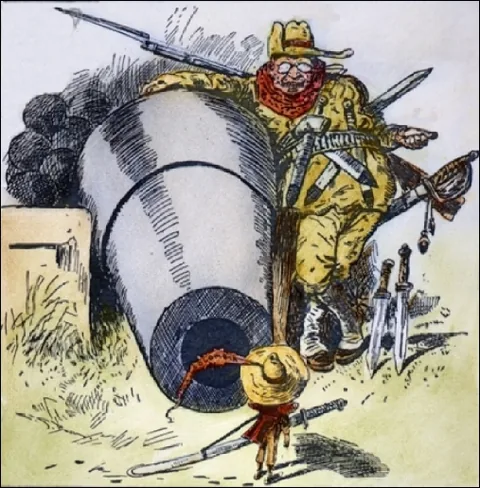 broke off from Colombia. It was the United States that was supporting Panama there. I don’t know. We look back at Panama’s success story as far as—
Huge success.
—Latin America goes. Yes. I wonder if Conrad would be surprised by that because at the end of the book, the Occidental Province, it’s worked out, but the specter on the horizon is they’re getting too ambitious. They want to go, and they want to liberate the rest of the country. That seems to be what the danger is. Yes, I don’t know if Conrad ever wrote explicitly what he thought about the Colombia situation. I know he was close to some people who were anticolonialists and didn’t like what was going on.
To him, it seems like maybe salvage what you can. That’s what happened in Panama, and maybe that’s what he wished would happen. That would be the optimistic scenario for the Occidental Province. It’s maybe not that hopeless then because if they just do nothing, they might be okay, I think is the lesson at the end, but they won’t. We know that.
You ask if he would have been surprised by Panama. I was surprised. It was circa 1980, which I remember well. It was not obvious Panama would be a success, and it is today. Part of that’s the rise of China, the greater importance of the canal, but just they’ve kept okay governance and switching in a better regime, which the US did,39Operation Just Cause: in December 1989 the US invaded Panama and overthrew General Manuel Noriega. The canal passed to Panamanian control on December 31, 1999. worked remarkably well. When that happened, I’m thinking like, “Oh my goodness, another one of these interventions. This might be the next Vietnam.” I was wrong. It went very well. Panama is one of the wealthiest nations in Latin America. It’s pretty peaceful. A lot of it’s safe. The Caribbean coast isn’t always that safe, but definitely a relative success story.
Yes, Grenada,40The invasion of Grenada: in October 1983 the US invaded Grenada after a coup within its Marxist government in which Prime Minister Maurice Bishop was killed. too, another intervention around the same time period. The Maduro raid,41The Maduro raid: on January 3, 2026, the US military struck Caracas and captured Venezuelan President Nicolás Maduro and his wife; they were flown to New York and charged there. it’s pretty early, but still looking good.
They never grew that much. They’re clearly better off not being Marxist, and it’s peaceful, but Panama is really a success. Lebanese choose to go live there. That’s one marker of success.
Yes. We remember the bad interventions. We remember when they go poorly. Nobody talks about Panama today. It’s worth bringing to people’s attention.
08How to prepare to talk about a book
Both find that the books themselves, a biography and the places described serve better than literary scholarship, and that a good book is worth reading twice in a row.
Let me ask you a meta question. We both read this. We both prepared. Some of our listeners might read this book, but they’re certainly reading other books. What did you do to read this? How did you read it? What else did you do? Give us your production function42Production function — a concept from economics: how output depends on the inputs. Cowen often asks guests about their "production function," meaning how they work and learn. for having read this book. What worked? What didn’t work?
Yes. I started just by reading Nostromo. I like to go in fresh. Even when watching movies or novel, I like to know nothing. I Googled enough to know the basic thing, checked it out, ended up reading the book. Wanted to get a feel of Conrad, so I went through the various novels. The biography you recommended is Jasanoff43Maya Jasanoff — a Harvard historian. Her Conrad biography "The Dawn Watch: Joseph Conrad in a Global World" (2017) sets his life against the globalization of the late 19th century; it won the 2018 Cundill Prize.—is that how you say the woman’s name?
I think so.
Jasanoff. I read the biography. Then I would get to a point where it’s like—the biography was very good—it got to a point where, “Here, I’m going to talk about The Secret Agent.” I would put the book down, and then I actually just went and read The Secret Agent because I don’t want just the summary of the book. I wanted to get the substance. I read the four big novels, read the essay you recommended, read the biography.
Which essay was that?
That was “Autocracy and War.”
Okay. Yes.
I dove into the Conrad literature a little bit, like the English professors, what they’d written. I didn’t find anything that was pretty compelling. Yes, that’s it. Read the book. Read about Conrad.
One thing I did. I went to JSTOR.44JSTOR — a digital library of academic journals. I typed in Conrad Nostromo. I printed out the first 20, the ones I could print out. It was probably 16 of them, I’d guess. Most were worthless. There were two I thought were good. One is the Robert D. Kaplan45Robert D. Kaplan — an American journalist and author of books on geopolitics, including "Balkan Ghosts" (1993) and "The Revenge of Geography" (2012). essay, “Conrad’s Nostromo and the Third World.” He’s more a current political and geopolitical commentator. I’m sure you know his work. Then there’s one by Claire Rosenfeld, “An Archetypal Analysis of Conrad’s Nostromo.” The rest, I just thought, were wasting my time. These were the top 20 entries, right?
Yes, there was one that won a prize in the 1980s. It was just, eh. I didn’t think it was worth reading the secondary literature.
One worry I have, I don’t know the authors of all those pieces, but how much they’ve traveled or been to Latin America—I just became suspicious that they only knew literature and didn’t actually know the world that well. That was one reservation I started having.
One thing I did was into the Heart of Darkness, I was fascinated by the way he portrays Congo River and also the Jasanoff biography because Conrad went down there. There’s some places where there’s rapids you can’t go, and you have to take a railroad, and then other places where you can actually take the river.46The Congo rapids: below Kinshasa (then Léopoldville), the Congo is impassable because of the Livingstone Falls; the Matadi–Léopoldville railway was built around them in 1890–1898. In 1890, while it was still under construction, Conrad walked the route with a caravan. I watched some BBC documentaries of just people going on the Congo River, a place that hasn’t economically grown that much over time. It’s maybe closer to what it was in the early 20th century.
Yes, it was fascinating just being able to see. The river, it looks like you’re in an ocean when you’re there. It’s just so gigantic, and it’s got such a force of its own. They go off to the sides, and there’s these villages there, and these people trying to sell you stuff. Yes, the geographical aspect of the Congo River and what’s going on there is just fascinating.
Congo’s especially interesting because they have a 20-year period where they grow a lot. Up through some part of the 1960s, they become probably the wealthiest part of Africa other than Southern Africa, Rhodesia,47Rhodesia — a British colony in southern Africa that declared independence under white minority rule in 1965; since 1980, after a war and the transition to majority rule, it has been Zimbabwe. and then they lose it all. They were probably much richer in 1960 than they are today. That’s also, to me, a very Conradian story. They had some chance, it seems. Even in the mid-’70s, we’re holding the World Boxing Championship there. Remember Ali and Zaire?48Ali in Zaire: Muhammad Ali's heavyweight title fight with George Foreman took place in Kinshasa on October 30, 1974; Ali won by knockout in the eighth round. The Democratic Republic of the Congo was called Zaire from 1971 to 1997.
Yes, right.
People thought it was a bit weird, but it didn’t seem totally insane to put it there.
What do you think happened? What happened in the decades? Usually, it’s one of the few. I remember, yes, people make lists of these countries where they’re worse off than they were 30, 40 years ago. Congo’s on there, Afghanistan’s on there.
Madagascar.49Madagascar — one of the rare countries where income per person is lower today than at independence in 1960.
Yes, it’s just a handful of them.
The superficial and not incorrect answer is corruption, but that’s begging the question, right? Because a lot of Africa is somewhat better off, and what we then called Congo is not. Maybe the wrong kind of resource wealth at the wrong time, but I’ve never been there also. Thinking that travel’s a fundamental form of knowledge, I feel I’d have a better sense if I visited.
Mobutu50Mobutu Sese Seko ruled the country from 1965 to 1997. His palace complex in Gbadolite, in the north, has been abandoned since his overthrow. The site of Mobutu's former palace complex at Gbadolite, in the north of the DR Congo, from the air.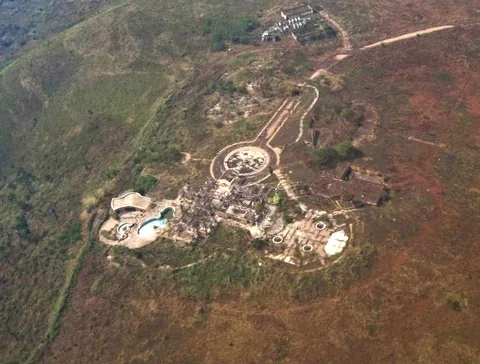 ’s daughter was in the documentary that I watched. Yes, they go back to his old palace in the north of the country, and she’s like, “Oh, my dad killed people? No, he was such a nice guy.” You’re like, “Okay, this is the culture, the big-man culture51Big man — an anthropological concept introduced by Marshall Sahlins (1963) for Melanesian leaders whose power rests on generosity and personal influence. Applied to Africa, it describes patron-rulers who hand out favors to their own and rule as heads of a giant family. of taking care of the family. This is basic anthropology of Africa.” You just see it from that documentary.
I also found it very important to read this novel twice and twice in a row. I’d read it once, something like 30 years ago. That helped me a little, but not actually that much, because I’ve never worked on it since then. To read things twice in a row, I’m a big fan of, at least if they’re high quality. I’m very glad I did that here, and you did it as well, the second time being with the audiobook, right?
The second time was switching off between audiobook and the Kindle version. I would get up, you’d listen, and go back, and then read. When you get a person who’s good at this stuff, who’s good with the voice, they can do the characters. It’s watching a performance. It’s not just like reading a book. Yes, that’s another way to experience it.
09Why Latin America has so much crime
For Hanania, Latin American crime comes from democracy and civil liberties combined with low state capacity, and Cowen adds incomplete nation-building and housing patterns.
Now, you had written previously on the question, why does Latin America have so much crime. Then you read Nostromo, right? Does it change your mind on that topic at all?
No, not really. Because they don’t have a lot of crime in Costaguana, like street crime. You think about it, and you don’t see people getting mugged or robbed, or you don’t hear anything like that, right? There’s violence, there’s political violence, but it’s a different thing. This seems to be a more modern thing. It seems to be a lot of democratization and development. It seems that things have gotten worse in the last 30, 40 years in a lot of places. I don’t know if it’s there in Nostromo. Maybe the roots of it are the political dysfunction, but it’s a tenuous, long link.
Source: World Bank, from UNODC data
Why does Latin America have so much crime? At least parts of it, not Uruguay, but much of it.
Yes. When I look at these news stories, the things that strike me the most is—of all the stories you could read about Latin America in the newspaper—the ones where they are in jail and they are running their drug empire. There was one, I think of Colombia or something, where there was a cartel52A cartel boss in prison — the most famous case: Pablo Escobar, head of the Medellín cartel, surrendered to Colombian authorities in 1991 and was held in La Catedral, a prison built to his specifications, with guards he chose himself; he escaped from it in 1992. leader, being in jail is barely a hindrance to him carrying out his work. What is going on here? Why can’t a state control the people that it has in its own jail?
Another region that I studied a little bit is the Middle East. Unthinkable. Somebody would be running a criminal gang that is antagonistic to the state while being locked up. It seems that Latin America actually takes these democracy and civil liberties and these ideas pretty seriously. It seems that they have this combination of democracy and civil liberties, but low state capacity,53State capacity — a political science concept: a state's ability to actually carry out its decisions, such as collecting taxes, keeping order and controlling territory, rather than just adopting them on paper. and that seems to be a bad combination.
If you look at the countries that are much more violent than their level of wealth would predict, they’re basically all countries that have high democracy scores. There’s no other kind of country that is just an outlier in the amount of violence. A lot of those countries are concentrated in Latin America.
Often, very poor countries don’t have much crime, or they may in intermittent ways, but on a daily basis, they can be some of the safest places because you have small towns, everyone knows each other, there’s not that much to fight over. You have to cooperate, or you can be sent away, and then it’s not clear what your future looks like.
My mom’s family comes from Jordan, and they were poor rural people in Jordan. When I think about if anybody would have had dysfunction, if anyone was a criminal, it’s unthinkable. Their entire family would have disowned them. It would have been a life-or-death thing for the entire community, the extended family, the people they care about.
I think when you’re very poor, first of all, you don’t care about human rights that much, but second of all, there’s this denseness of social relations that seems to be maybe not conducive to development, but conducive to actually safe streets and fewer kinds of dysfunctional behavior.
If we’re talking about Colombia, I think much of the problem is a mix of incomplete nation-building54Nation-building — the forming of a single nation and state: a shared identity, central authority and institutions that the whole territory of the country obeys. and very rapid urbanization. There’s a fair amount of wealth. It’s not that poor, Colombia. Drug markets are, to some extent, worth fighting over. To some extent, you’re fighting over export privileges, right? There’s not a central authority. Getting around to different parts of the country is very difficult. You can’t easily or safely just do it by road, even today, when the country’s safer than it was 15 years ago.
As in Mexico, the central government is not really in charge, or only some parts. There’s unsettled relations across different groups. It’s not carved out like who’s really in charge in the way that much of India, China, which have their own problems, but it feels to me, due to millennia of previous fighting, it’s a bit carved out who’s in charge. Whereas in Colombia, it so often isn’t.
Is it? There’s some things about state capacity and geographics and trying to reach state power into these rural or these mountainous areas. The problems in these countries seem deeper than that because they can’t control their inner cities. We in America can’t control our inner cities, but this seems to be a dysfunction that’s different from just a lack of ability to reach something.
There is just something that is completely dysfunctional in the political system. It should be the first thing you’re able to fix is monopoly of violence55Monopoly on violence — Max Weber's definition of the state ("Politics as a Vocation," 1919): a community that successfully claims the monopoly of the legitimate use of force within a given territory. within a city. It’s cheaper to police. The government’s right there. It’s something we should talk about a lot more. This is why Bukele,56Nayib Bukele — president of El Salvador since 2019. A state of exception has been in force since March 2022: tens of thousands of suspected gang members have been arrested and the murder rate has dropped sharply; human rights groups criticize the mass arrests and prison conditions. for all his flaws, causes so much excitement because people are like, “Why can’t anyone figure this out?”
I think there’s also a YIMBY57YIMBY (Yes In My Back Yard) — supporters of allowing more housing to be built; NIMBY (Not In My Back Yard) — residents who oppose new development near them. versus NIMBY issue. If you go to South Africa, which is very violent, but the violence, at least near Cape Town, is quite concentrated in the townships.58Townships — districts on the edges of South African cities where non-white residents were made to live under apartheid. People who live apart from the townships can live somewhere reasonably safe. You go to Brazil, where there’s been massive building of tall apartment blocks in all the cities. Everything’s mixed together. There’s not much NIMBY. You walk down the street, and you’re scared because the violence is near you.
You think that’s the best case for NIMBYism?
It’s not a great case because the NIMBY places have not done very well. Brazil has done better for people than South Africa. For crime, Brazil is the strongest case against YIMBYism.
Crime everywhere is concentrated among a certain class of people. Yes, segregation or separation does work in that case.
10Is Shakespeare objectively great
Hanania explains that he wasn't badmouthing Shakespeare but denying objective greatness in art, and ends up deferring to the verdict of history.
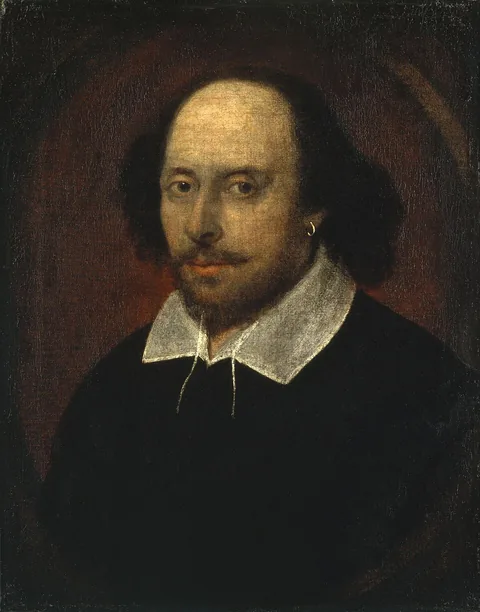
Now, here’s a question I warned you I was going to ask you. The beginning of Nostromo, there’s a quotation from Shakespeare. I quote, Conrad chose this: “So foul a sky clears not without a storm,” which I think is from King John.59"King John" — Shakespeare's history play; the epigraph to Nostromo is a line from it (act IV, scene 2): "So foul a sky clears not without a storm." Lovely part. What’s your current view on Shakespeare? You badmouthed Shakespeare in the past. Now you like Conrad. Have you come around on Shakespeare?
No, it would be wrong to say I badmouthed Shakespeare.
Tell us what you said.
I did not probably explain this well. It started with SBF.60Sam Bankman-Fried (SBF) — founder of the crypto exchange FTX; convicted of fraud in 2023 and sentenced to 25 years in prison in 2024. In 2012 he wrote on his blog that "Bayesian priors" weigh against Shakespeare: far more people have been born since, so it's unlikely the best writer in history lived so long ago. There was a controversy where he did what people think would be an autistic analysis. “What are the odds Shakespeare is the greatest writer because the population is so much larger now?” so on and so forth. I said, “Okay, if you want to talk about the greatness of Shakespeare, there are two definitions of greatness.” I’m riffing off the SBF quote, which people were upset about, which is the idea that if aliens came down to Earth and they read every single author in human history, they would say, “Shakespeare is objectively the best English language writer.”
I don’t believe that’s the case. I believe the way we appreciate art, the way we consume it, is based too much on prestige signals, too much on social proof,61Social proof — the tendency to treat as correct what others do and value; the term comes from the psychologist Robert Cialdini's book "Influence" (1984). too much on signaling.62Signaling — a concept from economics and biology: things done not for their own sake but to show others one's qualities, such as status, taste or intelligence. Admiring Shakespeare can also be a way to seem educated. That’s one aspect. The idea that I could produce something that could look like Shakespeare, look, there’s a Monet painting right now that is a controversy of whether it’s the real thing. People cannot tell, but they have to do this forensic stuff.
I could tell. I saw it. I knew right away.
That’s what you say, yes. When you do the AI stuff, and you test people on this, the confidence is maybe misplaced. I think it’s like that with any great artist. It is so much of the greatness is prestige. Now, if you want to say Shakespeare is great because he was unusually innovative from the time and influenced English literature and influenced the culture—I’m not saying that I could do something that innovative for the time in 2026, I’m not saying that—in that aspect, I’m happy to grant Shakespeare’s greatness. It’s not to badmouth Shakespeare. It’s a part about the subjectivity and the social role of art.
Who is the greatest English language writer then?
From that perspective?
In your opinion. From your perspective, all things considered. I’ll say it’s Shakespeare.
I would defer to the opinion of history.
Well, then it’s Shakespeare.
It’s Shakespeare, yes.
You started off by saying that was the claim you wanted to push back on.
ExplainerWho wrote Shakespeare
Doubts that the plays were written by William Shakespeare of Stratford-upon-Avon arose in the mid-19th century: skeptics felt that a glover's son without a university education could not have written works full of Latin, law and court life.
- The first "true author" proposed was Francis Bacon, a case laid out in 1857 by the American Delia Bacon.
- In 1920 the Englishman J. Thomas Looney put forward Edward de Vere, 17th Earl of Oxford. The "Oxfordians" are the largest school of skeptics, even though de Vere died in 1604, before "Macbeth" and "The Tempest" were written.
- Christopher Marlowe and several dozen others have been suggested too.
Shakespeare scholars almost unanimously credit Shakespeare: his name is on editions published in his lifetime, the First Folio of 1623 was compiled by his fellow actors, and contemporaries such as Ben Jonson wrote of him as the author. Dennis McCarthy's theory works differently: he doesn't look for another author behind a mask, but argues that Shakespeare reworked plays written decades earlier by Thomas North. The journalist Michael Blanding tells its story in "North by Shakespeare" (2021).
I was saying objectively. If you ask me who is the objective best English language writer of all time, I would say that’s an unanswerable question. That’s like what is the objectively best painting or something like that, from our social perspective, from our understanding of history and how it played out, and who was doing something great at the time. By the way, there’s a guy I know, Dennis McCarthy, who wrote a very convincing book that I think—maybe this is too much of a digression—but thinks that Thomas North63Thomas North: Sir Thomas North (1535 – c. 1604) translated Plutarch's "Parallel Lives" into English (1579); his translation is the main source of Shakespeare's Roman plays. Dennis McCarthy is an independent researcher who has long argued that Shakespeare reworked North's plays. In 2018 he and the Shakespeare scholar June Schlueter published a book on George North's manuscript "A Brief Discourse of Rebellion and Rebels," in which plagiarism-detection software found echoes of eleven Shakespeare plays. actually wrote Shakespeare.
No. It’s not likely to be true.
Check out his book because I read it, and my opinion was this guy either is just making stuff up or there’s something in there.
The elites have decided that Shakespeare is Shakespeare.
Will you check out the book if I send it to you, because I’ve been trying to get people to look at it?
I’ll ask GPT Pro64GPT Pro — the most powerful versions of OpenAI's models, available in ChatGPT with the $200-a-month Pro subscription (since December 2024). what it thinks, and then I’ll decide whether to check out the book.
He’s got some peer-reviewed scholarship, so he’s not completely out of nowhere.
You’re retreating to a meta point about aesthetics, which I would just say is difficult to settle. I think on Shakespeare, you’re ceding a lot of ground. You’re saying, “Well, I agree with the elites.” The elites mostly would nominate Shakespeare. You’re agreeing with Conrad, who seemed to love Shakespeare.
Yes. I’m saying that the people were mad at Sam Bankman-Fried. I’m just defending his honor because I’m saying there is a point here, which is, objectively, if you wanted to read objectively the best literature that’s going to blow your mind, it’s not necessarily Shakespeare. Maybe it is Shakespeare because you know it is Shakespeare, and you know you’re sharing this experience with people over multiple centuries and people all over the world today.
I’m fine with that. I don’t feel any need to knock Shakespeare off his pedestal. I just think the way people think about art is wrong to think that there’s something like objective there that some alien would appreciate that is independent of how we think about these things, how we perceive these things socially.
You’re sentenced to confinement, desert island, prison, whatever, and you can take the works of one English language author, complete works. Whose do you take?
Oh, English language author. Can it be a living author? I want to keep up with the news.
Anyone. No, you have Twitter, and then you can pick one author from history.
I want to dig deeper into Conrad. I’ve read four of the novels. I want to read more.
He’s a good pick. He’d be in my top 10.
I’ve started the memoir.65Conrad's memoirs — "The Mirror of the Sea" (1906), sketches of his years at sea, and "A Personal Record" (1912), about his childhood in Poland and how he became a writer. Yes, probably Conrad. Let me think if there’s somebody going further back.
He’s also a good reread, Conrad. That’s important.
Yes. I think that’s true. Yes. You’re going to be away on that island for a long time. You want something to struggle with. You don’t want a straight story. Yes.
11Media, AI and the general decay
Cowen thinks less of the media than a few years ago, while Hanania still ranks it above Twitter and podcasts and hopes AI can reverse the trend.
Now, Conrad in Nostromo, and I think elsewhere, he’s pretty critical of the media, and you’ve written in defense of the media. That was a few years ago. Now that you have a few more years of data, we see the media covering AI, covering all sorts of things. What’s your update on the current Richard stance on how good the media is?
Once again, it’s a comparative perspective, right? I’ve seen the media the last three, four years.
It’s gone down in my eyes, I’ll say.
Yes, it might have. At the same time, I’ve seen what’s the Twitter space, what’s the podcast space. The gap, I think, continues to grow. I think the media is still better. There’s a meta point of how we know anything, right? I just don’t think it happens. I think we’ve seen the alternative: What happens if we do not have media, if we don’t have fact-checkers and journalistic institutions? It’s really a terrible place. It’s a place I don’t want to live in. Yes, critique the media all you want, but my God, you do have to think about the alternative.
That I agree with, but I would say this. People on the right, I’ve been pro-media, like 90th percentile, like relatively pro-media. I’ve worked a lot in media at these places, so I see different sides of what goes on. Still relatively pro-media. I look at the coverage of AI. Some of it is just hostile. Some of it is whining. A lot of it is just New York Times didn’t cover GPT-466GPT-4 — the OpenAI model released on March 14, 2023; a marked leap over GPT-3.5, on which ChatGPT had launched a few months earlier. for a week. All sorts of things go on, and they’re not really covered, or they’re not covered well. I really don’t think it’s a conspiracy, but it’s pretty disappointing. I think less of the media now than I did a few years ago, I have to say.
Yes, especially on tech. There is such a negativity bias on everything happening with tech. Now, I believe more in the phone’s theory of everything,67The smartphone theory of everything — NYU economist Arpit Gupta's name for the idea that smartphones and social media explain many of today's ills, from teenage anxiety and depression to populism. The link between smartphones and the teen mental health crisis has been argued most prominently by the psychologist Jonathan Haidt in "The Anxious Generation" (2024). and it’s making people miserable more than you do. I think that place, there’s a point, but it’s just every single thing that could possibly go wrong, every theoretical problem with AI, and just social media platforms and things like that. Yes, I agree with you. There’s too much of a negativity bias.
We’ve seen this over time, the people who’ve done the sentiment analysis.68Sentiment analysis — automatically rating text as positive, neutral or negative; it's used, for example, to measure how much gloomier newspaper headlines have become over time. It’s 1960s, 1970s. It’s been going down. Maybe it’s just that’s what the market wants. It’s been perfecting the product over time.
You’ve written a book on populism. Again, it’s your new book, Kakistocracy. Conrad’s Nostromo, parts of it can be read, is about Latin American populism. Does it bug you in any way, or what insight do you draw from it?
I’m thinking about this from a comparative perspective. I’m always thinking about this because I’m a person who pays attention to politics, so I’m thinking of like, “Yes, the media’s bad, but what is the alternative?” We’ve seen actually these people be knocked down a peg in status, and we’ve seen other kind of alternative political figures and movements and media sources be raised in status. Now it’s a point where you have to compare them.
When I say Gould, whatever his flaws he has, compared to the Montero brothers or these other generals, to me, clearly, there’s a clear story of who Conrad would rather be in charge. I think it’s the same principle in the book at the grand level. It’s like, yes, things are bad, but things are bad with the media. You can sit there. You can critique them all day. I’ve done it a lot. There’s some anchor, some kind of institutional production of knowledge that we need that you can’t just toss aside.
What do you think of the hypothesis that some more general collapse has been going on? It does come first in the least well-capitalized places, which would be people tweeting, people on Substack,69Substack — a platform for paid and free newsletters, founded in 2017; many independent commentators write there, Hanania among them. people on TikTok, and it comes last to the more capitalized places. In essence, all the dominoes are falling, and media looks better now, but just as a lot of parts of populism have spread to the Democratic Party in these terrible Bernie Sanders70Bernie Sanders — a senator from Vermont since 2007 who calls himself a democratic socialist; he ran for the Democratic presidential nomination in 2016 and 2020 and lost both times. kinds of ways, that it’s happening to media as well, and it’s all going to end up the same mess. Agree or disagree?
Yes, it’s possible. This is a theory that I’ve run through in my mind. Look, there does seem to be some core of people who want to read serious content. That doesn’t seem like it’s going to disappear completely anytime soon. The communications technology changes over time. I’m optimistic about AI. Things don’t always have to get worse. Things don’t always have to be like Twitter that make us stupider.
AI—there’s amazing research out there that basically people trust it. People who need it most, like people on Twitter who are subject to misinformation, are asking Grok71Grok — the chatbot from Elon Musk's xAI, built into X; users often ask it to fact-check a post by tagging @grok in the replies. all the time whether something is true. Grok might not be as good as ChatGPT or Claude,72Claude — the AI assistant and family of models made by Anthropic. but it’s certainly better than the normal ways that a lot of these people get information. Absolutely.
There’s good research on how AI can talk people out of conspiracy theories.73AI versus conspiracy theories: the best-known study, by Thomas Costello, Gordon Pennycook and David Rand in Science (2024): after three rounds of conversation with GPT-4 Turbo, participants' belief in a conspiracy theory of their choice dropped by about 20% on average, and the effect lasted at least two months. If you talk to conspiracy theorists, you don’t know what they know, right? They have 10 different studies that you’ve never read. They know more about a topic than you have, so they’re actually very difficult to argue with, but AI is just going to sit there and take apart their points one by one. It’s not going to condescend to them. It’s not going to tell them that they’re idiots. Yes, I think optimistic AI could actually help us here. There might be the technology of the last 25, probably 30, 40 years, probably going back to cable news and talk radio,74Cable news and talk radio — 24-hour news channels (CNN since 1980, Fox News since 1996) and radio shows where a host spends hours discussing politics with callers; the best known is the conservative Rush Limbaugh, who went national in 1988. and then social media took off. Maybe with AI, it goes back in the other direction.
12Who to read on the populist right
Hanania values populist-right writers who escape partisan bias and credits Trump with the AI boom, but finds the flattery around him degrading.
Who is the content creator on the populist right who is most insightful, most worth reading, most valuable?
On the populist right, who is most insightful?
Not classical liberal right. Not centrist.
Are you including new right75New right — a loose label used in the US for different movements: in the 1970s and 1980s, the conservative movement that brought Reagan to power; in the 2020s, right-wing intellectuals who broke with the Republicans' old free-market line in favor of nationalism and a strong state. people or just anyone?
I don’t even know what the phrase new right means anymore, but name some names, and we’ll see if I think they fit.
Steve Sailer.76Steve Sailer — an American journalist and blogger who writes about immigration, race and intelligence. A collection of his articles, "Noticing," came out in 2024. He’s playing the hits in recent years, phoning it in, but I think the basics of Sailerism, or I think he was ahead of the trans issue. Helen Andrews,77Helen Andrews — an American conservative writer. In her essay "The Great Feminization" (Compact, 2025) she argues that wokeness is a result of women and feminine norms entering formerly male institutions; the essay set off a wide debate. I like some of her stuff. I think that some of the stuff has the flaws of right-wing, starting with the conclusion and then looking for the story. I wasn’t a big fan of the feminization stuff, but some of the stuff on inner city crime and stuff like that, I think, is good. Let’s see. Who else? Dominic Cummings.78Dominic Cummings ran the Vote Leave campaign for Britain's exit from the EU (2016) and in 2019–2020 was chief adviser to Prime Minister Boris Johnson. I think he’s more sympathetic to these people than he is to a lot of other people in politics.
Those are three picks. What in your model of the world is making them better, them and the others, if you had a longer list than the ones you think are worse?
My least favorite thing in the world—I’ve been thinking about this a lot. To me, the lowest form of bias is partisan bias. Like me and you are biased. Everyone has biases. Maybe we’re biased in a classical liberal direction. Maybe we read Conrad in a certain way. To me, when you are biased in the direction of “my side is right” on the political spectrum, you’re abdicating being an intellectual. You’re just giving your mind over to the mob.
I think a lot of the right-wing stuff, it’s not necessarily that it loves Trump. Sometimes it is that. That’s the lower-grade version of it. They hate liberals so much that there’s so much motivated reasoning79Motivated reasoning — a term from psychology: the tendency to accept arguments for what you want to believe and to nitpick arguments against it. that the bias is always, “Liberals are terrible people, and they’re doing evil things.” I think that’s the problem. I look for a little bit of independence, where you don’t see that, where it’s just a one-sided story about how terrible these people are.
This is June 2026. If the populist right is so terrible, why is the stock market so high?
Well, the question is, could it be better?
Of course, it could be better, but in absolute terms, aren’t things okay?
Yes. We are the center of the AI boom. Now, there was an Economist article, I think it might have been a cover story, where we’re saying the Trump tax—they took the Trump tax and they said, “AI is doing great. At the same time, the Trump tax is basically tariffs and immigration.” I’m like, “Wait a minute, you’re going to detract immigration and tariffs, but you’re not going to give him credit for the AI boom?” He didn’t have to take this perspective on AI. There were people who wanted to do a lot more government control over what was going on.
Yes, look, the right-wing populists we know are better than left-wing populists just because they have better economic ideas. Trumpism is a combination of libertarianism and this kind of retrograde nationalism and nativism, but also just personal corruption. It might work out economically. The benefits of just letting AI go might overwhelm everything else. There is a part of me that is like Conrad. There’s an honor thing, right?
When I watch these cabinet meetings—and there was a New York Times analysis where like one in five sentences or something are praising Trump or attacking his enemies—there’s something degrading about that. Maybe it works out economically. I’m still open to the idea that maybe Trump winning in 2024 was better for the stock market in the long run, but we can’t be that utilitarian. There’s a point where we have to draw the line.
13Hugs and handshakes
Liberals live by norms of restraint, Hanania says, while conservatives, as they turn self-consciously anti-liberal, are leaning into human nature.
Why do conservative women hug and liberal women shake your hand?
I like that. That’s funny. The liberal women, I think, there are norms. It’s not just the liberal women. It’s the men. The men are less flirtatious. They’re less aggressive. I think the HR norms are more dominant among liberals. I think as conservatives become more self-consciously anti-liberal, they lean into the other direction. You see women these days in right-wing circles just being open that they want to marry a rich guy.
I think if you were a Republican politico 30 years ago, 20 years ago, it wasn’t that explicit. They were more conforming to the norms of whatever person who’s reading the Washington Post and listening to NPR.80NPR (National Public Radio) — the American public radio network. There’s just this divergence in values. The right is leaning into human nature. The left is leaning into this refined understanding of sexuality and relations between the sexes.
Aren’t the right-wing men more bimodally distributed that they’re either like Trump, we know what that is, or they’re quite honorable because they like Mitt Romney?81Mitt Romney — the Republican presidential nominee in 2012 and a senator from Utah in 2019–2025; he voted to convict Trump in both impeachment trials. The men on the left, they’re much more likely to be hypocritical. There’s more Bill Clintons82The Clintons — a nod to Bill Clinton, the Democratic president who had an affair with White House intern Monica Lewinsky; in 1998 the House impeached him for perjury and obstruction of justice in the matter, but the Senate acquitted him. on the left. I’m not saying they all are by any means. A lot are just loyally married. You look at well-educated Democratic men, they have pretty awesome demographic results in terms of marriages, children, education, income. The right-wing men just are weird all over the map?
Yes. When you said bimodal, you said some are like Trump, and some are like Romney. I thought you were going to say some were incels and shut-ins.
Trimodal.
Trimodal. I think that gets at something in that the left-wing people just do seem to be more conformist. It’s like 1960s beatniks.83Beatniks — members of the Beat Generation of the 1950s, such as Jack Kerouac, Allen Ginsberg and William S. Burroughs, who rebelled against conformity and bourgeois life; the hippies of the 1960s were their heirs. You think, “They’re the people challenging the system.” No. At some point, liberalism became the establishment. If you’re a person who is just conforming to the dominant ideas of your society, you’re going to be a liberal. Part of that is probably monogamy and not being too much of a cad.
I was surprised when I went to graduate school. I thought wokeness was this surface thing that maybe a few crazy people believed in. Little things like ethics rules, like the IRB.84IRB (Institutional Review Board) — the ethics committee at an American university; research involving people, surveys included, usually has to be approved by it. I remember being in grad school, and I remember not feeling any moral obligation to do the ethics review before I did a survey or something, but then people around me would actually take it seriously. I’m like, “Wow, these people are different than I am.” I’m sure the Trump administration people are not like that.
14What's next
A book still makes sense for its author, Hanania says, and next he is thinking about fiction and wants to dig into quantum physics at least once in his life.
I once wrote a post called “How Public Intellectuals Can Extend Their Shelf Lives.” You’ve written a book on populism. The future of populism is uncertain. It could die out, or it could just be everything becomes populist. In a sense, in that scenario, maybe you can’t just keep on writing books about populism. Where do you see your own emphasis headed?
I’ve reinvented myself on more than one occasion. I’m always developing. I have three books. The first one is on foreign policy. The second one is civil rights law. The third one is this one on populism.85Hanania's three books: "Public Choice Theory and the Illusion of Grand Strategy" (2021), on how interest groups shape US foreign policy; "The Origins of Woke" (2023), on how civil rights law gave rise to woke culture in American corporations; and "Kakistocracy" (2026). Yes, I don’t know what I’m going to be at in two or three years.
I do like fiction. To go back to the Shakespeare thing, I do want to try my hand at it. I’ve written two fictional essays, and they were both big hits. Maybe I want to take up fiction at some point. I don’t know. I never know exactly where I’m going. I read, I think, I observe events, and then I just go in a direction.
Does writing books still make sense?
Makes sense from what? From a knowledge-producing perspective or from an individual’s perspective?
Either.
From an individual’s perspective, I think it does. If you want my thought on different issues, it’s fragmented in different places. There’s a tweet here and there. There’s an essay here and there. There’s an op-ed here and there. I see my books as a consolidation of ideas that I’ve been thinking about. Each one of my three books was basically what I’ve been thinking about the last two, three years, how I synthesize it, and what I think are the nuggets there that are really, really important that people should get.
From my perspective, it makes sense. Also, provides a reason for people to talk about you and get you on podcasts and things like that. It makes sense just from an intellectual level and from a promotional level. Then, as a knowledge-producing device, I’m not sure. I’m not sure if it ever did. Maybe we should all just be reading bullet points like Axios86Axios — an American news outlet known for short, bullet-pointed stories. or something like that. It still makes sense for an individual who’s trying to get his ideas out there.
Final question. What in particular do you wish to learn about next?
This sounds completely random. I do want to do a month on quantum physics. I mentioned that in passing on the Substack. I had two or three smart physicists reach out and say, “If you need anything, reach out to us.” I think there’s philosophical implications there. I don’t know what they are. I don’t know what direction I’ll go in. I feel like this is something, at a deep level, I have to have an opinion about. At some point, I’m going to take two or three months, and I’m going to really dig into it. Maybe I’ll learn nothing. Maybe my brain cannot comprehend. At least I need to try once in my life.
Richard, thank you very much.
It’s a pleasure, Tyler.


