


Hard Fork
Chapters
Max Read makes the case that GTA VI is the last game of its scale that people will make this way.
Read the chapter- Nearly 5,000 people at Rockstar spent 13 years on the game, which takes up 212 gigabytes and drew about $1.5 billion in pre-sales.
- If a language model is a statistical model of the world, Max says, GTA VI is a qualitative one, where you can adopt a dog and hold hands as well as steal cars.
- Rockstar stresses the game was made without AI, which is why Max likens it to a medieval cathedral.
Joe Bernstein describes an open world that is astoundingly huge and detailed down to the filigree.
Read the chapter- Rockstar roughly doubled in size to nearly 5,000 employees to make the game, Joe says.
- The map covers all of metro Miami and South Florida, from Keys life to greasy motels.
- Max lists 60 bird species, shops at every step and a dog that drives a jet ski, while Joe hadn’t even known you could own a dog after 50 hours of play.
- The Washington Post’s critic Gene Park has logged 170 hours, and an online version will live on for years, as GTA Online did for the fifth game.
The more ordinary the activity, the crazier it feels in a game, and that detail took years.
Read the chapter- The gym offers deadlifts, squats, bench presses and dozens of outfits, and Max notes that Joe is describing real life rather than game mechanics.
- Joe says the game’s systems reinforce one another, so lifting makes you a better fighter and runner.
- In Edinburgh, Joe watched a character’s arm press naturally against stucco, a detail no one would notice, which is why the work never ends.
- Mike recalls Shenmue, the Dreamcast game that first let you pick up a Coke can.
The hosts recall the early games and explain where Rockstar’s culture of secrecy comes from.
Read the chapter- Mike bought the crude top-down original at 13, when games like it prompted congressional hearings.
- Once the series rebuilt New York in three dimensions, people seriously worried that players would confuse fantasy and reality.
- After the controversies and a leak of development footage, Rockstar tightly controls the press, and the Times’ lawyers spent a week negotiating an NDA before Joe could play.
- Joe told his kids they couldn’t watch him play because it was against the law.
Joe explains how GTA mocks an era that is hard to mock, by building tech into the gameplay itself.
Read the chapter- The series grew up with The Daily Show and South Park, but reality now outdoes parody, as Joe says of Elon jumping up and down.
- Early on, the hero is too poor and inept to steal a car, so it’s easier to rob a Burger King and take an Uber.
- Sahara, the game’s Amazon, runs armored vans with armed guards, and crypto bros are everywhere.
- Long development makes topical satire hard, so the pandemic doesn’t exist in the game.
Mike and Joe explain why GTA VI was awaited like a messiah: nobody takes big swings anymore.
Read the chapter- Mike says expensive games barely pay off, while people play Fortnite and mobile games for free.
- Rockstar was already printing money with GTA Online, but its developers, Joe says, wanted to make something new and unprecedented.
- Joe calls The Odyssey the closest thing this year, and Max likens GTA VI to Lawrence of Arabia and Doctor Zhivago, the last gasp of the studio system.
For the first time, a romance sits at the center of a GTA story, and the female lead is the richer character.
Read the chapter- The game frequently prompts you to hold hands, and Erin jokes that games used to be feared for teaching violence and now for teaching love.
- In this Bonnie and Clyde story you can switch between the two leads, and Joe finds the female character more richly drawn.
- Some 30,000 unique characters treat a Latina woman differently from a white man, which in a sense doubles the world.
Joe thinks the taste of thousands of people protects GTA for now, but won’t predict beyond a year.
Read the chapter- Max saw browser-based shooters on Twitter that people had one-shot with the latest Claude model.
- In Joe’s view, the industry is already full of junk no better than something made in Claude, but Rockstar’s taste, money and time still produce an obviously better product.
- Erin doubts that AI fan-fiction versions could replace a game everyone plays together.
- Take-Two sells GTA VI as made without AI, and Joe says that isn’t just marketing, because you can feel it.
Huang says he would return to NVIDIA, but Erin argues this is no Altman story.
Read the chapter- Huang wrote that he would come back if the board decided it was in the best interest of shareholders, employees, the company and America.
- Erin points out that Altman was fired for no good reason, while Huang, according to reporting, lied to the board.
- NVIDIA is a public company, so its board faces shareholder suits and can’t simply be overridden, as a handful of OpenAI investors did.
- NVIDIA predates founder-friendly shares, so its board really governs, which strikes Mike as old-fashioned.
Musk, Kalanick and Trump want Huang back, and the industry fears losing its “Fed chair.”
Read the chapter- Musk and Kalanick signed a petition for Huang’s return, Palmer Luckey has called for it too, and Trump first suggested Tim Cook.
- People Erin has talked to call Huang the industry’s rich uncle: NVIDIA buys startups, invests in them and guarantees neoclouds’ revenue, and Huang is the biggest champion of open source.
- Mike likens Huang’s fall to a ruler’s toppling and reads the campaign as the tech right trying to hold ground after the midterms.
- Interim CEO Colette Kress pushed back on aggressive deals, and board chair Harvey Jones says there is no intention to reinstate Huang.
Executives avoid picking a side, while NVIDIA’s business keeps growing.
Read the chapter- In a clip from the DealBook Summit, Altman wishes Huang and NVIDIA the best and says the world doesn’t need another set of random opinions.
- Erin thinks that after getting too cozy with Republicans, executives have learned to stay friendly with whoever comes next.
- Quarterly revenue topped $100 billion for the first time, and leadership reassured staff at an all-hands.
- Erin expects NVIDIA to do fine for the next few quarters and says what must be replaced is Huang’s long-term vision.
Outlook, the FAA, banks and an NSA network all went down in ten days, and Max leans toward the boring explanation.
Read the chapter- Max’s list runs from Outlook and a nationwide FAA ground stop to Chase, United, Apple Pay and iCloud, and a classified NSA network.
- According to Senator Mark Warner, AI is finding vulnerabilities en masse and institutions rushing out patches are breaking things, which Max calls AI in reverse.
- Mike invokes Hanlon’s razor, while Erin and Max explain why people jump to cyberattacks or rogue AI.
- Erin wonders whether this is a passing phase, and Max promises an episode on poorly defended desalination plants and power plants.
Erin is stunned that a five-year-old startup is worth $2 trillion and that the talk around it sounds so ordinary.
Read the chapter- Erin says the listing defied AI-bubble worries, midterms that turned against data centers and the NVIDIA scandal.
- Most investors passed on earlier chances and are now taking victory laps.
- Mega-IPOs like SpaceX and Anthropic increasingly court retail investors.
- OpenAI plans to go public next year, but in Erin’s view its consumer business isn’t comparable to Anthropic’s enterprise one.
- Daniela Amodei talks about safety while everyone else talks ARR and credit ratings, and the founders answer risk questions by rote.
Quotes
On GTA VI
“If a large language model is a statistical model of the world, GTA VI is a qualitative one.”
Max ReadRead from 01:17On GTA VI’s satire
“It’s saying that even the, like, criminal escapism fantasy can no longer credibly ignore the fact that everyone is, like, oppressed by technology.”
Joseph BernsteinRead from 20:03On the romance in GTA VI
“It used to be like we were scared video games were making kids more violent, and now, like, we’re scared they’re teaching them to love.”
Erin GriffithRead from 27:29On whether AI can replace game developers
“First of all, the video game industry is full of crap that is no better than something that took a couple hours in Claude.”
Joseph BernsteinRead from 30:05On why the industry wants Huang back
“I mean, I’ve talked to people who called him the industry’s rich uncle. He’s — you know, NVIDIA is the Federal Reserve, and he’s the Fed chair.”
Erin GriffithRead from 42:35On the outage wave
“It’s like AI has discovered a bunch of problems that need to be fixed, and the humans, in rushing to fix those problems, have tripped over themselves a little bit.”
Max ReadRead from 52:48On Anthropic’s valuation
“But for a five-year-old startup going public, yes, that is an absurd, obscene amount of money.”
Erin GriffithRead from 56:55On how Anthropic’s founders talk about safety
“Every time the founders have been asked about this kind of doomer and safety question, they have a very pat answer that I feel like has probably, you know, been coached by the bankers, to say, like, ‘Yes, we care about safety, but back to our revenue and our growth.’”
Erin GriffithRead from 1:03:10
Summary
Max Read, Erin Griffith and Mike Isaac quiz Joe Bernstein, who spent three weeks with GTA VI before launch, and land on the game as a monument to human labor: 13 years, nearly 5,000 people, a world whose magic is in its mundane details, and probably the last blockbuster of its scale now that AI can spin up simple games from a single prompt. In the second half, Erin explains why Jensen Huang can’t stage an Altman-style comeback at NVIDIA, a public company with one class of stock and a board that actually governs, and Max walks through a week of outages, from the FAA to the NSA, that seem to trace back to rushed patches for AI-discovered vulnerabilities. Finally, Erin marvels that Anthropic’s $2 trillion IPO sounds like any enterprise-software listing, even though the company itself talks about risks to humanity.
Mentioned
- Grand Theft Auto VI00:29Max calls the game a cathedral and the last project of its scale made by hand.
 Rockstar Games01:17The studio where nearly 5,000 people spent 13 years on GTA VI; Joe visited its Edinburgh office.
- Madden NFL04:01Joe contrasts annual franchises like Madden with a game fans waited 13 years for.
- Call of Duty04:01Another yearly series Joe sets against GTA’s rare releases.
Show 54 more mentionsShow fewer mentions
 Jason Schreier04:25Joe draws his figures on Rockstar’s development and labor problems from Schreier’s Bloomberg Businessweek piece.
 Bloomberg L.P.04:25Its Businessweek magazine published Schreier’s account of how GTA VI was made.
- Grand Theft Auto Online06:53Joe explains that the fifth game’s online mode made Rockstar so much money it didn’t strictly need a new game.
- Red Dead Redemption 209:50Joe says Rockstar poured all its resources into this 2018 western, delaying GTA VI.
- Shenmue11:19Mike recalls the Dreamcast game that let you pick up a Coke can as an early case of obsessive detail.
- The Legend of Zelda14:28Joe cites the old top-down Zelda games to explain the shift from sprites to 3D.
- The Daily Show18:05In Joe’s telling, Jon Stewart’s show set the satirical tone GTA grew up with.
- South Park18:05Another model of Bush-era satire, and Max’s shorthand for GTA’s sense of humor.
- Silicon Valley18:56Erin says its creators wouldn’t make it now because tech can no longer be satirized.
 Elon Musk19:06Joe offers his rally jumping as reality beyond parody; later Musk signs the petition for Huang.
- Saturday Night Live19:15Erin pushes back on Joe: SNL did an okay job this weekend.
 Keith Rabois21:07Erin asks whether the game has a character like the investor who urged tech to move to Miami.
- Flappy Bird22:19Mike’s example of cheap mobile games, which earns him teasing about dated references.
 Fortnite22:56For Mike, free Fortnite with a flamethrower-wielding Lady Gaga is how people game now.
 Marvel Entertainment23:14Mike complains that all the Marvel movies look terrible, so GTA is his light at the end of the tunnel.
 Mark Zuckerberg24:16Mike jokes that games within games are what Zuckerberg should have spent his metaverse money on; later he recalls the jacket swap with Huang.
- The Odyssey25:01Joe names Nolan’s film as the year’s only big-budget blockbuster that delivered.
- Lawrence of Arabia26:04Max compares GTA VI to David Lean’s epics, the last gasp of the Hollywood studio system.
- Doctor Zhivago26:04The second Lean epic in Max’s comparison.
 Claude29:07Max watched the latest Claude model one-shot browser shooters; Joe wonders when it will match the taste of Rockstar’s staff.
 Take-Two Interactive32:31Rockstar’s parent company markets GTA VI as made without AI.
 Strauss Zelnick32:57Take-Two’s CEO, who touted the game as AI-free on a media tour; Joe jokes about how young he looks.
- PlayStation 533:55Mike refuses to lend Erin his console and corrects her: it’s a PS5, not a PS6.
- Elden Ring35:16The game the unemployed Mike has been playing through, according to Max.
 NVIDIA35:16Max recalls that the company grew out of gaming graphics cards; now its board decides whether to take back its founder.
 Jensen Huang36:14NVIDIA’s former CEO publicly says he would return if the board asked.
 Sam Altman37:08Max recalls his firing and return at OpenAI, and Erin explains why Huang can’t repeat it; later Altman’s DealBook answer plays.
 OpenAI37:08Erin’s example of a private company where a few investors overrode the board; at the end, the next big IPO candidate.
 Evan Spiegel38:49Erin names him alongside Zuckerberg as founders who made themselves kings of their companies through special shares.
 Anthropic38:49Erin believes it, too, is giving shareholders nonvoting stock; at the end of the episode, its $2 trillion IPO.
 Travis Kalanick41:25Mike’s old acquaintance and the subject of his book signed the petition for Huang’s return.
 Palmer Luckey41:25Calling for Huang’s return, according to Max.
 Donald Trump41:25First proposed Tim Cook to run NVIDIA, then backed Huang’s return.
 Tim Cook41:25Max jokes that Trump’s plan would have turned him into “Tim NVIDIA.”
 Colette Kress44:27NVIDIA’s interim CEO; Erin notes she pushed back on Huang’s riskiest deals.
- Harvey C. Jones45:50NVIDIA’s new board chair says the board does not intend to reinstate Huang.
 DealBook Summit46:45At the Times’ conference, Altman and Brockman were asked about Huang.
 Greg Brockman46:45Went through the OpenAI ouster alongside Altman, which is why, Altman says, they sympathize with Huang.
 Jeff Bezos47:52Per Max, also stuck to “love Jensen, he’s a genius” and changed the subject.
 Microsoft Outlook49:47First on Max’s outage list; reporting says its bug was created and found by humans, not AI.
 Federal Aviation Administration (FAA)49:47Grounded every plane in the U.S. over a communications outage.
 JPMorgan Chase49:47Its Chase bank saw transactions disrupted; Max also cites it as an institution probing its networks with AI.
 United Airlines49:47Its flights were halted by a widespread system outage.
 Apple Pay50:17Went down on Tuesday along with iCloud.
 iCloud50:17Went down on Tuesday along with Apple Pay.
 National Security Agency50:17One of its classified networks failed; Max jokes that it didn’t affect him, as far as he knows.
 Mark Warner51:36Max relays his explanation: the outages came from rushed patches for vulnerabilities found by AI.
 SpaceX59:39Erin cites its IPO as the start of mega-listings that lean on retail investors.
 Reddit59:39Where, in Erin’s telling, retail investors hype the stock of big IPOs.
- The New York Times1:01:28Max discloses that the paper is suing OpenAI and Microsoft.
 Microsoft1:01:28The other defendant in the Times’ copyright suit.
 Dario Amodei1:01:47Erin watched his speech before the Nasdaq opening bell.
 Daniela Amodei1:02:07The only one at the IPO who said the company was founded for safety, according to Erin.
 Jacob Coxon1:02:07The former Anthropic employee who, Erin says, is protesting on IPO day for a ban on recursive self-improvement.
Sponsors of the episode
- The New York Times app00:00the Shows tab, for listening to and watching New York Times shows
 NYT Games34:43the full Wordle Archive for subscribers
Transcript
AdThe New York Times app
Hey, it’s Anna Martin from The New York Times. What if I told you you’ll never have to hear this line again:
“Wherever you get your podcasts.”
Yeah, no, I actually can’t tell you that. But you know what I can tell you? A place I think you might want to go. It’s the Shows tab in The New York Times app, the place to listen to and now watch full episodes of New York Times shows. The Shows tab. Find it in The New York Times app. Explore the Shows tab and follow a show today.
01A cathedral built by hand
Max Read makes the case that GTA VI is the last game of its scale that people will make this way.
Grand Theft Auto VI1Grand Theft Auto VI — the new installment of Rockstar Games’ open-world crime series, released November 19, 2026, on PlayStation 5 and Xbox Series X/S. It is set in Leonida, a fictional Florida, and in Vice City, its version of Miami; the two protagonists, Lucia Caminos and Jason Duval, are at the center of the cover. is a cathedral. Look, I know it’s been a busy week in tech news. Anthropic just went public, Jensen Huang wants to return to NVIDIA. The technological infrastructure our entire country runs on seems to be crumbling in front of our eyes. I promise we’ll get to all that stuff in this episode. But first, I want to talk about GTA.
Grand Theft Auto VI was released on Thursday to rapturous reviews and about $1.5 billion in pre-sales.2Pre-sales. According to Wikipedia, the game was preordered 32.5 million times before launch, four times the previous record held by Cyberpunk 2077, and it took in $3.79 billion in its first 24 hours. Grand Theft Auto VI — Wikipedia It’s being called a masterpiece and an astonishing American epic. Grown adults around the world stayed up till midnight to download it and cleared their schedules to play, all but weeping with praise over a game that’s fairly described as a crime simulator with a South Park sense of humor. And you know what? I get it. It’s been 13 years since the last Grand Theft Auto game.
We’ve had three presidents in that time. There was a pandemic. They made computers that can talk to you. Throughout that time, nearly 5,000 people have been toiling at Rockstar Studios.3Nearly 5,000 people — Rockstar had 2,441 employees when Red Dead Redemption 2 came out; during GTA VI’s development the headcount grew to 4,711 across 12 studios. Rockstar doesn’t disclose the budget but denied rumors that the game cost more than $1.5 billion. Grand Theft Auto VI — Wikipedia Those countless hours of labor have now crystallized into 212 gigabytes4212 gigabytes — the free space Rockstar advised clearing for the game; the exact size depends on the console. Forbes of code, downloaded to PlayStations and Xboxes across the globe over the past week, that describe an enormous digital simulacrum of Miami. If a large language model is a statistical model of the world, GTA VI is a qualitative one.
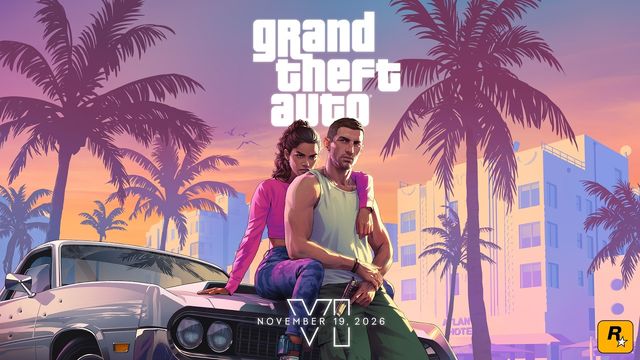
You can still steal cars, rob old ladies, and jump off buildings, but you can also adopt dogs, put up drywall, fall in love, buy your partner flowers, hold their hand. It’s mesmerizing, strange, funny, and astonishing. All of this has been done, Rockstar says, without any AI assistance.5No AI. Rockstar confirmed that no generative AI was used in GTA VI, and Take-Two made that part of its marketing, as Max and Joe discuss later. This is what I mean when I call it a medieval cathedral: a generational project built by hand, stone by stone, asset by asset,6Asset — any finished element of a game: a model, a texture, a sound, an animation. Max is translating “stone by stone” into developer-speak. rocket launcher by rocket launcher. I can’t believe I’m saying this about an entertainment product with an in-game porn site called Bootybang, but this is a monumental human achievement. And given the direction the video game industry, and really all entertainment, is headed, that probably makes GTA VI the last game of this scale made this way.
Times reporter Joe Bernstein has had access to the game for three weeks now. I wanted to ask him: How did a game like this get made? Why does it have such a hold on our imaginations? And can I come over to play it on his PS5? I’m Max Read.7Max Read — journalist, author of the Read Max newsletter and editor in chief of Gawker in 2014–2015. Since October 2026 he has been the interim host of Hard Fork, after Kevin Roose and Casey Newton left The New York Times. This is Hard Fork.
02All of Miami and 60 species of bird
Joe Bernstein describes an open world that is astoundingly huge and detailed down to the filigree.
Hello.
And today we’re joined by journalist Mike Isaac, who is soon to start at The Atlantic8Mike Isaac covered tech at The New York Times for more than 12 years and wrote “Super Pumped,” about Uber. In October 2026 The Atlantic announced he would join as a staff writer in December, covering Silicon Valley. Editor & Publisher but is currently extremely unemployed. Hi, Mike.
Hello.
Joe has spent the past several weeks living out a fantasy shared by millions of people around the world. He is one of a small handful of people with early access to the latest game in the Grand Theft Auto series. He’s written a really smart and funny piece about it for The Times Magazine.9Joe’s piece in The New York Times Magazine is “Grand Theft Auto Used to Satirize American Life. Now We’ve Caught Up With It,” as listed in the episode notes. And I want to talk about this both because I am one of these insanely jealous people, but also because this game is a huge deal. It is frankly a really monumental achievement. It’s been 13 years since the last game, which was a huge, iconic blockbuster that people still play all the time.
Some huge number of people helped to make it. It cost a small nation’s GDP or so, we sort of suppose. Joe, since you’re one of the few people who has gotten to spend time with this game, and you also went to visit the headquarters of Rockstar, the company that makes GTA, in Edinburgh,10Fact-checkNot quite: Rockstar Games is headquartered in New York. Edinburgh is home to Rockstar North (formerly DMA Design, which made the first GTA), the studio that leads development of the series. Rockstar North — Wikipedia could you tell me a little bit about the scale here, both in terms of the resources that went into it, but also the actual game itself?
Sure, yeah. I mean, sometimes we think of video games as having, like, annual editions, like the new Madden or the new FIFA, the new Call of Duty.11Annual franchises. Electronic Arts’ Madden NFL and its former FIFA series (renamed EA Sports FC in 2023), along with Activision’s Call of Duty, get a new installment every year, which is why Joe holds them up against GTA. This is something rare. I mean, three presidential administrations since the last one, right? Which came out in 2013. These Grand Theft Auto games are giant open worlds,12Open world — a game in which you can roam a large territory freely and choose what to do, rather than playing through levels in order. meaning it’s like a huge virtual environment that will be modeled after an American metro region.
So the first one took place in Liberty City,13Liberty City — the series’ parody of New York. In the first GTA (1997) it was one of three cities, alongside San Andreas and Vice City; it became the main setting in GTA III (2001) and GTA IV (2008). which is New York City. Some take place in Vice City, which is Miami, and the new one takes place in Vice City. Several take place in a sort of satirical version of California. And the game they’ve made is astoundingly huge. So Rockstar — and a lot of this reporting comes from a great Bloomberg Businessweek14Bloomberg Businessweek — Bloomberg’s business magazine. Jason Schreier is Bloomberg’s video game reporter, known for investigations into crunch, the grueling overtime at game studios. piece by the games reporter Jason Schreier — Rockstar staffed up, like, doubled in size, something like that, to nearly 5,000 employees to make this game.
And they’re working on a scale that’s enormous. This is a huge open world that sort of encapsulates not just Miami, not just South Beach, but all of metro Miami, and then sort of, like, the South Florida of the mind. So, you know, everything from Parrothead15Parrotheads — fans of Jimmy Buffett (1946–2023), the singer of carefree beach life in the Florida Keys, the island chain south of Miami. Keys life to, like, Florida Project,16The Florida Project (2017) — Sean Baker’s film about a girl living with her mother in a cheap motel near Disney World; for Joe, shorthand for Florida’s underside. like, greasy motels and oxycodone.17Oxycodone — an opioid painkiller. In the 2000s Florida was the center of “pill mills,” clinics that handed out opioid prescriptions almost indiscriminately. It’s just a really all-encompassing thing. Mike is nodding, impressed.
Sounds like my unemployment status.
So it’s huge. It’s, like, physically huge. You can run from one end of Miami to the other, and not just Miami. You can run from one end of Miami-Dade County to the other. But it’s also, like, every single step along the way, there’s a shop you can enter, there’s a car you can steal, there’s a dog you can pet, there’s 60 different species of bird in this game.
Right. And not only that, like, you’re free to ignore a lot of that filigree. So, like, yeah, there’s birds all over the place, and I haven’t — like, you just told me before we started the show that you can own a dog in the game, and I didn’t even know that, and I’ve been playing it for, like, 50 hours.
I should say, not only can you own a dog in this game — this came up in the context of seeing a clip where a dog was riding a jet ski with the game’s main character sitting behind him. So it’s not just that you can own a dog in the game. The dog can be your friend. The dog can drive a jet ski.
Yeah, I’m just hearing this now for the first time.
So wait, sorry, can you say, you’ve been playing it for 15 or 50 hours?
Probably close to five-zero. Yeah, yeah. So those are rookie numbers, Erin.
That’s like you’re saying, “Wow, man, I’m gonna lose my entire life on this game.”
Yeah, I mean, Gene Park, who is The Washington Post’s game critic, says he’s already spent 170 hours playing the thing. So I’m 50 hours into it, and according to the game’s sort of, like, progress meter, I’ve completed 80% of the main story.
And, you know, just being completely, like, out of the loop on this kind of stuff, like, is there a maximum, or is it just infinity, that you could play hours of this game? Like, for 13 years until the next one comes out?
So yeah, there’s like a long answer and a short answer. The short answer is you could do everything in the game. The long answer is that at some point Rockstar is going to make an online version of this. And in the online version, there’s a lot of user-generated content. And so, I mean, people are still playing the online version of the fifth game,18GTA Online — the multiplayer mode of GTA V, running since 2013 and making money from in-game purchases. GTA V itself has sold more than 200 million copies, second only to Minecraft. which did come out 13 years ago.
03The thrill of the mundane
The more ordinary the activity, the crazier it feels in a game, and that detail took years.
So it is this kind of, like, almost the closest thing we have to, like, a simulation of the real world. And part of the attraction — and I imagine we’ll spend a lot of time during this conversation talking about why this is so cool and such a big deal to so many men who have, like, real responsibilities in their lives — part of the attraction is that you can kind of do anything you want. You know, you can have dogs riding jet skis. There’s a lot of crime you can do, but there’s all kinds of other things you can do. What are some of the, like, crazy things that you’ve seen or done or tried to accomplish while you’ve been playing?
Yeah, I mean, it’s funny, because because it’s a video game, the sort of, like, the more quotidian the thing you do, the crazier it seems. So, like, you spend a lot of time at first, if you want to, and later because you have to for plot reasons, going to the gym. And, like, just the sheer number of exercises you can do in the gym is crazy. It’s, like, deadlifting, squatting, pull-ups, bench press. And then, like, the number of outfits you could wear to the gym.
Like, it’s funny talking to you about it, because you keep talking about things you can do in the game, and it’s not — you’re never saying, “Well, oh, you can get a laser gun and you can take off in a spaceship.” You’re just saying things that we do in real life all the time, like wear clothes and lift weights. And I think that there’s, like, something to be said about, like, how much time was spent, like, really going into making all these sort of quotidian aspects feel realistic and pliable and, like, concrete for the people who are actually gaming.
And, like, fun? I mean, it depends on your def—
It’s a famously hard word to define, Erin.
This is true.
What I would say is that when the game is really working, the kind of — the systems,19Systems — in game design, the individual mechanics: combat, driving, the economy, relationships. When they interact, they produce situations nobody scripted; Joe’s example is the gym, where lifting makes the character a better fighter. which is how game developers talk about the things you can do in the game, are sort of all mutually reinforcing. So, like, the weightlifting — yeah, it’s like pressing buttons, but then the more you lift weights, like, you’re better in a physical fight, or you can run for longer, or jump. I don’t know if you could jump.
Okay, you’re still just describing real life. I mean, it’s very funny to me to be hearing you describing the mechanics of a game, and you’re just describing the way the world works.
Yeah. And then there’s all the things you do that are not sort of what Erin or Mike or you, Max, would do on a daily basis. So there’s bank robberies, and there’s, you know, jet skiing with an AR-15, and, you know, all that kind of good stuff, parachuting out of a plane.
Hard Fork does not sanction jet skiing with an AR-15. Only with a dog. But part of what I’m asking is: Is the reason this game took 13 years to make that it required this level of sort of detail and freedom for the player to play?
So part of it is that the company made this huge game in 2018, and they focused all of their resources on this game, Red Dead Redemption 2. Jason Schreier’s piece was very useful because it got into some of the kind of internal Rockstar political reasons the game took a long time. They had some labor issues that they sort of had to address, workplace culture,20Rockstar’s workplace culture. In October 2018, studio co-founder Dan Houser said in an interview that the team had been working “100-hour weeks” on Red Dead Redemption 2. Journalists, Schreier among them, then reported on years of overtime at the studio. and this — yes, this sort of sheer level of detail.
I mean, this got cut from my piece, but, like, when I was in Edinburgh playing the game — or rather watching one of the executive producers play the game — they leaned the main character on a balcony, and the flesh on his arm splays out naturally on the sort of stucco of the balcony. And it’s the kind of thing that, like, you know, obviously it happens in real life, but, like, if it didn’t happen in a video game, you wouldn’t notice that it didn’t happen. You also wouldn’t necessarily notice that it did happen. It’s just a detail in the background that sort of sucks you further into the game.
And the sort of, like, the math and the time involved in getting that right is pretty staggering. And then when you see that applied across the board, it becomes clear why the game took so long. And one of the things these guys, these Rockstar executives, were talking about was also, like, when you’re making something that is so fussy and detailed, there’s really no end to it, right? Because there’s nothing more detailed than the world. And so you understand, like, why it took them so long and how obsessed they got. And that’s actually really cool. Like, it’s fun to experience someone else’s obsession in that way.
You’re reminding me of this old — so I’m gonna go into, like, nerdy Dreamcast,21Dreamcast — Sega’s last game console (1998). In 2001 the company discontinued it and left the console business. like, old console guy. And there was a game that came out years ago called Shenmue,22Shenmue (1999) — Yu Suzuki’s Dreamcast game, one of the most expensive of its time. You could open drawers and pick up objects, the townspeople kept their own daily routines, and the weather changed. which is, like, this Japanese game. Yeah, yeah. And, like, everyone was marveling at it because you could pick up a cup or a Coke can or whatever. And half the people had Erin’s look on their face, which is like, who cares? Like, why do you want to, like, pick up a coffee cup or whatever?
And the other half, I think, really appreciated the — like, the amount of work and labor that went behind making an environment that was as close to real life as possible. And these are things that gamers don’t really get all the time in the vast majority of games out there, because it takes a lot of work to go into creating, like, a virtual world to the degree that these games are.
04How GTA scared America
The hosts recall the early games and explain where Rockstar’s culture of secrecy comes from.
Okay, just, like, in the spirit of open inquiry, to understanding what makes this such a cultural phenomenon: Can you guys maybe talk about, like, when you first, you know, encountered Grand Theft Auto in your lives and, you know, why it’s such a big deal?
I have vivid memory of this, if you will allow me. I was a young boy in Texas, walking into the Electronics Boutique23Electronics Boutique — a video game retail chain, bought by GameStop in 2005. back in the day, where you could still buy huge physical boxes instead of downloading these games. And it was the first one, it was what Joe was talking about. It’s top-down, very, very, like, rudimentary if you’re looking at it by today’s standards. But I would argue it was of this era where these type of games were also pretty radical, in a way. Like, you could, like, run into people on the street. There were, like, congressional hearings24Congressional hearings on violent video games were held in 1993 over Mortal Kombat and Night Trap; afterward, publishers created the ESRB rating system. GTA itself came under fire in 2005, when a hidden sex scene, Hot Coffee, was found in San Andreas. about these types of games, right? There were people that got very mad at this stuff, just because it was, like, violent. And, like, I mean, I was 13 and still bought the game, right?
So, like, there was all this stuff around it. But I do think that it was formative also in the sort of open-world aspects. Instead of a linear game, you can run around and explore things. And that was — I don’t know, like, as a young nerdy guy who liked looking at these things, it was a little more expansive, let’s say.
Yeah, I think I got into it, like, around the same time as Mike. And I remember renting — I didn’t have a console, and I remember renting GTA 2, which was another one of those top-down, very rudimentary ones. And the development of the game from that kind of trollish, like, juvenile — and it’s still quite trollish and juvenile — but to this, like, trollish and juvenile within the context of this remarkably sophisticated engine for recreating the world, is, like, sort of difficult to wrap your head around if you think back to being 13 or whatever and just driving a cop car into a wall. And now, instead of driving a cop car into a wall, I can deadlift and adopt a dog and do all kinds of pro-social things.
Yeah, so just to kind of gloss that a little bit: Like, the first two games are top-down, then the games go 3D. And this is a period of time in which a lot of games are going from sort of these little sprites25Sprites — flat, two-dimensional images of characters and objects that games were built from before 3D graphics. that you see in two dimensions. So think of, like, Zelda, the old Zelda games, which are top-down, and you’re running a little fairy man around, or, like, Mario, which you’re seeing like, you know, like a poster on the wall, but that moves. And then they’re entering three dimensions. And so, like, taking a game like Grand Theft Auto, which was two-dimensional and very cartoonish and rudimentary, like, there’s sprites that are, like, shooting and driving, and then doing that in a three-dimensional space that is supposed to recreate New York, you know, like what’s right behind me26GTA III (2001) — the first 3D installment of the series, set in Liberty City, its parody of New York, where Joe lives. — that was radical, like, radical, and also, like, scared people a lot.
And the games were very controversial because of that. Because there was this idea at the time that, like, how are we going to distinguish fantasy from reality? And it’s just like, you go back—
It’s laughable now.
But also, like, you go back and look at these games, and it’s like, Jesus, how did anyone think that that was a one-to-one? But, like, if you put yourself in that mind frame, it’s a lot easier to understand. And one of the reasons that Rockstar holds information so tightly is exactly because it was so controversial back then. The context of all this is people are obsessed with Rockstar. The more secretive they become, the more obsessed gamers get, some subset of gamers get. And there’s a financial reward to, like, leaking pre-development, or, like, footage of the game in development, which actually happened a couple of years ago.27The leak. In September 2022 a hacker posted 90 videos, about 50 minutes of unfinished GTA VI, on the GTAForums message board. He turned out to be Arion Kurtaj, a British teenager from the Lapsus$ group; Rockstar put the damage at $5 million. And so Rockstar is, like, unbelievably tightly controlled about letting media escape.
You know, walking into the office itself is kind of like a fortress.28A fortress — Rockstar North’s Edinburgh studio covered its windows with privacy film so drones couldn’t photograph the inside. Grand Theft Auto VI — Wikipedia So to play the game involved, like, a, you know, week-long negotiation between The New York Times’ lawyers — excellent lawyers — and Rockstar’s lawyers.
You had to sign things.
Yeah, yeah, I had to sign. And, you know, The Times, I think, doesn’t usually do that, but I think the sort of stakes of the game, this huge cultural phenomenon, were such that they had this kind of limited NDA. It’s like—
You had to explain to your kid that, like, if you peek into the room while I’m playing this, Daddy could go to jail.
I literally told my six- and my four-year-old that I had the coolest video game ever, but they couldn’t watch because it was against the law.
That’s a core memory right there for them. Seriously.
But it’s also cool because, like, I’ll be — you know, there’s ads for the game everywhere. I don’t know about in the Bay, but, like, on the subway there’s just ads for them. And so, like, I’ll be taking my kid to jujitsu or something, and he’ll be like, “Daddy, there’s your game.”
And you have to shush him real quick on the subway so you don’t get taken out by—
05Satire overtaken by life
Joe explains how GTA mocks an era that is hard to mock, by building tech into the gameplay itself.
Yeah, I have another question about this. Like, I want to hear from Joe. Like, your article has this really great description of how the way that this thing, you know, used to satirize, like, our culture, but now culture is kind of, like, not satirizable. And it’s got this, like, sort of, you know, element of tech in it that makes it — it doesn’t seem that exciting to me to, like, be playing a video game where my video game character is just looking at Instagram and using Venmo and, like, calling rides on Uber. Like, that just seems like — you describe it, I think, as quotidian. And so, like, maybe you could talk a little bit about the role of tech in the game.
Sure. So just to back up to the beginning of your question: The games are satire. They come of age in a time in which the dominant satirical mode is, like, Jon Stewart’s Daily Show, South Park, American Idiot.292000s satire. The Daily Show under Jon Stewart (host from 1999 to 2015) and South Park went after the George W. Bush administration, and American Idiot (2004) was Green Day’s album against the Iraq War and cable-news America. It’s, like, making fun of Bush-era Republicans. And that was, like, a very well-trod thing that was very sort of, like, kind of easy to digest if you were in that cultural stream. One of the questions in my piece is — it’s been well established, we’re in a very difficult time for satire, because reality — it’s very hard to stand apart from what’s going on and sort of make fun of it in a way that is funnier or adds a commentary to what is already happening.
Yeah, the creators of the Silicon Valley HBO show30Silicon Valley (HBO, 2014–2019) — Mike Judge’s satire of startup founders. Back in 2019, as the show was ending, Judge said the tech world was getting less funny. New York Post talk about this, how they won’t remake it now because they don’t think that it’s, like, satirizable.
What could be funnier than Elon jumping up and down, you know, with his shirt coming up?31Musk’s jump — on October 5, 2024, at a Donald Trump rally in Butler, Pennsylvania, Elon Musk ran onstage and leaped with his arms raised, his shirt riding up over his belly; the shot became a meme. There is nothing funnier.
I mean, there are funnier things than that, but, like, you can’t — the height of comedy.
Although, I guess, counterpoint: SNL this weekend did an okay job.
I think one of the questions I really had about this game was how it was going to sort of — because they are these sort of, like, granular recreations of American life — how they would reckon with that dynamic. And so one of the things they do that I think is very clever is they insert it into the gameplay. And so early in the game, you are sort of a poor criminal nobody. And the joke of the game is essentially that you’re too incompetent and poor of a criminal to really steal a car. And so it’s easier for you to just, like, rob a Burger King and take an Uber to the next place you want to go.
And so it’s, like, satirizing the convenience of, like, all of our, like, sort of tech-saturated lives.
It’s saying that even the, like, criminal escapism fantasy can no longer credibly ignore the fact that everyone is, like, oppressed by technology.
Incredible. It’s amazing that it’s set in Miami at this moment, too. I mean, they must have decided to do this back when they first started making the game, more than 10 years ago, but it’s hard to think of a city that’s better positioned to be the site of exactly — like, Miami, crypto capital, the place where a bunch of VCs claimed they would be moving in the midst of the pandemic.32Miami, crypto capital. In December 2020, Mayor Francis Suarez answered a joke on Twitter about moving Silicon Valley to Miami with “How can I help?” and began courting investors and crypto companies.
Yeah, I mean, the sort of omnipresence and, like, sinister, like, aspect of tech is around you in the game. There’s crypto bros, and then the sort of Amazon equivalent in the game is called Sahara, and they drive these — like, they basically look like armored personnel carriers, and, like, they’re super fortified. And, like, if you try and rob one, they have, like, armed guards. So, like, the fact that you, like, live in this kind of libertarian, like, techno-nightmare is definitely part of the game.
But, like, when in the sort of Miami rise and fall are we? Like, are we in 2021? Is there a Keith Rabois character,33Keith Rabois — venture capitalist and former PayPal and Square executive. In late 2020 he made a show of leaving San Francisco for Miami, calling the city “so massively improperly run,” and became the loudest booster of tech’s move to Florida. like, saying everyone move here? Is, you know, the mayor trying to, like, pay all the employees in Bitcoin, or all the city employees in Bitcoin?34The Bitcoin mayor — Francis Suarez again: in 2021 he proposed letting city employees be paid in Bitcoin and pledged to take his own salary in it. Or is it kind of like, you know, now, when Keith Rabois has moved back to New York?
So one of the things I know Rockstar dealt with is, like, how do you make topical satire when the lead time is so long? So they don’t have COVID, for that reason, even though you would think, like, COVID in—
No, Miami never had COVID. I went to that Bitcoin conference in 2021.35Bitcoin 2021 — the conference held in Miami on June 4–5, 2021, which drew about 12,000 people. By then Florida had lifted almost all of its COVID restrictions, among the first states to do so, hence Erin’s joke. There was no evidence of it.
06The last blockbuster
Mike and Joe explain why GTA VI was awaited like a messiah: nobody takes big swings anymore.
I just want to, like, take a moment to think a little bit about the sort of cultural moment and the cultural impact of the game. Like, part of the reason for all the secrecy is obviously Rockstar’s negative, you know, experience of this in the past, but it’s also — this feels like a sort of monoculture event,36Monoculture — the shared culture of the three-network era, when the whole country watched and talked about the same event. In the age of algorithmic feeds, such events are rare. in a way that you really rarely kind of experience anymore. I’m trying to think of even how to — like, maybe this is a question for Mike.
I’m gonna ask the unemployed guy: Why do people care so much? Like, why do you think people care so much about GTA?
I mean, look, I would argue this is, like, the last big video game out there. These big-budget games don’t really happen in the same way anymore. And that, I would argue, is a number of different forces: cost too much, consoles aren’t really profitable in the same way they were, but people can, like, play, you know, Flappy Bird37Flappy Bird (2013) — a simple mobile game by a Vietnamese developer that became a viral hit; in February 2014 its creator pulled it from the app stores himself. Hence “this is aging me”: the reference is 12 years old. — oh, I mean, this is aging me — but whatever stupid iPhone game they want.
First we have Furbies, now you’re doing Flappy Bird.
We really need to update Mike’s references at some point. I’m just gonna send you a file with things that happened between 2018 and 2026, just so that maybe you can join the conversation.
Fortnite, all right? So let’s go to Fortnite. You can play Fortnite. You can get Lady Gaga with a flamethrower38Lady Gaga in Fortnite — in February 2024 the singer became one of the featured stars of the game’s Fortnite Festival music mode, and her outfits went on sale in the game. jumping into the digital equivalent of a Burger King online anytime you want, right? And do that for free.39Free. Fortnite is free-to-play: the game itself costs nothing, and the money comes from in-game purchases — outfits, dances, season passes. And that is how people game now.
And that is different than paying a hundred dollars40GTA VI’s price: the Standard Edition is $79.99, the Ultimate Edition $99.99. for this huge game. So I would argue it’s one of the last of its kind, if not the last big video game. And I think — look, this is also, like, think of it in movie world. There’s enduring franchises that stick around that people get excited for, but there’s not that many of them that really stick around. And I think GTA is, like, the last one. And then, like, look, also, you know, if you want to get cultural critic: Everything is expensive, my life is a nightmare, I don’t have a job, all the Marvel movies look terrible. This is, like, the light at the end of the tunnel for me, right?
I mean, it’s funny you say that, because you are literally describing the opening premise of the game. You don’t have a job, everything’s expensive, movies. Why not play a game that gives you all this? So I assume that GTA VII is gonna have an in-game GTA that allows you to play through.
There are in-game video games.
Oh my God.
So, playable in-game video games.
This is the real metaverse. This is what Mark Zuckerberg should have spent his money on.41The metaverse. Facebook renamed itself Meta in 2021 to bet on virtual worlds, and Reality Labs, the division behind them, lost more than $60 billion from 2020 to 2024.
Mike touched on a couple really important things. One is that from a financial perspective, I don’t think Rockstar needed to make this game, because they make a lot of money on Grand Theft Auto Online. And so, yeah, this game will make a ton of money, but they were printing cash from GTA Online. So the idea of introducing something new — exactly to Mike’s point about Hollywood — like, why risk it? Why make something new when we’re already making money off of whatever this is?
And so I think part of the kind of, like, messianic quality of, like, “Wow, this game is, like, the promised one,” is because there hasn’t been anything that feels new, blockbuster, and high-quality in a long time.
Which is why the hope, right? That people still want this.
I think the closest thing to it this past year was probably The Odyssey,42The Odyssey — Christopher Nolan’s Homer adaptation starring Matt Damon, released July 17, 2026; Joe cites it as the year’s only big-budget blockbuster that lived up to expectations. in that it was, like, a huge-budget thing that, like, basically delivered. It seems like the reception to this is even more positive than The Odyssey, which is, like, pretty exceptional.
And so, like, you’ve talked to them, and they’re making this for the love of the art, basically, like, not because—
It’s art.
The businessmen are not making it for the love of it. I think there are developers at that company who genuinely believe in the form and want to create something new and exciting and unprecedented. And, like, what more could you ask for from a media experience, you know? I mean, new and exciting and unprecedented — those are, like, three adjectives that do not describe what is on television right now, what is in movie theaters, for the most part. And so I think that’s, like, why people are so excited about it. To be corny about it.
You guys are, like, making me want to play a video game.
Look at that. Look at that. We did it. That was the point.
Well, I mean, so what I’m hearing is that there’s something about — in a world where not much is happening on a cultural front, where things feel worse, chintzier — they cost less — they cost more money, but there’s less money being put into making them — this is a really monumental achievement that is kind of hitting, you know, as they say in Hollywood, all four quadrants,43Four quadrants — Hollywood jargon: the audience is split into men and women under and over 25, and a “four-quadrant” movie appeals to all of them. that is, like, really getting out there, that people really care about. And that is as much as our cultural history with GTA, as much as whatever else. This is, like, the sort of last gasp of this sort of effort. I mean, it reminds me of, like, those great Hollywood studio movies just before the ’60s downturn, when you have, like, Lawrence of Arabia and Doctor Zhivago,44Lawrence of Arabia (1962) and Doctor Zhivago (1965) — David Lean’s lavish epics for Columbia and MGM. By the end of the 1960s the old studio system had buckled under a string of expensive flops, and New Hollywood’s young directors took over. The Lawrence poster shows Peter O’Toole in Arab dress. this, like, last gasp of a studio system able to create something huge and great.
07Press X to hold hands
For the first time, a romance sits at the center of a GTA story, and the female lead is the richer character.
I do want to ask — before we get into the AI of it all, which is something that we obviously need to talk about — I want to ask one more set of questions about something that is sort of unprecedented in the GTA world and feels quite different from anything they’ve had in the past, which is: One of the central aspects of the storyline in this game is a romance. Like, part of what you’re doing here is engaging in a model — in, like, a model of healthy couplehood. Obviously the part where you’re robbing cars is quite unhealthy, but it’s, like, a “press X to hold hands”45“Press X to…” — a nod to on-screen prompts. The most famous is “Press F to Pay Respects” in Call of Duty: Advanced Warfare (2014), which asked players to press a button at a funeral to honor a fallen comrade; the line became a meme. kind of game. Is that right, Joe?
Yeah. It is. I mean, it is. It’s a frequent prompt, just to hold hands. Oh, that’s not a joke. [unclear]
It’s really sweet. It’s like it teaches the youths how to be affectionate. Yeah, I have a few thoughts about that as well. It used to be like we were scared video games were making kids more violent, and now, like, we’re scared they’re teaching them to love.
Right. I mean, I think that is one take. Another take, if you’re of a more advanced age, is that you’re holding hands with a virtual woman instead of your partner. So, yeah, there is that aspect to it. Again, there’s all these sort of quotidian things.
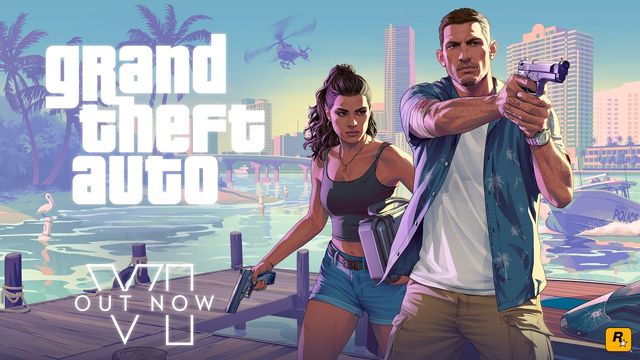
It’s a Bonnie and Clyde story. And when you get to a certain point in the game, you can freely switch between the two characters, which is cool, because GTA has historically kind of had a problem with women. And I would say the female character in this is the more richly drawn of the two. She has a more interesting story, and is — you know, it’s interesting, like, there’s more sort of freedom of movement in this game, and there’s more ways to skin a cat, so to speak.
Hopefully not literally in the GTA universe.
As far as I know, you can’t skin a cat. You can jet ski with the cat, but you can’t skin it. So the way other characters respond to you changes depending on who you are. And so it just sort of — in some ways it doubles the size of the world, because all of the people you cross paths with — there’s, like, 30,000 of them in the game, all unique — they react differently to you as a Latina woman46Lucia Caminos — GTA VI’s Latina protagonist; the first trailer opens with her release from prison. Joe played as both her and Jason. than they would as a white man.
So it’s kind of an interesting thing. It’s role-playing, you know, in the original sense of the term.
08Could AI make a game like this?
Joe thinks the taste of thousands of people protects GTA for now, but won’t predict beyond a year.
I want to move — so, let’s get to AI. Because this game is coming out a week after I was on Twitter, and I was watching people one-shot47One-shot — when a model delivers a finished result from a single request, with no follow-ups or fixes. whole video games, or levels in video games, using the latest Claude model. So they would post, you know, like a browser-hosted first-person shooter that, frankly, looked and felt pretty professional. And it’s hard not to look at something like GTA — again, 13 years, 5,000 people, we don’t know exactly how much money, but let’s assume it’s a bazillion dollars.
Now you can do a version of that for four or five hundred dollars in your chat, in ChatGPT or in Claude. So, like, how are you feeling about this shift, and where are you seeing it going?
So maybe the best way to think about it—
I think just, like, a little sob, a little bit, at the death of the video game industry.
First of all, the video game industry is full of crap that is no better than something that took a couple hours in Claude. It just is. It’s full of a lot of bad, imitative, boring shit. I would reframe this to use a sort of hoary framework, within the sort of question of taste.48Taste — a common argument in the 2025–2026 debate over AI: if models can do everything passably, the value shifts to telling good from mediocre. Joe calls the framework hoary but uses it anyway. I think that there are a lot of people at Rockstar who have really good taste, not just in video games, but, like, in life, and that that is distributed through the company, along with the enormous quantities of time and money that they have, that ensure the product, for now, is going to be something that is just, like, obviously better than something made in Claude. How much longer that is the case?
Like, at what point can Claude get to, like, 98% of the combined taste of every Rockstar employee? Like, I don’t know. That’s not a question I can answer. Beyond, like, a year out, I have no idea. In the same way people don’t know what’s going to happen with AI, period.
And it’s also — but, like, isn’t a big piece of the appeal of why you guys want to play this because everyone else is, and you want to participate in the, like, kind of cultural zeitgeist, in the same way that we all want to see, like, the big blockbuster movies? Like, if there’s all these little splinterings of it, and sort of, like, fan-fiction versions of it created by AI, like, that doesn’t seem like it is the same, and doesn’t give you the same sort of satisfaction. But, you know, correct me if I’m wrong.
I mean, I don’t know. Perhaps I’m stuck in the past, as clearly many of my dated references sort of illustrate, but I do feel like people still respond to — like, we’ve been marveling over, maybe except for Erin, marveling over the details of, like—
We won her over. Pick up a Coke can or whatever in these games. I still think that people really recognize work and the labor behind some of these games, at least right now, you know?
Quality, right? I mean, and, like, the distinction between good quality and no quality. And I think, like, people who have lived through this transition can make that distinction. I worry about the future. But that’s a broader question than video games. It’s about media in general.
I know. I mean, I totally agree, but it’s very funny to think about, you know, these poor kids, they never played GTA III. They’re never gonna make it, they’re never gonna have any taste.
This is the most elder millennial version of this podcast we’ve ever made, and that’s saying something.
I mean, I was gonna say, Joe, reading your piece, a word that kept coming to mind, bizarrely, for talking about a Rockstar game is “artisanal.” There is something sort of artisanal about what they were doing here. There is, like, a level of care and craft. And you were telling me right before we started recording that this has, in fact, been a sort of selling point for them: that the way Take-Two, the Rockstar parent company, has been talking about this game, very deliberately saying there was no AI used here.
Yeah, Strauss Zelnick,49Strauss Zelnick — chairman of Take-Two since 2007 and its CEO since 2011. Born in June 1957, he is 69; he is known for his fitness regimen and wrote a book about staying in shape past 50, “Becoming Ageless” (2023). who’s the bizarrely young-looking CEO of Take-Two — you should really look him up. He’s, like, remarkably handsome for, like, a 70-odd-year-old man. Hope people say that about me in 30 years. He’s done a media tour recently, and he’s touted — I mean, it’s a sales pitch, basically, but it’s also a statement of fact, which is that, like, when you play it, you can feel that it’s not. And it’s — as you say, it’s an ironic thing to say about a video game.
It doesn’t feel machine-tooled, robotic, you know. I mean, it feels like something that people have put a lot of craft and care into.
Okay, I’ve got two final questions. Joe, this sounds like a rave review. Everybody should play GTA VI, yes?
Yeah, I mean, I think it’s a great game.
A monumental achievement. Erin, final question for you. I feel like we’re winning you over. It sounds like maybe you want to play. Will you stream it on Twitch with me?
Yes. I just — Mike, can I borrow your PS6?50PS6 doesn’t exist: GTA VI came out for PlayStation 5 and Xbox Series X/S, hence Mike’s correction.
No, not at all. First of all, it’s PS5, and second of all, I will be using it.
Okay, can I say that again, then? Because I can—
I’m gonna get attacked. I’m gonna get so attacked.
We are going to negotiate this exclusive Twitch stream during the break. After that, Joe has to go, but Mike and Erin are gonna stick around. We’re gonna talk about NVIDIA, we’re gonna talk about Jensen Huang, we’re gonna talk about what the hell is going on with all the networks and systems that have been going down all week. This is Hard Fork.
AdNYT Games
Hey, I’m Robert Vinluan, and I’m from New York Times Games, and I’m here talking to people about Wordle and the Wordle Archive. You all play Wordle? I have something exciting to show you. It’s the Wordle Archive.
Oh, and if I miss it, I can, like, go back?
100 percent.
Oh, that’s awesome.
So now you can play every Wordle that has ever existed. There’s, like, a thousand puzzles.
Oh my God, I love it. Amazing.
New York Times Games subscribers can now access the entire Wordle Archive. Find out more at nytimes.com/games.
09Huang asks for his job back
Huang says he would return to NVIDIA, but Erin argues this is no Altman story.
Welcome back to Hard Fork. I’m here with Times reporter Erin Griffith and soon-to-be Atlantic writer Mike Isaac, who is joining us from his unemployed headquarters, where he’s been playing through Elden Ring.51Elden Ring (2022) — a game by Japan’s FromSoftware, famous for its difficulty; Game of the Year 2022 at The Game Awards. We’re not only going to talk about video games on this episode. We will be talking about the network outages that plagued the entire world this week, and, of course, NVIDIA and the ongoing saga of Jensen Huang. I want to note here — I said we’re not only talking about video games, but NVIDIA, of course, is a graphics card company, and it furnished the guts of many, many gaming PCs, Xboxes, PlayStation 3s, Nintendo Switches.52NVIDIA in consoles — right: it made the graphics processor for the original Xbox (2001), the RSX graphics chip for the PlayStation 3 (2006) and the Tegra X1 system-on-a-chip for the Nintendo Switch (2017). Mike, as a gamer, did you always expect NVIDIA to be one of the richest and most powerful companies in the world?
I feel vindicated for my lifelong obsession with this company, because I used to have to save up all of my money to buy these graphics cards, which have inadvertently become the most valuable things in the entire world. But they have been around for such a long time because of how important they were to the gaming industry.
I know. It’s funny that many people know what a chipmaking company even is, but it’s because they were — that was the best possible cards you could get for your gaming PCs. Anyway, we’re not really going to talk about NVIDIA GPUs from 2007, though I’m sure Mike would be happy to do it at length. Instead, we’re going to talk about the open CEO position. They have an interim CEO, and they’ve got, presumably, some internal candidates. There is one external candidate: that would be the businessman Jensen Huang.53Jensen Huang — NVIDIA’s co-founder and its CEO from 1993. On November 12, 2026, he resigned from all his posts after a scandal over extramarital affairs, including one with the head of Singapore’s Megaspeed, a woman suspected of spying for China.
Who filled out an application on LinkedIn.
Well, he put his name forward on Twitter. I’m going to read what he said: “Since my departure, I’ve seen an outpouring of calls from NVIDIA’s employees, investors, business partners, and customers for me to return as CEO. If the board of directors decides that my return is in the best interest of our shareholders, our employees, the company, and America, I would be honored to answer these calls and return as CEO.”54Huang’s statement came out on November 17, 2026, the day of NVIDIA’s quarterly report. In it he also acknowledged that he had “made serious mistakes in my personal life.” NBC News
Wow, bringing America into it.
Yeah. Erin, is this a real possibility? I mean, Sam Altman left — was forced out by the board — and then came back at OpenAI.
ExplainerHow OpenAI fired and rehired Sam Altman
- On November 17, 2023, the board of the nonprofit that controls OpenAI fired CEO Sam Altman, saying he had not been “consistently candid in his communications.” Board chair Greg Brockman was removed from the board the same day and quit.
- Employees revolted: more than 700 of roughly 770 signed a letter threatening to follow Altman out, and Microsoft, OpenAI’s biggest investor, offered him and Brockman a new unit of their own.
- Five days later Altman was back as CEO, and the board was almost entirely replaced.
- Inside the company the episode is known as “the Blip,” after the Marvel movies’ term for the time half of all living things vanished and then returned.
- An outside review commissioned by the new board concluded in March 2024 that Altman’s conduct had not mandated his removal, and he rejoined the board.
I mean, I never want to rule it out, because, I mean, just a week ago, I think most commentators were saying, “Oh, Jensen will never be fired.” And then it happened very quickly that he resigned. But, you know, the comparisons to the Sam Altman blip have been kind of interesting, because it is a very, very different situation. I mean, first of all, Sam was fired for what we later found out to be no reason, really, or no good reason.
I think the official reason was that he was sort of a weird liar, and they didn’t like that very much.
Right. Not consistently candid. Bad vibes. And Jensen, I think, went beyond being not consistently candid. You know, we’ve seen from reporting that he lied to the board.
But to be fair, he was also not consistently candid, just in a sort of higher-stakes kind of a situation.
Yeah, that’s a kind of weaselly way to say it, I guess. But, like, there’s just a huge difference in the situation here, just starting with the fact that OpenAI was a private company and NVIDIA is a publicly traded company. And so, like, that just really narrows the scope of what all of these people that he’s talking about — employees, investors, business partners — can actually do, because there’s just legal liability here. And so, you know, the board, if they bring him back, they can’t just sort of, like, unilaterally make this decision. They open themselves up to the possibility of shareholder lawsuits.55Shareholder lawsuits — on November 19, CNBC reported that law firms were already exploring suits against NVIDIA and Huang. CNBC So everything has to be so by the book.
And in the case of OpenAI, you know, it’s just, like, kind of a handful of VCs that get together in a room, and they’re like, “All right, let’s just do this. Let’s override this governance board that fired Sam Altman.” It’s just not as easy this way.
ExplainerShares with unequal votes
- In a classic public company, one share means one vote, and a board elected by shareholders can fire even a founder; Apple’s board sidelined Steve Jobs in 1985.
- Since Google’s 2004 IPO, the dual-class structure has spread through tech: shares sold to the public carry one vote, founders’ shares ten. Alphabet and Meta work this way: Mark Zuckerberg owns about 13% of Meta’s stock but controls more than half the votes.
- Snap went further in 2017, the first major IPO to sell shares with no vote at all.
- NVIDIA went public in 1999 with a single class of stock, so its board is independent of the CEO, and Huang, with less than 4% of the shares, can’t simply vote himself back in.
- Supporters say such structures let founders think in decades rather than quarters; critics say they make founders unaccountable.
And I think it’s also worth noting that NVIDIA is unique in the universe of even publicly traded tech companies now, in the fact that they have actual, real governance at their company, because the company is so much older and was set up prior to this era of, like, founder-friendly shares, where, like, you know, Mark Zuckerberg and Evan Spiegel and all of these, like, kind of tech founders have positioned themselves as, like, an authoritarian king over the company, and not as a CEO who is beholden to shareholders and a board of directors. Most tech companies now, including Anthropic going public, are setting up essentially, like, no-vote shares,56Fact-checkNot quite: Anthropic’s Class A shares, the ones that trade publicly, do vote, one vote per share. But the founders keep control: a single Class F share held by the seven co-founders carries 50.1% of the vote in electing most directors, and the rest are chosen by the Long-Term Benefit Trust. Nonvoting shares (Class N) go to strategic partners, Amazon and Google. Anthropic’s S-1 right, for shareholders. And so NVIDIA is not set up that way, because it’s from a different generation. And so there’s real governance that has to play out here. And so it’s very different in that way, too.
It feels like such an antiquated notion, having, like, actual governing functions of a board, rather than it being, like, the sort of, like, marionette strings of the CEO on a dual-class share structure thing. When I first found out about the affairs and the sort of, like, tricking-the-board stuff, the first thing I did was, like, what is the stock structure of this company? Because it doesn’t matter if he controls it the same way that Zuckerberg and, like, basically this entire generation of founders does. But, like you said, like, he’s at the mercy of the board of directors. And that just feels, like, old-fashioned in a way that I haven’t thought about as a tech reporter in a while.
This makes this debate over whether Jensen should or can come back into, like, almost a philosophical debate over, you know, the way that tech companies should be run. Because, like — I mean, Mike, you and I have written about this a ton over the last decade — this kind of shift in the pendulum, swinging between founder friendliness, and investors giving founders everything they want and sort of treating them, like, like princes who have absolute, you know, authority and control over the companies they create, to, you know, investors sort of having more power and being able to fire a CEO. And which is right? And Silicon Valley goes from extreme to extreme, but I think on the whole, over the last 10 to 15 years, the industry has moved toward this kind of, like, founder-supremacy model. And NVIDIA, and the way that it’s set up, is just, like, a vestige of something that is, like, pretty much obsolete at this point.
10Who wants Huang back, and why
Musk, Kalanick and Trump want Huang back, and the industry fears losing its “Fed chair.”
Yeah, though we should say that, like, sort of as a matter of culture, NVIDIA was very much a founder-led company, and Jensen, as we know, ran it sort of by fiat. He had 60 direct reports5760 direct reports — a hallmark of Huang’s style: he holds almost no one-on-ones and has said this way information moves through the company faster. or whatever. He was the face of the company. He was making these sort of visionary long-term bets. And I think that that sort of fed into this sense last week: They’ll never get rid of him.
But as you guys keep saying, like, clearly there is, in fact, like, a legal structure here that would allow him to get pushed out. But I want to stay on Erin’s point for a second, because I think it’s worth looking at the people who have been publicly calling for Jensen’s return. There was a petition going around.58The “Stand with Jensen” petition appeared the day after the resignation, asking the board to bring Huang back “while an independent investigation establishes the facts” — the line Mike parodies a few minutes later. Signers included Elon Musk, Epic Games’ Tim Sweeney and Y Combinator’s Garry Tan; reports put the total above 175,000, though no one verified the signatures. TechRadar Elon Musk signed it. Mike’s old friend Travis Kalanick59Travis Kalanick — Uber’s co-founder and former CEO, the central figure of Mike’s book “Super Pumped”; hence “old friend.” signed it. Palmer Luckey60Palmer Luckey — founder of Oculus and of the defense company Anduril, one of the most visible figures of the tech right. has been calling for his return. The president appears to be on board again,61Trump first, on November 12, proposed Tim Cook as Huang’s replacement (“A legend replaces a legend!”), then on November 16 said he was open to Huang’s return. MacRumors though who can say. His original suggestion was for Tim Cook to come back. Presumably had to change his name from Tim Apple62Tim Apple — in March 2019, at a White House meeting, Trump called Tim Cook “Tim Apple,” and the nickname stuck. Since September 1, 2026, Cook has been Apple’s executive chairman, having handed the CEO job to John Ternus. to Tim NVIDIA. So, Tim NVIDIA.
Oh, I like it.
Right? But, like, we’re talking about a lot of founders and venture capitalists. And also we’re sort of talking about the tech right,63The tech right — Silicon Valley founders and investors who backed Trump in 2024: Elon Musk, Marc Andreessen, Peter Thiel, David Sacks and others. right?
Well, I mean, it’s more than that. It’s also the employees. It’s the customers. It’s, you know, according to Jensen, it’s America. But it’s worth, you know, digging into, or thinking a little bit about, why they all want him back so badly. I mean, the tech industry, regardless of their political views, relies on this one company and this one guy more than anything or anyone else.
I mean, I’ve talked to people who called him the industry’s rich uncle. He’s — you know, NVIDIA is the Federal Reserve, and he’s the Fed chair. He’s the benefactor. It’s not just that NVIDIA is supplying the chips. They’re also, you know, one of the most aggressive acquirers of startups at very high valuations, one of the most aggressive investors in startups, and, most critically, NVIDIA has been backstopping all of these neocloud64Neoclouds — cloud companies that rent out computing power on NVIDIA GPUs: CoreWeave, Lambda, Nebius and others. and infrastructure companies with sort of revenue guarantees.65Revenue guarantees — for example, in September 2025 NVIDIA signed a $6.3 billion agreement with CoreWeave to buy, through 2032, any capacity the neocloud can’t sell to other customers. And then, on top of that all, he’s also the biggest booster of open source.66Open source — NVIDIA releases open AI models in its Nemotron family and champions open models, unlike OpenAI and Anthropic. After Huang’s resignation, Colette Kress said that course would continue. And that’s a huge sort of, like, philosophical view on the way that the tech industry — the direction it’s going to move in. So if there’s someone who’s a little bit more conservative, or not as aggressive in the deal-making, in charge of the company, that’s just going to create this huge chilling effect for the entire industry.
And so there’s a piece of that. It’s not just a political thing. It’s like people in the tech industry really view him as critical to the success of the future of, like, where everything has been going.
Imagine — like, I’m trying to think of it — you’re inspiring me to think of it as, like, regime change in, essentially, a government, right? Like, you have all of these players who have invested this much time and energy into getting in front of the guy who makes all the decisions, whether he’s buying your startup or funding your important, you know, company that’s going to be the next thing. And then you have someone else who comes in and is like, “Actually, I don’t care about you,” or whatever. You know, it only took Mark Zuckerberg putting on a leather jacket to jump to the front of the line for NVIDIA chips, hanging out with Jensen. They did a whole fashion swap.67The jacket swap — in July 2024, at the SIGGRAPH conference in Denver, Zuckerberg gave Huang a black shearling jacket, and Huang handed over his signature leather one. Meta was one of NVIDIA’s biggest customers: Zuckerberg had promised about 350,000 H100s by the end of 2024. I think, like, Mark wore the leather jacket, and Jensen wore, like, Mark’s shearling hypebeast coat or something like that.
That was a thing. That’s nice. That was pretty adorable.
Yeah, I don’t see Colette Kress68Colette Kress — NVIDIA’s CFO since 2013 and its interim CEO since November 12, 2026. doing that, the CEO of NVIDIA that they brought in. I mean, it’s also just worth pointing out that she’s already — I mean, there’s been some reporting that has come out that has shown that she has pushed back against some of Jensen’s really aggressive deal-making,69Kress’s objections. According to The Wall Street Journal and Reuters, she asked how to measure the returns on Huang’s deals and the cost of his guarantees, and pushed back on some of his proposals, including a financial backstop for an OpenAI data center project in Ohio. like, over the last year, you know, starting to, like, kind of get a little bit nervous about the company getting out over its skis on some of this stuff. And she’s kind of, you know, made some comments to the effect that, like, “Okay, you know, we’re gonna maybe be a little bit more conservative going forward.” And, you know, obviously we have yet to see that, but yeah.
One thing I will say, though, on your point, Max, is, like, there’s another framework you could look at it as. Like, this is this sort of shift from, let’s say, a pre-midterms world,70The midterms — U.S. congressional elections held on November 3, 2026. where the folks in tech land who were, you know, comfortable with Trump land, who were sort of cozying up to right-wing or conservative politics, who were, like, ascendant, essentially, are seeing this figurehead of that movement essentially get toppled, right? And, like, maybe the people who were comfortable with that, or at least, like, on board with that, are kind of like, “Okay, it’s not going in our direction anymore. So, you know, what can we do to get back towards that?” And I don’t know, it feels strange. It also feels like sort of, like, a last grasp that may not work, but they seem to be playing it out on Twitter.
So — but that’s a good place to go, Mike, because we should also talk about the people who are not in favor of Jensen coming back, or the people, let’s say, who are sort of conspicuously silent about it. Obviously, the board has quite openly stated — Harvey Jones,71Harvey Jones — an NVIDIA director since 1993, named the company’s first-ever board chair on November 12, 2026. He made the statement about the unanimous decision on the November 17 earnings call. NPR their new board chair, says the NVIDIA board unanimously accepted his resignation, does not intend to reinstate Jensen as CEO. There’s been some reporting that’s kind of unclear about factions on the board who are maybe pro- or anti-Jensen. I don’t know if you guys have seen this, but I’m not quite sure how seriously to take that.
It’s just hard to know. There’s so much still that has yet to come out about what he’s done and what he knew. And I think it’s gonna be really hard to make a call on the likeliness until we actually know everything, which is actually what some of the people who are calling for his return are also saying: like, we don’t know everything yet.
Yeah. I mean, “We want him in the driver’s seat regardless while we investigate,” I guess.
11Everyone loves Jensen, and says nothing
Executives avoid picking a side, while NVIDIA’s business keeps growing.
This is also, obviously, a situation where a lot of the reporting, including reporting about factions on the board and who’s in support and who’s against him, is part of a general campaign on either side to push for his return or to push for his permanent ousting. So there’s still a sort of fog of war72Fog of war — a phrase traced to Carl von Clausewitz: the uncertainty of the battlefield, where no one has the full picture. Max says he is “misusing” it because here the fog is generated by the sides themselves, leaking whatever helps them. — to misuse a metaphor — a sort of fog-of-war thing right here. One thing that’s very interesting and funny to me is there’s a bunch of CEOs who are sort of nailing this “We love Jensen, and we support him, and I’m not gonna say anything more than that.” Today at The New York Times DealBook Summit,73DealBook Summit — The New York Times’ annual conference where Andrew Ross Sorkin interviews executives on stage; the 2026 edition took place on November 18. So this part of the episode was recorded on Wednesday, the day before Anthropic’s IPO. Sam Altman and Greg Brockman74Greg Brockman — OpenAI’s co-founder and president. In November 2023 he quit the same day Altman was fired and came back with him, hence “Greg and I have a little more empathy.” were both asked about Jensen. Whitney has a clip of this, if you can show it, Whitney.
Do you think he thinks he can come back?
Greg and I have, like, a little more empathy towards the situation than the average person. And I will say, one thing I did not appreciate was everybody on earth speculating with some random theory here or there. So I will say, I wish Jensen the best. I wish NVIDIA the best. I don’t think the world needs another set of random opinions on what’s going to happen there.
We are offering another set of random opinions.
No, no, we’re the last set of random opinions. This is the — Sam would be one too many. We’re the final ones. We’re putting a lid on it after this. I do like — this seems to be the tactic of a lot of people I saw. Jeff Bezos was also saying something very similar this week, this sort of, like, “Love Jensen, he’s a genius, he’s a visionary. And that’s all I can really say on the subject. And let’s move on to the next question.”
It’s kind of like they almost learned from, like, getting too in line with the Republicans. They realize, “Wait, we need to play both sides of every situation here.” Like, it’s just good business. Like, whoever comes — if it’s not Jensen that comes back, whoever does come in, we want to be, you know, in with them as well.
Yeah, exactly. And, you know, NVIDIA does seem, per Sam’s wishes, to be doing quite well. Its quarterly sales topped 100 billion for the first time, it reported in its earnings on Tuesday.75The quarterly report came out on November 17: NVIDIA’s revenue for the third quarter of fiscal 2027 (ended October 25) was $115.8 billion, double the year before. NVIDIA So the business, you know, is pretty healthy.
Yeah, and they had this all-hands on Wednesday, where all of the leaders — like, so many people from the leadership came in, including some of the, you know, original co-founders76NVIDIA’s co-founders — Jensen Huang, Chris Malachowsky and Curtis Priem, who started the company in 1993 over a booth at a Denny’s in San Jose. of the company — just, like, you know, reassuring the troops, like, “We’re gonna persevere, we’re gonna make it through this. Like, we have an incredible business.” Obviously, people still want chips. Like, that doesn’t change. You know, it’s really the long-term, I think, vision that Jensen supplied that they’re going to need to replace. But in the short term, for the next few quarters, I think they’ll be doing great. We’ll start to see the effects many months down the road.
I do think that’s, like, one of these risks around this, like, cult of the founder, great-man-of-history77The great man theory — historian Thomas Carlyle’s idea (1840s) that history is driven by exceptional individuals. issue you have with really founder-led companies, right?
And, like, it goes back to the debate that we were talking about earlier.
Yeah. Yeah, that’s exactly it. And, like, that’s why you have these execs at the top doing this all-hands. I mean, we’ve seen this with so many of these weird, like, internal wars. You come in, you gotta calm the troops. There’s all these people saying, “I’m gonna quit.” You have actual talent that you don’t want to leave your company. That’s pretty important, I would argue.
12A week of outages
Outlook, the FAA, banks and an NSA network all went down in ten days, and Max leans toward the boring explanation.
So while a bunch of investors and executives are arguing over who gets to run NVIDIA, the rest of us have been stuck in airports, locked out of our email, unable to use our banks. I’m just gonna run down a list of the companies and institutions that have faced major network issues78The outage wave. None of the failures has been officially attributed to a cyberattack. Fortune and others tie the bank and NSA outages to rushed patches for AI-found vulnerabilities; Microsoft 365, including Outlook, went down on Thursday, November 12. Fortune over the past 10 days. On Thursday, Microsoft Outlook went down. On Friday, the FAA grounded every plane in the U.S. over a communications outage.79The ground stop — the FAA halted departures nationwide on November 13, 2026, after a communications failure with its air route traffic control centers. It was only the second nationwide ground stop since 9/11 (the first was in January 2023); about 12,500 flights were canceled that day. FAA On Monday, Chase transactions were disrupted. That same day, United flights were stopped after a widespread system outage.
On Tuesday, Apple Pay and iCloud went down. Later that day, a classified NSA network80The NSA — the National Security Agency, America’s signals intelligence service. According to Fortune, the outage of its internal classified communications network was caused by a botched patch rollout. went down, which I don’t believe affected me, but who could possibly say? Did you guys get grounded? Were you stuck at airports or anything, or were you mostly unaffected?
I was not. Maybe I just live too much of an analog life, or I’m just, like, a hermit, but no, I personally wasn’t.
Cocoon of video games and unemployment. So I have no idea what’s going on.
What I have been doing, though, is I’ve been reading all these prepper guides that have been circulating, like, how to prepare for, you know, if the grid goes down and what you should do. And I feel like half of them are AI-generated, but, like, are you guys getting these in your feeds? Because I’m, like, reading it like, “Oh, we gotta get more water,” and, like, “I gotta,” you know.
Not my feed, actually.
Well, I have been thinking about — like, one of the things is, like, you should get a landline. And I’m like, yeah, it would be great to have a landline for when all the, you know, cell phone towers are down. But, like, who would I call? There’s no one left to call.
Let’s — the three of us get landlines and talk more. I think that would be really nice. Whether or not everything goes down, I think it would be nice of us to have a couple weekly conversations on a landline.
As someone who has been fully out of the loop, can you actually tell me why this is happening, Max? Like, do we know anything at this point?
Yeah, there’s a lot of conspiracy theories out there. Like, let’s get the real stuff.
Well, so the official explanation — not to sound like a conspiracy theorist, but it’s clearly, like, a developing situation. But Senator Mark Warner,81Mark Warner — Democratic senator from Virginia. On X he called the disruptions unintended consequences of efforts to make systems safer and said there was no sign of a coordinated cyberattack, stressing that the assessment was preliminary. IANS the vice chair of the Senate Intelligence Committee, has been saying on Twitter, and in a front-facing video, which all senators, even the septuagenarians,82Septuagenarians — Warner himself is 71: he was born in December 1954. have to do, that what’s been going on is all of these systems are in the process of updating because of AI-discovered vulnerabilities. So over the last year, especially with the help of some of the frontier labs,83Frontier labs — the companies building the most capable AI models: OpenAI, Anthropic, Google DeepMind. a bunch of the biggest institutions in the country, places like Chase Bank, have been using AI systems to probe their networks and figure out if there are particular vulnerabilities. And obviously, once those vulnerabilities are found — and it seems like many have been found — they need to update.
ExplainerWhy patches take systems down
- A vulnerability is closed with a patch, an update to software or firmware. In a large organization that means thousands of servers and hundreds of interconnected systems, so updates are usually tested in a staging environment first and rolled out gradually.
- When a flaw is dangerous, testing gets cut short, since every day of delay is a window for attackers. Then a bug in the patch itself, or a conflict with a neighboring system, surfaces in production.
- The best-known example is July 2024, when a faulty update to CrowdStrike’s security software crashed about 8.5 million Windows computers, grounding airlines and disrupting banks and hospitals worldwide. There was no attack.
- AI models find vulnerabilities faster and in greater numbers than human researchers, which means a growing stream of urgent patches to roll out.
And sometimes when you update, things go wrong, especially if you’re rushing to update because you think the vulnerability is quite serious. So that seems to be what the banks and the airlines have been telling senators, and the government. There was some reporting that this has been the explanation proffered. And it seems pretty reasonable to me. It’s sort of interesting, because I think there was a lot of speculation early on that this was, like, a cyberattack, or this was rogue AI or whatever. It is, in fact, AI, but it’s kind of an inverse.
It’s like AI has discovered a bunch of problems that need to be fixed, and the humans, in rushing to fix those problems, have tripped over themselves a little bit. I want to be clear, too, this isn’t true across the board. The reporting seems to be, for example, that the Microsoft Outlook bug was both entirely human-created and mostly human-fixed — that it was created by humans, it was discovered by humans, and then they used AI to help fix it. So that wasn’t one of these big system updates that fell on its face. But this is the general thing.
I just feel like everyone is, like, really on edge and, like, primed to assume, like, everything is this nefarious thing that’s coming after us. Where — I don’t know, like, having reported on some of this stuff for a while, maybe I’m being naive, but I do feel like the kind of Hanlon’s razor,84Hanlon’s razor — the rule “never attribute to malice that which is adequately explained by stupidity.” dumbest-possible, like, version of what happened can be accurate a lot of the time. Like, sure, we all turned it off and on at the same time, and it happened to, like, break everything. Kind of makes sense to me. I don’t know. You seemed a little skeptical, Max.
I mean, it’s just another sign, I think, of the lack of trust in the tech companies. I mean, it’s similar to, like, you know, when something happens in politics, people create these conspiracy theories because they don’t trust politicians. Like, I think, you know, the tech industry is finding itself in the same position, where whatever the explanation might be, people are not gonna believe it, because they don’t trust these tech leaders.
I mean, it’s not just not trusting. It reminds me a little of the data centers and politics stuff,85Data centers and politics. In 2025–2026, opposition to data centers, which strain power grids and push up electricity rates, became a significant political issue; in August 2026, Texas Governor Greg Abbott ordered new data centers kept off the grid pending an audit. where it’s like, you know, if you’ve been paying even a little bit of attention for the last couple of years, you’ve heard people at the AI labs talking constantly about the dangers to infrastructure emerging out of the models they’re creating. So why wouldn’t your mind immediately go to that? You know, it makes perfect sense to me that that’s the first thing people would think. And so I get the feeling this is not going to be the last time we see a spurt of outages like this that have their own individual causes, that can be attributed in a pretty straightforward and transparent way. But people’s first thought is going to be, “Oh, well, you know, it’s Iranian or Chinese AI,” or “It’s a rogue AI,” or “It’s, you know, script kiddies86Script kiddies — a derisive name for inexperienced hackers who rely on other people’s ready-made tools. who have figured out how to get at all this stuff.”
It feels like this is kind of a picture of the next few years of our lives — hopefully only the next few years of our lives and not the rest of them — but it’s hard to think it’s going to go away.
I mean, that was sort of my question: Is it just that, okay, AI is going to discover all the vulnerabilities, and so we have to patch it all, and then, like, we’re going to go through this, like, kind of ugly period, and then we’ll go back to just normalcy? Or are we just going to live our lives not feeling like any of our basic infrastructure that we’ve all ported online will ever be, you know, stable again?
You guys should stay tuned to Hard Fork, because I know in a future episode we are definitely going to be talking about this. There is some really interesting and, frankly, quite terrifying reporting being done on the quality of, like, infrastructural hardware, software, and firmware — you know, like water desalination plants, power plants, all this stuff that is really not in a great position to be defended.
We’ll be delivering that episode of Hard Fork over landlines.
Yeah, exactly. So how are you guys feeling? A little nervous about flying for the holidays?
Oh, no. Not until right now.
I guess I should be.
I’m going to leave us on that. Hopefully we all make it. Hopefully everybody is listening to this not over ham radio or something. This has been Hard Fork. Erin and Mike, thank you so much for joining us.
Thank you.
Yeah, thanks for having me.
We’re going to come back after the break. Erin’s going to join us again, and we’re going to be talking about the Anthropic IPO and whether or not $2 trillion is a lot of money.
13Anthropic’s $2 trillion IPO
Erin is stunned that a five-year-old startup is worth $2 trillion and that the talk around it sounds so ordinary.
We’re back with Erin Griffith. We’re recording this on Thursday, the day of Anthropic’s IPO, just moments after stock began trading at $111.50 per share, for a fully diluted valuation87Fully diluted valuation counts not only issued shares but also employee options and restricted stock units that haven’t yet converted into shares. of more than $2 trillion.88Anthropic’s IPO. The company sold 980 million shares at $83 and raised $81.3 billion, more than SpaceX in June 2026, making it the largest IPO ever. Trading on Nasdaq under the ticker ANT opened on November 19 at $111.50, 34% above the offering price. The stock closed at $97.17, for a fully diluted valuation of $1.76 trillion. CNN Erin, my first question: Is that a lot of money?
Well, you know, in the grand context of how much has been dumped into the AI boom over the last four years, maybe not. But for a five-year-old startup89A five-year-old startup — Anthropic was founded in 2021 by OpenAI alumni led by Dario and Daniela Amodei. going public, yes, that is an absurd, obscene amount of money. And it is going to be, you know, raining cash all around San Francisco and Silicon Valley and, maybe, you know, a data center near you.
What are your big takeaways from this IPO, from this figure, and what you’re seeing out there?
For one thing, they’re defying all of the macroeconomic and geopolitical and kind of market-jittery fears that have been swirling in the market and kind of, like, building on one another throughout the year. I mean, we had the fears of the AI bubble and the infrastructure buildout. We had the midterms, where, you know, the country basically said, “We don’t like AI or any of the people building it, and we especially hate data centers and the infrastructure that you need.” And then we have this NVIDIA scandal and Jensen Huang getting ousted, and, you know, a lot of questions around the, quote-unquote, Fed chair of the AI boom. And so, amid all of that, it seems a little bit insane that a five-year-old startup that, you know, came out of nowhere, basically, is now worth roughly $2 trillion and is now trading on the stock market.
So that piece of it is kind of what I’m marveling at this morning.
Right. So it seems fair to say, if there is an AI bubble, this IPO is not the thing that’s going to pop it.
That is the open question. I’m kind of wondering if a lot of these public market investors who are just scrambling to get into this IPO — they are so excited to have the chance to invest in a pure-play IPO,90Pure play — a company in a single line of business: investing in it is a bet on exactly that industry, unlike Microsoft or Alphabet, where AI is only part of the business. like an LLM company that’s the frontier lab at the cutting edge of this tech — if they’re selling off all their other AI investments in order to pile into Anthropic. That’s one thing I’ve kind of heard and wondered about. Unclear if that’s the case or not, or if Anthropic is going to be kind of the rising tide that lifts all the other boats. I don’t really know. Right now, investors are, you know, just kind of taking a victory lap and talking about how smart they were to get in on this company, even though many of them — most of them — passed on early opportunities to invest in Anthropic and then only piled in later, when the company was obviously a, quote-unquote, consensus bet, like, it was an obvious winner.
And now they’re all, like, very excited and patting themselves on the back. And I think that’s going to continue. And a lot of them have, you know, invested even more in the IPO. So just from an investment perspective, it does seem like investors think the AI trade has a lot more room to go.
And what kinds of people and institutions are buying the stock today? Is the demand institutional? Is it retail? What are we seeing?
I mean, this is a very interesting piece of these mega-IPOs that we’re starting to see now. I mean, we saw this with SpaceX,91SpaceX’s IPO — June 12, 2026: the company raised about $75 billion, a record at the time. and it’s been kind of a continuing trend for a little while. But, you know, when a really big IPO has a lot of name recognition, a lot of brand behind it — obviously, Elon Musk is the prime example of this, but Anthropic, and probably next year OpenAI as well — they are now trying to find ways to get retail investors bought in, because they’re the ones that are kind of promoting and talking about the stock on Reddit and kind of making it into, like, maybe a meme stock,92Meme stocks — shares that rise on retail investors’ social media frenzy rather than on fundamentals. The classic case is GameStop in January 2021, when Reddit’s WallStreetBets forum drove up the price. maybe kind of borderline. But anyway, retail is an increasingly important component of any IPO and any kind of public-market investment composition strategy.
And so Anthropic did that as well. They’ve talked about how it’s kind of part of their mission. They want to bring everyone along, because this is the age of miracles, and maybe we might all be out of jobs because of AI soon. So why not buy our stock?
You mentioned OpenAI. What do we think this tells us about their expectations and schedule for them to go public?
OpenAI is supposed to go public next year.93OpenAI’s IPO. In October 2025, Reuters reported that OpenAI was preparing to go public at a valuation of up to $1 trillion, possibly filing in the second half of 2026 and listing in 2027. Obviously, this shows there’s a ton of demand for a pure-play LLM frontier lab. They’re Anthropic’s biggest competitor. I don’t think the businesses are apples to apples. OpenAI has spent a lot of time, and probably gone down some kind of dead ends, with consumer-facing products, and Anthropic has focused on enterprise from the very beginning. And so they have a very strong business, and they’re also, you know, maybe a little bit more efficient with their use of compute and their use of capital. So investors probably have a stronger case for why they’re more excited about Anthropic. But, you know, OpenAI could also play into that retail and consumer piece of it as well.
So, yeah, they’re planning to go next year, as far as I’m aware. We’ll see how the market shakes out.
I should mention, by way of disclosure, that The New York Times is suing OpenAI and Microsoft over alleged copyright violations related to the training of large language models.94The Times’ lawsuit was filed in December 2023: the paper alleges that OpenAI and Microsoft trained their models on millions of its articles without permission. Okay, Erin, I think I have just one more question, which is: Looking at this IPO — $2 trillion, it’s huge — does this feel like the machine god95The machine god — a half-ironic name for the superintelligence that AI labs say may arrive. Machine Gods is also the name of the new show from former Hard Fork hosts Kevin Roose and Casey Newton. is coming, or does this feel like a normal IPO?
This has actually been kind of a disorienting experience this morning. I’ve been talking to all these investors. I’ve been, you know, watching Dario’s speech.96Dario Amodei — Anthropic’s co-founder and CEO. He gave this speech before ringing the opening bell on Nasdaq this morning. And all of the conversation around it feels like, “Oh, this is a normal IPO. This is a normal tech company.”
I mean, at one point, Daniela Amodei,97Daniela Amodei — Anthropic’s co-founder and president, Dario’s younger sister. the president, Dario’s sister, did say something like, “We started this company because we care about safety. That’s our main concern. And we believe this technology is different than other technology.” But all the other conversations I’m seeing, you know, it’s not about the machine god. It’s all about ARR98ARR (annual recurring revenue) — the key metric for subscription businesses. and credit ratings99Credit ratings — before the IPO, Anthropic had a single public rating, BB+ from KBRA (June 2026), the top rung of speculative grade. Crypto Briefing and cash reserves and all of the normal stuff that you’d think about when you’re talking about an enterprise tech company. So it has been a little bit disorienting that way, because we also know that this morning Jacob Coxon,100Jacob Coxon — a researcher who worked on model pretraining at OpenAI and then Anthropic. In September 2026 he quit Anthropic, saying that OpenAI and Anthropic were racing toward self-improving superintelligence and “gambling with our lives.” the former Anthropic employee, is staging a protest in front of the Anthropic office in San Francisco, calling on the company to ban RSI.101RSI (recursive self-improvement) — AI improving the next versions of itself, with each round speeding up the next. Many safety researchers see it as the point after which humans could lose control of the systems. And there’s this whole, you know, conversation, basically started by Anthropic, swirling around about how recursive self-improvement is potentially going to be the end of us all, and we’re going to hand over our control of humanity.
So it is extremely disorienting. I am very much wondering how these earnings calls are going to go. Every time the founders have been asked about this kind of doomer102Doomers — people who believe AI is likely to lead humanity to catastrophe. and safety question, they have a very pat answer that I feel like has probably, you know, been coached by the bankers, to say, like, “Yes, we care about safety, but back to our revenue and our growth.”
All right, Erin, thank you so much for joining us to talk about a $2 trillion company that may or may not end the world. This has been Hard Fork for this week. Thank you for listening, and we’ll see you next week.
This episode of Hard Fork was produced by Whitney Jones and Sawyer Roquè and edited by Vjeran Pavic, with additional editorial support from Brendan Klinkenberg, Lisa Tobin, and Brooke Minters. We were fact-checked by Will Peischel and engineered this week by Katie McMurran. Original music by Elisheba Ittoop, Marion Lozano, Rowan Niemisto, and Dan Powell. Additional video production by Pat Gunther. You can watch this full episode on YouTube at youtube.com/hardfork. Special thanks to Willie Staley, Sam Dolnick, Jessica Testa, Pui-Wing Tam, Matt Masiello, Zach Caldwell, Luke Mylander, Chris Moore, Michael Cordero, Thomas Trudeau, and Dahlia Haddad.
We love to hear from our audience, really. If you have any questions or comments, or even if you want to give us a piece of your mind, you can find us at nytimes.com/hardfork, and you can email us at hardfork@nytimes.com.


