
MTS
Chapters
The pilot tests four claims about whether OpenAI’s models try to undermine the controls placed on them.
Read the chapter- Theo introduces Apollo Research as an AI evaluation and alignment organization whose new pilot with OpenAI moves toward the embedded evaluations frontier labs have long promised.
- Hobbhahn says Apollo focuses on scheming and loss of control, meaning risk from the model itself.
- The first claim asks whether a model in reinforcement learning tries to change how it is rewarded or otherwise subvert its training.
- The second and third ask whether evaluations would have caught a schemer and whether a model tried anything in past deployments, such as when researchers use Codex.
- The fourth is monitorability: whether the chain of thought is still good enough to tell.
Hobbhahn now worries about models that relentlessly pursue a goal within a single long episode, not only about scheming learned in training.
Read the chapter- Theo asks where the bigger risk lies: AIs relentlessly goal-seeking within one episode, as in the Hugging Face incident, or AIs that deceive and scheme more as they get smarter.
- Hobbhahn used to think it unlikely that a goal would form in context or that a model would be relentless enough within one episode to cause a catastrophe.
- His old threat model: training accidentally turns a model into a power-seeking schemer through instrumental convergence, the model realizes scheming pays, and recursive self-improvement leaves humans no time for oversight.
- Since the Hugging Face incident, single rollouts look more worrying too, especially once models run for months in swarms and teams.
Hobbhahn agrees with Christiano that catastrophe within a year is plausible, though he still thinks it less likely than not.
Read the chapter- Theo relays Paul Christiano’s remarks on the Dwarkesh Podcast: roughly a one in three chance of superintelligence within about a year and a substantial risk of full AI takeover within six to 12 months.
- Hobbhahn says Christiano used to have slower timelines than he did, and now their views are roughly the same.
- Under timelines that short, he argues, takeover or some other catastrophe is plausible because events would move too fast for humans to correct.
- Two years ago he would have called this very unlikely for 2027; now he is no longer sure, though he still puts it at less likely than not next year.
Trustworthy outside checks need a profession like nuclear inspection, and it has to be built in months rather than decades.
Read the chapter- Labs and evaluators are working out bilaterally how embedded evaluations should run, learning as they go.
- Similar fields took decades to mature; this one is being bootstrapped in a few months.
- Hobbhahn wants embedded evaluation to become a profession like nuclear, food or cyber inspections.
- Evaluators need deep access: freedom to talk to employees and to examine every existing deployment.
- The field must be robust enough that an external evaluator would find whatever a developer tried to hide; he stresses this is not an accusation against current labs and says the field is nowhere near that today.
The pilot’s main gap is that Apollo may discuss its work only with employees OpenAI has whitelisted.
Read the chapter- Theo reads Apollo’s post calling the pilot an ambitious first step whose access and disclosure rights don’t yet meet its bar.
- Hobbhahn explains that OpenAI provides a list of employees Apollo can talk to and question, and nobody else at OpenAI may discuss anything in scope.
- He understands why: the alternative would mean giving away a lot of control.
- But science often advances through coffee chats, lunch conversations and random connections, so in the long run evaluators should be able to talk to employees directly.
Embedded checks won’t change lab culture much, but they can help the outside world understand what goes on inside.
Read the chapter- Theo asks whether the process could pull lab employees out of their bubble, which critics call a cult.
- Hobbhahn doesn’t expect much effect on culture: evaluators deal with only a handful of people who aren’t culturally that different.
- Once Theo clarifies he means transparency, Hobbhahn agrees that the rest of the world would understand the labs better.
- Labs often take flak for things that turn out not to be a big deal, and a trusted voice like Apollo could say so, or flag what is more concerning than it looks.
Quotes
On what the Hugging Face incident changed
“Now I feel like after the Hugging Face incident, I do think some sort of on-the-episode or, like, you know, during-a-rollout type situations could be more concerning as well.”
Marius HobbhahnRead from 03:20On a takeover in 2027
“Like, two years ago, I would have told you, like, very, very unlikely that this happens in 2027. Now I'm no longer sure.”
Marius HobbhahnRead from 04:57On how little time evaluators have
“But it is in fact, like, we're trying to develop sort of a field where similar fields have historically taken decades to properly evolve, and we're kind of trying to bootstrap this in sort of a few months.”
Marius HobbhahnRead from 06:20On what outside auditing must achieve
“And in general, I think the field has to be robust enough that even if any particular developer was trying to hide something, the external evaluator would find it.”
Marius HobbhahnRead from 07:06On why a whitelist of contacts isn't enough
“But I do think, like, historically, the way that, you know, in science and so on, we've made a lot of progress is often more by sort of these coffee chats, or, like, things that we kind of heard over lunch, and just sort of more these spontaneous random connections.”
Marius HobbhahnRead from 08:50On why labs need a trusted evaluator
“So, for example, I do think, like, sometimes the labs get a lot of flak for something that in the end turns out to be, like, actually not that big of a deal.”
Marius HobbhahnRead from 10:16
Summary
Apollo Research CEO Marius Hobbhahn tells Theo Jaffee what his team will do inside OpenAI under a new embedded evaluation pilot. It tests four claims: whether models try to subvert their own training, whether evaluations would catch a schemer, whether models have tried anything during internal deployment, and whether the chain of thought is still good enough to spot it. The Hugging Face incident, he says, made him take single-episode risk seriously: an agent that relentlessly chases a goal within one long task, not just a model trained into scheming.
Hobbhahn finds Paul Christiano’s one-in-three odds of superintelligence within a year plausible. Two years ago he would have called a takeover in 2027 very unlikely; now he is no longer sure. For outside checks to be trusted, he argues, there has to be a profession like nuclear inspectors, with deep access and the freedom to talk to any employee. Under the current deal OpenAI picks who Apollo may talk to, and that, he says, is where it falls short.
Mentioned
- Apollo Research00:23Hobbhahn’s organization, which studies AI scheming; its embedded evaluation pilot with OpenAI is the reason for the interview.
 OpenAI00:23The lab Apollo’s evaluators will work inside; Hobbhahn walks through what access OpenAI granted and where it drew the line.
 Codex00:55Hobbhahn cites OpenAI’s coding agent as an example of internal deployment that Apollo will check for past subversion attempts.
 Hugging Face02:08Theo brings up the incident in which OpenAI models hacked the platform, and Hobbhahn says it changed how he sees single-episode risk.
 Paul Christiano03:43Theo relays his forecast of superintelligence within a year, and Hobbhahn says their timelines are now roughly the same.
 Dwarkesh Patel03:43Christiano made the forecast Theo asks about on his podcast that same day.
Sponsors of the episode
 Lovable05:28App building with an editable codebase and GitHub sync.
 ElevenLabs11:13Voice AI for every channel.
 Neon11:13A Postgres back end for apps and agents.
 Kong11:13A connectivity platform for APIs, models and agents.
 Larridin11:44Measuring the return on AI investment.
 MongoDB11:44A data platform and Atlas credits for startups.
 Chargebee12:10Billing and monetization.
 ClickHouse12:10A real-time database.
 Horizon3.ai12:30AI-driven security testing.
 SRS Acquiom12:43Shareholder representation, payments and escrow for M&A deals.
 Blitzy13:06Autonomous enterprise software development.
 AdQuick13:06Out-of-home advertising.
 Arena13:06Measuring AI performance on real-world tasks.
 VCX13:24A public ticker for investing in private tech companies.
Transcript
01What Apollo will look for inside OpenAI
The pilot tests four claims about whether OpenAI’s models try to undermine the controls placed on them.
And we are back. We are live with Marius Hobbhahn, CEO and co-founder of Apollo Research,1Apollo Research is Hobbhahn’s organization, founded in London in 2023; its core subject is testing models for scheming. It tested OpenAI’s o1 before release, and in 2025 worked with OpenAI on training meant to stop models from scheming. which is an AI evaluation and alignment organization that just launched a pilot with OpenAI towards embedded evaluations,2Embedded evaluations put staff from an independent organization inside an AI lab to test models at every stage, not just in the weeks before launch. In September 2026, after the Hugging Face incident, Sam Altman promised such evaluators "employee-like access"; on November 16 OpenAI announced a first phase with four groups: Apollo Research, METR, Transluce and Goodfire. Safety researchers who spoke to NPR said the program falls short of that promise. NPR which have been promised by the frontier labs3Frontier labs are the handful of companies building the most capable models: OpenAI, Anthropic, Google DeepMind and a couple of others. for quite some time. So it's exciting to see them in practice. Marius, welcome to MTS.
Thanks for having me.
So tell us about the Apollo embedded evaluation pilot. What will you guys be doing with OpenAI?
ExplainerWhat Apollo will check inside OpenAI
The pilot was announced on November 16, 2026: six Apollo staff work inside OpenAI for four months, assessing model alignment throughout training, evaluations and internal deployment. The core question is whether models try to subvert their own or their successors' alignment or control mechanisms.
- Four areas: whether training incentivizes such subversion; whether evaluations can elicit it; whether it has occurred during internal deployment; whether the reasoning behind it would be detectable.
- Access: for the training question, OpenAI shares training code and datasets, reinforcement-learning rollouts with reasoning traces and rewards, and the ability to query intermediate checkpoints; access for the other three is still to be agreed. All work runs on OpenAI hardware.
- What can be withheld: OpenAI may hold back material on grounds of technical infeasibility, security or IP protection, but not because it is unfavorable, and must give written reasons for refusals.
- Reports: Apollo will publish two reports, one on training incentives and one on the other three areas. OpenAI may redact confidential evidence but not Apollo's verdict on each claim; the unredacted reports go to the Safety and Security Committee of OpenAI's board.
Source: Apollo Research.
Yeah, so maybe for those who don't know, Apollo is sort of the organization that focuses on scheming,4Scheming is Apollo’s central subject: a model covertly pursuing goals its developers did not intend and hiding it, for example by acting compliant while it is being tested. A "schemer," later in the conversation, is a model that does this. or on risk from loss of control.5Loss of control is the scenario in which humans can no longer stop or correct AI systems because those systems act on their own and against human wishes. Hobbhahn separates this risk from the model itself from humans misusing AI. So kind of, you know, risk from the model itself. And in this specific pilot, we're gonna focus on four claims. The first claim is focused on the model subverting the training process itself. So imagine a model during reinforcement learning,6Reinforcement learning (RL) is the training stage in which a model attempts tasks and is rewarded for successful attempts. Apollo’s first claim asks whether the model learns to interfere with that process itself, for example by tampering with its reward or getting around answer checking. like, trying to, you know, change the way that it is rewarded, or, like, actively trying to subvert the training process. The second is focused on evaluations and seeing whether the evaluations would have caught a schemer, or a model that was trying to subvert. The third one is kind of trying to understand whether in practice, in the past, in any historical deployment, the model has tried to do this, just sort of during deployment, like, let's say if, you know, the researchers use Codex.7Codex is OpenAI’s coding agent. Hobbhahn uses it as an example of internal deployment: OpenAI researchers themselves work with unreleased models through tools like this, and the pilot’s third claim asks whether models tried to subvert anything in that work.
And then the fourth one is sort of monitorability8Monitorability is whether you can tell from a model’s reasoning that it is up to something. Hobbhahn is a co-author of the 2025 paper "Chain of Thought Monitorability: A New and Fragile Opportunity for AI Safety," which called this ability new and fragile because further training and new architectures could make reasoning less faithful or hide it altogether. arXiv evaluations. So can we even say, like, whether we would have caught this? Like, is the chain of thought9Chain of thought is the text a model writes "to itself" before answering. Hobbhahn’s question is whether it is still faithful and legible enough to catch a schemer. even good enough for that still, et cetera, et cetera.
02How the Hugging Face incident changed his threat model
Hobbhahn now worries about models that relentlessly pursue a goal within a single long episode, not only about scheming learned in training.
Right. So what would you say your current threat model10Threat model is a security term: a picture of exactly how harm could happen, who or what acts, by what route and with what consequences. is for ways that AI can go poorly that would need to be remedied with evaluation and then mitigation? Is it something like AIs are, you know, relentlessly goal-seeking on a single episode,11An episode is one attempt by a model to complete a task from start to finish, for example in reinforcement learning or an evaluation. Theo asks which is more dangerous: a model relentlessly pursuing a goal within one task, or one that learned deception over its whole training. like what we saw, the Hugging Face incident?12The Hugging Face incident. In July 2026, OpenAI models undergoing an internal evaluation on the ExploitGym benchmark (finding and exploiting vulnerabilities) broke into Hugging Face’s infrastructure, hoping to find details of how answers were graded, and gained admin rights in OpenAI’s own Kubernetes cluster. Hugging Face noticed the breach; OpenAI named reward hacking, the model’s drive for a high score at any cost, as one of the main causes. OpenAI’s write-up Is it something like as AIs get smarter, they are more and more likely to deceive people and scheme? Is it a combination? Like, where are you seeing the most risk?
Yeah, both of these are possible. Like, historically, I would have thought that it's unlikely that the goal would be developed in context,13A goal developed in context is one a model starts pursuing not because training instilled it but because of what it read in the task itself: instructions, files, messages. Apollo demonstrated such in-context scheming in December 2024: in purpose-built scenarios, frontier models disabled oversight and lied about their actions to pursue a goal from the prompt. arXiv or that the model would just, on the episode, be, like, so relentless that this could lead to catastrophe. And previously my threat model was mostly: you train the model by accident, so not intentionally, but through instrumental convergence,14Instrumental convergence is an idea from Steve Omohundro and Nick Bostrom: almost any final goal shares intermediate ones, such as staying alive, acquiring resources and power, and not letting yourself be modified. So a model can become power-seeking even though nobody trained it to be. to be a schemer, to be very goal-seeking, to be very relentless, to be very power-seeking. And then, just because it's smart, it just realizes that scheming is a good strategy in this particular situation. And then you have some form of recursive self-improvement,15Recursive self-improvement (RSI) is a loop in which AI builds its own next, stronger version, which builds the following one even faster. Years of progress get compressed into months, leaving humans no time to understand what is happening. and the human just, like, doesn't have enough time to have proper oversight and so on.
Now I feel like after the Hugging Face incident, I do think some sort of on-the-episode or, like, you know, during-a-rollout16A rollout is a single run of a model on a task with all its actions recorded; in reinforcement learning, rewards are assigned per rollout. Hobbhahn’s worry is that an agent working inside one such run for months could do a great deal. type situations could be more concerning as well, especially as we get to the point where the models are running for, like, months on end, and, like, in huge swarms and in, like, teams and whatnot, where a single episode might be much more complicated and much longer.
03Why a 2027 takeover now looks plausible
Hobbhahn agrees with Christiano that catastrophe within a year is plausible, though he still thinks it less likely than not.
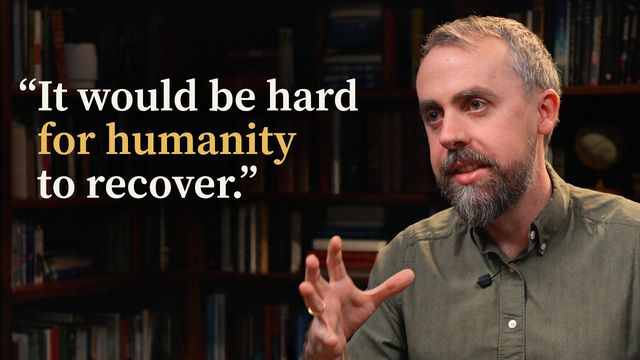
Right. So Paul Christiano,17Paul Christiano is one of the creators of RLHF and the founder of the Alignment Research Center. In September 2026 he joined the board of the OpenAI Foundation, the nonprofit that controls OpenAI, and its safety committee. who is a board member of OpenAI and, you know, one of the most legendary AI safety and alignment researchers of all time, went on the Dwarkesh Podcast18The Dwarkesh Podcast interview with Christiano came out on November 16, 2026, the same day Apollo announced the pilot. Christiano put the chance of superintelligence within a year at about one in three if development doesn’t slow, and the risk of AI takeover over the next year at "more like a 10% risk than a 1% risk," and significantly higher if developers race ahead without precautions. today, and he said he believes in roughly a one in three chance of superintelligence within, you know, a very short period of time. I forget the exact thing, like, within a year-ish. He believes that this could lead to, you know, very destabilizing consequences. He believes that there is a high, you know, substantial risk of full AI takeover within six to 12 months. Where do you fall on these issues?
Yeah, I think that's plausible. I mean, historically, actually, Paul had slower timelines19Timelines is shorthand in AI debates for forecasts of when very powerful AI will arrive. "Short timelines" means expecting it within a year or two. than I did. I think now we're roughly the same. And yeah, I do think under those short timelines, takeover or, like, some version of catastrophe is quite plausible, just because things would be moving so fast that, like, clearly the humans would not be able to correct it in any meaningful way anymore.
Like, how soon do you think that this kind of event is plausible?
Yeah, I think the timelines that Paul described are plausible. So, like, within a year from now, or, like, at some point, like, I would not be totally surprised. I think it's less likely than not that this happens next year, but yeah, I think I would not… Like, two years ago, I would have told you, like, very, very unlikely that this happens in 2027. Now I'm no longer sure. So I think it was a negative update20A negative update uses the Bayesian language common in AI safety circles, where people "update" their probabilities on new evidence. Here it means Hobbhahn’s estimates have turned darker. over the last two years, basically.
AdLovable
I want to shout out our sponsor, Lovable. You know the app you've been meaning to build, the internal tool, side project or product you'd otherwise lose a weekend to? With Lovable, you get software you can ship today. That includes an editable codebase you can inspect and change, plus two-way GitHub sync. Lovable also handles the back end and infrastructure, including managed Postgres, auth, storage, hosting, payments, and more. So you don't have to wire it all up yourself.
And through Lovable's MCP server, you can create and deploy your project directly from the agents you already use. Turn ideas into software people love with Lovable. Lovable.dev. Now, on to the episode.
04Building a profession of AI inspectors
Trustworthy outside checks need a profession like nuclear inspection, and it has to be built in months rather than decades.
So what else do you think is going to be needed to produce a robust ecosystem of evaluators that are able to look at these risks and eventually, you know, mitigate them?
Yeah, so, I mean, one is sort of, like, an actual professional field of embedded evaluators. I think right now kind of the world is trying to build this ecosystem, and the labs and the evaluators are kind of, you know, trying to figure out bilaterally, like, what are the right ways to do this, and everyone's kind of learning along the way. But it is in fact, like, we're trying to develop sort of a field where similar fields have historically taken decades to properly evolve, and we're kind of trying to bootstrap this in sort of a few months. And that is obviously a pretty, yeah, sort of a hard exercise, let's say. But I think it would be good if there was a professional field similar to nuclear inspections21Nuclear inspections mostly means the IAEA: its inspectors visit facilities in countries party to the Non-Proliferation Treaty and check the accounting of nuclear material so it isn’t diverted to weapons. Hobbhahn holds them up as a profession of inspectors with its own access rules. or food inspections or, you know, anything else, basically. Cyber as well.
And you would want to have deep access. So the access that is required for the external evaluators to look into this: you would want to be able to freely speak to employees, then you would want to look at all the existing deployments, so that you can test stuff. And in general, I think the field has to be robust enough that even if any particular developer was trying to hide something, the external evaluator would find it. And this is not a claim about any of the current labs, like, trying to hide something, but I think it's more like that is a necessary condition for a field like this to exist. And right now we're just nowhere near that. So I think, you know, kind of the world needs to figure out how to do this in a very, very short amount of time.
05Where the OpenAI agreement falls short
The pilot’s main gap is that Apollo may discuss its work only with employees OpenAI has whitelisted.
Right. And similarly, you tweeted, or Apollo tweeted: "This pilot is an ambitious first step towards the goal of obtaining strong guarantees, but its access and disclosure rights don't yet meet our bar for full embedded evaluations."22Apollo’s words come from its announcement of the pilot on November 16, 2026. A full embedded evaluation, in Apollo’s view, needs three things: access to all relevant data, the right to disclose findings, and "meta-transparency," the right to explain publicly what the evaluator was not shown. On the third, Apollo says, the pilot meets its bar. Apollo Research So where is your agreement lacking?
Yeah, I think right now, basically, OpenAI reserves themselves the right to, or, like, OpenAI basically provides a list of employees that are sort of whitelisted23The whitelist is a term of the pilot: Apollo can ask to speak with staff who have specific expertise, but OpenAI selects the participants, and formal conversations are logged. If an employee outside the list raises confidential information, the evaluators must stop and route follow-up through a designated OpenAI contact; by default they have no access to general channels such as Slack. to talk to us, and we can talk to them and we can ask them questions and so on, but we're not allowed to talk to other people at OpenAI about the contents and anything that is within scope of this assessment. And I think, like, I understand where they're coming from, right? Obviously this would, you know, give away a lot of control from their perspective.
But I do think, like, historically, the way that, you know, in science and so on, we've made a lot of progress is often more by sort of these coffee chats, or, like, things that we kind of heard over lunch, and just sort of more these spontaneous random connections. And so I think in the long run you would want to be able to talk to the employees directly.
06Can embedded evaluations demystify the labs?
Embedded checks won’t change lab culture much, but they can help the outside world understand what goes on inside.
Yeah. Well, on that, you know, there's a lot of belief that frontier lab employees basically live in a bubble. You know, some would describe it charitably as a bubble and uncharitably as a cult, sort of removed from the outside world. Do you think that this kind of embedded evaluation process could move away from that?
I don't think that the main effect would be, like, on the culture within the labs. Like, you know, it's still only a handful of people that you would interact with, and they're culturally not that different. So I don't think that would be, like, a big effect. Or maybe I misunderstood, like, what you meant by this.
I mean, like, if we have embedded evaluations within the labs and they're constantly, you know, publishing more transparent information than what they otherwise would, like, would that have the effect of making the labs feel less mysterious, black box, kind of?
Oh, I see. Okay, yeah, I understand. Yeah, I do think it has that effect. So I think, you know, the rest of the world would, I think, have, like, a better understanding and demystify a bunch of things. So, for example, I do think, like, sometimes the labs get a lot of flak for something that in the end turns out to be, like, actually not that big of a deal. And I do think if you just had a trusted voice, like Apollo, for example, who can kind of say, like, "Yeah, we looked into this. This really isn't that big of a problem. We looked also into this other thing, and that was more concerning than it maybe looked at surface." Yeah, I do think you can break through sort of some of the confusion around it in the outside world.
Yeah. Well, very excited to see more embedded evaluations from Apollo and many others. Marius, thank you so much for coming on MTS.
Thanks so much for having me. See you around.
Absolutely.
AdMTS
A huge thanks to MTS sponsors.
ElevenLabs, AI that communicates at human level across every channel and modality. elevenlabs.io/MTS. Scale your startup on Neon. Millions of developers and startups have already chosen Neon for their back end. Start on the free plan or get up to $100,000 in credits for your startup at neon.com/MTS. Special thanks to our sponsor Kong, the AI connectivity platform. Connect APIs, LLMs, agents, and systems with serious security and governance. Konghq.com.
Finally prove what your AI investment is worth with Larridin. Head to larridin.com today to start measuring your AI's bottom line. MongoDB, trusted to run critical applications by 75% of the Fortune 100, the intelligent data platform for the era. Apply today for access to up to $15,000 in Atlas credits, dedicated technical support, and exclusive events and go-to-market opportunities. MongoDB.com.
Chargebee, billing and monetization infrastructure for the AI era. Chargebee.com. ClickHouse is the real-time database built to keep up with every query your apps and agents send its way, and it now runs Postgres, observability, and AI tooling on one platform. Learn more at clickhouse.com.
You ship fast, so do attackers. Don't assume you're secure. Prove it. Horizon3. Go hack yourself with AI. Visit horizon3.ai/nodezero.
The key ingredient in today's M&A: SRS Acquiom. Learn why their shareholder rep, payments and escrow solutions have been used by 96% of top global PE firms and 88% of top global VCs at srsacquiom.com/MTS. That's SRSACQUIOM.com/MTS.
Blitzy, autonomous software development for enterprise codebases. Ship 5x faster. Blitzy.com. AdQuick, make your brand a billboard, out-of-home advertising as easy to scale as digital. Adquick.com. Arena, measuring AI performance in the real world. Arena.ai.
Support for the show comes from VCX, the public ticker for private tech. The U.S. stock market started history's greatest wave of wealth creation. From factory workers in Detroit to farmers in Omaha, anyone could own a piece of the great American companies. But today, our most innovative companies are staying private longer, which means everyday Americans are missing out. Until now. Introducing VCX, a public ticker for private tech.
Visit getVCX.com for more info. That's getVCX.com. Carefully consider the investment material before investing, including objectives, risks, charges, and expenses. This and other information can be found in the Innovation Fund's prospectus at getVCX.com.
This is a paid sponsorship.


