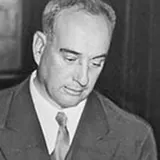
Robert Moses
American official and city planner (1888–1981) who from the 1920s to the 1960s ran the construction of expressways, bridges, parks and housing in and around New York City; the symbol of top-down planning.
Never elected to anything, he held up to twelve posts at once, from New York City parks commissioner to head of the Triborough Bridge and Tunnel Authority, and built with toll money he largely controlled himself. His legacy includes the Triborough, Verrazzano and Bronx–Whitestone bridges, the Cross Bronx and Brooklyn–Queens expressways, Jones Beach, hundreds of playgrounds and pools, Shea Stadium, Lincoln Center and two World's Fairs in Flushing Meadows. The price was high: by his biographer's count his projects displaced about 250,000 people, and he reshaped the city for cars at the expense of public transit. In the 1960s residents led by Jane Jacobs killed his plan for a Lower Manhattan expressway, and in 1968 he lost his last major post. His image was largely defined by Robert Caro's Pulitzer-winning biography The Power Broker (1974).
In the episodes
3- October 30, 2026What Robert Caro learned about power after studying it for 50 yearsmentionedDwarkesh Podcast
- 01:30the subject of The Power Broker: from idealist to ruthless builder
- October 29, 2026What I learned about power from LBJ and Robert MosesmentionedDwarkesh Podcast
- 00:00the unelected builder who ran New York for more than 30 years
- October 28, 2026Roman Mars on Flags, Phones, and the Design of Everyday LifementionedConversations with Tyler
- 17:38top-down planning