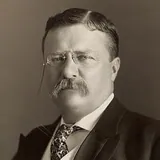
Theodore Roosevelt
26th president of the United States (1901–1909) and winner of the 1906 Nobel Peace Prize. He took office at 42 after William McKinley's assassination and remains the youngest president in the country's history.
A sickly, asthmatic child from a wealthy New York family, Roosevelt toughened himself through what he called "the strenuous life," graduated from Harvard, and at 23 published The Naval War of 1812, which made his name as a historian. After losing his wife and his mother on the same day, he went to ranch cattle in the Dakota Territory, then served as New York City police commissioner and assistant secretary of the Navy, and in the Spanish–American War of 1898 raised the volunteer cavalry regiment known as the Rough Riders and came back from Cuba a hero. As president he fought the monopoly trusts, won passage of the Pure Food and Drug Act, began building the Panama Canal and created dozens of national forests, parks and monuments. He received the Nobel Prize, the first non-European to do so, for mediating the end of the Russo-Japanese War. In 1912, running for the Progressive Party he had founded, Roosevelt was shot in the chest in Milwaukee but gave a 90-minute speech before going to the doctors. His "man in the arena" passage from a 1910 speech at the Sorbonne, that credit belongs to the one who acts and not to the critic, is a favorite of entrepreneurs. His face is carved on Mount Rushmore, and the teddy bear is named after him.
In the episodes
2- October 26, 2026#438 James Garfield's Extraordinary RisementionedFounders
- 01:10the subject of The River of Doubt
- January 26, 2026The NFLmentionedAcquired
- 08:16threatened to ban football in 1905