


The Tim Ferriss Show
Chapters
In the past month AI assistants have moved into ordinary text messages and started keeping track of their owner's affairs on their own, which Kevin calls an inflection point.
Read the chapter- In the past few weeks a new kind of assistant has launched, Instinct, Meta's Muse and xAI's Grok Bot, unlike the familiar chatbots.
- Instinct isn't another app but just a phone number in iMessage, and you give it access to Gmail and Google Drive.
- The bot flagged an unsigned DocuSign for Kevin on its own and, before a flight, told him his prescription was ready and when to leave to pick it up.
- Kevin trusts Meta's Muse more than a startup that went from zero to a $10 billion valuation in four months, and Tim adds that a big company is used to regulatory scrutiny.
The prediction in the preface to Tim's new book has already come true: AI assistants now do what only a few people could once afford, and Instinct books tables and coordinates with other agents by itself.
Read the chapter- In 2007–2008 the Gen-1 Dexcom was like sticking barbecue tines under your skin and people said nobody would use it, but Tim was sure the tech would improve very quickly.
- Tim wrote in the preface that by the time readers saw it, AI assistants would do 99% of what he describes, so it would no longer be a "1% problem."
- Instinct snagged Kevin a hard-to-get reservation through OpenTable, and two friends' Instincts worked out a dinner on their calendars on their own.
- OpenAI has announced Dots, and Kevin thinks accumulated memory about the user is the wedge to keep people, since right now there's zero loyalty to models.
Kevin thinks agent shopping will do away with destination sites, which is why Amazon blocked Meta's agent while Shopify welcomed agents.
Read the chapter- Tim says agentic commerce circumvents sponsored placement and advertising, important revenue drivers for Amazon.
- If ChatGPT shops for you, a store is easy to swap out for one that's cheaper, like Walmart at $10 less.
- Kevin edited a podcast by telling ChatGPT to assemble it in DaVinci Resolve through an MCP server, and the same works with Photoshop and CAD without ever opening the software.
- Google always pushed you to the final destination, but AI, Kevin says, will do the buying itself without you ever leaving its window.
Kevin doesn't think Amazon can win back the entry point with its own agent: on-device AI and the big chatbots will own it, and anyone can try these assistants today.
Read the chapter- Kevin bets on on-device AI, Apple Intelligence and Gemini on Android, plus ChatGPT and Anthropic, and expects Amazon's sponsored ad revenue to largely go away.
- Just as Sears and JCPenney lost to online retail in the 2000s, Kevin predicts stores will now lose to AI interfaces.
- Paid ChatGPT already gives everyone an agent, Instinct is still invite-only, Muse has been number one in the App Store, and Grok, Kevin says, is still behind.
- Kevin calls his ChatGPT agent on air, and it reads out the podcast recording schedule by voice.
Tim went back to beta-alanine for climbing and is convinced it has noticeably improved his endurance, while Kevin swallowed two pills before hearing about the side effects.
Read the chapter- Creatine doesn't suit Tim for climbing because it adds water and weight, and with his "tiny little squirrel paws" he doesn't need extra pounds.
- In a study of 15 elite climbers taking 4 g a day for four weeks, time before falling on a traverse rose 57% versus 19% on placebo.
- After two and a half weeks Tim's coaches asked what had happened; he takes about 6.4 g a day, eight big pills, plus collagen with vitamin C before training.
- The side effect is paresthesia, a tingling all over like a niacin flush, which is why Tim takes Thorne's sustained-release form.
Contaminants are worth close attention in anything you take daily, Tim warns, and Kevin has finally found a creatine that doesn't wreck his stomach.
Read the chapter- Psyllium helps the gut and glycemic control, but most common brands carry heavy metals; Tim has looked at test results for Yerba Prima and Organic India, and both are good.
- Kevin read that seaweed snacks are full of microplastics.
- Tim took 10 g of creatine a day for the cognitive benefits Rhonda Patrick has highlighted, but got wicked cramps and dialed back to 5 g.
- BodyTech Elite creatine with time-release beadlets is the first one Kevin can take without stomach trouble.
Nuts seem to support fertility, and food is only as good as what it ate, Tim concludes, starting from a jar of walnut butter.
Read the chapter- Tim cites a 2012 trial in which 75 g of walnuts a day improved sperm vitality, motility and morphology in healthy men aged 21 to 35.
- A 2024 meta-analysis Tim describes found that at least 60 g of nuts a day improves the same measures, though not sperm concentration.
- Several of Tim's friends with testosterone issues felt dramatically better on three Brazil nuts a day, and he says copper or selenium deficiencies can show up in sex hormones.
- Tim's principle is "you are what you eat ate": what the salmon ate and where the vegetables grew matter, while "all natural" on a label means almost nothing.
Kevin has found an A2 protein shake that's easy on the stomach, and Tim argues for products with the fewest ingredients and recalls training on gas station food on purpose.
Read the chapter- According to Kevin, A2 protein causes far less stomach discomfort, and the Pioneer Pastures shake has 160 calories, 30 g of protein and no lactose.
- Tim first saw these shakes in a fridge at podcaster Chris Williamson's offices.
- The shake has seven ingredients versus 40 in Muscle Milk, and Tim suggests looking for the minimum effective dose of ingredients.
- Preparing for an archery competition in Lancaster, Pennsylvania, Tim trained only on Muscle Milk, roasted almonds, zero-calorie Monster and unsweetened iced tea, things he could get at almost any gas station.
Tim sees brain stimulation as a much better risk-benefit bet than psychedelics for most people: a one-day protocol took his OCD and anxiety to near zero, and the startup Dust is learning to shape dreams.
Read the chapter- Tim read Stephen LaBerge's book on lucid dreaming at the very beginning of high school and did extra wrestling training sessions in his dreams.
- Dust, a startup from Dr. Adam Haar Horowitz in which Tim is an investor, plans to help people modify dream content to address things like PTSD.
- Many people can't take psychedelics, so Tim has focused on neuromodulation, which he thinks has a much more attractive risk-benefit ratio for the general population.
- Ampa Health, Tim says, has the smallest, most modular device on the market and a one-day protocol with a small dose of D-cycloserine instead of five days off work.
- On a scale of one to ten, Tim's OCD and generalized anxiety went from an eight or nine to a zero or one in a single day.
Stanford research suggests a prepared dream while emerging from propofol anesthesia can wipe out complex PTSD symptoms for months, and to Tim this shows the trip matters.
Read the chapter- The protocol has five steps: tell the patient they might dream, use propofol as they emerge, monitor EEG, allow at least 10 minutes of quiet, undisturbed emergence, and ask about the dream.
- People with longstanding complex PTSD rehearse their traumatic event ending in a better way, and some still have zero symptoms 10 months later.
- Tim takes it as an argument against the business push for psychedelics without a trip, while granting that trip-free drugs can help with things like cluster headaches.
- Lucid dreamers have already communicated with researchers from REM sleep using eye movement patterns memorized in advance.
Tim and Kevin both choose DORA sleep drugs, dual orexin receptor antagonists, because human data suggest they help clear beta-amyloid and they look like the safer class of sleeping pills.
Read the chapter- Tim now uses Quviviq instead of Belsomra and points to Matthew Walker's podcast episode on this class of drugs.
- Human data suggest these drugs help clear beta-amyloid; nobody has proven they prevent Alzheimer's, but Tim, who is APOE3/4, wants to be on the safe side.
- Kevin brings them on trips to Japan because on paper they look like the safer class of sleep drugs.
- Tim adds that some other drugs, such as trazodone, also don't disrupt sleep architecture as badly as Ambien does.
In a rapid-fire round Kevin swears by two finds: Chinese herbal pills that rescue his stomach, and the Airofit trainer for breathing muscles.
Read the chapter- A buddy of Kevin's says Plum Flower Curing Pills saved him from food poisoning in Paris, and Kevin takes a packet whenever he's overeaten or his stomach is sideways.
- Airofit has knobs that adjust resistance on the inhale and exhale, and Kevin uses it while rucking at a 6% incline on the treadmill.
- Tim never got the app to work and plans to ask ChatGPT or Claude for a training program instead.
- Tim says Bas Rutten has trained his breathing muscles almost daily for years, and there's good data linking it to less lower back pain.
Tim expects electricity to replace pills more and more: contact lenses matched Prozac in mice, and anesthesia may work through physics rather than chemistry.
Read the chapter- A nevus at the back of Tim's eye was found with retinal scanning, and Kevin's tiny brain aneurysm with a full-body scan at Prenuvo.
- Tim reads out a study in which contact lenses delivering mild electrical signals through the retina were as effective as fluoxetine against signs of depression in mice.
- Tim is bullish on bioelectric medicine but warns that there are a lot of bogus devices out there.
- According to Tim, some anesthetics are inert, anesthesia even works on plants, and so it might be physics and not chemistry.
Enhancement calls for caution because people get hooked on the results, says Tim, who also gets horrible back pain from erection pills.
Read the chapter- Kevin takes half a tadalafil for the possible cognitive and blood pressure benefits Huberman has talked about.
- Both Cialis and Viagra give Tim such low back pain that "it's hard to enjoy the boner if you're crippled."
- Like glasses that make it hard to go back to a blurry world, peptides, testosterone and GH can be psychologically addictive, Tim says.
- Tim sees the same siren song in AI and isn't letting it write his new book, because "if I do that, I'm done."
Tim won't hand his writing to AI and sees an author's moat in reputation and lived experience, now that a leaked book can be rewritten in days.
Read the chapter- Tim uses AI only for version control and warns that if you want to retain a cognitive ability, you should be careful what you outsource.
- Every released the harness Compound Engineering for coders and one for writers, and Kevin says it will write the book for you.
- Kevin notes that a leaked book could now be rewritten and published in about 48 hours, and Tim answers that reputation and lived experience, not ideas, are what's defensible.
- Tim would rather write a book for 10,000 people than make short videos for 10 million who forget them 10 seconds later.
Learning isn't just for the young: Tim reads from John Gardner's 1990 speech to McKinsey the story of a 53-year-old prisoner who wrote Don Quixote.
Read the chapter- John Gardner's "Personal Renewal" is about continual learning throughout life, and Tim suggests printing it out and reading it away from notifications.
- Gardner tells of a 53-year-old man, wounded in battle, held captive for five years and jailed more than once, who wrote Don Quixote in prison.
Kevin has embraced man makeup: a green corrector from Sephora tones down his rosacea, and vampire facials smooth his wrinkles.
Read the chapter- The green tint of Dr. Jart+ Cicapair evens out rosacea redness, and the product is matte and has SPF.
- Twice a year Kevin gets microneedling with his own platelet-rich plasma, and two weeks later, he says, the wrinkles just go away.
- Kevin also uses OneSkin peptide skincare and put a small angel check into the company.
A four-part documentary about the climber Dean Potter gripped Tim so hard that he binged it in one night, until three in the morning.
Read the chapter- Potter pioneered new approaches to rock climbing, evangelized highlining and invented "free basing," free soloing combined with BASE jumping.
- The series weaves together archival footage and Potter's journals, his genius and his depression, and Tim says it brought up old demons of his own.
Tim calls Studs Terkel's Hard Times one of the most unique depictions of history he has come across; he got it by asking Ed Cooke for a book he would never find himself.
Read the chapter- Hard Times contains dozens of bite-sized profiles, from the destitute to the rich who lost everything and jingle writers who had an explosion of creativity.
- Ed Cooke is a former memory world champion, the memory competition world he coaches in is the subject of Moonwalking with Einstein, and he runs the learning app MindMax.
- Cooke next recommends Terkel's Working, which Tim describes as "Dirty Jobs before Dirty Jobs."
Kevin picks a genre he'd never choose once or twice a year, and he unexpectedly got hooked on romantic fantasy.
Read the chapter- Once or twice a year Kevin goes deep on a genre he'd never pick himself, which is how he ended up listening to A Court of Thorns and Roses in the sauna.
- According to Kevin, it isn't dime-store romance but well-written fantasy with some explicit scenes and 30,000 five-star reviews.
- Tim was puzzled to see professional women in their 30s and 40s reading Fourth Wing everywhere.
A simple premise is what sells: Fifty Shades of Grey became a global phenomenon, while Tim's 4-Hour Chef tried to do too much.
Read the chapter- Tim says Fifty Shades of Grey began as Twilight fan fiction; he couldn't get through the prose but admired the power of its simple premise.
- The 4-Hour Chef sold 120,000 copies in its first week thanks to Tim's diehard audience, but it was three books in one and hard to convey to anyone unfamiliar with him.
- Tim's standing advice for presentations, borrowed from someone else, is that they fail from too much information, not too little.
- Kevin's "crowded bar" test asks founders to explain their product in two sentences, and he praises Jobs for launching the iPhone without the App Store; Tim adds it didn't even have copy and paste.
Test readers love Tim's book on focus, but its pitch doesn't yet land with strangers, so he is holding off and reworking the positioning.
Read the chapter- Busy friends ask for the draft immediately, while nine out of ten strangers just say "Oh, interesting."
- Tim is testing hypotheses: the title, an unclear promise, or the negative sound of "no," since a third of the book is about what to say yes to.
- Test readers say they were never bored and would gift this book more than any of his others.
- Tim took no advance and has no publisher holding a gun to his head, so he set his own target of finishing in eight weeks.
Tim is leaning toward publishing with Authors Equity and wants print, because paper forces people to single-task.
Read the chapter- Tim is leaning toward Authors Equity, where he is a small investor and James Clear is one of the largest.
- The more the phone becomes a digital leash, Tim says, the more he wants a format that forces single-tasking, and the book is a workbook where five hours of work should save 100.
- The full traditional route from a finished book takes about a year and a crash schedule three months, so Tim weighs print on demand, and Kevin suggests a single collectible run of 10,000.
- Tim cut the book from 870 pages to 350, keeping only what test readers rated an eight, nine or ten out of ten.
Kevin hopes AI will free up time for in-person life, while Tim doubts it: no technology has delivered more leisure yet.
Read the chapter- Tim recommends Shawn Smucker's essay "Please Use AI" and reads Vonnegut's story about going out for a single envelope to meet people: "we're dancing animals."
- Kevin is bullish that AI will handle the day-to-day and leave more time to hang out in person, just as the pendulum has swung away from alcohol and social media.
- Tim has never seen a technology deliver leisure: people he knows don't use AI for kite boarding and knitting, they go from two projects to ten.
- Tim wonders what the consequences will be if a digital companion is easier than your partner and kids find a customized LLM a better parent.
Kevin is sure he can do the Van Damme splits within six months, and Tim takes the other side of the bet.
Read the chapter- Kevin, who has been going to StretchLab, vows to do the splits between two chairs within six months.
- The stakes are $500 to charity, with an inch and a half of tolerance from a straight line.
- Tim warns that without very strong adductors "it just tears your legs out like chicken legs."
Quotes
On commerce through AI agents
“So this is actually, you're hitting on a very fascinating trend, which is this idea where applications, destination websites, all those things go away.”
Kevin RoseRead from 09:57On software run by AI
“You don't need the software anymore. You just tell the AI.”
Kevin RoseRead from 11:00On Kevin swallowing Tim's pills
“When you're with Tim, rule number one is you should never just swallow a bunch of pills from a bottle that he puts on the table.”
Tim FerrissRead from 22:14On food quality
“there's the expression you are what you eat, but that's not sufficient. You are what you eat ate.”
Tim FerrissRead from 35:50On why Tim won't write his book with AI
“I'm working on this new book right now and it's like, I am not using it to write for me because if I do that, I'm done. It's good. It's too good.”
Tim FerrissRead from 1:12:28On the best advice before a talk
“Somebody else gave it to me, which is presentations fail from too much information, not too little information.”
Tim FerrissRead from 1:33:02From Vonnegut's envelope story
“The moral of the story is we're here on Earth to fart around and don't let anybody tell you different.”
Tim FerrissRead from 1:44:14On whether AI frees up time
“I don't know anyone who's like, ‘I used AI to free up a bunch of free time that I'm now using for kite boarding and knitting.’ They're like, ‘I was doing two projects, but now I can do 10 projects.’”
Tim FerrissRead from 1:46:46
Summary
Another Random Show:1The Random Show — a recurring segment of The Tim Ferriss Show in which Tim and his longtime friend Kevin Rose, the founder of Digg, chat about anything and everything with no agenda. Kevin was the podcast's first guest, in 2014. Tim Ferriss and Kevin Rose meet up in Los Angeles again and hop from topic to topic with no agenda at all. Kevin kicks things off: in the past few weeks a new kind of AI assistant has appeared, Instinct, Meta's Muse, Grok Bot and OpenAI's Dots, that lives in ordinary text messages, watches your email and calendar on its own and reminds you to pick up your prescription before a flight. Tim sees it as a prediction from the preface of his new book coming true: having an assistant, once a "1% problem," is going mainstream. Next comes a debate about what agentic commerce will do to Amazon if AI starts shopping for people, and Kevin calls his voice agent live on the show.
The middle of the episode is about supplements and self-experiments. Tim describes how beta-alanine extended time on the wall in a study of elite climbers and how he felt it himself, warns about heavy metals in psyllium and shares research on walnuts and sperm quality. Kevin praises time-release creatine beadlets, A2 protein shakes, Chinese pills for indigestion and the Airofit breathing trainer. A separate block covers the brain and sleep: the startup Dust's dream engineering, a one-day TMS protocol, dreams under propofol that leave people with complex PTSD symptom-free for months, DORA sleep drugs as possible protection against Alzheimer's, and contact lenses that worked like Prozac in mice.
The last hour is about books and AI. Tim won't let AI write for him ("if I do that, I'm done"), recommends John Gardner's speech "Personal Renewal," the documentary series about Dean Potter and Studs Terkel's Hard Times; Kevin recommends the romantasy he discovered in the sauna. Using Fifty Shades of Grey as an example, Tim explains why a simple premise sells and why his 4-Hour Chef flopped, talks about his new book, on saying no in a world of noise, and why he'll probably publish it with Authors Equity and wants a print edition, though he second-guesses it. At the end, Kevin bets $500 for charity that he'll do Van Damme's splits between two chairs within six months.
Advice
Before a pitch or a talk, cut information instead of adding it: presentations fail from too much information, not too little.
Boil your product down to one idea you can explain in two sentences in a noisy bar: extra features sink a launch, and the first iPhone shipped without even an App Store.
Test your positioning on strangers, not friends: friends in the know light up right away, but a product's fate is decided by people who only see the title and description.
Mentioned
 ChatGPT01:29the familiar chatbot, which now has its own agent
 Claude01:29the familiar chatbot, without its own agent so far
 Instinct01:29the AI assistant in iMessage that keeps track of Kevin's affairs on its own
 Muse01:49Meta's AI agent, which Kevin trusts more
Show 54 more mentionsShow fewer mentions
 Grok Bot01:49xAI's agent, which according to Kevin is lagging for now
- Dexcom05:17early glucose monitors as an example of a technology that went mainstream
 OpenTable07:10Instinct snagged a restaurant reservation through it
 Dots08:02OpenAI's agent in ChatGPT
 Amazon09:04blocked Meta's agent
 Shopify09:48opened its stores to AI agents
 DaVinci Resolve10:56Kevin edited a podcast through ChatGPT and MCP
 Momentous24:03collagen and travel packets of creatine
 Thorne25:21sustained-release beta-alanine
 Rhonda Patrick28:36creatine for brain benefits
 Artisana Organics31:12walnut and cashew butter
- The 4-Hour Body34:00how hard fact-checking was back then
 Pioneer Pastures41:05an A2 protein shake
 Chris Williamson42:12Tim first saw A2 shakes in his office
- Exploring the World of Lucid Dreaming46:23the book that started Tim's interest in dreams
 Stephen LaBerge46:23a lucid dreaming researcher
 Adam Haar Horowitz47:14the scientist working on dream engineering
 Dust47:14a dream engineering startup, with Tim as an investor
 Ampa Health48:44portable TMS and a one-day protocol
 Claria57:35the hypnosis app Kevin falls asleep to
 Matthew Walker59:20his episode on DORA sleep drugs and Alzheimer's
 Plum Flower1:01:30Kevin's Chinese pills for indigestion
- Airofit1:03:06a breathing muscle trainer
 Prenuvo1:06:35a full-body MRI found Kevin's aneurysm
 Michael Pollan1:08:42writes that anesthesia works on plants too
- A World Appears: A Journey into Consciousness1:08:42Pollan's new book on consciousness
 Andrew Huberman1:11:11on the benefits of tadalafil; recommended The Dark Wizard to Tim
 Every1:13:53released Compound Engineering harnesses for programmers and writers
- The 4-Hour Workweek1:14:48Kevin met Tim the day it came out
- Personal Renewal1:16:52the speech Tim rereads
 John W. Gardner1:16:52author of "Personal Renewal"
 Miguel de Cervantes1:18:06an example of renewal at 53
- Don Quixote1:18:06written in prison, according to Gardner
 Dr. Jart+1:20:03the green Cicapair corrector for redness
 OneSkin1:21:27peptide skincare, with Kevin as an investor
- The Dark Wizard1:22:16the series Tim watched in one night
 Dean Potter1:22:31the climber and BASE jumper the series is about
 Studs Terkel1:24:36a master of oral history
- Hard Times: An Oral History of the Great Depression1:24:36the book Tim reads one portrait at a time
 Ed Cooke1:24:36recommended Hard Times to Tim
- Moonwalking with Einstein1:25:29a book about memory competitions
- Working: People Talk About What They Do All Day and How They Feel About What They Do1:26:56the next Terkel book in line
- Fourth Wing1:28:05the romantasy professional women are reading
- A Court of Thorns and Roses1:28:10the romantasy Kevin is listening to
- Fifty Shades of Grey1:30:30the power of a simple premise
- The 4-Hour Chef1:31:25the book that tried to do too much
 Steve Jobs1:33:40knew how to cut unnecessary features
- iPhone1:34:32the first version did without copy and paste
 Authors Equity1:37:22the publisher Tim will most likely release the book with
 James Clear1:37:36one of the largest investors in Authors Equity
- Please Use AI1:43:08an essay against optimizing everything
 Shawn Smucker1:43:08author of "Please Use AI"
 Kurt Vonnegut1:43:08the story of buying a single envelope
 Jean-Claude Van Damme1:47:44the splits between two chairs, the subject of the bet
Sponsors of the episode


Transcript
01New AI assistants: Instinct, Muse and Grok Bot
In the past month AI assistants have moved into ordinary text messages and started keeping track of their owner's affairs on their own, which Kevin calls an inflection point.
IntroThe Tim Ferriss Show intro
Optimal minimal.
At this altitude, I can run flat out for a half mile before my hands start shaking.
Can I ask you a personal question?
Now would have seemed an appropriate time. What if I did the opposite?
I'm a cybernetic organism, living tissue over metal endoskeleton.
Kev Kev.
Tim Tim.
Good to see you, man.
Dude, glad we're doing this.
Yeah. So fun to hang.
Back in L.A.
Back in L.A. for a little bit, and it is a nice corner of the world.
It's not bad.
Until the failed state implodes, it's going to be lovely.
Yeah. We'll enjoy it while we can.
Yeah. So, you have lots that we can talk about.
Mm-hmm.
I've got some things jotted down. Where should we start?
Let's start with probably the most talked about thing these days, which is AI.
All right.
And I know people are tired of hearing about all this AI stuff, but I think there's been an inflection point in the last, I'd call it three weeks, that I am just really blown away by.
All right.
AI has turned into something that I kind of saw it coming, but I didn't think it would come this rapidly, which is it is replacing — so, when I first thought of AI, I thought, "Okay, we have this chatbot, we can launch it. We can ask questions of, whatever, like, "I've got to repair this light switch. How do I do it?" That's typical AI use case over the last, call it two years.
Mm-hmm.
In the last call it month, there has been a release of a handful of AI assistants that are not your typical ChatGPT,2ChatGPT — OpenAI's chatbot, released in November 2022; it kicked off the current boom in generative AI. Claude.3Claude — Anthropic's family of AI models and its chatbot. They're different. So have you played with Instinct4Instinct — a personal AI assistant you text with over iMessage and WhatsApp or talk to on the phone; in summer 2026 it was invitation-only. In late September 2026 its developer raised $1 billion at a $10 billion valuation. at all?
I haven't, but I know people are. Yeah.
You have heard about it?
Yeah. But you should provide some context for folks who don't recognize it.
Yeah. Well, so let's start off. So, let me first put the — these are the people in the ring that are entering this new kind of era of personal assistant AI, which is I would say Instinct, Muse, which is a Meta product.5Muse — Meta's personal AI agent, which carries out errands on its own, including purchases and bookings; launched in the US on September 8, 2026. And then you have Grok Bot,6Grok — the chatbot from Elon Musk's xAI. Grok Bot is its AI agents, which carry out multi-step tasks on their own cloud computer; the beta came out on August 11, 2026. which is essentially Grok, which is Elon's project. So, when Instinct dropped, someone sent me a text invite and was like, "Hey, you've just got to sign up for this." I'm like, "Oh, man, I don't want another AI thing." I already do this all day long. I'm using it for coding and all that stuff. I'm like, "Whatever." So, the first thing that you notice is it's not another app to download. It actually is iMessage.7iMessage — Apple's messenger, built into Messages on the iPhone, iPad and Mac. Apple gives third-party services no official access to it. So they have reverse engineered and they actually give you just a phone number to chat with.
It's closer to WeChat in China8WeChat — Tencent's Chinese messenger and "super app": people chat, pay, hail taxis and use thousands of built-in mini-programs from other companies, all inside it. in a sense.
Yeah, exactly. So, I have this phone number. I texted. It was like, "Hey, auth your Google account.9Auth — short for authorize or authenticate: giving a service access to your account, usually with a "Sign in with Google" button via the OAuth protocol." And I know this is your nightmare from a privacy standpoint, but it's like, "Give us your Gmail, give us your Google Drive."
"Here's a link.ru,10.ru — a phishing joke: a link to a Russian domain is the stereotypical sign of a scam on the American internet. just click here."
Yeah, exactly. It's like Russian site or something. But I click through, I authed, I'm like, "Whatever, there's some hype. I hear it happening. People are doing this." I don't have any nudes, but you probably do. I don't know how much you keep all that stuff online. Probably not.
What was this?
Your nudes. Do you keep it in Google Drive?
I just post those to my Tumblr account.11Tumblr — a blogging platform that allowed explicit adult content for years, until it banned it in December 2018.
Just your private Tumblr?
Yeah.
In all seriousness though, do you lock down, do you have a separate offline storage for sensitive shit?
I probably should.
Yeah, you should. We should talk about this off camera.
Okay.
There's just certain things that in my mind I'm always like, "Okay, what's the blast radius12Blast radius — a term from information security and reliability engineering: how much gets hurt if one part of a system breaks or is hacked. of if something gets hacked?"
Something.
What is out there?
One more thing Kevin gives me to worry about.
Yeah, exactly. Okay. So you auth in everything and the first thing I notice is that this bot texts me back and it's like, "Hey, you missed this DocuSign13DocuSign — an American e-signature service: contracts arrive by email and are signed in the browser. from a couple of days ago." And I was like, "Oh, shit. Well, that was kind of helpful."
Yeah.
So I went in there and did it. And then it's proactively just watching everything and it learns by my responses, everything I've done prior, and it really understands what I care about and what I should pay attention to.
And who manufactures Instinct?
It's just a startup.
It's a self-named Instinct startup.
Yeah, it's a startup. It went from zero to $10 billion in valuation in four months. It's crazy.
Sounds like a sign of the times.
Yeah.
Now, why would you trust a smaller company from a privacy and access perspective versus a larger —
Versus Muse from Meta or something?
Exactly.
I trust Muse certainly more because it's just going to be battle tested. Listen, I —
They are used to the regulatory scrutiny. I mean, not that they're always the best actors, but at same time, right?
Well, they also —
Maybe more checks and balances.
Yeah. And they came out and they actually did a whole briefing on their security model around their private instance of —
Who's they?
Meta did.
Meta.
With Muse. Yeah. So, Muse is a very similar product. It actually has an app. I think they're adding a phone number and whatnot. And so, it's wild. It's wild in that this is something where I never thought it would connect the dots in the way that it does. I'll give you an example. I was doing an international flight and I was like, "Okay, I want to have a prescription for Gabapentin14Gabapentin — a prescription anticonvulsant used for epilepsy and nerve pain, and off-label as a sleep aid. so I can get some sleep on the flight." Right?
Be careful with that, kids.
Okay. I know. Yes, be careful with it, whatever. So, I had a prescription coming in, it got called in to get filled, and Instinct was like, "Hey, just so you know, your prescription's ready. You should go pick it up. Leave by this time because your flight's on time."
That's very helpful.
"And if you want to grab it, go over here now, grab it then and then head to your airport."
02"A Letter from the Future": assistants stop being a luxury
The prediction in the preface to Tim's new book has already come true: AI assistants now do what only a few people could once afford, and Instinct books tables and coordinates with other agents by itself.
Can I tell you something crazy?
Yeah.
Just in terms of synchronicity. So, three months ago, I drafted a preface to the new book, this book on No that I'm writing,15The book on No — Tim's new book, about how to say no in a world full of noise; he talks about it in more detail at the end of the episode. because there are many examples in the book around assistants. And some of the very early reader feedback, because I tested it with 100-plus people, was some of these seem like 1% problems.161% problems — problems of the richest, the top 1 percent by income; the phrase comes from Occupy Wall Street's slogan "We are the 99%" (2011). And so I wrote a preface, which was a letter from — it was called "A Letter from the Future." And it basically talked about how in 2000, let's call it 2007, 2008, I was using a Gen-1 Dexcom,17Dexcom — an American maker of continuous glucose monitors (CGMs): a sensor under the skin transmits blood sugar every few minutes. Its first model, the Dexcom STS, came out in 2006; Tim experimented with one on himself for The 4-Hour Body (2010). which was like sticking barbecue tines under your skin.
I was with you. You got me on to that.
You remember that.
The plunger. It was a plunger, for people who don't know.
It was so painful.
This is a continuous glucose monitor.
Right.
And now you push a button, it's like, "Ooh, tingly."
Yeah.
And you get it in, you stick a plunger into your body.
Yeah. You basically had to stick two very long prongs under your abdominal skin.
Yeah.
Now it's like a little peck on the cheek.
Yeah.
It's so much better, but at the time it was like, "Nobody's going to use this." And I was like, "Well, I don't agree with that because the tech's going to improve very quickly."
Right.
And particularly once it went from this weird beeper device to smartphone, it was pretty clear that the adoption was going to be rapid and then get outside of type one diabetics, certainly type two, but then get to kind of healthy normies and worried well.18Worried well — a medical term for healthy people who worry a lot about their health and get tested constantly.
Yeah.
And on the assistant side, I was also pointing out back in the day, yes, it was a 1% problem, just like inbox overwhelm and everybody has six inboxes now. But in the case of assistants, it's like, sure, it went from full-time in-person to virtual assistant19Virtual assistant — a remote helper hired online for piecework, often in India or the Philippines. Tim's The 4-Hour Workweek (2007) popularized the idea. to digitally enhanced virtual assistant. And I was like, "By the time you read this, we will have AI assistants that can do 99% of what I'm describing."
Yeah.
And it already happened, which is —
Yeah. So I've had it change flights for me.
Yeah.
I've told that there's a restaurant that's like a hard reservation to get into.
This is all Instinct.
Yeah. And I've told it, "Hey, there's a hard reservation to get into." And it's like, "Hey, I can't log in with your OpenTable,20OpenTable — an American online restaurant reservation service, owned by Booking Holdings since 2014. Popular restaurants release tables at a set hour, and they're gone in seconds. but it drops at this time every two weeks. But if you give me a link —" and it's a secure vault, and I gave it my OpenTable login. And then it snagged the reservation for me perfectly and added it to my calendar. And then the cool thing is, if you have multiple friends with Instinct, you can friend your Instincts together. So, I said to a couple of my friends, there was one person I wanted to take to dinner and our Instincts became friends. And so I said, "Share the calendar invite and all the details." And the Instincts just talk to each other and figure out the schedule, pick up. It's magic.
This is how Skynet21Skynet — the military AI from the Terminator films that decides to wipe out humanity. The show's intro, by the way, ends with a Terminator line. autopopulates for all the Illuminati.22The Illuminati — a secret society that conspiracy theories claim runs the world. The historical Order of the Illuminati existed in Bavaria from 1776 to 1785. By the way, they don't exist, people, but put them all in the same calendar invite to get them in the one spot so the drone swarm can strike them at once.
Yeah.
Yeah, it's going to be awesome.
Yeah.
I'm definitely going to use this. Everyone is going to be using this.
I mean, ChatGPT just announced Dots.23Dots — OpenAI's always-on personal AI agents inside ChatGPT, each running on its own cloud computer; unveiled on September 29, 2026. That's their version of it now. So that's come out.
How do you think about your history, memory, context, if you've predominantly used something? Let's just say this may or may not be true, but if you've predominantly used ChatGPT, would you be inclined to use Dots or would you be inclined to use something else? I don't know if they've made it harder or impossible to export your data —
You can export memories24ChatGPT memory — a feature that lets the bot remember facts about a user and carry them from one conversation to the next; introduced in 2024. and some of that, but they are, I mean, this is the wedge25Wedge — startup jargon for the product or feature a company uses to break into a market before expanding. that they're looking for. They want to have something that is uniquely theirs that isn't just — what's happening right now with the AI enthusiasts is that if there's a new model that comes out, there's zero loyalty.
Right.
It's like, "Oh, Claude's better? I'll go use Claude. Oh, ChatGPT's better." And people are jumping all over the place. This is finally becoming this durable storage of your life and your story and your history and all the things that you're into. And that is going to be, I think, something where they're going to lock that down.
The agentic AIs,26Agentic AI — AI that doesn't just answer questions but acts on a person's behalf: logs into their accounts, writes emails, books and buys things. once you authorize all that shit, you don't want to do that every time a new model drops somewhere else.
03Amazon versus Shopify: commerce through AI agents
Kevin thinks agent shopping will do away with destination sites, which is why Amazon blocked Meta's agent while Shopify welcomed agents.
Yeah. Yeah.
So, question for you. I saw a little news around this. Somebody, a friend of mine who's keen on startups and investing, texted me about decisions, contrast in styles, and business models between Amazon and Shopify.27Shopify — a Canadian e-commerce platform founded in 2006. Tim was one of its early advisers. And this may have developed very, I'm sure it has developed very rapidly, but I think that Amazon blocked Meta's agent28Amazon and Muse — the story is from The New Stack's article "Amazon Blocked Meta's Muse. Then Shopify Wired It into Every Store," listed in the episode's show notes. in part because Amazon's business model, I think it's, I don't want to hazard a number, it was texted to me, but they have sponsored placement,29Sponsored placement — paid spots in a marketplace's search results: a seller pays Amazon to show its product higher. Advertising brings Amazon tens of billions of dollars a year, and an AI agent choosing products on its own has no use for it. they have advertising. I mean, there are a lot of drivers that get circumvented, revenue drivers that get circumvented by agentic commerce.30Agentic commerce — purchases an AI agent makes for a person: it finds the product, compares prices and pays.
Right.
So they blocked it. And then 24 hours later, Shopify's like, "We are open for business. Agents welcome." How do you think that plays out?
So this is actually, you're hitting on a very fascinating trend, which is this idea where applications, destination websites, all those things go away. So in a world where you say, "Hey, I just need some new towels for my house." Rather than going on Amazon and searching for new towels or whatever it may be, or Shopify or whatever independent shop, you just ask ChatGPT. Now what Amazon is worried about is if they are top of funnel,31Sales funnel — a buyer's path from first interest to purchase. The top of the funnel is the moment a person starts looking; whoever controls it decides where the buyer goes. if ChatGPT is the entry point, they can just be swapped out.
Yeah.
Right? So, it's like, "Oh, you know what? Walmart has the same thing32Walmart — the American supermarket chain, the world's largest company by revenue. for $10 less." And they just push that right into the feed. And so for them, they're like, "Oh, shit, this was our moat33Moat — Warren Buffett's term for a durable competitive advantage that protects a business from rivals the way a moat protects a castle. because we were the destination. Everyone comes to Amazon.com, they shop there and now the AI is deciding and buying on their behalf." So, brilliant by Shopify, but this is happening everywhere. So, I'll give you another example. I just shot a podcast with Henry Shukman,34Henry Shukman — British poet and Zen teacher in the Sanbo Zen lineage, a guest on Tim's show (episode #531). our Zen Master friend, and I was like, "I don't want to send this over to an editor. I'm just going to do it myself."
Yeah.
And so Blackmagic35Blackmagic Design — an Australian maker of professional video cameras, hardware and software for film and television, founded in Melbourne in 2001. is a maker of cameras and editing software.
Great stuff.
They have great stuff. They have an editing package called DaVinci Resolve.36DaVinci Resolve — Blackmagic's software for editing, color grading and audio, with a free version. MCP support was added in version 21.1. And it's like Premiere, Final Cut,37Adobe Premiere Pro and Apple Final Cut Pro — the most widely used video editing programs. any of these editing software suites that are out there. Well, what they did is they launched an MCP server,38MCP (Model Context Protocol) — an open protocol Anthropic introduced in November 2024 that lets AI models connect to outside software and data. An MCP server is an adapter that lets an AI operate a particular program. which essentially means that with one click, you can tie it to your AI. So I drop in three camera shots, two pieces of audio, and I said, "Go make the podcast." And I just said that, I told that to ChatGPT. It connected directly. I'm watching on the screen. It's rearranging everything, editing it, doing all that stuff. Same thing happens with Photoshop now. Same thing happens with CAD software.39CAD (computer-aided design) — software for drawings and 3D models of parts and buildings. You don't need the software anymore. You just tell the AI. And essentially this could be headless.40Headless — software with no graphical interface, controlled only through programmatic commands. I would never need it to see Photoshop ever again.
I'm like, "Hey, just go build me this book," or whatever I want to do, or "Remove this stain," or whatever it is, and it's just done. It's wild because you don't need these destination sites like an Amazon anymore. You just talk to your clients. So in some sense, all of these apps are up for grabs. It's whoever's going to play nicely with that point of entry. And that was always Google, right? But the thing about Google, it was always pushing you to the final destination. They weren't doing the commerce themselves. And so now it's going to be all in the one suite. So you'll never need to leave Claude or ChatGPT or whatever. It just does it for you. It's so crazy.
04Who becomes the entry point, and a call to a voice agent
Kevin doesn't think Amazon can win back the entry point with its own agent: on-device AI and the big chatbots will own it, and anyone can try these assistants today.
What do you think Amazon does? Because Amazon does have huge advantages in terms of economies of scale, pricing, distribution, physical distribution of product, speed of delivery, et cetera. They still crush, last I checked, in most cases they crush everybody else.
Yes.
But they don't want to take whatever the hit is for all of these sponsored placements and everything else.
They're going to have to.
They're going to have to.
Right.
So do you think they launch their own agent? If so, are they able to —
I mean, they already have their own AI.
Are they able to compete?
I don't think so.
Okay.
Because you have on device, so Apple, Apple Intelligence,41Apple Intelligence — Apple's suite of AI features that run directly on the iPhone, iPad and Mac; unveiled in June 2024. those models will get better. Don't count Apple out. Give them three years, right? And probably not even that, a year and a half. That will be that domain. You have Gemini on Android,42Gemini — Google's family of AI models; on Android, the Gemini assistant replaced Google Assistant. which is going to power all of Android. And then you have ChatGPT and Anthropic and probably a couple of others that will probably just be like, "Oh, I don't prefer Coke to Pepsi." You want your own AI. It's better at certain things. And that will be the entry point for all of the internet, all of the applications, all of everything. Sponsor ad revenue on Amazon goes away largely because it's going to be sales, most commerce will start to funnel. We saw this back in the 2000s. So, in the 2000s, it was like, okay, online versus offline commerce. It was like, of course everyone goes to Sears43Sears — the American department store chain, for decades the largest US retailer and the go-to store for tools (the Craftsman brand). It filed for bankruptcy in 2018, and of its hundreds of stores only a handful remain. to buy their tools.
Source: US Census Bureau, Quarterly Retail E-Commerce Sales; seasonally adjusted
And then all of a sudden, oh, guess what? 10% of tools are being sold on Amazon now or online now. And all of a sudden a decade goes by and you're seeing the vast majority of stuff that is just being purchased online. And that's why Sears and JCPenneys44JCPenney — an American department store chain that filed for bankruptcy in 2020 and closed hundreds of stores. and all these big retailers just go out of business. So I think what's going to happen is we're going to see that transition happen once again, but it's going to be through the front ends of AI interfaces.45Front end — the part of a program the user works with, its interface, as opposed to the back end that runs on the server. So you'll just be talking to your AI, you'll be like, "Hey, I just need a refill of this. Can you have it here?" "Yeah, we've got you covered with Walmart. They get to you in two hours." Or, "Do you want to go with Amazon? It's $2 cheaper, but it'll be here tomorrow." It'll be those types of real-life conversations that you'll just be having with your AI agent. It's a wild transition time.
Yeah. Yeah. I've been watching this, but I've actually been waiting to have this conversation. I mean, we'll continue, obviously, chatting offline to figure out where to start. Well, maybe you can just tell everybody. So, it's like if people are using, let's just say if they're already using Claude and —
Claude doesn't have theirs out yet though.
And ChatGPT.
Yeah.
All right. And they're like, "Well, look, if there's an advantage to using Meta's," what is it called again?
Muse.
Muse. "If there's an advantage to using Muse, let me know. Maybe. If there's an advantage to using Instinct, let me know, maybe." How would you suggest somebody who is non-technical experiment with these things?
Well, if you have the ChatGPT app on your phone and you're paying for it, it's going to be there right now, I believe, for everyone. Instinct's still invite-only. So they're slowly rolling that out. So you'd have to know somebody and you can poke around online on Twitter or whatever and you'll find somebody. And then Muse has been number one in the App Store for the last couple of weeks. So that one's pretty easy to get and you can just sign up for it. So I would say probably Muse and Grok is still behind. Their models aren't the best. That one I would just sit on for a bit. It's a little bit more technical. But yeah, you can just start right away and then just play with it because you'll launch your little bot and then it gives you a phone number so you can actually call your bot. And so, listen to this, this is actually, I'm calling my agent right now on the phone. This is ChatGPT.
Okay. "Hi, I'm Sabrina."
Hey, there. Good to hear from you.
I wanted a sexy voice. I wanted a sexy voice. Sorry. Can you tell me about the podcast that I'm shooting today?
Sure. Let me pull up what I've got on that. You're recording with Tim Ferriss today. It's 12:30 to 3:30, at [redacted].
Could probably bleep some of that out. Your Social Security number is —
Yeah, exactly. But I mean, I can just call this at any time. It doesn't cost against your AI credits. So you can be in the car and just be like, "Hey, can you move this for me?" Or, "Can you follow up with this email?" Or whatever it may be. It does everything.
That's amazing. All right. I need to mess with that.
It's fun.
It's time for me to actually —
It is time. Step in. Yeah.
Yeah. Step into the arena.46Step into the arena — a nod to Theodore Roosevelt's famous 1910 Sorbonne speech, "The Man in the Arena": credit belongs not to the critic but to the one who is actually in the arena, fighting. Amazing. All right. Call to action. I'm in.
AdTimeline, Shopify
Okay, guys, I'm recording this at an airport. I am on the go. And this ties into urolithin A. WhataUrolithin A — a compound gut bacteria produce from the ellagitannins in pomegranates, raspberries and walnuts. Mitopure is its purified form from the Swiss company Amazentis, sold under the Timeline brand. the hell is that? Some of you have heard me talk about this on a Q&A episode I did this summer. I take on very few new supplements. This is one that I'm taking for a lot of good reasons, and there are some very credible peer-reviewed publications in humans, not just mice, on this stuff. Let me give you a little bit of background. Your cells have these built-in maintenance crew. Every day, they clear out worn-out mitochondria, the power plants in your cells, to put it simply, and replace them with healthier ones. The technical term is mitophagy, and it gets less efficient as we age. Urolithin A supports that renewal process. Your gut bacteria can make urolithin A from compounds in foods like pomegranate, but many people make very little of this or none at all. In one study of 100 adults, only 12 had detectable levels of urolithin A.
So I just take 1,000 milligrams per day. That is what's supported by some of the research. And the version I take is Mitopure, M-I-T-O-P-U-R-E, from Timeline, a highly pure form of urolithin A, backed by 15 years, 15-plus years actually, of research and multiple human clinical trials. And for a limited time, Timeline is offering you 30% off. I've been using it for, God, I don't know, a year now, year and a half. And it's always fun when I come across sponsors related to products I'm already using and have been using for a long time.
So check it out. Get 30% off. Go to timeline.com/tim. That's Timeline, as you would spell it, Timeline, T-I-M-E-L-I-N-E, timeline.com/tim. Check it out.
As some of you might recall, I launched my own limited-edition coffee a few years back. It was delicious. It was a blast, but that's a story for another time. Here's why I'm bringing it up. I needed and wanted an online store that would be beautiful, fast, and reliable, plus a checkout that wouldn't scare people off at the finish line. So I used this episode's sponsor, Shopify. I've known the team since 2009, when they had something like 10 employees, and I was using it back then.
Many of the most successful startups I advise today also use Shopify, from fast-growing new companies to some massive juggernauts. They all use Shopify. I started my first online business back in 2001. Back then, it meant late nights, a lot of broken code, emailing tons of customer support emails, and headaches after headaches after headaches, hoping the payment page wouldn't stop orders, drop orders, the whole nine yards, right? In contrast, my Shopify store got up and running well within a few hours, ran 24/7 without drama, and Shop Pay, the easiest checkoutbShop Pay — Shopify's accelerated checkout: the buyer's details are saved, and they can pay with one tap in any Shopify store. on the market, got customers from add to cart to paid in seconds. Shop Pay lifts conversions by up to 50% relative to guest checkout.
So it really smooths the way. I use it all the time when I'm buying stuff. So if you're ready to make your first sale, check it out. Go to shopify.com/tim and start your free trial today. One more time, that's shopify.com/tim.
05Beta-alanine for climbing endurance
Tim went back to beta-alanine for climbing and is convinced it has noticeably improved his endurance, while Kevin swallowed two pills before hearing about the side effects.
Should we talk about some other items on our random non-agenda? I wanted to bring back an oldie but goodie. I don't know if you've ever tried this.
I've not.
So this is a bottle of tablets and this is something that I've played with for at least a decade, probably more.
Two tablets of erectile dysfunction. This is interesting.
Yeah. It's called beta-alanine.47Beta-alanine — an amino acid the muscles use to make carnosine; a popular sports supplement for endurance in intense efforts lasting from one to several minutes. And the reason I started playing with this again, this is a dietary supplement, is I have, I think you know, been getting back into climbing.
Rock climbing, and have been training really seriously for about two months. It's not very long, but I have coaches or I had coaches when I was on the East Coast and in Austin, but now I'm still traveling. So, that'll get figured out. But I wanted to see what I could do to improve endurance because I think, like many people, when you get on the wall, you're going to use your arms too much. You're going to end up in these locked-off positions,48Lock-off — a climbing term for holding your body on a sharply bent arm while the other reaches for the next hold. It's exhausting. meaning your arms are bent, and you're going to flame out your forearms49Flaming out — what climbers usually call getting pumped: the forearm muscles fill with blood and stop holding on. or other parts of your upper body. So, yes, you need to learn how to use your feet and I'm doing all of that, but I wanted to see if I could address some of the physical constraints.
And I didn't want to use some of my normal standards like creatine,50Creatine — one of the best-studied sports supplements: it boosts strength and power in short efforts but makes muscles retain water, so body weight goes up. because creatine leads to water retention and weight gain. And the last thing I need at 180 pounds with these tiny little squirrel paws, with another limiter being finger strength, obviously, to add weight. I didn't want to add weight. It really adds an additional hurdle to progress. So beta-alanine was something that I surfaced again and I wanted to see if it had ever been applied to climbing. And it turns out that there have been studies done specifically with elite climbers,51The climbing study — by Sas-Nowosielski and colleagues, published in 2021 in the International Journal of Environmental Research and Public Health; it's linked in the episode notes. and there's not a lot, but randomized and double-blinded, 15 elite climbers taking four grams a day for four weeks or placebo. And somewhat like creatine, depending on which protocol you use, they are large pills. This will be fun to watch.
Why?
Kevin just had two.
What's wrong with it?
I'll explain some —
Is this not beta-alanine?
No, it is.
Oh, my God.
I'll explain some of the —
Side effects.
— side effects in a moment. That's hilarious. But let me give you the data first.
Jesus. I mean, I just thought it was what you said it was.
When you're with Tim, rule number one is you should never just swallow a bunch of pills from a bottle that he puts on the table. But here's the upshot of it. So, with longer traverse,52Traverse — climbing sideways along a wall without gaining height; gyms use it to train endurance. that means getting on a wall moving sideways —
Yeah.
Source: Sas-Nowosielski et al., "Beta-Alanine Supplementation and Sport Climbing Performance," IJERPH, 2021; 15 climbers, 4 g of beta-alanine a day
Right? There was, in the intervention group with beta-alanine, after they had kind of saturated, it takes about two to three weeks to start seeing results if you're going to see results. But 57% longer before falling versus 19% improvement with placebo and an additional 21 seconds of improvement beyond placebo. That is a ton.
It's a ton.
It is highly, highly statistically significant. And then looking at longer traverse, and by longer, this means one to two minutes. So the duration's really important. One to two minutes, which on a say top roping,53Top roping — climbing with the rope already running through an anchor at the top of the wall, so a fall is hardly dangerous; it's how people climb tall gym walls. when you have a rope attached doing like a 35-foot wall, maybe that's the duration, which I was doing. I wasn't doing huge walls like 70 or something like that for indoor, but I was also doing top roping and also bouldering,54Bouldering — climbing without a rope on low walls or boulders above crash pads: the routes are short but powerful. which is a different thing. So it doesn't really help super short bouldering, that's without ropes, but doing, let's just say five to 10 moves to get to the top. Campus board55Campus board — an overhanging board with rows of wooden rungs that you climb with your hands alone, no feet; invented by German climber Wolfgang Güllich in the late 1980s. didn't really help any of that stuff. I won't bother with defining that. But say longer traverse moves completed, there's basically a four-move improvement in the placebo group just from training effect. And then in the beta-alanine group, it was 10 moves. And I have noticed a difference. It took a while and you can't really separate out all of the elements that go into it because I am training, I'm doing isometrics, I'm doing collagen plus vitamin C before training.
So collagen peptides from Momentous56Momentous — an American maker of sports nutrition and supplements. plus vitamin C, you don't need very much.57Collagen plus vitamin C — Tim is referring to a study by Shaw and colleagues (The American Journal of Clinical Nutrition, 2017): gelatin with 48 mg of vitamin C an hour before exercise increased collagen synthesis. 500 milligrams or 1,000 milligrams. I think it was as low as 50 in the research. Boosts collagen production in the fingers.
What's one scoop from them, by the way, because I take the same stuff. What's a full scoop? Do you know?
I don't recall what's on the label, but it's like a scoop of that.
It's a few grams, right?
Yeah.
Okay. Yeah. Yeah.
Plus some vitamin C. And the type of collagen does matter. You kind of want hide58Hide versus bone — collagen for supplements is made from hides (usually cowhide), bones, and fish skin and scales. if you can get it as opposed to bone just to avoid heavy metal and other contaminant issues. But the point being, I think this stuff has really helped to the extent that my coaches, it was almost by the clock. When I got to two and a half weeks of taking this, not before, they were like, "Whoa, what happened?" There seemed to be a phase shift where if I'm working on — and it did, for me, seem to translate to bouldering, which makes me wonder how much of it is the beta-alanine. But suffice to say, I've been very impressed and this is something where I've done testing before and after to try to track some of the improvements. So, it is a heavy lift though, because if I'm taking, in my case, not four grams, but 6.4 grams a day, roughly. I'm taking eight of these pills a day. It's a lot.
Yeah.
And I would suggest, and this gets to the side effects, this is Thorne beta-alanine-SR,59Thorne — an American supplement maker. that means sustained release,60Sustained release — a form that dissolves gradually, so the substance doesn't hit the bloodstream all at once. to minimize, and I might be getting the pronunciation wrong on this, one side effect, which is called paresthesia.61Paresthesia — tingling and "pins and needles" on the skin. With beta-alanine it's a known, harmless side effect of a large single dose, which is why the dose is split up or taken in sustained-release form. It just means body tingling, basically. It feels like —
Like niacin flush.62Niacin flush — reddening and warmth of the skin after a large dose of niacin (vitamin B3), as blood vessels in the skin dilate. Yeah. Yeah. Yeah.
— it feels like a niacin flush or many parts of your body fell asleep like you had crossed your legs for too long and sat down.
What do they attribute this to? Is this a cognitive thing? Is it ATP?63ATP (adenosine triphosphate) — the cell's main energy carrier. Is it enhancement? What's the underlying mechanism of action?
I'm actually not sure of — it's carnosine. I believe64Carnosine — a dipeptide in muscle that buffers acidity during intense work and so delays fatigue. it's carnosine saturation, muscular carnosine saturation, but I am getting over my skis. So, people can look it up. But beta-alanine has quite a bit of published literature on it. I was just very surprised that there was actually a study that got funded for 15 elite climbers. Who even pays for that?
Yeah.
I have no idea. Probably some —
Thorne.
06Psyllium, contaminants and creatine without stomach trouble
Contaminants are worth close attention in anything you take daily, Tim warns, and Kevin has finally found a creatine that doesn't wreck his stomach.
Yeah. Some supplement manufacturer, probably. So, that is one of the supplements. And since I brought it up in terms of, I had mentioned with the collagen and contaminants, just a quick public service announcement. If you're taking, say, psyllium husks for fiber,65Psyllium — the husk of plantain seeds, a soluble fiber that swells into a gel in water. very helpful for a lot of reasons. You don't just need to be Boomers like us66Boomers — the baby boom generation, born 1946–1964. Tim and Kevin were both born in 1977, which technically makes them Gen X: the joke is self-deprecating. with aging colons and rectums. It's also very helpful for glycemic control. You can take it before meals and stuff like that. If you take any kind of fiber, you do want to add water. But the point is there are a lot of heavy metals and contaminants in most common brands of psyllium husks.
Yeah.
So, Yerba Prima, Y-E-R-B-A, or Organic India67Yerba Prima and Organic India — psyllium brands, one American, one Indian. are two that I have looked at testing results for, and those are good. But one doctor joked to me, he's like, "Yeah, you could go to, fill in the blank, major pharmacy chain and grab something off the shelf, but it's going to be 2% fiber and 98% arsenic." It was a joke. It's not quite that bad.
Yeah.
But the contamination actually is worth paying a lot of attention to, particularly if it's something like this that you'd be taking on a daily basis.
Yeah. I read another study recently that just was like, oh, shitty, this killed me, and that is, you know those seaweed chips that you can get at the grocery stores, like the little flat papers?
Mm-hmm.
So much microplastics in those because they're pulling all that seaweed out of the ocean and they're just filled with microplastics.
You just can't win.
You can't win.
You can't win.
Okay. Speaking of supplements, you hate creatine.
No, I don't hate creatine. I love creatine. I just don't find it to be the most helpful for climbing specifically.
Yeah, because it puts a few pounds of muscle on or whatever. Muscle water or whatever.
Yeah.
It helps me lift more weight though.
Oh, for sure.
Yeah. So, creatine, we've talked about this, I'm sure at least on — I mean, we've done what, like a couple of hundred Random Shows. I think we've talked about this, at least 10 of them, which is creatine can be your friend and sometimes not so much.
Yeah.
If you overdo creatine, it is a problem with the GI. It can be.
Yeah. Also, you're in an airport — oh, God, yeah. Don't do what Tim does. Well, I don't do it anymore because I do learn. I'm slow. But yeah, if you're like, "Let me have a double espresso, some creatine, and MCT oil68MCT oil — oil made of medium-chain triglycerides, usually from coconut oil; people add it to coffee for quick energy. In large doses it's notorious for upsetting the stomach." on your way to the airport, don't do that because disaster pants potential is high.
Yeah.
I would say also because of some of the research, Rhonda Patrick69Rhonda Patrick — American biochemist and host of the FoundMyFitness podcast; she talks a lot about creatine as a supplement for the brain, not just the muscles. has highlighted on the cognitive benefits.
Yeah, 10 grams a day.
I was taking 10 grams a day, but I started getting really wicked muscle cramps in my hands and my feet. And then I dialed it back to five, no cramps.
Yeah. I'm at five right now.
Yeah. I think that for my system at least, and I think Rhonda's also observed this. I might not be getting that right, but I think she's talked about it publicly, also experienced cramping at 10 grams-plus per day.
So, I've had all kinds — my stomach is horrible with creatine. I have just historically —
You're a delicate flower with the stomach anyway.
Sometimes. Yeah. It depends on the thing, but sometimes I'm actually really good. It's very confusing. But anyway, long story short, I was doing some research and I don't know this brand at all, so take this with a grain of salt, but the technology is legit. I looked up the study that the technology they're using to create a delayed release creatine.
Okay.
And so this is the only one on the market. So if you look at these pills, they look wild. They have all these little tiny beads inside of them.
Oh, it's fancy.
And they —
Looks like, I think it was Dexatrim70Dexatrim — an American diet pill popular in the 1980s and 1990s: capsules full of time-release beads. Until 2000 it contained phenylpropanolamine, which the FDA then pulled over stroke risk. back in the day.
Yeah, totally. Yeah. But I will tell you, this is the first one I've been able to take because of the delayed release and it does not mess up my stomach at all.
Oh, that's great.
It's amazing.
Well, yeah, you're burying the lead here. BodyTech Elite,71BodyTech Elite — a sports nutrition line from the store chain The Vitamin Shoppe. creatine beadlet. Oh, okay. Here's the, I think, critical piece with NovaSpheres,72Fact-checkTim reads "NovaSpheres" off the package, but the technology is actually called NovaQSpheres (official episode transcript, editor's note). registered trademark.
Yeah. So, I did the research on what NovaSpheres are. And they're time-release —
N-O-V-A-Spheres technology.
Yeah.
All right. Look at that. Cool.
Yeah. I mean, it's just one of those things where like, listen, I have also, when I travel, I'll use — flip brands all over the place, but lately I like the stuff from Momentous because of the quality checks they do. And I have their little travel satchels that I take with me and just mix them with some stuff. As long as I slow drink it over three hours, I'm fine. But this is the first time I've been like, "Okay, on the go, I can just chug five pills at once and no issues." So, anyway, that one's fun.
07Nuts, sperm quality and micronutrients
Nuts seem to support fertility, and food is only as good as what it ate, Tim concludes, starting from a jar of walnut butter.
Should we talk about sperm quality?
Let's do it. Oh, that's where I wanted to go next. How did you know? God.
I got the request.
Yeah.
Kevin tried to anonymize it through the random YouTube live stream. And I was like, "Please talk about sperm quality." I was like, "All right. I know it's you, Kev Kev."
Was this a question somebody wrote in?
No. I'm kidding.
For yourself?
So I have long been fascinated with nuts, not in the testicle sense, although that's probably true also. Just some of the benefits of consuming different types of nuts, like Brazil nuts.
Jesus. Literally — fine. You were talking about a ball sack the entire time you were saying that.
Well, there is a double entendre here. So, I talked about, for instance, Brazil nuts and selenium,73Brazil nuts — the richest dietary source of selenium: a single nut can contain more than the daily requirement. Selenium is needed, among other things, for testosterone production and sperm maturation. way back in the day. And of course you have to look at the funding sources and so on, but there's a brand of nut butters. I'm sure they do other things called Artisana.74Artisana Organics — an American brand of organic nut butters made from raw nuts. And I don't know why their raw almond butter is just better than every other brand. In terms of consistency, they somehow homogenize, that might be the right word, the oils so that you're not dealing with the oil slick on the top and getting it all over your countertops and stuff. But I ended up, just for shits and giggles, buying their walnut butter because I had never had walnut butter and it has some cashews in it. And I'd like to have a family, ideally a couple of kids, so it's good as I age into my soon 50s, I'm like, I should keep the twins as healthy as possible. And I tend to think that if you optimize for fertility, you get a lot of other things right as downstream effects.
And the two ingredients are raw walnuts and raw cashews. I'm bringing this up because there are actually walnut-specific studies. There was a 2012 randomized control trial75The walnut study — Robbins and colleagues, "Walnuts Improve Semen Quality in Men Consuming a Western-Style Diet," Biology of Reproduction, 2012. in 117 healthy men aged 21 to 35, and they were randomized to either continue their normal diet or add 75 grams a day of walnuts. And it's not impossible. 75 grams just to turn that into something people might recognize, it's like 0.6 cups of chopped walnuts, like two and a half handfuls. It's not that crazy. And the improvements in sperm vitality, motility, and morphology all were statistically significant.
Wow. Just walnuts? Are there other healthy nuts?
That's the question. That's the question. So generally speaking, nuts seem to be supportive of fertility. So in 2024, there was a meta analysis76The meta-analysis — Cardoso and colleagues, "Nut Consumption and Fertility: A Systematic Review and Meta-analysis," Advances in Nutrition, 2024. that showed that at least 60 grams per day, so that's less than the 75 we talked about, so let's call that two handfuls of nuts as an estimate, improved sperm motility, vitality and morphology, although it did not significantly improve sperm concentration. So, of course, be aware of the caloric density, right? If you're just housing nuts all day —
[inaudible] calories.
— you'll have 6,000 calories of nuts is going to have other side effects. But I thought this was super fascinating and it only came about because I ended up loving this walnut butter and I was like, huh, I have read — or actually not read, I had been told that consuming walnuts could improve testosterone and free testosterone.77Free testosterone — the small fraction of the hormone in the blood (about 2 percent) that isn't bound to proteins and acts on tissues directly. And I was like, let me fact check that. And I did not get back confirmation on that, but I got back these research results related to sperm quality. I was like, fantastic.
Because with Brazil nuts and the selenium side of things, it was a reduction in prostate cancer, right? There was some study that was done —
I don't recall. For me, the reason that I was looking at that with 4-Hour Body,78The 4-Hour Body (2010) — Tim's second book, about his self-experiments with diet, exercise, sleep and sex. and man, it's crazy to think about how hard fact checking and research was back then compared to now. Oh, my God. It's like you kids have it good now. The ChatGPT and Claude and so on. It's so much easier. You need to know how to interrogate the system. But the reason I was looking at that, and this is still relevant today, that looking at your micronutrient consumption and absorption matters. So if you have a copper deficiency or a selenium deficiency, that can be reflected in all sorts of issues with, say, sex hormones.
And I have friends, there's actually multiple friends who had testosterone issues. They ended up, and I don't know who the latest and greatest, I think it was SpectraCell79SpectraCell Laboratories — an American lab that tests for vitamin and micronutrient deficiencies. back in the day, but I don't know who the latest and greatest would be for options for testing. But they ended up just having three Brazil nuts a day and they're like, "I feel like I'm on cocaine." Their lived experience changed so dramatically. And sure, this isn't randomized controlled. I don't know if that was placebo or not, but I saw it enough times where I'm like, "Look, this seems to be low hanging fruit. Topsoil is depleted everywhere. You can be sure as shit that most vegetable matter you're consuming is not as nutrient dense as you would like, probably." So it's just something to keep an eye on.
Yeah. And so people should also know that Brazil nuts, that nut, it receives its selenium from the soil itself. So it's the uptake from the soil. I've seen this now at grocery stores. There's Brazil nuts that aren't even made in Brazil. So you have to make sure. It has to say "product of Brazil"80Product of Brazil? In fact, most of the world's Brazil nuts are harvested in Bolivia, not Brazil; the trees grow wild in the Amazon, and the selenium content depends on the soil of a particular area. on the back of the nuts. Is there a certain brand that you like when it comes to that or are you just checking for that on the label?
I'm looking at, not really. I mean, I haven't done the due diligence there. I've just been looking for organic because man, oh, man, I really want to minimize pesticide consumption. I understand there are issues with the designation of organic to begin with, but I mean, this is just a general kind of meta principle, or it underscores a meta principle that I think about a lot, which is there's the expression you are what you eat, but that's not sufficient. You are what you eat ate.81You are what you eat ate — Michael Pollan made a similar point in In Defense of Food (2008): what matters is also what the animals and plants you eat were themselves fed.
So if you're eating salmon, not all salmon is created equal. What is the salmon consuming? Similarly, this applies to vegetables. It applies to salad greens. Where was this grown? How was it grown? What were the nutrients that were absorbed or not absorbed, that were present or absent? And with tools that you have now, I mean, it's a lot easier to try to do this type of due diligence.
Yeah. Most people don't know that non-wild salmon, they add dyes82Salmon dyes — salmon turn pink from carotenoids in the crustaceans they eat in the wild. Farms add astaxanthin or canthaxanthin to the feed, often synthetic; otherwise the flesh would be gray. to make them look more pink, which is just insane.
Yeah. There's a lot of this kind of stuff. And look, I mean, you don't have to get every detail right, but there are little things here and there to pay attention to. And there are also lots of weasel words out there. When people say "all natural,"83"Natural" — the FDA has no official definition of the word on food labels, so it guarantees almost nothing, unlike certified "organic." right? I mean, there are many terms that are just not defined in any meaningful way, so they can be used to confuse consumers. But look, point of the story is walnuts, perhaps good for your nuts.
I'm going to do it.
And Artisana products are delicious, so why not try them out?
AdFin, Gusto
I've easily worked with 100-plus founders and entrepreneurs over the last 20 years, and I've seen some massive wins, some huge companies built, and some failures and zombies.cZombie company — a startup that neither grows nor dies: it has enough money to exist but not enough to raise more. Among other things, repeatedly I've seen how customer service can make or break a company. This is where Fin comes in,dFin — Intercom's AI customer service agent: it answers customers in chat and email instead of, or alongside, human agents. F-I-N. Fin is an AI agent, and people throw that around a lot. In this context, think of it as a digital employee.
And Fin, your digital employee, delivers high-quality answers and helps resolve complex questions that your customers may have. And a lot of name-brand companies use Fin. Rapidly growing companies like Asana and Anthropic, the company behind Claude, and past podcast sponsors like Gamma and VantaeAsana — a task management service; Gamma — an AI presentation maker; Vanta — a security compliance platform. rely on Fin to deliver accurate and thoughtful customer support to millions of customers and users. Fin is also built using custom models trained on thousands of actual customer interactions, and it understands the complexity and nuance of customer service like no other agent. This is what it does. You feed Fin your internal knowledge and policies, it learns your rules, and it can start supporting your overstretched support team.
It's an extension. It's, in a way, infinitely extensible of your support team. And because every business runs things differently, Fin is fully self-manageable. So check it out. See the difference Fin can make in your business. Check it out and learn more at fin.ai/tim. That's F-I-N.ai/tim.
I literally speak with founders and entrepreneurs every single week, and they're so excited about a lot of things: the product, team, the latest fundraise, their next big bet. Payroll, not so much, but you really have to get it right. You really, really have to get it right. And today's sponsor, Gusto,fGusto — an American payroll, tax and benefits service for small businesses, founded in 2011 as ZenPayroll. makes that part easy. And boy, oh boy, I polled millions of you guys.
You love Gusto. Gusto is online payroll and benefits software built for small businesses. It's all-in-one, remote-friendly, and incredibly easy to use, so you can pay, hire, onboard, and support your team from anywhere, starting with offer letters, going to everything. Gusto automatically files federal, state, and local payroll taxes, handles W-2s and 1099s,gW-2 and 1099 — US tax forms: an employer issues a W-2 to a staff employee and a 1099 to a contractor. and offers straightforward health benefits and 401(k) optionsh401(k) — an American tax-advantaged retirement account, named after a section of the tax code; employers often match employee contributions. for nearly any budget. And switching to Gusto is quick, straightforward, and painless, and don't pay a cent until you run your first payroll.
If you need help, their certified HR experts are standing by. They are ranked number one on G2's highest satisfaction products listiG2 — an American review site for business software that ranks products by user ratings. for 2026 and trusted by more than 500,000 small businesses. So check them out. Try Gusto today at gusto.com/tim. That's gusto.com/tim, and get three months free when you run your first payroll. That's three months of free payroll at gusto.com/tim.
08A2 protein and training nutrition
Kevin has found an A2 protein shake that's easy on the stomach, and Tim argues for products with the fewest ingredients and recalls training on gas station food on purpose.
Should we just keep going on the food kick?
I have so many supplements and shit today. Supplement day. So this actually, I've been doing more gym time, which has been great. I've been trying to get a little lean, try to lift a little bit more weight. I've been trying to find a good source — I brought you this one.
Oh, thanks.
A good source of protein.
Can I try it?
Yeah. So I have no, by the way, none of the stuff we've talked about today —
We have no affiliation with any of this stuff.
— no affiliation with any of this stuff. So this was one that I found largely because A2 protein.84A2 protein — a variant of beta-casein, the main protein in milk. An ancient mutation gave some cows the A1 variant, and ordinary milk contains both. Makers of A2 milk promote it as easier to digest; the evidence so far is limited. Are you familiar with A2 at all?
So I am. I have not done my own homework on this, but I can tell you how I came across this, just so people understand what we're talking about. You want to read the label here because you sent me a hilarious video of your refrigerator where you're like, "I got a little bit of this, a little bit of this."
It's all protein.
"Then we have some protein," and there were like 40 of these in your refrigerator.
Well, I mean —
Pioneer Pastures.85Pioneer Pastures — an American brand of ready-to-drink protein shakes made from A2 milk.
Yeah. So this is Pioneer Pastures. I mean, they literally sell it at Target86Target — one of the largest US department store chains. and whatnot. A2 protein though was the only protein that cows would produce about a thousand or so years ago. They said 500,000 years ago, somewhere around there until this variant took over and it became non-A2 and it became a combination of A1 and A2. It's a type of protein that comes from the casein,87Casein — the main protein in milk (about 80 percent of cow's milk protein); it curdles in the stomach and is digested slowly, which is why athletes drink it at night. Cottage cheese is full of it. which is the slower digestion version of protein. Bodybuilders used to take casein at night before they would go to bed because of the —
Yeah, it's like cottage cheese.
Yeah, exactly. But the thing about A2 and what's so cool about it is that way less stomach discomfort. It is the natural, clean form of protein and it's really hard to find. So I found this one drink, 160 calories, 30 grams of protein. It doesn't need to be refrigerated until you open it.
Lactose free.
Lactose free. And it tastes really good.
Yeah, it's pretty good.
It was two grams of sugar. I mean, I enjoy it. So for me, this is a great, I just want something first thing in the morning to, especially if I trained hard the day before, to get some protein in the body, take this with some coffee. It's fantastic.
The first time I saw this, this is the first time I've tried it actually, but first time I saw this was in the offices of Chris Williamson, the podcaster.88Chris Williamson — British podcaster, host of Modern Wisdom.
Oh, no way.
Who is jacked AF. I mean, the guy is basically a bodybuilder. I mean, he's very strong, very lean. And much like your refrigerator, there were like 30 of these sitting in a fridge at the offices.
That's crazy.
And that was the first time that I had someone describe to me the difference, I suppose, or the differentiator with A2 protein.
It doesn't taste bad, right?
No, it's totally fine.
Yeah. There's a lot of shitty tasting protein out there, so I was pleasantly pleased and totally surprised.
There are a lot of protein products that are basically candy bars or junk food masquerading as health food.
Right.
So looking for the minimum effective dose89Minimum effective dose (MED) — one of the key ideas of The 4-Hour Body: the smallest dose that produces the desired result; anything beyond that is waste. of ingredients is helpful.
Yeah. I mean, this has monkfruit90Monk fruit (luo han guo) — a Chinese gourd vine whose fruit is used to make a natural zero-calorie sweetener. in it, but it doesn't have any of the other fake sweeteners or anything.
Very, very few ingredients relative to — if you were to compare, not to throw them under the bus, because I will occasionally have them when I'm caught in a pinch, but if you were to compare the number of ingredients on this Pioneer Pastures with, say, Muscle Milk91Muscle Milk — an American brand of protein shakes with a long ingredient list, now owned by PepsiCo. —
Yeah. Oh, my God.
— it's like seven ingredients versus 40.
Dude, Muscle Milk was the gym shake during the '90s, right? Everybody wanted Muscle Milk.
Yeah. Yeah. Hey, when desperate times —
What was that pre-workout92Pre-workout — a sports drink mix taken before training: caffeine, beta-alanine, arginine and other stimulants. that everyone took that just got you cranked as shit? N.O. XPLODE?93N.O.-Xplode — one of the first mass-market pre-workout mixes, from the American company BSN; N.O. stands for nitric oxide, which supposedly "pumps" the muscles with blood.
Oh, God, that stuff. Yeah. I mean, basically just bodybuilder crack. It was so strong. On the Muscle Milk, you might find this interesting. When I was training to compete, this is probably two years ago in archery. So I had my period of intense training and the reason I'm not doing as much of it anymore is because it's just very isolating. It is a solo practice and you're repeating the same thing over and over and over and over again. I do still love it, but I wanted to do something more social and just a little more physically engaging, like rock climbing, which I just love to no end to every aspect of it.
So fun.
The reason that Muscle Milk is relevant to this story is that I wanted training nutrition that could not be broken by inconvenience on the road. So basically when I was doing my training sessions, which would be like three to four hours, and this is going to sound gross, but basically I would only consume stuff that I knew I could get at almost any gas station because I knew my competition was going to be in Lancaster, Pennsylvania. Lancaster's actually a beautiful town, but I didn't know where the competition would be and I suspected it would be in the middle of nowhere and I would only have access to gas stations or some type of quick convenience store like a 7-Eleven.947-Eleven — the world's largest convenience store chain; many of its stores are at gas stations. And that turned out to be the case, but I was comfortable with Muscle Milk, almonds, like roasted almonds of some type.
Yeah. Every gas station had those. I like —
And then zero calorie Monster energy.95Monster Energy — an American energy drink; the brand has sugar-free, zero-calorie versions.
Oh, God.
I know, I know. With some taurine,96Taurine — an amino acid that's a standard energy-drink ingredient alongside caffeine. right? But I got comfortable using the most commonly available stuff so that I felt like I had, and even if it's only psychological, a competitive advantage. Oh, and unsweetened iced tea. That's it. And in any case, that was my sidebar note on Muscle Milk.
You look at the ingredients now, I don't know if it's changed, but back in the day it was not healthy stuff.
Yeah. And it's like look, I mean —
Great name though.
Great name. Also, as I continue to do intermittent fasting97Intermittent fasting — an eating pattern in which you only eat within a set window, say 8 hours a day, or go whole days without food. a few times a week, I don't do it a ton because I'm actually trying to — I want to add some muscle mass and connective tissue strength and you just need nutrition for that.
Did you get that gripper98Gripper — a spring-loaded hand trainer for grip strength; the episode notes link to the Captains of Crush gripper, a classic among climbers and strength athletes. Squeezing the two knurled handles together twists the spring between them.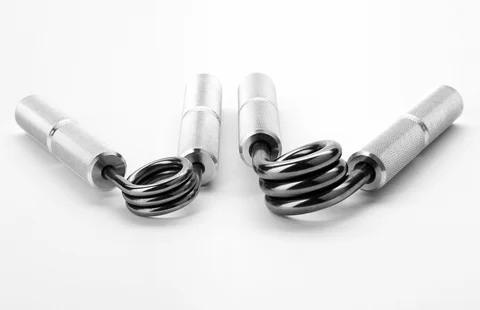 by the way?
Yeah, look, I have grippers.
Did you get the one that our buddy sent us?
No, I got a different adjustable gripper because my right arm is still recovering from the elbow surgery I had a year ago.
We should link that up in the show notes, that gripper that — that's a really good one. The one I have.
Yeah. We'll link to a couple of different grippers if people are interested. I'm going pretty light because I'm still strengthening the extensors in the right elbow that was repaired. But you want to hear about something crazy?
Yeah.
09Dream engineering and brain stimulation
Tim sees brain stimulation as a much better risk-benefit bet than psychedelics for most people: a one-day protocol took his OCD and anxiety to near zero, and the startup Dust is learning to shape dreams.
That I've been getting really into, and this is going to get into crazy town, but we like getting into crazy town a little bit. So dream engineering and anesthesia dreams. So I've been going down this rabbit hole related to dream engineering. So can you modify dream content? Can you, for instance, facilitate two-way communication between scientists and dreamers while they are dreaming? And this is a longstanding interest of mine. I first read Exploring the World of Lucid Dreaming99Exploring the World of Lucid Dreaming (1990) — a practical guide by Stephen LaBerge and Howard Rheingold. by someone named Stephen LaBerge,100Stephen LaBerge — American psychophysiologist at Stanford and the leading researcher of lucid dreaming; in 1981 he and colleagues showed that a sleeper can send signals with eye movements. the very, very beginning of high school and became very interested in lucid dreaming,101Lucid dream — a dream in which you know you're dreaming and can steer what happens. which is, just to define terms, where you train yourself, and there is a process for this, to induce lucidity while you're dreaming.
ExplainerHow scientists talk to people while they sleep
During REM sleep the body's muscles are paralyzed, but the eyes move freely. That's the basis of lucid dream researchers' key trick: a person who realizes they're dreaming gives an agreed signal, say, looking left and right several times, and it shows up on the eye-movement recording. The first such signals were recorded by the Briton Keith Hearne in 1975, and in 1981 Stephen LaBerge at Stanford published experiments that convinced the scientific community.
In 2021 four labs, in the US, France, Germany and the Netherlands, showed in Current Biology that communication can work the other way too: sleepers were read simple arithmetic problems and answered with eye movements without waking up. It didn't always work, but several participants in different labs answered correctly.
Adam Haar Horowitz at the MIT Media Lab came at it from another angle, through falling asleep. His Dormio glove uses pulse, muscle tone and skin conductance to detect the moment a person starts drifting off, prompts a theme by voice ("think of a tree"), then wakes them and asks what they saw. In a 2020 paper, participants dreamed of the prompted theme more often and did better on creative tasks afterward.
That just means you become conscious of the fact that you are dreaming and with exercises, you can get to the point where you're able to modify your own dream content. I used to, for instance, in high school when I was competing in wrestling, I would do additional training sessions at night in my dreams. I'm not making this up, and I felt like there was a direct translation to improve performance. Okay. But flash forward, I connected, I ended up getting introduced to Dr. Adam Haar Horowitz102Adam Haar Horowitz — American sleep researcher; at the MIT Media Lab he developed Dormio, a device that suggests a dream theme just as you fall asleep. who took research out of MIT and Harvard to make dream engineering a reality. So he has a startup called Dust,103Dust — Haar Horowitz's startup, listed in the episode notes as a "dream engineering app." D-U-S-T. In full disclosure, I am an investor in that.
What does it do?
They're going to be helping people to modify dream content to address things like PTSD.104PTSD — post-traumatic stress disorder: a severe condition after a traumatic experience (war, violence, disaster) with intrusive memories, nightmares and anxiety.
Oh, no way.
Now, that's where the conversation started, and he knows that I have a longstanding interest in psychedelic-related therapies, but psychedelics have taken a backseat for me in the last handful of years because most people — I shouldn't say most. Many people will not be able to take psychedelics for whether it's health reasons, contraindications. They have psychiatric conditions like schizophrenia in their family that mean it would be ill-advised to take them. So I've been really focused, as you know, on neuromodulation, brain stimulation,105Brain stimulation — here, transcranial magnetic stimulation (TMS): a coil held to the head excites specific areas of the cortex with magnetic pulses. The US approved it for depression in 2008 and later for OCD. Tim has talked a lot about his TMS experience in past episodes. and I still am super, super bullish.
How often are you doing that now?
I'm going to be doing it again probably in the next month. I would say every three to four months. The update there, I did get involved with one company, and I thought very heavily about it, called Ampa Health,106Ampa Health — an American company that makes portable TMS devices and runs a one-day treatment protocol (as described in the episode notes). A-M-P-A Health. They have the smallest, most modular option on the market, very easy to use. I think they're the company, if I had to bet on one, that's going to get to the point where you can actually power something off of an iPhone. They're doing some really, really interesting work. Just to touch on that, they're doing one-day protocols now. So instead of five days off of work —
Oh, that's amazing.
— costs 30 grand or something, you're doing one day of treatment accelerated with this very small dose of antibiotic called D-cycloserine,107D-cycloserine — an old tuberculosis antibiotic. In small doses it acts on the brain's NMDA receptors and enhances learning and plasticity, which is why it's paired with psychotherapy and TMS. which induces plasticity in the brain, much like certain psychedelics. So you basically let that dissolve in your mouth beforehand. And from, let's say a one to 10 in severity, let's say my OCD-generalized anxiety,108OCD — obsessive-compulsive disorder: intrusive thoughts and rituals a person can't shake off. it's at like an eight or nine, it has taken it to a zero or a one.
Holy shit.
One day. Now it gets crazier though because you can also use it — people can check out Ampa Health. They think they need to —
Do they do it in L.A. as well or no? Where can you do this?
They're all over the country. I mean, what I'm hoping is that people who are already administering things like ketamine109Ketamine therapy — treating severe depression with small doses of the anesthetic ketamine in clinics; there are thousands of such clinics in the US. or who are offering CBT110CBT — cognitive behavioral therapy, the best-studied form of psychotherapy. or whatever will just offer this as an add-on because most of the devices that are available now are the size of a refrigerator. You have to sign a quarter-million-dollar lease. This stuff is like three — the Ampa Health product for providers is like three grand a month. You can cancel any time. I think that's still accurate and it can fit in the trunk of a car. It's much easier to use. But what's also amazing, and I did this recently when I was traveling, met a technician and did two hours of, I think it was stims every 30 minutes just for a handful of minutes each stimulation.
When you say stims — okay, stimulations. Okay.
Yeah. Just for sleep.
Different target area of the brain then?
In this case, it was the same target. It's a target that they're not talking about super publicly yet, but very easy for therapist, technicians to find.
How do they find it? Are they just measuring your head and shit looking like —
ExplainerAccelerated TMS: from six weeks to one day
A standard TMS course for depression is a session every weekday for four to six weeks, about 36 sessions in all. Accelerated protocols compress it. The best known is SAINT (Stanford Neuromodulation Therapy), developed by Nolan Williams at Stanford: ten short sessions of theta-burst stimulation a day, about 50 minutes apart, for five days in a row. In a 2022 double-blind trial (American Journal of Psychiatry), 78.6 percent of patients were in remission after four weeks versus 13.3 percent with sham treatment; the FDA cleared the protocol the same year.
Two details explain Tim's story:
- A precise target. SAINT picks a spot in the dorsolateral prefrontal cortex using fMRI: the one whose activity is most strongly anticorrelated with the subgenual cingulate cortex. Other groups, such as Michael Fox's at Harvard, find targets using network maps, matching sites of brain lesions and deep brain stimulation points after which symptoms appear or disappear.
- A boost to plasticity. D-cycloserine enhances NMDA receptors, through which changes in synapses are consolidated. In a 2022 randomized trial (JAMA Psychiatry), adding it to theta-burst stimulation noticeably increased the share of patients whose depression lifted.
It's all based on really, really good science. They're looking at overlapping networks that are identified by looking at data from deep brain stimulation,111Deep brain stimulation — electrodes implanted in deep brain structures; it's used to treat Parkinson's disease and severe OCD and depression. data from lesion research.112Lesion research — by seeing how a stroke or injury to a particular area changes symptoms, scientists map connected brain networks, which then become stimulation targets.
No, but I mean when they sit down with you, if you're going to go into this place and they're like, "Hey, I've got to find this region in the brain."
So part of what makes how they do it interesting is they're finding targets that are more uniform person to person. So certain places like the dorsolateral prefrontal cortex,113Dorsolateral prefrontal cortex — an area at the front of the brain and the classic TMS target for depression. Its location varies from person to person, so it has to be found. certain areas on the front of the skull or front of the brain, front of the head, are a little more variable. You have to be very precise. So they're finding ways to make it very effective, very fast, and less likely to suffer from clinician error. Because if you really have to thread the needle, sometimes you get no effect. That happened to me when I was using earlier targets with other hardware. If they were off by a half a centimeter, nothing. And you just wasted a week and 30 grand. So expensive.
And no downside? Are you not getting headaches afterwards or anything weird?
Mild headache. Mild headache for a day.
Does that not freak you out though? I mean, that's the only reason I haven't tried any of this stuff. I'm like, I don't know. It's like they're just putting magnets in your brain and shit.
I mean, just to bust your balls before I started recording, you were talking about some drugs you're experimenting with.
Yeah, but that's just a good old time. Those are tried and true.
Yeah.
You've done it too.
I mean, look, I'm no stranger to pharm —
If you're going to say it online, I'm going to say it.
I'm no stranger to pharmacology. I'm just saying. In this particular case, I personally found the — I think the risk-benefit ratio is much more attractive for the general population than psychedelics, which is why I'm spending so much —
10Dreams under anesthesia versus trauma
Stanford research suggests a prepared dream while emerging from propofol anesthesia can wipe out complex PTSD symptoms for months, and to Tim this shows the trip matters.
Interesting.
— time looking at it. I think it is much, much, much more attractive. It's faster. And frankly — well, let me come back to these crazy stories of dream engineering and anesthesia dreams. So from the startup Dust, and people can check out the Ampa Health, I encourage them to check it out, but they're all over the country now.
Is that the publicly traded company one or no?
No, it's private.
Okay, private.
Okay. So Dust does the dream engineering. And then he introduced me to some research out of Stanford. Here's some of the headlines of pieces published by Stanford Medicine.114The Stanford pieces — "Could Anesthesia-Induced Dreams Wipe Away Trauma?" and "Could Anesthesia Dreams Be a More Palatable Psychedelic Therapy?" from Stanford Medicine. Behind them are studies by Hack and colleagues (American Journal of Psychiatry, 2024) and Sikka and colleagues (Anesthesiology, 2026). "Could Anesthesia Induced Dreams Wipe Away Trauma?" Another one. "Could Anesthesia Dreams Be A More Palatable Psychedelic Therapy?" All right. So what does this actually mean? Let me read some of this stuff. All right.
What dreams are they —
Here's the dream protocol.
Yeah, that's what I want to know. What's the protocol?
I tried to convince, I was getting an endoscopy recently just to look at my throat. You got to do that stuff, the endoscopies, colonoscopies, and so on. And I was trying to convince this doctor I'd never met to do this for me, and he was like, "Yeah, I don't think so." But the dreaming protocol is five steps. "Number one, tell a patient they might dream under anesthesia. Number two, use propofol.115Propofol — a short-acting intravenous anesthetic, the world's most common drug for general anesthesia and sedation; its color earned it the nickname "milk of amnesia.""
Oh, this is great.
Yeah, it's very common.
Well, it's what Michael Jackson died on.116Michael Jackson died in June 2009 of propofol poisoning combined with sedatives; his personal physician, Conrad Murray, was convicted of involuntary manslaughter.
Michael Jackson used that plus six other things.
Yeah. I have a great story about that, by the way.
You should not DIY propofol, but using propofol as an anesthetic as the patient is emerging from anesthesia. So here's the thing. If someone has surgery, they're not changing the anesthesia delivered for the surgery. They're basically using propofol to taper them out and tune them to a very particular dose, and let's call it radio station, so they have pleasant dreams. But step number three is monitor brain activity, et cetera, with EEG.117EEG — electroencephalography: recording the brain's electrical activity through electrodes on the scalp. Ensure at least 10 minutes of quiet, undisturbed emergence. This is really important. If you don't do that, then dream recall is shot, and then you have to ask them about dream recall.
But the point of this is that what they're seeing, and this is not really super speculative. I mean, it is at the edges now, but they are seeing people with longstanding complex PTSD,118Complex PTSD — a form of PTSD following prolonged, repeated trauma, such as childhood abuse; it became a separate diagnosis in the World Health Organization's ICD-11. they have one of these dreams where they taper out on propofol and they rehearse beforehand to basically imagine their traumatic event ending in a better way with some kind of resolution. Some of these people, 10 months later, still zero symptoms of complex PTSD.
Wow.
They go from severe to zero. The reason I find this so interesting and other people find it interesting is that it underscores the possibility that, and I've thought this for a very long time, but the trip matters.119The trip — the subjective experience on a psychedelic: visions, altered perception. Whether the experience itself heals or only the brain chemistry does is one of the central debates in psychedelic medicine. Because in the world of psychedelic medicine and business right now, the name of the game, if you want to ramp up your market cap and have an exit for $2 billion or whatever, or launch something with an IPO and make tons of money is you say, okay, psychedelics, broadly speaking, a whole lot of them hit these serotonin type 2A receptors.1205-HT2A receptor — the serotonin receptor through which classic psychedelics such as psilocybin, LSD and DMT act. Let's create a drug that hits the same receptors, but that doesn't cause the trip because the trip doesn't matter. The trip is a side effect.
Same bullshit, but yeah.
Well, what's interesting is that I think it's both, but just to be clear, you can hit the serotonin type 2A receptor with no trip, like an LSD variant,121A non-tripping LSD variant — a non-hallucinogenic LSD analog such as BOL-148 (2-bromo-LSD), which relieved cluster headaches in studies without causing a trip. and it can be very effective for things like cluster headaches.122Cluster headache — attacks of excruciating pain around one eye, coming in bouts lasting weeks; one of the most severe pains known to medicine.
Sure.
It does something.
Yeah, but I'm talking about the emotional release that comes from that.
Sure. So I would say also some of these psychedelics, and not all of them are primarily hitting the type 2A receptor, but have potent anti-inflammatory effects at sub-perceptual doses.123Sub-perceptual dose — a dose below the threshold at which you feel the substance; the same thing as microdosing. So also I think that could lead to anti-depression and stuff.
Right.
However, if dream engineering, like ala Dust, if they can dream engineer people to have fewer nightmares, which they can, and that has psychedelic-like outcomes, is it possible that even though there are millions of people for whom psychedelics will never be appropriate, like tripping balls for four to six hours, and there are shorter acting psychedelics and so on, methylone124Methylone — an empathogen closely related to MDMA that lasts a few hours; it's being tested as a PTSD treatment. and so on, I get it, but there are plenty of people who will never be able to take psychedelics. Is it possible that every night you have an opportunity to harness something similar? And if so, who are the scientists who are going to figure out how to mold that and shape it and do the prep work? I think it's all touching the same stuff.
Let me ask you a question. What does Dust do? Is it a coaching service? Because I have this app that, by the way, I have no affiliation with this, but you should check this out too, Tim. I think you'd really like it. Before I go to bed, there's an app I use called Claria,125Claria — an audio hypnosis app for anxiety and depression from the Australian company Mindset Health. C-L-A-R-I-A, and it is the best hypnosis app that I've found out there for a variety —
Who makes Claria? I may have tried this.
You would recognize the scientists and the team behind it. It's amazing. It's expensive. It's 150 a year, so it's not cheap, but I found it to be a beautiful way to drift off to sleep, and I swear I feel better the next day. And there's a variety of different topics. It could be anxiety, it can be whatever. But anyway, my point is, and my question about Dust is, okay, what is the thing? Could you sit there in this propofol kind of state coming out —
So just to be clear, Dust isn't doing anything with propofol. That's totally separate.
Okay. Okay. So could you do this with hypnotherapy?
That's a great question. I don't know the answer. I also, just to be on the safe side, I don't know what they're disclosing publicly. So people can check out the website and whatever it says, it says, but it's something I'm keeping an eye on. But broadly speaking, that ended up being the wedge in the door for me to get back into doing a deep dive on basically dream shaping, which is 100% possible. And it's already been demonstrated that you can have dreamers who achieve lucidity communicate with researchers126Talking to dreamers — Konkoly and colleagues, "Real-Time Dialogue Between Experimenters and Dreamers During REM Sleep," Current Biology, 2021: four labs in the US, France, Germany and the Netherlands asked sleepers questions, and they answered with eye movements. while they are provably in an REM state127REM sleep (rapid eye movement) — the sleep stage with rapid eye movements, when the most vivid dreams happen; the body's muscles are paralyzed, but the eyes are not. by memorizing eye movement patterns in advance, like Morse code basically, like right, right, left, left, right, left, something like that to indicate I know that I'm dreaming and I'm telling you I'm dreaming. It's fucking crazy.
11DORA sleep drugs and protection against Alzheimer's
Tim and Kevin both choose DORA sleep drugs, dual orexin receptor antagonists, because human data suggest they help clear beta-amyloid and they look like the safer class of sleeping pills.
Have you talked to Matt Walker128Matthew Walker — British neuroscientist and professor at UC Berkeley, where he founded the Center for Human Sleep Science; author of the bestseller Why We Sleep (2017) and host of The Matt Walker Podcast. about this?
I haven't. I haven't had a chance to talk to Matt about this stuff yet.
Yeah. So Matt used to run the, for people that don't know, he wrote the Why We Sleep book and also used to run the Berkeley Sleep Lab for a long time.
Yeah, yeah.
He's still very active.
He's in Dallas now, has a huge lab, is doing lots of good work. He and I, on the sleep front, have mostly talked about the DORA class of drugs.129DORA (dual orexin receptor antagonists) — sleep drugs that don't "switch off" the brain but block orexin, the wakefulness hormone: suvorexant (Belsomra, 2014), lemborexant and daridorexant (Quviviq, 2022).
I still have a ton of that, by the way.
Oh, yeah. I'm using something called Quviviq instead of Belsomra now.
Yeah.
And talk to your doctor, guys. This is not stuff to —
Well, they can't get it without the doctor anyway.
ExplainerHow DORAs differ from ordinary sleeping pills
Orexin (also called hypocretin) was discovered in 1998 by two groups of scientists at once. It's produced by a small cluster of neurons in the hypothalamus and keeps the brain awake: when those neurons die, narcolepsy develops, and a person falls asleep in the middle of the day.
Classic sleeping pills, benzodiazepines and "Z-drugs" like zolpidem (Ambien), boost GABA, the brain's main inhibitory system, and dampen the whole brain; that's why they alter sleep architecture and cause dependence and morning grogginess. DORAs work differently: they block both orexin receptors and simply remove the "stay awake" signal. They are suvorexant (Belsomra, in the US since 2014), lemborexant (Dayvigo, 2019) and daridorexant (Quviviq, 2022).
The link to Alzheimer's runs through deep sleep, during which the brain clears beta-amyloid more actively. In a study by Lucey and colleagues (2023), a single bedtime dose of suvorexant in healthy people aged 45 to 65 lowered the concentration of beta-amyloid in the cerebrospinal fluid by about 10–20 percent and reduced tau phosphorylation. Whether DORAs actually protect against the disease has not yet been proven.
Yeah. I mean, who knows though, if they're buying stuff online from Mexico or whatever. Just don't screw around with any of this stuff without talking to your doctor. But the point of that, for people who maybe haven't heard anything about this, Matt Walker has a good podcast episode on this.130Walker's episode — The Matt Walker Podcast, episode #118, "A Sleep Medication to Lower the Risk of Alzheimer's." It's probably six to nine months old at this point about the DORA, like Dora the Explorer, D-O-R-A, class of drugs that's dual orexin receptor antagonist drugs. There's some evidence to suggest it might be helpful for people with family histories of Alzheimer's and things like that for —
Didn't they do a spinal tap and saw the —
— the beta amyloid clearance131Beta-amyloid — a protein that builds up into plaques in the brain in Alzheimer's disease; the brain clears it more actively during sleep. and so on.
— it produced amyloid clearance or helped amyloid clearance?
Yeah. Not just in animals, but they've looked at human data.132Human data — Lucey and colleagues (Annals of Neurology, 2023): in healthy people, a single night of suvorexant lowered levels of beta-amyloid and phosphorylated tau in the cerebrospinal fluid. So for me, honestly, even though it might be speculative at this point, because no one's proven that it prevents Alzheimer's, I'm like, "You know what? That shit is so scary." And I've seen relatives just disintegrate. I'm like, "Eh, since I'm APOE3/4,133APOE — the apolipoprotein E gene. The ε4 variant is the main genetic risk factor for Alzheimer's disease: a single copy (as in Tim's 3/4 genotype) raises the risk roughly threefold. I'm genetically predisposed. Let me just be on the safe side."
Yeah. I bring it with me. I'm actually going to Japan soon, and that's when I use it. I'm like, "I'd rather do that than some type of these other class of sleep drugs that have been shown to do all kinds of horrible things, including cancers and you name it. They look like, on paper so far, to be the safer class of sleep drugs.
They're pretty interesting.
Yeah.
I mean, there's some other drugs that seem not to affect sleep architecture134Sleep architecture — the cycle of sleep stages over a night: light, deep and REM sleep. Many sleeping pills bring on sleep but distort this balance. horribly, like the Ambiens of the world.135Ambien (zolpidem) — the best-known sleeping pill in the US; its side effects include sleepwalking and strange behavior while asleep. Trazodone136Trazodone — an antidepressant often prescribed in small doses as a sleep aid. might be a decent choice, but for a host of reasons, I wanted to — it just seemed to make sense to me to look at the DORAs. All right. What else you got?
12Chinese pills and the Airofit breathing trainer
In a rapid-fire round Kevin swears by two finds: Chinese herbal pills that rescue his stomach, and the Airofit trainer for breathing muscles.
Okay. I'm going to do rapid fire.
Let's do it.
I've got a few things. First of all, have you ever seen these before?
Plum Flower Curing Pills?137Plum Flower Curing Pills — a Chinese patent remedy (kang ning wan) of tiny herbal pellets for indigestion, nausea and motion sickness; Plum Flower is a brand of the company Mayway.
Yes. Plum Flower Curing Pills, my friends.
No. Economy size!
Okay. Hold on. Hold on. Hold on.
Oh, this gets better and better.
I had a buddy that was like — he's like, "Kevin, you don't understand. I was actually in Paris and I had a little bit of a stomach. Oh, man, my stomach's a little bit off, blah, blah." And he goes, "I was about to get food poisoning. I felt it coming on." I think it was oysters or something he had. He goes like, "I took two of these. It's from a Chinese practitioner." And he goes, "I dodged a bullet." Every time, and let's just call it once every eight weeks where you're like, "Ooh, my stomach's a little sideways." I take one of these little packets and it freaking works. Dude, I'm telling you, I know it sounds crazy. And so before the podcast —
Is it just laced with tons of antibiotics?
Yeah, exactly. No, before the podcast, I wanted to look it up because it's a traditional Chinese medicine and I can't pronounce any of the shit in it. It's a bunch of wild — it's like 15 different Chinese herbs.
Yeah, this is unlike the A2 protein. This has like 27 different ingredients in the size two font.
I'm telling you, these little packets are like 50 cents a piece on Amazon. You can buy them in a smaller thing.
I just love that they're called "curing pills."
They work, dude. You know what they work with really? Is if you had too much to eat and you're like, "Oh, I'm bloated. I just feel bloated." Just take one little packet. Take a couple with you to go.
I'm good.
I'm 10% owner in the company.
I'm like, "What? Executive Chairman, Kevin Rose, what is this?
Exactly. My picture's on the outside of the box.
How did he get to Shanghai?
This thing, a rapid fire, Airofit.138Airofit — a Danish breathing trainer: a mouthpiece with adjustable resistance on the inhale and exhale, plus an app with training programs.
Oh, I've got one of those in my bag, actually.
In your bag? What the fuck? On you right now?
Well, I don't have it right now, but it's in my backpack.
So tell people about it.
I was not able to get the app to work very well.
I got it working.
You did? Was it a pain in the balls?
It was a little bit of a pain. So you can get the one without the smart technology in it, but this will also work if you just don't even use the app.
Yeah. Okay.
So for people that don't know, this device right here —
I should just use it without the app because it's been — basically, I downloaded the app and then they're like, "Oh, you want any utility out of this app at all? Pay $79 a month," or whatever. And I was like, ugh, I'm not going to do that.
You just ask ChatGPT for a training protocol. There's two knobs on here on each side of this thing that adjust the resistance on inhale and exhale. So you put this thing in your mouth like this.
This is to train your respiratory muscles.139Respiratory muscle training — breathing against resistance strengthens the diaphragm and the muscles between the ribs, the way dumbbells strengthen a biceps.
That's difficult for me to do. They showed, after eight weeks, a 30% increase in lung capacity when you train with this thing, which is just insane.
Yeah. The respiratory muscle training devices are really cool. I had Bas Rutten,140Bas Rutten — Dutch mixed martial artist, champion of Japan's Pancrase league and UFC heavyweight champion (1999); a guest on Tim's show (episode #621). this UFC, but also prior to that, in Japan, MMA legend on, and he's done this stuff basically daily for multiple years. There's good data to suggest reductions in lower back pain, all of these different issues if you improve the strengthening of the muscles that aid in respiration.
That's wild. Do you got the same model, the same type?
I have a white one that's got Bluetooth and all this fancy technology that I think I do not need.
When did you buy it?
I bought it probably a year ago.
Okay. I don't know why this had the latest firmware on it and it works fine. I haven't had any issues with the connectivity, but I did have one before my house burned down and it was always having issues connecting. I don't know what model.
Maybe I need a new one, but Airofit, please improve your app if you haven't in the last year because I found it to be incredibly difficult. Plus, your baseline of programming for somebody who's bought a device should be decent. But I do have one in my bag at home, so I will just use ChatGPT or Claude to help me figure out a Bluetooth-free option for training.
What I've been doing with it is ruck backpack, 6% incline on the treadmill.
That sounds comfortable.
With this in my mouth, and it's really helped.
I'm guessing the people on the treadmills next to you just clear out, huh?
It's at my house. I'm not doing this in public. It's ridiculous. Okay. The last one I have is about man makeup, but we can get to that.
13Lenses against depression and the mystery of anesthesia
Tim expects electricity to replace pills more and more: contact lenses matched Prozac in mice, and anesthesia may work through physics rather than chemistry.
Let's come back to man makeup. I'll give another bit of science that I think is pretty fascinating to watch. This was sent to me by an oncologist who specializes in, on one level, cancers around the eye. I had a scare. I might have told you about this, I'm not sure. It's still a little bit of a scare, but there was a nevus found141Nevus — a mole, which can also occur in the eye's choroid. Rarely it turns into ocular melanoma, and with a large tumor the eye has to be removed. at the back of my eye, which is like a large freckle. And that can develop into cancer.
Oh, shit.
The good news is they can get rid of it. The bad news is you lose your eye. So this is something I've tracked first every three months, then every six months. It hasn't changed in size, but really came to admire —
How'd you find this by the way? Eye exam?
Eye exam, but with retinal scanning, with advanced imaging. Certainly, I was happy to find it, but I mean very scary to find because you don't know if it's been there for 20 years or if it's been there for a month and it's growing.
This is my brain aneurysm. I had142Aneurysm — a bulge in a blood vessel wall; in the brain, a rupture causes bleeding, so small aneurysms are monitored and measured. a little tiny brain aneurysm that was like one millimeter or whatever.
So you found that with a Biograph or Prenuvo143Prenuvo — an American chain of clinics that do a full-body MRI in an hour to catch disease early; Biograph is another in-depth preventive checkup service. or something?
Yeah, Prenuvo, I did. They're like, "Okay, well we have to watch this and it could explode if it gets too big." Then after two years they're like, "Oh, you've probably just had this since you were born." I'm like, "Oh, shit. Okay."
Yeah. Yeah. So she occasionally will send me science that she finds interesting. This one, I mean this is probably not the description of the study itself, I think I went to the lay person's interpretation of it, but the headline here, which I put in my newsletter, 5-Bullet Friday,1445-Bullet Friday — Tim's free Friday newsletter of five short items: what he's reading, watching and trying. check it out. Tim.blog/Friday, but "Brain Stimulating Contact Lenses Match Prozac in Depression Study."145The lens study — the headline is from Neuroscience News; the study itself is Park and colleagues, "Contact Lens Bioelectronic Platform for Non-invasive Depression Treatment…," Cell Reports Physical Science, 2026. All right. So this isn't an animal model, but let me read the synopsis.
"Material scientists have developed a wearable drug-free contact lens capable of treating depression by delivering mild electrical signals through the retina."
"The study demonstrates that these specialized lenses are as effective as fluoxetine," that's the active ingredient Prozac,146Prozac (fluoxetine) — an SSRI antidepressant, launched in 1987, which became the best-known depression drug. "at reducing behavioral, neural and physiological signs of depression in mice." Mice are not just little furry humans, so just keep that in mind. "This technology leverages the eye's anatomical connection to the brain to stimulate mood-regulating circuits non-invasively."
So that is pretty fascinating.
Yeah.
Imagine if — now I don't know mechanistically what it's actually doing with the stimulation. Is it affecting vagal tone?147Vagal tone — the activity of the vagus nerve, the main nerve of the parasympathetic system, the body's "brakes." High vagal tone is linked to calm and recovery, and vagus nerve stimulation is an approved treatment for epilepsy and depression. Is it affecting something else? Who knows? I haven't done the deep dive on it yet, but imagine this is where bioelectric medicine, whether it's different types of stimulation for increasing vagal tone — there are a lot of bullshit devices out there, folks, so just beware. I'm not aware of any one commercially available that is not prescription that is credible. But you talk to like Michael Levin of Tufts,148Michael Levin — a Tufts University biologist who studies how cells' electrical fields guide tissue development and regeneration; his lab has, for example, grown eyes in the wrong places on frogs. will we more and more be able to use electricity instead of pills to treat conditions?
I think that that will be the case. In fact, you look at, say, anesthesia, anesthesia is one of those things where we're like, "Yeah, it's just anesthesia." Anesthesia, when you start scratching the surface, is so incredibly strange.
They really don't know how it works, right?
There are many anesthetics, people have no idea how they work. I mean, a few things. If you look at Michael Pollan's new book,149Michael Pollan — American journalist and author of How to Change Your Mind (2018), about psychedelics. The new book Tim means is A World Appears: A Journey into Consciousness (2026). he talks about how anesthesia is effective on plants,150Anesthesia in plants — experiments have shown it: under ether or lidocaine, a mimosa stops folding its leaves when touched, and a Venus flytrap stops snapping shut. The photographs show the same sensitive plant before a touch and a few seconds afterward. even though they have obviously completely different nervous systems slash I should say more anatomy. But it would seem — how should I get into this without making a mess of things? There are some hints of quantum effects of anesthesia,151Quantum effects — the best-known such hypothesis is Penrose and Hameroff's: consciousness is tied to quantum processes in neurons' microtubules, which anesthetics suppress. Mainstream science doesn't accept it. but putting that aside, because I'm not credible enough to talk about that at length, some of these anesthetics are inert.152Inert anesthetics — xenon, for example: an inert gas that reacts with almost nothing, yet produces full general anesthesia. They shouldn't do anything.
So what is happening? It would seem that it might be physics and not chemistry. It's not within the realm of chemists to say, "Oh, it's binding to this receptor and doing A, B, or C," even though they might observe effects that mimic those things, that it's somehow affecting bioelectrical fields. That's the limit of the extent of my cursory understanding, but it's just fascinating. There's so many things like this that we take for granted that we think are understood by the "experts," and we have no idea what the mechanism of action is.
There are many examples like that.
But isn't that crazy?
Yeah.
It's something we just take for granted. We're like "Yeah, let's pop two of those." We have no idea how it works. What the fuck?
There are a lot of those. I think for a while that was true of modafinil.153Modafinil — a narcolepsy drug popular as a "smart pill"; for a long time its mechanism of action remained unclear. There are many, many, many, many drugs.
14Erection pills and the lure of enhancement
Enhancement calls for caution because people get hooked on the results, says Tim, who also gets horrible back pain from erection pills.
Oh, do you take tadalafil?
Tadalafil?
Tadalafil.
Whatever that is, the Cialis?154Cialis (tadalafil) — an erectile dysfunction drug from the same group as Viagra, but lasting up to 36 hours. In small daily doses it's also prescribed for an enlarged prostate.
Cialis, yeah.
Boner pills.
Do you take it?
No, I don't.
You don't?
I don't because I know there's supposed to be maybe plausible cognitive benefits and so on. I get —
Low dose. I just do a little halfer.
Yeah, I get, and this is not actually that uncommon, I get horrible back pain.155Back pain — back and muscle pain is a known side effect of tadalafil; the mechanism isn't fully understood, but one explanation is that besides PDE5 it also blocks the enzyme PDE11 in muscle.
Oh, back pain. Weird.
Yeah. It's not super common, but in a percentage of people, it's reported in the literature.
How about with the other ones?
Horrible back pain.
What about the other ones? Like Viagra?156Viagra (sildenafil) — the first erectile dysfunction pill, launched by Pfizer in 1998.
Like what?
Viagra.
Viagra, it's similar. Back pain.
Yeah.
What's the deal? Do people know why the back pain? They don't know?
Oh, they do. Yeah. I mean, they're like —
Does it work?
There are different types of phosphodiesterase, PDE inhibitors. I think I'm getting this right. I'm going to have to fact check this before this gets published. Basically, I want to say it's like PDE5157PDE5 (phosphodiesterase type 5) — an enzyme that breaks down a substance that relaxes the smooth muscle of blood vessels. Viagra and Cialis block it, which boosts blood flow. or something like that.
So Huberman158Andrew Huberman — Stanford neuroscientist and host of the Huberman Lab podcast. was talking about there's potential benefit both on the cognitive side and also obviously the blood pressure side as well. It brings down your blood pressure a little bit and you don't have to take much of this stuff. You can just take a little half of it.
A little nibs.
Yeah.
I'm just on so many things. I'm trying to —
But they work for you. Even though it hurts your lower back, you're like a Superman.
Yeah. I mean, sure. I mean, I'll have a huge boner but look like a UFC fighter roundhouse kicked me in the kidney. Yeah.
Oh, because your kidneys, it pops out, like your back flares?
No, it doesn't pop out, but my low back hurts so much that I'm like, I can't sit. I can't stand.
I felt like your back muscles got hard or something and you got bulges on your kidneys now.
No. No, I'm just saying it's hard to enjoy the boner if you're crippled with low back pain.
That's fair. That's fair. I've got to tell, for people that have never tried these, I don't need these — but no, but hold on. This is The Random Show. We're supposed to be able to talk about this stuff.
Yeah. Yeah, sure.
When you try them for the first time, it is the weirdest shit.
Well, I mean, look —
Because you reach down and it's not you. Because you're like, "Whoa, how large?"
This is where you have to be careful with augmentation, right?
Yeah.
Because it's like, for instance, if your eyes are going a little bit and then you wear glasses and you're just like, "Holy, this is a different world." How do you go back to black and white?
Right.
You know what I mean? This is another reason why, sure, technically people might be able to use all of these peptides,159Peptides — short chains of amino acids; in biohacking, the word refers to trendy injectable compounds for recovery, weight loss and rejuvenation, many of them not approved by regulators. and testosterone, and GH,160GH (growth hormone) — a pituitary hormone; its injections are used to build muscle, burn fat and "rejuvenate." and all these things and then just get off because you have post-cycle therapy161Post-cycle therapy (PCT) — a bodybuilding term for drugs taken after a steroid cycle so the body starts producing its own testosterone again. or whatever. But psychologically, people can get so addicted to the results because they are obvious if these things are used correctly. So it's kind of like similarly with, this extends back to the AI conversation. It's like, man, the siren song,162Siren song — from Homer's Odyssey: the sirens lured sailors to their deaths with their singing, and Odysseus had himself tied to the mast so he could listen without giving in. the temptation to use AI for almost everything is so strong. I'm working on this new book right now and it's like, I am not using it to write for me because if I do that, I'm done. It's good. It's too good.
Well, there's even —
15AI in writing and the value of lived experience
Tim won't hand his writing to AI and sees an author's moat in reputation and lived experience, now that a leaked book can be rewritten in days.
I'm using it for version control.163Version control — tracking changes to a document or code: what was changed, by whom and when, with the ability to compare versions. If somebody provides edits, I'm like, compare this to this and give me a graphic overview so I can print it out and look at it in color. It can do some tremendous things, but if you want to retain a function, a cognitive ability, be very careful about what you outsource.
Well, let me throw this out there for people that aren't aware of it because most people won't be. In the world of AI, what they do sometimes is they put these elegant pieces of code that kind of sit on top of the AI that makes it turbocharge the AI to do special things. They're called harnesses.164Harness — a software wrapper around an AI model: instructions, tools and workflows that turn a "bare" model into an agent for a specific task. There is a new harness that came out recently just for writers.
Oh, God.
And so if you thought Claude or ChatGPT was really good at helping you write, wait until you throw this harness on top of it. There's a company called Every165Every — an American media company and newsletter about AI and business. Compound Engineering is its set of plugins for coding with AI; Every writer Katie Parrott described the version for writers in the article "Compound Writing: How I Turned My Process into a Plugin." out there and they had released a package for coders called Compound Engineering. You can just type in every compound engineering writer harness and it'll show you the right one. You just install it into your ChatGPT or Claude and it will write the book for you. It's going to be insane.
Yeah, you're done.
Well, I don't know if I'm done. I mean, I don't think so because I mean, you've talked about this online and I think we've texted a little bit about it, but it's like, what's the moat? Reputation.
Yeah, it is reputation.
Right. So I don't think I'm dead.
No, no, no.
I think books are harder and harder to sell as a viable format of the media.
Well, it's funny, when Tim was writing these books back in the early days, because I first met you when —
2008.
I met you the day your first book came out, The 4-Hour Workweek,166The 4-Hour Workweek — Tim's first book, published in April 2007, which became a worldwide bestseller about automating a business, working remotely and traveling. came out at the party. Then you would tell me, "Hey, I'm working on this book," and you would want to keep everything hush-hush. You wouldn't want to tell anybody because you were like, "Okay, someone can front run me167Front-running — a trading term for trading ahead of someone else's pending deal you know about. with this idea, with the ideas that I have in here, if any of this leaks out." You were super guarded. That is more of the reality these days. I mean, if someone were to find out the next book you're writing on and got a leaked copy of it, they can rewrite the entire thing and have it out in like 48 hours, published and printed.
Yeah. I mean, the defense is —
No, I know there's still the moat of you.
Well, I'm just saying that is why if you are writing about the realm of ideas, that is going to be a hard game to play. If you are writing about lived experience, like I did X, Y, and Z, then I think you have more defensibility. But I think, I'm not sure we talked about this, but I've just kind of come down to deciding that I'd rather write now. I'm also still half pregnant with this book. It's like 80% of the way there.
Yeah. You've been working on this one for a long time.
Yeah, I have. I mean, it's taken — in a way, honestly, I've been waiting for the technology to catch up so that I could make the point that I wanted to make, which is, look guys, this is not a 1% problem. This is a 99% problem. And the tools are also available to 99%. I was like, if I published this five years ago, people would be like, "Oh, cry me a river. Tim Ferriss has too much inbound." But now I'm like, how many — I'm like, "Okay, you've got what? You've got iMessage, WhatsApp, two email addresses, DMs."
Slack channels, it's like all of it. Yeah, yeah, yeah.
Everybody's fucking drowning. Everybody's drowning. But I couldn't have made that argument as well six years ago. As you know, robots are so good at imitating humans. Although I do test — my team will test things if I'm like if this is 100% AI written, it's automatic X. It's automatic archive. Coming back to — I would just rather write a book for 10,000 people than do short form videos for 10 million who forget it 10 seconds later.
Right, right, right.
16Gardner's "Personal Renewal" and Cervantes
Learning isn't just for the young: Tim reads from John Gardner's 1990 speech to McKinsey the story of a 53-year-old prisoner who wrote Don Quixote.
I want to share one piece of long form for people who can still digest it, which is hopefully many of you. This is a speech and I read the transcript. It is exceptional. It's called "Personal Renewal." It's by John Gardner, G-A-R-D-N-E-R. I have no idea how I found this thing. It was delivered to McKinsey and Company in November 1990. How did I find this? I have no idea. But it is full of gems. You can find an audio version. Just search "Personal Renewal," John Gardner, that's G-A-R-D-N-E-R. It's really about personal renewal, continual learning throughout life. It's really, really good, but it does require a little bit of foreplay to get to the gems.
Here's a really good one, and I'm quoting from the piece here. "Remember I mentioned earlier the myth that learning is for young people. I want to give you some examples. In a piece I wrote for Reader's Digest168Reader's Digest — an American digest magazine of short articles, one of the best-selling magazines in the world. not long ago, I gave what seemed to me a particularly interesting true example of renewal. The man in question was 53 years old. Most of his adult life had been a losing struggle against debt and misfortune. In military service he received a battlefield injury that denied him the use of his left arm. And he was seized and held in captivity for five years. Later he held two government jobs, succeeding at neither.
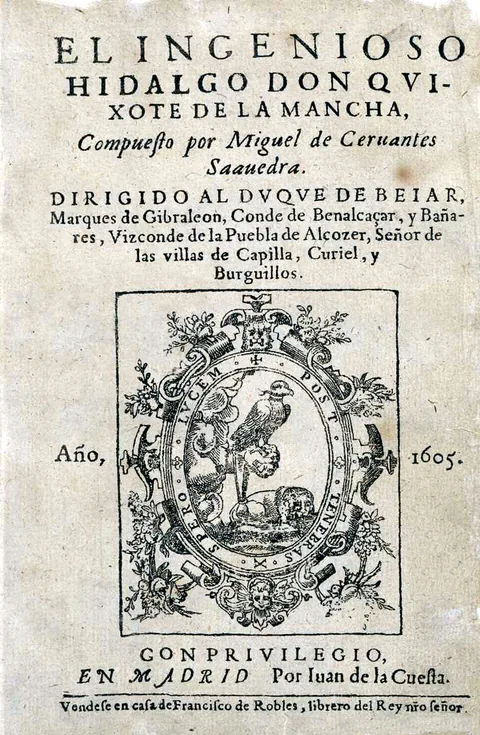
"At 53 he was in prison — and not for the first time. There in prison, he decided to write a book, driven by Heaven knows what motive — boredom, the hope of gain, emotional release, creative impulse, who can say? And the book turned out to be one of the greatest ever written, a book that has enthralled the world for over 350 years. The prisoner was Cervantes;169Miguel de Cervantes (1547–1616) lost the use of his left hand at the Battle of Lepanto (1571), spent five years as a captive in Algiers, then worked as an army supplier and tax collector and was jailed over shortfalls in his accounts. The first part of Don Quixote came out in 1605. the book: Don Quixote."
What a fucking crazy story.
Holy shit.
There are many examples like this. "Personal Renewal" by John Gardner, just maybe print it out, single task, get away from notifications. I've read this one a few times now and I just get something from it every time.
17Man makeup, rosacea and vampire facials
Kevin has embraced man makeup: a green corrector from Sephora tones down his rosacea, and vampire facials smooth his wrinkles.
That's amazing. Man makeup.
Man makeup.
Do you wear makeup?
I don't wear makeup.
Never?
Never.
On your TV show?
My TV show? You mean when I was on actual TV?170The Tim Ferriss Experiment — Tim's 2015 TV show on the American channel HLN: in each episode he tried to learn a new skill in a week.
Yeah, yeah.
Yeah. I mean, look, they've got makeup people who want to de-gloss my head. They'll use oil patches and stuff.
On your podcast, you don't do any little touch-ups?
I don't. I probably should, but I don't.
Okay.
Yeah, no touch-ups.
So I was on a podcast a month ago, and I looked like hell. I had just flown into the city.
You're like Al Pacino after a bender.
No, seriously. I had just flown into the city and I slept like shit for some reason because I was at altitude where I was at, and I went on the screen. I get rosacea171Rosacea — a chronic inflammatory skin condition of the face: red cheeks and nose, spider veins; it flares up with spicy food, alcohol, heat and stress. sometimes in my cheeks and stuff, and I just looked like shit. I was like, "Fuck, I need to do something in case —" Sorry, you can bleep that. I need to do something in case I just go on camera.
Wait, what did we just bleep?
The F word.
Come on. You had 30 of those in the last episode.
Okay. So I went into the store — okay. I'm going to say I went to Sephora.172Sephora — a French cosmetics and fragrance chain owned by LVMH. I went to fucking Sephora. I'd never been in that shit before ever in my life. And it was all ladies. I went in there and I didn't want makeup. I was just like, "Hey, do you have something for when your cheeks get extra red, like rosacea and stuff like that? Is there anything you can get?"
You're like, "When I'm putting on my little black dress and my high heels."
Exactly. I was decked out to the nines.
Gussied up.
Okay. Gussied up. This is a horrible name for a product, but it's Dr. Jart.173Dr. Jart+ — a South Korean cosmetics brand owned by Estée Lauder since 2019. It has something called Cicapair,174Cica in Cicapair comes from Centella asiatica, a plant whose extract Korean cosmetics use to heal and soothe the skin. which is, get this, it's green. Okay? I'm like, "Why is it green?" Its color, when mixed with red, will even out the tone.
It's a complementary color.175Complementary colors — opposites on the color wheel, like green and red: mixed, they cancel each other out to gray, which is why a green corrector masks redness.
And it's SPF.
Christmas neutralizer.
Yeah, so watch this. We can't get a Zoom here. There's little dots right here. Now hold on. Watch the difference now. Hold on. I need a mirror or something.
It's a lot.
Is it a lot?
I mean you —
Okay, watch. I'm going to just rub it in.
All right. How are you doing? This is like an infomercial. You're doing the one side. I love it. In comparison.
If we look now, do you notice how much less red it is in the other side? And it's SPF too.
I don't.
You don't?
But it looks very well-moisturized.
It is very well-moisturized. It's got an SPF. Anyway, my only point is that —
Dr. Jart's Cicapair, C-I-C-A-P-A-I-R, soothing color correcting treatment.
The reason why I bring this up is because I know a lot of people have rosacea, and it's a shitty thing. For me, it's like spicy foods or something, and you get extra red cheeks and all that. Let me tell the truth. I wanted something, this is like matte, so if you're on camera or whatever, it won't let you down.
Yeah, you don't look like you —
And it's SPF.
— took a bath in olive oil.
I feel for people that have problems that they don't know how to fix. I was like, okay, rosacea a lot of people have. I might as well talk about it on the show.
You look like you have fewer crow's feet than I recall. Have you been doing Vampire?
Yeah, I do Vampire facials176Vampire facial — facial microneedling with plasma from the patient's own blood; Kim Kardashian made the procedure famous in 2013. and I do OneSkin.177OneSkin — an American company making skincare with the peptide OS-01, which it says reduces the number of aging skin cells.
Vampire facials is PRP.178PRP (platelet-rich plasma) — the patient's blood is spun in a centrifuge and the layer rich in growth factors is taken from it.
Yeah, PRP where they draw your blood.
Still haven't tried it. How often do you do that?
Oh, dude. I do it twice a year.
Twice a year.
Yeah. So they draw your blood. It's the only reason — I mean, I still have wrinkles. If I scrunch up, you can still see them on the side, but it's way better. They draw your blood, they spin it, they take out the platelet-rich plasma, and then they rub it on — well, first they microneedle your face.179Microneedling — a procedure in which the skin is pricked with many fine needles: the micro-injuries trigger collagen production. This is going to sound like a lot, but there was a discount package. They microneedle your face and then they rub it in. Then I swear after two weeks, the wrinkles just go away.
Do you look like you got in a street fight for a couple of days?
You're a little red. Yeah, that's why you get this stuff. You're a little red, and it works wonderful. And then OneSkin with the peptides is awesome. Again, I did put a small angel check into OneSkin because it worked so well for me, but that's it.
18The Dark Wizard and the life of Dean Potter
A four-part documentary about the climber Dean Potter gripped Tim so hard that he binged it in one night, until three in the morning.
Man makeup. I want to mention two other things that I have really been enjoying, finding thought-provoking at least. One is a miniseries. I'm curious if you've seen it. It's a four-part miniseries called The Dark Wizard.180The Dark Wizard — a four-part HBO documentary series about Dean Potter. Have you seen this?
Okay. So The Dark Wizard, which was first recommended to me by Andrew Huberman and then a couple of other folks recommended it, it's about this wild, brilliant, but totally tormented artist and athlete named Dean Potter.181Dean Potter (1972–2015) — American climber, highliner and BASE jumper, one of the boldest adventure athletes of his generation; he died in May 2015 in Yosemite during a wingsuit flight. Dean Potter, way back in the day, I'm going to get the timing wrong, but I want to say early '90s, sometime in the '90s, he was on the cover of Outside magazine,182Outside — an American magazine about outdoor sports, travel and adventure. and this guy's story was so captivating to me that I kept that issue of Outside magazine with this black and white photo of him. Very handsome-looking guy, super athletic, and he pioneered all these new approaches to rock climbing.
He also was one of the main, I would say, proselytizers of slack lining and then high lining,183Slacklining — walking along flat webbing stretched between two anchors; highlining is the same thing high above a drop. which is doing a slack line over a canyon. Just the scariest stuff.
With the big long poles and shit, right?
No poles.
No poles.
Just hands.
Yeah. Yeah.
And then he ended up wanting to push the boundaries of free soloing.184Free soloing — climbing without a rope or protection; a fall means death. The best-known example is Alex Honnold's ascent of El Capitan in the film Free Solo (2018). But the problem is, as he roughly stated it was, well, when you're free soloing, you always have to climb well within your limits. And he's like, "I want to push my limits." So he started doing something called free basing185Free basing — free soloing with a parachute as the safety: if you fall, you deploy it. where he was combining free soloing with base jumping.186BASE jumping — parachuting from fixed objects: buildings, antennas, bridges and cliffs (B.A.S.E. stands for Building, Antenna, Span, Earth).
Yeah, I've heard that people do this.

And this four-part series is insane and it's incredibly well-produced. All of this archival footage, drawings and notes from Dean's personal journals, all woven together. And there's a lot of darkness. He struggled with a lot, many inner demons and depression. And on the flip side, he was just this absolute genius on so many different levels. So I found it to be a really, really thought-provoking watch. I actually binged. I started one at — I think each is an hour long, roughly an hour long. And I started one at 11:00 p.m. and my lady fell asleep in 20 minutes. It wasn't really her jam and it was bedtime anyway. And I binged the entire series.
Oh, my God.
I stayed up until three in the morning watching this stuff. I just couldn't stop watching it.
Oh, shit, that's a strong recommendation. I'm going to check that out.
19Studs Terkel and an oral history of the Great Depression
Tim calls Studs Terkel's Hard Times one of the most unique depictions of history he has come across; he got it by asking Ed Cooke for a book he would never find himself.
Yeah. It ties into a lot of current interests and also old demons of my own. So it brought up a lot for me and many people have enjoyed it. So The Dark Wizard, that was his nickname. And then there's a book that people might not expect I would bring up. This is not a new book. This is a book by Studs Terkel.187Studs Terkel (1912–2008) — American writer and radio host, a master of oral history. He won the Pulitzer Prize in 1985 for The Good War, not Working, as the official episode transcript also notes. His nickname comes from the hero of James T. Farrell's Studs Lonigan trilogy. Talk about a good name. T-E-R-K-E-L, Studs Terkel. He won the Pulitzer Prize at one point, I think, for Working. I might be getting the title wrong. But the book that I was introduced to is called Hard Times: An Illustrated Oral History of the Great Depression.188Hard Times: An Oral History of the Great Depression (1970) — Terkel's collection of interviews with Americans who lived through the Great Depression. And it was introduced to me by a Brit of all things, a great guy named Ed Cooke, who I'm not sure if you know Ed Cooke.
I know Ed Cooke, yeah.
Yeah. Total lunatic.
Yeah. Yeah.
Awesome guy. One of the best and most famous memory competitors, formerly world champion of mastery of memory.189Ed Cooke — British memory athlete, Grand Master of Memory and co-founder of the language-learning app Memrise. MindMax is his new learning app.
Super good person. I love that. Yeah.
And he's very good at coaching people to get incredibly good at memory competition. There was an entire book written about this called Moonwalking with Einstein.190Moonwalking with Einstein (2011) — journalist Joshua Foer's book about how, coached by Ed Cooke, he trained for a year for the USA Memory Championship and won it. And he has a startup called MindMax, which is a learning app if people want to check it out. But this book, Hard Times: An Illustrated Oral History of the Great Depression by Studs Terkel contains many dozens of vignettes and profiles of people who went through the depression191The Great Depression — the worldwide economic crisis of 1929–1939; in the US, unemployment reached a quarter of the workforce. from the most destitute to the rich who lost everything to the jingle writers who actually had the most incredible explosion of creativity during that period. And they're very bite-sized profiles.
The stories are told both in their own words and in the words of Studs, who's trying to convey different perspectives on everything from these different vantage points. And it is a page-turner. It's so well written, and it fleshes out the Depression into something very real and complex. It's not just like one mom with her hungry kids sitting on a doorstep looking forlorn. There's so many different angles to it. And I just feel like it's one of the better and most unique depictions of history that I've ever come across.
That's awesome. Is there Audible on that192Audible — Amazon's audiobook service. or no?
I wouldn't be surprised if there is. Hard Times, it's very, very well written. And Ed told me, he's like, "Hard Times is good, but if you like that, Working is incredible.193Working (1974) — Terkel's book of interviews with people in all kinds of jobs about what they do all day and how they feel about it." And Working, as I understand it, is kind of like Dirty Jobs before Dirty Jobs194Dirty Jobs — the Discovery show in which host Mike Rowe tries out the dirtiest and toughest jobs; it began airing in 2005. with Mike Rowe, but looking at all these different professions across the United States. But Hard Times is the one that I've been cracking. So if I have 15 minutes and I'm just killing time waiting for something, I'll pull it up on my Kindle and I'll read that because you'll get through one or two profiles.
20Romantasy: A Court of Thorns and Roses and Fourth Wing
Kevin picks a genre he'd never choose once or twice a year, and he unexpectedly got hooked on romantic fantasy.
So I've been doing this in the sauna where I put on an audiobook and it's my way to just crank through something. And I did something very similar, speaking of new books, and I've been trying to push myself in new directions of things I would normally never listen to. What is something that would never be on my radar and just give me a whole new perspective on what people are consuming media wise? And so my friend, Brit, she was like, "Hey, I've got a recommendation for you. There's this whole genre of books that are big." Apparently women in their mid-30s into their 40s love the genre. Have you heard of fairy porn?195Fairy porn — Kevin's jokey name for romantasy, a genre blending romance and fantasy, with fae, dragons and explicit scenes. In the 2020s, largely thanks to BookTok, it became one of the best-selling genres in the world.
No. I don't know what fairy porn is. Is this, what is it called? The Fourth Wing?196Fourth Wing (2023) — Rebecca Yarros's novel about a war college for dragon riders, the first book of the Empyrean series and one of romantasy's biggest bestsellers.
This is called A Court of Thorn and Roses.197A Court of Thorns and Roses (2015) — Sarah J. Maas's loose retelling of Beauty and the Beast in a world of fae, known as ACOTAR. Kevin slips: "Thorn" instead of "Thorns." Have you heard of that book?
No. No.
Okay. So I'm like, "Okay, I'll buy it." And I downloaded it on Audible. It's damn good.
Is it like dime store romance novels with Fabio?198Fabio (Fabio Lanzoni) — Italian-American model and the cover face of hundreds of romance novels in the 1980s and 1990s.
No, no, no, it's more sophisticated than that.
That's what they all say.
I never thought I would be listening to this shit.
How many times does the word "throbbing" come up?
So far, maybe twice.
"Manhood?" Times four.
No, but what's different than the old, when you go to the grocery store, you see the dudes with the chiseled abs and everything, is they actually are taking these very sophisticated, almost like it's fantasy. It's like well-written fantasy. And then there's a little bit of [whistle] thrown in there that everyone's like, "Ooh, he did that." I would never listen to this shit ever. But I will say it's interesting because they had, it was only 30,000 five-star reviews.
I'm like, "How is this a genre I've just never heard of?"
Yeah, it's a lot. That is a lot.
So I'm trying to force myself to say, okay, once or twice a year, pick a genre that's just —
That's great.
— completely different than you would ever expose yourself to and go deep. I don't know if you've ever done that with any —
I do this all the time just to find things that I would never read. Hard Times is a good example where I was just like, "Ed, give me a book that I would never find." And he was like, "I've got one for you." So I did bring up The Fourth Wing because this is one that was everywhere. I'm sure it has 100,000.
Let me see if you have a picture of it.
I'm sure it has 100,000 reviews on — it's like that.
Okay.
And basically I saw, again, early to mid, maybe 30- to 40-year-old women all over the place reading this book, and they seem to be businesswomen. And I was like, "What is going on?"
Yeah, the personal recommendation like this is professional.
Why are they reading fantasy? Something doesn't add up here.
Right.
And then not to diminish it, I'm sure they're great books, but it's like dragon porn. It's like there is a porn aspect to the whole thing.
Yeah, there has to be.
And what some people may not know, and I think I'm getting this right.
It's not like porn. It's not porn. It's a romance. Well, I mean, yeah, there's sex, but porn is very different. That's not, but yeah.
21The power of a simple premise: Fifty Shades and The 4-Hour Chef
A simple premise is what sells: Fifty Shades of Grey became a global phenomenon, while Tim's 4-Hour Chef tried to do too much.
I mean, look, it depends on what we're talking about, but yeah. It's not like gang bangs every five pages, but there's still some pretty explicit stuff. What people may not realize, I am almost 100% sure I'm getting this right, but I'm not going to fact check it now on my phone. Do you know how Fifty Shades of Grey started?199Fifty Shades of Grey (2011) — an erotic novel by the British author E. L. James. Tim remembers correctly: the book grew out of "Master of the Universe," a Twilight fan fiction she posted online as Snowqueens Icedragon. The trilogy has sold more than 150 million copies.
ExplainerHow a Twilight fan fiction became Fifty Shades
Tim remembers correctly. In 2009 British TV executive Erika Leonard, writing as Snowqueens Icedragon, began posting "Master of the Universe" on FanFiction.net, an erotic story about Twilight's Edward and Bella transplanted to present-day Seattle. After complaints about its explicitness she moved the text to her own website, rewrote it and renamed the characters Christian Grey and Anastasia Steele.
In 2011 the book came out under the pen name E. L. James from a small Australian publisher, The Writer's Coffee Shop, as an e-book and in print on demand. In spring 2012 the novel spread by word of mouth, in March Vintage (Random House) bought the rights, and Fifty Shades became the fastest-selling paperback in British history. The trilogy has sold more than 150 million copies, and the 2015 film grossed about $570 million.
It was fan fiction.200Fan fiction — amateur writing based on someone else's work, using its characters or its world. It was Twilight series fan fiction.201Twilight (2005) — Stephenie Meyer's novel about a high school girl's romance with a vampire, the first book of a hugely popular young adult saga. So somebody was writing an extension of within the Twilight world, her own fiction, super sexualized, and that turned into Fifty Shades of Grey.
Oh, wild.
Isn't that crazy?
That is insane.
It is something like that. It may not be Twilight specifically, but it was fan fiction, fantasy that then got converted into its own franchise in the form of Fifty Shades of Grey.
Have you ever read that book?
I couldn't do it. I couldn't do the writing. I tried.
Yeah, I never read it.
All due respect to the author, I could not digest the prose, but what it demonstrated to me was the power of a simple premise. It's just like you have — I mean, people are probably familiar with the series, but it's like you have this whatever it is, what's his name? Christian Grey, this billionaire rich guy with a sex dungeon and super explicit. And I remember a number of different pieces of coverage described it as mommy porn,202Mommy porn — the label the American press stuck on Fifty Shades in 2012, because the book was devoured by married middle-aged women. for what that's worth. But it impressed me. I tried to get through the prose, I couldn't do it, but the power of a simple premise, it's like how visceral and simple is your premise and conceit. And honestly, that's where, for instance, my third book, 4-Hour Chef,203The 4-Hour Chef (2012) — Tim's third book: a cookbook, a manual for rapidly learning any skill and an adventure book all at once. It was published by Amazon's imprint, and Barnes & Noble and other chains refused to stock it in protest. that's where it failed. It tried to do too much. It was like three books in one. It was not a simple premise. It was very complicated.
Why do you see that failed? Because I felt like it was well received.
It was well received. I mean, it sold hundreds of thousands of copies. It sold 120,000 copies the first week, but that was a function of my diehard audience who would take me at my word that it's worth reading. But if you went blind, unfamiliar with me at all, to the, say, Amazon page, it tried to do too much. And I think this is true with presentations. If I'm talking to someone who's going, for instance, I was just coaching someone who's going on 60 Minutes20460 Minutes — CBS's weekly newsmagazine, on the air since 1968 and one of the most influential programs on American television. and they wanted to talk about messaging. Or if I'm talking to somebody who's got a TED Talk coming up205TED — conferences of short talks on "ideas worth spreading"; recordings of the talks get millions of views. and they're asking for advice, my advice is always the same. I didn't come up with this.
Somebody else gave it to me, which is presentations fail from too much information, not too little information. And I think that's true with books too. It's like, does this conjure a simple image in someone's head immediately? And that is not easy to do while being differentiated. So Fifty Shades of Grey nailed it, completely nailed it. And that has turned this thing into a global phenomenon. Whereas this third book, which I'm still very proud of, I think it's a great book, but it's really three or four books combined into one. And to try to convey that to anyone in a paragraph is next to impossible.
Yeah. I mean, the same applies to so much in life though. I mean, even on the product side, of all the products that I've built over the years, it is — I watch entrepreneurs going to launch new consumer products or whatever it may be. The ones that boil the ocean and throw in every single feature and they're like, "Oh, but wouldn't it be great if it had this?" I'm like, "Yeah, maybe, someday." But can you really distill down this idea to that one concept so that when you're in that, I used to call it the crowded bar conversation, not the elevator pitch, but the crowded bar. If you want to say in two sentences what your thing does, can you get it out there where they say, "Oh, yeah, I'll go check that out?" Oftentimes you can't do it. The battle is cutting features out. This is what Steve Jobs was so good at. It's like he could have added App Store on day one for the iPhone,206The first iPhone went on sale in June 2007; the App Store only arrived a year later, in July 2008, and copy and paste came with iPhone OS 3.0 in summer 2009. but it was like he didn't. He was like, "It's going to do these 10 things really well and then slowly build on that base."
Yeah. I mean, if the V1 iPhone could get away with no copy paste, remember that?
Oh, yeah, that's right.
It's like, bro, talk about minimalist.
Yeah, so true.
22Tim's new book: saying no in a world of noise
Test readers love Tim's book on focus, but its pitch doesn't yet land with strangers, so he is holding off and reworking the positioning.
And this is also part of the reason why, frankly, the book that I'm working on right now has taken so long, because I'm like, "It's not ready just yet," because the way that I try to explain it in the crowded bar test, there are ways I could probably do market analysis to get more comfortable or to confirm or disconfirm this concern maybe. But if I talk to, say, some of our friends who are super busy and I tell them it's a book on saying "No" and focusing in a world of noise, how do you create systems for that? They're like, "Fuck, I need that right now. Please send me the draft today. I don't care if it's rough."
Right.
But for nine out of 10 people who are not one of our friends or one of the podcast guests who have been on, when I tell them that, I do not see the slight eye-opening and lean in. I don't see it. They're like, "Oh, interesting." And I'm like, "Hmm."
Is it because most people are looking for more things to say "Yes" to because they don't have the opportunity to —
Well, this is what I'm working on deducing. Is it the title? Maybe it's the title. So I was just playing around with that yesterday. Is it the description where the promise is unclear? Is it the fact that it sounds perhaps negative instead of affirming, saying "No" versus something else? Because a third of the book actually is how to pick the one or two things that change everything to say "Yes" to. So it's like, "Maybe the book positioning should be more focused on that." It would require a very heavy lift on revamping a bunch of the positioning in the book or explanatory stuff in the book. But I am trying to learn from past mistakes. I don't think this book tries to do too much. I don't think that's a problem. And everybody who actually reads it, a test reader, they're like, "I was never bored. I would gift this book to my friends more than any of your other books."
So it's working, but if people go to the Amazon page and the title and the description don't work, it doesn't matter, you're dead. Right?
Mm-hmm.
So that Fifty Shades of Grey genius, I want to get that right, which is part of the reason why I'm like, "I don't need to publish a book. I didn't take an advance,207Advance — money a publisher pays an author up front against future royalties; in return the author commits to delivering the manuscript by a deadline." which has its own drawbacks. I don't have a gun to the head. I don't have accountability to a publisher, which actually can be a bad thing because we have 20 different things we're doing at any given time. It's very easy to be like, "Eh, I'll just push it off another six months. It's fine." And that's actually not a great thing when it comes to writing books. So TBD, but that'll get figured out. I feel pretty confident in that. My aim is to have the book done in the next eight weeks.
23Authors Equity, print timelines and why paper
Tim is leaning toward publishing with Authors Equity and wants print, because paper forces people to single-task.
Oh, wow. And so when you go from that to no publisher, how do you think about printing? How do you think about distribution? Are you going to do Authors Equity208Authors Equity — an American publisher founded in 2023 by former Penguin Random House executives: authors get no advance but share in the profits from sales. or these other independent —
Yeah, I'm leaning towards Authors Equity. I'm a small investor in that company. I mean, not enough to —
People should know that's James Clear's from Atomic Habits.209James Clear — American author of Atomic Habits (2018), about how small changes add up to big results; by his account it has sold more than 20 million copies. He was a guest on Tim's show (episode #648).
Yeah, James Clear's one of the largest investors. I mean, talk about a phenomenon, man. Holy shit. What is it? 25, 30 million copies sold. Nobody does that. In prescriptive nonfiction,210Prescriptive nonfiction — books that tell you what to do: self-help, business, health. nobody does that. I mean, James is a non-recurring phenomenon. Very nice guy, very smart guy. And he's one of the largest investors in Authors Equity. Great team at Authors Equity. So I'm leaning towards doing something with them. I don't know what the exact form will take. Do I do all formats? Do I do some formats? I'm not overly worried about that. I was just chatting with them the other day just to figure out what are the actual lead times if we're going to do the dead tree format in addition to other things. I've thought about only doing Kindle and Audible, but I feel like this book — here's a hot take.
Feels like a giftable book.
Well, it's a giftable book, but here's the other hot take, is the more this become — I'm holding up my iPhone. The more these become a digital leash that is feeding you 24/7 distraction, the more I want to have a format that forces people to single task. And the only option for that right now, I suppose you could do it on a Kindle if people are using an actual Kindle device that is not internet connected for distraction, but print is a great way to single task.
Oh, I know.
And this is a workbook. This is not a passive spectator book. If you put in the work, if you put four hours of work into this book, it should save you.
I hope it's four.
Yeah. If you put four, let's call it five. If you put five hours of work, inflation. If you put five hours of work into this book, it should save you 100 hours in the next year, if you're a busy person, without question. And it just goes up from there. So we'll see. But the goal is to be done in the next eight weeks.
What is the lead time, just out of curiosity, for someone looking to make an actual physical book? Is it three months, five months?
It depends a lot on who you're talking to. Some publishers —
Yeah. How big the first run is, right?
Yeah. And the size doesn't matter as much as you might think if it's a simple page layout, black and white or two color. I would say it's still pretty slow. But there's a lot that goes into it. If you're going to get a polished book and you're not just self-pubbing whatever comes off your laptop, if you're going to have copy editors and professional layout and so on, there are things that make that easier. I'm sure AI could do a lot of page layout at this point. I'm sure people are developing harnesses that'll help with that specifically. But if you're looking to have — and I'm not sure how relevant this is to me at this point, honestly, in terms of retail distribution, I don't know how much it matters in terms of market share at this point. Things are changing so quickly and have been changing so quickly. But if you really want the full traditional experience, I would say, from what you consider a finished book, but there's still people who are going to do copy editing and everything else, probably a year.
Yeah, maybe more.
Holy shit, that's slow.
Now, there are cases where you can do a crash book where it's like, okay, let's just say — I mean, this is maybe not a lovely example, but it's like Princess Diana dies,211Princess Diana died in a car crash in Paris on August 31, 1997; publishers rushed out books about her in record time. publisher wants to be first out of the gate. Can they get a book printed and out the door in three months? Yeah, they can. If they make it the top priority and everything else goes to the back of the line, yeah. If their primary distribution is in the US and they have printers in the US, a lot of publishers print overseas. So those are all factors that go into it. And part of me is like, "Man, once I'm done with this, I want it out ASAP. I don't want to wait for a year." So what does that mean? Do I not do print? Do I do some small print run?
It might be interesting to just do one print run ever.
Yeah. Do I do publish on demand? You can get out the door quickly with POD212Print on demand (POD) — each copy is printed when it's ordered, with no print run and no warehouse. and the quality has gone up a lot.
But the collectibility of a single run of 10,000 could be really interesting.
I mean, yeah, I could do that. Who knows? Maybe I do that and then I'm like, "Hey, if you want the book, you can either get a hard copy now and there are 10,000 copies, or you can get it in a year, or you can get a different format."
Yeah.
Right?
That's cool.
I get excited about it. It's a strong book. I feel very, very good about it. I wouldn't put it out, otherwise. I cut it from, I think it was 870 pages down to 350. That is a lot of cutting.
Holy shit.
That's a lot of cutting. So everything that is in the book right now has been rated by test readers and proofreaders, multiple test readers as an eight, nine, or 10 out of 10 in quality. Everything that remains is kind of cream of the crop.
That's awesome.
Yeah, it should be strong.
I'm excited to check it out.
Yeah, we'll see. Anything else we should talk about?
No, I think I'm good. I think I covered everything I wanted to cover. You know what? I'll send out some of those invites. I can get more of those Instinct invites. Kevinrose.com newsletter over there, sign up and I will send a bunch out when this goes live.
Sweet. And then just to add to the dueling email newsletters.
You already mentioned yours earlier, bitch.
I know I'm doing tim.blog/friday. I don't even know if I'm pointing to the right camera.
No, your newsletter is great.
5-Bullet Friday.
Yeah, there's five bullets. The kevinrose.com newsletter is slightly longer, a little bit more information dense, probably more takeaways there. So just kevinrose.com.
Also includes a free nude.
Yeah. I'll include one foot picture with every new subscriber.
24"Please Use AI," Vonnegut's envelope and free time
Kevin hopes AI will free up time for in-person life, while Tim doubts it: no technology has delivered more leisure yet.
"Please join my OnlyFans."213OnlyFans — a British platform for paid subscriptions to creators' content, known above all for explicit photos and videos. I'm going to make one more recommendation, which is, I'm not going to say anti-AI, but it's a nice counterbalance. I don't know if he wants credits. I'm not going to mention our friend who sent this to us, but there is a short article called "Please Use AI" by someone called Shawn Smucker,214Shawn Smucker — American writer; the essay "Please Use AI" appeared in his newsletter, The Courage to Live It. S-M-U-C-K-E-R, "Please Use AI." And it's a beautiful piece about preserving the beauty and integrity of human interaction and why you should not always strive for optimizing efficiency with LLMs215LLM (large language model) — the technology behind ChatGPT, Claude and other chatbots. and computers. So check it out. "Please Use AI" by Shawn, that's S-H-A-W-N, Smucker. It's really, really good. I've been sending that to different friends of mine. Because I put it in the newsletter not too long ago, maybe two months ago, and I mentioned that the "Please Use AI" piece reminds me of a Kurt Vonnegut,216Kurt Vonnegut (1922–2007) — American satirical novelist, author of Slaughterhouse-Five and Breakfast of Champions (1973). Snopes has a breakdown of the envelope story, linked in the episode notes. one of my favorite writers, passage that is about telling his wife he's going out to buy an envelope.
So this is Kurt Vonnegut, wrote Breakfast of Champions and tons of other classics. So this is Kurt. She says, "Well, you're not a poor man. Why don't you go online and buy 100 envelopes and put them in the closet?" And so I pretend not to hear her and go out to get an envelope because I'm going to have a hell of a good time in the process of buying one envelope. I'm going to meet a lot of people and see some great looking babes. And a fire engine goes by and I give them the thumbs up and ask them what kind of dog that is. And I don't know. The moral of the story is we're here on Earth to fart around and don't let anybody tell you different. And, of course, the computers will do us out of that. What the computer people don't realize or they don't care is we're dancing animals. So check out "Please Use AI" by Shawn Smucker.
I love that.
It's a good one.
I'm actually very, very, very bullish on this idea that AI will make almost everything that we need to do in terms of the tactical day-to-day stuff just almost handled to the extent to where we can get together in person, in real life, hang out, hopefully have more leisure time. I think there will — like with everything, we've seen that with alcohol in the last decade. Alcohol consumption's at an all time low217Alcohol at a record low — in Gallup's 2025 poll, 54 percent of American adults said they drink, the lowest share in nearly 90 years of such polls. right now. There's always a pendulum that swings back the other way.
You got the ketamine going the other direction, but yeah.
No doubt. But we see this, social media, oh, now it's bad for us. People are wanting less of that.
Source: Gallup, annual Consumption Habits poll; no poll in 2020
Now, here's something I didn't think of. Could the decline in alcohol consumption actually be reflective of people sitting at home and not socializing outside?
That, I don't know. I love alcohol.
Do you know what I mean though?
I have no idea.
But you know what I'm talking about, right?
Yeah.
It could actually correlate to people spending more time at home on their computers and their phones. What I would say is with the AI stuff, I hope it results in people having more in-person interactions. I do think that people are going to feel the poison. The dose makes the poison.218The dose makes the poison — a principle attributed to the 16th-century physician Paracelsus: anything can be poisonous; only the dose decides. I think they'll feel that it's not good for them in a very visceral, deep way that has not perhaps been as obvious in the last five years minus AI. And I'm not the first person to observe this, it's like if interacting with a digital companion is easier than interacting with your actual partner, if they're always supportive and saying the right things and they're not getting dysregulated and freaking out like all humans do, if kids find their customized LLM a better parent easier to deal with because it eliminates some of the messiness of unpredictable human interactions, what are the consequences of that?
The leisure time, I hope that's true. I have not ever — there have been so many technologies with that promise,219The promise of leisure — the most famous such promise was made by the economist John Maynard Keynes in his essay "Economic Possibilities for Our Grandchildren" (1930): he predicted that in a hundred years technology would let people work 15 hours a week. the Industrial Revolution, we can go through a long list and I have not yet seen it. I don't know anyone who's like, "I used AI to free up a bunch of free time that I'm now using for kite boarding and knitting." They're like, "I was doing two projects, but now I can do 10 projects." Or —
Something always fills the gap, right?
Yeah.
Something's always going to fill the gap and you have to be very selective about what's going to fill that gap. But I will say for me, the daily grind of email and a lot of those other things, now that I have these and it's going to be like, "Hey, Kevin, you need to pay attention to this." I don't have to check all the other spam and all the other crap that's coming in there. It has freed up time. Now, am I using it to AI code then? Yes, I am. I'm going right back in. But in theory, I could be doing woodworking or some other thing.
25The Van Damme splits bet
Kevin is sure he can do the Van Damme splits within six months, and Tim takes the other side of the bet.
The woodworking.
Japanese woodworking.
The woodworking comes up every nine months.
I love Japanese woodworking. You know Japanese joinery220Japanese joinery (sashimono, tsugite) — a traditional woodworking technique in which pieces lock together with intricate tenons and slots, without nails or glue. is amazing.

I know. Your Japanese woodworking is like my Jean-Claude Van Damme splits.221Jean-Claude Van Damme — Belgian action star of the 1980s and 1990s, famous for his flexibility: the splits between two chairs is his signature move. In 2013 he did the splits between two reversing trucks in the Volvo Trucks ad "The Epic Split." I'm like, someday.
Yeah, exactly.
I'm going to get there.
Oh, no doubt.
Someday between two chairs, I'm going to be doing splits. It's like, "Yeah, we'll see with those hips." Not getting any younger.
Should we have a competition?
For which one?
Who can do the splits first.
I thought it was going to be if you can get to Japanese woodworking before I get to the splits.
No, no, no, I've been going to StretchLab.222StretchLab — an American chain of studios where a trainer stretches clients on a massage table. I've been having people stretch me out. I'll be able to do the splits — the Van Damme splits — within six months.
Within six months?
Oh, 100%.
How much you want to bet?
You want to do $500 for charity?
Okay.
Charity of my choice.
Well, hold on. First of all, this is just a bet about whether Kevin does something in six months.
The splits.
Yeah. Yeah.
So I'm out of the picture.
Why are you out of the picture?
Well, I'm just saying. You're —
Oh, you don't want to do the splits?
I don't care that much about it, frankly.
Right.
But if you're saying you're going to get to Jean-Claude Van Damme splits in six months, I'm like, "I will take the other side of that bet."
Okay.
500 bucks to charity?
To charity. A charity of your choice or mine. So either brain stim or Zen meditation is where it's going.
Okay. Yeah. Something apolitical, not bullshit.
Yeah. Yeah. Yeah.
So, just for clarity, you're saying you're going to be able to do Jean-Claude Van Damme splits between two chairs in six months.
Okay. So just as a reminder, just so I have this correct, one leg on one chair, the other on the other chair, hovering in the air.
Yeah. It's a straight —
Do I have to be a full straight line?
I mean, you can have like —
Like an inch and a half.
Sure, inch and a half.
Okay. Okay.
You're going to do that in six months.
But do I have to hold myself up? Is that hard to do? I don't know.
Yeah, you have to be stupidly strong in your adductors.223Adductors — the inner thigh muscles that pull the legs together; in the side splits they take most of the load. Otherwise, it just tears your legs out like chicken legs. Yeah.
We're going to do this live on the podcast. I'm going to rip my groin and I'll be in a wheelchair for six months for 500 bucks.
Yeah, sure. On that note, folks, another Random Show. Kev Kev, great to see you.
Yeah.
And we'll put stuff in the show notes. God knows. Sorry to my post-production team —
Lots of supplements.
— for all the things that you're going to need to put in, but tim.blog/podcast for people who want to check it out.
Kevinrose.com. It's a great newsletter.
There you go. All right. Thanks for tuning in, guys. See you.
See you.
Hey, guys, this is Tim again. Just one more thing before you take off, and that is 5-Bullet Friday. Would you enjoy getting a short email from me every Friday that provides a little fun before the weekend? Between one and a half and two million people subscribe to my free newsletter, my super short newsletter called 5-Bullet Friday.
Easy to sign up, easy to cancel. It is basically a half page that I send out every Friday to share the coolest things I've found or discovered or have started exploring over that week. It's kind of like my diary of cool things. It often includes articles I'm reading, books I'm reading, albums perhaps, gadgets, gizmos, all sorts of tech tricks and so on that get sent to me by my friends, including a lot of podcast guests.
And these strange, esoteric things end up in my field, and then I test them, and then I share them with you. So if that sounds fun, again, it's very short, a little tiny bite of goodness before you head off for the weekend, something to think about. If you'd like to try it out, just go to tim.blog/friday. Type that into your browser, tim.blog/friday, drop in your email, and you'll get the very next one. Thanks for listening.
AdShopify, Timeline
As some of you might recall, I launched my own limited-edition coffee a few years back. It was delicious. It was a blast, but that's a story for another time. Here's why I'm bringing it up. I needed and wanted an online store that would be beautiful, fast, and reliable, plus a checkout that wouldn't scare people off at the finish line. So I used this episode's sponsor, Shopify. I've known the team since 2009, when they had something like 10 employees, and I was using it back then.
Many of the most successful startups I advise today also use Shopify, from fast-growing new companies to some massive juggernauts. They all use Shopify. I started my first online business back in 2001. Back then, it meant late nights, a lot of broken code, emailing tons of customer support emails, and headaches after headaches after headaches, hoping the payment page wouldn't stop orders, drop orders, the whole nine yards, right? In contrast, my Shopify store got up and running well within a few hours, ran 24/7 without drama, and Shop Pay, the easiest checkout on the market, got customers from add to cart to paid in seconds. Shop Pay lifts conversions by up to 50% relative to guest checkout.
So it really smooths the way. I use it all the time when I'm buying stuff. So if you're ready to make your first sale, check it out. Go to shopify.com/tim and start your free trial today. One more time, that's shopify.com/tim.
Okay, guys, I'm recording this at an airport. I am on the go. And this ties into urolithin A. What the hell is that? Some of you have heard me talk about this on a Q&A episode I did this summer. I take on very few new supplements. This is one that I'm taking for a lot of good reasons, and there are some very credible peer-reviewed publications in humans, not just mice, on this stuff. Let me give you a little bit of background. Your cells have these built-in maintenance crew.
Every day, they clear out worn-out mitochondria, the power plants in your cells, to put it simply, and replace them with healthier ones. The technical term is mitophagy, and it gets less efficient as we age. Urolithin A supports that renewal process. Your gut bacteria can make urolithin A from compounds in foods like pomegranate, but many people make very little of this or none at all. In one study of 100 adults, only 12 had detectable levels of urolithin A. So I just take 1,000 milligrams per day.
That is what's supported by some of the research. And the version I take is Mitopure, M-I-T-O-P-U-R-E, from Timeline, a highly pure form of urolithin A, backed by 15 years, 15-plus years actually, of research and multiple human clinical trials. And for a limited time, Timeline is offering you 30% off. I've been using it for, God, I don't know, a year now, year and a half. And it's always fun when I come across sponsors related to products I'm already using and have been using for a long time. So check it out. Get 30% off. Go to timeline.com/tim. That's Timeline, as you would spell it, Timeline, T-I-M-E-L-I-N-E, timeline.com/tim. Check it out.


