


Capital Allocators
Chapters
A student investment fund at the University of Maine set Zack's course, and the Emory job he interviewed for at 24 became his life's work.
Read the chapter- Zack's grandfather was career Air Force and his father was an electrician who got tired of wiring houses in cold Maine winters and moved into sales, while Zack became the first in his family to go to college.
- Dr. Robert Strong taught investing at the University of Maine and ran the student fund SPIFFY, a little over $1 million then and over $5 million today, and Zack calls that experience transformative.
- In two years at Citi's back office in Maine, Zack raised his hand for everything, from the fund group and corporate actions to derivatives pricing, and spent six weeks in Southern California on a project for an asset manager.
- After moving to Atlanta in 2007, he chose Emory's investment office because, having worked through college himself, he liked the idea of supporting scholarships, and he credits then-CIO Mary Cahill with changing his life.
At the endowment Zack learned that the capital base drives strategy, and at Georgia he learned to be a generalist and to present to an investment committee.
Read the chapter- What struck him most was how liquidity needs, the duration of capital and governance shape strategy, while private equity funds and hedge funds turned out to be just legal wrappers.
- At Emory he started in performance analytics and risk across the whole portfolio, which showed him the drivers of return and the role each asset class played.
- After almost ten years he followed former Emory colleague Jason Bull, the first CIO of the University of Georgia Foundation, and spent two years helping him build an institutional-quality office.
- For anyone facing an investment committee for the first time, Zack's advice is to prepare without over-rehearsing, know the bullet points and the feeling you want to leave, and lead with humility, transparency and accountability.
At the Maine pension Zack led people for the first time, and joining Muthu at CHOA was an easy call.
Read the chapter- As deputy CIO at MainePERS under Jim Bennett, Zack learned stakeholder management and how to lead a team.
- Leadership, he says, looks different for each team member, so you adapt your style to where that person is.
- When Muthu, whom Zack had worked with at Emory, became CIO at Children's and started building his team, the decision was easy: a mentor, a mission on behalf of kids and a city he already knew.
Zack starts not with asset allocation or manager selection but with the nature of the capital, because institutions owning the same asset classes can have very different objectives.
Read the chapter- You need to understand an institution's liabilities, its dependence on the portfolio, its time horizon and governance, and Zack stresses that its ability and its willingness to take risk are not the same thing.
- The capital base informs the philosophy, the philosophy informs the strategy, and process turns them into a portfolio unique to that institution.
- At the University of Georgia Foundation the small team kept a fair amount passive and spent its time on hedge funds, private equity and venture, where dispersion is widest and access hardest.
- At MainePERS, with over 50% in alternatives, the edge was scale and co-investments, while Emory ran clear asset class buckets focused on finding the best managers globally.
CHOA splits its portfolio into protection and performance, and the 70% aimed at performance is treated as one asset class, equity, public or private.
Read the chapter- About 30% sits in liquid, low-beta defensive strategies with low correlation to equity markets, and the other 70% is there for performance.
- Instead of buckets CHOA has thematic allocations expressed through public markets, private markets or both, and the question is always where the best risk-adjusted return is.
- The team is made up of generalists with a majors and minors structure, and everyone from the CIO to the interns debates decisions.
- The portfolio uses dynamic rather than strategic asset allocation, pairing top-down diversification with bottom-up concentration.
Every team member votes after open debate, and the office is moving from deploying capital to optimizing the portfolio.
Read the chapter- In private markets the team knows 12 to 18 months out where much of the capital is likely to go, because it builds manager relationships well ahead.
- Unanimity isn't required: Zack says that if every decision were unanimous, the team wouldn't be making hard enough decisions.
- Everyone on the team votes, Muthu has final say on sizing within certain parameters, and the written considerations become monitoring points.
- The marketable portfolio is one in, one out, and in private markets the pace has gone from a handful of new managers a year to zero to two.
Zack combines leading the team with doing his own investing and wants the portfolio to reflect managers sourced by everyone on the team.
Read the chapter- He spends 30 to 40% of his time with Muthu on team leadership and governance, 20% on process, and the rest investing.
- The investment office is closely integrated into the hospital system and works a lot with the CFO, which Zack sees as perhaps the biggest difference from a university endowment.
- The team is about 17 people, including several with direct investment experience, and Zack wants the best idea to win even when it's unconventional.
- John Dolphin, with 25 years in hedge funds, leads that book, while Zack builds the venture portfolio with Sam Gay, whose motto is that when in doubt about access to a manager, you get on the plane.
Zack is handing the team not just analysis but judgment, and teaching it to act as a full life cycle investor.
Read the chapter- Each manager relationship has stacked layers of analysis, execution and judgment, and Zack now trusts people who have been there three years, rather than six months, with judgment too.
- The key question for any idea is its role in the portfolio, even when the manager looks great on a bottom-up basis.
- James Zhu, who worked in leveraged finance in New York and at an independent sponsor in Atlanta, has helped the team widen its aperture in private equity, including partnering with independent sponsors.
- Being a full life cycle investor, Zack says, means anchoring funds, providing succession or growth capital, and being first call for co-investments and secondary opportunities.
At CHOA the team owns the successes, Zack and Muthu own the failures, and the only real mistake is a breakdown in process.
Read the chapter- There is no "Zack investment," only team investments, and everyone shares responsibility once a decision is made.
- A consensus portfolio that looks like the benchmark can't produce alpha, Zack says, so the team has to take risks such as backing newer firms.
- Hank compares Zack to an NFL coach after a Sunday loss, and Zack describes pre-mortems and post-mortems and learning just as much from what went right.
- Zack doesn't count a 2021 software fund investment made before ChatGPT as a mistake, and says his real mistakes have usually come down to people: their motivation, economic alignment and team dynamics.
CHOA hunts for alpha in inefficient and innovative markets through themes it re-underwrites every year, and Zack's favorite example is Japanese activism.
Read the chapter- Zack sums up the strategy as buying quality in public equity, building quality in private equity and backing innovation in venture.
- Themes such as technology, India, China, biotech and TechBio have upper limits that don't have to be filled, while Brazil, Africa and the commodities supercycle are still being explored.
- Buyouts, in Zack's view, may be going through what hedge funds did 15 years ago, with so much capital that alpha got squeezed out, so CHOA sticks to the lower middle market.
- After biotech crashed, the team re-underwrote the theme and added capital, and it is now by far the best-performing public equity segment.
- A 2023 trip to Japan led by John Dolphin produced an aggressive activist manager that is now the third-largest position in the public equity portfolio.
CHOA got into top venture managers on the strength of the children's hospital mission and constant travel, and new managers now come through referrals.
Read the chapter- Zack tells managers stories about Children's work, and the mission opens doors.
- Last year he flew to California nine times on the rule that if there's any possibility, you get on the plane.
- Now the best partners refer people ready to start their own firms, and the list of managers the team aspires to back is much shorter than three years ago.
- CHOA is happy to invest in first-time funds for their asymmetric return potential, but not in first-time investors.
Trust built over years of relationships brings CHOA deals that fit neither a fund nor a co-investment.
Read the chapter- When a long-time manager's founder was retiring, CHOA and another healthcare system offered supportive capital and, after six months of diligence, bought 10% of its management company.
- Zack tells his team that one of the best ways to compound Children's capital is to compound relationships with its best partners, which requires being an exceptional LP.
- Another manager walked CHOA through a secondary sale, and it bought a high-quality asset at a significant discount.
- Through a trusted advisor to several companies, whom CHOA helps fund, it gets into proprietary rounds, often at the insider round price.
Without traditional buckets, CHOA reports to its board on three top-down measures.
Read the chapter- The key measures are the portfolio's beta, liquidity including uncalled commitments, and concentration among managers.
- Subcomponents such as public and private equity, hedge funds, credit, fixed income and cash are broken out but not meant to be filled, and the committee sees every manager.
The portfolio works for the hospital by giving its clinicians and leaders access to managers' expertise, and the hospital in turn helps managers with diligence.
Read the chapter- CFO Ruth Fowler, 25 years at Children's, sets a culture of serving the mission, and the office sits on committees and advises on deals involving IP developed at Children's.
- About 35% of the portfolio is in technology and healthcare, and two years ago the office set up a healthcare advisory committee so clinical and administrative leaders can tap that expertise.
- Managers vet companies through CHOA's experts, asking whether a leading pediatric system would pay for a solution, and Zack calls the result a flywheel in which both sides learn.
- The office hosted a symposium called AI and the Healthcare Enterprise featuring Dr. Nworah Ayogu of Thrive Capital and plans a similar one on life sciences in the spring.
Ten years of working together have given Zack and Muthu a high level of implicit trust, and the CIO seat isn't a goal in itself for Zack.
Read the chapter- Zack operationalizes Muthu's vision and acts as his bridge to the portfolio, while Muthu focuses on governance and relationships with the committee.
- They sometimes take disagreements to a team meeting to show that open debate is fine, for instance over whether to size a position bigger.
- Zack doesn't explicitly aspire to be a CIO, since he already gets the best parts of the role while keeping a foot in investing.
- What he most wants to learn from Muthu is how to paint an inspiring vision and get buy-in around it.
Zack's biggest investing pet peeve is overconfidence, and his advice to young allocators is to find a mentor.
Read the chapter- Outside work he loves watching his 13-year-old son Liam play baseball and his 10-year-old son Ryan wrestle.
- Investing, Zack says, is best approached with humility, and discussion should focus not on what something is but on what could go right or wrong.
- AI makes analysis more efficient, but in his view only a mentor can help you develop judgment and understand how an idea fits an institution's objectives.
Quotes
On unanimous investment committees
“Sometimes I think if everything was unanimous, we wouldn't actually be making hard enough decisions.”
Zack McGuireRead from 24:28On getting in front of the best managers
“That's Sam's saying, so I can't take credit for it, but he says whenever there was a doubt about can we get access to a manager, just get on the plane and go.”
Zack McGuireRead from 29:58On who owns the failures
“Every decision is a team decision. The team is responsible for the success. Muthu and I own the failures. That's the core principle.”
Zack McGuireRead from 34:51On a software fund raised before ChatGPT
“I didn't know in 2021, when that was made, about ChatGPT. Could I have known, should I have known? So I don't chalk that up as a mistake.”
Zack McGuireRead from 37:24On what is happening to buyout funds
“Buyout as an asset class is possibly going through what hedge funds went through 15 years ago, where you had so much capital come into the space, a lot of the alpha squeezed out.”
Zack McGuireRead from 39:23On Zack's core principle
“I say to our team all the time, one of the best ways to compound Children's capital is to compound our relationships with our best and highest-conviction partners, and that can take different forms.”
Zack McGuireRead from 46:12On an investor's worst enemy
“Overconfidence. Investing is best approached with humility.”
Zack McGuireRead from 1:00:14
Summary
Ted Seides hands the mic to his partner, Capital Allocators CEO Hank Strmac, who talks with Zack McGuire, Senior Managing Director of Investments at Children's Healthcare of Atlanta. Zack grew up in a blue-collar family in Maine, found investing through the student-run fund at the University of Maine, started in Citigroup's back office, spent almost ten years in Emory's investment office, helped build the University of Georgia Foundation's office and learned to lead people at the Maine state pension. His main lesson from that path: an endowment, a pension and a hospital can own the same asset classes with very different goals, so you start not with asset allocation or manager selection but with the nature of the capital base.
CHOA has a dual mandate: about 30% of the portfolio sits in liquid, defensive, low-correlation assets, and 70% is "one asset class, equity," public or private alike. Instead of buckets there are thematic allocations (technology, India, China, biotech) with upper limits that don't have to be filled, and the portfolio combines top-down dynamic allocation with bottom-up concentration. A team of 17 generalists, organized into majors and minors, votes on every decision; wins belong to the team, failures to Zack and CIO Muthu Muthiah. The office has moved from deployment to optimization: now it is one in, one out.
The liveliest part is about earning alpha through relationships. A 2023 trip to Japan led to an activist manager that became the third-largest public equity position. The venture book was built on "when in doubt, get on the plane": Zack flew to California nine times in a year. And when a long-time manager faced a founder's retirement, CHOA and another hospital system offered capital and bought 10% of its management company. The relationships run the other way too: a healthcare advisory committee opens the portfolio's expertise to the hospital's clinicians and leaders.
At the end Zack says he isn't chasing the CIO seat but wants to learn from Muthu how to paint an inspiring vision, names overconfidence as his biggest pet peeve, and tells young allocators to find mentors: AI speeds up analysis, but it won't teach judgment or an institution's goals.
Mentioned
 Children's Healthcare of Atlanta01:37the children's hospital system where Zack works
 University of Maine07:24where Zack studied and discovered investing
 Robert Strong07:24the professor who led the SPIFFY student fund
 Citigroup07:57Zack's first job, in back-office roles in Maine
Show 11 more mentionsShow fewer mentions
 Emory University09:45almost ten years in its investment office
 Mary Cahill09:45the Emory CIO who hired Zack
 Muthu Muthiah12:12CHOA's CIO and Zack's former Emory colleague
 Jason Bull12:12the first CIO of the University of Georgia Foundation
 University of Georgia Foundation12:12where Zack spent two years building the investment office
 Maine Public Employees Retirement System14:34deputy CIO, his first experience leading people
 Jim Bennett14:34CIO of the Maine state pension
 ChatGPT37:24changed the outlook for a software fund
 Ruth Fowler50:33CHOA's CFO, who sets the culture of serving the mission
 Thrive Capital54:20its healthcare partner spoke at CHOA's symposium
 Nworah Ayogu54:20on how Thrive evaluates AI in healthcare
Sponsors of the episode
 AlphaSense03:09the SuperAnalyst AI agent for investment research, free trial
 Ridgeline04:29investment management platform with AI agents
 Juniper Square05:47operations partner for private fund managers
 Brookfield33:21investing in infrastructure, energy, real estate, private equity and credit
Transcript
I'm Ted Seides and this is Capital Allocators. Every now and then I get to hand off the microphone to a guest host. We've had CIOs1CIO (chief investment officer) — the head of the investment office at an endowment, pension fund or hospital system. lead podcast interviews with managers and friends interview me. Each time an informed host brings their own perspective and insight to guide the conversation. Today's guest host is my partner and the CEO of Capital Allocators,2Capital Allocators — Ted Seides's company, which grew up around the podcast and also runs the Capital Allocators Summits, courses and advisory work for managers. Hank Strmac. I'll let him take it from here.
Today's guest is Zack McGuire, Senior Managing Director of Investments at Children's Healthcare of Atlanta.3Children's Healthcare of Atlanta (CHOA) — a nonprofit children's hospital system in Atlanta and one of the largest pediatric systems in the US. Its investment office runs a long-term portfolio of several billion dollars. Zack's career spans Citigroup, Emory University,4Emory University — a private research university in Atlanta, founded in 1836. Its endowment is run by an in-house investment office. the University of Georgia Foundation, and the Maine Public Employees Retirement System before joining Children's three and a half years ago. His responsibilities extend well beyond investing into team leadership, overseeing the investment process, and strategic initiatives across the broader healthcare system. Our conversation covers how an institution's capital base shapes its investment strategy, CHOA's thematic approach to portfolio construction, empowering a team of generalists, and leveraging investment relationships to support the broader institution. Zack brings humility, curiosity, and conviction to his work, grounded in a belief that resonates deeply with us at Capital Allocators: one of the best ways to compound capital is to compound relationships.
Before we get to the interview, AI voice cloning has gotten scary good. Apparently, mine has too. I've been doing more interviews on the podcast lately, and you're about to hear the next one. The funny part is, I've now had multiple people tell me that they had no idea it was me behind the mic. They thought they were listening to Ted the whole time. Recently, someone told me how much they liked Ted's conversation with Nick Csicsko5Nick Csicsko — a managing director in the investment office of Trinity Wall Street, the endowment of the Episcopal Trinity Church in New York. In summer 2026 he was the first guest of the Capital Allocators miniseries Senior Decision Makers. from Trinity Wall Street. I interviewed Nick. I didn't have the heart to correct them. While AI keeps improving, apparently my Ted voice is right there with it. So tell your colleagues about the latest episode. No need to tell them who's hosting. Let them decide if it's me, Ted, or AI.
Thanks so much for spreading the word.
AdAlphaSense, Ridgeline, Juniper Square
Capital Allocators is brought to you by AlphaSense.dAlphaSense — a New York market intelligence platform founded in 2011: AI search across company filings, broker research, news and expert call transcripts. Every allocatoreAllocator — industry shorthand for those who distribute an institution's capital among managers: investment offices of endowments, pensions, sovereign wealth funds and family offices. sits at their desk for hours preparing the work around investment decisions, getting up to speed on a new theme, prepping for the next investment committee meeting, and tracking what changes across an entire portfolio. AlphaSense just launched something built to help. It's called SuperAnalyst,fSuperAnalyst — an AlphaSense AI agent unveiled in June 2026 that carries out multi-step research tasks on its own, without a user prompt at each step. an always-on agent that works like a power user on your behalf. It draws on over 500 million premium sources, including broker research, expert transcripts,gExpert calls — paid interviews between investors and former employees, customers or suppliers of companies, arranged by expert networks; the transcripts are sold as a product of their own. company filings, and earnings calls,hEarnings call — a conference call where a public company's management discusses quarterly results with analysts and takes their questions. and keeps working long after you've gone home for the day.
Point SuperAnalyst at a theme, company, or market, and it learns the coverage universe so you can easily turn new insights into the briefs, models, and memos you'd otherwise build by hand. It was designed to work like an extension of your team, so it remembers your projects, follows your templates and processes, and links every output to its source so you can see where each conclusion came from. The best way to judge its quality is to give it a whirl. Pick the research task on your desk before your next committee meeting and hand it to SuperAnalyst. Start a free trial at alpha-sense.com/capital and see what it has ready for you.
Capital Allocators is also brought to you by Ridgeline,iRidgeline — a cloud platform for asset managers (trading, portfolio accounting, compliance, reporting) founded in 2017 by Dave Duffield, co-founder of PeopleSoft and Workday. the investment management platform built for firms who are rethinking how work gets done. You're at your desk looking at a line graph of your firm's growth. The line is moving sideways, linear growth, and you know exactly why. You're constrained by your operational bandwidth that's been the same for so long, it just feels like the cost of doing business. Ridgeline is built to change that line's trajectory, to be the inflection point that takes your growth from incremental to accelerated with the team you already have in place. Ridgeline is the only AI-native investment management platform that brings together the front, middle, and back officejFront, middle and back office — the three layers of a financial firm: the front office makes investment decisions and trades, the middle office handles risk and compliance, the back office does settlement, accounting and reporting. with one set of data and powerful AI agents that automate away operational drudgery, so your talent can shift from managing old technology to materializing new ideas. Ridgeline helps asset and wealth managers understand and improve their firm's growth trajectory.
To see how your firm compares to 16,000 of your peers, visit ridgeline.ai/trajectory. If you file Form ADV,kForm ADV — the registration form US investment advisers file with the SEC and state regulators: assets under management, clients, fees, conflicts of interest. Its data is public. your firm is already there. Then talk to Ridgeline about how you can do more with the team you already have.
Capital Allocators is also brought to you by Juniper Square,lJuniper Square — a San Francisco company founded in 2014 that sells fund administration software and services to private markets managers. the operations partner trusted by the leading private market GPs.mGP and LP (general partner, limited partner) — a fund's manager and its investors. Private equity, venture and real estate funds are usually set up as partnerships: the GP makes the decisions, while LPs such as pensions, endowments and family offices put up the money. One theme that keeps coming up on the show is GPs that build the strongest and most durable relationships with LPs are the ones that have both strong returns and strong operations. AI raises the stakes on operations, and having Juniper Square as your operations partner helps ensure your data is organized, accurate, and accessible so you can unlock operational alpha.nAlpha — return above what the market and the risk taken explain; the yardstick of a manager's skill. "Operational alpha" is an ad-speak spin on it: the gain from well-run operations. Later Zack uses "operating alpha" for the value the investment office brings the hospital beyond returns. That's why thousands of GPs trust Juniper Square. Learn more at junipersquare.com/capitalallocators.
01From a blue-collar Maine family to Emory's investment office
A student investment fund at the University of Maine set Zack's course, and the Emory job he interviewed for at 24 became his life's work.
Please enjoy this conversation with Zack McGuire. Zack, thanks so much for doing this.
Hank, it's such a pleasure to be with you today. I've admired what you and Ted have done at Capital Allocators for a long time. It's a real privilege to be here.
Want to start with one of our most popular questions from our summits.6Summits — the Capital Allocators Summits, invitation-only gatherings of allocators and managers run by Seides's company. How did your upbringing inform who you are and where you are today?
I grew up in central Maine, was in a family that most of my family members were either in the military or worked some type of blue-collar job. My grandfather was career Air Force, my dad was an electrician, also served in the Air Force. He always had an entrepreneurial itch, a strong work ethic. I think he got tired of wiring houses in cold Maine winters. And so he developed an interest in business, ended up going into a sales and business development role in the life safety and alarm industry. I realized that I didn't want to wire houses.
I had a real bug for finance. I was talking with my grandfather, went to college at the University of Maine,7University of Maine — the flagship public university of Maine, in the town of Orono, founded in 1865. wasn't exactly sure what I wanted to do. There was a professor at the University of Maine. His name's Dr. Robert Strong, and Dr. Strong taught finance and investing classes there. He was also the leader of the student investment fund. It's called SPIFFY.8SPIFFY (Student Portfolio Investment Fund) — the student-run investment fund at the University of Maine's business school, where students manage part of the university's endowment. When I was there, it was a little bit over a million dollars. It's over $5 million today, one of the larger student investment funds in the United States. That experience of Dr. Strong's classes, learning about investing plus involvement with that club was transformative to my life.
I firmly wanted to work in finance and investing after that experience. Didn't know exactly how that would take shape, but I brought a strong work ethic, a desire to, as a first-generation college student, do something that I thought would be meaningful and contribute to a mission, something larger than myself. I had been in Maine for almost my entire life. I worked for two years for Citigroup9Citigroup (Citi) — one of the largest US banks. Zack worked at its small office in Maine, which did back- and middle-office work for clients. right out of college, had a great experience there, ended up moving to Atlanta. I had the itch to maybe see something outside of Maine, experience something new. And that was 2007 when I first moved to Atlanta. That upbringing shaped some of my core values: work ethic, mission orientation, intellectual curiosity to try new things, which my parents didn't actually have the opportunity to do.
When you were working at Citi, that was in Maine?
It was in Maine. They had one small office in Maine that was more working on back and middle office. I had three different roles over the two years that I was there. I was ambitious. As an opportunity came up, I would raise my hand: I want to do that. I want to try that.
I started out in their fund group, moved over to corporate actions,10Corporate actions — events that change a security: dividends, splits, mergers, buybacks. The back office tracks them and books them to client accounts. derivatives pricing, transaction processing. And then the last role that I had there, I was working on a special project for an asset manager based on the West Coast. I was maybe 24 at the time. They asked who wants to live in Southern California for six weeks, raised my hand, great experience, jumped at that. It gave me a fundamental understanding: what securities were, how do you think about derivatives, pricing, did some performance reporting and analytics. And that gave me the wedge to be hired, that plus a strong work ethic and intellectual curiosity, to be offered a position at Emory.
What was your first foray into the institutional investment world? How did you transition from Citi into that world?
I had two different job offers when I moved to Atlanta. One ended up being with Emory's investment office. Didn't really know what that meant in terms of a career. I knew that I liked the people. I liked the idea of working for an institution where I could learn a lot, be exposed to all different asset classes, be able to work collaboratively with some of the senior leaders on the team. First-generation college student, I worked through a lot of college. I like the idea of helping support scholarships. I think about what my undergraduate experience could have been if I had more scholarships. That seemed like a great potential career path or a next step to learn about the world of institutional investing. I'm forever grateful to Mary Cahill, who was the CIO at Emory University at that point in time, for giving me an opportunity to transform my life. 20 years later, it's become my life's work, investing on behalf of institutional pools of capital. I would not have guessed that as a 24-year-old interviewing for that job.
02Emory, Georgia and a first investment committee
At the endowment Zack learned that the capital base drives strategy, and at Georgia he learned to be a generalist and to present to an investment committee.
Looking back, what surprised you about joining an endowment11Endowment — the permanent capital of a university, hospital or foundation: it is invested, and the institution spends part of the income. Large US endowments are run by in-house investment offices. investment office?
The world of manager selection, manager due diligence12Due diligence — the full review before a deal; for allocators, vetting a manager's strategy, team, track record, operations and alignment of interests. was entirely new to me. The level of rigor and thoughtfulness that goes into the manager selection and due diligence process. Importantly, what struck me the most is understanding the nature of the capital base that you're working for: the liquidity requirements, the duration13Duration — for bonds, a measure of maturity and of price sensitivity to rates; here, the horizon of the capital: when and how much money the institution will need. of the capital base, the governance structure, how you think about the needs of the institution and how that informs the investment strategy that you're able to pursue. It was eye-opening to see how all those pieces fit together.
Learned that over time things like a private equity fund or hedge fund, those are wrappers, legal structures for different investment strategies or ownership of different assets that can be pursued. Understanding how all those pieces fit together to make an institutional portfolio was a tremendous learning. At Emory, we had a public markets team, private markets team, and I sat in a performance analytics and risk role initially, and I worked across the entire portfolio. It gave me a strong understanding of how the entire portfolio fit together, what the different drivers of return were, and what roles the different asset classes and managers played in the portfolio. That was a unique seat early on in my career to have that lesson. I was less focused initially on manager selection, but how do you think about the ingredients that go into making an institutional portfolio?
What was your path from Emory to the seat you're now in at CHOA?
Emory, I had a fantastic experience. I worked there for almost 10 years, had a couple different roles. When I left, I was on the private markets investment team working with Muthu Muthiah, who's my current CIO at Children's Healthcare of Atlanta. I have a strong 10-year relationship now with Muthu, and that's been an incredible both personal and professional relationship for me. At the time, enjoyed what we were doing. My former Emory colleague Jason Bull had been hired as the first chief investment officer at the University of Georgia Foundation. I thought about my career and what would be the next incremental learnings for me.
I love private markets investing and still do within our portfolio. That's where I spent probably the majority of my time, underwriting managers. Getting some more generalist, broader investment exposure, also getting the opportunity of working with a CIO directly and working with the investment committee would be an important next step in my career. Joined Jason, spent two years at the University of Georgia, helped him build an institutional-quality investment office there, learned about generalist investing, had my first foray into presenting to an investment committee, learning how to do that, for good and for bad sometimes, but it was a fantastic experience to help shape my journey as an investor. I like being a generalist: rather than I have a narrow sandbox and I want to find the best opportunity within that sandbox, you can think about investing across all asset classes across the world, make both absolute and relative return decisions on what goes into a portfolio.
Before you leave Georgia, we have to ask: if you could give advice to someone that is presenting to their investment committee for the first time, what would it be?
The first time, you'll be incredibly nervous. You got to find a way to get over that. More importantly, the principles of humility, transparency, and accountability. You have a short window to build trust. It takes a long time to build. It's easy to lose. It's okay not to know every single thing. Prepare, don't be overly rehearsed. What are the key things that I want them to hear? If I had to draft, what are the bullet points in a short executive summary I want them to walk away with? What is it that I want them to feel? Those are the key things. Do so in a way that's punctuated with humility, transparency, accountability for both what's working and what's not working.
03Maine and the move to CHOA
At the Maine pension Zack led people for the first time, and joining Muthu at CHOA was an easy call.
Love it. Continue along your path from Georgia to where you are at CHOA.
One thing that I needed to develop was leadership of people and then contributing in a meaningful way to helping shape governance and strategy. I was recruited to be the deputy chief investment officer at the Maine Public Employees Retirement System.14MainePERS (Maine Public Employees Retirement System) — Maine's state pension system, covering teachers, state employees and municipal workers. I had known Jim Bennett, the CIO there, through connections from Maine, thought very highly of Jim, ended up interviewing for that role, and I thought it was a great opportunity to step into a formal leadership role in a way that I would be directly leading people, supporting Jim in governance, helping manage stakeholders, things that I was doing at the periphery, but not as a primary part of my job. I value the experience that I had there, learning the art of stakeholder management, the complexities that go with that, and the rewarding feeling of helping lead a team. There's high highs and low lows in terms of bringing your best self to work every day, giving people opportunity, helping challenge them, make them better, try to impart wisdom where you can, give them room to run and get the best out of each team member.
That looks different for each team member, so adapting your leadership style to where that person is. It was the first opportunity that I had to apply those things in a role. Benefited from that experience: much better leader and person at Children's today, given that experience.
What was the impetus for the transition from Maine to CHOA?
I had always admired Children's and what they meant for the community, for the state of Georgia. What better mission is there than to work on behalf of kids? Muthu was hired as a CIO there. I had stayed in touch. I remember him and I had a number of conversations when he was joining, about his vision. The call came that he was ready to begin building his team. I was enjoying my time at Maine, but it was a pretty easy decision in terms of somebody who had been an incredible mentor, incredible investor, incredible leader that I had learned a lot from, working for a mission that I admired, located in a city I already had lived in and was familiar with. It was an incredible opportunity. Been there three and a half years now, loving every minute of it.
04Start with the nature of the capital base
Zack starts not with asset allocation or manager selection but with the nature of the capital, because institutions owning the same asset classes can have very different objectives.
I want to ask you about the various institution types that you've sat at throughout your career. What is it that an endowment analyst or associate doesn't understand about how a pension or a healthcare system invests that's different from how they invest?
ExplainerWhy an endowment, a pension and a hospital have different capital
Zack starts not with asset allocation but with the "nature of the capital base": which obligations it serves, how much the institution depends on it and how long it can wait.
- A university or foundation endowment lives forever and spends a small share each year, typically 4–5% of its value under a spending rule. It owes nothing to specific people, so it can hold a lot of illiquid private assets; this is the basis of David Swensen's "Yale model."
- A public pension fund must pay specific people in specific years. Its liabilities are discounted at an assumed return (usually around 7% a year for US funds), and if the portfolio falls short, taxpayers and employee contributions cover the gap.
- A hospital system holds its investment portfolio as a reserve: it supports the hospital's credit rating and bonds and helps it ride out bad operating years. So liquidity matters: the hospital itself may need the money.
Hence the distinction Zack draws: an institution's ability to take risk (how much loss its balance sheet can absorb) and its willingness to take risk (how much loss its board and leadership can stomach) are not the same thing.
The propensity for many of us is to jump straight into asset allocation or what manager is in the portfolio. The experience of having worked at a pension, hospital system and endowment: we all may own asset classes such as public equity, private equity, venture capital, credit, fixed income, don't have the same objectives necessarily at the portfolio level or even within those sub-asset classes. I don't like to start with asset allocation or manager selection. Where I like to start is what's the nature of the capital base that I'm working on behalf of. That's such an important starting point. So you have to understand each institution's liabilities, level of dependence on the portfolio, the time horizon, the governance structure, being able to understand the institution's ability and willingness to take risk. And those are not the same thing.
Having a deep understanding of the capital base is the key to effectively managing an institutional pool of capital. The nature of a capital base should inform your investment philosophy. The investment philosophy can then inform a strategy, the five W's of who, what, when, where, why. How do we spend our time? Who do we spend it with? What is the real objective? I think a lot about the process is the how of taking that philosophy, that strategy and turning it into an institutional portfolio that's unique to that exact institution.
You can't adopt that same strategy without understanding what's informing it and what is unique for that institution. Selecting a manager is generally similar across strategies; access, due diligence process certainly vary widely by institution. Each institution needs to find what their competitive advantage is, lean into that. The starting point is that capital base. What is the institution trying to accomplish? What is their mission? And how does this pool of capital support it?
Looking back at the three institutions that you talked about prior, how did the nature of those capital bases, so Maine, Georgia and Emory, inform what the ultimate portfolio looked like and how you made investment decisions?
At Georgia, we had a small team. Jason Bull, the CIO, clearly identified: we're a small team of few investment professionals, where can we spend the most time to generate the most alpha for the portfolio? We had a reasonable amount of passive investments15Passive investments — index funds that simply track the market, with no security selection and minimal fees. within the portfolio, and we spent most of our time on hedge funds, private equity and venture capital. The dispersion of returns16Dispersion — the gap between the best and worst managers in an asset class. It is huge in venture and private equity and small in public bonds, so manager selection matters most where dispersion is wide. there is greatest, access is hardest. If we can spend our time to make the biggest impact on the portfolio, it's in those wide-dispersion, high-alpha asset classes.
MainePERS, it was about having scale. MainePERS is pretty innovative, and over 50% of the portfolio is in alternatives.17Alternatives — everything beyond ordinary public stocks and bonds: private equity, venture, hedge funds, real estate, infrastructure, private credit. So it would look similar from an asset allocation standpoint to an endowment-foundation-style portfolio. The underlying strategies and the implementation of that may be different. You had things like infrastructure, real estate, some resources, also private equity, venture capital, less venture capital than you may have at an endowment or foundation, a healthy allocation to private credit.18Private credit — loans to companies made by funds rather than banks or public bond markets; one of the fastest-growing asset classes of the past 15 years. If you can invest in private credit, then you can also have significant co-investments.19Co-investment — an LP's direct stake in a specific deal alongside a manager's fund, usually with no management fee or carry, or reduced ones. That goes a long way in helping meet your discount rate.20Discount rate — for a public pension, the assumed return used to value future pension obligations; if the portfolio earns less, the funding gap grows. For US public pensions it is typically around 7% a year.
While the asset allocation on paper may look similar, the ability to use scale, the ability to use different flavors of those asset classes look different.
And then how about Emory?
Endowment-style portfolio, at the time early to investing in venture capital, great drivers of return there, active global portfolio. There we had more of a traditional strategic asset allocation,21Strategic asset allocation — long-term target weights for each asset class, to which the portfolio is regularly rebalanced. clear asset class buckets, focus on manager selection within those. That's different than our approach at Children's. There it was about how do we find the best managers globally to partner with across asset classes, at Emory.
05The CHOA portfolio: protection and performance
CHOA splits its portfolio into protection and performance, and the 70% aimed at performance is treated as one asset class, equity, public or private.
It's a great segue into CHOA. Starting with the nature of the capital base, how does that nature of the capital base inform how the team is set up and how you make investment decisions?
To Muthu's credit, he really spent his first year developing trust, understanding what the nature of the capital base is. From there, we can implement our overall investment philosophy. Children's has a rich 111-year history.22111 years — counting from the opening of Egleston children's hospital in 1915. Children's Healthcare of Atlanta itself was formed in 1998 by the merger of Egleston and Scottish Rite. We have a dual mandate to both provide protection and performance. About 30% of the assets are in defensive or fixed income-like assets, relatively liquid, low beta,23Beta — a portfolio's sensitivity to the market: with a beta of 0.5, the portfolio moves on average half as much as the stock market. strategies that have low correlation to equity markets, low correlation to credit, generally, except for the credit book, diversifying strategies that can earn attractive returns in a liquid format. The other 70% of assets, the goal there is performance.
That's public and private equity. We have one asset class as equity. We think a lot about how do we earn an equity premium? How do we compound capital to preserve intergenerational purchasing power, indifferent between public or private equity? We think equity's equity. Where's the pockets of inefficiency? Where are the pockets of innovation? How do we have the most attractive risk-adjusted return for each segment of the capital markets across the globe? We have thematic allocations24Thematic allocation — a slice of the portfolio set aside for an investment theme (technology, India, biotech) rather than an asset class; it can be filled with public or private investments. to certain areas. Some of those we express through public investments, some we express through private investments, and some we think we can express through both. It's not how do I fill a bucket, how do I fill an allocation? It's where is the most attractive risk-adjusted return. Oftentimes that's based on the level of inefficiency in a market or perhaps the level of innovation, finding compelling bottom-up opportunities25Bottom-up — building a portfolio from individual strong ideas and managers; top-down means first deciding how much to put into markets, regions and asset classes. to partner with what we think are exceptional managers.
How has that approach informed how the team is set up?
We're a generalist team. As we've grown and the portfolio has gotten larger, we've moved towards a generalist team with a majors and minors structure. So we have some members of the team with lots of experience in either hedge funds, public equities, private markets, like myself. We try to capture the best of that thinking, that expertise and those networks and relationships, while having the entire team, everyone from CIO to myself down to our interns that we have with us, help rigorously debate how investment decisions are made, what the role in the portfolio may be. The approach is one of dynamic asset allocation26Dynamic asset allocation — asset class weights are not fixed but shift with opportunities and market valuations. rather than strategic asset allocation. The approach is emphasized by top-down diversification. We pair that with bottom-up concentration within our portfolio construction, spend a lot of time focused on manager selection in both what we think, hope are innovative and inefficient markets. It's a pretty flexible investment mandate predicated on a collaborative team, having great access to managers, which in many ways is enabled by our mission, and then our proactive approach that our team pursues.
06How a decision gets made
Every team member votes after open debate, and the office is moving from deploying capital to optimizing the portfolio.
Within this flexible mandate, this generalist structure, majors and minors, dynamic asset allocation, how does the decision actually get made? What does that look like from beginning to end?
A significant amount of time is spent on proactive sourcing.27Sourcing — for allocators, actively hunting for new managers and investment opportunities instead of waiting for pitches to arrive. The entire team has responsibility for sourcing, developing relationships with managers that's in your major, that's in your minor, that's across our thematic allocations. The entire team is dedicated to doing market mapping, spending time in market, developing relationships with managers. We run a proactive and robust pipeline. Within private markets, we know 12 to 18 months out where a lot of the capital has a high probability of going, because we've been proactively building relationships with managers or spending time with our existing managers for a long time. We have a rigorous due diligence process. I spend a lot of my time thinking about our process, making sure that we have robust debate across the team, making sure that questions are answered to everyone's satisfaction.
Sometimes they can't be; we're okay if there's not a unanimous decision. Sometimes I think if everything was unanimous, we wouldn't actually be making hard enough decisions. So we're okay if there's diverging viewpoints. We just want to solicit those, have people heard and make sure that we understand where people's concerns, considerations, risks may be, so that gives us the lens into what can go right, also what can go wrong. We value having that diversity in thought and perspective. We have an iterative process where we'll do a short memo, qualitative, quantitative analysis, walk the team through multiple iterations, hopefully where we can.
We have an internal investment committee, everyone votes, that's a member of the team. Muthu has final discretion on the sizing of positions up to certain parameters. Muthu, myself, and Don Willis, our head of operations, see how everybody votes. We encourage people to write real considerations, and we take those seriously and use them oftentimes as monitoring points, because once we make an investment, monitoring becomes the next phase of the life cycle. I think a lot about process: what is the role of any manager in the portfolio?
Ted had a great article about the investment office playbook. Muthu and myself embrace that. We use that same framework as we talk to our investment committee, our leadership team, and even our internal team about where we are on our journey as an institution at Children's. As we've moved from the deployment phase to the optimization phase, there's a reality of, within the marketable portfolio — that transition happened a couple years ago — we're one in, one out there. Something not only needs to be a great manager on a standalone basis, but also needs to bring something different or be additive to the portfolio in a unique way that our current managers can't fulfill. Joined three and a half years ago, the private investment portfolio was still relatively nascent at that point in time in terms of the overall investment strategy that we intended to pursue. We're right on the cusp of transitioning from deployment to optimization, gone from adding a handful of new managers a year to zero to two managers in any given year. That's a new muscle to develop. We also want the team to be proactively sourcing and to be developing relationships both with existing partners and new potential partners.
07Zack's role and a team of 17
Zack combines leading the team with doing his own investing and wants the portfolio to reflect managers sourced by everyone on the team.
I'd love to get into your role specifically as senior managing director on the investment team, especially with this data point of the investment office life cycle of moving from the deployment to the optimization phase. What is your allocation of responsibilities and how do you spend your time, given where the office and the portfolio is in that life cycle?
It's certainly evolved over the last three and a half years. I spend 30 to 40% of my time working collaboratively with Muthu on leadership of the team, governance. We're closely integrated in the system, which may be one of the biggest differences that I've noticed between being at a university endowment and a hospital system. We inherently are part of the system, and we're there to serve the mission and contribute in any way that we can. We spend a lot of time with our CFO thinking about where the overall organization's priorities and the system's priorities are and how we can be supportive of those. The idea of developing new skill sets is something that I hadn't done previously, and I love that part of my work.
We're about 17 people today. One of the things that we're most proud of is the team that we have. We have great difference of perspectives. We had some folks join us with direct investment experience,28Direct investing — investing straight into companies rather than through managers' funds. which has been incredibly additive to those of us who had more of a traditional allocator background. Now that we've all solidified around the strategy, that framework helps inform how we spend our time and who we spend it with. I think a lot about how do I provide advice and guidance and perspective, but more importantly, how do I empower other members of the team to go and execute against that framework?
It's looking different three and a half years in than it did the first six months. I have been doing this for a while, I have a lot of strong relationships. This portfolio should begin to reflect managers that you've sourced, that you've developed strong relationships with. Empowering people to do that: go find managers, underwrite them, be willing to take risk. We want to encourage members of our team to put ideas forward, even if they're unconventional. We just want a portfolio where the best idea wins. The one thing I spend a significant amount of time thinking about is making sure we run that rigorous investment process. So people are empowered, but we fully, exhaustively examine all aspects of an investment to the best of our ability.
Back to that pie chart of time allocation. So if 30 to 40% is spent on team, how much is spent on process, and then what else is in that pie chart?
20% on process, the remainder of time spent investing. I describe my role as probably the most fortunate position, where I get to do governance and help lead, but I also get to actually do some of the day-to-day investing. Investing activity is interesting in that it has a couple different flavors. We're all generalists, work across the portfolio. We're evaluating a hedge fund; sometimes I'll help contribute to that effort. John Dolphin on our team, he's got 25 years of experience with hedge funds.
That's the kind of person you want to empower to go build a great hedge fund portfolio. I can be a sounding board, debate ideas, but it's not the day-to-day underwriting of managers. My background's more in private markets, venture capital, real assets.29Real assets — physical assets: real estate, infrastructure, commodities, timber, farmland. When I do spend time underwriting managers, it's within that segment of the portfolio. Other than that, we've built a world-class venture capital portfolio. Saw that as a huge opportunity to be able to go out, evangelize Children's mission, develop new relationships, build a great venture capital portfolio. My colleague Sam Gay in particular works with me closely on that.
That's Sam's saying, so I can't take credit for it, but he says whenever there was a doubt about can we get access to a manager, just get on the plane and go. We use that mindset. We try to learn from our best managers. That's what they would say: if you want to get in front of the best founder, get on the plane, go, take the meeting. We've been pretty active there, happy with how that segment of the portfolio is taking shape.
08The judgment layer and the full life cycle investor
Zack is handing the team not just analysis but judgment, and teaching it to act as a full life cycle investor.
There's so much to dive into across this spectrum of how you spend your time that truthfully is pretty unique. No two people have the same allocation of responsibilities and how they decide to spend their time. Yours is wide-reaching, involved in so many different facets of the investment office, that it's exciting and interesting to dive into a couple of these. I want to start with the team. You mentioned that empowering the team looks different than what it was when you first started. I'm curious what an example of that is now. How are you empowering your team to be successful?
We think of relationships across the portfolio as having stacked layers of analysis, execution and judgment. Analysis: doing the quantitative work, qualitative work on a manager. Execution: going out, proactively sourcing, leading the underwriting. And then judgment: as a senior person on the team, bringing perspective of relationships, network. As the team has matured, transferring a lot of that judgment layer to them as well. You've done a fantastic job developing a relationship with this hard-to-access manager. I'm here to support you, provide perspective. If we need to get on the plane, let's go do that. You should lead this. You should lead the effort. It's your idea. You should spearhead the underwriting. I trust your judgment. I trust the level of thoughtfulness and rigor of your work. That is different as folks have been here for three years versus six months.
How do you widen the aperture? How do you empower them so they help shape the portfolio? How do I make sure that the ideas that do go in align with that overall investment philosophy? So let's talk about that. What is the fit of this? What is the role in the portfolio? I understand it's a great manager on a bottom-up basis. What does it truly bring to the portfolio? We should discuss that in depth. Sometimes a private sounding board and then sometimes a public sounding board. That's probably the biggest evolution over the last few years.
My colleague James Zhu, who worked in leveraged finance30Leveraged finance — the bank groups that arrange loans and high-yield bonds for heavily indebted companies, above all for private equity buyouts. in New York, worked at an independent sponsor in Atlanta.31Independent sponsor — a team that finds and executes private equity deals without a committed fund, raising money from investors deal by deal. He brings us a level of direct investment experience and skill in underwriting of private equity transactions that has been incredibly complementary, and that's helped us widen the aperture in how we think about investing within private equity. Examples of that would be: we want to stay in the pockets of inefficiency within markets. That's getting harder and harder, one, as more capital comes into private markets. And then as we've grown as a portfolio, how do we think about becoming a full life cycle investor? Maybe we can partner with somebody on a few transactions as an independent sponsor.
We're willing to develop strong relationship conviction and help anchor their fund.32Anchor investor — a large early investor that commits a big share of a fund and so helps bring in the rest; anchors often get fee discounts or a stake in the management company in return. Eventually, and we have one instance of this, maybe we could think about being supportive, collaborative capital if they have a generational succession issue. One partner needs to buy out the next. We need to provide growth capital. How do you think about being a full life cycle investor? How do you think about being a first call for co-investments? How do you think about being first call if a manager has a unique secondary opportunity33Secondaries — deals in existing stakes in private funds: an LP sells its interest early, usually at a discount, or a manager moves companies into a new continuation fund. within one of their funds? How do we position ourselves to be that preferred partner? We spend a lot of time with the team on those aspects as well.
AdBrookfield
We're going to take a quick break in the action to tell you about Brookfield.oBrookfield — a Toronto investment group and one of the world's largest alternative asset managers: infrastructure, renewable power, real estate, private equity and credit. Brookfield invests in the thing behind the thing, behind the next big thing. Their focus across infrastructure, energy, real estate, private equity, and credit is helping to build the backbone of the global economy. Brookfield combines deep operational expertise with disciplined long-term investing, uncovering value and partnering alongside clients to shape tomorrow's economy today. Invest in the businesses that shape tomorrow. Learn how you can own what's next at brookfield.com/own.
This is not an offer to sell or investment advice. Investing involves risk, including the loss of capital. And now back to the show.
09Whose mistakes are they?
At CHOA the team owns the successes, Zack and Muthu own the failures, and the only real mistake is a breakdown in process.
How do you balance empowering the team and giving them more responsibility in this judgment layer that you described versus someone making wrong decisions or making poor investments?
No one bats a thousand. There's no Zack investment. It's only team investments. Once we make a decision, it's all of ours. We all contribute to that decision. We all have responsibility for it. The things that we can control are the process, the rigor by which we pursue the due diligence process, how we size a position. We can't necessarily control the outcome of that. Some things go wrong. Some of those are foreseeable. We can often look back and say, hey, we identified that risk, and unfortunately it came to fruition. That was a calculated risk we were willing to take.
Sometimes things are unforeseeable. You can't underwrite every single risk. We want to encourage our team to be willing to take risks. If we have a consensus portfolio that looks like our benchmark,34Benchmark — the reference index or blend of indices against which a portfolio's results are measured. we can't produce alpha. We need to be willing to take risk: risk that's outside of our benchmark, the risk of partnering with a newer firm, but maybe they have a better alignment given where they are in their life cycle. They're focused on generating investment returns so they can generate wealth, rather than preserving the wealth that they have. Every decision is a team decision. The team is responsible for the success. Muthu and I own the failures. That's the core principle. You have to do the work. You have to have accountability around doing the work.
You sound a little bit like an NFL coach on Sunday afternoon after a loss, where it's on them, and when the team wins, it's all on the team, which I appreciate; it's the way it should be. You have an investment that you've made that was brought forward and sourced by a younger member of the team that you're giving more responsibility in this judgment layer. That investment over time goes wrong for some reason that was unforeseen, not something that you accounted for in the due diligence. That junior person inevitably feels responsibility because they sourced it. They brought it to the team. Of course it's a team decision. What is your conversation with that junior team member who feels that sense of responsibility and ownership to an investment that didn't go the right way?
It's so important to do both a pre-mortem35Pre-mortem — a technique popularized by psychologist Gary Klein: before deciding, the team imagines the project has already failed and works out why. A post-mortem is the review after a failure. — how do we think about what could go wrong — and then, when it's materialized, a post-mortem: what did go wrong? Was there something in our process that we missed? Was there an area of refinement within the process? Did we just miss on underwriting? Was there something foreseeable or unforeseeable that happened? How do we learn from it?
We size all positions in an appropriate way. We start with what's our core target position, and then, depending on level of conviction across the team, depending on Muthu's conviction, my conviction in the opportunity, we'll size it accordingly, and then the risk that we see. Our job is to take risk, get more investment decisions right than wrong, but we certainly don't expect to have a 100% hitting rate. We are okay with that as long as it wasn't a breakdown in process. And if there was something, we need to learn from it. Every opportunity is a learning opportunity.
We also learn more about things that went right. How do we spend more time leaning into that, capitalizing on relationships where we seem to have developed an edge? How do we do more of that? Every investment is a learning opportunity. I was on a panel a couple weeks ago, and one of the questions to me was, you've been doing this 20 years, what are your reflections on mistakes that you've made?
There's two kinds of mistakes. There's the foreseeable mistakes and the unforeseeable ones. My initial thought was, I thought about maybe a software investment that I made a few years ago that was pre-ChatGPT,36ChatGPT — OpenAI's chatbot, launched on November 30, 2022; its success set off the generative AI boom and called into question the business of many software companies. and that may not turn out to be a great fund. The dynamic has changed. Was that a mistake? I'm not sure as much, because we ran a rigorous process, did the due diligence on the manager. I didn't know in 2021, when that was made, about ChatGPT. Could I have known, should I have known? So I don't chalk that up as a mistake.
Where I have personally gotten things wrong and made a bad investment, it often comes down to some element around people. Did I understand what their motivation was? Did I understand what their economic alignment was? Why are they doing it? Are they doing it for love of the sport of investing? Are they economically aligned with us? Are they treating their people right? Do they have the ability to attract and retain and empower exceptional talent? Oftentimes it's been people or the team dynamics and alignment around those things that have led to mistakes.
10Portfolio themes and Japanese activism
CHOA hunts for alpha in inefficient and innovative markets through themes it re-underwrites every year, and Zack's favorite example is Japanese activism.
It's a good segue into the investing components of your job. Want to call back a couple of things that you've already mentioned. One in particular is the pockets of alpha are harder to come by. I'm curious where you have found those pockets of alpha and how you've exploited them.
If I had to characterize our overall investment strategy, it would be to buy quality in public equity, build quality in private equity, and back innovation in venture capital. On top of that, we have thematic allocations that may be expressed through public or private markets or just one. For example, technology is a thematic allocation expressed both in public and private markets. India, mostly public markets, a limited amount of venture capital. China, public investments. Biotechnology, mostly public, but have some exposure to TechBio,37TechBio — companies at the intersection of biology and computing that build drug discovery around AI and data, as opposed to classic biotech. as the convergence of life sciences and AI is happening. Those are inefficient, innovative markets.
There's upper limits on thematic allocations, but the mandate is not to fill them. Having exposure there is highly dependent upon compelling bottom-up opportunities to partner with what we believe are exceptional managers in either inefficient or alpha-rich markets. Within buyout,38Buyout — the core private equity strategy: a fund buys a whole company or a controlling stake, often with borrowed money, improves it and sells it. we focus on the lower middle market.39Lower middle market — smaller buyout targets; competition for them is lighter and prices cheaper than in large deals. We still believe that there's inefficiencies that can be had there. They're being squeezed out. We're having to think hard. Buyout as an asset class is possibly going through what hedge funds went through 15 years ago, where you had so much capital come into the space, a lot of the alpha squeezed out. How do we stay small? How do we stay nimble? How do we think about partnering with managers who are still capable of generating exceptional returns? We're finding those opportunities, but it's gotten harder.
We think a lot about participating in innovation. Are we in the right ecosystems? Are we in the right ability to partner with managers who will be in the handful of companies that are going to be transformative and create so much value within venture capital, at the forefront of innovation? Themes don't stay static. We re-underwrite the themes annually. We generally contemplate new potential themes. We spent some time in Brazil early this year just exploring Latin America. It hasn't risen to being a theme, but thinking about: are there pockets of inefficiency there? There's certainly less capital, but that doesn't necessarily mean it's a place to invest. We're exploring it. Some of the team's spending time in Africa. We're thinking deeply about commodities, energy, power, and the supercycle.40Commodity supercycle — a long stretch of rising commodity prices driven by a structural shift in demand, like the 2000s boom on the back of China's industrialization. Talk of a new one now centers on the energy transition and data centers' hunger for power. We have limited exposure today, but we're working hard to develop a top-down view and understanding the manager landscape. It's dynamic. It changes over time.
One good example of the process is within biotech. Biotech performed very well. It crashed out.41The biotech crash — after peaking in February 2021, the SPDR S&P Biotech ETF (XBI) lost more than 60% by mid-2022. We re-underwrote the theme. Mike and Ben on our team led the work there and developed conviction in our managers, conviction in the long-term opportunity set. I was looking back at our last investment materials: the level of compounding within that portfolio was by far the best-performing public equity segment. We stuck through, added capital when it was down, because we had conviction in the theme. That was based on believing that we had the right partners.
What are the quantitative and qualitative characteristics that determine one of these themes is investable?
A couple core elements. One, having a top-down view that it's a healthy market: there's reasonable enough rule of law, reasonable depth of capital markets that you can invest. There's little binary political risk. Having conviction that there's enough manager talent and that we found an exceptional manager to express that theme through, believing there's a strong pocket of innovation or inefficiency within that market.
ExplainerHow Japan took on corporate governance
For decades Japanese companies piled up cash and cross-shareholdings in each other, and minority shareholders came second. In the 2010s the government and the exchange set out to change that.
- 2014 — the Stewardship Code urged institutional investors to vote actively and engage with companies.
- 2015 — the Corporate Governance Code: independent directors on boards, disclosure of the reasons for cross-shareholdings, and "comply or explain."
- 2023 — the Tokyo Stock Exchange asked companies, especially those trading below book value, to disclose plans for raising their return on capital and valuations.
On this wave, activists — funds that buy a stake and press management for buybacks, dividends and sales of non-core assets — became a real force in Japan, and the number of their campaigns and shareholder proposals climbed to records. Zack says an aggressive activist turned out to be the best way to "express" this reform in the portfolio.
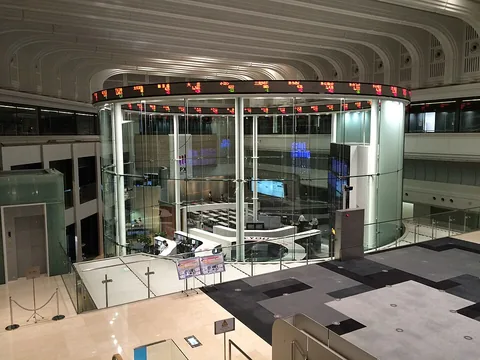
I love this example. Back in 2023, the team spent some time thinking about corporate activism42Corporate activism — a strategy in which funds buy a stake in a company and push for change: buybacks, dividends, sales of non-core assets, board shake-ups. in Japan. A few of us went there, led by my colleague John Dolphin, explored the manager landscape there. We ended up looking at both public and private equity managers in Japan. Decided that an aggressive corporate activist manager was the best way to express the corporate governance reforms happening in Japan. We partnered with a manager there. They've compounded tremendously; they're the third-largest position in our public equity portfolio today, tremendous alpha from the market. I would describe it as earning buyout-like returns or better, given the unique idiosyncrasies around corporate governance in Japan. It's grown larger than some of our themes, but it was discovered by the team's intellectual curiosity and also enabled by finding a fantastic partner by spending time on the ground.
11A world-class venture book
CHOA got into top venture managers on the strength of the children's hospital mission and constant travel, and new managers now come through referrals.
Want to double-click on another component of the portfolio that you've mentioned has evolved a lot, and that's the venture book. For an asset class that is so capacity-constrained43Capacity-constrained — the best venture funds keep their size small and turn away most would-be investors, so getting in as an LP is very hard. and does have such a wide dispersion of returns, how have you made a world-class venture book, as you've described?
We have a tremendous mission. We focus on proactive sourcing, telling managers about our mission, all the good work that we are doing here at Children's, tell a story or two, help demonstrate the power of the mission, being proactive, spending time on the ground. Last year I went to California nine times. Just get on the plane. If there's any possibility, get on the plane. Taking that attitude, seeking to develop meaningful relationships, being prepared, asking real questions, probing questions, challenging thinking, being a good partner when we can get into a manager. Had the benefit of being able to have some strong relationships. That's been helpful.
We've been willing to think about what are the ecosystems within venture capital that we strongly want to be a part of, finding a node within that ecosystem, leaning in there. All of a sudden, over time, we're getting referrals from some of our best partners: hey, we know this person at this firm or this company who's starting. At this point it has transitioned to: we have been doing proactive sourcing, but a lot of that proactive sourcing is coming through referrals from our existing network. Our list of managers that we aspire to invest with is much smaller today than it was three years ago. We have a great core portfolio built. Who within your network, Mr. Venture Capital Manager, do you think is a fantastic investor who is ready to do their own thing? We'd love to talk to them. We have fantastic partners whom we're incredibly grateful for. The team executing against our mission has enabled that. Now we have to give ourselves a willingness to do some opportunities. They may be risky, maybe a new first-time fund, maybe a new manager.
We're happy to invest in first-time funds.44First-time fund — a new manager's first fund. Zack separates it from a first-time investor: first funds are often launched by experienced people who left well-known firms. We don't want to invest in first-time investors per se. We're willing to be an early partner, allowing ourselves the freedom to do some of those opportunities, which may have the opportunity to be a return with an asymmetric return profile.45Asymmetric return profile — when the potential upside is many times larger than the potential loss.
12A stake in a management company and special situations
Trust built over years of relationships brings CHOA deals that fit neither a fund nor a co-investment.
Back to the pockets of alpha. One of the things you mentioned is this transition into being a full life cycle investor. What's an example of that?
ExplainerHow GP stakes deals work
A fund's management company (the GP) earns money in two ways: a management fee (usually 1.5–2% of capital a year) and a share of the funds' profits, carried interest (most often 20%). A GP stakes deal buys a minority stake, usually less than a quarter, in the management company itself rather than in its funds.
- Why sell: money to buy out retiring founders (the succession question), capital for the firm's own commitments to new funds, and growth: new strategies, hiring, team incentives.
- What the buyer gets: a share of the fee and carry streams from all of the manager's current and future funds. It is a long, almost perpetual position.
- Who buys: specialist funds such as the Dyal business at Blue Owl or Petershill at Goldman Sachs, and less often LPs themselves.
In Zack's story the roles blend: CHOA was already an LP in this manager's funds, and together with another hospital system it bought 10% of the management company, becoming a co-owner of the GP.
The best example of this would be: there's a manager in the portfolio. Muthu and I have known the manager for, Muthu likely 15 years, me 10 years. Invested with them at a few different institutions, supporting their funds. They were going through a succession issue with one of their founders getting ready for retirement. All good, celebration, but this manager needed some capital help with some succession planning, also help with growth for the business. Looking for supportive, collaborative capital. They had talked to many GP stakes firms,46GP stakes — deals in which an investor buys a minority stake in a fund manager's management company and gets a share of its fees and carry. had offers from there.
We talked with them: we can help be a solutions provider here. We know you incredibly well. Obviously, transitioning from an LP with a passive relationship in your funds to ownership of the management company47Management company — the manager's firm, which collects management fees and carry; the funds themselves are separate partnerships. is going to require a different level of transparency and trust than what we have been privy to to date. We spent six months with that manager going through what their aspirations for the business were, why this succession was important to them, what they intended to use the growth capital for, how they intended to use it to grow their business, attract and retain talent, provide further incentives for their team. We partnered with another healthcare system, with us leading the transaction between the two of us, to buy 10% in this management company of this manager.
We're participating both as an LP and then a GP. Those opportunities will be fairly limited, but only enabled by a proprietary opportunity, building trust over many time periods of being a great LP, being a thoughtful partner. Many LPs, from my perspective — one of the things we need to focus on is how do we be an exceptional partner to some of our managers? Hopefully that builds a trust with them, and they also return the favor by being exceptional partners to us. And that can develop into some of these more interesting proprietary opportunities. I say to our team all the time, one of the best ways to compound Children's capital is to compound our relationships with our best and highest-conviction partners, and that can take different forms.
Sometimes it's a proprietary investment opportunity. Sometimes it's being a first call for a co-investment. There's been a few instances. We had one manager where the manager had a secondary sale, helped walk us through the underwriting. We ended up buying a high-quality asset at a significant discount, highly accretive day one. And the manager helped us understand the prospects for the companies that were in that fund. How do we do more of that? How do we lean into some of those relationships that we think can earn great returns?
When these types of proprietary opportunities arise, Zack, are you the one that is spearheading these initiatives? Or does this fall into the purview of the team of generalists who are responsible for their own proactive sourcing?
A little of both. In addition to doing venture, buyouts, I do some of the special situations investing.48Special situations — nonstandard deals that don't fit the usual categories: restructurings, one-off transactions, complex structures. This does not cleanly fit into a fund. It doesn't cleanly fit into a co-investment. We think there's good alpha to be earned. We think there's a great partner, but it doesn't fit in that clean due diligence style box. This is something new.
Certainly led the effort on the GP stakes, first time that we did that, with collaboration across the team. But we've noticed there's an interesting dynamic where there's almost two venture markets that have evolved. There's the insider round,49Insider round — a financing round funded only by a company's existing investors; at hot companies access to it is a privilege, and the price can be lower than in a round with new investors. there's the primary round that's invested. We've been working closely on an idiosyncratic relationship where they're not necessarily a manager, but it's a trusted advisor to certain companies. They're being offered equity in exchange for some of the work that they're doing with some of these companies. Referral from our network, built a strong relationship. We are helping be innovative and help provide them some equity. They're being rewarded as an investment to be able to take down these proprietary opportunities, often at the insider round price.
Certainly leading that effort. It's not a fund, it's not a co-investment. We're doing this all alongside a partner, and it's not a direct investment. It doesn't fit the clean parameters of what you think about: hey, I invest in a venture capital fund or hedge fund or a real estate fund. These are all team decisions that we make. And then over time, as you get more comfortable, we'll bring more members of the team into helping with some of that work, so they can gain exposure across the manager.
13Reporting to the board
Without traditional buckets, CHOA reports to its board on three top-down measures.
You have two buckets. You've got your 70% equity, you don't really care where that equity comes from, and you've got your 30% of your cash alternatives. When you're reporting to the board and stakeholders, what does that look like? Because it doesn't sound entirely clean like a traditional asset allocation structure does.
The most important thing is we think about the key things. We manage our overall level of market risk: what's the overall portfolio's beta? That's a simple measurement of how much risk we're taking in the portfolio. How much liquidity we have within the portfolio: we have ample liquidity to meet any need Children's might have. We're prudently managing uncalled but committed capital.50Uncalled commitments — money an LP has promised a fund but the fund has not yet drawn. It can be called at any time, so it has to be factored into liquidity planning. We think about what are the number of managers in the portfolio, what is the level of concentration amongst those managers. Top-down, thinking about those three things.
And then we'll report equity-like. We do report some subcomponents, but those components are not meant to be filled. We have public equity, private equity. We'll have fixed income-like, and then it'll be hedge funds, credit, fixed income and cash. We will certainly break all that out. The committee has full transparency into every line item, every manager, but we focus on how are we managing those key things: top-down risk management, bottom-up concentration of the portfolio, what have the results been, and ensuring that we have ample liquidity to meet any needs that our CFO, our leadership team may have.
14An investment office in service of the hospital
The portfolio works for the hospital by giving its clinicians and leaders access to managers' expertise, and the hospital in turn helps managers with diligence.
Want to jump to another component of your responsibilities and how you spend your time that you alluded to: integration into the overall system at Children's. What's an example of how you specifically have been integrated into the CHOA system?
Ruth Fowler is our CFO. She's incredible. She's been at Children's for 25 years, an incredible passion for Children's and the mission, and also incredible institutional memory. We have no bigger supporter than Ruth, but also somebody who challenges us and makes us better every day. Ruth absolutely sets the culture of: we're here to serve Children's mission. What are the ways that we can do that?
Our primary objective in the investment office is to generate investment alpha on the portfolio to serve Children's mission, but we also think what are ways that we can contribute to operating alpha across the system. We serve on committees, we help evaluate ad hoc things that come up related to strategy. We've helped to advise on transactions around maybe IP that was developed at Children's, funding rounds. One of the key initiatives that we thought long and hard about, and Muthu and I have worked on, is the idea of what we call our healthcare advisory committee. 35% of the portfolio in aggregate is invested in technology and healthcare-related investments. That provides us quite an expansive view outside our four walls.
Through the portfolio, we have incredible access to investors, companies, experts, regulators, policymakers that are operating at the intersection of technology and healthcare. Two years ago, we set up the healthcare advisory committee. That's a working body within Children's aligned across administration, increasingly hoping to align across clinical areas of the enterprise and then across research. Within that advisory committee, we think about where are opportunities to generate operating alpha through focusing on opportunities and challenges that Children's is facing in the clinical or operating side of the business. Sometimes that has taken the form of a range of partnership opportunities. It spans everything from thought partnerships, mind share on a specific issue around how technology is transforming delivery of care. Maybe we need help thinking through some regulatory challenges as policy evolves. How do we make those resources that are made available because of the investment portfolio available to the broader team?
So opening it up to Ruth, her team, and other clinical and administrative leaders across Children's to help us work through some of these issues and challenges. We also think about direct manager engagement, talking to managers about what they're seeing in terms of innovation and care delivery. How are they thinking about integration of AI across the healthcare enterprise, and also specific companies that we should talk to? So what are companies that are working on priorities that we've identified to better serve our patients, that we think can help lead to better outcomes for patients, implementation opportunities for that technology? How do we think about maybe helping invest or incubate technology that would help solve a true priority for us? Definitely helped spearhead that effort. It's been one of the most rewarding and enjoyable parts of my job in terms of developing a new skill set: the power of how the portfolio can bring resources to bear and bring expertise to bear to work on behalf of the institution.
And it's also incredibly powerful for us as investors. We can make operating expertise within the system available to some of our managers or their companies, work closely with them. There's been instances of doing due diligence on a venture capital manager, or maybe they're doing due diligence on a portfolio company. I can put them in touch with somebody internally: is this company working on a problem that you, as a leading pediatric healthcare system, value and you'd be willing to pay for? And those can lead to some incredible insights for a manager. We're happy to make those available. So we learn, the manager learns. It's a powerful flywheel51Flywheel — an image from Jim Collins's book Good to Great: a self-reinforcing cycle in which each turn speeds up the next. of opportunity.
That's fascinating. Clearly a valuable example of how the CHOA system can be impactful in your investment decision process. What's an example of the reverse, where you've leveraged your access to experts in the investment technology community for the betterment of the CHOA system?
One powerful example of that is we think about this framework of One Children's, and the healthcare advisory committee is part of that, but we also think about broadening the power of the portfolio and our access to expertise and managers across the system at Children's, but also within the broader healthcare ecosystem here in Atlanta. One of the ways we most recently did that was through a healthcare symposium titled AI and the Healthcare Enterprise. That was an opportunity to bring together investors, companies, clinicians, practitioners within healthcare and technology for a one-day symposium. We were so thrilled that Dr. Nworah Ayogu from Thrive Capital52Thrive Capital — a New York venture firm founded by Joshua Kushner in 2009; its biggest bets include OpenAI. Nworah Ayogu is a physician and Thrive's healthcare partner who previously ran Amazon Clinic. joined us. We had two of our technologists who are also clinicians talk about Children's AI strategy. Where are the key problems that we're trying to solve, whether it be access for patients, helping our clinicians and physicians practice at the top of their license?53Practicing at the top of one's license — US healthcare jargon: doctors and nurses spend their time on what only their training and license allow, while assistants, automation and AI take the routine work.
How do we ensure continuity of care and better outcomes for our patients? Also, Dr. Ayogu came and presented, did a fireside chat, talked about how Thrive thinks about evaluating companies, technologies, transformation of healthcare with AI, given his unique seat as a doctor, an operator, and then an investor. We're aspiring to do a similar format in the spring around life sciences and research technology, as it relates to those areas of clinical work, harnessing the relationships that we have. And we are thankful for our partners being willing to help support us in these initiatives, but it's eye-opening for the entire organization to really have access to that level of thought leadership.
15Working with Muthu and the CIO seat
Ten years of working together have given Zack and Muthu a high level of implicit trust, and the CIO seat isn't a goal in itself for Zack.
Before we turn to our closing questions, Zack, one of the things that you've mentioned a number of times in this conversation is how in lockstep you are with Muthu. I'm curious how you would describe your working relationship and how you operate together in lockstep across all of the different initiatives that you've outlined in your role.
I think it's a unique opportunity when you've known somebody for 10 years and you work together. There's a high level of implicit trust, and that helps you get to work quickly. That's incredibly powerful. In many ways, you know clearly what his priorities are, what his vision is. I think a lot about how do I help operationalize that vision, understanding where his priorities are, thinking about what is the process, what is the strategy by which we go ahead and execute and make those a reality, whether that's the portfolio investments, whether that's the healthcare advisory committee that I discussed. His time is best spent on governance, developing strong relationships across the system and developing incredible relationships with our investment committee and members of the community. Helping support him in governance, also being a bridge to the portfolio for him: what is going on? Where do I see issues? Where do I see potential opportunities? Trying to anticipate some of those items, make him aware, flag those items for him: what's going well, what's the pulse, what's going on with the team, what's going on with the portfolio. Be a resource to support him and help enable that vision.
What's it like when you and Muthu don't agree on something?
Occasionally, depending on what it is, we'll ask the team in a team meeting. That shows it's okay. We want the entire team to have a healthy, active debate and operate with candor. It's super important we model that, and I can model that with Muthu, for others to be able to feel empowered too. Depending on what it is, sometimes it's probably, hey, we could have handled that better, or that went well, here's what we should lean into. The core thing is we are absolutely aligned on an investment philosophy. Then the execution of that philosophy, there's some shades of gray. Sometimes I think, hey, we should size a position bigger. We're always focused on the lower middle market, but maybe there's a manager where scale is a competitive advantage. We can debate that. He's a willing and thoughtful sounding board, not dogmatic around some of those things. He's willing to hear a perspective, advice. And so I appreciate that push and pull. If you can come up with a credible rationale for making a decision, he's open to listening to that.
Do you have aspirations to be in the CIO seat at some point in your career?
I love my current role. It's incredible to be able to work on behalf of Children's mission, to do work that I love with a team and a leader that I admire. I wouldn't say I explicitly have aspirations to be a CIO. I feel like in many ways I get to do the best elements of the CIO role today, while also keeping a foot in investing. I still have 20 years or so left to work. That's a long time. It would have to be something special for a CIO seat, because I have a special seat here at Children's. I can't quite think what that would be today.
What more would you want to do before assuming the potential hypothetical role of a CIO in the 20-plus years you have in your career?
What I admire probably the most about Muthu is his ability to paint a vision and get buy-in around that vision. I'm good at execution, rigorous analysis, being a leader, empowering people. Inspiring people, to be able to paint a vision that's inspiring and have people coalesce around that and share excitement around that vision, is certainly something that I believe I can continue to learn from working with Muthu. And that's a critical skill for a CIO. There could be the best investment strategy, could maybe be the best access to managers, but if you can't clearly inspire a vision of why you're doing something, how it serves the mission, why it's good for the institution... Those are all critical things to be able to do. He excels at that. I admire that, and I want to keep getting better.
16Rapid-fire questions
Zack's biggest investing pet peeve is overconfidence, and his advice to young allocators is to find a mentor.
Zack, this has been so fun. Want to turn to a couple of quick rapid-fire closing questions. What is your favorite hobby or activity outside of work and family?
It's watching my 13-year-old son, Liam, play baseball, and it's watching my 10-year-old son, Ryan, do wrestling. They both inspire me, and I find great joy in watching them do those activities.
What is your biggest investment pet peeve?
Overconfidence. Investing is best approached with humility. There's the intersection of what's knowable, oftentimes that's backwards-looking, what you don't know, that's forward-looking, and then the intersection of the two. And so we need to take a calculated risk, but also be humble in taking those risks. Being thoughtful around it. Related to that is talking about what something is rather than what could go right or what could go wrong. If we've done the work up front, we should know what something is. So we make materials available, we should all do the reading, we should put in the work. The substantive discussion is around the potential of what could go well, what could go wrong, and being brutally honest about those two things.
Last one: what advice would you give a young allocator that you wish you knew earlier?
Seek opportunities for mentorship within your organization. Find somebody who's willing to invest time in helping you understand the full aspects of what's going on at the institutional portfolio level, and maybe even what's going on with institutions. It's easy to believe an investment may be a compelling idea. It's much harder to understand how that fits within the overall institutional objectives, the objectives of the portfolio, some of the considerations. Having somebody who can help you understand those aspects of investing is critically important. As AI increases, it makes the work of analysis much more efficient. It's so important to use technology, but have somebody help you think about what are the only things that you can do, how you can uniquely contribute. And that may not be analysis or may not be research. AI is an accelerant for those things. How do you develop judgment, and how do you have accountability around some of those decisions and have that broader perspective? I would just encourage mentorship. Sometimes there's a reason to be patient and learn.
Zack, thanks so much again. This was a total blast.
Thanks, Hank.
Thanks for listening all the way to the end. If you made it this far, how about one ask for me? Tell one friend about the show. It's the best way to keep growing this incredible community. Thanks so much. And until the next one, stay curious and keep compounding knowledge, relationships, and capital a little bit at a time.
All opinions expressed by Ted and podcast guests are solely their own opinions and do not reflect the opinion of Capital Allocators or their firms. This podcast is for informational purposes only and should not be relied upon as a basis for investment decisions. Clients of Capital Allocators or podcast guests may maintain positions in securities discussed on this podcast.


