

Uncapped
Chapters
George agrees with Vishria that everything will work: demand for AI is insatiable, diffusion is still tiny and capacity is short.
Read the chapter- For any "this or that?" question in AI, George says, the answer is "and": open and frontier models, NVIDIA and new chip companies all win.
- The infrastructure build-out has passed the railroads as a share of GDP and, George expects, will grow another tenfold over many years.
- OpenAI, Anthropic and SpaceXAI make about $120 billion, nearly all of it from 30 million coders, and AI has diffused into less than 5% of B2B.
- Data center capacity is sold out until 2028, and another 4 gigawatts, George believes, would be fully used.
New capacity won't sit idle, George argues: he thinks both scenarios in which token demand stalls are unlikely.
Read the chapter- Demand would stall if coding turned out to be an anomaly or an algorithmic breakthrough sent efficiency soaring.
- The longer a model reasons at answer time, the better the result, so inference, a bigger market than training, needs ever more compute.
- The best counterargument Altman has heard is that the revenue so far sits with the sellers of tokens, not the buyers, but George is sure the buyers will win too.
- The best companies, like Stripe, George says, point AI at new products rather than at cost cutting.
Nearly all the money goes to the labs because users choose frontier models and the labs' own products.
Read the chapter- The three labs take about $125 billion, more than 95% of the dollars, George says, leaving everything else as a rounding error, and OpenAI and Anthropic alone have raised about $350 billion.
- People currently pay 10x more for frontier tokens because the consumer surplus is so large; that's the revealed preference.
- Codex, Claude Code and Cursor are tightly coupled with their models through their harnesses, and nobody wants to swap the model out.
- In George's framework, the labs will go after coding, its "blast radius" and horizontal office tools like Microsoft Office.
Law is about a year behind coding, but it has already taken off.
Read the chapter- End clients now insist that their law firms use Harvey, and nobody talks about hallucinations anymore, George says.
- George agrees with Altman that legal language is almost mathematical: law is logical and well documented, and lawyering is reasoning, so reasoning models were the breakthrough.
- The labs won't eat every random company, Altman argues, or they'll lose the ecosystem's trust, and George recalls the old Microsoft rule that a platform is only a platform if what's built on it earns more than it does.
- Vertical apps need the last details of the product and on-the-ground work that the labs, George thinks, won't do.
Apps right next to the labs keep growing, and cheaper models will find their market.
Read the chapter- Codex and Claude Code can build websites, Altman notes, but Replit and Lovable grow anyway.
- If usage grows 50x, George says, people will care about cost, and "N minus one" models a generation behind will be a huge market.
- In customer support, the hosts say, the technology has long been better, faster and cheaper, yet penetration is tiny, so diffusion will take years.
A billion users, but the use case is still basic.
Read the chapter- Most people, George says, are in "skeuomorphic mode," doing in ChatGPT what they used to do in a search engine, except the kids.
- The big shift, in George's view, is from reactive to proactive: voice is finally good, and agents like OpenClaw and Grok Bot have started acting on people's behalf.
- If historical technology markets are any guide, the big prize is consumer products, monetized through subscriptions and a new kind of ads.
- George builds automations for himself, but so far only two in ten are really useful.
Self-driving, George says, is an underappreciated wave that will 10x the ride-hail market.
Read the chapter- The last generation of waves, mobile, social, SaaS and cloud, produced $25 trillion of market cap, George says, and today's waves will produce more.
- Uber and Lyft grew San Francisco's taxi market from $100 million to a billion, and self-driving, George believes, will do the same.
- Waymo, George says, is 10 to 14 times safer than a human driver, and keeping it out of the economy is barbaric.
- Owning a car costs 80 cents a mile and Uber two bucks and change, and a robotaxi could come in below Uber.
- The US sells 17 million new cars a year, people would pay at least $10,000 for autonomy, George says, and there are still fewer than 10,000 Waymos in the country.
Robotics will be bigger than language, but it will start in factories.
Read the chapter- Repetitive work in safe environments, George says, already pays off.
- At Mind Robotics, the founder of Rivian is putting robots on Rivian's assembly lines, getting a built-in customer and training data.
- George hopes robots get their ChatGPT moment within five years.
- The result will be a productivity boom: about 60% of today's jobs, George notes, didn't exist 70 years ago.
Benchmark has raised its first growth fund, and George explains why that makes sense.
Read the chapter- By an old a16z analysis, half of private market returns come before Series B and half from Series C on, and five years out it will be more like 70/30 in favor of the late stage.
- The growth market is about $5 trillion, and skipping the late stage, George says, means leaving money on the table.
- In AI capital turns into model quality, whereas SaaS companies, as the Vision Fund experiment showed, only got messed up by money.
On George's scales the product cycle is at 9 or 10 out of 10 and the capital cycle around 6, but over the long run products decide.
Read the chapter- In 2021 the product cycle was a one: late SaaS and late cloud, with all consumer time already going to the giants.
- Now it's a 9 or 10 thanks to AI, autonomy, American Dynamism, robotics and health.
- The capital cycle is around 6: excitement has pushed up valuations, but over 10 years, George says, the products decide.
- Altman recalls the idea of believing what everyone believes but ten times more, and George says a16z pays fair prices for great companies and finds its alpha in revenue growth.
Through Databricks and SpaceX, George explains why you bet on people.
Read the chapter- The firm has been in every Databricks round from Series A to M, and its first growth round was at about a $6 billion valuation.
- Seven years later Databricks' revenue has accelerated because Ali Ghodsi, George says, keeps figuring out new products.
- When a16z invested in SpaceX, Starlink wasn't generally available, and now it is, George says, one of the best business segments ever created.
Narrative is louder than ever, and a16z, Altman says, understood that early.
Read the chapter- In 2018 Ben Horowitz called George's plan to skip marketing for the growth fund the dumbest idea he'd ever heard.
- Vibes matter, George says, because of valuation: a higher one means less dilution and more capital, and makes hiring and retention easier.
- Karp has a cult following, nobody knows what ontology means, and Palantir stock carried a premium even before growth accelerated.
A messianic founder and a beloved product are a huge asset, and the fight over narrative will only intensify.
Read the chapter- A hedge fund manager George knows never shorts a messianic founder or a product people love.
- The whole market rides on the monthly numbers of two or three private companies, and the fight over narrative, Altman says, is about to go hyperbolic.
- As faces of companies George names Karp, Musk, Palmer Luckey at Anduril and Tibo from OpenAI, whose directness drives behavior even on the customer side.
George sees no limit to market growth, and a16z wants the best deals rather than a bigger share.
Read the chapter- Small lets you go fast, big lets you go far, and at a16z 650 people help portfolio companies.
- Railroads and finance once took a much larger part of the market, and tech, George says, will keep rising.
- The firm has about 20% of the growth market, and the goal, George says, is not share but the best 20 to 25% of deals.
Quotes
On George's core thesis about AI
“I framed it up slightly differently, which is just, like, the answer to all this is ‘and.’”
David GeorgeRead from 01:11On why the best companies spend AI on new products, not cost cutting
“So it's like shorting your own future if you are just focused on the cost side, whereas you're taking an expansive view of what you can become if you're focused on the front end.”
David GeorgeRead from 09:23On kids and ChatGPT
“Like, yeah, my son, I mean, total aside, a 10-year-old, is, like, writing full-on rap songs and creating music. And no, it's not an aside. This is the future.”
David GeorgeRead from 20:47On self-driving
“So if you have a product that is 14 times safer than a human driver, then it's barbaric to drive.”
David GeorgeRead from 27:18Ben Horowitz on George's plan to skip marketing
“And he just, like, looked at me and said, like, that's the dumbest fucking idea I've ever heard.”
David GeorgeRead from 43:17On why retail investors love Palantir
“Like, a friend of mine who has a huge position, and, like, ‘explain it to me.’ And he's like, ‘good vibes.’”
David GeorgeRead from 45:40On a hedge fund manager's rule
“And his theory on shorting stocks was: I never short a messianic founder, and I never short a product that people love.”
David GeorgeRead from 46:13
Summary
Jack Altman, a partner at Benchmark, talks with David George, who runs the growth fund at Andreessen Horowitz. The starting point is a line from Altman's colleague Eric Vishria, "it's all going to work"; George's version is that for any "this or that?" question in AI, the answer is "and." The AI infrastructure build-out has already passed the railroads as a share of GDP, and OpenAI, Anthropic and SpaceXAI together bring in about $120 billion of revenue, yet nearly all of it rests on 30 million coders, while AI has barely touched the world's 1.5 billion knowledge workers: less than 5% diffusion into B2B. Capacity is constrained at every step of the supply chain, and George can't see what would leave new gigawatts idle.
The frontier labs take 95% of the dollars because users will pay up for the best models and like the labs' first-party products: Codex, Claude Code, Cursor. In George's framework the labs will build products for coding and its "blast radius" plus horizontal office tools, while vertical markets like law, where a16z backed Harvey, are out of their reach: there the last details of the product and on-the-ground work decide. Consumer AI, despite a billion users, is still in "skeuomorphic mode," a search engine replacement; the big prize is a proactive personal assistant. The waves George sees as most underappreciated are self-driving, with Waymo 10 to 14 times safer than humans and able to 10x the ride-hail market, and robots on factory floors.
The second half is about capital. Benchmark has just raised its first growth fund, and George explains why half of private market returns are generated from Series C on, and why in AI, unlike the SaaS era or the Vision Fund, money makes companies better. On his scale the product cycle is at 9 or 10 out of 10 and the capital cycle around 6. The bet is on founders who figure out the next thing, like Ali Ghodsi at Databricks or Musk with Starlink. Vibes and narrative matter more than ever, lifting valuations and helping with hiring and sales, and one hedge fund manager's rule is never to short a messianic founder or a product people love. Finally, George talks about how big a16z can get: the firm has about 20% of the growth market, and the goal is not share but the best 20 to 25% of deals.
Advice
Point AI at new products first, not at cost cutting: nailing the next product can bring 10 to 100 times more revenue, while the chance to cut costs will always be there.
If you're building a vertical AI app, win on the last details of the product and on-the-ground work: implementation, integrations, sales. The labs won't do that.
Watch which model each task really needs: moving simple requests to cheaper previous-generation models goes straight into your gross margin.
Don't skimp on vibes: a higher valuation means less dilution and makes it easier to raise money, hire and retain people.
Be the face of your company and go direct to your audience: a competitor with a slightly worse product but a better story can beat you.
Mentioned
 Eric Vishria00:24"it's all going to work" on Invest Like the Best
 NVIDIA00:24or new chip companies: both will win
 Andreessen Horowitz00:50George's firm: marketing, 650 employees, 20% of the growth market
 OpenAI01:56with Anthropic, the fastest success in business history
Show 48 more mentionsShow fewer mentions
 Anthropic01:56same; jockeying over revenue before the IPO
 xAI01:56SpaceXAI, now with Cursor
 Amazon01:56the only hyperscaler adding more revenue per month
 METR08:10the study finding that AI slowed developers down
 Claude Opus 4.508:24"the big 4.5 breakthrough" in coding
 Stripe08:29puts AI into new products; the OpenRouter idea
 Procter & Gamble08:29an old-economy company yet to benefit from AI
 Databricks08:57hand-holding customers; a "model buster" a16z has backed in every round
 Palantir Technologies08:57implementing AI for customers, and vibes on the stock market
 OpenRouter09:50Stripe owning the AI layer too
 Codex12:20OpenAI's first-party product
 Claude Code12:20Anthropic's first-party product
 Cursor12:20dead center of the blast radius
 Grok Bot12:20an agent that acts on the user's behalf
 Microsoft13:19Office as a target for the labs; the platform rule
 Google Workspace13:19horizontal office apps
 Harvey14:08AI for lawyers, a big a16z holding
 Legora15:00Harvey's rival, backed by Benchmark
 Salesforce16:04another platform that had to choose what to eat
 Kirkland & Ellis16:11$500 million for its own technology stack
 Replit17:51a16z is the biggest investor; working very well
 Lovable17:55growing even though Codex and Claude Code can build websites
 Snowflake18:50vying for the abstraction layer
 ChatGPT20:18AI's first consumer moment, still used as a search engine
 OpenClaw22:07the first moment of proactive AI
 Tesla24:45Altman's first Tesla
- Full Self-Driving24:45"the best product": the car takes you where you want to go
 Waymo25:2010 to 14 times safer than humans, fewer than 10,000 cars
 Uber27:1810x'd the taxi market
 Mind Robotics31:30robots in Rivian's factories
 Sarah Wang31:30did the Mind Robotics deal
 Rivian31:30Mind Robotics' first customer
 Benchmark33:27its first growth fund ever
 ServiceNow35:35money wouldn't have made it better
 Workday35:35same
 SoftBank Group35:35the Vision Fund as a failed experiment in excess money
 Thrive Capital39:13"believe the same thing everybody else believes, but 10 times more"
 Ali Ghodsi40:09"an amazing CEO" who figures out the next thing
 Ben Horowitz40:15Databricks' Series A and the verdict on George's marketing plan
 SpaceX41:23a16z invested when the economics were terrible
 Starlink41:23one of the best business segments ever created
 Lulu Cheng Meservey42:27the "Lulu-fication" of companies going direct
 Alex Karp44:45a cult following and Palantir's rich valuation
 Elon Musk46:13his companies' high valuations as a weapon
 Palmer Luckey47:49the face of Anduril
 Anduril Industries47:49a company with a dynamic founder
 Thibault Sottiaux48:29best at talking directly to customers
 Marc Andreessen49:13a16z's ambition and scale
Transcript
01The answer to every AI question is "and"
George agrees with Vishria that everything will work: demand for AI is insatiable, diffusion is still tiny and capacity is short.
All right, David, I'm really excited to do this. I've been really looking forward to this. So thanks for coming by.
Yeah, great to hang with you.
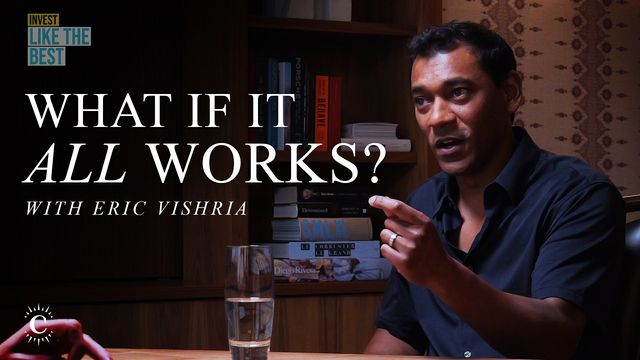
So one of the topics that's been on my mind a lot, that I think you've got really good thoughts on, is something that my partner Eric Vishria1Eric Vishria — a general partner at Benchmark since 2014 and Altman's colleague; before that he co-founded and ran the browser startup RockMelt, which Yahoo bought in 2013. said recently on the Invest Like the Best podcast.2Invest Like the Best — Patrick O'Shaughnessy's podcast about investing and business, running since 2016. The episode with Vishria came out on August 11, 2026. And it was basically, he was like, it's all going to work. And it was in the context of, you know, people question, is it going to be open source or frontier?3Open source (open-weight models) — AI models whose weights are published, so anyone can download them, run them on their own servers and fine-tune them: Llama, DeepSeek, Qwen, Kimi. Frontier models are the most capable models from the biggest labs (OpenAI, Anthropic, Google), with closed weights and access through APIs and the labs' own apps. And he's like, the open source is going to work, the frontier is going to work. Is it going to be NVIDIA or is it going to be new chip companies? And he's like, there's going to be both.
And you can kind of, like, go on and on through, you know, the stack in AI.4The stack — the layers a technology is built from; in AI: chips, data centers and power, clouds, models, tools, and the applications on top. And Eric's point was basically, like, people are asking the wrong question of just, like, is it this or is it that? And he's like, it's both. And I'm curious how you think about this at Andreessen5Andreessen Horowitz (a16z) — the venture firm founded by Marc Andreessen and Ben Horowitz in 2009, one of the largest in the world. David George runs its growth practice, which invests in mature private companies. and sort of in your seat.
Yeah, of course. So I am very, very closely aligned with Eric on this point that it's all going to work.
I actually like the way that he framed it up.
I framed it up slightly differently, which is just, like, the answer to all this is "and." And so, like, if your question, if the premise of your question is, you know, is this going to be successful or that thing going to be successful, the answer in AI is probably "and." I think it's helpful to start just, like, where are we? So right now, from an infrastructure build-out standpoint, we just surpassed the railroads,6The railroads — the great infrastructure build-out of 19th-century America. At their peak, from the 1850s to the 1880s, railroad investment ran at several percent of GDP a year, which is why today's AI data center capex is compared with it. right, as a percentage of GDP, which has been well covered. Yeah, exactly.
And, you know, look, it's probably going to get harder and harder to build data centers, which we could talk about later, but I think that's going to 10x. So right now, like, what's happening is basically...
Percentage of GDP, you think?
I think it will, you know, I think hopefully this will drive GDP growth. And this is going to take many years. So it won't 10x in one year. So it won't be, you know, whatever. But we will spend many trillions, right?
So, like, all of this success, which is the greatest, fastest success we've ever seen in business, which is basically OpenAI and Anthropic together,7OpenAI — maker of ChatGPT, the GPT models and the Codex coding agent, founded in 2015 as a nonprofit lab. Anthropic — the AI lab founded in 2021 by OpenAI alumni led by Dario and Daniela Amodei, maker of the Claude models and Claude Code. and then if you add in SpaceXAI now with Cursor,8SpaceXAI — the name xAI, Elon Musk's AI company (the Grok models), carried from July 2026, after SpaceX bought it in February. In August 2026 SpaceX closed its $60 billion purchase of Cursor, the AI code editor, which became part of its AI division. they're, call it, like, 120 billion of revenue, and they add more revenue per month than all the hyperscalers9Hyperscalers — the biggest cloud providers, with data centers on a planetary scale: Amazon (AWS), Microsoft (Azure), Google (Google Cloud), plus Meta, which builds the same kind of capacity for itself. except for Amazon. It's crazy. Now, all of that is on the back of just actually a small amount of people paying for stuff. So it's like 30 million coders in the world who are the vast majority of the revenue. There's 1.5 billion knowledge workers,10Knowledge workers — people whose work is handling information: analysts, lawyers, managers, programmers, accountants. Peter Drucker coined the term in 1959. but, like, basically all of this, which is, like, adding more revenue than the best businesses that have ever been created, is on the back of a small group of people.
That's actually a really interesting point, that it's over a billion users of these things, and we think about it that way, but it's actually, you're saying it's 30 million are spending, basically.
30 million. So there's a billion consumer users. And by the way, we should talk about consumer, because we're, like, nowhere in consumer right now, even though there's a billion users. But in the enterprise, basically the vast majority of the revenue is coming from just a small amount of coders. And this is, like, a power...
Within that 30 million, I'm sure it's a power law.11Power law — a distribution in which a small top slice takes the lion's share: a few percent of customers bring in most of the revenue. In venture the same applies to returns, where one deal out of dozens returns the whole fund.
It's a massive power law. Like, I'm sure you've talked to your companies, and the top million of the 30 are spending just a massive amount. And so if you take an optimistic view of what that means, like, the potential is so much greater than what has actually diffused into, like, everything beyond those million people. And so again, there's one and a half billion knowledge workers, and we're just talking about B2B.12B2B (business to business) — selling to companies, as opposed to B2C, selling to consumers. And so it's just a massive amount that is going to happen in what I think is going to be, like, the next five years.
Right now, demand is totally insatiable, right? You know, in the enterprise, basically what's working, it's like coding, writing stuff. You're starting to see early signs in some, you know, functions beyond that. Like, legal is one where we've kind of seen this takeoff. I think it's like 12 months behind. But for broad knowledge work, for the one and a half billion knowledge workers in the world, we're, like, nowhere. So you just start with that as the premise, which is, you know, we're already seeing, like, scale that's never been seen before.
And, you know, we're, like, scratching the surface in diffusion.13Diffusion of a technology — its spread through the economy, from early enthusiasts to mass use in every industry. Even electricity and computers took decades. It's like less than 5% diffused into the B2B economy. That means we're going to get really, really big if we're right about this sort of diffusing and being applicable broadly. So that's one piece. On the supply side, we are massively, massively constrained. Like, basically in everything in the supply chain. So basically, you know, you can't get data center capacity until 2028, because basically there's bottlenecks in every step of the supply chain. So that is where we are in the supply and demand. And I think it's important to lay that groundwork, because it is, like, the crux of why I think everything is going to work, right? Like, all of the sort of, like, steps in the ladder are going to work.
Talking about the supply side for a second. So it's 4 gigawatts14Gigawatt — the unit for data center capacity: AI compute is counted by the electricity it draws. One gigawatt is roughly the output of a large nuclear reactor. right now. Is sort of, like, your kind of view at the moment that if we had 8 gigawatts live and online, it would all get used?
Yeah, it would get used. Yeah, I think it would all get used. Yeah, yeah, yeah. And look, maybe, like, it would be different prices or something. Like, we could talk about pricing of what's happening for tokens.15Tokens — the chunks of text (a piece of a word, a word, a symbol) a language model works with; model usage is billed per million input and output tokens. Hence "sellers" and "buyers" of tokens. But yeah, I think, you know, if you get, like, more OpenAI and Anthropic or SpaceXAI capacity live, it generally gets used.
02What could stop the demand for tokens
New capacity won't sit idle, George argues: he thinks both scenarios in which token demand stalls are unlikely.
So just to sort of, like, check the premises along the way, and obviously, as you know, I fully agree with what you're saying, but just to check it along the way: what would have to happen for it not to be the case that as gigawatts come online, all the tokens keep getting consumed? Is there anything that could update our priors,16Priors — a term from Bayesian statistics: the starting beliefs you update as new data comes in. In Silicon Valley, "updating your priors" means changing your mind. you know, that four gigawatts becomes 20 and they don't all get used at the same or even higher prices?
I think there's two forms where this could take hold. One is, like, what happened with coding is anomalous relative to everything else in B2B or knowledge work. And because of the difficulty of injecting commerce from knowledge work from companies, like, the rest of white-collar work just doesn't really, like, have major impact. Like, I think that is extremely unlikely. I think it's sort of, like, a data collection problem and, like, an application of the models problem. The other would be, you know, we do have teams that we've backed that are working on, like, algorithmic breakthroughs, right?
And so, you know, perhaps you would get an algorithmic breakthrough where, you know, rather than having to consume, you know, massive... like, efficiency goes way up, both in training and in inference.17Training and inference — the two kinds of AI compute: training builds a model by running huge datasets through it, while inference is the trained model at work, answering users' requests. I think that's unlikely. I think it's possible we could get breakthroughs in training. Like, I don't know, you've probably seen the stats on what it took you and I to, like, build our knowledge base. Like, it's, you know, whatever, two or three orders of magnitude less18Two or three orders of magnitude — that is, hundreds to thousands of times less. Frontier models train on tens of trillions of tokens, vastly more text than a person can read or hear in a lifetime. than what the models actually train on. So there seems to be an opportunity there.
You still will then have inference, which is an absolutely massive market that's going to be much bigger than training anyways. And so, you know, yeah, we could get efficiency gains in inference, but I think what we've learned so far is the more you reason at the model, like, at the time of inference, the better the results get.19Reasoning at inference time (test-time compute) — having the model "think" before answering, building a chain of reasoning and spending more compute per request. Every reasoning model has worked this way since OpenAI's o1 in September 2024. And so I think that'll continue to hold in knowledge work broadly. So I struggle to find a way for this, like, not to work. Now, if we went, you know, from five to 100 in a quick amount of time and the products aren't built to actually, like, take that on, you know, sure. But we're not going to have that problem, because it's going to be really hard to get this stuff online.
I'm curious what you think about this. I mean, I also can't easily see it, but the best factor that I've heard was a conversation I had with a friend where we were basically saying, you know, all this stuff has come online. And so at first, you know, a few years ago, there was, like, the big build-out, and you saw, like, you know, we're putting hundreds of billions in at the time. And then, you know, the models get a little bit better and you start deploying them, and you kind of, like, keep moving through the pipeline, and now you see revenues growing like crazy on the back of AI. But the point in this conversation was, most of the revenues that we're talking about are sellers of tokens, not buyers of tokens.
And so the next thing we kind of need to see is data around the buyers of tokens actually getting these huge efficiency gains. In other words, you know, a hyperscaler...
Yeah, like, what's the ROI20ROI (return on investment) — how much a company earned or saved for each dollar it put in. at the enterprise level? Like, you know, users writing all this more code, like, is your business getting better by writing all this?
Yeah. Or said another way, it would be a bad outcome if the sellers of tokens were making lots of revenue and the buyers of tokens were not making lots of revenue. They were buying lots of tokens.
Yeah, look, I'm very optimistic about this point. Like, I think that whole argument is predicated on the fact that there won't actually be tangible productive use of, like, writing more code far more efficiently that is better, right? Like, I just think that's, like, fundamentally wrong.
Yeah. And I haven't looked. I know, like, a year ago there was a study,21Fact-checkThe METR study (July 2025): 16 experienced open-source developers worked on tasks in their own projects with and without AI tools. With AI they were 19% slower, even though they believed they had sped up by 20%. The study measured speed, not "effectiveness" in general. METR. or maybe even a little more, but something like a year ago there was a study that, like, in AI coding, it was, you know, actually you got 20% less effective by using AI code. But this was, like, before...
This was before the big 4.5224.5 — Claude Opus 4.5, Anthropic's model released in November 2025; it is widely seen as the turning point for AI coding agents. breakthrough.
Right. My guess is if you reran that study, you would not see that anymore.
Yeah. And, like, the best coders in the world have, like, fully flipped over on this. And, you know, if you talk to, like, the CEOs at the cutting-edge companies, I think they would tell you that they feel much more productive. Like, I, you know, spending time with Stripe,23Stripe — the payments company of brothers Patrick and John Collison, one of the most valuable private tech companies. like, they feel like there's very high returns to them being able to be a lot more efficient in writing code. You know, like, is Procter & Gamble24Procter & Gamble — the American consumer goods giant (Gillette, Pampers, Tide, Head & Shoulders); here, the archetype of an old-economy company. getting big efficiency gains from what they're spending on AI today? Like, probably not yet, but I think they will. Yeah, they probably need a lot of hand-holding.
That's probably the answer, you know. I think the labs and, you know, Databricks and Palantir,25Databricks — the data and AI platform founded in 2013 by the creators of Apache Spark at Berkeley, one of the most valuable private software companies; Andreessen Horowitz has backed it since its first round. Palantir — the American maker of data analysis software for intelligence agencies, the military and corporations, founded in 2003 by Peter Thiel, Alex Karp and others; public since 2020. companies like that, are probably thinking about it the right way, where you have to do a lot of hand-holding to produce value, but you will produce a lot of value for those companies. And then there's companies like Stripe. Like, I don't know, one of the things that we're thinking a lot about right now is, like, where is that effort actually going to? Is it going to, like, front end, building more products, or is it going to, like, back end, trying to make your business more efficient?
Yeah.
And, like, the best companies in the world right now are singularly focused on front end. Like, you can produce, you know, 10x, 100x more revenue potentially if you nail the next product, right? Whereas, like, on the cost side, you can only get so much more efficient, and that opportunity will kind of always be there. It's, like, latent. So it's like shorting your own future26Shorting — betting on a price falling: an investor borrows shares, sells them and hopes to buy them back cheaper. "Shorting your own future" means betting against yourself. if you are just focused on the cost side, whereas you're taking an expansive view of what you can become if you're focused on the front end.
By the way, the OpenRouter idea27OpenRouter — a service that routes developers' requests to hundreds of AI models from different labs through a single API. Stripe agreed to buy it in August 2026. was very good there too, just to be like, we're going to own this at the AI layer as well.
Yeah.
That's very smart.
Yeah, yeah. Look, and, like, I think they're right that the economy is going to, like, oscillate between using dollars and tokens, and, like, it's going to be a new form of currency. Totally. You know, so yeah, we're obviously, you know, we're big fans of those guys. And also to the point of, like, it's all going to work. You know, we talk about open source a lot in relation to the frontier labs.
03Frontier labs, open models and first-party products
Nearly all the money goes to the labs because users choose frontier models and the labs' own products.
And I guess the point there is, if the total token, you know, usage just goes up by 100x, it's just like, these things are all going to get so big.
They're all going to get so big. And so, you know, I wanted to, like, lay the groundwork first before making the case for, like, which of the individual layers of the stack are going to be successful, because, like, I think it paints a picture where we're going to, like, 20x or 50x over the next 10 years just how much work is being done with this stuff. And by the way, we're just talking about enterprise right now. Like, we should talk about consumer, but just in enterprise. So, you know, if you look at the frontier labs, like, today, you know, the frontier labs are, like, 95% plus of dollars, like, the 125 billion or so across the three of them.28The three of them — OpenAI, Anthropic and SpaceX's AI division, formerly xAI. You know, it's like they're consuming all of the revenue in the market, basically. Everything else is a rounding error.
They have raised more than, like, the entire downstream ecosystem. Like, just OpenAI and Anthropic have raised, like, 350 billion dollars. So, like, they do have scale, like, they have massive scale benefits. And right now, what's revealed in the preferences of users29Revealed preferences — an idea from economics introduced by Paul Samuelson in 1938: you judge what people want by what they actually choose, not by what they say. is, users are opting to use frontier models. And I think there's a bunch of reasons why that's the case. Right now people are willing to pay, you know, 10x more for frontier tokens. You know, I think in coding that's definitely going to persist for some period of time. You know, there's reasons why you could see a case that people will, like, cost-optimize and use, like, below the frontier over time. But right now, like, the revealed preference is, like, everyone who is a heavy user of this stuff wants to use the frontier.
I think there's, well, and also it seems to me like if that happens, the frontier should be at even more valuable tasks that are worth even more.
Even more. So, like, curing cancer.
Yeah, like, if coding was worth X, like, what's curing cancer?
Curing cancer is worth, you know, some astronomical... Yes, of course. And so right now, like, I think there's a couple of reasons why people are using the frontier stuff. Like, one is just, there is so much user or consumer surplus30Consumer surplus — the gap between what a buyer would be willing to pay and what they actually pay. The bigger it is, the more readily people pay more. to having this work done for you that you're willing to pay so much more. Like, you're willing to pay the incremental amount for that frontier. Does that make sense?
Secondly, like, they've done a pretty good job with first-party products.31First-party products — apps a lab builds itself on top of its own models, as opposed to products from third parties that buy model access through the API. So, you know, people really like using Codex32Codex — OpenAI's coding agent: it writes and edits code, runs tests, and works in the terminal, the editor and the cloud. Claude Code — Anthropic's coding agent for the terminal and code editors, released in 2025 and one of the company's fastest-growing products. Cursor — the AI code editor made by the startup Anysphere, owned by SpaceX since August 2026. and Claude Code and Cursor, and, you know, I think increasingly we'll use stuff like Grok Bot.33Grok Bot — xAI's (SpaceXAI's) AI agents: each bot runs on its own cloud computer, connects to the user's work tools and carries out multistep tasks on its own. The beta came out on August 11, 2026. Like, it's going to be really valuable to use the first-party stuff. There's a bunch of reasons why that's the case. They've done a good job with product. I also think they have very tightly coupled their harnesses34Harness — the software around a model: the tools it can use, system instructions, context management and the agent loop. Much of how well a model handles real work depends on it. with the models, so that the experience you have with those products is actually very, very good. And so subbing out some other model where you don't have the harness and you don't have the product and don't have the interface, like, no one's doing that today.
I'm curious your thoughts on, and obviously it's very hard to know, but how do you sort of mentally picture what their incentive should be on making more first-party products? And I'm asking this in relation to, as you think about investing in applications at the growth stage,35Growth stage — late funding rounds, when a company already has meaningful revenue and raises hundreds of millions or billions to scale. and you think, like, what's going to be worth it for them to build a first-party app in, and will that matter, or again, does it all win? Like, how do you think about their incentives and how it relates to your application investing?
Yeah, so we've done a lot of application investing. So again, this is, like, in the theme of "and," right? Like, we think a lot of things are going to work. On the application side, my framework is, the big labs are going to be very focused on first-party products that are obviously in coding and within the blast radius of coding.36Blast radius — engineering slang for how far the consequences of something spread. Here it means the areas next to coding that coding agents naturally expand into. And so you can interpret the blast radius of coding however you like, but it's probably some things around it. You know, that's one piece. And then secondly, they're going to be focused on first-party products that appeal horizontally to all 1.5 billion knowledge workers. So think, like, Microsoft Office and Google apps.37Microsoft Office and Google apps — the office suites Microsoft 365 (Word, Excel, PowerPoint, Outlook) and Google Workspace (Docs, Sheets, Gmail). And they would like to have those as first-party products. We know from the work that they do with data vendors,38Data vendors — companies such as Scale AI, Surge AI and Mercor that hire experts to write tasks and examples for training models. Which specialists the labs are hiring shows which professions they are targeting. like, they are very focused in those areas, right? So think, like, you know, all the Microsoft Office products.
04Harvey and AI for lawyers
Law is about a year behind coding, but it has already taken off.
And so, you know, outside of that, there's a question of, like, what number priority is it for them? So, you know, we're large investors in Harvey,39Harvey — a startup building an AI assistant for lawyers, founded in 2022; its backers include OpenAI, Sequoia and Andreessen Horowitz. and so, you know, Harvey, I feel like, you know, legal is, I don't know, it's very interesting to people on X. But it's a market that's, like, absolutely in takeoff. Right, so if you take an optimistic view of it, there's many differences, which we could talk about, but it's probably, like, 12 months behind coding, just in terms of, like, diffusion into the workforce. And it's now gotten to the point where end clients are demanding that their law firms use Harvey. They're like, we care about it for product and we care about it for cost, and so you must use it. So it used to be this thing where people would talk about, like, hallucinations,40Hallucinations — confident but made-up answers from a language model. In law they became notorious when attorneys cited nonexistent cases invented by ChatGPT in court filings. and then now it's just, like, no, everyone has it. And so, you know, it's probably, like, somewhere between number six through 15 on the...
That one, it really is funny how much it gets people on X. And, you know, we know this too, obviously, for Legora.41Legora — a Swedish startup and Harvey competitor building AI for law firms. Benchmark is one of its investors. And it's like, I think people, A, were surprised that these companies can grow this fast in legal, which you would not have thought would be an early adopter. And then, you know, then you got a lot of doubt, you know, because they're like, oh, well, wasn't it hallucinating and stuff? It's like, yeah, like 18 months ago.
Yeah, 18 months ago. And, like, they made a smart bet, which is, like, what happens when models get 100x better?
Yeah.
And, like, you know, it's going to work. Like, and so...
And legal is actually just, like, a perfect thing too, because it's language, but it's, like, kind of mathematical.
Yes, exactly. Like, yeah, it's extremely logical. It's extremely well documented, yeah, like, in terms of case law,42Case law — law based on court decisions in earlier cases, a main source of law in the US and the UK alongside statutes. The huge body of digitized rulings is ready-made material for AI. right? And, you know, the big breakthrough that we saw, which I'm sure is the same case with Legora, is, you know, reasoning models.43Reasoning models — models that build a long chain of reasoning before answering; the first was OpenAI's o1 in September 2024. Like, and so, like, lawyering is reasoning.
And so, like, yes, I agree that that doesn't seem like the next thing, because there's a trade-off too, I think, where if they start picking off random companies, then you lose the trust.
In the ecosystem, yeah, of course.
So I think all the big platforms, I'm sure Microsoft had this.
Salesforce had it.
Yeah, they all had to decide, like, is it worth pissing everybody off to go, like, eat some random thing?
Yeah. The old Microsoft thing, like, you know, a platform is only a platform if all of the things built on top of it generate more revenue than it.44The Microsoft line goes back to Bill Gates: as Chamath Palihapitiya recalled, Gates said a platform is when the economic value of everybody that uses it exceeds the value of the company that creates it. Analyst Ben Thompson popularized it as "the Bill Gates line." That's right. Right. And so I don't think that that's totally lost in the labs. Now, like, it might still be priority number six. And, like, there was a major validation event, which was when Kirkland45Kirkland & Ellis — the world's largest law firm by revenue, based in Chicago. came out and said they were going to spend 500 million bucks to build their own technology stack. Like, people were like, oh man, what's that mean for Harvey? And so then you've got these bubble ones where they're...
But it's great. It's not a niche, but it is not, you know, it is not the path to AI. But it is going to be worth many, many billions.
And there's two things that are really important about it. One, like, the last details of the product really matter to the users. And then two, it requires, like, real go-to-market46Go-to-market — everything it takes to sell a product: sales, marketing, implementation at the customer and support. and on-the-ground efforts. And so, you know, those two things... Everyone talks about, like, what are now the moats of software47Moat — a durable competitive advantage that protects a business from rivals the way a moat protects a castle; Warren Buffett popularized the metaphor. or applications. Like, yeah, those things, like, on the ground, like, making sure they work, like, is a big thing. And so, you know, will the labs, like, go do that in a verticalized way at law? Like, probably not. Like, you know, whatever, there's a Claude legal product.
Yeah, they just can't be everything.
No one really uses... They can't do all of the things, right? And so, you know, our investments are informed by that. Like, you know, it's not to say that we won't do things in that blast radius or in that, you know, sort of knowledge worker horizontal category. But we do ask the question, you know, a lot more about, like, what is the product roadmap, what's the right to win?48Right to win — strategy jargon: whether a company has advantages that will let it win in this particular market. In the applications beyond those, like, I think there's going to be, you know, hundreds of flowers that bloom,49"Let a hundred flowers bloom" — Mao Zedong's 1956 slogan inviting free criticism; in English it became shorthand for many parallel attempts. because there's going to be a massive unlock. And so, yeah, but, you know, back to the point of it's all going to work, I think even the stuff in the blast radius, it's probably going to work.
It's probably going to work.
Yeah. Like, we're large investors, the biggest investors in Replit.50Replit — an online programming environment that has become a platform where an AI agent builds apps from a plain-language description. Andreessen Horowitz led its 2023 round. Like, it's working very, very well.
05Even the blast radius will work
Apps right next to the labs keep growing, and cheaper models will find their market.
Yeah, Replit and Lovable.51Lovable — a Swedish vibe-coding startup that builds websites and apps from plain-language descriptions; one of the fastest-growing software startups ever. And you wouldn't think that these things... You would think that, though. You're like, well, aren't Codex and Claude Code going to be able to make a website? And the answer is, yeah, they can. And also these things are unbelievable.
They're very good. And, you know, like, Cursor also, and that is, like, dead in the center of the blast radius. And, you know, there's a huge market of people who use it. And so, yeah, it's all going to work. I think, you know, at the model layer, like, the appetite for frontier technology, I just think it's, like, undisputed. It's just going to be there. The appetite for N minus one52N minus one — models a generation behind the frontier: no longer the best, but much cheaper. The best open models, a few months behind the frontier, usually count too. or open source technology is also going to be huge. Like, it's going to be massive, because if you 50x the usage that happens, like, people will care about cost. And, like, maybe there will be a point where if cost is 100x higher for frontier, like, people really start paying attention to it.
Well, and N minus one is going to be really good soon, you know, it's going to be very good. N minus one will be better than 5.6. So yeah, take, by the end of, you know, I don't know when, but by soon.
Yeah. And so you can see it actually at the cutting edge of the application companies, right, who care about their own cost, because that's their gross margin.53Gross margin — the share of revenue left after the direct costs of delivering the service. For AI apps the main direct cost is paying the labs for tokens. And so, you know, how long has it been since most customer support tickets required the highest-end model? Yeah, like, three years or something, right? And so you can see a path to the sort of abstraction layer54Abstraction layer — a layer between the user and the models that decides which model gets each task: a cheap one for simple jobs, a frontier one for hard ones. following how much value is required. And there's going to be a lot of people vying for the abstraction layer: like, the application companies, obviously the labs with their first-party products, companies like Databricks or Palantir or Snowflake,55Snowflake — the cloud data warehouse and platform for corporate data, Databricks' main rival; public since 2020. like, they're going to vie for it. But I think people are going to use, like, every variation of that. And it's all going to work.
By the way, the customer support example is such a good one to me of how long diffusion is going to take, because the technology has been more than good enough for a little while, and we still... I don't know what percent penetration it has, but tiny. And that's, like, the clearest example to me of: the technology is fully there, it's just going to take many years to get there.
Yeah, the old enterprise thing of better, faster, cheaper.56Better, faster, cheaper — the classic triad of enterprise sales: a new product breaks in most easily when it beats the old one on all three at once.
Yeah.
Like, it's been better, faster, and cheaper. It's won on everything for two years. And, like, the companies are doing great.
The companies are growing faster than any other application companies before them.
There's still some laws of physics here. But yeah, I mean, you know, you've got to sell it and you've got to implement it. And there's a lot of messy integrations you have to do, and rules that you have to follow, brand guidelines. Again, like, the labs aren't going to build that motion. Like, there will be companies built on top of them. So that's, like, a classic "and." And so this is all enterprise.
06Consumer AI: from search box to assistant
A billion users, but the use case is still basic.
What about consumer? So, you know, like, I think, I mean, obviously ChatGPT was sort of,57ChatGPT — OpenAI's chatbot, launched on November 30, 2022; it reached 100 million users in two months and set off the current AI boom. like, the first consumer moment, and, you know, it was also the whole AI moment. But the first AI moment was a consumer moment, and, like, that's what caught everybody's attention: for the first time, people were using this thing, and they had been hearing about AI for, I don't know, 10 years. And then all of a sudden you have this thing, and even the first version of ChatGPT, we were like, oh, I've never seen that before. But, you know, now talk to me, you know, four years later or whatever it is. Like, what's the progress of consumer, and how do you see it?
Yeah. I mean, there's a billion people using it, right? And there's more than a billion people using it, you know, obsessively. But, like, the instantiation of the product and the use case is, like, very basic, right? We're in, like, skeuomorphic mode58Skeuomorphism — imitating an old form in a new technology: buttons drawn as physical buttons, a lined-paper notepad on the first iPhones. Here, using a chatbot simply as a search engine. for the vast majority of consumers, which is, they are doing what they used to do on a search engine inside ChatGPT. And, like, that's the extent of the use case of the vast majority of those, except for the kids. The kids use it better than that. Like, yeah, my son, I mean, total aside, a 10-year-old, is, like, writing full-on rap songs and creating music. And no, it's not an aside. This is the future. This is the future. This is incredible.
It tells you the difference, where it's like, there's a large cohort of people who, you know, are going to probably always Google, you know, use this as a Google replacement, but that's not how the kids are going to use it.
The kids are going to be totally native. Like, and, you know, you can see it with the kids now. Like, they never were, like, trained, my kids were never trained on, like, search engines, and now it's a whole new thing where they get it to, you know, give them answers to anything and give them, you know, work product of anything. The big shift is going to be, like, when it goes from being reactive to proactive. And, you know, we're, like, just scratching the surface on that. It's going to be multimodal.59Multimodal — working not only with text but with voice, images and video. So it's not going to be just, like, sitting doing this. Like, the voice stuff actually is very, very good now.
You know, there's a bit of a head fake, because the OpenAI voice stuff was not very good for a period of time, and it had to rely on a dumber model. And now it doesn't, and it can handle interruptions and things like that. So, like, a natural human interaction form now exists. And capabilities for doing proactive work on your behalf, and, like, action-taking, is, like, we're just now there, right? Like, OpenClaw60OpenClaw — an open-source AI agent that runs on the user's computer and takes instructions through messaging apps; in early 2026 it went viral and became one of the most popular projects on GitHub. was the first moment. I think Grok Bot is a moment now. And I think that'll be kind of the future of consumer use.
It's so funny to me that no one talks about consumer right now. Like, everyone is obsessed with coding, rightfully so, given what's happened with the revenue ramps of the companies. But if, like, historical technology markets are any guide, like, the big prize is going to be the killer consumer products, because you can address billions of people with them. So I think those are going to get a lot better. I'm very optimistic. And those are going to come with, like, the world's best business models too, because it's going to be, like, a lot of value generated. There's going to be a ton of consumer surplus.
Like, what would that look like?
I think it'll be advertising or some greater form of advertising. Like, the thing I always say is, like, if you tried to describe the form factor of the feed61The feed — the endless personalized stream of posts, the core format of social media since Facebook's News Feed (2006). Ads in it look like ordinary posts. to people, like, during classifieds at newspapers, like, it would make no sense. So we have yet to figure out, like, what the native consumption model is going to be, and then what the native ad format is going to be that follows that.
Do you think it's ads and subscriptions?
Yeah, definitely. Yeah. I think it's both.
Like, you think that it'll be a situation where hundreds of millions of people might be willing to pay, today, surprising amounts for this thing?
Yes, absolutely. And again, I think... And that's when it's, like, a personal assistant. That's when it's a personal assistant for everybody. And so, like, again, I think my framework is, like, 10x more value will just accrete to the surplus of the users. But, like, there's going to be a lot of value created for that 10%, and so that accrues to the companies. And so it'll be subscriptions, you know, it'll be ads or some new form that isn't quite what we think of today as ads, that probably hasn't yet been invented. And it's going to be a new form of, like, consumption. And so I'm very...
You're most excited about, in consumer, something that gets to an assistant for everybody.
Yes. Yeah. And, like, take action on your behalf in a trustworthy way. You know, like, I don't know, I've started building all these automations for myself, and, like, I'd say I'm aggressively trying to make myself more native. And I get, like, real value out of, like, two out of 10 of them. But, like, there's a lot more that I think will be done. And, you know, the models will get 10x to 100x better over the next five to 10 years. And so think about what that's going to result in. One of the other big consu...
07Self-driving, the underappreciated wave
Self-driving, George says, is an underappreciated wave that will 10x the ride-hail market.
So I fully agree with this. Obviously, one of the other big personal consumer, you know, autonomy AI things I think about a lot is just self-driving cars and autonomy. I just feel like, I mean, you know, I just got a Tesla for the first time, and, like, I've got to, you know... It is insane. It is, like, the best product, because you get in the car, you type in where you want to go, and it takes you. You don't have to think about anything else. The whole ride, it gets you out of any weird thing. It can park anywhere. And I don't think most people have realized how good self-driving is yet, unless you have a self-driving Tesla.62Self-driving Tesla — Tesla's Full Self-Driving (Supervised) system: the car drives the route itself, but the driver must keep watching the road.
Yeah, or if you live in a place where you can get a Waymo.63Waymo — Alphabet's self-driving company, formerly Google's self-driving car project; since 2020 it has carried passengers with no one behind the wheel in Phoenix, San Francisco, Los Angeles, Austin and other cities. Like, basically, that's, like, a small group of people.
Yeah. So, you know, and so it's like, you've got these companies that can do it now, Waymo and Tesla, but it has not diffused yet. And so, A, I don't think people realize... I don't think, you know, the people who have done it realize, but I don't think everybody realizes how good autonomy is right now. But then the other most important thing is, I don't think that it has turned into the business model that it needs to turn into yet. And so I'm curious your take on this. I know you're, you know, an investor, and you have thought a lot about this, but, like, where are we on the autonomy curve?
Yeah, yeah. It's so funny to think about these other major technological tailwinds that are happening, because, like, AI just, you know, supersedes everything in our minds right now. Like, I always find it helpful to just take a step back and say, like, okay, what are, like, the waves? Like, product cycles drive our business. And so, like, what are the big waves that we're catching right now? Like, autonomous driving is one. But the previous generation of these was, like, mobile phones plus social, e-commerce, SaaS, cloud,64SaaS (software as a service) — software sold as an online subscription instead of programs you buy and install: Salesforce, Workday, Slack. kind of all coinciding.
Yeah.
And that produced, like, 25 trillion of market cap. And, like, that's a lot, right? And, you know, like, what do we have staring us in the face right now? Like, we've got AI, we've got autonomy, we've got robotics, we've got AI's application to health.
Yeah, I was going to say...
Like, we have the American Dynamism category,65American Dynamism — an Andreessen Horowitz practice since 2022 investing in defense, space, manufacturing and other companies tied to US national interests. which is, like, you know, modernization of defense. Like, the combination of all of those, it's going to be more than 25. It's way more than 25.
Like, it's just the most exciting time, you know, to ever be an investor and in the technology markets. Autonomy specifically, I think it's just very underappreciated. Like, the auto industry and people driving cars is one of the biggest industries in the world, obviously. Right now... okay, so if you rewind all the way to, like, taxi driving, right? That was, like, less than 0.1% of the overall miles traveled in the US. There were a bunch of reasons why that was the case.
Then the ride-share companies came along, and, you know, I was an investor in Uber,66Uber — the ride-hailing company founded in 2009; Benchmark put $12 million into it in 2011 and got one of the most profitable stakes in venture history. Lyft — the second-largest ride-hailing service in the US, founded in 2012. you know, obviously you guys were too. The big thing that happened, obviously, was, like, a better business model, but it was really, like, the 10xing of the market size. So, like, you know, taxis were 100 million bucks in San Francisco, and then they became a billion dollars, like, three years into Uber and Lyft. And so it 10x'd the market size, because you delivered a much better product. Autonomous driving, we're going to look back 10 years from now and say, like, oh, there was another obvious 10xing that would happen there. At least just on the ride-hail side. So if you have a product that is 14 times safer than a human driver, then it's barbaric to drive. It's actually... so, like, this is my view now.
Like, don't you think, like, if you're, like, how many people die a year from a human driver, if it's safer, isn't that, you know... Because isn't the data, like, pretty abundant?
It's millions of miles traveled in Waymos, and they're, like, between 10 and 14 times safer than a human driver.67Ten to 14 times safer — by Waymo's own data, by mid-2025 its cars had driven about 96 million miles with no driver and had crashes with serious injuries about 90% less often than human drivers on the same roads. An independent study by the insurer Swiss Re (December 2024) covering 25 million miles found 88% fewer property damage claims and 92% fewer bodily injury claims. So, like, it is barbaric to not actually allow for these things to diffuse into your economy. So I think, like, history will look back on people and judge them very poorly if they don't let it happen. But for the consumer side, just start with that. If you can drive in something that's 10 to 14 times safer, you would pay a massive premium.
Yeah.
I think there's a very clear case for how you actually get the cost below the cost of Uber and Lyft today. So right now, owning a consumer car equates to, like, 80 cents per mile, like, fully loaded: depreciation, insurance, gas, all that stuff. Like, that's your, like, cost of an incremental mile. Riding in an Uber or Lyft is probably, like, two bucks and change per mile. This market is, like, massively elastic.68Elastic market — one where demand rises sharply as the price falls. So, like, if you can get, you know, the cost of a Waymo or a Tesla or whatever, you know, ride-hail service, I think there will be others, down below that, like, there's going to be an explosion of demand.
So it's 14 times safer. It's only going to get better, by the way. It's going to get safer. It's going to be 20 times safer soon. And, you know, it's going to be less than the cost. Like, you will see a 10x plus. Then you talk about personal car ownership.
Source: US Bureau of Economic Analysis via FRED, annual average sales rate
And so there's 17 million cars sold a year in the US, new. And by the way, there's, like, 250 million cars in the US. Just in the US, like, how much would you pay for full autonomous features for a passenger car that you owned? A lot. It's like double. 10,000, yeah, like, minimum $10,000, right? And so...
Once you're used to it, it is extreme. Yeah, you can't not have it.
So you could sell it up front, you could do a subscription, but, like, call it minimum 10,000 bucks a car, 17 million cars. Then you have all of, like, the Western world, and then, you know, eventually it'll get cost-compelling enough to reach developing markets. So it's going to be one of these things where, 50 years from now, like, the whole composition... Yeah, no one will be driving. Like, the composition of everything looks different. It takes time, because you've got to produce the cars. People are always struck, like, how many Waymos there are, right? Like, Waymos, if you're in one of the cities where they are, they feel ubiquitous. There's, like, less than 10,000. It's crazy. In the US.
Yeah.
In the whole US. Yeah. And so, you know, it's one of those areas where, you know, there's Waymo, there's, you know, Tesla. I think there will be other players. Like, we've backed a couple that I think have a real shot at it. And it's not going to be 10 players, and it's going to be a massive market. And so it's easy to lose sight of markets like that, because it's, like, you know, totally the growth of AI. But, like, those are going to be huge, huge markets that we're super excited about.
08Robots on the factory floor
Robotics will be bigger than language, but it will start in factories.
And then, you know, related, there's robotics, which is going to be enormous. I mean, there's nothing quite going yet. I mean, but you see the glimmers of it now. And it's like, you go into the labs that are working on it, and, you know, like, the startups that are doing it, obviously Tesla's very good at it. But it's clearly going to work. It's clearly going to work.
Yeah. And, like, it'll be a bigger market than language, right, when it does work. Because it will have, you know, B2B applications, it'll have consumer applications. Like, I think we're probably pretty far off from having robots in our house. But, you know, for, like, defined use cases in a factory, like, relatively defined use cases with, like, redundant tasks, with safe environments, like, we see it.
Like, we invested in, you know, one of my partners led an investment in Mind Robotics.69Mind Robotics — a startup spun out of Rivian in 2025 that builds AI robots for factory work; Rivian's plants are its first customer. It was founded by Rivian's chief, RJ Scaringe. And so, you know, Sarah did this deal,70Sarah Wang — a general partner at Andreessen Horowitz who leads investments in AI, enterprise software and infrastructure in the growth fund. and it's the founder of Rivian.71Rivian — the American electric vehicle maker (the R1T pickup, the R1S and R2 SUVs, delivery vans for Amazon), founded in 2009 by RJ Scaringe. And, you know, he basically was like... First of all, he's an exceptional founder and has produced a great company with great products. But he's going to put robots on the factory floor. And so they'll do, you know, manufacturing assembly work on Rivians. It's relatively, you know, defined use cases with pretty high ROI today. And then it's an embedded customer, you know, you kind of have it, and you can not only get revenue from that, but you can also have the models learn from the work that you're doing. And so you have this feedback loop in the field that you can actually work on.
You know, there's other stuff that is kind of picks-and-shovels72Picks and shovels — a business that sells tools to a boom's participants rather than joining it, after the gold rush, when the outfitters made the surest money. stuff that we're excited about, but, like, we will have a ChatGPT moment for robotics. I don't know when it's going to be. Like, I think it's within five years, hopefully. There's very, very smart teams working on it.
Yeah.
And I think it's going to be one of the biggest markets. So it'll be bigger than language.
Yeah. And it almost, like, has to be when you think about the industrial impact of it, right? And it's one of these things where it's like, the physics doesn't prevent it from happening, and you can see the glimmer. So this will take, I agree with you, this is going to take more than 10 years to get all the way there, but, like, I just don't see why it wouldn't all work.
Yeah, I think it's going to work. Yeah, I think it's going to work, and I think we'll have them, you know, everywhere. And I think, like, by the way, the byproduct of this is that we'll have, like, massive productivity booms. Like, I think that's going to be the economic impact, and quality of life will go up. You know, we'll have to think hard about, like, job impacts and stuff like that, and, you know, are workers kind of trained to make a transition, especially if it happens fast.
Yeah.
But, like, the history of all these technology breakthroughs is that we find higher-order things to do. Like, 60, you know, whatever, 60% of jobs that we have today didn't exist 70 years ago.7360% of jobs — an estimate by MIT economist David Autor and coauthors: about 60% of Americans employed in 2018 worked in occupations that did not yet exist in 1940. The paper was published in the Quarterly Journal of Economics in 2024. So, like, we'll have a similar transition period that happens, but I think it's going to be a massive productivity boom. It's going to be awesome.
09Why venture returns moved to the late stage
Benchmark has raised its first growth fund, and George explains why that makes sense.
So I want to talk about capital and financing a little bit. We at Benchmark74Benchmark — the San Francisco venture firm founded in 1995, known for small funds, equal partnership and early-stage bets on eBay, Twitter, Uber, Snapchat and Instagram. Altman became a general partner in February 2026. just raised our first growth fund in history, and, you know, the baseline for that was something...
Well, welcome to the dark side.
Yeah, exactly. It's like, you know, the forbidden fruit. But the thinking for us behind it was something along the lines of: venture returns now happen at growth in a way that they didn't used to. And, you know, this conversation that we've just had really supports it, because, you know, the outcomes are that big, and the things that run really run, and it's all going to work, and all of these things. And that sort of led us to the thinking that, you know, the sort of 10 to 100x or 1,000x, whatever, you know, the really big multiples can happen all along the way.
Yeah.
Which I know you believe, obviously.
You're preaching to the choir.
I want to connect this, though. So, you know, I would like to hear your thinking on that. And I would also like to hear... You know, we just talked about the product cycle and where we are, but there's also this related, but not exactly the same, thing of the capital cycle, and the capital following the products and investing behind them and all those things. So I would just be curious to hear your take on where we're at from a capital perspective, from a growth investing perspective.
Yeah, of course. So, you know, as it relates to, like, why go do growth, and, like, is it a compelling category? Obviously you have seen the light. But the dark light. The dark, it's great. The market that we're in is, like, a $5 trillion market. So it's like, you know, whatever, it's like 20% of the S&P 500.75S&P 500 — the index of the 500 largest US public companies. So if you're not actually, you know, playing the full gamut of that in the private markets, like, you're probably leaving a lot of money on the table.
ExplainerRound letters: from seed to Series M
Venture rounds are named in order. A seed round is the first money for an idea and a prototype, usually up to a few million dollars. Series A is the first big round, once the product has users or revenue; Series B pays for growing the team and sales. From Series C on come what are called growth, or late, stages: the company is already large and raises hundreds of millions to scale, enter new markets or make acquisitions. After that the letters simply run through the alphabet: Databricks, private since 2013, has gone through most of it, so George talks about Series M and jokes that the next one will be "double A." Late rounds are sometimes named by year or valuation instead of a letter.
Like, we did this analysis a long time ago that basically showed half of private market returns get generated between the seed and the B, and then half of returns get generated from the C plus. And so, you know, if you're not aggressively playing from the C plus, you're definitely leaving off half. And by the way, that was during an era when companies went public earlier. So now that companies are staying private longer, if you could fast-forward five years, the ratio is going to be even more extreme. It'd probably be 70/30 or something in favor of the late stuff.
You can also get venture outcomes, because the power law is so crazy strong today, right? And so, you know, when you get it right, like, it can really go right. And we're in this dynamic market where the power law is more extreme than in the past. And I think it's a result of a few things. One is just, you know, we're early cycle. And so, you know, the early companies can establish themselves as leaders earlier. Secondly, this one in AI is unique, because if you throw more money at it, it can just scale up and get better, right? So, like, that is different than previous cycles, right? If you threw endless amounts of money at ServiceNow or Workday or Salesforce,76ServiceNow — a cloud platform for automating corporate workflows such as IT support, HR and customer service. Workday — cloud software for managing large companies' people and finances. Salesforce — the biggest SaaS company, a CRM system for sales and customer service, founded by Marc Benioff in 1999. like, during the SaaS era, they would get all messed up. Like, we saw this experiment with, like, the Vision Fund,77Vision Fund — the venture fund of Masayoshi Son's SoftBank, the largest in history: it raised about $100 billion in 2017. More in the explainer below. right? Like, you throw money at these things and the companies get screwed up, right? Or if it was a consumer company, they would spend it on Google and Facebook. And, like, that's not a good thing either.
Was that the mechanism for why the Vision Fund was... Was it just, like, dumping too much money on companies that didn't need it? Or was it hitting, you know, the cycle at too late of a time? Or was it both?
ExplainerWhat happened to the Vision Fund
Masayoshi Son's SoftBank announced the Vision Fund in 2016 and in 2017 raised about $100 billion. Saudi Arabia's sovereign fund PIF put in about $45 billion and Abu Dhabi's Mubadala another $15 billion. The fund wrote unprecedented late-stage checks into Uber, WeWork, DoorDash, Slack and ByteDance, and often gave founders an ultimatum: take the money, or we invest in your competitor. The downside showed in 2019: WeWork, valued by SoftBank at $47 billion, botched its IPO, its value collapsed and founder Adam Neumann was pushed out; in 2023 the company went bankrupt. Money that did not help a business grow, but only let it burn more, was what critics called the model's central mistake.
I think it was both. And it was like, well, first of all, like, I don't think it was a bad idea. I think it was just, like, wrong time of the cycle. And then we were not in an environment where if you put more money into something, it got better. Just automatically, like, with no scale limitations. Like, that is what happens with AI.
Yes.
Like, it used to be, you know, if you put, you know, a $40 billion fundraise into Salesforce, like, what are they going to do? Like, go hire a bunch of sales reps and engineers? Like, it just wouldn't work. Whereas if you put $40 billion towards training, you know, these models, you know, like, they get much better. And so that is very unique in the moment that we're in right now.
10Product cycles and capital cycles
On George's scales the product cycle is at 9 or 10 out of 10 and the capital cycle around 6, but over the long run products decide.
You know, I think about the world as, like, product cycles and capital cycles. And I tell my team, like, the ideal state of the world would be you're in a great position on the product cycle. Like, scale of one to 10, 10 being good, one being not good. Like, in 2021,782021 — the peak of the pandemic-era, zero-rate venture bubble, with record investment and valuations, followed by the tech stock crash of 2022. we were at, like, a one, which is, like, we didn't realize it at the time. But that was, like, late SaaS, late cloud. It was post-mobile phone growth. Like, all of the incremental consumer time spent was going to the major, you know, the major technology companies already. So there was, like, no room for something new. So product cycle was, like, a one out of 10. And in 2010, it was, like, an eight out of 10. Like, it was very good.
So right now, product cycle is, like, a nine or 10 out of 10, for all those reasons I laid out: like, AI, autonomy, American Dynamism, robotics, bio-health. Like, all these things are going to happen over the next 10 years. Capital cycle, you know, your ideal would be, like, a 10 on product cycle and, like, you know, a 10 on capital cycle, meaning valuations are really low. They almost never coincide, because there's, like, excitement. It was, like, the best part of the product cycle ever, and no one else saw it but you. Like 2023, like, early days of when AI started working.
Probably pretty good.
And the capital markets were a little more benign, and, like, some of the crazy stuff and run-ups hadn't happened yet. Like, that was, like, I don't know, like a seven. And, you know, like 2010, you know, you could buy, like, SaaS companies and B2B marketplace companies for, like, you know, whatever, four times revenue79Four times revenue — the valuation-to-revenue multiple. In 2021 the best SaaS companies traded at dozens of times annual revenue. or something. Like, that was pretty good too. Right now, capital cycle-wise, like, people see the excitement, and you can still find ways to do good investments, and the companies are growing so fast and they're so dynamic, it's fine. But, like, we're probably at a six or something. You know, like, it's okay, but not great. But the thing that drives our business over 10 years, whether it's venture or growth, is the product cycles. And that's, like, a nine or 10 out of 10 right now.
Yeah. It's sort of like, I can't remember if I heard this first from Thrive80Thrive Capital — Josh Kushner's New York venture firm, known for big concentrated bets, including on OpenAI. or somebody, but it was like, you know, one way to be contrarian is to believe a thing nobody else believes. The other way is to believe the same thing everybody else believes, but believe it 10 times more, or something like that.
Source: Databricks press releases for December 2025, February 2026 and August 2026
And that's sort of, like, that's a little bit our motto as a firm, I would say, is just, you know, especially at the growth stage, incrementally believe, like, what could go right, and, like, spend the time thinking about what could go right. You know, like, I always say, like, our business is, we, like, pay fair prices for great companies. And, like, the alpha you get81Alpha — returns above the market that an investor earns through skill rather than the market's general rise. is always on the revenue side. It's not, like, is this going to end up a higher-margin business than not. Like, it's like... And so that's, like, market insights, product insights. And it's, you know, like, the market doesn't appreciate sometimes, like, the things that can really, really, really grow fast for a long period of time. Like, Databricks is an example of this.
11The founder is the asset class
Through Databricks and SpaceX, George explains why you bet on people.
By the way, I got to have dinner with Ali82Ali Ghodsi — co-founder of Databricks and its CEO since 2016, an Iranian-born computer scientist from Berkeley. recently, and oh my God, what an amazing CEO.
Like, so I, like, coined this phrase, like, "model busters"83Model busters — companies that grow longer and faster than any analyst dares to assume, "busting" investors' financial models. or whatever, which is basically, like... The first time we invested out of the growth fund, obviously, you know, Ben did the Series A,84Ben Horowitz — co-founder of Andreessen Horowitz and author of "The Hard Thing About Hard Things." The firm led Databricks' Series A in 2013. and then we did basically every letter, and I think we're on, like, M now. I, like, joke with Ali that, you know, we're going to be, like, stadium seating and get to, like, double A, you know, like, you know, we're just going to stay private. I don't think so, yeah. But the first one that we did out of the growth fund was right when we started the growth fund, and we did a round at, like, six billion dollars. And, like, the technical terminator, Ali has, like, figured out... Seven years later, his revenue has accelerated. It's like he has figured out more new products. And, like, our observation: when things really go right, it's often the founder that figures out the next thing.
Yeah.
And, you know, his business is now positioned to benefit from AI. That's why it's growing so fast. And our bet is he'll figure out the next thing and the next thing and the next thing, and he's great. And, like, those founders like that, like, as you guys have a growth business, like, late-stage venture business, like, those founders are the asset class.85Asset class — a group of investments with similar properties: stocks, bonds, real estate, venture. Calling founders "the asset class" means you are really investing in a person, not a business plan. Like, if you back them, they're going to figure out all these amazing things to do.
Like, when we did SpaceX,86SpaceX — Elon Musk's space company, founded in 2002: reusable Falcon 9 rockets, Starship, and Starlink satellite internet. Since 2026 it also includes the former xAI. you know, like, Starlink wasn't even GA yet.87Starlink — SpaceX's low-orbit satellite internet: the first satellites went up in 2019, by 2026 there were more than 9,000 of them and millions of subscribers worldwide. It is SpaceX's main source of revenue. GA (general availability) — when a product is open to all customers. Like, it was, like, you know, and they had theories as to... And the economics were terrible, and, like, it didn't work. And, you know, like, here we are: that is, like, one of the best business segments ever created. And he's got an AI business on top of it, and he's going to have, you know, orbital compute,88Orbital compute — Musk's idea of putting AI data centers in space, where solar power is constant and cooling can be done by radiation. which is also going to work. And so those founders are the things that you have to bet on. And, you know, the outcomes of the companies can be much larger than you would ever put in a financial model. And, like, that is the thesis that we have.
12Why vibes matter
Narrative is louder than ever, and a16z, Altman says, understood that early.
One of the things that I really look up to about Andreessen is, I think you got the sort of importance of narrative right from the beginning. You know, like, I think about even when the firm was started, there was such an understanding that, you know, at the time, it was, you know, media was very important, but there was just an understanding that stories matter, and that, you know, the way you present matters, and being loud and in the conversation is really important. And I feel like, obviously, from, like, 2009 or something...
2009, yeah.
You know, since then, obviously, things have changed a lot, and, you know, I think in a very happy update, we've had sort of the Lulu-fication of everything,89Lulu-fication — after Lulu Cheng Meservey, the communications strategist who ran communications at Substack and then Activision Blizzard. She became known for urging companies to "go direct" to their audience through social media instead of the press. where people are going direct90Going direct — a strategy in which a company and its leaders talk to the public on social media, podcasts and their own channels instead of giving interviews to traditional media. and owning their own narrative, and you get more authenticity. You know, you guys have, you know, a lot of, like, new media going,91New media at a16z — the firm's own media operation: website, newsletters, podcasts and video. and all these other things, but I think Andreessen has understood the importance of narrative. And it seems to me that narrative is, like, louder than ever right now for companies.
You know, it's like, and it's at all stages. It's like, companies launch and you see these beautiful videos, and companies at the later stages have their investors kind of, you know, creating stories for them in various ways, and they're owning media, and it's all just loud. But I think it's important. And I'm curious how you think about narrative now, at this point in the cycle, when we're all, you know, living on X and we're living in the news. And, you know, how do you think about this all?
Yeah, look, this is just, like, the vibes, right? Like, the vibes matter. But they matter. They matter a lot. I actually have a funny story from a meeting that I was having with Ben in 2018. So this was, I don't know, three or four months before I joined, and we were kind of hashing out, you know, what is our strategy going to be? And so, you know, I had all these ideas of, like, these are the new teams we need to build, and this is what the investment team looks like. And he's like, well, what's your marketing strategy? And I was like, we don't really need a marketing strategy. It's not really a thing in growth. And he just, like, looked at me and said, like, that's the dumbest fucking idea I've ever heard. And, like, venture firms didn't market themselves. And then we did, and it worked really well. So, like, why would you not do it here?
And so I came along, you know, I came from a place that was a lot more conservative,92A more conservative place — General Atlantic, the New York growth investor where George was a general partner before joining Andreessen Horowitz in 2018. and so I've sort of seen the light. Vibes matter. Let's just talk about why the vibes matter. So the vibes matter because of fundraising, of your valuation, for retaining your employees, and for hiring new employees, among other reasons. And, like, in some markets, the vibes matter for your customers too. But, like, at a minimum, it's those things. If you look at... and this is basic, but, like, why does a higher valuation matter? Like, higher valuation means, you know, less dilution,93Dilution — the shrinking of existing shareholders' stakes when new shares are issued in a round. The higher the valuation, the smaller the stake you give up for the same money. more ability to raise capital. And, you know, you can use that as a weapon.
And in a world where capital actually makes your company better.
Yeah, exactly. It's worth more.
It was worth less when it was not, you know, the thing.
Yeah. And, like, now every investor and every employee and potential employee is, like, living on X and, like, consuming the vibes. So if you look in the public markets, the companies that have done a great job of this, like, there's a direct line to their valuation, and their life gets a lot easier with a higher valuation, right? So, like, famously right now, it's Palantir and Karp,94Alex Karp — co-founder of Palantir and its CEO since 2004, a philosopher by training, known for his eccentric style and blunt statements. Palantir's stock is a retail investor favorite. and, you know, he's got, like, a cult following.
You know what's amazing to me on that one is that he, I mean, Palantir had a huge multiple before the recent... Like, now, I think the growth has inflected recently, right?
Yeah, it has. Yeah, it's massively accelerated.
Massively accelerated. But it had the premium before it had that, yes.
ExplainerWhat Palantir's ontology is
The ontology is the central concept of Palantir's Foundry and AIP platforms. It is a layer on top of all of a company's data in which tables and data streams become objects the business understands, such as "aircraft," "order," "supplier" or "patient," with their properties and the links between them. Actions are attached to the objects: what can be done with an order, or who a repair can be reassigned to. The result is a digital model of the enterprise that both people and programs work with. Since 2023 Palantir has sold the ontology as the foundation for AI: language models in AIP rely on it to understand the customer's data and act in its systems rather than just answer in text. The term itself comes from philosophy, where ontology is the study of being and of what kinds of things exist, which is why it sounds so mysterious to outsiders.
And there's something interesting there. Yeah. And, like, by the way, to tell you how much it's vibes, like, no one knows what ontology means.95Ontology — the core concept of Palantir's products. More in the explainer above.
No, I don't know.
It's not even, like, a thing, right? And, you know, but, like, the big thing, obviously, they have an amazing...
Don't even really know what Palantir does.
Yeah, yeah, for sure. Like, including, like, big holders, retail holders of the stock. Like, a friend of mine who has a huge position, and, like, "explain it to me." And he's like, "good vibes." But what has happened, right? Like, they've massively accelerated in commercial, and they are now seen, you know, among CEOs as, like, a trusted place to go implement your AI. So it has actually given them a direct benefit on the commercial side, because they're seen as, like, the ones that will navigate the situation for you, and they're trusted. The valuation is a huge benefit for them, and then it's massive for them retaining and hiring employees.
13The messianic founder and the product people love
A messianic founder and a beloved product are a huge asset, and the fight over narrative will only intensify.
Similar to the Elon companies.96The Elon companies — Elon Musk's Tesla, SpaceX (with the former xAI and X), Neuralink and The Boring Company. Like, Elon, you know, obviously, like, having a big valuation allows them to have a bigger war chest, to buy companies, to raise more capital, to have a loyal following. So you can look at, like, the high retail ownership stocks, and there's, like, a correlation, if they're doing well, a correlation to, you know, to the valuation. It's funny, I heard from a hedge fund guy this theory on shorting stocks. And his theory on shorting stocks was: I never short a messianic founder, and I never short a product that people love. The inverse of that is, if you have a messianic founder and there is a product that people love, you can actually, like, trade very high and have all these benefits, right?
Right now in AI, obviously, you said why the capital side matters and the valuation side matters. It is incredible that the whole market is, like, hanging by a thread on the performance of, like, two, now kind of three private companies, on, like, a monthly basis.
Like, I was just thinking, as you were talking, that the narrative, however strong the narrative is now, the importance of it all is about to go, like, hyperbolic as these companies get public. And you can even see it, you know, there's this funny bit I mentioned to you, you know, you can see investors and, you know, people who are on the opposite side kind of jockeying about, like, trying to set expectations around these companies.
Oh yeah, like Anthropic and OpenAI's revenue.
Yeah. And it's like, but, you know, it's not like the insiders are all pumping, you know, crazy numbers. It's actually, like, expectation management versus, you know... But the amount of calories going into controlling these stories is just going to be wild.
Yeah. And it's not even just the CEO. So, like, I talked about how the asset class is the founder, and I talked about Karp, and I talked about Elon. Ideally, if you have a dynamic founder who can be the face of the company, it's, like, Palmer with Anduril,97Palmer Luckey — founder of Oculus (the VR headset maker Facebook bought in 2014) and of the defense company Anduril (2017), which makes autonomous drones and air defense systems. right? Like, that will benefit you in many ways. Again, if you have a product that people love, that messianic founder thing is, like, a massive asset. And it will make people care at every layer that matters, right? Capital side, employee side, customer side. And if you don't have that, if you're, like, some no-name, like, SaaS CEO, it's, like, very hard to command people's attention and, like, make them care.
It also matters for people down in the organization, right? So, like, right now, I think the person who's doing the best job of this in the market is Tibo from OpenAI.98Tibo — Thibault Sottiaux, the OpenAI engineer who leads Codex. On X he answers users himself, announces changes to usage limits and owns up to mistakes. And, like, he's very direct. And, you know, not only is it feeding good vibes among the investor community and good vibes among employees, it's driving a lot of behavior on the customer side too. And so I think when done right, you know, it can have massive benefits, and it's not to be underestimated. It's something we talk to our founders about all the time now. It's like, you've got to go direct, you've got to own the narrative, you're the face of the company, you need to tell a compelling story. And if you don't, yeah, some people will care, but a lot of people aren't going to care. And someone else with an almost-as-good-but-not-quite-as-good product can come along and tell the story better. Yeah, exactly.
14How big can a16z get
George sees no limit to market growth, and a16z wants the best deals rather than a bigger share.
Yeah. My last question. I had both Marc and Ben on99Marc and Ben — Marc Andreessen and Ben Horowitz, the founders of Andreessen Horowitz; both have been guests on Uncapped. at different times, and they both were... You could just feel the ambition and the scale and sort of the mindset around all of it. And, you know, this shows up in a lot of ways. And, you know, I was just joking to you before we sat down that, you know, Benchmark's pretty small, Andreessen's pretty big, you know, in terms of, like, its team and sort of all these things. I guess my question is, how far, given that we're looking at not 25 trillion but something bigger, like, how far can this all go? Like, how big can a venture firm, you know, get? What rate limiters, if any, are there on what you can do? Like, how do you think about, you know, what's left above, you know, the already, you know, large size you guys are at?
Yeah, look, we talk about this all the time, because there's pieces of our business that are scalable, and there's pieces of our business that are not, right? And something that you said, which I think is super smart, is: if you want to go fast,100"If you want to go fast, go alone; if you want to go far, go together" — a proverb usually described as African. you know, be small; if you want to go far, you've got to be big, right? And so there are things that we do that may cause, you know, more organizational overhead, but allow us, we think, to go further. And, you know, part of that is scaling our investment approach and scaling our team that does investing. And then a big part of that is the 650 employees that we have that help our companies.
So how big can it get? Yeah, 25 trillion of market cap creation. Tech is, call it, like, a third to a little higher percent of the overall market cap in the economy. If you look at previous eras, right, as a percentage of the overall market, different industries were actually much larger in the past. So, like, railroads and financial services and stuff like that, at their peaks, they would be, like, 80% of the market. I don't see a reason why tech will not continue to ascend as a percentage of the market cap. Like, right now, eight of the top 10 most valuable companies in the world are, you know, US venture, previously venture-backed technology companies in the US.
And they all kind of look cheap.
And they all look kind of cheap, and they're probably the best businesses ever created. And then, by the way, like, we have OpenAI and Anthropic and SpaceX on their heels that are, like, growing faster.
Yeah.
And that are going to get bigger. And then, by the way, if you go back to those big trends that I see coming over the next 10 years, like, we don't even have the players on the board yet for those. So in terms of, like, macro side, I see no limit on how big it can get. In terms of our share and our ambitions as a firm, we probably have, like, 20% market share. Like, we measure this, at least in growth land. And, like, if you look at, like, a real frame of our market, we probably have 20% market share. Now, ideally we would have 20%, you know, the top 20%, right? Like, we would do the 20 best of the 100 things. But there's kind of no limit on, like, how much more we could scale. We just want to be doing the top 20 to 25% of things. So I think you're going to see, like, massive macro market growth. I think our share could grow a little bit, but, like, that's not a goal.
Yeah.
I think it's more like we can ride the wave really well.
I mean, and even keeping up with it is going to be hard.
Keeping up with it is going to be hard, right? And so our ambitions are to be involved in the best companies across all the areas that we focus on. You know, they're all technology-focused, but they're pretty discrete, right? Like, there's infrastructure, there's applications, there's American Dynamism, there's bio-health, crypto.101a16z's practices — the firm has separate teams and funds for infrastructure, apps, American Dynamism, bio and health, crypto (a16z crypto), games and growth. Like, those all require different things. But there's going to be new waves. And so hopefully we can, like, be part of those new waves and then ride the market growth. And that's kind of the sum of the goal.
Love it. David, this was great. Thanks a bunch for making the time. I really enjoyed it.
Yeah, me too, man. Thanks.


