


BG2Pod
Chapters
Jain sees the 95% of enterprise AI deployments that fail as a sign that companies are genuinely experimenting.
Read the chapter- Apoorv contrasts the billions of consumer chatbot users and hundreds of millions on Cursor, Codex and Claude Code with the "fog of war" inside enterprises.
- The MIT report Apoorv cites says 95% of AI deployments don't work, even as models crush math and science benchmarks.
- Jain answers that the divide is smaller than it looks, since everybody in a company is probably using ChatGPT and Claude every day already.
- If all your experiments succeeded, Jain argues, you weren't trying enough, and he hopes to see a similar statistic next year.
Working use cases exist in finance, healthcare and retail, but each is the product of engineering work rather than agents simply unleashed.
Read the chapter- Ghodsi warns that agents don't just work on their own: you need evals, a path to production and a great team, or competitors will build the same thing.
- Royal Bank of Canada's agents pull the earnings report, competitors' reports and the news and produce an equity research report 15 minutes after the earnings call, against an industry standard of two hours.
- Merck built Teddy, a transformer model that understands the gene regulatory network and helps with drug discovery.
- 7-Eleven's agents segment the audience and prepare marketing materials and campaigns for each group, and Ghodsi expects the marketing stack to get disrupted pretty heavily.
Ghodsi calls large language models a commodity, so the only real edge comes from a company's own data and processes.
Read the chapter- Models, Ghodsi says, are interchangeable like gas from neighboring stations: the leader changes every week, so just compare price.
- What's valuable is AI that understands your company's data and unique processes, while the commodity stuff many companies build can be copied by any competitor.
- Another industry problem, in Ghodsi's view, is demoware: GenAI makes it easy to build cool demos that never go further.
- Jain describes Glean's misses: its own fine-tuning work didn't pan out, so it switched to off-the-shelf models, and he still doesn't have an agent that rolls up everyone's weekly priorities.
AI won't repeat RPA's fate because it learns instead of following rules, but CIOs should try many vendors on short contracts.
Read the chapter- RPA, Ghodsi explains, was rule-based, broke on anything unexpected and never learned, while today's AI generalizes and recognizes patterns.
- Many startups that set out to replace RPA with generative models failed because a model is frozen after training and computer use hasn't been nailed.
- Jain admits RPA never caught his attention and calls AI a fundamentally different technology that is here to stay.
- Jain jokes that CIOs should spend more and put it on Glean, then seriously advises trying more vendors on shorter contracts and picking products that are quick to evaluate.
Ghodsi splits the industry into three camps and argues that AGI is already here and the job is to make it useful inside companies.
Read the chapter- By Apoorv's math, half a trillion dollars of capex needs about a trillion of AI revenue while the whole software industry makes about $400 billion, and Jain answers that AI will take money from services, a market 25 times bigger.
- The first camp is the frontier labs chasing superintelligence, who believe in scaling laws and measure progress by math, physics and coding olympiads.
- The second camp is scientists like Rich Sutton and Yann LeCun, who see next-token prediction as the wrong path, point to how quickly children learn and talk about 20 years.
- Ghodsi puts himself and Jain in the third camp, which doesn't spend huge sums and just tries to make existing AI useful.
- By the standards of Berkeley's AMPLab, where Ghodsi arrived in 2009, AGI has already been achieved, and the goalposts have moved since.
Models will be a commodity and the value lies in a company's data, while most of the money, Ghodsi thinks, will go to applications nobody can name yet.
Read the chapter- Jain expects the intelligence layer to be thick, possibly taking half of enterprise value.
- Model makers, Ghodsi says, can be valuable like TSMC but are interchangeable factories that people switch between in a day, unlike the religious war over Google Sheets and Excel.
- Without its data even Glean would be useless, Ghodsi says, and agents roaming that data need governance so they don't blurt out someone's salary.
- Ghodsi gives most of the value to applications but can't say which: in 2000 people thought the internet's future was Cisco routers and portals, not Facebook, Airbnb and Uber.
Jain doesn't believe Salesforce and ServiceNow will shrink into bare databases, while Ghodsi sees automated data entry from conversations as the big chance to upend SaaS.
Read the chapter- Jain pushes back on Satya's "CRUD apps" framing: Salesforce is an ecosystem of workflows and software is an end-to-end stack, because most of the time people don't know what interface they want.
- Within a couple of years, Ghodsi says, people will talk to Glean instead of typing.
- Ghodsi names Zoom as the ideal data-entry app, since every conversation flows through it.
- One of Glean's most common agents, Jain says, takes customer meeting recordings and updates Salesforce from them, and Glean records every meeting.
- Apoorv recently joined a meeting with four humans and six AI note takers, and Jain heard of 17 note takers in one discussion.
At Databricks and Glean, agents already work in sales, marketing and finance, and Jain has trained himself to ask AI before asking his team.
Read the chapter- A Databricks agent called Reffy finds the right customer story for a talk or for a customer meeting that needs an example from a competitor.
- Databricks' first attempts to automate much of engineering failed, but because of people and how the team was organized, Ghodsi says, not because of the AI.
- Databricks' finance team clung to its Excel models for a long time but, after an external data science team built models, moved to machine learning and Python.
- Jain's daily prep agent tells him every morning what his day looks like and what to prepare for each meeting.
- Jain realized a curious question from the CEO could tie up 30 people, so now he asks Glean first, including when writing his monthly letter to the company.
Both guests bet on OpenAI and Anthropic going up, see a bubble among the superintelligence chasers and expect voice and proactive products.
Read the chapter- Ghodsi expects OpenAI and Anthropic to be up in 12 months because ChatGPT is on fire and the coding market has barely been tapped, while Jain says at least revenue will be up.
- Ghodsi sees a bubble in the superintelligence camp and in zero-revenue startups worth $10–30 billion, and Jain in companies whose valuations run well ahead of their business.
- Ghodsi is long agents and speech replacing the keyboard and thinks coding and customer support automation are a bit overhyped, while Jain wants more proactive AI products.
- Ghodsi's favorite tool is Glean, and Jain's are AI note takers like Granola and Fathom.
- At a $200 million revenue run rate, Glean wants to become a personal companion for every employee that knows their goals and meetings and comes to them with the work before they ask.
Quotes
On why LLMs are a commodity
“Like, you can get gas from this gas station, you can get gas from that gas station. It doesn't matter, just compare price. LLMs have become that way.”
Ali GhodsiRead from 06:54On flashy AI demos
“It's really easy to make cool demos with GenAI. And, you know, therefore we're seeing a lot of cool demos, but that's all they are.”
Ali GhodsiRead from 07:58On the AGI we already have
“Just use any of these LLMs and have it do some reasoning. And certainly it's smarter than a lot of friends that you have, right?”
Ali GhodsiRead from 21:43On why agents need data security
“Oh, here is Apoorv's salary information. Oops, I blurted it out to all of you.”
Ali GhodsiRead from 25:34On why Databricks failed to automate engineering
“You know, initial attempts at automating a lot of the software engineering at Databricks kind of failed. There's nothing wrong with the AI. The problem is the humans and how we were organized.”
Ali GhodsiRead from 33:35On where the AI bubble is
“I mean, there are startups with zero revenue worth, you know, 10, 20, 30 billion. That's a bubble.”
Ali GhodsiRead from 38:18On voice and keyboards
“So as long as you're using a keyboard, we haven't nailed speech.”
Ali GhodsiRead from 39:57On what Glean wants to become
“Today, you have to come to Glean to get most of that work done. In the future, we want Glean to actually come to you and do that work.”
Arvind JainRead from 43:27
Summary
On stage in front of a room of CIOs, Altimeter partner Apoorv Agrawal questions two founders of enterprise AI companies: Ali Ghodsi of Databricks and Arvind Jain of Glean. The starting point is the MIT report claiming that 95% of AI deployments deliver no return. Jain isn't worried by the number: if you're really experimenting, most attempts should fail. Ghodsi offers examples that work: Royal Bank of Canada's agents that write an equity research report 15 minutes after an earnings call, Merck's TEDDY model and 7-Eleven's automated marketing.
Ghodsi's core thesis is that large language models have become a commodity, like gas at neighboring stations, so the only real edge is a company's own data and unique processes, not the model. Both admit their failures: Glean gave up on fine-tuning its own models, and Databricks' first attempts to automate software engineering failed because of how the team was organized, not because of the AI. What separates today's AI from RPA is that it learns, but continual learning and reliable computer use are still a long way off.
Asked whether half a trillion dollars of capex can pay off, Ghodsi splits the industry into three camps: the superintelligence chasers, where the money goes and where he sees a bubble; skeptical scientists such as Rich Sutton and Yann LeCun, who are, unfortunately, probably right; and practitioners like Databricks and Glean. By the standards of 2009, Ghodsi argues, AGI is already here, and the job now is to make it useful inside companies. Both expect most of the value to end up in applications and argue that software like Salesforce won't shrink into a bare database.
The episode closes with how the two CEOs use agents themselves, a rapid-fire round with calls on OpenAI and Anthropic, longs on agents, voice and proactive products, and Jain's vision of Glean as a personal work companion that comes to the user.
Advice
Build your AI around what only you have, your own data and unique processes: everyone has the same models, and competitors can easily copy a generic AI product.
Make a product buyers can test in days, not months: they are trying many vendors on short contracts and keep the ones that work right away.
When you bring AI into your team, start with people and processes: Databricks' first attempts to automate engineering failed because of the organization, not the AI.
As a leader, ask AI before you ask your team: a CEO's passing question mobilizes dozens of people and is very expensive.
Don't wait for users to come to your product: understand them deeply and bring AI to them, because proactivity turns a few power users into everyone.
Mentioned
 ChatGPT01:29since its launch three years ago, Apoorv notes, consumer AI has reached billions of users
 Claude01:29one of the chatbots Apoorv says everyone in the room uses
 Perplexity01:29another example of mass-market consumer AI
 Cursor01:29a tool from the developer world, where AI has already caught on
Show 35 more mentionsShow fewer mentions
 Codex01:29OpenAI's coding agent, in the same list
 Claude Code01:29Anthropic's coding agent, in the same list
- "The GenAI Divide: State of AI in Business 2025"01:29the MIT report on 95% of AI deployments failing, which Apoorv opens with
 Royal Bank of Canada04:02Ghodsi's finance example: the bank's agents write an equity report in 15 minutes instead of two hours
 Merck & Co.04:55the drugmaker and Databricks customer behind Ghodsi's healthcare example
- TEDDY04:55Merck's model that, per Ghodsi, understands the gene regulatory network and helps with drug discovery
 7-Eleven05:42Ghodsi's retail example: agents segment the audience and build campaigns themselves
 Databricks05:42Ghodsi's company, which by his own account has both wins and its share of the 95%
 Altimeter Capital08:19Apoorv's firm, where they say your AI strategy starts with your data strategy
 Glean08:19Jain's company; Ghodsi calls it an app platform that can cut coordination overhead
 NVIDIA15:51by Apoorv's estimate, a quarter trillion of AI capex goes to its chips
 International Mathematical Olympiad18:41per Ghodsi, the first camp points to olympiad problems as proof of rapid progress toward superintelligence
 Rich Sutton19:32the Turing Award winner Ghodsi places in the second camp, which sees LLMs as the wrong path
 Yann LeCun19:32another Turing Award winner in the skeptics' camp, per Ghodsi
 University of California, Berkeley21:02where Ghodsi worked at AMPLab; by the lab's 2009 definition, he says, AGI has been reached
 Taiwan Semiconductor Manufacturing Company24:22Ghodsi's comparison for model makers: valuable but interchangeable "fabs"
- Google Sheets24:57its "religious war" with Excel at Databricks is Ghodsi's example of the loyalty LLMs lack
 Microsoft Excel24:57the other side of that war, and what Databricks' finance team ran on before Python
 Cisco Systems27:15in 2000, Ghodsi recalls, people thought the internet's value would go to its routers; the company is still around
 Facebook27:15one of the internet's real winners that nobody predicted in 2000
 Airbnb27:15in the same list of winners
 Uber27:15in the same list of winners
 Twitter27:15in the same list of winners
 Amazon27:58already existed in 1998: Ghodsi's point that incumbents don't necessarily die
 Google27:58also existed in 1998
 Salesforce28:23software that, under the "SaaS is dead" thesis, becomes a database; Jain disagrees
 ServiceNow28:23Apoorv's second example from the same layer
 Satya Nadella28:23Apoorv recalls his "CRUD apps" line
 Zoom30:38for Ghodsi, the ideal app for automatic data entry from conversations
 Python34:28what Databricks' finance team moved to from Excel
 OpenAI37:21both guests call it up in the rapid-fire round; Ghodsi credits ChatGPT's momentum
 Anthropic37:52also up: Ghodsi sees the coding market as barely tapped
 Google Gemini38:01growing just like ChatGPT, per Ghodsi
 Granola41:57an AI note taker Jain has used
- Fathom41:57another of Jain's AI note takers
Transcript
01Why 95% of AI projects fail, and why that's fine
Jain sees the 95% of enterprise AI deployments that fail as a sign that companies are genuinely experimenting.
Two legendary builders, Ali, Arvind. I'm so thrilled to get into this with you, because both of you have seen every supercycle I've lived through: internet, mobile, cloud, data and AI. Not just through the supercycles, but also through the hype, the trough of disillusionment,1Trough of disillusionment is a phase of Gartner's "hype cycle": after the peak of inflated expectations, interest in a technology drops until it finds real uses. "This time it's different" is the ironic phrase used to justify inflated valuations in every bubble. and "this time it's different." Today we're going to chop it up on the state of AI. You know, let's start with a 20,000-feet view. Take stock of where we are.
AI: we've seen consumer AI, billions of users. ChatGPT, since the guns went off three years ago, Claude, Perplexity,2ChatGPT is OpenAI's chatbot, launched on November 30, 2022, which kicked off the current AI boom. Claude is Anthropic's chatbot; Perplexity is a chatbot search engine that answers with links to its sources. ChatGPT, people use it in the room. On the SMB3SMB stands for small and medium-sized businesses. and developer side, you've got hundreds of millions of users with Cursor and Codex and Claude Code4Cursor is an AI code editor from the startup Anysphere; Codex is OpenAI's coding agent; Claude Code is Anthropic's coding agent that runs in the terminal. and so on. Enterprise, on the other hand, there's a lot of divide. It's hard to see, a lot of fog of war.5Fog of war: uncertainty about what is happening on the battlefield; the idea goes back to Carl von Clausewitz. On one side, you've got models that are acing math benchmarks6Benchmark: a standard set of tasks with known answers used to compare models, such as olympiad math, science questions or programming problems. and science benchmarks and engineering benchmarks. But on the other side, you've got the MIT report7The MIT report is "The GenAI Divide: State of AI in Business 2025" from MIT Media Lab's NANDA project, which found that 95% of organizations get no measurable return from their generative AI pilots. More in the explainer below. that's saying 95% of AI deployments don't work. What's the reality? Bridge that gap for us, lay it out as you see it, view from the top.
ExplainerWhat the MIT report behind the 95% actually measured
The figure the guests argue about comes from "The GenAI Divide: State of AI in Business 2025," a report by MIT Media Lab's NANDA project published in the summer of 2025.
- The authors drew on 52 interviews with executives, a survey of 153 people at industry conferences and a review of more than 300 public AI deployments.
- The headline finding: about 95% of organizations get no measurable P&L impact from their generative AI pilots, while only about 5% of pilots generate millions of dollars.
- The authors blame not model quality but a "learning gap": enterprise tools don't remember context or fit into workflows, so employees prefer their personal ChatGPT to the official systems.
- The report was criticized for its small sample and narrow definition of success, but the number spread through the press and in August 2025 became one of the triggers of a sell-off in AI stocks.
So I think, first of all, we should know that people use AI in their personal and work lives both. So there's not so much of a divide. Like, you know, everybody in your company is probably using ChatGPT and Claude and other tools on a daily basis. The thing that I feel, you know, is happening in enterprise is you hear these 95% of projects fail, but, like, you know, that's actually what you want. Like, when you are actually experimenting with new technology, if all of your projects are failing,8A slip of the tongue: Jain means the opposite: if all your projects succeed, you aren't experimenting enough. that means you're just not trying enough, you know, at the moment. So I think when I read the study, like, it was not a surprise for me. You know, we're going to actually see, hopefully, like, you know, similar stats next year too, because we want everybody in the industry to be really eager and experiment and actually figure out, like, you know, how to actually get benefits from this technology.
02What already works: RBC, Merck and 7-Eleven
Working use cases exist in finance, healthcare and retail, but each is the product of engineering work rather than agents simply unleashed.
This would make you guys by default the 5% of AI that is working, which is one in 20. Maybe you go to the 5%. What is a use case that is working? And not just working like it's saving me time, but like it's working and it's transforming my company. Something that you can take to the bank, to the CFO, where the CFO will notice it, but the legal won't shut it down.
All right, well, I mean, look, we're seeing a lot of use cases that are working. It's just that, you know, it's not just you can just unleash the agents and it just works. It's an engineering art. Like, if you're going to have a company that's going to be really differentiated, like my company or your company or anyone's company, and you want to beat the competition, you can't just, like, you know, quickly put something together and think that, you know, your competition is not going to do the same thing. So that's going to be, you know, something that needs evaluations.9Evals (evaluations) are test suites that measure how well a model or agent performs a specific task; without them you can't tell whether a change made the product better. It needs something that, you know, you're going to productionize.
It's going to take effort. You need a great team around it. But we're seeing a lot of them. Like, I'll give you some examples. Royal Bank of Canada10Royal Bank of Canada (RBC) is Canada's largest bank, headquartered in Toronto; its investment banking arm is RBC Capital Markets. built agents with us that basically take, as soon as an earnings report comes out... So equity research analysts, their job is to put together these, you know, reports that say, like, you know, this is a buy, this is, you know, hold, and so on. The agent goes, gets the earnings report, gets all the previous earnings reports, gets all the competitors' earnings reports, gets everything that's going on in the market, does the full analysis, the news, everything, puts it all together, and it can get the equity report out in 15 minutes from the earnings call.11Earnings call: a conference call in which a public company's management discusses quarterly results with analysts. Industry standard is two hours. Of course, it's going to get commoditized and others are going to do that as well. But that's actually a really important use case that we're seeing in finance. So that's like a finance example, right? And there's lots of examples like this: sifting through hundreds of thousands of documents, SEC reports,12SEC: the US Securities and Exchange Commission, to which public companies file mandatory reports such as the quarterly 10-Q and annual 10-K. and so on.
That's finance. Let's switch gears. Let's go to healthcare. Healthcare is completely different. In healthcare, we have a, you know, customer, Merck, that in the life science space created a model called Teddy. Teddy stands for Transformer-Enabled Drug Discovery.13TEDDY is Merck's family of foundation models for single-cell biology, described in a March 2025 preprint (where the acronym is spelled out as Transformer for Enabling Drug Discovery). The models were trained on gene expression data from 116 million cells, and the weights are openly released. And this is a transformer14Transformer: the neural network architecture proposed by Google researchers in the 2017 paper "Attention Is All You Need"; all modern language models are built on it. model, kind of just like large language models that can predict the next word, but it instead can figure out which genome is missing if you remove a genome.15Fact-checkStrictly speaking, genes rather than a genome: TEDDY is trained by masking some of the genes in a cell's expression profile and learning to recover them, much as a language model fills in a missing word (TEDDY preprint, arXiv). So it really understands the gene regulatory network16Gene regulatory network: the web of interactions through which some genes and their products switch other genes on and off. Gene expression is how active a gene is, that is, how much RNA and protein is made from it. and can really start telling you what's happening with gene expression and so on. So this is really important for drug discovery. It's the beginnings, but this is going to actually help us do things that we couldn't do before.
Let's pick retail also. So I'm picking different... Healthcare is one, I gave you finance, right, the RBC one. Let's go to retail: 7-Eleven,177-Eleven is the world's largest convenience store chain, with more than 80,000 stores; since 2005 it has been owned by Japan's Seven & i Holdings. The photo shows one of its Los Angeles stores with the signature sign and striped facade. agents that completely automate the marketing stack. Actually, I think the marketing stack is going to get disrupted pretty heavily. So these agents can basically prepare... They can segment the audience, like, this segment wants to hear this, and it can prepare all the marketing material that's, like, directly targeting you guys, and it can put the campaigns together and do that. 7-Eleven was doing this before as well, but, you know, and we're seeing this at Databricks18Databricks is Ghodsi's company, a data and machine learning platform founded in 2013 by the creators of Apache Spark at Berkeley. On December 16, 2025, a week before this episode came out, it announced a round of more than $4 billion at a $134 billion valuation, with a $4.8 billion revenue run rate. as well: more and more is being done by agents and being automated. So you can just do it faster and you can segment more fine-grained, because before you had to create the content for the groups. That was heavy content creation, something that was human manual labor. Now you can actually do that much, much more. You can have all your web materials completely customized for a target group. So these are examples where it is working. There are also lots of examples where it's not working, even with Databricks. We're not just the 5%, you know, we have some of that 95% too. But some examples where we're seeing success.
03Models are commodities, data is the edge
Ghodsi calls large language models a commodity, so the only real edge comes from a company's own data and processes.
Ali, follow up on that. These are great examples, thank you. Maybe if you were to take it a layer up, what is common across these use cases or these organizations or these CIOs that's making these use cases work? Is there something that we can pattern match?
Yeah, look, I think the LLM19LLM (large language model): a neural network trained on a huge body of text; ChatGPT, Claude and Gemini run on them. A commodity is an interchangeable product bought on price alone, like oil, gasoline or wheat. is a commodity. People are not saying that, but it is a commodity. Like, and you know, when I took econ classes, commodity was when it's interchangeable. Like, you can get gas from this gas station, you can get gas from that gas station. It doesn't matter, just compare price. LLMs have become that way. Like, it doesn't really matter. This one is better right now, next week that one is better. You can't even keep up anymore, right? What's happening? So they're a commodity. So it's not about that. It really comes down to your company.
What data does your company have that's special, that your competitors don't have? Can you leverage that? And can you build AI that really understands that data? Because that's not a commodity. There's not an AI out there that understands all your business processes in your company, your secret sauce and your data. That's not a commodity. In fact, that's closer to the 95%. It really comes down to that. Or if you have a complicated process that just your company has, this is how you deliver your product and services in your company, and that portion can be disrupted with AI somehow. If you can do that, now you can get ahead of your competition. But it comes back to what makes your company special.
Unfortunately, a lot of companies are just building commodity stuff. Like, you should not be building that, because it's a thing that every company can do. It's not special to your company. That's, I think, the problem in a lot of the industry. Another problem in industry is a lot of demoware.20Demoware: software that looks impressive in a demo but isn't fit for real work; the word is modeled on software and vaporware. It's really easy to make cool demos with GenAI. And, you know, therefore we're seeing a lot of cool demos, but that's all they are.
Yeah. Well, you know, something we say around Altimeter21Altimeter Capital is Brad Gerstner's investment firm, where Apoorv Agrawal is a partner. Altimeter is a Glean investor: it was one of the lead investors in Glean's September 2024 round. quite a bit is your AI strategy starts with your data strategy. So you got to get the data house in order first. And, you know, there's a lot of reasons for use cases that were trying and are not working. Maybe give us an example of the 95%: an AI bet that either of you had at Databricks, at Glean,22Glean is Jain's company, founded in 2019: an AI work assistant that searches across all of a company's apps (email, documents, chat, CRM) while respecting access permissions, and serves as a platform for agents. that did not work out, and why it didn't work out.
It's actually an interesting thing, you know, with engineering today: you build systems and never before have you been in this mode where you start with a great idea and it doesn't seem like a good idea anymore, like, within two weeks, you know, because we see a new development that happened. So we have, like, numerous failures in engineering on that front. Like, you know, for example, some of our fine-tuning23Fine-tuning: further training of an existing model on your own data for a specific task. work, building models for a specific use case within our product, like, you know, didn't really pan out for us. And ultimately the choice was that, you know, we can go with already built models, whether they are small open source models hosted on Databricks or one of the large, you know, foundation models.24Foundation models are large general-purpose models such as GPT, Claude or Gemini on which many applications are built. Open source models are models with published weights that you can run on your own servers. But internally, like, you know, from a corporate use cases perspective, actually, we are also, like, in many ways in this mode where a lot of our work, actually, I would not say, like, fail, but it actually takes much longer than, you know, expected to actually generate success.
You know, we are actually trying to automate a lot of our business processes internally. And, for example, like, you know, one thing that I want in our company: I want everybody to actually know exactly what their top priority for the week is, what they want to work on. And maybe, you know, we want an AI agent to actually first tell them what the priority should be, and we want it all to be documented, and we want a system which actually then, you know, rolls it all up, and I get a view every week where I can actually quickly see, you know, what are all the different people working on in the company, and are they aligned, is that aligned with, you know, what I want them to work on.
And this is a simple thing. Like, you know, companies have always tried to actually have this. You know, as CEOs you always want it, and it's always hard to make happen. And we thought that AI would simply just, like, you know, magically do all of this work, because, you know, it has all the context inside the company to make it happen. But I still don't have it. So things do take time to actually, you know... To Ali's point, like, you know, AI is just one more tool that you have in the toolkit. It does not suddenly make building complex enterprise systems, you know, like, it doesn't make it so that you can, you know, build it up in one day, does it? Yeah.
04How AI differs from RPA, and what CIOs should do
AI won't repeat RPA's fate because it learns instead of following rules, but CIOs should try many vendors on short contracts.
You know, the last time enterprises got this excited about a tool, it was called RPA.25RPA (robotic process automation): software "robots" that follow set rules to repeat human actions in an interface, clicking, moving data between systems and filling in forms. The best-known vendor is UiPath; the RPA boom peaked in the late 2010s, and after its 2021 IPO UiPath's stock lost most of its value. And we know how that ended. It unfortunately fizzled out. And, you know, somebody in the audience yesterday was like, "Hey, how is this time different from RPA? It seems like the same movie: bigger budgets, better actors." What's different this time? How is the nature or the architecture of the technology different from the previous automation cycle? Either of you.
Yeah, well, I mean, first of all, RPA, like, it didn't, you know, it didn't capture my attention at all. So I have no... So I actually can't, you know... What is it? Yeah. So I think I would not compare these two technologies at all. Like, you know, what we're seeing now with AI is so fundamental. You know, when we saw it first, it was basically magic, and we couldn't believe that this is a machine that is doing this work. Machines just simply cannot do these kinds of things, you know, that we saw them do: like writing on their own, having emotion, understanding emotion. So it's, you know, it's fundamental, it's different.
And that's why, like, you know, I don't think this technology is going to fizzle out. And it's not like, you know, you have to be, like, a financial expert or, you know, sort of a deep thinker on business. This is obvious stuff. Like, you know, all of us know, all of us feel it. All of us can see the capability of this technology. And we know it's special and it's going to be around.
Yeah. You want to hear my RPA?
Please.
You know, I mean, it was rule-based. And the problem with it, especially if you want something to automate what's going on on your desktop and automate the work that's happening, is just that there's too many unexpected things that happen, and it's just hard and brittle to set it up. It wasn't learning ever. So there was, like, zero learning. It was like you tell it exactly: here are the rules. And if it got something wrong, you need to go back and expand the rules. Here you have something that's learning, right? So it can improve and it can generalize and it can understand the patterns and do pattern recognition. So that's the fundamental difference between these two.
Now, there have been many startups that have failed in generative AI: "We're going to replace RPA with generative AI models." There's many startups that failed, actually, that I know of, like, some pretty high-profile ones. It's because in the paradigm we live in today with AI, there's still problems. The biggest problem is that you bake a model, and that's where it's learned everything it needs to learn, and then you freeze it and then you launch it, and then maybe you give it some context, but that's it. It's frozen. So therein lies the problem that, you know, we need an AI that really can sort of continue learning26Continual learning is a model's ability to learn on the job from new experience. Today's LLMs are "frozen" after training: they learn about anything new only from the context of a request. while it's using the desktop and clicking around. So I do think this problem is hard to nail, but I think Arvind is right that there's no comparison at all. It's, like, rule-based brittle stuff versus a learning agentic system. I think it's going to nail it perfectly, but we haven't really nailed computer use27Computer use: a mode in which an AI agent operates a computer itself, looking at the screen, moving the cursor, clicking and typing. Anthropic released it in October 2024, and OpenAI followed in January 2025 with Operator. yet.
Yeah. Working on it. The number one shift is this move from if-then-else statements to a more generative solution that figures out the solution. And so you're trading breadth for maybe determinism. That seems to be the difference. And, you know, there's a lot of CIOs28CIO (chief information officer): the executive in charge of a company's IT systems and software purchasing. in the room we've got here, and they've got budgets coming up to plan. If you were giving advice to them, of like, "Hey, based on everything I know from my customer base, here's one thing or two things that you've got to figure out and align incentives on," or it could be a reliability problem or org design, what advice would you have for CIOs who are thinking about their AI budgets right now?
Well, spend more. Put it on Glean. Spend more, yeah, put it on Glean. But I think one thing, you know, which is important in the AI market today is that it's very new and there are many players. In fact, every software company is also an AI company now. You can go and check their websites.
So I think it's just hard to actually figure out where to allocate those budgets. And what we tell people is that I think the winners are yet to be identified, and so experiment with more vendors, do short and shorter-term contracts. And while that's easy to say, it's hard to actually implement, because every product that you try has, you know, a cost that you have to pay to make it even tested. So you have to also pick products that are easy to test. I mean, those are the ones that don't require you to, you know, spend the next six months trying to implement something, and you have no idea what's going to come out after that. Like, you know, the products of today, the products that are built with the right AI, they should work, you know, very, very quickly for you.
05The three camps of AI, and the AGI we already have
Ghodsi splits the industry into three camps and argues that AGI is already here and the job is to make it useful inside companies.
Crawl, walk, run. We're going to take a peek into the future. Shifting gears, you know, one of the things that keeps investors like me up in the nights is a quarter trillion being spent on Nvidia, on the semi side of things. Assuming that is just 50% of the capex,29Capex (capital expenditures): investment in long-lived assets, here data centers, chips and power for AI. you're spending about half a trillion on capex, and then you've got to earn about a trillion dollars of AI revenue for all of this capex to be worth it. And just to put this in context, the entirety of the software industry earns about 400 billion dollars of revenue. This seems like a physics problem30A physics problem, as Apoorv uses it: a problem that comes down to arithmetic rather than anyone's will; here, the fact that the revenue needed exceeds the entire software industry's. at this point. How do you think this plays out? You know, you've got to make about a trillion dollars of revenue to justify this present spend that's already happening. How do you think this shakes out? Maybe we start with you, Arvind.
Wrong person to start with. But, you know, I'm an engineer, and I actually don't really, you know, think too much about who's spending what money. Like, you know, we're here to build our product and add value. So in some sense, you know, I've not really thought too much about this problem. But if you think about AI, AI is not actually, you know, extending software in a marginal way. It's a different product. And in fact, you know, it's actually going to grab a lot of revenue that today is in the services industry, which is 25 times larger than the software industry.31The services industry: Jain means the money companies pay for people's work, to contractors, consultants and outsourcers. The idea is that AI sells finished work rather than software, and that market is far larger than the software market. So there's a lot of spend that is going to move. I mean, the spend that you see happen on AI is actually sort of, you know, those service dollars that are converting into AI or software dollars. But with that said, you know, maybe you have a more informed view on this.
By the way, just to build on that: you said, you know, "I'm an engineer, I want to just build something that's cool." I do think it's not binary, right? It's not like, okay, so the physics doesn't work out, so the whole thing will collapse. No, there's going to be things that work. And so it is a good idea to continue focusing on the stuff that is obviously already working, continue expanding on that.
But I think if you zoom out, I think there's, like, three paradigms or three kind of camps. And I put Arvind in the third camp, I actually put myself also in the third camp. But let's start with the first camp. I think the first camp is this quest for superintelligence camp. And it's, you know, I think all the frontier labs32Frontier labs are the companies building the most capable models: OpenAI, Anthropic, Google DeepMind, xAI and Meta. are doing this, like, you know, all three, four or five of them, however you want to count them. And a lot of it comes from the scaling laws33Scaling laws: the empirical pattern that model quality improves predictably as size, data and compute grow. More in the explainer below. mentality, which is: whoever has the most GPUs and the most data is going to win the quest for superintelligence, which is kind of intelligence that's almost, like, godlike. It leads to recursive self-improvement34Recursive self-improvement: a hypothetical scenario in which an AI improves its own algorithms, each version improves the next one faster, and intelligence grows explosively. of the AI, which, once you have that, it can cure cancer and solve all economical problems, and we can probably 10x GDP over a few years' period of time.
So what the hell are you talking about, that there's a physics problem? Like, any of your cost equations are going to pale in comparison to the economic value that this thing is going to provide. So that's, like, one camp, and the way they're developing it is bigger and bigger clusters, more and more energy, and that's how they're going about it. And that's where most of the capital is going, right? That's not the kind of capital you're spending or I'm spending, but that's that camp. And then how do they know that they're succeeding? They're not just like, "Oh, just trust us." They're, you know, very smart people working on this. So the way they're approaching it, they're saying, you know, "We'll throw the hardest questions we have at whatever AI we have now, and if it nails them and we're making really rapid progress, so what's your problem?" Like, "Look at the Math Olympiad.35The International Mathematical Olympiad (IMO) is the top math olympiad for high school students. In July 2025, experimental models from OpenAI and Google DeepMind for the first time solved five of the six problems, a gold-medal-level score. We're, like, nailing these Math Olympiad problems and Physics Olympiad and programming contests. It's, like, better than any human being." So, like, that's what they're throwing: all the most intellectually challenging...
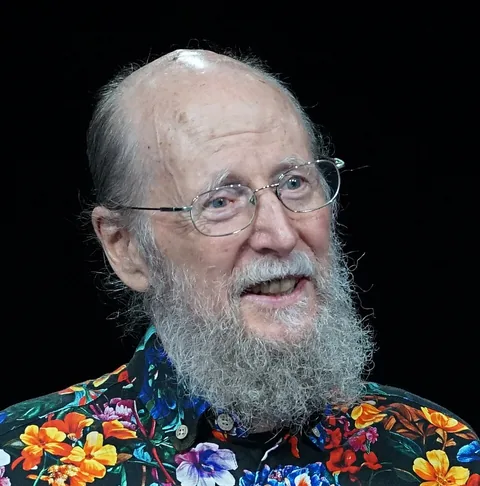
There's a second camp, which are the people that created the original technology, the scientists who created the technology, got them the computer science Nobel Prize for it, it's called the Turing Award.36The Turing Award is the top prize in computer science, often called the "Nobel Prize of computing." It is given by the Association for Computing Machinery (ACM) and carries $1 million. And that's, you know, Rich Sutton,37Rich Sutton is a Canadian-American scientist, one of the founders of reinforcement learning, who shared the 2024 Turing Award with Andrew Barto. He argues that LLMs learn to imitate people rather than learning from their own experience, and so won't lead to real intelligence. who created reinforcement learning,38Reinforcement learning: a method in which an agent learns by trial and error, earning a reward for successful actions. It is also used to further train language models, including reasoning models. which, you know, a lot of this stuff is built on. You have Yann LeCun,39Yann LeCun is a French-American scientist and one of the inventors of convolutional neural networks. He shared the 2018 Turing Award with Geoffrey Hinton and Yoshua Bengio, the trio often called the fathers of deep learning. He led AI research at Meta for many years and in November 2025 announced he was leaving to found a startup working on "world models." who is one of the three founding fathers, and many others. For many years, actually, I've been, you know, I've asked them for years, they've been saying that that first camp is not going to... That's, like, not even the right approach, is their view. They're like, "No, that's just, like, autoregressive next-token prediction.40Autoregressive next-token prediction is how language models work: text is generated one token (a word or part of one) at a time, each chosen by probability given all the previous ones. It's just probabilistically predicting the next token." And usually they will say, "That's not how humans learn, that's not how animals learn. You know, we operate in a different way, your brain is not that way." And one example is that, you know, even a child learns very quickly to walk and talk and do things with very little data. Compared to, you know, like, certainly no child is reading all of the internet's data four times over before they learn to speak. So anyway, that's, like, camp number two. Those guys, by the way, they say it's 20 years out. So they're saying, "Hey, it's a physics problem, and it's going to take 20 years to get there." Which, to me, it's like, I don't know, like, "Leave me alone, let me do research."
ExplainerWhy people argue about scaling laws
"Scaling laws" are an empirical observation described in papers from OpenAI (2020) and DeepMind (2022): a language model's loss falls predictably, following a power law, as the number of parameters, the amount of data and the training compute grow. This is the strategy of the first camp in Ghodsi's breakdown: more GPUs and data make a smarter model, all the way to superintelligence.
Critics such as Yann LeCun object that next-token prediction gives a model no understanding of the physical world, no memory and no planning, and propose other architectures, such as "world models." Rich Sutton, author of "The Bitter Lesson" essay on how computation beats human knowledge, also argues that today's LLMs learn from human text rather than from their own experience and cannot learn on the job, the same "frozen model" problem Ghodsi described when talking about RPA.
Third camp, which is, I think, what we are in, is: I don't think we need superintelligence. Like, you know, I don't think we need that superintelligence right now. Maybe they'll get there; that's awesome if they do. But I think we have AGI.41AGI (artificial general intelligence): a hypothetical AI that can do any intellectual work as well as a human. There is no agreed definition, and where the line lies is constantly debated. I think we have artificial general intelligence. We really have it. We absolutely have it. It's like, anyone who says we need to get to AGI, that's a false premise to start with.

We already have AGI. I came to the United States in 2009, at UC Berkeley,42UC Berkeley is a public university on the east side of San Francisco Bay and one of the world's leading computer science schools. Ghodsi arrived there in 2009 and later co-founded Databricks with colleagues from his lab. not far away from here, and I was in an AI lab. It was called AMPLab.43AMPLab was Berkeley's lab for big data and machine learning; AMP stands for Algorithms, Machines and People. Apache Spark came out of it, and its researchers founded Databricks. The A was for algorithms and AI, machines and people. And these are all AI people. And back then, the definition of AGI we had, we have already satisfied that. Like, I know the discussions we had, and I actually went back to some of those folks to see, like, "Is it just me, or what was the sentiment back in 2009?" And everybody that I talked to said, "Yeah, by those standards, we had AGI, but we've changed the definition now." We have those definitions, you know. So for 30, 40 years we had a definition of AGI, we've already hit that. Now we're changing it and moving the goalpost. But very obviously we already have AGI.
Just use any of these LLMs and have it do some reasoning. And certainly it's smarter than a lot of friends that you have, right? Like, you know, let's not name them, or coworkers or whatever, right? So you already have AGI. Now we're, like, haggling over exactly how smart is it. You know, do you have a friend that's smarter or not?
So if we already have AGI, we just need to make it useful inside the enterprise. We need to just expand that 5% to be 10%, 20%, 30%. So that's why I think Arvind's answer is actually a good answer. Like, we have the AGI we need. Let us just focus on solving the actual problems inside the organizations. And I think we can already... That's enough to automate a lot of the tasks and get huge economic value out of it. We don't actually need superintelligence for that. It's a good idea. If the superintelligence guys nail it, amazing, then we've cured cancer. If they don't, hopefully the second camp comes up with a new thing in the next 20 years. That's also awesome. We already have whatever we need. So yeah, let us just do our engineering.
06Data, models or apps: where the value lands
Models will be a commodity and the value lies in a company's data, while most of the money, Ghodsi thinks, will go to applications nobody can name yet.
Right. Yeah. That's really good framing. And the way this manifests in the world is there's a data layer, there's the intelligence layer, which is where camp one is presumably producing a lot of great models, and then there's the software layer where the users engage. Where do you think value will accrue, if you were to distribute 100 units of value across these three layers: the data layer, the intelligence layer, and the software or the application layer? Where do you think value accrues in the next five years?
All right. This is a tough question. I mean, I think all those three layers actually are very fundamental.
Yeah.
I thought you were going to add a few more, which are not. You didn't... Semis. Yeah, because I feel like, as Ali was saying, the models are going to be available to all of us. You know, they are going to be a commodity. And it's going to be hard to sort of see more spend go to them versus, you know, these layers on top. But how do you... It's hard to sort of come up with, you know, where the most value will be.
And I also don't know if actually it changes from today's technology architecture, where, again, like, you know, you think about a pre-AI world: any sort of, like, you know, enterprise application and data systems. You have data systems; I guess you don't have enough of that intelligence layer today; and then you have the application layer. So I guess, you know, some dollars will shift into it. And we do think that the intelligence layer is actually going to be a pretty thick one. Maybe, you know, it'll capture half of the enterprise value.
Anything to add, Ali?
Yeah, no, I think that, you know, yeah, there are more layers in the stack, depending on how you want to do it. But I think, as I said, the LLM is a commodity, as Arvind said. You can get them, like, you know... But anyway, that doesn't mean those companies are not going to be valuable. They can be very... I mean, TSMC44TSMC is the Taiwanese contract chipmaker, the world's largest, which makes chips designed by Nvidia, Apple and others. A fab is a chip fabrication plant. is very valuable. But I'm saying they're going to be kind of like these fab-like companies, but they're interchangeable, and we've never seen something like that ever. I have not... People just switch LLMs, like, in one day. That's not the case with your, you know, your iPhone versus Android, or your Windows versus your Mac, or your anything versus anything.
Like, you know, Google Sheets versus Excel is, like, a huge religious battle inside our company. But LLMs, it's like, you know, because it's a commodity, as I said, it just speaks English or any language you like, and it gives you different answers every time. Might as well just try the cheaper one, the cheaper commodity, or the slightly smarter commodity. You can't even really tell the difference, can you? So then what is special is the data that you have. Again, if your company has data that it has actually collected that your competitors do not have. Like, Glean is amazing, but if you remove all the data from Glean, there's no use to it, right?
So it's all about the data that you have. And can you secure the data also? So if we're going to have agents running around accessing this data, like, "Oh, that's his HR data. Oh, here is Apoorv's salary information. Oops, I blurted it out to all of you." Like, you know, so how do you lock it down? How do you make sure that there's governance? There's, you know, there's also a lot of worry around: what if it's using a Chinese model?45Chinese models are open models from Chinese companies such as DeepSeek, Alibaba's Qwen and Moonshot AI's Kimi. They are cheap and popular, but enterprises worry about the security of their data. What if it's accessing this information? What if it's sharing this information with a competitor? What if it's interacting? So the governance security layer is going to be super, super important.
But I do think most of the value will accrue to the apps. Yeah. So it's kind of... And I think that's common sense. I just don't know which apps. I do think Glean is amazing. I don't think it's... Do you think of it as an app or...?
I don't know, but now we see us as both app and a platform.
But yeah, yes. So I think that's called an app platform. I do think it's amazing, because it has the potential to automate so much of the overhead inside of an organization. Like, if you think about why do organizations have hundreds of thousands of employees, you know, some organizations, or 50,000, 20,000. A lot of it is the coordination overhead of, like, you know, so many people have to communicate with each other: "Hey, what happened? What did you exactly mean by this? Let's do a meeting where you explain to me, I ask some questions. Let's, oh, let's invite these other guys also, and then write it down." And just the coordination overhead of organizations is massive, right? It's like this n-squared problem46An n-squared problem: the number of possible pairs among n people grows roughly as the square of n (exactly n(n−1)/2): 45 pairs in a team of 10, almost half a million in a team of 1,000. that, you know, everybody needs to communicate with everybody, and they're communicating inside their siloed org chart, but how do we get it across? So this, like, you know, through docs and Excel sheets and PowerPoints and meetings, is how we, like, move companies and organizations forward. So much of that can be augmented and be made more efficient with Glean. So that's why I think Glean is amazing.
But this is kind of like 2000, and you ask, what are the killer apps47Killer app: a program so useful that people buy the platform or adopt the technology just to use it. on the internet? By the way, back then we thought it's, like, Cisco48Cisco is the American networking equipment maker. In March 2000, at the peak of the dot-com bubble, it briefly became the world's most valuable company, worth about $550 billion. routers, you know, portals49Portals were late-1990s home pages such as Yahoo!, AOL and Excite: a directory of links, news, email and weather in one place. They were expected to be how people entered the internet. maybe, with thousands of links on them. Actually, I had just started college, and we knew that the future of the internet would be portals, which are these web pages with a hundred links on them, and you just click on the right link. This was before Google search. But the future of the internet actually didn't look that way. It ended up being, you know, things like Facebook for friends and things like Airbnb for rentals and Uber for your cab industry and, you know, Twitter and so on. Those became great companies. So I don't know what those are for the future. They will pop up and they will be extremely valuable.
But okay, so does that mean that Databricks and Glean then basically will die and there'll be a new set of companies? No. Back then, there was actually an Amazon.com already in '98. Google actually existed already in '98, and so on. Cisco, by the way, is still around, and it's, you know, only a 300 billion dollar company or something like that, right? So it's not binary. We'll see what happens. But I do think there's going to be really a lot of value that will go to the future, you know, apps that will emerge.
07Is SaaS dead, and who will do the data entry?
Jain doesn't believe Salesforce and ServiceNow will shrink into bare databases, while Ghodsi sees automated data entry from conversations as the big chance to upend SaaS.
Speaking... Let's double-click into that. The 300 billion dollar companies of today at that layer, software, apps: Salesforce, ServiceNow.50Salesforce is the largest maker of CRM software for managing customers and sales; ServiceNow is a platform for automating internal workflows, above all IT support. Both are model SaaS companies. A lot of talk about software being dead. Satya calls them the CRUD apps.51CRUD stands for create, read, update, delete: the four basic operations on database records. Satya Nadella, Microsoft's CEO, applied the term to enterprise apps on BG2Pod in December 2024. More in the explainer below. What is the future of this layer that today is called software, that seems to be heading towards becoming a database? And where do you see the value accrue to this part of the layer? Maybe start with you, Arvind.
ExplainerWhy SaaS gets called "CRUD apps"
CRUD stands for the four basic operations on database records: create, read, update and delete. In December 2024, on BG2Pod, Satya Nadella described enterprise SaaS applications as essentially CRUD databases with business logic on top and predicted that this logic would move to AI agents working across several databases at once, regardless of which application sits behind them.
That is where the "SaaS is dead" thesis comes from: if an agent reads and edits records itself, the Salesforce or ServiceNow interface is no longer needed and the application is reduced to a data store. Nadella himself never said "SaaS is dead," and Jain's answer pushes back on exactly this simplification: software's value lies in well-designed workflows and interfaces, not just the database.
Yeah, I think that's an oversimplification. Like, for example, even to say that Salesforce is, you know, just a database. You know, it's a full sort of ecosystem of workflows and other applications, you know, that are sort of built on top of that infrastructure. So I sort of, like, you know, haven't really understood this concept that, you know, you have this, like, database where all your enterprise data is, and then people can just go and create dynamic UI experiences on their own on top of that data. Like, you know, every business can, for example, just create all the UI by themselves on this. I don't think, you know, it's going to be happening like that. Because yes, you know, AI makes it easy for you to build: you can have a database, and you can just talk to AI and create a UI, an experience that is, you know, exactly what you want it to be.
But most times you actually won't know what you want. Like, you know, I think a lot of, like, you know, the good thing about software companies is that they actually think about how to actually take that data, but then present it in a way, you know, make people interact with it or modify it in a way which sort of is natural and which, you know, drives more productivity from a human. So I think ultimately software is an end-to-end stack, in my opinion. And all of these companies, you know, I don't think they're going away. I don't think, you know, they're going to be relegated to becoming a database.
Humans, you know, over the last 20 years, we got addicted to these screens. We scrunch over these screens and we input this information with our keys, with the drop-down: "Hey, I met Arvind today, and this is what I learned." It should really be: "Hey, Chat, met with Arvind. This is what I learned. Remind me in two days to catch up with him."
That will happen. I think that is going to happen. Yeah, that will happen in the next couple years. And even Glean, you won't want to type, you want to talk to it. But I think the big thing is data entry. How does the data appear in that database? And that's today not completely automated. So, you know, just for, like... I think a company that would be well positioned to do that would actually kind of be Zoom.52Zoom is the video conferencing service; it has its own AI assistant, AI Companion, which takes notes in meetings. You know, a lot of people don't think about it that way, but Zoom really should be the perfect data entry application, right? Because that's where you're having all the conversations, and that's where all the information is coming out. And if it could, you know, work with Glean and extract the most important information, store it all, not in, like, a structured table, but store that information in a system of record.53System of record: the main data store treated as the source of truth for some data, such as a CRM for customers or an ERP for finances. If you had that, that would be the full disruption of SaaS.54SaaS (software as a service): software sold by subscription and run in the cloud rather than installed on the customer's machines.
That's actually one of the most common agents these days, you know, with Glean, which is: you take these meeting recordings, you figure out, like, you know, what you talked to the customer about, what were the action items, and then the agent goes and updates the notes, you know, in Salesforce with that. Like, these kinds of things are happening already. Yeah. Meetings is, yeah, you know... Like, at Glean, we have this policy where we record every single meeting, internal meeting, external meeting if our customers allow, because there's so much information, you know, in there.
I joined a meeting last week. It was four humans and six AI note takers.55AI note takers are bots that join a video meeting, record it and produce a transcript, a summary and a list of action items: Otter, Fathom, Granola and others.
Yeah. And I had about... I think yesterday we were talking about 17 note takers in one of the, you know, discussions.
08How Ghodsi and Jain use AI themselves
At Databricks and Glean, agents already work in sales, marketing and finance, and Jain has trained himself to ask AI before asking his team.
It felt like the first, you know, it's like the first scene of a movie where the AI takes over. Clearly there's a lot of sprawl. There's, like, almost too many tools, and consolidation coming at some point. But maybe your guys' personal workflow: you know, you guys are CEOs in the age of AI, a lot of CIOs in the room, they've got more jobs than time on their hands. How are you using AI for both your personal self, and how are you driving your organizations, both large organizations, to adopt AI and benefit from it? Maybe give us a glimpse of your leadership in the age of AI. Maybe, Ali, we start with you this time.
Yeah, I mean, we have agents for all kinds of stuff that we use, you know, everything from... You know, we have agents that are really good at understanding our customers. We have an agent, Reffy,56Reffy is an internal Databricks app built on its own platform: an agent that searches more than 2,400 customer stories, from talk transcripts to articles and internal slides, and finds the right example (Databricks blog). that's the name, which... Yeah, if I want to understand anything about any, like, you know, "Tell me the best customer story on this." Like, you know, I told you about RBC, Royal Bank of Canada, but I can just ask it: "I need a use case. I'm going to get on stage. I need to talk about the finance sector. Give me a use case that has these..." It'll, like, just find you all the information collected. So it's really, really helpful for me for these kinds of things, like when I get on stage like this. But also customers: if you go into a customer meeting, you know, I want to tell customer X about their biggest competitor Y, how they're using Databricks. Now maybe Y is not using Databricks, so then I shouldn't use... I should use Z, which actually is using Databricks. Maybe that's, like, the number two competitor. How do I get this information super quickly? All of those are prepared at Databricks.
So on the go-to-market side, a lot of this is being completely automated, and we're using this. The marketing stack I already mentioned is heavily automated already, like, a lot of the tasks that are happening in marketing. So we're seeing that stack, that happening. Then there is engineering; that's, like, a whole big thing. Like, you know, that's how we sort of... And I think there's a whole change management57Change management: the discipline of moving an organization's people and processes onto new tools and ways of working. and how to do it right. You know, initial attempts at automating a lot of the software engineering at Databricks kind of failed. There's nothing wrong with the AI. The problem is the humans and how we were organized. But that's, you know... So those are, like, the two big orgs. Databricks is a big, you know, 6,000-person go-to-market org and a 3-, 4,000-person R&D org. And then there's some back-office stuff. Those two, already we're seeing heavy automation, using agents for all kinds of tasks.
Then there's back office, so that's finance and these functions. Finance is all on Databricks, and it's all... All the forecasting, all the sort of... It's all moved to machine-learning-based. But it took them a long time, because they had their Excel models and they're very proud of them and didn't want to, you know... But, again, there's change management there. We actually had an external data science team build the AI models, and then eventually they became good enough, and now finance has taken those over. And, like, now finance has kind of moved from Excel to Python,58Python is a programming language, the de facto standard for data analysis and machine learning. largely, at Databricks. But it was a journey, because, you know, most of us speak Excel. A similar thing is now happening to HR and other departments as well. But I think, in general, HR departments are, like, you know, not the closest to doing this kind of analytical work with, you know, Excel and so on. So maybe that's not quite as far along, but yes, we're seeing it everywhere.
Yeah. Anything to add, Arvind?
Same for us. And I think I can share some of my own personal use with it. Like, one of our agents is the daily prep agent, which I really love, because, you know, every morning it tells me, like, you know, what my day is going to be, what I need to read, what I need to prepare. Like, most of the meetings, you know, I will not have context. It actually brings, you know, like, the plan for those meetings for me. So that's one of my favorite agents, you know, that helps me feel more confident, like, you know, about how I'm going to do my meetings in the day.
The other one, which I shared yesterday also: like, you know, I've changed my instinct. And I think, you know, changing instincts, you know, takes a long time. And, you know, when you're the CEO, like, you're the boss, and everybody listens to you, and you can just, like, you know, whenever you have, you know, a small question, curiously, just go and ask somebody, and they're going to, like, you know, put 30 people on the task to actually get the answer for me. And there's going to be a prep meeting before the prep meeting before... Yeah, so all of that. So that's sort of like, you know... But it's sort of like, for me, it was easy. I just get to ask somebody.
And I changed that, because I knew I was actually causing, like, you know, a lot of... That was very expensive. So today, like, you know, my instinct is, whenever I have curiosity, whenever I have questions, when I need to do data analysis, when I need to write something, you know, my letter to the company every month, all of those things, you know, fundamentally I use, you know, AI, of course, you know, Glean in this case, to actually help me do my tasks. More and more, I think you have to sort of have that belief. A lot of people won't do it. You have to have that belief that AI is a good collaborator. It's not going to do the work for you, but if you use it, you're going to actually produce better output eventually. Even if you don't save time, you know, for the first few months, you're actually going to improve the quality of your output.
09Rapid fire, favorite tools and Glean's future
Both guests bet on OpenAI and Anthropic going up, see a bubble among the superintelligence chasers and expect voice and proactive products.
Fascinating. Well, this brings me to my favorite part of this conversation, which is rapid fire. Short answers are fine, long answers are welcome. Start with: 12 months from now, are the big AI companies that we know of today up or down? We'll start with OpenAI. 12 months from now, stocks up or down? Ali and then Arvind.
And I'll say revenue will be up. I don't really understand how stocks work.
Anthropic. Ali, Arvind?
Same.
Yeah, okay.
Let me, let me... Can I give you a little bit more?
Of course.
Because ChatGPT is going to continue growing, and it's on fire, and it's what everybody uses. So is Gemini, by the way. And then Anthropic, because more and more, you know, coding... We've only, like, eaten into a small portion of that market. It just started. So, yeah.
Is AI in a bubble, yes or no?
There is an AI bubble. Like saying, like, okay, so then Glean is also in the bubble, everybody's in the bubble? No, I would say there is a bubble. I would say those three camps. There is a superintelligence quest camp. I would be very worried there. There's a second, the researchers doing the, you know, that's definitely not in a bubble. They're like the... They're sober. Yeah, they're super sober and nobody cares about them, and they're probably the ones that are right, unfortunately. And then there's the third camp, which is us trying to make this valuable. We're not in a bubble in a sense that we're not spending huge amounts of capital on what we are doing. We're just trying to get actual economic value inside of these organizations. So I don't think it's binary, but there is a bubble. I mean, there are startups with zero revenue worth, you know, 10, 20, 30 billion. That's a bubble.
Yeah, same. I mean, I think there are quite a few companies where there's more optimism, and valuations which are well ahead of the business that those companies have. And, like, I guess you can say, like, you know, compared to non-AI companies, of course AI companies do have higher multiples.59Multiple: a company's value divided by a financial metric such as revenue; a high multiple means investors are paying for future growth. But I think, you know, this sort of comes from... You know, there's a good reason for it, you know, because these AI companies are going to grow more than non-AI companies, for sure.
Yeah. My favorite game at Altimeter, we ask our CEOs, is a long-short game.60Long and short positions: a long is a bet that something will rise (you buy it), a short is a bet that it will fall (you sell borrowed shares to buy them back cheaper later). Altimeter runs a long-short fund of this kind. If you were to pick a company, a product, an idea that you're long, that you think is going to be a bigger deal than it is today, what is that? And then short, which is, you know, there's more sizzle than there's steak, more hype than reality. Pick a long, something that you're very optimistic on. Same order: Ali and then Arvind.
I am very long on agents. You know, I think I'm very long on speech, speech as an interaction. Like, I think keyboards are kind of basically going to disappear completely. We haven't actually nailed speech. I know it feels like we have, but we haven't, because you're still using your keyboard. So as long as you're using a keyboard, we haven't nailed speech. But I think we're this close to completely eliminating keyboards. So I think that's a big one. What would I say? It's like, you know, I do think coding is a little bit overhyped. I don't know if I would short it. I mean, I think it's still the future. So I think that's one of them. I think automating, like, customer service and support is a little bit overhyped. So, you know, basically, I think the things that the industry thinks are, like, amazing and we've made great progress, we probably haven't made as much progress in. And then a lot of the other things that are being ignored, you know, we're going to have breakthroughs in those.
So fascinating. Yeah.
Yeah, and for me, I think the products that are going to change the paradigm, where instead of you building a product and, you know, expecting people to come to you, if you understand your user, your customer, very deeply and actually bring AI to them, that's the category that I'm excited about. I want to see more proactive AI products coming into the market next year.
Yeah.
That is what is going to actually take it from 5% of the users being power users to 100%.
Yeah, yeah, yeah. Your favorite AI tool that you use in your lives.
I think Glean is awesome. I mean, if that was not clear. Let's go. So, use it all the time. Actually, a lot of the questions I would ask from the team, the thing you said you changed: I first ask Glean and then see, you know, if it nails it or not. Then, if it doesn't, then I'll spin up a 30-person team to go spend a week and have three meetings and all that, to get, you know, the explanation of some simple concept for me. But usually Glean nails it.
Yeah. Well, for me, I'm excited about note takers. I've used Granola myself and Fathom and a few others. But note taking is actually fascinating. I mean, I feel like, you know, if you take those notes and then if you utilize them the right way, like, for example, what Ali was saying, like, you know, that becomes the source of what then actually creates knowledge, saves data in your systems. That's going to change, you know, how companies work.
Yeah. You know, in closing, I'd love to get your vision for your companies. We'll start with Ali's favorite tool, Glean. Congrats, you just announced crossing a big milestone: 200 million dollars in revenue run rate.61Run rate: annual revenue extrapolated from the current pace, for example monthly revenue times 12. On December 8, 2025, Glean announced that its annual recurring revenue (ARR) had passed $200 million, doubling in nine months (Glean). You're signing big deals, 10 million dollar deals. You've got super users, I'm seeing, you're seeing casual users. Paint us the vision for Glean from here to a billion in revenue.
I think we're still doing annual planning, which also some, you know, AI companies are telling me that's so old school. But we're doing it regardless.
That's just because they're early startups. Like, did you do annual planning when you started Glean?
No. No. So, but I think for us, the thing that I'm most excited about, again, is... So we think a lot about AI literacy and how do you get everybody along on this journey. And we're not seeing it right now. Like, Glean is a heavily used product, but still, there's a big variance between the top users and the ones, you know, at the bottom. And that's what we want to change.
So the future for us is: we want Glean to be this very personal companion for every person in every company in the world. This companion with which, you know, you have a very confidential relationship, in the sense that whatever you ask this companion, you know, whatever communication you have with them, you know, it's fully privileged. Nobody else gets to see it. But this companion knows everything about you and your work life. It knows your day, it knows your week, it knows who you're going to meet, you know, in the day to day. It knows your weekly goals. It knows what, you know, what things you're not good at, or what your career ambitions are. And with all of that, you know, this personal companion is sort of helping you now with your work. It, you know, hopefully takes the majority of your tasks automatically, you know, works on them before you ask it to work on them. And so that's sort of the vision that we are, you know, taking our product to. We have most of the, you know, foundation for this in place already. Today, you have to come to Glean to get most of that work done. In the future, we want Glean to actually come to you and do that work.
Fascinating. Well, we can keep going for a bit, but I'm being called on time. Thank you so much for chopping it up with us. You've got a lot of alpha,62Alpha: in investor jargon, returns above the market; figuratively, valuable knowledge others don't have. a lot of insights here. Really appreciate it. Thank you. All right, gentlemen, thank you so much.


