

Sharp Tech
Chapters
The Brewers have won the World Series, and Anthropic filed its S-1 in the least convenient week for Ben.
Read the chapter- Ben is in a World Series jersey and cap, and saves his takes on baseball and on a movie for the last segment.
- On Monday Anthropic published its S-1, a 400-page document drafted by lawyers and accountants, and Andrew promises to make a fun podcast out of it.
- Given the state of the business, Ben says, Anthropic is in a really favorable window to go public.
93 pages of risk factors, parodies on Twitter and whether Anthropic's IPO will mark the top of the market.
Read the chapter- Made-up risk factors such as "our models may be aware of what you did" if you don't invest went around online, and they were easy to believe.
- Asked by Andrew whether Anthropic's IPO will be for AI what Coinbase was for crypto, the top of the market, Ben says the bubble will inevitably pop, but nobody knows when.
- As with the dot-coms, good ideas take a long time to get penetration, and the bottleneck is financing, especially for the neoclouds.
The subscription is profitable, but training costs exceed the cost to serve, and competitors dictate them.
Read the chapter- The subscription is profitable because people have already paid, get used to the product and advocate for it inside their companies, and the API has even higher margins.
- The biggest expense is not inference but training, which grew faster than the cost to serve in the first half.
- The bigger the model, the better and more expensive it is, so "pace the frontier for safety" is the same as "pace the frontier to stay in business."
Amazon gave Anthropic money as a loan convertible into shares, and every funding round revalues that debt.
Read the chapter- When Anthropic was counted out, Amazon made the investment of a lifetime, giving it money for Trainium and improving its own chips in the process.
- By necessity Anthropic ran on different chips and in every cloud from the start, which helped it take the enterprise market from under OpenAI's nose.
- About half of revenue comes through AWS, Azure and Google, and the clouds' cut, about a third, is booked as sales and marketing rather than cost of goods sold, which Ben calls a little bit of BS accounting.
- With every new round, the obligation to Amazon is revalued and booked as a loss, while for Amazon it's a gain on its investment.
Startup investments will whipsaw Big Tech earnings, and shareholders will pay for the buildout.
Read the chapter- Google has already watched its SpaceX stake lose value, while Amazon's earnings will balloon, so you'll have to look at operating income.
- Anthropic has commitments to issue shares to Broadcom, Google and Amazon, plus the right to issue more if its stock price rises.
- First free cash flow, then debt, now equity: in Ben's view, it's the last option and also the healthiest one.
- Retail investors get a stake once the company is worth a trillion and a half to two trillion dollars.
The S-1 numbers run to June 30, and since then growth has slowed, judging by Ramp's data.
Read the chapter- Andrew thinks public market disclosure is healthier than a company that stays private forever.
- The compute shortage in the first half flattered the numbers, paid for by users who watched Claude go down every few hours.
- The June 30 numbers go stale on November 12, Ben says, and Anthropic is pushing to list in mid-November.
- After Astra, growth may have reaccelerated with Opus 5.5, but that only confirms that the model is all that matters, which means costs will keep rising.
Microsoft and Palantir teach customers to keep the model swappable, while the labs move up the stack.
Read the chapter- OpenAI vs. Anthropic is the headline, but there's a second front line: the frontier labs vs. everyone who wants the model to be replaceable.
- Ben admits he kept wanting to call Shyam Sankar "Shams" in their interview, and Shyam's emails taking teams to task are known at Palantir as "Shyam bombs."
- Codex is for people who file their emails into folders, Claude handles lots of different things better, and Ben picks by interface, not by model.
- A VM in the cloud or Claude Design locks the customer in, and without lock-in you're left on a treadmill with no pricing power.
A listener is appalled that Dario and Daniela Amodei spent most of an interview bashing OpenAI.
Read the chapter- Ben hears for the first time that when you point at someone, three fingers point back at you, and Andrew demonstrates on camera.
- By defining itself as the opposite of OpenAI, Anthropic hands OpenAI the agenda, like people defined by opposing Trump who live inside his frame.
- Ben doesn't want a small collection of people deciding for everyone else, and he says Anthropic is the best thing that ever happened to Altman.
- OpenAI's original sin is its nonprofit structure, and Anthropic's seven share classes are worse than a simple profit motive.
Craig Moffett's question: does money from end customers cover the cost of the whole value chain?
Read the chapter- Anthropic's revenue is nowhere near covering capex, but as long as it grows, nobody looks at the dilution or the odd governance: it's all about timing.
- The hyperscalers have the most cash, borrowing power and ability to issue stock, so they are the girders of the bridge across the gap.
- The worst case, as with the railroads, is the world running out of money before the revenue catches up, which is why Nvidia is backstopping the neoclouds.
- If the hyperscalers hold up the bridge, they'll gain power over the ecosystem, and Anthropic could end up with a worse deal than before.
AI will pay off through new companies and new business models, and Ben sees the attacks on advertising as a lack of faith in people.
Read the chapter- Shyam Sankar's point is that companies using AI to replace people struggle, while growth comes from multiplying people with new workflows, which arrive with new companies and take longer.
- The internet arrived in 1993, but its core monetization unit, the feed with personalized ads, only in 2006.
- Good advertising shows you things you didn't know you wanted, and much of the economy is status seeking.
- In Ben's view, hostility to advertising shows that Anthropic doesn't get humans.
Meta's stock fell over its AI spending, but the S-1 explains why that spending is necessary.
Read the chapter- Meta, Google and Microsoft can get away with dilution, Andrew says, because there's no one else investors feel comfortable backing.
- Muse is the aggregator of aggregators, the connection to the user on top of everything else, but that requires controlling a good model, which means enormous training costs.
- Ben advises keeping keys for agents in a dedicated 1Password vault, noting that the company criticized for going enterprise turned out to be well placed for AI.
- The S-1 showed for the first time how much goes to training and how much to serving, and Meta's enterprise push stopped looking like a drain on compute.
Investors want caution from Meta, but it's run by a founder.
Read the chapter- Amazon is focused on infrastructure and inference, and Google is becoming a capital company along the lines of Berkshire Hathaway: prudent decisions of professional managers.
- Zuckerberg will always make the bet, and Ben is all in.
- To pay for AI, Meta is cranking up engagement on Reels, and time spent on Reels is taken away from Netflix, which makes Netflix a casualty of AI, Ben argues.
A listener pushes back on Ben's take on Anthropic's fight with the government and asks about Starlink and Ukraine.
Read the chapter- If AI is as powerful as Anthropic says, the entity with a monopoly on violence will inevitably have its say; that's a description, not a normative judgment.
- Separating civilian Starlink from military Starshield is the right split, and the consumer market provides volume defense contractors don't have.
- Ban foreign drones and legalize drone delivery: that, Ben thinks, is how you build a military drone industry.
- Ukraine has no power over the U.S. government or over Starlink, just as Anthropic won't if it grows to rival nation-states.
Ben went to see the Elizabeth Holmes documentary and calls it the "Zootopia" of documentaries.
Read the chapter- Ben's daughter took him to the movie, and he insists Andrew finally watch "KPop Demon Hunters."
- Both films are very well done but have an insane premise: "Zootopia" teaches that predators' intrinsic nature makes them evil.
- The film leaves you sympathetic to Holmes, while Ben calls her a psychopath who finds men to cover for her.
- The climax in the theater was the reaction to a line about the assassination of a conservative figure, which Ben sees as meta on top of meta, and Andrew values the film as a postmodern commentary on media and truth.
For years Ben said he was in it for the journey, and that's exactly why the win was doubly his.
Read the chapter- In basketball one player can make the difference and the pressure is enormous, while a small-market baseball team is left to enjoy the season.
- Ben cried after the Bucks' title, but this time he had so thoroughly cauterized the postseason in his heart that the win was simply a pleasant thing that happened.
- Instead of depressing yourself over an unknown AI future, live in the present: all you have control over is yourself.
Quotes
Why Anthropic races at the frontier
“And this is where we circle back to ‘we need to pace the frontier for safety.’ It's like, ‘we need to pace the frontier to make sure our company stays in business.’”
Ben ThompsonRead from 09:23On Anthropic's "$80 billion loss"
“So that $80 billion is fake. It's not money out the door.”
Ben ThompsonRead from 16:12On who paid for Anthropic's margins
“The people who were paying in the first half of this year were the people for whom Anthropic was down every few hours because they didn't have enough capacity. So, like, all those people, you did your part for Anthropic's IPO by making their margins.”
Ben ThompsonRead from 22:27Codex or Claude
“As a former lawyer, I think of Codex as the associate and Claude as the partner.”
Andrew SharpRead from 28:32On how Anthropic helped Sam Altman
“Well, everyone who's, like, worried about Anthropic is like, ‘Sam, he's not that bad.’”
Ben ThompsonRead from 39:18On why Anthropic opposes ads
“And it's not an accident that their go-to point, one of their go-to points about why OpenAI is evil, is because they're including ads. It speaks to how Anthropic is deeply an anti-human company.”
Ben ThompsonRead from 54:15On why Netflix loses to Meta
“So Netflix is actually a casualty of AI, because AI is pushing Meta to ramp up engagement.”
Ben ThompsonRead from 1:08:38On Anthropic's fight with the Pentagon
“And if Anthropic keeps saying and insisting, perhaps accurately, ‘We are accruing power to an extent that rivals nation-states,’ the nation-states are going to have a say in it.”
Ben ThompsonRead from 1:21:22
Summary
Anthropic has filed its S-1 ahead of a November IPO, and Ben Thompson, freshly minted fan of a World Series champion, takes it apart with Andrew Sharp. The core business looks great: the subscription is profitable and the API carries even higher margins, though Ben finds the accounting for revenue that comes through AWS, Azure and Google a little sketchy, since about a third of that money goes to the clouds. The headline "$80 billion loss" for the half-year is an accounting revaluation of Amazon's convertible loans, not money out the door. The real problem is elsewhere: training costs exceed the cost to serve and are growing faster, and competitors set their pace. The slogan "pace the frontier for safety" lines up perfectly with the needs of the business.
Shareholders will pay for the race: after free cash flow and debt, the industry has moved on to dilution, and at Anthropic it is built in from the start. Answering Craig Moffett's question about whether there's enough money in the system, Ben says it all comes down to timing: AI will pay off, but new business models and new companies arrive slowly, and only the hyperscalers can bridge the gap, gaining enormous power in the process, including over Nvidia. The hosts find Anthropic's obsession with OpenAI telling, and its attacks on advertising a sign that it doesn't believe in people: the economy runs not on usefulness but on desire and the pursuit of status.
The same logic explains Meta: if you believe in Muse, you have to accept the training costs, and the cost table in the S-1 shows for the first time how much goes to one and how much to the other. Along the way: a tip to keep agent secrets in 1Password, and the argument that Netflix is a casualty of AI because Meta is cranking up engagement on Reels. In listener mail, Ben explains that Anthropic's fight with the Pentagon and the Starlink story in Ukraine are about the same thing: who ultimately holds power.
At the end, Ben pans the documentary "You Can See Everything," which leaves viewers sympathetic to Elizabeth Holmes, and admits the Brewers' win barely moved him: he had accepted the journey rather than the outcome in advance, and he suggests treating the AI future the same way.
Advice
Look for lock-in with your customers through the interface, data and workflows: if someone can replace you by swapping one API, you'll have no pricing power.
Don't pass API keys and passwords to agents through the chat, because they go up to the servers. Set up a separate vault for the agent in your password manager.
If you sell software, sell it to businesses: companies pay, while consumer software is left with advertising and competition from features built into the operating system.
Mentioned
 Milwaukee Brewers00:19Ben's team: they just won the World Series, and he came to the taping in a Brewers jersey and cap
 Anthropic01:22Andrew and Ben dig into its S-1, filed ahead of the IPO
 Dario Amodei02:46Andrew says he "opened the hood" on Anthropic; Ben recalls him chiding OpenAI a year ago for reckless compute buying
 Coinbase04:27Andrew cites a tweet: Anthropic's IPO will be to AI what Coinbase's IPO was to crypto, the top of the bubble
Show 54 more mentionsShow fewer mentions
 Claude07:12Ben praises the profitable subscription and recalls someone finding a "social credit" score Claude assigns users
 The Wall Street Journal09:58Andrew asks Ben to explain the paper's figure: Anthropic supposedly lost $80 billion in half a year
 Amazon10:16Ben calls its loan to Anthropic, which turns into stock, "the investment of a lifetime"
 Sam Bankman-Fried10:16Ben recalls that he also invested in Anthropic early but lost his stake, while Amazon kept its own
- AWS Trainium10:41per Ben, Amazon made Anthropic run on its chips, which unexpectedly worked in Anthropic's favor
 NVIDIA11:17Ben recalls that Anthropic's first models ran on its chips, and later that Nvidia backstops the neoclouds
- Tensor Processing Unit11:17Ben lists Google's chips among the platforms Anthropic can run on
 Advanced Micro Devices11:17Ben mentions Anthropic's new AMD deal as an example of its flexibility on chips
 Microsoft11:49Ben thinks OpenAI got "stuck" on its cloud while Anthropic sold through every cloud
 Amazon Web Services12:07Ben explains why customers buy Claude where their data lives, and questions how Anthropic books that revenue
 Google17:02per Ben, remeasuring its stakes in Anthropic and SpaceX will whipsaw its earnings
 SpaceX17:02Ben cites Google's marked-down SpaceX stake as an example of investments hitting big tech's earnings
 Broadcom19:12Ben lists it among the partners Anthropic owes stock to: "built-in dilution"
 Ramp23:11Ben points to its spending index: growth in AI spending slowed sharply in the second half
 GPT-6 Astra23:11Ben says its release let OpenAI put real pressure on Anthropic
- Claude Opus 5.523:11Ben allows that Anthropic's growth may have picked up again after its release
 Shyam Sankar25:19Andrew recalls Ben's Stratechery interview with him; Ben explains "Shyam bombs," his scathing emails to staff
- OpenAI25:55Ben calls its rivalry with Anthropic the main front line in tech
 Palantir Technologies25:55Ben says it, like Microsoft, tells customers to build so the model can be swapped out
 Satya Nadella26:21Ben says he, like Karp, urges customers not to tie themselves to one model
 Alex Karp26:21Ben says he, like Nadella, urges customers not to tie themselves to one model
 Claude Code27:57Ben compares it with Codex: they work differently, and Claude suits him better
 Codex27:57Ben jokes it's "for people who file their email in folders"; Andrew compares it to a junior associate
 Figma29:57Ben calls what Anthropic did to Figma with Claude Design "pretty dirty," an example of lock-in
 Substack31:21in the Stripe ad, Andrew notes that every Substack writer is a Stripe customer
 PayPal31:49Ben explains why he needed Stripe for Stratechery: PayPal had a terrible reputation
 Shopify33:16Ben says its key product, Shop Pay, runs on Stripe
 Shop Pay33:29Andrew calls it one of his favorite products of all time
 Daniela Amodei34:27listener Alexander writes about the Amodei siblings' interview with Isaacson, in which they knock OpenAI
 Walter Isaacson34:27listener Alexander writes about his interview with Dario and Daniela Amodei
 Sam Altman37:10Ben thinks Anthropic defines itself in opposition to him
 Donald Trump37:48Ben compares Anthropic to people who define themselves by being against Trump
 Craig Moffett42:59listener Ravi asks about his key question from the Stratechery interview: is there enough end demand to pay back AI capex
 Sundar Pichai45:31Ben says the hyperscalers, Google included, are the load-bearing beams of the bridge across AI's funding gap
 Meta Platforms55:57Andrew reads Bloomberg's report: Meta raised its capex plan and announced a new class of non-voting shares, and the stock fell
 Mark Zuckerberg55:57Ben explains Meta's spending by its being run by a founder rather than a professional manager
 Muse56:33Ben says that if you believe in Muse, you have to accept Meta's training spend
 1Password59:46Andrew welcomes its Muse integration; Ben recommends it as a secrets vault for agents
 Apple1:01:21per Ben, it crowds 1Password with its built-in password manager, which is why 1Password left consumers for business
 Instagram1:06:52Ben calls Reels the most bulletproof digital business, one that "eats" everything else
 Netflix1:06:52Ben argues Netflix is an AI victim: to pay for AI, Meta cranks up Reels engagement and takes viewers' time
 Elon Musk1:13:14listener Utkarsh writes that, per the WSJ, Musk ordered a Starlink slowdown that "blinded" Ukraine
 Starlink1:13:14Utkarsh writes about the slowdown that blinded Ukraine; Ben notes the service knows where each dish is and doesn't work in Taiwan
- Starshield1:14:04Ben explains that SpaceX's military service, unlike Starlink, is fully controlled by the U.S. military
 Anduril Industries1:17:12Ben teases the company for casting itself as the defense industry's "new poster child"
- You Can See Everything1:22:29the documentary Ben saw with his daughter before a World Series game
- Zootopia1:23:54Ben calls "You Can See Everything" the "Zootopia" of documentaries: beautifully made, with an insane premise
- KPop Demon Hunters1:24:06Ben insists that Andrew finally watch it
 Elizabeth Holmes1:25:56per Ben, the film makes you feel undeserved sympathy for her, though she's a liar who went after whistleblowers
 Sunny Balwani1:26:15Ben thinks Holmes manipulated him the way she now manipulates Billy Evans
 Billy Evans1:26:15her current partner: Ben thinks Holmes manipulates him as she once did Balwani
 Theranos1:26:15Ben says the film made him rethink what he knew about the company
 Giannis Antetokounmpo1:33:12Ben cites him to show that in basketball one player can decide everything
 Milwaukee Bucks1:34:29Ben recalls crying when they won the title, while the Brewers' win felt calmer
Sponsors of the episode

Transcript
01A world champion in the studio
The Brewers have won the World Series, and Anthropic filed its S-1 in the least convenient week for Ben.
Hello and welcome back to another episode of Sharp Tech,1Sharp Tech — Ben Thompson and Andrew Sharp's podcast on the business and strategy of tech companies; it has run since 2022 and is part of the Stratechery Plus bundle. presented to you by Stripe.2Stripe — an American company that processes online payments for internet businesses, founded in 2010 by Irish brothers Patrick and John Collison. The episode's sponsor. I'm Andrew Sharp. Joining me in studio today, a world champion, Ben Thompson. Ben, how are you doing?
I am doing fantastic. I did not want to talk about the Brewers.3Milwaukee Brewers — a Major League Baseball (MLB) club from Milwaukee. Before this season it had never won the World Series: in its only previous appearance, in 1982, it lost to the St. Louis Cardinals. You brought it up last week. I'm like, no, we are not mentioning it. But now we can mention it.
I am free. We can lean into it. You know what? Sharp Tech colors, Brewers colors. Who knew?
Here we are. I was going to be very, very disappointed in you if you did not wear a jersey to our taping today. You did me one better. You wore a jersey and a Brewers hat.
Well, the hat is the one piece of, you know— oh, it's a World Series4World Series — the MLB championship: a best-of-seven series between the champions of the American and National Leagues. hat. There we go. So I had to get it right. I have not had a chance to get the World Series champion merch. So I will address that on Friday when I'm at the parade.
I trust that you will. I can't imagine how much money you're going to spend on World Series merchandise on the heels of that win.
I do have takes.
I know you do. So let's save them for the end.
Actually, I would like to request the entire last segment of the— I have two takes. I have a Brewers take.
Okay.
And I have a— I went to see a movie.
Oh boy, Ben went to the movies. Okay, well, that's a good teaser for the end of the episode. You did mention you could soliloquy at length about the Brewers. So I look forward to that when we get to the end. For now, we will begin with Anthropic's S-1,5S-1 — the registration statement a company files with the U.S. Securities and Exchange Commission (SEC) before an initial public offering: a description of the business, financial statements, risk factors and capital structure. which went public 9 a.m. Monday morning this week.
We're going to try to do the impossible, which is make a fun podcast out of a 400-page document that was drafted by lawyers and accountants. I know that's fun for you, though, you know.
I can't decide if it's fun or not, to be honest. It was a real challenge, you know, it's been busy these few weeks. You asked a couple weeks ago— or did you ask, or I think John asked— you know, is it going to drop this year? Actually, once I read it, I'm like, of course it's going to drop this year. They're actually in a really favorable window as far as their business goes to drop it. But dropping the week of the World Series, when I have games to watch.
People actually don't understand how much you've been juggling with the Brewers playoff run the last month or so. Because you'll watch every playoff game and then write from like 1 a.m. to 6 a.m.
No, we don't talk about that, because I don't want people judging my output. But yes, I am relieved about the Brewers in multiple dimensions. Multiple dimensions. And I don't have to do this anymore.
02A bubble is inevitable
93 pages of risk factors, parodies on Twitter and whether Anthropic's IPO will mark the top of the market.
That's right. Well, I am really thrilled that we have some actual numbers to discuss with any of these frontier labs.6Frontier labs — the companies training the most powerful models at the leading edge of AI: OpenAI, Anthropic, Google DeepMind and a few others. Dario7Dario — Dario Amodei, co-founder and CEO of Anthropic. opened the hood. We get to look at the engine a little bit. There were 93 pages of that document dedicated to risk factors.8Risk factors — a mandatory section of a prospectus listing everything that could harm the business and its shareholders. Lawyers put in everything imaginable so investors can't later say they weren't warned. I am actually less interested in risks and that whole conversation that has surrounded Anthropic for the last couple years.
Well, there's one— did you see this sort of satire tweet going around about Roko's Basilisk?
No, I didn't.
Okay, so Roko's— Roko's Basilisk,9Roko's basilisk — a thought experiment posted in 2010 on the LessWrong forum by a user named Roko: a future superintelligence might punish those who knew it could be created but didn't help bring it about. Wikipedia. it's a Twitterer, I think his name is Roko's Basilisk. Okay: you should be careful about what you're writing, because the AI is going to consume it. And just in case it reads it and knows what you think or act, okay, you should be positive about the AI.
So it's kind of like— there's some philosopher that has the same concept of—
AI is keeping a list of naysayers.
Well, so there's a thing about, like, why you should be a Christian or believe in God.10Pascal's wager — in his "Pensées" (published posthumously in 1670), Blaise Pascal argued that believing in God is the better bet: if God exists, the gain is infinite, and if not, the loss is small. I can't remember what it's called, but it's the same concept, where you might as well, because in case you're wrong, like, just the expected value downside is very high. So this is the same concept. So someone put up a screenshot of, like, the text of an S-1 document that said, "Wow, Anthropic's risk factors are off the hook." And it had a whole thing that was like, "Our models may, like, be aware of what you did."
So if you don't invest in our IPO,11IPO (initial public offering) — a company's first sale of shares to the general public, after which it trades on an exchange. it may take that personally or whatever. So number one, it was very funny. Number two, it was believable.
So that's what I was going to say, is there were a couple different parody risk factor sections floating around on Twitter this week, and literally anything that somebody threw in there, I believe— I don't— who the hell knows what they put in the risk factor section. So, but again, that's sort of been the conversation with Anthropic for like two years now. I think it's pretty interesting that we have real numbers. So I have some specific questions for you. Top-line question, though: I saw someone tweet that Anthropic's IPO will be for the AI trade what Coinbase12Coinbase — the American crypto exchange. It went public on Nasdaq through a direct listing on April 14, 2021, the same day bitcoin hit its then-record of about $64,000; by summer it had fallen by roughly half. was for crypto. Essentially, top of the market, it all goes sideways from here.
Based on what you saw in the S-1, do you buy or sell13Buy or sell — a segment on sports talk shows: the host floats a prediction or opinion, and the pundit says whether they "buy" it or "sell" it, that is, agree or not. that take?
I don't know. I mean, so there's no question— no, there is a question. Okay. I think it's inevitable that we are right now, will be, whatever, sort of in a bubble, and it's going to pop and it's going to be painful, and then we'll come back. That's just the inevitable nature of these things.
I think there is an extent to which AI is different in lots of areas. The sort of mechanics of stuff piling in too quickly, there being a mismatch in timing between when it's absorbed or not. Like, there's lots of differences that we've talked about between the dot-com era14Dot-coms — the internet companies of the late 1990s. Their stock bubble burst in 2000: from March 2000 to October 2002, the Nasdaq lost almost 80%. and this era. But that dynamic, I think, where, you know, dot-com had lots of good ideas, just didn't make sense for a while, or didn't sort of get penetration for a while— I think that is almost inevitably going to be the case.
Now, when does that happen? I don't know. I mean, there's been a lot of issues with the neoscalers— neo— neoclouds,15Neoclouds — new cloud companies that rent out GPUs for AI, such as CoreWeave, Nebius and Lambda; they are built mostly on borrowed money. Ben first slips and says "neoscalers," by analogy with hyperscalers. yeah. Right. Can they get financing?
All of which goes back to— I think Stratechery16Stratechery — Ben Thompson's newsletter on the strategy and business of tech companies, published since 2013; subscribers get daily analysis (the Daily Update) and interviews. was pretty on the ball with this. We've been talking about the concern about the credit mismatch, not like just, are we going to run out of money? This is when we had the discussion about railroads.17Railroads — 19th-century railroad booms repeatedly ended in financial crashes: in Britain after the "railway mania" of the 1840s, and in the U.S. with the Panic of 1873, when the bank Jay Cooke & Company collapsed after failing to sell Northern Pacific Railway bonds, setting off a years-long depression (Wikipedia, "Panic of 1873"). The 1873 engraving shows a crowd outside Jay Cooke & Company's office on Wall Street.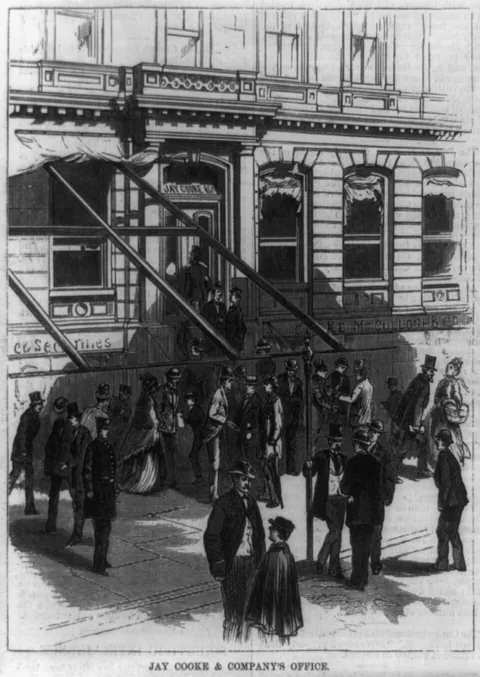 We had, you know, we talked about Google. I know we're going to get more into some of the financing questions sort of later on, but I think it is likely there's going to be pain.
03A great business on a treadmill
The subscription is profitable, but training costs exceed the cost to serve, and competitors dictate them.
So financing is the gate, and people will experience pain. So my experience reading your coverage of the S-1 this week, though, was: turns out Anthropic is actually like a rock-solid business.
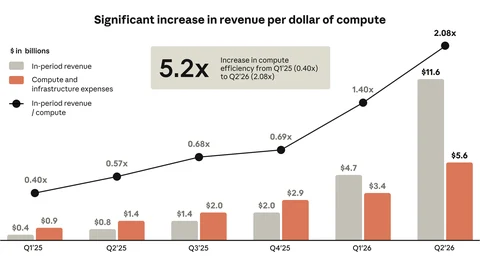
So yes, you're totally right. Like, the core business looks amazing. The subscription for sure is profitable. It's less profitable than the API,18API (application programming interface) — here, programmatic access to models for developers and companies, paid by volume of text processed (per token) rather than a flat subscription. but the subscription is a great product. People are— like, they've already paid for it, so they're going to use it. They're going to get used to your product, your workflow, they're going to advocate for that in their companies.
Mint Claude people, you know— exactly. And once you're paying for it, it's like, of course I'm going to use that. Like, yeah. No, I think it's worth it to pay for both, but who's going to actually do that, right? By the way, there's a whole point— someone, like, figured out the whole point system that Claude applies to you, like, reputationally, to see—
Wow. Yeah. I did not know that Claude was bestowing social credit scores19Social credit — a nod to China's social credit system: government and private trustworthiness ratings for citizens and companies that China has been building since 2014. on people.
Apparently if you sign— well, I think it's kind of for, like, some of the distillation issues,20Distillation — training your own model on the outputs of someone else's stronger model. Claude's terms of use forbid doing this to build competing models. questions, or whatever. So, like, if you sign up and do Max plan21Max — the priciest Claude subscription plans, at $100 and $200 a month, introduced in April 2025. immediately, like, you start in the basement.
Interesting.
Counterintuitive. Perfect. Well, it kind of makes sense if you think about it, but yeah, I'm pretty sure I'm one that maybe started out in the basement. So: business looks amazing. So on one hand, that's a reason not to show that off.
Like, companies don't want to show, like, how good their business is sometimes, for sort of competitive reasons. But that's actually not the concern in this case. It's great. It's a great talking point. Everyone realizes, holy cow, this is an amazing business.
The problem is the R&D22R&D — research and development. For AI labs, it consists mainly of the compute used to train new models. spend is, again, much larger than the cost to serve,23Cost to serve — what it costs to answer customer requests: mainly the compute for inference, that is, running models that are already trained. and it is increasing more quickly than the cost to serve, even in the first half, when their usage is exploding. Right. In that half year, the cost of their R&D spend for training and all that sort of thing went up more than the cost to serve. And the issue is, why did it go up? Well, because they want to make a better model. Why do they need to make a better model?
What's the whole point of pacing the frontier?24Pacing the frontier — Anthropic's argument that you can only do AI safety research and influence the industry if you have frontier models yourself. The company laid out this strategy in its essay "Core Views on AI Safety" (2023), among other places.
Because there is competition.
Because there is competition. And what that means is the largest portion of their costs is not, in fact, inference. The largest portion of their costs is this training cost, and the speed with which they need to spend money on that is out of their control. Right. It is a matter of competition.
Ongoing cost.
Huge cost.
It's not a situation where you crack the code and then get it under control.
That's right. And so that is the concern here with this company, is they have a cost function that is kind of out of their control. And all indications are, the bigger the models get, the better they get, the more it costs. And this is where we circle back to "we need to pace the frontier for safety." It's like, "we need to pace the frontier to make sure our company stays in business."
It is definitely the case.
Well, as a beautiful example, like— no, their safety messaging is aligned perfectly with their business needs.
04Where the "$80 billion loss" comes from
Amazon gave Anthropic money as a loan convertible into shares, and every funding round revalues that debt.
Well, so as far as losses are concerned, another number that was floated before this was actually released: the Wall Street Journal reported Anthropic reported a loss of $80 billion for the first half of 2026, based on the S-1. Can you unpack that figure and why it's not as ominous as it sounds?
Well, so it's not ominous at— I mean, it depends how you look at it. It's not ominous at all. So what happened was, when Amazon— Amazon made the investment of a lifetime. Them and, who's the— SBF.25SBF — Sam Bankman-Fried, founder of the crypto exchange FTX. His companies invested about $500 million in Anthropic in 2021–2022; after FTX went bankrupt, that stake was sold in 2024 for about $1.3 billion. Oh, SBF, yeah. So he lost his, Amazon got theirs. So Amazon, when Anthropic— like, no one— they were counted out completely.
They're like, OpenAI has won, the second place is coming along, nothing's going to happen. Amazon comes in, and just a brilliant investment, and they say they got multiple things out of it. Number one, they're like, you're going to come use Trainium.26Trainium — Amazon Web Services' in-house AI accelerators, developed by Amazon's subsidiary Annapurna Labs. And did Anthropic want to use Trainium? Absolutely not.
Probably not. That turned out very well for Anthropic, by the way. I didn't write about it this week, but I think I've written about it in the past. They talk about it in the S-1: the fact their compute is built from the ground up— their whole model is built from the ground up to be heterogeneous in terms of chips, chip-agnostic, right?
It just sort of built— a certain level of flexibility in their overall cost structure is sort of built in, because they had to. Yeah, they, you know, originally, way back, their very first models were on Nvidia, then they had this whole Trainium thing. But once you've already sort of supported two, then, okay, now we're on TPUs,27TPU (Tensor Processing Unit) — AI accelerators that Google has been developing for itself since the mid-2010s (with Broadcom) and rents out in its cloud. and now we're going to be on AMD, they have a deal with AMD. Like, they've built a layer of abstraction28Abstraction layer — a software layer that hides the differences between the systems beneath it: code is written once and can run on Nvidia, Trainium, TPU or AMD chips. that is a very good place to be. I think it has benefited them very well, just like they similarly— they've always been on all the clouds.
Like, you know, they're always on Amazon and then Google, and now they're on Microsoft. And that was a huge— I think that's very underrated in why they took over the enterprise under OpenAI's nose. OpenAI was stuck on Microsoft.29OpenAI and Microsoft — from 2019, Microsoft invested billions in OpenAI and was long its exclusive cloud provider; the two sides dropped exclusivity only in 2026 (Wikipedia, "OpenAI").
And so what advantage did that give Anthropic with enterprises?
Because if you have all your data in AWS,30AWS (Amazon Web Services) — Amazon's cloud division, the world's largest cloud computing provider. you would rather use the service in AWS. And so— oh, there's another thing. Sorry, it's an S-1. There were 400-plus pages. So a lot of threads.
ExplainerHow Anthropic books revenue that comes through the clouds
Amazon Bedrock, Google Vertex AI and Microsoft Foundry accounted for 48% of Anthropic's revenue in the first half of 2026 (11% in 2023). The cloud bills the customer, collects the money and keeps a fee.
- In the S-1, Anthropic treats itself as the principal in these deals: the customer gets the same service as it would directly, and Anthropic is responsible for the service and sets the price. So the full amount the customer pays goes into revenue, "on a gross basis."
- The clouds' fee goes not into cost of revenue but into "sales, marketing, and partnerships." That line grew by $3.0 billion in the first half of 2026, $2.7 billion of it from higher fees paid to channel partners.
- Ben objects on two counts: if Anthropic were an agent, only its share would count as revenue, and revenue would be smaller; and if the fee is the cost of delivering the product, it belongs in cost of revenue, which would lower the margin too.
So about 50% of their revenue is coming from the big three31The big three clouds — AWS, Microsoft Azure and Google Cloud. Claude models are sold through them via Amazon Bedrock, Google Cloud Vertex AI and Microsoft Foundry. via those services. So it's coming through AWS, coming through Azure, coming through Google, and it is confirmed that they're doing kind of sketchy accounting,32Sketchy accounting — this is about revenue recognition. Under the ASC 606 standard, a company books the full amount of a sale as revenue if it is responsible to the customer for the product (the principal), and only its own cut if it is an intermediary (the agent). depends how you want to define it, which is: if you pay Amazon $100, Anthropic is recording that $100 as revenue. Anthropic revenue. Okay. And then, in reality, like 30— a third of that or so, depends, it sort of varies, I think people were saying about 37%— goes to the platform provider, the AWS, the Azure, the Google.
So they are putting that 30% into sales and marketing.
I was wondering what the sales and marketing costs are. So that's part of it. Okay.
A little bit of BS accounting, in my opinion. So, for two factors. Number one, you know, I think it's fair to argue that they should not be recognizing the 30% at all. They should only be recognizing the portion that is going to them. And then their revenues would be lower.
And then, so when we say 15 or 85% margin, that is totally excluding this portion. So if their revenues were commensurately lower, the margins would be compressed, because the costs are still the same. Or number two, I'm not sure how that's not a cost of goods sold.33Gross margin — the share of revenue left after cost of goods sold (COGS), the direct costs of the product itself; for AI labs, mainly the compute used to serve customers. Sales and marketing expenses are not part of COGS and don't affect gross margin. Like, because it is a portion of the revenue, right? It's not like you're paying a fee and it's a fixed thing. It's like, as you do more revenue, the portion you have to pay the platform scales as well.
From my perspective, I think that should be in cost of revenue. Now—
This is what I mean, by the way: you live for this shit. You love accounting.
I absolutely love accounting.
You've got a Brewers hat on right now, but you've always got your accountant's hat on. Pocket protector.
Yeah, I need my— I need to get a custom Brewers jersey with a pocket protector. That'd be great.
So Amazon's $80 billion, and that—
Well, we're getting there.
Okay, you're weaving.
I am weaving. Oh, that's right. So those numbers that we talked about for margin are not quite correct, because this is a significant material amount that should be accounted for. I mean, it's in the financial statements, but I think this is more of a cost of goods sold, lower-margin story, for sure. The margins are lower, still great. To be clear, we're not complaining about the margins. That part of the business looks fantastic. So you go back to Amazon way back when: they have to be on Trainium, they're going to be obviously a part of AWS. But then also Amazon— I think how it worked, they might have put some money in the company, but they basically gave Anthropic a bunch of money, and this money was actually given in the form of a loan,34Amazon's loan — according to Amazon's filings, from the third quarter of 2023 through the fourth quarter of 2025 it invested $8 billion in Anthropic in the form of convertible notes, which it is gradually converting into equity. GeekWire. and so Anthropic could take that money and buy Trainium compute. So nice little— you know, this is the circular financing35Circular financing — an arrangement in which a supplier invests in a customer, who then spends the money on the supplier's products. Many AI deals have been criticized on these grounds, for example Nvidia's investments in OpenAI, which buys Nvidia chips. people complain about, but in this case, from Amazon's perspective— we can get into the role of the hyperscalers36Hyperscalers — the biggest owners of clouds and data centers: Amazon, Microsoft and Google (Meta and Oracle are sometimes included). here— it makes a lot of sense, and they needed the compute. They're basically double-dipping in advantage, because not just that— Anthropic using Trainium makes Trainium better, because they're going to push the limits of what this architecture can do, they're going to develop more tooling for it, all of which makes Trainium a better product to offer anyone and everyone else. Okay, so this is a massive win for Amazon, which they got because Anthropic had nowhere else to go.
They needed lots of money, they needed lots of compute. Microsoft was with OpenAI, Google was doing their own thing, Amazon stepped in. So as part of this loan, the nature of the loan is Anthropic could pay back the money, or Amazon could take shares. Right. And that was Amazon's call. Now, of course, Amazon is going to take the shares.
Source: Anthropic's S-1 prospectus, quarterly statements of operations, line "Change in fair value of convertible notes, derivative liabilities, and SAFEs"
But every time Anthropic raises money, the value of those shares is repriced,37Revaluing the liability — an obligation to hand over shares is carried at their current (fair) value. The more Anthropic's shares are worth in each new round, the bigger the liability, and the difference runs through the income statement as a loss, even though no one paid any money. and they have a liability to Amazon. Because they'll give the shares— like, I believe it'll happen with the IPO. So every time— they raised money multiple times, I think, the first half of this year— every time they had to reprice this, that is booked as a loss on their accounting. So that $80 billion is fake. It's not money out the door. What that is— the beautiful thing about accounting is everything has to balance, right?
One thing goes up, another thing has to go down. Where that money shows up is on Amazon's income statements: the increased value of their investments.
Yes. Well, and it's a reflection of the astronomical growth that Anthropic has experienced over the years.
05Dilution as the last step
Startup investments will whipsaw Big Tech earnings, and shareholders will pay for the buildout.
And so this is actually going to be a big problem with all big tech38Big Tech — the largest U.S. tech companies: above all Alphabet (Google), Amazon, Apple, Meta and Microsoft. earnings going forward, because all of the hyperscalers have various investments in these companies. Their earnings are going to go up and down based on the value of these investments. So Google, one of the challenges they had in their earnings this year— we're not going to talk about Google's earnings, we'll probably get to it next week— but is their SpaceX39Google's stake in SpaceX — in January 2015, Google and Fidelity invested $1 billion in SpaceX. value: the value of their SpaceX holdings went down. And so that, like, impacts their earnings. So you're going to have to look at the operating income,40Operating income — profit from core operations, before interest, taxes and revaluations of financial investments. Net ("overall") income includes revaluations of stakes in other companies, so it swings with their value. not the overall income.
And that's going to be the case with Amazon in the opposite direction. Their overall income is going to be way higher because of their Anthropic investment, which doesn't actually have anything to do with understanding the underlying business.
Okay, so we can all look forward to that.
Super interesting and also very annoying.
Yeah. Well, I mean, some of these, like Google, they've had their investment in Anthropic, like, reflecting massive earnings over the last couple of years as well. So we'll sort of ride the roller coaster once these companies become public. That's actually going to be kind of fun.
And by the way, there's a bunch of these outstanding. Anthropic has this sort of loan to— I can't remember, I should have the name in front of me, what these are called— but there's more. So Amazon hasn't finished converting their first one. They have two more.
Is this how Anthropic is paying for compute, as much as anything else?
Of course. Yeah. But this is the whole thing, is who's actually paying? Who? Investors. At the end, Anthropic investors. Well, so yeah, they're basically, like, materializing this money out of thin air, which is: every other investor in Anthropic is heavily diluted41Dilution — the shrinking of existing shareholders' stakes when a company issues new shares: the same block of shares becomes a smaller percentage of the company and its profits. by these.
And this is the whole thing about the— like, Anthropic is just super aggressive about this, but this is the case with all the hyperscalers. It's the case with everything. As we're moving into equity for funding this stuff, the people who are paying are existing shareholders. It is like— because you're just devaluing what you own. And this is built into Anthropic.
ExplainerHow Anthropic pays for compute with stock
The S-1 describes note purchase agreements with Google, Amazon and Broadcom: the partners give Anthropic money, which it spends partly on their own compute, and in return get convertible notes or non-voting Class N shares outright.
- Under its 2026 agreement, Amazon can provide up to $15 billion more in $5 billion tranches as agreed compute capacity comes online. After the IPO, each tranche is paid in Class N shares at the 30-day average price of the Class A stock.
- Broadcom's notes under the 2026 agreement convert at a discount, at 90% of the price, or at 85% and 13% interest if Anthropic misses certain revenue conditions.
- Amazon's notes from the 2023 and 2024 agreements hit Amazon's ownership cap and were rolled into non-interest-bearing notes; at the IPO they convert into Class N shares up to that cap.
Every such issuance adds shares and shrinks everyone else's stake: that is the "built-in dilution." Anthropic's S-1
Number one, they have all these outstanding share issues. They have to Broadcom,42Broadcom — an American maker of chips and networking equipment; it co-develops TPUs with Google. they have to Google, they have two and a half more to Amazon, where it's just built-in dilution. They also have built in: if the value of our stock goes up by like 50%, then we have the right to issue 2% of outstanding shares to this benefit corporation LLC.43Public benefit corporation — a for-profit company whose charter obliges the board to weigh not only shareholders' interests but also a stated public purpose. Anthropic is incorporated this way. Sure. It's like— it's just—
The fun continues.
Yeah. I mean, I guess they're very straightforward about it.
But dilution is baked into the equation, because there was a tweet from someone named Vincent Jansen on Twitter. He wrote this week: "First, hyperscalers used free cash flow.44Free cash flow — the cash a company generates from operations after capital expenditures, which can go to dividends, buybacks or debt-free building. Next, hyperscalers used debt. Now hyperscalers are turning to share dilution. Is there a final step, or is this the last?" Anthropic very much part of the same story there.
Yeah. Well, I mean, again, we talked about this on Stratechery, like, this summer. I think we were very sort of ahead of the curve on that.
Yeah, this is the last. I mean, but it's also, in some respects, the best, because the reason why companies want to do debt first is because then they retain the upside. Once you are having to sell shares, you're basically like, "Give us money, because you believe there is going to be—" and you are giving away the upside to new people, to new people buying those shares, which I think in this space is healthiest, all things considered.
Yeah, I mean, you could go glass half empty and say, well, now the burden is being shifted to retail investors45Retail investors — individuals who buy stock with their own money, as opposed to funds and other institutional investors. Before an IPO, they have almost no way to invest in a company. of the future to fund these bets, but—
Right. And there, you know, I am sympathetic to— the private investors got all the upside to date. In Amazon— if you were a retail investor, you could have bet money in Amazon, sort of seeing this coming. It's not like it was unknown that they had these deals. But okay, now the public can buy in when we're worth 1.5 trillion or 2 trillion. And it's like, where are we going to go from here? But I mean, that's why Anthropic is— they're pretty straight. Their proposition is: look, you can buy, it's super expensive.
We're going to dilute you endlessly, but we're going to control the world. And how much is that? Going for a ride.
06What the second half will look like
The S-1 numbers run to June 30, and since then growth has slowed, judging by Ramp's data.
Absolutely. Well, and my counter to somebody who made that argument to me would be: it's preferable to the scenario where Anthropic just remains private in perpetuity and does it that way. So I think it's healthier to have public market disclosures,46Disclosure — U.S. public companies must report to the SEC every quarter (Form 10-Q, plus the annual 10-K) and promptly disclose material events (Form 8-K). number one, and also public market upside in the midst of all this.
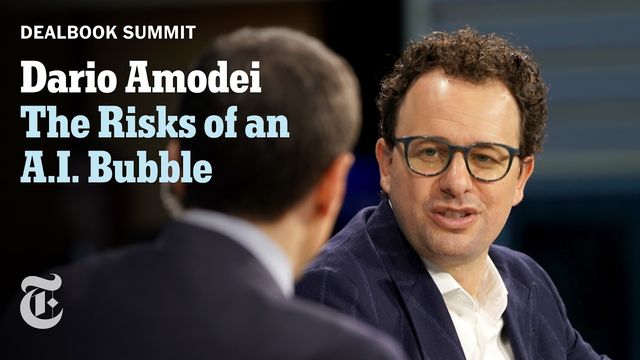
There's a couple of timing things that are interesting here. One, I think it was a year ago where Dario Amodei was, like, mad— or, like, mocking OpenAI, or not mocking, but saying they're being reckless for buying all this compute.47Reckless compute buying — in December 2025, at the DealBook conference, Dario Amodei, without naming OpenAI, said some players were buying compute "YOLO"-style and turning the risk dial too far. And, like, literally, like, six weeks later, he looks like a dummy, because they don't have enough compute. And all of it's more expensive now. It is more expensive. And so now they're like, actually, we're going to get a ton of compute.
I suspect— I can't say for sure, but I suspect that made the first half of this year look even better financially, though, because their costs are compute. They didn't have enough compute, but their costs were lower. Well, but this is a similar idea: who's actually paying? The people who were paying in the first half of this year were the people for whom Anthropic was down every few hours because they didn't have enough capacity. So, like, all those people, you did your part for Anthropic's IPO by making their margins.
Grinding through your frustrations with Claude.
That's right. Well, the other thing that's interesting is these numbers in the S-1 are as of June 30th.
That's what I was going to ask about. What are you still wondering about as we move forward?
Well, all the reporting, and is that in, like, whatever data we can see— like, Ramp48Ramp AI Index — a monthly index from the fintech company Ramp: the share of U.S. businesses paying for AI services, based on its customers' card and bill-pay spending. has that, like, index of spend or whatever— is that it's sort of flatlined— not flatlined, but the rate dramatically decreased in the second half this year. Astra comes out,49Astra — GPT-6 Astra, OpenAI's flagship model and the first in the GPT-6 family, released September 3, 2026. you know, like, OpenAI is really, really pushing. And what's interesting— but then again, on the flip side, Opus 5.550Opus 5.5 — Claude Opus 5.5, an Anthropic model released September 22, 2026; by the company's account, it matches the flagship Claude Fable 5.1 on most tasks at a noticeably lower cost. came out, so did it re-accelerate? Like, what's going to— so this is all— I think it expires, like, what's it called?
Does it— not dehydrate. It goes stale.51Stale financials — under Rule 3-12 of Regulation S-X, the financial statements in a registration statement go "stale" if they are 135 days old or more on the date it becomes effective. For June 30 financials, that date falls on November 12. I think it's November 12th, and the reporting is they're going to, like, actually— pushing to go—
Public in mid-November.
Right.
Will we get fresh numbers, you know, to celebrate the occasion?
We have to get fresh numbers as of November 12th. Okay. Are they going to try to get out before then? Is it going to be after that? Is there going to be, like, an October surprise? Right?
Like, I don't— and it is interesting, though, because the narrative around Anthropic— look, people are very bullish on this company in any context, but the narrative around Anthropic has become a bit more nuanced over the last several months because of the progress that OpenAI has made in the enterprise, because of random Ramp charts that show the growth flatlining, at least in relative terms. And the reality is, given the growth over the last couple of years, they're just not going to be able to replicate that growth going forward, because it's impossible. It's the law of large numbers.52The law of large numbers — in business jargon, the idea that a big company finds it ever harder to keep growing at the same rate: doubling a billion is easier than doubling a hundred billion. The mathematical law of large numbers is something else: the average over many trials approaches the expected value. So we'll see what it looks like.
But the counter to this is, that was the, I think, accepted wisdom a month ago. Opus 5.5 is so good. Like— I mean, so maybe it's going to say, yeah, it flatlined, but then it took off again. The only problem, if that's the case, that actually just reinforces the "we have to spend, because all that matters is how good our model is." If all that matters is how good your model is, you have this built-in accelerating cost center in your business that you just have to be sprinting on the revenue side to outpace.
07The labs vs. everyone else
Microsoft and Palantir teach customers to keep the model swappable, while the labs move up the stack.
Well, and you had this question for Shyam Sankar53Shyam Sankar — Palantir's CTO, the company's 13th employee and one of the leading voices of its defense business. in your Stratechery interview this week: is it inevitable that the labs have to come for all software companies because of the commoditizing54Commoditization — products from different makers become interchangeable, leaving price as the only way to compete. nature of their models? And I think about Anthropic's costs, and obviously competing on the frontier is going to continue to be incredibly expensive. And that does make me curious about what other lines of business they try to come for to realize all their upside in the years to come. And maybe that sort of allays some of the concerns about continuing to compete on the frontier.
Yeah, I mean, you have all these lines of battle in tech. So one is obviously OpenAI versus Anthropic, right? That's sort of the headline. That's been the big blockbuster fight for three years now. But there is the frontier labs versus everyone else. And I think the two companies on the forefront of the everyone else is Microsoft and Palantir,55Palantir — an American company that builds data analysis platforms for intelligence agencies, the military and corporations, founded in 2003 by Peter Thiel, Alex Karp and others. Karp is its CEO. both of which are making very similar propositions to their customers and making the argument publicly.
Both Satya Nadella56Satya Nadella — CEO of Microsoft since 2014. and Alex Karp have been doing this, which is: you need to be in a place where the model is completely replaceable. Everything you do needs to be around it. And they're model-agnostic. They will trot out every argument they come up with for why this needs to be the case, right? Like— but, you know—
There's a lot of, like, "Anthropic will steal your business too" is part of the rationale.
A big part of it is, yeah, if you give them your data for how your business works, like, it's only a matter of time. It's like, what do you have? But another one is, you should be able to sub them out. And why do you want to sub them out? Because whoever gives you a cheaper deal, whichever model is better. And so there is a real sort of fight and tension going on here.
And the argument that I've made— I asked this to Shyam— or I— I told him, I apologize for calling you Shams.
I heard you did drop a Shams at one point.
Oh, did I? Oh, no. I told him at the end, I'm like, I kept wanting to say Shams. Unfortunately, a classic tech guy, he did not know what I was talking about. Completely lost on that one. Which is Shams Charania,57Shams Charania — ESPN's NBA insider (with The Athletic until 2024), who is usually first to report trades and signings. His scoops are known as "Shams bombs," after the "Woj bombs" of his predecessor, Adrian Wojnarowski. newsbreaker in the NBA.
I think at one point in the interview you dropped a Shams bomb, and I don't know, is Shyam Sankar, like, known for bombs?
Yes. So he's known for writing these, like, emails to, like, the whole company or a whole team, just taking them to task. Like, he's like the company enforcer.
Great.
No, they're called— they're called Shyam bombs. Okay. But no, it was not really— I did get a long email from him, but it was nice. But yeah, he clarified there weren't enough expletives in his email to qualify.
So yes, Shyam Sankar— no, I've been raising this for ages. I think in the long run, in the fullness of time, they need to go up the stack,58Up the stack — in tech, "the stack" means the layers of technology: hardware and infrastructure at the bottom, applications and the interface a person uses at the top. Moving up means building the products the customer actually uses. integrate into the customer, owning the customer experience, because— and you can even see this with things like Claude Code59Claude Code — Anthropic's coding agent: it runs in the terminal and reads, writes and runs code itself. Released in 2025, it became the company's biggest hit. versus Codex.60Codex — OpenAI's coding agent, Claude Code's main competitor; released in 2025. Working with Claude Code, working with Codex are different. Like, they're organized differently. The way I think about it is, I feel like Codex is like people who file their emails into folders.
It's like, very project, and you have threads within projects, and it's like— if you are that sort of person that is very organized, it makes more sense.
As a former lawyer, I think of Codex as the associate61Associate and partner — at American law firms, associates carry out assignments to clear instructions, while partners are co-owners of the firm who decide for themselves what to do and how. Andrew worked as a lawyer in Washington for two years before returning to journalism. and Claude as the partner.
Yeah, Claude is just— it's better at handling lots of different things. You are constantly changing topics. But if you want to be organized, like, on your own, it's, like, kind of maddening. Needless to say, that's why I use Claude a lot. Claude's kind of a dick.
So the personality still drives me crazy. But yeah, like, for me, the way it ends up manifesting— like, I work on this, I talk about Gecko,62Gecko — Stratechery's internal system, which Ben is building with AI agents; in the November 13, 2026 episode of Sharp Tech he says he and his colleagues use it. but the actual building of it, where it's very clear I'm building this piece, this piece, this piece, I've done mostly in Codex, and the actual model powering it is Claude. Because it just handles, like, different things coming at different times. Now, it is kind of interesting in its own right: I'm almost choosing from a UI perspective, as opposed to, like, a what-the-model-does perspective.
But the more you have that choice— from a UI— UI is essential, because that is the interface. It's the interface to humans. It's literally in the name: user interface. But you have people who are used to, say, Claude Code, and they don't want to go to something else. Now, right now you can sub stuff in and out to a certain extent, you can call different models, so that can be worked around. But the further up they go in the stack— or say you do a Codex work project, whatever it's called, I can't keep track, but you get your little virtual machine63Virtual machine (VM) — a software emulation of a separate computer on a shared cloud server, with its own operating system and files. in the cloud. So you have your own VM, it can write stuff down.
It's like, wow, it's so helpful, they're giving me this virtual machine in the cloud. Yeah, you're now stuck in their cloud. Right? Or in the Claude Design64Claude Design — Anthropic's tool for prototypes, slides and other visual work. It launched April 17, 2026, and Figma's stock fell about 7% the same day; three days before the launch, Anthropic's chief product officer Mike Krieger stepped down from Figma's board. Sherwood News. thing, like, you know, what they did to Figma, kind of did them dirty— but the more you're using that and using an application, the less likely you are to switch.
Locked in.65Lock-in — when leaving for a competitor is costly or a hassle for a customer, because their data, habits and workflows are tied to the product. Sure. That's right. In a world where all you need to do is change an API, that's the world— to go back to the beginning— where you're on this treadmill66Treadmill — the image of a business that has to keep running, that is, keep spending, just to stay in place: stop, and competitors pass you. and you don't have very much pricing power.
Sure. Well, and it does— I mean, you could talk yourself into limitless upside if you talk yourself into the possibilities of Anthropic just eating SaaS67SaaS (software as a service) — subscription software that runs in the cloud: Salesforce, Workday, Slack and the like. over the next couple of years and doing all sorts of different things in the software area to expand its revenue pie. And maybe they could do that.
Well, technically— expand revenue pie— it's lock-in. Lock-in is an important part of making money. Like, what's your moat?68Moat — a durable competitive advantage that keeps rivals from taking the business; Warren Buffett popularized the image.
Right. Well, and right now it's very difficult to falsify any hyperbole about what Anthropic or OpenAI could accomplish in that space. For now, we have a couple emails on Anthropic, but before we get there—
AdStripe
I mentioned at the top, today's show is presented to you by Stripe. Ben, Stripe is the financial infrastructure behind many internet-native businesses, including companies you regularly cover on Stratechery, and including Stratechery, and including GOAT.aGOAT — Greatest of All Talk, Andrew Sharp and Ben Golliver's NBA podcast. Like Sharp Tech, it comes in the Stratechery Plus bundle. Stratechery Plus.
SubstackbSubstack — a paid newsletter platform: writers publish posts and podcasts there and sell subscriptions, and Substack takes 10% of revenue. is one example that you've been invoking on Stratechery in ads all week long. Every Substack creator is also a Stripe customer. Question for you, as a general matter: why does Stripe have a market, and why does it make sense for Substack to outsource for those capabilities rather than building its own tool?
Because it's miserable. Like, no, you— like, this goes back to why I started with— why Stripe was the unlock for me to do Stratechery.
Like, there was PayPal, which was terrible, a terrible reputation, you lose your money, wasn't really catering to individuals in the way that it needed to be, in my estimation— I think probably still doesn't. Or what are you going to do, go get, like, a merchant accountcMerchant account — a bank account through which a business accepts card payments. You open one at a bank such as JPMorgan Chase, the largest in the U.S., with vetting and contracts. from, like, Chase or something? Like, just the— so maintaining it would be so miserable that it would defeat the purpose of starting a business. I mean, I wrote a few years ago, Stripe's like the platform of platforms, which— you need an abstraction layer for basically everyone else. You have a gazillion banks in the world, you have all these, like, financial rails,dPayment rails — the systems money moves over: the Visa and Mastercard card networks, ACH bank transfers, SWIFT and so on. all of which are archaic or old or new or whatever it might be. It's like an operating system. It's an operating system for finance.
Like, why do you need an operating system? If you build for Windows, that means your computer is going to run on a gazillion different kinds of hardware, because all that part is abstracted away from you. And so, yeah, when I did the first version of Stratechery, and I had to get, like, MailchimpeMailchimp — an email newsletter service, owned by Intuit since 2021. over here, and I had to get, like, a WordPress plug-in, and I had to get all these different pieces, the Stripe part was great. And so a Substack comes along, or a Passport,fPassport — Stratechery's own subscription platform. and we want to say, okay, let's integrate all that stuff, let's provide one offering that does everything. But you're still not going to reinvent payments, right? And that abstraction layer— exactly. So that's the commonality. Okay, it's like, why did I use Stripe and all this other stuff?
Why did Substack do it all together and still do Stripe? Passport, same sort of thing. Even, like, a Shopify— Shopify, their most important product is Shop Pay,gShop Pay — the accelerated checkout of the Canadian e-commerce platform Shopify: it saves the buyer's details so they can pay in one tap on Shopify stores. which ultimately goes down to Stripe.
I didn't know that. Yeah, I didn't know that Shopify is running on Stripe. I love Shop Pay. Boy, oh boy, one of my favorite products of all time. Phenomenal, yes. Just a clean experience every time. Well, fintechs can use Stripe to start their own credit card programs.
Marketplaces can use Stripe Connect to verify sellers. AI companies can use Stripe Billing to track usage. I am really grateful that Stripe has empowered so many members of the modern media. That was one thing I didn't mention last week. Obviously, empowered my own career, but, like, my media diet is probably 75% Stripe customers at this point.
This is, like, the obvious angle for us to talk about it, because it's the direct personal thing. Yeah, it's us. All the listeners and readers, this is why they should be grateful, right? Like, not just us, not the Greatest of All Talk, but all your favorite podcasts, all the Substacks, all this sort of stuff— you have to be able to get paid. Right. And that was not easy to do before.
08Obsessed with OpenAI
A listener is appalled that Dario and Daniela Amodei spent most of an interview bashing OpenAI.
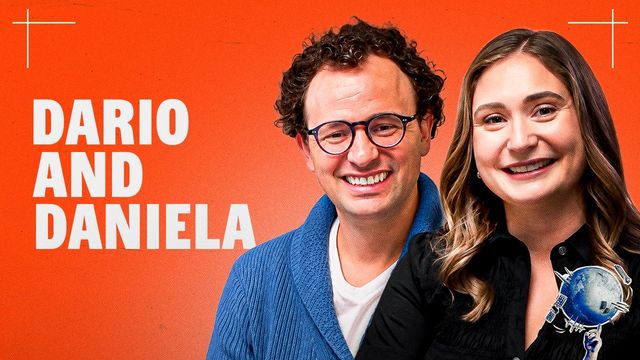
Well, here we are. All right, back to this show. Couple Anthropic emails. Alexander says: "Andrew and Ben, I watched Dario and Daniela's69Daniela Amodei — Anthropic's president, who founded the company with her brother Dario; before that she was OpenAI's vice president of safety and policy. interview this week with Walter Isaacson,70Walter Isaacson — the American journalist and biographer, author of lives of Steve Jobs, Einstein, Leonardo da Vinci and Elon Musk. and woof. They start off the interview by praising the inherent honesty and goodness of Anthropic and then spend the majority of the 42-minute discussion criticizing OpenAI for the following: having ads in their product, building more sycophantic models,71Sycophancy — a model's tendency to agree with and flatter the user. In April 2025, OpenAI rolled back a GPT-4o update that praised even dangerous decisions (Wikipedia, "Sycophancy (artificial intelligence)"). partnering with the government as, quote, 'an opportunistic move rather than a principled stand,' and being generally dishonest. The level of obsession, hatred, and disdain they have for OpenAI is alarming. It's like someone badmouthing their ex during their wedding vows."
"Someone should remind Dario and Daniela that when you point one finger at someone else, there are three fingers pointing back at you."
Not sure how that works. Had not heard that phrase before, but—
Are you serious? I mean, I'm pointing a finger at you—
Yeah, there's— oh, there we go.
People will have to watch the video for that one, but sure enough, there were three fingers pointing back at me. I'm baffled how—
There's a question here about the Gen X–millennial thing. Is this a generational—
I don't know how have you not heard this before. It could be— we're only divided by, like, six years, but maybe that's enough of a chasm to create that disconnect. In any event, what do you think of Alexander's sentiments there?
It was funny you included this email, because I was literally thinking the exact—
This is the hazard of recording podcasts: sometimes you're just thinking out loud on air for everybody. But there you go, learn something new every day. All right, so you were thinking the exact same thing.
Okay. That, like— it's kind of— it's pathetic, in a way, the extent to which they do continually define themselves as being the opposite of OpenAI. And it's kind of funny, because they're like, oh, it's about alignment72Alignment — the field of AI research on how to make models act in line with human intentions and values. and training our model to be great, and if they continue making decisions like, "Oh, we're going to not do what OpenAI does"— who's actually setting the agenda here, right?
But if OpenAI is, like, too online, Anthropic is, yes, like, too anchored on—
What they're doing.
That's right. Sure. And, you know, to what extent might OpenAI actually do something that makes sense, that is the right thing to do, and Anthropic is, like, anchored on, "Well, guess that's the wrong thing to do." I do think it is a very astute point.
It speaks to overall just the discomfort I have with their entire view of the world, which is, like, this stuff is too powerful, so someone has to teach it how to be good. And the only ones that can be trusted to do that are us. And you always ask, why you? And Alexander's pointed out what their answer is: because we're not Sam Altman.
It's like, I'm like, if your definition of being good is not being Sam Altman, you—
Well, and maybe I'm too immersed in this world at this point, because to me—
Well, you're still defined by Sam Altman. It's like people who define themselves as being against Donald Trump. You have let Donald Trump define the entire frame in which you're operating.
But it's almost just ambient noise to me when I hear them go off on one of these tangents about how untrustworthy OpenAI is or how untrustworthy Sam Altman is. I mean, there's an element of this where it's more charming than, like, some of their other crazy digressions. Their obsession and their rivalry with OpenAI, not really that big of a deal one way or the other, as far as I'm concerned. I can't get too worked up about it.
Except these are the people setting themselves up as, like, the moral arbiters for everything.
So I don't believe that. So I've never taken them seriously.
No, I believe they're trying to do that.
Yeah.
The answer isn't to just— like, I don't think it's the right approach that they should need to teach Claude morals. I'm not here to teach Anthropic morals. What I'm here for is to make sure that there is no small collection of people that get it decided for everyone else. Like, that's sort of the bigger one.
Well, and to the extent that the mudslinging at Sam Altman is intended to delegitimize him in the eyes of the mainstream and ultimately sort of redound to Anthropic's monopoly power over how this technology is deployed, that sucks. It's also so far—
Well, to what extent has Anthropic actually been the best thing for Sam? Like, oh my God. Right? Like, suddenly— and they've done wonders for Mark Zuckerberg. Well, everyone who's, like, worried about Anthropic is like, "Sam, he's not that bad."
Right. So, yeah, we can work with this guy. Well, and when you go back to OpenAI when Dario was there,73Dario's OpenAI — Dario Amodei joined OpenAI in 2016 and rose to vice president of research; he left at the end of 2020 with his sister and a group of colleagues, and in 2021 they founded Anthropic. the original beefs with Altman, at least in some cases, were completely insane.
All the dumbest stuff OpenAI did were from Dario Amodei and his whole team. The whole, like, "ChatGPT-274Fact-checkBen says "ChatGPT-2," but he means the GPT-2 language model: in February 2019, OpenAI held back its full version, citing the risk of misuse, and released it only in November; ChatGPT came out only in 2022 (Wikipedia, "GPT-2"). Dario Amodei was leading research at OpenAI at the time. is too dangerous to release."
Right. Well, and part of their falling out, it involved a clause that would have required OpenAI to merge75The merge clause — OpenAI's 2018 charter says that if a value-aligned, safety-conscious project comes close to building AGI before OpenAI does, OpenAI will stop competing with it and start assisting it. OpenAI Charter. with another company that was closer to AGI76AGI (artificial general intelligence) — AI that matches humans at most intellectual tasks. than they were, and Sam wouldn't include that clause, or Microsoft wouldn't agree to including that clause in the investments, and Dario was very upset at— like, of course Microsoft wouldn't agree to it. And of course Sam wouldn't, like, have that be a deal-breaker for Microsoft.
This does go back, though, to the OpenAI original sin, which is this whole "we're going to be a nonprofit.77Nonprofit OpenAI — OpenAI was founded in 2015 as a nonprofit; in 2019 a capped-profit company was created under it, and in October 2025 that company was converted into a public benefit corporation, OpenAI Group PBC (Wikipedia, "OpenAI")."
Like, actually, companies should operate like normal companies.
Traditional incentives.
And this is the whole problem with the whole S-1 and Anthropic's insane governance structures we haven't talked about either. There's, like, seven share classes.78Seven share classes — Anthropic is set up as a public benefit corporation with several share classes. Shares of a special Class T are held by the Long-Term Benefit Trust, an independent trust that elects part of the board. Like, there's this magic share that, like, the board has, or the benefit corporation has, or one of these random things has, about who gets voting or who doesn't. It's nuts. Like, actually, we should just operate like normal companies.
That's what you're buying. Yeah. Well, we'll see. Profit motives: good. Healthy.
Good for society, healthy, yes.
You know, I was writing about China for Sharp Text79Sharp Text — Andrew Sharp's newsletter, with weekly pieces on basketball, tech and China. this week, and they have all these political incentives that kind of distort things, obviously, famously. And America— as crazy as America can become in the eyes of the world, the rest of the world can trust that there are basic profit and market incentives guiding the decisions that are made. It's incredibly important.
Yeah. Like, it is its own rule of law. And it gives you— why is the rule of law important? You can make decisions, you can make investments within a predictable framework. That is what the traditional corporation, profit-maximizing corporation— yes, there are obviously issues, they're well documented, but every system has issues— and the benefit that has is rational acting.
You can actually engage, understand someone else. This seven-share weird governance, "we're not actually governing for profit"— it's worse. And it's— I mean, you know what you're signing up for, to be fair. And you're signing up for, like, "we're going to just dilute you away, and we're not focused on making a profit." And maybe they'll pull it off, because Opus 5.5 is— because at the end of it, that's what we always come back to.
It's like the core product. Really, really good. All right. Ravi says: "I was just listening to Sharp Tech at 3x speed while on the treadmill. I usually listen to podcasts at 3x, but for Ben's updates or interviews where there is also a transcript, I listen and read, which is even better."
Yeah, see, Ravi, you should have filled us in.
There we have it. "I don't watch video versions because I don't have YouTube Premium and can only go to 2x." Ravi! Does he need YouTube Premium? That's a hilarious reason to not watch video podcasts, because it only goes to 2x.
I mean, look, you can live the life the way you want to. I'd rather you pay your subscription money to Stratechery versus YouTube, if that's the one.
He's making good choices, as far as I'm concerned.
Yeah, you know what? I have nothing to say. Continue with the email.
09Is there enough money in the system?
Craig Moffett's question: does money from end customers cover the cost of the whole value chain?
"Great interview with Craig Moffett,80Craig Moffett — an American telecom and media analyst, co-founder of the research firm MoffettNathanson." he says. "Where does Ben land on his key question about AI capex?81Capex (capital expenditures) — spending on long-term assets: data centers, chips, power plants. This is Moffett's key question: is end demand from consumers and enterprise where it needs to be, and will that be sufficient in the near term, 2027, 2028?" And the direct quote from Craig Moffett: "All I care about," he said, "is: are the revenues coming into the system— which means coming into Anthropic, coming into ChatGPT— are those greater than the cost of building the whole value chain? Ignore all the revenues going on between the layers of the value chain. That's just noise. All that really matters is enough money coming into the system to support the system."
Where do you stand on that question? I thought it was a pretty good formulation of, like, the core issue from Craig Moffett.
Right. It's easy to cut out, like, how much is Nvidia taking, how much is TSMC82TSMC — the Taiwanese company that is the world's largest contract chipmaker; it makes both Nvidia's GPUs and the hyperscalers' own accelerators. taking, what's up with the neoclouds?
Yeah.
No, it's a very good observation, and I don't know— like, we don't know what the timing is. Right now, as impressive as Anthropic's revenues are, they don't come anywhere close to all the capex that's being put out. But the capex is also for two to three to four to five years down the road. If Anthropic keeps accelerating the way they are, then you're like— accelerating based on what time frame? The beginning of the year, later on? All that matters is their revenue growth. This is the other point. This goes back to, like, people get really worked up about stock-based compensation,83Stock-based compensation — paying employees in shares or options. The company spends no cash, but it issues new shares, diluting other shareholders. because that is also dilution, and they're like, you should be evaluating this in your stock picks. The reason people don't care about stock-based compensation— they only care if your revenue is not growing. If your revenue is growing, no one cares, it's fine. Once your revenue isn't growing, they're like, "Yeah, well, and also, have you seen their stock-based compensation?" Right? And so all this stuff I talk about with Anthropic, the dilution, the weird governance— no one cares if it's up and to the right. And that matters broadly for the whole ecosystem. The thing to come back to, though, is that Amazon deal at the end of the day, and the question that we got about going from free cash flows to debt to equity. The entities with the most capacity in all three areas: who has the most cash flow, who has the greatest capacity to issue debt because of their large cash flow and diversified businesses, which gives them basically, like— not collateral, but the other sources of income— and who has the greatest capacity to issue stock?
Hyperscalers.
Google, AWS— or Google, Amazon, and Microsoft. Yeah, there is an extent to which, if we cross the gap, they're, like, the girders of the bridge that get us across. And it's going to be very interesting to see how they play their hand over this little bit. Like, to what extent does it end up Sundar84Sundar — Sundar Pichai, CEO of Google since 2015 and of its parent company Alphabet since 2019. and Satya holding up the bridge? Well, I mean, are we going to end up in a world where Anthropic is all over here doing all their crazy stuff?
And what actually happens is just AWS and Google just, like, basically own them, to get them over the canyon. And of course we could reach a limit. The limit where everything goes sideways is once the hyperscalers can't do it anymore. But they are— what would that mean? They have the cash flow of last resort,85Of last resort — a play on "lender of last resort," the term for a central bank that bails out banks when there is nowhere else left to borrow. they have the debt-raising capabilities of last resort.
I mean, even all the neoclouds, all this sort of stuff that's out there— the hyperscalers' cost of capital86Cost of capital — what money from lenders and shareholders costs a company: interest on debt and the return investors expect. The more reliable the company, the lower it is. is so much lower than a hyperscaler trying to raise— like, Nvidia's out there—
Neocloud.
Or, yeah, the neocloud, yeah. Why is Nvidia backing up the neoclouds? This is one of the concepts— this is when I really wrote about the credit crunch, or the credit questions, and the railroads: Nvidia backstopping87Nvidia's backstop — for example, in September 2025 CoreWeave disclosed that Nvidia had committed to buy $6.3 billion of its capacity that it couldn't rent out to customers. all these neoclouds. Nvidia sees this happening too, right? Because the worst-case scenario is the world runs out of money before the revenues catch up.
And that's, like, what happened with the railroads in the massive crash. Basically, the world just ran out of money. It didn't mean the railroads weren't useful, right? The rails are still used today, but there was a massive financial crash. The way we don't get there is, we just have to bridge the gap to where the revenues are enough to pay this all back. And the challenge for Nvidia is, if we get there, it's probably because of the hyperscalers.
Okay.
And that means the hyperscalers will have gained tremendous power over the entire ecosystem, because you get what you pay for, right? And in that world, those are the ones who are going to build competitive chips to Nvidia, and the ones who are going to push Nvidia on prices the most, all these sorts of things.
When we say tremendous power, is that because Anthropic and others will have to continue trading equity in exchange for compute going forward?
Yeah, right. And, you know, those terms Amazon got with Anthropic was when Anthropic needed it the most, because they were trying to get started and no one believed in them. They needed a ton of compute, and so Amazon got an unbelievable deal. Right. You can fast-forward: the deals today maybe aren't going to be quite as good, but if Anthropic is like, "We can't operate"— no one— our equity— like, if their stock price starts plummeting, they have to turn: where can we get money to be competitive?
Amazon's like, "I got some money for you." Oh boy. "Remember that deal we made in 2023, 2024? How about an even worse one?"
Right? Like, I can't wait to see what happens over the next couple years here, you know? Well, and I think Moffett's core question is, like, is the money for any of this here? Because he doesn't doubt the technology, but it's like, how much are people, how much are enterprises willing to pay, and can that sustain any of this over the next couple years?
10Advertising, consumption and faith in people
AI will pay off through new companies and new business models, and Ben sees the attacks on advertising as a lack of faith in people.
Well, I think it is something of an open question. I mean— yes. Well, if you want to really zoom out, I think the biggest broader question— one of the— I really enjoyed this, the email with Shyam— not Shams— this week. And one point he made up front is— you know, he's talking his book, of course, but— I mean, Palantir, he admitted in there, because I kind of pushed him on this— like, cult recognize cult. Like, part of the reason they're worried about Anthropic is, like, we're the right religion, they're the wrong religion.
That's right. But what they see with companies is, companies who are focused on using AI to improve the bottom line struggle, because how do you improve the bottom line? Replacing humans. How do you improve the top line? Multiplying humans, right?
There's this difference between multiplying versus replacing. And when you're multiplying humans, you're basically creating entirely new things to do, new workflows, new opportunities. The challenge for this whole trade in general is that, usually, number one, it takes longer. And number two, it usually comes from new companies: they come in, they disrupt the incumbents88Disruption — in Clayton Christensen's theory from "The Innovator's Dilemma" (1997), newcomers with an initially simpler and cheaper product displace market leaders, for whom it doesn't pay to break an established business. by virtue of the AI-first company taking on the old-school SaaS company. The SaaS company is trying to shove AI in and use it as much as they can, but they're just fundamentally not constructed properly to do it.
Yeah.
And so in the fullness of time, those companies go away, the AI-native companies take their place, and that's how AI takes over the world. I think there's a very decent chance that that's how it happens. The problem is it takes a long time.
Yeah.
And timing is the issue. All the money that's being spent on capex is being spent now. And that money needs to circle back into— because when you go from paying from free cash flows, paying with debt, paying with equity, the idea is it circles back around to your cash flows, paying it back, right? And so the question is, how long is that going to take? It's all about timing.
I 100% believe in AI. Like, I think that is pretty straightforward. It's incredible. Well, I'm in the middle ground. I don't think AI is replacing all—
You don't think AI is going to be God.
But it's just unbelievable. Like, I was just showing someone this week— it's so fun when people have, like, just suddenly the unlock.
And they're like, holy cow, and then suddenly they have— like, once you see what it can do, you come up with, like, 25 new things that I can do. And I could not be a firmer believer in this. And yet, number one— I said this years ago— the greater of an upside something is, almost the longer it takes. And you go back to the internet: 1993.891993 — the release of the Mosaic browser, the first to show images inline with text, which made the web mainstream; that same year CERN put the World Wide Web technology in the public domain. The feed was not invented until 2006.90News Feed — launched on Facebook in September 2006. Like, the core unit of the internet, the core monetization unit of the internet: the feed with personalized advertising. We did get search ads91Search ads — Google launched AdWords in October 2000; paid search results had been pioneered by GoTo.com back in 1998. along the way, but even then we're talking 1999, 2000, somewhere around then. There's a lag between the new technology and understanding the core— how to monetize it, the new businesses that it enables, the user interface of it, the business model around it.
Also, while we're here: this whole interview— "OpenAI is evil because they include advertising." Okay. It's a personal shot on me, that's all I got to say.
Oh boy.
But I think— it's a point I made before, I think it's worth repeating, I see again and again: I feel there is an alignment between optimism about AI and a belief— optimism about advertising business models. If you believe in advertising— why do I think Meta advertising is the good advertising? Because it shows you stuff you didn't know you wanted. It's not just that— that's a win-win-win: people create businesses that exist, I get stuff I didn't know I wanted, it grows the pie. It grows the pie, but it's manufacturing human desire, right? And there's a certain, like— what's the word I'm looking for— aesthetic perspective— no, not aesthetic— ascetic, like, not eating anything, or, like, very, very low-key, that is, like, appalled by this, like, consumerism, all these sort of bad things. Which, fine, whatever. But consumerism, at the end of the day, is what drives the economy. And in a world of AI, the whole mindset that AI is going to completely replace humans rests on this assumption that all the economy is utilitarian: everything is just done because it, like, needs to be done, and AI is just going to do it better. Which I don't think is the economy. The economy— a huge portion of it is status seeking. It's buying stuff you don't need.
It's like— you know, a huge portion of it is trying to get laid. It's spending an unbelievable amount of money on World Series tickets, which I may or may not have done. Like, it's all these things— that is what it means to be human, and which is inextricably tied to advertising. And it's not an accident that their go-to point, one of their go-to points about why OpenAI is evil, is because they're including ads. It speaks to how Anthropic is deeply an anti-human company.
They don't get it. They don't get humans.
Socialist company.
There is this mindset in Silicon Valley that is anti-ad. I think it's rooted in this: people are just getting tricked. It's very utilitarian. "I can figure it out." Yes, communist, sort of, like, top-down. The economy is for—
Your needs, not necessarily—
Right. And it can be controlled, right? We just haven't had the tools yet, but now AI can do it, right? We can actually understand all the inputs.92Understanding all the inputs — a nod to the socialist calculation debate: Ludwig von Mises (1920) and Friedrich Hayek ("The Use of Knowledge in Society," 1945) argued that a central planner cannot gather the knowledge dispersed across a market and expressed in prices. And this lack of faith in the market, lack of faith in humans— all this talk about no one's going to have a job is fundamentally a lack of faith in humans. Sure. It's like, we can't come up with things that might be worth paying for that AI won't do better.
I bet we can.
I bet we can. I can think of something right now. That's right. We have. So it's funny that that's one of their talking points about why OpenAI is evil.
Yeah.
And it's like, that's one of my talking points about how you don't understand humanity. And the audacity you have, that we're going to create this consciousness for a machine— it's insane. These people are nuts.
11Meta and Muse: echoes of the S-1
Meta's stock fell over its AI spending, but the S-1 explains why that spending is necessary.
I mean, Alexander is a better man than I am. I don't think I could slog through 42 minutes of the Amodeis and Walter Isaacson. But it's not surprising to me that they're slinging mud at OpenAI for ads, whatever. This is the thing: I don't really take it seriously. So it doesn't bother me. Bloomberg reported this week: "Meta shares fell after Mark Zuckerberg told investors the company would bet even more aggressively on artificial intelligence."
"During its quarterly earnings report Wednesday, the social media giant boosted its capital spending plans for the year—"
Last Wednesday. This is a week ago, which is a pertinent point. I'm going to get back to the—
Okay. "—and announced a new class of non-voting stock93Non-voting shares — shares without voting rights, which let founders raise money without losing control. Google made a similar move in 2014 with its Class C shares; Zuckerberg himself controls Meta through Class B shares carrying ten votes each. that could ultimately be used to help pay for acquisitions and other expenses." The Bloomberg story references a plan to raise up to $95 billion in waves of stock offerings as Meta continues its cash-raising spree to fund AI. So Meta shares down about 10% in the last week. How much worse would the reaction be without the success of Muse?94Muse — Meta's personal AI agent, which carries out tasks in the background, including purchases and bookings; it launched in the U.S. on September 8, 2026.
Well, just one thing to note is, the shares should be down. People are being diluted.
Right. So, like, there's nothing— and one of the things that's interesting about the dilution is, those companies, Meta, Google, Microsoft, like, they can probably get away with dilution, because who else do you feel really comfortable investing in in the present-day economy?
That's my whole point from before: that's why they're the last resort. And if you're lending money, who else do you want to lend it to? Like, Meta's got— we've got foreign governments sinking lots and lots of money into these companies. So, yeah, so the reason I mentioned the timing is, I was annoyed. I'm like, okay, it's fine, I can do Meta earnings, even though the Brewers game is tonight— company I know well, can knock that out.
Anthropic drops the S-1. I'm like, I've got to cover the S-1 first before I get to the earnings. I'm so glad I did the S-1 before the earnings, because I think the entire take that I had on their earnings was actually based on what I learned in the S-1, which is this point that actually all the money is going to training. That gives a very clarifying perspective on Muse. Okay, now, we've said on this podcast— I think we had, like, a Muse run a couple of weeks in a row, at least two in a row— the unbelievable opportunity that is here: the aggregator of aggregators,95Aggregator — a reference to Ben Thompson's Aggregation Theory: on the internet, the winners are aggregators, companies that own the relationship with users directly and can therefore dictate terms to suppliers. the interface, the actual connection to the user that is the layer between everything else. I dubbed Stripe the platform of platforms; this is, like, the aggregator of aggregators. It's like the opposite end of the sandwich. Very valuable place to be. And to be there, though, the model has to be good, and you have to control the model. It's the key component of it. To have a good model, to control your own model—
Got to train your ass off.
You've got to spend a lot of money. And so this is the question for investors who are questioning their spend: if you believe in Muse, you should be happy they're spending money. If you don't want them to spend money, then you need to appreciate your take actually is they should not be doing Muse.
They're inseparable, and I believe in Muse, I believe in this layer. I mean, the overall— with Muse right now, the model is not good enough. Like, that's the number one, even above the—
I don't really experience that, interestingly enough.
Well, I mean, the other issue is, like, all this interface layer between companies, and pushing back on agents, and all this sort of thing.
They got the 1Password961Password — a password manager from the Canadian company AgileBits (now also called 1Password), launched in 2006; it started as a Mac app and now sells mainly to businesses. integration finally. That's a game changer for me.
ExplainerHow 1Password hands secrets to agents
- In code and config you write a reference instead of the key itself:
op://vault/item/field. - The 1Password command line fills in the real values at launch:
op run -- commandinto environment variables,op injectinto a config file. The key never sits in plain text in a file or ends up in the chat with the model. - For programs and agents there are service accounts, whose token opens only the vaults you choose. So an agent can get its own vault with just the keys it needs, and access can be revoked at any time.
By the way, 1Password, little tip to the builders out there: you can use 1Password as your secret store if you're using, like, agents to do building stuff, because, like, there's a whole issue of secrets,97Secrets — in programming, API keys, tokens, passwords and other access credentials that must not be exposed in code or chat. like API keys, usernames, passwords. How do you pass them to the agents? Because you don't want them to put it into the chat. It will go up to the servers, and, like, it's not great. And so you can, like, do things in a terminal and, like, have a secrets file98Secrets file — usually a .env file in the project folder that the program reads keys from. They sit there in plain text, and such a file is easy to publish by accident. and all sorts of stuff. Super hard to manage. 1Password has this amazing layer where you create a vault for the agent— you can do it on a per-app basis— and they can access it to get the keys that they need.
And then from a user perspective, I would rather type usernames and passwords into 1Password than doing convoluted terminal commands and, like, pasting stuff. Absolutely, yeah, it's great.
1Password is in the E-ZPass,99E-ZPass — an electronic toll payment system for roads, bridges and tunnels in the eastern U.S. and the Midwest. Shop Pay tier of tech products, as far as I'm concerned.
I completely agree.
A 10 out of 10.
No, they're one of those sort of random— I want to say it's random, but a company that, if you had predicted who's going to be massively well placed for AI, you probably wouldn't have thought about it. But turns out, like, they shifted to being an enterprise product. They're another classic example, kind of in the Dropbox100Dropbox — a cloud file storage service; it started in 2008 as a consumer service and now earns most of its money from businesses. genre. They started out as a consumer product, and a lot of Mac people— like, I can see Jim over here, I think he's grimacing— because there is a whole area of folks that were so mad. They're so— no, no, they're so mad at 1Password. It used to be, like, very custom-built, like, beautiful apps, native, all this sort of thing.
I missed that era.
No, and so they became, like, more, like— you know, the ones for anywhere— I'm not sure that's completely true, but, like, more web-appy. What's the word— what's the framework everyone complains about, as far as— Electron,101Electron — a framework for desktop apps built with web technologies. In 2021, 1Password moved its Mac app from native code to Electron, angering many longtime users. In January 2022 the company raised $620 million at a $6.8 billion valuation. whatever. Like, the one that's lacking. Basically, the app got worse. Yeah, but the app got worse, got more extendable, easier to work on, work cross-platform, and their whole business model shifted from consumer to enterprise, and they raised a bunch of money. And so all the old 1Password people, they're still mad about it, right? But that's what happens if you sell a product: if you sell software, you sell to businesses, they will pay. Consumers require advertising. We've talked about this whole thing before. Well, because you also have Apple coming in, making their password management more and more capable, actually having an app around it.102Passwords — Apple released a standalone passwords app in 2024, with iOS 18 and macOS Sequoia. So it's just hard to be a consumer software company: either it's ads, or the operating system is coming for you. Tough place to be. They moved enterprise, everyone gets mad at them: brilliant move. Like, so, number one, it was just a brilliant move in general, because that's a better market. The password area in general is so difficult to manage. We've been using it at Stratechery for ages, in part because we have to share passwords for a lot of different stuff. Super useful in that regard, you can enforce rules. But number three, turns out, like, for agents it's amazing. So it's, like, just a company that was sort of out of the way—
There's a really big value unlock in terms of how I use Muse. So in terms of the investment—
No, that's a perfect example, right? What's one of the big problems with Muse? How do you get it your passwords? Suddenly, if you— oh, share it, there you are, it's all there. But all this to say, like, Muse— there's no question, whether you think the model is good enough or not, Meta has to control that model. And they can't be, like, outsourcing that to Anthropic or OpenAI, which, by the way, is going to want to own the interface as well. You can just cut them off, right? Like, they have to control the model underlying Muse, which means, as we saw from Anthropic's S-1, they have to spend a ton of money on training, and even more than I fully internalized. And this did give me some sympathy for their enterprise thing. It's still solipsistic: they're setting up an enterprise company because they're like, we're spending so much money on training, we need to sell it somewhere—
Find money somewhere. Sure.
The reason it made me feel a little better is, the concern about doing enterprise is, like, you are taking compute away from all your other products. It's like, actually, it turns out serving this stuff doesn't take that much compute, relatively speaking.
So this is what I mean: it's great to have Anthropic open the hood.
It's true. It is true.
Make it a little clearer.
And the other good thing about Anthropic coming along is, because this is their business— and I think, like I said, whoever at the SEC made them break out this compute— the whole document was worth it for that table, because the other companies, like Meta, Google, this has just sort of grown inside their balance sheet, and so they've never had to, like, break it out.
Totally. And so, like, now you can take what you learn from the Anthropic S-1. That must apply to Meta as well.
12A founder at the helm, and Netflix as a casualty of AI
Investors want caution from Meta, but it's run by a founder.
And we've spent four years speculating about the cost breakdowns here. I will say, you wrote the most compelling argument for investors opposed to this spending is not that Muse doesn't need it, but that Meta doesn't actually need Muse. I could understand that sentiment from investors, if they were making that argument, because of how dominant the ads business continues to be. Yeah, but I am not mad at Meta for going this direction, and Mark Zuckerberg is a founder who is always going to go this direction. This seems a lot more fruitful than some of the other sort of detours of the last seven or eight years.
Investors want Meta to be Google or be Amazon.
Yeah.
Companies that are not run by founders, that, you know— Amazon, they are—
Just printing and optimizing, and that's—
Well, they are focusing on what they're good at, what makes sense. Like, I think Amazon is in a great— this isn't saying they're doing the bad thing. I think Amazon is in a great position as far as being the inference provider, all the infrastructure, all the logistics, all the things we've talked about, and just focusing on that, not spending billions and billions of dollars trying to be on the leading edge of models. Like, I think last summer they kind of, like, wound down their— they claim they're still doing it somewhere else, but I don't believe them. Like, and why would they?
They are there, they will serve Anthropic, they'll serve OpenAI, and they're built in to be a lower-margin business anyway, so— the real place for this. I think Google shifting to being, like, a capital company, like Berkshire Hathaway,103Berkshire Hathaway — Warren Buffett's holding company: insurers, the BNSF railroad, energy and industrial businesses, plus large stock holdings; it lives by investing huge cash flows. but, like, gazillion— even larger— makes sense for where they are. Well, the Google one's interesting. Again, I would say— yeah, let's save Google for next week. But they are prudent, rational decisions that you would expect from a professional manager.
Yeah.
Meta is not run by a professional manager. It's run by Mark Zuckerberg, who founded the company.
Yeah.
So, like, what do you expect? Totally. And also, I am all in. Let's go. Let's do it.
And I just can't help but observe that their ads business does look pretty bulletproof.
Well, that's the other thing. Is, like, of all the digital things in the world, like, Reels104Reels — short vertical videos on Instagram and Facebook, Meta's answer to TikTok; they arrived on Instagram in August 2020. feels the safest. It's like— it's actually also eating everything else, like, from the other side. They're eating Netflix. We talked about that.
Interesting— so here is a take for you. Okay: Netflix is a casualty of AI.
How so? I've heard others offer that thesis, and I never quite buy it.
What is the other thesis? Because I think mine's better, but—
I've heard people argue that people are going to start creating their own videos, stuff like that.
No, sorry, I have a 3D— okay— 5D, 6D, multi-stage shot1055D, 6D — a riff on the meme "playing 4D chess," an ironic description of a strategy too clever for mere mortals to see. Andrew later picks it up: "6D chess." here. Yes. Are you ready? Okay. So Meta is spending all this money on AI. Okay. They're obviously under investor pressure, they need as much money as possible.
You go back, like, eight, nine years ago, they used to talk about on earnings calls, "We don't want to, like, overdo the number of ads in the feed," right? Because, you know, "we want to make sure the user experience is good." They had Facebook video, which they reduced, because they're like, "It's not good for users to get, like, consumed by video." So they had a period where their time on service went down because they were deprioritizing video.106Less video — in January 2018, Facebook reworked its feed in favor of "meaningful social interactions" and began showing fewer viral videos. Zuckerberg said this cut the time people spent on Facebook by about 50 million hours a day. And it's almost like that was their monopoly phase. They could just sort of, like, do what's best for people, do what's best for society, because it's the right thing to do, the better user experience.
"We don't have to worry about it." Sure. What are they doing right now? They need money. They're shoving ads in there. They're ramping up the engagement.
They have all the dials turned to 11107Turned to 11 — a reference to "This Is Spinal Tap" (1984), in which the band's guitarist has amplifier volume knobs that go up to 11 instead of 10. of making you watch more Reels, making you never look away, see more ads, which means your eyeballs— your wife is spending her sort of Reels time. An hour. And what is she not doing? Watching Netflix. So Netflix is actually a casualty of AI, because AI is pushing Meta to ramp up engagement. Dial up the engagement.
That's interesting. I do buy that, honestly. Yeah. As the cost pressure intensifies for some of these companies, Netflix is going to have a harder time. I like it. All right, well, that's enough Meta. I'm sure we'll come back to Meta in the Google component.
We do a lot of Meta on the show. Which, by the way, it is in part because Mark Zuckerberg is in charge. So they're more interesting in some respects than some of these other companies.
13Who holds power: Anthropic, the Pentagon and Starlink
A listener pushes back on Ben's take on Anthropic's fight with the government and asks about Starlink and Ukraine.
They are. I mean, certainly over the last couple of years have been super interesting, and I love Muse. Utkarsh says: "I've been listening to Sharp Tech since the beginning. I was very surprised to hear the opinions of you and Ben saying that Anthropic should essentially be forced to offer its products to the US government, even if it doesn't agree with how it might be used." Okay, sorry. I knew you were going to jump in as soon as I finished reading that sentence. What do you got for Utkarsh?
For clarity: the point of the Anthropic versus DoW108DoW — the Department of War, the name the U.S. Department of Defense may use since a September 2025 executive order by Trump. article109Anthropic vs. the Pentagon — in February 2026, Anthropic refused to drop from its Defense Department contracts a ban on using Claude for mass surveillance of Americans and fully autonomous weapons. The Trump administration ordered agencies to stop using Claude, and the Pentagon designated Anthropic a "supply chain risk" (Wikipedia, "Anthropic"). is that, in the fullness of time, if AI is as powerful as they say it is, they will ultimately have to deal with the entity that has a monopoly on violence.110Monopoly on violence — Max Weber defined the state as having a monopoly on the legitimate use of violence in his lecture "Politics as a Vocation" (1919). And that is a reality that people don't want to think about and don't want to be honest about, but need to be. And the point is, yeah, they can defy the US government. You can make the case that, okay, if the US government doesn't want it, they shouldn't buy it. The reality is, if it's a transformational— they talk about it as being civilization-altering— the government is going to have their say.
Yeah, and they have the guns. So it's not that I think this is good. This wasn't a qualitative— normative.111Normative — a judgment about how things should be, as opposed to a positive (descriptive) one about how things are. Ben stresses that he was describing reality, not endorsing it. I was going to get to normative.
Yeah, you drop "normative" a lot. I've never really used it.
Which is dangerous. I'm never quite sure if I'm using it right. I'm not saying it's right or wrong. I'm saying it is what it is.
It was, and it was very controversial. Apparently it's not obvious. It's just one of those things that even at the time was, like, so obvious to me.
No, but it was so annoying at the time. There was so much pushback on this, that you're advocating. So I'm, like, I'm not advocating. I'm stating what is going to be a fact of life.
Right. Well, and the public-private tension is not going away in a number of spheres. And so Utkarsh says: "I personally agreed with Anthropic that AI shouldn't be used for mass surveillance or weapons targeting. So I sided with Anthropic, as I thought they were doing the right thing."
Again, this is— Utkarsh, I'm not disputing your opinion on this matter, but your judgment is operating at a level that is not the level I was discussing. It wasn't whether it's right or wrong. That is an important debate to have: should AI be used for this? The debate that I was having was, there is a higher order here, which is you telling the US, "You have access to this tool, and we're going to dictate to you what you can or cannot do." Number one, fairly insane on its face. Number two, if you fast-forward, if the models increase like you say they will, become as powerful as you will, it's somewhat intolerable now.
It will be completely intolerable. Just from— again, politics is violence without guns.
Yeah.
Wait, is that the way it goes? Violence by no other means?112Fact-checkBen is mixing up two famous formulas: Clausewitz's "war is the continuation of politics by other means" ("On War") and Mao Zedong's "politics is war without bloodshed, while war is politics with bloodshed" ("On Protracted War," 1938).
Yeah, something like that, I can't remember. Well, yeah, it's funny. I mean, looking back at that, there were so many insane opinions at the time about how the administration was the— it was the American AI system and the ecosystem, and Anthropic—
Well, not to pick on Utkarsh, but this was part of the problem: people were like, you're disagreeing with— I wasn't arguing AI should be used for surveillance.
I was saying that argument is immaterial. Right. Or anyhow, maybe wait for another email in three months that says I said something different.
Well, I know. I think your piece aged well. I wrote something that also aged well: "The End of the World as We Know It."113"The End of the World as We Know It" — a line from the R.E.M. song "It's the End of the World as We Know It (And I Feel Fine)" (1987). Fast-forward to last week, Utkarsh says: "And the Wall Street Journal reported that Musk ordered the slowdown that blinded Ukraine.114Starlink in Ukraine — SpaceX began shipping terminals to Ukraine in the first days after Russia's invasion in February 2022, and satellite internet became a backbone of the Ukrainian military. As Walter Isaacson recounted in his biography of Musk (2023), in 2022 Musk refused to enable coverage off the coast of Crimea for an attack by Ukrainian naval drones. I don't know for sure if he acted 100% unilaterally, but it is now clear to me that a private company should not be able to unilaterally decide the foreign policy of the United States— and in this case, basically the entire world, since it has no viable competitor. I'm wondering, based on this, have you changed your opinion on Starlink?"
"I can't imagine anyone in Europe is happy about this, even if they can't really do anything about it in the short term." We have not talked about this.
Well, it sounds like he came around to say I was right all along. Sorry, Utkarsh, now I feel bad. Jeez. Unbelievable. I'm a terrible person.
What's your reaction to what may or may not have happened with Starlink and Starshield and Ukraine and the Trump administration?
So I don't know what happened with this.
So profoundly opaque, so dangerous to podcast about, because we just don't know.
As I understand it— so, number one, I think something that is right about Starlink is, there are two services. There's Starlink and there's Starshield.115Starshield — SpaceX's military business, announced in December 2022: satellites and secure communications for government customers, based on Starlink technology. Right. Starlink is a public— private, commercial, whatever word you want to use— open-to-the-public commercial offering. Starshield is a military offering.
Starshield, as I understand it, the US military has total control over how it is used. Musk or anyone else cannot, will not— I'm not sure what the lines are, but at least according to Musk, but I think, I would imagine, is the case— dictate how that is used. I think that is a good division that makes sense, that is harkening back to the best ideas of, like, dual sourcing.116Ben presumably means dual use: technologies and goods suitable for both civilian and military purposes. And, like, we get mad at China for dual sourcing. I think there's a little bit of jealousy there. Dual sourcing is obviously good, because you get volume from the consumer market, so you get a better product for the government, and you get important capabilities for the government, right?
Yeah. And, look, we do a bit of that here as well.
Of course we do. I mean, the entire, like, arsenal of democracy,117"Arsenal of democracy" — Franklin Roosevelt's phrase from his radio address of December 29, 1940. During the war, car plants switched to military production: Ford's Willow Run plant, for example, built B-24 bombers. The photo shows the B-24 assembly line at Willow Run around 1943.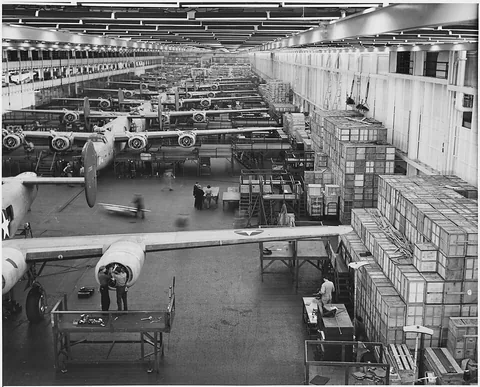 the whole World War II machine, was just repurposed car factories turning out planes.
Civil-military fusion,118Civil-military fusion (军民融合) — China's state strategy in which civilian technologies and companies serve the military, and military developments serve the civilian economy. sure.
The whole problem we have right now in losing our industrial base is, we don't have that capability. What do we switch to making all this military stuff? All our military contractors— because they only serve the US government, they end up— number one, the US government is stuck with these insane, like, entities that all they exist to do is basically lobby the US government, right? But then also you tend towards these very low-volume, very high-cost weapon systems, because you're just serving one customer. It's like the subscription business. In the subscription business, you want to maximize your revenue per user,119Revenue per user (ARPU, average revenue per user) — the key metric of a subscription business. because you don't have as many users.
If you're selling to only the government, you want to maximize your revenue per item, because you only have one customer. If you're serving the entire market, then you make it up in volume. And so the future of war is, in my estimation, clearly things like drones, missiles, unmanned things, which is a volume play. All of our defense primes are not built around volume plays.
Yeah.
The consumer market is how you get sufficient volume.
We need to fix the regulatory regime to enable the flowering of a domestic drone industry for the sake of national security. Yes. If we're going six-dimensional chess.
Yeah, maybe we do. No, actually, from a military perspective, it is nuts that we don't have drone delivery.120Drone delivery in the U.S. is held back by FAA rules: flights beyond the operator's visual line of sight require special waivers. The FAA proposed general rules for such flights (Part 108) only in August 2025. How— seriously, yeah, like, ban all foreign drones and completely legalize drone delivery across the US? You're going to get your drone— you're going to get your drone capabilities. That is actually the route to do it.
Not to, like— I mean, Anduril121Anduril — an American defense company founded in 2017 by Palmer Luckey (creator of the Oculus headset) and partners: autonomous drones, counter-drone systems and command software for the Pentagon. is out there as, like, "Oh, we're the new poster child." They're, like, in many respects, they're just building— like, if you want to form a defense tech company, you have to go through us, because we got into the Pentagon first. And by the way, if you talk to people in the Pentagon, they're like, yeah, the Anthropic stuff needs to actually work, or the Anduril stuff needs to actually work at some point. That's sort of the pushback there. By the way, God bless Anduril, like, and, like, Palantir— they were there when it wasn't cool, right?
But what you need is volume. So, yeah, great take by you. I like that.
There you have it.
Drone delivery tomorrow, US military dominance next week.
So— but the Ukraine affair, did it change your opinion in any way?
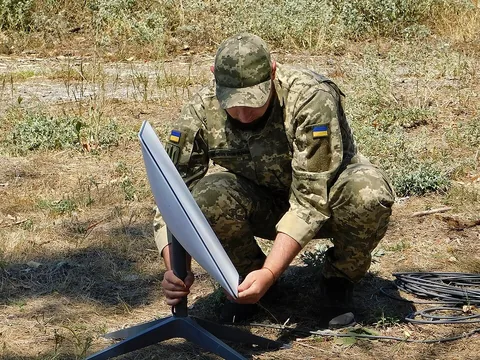
This is where you don't know who decided what. Right? As I understand it, the terms of service for Starlink define where it can be used. For sure, I know this on a couple levels. So, number one, you have to buy different levels of plans if you want— like, I have a Starlink on my roof for my house's backup.
That is a relatively low rate, because it's fixed. I also have a mobile Starlink that I take to Canada, or I, a couple weeks ago, went to a baseball game and set it up to watch the Brewers game at the same time. And that I pay more for, because it's mobile. It can be used everywhere. And this is just basic contractual terms-of-service things.
They know— they have to know where the Starlink is, because it aims itself at the satellites, so they know where it is. And another example of this is, there's no Starlink in Taiwan.122Starlink in Taiwan — according to Bloomberg, talks collapsed in 2022 because SpaceX wanted a wholly owned local subsidiary, while Taiwanese law requires internet providers to be at least 51% locally owned (Wikipedia, "Starlink"). Like, I was talking to a buddy— "Oh, you should get it," because he was, like, up on top of a mountain or something, internet wasn't great. Like, Starlink is awesome. Oh, it doesn't work in Taiwan.
Has Musk ever said why that is? As I understand it, it's the Taiwanese government that's the issue here. Okay. But yeah, I think— but obviously it's a hairy situation in general.
China, I have some questions.
I think there's probably— well, this is actually a great example. Whose fault actually is it that there's no Starlink in Taiwan? It's in Musk's interest that the Taiwanese government be against Starlink, so he doesn't make China mad, right? You get to Ukraine. The US doesn't want, as I understand it, Ukraine making attacks deep into Russian territory on oil refineries.123Refinery strikes — in 2024–2025, Ukraine regularly attacked Russian oil refineries with drones. In March 2024, according to the Financial Times, Washington asked Kyiv to stop such strikes because of the risk of higher global oil prices. Right, right.
Pushing up the price of oil, which Ukraine was doing using Starlink. So is there a, "Hey, Elon, can you enforce the terms of service," which Ukraine was violating? They're not on Starshield, they're on, like— and it is balanced by the fact that Starlink has saved— like, it's a little rich to be mad at Elon now, when Starlink saved Ukraine's rear end. Again, I don't want to get into the whole thing. This is why it's so murky. You can see who's pushing on who.
At the end of the day, they are using a consumer service that a US company— has no loyalty to— like, a lot of the world right now is just things that were becoming clear— a US company has loyalty to the US government. They don't answer to the Ukrainian government. There's a little bit of presumptiveness sort of embedded here. But again, we're not a political podcast.
Yeah, I mean, to me, broadly speaking, it just is a good object lesson in why these public-private dynamics are potentially dangerous. In terms of what happened with Ukraine, my guess is that Musk was in pretty close alignment with the Trump administration and the United States government in terms of what buttons were being pushed.
Yeah, my guess is the US government asked him to do it. Sure. And he's, like, falling on the grenade to a certain extent.
But if it were a Democratic administration—
But here's the point. Here's the point to Utkarsh's overall point: we're talking about power. Like, this is the whole thing: who has power? Ukraine, at the end of the day, relative to the US government, or even relative to Starlink, does not have power.
Once you grok124Grok — the chatbot from Elon Musk's company xAI. The word itself was coined by Robert Heinlein in "Stranger in a Strange Land" (1961): to "grok" is to understand deeply and completely.— no pun intended— that we're talking about power dynamics, you get what I was going for with the Anthropic versus DoW article. It wasn't about legalism niceties. It wasn't about mass surveillance. It was about who, at the end of the day, has power. And if Anthropic keeps saying and insisting, perhaps accurately, "We are accruing power to an extent that rivals nation-states," the nation-states are going to have a say in it.
Absolutely. And if Anthropic's not going to jump, or not going to say "how high" when the government says jump, then the government is going to investigate other options and ensure that its suppliers are not relying on Anthropic. It is going to continue to be an issue, though, because, particularly as everything becomes increasingly polarized, the questions get awful thorny. But in any event, we've gone too long. There were two segments that you demanded that we do on the podcast.
14"You Can See Everything"
Ben went to see the Elizabeth Holmes documentary and calls it the "Zootopia" of documentaries.
So this is unbelievable. We're an hour and a half in.
No, no, no. First of all, we had a little interruption about 10 minutes in, so we have an extra five to seven minutes here. The text message that you sent me 30 minutes before recording was: you looked at the rundown and you said, "Why no You Can See Everything125"You Can See Everything" — a documentary by Nathan Fielder (creator of "Nathan for You") and Lance Oppenheim about Elizabeth Holmes and her partner Billy Evans, who let a film crew into their lives before Holmes went to prison. The film plays with the genre itself: some scenes are staged with actors. It runs 174 minutes; it premiered September 6, 2026, at Telluride and opened in theaters through A24 on October 16 (Wikipedia, "You Can See Everything"). segment?" with multiple question marks.
So what else did I say?
I think you said, "You're terrified of my takes," or something to that effect. "You're trying to muzzle me."
Trying to muzzle you. I don't want to muzzle you. All right. So what do you have for me? You went to see You Can See Everything because of the World Series. You saw it at 10 a.m.
I believe last Saturday.
No, more than that: because of the World Series, I promised my daughter, who was very jealous of me and my son going— you know, I might have gotten a few other games in this run— I said, if they make the World Series, I will take you up to go to a World Series game. Didn't know what I was getting into.
But yet you were a dad of your word.
That's right. And so she came up and was insistent that I see it.
She wanted to see it again. Turns out, yeah, the local theater had added an extra run at, like, 10 in the morning. So we could get to it, then make our way. Did a full tailgate. The weather was beautiful, parking lots were open.
For a second I thought you tailgated the movie. Great. I'm glad you got out of the movie in time for a tailgate.
You Can See Everything is the Zootopia126"Zootopia" — the 2016 Disney animated film about a city where predators and prey live together; it won the Oscar for best animated feature. of documentaries.
So people may not have context: you were not really a fan of Zootopia.
Zootopia is a very entertaining, very well-done movie. Okay. That is insane, the premise of the movie. This is an old Sharp Tech segment, but the premise— because you're like, "Oh, have you seen K-Pop Demon Hunters127"KPop Demon Hunters" — a Sony Pictures Animation film released on Netflix in June 2025: the most-watched original title in the service's history, it won two Oscars in March 2026. yet?" Which you have to do. Then I see You Can See Everything.
But this is where the deal—
And I almost went to see K-Pop Demon Hunters. I almost sat down with Netflix, and I was like, can't fucking do this.
No, you have to.
At some point I'll do it. At some point I'll be there.
Not at some point.
But at one point, I did say the only cartoon movie that I've enjoyed was Zootopia. Then Ben proceeded to break down why it's just a completely ridiculous portrait of society.
It's not ridiculous. It's actively dangerous. So the premise of Zootopia is that animals whose nature, instinct, because they're carnivores, is to eat other animals, are bad— are benign— no, it was saying that they're bad. The bad actors were the ones that were, like, wanting to eat other animals.128Fact-checkBen says the film's villains are the predators. In fact, the main villain of "Zootopia" is a sheep, Assistant Mayor Dawn Bellwether, who secretly doses predators with a substance that makes them go savage, to stoke fear of them (Wikipedia, "Zootopia").
Okay. It was saying that the fundamental, intrinsic nature made them evil. And that they should just magically change their digestive system, everything about them, to live happily ever after. It's an insane— coexistence with other animals.
Extrapolate the meaning of this broadly. It's an insane view of the world that we're somehow mainlining to our kids. Okay. Terrible movie. Very well-done, terrible movie.
And you know what? I'm not arguing with you on that point. When I watch it through that lens, it is very kind of frustrating.
You Can See Everything—
It's blank-slatism129The blank slate (tabula rasa) — the view that human nature is shaped entirely by upbringing and environment. Steven Pinker argues against it in "The Blank Slate" (2002). from Zootopia.
Somehow— somehow, if you don't know anything, it leaves you sympathetic to Elizabeth Holmes,130Elizabeth Holmes — founded Theranos in 2003, promising hundreds of tests from a drop of blood. In 2022 she was convicted of defrauding investors and sentenced to 11 years and 3 months in prison; she has been serving her sentence since May 2023. Sunny Balwani, Theranos's former president and her partner at the time, got 12 years and 11 months. Billy Evans is her current partner and the father of her two children. this poor, well-meaning little girl being taken advantage of by the men in her life.
Absolutely.
Elizabeth Holmes is a psychopath, okay? She is a liar, she's a whistleblower abuser.131Whistleblowers — former Theranos employees Tyler Shultz (grandson of Secretary of State George Shultz) and Erika Cheung told Wall Street Journal reporter John Carreyrou about unreliable test results; the company went after them with lawyers and private investigators. She has been in these relationships before, with Sunny Balwani, which again was framed by some as him taking advantage of her. When you see this, what happened with this Billy— I don't know anything about the Billy Evans guy, whatever it is— okay, it sounds a lot like this relationship. It made me rethink, actually, what I knew about Theranos, in that she consistently finds men that she can manipulate to basically do the cover for her, to play-act at being a scientist and live in this mystical reality that has no connection to the real world.
And you're not buying in on Theranos 2.0.132Theranos 2.0 — what Billy Evans's startup Haemanthus is called in the film; it develops blood tests using Raman spectroscopy and is still testing them on animals. The company says Holmes is not involved; The New York Times and NPR have reported otherwise (Wikipedia, "Haemanthus (company)").
It was hearing her talk about the movie— it's like, holy cow, she has no idea what she's talking about. This lady is crazy. So somehow this movie— like, what was, like, the big line where the whole theater gasped? "Ooh."
I don't know. I think there were a couple.
Well, there's a couple, but some of them— one of them was that she signed over power of attorney.133Power of attorney — a document authorizing someone to act on another person's behalf. In the film, Evans says he holds power of attorney over Holmes's affairs.
Okay, yes.
And I was like, oh my God. And, like, that was, like, a point about what a manipulative guy he is. Turns out, what do you do if you're going to prison and your spouse is taking care of your kids?
You probably should sign power of attorney.
It is totally standard, totally normal, because, guess what? You're in prison.
You're going to blow out the studio's mics in the second episode ever.
So it's unbelievably well done. It's well done because if you don't know what it is about going in, 100%, he convinces you. So the craft, just like Zootopia, is amazing, and the premise is nuts.
So it is enervating for you to sit there, having known more about the backstory, and see it portrayed that way.
Okay. Absolutely insane. So did you enjoy yourself across the three hours at the Cineplex? I mean, I like that I have no blood on my hands, because this was your daughter forcing you to go to the movie. I was very confident that you were not going to see it for, like, three years after our conversation. What did you think, on a scale of one to 10?
Just the experience of it.
First part was— it definitely got, you know, better. Once you went to prison, it got better. Okay. Like, turns into a different movie at that point, yes. It does. I love the pregnant pauses. I can't decide. Not really a movie guy.
So I felt a little guilty, like, subjecting this guy to three hours in a theater. Well, I think, as a sort of postmodern commentary on media and truth— that's the only way you can embrace the movie as a success. As a documentary, because of the holes that you just highlighted, it is, like, almost insulting.
Well, and there's all sorts of, like, crazy things. Like, there is a well-known conservative figure who was assassinated134The assassinated conservative figure — Charlie Kirk, founder of the conservative youth organization Turning Point USA. On September 10, 2025, he was shot in the neck during an appearance at Utah Valley University.— that's one of the other lines in the movie where the whole theater is, like, a gasp, for sure. So I'm in Madison, Wisconsin,135Madison — the capital of Wisconsin and home of the University of Wisconsin's flagship campus, one of the most liberal cities in the state. which is, like, very progressive, to say the least. And the reaction of the theater was, ah, the gotcha moment: that means Billy Evans is a bad guy. So I went back and looked it up.
What was he referring to?
Okay. The whole thing at the time: a guy got shot in the neck. And—
Oh, wow.
She's136She — Amanda Seyfried, who played Holmes in the series "The Dropout" (2022). After Kirk's assassination she called him "hateful"; in the film, Evans condemns her for it (Wikipedia, "Amanda Seyfried," "You Can See Everything"). happy about it that week, right?
So I thought that was fascinating. So it was fascinating not in a— and this is me putting your shoe on— I am not making a commentary on that point. Rather, the fact that that was arguably the peak of the movie was itself a meta-on-top-of-meta commentary, because that specific event and the reactions to it was the ultimate societal divide.
Yeah.
One side's like— at that time period, I didn't even— a guy got shot. One side's like, he was a racist. I was like, what does that have to do with him getting shot? Like, it was just a fundamental divide in how you see the world.
That specific episode, and the way it's played out as shorthand since then. The fact that that was, like, the climax of the movie is, like— to your point, building on why you like the movie— it was an even, like, higher meta level on top of all the levels of meta that were going on in the movie.
There were about eight different meta layers at play throughout that movie. I think it should win Best Picture, but again, not an Elizabeth Holmes documentary. It's definitely not how it should be understood by the mainstream. Zootopia. I am just glad that we got you out to the theater, man. Once in a blue moon, we will see you at the Cineplex.
15World Series champions
For years Ben said he was in it for the journey, and that's exactly why the win was doubly his.
All right. Now we have come far enough. Talk World Series. Can I begin as a friend of yours? The fact that the Brewers won this series is just endlessly delightful to me as your friend, because I've watched you sink into this baseball obsession over the last several years here, where, like, you will watch basically every Brewers game throughout 162 games,137162 games — the number each MLB team plays in the regular season, almost every day from late March to late September. and I'll joke with you, like, "Wow, you're really a Brewers diehard." And over the last couple years, I swear to God, we've had, like, five different conversations where you've been like, "I'm in it for the journey."
"We're never actually going to win a World Series. That's not what it's about for me. It's about summer evenings, watching my team every night. The rhythm of it is what I've come to love. I've accepted that we're never going to compete with the big markets.138Small market — MLB has no salary cap, and clubs from big cities like New York and Los Angeles spend several times more on players. Milwaukee is one of the league's smallest markets." And now here we are, a World Series champion sitting across from me.
I just love to see it, man.
You just took my whole segment.
Oh, really? I am sorry.
No, it's true. Like, there's the whole thing about, you know, how can you not be romantic about baseball?139"How can you not be romantic about baseball?" — a line by Billy Beane (Brad Pitt) in "Moneyball" (2011). Like, baseball is a metaphor for life. And, yeah, that's the thing.
You're getting emotional.
I get emotional right now. No, I'd given up, because it did seem inevitable. Like, it's different— like, something about basketball is different. Like, basketball is very binary. One player can make a difference. That's right.
And so you have Giannis:140Giannis Antetokounmpo — in 2021 he led the Milwaukee Bucks to their first NBA title in half a century and was named Finals MVP. the pressure's insane, like, we have to win it, but you 100% know you have a chance to win it. With the Brewers, like, oh, you get to the postseason, you have to get homers— the most expensive guys. We're never going to have those guys, because we're a small market. It's the—
The sport is not set up for a team like the Brewers.
That's right. That's right. And so— but so you had to enjoy it. Otherwise— what's the problem with, like, the late Giannis years?
It's like, it's all or nothing. There's a 10% chance that this could work.
Right. And it just almost makes it less enjoyable. Like, the whole path of a basketball team: the early years are the best, because there's no expectations. And then, like, it's almost less fun when they're winning, because it's a grind. And then once you get over the hump, it's like, can we get back? And it's just— it's miserable. The last few years of a dynasty are, like, kind of miserable to cheer for.
It was different with the Brewers and with baseball, in that how it is, like, a life lesson. How do you avoid, like, nihilism about the whole thing? And what it really is about is: embrace the journey, enjoy the journey. Like, enjoy the summer nights. And it's okay.
With a little tournament at the end of the year, it doesn't really matter. And so the great thing about this is, it was a weird reaction when they won. Like, when the Bucks won, I was, like, in tears. Like, literally, I was in tears as a Giannis guy. And here I almost, like, didn't feel anything, in part because I, like, cauterized the postseason in my heart to such an extent that even winning, I could barely feel anything. But it was, like— it was great.
It was, like, a really pleasant thing that happened to me. I am— when I was getting emotional. And that's the beautiful thing: I did get the best of both worlds. I enjoyed this whole season without thinking we were going to win the whole time, and then they won. And, like, what a better way to live. Like, being so—
You were not anchored on, "Oh, can they do it this year?"
Because you knew the— I love that you're actually crying. Let's break this video out. No, but, like, rather than spending July and August and September obsessing over that question, you had answered that question. The answer was no.
That's right. No, I'd answered that question: it doesn't— what happens at the end is not going to impact me right now. We'll get to the end when we get to the end. And you think about it with AI. You think about, like, everyone worried— people are, like, depressing themselves about the future that is unknown.
Yeah, we're having debates about it. How about you enjoy life right now? How about you live your life, instead of always thinking in the future or thinking in the past— live in the present, be nice to people around you, learn new things, explore new things, figure out the future when it gets there. And the reason is that, number one, you don't have control. This is the thing about sports: the worst thing about being emotionally invested in sports is you have no control.
Yeah.
All you have control over is yourself. I have no control over what the fucking Wizards141Washington Wizards — Washington's NBA team; it won just 15 and 18 of 82 games in the 2023–24 and 2024–25 seasons. do.
You have control of that very season— season tickets. But that is why this isn't just great for sports. It's great for life: live in the moment. I enjoyed every game of the Brewers this season. It was an awesome season.
People online, or on Twitter, always the throwback— get it from the Cubs fans142Chicago Cubs — the Brewers' rivals in the National League Central. in particular. Like, "You know, you could just lose the postseason." It's like, yeah, we probably will. And, you know, that's fine. And then we get here. We also won.
I get it. Enjoy— I get a double dip. I had a great season. I had a great playoffs. The Brewers are world champions.
You're going to a great parade on Friday afternoon, you know? And look, the Brewers, all kinds of fantastic merch for you to spend money on.
That's sports.
It's really great. So on that cheerful note, we will head into the weekend. Ben will head to Milwaukee for the parade. What a weekend it shall be.
We will first record our subscriber-only mailbag.
That's right. And we have some mail that we're going to be rolling over to the subscriber mailbag. So we do need to talk about the Duo disaster, and we'll save that for Sunday. But email at sharptech— well, maybe it's— look, subjective.
Maybe it's not a disaster. Seen a lot of complaints out there.
For now, email at sharptech.fm is the email address. Ben, I will talk to you soon.
Talk to you later.


