


20VC
Chapters
Wilson brought Grinnell's strategy of a concentrated portfolio built on outside partners and co-investments to WashU, and rebuilt the endowment's portfolio in about 18 months.
Read the chapter- At Grinnell Wilson learned from David Clay, and he says WashU does the exact same thing: find great outside partners, double, triple or quadruple down on their best ideas, and let them compound for years.
- Harry has heard that Wilson sold over 75% of the portfolio in his first week; Wilson says he put in redemptions for over half the portfolio in week one, but only after a couple of months of preparation.
- The board gave the new team three years to show better returns, and it got rid of all 36 or 37 hedge funds, which made WashU unpopular "in certain parts of Manhattan."
- More than 75% of the private book was turned over through secondary sales in a little over 18 months, and the managed pool grew from just under $8 billion to just under $20 billion.
Wilson is agnostic between public and private assets, and without required payouts to the university he would hold 70% to 80% in privates.
Read the chapter- The only difference between the two asset classes, Wilson says, is how often they're marked to market, which doesn't matter on a 10- to 20-year horizon: Stripe going public tomorrow shouldn't put it in a different asset class.
- WashU's broad target is half and half, though it is currently overweight privates.
- The constraint is a payout of about 5% on a five-year rolling average: with half the portfolio liquid, 10% of the liquid book goes out every year.
- Over the past decade, Wilson says, WashU's privates compounded at 20% to 25% a year and public equities at 10%, because private markets are less efficient and alpha is easier to generate there.
Direct investments alongside its partners moved WashU from the middle of its peer group to the top, and the biggest of them, SpaceX, was at one point more than 20% of the portfolio.
Read the chapter- Co-investments and directs make up half the private portfolio or more, and a team made up entirely of generalists spends up to 80% to 90% of its time meeting individual companies.
- Without directs, Wilson says, WashU would be right in the middle of its peer group; with them, it has been at or near the top over the past decade.
- Deals start "on second or third base": a smart partner already loves the company, and WashU then verifies the thesis independently.
- Wilson credits Lee, the board and Adam with the SpaceX win: the team had many chances to take liquidity but held through continuation vehicles up to and through the IPO, and the board must be notified when more than 4% of the portfolio at cost goes into one name.
- Wilson calls concentration limits in funds mostly artificial, and recalls high-conviction bets in automated and additive manufacturing that haven't worked out so far.
WashU does about 0.1% of the deals it sees, and diversification, in Wilson's view, stops helping beyond 20 to 30 look-through names.
Read the chapter- To invest, the team has to agree with the thesis, be able to underwrite and monitor the company, and see it as the best use of the next dollar.
- Wilson calls not adding to winners, just because they were already more than 1% to 2% of the portfolio, the biggest mistake of his time at WashU.
- Charlie Munger would say three names are enough, Wilson notes, but WashU's goal is to have half the portfolio in its top 50 look-through positions.
- If the team lacks conviction to put 1% of the portfolio into a company, close to $200 million today, it lacks conviction at all, so WashU starts with checks around $50 million, scales them up, and adds roughly one new fund a year.
WashU's model doesn't work with mega funds, so it sticks with smaller managers and goes after stakes in their best companies itself.
Read the chapter- Mega funds don't need WashU's capital, and doubling a fund, Wilson says, inevitably hurts the multiple on money: either twice the check at a much higher valuation or twice as many bets, where the 50th is worse than the top ten.
- Harry pushes back with Thrive's results in OpenAI and Cursor, and Wilson answers that WashU isn't in any fund above $10 billion and doesn't need trillion-dollar outcomes to get SpaceX-like results.
- WashU rarely does seed or Series A: without talking to customers and understanding unit economics, it can't build conviction.
- WashU asks partners for the five portfolio companies they're most excited about, meets them, helps lead rounds and runs employee tenders, while waiting for a call about an SPV, Wilson says, means a huge negative selection bias.
Wilson believes private markets are repeating the same valuation stupidity as past cycles and that half of today's AI companies will be gone in ten years.
Read the chapter- Markets have short memories, Wilson says: the same stupidity showed up in the original tech bubble, the GFC, 2021 and the crypto bubble, and Anthropic could raise privately at over $2 trillion, a price public markets might not give it.
- There's no DPI not because public markets are closed but because you can't go public at private valuations: Cerebras has traded poorly since its IPO, and SpaceX is back close to its IPO price.
- Put the five leading language models behind the same interface, Wilson argues, and you wouldn't notice the difference in 99% of tasks, while companies start on expensive frontier models and later move to cheaper ones.
- WashU keeps its Anthropic stake for the sake of the partner relationship and has held Nubank for almost five years since its IPO, while big positions like SpaceX get hedged and sold down gradually: "better to be not stupid than clever."
Wilson admits that walking away from Sequoia was a mistake, and says WashU most often parts with managers over valuation discipline.
Read the chapter- Sequoia's evergreen structure didn't fit WashU's co-investment model, the decision went to the board, and under Harry's pressing Wilson agrees it was a mistake, but "we've done just fine."
- Harry describes LPs complaining that mega platforms push India, China, crypto and games funds on them and then signing up anyway; Wilson says WashU would just find somewhere else to put the money.
- WashU has no hard three-fund rule: the team forms its own view of a partner's portfolio early and moves on if it differs sharply from the manager's.
- His example of poor discipline is a partner who, Wilson says, never met a 100-times-revenue deal he would pass on, and his example of good discipline is Lee Fixel.
Deployment speed doesn't bother Wilson if returns are high, and WashU counts its portfolio on a look-through basis, by its exposure to individual companies.
Read the chapter- WashU would rather back a manager who raises a $1 billion fund when they could raise $4 billion and comes back every 18 months than one who raises $10 billion every three years.
- Getting a fund-returning outcome from a small check, Wilson says, is much easier in a fund of $1 billion or less than in a $10 billion fund.
- The team hardly ever talks about fund performance; it adds up how many dollars it has in SpaceX, Cerebras or Anthropic.
- Cerebras was a very large position at its IPO, so WashU took some chips off the table and hedged, and Wilson says even a $25 billion to $30 billion valuation is hard to justify on current KPIs, though he backs Andrew and his team.
Wilson expects a shakeout, is moving freed-up cash into public companies away from AI, and stays at WashU because of the people.
Read the chapter- Free of stakeholder constraints, Wilson would smooth the payout to the university over a longer period, because 5% is tough in some market conditions.
- A shakeout will come, he says, but no one knows when: industries that went from selling a chip or memory for $3 to selling it for $30 were historically mediocre businesses and will be again.
- WashU ended the fiscal year 70% in privates, but much of that has become liquid, and the proceeds are going into public companies that are relatively insulated from AI.
- Harry cites $11 billion of growth, and Wilson says that in his nine years the endowment generated $17 billion of profits on the original $8 billion and paid the university roughly $5 billion.
- He has had offers elsewhere but stays for his board, administration and team, since more than half the satisfaction of a job, he says, comes from the people you work with.
WashU's costliest mistakes, Wilson says, were failing to add to its winners and getting greedy instead of selling at the 2021 peak.
Read the chapter- Because of frame-of-reference bias, WashU didn't add to a company that went from $2 billion to $5 billion even though it was still its highest-conviction idea, and that cost billions.
- Wilson admits the opposite mistakes too: funds it shouldn't have backed and money for companies it should have let die.
- In mid-2020 WashU put a huge packet of fund stakes up for secondary sale, but waited for December-quarter markups and missed the window by around mid-2021, when it could have gotten 80 to 90 cents on the dollar.
- The portfolio was up about 65% in 2021, Wilson says, and much of that was marked down over the following years.
Wilson invests in Europe and China because comparable good companies can be bought there for far less than in the US.
Read the chapter- In Europe WashU recently invested through a partner in a fintech in Spain and in a global fintech based in London and Singapore: in the US such companies would trade at huge revenue multiples, in Europe at small earnings multiples.
- Price is what you pay and value is what you get, Wilson says: buying at 100 something worth 300 that compounds at the same rate beats paying five times the multiple in the US.
- WashU has an office in Shanghai with two people on the ground and, Wilson says, has been active in China since Jamie Dimon called it uninvestable; the key is companies that can return capital to shareholders.
- The worst behavior Wilson has seen was in the UK, which, he says, took the tax rate on offshore oil assets from 25% to 75%, effectively confiscating half the company, something he has never seen in China.
- Chinese entrepreneurs mostly prefer dollars, he says, and the way into China is through local partners.
In the quick-fire round Wilson regrets missing Benchmark, names Addition's investor as the best in his portfolio, and advises being the best at things that require no talent.
Read the chapter- Wilson regrets not being in Benchmark and having too little in Founders Fund's early-stage funds, and says WashU got Cerebras through a fund called Eclipse.
- If he could put all his money in one fund, Wilson would pick Addition, whose investor, he says, is pragmatic and disciplined on price but will pay up for super-high-quality assets.
- For his board he would want someone with deep industry expertise, like Elon Musk or Thomas Reardon.
- Among peers he most admires the teams at Michigan, Virginia, MIT and Brown for their results over the past 20 years.
- The best advice, which he tells kids all the time, is to be the best at things that require no talent: showing up, being curious, working hard, asking good questions, being kind.
Quotes
On WashU's strategy
“You know, we try and find really good external partners, when they find something that we think is really unique, we try and double, triple, quadruple down on it, and then hopefully let that compound over long periods of time.”
Scott WilsonRead from 05:40On where WashU's returns come from
“if we didn't have any direct or co-investments, we would have been right at the average of our peer group.”
Scott WilsonRead from 12:13On why AI model makers have no moat
“If you take the top five kind of large language models and they all had the same user interface, for 99% of problems or tasks, like, you probably couldn't tell the difference, right? You wouldn't know which model you're using.”
Scott WilsonRead from 28:48On selling a huge winner
“I always say it's better to be not stupid than clever.”
Scott WilsonRead from 32:05Harry on WashU turning down Sequoia
“You don't freaking turn down Sequoia. Like, you just don't do it.”
Harry StebbingsRead from 33:21On not adding to winners
“And that was my mistake, and it's cost us billions of dollars.”
Scott WilsonRead from 43:30On the "Europe discount"
“Well, if there's always a discount, it's not a discount, it's just the price.”
Harry StebbingsRead from 47:08On the best advice he's been given
“you should always try and be the best at things that require no talent.”
Scott WilsonRead from 53:40
Summary
Scott Wilson has run Washington University in St. Louis's investments for nine years. Arriving from Grinnell College, he put in redemptions for more than half the portfolio in his first week, cut all 36 or 37 hedge funds and turned over more than 75% of the private book within 18 months. Since then the managed pool has grown from just under $8 billion to nearly $20 billion, generating $17 billion in profits and paying the university about $5 billion. The recipe, Wilson says, is not clever: a few dozen strong outside partners, and when they find something unique, big co-investments in the same company. Directs are now more than half the private portfolio; without them, WashU would sit at the median of its peers.
The prime example is SpaceX: at one point it was more than 20% of the portfolio, and the board and team repeatedly chose not to sell, holding through continuation vehicles up to and through the IPO. Wilson's biggest mistake was the opposite: not adding to winners as they got more expensive, which cost billions; another was getting greedy in 2021 and missing the peak for a big sale of fund stakes. WashU stays away from mega funds, turned down Sequoia's evergreen structure, and most often drops managers over a lack of valuation discipline.
Wilson sees private valuations as detached from reality: he expects half of today's AI companies to be gone in ten years and sees no moat for model makers when users can't tell one model from another. So the cash freed up by IPOs is going into public companies far from AI, into Europe, where similar companies trade at a fraction of US prices, and into China, which he doesn't consider riskier than a UK that, as he puts it, took the tax rate on offshore oil assets from 25% to 75%.
Advice
Try to be the best at the things that take no talent: showing up, being curious, working hard, asking good questions, being respectful and kind — over time that is what adds up to success.
Mentioned
 Washington University in St. Louis00:34the university whose endowment Wilson runs
 Grinnell College04:42where Wilson started and learned concentrated investing
 Lee Fixel13:17WashU IMC board member and, Wilson says, the best investor in the portfolio
 SpaceX13:31at one point over 20% of WashU's portfolio
Show 24 more mentionsShow fewer mentions
 Charlie Munger18:06would say three companies are enough
 Thrive Capital21:02the mega fund crushing it with OpenAI and Cursor
 OpenAI21:02a trillion-dollar outcome in private hands
 Cursor21:02another big Thrive bet
 Anthropic26:27WashU holds a stake through partners and isn't selling
 Cerebras Systems27:10a big WashU position at the IPO, which has traded poorly since
 Stripe27:39the case for staying private
 OpenRouter27:39its purchase shows what a private Stripe can do
- Millennium Prize Problems29:45WashU isn't solving them, so it doesn't need frontier models
 Nubank31:15WashU still holds it five years after the IPO
 David Vélez31:58"a rock star," per Harry
 Sequoia Capital32:38WashU turned down its evergreen structure
 Andrew Feldman38:30WashU backs him and the Cerebras team
 Warren Buffett47:48his maxim on price and value
 Jamie Dimon48:17Wilson credits him with calling China "uninvestable"
 Xi Jinping49:04his unlimited power scares investors off
 Benchmark51:17the fund Wilson wishes WashU were in
 Founders Fund51:19Wilson wants more of its early-stage funds
 Eclipse Ventures51:29how WashU got into Cerebras
 Lior Susan51:32Eclipse's founder
 Addition51:41Fixel's firm, Wilson's pick if he could back only one fund
 Elon Musk52:16on Wilson's board wish list
 Thomas Reardon52:16also on it, for industry expertise
 ChatGPT54:05a way to prep for a job interview
Sponsors of the episode


Transcript
This is 20VC with me, Harry Stebbings. Now, how often do you hear one of the biggest allocators1Allocator — an investor who spreads a large pool of capital across managers and asset classes: an endowment, a pension fund or a sovereign wealth fund. in the world reveal how they make incredible investment decisions? Very rare. This CIO2CIO (chief investment officer) — at an endowment, the head of the team that runs the whole portfolio. today has taken their institution from $8 billion to close to $20 billion today. I'm so excited to welcome an OG of the endowment fund space,3Endowment — a university's or foundation's permanent capital: the money is invested rather than spent, and each year a small share goes to fund the institution. The largest US endowments, such as Harvard's, Yale's and Stanford's, manage tens of billions of dollars. Scott Wilson at WashU.4WashU — Washington University in St. Louis, a private research university in Missouri. Since 2006 its endowment has been run by its own investment company, WashU IMC. Now, the incredible fact about this institution is that at one point SpaceX was over 20% of their portfolio.
It has done incredibly well for them. And today, we discussed the journey from 8 billion to 20 billion in AUM,5AUM — assets under management. the biggest lessons, what they did that they wish they hadn't done, and what they didn't do that they wish they had done. This was an incredible show to do.
AdCrosby, 1mind, Framer
But before we dive into the show today, today I want to tell you about how the first AI law firm, Crosby, helped us close a big sponsor. As you know, some of the biggest companies in the world advertise on 20VC. My British dulcet tones clearly convert well.
I was working to close this big sponsor, and they wanted to get through legal review quite quickly to close the deal. Crosby turned redlines around in three hours and caught major issues that would have caused us serious problems in the future. Crosby combines AI, some of the best engineers in the world from companies like Ramp and Stripe, and some of the best attorneys in the world from top 10 law firms. Customers get the best of both worlds. An elite human attorney reviews every contract, but they move incredibly quickly, returning redlines in under four hours. They help the fastest-growing companies like Cognition, Ramp and Clay close deals in hours, not weeks.
Learn more at crosby.ai/20vc. If you want to redline NDAs, MSAs, DPAsfNDA, MSA, DPA — standard business contracts: a non-disclosure agreement, a master services agreement and a data processing agreement. and any other procurement contracts faster, go to crosby.ai/20vc. It's speed that you can really trust.
While Crosby keeps your numbers sharp, 1mind keeps your customer conversation sharper. Our friends over at 1mind have a hot take. The B2B GTM modelgB2B GTM (go-to-market) — how a company that sells to other businesses takes its product to market: marketing, sales and customer success. we've been using for, well, the last 20 years, it's collapsing.
Predictable revenue isn't so predictable, and buyers are just tired of explaining themselves at every handoff between SDRs, AEs, CSMshSDR, AE, CSM — roles in B2B sales: a sales development rep finds and qualifies prospects, an account executive runs and closes the deal, a customer success manager looks after the client once it has bought. and support. You feel it in your board reporting, your sellers feel it in their coverage, your buyers feel it as they wait for answers. Well, enter 1mind and their GTM Superhumans. HubSpot, Alteryx and ZoomInfo are just three of the tech companies using 1mind Superhumans to qualify buyers, ride along with sales reps and coach customers. Whether you're ahead of target or under pressure to increase bookings ahead of hiring, or behind on target even and need every rep to hit quota, 1mind is the solution. See for yourself at 1mind.com. That's 1-M-I-N-D dot com.
While 1mind helps you sell smarter, Framer helps you build faster. When a new landing page turns into a pile of tickets and handoffs, Framer helps your team move faster. Framer is the AI website builder that helps creators, teams and businesses ship production-ready sites faster than ever while getting every detail right. Prompt, inspect, edit and publish in one place at a whole new pace. Agents and humans work in tandem. Agents bring speed and scale.
You bring taste, judgment and control. The work lands on the canvas and stays editable. Build custom code components, manage CMS content, optimize SEO and audit for issues, all in one place. Enterprise-grade hosting, security and 99.99% uptime SLAs,iSLA (service level agreement) — a contractual promise of service quality; 99.99% uptime allows no more than about 53 minutes of downtime a year. trusted by leading brands like Perplexity and Miro. Learn how you can get more out of your site from a Framer specialist or get started building for free today at framer.com/20vc for 30% off a Framer Pro annual plan. That's framer.com/20vc.
Rules and restrictions may apply. You have now arrived at your destination.
01Lessons from Grinnell and a first-week fire sale
Wilson brought Grinnell's strategy of a concentrated portfolio built on outside partners and co-investments to WashU, and rebuilt the endowment's portfolio in about 18 months.
Scott, I'm so excited for this. One of the most respected in the industry. Thank you so much for joining me today.
Yeah, well, thanks for having me.
Not at all, but I'd love to start with a couple of lessons from the past. You obviously had roots with Grinnell,6Grinnell College — a private liberal arts college in Iowa. Wilson graduated from it in 1998, returned to its investment office in 2010 and was its chief investment officer from 2014 until he moved to WashU in 2017. Grinnell's endowment is known for an early bet on Intel and for having Warren Buffett on its board of trustees for many years. spent several years there building out an incredible book. What are some lessons for you from Grinnell that really stuck with you and you took with you to WashU and impacted how you think about building out your book with WashU?
Yeah, I think, like, we ran a similar strategy at Grinnell, so I was fortunate to work for this guy, David Clay,7David Clay — spent 27 years at Grinnell College: treasurer from 1990 to 2012, then chief investment officer. Wilson succeeded him in that job at the start of 2014. who hired me at Grinnell. Grinnell had a long history of kind of a mix of direct co-investments8Co-investment — investing directly in a company alongside a fund the investor is already in: the fund finds the deal, and the LP puts its own money into the same company, usually without paying the fund's fees. and external partners that managed the portfolio. It was a pretty concentrated portfolio. I think it was super concentrated relative to the peer group. And we do a lot of the same things, but David was a great guy to learn from because when I first landed at Grinnell, I really had no idea what an endowment actually did, you know, on a day-to-day basis.
And I think our strategy has evolved over time, but we still fundamentally do the exact same things we were doing at Grinnell here at WashU.
Which is concentrated managers, concentrated positions in directs9Directs — direct investments in individual companies, bypassing funds. as well.
Yeah, I mean, if you really want to dumb it down, there's nothing particularly clever about it. You know, we try and find really good external partners, when they find something that we think is really unique, we try and double, triple, quadruple down on it, and then hopefully let that compound over long periods of time. That's it.
If we go forward to WashU, I heard, and this was, I can't remember who told me, but they said that the first week in the job, most people have a bit of time, get used to the new environment. Nope. Scott did a fire sale, sold 75% plus of the WashU portfolio.
Yeah, I saw that stat. I'm not sure that it was 75%, but we put in redemptions10Redemptions — an investor's requests to get its money back from a hedge fund; they are honored quarterly or less often, after a notice period. for over half the portfolio in the first week. But I also had the portfolio for a couple months before I actually landed in the seat, so there was a lot of preliminary work that went into those decisions. It wasn't a complete, like, we're just fire-selling everything.
Were you worried about doing too much too soon? That is a very large shift.
Yeah, I mean, it was a mix. There was this kind of obvious tension that performance hadn't been great for quite some time, and the board, you know, wanted to see results quickly, and they had kind of given me and the team three years to really show some real performance improvements. And to do that, you know, we had to really restructure the portfolio relatively quickly. You know, and then changing around an endowment portfolio is more like turning around an aircraft carrier than a speedboat. So we knew that was going to take a decent amount of time. And then the private side, luckily the private side was in better shape, I think, than the public side of the portfolio.
But we had 36, 37 hedge funds in the portfolio, and then we got rid of them all. So we certainly weren't popular in certain parts of Manhattan.11Manhattan is home to many of the biggest hedge funds, which WashU had just pulled its money from.
Ultimately, we turned over more than 75% of the portfolio through secondary sales12Secondaries — selling existing stakes in funds or companies to other investors. That is how an LP can exit a venture fund early, usually at a discount. on the private side.
That is a fire sale. That would constitute...
Yeah, I'll take that. And it was just over 18 months.
Ah, fine. And just don't go to Manhattan for a while. You won't be the most popular dude on Wall Street. Okay. And the endowment then is $8 billion?
Yeah, it was just under $8 billion when I started.
Okay. And it today is how much?
The total managed pool13Wilson means the MEP (Managed Endowment Pool): the endowment plus the university's long-term operating assets. As of June 30, 2026, the MEP was worth $19.2 billion and the endowment itself $17.5 billion; the return for fiscal 2026 was 37.3% (WashU IMC annual report). is probably just under $20 billion today.
I hope you have a 20% take rate14Harry is joking about carry, the share of profits, usually 20%, that venture and private equity managers collect. Endowment staff are paid salaries and bonuses, not a share of the gains. personally.
No, unfortunately that's not the way it works.
02Publics versus privates: it all comes down to liquidity
Wilson is agnostic between public and private assets, and without required payouts to the university he would hold 70% to 80% in privates.
Unfortunately not. That would be a $2.4 billion take. So well done. So you have that restructuring of the portfolio, and you then have the freedom to bluntly reallocate and start a little bit more afresh. How did you approach it then, going, okay, this is how much I want in publics, privates? What did the portfolio construction look like when you had that flexibility?
I mean, I always say we're pretty much indifferent between publics and privates. And I would tell my board, like, you know, the only difference between those two asset classes is how often they're marked to market.15Mark to market — valuing an asset at its current market price. Public stocks are repriced every day, stakes in private funds usually once a quarter. So if you have, like, a 10-, 20-year time frame, should you really care that something is marked every day or something is marked once a quarter? Within that, we have obvious liquidity constraints. So our big broad target, I would say, is half publics, half privates. We're definitely out over our skis in privates, but that's reversing quickly.
With the greatest of respect, I get you on the mark-to-markets. The biggest difference is, as you said, liquidity, no? I mean, the extended period that funds are now in terms of being 12- to 15-year funds and the time it takes to get cash back, the fundamental difference is available liquidity, no?
Yeah, I mean, we obviously have liquidity constraints, and that drives that ratio between public and privates, but it's not like if Stripe goes public16Stripe — the payments company Patrick and John Collison founded in 2010; one of the most valuable private companies in the world, and still not listed. tomorrow, it should be in a different asset class.
In terms of the capital requirements, you have net outflows a year of like 5%?
Roughly 5%. It's smoothed out over kind of a rolling five-year average.17In fiscal 2026 WashU's endowment paid the university $593 million, 4.5% of the endowment's average value over five years (WashU IMC annual report).
If you didn't have the required net outflows, would you do anything differently in terms of capital allocation?
Oh, for sure. We would probably have a 70, 80% target in privates.
ExplainerWhy payouts cap an endowment's private assets
A university endowment is capital that is invested rather than spent, and each year the university takes a small share for scholarships, professorships, research and buildings. At WashU the payout is about 4.5% to 5% a year of the fund's value averaged over several years: in fiscal 2026 the endowment paid the university $593 million.
Payouts have to be made in cash, and private assets — stakes in venture funds and private companies — can't be sold on demand: the money comes back when companies go public or get acquired. So the payout effectively falls on the liquid part of the portfolio. If half the portfolio is liquid, 5% of the whole fund is 10% of the liquid half, and in a bad year it has to be sold at low prices.
Hence Wilson's arithmetic: without payouts nothing would stop WashU from holding 70% to 80% in private assets, which by his account grew about 20% to 25% a year over the past decade, against 10% for public stocks.
Wow. Can you walk me through that thinking? And just, like, I'm the board. Rationalize that for me, Scott.
Yeah, I mean, well, your payout is a function of your liquid assets, right? Because you can't always convert your private portfolio into the payout. It's not guaranteed, right? In theory, like, you know, some percentage of your private portfolio should become liquid every year, but you can never count on it when you actually need it. So if you have a 5% payout and half your portfolio is liquid, that's 10% of your liquid portfolio that you're paying out every year. And if you're paying out zero, well, you really don't have that constraint. And if you look at the relative performance, you know, over the last decade, we've probably compounded our privates in the low to mid 20s, and we've compounded, you know, our public equities at 10%.
Did you always have this belief in privates being the value driver of a portfolio?
No, but I do think, like, the markets are less efficient.
What do you mean by that?
I mean, like, you can get access to investments that are less picked over. Like, there's always natural buyers and sellers. And I think it's much harder to create alpha18Alpha — returns above the market or a benchmark index that come from a manager's skill and market inefficiency rather than the market's overall rise. in public markets than it is in private markets. And I think this is, you know, well documented over the course of time.
03Direct investments and the SpaceX bet
Direct investments alongside its partners moved WashU from the middle of its peer group to the top, and the biggest of them, SpaceX, was at one point more than 20% of the portfolio.
So if we take the 70 to 80% that could be in privates, how do we think about structuring the private book today? Obviously privates is a very large allocation in itself. You've got directs, you've got funds, you've got credit, you've got debt. How do you think about how privates should be structured for you?
The way we do it, so roughly half of our private portfolio, maybe more than half right now, is in kind of co-investments and direct investments. So we manage it the same way we manage the public portfolio. So we, you know, find good partners, and to the extent we can, when they find something that's really interesting, we try and co-invest or add capital directly to that single name.
Do you have a separate direct team?
No, no, everybody on my team is a generalist.
What would you advise another CIO? I, you know, obviously I'm a manager, I have many LPs, and they all say to me, you know, "Oh, we'd really like to do more directs, but we don't feel like we're equipped to do so. We don't have the time to really do the work." What would you say to them, and how would you advise a CIO who doesn't really do directs today, but maybe should and could?
Yeah, you kind of have to build that muscle. You have to have that internal skill set on the team. So if you look at how my team allocates their time, and we still meet with a lot of external partners, but upwards of, you know, 80, 90% of our time is just out meeting individual companies. And that's very different than probably how most of your LPs spend their time.
Very different. Most of them spend 70 to 90% of their time with managers and then 10% of their time with directs, I'd say.
But if you look at our performance over the last decade, if we didn't have any direct or co-investments, we would have been right at the average of our peer group. You know, as it is, I think we're at the top, if not the very top, of our peer group over the last decade.
So are you just better company pickers then? Because what you just told me is that actually you'd be average if it were just funds only. And if that were the case, you must just be better company pickers than everyone else.
Yeah, it's not us, though. Like, we're not doing what you're doing. You know, I think you have to be humble. Like, I think, you know, we're trying to identify what we think is a really unique thesis or a really unique company, but we're not sourcing that from scratch. And so I think we're starting on second or third base, because, you know, we're already invested with Harry, and we think Harry's a really smart guy, and he really likes this investment. And we'll do our own work to kind of independently verify the thesis. And sometimes we don't agree with the thesis, and we have certain partners that we think, you know, are high signal and lower signal, but that's where we start our process: hey, somebody we think is really smart already thinks this is a great investment.
Tell me, how much will you have in one company? We have a mutual friend in Mr. Lee Fixel,19Lee Fixel — founder of the investment firm Addition (2020); before that he ran private investments at Tiger Global for more than a decade. A WashU alumnus and a member of WashU IMC's board. who I happen to think is wonderful. And he told me that I had to ask about concentration limits. How do you think about concentration on a per-company basis?
Well, I would separate cost versus, you know, NAV.20NAV (net asset value) — a position's current value; unlike its cost, it rises with markups. A winner that took 2% of the portfolio at purchase can be 20% of it at NAV. And Lee and the board and Adam21The only Adam on WashU IMC's team is managing director Adam Kurkiewicz. should get a lot of credit for the big win in SpaceX. You know, I think that became such a large position for the portfolio, you know, at one point north of 20% of the portfolio is in SpaceX. And at that point it became, like, we had conviction as a team, and we had many chances to take lots of liquidity in that name, but we advocated for holding it and letting that compound, and we did several kind of continuation vehicles22Continuation vehicle — a new structure into which a manager moves an old fund's best assets when that fund is due to wind down. LPs can cash out or stay in the company longer. that allowed us to hold on to that stock up until and through the IPO.
But you can't do that without the right governance structure. So at cost, you know, if we were going to put more than two or three percent of the portfolio in a single name, we'd probably need to notify the board. I think it's 4%. We need their approval, but we have a lot of leeway to concentrate the portfolio quite a bit.
You've also worked with some of the best funds, and we have capital concentration limits23Concentration limits — a rule in a fund's agreement with its LPs capping how much of the fund can go into one company, often 10% to 20%. on a per-company basis. Do you think those are inhibitors of great venture returns?
I do. They're mostly artificial. You know, if you think over the course of, like, say you're going to do five funds, that's, you know, X amount of capital, and to have a 10% concentration limit in any individual fund, I don't think it makes sense. I think we have lots of funds actually where we have a mandate where it's like two or three stocks, and we certainly wouldn't have a problem with... if you think about it, if you're 1% of our portfolio or 2% of our portfolio and you have a 50% position, that's only 100 basis points24Basis point — one hundredth of a percentage point; 100 basis points equal 1%. for us.
Have you had a position with a lot of capital concentration that hasn't worked out?
Oh yeah, for sure.
What did you learn from it?
Well, a lot. There's a couple that come to mind where we, you know, we had super high conviction going in. One was an automated manufacturing company, and another was an additive manufacturing company.25Additive manufacturing — 3D printing parts layer by layer from metal, plastic or composites. Maybe we're just poor at underwriting manufacturing companies where we, you know, we have substantial investments. I don't think the story's completely been written on either company, but certainly it's painful. It's painful when those don't work out.
Do you think 50% of your private book being in directs is the right allocation?
I would take it to 80%. You know, when we started, it was just a tiny fraction.
Could you have it as 80%, given that you are fed by the managers you back?
Yeah, there's a natural equilibrium there, and that'll ebb and flow over time, you know, as you do get some of these bigger positions become liquid. There's no kind of artificial limit on it. And it's somewhat of an organic process when you, you know, if you're right on the underlying thesis and it can compound for a decade or more and it massively outperforms the rest of the portfolio, like, you get natural high concentration in that portfolio.
04How WashU picks companies and how many names a portfolio needs
WashU does about 0.1% of the deals it sees, and diversification, in Wilson's view, stops helping beyond 20 to 30 look-through names.
I think investment decision-making processes are the product that we sell our LPs. I'm intrigued by your investment decision-making process on the direct side. What does that look like? How do you decide on directs?
Yeah, I mean, we have to agree with the thesis, and we also have to underwrite it. So there's a ton of stuff that people bring to us that, you know, for whatever reason, the team is not smart enough. We just don't have the right skill set, or it's impossible for us to differentiate between this company and five of its competitors, and there we just don't play. So we have to be able to independently verify the thesis, understand the thesis, have the ability to underwrite the company, ability to monitor it going forward. And we have to think it's our best marginal use of capital. So we look at a lot of potential investments, and I would say we do, it's probably more like 0.1% of those investments than 1%.
Is it challenging as you've scaled? Because now you're close to $20 billion, and just something that moves the needle. I mean, writing a $20 million check into a growth round26Growth round — a round for a mature startup with meaningful revenue: the money goes to scaling, and valuations and checks are far bigger than in early rounds. at 20 to 50 billion dollars, even if it 20x's, it doesn't move the needle in any meaningful way.
Yeah, and I think if I look back, the biggest mistake that I've made since I've been at WashU is not adding capital to our winners just because, you know, they became a relatively sizable position early on. You know, so we had lots of opportunity to add capital to some of the names you would know that have done extremely well, and we didn't do that when we could have, just because they were already north of, you know, 1 or 2% of the portfolio. But I still think our model probably scales better than the traditional fund-of-funds model,27Fund of funds — a fund that invests in other funds rather than in companies; the classic endowment model is a portfolio of dozens of outside managers. because it's hard to scale with managers as well, and what you end up doing is you just have to add more managers, and then, you know, each manager means less and less. So we can maintain, I think, better concentration. Now, we're still probably over-diversified, but we can hopefully maintain this concentration even as we double in size from here.
You say you're potentially over-diversified. What's the right amount of managers to have in a book, do you think?
Well, if you think about the underlying look-through exposures, right? The quantitative benefits for diversification trail off really quickly when you get more than 20, 30 names in the portfolio. So if you have 20 or 30 investments... you know, Charlie Munger28Charlie Munger (1924–2023) — vice chairman of Berkshire Hathaway and Warren Buffett's longtime partner. He championed highly concentrated portfolios, arguing that a handful of great businesses bought at sensible prices is enough. would say if you have three, you're fine, but there's really no quantitative benefits beyond 30 underlying look-through exposures.
And, you know, really the way we think about diversification is we want the top 30 names to be a significant driver of our performance. And the way we target it, we actually target, like, I would say, half of our portfolio is in our top 50 look-through positions. And it's taken us a long time to get there. And that's probably a good target for us, a realistic target, but it's still very diversified. I mean, if you look at a diversified hedge fund, typically they have the bulk of their capital in their top 15, 20 names.
So just so I understand, we have 50% of privates in directs, in the venture funds allocation. How much do you allocate towards those 20 to 30 names?
At cost, you know, I always tell, if we don't have enough conviction to do 1% of the portfolio, then we probably don't have enough conviction to do it at all. But typically, you know, at this point, that's close to $200 million. And we just don't have capacity. So, you know, we have to continue to back the companies that we have high conviction in over time. So we might start off with a $50 million check in a co-investment and then scale that up over time.
With a fund investment, will you do a $20 million fund check if it's completely irrelevant from a returns perspective?
You know, it probably means it's a very small fund. And if it's a very small fund that's doing, like, really interesting things, and we would have an opportunity to write a bigger check into one of the underlying companies, then we would do it. But we don't do many of them, because it's just not scalable.
You have 20 to 30 funds. How many do you add a year?
I think last year we added one. We have one that we're going to add, we know we're going to add next year, but if we add one or two funds, it's kind of one in, one out. It's not a hard line, but we don't add partners very often.
05Why WashU skips mega funds and hunts for its own deals
WashU's model doesn't work with mega funds, so it sticks with smaller managers and goes after stakes in their best companies itself.
You said before about mega funds that, like, maybe instead of just growing, they should be more judicious about where they invest, if I'm kind of paraphrasing you. And it seems like the world has moved in favor of mega funds. Capital is a moat29Moat — a durable competitive advantage that shields a business from rivals the way a moat protects a castle. Warren Buffett popularized the term. now for many startups. Compute and capex30Capex (capital expenditures) — spending on long-lived assets: data centers, chips, equipment. is a very real cost that maybe wasn't there before. Have you reflected on that and changed your mind or not?
No, I mean, our model doesn't really work with the mega funds. They don't need our capital, and they certainly don't really need us for co-investment, unless it's some massive round in some massive company that we can probably go direct on anyway. You know, I think these mega funds, it's going to be very hard. We'll see. It's going to be very hard to kind of generate the historic multiples of invested capital that they have on those much smaller funds.
With respect, and I think this show is phenomenally successful because I do push back. So forgive me, because you are an OG and I'm a podcaster. But, you know, you see Thrive31Thrive Capital — Joshua Kushner's New York venture firm, founded in 2009. It led OpenAI rounds, including the $6.6 billion round in October 2024, and invested in Cursor. absolutely crush it with OpenAI and Cursor,32Cursor — Anysphere's AI code editor, one of the fastest-growing startups of the AI era. SpaceX bought it for $60 billion in August 2026. and positions in sizes of outcomes that are just previously never seen before. And we're seeing outcome expansion so real, as you've seen with SpaceX. With respect, that would suggest that you could get venture returns on mega funds if in those outcomes.
Yeah, and certainly when you get these trillion-dollar-plus outcomes in private markets, even before the public, it's possible. You know, I think if you just think about the dynamics, when you double your fund size, right, you either have to double your check size in every company at the same valuation, and we know that doesn't happen, right? It's a much bigger check, but it's a much higher valuation. So the multiple on money is probably not going to be as good going forward as it has been historically. Or you have to do twice as many investments, and, you know, your 50 bets investment is not as good as your top 10 investments. So you have to do way more investments or double your check size. And typically when they double the check size, it comes with a valuation that's commensurate.
I think they would say they double their check size, but the companies need so much more capital. AI is this exhaust of capital that venture needed. Finally we have an avenue to deploy the billions of dollars that you very kindly give us.
Yeah, I mean, there are certainly massively capex-intensive businesses, but it's not clear to me what the long-term returns on that capex are going to be.
With respect, given the size of checks that you need to write, are you able to not be in the mega funds? Just when you think about concentration on a per-fund basis, if you have to write 50 to 100 million dollars and you don't want to be more than 10% of the fund, I mean, you've got to be in billion-dollar-plus funds.
Yeah, we're obviously in lots of funds that are north of a billion dollars. We're not in any that are north of 10 billion. And we would certainly have a strong bias, I wouldn't say never, but we would have a strong bias that that's probably not the best use of our capital. And we have no problem getting concentrated positions.
You know, if you look at our look-through exposures, you know, we have lots of significant capital allocated to a small handful of names that we built up over time in really great companies, that we don't need trillion-dollar outcomes to have, you know, SpaceX-like outcomes. Yeah, it's just a completely different strategy. We would rather be with somebody who's small doing really interesting things, in these companies early, and we can partner closely enough with it that we know those companies, we can develop conviction early on, and, you know, we can essentially lead some of those middle- to late-stage rounds.
When is it interesting for you to get involved? Company valuations are soaring so far so quickly today. How do you think about, like, when's the WashU insertion?
I mean, we come across it at all stages. It's more driven by, like, our opportunity set at the time than any specific, like, strategy of "we're targeting this stage of company." But I'd say we're not good super early-stage investors. That's a really tough skill set that I would say we don't have. So if we can't, you know, talk to customers, understand the product, you know, understand what we think unit economics33Unit economics — how much a company makes or loses on a single customer or sale once acquisition and service costs are counted. look like, that's something that's going to be hard for us to build conviction in. So it tends not to be a lot of seed or Series A.34Seed and Series A — the first venture rounds, when a company often has little revenue yet.
Does it become difficult as more and more of these funds have IR teams?35IR (investor relations) — at large funds, IR teams talk to LPs instead of the partners themselves. And so the distance between you and the manager becomes more real, and your ability to get information, get deals, becomes more buffered.
Yeah, I don't think many of our funds that we're real close to even have IR teams, but some of them have somebody that functions like that, I guess. But the way we typically do it is much more proactive. Like, we're not waiting for them to bring us a deal. You know, we're going out saying, "Harry, like, who are the five companies in your portfolio that you're most excited about?" And then we'll just go out and meet those five companies. And if, you know, if we find one that we think is really interesting, we'd be like, "Hey, we would love to get involved with this company if there's a chance for us to help lead the next round." Or, you know, we've led employee tender offers.36Employee tender offer — a deal in which an investor buys shares from employees and early shareholders of a private company, giving them cash before an IPO.
We've gotten direct on the cap table.37Cap table — the list of a company's owners and their stakes; getting on it directly means becoming a shareholder yourself rather than through a fund. We've done lots of things that help us get exposure, but that is more offensive than waiting for your IR person to call us and say, "Hey, we're doing an SPV38SPV (special purpose vehicle) — an entity set up for a single deal: investors pool money and buy a stake in one startup through it. in this fund." And I actually think, like, there's a huge negative selection bias39Negative (adverse) selection — ending up with what others passed on: managers keep the best allocations in hot companies for themselves and syndicate out what they couldn't place. if you're just waiting for someone to give you a call and say, "Hey, we have, you know, 500 million dollars of OpenAI that we're syndicating out."
Can I ask you, when you review the venture book that you built in terms of managers, what do you know now that you wish you'd known back when you were at $8 billion, when you were doing the fire sale?
We've definitely learned some hard lessons. I think maybe the biggest takeaway is, like, you know, we've done much better on this, like, offensive strategy than defensive strategy. So we do way fewer of the co-investment opportunities than we do outbound. That's probably the biggest takeaway.
06The private valuation bubble and when to sell winners
Wilson believes private markets are repeating the same valuation stupidity as past cycles and that half of today's AI companies will be gone in ten years.
Are you concerned by where we are in the cycle? You're a very realist investor that, to me, really likes fundamentals. Today a lot is detached from fundamentals, it would seem, especially in the private world, where you've got incredible exuberant pricing, real frothiness, juxtaposed by this very real public markets reality. How do you think about that?
I mean, I think, like, the markets have short memories. You know, if you look at the lessons from the original tech bubble in the 2000s, the GFC,40GFC — the global financial crisis of 2007–2009, which began with the collapse of the US mortgage market. 2021, like, from the crypto bubble, like, you know, we're seeing the same kind of stupidity that we saw in all those other cycles. And it's like every five years, particularly in private markets, you know, where I think the investors tend to be just less sophisticated. But it's clear to me that, like, there's a valuation premium in the private markets. You know, I don't know where Anthropic's going to go public,41Anthropic — the American AI company behind the Claude models, founded in 2021 by former OpenAI staff led by Dario Amodei. but it's clear to me they could have raised capital in the private markets, if they stayed in the private markets, at north of 2 trillion if they wanted to. I'm not convinced that the public markets are going to give them that same valuation, maybe.
Same with OpenAI. You know, Aura tried to go out, Cerebras tried to go,42Cerebras — a maker of AI chips the size of a whole silicon wafer. It listed on Nasdaq on May 14, 2026, raising $5.55 billion in the largest US tech IPO since 2019, and rose 68% on its first day. WashU's annual report names it among the positions that contributed meaningfully to the endowment's fiscal 2026 return. or has traded really poorly since the IPO. SpaceX is basically back to really close to its IPO price. There's just too much capital chasing these kind of late-stage champions in the private markets, and the valuations are... I think that's why there's no DPI.43DPI (distributions to paid-in capital) — how much cash a fund has actually returned to LPs per dollar invested. Unlike paper markups, it is real money, and venture has returned little of it in recent years. It's not because the public markets aren't open. The public markets are pretty close to all-time highs. It's just you can't go public at the valuation that the private markets will give.
Why would you go public? Is this a permanent transition in the financing landscape? Where, to your point there, you could raise and stay private. The Collisons44Patrick and John Collison — the Irish brothers who founded Stripe. The company has stayed private for years and regularly buys back employee shares through tender offers. have proven that staying private and having a great business is very beneficial. You're still able to do amazing tender offers for your employees. You're able to do M&A and buy OpenRouter for $8 billion.45OpenRouter — a service that gives access to hundreds of AI models through a single API. In August 2026 Stripe announced it would buy it; the price wasn't disclosed, but Bloomberg reported more than $7 billion. Hell, Scott, why are we going to go public?
There's a lot of rationale to stay private. I think ultimately, like, the public markets are obviously much deeper capital markets. I think, you know, when SpaceX raised 85 billion or whatever46SpaceX raised $75 billion in its IPO at $135 a share; the underwriters' option could take the total above $85 billion. in the IPO, that's pretty tough to do. You know, the sovereign wealth funds and the big pension funds and SoftBank,47SoftBank — Masayoshi Son's Japanese conglomerate, one of the biggest investors in AI companies, above all OpenAI. like, they can only write so many of those checks. And, you know, I think most of those capital sources have been exhausted. And the public markets are still a multiple of the size of the private markets. I think there's 14 trillion or something globally in private markets.
Do you think we're seeing a massive sell-off now to make capacity for Anthropic?
Could be. It would obviously be a lot of the same potential buyers, but, I mean, I think that that's tough to kind of beta test.
You said about stupidity within private markets. What did you mean by stupidity? Like, what are you pointing to? Is it valuations? Is it deployment speed?
Yeah, it's just valuations. I'm sure that half of these kind of, you know, I guess superintelligence48Superintelligence — AI that surpasses humans at almost every intellectual task; AI labs increasingly name it as their goal. is the correct term now, but these AI-related companies, like, probably half of these companies don't exist 10 years from now. And it's not clear how many have, like, a defensible moat around their business. It's not clear to me what the ultimate profit pools49Profit pool — the total profit an industry earns and how it is split among the players. look like for these companies. I think it's a super strange dichotomy. If you take the top five kind of large language models and they all had the same user interface, for 99% of problems or tasks, like, you probably couldn't tell the difference, right? You wouldn't know which model you're using. Like, I can't describe another industry like that that has a big kind of deep profit pool.
Do you have much exposure to OpenAI or Anthropic, the model providers?
We have pretty decent exposure to Anthropic through a few of our partners.
With the greatest of respect, as you said, the ability and willingness to switch, the commoditization.50Commoditization — when a product turns into a commodity: offerings become indistinguishable, competition is on price alone, and margins disappear. Do you ascribe little value then to that model provider layer?
The way the business models are currently constructed, yeah. When there's a free alternative, customer willingness to pay drops very, very quickly. And I think everybody starts with the frontier model.51Frontier model — the most capable model at the cutting edge, such as the newest models from OpenAI, Anthropic and Google; usually also the most expensive. And this is definitely true when I talk to our companies in our portfolio. You know, everybody starts with the frontier model, because if you're trying to implement AI, like, you know, you're starting at spending at zero, and you allocate some budget to it. So I think everybody starts with the most expensive models, and they use it, they find it useful, they ramp up spend, and at some point they say, like, "You know what, for most of our tasks..." And certainly this is true on my team. Like, we don't really need a frontier model. We're not solving Millennium Prize problems.52Millennium Prize Problems — seven major unsolved problems in mathematics for each of which the Clay Mathematics Institute offered $1 million in 2000; only one, the Poincaré conjecture, has been solved so far.
Why have you not sold, then? We have very liquid secondary markets. I completely hear and agree with you on everything, but then why hold a position that could be sold?
Yeah, for us, it's relationship-driven. These aren't held in SPVs where we could easily sell. It's one exposure in a fund of 40 other investments. So we wouldn't be selling just one thing in isolation. Those particular partners, like, they're great partners for us. So we're happy to hold it. And, you know, if it goes public, we have the ability to hedge if we think the price is right.
How do you think about the stock distribution lens? We've seen several managers say, "Actually, we think we can manage your position once public, and so we're going to create vehicles to do that." Others say, "We're going to distribute straight to you in stock." How do you think about what is the right way? And then what do you do once distributed with the stock?
Yeah, I mean, it depends on the situation. We have stuff that we owned as a private company, and it went public five years ago, like Nubank.53Nubank — a Brazilian neobank, the largest digital bank in Latin America. Its parent, Nu Holdings, listed on the New York Stock Exchange in December 2021 at a $45 billion valuation. It's in our 13F.54Form 13F — a quarterly report that US institutional managers with more than $100 million in US-listed stocks must file; it shows all their public positions. We've owned that since it was a private company. It was distributed, and we still own it almost five years later. Other companies that go public, and, you know, we have the ability to hedge exposures, even pre-distribution,55Hedging before distribution — while a fund still holds a company's shares after the IPO, an LP can protect itself against a price drop in advance, for example with options or a short position, without waiting for the shares to reach it. we'll do that if we think the valuation is frothy. So for us, it's kind of valuation. We probably have some independent view on what we think the right value for the stock is. And so we'll partially hedge or fully hedge the position.
So you get stock, you do a, like, scheduled sell-down over an 18-month period?
It's totally ad hoc, and it depends on a per-name basis.
I agree. I think Nubank's amazing, and David is a rock star.56David Vélez — the Colombian entrepreneur who founded and runs Nubank, a former Sequoia Capital investor. I'm a holder too. But how do you do that?
For something like SpaceX, or a really big position that we think still has, like, a ton of potential upside over the next five, 10 years, like, we'll, you know, try and be as thoughtful as we can. And it's, you know, I always say it's better to be not stupid than clever. So it'd be stupid to not take some chips off the table, because we have a fiduciary obligation to the university and the mission of the university. So we'll take some chips, but if it were a much smaller position, we would just hold it for the next 10 years. So we're to some extent just risk-managing that position, but we'll gradually sell out of it over, you know, a multi-year period.
07Turning down Sequoia, and why WashU drops managers
Wilson admits that walking away from Sequoia was a mistake, and says WashU most often parts with managers over valuation discipline.
ExplainerSequoia's evergreen fund
A traditional venture fund lives about ten years: it raises money from LPs, invests it, and after an IPO or sale hands LPs shares or cash and winds down.
In October 2021 Sequoia Capital announced it was changing that model in the US and Europe: LP money would go into a single permanent Sequoia Capital Fund, which in turn invested in conventional closed-end sub-funds for different stages. Shares of companies that went public would no longer be distributed but moved into the main fund to be held for years, capturing the growth of companies after they listed. LPs could take money out only in portions and on a schedule.
According to Wilson, the structure didn't fit WashU's model, which is built on co-investing in individual companies, and the endowment stayed out. The idea never really caught on: LPs who needed liquidity disliked it, and in November 2026, announcing a reorganization, Sequoia said it was removing most of the complexity around the Sequoia Capital Fund.
Scott, I believe you were one, well, the only allocator to suggest to Sequoia57Sequoia Capital — one of Silicon Valley's oldest and most successful venture firms (founded in 1972); it backed Apple, Google, WhatsApp, Nvidia and many more. that maybe the eternal and evergreen funds were not optimal. How do you think about and reflect on that? And did you kind of sit back and go, "Wow, this is a bold move," as you were doing it?
I mean, it was controversial enough that we discussed it with the board. I mean, they're great investors, they're great people, and they've obviously made LPs a ton of money over long periods of time. Like, it didn't fit super well into our kind of co-investment model. So they weren't great partners for us at that point in time. And, you know, it was probably detrimental to some LPs when they switched that structure. And we really haven't followed the firm as closely since then, but, hey, those guys will do great over long periods of time.
Scott, I'm so sorry to be so blunt. You don't freaking turn down Sequoia. Like, you just don't do it. I really like you because you're blunt, you're honest, you're just a good dude. But, like, what are you doing? Even if they 1x,581x — a fund that returns exactly what was put in, with no profit. the point is you're close to the green leaf,59Harry is alluding to Sequoia's logo, a green sequoia tree. and goodness comes from being close. It's like the genie in the lantern, you know, in the cartoons. Maybe don't rub it.
Yeah. No, I'm sure it was a mistake if you look at the returns that they've generated, but we've done just fine.
Did every LP just come to you and be like, "Wow, that was so bold"?
You know, it was funny. There was a bunch of LPs that called, and we expressed, you know, our view, and I think everybody complained about it, but everybody did it at the end of the day.
Dude, I have so many LPs that call us up, because we have a lot of data on the managers that we interview. And they all say, "I can't believe it," and they name a big mega platform. "They make me do the India fund, the China fund, the bio fund, the crypto fund, the games fund.60Big platform firms sell LPs whole lineups of themed funds. Andreessen Horowitz, for example, has separate crypto, bio and games funds, and until 2023 Sequoia had stand-alone arms in India and China. I can't believe it. I can't believe it." And I say, "So did you do them?" And they go, "Oh yeah, of course we did it." Oh yeah.
Yeah. And we just won't do that. We'll just find some other place to put capital.
Is it a big decision for you to churn? Like, do you agree with the three-fund policy for fund commitments, which is traditional in venture, being LPs will commit to three to give managers enough time and room to prove themselves, or not?
Yeah, I mean, like, we don't have a hard commitment. Like, probably we're committing to more than three funds, but we will, as soon as, like, there's something for us to go and underwrite, you know... And we're fortunate that we don't have that many partners, so we typically know their portfolio companies relatively well. And we'll start making our own judgment calls on what we think the quality of the underlying portfolio is early on. And if we think there's a big disconnect, you know, between our view of the portfolio and the partner's view of the portfolio, then, you know, we won't stick around. But that's super rare. I mean, typically we have some view before we invest.
When you review those decisions to not do a fund, what is the dominant reason? What's the number one most frequent reason why you will churn?
Discipline around valuation.
Wow, that's bold. But it's bold because you don't know, with the greatest of respect. And so the best companies often look expensive at the time, but very cheap in hindsight. And so for you to take a snapshot decision and say that company is overpriced is bold, close to it being done.
Yeah, I mean, typically it's not just one example. Like, we had one partner that, I'm not sure he found a 100-times-revenue deal61100 times revenue — a valuation 100 times a company's annual revenue; even fast-growing public software companies usually trade at a fraction of that. that he was willing to turn down. Like, it just didn't exist. And for something to trade at 100 times revenue, it has to be, you know, an exciting company, I get that. But for us, like, that's not what we want our capital to be used for.
We want discipline around valuation. You know, and you mentioned Lee Fixel. Like, you know, I think he's super pragmatic. He'll obviously, you know, pay up, and he's participated in some of these great companies that are huge winners, but he's also very pragmatic about, you know, when things get too frothy, stepping away.
08Deployment pace, looking through funds, and Cerebras
Deployment speed doesn't bother Wilson if returns are high, and WashU counts its portfolio on a look-through basis, by its exposure to individual companies.
Do you think we should give managers forgiveness, patience, for deploying funds much faster than they said they would? Scott, me and you are both old enough to know that every manager says three years, and every manager right now is coming back 12 to 18 months later saying, "Scott, I'm so sorry. I'm so sorry, but it's the best time ever to be investing. It's the best time ever. New intelligence, intelligence." Should we give them forgiveness?
You know, if we think that they're deploying capital at really high returns, like, we have no problem with really fast deployment. And if they're deploying capital at poor returns or poor expected value, then we don't care how fast it's deployed, is what I would say. We have a bias for smaller funds. Like, we would much rather have someone who raises, you know, a billion-dollar fund when they could raise 4 billion and comes back every 18 months, than someone who raises 10 billion and comes back every three years. We just think, like, the ability to write, like, a small check in a venture portfolio and have that be a super meaningful outcome for the whole portfolio, you know, a fund returner,62Fund returner — a single deal that returns the whole fund to LPs. In a $1 billion fund that takes a stake that grows to $1 billion; in a $10 billion fund, one that grows to $10 billion. is much easier in a billion-dollar-or-less fund than it is in a 10-billion-dollar fund.
ExplainerLooking through: the companies behind the funds
An endowment that invests in dozens of venture and hedge funds can count its portfolio in two ways: as a set of funds or as the set of companies behind them. The second is called look-through.
The arithmetic is simple: if an endowment writes a $100 million check to a $1 billion fund, it owns 10% of the fund. If the fund owns 10% of a company, the endowment owns 1% of that company through it. Adding up such stakes across all its funds, plus direct co-investments, shows how much SpaceX, Cerebras or Anthropic the endowment really holds — even when those companies sit in different funds.
That's why WashU measures concentration by look-through positions rather than by the number of managers: the goal is for half the portfolio to sit in its 50 largest companies.
Do you look at it through the look-through perspective? Being, if I have a billion-dollar fund and I get 10% in every company that I invest in, and you say, "Well, we're a hundred-million-dollar check of your billion-dollar fund," our look-through, obviously I'm just explaining it for everyone listening, you've got this already, is 1% in every underlying company. Is that how you think about it?
That's exactly how we think about it. We hardly ever talk about, like, fund performance. We only really talk about the underlying exposures in the portfolio. So we aggregate everything up, and we know that we have X dollars of SpaceX or Cerebras or Anthropic in the portfolio. And that's how we think about it.
Can I ask you, when you have, like, Cerebras, how do you think about performance being challenged? And I'm not saying to comment on Cerebras at all, but when you have a company that is hit by bad tailwinds in the public markets, how do you think about whether to stick and hold, or actually a fiduciary duty to just cash your chips in?
Yeah, I mean, Cerebras specifically, like, for us, that was a really big position at the IPO. And so we took some chips off the table and put some hedges on, even pre-distribution. But we like Andrew63Andrew Feldman — co-founder and CEO of Cerebras; earlier he founded the server maker SeaMicro, which AMD bought in 2012. and the team, so we'll continue to hold some of that. And I think, you know, if you look at the current kind of KPIs of the business relative to expectations going out the next four or five years, it's tough to justify the valuation, even at 25, 30 billion, wherever it's at today. Based on what they've done the last 12 months, you're betting on the come, so to speak. So that company has a lot to prove, but it's clearly a great company, and we have lots of confidence in Andrew and his team to produce good results over the next decade.
09University payouts, a coming shakeout and $11 billion
Wilson expects a shakeout, is moving freed-up cash into public companies away from AI, and stays at WashU because of the people.
Scott, if you could do anything without retribution from any stakeholders, students, board, team, what would you do differently?
You know, I would probably... like, there's this natural tension between what... like, we're here to support the mission of the university, and that's why we exist. But I also think, like, a 5% payout in certain market environments is tough long-term, depending on gift flow.64Gift flow — new donations to the endowment; in fiscal 2026 WashU received $98 million in new endowed gifts. So I'd probably smooth the payout over a longer period of time, but I understand that tension. And, you know, it's great to grow the endowment and be able to see the impact on the institution. So I think that's a natural tension. I don't think there's really much at WashU that, if it makes sense for the stakeholders and for the team... like, we've been able to accomplish everything we wanted to accomplish.
Scott, you've seen many cycles now. You're a pro. Does this have a shakeout, or do we keep going on the meteoric wave that is superintelligence and AI?
Yeah, well, I think there will be a shakeout. I don't know what the timeline of that is. Like, some of these industries that have just had massive runs, like, historically they were not great businesses, you know, and that was for, like, three decades. They were businesses that probably barely returned their cost of capital.65Cost of capital — the return a company's investors and lenders expect. A business that earns less than that on its capital is effectively destroying value. And at some point they'll go back to being not great businesses. But in the short term, you know, if you used to sell a chip or memory for $3 and now you sell it for $30,66Wilson means semiconductors and especially memory: driven by demand from AI data centers, DRAM and HBM prices jumped in 2025–2026, and the profits of memory makers SK hynix, Samsung and Micron soared. and all that excess just falls to the bottom line... I mean, I think you see that in the multiples. Like, I think some of these industries, right, you buy them at very rich multiples and you sell them at low multiples, because that's how cyclical companies67Cyclical companies — businesses whose profits swing with the cycle (steel, semiconductors, shipping). At peak earnings their P/E looks low and at the bottom it looks high, so seasoned investors buy them when they look expensive and sell when they look cheap. work. But how long the cycle actually lasts, I think that's anybody's guess.
Can I ask you, given what we said earlier, you mentioned, like, Nubank, or say, I'm just choosing, like, an Uber or an Nvidia of the world. These are comparatively very cheap companies on a fundamentals basis, actually, today. And then the privates are exorbitantly priced if one looks at fundamentals. And then I look at your statement earlier of wanting to be 70 to 80% in privates, and I just try and...
Yeah, for us, we are deploying all of this stuff that we're generating liquid back into public markets right now. So, like, 70 or 80%, I, like... if we didn't have any liquidity constraints, I think over time privates would grow as a percent. I mean, we're at the end of our fiscal year, we were 70% in privates, but a bunch of that has become liquid, so we're redeploying that. And we think the opportunity set in publics, particularly, like, non-AI, AI-infrastructure-related publics, is a really good time to be investing, in sectors completely that we think are relatively protected, if not immune, from AI.
It's a bit of a blunt question, but you've had such a meteoric... like, 11 billion dollars is an incredible capital accrual, value appreciation for WashU. And it's an amazing journey. You could do anything now, Scott. You could have every trillionaire, billionaire in the world pay you an exorbitant amount of money to join them on their superyacht and run their family office.68Family office — a private firm that manages the money of one wealthy family.
Source: WashU IMC, Endowment Facts and 2025–26 annual report
Yeah. With respect, it's actually a lot. So in the nine years I've been here, we started with roughly, say, eight. We've generated 17 billion dollars of profits on that original eight billion, and we've paid out roughly five billion to the university.
I mean, that's just showing off, Scott. Okay. But you could, and obviously WashU is an incredible institution, amazing, but, like, humans are humans. Why do you stay in?
I'm super happy here. I've got a great board, a great administration, a great team, you know, and I make plenty, I'm well compensated. So it's a great place to be. And I, yeah, I obviously had opportunities to go elsewhere, but I'm very happy at WashU. If you spent time with my board and the chancellor of the university,69WashU's chancellor since 2019 is Andrew Martin; he sits on WashU IMC's board ex officio. like, this is a great place to work. And, you know, I think maybe more than half of your fulfillment and enjoyment coming to work every day is who you get to work with. And, you know, from that standpoint, I'm just super fortunate. And you've spent time with my team. Like, it's a really great team.
10The biggest mistakes: not adding to winners and greed in 2021
WashU's costliest mistakes, Wilson says, were failing to add to its winners and getting greedy instead of selling at the 2021 peak.
I know, I have, they're amazing. Listen, I think before we do a quick fire...70Quick fire — the regular closing segment of 20VC interviews: short questions, fast answers. You learn from, sometimes, mistakes. We've talked about the amazing successes. When you reflect back on the, you know, 11 billion dollars that you've added, what did you not do in that journey that you wish you had done? Be it renewables, be it more in privates, be it, you name it, what did you not do that you wish you had done?
Yeah, I think our biggest mistake was not adding to our winners, just because, whether you, like, get frame-of-reference bias:71Frame-of-reference bias (also called anchoring) — a cognitive bias: an investor compares today's price with the price of the first purchase, and the rise holds them back from investing more even when the company has become even better. "Oh, we invested in this company at two billion, and now it's five billion." So we didn't add to it, and obviously, like, you know, the position was twice the size at that point. But, you know, we had times where we could have invested in stuff that I think was still probably our highest-conviction investment, and we didn't do it, either because, you know, it had grown in the portfolio or the price had just gone up. And that was my mistake, and it's cost us billions of dollars. So that's probably the biggest learning over that timeframe.
What did you do that you wish you hadn't done, on the flip side?
Oh, well, I mean, there's a lot. There's a lot of individual funds I wish we hadn't done. Obviously we've made tons of mistakes on the co-investments. You know, it's an 80-20 rule,72The 80/20 rule, or Pareto principle — the observation that about 80% of results come from about 20% of efforts. In venture the skew is even stronger: almost all the profit comes from a handful of deals. where 20% of your investments have generated 80% plus of the profits. We're not quite that bad, but, yeah, we've made tons of mistakes. You know, we've added capital to companies that, you know, probably we should have let die, but we thought there was still a chance they could recover. We've made every investing mistake you can think of.
Is there one that really stands out?
Yeah, I mean, our biggest mistake: we had put, in, like, mid-2020, we had put a huge packet of kind of LP interests73LP interests — an LP's stakes in venture and private equity funds; they are sold on the secondary market, usually a little below the fund's last reported value (NAV). into the secondary market. And the markets had this huge run at the end of 2020 going into 2021. And we decided to hold off, because we knew that all those companies were going to have just massive write-ups in the December quarter. So we were waiting for the first quarter to basically, you know, maximize the value on the secondary sale of those assets. And then, you know, that was a short-term bubble in venture markets. So, like, we were just essentially being greedy, and we had the chance to sell at really good prices, and we didn't take it, you know, pretty much by, like, I think it was probably mid-2021.
And so that 2021 period, we were up, I think, 65%, and obviously wrote a bunch of that back down over the subsequent years. But we had a chance to get out of a bunch of that stuff at really good prices, and we didn't do it.
And so you wish you'd done it?
Yeah, for sure, yeah. I mean, we were probably taking, like, 80, 90 cents on the dollar, but we were pretty sure that the bubble wasn't going to last forever. And so we should take chips off the table.
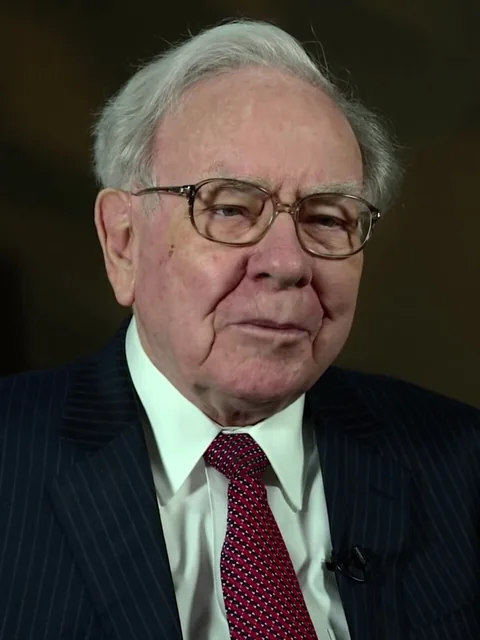
One of my dearest friends, who's a very successful investor, told me you must be fearful when others are greedy and greedy when others are fearful.74"Be fearful when others are greedy and greedy when others are fearful" — Warren Buffett's maxim from his 1986 letter to Berkshire Hathaway shareholders; he repeated it in a New York Times op-ed in October 2008, at the height of the financial crisis. And it sounds so obvious, actually very difficult in hindsight.
Yeah, I think we needed another three months or something. And that was, like, a big secondary sale.
11Europe and China: the same company at a fraction of the price
Wilson invests in Europe and China because comparable good companies can be bought there for far less than in the US.
Do you care about Europe? I had David Morehead on from Baylor.75Dave Morehead — chief investment officer of Baylor University's endowment in Texas since 2021, and a recent 20VC guest. In 2025 Institutional Investor named him Endowment/Foundation CIO of the Year. It was, I mean, he laughed at me, in all honesty, when I said about Europe. Do you care?
Yeah, it's mostly, like, idiosyncratic ideas, but we like Europe, and we found lots of interesting stuff to do in Europe. And it's a super interesting market now. We recently invested in a fintech company in Spain.
And so, wait, pause, Scott. Europeans don't invest in fintech companies in Spain. What the... what's WashU doing investing in a fintech company in Spain?
Well, by one of our partners. And we invested, you know, in another, well, I mean, it's more of a global fintech company, but based in London and Singapore. But we've done a lot in Europe recently. I mean, the thing is, like, for the same quality of asset, and there are good companies over there, just because, like, the market as a whole has struggled, we find that there are great companies, and certainly non-tech-related companies, you know, if they were based in the US and had the same kind of KPIs, growth and unit economics, they would trade at huge revenue multiples, and in Europe they trade at, you know, small earnings multiples.
My question to you on, like, some of these companies, Europe or Asia, is actually everyone's like, "Oh, the Europe discount," or "the Asia discount." Well, if there's always a discount, it's not a discount, it's just the price.
Well, there's price and value. I think you've got to separate the two, right? If we think companies are, like, you can buy it at a hundred, we think it's worth 300, and we think it's compounding value at, you know, a significant clip, like, we think that's a much better investment than buying something in the US that trades at five times the multiple that's compounding value at the same rate. Does that make sense?
It does. So people understand, how do you determine the difference between price and value?
Value is what it's worth, and price is what someone's willing to pay. Price is what you pay, value is what you get. And it's very subjective, and I think you have to be pragmatic about valuation. But for the same quality of assets, and you can think same growth rate, and, you know, over long periods of time, like, the core KPIs of the business will drive returns more than the original entry multiple. So if you get a much cheaper multiple on the entry price and you get the same growth over a decade, you're going to do a lot better.
Do you have much in China?
We don't have a ton in China. We have an office in Shanghai, so we cover that region really well. We have two guys there permanently, and we certainly look at a lot of stuff in China. We probably have more than our peers in China, and we've been active, you know, since Jamie Dimon said China's uninvestable.76Fact-checkIt wasn't Jamie Dimon, JPMorgan's chief executive, who called Chinese internet stocks "uninvestable" but the bank's analysts led by Alex Yao, in a note on March 14, 2022; JPMorgan later said the word had slipped in through an editing error (South China Morning Post). We've added a decent amount of capital. And I think China was one of those markets, you know, the geopolitical risk was always there, the fact that it was a little bit more visible. Like, if you spend enough time in Asia, you know, you want to do stuff that you think is either under the radar or supported by the broader political parties. So I think you have to be rational there. But when you can find a good company that can actually return capital to shareholders and, you know, has a pragmatic view on the world, like, we think China is a great place to invest.
Why does everyone else not, then? I know, again, I so enjoy this show. People often ask me, like, "Why do you love doing the show?" I'm like, "Because I have conversations like this." Dude, the world is saying, "No, run." They kill education overnight,77In the summer of 2021 China banned for-profit tutoring in school subjects (the "double reduction" policy): an online education industry worth hundreds of billions of dollars all but vanished, and the shares of New Oriental and TAL Education collapsed. whole sectors get taken over. Xi Jinping has, like, unlimited power and control. And everyone's like, "Get out." Respectfully, you know, you're not. What do you see that others don't?
Source: UK government, "Changes to the Energy (Oil and Gas) Profits Levy"
Well, you see that, but, like, we, you know, we've seen worse behavior in very developed markets, like in the UK, where there was, like, offshore, like, in the northern part of the UK, where they had the offshore oil and whatever energy assets, and they took the tax rate from 25% to 75%.78Fact-checkBefore May 2022 the combined tax rate on profits from UK offshore oil and gas was 40%: 30% ring-fence corporation tax plus a 10% supplementary charge. 25% was the rate of the new windfall tax, the Energy Profits Levy, which lifted the total to 65%; in January 2023 the levy rose to 35% and the combined rate to 75%, and in November 2024 to 78% (UK government). I mean, that's basically confiscating half the company. I've never seen that behavior in China. And they more or less did the same thing in Norway79In Norway oil production has long been taxed at a combined 78%, and since 2023 salmon farms have paid a 25% resource rent tax on top of the regular 22% corporate tax. with certain types of assets. Like, if they take the tax rate from 25 to 75%, that's the equivalent of confiscating half the company.
Do you mind that... and I bet you weren't expecting to go here, but my knowledge of investing in Chinese funds is actually surprisingly solid. When you invest in a Chinese fund, there's a dollar denomination and there's, like, an RMB denomination, and now the average is one dollar to nine RMB. Do you mind that split? And if you're not allowed to invest in chips and some of the most exciting things80Since January 2, 2025, US Treasury rules have barred American investors from investing in Chinese companies working on advanced semiconductors, quantum technologies and certain kinds of AI, and require notification of other deals in those fields. with the dollar-denominated fund, does that not take out all the alpha of investing in China?
ExplainerDollar and RMB funds, and the VIE structure
Chinese venture funds often come in two versions. A dollar fund raises money from foreign LPs — US endowments, sovereign wealth funds — and invests through offshore companies. An RMB fund raises money inside China: from state funds, local governments, insurers and individuals.
Foreigners are barred from directly owning Chinese companies in a number of sectors, such as the internet and education, so dollar investors usually come in through a VIE (variable interest entity). The founders register a company in the Cayman Islands; through a subsidiary in China it signs contracts with a local operating company that the founders formally own, and collects almost all of its profit. Shares of the offshore company can be sold to foreigners and listed in New York or Hong Kong — which is why, as Wilson says, founders often prefer dollars: it is a way to hold assets abroad.
The downside is that the investor owns contractual rights rather than the company itself, and since 2025 US rules have barred American investors from Chinese companies working on advanced chips, quantum technologies and certain kinds of AI. Those deals go to RMB funds instead.
Yeah, I mean, I think there's a natural, like, some agency problems,81Agency problem — a conflict of interest between the owner of money and the person managing it: a GP running two parallel funds may steer the best deals to the RMB one. but I think for the most part the entrepreneurs prefer dollars, and it's a way for them to get assets offshore if they're in the VIE structure. So you still get access to really good companies, and that's a good market. And we don't have a ton of funds in China, but we're certainly not afraid of it. And we've done more kind of co-investments and one-off stuff in China over the last five years. But, yeah, it's a huge market, is what I would say. But you have to navigate it on the ground and be realistic.
Do you have to have a team on the ground to do China?
I don't know if you have to have a team on the ground, but you certainly have to invest through local partners.
12Quick fire
In the quick-fire round Wilson regrets missing Benchmark, names Addition's investor as the best in his portfolio, and advises being the best at things that require no talent.
Listen, dude, I want to do a quick fire round with you. So I say a short statement, you give me your immediate thoughts. What fund are you not in that you wish you were in?
Benchmark, probably.82Benchmark — a San Francisco venture firm (founded in 1995) known for early bets on eBay, Uber, Twitter and Snap. It keeps its funds small and its LP base narrow, and is hard to get into.
You're not in Benchmark?
We're not, no. I mean, I wish we had, like, a bigger allocation to the early-stage Founders Fund83Founders Fund — Peter Thiel's venture firm (founded in 2005), an early investor in SpaceX, Palantir and Anduril. Besides growth funds it raises separate early-stage funds. as well.
How did you get... you got Cerebras through Foundation?84Foundation Capital — a Silicon Valley venture firm (founded in 1995) and one of Cerebras's early investors.
We got Cerebras through a fund called Eclipse.85Eclipse — a Palo Alto venture firm Lior Susan founded in 2015; it backs the "physical" economy — manufacturing, logistics, hardware — and was one of Cerebras's early investors.
Oh yeah, Lior. Yeah. You can put all of your money in only one fund. Which one do you choose? Private or public? One each.
I would say Addition,86Addition — Lee Fixel's investment firm, founded in 2020. When Wilson says "he," he means Fixel himself. one of our core partners. I think he's the best investor in our portfolio. He's just very pragmatic. He's disciplined around price, but will pay up for super-high-quality assets. And I think his underwriting process, and just the way he dissects companies and business models and management teams, is really impressive. And so of the people I've spent a lot of time with, I think he's probably the most talented investor in our portfolio.
Are you ready for a hard one? You have an amazing board. Who would you most like to have on your board who you don't have on your board today?
Probably it would be somebody with real industry expertise, like Elon Musk or Thomas Reardon,87Thomas Reardon — an American engineer and neuroscientist: at Microsoft he led the creation of Internet Explorer, then founded CTRL-labs, maker of a wristband that reads the hand's nerve signals, which Meta bought in 2019. somebody who I think has, like, real deep industry knowledge that we could use and could help us diligence a variety of investments. I mean, as it is, my board is really great at that.
Which other endowment fund do you most respect, and why them?
There are several. You know, I think what Erik's accomplished at Michigan, what Robert's accomplished at Virginia, Seth at MIT, Jane, now Josh, at Brown.88Wilson is listing endowment chiefs: Erik Lundberg, CIO of the University of Michigan since 2008; Robert Durden, head of the University of Virginia's investment company (UVIMCO) since 2018; and Seth Alexander, president of the MIT Investment Management Company since 2008. Jane Dietze has been Brown University's CIO since 2018; in September 2026 Brown announced that her deputy Joshua Kennedy would succeed her. Like, those teams have just done unbelievably well over the last 20 years. And I think that's, you know, ultimately that's what you're judged on, is the, you know, multi-decade performance of the portfolio.
Do you have, like, a CIO dinner party? Like, all get together and shoot the shit?
I've been involved in, like, various little groups over time, and a couple, like, one-off chat groups where I keep track of some of my peers. And, you know, my daughter goes to school in Boston, so I'll meet some of the folks in Boston89Boston and neighboring Cambridge are home to the endowments of Harvard (the largest in the US) and MIT and many other investment offices. when I go out there. But no, there's not, like, an organized, like, regular CIO dinner. I think most of us spend enough time on the road that it'd be tough to organize.
You've worked with incredible managers. You've met and, you know, worked with incredible founders. Final one: when we think about the best advice that you've been given that sticks with you every day, what would the best advice you've been given be?
The best advice... I tell this to, like, kids all the time, and I think it's very true. And it stems from, like, I don't know who first said it, but you should always try and be the best at things that require no talent. So, like, showing up, being curious, working hard, being presentable, asking good questions, being respectful, being kind. Like, all those things that require no talent, I think, contribute a lot to success over time.
Do you know, and I also think it's appalling when today you are equipped with tools that allow you to be so good at those things so easily. You can go to ChatGPT before an interview with Scott for a job and say, "Give me three things about Scott that will show that I've done my work and really impress him." And it'll tell me about an incredible investment you did at Grinnell, a quote that Adam said about you, and something else. And if I say those in that meeting, you'll be like, "Wow, Harry did his work."
Yeah, no, it should be easier than ever to do those things.
Scott, I do the show for shows like this. I can't thank you enough for, A, agreeing to do it, but, B, being so open, transparent, fantastic. Really, this has been a joy.
Yeah, well, thanks for having me. It was a lot of fun.
AdCrosby, 1mind, Framer
But before we leave you today, today I want to tell you about how the first AI law firm, Crosby, helped us close a big sponsor. As you know, some of the biggest companies in the world advertise on 20VC. My British dulcet tones clearly convert well. I was working to close this big sponsor, and they wanted to get through legal review quite quickly to close the deal. Crosby turned redlines around in three hours and caught major issues that would have caused us serious problems in the future. Crosby combines AI, some of the best engineers in the world from companies like Ramp and Stripe, and some of the best attorneys in the world from top 10 law firms.
Customers get the best of both worlds. An elite human attorney reviews every contract, but they move incredibly quickly, returning redlines in under four hours. They help the fastest-growing companies like Cognition, Ramp and Clay close deals in hours, not weeks. Learn more at crosby.ai/20vc. If you want to redline NDAs, MSAs, DPAs and any other procurement contracts faster, go to crosby.ai/20vc. It's speed that you can really trust.
While Crosby keeps your numbers sharp, 1mind keeps your customer conversation sharper. Our friends over at 1mind have a hot take. The B2B GTM model we've been using for, well, the last 20 years, it's collapsing. Predictable revenue isn't so predictable, and buyers are just tired of explaining themselves at every handoff between SDRs, AEs, CSMs and support. You feel it in your board reporting. Your sellers feel it in their coverage.
Your buyers feel it as they wait for answers. Well, enter 1mind and their GTM Superhumans. HubSpot, Alteryx and ZoomInfo are just three of the tech companies using 1mind Superhumans to qualify buyers, ride along with sales reps and coach customers. Whether you're ahead of target or under pressure to increase bookings ahead of hiring, or behind on target even and need every rep to hit quota, 1mind is the solution. See for yourself at 1mind.com. That's 1-M-I-N-D dot com.
While 1mind helps you sell smarter, Framer helps you build faster. When a new landing page turns into a pile of tickets and handoffs, Framer helps your team move faster. Framer is the AI website builder that helps creators, teams and businesses ship production-ready sites faster than ever while getting every detail right. Prompt, inspect, edit and publish in one place at a whole new pace. Agents and humans work in tandem. Agents bring speed and scale. You bring taste, judgment and control.
The work lands on the canvas and stays editable. Build custom code components, manage CMS content, optimize SEO and audit for issues, all in one place. Enterprise-grade hosting, security and 99.99% uptime SLAs, trusted by leading brands like Perplexity and Miro. Learn how you can get more out of your site from a Framer specialist or get started building for free today at framer.com/20vc for 30% off a Framer Pro annual plan. That's framer.com/20vc. Rules and restrictions may apply.


