

Uncapped
Chapters
Checklists are useless, Singerman says: find what a person is best at, and play honestly to your own strengths.
Read the chapter- An attempt to define a "Founders Fund founder" by a list of traits failed, and Singerman looks only for the spike where someone is the best.
- The goal, Singerman says, is the Venn diagram where what you're great at, what you love and where you can win overlap.
- As with StarCraft's asymmetric races, you tilt the game toward your strengths, which takes radical honesty with yourself.
- Founders Fund tried partner meetings for a week and gave up, and Sean Parker rarely showed up but brought in Facebook and Spotify.
Great companies, Singerman argues, are built by founders with different spikes and shared beliefs, not by one genius.
Read the chapter- At Anduril, Singerman says, Palmer Luckey is the mad scientist with prescient ideas, Grimm the operator, Stephens the connector and Schimpf the CEO whose calls everyone accepts.
- Only a CEO who respects strong, combative people and is respected by them can hold them together.
- Singerman counts only Elon Musk and, to some extent, Max Levchin as a true CTO and CEO in one person.
- Palantir's founders, Singerman says, shared a hardcore pro-American culture that was really hard to find back then.
Singerman judged the whole founding team, not just the CEO, probing weak spots and refusing generic answers.
Read the chapter- Singerman insisted on meeting every co-founder, not just the CEO.
- A good sign, he says, is when the co-founder who actually knows the area takes the hard question.
- An honest "you should meet my co-founder" earns more of his trust than talking about everything.
- Telling people there's no need to be humble, and speed rounds of gut answers, cut through polished Silicon Valley talk.
Singerman's own strength is one thing: telling A-plus founders from A founders.
Read the chapter- He doesn't do spreadsheets or diligence, Singerman admits.
- Founders Fund, he says, was better than anyone at telling A-plus founders from merely great ones, and then "backed the truck" into them.
- Because venture is a power law, that difference is everything.
Singerman and Linden's new fund backs emerging managers and adds money when they go all in.
Read the chapter- Singerman and Linden, who have returned billions in venture, act as the managers' consigliere.
- GPx also supplies the managers with its own LP base.
- When a manager "bets their career" on one company, putting in roughly 20% of the fund, GPx automatically adds a big check, with no veto.
- That lets a small fund preempt a round without raising an SPV.
Why Singerman tired of pitch meetings and which manager strategies he likes.
Read the chapter- In pitches Singerman only thought about how to leave, like a musician who has played one hit every night for 30 years.
- Singerman never founded a company and always felt imposter syndrome with founders, but with fund managers there's none.
- He backs managers who could have beaten him in his prime, as he once sensed in Josh Kushner and Elad Gil.
- One strategy is a 100x-er who works inside five or six portfolio companies, and no one, Altman notes, can copy it.
- About 20% of GPx goes into funds with no carry, and the money comes from the automatic checks when a manager doubles down.
For endowments and pension funds, Singerman recommends two buckets: tier-one multistage firms and the best emerging managers.
Read the chapter- The first bucket is tier-one multistage firms, and only those, and the hard part is getting a big enough check in.
- The second is the most elite emerging managers, who let LPs scale with them like Founders Fund's first LPs.
- There are thousands of such managers and picking the best is very hard, which, Singerman says, is GPx's job.
Singerman's own spike helps him recognize others', and he can't name an elite VC who is an all-rounder.
Read the chapter- Singerman knows how it feels to talk about something you're the best at, so he hears it in others: "game attracts game."
- As a competitive gamer, he says, he could tell a great player from one conversation.
- He can't name a single provably elite VC who is well-rounded.
In an era of excess capital, the best founders choose the people they trust, and SPVs, Singerman says, are on their way out.
Read the chapter- Top companies like Anthropic and Anduril are miserable with SPVs, since once the Pandora's box is open it stays open, and they tell new founders never to allow them.
- Founders pick people they trust: an expert, or an investor who co-founded the company, like Delian Asparouhov, Scott Nolan or Zach Frankel.
- Anduril's board is three of its four founders, and Singerman himself is an observer.
- Top companies don't need a big fund's signal, so trust, Singerman says, wins against all but the very top brands.
Founders Fund was slow to see Airbnb but fixed the mistake with a big check and made the second-most money on it.
Read the chapter- The firm was roughly the 30th investor, put in about $150 million at a valuation of about $2 billion and, Singerman says, made the second-most money.
- That took putting ego aside, Altman notes, and admitting others were right and would get a better multiple.
- Singerman recalls Google: some told themselves in 2004 it was too late to join, others went to fix their mistake.
- Ownership doesn't matter, Singerman says, since "billions minus 5 million is the same as billions minus 150 million"; what matters is the share of the fund you bet, and being right.
A concentrated bet works only if the portfolio holds a truly great company and the manager is honest about it, and it should never be forced.
Read the chapter- To copy the Founders Fund strategy, Altman says, you need both a SpaceX in the portfolio and the judgment to know you have one.
- Going big on your best company when it isn't great, Singerman says, is how you lose a lot of money.
- Singerman talked a manager he works with out of a bet on a hyped company she wasn't sure about.
- Founders Fund II had SpaceX, III Palantir, IV Stripe, Airbnb and Stemcentrx, VI Anduril, while V and VII had no such company.
Founders Fund was the opposite of Benchmark's equal partnership, and Singerman calls Thiel the best venture capitalist in history.
Read the chapter- Thiel had the final call but didn't take the biggest share, and carry in a new fund followed results in earlier ones.
- A weaker partner could get a smaller share instead of leaving, though the downside, Singerman says, was negotiating every time.
- Thiel, Singerman says, assembles very different, very strong people who can push back on him and lets them play to their strengths.
- There were no memos: you convinced colleagues to meet the company, then came a debate that could take five minutes, and a long process meant "no."
- A solo GP has no one to blame, so for now GPx works with solos.
Singerman on his home studio and why AI won't cancel human experience.
Read the chapter- Singerman writes songs without being able to play, using music theory, DAWs and MIDI, and Altman compares him to Rick Rubin.
- Artists record in his studio for free and own all the rights while he gets to be a fly on the wall, much like an investor who doesn't found companies.
- Computers have beaten humans at chess for 20 years, Altman recounts from a talk with a grandmaster, yet people still watch Magnus Carlsen.
- In math, where you compete with a problem rather than a person, Singerman thinks AI may take away some of the joy.
Quotes
On how Singerman picks people
“So I decided to just go the exact other way, and I do not have a checklist and I do not have a rubric at all.”
Brian SingermanRead from 01:07On Palmer Luckey
“But Palmer is your perfect example of, like, unbelievably brilliant, creative mad scientist, you know, kind of thing. Do you want Palmer running the company? No.”
Brian SingermanRead from 06:12Founders Fund 101
“It's like, there's a lot of great A-minus founders out there, but it's like, we took the ones that were A-plus, and we just backed the truck into them, right?”
Brian SingermanRead from 18:19Why Singerman burned out on pitch meetings
“But, like, you've played that song every single night of your life for the last 30 fucking years, and you just can't play the song anymore.”
Brian SingermanRead from 23:07On paying up to get into Airbnb late
“Like, and on the Airbnb thing, it's like, what I tell people is, like, well, billions minus 5 million is the same as billions minus 50 million, the same as billions minus 150 million.”
Brian SingermanRead from 41:25His advice to a manager who doubted a bet
“I'm like, if you are not sure, then absolutely do not do it just to play in the Silicon Valley game.”
Brian SingermanRead from 45:57On carry by performance
“It's just because it's, like, the principle being, like, well, first you make a lot of other people money, and then you can start making real money, right?”
Brian SingermanRead from 49:01The flip side of team chemistry
“Like, what you don't want to do is just work with somebody because you just like them.”
Brian SingermanRead from 54:13
Summary
Jack Altman talks with Brian Singerman, a former Founders Fund partner who co-founded the fund GPx with Lee Linden of Quiet Capital. Singerman's core idea: he has no checklist and no list of attributes for picking people. He looks for one thing, what a person is better at than anyone else, and for how honestly they own both their strengths and their weaknesses. His example is Anduril, where four founders with different spikes complement each other: the inventor Palmer Luckey, the operator Matt Grimm, the connector Trae Stephens and CEO Brian Schimpf, whom everyone respects. His own talent, he says, is telling an A-plus founder from an A founder, which in a power-law business is what decides everything.
GPx backs emerging managers, Singerman's "elite athletes," and automatically adds a large check when a manager "bets their career" on one company, for instance 20% of their fund. He burned out on founder pitch meetings the way a musician tires of playing one hit for 30 years; now he looks for people who could have beaten him in his prime. For LPs he recommends two buckets: tier-one multistage firms and the best emerging managers. SPVs, in his view, are finished: top founders tell the next generation never to let them in, and in an era of excess capital, trust in an investor who helped build the company beats even a big brand.
The second half is about how Founders Fund actually made its money. The firm was late to Airbnb, roughly its 30th investor, but put in about $150 million and made the second-most money on it: "billions minus 5 million is still billions." It made concentrated bets only when the partners were sure: Founders Fund II bet on SpaceX, III on Palantir, IV on Stripe, Airbnb and Stemcentrx, while V and VII had no such company and didn't force one. Unlike Benchmark's equal partnership, Thiel had the final call and carry tracked actual results. Singerman calls Thiel the best venture capitalist in history for assembling strong people who can push back on him. At the end: the home studio where Singerman writes songs without being able to play, and why human experience will outlast AI.
Advice
Be honest about what you're great at and what you're weak at, and build your game around your strengths; don't try to win where others are better than you.
Build a founding team with different spikes, an inventor, an operator, a connector, and make CEO the person everyone else respects, not the most brilliant one.
Bring the whole founding team to investor meetings: a strong investor judges not just the CEO but how co-founders cover each other's weak spots.
Don't bluff in investor meetings about things you don't know: an honest "I don't know, ask my co-founder" earns more trust.
Don't let SPVs onto your cap table: once that Pandora's box is open, you lose track of who really owns your shares.
Don't hire people just because they're pleasant to be around: check that they're truly great at what they do.
Mentioned
 Founders Fund01:07Singerman's firm for 17 years: no memos, no checklists, a bet on A-plus founders
 Peter Thiel02:35Altman recalls his thesis on competition; later Singerman calls Thiel the best VC in history for gathering people who can push back on him
- Competition Is for Losers02:35Altman ties it to the idea of tilting the game; Singerman prefers honest self-assessment to the slogan
- StarCraft03:18Altman's childhood game; Singerman cites it as a game whose races start from completely different positions
Show 45 more mentionsShow fewer mentions
- Warcraft03:18Altman's other childhood game, where the sides differ less
- Sean Parker04:49rarely showed up at Founders Fund early on but brought in Facebook and Spotify; his Spotify write-up was the firm's only memo ever
 Facebook04:49one of the bets Sean Parker brought in
 Spotify04:49Parker wrote what Singerman calls the best investment memo he has ever seen about it
 Anduril Industries05:26Singerman's main example: four founders with different spikes and a CEO whose calls everyone accepts
 Palmer Luckey06:12a "mad scientist" with prescient ideas who shouldn't be CEO
 Oculus VR06:12Luckey's company; Singerman calls himself its first investor and regrets not putting in more
- Matt Grimm07:04Anduril's operator, who turns Luckey's ideas into reality
 Trae Stephens07:04in Singerman's words, has connections no one else in the space has
- Brian Schimpf07:33Anduril's CEO, respected by all the co-founders: his decision is final
 Elon Musk09:37the only person, Singerman says, who can be both CTO and CEO
 Max Levchin09:37the other example, after Musk, of a true CTO and CEO in one person
 SpaceX10:33Altman considers its story well known; later, Founders Fund II's big concentrated bet
 Palantir Technologies10:33an example of founders with shared beliefs: a pro-American culture united them
- Stephen Cohen10:48Palantir co-founder Singerman met around 2009
 Joe Lonsdale10:48Palantir co-founder, now a good friend of Singerman's
 Alex Karp11:10Palantir's CEO, who held the team together with Thiel
 Cognition12:16Altman suggests it as another example; later Singerman mentions Scott Wu
- GPx19:14Singerman's new fund: a consigliere, an LP base and automatic money when a manager bets their career on a company
- Lee Linden19:21Singerman's partner at GPx
- Quiet Capital19:21the firm Linden runs
 Josh Kushner27:18Singerman sensed at their first meeting that he might beat him one day and invested in both Oscar and Thrive
 Oscar Health27:18Kushner's company, where Singerman joined the board
 Thrive Capital27:18Kushner's firm, which Singerman invested in
 Elad Gil27:37impressed Singerman with a move on the Stripe deal that would have been strong even for a fund, let alone a solo investor
 Stripe27:37the deal where Singerman saw Elad Gil's strength; one of Founders Fund IV's big bets
 Airbnb28:17Founders Fund was roughly its 30th investor but made the second-most money, putting in about $150 million
- Stemcentrx28:17the biotech Founders Fund bet big on in its fourth fund
 OpenAI28:17on the list of Founders Fund's biggest bets
 Anthropic33:20an example of a company suffering from resales of its stock through SPVs
 Delian Asparouhov34:43a Founders Fund partner who founded a company himself: an investor trusted like a co-founder
 Scott Nolan34:43also a Founders Fund partner and a company founder
- Zach Frankel34:43Singerman cites him as an investor who acts almost like a co-founder; Altman, as proof that founders always let such an investor into the round
 Benchmark37:23Altman's firm: a big brand that "tier-four" companies want for the signal; an example of equal partnership
 Ramp38:55its founders always let Zach Frankel invest as much as he wants
 Scott Wu38:55Cognition's CEO, who trusts Frankel the same way
 Google40:10the story of people who turned down Google in 1999 and decided in 2004 it was too late
 Brian Chesky44:35one of the benchmarks of greatness Singerman holds portfolio founders up against
 Sequoia Capital46:37even the best firms lack a SpaceX-level company in most vintages, Altman argues
- Napoleon Ta54:34runs growth investing at Founders Fund, which now reportedly does a lot of diligence
 Molly O’Shea56:41Altman saw Singerman's home studio on her podcast
 Rick Rubin58:47Altman compares Singerman to him: a producer who barely plays an instrument
 Magnus Carlsen59:56computers have long been stronger at chess, but people still watch Carlsen
 Stockfish59:56the chess engine whose "alien" games Altman doesn't watch
 AlphaGo1:00:27Singerman recalls how Go professionals couldn't understand its moves
Transcript
01No checklists: find what a person is best at
Checklists are useless, Singerman says: find what a person is best at, and play honestly to your own strengths.
All right. I'm really excited to be doing this, Brian. Thanks for coming on the podcast with me.
Of course.
I want to start with a topic that I think is pretty central to the way your brain works, to the way you've done your work, which is the idea of assessing talent and identifying sort of outlier attributes that people have. And, you know, I think this often gets— I hate to even say this word, but, like, people talk about, like, spiky founders,1Spiky founder — a founder with one or two exceptionally strong traits who may be average or weak elsewhere, as opposed to a well-rounded one. Hence Singerman's verb "spike": to be the very best at something. basically meaning the concept that, like, people have this, like, report card of attributes, you know: they're smart, they're tenacious, they're gritty, they're knowledgeable, whatever.
And it's this idea that one of these attributes is just, like, off the charts. And I think the idea is sort of like, you know, somebody who's, like, an A-plus in one place but, you know, has low scores somewhere else, versus you have somebody else who's very well-rounded, and sort of, you know, kind of relating that to kind of the quality of the founder. Anyway, I'm curious why this topic of identifying these attributes is so important to you. So maybe you could just start, like, how you think about these things.
First of all, I have no list of attributes. In fact, we tried to have somebody, like, authors come into Founders Fund2Founders Fund — a San Francisco venture firm founded in 2005 by Peter Thiel, Ken Howery and Luke Nosek, known for its bets on SpaceX, Palantir, Facebook, Airbnb, Stripe and Anduril and for its manifesto "We wanted flying cars, instead we got 140 characters." Singerman joined in 2008 and spent 13 years as a general partner. ages ago and try and be like, "Hey, hey, let's try and define what a Founders Fund founder is, and we can start using, like, all these, like, attributes, like a type A or not needy or—" I don't know, it's nonsense, right? And it never worked, it's never accurate. So I decided to just go the exact other way, and I do not have a checklist and I do not have a rubric at all. It's just purely one of those, but I am looking for people who spike with me. It's just—
Can be different every single time. Can there be something that you're like, they're really good at that thing, but it's so irrelevant to the company they're building, I don't care?
I don't know if it can be so irrelevant, but I am open to whatever they spike in being anything. In fact, one of the things I love doing the most in this world still is figuring out what it is somebody is the best at, and can they leverage that, right, to win at whatever it is that they're doing, right? Like, I'm a gamer, right? I'm always looking for, like, what are the leverage points, what are the things that you're just better than everybody else at, and can you exploit those strengths to win at whatever it is? And so I don't think it can be totally irrelevant, but I really do think that the goal for people in professional life, or whatever you want to call it, is to find that, you know, the Venn diagram of, like, what you're really good at meets what you love meets what you can actually, like, win at. Yeah, yeah, yeah, like, in a real way. And so that's what I'm looking for.
Yeah, I mean, I feel like this kind of relates to something that Peter3Peter Thiel — co-founder of PayPal and Palantir, Facebook's first outside investor, founder of Founders Fund and author of Zero to One. and all of you guys have talked about a bunch, which is, like, competition's for losers,4"Competition is for losers" — Peter Thiel's thesis from a 2014 Wall Street Journal essay and his Stanford lecture: competition destroys profits, so a startup should find a niche it can monopolize. where you should basically find the dimension of the game that you are so much better at, and then you should tilt the game in that favor.
That's right. I totally agree with that. Like, I think the "competition's for losers" is like a fun way of saying it, but I'm more the latter of what you just said. Like, okay, the game's the game, and figure out how you tilt it to be more towards what you are really good at. Like, don't try and beat other people at what they are better than you at. But to do this requires, you know, radical honesty, at least with yourself, right? Like, regardless of what you show to the world or show to other people, like, you gotta be honest with yourself about what you're actually good at and what you're not good at.
Yeah. I was nowhere near, I don't think, as big or good a gamer as you, but I was, like, a pretty big gamer as a kid. And I played games like StarCraft and Warcraft5StarCraft — Blizzard's 1998 real-time strategy game about a war between three races: Terrans, Zerg and Protoss. The races play completely differently, with different units, economies and styles, yet are carefully balanced, so a player has to know their own race's strengths. Warcraft, the studio's earlier series about humans and orcs, has much smaller differences between sides. and stuff. And it's basically all about imbalances. And so it's like one race fights—
Especially something like a StarCraft, which is your first example. I mean, Warcraft to a certain extent, but StarCraft is your first example of a truly, truly, truly, like, totally, like, not the same starting board at all. Like, and you've got to, like, figure out how to exploit your race, like, in a way that is just going to win.
But fairly balanced between them. It's an interesting point that you said too, that it needs to be combined with self-awareness.
Because there's probably a lot of people who have the spike but don't want to admit that they've got these other weaknesses.
Yes. So they won't play the game in the way that they can tilt the board. Correct. I'm all about figuring out, like, just owning it: owning what you're actually good at, owning what you're not good at, figure out how to tilt it to what you're good at.
Can you give me some— just, like, connect this dot to some of the, like, Founders Fund, like, success story examples?
Well, you know, Founders Fund, it happened in, like, a really organic way. I mean, like, you have these ridiculously smart people who spike or whatever in their own ways, but we could never have any, like, rules there, right? Like, in the early days of Founders Fund, we tried for, like, a minute to have, like, you know, investment memos,6Investment memo — a fund's internal write-up of a deal: market, team, risks, terms. At many firms no deal happens without one and a discussion at the weekly partner meeting. and we tried for a week to have partner meetings and something like this, and it didn't work for us. It's not that that's globally wrong. It just didn't work for us, because we were really honest about, like, okay, let's just put all that stuff aside, figure out, like, what this team is really good at, and play to our strengths.
Like, back in the early days, like, Sean would never show up,7Sean Parker — co-founder of Napster and Facebook's first president, a Founders Fund partner since 2006. In 2009 he invested in Spotify, joined its board and helped it strike deals with US labels and launch in America. right? But dude would stick his head up, like, every once in a while and say "Facebook" or "Spotify." And you know what? That's pretty freaking good.
Like, I randomly got a chance to see, like, something Sean Parker wrote about Spotify.
Yeah. And I was just— I think I sent that to a couple of people. It's like the most amazing— it was, like, the most amazing investment memo I've ever seen written.
Yeah. So was that, like, the quality of— you know, I know you don't do memos, but is that what was—
That happened one time in Founders Fund's history. And it worked out, and it was one of the best companies ever.
02Anduril and Palantir: a team beats a lone genius
Great companies, Singerman argues, are built by founders with different spikes and shared beliefs, not by one genius.
That's funny. The way that Anduril came together8Anduril — a US defense company founded in 2017 that makes drones, autonomous submarines, air defense systems and the Lattice software platform. Founders Fund is its largest investor; in June 2025 Anduril was valued at $30.5 billion.— and obviously I know you've been intimately connected since the beginning, and so, obviously, you know, share whatever's comfortable, but if we could connect to this idea of the founder attributes and how important they are. What were some of the founder attributes there that turned out to really matter? And can you, like, walk that out a little bit so people can—
Sure. I mean, Anduril's actually a great example of this, because I don't think any single one of the founders— like, I'm gonna call it four founders of Anduril,9Formally Anduril has five co-founders: Palmer Luckey, Trae Stephens, Matt Grimm, Brian Schimpf and Joe Chen. Singerman talks about the four he discusses next. right? And so I don't think with any single one founder, it's like, oh, spiky in every single way. It's the perfect example of a team of people who are very good at different things. And I think the combination of the four founders of Anduril cannot be beat, right? Like, and they're so different.
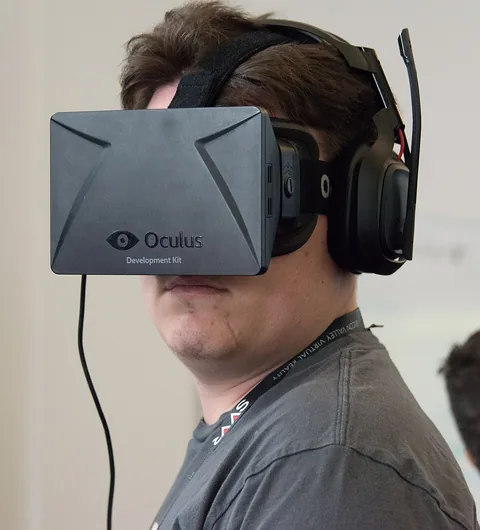
Like Palmer.10Palmer Luckey — inventor and entrepreneur. In 2012, at 19, he founded Oculus VR and raised about $2.4 million on Kickstarter for the Oculus Rift headset; in 2014 Facebook bought the company for about $2 billion. After leaving Facebook in 2017 he founded Anduril. You know, I've known Palmer since he was, whatever, 18, 19. Like, I was the first investor in Oculus.11Oculus — Palmer Luckey's company, maker of the Oculus Rift virtual reality headset. It is now part of Meta, and its headsets are sold as Meta Quest. Now, that was a screw-up on my part, because I didn't go bigger in that, you know, helping formulate later-in-life stuff. But Palmer is your perfect example of, like, unbelievably brilliant, creative mad scientist, you know, kind of thing. Do you want Palmer running the company? No.
Seems like he has a brain that just can't stop having—
Ideas. Can't stop having ridiculously good— but the ideas are not just, like, out there in sci-fi. It's like, no, they're, like, prescient and correct. That's so critical, right? It's like, nope, this actually can be done. And, like, so putting that guy on, like, products and future products and, like, seeing where his mind goes, that's what you want to do with him. You don't want to, like, have him bogged down with, like, operational CEO of something or other. Like, that would be a waste of everything, right?
And then, like, you get, like, a guy like Grimm,12Matt Grimm — co-founder and chief operating officer of Anduril; previously at Palantir. who's just, like, so unbelievably good at operations, and, like, actually— I'm gonna say opposite, but in some ways the total counter to Palmer, right? Like, it's just, like, he actually can get this stuff done. Like, Palmer can have one of his ideas, and, like, Grimm can actually get it done, right? Trae is extremely good13Trae Stephens — Founders Fund partner, co-founder and executive chairman of Anduril. Before Founders Fund he worked at Palantir with defense and intelligence customers. at high-level connections, extremely good at high-level networking, extremely good at establishing, like, relationships and networks that are, like, nobody else in the space. He's extremely good at that, right?
And then you got a guy like Brian Schimpf,14Brian Schimpf — co-founder and CEO of Anduril; previously an engineer and manager at Palantir. right? Like, as actual CEO, who's so good at dealing with these types of personalities, right? To be the CEO of something like that— and I'll get into this in the Founders Fund one too— but, like, you've got to be just so both smart, respected by all of these types of different people, right? And be able to just put it all together. And, like, when we found, you know, him, it was just like, oh yeah, this guy's gonna be able to put it all together.
To manage those kinds of personalities, you both have to, like, be respected by and respect them.
That's correct. And that's— I can't stress enough how hard that is, to have people like Palmer Luckey and Trae Stephens and these kinds of— and Matt Grimm just go like, "Oh yeah, we'll defer to the CEO to make these decisions at the end of the day," because at the end of the day, the CEO makes these decisions.
Can you put your finger on what that is, or is that just some overall level of competence and trustworthiness?
Again, it's just what he is really good at. He does not get riled, understands people's personalities, knows what their strengths are, doesn't deny their strengths, knows where they're brilliant, knows where they're weak, and can put it together such that people trust his holistic decision. I mean, there have been crazy amounts of conflicts in that company, but when Schimpf makes a decision, that's the decision. And I love that. Like, it's just, like, so impressive, right?
It's interesting what you say about, like, you know, it doesn't all have to come from one person. We recently met with, like, a phenomenal growth-stage CEO who is basically making the point that he thinks too many people, even now, within a company settle on "I've got to choose between my head of sales being the operational type or the sales savant type." He's like, "I'm not going to choose. I'm going to have two. I'm going to make them work together."
But you've got to be the type of person that can then make them work together. Right? Because too many times you'll have these kind of dominant personalities in various things. And if you don't have that person who has the respect, as you pointed out— the respect, and respect of the others— like, it's going to fall apart.
Actually, that's an interesting— have you ever had a CEO that you've worked with who didn't have this ability, who was really great? Or is this a requirement to be—
I mean, I've tried— I've experimented a ton in venture capital, right? Like, in early days I'd have a CEO who was just, like, really, really, really good at science or tech, and it's like, you realize quickly that's not enough, right? Like, and then you experiment with having a CEO who, like, you think can do it all. Like, the only person I've ever met that can remotely do it all in that regard is Elon,15Elon Musk — head of SpaceX and Tesla. Founders Fund invested in SpaceX in 2008, after the company had barely survived three failed launches in a row. right? There's nobody else that's even close on the, like, do-it-all. Levchin,16Max Levchin — co-founder and CTO of PayPal (with Thiel), later founder of Slide and of Affirm, which he runs. to some extent, is the only other person that I know who's that good of a CTO and CEO, right? Like, true CTO and CEO, right?
And similar to Elon. But, like, outside of those two guys, I don't know anybody else who could do it, and then plus that's just CEO and CTO. Like, you also need, like, all the other aspects of business. So it's like, I think it's pretty rare to have one person be able to do it. So I love, like, when a strong, strong, strong CEO can understand their strengths and weaknesses and mesh it all together.
I feel like SpaceX is well discussed enough, and Elon's obvious enough, but what about Palantir?17Palantir — maker of data analysis software for intelligence agencies, militaries and businesses. Founded in 2003 by Peter Thiel, Alex Karp, Stephen Cohen, Joe Lonsdale and Nathan Gettings; one of its first investors was In-Q-Tel, the CIA's venture arm. Public since 2020. Like, can you point to, like, what were some of the founder attributes there that connected to the way the company—
Well, I wasn't around in the founding days of Palantir. So I need to, like—
But I assume you know enough now.
Oh yeah, yeah. Like, I mean, I know enough about it, but it's like, I feel less comfortable, because I wasn't— I got involved in Palantir, you know, in, like, 2009. Yeah, 2009. That's, like— I met Stephen18Stephen Cohen — co-founder and president of Palantir. and Lonsdale.19Joe Lonsdale — Palantir co-founder. He left the company in 2009 and went on to found the venture firms Formation 8 and 8VC. I probably met those guys after, like, Lonsdale had left the company, I think, right? So now he's, like, a good friend of mine.
But so for Palantir, it's a little bit tricky. I don't really know how it was in the founding days. I can tell you, though, that there's certain attributes of the founding teams at Palantir. Like, they did all have a core— and I think this is an important thing that doesn't get discussed enough, right? It's one thing to have a set of people who have different strengths and weaknesses, and then you have somebody putting it together, right? Like Karp20Alex Karp — Palantir co-founder and its CEO from the start, Thiel's friend since Stanford, a philosopher by training. working with Peter, right, in that case.
But it's a whole other thing. Like, they have to have some fundamental beliefs shared. Right? Because that is going to set the culture of the company. If those don't align, like, it could lead to trouble. So I think that the Palantir founders all, like, shared in the— and this was really hard to find back then— a hardcore pro-America,21In the 2000s, working for the Pentagon and intelligence agencies was unpopular in Silicon Valley, and Palantir bet on exactly those customers from day one. Karp still openly calls Palantir a pro-American company that backs the West and its militaries. like, totally, right, like, kind of a culture.
03How Singerman tested founders in pitch meetings
Singerman judged the whole founding team, not just the CEO, probing weak spots and refusing generic answers.
Is there another company besides Palantir that's worth going into, that would be worth talking about? And then we can go back and we can chop the Palantir bit.22Altman is talking about the edit on air: he suggests cutting the Palantir part later, since Singerman wasn't there for the founding. The bit stayed in the episode.
In terms of, like, a—
Like, is there one more example besides Anduril that you can talk to, that you feel comfortable talking about, you know, about how the founder mapped back? Like, maybe Cognition,23Cognition — the startup behind Devin, an AI coding agent; in 2025 it bought the code editor Windsurf. Founded in 2023 by Scott Wu and partners; Founders Fund led its early rounds. if you were involved in that one, or— I don't know, what's another company that could make sense to draw out this concept of, like, the founder specialness and, you know, how it played out in the—
I mean, I think all of them, right? Like, to some extent, like, you can always backtrack this to, like, what— what is the stupid, like, venture term for it?
Founder-market fit.24Founder-market fit — a venture term modeled on product-market fit: how well a founder's experience, knowledge and character suit the market they're building in.
Yeah, is that, like, the venture-speak version of it? I mean, I think you can always, like, back into that for everything, but for me it was always just a "here's how I knew it."
Okay, how about this? Let me take you through how I kind of judged the holistic sense of the founding team. And for me it was never just about the CEO, but it was only about the founders, right? Like, it was about the founding team. It was critical for me to speak to all the founders. All the founders, not all the head of whatever the hell, right? Like, but I did need to meet all— I did not want to just meet the CEO. I wanted to meet all the founders because of what you're talking about.
Now, what I would do in these pitch meetings, back when I would do pitch meetings, would be like, okay, I would sense where they were strongest immediately. Like, I could sense where they knew they were strongest and where, you know, they were confident. And what I would do at the start of these meetings would be like, okay, I'm just gonna give you that. Like, I wouldn't take that off the floor, and I would try and— and I don't know what I'm doing, right? Like, I mean, I was just trying to poke holes, right? Like, I'm a strategy guy, but I don't know their business, right? I would try and poke holes where I thought that meant that they were weak. And I wouldn't care if the CEO was strong in them, but if another founder would take the question and be like, "Oh, I get why you're here, oh, I get why you're here," that would be, like, enough for me to be like, great, right?
Like, in other words, if they had the person speaking who knew what they were talking about— like, what I can't stand is people who, like, try and speak about everything, even if they don't know what they're talking about. Just say you don't know what you're talking about on that, or supplement yourself with the people that do know what they're talking about. So it's like, that was always a good litmus test for me. It's like, if the different founder would speak about the different thing, I was like, that's good. That is good.
Man, when people speak about stuff that they don't know, and then you're just like, it's gonna be very hard to work together. If you can never just be like, "I don't know, let's move on," rather than—
I would much rather them say that. Or even, let's say a co-founder wasn't there. I would much rather them say, "You know what, I don't know that. You should meet my co-founder." Okay, then I accept that answer better than them trying to, like, speak about everything that they don't know.
One of the things that I appreciated that you asked me when we hung out last time was, you were like, you know, you were kind of trying to get at, like, what my, you know, attributes might be. And you asked me, like, you know, "No, no, there's no need for you to try to be humble. Just, what do you think you're best at?" And I reflect on that a lot, because I think the way you asked it gave a lot of permission for the person to just share what they think they might be, which shortcuts so much other work that you'd have to do to give the person space to do.
I love that. Like, look, what I'm doing now in my life is, like, I love learning what people are truly the best at. And it can be anything. So I encourage— like, in other words, it's kind of like, A, don't be humble when humility is not necessary, but B, don't speak about things that you don't actually know, right? Like, it's both sides. Like, the stuff that you are good at, great, let that shine, right? And the stuff that you're totally weak at, like, don't try and pretend like you're strong.
Have you found any other— I don't want to say tips and tricks, but what else have you found helpful in getting to the essence of this? Because I think that, like, there's been a lot of ink spilled and a lot of time centered around the work of trying to figure out if somebody is great. And I think very few people can actually do it.
Yeah. And so I try and get away from generics as soon as possible. Like, so a lot of times people are— even if they're, like, not trying to be humble, they'll have been, like— especially, like, people, like, you know, especially if you've been around Silicon Valley a long time, whatever, you're, like, trained in this way of, like, speaking or whatever, right? I just try and get beyond that immediately, not just by saying things like, "Oh, no need to be humble on the things you're good at," but, like, trying to, like, stop speaking in cliché terms. Like, just, let's just get beyond that immediately. Just talk to me like you're— like, but, like, just, like, try and get them riled up. Honestly, like, I probably did this with you, try and be like, "Okay, it's too generic, it's too generic," try and get people to, like, scream, like, "This is what I'm really good at." And, like, when they do that, then we can have a conversation, right?
I think one of the other things, which I think you were probably just getting at there a little bit, is trying to get to specifics, and trying to keep digging into the same thing, and not just, like, accepting a surface answer.
Right.
Which is, by the way, one of my favorite things to do in interviews here, is, like, you're asking somebody something, you just, like, don't let it go.
A little uncomfortably long.
I can't sit— like, I try— you know, I don't, like— because sometimes the depth is really there when you keep asking, and they're just not used to being asked the thing.
What I try to do— like, we're, you know, going through, like, hiring process and interviews. I, like— I, you know, I'm not a good manager, and I try not to hire almost ever. But, like, even in those, I try and just be like, okay, I try and think of a game that we can play that just, like, has to take them— like, I do, like, a speed round thing or something like that, where they just have to, like, not prepare their, like, polished answers, right? Like, in my case, like, I'm looking at a bunch of GPs,25GP (general partner) — a venture fund's manager, who picks deals and is responsible for investors' money. These are the people Singerman now backs. like, "What do you think of this GP? What do you think of this GP?" And they name them, I name them, I name them. Like, just give me your off-the-cuff answer. Like, you don't have time to, like, make something up. You're just giving me your gut answer. Right. Like, and that's just so much nicer and more fun to me than, like, waiting for somebody's polished Silicon Valley answer.
04His real talent: telling A-plus from A
Singerman's own strength is one thing: telling A-plus founders from A founders.
So what is your— just to turn around, and then I'm— this little segue: what's your thing? Like, what is the thing that you feel most confident in being good at?
That I think I'm— like, that's why I'm doing it. Like, when I was doing the venture capital thing, I don't know how to diligence companies. I was never going to, like, know their business very well. Like, everybody at Founders Fund knows this. My wife knows this. Like, I don't do spreadsheet stuff at all. I'm not a diligence person. What I was good at is trying to get to the heart of, like, is this founder truly A-plus? Now, that's even too generic, and that would be too generic for me right now. Right. But back then it did the job.
It's like, because what Founders Fund did better than anybody else, I think, was differentiate between an A-plus and an A-minus founder, which I don't think most people can do. I think people can differentiate between an A and a C founder. Great. I think most people cannot differentiate between an A-plus and an A. And because it's a power law,26Power law — a distribution in which a few outcomes take the lion's share. In venture it means one or two companies produce nearly all of a fund's returns, so the gap between a very good founder and the best one is worth more than all other bets combined. that's, like, the whole— so much better. It's like, there's a lot of great A-minus founders out there, but it's like, we took the ones that were A-plus, and we just backed the truck into them, right? Like, that was just Founders Fund 101. So I think we were pretty good at that. And I like to think I was pretty good at that myself. And that was my strategy back then.
Right now I would say that's too generic, which is why I like going into the details. What about them is A-plus? Not from, like, a checklist perspective, but specifically on this question of, like, what are they actually better at than everybody else? If you can figure that out, and you give them a company, or in my case, like, a firm, where they actually can play to those strengths, that's a pretty good winning combination.
05How GPx works
Singerman and Linden's new fund backs emerging managers and adds money when they go all in.
Okay, so now let's talk about GPx.27GPx — the fund Singerman and Lee Linden founded in 2025. According to TechCrunch, it sought more than $500 million, a large share of it from Peter Thiel. Can you just, for context for everybody, can you just quickly explain, like, what it is?
Yeah. GPx is kind of like a— we are investing in emerging managers28Emerging managers — people running new, small venture funds, usually their first to third fund, without a big brand. Solo GP — a manager who runs a fund alone, without partners, and makes every decision. or solo GPs or whatever you want to call them, not the big-name funds, right? For lots of reasons. But what we do is we take those— you know, what we call elite athletes, or elite GPs— and we enable them to be even better at what they do in a couple of ways. Number one, you know, me and my— so I'm partnering with a guy named Lee Linden,29Lee Linden — co-founder and managing partner of Quiet Capital, an early-stage firm in San Francisco; earlier co-founder of Tapjoy and of Karma, which Facebook bought. who runs Quiet Capital, on this. So me and Lee will be your consigliere. There's very few times where you get an actual consigliere who's returned billions of dollars in venture capital, right?
So we will be these GPs' consigliere. They can call us for anything. We will get to the honest core of the conversation. Like, most LPs30LP (limited partner) — an investor in a venture fund: an endowment, pension fund, family office or wealthy individual. LPs provide the money; GPs invest it. are really good LPs because they don't mess it up. Like, that's a great LP. Just don't mess it up, right? I mean, like, I think I can take that another step further by actually being a true venture consigliere. So that's number one.
Number two, we have our own LP base that we can supply them with— we can get into that later. But number three, when they are ready to bet their career on something, right? And this is critical. Like, if you're a GP and you put 1 to 2% of your fund into something, who cares if it goes to zero, right? It doesn't matter. But you put 20% of your fund into something, that better work. You're only doing that if that's going to actually work and you know that's gonna work. So you can kind of go all in on it.
ExplainerHow GPx works
By Singerman's own description and TechCrunch's reporting, GPx works in two layers. A small part of its capital, about 20%, goes directly into funds run by emerging managers who back pre-seed and seed startups; GPx takes no carry on these investments, and its own investors can invest in the same funds directly. The main money waits for the moment a manager decides to "bet their career" on one portfolio company, putting, say, 20% of their fund into it in a later round. GPx then automatically adds a large check and co-leads the round, and Singerman has no veto: the manager decides. That lets a small fund win a round against big firms without raising a separate SPV. The logic is that a manager with their reputation and a fifth of their fund on the line won't take the risk without conviction, and GPx makes its returns precisely on those concentrated bets.
We enable that to happen for these GPs by writing— we have the ability to write programmatic and automatic capital to them when they bet their career on something, so they can preempt rounds31Preempting a round — offering a company money for its next round before it officially starts raising, and taking the round before other funds can compete. with that capital. I don't have a veto on that capital. These are people who don't want a boss. They would love a strategic partner, but we could never hire them at Founders Fund, because they don't want a boss, right? But if we enable them to actually win some of these rounds that they otherwise would have not enough capital for, or they'd have to go raise some SPV32SPV (special purpose vehicle) — an entity set up for a single deal: an investor pools outside money into it and puts it into one company. In recent years stakes in the hottest private companies have been resold through SPVs, often several layers deep; in 2025 OpenAI publicly warned that it doesn't recognize transactions in its shares through unauthorized SPVs.— and I can tell you why I think SPVs are dead— but they'd have to go raise some stupid SPV, and that takes, like, you know, a long time. With me, they can preempt that round, as long as they're willing to bet their career on the company.
Which is 20%?
Roughly. Yeah. I mean, it's all tailored per the GP, because different strategies are a little bit different. But it's some gigantic— some, like, "No, you can't miss on this."
Yeah. Yeah. Whereas— and then you don't even need to know anything about the company, because you already trusted the GP, and now they're staking their career, so you're good to go.
That's exactly right. What we have to do is be really, really, really, really, really good at picking those GPs who don't, like, YOLO,33YOLO ("you only live once") — slang for reckless, all-in bets made without much calculation. and aren't going to, you know— and I work with them on this, right? Like, when they choose to go all in on a company, it's not going to be my first or even 10th time hearing about the company. They're going to be talking to me about it, right?
06Done with pitches, looking for people who'd beat him
Why Singerman tired of pitch meetings and which manager strategies he likes.
I think you said to me that you knew you were ready to be done with VC when, like, you know, the incremental pitch meeting was just, like, the bubblegum had lost its flavor kind of thing.
It had. Even with an A-plus founder. Like, all I could start thinking about in general pitch meetings was, like, how do I get out of this meeting? And that's really bad, because even when—
In the face of greatness.
In the face of greatness. Wow.
Why is that?
I still love meeting with founders and doing strategy sessions with the top founders. That I can still do all day. But the whole, like, process of meeting the founder— well, I mean, a lot of reasons, right? Like, you know, number one, like, when I was meeting with the founder, like, I was always pretty good at what I did, but there was always imposter syndrome. I've never founded a company, right? And so whereas, like, meeting with the GPs, it's very different.
And so you feel like on some level, after some amount of time, that, like, that wore away at you or something, the fact that you always had that, or what?
Either it wore away at me, or I realized, like, I need to do something I'm even better at than this. Right. And I think it's a similar mechanic with the GPs, but I think I'm even better at doing this with the GPs than I was with the founders, because, like, there's no imposter syndrome with the GPs.
Probably also some level where it's just, like, you've done one game for a long time, and it's nice for life—
I think I've given— life has chapters. I'll say the analogy anyway. It's like, with pitch meetings, it's like— so, like, imagine you're a musician, and you wrote a song, and it was a hit song, and everybody loved the song, and it's your song. You know, it's like, great, it's your song, and you love it. But, like, you've played that song every single night of your life for the last 30 fucking years, and you just can't play the song anymore. That's what happened with the pitch meetings. And very unfortunate, because, again, I think there's still top-tier founders and great companies, but now it can be a level removed and still get to work with those top companies.
So, I mean, I guess the central goal is the same, which is you're trying to spot greatness, but now what you're trying to spot is not greatness directly. It's people who can spot— you're trying to spot people who can spot—
No, it's a similar kind of thing. It's actually, like, it's even more similar to the founder thing than you think. I'm not trying to spot people who can spot greatness. I'm trying to spot people who, like, can play the game of venture capital, who can tilt the game of venture capital to make themselves win, who are so honest with themselves, who know their strengths so well. I'm looking for people who could have beaten me in my prime. Not because they can spot greatness— maybe that's not part of their strategy, right? Like, because they can play a game that they can win. I'm betting on elite athletes playing a game that I know that they can win. And when those elite athletes bet their career, that's when I go in with—
Which— I think implied in this, but correct me if you disagree— I think implied in this is you're saying the selection is one of many parts of venture.
And so spotting talent is only one part.
Correct.
There's all these other parts— there's a whole bunch of strategies that don't even rely on that, right?
Like, I mean, like, just like I was on the venture side, I'm really open to this being anything. But there has to be a— it can't be, like, some "Oh, I'm, like, no deep tech, and founders like me." That's way too generic, right? Like, name a venture capitalist who doesn't say that, right? It's got to be something specific, but I don't really care what it is, as long as I'm, like, "Oh yeah, that might give you a way to win this game."
Give me some examples of strategy— not naming firms or people, but give me a flavor for types of strategies that a new emerging manager—
Here's a differentiated one. Let's say you're— you know these guys, like, these are called 10x-ers in Silicon Valley lore, or N-of-one guys,3410x engineer — Silicon Valley folklore: someone ten times as productive as the average. N of one — someone one of a kind, with no one to compare them to. whatever you want to call it. Like, they usually were, like, these, like, growth hackers35Growth hacker — a specialist in rapid product growth through experiments with acquisition, retention, referrals and funnels rather than classic marketing. or whatever, right? Okay. Let's say you've got—
There are 100x-ers now with AI, but—
Right, exactly. That's why I said it with a cheeky "whatever." You know these guys, right? Everybody in Silicon Valley knows these guys. So it's like, you got one of these, like, 100x-er kind of guys, and what they would do in the past, or one of the things they probably still do, is pick a company where— maybe their skill is not relevant for every company, that's totally fine. They know where their skill is relevant, and it's like a really good company, and they know they can go in and make that company just do ridiculously well. And they pick one company, and they go work at that company. Okay, but what if you're one of these 100x-er guys, and especially in these days with AI, like, you can, like, actually leverage yourself? So I know one guy who's doing this. He's one of these 100x-er guys. It's a niche skill, like, not useful for every company, but for the ones that it is, it truly is. And he's like, "Why don't I leverage myself?"
So his portfolio, his investment portfolio, is, like, going to be, like, five, six companies, all of which he is actually operating at. They're not competitive with each other, right? But going and operating, doing his 100x thing for all these companies, making them all worth that— that to me is pretty freaking novel. Like, most venture capitalists do not do that, right? Like, I would never go operate.
Well, the other thing that's good about that is it's not the type of strategy that's exploitable by some, like— like, it's not something where it's like, I can have a great fund one, but then if other people realize it, they're gonna swoop in. You can't copy this. There are strategies that will, like, work for a fund but then won't keep working.
That's right, that's right. This can work, because it's like, he can be like, "Well, good luck cloning me." Like, it's like, if you're truly one of these N-of-one guys, then that strategy can play for a while. And you don't have to choose this one— you leverage yourself.
So I love that. That's just one example, but, like, there's, you know, there's lots of the people that I'm working with— maybe they— again, it's tough with me, because I'm so gut-based that when I meet somebody, if they just, like— it happened recently. I'm not gonna name any names, and I can't name names, but, like, it happened: I met some GP, and I was just like— I can't put my finger on exactly what it is. Like, in that other GP's case, I can put it: it's like, that's a brilliant strategy, and yes, you're the perfect person to do that. Great, I'm in, right?
There's ones that just— you talk to, and you're just like, oh yeah, you absolutely were gonna crush me. Like, honestly, like, when I met— like, even when I met, like, Kushner,36Josh Kushner — founder of the venture firm Thrive Capital (2009) and co-founder of the health insurer Oscar Health (2012); Jared Kushner's younger brother. like, 15 years ago, like, I was like, ooh, this guy might be able to, like, beat me one day, right? So, like, I invest in Oscar,37Oscar Health — a US health insurer founded in 2012 by Kushner, Mario Schlosser and Kevin Nazemi; listed on the New York Stock Exchange since 2021. join the board of Oscar, and invest in Thrive.38Thrive Capital — Josh Kushner's New York venture firm, one of OpenAI's biggest investors. It started as a small fund with a single founder.
Right, like, it's a similar kind of thing. Same with, like, when I met Elad,39Elad Gil — serial entrepreneur and one of Silicon Valley's best-known solo investors: he worked at Google and Twitter, invested early in Airbnb, Coinbase and Stripe, and wrote the High Growth Handbook. I was like— like, Elad did this, like, thing on the Stripe deal40Stripe — the payments company founded in 2010 by brothers Patrick and John Collison, one of the world's most valuable private companies. Founders Fund has invested since its early rounds. that we did that was so impressive, especially for, like, a solo— it would have been impressive for a fund, let alone a solo. Like, you're just like, these guys are— this guy is— and it takes a lot to make me think this person can beat me in my, you know, like— and so when I meet one, I'm just like, I need to invest.
Yes. Yeah. And I guess a lot of it is— well, your strategy mimics sort of, like, the Founders Fund thing, in some sense, where you're gonna invest in a bunch, but then at some point will you be concentrated, massive? Like, if you find an Elad or a Josh, and then seven years in, you've got this great relationship, and now you can write them 500 million.
Maybe. Yeah. Like, that's the idea. Like, on GPx, a portion of GPx, like 20% or less, is we're going to be writing checks into funds directly. But we're not taking any— that's passed through to our LPs. I'm not making any money off that. We're not charging any carry41Carry (carried interest) — the managers' share of a fund's profits, usually 20%, paid after investors get their money back. It, not the management fee, is how venture partners mainly get paid. on that. Most will come from the double-downs. Everything is going to come from our automatic checks when one of these GPs bets their career on something, right? So, like, in Founders Fund's case, there's, like, you know, some obvious— I don't want to— I'm not going to speak in terms of exacts with Founders Fund, but you can imagine that the ones that Founders Fund went, like, kind of really, really, really big on were, like, you know, SpaceX and Palantir and Airbnb and Stripe and Stemcentrx42Stemcentrx — a biotech company developing cancer drugs. Founders Fund first invested $30 million and about $300 million in total; Singerman led the deal. In 2016 AbbVie bought the company for $5.8 billion plus up to $4 billion in milestone payments, the largest exit in the firm's history at the time. Its lead drug, Rova-T, later failed in clinical trials. and Anduril and, you know, OpenAI, right? Like, and so these kinds of things. When they have one of these— and that doesn't happen every— you can't put 20% of your fund in every day.
And that's fine. I put no pressure on, right? That would lead to adverse selection.43Adverse selection — when the worst options end up in the deal flow. If GPx pressured managers to make concentrated bets, they'd make them in mediocre companies just to get its money. But when it happens, I'm in.
07The optimal venture allocation for LPs
For endowments and pension funds, Singerman recommends two buckets: tier-one multistage firms and the best emerging managers.
If you are— if you were not you, an LP, you're an endowment,44Endowment — a university's or foundation's invested capital, whose returns fund the institution. Large US endowments (Yale, Harvard, Stanford) are classic venture LPs. you know, what is your approximate approach to venture right now?
Yeah. What I tell LPs, even though I'm pitching them on this, is like, okay, if I'm running some endowment or whatever, some extra pension fund or whatever, and I'm gonna bother with venture capital— which you should, right? Like, you absolutely should— I put it into two buckets. It's, like, the tier one— and I'm not gonna name names here, Jack— but you put it into the tier-one multistages,45Multistage firms — large venture firms that invest at every stage from seed to late rounds: Sequoia, Andreessen Horowitz, Founders Fund, Thrive, General Catalyst. but only the tier one, right? You figure out who's currently tier one. And the good news for those is, like, you can see the performance, you know who they are. It's like, the hard part is just getting a big enough check in.
Like, I can use Founders Fund's case here. It's like, yeah, you should definitely— any— yeah, whatever you can put in Founders Fund, you should put in Founders Fund, right? But good luck getting a big enough check in. That's the problem.
Okay. Then, I might say, part two of the optimal venture strategy— so one is this tier one, and only tier one, right? Part two is: put your money into the most elite emerging managers. This is great for lots of reasons, right? Number one, like, you can totally— as they become the next Founders Fund, as they become the next—
You'll hit something, and you'll be an—
You can scale with them. At Founders Fund, like, if you invested in our first institutional fund, you got to scale as much as you wanted with us, right? Everybody loves their first backers, right? Everybody loves their true believers. Okay, same with GP world, right? So as these GPs become the next— that's why we don't— by the way, this is why we don't charge carry on the fund investments. We want our LPs to be able to scale with these elite emerging managers, right? Like, that's the whole point. They can co-invest with us, doesn't matter. We're not a gatekeeper for it. Use our impression— you know, use our opinion of who is the elite, and go for it, right?
Okay, so it's really important to invest in the most elite. You can scale with them, and the returns at the top end can exceed the returns of the most— of the most, just because, like, the fund sizes are small. Yes, there's two problems with it: A is not enough dollars, but B, there's thousands of emerging managers. It's, like, really, really, really— it's not like the top-tier multistage VCs, where you kind of know who they are, right? Like, this is really hard. This is what I love. So this is what we're doing.
08Do you need a spike to spot one?
Singerman's own spike helps him recognize others', and he can't name an elite VC who is an all-rounder.
Yes, makes sense. On the topic of spotting talent, do you think that, in order— so, taking aside all the other imbalances that you can create as a solo, which I actually want to go to, because, you know, I thought about this a bunch when I was doing my— but on talent spotting itself, do you think that you must be a sort of an imbalanced report card yourself to spot another imbalanced report card, even if it's in a different stack?
This is a great question.
Or can somebody who is an A-minus at everything still spot an A-plus, F, F, F, F, F?
It's a great question. I don't know. I can tell you that for me, I think it's really critical that I think that I'm really good, that I'm one of the best at something, in order to spot them. Because then I can sense— like, I know when I'm talking about something that I know really well, that I think I'm really the best at, right? Like, I know how it makes me feel, I know how it makes me sound, or whatever, versus when I'm, like, you know, a little bit unsure. So that part, I think, is a good "game attracts game," if you will. Because you can tell when somebody is speaking about something in a way that they truly know. It's like, when I was a competitive gamer, if I'm playing against somebody, I can spot if they're really, really, really, really, really good at a game just by talking to them, right?
So I do think that's it. Now, is that the only way to do it? I have no idea. I know it helps me. Maybe there's somebody who can be really good without— you know, who's more well-rounded. Like, I'm not a well-rounded person by any stretch, right? Like, I focus on what I'm good at, and I've said, like, I think it's a really good skill in business. It is not a good skill in, like, necessarily in a marriage, where you need to be a little bit more well-rounded.
I mean, can you name a provably elite venture capitalist who you would say, that's a well-rounded person, who happened to just be a—
No. I don't know, but I would imagine that there is one, maybe. I can't think of one.
I can't. Everybody who I would say is an elite venture capitalist, I'm like, that person is elite because they are really, really, really good at whatever it is, and they can crush the game by playing that game.
09Why SPVs are dying and trust beats brand
In an era of excess capital, the best founders choose the people they trust, and SPVs, Singerman says, are on their way out.
Why did you say SPVs are dead, by the way?
ExplainerWhy founders turned against SPVs
An SPV (special purpose vehicle) is an entity set up for a single deal. An investor who gets an allocation in a hot round pools money from friends or clients into such a wrapper and invests it as one check; for the company it's one shareholder on the cap table. In the era of huge rounds in AI, defense and space, SPVs multiplied: they were stacked several layers deep (an SPV investing in another SPV), sold through intermediaries with high fees, and stakes were resold without the company's knowledge. Founders lose track of who actually owns their shares, and deals they don't know about cast doubt on both the share price and confidentiality. So big private companies began publicly warning that they won't recognize unauthorized SPV deals and added transfer restrictions to their charters and agreements. Hence Singerman's thesis: in a couple of years SPVs will be left to "tier-four" companies, and strong funds will need their own capital to win rounds.
A couple reasons. In Silicon Valley, everything— the founder is king, and all hierarchies go through the founders. So if you're an elite founder— like, you're the founder of, say, you know, OpenAI, Anthropic, Anduril, SpaceX, whatever— like, the next generation of top-tier founders listens to you. And what I've seen the top-tier companies dealing with now is, they're so miserable. Like, look at all the news on, like, Anthropic and SPVs and Anduril and SPVs.46Singerman means reports of stakes in the hottest private companies being resold through chains of SPVs without their knowledge, and the companies' own warnings that they won't recognize such deals. It's so bad. But once you open that Pandora's box, it's, like, open, and there's really not a whole lot you can do about it. So they're telling all the next-generation founders: never do this, never do this, never do this. So it's like, it's not one of those things that's dead right now, but it's like, in a couple of years people realize, oh yeah, only tier-four companies are doing it.
Well, it's interesting, because it connects to the fact that we're in a massive oversupply of capital right now.
And so in an undersupply, you take the capital you can get. This thesis changes in an undersupply world. Like, I'm very much open to adapt or die. Okay, and so— but I'm just talking about for right now, when we're not in an undersupply of capital, right? Okay, so we're in a massive oversupply moment of capital, particularly for the companies that are working.
Yeah, correct. And that's right, these things humongously change how founders, you know, update their preference set. What is your best read on what great founders prioritize most now? I mean, obviously you're thinking about this a bunch, because you're— what managers—
I think the best founders prioritize who they trust most. And that trust can come from either "Oh, this person actually is an expert in this thing, and I listen to them," or it could come from "This person co-founded this company with me," right? I think that's a big one, actually. Like, this is why I love— it's like, if you're a manager and you're, like, actually co-founding companies— I mean, look, two of the best companies in Founders Fund history, like, maybe third— like, you know, we've got a couple more that people have founded, like, Delian47Delian Asparouhov — Founders Fund partner and co-founder of Varda Space Industries (2021), which grows drug crystals in microgravity on small satellites. and Scott founded companies,48Scott Nolan — Founders Fund partner and one of SpaceX's early employees; in 2024 he founded General Matter, which is building a uranium enrichment plant. right? Like, that are really freaking good. Okay. And so, like, that is a way of learning trust. Like, if you're an investor who also co-founded the company— look at what Frankel does,49Zach Frankel — a Miami-based angel investor who wrote the first checks into Ramp and Cognition and sits on Cognition's board. He avoids publicity. right? And so that, I think, goes a long, long, long way.
I appreciate the clarification, because I think a lot of times people hear "the trust," and they interpret it in the sort of personal sense of trust, like, "Oh, our families have gotten together, and we had a dinner together."
Maybe that could be it, but, like, no, I think it's, like, table— I think that might be— that's why I agree with you. That's why I say maybe that's it, but I think that's table stakes. No, I mean, like, really trust. Like, with the GPx GPs that we have, when they go all in on a company, I am not expecting it to be some random company that they've been chasing along with every other—
It's like, you trust that their advice is good. You trust that they can help you. It's like that form of—
Or they have been helping you. Like, I'm expecting that these guys are going to win the big round in the kind of company because they co-founded the company, right? And the founder just has, like— it's more than just, like, "Oh, loose trust."
It would be, like, absurd to do anything other than let them lead.
Yes. As long as they had the capital.
Yeah. Yeah. Yeah.
And enter me.
That's right. Yeah. You know, one of the things, when I was doing Alt Cap50Alt Capital — the venture fund Altman founded in 2024 (first fund $150 million, second, in 2025, about $275 million) before he moved to Benchmark in 2026. before that, that, you know, LPs would ask me about a lot, and I would contend with too in practical, you know, scenarios, was that trust being earned weighed against, let's say, a brand where they didn't have that. And so, like, the common scenario, frequently, that, you know, I lived and thought through constantly, was: you've earned the type of trust you're talking about, and that's now being weighed against a brand, with a partner that they don't really care who it is, you know, let's say.
Yeah, I get it.
How do you think that plays out right now? Like, how important do you think that trade is?
I think that the tides have turned towards, right now, the pure— if the established— real— as long as they have the money— the real trust. Look, the Anduril board is, like— I'm a board observer51Board observer — someone who attends board meetings and gets the same materials but doesn't vote. Big investors often get this instead of a full seat. at Anduril. The actual board of directors is, like, three of the four founders, right? It's like nobody else, because it's like, no, they need that level of trust, right? And that, I think, does win. Now, do I think the tier-one brands have a huge edge in venture capital still? Of course. That's why I say, like, my optimal venture capital strategy is like that. But so it's kind of like— that's the heavyweight.
Now, even though a tier one— I think right now, if you're a tier-one brand and you're going up against one of these true trust people, I think it's still going to be hard, because the tier— here's why. Here's why. In a world with somewhat less capital, this might change, because the reason— one reason to go with the top brands is, like, oh, the signaling,52Signaling — what a famous fund's participation tells the market about a company. Kingmaking — the notion that a top fund, by investing, "crowns" the winner of a category, with later investors and employees following. and, like, oh, it's helpful in raising— the kingmaking— it's helpful in raising your next round. What I think— we're in a time right now where that does not matter for the tier-one companies, right? So maybe for the tier-four companies it still matters. You need the "Oh, I need Benchmark53Benchmark — a San Francisco venture firm founded in 1995 whose partners backed eBay, Uber, Twitter and Snapchat. Known for its equal partnership: every partner gets the same share. Altman has been a general partner there since 2026. to invest so that, like, I can get the signaling for the next round," whatever. For the tier-one companies, where they know it's like, no, capital is not going to be a problem— again, not counting, like, the companies that need to raise a trillion dollars or whatever, and that's a little bit different, right? I'm talking about, like, the real— we can get into that separately— but, like, you know, these other companies, where I think they probably have to raise less than they had to in the past.
Maybe, right? Maybe— I'm kind of waiting for that. You know, everyone says everyone's going to need to raise less, and then the companies keep raising more. So you keep raising more—
What you're saying makes sense to me, but they don't necessarily have to, though. But either way, we can get into that separately. But point being that I think that in this world, with the abundance of capital wanting to invest in those companies, I think the trust wins out even over the brand. But again, the only thing that can defeat the trust is maybe the toppest of top-tier brands. Like, there's no world where it's, like, a second-tier brand beats that.
No, but I think you're right. I mean, you know, taking the Zach Frankel example or something like that, like, he's still always going to get to invest. He's going to always get to invest whatever he wants. And then the other firm can also invest.
Correct.
Zach probably got a better—
But, like, if you ask, like, you know, the Ramp guys54Ramp — a New York fintech company founded in 2019 that makes corporate cards and expense software; Founders Fund is one of its biggest investors. or Scott at Cognition,55Scott Wu — co-founder and CEO of Cognition, a former competitive programming champion. like, they're going to be like, "Yeah, Zach gets to invest what he wants." And then it kind of beats— but think about this: those are tier-one companies. And the reason they're— so they're totally comfortable saying that, because it's like, "Yep, great, we can do that. We don't need the signaling. We don't need any of this nonsense. Like, you guys can put in money or not," right? The tier-one companies just want the trust.
10Airbnb: 30th investor, second-biggest winner
Founders Fund was slow to see Airbnb but fixed the mistake with a big check and made the second-most money on it.
Yeah, I mean, I guess the only— I agree with your point. The only wrinkle, I think, maybe, is sometimes— you know, on the tier four, you know, whatever— I do think sometimes, early, early on in a company's life— Airbnb is a good example— there's a lot of these companies that are in fact great, but it takes people a little bit of time to see it.
It took us forever to see it. You know, we— but that's what we did with Airbnb. This is— I love talking about Airbnb, because it's like, we were slow, or we didn't see it, we didn't see it, we didn't see it. Once we saw it, we went real big. Right. Like, I think we— we were behind, we were probably the 30th investor in Airbnb, but I think we made the second-most amount of money.56In October 2012 Airbnb reportedly raised about $200 million at a valuation of about $2.5 billion, with Peter Thiel negotiating an investment of roughly $150 million. A year earlier it had been valued at $1.3 billion. By its December 2020 IPO it was worth tens of billions.
Which, by the way, if you're Founders Fund, and you're like, "We're Founders Fund"— which, you know, comes both with good and bad things— it actually takes a lot of ego to put aside: "We passed. These other people made a good decision. We're now going to come on top of them, and they're going to get a— we are admitting that they deserve a way better multiple57Multiple — how many times the money invested grew: put in $10 million, get back $100 million, and that's 10x. Whoever came in earlier at a lower valuation gets a higher multiple, but the absolute gain also depends on how much was invested. on this than we're going to have. And we're going to put a crazy amount of money in."
Like, that actually takes putting your ego aside. Adapt or die. This goes back to one of my earliest, you know, stories. Like, a whole bunch of people would have offers from Google,58Google was founded in 1998 by Stanford graduate students Larry Page and Sergey Brin, and its first employees came from the university. Singerman himself studied computer science at Stanford and worked at Google from 2004 to 2008, where he created the personalized homepage iGoogle. Google went public in August 2004 at a valuation of about $23 billion. like, in '98, '99, that for various reasons you turned down, you know, like, Stanford '98, '99. A lot of people had offers from Google that they would turn down to do other startups or whatever it was. Come 2004, right, and it's just like, you know, they're still hiring, and your startup didn't work out, right? Like, there's certain people that were like, "Oh, Google's already fully baked in 2003, 2004. It's, like, a billion-dollar company. There's no way."
There's a lot of, like, self-soothing happening.
Yeah. "Oh, it's too late, it doesn't matter." And then there's people like, "No, no, I think this is actually still really good," and you go there in 2004: "Gotta go fix my mistake." I don't care. Like, the past is the past, man. Like, this is the whole good money after bad— like, just like we were slow on Airbnb.
Great point. It's the inverse of good money after bad. And I think, like, yes, people are very good at realizing that, on not putting more money in if they don't like it, but I think people struggle in the other direction.
We didn't struggle in the other direction. We're just like, "Oh, yep, Airbnb is really good now. Let's just fix this by putting the most money we possibly can into the company, because we know how good it is."
Yes.
And so I think we made the second-most amount of money on Airbnb, even though we were, like, wow, super late.
And you did it at, like, 2 billion or something, right?
We did something— 2 billion— but we put, like, 150 million into the company, right? And so, like, exactly, it's a big number. Hence my GPx strategy of, like, I don't actually care at all about your ownership percentage. People— managers, when they talk about "Oh, well, we get this much ownership"— I don't care. How much of your fund are you putting in? Because, like, that's what's going to actually determine your multiples. Like, and on the Airbnb thing, it's like, what I tell people is, like, well, billions minus 5 million is the same as billions minus 50 million, the same as billions minus 150 million. It's like, the answer is still billions. And so, like, that's the thing: you need the billions, regardless of how much you put in, to get it right.
That is the crazy thing, where you're like, hey, if we spent— you know, you put in 150 at two, you could have bought that same stake for less money, but who cares?
But who cares? It turned into 5 billion. The gain is identical. Let's say we made it right: the gains are identical.
And actually, you know, it's actually— yeah, I mean, the—
The most important thing on this, Jack, is you have to be right. Like, when we went into Airbnb— yes, right— when we went big, it's because we knew we were right at that point. And I think that's totally fine. We didn't know before then. So we didn't put a lot of, you know— putting money in. Once we knew, we're like, yep.
11Concentration: when to go all in and when not to
A concentrated bet works only if the portfolio holds a truly great company and the manager is honest about it, and it should never be forced.
Okay, so on that topic— on the concentration topic— I feel like very central to what Founders Fund has been all about is these crazy concentration bets.59Concentrated bet — putting a large share of a fund into one company, usually in later rounds once it's clear it's winning. Founders Fund is known for backing SpaceX and its other best companies fund after fund. Maybe Airbnb is not one of them exactly, but, you know, you probably put more— that was pretty high concentration. And did you do multiple, or— I don't even know what. But, like, you know, I hear stories about SpaceX, where it's like, not only was a huge percentage of the fund, but it was fund after fund after fund. And Anduril, and Ramp, and I'm sure there's more, and Airbnb, you know. And I think it's great, but I think the strategy— it is probably the sort of most cited and copied strategy that I hear right now. Like, the amount of managers who talk about concentration seems very high.
And it might be good, but it does seem to me that to do the Founders Fund strategy, it requires both A, having a SpaceX in the portfolio, and B, knowing you've got one when you've got one.
Correct.
All those seem kind of hard.
This is all about that whole look-in-the-mirror thing, man. This is all about the be-honest-with-yourself. Like, this is why I don't put pressure on my managers. It's like, at first we were like, "Oh, we want the best of the best, the best company from the best managers." Like, nope, that's not necessarily true. The best may still not be good enough from this perspective, right? Like, that's the key thing. It's like, you've got to know— we were really good at knowing when to actually do this, even though, like, we had a lot of great companies and this and that. It's like, when to actually do this is the most critical thing. And you can't just be like— you're going to lose a lot of money if you're like, "Oh, well, this is my best one."
So it's the best in this basket.
Right, right, right. Like, so all in— like, you're going to lose a lot of money if you do that. That's right. Right. And so you've got to be— this goes back to being honest. It's like, which one of these, like— if the answer is no, that you don't have one, as you were pointing out— if you don't have a SpaceX in your portfolio or whatever it is— okay, just keep doing your thing.
Part of what I think is hard is if you're not calibrated to what an Elon or a SpaceX looks like. And so, you know, one of the things— I thought about this for myself. And, you know, I tried to get myself calibrated as much as I could, but just knowing that, like, you probably are not calibrated to real greatness when you're a year or two or three into your venture career. You just can't be, I don't think.
I mean, unless you've got— really, this is why people like having me as a consigliere. I'm really good at pushing them on that, and, like, comparing it to, like, the Elons, to the Cheskys,60Brian Chesky — co-founder and CEO of Airbnb. to the Levchins of the world. I mean, I feel like that calibration is really important, right? Because otherwise you're— critical.
But then, so there's that. And then the other piece is, like, you know, so there's both having one, but then there's also trusting yourself to know you've got one. And, you know, we've talked about this, and this is a known thing: I mean, Peter seems uniquely brilliant and able to see greatness when he has it. I think all of you guys were. And so, separate from having a SpaceX, like, there were a lot of other investors in SpaceX who didn't invest a hundred times. They kind of could have, but they maybe didn't. And so, you know, when you see this strategy, do you click— like, what do you need to believe to believe that a manager is going to be good at the concentration strategy?
Oh, man, this is where I do need to see something of myself in them, you know, to be blunt about that. Like, I can't— if I see an element of, like, "Oh, they're just doing the concentration thing because they know that's what I want to hear"— I'm very good at sensing when people are saying something because they know I want to hear it, and I just get allergic to that. It's like, I have to sense this natural ability to do it. But also— and this is what I don't talk about with people; now it's going to get blown after this podcast— but, like, they also need to be reserved enough and honest enough to know that they might not have that, and that's okay.
Like, I'm not going to name names, but, like, one manager that I worked very closely with, that I love, like, she was recently evaluating whether to go do this. And I had a conversation with her, and, like, she at least— like, you could tell, and she could tell, that it's not the right way. It's a hyped company, it's having an amazing up-round. It's like, oh, man, like, if you're playing the Silicon Valley game, then you would have done it. But she was, like, honest enough with herself to be, like, unsure. So I'm like, "Don't do it." Right? I'm like, if you are not sure, then absolutely do not do it just to play in the Silicon Valley game. And I would— 90-plus percent of managers are going to do it to play the Silicon Valley game.
Yes. And what I think is— it's probably true that even Founders Fund, Sequoia,61Sequoia Capital — the venture firm Don Valentine founded in 1972, an early backer of Apple, Google, WhatsApp, YouTube and Nvidia; one of the most successful venture firms in history. like, it doesn't matter who you are, most of your vintages62Vintage — the year a fund is raised and starts investing, like a wine harvest. Venture returns are compared within a vintage, since markets differ so much from year to year. are not going to contain a SpaceX-level company.
Correct.
And so even if you're them, you should, in most of your funds, not be putting 40%—
Founders Fund II did this with SpaceX,63Founders Fund numbers its funds in order. Its second fund (2007) put $20 million into SpaceX in 2008, after Falcon 1's third straight failed launch. Singerman goes on to list which company was the big bet in each fund. III did this with Palantir, IV did this with Stripe, Airbnb, and Stemcentrx. V didn't have one.
Yeah.
VI, Anduril. VII didn't have one. I mean, like—
And you're much better off in those scenarios, I think, rather than— you're so much better off in those scenarios to take way more initial bets.
Yes. Yes. You were better off in those scenarios— it works great, a lot of bets. I still think, like, I still think that the ones that had one of those, that concentrate, are going to perform way better than the ones that didn't, but of course. What you don't want to do is force.
Yes, that's critical. It's like, maybe you have a fund that's not as good as Founders Fund II, okay, or whatever, but, like, that's okay. You don't want to force it, because forcing it loses you a lot of money.
Yes. Yeah, I mean, I think definitionally what you're saying must be true, because in order for the broad portfolio to be really good, it must have contained something great. And if it must have contained something great, it would have technically been better to dump it all in.
Yes, correct.
But definitionally—
That's true. And if it doesn't, then forcing would be a terrible idea.
12How Founders Fund worked, and why Thiel is the best
Founders Fund was the opposite of Benchmark's equal partnership, and Singerman calls Thiel the best venture capitalist in history.
Yes. In the sort of, you know, earlier years of your time at Founders Fund— just because I think those are kind of, you know, interesting and very formative— how close was Founders Fund to the CEO— you know, the strong CEO model, you know, on one end of the spectrum— to the equal partnership model on one end of the spectrum?
Founders Fund always— you mean, like, in terms of, like, how Founders Fund worked?
Yes.
Not an equal partnership.
Yeah. Can you tell, like, how did— something—
I think it's the opposite of Benchmark.
Yeah. Yeah. So it was very strongly, you know— it's got to— you know, it's trusted people, but at the end of the day, Peter's gonna call it.
Peter's gonna call it, but Peter didn't even have the most— Peter wasn't, like, saying he gets the most.
So how— yes, tell me how it worked.
Like, Peter had the final call. Peter's CEO of Founders Fund, Peter founded Founders Fund. But, like, at the end of the day, like, it probably ended up working where, like, your carry in the current fund was driven a lot by your actual returns in the prior couple.
Interesting.
Right? Like, it's probably not the exact formula, but it was certainly based on actual performance. And it's tough to go back in history in venture capital, right? Like, you have this, like, carry numbers, and it's like— but you would get more. It's like, in other—
So carry can fluctuate up and down.
Yeah, 100%.
Oh, wow.
ExplainerEqual partnership versus carry by performance
What partners in a venture firm split above all is carry, the share of fund profits (usually 20% of gains above the money invested). Since its founding in 1995 Benchmark has run as an equal partnership: every general partner gets the same share of carry, and decisions are made together. The upside is that no one hogs the credit; partners help each other rather than compete for star deals. The downside Altman mentions: if a partner stops pulling their weight, there's no way to cut their share short of parting ways. At Founders Fund, according to Singerman, it worked differently: Peter Thiel, as founder and CEO, had the final call, and each person's share of carry in a new fund depended largely on the actual returns of their deals in previous funds. That lets you keep someone on the team at a smaller share, but it means negotiating money with every new fund. Both models work if a firm plays to its strengths.
And, like, I'm good with this. I'm very good with this. It's just because it's, like, the principle being, like, well, first you make a lot of other people money, and then you can start making real money, right? Like, I very much believe this. Right? Like, I don't believe in entitlement. And it's like, you first have to, like, do really good, and then you can start making real money. And so I think that— yeah, carry went up and down at Founders Fund, but it meant you didn't have to necessarily, like, fire somebody. Like, if you're in an equal partnership like Benchmark, and somebody's not pulling their weight, the only way is to— it's the only escape valve. It's the only escape valve. Whereas at Founders Fund, like, you can be like, "Well, maybe this person's not, like, doing it," but you can give them a smaller amount of carry, and they can still have value, or whatever it is, right? Like, that's the good news about that.
It's actually a good point.
I mean, the downside is freaking negotiation every single time.
That's right. I've thought about this a bunch, because, I mean, like, you know, I'm obviously biased, but I really enjoy the equal partner model for a bunch of reasons. But there's pros and cons. But this is one of the cons: there is— you can't sort of, like, have the franchise model64Franchise model — Altman's term for a firm where the brand and deal access belong to the organization and partners' profit shares can be renegotiated, so someone can stay on a smaller share instead of leaving. where you're like, "We would still rather have you than not have you, but not at this level. And there's a world where we'd both rather you be in the next fund at half the carry. So let's do that."
I also think that Benchmark is the example of the people that do it best, because you are able to, you know, do that whole transition or whatever. If you imagine doing the equal partnership model and you're not good at that, you're gonna lose a lot of money. Okay, and, right, like, it's just not— it's not gonna work. You have to be really, really, really good at that. So my point being, like, all firms are different, and you need to play to your firm's strength. For us, it would have been a disaster to have an equal partnership.
How about the way a decision got done? Like, depends on the check size. Yeah, so tell me, what was the, like, rough— you know, not in numbers, because I'm sure it moved around— but, like, kind of how did it work, shape-wise?
If it was a small check, like, you probably could, like, just get it done with one other person just giving an okay. Yeah. If it was, like, a really, really, really big check, then it needed, like— depending on when we're talking about, like, at what point— it would require, like, me and Peter, or just, you know, whatever, if it was for, like, a really, really, really big check. I think it's pretty standard.
Do you think there's, like, more, like, managerial fund CEOs and more, like, CIO type of fund CEOs?65CIO (chief investment officer) — the person who makes or approves investment decisions, as opposed to a manager who builds the organization and team. If, you know— like, Peter strikes me as extremely CIO-like, you know, very much, like—
You know, so, some ways. But Peter is also— the thing that makes Peter Thiel the best venture capitalist in history is not necessarily even because— and I think he is— is not because necessarily his, like, individual decision-making at the CIO level, right? It's more— I mean, it's the inspiration of the GPx model. Like, he was really, really, really good at taking very, very, very driven and smart people who are very different, figuring out what their strengths were, letting them play to their strengths. Now, what he needed to find was people who are really, really, really, really good and smart who could also push back on him.
Because, like, I think Peter is extremely self-aware that he is not always correct. And therefore you want to partner with people who you think are going to be correct in ways that you're not, that are also able— and let's be clear, not everybody in the world can push back on Peter Thiel. But, like, if you are the type of person who can, and you're right— this is the most important thing, though: you have to be right. But if you can do that— like, I think he was just the best in history at assembling a team of ridiculously talented people that are able to push back on him, and leveraging their strengths. This is why Founders Fund is, like, the greatest— like, in my opinion, like, a team is very different than, like, a solo GP thing. It's, like, the best team venture capital firm that there is. But, like— and of course I'm biased— but he's the reason for that.
How important was the way that the team worked together? Like, did the team need to like each other? Did the team need to respect— what needed to be true for the team to work the way you're saying?
Probably more the respect thing. You had to realize, like— I think the life thing— I mean, I think that, you know, when you're dealing with a bunch of chaotic, outspoken people, sometimes people are gonna do things that you don't like. So the question is, like, well, okay, but are they actually really, really, really good? It's like, you have to not cross a line. You can't cross this line of being, like— you know, we always used to be like, you know, does a founder cross the line from being, like, just really good to, like, something more worse that you don't want to deal with, right? And I think with the team at Founders Fund, it was like, they're gonna do their crazy things. They can't go over a certain line, but otherwise you just have to respect them for their work. Because this is the thing: you're hiring— you have a whole bunch of individuals.
I actually think this kind of happens with founders too. It's very easy to say in theory, "Oh yeah, I want people who are awesome at something, and, you know, I want the spikiness." But then I think in practice, a lot of those people are uncomfortable in experience. You know, in the day-to-day experience of a lot of the people we're talking about, founders or VCs, they're actually uncomfortable to be around. They do things that are uncomfortable. And I think a lot of people then can't actually sit with it. And I think that's part of what prevents people from investing in or partnering with these kinds of people: because the rest of the report card doesn't— like, you know, when someone is that mismatched— which, you know, is sort of, like, definitional when someone's that good at something— like, they just behave in uncomfortable ways a lot of the time.
Yeah, I think it's true, but I think the flip side is also true. Like, what you don't want to do is just work with somebody because you just like them.
Yeah. Yeah.
Like, because then you get blinded by, like, "Oh, I really like being around this person," but if they're not actually really good.
Yes. So were, like, company decisions, like, confrontational? Was it, like, aggressive?
Sometimes.
Was it, like, more aggressive than you imagine other places that might be, like, more, like—
I think so, because we also didn't have— and I think that, you know, post me being there, I think, like, you know, it's probably run pretty differently right now, but they may have memos, or they think the growth team runs with, like, a ton of diligence now. Like, Napoleon runs a tight ship66Napoleon Ta — Founders Fund partner who runs the firm's growth investing, its bets on mature private companies in later rounds. on that, right? But, like, for me, when I was there, like, especially on the venture side, there's, like, no memos. So the way things would get done would be like, well, you'd have a debate. Just, like— for you, you have to get people— like, the first step at Founders Fund, always, like: well, can you convince other people to meet with the company? Right. Like, that was, like, a requirement. And then, like, if you did, then we would have, like, a debate. And sometimes these debates would take, like, five minutes, and that was it. That was— a decision was made in five minutes on a yay or nay. It was not some long process.
Right. Unless, like, the person who was really driving it was unsure. You could— you know, I could always tell, it's like, if somebody was doing a long process, the answer was probably not to invest. But, like, you know, there'd just be a conversation around a, you know, a table, or a text message conversation. It was really ad hoc, man. Especially in the early days, it was really ad hoc.
With all this talk of teams, do you— and you think about you investing in the next sort of great fund— do you want to back a team, or do you want to back a solo who's going to later build a team?
It's a great question. I think for now, I know how to do this with solo. I'm taking some— here's why. You're a solo GP. Again, I have to— all of these people are essentially calling my capital. And so getting this whole ultra-high-conviction thing correct is everything. And if you're a solo GP and you invest 20% of your fund or whatever, it's like, there's nowhere to run, there's nowhere to— it's just you, right? Like, you have that ultra— there's no blaming.
Whereas I was in a partnership for a long time, and I'm not gonna get specifics, but, like, sure, there was always this element of, like, "Oh, well, that person wanted to do it, so I kind of supported them," or "Oh, I didn't really want to do it." This is the blame game. I hate that. And so, like, if you're playing this, like, blame game— like, I don't want to deal with that. In partnerships— I'm trying to figure out how to make the GPx model work with partnerships, but I think it probably works better with solo GPs, just because you get the ultra-high-conviction stuff just nailed.
13A studio without instruments, and human experience in the age of AI
Singerman on his home studio and why AI won't cancel human experience.
Yeah. All right, well, maybe last thing, then I'll let you go. I saw on Molly's podcast67Molly O’Shea — host of the podcast Sourcery, where she interviews founders and investors, often in their homes or offices. you were doing it in your home music studio. I play a lot of music. Are— do you play a lot of music?
I write a bunch of my own songs, but I can't play anything.
So how do you write it?
I mean, I know enough music theory, and you can use DAWs,68DAW (digital audio workstation) — software for recording, arranging and mixing music: Ableton Live, Logic Pro, Pro Tools, FL Studio. A MIDI controller is a keyboard, pad or other device that makes no sound itself but tells the computer which notes are played and how. and you can, like, use MIDI controllers to get notes into the computer and play around, right?
But you're not, like, playing on piano or guitar?
Not live. No, I, like— I theoretically know how to play all those things, but, like, I can't physically. Like, I'm trying to learn guitar, and it, like, hurts. But, like, I do have a pretty big studio, and I love it. And, like, in fact, it was awesome: like, my kid's band— my eight-year-old's band— had, like, a practice rehearsal in the studio that day. It was like— everybody, the parents that were there, like, all of our hearts just, like, melted. But the studio has to support everything from, like, band practice to karaoke, which our family loves, to, like, professional tracking,69Tracking — the studio stage of recording individual instrument and vocal tracks; mixing — balancing those tracks for volume, tone and space into a finished song. professional mixing. Like, it has to go from pro to kid. So—
Do you work with pro musicians on stuff you wrote?
I have, and that's the plan— not stuff that I wrote. No, no, no, here's what I like to do. So we can get into this whole, like, you know, I'm bullish on human happiness going forward in the AI world. And so it's like, what I get at— so my plan, and what I've been doing, is letting artists use the studio for free, because I don't care about making money on the studio. So they get to use the studio for free. I'll even create a label for them where they own 100% of the IP and everything. But the exchange is, I get to be a fly on the wall.
So, like, I get to be, like, part of the experience. So total win-win. They don't have to pay anything. They get to own all of their own personal everything, but I get to watch, I get to feel like I'm part of it. And in a way that feels real, because I'm, like— I'm at the studio with them while they do it. And I get in there. I've had this, like, ever since, like— you know, I dated somebody in high school, and she had a band, and, like, I remember the time that I got to go to the studio with them. It was like— it felt so cool. So that's what I'm trying to kind of, like, relive here.
It's just amazing to me that you're doing it without being able to, like, play somewhat.
Don't know how to play anything, but I can, like—
It's like you're Rick Rubin.70Rick Rubin — American music producer, co-founder of Def Jam, who has worked with the Beastie Boys, Run-DMC, Johnny Cash, Red Hot Chili Peppers and Adele. He admits he can barely play and knows little about recording technology: he's valued for his taste and his ear for what a song needs.
I know. I know enough about, like, production now that I can get that done. I just can't— I think the physically playing stuff, man, I just haven't practiced.
But you feel able to get to a good song.
I mean, I'm trying to get better at doing that, but yeah, that's my goal. My goal is to, like, be, like, part of the process, so maybe I can even, like, help. I mean, I'm a huge music fan.
It's almost too on the nose to connect to being an investor, you know, who doesn't play the music, but just, you know—
Well, it's the similar kind of thing, man. Like, this is why I could never found a company, right? I'm not gonna be in a band. I can't found a company, but, like, yeah, I can enable that. I do— no, it actually is somewhat similar. I can't believe you're the first to, like, mention this, but it is somewhat similar. Like, I want to enable that band to be the best they possibly can, while I get to be part of the experience. I love the experience of it. And it doesn't matter how good something— AI, better than you at something— it doesn't matter. Like, human experience is, like—
I mean, it almost doesn't matter whether or not you think AI is going to be better than people at making music.
Right. I don't care. I'm sure the AI is going to be better than people at making music. It doesn't matter.
I spoke to a chess grandmaster recently, which was super cool, and he was just like, "You know, we've been losing to computers at chess for 20 years.71In 1997 IBM's Deep Blue supercomputer won a match against world champion Garry Kasparov, and by the mid-2000s chess programs on ordinary computers were stronger than any human. And people love watching Magnus Carlsen."72Magnus Carlsen — Norwegian chess player, world champion from 2013 to 2023 (he declined to defend the title) and holder of the highest Elo rating in history, 2882. Pictured at the Tata Steel tournament in 2023. 100%. I like watching Magnus Carlsen. Like, whereas I don't watch the Stockfish versus73Stockfish — the strongest open-source chess engine; it plays far better than any human, and engine tournaments are held separately from human ones. whatever-fish—
You know, Babelfish.74Babel fish — Singerman's joke: in Douglas Adams's The Hitchhiker's Guide to the Galaxy, it's a fish you put in your ear to understand any language. He's riffing on Altman's "-fish" engine names.
Like, yeah, yeah, I don't watch those games, whereas I watch the Magnus games. And I don't know if you're a chess player at all, but the other crazy thing is, if you watch those— you know, if you watch Stockfish, the moves are alien moves. They're alien moves, man. It's like, you watch it with, like, a "Huh." That move makes no sense, then it just turns out that it's good.
It's like the AlphaGo thing.75AlphaGo — the DeepMind (Google) program that beat Lee Sedol, one of the strongest Go players, 4–1 in March 2016. Professionals first took its move 37 in game two for a mistake, then called it brilliant. It's like when it beat Go. Like, you talk to these, like, Go pros: "Yeah, what?" Yeah, it works. And you watch, like, a YouTube video, and Magnus Carlsen's like, "I don't understand that move. I don't understand that move. I'm not gonna try."
Totally. Maybe he adapts, and maybe he can learn, understands why, but no— to me, the human experience, like, it does not matter. This is why I'm, like— yeah, not anti-AI. I mean, it's a long conversation, but, like, I think the human experience survives regardless of how good AI gets.
Do you think— is the math thing any different? You know, like— and this is, you know, recent, that OpenAI had the thing where they, you know, solved all this open math stuff, and there were a bunch of mathematicians who were, like, expressing sadness over it. Is that somehow different than the chess thing? Or do you think it was like, yo, the chess players in 2005 were also really sad, and they thought, you know, that this was the end, and then it all turned out that, like, people want to see humans play anyway?
That's a great question, because there is a difference, right? The math stuff, I guess they have to move on to something else. Because, like, the thing about chess is, like, even human versus human—
Yeah. Exactly.
Whereas math is— it's PvP versus PvE,76PvP and PvE — video game terms: player versus player and player versus environment, that is, against challenges set by the game itself. Singerman contrasts chess, where the appeal is humans competing, with math, where people solve problems, and once AI solves one there's no reason to solve it again. right? And if math is PvE, and the E is solved, you need to move on to a different E.
Well, this is like— you know, I know that we can make a machine that throws a baseball way better than a pitcher.
That rips a baseball at 400 miles,77400 miles per hour — the human record for a pitch is 105.8 mph, set by Aroldis Chapman in 2010. and you can certainly watch robots play baseball, and it'd be a different sport, right? But—
PvP— yes, yes, yes. The PvP nature of it is probably what makes that a little bit different than the math thing, where it may be PvE, because once a proof is solved, it makes no point. There's no point solving that proof again.
So there could be a little sadness in some of those.
And I think in the PvE, the AI might take away some of that. The PvP, though—
But broadly you're, like, AI optimist, this is going to be very good?
I'm a tech optimist in general. Like, I generally think that, like, you know, there's struggles, but we figure it out. I'm bullish on humanity. I am a tech optimist. I think tech is gonna, like— I'm not crazy. Like, I think that it's going to create a lot of, like, struggles over the next whatever many years, but, like, no, I am a tech optimist, and that's why I can remain happy. But I'm also, like, a human experience optimist, right?
Yep. All right, well, Brian, this was super fun.
Awesome. Thanks, Jack.


