

Uncapped
Chapters
Blond joined three companies at near-zero revenue and left once they were big, and he counts the choice of company as his biggest lesson.
Read the chapter- Blond was an SDR and then a rep under Jason Lemkin at EchoSign, VP of sales under Parker Conrad at Zenefits, then CRO at Brex, before Founders Fund and Monaco.
- When Adobe bought EchoSign, Blond says, it was actually passing its competitor DocuSign.
- Altman files company quality over pay and title in the "true but hard to convince people of" bucket, and Blond goes further, calling it arguably the only thing that matters early in a career.
- The best move, in Blond's view, is to join at the inflection point as one of the first few people in your role.
- The second variable, Blond says, is finding a career path that suits you and that you're good at.
Blond borrowed a thought exercise from Conrad: ask what it would take to hit double the goal, then work backward.
Read the chapter- For 2014 Zenefits planned to grow from almost nothing to $10 million in ARR, which Blond calls sort of unheard of at the time.
- Conrad asked what it would take to end the year at $20 million in headcount, leads and marketing spend, the whiteboard session ended at 1 a.m. with a decision to go for it, and three days later he told the board.
- Blond applies the same process elsewhere, asking what it would really take to do something faster and what would have to give.
Blond's central idea is to create a demand-rich environment, because doubling the top of the funnel is far easier than doubling conversion.
Read the chapter- When founders miss the number because one deal pushed, they blame conversion, but Blond's diagnosis is that they should have had five deals.
- Taking conversion from 10% to 20% is really hard, Blond says, while doubling leads or opportunities is far easier.
- Altman recalls advice he got for Lattice from someone on the Zenefits team: the thing you can change by 10x is the top of the funnel.
- Blond would rather give a rep twice the leads at slightly lower conversion, because the outcome is what counts.
- Quoting his dad on golf, "there aren't pictures on the scorecard," Blond tells reps that only closed revenue counts and there are no points for close rate.
Three things drove Brex's sales results, in Blond's account: great people, a loud exit from stealth and a focus on lead quality, all in a market that was nearly open.
Read the chapter- Blond's first hires at Zenefits were EchoSign's top two reps, Matt Plank and Jameson Young, who later became CROs at Rippling and Gong.
- Brex came out of stealth very loudly, with billboards, gifting and funding announcements, so that nearly all of its target market knew the brand before the first cold email.
- At Zenefits, goals on opportunity counts drove lead quality down, which Blond ties to a much harder 2015, so Brex invested in revenue operations from day one.
- From 2018 through 2020, Blond says, Brex was largely a one-horse race, and the hyper-competition with Ramp came later.
- Citing Peter Thiel's "competition is for losers," Blond says Monaco also wants to get as close to a monopoly as it can while the market is open.
Blond went into venture because another Brex wouldn't motivate him, and found that building a company fit him better than investing.
Read the chapter- In late 2021, in pandemic-era Miami, Blond felt satisfied for the first time in his career, which "sounds positive; it's actually bad," and realized another Brex wouldn't motivate him.
- His brother Brian had already gone from CRO to venture investor at Sutter Hill, and Blond, after meeting Keith Rabois in Miami, joined Founders Fund in 2022.
- Following the model of Palantir, Anduril, General Matter and Varda, Founders Fund and his brother's firm Human Capital co-incubated the company that became Monaco.
- In Miami Blond was on the water a lot and in great shape, while in San Francisco he lives by the office with hardly any hobbies, which he calls a deliberate choice.
Blond is sure sales software will get a new market leader, because Salesforce, like Siebel before it, faces the innovator's dilemma.
Read the chapter- Blond says there's only one kind of tech company he's qualified to found, a sales and go-to-market technology company.
- Platform shifts rhyme, in Blond's view: as cloud-era Salesforce replaced Siebel, an AI-native platform will replace Salesforce, which is layering AI on a pre-AI architecture.
- Tech startups, by Blond's estimate, are less than 1% of Salesforce's revenue, so a newcomer can win near-monopoly share there and then move upmarket.
Monaco chose to be the system of record itself because, Blond says, point solutions on top of a CRM have never become generational companies.
Read the chapter- A system of record, as HubSpot's name suggests, is the hub that orchestrates everything else, and Blond expects the CRM to evolve into an outcome-oriented revenue automation platform.
- Point solutions have reached valuations of a few billion dollars, but none has achieved a generational tech company outcome.
- Monaco is way more expensive than legacy CRMs because it disrupts labor rather than IT budget and does the work for customers, and Altman adds that such products are also dramatically cheaper than the alternative.
- Citing Parker Conrad's "compound startup," Blond says software can now be written about ten times faster, so Monaco wants to absorb the point solutions, since agents work far better on one platform with one source of truth.
A product that sells intelligence rather than software, Blond argues, should be opinionated and priced on usage tied to the real outcome, revenue.
Read the chapter- Sales involves far more subjectivity than finance or support, so Monaco is very opinionated about which companies to contact, when, and on which signals.
- AI handles databases, signals and messaging, Blond says, leaving founders free for customer meetings and creative campaigns.
- The outcome in sales is fairly objective, revenue, and Monaco's pricing scales with how much a customer uses the platform.
Monaco came out of stealth like a frog dropped straight into boiling water, an approach that suits it because its market is concentrated in San Francisco.
Read the chapter- Monaco spent zero dollars on marketing until its February launch, and then it was suddenly everywhere: the plane, billboards, poker tournaments.
- Monaco sells to startups, many of them in San Francisco, and if it sold to HVAC companies, Blond says, planes and billboards over the city would make no sense.
- Brand awareness has two effects, in Blond's view: a founder who has seen the plane is far more likely to answer an outbound message, and more likely to convert after the meeting.
- The second track is targeted demand gen: poker sets for founders graduating YC and tournaments that invite specific founders Monaco expects to convert.
Many startups underinvest in brand, and Blond's fix is to run marketing experiments on a schedule, cheaply and without fear of failure.
Read the chapter- Founders skip marketing, Blond says, because they feel they're bad at it and are afraid of lighting money on fire.
- Altman recalls that Lattice's best billboard, "Invest in your people, not crypto," came from an engineer, his co-founder and CTO Eric.
- Monaco tries at least one big new campaign every month: a few people put ideas on a whiteboard, and even a failure counts as a win because they learned something.
- The banner plane over the SaaStr conference cost a couple thousand dollars for the banner plus about $6,000 a day, and ten days over San Francisco was a $60,000 learning that worked.
- Altman brings up Benioff's book Behind the Cloud on early Salesforce's creative marketing, and Blond recalls its "No Software" protest at a Siebel or Oracle conference.
Blond's advice is to spend marketing money on creative campaigns and on things that benefit the customer directly, not on third-party ad platforms.
Read the chapter- Paid online advertising, Blond says, is a fairly efficient market with the lowest ROI, while gifting, events or a plane are things almost no one else does.
- Instead of paying Google, Meta and billboard companies, Blond would spend on what the customer gets: a poker set or a $100,000 tournament where eight of nine finalists were Monaco customers.
- Blond's favorite bill is referral payouts, $2,000 to a customer for each friend they bring in, which he calls the best use of customer acquisition spend.
Once AI takes over a salesperson's online workflows, founders are left with customer meetings and coming up with creative campaigns.
Read the chapter- Building the TAM, scoring accounts, layering signals, finding buyers, writing messaging and updating the pipeline are things agents already do better than any human, Blond says.
- In B2B, buyers still want to talk to a person, not a Jack Altman avatar, so Blond spends all his time meeting customers.
- ChatGPT pattern-matches to what's been done and won't come up with the plane, Blond says, so truly new ideas are more likely to come from a whiteboard inside the company.
To keep deals out of purgatory, Blond tells founders to bring a ready-made happy path to buying and to create urgency honestly, and an abundant pipeline lets them say "not now."
Read the chapter- Blond lays out the steps up front (a demo, a two-week pilot with target outcomes, then onboarding the team) and asks the customer what's missing, because otherwise deals stall at "give me a week."
- Blond creates urgency by telling a prospect, "We are onboarding three customers into our pilot program this month," and that two spots are already taken, but only when it's true.
- Altman says an abundant pipeline lets you sell only to people who need the product, and Blond calls it swiping left, a phrase he took from Parker.
- Companies that saw a demo back in February get re-engaged by Monaco on Blond's behalf, and some reply, "I'm ready to go."
Quotes
On why founders miss their number
“And my diagnosis in many of those instances is actually something like: you should have had, like, five deals.”
Sam BlondRead from 10:10On how to judge reps
“There aren't points for what your close rate was.”
Sam BlondRead from 13:06On why Blond left sales
“And, you know, I just felt like, for the first time in my career, I felt satisfied, which is very— it sounds positive; it's actually bad.”
Sam BlondRead from 22:37On why Blond founded Monaco
“And I think maybe the best way of articulating that is something like: there's only one type of technology company I'm qualified to be the founder of, and it is a sales or go-to-market technology company.”
Sam BlondRead from 27:12On why Monaco isn't a CRM add-on
“We're not motivated by being a point solution.”
Sam BlondRead from 33:42On the plane over San Francisco
“This is one of those that's like: it's a $60,000 learning.”
Sam BlondRead from 51:36On referral payouts
“But the, like, most effective marketing spend that we have— and when I, like, approve this going out, it is, like, my favorite bill to approve of literally any bill that I approve at the company— is the, like, referral.”
Sam BlondRead from 57:35
Summary
Jack Altman, the former founder of Lattice, talks with Sam Blond, who started as an SDR at Jason Lemkin's EchoSign, built sales at Parker Conrad's Zenefits, was CRO at Brex, then moved into venture at Founders Fund, and in February 2026 launched Monaco, an AI sales platform that wants to replace the CRM for startups. The biggest lesson of his career, he says, is the company you join: early on it matters more than pay or title.
The thread running through the episode is the demand-rich environment. When founders miss their number, they blame the one deal that pushed and their conversion rates; Blond thinks they simply had too few deals. Doubling conversion is very hard, while doubling the top of the funnel is far easier, even at the expense of efficiency. Zenefits also taught him the opposite lesson: chasing lead volume without regard to quality drags revenue down, so at Brex he built revenue operations from the start. And Parker Conrad once turned a $10 million ARR goal for the year into $20 million in a single late night at the whiteboard, and told the board three days later.
Blond talks about Monaco in the language of platform shifts. Salesforce, like Siebel before it, faces an innovator's dilemma and is layering AI onto a 20-year-old architecture, while a new company can start with startups, which make up less than 1% of Salesforce's revenue. Monaco deliberately became the system of record rather than a point solution: point solutions have never become generational companies, and with AI writing software ten times faster, building a compound startup pays off. Pricing tracks outcomes, because the product displaces labor, not IT budget.
The second half is practical. Monaco launched like dropping a frog into boiling water: out of stealth straight into billboards, a $60,000 banner plane over San Francisco and a $100,000 poker tournament where eight of the nine finalists turned out to be customers. Blond's principles: try a new campaign every month, spend on creativity rather than Google and Meta ads, and put the money into things that benefit the customer directly, best of all referral payouts. For founders just starting to sell, he has two pieces of advice: walk in with a ready-made happy path to buying, and create urgency honestly. An abundant pipeline then gives you the right to say "not now" to people who don't need the product yet.
Advice
Grow the top of the funnel, not conversion: doubling your leads is far easier than doubling your conversion rate, and it's worth doing even at some cost to efficiency.
Don't set goals on opportunity counts: you'll get more weak leads and less revenue. Study early which companies and people actually buy, and aim your effort at them.
Try a big new marketing campaign every month: get a few people together, put ideas on a whiteboard and run the best one. A failure is a lesson too.
Spend your marketing money on things that benefit the customer directly, like gifts, events and referral payouts, rather than on ads they'll scroll past.
Walk into a sale with a ready buying plan: the steps from demo and pilot to rollout and the outcomes you'll deliver. Otherwise the deal ends up in purgatory.
Create urgency, but only honest urgency: if you can take three pilot customers this month, say so. It pushes people to decide.
Mentioned
 Jason Lemkin00:26EchoSign's former CEO and one of Blond's key mentors
 SaaStr00:26the blog where Altman first read about Blond, and the conference Monaco's plane circled
 Lattice00:26Altman's company and its best billboard
 EchoSign00:26Blond's first job, from SDR to senior sales roles
Show 44 more mentionsShow fewer mentions
 Parker Conrad00:26founder of Zenefits and Rippling, the thought exercise and the compound startup
 Zenefits00:26where Blond was VP of sales; lessons in growth and lead quality
 Rippling00:26Conrad's company, the model compound startup
 Brian Blond01:05Blond's brother: from CRO to venture, co-incubated Monaco
 Founders Fund02:26where Blond was a partner; company incubation
 Monaco02:26the AI sales platform Blond founded
 Brex02:26where Blond was CRO from 2018 to 2022
 DocuSign03:30EchoSign's main competitor
 Adobe03:32bought EchoSign
 Matt Plank14:55EchoSign's top rep, now CRO of Rippling
 Gong14:55where Jameson Young was CRO
 Ramp18:29Brex's main competitor
 Divvy19:21a smaller Brex competitor, bought by Bill.com
 Peter Thiel19:40"competition is for losers"
- Zero to One20:11the book where Thiel argues monopoly beats competition
 Pedro Franceschi21:32Brex co-founder Blond learned from
 Henrique Dubugras21:32likewise
 Michael Tannenbaum21:32former Brex executive, now CEO of Figure
 Figure Technology Solutions21:32the company Tannenbaum runs
 Brian Singerman22:08Founders Fund partner
 Trae Stephens22:08Founders Fund partner who incubated Anduril
 Sutter Hill Ventures23:21where Brian Blond was an investor
 Keith Rabois23:21brought Blond into Founders Fund in Miami
 Palantir Technologies24:38Founders Fund's most famous incubation
 Anduril Industries24:38Trae Stephens's incubation
 Scott Nolan24:38incubated General Matter
 General Matter24:38likewise
 Delian Asparouhov24:38incubated Varda
 Varda Space Industries24:38likewise
 Human Capital24:38co-incubated Monaco with Founders Fund
 Siebel Systems29:03the pre-cloud CRM leader that lost to Salesforce
 Salesforce29:03today's leader, facing the innovator's dilemma
- The Innovator's Dilemma29:03Christensen's book on why leaders lose platform shifts
 HubSpot31:32the system of record that's "appropriately named": it's the hub
 Y Combinator44:46Monaco sends poker sets to YC graduates
- Casino de Monte-Carlo48:37hence "Monaco Casino" on the poker sets
- Behind the Cloud52:15Benioff's book on early Salesforce's creative marketing
 Marc Benioff52:15Salesforce's founder
 Oracle52:46Blond isn't sure whether the "No Software" protest was at a Siebel or an Oracle conference
 Google53:52where late-stage startups' marketing budgets mostly go
 Meta Platforms53:52likewise
 LinkedIn53:52ads people scroll past
 ChatGPT1:00:56won't come up with the plane
 Tinder1:07:42"swiping left" on a prospect who isn't a fit
Transcript
01A sales career and the lessons of EchoSign
Blond joined three companies at near-zero revenue and left once they were big, and he counts the choice of company as his biggest lesson.
Sam, what a delight to be here. I'm really excited to do this with you.
Thank you for having me. Awesome to be here. I've been a fan of this for a really long time, so it's cool to be in this chair.
I'm going to try to live up to the hype of that. So I actually first learned about you by reading Jason Lemkin's1Jason Lemkin — entrepreneur and investor, co-founder and CEO of EchoSign, where Blond started out; after selling EchoSign to Adobe he founded SaaStr and the SaaStr Fund. SaaStr2SaaStr — the blog, community and annual conference about the software-as-a-service business founded by Jason Lemkin; the blog has run since 2012. blog back when I was, you know, starting Lattice,3Lattice — an HR platform for performance reviews, goals and employee feedback that Jack Altman co-founded in 2015 with Eric Koslow and ran until 2024. trying to learn about sales. And I remember in there it was like, you know, Jason's talking about "my best, you know, sales rep at EchoSign,4EchoSign — one of the first electronic signature services, founded in 2005; Adobe bought it in 2011, and it became Adobe Sign (now Adobe Acrobat Sign). and he did all of this." Then I obviously knew about you through Parker,5Parker Conrad — founder of Zenefits and, after he left it, Rippling; one of Silicon Valley's best-known founders who build sales themselves. who we both know from, you know, Zenefits6Zenefits — an HR software startup for small businesses that Parker Conrad founded in 2013; one of the fastest-growing SaaS startups of its time, also known for a major scandal (see the explainer below). and Rippling.7Rippling — a platform for managing employees: payroll, HR, IT access, finance. Parker Conrad founded it in 2016 after leaving Zenefits. So I've known about you for a long time. Obviously, I've gotten to know you well over the last couple of years, but I actually want to start by talking about sort of your sales journey.
So can you talk through, like, maybe just, like, a quick summary of, like, how you came up through sales, you know, a bit about these companies and maybe some of the things that you learned in each of those chapters?
Yeah, well, talk about lucking into some incredible companies. So Jason and Parker, both of which you alluded to, two of just, like, the greatest people, but also most influential people on the career that I've had, and just, like, amazing advocates and close friends and all that stuff. So shout out to those guys. And so, let's see, I grew up in Kansas City and went to University of Missouri. When I graduated, I was really fortunate that my older brother Brian8Brian Blond — Sam's older brother: a CRO at several tech companies, then a managing director at the venture firm Sutter Hill Ventures, and since 2023 a partner at Human Capital, which co-incubated Monaco. was in San Francisco doing tech sales. I don't think I ever would have ended up out here but for that.
So then, 22, moved to San Francisco, got into tech sales. I was at EchoSign, and I appropriately said, like, sort of lucked into the relationship with Jason. I was just, like, you know, using a recruiter that was introducing me to early-stage startups. One of them was EchoSign, and I had a job offer and I took the job. And so I started as an SDR,9SDR (sales development representative) — the entry-level sales job: finding prospects, cold emailing and calling them and booking meetings, while senior reps (account executives) close the deals. as many folks do in sort of early sales, go-to-market10Go-to-market (GTM) — everything to do with how a company finds and sells to customers: sales, marketing, pricing, customer success. in tech startups. I was there for something like six years.
The company did relatively well and afforded me the opportunity to move up into, you know, more senior sales roles within the organization. Then Jason introduced me to Parker, went to Zenefits. I was VP of sales there for a few years.
Crazy years there, which we can get into, but, like, I mean, what a growth trajectory that was.
Yeah, it was awesome. You know, I was there for a little under two and a half years. For two of those almost two and a half years, it was incredible. And then, like, towards the end, like, sort of left turn, and lots of lessons, and we can, you know, go as deep or not as deep as you want there. And then, prior to doing Founders Fund11Founders Fund — Peter Thiel's venture firm, founded in 2005 and known for early bets on SpaceX, Palantir, Anduril and Facebook. Blond spent about a year and a half there as a partner, starting in 2022. and ultimately Monaco,12Monaco — Blond's startup: an AI sales platform that replaces the CRM for startups and itself builds the prospect database, does the outreach and runs the pipeline. It launched publicly on February 11, 2026, announcing $35 million from Founders Fund and Human Capital. most recently in the sort of sales career, I was CRO13CRO (chief revenue officer) — the executive responsible for sales and often for marketing and customer success as well. at Brex.14Brex — a fintech company founded in 2017: corporate cards and expense management for startups and later large companies. Blond was CRO from 2018 to 2022; Capital One bought Brex in April 2026. And again, same idea: just joined a company that was really exceptional from a very early stage.
And so I think three times have benefited from the experience of joining when companies are relatively unknown and near zero dollars of revenue, and then being able to leave when they were much, much larger and lots of revenue.
Yeah. So we can spend the least time on this, because it's like reaching far back into the past, but, like, what did you take away from EchoSign? Like, obviously those were formative years for you as you thought about, like, what good sales looks like and what a good go-to-market machine looks like, but, like, that's probably where you got a lot of your early ideas about how this stuff should work. So, like, what were your takeaways there?
Were you guys up against DocuSign?15DocuSign — the largest e-signature service, founded in 2003 and public since 2018.
Yeah, that's right. So DocuSign was a competitor. EchoSign was private for, like, three or four of the years that I was there, and then Adobe16Adobe — the American software company behind Photoshop, Acrobat and the PDF format. had acquired us. EchoSign became Adobe Sign after the acquisition. We were actually beating DocuSign when Adobe acquired us.
And DocuSign is maybe the more familiar name now, because EchoSign evolved into Adobe Sign. And so, let's see, a couple things stand out. First and foremost, and again, I genuinely lucked into this: I think there's, like, nothing more influential early in one's sales career than the company that you join. And you control a little bit of the success of that business. You know, I was an SDR, and then I was a sales rep, and I was one of, let's call it, like, 10 growing into 40 salespeople. There's only so much that I can sort of attribute EchoSign's overall success to me.
It's funny, I put this in the "true but hard to convince people of" bucket of things, where it's like with, you know, somebody earlier in their career, it's like, you know, you've got, like, compensation, title, and quality of company. And it is very hard sometimes to convince people that quality of company is more important than those other things.
It's arguably like— we can, of course, steelman the other side. It's arguably, like, the only thing that matters, especially if you are joining as it is starting to take off. The way that I think about these things, a lot of it is, like, the risk-reward. And, like, the earlier you join, almost definitionally, there is more risk. But if you can join, like, right at an inflection point, when there is some signal that this company is really about to take off, but you also join in a very early stage where you are, like, the first, the second, the third, the fourth hire in the role or function that you were joining in.
And then the path dependency17Path dependency — an economics term: where you end up depends heavily on early, sometimes accidental steps. Here, your first company shapes your whole career. on the career from there just is, like, so, so strong.
That's exactly right. So EchoSign, there was this thing that was largely outside of my control, that was, like, the overall success of the business.
Product-market fit18Product-market fit — the state in which a product is truly needed by a sizable market: customers buy on their own, stay and bring others. Marc Andreessen popularized the term. was just good.
That influenced my personal success as much as anything. I think there is, like, a different variable here. I sort of lucked into or found a career path that is a good fit for me. Like, I enjoy this a lot, and I'm pretty good at it, in ways that, had I tried something different, I would have probably been less good and enjoyed it less.
02Zenefits: how a $10 million goal became $20 million
Blond borrowed a thought exercise from Conrad: ask what it would take to hit double the goal, then work backward.
Okay, look, I want to go to Zenefits. Parker, obviously one of the great founders of, you know, the last decade. And, you know, obviously Zenefits, in some ways, like, you know, he basically rebuilt Zenefits19Rebuilt Zenefits — Altman means Rippling, where Conrad built much of what he had envisioned at Zenefits, on a different product foundation. and figured out, like, you know, these are the product things that need to happen for this to be a super durable company. But there was really strong product-market fit there, but I think equally notable, the go-to-market machine and apparatus that early Zenefits had was, like, remarkable. And so, like, yes, in the end, like, some product things weren't there, but, like, can you talk about that early scaling? Because I think it was, like, at least of that— you know, it was maybe, what, 2013, '14 that it was scaling, something like that?
Yeah, I joined in December of 2013, and then Parker and I both left around the same day, "left" in quotes, around the same day in 2016. I think it was February of 2016.
ExplainerWhat happened to Zenefits
Parker Conrad and Laks Srinivasan founded Zenefits in 2013 with an unusual model: it gave HR software to small businesses for free and made money as an insurance broker, earning commissions on employees' health plans. Growth was explosive: by the end of 2014 its annual revenue run rate reached about $20 million, and in 2015 it was valued at $4.5 billion. In late 2015 and early 2016 reporters found that in many states the policies were sold by employees without broker licenses, and that Conrad had built a browser extension that let people skip the 52 hours of online training California requires before the licensing exam. In February 2016 Conrad stepped down as CEO and David Sacks took over, followed by layoffs and state regulators' fines. In 2017 the SEC charged Zenefits and Conrad with misleading investors: the company paid about $450,000 and Conrad about $534,000. Conrad founded Rippling in 2016, and TriNet bought what was left of Zenefits in 2022.
Can you talk about what building that go-to-market machine looked like in those early days?
Yes. So, let's see, we've talked about Parker a little bit. I think an inspiration in a couple ways, just in terms of, like, learning so much on how he is a founder and CEO and runs a business. There's just, like, a lot of lessons there that you sort of organically learn from.
What's one that you, like, come back to a lot?
There was a thought exercise in March of 2014 that we— when I signed up for Zenefits, we had a revenue target of going from effectively zero— maybe it was a few hundred K when I joined in December of 2013. So we were creating our 2014 plan. We wanted to go from effectively zero to 10 million dollars of ARR20ARR (annual recurring revenue) — how much a company will collect from its current subscriptions over a year if nothing changes; the key growth metric for SaaS companies. by the end of 2014. So in 12 months.
Which, by the way, in 2014, you know— now that people are like, ah, but that's like— that's like today somebody saying zero to 100.
That was sort of unheard of. And Parker, let's see, Parker, as he should, has sort of, like, very ambitious, dream-big aspirations and expectations. And so zero to 10 million was like— there weren't a lot of other startups that were doing it. And so then, early in the year of 2014, we were trending towards more than that. And so he sat me and Matt Epstein down, who was leading marketing, and said, "Let's go through a thought exercise of, instead of finishing the year at 10 million ARR, which is our, like, you know, stretch goal or however you want to frame it, what does it look like if we finish at 20?" And we want to back into sort of, like, what are the headcount implications of doing this?
What are the sort of, like, lead implications21Lead — a potential customer who has shown interest or fits the profile; a lead in active buying conversations is called an opportunity or deal ("opp"). of doing this? How many leads would we need? What would the marketing spend look like? And you sort of, like, do a whiteboard session on, I don't know, Monday night or whatever, and you end at 1 a.m. And we kind of, like, look around the room, and Parker's like, "Well, we're not going to tell the board yet, but we're going to do this." And three days later he told the board, like, the new goal is 20 million in ARR.
So there's a takeaway that you can, like, apply that process to all sorts of aspects of the business.
And is that basically— does that boil down to just, like, people rise to the level of expectations you set, and just pushing the boundaries of what great could be just sparks, you know, more achievement? Is that kind of it?
I think there's something there. I also think that there's something around, like, manufacturing urgency and having, like, really audacious goals, and that there's probably, like, several takeaways, but that specific process is one that I try and apply. And it can be something like a revenue target. It can also be something like: how long is something going to take?
Yeah.
What would it take, actually, if we needed to do this in a shorter amount of time, and what would sort of be the trade-offs, and those sorts of things? And so it's just operating rhythm of the business, something like that.
03The problem isn't conversion, it's demand
Blond's central idea is to create a demand-rich environment, because doubling the top of the funnel is far easier than doubling conversion.
Okay, so you have these ambitious goals for the year. So then, like, what goes into that? Like, when you said, okay, what needs to be true to go to 20 instead of 10, like, what's the— what is that conversation?
Well, I think one of the things that we— we benefited from quite strong product-market fit at Zenefits. We benefited from the same at EchoSign, at Brex, now at Monaco. And so then I think that's worth highlighting. I do think that there's, like, something that we were pretty deliberate about at Zenefits that I took with me to both Brex and now Monaco, is being, like, very intentional about creating what I would describe as a demand-rich environment. And I think that many founders, sales leaders, startups broadly, sort of misdiagnose the opportunity to acquire customers and grow revenue more quickly as something related to conversion rates.22Conversion rate — the share of leads or deals that move to the next stage of the funnel and ultimately become paying customers. So, like, we have these opportunities that we're tracking.
We're in July of 2026. If we look back to June of 2026, and we maybe missed our revenue target, the reason that we missed that is because, like, you know, gosh, this one deal that we really thought was going to come in, and the sales rep said it was going to come in, it pushed. And so had it come in, we would have hit our revenue target, or something like that. And my diagnosis in many of those instances is actually something like: you should have had, like, five deals. And if three of them close, you finish way over target.
Yes.
And if that one deal closes, you actually hit your target, but in a lot of ways, like, you could have done better.
I can't remember who it was. It was either you, Parker, or Matt Epstein. But one of the three of you told me at some point, when I was, like, trying to get, you know, go-to-market advice for Lattice, it was like, look, you can improve your conversion rate by this much, you can improve, like, your, you know, first deal to opp, but, like, the thing that you can change by 10x is your top of funnel.23Sales funnel — the path from first contact to purchase, with some prospects dropping out at each stage. The top of the funnel is how many people enter it at all: leads, first meetings. And I think that was always deep in, you know, this group's psychology, is, like, you can improve all these things a little bit, but you can improve the top of funnel.
Like, if you have a company worth building, there's, like, a hundred times more customers that you could be talking to than you're talking to. I think this is, like, a very underrated thing, and it's, like, kind of like a red pill once you see it.
It's something that we have lived by and, I think, benefited from. And just to sort of, like, reinforce the thing that you just said: if you have 10% conversion rates, improving those conversion rates to 20%, which sounds like you're improving your conversion rates by 10%, but you're actually doubling conversion rates, it's really hard. And especially, like, you know, if you have a sales organization, you have to, like, train the salespeople. If you're a founder, you have to get, like, far better at, like, pitching and closing and all of these things. If you have a large enough addressable market— and so this doesn't totally work if you have, like, 50 potential customers that you can sell into.
But for companies like Monaco and many other startups out there, it is far easier to double your leads or opportunities. And so that is where I would put a disproportionate amount of intention. And if you do so, actually at the expense of either conversion rates or maybe, like, efficiency, that is a worthwhile trade-off.
And so you feel like, as long as, like, on a per-rep basis, they're still closing enough per person per year, kind of thing?
If you have something— are you about the efficiency per rep? Do you care about that? Or is that something that doesn't matter till later on?
Yes, but you can apply the same logic that we just did at the company level to the rep level also. So I would rather deliver two times the number of leads or opportunities to a rep and actually have their conversion rates, like, come down slightly, than give them less leads and increase their conversion rates.
Just singular, like, focus on the throughput.
The outcome. Yes. How much revenue did we close as a business this month? How much revenue did each sales rep close this month? There aren't— what's my dad say in golf? There aren't, like, pictures on the scorecard,24"There are no pictures on the scorecard" — a golfers' saying: only the number of strokes goes on the card, not how pretty they were. What matters is the result, not the style. or something like that. And so, like, if a rep closes, I don't know, a couple hundred thousand dollars a month, it's not like— and I say this thing to reps all the time— it's not like there's, like, an asterisk. There aren't points for what your close rate was. It's like, but you forgot to email this customer that otherwise could have closed, like, 200,000 of ARR this month. Like, that is the thing that you see. And so, like, of course you want to focus— the details matter, and of course you want to be constantly improving and giving feedback on all of those things, but solve for the outcome.
04Brex: people, noise, lead quality and competition
Three things drove Brex's sales results, in Blond's account: great people, a loud exit from stealth and a focus on lead quality, all in a market that was nearly open.
Yeah, that's good. So what did you take, then, when you went to Brex? So, like, you had the Zenefits experience, it was both amazing and, you know, difficult in all these ways, which, you know, are well documented, and in the end— but then Brex was, like, this amazing run. So you've now had the EchoSign experience, you've gotten the chance to be the leader from, you know, basically the get-go at this next company, and now you're doing it again, you know, with the lead seat and the experience. So now what happens at Brex?
Well, I'll touch on the two things that I think— actually, the three things that influenced Brex's outcomes while I was there as much as anything. Two of which were true at Zenefits, one of which was actually a learning from Zenefits, that we started far later than we otherwise should have, that we were able to capitalize on early at Brex. And then we can kind of do the same thing, if it's interesting, for Monaco, because it's a different world today than it was in 2018. The three things: the first is, like, recruiting and building the team. At Zenefits, my first two hires were the top two sales reps at EchoSign. Brought them with me.
Their names are Matt Plank25Matt Plank — Blond's colleague at EchoSign and Zenefits, CRO of Rippling since 2023, in charge of all sales and account management. and Jameson Young. Matt Plank is now the CRO at Rippling. Jameson Young was CRO at Gong.26Gong — a service that records and analyzes sales calls and meetings with AI and shows how deals are going. He's now SVP of something important at Rippling in their sales organization. So these are, like, two of the people that have actually influenced my personal success as much as anything. And then you can just imagine that sort of cascading from there.
And so at both Zenefits and Brex, now at Monaco, like, we just have an incredible sort of, like, NFL level of players in a sales organization. And I think, you know, we can attribute so much of the success of the go-to-market organizations at these companies to the people that exist within the go-to-market organizations. I think the second thing— we touched on it, so we don't have to go much deeper. If you think about early days of Brex, one thing that we did, I think, a very effective job of was going out of stealth27Stealth mode — a period when a startup works in secret, with no website, press releases or public description of its product. to, like, everyone knowing and talking about Brex very, very quickly. And we did things like huge billboard campaigns and gifting campaigns and fundraise announcements, and so much of the stuff that, like, maybe, hopefully, like, Monaco is known a little bit for. Really loud.
I remember that.
Really loud. Yeah. And I think the idea was, like, we want as close— I don't know if we were as intentional as we are at Monaco today about this, but the idea is that, like, we wanted close to 100% of our target market to have heard of Brex. And so then, when we reach out to a founder, finance leader, controller from Brex, wholly cold, you know who we are. And hopefully you have, like, some positive brand association with that. So we were very deliberate about that.
And I think, again, like, the concept of creating this demand-rich environment was something that we were very deliberate about early on at Brex. The third thing that I think we did— gosh, over time the, like, grade improves, but at Zenefits we get something like a D-plus from an early stage— is, like, the influence of what would be considered today as revenue operations.28Revenue operations (RevOps) — the function in charge of the data, processes, systems and analytics of sales, marketing and customer success: where to aim effort, how to route leads, how to measure the funnel. And it's just being very thoughtful about— well, here's maybe the easiest illustration of this: not all leads are created equal. And revenue operations is, like, far more complex than this specific example, but I think this specific example helps highlight the influence that it can have. Not all leads are created equal, and there's going to be influence both on, like, the type of company that the lead or opportunity that you are potentially selling to— there's also going to be influence at, like, the persona level.29Persona — in marketing and sales, a generalized buyer profile by role: founder, CFO, head of sales and so on.
So who is the person that we are meeting with? One thing that we did at Zenefits that was a mistake is we treated all leads or opportunities, two sides of the same coin, as being equal. And so we had things like opportunity goals that was sort of the thing that, like, fed into what is the ultimate outcome of revenue. That was wrong, because what we started doing was getting more lower-quality opportunities that converted at lower rates, that led to less revenue. And so over this, like, year of 2015, which was a more challenging year for Zenefits than certainly the 2014 year, I attribute a lot of that to the, like, diminishing quality of leads and opportunities. And so the thing that we invested in early at Brex was really understanding, like, what are the trends in the business, and trying to pattern-match to what are the companies and people that are most likely to convert, and applying that learning back to the sort of top of funnel, and where are we pointing our missiles at targeting and acquiring these opportunities.
And so then you get the best of both worlds: you get a lead-rich environment with the right type of people and companies that you're trying to sell to.
One of the things that I'm curious about is, for Brex, obviously you had— and this is true at all these companies, but at Brex there was this known, highly competitive market with Ramp.30Ramp — Brex's main rival in corporate cards and spend management; founded in 2019, it quickly grew into one of the most valuable fintech companies in the US. And I'm curious about— and I would say today, more than ever, basically every founder is operating in an extremely competitive environment. Like, I think it's felt this way for a long time, but, like, it really feels that way. You know, like, all good ideas have many, you know, many contenders going at once. What did you learn about competition through these, and, like, how did you go to market through highly competitive markets?
You know, it's interesting. EchoSign was certainly competitive with DocuSign, and so I think lots of learnings in terms of how to compete through that experience. Brex evolved into being hyper-competitive with Ramp.
But it started wide open.
Interestingly, it was actually pretty greenfield for the majority of my time there. So my years at Brex were 2018 through, like, beginning of 2022. So 2018, 2019, even 2020, it was mostly a one-horse race. There was a company called Divvy31Divvy — a Utah corporate card and expense management service; Bill.com (now BILL), a payments service for small businesses, bought it in 2021 for about $2.5 billion. that was acquired by Bill.com a little later.
So there were other players in the space, but Brex was always, like, the market leader. And then I think dynamics of the market evolved, you know, starting in, let's call it, '21, and then certainly beyond. And I actually was not with the business for much of that period of time. And then Peter Thiel32Peter Thiel — co-founder of PayPal and Palantir, Facebook's first outside investor and founder of Founders Fund, where Blond worked before Monaco. has a saying that's, like, fairly famous, that I think, like, it is oftentimes, to your point, hard to apply to enterprise software that is seemingly, like, inherently competitive.
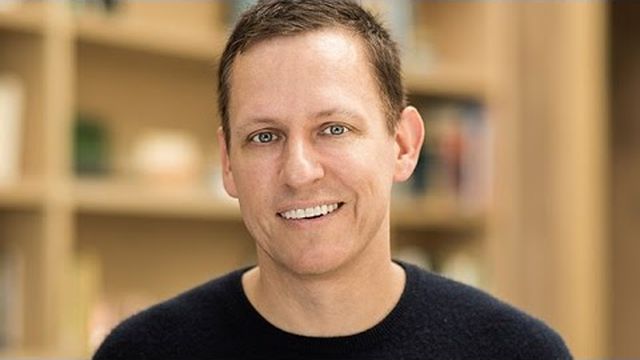
"Competition is for losers.33"Competition is for losers" — Thiel's thesis from his book Zero to One (2014), also the title of his Wall Street Journal essay and Stanford lecture that year: under fierce competition profits go to zero, so a startup should build a monopoly in its niche."
"Competition is for losers." And, gosh, like, he's— of course he's right, because he's always right. But, you know, experiencing Brex in what I would describe— you know, I said this term previously— as a greenfield environment: pretty smooth sailing. Monaco today, we think of it as pretty greenfield. And so we are displacing incumbents, but aren't competitive today with many new entrants into the space. We should just sort of, like, assume that that environment won't last forever, but we want to take as much advantage of it as fast as we possibly can, to get, like, as close to a monopoly as we can, and then evolve from there. And I think there probably are learnings from the time at Brex, just in terms of focus and how quickly you want to move into different markets and segments and those sorts of things.
05Founders Fund and the birth of Monaco
Blond went into venture because another Brex wouldn't motivate him, and found that building a company fit him better than investing.
Yeah. Okay, I want to come to that. Before we do: after, so, you know, this, like, obviously extremely sort of, like, rich journey through sales, after that and before Monaco, you did spend time at Founders Fund, and you had, like, a new chapter, like, a chapter to your life that was not about startup sales. So, like, can you talk about what that was, that experience, what you learned, why'd you come back to what you're— you know, a new version of what you've been doing?
Yeah. Well, look, you and I have both talked about Jason and Parker. I'd be remiss if I didn't mention something about, like, the learnings from Pedro, Henrique,34Pedro Franceschi and Henrique Dubugras — the Brazilian founders of Brex, who started it at 22. They ran the company together until 2024, when Franceschi became sole CEO and Dubugras chairman. Michael, who is now CEO at a company called Figure.35Michael Tannenbaum — former COO and CFO of Brex and before that CRO of SoFi; since 2024 CEO of Figure Technology Solutions, a fintech that makes home equity loans and records them on a blockchain. And so, like, equal sort of parts inspiration and then, let's see, gratitude for the influence that they've had on my career as well. And again, just, like, every single time, I have been so fortunate in surrounding myself with the greatest people on earth. You know, like, you go from Jason to Parker to Pedro, Henrique, Michael, and then we get to Founders Fund, right?
And it's like— you've had folks on this, many of the folks on the show; we were talking about Brian36Brian Singerman — a Founders Fund partner since 2008 and one of the firm's best-known investors. prior to starting the recording. But, gosh, Peter, Brian, Trae,37Trae Stephens — a Founders Fund partner and co-founder of the defense company Anduril. everyone is just, like, exceptional there. So, let's see, I think I can get a little bit personal on, like, my mindset after Brex. So this is late '21, early '22. I'm reaching, like, my four-year sort of tenure at Brex. It's COVID. It is COVID.
Source: Brex — Wikipedia
I'm in Miami. So I've moved to Miami at this point. And, you know, I just felt like, for the first time in my career, I felt satisfied, which is very— it sounds positive; it's actually bad. I felt, like, sort of satisfied with what I had accomplished in this, like, category or world of technology sales. And, you know, I could have— if, let's make the assumption that I was leaving Brex, I could have done something like go either early stage and maybe, like, a more strategic title or something, but I would effectively lead go-to-market at a company.
Just, like, definitionally, the probability of joining an earlier-stage company that has a Brex-like outcome— you know, we were a $12-and-a-half-billion-dollar company38Fact-check$12.5 billion — in its October 2021 round Brex was valued at $12.3 billion, the company's peak. Wikipedia. when I left— just, like, definitionally low.
And, like, even if you did, it's like, it was kind of the same, with just a bigger number.
I wasn't motivated to do it. Like, I wanted a new challenge. You know, I alluded to my brother Brian very early on in this sort of, like, career arc, that Brian was out in San Francisco doing technology sales when I moved out here. Brian at the time had transitioned— he was a CRO at a bunch of really incredible businesses, and then he was a VC at Sutter Hill.39Sutter Hill Ventures — one of Silicon Valley's oldest venture firms, founded in Palo Alto in 1964 and known for incubating companies itself, such as Snowflake and Pure Storage. I mean, so I had seen him make this transition as, you know, like, a former sales leader. And I was in Miami, I got to know Keith,40Keith Rabois — a "PayPal mafia" investor and entrepreneur, former Square executive; in 2020 he moved to Miami and became the leading champion of bringing tech there. He was a Founders Fund partner at the time. and Founders Fund had a Miami office, and I made the decision that I wanted to get into venture.
And, gosh, if I had, like, the opportunity to join one of the greatest venture capital firms in the history of the world, I'd sort of be silly to not, like, take advantage of that. And so, mid-late 2022, I joined Founders Fund. And, like, couldn't be more grateful for the experience. And the people in the firm are just, like, truly exceptional. No surprise to anybody that's potentially listening to this. We weren't deploying a lot of capital at the time.
This is, like, '22, '23. And I think, like, at the time, I'm a Miami-based VC. It was a little fish out of water. And so, I don't know, you know, I talked about, like, I did this thing at EchoSign, and then beyond that I could just tell, like, this is a good fit.
Yeah.
I don't know— certainly being in Miami, but I don't know that, like, being in VC felt like the right fit. One of the things that Founders Fund has a track record of doing that I gravitated towards is incubating companies.41Incubation — when a fund doesn't just invest in an existing company but helps create it: shaping the idea, finding founders, providing the first money and people. And so, certainly, like, Peter, the most famous of them, with Palantir,42Palantir — data analysis software for intelligence agencies, militaries and corporations; founded in 2003 by Peter Thiel, Alex Karp and others, public since 2020. and then Trae with Anduril,43Anduril — a defense company founded in 2017 by Palmer Luckey, Trae Stephens and others; it builds autonomous drones, underwater vehicles and air defense systems. and there's a bunch of folks that have— Scott with General Matter,44Scott Nolan — a Founders Fund partner and former SpaceX engineer; founder and CEO of General Matter, a startup enriching uranium for American nuclear plants. and Delian with Varda,45Delian Asparouhov — a Founders Fund partner and co-founder of Varda Space Industries, which makes drugs in orbit in autonomous capsules and brings them back to Earth. and more. And so my brother, who I alluded to at Sutter Hill, he took this model to Human Capital.46Human Capital — a San Francisco venture firm founded by Armaan Ali and Baris Akis; besides investing, it runs a community of engineers it helps its companies hire, and incubates startups. We decided to co-incubate a company that evolved into Monaco. And through that process, I was sort of gravitating far more towards, like, what is the right fit? It's building Monaco and not being a Miami-based VC.
I asked you the other day just, like, about, like— you know, I don't even remember why, but it was about, like, you know, interests outside of work. And you were kind of saying, like, "Well, to be honest, I don't really have hobbies right now. I'm just working a lot." But you're like, "You know, I did have them in Miami." And, yeah, was that like a— it feels to me almost like you had this, like, very busy career. It almost feels like you took a breather, and then you're like, "I'm going back into the coal mines."
Potentially unintentionally, meaning the "take a breather." I think what you said is exactly correct. And this maybe, like, it could be received negatively, meaning today I don't have many hobbies, and if I'm not literally in the office, I am thinking about Monaco and doing something sort of related. It's very lucky to be so immersed in something that you don't have any hobbies.
I think that's, like, a blessing.
Yeah, no, it was certainly a deliberate decision. Like, I knew that this was what I was signing up for when I made the decision. And to your point, yeah, when I was in Miami, gosh, I was in really good shape. And maybe that's, like, correlated both with the place and the, like, flexibility of the job, or something like that. I was on the water a lot. There were plenty of hobbies that existed.
And when I went all in on Monaco, you know, I moved back to San Francisco. I live right by the office. It is high contrast chapter to chapter, though.
Totally.
It is a 180, like, fairly stark contrast. And again, it was deliberate. And thus far, I'm, like, very happy with the decision. I'm loving this. It's awesome.
06Why Monaco: Salesforce's innovator's dilemma
Blond is sure sales software will get a new market leader, because Salesforce, like Siebel before it, faces the innovator's dilemma.
Okay, so let's talk about Monaco. So I guess— so this is why you started a company; like, why this company? Like, why was this the one that you're like, this— I mean, I guess it's a little self-evident, but, like, what was in your head where you're just like, you know, this is going to be what I'm going to do?
It wasn't part of the plan. Meaning, I had joined Founders Fund to be a VC. I didn't join Founders Fund thinking I was going to start a company, move to San Francisco, actually become co-founder, CEO, leave Founders Fund, right? And so started this company, it, like, was just pulling me, and felt very much like this is so obviously what I should be doing, and my calling. So I think part of it was just the fit for me. And I think maybe the best way of articulating that is something like: there's only one type of technology company I'm qualified to be the founder of, and it is a sales or go-to-market technology company.
There is this other thing that is highly influential, and that is timing. And we are in the sort of early innings of this platform shift47Platform shift — a change in the underlying technology products are built on: mainframes → PCs → the internet → cloud and mobile → AI. Each shift usually brings new companies to the top. that is AI. And I do think that there will be a new market leader that emerges in the category that we are building in, which is go-to-market or sales technology.
Yeah, it's like this paradigm, you know, in some ways seems to be like— I guess going back to cloud, it was like, you know— I guess neither of us were really working at the beginning of that shift, but maybe we're students of history, though, or something. And it's like, you can see that basically it's like there are all these on-prem48On-prem (on-premises) — software a customer buys and installs on its own servers, as opposed to cloud software run by the vendor and sold by subscription. companies. And if you started a cloud company at the right time, it was just really hard for those old companies to turn the boats quick enough to come do what you were doing. And it was just a genuinely better offering for customers. And so it just dominated.
And in just, like, category after category, like, the cloud version just won, and the old companies couldn't get there, and the customers just preferred it, and bam. And it seems like in AI there's a version of this happening now, where it's going from selling tools to selling the work, and it's just dominant to customers, and the old companies can't seem to catch up.
ExplainerThe innovator's dilemma: why leaders lose platform shifts
Harvard Business School professor Clayton Christensen coined the term in The Innovator's Dilemma (1997). His observation: market leaders lose not because of bad management but because of good management. They listen to their best customers, invest in their most profitable products and improve them, while a new, at first "toy-like" technology looks like too small and low-margin a market to bother with. Newcomers start at the low end or in a niche the leader doesn't want, improve the product and gradually move up to the leader's core customers, by which point it's too late to respond. In CRM this happened in the move to the cloud: the late-1990s leader was Siebel Systems, whose software customers installed on their own servers, while Salesforce, founded in 1999, sold subscriptions through the browser, starting with small companies. In 2005 Oracle agreed to buy a weakened Siebel, and Salesforce became the world's largest CRM. Blond thinks Salesforce itself may now be cast as Siebel.
I think you articulated it perfectly. These platform shifts rhyme, where Siebel,49Siebel Systems — Tom Siebel's company, the CRM market leader in the late 1990s, whose software ran on customers' own servers. In 2005 Oracle agreed to buy it for $5.85 billion. that was maybe the incumbent or market leader in this category that Monaco is building in, which is go-to-market or sales, was the market leader. There was nothing inherently wrong with the business. In fact, like, one of the most incredible businesses at the time in history. The same thing is true with the market leader today, which is Salesforce:50Salesforce — the world's largest CRM platform, founded in 1999 by Marc Benioff; one of the first to sell enterprise software by subscription over the internet. just incredible business. And I think that they are— any market leader, and you can pattern-match to other functions within enterprise software— that they're faced with an innovator's dilemma, where they have an existing set of customers on a platform that was architected pre-AI.
And so they can either continue serving the needs of those customers and focusing on where they are generating revenue and building on top of this existing platform, or they can disrupt themselves. And seemingly every time businesses are faced with this innovator's dilemma during a platform shift, they gravitate towards the former, which I think for us equates to opportunity, where we can— and, by the way, I think, like, what Salesforce and what other companies are doing, they are overlaying AI on top of a pre-AI system-architected platform, which is better than no AI, but less good than being truly AI native,51AI native — a company whose product was built around AI from the start, rather than conventional software with AI added later. which is what a company like Monaco is. And so for us, we can go after a sort of narrow segment of the market today, which is startups. And if you think about Salesforce's revenue, how much of Salesforce's revenue is concentrated in tech or early-stage technology startups? Certainly less than 1%.
And so we can go after that market, we can build a better platform, we can build a platform that's truly AI native. We can get, you know, close to monopoly market share there. And then we start to move upmarket,52Moving upmarket — shifting from selling to small companies to mid-size and large ones, where deals are bigger and requirements stricter. and we start to organically expand outside of startups, and hopefully eventually evolve into the market leader. But whether it's us or somebody else, it seems a foregone conclusion that the category leader, the platform of record in sales in, let's call it, five years, will be a platform that is architected with AI in mind, and not one that was architected 20 years prior.
07Its own CRM instead of add-ons
Monaco chose to be the system of record itself because, Blond says, point solutions on top of a CRM have never become generational companies.
You had a choice to make, which was— obviously, what you're selling is, like, working outcomes, and, you know, you're selling sort of, like, revenue in some sense. You chose to also be a system of record.53System of record — the primary system holding the authoritative data on something (customers, employees, finances) that all other tools rely on. In sales, that's the CRM. You didn't have to do that, but you made that deliberate choice. I think to the extent that you won't integrate with the system of record, even though you obviously could— you know, you can imagine a world where you chose to do that, many other companies, right? Because it's easier to say, "Look, I'm not going to try to, you know, be your HubSpot,54HubSpot — a marketing, sales and support platform founded in 2006; after Salesforce the main CRM vendor, especially for small and mid-size companies. but I'm going to give you these tools that let you get more revenue and set up all these meetings and do all the, you know, accoutrements around the CRM.55CRM (customer relationship management) — a system for managing customer relationships: contacts, deals, correspondence and sales history." You've chosen to say, "If you want to work with Monaco, we're the CRM."
Why did you choose that?
That's right. Well, several reasons. I think there are two categories of companies that are sales products. There are system-of-record companies; today that is a CRM. We actually believe that, forward-looking, this, like, concept or category of a CRM will evolve into something of the past. We are more orienting around outcomes.
And so we think that what today is this, like, system of record that manifests as a database, CRM, eventually becomes a revenue automation platform that's actually oriented around outcomes and not things like storing data. So we believe that there is, like, a new type of company that emerges from this that is a system of record, but doesn't look like the existing systems of record. What does it mean to be the system of record, if not just, like, a database? What is it? It is— well, look, HubSpot is appropriately named. It is the hub. Everything orchestrates from the system of record.
Yes. Because it's the source of truth of data.
That's right. And you asked a question like, why did you make this decision? Well, if we bucket these company types or products into two categories, there's system of record and there's point solutions.56Point solution — a product that solves one narrow task (recording calls, finding contacts, sending emails) and plugs into the main system through an integration. Point solutions are layers on top of what today is a CRM system of record. If we think about the outcomes of those types of businesses backward-looking, we have market leaders like Salesforce that today are 120-plus-billion-dollar companies, just a few months ago were significantly larger than that, and then several others that are actually, like, quite large businesses.
If we think about the category of point solutions that integrate to these systems of record, there are some that experience some early revenue growth and early maybe marks of low- to mid-single-digit-billion-dollar valuations, but none of them, historically speaking, have realized generational technology company outcomes. We're not motivated by being a point solution. We're not motivated by an outcome which— again, like, a really exciting outcome for those that experience it. We want a shot. We want a shot at being a market leader in one of the largest categories of enterprise software that we think will actually evolve from here. If you think about Salesforce and maybe enterprise software companies today broadly, their market caps are predicated on IT budget. We are disrupting labor.
That's right. And so the future market leader has both that IT budget, but it also has the labor budget. Monaco is way more expensive than the sort of legacy system-of-record products, because we are doing the labor on behalf of our customers.
Which, by the way, is the story of all these AI-native companies, is it's true: it's both dramatically more expensive in some sense, and it's also dramatically cheaper in another sense than what you would be doing alternatively to get the same outcome.
That's exactly right. And not only are customers willing to pay, this is what they want. The other— you asked a question that maybe I want to touch on, because I think it could be insightful or maybe helpful for other founders that are starting businesses today. There's an application of AI in Monaco-like products that is seemingly obvious, which is: we are AI native. We just talked about it. It's the labor disruption.
We are using agents and compute to replace workflows that founders and salespeople would otherwise be doing themselves. And it is more expensive when a human does it, and it actually produces worse outcomes when a human does it. The thing that I think is, like, less obvious in terms of an application of AI, that we've been very deliberate about, certainly intentional from the very early days: the cost of building software is trending to zero. And so we want to take on as much scope as we possibly can, starting with the system of record, but also displacing all of these point solutions that we believe are actually features of a broader platform, and not independent product lines or independent businesses in many cases.
And so, by the way, this extreme breadth focus was obviously sort of— you know, like, Parker was kind of, like, one of the, like, early canonical examples of, like, what a software business really is at the end of the day, is, like, these customer relationships that allow you to extremely efficiently build and sell more products to them. And you, you know— the customer just gets a straight-up better experience, because the data is tied together. It ends up being cheaper for them in summation. You don't have to have all these different vendors, like, all these things. Seems like now, with AI, you should actually take that to an extreme degree.
ExplainerThe compound startup
Parker Conrad coined the term to describe how Rippling is built. The usual advice to startups is to make one product that solves one problem better than anyone and leave the rest to partners through integrations. A compound startup instead builds many connected products in parallel from the start (payroll, HR, benefits, IT access, expenses) on top of a shared database of employees. Conrad argued this is more convenient and cheaper for customers and better business for the company: each new product is sold to existing customers and uses the same data. The downside is a long, expensive start: Rippling spent years building the foundation before going to market. Blond believes that with AI, now that code can be written many times faster, the logic is even stronger.
The compound startup, maybe phrase or terminology, that I think Parker made famous. Yes.
And now it's like that should go, like, exponentially far.
Well, I think Parker, to his credit, was probably ahead of his time on this, right? Because Parker started Rippling in something like 2016. Zenefits was maybe less of a compound startup than Rippling was; Rippling is more of a compound startup. I think that today— and I don't know, like, the exact sort of math equation here— but we can build software something like 10 times faster than we could just a few years ago. If that is true today, that is going to be true a few years from now, where we can build software 10 times faster than we can today. And so we want to go after as much sort of breadth of what we can do in the platform, with the assumption that AI is going to enable us to build a product far faster.
And that is what customers want. Customers want to come to one platform. The outcomes are actually better, because you don't have data in a bunch of different silos: the system of record, the thing that does your call recording, the thing that does your outbound, the thing that builds your database. It is far more difficult to overlay an agent on top of this arbitrary set of tools with data silos than it is a single platform and source of truth that both has all of your data but also takes all of your actions inside of the same tool.
08Pricing when you sell the work
A product that sells intelligence rather than software, Blond argues, should be opinionated and priced on usage tied to the real outcome, revenue.
Totally. So when you think about what you're selling to customers in some sense— I guess you're kind of selling well-wrapped tokens57Tokens — the chunks of text a language model works with; model usage is billed per million tokens. "Wrapped tokens" means a product that essentially resells a model's work in a convenient package. that can do all these different things, but you're kind of selling intelligence to the customer at the end of the day. So have you thought about, like— you know, I know you have— how have you thought about what this means in terms of the way you price, the long term of what your cost structure is going to be, and, like, what that all looks like from an economics perspective? Because it's obviously very different than build software and, you know, sell it for, you know, a per-user-per-month58Per user per month (per seat) — the classic SaaS pricing model: a company pays for each employee given access. kind of situation.
For sure. Yeah. Well, two things come to mind. One is Monaco, and we at Monaco are very opinionated. I think that there are certain applications of AI, and maybe applied to different functions, where it's largely, like, ones and zeros. And what I mean by that is, like, support is close to this, where you're, like, driving towards an outcome, which is a resolution to somebody's support ticket.
It's even more pronounced, I think, in the world of, like, finance and accounting, where there is, like, an actual number. There is, like, a real one-zero-type number that is the calculation of everything that comes before it. I think sales is like— we start with finance, we move to support, we progress to sales— there's, like, far more subjectivity that goes into sales than there is this sort of, like, black-and-white binary outcome that is true in the world of finance. And so we are very opinionated in things like: how do we determine which types of companies to reach out to, and when to reach out to these companies, and what are the signals59Signals — in sales, events suggesting a company may need the product right now: a new funding round, hiring for relevant roles, a leadership change, a product launch. that we're leveraging, and how does that get incorporated into messaging— and these things that many of our customers today just don't have experience doing, right?
And so then that is the first thing that comes to mind, is, like, the opinionated nature of the product.
And then meaning that you're helping— it's funny, because as you were saying that, I was like, I didn't know what you were talking about. You're talking about both. It's both about who you're reaching out to, but it's also then, you know, implied is who your customers ought to be reaching out to, and all of that. You know, everything you're talking about is, like, kind of, like, what you're selling to the customers.
Well, we're certainly running on Monaco. And yes, I think customers hopefully benefit from the opinionated nature of the platform itself, in ways that— if you think about our customers, most of them are startups, seed, Series A.60Seed and Series A — the first venture rounds: seed money funds the idea and first product, and Series A is the first big round, once the product has users or revenue. They don't, as founders, oftentimes have sort of deep go-to-market experience. And so we can take much of the sort of, like, decisions and strategy— which is a word that I don't hate, but I don't like, but I can't think of a better one right now— sort of off of their plate. And then we enable them to do the things that are super high leverage on their time, things like meeting with customers, coming up with creative campaigns, that today AI is less good at. But if you think about the workflows that I just described— building a database, overlaying signals, finding buyers, coming up with messaging— these are things that Monaco is certainly better than me at, and arguably better than just humans.
And so then you can sort of outsource this thing to free up your time to do the highest-ROI use of your time in a sort of, like, world of go-to-market, which is, like, customer-facing. And then you asked a question on pricing. Our pricing is correlated towards outcomes. Outcomes are relatively objective when it comes to Monaco— now, like, the ultimate outcome— or, excuse me, outcomes are relatively objective when it comes to the category of, like, go-to-market or sales. It's revenue.
How much revenue are you generating? There are some inputs. These are things like meetings and conversion rates. And so we rigorously track towards the ultimate outcome of revenue, the inputs of: are we generating meetings, are we improving conversion rates? And our pricing is aligned with how much a customer is using the platform. And that should be highly correlated with the impact or benefit that a customer is receiving from the platform, that is, like, fairly easily measurable.
09A loud launch: the frog in boiling water
Monaco came out of stealth like a frog dropped straight into boiling water, an approach that suits it because its market is concentrated in San Francisco.
So I would love to unpack kind of the go-to-market strategy you've had so far. You launched, like, February, so let's call it four or five months ago. And we talked about this with Brex, but definitely you, like, you flipped the bit, and, like, everything was loud. So, like, what I'm curious about is: can you sort of share what was in your head when you were like, okay, it's time to launch, we're going to be loud, here's the things we're going to do to sort of, like, get this whole brand going?
Yes. I think I'll describe our approach. It was the right approach for us. I'll also sort of caveat with a couple things that I think are worth calling out, that maybe, like, advantages that we have as a business that don't necessarily apply to every startup. We wanted to take the approach of operating in stealth through this, like, design customer phase,61Design customers (design partners) — the first customers, who use the product before launch, often free or at a discount, and help shape it with their feedback. and then have a big sort of shotgun-style launch, which we did back in February, where we went from almost a definitionally unknown company— nobody had, like, LinkedIn'd Monaco up. Our website said "coming soon," or some version of that.
We certainly spent zero dollars on marketing up until the day that we launched. And the, like, reason that we wanted to take that approach is— again, I haven't come up with a better analogy for it than this, which is, like, the boiling frog thing, where you can imagine, if you are the frog and, like, you're in the pot and, like, the water is heating up, and you, like, don't totally notice it. Well, we can apply that to: like, if you do marketing campaigns over a two-year period, and you, like, as a consumer, you may see, like, bits and pieces of somebody's marketing campaign here and there, and, like, yeah, I've maybe heard of this company, but, like, I heard about them a long time ago, and they, like, did this thing.
You can imagine the sort of, like, psychological impact of that, relative to, like, dropping the frog in the boiling water, which is like, oh my gosh, we are seeing Monaco everywhere all of a sudden. Like, I see the plane, and I see the billboards, and I see the poker tournaments.
And your plane and your billboard gave no explanation of what Monaco was. Like, it just said "Monaco," and then, like, the billboards had, like, a big dollar sign, which I thought was hilarious, and I loved it. But, like, you didn't say, you know, "New AI sales platform." You know, you just were like, "Monaco."
Yeah. We benefit from having a geographically concentrated target market. So we're selling to startups. You and I are sitting here in San Francisco. Many of our customers are also in San Francisco. So if we were selling to HVAC companies, we shouldn't be flying planes around San Francisco or putting billboards up around San Francisco, because they're, like, fairly well distributed and not highly concentrated.
So there are, like, maybe two aspects that we were deliberate about solving for. One is brand awareness. That's the plane, that's the billboards, and more. When we do— I think that there may be, like, two impacts of brand awareness. The first is: we do a lot of outbound.62Outbound — when a company itself emails and calls prospects, as opposed to inbound, when customers come on their own through the website, ads or referrals. Monaco does our outbound for us.
When we reach out to a company that is graduating YC,63YC (Y Combinator) — Silicon Valley's best-known startup accelerator; several times a year it graduates a new batch that pitches investors at Demo Day. For software sellers, those graduates are a ready-made audience. reach out to the founder, they receive the message from me. They have heard of Monaco because they've seen the plane, or whatever, like, the thing is. The likelihood that they respond to that outbound message is exponentially higher than if they didn't know me, if they didn't know the business. So, like, the brand awareness is something that we're very deliberate about. There is a second application of that, which is: when they take the meeting, they are far more likely to convert, because there is comfort in, like, knowing and understanding a brand, like the one that we are hopefully creating around ourselves, in ways that maybe other folks aren't deliberate about and haven't created for themselves. The other type of marketing that we're deliberate about is, like, demand gen.64Demand gen (demand generation) — marketing aimed at specific prospects that should quickly turn into meetings and deals, as opposed to brand marketing for awareness.
This is very targeted. This is sending people the poker sets that we send to founders when they graduate YC, or something like this, and hosting the poker tournaments, and inviting specific founders to that poker tournament with the expectation that that specific founder is going to be somebody that we convert. So we solve for both. I can talk about maybe, like, a couple marketing principles that are things that we apply to marketing.
10Creativity on a schedule and a $60,000 plane
Many startups underinvest in brand, and Blond's fix is to run marketing experiments on a schedule, cheaply and without fear of failure.
But I love that, because, you know, like, one of the things I often think— I don't think this applies to every startup, obviously, or I know it doesn't apply to every startup— but I think there are many startups that could be investing much harder in their brand, that don't. And it's hard, because it's like, well, if I do this demand gen campaign, it turns into revenue, and if I do this brand thing, or, you know, I spend this money on these sort of, like, brand campaigns, it's, like, not going to show. So it's hard to— but it just seems like a missed opportunity for so many people.
Yes. I think everyone should do this in their own specific approach. What Monaco is doing isn't relevant to most startups. We can do it because we sell to startups, the geographic concentration. Again, most— but there's a version of it for almost everybody. There's a version of it for everybody. I think there's a process that every company should follow.
And then I can talk about, like, maybe a couple principles, in case they're helpful. There is a process which, like, most companies do not follow. You've got to try stuff. Like, you just have to just do stuff. And you can't be afraid to fail. And I do think that most companies here, they just don't really do anything.
I do think that, on this point, it's— a lot of people are afraid of the embarrassment of, you know, a brand campaign that failed, or some marketing or sales effort that just, like, looked stupid and didn't land. And that's actually— that is psychologically harder than just, like, building product or doing other things that are not publicly embarrassing.
I think there are two things. I think there's one thing that is like: I'm not good at this. So, I'm an engine— not me personally, I'm saying, like, putting myself in the shoes of a founder— I'm an engineer. I build product. I, like, I'm going to index on the thing that I'm very good at. I don't know how to do, like, a marketing campaign.
Which is funny. You know, our CTO and my co-founder, Eric,65Eric Koslow — Lattice's co-founder and CTO, who started the company with Altman in 2015. at Lattice came up with by far our best billboard, which was, like, "Invest in your people, not crypto," during 2019. And that just, like, landed super hard, and that's an engineer.
Yeah. Yeah. So I'm bad at this, or not experienced at this, or whatever. I don't want to spend the money; I'm worried about, like, you know, lighting the money on fire, or something like that. I think those are the two variables that probably lead more towards stagnation, or just, like, lack of effort in this category.
The reality is, like, no one starts being an expert at this stuff. You just got to, like, try stuff and learn. And I actually spend a lot of time with our customers doing exactly this. Like, my time— I spend customer-facing all day. Let's come up with some cool campaigns that we can run for your business, and just ideating on this. And I think that's hopefully high ROI to our customers.
And you can do inexpensive campaigns. Like, one, you don't have to be an expert at this. Two, there are campaigns that are inexpensive. I'll give an example: these, like, poker sets that we send to founders that say "Monaco Casino"— they're on brand, because Monaco has a casino66The Monte Carlo Casino — the famous casino in the Principality of Monaco, founded in the 19th century; hence Monaco's play on the word "casino" on its poker sets.— that are prefab, they're, like, 110 bucks.
Yeah.
You can do a test, send this to 50 people, you're spending $5,000. It's like— now, like, if you are truly bootstrapped and have, like, you know, no dollars to spend, sure, you can't do the, like, $5,000. But you can still do stuff. There's always stuff you can do. There's always stuff you can do.
And you don't have to break the bank to do it. So you run a process. Here's what we do internally, in case it's helpful for others. We run a process at least once a month. We want to have, like, a big, splashy marketing campaign that we are trying. Get a handful of people in the company, define them as, like, the marketing committee, or whatever it is.
They don't have to be marketing folks. It can just be you and your co-founder, if you're just two people. Come up with a few ideas, put them on the whiteboard, and just do it. Just, like, jump, don't be afraid to fail. Try something; if it doesn't work, chalk it up as a win, because you learned, and you're going to try something new that is going to be more effective, or something like that. But you do want to have, like, a bit of process around this, where every single month you're trying at least one or two different things that are in this, like, category of marketing, brand awareness, demand gen, however we want to frame it.
And I think we really want to be— "contrarian" is maybe, like, not the right application of that word, but we do want to be creative. New stuff. New stuff.
Like your plane. The plane was awesome. Can you talk about the plane?
I feel like there might be one flying right now.
There isn't. We took it down; we'll put it back up at some point. I think, like, probably reached diminishing returns, or something, over time.
But it was like— yeah, anyway, go ahead.
We were at SaaStr, which is Jason Lemkin's conference67SaaStr Annual — SaaStr's yearly conference, one of the world's largest on the subscription software business; in recent years it has been held in San Mateo, south of San Francisco.— awesome conference. And we knew that there would be, like, a large contingency or concentration of people at this event down in San Mateo. And so we didn't think this was, like, that creative. In fact, it wasn't that creative, in that there was at least one, maybe two other planes flying at the same event. And so we had the banner trailing the Monaco plane at this conference. I don't know what we paid— let's call it, like, a couple thousand bucks to make the banner.
And then I was surprised at how relatively inexpensive putting this plane in the air for many hours during the conference was, which is, like, 6,000 bucks a day. And, you know, we do it for two or three days at the conference. And I was just sort of thinking, like, we already have the banner, we already know, like, the cost of flying this thing.
Yeah.
"Do you guys— like, I haven't really seen these in, like, San Francisco proper. Can you guys fly over the city?" And part of my assumption was, like, there are air restrictions,68Air restrictions — light aircraft flights over big cities and near airports are regulated by the Federal Aviation Administration (FAA); banner-towing planes fly under special waivers. that, like, you couldn't fly in and around the city, or whatever. And they were like, "Yeah, we can totally do it." And so I was, like, you know, starting to do the math on this thing, and it was, like, 6,000 bucks a day, pay for 10 days, it's 60 grand. We have a lot of billboards.
Some of our billboards are significantly more expensive than 60 grand. This is one of those that's like: it's a $60,000 learning. Like, the worst-case scenario, we fly this thing around, it doesn't totally work, we, like, learn from it, and we don't do it again. It worked. So we, you know, both, like, messages on my phone, people posting on LinkedIn and Twitter and everywhere else.
It was sort of everywhere. And so we kept it up for a little bit longer. And so it was one of those things that was, like, just an evolution of something that we had tried at the conference. Let's, like, try it in the city. It worked in the city. We learn from it. We'll put it up again when we do a big, like, announcement that we have coming up.
You know, it's interesting, like, history kind of— I'm sure you've read Behind the Cloud,69Behind the Cloud — Marc Benioff's 2009 book, written with journalist Carlye Adler, about building Salesforce: 111 "playbooks" on product, marketing, sales and culture. the, you know, the early Salesforce book from Benioff.70Marc Benioff — founder, chair and CEO of Salesforce; before that he spent 13 years at Oracle. And, like, one of the things that, like, struck me was, like, early Salesforce did a lot of really creative marketing. Really creative. And, like, some of it was that the message was creative, like the "No Software" thing. It's like, well, you know, that's interesting. You know, there was a lot there, and just, like, the way they even did, like, customer dinners, you know, I think was, like, kind of creative. And, you know, it's like all became sort of, like, tried at some point, but, like, being the first to do a good go-to-market idea is worth a lot, seems like.
ExplainerHow Salesforce declared war on software
From its first days Salesforce sold an idea as much as a product: "The End of Software." The campaign's logo was the word "software" crossed out with a red circle, like a road sign, worn on buttons and printed in ads. The main target was Siebel Systems, the CRM market leader. In 2000 Salesforce hired actors to stage a fake protest outside Siebel's user conference, with anti-software signs and chants, while other actors posed as a TV crew filming it. Benioff tells the story himself in Behind the Cloud (2009), and it is still cited as a model of guerrilla marketing: a small company imposed its agenda on the big leader and got free press.
I think the one that I understand as much as any was, like, the protest at maybe, like, a big Siebel or Oracle71Oracle — the American database and enterprise software maker; Benioff worked there before founding Salesforce, and in 2005 Oracle agreed to buy Siebel. conference, where it was, like, the "No Software," which I think was really smart.
11Spend on the customer, not on Google
Blond's advice is to spend marketing money on creative campaigns and on things that benefit the customer directly, not on third-party ad platforms.
Yeah. So, like, when you're thinking about this, are you, like, "I'm going to do new activities, and then I'm going to put them on some back burner," or are you like, "I just have to always be—" like, do these things stack and build over time, or you're just like, "I got to always have a new thing"?
There are two things that I am thinking about, which maybe, like, go back to— I said maybe some marketing principles that we try and apply, that I think my guidance to any customer that I'm working with is, like, you should try and apply the same logic as well. The first is: if you think about marketing spend as a category, you can sort of separate it into two buckets for the purposes of this first illustration; then we'll do it separately for the second illustration. The first is, like, third-party advertisers, and the second is, like, creativity. The first is, like, it's oftentimes lower friction to do. It's mostly paid online advertising.
I think if we looked at maybe, like, Series C-plus technology startups, where is most of their marketing spend going? It is likely going to third-party advertisers. And I surmise, like, at the top of that list is probably, like, the Googles, Metas,72Meta — formerly Facebook, owner of Facebook, Instagram and WhatsApp; together with Google it takes most of the world's online ad money. LinkedIns of the world, where it's paid online advertising. Maybe they're doing some, like, offline, out-of-home73Out-of-home (OOH) advertising — ads outside homes and screens: billboards, bus shelters, ads in subways and airports.-type stuff. This is, like, easy, low-friction marketing spend, and it is easy to do. It's not creative.
Everyone is doing it. It works. It's also, like, the lowest ROI. It's, like, a fairly efficient market74Efficient market — here, a market where everyone uses the same channels at the market price, so unusually high returns there are nearly impossible. A nod to the efficient-market hypothesis in finance. at this point. You want to be spending, especially at the early stage, you want to be spending more of your marketing dollars on creative campaigns that aren't going to third-party advertisers, that are these, like: what can we do that is different than anybody else is doing?
The categories here are going to be things like gifting and events, and, you know, I'd even put the plane in that category. It's the things that, like, no one else is doing, and you want to try. They oftentimes require more operational complexity than do the, like, efficient-market paid advertising marketing spend, where most of our marketing dollars collectively are going. So that's, like, maybe a principle: be creative, try new things, allocate some percentage of our spend towards that category. The second one— and I don't know that, like, either is more influential or important, but they're sort of related. The second one is, like: the vast majority of marketing dollars go to third-party advertisers that in no way benefit the person or company that we are targeting to try and acquire as a customer. So these go to— and we do this too, by the way.
So these go to the billboard companies, the Clear Channels and Outfronts75Clear Channel Outdoor and Outfront Media — the two largest US outdoor advertising companies, owners of tens of thousands of billboards. of the world, that we are paying to put ads up around San Francisco. These go to, as I referenced, the Googles, the Metas, the LinkedIns, those sorts of things that are online paid advertising. Very little marketing spend directly benefits the person that we are targeting to try and acquire as a customer. Early on, I would try and bucket, like, a hundred percent of the marketing spend actually to something that benefits the person that we are targeting. And if you put yourself in the shoes of a prospective customer, you are a— well, let's take Monaco as an example. You are a YC founder.
Would you rather have Monaco, or any company that is trying to acquire you as a customer, spend money on, like, LinkedIn ads that follow me around, that, like, message something to me that I sort of scroll past, and then billboards and whatever else the spend is going towards? Or would you rather have Monaco send me a, like, poker set with heavy clay poker chips— exactly like that— that, like, founders play poker, that we can use for our poker night as a company? Would you rather throw, like, a poker tournament?
We give away $100,000, Monaco Invitational76Monaco Invitational — a free poker tournament for startup founders that Monaco held in San Francisco in spring 2026 with $100,000 in prizes; Blond called it the largest founder poker tournament ever.— you were there. The final table77Final table — in a poker tournament, the last table of players still in (usually nine); only they win prizes. gets all of it. Let's say there are 100 people that start playing; we end with nine at the final table. Eight of the nine finalists that received wires from Monaco were Monaco customers. Would you rather have Monaco— as a customer of Monaco, or somebody who might be using Monaco— would you rather have us throw this poker tournament that you come to, have hopefully a blast, make, like, a bunch of money at the final table, or, again, like, pay Google for, like, the SEM,78SEM (search engine marketing) — paid search advertising: ads above Google results and the banners that then follow a person around other sites. whatever stuff that's, like, following me around when I go to different either websites or Google searches? So use that as, like, a bit of a thought exercise. Allocate your marketing dollars that would otherwise be going towards very expensive and efficient markets around this paid advertising.
Do things that benefit the customer directly. We take it a step further. We spend a lot of money on customer marketing. And so what we want to create is, like, a bit of a Monaco community through our customer base. But the, like, most effective marketing spend that we have— and when I, like, approve this going out, it is, like, my favorite bill to approve of literally any bill that I approve at the company— is the, like, referral. It is the, like, customer referral,79Referral program — a company paying a customer for bringing in another customer. where we are paying somebody $2,000 because they told their friend that they love Monaco, that friend should check us out.
That friend signs up. And look, if we're doing a couple grand a month, we're paying people, like, $10,000 to send us customers. It's, like, the highest-ROI use of what is effectively a marketing spend, right? That is a customer acquisition cost.80Customer acquisition cost (CAC) — how much a company spends on marketing and sales to win one new customer; one of the key metrics of startup economics. That's right.
12Busywork for AI, customers for people
Once AI takes over a salesperson's online workflows, founders are left with customer meetings and coming up with creative campaigns.
Yeah, that's awesome. So when we— so, I mean, I guess this is the, like, kind of air cover. And then the other half, I guess, of early startup go-to-market is, like, the ground game. And maybe just to wrap, you know, this conversation, can you talk about— you're sitting— like, that was, like, a very good illustration to me of, like, if I'm, like, a Monaco customer, and I'm meeting with you, like, I can now, like, immediately imagine how I'm going and thinking about doing that. The ground game side, where I'm like, okay, now I also need to do the sales calls and build the early machine. And I'm, like, a Series A or late-seed-stage founder with early go-to-market, but I've got, like, you know, a handful of reps, or two reps, or 10 reps, or whatever.
What are, like, the principles you're teaching me or talking to me about as, you know, a sales org builder?
Yeah. Well, first, maybe— we've already used this word in a different context— in a more, like, meta level, I think that there's something that is worth maybe touching on, that is, like: how should we be applying AI to go-to-market? And then what does that give us leverage to, like, focus our actual time and energy on, which is the thing that you just talked about. Backward-looking, I think most labor in the sort of, like, category of startup go-to-market was on what I would describe as workflows that today AI is actually better at doing. This is, like, building your TAM,81TAM (total addressable market) — the whole addressable market; here, the full list of companies the product could in principle be sold to. scoring your accounts,82Account scoring — rating each prospective customer company on how good a fit it is and how likely it is to buy, so reps go to the most promising first. overlaying signals, finding buyers, writing messaging— all of this, like, fully online workflow or orchestration that agents are just better than any human in the world at.
And so it is true that that is, like, what Monaco does for you: all of this sort of, like, non-customer-facing sales-related activities— building your database, scoring your accounts, finding leads, engaging with buyers after you finish a meeting, updating your pipeline, reminding you who you need to reach out to, all of these things. And what that does, whether it's Monaco or not, it allows you to spend your time on higher-ROI, higher-leverage activities. I think there are two categories. One is— and this is the thing that I spend all of my time doing— but it is meeting with customers. Today, especially if you are in, like, B2B, buyers still want to talk to a person. They don't want to buy from an agent, a, like, you know, Jack Altman avatar that shows up to a call that is, like, not really Jack.
So there's no higher ROI on my time— maybe, I would suspect, our customers' time— than spending time with customers. And a lot of the things that we're able to leverage with AI allow us to spend far more of our time, whether you're a founder or a salesperson, on that human connection, developing relationships, customer-facing. I think the second thing is this category of creative, operationally complex campaigns. We've talked about a bunch of them. You could do, like, a ChatGPT83ChatGPT — OpenAI's chatbot, released in November 2022; the world's most popular AI assistant. conversation where you're like, "Can you come up with some marketing ideas for me?" I think it would be hard for that to result in the plane, as an example.
I think that today AI will sort of pattern-match to things that have already been done, because that is what AI is trained on. And so if you are trying to do something, like, truly creative, innovative, I think it is more likely to surface inside the four walls of your company, by doing the sort of, like, ideation that I talked about, which is: let's come up with two ideas each person, multiply by four, that's eight ideas, put them on a whiteboard, talk through each of them, pick the two or three best ones that we're going to do. And Monaco and AI actually give us the, like, ability to spend our time doing those things. That is how I spend my time with customers. It is less about the sort of, like, how should you be meeting with customers—
I do, like, how should you sell, those sorts of things— but it's coming up with, like, creative campaign ideas. Count me in as, like, one of the people that comes up with the ideas that we put on the whiteboard.
13Two pieces of advice for founders starting to sell
To keep deals out of purgatory, Blond tells founders to bring a ready-made happy path to buying and to create urgency honestly, and an abundant pipeline lets them say "not now."
Yeah, that's awesome. And then I guess, like, on that last piece, is there anything worth talking about in terms of, like, how to actually sell, or, like, the practice of, you know, the time with the customers itself?
I think there are two things that stand out as— 'cause— and then there's, like, a laundry list below it, right? But this is maybe the, like, broader generic advice that I would have to, certainly, founders that are starting to sell their product and don't have a lot of go-to-market experience, that I think have maybe more impact than any other, you know, below these two. The first is: I would be fairly prescriptive about how to effectively buy your product. Because if you aren't educating the buyer on how to onboard, receive value, and ultimately buy your product, the customer, like, doesn't know how to buy your product. And so I would come in with, like, a bit of a combination of, like, agenda and opinion on: here is the, like, happy path84Happy path — a software development term for the simplest scenario, where everything goes as planned with no errors. In sales, a clear sequence of steps from first meeting to rollout and payment. from where we sit today— and if this resonates with you and is something that you think you can receive value around— to, like, where we are when you are fully onboarded and receiving value from the product. And we can just sort of roadmap together: here are the different steps.
Now, like, Mr. Customer, is there anything that I have left out of this process that is important to you, that we should incorporate, whether it's, like, security checks that you may need to go through, or procurement85Procurement — the formal purchasing process at large companies: approvals, tenders, vendor review and contracting through the purchasing department. that we want to introduce, or legal review that I haven't included? But we sort of start with— and this is very abstract— we sort of start with, like: we, you know, meeting two, we come with, like, our pre-built custom environment to show you exactly what it would look like on our product. If that resonates with you, we put you in, like, a two-week free trial of the product. During that trial, like, here are the outcomes that we're going to be driving towards. If we deliver on these outcomes, we, like, onboard the rest of the team. Let's, like, schedule meetings that sort of align to these different steps.
And so then you and the customer aren't flying blind. I think the thing that happens more often than anything when I meet with founders, it's sort of like: we have so many of these opportunities that are in, like, purgatory, where it's like, we pitched them, they said they liked it, we ended the call, I've followed up three times, they aren't really responding. And if they do respond, it's like, "Give me a week and I'll get back to you." A week passes, they don't get back to me. And it's because we haven't, like, aligned on the, like, happy path to receiving value from the product that we're selling.
Yeah, yeah, yeah. What's the other?
The second thing is, like, a little bit of an urgency driver, where, if you can create some form of FOMO, for lack of a better word— I think that much of sales is psychology. And so for many customers, what I'm about to articulate is true. We certainly never want to say anything that is untrue or misleading. But if we have— you know, we're in the month of July— if we have a goal to onboard three customers to pilots86Pilot — a trial rollout of a product for a limited time and scope, so the customer can see the value before a full purchase. in the month of July, what we articulate to a customer as part of the, maybe, like, first call, when we are receiving feedback like, "Yeah, this is actually really cool. I'd love to try it"— what we say is something like: "We are onboarding three customers into our pilot program this month.
"Two of those spots are already spoken for. There is much interest in the third spot. If you would like to move forward with a pilot, if you could let me know, that would be, like, really appreciated on my end, but also, like, I can't guarantee the spot if you don't speak for it today."
And I think, like, in your case, that's true, because you can only onboard so many at this stage.
That's exactly right. But it does sort of force a decision and potentially drive some urgency. There is, like, a psychological aspect to this, where it's like, oh gosh, two-thirds of the spots are already spoken for; like, I better speak up to, like, you know, get this thing that a lot of folks are already incredibly interested in.
I assume also important in all of this is sort of just, like, having, like, a willingness to disqualify87Disqualify — in sales, deliberately dropping a prospect the product doesn't fit, so as not to waste time on them. when you genuinely think that the product is not going to help the customer. And I think people can feel that. Like, if you're like, "Hey, my goal here is not to sell you something that you don't need or want. My goal is to sell you something that's going to be useful to you for years. And so if I don't think that that's going to be the case, I'm going to stop selling it to you."
Man, when you say that, it's interesting where my mind goes, which is something different than what you just said. But, like, I think it is true that, like, growth solves a lot of problems. I think, like, an input to that is something like: demand solves a lot of problems. And what you just articulated, I think, is a symptom of not enough demand, which is where founders and salespeople are, like, hanging on for dear life to the, like, one guy that I pitched over the last couple days, because, like, they kind of seemed interested.
But if you're like, "I've got, like, four more calls I should get to, and, like, I think this is going to be painful. And, by the way, I get paid also on you retaining. And so, like, I don't think I want to sell this to you anymore."
You can— Parker, I stole this from him— you can sort of swipe left. I've never been on one of the dating apps, but I think Tinder,88Tinder — the dating app launched in 2012, famous for swiping: right on a profile means "yes," left means "no." you sort of, like, swipe right if you like them and swipe left if you don't. And so—
And I think, like, an abundant pipeline allows you to only try to sell the product to people who need it.
That's exactly right. And it's not— when I say that, it's not, like, disrespectful to the customer, or being inefficient about not following up. It's actually that, like, you are focusing your resources on the people that are truly interested, that will receive the most value from the product, and not on the, like, person that took a call, that, like, said a lot of niceties, but, like, actually probably isn't actually interested in your product.
A lot of it is just, like, a "not now, but, you know, let's come back to this." If you're like, oh, we have so many customers— if it's somebody who's like, "You know, I am just getting started, I don't really have product-market fit yet, I don't have any reps; you know, I'm interested," you might be like, "Sure, if you want to buy it now, but, like, it might be better if you bought this in six months, once you're going a little bit."
We're four months in— four or five months in, launched in February— and Monaco does an awesome job of continuing to engage with older customers on our behalf. But I cannot tell you— well, I can tell you— the amount of times where I'm just sitting there and resurrected from what effectively is the dead a company that we demoed back in February, that Monaco sort of re-engages with on my behalf. Response comes in, I see the response, and it's like, "I'm ready to go."
And again, all of this stems from more demos in February, right? And so I think lots of sort of anecdotes of what a demand-rich environment evolves to.
Sam, this was awesome. I learned a bunch every time we talk. Thank you for doing this with me.


