



Odd Lots
Chapters
The hosts argue that two stories are tangled together in the market chaos: the Huang drama and an AI sell-off that began in the summer.
Read the chapter- On Friday the S&P 500 entered a correction and people talked about a popping AI bubble; on Monday Huang was reinstated at Nvidia and the Nasdaq 100 was up 6.9%.
- Joe separates the volatility caused by Huang from the older questions: overcapacity, return on investment and whether consumers will pay for AI have not gone away.
- The guest is Barclays' Alexander Altmann, who came on October 29 as the air started coming out of the AI trade.
Altmann says the rally is not a dead cat bounce but a function of a new volatility regime in which large moves in both directions become normal.
Read the chapter- The VIX touched 40 on Friday and was around 30 on Monday, which he says implies almost a 2% daily move in the S&P.
- Since the last episode the market has absorbed Nvidia earnings, the Anthropic IPO and Huang's firing and rehiring; Altmann adds the Fed, with financial conditions tightening at the fastest pace since December 2018.
- Tracy notes there were no safe havens, with bitcoin and gold both down; Altmann adds that in the last two hours of Friday S&P volatility behaved as it did in COVID, partly because of about $35 billion of levered ETF selling.
- Dealers, by his reading, were short around the 7100 strike in the S&P, and moving through it forced them to sell more, creating a negative feedback loop.
Altmann is sure the questions about AI financing and revenue will linger, but says the tactical lean is now toward buying.
Read the chapter- Barclays' bear case since August has two parts, how the buildout gets financed and what the revenue trajectory looks like, and neither has been answered.
- In August the bank's quantitative framework said be bearish; today it says buy, with a big asterisk about high volatility.
- Altmann compares the moment to the tariff relief tweet, when the market bounced even though everyone said the tariffs were not going away.
- In his formula positioning determines price and price determines narrative: vol-control funds were at rock bottom, CTAs were short, dealer gamma was negative and sentiment was bombed out, so the asymmetry was due to shift.
Altmann accepts that the Trump administration is tied to the stock market and therefore to AI, but says traders barely price in technological breakthroughs or geopolitics.
Read the chapter- Tracy sees a new bull argument in the administration stepping in to rescue Huang, and Joe asks whether AI now has a White House put.
- Altmann cites the statistics: 35% of US household net worth is in stocks and two-thirds of households own stocks, the highest exposure since the late 1920s.
- Joe names the Riemann hypothesis proof at Anthropic as a sixth event of the month; Altmann files it, like AI-driven cyberattacks, under an ethereal bubble outside normal risk parameters.
- Altmann notes that no one is discussing oil below $80 although everyone was recently worried about the Strait of Hormuz, and Tracy jokes about who profits from the Riemann hypothesis.
- Altmann calls AI a cycle, perhaps a supercycle: the Nasdaq fell 20% and the S&P over 10%, at least $7 trillion of wealth destroyed.
What worries Altmann is not the December hike itself but the chance that the Fed keeps tightening against the market, as in 2018.
Read the chapter- Tracy recalls that the sell-off began in credit, with widening spreads on hyperscaler debt and high-yield investors pushing back on the neoclouds.
- Altmann points to CoreWeave bonds and SpaceX's recent bond placement: financing is more expensive and competition for capital remains.
- He recalls the 2018 op-ed by Stanley Druckenmiller and Kevin Warsh on the mistake of over-tightening, and finds it ironic if the FOMC repeated it with the author now on the committee.
- If the Fed is out of tune with the market, Altmann says, the current rally will probably prove a dead cat bounce.
- Joe checks the WIRP function: the odds of a hike on December 9 are above 100%, after dipping to about 91% on Friday.
Altmann says the market has already reset its expectations for AI capex, with price moving ahead of earnings.
Read the chapter- Semiconductors fell 30 to 40%, and Joe notes SK Hynix's forward P/E has compressed to 2.2.
- Altmann warns that using P/E as a buy signal in semis would have produced an almost perfect loss-making track record: valuation only comforts someone who has already decided to buy.
- A levered SK Hynix fund, 7709 HK, fell 90 to 95% and a triple short on Nvidia was zeroed, which takes leverage and frothy sentiment out of the system.
- Altmann still expects the real money spinner to be a consumer-application breakthrough, and notes that even in the dot-com bust the Nasdaq had several 15 to 20% rallies before the low.
The hosts agree that Washington's backing is a powerful signal for the AI trade, but the political risks around it are growing.
Read the chapter- Tracy says everyone at the Tomorrow X summit in Austin wore leather jackets in solidarity with Huang, and insists her own studio jacket is not a political statement.
- Joe admits he was shocked by the news but understands it: Huang is central to the stock market and to chip geopolitics, and part of the White House fought for his return.
- Tracy says fighting the Fed or the government is usually a bad idea, but Trump is a lame duck, and personal involvement in a major company's affairs would be a red flag for Democrats.
- Joe expects investigations and notes the market is still wondering when to fade the bounce, while Tracy says the AI trade can no longer be discussed without its financing.
Quotes
On Huang's return
“And bringing Jensen back doesn't really answer. It doesn't change those things.”
Alexander AltmannRead from 10:25On market narratives
“And price determines narrative, right? Or as I like to call it, positioning determines price, which then determines narrative.”
Alexander AltmannRead from 12:41On US households
“35% of US household net worth is in stocks. Two-thirds of US households own stocks, and you're talking about the most financialized economy in our day.”
Alexander AltmannRead from 16:54On AI and the market
“we all know that AI has become the stock market as evidenced by the past few weeks, if you were in any doubt.”
Alexander AltmannRead from 17:32On the unknown
“this is what excites me about AI, is that we don't even know what we don't know yet.”
Alexander AltmannRead from 22:02On a trader's job
“To your point, Joe, it's a revolutionary technology. But our job as market practitioners is to try and time when we should be excited about it and when we should be less excited about it.”
Alexander AltmannRead from 23:11On AI financing
“At a minimum, I don't think anyone can talk about the AI trade anymore without also talking about the financing alongside it.”
Tracy AllowayRead from 36:03
Summary
An emergency episode recorded on November 23, the day Nvidia's board reinstated Jensen Huang as CEO and stocks ripped higher after a week in which the S&P 500 lost about 7%. Barclays strategist Alexander Altmann puts Friday's rout down to leveraged-ETF selling and dealers' short gamma, and the rally to a new volatility regime in which his quantitative model now tactically says buy. But the open questions about AI financing and revenue, he says, are not answered by Huang's return, and the biggest risk to the market is a Fed that keeps tightening financial conditions.
Advice
In a high-volatility regime, expect the market to keep making big moves in both directions for a while.
When volatility is high and the fundamental picture is unclear, take your wins where you can.
If you want to stay bearish after a crash, wait for the narrative to flip back to constructive before getting cautious.
Don't use the low P/E of semiconductor companies as a buy signal: price moves before earnings, and earnings revisions always lag.
Mentioned
 Jensen Huang00:54Joe calls his firing and rehiring at Nvidia the sharpest of the recent whiplashes; the whole episode is built around it.
 NVIDIA01:30Tracy opens the episode with the news that Huang was reinstated, after which the market staged an epic rally.
 Alexander Altmann02:57The guest, Barclays' global head of equity tactical strategies, back for the second time in a month to explain the AI trade.
 Barclays PLC02:57Altmann's bank: its bearish AI thesis since August and the quantitative framework that now says buy.
Show 17 more mentionsShow fewer mentions
 Anthropic04:39Joe counts its IPO as one of four events of the month and recalls that its S-1 said it can run on any chips.
- Federal Reserve05:13Altmann adds it to the list: financial conditions have tightened at the fastest pace since December 2018, and he sees the Fed as the main risk to the market.
 Christopher Waller05:59Altmann cites his comments about a 50 basis point hike as an example of the Fed's hawkish turn.
 Meta Platforms09:13Joe's example that it is not only Nvidia that is down: Meta shares had lost 13% in a month.
 Donald Trump15:17Tracy sees his administration standing behind Huang as a new bull card for the AI trade, and at the end as a source of political risk.
 Paul Kedrosky15:17Tracy recalls discussing the administration's support for the AI trade with him in a recent episode.
- Riemann hypothesis18:00Joe calls its proof at Anthropic the sixth event of the month and a reminder the technology keeps getting more powerful; Tracy asks who profits from it.
 Levent Alpöge18:00The "someone at Anthropic": Joe does not name him but is referring to his proof of the Riemann hypothesis.
- iBeer21:26Altmann jokes that Joe hates the iPhone beer app, comparing early smartphone whimsy to the current stage of AI.
- iPhone21:26Altmann says the beer app was not peak iPhone, just as AI is only scratching the surface.
 CoreWeave24:53Altmann cites its bonds as evidence that spreads on data center debt have not tightened.
 SpaceX24:53Altmann tells listeners to look at the yield on its recent bond placement: financing has become more expensive.
 Stanley Druckenmiller26:10Altmann recalls his 2018 op-ed with Warsh on the risk of over-tightening.
 Kevin Warsh26:10Co-author of that op-ed and now on the FOMC: Altmann calls it ironic if the committee repeats the 2018 mistake with him there.
 Bloomberg Terminal27:31Joe checks its WIRP function: the market prices a December 9 hike at better than 100%.
 OpenRouter28:05Joe recalls the service's model-pricing data, which Altmann cited last time as a sign of overbuilding.
 SK hynix29:04Joe is startled by its 2.2 forward P/E, and Altmann recalls the 7709 HK levered fund on its shares that fell 90 to 95%.
Sponsors of the episode
- Economy of Scale00:00a Bloomberg Media Studios series with the Dubai Department of Economy and Tourism on regulating virtual assets
- Power On13:46Mark Gurman's new Bloomberg podcast on Apple and consumer tech news
- Bloomberg L.P.37:04Bloomberg subscriptions, which let you listen to Odd Lots ad-free
Transcript
AdEconomy Scale, Dubai Department of Economy and Tourism
Finance is increasingly being built on digital rails, but as the adoption of virtual assets, tokenization, and stablecoins grows, can regulation not only keep pace, but help accelerate it. Find out more later in the podcast. Bloomberg Audio Studios, podcasts, radio news.
01Emergency pod: from Friday gloom to Monday rally
The hosts argue that two stories are tangled together in the market chaos: the Huang drama and an AI sell-off that began in the summer.
Hello and welcome to another episode of the Odd Lots Podcast. I'm Tracy Alloway.
And I'm Joe Weisenthal.
Joe, we are recording this on November 23rd at 1236 p.m. I feel like if I could see the seconds, I would add that in because you just never know how quickly things are going to change nowadays.
This is what they call in the business, right? An emergency pod, right? And we've done them before. It's not like, you know, we've recorded many episodes unexpectedly and then try to get them turned around the next day. But this is the whiplash of all whiplashes has been the Jensen Huang story1Three weeks stand behind these "whiplashes." On November 12, 2026, Huang stepped down as CEO and board member of Nvidia while the board investigated reports that he had become the target of foreign intelligence; CFO Colette Kress became interim CEO (Nvidia). On November 17, board chair Harvey Jones told investors Huang would not be reinstated (SCMP). On the morning of November 23, the day of recording, the board reinstated him. Donald Trump reportedly pressed the board, and Nasdaq 100 futures rose so fast that trading in them was briefly halted (episode description). in recent weeks, combined with the volatility in the quote, AI trade unquote overall.
That's right. So we had the S&P 500 entering a correction on Friday. If you talk to a lot of people in the market on Friday, it was basically lots and lots of doom and gloom. The world is ending. The AI bubble is popping. Fast forward to Monday.
Jensen is reinstated at NVIDIA and we have a pretty epic rally, including stocks going like limit up earlier this morning.
No, it's unbelievable. We have, I mean, Nasdaq 100 up as of right now is 6.9%. You just don't see upcrashes like this almost ever. Upcrash
is a good word.
And, you know, people love to say, oh, the most violent rallies happen in bear markets, but I guess there's two things that we have to decompose here, right now. And this will set the scene. One is there's the Jensen story and the volatility caused by that. And then also, even prior to the Jensen story, AI had been selling off for several weeks, really going back to the summer. And the question is like, well, yes, maybe Jensen is back, but there are still these questions about overcapacity, whether customers are buying, getting ROI on their investments, whether consumers are going to pay for AI, none of those things go away. So there's really two stories at once that are getting intermingled and that we have to disentangle.
Yeah, we're going to try to thread the needle on this. We're going to speak to someone who we ended up speaking to at perfect timing, the perfect guest for the perfect moment a few weeks ago. I think it was something like October 29th. We published an episode with this particular person talking about how some of the air was coming out of the AI trade. Things obviously changed a lot since then, and then they changed all over again this morning, seemingly. So there's a lot to talk about.
And I am pleased to say that once again we have the perfect guest for the perfect moment. We're going to be speaking with Alexander Altmann, also known as Alty. He is Barclays global head of equity tactical strategies. So Alex, thanks so much for coming back on Odd Lots.
Thank you very much for having me.
02Why the market swings both ways
Altmann says the rally is not a dead cat bounce but a function of a new volatility regime in which large moves in both directions become normal.
I'm just going to ask the obvious question to start with, is this a dead cat bounce? You know, everyone is immediately suspicious of relief rallies after a big slide in stocks. Should we be characterizing this as just the usual?
Not necessarily. I think that the important parameter here is just vol, right? In terms of the VIX2Fact-checkOverstated: the VIX is the annualized volatility of the S&P 500 implied by 30-day option prices. To turn it into a typical daily move, divide by roughly 16 (the square root of the number of trading days in a year). A VIX of 40 implies a move of about 2.5% a day, not "3% and change." For a VIX of 30 Altmann is right: about 1.9% (Schwab). on Friday was at 40 for a hot second. And so just that in itself would be implying a daily average move in the S&P of around about 3% and change. And sure, we're having a larger move than that today. So it's less about necessarily a dead cat bounce.
It's just that we are in a different vol regime right now and investors, or traders for that matter just need to acclimatize to the fact that at least in the near term, the moves are going to be larger in both directions. And I would say that right now with the VIX where it is, I mean, obviously it's fallen a bit today, but it's still at 30. So that would still be consistent with almost a 2% move every day. So I don't think it's necessarily a dead cat bounce, so to speak, but it's just a function of the vol environment. I mean, let's not forget the S&P dropped, what, 7% last week? It was the worst week since COVID.3Fact-checkNot quite: a 7% weekly drop is not the worst since COVID. In the first week of April 2025, after the "Liberation Day" tariffs, the S&P 500 lost about 9%, the most since March 2020 (AP). So a 7% week may be the worst only since April 2025.
So I think it's entirely reasonable to work off the assumption that we could have follow-through moves in both directions as large as what we've seen today in the near term.
Wow. You know, I always, after any episode, regret not asking certain questions, but I do want to pat myself on the shoulder for having asked. I think we probably recorded it on October 27th. Why was the VIX so low? Because even by then, and as you mentioned, a lot of people, you've been getting this question, because even by then, there was this anxiety brewing, but we've had four things happen since then. We've had NVIDIA earnings, we've had the Anthropic IPO, we've had the Jensen Huang firing and the Jensen Huang rehiring. So a lot really has happened, like four major things.
And the Fed.
Oh, and the Fed, right.
Which is not. I forgot about that. Right, which I mean, if you actually, if you want to, you didn't ask me this question, but I'm going to answer it anyway, which is, you know, right now, we've thrown a lot of mud at this equity market. And yes, sure, it went down and the VIX did spike. We had the RV unwind4RV (relative value) trades: a fund buys one security and sells a similar one, betting that the price gap between them will narrow. When everyone closes such positions at once, selling hits many securities at the same time (Investopedia). and it was followed by a correlated unwind, which is something which is a very normal course of action when you see these sequencings of unwinds in markets. And yet actually the market, I wouldn't say it's absorbed it well, but it did absorb it. We've put a lot in there. But the Fed is a really important one because we've had the fastest tightening of financial conditions on a rolling one month basis that we've seen since the 2018 December analog.5Altmann compares it with December 2018. On December 19 the Fed raised rates for the fourth time that year and signaled two more hikes, and the S&P 500 lost about 9% over the month, its worst December since 1931 (Fox Business). It's almost as large as what we saw in March.
And December 2018. Yes.
people forget about that month and how crazy that was. A lot of people are talking about parallels for 2018. A lot of people which probably means it's the wrong parallel when you sort of reach peak December 2018 analog but the Fed is an important component because actually I think it's one of the biggest drivers, not today, obviously, but it's the biggest driver on the forward look now in terms of risk in the market, whether it's, you know, from Waller's comments about 50 basis points, you had Barr, you had Hammack, you had a bunch of people all sort of gone on this very aggressive, hawkish footing. I want to stay on AI, but I just think it's important to at least acknowledge that you've thrown the Fed in that mix too of that sequencing of things that the market has had to absorb, right?
And actually we're coming out the other side. I mean, we're pricing in what three and a half hikes over the next year or so. So anyway, the point being is that, I would definitely tag that on the list. Totally.
So how much of the sell-off last week was, I guess, what you might call sort of technical sales or liquidation, because this was the other thing about the other odd thing about the price action last week is it didn't seem like there were any safe havens that people were actually running into, you know, not that I would classify this as a safe haven, but Bitcoin was down, gold was down, staples, I think on Friday were up ever so slightly. It kind of felt like everyone was just liquidating things all at once.
Yep, completely agree with that. And also treasuries didn't really catch much, much of a bid. So I would describe the end of last week, especially the end of Friday as particularly interesting because you saw in the last two hours of trading on Friday, you saw the vols, S&P vols move in a similar fashion to the very it's very rare. It was effectively the same as what we saw during COVID. And some of that would have been driven by the fact that we had about 35 billion of levered ETF selling.6Leveraged ETFs promise double or triple the index's daily move. To deliver that, they rebalance at the end of every trading day, so in a decline they have to sell into the close, when buyers are already scarce. Hence the spike in volatility in the last hours of Friday that Altmann describes (Investopedia). That was also a symptom of earlier in the week as well.
Now bearing in mind, levered ETF AUMs have fallen a lot just as a function of spot going down. But the fact that we were still seeing significant selling pressure in a very thin liquidity backdrop. And for context, Thursday, on our numbers, was the 58th worst day for S&P liquidity in the past 10 years. So the only times it's ever been worse, as you can imagine, depths of COVID, couple days during tariffs, blah, blah blah. So pretty rare. And then what happened was is you had the dealer profile of the S&P curve that played a role too.
ExplainerShort gamma: why a fall feeds on itself
Dealers, meaning banks and market makers, sell options to clients and hedge the risk with an offsetting position in index futures; its size is set by the option's delta. Gamma is how fast delta changes as the price moves. If dealers have sold many puts around one strike, here 7100 on the S&P 500, they are short gamma: the further the market falls toward and through that strike, the more futures they must sell to stay hedged, and that selling pushes the market lower still. That is why Altmann talks about a loop: the fall produces selling, and the selling produces more fall.
And effectively, from what we can ascertain, and again, this is more sort of pulling together evidence than knowing for sure. Dealers were short around the 7100 strike in the S&P. So as you move through that, which we did on Friday, you then get shorter gamma, leads to more selling. I won't get into the second order Greeks because I don't want to send our listeners to sleep. But the idea being is that the more the market goes down, the more there is delta for sale, on top of all the levered ETF stuff and things that we've talked about. So you end up with this negative feedback loop.
And that's essentially what happened in creating this big bid to vol. And that was kind of a symptom for the whole week to some degree. And it kind of crescendoed on Friday as well.
03Huang's return doesn't answer the bear case
Altmann is sure the questions about AI financing and revenue will linger, but says the tactical lean is now toward buying.
So with NVIDIA specifically, there are these questions about I would say there were at least two, which is A, can this company be run by someone other than Jensen? And two, you know, how strong is their moat?7Moat is Warren Buffett's term for a durable advantage that protects a company from competitors. For Nvidia it is above all the CUDA software platform, on which almost all AI software is written. Anthropic wrote back in 2025 that it runs on three platforms: Google's TPUs, Amazon's Trainium and Nvidia GPUs (Anthropic). Anthropic had made a big deal in their S1 about it. We can use all the chips. We're not that dependent on NVIDIA specifically. Then of course the questions about overcapacity more broadly. You know, but it's not just NVIDIA that's down, you know, I'm looking at a company like Meta that had prior to today fallen 13% in a month, now having a big rebound.
How are people thinking about still this question? Set aside Jensen and everything, just this still this question of, is this a good investment right now?
Yeah, we talked about this a few weeks ago. And again, not to sort of like retrace our tracks too much, but we outlined the bearish thesis, we as an as in Barclays outlined the bearish thesis on AI back in August. And there were two parts to that. First part was we're not quite sure how this is all going to get financed when we could see data center bonds blowing out. And number two, we're not sure about the revenue trajectory for this ecosystem given the amount of money being spent in such a short period of time. Now, both of those questions are not going to get answered.
They weren't going to get answered in August, we acknowledge that, and they're not going to get answered today. And bringing Jensen back doesn't really answer. It doesn't change those things. It's something which is effectively a life cycle of this ecosystem that will continue to play out over the coming months and probably the coming years. And all we really wanted to do at the time, and now for that matter, is acknowledge where the asymmetry of risk is, right?
So back in August, we had our, you know, our quantitative framework that was telling us to be pretty bearish. And there was a very compelling, at least in our eyes, a fundamental story as to why you wanted to back up that bearishness as well. Now, today our quantitative framework is actually saying the opposite. It's saying you want to buy, at least tactically, and again, with a big asterisk next to that saying we are still in a very high vol environment. So you kind of got to take your wins where you, where you can. And then the fundamental story is still a big question mark.
I don't think we really know what's going to happen with financing. And my suspicion is that the problems that were present yesterday are still going to be the problems that are present tomorrow. Is it possible? And this is an analog I'm still working through my head. Obviously this is all short notice stuff, what's happened today.
Which we appreciate you being on call, yeah.
But the analog which I'm suddenly dawning on me is this kind of like tariffs? Is this, you know, to Tracy's point, like dead cat bounce? When we had that tariff relief tweet,8Altmann is recalling April 9, 2025. Trump announced on Truth Social a 90-day pause on most "reciprocal" tariffs, and the S&P 500 rose 9.5% in a day, the most since 2008. The 10% baseline tariff stayed, and the tariff on Chinese goods was raised to 125% (PBS). oh yeah, we bounced and then everyone said, well, the tariffs aren't going to go away. There's still going to be a problem. And yet obviously we were off to the races. Now, to be clear, we might be in a different market environment today.
You know, the economy, the ecosystem, everything's evolved a lot since say a year or two ago when the AI got going. But it is something that's going through my head right now in the sense that, yeah, AI financing, AI revenue, these questions are going to be asked for weeks and months ahead. Doesn't mean the market can't bounce aggressively and like without wanting to go too detailed into it, isn't that like what kind of happens in bear markets is that you have these big rips that kind of fool the investors and change their sentiment.
And people grab on to anything, right? And it's like, well, here's a positive headline. And so we're all just going to try to chase it as far as we can.
And price determines narrative, right? Or as I like to call it, positioning determines price, which then determines narrative. And if you think about the end of last week's, we know that vol control exposures were rock bottom. We know that CTAs9CTAs (commodity trading advisors) are funds that trade futures on trend: they buy what is rising and short what is falling. Vol-control funds hold a portfolio's risk constant and cut equity exposure when volatility rises. Altmann's point is that after the sell-off both groups have little left to sell, and in a reversal they would have to buy. were short. We know that dealer gamma was negative. We know that sentiment was bombed out, right? So you kind of had your, I wouldn't say holy trinity, but you had a lot of factors, which, by the way, feed into our quantitative framework that were kind of telling you the asymmetry was going to shift. And as a function of that, you want to almost wait, if you still want to be bearish, that is, you want to wait for that narrative to flip back more constructive before getting cautious. Where actually right now, I would sort of say lean into a more bullish view and actually, you know what, we've had a bit of an AI winter. I'm not saying we necessarily go into a summer again, but we could probably get some AI relief.
AdEconomy Scale, Dubai Department of Economy and Tourism, Power On
What's next for virtual assets? I'm Jacob Greaves, host of Economy Scale, a series exploring growth in key global sectors. And in this episode, we're diving into the digital forces shaping finance. Sean McHugh from Dubai-based Virtual Assets Regulatory Authority has this to say. We're seeing a lot of institutional players come in, digital asset dedicated hedge funds, high-frequency traders, and that sort of thing, and folks who service institutional clients. As more capital enters the market, adaptive regulation is likely to become increasingly key.
Reece Merrick of Ripple says a lot of regulators globally would like to keep the industry at arm's length. That's the opposite here. I think also what you'll find is that regulation and frameworks can come out, but some of them are maybe a slight iteration on some 80-year-old policy and not actually in line with what the technology can do and offer. And again, that's very different in Dubai. Listen to the full episode wherever you get your podcasts. This series is brought to you by Bloomberg Media Studios and the Dubai Department of Economy and Tourism.
Hey, I'm Mark Gurman from Bloomberg. I'm the guy who breaks all that news about Apple and the consumer tech world. Now, in my new podcast Power On, I'm bringing those scoops plus new details and analysis to the airwaves. I think people are going to see this technology and they're going to fall in love with it. I appreciate your passion, but it's time to get over it. It's going to be a scalper's dream. This thing. I love tech. I'm obsessed. It's amazing. New episodes of Power On drop every Thursday on both YouTube and podcast platforms. I'll see you there.
04What the market prices in, and what it doesn't
Altmann accepts that the Trump administration is tied to the stock market and therefore to AI, but says traders barely price in technological breakthroughs or geopolitics.
It does strike me though that the new wild card that has emerged for a bearish AI thesis is the idea of the Trump administration stepping in essentially to rescue Jensen, right? So we talked about this with Paul Kedrosky on a recent episode, but it does seem like the administration is basically all in on propping up the AI trade at this point. I'm not going to ask you how far they're going to go on that. I have my own ideas and I'm thinking about the headline from last week about requiring US companies to disclose their use of Chinese open source models and things like that. But it strikes me that that kind of political development where you're trying to react to every headline that's coming out of the Trump administration, that seems really difficult for investors.
Yes, it's like the tariffs.
Yeah.
It is really difficult for investors. It's very hard to deploy risk units when vol is this high, when sentiment is going to flip that quickly.
On a dime or a tweet or a truth social post, I should say.
At this point in the year, which has already been a difficult one for most strategies, and you don't necessarily want to be betting the bank or the farm on flippant narratives this late in the year. It's tricky.
To add on to Tracy's question, should investors update their views in any way about like, I guess, the too big to fail view of AI or the AI trade? The U.S. government clearly wants to see it all continue. Should that mean that there is kind of like a, I don't know, a White House put10Joe is making an analogy to the "Fed put": the market's belief that authorities will step in to rescue stocks after a big fall, which insures it against losses the way a put option does. In 2025, after the tariff pause, people began talking about a "Trump put" in the same way. Wikipedia here in some way?
I think that it's no secret that the US administration is tied or very focused on the stock market as a conduit of wealth creation for the US economy and the US consumer. It's no secret. I can't remember if we've talked about those stats specifically here, but let's repeat them just for the purpose of just the headline elevator pitch. 35% of US household net worth is in stocks. Two-thirds of US households own stocks, and you're talking about the most financialized economy in our day. We've actually got data back to 1900 on this now, which is pretty cool.
And it's the most exposure that US households have to equities since the late 1920s. So to answer that point, is the US government wedded to the idea of AI, whether it's for political reasons or geopolitical reasons, or even for household wealth reasons, the fact is, that we all know that AI has become the stock market as evidenced by the past few weeks, if you were in any doubt. And so they're inevitable and we know that US administration cares about the stock market.
So you can kind of AI has become the stock market and the stock market has become the economy to at least to some extent. And AI is also the economy. And it's also politics. We said in the beginning there have been like five major developments since the last time. There's a sixth, but I don't know if the market cares about this. But I'm curious your take. The sixth was the news that we got, I think on also Friday, amid the big selling that someone at Anthropic had solved a proof of the Riemann hypothesis.11This is Levent Alpöge, a mathematician at Anthropic. On November 20, 2026, the Friday of the sell-off, he posted a formal proof of the Riemann hypothesis: about 17 million lines in the Lean language, checked by a program. A day later the Lean FRO and the Mathlib Initiative said the proof was valid; there is no write-up in ordinary mathematical language yet. The Clay Institute offers $1 million for solving the hypothesis, the prize Tracy hints at. Wikipedia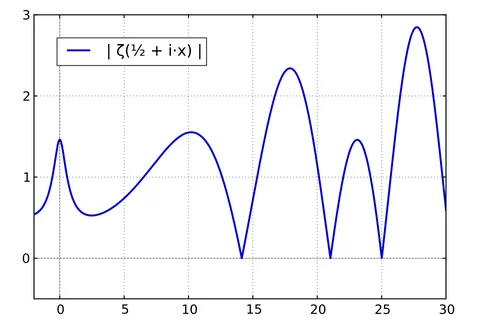
And the only reason I bring it up is because it's a reminder that maybe this slows down, maybe we have a glut, etc. But there is this extraordinarily capable technology still continuing to be built. And I'm curious if traders or investors think about these capabilities realities that, yeah, I don't know, maybe we don't see where the ROI is, maybe there's too much, but there is this box here that keeps getting more and more powerful and that will be valuable. And whether those type of headlines get factored into people's thinking.
It does, but I wouldn't necessarily say it is from the, let's call it the cone of probabilities when traders think about the path for risk on a day by day or week by week basis. I think it's an ethereal bubble, not bubble in the market bubble, but an ethereal bubble that sits outside of the normal sort of risk parameters, whereas in oh, good, you put it into the same bubble as what if AI just breaks the cryptography that work that underlies blockchain? Or, you know, what if AI becomes so intelligent that it's kind of what the risks that we saw the past few weeks, all these so-called cyber attacks, you know, that was definitely a a leaking in of the the potential, I don't want to say threat, but in this case it was a threat, but the potential left tail12The left tail is the unlikely but catastrophic outcomes at the left, loss-making end of a probability distribution. Altmann puts the recent AI-assisted cyberattacks there: they show what the technology can do in the worst case. of what AI technology can do within the real world applications.
So yeah, it's definitely there, but it's not being discussed in a trading capacity. But you know what else isn't being discussed that is probably more tangible though is that oil's below 80 bucks again, right?
And what's oil? Oil? No one cares. Right. What about oil? No no no.
one cares. But weren't we all supposed to be worried about, you know, the Straits of Hormuz13In 2026 the US and Iran faced off in the Strait of Hormuz, through which about a fifth of the world's oil passes, and a barrel rose above $100 in April and again in September. In November oil fell on hopes of a truce: by November 12 Brent was about 21% below its level at the start of the month, even though attacks on tankers continued. Al Jazeera, Khaleej Times becoming a thing. I mean like if you think about Iran as if you've now mentioned six things, Iran would have been one of those Oh, we had an election14The midterm elections on November 3, 2026 gave Democrats a convincing win. On November 5 AI stocks collapsed on fears that data center construction would be limited by moratoriums: the S&P 500 fell 4.4%, the most since April 2025, and the Nasdaq 100 fell 6.4%. AP via ADN too.
We talked to you before the election too. Wow, it's really good thing we're catching up with you. A lot's gone on since then.
I can't remember what we're supposed to be worried about on a day-to-day basis anymore, but actually also I have a question. Solving the Riemann hypothesis, like who actually makes money from that other than maybe getting the prize money?
Is that a question to me? I don't know.
It's just a joke. But like truly, if you want to talk about someone being willing to pay for AI technology, then what does the Riemann hypothesis actually lead to in terms of boosting returns. I'm being somewhat facetious, but I also really don't know the answer.
No, but I mean these questions and it also relates to the cyber stuff. Like these are front and center, like if you're in AI or if you care about AI, these are front and center questions. All these things about encryption, cyber attacks, advances in theoretical math, all these social things, and they're huge deals. And yet it's been very difficult to either translate any of it into business, obvious business changes, It's not like we've seen the wave of white collar layoffs yet, or obvious things in terms of like who profits or the stock market or anything like that.
They're huge deals. I'm going to give a slightly facetious answer, which is when the VIX is 40, no one cares. And of course we care. We do, like deeply. And part of my team's job is to, and Barclays, every investment bank, every company in the world is incentivized to enormously to care. But these are, again, you sort of bucket into questions that probably aren't going to get answered tomorrow. They are deeply important because in the same way that, you know, Joe hates the beer app15Altmann is teasing Joe about his tastes. He most likely means iBeer, a 2008 app: you tilt your iPhone and "drink" beer from a drawn glass. It sold for $2.99 and held the top spot in the App Store for about a year, though the real usefulness of smartphones came later, as with AI. MEL Magazine on the iPhone, as that clearly wasn't peak iPhone.
He doesn't like whimsical. He hates whimsy. Yeah. You know, the same with AI, like we're just scratching the surface of this technology at the moment. So, and that very much goes into the depths of the bowels of what this technology will be capable of on a two, three, five year time horizon. So look, this is what excites me about AI, is that we don't even know what we don't know yet.
And so to pretend like we know exactly how we're going to trade the next few years of this AI narrative is like it's just ridiculous to think that. But all I know is that like any, let's just call it what it is. It's a cycle, it might be a super cycle. There's going to be ebbs and flows. There's going to be really cool periods and exciting ones, and there's going to be some pretty scary ones. Yeah. We've just gone through, we are going through, a scary one.
The Nasdaq dropped 20% in a straight line. That's pretty scary. We wiped out at its peak, what, the S&P dropped over 10%. So that's at least $7 trillion of wealth destruction right there. You know, that's a material amount of wealth destruction. And so to me, I think about the fact that AI is going to be with us for a very long time.
To your point, Joe, it's a revolutionary technology. But our job as market practitioners is to try and time when we should be excited about it and when we should be less excited about it.
05The Fed and the price of money for the AI buildout
What worries Altmann is not the December hike itself but the chance that the Fed keeps tightening against the market, as in 2018.
I want to ask a non-facetious question now, but just going back to the Fed. So it feels like a lot of people forgot about the Fed over the past couple of weeks. But if you were thinking about the future of the AI trade, higher rates is one place where it could have a really big impact, especially if you consider that the very beginning of the recent unwind that we've seen in equities started in credit, right? We started to see spreads on hyperscaler debt start to pick up pushback on high yield bonds from the neo clouds16Hyperscalers are the largest owners of cloud data centers: Amazon, Microsoft, Google, Meta. Neoclouds are companies like CoreWeave and Nebius that rent out GPUs for AI and build data centers on borrowed money, including high-yield ("junk") bonds. The more their debt costs, the slower the buildout. and things like that. Should people be worrying about just the simple story right now of, well, it looks like the Fed might raise rates in December. We don't know if it's going to be by 50 basis points or 25 basis points, or maybe it'll all change again because oil collapses and stocks keep going down.
But in the meantime, just that straight impact from higher financing costs to thwarting or dampening the AI build out. Is that something that's on your radar?
It is. And it goes back to that point about the structural issues around AI revenues and financing. It hasn't changed from yesterday to today, Jensen or no Jensen. The Fed have decided that they want to re-tighten financial conditions. The market has done a lot of that for them. However, I think the sensitivity is less about whether they hike in December, which is still, from a market pricing perspective, a foregone conclusion.
It's more the case of what is the messaging that they send alongside that. And that is very much going to be received not just by the AI financing vertical, but the broader market in terms of is this the Fed being tone deaf to broader financial conditions for all corporates. For the AI piece, ultimately, exactly to your point, Tracy, yeah, we haven't really seen spreads tighten. If you look at with data centers, you look at some, you know, the CoreWeave bonds, and so on, and so forth. This hasn't ameliorated. Look at where SpaceX obviously did their recent bond placing as well.
It's all illustrative that we are in a higher financing environment and you know something that we talked about in the summer was, excuse me not in the summer we talked about it in I think it was yeah October when we were basically highlighting that bond yields are going to peak when the AI trade kind of cracks. And I very much stand by that to a degree in the sense that ultimately, if you're going to basically be placing that many bonds into the market to finance this project, then that competition of capital is still real. And then you've got a separate piece, which is still a function of, all right, do we need all this compute capacity? Who are the weakest links in that chain? Are some of these neo clouds going to suffer as a result of it?
Things that the market's now acutely aware of, again, those aren't going to disappear just because the market kind of bounced 5% today. And it won't disappear if we bounce another 5%. These are still themes that are going to be highly relevant. But with the Fed specifically, what bothers me is less about the AI sleeve. It's in 2018, and to use that analog, not because of the price path, Stan Druckenmiller and Kevin Warsh wrote an op-ed17The op-ed "Fed Tightening? Not Now" ran in The Wall Street Journal in mid-December 2018, at the height of the sell-off: Druckenmiller and Warsh urged the Fed to stop both the rate hikes and the shrinking of its balance sheet. The irony Altmann means: in May 2026 Warsh became Fed chair and now leads the FOMC, the committee that sets rates. Fox Business together and highlighting, I won't try to paraphrase, but they highlighted the potential mistakes of over tightening in that time, which obviously we all remember when the S&P fell the best part, 15, 20%. And it would be, I think, somewhat ironic to the point of almost highly improbable that the FOMC would make a similar error again today with the gentleman who wrote that having written the op-ed. So like
that's what concerns me more: that if the FOMC are, for whatever reason, so hellbent on continuing to tighten financial conditions, which I think helps answer your question at the beginning. Is it a dead cat bounce? If the Fed are completely out of tune with the market internals and dynamics, then that would probably be an illustration that will be a dead cat bounce.
It's just interesting looking at the WIRP function.18WIRP (World Interest Rate Probability) is a Bloomberg terminal function that shows, from futures and swaps, which central bank decisions the market is pricing in. "Over 100%" means a 0.25-point hike is fully priced and there is some chance of a 0.5-point hike on top. The next FOMC meeting is December 8-9, 2026. Federal Reserve So right now, still it looks like over 100% odds of a hike at the upcoming meeting on December 9th. On Friday that, had gotten to about 91%. So at that point, there was some questions creeping in. It's still pretty solid expectations, but you really, you know, clearly there's been this jump in the last few days, but there's certainly the broader trajectory and how intensely they go is still very up in the air, like a high amount of uncertainty. Just going back to the fundamentals.
06Chip stocks got cheap before earnings fell
Altmann says the market has already reset its expectations for AI capex, with price moving ahead of earnings.
You know, when we talked to you last time, I think at that point the Anthropic first Anthropic S1 had recently dropped, et cetera. You talked to us about some of the OpenRouter data and the concerns about open source and obviously GPU pricing, et cetera. These concerns, just going the simple overbuild story and whether there's going to be enough spending on AI to justify it. Have there been any data points in the last three weeks that either reinforce or make you question like where we are going on in that.
Oh, there's one very important data point, which is you had a massive reset in price expectations.
Okay.
As in semis dropped by, you know, whatever, 30, 40%. And I don't say that tongue in cheek. I say that with sincerity in terms of the market expectations about what the forward path for CapEx spend has been dramatically reset.
And as you pointed out, like there's been a serious PE compression. I feel you pointed that out on a forward PE basis, how quote, cheap unquote some of these semis names. And now everyone is, they're like looking at these SK Hynix and they're like, wait, 2.2X, forward PE?19Forward P/E is a share price divided by expected earnings over the next 12 months. For SK Hynix's US-listed shares it fell to 2.2 on November 17, the lowest since their July 2026 listing, against an average of 3.7; the shares themselves were down 38% from their September peak by that day. TIKR Like these are very compressed numbers.
They are. And again, I mean, if you were trying to use valuation or PE as a yardstick to when you're supposed to buy and sell risk then that would be especially in semiconductor space then that would be almost a perfect loss-making track record. However, there's two parts to the answer. The first part is it goes back to original point. We're in a very technical tape. So you need a different set of like parameters to work out probability distributions on whether I'm going to be buying or selling risk.
Valuation doesn't, it does play a feature, but it's sort of more of like, okay, if I've formed a bullish construct as an afterthought, I'll be like, oh yeah, you've got some of these semiconductor stocks trading on these insanely low PEs. So even if I haircut their earnings by, you know, insert, haircut choice of, you know, whatever you want, then I can still get some comfort that actually I'm buying these businesses at what I think are relatively attractive levels. But the price has done that for you, essentially, right? That's why price moves before earnings do. Earnings, revisions always lag. And so to the you asked about compute pricing and open router and things like that.
The reality is that it almost I don't want to say it doesn't matter, but price has been kind of your lead indicator here. And so I take some comfort in the sense that we've clearly had a massive knock to sentiment and a reset. And we've had a massive knock to price, right? Oh, the one that kind of, I don't want to say makes me laugh, but at least gets a smile is remember 7709 HK, it was the triple levered SK Hynix ETF.20Fact-checkIncorrect: 7709 HK, the CSOP SK Hynix Daily (2x) Leveraged Product, is double-levered, not triple: it delivers twice the daily move of SK Hynix shares. It has traded in Hong Kong since October 16, 2025; according to the issuer it is the only leveraged product on SK Hynix in the world. StockAnalysis Yeah, yeah, That's like down on the year and you know, having the ancient memory.
It's dropped, I think, by 90, 95%, something like that.
Is that well, one of the short Nvidia's just got wiped out, right? Is that one?
Well, he's talking about the long SK Hynix one. Oh, right, oh sorry. But yeah, the triple X short Nvidia. I think they got zeroed. Yeah that got zeroed out, yeah. So it's a good example you're taking leverage out of the system, you're taking frothy sentiment out of the system. These are good things. If you want, if you're still a believer in the AI story, and again, like, you know, Joe, Tracy, we've kind of discussed plenty of reasons to be constructive on AI over the medium-long term, it just most likely will be something else within the AI vertical that the market will now coalesce behind. Like I still get very excited about the prospect of the consumer application layer breakthrough. If you really tap into the consumer, then that's probably going to be your real money spinner.
Enterprise, maybe to a degree, I don't know. Again, we don't even know what we don't know within AI, but I would say within the semi-story, I think the compelling point here is that you've had a significant reset, even if the ultimate reset is still lower. Let's not forget, and again, I don't want to draw too strong parallels and analogs, but even in the dot-com bust, the Nasdaq had multiple 20% rallies or 15, 20% rallies before the ultimate low. And, you know, our job as tacticians is to try and navigate the market, the ebb and the flow, even if it's compressing our timeframes down to like two to four weeks, then so be it. That's what we have to do.
Alex, you're getting dangerously close to uttering the healthy correction cliche. So we're gonna leave it there. But thank you so much for coming back on Odd Lots.
We'll have you back in a week.
Yeah, that's right. When everything has changed again.
Thanks for having me, guys.
07Leather jackets and the politics of the AI trade
The hosts agree that Washington's backing is a powerful signal for the AI trade, but the political risks around it are growing.
Joe, you know it's funny.
Go on.
Right before Alex came in, I was chatting with someone who writes about AI and they were telling me that they were at the Tomorrow X summit21TomorrowX is a summit held November 17-18, 2026 at the Moody Center in Austin; investor Gavin Baker announced Huang in advance as the first confirmed speaker. The black leather jacket is Huang's signature outfit: he has worn them for at least 20 years. Meetup, Fortune in Austin.
Oh yeah.
And everyone there was wearing leather jackets in solidarity with Jensen. You know. It's pretty funny. I am wearing a leather jacket in the studio.
That's just because it's cold. But yeah, I'm cold. This is not a political statement. This is just the jacket that I have.
You know what's interesting? I feel like, look, me, I'm very shocked that when the headline crossed the tape this morning that the board had rehired Jensen Huang, I was very surprised. But if you go back and say, look, he was a central component to the stock market, which is as we say is central or, you know, to the economy. And there is this geopolitical element that, you know, it's important to have a leading chips company and have his reinstated, I guess I'm not surprised. I mean, I was really surprised, but you can see why it's like there was so much effort, including all those people at Tomorrow X and at least parts of the faction of the White House that really wanted him back and was able to like get the board to rehire him.
Yeah, so this is the thing that I'm struggling with at the moment because I think this is really a new tension in the AI trade. So obviously a lot of AI, the AI build out was always political with, you know, controversies over data centers and things and, you know, wages and employment and things like that. But what's happening now is we clearly see the Trump administration, you know, hashtag blessing Jensen and NVIDIA and an AI recovery of some sort. It's usually a bad idea to fight the Fed or fight the government, right? So if DC is saying that we want AI stocks to rally, that is a pretty important signal. On the other hand, a lot of people at the moment would describe Trump as a lame duck president.
They would say that Democrats are gonna seize on anything when they get into power, and Trump getting deeply personally involved in corporate structure of a major US business would be like a giant red flag to any Democrat at the moment right now. So I really don't know which way this is gonna go.
You're totally right. There's gonna be investigations22Trump is in his second term, and the Constitution bars a third, while the Democrats who won the midterms regained the House majority. The new Congress convenes in January 2027, and House committees will be able to subpoena witnesses and demand documents. Al Jazeera out the wazoo, both in the upcoming, like the final two years of this current administration. And then of course there's the whole question of, well, if Democrats take the White House in 2028. So there are some major still political questions hanging out over this. I think like it's interesting to me and he said it on the podcast and he also sent it in a note to clients here. It's like just from a market perspective right now, everyone is still thinking, well, when do I fade this bump?
Right. And actually like the market is already off a little bit from its recent highs. But as you point out, there has been a huge washout in the last few weeks. And so yes, maybe like we really don't know. Like maybe this is a dead cat bounce. On the other hand, there has been a meaningful compression in the last three weeks. Maybe cycles are faster now than they were post.com, but I would say there are so many uncertainties still.
At a minimum, I don't think anyone can talk about the AI trade anymore without also talking about the financing alongside it. So that to me seems like a pretty big evolution and a pretty big maybe cap on future valuations. But anyway, in the meantime, shall we leave it there?
Let's leave it there.
This has been another episode of the Odd Lots podcast. I'm Tracy Alloway. You can follow me at Tracy Alloway. And I'm Joe Weisenthal.
You can follow me at the Stalwart. Follow our producers, Carmen Rodriguez at Carmen Armand, Dashiell Bennett at DashBot, Kale Brooks at Kale Brooks, and Kevin Lozano at Kevin Lloyd Lozano. And of course, you can chat about all of these topics 24-7 in our Discord, discord.gg/oddlots, and Tracy and I write a newsletter every day, which you can find over at Bloomberg.com/oddlots.
And if you enjoyed this conversation, if you like it when we roll out the emergency episodes, then please leave us a positive review on your favorite podcast platform. And if you're watching on video, then please leave a comment or like or better yet, subscribe.
AdBloomberg, Power On
And remember, if you're a Bloomberg subscriber, you can listen to all of our episodes absolutely ad-free. All you need to do is go find the Bloomberg channel on Apple Podcasts and follow the instructions there. Thanks for joining.
Hey, I'm Mark Gurman from Bloomberg. I'm the guy who breaks all that news about Apple and the consumer tech world. Now, in my new podcast, Power On, I'm bringing those scoops, plus new details and analysis to the airwaves. I think people are going to see this technology and they're going to fall in love with it. I appreciate your passion, but it's time to get over it. It's going to be a scalper's dream this thing. I love tech. I'm obsessed. It's amazing. New episodes of Power On drop every Thursday on both YouTube and podcast platforms. I'll see you there.


