



Odd Lots
Chapters
The AI trade peaked in June, yet GPU rents keep climbing, and the hosts doubt that the chart measures demand alone.
Read the chapter- It is a big week: the Nvidia scandal, Nvidia earnings, the midterms and Anthropic’s IPO the day after recording.
- The bull case, as Joe puts it, is the rental-rate chart Michael Dell tweeted, which looks like a clean measure of AI demand.
- Tracy wonders whether the chart also captures the cost of financing the GPUs.
- Silicon Valley, Tracy says, sees AI as a technology story and Wall Street as a financing story, and she reaches for the 2015 break in high yield.
The vanilla mid-market deal is a three-year loan of a few hundred million dollars in which the operator may put in none of its own money.
Read the chapter- Stanley Lee traded credit at Barclays and Point72 and is now chief product officer at Liquid Compute, which runs a relet marketplace, a rental index and hedges for lenders.
- Over the summer the template was a three-year, fully amortizing loan at 70% LTV, with the 30% equity often covered by customer prepayments.
- CoreWeave raised prepayments and is marketing a new loan backed by investment-grade offtakers, whereas the last one rested on Anthropic, HRT and Jane Street.
- Spot is high because many buyers would take B300s at $4.30 an hour with 30% down on a term deal, but lenders won’t finance them.
Lenders now underwrite the neocloud as well as its customer, and money for small operators is getting dearer.
Read the chapter- A take-or-pay contract only holds if the neocloud keeps uptime and meets SLAs, so lenders now look at the operator’s track record.
- One large private credit lender told Lee he no longer wants deals where it’s the neocloud’s first or second deployment.
- Lenders will offer mid-to-high teens at 50% LTV, with the gap filled by bigger prepayments or holdco equity.
- The smallest operators, converted Bitcoin miners run by a couple of people, will struggle, Lee says, and access to debt will equal access to equity.
The rate rose from the fives in August to $7.10, a mix of demand and cost of capital.
Read the chapter- Demand is real, but it’s paid for with venture money, and VCs deployed about 25% less in Q3 than in Q1.
- Joe draws a distinction: Anthropic buys compute out of revenue, while most others buy it with investors’ equity.
- The market is thin: as with oil, spot is a small slice of volume, yet it sets the reference price.
Recovery in compute means reletting the capacity, which depends on whether the contracts allow it.
Read the chapter- Tracy worries about subprime-style correlation, with AI enthusiasm recycling venture money back into AI.
- Lee tells lenders to make sure compute contracts are transferable and assignable, because standards are thin.
- A customer paying $3.80 fears the lender will relet the cluster at $4.30 after the operator defaults.
- Lee’s model is aircraft finance, which became financeable through a liquid relet market and regular appraisals.
- Silicon Valley, Lee argues, should embrace the credit crunch.
Like Sun’s servers in the dot-com era, today’s compute demand is tightly tied to venture money, and the outcome depends on whether companies can pay for compute out of revenue.
Read the chapter- Joe cites Waverly Advisors on how every dot-com from Pets.com to theGlobe.com bought Sun equipment, and asks how much today’s market leans on VCs.
- Lee boils it down to two questions: whether AI productivity spreads through the economy and whether companies can buy compute out of revenue.
- Lee tells VCs that Wall Street is doing its job and that they should build the financial infrastructure instead.
Lenders who ignored hedges six months ago now ask for put prices every day.
Read the chapter- Tracy recalls that CDS helped fuel the subprime boom.
- Lee answers that credit is short a put, and any floor on recovery is a synthetic version of an Nvidia backstop.
- The instrument could be a strip of puts on the B300 rental index, hedging the relet revenue rather than the scrap value of the chips.
Nvidia has financed both sides of the market, and a pullback would hit mid-market neoclouds hardest.
Read the chapter- Nvidia put equity into neolab raises and gave backstops to lenders, none of which have been hit yet.
- Lee’s advice to Nvidia is not to use its balance sheet but to help an orderly consolidation, because nobody wants a free fall.
- One Wall Street Journal story about falling GPU residual values could make lenders step back.
Anthropic’s and OpenAI’s demand is huge, but the price they pay depends on sentiment in the middle market.
Read the chapter- Anthropic is seen as a high double-B credit, Lee says, which sets its cost of capital.
- The indexes exclude hyperscaler pricing and spot is thin, so far fewer bids need to be hit than people think.
- What matters in the loan documents is the lien and a three-party agreement with the data center.
- LTVs fell from 80% in the summer to 50–60%, and rescue bridge loans of three to six months carry the toughest terms.
It’s a different world, and not only because of Jensen: customers will overpay rather than prepay.
Read the chapter- Lee offered three years of B300s at $4.40 an hour with 30% down, or mid-to-high fives with nothing down, and buyers pick the latter.
- More compute contracts mean more revenue, which makes the next round easier to raise.
- For Lee, a high-yield veteran, this is the Super Bowl, because everyone finally cares about credit.
- The way out, Lee says, is to sell to ordinary enterprises rather than to other AI app companies.
Kedrosky estimates AI needs $3 to $6 trillion in annual revenue by 2032, with no obvious source.
Read the chapter- Rising rents, Kedrosky says, get mistaken for the ability to repay debt, which is availability bias, like the drunk looking under the lamppost.
- The method is MBA 101: take up to $10 trillion of capex, a hurdle rate and margins, then solve for the revenue.
- By Kedrosky’s comparison, that revenue equals 18% of global white-collar work, or more than the global software industry.
- Reprice a big slice of white-collar labor and you reprice all of it, as with copper, and that is where the TAM math breaks.
Consumers won’t pay much for AI, so the whole case rests on enterprises, and early adopters look nothing like later customers.
Read the chapter- Joe relays Alexander Altmann’s point that families are happy with Gemini summaries in Google search and won’t pay $200 a month for ChatGPT Pro.
- The enterprise story, Kedrosky says, is Anthropic’s bull case: deep penetration and mass substitution.
- Coders, the early adopters, pay any price and burn tokens, while normal people are fine with Meta’s Muse if it books the restaurant.
Code has ground truth and a PowerPoint deck doesn’t, so outside software a model looping on its own compounds errors.
Read the chapter- Software works or it doesn’t, so a model can improve it by itself, Kedrosky says.
- Leave a model alone with a PowerPoint deck for 12 hours and it won’t come back better.
- Tracy points to this week’s outages, and Kedrosky to an explosion of critical vulnerabilities.
- The winners, in Kedrosky’s view, are Palo Alto, CrowdStrike and reinsurers who can name their price.
- That same morning, Kedrosky notes, a ransomware outfit claimed to have Nvidia customer and shipment data.
Kedrosky has long joked that the first frontier lab to stop training models wins, and Anthropic is heading that way.
Read the chapter- Over 18 to 24 months, Kedrosky counts, Anthropic shipped more vertical products in legal, finance and healthcare than model updates.
- Almost half its sales go through marketplaces like Microsoft’s, so it now competes with its distributors and investors.
- That will push it to more data centers of its own, with obligations closer to $800 billion than its lease commitments.
Kedrosky dismisses both oversubscription numbers and the claim that every piece of news is good for AI.
Read the chapter- Oversubscription, Kedrosky says, means non-binding orders that bankers leak, and some Chinese IPOs this summer were 8,000 times oversubscribed and then fell by half.
- If both tight and abundant supply are good for you, he says, that’s theology, not an argument.
- A new risk is know-your-customer terms in loan documents, even in Southeast Asia, which will make neocloud loans pricier.
Fund money flows to startups, then to model and compute providers, flattering revenue at every step.
Read the chapter- Cursor, Joe notes, is about three years old, raised close to $5 billion and sold to SpaceX for $60 billion.
- Kedrosky cites Ramp data showing that about 80% of the top per-employee spenders are venture-backed, and the money goes to frontier models.
- National Bureau of Economic Research data show app launches spiking while ratings per app collapse, and Kedrosky expects much of that capital to be written off.
Kedrosky calls the AI build-out one of the largest stimulus programs in US history, paid for by the private sector and deliberately backed by the White House.
Read the chapter- More than a dozen executive orders, Kedrosky says, ease data center construction and grid connections.
- AI capex drives markets and 401(k)s, so the administration, he now believes, is afraid to stop it.
- Texas would be the world’s third-largest data center builder, and a go-slow governor-elect is coming in.
- Tracy cites a Deutsche Bank note saying compute spending flows back into US stocks, like petrodollars into Treasuries.
There is no cold light of morning: VCs are like jilted boyfriends waiting for her to come back.
Read the chapter- Kedrosky jokes that it’s time to send them Indigo Girls mixtapes.
- Venture, he says, still sees Steve Jobs in a black turtleneck and believes everything would be fine if Jensen came back.
- Tracy has been reading the Nvidia subreddit, where the cope is high.
Nvidia created money with its own balance sheet, like a fractional reserve bank, and such systems contract geometrically, not linearly.
Read the chapter- Nvidia, Kedrosky explains, extends credit and payment terms to customers who buy its chips and attract venture money for new neoclouds.
- On the earnings call Colette Kress said Nvidia is “still huge supporters of neoclouds” but will be “much more discerning,” and the second, Kedrosky says, leaves no neoclouds.
- Stacy Rasgon asked on the call whether “no cash until they break ground” was a new policy, and Nvidia said it always had been.
The labs are moving into their partners’ verticals like Microsoft in its dark days, but they need those partners’ data to succeed.
Read the chapter- Joe recalls the meme Gavin Baker repeated, that Dario supposedly thinks only Anthropic and the US government will be left.
- Microsoft, Kedrosky recalls, built whatever sold well on its platform into the OS and threatened to cut off Netscape’s oxygen.
- Companies are getting reluctant to share data, fearing Anthropic will climb into the boat like the shark in Jaws.
For Tracy the biggest story is not Anthropic’s IPO but the credit crunch for everyone else, and Joe names the metric to watch.
Read the chapter- Joe wants to track how much compute is bought with revenue versus equity.
- Echoing Paul, Joe says the labs have to get off the treadmill of pouring everything into training the next model, or there is no cash flow.
- Tracy answers that there is no way out, calling it a Sisyphean marathon with no finish line.
Quotes
On the spot market for GPUs
“A lot of the buyers of spot on-demand and short-term pricing wish that they could buy term. They cannot.”
Stanley LeeRead from 08:49On the credit crunch
“And I genuinely believe that Silicon Valley should embrace this credit crunch. … If you just look at all of these other historical build outs, nothing is so linear.”
Stanley LeeRead from 20:01On how fragile the rental chart is
“How many bids do you think really need to get hit for the floor to fall out in these graphs? And the answer is probably a lot less than people think.”
Stanley LeeRead from 29:28On the bulls’ favorite metric
“I'd rather look under the lamppost because it's easier to find it there, but yeah, you lost it in the field. This is an availability bias problem.”
Paul KedroskyRead from 38:30On AI’s early adopters
“One of the tenets of venture capital is that your early customers look nothing like your later customers.”
Paul KedroskyRead from 44:05On why AI won’t improve office work the way it improves code
“I defy you to give a PowerPoint presentation to a model, let it loose for 12 hours and say, I bet what it comes back with is better. It won't be, not because models suck, but because there's no ground truth.”
Paul KedroskyRead from 45:11On the economics of AI labs
“I joked for a while that the first frontier model company to stop training models is the winner.”
Paul KedroskyRead from 50:53On the bulls’ arguments
“Once you start playing this game of finding reasons why both tight supply and wildly abundant supply are good for you, what you have there is theology.”
Paul KedroskyRead from 54:34
Summary
A two-part episode on what really sits behind the AI boom’s most bullish chart, rising GPU rental rates. Stanley Lee of Liquid Compute explains that rates are climbing not only on demand but because lenders have stopped financing term contracts with venture-funded customers, pushing them into the expensive spot market, and that mid-market neoclouds face a shakeout. Paul Kedrosky of SK Ventures puts the revenue needed to justify the data center build-out at $3 to $6 trillion a year by 2032, available only from enterprises, and both guests point to the same metric: how much compute is paid for out of revenue rather than the next funding round.
Advice
If you lend against compute, first make sure the capacity contracts are transferable and assignable, or you won’t be able to relet the cluster after a default.
Hedge the recovery you actually expect: if reletting is how you get paid back, buy puts on a rental index rather than insurance on the GPUs’ scrap value.
Instead of blaming lenders, startups should prove that equity-funded compute can become revenue-funded compute.
Don’t project a business from its early adopters: they look nothing like the customers who come later.
When judging an AI company, watch how much of its compute is paid for out of revenue rather than equity.
Mentioned
 NVIDIA00:54Its scandal and earnings frame the episode; Kedrosky explains why it’s called AI’s central bank and why its pullback from neoclouds matters.
 Anthropic00:54Its IPO is set for the day after recording; the hosts hold it up as a company that pays for compute out of revenue, and Kedrosky dissects its economics.
 CoreWeave01:26Joe watches its credit spreads, and Lee explains how it raised prepayments and moved back to investment-grade customers.
 Michael Dell01:39He tweeted the rising GPU rental chart the bulls point to.
Show 33 more mentionsShow fewer mentions
- Grand Theft Auto VI02:35Joe jokes that its release could dent fourth-quarter productivity and knock over the AI trade.
 Stanley Lee03:50A credit trader turned Liquid Compute’s chief product officer explains how GPU purchases get financed.
 Liquid Compute03:50Lee’s company: a relet marketplace, a GPU rental index and hedges for lenders.
 Barclays PLC05:16Where Lee spent five years trading high-yield bonds and CDS.
 Point72 Asset Management05:16Lee’s last stop before Liquid Compute, trading high-yield and distressed credit.
 Hudson River Trading (HRT)08:25Lee names the high-frequency trader among the high-double-B offtakers behind CoreWeave’s previous loan.
 Jane Street08:25The trading firm whose contracts backed CoreWeave’s earlier loan; the new one leans on investment-grade customers instead.
 Jensen Huang25:23Joe asks whether Nvidia’s new management will be more conservative than Jensen; Kedrosky says VCs just want him back.
 Paul Kedrosky37:02The SK Ventures partner works out the revenue needed to pay for the data center build-out.
 SK Ventures37:02Kedrosky’s firm invests at the seed stage, which is why Joe stresses the giant Cursor-style checks aren’t its deals.
 Goldman Sachs40:50According to Kedrosky, it started the fashion for sizing AI’s total addressable market.
 Alexander Altmann42:26The Barclays strategist argued on an earlier Odd Lots that the math fails without paying consumers.
 Google Gemini42:26Its free summaries in Google search satisfy most consumers, in Altmann’s view.
 ChatGPT42:26Altmann doubts families will pay $200 a month for ChatGPT Pro.
 Muse44:39Kedrosky’s example: coders think Meta’s model is terrible, but a normal user only cares that it booked the table.
 Claude Fable44:53Joe doesn’t need Fable 5.2 to spot two conflicting reservations.
 Palo Alto Networks46:54Kedrosky’s example of the security vendors cashing in on the flood of AI-found vulnerabilities.
 CrowdStrike46:54For Kedrosky the vulnerability boom is “a bonanza” for it: the more bugs AI finds, the more demand for defense.
 Epoch AI51:18Its capabilities index, Kedrosky says, shows model progress flatlining.
 Microsoft51:50Anthropic sells through marketplaces like Microsoft’s; later Kedrosky compares the labs to Microsoft in the 1990s.
 Cursor56:00Joe’s example: zero to a $60 billion sale in three years on venture money, much of it spent on tokens.
 SpaceX56:00Its $60 billion purchase of Cursor is Joe’s example of how fast venture money turns into giant valuations.
 Ramp57:04Its spend data show venture-backed startups lead in per-employee spending.
 Gina Hinojosa1:01:02Texas’s governor-elect, who promises to slow data center construction, Kedrosky’s most striking sign of post-midterm change.
 Steve Jobs1:02:55The black-turtleneck founder image through which, Kedrosky says, VCs see Jensen.
 Colette Kress1:05:19Nvidia’s acting CEO, who said on the earnings call the company would be “much more discerning” about neoclouds.
 Stacy Rasgon1:05:51The Bernstein analyst asked on Nvidia’s call whether withholding cash until neoclouds break ground was a new policy.
 Gavin Baker1:06:24He repeated the meme that Dario expects only Anthropic and the US government to be left.
 Dario Amodei1:06:24Anthropic’s CEO, the subject of Baker’s one-company meme.
 Netscape Communications1:07:24Microsoft’s 1990s victim, whose “oxygen supply” Kedrosky recalls being threatened.
- Dr. Strangelove1:07:50Kedrosky cites the film to argue Anthropic shouldn’t have announced its move into others’ verticals.
- Jaws1:07:50Kedrosky’s image of partners fearing Anthropic will climb into their boat like the shark.
 Tian Yang1:10:28Tracy recalls talking with him about an AI race with no finish line.
Sponsors of the episode
- Economy of Scale00:00Bloomberg Media Studios and Dubai’s Department of Economy and Tourism promote their episode about financial regulation.
Transcript
AdEconomy of Scale
Finance is increasingly being built on digital rails, but as the adoption of virtual assets, tokenization, and stablecoins grows, can regulation not only keep pace, but help accelerate it. Find out more later in the podcast.
AdBloomberg Audio Studios
Bloomberg Audio Studios. Podcasts. Radio. News.
Hello and welcome to another episode of the Odd Lots podcast. I'm Joe Weisenthal.
And I'm Tracy Alloway.
01The bulls’ favorite chart
The AI trade peaked in June, yet GPU rents keep climbing, and the hosts doubt that the chart measures demand alone.
Tracy, we're recording this November 18th, 9.34 a.m. I would say arguably we're right smack dab in the middle of two or three of the most important days in like the AI industry so far.
For sure. So we've obviously had the NVIDIA scandal that broke last week.1The Nvidia scandal. In November 2026 The New York Times reported on Jensen Huang’s affair with Alice Huang, former head of Singapore’s Megaspeed, which US officials suspect of funneling Nvidia chips to China. Huang stepped down as CEO on November 12, and CFO Colette Kress became interim chief. More in Odd Lots on Megaspeed. God, it feels like a lifetime ago already. We had NVIDIA earnings recently,2Nvidia’s earnings for August–October 2026, the first without Huang: revenue of $115.8 billion, up 103% from a year earlier, including $107.6 billion from data centers, with guidance of $130 billion for the next quarter. Nvidia and on Thursday tomorrow, hopefully when we release this episode, we'll be getting the Anthropic IPO.
That's right. So as far as we know, Anthropic is going to begin trading tomorrow. We'll see if it happens. Lots of stuff between the NVIDIA earnings, the Anthropic IPO. Prior to all this, the market was weakening already. So even setting aside the scandals.
I forgot to mention the midterms as well.
And the midterms. But prior to all this, I mean, what people call the AI trade peaked in June. We've mentioned CoreWeave3CoreWeave’s credit spreads are Joe’s early warning sign: as the largest and one of the most leveraged neoclouds, its bond yields became the market’s barometer for the whole sector. credit spreads numerous times on the podcast, etc. So there's already fragility.
There is one chart though that the bulls point to. Michael Dell being, the latest. He tweeted this chart, but they all do. GPU rental rates, which you would think is like a very clean measure of demand for AI, they continue to go up. And so you can point to all this market volatility and questions about ROI, et cetera. GPU rental rates still have been on the rise.
Yeah that's right and even after the midterms we saw a little bit of a spike so the argument the bull case argument is that demand for GPUs is still very strong. And if anything if data center construction is going to slow down then maybe existing compute goes up even more. However, however a big question with that chart has to be like what is it actually showing? And does it incorporate other things like the cost of actually securing these GPUs versus just how much the GPUs are worth.
Totally because we haven't seen evidence in the productivity data that like companies by and large are meaningfully getting productivity gains out of AI, right? And that's what you'd expect to see if there's going to be ongoing health for GPUs. You know, it would be funny if we got a big productivity dip in the fourth quarter because of the release of Grand Theft Auto 64GTA VI came out on November 19, 2026, the day after this recording, following delays from fall 2025 and from May 2026. Wikipedia and that knocked over the AI trade.
That would be that would be ironic. I don't think we're going to see that. Probably won't be a big but that's the other big thing that is happening today is the release of Grand Theft Auto.
That's right. Anyway I'm very excited to say we have a multi-part episode today to discuss this historic moment but right now first up we really do have the perfect guest someone who understands both the sort of GPU financing market but also credit markets more generally unfortunately I think there's a lot of people in tech who like just like don't care about credit markets. They’ve all had to learn about credit for the first time.
Yeah there's a big divide so a lot of the people in Silicon Valley, they view AI as just this pure technological story, whereas on Wall Street and I would argue everywhere else, it's a financing story. It's a little bit like the shale boom, isn't it?
So this is my preferred analogy for what we're seeing right now is the 2015 sort of break in high-yield,5High yield in 2015. The shale boom was financed with junk bonds; by 2014 energy made up about 15% of the market. When oil fell from over $100 a barrel to around $30, shale defaults followed, the overall high-yield spread widened from about 3.5% in mid-2014 to nearly 9% in February 2016, and in December 2015 the Third Avenue Focused Credit Fund gated redemptions. Tracy’s parallel: a technology built on debt, where lenders spot the cracks first. FRED but we can get into that with our guest.
02How GPUs get bought on credit
The vanilla mid-market deal is a three-year loan of a few hundred million dollars in which the operator may put in none of its own money.
All right. Well I'm really excited to say we have the perfect guest because we're going to be speaking with someone who his career has really straddled both the tech world and the credit world. We're going to be speaking with Stanley Lee, chief product officer at Liquid Compute. Stanley, thank you so much for coming in the studio on Odd Lots. Why don't you tell us what is liquid compute? And just like how did you get here, your background where as I said, you straddle both worlds.
Yeah, no, thanks for having me on. So Liquid Compute is a startup. We're focused on building a lot of financial infrastructure in the compute space. So a marketplace for people to buy and sell capacity. Obviously this can be used to relet capacity if there eventually might be defaults. We maintain a rental index that tracks the prices of GPU rentals to work with a lot of the lenders that we work with in financing for potential hedges and ways to lay off residual value6Residual value — what Liquid Compute helps lenders hedge — is what GPUs will be worth or earn by the end of a loan. It determines whether a lender is made whole after a default, which is why rental-rate charts matter so much to credit. risk, which nobody really felt the need to a few months ago and everybody is starting to feel the need to do that now. And then we work with financing, you know, for a lot of these folks that are buyers and sellers.
I think one of the biggest things that hit me and I'll get into my background in a second was, you know, I didn't really see the GPU marketplace as a just marketplace of buyers and sellers. It truly is a credit and a financing ecosystem. If you look at a lot of buyers and sellers of compute at the below investment grade level, you are looking at the buyers being potential creditworthy offtakers for high-yield and leverage finance lenders to underwrite and these operators are potential borrowers. They're either borrowers now for this cluster or if they do a really good job, they'll be borrowers for their next cluster. So I think it's a financing ecosystem.
My background is in credit. I spent five years at Barclays trading high-yield bonds7High-yield bonds are bonds from companies rated below investment grade: they pay more and carry more risk. and CDS and then a few years on the buy side, most recently at Point72 trading high-yield and distressed credit, moved over earlier this year. But it's definitely, I would say compute, as much as I love the high-yield market, compute is definitely one of the most interesting credit markets that I've seen so far.
For sure. People in the AI industry, do they understand the financing aspect of all of this? Because it feels like 2026 is kind of the year where they're having to wake up to it. And again, we're talking a lot about the hyperscalers, like big cash-rich companies that have never had to borrow that much in the market before. And now we're seeing them take on loans and bonds, issue new equity8Hyperscalers borrowing. The turn came in fall 2025: on October 30 Meta sold $30 billion of bonds on a record $125 billion order book and separately raised $27 billion from Blue Owl for its Hyperion data-center campus in Louisiana; Oracle, Alphabet and Amazon followed. Bloomberg and things like that. Are people waking up to the reality of the financing aspect of all of this?
Yeah, I think absolutely. I mean, at the top of the market, we as a sort of country and society have created this dual track economy where AI CapEx sustains so much of GDP growth in this country.9AI and GDP growth. Harvard’s Jason Furman calculated that in the first half of 2025, investment in information-processing equipment and software was only 4% of US GDP but accounted for 92% of its growth; without it, growth would have been 0.1% annualized. Fortune You know, you guys have talked about that in the past, and it's trickling down to the middle market. A lot of it has been funded by venture equity and private credit10Private credit — loans from funds such as Apollo, Blackstone and Blue Owl rather than banks — has been the main source of debt for mid-market neoclouds. has been financing a lot of these mid-market GPU loans. And I think a lot of people that are in tech and in Silicon Valley definitely did not really care that much about credit. Credit is very boring. It's negatively convex,11Negative convexity is why tech people find credit boring: a lender’s upside is capped at the interest, while a default can wipe out most of the principal. Hence Lee’s point that lending is like writing puts. and it was not something that, you know, people had to care about that were building innovative solutions. They're definitely focused on it right now.
You see, mid-market lending to buy GPUs. Give us a sort of like vanilla example of how that works, who the player would be, what they're buying it for, what type of lender they're looking for, and how that transaction occurs.
Yeah. So, you know, obviously there's all sorts of transactions and it's very hard for something to be so vanilla for a market that did not exist 12 to 18 months ago.
Sure.
But I would say about as vanilla as it gets, we see these multi-hundred million dollar, three-year fully amortizing12Fully amortizing means the borrower repays all principal over the three years, not just interest, so the debt shrinks faster than the chips depreciate. loans that go to a mid-market neocloud operator, whether it's a startup or a neocloud that has a few billion dollar market.
Naming names of your clients, what is a mid-market neocloud operator that someone could Google?
On the smaller side, a lot of these are private converted crypto and Bitcoin mining folks.13Miners turned AI hosts. Former bitcoin miners own what the AI buildout lacks: sites with power already connected. After the 2024 halving cut mining revenue, many began leasing capacity for GPUs: Core Scientific to CoreWeave, TeraWulf and Cipher Mining to Fluidstack, with Google backstopping the leases. Some of them might just be quite literally a couple of people. And I think, you know, we can get into why when there's a shakeout in middle market neoclouds and a lot of distress, a lot of those operators are gonna have a hard time. On the larger side, you know, if you were to just screen neoclouds and look for anybody with a few billion dollar market cap or below, that's who you could think about.
ExplainerWhy lenders are cutting LTVs
At a 70% loan-to-value ratio, a lender puts up $70 million against a $100 million cluster, and the other $30 million is the cushion against the collateral losing value. GPUs depreciate fast: if six months later the cluster is worth $80 million and little has been repaid, the loan is nearly 90% of the collateral, and a forced sale may not cover it. That is why these loans fully amortize over three years as the chips age — and why, by the fall of 2026, lenders were asking for 50–60% LTVs, forcing operators to bring more equity or bigger customer prepayments.
And over the summer, when a lot of these loans were being written, about as vanilla as it gets would be a 70% LTV, three-year fully amortizing loan. And at the time, these were pricing…
So hold up, 70% LTV, 70% loan to value. So you buy X for $1,000 worth of compute. You’re putting up $300 worth of equity, and you’re borrowing $700.
Not only is it $300 worth of equity, a lot of these mid-market neoclouds are not even putting in their own equity. They're using customer prepayments that they're charging the large inference providers for. And that's why there's been so much consternation in Silicon Valley about these prepayments getting higher and it's only going to keep going from here. I mean, just look at what CoreWeave did last week, which public markets rewarded them for, which they should.
CoreWeave did two things. They required higher prepayments from their customers to push more of the burden of the upfront cost onto them. And they went back up market. Their current delayed draw term loan14Delayed draw term loans are CoreWeave’s financing workhorse: money is drawn as hardware arrives, with interest only on what is drawn. Its March 2026 DDTL 4.0, $8.5 billion against an investment-grade customer contract, was the first such facility rated investment grade (A3 from Moody’s); the $3.1 billion DDTL 5.0 in May was backed by two large non-investment-grade customers. CoreWeave that's being marketed is back up market to IG offtakers, whereas the last one was a combination of Anthropic, HRT and Jane Street, which is more high double B type operators.15Double B is the top tier of junk, just below investment grade (BBB−). Anthropic’s only public rating is a BB+ from KBRA, issued in June 2026; Moody’s, S&P and Fitch had not rated it before the IPO. Crypto Briefing This is trickling down to the middle markets. Lenders in the private credit space are doing the exact same thing.
They're asking for lower LTV structures and higher upfront payments. And they're saying, okay, we don't want to finance this company that maybe is worth 500 million or a billion dollars. Let's keep it to the list of the five or six inference companies that are worth 20 billion dollars. And this is why, you know, spot pricing and on-demand pricing and short-term pricing is remaining so high because it's so indicative, not just of the underlying demand, but of the buyer's cost of capital. A lot of the buyers of spot on-demand and short-term pricing wish that they could buy term. They cannot.
So for example, term, this means they wish they could buy compute on a longer scale.
On a longer scale. So they wish that they could put 30% down at $4.30 per GPU hour for B300s16$4.30 for a B300 is a three-year contract with a prepayment. Spot was far higher: on November 20, 2026, Silicon Data’s B300 index stood at $7.59 per GPU-hour — roughly the premium paid by customers who can’t get term financing. Silicon Data and they cannot. And maybe they could, you know, six weeks ago, but increasingly their neoclouds can't sell them that because those neoclouds are unable to take that offtaker to a lender and get financed. So a lot of these people, you know, the spot and the short-term market is just as much of a function, I think it's even more of a function right now of cost of capital than underlying demand dynamics.
03Lenders turn to the operators
Lenders now underwrite the neocloud as well as its customer, and money for small operators is getting dearer.
ExplainerWhy expensive spot can mean expensive credit
A neocloud buys GPUs on credit against a long contract with a customer: the customer pays a deposit, the lender funds the rest. If the lender doubts the customer can pay, say a startup living on venture money, the deal goes unfinanced and the neocloud can’t offer a term contract. The customer is pushed into the thin spot or short-term market, where prices rise. A rising index then reflects not only demand for compute but also buyers being cut off from credit.
When you think about how a loan is priced, like my understanding is that most of the price is based off of like the credit worthiness of the tenants, like the offtakers, right? And then if the offtakers have to get continuous financing from presumably venture capital in order to actually pay what they owe to the data center operator, like that seems like a pretty big risk, right? At a time when maybe venture capital is starting to get more nervous about the overall ecosystem.
100%. And I would say two things, and these are both shaking out in what's going on in the financing and the neocloud17A neocloud rents out GPUs for AI, unlike the general-purpose clouds of Amazon, Microsoft and Google; examples include CoreWeave, Nebius and Lambda. market. The first thing that I would say before getting into the second half of the question is you're absolutely right that at the start of this market, all anybody cared about was who the offtaker is. Everybody viewed these loans as offtaker credit wrappers and CoreWeave and the bigger neoclouds where we didn't have to worry about execution risk were the ones borrowing. As we have hundreds of smaller neoclouds, now the operator is being underwritten more and more because take-or-pay18Take-or-pay contracts oblige the customer to pay for reserved capacity whether or not it uses it; neocloud loans rest on them, but as Lee explains, only as long as the cloud meets its own obligations. agreements that these offtakers sign are only as good as if the guy has to pay. And the guy only has to pay if the neocloud does their job, you know, maintains uptime, matches SLAs, et cetera.
So now if you're in the private credit world, a lot of the lenders that I talk to, they see five to 10 different loans a week with the same few offtakers. And so what they're saying to me, you know, I had a very large private credit guy just last week say, all right, Stanley, I don't want to see any more loans where it's the neocloud's first or second deployment. Only show me experienced operators. So six months ago it was 100% offtaker profile. Now it's definitely more split.
And then onto the back half of your question, absolutely, it's super risky because at the top of the market, CoreWeave is able to ask for higher prepayments from its customers because those customers have cheap access to capital. They can continue to issue IG debt as it's been quite well documented, the hyperscalers continue to do. These middle market companies, a lot of these large inference folks, they've already been raising at a blistering pace, which is why a lot of these VCs are so overdeployed. The cost of venture equity getting higher is a little bit tough.
Now where I think the gap is bridged, and I think this is what's going to truly catalyze the consolidation of neoclouds is lenders are going to go back to these neoclouds and say, okay, you know what? I will do your loan. I'll do it in the mid-high teens, but I want a 50% LTV structure. So those neoclouds can accomplish that by two things. They can either go to their offtakers and ask for an even higher prepayment, which they're starting to do. The problem is those offtakers don't have unlimited coffers. This is venture equity, or those neoclouds can put in their own equity. So some of the neoclouds that I'm talking to are already raising more and more hold co-level equity so that they can put in equity to lower the LTV of these structures. This is where the smallest neoclouds, where it might be, you know, a couple guys who are converted Bitcoin miners, where they're using customer prepayments to bridge the 30% equity, it's going to be hard. The best way that I could say it is access to debt is going to equal access to equity in the middle market.
AdEconomy of Scale
What's next for virtual assets? I'm Jacob Grease, host of Economy of Scale, a series exploring growth in key global sectors. And in this episode, we're diving into the digital forces shaping finance. Sean McHugh from the Dubai-based Virtual Assets Regulatory Authority has this to say.
We're seeing a lot of institutional players come in, digital asset dedicated hedge funds, high frequency traders, and that sort of thing, and folks who service institutional clients.
As more capital enters the market, adaptive regulation is likely to become increasingly key. Reece Merrick of Ripple says, a lot of regulators globally would like to keep the industry at arm's length.
That's the opposite here. I think also what you'll find is that regulation and frameworks can come out, but some of them are maybe a slight iteration on some 80-year-old policy and not actually in line with what the technology can do and offer. And again, that's very different in Dubai.
Listen to the full episode wherever you get your podcasts. This series is brought to you by Bloomberg Media Studios and the Dubai Department of Economy and Tourism.
AdThe Big Take
The Big Take podcast from Bloomberg News keeps you on top of the biggest stories of the day. My fellow Americans, this is Liberation Day. Stories that move markets. Chair Powell opened the door to this first interest rate cut. Impact politics, change businesses. This is a really stunning development for the AI world and how you think about your bottom line. Listen to The Big Take from Bloomberg News every weekday afternoon on the iHeartRadio app, Apple Podcasts, or wherever you get your podcasts.
04What the B200 index shows
The rate rose from the fives in August to $7.10, a mix of demand and cost of capital.
So you said something interesting, which is that if you look at a company like Anthropic, its compute bills used to be mostly out of financing, but as a share of revenue it's come down. So they have a lot of revenue to come in and it makes it a little bit more sustainable. This is a chart of the Silicon Data B20019The B200 index is the bulls’ chart: Silicon Data’s daily neocloud rental rate for the B200 (ticker SDB200RT), which CME futures settle against from October. It sat at $5.40–5.70 per GPU-hour all summer and reached $7.10 on November 20, 2026, up 12.9% in a week. In September a one-year contract was priced about 5% below spot — the spot-versus-term gap Lee describes. Silicon Data index, so fairly contemporary chip. It continues to rise. It's up to $7.10 an hour as recently as August was in the fives. Tell me when you look at this chart, what do you think?
It's a combination of things. Number one, there is demand. Like there's there's demand. There it's been quite well documented how much VCs have continued to deploy this year. That being said, VCs deployed less than Q3 than Q1 by about 25%.20Fact-checkUnderstated: by Crunchbase’s count, global venture investment was $159 billion in Q3 2026 versus about $300 billion in Q1 — nearly half. Q3 was 25% below Q2 ($212 billion). Q1, though, was inflated by four megarounds — OpenAI, Anthropic, xAI and Waymo — totaling $188 billion. Crunchbase So it goes to your point about potential stress in that part of the market over time. Also a lot of that liquidity is supposed to come back with these large IPOs over time. So part of it is demand. A lot of it is the cost of capital. I think a huge part of this is the cost of capital.
But just to be clear, when you say this is demand, and of course it's on some level, of course it's demand, this demand is coming from big VC equity checks to companies who then use that equity to buy compute rather than in the case of Anthropic revenue being used to rebuy compute. This is it seems like a very big difference.
It's a huge difference. And I think this is where the vulnerability in these residual value assumptions are. I think if you just take a step back and there are 30 different variables that go into residual values, whether it's new chips coming out, supply coming online, remarketed capacity, it really is right now a demand side function of rental rates as you're seeing. And the demand side is a function of two things, the willingness and the ability of the buyers to pay. Right now we have not had to worry about the willingness of these buyers to pay, but the ability of these buyers to pay is from venture equity. So if more and more people can't go the Anthropic route of converting equity funded compute purchases into revenue funded compute purchases over time, then this is going to be an issue.
And I think this is also this market is thin. It's it's like other commodities like oil where a vast minority of the amount of compute that's procured and traded is done so in the spot market, but these are the prices that we use as our reference rates. So I think it's incredibly, incredibly vulnerable for sure.
05If an operator fails
Recovery in compute means reletting the capacity, which depends on whether the contracts allow it.
This is where I start to get kind of nervous and I hesitate to bring this up, but I start thinking about correlations during the subprime crisis, right? Where like everyone thought that defaults were going to be relatively isolated from each other, but no one understood that so much of the economy, so much of the financing trade was like built on the same housing exposure and that they ended up all being inextricably linked. So if I think about venture capital, like a lot of that is coming from enthusiasm for the AI trade and then it's getting plowed right back into the AI trade and you can kind of see the link and the risk there. I wanted to ask though about, I guess, repossession if an operator actually fails, which, you know, could be a realistic probability in the coming year or so. What happens? Like do they actually have the right, if an operator fails, can they kick out the tenant? And then like, does the lender get access to the underlying collateral and that gets like resold out?
Yeah. So this is, this is a really important question because, you know, in a lot of the work that we do with a lot of our private credit partners, we're trying to standardize as many of these sort of middle market loans as possible. The most important thing that I would tell anybody who's lending in the space is make sure that you have the right to do that. And also these compute contracts need to be transferable and assignable.
So some of them don't unless it's like specifically spelled out in the covenants.
Correct. I mean there's no, I wouldn't say there's no, but there's very limited standardization. Increasingly lenders are focused on this. And also increasingly the compute buyers, who are the inference companies, are focused on getting non-disturbance agreements21Non-disturbance agreements come from commercial real estate: the building owner’s lender promises a tenant it won’t be evicted or repriced in a foreclosure. Inference companies with cheap old GPU contracts want the same protection. with their existing lenders, because their paranoia is, okay, well, if my operator fails and I have this contract that I signed a year ago where I'm paying $3.80 per GPU-hour, if the current going rate is $4.30, the lender's not going to honor my contract, they're just going to relet it to someone else.
Now the actual remarketing and reletting is not as complicated as a lot of other commodities because you don't have to ship the GPUs anywhere. You just transfer SSH keys. This can be done and we can do this in like a matter of minutes, for example. Obviously for larger scale projects it might take a bit longer.
But yeah, I mean I think this entire ecosystem has been built on the idea of two things that did not exist six to 12 months ago. Number one, that recovery in the compute asset class is reletting the capacity. Reletting the capacity is a lot harder to do operationally. You need the right legal structure in place from the term sheets than it is from an engineering perspective. And also the idea that through the construction of financial markets, derivatives, potential hedges, there are ways to lay off some of this residual value risk. But I think this is why it reminds me so much of there's no perfect analogy, but I think aircraft finance is a very interesting analogy22Aircraft finance works because a plane is ideal collateral: it can be flown to another airline, and independent appraisers value it regularly. That is why lessors such as AerCap own about half the world’s commercial fleet and why aircraft back bond deals. Lee wants the same for GPUs: a releasing market and regular marks. because when you look at pre- and post-financial crisis with aircrafts, there were large prepayments that were required to, you know, the Boeings, the Airbuses of the world post 2008, everybody thought, okay, this is not very financeable. What made the asset class financeable was the construction of financial infrastructure around it: a liquid relet market and regular appraisals. So I think compute, you know, what we're focused on building is exactly that financial infrastructure.
And I genuinely believe that Silicon Valley should embrace this credit crunch. It obviously is frustrating and it sucks right now, but if you just look at all of these other historical build outs, nothing is so linear. We believe that AI is so extraordinarily revolutionary. And that is why capital markets have been so extraordinarily generous to the AI build-out over the last 12 to 18 months. There will be corrections and steps back. What's happening right now is it's happening in the neocloud market.
06The Sun Microsystems lesson
Like Sun’s servers in the dot-com era, today’s compute demand is tightly tied to venture money, and the outcome depends on whether companies can pay for compute out of revenue.
It's interesting going back to the GPU market, when people talk about this boom, they reach for the telecom build out as an example. But another potential like analogy from that same time that doesn't get as much attention. A friend pointed this out to me was a company like Sun Microsystems,23Sun Microsystems, the dot-com era’s server darling, was worth about $200 billion in 2000, lost more than 90% in the crash and was sold to Oracle for $7.4 billion in 2010. Much of its demand, like today’s GPU demand, rested on venture money. Wikipedia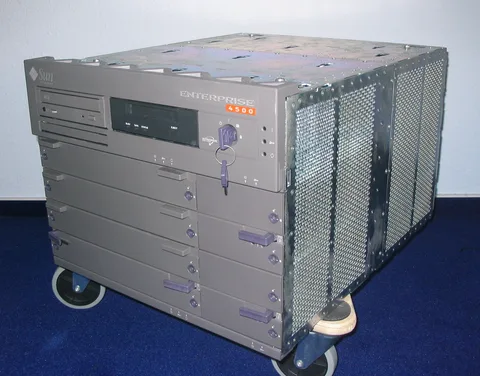 which sold, I'm looking at a thing from Waverly Advisors. He says Sun Microsystems was the darling of the internet boom. The company provided servers that powered dot com companies. Every company from Pets.com to theGlobe.com24Pets.com and theglobe.com became emblems of the dot-com bubble. Theglobe.com rose 606% on its first trading day in November 1998, a record at the time; Pets.com went public in February 2000 and shut down that November. Wikipedia was buying Sun equipment. So here is an example of VC's, VC capital being used to flatter the boom in a specific piece of equipment. Talk to us a little bit more about like how correlated the entire trade is to essentially the VC environment, the huge checks that they're raising, the huge checks that they're writing, the speed of zero to one billion that we see or 10 billion that we see some of these startups, and just this voracious demand for compute out of VC money.
Yeah, I think this is incredibly, incredibly correlated. And I think that what it really is coming down to are two things. Number one, how much can we infiltrate AI productivity into the overall economy?
So far very little.
So far, yes. And number two is the evidence that more and more companies can generate revenue to buy compute and get off of equity. And I think the idea is because of what you just said about right now, there's a lot of skepticism, it's very healthy and it's very natural for credit investors to take a step back, especially when this is happening at the public market level. I think if you were sort of in the VC lens, you should think to yourself, okay, well, Wall Street is doing what Wall Street needs to do. You know, they're managing other people's money. They need to properly price this risk. We should be focused on investing in the financial infrastructure so that if AI is as revolutionary as we all truly believe it will be, when the evidence of that starts to come in, the financial infrastructure to finance this is there. So right now it is entirely, I wouldn't say entirely, but it is truly dependent on proving to the world that all of this equity funded compute is going to generate revenue to buy that compute in the future.
I was just remembering the Sun Microsystems, the famous like statement from the CEO. He told Bloomberg, like, you don't need any transparency on our sales numbers.25Fact-checkNot quite: the line comes from Scott McNealy’s 2002 Bloomberg Businessweek interview, and it meant the opposite. At 10 times revenue, he said, Sun would have to pay shareholders all its revenue for a decade with zero expenses: “You don’t need any transparency. You don’t need any footnotes. What were you thinking?” — the absurdity was visible without any disclosure. ValueWalk
Did he really say that?
Yeah, something like that.
There were signs.
Yeah, there were signs in retrospect.
07Hedging residual value
Lenders who ignored hedges six months ago now ask for put prices every day.
So the other thing I want to ask about is, you know, you mentioned the need for further financialization, I guess, of this market. And a lot of people have complained about the lack of a hedge. And we've spoken to a bunch of companies who are in the process of trying to build something that could hedge compute exposure in one way or another. But like I don't mean to keep bringing up 2008 because I really don't think it's like a perfect parallel, but I remember in 2008, the thing that kind of made the subprime market boom was the invention of CDS,26CDS, credit default swaps, insure against a borrower’s default. JPMorgan pioneered them in the 1990s; in the 2000s they underpinned synthetic CDOs that let investors bet on mortgages beyond the loans actually made, which is Tracy’s point. of the hedge. And so that like it kind of worries me a little bit, but talk to us about why people want the hedge in the market and how it would actually impact the market's growth.
Yeah, I mean I think there is a very natural desire for this hedge because at the end of the day, credit is a negatively convexed product. You're sort of writing puts at the end of the day. You need to make sure you're compensated for that. So this is why these spot players are so hard to finance with credit, because the value accrual of spot being higher goes to the equity holder. Any kind of hedge that acts as a floor on recovery is compelling. It's basically artificially synthetically creating the same thing as an NVIDIA backstop. That's what it is. You have to you obviously have to trust the index and minimize basis risk.27Basis risk is the chance that the hedge and the hedged asset diverge — the rental index moving differently from a particular cluster’s revenue. With CDS, the gap between the swap and the cash bond is still called the basis. But even when CDS started, you know, there was a massive basis risk and there still is basis risk between bonds and CDS.
I think CDS is a really great analogy because we definitely are one of these companies that's also trying to work on hedges given we work closer with all of these lenders than a lot of these other companies. And, you know, I do get a lot of demand from private credit for these hedges. And what it looks like will be a strip of put28A put gives the right to sell an asset at a set price, effectively insurance against a fall. A strip of puts on the index pays the lender if rental rates drop below a threshold. options on our index, usually the B300 index. And it makes a lot of sense. If you have been convinced that reletting the capacity rather than selling the capacity is what recovery will look like, that is the recovery that you should hedge. So insurance on GPUs that are ensuring scrap value is not quite as useful.
I would say that, you know, I've been talking to these lenders for the last six months and nobody really was focused on these hedges. I would say we have at least one or two, two to three inquiries from large private credit firms a day for the last two weeks inquiring about indicative pricing on B300 puts. But I think it makes sense. And I think a lot of it is, you know, any way that you can floor recovery that is direct value accrual to the creditor, which is why the NVIDIA backstops29Nvidia’s backstops. Nvidia has underwritten demand for its own chips: in September 2025, for example, it agreed to buy up to $6.3 billion of CoreWeave’s unsold capacity through 2032. For lenders, that is a floor under the borrower’s revenue. were obviously so important for so long.
08If Nvidia gets more conservative
Nvidia has financed both sides of the market, and a pullback would hit mid-market neoclouds hardest.
So great, let's talk about that. We don't really know yet how NVIDIA is going to be financing neoclouds and so forth going in the future, financing demand of its own chips, but certainly a lot of questions. And let's say the new NVIDIA management, whoever it is, really has a sort of takes a more conservative posture than Jensen and his family really. What does that do? How do you see that playing out?
Yeah, this is, you know, a trillion dollar question for the ecosystem right now. Obviously, nobody knows, and obviously I can't predict what they will do. I will say that if financial conditions get more conservative in the market, which they already are, and NVIDIA simultaneously gets more and more conservative, that will be a major stressor on the ecosystem. It will be a major stressor on the ecosystem because NVIDIA has been very relevant in helping to finance both sides of the equation. NVIDIA has backstopped and invested in many of the neolab equity raises. They have also gone to the credit side and provided backstops to the creditors. Now, these backstops, because GPU residual values are so high, they haven't been hit on anything yet, but I think that's a possibility.
I genuinely do believe, though, that if you are NVIDIA right now, now is the time to stabilize the middle market. And that doesn't mean putting your own balance sheet down. What you should do is be incentivized to work with the people that are seeing the mid-market neocloud distress. Some of them will fail, and that is totally okay and it's healthy. What you don't want is a total free fall in the ecosystem, no control on the relet and remarketed capacity. And you want this consolidation to happen in a very structured and healthy way. The consolidation will happen either way. My concern would be if NVIDIA pulls back entirely and the middle market is kind of a total free for all and it's left for dead.
And the reason that this is my big concern is because what has made this asset class increasingly financeable to private credit over the last 12 months, it's that graph that you showed me of B200 rental rates going up. It's the idea that these chips continue to earn more and more. If you have this massive diaspora of neoclouds defaulting left and right and all of this remarketed capacity, and I have, I have already had larger neoclouds call me and say, if you see distress purchase orders from smaller guys, I want to buy it, I want to buy it on the cheap. The more data points that you get that might impact the direction of this graph going up and to the right, all it takes is one Wall Street Journal article about GPU residual values falling, even if a lot of it is distress capacity, people are happy to buy and private credit might say, okay, whoa, whoa, whoa, let's take a step back here. Let's reevaluate our priors. What do we think of residual values?
Do they actually, how often would they have to reprice based on like falling GPU collateral values?
It's a lot less falling GPU collateral values, and it's a lot more these mid-market neoclouds not being able to get finance.
09Why the big labs won’t save prices
Anthropic’s and OpenAI’s demand is huge, but the price they pay depends on sentiment in the middle market.
Okay, okay. Another view from cloudland would be like, it just doesn't matter. There's gonna be so much demand from Anthropic and probably OpenAI that if a bunch of these like smaller inference companies dry up, it doesn't matter. There's just an infinite pool of demand from the really big AI labs. What is the role of them in this? And can that be counted on to put a floor under GPU prices wherever they are? Chip prices wherever they are.
Yeah, I mean, there there will be demand, there will be a lot of residual demand, but there will be demand from hyperscalers too, who are also spending a lot of their own capex for their own build-outs, but I don't think the demand will dwarf the negative sentiment. And at the end of the day, Anthropic is being rated as, you know, a high double B company. This will affect their cost of capital. So even if Anthropic is going to gobble up a lot of this compute, the cost at which they will do it is dependent on sentiment in the sort of middle market.
Can you just talk a little bit more about, again, going back to the B100 chart or the H100 chart? How much does this chart, is it affected by this phenomenon that you're talking about, or any of these charts where the people buying compute regularly, maybe on the spot market, can't lock in long-term agreements. And the significance of that to what looks like sustained demand.
Yeah, I think it's drastically affected because if you look at these, if you look at these charts, most of them, if they're worth anything, will exclude hyperscaler pricing. You're looking at a lot of neocloud pricing and where transactions are actually happening. And it's quite interesting because if the chart is going up and to the right because credit is getting harder, that is not really a healthy and sustainable environment. If there's a breaking point and people are starting to run out of money, that's where the floor can drop out from below. The spot market is pretty thin. You know, a good question that I got from, you know, one of the large private credit firms is how many bids do you think really need to get hit for the floor to fall out in these graphs? And the answer is probably a lot less than people think.
Yeah, this is what I wanted to ask. So talk to us about the standard, I guess, covenants in some of these deals. So is are there like trip points where things become problematic and, you know, the borrower has to start renegotiating the loan or like returning stuff to the lenders.
Yeah, in the middle market, it's a lot less about covenants. The covenants that matter the most are your lien on the hardware, the ability to access this, a tri-party agreement with the data center30The three-party agreement among lender, cloud operator and data-center owner gives the lender access to the servers and the right to relet them if the operator defaults, and commits the data center not to evict the hardware over the operator’s unpaid rent. Without it, GPUs in someone else’s building are poor collateral. as well to be able to relet the contract. But if there's a default, there's a default.
What about an LTV ratio or something like that?
Like oh, I mean, we're already seeing LTVs come down.
Okay.
We were seeing 80% LTV loans get priced over the summer. I think post-Labor Day, it was more 70%. And now people are asking for 50 to 60%. The other thing that I would say is, and this is where a lot of the more punitive covenants are coming in, a lot of these mid-market neoclouds are coming to credit for emergency sort of rescue and bridge financing. And if you're a lender, you want to be protected. And these are, first of all, I think they're extremely interesting investments, but they're extremely tight covenants. And if there is not a takeout in three to six months and that is relying on future takeout capital from private credit anyway, lenders will, you know, foreclose and seize the equipment.
10What cash on the balance sheet is worth
It’s a different world, and not only because of Jensen: customers will overpay rather than prepay.
How different, I've been asking this to various friends, how different does the vibes in San Francisco feel today than they did, say, two weeks ago? It's pre- and post-Jensen. I think is this a total different world? Like how different worlds talk to us.
It's a different world. And I think it would be a different world regardless of the Jensen situation. The Jensen situation just exacerbates it for sure, but it's a different world. You know, I talk to a lot of folks who are asking me, why are my neoclouds asking for more and more prepay? I'll just give you an example of how much people value the cash on their balance sheet and their equity. I was showing a deal to someone where you could rent three years worth of B300s at $4.40 per GPU hour, 30% down. Or I'll show it to you zero prepay, high fives, mid-high fives. They will choose the zero prepay mid-high fives. And it’s not that they’re arbing themselves. They just care so much about their cost of capital.
But that spread, I think, is going to be more [unclear]…
Yes, one hundred percent. Having it on their balance sheet. The other thing that the other thing about that is if you're one of these companies, how do you grow faster? You procure more compute. How do you procure more compute now and then go back to the VCs and raise even more money, you get more compute contracts signed. So the more of these lower prepay contracts that you can sign, even if it's higher TCV and you're signing way more take-or-pay agreements than the cash on your balance sheet, the more you can then go to the VCs because your revenue is going up and to the right because of all this compute that you've been purchasing. So to your point about VC equity being the true variable to watch.
I was thinking so much of this seems to be like a cultural misunderstanding between Silicon Valley, which cares about charts going straight up and to the right and the credit market, which cares about convexity and charts that are like sloping and going downwards.
Yeah, no, I I could not agree more. And I think as people, and you opened this by asking about how people in Silicon Valley, how much do they know or care about credit? For me as someone who was in high-yield credit for years, this is like the Super Bowl. Nobody cared about high-yield credit for the longest time. Everybody cares everybody cares right now. But no, I mean I think you're exactly right.
There's this mismatch and there's this frustration of this idea of credit markets and the lack of financing are killing startups and innovation in this country. And I think if you're sort of in Silicon Valley, you should be thinking to yourself, okay, capital markets have been so generous to us. It's very natural for them to maybe take a step back. We should focus on proving that equity funded compute can be revenue funded compute, and we should also be investing in the financial infrastructure to make this asset class financeable. Because like I said earlier, if AI truly is as revolutionary as we all think it is, and I do believe it is, the proof will be in the pudding. These companies will perform. And when they're, when they're performing, and we've underwritten stronger neocloud operators, the financial infrastructure that you should be investing in now will be there waiting to finance the rest of the build out.
Just final thing for me, but the big story, everyone, you know, there have been a million charts of like NVIDIA central bank of AI. And I'm sure some of that is true. But the key thing I'm taking away from this conversation is it's really about VCs and the scale of those checks and the scale of the LP checks31LPs are the limited partners in venture funds: pensions, endowments, family offices. Joe traces the chain from LP checks to funds to startups to GPU rentals. that come into VCs and the speed with which, I don't know, your cursors, et cetera, are going from zero dollar companies to deca centa billion companies and how much that's just pushing cash up into these GPU prices.
Yeah, and I think if you're sitting there in the VC world, the way to get around this is these companies need to produce and make the economy more productive, like you said, and converting this into productivity that's driven by revenue and signing more enterprises as your customers rather than just more AI app companies. That's how you get around that.
All right, Stanley, thank you so much for coming on the podcast. That was fantastic.
Yeah, great.
AdThe Big Take
The Big Take podcast from Bloomberg News keeps you on top of the biggest stories of the day. My fellow Americans, this is liberation day. Stories that move markets. Chair Powell opened the door to this first interest rate cut. Impact politics, change businesses. This is a really stunning development for the AI world and how you think about your bottom line. Listen to The Big Take from Bloomberg News every weekday afternoon on the iHeartRadio app, Apple Podcasts, or wherever you get your podcasts.
11What revenue would justify the build-out?
Kedrosky estimates AI needs $3 to $6 trillion in annual revenue by 2032, with no obvious source.
So Tracy, we just wrapped up our conversation on the GPU question specifically. But of course, there's lots of questions that people have about the math all around and all of these still very high valuations, particularly for a lot of the private, soon to be public, depending on the timing, could very likely to be put at least one of them public today. As we're recording, I mean, the expectation is that Anthropic gets to 1.4 trillion.32Anthropic’s IPO. On the evening of November 18, 2026, Anthropic priced its shares at $83, above the marketed range, for a valuation of about $1.5 trillion; trading on the Nasdaq under the ticker ANT began on November 19. Fortune
Yeah.
Which is this once you get into trillions, it's like numbers that I can't even conceptualize. And it's like one point, like, you know, one point they were talking about two trillion, etc. But anyway, we're recording this November 18th, but but when we expect that this comes out, that it will be Anthropic trading day. And the question is, for many of these companies, just like do these numbers, do they do they make any sense? And do they add up? And you know, you've seen these things like the owners of the data centers have to collect like 10% of US GDP by the year 2030 and revenue for something like are there any shot at this? I'm very excited to say we really do have the perfect guest. Someone who has been writing about this and talking about this and investing in this world, investing in the tech world very, very long time.
Too long.
Someone who himself has some serious He gave himself away already.
That's right.
Someone we've known for a very long time. Someone who himself has some questions about the math on this. We're going to be speaking, of course, to Paul Kedrosky, partner at SK Ventures, a fellow at the Oxford-Man Institute of Quantitative Finance and AI. Paul, thank you so much.
Let's actually start kind of like on the conversation we just had. We see these numbers for the B100, H100, H200 index. They’re all going up and to the right. Nvidia actually said on its conference call, well, with token prices going down, people are more excited to spend more on GPUs.33Jevons paradox. Nvidia is making a 19th-century argument: William Stanley Jevons observed that more efficient steam engines increased coal consumption rather than reducing it. If tokens get cheaper, usage can grow so much that total spending on compute rises. I don't know if it makes strictly any sense. What's your take when you see these numbers going up? That seems bullish. Why is it like that seems like great there's demand for AI and like more residual value. What do they, what do you see when you see these charts?
Same thing. I just think people, and this is the story, has been the story all along on this stuff, is that people confuse number goes up and to the right with the viability of the business and your ability to pay off the underlying financing, right? I mean, these are two very separate issues and people conflate them all the time that if you say the likelihood of being able to generate a revenue not at the levels required given hurdle rates, margins and everything else with respect to this the capex build out, people immediately assume you're saying something that you're not, which is you're saying that by the way, AI doesn't work and you're all idiots. Now of course that's not the problem, right? I mean the issue isn't that it's it's actually that AI does work, but the underlying, the math is really difficult as you alluded to off the top.
And so you're forced to kind of seize on all these proxy measures, right? And one of the proxy measures people like the most is, hey, look, the rental prices of GPUs in data centers as proxied by these various indices that we have out there are not only just not falling, they're actually going up, but there's a host of reasons why that could be happening. And so I it's really this for me is like the drunk guy looking for his keys in a field rather, you know, because it's it's like, well, I'd rather look under the lamppost because it's easier to find it there, but yeah, you lost it in the field. This is an availability bias problem.
Okay, so which part of the math doesn't exactly work? And by the way, I broadly agree with this. Like you can have a groundbreaking technology that actually isn't economic at its current valuations, but let's drill in what exactly is, I guess, the arithmetic that doesn't work.
Yeah, so I mean, it's pretty straightforward. I mean, there's been a bunch of different estimates that I've gone at, I've done it, Columbia, some folks at the Columbia Graduate School of Business did it. There's actually, I think it's a Bain study floating around,34The Bain study, from September 2025, estimated that AI companies would need about $2 trillion in annual revenue by 2030 to fund the compute required to meet demand, and would still fall about $800 billion short even counting AI-driven savings. Bain but that they all come, we all come back to the same approach, which is to say, take a number for CapEx over the next, say, by 2030, 2032, in terms of the total spending on building out this the sort of data center moment, and then in turn say, what kind of hurdle rate does it have to hit? What kind of gross margins and what kind of margins do we need to have on that? And then say, okay, fine, flip that around. This is all basic, you know, MBA 101 finance and say, okay, what does that imply as a piece of project finance in terms of the revenue required to justify the spend? It's it wouldn't be any different if I was building a factory. It just so happens we're yeah, out to 10 trillion dollars as opposed to building like a small auto plant or something like that.
And so you the numbers you come to are really dramatic. You're looking at numbers depending on what you want to play with in terms of margins and hurdles, something like three to six trillion in terms of annual revenues by, say, the 2032 timeframe, if you're one of those, you know, hopeful optimists who think it's required that you actually earn a reasonable rate of return. So those are the kinds of numbers you're looking at. And then you try to put that in some kind of context that like, well, that's, you know, 18% of global white collar work or that's larger than the global software industry. We can all play this game, but the reality is it's just a very large number and it's not obvious where it's going to come from. And so that's where this discussion starts and often ends.
ExplainerFrom capex to required revenue
An illustration. Suppose $5 trillion goes into data centers and the equipment lasts five years: each year $1 trillion of depreciation has to be recovered, plus, say, a 10% return, another $0.5 trillion. That is $1.5 trillion of operating profit a year. If 30 cents of each revenue dollar is left after power, staff and other costs, revenue has to reach about $5 trillion a year. More capex, shorter chip lives or thinner margins push the required revenue higher.
It's the total addressable market of like everything. It’s everything. Yeah.
That's right, right, right. I often joke, by the way, that rather if you're going to play the TAM game, this total available market game, and Goldman was the one who kind of set off the, the, the parade of doing this, you might as well just say, let's reduce human down to basic elements. I mean, why stop at like the TAM for white collar labor? We might as well just reduce people down to atomic components and say, okay, here's what the raw value of humans are, because this is a game.
A teardown analysis of humanity?
Our carbon? Yeah, a teardown analysis of humanity. I don't know why people don't go all the way with this. And so the problem once you start making this argument and and you guys spend a lot of time in commodities, is once you reprice the corner of a commodity, like pick copper as an example, if you reprice 15% of the copper marketplace, I have a news flash for you. You haven't actually repriced 15% of the copper market. You've repriced the whole market because that's how commodities work. So for the underlying assumption is that white collar labor is in some sense a TAM and we're going to reprice a significant fraction of it, what you're really saying is I'm going to reprice all of white collar work. Now you can argue whether or not that's even possible, but the point is the TAMs that people work from make absolutely no sense if you accept the first principle, which is that I'm going to take a significant fraction of that TAM. Well, now you've just repriced the market, right? It does, it's no longer that large. So now you need to own more of it and so on. So the math breaks down in these ways.
12Enterprises, not households, will have to pay
Consumers won’t pay much for AI, so the whole case rests on enterprises, and early adopters look nothing like later customers.
Let's talk about how the revenue could get there. First of all, speaking of copper, it's been actually getting clobbered lately. It's down like 5% today. And if you overlay a chart of like copper futures or miners, it looks like the NASDAQ because it's the commodity a chart of semiconductors.
Yeah, like perfect. Yeah.
Yeah, it's like the commodity that's a proxy. We had we did an episode with Alexander Altmann at Barclays, sort of trying to talk through the math. And his basic view is this: that like even if companies really adopt AI and mass and they get some sort of ROI, that's limited how much they're gonna spend. And also like, it's still not clear that any big company has actually found positive ROI from using AI, except maybe in their engineering department. He just says like it's not enough, especially if you don't get consumers paying for AI too. He says like to actually get the numbers where they would need to be, you need consumers shelling out. But for now, it looks like most consumers like are pretty happy with like Gemini summaries and Google search, and that that's just not gonna get there the way like a paid service where like a family is like we need to be spending 200 a month on ChatGPT Pro. Do you agree with that?
Oh, totally. I mean, that's never which is never gonna happen. So the whole story has to be the enterprise story, right? So you I don't even believe that there's any way to get to these kinds of numbers without an enterprise story. And the enterprise story, which is really the Anthropic story, right? That's the whole bull case for Anthropic, is that it is the enterprise player. The only way to get there is to assume deep penetration of the enterprise with Anthropic and mass substitution, because there's only two ways you can generate the revenue. You're either substituting for other things we're already doing, or we're complementing it and making them so much more productive that the whole, the whole pie grows, right? And what we're seeing in the early days, and you, you mentioned this earlier, is that the only place we are seeing that substitution productivity effect is in coding in software engineering.
And I think this is incredibly important. And what's one of the tenets of — not the Christopher Nolan Tenet,35Tenet (2020) is Christopher Nolan’s time-inversion thriller. but the other one — one of the tenets of venture capital is that your early customers look nothing like your later customers. So if you project a business based on the early adopters of your product, you're making a terrible mistake. So in the case of large language models, the early adopters, the most enthusiastic buyers who are obsessed with being at the frontier of performance, were willing to pay any price, were token maxing their brains out and vibe coding their way to 10,000 fitness apps, we're coding engineers, we're coders.
Yeah.
And Joe, normals look nothing like that, right? We're not at the frontier. Things are good enough. I talk to coders who are baffled that people use Meta's Muse. They're like, don't you realize that's a horrible model? People don't care. It got them a restaurant reservation.
So this is the problem. Meta's Muse tells me you have two emails that tell you you're going to be there at… you're supposed to be somewhere at 3 p.m. tomorrow. You might want to… That's a totally fine use case. I do not need Fable 5.236Fable 5.2, Anthropic’s newest model, came out on November 9, 2026, alongside Mythos 5.2, at token prices 20% below its predecessor. SD Times to tell me I have two emails that are like… to tell me that I have two reservations conflicting with each other.
13Why coding is the exception
Code has ground truth and a PowerPoint deck doesn’t, so outside software a model looping on its own compounds errors.
Exactly. And so and it gets worse though because software is really unusual in another way, which is that it has a what's called a tight gradient descent,37The tight feedback loop is Kedrosky’s point: code has a fast, unambiguous test — it runs or it doesn’t — so a model can improve against it iteratively. A slide deck has no such test. which means that the feedback loop, as you let it work in its own undirected way at whether it's RSI, recursive self-improvement, or it's something more mundane like just improving some old financial code, you can let it loose and do that because there's ground truth, right? The software works or it doesn't. And so it feeds back to itself and it can improve. Now try doing that with most of white collar work. I defy you to give a PowerPoint presentation to a model, let it loose for 12 hours and say, I bet what it comes back with is better. It won't be, not because models suck, but because there's no ground truth. Who knows what better means in that context? So if you let models loop recursively on things that don't have ground truth, you get exploding errors. You don't get better product. And this is a deep problem as you transition from coders to normal users, which is, which is exactly what we're facing right now.
Well, this is something that I've been thinking about even in the context of coding, because people were very excited about AI and its ability to code early on, but now with all the outages that we've seen this week,38The outage wave. Within days in November 2026, systems at the FAA, banks, Microsoft, Apple and the NSA’s classified network went down. None was officially attributed to a cyberattack; some reports tie them to rushed patches for AI-found vulnerabilities, but that has not been confirmed across the board. WLOS I mean, like, you know, is that productivity if all you're doing is like creating new bugs that have to be continuously fixed?
Probably not. I mean, in the number, yes, and the numbers are staggering, right? I don't know if you've looked at it, but like the CVEs in terms of critical vulnerabilities, in the first three weeks of October,39The vulnerability wave. There is no reliable figure for the share of all critical vulnerabilities ever found, but the surge is real: disclosures in the first half of 2026 ran nearly 50% ahead of a year earlier, driven in part by models like Claude Mythos that find bugs on their own. Trend Micro we identified, I'm gonna go think of the numbers. It's like 8% of the critical software vulnerabilities ever found, ever found were discovered in the first three weeks of October. 50% of all the critical software errors the bugs ever found were found in the first half of this year.
Yeah.
And it's just accelerating. And so this is a a fantastic bonanza for the cybersecurity guys for Palo Alto, for CrowdStrike and lots of others, but it's not particularly good for anyone else in terms of producing productivity. And then we get into this problem of of, you know, the last few days where it's felt like I maybe should just unplug everything. I'm not even sure anymore whether like my toaster's got something going on inside. So this is this is the problem is we're seeing again where the productivity is and the productivity is with people who are able to use these tools really quickly to find vulnerabilities in other systems. And and this is a deep problem.
And just on that point, to take it one step further because you know this is finance after all, who actually benefits from that from that other than like ransomware vendors?
Well, who benefits from that are reinsurers. I mean it's if you talk to reinsurers, they can basically name their price now. I mean it's amazing to talk to these guys because you can't price it properly. The risk, because even Anthropic said this in the S140Anthropic’s S-1, filed in late October 2026, does warn that a catastrophic AI incident could create liabilities beyond the insurance industry’s capacity and that the market for AI-specific coverage remains undeveloped. Business Insurance was you can't price the risk. It may be larger than the global market for insurance, I think was in their risk section.
Oh yeah, that's right. Yeah. Right, right, right.
So if you talk to reinsurers like Swiss Re, Munich Re, Chubb, all of these guys will tell you the same thing as they rub their hands gleefully is we can set any price we want right now. It’s a tremendous boom time for reinsurers. These are the people who are benefiting, not productivity.
Yeah, I find the insurance angles on AI so fascinating and we're going to do more on them.
I was thinking, you know, last night there was another outage and it was some story and it was like this wasn't a cyber attack. This was race to like patch a bug to it's and I was like, well what's the difference? It's like that's actually great for the cyber attackers. They don't even have to try. They can get the shutdowns of the critical systems without lifting a finger. And so functionally it sort of ends up being the same thing.
The funny thing was not so funny, it's actually horrible, but the intersection of this stuff with NVIDIA is really interesting. Like this morning specifically there was a an NVIDIA a piece of ransomware like I want to say provider isn't the right word, but let's just say a ransomware outfit claims that they have access…
Ransomware as a service.
Yeah, yeah, yeah. RaaS. They they claim they have access to NVIDIA customer data, including shipment data.41The ransomware claim. On November 18, 2026, the group The Gentlemen listed Nvidia on its leak site with a countdown to publishing data. It did not say what it had or offer proof, Nvidia did not confirm a breach, and the group has exaggerated claims before. Cybernews So, you know, these things are now intersecting, right? So because this is the one of the big stories with respect to transshipment and NVIDIA. And now all of a sudden all of these worlds are coming together.
AdThe Big Take
The Big Take podcast from Bloomberg News keeps you on top of the biggest stories of the day. My fellow Americans, this is liberation day. Stories that move markets. Chair Powell opened the door to this first interest rate cut. Impact politics, change businesses. This is a really stunning development for the AI world and how you think about your bottom line. Listen to The Big Take from Bloomberg News every weekday afternoon on the iHeartRadio app, Apple Podcasts, or wherever you get your podcasts.
14Anthropic: train less, sell more
Kedrosky has long joked that the first frontier lab to stop training models wins, and Anthropic is heading that way.
We believe that as of the time this recording is coming out, that in a few hours Anthropic will begin trading. There are some existing publicly traded AI companies, but they're all in China. Their stocks have done terrible.42Chinese AI stocks. Zhipu and MiniMax listed in Hong Kong in January 2026 and more than quadrupled by late February, then roughly halved in two weeks in June ahead of lock-up expirations; on October 22 MiniMax traded below its IPO price. Caixin Now the difference is people would say, look, these aren't frontier companies they don't have a ton of compute actually to serve inference. So that's not a biz, like they just don't have that many data centers yet. There's lagging edge. It's true commoditized intelligence at the lagging edge. And so they would say, well, the bull case for Anthropic is it's different. And the bull case is that they can sell a lot of compute at positive unit margins and they're at the frontier and that they can monetize the frontier to an extent that even a model that's six months behind the frontier can't.
Right.
And that therefore they're fundamentally different as a business. Give us your read on Anthropic as a business right now.
So this is my argument all the way along on Anthropic has been the sooner they stop aggressively training models to be at the frontier and focus largely on inference, the faster the unit economics get better. And I think, you know, I joked for a while that the first frontier model company to stop training models is the winner. And I was doing a presentation of the day on this and I was talking about it and showing that in the last 18 months or 24 months, Anthropic has actually shipped more vertical products than updates to its models.43Anthropic’s vertical products: Claude for Financial Services (July 2025), Claude for Life Sciences (October 2025), Claude for Healthcare (January 2026) and Cowork plugins for legal and finance work (February 2026), which sent vertical-software stocks sharply lower. Anthropic
Yeah.
Which has largely been missed by people, which is really interesting, right? Because that speaks to exactly what I'm describing. And they're not backing away entirely from training models, but they're moving really quickly up market and saying we need to be so they're launching in legal, they're launching in finance, they're launching in healthcare. So they've launched more vertical apps than they have updates to their models. At the same time, you know, the Epoch Capabilities index44The Epoch Capabilities Index is a composite measure of AI model capabilities compiled by the research group Epoch AI from many benchmarks. and others shows this kind of flatlining. So that's the future, right? But then the deep tension becomes now I'm competing directly with the people who also give me distribution, right?
We saw this with Anthropic launching office products. Well, they sell almost 48% through Microsoft Marketplace and through marketplaces like Microsoft's.45Fact-checkNot quite: nearly half of Anthropic’s revenue (47% in 2025) does flow through cloud marketplaces, but mostly Amazon’s and Google’s rather than Microsoft’s. Both are major investors, so the point about competing with its own investors stands. Reuters / The Star And so now you're competing with your investors. And so now you get into this problem of, well, why am I even distributing your products at all? Because you're actually competing directly with me. And so then of course you're forced to take the next step, which Anthropic actually hinted at in the S1, this and which goes to your question about the future unit economics. They said we're going to have to move away from being so reliant on cloud rentals in distribution through these channels. They didn't say why, but we know why. It's because they're competing with their own suppliers. So they're going to have to be directly responsible for more data center construction. But that's, so that's kind of the S-1 was really sort of an Anthropic 1.0, and they're already telling you that because we're launching more apps and we're moving away from pure reliance on frontier models, that we have to move upmarket, which has direct implications for the capex build-out and for what their future obligations look like, which look more like $800 billion than the commitments that they had, which were purely lease-based.
15Oversubscription and the “healthy correction”
Kedrosky dismisses both oversubscription numbers and the claim that every piece of news is good for AI.
We hear about IPOs being oversubscribed all the time. What does that actually mean?
It means that underwriters and bankers are doing their job in terms of marketing. It's complete nonsense. Oversubscription46Oversubscription means IPO orders exceed the shares on offer. Orders are non-binding, so investors inflate them expecting to be cut back. doesn't mean anything because it's a non-binding commitment from institutional investors saying, in a perfect world, here's how much stock I would buy. I know I won't get that, so I'll name a giant number and I know I'll just get a fraction of that. And so bankers then turn around, leak that and say, oh, look, there's so much demand for this IPO, it's five or six times oversubscribed. It's complete nonsense.
At the peak of the Chinese bubble this summer, some of the IPOs were 8,000 times oversubscribed and then fell by 50%. It means nothing. It's unbelievable to me that the media parrots it because you are literally carrying water for underwriters. You should get commission.
I tweeted about that. I'm going to go ask for commission. I shouldn't have done that.
It's the same with allocations in the bond market.
Yeah.
Can I just broaden this out a bit more? So with the AI unwind that we've seen recently or like some of the weakness in the AI trade, one of the arguments you hear from the bulls is, oh, this is a healthy market correction, the old cliche. And like we're starting to see some differentiation between neoclouds, for instance. I was looking at pricing of some data center loans and 2025 data center loans are seriously underperforming 2026. And the argument there is that like, well, underwriting started getting better in 2026. So people are starting to differentiate within the market. What's your response to that particular argument? And also actually, I should just add, the other argument is with the midterms and a potential data center construction slowdown, that compute could become even more valuable. So people who already have it might be in a better place than they were, you know, three or four weeks ago.
That last one in particular I really struggle with. This is one of the most cynical arguments out there that good news is good news is good news and bad news is good news. There's like a meme about a large hairy investor who I won't name who's sort of standing there at the apocalypse and saying, you know what, this is also good for us. And it's this is the problem, right? That once you start playing this game of finding reasons why both tight supply and wildly abundant supply are good for you, what you have there is theology. You don't actually have an argument anymore. You just have a belief in all data supports it. And so this is the problem with that sort of, that sort of position.
And I think you have to engage directly with the problem, which is you, Tracy, as you were saying, an increasing fraction of the pre-2026 loan book out there is trading at at least mildly impaired levels. And that's happening just as Congress says that there's a sort of a know your customer initiative47KYC for clouds means making operators establish who ultimately uses their capacity. Chinese firms can still legally rent remote access to chips they are barred from buying, and closing that loophole has long been debated. For lenders, an operator that can’t prove who its customers are puts both revenue and collateral in question. Background in Odd Lots on Megaspeed. put coming working its way through, which is already showing up. There was a story this morning, I think it was on Bloomberg, in loan Ts and C's with respect to you need to know who your customer is on this stuff. And it's not just loans that are being issued in the US, but loans in Southeast Asia, which is really unusual. We're essentially seeing US know your customer Ts and Cs showing up in loans originating outside the US. Well think that through what's the impact of that? I don't want any part of those loans because I can't really know in a cloud world my customer in any complete sense. So what's that going to mean? That's going to mean that loans become harder to get, more expensive and spreads go out. And that's obviously really bad for neocloud providers.
16Venture checks become tokens
Fund money flows to startups, then to model and compute providers, flattering revenue at every step.
Can you talk a little bit more about VC World? Now I know you're SK ventures, you're more seed stage, so this doesn't apply to you, but like one of the things that we've seen in VC World is just like huge checks, huge valuations, huge growing. A company like Cursor, for example, the company's been around like three years total, something like that. They've raised, maybe like they've raised close to $5 billion to, and then they sold to SpaceX at 60 billion,48Cursor and SpaceX. In June 2026, a week after its own IPO, SpaceX agreed to buy Cursor for $60 billion in stock; Cursor had been valued at $29 billion in November 2025. TechCrunch et cetera. These are just unbelievable numbers in a short period of time for startups.
Yeah.
How much of, and again, maybe this goes to the GPU chart. How much is just their like so much like everyone's writing big checks? They're writing big checks to the LPs, they're writing big checks to the portfolio companies, the portfolio companies are writing big checks to compute providers, et cetera. Yeah. And that it's just like cramming down big checks all the way down, flattering the top line numbers across the board.
Yeah. No, no, it's totally true. And Ramp data shows it, right? If you look at the Ramp data, one of the more popular sources of data on spend, the largest spenders in on a per capita basis are uniformly venture-backed companies. Something like 80% of spend is in terms of the leaders in terms of per employee spending are all venture back. So you're seeing this phenomenon in action as that venture money in turn becomes spend that in turn goes directly spending on frontier models, which are obviously the most expensive and highest margin models on an inference token basis at those companies.
And so, but this is a game though, right? Because you're seeing exactly what happens when it doesn't pay out. Cursor is a sort of a larger scale example, but there are myriad other ones where this these sorts of adventures in token maxing aren't turning into products that anyone cares about. And there's great data from the National Bureau of Economic Research on this showing this dramatic spike in the number of apps being produced, but a complete collapse in the number of ratings per app. So you, you, you have this disconnect, right? We have, in a sense, slop showing up everywhere, but some of it's got incredible capital backing behind it, which probably is going to have to be largely written off because there's no, there's no value being created. And that's, that's the deep problem.
All this investing, Tracy, it's all going great, except for the fact that there's no productivity gains, no value, and a lot of cyber attacks. But other than that, it's all going everything's fine.
17A private stimulus with government blessing
Kedrosky calls the AI build-out one of the largest stimulus programs in US history, paid for by the private sector and deliberately backed by the White House.
Actually, this reminds me, so one of the reasons CapEx expenditure on AI has gotten so huge is because it's all couched in these existential terms. So, you know, the hyperscalers have to spend loads of money because whoever gets to the frontier first wins everything. The US government has to support this industry because we're in a life or death race with China technologically. And so you have this like ever upwards impulse on expenditure. I'm thinking how to ask this question, but can you maybe clarify where you see the Trump administration in terms of its support for AI now? Because on the one hand, with the Nvidia scandal, it seems like they might have been turning a blind eye to China sales, but post the midterms and with all the headlines, we now have China hawks in the ascendancy. What does this actually do for CapEx for government sanctioned CapEx expenditure, which I know you've been writing a lot about?
Yeah, so I've argued that essentially we're running a private sector stimulus program aided and abetted by the federal federal government, right? The among the largest stimulus programs in the history of the country and and it's being done by the private sector as I suppose goaded and aided and abetted by policy. So you can look at policy in a host of different ways. There's been a series of executive orders, over a dozen now,49The data-center orders. The centerpiece is Trump’s July 23, 2025 order to speed federal permitting of data centers, issued with the AI Action Plan; orders on energy and grid connections followed. White House that have all in one way or the other made it much easier to build data centers, to connect to the grid, to do it to, or for example, to work around EPA rules with respect to sulfur dioxide emissions. I mean, there's a host of things that have come from the federal government, all of which uniformly push this whole moment further.
And I used to think that it was all somewhat, I don't know, like almost naive, that they didn't really realize what was going on. But subsequent reports in the context of this NVIDIA episode have made it really clear. So the White House not only knows it, that they're terrified of ending it, but they've realized that one of the biggest things pushing capital markets forward and building people's 401ks as the white as White House likes to talk about, has been AI capex, which is something that I thought for a long time they didn't actually know it and were doing it by accident. No, it's totally on purpose. And so this is, this is the deep tension is they actually do know and they are running by proxy this private sector stimulus program. And it's having all of these consequences, but in turn, you know, something like 50% of the gains in the last four years have been Mag 7 related, blah, blah, blah, blah, blah. So, you know, you this, this is, this is the deep tension in all of this.
And so now, post-midterms, all of that begins to change, right? I mean, you can pick your favorite data point. Mine is that if Texas were a sovereign, which I'm sure we could end the sentence right. Some people would Texas would like that.
Yeah, let's just stop right there.
They would actually be the third largest builder in terms of spending of data centers in the world behind the US without Texas, then you have China, then you have Texas. It's staggering, right? And yet, so this is the third largest pseudo-sovereign worldwide in terms of AI data center construction. But we have a go slow governor-elect50The Texas governor-elect. On November 3, 2026, Texans elected Democrat Gina Hinojosa, who has promised a moratorium on new data center approvals until the legislature passes protections. ABC13 coming in that even slowing it down's material in terms of the impact. So this is just one example, but it's across the board, but just that's the most striking one to me was that that change goes directly to the heart of this de facto policy the administration's running that's kind of this this private sector stimulus program that's policy aided, both at the st at the state level but at the federal level. So it all changes from here.
Yeah, there was a really great Deutsche Bank note out earlier this week where they talked about how a lot of the compute spending basically gets recycled into US stocks in the same way that petrodollars used to go into US treasuries.51Petrodollar recycling. After the 1970s oil shocks, Saudi Arabia and other exporters parked their revenue in US Treasuries, under a quiet 1974 understanding between Washington and Riyadh. Deutsche Bank sees a similar loop: money spent worldwide on chips and clouds flows back into US stocks.
Totally. Well, global trade in semiconductors is actually now larger than oil and gas. I mean, it's crazy. People don't realize the scale of all of this. So to the point that that recycling is is now fundamental to what's happening in capital markets.
18VCs after Jensen
There is no cold light of morning: VCs are like jilted boyfriends waiting for her to come back.
Yeah, totally. You know, you've obviously kept your head on your shoulder throughout this cycle, which is admirable. But I feel like in the wake of the Jensen scandal, the phrase that I keep coming back to is like the cold light of morning. You know, you party all night and you have fun and stuff like that.
You literally party all night.
Yeah, and then you wake, and then you wake up one morning and then it's like it's 7 a.m. and you're like, oh, and you're like putting your hands over your eyes, like, oh, what my last night was terrible. That's what it kind of feels like. And I'm curious from like the VCs that you talk to, et cetera, are they, is this cold light of morning vibe a real thing?
No, they're like jilted boyfriends, and they all want their girlfriend to come back.
Oh, yeah, so bring it back. I was joking back to last night. Yeah, yeah, yeah.
I was joking to someone the other day that they should start sending out like Indigo Girls52Indigo Girls are an American folk-rock duo; Kedrosky jokes about sending their mixtapes to heartbroken VCs. mixtapes. Maybe it'll all work out for them because it's it's just so obvious that people have a really emotional reaction to what's happening. And there's all kinds of great, you know, work on this in the finance literature about superstar CEOs and the consequences and how they earn outsized pay packages but in the venture industry it's you know Steve Jobs in black sweaters and it's never stopped being that way it just keeps looping round and round and so they see it through that lens and it's uniform the case that you know if Jensen would just come back everything would be fine and you know and we'll also send them a mixtape with Indigo Girls.
You know, I've I've been reading some of the message boards on Reddit like the Nvidia subreddit and like the cope is high.
Yeah, they really do. Of course they really do.
19Nvidia as AI’s central bank
Nvidia created money with its own balance sheet, like a fractional reserve bank, and such systems contract geometrically, not linearly.
Actually on that note, I would love to get your take on this. So we hear a lot of people describe NVIDIA as the central bank of AI in one way or another. Can you base because you're so good at going through the technical details in a very compelling way can you just go through like what exactly does that mean? And then what is your outlook for what happens now to all that NVIDIA financing?
Yeah so the way to think of it and those try and I and I've been guilty of using that metaphor forever. And the way to think about it is that in a sense Nvidia gets to print money and the way it gets to print money is by using its own balance sheet to create money on the other side much like the Federal Reserve does and it allows the banks in each case these companies to whom it extends credit to essentially create money from nothing often on no payment terms who in turn spin around and buy things back from Nvidia often on delayed payment terms. And that continues to recycle because that attracts venture capital and that attracts, you know, more building of neoclouds. And so it goes round and round and round not just because it's one for one, because it's highly levered.
It's a fractional banking system. Much circular financing53Circular financing. Nvidia invests in its customers — OpenAI (it pledged up to $100 billion in 2025), CoreWeave, xAI — which then use that money and borrowed funds to buy its chips. is inherently a fractional banking system, very much like what we see in the shadow banking system in the United States and then then private credit 18 months ago, and now with a single entity doing it, the fractional reserve banking system of 2026 was NVIDIA. It was no longer anybody else. And so what they were doing was essentially this was creating money through the circularity of these deposits that in turn generated all of this incremental spend. And so what we know about fractional banking systems is when they begin to go in reverse, they don't go in reverse linearly either. They go in reverse geometrically because all of that pulls back to the core.
And you saw some of that alluded to last night in the or the other two nights ago, depending on our temporal loop here, in the NVIDIA conference call when Colette54Colette Kress is Nvidia’s CFO and, since Jensen Huang’s departure on November 12, 2026, also its acting CEO. was the new acting CEO was talking about how the impact on neoclouds. And she said two things that I thought were really important. One was that we're still huge supporters of neoclouds. And by the way, we're going to be much more discerning. Just like say, as soon as you start becoming more discerning about neoclouds, that leaves you with basically no neoclouds. So, you know, being more discerning about neoclouds leaves no neoclouds. And so this is the problem. And that's the fractional banking system going in reverse.
There was also a line in there, and our guest from this weekend, Stacy Rasgon was on that call. There was a line in the call where he asked the question. He asked the question, which was like something like NVIDIA had said either in the statement or the or in the prepared text about like, well, you know, the cash doesn't go to the neocloud until they like really break ground and get working. Is this a new policy or is this an old policy that you're telling us now? And they're like, no, no, no, no. We've always been doing it this way, but we really want to let you know now that like it's really important for us to communicate with you that we don't just give them the cash before…
20When the competitor is Anthropic
The labs are moving into their partners’ verticals like Microsoft in its dark days, but they need those partners’ data to succeed.
I got one last question. You sort of alluded to this. There is this idea out there that Anthropic and maybe OpenAI will not always be in the token selling game, and that the future perhaps for these companies will be to use primo intelligence to enter into all these other kind of verticals. Health is an obvious category where it may be, law, et cetera, and that that's where the money will be made. As an investor and you as someone who speaks to investors, what is the thinking now about buying companies? You know, there's this meme. Gavin Baker has said this on a podcast. He's like, well, Dario thinks there's only going to be one company left in the world and it'll be Anthropic, and there'll be Anthropic and the US government. And I'm just curious, that seems far-fetched, but it does not seem far-fetched that Anthropic is going to get into more verticals directly. So I'm curious from your perspective, how that affects your thinking when you're writing checks, this possibility that you might just be competing with products from the major frontier labs.
No, it's 100% the problem right now is that you, it's like the analogy I make is it's like the dark days of Microsoft, whenever Microsoft, if it saw you selling something on its platform and thought that seems to be generating decent revenues, it would build one itself and then integrate it into the operating system. It famously threatened to shut off, you know, Netscape's oxygen supply55Cutting off Netscape’s air supply — words attributed at the Microsoft antitrust trial to executive Paul Maritz (1995), as Microsoft prepared to bundle a free Internet Explorer with Windows. Maritz denied saying it. Wikipedia because it was going to launch Internet Explorer back in the day. This is that same phenomenon at a vastly larger scale.
The problem, of course, is that Anthropic is only as good as the data it gets as it enters these verticals. And what's happened is it's much like in Dr. Strangelove,56Fact-checkNot quite: in Dr. Strangelove the trouble is the opposite. The Soviets built a Doomsday Machine but hadn’t announced it yet, and Strangelove exclaims that the whole point is lost if you keep it a secret. Wikipedia don't tell people about the bomb before you build the bomb, because the problem is now they've told people that we want to be in your vertical. And so as I talk to people more and more, there is this new reticence to share all of this data with Anthropic or even to partner in as many ways because of this fear that they're, you know, they're climbing up the boat like in Jaws57Jaws (1975) is Steven Spielberg’s shark thriller; Kedrosky casts Anthropic as the shark climbing into its partners’ boat. or whatever, and they're gonna eat everything as they go up it. They can’t do this whole cloth. They have to, they have to have everybody's data. A lot of anxiety there.
Paul Kedrosky, so great to catch up with you again. We'll we'll be watching today. It's Wednesday, but on the day this comes out, we'll be watching to see how Anthropic trades. We're finally going to have one out there. Really appreciate you coming on Odd Lots.
Cool guys. Talk to you. Have a good one.
21The real story is the credit crunch
For Tracy the biggest story is not Anthropic’s IPO but the credit crunch for everyone else, and Joe names the metric to watch.
That was fun. It's such an exciting week. There's so much news. I'm really excited to see we're in where Anthropic trades.
Yeah, I mean, well, I guess by the time this comes out, we might have some clues. But I do think the credit crunch in AI. That's like on, I mean, it is a credit crunch. That's what we're seeing is probably the biggest story out here. Yeah. If you think of AI as a financing story, then great, Anthropic is raising some equity, but there's a whole bunch of other players out there who are finding it more difficult to raise capital.
I find this metric of revenue to compute to be very interesting. And that look, a lot of these companies are very far from turning profits, let alone GAAP profits or anything like this. But in the meantime, one metric that we should watch for both the industry as an aggregate versus or any company is how much of their compute is being purchased from equity versus how much is coming from revenue. And we know that the better, you know, the more successful companies like the Anthropics of the world are plowing a lot of their revenue back into compute. But that's healthier than if they were, you know, needing to tap the equity market in aggressive ways just to get access to chip.
Yeah, but at some point you need someone to pay for all the compute that they're providing.
And you need to not, as Paul said, you also somehow need to get off the treadmill where in addition to compute all your money is going to training for the next model. Otherwise, where's the cash flow going? That's the real problem.
I think like there's no out in terms of development, right? Especially for the frontier hyperscalers, especially. And this was the conversation that we had last week with Tian Yang58Tian Yang of Variant Perception explained on Odd Lots on November 16 why the US and China can’t have guns, butter and hard money all at once. or earlier this week, which is like it's a race with no finish line, a Sisyphean marathon. Shall we leave it there?
Let's leave it there.
This has been another episode of the Odd Lots Podcast. I'm Tracy Alloway. You can follow me at @tracyalloway.
And I'm Joe Weisenthal. You can follow me at @TheStalwart. Follow both of our guests Stanley Lee. He’s @StanleyLee21, and Paul Kedrosky at @pkedrosky. Follow our producers, Carmen Rodriguez at @carmenarmen, Dashiell Bennett at @dashbot, Cale Brooks at @calebrooks, and Kevin Lozano at @kevlloydlozano. And of course you can chat about all of these topics 24-7 in our Discord, discord.gg/oddlots.
And for more Odd Lots content, read our newsletter, which you can find at bloomberg.com/oddlots. And if you enjoyed this conversation, if you like it when we dig into AI financing, then please leave us a positive review on your favorite podcast platform. If you're watching on video, then please like or leave a comment or better yet, subscribe. And if you're a Bloomberg subscriber, you can listen to all of our episodes absolutely ad-free. Just go on over to the Bloomberg channel on Apple Podcasts and follow the instructions there. Thanks for joining.
AdThe Big Take
The Big Take podcast from Bloomberg News keeps you on top of the biggest stories of the day. My fellow Americans, this is Liberation Day. Stories that move markets. Chair Powell opened the door to this first interest rate cut. Impact politics, change businesses. This is a really stunning development for the AI world and how you think about your bottom line. Listen to The Big Take from Bloomberg News every weekday afternoon on the iHeartRadio app, Apple Podcasts, or wherever you get your podcasts.


