


TBPN
Chapters
Solomon replaced a decades-old dress code with one rule, and argues that even with AI, banks still win business on trust between people.
Read the chapter- Instead of pages written over decades, Goldman now has one rule, "dress for your day and the clients you're seeing," and Solomon checks his calendar before deciding on a suit.
- For the Lululemon IPO pitch in Boston the whole Goldman team wore the client's gear head to toe, and the rival bankers waiting outside in suits knew they'd lost.
- Banking, Solomon says, is still a human-connection business: technology makes bankers more powerful connectors, but mandates are still won by earning trust.
About 60% of revenue is now durable, and the savings from AI will go into reaching more wealthy clients and institutions, not into the mass market.
Read the chapter- Separate asset and wealth businesses were merged into one platform supervising a little over $4 trillion, with management fees growing faster than 10% a year.
- Goldman finances clients far more than it used to, and lending revenue is steadier than trading.
- The firm has two businesses, banking and trading plus asset and wealth management for 45,000 ultra-high-net-worth clients, governments and institutions, while ordinary investors buy Goldman products through other firms' wirehouses.
- The extra margin will fund a bigger footprint among wealthy people and companies Goldman doesn't work with yet, a wider reach rather than new kinds of clients.
After the Microsoft and FAA outages, Solomon expects more bumps and wants government and business to scan and upgrade all the software in the economy together.
Read the chapter- Solomon says cyber has kept him up at night for years; he calls the outage that took Microsoft down for a full work day unprecedented, though he's seen no evidence of the darkest explanation.
- For seven or eight months Goldman has used the most powerful models and runs tens of thousands of scans a day, so the firm is more secure than it was seven months ago.
- Everyone is scanning and patching at speed, imperfect patches make systems unstable, and he wouldn't be surprised by a significant incident.
- The average company lacks a big bank's resources and expertise, so incentives must push the capability downstream, and fixing legacy tech debt will be slow and expensive but doable.
Goldman's top brass work IPO clients personally, and Solomon warns against guessing how private markets will fare without Huang.
Read the chapter- Solomon, Waldron and the banking leadership give companies going public access to the firm's senior leaders, and Solomon himself makes dozens of check-in calls to CEOs every week.
- Jordi expects turbulence in private markets because Huang was the only one writing $1–2 billion checks into AI companies.
- Solomon asks that Colette Kress be given time: she is a very competent executive, the ecosystem is bigger than one man, and lower expectations for raising capital might be healthy.
- In Solomon's experience, managers with real expertise survive every cycle, while information arbitrage can work for a year but not for decades.
Three things are pulling the U.S. away from other economies, and to Solomon AI is not "unprecedented," just technology that makes people and brands more powerful.
Read the chapter- Goldman, Solomon says, advises, finances and invests in the new industrial companies.
- He names three advantages: a risk-taking, entrepreneurial culture, the best capital markets in the world, and smart people from everywhere who want to come, which takes good policy alongside firm borders.
- Economies grew roughly linearly through the 20th century, but over the last 15 to 20 years the U.S. accelerated in a way nobody expected.
- The big value, Solomon says, won't be created in infrastructure or the models but in the application layer built on top.
- Jordi adds that a startup pitching an "AI-native Goldman Sachs" just doesn't understand Goldman.
Solomon thinks about where a stock will be in years, not days, and won't weigh in on Huang's return without the facts.
Read the chapter- Solomon posts on X himself, but a 2% move on someone's post doesn't interest him.
- Jordi notes that Culper Research's Nvidia short report went nowhere six months ago, and John adds that the firm has now been profiled in the Wall Street Journal.
- John reads breaking news: Huang says he'd be honored to return as CEO if the board decides it's in the best interest of shareholders, employees, the company and America.
- Solomon echoes the Baker and Gerstner letter: the board should go slowly and thoughtfully and understand all the facts.
Quotes
On how Wall Street changed
“I've been at this for like 43 years, and I would say that literally every single morning for the first 35 years, I woke up and the decision was white shirt or blue shirt, you know, red tie or blue tie.”
David SolomonRead from 01:11On banking
“With all the technology that exists in the world, our business is still a business of human connection.”
David SolomonRead from 03:00Why AI-driven defense shakes networks
“Everybody's taking advantage of this, and people are scanning and they're patching, and they're scanning and they're patching. And when you do that, you create volatility in your systems if you don't get it exactly right.”
David SolomonRead from 11:16On Nvidia without Huang
“I would just say this whole ecosystem is much bigger than one guy, one company. And there's a lot of capital out there in the world, and the best companies will continue to get funded.”
David SolomonRead from 19:46On sustained investing success
“You can do information arbitrage in one year and get it right, but to do it on a sustained basis, over years and decades, you have to be really, really good where you're choosing to deploy capital.”
David SolomonRead from 21:59Jordi on startups promising to reinvent the bank
“‘We're building an AI-native Goldman Sachs.’ It's like, great, you're telling me that you don't understand Goldman Sachs.”
Jordi HaysRead from 26:33On an investor's horizon
“I really don't care that someone says something and a stock goes up 2% or down 2%. What I care about is where the stock is going to be two years from now, or five years from now, or 10 years.”
David SolomonRead from 28:38
Summary
Goldman Sachs CEO David Solomon explains how the bank spent eight years pushing its durable revenue, asset management fees and lending to clients, to roughly 60% of the total, and why it will stay an institutional firm rather than chase the mass market. Cyber is what keeps him up at night: Goldman scans for vulnerabilities around the clock with the most powerful AI models, yet the industry-wide rush to patch is itself destabilizing systems, so he wants a public-private push to scan and upgrade all the software the economy runs on. When John Coogan reads him Jensen Huang's breaking statement about returning to Nvidia, Solomon says the board should go slowly and get the facts first.
Advice
To win a client, show that you really care about them, their business and what matters to them: business is won by building relationships and earning trust.
For investment managers: decide where you want to play and what you want to be really good at; chasing the me-too without real investing competency gets you swept out with the tide.
Mentioned
 Goldman Sachs00:00Solomon's bank: he explains how Goldman reshaped its revenue and whom it serves.
 Lululemon Athletica01:49Coogan asks whether the story of Goldman bankers pitching its IPO in Lululemon gear is true.
 Advent International01:54The private equity firm that owned Lululemon when Goldman pitched for the IPO.
 Microsoft09:33Jordi brings up the day-long Outlook and Teams outage; Solomon calls it unprecedented.
Show 10 more mentionsShow fewer mentions
 Federal Aviation Administration (FAA)12:19Solomon cites the nationwide ground stop as another of this period's bumps.
 Jensen Huang17:24Jordi fears private AI companies will struggle without his checks; Coogan later reads his statement about returning.
 NVIDIA17:24The company whose future without its founder Solomon and the hosts discuss.
 Colette Kress19:05Solomon says Nvidia's interim CEO deserves time to show how she'll lead.
 Elon Musk28:10Solomon reposted his post about the Starship catch, to show he uses X himself.
- Starship28:10The rocket whose tower catch Solomon wants to see live.
 Culper Research28:55Jordi recalls its Nvidia short report, which no one noticed six months ago.
 The Wall Street Journal29:04The paper that has just profiled Culper Research.
 Gavin Baker29:23Co-author of the letter to Nvidia's board that Solomon cites in response to Huang.
 Brad Gerstner29:23The letter's other author, urging the board not to rush its CEO search.
Transcript
01The dress code and the Lululemon pitch
Solomon replaced a decades-old dress code with one rule, and argues that even with AI, banks still win business on trust between people.
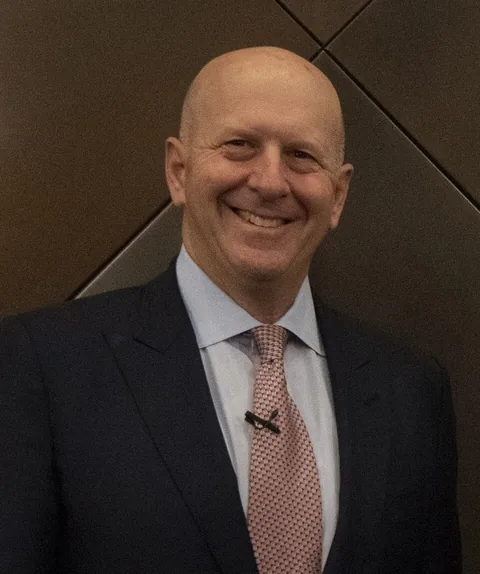
Great to have you.
To come chat with us. No, you’re fine. You’re fine. It looks great.
I like the quarter-zip1Quarter-zip — the pullover with a short neck zip that serves as finance's unofficial uniform, usually with a firm logo. Coogan is ribbing the head of a bank long known for its strict dress code for showing up without a suit. and the...
Would it kill you to put on a suit?
The Offshore2Offshore — apparently an Audemars Piguet Royal Oak Offshore, the sporty line of the Royal Oak; the TBPN hosts often compliment guests' watches. is fantastic.
I mean, for 40-some years I've worn a suit most days. This is like the new... This is like the cowboy boots.
Is it true or is it apocryphal that you're responsible for a little bit of the more casual dress on Wall Street, or at Goldman? Is that true?
Well, I think society is responsible for the fact that the world has gotten more casual. There's been a bunch written about the fact that shortly after I became CEO, I walked into the office one day in New York and I kind of looked around, and I was the only guy in a suit and tie. So I asked, "Do we have a dress code?" And I got this document that was, you know, pages and pages, that had been put together over decades and decades and decades. And I said, "You know, I think we need a clearer policy. I think the policy should be: dress in a way that's appropriate for your day and the clients you're going to see."3The flexible dress code. On March 5, 2019, five months after Solomon became CEO, Goldman sent its 36,000 employees a memo announcing a "firmwide flexible dress code," signed by Solomon, CFO Stephen Scherr and COO John Waldron: dress in a way consistent with clients' expectations. The memo didn't list what was in or out. NBC News
Sure.
And that could be a suit and tie, that could be dressed like this.
So you tore up the 500 pages.
I kind of put it on a shelf. You know, it's now in what we'd call the Goldman Sachs Museum, where it could be, you know, looked at as a historical artifact. But, you know, look, the world's much more casual. I've been at this for like 43 years, and I would say that literally every single morning for the first 35 years, I woke up and the decision was white shirt or blue shirt, you know, red tie or blue tie.
And, you know, now I've actually got to look at my calendar and say, "Who am I meeting with? What's appropriate? Do I have to change in the middle of the day?" Because, you know, I've got a government official, and then I've got some young entrepreneur, and, you know, he's gonna like it better if I'm dressed like this. And so it's much more complicated.
What about the Lululemon IPO? Is that story true?
No, that story is true.
Okay, tell us.
I mean, that story is, we went... It was up in Boston. The company was owned by Advent,4Advent International — the Boston private equity firm that, with Highland Capital Partners, bought nearly half of Lululemon in December 2005 and still held a big stake when banks competed to take the company public. which is a private equity firm. And I can't take credit for the idea. The team... I was asked to join the pitch, and the team said, "We're gonna all put on Lululemon.5The Lululemon IPO. The yoga apparel maker went public in July 2007 at $18 a share, 64% above its original range, with Goldman Sachs and Merrill Lynch as joint bookrunners, so the pitch in the client's gear worked. Solomon was then co-head of Goldman's investment banking division. Renaissance Capital" I mean, head to toe.
Yeah, yeah, yeah.
Head-to-toe Lululemon, we walked in. At the time, I don't know if I was running all the capital markets businesses or investment banking, I don't remember exactly what it was, but, you know, I was a pretty senior guy in the firm, and I walked in, was the most senior guy at the pitch, and the whole team was head to toe in Lululemon gear. And I loved the reaction of the management team and the private equity firm, Advent, at the time, but the reaction I really loved is: after our pitch was done, we walked out of the conference room, and one of the competing firms was standing out there waiting to come in. And their faces... They were in suit and tie, and their faces...
They're like, "Oh, we just lost that."
Is that the craziest hijinks you've pulled to win a deal?
There are a lot of other, you know, gimmicky things that have been done, like deal toys6Deal toys — acrylic keepsakes bankers commission after a deal or IPO closes and hand out to clients and their own team, with the parties' logos, the deal size and date, often shaped like the company's product. Solomon files them alongside the Lululemon outfits as ways to show a client you care.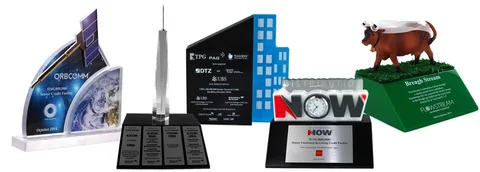 and stuff. But look, when you think about our business, and this is really interesting, because with all the technology that exists in the world, our business is still a business of human connection.
And that's not going to change. The technology tools make us more powerful as connectors, but that human connection is not going to change. And, you know, the way you win business is by earning trust. It's by earning trust. It's by building relationships and earning trust. And so taking the time to do something that shows people that you really care about them, about their business, about what's important to them, you know, that's a great way to start.
Yeah, technology's table stakes. Brand is always in flux and in development. And then the real loyalty comes to the individual people.
People to people, people to people. That's, I mean, the power of Goldman Sachs. And I'm incredibly fortunate to steward this organization. But one of the things that I'm so fortunate about is it's an extraordinary collection of people that are really, you know, highly motivated, highly incented to really do great things. And people build trust with people. No matter what happens with technology in the world, in my humble opinion, that's not going to change.
02Durable revenue and who Goldman serves
About 60% of revenue is now durable, and the savings from AI will go into reaching more wealthy clients and institutions, not into the mass market.
How has the business mix changed? I heard you on CNBC talking about an increasing proportion of Goldman's revenues actually being more durable, less cyclical, less transaction-driven. Can you explain the shape of the business and how it's changed for the last couple of years?
ExplainerHow Goldman Sachs reshaped its revenue
Goldman has historically made its money on deals and trading: fees on IPOs and mergers, bond and equity trading. That revenue swings with the market, and investors pay less for it, so for years Goldman's stock traded at a discount to banks with steadier earnings.
- In October 2022 the bank reorganized into three divisions: Global Banking & Markets (investment banking and trading), Asset & Wealth Management, and Platform Solutions.
- It wound down its push into consumer banking, the online bank Marcus (2016) and the Apple Card: in 2023 it agreed to sell the lender GreenSky, and the Apple Card is moving to JPMorgan.
- What the bank calls "durable" revenue is asset management fees plus income from financing clients: loans and prime brokerage for hedge funds. Its growth is the main argument that Goldman's stock deserves a higher multiple.
Sure. One of our strategic objectives over the last eight years, during this leadership team's tenure, has been to take, you know, some very, very good businesses, but to really think about how we can continue to be really good at some of the things we've done forever that were more transactional, were more trading-oriented, but also build businesses around those activities that have more reliable revenue streams.
What's the flagship example of that?
Well, the flagship example is really: we had a number of different asset and wealth management businesses, but we put them together on a big platform, and we now run what is probably the fifth or sixth largest active asset management platform. We supervise a little over $4 trillion of assets. And so when we started, the collection of all these businesses had about four and a half billion dollars of management fees a year. That number was 3.6 billion in the last quarter. And we're growing it at better than 10% at the moment. So, you know, we've got $15 billion of management fees from our asset and wealth management business.7Goldman's numbers. In the third quarter of 2026, Goldman reported record assets under supervision of $4.1 trillion, and Asset & Wealth Management fees up 22% year over year to a record $3.6 billion. Annualized, that's about $14.4 billion, which Solomon rounds to 15. Family Wealth Report
We also, in our global banking and markets business, we lend a lot more to clients. We finance our clients. We were not really a big lending institution, but lending revenues tend to be more durable. So we've kind of taken the firm to a place where now, depending on how you look at it, approximately 60% of the revenues would be considered more durable revenues. And that's a big increase from where it was eight years ago.
And, you know, we're growing that durable revenue base. We've kind of talked about how in the asset and wealth management business we can grow the durable revenue base by about 8 or 9% a year. We're doing better than that, but that's what we've highlighted publicly. And, you know, we still are a great trader, but you know what? We're building durable businesses around these businesses, with a very, very big franchise.
Does AI, and this idea that you want to keep that human connection in the relationship, lead you to a place where you think you'll be able to serve more clients, go down market? Or is it important for the brand that you stay up market? How do you think the shape of the Goldman client base will change over the next decade?
Well, when you think about the firm, we're really in two businesses. Global banking and markets, which is investment banking and fixed income and equity trading.8Fixed income and equity trading — the FICC (fixed income, currencies and commodities) and Equities desks. With investment banking they make up Global Banking & Markets, the historical "transactional" Goldman whose revenue rises and falls with the markets. That's the thing we've always been known for. I think, you know, but I'm very biased, we have the best franchise in the world in those activities. And then we have our asset and wealth management business. Our wealth management business, and I said this on stage just a few minutes ago, is an ultra-high-net-worth9Ultra-high-net-worth (UHNW) — banking jargon for people worth at least $30 million. Goldman serves individuals directly only at that level, which is why Solomon calls the business institutional. business.
You really think about it, other than the 45,000 ultra-high-net-worth wealth clients, it's an institutional business. We deal with governments, enterprises and institutions, large-scale institutions. I don't see that really changing materially in the course of the next five to 10 years. We do, in our asset management business, have great product manufacturing capabilities. And there are, in other people's wealth channels, people that have interest in those. And so we sell those products through other people's wealth channels into the market. So we have partnerships with big wirehouses10Wirehouses — big brokerages with armies of financial advisors for individual clients: Morgan Stanley, Merrill (Bank of America), Wells Fargo, UBS. They're how Goldman funds reach ordinary investors the bank doesn't serve itself. and broad distributors of wealth products, and more average investors get our products through those channels, but we don't have direct client privity with those clients. I don't see that likely changing. I think we're gonna stick to being an institutional firm for the moment. We're gonna stick to, you know, continuing to serve governments, enterprises, institutions, very wealthy individuals.
Now, the technology allows us to remake processes in the firm to make the firm more efficient. You could just take that margin and say, "Okay, we're running a higher-margin business." Or, because we run a very profitable business, you can take that extra margin and reinvest it in growth and broadening the footprint. Because there are lots of wealthy people that we don't touch, there are lots of institutions and businesses that we don't touch, there are lots of growing, important businesses in this totally tech-evolutionary ecosystem. And so I think we can use a bigger footprint. So I don't think new clients, but I think an expanded footprint is what you'll see over the next five to 10 years.
03Cyber risk: scan and patch everything
After the Microsoft and FAA outages, Solomon expects more bumps and wants government and business to scan and upgrade all the software in the economy together.
I want to get into some of the topics of the week, one of which is cyber. Every single CEO I've talked to over the last month that is running a company significant in whatever category it's in, whether it's, you know, social media, to these inference providers, they all are under attack, and it's a very scary time. What conversations are you having with other CEOs and at the firm around navigating this period of heightened cyber risk?
Yeah. Well, if we were sitting here a year ago, two years ago, three years ago, five years ago, and you asked me what kept me up at night, at any of those times I would have said to you cyber. So this is something that...
Now you're not sleeping.
Well, the reality of it is I'm very worried about this.
And can you remember a time in your career when Microsoft was down for an entire work day?
It's unprecedented, you know, what happened last week,11The Microsoft 365 outage began on Thursday, November 12, 2026: a standalone Teams failure was followed by an Exchange Online failure that took down Outlook, Teams and Copilot worldwide, and service wasn't fully restored until November 14. Microsoft tied it to network changes and reported no sign of an attack. Computerworld but unprecedented things are going to happen. You know, I think we're at a tricky moment. And of course, whenever a lot of things happen at the same time, I'm asking a lot of questions about why.
Of course, everyone wants to go to the darkest place, you know, as to why. So far there's no evidence that the why takes us to the darkest place, but you can't be 100%, you can't be 100% sure. But I think one of the things that's going on, and, you know, Goldman Sachs has benefited from this: this technology and these tools make people that want to do bad things more powerful more quickly.
But what's not getting talked about is they also let the good guys build defenses much more quickly.
So just using the microcosm of Goldman Sachs, we've had access to these models, the most powerful models,12The most powerful models — most likely Anthropic's Claude Mythos. In April 2026 Anthropic opened it only to Project Glasswing partners and about 40 other organizations, because it found thousands of high-severity vulnerabilities, including in every major operating system. On April 13 Solomon confirmed that Goldman was using Mythos and working with Anthropic on cyber risk, which is where his "seven, eight months" comes from. Bloomberg you know, kind of from day one, going back seven, eight months now. We've been running thousands of scans, tens of thousands of scans every single day, seven days a week, 24 hours a day, looking at the vulnerabilities, patching. And this doesn't mean that we still don't have vulnerabilities, because of course every network does, every system does, but I can look at you straight away and say the firm is more secure today than it was seven months ago. Now, that doesn't mean we can't have a problem.
But the tools are giving us the ability to strengthen, strengthen, strengthen. And that's one of the things that's going on now. Everybody's taking advantage of this, and people are scanning and they're patching, and they're scanning and they're patching. And when you do that, you create volatility in your systems if you don't get it exactly right. And I think one of the things that's driving this is people are scanning and patching and scanning and patching at a very, very quick pace, and, you know, new vulnerabilities are turning up. Now, the good news is you notice those and you can then correct them.
But I think we should expect that in this period of time, where people are scanning and patching and trying to make networks more secure, in a period of time when people are putting more capacity for AI on their networks and trying to put AI into their networks, we're going to have bumps like this. And it's concerning, and we should be cautious, but I think you're going to expect more. And what I hope doesn't happen is, I hope we don't have a significant cyber incident, but I wouldn't be surprised if we did have a significant cyber incident that in some way, you know, sapped confidence or slowed down economic activity. I mean, I'm hoping that's not the case. I feel lucky that we haven't had a really big one yet, but you can see just in these incidents, whether it's Microsoft last week or the FAA...13The FAA ground stop. Around 3:30 p.m. ET on Friday, November 13, 2026, the FAA halted departures from every U.S. airport after a communications failure hit all 22 air route traffic control centers. It was the second nationwide ground stop since 9/11; the FAA counted about 12,500 canceled flights, and officials saw no sign of an attack. FAA
The FAA... It's obviously hard to measure the economic impact of, you know, Teams going down for a full work day or people not being able to get where they need to be, but it is significant. The other thing that's interesting is, I'm very curious how you think about working... I'm sure you work with 10,000 individual vendors. How are you thinking about making sure that your software supply chain14Software supply chain — all the outside libraries, services and vendors whose code runs inside a company's systems. Jordi is asking how to protect what the bank can't scan itself: a supply chain attack breaks into a vendor to reach its customers, as in the SolarWinds hack of 2020. is in the right place? Because you guys can only scan, you know, your own sort of internal infrastructure.
These are huge vulnerabilities for businesses everywhere, for us, for businesses everywhere. And, you know, we're worried about it. I would say a couple of things. We all need to change our behavior around how we give access to information with outside vendors, how we think about the walls with outside vendors, what we expect of outside vendors when we connect their software into our networks, people's open source that gets connected. You know, I'd like to believe that as a firm Goldman Sachs is running a very high standard to that, but we're still vulnerable. And, you know, what I'd say is the average company doesn't have the resources or the expertise that a large-scale institution, large-scale financial institution, has.
And so, you know, one of the things that has to happen is we have to create incentives to get this capability and this information downstream into broader-based businesses. And we've really got to think. I think the big idea, the big obvious thing to think about, is how do we get the right resources? And this probably comes in some way from public-private partnership, to really scan and patch all software that's out there in the ecosystem. That's the big idea that I think we, as a society, as an enterprise society, as a government and private sector society, want to accomplish. How do we get, you know, all software scanned and patched and upgraded?
And there's so much legacy tech debt15Legacy tech debt — shortcuts and outdated design inherited from old systems nobody dares to rewrite; they're exactly where patches are hardest to apply. that that's going to be hard to do. It's going to take time. It's going to be very expensive. But in the overall scheme of things, it's a doable thing.
And we should be really starting to talk about... I'm talking to CEOs about it, I'm talking to government officials. People are talking about this. How do we advance a process of really upgrading and scanning and patching all the software infrastructure that our economy is so vitally connected to? And if you can imagine that we can do that, you can imagine a world some number of years in the future where we have more secure systems.
And cyber is never going to go away as an issue, but where cyber is less of an issue. And so I think that things are going to go wrong. There are going to be real problems, but I can certainly imagine a world five to seven years from now that's a lot more stable and more durable in this context.
Yeah.
04IPOs, private markets without Jensen, and hedge funds
Goldman's top brass work IPO clients personally, and Solomon warns against guessing how private markets will fare without Huang.
Go for it. IPOs: it's been a blockbuster year. It looks like it will continue to be. What is your role in a blockbuster IPO? Are you hands-off? Do you let the bankers handle it?
Me personally?
You personally. I want to know, if I'm coming to you and I say I want Goldman Sachs to take my company public, do I get you on the conference call? Do you just dress up, or is there anything more? I don't want to be heavy-handed.
No, no, no, no. First of all, let's just start with the fact... My personal approach and personal philosophy, and by the way, it's not just me, it's also John Waldron,16John Waldron — president and COO of Goldman Sachs, the bank's number two. Dan Dees is co-head of Global Banking & Markets; Kim Posnett, Matt McClure and Anthony Gutman lead investment banking. who's the president of the firm, of course, and Dan Dees, who's one of the two co-heads of global banking and markets. And then you've got the banking leadership: Kim Posnett, Matt McClure, Anthony Gutman, very, very senior people in the firm. We are convinced that when CEOs are doing something that is so strategically important to them, like taking their company public, they want to know, talk to and have access to the senior leadership of the firm.
And so we figure out as a collective team how to give, you know, every company access to the senior leadership of the firm. I mean, there isn't a week that goes by that I don't make tens of phone calls to CEOs to check in with them. "How's our team doing? Hey, you know, we want to support you. Is there more that we can do?" We are constantly giving companies access to the senior leadership of the firm.
And I think that gives companies, the management of companies that are taking on something like a public offering, confidence. And, you know, deeply, culturally, we believe our job in this process, and the senior leadership tries to lead by example, is to give the best advice, to always think about the company's long-term interest and give the best advice and be balanced and thoughtful. And, you know, we try very hard to do that. And so hopefully the involvement of the senior leadership helps us secure the roles that we want. We want to lead all these big IPOs for important companies. And, you know, touch wood, we've been pretty lucky, and the team's doing a reasonable job at the moment.
But I think, you know, it's a team sport. It's gang tackling, it's building trust. It's the things we were talking about before, and the senior leadership, including myself, play an important role in that process.
Yeah. What's your outlook on the private markets in '27? You know, losing Jensen17Jensen Huang — Nvidia's co-founder, CEO since 1993. On November 12, 2026, he resigned as CEO and director after the scandal over his affair with Alice Huang, formerly of Megaspeed. Over the past year Nvidia had invested in dozens of AI companies, from OpenAI and xAI to neoclouds; those are the checks Jordi means. in the capacity that he's acted over the last year. We're looking at a lot of companies that are now in the tens of billions of dollars in the private markets. They are far, far, far from being in a place where they could actually be a public company in many cases, whether that's, you know, negative margins, revenue scale. You know, Jensen was investing, for good reasons, often way ahead of where these companies were.
And in some way he was, I wouldn't call him the investor of last resort,18Investor of last resort — a play on "lender of last resort," the central bank that rescues banks when there's no other money to be had. but he was the only one willing to show up and throw, you know, a billion, two billion down on the table to fund some of these companies. And so I see a lot of turbulence for the private markets in '27, despite the fact that I think the underlying technology is going to continue to progress dramatically.
Yeah. If there's turbulence... First of all, you know, you're talking about a narrow segment of the private markets, because you're kind of talking about the tech AI infrastructure build-out and the private companies around that. I mean, the broad private capital markets are growing, and I would just tell you that I think that we're still in the early innings of broad growth in private capital formation, broadly. With respect to where you're focused, around the AI build and these companies that are part of that ecosystem, there's no question that Jensen played a very powerful role in supporting and investing in lots of interesting startup companies.
The one thing I'd just say is, you don't know how Colette19Colette Kress — Nvidia's CFO since 2013, named interim CEO by the board on November 12, 2026. During her tenure Nvidia's annual revenue grew from $4.1 billion to $215.9 billion. is going to approach that. I mean, everybody's making an assumption. I just want to say Colette is a very competent executive. I think in most things she and Jensen, from what I could see, walked very hand in hand. It's hard to read. There's reporting around their disagreements, but clearly they agreed on things more than they disagreed, because they did a bunch of deals, right? I would be very cautious on making any assumptions as to what happens next without having the facts.
I mean, I think, you know, Colette is a new CEO. She's a very, very competent executive. She is owed the opportunity and the timeframe to communicate how she's gonna handle some of these things, and I'm sure she's going to do some things differently. And that's fine. I would just say this whole ecosystem is much bigger than one guy, one company. And there's a lot of capital out there in the world, and the best companies will continue to get funded.
And, you know, whether the pace of that growth slows a little... I think the market's telling you that the expectation for the growth and the expectation for the capital formation is slower at the moment. That might be a healthy thing.
That might be a healthy thing.
Do you think more traditional hedge funds are going to be forced into playing these sort of crossover20Crossover investor — a fund that invests in both public and private companies, often in late rounds before an IPO: Tiger Global, Coatue, D1, Altimeter. Jordi's point is that 2026's winners were the funds that could see private AI companies from the inside. roles? I think when I look back at this year, a lot of the investors that knocked it out of the park, that were ahead of both these rises and sell-offs, were able to be in that position because they had so much exposure to these private companies, and they got to see the future a little bit. And there's this sort of disconnect between private companies, which are updating their own cap table21Cap table — the record of who owns how much of a company. A private company gets a new price only at its next round, in effect choosing when to mark itself, while the market reprices a public one every day. on their performance, versus what the rest of the world is actually seeing.
Look, there's been a lot of very positive beta22Beta — the return that comes from the market as a whole, as opposed to alpha, the manager's own skill. A lot of positive beta means money was made simply from stocks rising, which hid who really had skill. just being invested in public equities over the last X number of years. You know, my experience would be, watching a whole variety of hedge funds or asset managers that manage small pools of capital: people that develop really deep expertise in deploying capital, whether it's public securities, private securities, venture, startup tech, growth, they do fine. They have good cycles and bad cycles, but they do fine. Where people get into trouble is when they're kind of chasing the me-too and they haven't developed the real core investing competency.
And, you know, a lot of those people tend to, as the cycles run, get a little more swept out with the tide. And so, if a hedge fund platform was asking me how to think about all this, I'd always say: decide where you want to play, what the capabilities are that you want to be really good at. But to really be a successful investor and have better relative performance, you have to have great capabilities.
Information arbitrage.
No, you've got to have great capabilities in everything you play in to do it on a sustained basis. By the way, you can do information arbitrage in one year and get it right, but to do it on a sustained basis, over years and decades, you have to be really, really good where you're choosing to deploy capital.
05Reindustrialization and America's three advantages
Three things are pulling the U.S. away from other economies, and to Solomon AI is not "unprecedented," just technology that makes people and brands more powerful.
How are you thinking about reindustrialization and the role Goldman plays in that? We talk to startups every day that are trying to build new manufacturing, drone motor factories, defense tech, energy, and it feels like there's a huge opportunity for energy. Knock-on effects beyond AI and data centers, obviously: cheap energy would be great for everyone. What's the role that Goldman plays?
Well, we finance a lot of these companies. We advise them, we finance them, we bring them capital. As an asset manager, we invest in a lot of these companies. And so, you know, we sit in a very powerful place in the ecosystem of tech innovation and business innovation in the United States, because we serve as an advisor, we serve as a capital former, distributor, and also investor. And so, you know, we see a lot, and we participate in a lot of that. You know, your comment about reindustrialization, I've loved the narrative around... I think there are a few things that really differentiate the United States.
The United States economy is the premier economy in the world, not by a little, but by a lot. There are three things I'd point to that I think really contribute to that. There are other things, but here are three things I'd point to. You know, the first is our tech innovation economy and our spirit of entrepreneurship and our risk-taking culture in the United States, kind of second to none.
Yeah. There's no tall poppy syndrome.23Tall poppy syndrome — the habit of resenting and cutting down people who rise above others, a phrase common in Australia, New Zealand and Britain. Coogan's point: America doesn't punish success.
It's second to none. And, you know, that is creating incredible companies, incredible businesses. And, you know, reindustrialization in the United States should be centered around technology innovation and getting those critical industries here. By the way, it can be on drug discovery, which also relies on technology too, but those critical industries more here again, I think, is a great growth vector for the U.S. economy. Second, we have the best capital markets and financial system in the world, not by a little, by a lot, by a lot. And, you know, that matters.
You know, the availability of capital, the fact that people want to take risk, the breadth of our capital markets, the strength of our banking system, that matters a lot. And I think that's something that really differentiates the U.S. And then third, lots of smart people around the world want to come here. And we absolutely should have firm borders, but we also have to have great policies that get smart, productive people that want to be here and want to participate in our way of life and innovate. We need to find ways to get those people into the United States to participate with Americans. And we also have to work to get more Americans involved in driving this economic engine.
And when you look at it relative to other economic engines in the world, those three things are distancing us. Go back and look at a comparison between other economies through the 20th century. The U.S. was bigger. They were all growing, but they grew in a pretty linear way. And the last 15 to 20 years, the United States has meaningfully accelerated in a way that people didn't expect. These three things are contributing to that.
And we've got to make sure we continue to invest in them, don't take those things for granted and get them right.
Totally. Do you view AI as a normal technology24"AI as Normal Technology" — an April 2025 essay by Princeton researchers Arvind Narayanan and Sayash Kapoor arguing that AI will reshape the economy gradually, like electricity or the internet, rather than in a sudden leap to superintelligence. Jordi's claim is that Huang ran Nvidia this way while publicly promising a revolution. Knight First Amendment Institute or something greater? You know, I would say, our view on Jensen the last couple of years is that despite being, you know, the number one promoter of the potential of AI, the way that he operated was very much as though AI was a normal technology, something like the internet, and it would impact the economy, but it was something that, you know, he wanted to distribute as widely as possible.
Yeah, if you put it in that lens, I actually agree with his thesis that, like the internet, you want to distribute it as widely as possible so people can participate. You know, I don't like words like "normal." You know, people say to me, "This is unprecedented," and I say, "Nah, probably not unprecedented." You know, it's technology.
Again, go back to where we started. People matter, relationships matter, judgment matters, brands matter. This technology can make all those things more powerful.
"We're building an AI-native Goldman Sachs." It's like, great, you're telling me that you don't understand Goldman Sachs.
All those things matter, and they're still gonna matter. So is this going faster than certain other technological revolutions? Yeah, I think it's going a little bit faster, but you're really not gonna know what normal is until we get 10, 20, 30 years out. I just said on stage here: one of the big... Big value creation around all this, I don't think is going to be in the infrastructure build of the large language models or the hyperscalers.25Hyperscalers — the largest cloud providers, Amazon (AWS), Microsoft (Azure), Google, Meta and Oracle, which are spending hundreds of billions on AI infrastructure, where Solomon doesn't expect most of the value to land. It's going to be in the application layer that's built over the next couple of decades. So many new companies, ideas, platforms that we can't even imagine. Think about health, wellness, food, supply chains.
I mean, it's an enormous, enormous opportunity. And that's super exciting, but that's going to be our normal. And I think when we get there, I'm still very confident: people, relationships, judgment, hard work, excellence, showing up.
You know, those things are still going to matter.
06Markets moved by X, and Huang's statement
Solomon thinks about where a stock will be in years, not days, and won't weigh in on Huang's return without the facts.
How do you think about X, the social platform? A lot of the reason, I think, this event26TomorrowX — the summit at Austin's Moody Center that Ron Biscardi's iConnections built as a banking-style conference for retail investors and writers from X and Substack; TBPN broadcast from it on November 17–18, 2026. is happening is because there's a handful of people in the audience where, when they put out a note on something, even though they might have like an animal as their profile picture and be anonymous, it ends up moving the market. How do you think firms like yours have had to adjust to this kind of new media environment, where anybody at any time, if they're compelling enough, can put out things that actually drive the markets?
Yeah. Well, first of all, I post on X occasionally. You know, when the rocket got caught27The Starship catch. On November 14, 2026, on Starship's 15th test flight, the launch tower's mechanical arms caught the Starship upper stage itself for the first time, after nearly a day in flight; the Super Heavy booster on the same flight was lost in the Gulf of Mexico. EarthSky the other day, I reposted Elon's post, and I was like, "Wow, this is super cool. Like, this is unbelievable. I've got to get down there and see this live." I think it's a very powerful platform. You know, when you talk about moving the market, I'd be cautious.
I'm not a guy that lives in the moment. I'm a guy that tends to think about things over time.
And so I really don't care that someone says something and a stock goes up 2% or down 2%. What I care about is where the stock is going to be two years from now, or five years from now, or 10 years. And it's hard for one individual to have any impact. One individual might say something that in the short run gets people pushing the stock around.
Well, the interesting thing is you had, what was it, Culper Research,28Culper Research — a New York short seller that publishes investigations into companies it bets against. On May 13, 2026, it put out "NVIDIA: The China Problem," naming Megaspeed as Nvidia's biggest Southeast Asian buyer, secretly financed by Alibaba, and flagging Jensen Huang's closeness to Alice Huang. The report got little traction at the time; Nvidia and Megaspeed reject its findings. Fortune who put out the short report on Nvidia six months ago. No one really paid attention, didn't have an impact.
Profiled in the Wall Street Journal. Speaking of the Wall Street Journal, Jensen Huang just put out a statement. It's breaking news. I'd love your reaction. He says, "If the board decides that my return is in the best interest of shareholders, employees, company and America, I would be honored to return as CEO."29Huang's statement was posted on X on November 17, 2026. He wrote that since his departure he'd seen an outpouring of calls from employees, investors, partners and customers to return, and that he'd be honored "to answer these calls" and return if the board decided it was in the best interest of shareholders, employees, the company and America; Coogan reads a shortened version. The same day, board chair Harvey Jones said on the earnings call that the board had unanimously accepted his resignation and did not intend to reinstate him. NPR What do you think about Jensen's latest statement?
Well, you just read the statement to me, and I'll say the same thing that I said earlier on stage. You know, I saw Gavin and Brad's letter30Gavin and Brad's letter. On November 13, 2026, Brad Gerstner (Altimeter Capital) and Gavin Baker (Atreides Management), whose funds held about $2.1 billion of Nvidia stock, published a letter urging the board to run a "slow, measured and deliberate" CEO search that leaves open Huang's return, while acknowledging the decision is the board's. Let’s Data Science saying the board should go slowly and thoughtfully. There are a lot of things. I certainly don't know all the facts around all this. I think it's important that the board goes slowly and thoughtfully and makes sure it understands all the facts, to make the best decision for this company and, you know, for shareholders.
And, you know, at the moment there's not enough information out for me to respond to any of this.
Yeah, I completely agree. It's been moving extremely, extremely quickly. Well, thank you so much for coming on the show.
Absolutely. It's my pleasure, guys. Nice to visit with you.
Have a great rest…
Thank you very much. Thank you. Appreciate it. Thanks.


