

Training Data
Chapters
Brown came to poker for a perfect strategy nobody knows, and in a tournament like this one he would bet on exploiting opponents rather than on GTO.
Read the chapter- Choosing a PhD, Brown found a professor looking for people to build an AI that plays poker; he had loved the game since school.
- For a $10,000 prize he and an MIT acquaintance won MIT Pokerbots in 2014 and 2015, then stopped because they were beating people who barely knew how to build bots.
- His bots learned through self-play with CFR and converged to GTO, but training takes many hours, so in one hour you get only a rough GTO bot: a small abstraction and 30 minutes of self-play.
- Because everyone plays everyone here instead of knockout rounds, Brown would pick an approach that exploits opponents’ weaknesses.
- Lin jokes that the prize pool is only $100,000, and Brown wants to see how GPT-6 Astra, which he says can already make money in online poker, would play at the table.
Game theory assumes rational players, so a superhuman Diplomacy AI, Brown says, comes only from modeling real people.
Read the chapter- Poker methods transferred poorly to chess and Go, so in 2019, when GPT-2 came out, his team picked the hardest game for AI: Diplomacy, with negotiation, alliances and cooperation in natural language.
- They were ready to spend about five years on it, since people had worked on poker for decades.
- In the ultimatum game the game-theory optimal offer to Bob is a penny, but a real person refuses it, and game-theoretic Diplomacy bots behaved exactly that way.
- Encoding vengeance and fairness by hand is too delicate, so the team trained models to imitate people as closely as possible, trained the AI against those imitations, and then let it play real humans.
Concluding in 2022 that game theory was not the path to general intelligence, Brown switched fields and worked on o1, on the premise that AI must think before it acts.
Read the chapter- Lin recalls the book on thinking fast and slow and the consistent bugs in the human brain, and asks how reasoning accounts for irrationality.
- Brown calls early 2022 a crisis of faith: his whole career was computational game theory, but the evidence pointed to training on human data and scaling up reasoning.
- Many then believed a bigger pre-trained model would be enough, while Brown estimated Go would need about six orders of magnitude more scale; OpenAI already had a team working on general reasoning.
- In poker, chess, Go and Diplomacy, beating the best humans required careful thought before each move, whereas poker bots in 2012–2013 acted instantly.
- “Think step by step” was crude, but reinforcement learning made chain of thought far better, and the longer the model thought the better it answered: a way to scale test-time compute in any domain.
The coming years, Brown says, are the centaur era, when a human with AI beats either alone, and the path to the top in any game takes the same diligence.
Read the chapter- Lin asks what AI-charged students should learn while OpenAI solves one math problem after another.
- Neither a bot written by AI from one prompt nor a human with no LLM will win this tournament in an hour; the winner works hand in hand with AI, and that will hold in most professions, including AI research.
- Some of the pros who played Libratus were in the top Counter-Strike leagues as kids.
- The common thread of poker, trading and AI research, Brown says, is going from knowing almost nothing about a field to expertise through diligent practice and preparation.
Models already speed up work on a poker bot many times over but cannot build one alone: they lack long-term planning and the ability to notice they are going the wrong way.
Read the chapter- Brown asks every new model to make a poker bot; with GPT-5.5 and 5.6 he first felt a 10–20x speedup, and Astra writes an excellent river solver from a single prompt but not a full bot.
- Implementing CFR, models spend hours perfecting numerics even though the algorithm is very robust to small errors.
- Lin calls model intelligence jagged and advises giving models what they can do and breaking hard problems into bite-sized pieces.
- Asked about Transformers, JEPA and world models, Brown says chain of thought with reinforcement learning removes the limits, though it is not the only solution and probably not the best: humans sometimes think in images.
Brown sees recursive self-improvement as a continuation of the whole history of technology and, since the next year or two will be steep, advises promising students to drop out and join the labs.
Read the chapter- Answering Jasper from Hyperbolic, Brown says the newest models already iterate fairly well on poker bots, run experiments and notice what could be better.
- Human technological progress, in his view, is one giant RSI loop: telescopes, punch cards, compilers, with people each time taking on what machines cannot yet do.
- Back in 2022–2023 LLMs judged the quality of pre-training data for the next models, which he also counts as a form of RSI.
- Progress will hit compute limits and a long tail of tasks that need humans, but will still go much faster, and in the last six months, he says, it has even accelerated.
- Brown has hired people who dropped out before their senior year, and they do exceptionally well.
Brown sees no game left unsolved for AI and puts an AI agent’s chance of winning the World Series of Poker within five years at 20%.
Read the chapter- If a team, or even one person, spends a few months on it, AI can play any game at a superhuman level, including Civilization and Zelda: The Wind Waker.
- The next challenge is testing general-purpose LLMs on games, since they cannot yet play real-time strategy or Zelda at a superhuman level.
- The best poker player he has watched, Brown says, is Doug Polk, though he thinks Polk is probably no longer the best.
- A GTO bot would not win because of variance, and even an AI that reads bluffs from faces at a superhuman level, he says, would win with about 20% probability.
Quotes
On why take up poker
“I thought it was always really fascinating that there was this perfect strategy to poker that nobody and nobody knew what it was. But if you could find it, you could just make unlimited money.”
Noam BrownRead from 01:04On the weakness of game theory
“I think there is intuition that you can take away from game theory, but the problem with game theory is that it assumes, this is the central premise of game theory that it assumes that all the other players are rational and that it is common knowledge that all players are rational and people are not actually rational.”
Noam BrownRead from 07:12On the 2022 argument about reasoning
“I would go to some places and I would say, like, look, reasoning is going to be essential ingredient. And people would tell me, like, well, actually we should just pre-train a bigger model and that'll solve all the problems.”
Noam BrownRead from 11:49On the main lesson of game AIs
“I think the major takeaway from my work on poker, diplomacy, and then also looking back at games like backgammon and chess was that you needed these AIs to think before acting.”
Noam BrownRead from 13:10On where models get stuck
“the models, if you ask them to implement CFR, sometimes they will get really focused on optimizing the numerics of CFR so that it’s perfect.”
Noam BrownRead from 20:11On progress as self-improvement
“If you think about all of human technological progress, it really is just one giant RSI loop where we use technology to advance our ability to do technology.”
Noam BrownRead from 24:13On advice to students
“perhaps my most controversial take is that if somebody is a promising student, the best thing to do is actually to drop out and join the labs now.”
Noam BrownRead from 26:46
Summary
At the No Limit poker-bot finals, Noam Brown, creator of the Libratus poker bot and now a researcher at OpenAI, explains why his work on Diplomacy convinced him that game theory, with its rational players, does not lead to general intelligence: models trained on human data win. That took him to OpenAI and o1, and he sums up the lesson of every game as AI has to think before it acts. He says we are in the centaur era: models cannot yet build a strong poker bot alone, but progress is so fast that he tells promising students to drop out and join the labs.
Advice
If you build a bot for a tournament where everyone plays everyone rather than knockout rounds, bet on finding and exploiting opponents’ weaknesses, not on an equilibrium strategy.
Learn to work hand in hand with AI: neither a model on a single prompt nor a human without one matches a human plus AI, and this skill is worth proving in practice.
Train the one universal skill of going from knowing almost nothing about a field to expertise through diligent work, practice and preparation: it matters in poker, trading and AI research alike.
Work out what a model can and cannot do: give it what it is good at and break hard problems into smaller pieces it can solve.
Promising students should consider dropping out and joining AI labs right now: progress over the next year or two will be very fast, and sitting on the sidelines is not a great idea.
Mentioned
- Tuomas Sandholm00:35Brown never names him: the professor who was looking for people to build a poker-playing AI and became his PhD advisor.
- MIT Pokerbots01:39Brown calls it the precursor of this tournament: for a $10,000 prize he and an MIT acquaintance won it in 2014 and 2015.
- No Limit02:48the tournament whose finals the talk was recorded at: Brown sketches how he would build a bot in an hour, and Lin mentions the $100,000 prize pool.
 GPT-6 Astra04:07Brown wants to see it play at the tournament: he says it can already make money in online poker and writes an excellent river solver, but cannot yet build a full bot alone.
Show 19 more mentionsShow fewer mentions
- GPT-205:41its release in 2019, Brown says, made rapid progress in language models look likely, so a Go-and-poker AI seemed too unambitious to his team.
- Diplomacy05:41Brown picked it as the hardest game for AI, with negotiation and alliances, and it is where he concluded the game-theory approach with rational players does not work.
- Thinking, Fast and Slow09:39Lin recalls this “book by two behavioral economists” to ask how model reasoning accounts for human irrationality.
 Daniel Kahneman09:48Lin paraphrases his point about consistent bugs in the human brain that lead to imperfect decisions.
- OpenAI11:04Brown joined in 2022 to work on general reasoning and only then learned a team there was already on it.
- GPT-411:49Brown’s example from the 2022 arguments: the model could not play Go, chess or poker, and many thought a few more orders of magnitude of pre-training would fix it.
- OpenAI o112:25the model Brown worked on at OpenAI after betting on reasoning over more pre-training.
- Libratus17:14Brown recalls the Libratus match against poker pros, some of whom had played in Counter-Strike’s top leagues as kids.
- Counter-Strike17:14Brown explains people excelling at both Counter-Strike and poker by a universal ability to become the best through diligence.
- GPT-5.518:54with this model and GPT-5.6 Brown first felt AI speeding up his poker-bot work 10–20x.
- GPT-5.618:54Brown names it together with GPT-5.5: models of this generation sped up his work but could not build the bot alone.
 Andrej Karpathy20:59coined “jagged intelligence,” the phrase Lin repeats when advising people to give models what they can do and break hard problems into pieces.
- Joint Embedding Predictive Architecture21:58an audience member asks whether non-generative models like JEPA would remove the limits of LLMs; Brown says chain of thought with RL is enough, though other paths are worth exploring.
 Yann LeCun21:58author of JEPA, which the questioner offers as a way past the limits of Transformers; he is not named in the talk.
- Hyperbolic23:42the company of audience member Jasper, who asks Brown how soon RSI will happen and whether it could make the best poker player.
- Sid Meier's Civilization28:09after Diplomacy Brown was asked to teach AI to play Civilization; he says such an AI could be built now.
- The Legend of Zelda28:09Brown names The Wind Waker among games he was pitched, and says general-purpose LLMs still do not play Zelda at a superhuman level.
- Doug Polk29:18Brown names him the best poker player he has watched, while admitting Polk is probably no longer the best.
- World Series of Poker29:28Lin asks whether an AI agent would win within five years; because of the game’s variance Brown gives it 20%.
Transcript
01Poker, MIT Pokerbots and a bot in an hour
Brown came to poker for a perfect strategy nobody knows, and in a tournament like this one he would bet on exploiting opponents rather than on GTO.
Please join me in a round of applause for Noam and Alfred.
Hey Noam, thank you for coming.
It's been a rainy day and this is actually all because of you, because you started studying poker for a while. You and I talked a little bit about your research before you went to OpenAI. You went from studying poker to studying game theory and diplomacy1Diplomacy is a 1959 board game by Allan Calhamer: seven great powers divide Europe on the eve of World War I, and nearly everything is decided by negotiation between moves, with alliances made and broken by word alone. Brown’s team at Meta built the AI Cicero for it: in 2022 it played anonymously in an online league on webDiplomacy.net and ranked in the top 10% of players who played more than one game. Meta AI to now reasoning. Like what tell us about a little bit about your path. Why did you decide to study poker of all things?
Yeah, so first of all, it's great to be here. It's really exciting to see all these people working, like able to do so much in an hour. I think it's really incredible. My journey, I started, I finished undergrad and wasn't really sure what I wanted to do, and I figured I wanted to do research and I wasn't really sure in what. And when I was looking at grad schools, there was this professor2This is Tuomas Sandholm, a professor at Carnegie Mellon University and Brown’s PhD advisor. Together they built the poker bots Libratus (2017) and Pluribus (2019). Wikipedia that was looking for people to work on AI to play poker. And I thought, this is great.
I have a lot of interest in game theory. I have a lot of interest in computer science, economics. And I had played poker a lot in high school and college, and I loved the game. And I thought it was always really fascinating that there was this perfect strategy to poker that nobody and nobody knew what it was. But if you could find it, you could just make unlimited money. So I started working on that basically as soon as I started grad school in 2012 and worked on it continuously through my whole PhD.
And it's actually pretty unusual to work on something.
Money during that time too?
I never used it to play online poker, but there is a fun fact. There was the precursor to this, I guess, is the MIT Pokerbots competition, which ran for several years. And as a poor grad student, I wanted to enter this competition because there was $10,000 in prize money. And I wasn't at MIT. So I got one of my MIT friends to collaborate with me. And we submitted the poker bot.
We won two years in a row, 2014 and 2015. And after that I kind of felt bad about, you know, beating up all these people that don't really know how to make poker bots, so I stopped doing it after that.
Did you so if you had 60 minutes to go build a pokerbot today, given all that you know, how would you start?
It's a great question. And I'm actually curious to talk to the contestants in here what strategies they took. The approaches that we took were very GTO-based. And so we would have the agents running, but we basically have the model training, playing, do it through self-play using CFR.3CFR (counterfactual regret minimization) is an algorithm proposed in 2007 by researchers at the University of Alberta: the bot plays itself an enormous number of hands, tallies after each how much it missed out by not choosing another action, and then picks the actions it “regrets” not taking more often. The bot’s average strategy converges to GTO (game theory optimal), a Nash equilibrium, which in a two-player game cannot be beaten on average. Paper Later on it turned into these more neural net-based self-play approaches, but everything was focused on self-play to converge to GTO. And the problem there is that it takes a long time to train.
The coding part you can do without modern LLMs, I think you could make the code to run that in an hour, but the training process itself could take many hours. I think you could make a pretty low fidelity GTO bot in an hour. I think if you did K-Means clustering to reduce the abstraction4Abstraction is a simplified copy of the game the bot trains on: hands and situations of similar strength are merged into one “bucket,” and one shared strategy is computed per bucket. K-means clustering here groups hands by how often they win against the opponent’s possible cards: fewer buckets mean faster training and coarser play. size to like a pretty small size and then did self-play for like let's say 30 minutes, you could actually probably get a half decent poker bot. That said, the format, because it's multiplayer and because you're not doing like an instant runoff kind of tournament where you're always going to like eliminate the weakest competitors, but you're actually playing against all the competitors, I could see an exploitation-based approach actually being the better one for this kind of tournament structure. So I think in this setup, I would probably go for an exploitation based approach and try to find the you know, try to observe the weaknesses of the opponents and then exploit that, especially in a multi-handed, multiplayer situation.
You're gonna have to submit your own code next year. We're gonna have to have you compete. But you can't win.
So I think you make more you make enough at OpenAI, hopefully.
Because the prize money is only $100,000. Hopefully they pay you a little bit more than that.
The other thing I'd be curious to see is how well the LLMs do playing in this tournament. So not just using it to make a poker bot, but if you play the poker bots against, let's say, GPT-6 Astra, how Astra would do. Because we've been tracking the performance of, like I've been tracking the performance of the, of these different general purpose LLMs over time. And with Astra, like, as reasoning models have developed, they've actually gotten quite good. And Astra, I would say, is actually like able to make money playing online poker at this point.
02Why game theory lost at Diplomacy
Game theory assumes rational players, so a superhuman Diplomacy AI, Brown says, comes only from modeling real people.
Yeah, so maybe back up a step because you obviously went from poker to diplomacy to reasoning and now these LLMs can do a lot more than just play poker and do it extremely well. Take us through your journey of like how you like let took your learnings from poker to diplomacy, game theory around diplomacy to then into reasoning. I think that's a really interesting path.
Yeah, the original motivation for working on poker was that there had been a lot of progress on Go and on Go and chess. These perfect information games. And the problem is that if you only have a technique that works on a very narrow domain, then it's actually not that useful, right? Because you want something that's general purpose. And so the motivation for working on poker was that we can figure out new things about what techniques actually work on these in these other domains and eventually make this more general purpose ai that can for example play both Go and poker. And after we made the poker bots I think, we did actually learn quite a bit, but the truth is that they weren't that good for chess or go.
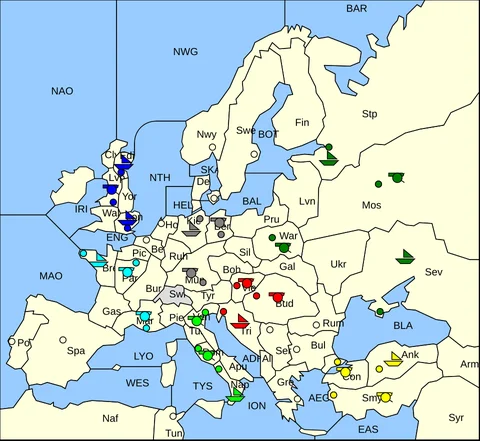
And so I wanted to like try something more ambitious, something that would expand the scope of games that these techniques would be able to play. And at the time, it was around 2019, GPT-2 had come out, and it started to look like there would be rapid progress in language models. And I thought like, I honestly, like, the original thing that I was discussing with my teammates was like we want we want to make an AI that could play both Go and poker but considering how rapid progress in AI was in 2019 we thought that wouldn't be ambitious enough and so we wanted to target the game that we thought would be the hardest to make an AI for, which we felt was diplomacy, because it is a natural language game that involves negotiations with other players, because it's not just purely adversarial, it's also cooperative, you have to form alliances.
In 2019, it was unthinkable that you could have an AI play this game well. And we thought like that's the perfect thing to aim for. Poker took decades for people to work on. If we have to spend like five years making an AI that can finally play diplomacy, that's great. So we took it on and we learned a lot along the way, and one of the things that I took away is that actually the game theory approach doesn't actually work that well in diplomacy.
I I originally came in say more about that because I thought that game theory was developed to actually be a much better negotiator in a repeat game and especially in diplomacy.
I think there is intuition that you can take away from game theory, but the problem with game theory is that it assumes, this is the central premise of game theory that it assumes that all the other players are rational and that it is common knowledge that all players are rational and people are not actually rational and if you come in with this assumption and you make it a central pillar that everybody's rational then you're going to do, you're going to make mistakes. And so I think like a good example is, are you familiar with the ultimatum game?
Well, you should explain.
Yeah. So it's this idea that there's two players, Alice and Bob. Alice has $100 and can offer Bob anywhere between zero and $100. And Bob can either accept or reject. And if Bob rejects, they both get zero. If Bob accepts, then they split the money that way.
So if Alice were to offer Bob $10 and Bob accepts, then Alice gets 90, Bob gets 10. And the game theory optimal approach for this game is to just offer Bob like a penny.
Yeah. Some small amount.
Yeah, some small amount, yeah. And if you and you know, like this makes sense. You, you know, Bob has a choice between making a penny or making zero, like the penny's worth more. But I mean, you can imagine what would happen if you actually tried to offer somebody a penny in this game. Like, of course they would say no.5That is what happens in experiments run since 1982 (first by Werner Güth and colleagues): people typically offer about 40% of the sum, and offers below 30% are often rejected even though the rejecters lose money too. Wikipedia So what we found is that our poker, that our diplomacy bots, when we took this very game theoretic approach, would start doing these kinds of behaviors.
And there's like this temptation to say, oh, we can try to find, we can try to encode some semblance, some like a notion of vengeance or fairness into the bots. And when you go down this rabbit hole, eventually what we realized is that actually it's too nuanced. And the real way to make a superhuman diplomacy AI is to train on human data, to just understand people to such an you know to just yeah to not take a game theoretic approach to not assume rationality but to just assume that people are going to behave like people understand what that means by training on a lot of human data and then determine what is my best course of action given the behaviors of everybody else.
And so do you end up with a model of human irrationality?
That's the idea, that you end up with a model of human irrationality. So we train these models that their purpose is to imitate people as closely as possible. And then we train the AI with these imitation humans and do a lot of, do a lot of training. And then we can deploy that in the real world with actual humans. And that's what does best.
03A crisis of faith and a bet on reasoning
Concluding in 2022 that game theory was not the path to general intelligence, Brown switched fields and worked on o1, on the premise that AI must think before it acts.
There's a book by two behavioral economists6Fact-checkNot quite: Daniel Kahneman wrote Thinking, Fast and Slow (2011) alone. But it largely retells research he did for more than twenty years with Amos Tversky (who died in 1996). Both were psychologists, though their work became the foundation of behavioral economics, and in 2002 Kahneman received the Nobel Memorial Prize in Economics for it. Wikipedia about thinking fast and slow.
And a lot of that has to do with Kahneman just explains like there's kind of like consistent bugs in our brains.
And we sort of have these solutions that are imperfect. And you can explain why it happens from behavioral economics point of view, but it isn't the rational reasoned approach. How have you sort of incorporated that into like reasoning and doing research and reasoning at OpenAI?
Yeah, so after the diplomacy results, I had an interesting choice in my career at that point, because this was around 2022. You know, I think around early 2022 it was becoming clear that the game theory approach, it was not working in diplomacy. And actually the right approach was this kind of like more modeling of human behavior. And this was kind of like a crisis of faith moment for me because my entire career up until that point had been about game theory, right? My area was computational game theory, my expertise was computational game theory. And I had to wrestle with the fact that actually that was not the path to general intelligence, that actually, if you look at the evidence, it was this training on a lot of human data, modeling people really well, and then teaching the model to interact with that environment.
And then also the scaling up of reasoning thing. And so I had to choose between like, okay, well, do I stick with computational game theory despite me thinking that this is not the most important direction, the most promising path to general intelligence? Or do I pivot and do I work on what I think is actually the most valuable thing, despite it not being my, you know, what I'm an expert at, which is general purpose reasoning in RL. And I ultimately decided to go the path of what I felt was most impactful, which was actually just pivot and work on this general reasoning direction. And so this led me to join OpenAI. I looked at a lot of different places and I told them like what I want to work on, these LLMs, they're really cool, they're really general, but they can't play Go.
They can't play poker, why not? and at the time it was a very it's hard to put yourself in like 2022. I guess you know maybe people remember what it was like back then but people were extremely bullish on just scaling up pre-training. And I would go to some places and I would say, like, look, reasoning is going to be essential ingredient. And people would tell me, like, well, actually we should just pre-train a bigger model and that'll solve all the problems. And if we get to, you know, and yeah, GPT-4 can't play Go, it sucks at chess, it sucks at poker, but we just do like, you know, a few more orders of magnitude of training, maybe it'll just work.
And I would point to the evidence and say, like, actually, no, if you look at how much you would have to scale it up by for a game like to be able to play Go competently it would be about like six orders of magnitude and that doesn't seem you know realistic and fortunately, OpenAI was actually really bullish about this direction. So, and I didn't know this at the time, but they actually had a team working on this direction of how do you get general purpose reasoning out of these language models. And so ultimately I joined OpenAI. I worked on what became o1. And yeah, and now these models like they can play these games extremely well, just general purpose LLMs.
What changed over the last few years? What was the breakthroughs that allowed them to, as you said, it's not just scaling it up. So what were the major breakthroughs along the way?
I think the major takeaway from my work on poker, diplomacy, and then also looking back at games like backgammon and chess was that you needed these AIs to think before acting. So when I started working on poker bots in 2012 and 2013, there was no reasoning going into these models. They would just act instantly. And there were a lot of reasons for this. A big factor was actually the structure of the tournaments, and this tournament included is that it doesn't really give you much time. It doesn't give the model much time to actually reason before it has to act.
It's a very short clock and that's kind of like essential because poker is a high variance game and so you need to play a lot of hands. And so you can't have it sit there for 10 seconds thinking for every single hand. But people do that, right? People, if they're faced with a tough decision, will think through their decisions that they have to make. And that obviously benefits them instead of having to act instantly. So seeing this general trend of like, okay, in all these games, chess, go, poker, diplomacy, we had to have these AIs think very carefully before acting, in order to beat top humans.
How do we get this out of LLMs? And at the time, there was chain of thought, which is the idea that you just prompt the model and say, think step by step7A technique from a paper by Takeshi Kojima and colleagues (May 2022): a single added line, “Let’s think step by step,” raised InstructGPT’s accuracy on the MultiArith arithmetic problems from 17.7% to 78.7%. arXiv before answering. And there was some evidence that this actually led to better solutions, but it was, very coarse. It was not really sophisticated. And it turned out the key ingredient was, yeah, if you do reinforcement learning to train for this behavior, then you actually get much better chain of thought behavior, you get much better outputs. And then also what we observe at that point is actually the longer the model takes to think before responding, the better it does.
And that was, I think, the key unlock that was like, okay, now we have a way to scale up test time compute, not just in these games, but actually in a general purpose way with language models that can be applied to basically any domain.
Great.
04The centaur era
The coming years, Brown says, are the centaur era, when a human with AI beats either alone, and the path to the top in any game takes the same diligence.
I have a few more questions, but hey, start thinking about what you would like to ask them because we're going to open up for Q&A. I think a lot of people here are incredible. They're, you know, like the people here were smarter when I was in college. They're all very mathy people, very AI-pilled people. They're probably all very AI AGI pilled people as well. But OpenAI keeps solving math problem after math problem after math problem.
Very complicated ones. So what would you recommend people here do, like so that they are not left behind? Should they continue to study math? Should they continue to study computer science and AI? And if they want a career in AI over the long run, what do you think they need to prepare themselves for?
I mean, I think we're entering a period, the Centaur period,8Centaur is a term from chess. In 1998 Garry Kasparov held the first match of “advanced chess,” in which each grandmaster played together with a computer, and human-plus-machine teams came to be called centaurs. At an open tournament in 2005 two American amateurs with three ordinary computers won, beating grandmasters with the strongest programs. Wikipedia where the combination of human plus AI is going to be like most effective. And I think this, this tournament is actually a great example of this, where if you, I'm sure if you just prompt the AI, here's a poker variant, make me a bot that will win this tournament, that's not going to get you very far. You have to work with it, you have to figure out how you have to work with it, you know, hand in hand to make the best poker bot. And that's ultimately what's going to win. And similarly, if you just have one person by themselves with no LLM, with no AI, just trying to code up this poker bot, I'm sure they're not going to get very far in an hour.
And I think that's going to be the future of a lot of things of most professions, but including and AI research itself. So I think getting good at this skill and I think proving that you're good at this skill in this kind of tournament is, I think the right thing to do.
A lot of people who ended up being AI researchers came from trading, from playing poker, from like, is there from game, from like playing games and being very good at them, Famously, a lot of the people played board games, strategy games. Is there some element of like thinking through game and game theory and being an optimal player in these games and help with AI research and research in general for it's a great question.
I've been wondering this myself and I actually noticed when I was doing the Libratus9Libratus is Brown and Sandholm’s poker bot. In January 2017, at Rivers Casino in Pittsburgh, it played 120,000 hands of heads-up no-limit hold’em over 20 days against four professionals (Jason Les, Dong Kim, Daniel McAulay and Jimmy Chou) and beat them by $1,766,250 in chips. CMU competition with uh these poker pros, they told me earlier when they were kids, like they, you know, they would actually some of them were professional Counter-Strike players. You know, they were in the top leagues of Counter-Strike and I thought that's so interesting that somebody could be both exceptionally good at Counter-Strike and then also exceptionally good at poker.
It seems like two different games. Yeah, what's the common thread there?
And I think the common thread is in order to reach the top of any of these domains, you have to be extremely good, very diligent and very good at studying and practicing and figuring out how to optimize and become the best. And that is a general purpose skill that I think lends itself to, you know, yes, poker, but also trading, but and also AI research. Just this understanding, how do you get from not knowing much about this domain to becoming the expert in it. It involves a lot of hard work, it involves a lot of practice, it involves a lot of preparation and that's a general purpose skill, I think.
05What the models are missing
Models already speed up work on a poker bot many times over but cannot build one alone: they lack long-term planning and the ability to notice they are going the wrong way.
Very cool. Any questions from the audience?
I'm curious about like what do you think is missing? Like why from like the model side I'm like why can't we type just like make a poker bot to win, right? Like what is missing there? And why what do you think is like needed to actually get there to the point where like we can actually just be like make a poker bot that can win and it'll actually just make like the best poker bot like what is the human adding right now that you think like we haven't really captured in the models yet? Like is it some sort of like creativity? Is it some sort of like is like the search space too large for the model right now and doesn't really know like what to do it because like obviously what the right person prompted you can make like a better bot we can make a worse bot right so like what is like missing there so like for the model to do it fully by itself or what do you think?
Yeah, so the question is what is the model missing that in that results in the human adding something to the centaur process? I thought a lot about this and I've been using for me personally, every time a new model is developed, I ask it to make a poker bot. It's kind of my go-to evaluation. And they were really bad at first, but they're getting better and better. And yeah, I would say with 5.5, 5.6 was the first time that I felt like, oh, these things are actually like 10xing, 20xing my ability to make a poker bot, but they weren't really able to make it on their own. And even Astra, I feel like isn't quite able to make a really good pokerbot on its own.
It can make a good river solver.10Brown contrasts a narrow task with a whole bot. The river is the fifth and last community card in hold’em and the last betting round; a river solver computes optimal play only from that point, when all community cards are already on the table, while a full bot has to play the hand from the start. It can actually zero, like just on its own, just a single prompt, it can make an excellent river solver, but it can't really make a full-scale poker bot that that well. But it is, these models are getting a lot better at this very quickly. And I would say what's missing right now, it's kind of subtle things. It's the long-term planning and organization. They're not really good at noticing when they're going down the wrong direction and kind of stepping back and realizing like, oh, actually, maybe I shouldn't be doing this at all.
one thing I noticed, for example, is that the models, if you ask them to implement CFR, sometimes they will get really focused on optimizing the numerics of CFR so that it's perfect. And actually one of the important things to understand about CFR is that actually numerics don't really matter that much. If there's a small amount of error, it's very robust to that. So the model spent hours and hours trying to fix the numerics for CFR when it was totally unnecessary. So it's these kinds of things that I think are missing. And these are symptoms, I think the bigger point is that there are some things that the models are extremely good at and there are some things that they are extremely bad at and so right now the models are complements to human ability because yeah you can use them in all the ways that they're superhuman and then you can help fill in the gaps for all the things that they're really bad at.
But over time, I do expect the models to get better and better across the board.
I think some things they will spike well above human performance and some things they will lag behind and some things will take longer to catch up to human performance than others maybe another way and you've said this before and lots of people have said this that the intelligence is very jagged11Lin repeats a common phrase: “jagged intelligence” was coined by Andrej Karpathy in July 2024 — the best models solve hard math problems yet fail at simple ones, for example telling which is bigger, 9.11 or 9.9. Karpathy’s post and so your job as a human is to like understand what the model is good at and what the model is bad at, break down the problems that can be solved by the model by itself, and then for the problems that they're bad at, the reason why prompting is a good person who's good at prompting is it can break down problems into smaller and smaller bite-sized things that the model can solve. And so if you notice that it's jagged, okay, tell the model to do these things that it knows how to do.
The things are not as good, break the problem down into simpler problems for the model to do well, and then it can be solved. And I think that's where we're at right now, which is great.
We still have some value to add.
Who wants to ask another question? Okay. Yeah. Well, great. We can hear you now.
I was wondering, you alluded to like the inherent limitations of like LLMs, like it can't play Go or it can't make like an amazing poker bot. Do you think that has to do with like the fundamental structure of Transformers? Like the ordinary thoughts of like non-generative models like JEPA12The questioner contrasts LLMs with Yann LeCun’s approach: JEPA (Joint Embedding Predictive Architecture), which he proposed in 2022, learns to predict not the next token or pixel but an abstract representation of what comes next. In March 2026 LeCun’s company AMI Labs raised $1.03 billion for world models built on JEPA. TechCrunch or world models that are also like getting some attention right now? Do you think those are like the solutions to the inherent limitations?
So I think there's a lot of solutions. You're asking like, what is it about, is it Transformers that prevents it from being good at poker or chess or go, these kinds of things? I think chain of thought, RL on chain of thought is a solution to this problem. I think that you can use these models and we don't, there are some models that are more optimized to play chess really well than others. And I think if you train it to play chess really well using chain of thought, it will play chess really well. So this is a solution to this problem.
It's not the only solution and it's probably not the best solution. So I do think that there are other solutions, and it's definitely worth exploring the space of possible solutions. I think in many ways, chain of thought is kind of a weird way to scale test time compute, right? The idea that you're going to in very interpretable English describe exactly what you're going to do. It's not, I mean, you could argue that people have an inner monologue and that you could verbalize it and actually write it down, but in many ways it's often more subtle than that. So for example, sometimes people think in images, and that's not exactly easy to do with chain of thought.
So yeah, I think that there probably are other approaches that could be used, but I think that chain of thought is sufficient for scaling test time compute.
06RSI and the advice to drop out
Brown sees recursive self-improvement as a continuation of the whole history of technology and, since the next year or two will be steep, advises promising students to drop out and join the labs.
Hey this is Jasper from Hyperbolic.13Hyperbolic is an AI cloud founded in 2022 by Jasper Zhang and Yuchen Jin: it pools GPU compute from independent providers and rents it to developers. Zhang is its CEO. Hyperbolic Thanks for your talk. And a lot of people talking about RSI14RSI (recursive self-improvement) is a scenario in which an AI improves its own next versions, and each improved version does so faster still. The mathematician Irving John Good described the idea in 1965 and called it an “intelligence explosion.” Wikipedia and just wondering like how soon do you think RSI is going to happen and can you apply it for being the best poker player in the in the world? Sorry, what was the last part? Do you think you can apply RSI to poker bot so that you can become the best player.
Could you apply RSI to a poker player? You mean making poker bots or playing poker?
They're the same, right?
Like RSI basically like you can self-improve yourself to become a better I mean like I said, I asked all the latest models to make poker bots, and yeah, I think they are getting pretty good at iterating and like running experiments and recognizing when they could do better. As far as RSI, it is a real thing. I in some ways it's not a novel concept. You know, what's if you think about all of human technological progress, it really is just one giant RSI loop where we use technology to advance our ability to do technology, to, make technology or to make scientific discoveries. We make the telescope so we can, explore deeper into space. We make computers and then we start off using punch cards and then we progress to compilers and this accelerates our ability to do research and make new technology.
And what humans end up doing then shifts to what the models are bad at. This goes back to my point that the models are jagged right now. So when we go from punch cards to compilers, a lot of what people end up doing becomes focused on what the models are still bad at, what the computers cannot do. And when we go from compilers to things like LLMs, again, like the work that a person does shifts. Now, I think what's different today is two things. One, the generality of the technology and two, the speed at which it's happening.
But fundamentally it's not different from what's happened in the past. And even for the creation of LLMs, we have used the LLMs themselves to aid us in making the next generation of LLMs for years. I remember back in 2022, 2023, people would use LLMs to, for example, do data quality.15One example is Meta’s Llama 3 (2024): the classifiers that selected text for its pre-training were trained on quality ratings produced by Llama 2. Meta wrote that earlier generations of Llama were “surprisingly good” at spotting high-quality data. Meta So they would look through the, pre-training data to see is this actually high quality data or is there anything concerning in it. That's basically a form of RSI. Now the way the technology is developing, I think we're lucky that it is jagged and that there are things that the models are quite bad at.
But in the same way that these models can now do superhuman math research, I do think there is a case that even if they are spiky and jagged, they can be directed towards being really good at RSI. And in that case, yeah, you might see very rapid progress. Now I still think you get bottlenecked on certain things. I think you get bottlenecked by compute. I think you get bottlenecked by the long tail of things that the models are bad at and humans are necessary for. But I do think that things go much faster.
So we have seen a lot of rapid progress over the past few years when it comes to AI. I think even in the past six months, that progress has, if anything, accelerated, I think. And I think that we're going to continue to see a very steep rate of progress over the next year or two. And so, you know, perhaps my most controversial take is that if somebody is a promising student, the best thing to do is actually to drop out and join the labs now.
Recruitments are ready. [unclear]
Because things are going fast and it's an exciting time. So it's not a great time to sit on the sidelines. And I will say also, I've hired a few people that have just dropped out and, you know, skipped their senior year of college and they do exceptionally well. They've had a lot of success with these kinds of people. No, but I was in grad school.
I wasn't in the middle of like the AI boom.
all right, well, so if you so you want to recruit some new people here for sure.
Seems like it's a talented group. Love to chat.
07Lightning round: games, Doug Polk and the World Series of Poker
Brown sees no game left unsolved for AI and puts an AI agent’s chance of winning the World Series of Poker within five years at 20%.
All right, before we let you go, a few like lightning round fun questions, random questions. Is there a game in AI that a game that AI has not solved that you would like to see solved?
No, I don't think there's any. I think if a team were to spend even a few months focused on even one person actually, if one person were to spend a few months focused on making an AI to play a particular game, I think you could get the AI to play that game in a superhuman level. I struggle to think of any, I mean, we chose diplomacy because we thought it would be the hardest game to make an AI for. And I can't think of anything that would be harder. You can even think of things like, you know, I after we worked on diplomacy, there were various things that were pitched to me. Get an AI to play Civilization, get an AI to play Zelda, Wind Waker, all these things. And actually, I think you could probably just make an AI to play all of them now.
Wow. Who's the best? I will say like I think the next challenge is using games as an evaluation that ideally you don't make the AI specifically for that game, but you make a general purpose LLM and then evaluate it on that game. And certainly right now, the LLMs are not able to play real-time strategy games, they're not able to play Zelda at a superhuman level. Give it a year, who knows?
Who's the best human poker player that you've watched?
Oof. Probably Doug Polk,16Brown played Polk himself: in 2015 Polk was one of four professionals who beat Claudico, the Carnegie Mellon bot Brown worked on, over 80,000 hands. The developers called the result a statistical tie; Polk disagreed. CMU but I think he's probably no longer the best. I actually haven't kept up with who's the best these days.
Within the next five years, if AI is allowed to play in the World Series of poker, do you think AI will beat all the humans?
One AI?
One AI agent. Not all AI. One AI agent.
This is a great question. Because there's a lot of variance in the game.
If it is playing GTO, no, because I think the variance is too high in the game. That said, I could see a case that if the AI is superhuman at reading people, if it's able to read people's faces and basically like detect whether they're bluffing or not. I could see it being extremely superhuman at that and basically being able to read the other person's cards. And in that case, even then, I think there's actually like not—it's—it's probably not a high probability that it wins because you could just there's still a luck factor, right? You can just go all in pre-flop every single hand and then just leave it to the luck of the draw. But I would give it like a good 20%17For scale: the 2025 World Series of Poker Main Event had 9,735 entries, so one player’s average chance of winning is about 0.01%, and 20% is nearly 2,000 times that. Card Player chance that it could win.
20% in five years.
Okay, there's still human games to be played then. Thank you, Noam. Please, appreciate it.


