

This Week in Startups
Chapters
The episode's big stories are the Huang scandal, intrigue at Sequoia and Apple's shot at agentic AI, but first the hosts riff on Jason's cream suit.
Read the chapter- Jason previews three stories: the Huang scandal, intrigue at Sequoia and Apple's chance to lead in agentic AI if it can make Siri less "dumb."
- Lon sees a Ricardo Montalbán Fantasy Island look in Jason's cream suit, while Jason feels he's in a Great Gatsby phase.
Jason says corporate espionage is everywhere and anyone powerful is a target, and the Huang story raises concerns on several levels.
Read the chapter- Lon recaps that Huang admitted an affair with Megaspeed's Alice Huang, US officials believe China's Ministry of State Security recruited her, and Nvidia's board opened an investigation.
- Trump said he hadn't heard that Huang did anything wrong and would still consider taking him on his Asia trip.
- Jason says corporate espionage happens all the time, and anyone powerful should assume they're a target.
- Jason recalls that Sacks, Huang, Trump and Lisa Su argued for selling China older chips to keep the world on the American standard.
Short seller Culper flagged Megaspeed and Huang's closeness to Alice Huang back in May 2025, and Jason believes they knew.
Read the chapter- Jason explains diversion: chips are sold into Singapore and rerouted from there to China.
- Culper claimed that over 20% of Nvidia's compute revenue was still driven by China, and that Megaspeed was financed by Alibaba through a Singapore shell company.
- According to Culper, Megaspeed's balance sheet went from $33 million to $3 billion in a year on $2.9 billion of deposits from an unnamed source.
- The thread includes photos of Huang and Alice Huang partying and dining together, and Jason believes the short seller knew and put on a short before leaking it.
To Jason, the scandal casts doubt on everything Huang has said about China and may vindicate the hawks, but above all America has to win the superintelligence race.
Read the chapter- Every Huang statement on China, Jason says, now raises the question of whether it was his honest opinion or whether he was compromised.
- The second concern is what Trump and Huang discussed and what got back to the Chinese.
- Lon is sure the CIA has its own honeypots, while Jason doesn't know whether such tactics are institutionalized in the West.
- Maybe the China hawks were right that even older chips shouldn't go to China, and Jason expects Huang to keep his job, though years of investigation lie ahead.
- Jason bought Nvidia around 209, it's now at 175, and he thinks he has to buy the dip.
Huang came clean because the story was already dripping out, and benching him is exactly what the Chinese want.
Read the chapter- Before the memo, Jason says, the FT had already reported the romance, and before that, that Huang was being targeted.
- Knocking Huang out of Nvidia, Jason argues, is exactly what the Chinese want, so America has to think strategically, not vindictively.
- Jason recalls a very forward Russian woman at one of his events in Australia and puts 99.9% odds on her fishing for information on Uber, Robinhood or Sequoia.
- Recruiters, Jason says, go after people one step removed: investors on a cap table and IT people with the "keys to the kingdom."
Jason doesn't buy that Sequoia is erasing Botha's legacy: it is shutting down a departed leader's experiments, and the rest is a journalistic game of telephone.
Read the chapter- Sequoia is closing its London office and the Scouts program and merging its early-stage and growth teams, and Jason says it seems to be moving away from its formal Monday partner meeting.
- Botha created the Scouts program, the Heritage Fund and Arc, and Jason sees shutting such pet projects after a leader leaves as normal, not as punishment.
- Botha asked Calacanis and Sam Altman to be the first two scouts, and Calacanis found Uber while Altman found Stripe.
- Musk picked his friend from PayPal days for the SpaceX board rather than the firm, which Jason thinks stung the partners, and Lon compares it to not being picked first in middle school.
- Jason says Sequoia will simply distribute its $20 billion of SpaceX shares to its LPs, and there's nothing complicated about it.
Jason says Apple should fire the Siri team and start over, building an agent on local open-source models and selling it on privacy.
Read the chapter- Lon relays Mark Gurman's reporting that Ternus is pressing Federighi, Siri could become an agent as early as next year, and Mike Rockwell is considering stepping down.
- Jason wants Ternus to channel Steve Jobs's MobileMe moment: fire the team and make Siri work exactly like Grok Bot and Muse.
- Privacy would be Apple's pitch, Jason says: local open-source models, encryption, and Apple stores nothing and trains nothing.
- Jason is buying Grok Bot accounts for his whole team and thinks consumers will adopt agents faster than businesses.
- Lon's new iMac with 24 GB can run small local models, yet he still spends 30 to 45 minutes fiddling with settings by hand.
Strong open models are coming from outside the big labs, and post-training can strip propaganda out of a Chinese base model.
Read the chapter- Thinking Machines' Inkling 2 Small is a mixture-of-experts model with 594 billion parameters, 17 billion of them active, with weights promised under Apache 2.0.
- Nous Research post-trained Alibaba's Qwen into Arete-27B, and on its own eval answers containing propaganda fell from 22% to about 1%.
- Chinese models, Jason says, will tell you about Tiananmen Square's flowers and dumpling festival but leave out the famous part.
- Trump conceded on 60 Minutes that immigration enforcement was probably too tough, and Jason had Grok Bot find his heated All-In debates about it.
Local and open models are enough for ordinary people, and Jason reminds everyone he called it.
Read the chapter- Jason wants his agent to try his local computer first, then an open model via OpenRouter or Perplexity, and only then a frontier model.
- Lon calls himself "a Sonnet 5 guy," and a Qwen model on his home machine handles most of his work.
- Jason dubs himself Nostracanis, and Lon confirms he has been saying for two years that open weights could win.
- Jason expects drivers to be displaced, while for knowledge workers Sacks will probably be right — until superintelligence.
The midterms' biggest outcome, in Jason's view: a push against autonomy rather than data centers.
Read the chapter- In Waymo markets human drivers are getting slightly fewer rides, and riders get used to being alone.
- Cities could cap robotaxis at something like 300 each and keep them off highways, Jason predicts.
- Jason expects automation to be allowed only once unemployment among recent graduates drops from 8–9% to 4%.
- A robot tax, Jason says, would be overwhelmingly popular with voters, and robotics valuations would be cut in half.
- Jason sees the middle ground as one supervisor per ten robots and more factories onshore.
Data centers will always find a home, whether in a poor state or in the deserts of Australia, West Texas and New Mexico.
Read the chapter- Some struggling state will always want the tax revenue, and Lon names Louisiana, New Mexico and Mississippi.
- Jason says western Australia's open land, sun and minerals could hold all the world's data centers.
- Lon recalls driving for hours through West Texas without passing anything, and Jason says all it needs is reliable power from nuclear plants and desalination.
- Jason recalls Australia's harsh COVID lockdowns and calls the country "super woke."
Tesla is winding down the Cybertruck, and the hosts are sure it will become a collectible.
Read the chapter- Musk predicted about 250,000 sales a year, but only tens of thousands sold, and Cybercabs will take over the factory space.
- Lon notes that the DeLorean was once mocked, and Jason finds they now go for $50,000–75,000.
- Jason thinks the Cybertruck was too expensive and became a MAGA symbol, even though owners love it.
- Jason guarantees a Cybertruck will be worth $100,000 in 10 years.
Young people don't want cars, boomer collections are losing value, and Jason wants a Corvette with self-driving.
Read the chapter- Musk told Jason that nobody wants to drive, and Jason now thinks he's right.
- Boomers' cars from the '30s–'50s are flooding the market and plummeting in price, while Gen Xers want muscle cars, DeLoreans and '90s convertibles.
- Jason expects Nuro or Waymo to sell self-driving software to every carmaker, so a Corvette could get FSD.
- Lon dreams of an IROC-Z like his Uncle Brandon's, and Jason of a yellow '69 Corvette Stingray like the one Joan Didion had.
Jason thinks mathematicians will shift to orchestrating swarms of brute-force AI, and human egos will have to deflate.
Read the chapter- Both labs independently found a way to beat brute force on 3-SAT, but Lon notes that in practice nothing has changed yet.
- Unmetered AI, Jason says, isn't smarter than us, but it tries so much that it amounts to superintelligence.
- The mathematician's new job, Jason predicts, will be orchestrating a swarm of a thousand "brute-force lunatics."
- Just because humans couldn't solve a problem doesn't mean it was unsolvable, Jason says, and Lon adds that our real limit is lifespan.
Quotes
On the AI race
“And the war for superintelligence is China and the US. That's it.”
Jason CalacanisRead from 14:54On what to do with Huang
“He's obviously not going to get out of this unscathed, but I can tell you, benching him is what the Chinese want.”
Jason CalacanisRead from 19:45On why spies target IT people
“Get an IT person — oh, they got keys to the kingdom.”
Jason CalacanisRead from 22:32On journalists and Sequoia
“And in the telephone game it just gets watered down and warped. The journalists put it out there.”
Jason CalacanisRead from 29:47On Apple and Siri
“They are handing over something they worked on for a decade to everybody else. It's idiotic, it's pathetic. It's a disgrace.”
Jason CalacanisRead from 38:59On the midterms' biggest outcome
“The biggest outcome of this midterm election is not data centers. I don't think it's data centers for tech. I think it's autonomy. I think they're going to block autonomy.”
Jason CalacanisRead from 55:25On who was yelling at Cybertrucks
“They were yelling from Model Ys and Model 3s at Cybertrucks.”
Lon HarrisRead from 1:08:18On AI and mathematicians
“I think there's going to be a lot of hubris and a lot of ego that's going to get deflated, and people are going to have to come to this reckoning: just because we couldn't figure it out doesn't mean it wasn't solvable.”
Jason CalacanisRead from 1:18:50
Summary
A Monday news episode: Jason Calacanis and Lon Harris start with the Nvidia scandal. Jensen Huang admitted in a memo to employees that he had an affair with Alice Huang of Singapore's Megaspeed, whom US officials suspect of working for Chinese intelligence, and Nvidia's board opened an investigation. Jason walks through a thread from short seller Culper, which flagged Huang's closeness to Megaspeed and chip diversion through Southeast Asia months earlier. Now, he argues, every past Huang statement on China has to be second-guessed, and the China hawks who wanted no chip sales at all may have been right — but benching Huang is exactly what the Chinese want, and America has to win the superintelligence race.
Next up is Sequoia, which is closing its London office, its Scouts program and its Arc accelerator. Calacanis, the firm's first scout, doesn't buy that Sequoia is erasing Roelof Botha's legacy: it is shutting down a departed leader's experiments, and any resentment over Botha's SpaceX board seat is ego, inflated by a journalistic game of telephone. Apple CEO John Ternus is pushing Craig Federighi toward an agentic Siri, and Jason's advice is to pull a Steve Jobs MobileMe moment: fire the team and make Siri work like Grok Bot and Muse, on local open-source models.
Lon covers two open models — Thinking Machines' Inkling 2 Small and Nous Research's Arete-27B, which was post-trained to strip out Chinese propaganda. Jason predicts that after the midterms Democrats will go after self-driving cars and robots that take human jobs rather than data centers, which could simply go in the deserts of Australia or New Mexico. Tesla is winding down the Cybertruck, and both hosts are sure it will become a collectible like the DeLorean, which sends them into IROC-Zs, Joan Didion's Corvette Stingray and a fading car culture. They close on OpenAI's and Anthropic's claims that their models refuted the exponential time hypothesis, and what that leaves for mathematicians.
Advice
If a stranger at an event comes on unusually strong, stop and ask whether they're fishing for information: in AI, even people one step removed from someone important become targets.
Send AI tasks to a local model first, then to an open model through a service like OpenRouter, and only to a frontier model if those fail: it's cheaper, and simple models handle most tasks.
Mentioned
- The Great Gatsby02:05Jason feels like Gatsby in his cream suit
- James Bond03:30"GPU to a Kill," Lon's pun
 Jensen Huang04:07admitted the affair; Nvidia's board opened an investigation
 Alice Huang04:07former Megaspeed executive suspected of working for Chinese intelligence
Show 70 more mentionsShow fewer mentions
 Megaspeed04:07Singapore buyer of Nvidia chips suspected of smuggling them into China
 NVIDIA04:07the stock is falling, and Jason is thinking of buying more
 Marco Rubio04:43oversaw a classified memo about Huang's relationship
 Donald Trump04:43defends Huang; on 60 Minutes conceded deportations were too tough
 Shaun Maguire06:00his tweet on how spy agencies compromise executives
 David Sacks06:39the case for selling China last-generation chips; argued with Jason about ICE
 Lisa Su06:39part of the debate on chip sales to China
 Huawei07:27a Chinese company whose gear is banned in parts of the West
 Culper Research07:58the short seller that flagged Huang and Megaspeed in the spring
 Alibaba Group08:59financed Megaspeed, according to Culper
 CUDA16:24the plan was to keep China on Nvidia's platform
- NVIDIA H10016:59hawks opposed selling China even older chips
 Financial Times18:34first reported the romance; source of the Sequoia story
- The Wire22:27recruiting up the chain, like on the show
 Sequoia Capital23:44closing its London office, the Scouts program and Arc
 Roelof Botha23:44Sequoia's former steward, now on SpaceX's board
 SpaceX23:44the board seat and Sequoia's $20 billion stake
 Don Valentine25:18Sequoia's founder
 Michael Moritz25:18a former Sequoia steward
 Doug Leone25:18a former Sequoia steward and a "GOAT"
 Alfred Lin25:18one of Sequoia's leaders
 Sam Altman26:32the other of Sequoia's first two scouts; found Stripe
 Uber26:32Calacanis's first scout investment
 Elon Musk27:49picked Botha for SpaceX's board; winding down the Cybertruck
 Mark Gurman38:02reported Ternus pressing Federighi
 John Ternus38:02Apple's new CEO wants faster AI
 Craig Federighi38:02Apple's software chief
 Apple38:02late to agentic AI
 Siri38:02should become a true agent
 Muse38:02the kind of AI agent Siri should be
 Mike Rockwell38:42the Siri chief who may step down
 Steve Jobs39:15fired the MobileMe team
 MobileMe39:15Apple's failed service that became iCloud
 iCloud39:15replaced MobileMe
 Grok Bot40:45Jason is buying accounts for his whole team
 Llama42:51a small open model for a home iMac
 Gemma42:51a small open model for a home iMac
 GeForce Now44:26Nvidia's cloud gaming, which Lon pays for
- Age of Empires44:26the only game Lon plays
 Thinking Machines Lab46:55released Inkling 2 Small, raising $5 billion
 Mira Murati46:55founder of Thinking Machines Lab
- Inkling 2 Small46:55a new open model with 594 billion parameters
 Artificial Analysis47:28rated Inkling 2 Small
 Nous Research47:28released Arete-27B
- Arete-27B47:28Qwen without Chinese propaganda
 Qwen47:28the Chinese base of Arete-27B; also runs on Lon's home machine
- Inkling48:01Arete-27B's teacher model
- Mac Studio52:10Jason is waiting for his $12,000 Mac Studio
 Perplexity52:10one of the agents Jason hands tasks to
 OpenRouter52:10access to open models
 Claude Sonnet 552:48more than enough for Lon
 Waymo55:25robotaxis are taking rides from drivers
 Gina Hinojosa56:34the "new mayor of Texas," against driverless cars without safety drivers
 Greg Abbott57:14Texas governor who backed self-driving
 Starlink1:02:31connectivity for data centers in Australia
 Tesla1:05:33winding down the Cybertruck
- Tesla Cybertruck1:05:33going out of production
- Cybercab1:05:33will take over the factory space
- DeLorean DMC-121:06:22the Cybertruck will become a collectible like it
- Back to the Future1:06:22made the DeLorean iconic
 Bring a Trailer1:06:49where Jason and Lon browse old cars
- Chevrolet Corvette1:06:49Jason dreams of a yellow '69 Stingray
 George Lucas1:11:28director of American Graffiti
- Full Self-Driving1:12:46Jason wants it in a Corvette
- Chevrolet Camaro IROC-Z1:12:59Lon's childhood dream car
 Joan Didion1:15:34the writer who loved her Corvette
- Slouching Towards Bethlehem1:15:34her famous essay collection
- Exponential Time Hypothesis1:16:07OpenAI's and Anthropic's AIs say they refuted it
 OpenAI1:16:07claims to have refuted the hypothesis
 Anthropic1:16:07claims to have refuted it, finding the key idea the same day
Sponsors of the episode
 Upwork01:28a freelance marketplace; post jobs for free
 Northwest Registered Agent01:28company formation with a free domain, email and phone number
 Stripe01:28the Stripe Startups program: fee credits, expert advice and community
 Plaud02:44AI voice recorders, 10% off with code TWIST
 GoDaddy32:13domains: a penny for the first year and help buying a taken domain
 Deel34:15hiring and paying employees and freelancers in any country
Transcript
01The lineup and Fantasy Island
The episode's big stories are the Huang scandal, intrigue at Sequoia and Apple's shot at agentic AI, but first the hosts riff on Jason's cream suit.
All right, everybody, it's Monday, November 9th, 2026. We have a lot to discuss, Lon. Obviously, Nvidia and the situation with Jensen1Jensen Huang — Nvidia's co-founder and its CEO since 1993; the world's biggest AI chipmaker. His trademark look is a black leather jacket. has cracked wide open. There's a lot of palace intrigue at Sequoia Capital2Sequoia Capital — one of Silicon Valley's oldest and best-known venture firms (founded in 1972), an early investor in Apple, Google, PayPal and SpaceX. and the shuttering of the Scouts program, which was the program that got me into angel investing. Lots of drama there. And of course, Apple is finally realizing that they could be the number one player in agentic AI superintelligence if they can figure out how to make Siri not — I can't say the word anymore.
The "dumb" one. What's the word? If they were not dumb. Stupid.
Dumb. If they could get out of their own way.
There you go. Before we do all of that, on This Week in Startups Mondays — every Monday and Friday — I put this on. You know what this is, Lon. Everybody loves me in my cream color, by the way. Did you notice everybody's commenting in the comments about my cream?
I have seen that color scheme. I was saying pre-show, it reminds me a little bit of Fantasy Island.3Fantasy Island (1977–1984) — a TV series in which the mysterious Mr. Roarke (Ricardo Montalbán), always in a white suit, grants guests' wishes, while his assistant Tattoo (Hervé Villechaize) greets the seaplane with "De plane! De plane!" Hence Lon's plane jokes. You kind of got that Ricardo Montalbán Fantasy Island look going. Welcome to Fantasy Island.
That makes you Tattoo.
Of course. Yeah, that definitely makes me Tattoo. I guess it is the plane. I don't take the private jets anymore. No one in this room is getting my Fantasy Island jokes, but you — thank you for appreciating them.
AdUpwork, Northwest Registered Agent, Stripe
This Week in Startups is brought to you by Upwork. Upwork helps businesses find highly skilled freelance professionals for specialized work. Post your job for free at upwork.com. Northwest Registered Agent. Got a new business idea? Northwest Registered Agent helps you bring it to life.
Get a free domain, email, phone number, and more with no purchase required. Learn more at northwestregisteredagent.com/twistdomain. Stripe Startups. Stripe Startups offers early-stage venture-backed startups access to Stripe fee credits, expert insights, and a focused community of builders. Apply today on stripe.com/startups.
I need to make sure my Plaud is on and running, especially now that I'm wearing these cream-colored... I have all this Italy clothes. When you become a venture capitalist, you make a little cheddar. So I am kind of like in this Great Gatsby thing4The Great Gatsby — F. Scott Fitzgerald's 1925 novel about a Jazz Age nouveau riche; Gatsby wears pale suits and calls everyone "old sport," hence Lon's line. where, you know, I'm going to go on a vacation and I buy four suits — not expensive. I could go with a Banana Republic, a Suitsupply, you know, get some linens, the basics. So I have this little section of my closet. I never wear it, but one day I was like, you know what, I'm going to go light and bright, and now everybody's going crazy for it.
Got to start calling people "old sport" now.
That's the only way. Old sport, yes. Old sport.
AdPlaud
So the Plaud pinaPlaud — a maker of AI voice recorders: the NotePin is worn on clothing, and the credit-card-sized Note Pro attaches to a phone; recordings are transcribed and summarized by AI. A regular sponsor of the show. is on. You press the button, now you're recording. Now I got everything dialed in. I'm going to have a complete transcript, feed it into my Grok Bot,bGrok Bot — xAI's AI agents, which carry out multistep tasks on their own cloud computers; the beta launched in August 2026. Jason and his team constantly describe on the show what they hand off to them. and have it tell me, like, in the future, did Jason change his opinion? Yada yada. Were there any action items of things to get done on the show?
Anything that could improve the show. That's super powerful.
People who want to join the revolution, what should they do, Lon?
Well, if you want to get your own Plaud pin, you could hook it into your Claude now. You could hook it into your Gmail and your Google Calendar. You could hook it into your Grok Bot, whatever you want. You got to go to plaud.ai/twist, use the code TWIST. They're going to give you 10% off your new Plaud. And I suggest you buy both. There's one that goes on the back of your phone, right, the Plaud Pro, and then you have the pin. I've got the pin.
02Huang's affair and the spy suspicions
Jason says corporate espionage is everywhere and anyone powerful is a target, and the Huang story raises concerns on several levels.
All right, first story up is the Nvidia story.
Of course. I mean, and this is a moving, moving target of a story. I'm calling it "GPU to a Kill."5A pun on the 1985 James Bond film "A View to a Kill." A GPU (graphics processing unit) is the chip at the heart of Nvidia's AI business. That's my — okay. There you go. Everybody's getting in on it. How often do we get to talk about spy stuff?
I mean, it's also like we process the meme so quick today that the story comes out, it's absolutely disconcerting, and I'm like, oh my God, this is a serious, serious story. And then they've already got short movies.
Oh yeah. It's within 20 minutes. It was everywhere. People were mocking it. It's over. Yeah, like, it's mogging.6Mogging — internet slang for outshining someone in looks or status, from AMOG ("alpha male of the group"). Everything goes crazy today.
All right. Give people the catch-up if they actually had a life. Yeah, if you were doing something for the last three hours: Nvidia CEO Jensen Huang admitted on Sunday in a memo to employees that he had an affair, and Nvidia's board is launching an investigation. This follows months of reports about his relationship with Alice Huang,7Alice Huang — a Chinese businesswoman and former head of Singapore's Megaspeed; no relation to Jensen Huang. Megaspeed says she left the company in August 2025. no relation, a former executive at Singapore-based Nvidia customer Megaspeed.8Megaspeed — a Singapore cloud company that in under three years became the largest buyer of Nvidia chips in Southeast Asia; US and Singapore authorities have investigated whether it diverted AI chips to China. The company denies wrongdoing. Now, US officials believe she was actually recruited to surveil Jensen by China's Ministry of State Security,9Ministry of State Security (MSS) — China's main civilian intelligence and counterintelligence agency. and Megaspeed is further suspected of smuggling Nvidia chips into China.
Huang had previously called it a normal business relationship. A committee of independent directors is now going to investigate, along with some outside counsel. For now, he's staying on as the CEO of Nvidia. The board says it has no reason to believe national security or any corporate secrets were compromised. Also Sunday, the New York Times reported that Secretary of State Marco Rubio10Marco Rubio — secretary of state in Trump's second administration and a longtime China hawk. oversaw a classified memo this spring warning top administration officials about this relationship. President Trump has come out in defense of Huang and Nvidia on Sunday night.
He told reporters, "I haven't heard that he's done anything wrong," and said he would still consider bringing him along on a trip to Asia next week. So Jason, a lot of people defending Jensen and saying, well, this was inappropriate, but it didn't cross these legal or ethical boundaries. Where are you coming down on this, and how damaging is this to Jensen and the Nvidia brand?
This is happening all the time in corporate espionage. It's happening all the time. This happened in the internet era, it's happened to media companies. Obviously it happens in defense. People are educated, when you're an executive, to avoid the following things, to look out for the following clues that you might be a target. Just assume you're a target if you're anybody powerful.
Shaun Maguire11Shaun Maguire — a partner at Sequoia Capital and an early SpaceX investor who posts a lot on X about politics and national security. did a tweet about this, and he described how it happens. Like, you're out with your friends, they compromise your friends, then your friend invites you back to — like, you're at some party, you're in Mexico, and you come back and there's a bunch of attractive young ladies in the room. If they're targeting you, it could be attractive young men in the room. Who knows? They do do this for gay people, they do it for women. This is not only men, although it does seem like men get picked up for it the most often, because maybe they're in the CEO slot at a higher percentage, and maybe they're more dopey and easier to compromise.
But all that aside, this one has multiple levels of concern from what I've read. Number one, the backstory here is the company that this person is the CEO of is based in Singapore. That company does have access to the latest Nvidia chips, whereas China, you could only send the ones from like two generations ago. You may remember David Sacks,12David Sacks — an investor and Calacanis's co-host on the All-In podcast, and the Trump administration's AI and crypto czar. He argued for selling China Nvidia chips that weren't the newest. Jensen, President Trump, AMD CEO Lisa13Lisa Su — CEO of AMD, Nvidia's main GPU rival. — they were all talking about, this is about a year ago maybe, when we had this big discussion: should we be giving these chips to China if we are in a race? Well, we want to be the standard for AI around the world. So maybe we don't want to give them the latest, but maybe we want them on the last one.
It was a reasonable argument, because if you look at something like Huawei — Huawei is a Chinese company,14Huawei — a Chinese telecom equipment and smartphone maker. The US, the UK, Australia and several other countries have banned or restricted its gear in 5G networks on security grounds; Huawei also makes its own Ascend AI chips. they make routers, 5G, banned in the West in some countries, other countries didn't ban them — there's major security concerns around that, listening devices, et cetera. And the Chinese will do anything, absolutely anything, to get an advantage. So will the Israelis, so will the United States, so will India, so will the UK. It's the game on the field. So that seemed like a very logical argument.
03What short seller Culper knew
Short seller Culper flagged Megaspeed and Huang's closeness to Alice Huang back in May 2025, and Jason believes they knew.
ExplainerHow AI chips get around the China export ban
Since 2022 the US has banned sales of the most powerful AI chips to China, and each new round of rules lowers the bar: in April 2025 the ban reached the H20, a cut-down chip Nvidia had designed specifically for China. The chips themselves are still sold freely to Singapore, Malaysia, Indonesia and other countries.
- Diversion: servers are bought by a nominally local company and then resold or shipped to China through a chain of intermediaries.
- Rental: the chips stay in a data center outside China, but Chinese customers use them remotely through the cloud — something the rules long didn't explicitly ban.
- Nvidia's exposure: the company is responsible for vetting buyers; if chips end up in China, the US Commerce Department and local authorities investigate. In 2025–2026 there were several criminal cases over such smuggling in the US and Singapore.
But then you have Nvidia selling these chips in Singapore, and then there's diversion15Diversion — an export-control term for goods sold to a legitimate buyer and then rerouted to a recipient who isn't allowed to have them. — fancy word for you sold it to one place and they rerouted it to another. And there have been multiple cases of people getting pinched for that. Here's the Shaun Maguire tweet, if you want to just pull it up. So Culper Research16Culper Research — a New York short seller that publishes investigations of companies and profits when their stock falls. It's named after George Washington's spy ring. — I have no idea who these people are — but on May 13th, 2025,17Fact-checkCulper's report "NVIDIA (NVDA): The China Problem" came out on May 13, 2026, not 2025: it deals with revenue for fiscal 2026, which ended in January 2026 (Fortune). they put a short on Nvidia.18Short — a bet that a stock will fall: shares are borrowed and sold in the hope of buying them back cheaper. Activist short sellers publish exposés to drive the price down. Nvidia was off to the races at that time period, you remember.
It's a surging stock. And it says here: "Nvidia claims its Chinese business went to zero after April 2025 US trade restrictions. We believe in reality over 20% of Nvidia's fiscal year 202619Fiscal year: Nvidia's ends in late January, so fiscal 2026 runs roughly from February 2025 to January 2026. compute revenues remain driven by China via illegal GPU diversion and Southeast Asian intermediaries." And then the third one: "Nvidia vouches for Megaspeed." Now, Megaspeed, I believe, is the company in question that this spy, alleged spy, was running.
It says here in the third tweet: its "largest SEA chip buyer" — I don't know what SEA... Southeast Asian buyer — "under US and Singapore investigation as having no Chinese ownership and free of diversion concerns. We uncovered documents, however, that suggest Megaspeed was financed by Alibaba20Alibaba — the Chinese internet giant: marketplaces, China's biggest cloud and the Qwen AI models. through a Singapore shell company." Tweet number four: "Megaspeed's balance sheet exploded from $33 million at year-end 2023 to $3 billion at the end of 2024, driven almost entirely by $2.9 billion in refundable deposits received from an unnamed source. Same $2.9 billion was forwarded to subsidiaries like Speedmatrix in June 2024, two months prior to commencing operations. Speedmatrix pledged its assets as collateral to Apex Enterprise Solutions, Singapore," Singapore filings, yada yada, and on and on and on. And so this group of people shorted the stock.
Then you get to number nine, and it's a photo of a bunch of people together, including Jensen and the alleged spy, Alice Huang.
Yeah, there she is.
Not related, anyway, just because they have the very common name. And it says here: "CEO Huang has walked alongside Megaspeed at every step and seems to have a close relationship with Megaspeed's Alice Huang." So when you say close relationship, that means they probably knew. The short seller knew this in May. "They partied together in June 2024, same month as Apex Alibaba pledge, then dined together in May 2025, just after trade restrictions." And they've already posted the three photos there. I mean, anybody who was paying attention in May would have seen this.
AdStripe
Okay, there's so much exciting innovation happening every day in AI, and so many companies are just shipping all these amazing new tools. But hey, these AI startups pose several specific challenges. They require a lot of flexibility and an infrastructure that can scale up fast.
Thankfully, Stripe Startups is here to help. Yes, our good friends over at StripecStripe — the American payments company, one of the world's most valuable private tech companies and a regular sponsor of the show. are offering early-stage venture-backed startups access to a whole suite of perks: Stripe fee credits, insights and mentorship from experts in your field, tools that help you reduce decision fatigue and stay focused, and membership in an active community of real builders. More than three out of four startups in Forbes's AI 50 are already using Stripe for payments, billing, invoicing, and taxes, giving you an overall view of your revenue so you can make smarter, more informed decisions. Learn more and apply for the program today by visiting stripe.com/startups. That's stripe.com/startups.
Stripe Treasury includes various distinct Stripe products. See stripe.com/legal/ssa. Stripe is not a bank. Checking accounts are provided exclusively by Fifth Third Bank, National Association, member FDIC.
You wouldn't have necessarily needed to know that they were in a romantic, sexual relationship. I mean, maybe they did, but all this tips you off that, well, they're close friends, they're allies, they're looking out for each other. That might have been enough to fuel the speculation. So here we go.
He's standing here next to Jensen, smiling, glass of wine. Then the second picture, they're on a couch having drinks, third picture — it's clearly a close relationship. They know each other and spend — not my point. Not my point. My point here is this person who did this tweetstorm knew. I believe they knew.
04Why the scandal matters for the race with China
To Jason, the scandal casts doubt on everything Huang has said about China and may vindicate the hawks, but above all America has to win the superintelligence race.
And so they put their short position on and then started leaking this information. Now, when it got to President Trump, that's going to be another issue. There's going to be a big investigation. So why is all of this important? Man, so many levels that we need to get to. You can take this stuff down now.
The first is, anytime Jensen is going to talk about imports, exports, partnerships in China, the relationship with China — which I asked him at the All-In Summit,21All-In Summit — the annual conference of the All-In podcast, which Calacanis co-hosts with David Sacks, Chamath Palihapitiya and David Friedberg. like, hey, do we need to be at war with China? I don't know if you remember that moment. And he was like, no, no, we can all win together, yada yada. Every time he talked about these things, now you have to say: was that his honest opinion, his opinion as the CEO of Nvidia, his opinion as an American, or was he compromised? And they were saying to him, hey, there could be kompromat involved here, who knows — they were holding it over his head and saying, hey, we need you to come out with this line of thinking. Now, I'm asking a question as a commentator to him, other people are asking questions about China.
And now we all have to think, whoa, in the back of our heads, boom. So now the number one chipmaker — a top three player, top five player, but the largest company in the world at the time, right? And arguably number one, along with, say, Anthropic and OpenAI, those three — and now I guess SpaceX would probably round out your top four of the top players. Now you got to worry, like, what is his motivation? So that's one set.
Now you have to also worry: what did Trump and Jensen talk about, and what got back to the Chinese? So that's your second major concern here, state secrets, et cetera. Now, I don't get the sense that Jensen... As hard as it is to go through this with his family — he's a family guy, and divorce is terrible, and the public shaming, the mocking, all of this has got to be incredibly hard for him to deal with. But also he has obligations to the company and, as an American, to America. So now he's going to have to just come out, put all this on the table. It's going to be highly embarrassing.
And so he did something stupid, obviously, but he's a target. And so I think as a country, we're going to have to come up with a system where, if you get compromised by the enemy, that's the more important thing we have to fight as a society, and then educate people: please don't get yourself compromised. At the same time, what this means at the end of the day is America must win the superintelligence war. And the war for superintelligence is China and the US. That's it.
Two-horse race. We should be over there trying to seduce their AI executives. We probably are, I'll be honest.
We probably are. I mean, I don't know if we actually use those tactics all that often, or if we do them off the books, but I would think we do some level of that.
The CIA has definitely got a few people out there trying to be honeypots, for sure.
I don't know that we... It's a really good question, and it's actually a good moment for self-reflection: are those tactics institutionalized, or are they off the books, being done by people, but we don't actually do them systematically in the West? I don't know, it's above my pay grade. But America has to win the race.
Right. The Jason Bourne structure22Jason Bourne — the hero of Robert Ludlum's novels and the Matt Damon films, an agent of the secret CIA program Treadstone. In "The Bourne Identity" and "The Bourne Supremacy," Brian Cox plays Ward Abbott, the CIA official who oversees the program behind his superiors' backs. is always that these rogue elements at the CIA are exploring these programs, and even the director, even their boss, might not know about it. Like, Treadstone was just Brian Cox's evil little division. So maybe it's that, maybe it's these guys, the bureau chiefs, going rogue or something, or they have resources off the books, right?
I think, yeah, black ops. There's all kinds of ways to bend rules, black ops, et cetera. There are people for hire for this. The big, high-order thing here is we must win versus China. With the recent election,23The US midterm elections were held on November 3, 2026; as a result, Democrats take control of both houses of Congress in January. politics really plays into this. So we need to build data centers, a lot of them. We need to have more compute than everybody. We have to stop sending chips, probably even the older-generation chips, to China. Now we're going to have to maybe rethink this argument that was being made last year by the administration, by Jensen, that we should sell them the second level and we should have everybody on CUDA.24CUDA — Nvidia's software platform for GPU computing and the de facto standard in AI. As long as developers write for CUDA, switching to rival chips is hard — Nvidia's main moat.
Maybe we don't. Maybe the China hawks were right. There was a contingent that said: absolutely not, do not send any chips to China, don't give them any advantage. Even if we're a year or two ahead, don't even send them the old H100s25H100 — Nvidia's 2022 AI accelerator, which trained most models of the ChatGPT era; exporting it to China has been banned since 2022. or whatever. And I think they won this argument of, like, well, maybe we send some. This is going to be years of investigation. Years. I don't think Jensen gets fired. He's too valuable to the company. He's going to get sanctioned, obviously. There's going to need to be more oversight. The board will probably change. Perhaps he gets divorced, loses some very large percentage of his shares. They don't have a prenup.
So there's downstream effect, downstream effect, downstream effect.
It's going to be a lot of fun.
Super chaotic. It's going to be super chaotic. The stock is crushed today. I remember I said a couple of weeks ago — I think I tweeted — I bought it at like 209. I was like, this stock is cheap. Now the stock's at 175. I think I have to buy more shares.
I was going to say, if it's a dip, then you got to buy the dip. I mean, if you think Nvidia is still the strongest chip thing...
I have to buy the dip. Yeah.
That would be the lesson: if you think in the long term this isn't going to change things for Nvidia, they're still going to be the dominant player, then yeah, you would buy Nvidia. Not financial advice.
Anyway, I hope we work this out, and I hope America can get aligned that we have to win the superintelligence race.
05Why Huang came clean, and how to dodge a honeypot
Huang came clean because the story was already dripping out, and benching him is exactly what the Chinese want.
One more question. I'm interested — why do you think... Because we know this. There was not like a front-page story in the New York Times. Jensen put this out there. He sent a memo to employees over the weekend saying, I admit that this is what happened. Why this moment? Do you think they were trying to blackmail him? Do you think there was a story coming?
I think last week there was the FT story that broke that it was romantic, a couple days before. So there was that story, and then before that, there was the story that he was being targeted. So apparently there was a drip, drip, drip here.
He was like, the writing's on the wall, people are going to figure this out.
Basically, yeah. And so, you know, I think at the end of the day, we got to send Sydney Sweeney26Sydney Sweeney — an American actress ("Euphoria," "The White Lotus"); in 2025 her American Eagle jeans ad became a political flashpoint in the US. and compromise the head of Alibaba. That's a joke from Fat Don Capital. Well, thank you to my comedy writer, Fat Don.
She loves America, she would do it.
Too high-profile, they would know her. But yeah, that's true.
What a crazy situation. Maybe she's just very attracted to Chinese CEOs. You never know. She could pull it off.
But I mean, I don't have a friendship with Jensen, but I casually know him. We've done two, maybe three interviews, I guess, over the last year and a half. So man, I feel bad for his family. I feel bad for him. I feel bad for America. And I think we have to rally — I don't want to say rally behind him, but rally behind the industry to win. And then whatever price he has to pay, there's going to be many here.
He's obviously not going to get out of this unscathed, but I can tell you, benching him is what the Chinese want. The Chinese do not want him out there leading this company. That's why they targeted him. So I think we have to think strategically, not vindictively. We have to think strategically for America: he's got to stay in that seat at all costs. We need to keep him in that seat. So that's just pragmatic.
We need to win. We need Jensen at Nvidia to move forward, 100%.
If we don't have Jensen — no superintelligence.
I feel like he must have just thought it was the leather jacket.27A black leather jacket is Huang's trademark outfit at every appearance. Like, yeah, I'm obviously a powerful guy, but ladies just can't resist the cool jacket. I'm sure that was what was going through his mind.
You know, I'm trying to stay above the fray here. You keep bringing the jokes back in.
I'll move on.
I mean, this is just the world we live in right now: X and Instagram and TikTok — we just process everything immediately through humor.
All right. We've said it before: if you're in AI and, like, a 10 out of 10 is hitting on you at the party or whatever, have that moment.
Take that moment to be like, is this genuine or is this... I had it happen to me, and I'm not that important. But I remember many years ago I was in Australia, and a Russian woman had bought a ticket to one of our events, and I had never been hit on by a six-foot, you know, whatever, Russian model to this extent. It was incredibly forward. She literally, multiple times, asked me to have a nightcap with her and asked me explicitly what hotel I was staying at. And I was like, I'm at this hotel with my wife and my daughter. Yeah, no, I didn't tell the name of the hotel, but I was like, yeah, no, I'm staying with my wife and daughter, you know. And she still didn't get it.
She was still like... So I give it like a 1% chance she was in any way interested in me — maybe a 0.1% chance — and 99.9% that this was a Russian just trying to get information, perhaps on Uber, perhaps on Robinhood, perhaps on Sequoia, perhaps on any number of people I'm affiliated with who are high-profile. And so I just ignore these people when they come in on you.
Just be skeptical. Terrible situation. If you've got classified information in your noggin, just be skeptical.
I don't, but who knows? I think I would be in the category of the person one step removed from somebody — they try to compromise this person, the next person, to get to the other person. So they get to me, then they can get to somebody at Sequoia, who can get to somebody there. They get to me, they get to somebody at Uber, who can get to somebody at something, whatever.
It's like The Wire.28The Wire — HBO's 2002–2008 series about Baltimore police taking apart a drug network: arrested street dealers are flipped to testify against those above them. You flip the low guy and then you keep flipping people until you get to...
I'm some mid, and they're on their way to getting up above. And they're probably just going after the 20 people who are investors on a cap table,29Cap table — the list of a startup's shareholders and their stakes. just systematically knocking on doors, seeing who they can compromise. That's why they go after tech people too. They try to get an IT person. It's like the best person you can get. Get an IT person — oh, they got keys to the kingdom.
AdNorthwest Registered Agent
Okay, so let's do the second story here. I know a lot of you out there listening are wanting to start your own company. So if it's finally time for you to make your dream into a reality, you can't find a better partner than our pals over at Northwest Registered Agent.dNorthwest Registered Agent — an American company that forms businesses and serves as their registered agent, the official address for legal mail that every US company must have. Northwest Registered Agent is now offering free identity services. That means a free domain name, open-source web hosting, a business email and phone number, and everything else that's going to make your new startup look and feel like a professional company, all with no purchase required. And this is free done right.
They're not passing your data along to any third-party vendors, and they're never going to sell it. So if you have an idea you can't get out of your head, or if you're already building something amazing, get started with Northwest for free and upgrade as you grow. Learn more at northwestregisteredagent.com/twistdomain.
06Sequoia and Roelof Botha's legacy
Jason doesn't buy that Sequoia is erasing Botha's legacy: it is shutting down a departed leader's experiments, and the rest is a journalistic game of telephone.
All right, Sequoia Capital announced big changes this past week. They are closing their London office, they're merging early-stage and growth teams, and they're ending their famous Scouts program. Scout number one, Jason Calacanis, right here with us. The Financial Times now reports the moves are an attempt to undo the legacy of Roelof Botha,30Roelof Botha — a South African-born investor and former PayPal CFO; he joined Sequoia in 2003 and led the firm from 2022 to 2025. In the summer of 2026 he joined SpaceX's board. friend of the pod, who stepped down as Sequoia's steward last year. According to the FT, the break between Botha and the firm deepened after he joined SpaceX's board this summer. A source told the FT that Sequoia's partners were blindsided: Botha didn't go to compliance or get sign-off from the partnership.
The FT source further says Botha's board seat could complicate Sequoia's ability to trade its $20 billion SpaceX stake. A Sequoia spokesperson said the firm continues to, and I'm quoting, "collaborate closely" with Botha. So Jason, you're in the middle of all this. Is this overreach, this idea that we got to wipe the slate clean of Botha now that he's on the SpaceX board? How do you explain this? Unpack this for us.
All right. So this kind of goes back to journalism. And, you know, I spent many years in journalism, basically as an editor, as a publisher, as a creator of publications. I wasn't classically trained, but I hired classically trained journalists. They collect a bunch of facts, they ask a bunch of questions, they try to paint a picture, tell a story as best they can. In later years, when clickbait happened, the journalists are incentivized to create a storyline to go with the facts that is as spicy as possible.
They've always had stewards at Sequoia: Don Valentine31Don Valentine (1932–2019) founded Sequoia in 1972; after him the firm was led by Michael Moritz and Doug Leone, then Roelof Botha, and since late 2025 by Alfred Lin and Pat Grady. and Michael Moritz and Doug Leone and Alfred Lin and Roelof, et cetera, down the line. And what the story gets right is it was a very process-oriented place. The Monday morning meeting, in-person culture, the collaboration between people — they had a high standard. And I think a lot of folks came there and maybe didn't like Roelof's tradition, the standard. Like, maybe the world's different now. Maybe instead of making decisions at the Monday meeting, where everybody has to be at the Monday meeting, you got to get in early, this in-office culture — maybe there were younger people there who were partners who didn't want that process, right?
They wanted to work from home, they wanted to just close deals on a Saturday afternoon or a Tuesday night. Like, why do I need to do this formal process and make a founder wait until the next Monday, when the partnership makes its formal decision? Okay, so that's just a stylistic thing, and they seem to have changed that. I buy that. I buy that. Maybe that style of process is outdated, or maybe the young people there, the next generation, don't want that process, or maybe the market has changed.
ExplainerSequoia's Scouts program
A scout is someone outside the firm, usually a founder or seasoned engineer, whom the fund gives a small sum to invest in the earliest startups in their own circle. The profits are split between the scout and the fund, and the fund gets early access to companies its partners haven't reached yet. Sequoia started the program around 2009, and its first scouts were Jason Calacanis and Sam Altman. Through it Calacanis became one of Uber's first investors, and Altman invested in Stripe. Many venture firms later set up scout programs of their own. In November 2026 Sequoia shut the program down along with the Arc accelerator and its London office.
Okay, fair enough. The Scouts program, the Heritage Fund,32Sequoia Heritage — a Sequoia arm that since 2010 has managed money for wealthy families and foundations, investing beyond startups. and the Sequoia Arc33Sequoia Arc — Sequoia's accelerator for founders at the very earliest stage; it was shut down in November 2026 along with the Scouts program. — these were experiments and new things that Roelof did create. You can find all the stories online. The Scouts program: famously, he asked me and Sam Altman34Sam Altman — CEO of OpenAI; earlier he founded the startup Loopt and ran the Y Combinator accelerator. to be the first two scouts. And I did Uber, Sam did Stripe. That was one of the highest-performing things. That program has been copied by every venture firm, but that program is large, probably a distraction for the current partners.
The scouts are meeting people, then the partners have to meet them. And does it actually work downstream, to get to investments faster? There are plenty of examples of it working, but maybe they just wanted to simplify, and there was nobody there who wanted to run it. Then you have the Arc program, their summer incubator, and they probably just said, yeah, Roelof isn't here, he doesn't want to champion it. You don't have somebody with energy, with the original vision. It's like losing the founder.
So founder leaves big company, some of their pet projects or things that they were enthusiastic about as experiments are shuttered. That's all. That's what's happening here. I wouldn't interpret it as they're trying to punish Roelof and kill his legacy. Those were experiments. They weren't the core business, they were experiments.
So boom. Now, on the SpaceX seat — that one is probably a major issue. Why is it a major issue? Because there is nothing more prestigious than being on the SpaceX board. Nothing. I don't even think being on Anthropic or OpenAI... Being in the room with Elon Musk, the number one entrepreneur in the world, having him explicitly pick you.
Elon gets to pick, and the other board members get to pick. This is a very specific choice Elon made. Elon wanted Roelof, didn't want somebody else at Sequoia. He knows Sequoia. Sequoia was a backer of PayPal.35PayPal — the payments company whose builders included Elon Musk, Peter Thiel and Roelof Botha; Sequoia was an early investor. He picked, as is his right.
Now, that might be on an ego basis or on a bummed-out basis. Like, Sequoia's like, that's our board seat. It's not Sequoia's board seat, I'm sorry. They own a small... It's a major investment for them. Congratulations on doing it.
But nobody at Sequoia has the relationship Roelof has with Elon. You don't need to be me and be very close friends with both these individuals to know that. And I don't have any inside information. I've never talked to Elon about it. Elon and Roelof have been friends since PayPal. They worked at PayPal together.
This predates everything, and Elon has trusted partners. I could see it being tweaking. If I was running the firm, or I did the original SpaceX investment at the firm, or I was the top dog at the firm — okay, yeah, it might tweak me that Elon didn't pick me. It's like an anointment. Roelof is the GOAT, right? Doug Leone is a GOAT. These are like talking about Michael Jordan, talking about LeBron James.
It goes back to middle school. It's like, who picked you to be on their team? You want to be the first guy picked. It's just one of the most basic competitive... and all of these people are inherently competitive people. So, you know, I think you're going to want to be picked first. You're going to be a little sour grapes if somebody else gets picked ahead of you.
So I think that's it. And then you look at these publications — all this stuff went down a while ago. They still have to collaborate, obviously, because Roelof hired a lot of people and has a lot of the board seats, et cetera. So this will all blow over. It goes under palace intrigue. And the way these stories tend to happen is somebody is friends with one of the principals, or they overheard a conversation with somebody who's friends with the principals. You get a little telephone going. Somebody says, yeah, I was at the bar at this conference, this person said that this person told him or her that the SpaceX board seat was a big thing, or, oh, the Scouts program, they wanted to kill his legacy. And in the telephone game it just gets watered down and warped. The journalists put it out there. It's cap. It's cap.
I was saying before the show: I did not go to J-school specifically, but I took a lot of journalism courses, and this is kind of what they teach you to do. You're conversing with people, you're talking with people inside the room, they're kind of giving you their perspective, and then you arrange them into a narrative, like you're telling a story. And this is the story that the people who talked to this journalist were kind of telling, and the journalist put them together. Is that actually what happened moment to moment, and was that everybody's motivations? There's no way a journalist can look into their brain. They're just going with what they were told and what sounds plausible.
ExplainerHow a venture fund hands shares to its investors
A venture fund invests the money of its LPs (limited partners): endowments, pension funds, family offices. When a company goes public or its shares become liquid, the fund doesn't have to sell them itself: it can hand the shares directly to its LPs in proportion to their stakes, a distribution in kind. Each LP then decides whether to hold or sell. Funds often do this to avoid crushing the price with one big sale and to let LPs choose their own timing and tax treatment. That's why Sequoia's huge SpaceX stake doesn't necessarily mean a huge sale.
And by the way, this $20 billion — like, oh my God, it could complicate the sale of the $20 billion that Sequoia owns. No, Sequoia is going to distribute the shares to their LPs,36LPs (limited partners) — a venture fund's investors: endowments, pension funds, wealthy families. The fund manages their money and returns the gains as cash or shares. like they probably always do. So there you have it. It's only 1% of the value of SpaceX.
Why would it complicate it?
They're going to distribute the shares. There's a schedule on which they can distribute them. They've been distributing them. Some people are selling them, some people are buying them. There's nothing complicated about it.
Sequoia's choice what to do with their shares.
I mean, if they owned 20% of it — oh my God, they've got a $400 billion position. Yeah, that could impact the stock, because if you sold it all, would there be enough buyers, and could it tank the stock or be a vote of no confidence? I mean, everybody who had venture funds there is distributing their shares, and then it's up to the LPs to decide what to do.
AdGoDaddy
One thing you should do: if you need a great domain, you should use what I use, GoDaddy.eGoDaddy — the world's largest domain registrar, which also sells hosting and website builders.
Of course. GoDaddy. Best place — it's the greatest for whatever your domain needs. And if you want a domain that somebody else is sitting on — it's a tough domain to get, but it's important for your company — they're going to help you broker the deal to get your ideal domain without you having to go back and forth and do the whole legal haranguing thing with somebody else. So, highly recommended: if you want a great domain name, GoDaddy.com. That's where to go, Jason.
I got a great domain for you.
For me?
For you.
Do tell.
It's going to cost you two dimes. I'm sure somebody's already bought it.
Here it is: LonBot. Yes. I'm using my LonBots every day. But look, if you can't get the .com, you can get the .net, the .org, the .ai. Look at that. lonbot.ai, for just 170.
Oh, I didn't know there's a .bot. See, this is the best thing. It tells you best in class is lonbot.ai, but look, the second one.
Oh, lon.bot.
I didn't know there was a .bot.
I think that's what Grok Bot uses when it posts its own URLs. It's at .bot — it's at grok.bot. Love it.
So anyway, I think you should shoot the lock off your wallet and then get the .net, or get whatever you want.
But you should have a LonBot. There's LonBot, the AI that reads news stories in my voice but is not me, which is creepy. And then there's all my LonBots, my Grok Bots that are doing all of this work for me, helping us prep these shows, writing the dockets themselves. At this point, half of it is automated. So yeah, GoDaddy.com, if you want your ideal domain. GoDaddy. Go, Daddy.
Look at that. Only a penny for your first year, save $23 when you lock in a three-year term. That's what I always do. I always buy it for three years, so I don't have to worry about it.
Sure, you don't want to have to constantly re-up. You're going to want your domain. You're building something great there.
AdDeel
We just found out the deal with cold outreach, but I want to talk to you about the deal with Deel, D-E-E-L:fDeel — an American platform for hiring and paying employees and contractors abroad: it employs them under local law, handles taxes and keeps the HR paperwork. the fastest way to set up payroll for any country you're hiring in, any freelancers you're hoping to bring in, in just minutes, so you can hire anyone anywhere, and the paperwork gets handled fast. You can get back to building, Jason.
This is critically important. What people don't realize is freelancers have moved all over the world. Some of the best people and the most motivated people are in other countries. Now, if you hire somebody in another country, you could create a nexus — a nexus for taxes,gNexus — in tax law, a company's connection to a jurisdiction that obliges it to pay taxes and follow local rules there; a single hire in a country can create one. for regulations. I've been through this. Now you need to have an HR person, an accounting person, and a legal person — three different people who are expensive — tell you, oh yeah, you hired somebody in Portugal.
Now you're responsible for their unemployment. Now you're responsible for this. Now you're responsible for that. Forget about the amount of work you need to do to set it up. If you get dinged and you get in the penalty box — you got some people in Uruguay, you got somebody in Portugal, you got three people in Manila — who knows what issues you have triggered?
Now, Deel: D-E-E-L. Two E's, not "deal." Two E's. Everybody says "deal," and they just think it's D-E-A-L. I just want to make sure: it's Deel, D-E-E-L dot com.
They will also allow — I believe this is one of the most important things — in other territories, you might want to pay people with a bank transfer, PayPal, or they may want to get paid with crypto. They can get a Deel virtual card, they can get PayPal. I know this because I've used the product; a lot of my startups use the product. So: payroll administration, pain in the neck. Contractors want flexibility.
They want to be able to get their money. They may want it in crypto. Some places may let you pay them in crypto. PayPal is all over the world, so they may want to get paid in PayPal, or get a credit card. So let's say you hired some freelancers to do lead gen, like get some leads for your sales department.
You're paying them like $10 per lead and you owe them a thousand bucks. Maybe they just want to get a credit card from Deel. So they get the virtual card, and then they can spend it on their life. Many different ways to pay people. You want to have a great partner; Deel's a great partner. I know this because all my startups use it.
So yeah, if you want to check it out yourself, to find out more, you just visit deel.com/twist. Deel.com/twist. Thanks to our friends at Deel.
You got to do the /twist so that you get the startup kind of treatment, because people are better to startups. They give you a better deal. They know founders are coming in from the TWiST link — three months free. So Uber, I remember Uber used to use Deel. Reddit uses Deel, Coinbase uses Deel, Ramp uses Deel, even Anthropic uses Deel. So many great partners use this product. It's a great product.
That's it, I don't want to oversell. I'm on Deel still, because if you're freelancing in the tech world, you're absolutely going to have to sign up for Deel soon enough. They'll also set up the laptops and manage all that, right, and then recover the devices. So let's say somebody's a great writer, a great designer, a great developer, UX, front end — you want to send them a laptop and keep them cooking and have them on your secure laptop. They'll manage all that for you, make it easy. So you get the laptop too. IT on autopilot.
Great job, Deel. Thanks to Deel. All right, let's... I know the deal with Deel. That's the deal with Deel. That's the deal with Deel.
07Ternus pushes Apple toward an agentic Siri
Jason says Apple should fire the Siri team and start over, building an agent on local open-source models and selling it on privacy.
All right, moving on. Bloomberg's Mark Gurman37Mark Gurman — a Bloomberg reporter and the leading source of Apple leaks; he writes the Power On newsletter. reports that Apple CEO John Ternus38John Ternus — Apple's CEO since September 1, 2026, succeeding Tim Cook; he previously ran hardware engineering. is pressing software chief Craig Federighi39Craig Federighi — Apple's senior vice president of software engineering since 2012, in charge of iOS and macOS. to take a more ambitious approach to AI. In a closed-door meeting, Ternus reportedly pushed Federighi to speed up Apple's AI roadmap, move beyond simple Siri improvements. The goal here is apparently to turn Siri into a true agent, à la ChatGPT, Meta's Muse,40Muse — Meta's personal AI agent, launched in the US on September 8, 2026: it runs errands in the background, including purchases and bookings. Grok Bot — all the ones we talk about all the time — which can take on ongoing tasks and keep working between conversations. Gurman believes Apple could make Siri more agent-like as early as next year.
Also, Gurman's reporting that Mike Rockwell,41Mike Rockwell — an Apple executive who built the Vision Pro headset; in March 2025 he was handed Siri after the revamped assistant was delayed. who has led development of the new Siri to date, is considering stepping down next year. So we may get a new direction for Siri. What do you think they should be doing with Siri? Is the answer to make Siri Grok Bot on your phone?
Yes. They are handing over something they worked on for a decade to everybody else. It's idiotic, it's pathetic. It's a disgrace. Same thing with Alexa. Alexa and Siri got there first. How could they not get it right?
Fire everybody on the team, start over, make a Siri 2.0. What they should do is — here's Siri. They should make a new Siri, new team, do what Steve Jobs did with MobileMe,42MobileMe — Apple's paid cloud service (2008–2012), whose launch was plagued by outages. According to Fortune, Steve Jobs gathered the team, asked what MobileMe was supposed to do, and on hearing the answer asked why it didn't do that — then replaced the head of the project. In 2011 the free iCloud took its place. which eventually became iCloud, where he came in and said, what should MobileMe do? People described it. He says, does it do that? And they said, no. And he said, okay, you guys are fired, and then they gave it to somebody else.
John Ternus has got to channel the Steve Jobs MobileMe moment. You guys can look it up. Just be cut and dry. It needs to be exactly what Grok Bot and Muse are. They don't need to get fancy here. Start with things like your photos.
Start with things like your calendar and your email. Have it run locally, have it run securely, and then they can use that security, like: hey, we're not training a large language model. We're using this open-source product. The open-source product is running on your phone and your desktop computer. So when you say, what's on my calendar this week, it runs a local model, or it gives the job, encrypted, to their model, their open-source model. It gives the answer back, puts it on your phone, your phone decodes it, right?
Unencrypts it, gives you the answer. Apple stores nothing. They don't train anything. They can make that promise. And what's happening now is these bots are tipping over from commercial use. Probably five — maybe, I don't know, one, two, three percent of people at businesses are using these.
And I think they're going to be used by moms and dads and aunts and uncles and independent contractors much more than they are by businesses. I think the consumer market is going to grow faster and get more value from these tools than the businesses. Why? The businesses are going to hand-wring about who gets it, who's allowed to have it. What, you're going to connect it to your email? No. Connect it to your calendar, maybe. It's just going to be a lot of hand-wringing. Today I told my team: officially, the CTO takes over the Grok Bot account from Yulon.
Yeah, they become admin, and I want to give everybody the whatever, $20, $30-a-month account and get everybody on it.
So now we're going to be paying, okay, $500 — it would be $10,000 to Grok, starting today. And we're spending a similar amount, I think, 20 a month, to Anthropic.
So when I did that tweet about how much value we were getting, I'm just like: spend another $500 a year per person on AI. The Grok Bot gets so much done, and you don't have to grok it,43Grok — a verb coined in Robert Heinlein's "Stranger in a Strange Land" (1961) meaning to understand something completely; hence the name of xAI's chatbot, which Jason is punning on. it just does it. So I got to get everybody on it. I hope they have the tools for us to manage it from a top level, like administrative tools, but I'm willing to take the risk. It's just too powerful.
Yeah, I just got a new Apple desktop for my apartment. And even, like, you set up...
What did you buy?
I got the iMac. It's 24 gigs of memory, I don't remember the exact...
You got the new iMac?
I got a new iMac, yeah.
Look at you.
The current generation. I bought my own iMac, because it's for my house, it's not for work stuff. I got my laptops or whatever.
I gave you a beautiful laptop. Why do you need this? Look at you, you have money to burn.
Oh, I always have a desktop at home in addition. I don't like to run everything off a laptop.
What did you spend, two dimes on it?
Yeah, it was a little bit under — like 1,900 something when all was said and done. It's very nice.
What color?
It's just — I like the silver. It's the silver-gray.
There you go.
I think it's that exact one you just pulled up. Very nice machine. And with 24 gigs, I can run some local AI models on it. I've already tried experimenting. You can't run huge ones, but you can run, you know, a Llama or a Gemma44Llama and Gemma — families of open language models from Meta and Google; their small versions run on an ordinary computer. or some of those other smaller open-source ones. And so I was like, at this point there is no excuse for me to have to keep going into the settings on my iMac, like, oh, I like it when the windows and the tabs do this. I should be at the point of just being able to tell it how I want it to be set up. It's crazy to me that I still have to spend 30, 45 minutes in the settings, going to each one: I like it when the trackpad goes this way, not that way; I don't want to drag a window here and then it opens full screen, I want to keep it... Little stuff like that. I just feel like, how have they not figured this out yet?
I don't know. I'm trying to figure out what I'm spending here on this — blowing it out with every single thing, no trade-in.
Yeah, I did not go top of the line. I think there was a more powerful one I could have used if I wanted to run more AI from my machine, but I don't really need to be running huge...
I mean, the most you can spend on it is 3,400.
Yeah, and I did not go that...
Pretty great. But you can only get 32 gig.
Yeah, but I'm not making videos. I can run that stuff in the cloud. It was really just — I wanted to get one. It's nice to have a nice, beautiful desktop.
It's just the life of Lon Harris.
Hey, listen, I'm on the computer a lot. I like to have a nice computer, what can I say? And now, with this new Mac, games — they're porting all your popular games, you can get games now on your desktop. And then Nvidia, speaking of Nvidia, they have this GeForce thing,45GeForce Now — Nvidia's cloud gaming service: the game runs on Nvidia's servers and streams to your computer, so you don't need a powerful graphics card. which I pay 200 bucks a year for, if I want to play Age of Empires,46Age of Empires — a series of historical real-time strategy games; the first came out in 1997 from Ensemble Studios and Microsoft. the only thing I play. When I'm listening to a podcast I got to listen to for prep, sometimes I'll throw on a game, because when I'm not doing some flow exercise thing, I wind up reading Slack, I start reading the news, and then I stop listening.
Right. So to force myself to listen, I put the podcast on, I put the headphones on — my beautiful Focal $5,000 headphones47Focal — a French hi-fi maker whose flagship Utopia headphones cost about $5,000. — I'm in that podcast or audiobook or whatever it is I have to consume, and I just play a game, because the game just makes me zone out, like skiing. It's a flow thing. But you can use that GeForce for 100, 200 bucks a month and you can just stream a game. It's pretty wild. It's great. And then you don't ever... So I had a PC and a thing, and I'm just moving to one computer.
Yeah. You don't need that.
There you go. Hope I don't lose it. All right, let's keep going. What else do we have in the news? Let's do a couple more news stories, then we can bank the TMP, and we got more banked for Thanksgiving.
AdUpwork
Hiring freelancers can be a great way for your startup to keep your headcount low while accessing the specific expertise that your team needs.
But let's be honest, it takes so much time to source and vet these new hires, even if they're super talented. And then you've got to track their work, pay their invoices. It's a full-time job. Thankfully, I've got the answer for you. It's called Upwork.hUpwork — the largest American freelance marketplace and a regular sponsor of the show. I've used it countless times to help my businesses find highly skilled freelance professionals to do really specialized work.
Obviously software development, but AI implementation, marketing, design, anything you can think of. You can cut down on all the hassles by handling the contracts and the payments inside their platform. You don't need to become a full-time HR department. They've got over 170,000 freelancers holding that coveted five-star rating, and that's why you can hire with complete confidence from Upwork. Visit upwork.com right now and post your job for free. That's upwork.com, to connect with top talent ready to help your business grow. That's upwork.com. Upwork.com.
08Open models without Chinese propaganda
Strong open models are coming from outside the big labs, and post-training can strip propaganda out of a Chinese base model.
So we've got two new models that dropped this week. They're interesting stories — they're both from labs outside the big frontier players,48Frontier models — the most capable models at the cutting edge, a term used mainly for OpenAI's, Anthropic's and Google's. so I thought it's worth exploring. On Thursday, Mira Murati's49Mira Murati — OpenAI's former CTO, who founded Thinking Machines Lab in 2025. Thinking Machines Lab released Inkling 2 Small, a mixture-of-experts model:50Mixture of experts (MoE) — an architecture in which a model is made of many sub-networks, or "experts," and only a few of them fire for each token. That's why only 17 billion of 594 billion parameters are active at once, making the model cheaper to run. 594 billion parameters, but only 17 billion active. It's available now on the company's Tinker platform, and Thinking Machines says it will release the weights under an Apache 2.0 license51Apache 2.0 — a permissive license that allows free use, modification and resale of products built on the model, including commercially. next week, following external safety testing. I wonder if I could run this one on my machine. Maybe.
Artificial Analysis52Artificial Analysis — an independent company that benchmarks AI models and ranks them on quality, speed and price. says that would make it the highest-scoring open-weight model developed outside China. Business Insider reports Thinking Machines is closing a $5 billion round at a $40 billion pre-money valuation,53Pre-money valuation — what a company is worth before a new round; post-money adds the money raised, here $45 billion. led by Accel.54Accel — an American venture firm, an early investor in Facebook, Dropbox and Slack. That could happen as soon as this week. So that's Thinking Machines. Meanwhile, Nous Research,55Nous Research — an American AI company that releases open models: the Hermes family and the Hermes Agent. the company behind Hermes Agent, released Arete-27B. It's built on Alibaba's Qwen3.8-27B, post-trained to strip out56Post-training — further training of a finished model after pretraining, used to instill behavior, answer style and values. — and this is what's interesting about this one —
They post-trained it to strip out Chinese state-aligned answers. So Nous says this now reinforces and reflects Western values, even though it's built atop a Chinese model. On Nous's own eval, answers containing propaganda fell from 22% to about 1%. And the teacher model57Teacher model — a model whose outputs are used to train another (distillation); Arete-27B's teacher was Inkling. it actually learned from was Thinking Machines' first Inkling. So an interesting connection between these two stories, Jason. So — oh, go ahead.
Go ahead.
Oh, I was just going to ask you: what do you think about the idea of post-training open-weight models to be less Chinese propaganda? How do you think they did that? How effective do you think that is? And is that important? Is that something that American labs need to be doing?
Yeah, I mean, because these are open source, you can kind of rip down the framing and build it back up. You can have abliterated models,58Abliteration — a technique for removing an open model's refusal behavior: you find a "refusal direction" in its internal representations and subtract it from the weights. The word blends "ablation" and "obliterate." where you take out everything and just let the weights be run by the person. So it's a little above my pay grade how they did it, but yeah, I've done this many times, where I've asked it, like, tell me all about Tiananmen Square.59Tiananmen Square — Beijing's main square, where student protests were crushed in 1989, killing hundreds and, by some estimates, thousands. The topic is censored in China, and Chinese models avoid it. And it starts doing the human rights thing, because they trained it on everything on the open web, and then all of a sudden it closes — remember, it would just flash closed — and be like, I can't answer that question. Or you'd be like... "Tiananmen Square is a beautiful square in the north of the prefecture of whatever, and they have a beautiful May Day flower thing, and in the spring they have this dumpling festival." And you're like, are you leaving anything out about the famous Tiananmen Square?
I mean, who cares? The great thing that's happening right now is so many providers are providing open-source options. You're experimenting on your desktop. I think bots are the answer. And if we look at what bots are doing, I think what bots are doing is they're firing up a lot of threads for you to get a lot done in a short period of time, right? So you're learning — hey, I got to find every time J-Cal talked about ICE on All-In,60ICE — US Immigration and Customs Enforcement. Under the second Trump administration its raids by masked agents became a major controversy; Calacanis argued about them with his All-In co-hosts. because he's going to be — true story — taking his victory lap. Like, I did this last week, and Donald Trump came out on 60 Minutes6160 Minutes — CBS's weekly newsmagazine. In an interview aired November 8, 2026, Trump conceded his deportation policy "might be too tough" and had hurt Republicans at the polls. and said, yeah, we probably were too rough.
Did you see the Donald Trump interview? He now concedes that the immigration enforcement was probably too tough, and that's part of how he lost the trust of the American people.
Which I said on All-In this week, and Dave was like,62David Sacks, his All-In co-host. that had nothing to do with it. Now Trump's saying, well, actually it did. So I'll take it from President Trump that he's accurate. But I brought up the ICE thing because it was a passion issue for me, because I have high empathy and I care about human rights and I care about justice. So when all that started coming up, I was like: I'm not loyal to President Trump or President Biden. I'm loyal to democracy.
To democracy. "To the Republic, to democracy." That's the Obi-Wan line.63In "Star Wars: Episode III – Revenge of the Sith" (2005), Obi-Wan Kenobi tells Anakin Skywalker: "My allegiance is to the Republic, to democracy!"
I'm Obi-Wan in all of this: to the Republic, to democracy. He says it so perfectly. So what did I do today? I just told the Grok Bot, hey, go find this. I want to find the things where we had this pretty heated debate and the other guys were defending it. And I'm like, there's no defense of this.
It's pretty straightforward, guys. You cannot have masked agents, without cameras, without their badge numbers, beating people. And they're like, well, we have to protect them. I'm like, protect them from what? José the gardener? That's the example — or Consuelo the maid, those are the two examples that Trump made. Like, you literally have to defend yourself against the gardener? You don't. So my point with all these bots is, these bots are able to do a lot of jobs right now very quickly, because they spread it across maybe 10 or 100 GPUs at once for you and then snap it back together.
09Local models instead of frontier ones
Local and open models are enough for ordinary people, and Jason reminds everyone he called it.
But when you get your own models running, and maybe one or two more turns of hardware, and your $2,500 machine — you're willing to pay 5,000 for it, because you're getting so much value, and who cares? It's 50 bucks a month versus 25. And I finally get my $12,000 Mac Studio.64Mac Studio — Apple's most powerful compact desktop; with lots of memory it can run large AI models locally. If it's true that the agentic versions are the most powerful ones, I'm going to tell my Grok desktop or my Perplexity or my Claude: just start with my local computer. If it doesn't get done in this time, then go to an open-source model, at OpenRouter65OpenRouter — a service that gives access to hundreds of models from different companies, open ones included, through a single API. or Perplexity, then go to a frontier model.
I think this is the future, the way it's going to work for average people. Because I think we keep hearing about this stuff from the people who are writing elaborate code, building software, doing math problems. We keep hearing a lot of this stuff from people who really do need frontier models at their most powerful. I do not, for almost none of the work I'm doing. I'm a Sonnet 5 guy66Claude Sonnet 5 — Anthropic's mid-tier model, cheaper and faster than the flagship Opus. all the way.
Sonnet's more than I need. And I've even got a Qwen model67Qwen — Alibaba's family of open models, among the most popular open models in the world. now running on my home machine. It's fine for most stuff. I'm doing organizational things, I'm moving things around, I'm building very, very simple applications.
These models are good enough. It would be rare for me to have to be like, oh, okay, I got to send that job into the cloud.
And this is the worst it's ever going to be. So just keep that in mind. And I'm going to keep hammering this home. This is another instance of Nostracanis.68Nostracanis — Calacanis's joking nickname for himself, after Nostradamus: he likes to point out which of his predictions came true. J-Cal is his nickname. J-Cal was right about this, is what they're saying.
You're saying J-Cal was right about everything.
Many people are saying this, yes. Many people. It is pretty crazy how correct I was on a number of positions.
It's getting a little bit... The open-source one, because it's been two years now since I've been working with you and helping out with all the podcasts. And from the very, very, very start, two years ago, you were saying open weights could win this whole thing, and they're only going to get more powerful. Everybody's going to want to have on-prem, local AI.69On-prem (on-premises) — software and models running on a company's own servers rather than in someone else's cloud. And all the other guys were kind of poo-pooing it: companies need the best, enterprises are always going to want to run the very, very top model, they won't accept anything else. And it's like...
Well, then also when it comes to jobs — at different points in time you can find evidence of each trend. That's normal. And if we're debating it on a podcast, or intelligent people are debating it, it's probably because it could go either way. So when it comes to job displacement, it could go either way. And I think the way it's going with self-driving and delivery is going to be in my camp, which is those jobs will be displaced. I think for knowledge workers, it probably will be in Sacks's camp.
He was like, hey, there's always more work to be done. I think in that case, correct, until we hit superintelligence. And then I do wonder if the static team size we're seeing becomes just: cut 5% a year, just keep cutting 5% a year. So you could be wrong in the short term, right in the long term, or it could be a jump ball until the middle term, which I think we'll see. And I think we're going to see it in self-driving.
10Democrats versus robotaxis and robots
The midterms' biggest outcome, in Jason's view: a push against autonomy rather than data centers.
The biggest outcome of this midterm election is not data centers. I don't think it's data centers for tech. I think it's autonomy. I think they're going to block autonomy. Because what's happening is, in regions like the five big markets where you have a lot of Waymos,70Waymo — Alphabet's company and the largest US operator of driverless robotaxis. driver pay is still okay, but the number of rides they're getting is slightly down. And it's very early data, so it's noisy.
But what they're finding is that the number of rides per hour, per shift, whatever, per quarter, per month that humans are getting is going down a bit, which makes sense directionally. The pie could be growing, the number of rides, but each individual driver might not be getting as much of the pie. And so you start getting into the habit of taking Waymos or robotaxis. Maybe you're like, I like being alone better — and I think probably the majority of people do. So if it's available, if it's the same price, if it's within 10 minutes, I'll probably just take it.
I'll probably just take the robotaxi, ten out of ten.
If a Waymo's available, I'm taking the Waymo. How often is the Waymo available is the question, right? But you're using Uber in Austin, it goes to the Uber.71In Austin and Atlanta, Waymo robotaxis run in partnership with Uber and are hailed through the Uber app. Those are being utilized in the high 20s; in markets where they don't use Uber's network, they're in the high teens. And that could change over time, but they get more utilization there. But I think you're going to see the same way people are blocking data centers, or attempting to block data centers... You know, the new mayor of Austin — people don't know — the new mayor of Texas, she signed a document, Gina,72Gina Hinojosa — a Democrat who represents Austin in the Texas House; on November 3, 2026, she was elected governor of Texas, defeating Greg Abbott. Opposing new AI data centers was a central theme of her campaign. she signed a document saying, I don't want self-driving cars on the road without safety drivers in them.
And she was part of like seven people here. The other people — you had Abbott,73Greg Abbott — the Republican governor of Texas since 2015, under whom Texas became one of the friendliest states for self-driving cars. you had other people who were in favor. And this is ground zero for self-driving. I think that's going to change. It's going to be hard to put back in the box, but they might just say, you know what, here's your new cap: you can have like 300 in each city, and you can be in this area, and if there are any accidents, we're going to take you out of commission, you can't do the highway. It's going to go from self-certification to regulation very quickly.
Like it is in other places. Do you think that's just going to be self-driving cars? Or when you say autonomy, do you think Dems are going to hold up robots in factories, robots building homes, robots on the work site?
Anywhere they displace, anywhere they displace human work. They're going to look at it and just say, listen — just like the right and the populists say, no H-1B visas74H-1B — the US work visa for foreign professionals, used by tech companies mostly to hire programmers; restricting it is a longtime demand of right-wing populists. until you've hired all the Americans — there's 8% unemployment or 9% unemployment with recent graduates; get that to 4%, and then you can automate this, right? And that's what it's going to... We're going to literally come up with a number, I think. Like, for these age groups, you got to keep unemployment under 4%, and you can add these. If you don't, you have to prove there's no humans to do this at a living wage. 25 bucks an hour, you can't find people. If you can find people at 25 bucks an hour, you got to hire them until there's no more.
Would this impact your investment thesis in stuff like Figure,75Figure AI — an American startup developing humanoid robots for factories and homes. or any of these other companies that are very focused on factory work, droid sort of manufacturing?
As a 10-year average hold for me, for stocks public and private, I would anticipate that it will take longer and the companies might not have as big of an outcome. Basically, the deployment will be slowed.
I'm in that ARK Invest robotics ETF.76ARK Invest — Cathie Wood's firm, which runs exchange-traded funds betting on disruptive technology, including ARKQ, its autonomous technology and robotics fund. Now I'm worried. No, no, I think the trend is right. The trend is right.
The issue is going to be the valuations. If that legislation comes out, the valuation of those companies gets cut in half. That's all. And what if they say to them, you can do it, but you have to have a license, and you have to pay $10,000 per year in tax for each robot you have in the factory?
There was a proposal like that, like an extra tax every time you automate a human's job, you pay a little bit extra to offset...
That concept is going to be overwhelmingly adopted by the voting populace. I'm not saying I'm for it. People get mixed up sometimes when I predict stuff — that it's what I want — because they're dumb, or they're disingenuous and they're not having a good-faith argument. If we had Republicans that swept, I would say on All-In: Republicans are absolutely cutthroat about efficiency in capitalism. Those jobs get burned, we'll find other jobs — that's their philosophy. The other side is protect, protect, protect. And you do have some protectionism from the Republicans. They did it for coal workers, they'll do it for farmers.
Yeah, they like to say, you know, bring the manufacturing and all those hard-working jobs back. But yeah, I don't know if they're going to do it at the expense of robots.
That's the great disparity in all this. And I think the actual answer is: keep onshoring stuff, and have a ten-to-one ratio of human to robots. That's actually the middle ground, which is, every 10 robots, you need to have a $100,000 supervisor to manage the 10 robots or something. And they'll just give them a ratio. I know it sounds stupid, but then build more factories. So let's make medicine here. Let's make...
Right. And human in the loop's77Human in the loop — a setup in which an automated system works under the supervision of a person who makes the key decisions. not the worst thing in the world. The strawberry-picking robots we looked at, they still need a human guy there. And the solar panel ones too, they still need a human guy there.
It's going to — basically everybody's going to move to management. So the idea that you were actually picking the corn in the field — you got replaced by a tractor, right? But the tractor had one person in it doing the work of a hundred. So now there'll be a hundred tractors with one remote operator watching all 100. So it just keeps making efficiency; the march for efficiency goes on. But it's definitely going to be headwinds.
11Data centers in the desert
Data centers will always find a home, whether in a poor state or in the deserts of Australia, West Texas and New Mexico.
I think it's going to be very interesting to see which regulations they choose to put in. I think data centers will not... There'll always be a state that is suffering and wants it. Like, what's the poorest state?
Louisiana. New Mexico is a good indicator, yeah. Like Mississippi.78By median household income, Mississippi is the poorest US state; Louisiana and New Mexico are also near the bottom. There'll be a place where they're struggling.
There'll be places that are struggling that want the tax revenue. There'll be places that lack population that want it. I was just thinking about Australia, the least populous place on the planet, I believe. Well, the whole center.
Everybody lives around the edges, and then in the middle it's just like Mad Max.79Mad Max — George Miller's Australian post-apocalyptic franchise (since 1979), set in the desert. And they live on the south and the east edge; the west edge is very hard to live on.
Exactly, yeah. Very hard to live on. The beaches are unforgiving. You don't want to be in those waters — not just sharks, but the crocodiles.
If you look at a population map, it's like where Perth is, and then Melbourne and Brisbane and Sydney, and then all the way up the coast, the Gold Coast. But there's not in the middle.
Okay, but if they have unlimited minerals there, they have unlimited space — especially if you go west, it just looks like Tatooine.80Tatooine — the desert planet in "Star Wars," Luke Skywalker's home. Like two-thirds of the country heading west is all open land, and they have solar. You build robotics and solar there, and you can literally just put a strip of data centers that nobody would ever even know are there, with solar panels on the roof, and that could be all the data centers for the entire world, just in Australia. It would take 10% of the land, probably. You just put it all in Australia and then run Starlinks81Starlink — SpaceX's satellite internet, delivered by thousands of satellites in low orbit. and fiber cables to every country from Australia — which they already have fiber coming into Australia, I understand, underwater.
If you've ever driven, as I have, from Los Angeles to Austin: once you pass Tucson, Arizona, you don't hit anything else until El Paso, Texas. And then once you hit El Paso, Texas, you don't hit anything else for like three, four hours through West Texas. And so when I was driving through there, it does feel like we should be able to put some data centers here. There's nobody around that this is going to bother. There's no local grid. The local grid is three guys. We'll figure out their power. But it seems unthinkable we can't put a few of them there.
Reliable power. That's it. You put a couple of nukes on the west side out there.
I mean, there is nukes.82New Mexico is home to Los Alamos National Laboratory, where the first atomic bomb was built, and the Trinity site, where it was tested in 1945.
There's nobody near the nuclear power. So just put a ton of nuclear power there. The only constraint would be, I guess, water. But you could do desal plants if you have nuclear. Easy-breezy, lemon squeezy. Yeah, it's all desert. It's empty.
I mean, that's the Badlands of New Mexico — it's right there in the name. People think of New Mexico, they think of the beautiful northern part, like Santa Fe, where all that stuff is. But the southern part, where you drive through when you're driving to Texas, it's flat and there's nothing. There's just literally nothing there. I'm sorry, Las Cruces.
They just need to put nuclear in. But you know, Australia's super woke these days. And so that, like, pirate, penal colony,83Australia began as a British penal colony: the first convicts arrived in Sydney in 1788. rebel stuff — that's long over, folks.
Yeah, that was a long time ago.
Long over. They are woke. During COVID, you couldn't leave your house but for one hour a day84Fact-checkThese rules didn't apply to all of Australia: they were in force in Melbourne and its surroundings during the hard lockdown of 2020, when people could leave home for only a few reasons and exercise or shop only briefly and within 5 km of home (Wikipedia). — somebody can fact-check me here — and you had to stay within three miles of your house, or five miles of your house. So they were going around following people, putting a stopwatch on, and they would watch you go for your walk to the cafe, and at minute 61 they would arrest you. They would throw the boomerang at you.
Basically, put another shrimp on the barbie.85"I'll slip an extra shrimp on the barbie for you" — Paul Hogan's line in a 1984 Australian tourism ad, which became a cliché about Australians. I don't know. It was crazy what they were doing during COVID there. You give people a little bit of power, poof, they went crazy. And again, Australia was not populous, and it wasn't spreading. So they could have just spread out.
People were very afraid. It was very scary.
12The Cybertruck is the new DeLorean
Tesla is winding down the Cybertruck, and the hosts are sure it will become a collectible.
Cybertruck — no more Cybertruck.
Oh, should we do Cybertruck next? We'll talk about that. I mean, it is what it is, right? Elon says Tesla's going to stop making the Cybertruck86Cybertruck — Tesla's angular stainless-steel electric pickup; deliveries began in late 2023. On November 6, 2026, Musk said Cybertruck production at the Texas factory would wind down around mid-2027. next year. Musk said on X that Tesla will use the factory space to build more two-seat Cybercab robotaxis.87Cybercab — Tesla's two-seat robotaxi with no steering wheel or pedals, unveiled in October 2024. When the first Cybertrucks were delivered in late 2023, Musk had originally predicted about 250,000 sales a year.
Instead, TechCrunch says Tesla has sold just tens of thousands in total over the first three years. This is the third vehicle Tesla discontinued this year, after it ended the Model S and the Model X. They're focusing more on Optimus robots88Optimus — the humanoid robot Tesla is developing; the Model S and Model X lines were converted to build it. with that production facility. So here it is: RIP Cybertruck. Here's what I was thinking, Jason, I want to hear your thoughts. Do you think this makes the Cybertruck the new DeLorean?
When DeLoreans came out,89DeLorean DMC-12 — a stainless-steel sports coupe with gull-wing doors (1981–1983); about 9,000 were made, and John DeLorean's company went bankrupt. people were really down on them. It was made fun of. But today, if you drive around in a DeLorean — I mean, obviously there's Back to the Future,90Back to the Future — Robert Zemeckis's 1985 science fiction comedy, in which a DeLorean serves as the time machine. but it's like a cool, rare historical artifact now, because so few of them were made that it's actually become really cool now to have a DeLorean. Do you think that happens with the Cybertruck? In like 20 years, if you drive a Cybertruck around, people are going to be like, oh my God, it's one of those rare artifact cars. What do you think?
You're 100% correct. It will become a collector's edition. There's a really cool website, Bring a Trailer,91Bring a Trailer — an American online auction site for collectible cars, owned by the media company Hearst since 2020. that I spend a little time on, because I want to buy some old Corvettes. I want to get like a '68 and a '73, like that kind of range I like.
Yeah, yeah.
And as you can see, DeLoreans typically go for, I would say, looks like most often 50 to 75k. They're fun cars, they look gorgeous. Obviously Back to the Future made them super iconic. And they too were stainless steel, right?
I was very specifically — as soon as I saw this, I was like, oh, it's our DeLorean.
Yes, it's our DeLorean. There's a couple of things here. The car, if it had been $50,000, $60,000, it would have been a different story. I think people would have bought these en masse. They were like over a hundred thousand, then maybe 80 or 90,000. If they had delivered this and they had kept going and got it to 50,000, like they did with the Model Ys and the Model 3s, which are so affordable it's ridiculous —
this would have been a huge hit. But they also landed in the middle of the Trump era, and they became a totem for the left. People I know who had them — I have a friend in LA who has them — it's just like, I get flipped the bird 10 times a day.
People yell at me from the street that I'm MAGA. So it became the symbol of MAGA. Sure, but every other Tesla didn't. Nobody was yelling at a Model Y or a Model 3.
They were yelling from Model Ys and Model 3s at Cybertrucks.
They were. So does that make sense?
That was the Tesla journey. In the early days, people were buying Teslas because they were like, energy and green and climate change, we're saving the world. So yeah, it had a real... As Elon shifted his public persona — yes, Tesla, you picked the side — it shifted with it. And I think, yeah, you're absolutely right. 2023, when the Cybertruck came out, it was at the peak moment of Elon aligning himself with, you know, those kind of causes.
Exactly. And they're very identifiable. And so I think the car got a bad rap. The people I know who have them are absolutely over the moon with them. The drive-by-wire,92Drive-by-wire — electronic control with no mechanical linkage: the Cybertruck's steering wheel is connected to the wheels by wires rather than a steering column. the inside is plush. It's iconic, but it became iconic in a bad way. I guarantee these things will be worth a hundred thousand dollars in 10 years. In 20 years they'll be, like, in today's dollars, real collector's editions.
That's what I'm saying. Mark my words: there's no chance that... Like, when my little nephew is in his 20s and somebody drives up in a Cybertruck, they're all going to be like, oh my God, that's so cool, it's one of those Cybertrucks that we've all heard of.
13The end of car culture
Young people don't want cars, boomer collections are losing value, and Jason wants a Corvette with self-driving.
Yeah, and the design lives on with the robotaxi. But you know, Elon was on All-In at one point, and I was like, you know, I would buy like two of these robotaxis if it had a steering wheel. He's like, nobody wants to drive. And I was like, I want to drive, and I want to have it, and I want to have a steering wheel, and I would totally buy those. I'd love to have a two-seater. And he's like, yeah, no, that's the trend. Nobody wants to drive.
You're unique, you're an old guy, whatever. Which is, I think, correct. I don't think people are going to want to have driver's licenses. I don't think they want cars. We're probably the last generation, I think, that has any kind of affinity for cars. Like, did you ever covet having a car, growing up in Los Angeles?
I was never a huge car guy, but I was very aware of car guys. Lots of people in my high school and college were gearheads, and their hobby would be: buy an old junker and then fix it up yourself and make it into a cool car. And yeah, I feel like we're the last generation for that gearhead, love-to-drive, obsessed-about-cars-as-a-lifestyle-choice thing. And I mean, I guess a few cars you could still get with manual transmission, but nobody knows how to drive stick anymore. That whole loving to be a driver — I think that is dying.
Right now a lot of boomers are dying. And they collected cars from the '30s, '40s, and '50s, and they have widows. The widows have these cars. These cars were going for a hundred thousand dollars, 200,000 dollars. They were antiques, not classics.
Classics is over 30 years, I think, and antiques — when I was growing up, I think it was 30 and 40 or something. Now they kind of moved that a bit. But anyway, the cars from the '30s, '40s, and '50s, the Model Ts and all those, you know, those crazy long boat-type cars they used to buy, the '50s...
Yeah, the American Graffiti stuff.
American Graffiti, exactly,93American Graffiti — George Lucas's 1973 film about California teenagers cruising on the last summer night of 1962 in hot rods and 1950s cars.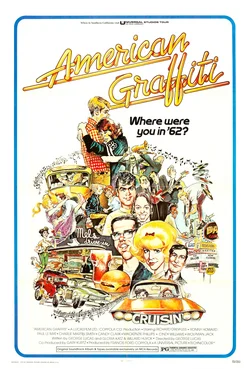 the George Lucas movie. Those have plummeted in price. Why? My generation of Gen Xers94Gen X — people born roughly between 1965 and 1980; Calacanis was born in 1970. want muscle cars, like I just said — I want Corvettes from the late '60s into the '70s — or people want the DeLoreans from the '80s. They are buying the Mercedes and BMWs from the '90s that were convertible.
The Saabs, Mustangs. Yeah, all that kind of good stuff.
So you can actually buy those old ones. They've all plummeted in price, and they're flooding the market. As these boomers die, there's three of them in the garage. People, when they retired, bought them, would take them out on Sundays and take their grandkids in them. They can't sell them. Nobody has garage space. People are not going to have driver's licenses. These things are going to plummet in value. It's going to be very interesting what we do with all those old cars. And they don't have self-driving in them.
So they're going to be in the Petersen Automotive.95Petersen Automotive Museum — one of the world's largest car museums, in Los Angeles.
That's where they're going to be. They're going to need to have like a Petersen City for... No, no, there'll be 10,000 of each car that have been restored, and nobody wants them. I desperately want to buy the new Corvette, the Grand Sport X,96Corvette Grand Sport X — the hybrid all-wheel-drive 2027 Corvette with a V8 and an electric motor on the front axle, unveiled in March 2026. but it doesn't have self-driving. And I'm like, but there's going to be times I'm tired or I'm going on a long haul, and I want to have self-driving. This is why I think somebody — I think Nuro is going to do it.97Nuro — an American company that started with driverless delivery robots and now licenses its autonomous driving system to carmakers.
I think Waymo is going to do it. There's a couple of other people who make the software. I think they're going to just sell it to every OEM, and Corvette will just have Tesla's FSD98FSD (Full Self-Driving) — Tesla's driver-assistance system, which drives the car in cities and on highways under a human's supervision. in it, and you'll just get the benefit. I'm talking about five years from now.
I'm not a car collector, but my uncle in the '80s had an IROC-Z.99Chevrolet Camaro IROC-Z — a performance version of the Camaro (1985–1990), named after the International Race of Champions racing series. You remember the IROC-Z? Two-door, right? Two benches. And as a kid, I thought that was the coolest car in the world. So I could see wanting to get an IROC-Z one day, baby. Bring a Trailer, IROC-Z.
Let's take a look here.
Yeah, let's see if these dreams are going to come true. I mean, my uncle must have had an '86 IROC, '87, something like that. Uncle Brandon driving around Atlantic City, the Jersey Shore, in his IROC-Z. It's a Camaro. Yeah, it's a Chevy Camaro variation called the IROC-Z. It was mid-'80s, I think — '84, '85. '85 it started, yeah.
It's a killer-looking car. I mean, it was kind of like a muscle car.
It was, yeah. It was like 1985. He had it in black, but this might have been his car. It looks exactly like that.
Yeah. People are getting into this analog stuff again too, because everything's digital. But yeah, these were sharp-looking cars.
To me, as a kid, this was like the cool car, the cool-guy car. I thought when I grew up I'd want one of those, but I have a Toyota Prius C.100Toyota Prius C — a compact city hybrid sold in the US from 2012 to 2019. It's a little different.
There's a lot of different Camaros here. Oh, you can get a convertible one. Look at that. That's pretty slick-looking. Only 13,000. Oh, current bid is 13,000. That means it's probably going to go for a little more. Probably go for 25k. I mean, it's cool, looks cool. Kind of sick to drive around in that thing.
If I'm being honest. And I just don't think younger people... That car culture is just not the same.
There's like the Corvette '77. I'm a big fan of the Corvette, the Gen 3.101C3 — the third-generation Corvette (1968–1982).
Because even in movies and TV, when we were younger, that was a defining thing about characters: they all had a distinctive... like, they drive this car, and that was always part of the bit. And I just don't feel like that's even in pop culture anymore. Like, who cares what car everybody drives?
This is what I want. I want the yellow '69 Corvette coupe, Stingray.102Stingray — the name of the third-generation Corvette, whose design grew out of the Mako Shark concept, with its pointed nose, flared fenders and pop-up headlights. It's designed to look like a shark: has the pop-up lights, has the fins, the gills on the side. Look at this.
That's a very — that look, it's very '60s, that car.
Yeah, Cliff Booth103Cliff Booth — Brad Pitt's stuntman in Quentin Tarantino's "Once Upon a Time in Hollywood" (2019), set in Los Angeles in 1969. would have one of these.
Exactly.

The woman who wrote... who's the famous... oh, Slouching Towards Bethlehem:104Slouching Towards Bethlehem — Joan Didion's first essay collection (1968), about 1960s California; the title is a line from Yeats's poem "The Second Coming." Joan Didion (1934–2021) was an American writer and a star of the New Journalism. Joan Didion. Joan Didion had one. She was known for having a Corvette that she loved. Joan Didion, Corvette. She was known for taking a bunch of pictures with the Stingray.105The best-known image is photographer Julian Wasser's 1968 portrait of Didion with her yellow 1969 Corvette Stingray. And it was kind of a big deal that she was into this car, and she made it very popular amongst intellectuals, I believe.
14AI refutes the exponential time hypothesis
Jason thinks mathematicians will shift to orchestrating swarms of brute-force AI, and human egos will have to deflate.
OpenAI and Anthropic each say their AI models have disproved the exponential time hypothesis, a nearly 30-year-old assumption in theoretical computer science. The hypothesis says a classic logic puzzle called 3-SAT can't be solved much faster than brute force,106Brute force — trying every possible option one by one. where every added variable roughly doubles the work. Both labs independently found essentially the same faster method. Both say they found the core idea on the same day, Jason: October 16th. Two of the hypothesis's original authors, along with a guy from MIT, are right now leading the review of the AI's work.107The review is led by the hypothesis's authors, Russell Impagliazzo and Ramamohan Paturi (UC San Diego), and MIT's Ryan Williams. Researchers have relied on this hypothesis in hundreds of papers, and in practice, nothing has yet changed.
The new algorithms can apparently only beat brute force on astronomically large inputs. So, again, I think this brings up the question we keep talking about: does it matter that AI can solve these theoretical equations? And what do you think this means for the people who work in these fields — theoretical math, theoretical computer science? Are they more valuable now, that they can check the AI's work? Or is AI just about to take over what they do, and there's no...
ExplainerWhat the exponential time hypothesis is
3-SAT is a satisfiability problem: you're given a logical formula made of many clauses like "x or not-y or z," each with three variables. Can you assign "true" and "false" to the variables so that every clause holds at once? Checking an answer is easy; finding one is hard: brute force takes 2ⁿ tries for n variables. 3-SAT is the classic NP-complete problem, and thousands of others reduce to it. In 1999 Russell Impagliazzo and Ramamohan Paturi posed the exponential time hypothesis (ETH): no algorithm can solve 3-SAT in time that grows slower than an exponential in n. It's a stronger claim than P ≠ NP, and hundreds of proofs that some problem can't be solved faster rest on it. In October 2026 OpenAI and Anthropic said their models had found a subexponential algorithm for 3-SAT; if the review confirms it, ETH is false, though that doesn't refute P ≠ NP or threaten encryption.
You know, I think this is where you have to be humble enough... We sort of start dipping into the potentiality of superintelligence, or unlimited, unmetered artificial general intelligence,108AGI (artificial general intelligence) — AI that can handle any intellectual task at a human level. right? So if you have unlimited, or seemingly unlimited, and unmetered — in other words, you don't have to worry about the price tag to put on a problem — in some ways that is superintelligence. It's not thinking smarter than us, but in aggregate, it's trying so much, right? I.e., brute force. So in a way, it's paralleling the debate between AGI and superintelligence.
So if you can solve this with brute force, because you have so many resources in a computer — okay, great. The brute force solves it as quickly... the tic-tac-toe... as some novel new way of understanding the heuristics of this. Well, we might get to the point where the job of mathematicians goes from having this brute-force power in their head, and the ability to focus on things for a long time and meditate on them and try to do unique things, to orchestrating a thousand mathematicians — a thousand brute-force lunatics in this virtual world of mathematicians. And you just literally create an army, a swarm, to solve these problems. Maybe there's enough edge problems for them to solve, or is it finite? We don't understand these things, because the universe is so complex.
So I think you'd have to be somewhat... I think there's going to be a lot of hubris and a lot of ego that's going to get deflated, and people are going to have to come to this reckoning: just because we couldn't figure it out doesn't mean it wasn't solvable.
I mean, as humans, we're limited by one thing more than anything else, which is just our lifespan. It takes 20, 25 years to get incredibly good at math or computer science. And then you've got a ticking clock of 40, 50 years to work on everything you're going to work on, and then you're going to drop. And so computers can crunch so much more in their time, and they don't have that limitation. It does seem inevitable they're going to be able to take over a lot of these problems for us.
Yeah, absolutely. All right, another great episode is in the can. We'll see you next time. Bye-bye.
Bye, everybody.


