



20VC
Chapters
Jason sees the end of the evergreen fund as the biggest news in Sequoia’s reorganization, while Rory calls it a sensible simplification of an overcomplicated structure.
Read the chapter- Harry lists the changes: Sequoia is leaving its London office, ending its scout program and bringing its early-stage and growth teams together.
- Jason calls holding generational assets for decades the best idea in venture ever and can’t see why Sequoia would drop it, asking what if it had held all its Nvidia and Google stock.
- Rory sees three problems: the fund launched in ’22 and ’23 just as stocks turned down, LPs with different liquidity needs didn’t like it, and partners who had already cleared carry were essentially forcing LPs to take their vitamins.
- Jason points to Ho Nam of Altos Ventures, who uses continuation funds so LPs can exit if they want and stay in if they don’t.
- For founders, Jason says, it’s a reminder that the institution may be durable but no particular partner is, and the founder-CEO tends to have the longest lifespan.
The hosts agree Sequoia can cover Europe from California, and that scouts and Arc were a distraction for a small partnership.
Read the chapter- Harry names ElevenLabs, Odoo and Bolt as great European Sequoia investments but agrees the firm can sufficiently cover Europe from the States.
- Jason notes that Mati shows up at every elite dinner he attends and Anton at half of them, so in his view you need to be local only at pre-seed.
- Harry is surprised to see the scout program go, since it gave a significant advantage for little lift, while Jason thinks it got cloned and that a small partnership just doesn’t have the energy for scouts and Arc.
- Few partners with lots of capital can work, Jason says, if they have the conviction to write large checks into winners, and Harry notes that Founders Fund deployed its growth fund in 11 months.
Rory warns that Nvidia’s investigation is about national security rather than an affair, so it won’t simply go away.
Read the chapter- Rory stresses that the board isn’t investigating a relationship but compliance: whether there were security breaches, what happened with Megaspeed and how the government handled it.
- Jason thinks Huang needs a pass because he is too important to AI and to the US, as Jobs was in the options-backdating days, while Rory says you can hope for a pass but can’t assume one.
- There was no point entrapping Huang, Rory argues, because he had been pushing to sell GPUs to China for entirely logical reasons anyway, and Jason adds that hosting chips across the border will now be shut down too, so China loses big.
- Jason warns that the choice of investigators often decides the outcome, and Rory replies that a board whose members have sat there for 30 years knows its work will be checked by Congress or the Justice Department.
Rory doesn’t see the $2.5 trillion drop as a crack in the AI trade, and thinks Anthropic is playing its IPO perfectly.
Read the chapter- Stocks popped after the Democrats’ win and then fell on angst about data centers, and Rory puts it down to aggressive hedge fund pods blowing up, since at firms like Citadel you get fired at a 7.5% drawdown.
- The AI trade, Rory repeats, doesn’t crack on the supply side: if the demand shows up in OpenAI’s and Anthropic’s ARR, everything else will be roughly fine.
- The recommended range of $70 to $78 a share is above the last private round at $54, and Rory says it is far better in an IPO to start low and go up than to start high and come back.
- Rory explains the trillion-versus-1.4-trillion gap: private valuations count all options, while public ones count only vested options.
- Jason expects the stock to trade flat because the market is fatigued, and Harry relays one of the largest allocators saying he isn’t worried about this $80 billion but about the next $100 billion.
Rory is sure a public Anthropic with $200 billion in cash will be in a far better position than a still-private OpenAI.
Read the chapter- After the IPO, Rory says, Anthropic will have the money, the float and access to converts, and be done with the private begging bowl, while OpenAI is still trying to raise $11 billion plus retail.
- Jason calls Anthropic’s quarterly reporting a gift to everyone, since the industry will finally get real numbers instead of piecing them together from CoreWeave, Nvidia and Nebius.
- OpenAI has reaccelerated to 70% growth, but Jason recalls that developers have no loyalty and switching between models is a trivial eval, so the leaders will keep playing ping-pong.
- Jason admits he was wrong to think agents like Dots, Grok and Muse cost $4–5 to run, since they cost up to $20–30 a month, and argues that an agent that can’t run 24/7 is just an automated workflow.
Harry picks Revolut as the safe bet, Jason picks fal for the trend, and Rory, after weighing all three, is driven back to Harry’s choice.
Read the chapter- Zipline is raising $1.5 billion at $21.5 billion, and Rory admires the market and the technology, but at $5 to $10 a delivery he says you are really leaning into the Walmart contract.
- fal has doubled to $16 billion, and Jason picks it for the trends of the next two or three years, while Rory worries that at $16 billion you might be closer to the end than the beginning.
- Harry picks Revolut at $115 billion to compound for 10 years, Rory adds that its 19-to-25-year-old customers will get older and want mortgages, and Harry flags the key-man risk on Nik.
Jason calls stealing AI API keys the crime of the year and expects everyone to get hit.
Read the chapter- Fireworks AI was breached twice in 30 days, Jason says, and swarms of bots are hunting for Anthropic and OpenAI keys across every platform.
- Jason’s own spending limit on Claude’s Ultra plan was set at $100,000 by default, which a thief could have charged in minutes.
- There is nowhere to go, according to Jason, because customers like Harvey can’t replace the capacity and switch inference providers.
- Jason cites Wiz saying nine leading AI developers disclosed a swarming incident in October alone and Unit 42 saying bills reach $1 million before detection, and predicts the big security companies will benefit.
Rory sees the security acquisitions as textbook M&A, while Jason reads Dialpad’s deal for Ada as a sign that older companies can’t keep up with AI-native ones.
Read the chapter- CrowdStrike and Palo Alto are buying agent-security startups and Meta and OpenAI are buying software-development tools, which Rory calls the incredibly obvious category.
- Ada, Rory says, was a very good pre-LLM chatbot that now finds it hard to compete with Sierra or Decagon, and Jason adds that a sale to Dialpad for stock isn’t technically an exit without liquidity.
- Companies that haven’t accelerated with AI in two years, Jason argues, won’t catch up, because all they manage is “hooray, bolt an LLM on” while shipping at the same old rate.
- Jason notes it isn’t worth it for AI-native startups to buy older companies for their customers because they are growing too fast, and Rory adds that you inherit all the old contracts’ problems.
Jason is convinced the market rewards companies that benefit from agents and will leave seat-based businesses in the doldrums.
Read the chapter- Harry cites Cloudflare cutting 20% of its staff and accelerating to 39% growth, and Jason says AI simply opened eyes to the fact that companies didn’t need all those people even in 2021.
- Jason credits agentic spend for the growth at Cloudflare and Twilio, and says agents don’t care about your UX, which is why Atlassian, Monday and HubSpot are suffering.
- Figma is growing almost 40% a year but has fallen to about $10 billion from the $20 billion-plus offer it had in 2022, and Rory notes that turning down an offer often means working for years to get back to half of it.
- As Figma’s CEO, Jason would go all in on agentic design even at a big cost in gross margin, since he grades today’s design modes in Claude, Replit and Lovable “a C-minus” from a design perspective.
Rory reads the defeat of the billionaire tax as proof that voters are smarter than they get credit for: they swung to the Democrats but refused to wreck things at home.
Read the chapter- The country swung Democratic in a way it hasn’t since 1974, Rory says, yet the most prototypically Democratic state voted down the wealth tax.
- Rory explains it by a default “no” bias toward propositions and a no campaign that won the argument, while Jason adds that Sergey and friends outspent the unions 10 to 1.
- Jason knows two quiet billionaire founders who were already planning to leave, and says the average Anthropic employee will make $41 million in the IPO, money you don’t want going to Miami.
Quotes
On venture partners
“But founders sometimes think of their VCs as being more permanent than they are, right? They flow in and out. But like most things, the longest lifespan is the founder CEO, right?”
Jason LemkinRead from 08:34On why the AI boom won't burst over data centers
“The AI trade doesn't crack on the supply side. Doesn't crack. It doesn't crack because the data centers can be built or can't be built.”
Rory O'DriscollRead from 22:25On Anthropic's IPO
“But it is far better in an IPO to start low and go up than to start high and come back. Because once you start coming back, everyone loses confidence, and you've blown it.”
Rory O'DriscollRead from 24:49On why Anthropic is better placed than OpenAI right now
“Oh God, because they're going to get their IPO done in the next month. They're going to have the money, they're going to have the float, and they're going to be through with the private begging bowl bullshit, right?”
Rory O'DriscollRead from 27:41On stolen AI keys
“It's the most lucrative criminal trade you can do right now, right? It's better than selling Rolexes you steal off someone's wrist in London. This is the crime of the year, and it's only going to get worse.”
Jason LemkinRead from 41:14On old software companies
“Their teams are stuck basically shipping at the same rate. Hooray, bolt an LLM on.”
Jason LemkinRead from 46:23On why Figma should have sold to Adobe
“If you turn down X, you could work for the next three years, do an amazing job, because Dylan has done an amazing job, grow your damn company 40% a year, get it free cash flow positive, get the damn thing public, and at the end of that, you're going to be worth half what you are today.”
Rory O'DriscollRead from 54:26On why California rejected the billionaire tax
“And I think, fundamentally, I always say, I think the voters are smarter than we ever give them credit for.”
Rory O'DriscollRead from 1:00:42
Summary
The weekly news roundup with Harry Stebbings, Rory O'Driscoll of Scale Venture Partners and Jason Lemkin of SaaStr, recorded on Tuesday, November 10, 2026, a week after the US midterm elections. They start with Sequoia's reorganization: the firm is leaving London, closing its scout program and its Arc accelerator, and winding down its evergreen fund. Jason thinks holding stock for decades is the best idea in venture; Rory thinks it's right but too complicated, since LPs don't like being made to "take their vitamins." The hosts put the London exit down to focus: you can meet the best European founders in Silicon Valley anyway.
The heaviest topic is the investigation Nvidia's board opened after Jensen Huang admitted to an affair with a suspected Chinese spy. Jason thinks Huang needs a pass, as Steve Jobs once got; Rory thinks there are too many questions about national security and about who in government knew what, and that a board with members dating back to 1993 will have to work under close scrutiny from Congress.
Rory reads the Nasdaq 100's $2.5 trillion one-day drop as a reaction to the Democrats' win and hedge fund nerves: the AI trade, he says, won't crack on the supply side as long as the demand is there. He thinks Anthropic has played its IPO, priced at $70–78 a share, perfectly, and that OpenAI, still raising private money, is in a much tougher spot; Jason expects the shares to trade flat because the market is fatigued. In "investment committee," Harry picks Revolut, Jason picks fal, and Rory, weighing all three, leans toward Harry's choice.
Then: two breaches at Fireworks AI and the hunt for API keys, Dialpad's purchase of Ada as an example of older companies that can't keep up with AI-native ones, Cloudflare and Palantir as models of efficiency, the falls of Figma and Atlassian as a crisis of per-seat pricing, and what Jason would do as Figma's CEO. Finally, why California voted for Democrats but rejected a billionaire tax.
Advice
Don't count on the fund partner who backs you staying with you forever: partners come and go, and the founder is the one who stays at the company longest.
If your board ever has to investigate a CEO's conduct, choose carefully whom you hire: paid lawyers or investigators can arrive at a conclusion decided in advance.
Don't put off rebuilding your team around AI until next year: if your product isn't shipping faster, AI-native startups will overtake you, and in a couple of years you won't be able to catch up.
Don't hope a fast-growing AI startup will buy your slow company for its customers: it's better off growing on its own, and someone else's old contracts come with someone else's problems.
Take a generous acquisition offer seriously: even if you do great work for the next three years, you may end up worth half of what you're being offered today.
If agents threaten your product, go all in on the new model, even at the cost of gross margin and trimmed features for existing customers; otherwise agents will route around you.
Mentioned
 Sequoia Capital03:48closing its London office, scouts and Arc and winding down its evergreen fund
 Mark Stevens07:59former Sequoia partner, on Nvidia's board almost from the start
 ElevenLabs09:18the European star of Sequoia's portfolio
 Mati Staniszewski09:48the ElevenLabs founder who is everywhere
Show 45 more mentionsShow fewer mentions
 Founders Fund12:31huge funds with only a few partners
 Jensen Huang14:11the board is investigating his ties to Alice Huang
 NVIDIA14:11an independent board investigation
 Alice Huang14:11former Megaspeed executive suspected of working for China
 Megaspeed15:24Nvidia chip buyer suspected of diverting them to China
 Steve Jobs15:59got a pass in the stock option backdating affair
 Marco Rubio17:32warned the government early about Huang's ties
 Tench Coxe20:08on Nvidia's board since 1993
 Citadel LLC23:07strict drawdown limits for its pods
 Anthropic23:30IPO priced at $70–78 a share
 OpenAI29:2670% growth in a quarter and an $11 billion round at $1.25 trillion
 Greg Brockman29:26increasingly the voice of OpenAI
 Codex29:26the coding agent squeezing Claude Code
- GPT-6 Astra30:53a model easily compared with Claude
 Claude Fable30:53a model easily compared with GPT-6 Astra
- Dots31:32OpenAI's expensive always-on agents
 Instinct31:49the AI assistant Harry would back at $30 billion
 Muse31:49Meta's agent, which Jason runs all day
 Grok Bot31:49xAI's agents
 Zipline33:39$1.5 billion at a $21.5 billion valuation
 fal33:39valuation doubled to $16 billion
 Revolut33:39$115 billion in a secondary deal
 Waymo34:32a comparison for Zipline
 Walmart36:54Zipline's drone delivery contract
 Nik Storonsky39:48"the best founder of his generation" and a key-man risk
 Fireworks AI40:26two breaches in a month
 Harvey41:53a customer with nowhere to go from its inference provider
 Wiz43:06nine AI developers disclosed breaches in October
 Palo Alto Networks43:06its Unit 42 group on bills of up to $1 million
 CrowdStrike43:44buying startups in agent security
 Dialpad45:10buying Ada with its own stock
 Ada45:10a pre-LLM chatbot sold to Dialpad
 Sierra45:18Ada's new competitor
 Canva46:23"too effing slow"
 Orlando Bravo48:28should pay Jason to lecture his CEOs
 Cloudflare49:5820% layoffs and 39% growth
 Freshworks49:58crossed $1 billion in revenue
 Palantir Technologies50:17$2 million in revenue per employee
 Twilio51:22also benefiting from agent spending
 Atlassian52:26fell after its growth forecast
 Figma53:15worth less than Adobe offered
 Dylan Field53:15turned down $20 billion
- Claude Design57:13design in Claude, still "a C-minus"
 Replit57:13design on a canvas
 Sergey Brin1:01:23funded the campaign against the tax
Sponsors of the episode


Transcript
This is 20VC, and it's your favorite show of the week, the only show that you have to listen to every week, with Rory O'Driscoll1Rory O'Driscoll — partner at Scale Venture Partners, which invests in growth-stage enterprise software; a regular co-host of 20VC's news episodes. and Jason Lemkin.2Jason Lemkin — founder of SaaStr, the largest community and conference on the subscription software (SaaS) business, and of the SaaStr Fund; before that he co-founded EchoSign, which Adobe bought in 2011. So what do we chat about this week? Well, big changes afoot at Sequoia. As they leave London, they shut down scouts and they merge into one core team. Then we have Jensen Huang, been a busy boy at Nvidia, which we will discuss in more detail. And then we have Anthropic, where will they go out? How will it be received? And what is the impact of that on the broader AI economy? This and so much more in the show today.
AdZero Hash, Deel, Framer
But before we dive into the show today, every great software company eventually runs into money. Uber had to move it, Shopify had to hold it, Airbnb had to settle it. Money movement stopped being a fintech problem, it became a software problem. And increasingly, God, it's an AI problem too. Zero Hash is the infrastructurecZero Hash — Chicago-based crypto and stablecoin infrastructure company: through its API, banks, brokers and fintechs let their customers buy, hold and transfer digital assets. that makes global instant money movement seamless. One API integration for stablecoins,dStablecoin — a cryptocurrency pegged to a conventional currency, usually the dollar, and backed by reserves; examples are USDT and USDC. digital assets, and modern payment rails, so builders can stay builders. Zero Hash powers some of the world's largest enterprises and financial institutions, including Kalshi, Stripe, Morgan Stanley, Gusto, and Interactive Brokers. If you're thinking about stablecoins, digital assets, and the future of money, it's time to talk to the team at Zero Hash. Visit zerohash.com/20VC to learn more.
While Zero Hash powers your crypto infrastructure, Deel helps youeDeel — San Francisco company founded in 2019: a platform for hiring, paying and managing employees across countries, and for issuing them equipment and access. build a global team. We get it, global IT can be a headache. New hire in Tokyo, but the laptop, well, it's stuck in London. Someone left the company last week. Wait, is that access already revoked? Deel IT handles hardware, software, and access to it across 130 countries from one system. You have the right to be impressed. Brands like ElevenLabs are already managing their global IT at scale with Deel. It's one system, one source of truth, with zero vendor gaps or manual workarounds. So build your global team with Deel. Visit deel.com/20VC and start expanding your business today.
While Deel builds the team, Framer builds the site.fFramer — Amsterdam-based website builder; it began as a prototyping tool for designers and now also builds sites with AI. So if you want AI that builds your real website, not just the throwaway first draft, that is Framer. Framer is the AI website builder that helps creators, teams, and businesses ship production-ready sites faster than ever while getting every detail right. Prompt, inspect, edit, and publish in one place at a whole new pace. Agents and humans work in tandem. Agents bring speed and scale. You bring taste, judgment and control.
The work lands on the canvas and stays editable. Build custom code components, manage CMS content, optimize SEO, and audit for issues, all in one place. Enterprise-grade hosting, security and 99.99% uptime SLAs,gSLA (service level agreement) — a provider's guarantee, for instance, that a service will be up 99.99% of the time, which means less than an hour of downtime a year. trusted by leading brands like Perplexity and Miro. Learn how you can get more out of your site from a Framer specialist, or get started building for free today at framer.com/20VC for 30% off a Framer Pro annual plan. That's framer.com/20VC. Rules and restrictions may apply. You have now arrived at your destination.
01Sequoia winds down its evergreen fund
Jason sees the end of the evergreen fund as the biggest news in Sequoia’s reorganization, while Rory calls it a sensible simplification of an overcomplicated structure.
Boys, so many things happened this week. I'm very, very much looking forward to hearing the different perspectives. We're going to start on Sequoia.3Sequoia Capital — one of Silicon Valley's oldest venture firms (1972), an early investor in Apple, Cisco, Nvidia, Google and Stripe. On November 4, 2026, it announced a reorganization: it merged its early- and late-stage teams, closed its London office, the Arc accelerator and the scout program, and said it had raised about $10 billion in new funds (Sequoia's X thread, as reported by TechCrunch). Sequoia made a lot of changes this week. They announced, number one, they'd be departing their London office, and some of the team would be moving back, some would be moving on to different things. They announced that they were ending the scout program.4Sequoia's scouts — a program launched around 2009: founders and experienced operators got money from Sequoia to invest in very early startups in their own name, in exchange for a share of the profits. For a long time participants kept it secret; later many firms set up similar programs. They announced that they were having one team, in terms of early and growth coming together. There were some personnel changes around it, but those were the core structural elements. Now, I think they're actually very meaty in their own right, and so I'd love to break them down.
You guys know better than me, but I thought you missed the most interesting part of what I read in it, which was winding down the Evergreen program. I don't care about the other stuff. I mean, there's partner drama, people are going to come and go. No question in the SF Bay now, the kids from London are going to drop by the office, and no question it's better to be local and close. Like, on 20VC we can talk about all this stuff forever, right? But man, the idea, which sure feels like it's back again, that you should hold these assets for decades, right? Generational assets for decades.
ExplainerSequoia's evergreen fund
A typical venture fund lives about ten years: it raises money from its investors (LPs), invests it, and after an IPO or sale hands out the shares or cash and winds down. Even if a company keeps growing, the fund parts ways with it.
In October 2021 Sequoia announced it was changing this setup for the US and Europe: LP money would now go into a single, permanent Sequoia Capital Fund, which in turn invested in conventional closed-end sub-funds for different stages. When a company went public, its shares weren't distributed but moved into the main fund to be held for years, so Sequoia could profit from the growth of companies after they went public. LPs could withdraw money only in portions and on a schedule. By February 2025 the fund held about $19.6 billion.
The idea didn't take: LPs who needed liquidity disliked it. In November 2026, announcing its reorganization, Sequoia said it was removing most of the complexity around the Sequoia Capital Fund: according to Axios, the umbrella structure itself stays for administrative convenience, while new funds and distributions return to the usual model.
What the hell happened there? Why the hell are we winding down the Evergreen fund? Notwithstanding a few bumps this week with Jensen, what if they'd held all their Nvidia stock till today, right? That'd be a good one. What about all their Google stock? I mean, literally, what the hell happened to the Evergreen idea? What the hell happened? This is the best idea in venture ever. You have the dominant brand, right? And then my understanding, reading about it, is the LPs5LPs (limited partners) — the investors in a venture fund: pension funds, university endowments, family offices. They provide the money, and the general partners (GPs) invest it. weren't allowed to leave in this evergreen structure. You're pretty much stuck, right? So why do it? Once you've got a couple hundred million or a few billion, go Evergreen.
No, actually, I thought the Evergreen structure, which, to remind listeners, basically said... It basically really incented, or almost pushed, LPs to allow Sequoia to continue to hold long after a public offering, because they correctly analyzed and said, no matter how well we do as a venture investor, the real money is made after the IPO. Because, you know, they've been something absurd like 25% of the NASDAQ.6NASDAQ — the American exchange where most tech companies trade: Apple, Microsoft, Nvidia, Alphabet, Amazon, Meta. So by definition, if they'd held all those stocks, they'd own a big slug of 25% of the NASDAQ. And so it's true. It's arguably almost always true that if you hold a diversified portfolio of really interesting tech assets, over the long term they have, you know, compounded well above, you know, any kind of S&P return.7S&P — the S&P 500 index of the 500 largest US public companies; its return is the standard benchmark for any investment. So the idea of, hey, why don't we just say we should hold them, it wasn't illogical.
And that was the thinking behind doing the Evergreen fund. There were probably three problems with it, though. The first problem is they picked a horrible time to do it, because they implemented it in '22, '23, which was when, you know, stocks actually turned down. And, you know, over 20 years that doesn't matter, but if you decide to make everyone hold stocks and then a year later they go down 30%, it hurts. That's the first thing. The second thing is LPs don't like it, because they have different liquidity needs, and you want to be able to make your own choices.
And then the last thing, which is a super interesting one: you should always think about the comp plan, right? And, you know, how to put this? The individual partners in any venture firm can decide to hold their stock forever, right? And once you've cleared carry,8Carry (carried interest) — the share of a fund's profits, usually 20–30%, that the general partners get once LPs have their money back. they get all the return they're going to get from doing that. You know, if I was lucky enough to be Sequoia and lucky enough to do Cisco and take it public in, I want to say, '86 at 400 million market cap,9Fact-checkCisco went public in February 1990 at a market cap of about $224 million; Sequoia invested in it in 1987 (Wikipedia, "Cisco"). I can hold my shares, I can distribute to my LPs, and they can make their own choices. Now, in retrospect, a lot of them would look back and go, oh, I wish I'd held my Cisco stock, but now you're basically trying to force LPs to take their own medicine.
It's like, damn it, you want to sell the stock, but I'm going to make you hold it. It was just, frankly, it was complex and trying too hard. Again, going back to first, it is intellectually correct in the sense that if you hold a diversified portfolio of, let's call them high-quality Sequoia-backed venture companies that go public, you'll have lots of variability in that portfolio, but in the end it'll be a compelling portfolio. So it wasn't a crazy insight. It's just trying too hard, too much complexity. So I think getting rid of it was just a, you know, let's keep it simple here, people, we can still make our money. So that made sense to me. Sorry, that was a bit longer than I'd planned.
No, maybe when you have a CFO running the place,10Jason is alluding to Roelof Botha, PayPal's former CFO, who led Sequoia from 2022 to 2025; in November 2025 he was succeeded by Alfred Lin and Pat Grady. it makes sense. Like, it all makes sense on a... That's what CFOs do. They make it all make sense on a spreadsheet, right? It was interesting, you know, I was watching something that Ho Nam11Ho Nam — co-founder of Altos Ventures in Menlo Park, an early investor in Roblox; known for holding stakes in the best companies for years, including after the IPO. from Altos Ventures said, who talks a lot about generational investments, right? But he said they set up a series of continuation funds12Continuation fund — a new fund into which a manager moves the best companies from an old fund nearing the end of its life. Old LPs can cash out or roll into the new fund; the conflict of interest is that the manager effectively sets the transfer price. to do this, right? So that LPs could exit if they wanted and stay in if they didn't, in their funds. I assume that if you did that perfectly, other than some conflict on how those funds work, it lets folks go each way, right?
Yeah, but the odd thing is you've already been fully paid for what you're doing. So now, as I say, now you're basically giving the LPs their vitamins. You're basically saying, damn it, you will hold these stocks because it's good for you. I've already made my money. So look, I mean, we're going to talk about Nvidia in a while, and one of the things we'll mention when we get there is that there's a Sequoia partner on that board from 1993.13Mark Stevens — American venture investor and longtime Sequoia partner; he sat on Nvidia's board from 1993 to 2006 and again since 2008. And I bet you he's held all his stock, and I bet you he's worth a couple of billion bucks. So, you know, you can do what you want to do individually, but I don't know if every LP in Sequoia would really have wanted to hold that stock from the IPO in, what was it, '95 or '96,14Fact-checkNvidia went public on January 22, 1999 (Wikipedia, "Nvidia"). all the way to today. So to me that one was an easy give. Let's stay with Sequoia and the other stuff, though.
You know, the other meta thing about Sequoia, I mean, I know it's Captain Obvious, but I think for founders and others it's a reminder: the institution may be durable. No particular partner may be durable. The CFO who was the CEO, gone. All the London partners, gone. A bunch of the US partners, gone. Now, listen, this is an organization designed to make a buttload of money, and it is not a nonprofit. So it all makes sense, right? It all makes sense. But founders sometimes think of their VCs as being more permanent than they are, right? They flow in and out. But like most things, the longest lifespan is the founder CEO, right? Like Jensen. The founder CEO, odds are, will have the longest lifespan in tech.
Actually, I might argue that, but your salient point is the right one. Change is the only constant thing. And I give him credit for making change.
02London, scouts and small partnerships
The hosts agree Sequoia can cover Europe from California, and that scouts and Arc were a distraction for a small partnership.
Totally. I think London's important. I think a lot of people use this... Clearly, clearly that's not an opinion shared by everyone, but keep going. Well, I think it actually is. And I think when you look at ElevenLabs,15ElevenLabs — maker of AI speech synthesis and voiceover, founded in 2022 by Poles Mati Staniszewski and Piotr Dąbkowski, headquartered in London and New York. Sequoia is one of its investors. which is a phenomenal investment of Sequoia's, and Dollar App,16DolarApp (renamed ARQ in 2026) — Mexican fintech offering dollar accounts to people in Latin America. In March 2026, Sequoia and Founders Fund invested $70 million in it (LatamList). which is a phenomenal investment of Sequoia's in London, and Odoo,17Odoo — Belgian open-source suite of business apps (accounting, sales, inventory, CRM), founded in 2005 by Fabien Pinckaers. a great investment in Europe too, and Bolt,18Bolt — Estonian ride-hailing, delivery and scooter company, one of Uber's biggest rivals in Europe. I think bluntly what they're saying is Europe does have great assets, but we feel we can sufficiently cover it from the States, which I don't disagree with.
You know, one thing I will add, and there's obviously two sides to all this. I believe in being close to founders. I believe there's value in a London office, as we talk about. But I will say, I don't get invited to all the things you do, Harry, but every, like, elite event or dinner I'm at, Mati's there,19Mati Staniszewski — co-founder and CEO of ElevenLabs. okay? Half of them, Anton's there.20Anton Osika — co-founder and CEO of Stockholm-based Lovable, which builds apps from a text description. I mean, it's hard enough to get to the Bay Area from London, but it's cool, but getting there from Sweden is a PIA, okay? But I mean, I don't need to go... Forget about it, right? You know, you want to be in the deal and you want to close it quickly, but especially if I'm not doing the pre-seed21Pre-seed — a startup's very first round, before the seed round; often there's no company yet, just founders and an idea. or something, I don't think I need to go there to meet these guys. They're everywhere. And kudos to them, because it's work, right? I would almost think ElevenLabs... and if it wasn't for Anton's accent, I would think they were Bay Area companies. I genuinely would. They're everywhere.
They're everywhere. And so it is like, I do think pre-seed, you want to be local, right? And you could... You're there, you could challenge later. I genuinely believe, and it's Captain Obvious, but if Mati wants Sequoia, he's there every month. You're going to meet him. You're going to meet him. And Sequoia is a good enough brand, you're going to get a shot to put a term sheet22Term sheet — a short document with a deal's key terms: valuation, amount, investor rights. Putting a term sheet in front of a founder means making a concrete offer. in front of him. And if you're willing to pay up, you know, I don't know if it's so crazy. But again, pre-seed, I'm murky on this. I'm murky on pre-seed. You've got to roll up your sleeves to do that job. That's the Lord's work, the pre-seed.
And accepting... You go back to the decision, it was the right thing for them. I mean, I think for them, yeah, for them, you're trading off something, which is maybe a little less coverage early on in the UK, but you'll get the good ones. And I think it's what you said, Harry, it's all about focus. We need to just get everyone in a room. We need to get our shit together. And I give them huge credit. They are always good at reinventing themselves.
One thing I didn't really get: I always did think the scout program was relatively little lift for a very significant advantage. I was surprised to see that. I don't know if you have any... But that one just seemed strategically, huh.
Well, it did get cloned. It was... I think it worked better when it was a secret. They were years ahead of everybody else. I think in the early years, it wasn't to be spoken of if you were a scout. I mean, I don't know if you had to sign an NDA or not, but it wasn't spoken of, right? It may be that simple. Is that how, you know, it just got too flat. And I just don't think that... I mean, to your point, we could talk about it forever. I just read this as not having the energy. I don't want to run a scout program with a small partnership. I don't want to run Arc,23Arc — Sequoia's accelerator for the earliest-stage startups; the firm closed it in November 2026. a mediocre accelerator that isn't really even Speedrun, let alone YC.24Speedrun — the accelerator run by Andreessen Horowitz (a16z). YC — Y Combinator, Silicon Valley's best-known accelerator, whose alumni include Airbnb, Stripe, Dropbox and Coinbase.
But, you know, I thought in the early days about running an accelerator for SaaStr,25SaaStr — the community, blog and annual conference on the subscription software (SaaS) business founded by Jason Lemkin; it also has a venture fund. when our brand was the hottest thing in SaaS. I'm like, my God, I'd have to hire like 15 people, and then I'm like, I'd have to manage them, and my LPs would tell me to do this. I'm like, I'm going to jump off the roof if I have to recruit and manage 15 folks. It's just too much. And I don't know if they have the time to do this and loop in six partners in London, in a different time zone, with different motivations and different economics. It was just too much. This is too much.
If you want to have a tight partnership... The other thing that I guess is part of it, I'll share one other story. You know, when Sam Blond,26Sam Blond — former chief revenue officer of the fintech Brex, later a partner at Founders Fund; now co-founder and CEO of Monaco, a startup building an AI sales platform. who's now at Monaco, was at Founders Fund27Founders Fund — Peter Thiel's San Francisco venture firm, known for concentrated bets on SpaceX, Palantir, Anduril and Stripe. for a while, I didn't understand Founders Fund when he was a partner there for a little while, and I'll tell you why I didn't understand it. It seemed like too much capital for too few partners. Like, I didn't understand how so few people could deploy so much. But when it works, you have to have the ability, the conviction, to write large checks into winners, right? But Sequoia's got some good ones. I mean, I know you can talk about what they missed out on, right? But if they have the conviction that every GP28GP (general partner) — a fund's managing partner, who makes investment decisions. "A bill" is slang for a billion dollars. can easily, I put it in air quotes, easily deploy a bill or two regularly, then you don't need all this crap. It's a distraction. It's exhausting to manage the folks in Arc.
I don't disagree with you at all. And I mean, Founders Fund, when you... I mean, it's amazing, Founders Fund deployed the growth fund in 11 months.
With how many partners and with how many just investing professionals?
I mean, honestly, like three to five real ones. But they're in Stripe, they're in Anduril,29Anduril — American defense company founded by Palmer Luckey in 2017: autonomous drones, air defense systems and software for the military. they're in SpaceX with that fund. And it's like, no LP is complaining at the compressed deployment timeline there. It is phenomenal companies, but you're right. I mean, this is large amounts of money with very few people. I didn't even think it was possible. I'm like, how do you... You know, how many people are there?
Oh, no associates? How does this... I don't get it.
You know, you have to be somewhat diversified early on, but you have to be wildly concentrated later on. And I think Founders Fund do a really nice job of doing both. You know, they do a lot. I mean, if you look at the early-stage stuff they do, they do a lot of little experiments, right? They do a lot of early deals that are small, and kill them quickly. And then when you write the growth fund, they concentrate down, you know, from, I think, 20 investments in the first fund to seven or eight. It's exactly how you should do it.
03The Jensen Huang investigation
Rory warns that Nvidia’s investigation is about national security rather than an affair, so it won’t simply go away.
Okay. Moving swiftly on, we have Nvidia. Jensen Huang admits to having an affair with an alleged or suspected Chinese spy,30This is Alice Huang, former head of the Singapore cloud company Megaspeed; she is no relation to Jensen Huang. According to the American press, US intelligence suspected her of working for China, but there is no public evidence of this. Nvidia's board announced an independent investigation on November 8, 2026. the board, as a result, opening an investigation into it as to what quite happened and what the impact of this is. This is not one I had on my bingo card, I'm going to be honest, guys. Thoughts?
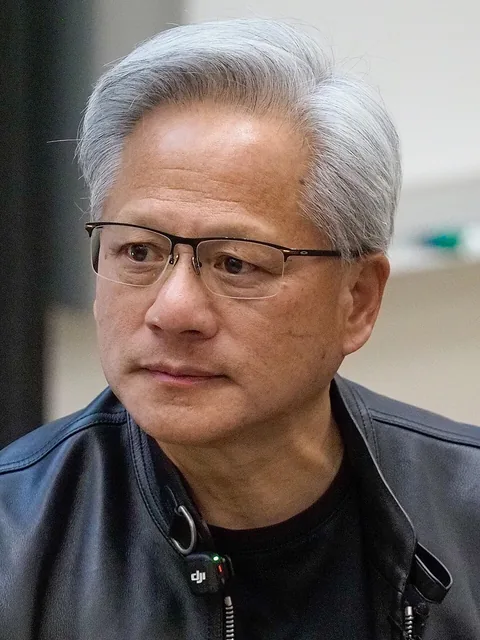
I mean, it obviously sucks on a bunch of different levels. You know, just to put it out there and then move on from it, it sucks on a personal level, for him, his family. It's just all yuck, because, you know, you've got a personal drama going on, and suddenly 6 billion people have an opinion on your married life after 40 years. That just sucks. Moving on from that, because I'm trying to avoid comments on that, it sucks from the company perspective. I mean, you're right, this is the most consequential company in AI.
I think Shaun Maguire31Shaun Maguire — partner at Sequoia Capital and an active participant in arguments on X. had a post basically saying, you know, please don't fuck it up just because the Chinese intelligence agency did some kind of compromise. In other words, let's not lose the plot here. And in one sense, I'm sympathetic to that. It would suck to lose Jensen, because I think a different CEO would run that company very differently and perhaps wouldn't have the drive to make some of these deals happen. But then you've got to say, the third point is, going to the investigation: if... And to be very clear, it's not an investigation into a relationship, it's an investigation into, you know, compliance issues.32Compliance — a company's adherence to laws and internal rules; here, above all, US export controls on selling AI chips to China.
It's an investigation into, you know, were there breaches of security? Are there issues vis-à-vis how the government handled it? Didn't Nvidia lobby the government, the Justice Department, to back off on a test on Megaspeed?33Megaspeed — Singapore cloud company and the largest buyer of Nvidia chips in Southeast Asia; US and Singaporean authorities investigated whether it diverted chips to China in breach of export bans. Its data centers are in Malaysia and Indonesia. There'll be a whole bunch of stuff like that, and it'll be messy. And, you know, there's at least some non-zero chance that the stuff that comes out is problematic, right? And as I said, to repeat, that sucks, because this is a world-class executive who's, you know, remember, taken this thing from '93 all the way to today, the longest-tenured tech CEO, period, full stop. And, you know, it's hard to argue he's not a success when you've had a $5 trillion market cap.34Nvidia's market cap first topped $5 trillion on October 29, 2025, the first company in the world to do so.
Listen, I think, all politics aside, I think he needs a pass. Like, this is too important to AI. It's too important to the US. I think this is a point a lot of folks were making, one way or the other. Objectively speaking, he needs a pass, right? We briefly, on an older pod, discussed how Steve Jobs got a pass in the backdating stock option days.35Options backdating — a 2006 scandal: dozens of companies, Apple among them, dated stock option grants to days when the stock was cheaper than on the grant date. Apple's internal investigation found Jobs knew of the practice but didn't profit from it himself; he was never charged. This isn't the same, but we needed Jobs, and I think, at least for now, we need Jensen. I mean, someday he's got to retire.
But it's kind of a bummer it was, like, Megaspeed in all of this. It's kind of a bummer that it is... It'd be nice if it were something not quite as in the center of where these GPUs should be going, whether it's really okay to host inference36Inference — running an already trained model to answer user requests, as opposed to training it. and GPUs for China-based models in Singapore and Thailand. It's just a really unfortunate... even beyond this spying thing, which I think is... I don't... He didn't leak secrets. I mean, come on. It's possible it's moronic, but it's just a bummer it's Megaspeed, right, which is banned by Nvidia now. Nvidia even said internally they're not going to sell them anything.
Jason, I love you so much. You're like, why can't you just cheat with someone from SAP?37SAP — German company, Europe's largest maker of enterprise software. Harry's joke: if you're going to cheat, do it with someone from a dull, safe company in an allied country.
I mean... I mean, I don't think it was intentional. It's just a bummer that I think this is going to last much longer than it otherwise would. I mean, I know this is Captain Obvious, because it's so tied up with an issue that everyone's been dancing around, which is: is it okay to sidestep selling GPUs to China by just sticking them in hyperscalers38Hyperscalers — the largest cloud providers, with their own networks of data centers: Amazon Web Services, Microsoft Azure, Google Cloud, Oracle. or data centers a few miles away? Like, this is something that kind of made no sense. Like, we'll let you train all your models, we'll let you do whatever, just please keep the chips a few miles over the border, guys.
And two comments on that. One is, do you need a pass? I mean, yes, you'd like a pass. You'd like this to go away. But just to be clear, I think because you have all sorts of national security questions, there'll be interference questions, I don't think it's as easy to go away as some of the other things we talked about, you know, the backdating options thing with Steve Jobs. I think this is more problematic. You can imagine a series of facts starting to... You know, you also have the dynamic of the government knowing about this early, Marco Rubio having a report, telling Trump, them not passing information on.39According to The New York Times, in spring 2026 Secretary of State Marco Rubio circulated a classified memo on Jensen Huang's ties to Alice Huang among officials with high clearance, and CNN reported that in May, on the way to Beijing, Rubio also told Trump in person. Trump said he had heard nothing about it at the time. There's just a whole bunch of messy stuff here. So I don't think you can assume a pass. You can hope for a pass, but you can't assume it.
And then the second thing is the really odd thing, the amazingly foolish thing, is this. My sense, just having listened to a bunch of the interviews Jensen's done, is, without any lobbying from any Chinese agent, from any entrapment agent, he wants to sell GPUs to anyone who will buy them, right? It was all... This is the part that's going to backfire.
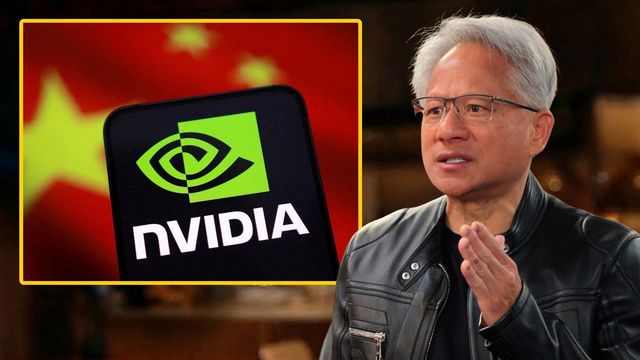
There's so many clips of him pushing hard to sell these chips to China. My point is, I don't think he was doing that because someone was lobbying him.
I think he passionately believes that, and correctly, from Nvidia's perspective. His job is to run Nvidia, and President Trump's job, until there's another president, is to run the country. And from Nvidia's perspective, they need to sell chips to anyone who'll buy chips, because what they don't want to do is have another alternative provider, you know, based out of China, eroding their market share. So my point is this: you didn't get anything by entrapping him, because for entirely logical reasons he's been pushing that agenda pretty consistently.
No, China loses big time here. China's going to lose. It's going to be harder to not only sell GPUs to China, it's going to be harder to just host them across the border. It's going to all get shut down. It was already stalled in Congress. I think it was passed by the House and not the Senate, right? This is not what China wants. This is bad, this is bad for China, right?
The other thing I might add, for others, for founders and others, maybe to get away from the salacious stuff. I was thinking about this before this: in my whole career, I've been involved in two incidents where boards did investigations with CEOs. One female, one male, actually. Nothing exactly like this, but it's all similar in some ways, right? It certainly wasn't Megaspeed and transshipped GPUs.40Transshipment — a scheme in which goods banned for export to a country are first shipped to a neighboring one and sent on from there. This is what Megaspeed was suspected of: Nvidia chips allegedly leaving its data centers in Malaysia and Indonesia for China. The one Captain Obvious insight is, you kind of... Now, this won't be true of Nvidia, right? Because it's under such scrutiny. But at a level below, you kind of get who you hire in the investigation. And you guys can challenge me on this, especially you, Rory, but the input of who investigates it, who you hire, how objective they are, are they biased in favor of an outcome... They're paid, right? Whether they're a law firm or an investigation agency. And just be very thoughtful, when you do have to do something like this, that you understand that the output may already be decided when the input begins.
The only comment I'll make is, I understand what you're saying, that if you're asked to run this investigation, you can set the terms of the investigation, and you can, you know, choose whom you hire as attorney, and that to some extent pre-biases it. That's arguably true. But on the other hand, and again, I think I saw someone make this point, when you're doing an investigation that you know is going to be second-guessed by a different investigation, probably done by Congress, probably done by the Department of Justice, the scrutiny level goes way up. And, you know, look, I think one comment is, this is an astonishingly long-tenured board. Four of the nine board members are two of the original VCs, Mark Stevens and Tench Coxe,41Tench Coxe — former managing director of Sutter Hill Ventures, one of Nvidia's first investors; on the company's board since 1993. and the original audit chair from '93, Brooke Seawell,42Brooke Seawell — American financier and venture investor, CFO of Synopsys in the 1990s, and a longtime Nvidia board member. and then the CEO of Synopsys.43Harvey Jones — former CEO of Synopsys, one of the largest makers of chip design software; on Nvidia's board since 1993. On November 12, 2026, after Huang's departure, he became Nvidia's first-ever board chair.
I mean, these are people who've been in this chair for 30 years, clearly very loyal to Jensen. I'm sure, you know, looking at this, they needed this like a hole in the head. But people tend to be professionals, you know, and the CEO of Cooley,44Cooley — Palo Alto law firm that has represented Nvidia since 1993. Its former CEO Stephen Neal is Nvidia's lead independent director; according to CNBC and the Financial Times, he heads the committee overseeing the investigation. The investigation itself, according to CNBC, was handed to the firm Wachtell, Lipton, Rosen & Katz. the law firm, is on the board, and is in fact leading the investigation. Professional people, especially when they know the scrutiny is coming, they're not going to just close their eyes. So unfortunately, the thing is going to run, and they're going to do an investigation knowing their homework is going to be checked by someone else who's not going to be as friendly, who might be in Congress.
04The Nasdaq drop and Anthropic's IPO
Rory doesn’t see the $2.5 trillion drop as a crack in the AI trade, and thinks Anthropic is playing its IPO perfectly.
So, for sure. I'm going to pull this back to the numbers that really matter, which is: NASDAQ 100 loses 2.5 trillion in a day.45On November 5, 2026, the Nasdaq 100 fell about 6.4%, losing roughly $2.5 trillion in market value, its worst day since April 2025. Chipmakers, neoclouds and data center operators fell hardest (SCMP, citing Reuters). I had hedge fund managers, friends of mine, calling me in a tone and depressive state like I haven't seen in years. Guys, that much value eroded in such a short amount of time. Can you help me understand what happened here? What caused this? What's going on?
I mean, you can start by saying it's clear proof that, as the old expression goes... no, no shit, because that crash... We're now recording this on Tuesday, it'll be released on Thursday. The crash you're referring to happened last Thursday. Reminder: on Tuesday night it became pretty obvious that the Dems are going to win, and win big, right?46The US midterm elections were held on November 3, 2026. The AP called the result a decisive rebuke of President Trump; some of the winning Democrats had promised to restrict data center construction. And then on Wednesday the stocks popped. So in fact the first response was to go up, and then a day later there was some, arguably some economic news, but then some kind of angst about data centers. So on Thursday you pop back down. So a lot of this is fairly reactive. It's some version of, oh my God, we can't build data centers, all these people aren't going to let us build data centers, so maybe we won't sell as many chips. But I don't know how deeply thought through it was.
So you don't see this as the AI trade cracking, and it's showing first signs of that?
I'm going to say this again, and I'm going to say it every week, because... The AI trade doesn't crack on the supply side. Doesn't crack. It doesn't crack because the data centers can be built or can't be built. It doesn't crack because Nvidia loses market share to AMD. It doesn't crack for any of those other reasons. If the demand is there, and I've said this over and over, if the demand is there, and that demand will be evidenced in ARR for OpenAI and Anthropic,47ARR (annual recurring revenue) — what a company would take in over a year from its current subscriptions and contracts at the present pace. if the demand is there, everything else will be roughly fine. There might be some companies, like, you know, that get ahead of themselves, like CoreWeave,48CoreWeave — the largest American neocloud: it rents out Nvidia GPUs, to OpenAI and Microsoft among others, and builds data centers mostly on debt. but it'll all be fine. So I think looking at that last Thursday and trying to extrapolate some kind of informed, oh, I've suddenly realized we're only going to sell 300 billion of tokens instead of 500 billion, let the stock go down, I think you're just grasping at straws.
ExplainerPods at multi-manager hedge funds
The biggest hedge funds, such as Citadel, Millennium and Balyasny, are built as platforms: capital is split among hundreds of small teams, or pods, each with its own portfolio manager, strategy and risk limit.
The core rule is a hard stop on drawdown, the fall from a peak. If a pod loses an agreed percentage, usually around 5%, its capital is cut; if losses reach roughly 7–10%, the team may be disbanded and its positions closed. That way the fund as a whole loses little even when individual pods get it wrong.
The flip side is synchronized selling: when many pods hold similar positions (say, in AI stocks) and the market moves sharply against them, the limits trip for everyone at once, and the forced selling deepens the fall.
I think a whole bunch of aggressive pods49Pod — a small team of traders at a multi-manager hedge fund, with its own capital and loss limit. in hedgeland got kind of nervous and kind of got blown up, because they're over their skis. And remember, the good folk at Citadel50Citadel — one of the world's largest hedge funds, founded by Ken Griffin, built as a platform of many pods. and places like that, they basically take your checkbook away at 5% and they fire you at 7.5% drawdown. So it doesn't take a lot to have a bunch of these kinds of pods just blow up. That's all that happened, I think, last week. Yeah, no great thought. Jason, you agree with that?
Well, I would say two things. One, we've discussed it before. I think it makes sense for the markets to be nervous about this. There's a lot of assumptions. There's a lot of capital to be deployed. There's a lot of debt required. And, you know, as we're recording this, Anthropic's finally getting ready to IPO, and it's a little murky to me what happened, but it looks like they couldn't fully fill out the round, right? The round's 100 billion. They needed about a $20 million private placement,51Private placement — selling shares to preselected large investors outside the open offering. According to amendments to Anthropic's prospectus, alongside the IPO seven anchor investors are buying $26 billion of stock at the offering price: Nvidia and Alphabet $10 billion each, the rest AMD, Broadcom, Microsoft, Micron and TSMC. I think 20 billion, to fill it out or so. Some of it was Google's pre-commitment repackaged, I think, as part of this round. And they had to lower the size of the round and lower the valuation. So the market is a little jittery about this, even though I think Anthropic also said they're at $80 billion run rate52Run rate — the latest period's revenue, annualized. According to the prospectus, it was about $81 billion as of October 31, 2026, up from $65 billion at the end of July. right now, right? So you don't get much better than that, but they weren't oversubscribed53Oversubscription — when orders for shares exceed the shares on offer, a sign of strong demand and a reason to raise the price. at 100 bill. They weren't oversubscribed, or so it appears, or so it appears.
Remember, pushing back on that, because they're not at the oversubscribed stage. We're not in that stage of the process. It hasn't fully priced. You're right. I actually think they've played it perfectly, you know, given the dynamics of what's going on. They put a recommended price of 70 to 78 bucks a share,54On November 10, 2026, Anthropic set its IPO price range in the prospectus at $70–78 a share; the company and its shareholders are selling 825 million Class A shares on the Nasdaq. Depending on how you count, that values it at roughly $1 trillion to $1.4 trillion. which is relatively low. As a reminder, the last private round was 54 bucks a share, and we'll talk about the market cap in a second. So it's up from the last private round on a per-share basis, but feels modestly priced. And the whole plan, I'm sure, is to... we talked about this... generate interest, and then, if it's successful, walk it up.
But it is far better in an IPO to start low and go up than to start high and come back. Because once you start coming back, everyone loses confidence, and you've blown it. So I thought it was fairly clever. And from a kind of valuation perspective, as I say, it's literally up 20, 30% on a per-share basis. The reason people are talking about 1.4 trillion versus 1 trillion is, when you do a valuation on the private side, you include all the options. So the same price per share looks like a bigger pre-money.55Pre-money — a company's value before the new money comes in. In private rounds it's usually calculated on a fully diluted basis, including all options, even those employees haven't vested yet.
When they do this valuation on a public basis, they only count vested options.56Vesting — options and shares are granted to employees up front, but the right to them is earned gradually, usually over four years. So that's why the newspapers say it's roughly a trillion today, but about a trillion three, a trillion four if you counted all the granted but unvested options. So to me, it all looks smart. They're beating the numbers, they're pricing it low, and the plan, I assume, is people pile in, and maybe they can, you know, raise the filing range, or at the very least get it done at the high end and declare victory. I think it's perfect.
Guys, what does it go out at? I know you don't like predictions, Rory.
Well, not things that can't be predicted. I mean, I think it'll be very successful. I think it's a great company, yeah.
So you think it'll go at 1.1 and pop to 1.4?
Wouldn't be surprised in today's market. I mean, look, well, yesterday's market... Today, yes. In a normal market, you know, if nothing crazy happened, yeah, wouldn't be surprised.
Totally. Look, it's not my gig, but for what it's worth, I think it's going to trade flat. Why? Rory's right in noting my point that it doesn't feel like the round got filled out. I'm just using "round" for fun, right? It hasn't priced yet. They can go high into the range. They can even raise it again, I guess, if they want, right? I think there's still time. Maybe I'm wrong. I mean, retail's hard to predict, don't get me wrong. I've been a big proponent of this, but I feel like the market is fatigued here.
They couldn't raise the full hundred billion from it directly in the IPO. OpenAI fatigued its market. It was only able to raise 10 billion, right? We're just getting fatigued. This is my view. So I could be wrong. I just got my email from Robinhood57Robinhood — American stock trading app. Through its IPO Access program, customers can buy a company's shares at the offering price before trading begins. saying I can finally be an Anthropic shareholder. Hooray. Very exciting. But I think we're... I think we're fatigued. I think we're fatigued.
I actually just spoke to one of the largest allocators,58Allocator — someone who distributes a large investor's capital across funds and asset classes: a pension fund, sovereign wealth fund or endowment. trillion-dollar funds, and they were like, listen, I'm not worried about this 80 billion. I'm worried about the next 100 billion, because that layer is very thin.
Well, that's the same point, really, right? Yeah, it does... It does seem to have been fatigued.
How do you mean, the next 100 billion?
They're going to need more and more money, all of these companies, so to speak, but especially Anthropic and OpenAI. And I just don't think there's the depth of capital to continuously fund them.
05Anthropic vs. OpenAI
Rory is sure a public Anthropic with $200 billion in cash will be in a far better position than a still-private OpenAI.
Again, God, it's odd that I'm being the bull here, right? I think it's the first chance to buy a pure-play gen AI next-gen company, other than just, you know, picks and shovels.59Picks and shovels — a nod to the gold rush, where the surest money was made selling tools. In AI the term covers chipmakers, cloud providers and data centers, which profit whichever model maker wins. So I think there'll be wild interest. And in regards to the capital thing, I think that if they continue to grow like a weed, they'll need a lot more capital. But if the growth slows down, remember, this is a company that will have 200 billion dollars of cash on the balance sheet, more cash on the balance sheet than any other company in America. So I think it'll be fine.
I think it will, as I say, trade up well, and, going back to first, it's a great company. And strategically, put it this way: all I can say for sure is, if you think this is a tough discussion, you'd much prefer to be these guys than OpenAI right now. Why? Oh God, because they're going to get their IPO done in the next month. They're going to have the money, they're going to have the float, and they're going to be through with the private begging bowl bullshit, right? And I'm willing to bet, six, nine months from now, that CFO will have a convert on file.60Convert (convertible bond) — debt that can turn into shares under certain conditions; a popular way for public companies to borrow a lot, cheaply. He'll raise a couple... you know, 50 billion. They'll do all the tricks you can do when you're a big-ass public company. They will access public capital at scale. Meanwhile, OpenAI is smaller, starting to reaccelerate, doing great stuff, but still unprofitable, still private, and still, you know, trying to raise 11 billion dollars plus retail.61In early November 2026, according to Bloomberg and Reuters, OpenAI closed the first part of a round, $11 billion at a $1.25 trillion valuation; the whole round could reach $20 billion. According to the same reports, the company and its banks were seeking money from wealthy individuals and retail investors. Tough place to be. I would much prefer to be public.
I think the exhale that you'll have if you're on the Anthropic board, when you go, oh, we're public, we've got 200 billion dollars, we're kind of at operating income positive, break-even depending on the quarter, we're done, we're golden. Versus, I'm still private. No, it's such a better position to be in.
Yeah, Rory's right. I assume, if they can, they'll do a convert or a secondary or some sort of offering, whatever the myriad of variants they'll be able to do at that scale, within four to five months, if they can, right? They'll put another 40, 50, 60 billion on the balance sheet, and they'll be able to, right? The float will be there, and that'll hoover up that last bit of demand. It's a good point. It's just going to be easier for them to do it. Not easy, but easier. Finally, to Rory's point, though, it's going to be a gift, because we'll finally get quarterly real numbers. They're not going to disclose everything, but we're going to learn a lot more. We've had to sit around trying to figure all this crap out from CoreWeave and Nvidia and Nebius.62Nebius — Dutch neocloud spun out in 2024 from Yandex's international business; its shares trade on the Nasdaq. Now we're going to have Anthropic every quarter having to disclose at least far more than we've ever seen before. It's a gift to all of us.
We mentioned OpenAI, and rather being public. OpenAI did come out and say... This is Greg Brockman.63Greg Brockman — co-founder and president of OpenAI. On November 4, 2026, at a Wall Street Journal conference, he said the first two quarters of the year had been "pretty tough," but in the third, annualized revenue grew 70% and enterprise passed half of revenue for the first time. I think it's interesting also, Greg's further prominence into the spotlight. Greg is the one who's saying a lot of these statements now, which I think is interesting, and it wasn't the case before. Annualized revenue grew 70% in Q3. Enterprise doubled and became the majority of revenue, which I thought was interesting. And I mean, obviously also Codex is crushing64Codex — OpenAI's AI coding agent. and really handing it to Claude Code65Claude Code — Anthropic's AI coding agent, which runs in the terminal. in a lot of ways. Any note on that, them closing 11 billion at 1.25, or you just would rather be Anthropic?
No, I mean, again, you know, I don't want to be ever snide with any company. I mean, if they really did reaccelerate to 70%, that's stunning. And yeah, for that quarter, it looks like faster than Anthropic. So, you know, what's interesting now is, you know, a wildly competitive two-way race on these products. So it would be interesting to see token pricing. I mean, we're going to discover what the demand elasticity of token pricing66Price elasticity of demand — how much demand changes when the price changes. If a 10% price cut brings more than 10% more usage, revenue rises; if less, it falls. is, because I think these guys are going to push down on pricing. I think you're already seeing some of that. And then we'll discover what is the demand elasticity of tokens. Does a 10% or 20% reduction in price result in a 21% increase in usage, such that revenue goes up, or does it result in a 15% increase in usage, in which case net revenue goes down? That's what we're going to find out. Because the basis of competition will be pretty clear: compute, capital, and token pricing.
I think it's just interesting, if they're growing at 70% now, what was it earlier in the year, at the nadir, right? 30% or something?
Yeah, there was an 18%, there was a miserable quarter of...
Just a reminder to me... I know, again, as Captain Obvious... When Dev was on the show from Mongo,67Dev Ittycheria — CEO of MongoDB from 2014 to 2025 and a past 20VC guest. what he said is, there's no loyalty with developers. I just think we can't predict anything. We can predict that Anthropic and OpenAI will have more revenue 12 months from now than they have today, and we can predict it will be radically more. But literally, running a very simple eval68Eval — a test used to compare models: a set of tasks and a way to score the answers. between Astra and Fable, or Astra and Opus,69GPT-6 Astra — OpenAI's flagship model (September 2026). Fable and Opus — Anthropic model lines: Claude Fable 5, released in June 2026, is the company's most powerful generally available model. it is truly trivial. And, you know, so the entire time we've done the show, it's been ping-pong, right? Ping-pong between these guys. They both grow, and it's going to continue to be ping-pong. So no one else can acquire the compute they have, at least in the US, but it's hard to predict what the ratio will be 12 months... 100 days from now. Hard to predict.
They did also come out and say that Dots, their agent product,70Dots — OpenAI's always-on AI agents, unveiled on September 29, 2026: each "dot" lives on its own cloud computer and carries out tasks in the background. In early November OpenAI acknowledged they are very compute-heavy (Fortune). is very expensive and compute-heavy. Which brings to bear the question of, like, is this agent proposition and consumer product about to be challenged before it really is able to hit prime time?
I do think it's interesting. Maybe, I guess, I added that question. I do think you and Rory kind of jumped all over me. Rory said they'll figure it out, great startups always do. And I believe if you didn't need billions and billions of compute, it would be true. Harry said he'd do Instinct at 30 billion.71Instinct — a personal AI assistant you talk to by text message. In late September 2026 its maker raised $1 billion at a $10 billion valuation. It was a deal to die for. I'm waiting to see. It's just, these products are so good, but they're just so expensive to... I misunderstood. I thought, back when we started talking about this, that the cost to run Dots or Grok or Muse or Instinct72Grok Bot — xAI's AI agents running on their own cloud computers (in beta since August 2026). Muse — Meta's personal AI agent, launched in the US on September 8, 2026. In early November Elon Musk called Grok Bot's costs "unsustainably high relative to revenue." was like four to five bucks. That's what it costs to run Lovable or Replit.73Lovable (Stockholm) and Replit (San Francisco) — vibe-coding services that build and publish apps and sites from a plain-language description.
Okay. And it's VMs, it's non-persistent VMs that spool up and spool down for your website. That's what it costs those guys. And it's a good business, right? If Lovable or Replit can charge you 25 to 30, it's a good business, and it's a good business even for Wix, right? At 200 million for Base44.74Base44 — Israeli vibe-coding service built single-handedly by Maor Shlomo; in June 2025 it was bought by Wix, the Israeli website builder, for about $80 million plus earn-outs. I was wrong. This is like up to 20 bucks or 30 bucks a month to run these things. And the learning from Grok Bot and Dots is, we want them to do even more. My Muse is running all day long for 20 bucks a month. I mean, I know Rory thinks it doesn't matter for Meta, and maybe it doesn't, but, you know, everyone else is compute-constrained, right? If they gave up on video for... I don't know how long they can... We'll just have to see.
I don't know. Compute is going up, GPU prices are going up. There is no deflation, right, in GPUs. So I don't know if it's sustainable. We'll see. And I just think, I'm sorry to ramble, I think ultimately these products are less interesting if they're not fully persistent. If you can't run an agent as often as you want, 24/7, doing your work, it's just not that interesting. It's just an automated workflow. It's great, but it's not that interesting.
Yeah, I hear you. You're right. Costs go down. And you're right, short-term compute prices go up because of supply and demand. Long-term compute prices go down because of Moore's law.75Moore's law — the observation by Intel co-founder Gordon Moore (1965) that the number of transistors on a chip doubles roughly every two years, making computing ever cheaper. In the end, it'll get cheaper, it'll be fine. The question is, are you two years away or five? I don't know, maybe five. My intuition is, yeah, the boys at Meta can carry the cost. Okay.
06Investment committee: Zipline, fal or Revolut
Harry picks Revolut as the safe bet, Jason picks fal for the trend, and Rory, after weighing all three, is driven back to Harry’s choice.
Sources: The Next Web on Zipline, Let's Data Science on fal, citing Bloomberg, Tech.eu on Revolut
Yeah, yeah, it's just... It could be the one winner, right? Investment committee time.76Investment committee — the meeting where a fund's partners decide whether to invest in a deal. In 20VC's news episodes it's a game: Harry tables three deals, and the hosts pick one for their imaginary fund, O'Driscoll Lemkin Ventures. And, you know, honestly, the team edited Rory's statement last week where he said, "Harry, that was so much better. That was so much more intelligently posed," just for us to play in the office, which is nice, because the way that we structure investment committees has changed within O'Driscoll Lemkin Ventures. And so we have three deals on the table today. We have Zipline raises77Zipline — American drone delivery company: it started in 2016 by flying blood and medicine to hospitals in Rwanda and now delivers Walmart orders in the US. On November 5, 2026, it raised $1.5 billion at a $21.5 billion valuation, 2.8 times its January valuation of $7.6 billion; Walmart announced hundreds of new drone delivery sites at the same time. 1.5 billion at 21 and a half billion, three times its January price. Option one. Option two, fal doubles78fal — San Francisco inference platform for generative image, video and audio models. In early November 2026 it raised $1.3 billion in a round led by Bessemer at a $16 billion valuation, double its April one; its revenue run rate, according to Bloomberg, is about $800 million. to 16 billion price on more than 800 million of ARR. And we have Revolut,79Revolut — British fintech founded in 2015 by Nik Storonsky and Vlad Yatsenko: multicurrency accounts and cards, transfers, investing. the fintech juggernaut from London, prices at 115 billion dollars in a secondary round,80Secondary — a sale of existing shares, for example from employees and early investors, to new investors; the company itself gets no money. In November 2026 Revolut said it had completed such a sale at a $115 billion valuation, up from $75 billion in November 2025. which was up 53% from their last round. Now, Mr. Lemkin, of the deals on the table.
Yeah. Listen, I like all three of these deals. And if we really don't care about having a concentrated strategy, and I think the fund needs to, I'd be good doing all three of these. I think these are all great deals. I think Zipline went long. I didn't get Zipline years ago. You know, it's been forever. I didn't really get doing drones in Africa. I know people love the founders, they love the company, but it never made sense to me, right? But fast-forward to where we are today, with autonomous everything, autonomous delivery, autonomous Waymos,81Waymo — Alphabet's robotaxi company, the largest in the US. autonomous Cybercabs.82Cybercab — Tesla's two-seat robotaxi with no steering wheel or pedals. Zipline appears poised to be a winner. It seems rich, but I like it better than investing in Waymo.
The unit economics83Unit economics — revenue and costs per unit of the business: one delivery, one customer, one ride. are better, and I think it's clearly a winner. I think we should make this bet. Revolut appears unassailable, right? And unlike the others, the margins are more attractive, right? And it seems to be going from strength to strength. It's the simplest one I could see doubling or tripling.
But, you know, fal... It's just, for now... And I know Rory's right, compute will become a commodity in three to five years. You just can't get compute today. So fal, Fireworks84Fireworks AI — American inference platform for open models. In October 2026 it suffered two incidents in a row: first an attacker with insider credentials reached some customers' API keys, then on October 23 intruders got into its development machines through a third-party cloud provider (BleepingComputer). and others, I have long-term concerns about these businesses. Fireworks was hacked twice this month. It's brutal. But this is unstoppable. And in venture, sometimes we just have to be tourists. We have to be part of a wave. And if you make me pick, I'm going to pick fal, because of the underlying trends for the next two to three years. And I know some of the guys at Altimeter85Altimeter Capital — Brad Gerstner's investment firm, which invests in both public and private tech companies. and others. I think we can flip this at 40 billion, worst case. So we have more than our pref.86Pref (liquidation preference) — the right of an investor's preferred shares to get their money back first when a company is sold. Jason means that even if the stake is flipped at $40 billion, the fund gets back more than it put in. So I'm going to do this one. But I'm cool, unlike all the other weeks, I'm good with all three. I'm good with all three.
I just don't think we get the concentration for the fund that we want. I remember Peter Thiel87Peter Thiel — co-founder of PayPal and Palantir and founder of Founders Fund. and my other good buddies at Founders Fund said, we've got to pick. But this is the toughest week. These are good ones. The reason is, they all have the right trends going for them. You know, maybe fal with the 6% gross margins, that might be an issue, but is that a fact or just a snide... I don't know what it is. It's going to be pretty low. These are good ones. That's what I really believe. But honestly, fal might be the least durable of them, right? I could flip it around and say, if we really want to go long in our Evergreen fund we just set up... We're going a little counter to the other funds. We're going Evergreen. We can't do fal, because it's just unpredictable, but Zipline and Revolut are enduring properties.
Oh, I'm starting to feel really uncomfortable about where this market's at. I want security and I want safety, and I think Revolut is the best asset by far here, with by far the best founder of our generation. Give me Revolut at 115 every day. Let me compound for 10 years, and I'm calling it a day.
Harry just wants to put his money in a preferred stock of a bank.
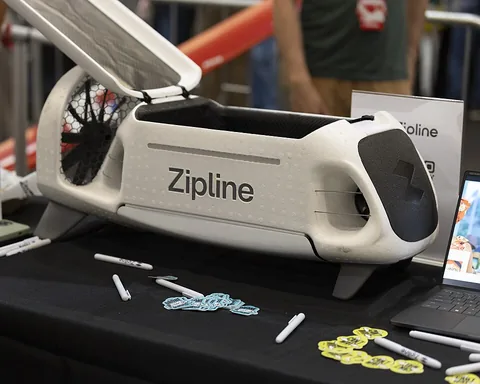
Yeah. Funny enough, yeah, because, yeah, they're super interesting. I mean, look, to some extent, these were very different. I mean, they were all interesting and high-quality assets, very different. I mean, let's just go to Zipline. Biggest attraction of Zipline: N of one. You know, people know what they're doing, but they started off doing drone delivery of medicine in Africa, but the big business now is doing drone delivery in the United States. They have a contract with Walmart.88In November 2026, alongside the news of Zipline's round, Walmart announced an expanded partnership: up to 300 new drone delivery sites on top of the 21 already operating (The Next Web). They're doing a ton in Dallas. They're rolling out in other markets. That's the real positive here.
And there's just a huge shit-ton of logistics to make all that happen. The scary thing is, you're probably getting... If they've done 3 million deliveries in the US, you know, you probably only get five, 10 bucks a delivery, right? You've got to do a lot of deliveries to make this work, right? So this is an amazing company. I've not seen the numbers, but my guess is you don't get there on a revenue multiple. You get there on "this is the next infrastructure play." And if people are willing to have drones drop stuff everywhere, you can make out like a bandit. And it's a big story and a plausible story, but at 21 billion, you're really leaning into that Walmart contract. So that's amazing but scary.
Yeah, that was sort of the Waymo... That's why I brought it up as a comp. Like, they make sense if you ignore a bunch of things. It's hard to argue with the market position, and the technology is exciting, right? But the math may not pencil out to get our 3x.893x — returning three times the money invested; a good outcome on a single deal for a late-stage fund.
Agreed. And then fal, almost the opposite. It's not an N of one. They have a differentiated position in kind of video delivery, versus kind of more generic inference-based, Fireworks and all those. But yeah, in that broad market of people doing that, there is the argument, yes, there is what you said. I think, Jason, you said the trend is your friend. Right now, you know, the total third-party inference market, in other words excluding the foundation models, is 5 billion plus or minus, growing like a weed. So you probably get a couple of good years of growth there, but you would be scared that the dynamics of that industry, which is wildly attractive now, could change at scale.
I mean, you'd be tempted to do that one just because it's worked so well. I mean, we looked at these inference providers early on, and incorrectly... about the long-term structure of this industry. It turns out you might be right in the end, but when demand is trebling, quadrupling every year, no one gives a shit about the long-term implications. So when you look at that, you know, at 1 billion, 2 billion, 3 billion, they've been great. And at 16 billion, you might be closer to the end than the beginning. So you are driven back to Harry's choice, which is, maybe I'll just put it in Revolut, who are busy destroying... yeah, taking away the business of every European, you know, retail bank and taking their young customers.
And, you know, the attraction about that, to your point, Harry, about the next 20 years, is when you look at the demographic of their customers. I mean, Revolut, even though we call it a bank, it's mainly money movement. It doesn't do a ton of lending. But over the next 10, 20 years, all those customers who are, you know, 19 to 25 today are just going to get older. They're going to want mortgages. They're well positioned to be the biggest bank in Europe.
They are obliterating European incumbents. We will see market share for Revolut unlike any we've ever seen for any historical incumbent, and we'll see a product suite much broader. And so both the depth of market and the product suite they have means I really do think there's a 4x from here, with the downside that we have key-man risk90Key-man risk — a company's dependence on one person, without whom it could lose much of its value. on Nik.91Nik Storonsky — co-founder and CEO of Revolut; born in Russia in 1984, he studied at the Moscow Institute of Physics and Technology and was a trader at Lehman Brothers and Credit Suisse. Do not let him leave the building. I want him near no roads, cars, any moving objects. Okay, Jason, you mentioned Fireworks and the security incident there. Do you want to touch on that? Or we can touch on the security M&A, because CrowdStrike and Palo Alto92CrowdStrike and Palo Alto Networks — the largest American cybersecurity companies; both are actively buying startups that secure AI agents. have been making...
07Fireworks and the hunt for API keys
Jason calls stealing AI API keys the crime of the year and expects everyone to get hit.
Well, I think the Fireworks thing is interesting from a security perspective. It's niche, but, you know, Fireworks has had two major breaches in this month, or in the last 30 days. It's pretty bad. Two things that are interesting to me. One is that everyone's trying to steal API keys93API key — a secret string by which a service identifies a customer and bills them. Whoever has the key spends the owner's money. for inference. They're all trying to steal Anthropic and OpenAI keys, and they have massive swarms of bots. And everyone's been hit by this, right? Railway94Railway — American cloud platform for deploying apps; its competitors include Render, Fly.io and Northflank. was hit by this. North Zone, or Northgate, the other competitor, is hit by this. They've been hit by this. And the genesis of this is trying to steal any Anthropic or OpenAI tokens you can. And I, as an individual user on Ultra on Claude,95Ultra — Claude's $200-a-month plan: on October 30, 2026, Anthropic renamed the former Max 20x plan to Ultra. my spending, I didn't even know, was set at 100,000 by default. So if someone stole mine, because it was on Fireworks in an eval, they could have charged 100,000 in minutes. That's what they do.
ExplainerHow stolen AI keys make money
An API key is essentially the password to an account with a model provider: whoever owns the key pays for everything done with it. That has turned stolen keys for Anthropic, OpenAI or cloud platforms into a criminal commodity of their own, which the industry calls LLMjacking or token jacking.
Keys are stolen from environment variables on hacked developer platforms, from infected npm packages, and from code accidentally made public. They are then checked automatically, within minutes, and either used to run models directly or resold as "cheap inference" through intermediary proxies. In August 2026 Unit 42, Palo Alto Networks' research group, described a case in which stolen access ran up nearly $1 million on a victim's bill before anyone noticed; Wiz described one in which a single stolen cloud key made about 1.7 million calls to Amazon Bedrock in 13 hours.
The defenses are short-lived keys, hard spending limits, alerts on spending spikes, and rotating every key immediately after any breach at a provider.
These crime syndicates steal these, they scrub it, you can get cheap inference, and there's so much demand for it, as we're talking about, right? They can spend that 100,000 in seconds. It's gone. And that's what happened. And Fireworks was hit twice. Everybody's been hit. And any way you can get inside of someone's infra and take these keys, people are going to do it. It's the most lucrative criminal trade you can do right now, right? It's better than selling Rolexes you steal off someone's wrist in London. This is the crime of the year, and it's only going to get worse. And I know a lot of folks... I know tons of folks that have been hit similarly. I wouldn't say tons. I know multiple other folks that have been hit similarly.
And you're going to be hit, and it's exhausting, and it's just beginning. And the flip side is, you know, going also back to fal, like, this is terrible, right? But no one can leave. You can't replace the capacity. Where's Harvey going to go,96Harvey — AI platform for lawyers founded in 2022; valued at $15.5 billion in fall 2026. right? Where's Stebbings, O'Driscoll and Lemkin's startup going to go? Like, you just can't. All these guys just have seven-figure-up contracts. There's nowhere to go. But boy, everyone's going to get just more and more sophisticated to just steal your API keys. Can Harvey trust them now, right? Harvey runs on it, they've trained their models, they've done all this, but what are we going to do? And it's just very interesting and very complicated, if even Fireworks couldn't do anything about it.
That was point one. Was there a second point?
Oh, just that it's going to happen to everybody, man. Listen, Fireworks is not that old of a company, right? So maybe, as embarrassing as it is, their SecOps and DevOps,97SecOps — the security operations team, which watches for attacks and responds to incidents. DevOps — the engineers responsible for deploying and running infrastructure. it seems a little bit immature, right? I guarantee you it's better than 99% of SaaS companies that just laid off their whole SecOps team last week as they're trying to get fit, right? Just, everybody's going to get hit, and everyone's data is going to get stolen. And again, it's great for the big guys, it's great for the big security companies, it's great for folks figuring that out, because it's just... I mean, everyone got hit in Black October,98Black October — what Wiz researchers called October 2026 in their blog, when several AI developer platforms reported breaches at once (Wiz). or whatever we called it, right?
Everyone, and it's only going to get worse with these swarms. Everyone said they got hit by swarms of bots, swarms of them. It's something we just haven't really seen before. Fireworks is... And, you know, maybe they didn't disclose everything that happened, but they were pretty clear that these swarms are difficult to mitigate. Yeah, it's terrible. You know, this and downtime and outages were the things... That's why I wanted to sell my last company. It's so stressful. Wiz said99Wiz — cloud security company founded in Israel in 2020; in March 2025 Google agreed to buy it for $32 billion. nine of the leading AI developers disclosed a swarming incident in October alone. Nine. Wow. Unit 42100Unit 42 — Palo Alto Networks' threat research group. In August 2026 it described a case of "token jacking" in which stolen access ran up nearly $1 million on a victim's bill before it was detected (Unit 42). said bills are 1 million dollars before detection. If it's 100K by default for, like, basically a prosumer key, pretty easy to steal a million pretty darn quickly, right?
08Deals and slow companies
Rory sees the security acquisitions as textbook M&A, while Jason reads Dialpad’s deal for Ada as a sign that older companies can’t keep up with AI-native ones.
Guys, which M&A is the most interesting, do we think? CrowdStrike and Palo Alto, Dialpad, Fox and Roku,101In June 2026 Fox Corporation agreed to buy Roku, the largest smart TV platform in the US, for about $22 billion in cash and stock; the deal is expected to close in the first half of 2027. the potential of Silver Lake and PIF taking out Unity.102Unity — American game engine behind most mobile games. Silver Lake — the largest private equity firm focused on tech; PIF — Saudi Arabia's sovereign wealth fund. I think you have to break them up.
I think you highlighted two categories of M&A that are kind of very classic. Bigger company acquiring an adjacent product, and that's the CrowdStrike, Palo Alto. They're all doing kind of small, you know, 400 million plus or minus, perfectly great outcomes, you know, products in agent security, which totally makes sense. You're the end-to-end platform, agent security is the number one issue. I mean, you know, CrowdStrike and Palo Alto are consummate acquirers, and they know what their job is. If the new security issue is agent security, then just go do acquisitions, deal with the problem. So that's just kind of in the category of incredibly obvious.
You know, I think one of my colleagues had looked at the space, and there's typically three or four companies in the space. The trick is to buy the hot one, get intercepted by CrowdStrike or Palo Alto fairly quickly. So that made sense. And then the same thing with the coding agents, Meta and OpenAI buying adjacent kinds of products, all about the software development lifecycle, which is all just being redone from zero. So I think those two groups of acquisitions, the cyber and the coding agents, are very classic. Incumbent buys product to meet the needs of an evolving technology market. And they all make total sense. And look, great to see, because, you know, there's been a dearth of venture M&A, and it's nice to see, you know, these guys just coming in and making good offers.
When you get a Dialpad103Dialpad — American AI platform for calls, video and contact centers, founded in 2011 by Craig Walker, formerly head of Google Voice. buying Ada104Ada — Toronto company that has built AI agents for customer support since 2016; after its 2021 round it was valued at $1.2 billion. On November 4, 2026, Dialpad announced it would buy Ada with its own stock; according to The Globe and Mail, the deal values Ada at about $430 million (Dealroom). for 400 million in stock, at a 21 valuation, if you're the Ada investors, are you like, yay?
I think, disclosure, we actually also sold the company to Dialpad in the past, so I have an investment in Dialpad, and we actually had a competitor to Ada, which we sold to Zoom105Among Ada's competitors, Zoom bought Solvvy, a startup making customer support chatbots, in 2022. three or four years ago, right? So the good news is I have some form in the space. I think if you're Ada, you are a very good pre-LLM chatbot, services chatbot, right? So the problem is you're up against the fact that you had a prior generation of technology. Maybe you've replatformed to an LLM-first technology, but you probably kind of lost the wind out of your sails. So your ability to now compete with, you know, at some level Sierra, maybe Decagon,106Sierra — the company Bret Taylor and Clay Bavor founded in 2023 to build AI agents for customer service; Decagon — a San Francisco startup with a similar product. Both are the main rivals of earlier chatbots like Ada. is just hard. So I think getting acquired as part of a bigger company makes sense.
You know, it just depresses me a little bit. Related, it's related to this, we can talk about the deal. There was some Marc Andreessen107Marc Andreessen — creator of the Netscape browser and co-founder of the venture firm Andreessen Horowitz (a16z). clip this week about it, and it really resonated with me, which is, you know, when maybe a year and a half ago folks started talking about AI-native startups,108AI-native startup — a company that builds its product and the way its team works around AI from day one, instead of bolting AI onto an older product. it kind of triggered me. I don't really get triggered, but it got triggered to me. It's like, oh, what magical sauce do they have using GPT-3, right? Well, these kids are so brilliant because they grew up in the age of AI. I'm like, I think a smart CTO or two can figure this stuff out, right?
And indeed they can. But as we're rolling into 2027, guys, like Ada, I'm just so disappointed that these non-AI companies can't get their acts together. They can't run their companies differently than in 2021, '22, '23. They can't move faster. Their teams are stuck basically shipping at the same rate. Hooray, bolt an LLM on. But look at poor Canva,109Canva — Australian online graphic design service for non-designers, founded in 2012 by Melanie Perkins, Cliff Obrecht and Cameron Adams. right? Too effing slow. Everyone's too slow. And, you know, this isn't a Bending Spoons deal,110Bending Spoons — Milan-based company that buys well-known tech products, such as Evernote, WeTransfer and Vimeo, and slashes their staff and costs. but if you can't accelerate your team, you've got to find some sort of, I guess, soft landing. I added this to the list because everyone said this was an amazing exit. I don't view it as an exit. If there's no liquidity, I don't think it's technically an exit.
It may be the right thing for both sets of investors, right? Dialpad gets another player, probably with 50 million of revenue, that's somewhat enduring, and some folks. But man, I'm just bummed that people can't get their act together. It is really true how much effing faster, quote, AI-native startups are than four or five years ago. I just did an investment this week, and you could pick at it a little bit. I love it, but man, the rate that they're pushing out software is maybe the fastest of anyone that I've seen. And just culturally, you know, for your portfolio, 12/31 might be the time you've got to kind of give up. You had two years, and, you know, you get these email updates: we're going to put together, next year, an AI-native team internally. I mean, that was your 2025 plan, guys. All these CEOs and startups, they have the right ideas. They all get it. They're just too slow.
And I've just about... I mean, I kind of have given up, right? So is this an exit for the Ada investors? I mean, I don't think it is, but it's probably the best option that's out there, right? Craig's a great CEO,111Craig Walker — founder and CEO of Dialpad. After the deal he will run the combined company, and Ada's CEO Mike Murchison will become its chief AI officer. right? Dialpad will find its way to an exit. They're probably at 600 million or something like that, right? It's still going to be brutal in today's IPO world, but at least they'll find a way to an exit. But man, no one... They can't get... They just can't move. They can't move like the kids these days. And kids could be older. Like, it's actually not even an age thing, but it is truly a generational thing.
If I was Orlando Bravo,112Orlando Bravo — co-founder of Thoma Bravo, one of the world's largest private equity firms, which specializes in buying software companies. Rory, I would be paying 50 million bucks a year to Mr. Jason Lemkin to come in and talk to our CEOs about how to make our very monolithic, old, stale organizations AI-first. Make every CEO see what Jason sees, because I think that'd be the most valuable $50 million any large PE fund will spend.
Yeah. Oh, I thought you were going to say you're going to have him talk to all the companies you want to acquire and make them so depressed about their prospects on a standalone basis that they'll sell to Orlando for three times run rate.
Very possibly. I mean, that would be great too for Orlando. You know what the problem is, too? I've been thinking about this a little bit. Sorry, you don't have to go down this rat hole for too long. Then you might think, okay, so that's true, right? The pre-AI companies just can't get there fast enough, right? But why don't the AI guys just buy them, right? Why don't you just buy them, buy the contracts, buy the customers, and have your kids just buy them out, right? And actually, the problem is the AI-native guys are just growing too quickly. It's not worth it. It's never worth doing. It's not worth it. You both have to be kind of growing within a band for this to be worth it, right?
It's not worth it, because the truth is, you buy someone else's old contracts and then you incur all their problems. And the customer's never grateful to you for solving them, they're just mad at you. So I agree. I mean, the point is, it's what you said, Jason: for all these older companies, it really is march or die. You either get with the program or you're toast. And it's not even interesting to say it anymore. It was interesting two years ago when you started saying it. Now it's just a given, so let's move on. Okay. It's like shape up or shape out.
09Agents vs. per-seat pricing
Jason is convinced the market rewards companies that benefit from agents and will leave seat-based businesses in the doldrums.
Sources: Cloudflare earnings releases; The Next Web on Q3 2026
Well, Cloudflare's kind of done that.113Cloudflare — American company that speeds up and protects websites and now also sells a platform for running AI agents. In May 2026 it cut about 20% of its staff, and on November 5 it reported third-quarter revenue of $782.5 million, up 39% year over year, its fastest growth in almost four years. I mean, they shaped up, baby: 20% layoffs earlier in the year, and they're crushing, up 39%. And then you've got, you know, Freshworks crossing a billion114Freshworks — Chennai- and San Mateo-based maker of customer support and IT service software. In November 2026 its annual recurring revenue passed $1 billion (Fortune). with 30% fewer employees. God, efficiency at its finest, huh?
Palantir at 2 million,115Palantir — American maker of data analysis platforms for intelligence agencies, the military and corporations; one of the most valuable software companies in the world. 2 million per employee. It's very enterprise, but it's 2 million per employee, growing 100%, growing 98%.
So we just didn't need the people.
I think AI may be the excuse, and we didn't need the people, and AI opened our eyes to the reality of it, when it was always staring us in the face in 2021, working 20 hours from home and doing our four side hustles.116Jason is mocking the remote work of 2021, when some tech employees quietly held several jobs at once. It was always true. It's just AI made it clear.
I think that's the real truth, yes. I mean, to some extent there's probably... there is AI leverage, but I think the real truth is, yes, especially when you've got that kind of growth, if you've got a giant secular demand pull, you don't need to do all the marginal things that you were doing in 2021 to make revenue happen. You just have to staff the machine and take the business as it comes, right? And therefore you can have compelling efficiency. So I do agree. I think it is eye-opening how efficient some of these companies have been able to be. Which makes sense. I mean, if you have two- and five-million-dollar contracts like Palantir, and, you know, if revenue doubles, you probably can't hire headcount fast enough to catch up. You literally can't stop your margins going up, which is a wonderful place to be.
The one interesting... Just for Cloudflare, we don't spend too much time on it, and even Twilio,117Twilio — American company that sells developers APIs for calls, SMS and email. right? These are not brand-new companies, right? We're just talking about AI-native versus non-native. Cloudflare may be a more agile company, still founder-run,118Cloudflare is run by its co-founder Matthew Prince. than Twilio, right? Which is not. I mean, who knows what it would be like if Jeff was still there,119Jeff Lawson — co-founder of Twilio; he stepped down as CEO in January 2024 under pressure from activist investors. going back to when he was on our show. I think it'd be even better.
Putting that aside, sometimes you wonder, you know, how big a deal are agents? Not AI, not LLMs, but agents, right? It's still, in some ways... I run everything on agents, but it seems niche. But this is what's fueling Cloudflare from 20-some-odd percent to 39% growth at almost 4 billion in revenue.120Fact-checkCloudflare's third-quarter 2026 revenue was $782.5 million, or about $3.1 billion annualized, not almost $4 billion (The Next Web). It's agents, and it's agentic spend at Twilio too. And in some ways, for 2027, all I want to talk about is agents. This is what's driving it. We had LLMs, we had inference, those are good ones. I know we just did fal. I feel good about the deal. It's fine. It was a good 2026 deal, but all I want to talk about is how agents are changing buying, building, sharing, learning, because it's going to be the majority of everything in our space, as agents are going to do it all. And Cloudflare is a public beneficiary of it. So going forward, for the fund, if it's not an agentic beneficiary, I don't want to hear it anymore.
Is that why Atlassian falls121Atlassian — Australian maker of Jira, Confluence and Trello. In November 2026 its shares fell about 12% after it guided to slower revenue growth (TIKR). after it warns on seat and subscription growth? Is that it? If it's not agentic, I don't want to hear it.
Yeah. Listen, we all love Mike,122Mike Cannon-Brookes — co-founder and CEO of Atlassian. but his idea... It was how critical the front end and the UX is, on 20VC. I just didn't love it. I mean, agents don't care. They don't care about your UX and your UI, and they don't care about any of this stuff. Humans do, but they're a declining percent of everybody's user base. The percent that are humans is declining. Even in vertical B2B, it's declining.
Yeah, I mean, you talk Atlassian, they had the April of last year, the world is ending. Then it exploded in the back half of the year, probably a relief rally. And now it's a little bit like, okay, you're not dying immediately, but the new trend is not your friend, because the new trend is agents, not engineers. And that means the seat license thing123Per-seat pricing — the SaaS model in which a company pays for each employee with access. If agents do the work, fewer people need access, and revenue falls. is brought into question. But still up on the year.
Jason, you said about Canva earlier, in a challenged bucket, as well as Figma124Figma — online interface design tool; it went public in July 2025 at $33 a share. falling below 10 billion dollars for the first time in a long time. I think it's about 10.2 billion. Any thoughts there?
Well, my meta thought is, and again, I don't want to talk about politics, well, we have a new Congress, and we're going to have a new chair of the banking committee and others. We haven't had a change in the executive branch. I am worried, even with that, antitrust gets harder. I mean, Figma... Listen, I know maybe Dylan's happier125Dylan Field — co-founder and CEO of Figma. running the company. He may well be, right? You know him, Harry, I don't know him. He may well be, right? But man, it would just... It would eat at me, not every day, because you've got to move on in life, but we've now fallen into the single-digit billions, when I had 20 billion plus126In September 2022 Adobe agreed to buy Figma for $20 billion, but the deal was called off in December 2023 after opposition from EU and UK competition regulators, and Adobe paid Figma a $1 billion breakup fee. a big, I think, a big package for him and others, right? Plus instant liquidity for the investors, in what, 2022? I mean, this is just a tough one on the lifetime IRR,127IRR (internal rate of return) — the main measure of a venture fund's success, which accounts not only for how much was made but how quickly. right?
And do you really think you'll get back to 40 or 50 billion? Do you really think agents are going to be using Figma? Even though the numbers are great for Figma, right, the trends are not ideal. And it's just... I just worry antitrust is going to get harder, and that we had this brief window where it was good. And if it gets harder, man, it's just a bummer for everyone in the venture ecosystem. It's a bummer.
I agree. At the same time, just to commemorate success, I mean, you are dealing with a 40% plus or minus revenue grower, very strong free cash flow, even though they're still having positive... So the trends are good, and the whole hit was because they're spending more on AI, so that's going to have more gross margin hit. So yes, I agree. Yeah, it's the thing they tell you when you have these M&A discussions, and someone says the old boring statement, but it's actually boring because it's true: hey, you're getting an offer of X now. If you turn down X, you could work for the next three years, do an amazing job, because Dylan has done an amazing job, grow your damn company 40% a year, get it free cash flow positive, get the damn thing public, and at the end of that, you're going to be worth half what you are today.
You know, no one ever said capitalism was fair or easy. And that often is the argument for taking that preemptive offer, which obviously they did, except the government wouldn't let them. But you're right, Jason, it's going to psychically hurt. I don't know him well enough to know how it gnaws at him, but yes: I'm doing all this to get back to half what I would have had for free in 2022.
It's also really hard, when you go into these companies, if you visit them, right, you'll see it really is hard to retain people. It creates a malaise over it for the high performers, right? You can fix it with RSUs,128RSUs (restricted stock units) — shares a company promises an employee and hands over gradually as long as they stay. and you can fix it a little bit with additional grants and targeted stuff, but there is just this malaise at folks. Even, I mean, Figma, like, okay, we can talk... I want to talk about a second point, about whether seat businesses are stable, but yeah, almost 40% growth at its scale, you can't argue with it, right? It's S-tier. But with the stock so far down, this malaise just sets in. It sets in. And as founders, you can hunker down: I'm still worth a billion, right? Or whatever, 500 million, what the hell, doesn't matter. It's not liquid anyway, right? This is my life's work. But man, that malaise, it's just... It's hard to pull out of it, right? And it's hard to attract new people, right? So you double down on the existing folks. And I don't have an answer to this one. When the malaise sets in, it's just tough.
The one thing I would say, Rory... Listen, again, I'm not an expert in the public markets. I'm not even an amateur. But I truly believe, if you look at all the most impacted companies, right, they are seat-based ones that the markets do not believe will benefit from agents and AI. And I believe Figma, unless it radically changes, is going to be in the doldrums, relatively speaking, right? The ARR multiple is still like seven or eight, but it's going to be in the doldrums, because people believe seat models, at Monday, at HubSpot,129Monday.com — Israeli work and project management platform. HubSpot — American CRM for marketing and sales. they're just terminal. The markets believe these companies... not that they're going to die, maybe "terminal" is wrong, but that more and more is going to be agent-driven, and they'll bid up Cloudflare and Twilio. You know, moldy oldie Twilio. And I don't see any way that the seat-based guys are coming back.
But Jason, okay, so you are the new CEO of Figma. What do you do differently, then? Okay, I hear all the... What do you do differently?
Well, okay, first of all, I think I knew, like, 10 months ago, right, when the world changed. I'm not close enough to Figma today, right? I will say this: agentic design. The ability to go into an agent, into Claude, into Replit, into whatever, and say, I want a perfectly designed end-to-end experience for my app, does not exist today. Design modes in these apps are a joke. I use them all day. I use Replit's canvas design today. It's a joke. Claude Design130Claude Design — an Anthropic product launched on April 17, 2026, that turns a description into prototypes, mockups, slides and marketing materials and hands the finished design to Claude Code (TechCrunch). is really neat, and it's built in. It's still kind of a joke. Lovable and Replit are both at a billion. They are great tools for product people, but for design, they are a joke. So it's not too late to do that, but you would have to just own it.
Like, I would go all in on agentic design. We will deliver, you know, a Notion...131Notion — app for notes, documents and knowledge bases, known for its clean, minimalist design. I just pick Notion because it's famous for that. We will build you, agentically, your app. Every page, every element of it will be as good as Notion or better, using our AI and our agents. And it's going to cost us a lot of basis points. It's going to cost us a lot of gross margin. And we're going to have to cut a bunch of things for our enterprise customers, which is where all our growth is. But if we don't do this, we'll be like Adobe. Like, we'll have our role, our workflow role, but we'll be part of the past, because agents will bypass us. You know, we talked a little bit when Claude Design launched. I genuinely think, and I use all these products every day, don't get me wrong, thank you that they exist, they are a joke from a design perspective. They're a C-minus. So there's still a chance, but you can't do it at the Canva pace.
I actually agree. And, you know, we've looked at the creative market, and I'm instinctively not creative, but one of the things we did was, we worked with two or three graphic designers and literally watched them do their work, and had them do the same task in Canva, Figma, and then some of the modern video editing tools. And it's exactly what you saw, Jason, is that when they fall into one of these modern ones that's very agentic-based, it all just goes quicker. They just type in what they want, and it shows the node display.132Node display — an interface that shows the steps of a job as connected blocks, or nodes; many AI image and video tools work this way. And when you just look at that flow... I mean, because then you ask them, well, why? What was the experience like in each of these three or four different products? And you get some version of: it just happened easier.
It was, you know, "I was easier able to launch and just do it seamlessly with the agent." And you didn't get that experience in Figma Make133Figma Make — Figma's AI tool (2025) that turns a text description into a working prototype or app. and Figma, whatever the other one is, right? There's two different ones, depending on if it's kind of graphic or coding-type stuff. But yes, you have to start with the product and really make it for that customer, really make it super usable.
10California rejects a billionaire tax
Rory reads the defeat of the billionaire tax as proof that voters are smarter than they get credit for: they swung to the Democrats but refused to wreck things at home.
Tim, is there any that I've missed? The wealth tax134Proposition 40 — a California ballot measure for a one-time 5% tax on the wealth of residents worth more than $1 billion, which would have hit about 200 people. Voters rejected it on November 3, 2026, with about 52.8% against as of November 9–10 (KTVU). we can talk about.
I mean, lucky us, all the billionaires can come back home, right? It is always fun to watch California. And, you know, the country swung Dem like we haven't seen a Dem swing since 1974.135In 1974, in the first election after Watergate and Nixon's resignation, Democrats gained 49 seats in the House of Representatives. It was a real "we're done with these people, we're voting for the other guys," top to bottom. I mean, you know, we might have a Dem senator from Mississippi.136The Mississippi Senate race was decided after the recording: on November 11, 2026, the AP called it for Democrat Scott Colom over Republican Cindy Hyde-Smith. Colom became the first Democrat elected to the Senate from Mississippi since 1982 (Mississippi Today). It's, you know, amazing, amazing swing. And at the same time, California, the most prototypically Dem state in the country, at some stage said, yeah, we're doing all that, guys, but we're not doing this. We're not doing this wealth tax thing, which is really interesting.
What's the takeaway from that, then? I'm a Brit.
I think, one, there's generally a suspicion of propositions.137Propositions — laws and amendments put directly to California voters; there are often more than a dozen on a single ballot. We talked about this six months ago: there's generally a "no" bias in propositions, because I think California's recognized it's an incredibly stupid way to make legislation. So there is kind of a default no. And then on top of that, I think the no vote won the argument, right? I think they made good noise. And look, it's impressive, because no one in 2026 is going to say, yeah, I love me those tech bros, I love me those tech billionaires. But, as yet, you know, give credit to the Google founders, give credit to Stripe.
They were able to make the case: look, this is just not good, right? You lose these people, they'll go to another state, you lose their income tax, you'll end up net down. And I think, fundamentally, I always say, I think the voters are smarter than we ever give them credit for. And they basically said, yeah, we're going to get rid of the old lot, we're going to vote, make a clear signal, we're done with what we have in Washington, but we're just not going to screw things up totally here, people. Because it was a no on that one. That didn't pass. And then the one that banned them doing it again, which was, I think, Prop 42138Proposition 42 — an amendment backed by opponents of the billionaire tax that bars future wealth taxes. On election night it was leading 51.6% to 48.4% (States Newsroom). or whatever, the one after that, actually passed. The one that says not only are we not doing a wealth tax, but you can't try and do it again. So I think it was a very emphatic... I mean, an emphatic mid-50s vote, but it was a clear "please don't do this." So a big loss for the side that wanted it. I thought it was good.
The only thing I might add is, you know, Sergey and friends139Sergey Brin — co-founder of Google. According to the AP, he put more than $100 million into the campaign against the billionaire tax; opponents of the tax spent about $378 million in all. did outspend the unions 10 to 1. I do think that impacts propositions, if nothing else.
Especially propositions about money. Exactly.
I think it's a very... I think I genuinely think this was very important, because, listen, again, I don't network the way Harry does. I don't have his network. But I spoke to two quiet billionaire founders, but not CEOs, who were both planning to leave. Not the Zucks. They were already planning to leave when this happened. And it's not just about this. It almost ties back to the beginning of this conversation, with Sequoia in London. I mean, it's just a bummer if the best people leave California.
It's even a modest bummer that Elon, politics aside, that Elon left and went to Texas.140Elon Musk moved from California to Texas in 2020; Tesla, SpaceX and X later moved their headquarters there too. It makes sense for his current businesses. It was going to happen anyway. It's a modest bummer. The more and more folks that just leave... It's not just billionaires. These are not passive wealth managers managing strings of laundromats and FedEx... These are folks building, right? You don't want them leaving California. You just don't want it. And I genuinely believe, if this passed, it would have sent a clear message that California is toxic to the most successful entrepreneurs. Parker said it, from Rippling,141Parker Conrad — founder and CEO of Rippling, a platform for HR, payroll and IT. and others. And I think it would have... I genuinely believe it would have had a domino effect. Not as big... It's easy to say things on Twitter, not as big as they said, but I knew folks already planning to leave. It's just not good for the center of AI and wealth.
I mean, Anthropic's going to generate, for the average Anthropic employee, 41 million dollars in the IPO.142By SaaStr's calculation from Anthropic's prospectus, the company's current employees hold stock and options worth about $216 billion, about $41 million for each of roughly 5,300 people, with another $160 billion or so reserved for future hires. Each co-founder is selling 3.38 million shares in the IPO, about $264 million at the top of the range (SaaStr). The average employee, and that's average, 41 million dollars. You want to kill that? You want that to go to Miami? You really don't. You really don't. 41 million dollars, the average employee. More wealth created in this IPO, far more wealth than any other IPO has ever created for employees. The founders are down to 1% each, 1-point-something percent, but crazy, right? Crazy. 216 billion going to current employees and 160 billion in the pool. Wow, that's real money. Yeah, it's real money. Nothing like that. You don't want them leaving. I think Anthropic's a hot enough company, it needed to be here, but maybe they could have moved. Maybe they still could have attracted some talent to the beach. It's possible.
But I think, even if the company doesn't move, people can move when they're making their tax decisions. So we agree. There's nothing more to say. It collapsed. As I say, super interesting to see it collapse in the context of an otherwise massive blue swing, which I would argue, as I say, shows people were awake and voting for a clear centrist majority. So all good.
This 41 million average for Anthropic, right? Founders are each selling 264 million, which I don't think is a big deal, right? But it's pretty crazy.
It is. Good for them. Wow. All right, boys, rock and roll. What a busy week, huh? Thank you so much for joining me.
No problem. See you soon.
AdZero Hash, Deel, Framer
But before we leave you today, every great software company eventually runs into money. Uber had to move it, Shopify had to hold it, Airbnb had to settle it. Money movement stopped being a fintech problem. It became a software problem. And increasingly, God, it's an AI problem too. Zero Hash is the infrastructure that makes global instant money movement seamless. One API integration for stablecoins, digital assets, and modern payment rails, so builders can stay builders. Zero Hash powers some of the world's largest enterprises and financial institutions, including Kalshi, Stripe, Morgan Stanley, Gusto, and Interactive Brokers. If you're thinking about stablecoins, digital assets, and the future of money, it's time to talk to the team at Zero Hash. Visit zerohash.com/20VC to learn more.
While Zero Hash powers your crypto infrastructure, Deel helps you build a global team. We get it. Global IT can be a headache. New hire in Tokyo, but the laptop, well, it's stuck in London. Someone left the company last week. Wait, is that access already revoked? Deel IT handles hardware, software, and access to it across 130 countries from one system. You have the right to be impressed. Brands like ElevenLabs are already managing their global IT at scale with Deel. It's one system, one source of truth, with zero vendor gaps or manual workarounds. So build your global team with Deel. Visit deel.com/20VC and start expanding your business today.
While Deel builds the team, Framer builds the site. So if you want AI that builds your real website, not just the throwaway first draft, that is Framer. Framer is the AI website builder that helps creators, teams, and businesses ship production-ready sites faster than ever while getting every detail right. Prompt, inspect, edit, and publish in one place at a whole new pace. Agents and humans work in tandem. Agents bring speed and scale. You bring taste, judgment and control. The work lands on the canvas and stays editable. Build custom code components, manage CMS content, optimize SEO, and audit for issues, all in one place.
Enterprise-grade hosting, security and 99.99% uptime SLAs, trusted by leading brands like Perplexity and Miro. Learn how you can get more out of your site from a Framer specialist, or get started building for free today at framer.com/20VC for 30% off a Framer Pro annual plan. That's framer.com/20VC. Rules and restrictions may apply.


