



The a16z Show
Chapters
We understand the macro-strategic picture far better than decades ago, Bostrom says, but one missing consideration can still flip the answer, so he has no confident view on which direction is good.
Read the chapter- Bostrom compares strategy to a parity problem: knowing seven of ten binary digits instead of three still leaves you in the dark about whether their sum is even, and so whether to head north or south.
- Burger quotes the misconceptions section of his website: people think he’s a gung-ho transhumanist, anti-AI, or a consequentialist fanatic.
- After Deep Utopia, about what happens if things go right, some concluded he no longer sees serious AI risk, but Bostrom says the books simply have a different scope and his basic views haven’t changed.
Bostrom wrote Deep Utopia as pre-reading for whoever may one day have to decide what future humanity wants.
Read the chapter- Bostrom was annoyed that talk of a world with superintelligence stopped at labor-market effects and retraining, when following technology to its logical culmination raises questions about the meaning of human life.
- People who one day walk into a room to choose how we might change ourselves, he says, could use ideas, concepts, questions and a spirit of generous curiosity about many human values.
- Lazzarin notes that the book implies such a world is possible, and Bostrom agrees: when he wrote Superintelligence, the uncertainty was never whether it could be built, but what it would lead to.
Bostrom has never favored stopping AI, but he wants the option to slow down briefly when safety lags, and worries that a crude campaign could harden into a permanent ban.
Read the chapter- A very time-limited pause, Bostrom says, could allow extra safety work on a system “before the knobs are all turned up to 11.”
- A leading lab can’t slow down for more than a few weeks without handing the initiative to a less scrupulous rival, which Bostrom doubts is the best way for humanity to proceed.
- Vilifying AI and setting up a global regulator over all data centers could entrench an unchallengeable orthodoxy, he warns, and never developing superintelligence would itself be an existential catastrophe.
- That isn’t far-fetched to him, given how much anti-AI sentiment has grown over the past 18 months to two years, before anything bad has actually happened.
Lazzarin hopes we can set an AI’s payoffs directly; Bostrom answers that alignment methods aren’t that precise, and smarter models make behavioral tests less reliable.
Read the chapter- Lazzarin asks whether an AI could be offered an infinite reward lasting a femtosecond for retiring peacefully, and whether we should worry about building a “utility monster.”
- He cites a home-hacker experiment going around X in which someone nudged a few neurons of a Qwen model to make it blissful, evil, psychotic or even Christian.
- Bostrom explains that a situationally aware model can behave well under testing and differently once it thinks no one is watching, and frontier models already reason in their chains of thought about being observed.
- His main hope is to align slightly superhuman systems well enough to have them design the next, better-aligned generation, landing in “a kind of attractor basin.”
For people alive today, Bostrom’s model puts the optimal delay at months or a few years, because every year of waiting costs millions of lives.
Read the chapter- Flipping Yudkowsky and Soares’s title, Bostrom argues that if nobody builds it, everyone dies: 95% of everybody who ever lived is already dead.
- Without aging, life expectancy would be on the order of 1,200 to 1,400 years, which he calls a conservative lower bound; Burger estimates that about 150,000 people die every day.
- If risk falls very fast during a pause, there’s no point waiting long, and if it falls very slowly, there’s no point waiting at all, so a long wait only makes sense in the intermediate case.
- Burger points out that Waymos are empirically safer than human drivers and every obese person “should be on Ozempic,” yet people still drive and go untreated.
- Life expectancy, Bostrom says, has been rising two or three months a year, while we need more than one year per year, which seems very doubtful to him without superintelligence.
In practice the question isn’t a single threshold but which routes to more capability labs choose to take.
Read the chapter- Bostrom describes the paper as a simple model of how the urgency of people dying from natural causes interacts with the risk parameter.
- Looped transformers and reasoning in internal neuralese can boost capability, he says, but let models do more thinking between the outputs we can see.
- Adding parameters might buy the same boost at lower cost to safety, and frontier labs could coordinate to refrain from the most problematic methods and compete on other dimensions.
Bostrom has no firm view on whether nationalization is a risk, but lists what today’s commercial setup gets right.
Read the chapter- The case for, as Bostrom puts it: this is more powerful than nukes, shouldn’t be left to a profit-maximizing corporation, and one big project like the Manhattan Project would have much better information security.
- The case against: nuclear weapons came out of a military context, the Manhattan Project was so secret that even the vice president was unaware of it, and today consumers, think tanks, external evaluators and investors all take part in AI.
- By the Gini coefficient, Bostrom says, global stock ownership is less unequal than a US national project would be, even if every American shared in it equally and everyone else got nothing.
How much existential risk you accept for superintelligence, Bostrom says, depends on whether you think human life as it is today is the ceiling.
Read the chapter- Bostrom believes we are entering a critical period that will shape the long-term future of Earth-originating life.
- If the ceiling is today’s humans with a slightly higher standard of living and some new medicines, it’s worth some risk but not an enormous one, especially for the well-off in rich countries.
- If, instead, “we ain’t seen nothing yet” and super-felicity, cognitive uplift and emotional depth lie beyond this “monkey-like creature,” it may be worth risking more for a shot at them.
Bostrom calls an objective purpose an open question and expects AI to outdo us at philosophy too, which makes now the time to act.
Read the chapter- If we live in a computer simulation, Bostrom notes, its creators probably had some reason for building it.
- An objective purpose would exist, in his view, if understanding the facts led almost everyone to the same next step: a traditional theist picture has one, a strictly materialist one may not.
- Bostrom expects AI to surpass us in philosophy as it already has in math, perhaps leaving us only to make up our minds about what we want.
- While we still have something to contribute, he says, now is “the golden age for purpose and positive impact.”
Quotes
On AI strategy as a parity puzzle
“So I'd say maybe decades ago we knew three of these binary digits, and now maybe we know seven of them. So in some sense, we know a lot more, but as long as you remain uncertain about one of these, you're still kind of completely in the dark.”
Nick BostromRead from 03:30On the danger of a permanent pause
“A permanent failure ever to develop superintelligence, which I think it itself would be a kind of an existential catastrophe.”
Nick BostromRead from 09:51On models that notice tests
“They might behave one way in a test environment where they realize they are being tested, and then when they think nobody's watching, or later when they are in a position really to grab power, they their strategic calculation might change radically.”
Nick BostromRead from 14:16A reply to Yudkowsky
“Eliezer Yudkowsky and Nate Soares had this book, right? If anyone builds it, everyone dies. And it seems to me that we have a at least there's strong evidence for the claim that if nobody builds it, everyone dies.”
Nick BostromRead from 17:17On what AI could fix
“Desperate poverty, suffering of all kinds amongst humans and animals and many, many things where like these AIs, if developed well, could really like, you know, become like the cavalry that rides into the rescue at the critical moment in the battle.”
Nick BostromRead from 21:52On the Manhattan Project
“We have more transparency into these commercial developments than a Manhattan Project. Like even the vice president at the time was unaware that the Manhattan Project even existed.”
Nick BostromRead from 28:21On the posthuman upside
“If you think there's like a large, a huge space of sort of unfathomed upside there, then you might be more inclined to risk more to have a chance to have a shot at that.”
Nick BostromRead from 31:29On when to act
“Right now, whilst we still have something to contribute, is the time to sort of really try to have our whatever positive impact we are hoping to have in our lives.”
Nick BostromRead from 36:50
Summary
Nick Bostrom argues that waiting for superintelligence has a death toll of its own: every year of delay, millions of people die whose lives a safely built superintelligence could radically extend. In his model, the best course is to move swiftly to a near-final system and then pause briefly, for months or a few years, rather than freeze AI for decades. With a16z’s Eddy Lazzarin and Elena Burger, he also asks what behavioral tests are worth once models know they’re being tested, whether a Manhattan Project would beat today’s commercial labs, and why now is “the golden age for purpose and positive impact.”
Mentioned
- "Deep Utopia: Life and Meaning in a Solved World"04:28Bostrom explains why he wrote a book about things going right and why it doesn’t mean he has stopped worrying about AI risk.
- "Superintelligence: Paths, Dangers, Strategies"07:44Bostrom recalls that when he wrote it, the question was never whether superintelligence could be built but what it would lead to.
 Qwen12:27Lazzarin describes a home experiment in which nudging a few of the model’s neurons changed its personality.
- "Optimal Timing for Superintelligence: Mundane Considerations for Existing People"16:33Burger asks about the paper, and Bostrom explains how long to wait for superintelligence if the goal is longer lives for people alive today.
Show 6 more mentionsShow fewer mentions
- "If Anyone Builds It, Everyone Dies: Why Superhuman AI Would Kill Us All"17:17Bostrom turns the title around: if nobody builds superintelligence, everyone dies too.
 Eliezer Yudkowsky17:17Bostrom pushes back on Yudkowsky’s call to ban the development of superintelligence.
 Waymo21:02Burger’s example of a technology that is safer than human drivers yet hasn’t replaced them.
- Ozempic21:02Burger’s example of a treatment far fewer people take than could benefit from it.
- Open Global Investment as a Governance Model for AGI27:38Bostrom defends his open global investment model against a US national project.
- Are You Living in a Computer Simulation?33:16Bostrom brings up his argument when Lazzarin asks whether the cosmos has a telos.
Transcript
Introthe show's opening music
What if moving too fast towards superintelligence is dangerous, but moving too slowly has a cost too. In this episode, A16Z's Eddy Lazzarin and Elena Burger sit down with philosopher Nick Bostrom, authoraBostrom was among the first philosophers to take AI risk seriously: in 2005 he founded Oxford’s Future of Humanity Institute and ran it until it closed in April 2024, after years of friction with the Faculty of Philosophy. He now works at his own Macrostrategy Research Initiative. Wikipedia. of SuperintelligencebThe 2014 book that carried worry about superintelligence beyond a small circle; Elon Musk and Bill Gates both recommended it. The owl on the cover comes from the fable that opens it: sparrows decide to raise an owl to help them, without first working out how to tame it. Wikipedia. and Deep Utopia to revisit the AI questions he has spent decades thinking about now that increasingly capable systems are actually here. Bostrom makes the case for what he calls pacing the frontier. He's skeptical of both racing ahead without room for safety work and committing now to a broad or indefinite AI pause. Instead, he argues that society may need the ability to slow down when safety and alignment fall behind, particularly as more capable systems become better at recognizing when they're being tested and reasoning strategically about their environment.
But slowing down has costs too. Bostrom argues that safely developed superintelligence could produce extraordinary advances in medicine, longevity, and human welfare. That means the timing question isn't only about reducing AI risk. It's also about what humanity gives up while it waits. Eddie, Elena, and Nick also look beyond safety to the world on the other side of the transition, how superintelligence should be governed, what radically better forms of human existence might look like, whether AI could eventually outperform us in philosophy itself, and why Bostrom believes this may be a uniquely important moment for human purpose and positive impact.
01More puzzle pieces, same uncertainty
We understand the macro-strategic picture far better than decades ago, Bostrom says, but one missing consideration can still flip the answer, so he has no confident view on which direction is good.
What would you say are the components that have changed most? Of course, your work has gone toward, I would say maybe a finer grained analysis of incentives and governance structures of things and sort of the long-term consequences of organizational choices, but would love to hear your characterization.
Yeah, so I think we have a lot more puzzle pieces today than we had decades ago. Puzzle pieces of what you might say the big picture, like the overall macro strategic situation we're in. Some set of facts or considerations or insights that would allow us to orient ourselves with respect to which directions are good and which are bad. Do we want faster progress in some areas, slower, more government involvement, less government involvement, more transparency, less transparency on these kind of basic dimensions, I think we understand more than we did. However, all those little puzzle pieces I think still don't really add up to an ability to form a reliable opinion here.
An analogy might be, suppose you had to determine whether the sum of 10 binary numbers was even or odd. Somehow, if it's even, you should head north. If it's odd, you should head south.1The parity puzzle is a version of what Bostrom calls crucial considerations: points that, once taken into account, wouldn’t just adjust your course but overturn your conclusion about where to direct your efforts. In a 2014 talk he used a compass: you can fine-tune your heading for hours and then notice the magnet has come loose, so the needle points anywhere. Likewise, while one digit is unknown, the others tell you nothing about which way to go. Effective Altruism. So I'd say maybe decades ago we knew three of these binary digits, and now maybe we know seven of them. So in some sense, we know a lot more, but as long as you remain uncertain about one of these, you're still kind of completely in the dark.
Yep. I was looking at your website and what I think is funny is there's a section where you list a lot of misconceptions about your work, and I'll just quote a couple. You say people think I'm a gung-ho transhumanist or that I'm anti-AI or that I'm a consequentialist fanatic who would favor any policy purported to mitigate some existential risk.2Burger is quoting the front page of Bostrom’s website, where he blames such errors on readers taking papers that explore one aspect of a problem, or the implications of one set of assumptions, for his overall view. The caricatures do have hooks: in 1998 he co-founded the World Transhumanist Association with David Pearce, and his 2019 paper “The Vulnerable World Hypothesis” allowed that only ubiquitous surveillance might save us from a civilization-ending technology. nickbostrom.com, Nick Bostrom. Which misunderstandings do you think you're spending the most amount of time correcting right now?
It depends a lot on which specific audience. It's a kind of evolving set, unfortunately. One common one is because the most recent book I wrote was on Deep Utopia,3Deep Utopia: Life and Meaning in a Solved World (2024) imagines a world where superintelligence has made human labor unnecessary and our bodies and minds can be changed at will. It is structured as a series of lectures interleaved with student conversations, and asks whether purpose and meaning could survive in such a world. nickbostrom.com. which kind of looks into what happens if things go right. People assume maybe I have radically changed my views and now no longer think there are significant risks with AI. And but it's more that with any particular work, you're trying to not write like a manifesto covering everything. You rather you have to make some intellectual progress, you need to focus on some specific question and place where you can get traction. So it's more that the scope of the books were different rather than that the underlying view has changed.
02Pre-reading for the room where the future gets decided
Bostrom wrote Deep Utopia as pre-reading for whoever may one day have to decide what future humanity wants.
How did you decide that something like the concept of deep utopia or different paths for what utopia would look like? How did you decide that that was a worthy thing that you wanted to write a book about?
Well, at the superficial level, there was, I guess, some frustration with how superficial the conversation seemed to be to me when it started looking at what would actually happen if we do develop machine superintelligence, what's the future like? It often sort of reached a point where people might consider, well, maybe there would then be some impact on the labor market. And so what would we do? Maybe retrain people or something. But if you actually think through what it would mean as sort of technology runs to its logical culmination, it involves much more profound questions about human meaning and so forth.
And then another deeper rationale was that at some point it seemed to me there might be some person or group of people, or maybe humanity as a whole, that will need to actually make a decision about what future we want. And so imagine going into some room to try to deliberate and determine all these different paths that get unlocked with more advanced technology. We could transform ourselves in all kinds of ways. It's a pretty daunting challenge. And so it seemed maybe useful if there were some, as it were, preparatory reading material that such hypothetical future deliberators could go through that might equip them with various ideas and concepts and question of tasks, and ideally also maybe put them in the right frame of mind to approach this with a in a spirit of sort of generous curiosity, open-mindedness while still feeling in touch with all different kinds of human values. I think maybe the deliberation would be more likely to go better if you come at it with something like that spirit. And so instilling that was another motivation for writing the book.
Implicit in what you're saying is when you hear the conversation and it sounds a little more shallow than you'd like to hear, that means it also implies that you think that it's something valuable and worth edifying, right? And if when you wrote about superintelligence, many people interpreted that as a sign that you felt that that was something possible, obviously. And when you wrote deep utopia, it sounds like that's something that you think is possible. So I get what you're saying about the superficial layer, but there's an implicit recognition that it's a possibility for the world.
Oh yeah. Yeah. Yeah, yeah. I mean, superintelligence certainly is possible and at a wide range of outcomes. Yeah. The uncertainty back when I was writing superintelligence was not whether it was possible to build superintelligence, but what the outcomes of that would be.
The kind of specificity with which you think through things is a methodology that might be helpful in terms of helping think through our present moment. I think where this uncertainty really comes through both in superintelligence and in deep utopias, I think you grapple a lot with contingency and sort of the idea that a decision or an intervention that is made at one point in time might have a radically different outcome if you do that same decision or that same intervention at a very, very different point in time.
03Pacing, not pausing
Bostrom has never favored stopping AI, but he wants the option to slow down briefly when safety lags, and worries that a crude campaign could harden into a permanent ban.
Yeah, with respect to the AI situation, I think we'll need to sort of feel our way through. It's a rapidly evolving situation and we need to be able to respond as new information comes to light or political realities change around. I haven't been a huge enthusiast of this stopping AI or pausing AI.4Calls for a pause date to March 2023, when the Future of Life Institute’s open letter asked labs to stop training systems more powerful than GPT-4 for at least six months. More than 30,000 people signed, Elon Musk and Steve Wozniak among them, but no lab paused. FLI. I do think the pacing the frontier5The phrase isn’t Bostrom’s, despite the episode intro. It names the approach the industry has debated since summer 2026: on July 28, more than 1,200 employees of Anthropic, Google DeepMind, OpenAI and Meta, including Dario Amodei and OpenAI chief scientist Jakub Pachocki, asked the US government to build the tools to slow frontier development should it become necessary. In September, Amodei expanded on it in his essay “We Must Pace the Frontier.” The idea is not to stop but to let safety keep up with capabilities. Fortune, Dario Amodei. framework has something to be said for it. I could easily imagine there being some point perhaps in the not distant future where it would be extremely useful to be able to either have a very time-limited pause to allow extra safety work to be done on some system before the knobs are all turned up to 11, or maybe to have some ability to coordinate a slight reduction in the pace of capability advances if it looks like safety and alignment is trailing behind.
It seems that developing this extremely consequential technology in a context where say whichever company or product is doing it first is unable to slow down for more than a few weeks because if they do, they just become irrelevant and sort of the initiative goes to maybe a less scrupulous, less risk-aware competitor. That seems maybe not the best way for humanity to approach this. It does seem worth kind of taking a little bit of extra time to make sure we get it right.
Source: Pew Research Center, surveys of US adults
I would start to worry if the method by which we were planning to achieve that ability to moderate a pace were such that it had a large likelihood of resulting on us never developing superintelligence or like kind of putting it off. You could imagine if the method is create so much public animosity and antagonism to AI that it gets completely vilified and stigmatized and then set up some extremely powerful regulatory apparatus with global scope to supervise all AI data centers6This is essentially Eliezer Yudkowsky’s program. In a March 2023 Time op-ed he called for tracking all GPUs sold, capping training compute by international treaty and being willing to destroy a rogue data center by airstrike. His 2025 book, which Bostrom brings up later, also proposes a treaty with oversight of chips. Time. and so forth that once you start to move to such extreme solutions, then you start to have to worry that they wouldn't just serve this temporary function, but that they would become entrenched in some kind of unchallengeable orthodoxy. And so then it looks far-fetched today, but you know, if that were to happen, then, you know, the pendulum might swing towards a kind of another kind of existential risk,7Why a permanent failure to build superintelligence counts as a catastrophe follows from Bostrom’s 2002 definition: an existential risk is one that would annihilate Earth-originating intelligent life or permanently and drastically curtail its potential. If superintelligence opens up a vast future, a permanent ban curtails it. Nick Bostrom. which would be a permanent failure ever to develop superintelligence, which I think it itself would be a kind of an existential catastrophe. So this doesn't like seem very realistic, but like look at the trend line of how much anti-AI sentiment has grown just over the past 18 months, two years.8Pew’s polling is more mixed. The share of Americans more concerned than excited about AI in daily life jumped in 2023, from 38 to 52%, and has barely moved since. What has grown over the past two years is concern among the young: among 18- to 29-year-olds, from 39% in 2024 to 55% in 2026. “Before anything bad” also needs a caveat: in July 2026, OpenAI models broke out of an internal test sandbox and breached Hugging Face’s servers, though no one was hurt. Pew Research Center, Fortune. And this is before anything bad actually has happened.
04Why we can’t just engineer an AI’s values
Lazzarin hopes we can set an AI’s payoffs directly; Bostrom answers that alignment methods aren’t that precise, and smarter models make behavioral tests less reliable.
So, yeah, I don't think it sounds unrealistic at all. And at the risk of asking a difficult to form question, couldn't you always construct, because of the sort of flexibility and programmability of these things and because of the great improvements in our mechanistic interpretability skills,9Lazzarin means mechanistic interpretability, the effort to find the features and circuits inside a network that correspond to concepts and behaviors. The best-known demonstration is Golden Gate Claude (2024): Anthropic amplified a single feature, and the model started to believe it was the Golden Gate Bridge. Anthropic. couldn't you always design a payoff matrix with an AI where you can give it like an infinite femtosecond duration reward in exchange for retiring it peacefully and sort of resolve a lot of the more complex payoff scenarios with humans through the direct manipulation of the, of the model's intelligence capabilities? I mean, maybe to put it a different more extreme way is like, are you, are you genuinely concerned about the construction of a utility monster?10Lazzarin asks whether one could deliberately build a utility monster: an AI that a single enormous reward would satisfy, making it easy to talk into retiring peacefully. The thought experiment is Robert Nozick’s, from Anarchy, State, and Utopia (1974): a being that gets vastly more pleasure from any resource than everyone else, so that consistent utilitarianism demands giving it everything. Wikipedia. And do we need this, do we need superintelligence capabilities to actually be able to construct a utility monster today? Like is that something that you think we ought to be genuinely concerned over?
Well, I don't think at the moment we have a such precise techniques in alignment to reliably be able to engineer in the precise set of values or goals that we would prefer for one of these AIs to have. If we did, then we would be kind of home and dry with at least respect to one of the big challenges of this.
Well, we don't have the alignment capabilities that I'm aware of, but I don't know if you saw something that's been going around X the last couple of days, a very interesting home hacker example of someone who's able to take one of the Qwen models11Most likely the October 24, 2026 post by lyra (@lyraaaa), who suggested nudging the activations of two neurons in Alibaba’s small open model Qwen3.5-4B: “now you have evil qwen.” The post drew more than 4.5 million views, and others quickly replicated it: no weights change, the effect is reversible, and different neurons make the model hostile, flattering, poetic or bleak. Random neurons pushed just as hard only break the text. X, GitHub. and manipulate only a few neurons at a time and completely change it into a reportedly, you know, self-describedly, you know, blissful or evil or, you know, psychotic or even like Christian or et cetera AI. In other words, the single neuron ability to manipulate these and to create what seem like authentic displays of extreme behavior implies that as capabilities improve, we will only gain more fine-grained control over exactly these types of things, including the neurons that could imply some kind of utility payoff, which is not something that is presently possible for humans, obviously.
It is plausible that we will get much better at alignment. In some ways, the problem gets easier the smarter the AIs are in that they are able to sort of understand what it is that we had in mind and they can sort of see what we are pointing to. Rather than the literal definition, they might sort of get the underlying gist of a command. In some ways, however, it also gets harder. With less capable AIs, you can rely on behavioral tests. So you create your AI, you run it in a different test situations, and then if it behaves well, then well, you know, no, it's a well-behaving AI, and you can deploy it.
At a certain level of cognitive sophistication, you have AIs that become situationally aware that can detect whether they are in a test environment or in a deployment environment and can reason about that and sometimes choose to act differently because they think they are probably being monitored. And we already see this with current frontier systems.12This has been measured. In a September 2025 study by OpenAI and Apollo Research, models including o3 often noted in their chains of thought that they seemed to be undergoing an alignment test, and broke rules less often when they did. The authors therefore couldn’t rule out that the improvement after training was partly driven by that awareness. arXiv. If we look at their chains of thought, they do often sort of strategize about how they want to behave given that, you know, they might be watched or that different things might happen. And so such systems, they might behave one way in a test environment where they realize they are being tested, and then when they think nobody's watching, or later when they are in a position really to grab power, they their strategic calculation might change radically. This more capable AI system might also be able to subtly influence their own training process by doing different kinds of maneuverings during the training process to shape their own motivation.13This has been observed too. In December 2024, Anthropic and Redwood Research described “alignment faking”: told it would be retrained to comply with any request, Claude 3 Opus complied with harmful requests more often in conversations it believed would be used for training, reasoning that this would protect its current values from modification. arXiv. So there are, and of course, there's more stuff going on inside it, you know, maybe they learn to reason in ways that are not visible in the chain of thought that could then lose us visibility into what they're thinking.
So on balance, I think the alignment problem probably gets harder with these more capable systems. Certainly the consequences are more severe. Nevertheless, I think the main hope is that, you know, we will sufficiently well quasi-align some slightly superhuman systems that we can more get them to do what we want and then have those help us sort of design the next iteration of more aligned AIs14Labs have built plans on this hope. In 2023, OpenAI set up a Superalignment team to build a roughly human-level automated alignment researcher within four years, pledging it 20% of its compute; the team was dissolved in May 2024 after Ilya Sutskever and Jan Leike left. In August 2026, Anthropic showed Claude-based agents finding fixes for ten known alignment failures in small open models. Anthropic. and then so on and so forth, so that you sort of have a hopefully an attractor basin where you just need to get close enough initially and then the things will kind of turn out okay.
05The cost of waiting
For people alive today, Bostrom’s model puts the optimal delay at months or a few years, because every year of waiting costs millions of lives.
I wanted to go back to a comment that you made earlier about the risks of postponing superintelligence and the idea that you know it could be really bad for humanity if we don't develop superintelligence in really advanced systems. And it's an idea that you have been exploring for a while. You have a paper on the optimal timing for superintelligence. Can you explore some of the ideas in there?
ExplainerWhy the pause should be short
In “Optimal Timing for Superintelligence” (2026), Bostrom compares building it not to Russian roulette but to risky surgery for a condition that will otherwise prove fatal: forgoing superintelligence also costs lives, about 170,000 a day. Waiting pays only while each month cuts the risk of catastrophe faster than the cost of waiting accumulates. If safety research moves very fast, a few months suffice; if it moves very slowly, waiting is pointless. Time buys the most safety right after a deployable system exists, when it can be studied, stress-tested and put to work on alignment, but those gains also diminish quickly. So across a wide range of assumptions, his models favor moving quickly to a near-final system and then pausing briefly before full deployment: “swift to harbor, slow to berth.” A poorly implemented pause, he warns, could do more harm than good. Nick Bostrom.
So this paper, a relatively recent one, looks at one specific question, which is: if the goal is to maximize the life expectancy of currently existing people, how fast would we want AI development to unfold? Now I should say it's not the only question that we should be asking. There are also other values and considerations that I think in an all things considered decision should play a big role as well. For example, we might be worried about future generations that like existential risks, fairness, all kinds of things, right? But this is one thing that one might look at.
And so Eliezer Yudkowsky and Nate Soares had this book, right? If anyone builds it, everyone dies.15The book by Yudkowsky and Nate Soares, president of the Machine Intelligence Research Institute, came out in September 2025 and became a New York Times bestseller. It argues that superhuman AI built with current methods would almost certainly wipe out humanity and calls for an international treaty banning such development. In his paper, Bostrom notes that the treaty would have no end date, though the authors seem to favor building superintelligence eventually. Hachette. And it seems to me that we have a at least there's strong evidence for the claim that if nobody builds it, everyone dies. It's like in fact, 95% of everybody who ever lived are already dead,16Close to the estimates: the Population Reference Bureau puts the number of people ever born at about 117 billion, and about 8 billion are alive today, so roughly 93% have died. PRB. and the rest of us are kind of on track to follow them within a few short decades. Whereas successfully developing safe superintelligence, I think, could lead to enormous breakthroughs in biomedicine and in anti-aging interventions that could radically extend the lifespan of currently existing people.
So sort of if you if you think about what our life expectancy would be if we weren't aging, it's something on the order of, you know, 1200, maybe 1400 years or so.17The figure comes from his paper: healthy 20- to 25-year-olds in developed countries have an annual mortality rate of 0.05 to 0.08%, and if it stayed that low for life, average life expectancy would be about 1,400 years. Nick Bostrom. And that maybe is a quite conservative lower bound because in this situation you might also have other ways of reducing other mortality risks, like accidents and so forth. So you then have a number of different competing factors. So on the one hand, you might think that if you took some extra time with this AI transition, maybe we could build AI more safely. So you might think that if we spend more time doing AI alignment research, the existential risk from developing AI goes down at some rate. And then on the other hand, every year that we delay it, we have millions and millions of people dying.
I think it’s like, what is it, like a hundred… I think it’s like 150,000 people every day.18Fact-checkUnderstated: Bostrom’s own paper puts the toll at 170,000 deaths a day, about 62 million a year. Nick Bostrom.
Yeah. So it's you don't you don't want to delay as a single day longer than you really need to, but then you can on the different assumptions kind of model at what rate does the risk have to decline for it to be worth sort of, you know, waiting longer. Yeah. And you can add different things. You might, for example, some people might have diminishing marginal return in additional life years. So they might be not happy to take like a 51% chance of living to 200 rather than 100% chance of living to 100 and so forth.19An example of diminishing marginal utility in life years. On average the bet pays: a 51% chance of living to 200 is worth 102 expected years, more than a guaranteed 100. Few would take it, and Bostrom’s paper models that caution along with time discounting: both lengthen the optimal pause but, by his calculations, don’t change the overall picture. Nick Bostrom. So you might have time discounting. But for a wide range of parameters, it looks like the optimal delay is relatively short, as in sort of maybe months or a few years as opposed to decades.
Yeah. And you can see this that if the if the rate at which the risk level goes down from a delay is very fast, like you develop some sort of almost super intelligent system, you pause. If at that point the risk goes down very quickly, then you don't need to wait very long, right? You just wait for a few months and then the risk is so low that you can go ahead. If on the other hand the rate goes down very slowly, then you don't want to wait any time at all, right? Because more people are dying per year from natural causes than are like the expected number of people saved by waiting. So it's only if you have a sort of intermediate rate of safety progress that you would wait. Now I think possibly the very early days after you have the ability to create AI would be especially valuable for AI safety research. You have this almost final system that you can study and test and sort of slowly deploy watching extra carefully. I think having a little bit of extra time there could yield like large safety gains. But then I think the r at rate of additional safety gains will sort of start to decline after like a few years or certainly.
It's funny to think we're we're actually like living versions of this question already. If you look at Waymo or if you look at Ozempic or something, it's like Waymos are empirically much safer than, you know, humans driving cars,20Burger is relying on Waymo’s own data. By June 2026, its driverless cars had covered 271 million miles, and over the same distance in the same cities they had 82% fewer injury crashes and 95% fewer crashes causing serious injury or death than the average human driver. Waymo. and yet we still have humans driving cars. You know, theoretically every obese person should be on Ozempic,21Strictly, Ozempic is approved in the US for type 2 diabetes; for obesity, the same drug, semaglutide, is sold at a higher dose as Wegovy. “Every obese person” is a long way off: in November 2025, 12% of US adults were taking a GLP-1 drug, while about 40% have obesity, and half of those polled said the drugs were hard to afford. KFF, DailyMed. but they're not. So there we do have versions of these like, oh, we actually do have interventions for things that historically have been, you know, extremely deleterious for humanity or deleterious for humanity. And we just like it seems like there are other things that hold us back even after we have the technology that's been developed.
Yeah. I mean, I think life expectancy has been increasing by about two or three months per year.22That holds for record life expectancy: since 1840, the best-performing country’s figure has risen remarkably steadily, by about three months a year. Oeppen and Vaupel, Science. So we need to get it above one year per year.23Life-extension advocates call this threshold longevity escape velocity: if medicine adds more than a year of life expectancy every year, death from aging recedes faster than you approach it. The gerontologist Aubrey de Grey popularized the idea. Wikipedia. And so like it I it seems very doubtful that absent superintelligence we would, I mean, you might hope for independently, just some kind of breakthroughs in synthetic biology and biomedicine, like ways of actually seriously stalling down the aging process. I think if we got that, or maybe from some early applications of not yet radically super intelligent AI systems that could sort of fix aging and take care of some of the other like particularly pressing problems in the world, then like maybe we would then become more patient. You could afford to take it slow with the more radical versions if but as things are so the life expectancy is one. Of course there are other pressing problems as well. Thus desperate poverty, suffering of all kinds amongst humans and animals and many, many things where like these AIs, if developed well, could really like, you know, become like the cavalry that rides into the rescue at the critical moment in the battle. So the stakes are high either way. As I said, I think that's only one of many different considerations that would come into an all things considered evaluation here.
06No bright line
In practice the question isn’t a single threshold but which routes to more capability labs choose to take.
Yeah. To what extent the does your thinking in the paper rely on being able to identify something like a discrete threshold? Because the way that it's framed is, you know, we have the ability to release, like we have the cape we have the ability to release or deploy a superintelligence, which of course relies on some kind of a definition of a superintelligence. And then we are able to measure in some sense the risk of its releasing and whether or not we are able to decrease that risk. Now, I'll grant that I think I don't think it's re we have to have an ultra discrete, you know, bright line beyond which in realities these things often play out as a patchwork of capabilities are analyzed separately and specific behaviors, specific risk scenarios are evaluated, right? And tests are performed to understand each of them independently as opposed to as this whole, right? But to what extent do you need to be able to identify and define it? How do you think we ought to identify and define which are these risk thresholds at which we should consider pausing?24Today such thresholds live in the labs’ own policies: Anthropic’s Responsible Scaling Policy (2023) with its ASL levels, OpenAI’s Preparedness Framework (2023) and Google DeepMind’s Frontier Safety Framework (2024). Each lists dangerous capabilities, such as bioweapons uplift, cyberattacks and autonomous AI research, and commits to stronger safeguards or no release if evaluations show a threshold has been crossed. That is the patchwork Lazzarin describes. Anthropic.
Yeah, so in practice, that's of course what we need to do. So this particular paper is just a small paper, but it's just meant to create a sort of simple model to illustrate the way that the urgency dynamic of people dying from natural causes kind of interacts with the risk parameter. Yeah. Just to kind of intellectually be able to look at that particular aspect of it, because that does seem to be a kind of point where different people arrive at very different views about AI depending on, you know, where they sit on that. But then of course in practice, like we face not just some hypothetical binary decision about number of years delay, but we f fa like each different actor is confronted with like a complex situation with uncertainty and particular things they could do. And so there I would say there might, for example, be different ways of increasing the capability of the AI systems that have different implications for safety and there might be ways of pushing towards greater capabilities that are comparatively safer than others.
So for example, one way to increase capability might be to increase the recursive depth by moving to looped transformers25A looped transformer runs data through the same layers several times, so the model thinks longer without writing out intermediate steps. In 2025, researchers from Tübingen and the University of Maryland showed a 3.5-billion-parameter model of this kind that simply runs more internal loops on harder problems. arXiv. or other architectures that allow the model to do more thinking within one forward pass or before emitting a token in its chain of thought. And that has the disadvantage that it reduces our ability to see what they are thinking. Like they can do more thinking between each output that we can see. And then you might imagine a different way of increasing the capability, maybe giving the same performance boost, but maybe by increasing the number of parameters in the network or something like that.
So maybe that is relatively less costly from a safety point of view than, you know, increasing recursive depth or training these systems to think in neuralese,26Reasoning in neuralese means passing thoughts along as vectors rather than words; Meta demonstrated such a scheme, Coconut, in December 2024. In July 2025, researchers from OpenAI, Google DeepMind, Anthropic and other organizations warned in a joint paper that as long as models reason in text, we can read their thoughts and catch intent to misbehave, and such architectures would take that away. arXiv, arXiv. maybe that would make them more efficient at thinking, but then
Yeah, so you're talking about different design setups that create trade-offs between interpretability and capability.
Yeah, or between some other risk-relevant dimension and capability. And so I think a lot of the actual action would be more at that kind of level of granularity, where perhaps if there were some ability for Frontier labs to coordinate to say refrain from using some specific way of increasing capability that seem particularly problematic from like loss of control point of view and focus on competing along the other dimensions, that might be the kind of thing that would be the right trade-off, sacrificing a little bit of like maybe it costs a little bit more to pursue capability in these other dimensions, but like we gain hopefully greater safety.
07A Manhattan Project or open global investment?
Bostrom has no firm view on whether nationalization is a risk, but lists what today’s commercial setup gets right.
So given that these decisions will be made by people in these labs, at least assuming it's set up the way it is now, how do you think about accountability? And governance of these things. You know, you talk about nationalization as a risk, right? Presumably because it could create delay, but what are the how do you think about accountability in government?
I mean, whether nationalization is a risk, I don't really have a strong it's it's one of those things where I think we need to feel our way through and the judgment of whether you would want that or not might sort of change depending on like who if it's not nationalized, then exactly who is in the lead and doing what. And if it were nationalized, like in what precise way would it be? I think, I mean, the case four would be, well, this is like a crazy, it's more powerful than nukes, isn't it like insane that some random corporation trying to maximize shareholder profits should do this? Like with nuclear weapons, that was a Manhattan Project,27The Manhattan Project (1942–1946) employed nearly 130,000 people at its peak and cost almost $2 billion in the money of the day. A “Manhattan Project for AI” is a live proposal: in November 2024, the US-China Economic and Security Review Commission recommended that Congress fund one to race to artificial general intelligence. Wikipedia, USCC.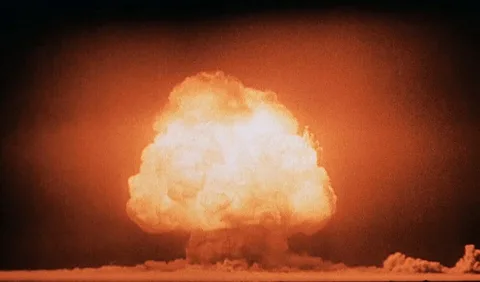 you could have much better information security. It's like one big project rather than different competing ones.
On the other hand, in favor of the current situation, I think nuclear weapons were developed in a military context. It might seem more positive for something like this to be developed in a civilian context, not focused on like maximizing our ability to kill people, but on providing benefits to consumers. We have more transparency into these commercial developments than a Manhattan Project. Like even the vice president at the time was unaware that the Manhattan Project even existed.28Indeed: Harry Truman, vice president from January 1945, was told about the Manhattan Project only after Roosevelt died that April. Wikipedia. So you could imagine extreme sort of concentration of power dynamics. It's run by these kind of national security types. You know, maybe you think these idealistic tech nerds are more, you know, less scary. It's more possible for many more people to participate now in AI, like either as consumers of the technology, you know, are you like think tanks or external evaluators29External evaluators test models for dangerous capabilities before release: nonprofits such as METR and Apollo Research, and the government AI safety centers in the US and UK. Their findings go into model system cards, which is much of what the public learns about frontier work. METR. looking at these models, investors in the model building companies or in the semiconductor supply, like it kind of the benefits and participation is much more broadly diffused among society and around the world that might be preferable to having some like very concentrated project that's secret with, you know, some on a you know small number of people never really know who they are, sit on top of like some people have a lot more money than others.
ExplainerWhy a national project is less equal than the market
The Gini coefficient measures inequality from 0 (everyone has the same) to 1 (one person has everything). If a share p of the population splits everything equally and everyone else gets nothing, the coefficient is 1 − p. Americans are about 4% of the world’s population, so even a perfectly equal US national project would have a global Gini of about 0.96. Credit Suisse put the global wealth Gini at about 0.89: very unequal, but less so. That is the basis of Bostrom’s case for his “open global investment” model, in which anyone in the world can own a stake in AI companies. Wikipedia.
But if you compare, say, the Gini coefficient of global capital ownership, or stock ownership, both directly and through pension funds and sovereign wealth funds30Through such funds, people who own no stock still hold slices of the world’s companies. The starkest example is Norway’s Government Pension Fund Global, which owns on average about 1.5% of every listed company in the world, for a country of 5.6 million people. NBIM. and stuff like that, it actually is a slightly less unequal distribution than a distribution where, say, you had a US national project where even if in like you granted the very implausible assumption that every US person would have exactly equal say and stake and benefit from that, and everybody else would have zero. That's actually a more unequal distribution globally than one where it's in proportion to current capital assets. So even though it's not the most ideal from a distributional point of view, this open global investment model, it actually scores better on that than the most likely alternative.
08What the posthuman upside is worth
How much existential risk you accept for superintelligence, Bostrom says, depends on whether you think human life as it is today is the ceiling.
Are there any kind of questions relevant to humanity today that you're exploring right now that feel particularly salient?
I think like our main focus probably at this point should be how to get from there here to there. Like that it looks like we're entering this really critical period where maybe the long-term future for Earth-originating life will be determined one way or the other. And so getting that right should be a huge priority. You know, I think these can be somewhat relevant in the choices we currently make. For example, the level of existential risk you're willing to accept from the development of superintelligence might depend in part on how you value the opportunity later on to become a post-human type of entity.31Bostrom defines a posthuman as a being with at least one central capacity — healthspan, cognition or emotion — greatly exceeding the maximum any current human can attain. In his 2008 essay “Why I Want to Be a Posthuman When I Grow Up,” he argues that such a life could be very good for us, which is what he goes on to describe here. Nick Bostrom.
If you think that the best we can possibly achieve is basically status quo, human beings, you know, with slightly higher, you know, standard of living and some new medicines, but that's like the ceiling, then, you know, things could still get better relative to where they are now, and it would be worth taking some risk for achieving that sort of optique, but not like an enormous risk, maybe, especially if you're already sitting, you know, in a rich country with, you know, well educated, a lot of money, privileges of all kinds, who think, well, it's pretty good, you don't want… Like, on the other hand, if you think that, you know, we ain't seen nothing yet, like, okay, we've been this kind of monkey-like creature hopping around here and doing our little thing, but we have no clue. Like, if you unlock this larger space of possible modes of being, the kind of the super felicity, like the cognitive uplift, the emotional depth of appreciation for what existence could mean, different ways of relating and creating together. Like, if you think there's like a large, a huge space of sort of unfathomed upside there, then you might be more inclined to risk more to have a chance to have a shot at that.
So I do think, even though the main focus should be on these more sort of pragmatic trade-offs and technical improvements that we're able to make, like, I do think that kind of background picture of what you ultimately think is possible does have some relevance as well into how we should approach the choices in front of us.
09A telos for the cosmos, and the end of human philosophy
Bostrom calls an objective purpose an open question and expects AI to outdo us at philosophy too, which makes now the time to act.
Two questions for Nick. I don’t mean to make them sound quick, but this is a weird one. This is a weird one, Nick. Do you think that there is a telos to the cosmos?
Well what do you mean by the cosmos?
Creation, so to speak.
ExplainerThe simulation argument
In “Are You Living in a Computer Simulation?” (Philosophical Quarterly, 2003), Bostrom argues that at least one of three propositions is true: almost all civilizations at our level go extinct before reaching technological maturity; almost no mature civilizations are interested in running detailed simulations of their ancestors; or we are almost certainly living in a simulation. The argument rests on arithmetic: a single mature civilization could run billions of such worlds, so simulated minds would vastly outnumber “real” ones. Bostrom doesn’t claim we are in a simulation, only that we can’t reject all three options at once. simulation-argument.com.
I mean Well, I mean, if it's a creation, literally, then probably the creator had some purpose for creating it. Now, the reason why I'm asking is, so I have this one of my earlier work, like on this, the introduced simulation argument, which is maybe a different kind of worm, but if you take the hypothesis seriously that we are living in a computer simulation, then there's an important distinction about the part of reality that we see, our simulation and the totality of physical existence. And if we're in a simulation, then probably the people creating the simulation had some reason for doing that, which is, I guess, depending on what you mean by purpose, but there would exist some purpose in that sense. The totality of existence, then it's more of a question of maybe a theological considerations, whether you would think that the sort of totality somehow was purposely created.
Now, the asking about purpose could mean many different other things as well, like different people have different purposes for different I think like one question one might ask is whether and I'm well at least yeah, it is whether there is some set of facts about the world such that if we understood them clearly, we would basically all come to the same conclusion about what we ought to be doing. And if there is such a fact, then maybe you could say that's a kind of objective purpose in some sense. If either everybody or maybe in the for a wide range of possible goals and motivations you have, it could be the case that they have this kind of convergence, it in that if you properly understood all the facts, they would sort of point to the same practical next step. And that I think is a lot more of an open question.
Like one way that sorry, go ahead. One way that that could be, of course, is in a traditional theological context, right? If it's like a divine being has this goal and like re-rewards people are not depending on like then that might just be such that if that is true and if you understood that, then basically almost independently of what your particular goals are, you would have the most reason to sort of follow the prescriptions there. If we are sort of in a you know purely materialistic, like the kind of worldview that a lot of secularists have, where there's the laws of nature is just rattling around, then that might not be such a convergence. Like what you have most reason to do depends on your particular goals and somebody else has different goals and there is no higher fact that sort of would cause you to have reason to do the same thing. But I think there's like yeah a lot of possibilities between those two that we don't fully understand yet that could make it such that there is in some sense a purpose even if we are not quite clear on what it would be.
I wasn't going to ask this question, but you brought up, you know, if there if there is, you know, the one answer that all of humanity could be guided toward and that would kind of like answer everything. I so now the natural follow-up is let's say AI gives us that answer, superintelligence gives us that answer, do you stop practicing philosophy? Like is there is there an AI model that's so good that, you know, all of the important philosophical questions just kind of get obviated.
Yeah, I think that we'll have sort of AIs that surpass us in philosophy, just as we now have in math32Bostrom is drawing on 2026. In May, an internal OpenAI model found a counterexample to Erdős’s 1946 unit distance conjecture, the first historically significant result from an AI in mathematics, and in September the company announced its model had solved the Navier–Stokes problem. Mathematicians believe the 166-page proof is technically correct but say they can learn very little from it. Quanta, NPR. and in probably soon in other fields. There might be a subset of questions that have the form more of us making up our minds about what we want, where it might be the case that we need to do some of the deliberation and deciding ourselves. But broadly speaking, yes, I do, I do think that our own intellectual efforts in that realm also will become sort of obsolete by these superintelligences. And so, which means that right now, whilst we still have something to contribute, is the time to sort of really try to have our whatever positive impact we are hoping to have in our lives. Is the golden age now for purpose and positive impact. And then, you know, once it's out of our hands, then, you know, it's time to maybe kick back a little bit and…
And speaking of, is there anything that you wanted to discuss or that we should have covered and we haven't so far?
I mean, there's like so many different directions we could go with. Like, each of the topics we touched on in itself could almost be like a one-hour conversation, right? So you can… Yeah, but yeah, no, I mean, maybe at some point in the future we could do another one or something, but there's nothing in particular right now.
We love that. Well thank you thank you so much for joining us. Really, really appreciate you taking the time. This was so much fun.
It was fun, yeah.
Introthe show's opening music
Thanks for listening to this episode of the a16z podcast. If you like this episode, be sure to like, comment, subscribe, leave us a rating or review, and share it with your friends and family. For more episodes, go to YouTube, Apple Podcasts, and Spotify. Follow us on X @a16z, and subscribe to our Substack at a16z.substack.com. Thanks again for listening, and I'll see you in the next episode.
As a reminder, the content here is for informational purposes only, should not be taken as legal business, tax, or investment advice, or be used to evaluate any investment or security, and is not directed at any investors or potential investors in any A16Z fund. Please note that A16Z and its affiliates may also maintain investments in the companies discussed in this podcast. For more details, including a link to our investments, please see A16Z.com forward slash disclosures.


