


The Tim Ferriss Show
Chapters
It's a live talk for real estate agents, but Tim says the advice applies to any line of work.
Read the chapter- Zuhairah Washington, a senior vice president at Zillow, asks the questions, with about 3,500 people in the audience.
- Tim lists the main topics: what to automate in the age of AI and what to ask first, AI as a strategist in your pocket, mini-retirements, fear-setting and identity diversification.
- Tim also promises the books he rereads the most.
Before automating, decide what life you want and cut what doesn't matter, or AI will simply do pointless things faster.
Read the chapter- At BrainQUICKEN Tim worked 14-hour days until an 80/20 analysis showed his time went to high-maintenance, low-yield customers while the best ones coasted.
- The DEAL framework from The 4-Hour Workweek is definition, elimination, automation and liberation, so automation is only step three.
- Tim recommends Drucker's The Effective Executive: doing the right things matters more than doing things well, and nothing is so pointless as doing well what shouldn't be done at all.
- Dreamlining turns your ideal lifestyle into a target monthly income, reached through the critical few customers.
- Soon, Tim says, language models will watch you work and list what you do, but you should automate only the "Archimedes levers."
Talk through your worries and plans, then ask a model what to aim for three to five years out.
Read the chapter- Tim suggests putting in AirPods, opening Wispr Flow and talking on a walk for 10 minutes about your worries, constraints and pressures, pausing every two minutes.
- Then paste the text into ChatGPT or Claude and ask what skills to build, for a safety net of transferable skills.
- Tim recommends unchecking the default box that lets the model train on your data.
- The model draws on everyone else's input too, like Waymo, "the most experienced driver in the world"; OpenAI, Tim says, is close to a billion users.
For an agent whose every deal runs through his phone, Tim prescribes booking and paying for a trip: being away forces you to build systems.
Read the chapter- Jeremy from Virginia Beach is on pace for 50 deals a year, is afraid to miss a call even on vacation, and is taking his dad to Alaska in May.
- Tim suggests two to four weeks away, long enough that you can't play firefighter when you're back, so you have to eliminate, automate and empower people first; doing it all yourself might get you to 80 deals, not 300.
- Fear-setting, the exercise from Tim's TED talk, takes the emergency brake off.
- Tim recommends practicing poverty like Kevin Kelly, who spends a week a year in a sleeping bag in his living room on instant coffee, oatmeal and beans: losing even half your deals is a good trade for systems that get you to 200.
- A paid-for trip is a useful sunk cost, because now you can't back out.
Optimization is overapplied: pick the right targets and asymmetric bets, and a C-plus job is good enough.
Read the chapter- At home Tim is like a broken Roomba who forgets his socks three times in the first hour, and he gets away with it because he's careful about what he works on.
- Tim returns to Drucker: effectiveness is doing the right things, efficiency is doing things right.
- An asymmetric bet, as Tim defines it, caps the downside and leaves a lot of upside.
- Launching Virgin Atlantic, Branson asked not how to beat British Airways but how to make the downside minimal, and negotiated a deal that let him sell the plane back to Boeing after a year.
Efficiency gives a false sense of progress; you need one priority, not many.
Read the chapter- Tim tells a friend, ranked number one on HackerOne, to ask AI for two versions of a text, not five, or sorting them creates more work than writing it from scratch.
- That Faustian bargain looks like efficiency on the surface but ends up creating more work.
- "Priority," Tim says, was singular for a very long time; he credits the point to Oliver Burkeman's Four Thousand Weeks.
- Tim suggests choosing one thing for the next few months, whether business, a child, a spouse or someone's mental health, and decisions get easier.
See the beliefs that run your life and spread your identity across several pursuits, like a portfolio.
Read the chapter- Anthony de Mello's Awareness, which Tim rereads every year, helps you see the stories that govern you.
- Tim cites Paul Graham's essay on labels: the more labels you apply to yourself, the dumber you get.
- Tim's identity diversification is rock climbing; without it, a bad week on his book, cut from 870 pages to 350, could sink his self-worth.
- On Necker Island, Branson said daily workouts give him three to four extra hours of productivity.
- Tim suggests listing your roles and choosing one; if it's "mother," the client who can only talk at 7 p.m. gets a no, because life is trade-offs.
A few hours of work that protect your most valuable time.
Read the chapter- Booking a mini-retirement comes first, as the domino that knocks over a lot of others.
- An app called Freedom blocks social media; Tim hasn't had social apps on his phone in about five years, and it's "like 10 years of free therapy."
- Tim suggests archiving any email older than three to six months and asking frequent contacts whether they're waiting on you.
- The inbox shouldn't be a to-do list: following Sam Corcos's system, reply right away if it takes two minutes and put the rest on your calendar.
Zuhairah asks Tim to sign her 2007 copy of The 4-Hour Workweek, and Tim closes with a pitch for his newsletter.
Read the chapter- Tim recognizes the first edition, 33rd printing, by its color and recalls the faux hawk he had at the time.
- Five-Bullet Friday is Tim's free half-page Friday newsletter, with one and a half to two million subscribers.
Quotes
On AI
“It's an accelerant, it's a magnifier, but it can be the magnifier of the meaningless.”
Tim FerrissRead from 06:04On AI as an advisor
“It is a strategist in your pocket, just like Waymo is the most experienced driver in the world.”
Tim FerrissRead from 09:47On the upside of a paid-for trip
“People think of sunk cost as a bad thing. Sometimes it's really helpful. Now your ass is on the line.”
Tim FerrissRead from 15:06On how Branson launched Virgin Atlantic
“The question was, ‘How do we make the downside so minimal that it's worth taking a chance?’”
Tim FerrissRead from 20:46On writing with AI
“If you ask for five versions, it's going to create infinitely more work for you than just writing it from scratch.”
Tim FerrissRead from 21:51On identity
“It's just, like, do not let your identity become completely concentrated in one thing, if you can avoid it. I've just seen too many people crash and burn.”
Tim FerrissRead from 28:01On social media
“Because for all of those platforms, their customers are advertisers. You are the product. Your attention is the product.”
Tim FerrissRead from 30:23
Summary
This time Tim Ferriss is the one answering questions: on stage in Las Vegas, in front of some 3,500 real estate agents, he's interviewed by Zillow senior vice president Zuhairah Washington. His core argument is that the faster things change, the more the constants matter: pick the right targets and eliminate first, and only then automate, or AI becomes "the magnifier of the meaningless." From there come his recommendations: book a mini-retirement so the business has to learn to run without you, make asymmetric bets the way Branson did with Virgin's first plane, and don't concentrate your self-worth in a single pursuit.
Advice
Run an 80/20 analysis on your customers: your time usually goes to the high-maintenance, low-yield ones while the best coast. Focus on the critical few.
Dictate ten minutes on your worries and your business's constraints, then ask a language model what to aim for in three to five years and which skills to build.
Book and pay for a two-to-four-week trip: being away forces you to set up systems and empower people in advance instead of fighting fires afterward.
Ask AI for two drafts, not five: sorting through five takes longer than writing from scratch.
Stop using your inbox as a to-do list: answer anything that takes two minutes right away and put longer replies on your calendar.
Mentioned
 Zillow00:00Zuhairah Washington is a Zillow SVP, which is why the room was full of agents who use the real estate site.
- BrainQUICKEN01:34Zuhairah opens with Tim's first company, where he worked 14-hour days, and asks what he first automated his way out of.
- The 4-Hour Workweek02:35Tim draws DEAL and the mini-retirement from his first book, and at the end signs Zuhairah's 2007 first edition.
- The Effective Executive04:41The first book Tim recommends to the room: doing the right things matters more than doing things well.
Show 33 more mentionsShow fewer mentions
 Peter Drucker06:04Tim cites Drucker twice: on the uselessness of doing well what shouldn't be done, and on effectiveness versus efficiency.
- The Terminator06:55Tim jokingly calls language models "Skynet monsters," after the AI in this film.
 Wispr Flow08:18Tim suggests dictating your worries and plans into this app on a walk, then discussing them with a language model.
 ChatGPT08:46One of the models Tim suggests pasting your dictation into to ask what to aim for in three to five years.
 Claude08:46The other model Tim names for talking through your plans and skills.
 Waymo09:47Tim compares a language model to Waymo, "the most experienced driver in the world": both draw on everyone's experience.
 OpenAI10:07Tim says OpenAI is close to a billion users, and that collective experience is worth tapping.
- Why You Should Define Your Fears Instead of Your Goals13:06Tim points to his TED talk on fear-setting as a way to work up the nerve for a mini-retirement.
 Kevin Kelly13:49Tim's example of practicing poverty: a week a year in a sleeping bag in his living room on instant coffee and beans.
 Wired13:49Tim introduces Kevin Kelly as the magazine's founding editor.
- Roomba18:49Tim describes himself at home as a broken robot vacuum, roaming around and forgetting his socks.
- Losing My Virginity20:05Tim recommends Branson's autobiography as proof that behind the risk-taker image is careful risk limitation.
 Richard Branson20:05Tim's main example of asymmetric bets, and later the source of the advice to work out every day.
 Virgin Atlantic20:24Tim walks through the airline's launch: Branson thought about capping the downside, not beating the competition.
 British Airways20:24Tim stresses that "how can we beat British Airways?" was not the question Branson asked.
 Boeing20:46In Tim's telling, Branson cold-called Boeing and got a one-year deal with the right to return the plane.
 HackerOne21:51Tim shows how capable his researcher friend is: he was ranked number one on this platform.
- Four Thousand Weeks: Time Management for Mortals22:30Tim counts Burkeman's book among those he's reread four or five times and wrongly credits it with the point about "priority."
 Oliver Burkeman22:30Tim thinks the idea of "priority" as a singular word comes from Burkeman.
- Awareness22:30Tim has reread de Mello's book some 50 times and recommends it for seeing the beliefs that run your life.
 Anthony de Mello22:30Author of Awareness, which Tim rereads every year.
- Essentialism: The Disciplined Pursuit of Less22:57The point about "priority" that Tim paraphrases actually comes from McKeown's book.
 Greg McKeown22:57The real source of the idea that "priorities" in the plural is a recent invention.
 Paul Graham25:09Tim paraphrases Graham's essay on labels to explain how identity makes people fragile.
 Y Combinator25:09Tim introduces Paul Graham as co-founder of the accelerator behind Dropbox, Reddit and Airbnb.
- The Top Idea in Your Mind25:09One of the Graham essays Tim names as a favorite.
- Maker's Schedule, Manager's Schedule25:09Another Graham essay Tim lists among his favorites.
- Keep Your Identity Small25:09Graham's essay on labels: the more of them you apply to yourself, the dumber you get.
- Necker Island27:40Where Tim first met Branson and heard his advice to work out every day.
 Freedom29:49Tim suggests installing this blocker tonight to cut off social media and other distractions.
- Sam Corcos31:20Tim cites Corcos's system: answer two-minute emails right away and move everything else to the calendar.
- Levels31:20Tim introduces Corcos as the head of this company.
- 5-Bullet Friday33:01At the end Tim invites listeners to sign up for his free Friday newsletter.
Sponsors of the episode


Transcript
01Tim takes questions on stage at Zillow
It's a live talk for real estate agents, but Tim says the advice applies to any line of work.
Hello, boys and girls, ladies and germs. This is Tim Ferriss. Welcome to another episode of The Tim Ferriss Show. This episode is a little bit different in format. For a change, I'm the one in the hot seat answering questions. I was interviewed on stage by Zuhairah Washington,1Zuhairah Washington joined Zillow in January 2025 after leadership roles at Uber and Expedia Group. Zillow is the biggest real estate site in the US, which is why the audience was mostly agents who work with it: Zillow. a senior vice president at Zillow.
This was in Las Vegas in front of about 3,500 people. There were a lot of questions around AI and how to be robust or anti-fragile,2Antifragile is Nassim Nicholas Taleb's term from his 2012 book of the same name: the robust survives shocks, while the antifragile gets stronger from them. even better, in a fast-changing world. This was in Las Vegas, and it was a blast. We had a ton of real estate professionals in front of us, but you don't have to have anything to do with real estate to apply much of what we talked about. We get into what to automate in the age of AI and, much more important, what questions to ask before you automate things; how to use AI as a strategist in your pocket; why booking a mini-retirement3Mini-retirement is an idea from The 4-Hour Workweek: instead of saving all your free time for old age, periodically go live somewhere else for one to six months. Later in the talk Tim explains why even a short version helps: you have to get the business ready to run without you. forces you to upgrade and fix your systems; fear-setting; why I try to diversify my identity; the books I reread the most; and much, much more. There's a lot, I hope, that you can apply.
I had a lot of fun doing it. So without further ado, please enjoy this, I think, pretty wide-ranging and tactical conversation with Zuhairah Washington.
IntroThe Tim Ferriss Show intro
Optimal minimal.
At this altitude, I can run flat out for a half mile before my hands start shaking.
Can I ask you a personal question?
Now would have seemed an appropriate time. What if I did the opposite?
I'm a cybernetic organism, living tissue over metal endoskeleton.
02Where automation starts: define and eliminate
Before automating, decide what life you want and cut what doesn't matter, or AI will simply do pointless things faster.
Before I dig into the concepts in it, with many people raising their hands being familiar with many of your books, I thought it'd be good to ground us in before you were an author, when you were running a business, BrainQUICKEN,4BrainQUICKEN was Tim's first company, an online seller of supplements and sports nutrition. It's the business he describes in The 4-Hour Workweek: 14-hour days, then automation that let it run almost without him. He later sold it: Inc.. a sports nutrition company. If you could take us back to that time: you found yourself just working 14-hour days, you couldn't unplug. I think, in short, you said, you know, instead of you running the business, the business was running you. And when I read that, I just thought that story has to resonate with some people in this room. Raise your hand if so, right, who feel that way.
And the first question I wanted to ask was, what was the first thing you actually automated your way out of?
Yeah, flashback. So we go back in time. The first thing I'll say is that if you're a working dog, meaning a lot of people are probably border collies in the audience, right? Gotta run them or they're going to chew on the couch. I'm one of those. So fixing the compulsion to work to fill the void is something you need to revisit.
I think a lot of people are just hardwired that way. In terms of automation, the question of what to automate, I think, is very much on the forefront of people's minds right now because of AI. And I think it's a very good question, but there are a few questions that helped me in asking first. And the framework in The 4-Hour Workweek,5The 4-Hour Workweek (2007) is Tim's first book, about escaping the nine-to-five; Zuhairah brings a first edition for him to sign at the end of the talk. DEAL is explained below. roughly — I won't get too deeply into this — but it's DEAL, right? So you have definition, elimination, automation, that's step number three, and then liberation, which we probably won't spend a ton of time on right now. But what I first did that opened the door to eliminating and then automating was looking at, A, how I was spending my time, but more specifically looking at an 80/20 analysis6The 80/20 principle, or Pareto principle: a small share of causes produces most of the results. The Italian economist Vilfredo Pareto noticed that 80% of the land in Italy belonged to 20% of the population; Tim applied the idea to his customers and found that a few of them brought in most of the revenue. applied to my customers, right?
ExplainerWhat DEAL stands for
DEAL is the four-step plan from The 4-Hour Workweek (2007) for redesigning how you work:
- Definition: decide what life you want and work out what it costs per month;
- Elimination: cut the excess using 80/20 and stop doing things that shouldn't be done at all;
- Automation: put what's left on autopilot through delegation, contractors and services;
- Liberation: stop being tied to one place and one office.
The order matters: automating what should have been eliminated just means doing useless things faster. That's the core of Tim's answer here.
So a lot of my time was spent chasing wholesale accounts, distributors. The world was my oyster, but that was the problem, right? If you have infinite optionality, you are dead in the water.7When there are too many options, decisions get put off and effort gets scattered. The phenomenon is called overchoice, a term coined by futurist Alvin Toffler in Future Shock (1970). And what I realized pretty quickly is that I was spending almost all of my time on the high-maintenance, low-yield customers.
And I was letting the best customers coast because they were so easy to deal with. And once I had that written down in front of me in concrete terms, it became very clear that I should focus on increasing order volume, repeat purchases, et cetera, with the critical few, instead of doing what I thought I should do, which is fill my waking hours doing the hard work, right, on this vast majority who constituted the trivial many.8"The vital few and the trivial many" is the phrase of quality-management pioneer Joseph Juran, who generalized Pareto's observation in the 1940s and gave the principle his name. So that was important to first lay as a groundwork. But the actual definition of that first step refers to defining what you want your life to look like, right? Because in the absence of that, the push and the pressure to grow your business in abstract terms can take over everything. So I'll give just a couple of resources up front.
I want… 30 minutes is going to go so fast. So the more things are changing, and things have never changed faster, and that's going to accelerate, the more I try to focus on things that don't change very much. There are certain constants. Definitely grab a copy of The Effective Executive by Peter Drucker.9Peter Drucker (1909–2005), often called the father of modern management. The Effective Executive (1966) is about how a knowledge worker should decide what to spend time on. Tim recommends it as one of the "constants" that don't go out of date. This is an old book.
And the reason I mention that is because doing the right things matters a lot more than doing things well. So picking your targets, that is one I would start with. The second thing I would mention is if you search my name and dreamlining — kind of like the aircraft, but dreamlining10Dreamlining is a pun on the Boeing 787 Dreamliner. Tim's site has free calculators: list what you want to have, be and do, price it out per month and get a "target monthly income": tim.blog. — that'll pull up something, you don't have to spend any money on this, that allows you to define in concrete terms what you want to do, be, and so on in financial terms. And that gives you then, based on your ideal lifestyle, or what you think is your ideal lifestyle, a target monthly income. And once you have that, then you can start to back-of-the-napkin work out how you would address those critical few to get to that TMI. And the reason that this TMI — target monthly income, not too much information, although I'll probably do that too — is that if you don't have that, you leave yourself very vulnerable to a lot of human foibles and inclinations that served us very well thousands of years ago, don't serve us so well now.
I'll just riff for another second. Eliminating is the core piece. And I think Drucker is the one who said, like, there's nothing so pointless as doing something well that should not be done at all.11The line Tim remembers really is Drucker's, from his 1963 Harvard Business Review article "Managing for Business Effectiveness": "There is surely nothing quite so useless as doing with great efficiency what should not be done at all." Quote Investigator. That is what AI allows you to do all day long. And I use these tools, my team uses these tools, I've invested in a lot of these companies. It's an accelerant, it's a magnifier, but it can be the magnifier of the meaningless.
So you have to be very cautious with that. So define, eliminate, and then automate. In terms of the first things I automated, it was a lot of, like, supply chain and process-related stuff. And that might not seem immediately applicable to real estate, although, little-known fact, my dad was a real estate broker for decades. I got to see it up front and personal. It's always been hard. It's always had great opportunities.
I think that will continue to be the case. And with the automation, all that comes down to, fundamentally, is writing down what you do. And there will be a point in the very near future where you will be able to actually use these Skynet monsters12Skynet is the artificial intelligence in James Cameron's The Terminator (1984) that becomes self-aware and goes to war with humanity. Tim jokingly applies the name to language models. to your benefit, meaning LLMs and so on, where they'll capture a screen flow, they'll watch you work for a few hours, and they will identify exactly what you do. And then at that point, you can get a list. And whether it's through delegating to people, whether it's through using agents13AI agents are programs built on language models that carry out multistep tasks on their own: browsing sites, filling in forms, writing emails. In a room full of real estate agents, the word has a double meaning. and so on, you will be able to automate a lot. But it should be the very few things that you've identified move the needle and are Archimedes levers14Archimedes' lever refers to the line attributed to Archimedes: "Give me a place to stand, and I will move the Earth." Tim means the few tasks that move the whole business with little effort.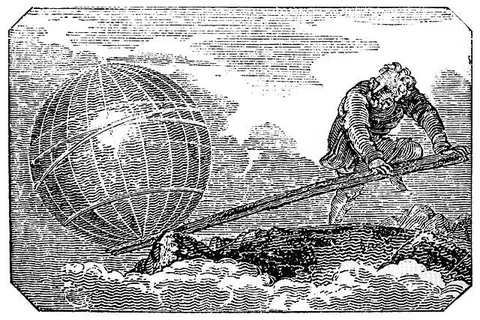 that point you towards that target monthly income. I'll stop there for now.
Wow, you painted a future there, and you gave so much detail. And I hope you guys wrote down the book recommendations. But that future where someone just watches what you do and then that becomes a process…
03AI as a strategist in your pocket
Talk through your worries and plans, then ask a model what to aim for three to five years out.
I'll give one more tip. I know, throwing off script here. One more, just because everyone in this room may identify with real estate — I've actually also, even lesser-known fact, been involved with real estate on some level — but the skills that you have, the tools that you've developed, in many cases transcend that. And chances are a lot of you did something else before, and you may do something later.
A really useful trick that I have found is use a tool like Wispr Flow.15Wispr Flow is a voice-typing app that transcribes speech and cleans out filler words and repetition as it goes, which is why Tim suggests simply talking your thoughts out on a walk. It's a dictation tool. Stick your AirPods in, go for a walk for coffee, talk about what you're worried about, talk about what you think you might want to do, talk about the constraints in your business, talk about the pressures, just riff for, like, 10 minutes. Stop every two minutes to let it catch up, because it'd be a bummer if you lost the 10 minutes. Put that in a note on your phone. That's where this will all be captured.
Copy and paste it into ChatGPT, Claude, pick your LLM, and ask it what you should do next based on what it knows about you. Say, three to five years in the future, what might I want to aim for? It is remarkable the type of intel and insight that you'll get back. And that can help point you towards what types of skills you want to develop, so that you feel like you have a safety net of transferable skills that you can point at any different type of future that might emerge.
It's such a great point. I remember a few months back someone saying oftentimes people use AI with specific tasks, they use it like a search engine, when in fact they should use it more like a strategist. And what you're talking about, which is just talk to it like someone on your board or an advisor and then ask, "What should I do next?" and level up that conversation. It's such a great insight.
Yeah, two follow-ups on that. One is I would uncheck the default box that says "use my information to train the model."16In ChatGPT, "Improve the model for everyone" is on by default (Settings, Data controls), so conversations may be used to train future models. Since fall 2025 Anthropic has offered a similar choice for Claude.
However, number two, you're not just pulling from the quote-unquote memory of this LLM of what you've put into it. You're pulling from everybody else. It is incredible the type of insight you can get back. And that's literally 10, 15 minutes of effort. It is a strategist in your pocket, just like Waymo is the most experienced driver in the world.17Waymo is Alphabet's robotaxi service. The company itself calls its self-driving system "the world's most experienced driver": in July 2025 its cars passed 100 million miles with no one behind the wheel. Tim's point is that a language model has likewise "gained experience" from huge numbers of other people's conversations.
Source: TechCrunch and OpenAI statements
Like, in some sense, these things are the most… I think OpenAI is probably getting close to a billion users. Take advantage of that.
04How to stop being the bottleneck
For an agent whose every deal runs through his phone, Tim prescribes booking and paying for a trip: being away forces you to build systems.
All right. Well, with that, I want to transition to asking you a question that was submitted by one of our participants here. We asked a few attendees to submit questions, so this is the first one. It's from Jeremy Ruff of Garrett Realty Partners18Garrett Realty Partners is a real estate firm in Hampton Roads, the region of southeastern Virginia that includes Virginia Beach. in Virginia Beach. And he is on pace to do 50 deals this year, going to 80 next year. But, surprise, surprise, Jeremy feels like he's the bottleneck.
Every call, every contract runs through their phone, even on vacation with their parents. And right now Jeremy is really afraid that if he doesn't pick up the phone, that he'll lose a deal. And so the question is, what's the first thing you'd advise Jeremy to cut, automate, or hand off in the next 90 days? And what's the smallest test they can run to prove their business can survive a week without them before they take their dad on his bucket-list trip to Alaska in May?
All right. I'm excited about this one, because I'm going to start with the last portion of that. Okay. So the last portion is that trip. I would argue — and I've seen this hundreds upon hundreds of times now, from people who are kind of nine-to-five with something they clock in and out of, to CEOs you would recognize — I think one of the most powerful things that you can do, which is a forcing function19Forcing function is a design term for a constraint that leaves no way to act otherwise. It's one of Tim's favorite phrases: a paid-for trip leaves no choice and forces you to restructure your work in advance. for a lot of really durable change, is take a mini-retirement.
That's a term I used in The 4-Hour Workweek. But an example, a shorter example of this would be this one-week trip with his dad. Ideally, make it two to four, because then you can't… Two to four weeks, that's right, because then you can't act as a firefighter and come back to a whole mess and try to clean it up. You actually have to — and this is the point of the exercise — you have to improve your systems. You have to do the defining and eliminating, you have to automate certain things. You have to perhaps empower people you haven't fully empowered before, before you leave.
And then when you come back, yes, you will have small bad things that have happened. You might have some larger bad things that have happened. But the systems that you've put in place are the types of things that allow you to go from 50 deals to 100 deals to 200 deals to 300 deals. Whereas if you look at your current way of doing things, you might be able to manage 80 deals by yourself, but let's just say you get what you want and you're successful, right? This is a very important question to ask. Like, what happens if you're the dog who catches the car? What then?
Right? So what happens if you win the game? If you win the game, you have more deals. And you can telescope out three or four or five years and see that inevitably it's going to break. It's not sustainable. I'd say there are two other things that I would add to that.
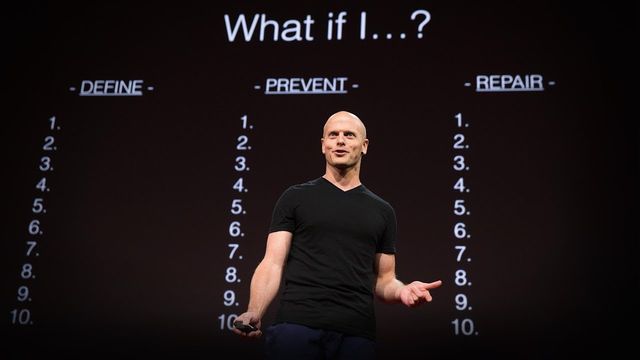
So the first is, what I'm suggesting is going to sound terrifying, understandably, to a lot of people. Before I did it the first time, it was also terrifying. Took me a long time to bite the bullet. There's an exercise called fear-setting. I did a TED talk on it. You can find it for free.
ExplainerHow fear-setting works
Fear-setting is a play on goal-setting. Tim laid out the exercise in a 2017 blog post and in his TED talk. It takes three pages:
- Define, prevent, repair: write down the worst that could happen if you go ahead; for each item, what you could do to prevent it and how you'd fix things if it happened;
- Benefits of an attempt: what you'd gain from even partial success;
- Cost of inaction: what not changing anything will cost you in six months, a year and three years.
Usually the worst case turns out to be fixable, and inaction turns out to cost more than it seemed. Tim says he does the exercise every month.
I don't want to take up all of our time right now talking about it, but that allows you to take the emergency brake off. And it's very similar to goal-setting, but it's called fear-setting. You can find it very easily online. And the last thing I would say is that it's very helpful to practice, quote-unquote, poverty.20Practicing poverty goes back to Seneca: in his 18th letter to Lucilius he suggests spending a few days on the scantiest food and coarsest clothing and asking yourself, "Is this the condition that I feared?" Tim recorded a whole episode reading the letter: tim.blog. Now, everyone here is in the global 1% of, like, affluence and agency. That's great news.
And you live in the land of opportunity. That is the United States, for sure. But as my friend — and others have done — Kevin Kelly,21Kevin Kelly co-founded Wired in 1993 and was its founding executive editor; he wrote The Inevitable. He is a longtime friend of Tim's and a guest on the show, here an example of how to stage a week of "poverty." founding editor of Wired magazine, like, for a week a year, he'll just camp out in his front living room in a sleeping bag. You can do this with your kids. And he'll have shitty — I'm from Long Island, sorry — instant coffee and, like, oatmeal and beans, and, like, that's it. You know, cost you, I don't know, $10 a week for food. And you'll realize how liberating that can feel.
And how even if you hit bumps, even if you lose that one deal, even if you lose 10 deals, even if you lose 25 deals, you lose half of your current deal flow — I'm making some assumptions here, right — but if that allows you to create systems that lay the groundwork for getting to 100, 150, 200 deals, that's a great trade. You should take that all day long.
So those are a few things that I would add. In terms of what to cut and so on, it's such a personal question, because it depends not only on your business goals but your personal goals and perhaps family priorities and things like that. But what I've just mentioned, I think, are more or less universally useful.
And the benefit of that one decision — book the trip to Alaska, pay for it, invite your dad, apply all of this — very, very helpful. Sunk cost.22Sunk costs are money already spent that can't be recovered. They usually come up as a mistake: people keep going with a pointless project so the money "isn't wasted." Tim suggests turning the effect to your advantage: a paid-for trip won't let you back out. People think of sunk cost as a bad thing. Sometimes it's really helpful. Now your ass is on the line. And if you can make it two weeks, make it two weeks. That will change your life. It will prove to you that the sky will not fall when you do it. But you're going to have to do some very hard thinking and maybe a little heavy lifting in advance.
I love that. Okay.
AdGusto, Incogni
I speak with founders and entrepreneurs every single week, usually every day, and they get excited about all sorts of things: big bets they're making, the huge product or campaign that's about to launch, new tools that are accelerating their business. But payroll, not so much. But, you know, you still have to get it right. It is super important, just not very sexy. You'd rather do other things. Today's sponsor, Gusto, makes that part easy. Gusto brings payroll, benefits, HR, and time tracking together in one place, so small business owners can spend less time managing their workforce — that includes me — and more time growing their business or just doing fun stuff.
Gusto automatically calculates, files, and pays your payroll taxes. On average, it takes just eight minutes to run regular payroll. More than 500,000 businesses rely on Gusto for payroll and other HR services. And Gusto was ranked number one for customer satisfaction in G2's 2026 Best Software AwardsaG2 is a review site for business software; its Best Software Awards are based on user ratings. and named one of G2's Best Small Business Products. Payroll, benefits, compliance, all in one place. Get started. Check it out at gusto.com/tim and get three months free when you run your first payroll.
That's three months of free payroll at gusto.com/tim, G-U-S-T-O, gusto.com/tim.
Longtime listeners know how important privacy is to me. In fact, my friends would call me paranoid, or they used to call me paranoid, and now they think I was just prescient, in a sense. These days, you may have noticed, it is a lot harder to protect privacy. Anyone can find your information with a quick search. It's shockingly easy.
And I've had friends and paid people to red-team mebRed team: people hired to play the adversary, trying to break into a system or, as here, to dig up everything that can be found about a person. to try to find my info. And what you'll notice is that shadowy data brokerscData brokers are companies that collect information about people from public records, social media and purchases and sell it. In the US it's a legal business, and their people-search sites turn up addresses, phone numbers and relatives. quietly collect and trade your home address, phone, family members, and more. It's a mess. You have to have a plan for defense, and you can fight back with Incogni. That's I-N-C-O-G-N-I. Incogni automatically removes your information across 420-plus data brokers, with 1,000-plus additional sites covered in their Unlimited plan, and they keep it scrubbed automatically.
Deloitte has independently verified the headline numbers, in other words, 245 million-plus removal requests. And the company adheres to strict security standards, with an A+ rating from the Better Business Bureau.dBetter Business Bureau is an American nonprofit founded in 1912 that takes complaints about companies and grades them from A+ to F. And with their Unlimited plan, if you find your info on a site they don't monitor, send them the link, and their privacy team will handle it. Go to incogni.com/tim, I-N-C-O-G-N-I.com/tim, and use code TIM at checkout to get 60% off of an annual plan. One more time, incogni.com/tim.
05What not to optimize: targets before speed
Optimization is overapplied: pick the right targets and asymmetric bets, and a C-plus job is good enough.
Another question, from Shishana Hogg with Mogul Real Estate in Temecula, California. Her question is: in a culture obsessed with optimizing, automating, and scaling, what do you think never should be optimized? And where does the push for efficiency actually disconnect us from what matters most?
Yeah, efficiency and optimizing are overapplied, I would say, which might sound funny, considering that I, you know, wrote all these books about optimizing various things. But if you were to watch me kind of day to day, like a nanny cam in my house, you'd be like, "What is this guy doing? This is like a broken Roomba.23Roomba is iRobot's robot vacuum, which wanders around the house and keeps bumping into furniture. We're, like, roaming around the house, and he, like, forgot his socks three times in the first hour. What is this guy doing?" And the reason that I can get away with that — this is nothing new, I've always been like that — I think, is that I've been very careful. And that Effective Executive book by Peter Drucker lays it out very eloquently: effectiveness is doing the right things, efficiency is doing things right.24Drucker draws the contrast as early as his 1963 article ("doing the right things and doing things right"), and the exact formula, "Efficiency is concerned with doing things right. Effectiveness is doing the right things," appears in his book Management: Tasks, Responsibilities, Practices (1974): Quote Investigator.
Always focus on choosing your targets first. And I would say that that's the starting point. And if you start with the targets, you can actually do a very C-plus job. But if you're better at picking these asymmetric bets — and I'll define that — you have a lot of margin for error. And you have a lot of margin for the unexpected in the future, too. So what I mean by that: an asymmetric bet is something where you really cap the downside, but you have a lot of upside potential.
And I'll just give more book recommendations. Losing My Virginity25Losing My Virginity (1998) is the autobiography of Richard Branson, founder of the Virgin Group, about building companies from a student magazine to an airline. Tim uses Branson as an example of someone famous for risk-taking who in fact works hard to limit risk. by Richard Branson is a great read. Great book, full of adventures. I'm sure it dates very poorly, but I read it a long time ago. And his reputation is this of an incredible risk-taker. Bets the farm, does all this craziness.
And it's a great brand. I'm sure you've seen, like, him windsurfing or kiteboarding with, you know, like, a naked lady on his back. It's like, okay, all right, Richard. However, he's actually really focused on mitigating risk. And if you study how he started Virgin Atlantic, for instance, the question wasn't "How can we beat British Airways?26British Airways is the UK's flag carrier and Virgin Atlantic's main rival. In 1993 Branson won a libel case against BA over the "dirty tricks" campaign it ran against Virgin." The question — I'm writing about this right now.

The question was, "How do we make the downside so minimal that it's worth taking a chance?" And he cold-called Boeing and negotiated the most insane deal structure you could ever imagine. Limited employment and lease terms and everything to one year. He could sell the plane back to Boeing at the end for the original cost if needed.27Virgin Atlantic started flying in 1984 with a single secondhand Boeing 747. Branson negotiated a deal with Boeing that let him hand the plane back after a year if the airline didn't work out, so the most he could lose was a year of payments. Branson wrote about the deal in his blog farewell to the 747: Virgin. I mean, he basically made it risk-free, all upside. And you can start to look at your life that way. And the mini-retirement would be a good example of this.
06When efficiency disconnects us from what matters
Efficiency gives a false sense of progress; you need one priority, not many.
The piece that maybe doubling down on is, like, what disconnects us, where efficiency can disconnect us from what matters most.
Well, there are a lot of ways that it can disconnect us, because efficiency is a blunt instrument, if that makes sense. Right? It can give us a false sense of progress, because we're improving at doing something regardless of what that something is. And I'll give you a very concrete example, right? I have a friend who was asking me about how he can use AI to improve A, B, and C, and one was writing.
And I gave him my answer, and the piece of my answer that he had not figured out… This is one of the top AI researchers and, like, safety researchers in the world. There's something called HackerOne28HackerOne is a bug bounty platform: companies pay independent hackers for the vulnerabilities they find, and hackers are ranked by reputation, points for confirmed findings. Tim doesn't name his friend. that ranks kind of pay-for-bounty hackers — they get hired by companies — and he was recently ranked at number one, just to give you an idea; like, this guy knows what he's doing. And the piece that was missing is, I said, if you're going to use A, B, and C to draft two different versions that have very different tones of what you wrote, only ask for two versions. Do not ask for five versions. If you ask for five versions, it's going to create infinitely more work for you than just writing it from scratch.
But that Faustian bargain29Faustian bargain: a deal with the devil, as in the Faust legend, where you gain something now at the price of a much bigger loss later. Here: five drafts in a minute that then eat hours of choosing. is in search of an efficiency. Yeah, that is an efficiency at surface level, but it ends up creating more work. And I would say that — I think it was Oliver Burkeman in Four Thousand Weeks,30Four Thousand Weeks (2021) is British journalist Oliver Burkeman's book on time management for mortals: 4,000 weeks is roughly an 80-year life, and you can't get everything done. another great book. These are, like, my greatest-hits books, by the way. Like, every book I've mentioned, I've reread at least four or five times. Awareness by Anthony de Mello,31Awareness is a book by the Indian Jesuit priest Anthony de Mello (1931–1987), compiled from recordings of his talks and published posthumously in 1990. Tim calls it the book he has reread the most and has given it away more than a hundred times. probably 50.
But the disconnect, and the thing that he mentioned,32Fact-checkNot quite: the idea that "priority" was singular for five hundred years and only became plural in the 20th century comes from Greg McKeown's Essentialism (2014), not Burkeman's Four Thousand Weeks: Goodreads. was priorities as a plural is a relatively new thing. I had no idea. It was priority, etymologically, for a very long time. One thing. And this may tie into some of what you heard earlier about identity and cognitive dissonance with identity: past, present, hopefully future. You need to know what your one priority is.
And I think we'll probably come back to that, so I'll stop there. But it's like, if you could only choose one thing — and this comes down to picking targets — what is it? Is it business? Is it your son or daughter? Is it your spouse? Is it something else? Is it some mental health issue that is actually the riskiest thing, the biggest landmine in your life or in someone you love? Like, what is that one thing? And getting very clear on that, not forever, but for the next one, two, three, six months, I think clarifies a lot, makes decision-making a lot easier.
07How not to tie your self-worth to one thing
See the beliefs that run your life and spread your identity across several pursuits, like a portfolio.
A lot of what you say sounds reasonable, you know, on paper.
Yeah.
Read the book, set the one priority. Oftentimes, though, we stand in our own way. And, you know, I could see some folks in the room saying, "Okay, Tim, what I'm hearing you say is that you're challenging many of us to rethink how we ourselves feel that we add value. There are some things that we should be deprioritizing." And oftentimes, when we need to automate or make something more efficient that we feel is deeply tied to our own self-worth, it can be hard to let that go. So what advice would you have to push through that?
Yeah, I'll sound like a broken record for a second. The first is that one book that I said I read basically every year, at least once, probably twice: Awareness by Anthony de Mello. The Perils and Promises of Reality was the initial subtitle.33Fact-checkNot quite: the first edition (1990) was titled "Awareness: The Perils and Opportunities of Reality," not "Promises." Later editions carried the subtitle "Conversations with the Masters": Wikipedia. It helps you to become aware of the stories and the beliefs that govern your life, because everything else is downstream of that. And it could be around identity, right? I am an X. I am a Y.
And there's a very famous startup figure named Paul Graham. He co-founded something called Y Combinator, which produced, helped produce, Dropbox and Reddit and Airbnb and all these companies. And he writes these short little essays. A lot of them are very good. One of my favorites is, I think it's "The Top Idea in Your Mind,"34"The Top Idea in Your Mind" (2010): Paul Graham's essay on how, in the shower or on a walk, your thoughts drift back to one top idea, so you shouldn't let money or disputes take that spot. paulgraham.com. but another, "Maker's Schedule, Manager's Schedule."35"Maker's Schedule, Manager's Schedule" (2009): Graham's essay on how a manager lives in one-hour slots, while a maker, a programmer or writer, needs long unbroken stretches of time. paulgraham.com. But he has one on labels, and he basically says the more labels you apply to yourself, the dumber you become.36The essay is "Keep Your Identity Small" (2009), and Tim paraphrases it closely. Graham explains why politics and religion can't be discussed calmly, because they become part of people's identity, and concludes: "the more labels you have for yourself, the dumber they make you." paulgraham.com. Now, if I were being a little more generous with it, I'd say the more you artificially constrain yourself and create a very fragile vessel.
So number one, if these beliefs and kind of reactive patterns that we have are governing your life, you have to be able to see those. So Awareness is a very great place to start as a book. And then I would say, secondly, something that I've done repeatedly in my life — because, you know, what I did when The 4-Hour Workweek came out is very different from what I did five years later, which is very different from what I do now — is just like you would do with your portfolio. Perhaps if you have, like, your stocks and your bonds and your cash and your this and your real estate and that and whatever, you might diversify. Why? Because you don't want everything to be correlated and crater, or concentrated in a way that could go to zero.
All right. I actively try to look for identity diversification plans.37What Tim calls identity diversification, psychologists study as "self-complexity": in Patricia Linville's research in the 1980s, people with several independent roles were less shaken, in mood and health, by a setback in any one of them. It's a very fancy way of saying, if your self-worth is tied into, say, the growth of your business, and it's become very concentrated, that is psychologically very risky. So you can create a sense of progress in other areas. Like, I'll give you an example. For me, right now, I'm doing a lot of rock climbing. I'm not good. I'm built like a snowman. It's like a Coke can getting dragged up a wall. It's not a goal of mine to get to the Olympics. But I really enjoy it, and I'm making a lot of progress with coaches. It's not expensive.
If I have a bad day writing — I have an 870-page book that I cut down to 350. This thing has been taking forever. Very proud of it. I think it'll be good. But I can have a brutal week, and if I don't have another siloed asset, right — in this case rock climbing, an activity where I can make progress — my entire self-worth can plummet, and I can go into, like, this recursive spinning. So I would strongly recommend it. It doesn't need to be something that takes up a lot of time.

Exercise, by the way — like Richard Branson. I met Richard — I interviewed him later, but the first time I met him, I was on Necker Island, of course, and I was starstruck, and someone asked him, they're like, "Richard, if you could give one piece of advice to people who want to become more productive, what would it be?" And he was like, "Work out every day."
"It gives me three to four more hours of productivity every day."38Branson has repeated this in many interviews: daily exercise, he says, gives him at least four extra productive hours a day. It's like, okay, great. So with my example, right, the rock climbing or whatever, it's a multiplier for everything else, right? And you can pick two or three of those. That would be another recommendation. It's just, like, do not let your identity become completely concentrated in one thing, if you can avoid it. I've just seen too many people crash and burn.
Yeah, the identity is a big one. All right, I have two more quick questions.
Can I say one more thing about identity?
Yes, you can.
A really easy way to kind of force that to converge with the one priority that I was mentioning earlier is think about all the labels you might apply to yourself. So it could be business owner, it could be mother, it could be fill-in-the-blank. Come up with a list, and then ask yourself: if you could only choose one of these labels, which would it be?
You continue to push us to prioritize.
But it's like, if you choose mother, that means if you have a high-maintenance customer who might — or prospect who might convert into a great sale, but you've committed to, say, a family dinner or family outing, and this person says, "I can only do it at 7 p.m.," what does that mean? It's a hard thing. Life is trade-offs. It means you say no to that person. And I wish I could give a magic bullet that made everyone happy and everyone reasonable, but that doesn't exist. It's all trade-offs. And now the alternative is, right, what's the cost? If you take that call, you're still making a trade-off.
And that changes. That can change over time.
It can change, and it does change over time. Yeah.
08What to do tonight
A few hours of work that protect your most valuable time.
Okay, so if an agent walked out of this room today and did one thing to start protecting their most important hours, what would you tell them to do before they go to sleep tonight?
I'm going to go back to my notes. I trust the pen more than I trust my memory. So besides all the various things that I've already listed off, I would say, even if you don't have a trip to Alaska, book that mini-retirement. It really is the one move, the one domino that tips over a lot of others automatically. I would say a few others that are easy to do, if someone's going to do something, like, tonight — okay, if I'm on the spot for that — I would say consider using a tool like Freedom.39Freedom is a blocker app for computers and phones that shuts off social media, news and other distracting sites and apps on a schedule, across all your devices at once. There's an app called Freedom.
It's been around for a while: freedom.to. It will block your social media. It will block the things that are distractions. Because for all of those platforms, their customers are advertisers. You are the product. Your attention is the product.40The idea goes back to artist Richard Serra's 1973 video piece "Television Delivers People" ("You are the product of television"). Online it became "if you're not paying for the product, you are the product." So I would say block those. I haven't had social media apps on my phone for five years, probably. Trust me, it's like 10 years of free therapy. So, and if you still need to use social media for your life, fine. Just do it from your laptop. You can take all your photos and videos and then transfer it to your laptop.
Applying a little friction can be your friend. You can use it that way. Another one is, you know, I'm going to double down on the fear-setting as an exercise. The last thing I'll say is consider archiving any email that is older than six months old.41Archiving all your old email at once is close to what's called email bankruptcy: in 2004 the legal scholar Lawrence Lessig announced he wouldn't answer his backlog and asked people to write again if it mattered. Tim suggests a gentler version: reach out to your most frequent contacts yourself. Maybe it's three months old. And then you can very quickly identify your most common contacts.
You could archive all of their email and then text or call them and ask them if there's anything they're waiting on you for. And that'll leave you with fewer email. And from there, I would stop making your inbox your to-do list, right? Because then you're reopening email, you're like, "Oh God, I have to come back to that. Mark it as unread. Oh, wait, I forgot to do that. Now I thought I read it." And it's a disaster, right? So Sam Corcos,42Sam Corcos is co-founder and CEO of Levels, a company that helps people track blood sugar with a continuous glucose monitor. He was Tim's guest in 2023 and went deep on delegation and on moving tasks from a to-do list to the calendar: tim.blog. who runs a company called Levels, he has a whole system for this. But basically, go through your inbox and be like, all right, if this is going to take two minutes, just reply to it.43The two-minute rule comes from David Allen's Getting Things Done: if something takes less than two minutes, do it now instead of adding it to a list. If it's going to take 30 minutes for me to reply to this, put it in your calendar. This is going to take 15 minutes, put it in your calendar. And that way you shift the to-do list from your inbox to your calendar.
And everything I just mentioned can be accomplished within a few hours. So that's something people could do tonight or tomorrow.
09Signing a first edition
Zuhairah asks Tim to sign her 2007 copy of The 4-Hour Workweek, and Tim closes with a pitch for his newsletter.
Love it. Okay, so last, last question. I brought my original copy of The 4-Hour Workweek. Would you sign it for me?
Yes, of course. Thank you. That is an original copy, too. I can tell by the color. This is early, early days.
I think it's 2007.
Yeah, 2007, back when I was white-knuckling a little faux hawk that I had left.
I should have read the bio in this one.
Yeah, yeah. This is early days. This is first edition, 33rd printing.44A 33rd printing of the first edition is a sign the book kept selling for years: The 4-Hour Workweek spent more than four years on the New York Times bestseller list.
Yeah. This is crazy. Thank you, Tim.
Yeah, thank you so much. All right. Thanks, everybody. Really appreciate you having me. Good luck.
Hey, guys, this is Tim again. Just one more thing before you take off, and that is Five-Bullet Friday.45Five-Bullet Friday is Tim's free weekly newsletter: five short items about books, gadgets, articles and finds from the week. Would you enjoy getting a short email from me every Friday that provides a little fun before the weekend? Between one and a half and two million people subscribe to my free newsletter, my super-short newsletter called Five-Bullet Friday. Easy to sign up, easy to cancel. It is basically a half page that I send out every Friday to share the coolest things I've found or discovered or have started exploring over that week.
It's kind of like my diary of cool things. It often includes articles I'm reading, books I'm reading, albums, perhaps, gadgets, gizmos, all sorts of tech tricks and so on that get sent to me by my friends, including a lot of podcast guests. And these strange, esoteric things end up in my field, and then I test them, and then I share them with you. So if that sounds fun — again, it's very short, a little tiny bite of goodness before you head off for the weekend, something to think about — if you'd like to try it out, just go to tim.blog/friday, type that into your browser, tim.blog/friday. Drop in your email, and you'll get the very next one. Thanks for listening.
AdIncogni, Gusto
Longtime listeners know how important privacy is to me. In fact, my friends would call me paranoid, or they used to call me paranoid, and now they think I was just prescient, in a sense. These days, you may have noticed, it is a lot harder to protect privacy. Anyone can find your information with a quick search. It's shockingly easy. And I've had friends and paid people to red-team me to try to find my info. And what you'll notice is that shadowy data brokers quietly collect and trade your home address, phone, family members, and more.
It's a mess. You have to have a plan for defense, and you can fight back with Incogni. That's I-N-C-O-G-N-I. Incogni automatically removes your information across 420-plus data brokers, with 1,000-plus additional sites covered in their Unlimited plan, and they keep it scrubbed automatically. Deloitte has independently verified the headline numbers, in other words, 245 million-plus removal requests, and the company adheres to strict security standards, with an A+ rating from the Better Business Bureau. And with their Unlimited plan, if you find your info on a site they don't monitor, send them a link, and their privacy team will handle it.
Go to incogni.com/tim, I-N-C-O-G-N-I.com/tim, and use code TIM at checkout to get 60% off of an annual plan. One more time, incogni.com/tim.
I speak with founders and entrepreneurs every single week, usually every day, and they get excited about all sorts of things: big bets they're making, the huge product or campaign that's about to launch, new tools that are accelerating their business. But payroll, not so much. But, you know, you still have to get it right. It is super important, just not very sexy. You'd rather do other things.
Today's sponsor, Gusto, makes that part easy. Gusto brings payroll, benefits, HR, and time tracking together in one place, so small business owners can spend less time managing their workforce — that includes me — and more time growing their business or just doing fun stuff. Gusto automatically calculates, files, and pays your payroll taxes. On average, it takes just eight minutes to run regular payroll. More than 500,000 businesses rely on Gusto for payroll and other HR services.
And Gusto was ranked number one for customer satisfaction in G2's 2026 Best Software Awards and named one of G2's Best Small Business Products. Payroll, benefits, compliance, all in one place. Get started. Check it out at gusto.com/tim and get three months free when you run your first payroll. That's three months of free payroll at gusto.com/tim, G-U-S-T-O, gusto.com/tim.


