


BG2Pod
Chapters
Microsoft got 27% of OpenAI for roughly $13–14 billion, but Nadella says the real news of the restructuring is that it created one of the largest nonprofits in the world.
Read the chapter- Brad opens with a record week: Nvidia hit $5 trillion, rates were cut, the president struck deals across Asia, and every cloud said it was short of compute.
- By Brad's count, Microsoft has put about $13–14 billion into OpenAI since 2019 and owns 27% on a fully diluted basis, and Nadella says nobody expected that first billion to become a "100-bagger."
- Altman likes a structure that lets the nonprofit grow in value while the PBC raises the capital it needs, and hopes Satya makes a trillion dollars on the investment, not $100 billion.
- Brad notes the nonprofit starts out with $130 billion of OpenAI stock and will direct the first $25 billion to health and AI resilience.
- Altman explains the choice: curing a lot of disease and making the data broadly available would be a gift to the world, while resilience money goes where companies won't act on their own, from cyber defense to economic studies.
Stateless APIs stay exclusive to Azure, and neither guest sees the early end of exclusivity on an AGI verdict as a source of drama.
Read the chapter- Brad says OpenAI can't put its leading models on other big clouds until 2032, but can distribute open-source models, Sora, agents, Codex and wearables anywhere.
- Altman specifies that stateless APIs stay exclusive to Azure through 2030, everything else goes elsewhere too, and that suits Microsoft as well.
- Brad assumes a 15% revenue share for the sake of argument, so $20 billion of revenue would mean $3 billion to Microsoft, and Nadella doesn't know where Microsoft books it: "a good question for Amy."
- Asked about the expert jury that would rule on AGI, Altman says Brad is trying to stir up drama and calls having a process a good thing.
- Nadella says the real goal is putting intelligence in the hands of people and organizations, and Altman adds that even with superintelligence tomorrow, OpenAI would still want Microsoft's help.
Altman tells the skeptics OpenAI makes well over $13 billion, and that the real risk is not having enough compute.
Read the chapter- Brad calls the $1.4 trillion of commitments over four or five years, including $250 billion to Azure, the biggest question hanging over the market all week.
- Altman offers to find Brad a buyer for his shares and says the people making the most noise on Twitter would happily buy them.
- OpenAI, Altman says, is betting it will become one of the important AI clouds, build a significant consumer device business and automate science.
- Nadella says he has not seen a single OpenAI business plan that the company didn't beat.
- In a CNBC clip Brad brings up, Greg Brockman says 10x the compute might not mean 10x the revenue, but it wouldn't be far off.
Demand for compute depends on price, today's bottleneck is power and buildings, and Altman expects a glut someday that will burn some people.
Read the chapter- Altman compares compute to energy: if the price per unit of intelligence fell 100x tomorrow, usage would rise by much more than 100x.
- Nadella says Microsoft's problem isn't chip supply but having nowhere to plug them in, because it lacks warm shells close to power.
- Altman is sure a glut will come, in two to three years or five to six, and many will get burned on signed contracts if very cheap energy arrives or everyone can run a personal AGI on a laptop.
- The cost per unit of intelligence, Altman says, has been falling about 40x a year, a very scary exponent for anyone building infrastructure.
- Nadella argues software gains like OpenAI's inference optimizations are more exponential than Moore's Law, and that for a cloud everything comes down to a fungible fleet with high utilization.
Altman says there's no IPO date or decision, while Brad figures that at $100 billion in revenue OpenAI could go public at a trillion-dollar valuation.
Read the chapter- Altman rejects the Reuters report of a listing in late 2026 or 2027: he assumes an IPO will happen someday, but would rather fund the company with revenue growth.
- When Brad mentions $100 billion of revenue in 2028 or 2029, Altman shoots back: "How about '27?"
- Brad's math is that ten times revenue, a lower multiple than Facebook went public at, means a trillion dollars, and floating 10–20% would raise $100–200 billion.
- What Brad likes most is that retail investors could buy OpenAI stock, including people like his kids, who trade their little accounts and use ChatGPT.
OpenAI and Microsoft can cope with 50 different state AI laws but startups can't, so both guests want one federal framework.
Read the chapter- Brad says the federal preemption Senator Cruz put in the Big Beautiful Bill was killed at the last second by Senator Blackburn.
- The Colorado AI Act, Brad says, creates a whole new class of litigants, and Altman admits he literally doesn't know what OpenAI is supposed to do to comply.
- Nadella says OpenAI and Microsoft will figure it out but a startup can't, and if the US doesn't set one framework, the EU will.
- Nadella dreams of shared rules across the EU and the US, Altman wouldn't hold his breath, and Nadella agrees he wouldn't bet on it today.
Altman expects agents that work for days and AI's first small scientific discoveries in 2026, and Nadella is looking for the interface to work with such agents.
Read the chapter- Altman expects Codex and similar systems to move from multi-hour to multi-day tasks next year, letting people build software at unprecedented speed.
- Even a very small AI scientific discovery in 2026 would be huge to Altman, because expanding the sum of human knowledge is in some sense superintelligence.
- Nadella recalls how ChatGPT clicked when the interface met the intelligence, and describes the new way of working with agents as "macro delegation and micro steering."
- Altman says that's why OpenAI is building new devices: something always with you that can go off and work and understands the context of your whole life.
- Brad adds that the most mundane things, like ordering diapers or booking a hotel, may matter most once billions of people get a nearly free personal assistant.
Nadella says the first billion was controversial but obvious for a company obsessed with natural language, and the truly big call was going from one billion to ten.
Read the chapter- Nadella recalls that Microsoft was involved back in 2016, when OpenAI was focused on reinforcement learning and ran its Dota 2 competition on Azure.
- Natural language had been Bill Gates's obsession for Microsoft since 1995, so when Sam started talking in 2019 about text, transformers and scaling laws, the decision became obvious.
- There was a debate on the board: Gates was skeptical and came around only after the GPT-4 demo, which he called the best since what Charles Simonyi showed him at Xerox PARC.
- What gave Nadella the confidence for the follow-on investment was seeing the early Codex complete code inside GitHub Copilot.
- CTO Kevin Scott also started out a skeptic, Nadella says, and his conviction was one of the main things that got the deal moving.
To Nadella, the lasting strategic value of the partnership is Azure's exclusive stateless API and free access to a frontier model.
Read the chapter- Companies build full workloads on the stateless API with compute, storage and databases, and Nadella agrees that many customers came to Azure from other clouds for the first time.
- Royalty-free access to OpenAI's IP for seven more years is, in Nadella's words, like having a frontier model for free to deploy in GitHub, M365 and consumer Copilot.
- Asked about the $4 billion of OpenAI losses consolidated in the quarter, Nadella says Amy will give full transparency, and that if you invest $13.5 billion, you can't lose more than $13.5 billion.
- The next big thing for Microsoft 365 after the E5 suite turned out to be Copilot, which Nadella says is bigger than any suite.
Microsoft deliberately turned down some demand, including OpenAI's, to keep a fleet that's fungible across workloads, regions and chip generations.
Read the chapter- Brad recalls last year's headlines about Microsoft pulling back on AI infrastructure and Amy's remark that the company has been short of power and infrastructure for many quarters.
- Nvidia moves so fast, Nadella says, that you don't want to order a bunch of GB200s only to find GB300s already in full production.
- A dedicated multi-gigawatt training site in one place makes sense for OpenAI but not for Azure, so Microsoft let OpenAI buy that capacity elsewhere and kept flexibility for its own products and other customers.
- Microsoft's high-margin business, Nadella says, is Copilot, and he finds investors oddly fixated on the growth of Azure.
- Brad says Azure, up 39% in the quarter on a $93 billion run rate, could have grown 41–42%, and Nadella agrees: Microsoft is limited by supply, not demand.
Nadella is confident in Microsoft's margins because "at scale, nothing is a commodity," and he says demand will ultimately test other players' circular deals.
Read the chapter- The $400 billion of remaining performance obligations has an average duration of just two years, Nadella says, and is diversified across Microsoft's own products and outside customers.
- Asked about newcomers like Oracle, CoreWeave and Crusoe, Nadella says running the biggest workload drives Microsoft's costs down faster than anyone's and keeps it price competitive.
- Nadella allocates capital to the cloud as a whole, from Xbox Cloud Gaming to Microsoft 365 and Azure, and calls Microsoft one company with one platform logic, not a conglomerate.
- Microsoft's roughly $13.5 billion in OpenAI went to training and was never booked as revenue, Nadella says, and vendor financing isn't new, though it's now taking exotic forms.
Agents are replacing the business-logic tier of SaaS, and Nadella thinks low-ARPU, high-usage apps like Microsoft 365 come out ahead.
Read the chapter- Nadella restates last year's point: business apps are CRUD databases with business logic, and the logic is all going to agents.
- Brad notes that public software companies trade at about 5.2 times forward revenue, below their ten-year average of seven times.
- Data, logic and UI used to be tightly coupled, Nadella says, and AI needs them separated, which makes context engineering very important.
- Outlook, Teams, Word and Excel generate masses of data to ground agents, and M365 Copilot is priced above everything else Microsoft sells yet is being adopted fastest.
- GitHub, Nadella says, did as much in the last year as in its first 10–15 years, because coding has become a substitute for wages.
AI's value splits between the token factory and the agent factory, and Nadella says chat economics are still worse than search, especially for consumers.
Read the chapter- Brad asks whether most of the value will now flow to Jensen and the models, and asks Nadella for the strongest counterargument.
- The token factory is hardware from many vendors plus the hyperscaler know-how to keep utilization maxed, and if that were simple, Nadella says, there would be more than three hyperscalers.
- The agent factory is the SaaS app that knows which model to use for each task, like GitHub Copilot's auto mode, which picks a model based on the prompt.
- Unlike the CD-ROM era, software once again has a real marginal cost, and business models will have to adjust.
- The search index is a fixed cost while every chat burns GPU cycles, so enterprise monetization is clear because "agents are the new seats," while consumer monetization is murkier.
Microsoft will grow headcount, Nadella says, but with far more leverage than before AI, because everyone is relearning how to work with agents.
Read the chapter- Brad notes Amazon's big layoffs this week and that Microsoft's headcount barely grew from 2024 to 2025, staying around 225,000.
- Nadella compares the shift to the arrival of Excel: forecasts that were memos and faxes in the '80s became a spreadsheet in an email, and now all planning starts with AI.
- The head of Microsoft's network operations, who deals with about 400 fiber operators, realized she would never get enough people and built agents to automate maintenance.
- Brad expects companies to grow headcount more slowly than revenue, while the economy as a whole still ends up with net job gains.
- Nadella hopes software agents will clear every organization's IT backlog, and that demand for software will then grow.
Nadella is very optimistic: building data centers is itself reindustrializing the US, and American hyperscalers are also investing in compute around the world.
Read the chapter- Brad says the $4 trillion of US tech capex over four or five years is about ten times the Manhattan Project, and South Korea just committed $350 billion of investment in the US.
- Nadella relays Brad Smith's account of the local supply chain around a Wisconsin data center, on top of TSMC's plants in Arizona, Micron's memory investments and Intel's fabs.
- The US, Nadella says, is the largest investor in token factories worldwide, bringing the best American tech to Europe, Asia, Latin America and Africa.
- Brad sees 4% GDP growth on the horizon and says the coordination between Washington and Silicon Valley gives him cause for incredible hope.
Quotes
On critics of OpenAI's commitments
“Brad, if you want to sell your shares, I'll find you a buyer.”
Sam AltmanRead from 12:34Why Microsoft has chips sitting idle
“So if you can't do that, you may actually have a bunch of chips sitting in inventory that I can't plug in.”
Satya NadellaRead from 18:11On the inevitable compute glut
“There will come a glut for sure, and whether that's, like, in two to three years or five to six, Satya and I can't tell you.”
Sam AltmanRead from 19:28On AI science in 2026
“That's a really crazy thing to say, is that, like, AI is going to make a novel scientific discovery in 2026, even a very small one.”
Sam AltmanRead from 28:34Nadella on Microsoft's investors
“I think they want to hold Microsoft because of the portfolio we have. But man, are they fixated on the growth number of one little thing called Azure.”
Satya NadellaRead from 44:04Why the cloud isn't a commodity
“Except at scale, nothing is a commodity.”
Satya NadellaRead from 48:11What AI did for GitHub
“What GitHub did in the first, I don't know, 15 years of its existence, or 10 years of its existence, it has basically done in the last year, just because coding is no longer a tool.”
Satya NadellaRead from 56:20How AI changes enterprise software sales
“The reality is agents are the new seats.”
Satya NadellaRead from 1:03:21
Summary
Recorded at the end of October 2025, a couple of days after OpenAI finished its restructuring and signed a new agreement with Microsoft. Brad Gerstner walks through the deal point by point: Microsoft put in about $13 billion and owns 27% of OpenAI; the OpenAI nonprofit starts out with $130 billion and earmarks the first $25 billion for health and "AI resilience"; OpenAI's API stays exclusive to Azure; and both the exclusivity and Microsoft's revenue share end early if an expert panel verifies AGI. Altman and Nadella insist there won't be any drama over AGI.
On the question of the week — how a company with about $13 billion in revenue can commit to $1.4 trillion of spending — Altman is blunt: OpenAI makes more than that, and he'll happily find a buyer for Brad's shares. Both say compute is short; Nadella adds that the bottleneck is no longer chips but power and ready buildings. Altman admits a glut will come someday and some people will get burned, since the cost of intelligence is falling by tens of times a year. The first half also covers the IPO rumors, the patchwork of state AI laws and hopes for 2026: agents that work for days, AI's first small scientific discoveries and new devices.
After Altman drops off, Nadella recalls how he talked the board into the first billion in 2019 and why Bill Gates came around after the GPT-4 demo. He explains what Microsoft gets beyond its stake — the exclusive API, free access to a frontier model through 2032 and a scale at which "nothing is a commodity" — why he turned down gigawatt-scale orders from OpenAI to keep a fungible fleet, and how Microsoft differs from the companies doing circular deals. The second half is about the future of software: agents replace the business-logic tier of SaaS, value splits between the token factory and the agent factory, chat economics are still worse than search, and Microsoft's headcount will grow, but more slowly than revenue. It closes on the reindustrialization of America.
Advice
Look for skeptics who change their minds: when someone who didn't believe in an idea suddenly gets excited about it, find out why — that shift is a strong signal.
Build a product people use constantly, even at a low price: in the AI era, the data from heavy usage lets you build in agents and charge more for them.
Make your AI app an "agent factory": with evals and feedback loops, it picks the right model for each task and spends tokens efficiently — that's where the app's value lies.
If you can't get headcount for a job, don't wait for budget: build agents to automate the routine work, so a small team gets real leverage.
Mentioned
 NVIDIA01:42Brad started the week at its GTC conference, just as Nvidia hit a $5 trillion valuation
 Donald Trump01:42his trade deals in Malaysia, South Korea, Japan and with China, Brad says, provide the money to reindustrialize America
 Westinghouse Electric Company02:15the US government is ordering $80 billion of its reactors, which will power more compute
- AP100002:15the Westinghouse reactor to be built under the deal
Show 52 more mentionsShow fewer mentions
 OpenAI02:15just finished its restructuring and signed a new agreement with Microsoft
 Microsoft02:15invested about $13–14 billion in OpenAI and owns 27%
 Gates Foundation03:04Nadella is proud that Microsoft is linked to it and the OpenAI Foundation, two of the largest nonprofits
- OpenAI Foundation03:04OpenAI's nonprofit owner, with $130 billion; the first $25 billion goes to health and AI resilience
 Microsoft Azure07:50the only cloud allowed to sell OpenAI's API
- Sora07:50unlike the API, OpenAI can distribute it on other clouds
 Codex07:50Altman expects it to handle multi-day tasks in 2026
 ChatGPT07:50Brad asks whether it will show up on Amazon or Google
- Amy Hood09:18Microsoft's CFO; Nadella passes her questions about booking the revenue share and OpenAI's losses
 Oracle11:34one of the partners OpenAI has signed compute commitments with
 Greg Brockman14:43told CNBC that 10x the compute would bring close to 10x the revenue
 William Stanley Jevons16:56Nadella cites the Jevons paradox: the cheaper intelligence gets, the more of it people will use
 Jensen Huang17:38told BG2 there's virtually no chance of a compute glut in the next two to three years
- GPT-521:14Altman dreams of a device that runs a model this capable locally
- One Big Beautiful Bill Act24:11the federal moratorium on state AI laws was stripped from it
 Ted Cruz24:11wrote the moratorium that would have spared the AI industry 50 different laws
 Marsha Blackburn24:11Brad says she killed the moratorium at the last minute
- Colorado Artificial Intelligence Act24:11Altman admits he doesn't know how to comply with it
 David Sacks27:17the White House AI czar Brad hopes will push back on European regulation
 GitHub Copilot30:08Nadella uses Codex inside it and sees a new interface there; its automatic model choice is his example of an "agent factory"
- Dota 232:59OpenAI's early reinforcement learning experiments, Nadella says, ran on Azure
 Bill Gates32:59dreamed of computers that understand natural language and came around on OpenAI after seeing GPT-4
- GPT-434:18its demo won Gates over
 Charles Simonyi34:18Gates ranks his 1980 demo of the graphical interface as the only one comparable to GPT-4
 Xerox PARC34:18where Simonyi showed Gates the graphical interface
 Microsoft Copilot35:09together with GitHub Copilot, ChatGPT and Microsoft 365 Copilot, in Nadella's words, the biggest set of AI products on the planet
 Kevin Scott35:35Microsoft's CTO, a skeptic whose conviction drove the OpenAI bet
 Amazon Web Services36:57the API exclusivity pulled customers from it to Azure
- Azure AI Foundry37:40the platform companies use to build apps on OpenAI's API
- NVIDIA GB300 NVL7242:41Microsoft is bringing these systems up and doesn't want to get stuck on the previous generation
- NVIDIA GB200 NVL7242:41the previous generation, not worth over-ordering
 Google Cloud45:00Brad says it grew 32% against Azure's 39% (it was actually 34%)
 CoreWeave47:32a neocloud, one of the newcomers in the compute race
 Crusoe47:32another newcomer building AI data centers
 Bill Gurley50:07criticized circular revenue on BG2, including Azure credits for OpenAI
 Advanced Micro Devices50:07gave OpenAI a warrant for 10% of its stock in exchange for a GPU order
 Microsoft 36554:30Nadella's example of the low-ARPU, high-usage model that benefits from AI
 GitHub54:30AI-generated code is pushing the data in its repos to all-time highs
 Claude54:30along with Codex, generates code that ends up on GitHub
 Lisa Su58:12CEO of AMD; Nadella expects her chips in Microsoft's heterogeneous fleet
 Hock Tan58:12CEO of Broadcom, which will also supply AI chips
 Broadcom58:12makes custom AI chips
 Microsoft Bing1:00:18Microsoft's search business, whose economics Brad compares with chatbots
 Amazon1:03:53announced big layoffs the week of the recording
 Microsoft Excel1:05:44Nadella recalls how emailed Excel spreadsheets changed forecasting, just as AI is changing workflows now
- Microsoft Fairwater1:06:58it needed so much fiber that an employee automated its maintenance with agents
 Michael Dell1:08:46like Nadella, Brad says, he sees companies only starting to rework their processes for agents
 Brad Smith1:11:24told Nadella about the economy around the Wisconsin data center
 Taiwan Semiconductor Manufacturing Company1:11:57its Arizona fabs are part of the reindustrialization
 Micron Technology1:11:57investing in US memory manufacturing
 Intel1:11:57its US fabs
 Howard Lutnick1:11:57the Commerce Secretary Nadella discussed US investment abroad with
Transcript
01Microsoft's stake and OpenAI's $130 billion foundation
Microsoft got 27% of OpenAI for roughly $13–14 billion, but Nadella says the real news of the restructuring is that it created one of the largest nonprofits in the world.
What a week. What a week. Great to see you both. Sam, how's the baby?1The baby — Sam Altman and his husband Oliver Mulherin had a son in February 2025.
Baby is great. That's the best thing ever, man. Every cliche is true and it is the best thing ever.
Hey, Satya, with all your time—
The smile on Sam's face whenever he talks about his baby is just so different. It's that and compute, I guess, when he talks about compute and his baby.
Well, Satya, have you given any dad tips with all this time you guys have spent together?
I said just enjoy it. I mean, it's so awesome that, you know, we had our babies, or our children, so young, and I wish I could redo it. So in some sense, it's just the most precious time, and as they grow, it's just so wonderful. I'm so glad Sam is—
I'm happy to be doing it older, but I do think sometimes, man, I wish I had the energy of when I was like 25. That part's harder.
No doubt about it. What's the average age at OpenAI, Sam? Any idea?
It's young. It's not crazy young. Not like most Silicon Valley startups. I don't know, maybe low 30s average.
Are babies trending positively or negatively?
Babies trending positively.
Oh, that's good.
That's good.
Yeah. Well, you guys, such a big week. You know, I was thinking about — I started at Nvidia's GTC,2GTC (GPU Technology Conference) — Nvidia's annual conference. In fall 2025 it was held in Washington, D.C., for the first time, on October 27–29; on October 29 Nvidia became the first company ever worth more than $5 trillion. you know, Nvidia just hit $5 trillion. Google, Meta, Microsoft — Satya, you had your earnings yesterday, you know, and we heard consistently: not enough compute, not enough compute, not enough compute. We got rate cuts on Wednesday,3Rate cut — on October 29, 2025, the Federal Reserve cut its benchmark rate by a quarter point, to 3.75–4%. the GDP's tracking near 4%. And then I was just saying to Sam, you know, the president's cut these massive deals in Malaysia, South Korea, Japan, sounds like with China,4The Asia deals — on October 26–30, 2025, Trump traveled to the ASEAN summit in Kuala Lumpur, to Tokyo and to the APEC summit in Gyeongju, South Korea. Japan confirmed its pledge to invest $550 billion in the US and South Korea $350 billion, and on October 30 in Busan Trump met Xi Jinping: the US lowered tariffs on Chinese goods, and China put its rare earth export controls on hold for a year. you know, deals that really incredibly provide the financial firepower to reindustrialize America.

$80 billion for new nuclear fission,5$80 billion for nuclear — on October 28, 2025, the US government agreed with Westinghouse and its owners Brookfield and Cameco to build at least $80 billion worth of Westinghouse reactors (AP1000) in the US, partly funded by Japan's investment pledge. all the things that you guys need to build more compute. But certainly what wasn't lost in all of this was you guys had a big announcement on Tuesday6Tuesday's announcement — on October 28, 2025, OpenAI completed its restructuring and signed a new partnership agreement with Microsoft (see the explainers below). that clarified your partnership. Congrats on that. And I thought we'd just start there. I really want to just break down the deal in really simple, plain language to make sure I understand it, and others. But, you know, we'll just start with your investment, Satya. You know, Microsoft started investing in 2019, has invested in the ballpark of $13, $14 billion into OpenAI.
And for that, you get 27% of the business, ownership in the business, on a fully diluted basis.7Fully diluted — ownership counted as if all options, warrants and convertible securities had already been turned into shares; it is smaller than a stake counted on issued shares alone. I think it was about a third, and you took some dilution over the course of last year with all the investment. So does that sound about right in terms of ownership?
ExplainerHow OpenAI restructured in October 2025
On October 28, 2025, OpenAI completed a recapitalization more than a year in the making. The nonprofit founded in 2015 is now called the OpenAI Foundation and still controls the company: it appoints the board of the for-profit arm.
The for-profit arm became a public benefit corporation, OpenAI Group PBC. Unlike an ordinary corporation, its charter obliges it to weigh its stated mission, not just shareholders' interests; in exchange, it can raise capital without the old cap on investor returns.
The foundation received about 26% of OpenAI Group, worth roughly $130 billion, plus the right to more if the company's value grows more than tenfold over 15 years. It pledged its first $25 billion to health and curing disease and to "AI resilience." Microsoft got about 27%, roughly $135 billion; the rest belongs to employees and other investors. The attorneys general of Delaware and California, who oversaw the restructuring, did not object.
Yeah, it does. But I would say before even our stake in it, Brad, I think what's pretty unique about OpenAI is the fact that, as part of OpenAI's process of restructuring, one of the largest nonprofits gets created. I mean, let's not forget that. You know, in some sense I say at Microsoft, we are very proud of the fact that we are associated with two of the largest nonprofits, the Gates Foundation8Gates Foundation (until 2025 the Bill & Melinda Gates Foundation) — one of the world's largest private charitable foundations, founded in 2000; it works on global health, poverty and education. In May 2025 Gates announced that it would give away nearly everything and close in 2045. and now the OpenAI Foundation. So that's, I think, the big news. We obviously are thrilled. It's not what we thought. And as I said to somebody, it's not like when we first invested our billion dollars that, oh, this is going to be the 100-bagger9100-bagger — investor slang for an investment that returns 100 times the money. Peter Lynch popularized "tenbagger," borrowing it from baseball. that I'm going to be talking about to VCs about. But here we are.
But we are very thrilled to be an investor and an early backer. And it's really a testament to what Sam and team have done, quite frankly. I mean, they obviously had the vision early about what this technology could do, and they ran with it and just executed, you know, in a masterful way.
I think this has really been an amazing partnership through every phase. We had kind of no idea where it was all going to go when we started, as Satya said. But I don't think — I think this is one of the great tech partnerships ever. And without, certainly without Microsoft and particularly Satya's early conviction, we would not have been able to do this. I don't think there were a lot of other people that would have been willing to take that kind of a bet, given what the world looked like at the time. We didn't know exactly how the tech was going to go.
Well, not exactly — we didn't know at all how the tech was going to go. We just had a lot of conviction in this one idea of pushing on deep learning and trusting that if we could do that, we'd figure out ways to make wonderful products and create a lot of value, and also, as Satya said, create what we believe will be the largest nonprofit ever. And I think it's going to do amazingly great things. I really like the structure, because it lets the nonprofit grow in value while the PBC10PBC (public benefit corporation) — a US for-profit company whose charter obliges it to weigh a stated public mission, not just shareholder interests. Anthropic has the same status. is able to get the capital that it needs to keep scaling. I don't think the nonprofit would be able to be this valuable if we didn't come up with the structure and if we didn't have partners around the table that were excited for it to work this way.
But, you know, I think it's been more than six years since we first started this partnership, and a pretty crazy amount of achievement for six years, and I think much, much more to come. I hope that Satya makes a trillion dollars on the investment, not $100 billion, you know, whatever it is.
Well, as part of the restructuring, you guys talked about it, you have this nonprofit on top and a public benefit corp below. It's pretty insane. The nonprofit is already capitalized with $130 billion, $130 billion of OpenAI stock. It's one of the largest in the world out of the gates. It could end up being much, much larger. The California attorney general11The California attorney general Rob Bonta and Delaware Attorney General Kathy Jennings spent more than a year reviewing OpenAI's restructuring, since charitable assets are under their oversight. On October 28, 2025, both said they would not object: OpenAI had made commitments on safety and on the foundation's control of the company. said they're not going to object to it.
You already have this $130 billion dedicated to making sure that AGI12AGI (artificial general intelligence) — AI that can handle most intellectual tasks at least as well as a person. OpenAI's charter defines it as "highly autonomous systems that outperform humans at most economically valuable work." benefits all of humanity. You announced that you're going to direct the first $25 billion to health and AI security and resilience. Sam, first, let me just say, you know, as somebody who participates in the ecosystem, kudos to you both. It's incredible, this contribution to the future of AI. But Sam, talk to us a bit about the importance of the choice around health and resilience. And then help us understand: how do we make sure that you get maximal benefit without it getting weighed down, as we've seen with so many nonprofits, with its own political biases?
Yeah. First of all, the best way to create a bunch of value for the world is hopefully what we've already been doing, which is to make these amazing tools and just let people use them. And I think capitalism is great. I think companies are great. I think people are doing amazing work getting advanced AI into the hands of a lot of people, and companies are doing incredible things. There are some areas where I think market forces don't quite work for what's in the best interest of people, and you do need to do things in a different way. There are also some new things with this technology that just haven't existed before, like the potential to use AI to do science at a rapid clip, like really, truly automated discovery.
And when we thought about the areas we wanted to first focus on, clearly if we can cure a lot of disease and make the data and information for that broadly available, that'd be a wonderful thing to do for the world. And then on this point of AI resilience, I do think some things may get a little strange, and they won't all be addressed by companies doing their thing. So as the world has to navigate through this transition, if we can fund some work to help with that — and that could be, you know, cyber defense, that could be AI safety research, that could be economic studies, all of these things — helping society get through this transition smoothly. We're very confident about how great it can be on the other side, but, you know, I'm sure there will be some choppiness along the way.
02Exclusivity, revenue share and the AGI jury
Stateless APIs stay exclusive to Azure, and neither guest sees the early end of exclusivity on an AGI verdict as a source of drama.
ExplainerWhat changed in the Microsoft–OpenAI agreement
The new agreement was signed on October 28, 2025, the day of OpenAI's restructuring. The main points:
- if OpenAI declares it has built AGI, an independent expert panel has to verify it; both the exclusivity and Microsoft's revenue share hinge on that decision;
- Microsoft's rights to OpenAI's models and products are extended through 2032 and cover post-AGI models; its rights to research methods last until AGI is verified or through 2030;
- OpenAI's API is still sold only through Azure until AGI is verified; OpenAI can put non-API products on any cloud;
- the revenue share continues until AGI is verified, but payments are spread over a longer period;
- OpenAI committed to buy another $250 billion of Azure services, and Microsoft lost its right of first refusal to supply OpenAI's compute;
- OpenAI can release open-weight models, and Microsoft can pursue AGI on its own or with other partners.
Let's keep busting through the deal. So, models and exclusivity. Sam, OpenAI can distribute its models, its leading models, on Azure,13Azure — Microsoft's cloud platform, the world's second-largest cloud by revenue after AWS. but I don't think you can distribute them on any of the other big clouds for seven years, until 2032. But that would end earlier if AGI is verified — we can come back to that. But you can distribute your open-source models, Sora,14Sora — OpenAI's text-to-video model. The first version was shown in February 2024; Sora 2 and a Sora app, a feed of short generated videos, came out on September 30, 2025. agents, Codex,15Codex — OpenAI's coding agent: it writes and edits code from plain-language instructions, runs tests and carries out tasks in a repository. It launched in spring 2025. wearables, everything else on other platforms. So Sam, I assume this means no ChatGPT or GPT-6 on Amazon or Google.
No. So we have a— First of all, we want to do lots of things together to help, you know, create value for Microsoft. We want them to do lots of things to create value for us. And there are many, many things that'll happen in that category. We are keeping what Satya termed once — and I think it's a great phrase — stateless APIs16Stateless API — an interface where every request to the model stands alone: the server keeps no conversation history, and the customer's app holds and sends it. Under the new agreement such API products are sold only through Azure, while products that keep their own state, such as ChatGPT or agents, can run on any cloud. on Azure exclusively through 2030,17Fact-checkThrough 2030 — under the October 28, 2025 agreement, Azure's exclusivity on OpenAI's API lasts until an expert panel verifies AGI. Microsoft's rights to OpenAI's models and products run through 2032, and 2030 is the end date for Microsoft's rights to OpenAI's research methods (unless AGI is verified sooner). Microsoft blog. and everything else we're going to, you know, distribute elsewhere. And that's obviously in Microsoft's interest too. So we'll put lots of products lots of places, and then this thing we'll do on Azure, and people can get it there or via us. And I think that's great.
And then the rev share. There's still a rev share that gets paid by OpenAI to Microsoft on all your revenues that also runs until 2032 or until AGI is verified. So let's just assume, for the sake of argument — I know this is pedestrian, but it's important — that the rev share is 15%.1815% — Brad's number is just for illustration. According to The Information, OpenAI shares about 20% of its revenue with Microsoft. So that would mean if you had $20 billion in revenue, that you're paying $3 billion to Microsoft, and that counts as revenue to Azure. Satya, does that sound about right?
Yeah, we have a rev share, and I think, as you characterized it, it's either going to AGI or till the end of the term. And I actually don't know exactly where we count it, quite honestly, whether it goes into Azure or somewhere else. That's a good question. It's a good question for Amy.19Amy — Amy Hood, Microsoft's CFO since 2013.
Given that both exclusivity and the rev share end early in the case AGI is verified, it seems to make AGI a pretty big deal. And as I understand it, you know, if OpenAI claimed AGI, it sounds like it goes to an expert panel, and you guys basically select a jury who's got to make a relatively quick decision whether or not AGI has been reached. Satya, you said on yesterday's earnings call that nobody's even close to getting to AGI, and you don't expect it to happen anytime soon. You talked about this spiky and jagged intelligence.20Jagged intelligence — Andrej Karpathy's phrase: today's models solve olympiad-level problems yet trip over elementary ones, so their abilities look like a jagged line rather than a smooth one. Sam, I've heard you perhaps sound a little bit more bullish on, you know, when we might get to AGI. So I guess the question is to you both: do you worry that over the next two or three years we're going to end up having to call in the jury to effectively make a call on whether or not we've hit AGI?
I realize you've got to try to make some drama between us here. You know, I think putting a process in place for this is a good thing to do. I expect that the technology will take several surprising twists and turns, and we will continue to be good partners to each other and figure out what makes sense.
That's well said. And that's one of the reasons why I think this process we put in place is a good one. And at the end of the day, I'm a big believer in the fact that intelligence, capability-wise, is going to continue to improve. And our real goal, quite frankly, is that, which is: how do you put that in the hands of people and organizations so that they can get the maximum benefits? And that was the original mission of OpenAI that attracted me to OpenAI and Sam and team. And that's kind of what we plan to continue on.
Brad, to say the obvious, if we had superintelligence tomorrow, we would still want Microsoft's help getting this product out into people's hands, and we want them—
Yeah, of course. Of course. Yeah, no, again, I'm asking the questions I know that are on people's minds, and that makes a ton of sense to me. Obviously Microsoft is one of the largest distribution platforms in the world. You guys have been great partners for a long time, but I think it dispels some of the myths that are out there. But let's shift gears a little bit.
03How $13 billion of revenue backs $1.4 trillion of commitments
Altman tells the skeptics OpenAI makes well over $13 billion, and that the real risk is not having enough compute.
You know, obviously OpenAI is one of the fastest-growing companies in history. Satya, you said on the pod a year ago, this pod,21On the pod a year ago — in December 2024 Nadella was a guest on BG2 and described OpenAI as the company that would be to this era what Google, Microsoft or Meta were to earlier ones. that every new phase shift creates a new Google, and the Google of this phase shift is already known, and it's OpenAI. And none of this would have been possible had you guys not made these huge bets. With all that said, you know, OpenAI's revenues are still a reported $13 billion in 2025.22$13 billion — according to The Information, OpenAI's revenue in the first half of 2025 was $4.3 billion, and it expected about $13 billion for the full year. And Sam, on your livestream this week, you talked about this massive commitment to compute, right? $1.4 trillion over the next four or five years, with, you know, big commitments: 500 million to Nvidia, 300 million to AMD and Oracle, $250 billion to Azure.23500 million to Nvidia, 300 million to AMD and Oracle — Brad means hundreds of billions. In fall 2025 OpenAI agreed with Oracle on capacity worth about $300 billion over five years, with Nvidia on 10 GW of systems (Nvidia pledged to invest up to $100 billion in OpenAI as they are deployed), with AMD on 6 GW of GPUs, with Broadcom on 10 GW of custom chips and with Microsoft on another $250 billion of Azure services. In his October 28 livestream Altman said OpenAI had committed to about 30 GW, roughly $1.4 trillion in all.
So I think the single biggest question I've heard all week, and hanging over the market, is how, you know, how can a company with $13 billion in revenues make $1.4 trillion of spend commitments? You know, and you've heard the criticism, Sam.
We're doing well more revenue than that. Second of all, Brad, if you want to sell your shares, I'll find you a buyer. I just— Enough. Like, you know, people are— I think there's a lot of people who would love to buy OpenAI shares. I don't think you—
Including myself.
Including myself. People who talk with a lot of, like, breathless concern about our compute stuff or whatever, that would be thrilled to buy shares. So I think we could sell, you know, your shares or anybody else's to some of the people who are making the most noise on Twitter, whatever, about this very quickly. We do plan for revenue to grow steeply. Revenue is growing steeply. We are taking a forward bet that it's going to continue to grow, and that not only will ChatGPT keep growing, but we will be able to become one of the important AI clouds, that our consumer device business will be a significant and important thing, that AI that can automate science will create huge value. So, you know, there are not many times that I want to be a public company, but one of the rare times it's appealing is when those people are writing these ridiculous "OpenAI is about to go out of business" and, you know, whatever.
I would love to tell them they could just short the stock,24Short the stock — borrow shares, sell them and buy them back later, betting the price will fall. If it rises instead, the losses have no ceiling, hence "get burned." and I would love to see them get burned on that. But, you know, we carefully plan. We understand where the technology, where the capability is going to go, and the products we can build around that and the revenue we can generate. We might screw it up. Like, this is the bet that we're making, and we're taking a risk along with that. A certain risk is if we don't have the compute, we will not be able to generate the revenue or make the models at this kind of scale.
Exactly.
And let me just say one thing, Brad, as both a partner and an investor. There has not been a single business plan that I've seen from OpenAI that they've put in and not beaten. So in some sense, this is the one place where, you know, in terms of their growth and just even the business, it's been unbelievable execution, quite frankly. I mean, obviously OpenAI — everyone talks about all the success in the usage and what have you — but even, I would say, all up, the business execution has been just pretty unbelievable.
I heard Greg Brockman25Greg Brockman — co-founder and president of OpenAI, and before that Stripe's first CTO. say on CNBC a couple weeks ago, right, if we could 10x our compute, we might not have 10x more revenue, but we'd certainly have a lot more revenue.
Simply because of lack of compute power. Things like— Yeah, it's just, it's really wild when I just look at how much we are held back. And in many ways we have, you know, we've scaled our compute probably 10x over the past year, but if we had 10x more compute, I don't know if we'd have 10x more revenue, but I don't think it'd be that far.
04Will there ever be enough compute?
Demand for compute depends on price, today's bottleneck is power and buildings, and Altman expects a glut someday that will burn some people.
And we heard this from you as well last night, Satya, that you were compute constrained, and growth would have been higher if you had more compute. So help us contextualize, Sam: maybe, like, how compute constrained do you feel today? And when you look at the buildout over the course of the next two to three years, do you think you'll ever get to the point where you're not compute constrained?
We talk about this question of "is there ever enough compute" a lot. I think the best way to think about this is like energy or something. You can talk about demand for energy at a certain price point, but you can't talk about demand for energy without talking about, you know, different demand at different price levels. If the price of compute per, like, unit of intelligence or whatever — however you want to think about it — fell by a factor of 100 tomorrow, you would see usage go up by much more than 100. And there'd be a lot of things that people would love to do with that compute that just make no economic sense at the current cost, but there would be new kinds of demand. Now, on the other hand, as the models get even smarter and you can use these models to cure cancer or discover novel physics or drive a bunch of humanoid robots to construct a space station or whatever crazy thing you want, then maybe there's huge willingness to pay a much higher cost per unit of intelligence for a much higher level of intelligence.
That we don't know yet, but I would bet there will be. So I think when you talk about capacity, it's like, you know, cost per unit and, you know, capability per unit. And without those curves, it's sort of a made-up— it's not a super well-specified problem.
Yeah. I mean, I think the one thing that, you know, Sam, you've talked about, which I think is the right way to think about, is that if intelligence is log of compute,26Intelligence is log of compute — an observation from scaling laws: each equal step up in model quality takes several times more compute. In his February 2025 essay "Three Observations," Altman wrote that a model's intelligence roughly equals the log of the resources used to train and run it. then you try and really make sure you keep getting efficient. And so that means the tokens per dollar per watt, and the economic value that the society gets out of it, is what we should maximize, and reduce the costs. And so that's where, if you sort of — like, the Jevons paradox27Jevons paradox — in The Coal Question (1865), economist William Stanley Jevons noticed that the more efficiently steam engines used coal, the more coal the country burned, because cheaper energy opened up new uses. Likewise, the cheaper intelligence gets, the more of it people buy. point is that, right? Which is, you keep reducing it, commoditizing in some sense intelligence, so that it becomes the real driver of GDP growth all around.
Unfortunately, it's something closer to log of intelligence equals log of compute. But we may figure out better scaling laws,28Scaling laws — empirical relationships showing that a neural network's quality improves predictably with more compute, data and parameters. OpenAI researchers described them in a 2020 paper, and the whole "more compute, smarter models" strategy rests on them. and we may figure out how to beat this.
We heard from both Microsoft and Google yesterday, both said their cloud businesses would have been growing faster if they had more GPUs. You know, I asked Jensen29I asked Jensen — Nvidia CEO Jensen Huang was a guest on BG2 in late September 2025. on this pod if there was any chance over the course of the next five years we would have a compute glut. And he said it's a virtually non-existent chance in the next two to three years. And I assume you guys would both agree with Jensen that while we can't see out five, six, seven years, certainly over the course of the next two to three years, for the reasons we just discussed, it's almost a non-existent chance that you have excess compute.
Well, I mean, I think the cycles of demand and supply in this particular case you can't really predict, right? I mean, even the point is: what's the secular trend? The secular trend is what Sam said, which is, at the end of the day — because, quite frankly, the biggest issue we are now having is not a compute glut, but it's power. And it's sort of the ability to get the builds done fast enough close to power. So if you can't do that, you may actually have a bunch of chips sitting in inventory that I can't plug in. In fact, that is my problem today, right?
It's not a supply issue of chips. It's actually the fact that I don't have warm shells30Warm shell — a finished data center building with power and cooling already connected, ready for servers. Nadella's point: the chips are there, but powered buildings are not. to plug into. And so how some supply chain constraints emerge is tough to predict, because the demand is just going— you know, is tough to predict, right? I mean, it's not like Sam and I would want to be sitting here saying, oh my God, we're less short on compute. It's because we just were not that good at being able to project out what the demand would really look like. So I think that's— And by the way, the worldwide side, right?
It's one thing to sort of talk about one segment in one country, but it's about, you know, really getting it out to everywhere in the world. And so there will be constraints, and how we work through them is going to be the most important thing. It won't be a linear path, for sure.
There will come a glut for sure, and whether that's, like, in two to three years or five to six, Satya and I can't tell you. But it's going to happen at some point, probably several points along the way. Like, there's something deep about human psychology here and bubbles. And also, as Satya said, it's such a complex supply chain, weird stuff gets built, the technological landscape shifts in big ways. So, you know, if a very cheap form of energy comes online soon at mass scale, a lot of people are going to be extremely burned with existing contracts they've signed. If we can continue this unbelievable reduction in cost per unit of intelligence — let's say it's been averaging, like, 40x3140x a year — in "Three Observations" (February 2025) Altman was more modest: the cost to use a given level of AI falls about 10x every 12 months, and the price per token fell about 150x from GPT-4 in early 2023 to GPT-4o in mid-2024. Altman's blog. for a given level per year — you know, that's like a very scary exponent from an infrastructure buildout standpoint.
Now, again, we're taking the bet that there will be a lot more demand as that gets cheaper. But I have some fear that it's just, like, man, we keep going with these breakthroughs, and everybody can run, like, a personal AGI on their laptop, and we just did an insane thing here. Some people are going to get really burned, like has happened in every other tech infrastructure cycle, at some points along the way.
I think that's really well said. And you have to hold those two simultaneous truths. We had that happen in 2000, 2001,322000, 2001 — the dot-com crash: from March 2000 to October 2002 the Nasdaq fell almost 80%, hundreds of internet companies went under, and telecom carriers were left with miles of laid but unused fiber. and yet the internet became much bigger and produced much greater outcomes for society than anybody estimated in that period of time.
Yeah, but I think the one thing that Sam said is not talked about enough, which is, for example, the optimizations that OpenAI has done on the inference stack33Inference — running an already trained model to answer users' requests. Inference-stack optimizations are software tricks that get more tokens out of the same hardware. for a given GPU. I mean, it's kind of like — you know, we talk about the Moore's Law34Moore's Law — Intel co-founder Gordon Moore's observation that the number of transistors on a chip doubles about every two years. Nadella's point is that software is speeding AI up faster than hardware. improvement on one end, but the software improvements are much more exponential than that.
Someday we will make an incredible consumer device that can run a GPT-5 or GPT-6-capable model35GPT-5 — OpenAI's model released on August 7, 2025; GPT-6 had not come out at the time of this conversation. completely locally at a low power draw. And this is, like, so hard to wrap my head around.
That will be incredible. And, you know, that's the type of thing, I think, that scares some of the people who are building, obviously, these large centralized compute stacks. And Satya, you've talked a lot about the distribution, both to the edge36The edge — computing done not in big data centers but closer to the user: on a phone, a laptop or small network nodes. as well as having inference capability distributed around the world.
Yeah. I mean, the way at least I've thought about it is more about really building a fungible fleet.37Fungible fleet — a server fleet where any machine can be given any job: training, inference, different customers, different regions. That way less hardware sits idle. I mean, when I look at sort of the cloud infrastructure business, one of the key things you have to do is have two things. One is an efficient — like, in this context, a very efficient token factory38Token factory — the data center pictured as a plant that takes in electricity and puts out tokens, the bits of text a model generates. Jensen Huang often uses the similar phrase "AI factory." — and then high utilization. That's it. There are two simple things that you need to achieve. And in order to have high utilization, you have to have multiple workloads that can be scheduled, even on the training. I mean, if you look at the AI pipelines, there's pre-training, there's mid-training, there's post-training, there's RL.39Training stages: pre-training on a huge body of text; mid-training on curated data for specific skills; post-training to shape behavior; RL (reinforcement learning) — training on a reward for a correct result, such as a solved problem. You want to be able to do all of those things. So thinking about fungibility of the fleet is everything for a cloud provider.
05A trillion-dollar IPO
Altman says there's no IPO date or decision, while Brad figures that at $100 billion in revenue OpenAI could go public at a trillion-dollar valuation.
Okay, so Sam, you referenced — you know, and Reuters was reporting yesterday40Reuters was reporting — on October 29, 2025, the agency reported that OpenAI was preparing for an IPO at a valuation of up to $1 trillion, possibly filing as early as the second half of 2026 and listing in 2027. that OpenAI may be planning to go public late '26 or in '27.
No, no, no, we don't have anything that specific. I'm a realist, I assume it will happen someday, but that was— I don't know why people write these reports. We don't have, like, a date in mind, a decision to do this or anything like that. I just assume it's where things will eventually go.
But it does seem to me, if you guys were, you know, are doing in excess of $100 billion of revenue in '28 or '29, that you at least would be in position—
What? How about '27?
Yeah, '27, even better. You are in position to do an IPO. And the rumored trillion dollars — again, just to contextualize for listeners: if you guys went public at 10 times $100 billion in revenue, right, which would be, I think, a lower multiple than Facebook went public at,41Facebook went public in May 2012 at a valuation of about $104 billion on 2011 revenue of $3.7 billion, roughly 28 times revenue. a lower multiple than a lot of other big consumer companies went public at, that would put you at a trillion dollars. If you floated 10 to 20% of the company, that raises $100 to $200 billion, which seems like that would be a good path to fund a lot of the growth and a lot of the stuff that we just talked about. So you're not opposed to it. You're not— But you guys are making it—
Fund the company with revenue growth, which is what I would like us to do.
But no doubt about it. Well, I've also said I think that this is such an important company. And, you know, there are so many people, including my kids, who like to trade their little accounts, and they use ChatGPT. And I think having retail investors have an opportunity to buy one of the most important and largest— Honestly, that is probably the single most appealing thing about it to me.
That would be really nice.
06The patchwork of state laws
OpenAI and Microsoft can cope with 50 different state AI laws but startups can't, so both guests want one federal framework.
One of the things I've talked to you both about, shifting gears again, is: part of the Big Beautiful Bill,42Big Beautiful Bill (One Big Beautiful Bill Act) — the sweeping tax and spending law Trump signed on July 4, 2025. The House version included a ten-year moratorium on enforcing state AI laws, but on July 1 the Senate voted 99–1 to strip it out. you know, Senator Cruz43Ted Cruz — Republican senator from Texas and chair of the Senate Commerce Committee; he rewrote the moratorium so that states regulating AI would lose federal broadband money. had included federal preemption44Federal preemption — the principle that a federal law overrides state laws in the same area. Supporters wanted AI regulated only by Washington. so that we wouldn't have this state patchwork, 50 different laws that mires the industry down in kind of needless compliance and regulation. Unfortunately, it got killed at the last second by Senator Blackburn,45Marsha Blackburn — Republican senator from Tennessee. She first agreed to a compromise with Cruz (a five-year moratorium) but then backed out, saying it would stop states from protecting children and artists; Tennessee's ELVIS Act protects musicians' voices from AI imitation. because, frankly, I think AI is pretty poorly understood in Washington, and there's a lot of doomerism,46Doomerism — the belief that AI threatens humanity with catastrophe and its development should be sharply slowed. Accelerationists call people who hold it "doomers." I think, that has gained traction in Washington. So now we have state laws like the Colorado AI Act47Fact-checkColorado AI Act (SB24-205) — signed in May 2024, it requires developers and deployers of "high-risk" AI systems to protect people from algorithmic discrimination. It was due to take effect on February 1, 2026, but in August 2025 state lawmakers pushed the date to June 30, 2026. Colorado General Assembly. that goes into full effect in February, I believe, that creates this whole new class of litigants: anybody who claims any unfair impact from an algorithmic discrimination in a chatbot. So somebody could claim harm for countless reasons. Sam, how worried are you that, you know, having this state patchwork of AI, you know, poses real challenges to, you know, our ability to continue to accelerate and compete around the world?
I don't know how we're supposed to comply with that California— sorry, Colorado law. I would love them to tell us, and, you know, we'd like to be able to do it, but that's just— from what I've read of that, I literally don't know what we're supposed to do. I'm very worried about a 50-state patchwork. I think it's a big mistake. I think there's a reason we don't usually do that for these sorts of things. I think it'd be bad.
Yeah. I mean, I think the fundamental problem of, you know, this patchwork approach is— Quite frankly, I mean, between OpenAI and Microsoft, we'll figure out a way to navigate this, right? I mean, we can figure this out. The problem is anyone starting a startup and trying to kind of— It just goes to the exact opposite of, I think, what the intent here is, which, obviously, safety is very important, making sure that the fundamental, you know, concerns people have are addressed. But there's a way to do that at the federal level. So I think if we don't do this, again, you know, the EU will do it,48The EU will do it — the European Union's AI Act has been in force since August 2024; its requirements phase in, with the main ones applying from 2026–2027. and then that'll cause its own issue. So I think if the US leads, it's better as, you know, one regulatory framework, for sure.
And to be clear, it's not that one is advocating for no regulation. It's simply saying let's have, you know, agreed-upon regulation at the federal level, as opposed to 50 competing state laws, which certainly firebombs the AI startup industry. And I think it makes it super challenging even for companies like yours, who can afford to defend all these cases.
Yeah. And I would just say, quite frankly, my hope is that this time around, even across the EU and the United States — like, that'll be the dream, right? Quite frankly, for any European startup.
I don't think that's going to happen, Satya. That would be great. I wouldn't hold your breath for that one. That would be great.
No, but I really think that if you think about it, right, if anyone in Europe is thinking about, you know, how can they participate in this AI economy with their companies, this should be the main concern there as well. So therefore, I hope there is some enlightened approach to it. But I agree with you that, you know, today I wouldn't bet on that.
07What 2026 will bring
Altman expects agents that work for days and AI's first small scientific discoveries in 2026, and Nadella is looking for the interface to work with such agents.
I do think that with Sacks as the AI czar,49Sacks — David Sacks, investor and All-In podcast co-host; since January 2025 the White House AI and crypto czar, the president's top adviser on those topics. you at least have a president that, I think, might fight for that in terms of coordination of AI policy, using trade as a lever to make sure that, you know, we don't end up with overly restrictive European policy. But we shall see. I think first things first: federal preemption in the United States is pretty critical. You know, we've been down in the weeds a little bit here, Sam, so I want to telescope out a little bit. You know, I've heard people on your team talk about all the great things coming up. And as you start thinking about much more unlimited compute, ChatGPT 6 and beyond, robotics, physical devices, scientific research — as you look forward to 2026, what do you think surprises us the most? What are you most excited about in terms of what's on the drawing board?
I mean, you just hit on a lot of the key points there. I think Codex has been a very cool thing to watch this year. And as these go from multi-hour tasks to multi-day tasks, which I expect to happen next year, what people will be able to do to create software at an unprecedented rate, and really in fundamentally new ways — I'm very excited for that. I think we'll see that in other industries too. I have, like, a bias towards coding.
I understand that one better, but I think we'll see that really start to transform what people are capable of. I hope for very small scientific discoveries in 2026, but if we can get those very small ones, we'll get bigger ones in future years. That's a really crazy thing to say, is that, like, AI is going to make a novel scientific discovery in 2026, even a very small one. This is like— this is a wildly important thing to be talking about. So I'm excited for that. Certainly robotics and computers, and new kinds of computers in future years — that'll be very important. But yeah, my personal bias is, if we can really get AI to do science here, that is— I mean, that is superintelligence in some sense. Like, if this is expanding the total sum of human knowledge, that is a crazy big deal.
Yeah. I mean, I think one of the things, to use your Codex example — I think the combination of the model capability— I mean, if you think about the magical moment that happened with ChatGPT, it was the UI that met intelligence that just took off, right? There's just, you know, an unbelievable, right form factor. And some of it was also the instruction-following50Instruction following — a model's ability to do what the user asks rather than just continue the text. OpenAI got there in 2022 by fine-tuning on human ratings (InstructGPT), and ChatGPT grew out of it. piece of model capability was ready for chat. I think that's what Codex and, you know, these coding agents are about to help us with, which is: what's that? You know, the coding agent goes off for a long period of time, comes back, and then I'm dropped into what I should steer. Like, one of the metaphors I think we're all sort of working towards is: I do this macro delegation and micro steering.
What is that UI that meets this new intelligence capability? And you can see the beginnings of that with Codex, right? The way at least I use it inside of GitHub Copilot51GitHub Copilot — the AI coding assistant from GitHub, which Microsoft has owned since 2018. On October 28, 2025, GitHub announced Agent HQ, which lets users run other companies' agents, including Codex, inside Copilot. is like, you know, it's now just a different way than the chat interface. And I think that would be a new way for the human-computer interface, quite frankly. It's probably bigger than— that might be the departure.
That's one reason I'm very excited that we're doing new form factors of computing devices,52New devices — in May 2025 OpenAI bought io, the startup of former Apple design chief Jony Ive, for nearly $6.5 billion to build its own AI device together. because computers were not built for that kind of workflow very well. Certainly a UI like ChatGPT is wrong for it. But this idea that you can have a device that is sort of always with you, but able to go off and do things and get micro-steering from you when it needs, and have, like, really good contextual awareness of your whole life and flow — I think that'll be cool.
And what neither of you have talked about is the consumer use case. I think a lot about, you know — again, we go onto this device and we have to hunt and peck through a hundred different applications and fill out little web forms, things that really haven't changed in 20 years. But to just have, you know, a personal assistant — we take for granted, perhaps, that we actually have a personal assistant — but to give a personal assistant for virtually free to billions of people around the world to improve their lives, whether it's, you know, ordering diapers for their kid, or whether it's, you know, booking their hotel or making changes in their calendar. I think sometimes it's the pedestrian that's the most impactful. And as we move from answers to memory and actions, and then the ability to interface with that through an earbud or some other device that doesn't require me to constantly be staring at this rectangular piece of glass, I think it's pretty extraordinary. I think that that's what Sam was teasing.
Yeah. Yeah. Hope we get it right. I got to drop off, unfortunately.
Sam, it was great to see you. Thanks for joining us. Congrats again on this big step forward, and we'll talk soon.
Thanks for letting me crash.
See you, Sam.
Take care.
08How Microsoft made the first billion-dollar bet
Nadella says the first billion was controversial but obvious for a company obsessed with natural language, and the truly big call was going from one billion to ten.
As Sam well knows, we're certainly a buyer, not a seller. But sometimes, you know, I think it's important, because the world— you know, we're pretty small, we spend all day long thinking about this stuff, right? And so conviction comes from the 10,000 hours we've spent thinking about it. But the reality is we have to bring along the rest of the world, and the rest of the world doesn't spend 10,000 hours thinking about this. And frankly, they look at some things that appear overly ambitious, right? And get worried about whether or not we can pull those things off.
So you took this idea to the board in 2019 to invest a billion dollars into OpenAI. Was it a no-brainer in the boardroom? You know, did you have to expend any political capital to get it done? Dish for me a little bit, like, what that moment was like, because I think it was such a pivotal moment, not just for Microsoft, not just for the country, but I really do think for the world.
Yeah. I mean, it's interesting when you look back at the journey. When I look at it, you know, we were involved even in 2016, when initially OpenAI started. In fact, Azure was even the first sponsor, I think.53The first sponsor — in November 2016 OpenAI announced that Azure would be its primary cloud platform and that Microsoft would give it compute for research. And then they were doing a lot more reinforcement learning at that time. I remember the Dota 2 competition,54Dota 2 — Valve's team video game. OpenAI's bots learned it through reinforcement learning, playing against themselves: in 2017 a bot beat a pro one-on-one, and in April 2019 the OpenAI Five team of bots beat the world champions OG. I think, happened on Azure, and then they moved on to other things. And, you know, I was interested in RL, but quite frankly, you know, it speaks a little bit to your 10,000 hours, or the prepared mind. Microsoft since 1995 was obsessed — I mean, Bill's obsession55Bill — Bill Gates, Microsoft's co-founder. for the company was natural language, natural language. I mean, after all, we are a coding company, we're an information work company.
So it's when Sam in 2019 started talking about text and natural language and transformers56Transformer — the neural network architecture Google researchers described in "Attention Is All You Need" (2017). GPT (generative pre-trained transformer) and almost all modern language models are built on it. and scaling laws — that's when I said, wow, like, this is an interesting— I mean, he, you know, this was a team that was going in the direction— or the direction of travel was now clear. It had a lot more overlap with our interests. So in that sense, it was a no-brainer. Obviously you go to the board and say, hey, I have an idea of taking a billion dollars and giving it to this crazy structure, which we don't even kind of understand what it is — it's a nonprofit, blah, blah, blah — and saying, go for it.
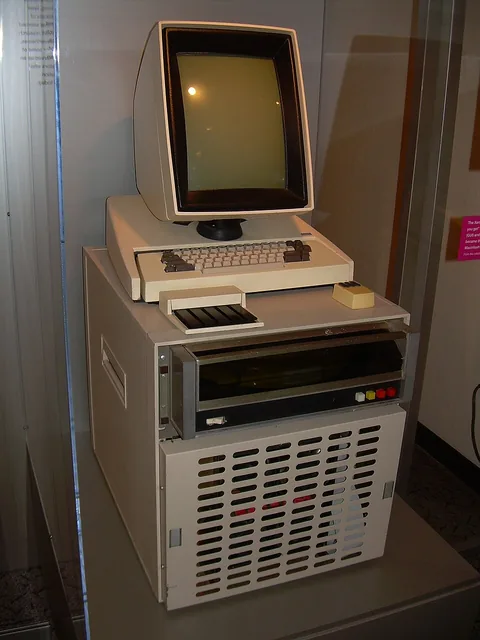
There was a debate. Bill was kind of, rightfully so, skeptical. And then he became— like, once he saw the GPT-4 demo57The GPT-4 demo — in summer 2022 Gates set OpenAI a challenge: its model had to pass the AP Biology exam. In September 2022 the team showed him the still-unreleased GPT-4 getting the top score. In his March 2023 essay "The Age of AI has begun," Gates called it one of the two revolutionary demos he had seen in his life. — like, that was the thing that Bill talked about publicly, where when he saw it, he said it's the best demo he saw after, you know, what Charles Simonyi showed him at Xerox PARC.58Charles Simonyi — a programmer at Xerox PARC and later Microsoft. Gates counts the graphical user interface Simonyi showed him in 1980 — windows, a mouse and the Bravo editor on the Alto computer — as the first revolutionary demo. Xerox PARC — Xerox's research center in Palo Alto, where the graphical interface, Ethernet and the laser printer were invented. But, you know, quite honestly, none of us could— So the moment for me was that, you know, let's go give it a shot. Then seeing the early Codex59The early Codex — OpenAI's 2021 model trained on code, which powered the first GitHub Copilot, unveiled in June 2021. Today's Codex agent is a different product with the same name. inside of Copilot, inside of GitHub Copilot, and seeing just the code completions and seeing it work — that's when I would say I felt like I can go from one to ten,60From one to ten — after the first billion in 2019, Microsoft put about $2 billion more into OpenAI, and in January 2023 announced a multiyear investment reported at $10 billion. because that was the big call, quite frankly. One was controversial, but the one to ten was what really made this entire era possible.
And then obviously the great execution by the team and the productization on their part, our part. I mean, if I think about it, right, the collective monetization reach of GitHub Copilot, ChatGPT, Microsoft 365 Copilot and Copilot61Microsoft 365 Copilot and Copilot — Microsoft's AI assistants: the first is built into Word, Excel, Outlook and Teams and sold to companies for $30 per user per month; the second is the free consumer assistant in Windows, the Edge browser and a mobile app. — you add those four things, that is it, right? That's the biggest sort of AI set of products out there on the planet. And that's, you know, what obviously has let us sustain all of this.
And I think not many people know that your CTO, Kevin Scott,62Kevin Scott — Microsoft's CTO since 2017; before that he ran engineering at LinkedIn and, earlier, worked at Google. you know, an ex-Googler, lives down here in Silicon Valley. And to contextualize it, right: Microsoft had missed out on search, had missed out on mobile; you become CEO, almost had missed out on the cloud, right? You've described it: caught the last train out of town to capture the cloud. And I think you were pretty determined to have eyes and ears down here, so you didn't miss the next big thing. So I assume that Kevin played a good role for you as well.
Absolutely. Yeah, I mean, in fact, I would say Kevin's conviction— And Kevin was also skeptical, like, that was the thing. I always watch for people who are skeptical who change their opinion, because to me, that's a signal. So I'm always looking for someone who's a non-believer in something, and then suddenly changes, and then they get excited about it. I have all the time for that, because I'm then curious: why, what? And so Kevin started with— I think all of us were kind of skeptical, right? No, I mean, in some sense, it defies the— you know, we're all having gone to school and said, God, you know, there must be an algorithm to crack this, versus just, let's do scaling laws and throw compute. But quite frankly, Kevin's conviction that this is worth going after is one of the big things that drove this.
09What Microsoft gets from OpenAI beyond its stake
To Nadella, the lasting strategic value of the partnership is Azure's exclusive stateless API and free access to a frontier model.
Well, we talk about, you know, that investment that's now worth $130 billion — I suppose it could be worth a trillion someday, as Sam says. But it really, in many ways, understates the value of the partnership, right? So you have the value in the rev share, billions per year going to Microsoft. You have the profits you make off the $250 billion Azure compute commitment from OpenAI. And of course you get huge sales from the exclusive distribution of the API. So talk to us how you think about the value across those domains, especially how this exclusivity has brought a lot of customers who may have been on AWS63AWS (Amazon Web Services) — Amazon's cloud division, the world's largest cloud. to Azure.
Yeah, no, absolutely. I mean, so to us, if I look at it, you know, aside from all the equity parts, the real strategic thing that comes together, and that remains going forward, is that stateless API exclusivity on Azure. That helps, quite frankly, both OpenAI and us and our customers, because when somebody in the enterprise is trying to build an application, they want an API that's stateless. They want to mix it up with compute and storage, put a database underneath it to capture state, and build a full workload. And that's where, you know, Azure coming together with this API— And so what we're doing with even Azure Foundry,64Azure AI Foundry — Microsoft's platform for building AI apps and agents, with a catalog of models from OpenAI and others and tools for evaluation and deployment. right? Because in some sense, let's say you want to build an AI application, but the key thing is: how do you make sure that the evals65Evals (evaluations) — test suites that check how well a model or AI app handles a specific task. of what you're doing with AI are great?
So that's where you need even a full app server in Foundry. That's what we have done. And so therefore I feel that that is the way we will go to market in our infrastructure business. The other side of the value capture for us is going to be incorporating all this IP. Not only do we have the exclusivity of the model in Azure, but we have access to the IP. I mean, having royalty-free— let's even forget all the know-how and the knowledge side of it — but having royalty-free access all the way till seven more years gives us a lot of flexibility, business-model-wise.
It's kind of like having a frontier model for free, in some sense. If you're an MSFT shareholder, that's kind of where you should start from: to think about, we have a frontier model that we can then deploy, whether it's in GitHub, whether it's in M365, whether it's in our consumer Copilot, then add to it our own data, post-train it, so that means we can have it embedded in the weights there. And so therefore we are excited about the value creation on both the Azure and the infrastructure side, as well as in our high-value domains, whether it is in health, whether it's in knowledge work, whether it's in coding or security.
You've been consolidating the losses from OpenAI.66Consolidating the losses — Microsoft accounts for its OpenAI stake under the equity method, reporting its share of OpenAI's profit or loss. While OpenAI loses money, that cuts into Microsoft's earnings. You know, I think you just reported earnings yesterday; I think you consolidated $4 billion of losses in the quarter. Do you think that investors are— I mean, they may even be attributing negative value, right? Because of the losses, you know, as they apply their multiple of earnings, Satya. Whereas I hear this and I think about all of those benefits we just described, not to mention the look-through equity value67Look-through value — what a company's stake in another company is worth at market value rather than book value. that you own in a company that could be worth a trillion unto itself. You know, do you think that the market is kind of misunderstanding the value of OpenAI as a component of Microsoft?
Yeah, that's a good one. So I think the approach that Amy is going to take is full transparency, because at some level, I'm no accounting expert. So therefore the best thing to do is to give all the transparency. I think this time around as well — I think that's why the non-GAAP, GAAP68GAAP and non-GAAP — figures under US accounting standards and adjusted figures the company calculates itself. Starting with its July–September 2025 report, Microsoft gives adjusted earnings excluding the impact of its OpenAI investment. — so that at least people can see the EPS numbers. Because the common-sense way I look at it, Brad, is simple. If you've invested, let's call it $13.5 billion, you can, of course, lose $13.5 billion.
But you can't lose more than $13.5 billion. At least the last time I checked, that's what you have at risk. You could also say, hey, the $135 billion that is, you know, today our equity stake, you know, is sort of illiquid, what have you. We don't plan to sell it. So therefore it's got risk associated with it. But the real story, I think, you are pulling is all the other things that are happening.
What's happening with Azure growth, right? Would Azure be growing if we had not sort of had the OpenAI partnership? To your point, the number of customers who came from other clouds for the first time, right? This is the thing that we really benefited from. What's happening with Microsoft 365?69Microsoft 365 — Microsoft's subscription to its office apps and services: Word, Excel, PowerPoint, Outlook, Teams, OneDrive and more. In fact, one of the things about Microsoft 365 was: what was the next big thing after E5?70E5 — the most expensive enterprise plan of Microsoft 365 and Office 365, with advanced security, analytics and phone features; it launched in 2015. Copilot is sold on top of the plans as a separate add-on.
Guess what? We found it in Copilot. It's bigger than any suite. Like, you know, we talk about penetration and usage and the pace — it's bigger than anything we have done in our information work, which we've been at for decades. And so we feel very, very good about the opportunity to create value for our shareholders. And then, at the same time, be fully transparent, so that people can look through what are the losses. I mean, who knows what the accounting rules are, but we will do whatever is needed, and people will then be able to see what's happening.
10Why Microsoft said no to OpenAI
Microsoft deliberately turned down some demand, including OpenAI's, to keep a fleet that's fungible across workloads, regions and chip generations.
But a year ago, Satya, there were a bunch of headlines that Microsoft was pulling back on AI infrastructure,71Pulling back — in February–April 2025, TD Cowen analysts reported that Microsoft had walked away from data center leases totaling hundreds of megawatts, and the company acknowledged slowing or pausing some early-stage projects. right? Fair or unfair, they were out there. You know, and perhaps you guys were a little more conservative, a little more skeptical of what was going on. Amy said on the call last night, though, that you've been short power and infrastructure for many quarters, and she thought that you would catch up, but you haven't caught up because demand keeps increasing. So I guess the question is: were you too conservative, you know, knowing what you know now? And what's the roadmap from here?
Yeah, it's a great question, because, see, the thing that we realized, and I'm glad we did, is the concept of building a fleet that truly was fungible — fungible for all the parts of the life cycle of AI, fungible across geographies and fungible across generations, right? Because one of the key things is when you have— let's take even what Jensen and team are doing, right? I mean, they're at a pace. In fact, one of the things I like is the speed of light,72Speed of light — Jensen Huang's management principle: measure any piece of work not against past results but against the theoretical limit of how fast and cheaply it could be done. right? We now have GB300s that we're bringing up. So you don't want to have ordered a bunch of GB200s that are getting plugged in, only to find the GB300s are in full production.73GB200 and GB300 — Nvidia's rack-scale AI systems of the Blackwell (GB200 NVL72) and Blackwell Ultra (GB300 NVL72) generations: 72 GPUs and 36 Grace CPUs per liquid-cooled rack. Nvidia ships a new generation every year, so the previous one quickly falls behind.
So you kind of have to make sure you're continuously modernizing, you're spreading the fleet all over, you are really, truly fungible by workload, and you're adding to that the software optimizations we talked about. So to me, that is the decision we made. And we said, look, sometimes you may have to say no to some of the demand, including some of the OpenAI demand, right? Because sometimes, you know, Sam may say, hey, build me a dedicated, you know, big, you know, whatever, multi-gigawatt data center in one location for training. Makes sense from an OpenAI perspective. Doesn't make sense from a long-term infrastructure buildout for Azure.
And that's where I thought we did the right thing, to give them flexibility to go procure that from others while maintaining, again, a significant book of business from OpenAI, but, more importantly, giving ourselves the flexibility with other customers, our own 1P.741P and 3P (first party and third party) — Microsoft's own products (Microsoft 365, Copilot, GitHub, Xbox) and outside cloud customers. Remember, like, one of the things that we don't want to do is be short on— you know, we talk about Azure. In fact, sometimes our investors are overly fixated on the Azure number. But remember, for me, the high-margin business is Copilot. It is Security Copilot. It's GitHub Copilot. It's the healthcare Copilot. So we want to make sure we have a balanced way to approach the returns that the investors have. And so that's kind of one of the other things misunderstood, perhaps, in our investor base in particular, which I find pretty strange and funny, because I think they want to hold Microsoft because of the portfolio we have. But man, are they fixated on the growth number of one little thing called Azure.
On that point, Azure grew 39% in the quarter on a staggering $93 billion run rate.75Run rate — revenue for the latest quarter or month scaled up to a year. In July 2025 Microsoft disclosed for the first time that Azure's revenue for the fiscal year ended in June topped $75 billion. And, you know, I think that compares to GCP that grew at 32%76Fact-checkGCP (Google Cloud Platform), 32% — according to Alphabet's report, Google Cloud revenue grew 34% in July–September 2025, to $15.2 billion. AWS grew 20%, to $33 billion; Amazon reported on October 30. TechRepublic. and AWS closer to 20%. But could Azure— because you did give compute to 1P, and because you did give compute to research, it sounds like Azure could have grown 41%, 42% had you had more compute to offer.
Absolutely, absolutely. There's no question. There's no question. So that's why I think the internal thing is to balance out what we think, again, is in the long-term interests of our shareholders, and also to serve our customers well. And also not to kind of— you know, one of the other things was, you know, people talk about concentration risk,77Concentration risk — dependence on a single big customer: if it leaves or stops paying, revenue drops sharply. Investors worried that much of Azure's growth came from OpenAI. right? We obviously want a lot of OpenAI, but we also want other customers. And so we're shaping the demand here. You know, we are in a supply— you know, we're not demand constrained, we are supply constrained. So we are shaping the demand such that it matches the supply in the optimal way, with the long-term view.
11A $400 billion backlog and circular deals
Nadella is confident in Microsoft's margins because "at scale, nothing is a commodity," and he says demand will ultimately test other players' circular deals.
So, to that point, Satya, you talked about $400 billion — it's an incredible number — of remaining performance obligations78Remaining performance obligations (RPO) — revenue under signed contracts that a company has yet to collect, i.e. its order backlog. As of September 30, 2025, Microsoft's commercial RPO had grown 51% to $392 billion, with a weighted average duration of about two years; the new $250 billion OpenAI contract was not yet included. Microsoft. last night. You said that, you know, that's your booked business today. It'll surely go up tomorrow as sales continue to come in. And you said your need to build out capacity just to serve that backlog is very high. You know, how diversified is that backlog, to your point? And how confident are you that that $400 billion does turn into revenue over the course of the next couple years?
Yeah, that $400 billion has a very short duration, as Amy explained. It's the two-year duration on average. So that's definitely our intent. That's one of the reasons why we're spending the capital outlay with high certainty that we just need to clear this backlog. And to your point, it's pretty diversified, both on the 1P and the 3P. Our own demand is, quite frankly, pretty high for our first party.
And even amongst third party, one of the things we now are seeing is the rise of all the other companies building real workloads that are scaling. And so given that, I think we feel very good. I mean, obviously, that's one of the best things about RPO: you can be planful, quite frankly. And so therefore we feel very, very good about building. And then this doesn't include, obviously, the additional demand that we're already going to start seeing, including the 250, you know, which will have a longer duration, and we'll build accordingly.
Right. So there are a lot of new entrants, right, in this race to build out compute: Oracle, CoreWeave, Crusoe,79Oracle, CoreWeave, Crusoe — newcomers to the AI cloud market. Oracle is building data centers for OpenAI in the Stargate project; CoreWeave and Crusoe are "neoclouds" that rent out Nvidia GPUs, and Crusoe is building a Stargate data center in Abilene, Texas. et cetera. And normally we think that will compete away margins, but you've somehow managed to build all this out while maintaining healthy operating margins at Azure. So I guess the question is, for Microsoft: how do you compete in this world where people are levering up, taking lower margins, while balancing that profit and risk? And do you see any of those competitors doing deals that cause you to scratch your head and say, oh, we're just setting ourselves up for another boom-and-bust cycle?
I mean, I'd say at some level, the good news for us has been competing even as a hyperscaler80Hyperscaler — a cloud operator of enormous scale with its own network of data centers around the world; usually AWS, Microsoft Azure and Google Cloud. every day. You know, there's a lot of competition, right, between us and Amazon and Google on all of these, right? I mean, it's sort of one of those interesting things, which is: everything is a commodity, right? Compute, storage. I remember everybody saying, wow, how can there ever be margin? Except at scale, nothing is a commodity. And so therefore, yes, we have to have a cost structure — our supply chain efficiency, our software efficiencies all have to kind of continue to compound in order to make sure that there's margins.
But scale— And to your point, one of the things that I really love about the OpenAI partnership is it's gotten us to scale, right? This is a scale game. When you have the biggest workload there is running on your cloud, that means not only are we going to learn faster on what it means to operate with scale, that means your cost structure is going to come down faster than anything else. And guess what? That'll make us price competitive. And so I feel pretty confident about our ability to, you know, have margins, and this is where the portfolio helps.
I've always said, you know — I've been forced into giving the Azure numbers, right? Because at some level, I've never thought of allocating compute— I mean, my capital allocation is for the cloud. Whether it is Xbox Cloud Gaming or Microsoft 365 or Azure, it's one capital outlay. And then everything is a meter, as far as I'm concerned. From an MSFT perspective, it's a question of, hey, the blended average of that should match the operating margins we need as a company. Because after all, otherwise, why— we're not a conglomerate. We're one company with one platform logic. It's not running five, six different businesses. We're in these five, six different businesses only to compound the returns on the cloud and AI investment.
Yeah, I love that line: nothing is a commodity at scale. You know, there's been a lot of ink and time spent, even on this podcast with my partner Bill Gurley,81Bill Gurley — partner at the venture firm Benchmark; he co-hosted BG2 with Gerstner until October 2025 and repeatedly criticized circular deals in AI. talking about circular revenues, including Microsoft's Azure credits, right, to OpenAI that were booked as revenue. Do you see anything going on like the AMD deal, you know, where they traded 10% of their equity, you know, for a deal, or the Nvidia deal? Again, I don't want to be overly fixated on concern, but I do want to address head-on what is being talked about every day on CNBC and Bloomberg. And there are a lot of these overlapping deals that are going on out there. Do you, when you think about that in the context of Microsoft— does any of that worry you, again, as to the sustainability or durability of the AI revenues that we see in the world?
ExplainerCircular deals in AI
In fall 2025 the biggest AI infrastructure suppliers struck deals with OpenAI in which money goes around in a circle.
- Nvidia (September 2025): OpenAI will deploy 10 GW of Nvidia systems, and Nvidia will invest up to $100 billion in OpenAI as they are deployed — in effect helping finance purchases of its own chips.
- AMD (October 2025): OpenAI will buy 6 GW of AMD GPUs, and AMD gave OpenAI a warrant for up to 160 million of its shares (about 10% of the company) at a nominal price, vesting as purchases and AMD's stock price hit milestones.
- Oracle: a compute contract worth about $300 billion over five years, for which Oracle itself is borrowing to build data centers.
Critics compare this with the vendor financing of the dot-com bubble, when telecom equipment makers lent to their customers and the revenue turned out to be hollow. Defenders answer as Nadella does: the scheme works as long as there is real end demand for what the capacity produces.
Yeah. I mean, first of all, our investment of, let's say, that 13 and a half, which was all the training investment, that was not booked as revenue. That is the reason why we have the equity percentage. That's the reason why we have the 27%, or $135 billion. So that was not something that somehow made it into Azure revenue. In fact, if anything, the Azure revenue was purely the consumption revenue of ChatGPT and anything else, and the APIs they put out that they monetized and we monetized. To your aspect of others, you know, to some degree, it's always been there, in terms of vendor financing,82Vendor financing — a supplier lending a customer money to buy its own product. In the late 1990s Lucent and Nortel did this with telecom startups; when the bubble burst, the customers went bust and the suppliers wrote off billions. right?
So it's not like a new concept that when someone's building something and they have a customer who is also building something, but they need financing— you know, whether it is in— you know, it's sort of— they're taking some exotic forms, which obviously need to be scrutinized by the investment community. But that said, you know, vendor financing is not a new concept. Interestingly enough, we have not had to do any of that, right? I mean, we may have, you know, really either invested in OpenAI and essentially got an equity stake in it in return for compute, or essentially sold them great pricing of compute in order to be able to sort of bootstrap them. But, you know, others choose to do so differently. And I think circularity ultimately will be tested by demand, because all this will work as long as there is demand for the final output of it. And up to now, that has been the case.
12Will SaaS collapse in the agent era?
Agents are replacing the business-logic tier of SaaS, and Nadella thinks low-ARPU, high-usage apps like Microsoft 365 come out ahead.
Certainly, certainly. Well, I want to shift— you know, as you said, over half your business is software, applications. You know, I want to think about software and agents. You know, last year on this pod, you made a bit of a stir by saying that much of application software, you know, was this thin layer that sat on top of a CRUD database.83CRUD (create, read, update, delete) — the four basic operations on database records. Nadella's point is that much enterprise software is essentially a database with forms and rules on top.
The notion that business applications exist, that's probably where they'll all collapse, right, in the agent era. Because if you think about it, right, they are essentially CRUD databases with a bunch of business logic. The business logic is all going to these agents.
Public software companies are now trading at about 5.2 times forward revenue. So that's below their ten-year average of seven times, despite the markets being at all-time highs. And there's lots of concern that SaaS subscriptions84SaaS (software as a service) — software that runs in the cloud and is sold by subscription, usually per seat: Salesforce, Workday, ServiceNow. and margins may be put at risk by AI. So how today is AI affecting the growth rates of your software products, of, you know, those core products? And specifically, as you think about database, Fabric,85Fabric — Microsoft's data analytics platform, introduced in 2023, which combines storage, data processing and Power BI reporting. security, Office 365. And then, second question, I guess, is: what are you doing to make sure that software is not disrupted, but is instead superpowered by AI?
Yeah, I think that's right. So the last time we talked about this, my point really there was: the architecture of SaaS applications is changing, because this agent tier is replacing the old business logic tier. And so, because if you think about it, the way we built SaaS applications in the past was you had the data, the logic tier and the UI all tightly coupled. And AI, quite frankly, doesn't respect that coupling, because it requires you to be able to decouple. And yet the context engineering86Context engineering — choosing and feeding a model the information it needs — documents, history, tool results — so it does a task correctly. is going to be very important. I mean, take, you know, something like Office 365.
One of the things I love about our Microsoft 365 offering is it's low ARPU,87ARPU (average revenue per user). Nadella praises the low-ARPU, high-usage model: users pay little but work in the apps constantly and create lots of data. high usage, right? I mean, if you think about it, right, Outlook or Teams or SharePoint, you pick Word or Excel — like, people are using it all the time, creating lots and lots of data, which is going into the graph.88The graph — Microsoft Graph, the connected data of Microsoft 365 users: emails, documents, meetings, chats and who works with whom. Copilot draws on it to answer requests. And our ARPU is low. So that's sort of what gives me real confidence that this AI tier, I can meet it by exposing all my data. In fact, one of the fascinating things that's happened, Brad, with both GitHub and Microsoft 365, is, thanks to AI, we are seeing all-time highs in terms of data that's going into the graph or the repo. I mean, think about it: the more code that gets generated, whether it is Codex or Claude89Claude — the models and coding agent from Anthropic, OpenAI's main rival. In September 2025 Microsoft added Claude models to Microsoft 365 Copilot. or wherever, where is it going?
GitHub. More PowerPoints that get created, Excel models that get created, all these artifacts and chat conversations. Chat conversations are new docs. They're all going into the graph. And all that is needed, again, for grounding.90Grounding — tying a model's answer to specific data, such as the user's documents, emails or code, so that it answers from facts instead of making things up. So that's what — you know, you turn it into a forward index, into an embedding,91Embedding — a representation of text as a vector of numbers in which texts with similar meanings end up close together. Agents use these vectors to find the right documents quickly. and basically that semantics is what you really go ground any agent request with.
And so I think the next generation of SaaS applications will have to sort of— If you are high ARPU, low usage, then you have a little bit of a problem. But we are the exact opposite: we are low ARPU, high usage. And I think that anyone who can structure that and then use this AI as, in fact, an accelerant— Because, I mean, like, if you look at the M365 Copilot price, I mean, it's higher than any other thing that we sell. And yet it's getting deployed faster and with more usage. And so I feel very good. Or coding, right? Who would have thought?
In fact, take GitHub, right? What GitHub did in the first, I don't know, 15 years of its existence, or 10 years of its existence, it has basically done in the last year, just because coding is no longer a tool. It's more a substitute for wages somewhere. And so it's a very different type of business model, even.
13The token factory, the agent factory and search economics
AI's value splits between the token factory and the agent factory, and Nadella says chat economics are still worse than search, especially for consumers.
I'm kind of thinking about the stack and where value gets distributed. So until very recently, right, clouds largely ran pre-compiled software. You didn't need a lot of GPUs, and most of the value accrued to the software layer, to the database, to the applications like CRM and Excel. But it does seem, in the future, that these interfaces will only be valuable, right, if they're intelligent, right? If they're pre-compiled, they're kind of dumb. The software's got to be able to think and to act and to advise.
And that requires, you know, the production of these tokens, you know, dealing with the ever-changing context. And so in that world, it does seem like much more of the value will accrue to the AI factory, if you will — to, you know, Jensen producing, you know, helping to produce these tokens at the lowest cost — and to the models. And maybe the agents or the software will accrue a little bit less of the value in the future than they've accrued in the past. Steelman for me why that's wrong.
Yeah. So I think there are two things that are necessary to try and drive the value of AI. One is what you described first, which is the token factory. And even if you unpack the token factory, it's the hardware, silicon, system, but then it is about running it most efficiently with the system software, with all the fungibility, max utilization. That's where the hyperscaler's role is, right? What is a hyperscaler? Is a hyperscaler, like everybody says— if you sort of said, hey, I want to run a hyperscaler — yeah, you could say, oh, it's simple.
I'll buy a bunch of servers and wire them up and run it. It's not that, right? I mean, if it was that simple, then there would have been more than three hyperscalers by now. So the hyperscaler is the know-how of running that max util and the token factories. And by the way, it's going to be heterogeneous. Obviously Jensen's super competitive. Lisa is going to come,92Lisa — Lisa Su, CEO of AMD, Nvidia's main rival in AI GPUs. you know, Hock's going to produce things from Broadcom.93Hock — Hock Tan, CEO of Broadcom, which designs custom AI chips for big companies: Google's TPUs and OpenAI's own chips. We will all do our own.94Our own — in November 2023 Microsoft unveiled its own AI accelerator, Maia 100, and server CPU, Cobalt 100; Google makes TPUs and Amazon makes Trainium. So there's going to be a combination. So you want to run, ultimately, a heterogeneous fleet that is maximized for token throughput and efficiency and so on. So that's kind of one job. The next thing is what I call the agent factory.
Remember that a SaaS application in the modern world is driving a business outcome. It knows how to most efficiently use the tokens to create some business value. In fact, GitHub Copilot is a great example of it, right? Which is, you know, if you think about it, the auto mode of GitHub Copilot95Auto mode of GitHub Copilot (auto model selection) — a 2025 feature: Copilot itself picks which model, from OpenAI, Anthropic or Google, handles a request. is the smartest thing we've done, right? So it chooses, based on the prompt, which model to use for a code completion or a task handoff, right? And you do that not just by, you know, choosing in some round-robin fashion.
You do it because of the feedback cycle you have — you have the evals, the data loops and so on. So the new SaaS applications, as you rightfully said, are intelligent applications that are optimized for a set of evals and a set of outcomes, that then know how to use the token factory's output most efficiently. Sometimes latency matters, sometimes performance matters. And knowing how to do that trade in a smart way is where the SaaS application value is. But overall, it is going to be true that there is a real marginal cost96Marginal cost — what it costs to serve one more user or one more request. A copy of a program on a disc cost almost nothing, a cloud service needs servers, and every answer from an AI model burns time on expensive GPUs. to software this time around. It was there in the cloud era too.
When we were doing, you know, CD-ROMs, there wasn't much of a marginal cost. You know, with the cloud, there was. And this time around, it's a lot more. And so therefore the business models have to adjust, and you have to do these optimizations for the agent factory and the token factory separately.
You have a big search business97Search business — Bing, the search engine Microsoft launched in 2009. Microsoft makes billions of dollars a year on search and news advertising, though Bing's share of search is far smaller than Google's. that most people don't know about, you know, but it turns out that that's probably one of the most profitable businesses in the history of the world, because people are running lots of searches, billions of searches, and the cost of completing a search, if you're Microsoft, is many fractions of a penny, right? Doesn't cost very much to complete a search. But the comparable query or prompt stack today, when you use a chatbot, looks different, right? So I guess the question is, assume similar levels of revenue in the future for those two businesses, right? Do you ever get to a point where kind of that chat interaction has unit economics98Unit economics — revenue and costs per unit: one customer, one order or, here, one query. that are as profitable as search?
I think that's a great point, because, see, search was pretty magical in terms of its ad unit and its cost economics, because there was the index, which was a fixed cost that you could then amortize in a much more efficient way. Whereas this one, you know, each chat — to your point — you have to burn a lot more GPU cycles, both with the intent and the retrieval. So the economics are different. So I think that's why a lot of the early sort of economics of chat have been the freemium model99Freemium (free plus premium) — a model where the basic version is free and advanced features cost a subscription. ChatGPT, Claude and Copilot are sold this way. and subscription, even on the consumer side. So we are yet to discover whether it's agentic commerce100Agentic commerce — purchases an AI agent makes on the user's behalf. In September 2025 OpenAI launched buying from Etsy and Shopify stores right inside ChatGPT, with the seller paying a fee. or whatever is the ad unit, how it's going to be litigated. But at the same time, the fact that at this point, you know, I kind of know— In fact, I use search for very, very specific navigational queries.101Navigational queries — searches meant to reach a specific site, like "gmail login," rather than to learn something.
I used to say I use it a lot for commerce, but that's also shifting to my, you know, Copilot. Like, I look at the Copilot mode in Edge and Bing, or Copilot — now they're blending in. So I think that, yes, there is going to be a real litigation, just like we talked about the SaaS disruption, where we're in the beginning of the cheese being a little moved in the consumer economics of that category.
Right. I mean, and given that it's the multi-trillion-dollar— this is the thing that's driven all the economics of the internet, right? When you move the economics of search, for both you and Google, and it converges on something that looks more like a personal agent, a personal assistant, chat, you know, that could end up being much, much bigger in terms of the total value delivered to humanity. But the unit economics— you're not just amortizing this one-time fixed index.
That's right. I think that's right. I think that the consumer could be worse. Yeah, the consumer category, because you are pulling a thread on something that I think a lot about, right? Which is, during these disruptions, you kind of have to have a real sense of: what is the category economics? Is it winner-take-all? And both matter, right? The problem in consumer space always is that there's a finite amount of time. And so if I'm not doing one thing, I'm doing something else.
And if your monetization is predicated on some human interaction in particular— If there was truly agentic stuff even on consumer, that could be different. Whereas in the enterprise, one is, it's not winner-take-all. And two, it is going to be a lot more friendly for agentic interaction. So it's not like, for example, the per seat versus consumption. The reality is agents are the new seats. And so you can think of it as: the enterprise monetization is much clearer. The consumer monetization, I think, is a little more murky.
14AI, productivity and Microsoft's headcount
Microsoft will grow headcount, Nadella says, but with far more leverage than before AI, because everyone is relearning how to work with agents.
You know, we've seen a spate of layoffs recently, with Amazon announcing some big layoffs this week.102Amazon layoffs — on October 28, 2025, Amazon announced cuts of about 14,000 corporate jobs. You know, the Mag 7103Mag 7 (Magnificent Seven) — the seven largest US tech stocks: Apple, Microsoft, Alphabet, Amazon, Nvidia, Meta and Tesla. has had little job growth over the last three years, despite really robust top lines. You know, you didn't grow your headcount really from '24 to '25. It's around 225,000.104Around 225,000 — according to Microsoft's annual reports, it had 228,000 employees on June 30 of both 2024 and 2025. You know, many attribute this to normal getting fit, you know, just getting more efficient coming out of COVID. And I think there's a lot of truth to that.
But do you think part of this is due to AI? Do you think that AI is going to be a net job creator? And do you see this being a long-term positive for Microsoft productivity? Like, it feels to me like the pie grows, but you can do all these things much more efficiently, which either means your margins expand, or it means you reinvest those margin dollars and you grow faster for longer. I call it the golden age of margin expansion.
I'm a firm believer that the productivity curve does and will bend, in the sense that we will start seeing some of what is the work and the workflow in particular change, right? There's going to be more agency for you at a task level to get to job complete because of the power of these tools in your hand. And that, I think, is going to be the case. So that's why I think we are even internally— for example, when you talked about even our allocation of tokens, we want to make sure that everybody at Microsoft, standard issue, right? All of them have Microsoft 365 to the hilt, in the sort of most unlimited way, and have GitHub Copilot, so that they can really be more productive. But here is the other interesting thing, Brad, we're learning: there is a new way to even learn, right? Which is, you know, how to work with agents, right?
So that's kind of like when Word, Excel, PowerPoint all showed up in Office, we learned how to rethink, let's say, how we did a forecast, right? I mean, think about it, right? In the '80s, the forecasts were inter-office memos and faxes and what have you. And then suddenly somebody said, oh, here's an Excel spreadsheet, let's put it in an email, send it around, people enter numbers, and there was a forecast. Similarly, right now, any planning, any execution starts with AI: you research with AI, you think with AI, you share with your colleagues, and what have you. So there's a new artifact being created and a new workflow being created.
And that is the rate of the pace of change of the business process that matches the capability of AI. That's where the productivity efficiencies come. And so organizations that can master that are going to be the biggest beneficiaries, whether it's in our industry or, quite frankly, in the real world.
And so is Microsoft benefiting from that? You know, so let's think about a couple years from now, five years from now — at the current growth rate it'll be sooner, but let's call it five years from now — your top line is twice as big as what it is today, Satya. How many more employees will you have?
If you grow revenue by— Like, one of the best things right now is these examples that I'm hit with every day from the employees of Microsoft. There was this person who leads our network operations, right? I mean, if you think about the amount of fiber we have had to put in for, like, this, you know, this 2-gigawatt data center we just built out in Fairwater,105Fairwater — Microsoft's AI data center in Mount Pleasant, Wisconsin, announced in September 2025: hundreds of thousands of Nvidia GPUs linked into one supercomputer for training models. Microsoft called it the world's most powerful AI data center and is building a second one next to it. right? And the amount of fiber there, the AI WAN106AI WAN (wide area network) — Microsoft's dedicated fiber network linking Fairwater data centers in different states so they work as a single AI "superfactory." and what have you — it's just crazy, right? And it turns out this is a real-world asset. There are, I think, 400 different fiber operators we are dealing with worldwide.
Every time something happens, we are literally going and dealing with all these DevOps pipelines.107DevOps pipelines — automated chains that build, test and roll out changes to software and infrastructure; here, the processes for maintaining the network. The person who leads it, she basically said to me, you know what, there's no way I'll ever get the headcount to go do all this. Not— forget even if I even approve the budget, I can't hire all these folks. So she did the next best thing. She just built herself a whole bunch of agents to automate the DevOps pipeline of how to deal with the maintenance. That is an example of, to your point, a team with AI tools being able to get more productivity.
So, to your question, I will say we will grow headcount. But the way I look at it is that headcount we grow will grow with a lot more leverage than the headcount we had pre-AI. And that's the adjustment, I think, structurally you're seeing first, right? Which is— one, you called it getting fit. I think of it as more getting to a place where everybody is really now learning how to rethink how they work. And it's the how, not even the what. Even if the what remains the constant, how you go about it has to be relearned. And it's the unlearning and learning process that I think will take the next year or so. Then the headcount growth will come with max leverage.
Yeah, no, I think we're on the verge of incredible economic productivity growth. It does feel like, when I talk to you or Michael Dell,108Michael Dell — founder and CEO of Dell Technologies; he was a guest on BG2 in July 2025. that most companies aren't even really in the first inning — maybe the first batter in the first inning — in reworking those workflows to get maximum leverage from these agents. But it sure feels like over the course of the next two to three years, that's where a lot of gains are going to start coming from. And again, you know, I certainly am an optimist. I think we're going to have net job gains from all of this. But I think for those companies, they'll just be able to grow their bottom line— their number of employees slower than their top line. That is the productivity gain to the company. Aggregate all that up — that's the productivity gain to the economy. And then we'll just take that consumer surplus109Consumer surplus — the gap between what a person is willing to pay for something and what they actually pay. Brad's point: the gains from cheaper, better products go to people and get spent on new things. and invest it in creating a lot of things that didn't exist before.
100%. 100%. Even in software development, right? One of the things I look at it is: no one would say we're going to have a challenge in having, you know, more software engineers contribute to our sort of society. Because the reality is, you look at the IT backlog110IT backlog — the pile of tasks an IT department never gets to: updates, fixes, new internal tools. in any organization. And so the question is, all these software agents are hopefully going to help us go and take a whack at all of the IT backlog we have. And think of that dream of evergreen software111Evergreen software — software that is constantly updated and never goes stale, without accumulated technical debt. — that's going to be true. And then think about the demand for software.
So I think that, to your point, the levels of abstraction at which knowledge work happens will change. We will adjust to that, the work and the workflow. That will then adjust itself, even in terms of the demand for the products of this industry.
15The reindustrialization of America
Nadella is very optimistic: building data centers is itself reindustrializing the US, and American hyperscalers are also investing in compute around the world.
I'm going to end on this, which is really around the reindustrialization of America. I've said, if you add up the $4 trillion of capex that you and so many of the big, large US tech companies are investing over the course of the next four or five years, it's about ten times the size of the Manhattan Project112Fact-checkManhattan Project — the US program to build the atomic bomb in 1942–1946. It cost nearly $2 billion, about $27 billion in 2023 dollars. Adjusted for inflation alone, $4 trillion is not ten but roughly 150 times as much. Wikipedia. on an inflation-adjusted or GDP-adjusted basis. So it's a massive undertaking for America. The president has made it a real priority of his administration to recut the trade deals, and it looks like we now have trillions of dollars. South Korea committed $350 billion of investments just today into the United States. And when you think about, you know, what you see going on in power in the United States — both production, the grid, et cetera — what you see going on in terms of this reindustrialization, how do you think this is all going? And, you know, maybe just reflect on where we're landing the plane here, and your level of optimism for the few years ahead.
Yeah, no, I feel very, very optimistic, because in some sense, you know, Brad Smith113Brad Smith — president and vice chair of Microsoft, in charge of its relations with governments. was telling me about sort of the economy around a Wisconsin data center. It's fascinating. Most people think, oh, a data center, that is sort of like, yeah, it's going to be one big warehouse, and it's, you know, fully automated. A lot of it is true. But, first of all, what went into the construction of that data center, and the local supply chain of the data center — that is, in some sense, the reindustrialization of the United States as well.
Even before you get to what is happening in Arizona with the TSMC plants,114TSMC plants in Arizona — TSMC of Taiwan, the largest contract chipmaker, is building fabs near Phoenix; in March 2025 it pledged to raise its US investment to $165 billion. or what was happening with Micron and their investments in memory,115Micron — the American memory maker; in June 2025 it announced about $200 billion of investment in US manufacturing and R&D. or Intel and their fabs and what have you, right? There's a lot of stuff that we will want to start building. Doesn't mean we won't have trade deals that make sense for the United States with other countries. But to your point, the reindustrialization for the new economy, and making sure that all the skills and all that capacity, from power on down— I think it's sort of very important, right, for us. And the other thing that I also say, Brad — it's important, and this is something that I've had a chance to talk to President Trump about, as well as Secretary Lutnick116Lutnick — Howard Lutnick, US Secretary of Commerce since February 2025 and previously head of the financial firm Cantor Fitzgerald. and others — is it's important to recognize that we as hyperscalers of the United States are also investing around the world.
So in other words, the United States is the biggest investor of compute factories, or token factories, around the world. But not only are we attracting foreign capital to invest in our country so that we can reindustrialize, we are helping, whether it's in Europe or in Asia or elsewhere, in Latin America and in Africa, with our capital investments, bringing the best American tech to the world that they can then innovate on and trust. And so both of those, I think, really bode well for the United States long term.
I'm grateful for your leadership. Sam is really helping lead the charge at OpenAI for America. I think this is a moment where I look ahead, you know, you can see 4% GDP growth on the horizon. We'll have our challenges, we'll have our ups and downs. These tend to be stairs, you know, stairs up, rather than a line straight up and to the right. But I, for one, see a level of coordination going on between Washington and Silicon Valley, between big tech and the reindustrialization of America, that gives me cause for incredible hope. Watching what happened this week in Asia, led by the president and his team, and then watching what's happening here, is super exciting. So thanks for making the time. We're big fans. Thanks, thanks, Satya.
Thanks so much, Brad. Thank you.
As a reminder to everybody: just our opinions, not investment advice.


