

Cheeky Pint
Chapters
A modern voice model, Staniszewski explains, predicts the next phoneme in context and works out accent and emotion on its own instead of picking from hard-coded parameters.
Read the chapter- Early attempts rebuilt the vocal tract as an analog machine, Bell Labs then represented speech as a structured set of signals, later systems stitched phonemes together from a library, and today neural nets predict the next sound from context.
- Staniszewski credits his cofounder Piotr with bringing ideas from transformers and diffusion models into speech and finding a better way to encode and decode the steps from text to Mel spectrogram to waveform.
- The two big innovations, he says, were bringing in the context of what comes before and after a passage, and encoding the voice itself: its accent, style and prosody.
- Where Bell Labs hard-coded the parameters of speech, an ElevenLabs model deduces on its own whether a speaker is British, Polish or Spanish, enthusiastic or sad, which Collison sums up as Britishness being an emergent property.
- The closest thing to a token is the phoneme: the model takes in text and a speaker's voice embedding and operates on the phoneme and text levels in sync.
ElevenLabs' voices sound human largely because of data the company labeled itself, and research done for internal needs keeps turning into products.
Read the chapter- Plenty of audio exists, Staniszewski says, but it rarely records who is speaking when, and the "what" is often annotated while the "how" (emotion, accent) isn't, so ElevenLabs built its own team of labelers coached on voice.
- Its speech-to-text model started as a tool for its own labeling because the models on the market weren't good enough, and only later became a customer product.
- The first machine to model the human vocal tract was built by Wolfgang von Kempelen, who spent decades on it before it began producing vowels.
- The same Kempelen, Staniszewski adds, built the chess machine called the Turk, secretly operated by a human, which gave its name to Mechanical Turk, a service ElevenLabs uses for data labeling.
ElevenLabs builds foundational audio models and a business platform on top of them, and leaves domain-specific applications to others.
Read the chapter- Staniszewski describes ElevenLabs as a research and product deployment company whose models cover text-to-speech, speech-to-text in over 100 languages, conversational models and music.
- The platform layer connects those models to knowledge bases, telephony and integrations, evaluates and monitors agents, and on the creative side voices ads and brand-narrated articles.
- Horizontal use cases are ElevenLabs' to serve, he says, while areas with heavy domain specificity are where application companies will form.
- Collison suggests that when new capabilities ship every week, a closed-captioning service stuck two versions behind is a liability, so ElevenLabs often needs to go direct, and Staniszewski agrees.
Collison feels voice is stuck ten years in the past, while Staniszewski calls it a deployment gap for a technology that has sounded good for only three years.
Read the chapter- Driving home, Collison couldn't get his phone to read him a PDF: the iOS screen reader fights with scrolling, Gemini hung on "Read This to Me," and car voice control, in his words, "sucks."
- Good-sounding voice models, Staniszewski says, are three years old, real-time ones two, and production use one; great voice models should reach cars this year for cloud use cases and in two or three years without connectivity.
- ElevenReader grew out of Audible blocking AI-narrated audiobooks, and it now reads uploaded PDFs and text in voices like Michael Caine's.
- Not every OS maker allows third-party transcription engines, but Staniszewski thinks Apple may be heading that way after it announced it would open up the LLM ecosystem.
Text LLMs passed the Turing test long ago, but voice agents pass it only in narrow settings like customer support, because turn-taking and tool calls are still hard.
Read the chapter- Collison calls the voice assistant one of computing's oldest UI paradigms, citing "Open the pod bay doors, HAL," yet says Siri lacks the intelligence and the voice modes of ChatGPT and Gemini just don't work.
- A system has to know when you've finished speaking, when to act, when to wait and when to ask back, which Staniszewski says takes speech-to-text, a turn-taking mechanism and orchestration.
- Customer support calls already pass the voice Turing test, he says, while a truly interactive gaming experience is still far off.
- The most common difficulty with customers is a tool call mid-conversation, such as authenticating or pulling information from a database.
- Staniszewski hopes conversational agents will pass the Turing test across the board within a year or so.
Transcription gets better when it's tuned to a particular voice and to the words a situation calls for, and ElevenLabs expects to ship speaker-specific transcription within about a month.
Read the chapter- Staniszewski's own accent is so hard to transcribe that his voice is part of ElevenLabs' test suite.
- ElevenLabs already supports keyword detection, so for Cheeky Pint a word list could be generated from previous episodes.
- Fine-tuning on a specific speaker is solvable, he says, and should arrive in one of the next versions, hopefully within a month, while diarization already works extremely well.
- Use cases include a surgeon giving commands in an operating room and a TV remote that should listen to its owner rather than the whole family.
The V3 model made speech controllable by cues for the first time, and in expressive mode an agent picks up the other person's emotions.
Read the chapter- Collison asks whether there should be a de-accenting or de-mumbling filter for voices, like Zoom's "touch up my appearance."
- Until the end of last year the model decided on the best performance itself, and now it can be cued to speak more slowly or deliver a dramatic pause differently.
- That took architectural changes and data annotated for both what was said and how it was said.
- In expressive mode, if the person on the other end is stressed, the agent can respond reassuringly in a matching tone.
ElevenLabs builds agents on a cascade of speech-to-text, LLM and text-to-speech because businesses need reliability and visibility, while speech-to-speech is faster but dumber.
Read the chapter- Speech-to-speech skips text in the middle and is used for latency, but Staniszewski says you lose reliability and visibility into the pipeline.
- Businesses want to see each step and swap out the LLM layer, whereas speech-to-speech will flourish in companion apps, where "maybe hallucinations are even a feature."
- Asked whether speech-to-speech models think differently, Staniszewski says they're definitely dumber because speed requires smaller models.
- When ElevenLabs replaced its contact form with an agent conversation, people were more willing to complete it, described their use cases more openly, and came in from every language.
Voice models will break down language barriers and give people back voices they lost, which Staniszewski calls the most important part of ElevenLabs' work.
Read the chapter- Collison recalls Staniszewski's story of cheap Polish dubbing where one actor voiced every role, and argues AI isn't taking jobs from great dubbing that never existed there.
- The biggest effect, Staniszewski says, is breaking down language barriers in any conversation, like the Babel fish from The Hitchhiker's Guide to the Galaxy.
- ElevenLabs recreates voices for people who lost theirs to ALS or throat cancer, and recently a Neuralink patient spoke in their own voice again with family around.
- A woman who lost her voice before her wedding was able, with a recreated voice, to speak her vows.
A voice agent can both answer customers and make calls itself, and developers are already building ones like the pub-calling Guinndex on ElevenLabs.
Read the chapter- Collison describes voice agents as handling customer service or calling a restaurant to make a reservation for you, and Staniszewski agrees, covering both reactive and proactive calls.
- A developer built the Guinndex on ElevenLabs, an agent that called pubs across Ireland, and 3,000 venues reported their pint prices.
- OpenClaw looks for the most popular tools to hook up, and ElevenLabs is one of its recommended options for voice.
Voice models are far smaller and cheaper to train than LLMs, and ElevenLabs offers new models at cost so customers can discover what they can do.
Read the chapter- A leading voice model, Staniszewski says, has a few billion to tens of billions of parameters, while leading LLMs, Collison notes, are in the hundreds of billions.
- CapEx is still high, and ElevenLabs recently raised half a billion dollars at an $11 billion valuation.
- Text-to-speech is billed per text token, agents and transcription per minute, and enterprises sign annual agreements where a bigger commit brings a bigger discount.
- New models cost more to serve, but ElevenLabs gives them at cost because people don't yet know what's possible with them.
- For uses like audiobook narration the right size has probably been found, he says: cascaded voice models will stay small, while models fused with an LLM may reach tens or hundreds of billions of parameters.
ElevenLabs wants to be a partner across all of a business's interactions with customers, from support to marketing, but won't go deep into reasoning-heavy use cases.
Read the chapter- With large enterprises, Staniszewski says, it's not a vendor/SaaS relationship: ElevenLabs works alongside them on new use cases and brings voice agents to production.
- Support is the easiest place to start because it's most ready, followed by sales with AI SDRs and on to marketing campaigns.
- Collison brings up Intercom's Fin, which grew from answering support queries into a generic UI for the website, and asks whether ElevenLabs will do text too.
- Staniszewski answers that fixing the voice agent fixes text as well, but ElevenLabs won't optimize for deep reasoning use cases such as financial analysis.
ElevenLabs added $100 million of net new ARR in a quarter for the first time, with more than half its revenue from enterprise accounts that keep expanding.
Read the chapter- ARR was $350 million at the end of 2025, and with $100 million added this quarter, Collison calculates, it's in the $450 million range.
- Staniszewski names Deutsche Telekom, T-Mobile, Revolut, Klarna, Meta and IBM as customers and says the technology for agentic interactions became reliable and high quality only in the last year and a half.
- Customers start on attractive economics and then usage and other departments follow: Deutsche Telekom began with marketing and podcast generation, moved to customer support, and now has ElevenLabs building an agent across its entire network.
- ElevenLabs has 470 people, with teams of fewer than ten on each product or research initiative, and offers everything from self-serve to forward-deployed engineers.
Staniszewski argues that people should be able to try the technology without talking to sales, and announces usage-based billing for everyone during the episode.
Read the chapter- Self-serve, he says, gives an immediate feedback loop and shows faith in the technology, and developers and SMBs show ElevenLabs where the future is.
- With just two founders at the start, ElevenLabs signed up for Stripe on a self-serve basis, and Staniszewski says every friction step before a trial erodes trust.
- His most common Stripe feedback was the lack of pay-as-you-go billing, and he confirms it was his finance lead Maciej who told Stripe to buy Metronome, and the acquisition was announced the next day.
- Collison says every AI product should let users pay for overages beyond a subscription, and Staniszewski confirms that's what ElevenLabs is doing.
ElevenLabs runs on small, flat teams with a technical person in every department, and hires above all for agency.
Read the chapter- Staniszewski and his cofounder each have over 15 direct reports, most of whom have as many again, and teams are around ten people, though he admits this is partly a startup effect.
- Nontechnical teams like talent and ops have their own tech lead who automates work, from scraping candidate profiles to pre-populated decks with the right numbers for a specific customer.
- While building voice access to Ukraine's Diia, ElevenLabs found the same model: technical people in every ministry and a central digital transformation team.
- Culture comes first in hiring, and within it agency, and Collison agrees that high-agency people will be the winners of AI's advances.
Quotes
On Wolfgang von Kempelen's chess-playing Turk, built by the creator of the first talking machine
“It was called Turk. But the crazy thing behind it, it was operated by a human, and it was all a fluke.”
Mati StaniszewskiRead from 08:36On trying to get his phone to read him a PDF while driving
“There was no way I could get my phone to read me something, which seemed like a fairly basic feature. All cars advertise voice control, and yet, it sucks.”
John CollisonRead from 13:04On why voice AI lags behind text
“That’s the simpler way of saying what I’m saying is that we have passed the Turing test with text LLMs a long time ago. We’re actually nowhere near that on voice LLMs.”
John CollisonRead from 19:37On where speech-to-speech models, faster but dumber, will be useful
“In speech-to-speech, as you think about maybe more of a companion version of the applications, that’s where that will flourish because maybe the hallucinations aren’t as important, but the latency is a little bit more, and maybe hallucinations are even a feature.”
Mati StaniszewskiRead from 28:38On giving people back the voices they lost
“We worked with a lady that lost her voice before she got married. Then finally, the technology became possible. We were able to recreate that voice. For the first time, she could replicate the marriage ceremony and speak the vows together, which was such a heartfelt moment.”
Mati StaniszewskiRead from 33:28On ElevenLabs' revenue growth
“This quarter was one of the best for enterprise growth where we had the first quarter hit 100 million in additional ARR growth, which is crazy.”
Mati StaniszewskiRead from 44:20On an ElevenLabs finance lead telling Stripe to buy Metronome
“You should buy Metronome. Then the next day, Metronome acquisition was announced.”
Mati StaniszewskiRead from 50:19On who wins from the progress of AI
“My biggest takeaway from all this has been that around agency, where I feel like high-agency people are the winners of the advances in AI, and within organizations, low-agency people will lose out.”
John CollisonRead from 59:13
Summary
Mati Staniszewski, cofounder and CEO of ElevenLabs, walks John Collison through how voice models work: from Kempelen's talking machine and the signals of Bell Labs to neural networks that predict the next phoneme in context and pick up accent and emotion on their own, with no hard-coded parameters. ElevenLabs' voices sound human, he says, not just because of the architecture but because of the data: the company built its own team of labelers who mark not only what was said but how, and it first built a speech recognition model for itself, because the ones on the market weren't good enough for labeling.
Collison complains that voice still feels stuck a decade ago: his phone can't read him a PDF, and the voice modes of ChatGPT and Gemini don't work. Staniszewski sees an adoption gap and agrees that, unlike text LLMs, voice agents pass the Turing test only in simple settings like customer support calls; the hard parts are turn-taking and orchestrating tool calls. ElevenLabs is betting on the cascade of speech-to-text, LLM and text-to-speech, which is more transparent and reliable; speech-to-speech models are faster but dumber and better suited to companion apps. Other topics: transcription tuned to a specific speaker (promised within a month), controllable emotional speech in the V3 model, translation as a Babel fish, and voices given back to people with ALS.
The second half is about the business. Voice models are far smaller than LLMs, from a few billion to tens of billions of parameters, and ElevenLabs gives new models to customers at cost. Annual recurring revenue was $350 million at the end of 2025, and the company just added $100 million of net new ARR in a single quarter for the first time; more than half comes from enterprise, but Staniszewski considers self-serve essential, and announces usage-based billing for everyone on air. The episode ends on how a company built in the AI era is organized: teams of fewer than ten, leaders with 15-plus direct reports, a technical person on every nontechnical team (the same model ElevenLabs found in Ukraine's ministries while building voice access to Diia), and agency as the main thing to hire for.
Advice
Put a new version of your product in front of as many customers as you can, even at cost: at first it's often unreliable and people don't yet know what it can do, so wide distribution shows what's possible and tells you what to fix.
Let people try the product without a sales team: self-serve tells you right away how good your technology is, and every extra step before the first try erodes trust.
If you build a self-serve AI product, let people pay as they go on top of a subscription: a user who hits the limit is ready to pay more to keep going.
Keep teams small and flat: fewer than ten people per initiative and 15-plus direct reports per leader, so teams understand their area deeply and act independently and fast.
Give every nontechnical team, like talent or ops, its own technical person: they automate the routine and level up everyone else.
Hire for culture and agency above all: people are easy to scale, culture much harder, and in the world of AI agency amplifies any work.
Mentioned
 ElevenLabs00:03Staniszewski's company: text-to-speech, transcription, voice agents
 Bell Labs00:36among the first to represent speech as a set of signals
 Piotr Dąbkowski01:46cofounder who came up with a new approach to voice models
 WaveNet02:17a model that generated sound directly as a waveform
Show 27 more mentionsShow fewer mentions
 Tacotron02:17models that turned text into a Mel spectrogram
 Wolfgang von Kempelen08:04the talking machine and the chess-playing Turk
 Amazon Mechanical Turk08:36ElevenLabs uses it for data labeling
 VoiceOver13:04the iOS screen reader can't cope with scrolling through a PDF
 Google Gemini13:04hung when Collison asked it to read a PDF; its voice mode doesn't work
 Siri14:01its dictation lags the leading edge, and it lacks intelligence
 ElevenReader15:49the ElevenLabs app that reads PDFs and texts aloud
 Audible16:12wouldn't accept AI-narrated audiobooks
 Michael Caine16:24ElevenReader can read in his voice
 Richard Feynman16:24ElevenLabs is working on his voice with his estate
 Apple17:18doesn't yet allow third-party transcription engines
 ChatGPT17:48its voice mode, Collison says, just doesn't work
 Zoom25:26appearance touch-up as a model for a voice filter
- Eleven v326:07a text-to-speech model you can prompt on how to say things
- The Hitchhiker's Guide to the Galaxy32:44the Babel fish as an image of universal translation
 Neuralink33:28a patient with its implant got his voice back
 Guinness34:31the price of a pint across Ireland
- Guinndex34:31an agent built on ElevenLabs rang three thousand pubs to find the price of a pint
 OpenClaw35:12recommends ElevenLabs as its voice tool
 Intercom42:01Des Traynor of Intercom talked about the Fin agent on Cheeky Pint
- Fin42:01a support agent that became the universal interface of a website
 Deutsche Telekom46:26from marketing to an agent for the whole network
 Stripe48:04self-serve growth; ElevenLabs set it up by itself
 Metronome50:17an ElevenLabs finance lead told Stripe to buy it
 Claude50:56Collison hits the subscription limit and can't pay more
 Claude Code50:56beyond the limit you can pay through the API
 Diia57:25ElevenLabs is building voice access to Ukraine's government services
Sponsors of the episode

Transcript
01How voice models work
A modern voice model, Staniszewski explains, predicts the next phoneme in context and works out accent and emotion on its own instead of picking from hard-coded parameters.
Mati Staniszewski co-founded ElevenLabs1ElevenLabs — the company Mati Staniszewski and Piotr Dąbkowski, who grew up together in Poland, founded in 2022: text-to-speech, transcription, voice agents. The name refers to November 11, the eleventh day of the eleventh month, Poland's Independence Day. in 2022, and has since scaled it to the $11 billion leader in AI audio. He’s credited it with capturing the humanness of speech through realistic emotional inflection, and they’re now expanding into everything from agentic workflows2Agentic workflows — chains of tasks an AI agent carries out on its own: it plans the steps, calls programs and services and checks the result, rather than just answering a single question. to music.
Cheers. Thanks for having me.
Maybe a good place to start is, describe to me how… I know how an LLM works3LLM (large language model) — the kind of model behind ChatGPT, Claude and Gemini: a neural network trained on huge amounts of text to predict how it continues. at a high level. Describe to me how an audio model works. If we were Karpathy-style4Andrej Karpathy — AI researcher, a founding member of OpenAI and former head of AI at Tesla. Known for teaching videos in which he builds neural networks from scratch, all the way to a small GPT (the "Neural Networks: Zero to Hero" course, the nanoGPT project). looking to build a toy one from scratch, how does it work?
In the early days, you try to replicate it exactly like you would replicate it with the human body. You would completely try to reproduce a machine, analogue machine, that would create a vocal tract effectively. Then that progressed into trying to create effectively a digital signal for speech. Bell Labs5Bell Labs — the research lab then owned by the American phone company AT&T (now part of Nokia). There, in the 1930s, Homer Dudley built the vocoder, a device that breaks speech down into a set of signals and puts it back together, and on top of it the Voder speech synthesizer, shown at the 1939 New York World's Fair. Wikipedia. At the 1939 New York World’s Fair, the Voder operator “played” speech for the audience using keys and a pedal.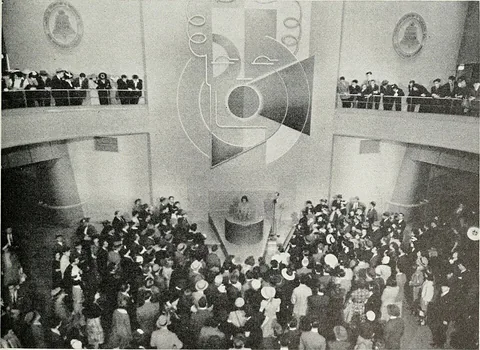 was one of the first to try to create a structured set of signals that would represent the speech. That is a first precursor to what we would do today.
Then you would try to stitch in phonemes, effectively different sounds of how we would speak as humans, and then try to concatenate them together. It’s another important part in that equation where you would... Based on the most probabilistic approach of the next word, you would effectively try to bring the phonemes from your library of phonemes and bring them together.
Then down to the modern history where now we effectively do similar neural nets in other domains. You predict the next sound based on, of course, the context of the previous sounds if it’s a streaming speech. If it’s, let’s say, a context of audio, you will use combination of predicting of the phonemes, but you also use the contextual text element of that work.
Here, credit to my co-founder, Piotr,6Piotr Dąbkowski — cofounder and CTO of ElevenLabs, in charge of its research; he previously worked at Google. who effectively came with that new idea of how you can now create voice models which are both reliable, high quality, quick, where you would bring a lot of the ideas from transformer models,7Transformer — the neural network architecture Google researchers introduced in 2017 in the paper "Attention Is All You Need"; almost all modern language models are built on it. from diffusion models,8Diffusion models — models that learn to remove noise step by step and so "develop" an image or a sound out of random noise; they power image generators like Stable Diffusion and DALL-E 2. into the speech space. That prediction of the next token in the phoneme space wasn’t something that was possible. We spoke briefly about this, of how you can operate on the text, on the waveform space.9Waveform — the audio signal itself: a sequence of amplitude values, tens of thousands of samples per second, what shows up as a "wave" in an audio editor. There’s also Mel spectrogram space.10Mel spectrogram — a spectrogram (a picture of how a sound's energy is spread across frequencies over time) with the frequencies converted to the mel scale, a pitch scale that approximates how human hearing perceives it. Usually, you do text, Mel spectrogram, waveform.
Sorry, what’s the spectrogram space?
It’s like a visual representation of how the speech sounds across pitch, across energy, and then you transform that into a waveform. When WaveNet came along and Tacotron models,11WaveNet — a DeepMind model (2016) that generates sound directly as a waveform, sample by sample. Tacotron — Google models (2017) that turn text into a Mel spectrogram; Tacotron 2 turns it into sound with a WaveNet-based vocoder. they would effectively use text to Mel spectrogram, so that visual representation, and then how you decode and encode that into the waveform to bring it across.
ExplainerHow machines were taught to talk
- A mechanical model. Bellows for lungs, a tube with a reed for vocal cords, a leather bell for a mouth: on Kempelen's talking machine (1791), an operator "played" syllables and short words by hand.
- An electrical signal. The Bell Labs Voder (1939) built speech out of a buzzing tone and a hissing noise passed through a bank of bandpass filters. The operator played it like an organ, with keys, a wrist bar and a pitch pedal, and took months to learn. Later, speech came to be specified as a set of parameters, such as pitch and formants (the resonances of the vocal tract); that's how Stephen Hawking's voice sounded.
- Splicing recordings. From the 1990s, a voice actor would record a database many hours long, which was cut into small sound units, and software picked and stitched them together to fit new text. It sounds natural until you need an intonation nobody planned for.
- Neural networks. WaveNet (DeepMind, 2016) generates the waveform sample by sample, tens of thousands per second; Tacotron (Google, 2017) turns text into a Mel spectrogram, and a vocoder turns that into sound. Today's models, like ElevenLabs', predict audio tokens in context and infer accent and emotion on their own.
Piotr figured out how to abstract some of those steps and decode and encode them a lot better. That predicting of the next phoneme was one of the big piece. Second big piece was, how do you bring that context into the equation? What I mean by context is, if a voice actor was reading a textual copy, you would know that, okay, this is a dialect sequence. I need to produce a dialect. If it’s a happy sentence, I might need to pronounce as a happy sentence. But what happens before and after comes into the equation, and you need to bring that across.
Then there’s a last big piece. Voice model has the sound of how you intonate the given fragment. But the second big part is the voice itself, the characteristics of accent, of style, of prosody12Prosody — the music of speech: intonation, stress, rhythm, pauses and tempo, everything that changes how a phrase sounds beyond the sounds themselves. across that voice. When you actually try to vocalize something, when you create that voice model, you turn text into audio, you need the text. You also need the voice reference of how you want it to be spoken.
Here was the second big innovation. Apart from context, it’s how you decode and encode those features. When Bell Labs came with their initial representation of speech, the big piece there was you would have effectively hard-coded parameters for that speech. With ElevenLabs models—
Hard-coded parameters for enthusiastic speaker, British accent, that kind of stuff?
Exactly, that kind of stuff. The set of pitch elements that you can select, set of energies, spectrograms you can select from. In our approach, effectively, you would give the model open-ended ability to select what those parameters should be. It’s not going to be British, Polish, Spanish, English speaker, but the model will deduce them themselves. The same for other sets of parameters that are not hard-coded, whether it’s the enthusiasm, whether it’s the sadness, et cetera.
You’re saying Britishness is an emergent property13Emergent property — a property that arises in a system by itself, out of training or the interaction of its parts, even though no one built it in directly. in your voice models?
Exactly. Those two big parts, so it’s encoding and decoding of how you create the voice. Super hard problem before, and figured out, too. How you then construct that in a sentence, how you get the context across so you can predict the next phonemes, so how you bring them together in a reliable and stable way while doing it quick. These were the two first big innovations in the voice models that continue to today.
But okay, so if LLMs reason about text and word subparts tokens as the way they think about the world, what is the equivalent of a token in a voice model? You mentioned phonemes a bunch. What is that representation?
We store the voice embedding14Embedding — a vector of numbers a neural network uses to describe an object; a voice embedding compactly encodes a speaker's timbre, accent and manner. effectively for the speaker. You need that reference when you produce and create the speech. Of course, in the input to the voice model, you still get the text, and you bring the speaker encoding. Then, when you produce speech, you do operate on the waveform or effectively on the phoneme level of that speech. Then when we go the opposite, so of course when we—
Sorry, what is a phoneme? Fill in my understanding.
It’s like a syllable deconstructed even to smaller elements. These are effectively the human sounds you can produce. These would be the most close to that representation. But of course, in our models, now it’s going to be a combination of not only operating on phoneme level, you also operate on the text level. You operate both in sync because when you are predicting the context, you need to understand how that sentence will get constructed, and especially if it’s more of a streaming real-time use case in a voice agent setting, you need both parts to work across. It’s similar to how you operate on the token level on the text side, we operate on the token level on the audio side.
02Data decides
ElevenLabs' voices sound human largely because of data the company labeled itself, and research done for internal needs keeps turning into products.
It feels like a big part of the magic of Eleven was your voices were much more human-sounding. How did you accomplish that?
I’ll give you a quick synopsis of how we think about the models on the text-to-speech side today. In any model, you need the architecture, you need to compute, you need data. Architecture innovations were one thing. The data part was the second big thing.
With audio, you will have a lot of audio data available, but frequently you will not have it annotated in the right way. You won’t have which speaker is speaking when. Some of the “what” is annotated, but the “how” isn’t. As we are speaking now, what’s the emotions that we use? What are the accents that we use? We would invest a lot internally on effectively creating our own data labellers, our own team, to be able to create those data sets that will be better. That was a combination of, of course, semi-automatic techniques and then manual techniques.
Actually, a lot of the models that we did afterwards actually span out from a lot of that research, too. Speech-to-text model initially was a model we did for ourselves because the models on the market just weren’t good to annotate that data. Then another brilliant research area on our team was being able to construct it so we could span it out as a model that we brought to the customer.
You’ve just been doing useful stuff in voice, and that has emerged with a whole bunch of products that you might not have expected because you find you’re building useful stuff.
Exactly. That’s a combination of data, of being able to do it automatically, create a team that’s coached on voice, on how to describe it, because most of the labellers out there just aren’t as well-versed on understanding the audio and voice, helped us a lot to bring that back. Then, of course, deploying those models in production, seeing how customers interact with them, having them annotate all of the data helped us refine those models over time.
A very interesting thing on the side. We spoke about the speech representation. The first guy who created the speech representation is a guy called Kempelen, Wolfgang von Kempelen. He created those analogue machine that would represent effectively a human vocal tract and try to produce that sound. He had to spend decades on that, and that started producing vowels. But that was the same person that created a chess machine, the first viral, let’s say, chess machine that would simulate playing chess.
Is this the Mechanical Turk?
It was called Turk. But the crazy thing behind it, it was operated by a human, and it was all a fluke.15The Turk — a chess-playing automaton Wolfgang von Kempelen built in 1770 for Empress Maria Theresa; a live chess player hid inside. Kempelen published a book about his talking machine in 1791. Wikipedia. In the drawing from Kempelen’s 1791 book, bellows stand in for lungs, a reed for vocal cords and a leather bell for the mouth.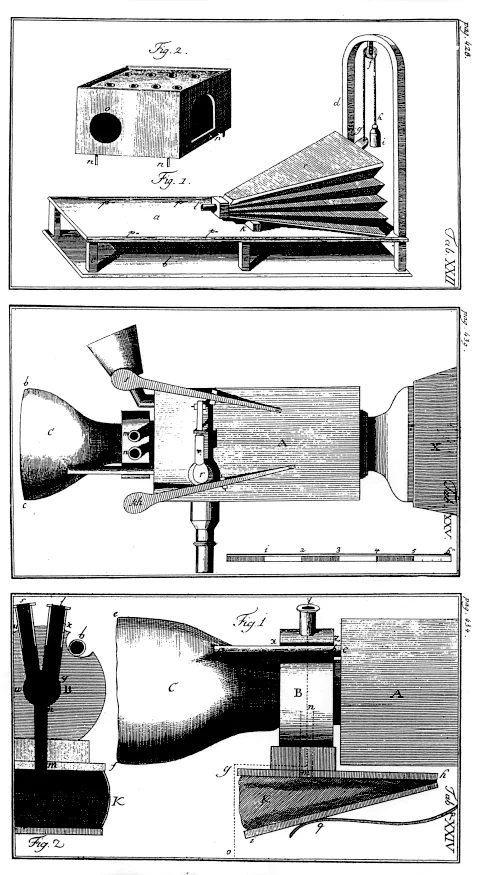 That’s where the Mechanical Turk came from, which actually we use in our data labelling production16Amazon Mechanical Turk (2005) — Amazon's crowdsourcing marketplace, where clients hand out small tasks like data labeling to people for a small fee. It's named after Kempelen's Turk: here too, there are people behind the "machine." to make that work there.
03Models and platform
ElevenLabs builds foundational audio models and a business platform on top of them, and leaves domain-specific applications to others.
Sorry, we jumped right in. But if you describe the Eleven business today, people think of you as the speech company. How should they actually think of your business to the extent you can describe the big areas? Text-to-speech, speech-to-text, voice agents. Just break down the business for us.
In a nutshell, I’ll describe ElevenLabs as a research and product deployment company. We build foundational audio and voice models, and then build a platform for businesses to transform how they communicate with their customers, with their employees. That will apply through AI agents from customer support, sales, hiring, training, all the way through to marketing and storytelling for our creative tools.
In that set, we’ve created all types of foundational audio models. Text-to-speech models for producing speech, speech-to-text models that work over 100 languages and happily beat others on benchmarks, all the way through to conversational models of how you loop them together to music, to other domains of audio. Then, of course, beyond the models, when you actually bring them to production, that’s where the second level of the platform comes in, where that meets the businesses on the specific use case.
On the agent-specific example, it would be how you now connect those models to the knowledge base, to telephony, to the integrations that you need to perform the actions, how you evaluate and monitor the agent that it behaves in the right way, how you build the right safeguards.
On the creative side, on the marketing side, it’s how do you create a good ad so you can create a good video voiceover for one of the campaigns. How you create an article that’s narrated with a specific voice that represents the brand in a good way. That’s where we combine the models and understanding of the customers we work with into one policy platform.
Every platform company has this question about how far they go into applications. How do you think about where you go horizontal17Horizontal — in software, a horizontal product serves every industry (speech recognition as such), while a vertical one is built for a single industry, such as transcription for hospitals. and power the whole ecosystem versus where you develop application? Because you can imagine there being a whole ecosystem of closed captioning tools that grow up that, again, are built on the ElevenLabs tech. It’s not necessarily a space that you would have to go after yourself.
I think the big difference between... In your question, today, we see ourselves as a platform where if you’re building a horizontal use case in your business, a great place to come. If you have a lot of domain specificity, that’s where I see a lot of the application companies forming over time, where that’s specifically not the spaces we will go into.
I think it also is interesting when the tech is moving as quickly as it is here. It’s one thing with SaaS18SaaS (software as a service) — subscription software that runs in the vendor's cloud instead of being installed on the customer's machines. where you get these vertical-specific providers, but I would imagine one of the biggest risks for you guys in being intermediated is if there is, like in this example, a closed captioning service that is on a two-versions-old version of ElevenLabs and hasn’t upgraded. That’s a problem because you want people to be using the latest and greatest model that you’ve developed, and you’ll be deploying new capabilities every week. I presume that’s part of your thinking, is that just when it’s moving that quickly, you need to go direct in a lot of cases.
That’s right. In the closed captioning, here already now, we know that our services is going to be able to tackle 99.9% of the cases that customers have. Then there’s added benefit of we work with healthcare customers where we will create a custom model for those customers where we’ll get that transcription perfectly.
The context is the tricky thing in closed captions, where we talk a lot about a lot of technical stuff on this.
Yeah, for sure. That’s where you need effectively a dictionary of words that you detect beforehand, which, as we work with the businesses, we know we need to embed in that creation process.
04Why your phone can't read you a PDF
Collison feels voice is stuck ten years in the past, while Staniszewski calls it a deployment gap for a technology that has sounded good for only three years.
We’re talking a bit about product here, and one thing I note is that LLMs are amazing, and you have the usage stats of ChatGPT and Gemini19Gemini — Google's family of AI models and the chatbot built on them; in 2024 Google relaunched its earlier chatbot, Bard, under this name. and all the popular LLMs where they’re working and people use them a ton. It feels like there’s a big product overhang when it comes to voice, where the leading-edge voice models are incredibly capable.
Yet, I was driving home the other day, and I needed to read a PDF, but I was driving. I said, “Okay, I’ll just have my phone read the PDF to me.” You can try and hack it with iOS screen reader,20iOS screen reader — VoiceOver, the iPhone's built-in feature for blind and low-vision users: it reads aloud everything on the screen and is controlled with special gestures. but it doesn’t really work with the scrolling. Then in theory, you can upload it to Gemini, but you’re trying to get it to not summarize it, and it actually just hung when I tried to press the Read This to Me button. There was no way I could get my phone to read me something, which seemed like a fairly basic feature. All cars advertise voice control, and yet, it sucks.
Separately, if you want to input something to the navigation, just no car has a good version of that yet. Maybe Tesla does, and, and, and... Why does it seem like with LLMs and Claude Code21Claude Code — Anthropic's AI coding agent, released in 2025: you describe a task in words, and it reads the project, edits files and runs commands itself. and everything, we are using all the capabilities of the intelligence, whereas with voice, we’re living 10 years ago somehow?
Well, I’m thinking would I agree with the premise that we are 10 years behind.
In the lived experience of people day to day, they’re using Siri’s transcription,22Siri — Apple's voice assistant, built into the iPhone since 2011. which has gotten better, and it’s still way behind the leading edge.
There’s definitely a piece of… I think the technology in many of those cases already, there’s a deployment gap to what you are saying. It’s like an automotive or some of the big companies are not adopting that quickly enough or bringing that into the production. But plenty of different problems that you need to fix along the way. The quality of voice models for them to actually sound good, this is only a last three years thing.
Yeah, but it’s three years.
It’s a three years thing.
Cars have over-the-air software updates23Over-the-air updates — the manufacturer updates a car's software over a cellular or Wi-Fi connection, with no trip to the service center; Tesla made them the norm among cars. now.
That’s three years for the first voice model that can narrate text async. Two years ago, we can start seeing the real-time version of that. I think the real break was a year ago, where you could start seeing that in production. Then I think over 2025, the big piece that hasn’t been possible is how you connect now the real-time voice interaction with something which I think you’re referring to. It has context of what you want to do, what is the material that you want to read, how does it connect to set of your preferences from the past and get that across.
I think that only recently became possible, and where we’ve seen the big adoption across the enterprises leading on the technical side. I think this year, it should be in the automotive side too, or some of the applications.
You think we’ll start seeing great voice models in cars this year?
This year for their own cloud use cases. On car, in car, so without connectivity, not yet. There’s deployment, of course, gap, of how you bring that into the gaps. But I think the next two years, three years.
How about the PDF reading use case?
That should work. Yeah.
But how should I have done it?
Back in the day... I’ll pre-empt this with a story to cue ElevenReader,24ElevenReader — the ElevenLabs app for iOS and Android that reads books, articles and PDFs aloud in AI voices; it came out in June 2024. but we had this problem. We had so many audiobook authors come into ElevenLabs. 2023, we released the first software. We had a lot of creators and then a lot of audiobook authors or book authors that couldn’t afford professional narration and wanted to create an audiobook. However, none of the companies accepted AI audiobooks.
You can’t sell an AI audiobook on Audible or something?
Exactly. Audible would block AI content.25Audible — the largest audiobook store in the US, owned by Amazon. ACX, the platform through which authors publish audiobooks on Audible, accepted only human-narrated recordings. In May 2025 Audible announced it would produce AI-narrated audiobooks together with publishers. We had no choice. We need to create an avenue for them to—
Ah, because there was no distribution for AI audiobooks.
Exactly. We created ElevenReader, and that came with a functionality where you can upload your PDF, you can upload your text, and have it read out loud with a number of incredible voices, whether it’s Sir Michael Caine26Sir Michael Caine — British actor, knighted in 2000. In November 2025 ElevenLabs signed a deal with him to license his voice and opened the Iconic Marketplace, a marketplace of celebrity voices; among them is Richard Feynman's voice, licensed by his estate. Gizmodo. all the way through to estate and working together with Sir Richard Feynman,27Fact-checkThe conversation says "Sir Richard Feynman," but the American physicist was never knighted (Wikipedia, "Richard Feynman"). where you can have that—
You are working with the Sir Michael Caines of the world?
Exactly. Then you can actually read it out loud. That works extremely well. That works. Now, how can you do it?
Gosh, I do want everything read to me by Michael Caine.
It’s a great voice.
Shouldn’t you guys have a consumer app where I can just do the common voice things? I want to be able to have an Eleven app on my phone, and then if I upload a PDF to it, it can do the common things that I would like, such as have it read it to me.
Yeah, that’s exactly ElevenReader. That works.
The phone makers allow third-party keyboards.28Third-party keyboards — Apple allowed keyboards from other developers on the iPhone in iOS 8, in 2014 (Wikipedia, "iOS 8"); Android allowed them much earlier. Do they allow third-party transcription engines? Will they, do you think?
The phone makers you said.
Like Apple and Google. The OS makers.
Yeah, not all of them. With Android, you can work through it. There’s variations of that, Nothing.tech,29Nothing — a London company founded in 2020 by Carl Pei, a cofounder of OnePlus; it makes Android smartphones. and others.
I feel like if you had a popular Eleven app that allowed for transcription, people would use it a bunch, and maybe eventually, Apple would say, “Oh, we should allow third-party transcription engines if that’s what people want.”
It seems like they might be going in that direction. Recently, they announced that it will open up the LLM ecosystem. Hopefully, they will do the same with voice ecosystem, which is similar.
05The voice Turing test
Text LLMs passed the Turing test long ago, but voice agents pass it only in narrow settings like customer support, because turn-taking and tool calls are still hard.
I think it’s rational to do when it’s moving so quickly. The voice assistant paradigm is one of the oldest UI paradigms in computing, like the, “Open the pod bay doors, HAL,”30"Open the pod bay doors, HAL" — astronaut Dave Bowman's line to the onboard computer HAL 9000 in Stanley Kubrick's 2001: A Space Odyssey; the computer refuses: "I'm sorry, Dave. I'm afraid I can't do that." from 1969.31Fact-checkThe conversation says 1969, but 2001: A Space Odyssey came out in 1968 (Wikipedia, "2001: A Space Odyssey"). I will claim it’s not working yet. Siri doesn’t have the intelligence. Then on Gemini and ChatGPT and those apps, I want to use the voice mode, but I don’t know about you, it just doesn’t work. Sometimes I’ll be using my phone, and I’ll use the iOS keyboard transcription to type in the field and then say a bunch of stuff, and then send it off. But this suggests to me that consumers really want voice mode that works, and yet it’s just not working yet for the major LLM apps or for anyone. Why isn’t it working yet?
It is pretty hard to do because you want two things. You want to be able to say things that you want, but you want sometimes for it to execute it, sometimes to wait for you to finish and add something in the sentence. Sometimes you want it to be interactive, so it asks you questions back to clarify and get some of the additional detail. All of that is actually pretty hard.
That’s where the magical ideal version of a voice agent for us comes through, where you need the speech-to-text element, you need the transcription side, you need then the turn-taking mechanism. When do you finish sentences? When is it likely based on silence, based likely on the context? Then sometimes you want it to speak back and clarify, or at least give you the text back to clarify, and then maybe execute a set of instructions.
That problem is still very hard. I agree with the claim that this orchestration side has not passed a true conversational agent Turing test,32Turing test — the test Alan Turing proposed in his paper "Computing Machinery and Intelligence" (1950): a machine passes if a person chatting with it in writing can't tell it from a human. In a 2025 UC San Diego experiment, participants took GPT-4.5 for a human 73% of the time. Wikipedia. where it behaves as you would expect from another person, where you can say—
That’s the simpler way of saying what I’m saying is that we have passed the Turing test with text LLMs a long time ago. We’re actually nowhere near that on voice LLMs. It’s interesting how that’s a final frontier.
I feel like it’s going to work in specific domains. In customer support calls, passes the voice Turing test. It works well. Let’s take another spectrum of that. An interactive gaming experience, a truly interactive as you would have with another human in that game, it’s so hard and further out there, we haven’t passed it yet there.
Yes, that makes sense.
But I think that’s a combination of even a simpler version of within that. Sometimes you might give a response immediately back. Sometimes you need a tool call33Tool call — when a model, in the middle of an answer, reaches out to an external program (a database, search, a calendar) and continues with the result. to get additional information from the database, how you orchestrate that. That’s probably the most common thing we see as we work with some of the companies out there is you want those systems to orchestrate extremely well where if it’s a conversational use case, pretty simple, you can route the agent to speak with it. But if you need to authenticate, if you need to pull additional information from the database, what do you do? How do you handle that graciously?
That’s where it gets tricky.
To that extent, I would say that that’s just getting there. We’ll hopefully see that. Our goal is to pass the voice Turing test in all those cases or the Turing test for all conversational agents outside of voice, too. I hope we will all be there in the next year or so.
AdLink from Stripe
For subscription businesses, a lot of revenue is lost in that last few seconds before the checkout. Someone has to get up and find their wallet, or they mistype their card number, or they hit an error. They just give up, and you lose the sale. For a company like ElevenLabs, adding hundreds of thousands of subscribers, even a tiny bit of friction like that, it would really add up. But that’s why ElevenLabs uses Link from Stripe. Customers save their details once, and then they can check out in seconds across more than a million businesses with saved credentials. So if you want a faster checkout for your customers, you should turn on Link from Stripe.
06Transcription tuned to one person
Transcription gets better when it's tuned to a particular voice and to the words a situation calls for, and ElevenLabs expects to ship speaker-specific transcription within about a month.
Are you guys working on personalized voice transcription where it feels like part of the way we’re making it hard for ourselves is when I speak to Siri, I have a bit of an accent, and so it sometimes has a hard time understanding me. But my accent doesn’t change. It could just get good at listening to John. But my understanding is it’s not, it’s just running the global voice recognition model. I’m guessing it’s the same for ElevenLabs where you’re running the global voice recognition model.
But again, you have an accent. If you walked up to someone in a coffee shop and said two words, they might have a hard time understanding it because they’re not putting it through their Mati Polish accent filter. Where’s this going with actually interpreting the person that you know to exist on the other side?
I have a very tricky one to detect. My voice is frequently used in the tests.
You’re part of the test suite.
For text-to-speech, for speech-to-text, for everything. It’s pretty—
But again, trying to parse your voice in a global model is just making life hard. It’s like, have a Mati-specific model.
On the speech-to-text, by transcription, exactly. The big part now that we are bringing in is you have two parts. One, effectively a person or a voice-specific detection, which is true for the accent side, but it’s also true for a crowded room. We have an incredible research team that’s able to continually do both the accuracy high, but also add things like speaker detection, of course, noise reduction. But then the second part is also keyword detection. There are specific words that you would want to say in those settings that you want to effectively monitor for. We spoke about, let’s say I’m going to the coffee shop and order things. The set of actions the coffee shop would expect me to do.
This is information theory.34Information theory — the mathematical theory founded by Claude Shannon in "A Mathematical Theory of Communication" (1948). Collison means its idea that the fewer things someone might say, the less you need to hear to understand them, and in a coffee shop the choice of words is narrow. It’s like they can just listen out for the coffee words.
Exactly. Then try to match it to the closest proximity. Both things will help. In a setup where you have my voice, perfect. You can decode it and code it on that. If you don’t have my voice or even if you want to double amplify it, we already support effectively keyword detection, which is useful for real-time setting and async setting. Back to Cheeky Pint transcription, you could effectively pre-generate that from the previous podcast and look for a set of words that you would use traditionally in that.
You do the keyword detection already, but how hard are the… I want to get superhuman transcription performance by feeding it an hour of Mati audio before it listens to Mati, and then it should be able to do a much better job transcribing. Is that just a really hard research problem?
No, solvable. We think we can roll it out in one of the next versions, which is hopefully in the next month.
You think this year you’re doing person-specific transcription?
Person-specific transcription. We can already diarize speakers35Speaker diarization — working out who speaks when in a recording and splitting the text by voice. extremely well. If we are speaking, we can, of course, dissimulate who is speaking when, which is in transcription side, apart from accuracy, diarization is one of the harder problems. We do that extremely well. Now it’s going to be effectively what you’re saying, fine-tuning based on the speaker36Fine-tuning — further training a finished model on a small set of your own data, here recordings of one person's voice. that I want to listen to, which we know will be important.
In a healthcare setup, it’s such an important part. You’re in an operating room, you’re a doctor, you want to say a command, then you want to really be able to listen to that one person’s specific piece. You have a hardware device at home, let’s say it’s a pilot37Pilot — Polish for a TV remote control. that helps you control the TV. Here, too, you will want that to listen to you versus, let’s say, the family running around. Or maybe you want it to everyone. You could decide that, but in many cases, you want to be able to specify that.
That’s really exciting.
It’s great because there’s still so many unsolved research problems.
07Controllable speech
The V3 model made speech controllable by cues for the first time, and in expressive mode an agent picks up the other person's emotions.
Yeah, there’s just breakthrough after breakthrough coming in the domain of voice models. How about on the flip side, when it comes to speech generation? In the Zoom “touch up my appearance”38"Touch up my appearance" — a Zoom video setting that smooths the skin on camera, like a phone camera filter. feature, I’ve always thought about that in the context of voice, where... Should you offer a de-accenting filter for voices? Or even there’s one podcast that I like to listen to, but the voice is a little mumbly, and I always thought they should put it through a de-mumbling filter just to make the—
Or slow it down.
Yeah, make the enunciation a little better. But all these things, again, like Photoshopping an image, there’s no reason that the… Have you thought about voice-to-voice, basically, rather than voice-to-text or text-to-voice?
Yeah. There are two big parts. One on the speech generation side, similar. So many innovations still there. There’s a wider piece, and we released the V3 model39Eleven v3 — the ElevenLabs text-to-speech model released in June 2025: emotion and delivery can be controlled with audio tags like [whispers] or [laughs] right in the text. that we’re solving that for the first time. It’s like, can you control speech? You can have the text-to-speech. You generate something that sounds emotionally great.
Previously, until the end of last year, effectively, you would rely on the model to decide what’s the best performance. You could regenerate it, but ultimately, model decides the best performance. That’s where the controllability came in, where we can finally give it cues of, say it in a slower way or change how you deliver the dramatic pause or any cues that you give.
To be able to do that, you need the architectural changes and the data that we created over time where you annotated what was said and how it was said, so you can actually train the model to do that. Today, finally, you can have both speech generation or entire voice agent experience with what we call expressive mode, where the agent knows the emotions on the other side.
If the person is stressed, it can react and be reassuring, and that’s generating an LLM response on the reassuring side and response in that set of emotions, too. That breakthrough was super hard to do. That, of course, stretches to a lot of what you said. It could be some version of speech enhancement, either real-time or in a pulsed setup to change how that’s delivered. That’s relatively recent innovation, and we know it can still be so much better. The edge cases of how you want to describe it is pretty large. That’s one.
08Cascade or speech-to-speech
ElevenLabs builds agents on a cascade of speech-to-text, LLM and text-to-speech because businesses need reliability and visibility, while speech-to-speech is faster but dumber.
ExplainerCascade versus speech-to-speech
A cascade runs three models in turn: speech-to-text turns what the other person said into text, an LLM writes the answer, and text-to-speech voices it. Every step is visible: the text in between can be logged, checked and filtered, and the LLM can be swapped for another. The price is latency: the stages wait for each other, and it has to be cut down with streaming.
Speech-to-speech is a single model that takes in audio and puts out audio, with no text in the middle. That's how GPT-4o's voice mode (OpenAI, 2024; 320 ms to respond on average) and Moshi, an open model from the French lab Kyutai, work. Such a model hears intonation, answers faster and can interrupt, but it's harder to control and to fit into business processes.
The benchmark for both is people: in conversation, in any language, the gap between turns averages about 200 ms (a comparison of ten languages, PNAS, 2009).
Then the second part of the question, which is a huge question, that’s speech-to-speech models. As you said, our approach, as you think about voice agent, conversational agent, is effectively a cascaded approach. You use transcription or speech-to-text, LLM, text-to-speech, and orchestrates all of that together. Then you have a speech-to-speech, which goes directly from speech, and there’s a speech response on the other side.
When we say speech-to-speech, is that the idea that it doesn’t go through text as an encoding in the intermediate?
Exactly.
Oh, interesting. For performance reasons? For accuracy reasons?
You usually do it for latency.
It is faster to run a model that does not have to transcribe and then generate.
Exactly. It’s quicker, but on the flip side, you lose reliability. You lose like all visibility into the parts of the pipeline. In emotionality, we think you can deliver both on both sides extremely well, and maybe you can make it more controllable, too. Today, we are optimizing heavily on a cascaded approach.
I’m sorry, a cascaded approach is?
Is the speech-to-text... Going through the text layer. As we work with a lot of the businesses and enterprises, they will need that visibility into what happens. They will want to execute certain tasks on top of that. They want a good visibility into each of the steps and great accuracy of all the models. But beyond that, they can abstract away what’s the LLM layer, what’s the intelligence layer, the integrations are easier in that system. That’s where we are betting a lot of the research work of how you can make that great, and we think we can make that great. In speech-to-speech, as you think about maybe more of a companion version40Companion apps — apps where people talk to an AI character as a friend or partner, for the sake of the conversation itself, like Character.AI and Replika. of the applications, that’s where that will flourish because maybe the hallucinations41Hallucinations — confident but made-up answers from an AI model: nonexistent facts, links, quotes. aren’t as important, but the latency is a little bit more, and maybe hallucinations are even a feature. Maybe in the future-future, just to finish that part, you will have some version of combination of the models. That for low complexity, easy models, you will have speech-to-speech, and for higher complexity we will have to cascade it.
I was going to ask about this. You know the way there is research on how the invention of writing changed human brains42Writing and the brain — the neuroscientist Stanislas Dehaene and his colleagues showed that when people learn to read, a patch of the left fusiform gyrus, the "visual word form area," rewires itself to recognize letters. He describes it in detail in Reading in the Brain (2009). and just changed the neural pathways in ways beyond the actual written language. Do you observe that speech-to-speech models think differently than cascaded models? It sounds like they’re dumber.
They are definitely dumber. You need a smaller model.
But that’s interesting, that forcing models to reason about text. I know they just have much more in there as well, but they’re smarter.
Yeah, but it’s like, if you are getting speech-to-speech, usually you will use smaller models, so it’s still quick.
I see. It’s also just a model size thing. But are there interesting differences beyond correlates like size?
What I can say is slightly different to your question. The people interacting for voice and the performance we see for how they interact with the business changes just by nature of interacting with us. A good example, you can contact ElevenLabs and register for your interest, you go through the form, and at the end of that, we have supplemented that, that instead of going through the form process, you can speak with our agent and leave more details. What happened there are two things. One, people were actually much more keen to leave the forms through speaking with the agent, so we would go through the form a lot easier. But second, they would be a lot more open-ended in terms of what the use case are. They would start giving us information about the wider set of use cases, the complexity of the use case. The writing out was tedious and tricky—
This is like an open-ended adventure game.43Open-world game — a video game where you can roam the world freely and do what you like instead of following a set path, like the GTA series or The Legend of Zelda: Breath of the Wild.
Open-ended. You could ask follow-up questions, you could clarify. But people were just more at ease and could trust the system while doing that, that it’s working. That helped us a lot. Then three, which maybe it’s more of a technological barrier, it also works across all languages.
Now we have leads from all parts of the world coming in and leaving their details. We did that use case, and now we have a few different companies building their SDR versions44SDR (sales development representative) — the salesperson who makes first contact with potential customers and picks out the promising ones; an AI SDR does the same automatically. of that, too, to help them capture the leads coming in from banks all the way to actually one of the automotive companies that leaves that where people are just more keen to speak through voice.
09Second-order effects
Voice models will break down language barriers and give people back voices they lost, which Staniszewski calls the most important part of ElevenLabs' work.
I want to ask about this second-order effects.45Second-order effects — the consequences of consequences: not the direct result of a technology (cheap voiceover) but what changes further down the line because of it. You’ve talked in the past about how growing up in Poland, I guess the dubbing of TV shows, they were cheap, and so they would only have one voice actor for a TV show.46One voice for every part — this is how Polish television usually shows foreign films and series: a voiceover in which a single reader, the lektor, almost always a man, reads every part over the muted original soundtrack. No matter all the parts, male and female, they’re like, “I love you.” “I love you, too.” There’s one voice actor doing all of them.
Now, thanks to better voice models, you’ll be able to just have really good voices, AI-generated, for all the dubbing. Because again, it’s not like it’s taking jobs from great dubbing that was happening previously. It was awful dubbing happening in Poland previously. That’s one example of the second-order effect. What are the other second-order effects you’re seeing of ubiquitous good text-to-speech, speech-to-text? It seems like across a broad array of languages, because whatever in English, just this didn’t exist in Polish or Irish or, pick your language.
One, breaking down the language barrier. The inspiration came from the movie side, but it also applies in any communication setup. Could in the future, could I travel to another country and speak Polish or speak English and that language isn’t being understood in the local native language? From The Hitchhiker’s Guide to the Galaxy, this version of the Babel fish.47Babel fish — in Douglas Adams's The Hitchhiker's Guide to the Galaxy, a small yellow fish: put it in your ear and you understand any language. That you can actually understand the world. Voice, of course, will be an interaction layer.
But similarly, all of us will have our own extension and voice agents that can help on our behalf. There are very clear and great examples of that of people that lost their voice and can get it for the first time back. We see that everywhere, whether that’s people that lost it due to ALS48ALS — amyotrophic lateral sclerosis, an incurable disease in which motor neurons die: a person gradually loses the ability to move, speak and breathe unaided. Stephen Hawking had it. or throat cancer that can get it back.
Just recently, there was an example of a patient that had Neuralink.49Neuralink — Elon Musk's company developing a brain implant interface; the first implant in a human was placed in January 2024. Its patients include people with ALS who have lost the ability to speak. We worked with them to bring the voice that that person could speak with their own voice back with the family around. We worked with a lady that lost her voice before she got married. Then finally, the technology became possible. We were able to recreate that voice. For the first time, she could replicate the marriage ceremony and speak the vows together, which was such a heartfelt moment.
That’s really sweet.
It’s probably the most important from all the work that we do.
10Voice agents
A voice agent can both answer customers and make calls itself, and developers are already building ones like the pub-calling Guinndex on ElevenLabs.
When you guys talk about voice agents, is a voice agent just the idea that you have some long-running or persistent agent that is going out and interacting with the world through voice? Customer service would be one example of it. In the other direction, your Claw50Claw — here, a personal AI agent based on OpenClaw, an open-source agent that runs on the user's computer and carries out errands it receives through messaging apps. going and making you a restaurant reservation and actually calling up the restaurant. Is that how I should think voice agents?
That’s right. Exactly. Whether it’s the reactive side of being able to interact with the customer or the proactive to call it back. We recently had a very interesting one, topical because it was a Guinness-related51Guinness — the Irish stout brewed since the 18th century at the St. James's Gate brewery in Dublin; Collison is Irish, and the show is recorded over a pint. one where there was a developer developing a Guinndex,52Guinndex — an index of the price of a pint of Guinness across Ireland, compiled in March 2026: a voice agent on the ElevenLabs platform phoned about 3,000 pubs. tech.eu. effectively.
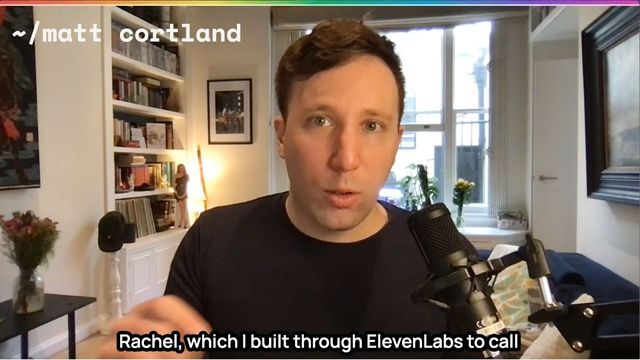
Oh, I saw that. They were calling all the pubs in Ireland to check on the price of a pint.
You could ask that or report information.
The Guinndex was built with ElevenLabs technology?
It was built with ElevenLabs, too. People could actually do both sides. Could proactively reach out, reactively reach out, always capture full voice. Then 3,000 different entities could report their prices and get that across.
Have you, by the way, hooked up your OpenClaw to ElevenLabs? Is the OpenClaw-ElevenLabs combo something that a lot of people at Eleven are doing?
As you know, the OpenClaw will look for the most popular tools frequently where it tries to hook up. ElevenLabs is one of the recommended ones.
11The economics of voice models
Voice models are far smaller and cheaper to train than LLMs, and ElevenLabs offers new models at cost so customers can discover what they can do.
It’s the top option for voice. Can you tell me a bit about the business of voice models? I think people have an intuition around big LLMs where there are these very expensive training runs, and yes, they depreciate quickly, but there’s so much usage that all of the models trained to date have paid off their training runs and then some.
Then there’s this ever larger CapEx53CapEx (capital expenditures) — spending on long-term assets; in AI, above all on chips and data centers. going into… I mean, a lot of it is inference these days,54Inference — running an already trained model: every answer it gives a user. Unlike training, it goes on all the time, and its cost grows with the number of users. but also training. People have some intuitions from the LLM world. I’m curious just how I should think about voice, where one, how expensive is training the voice models? Is the expense in the researchers? Is the expense in the training runs? The economics is presumably simple where it’s just per-usage. But yeah, just talk us through the business.
Definitely cheaper than the LLM and image-video models. Significantly smaller models.
The models are smaller?
Smaller.
What’s the parameter count55Parameters — the numbers (weights) a neural network adjusts during training; their count is a rough measure of a model's size. for a leading-edge voice model?
A few billion to tens of billion parameter models.
For context, I think the… CPUs moved away eventually from gigahertz56Gigahertz — a processor's clock speed. Until about 2005 Intel sold processors mainly on this number, but at around 4 GHz chips ran into overheating, and the industry switched to multicore processors (Wikipedia, "Megahertz myth"). as the metric as they move to more cores. I think we’ve mostly moved away from just raw parameter count, but I think the leading edge LLMs are in the hundreds of billions of parameters.
I think the leading ones, yes, but of course, you have the variations that you will use at lower scale. CapEx is still pretty high. We’ve, of course, raised recently a half a billion at 11 billion valuation.57Half a billion at 11 billion — ElevenLabs announced its $500 million Series D at an $11 billion valuation on February 4, 2026; Sequoia Capital led it. A year earlier the company had been valued at $3.3 billion. ElevenLabs blog.
Makes sense.
Makes sense. To continue being able to build the best models in the world. Researchers, of course, you want the best people in the world. I think we have those people working in audio and my co-founder who is leading that work. That’s definitely a big piece of, not financially, but even how you keep the ambitious deployment, so you continue building leading models, helps you attract more talent in building that.
Then on how we service, of course, inference is correlated with how the models are used. For us, we’ve seen incredible growth across the work. Mostly this is charged per… If it’s input text or text-to-speech, it’s usually per text token. If it’s voice agent or transcription, then it’s per minute. We see that being the bigger part. But usually, broadly, it’s per token basis. Of course, as we work with businesses, it’s like an annual agreement. The bigger the spend, the bigger the commit, the bigger the discount to get it across.
The way we usually do is when we have a new model, we try to give it at cost to a lot of the customers so they can experience the best. It’s still usually not as reliable—
That’s interesting. The newest thing is often the most expensive, whereas you make the newest thing the most economically attractive one?
We try to make it attractive so the customers are… It’s more expensive for us than any previous generation. The quality is higher, so we try to keep the prices still competitive.
I see. You subsidize it, but it’s inherently more expensive as a bigger model.
Exactly. Over time, we might do some tricks to optimize it, but we want the customers to experience… Because of research, the big thing that we’ve seen is the reliability of the model in the early days might not be there. Then two, people don’t even know what’s possible with that model. You want the widest set of distribution, so people can show the world what’s possible. You can have it, of course, as the distribution mechanism, learn yourself what to improve, what to change, and then get it out there.
Are the voice models just getting bigger and bigger? Will we have voice models in the hundreds of billions of parameters, or have we found… It seems like for certain types of model architecture, there’s an upper limit on the natural size. Have we found that upper limit for voice models?
It feels like for specific use cases, like say, audiobook narration, you probably found that size. You probably don’t need to stretch it much bigger to make the quality much higher, but for certain use cases, that will probably grow. The thing that I hesitated on the question is in a cascaded approach, you probably will not see dramatic size changes.
You inherently want the models to be quick and reliable. You want to orchestrate them in a smart way. In a fused approach, probably that will get into tens, hundreds, billion-parameter models because you combine, of course, the LLM side and the voice side, so that will get bigger, but on the just voice, I think it will keep being small.
There are certain domains where we’ll see bigger models.
12A partner in AI transformation
ElevenLabs wants to be a partner across all of a business's interactions with customers, from support to marketing, but won't go deep into reasoning-heavy use cases.
That’s so interesting. It does seem fun, from a research point-of-view, how there are still these various unsolved aspects, and how you guys are just making technical breakthroughs and then releasing them down the product pipeline. That’s a really fun stage of a company’s life cycle.
For sure. It’s fun because it feels like we can do innovations on both sides. There’s so much on the research side, so much on product side. Ultimately, the biggest part is how we deploy it to the customers, where SMB will have a very different dynamic than the enterprise. It’s not vendor/SaaS relationship where you just give the product out there for the biggest companies out there, but you are more of a partner in their AI transformation part.
You want the resources to work alongside them, to work on the frequently very new use cases that were impossible to help create and bring those voice agents to production. That’s a big shift. The biggest focus is how we bring the conversational agents out there to the businesses around the world.
When you say bring conversational agents is the biggest priority, is this for customer service-type use cases? What are the most popular use cases for conversational agents?
We want to be a partner for full interactions between businesses and their customers or their audience. I’m saying their audience because that will apply in support. Support is the easiest one because that’s where it’s most ready. That’s maybe the big difference to how we see ourselves to some of the other companies in the space.
This can also apply to sales. You can have the proactive side of reaching back. You can have AI SDR versions of that. Then you can have all the way to the marketing use cases where we are your partner for working even outside of the conversational agent space of how you create a great marketing campaign.
How does this break down between… We had Des Traynor from Intercom58Des Traynor — a cofounder of Intercom, the company that makes a customer communication platform. Fin is its AI support agent, launched in 2023. on here and they have Fin, their agent, and it’s a thing on the website that you can go talk to. He described a very similar phenomenon that you described, which is, you start maybe thinking, “Oh, this will help me answer customer support queries.” It becomes like a generic UI for the website, where it’s a box you can type in to go do things and understand things. Why wouldn’t you read the docs and design your integration that way? Whatever.
Will I have one for text and then one for voice? Will you guys do text, too? How does that... Because it seems like this is also succeeding at the text level with Fin and Sierra59Sierra — the company Bret Taylor and Clay Bavor founded in 2023: it builds AI agents for customer service. and all these things.
The places where we know we will be able to provide the biggest value is where, ultimately, today you will have either a big portion or most of the interactions coming for voice. If that intersection is there, that’s where we can provide higher value.
Of course, if you need a text chatbot there… If you fix the voice agent, you have fixed text piece inherently as well. The place where we do optimize today is going to be like, how do you select the right voice for the right customer interaction, how you pull that in there.
In the pretty complex case of what you mentioned earlier, of how you orchestrate that to pause or look for something deeper into the docs, how it can be extension of entirety of the business, so not only in support, but across the entire user journey.
The bottom line is we want to be able to provide you across the entirety of the interactions. Voice is usually a big part of those interactions. We need to solve the integrations, we need to solve the knowledge, we need to solve text as part of that. We wouldn’t, for example, go into what I think will happen in a lot of those cases, very deeply into reasoning version of those use cases where you maybe need the multitouch.
Yeah, and a lot of complex actions.
A lot of financial analysis. That would be not something we optimize for.
13Revenue: $100 million added in a quarter
ElevenLabs added $100 million of net new ARR in a quarter for the first time, with more than half its revenue from enterprise accounts that keep expanding.
Can we talk about your revenue ramp? You’re just one of the fastest-growing startups, period, of the past few years. What’s your most recently announced revenue figure?
Most recently announced was end of 2025.
Whatever number you want to give us.
Sources: TechCrunch, January 2026, Music Business Worldwide, May 2026
Most recently announced was 350 at the end of 2025.60350 — that is, $350 million in annual recurring revenue. Announcing its Series D in February 2026, ElevenLabs said it had ended 2025 with more than $330 million in ARR. ElevenLabs blog. The best proof of the technology working... Recently, we announced our work with Deutsche Telekom and T-Mobile with Revolut, with Klarna,61Klarna — a Swedish fintech founded in Stockholm in 2005, known for "buy now, pay later," that is, paying for purchases in installments. with Meta, with IBM, a wide set of use cases. This quarter was one of the best for enterprise growth where we had the first quarter hit 100 million in additional ARR growth, which is crazy.
In net new ARR.62ARR (annual recurring revenue) — subscriptions and contracts converted to a yearly figure.
In net new ARR.
If you’re thinking this quarter was 100 million net new ARR and 350 million at the end of the year, I’m no mathematician, but it’s up in the 450 million range. Versus this time last year, that’s a several-fold increase. Just, what’s working? From the outside, I would assume that there’s really strong cohort growth63Cohorts — groups of customers who signed up at the same time; cohort growth within accounts means the same customers spend more and more over time. within accounts, and then you seem to have self-serve and enterprise64Self-serve — a sales model in which customers sign up on the website, try the product and pay by card without talking to a sales team. businesses that both contribute a lot. I don’t know how big self-serve is, but as a user, I like to be able to fiddle with ElevenLabs and not have to go talk to sales. Maybe you can just talk about what worked to reach 450 million plus of ARR so quickly.
We are over 50% is now sales-led enterprise. I think largely that technology powers a lot of their agentic interactions just became reliable at the same time as high quality over the last year, year and a half. Frequently, you know this extremely well, you will start the account, and then, of course, it continues expanding. We see there’s definitely land and expand motion65Land and expand — a sales strategy: first win a small contract in one department of a customer, then grow the volume and sell to neighboring departments. across ElevenLabs. We bring—
What does that expand look like? Is it new departments? Is it just the usage starts taking off? When a customer expands—
Both. Usually, the first part, too, it’s like we try to make it very easy for our customers. Maybe against ourselves, where we give the technology a pretty attractive economics because we so much believe in the technology providing value. You can actually try it and test it. Then within that one department—
You think you’ll make it up in usage, basically.
Exactly. That usage, the commitment continues increasing because you know it’s providing value. Then it’s so much easier to make that a choice. Then, of course, cross-department pollination is there, too. Our work with Deutsche Telekom started with marketing side. We did Magenta work66Magenta — Deutsche Telekom's signature color and the brand of its products: MagentaTV, MagentaEINS and others. T-Mobile US is a Deutsche Telekom subsidiary. and podcast generation. Then it expanded to customer support. Then it expanded to us working on an agent across the entirety of the network, so people can call in and have the agent. You could see those step changes across.
We are now 470 people as a company, so we keep on growing. Some of the things that stay consistent is small teams. We have less than 10-people teams for each of the product or research initiatives or even, as you think about sharding some of our go-to-market strategy,67Go-to-market (GTM) — everything about how a product reaches customers: sales, marketing, partnerships, pricing. there will be smaller teams understanding the industry in-depth, understanding the market in-depth, and going independently and going quickly.
That definitely contributed largely to that. Two, especially on the biggest enterprises, what we found works is we have the full spectrum: self-serve, PLG motion68PLG (product-led growth) — growth driven by the product itself: users find it, try it and start paying without the involvement of a sales team. that helps drive distribution, drive awareness of ElevenLabs. On the completely other spectrum, we have the high-touch forward-deployed engineering69Forward-deployed engineers — engineers who work on-site with the customer and adapt the product to its needs; the term and the approach come from Palantir. working side-by-side with the customers to customize the entirety of their work together.
14Self-serve and pay-as-you-go
Staniszewski argues that people should be able to try the technology without talking to sales, and announces usage-based billing for everyone during the episode.
Why did you guys do self-serve? Because I presume you have a lot of competitors where they have tech, and it’s behind a contact sales form, and you have to go talk to an SDR and then talk to an AE.70AE (account executive) — the salesperson who runs the deal and closes the contract after an SDR has qualified the customer. You guys just offer the tech available on the site.
I’m a huge believer in this. A huge part of Stripe’s growth has been driven by the fact that we just made Stripe available to anyone and built a lot of products around that adoption pattern, but so many companies seem to skip it. I’m curious how you guys came to—
So many reasons. I think the quick ones that come to mind is feedback loop. You have immediate understanding of how good your technology is. Two, which is an extension of that. We stand behind our tech. We believe it’s the best in the world for models, for voice agents, for deployment. We want people to experience that.
I think you do that the same in Stripe, where the best version of the technology is available to everyone, which is so attractive to actually try it out. We always try to make everything we built for the highest end use cases, bring it back to the ecosystem free.
Frequently, the newest of the use cases... For enterprise, you will need reliability, you need compliance, you need to scale, which we deliver. Frequently, as you develop new technology, it might not be ready for a lot of those parameters, but it’s definitely ready for developers and SMBs. We love what they are doing because they are showing us the future and effectively helping us find a trajectory of where ElevenLabs should go.
I’m totally convinced. I’m just always amazed that more companies don’t pursue it, where it feels like they’re really shooting themselves in the foot by not. Did you guys self-serve on Stripe? Or did you—
We self-serve on Stripe.
For example, Eleven is a huge company, and yet you started on Stripe on a self-serve basis.
Initially, we were two of us at the beginning. You try to see what’s working in the industry, but you try to think from first principles.71First principles — reasoning from basic facts rather than by analogy with how things are usually done. The idea goes back to Aristotle; in Silicon Valley it was popularized by Elon Musk. You want to try it out. You want to understand how it works. The more friction elements before you’re trying it out, the less you trust whether it’s available, whether it’ll be additional payment that’s hidden behind some of those steps. You don’t want to go through them. It’s so much.
Speaking of Stripe, do you have any Stripe feedback for us? Anything you want us to fix?
My most common feedback until recently is like, why don’t you give us pay-as-you-go, usage-based billing type version? One of our finance leads, Maciej, I know was speaking with your team, and that was day before. He was great. He was thinking about it for a long time. He’s great.
Was it he who said, “You guys should buy Metronome?”
You should buy Metronome. Then the next day, Metronome acquisition was announced.72Metronome — a usage-based billing platform used by many AI companies. Stripe announced the acquisition on December 2, 2025, and closed it in January 2026. Stripe. Now you have it. That was my most common feedback, and we’ll be launching. That’s a good announcement for this podcast: we’ll be launching usage-based billing to everyone.
Sorry, I’m shocked. As in previously—
Pay-as-you-go.
Previously, you had it on an enterprise basis, but everything on the self-serve basis for like—
We had the subscriptions, yeah. Subscription plans, you could go over them, but now we are launching a full pay-as-you-go experience. You can just try out voice engine, which is effectively this orchestration loop all the way through to any of the models directly.
Going back to self-serve, I think a new thing in AI is that all self-serve products should have pay-as-you-go as an option. Maybe you want to have a subscription with some unlimited tiers, but I don’t know if you had the experience of you’re using Claude, and you’re typing away your queries, and eventually you hit some rate limit, and it’s like, “Sorry, you’ve hit your usage limit,” and you want to be able to do the thing that you can do with Claude Code, which is just pay per API. It’s like, I’ll pay for it. It’s very funny as a consumer to not have the option to pay more, to use the product more.
I think every AI product will need… They probably want to have some all you can… Most of what you can eat subscription with limits and then the ability to pay for overages. It sounds like that’s what you’re doing.
Yeah, exactly. That’s what we’re doing.
15A company built in the AI era
ElevenLabs runs on small, flat teams with a technical person in every department, and hires above all for agency.
The only thing I wanted to ask you about is, I feel like all CEOs of larger companies today are trying to figure out how do all these AI advancements change the nature of the organization and how do you redesign your organization a bit around all this new intelligence. That could be about what the scaling factor is of the number of people you need to do the work.
It also should be like, do you need more senior people because they’re better able to direct the AIs, and the AIs are maybe you can do the work of what previously would have been junior people. Do you need more junior people because they’re going to be more AI-native in how they work? Do you want smaller teams? Do you want bigger teams? How do you actually go do the process engineering of... Your finance team should be using Claude extensively.
Finance teams do not historically have a lot of home-built software. There’s all these questions that are floating around, and you have very rapidly built a much more AI-native company. I’m curious what lessons we should all be learning from ElevenLabs as a large business recently built, and so without the baggage of decades of “how we’ve always done it.”
We started in 2022, which is a year when the two topics of the day were crypto and metaverse.73Crypto and the metaverse — 2021 was the year of the crypto boom, and in October 2021 Facebook renamed itself Meta, declaring the metaverse, a virtual world where people work and socialize in VR, its main bet (Wikipedia, "Meta Platforms"). Just before, and then, of course, AI flow start—
Yeah, because you scaled in the AI—
Exactly. We could have the privilege of scaling through the world when it was all happening. For us, what works, and we really believe in that being the big part of the future. The first is small teams, keeping the teams small and super flat. Both me and my co-founder will have over 15 direct reports each that we’ll work with. Most of those people will have that same scale of direct reports.
Your span of control74Span of control — how many direct reports one manager has. With 15 reports at every level, two levels down is already 225 people; with eight, it's 64. Hence "it grows exponentially." is way larger than a traditional company. Normally, it would be eight, you have double that, and obviously, that’s an exponential.
Exactly. Of course, there are some teams which in the short term might not do that, but ultimately, that’s where we think it’s going to be headed. It’s roughly 10 team size within each of those work items.
Startups, no offense, but startups often have pretty wacko management ideas. There was a funny tweet: Lord, grant me the confidence75"Lord, grant me the confidence…" — a parody of the Serenity Prayer by the American theologian Reinhold Niebuhr (1930s): "God, grant me the serenity to accept the things I cannot change, courage to change the things I can, and wisdom to know the difference." of an early-stage startup founder blogging about their management theories. You think this is not a startup effect? This is an AI effect where basically—
No, it’s definitely a little bit of a startup effect. I figured out it’s the hindsight benefit.
I’m canceling our Stripe changes.
No, it’s like I need to pre-end it. The hindsight of this may be working. We’ll see in next five to 10 years.
Much flatter org.
Much flatter org.
Smart teams.
It works for us, might not work for all the companies. There are some parts where go-to-market, we still are trying to figure out what’s the best way. But smaller teams, flatter org. I think there are two paradigms, but generally people being more technical, or if not technical, even in non-technical teams, having a technical resource. We will have a person in ops or in talent that will… We have effectively a tech lead for that team that helps them automate a lot of that work and helps up-level the rest of the team, too. There are two parts that are helping.
Talk me through this in talent or something like that. Is it that you are building your own software where other companies might have bought software, like a Workday or a Greenhouse76Workday — a cloud system for HR and finance; Greenhouse — a hiring system for tracking candidates and interviews. or something? Is it that they are using the existing software you have better? Is the process that will be spreadsheets in a traditional company are built with software? How do you use the software in these organizations?
Sometimes, but we still use a lot of the traditional vendors. One pattern is, of course, LLM-ifying everything, making the data explorable for you to be able to interact with it of who’s in the pipeline, what worked, who does the best references, all of that work, so you can double down on that.
Two, it’s frequently things that you manually do that a lot of the… There’s a gap between where the agents are today versus what you could do if you have the technical skill set. A good example is, how do you scrape all the right profiles to be able to reach out to the right candidates? You analyze whether it’s… I don’t know how much I want to say, but try to detect specific things that we know worked. You bring that across to the people.
On go-to-market side, there’s just so many things you can do with additional amplifiers. It goes from understanding what case studies are relevant and creating a good pre-read for you before you go to the meeting through creating the AI SDR experience that we spoke about, to creating an entire deck experience. You have a pre-populated deck with the right numbers that is customized to that customer, which you want still the person to go through and develop, but ultimately is in there.
There are plenty of those additional things that you know will amplify the work of the people around, potentially replace some of those easier tasks that are done. Then we wanted for people to explore the culture at ElevenLabs. We created a voice agent that people can speak with and see what’s the culture, but also get prepped for the interviews.
I think across many of those teams, additional benefit of what they can do. Interesting piece. Of course, in Ukraine, we’re doing ongoing work. They need to rethink a lot of how their development, their systems, their support, works for the citizens across the country.
People that are in the war zone, they don’t have the same access to the information. They cannot rely on the same phone lines. They cannot rely on the same physical services around the country. They’ve developed effectively a central—
Is it your employees in the Ukraine?
We had a few, but they reached out because they were developing their central map called Diia.77Diia — Ukraine's government app and portal with digital documents and public services, launched by the Ministry of Digital Transformation in 2020. The ministry announced its partnership with ElevenLabs in September 2025; the voice agent works in Diia.AI. ElevenLabs blog. They developed it over the years, but now with war, they were doubling down on how this can be a way of supporting the citizens. Of course, there’s an easy part of how you create a first agentic government where you have a help with the benefits and what’s happening on the front line or education.
That’s delivered to everyone. Or healthcare, so you can book your checkup or appointment. How you create all of that. Of course, we travel to Kyiv, we worked with them on bringing that and making that available for voice so everybody can access it. But the thing we’ve learned while being there was that model of what we speak about where you have technical resources in each of the teams, they actually have the same in every of the ministries. Every ministry had technical resources working on creating that agentic version of their work.
Then it was a central digital transformation team that would assemble this all together to deliver that through the central citizen support, which I thought was brilliant.
That’s very tech-forward by Ukraine.
So tech-forward. The most advanced set of work we’ve seen. We got a little bit validated. Maybe technical resources in each of the teams is a good idea. That works heavily for us.
You mentioned some of the other parts, like do you hire the senior or younger... Main thing we try to filter for, of course, the culture piece is so important. You could scale people, but scaling culture is much harder. You want to optimize for that being right.
In our case, it’s first principles, taking ownership, striving for excellence but staying humble. The main thing that’s in that ownership part that I think works well for the AI world is agency.78Agency — in Silicon Valley, "high agency" is a fashionable label for people who don't wait for permission or instructions but take things on themselves and see them through. If you have that agency to explore, regardless of where you are in the experience cycle, it’s going to be a tremendous amplifier to your work.
My biggest takeaway from all this has been that around agency, where I feel like high-agency people are the winners of the advances in AI, and within organizations, low-agency people will lose out.
Yeah, completely agree. It’s probably the most proud thing that Piotr and I are as we scaled ElevenLabs, the people that are at ElevenLabs, it’s been just the culture and seeing the expansion of the culture, where culture builds the company now rather than any single person or any single product builds the company. That is probably the biggest validation and happiness.
There’s the other angle of that where I think people are striving to be incredible in their craft and their work, but at the same time have fun in a lot their work. That combination of agency and just enjoying what you do is probably the best thing we’ve been able to do today at ElevenLabs.
It sounds like a really fun stage, like we were saying. Interesting research breakthroughs, really fast-growing business. I’m sure you’re enjoying it. Mati, thank you.
John, thank you so much.


