



The Every Podcast
Chapters
Shipper calls the key question about AI whether it can make art rather than slop, and introduces a guest who has rebuilt producing around AI.
Read the chapter- For creative people, Shipper says, this is either an apocalypse or the best time ever, and the real question is whether AI can make art rather than slop.
- Fred Graver is a four-time Emmy winner who started with the Disney Imagineers and went on to VH1, MTV and Twitter.
- Hollywood's dirty secret, according to Shipper, is that lots of people use AI even if they won't admit it.
- Quintero says Graver has rebuilt producing from the ground up with AI in what will be Compound Producing, and now anyone can use his skills.
Graver traces his career: comedy, television, and then technology again and again.
Read the chapter- National Lampoon hired Graver because he typed fast and didn't wreck the jokes when copy editing, and he thinks people who understand what's under AI's hood will be in demand the same way.
- In television he worked for Letterman, got an education with Norman Lear, and wrote for Cheers and In Living Color.
- Hearing a modem in the '80s, Graver realized everything would end up on everyone's desk, and went to the Disney Imagineers, MTV Networks and then Twitter, to bring celebrities onto it.
- At Microsoft he scripted bots as a conversation designer and learned that AI is not a search engine but a relationship.
Graver explains every career turn with the feeling "I want in," and his lesson from Disney and VH1 is that opening up to the audience is how you survive.
Read the chapter- As a kid from Chicago's South Side, Graver wanted to be on the other side of the screen, and he recognized the Twitter people, like The WELL before them, as his tribe.
- Hollywood's old tribe isn't thrilled about AI, but Graver sees a new crowd of storytellers who think less like David Ellison and more like kids with a blanket in a garage, and play with Seedance.
- In the late '90s Disney feared technology would give audiences access to its IP, creating a new tension between audiences and IP owners as "the barbarians were building bridges over the moat."
- A Tumblr set up for Best Week Ever's producers accidentally drew 10,000 to 15,000 readers, which Graver read as a signal from the audience.
Graver tells writers to start with documents about themselves and their project and to use AI as a virtual writers' room rather than as an author.
Read the chapter- Graver suggests a "who I am as a writer" document with inspirations, loves, reading and aspirations, and next to it a document about what you're working on, even if it's still a vague idea.
- Ask the AI whether the idea and the writer fit, whether there's an audience, and what that audience cares about.
- You can assemble a focus group of eight different virtual people, from someone who loves your work to a relentless naysayer, and test the idea on them.
- AI shouldn't write for you, Graver says: it's there as a group of intelligences that helps you think things through.
Graver wants to pour industry expertise and a studio's own culture into a shared AI core, so that production runs in a circle rather than down an assembly line.
Read the chapter- Quintero explains that Katie Parrott's Compound Writing plugin grew out of Kieran Klaassen's Compound Engineering, and their value is that they follow the steps experts take.
- Half the core, in Graver's view, is expertise, from Selznick to Tarantino, plus marketing, distribution and legal, and AI can help settle writer-versus-marketing fights before they get personal.
- The other half is culture: documents about how the studio and each of its people work become a "Petri dish" that AI helps you make sense of.
- Show business still works like Henry Ford's assembly line, and Graver wants a circle where marketing and business talk to writers before decisions get locked in.
Graver breaks filmmaking into three phases — ideation, production, reaching the audience — and finds a role for AI in each.
Read the chapter- The first phase, ideation, produces a script, the best embodiment of the idea.
- Production runs from prep to editing, and Graver is now making an AI animated series with writers, a studio in India and computer scientists in Zurich.
- Martin Scorsese said he was storyboarding with an AI company, and people, Graver says, freaked out.
- Studio marketers rewrite trailers almost hourly based on ticket sales, and Graver wants to close the circle with a proxy trailer before the film exists.
To avoid AI slop, you have to think deeply yourself first and only then build a relationship with the model.
Read the chapter- For Quintero, plugins are like the rails in a bowling alley that keep you from going off into the dark side of AI slop.
- Graver recalls Annie Leibovitz saying everyone has a camera in their pocket but very few take pictures like her, so the first step is defining who you are and what you're trying to do.
- Graver advises spending a day or two dumping everything you know about the project onto a page, by hand or by voice, because once you open AI that chance is gone.
- Graver asked Claude how it could help him and fed it other people's advice from Substack, and for producers AI can keep schedules and find tax incentives and union requirements.
- Claude came up with a web series about people in their 60s and 70s running a retirement home's Facebook page, which Graver thinks it learned from him.
Without something of your own to say, Graver argues, AI won't help, and the hardest unsolved part is reaching an audience.
Read the chapter- If you know who you are and what you want to say, AI works for you, and without that compass you just follow Claude, Quintero sums up.
- AI, Graver says, can help you say it, but if you ask it what to say, it goes to the mean.
- Graver asks would-be writers one question — when did you last write something? — and if it was a while ago, suggests they find something else to do.
- The first two pieces of the circle, Graver says, are coming into place, but the golden days of development deals and first-class flights are gone, and reaching an audience is now the hardest part.
Graver's thesis for Thesis is an old show business truism: success is knowing what the audience wants before it does, and AI will join the writers' room but can't supply human quirks.
Read the chapter- Like the Google Doc on a screen years ago, AI will join the writers' room, Graver says, and it also makes a handy scapegoat that keeps people from fighting.
- The show business truism, as Graver puts it, is that success is knowing what the audience wants before the audience knows it.
- Homer Simpson's improvised "D'oh!" and the tennis coach in the writers' room of Phenom are examples of what a model won't suggest.
- Quintero notes that Graver spent his career closing the gap between viewer and producer and has now become both, and calls it "the Fred singularity."
- By Kevin Kelly's 1,000 True Fans theory a musician can live on a thousand people paying $10 a month, but writers of animated sitcoms, which Fox buys one a year, have no such system yet, Graver says.
After emptying out, Graver talks the idea through with Claude, checks it in ChatGPT and NotebookLM, and shares his pitch deck skill.
Read the chapter- In Claude, Graver has "reader" skills that check whether an idea sounds like him, has an audience and what's missing to get it to screen.
- A Claude agent reminds him of deadlines every morning and, at his request, scolds him if he wandered off to a new idea overnight.
- Claude knows Graver's frameworks, including Kenn Adams's "because, therefore," and remembers decisions he has already made.
- ChatGPT, for Graver, is the film school student who knows the compulsories, while NotebookLM podcasts are the best thing for a writer because the hosts love what you're working on.
- Graver teaches an online class at the Barcelona School of Art and Design and shares a pitch deck skill that won't let you move on until the previous step is done.
Quotes
On fights in show business
“The best part about this is, when the movie comes out or the TV series premieres, everybody's patting themselves on the back: ‘Oh, we made it despite this.’ I'm like, stop. You didn't have to do it in the first place.”
Fred GraverRead from 17:23On why not everyone puts on a show
“If all you need is a sheet and a garage and some chairs to put on a show, why doesn't everybody put on a show? Well, first thing, not everybody's going to put on a show.”
Fred GraverRead from 25:42On emptying your head before AI
“You will never have that opportunity again once you open AI.”
Fred GraverRead from 26:40On what AI can't give a storyteller
“You know, to have a career as a storyteller, that's the test: do you have something to say? And what's great about AI tools is, it can help you say it.”
Fred GraverRead from 33:56On would-be writers
“And I would always say — I will always say, and I'm a jerk about it — ‘Hey, tell me about the last thing you wrote.’ If it was more than two weeks ago or a month ago, I kind of go, ‘Is there something else you like to do?’”
Fred GraverRead from 34:39On another use for AI in the writers' room
“And by the way, another way to remove friction in the production process: everyone can hate the AI. So it's kind of like, ‘I love what you're saying, Natalia. Claude's an idiot.’”
Fred GraverRead from 38:00On show business's core truth
“So the truism is: success is knowing what the audience wants before the audience knows it.”
Fred GraverRead from 38:52On ChatGPT
“ChatGPT is the film school student who has read every guide, seen everything, does not know what it means.”
Fred GraverRead from 47:03
Summary
Natalia Quintero talks with Fred Graver, a four-time Emmy winner who wrote for National Lampoon, David Letterman, Cheers and In Living Color, created Best Week Ever on VH1, ran TV at Twitter and scripted bots at Microsoft. He explains every turn in his career with one feeling, "I want in," and one lesson: whoever opens up to the audience survives. In the late '90s Disney feared the internet would give viewers access to its characters, while a Tumblr set up for Best Week Ever's producers accidentally drew 10,000 to 15,000 readers.
Graver's core idea is that AI is not a ghostwriter but a virtual writers' room. A writer should keep a "who I am as a writer" document and a document about the project, and feed into the AI's shared core both the industry's expertise and the studio's own culture. He breaks production into three phases — ideation, production, reaching the audience — and wants them closed into a circle: marketing in from day one, a proxy trailer before the film exists. But before opening AI, you should spend a day or two emptying out everything you know: AI can help you say it, yet if you ask it what to say, it goes to the mean. And people who have nothing to say, he argues, should probably do something else.
His thesis for Every's Thesis conference is an old show business truism: success is knowing what the audience wants before the audience knows it. AI can supply a lot, but not the human quirks, like Homer Simpson's improvised "D'oh!" The first two phases, in Graver's view, are falling into place; the third — how writers without TV's golden age find their "1,000 true fans" — is unsolved. He ends with his daily workflow: reader skills in Claude, a deliberately unpleasant morning agent, ChatGPT as a film school student and NotebookLM podcasts, and he offers to share his pitch deck skill.
Advice
Write down your company's culture and how each person on the team works, and give those documents to AI: then it advises in your terms rather than in average ones.
Don't build an assembly line where marketing hears about the product last: bring marketing, business and creators together before decisions get locked in.
Test demand before the product is ready: Graver suggests making a "proxy trailer" right away and seeing whether people buy tickets.
Mentioned
 Walt Disney Imagineering01:04the Disney division where Graver started out in tech; Quintero calls it a dream job
 VH101:24the channel where Graver created Best Week Ever
 MTV01:24Graver worked at MTV Networks in the early web days
 Twitter01:24Graver ran TV there, bringing stars and shows onto the network
Show 53 more mentionsShow fewer mentions
- IBM Selectric02:39the typewriter of the era when Graver broke in, typing over 100 words a minute
- National Lampoon02:39the humor magazine that hired Graver as a copy editor because he didn't wreck the jokes
- Late Night with David Letterman03:45the talk show where Graver wrote for years and met his wife
 Norman Lear03:45the "king of television" in the '70s, under whom Graver learned to be a comedy writer
 Nielsen03:45Graver says Lear had four or five shows in its top ten at once
- Cheers03:45a sitcom Graver wrote for
- In Living Color03:45a sketch show Graver wrote for
 Michael Ovitz04:43one of the Disney leaders who, as Graver tells it, feared the internet and placed bets on it
 Jeffrey Katzenberg04:43Graver pairs him with Ovitz, though Katzenberg had left Disney back in 1994
- Ellen DeGeneres05:17Graver calls her Oscars selfie the best ad Twitter ever got, one he had a hand in
 Microsoft05:53Graver was a conversation designer there and wrote presentations on how AI solves customers' problems
 Microsoft Copilot06:58Graver's presentation example: Copilot helping an airline's customers using 30 years of data
 The WELL09:08one of the first online communities, the first thing Graver joined after hearing a modem
- Chloe Sladden09:08Twitter's media partnerships lead, in whom Graver recognized "my people"
 Dick Costolo09:08the future Twitter CEO Graver met before joining
 David Ellison09:46Graver contrasts his thinking with new storytellers "with a blanket in a garage"
- Seedance09:46a video model that, Graver says, new storytellers are playing with
- Best Week Ever12:46Graver's VH1 show that taught him to listen to the audience
 Tumblr12:46Best Week Ever's producers' blog, unexpectedly read by 10,000 to 15,000 people
 Joan Didion13:24Graver recalls her line that she doesn't know what she thinks until she writes it
- Compound Writing15:15Every's writing plugin, which Quintero cites as codified expertise
 Katie Parrott15:15the Every writer who built Compound Writing; Graver calls himself a fan
- Compound Engineering15:23the plugin Compound Writing is based on; Quintero, not an engineer, builds products with it
 Kieran Klaassen15:23the Every engineer behind Compound Engineering, whom Quintero trusts as an expert
 Henry Ford19:02to Graver, show business still runs like Ford's assembly line, when it should be a circle
 Martin Scorsese22:17the director said he storyboards with AI, and the industry freaked out
 Black Forest Labs22:17the AI company Scorsese works with (Graver doesn't name it)
 Anthropic24:28Quintero likes that the company calls itself AI for problem solvers
 Annie Leibovitz25:42the photographer whose line about a camera in every pocket Graver cites against fear of AI slop
- Flow: The Psychology of Optimal Experience26:40the book on deep absorption, where Graver says every phase should begin
 Claude28:07Graver's main tool, the "room" he keeps going back to
 ChatGPT28:07Graver's second model, the "film school student" who knows the compulsories
 Claude Code28:32Graver asked Claude whether to use it and later tested ideas in it
- Claude Cowork28:32Graver recalls Cowork used to be a separate product
 Substack28:32where people publish AI advice that Graver vets with Claude
 Every28:32Graver jokes that one Every subscription beats a stack of Substack ones
- David Zaslav33:56when Graver hears "media," he thinks of him and others trying to control the vertical
 Bruce Springsteen35:32Graver paraphrases his line about jobs that ain't coming back
 Dan Castellaneta39:36Homer Simpson's voice, who improvised "D'oh!": a quirk no AI would come up with
- The Simpsons39:36the show where "D'oh!" was born
 James L. Brooks40:27producer of the ill-fated sitcom Graver worked on
- Phenom40:27the sitcom about a teen tennis player whose writers' room included a tennis coach
 Danny Hillis42:16Graver's friend who jokes he should get a brain implant
 Marvin Minsky42:16Hillis's teacher, with whom he studied AI in the '80s
 Kevin Kelly42:40author of the 1,000 true fans theory, which Graver says writers still lack
- 1,000 True Fans42:40the essay arguing a creator needs only a thousand devoted fans; Graver wants that model for writers
 Fox Corporation42:40the network that, Graver says, buys only one animated sitcom a year
- Story Spine46:16the story structure Graver calls "because, therefore" and builds into his skills
- Kenn Adams46:16creator of the Story Spine
 Pixar Animation Studios46:16Graver says the studio uses Adams's structure in much of its work
 NotebookLM47:03Graver listens to its podcasts about his writing because the hosts love everything
 LABASAD48:30the Barcelona online school where Graver teaches an AI course for filmmakers
- AI Writers Studio49:50Graver's Substack newsletter
Sponsors of the episode
Transcript
01Can AI make good art?
Shipper calls the key question about AI whether it can make art rather than slop, and introduces a guest who has rebuilt producing around AI.
Depending on who you ask, right now is an apocalypse for creative people, or it's like the best time to be alive ever. I think it's one of the most important questions about AI as a technology: can you use it to make good art, or can you only use it to make slop?1Slop — derogatory slang for low-quality content that AI churns out indiscriminately and in bulk. That's why I'm extremely excited for this episode. My co-host Natalia Quintero interviewed Fred Graver.2Fred Graver — an American television writer and producer: he wrote for Late Night with David Letterman, Cheers and In Living Color, created Best Week Ever on VH1, ran TV at Twitter and worked with Microsoft's AI teams. He now runs AI Writers Studio, a consulting and teaching company. Fred is a four-time Emmy Award-winning3Emmy Awards — the top American television prizes, handed out since 1949. filmmaker and technologist who is using AI all the time to make really great stuff in film. And he came on to share how he uses it, how it can be used as a creative tool, and the dirty secret in Hollywood that a lot of people use it even if they won't admit to it. So Natalia, tell us about the conversation.
It was so cool to talk to Fred and to learn from someone who's been a leader at the top of their industry for so many decades. And what's interesting is that Fred has actually done this a few times. He started his career as a Disney Imagineer.4Imagineers — staff of Walt Disney Imagineering, the Disney division that designs theme parks, rides and the technology behind them. Walt Disney set it up in 1952 while building Disneyland.
That's the coolest thing. Kind of the dream job.
And then he, you know, built this incredible career at VH1 and MTV.5MTV and VH1 — American music channels of MTV Networks (now part of Paramount). MTV launched in 1981 for young viewers, VH1 in 1985 for an older audience; both later moved from music videos to entertainment shows. And then he kind of threw it all away and became the head of TV at Twitter6Twitter — the short-message social network founded in 2006, with a blue bird as its logo. Elon Musk bought it in 2022 and renamed it X in 2023. when it was a startup. And that didn't totally make sense. But he had this really interesting thesis of wanting to get closer and closer to the audience. And now he's done it again. You know, he's basically built what will be Compound Producing7Compound Producing — Quintero's playful coinage after Compound Engineering and Compound Writing, Every's plugins for AI agents: producing in which every cycle of work with AI makes the next one easier. and rebuilt the production process from the ground up, using his decades of expertise as an Emmy Award-winning artist to do it all over again. And we all get to use his skills. So if you want to be a producer, now you can produce like Fred.
I love it. It's a great episode. Let's dive in.
02From National Lampoon and Letterman to Twitter and Microsoft
Graver traces his career: comedy, television, and then technology again and again.
So Fred, thank you so much for being with us. And I want to start by actually just maybe getting a little bit of background on your career and how you got here. Maybe let's start at the top. You're a professional writer.
Yes.
How did you get into that?
I came to New York and I could type over 100 words a minute. And we are back in the day of IBM Selectrics8IBM Selectric — IBM's electric typewriter, introduced in 1961. Instead of typebars it has a printing "golf ball" that rotates to the right character and can be swapped to change the font. Before personal computers it was the standard American office machine. and printers, copies and all of that. And I went to work — oh, and I knew how to copy edit. And I went to work at the National Lampoon.9National Lampoon — an American humor magazine (1970–1998) that grew out of the student Harvard Lampoon. Its brand also covered radio shows, records and films such as Animal House (1978); many performers from its radio show went on to the first Saturday Night Live cast. And I was hired there because I could type and I could copy edit and I wouldn't screw up the joke. So a bad copy editor would go, "Well, this isn't grammatically correct," and I would understand, no, that's the joke.
And I began editing stuff at the National Lampoon and writing for the National Lampoon. So yes, that's how I got started. Which, for people who are watching, who are in the Every audience: yes, your technical skills count. They will often get you in the door. Particularly, to jump ahead, you know, the whole kind of "you're gonna get replaced by somebody who knows how to use AI" — people who understand what's happening under the hood are going to be incredibly in demand, I think.
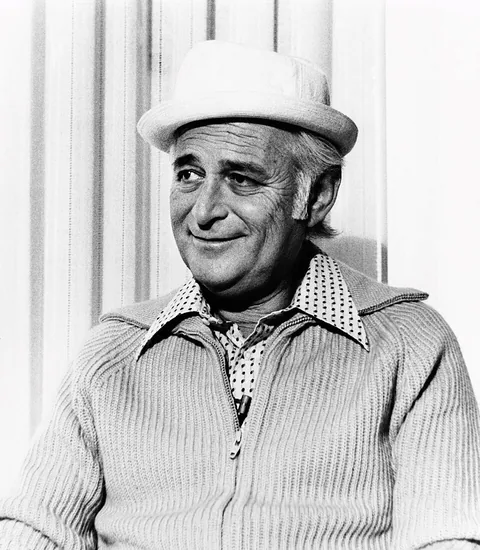
So I went to work from there for David Letterman, for Late Night with David Letterman,10Late Night with David Letterman — NBC's late-night talk show (1982–1993), known for absurdist humor, the Top Ten List and Stupid Pet Tricks. Letterman then moved to CBS with the Late Show (1993–2015). and stayed there for a long time. It was a great gig. And then went to work for Norman Lear.11Norman Lear (1922–2023) — the producer and writer behind All in the Family, Maude, The Jeffersons and Good Times, sitcoms that brought racism, abortion and the Vietnam War onto American TV. In the '70s, Norman was the king of television. I think he had four or five hit shows in the top 10 of the Nielsen rankings12Nielsen — the company that has measured US TV audiences since the 1950s; its ratings set ad prices and decide which shows get renewed. In the 1974–75 season, five Lear shows were in Nielsen's top ten: All in the Family, Sanford and Son, The Jeffersons, Good Times and Maude (Wikipedia). at one time. And he also was socially aware and very smart, and he was doing some new things with television, and I got hired. I worked with him. It was an incredible learning experience, which then translated into my being a comedy writer, and I worked for Cheers13Cheers — the NBC sitcom (1982–1993) about the regulars at a Boston bar, one of the most decorated in history with 28 Emmys. and In Living Color.14In Living Color — Keenen Ivory Wayans's Fox sketch show (1990–1994) with a mostly Black cast; Jim Carrey and Jennifer Lopez got their start there.
And then I heard a modem.15Modem — the device that sent computer data over a phone line. Its dial-up handshake, a burst of whistles and hisses, is the sound a generation associates with going online. And the first time I heard a modem, which was actually in the '80s, I just went, okay, this changes everything. Everything's going to be on something on your desk, and you're going to be able to do everything yourself.
And so my first kind of tech gig was I was working with the Disney Imagineers. And there was this effort — back in the day it was Mike Ovitz16Michael Ovitz — co-founder of the Hollywood talent agency CAA and president of the Walt Disney Company from 1995 to 1997. and Jeffrey Katzenberg17Fact-checkJeffrey Katzenberg ran Disney's film studio from 1984 but left the company in 1994, when he co-founded DreamWorks, so he was no longer at Disney in the late '90s; Ovitz joined in 1995 and left in 1997 (Wikipedia). and those guys, and they were terrified. This was like the late '90s, early 2000s, they were terrified by the internet. But, you know, they began putting real bets down on what is this thing going to be. I was there, and I was at MTV Networks18MTV Networks — the company that owned MTV, VH1, Nickelodeon, Comedy Central and other cable channels; it was renamed Viacom Media Networks in 2011. in the kind of early web days. And then I took another right turn. I got hired by Twitter.
This would be late 2000s, right? It was about the second year that Twitter was around. And the theory was, if famous people that people love, celebrities or TV shows, are on Twitter, then people will get on Twitter, and that's the best advertising we could do. And so that was my job, was to get the bird and real use cases onto the screen. Probably the best case that ever happened was the famous Ellen DeGeneres selfie.19Ellen DeGeneres's selfie — the shot the host took with Bradley Cooper, Meryl Streep, Julia Roberts, Brad Pitt and others in the middle of the Oscars on March 2, 2014. It got more than three million retweets, the most-retweeted tweet ever at the time. That was how many million dollars' worth of advertising, and I did that.
And then I was doing some consulting and things, and somebody said to me, "Hey, there's this machine learning thing that's AI, and the engineers don't understand how people talk, and people don't know what to talk about when they get to the machine." And so I became a conversation designer20Conversation designer — a specialist who plans and writes what chatbots and voice assistants say: lines, dialogue flows, responses to confusing requests. at Microsoft.
I was literally scripting bots, and I was working with the AI teams, and it was weirdly fascinating, because you're just dealing with this — what's going to become AI, what's going to become this interface — and trying to figure out, you know, what will that conversation be? And also, it is a conversation. I think a lot of people, when they freak out about AI, they freak out about an enormous box of things instead of all the things that are inside. But they kind of use it as a search engine, or "it gave me the wrong…", and they don't realize, no, it's a relationship.
I was doing that, I was writing, then they moved me to writing presentations. Microsoft's great kind of secret sauce is they have decades of data about how people use their software. If you're United Airlines and people are calling in to do whatever they're going to do, can we have an AI bot? Can we have Copilot21Copilot — Microsoft's brand of AI assistants built into Windows, Office, Teams and its other products. go through everything we already know from 30 years of you guys using software to help them solve their problem? And so I did that for quite a while, writing these presentations saying to people, here's what AI is and here's what it does, and here's your problems, and the solution to your problems, oddly enough, are Microsoft products. Of course they are.
03"I want in": Disney, Best Week Ever and the audience
Graver explains every career turn with the feeling "I want in," and his lesson from Disney and VH1 is that opening up to the audience is how you survive.
Of course they were. What's so interesting to me about your career, though, is that at every sort of major turning point, you have turned towards technology, as early as joining the Disney Imagineers, which at the time was revolutionary, and the work that they did has been so revolutionary. What do you think has been the core insight that you've taken at every turn? Like from the Imagineers to — you know, you worked in the golden era of TV, but you also turned from that to go to Twitter, which must have been a bold move. There must have been sort of a key insight that led there. But what have been the key insights at those different pivot points?
There's two answers. One is the real answer, which reveals me to be a terribly shallow person. Sometimes you look at something and you just go, I want in. And for me, growing up — I grew up on the South Side of Chicago,22South Side — the southern part of Chicago, historically working-class and largely Black neighborhoods. and I watched way too much television. And all I thought to myself is, I want to be on the other side of that screen. I want in. So it's "I want in there." It's "I want in" because there's some very funny people doing stuff here, and I like funny people, and I get along with them really well. I want in.
The technology turn for me — again, I hear a modem, and this was in the days of, like, CompuServe,23CompuServe — the first major American online service: from 1979 it gave home computer owners email, forums and news over a modem, long before the mass web. and there's no browser, there's no… But the first thing I joined was the Whole Earth 'Lectronic Link, the WELL.24The WELL (Whole Earth 'Lectronic Link) — one of the first online communities, founded in Sausalito in 1985 by Stewart Brand and Larry Brilliant. Writers, hackers and Deadheads argued there; Howard Rheingold described it in The Virtual Community. And so the Twitter people — it was Chloe Sladden25Chloe Sladden — Twitter's former vice president of media, who led its partnerships with TV, music and sports. and Dick Costolo26Dick Costolo — Twitter's CEO from 2010 to 2015; as a young man he performed improv in Chicago. — and I met with them, and I was like, yeah, these are my people, and I think they're doing something so new and different. It'll just be fun. It'll be really great. And so there was that.
For me, it's a little harder right now. My old tribe is not thrilled with the prospect of what this is going to be or what it might mean. And yet there's a new group of people — and I want to be very careful, it's not defined by age. It's defined by a sensibility and a mindset. There's a new group of people who are storytellers and who are in what I still call show business, because they don't think like David Ellison.27David Ellison — son of Oracle founder Larry Ellison and founder of the Skydance studio; after its 2025 merger with Paramount he became head of Paramount Skydance. Graver uses him as the image of a media mogul thinking in corporate terms. They think like, "Let's get a blanket and a garage and put on something." And they're beginning to see, okay, wait a minute, there's this thing — oh, what does Seedance28Seedance — an AI video-generation model from ByteDance, TikTok's owner. do? Or how can I do this with Google Story Studio? Or, oh, wait, this is really interesting. And then they begin kind of getting in and playing with it. And those people, to me — that's the group where I go, okay, I want in. Or at this point, I really do feel like, okay, I might be one of the first kind of settlers.
If there was one key insight that you took away from working early on with the Imagineers, what might that have been?
The Imagineers were founded by Disney to help him build stuff in the theme parks. And any time new technology came around, a group of the Imagineers would be assigned to figure out what does that mean to us. The most threatening thing in the late '90s for Disney was that technology was going to give the audience unprecedented access to IP:29IP (intellectual property) — in Hollywood, the rights to characters, stories and worlds: Snow White, Mickey Mouse, Star Wars. Studios make money by controlling how they are used. that you could suddenly digitize a copyright, you could take Snow White and the Seven Dwarfs and let your imagination run free. And this is terrifying. At the same time, you could also see that the audience is going to be in this new place, and they are going to want to have access to that stuff. So the insight was, suddenly there was a brand-new tension. There was a new tension between what the audience and creators would have access to and be able to make, versus what you were able to make given the moat around your business.30Moat — a durable competitive advantage that keeps rivals from taking a market; Warren Buffett popularized the metaphor. Graver extends it with barbarians building bridges over it. And the barbarians were building bridges over the moat.
Hmm. So, fast-forwarding to MTV, VH1, and the work that you did there, what do you think might have been your key takeaway then, having worked in the golden era of television?
Yeah, so the key takeaway for me, again, was: open it up to the audience, and that's your survival.
And what does that mean?
So for example, I created a show called Best Week Ever,31Best Week Ever — a weekly VH1 show (2004–2009, revived in 2014) in which comedians riffed on the week's pop culture news. Graver was one of its creators and executive producers. and it was doing very well, and we had created a Tumblr32Tumblr — the microblogging platform David Karp founded in 2007; in the late 2000s it was a major home for fan communities. just for the producers to talk to each other. And we realized suddenly that there were 10 or 15,000 people reading our Tumblr. And it literally was just like, read the audience signal, see what's going on. And it was a complete accident.
That's so interesting, because it then sounds like your move to Twitter was kind of further embracing the audience, right? It almost seems like at every point in your career you've taken a step closer to the audience.
04AI as a writers' room, not a writer
Graver tells writers to start with documents about themselves and their project and to use AI as a virtual writers' room rather than as an author.
I think that's really true. If you start out as a writer and you want to use AI, I have kind of a few things that I say you should do. You should create a "who I am as a writer" document. And you should throw in your inspirations, what you love, what you read, what you aspire to do, all of that. And then you also have a document that says, this is the thing I'm working on, right? And by the way, you don't even need to be specific about, like, "I want…" — I have this idea. I have this thing that I really, really, really want to kind of get at, I want to think about, in the same kind of way that Joan Didion33Joan Didion (1934–2021) — American novelist and essayist. In her essay "Why I Write" (1976) she says she writes "entirely to find out what I'm thinking." once said, "I don't know what I think about something until I write about it." I have this thing I want to explore, and AI is great at that. And then you begin putting as much as you know about that thing in. And the first thing you can say to AI is, does this idea and this person that I'm describing have anything to do with each other? Right? And then you kind of play around with it.
ExplainerThe writers' room: how American TV gets written
The writers' room is how most American TV series, especially comedies, get written. A season is broken by a team of anywhere from three or four to two dozen writers led by the showrunner, the show's head writer and producer.
- The room works out season arcs and episode stories together and breaks them into scenes on a whiteboard or a shared document; then one writer goes off to draft the episode.
- The draft comes back to the whole room: in comedy, scripts get rewritten "at the table," with jokes pitched and cut.
- Rooms are staffed so perspectives complement each other: improv, stand-up and journalism backgrounds, and sometimes experts in the show's world.
Graver wants AI to become one more member of such a room: a partner that pitches options, argues and remembers everything said, not an author writing in people's place.
And the third question is, who's out there? Right? Is there an audience out there for this thing? What platforms are they on? How do they consume media? What are the questions they care about that relate to the thing I'm writing, or even bigger questions that they care about? Somebody in the Atlantic did this, I think. They created the focus group for something. And you could actually literally do that: create a focus group of eight people from a range, where there's a guy over here who's the guy you really wish you hadn't invited into the focus group because he's really negative, and you have somebody who really loves what you're doing, and begin working on the idea that you're working on to get feedback. And so none of that is about AI writing for you. Everything is about having AI as kind of a virtual writers' room, as a group of intelligences that can help you think through things.
05Industry expertise and studio culture in an AI core
Graver wants to pour industry expertise and a studio's own culture into a shared AI core, so that production runs in a circle rather than down an assembly line.
Compound Writing,34Compound Writing — Every's plugin for AI agents such as Claude Code that walks a writer through the steps of a piece, from planning to editing. which is a great plugin35Plugin — here, a package of instructions, commands and skills added to an AI agent such as Claude Code so it works by a set method. that Katie Parrott36Katie Parrott — a writer and editor at Every who writes about using AI for writing. on our team developed.
Yeah, give her all the credit she can — I'm a big fan of Katie.
She's fantastic. And that was built off of Kieran Klaassen's37Kieran Klaassen — an Every engineer who leads the AI email assistant Cora and created the Compound Engineering plugin. Compound Engineering38Compound Engineering — Every's plugin for Claude Code and a method of building with AI agents: each task goes through a plan–work–review cycle, and the lessons are written down so the next one goes easier. plugin. And what makes so much sense about those plugins is that they are built by experts in their domain, right? So the reason why I use Compound Engineering is because I'm not an engineer, and I trust Kieran as a really brilliant engineer, and now actually a whole team that maintains that particular plugin. And so when I want to build a new product, I want to defer to experts in that field, to follow the steps that they would take in order to build a product, so that I'm doing it safely and following best practices. The same for writing, right? Katie has codified at least her approach to writing, the kind of writing that she does. And one of the things that you've been exploring is how to codify writing in your capacity. Can you speak a little bit more about that?
So think about it: there's a kind of core that exists, and what you pour into that core are two different things. One is expertise around — so in my case, it's expertise around creating entertainment product, right? And there's a fair amount of kind of product design and product management that goes into this. And you get the expertise of everybody, and so much of this has been published, and so much of this is freely available. You could go into everybody from, you know, David O. Selznick to Francis Coppola to Quentin Tarantino,39David O. Selznick produced Gone with the Wind (1939) and Rebecca (1940); Francis Ford Coppola directed The Godfather and Apocalypse Now; Quentin Tarantino directed Pulp Fiction. Three eras of Hollywood that left plenty of interviews and notes on their methods. all the way down the line. There's all the expertise: it goes around writing, it goes around producing, it goes around editing, it goes around marketing and distribution. There's even people who are just really brilliant who are just, like, business operations and legal people. You can put all of that in, and I'm building that, where I kind of go in and go like, you're going to make a thousand and one decisions in the next week, probably.
So half of this is: here's the experts, right? And AI has ingested all this, thought about it. And if you're going, okay, the marketing people and the writers are disagreeing, right — the writer thinks these characters are answering these questions, and the marketing people say, "I can't sell that," right? Well, what are other ways people have solved those issues? Just to give you advice, just to suggest, or kind of help you mediate that. Which, by the way, also results in less friction, because so much of this in show business gets personal. People get in a huff, they walk away, they have horrible fights. The best part about this is, when the movie comes out or the TV series premieres, everybody's patting themselves on the back: "Oh, we made it despite this." I'm like, stop. You didn't have to do it in the first place.
The other half, though, is also your personal culture. So if you're a production company or a studio, or you have a way of doing things and thinking about things, you can put that into the hub of the AI, the central core, as well. And everybody who's part of the process has already also said, here's a document about who I am, here's what my career is all about, here's the kind of way I work. And so now you've got this really great Petri dish of cultural documents that AI can help you think through.
And the last thing I'll say is, you know, people in show business still make things the way Henry Ford made cars.40Henry Ford (1863–1947) — founder of Ford Motor Company. In 1913 he launched the moving assembly line, where each worker did a single operation; building a Model T fell from about 12 hours to an hour and a half. There's this assembly line. And if you say to them, no, make it a circle — so that, by the way, the marketing and business people are talking to the writer and the pre-production people now, before you start making decisions that get locked in or whatever. Sometimes the production company has got 10 people, 15 people. Sometimes it's a writer who at this point is the entire team.
06Three phases of production, with AI in each
Graver breaks filmmaking into three phases — ideation, production, reaching the audience — and finds a role for AI in each.
Right. So what I love about plugins in particular is that they demystify what is otherwise a really complicated process into simple steps, right? Which is the only thing that AI can do really well: follow directions clearly. And I find AI to be as powerful as the instructions are. So what I love about, again, the engineering tools, or the plugins that our team has put out, is that when it comes to engineering, I understand that there's basically three steps to engineering.
And what Kieran has done is just kind of codified what excellence looks like in those three steps. So first you make a plan. There's all kinds of things involved with making a good plan, so we'll follow the instructions on that. Then we follow that plan and build something, you know, based on that PRD,41PRD (product requirements document) — a document that spells out what is being built, for whom, which features it has and how you'll know it worked. that set of requirements. And then we'll review that plan and kind of build on it. It's kind of like that loop that you discussed. What, in its most basic form, do you think is that loop for writing, or producing in your case?
ExplainerCompound engineering: plan, work, review, compound
Compound engineering is the approach to coding with AI agents that Kieran Klaassen formulated at Every; his Claude Code plugin breaks work into a repeating cycle:
- Plan. The agent studies the code and the task and writes a detailed plan, essentially a requirements document for the feature.
- Work. The agent implements the plan, writing code and tests.
- Review. Several reviewer agents with different roles check the result and suggest fixes.
- Compound. Lessons from mistakes and decisions are written into the project's instructions, so the next cycle starts smarter.
The point of "compound," as in compound interest, is that each cycle should make the next one easier instead of piling up technical debt. Katie Parrott built Compound Writing on the same model, and in this episode Graver lays out film and TV production the same way.
We'll break it into three steps, right? There's ideation, and we'll call it architecture or design. It is the thing that produces a script, right? And that's the first thing: you get something that is a written document that is the best embodiment of the idea you're trying to work on. The next phase is production, and it's everything from how do we prepare to make this thing. And it's a very similar process whether you're working with a straight-on, regular kind of movie or TV series, or a hybrid series that uses some AI, or even an all— I'm working with a studio now, and we're making an AI animated series.
And the way we're doing it is, they've hired a bunch of writers to create something. There's an animation studio in India that's doing the animation; some of it's with AI, some of it isn't. And then there's a group of computer scientists in Zurich. I don't know why they're in Zurich. It sounds — I keep imagining Goldfinger's lair42Goldfinger — the villain of Ian Fleming's novel and the 1964 James Bond film, a gold magnate whose plant in the film sits in Switzerland. A supervillain's Alpine lair is a Bond staple. up in Zurich, and they're like, "We're watching." And they're trying to figure out how do you build AI software that would keep the people with it. So there's this production process that's everything from pre-production considerations to keeping everybody going within the production. And I would include editing in there as well.
And there's a lot of stuff in there. There's storyboards. There's all the… You know, it's fascinating to me that Martin Scorsese43Martin Scorsese announced in June 2026 that he had become a partner and adviser to the German AI company Black Forest Labs and had already used its models to storyboard his next film. Much of the film industry reacted with outrage. is one of the first people to kind of come out and go, "Oh, I'm working with this company that's creating storyboards with AI," and people freaked out about it. Like, well, what about the storyboard artists? And I think Scorsese — I don't know, Scorsese is like, "You're going to have to get another job." You know, it's the mob.44The mob — a joke about Scorsese's filmography: Mean Streets, Goodfellas, Casino, The Irishman, gangster films in which "get another job" sounds like a threat. So there's the production phase, and AI can help with that. And then there's the "how do you reach the audience with this thing" phase. How do you market and distribute this?
What's fascinating to me about having worked with a couple of production studios in Hollywood is the marketing people are all in on figuring out how to use AI, to the point where they will create a campaign for something — and they work with companies that are doing it with AI — they will watch intent to purchase a ticket, or ticket purchases, based on a trailer, and they will rewrite the trailer almost on an hour-by-hour basis. You go, okay, let's A/B test45A/B test — an experiment that shows different versions (say, two trailers) to different groups and compares which works better: here, which one sells more tickets. this, let's try this, let's try that. And again, AI can be part of that process. What I think is fascinating is, again, you make it a circle, so that here's the ideation and design and architecture phase, and it works. Why not have the marketing people right away going, well, let's create a proxy trailer for that. Let's see if we can sell tickets to that, even though it doesn't exist yet, right? Which is essentially what show business has always been about, right? So those are the three phases, and that's where I think in every step AI can speak to the people who are doing it and can inform the decisions that everybody's making.
So let me make sure I got that. So it's ideation, and then it's basically the production, which includes a bunch of things. And then there's the marketing, the connecting to the audience, in a loop.
Yeah. How do you — thank you, by the way, for cutting it down to three. I've never done it before, and that was very helpful.
07Empty out first, then open AI
To avoid AI slop, you have to think deeply yourself first and only then build a relationship with the model.
And I mean, this is so helpful to me. The reason why I enjoy using AI, and why I got into using AI, is because, you know, Anthropic46Anthropic — the American AI company behind the Claude models, founded in 2021 by former OpenAI staff led by Dario and Daniela Amodei. describes themselves as, like, AI for problem solvers. And I think it's such a smart description, because I think it's totally right. You know, for ambitious people, you just want to do great work. And AI at its best, I find, allows me to do great work. But also, when I'm getting creative and doing work that is fun and not in my line of expertise, it's easy to make AI slop. Which is where these plugins are such helpful boundaries, right? They're sort of like the rails in a bowling alley that keep you from going off into the dark side of AI slop.
How is it that you find these three steps might help someone who is not familiar with using AI in this kind of writing capacity, or actually someone who is an expert in being a writer or a producer? How would these three steps help them build even more beautiful, valuable work that is not AI slop?
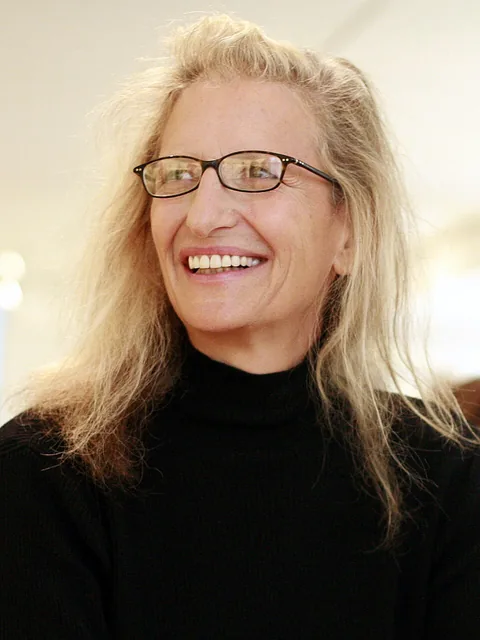
The first match you've thrown into the gas can here are the words "AI slop," right? It is the thing that terrifies everyone, right? And again, I go back to my show business metaphor, or framework, right? If all you need is a sheet and a garage and some chairs to put on a show, why doesn't everybody put on a show? Well, first thing, not everybody's going to put on a show. Annie Leibovitz47Annie Leibovitz — the American portrait photographer behind famous Rolling Stone and Vanity Fair covers, including the photo of John Lennon and Yoko Ono taken hours before Lennon was killed in 1980. once said, everybody has a camera in their pocket that's better than the camera that I used for 30 years. But there are very, very few people who are taking pictures like I take. So the first step here is in defining who you are and what you're trying to do, and thinking deeply about them.
And in fact, I say in all three steps, you want to begin by thinking deeply. There was a book that was very popular for a long time, and you don't hear much about it, called Flow.48Flow: The Psychology of Optimal Experience (1990) — psychologist Mihaly Csikszentmihalyi's book on the state of complete absorption in a task, when you lose track of time and work at the edge of your abilities. And it was all about what it is to be in that state where you're composing or writing or painting or whatever, and you're just locked in. You're in the zone. For me, in all three of these steps, if you haven't begun by going there first, you're not going to get a good product. You have to start with uniquely you, what you know. Spend a day or two dumping everything you know about what you're going to do onto a page, right? Do it by hand, do it by Whisper,49Whisper — OpenAI's speech recognition model (2022), which turns voice into text and powers many dictation apps. do it by whatever, but empty out. You will never have that opportunity again once you open AI. There's one chance to kind of be yourself and confront the idea, or confront "how am I going to produce this really, really well," or confront "how will we reach the audience?"
And all three of these are really important expertise, and I don't think anybody has all three. I think any single person knows how to find all three people. But you have to empty out. You have to do this yourself, as a human being.
Then the nice part is — it's a very lonely business, and for all of us it's like, well, great, I can throw all this stuff out, what am I going to do with it once I do it? Ah, now there's AI. Now there's Claude50Claude — the AI models and chatbot made by Anthropic. or ChatGPT,51ChatGPT — OpenAI's chatbot, released in November 2022, which set off the mass boom in generative AI. and we can have this discussion about which one I like, or anybody likes. But you go in and you say, this is who I am, this is what I'm doing, let's talk about this.
One of the things that I love, that I actually did very early on: I asked Claude, "I'm a writer, I'm a producer, I'm trying to do these things. How can you help me? What can you do for me? Oh, should I be using Claude Code?52Claude Code — Anthropic's AI coding agent: it runs in the terminal, reads project files and writes and runs code. It came out in February 2025. Should I be using — back when Cowork53Cowork — Claude's mode for working with files and tasks on your computer without coding, "Claude Code for the rest of your work." It first came out as a separate preview in January 2026. was a separate thing — should I be using Cowork? I read about these skills…54Skills (Agent Skills) — a format Anthropic introduced: a folder of instructions, examples and scripts that an AI agent loads when a task calls for that skill." And, you know, there'll be people on Substack55Substack — a platform for paid and free newsletters, where writers earn from reader subscriptions. publishing crazy stuff — and by the way, you don't need those subscriptions, you can have Every.56Every — Dan Shipper's media company, which makes this podcast; its subscription includes writing, model reviews and AI apps. Graver jokes that instead of a pile of Substack subscriptions, you only need one, to Every. No, but, you know, there's people publishing all this stuff, and I will feed it into Claude, and I'll say, "Is this useful?" And Claude might say, "No, we're already doing that," right? Or, "Yes, I can build that with you," right? And so I built a process that began with myself, and then began with almost a conversation or relationship with the AI that helped me do it better.
And so in each of those steps — so if you have… I have many friends who are producers, and that's a tough job. You're the drill sergeant. You're making sure things get done faster, better and cheaper. And you can keep your schedules, you can keep people in touch with each other, you can find tax incentives,57Tax incentives — film production rebates: states and countries return part of a shoot's spending (often 20–40%) to attract productions, which largely decides where things get filmed. you can find what the union58Hollywood unions — the Writers Guild (WGA), the actors' union SAG-AFTRA, the Directors Guild and others. Their contracts set pay, hours and working conditions on set; in 2023 writers and actors went on strike, partly over AI. is requiring, you can find all of these things, you know, in one tool. And the same with marketing. You've got these tools within Claude — specifically Claude and ChatGPT now. It almost feels like everything for everybody all the time everywhere.59Everything Everywhere All at Once (2022) — the Daniel Kwan and Daniel Scheinert film that won seven Oscars; Graver is riffing on its title. It's starting to get there. The question is, can it do your version of everything all the time for you when you need to have it done? And that's where the real skill is. That's where you kind of go in and go, this is my culture, this is what I care about, this is what the priorities are.
That's so interesting. So it sounds like you're saying, before you can really get any value out of these tools, you really need to not touch these tools and really go inward, like really understand.
I really firmly believe that. And I don't know, I firmly, firmly believe that. It could be that's how I started back in the day. If you wanted to convince somebody to do something, you'd write something, and you'd pitch them, right? And it was everything that you knew about the thing you were trying to do. And you would edit that, you'd figure it out. You'd go, "I've only got 120 seconds with this executive," or it's a five-minute meeting, and the minute they start talking about their weekend in the Palms, you're sunk, right? "But oh, now it's down to two minutes." That's how I began. And I still believe, after a lot of… Actually, I'll give you an example.
Yeah, after a lot of experiments, I still believe that that's the way to do it. I think I was using Compound Writing, and then I was using Claude Code to try and figure out a way to, in kind of five bullet points, hammer away at any idea I might have. And so I gave it three or four ideas, and we were refining it: "Well, that's not quite right." And then Claude said, "Let me come up with an idea, and I'll test it against myself." Oh, okay, Claude.
So the idea it came up with was a series, a web series that would be like Brooklyn Coffee Shop, but it was a group of 60- and 70-somethings who were running the Facebook page for a senior citizen home. And it gave all the pros and cons, how it would be produced, who the audience is, how you'd reach them. And I'm sitting there reading it and going, okay, that's not a terrible idea. Wow. And so then I was like, tell me more. What else do you know about this? And it was kind of churning things out. The reason I bring it up is I think Claude has learned from me. And it's kind of like, yeah, let me dump everything I know about the 60-plus audience and vertical series60Vertical series (microdramas) — one- to two-minute episodes shot vertically for phones and shown on TikTok, Instagram and dedicated apps such as ReelShort. like Brooklyn Coffee Shop. And it made that great — I think a great — Facebook connection, which is where that audience is.
And I kind of like, oh, okay, great. But I feel like it's because it learned kind of that piece of me.
08Do you have something to say?
Without something of your own to say, Graver argues, AI won't help, and the hardest unsolved part is reaching an audience.
And who you are. Yeah, that's interesting. I mean, one of the key questions I would certainly have is, for the next generation of producers and writers, how could they have a shot at being the next Fred Graver? Because, you know, the TV industry doesn't exist in the way that it did. And it sounds like maybe what you're saying is, so long as you give yourself the space to go inwards and build your own compass, and understand who you are and what you want and what it is that you're trying to say at any given moment in time, you can have AI work for you in the different capacities that you would usually need a team for, instead of working for AI, right? It's like, if you have a compass, you can have it work for you. If you don't have a compass, you're just kind of following Claude in whatever direction it's taking you in.
Which is essentially how you have a career in, you know — the minute you say media, I just keep thinking David Zaslav61David Zaslav — since 2022 the head of Warner Bros. Discovery, the conglomerate built from the Warner Bros. studio, HBO, CNN and Discovery. "Controlling the vertical" means vertical integration: owning both production and distribution. and people who are just trying to control the vertical. You know, to have a career as a storyteller, that's the test: do you have something to say? And what's great about AI tools is, it can help you say it. There are so many ways to help you say it. But it can't give you — if you ask it to tell you what it is you should be saying, you'll get… It goes to the mean,62Goes to the mean — language models predict the most likely continuation of a text, so without a clear intent they produce the average, typical answer, whatever was most common in their training data. right? It won't do the thing.
And some people don't have that thing. I hate to be a jerk about it, but some people just don't have it. People send their kids to — my wife… I met my wife at Letterman, and so they come all the time. Once a month somebody shows up for coffee, and they're like, "I want to be a writer. I want to…" And I would always say — I will always say, and I'm a jerk about it — "Hey, tell me about the last thing you wrote." If it was more than two weeks ago or a month ago, I kind of go, "Is there something else you like to do?" This is hard. It's lonely, it's full of rejection. And if you're not addicted to the thing, if you don't have to do this, and if you don't have something unique that is just burning there, there might be other places where you can go.
Where the hard problem is right now — and this is where I stub my toe all the time — I believe that for the first two pieces of the circle, all that is coming into place. It's the third piece that's really, really hard. I was really lucky to come up in the second half of the 20th century. It was, as you said, the golden days. You got development deals63Development deal — a contract under which a studio or network pays a writer, sometimes with an office, for a first look at their new ideas and scripts. to have an office for a network, with the promise that you would write two things. Oh my God, and they flew you first class, and it was glorious. That's gone. As Bruce Springsteen64Bruce Springsteen — Graver is paraphrasing "My Hometown" (1984), about factories closing: "Foreman says these jobs are going, boys, and they ain't coming back to your hometown." would say, boys, those jobs ain't coming back.
09The thesis: know what the audience wants before it does
Graver's thesis for Thesis is an old show business truism: success is knowing what the audience wants before it does, and AI will join the writers' room but can't supply human quirks.
So, I mean, maybe this takes me to your thesis, right? So you shared your thesis. We're hosting a conference in a few weeks called Thesis.65Thesis — Every's first conference, on what great human work looks like after automation, held in Brooklyn in November 2026. Participants sent in their "theses" ahead of time. It's about what happens after automation. And you wrote your perspective on what your thesis is of what happens, what comes next.
Yeah. So essentially I was saying, those first two pieces, the new writers' room will include AI, right?
I remember the first time I walked into a writers' room and they had a Google Doc up on a screen that was capturing what everybody was talking about, and they were trying to outline a story for an episode. And I was like, oh my God, that's so great. Because before then you were always going, like, "You know, Kevin, did you get that? Did you read it back to us? Make sure you got it right." Now it was there in front of everybody.
I think in that same way, you will have AI in there, and they will be asking questions like, okay, this is the season arc, we're here, what happens if this character is doing that? Or even more to the point — right? So there's a micro example, and there's a macro example, which is, okay, we're looking at successful TikTok series that are… We'll go back to — we'll help Claude with his idea. The audience is 55 and older. I need to understand the audience, where they are, what their concerns are. If it was set here, what could I dive into?
I need characters that reflect their problems. Let's talk about that stuff. And there's one — you could do it singularly. I think it's much better if you've suddenly got three people with different perspectives. And by the way, another way to remove friction in the production process: everyone can hate the AI. So it's kind of like, "I love what you're saying, Natalia. Claude's an idiot." But you're working everything out, and you also really have an expansive intelligence that is thinking about things — if you've set it up right — that you would not have thought of. And so that has to be in there, and you have to be pushing it, and I think that becomes part of the process.
Yeah. Do you happen to remember your thesis? I'm curious if you could maybe state a version of it.
Yeah, I think I can. And then, by the way, we could also talk about how I used the dev edit66Dev edit (developmental edit) — editing of a text's concept, structure and argument rather than its words and commas. to create the original version, and then Georgia had to keep paring it down to something. And what she ended up paring it down to was supporting the show business truism. I may be the only person on the Every podcast ever who uses the term "show business" all the time. I'm realizing old man Graver shows up and talks about show business. So the truism is: success is knowing what the audience wants before the audience knows it.
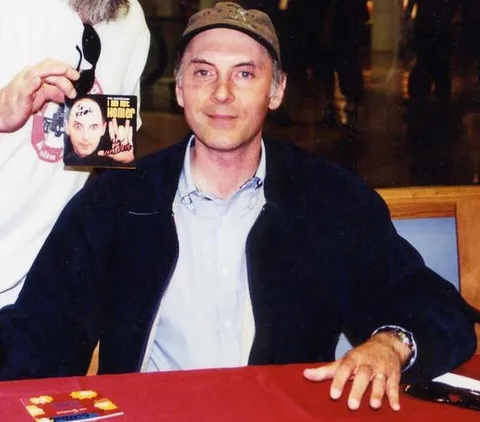
Where AI is really helpful — so go back to my old man series. It could tell me right now a whole bunch of stuff that would slot right into that. What it wouldn't tell me is the personal quirks that would make these characters endearing, right? For example, the guy who does the voice of Homer Simpson — he improvised "D'oh!"67"D'oh!" — Homer Simpson's catchphrase. The script called for an "annoyed grunt," and Dan Castellaneta, who voices Homer, turned it into a short "D'oh," borrowed from actor James Finlayson in the Laurel and Hardy comedies. The word entered the Oxford English Dictionary in 2001. To me, that's the whole story. It's like, okay, we knew the whole thing, and then he improvised that. So AI can help you do a bunch of stuff. And then there's this kind of — what is inside of you that nobody else has. And if there's two or three people or more in a writers' room, it's fascinating. It's what's inside all of you.
Okay, there's a guy over there, he went to Harvard,68Harvard — a joke with a backstory: many comedy writers came through the student Harvard Lampoon, from Conan O'Brien to a string of Simpsons writers, and the Harvard grad is a fixture of the American writers' room. we had to take him. And then there's a couple of other people, and you've got an improv background,69Improv — theater in which actors make up scenes on the spot; schools like Second City and the Upright Citizens Brigade have produced many comedians and comedy writers. or you've got this background. Or sometimes — I know I've been in some writers' rooms where you literally brought somebody in who just knows the setting of the show. Right? I worked on an ill-fated show for the producer Jim Brooks70James L. Brooks — producer, writer and director: co-creator of The Mary Tyler Moore Show and Taxi, an executive producer of The Simpsons, and Oscar winner for Terms of Endearment. that was about a 14-year-old tennis phenom. In fact, the show was called Phenom.71Fact-checkPhenom — an ABC sitcom (1993–1994) with James L. Brooks among its executive producers. Its heroine, tennis player Angela Doolan, was 15, not 14 (Wikipedia). And we had in the writers' room somebody who coached teenagers into their tennis championships, and he was great at kind of going, like, "Oh, I'd do something horrible there." Right? And it was always kind of helpful. So you've got this writers' room, you've got AI, and that's how it comes together.
Yeah, I mean, it kind of feels to me like a full circle, you know, that your thesis is essentially, you have to know what your audience wants before the audience knows. And going back to being a kid in the South Side of Chicago, on the other side of the TV, it's like every step you've taken in your career has been to be on the other side of the television, and to close the gap between being the audience and being the producer. And now it's like we're at the singularity,72The singularity — in AI talk, a hypothetical point when technology advances so fast the world becomes unrecognizable; Vernor Vinge and Ray Kurzweil popularized the term. Quintero is joking about the audience and the producer merging into one person. where you are the audience and the producer. So you have the opportunity to have that core insight, but also to do all of the work to create the show that you think could turn that whole insight into a story that is entertaining and would connect to a broader audience.
I had never thought of it as the singularity.
It's the Fred singularity.
Yeah. I have a very good friend, Danny Hillis,73Danny Hillis — American inventor and scientist who built the Connection Machine parallel supercomputers and co-founded Thinking Machines; he studied under Marvin Minsky at MIT. who studied AI with Marvin Minsky74Marvin Minsky (1927–2016) — one of the founders of artificial intelligence research, co-founder of the MIT AI Lab and author of The Society of Mind. in the '80s, and yeah, he constantly jokes that I should just get the brain implant now. Which, by the way, if I can, I will.
That's awesome.
Yeah, I think that's true. And I think, again, the hard part right now — for those of you who are business people and are watching — it's that third piece here, where, you know, Kevin Kelly75Kevin Kelly — American writer and futurist, co-founder of Wired. has this great 1,000 True Fans76"1,000 True Fans" — Kevin Kelly's 2008 essay: a creator doesn't need a hit, just a thousand devoted fans who each bring in about $100 a year, which adds up to $100,000, enough to live on. theory, right? You're a musician, you're a photographer, whatever. If you could just get a thousand people to give you $10 a month for a bunch of stuff that you do online, you can make a living. And nobody has set that up yet for people who do what I do, who no longer have the wonderful golden age of television. And I feel like that's what we finally need. If you're able to create a really, really funny animated sitcom, and Fox77Fox — the American broadcast network behind The Simpsons, Family Guy and Bob's Burgers, the main buyer of adult animated sitcoms. is only buying one a year, where do the other 50 good ideas go? And I keep looking here — I point as if it's an actual place here — I keep looking at that third sector and going, somehow we need that to happen.
10Graver's workflow: Claude, ChatGPT, NotebookLM
After emptying out, Graver talks the idea through with Claude, checks it in ChatGPT and NotebookLM, and shares his pitch deck skill.
So you've done that emptying-out process. What happens after? You're sitting on your computer, you have all of these notes. What do you do?
I have a couple of skills that I've built that are my readers, right? They're the famous kind of readers over your shoulder: people that I think think like me or would look at this. I've lived in Claude for a long time, so it's the room I keep going back to. And I will say, "Claude, this is this. Here's a folder of all my work. You know what I work on. This is what I'm going to do. Let's talk about this," right? And then I'll say — because prompting, it's kind of like — "What I need back from you is an analysis of: does this sound like me, like something I would work on? Is there an audience for this on some platform somewhere that feels real? And what will I need to get to a finished product, a script, or to get it to screen, that I don't have now?" And the reason I ask that last question is, do I really want to go down the road?
Everybody has a lot of ideas, right? But it's like, do you really want to go down the hard road of writing all of this, to find people to help you make it or whatever? And I will have a very long conversation with Claude about the reality of that idea. So let's say we get to it, and like, okay, great, you know what? I'm working on this. And I know kind of my steps for subsequent drafts and all of that, where I'm going to need to go from A to B.
And I will tell Claude, here's what we're going to do, and here's what I think the schedule is, and here's when I'm going to deliver this. I have a Claude agent that is my morning check-in. And he's very unpleasant, and I've asked him to be very unpleasant. And so when I opened up the computer again that night to say, "I've got another idea," the first thing in the morning I will get back is, "Wait a minute. You're working on this. You told me you wanted me to talk about this, and then in the night you came in with this other thing. What are we doing, right? Because you owe your thesis statement to Every tomorrow afternoon," right? That's kind of a practical thing.
ExplainerStory Spine: Kenn Adams's skeleton for a story
The Story Spine is an exercise devised by improv teacher and playwright Kenn Adams. A story is built from stock phrases:
- Once upon a time…
- Every day…
- But one day…
- Because of that…
- Because of that…
- Because of that…
- Until finally…
- And ever since then…
The first two lines set up the ordinary world, "but one day" is the event that breaks it, the chain of "because of that" lays out cause and effect, "until finally" is the climax, and the last line is the new order. The structure became widely known through Pixar: former Pixar story artist Emma Coats included it in her "22 rules of storytelling" (2011). Graver calls it the "because, therefore" framework and built it into his pitch deck skill.
But then the other thing is, it knows what frameworks I use. I love the Kenn Adams78Kenn Adams — American playwright and improv teacher who created the Story Spine: "Once upon a time… Every day… But one day… Because of that… Until finally…" Graver calls it the "because, therefore" framework. "because, therefore" framework. It's what Pixar79Pixar — the animation studio behind Toy Story, Inside Out and Coco; Disney has owned it since 2006. uses in a lot of their stuff. It's the simplest way to do anything. And I'll go, "Here's my story, here's what I think I'm doing. Help me figure out if that's doing the work," right? Plus, by the way, "Am I still answering questions for my audience?" So I'm constantly writing myself. I'm constantly asking Claude to look at what I've written. The compound part is, it knows what decisions I've already made. And by the way, you can also say, "You've clearly rejected the decision you made three days ago. Where's that going?"
Again, writing is a lonely business. When you have somebody to talk to about these things — or three people. So I'll go from Claude, and I'll take what I'm doing and work on it. I'll go to ChatGPT. ChatGPT is the film school student who has read every guide, seen everything, does not know what it means. It's great at, "I know you're trying to do this, and here's — as they say in the Olympics — the compulsories. Here's what you haven't done, or what you are accomplishing." It's very useful in that sense. And then I might even go to Notebook to say, "Hey, look at my documents, look at this stuff, and can I listen to the podcast?" I am so shallow. I am a sucker for those two podcast hosts going, "Well, we're talking about something fascinating today."
I love NotebookLM80NotebookLM — Google's tool for working with your own documents. Its Audio Overview feature turns uploaded material into a podcast in which two AI hosts enthusiastically discuss your writing. podcasts. They're so great.
It's the best. It's the best thing for a writer. They love what you're working on. Yeah, so that's roughly kind of it, and you just rinse and repeat.
So do you think we might be able to get access to one or two of those skills? Because it sounds like such a valuable — I mean, you know, even this process that you've mentioned that Pixar uses, I wouldn't have known that, but once you've codified it, it's such a helpful sort of shortcut to make sure you're following it.
I teach an online class at the Barcelona School of Art and Design.81Barcelona School of Art and Design — Graver's name for LABASAD, an online school of art and design based in Barcelona, where he teaches. The reason is that European film schools have embraced AI in a big way that American film schools are very afraid to do. And I created a skill that helps you create a pitch deck for your idea, which is kind of great. And within that skill there is the Kenn Adams, like, okay, can you, in one slide, do a "here's the normal world, then this happens, because that happens, they do that." And it basically makes you create the logline82Logline — a one- or two-sentence description of a film or show: who the hero is, what they want and what stands in their way. and the characters and all of that stuff, and it won't let you — each step, it won't let you do a step until you've completed the other. So I'm happy to share that with you.
I am so excited to try it. Yes, definitely, would love that.
And it might not be that good. You can tell me, let me know.
Well, perfect. I mean, it's so fun, though, because then it's like it'll be a second in your brain, you know, to try to follow that process and understand how you might approach doing that particular step in production. So you have a great Substack, and speaking of a thousand great fans, I'm a fan of your Substack. Where can people find you?
Oh, sure. It's a Substack. It's called the AI Writers Studio.83AI Writers Studio — Fred Graver's Substack newsletter and his company that teaches screenwriters and filmmakers to work with AI. Search my name, Fred Graver, and you can't miss it.
Cool. Terrific. Thank you.
Hey, thanks for joining us for this conversation with Fred Graver. If you want to use the skill that Fred shared, it's in the description below. It's really fun to use; I highly recommend it. And you can also find us at every.to. We'll see you next time.
AdEvery
If you like this video, you should check out every.to. We have a two-week free trial for anyone who's watching or listening at the link in the description. Every is the only subscription you need to stay at the edge of AI. It is the one subscription that, if you're super AI-pilledaAI-pilled — slang modeled on "red-pilled" from The Matrix: someone who has fully bought into AI and uses it for everything. and you want to learn how to use it to do the best work of your life, it's got everything you need. It has education and equipment. On the education side, we review every new model that drops and tell you what's good. On the equipment side, we have software tools specifically made for you, like an agent that helps you AI-pill your whole company, all bundled together under one subscription. So get two weeks free now at the link in the description.


