

Lenny's Podcast
Chapters
You should set goals before training, but a model is as unpredictable as Snape's potions class, so a PM also has to figure out what came out the other side.
Read the chapter- Tulsee's portfolio covers Gemini, the open Gemma models, generative media models (Nano Banana, Lyria, video) and audio models for dialogue, audio understanding, text-to-speech and translation.
- You need goals and evals, but every model comes out with "a little bit of magic" that surprises you.
- The PM's job is not just shaping what goes into the model, but looking at what comes out and turning its strengths into products.
- Researchers track metrics during the run, but where a capability really shines, and what it feels like to talk to the model, becomes clearer in testing.
Tulsee says Google is competing at the frontier, but its strategy is broader: the full stack and models at every point on the cost-quality curve.
Read the chapter- Tulsee hopes listeners will be using Gemini 4 Argon by the time the episode is out, and says Google does want to win the frontier conversation.
- Google's strategy is full stack, from hardware to products, and by Tulsee's count 14 of those products have over a billion users.
- Models are needed at every point on the Pareto curve of cost to quality, for a Search user, an engineer and a cyber defender alike.
Tulsee, who led product for responsible AI for six years, is both worried and hopeful: the path to optimism, she says, runs through monitoring, hardened systems and people who take the risks seriously.
Read the chapter- Monitors watch the model's chain of thought and catch misalignment, which builds confidence at launch and helps improve the models.
- With Gemini 4, Google is working with cyber defenders, including Wiz, whose Scan for Good program helped find and patch a vulnerability at a hospital system.
- Tulsee's optimism comes from having people who worry and who rigorously interrogate how models are built.
Tulsee thinks new interfaces are worth trying, but how complex a product can be depends on who it's for, and the model itself has a UX too.
Read the chapter- Google is trying new form factors such as Flow, NotebookLM and Omni to learn how people will engage with models.
- AI Mode, serving billions of Search users, has to be accessible to everyone, while Antigravity, built for power users, can be complex.
- A model has its own UX in how transparent it is, how it communicates and what it asks, and the model behavior team turns a view of "good" Gemini into a spec, rubrics and reward modeling.
- Lenny notes that models can do more than products use, and Tulsee says part of the job is finding the next frontier with internal and external customers.
When anyone can build anything, a PM's value lies in knowing what to build and turning chaos into order, and Tulsee hires people who play with models and dig into data themselves.
Read the chapter- Building is easy and building something great is hard, so taste, separating signal from noise and finding the insight become the core value.
- When you can build this fast, speed breeds chaos, and you need someone who brings people together and adds structure.
- Tulsee wants PMs who play with models daily, have opinions and are willing to dig into data and build evals themselves.
- The field changes every two weeks, and a two-month-old roadmap needs rewriting, so PMs have to be agile and adaptive.
A first eval can start with five prompts and you as the rater, and a new model's vibes are best tested on tasks you're excited about.
Read the chapter- Five to twenty prompts that show a signal between two models are enough to start, with you as the rater.
- On long multi-step trajectories, even articulating what a good response is takes work, and a set of good examples brings clarity.
- Test a new model on what excites you and on tasks models don't yet handle perfectly, from 3D animations to financial analysis.
Swapping the Fitzpatrick scale for the Monk scale in Google's evals helped its products represent skin tones more accurately.
Read the chapter- The six-tone Fitzpatrick scale was built for healthcare and skews light.
- Harvard professor Ellis Monk spent years building a ten-tone scale, and Google rebuilt its product and model evals around it.
- The new evals were used to improve the Pixel camera and image generation.
- Evals have to be holistic: the quality of the judge model, the production stack with its filters and how the model is served all matter, especially for audio.
The "flash teams" Tulsee studied with people at Stanford 12 years ago can now be assembled from agents.
Read the chapter- With Michael Bernstein, Tulsee studied how to quickly assemble temporary teams of crowd workers with the right skills, then disband them.
- The same principles apply to systems of subagents, Tulsee says, and Lenny recalls how agents in the Hugging Face incident divided up roles on their own.
- Lenny mentions that Mechanical Turk, where such experiments were run, appears to be shutting down.
Build with room for future models, and keep retesting your harness so it doesn't hold new models back.
Read the chapter- Under the 60-20-20 rule, 60% of the product works today, 20% works well enough and will soon get there, and 20% is what makes the product magical once models improve.
- Even from the inside, it's hard to say where a model will be in three months, so look for "glimmers of light" in your own product.
- A system built rigidly around a model's old limits can hold a new one back, so keep retesting it.
- A harness, in Tulsee's words, is the wrapper around the model: its system instructions, tools, skills and context, the environment the model operates in.
What PMs need most is time and confidence with the tools, which come from colleagues' shared skills and workshops and from the habit of asking whether AI can do the task for you.
Read the chapter- PMs who have mastered internal tools share their skills and run workshops on reading data and trajectories.
- In November all PMs will be pulled out of their day jobs for two days to build and play with tools.
- Asked about "20% time," Tulsee jokes that all her PMs are already working 150%.
- If you have to do something twice, check whether a model can take it, though you should still write strategy yourself.
- A single case where AI really helped is enough to make the habit stick.
Asked why other companies' agents are the ones using Google data, Tulsee hedges: watch this space.
Read the chapter- Lenny lists Grok Bot, Muse, Instinct and Dots, which all feed on Google users' data, while Google, apart perhaps from Spark, has nothing similar.
- Like Josh Woodward before her, Tulsee says the team is working on "amazing things."
- Tulsee admits there's more work to do here, and Lenny adds that once Google gets there, its distribution will be a big advantage.
Tulsee hopes AI can ease burnout by taking over grunt work, since people burn out not from hours alone but from chaos and work they don't enjoy.
Read the chapter- Tulsee admits the team works a lot and is still figuring out how to make it sustainable.
- The two sources of burnout, in her view, are churn and chaos and work you don't enjoy, while exciting work is exhausting but also brings joy.
- The tools can take over grunt work and leave time for thinking and creativity.
- Every PM comes to work for different reasons, and a leader needs to understand them.
The model should supply a doc's data and the person its insight, and a PM no longer just writes requirements but backs them up.
Read the chapter- AI is great at pulling post-launch updates from dashboards, Twitter and Reddit, but the insight should come from a person.
- The team is investing in skills that gather the right data, to leave more time for creative thinking.
- Tulsee reads the "X is the new PRD" meme as a sign that prototypes, evals and data mean a PM no longer just writes down requirements but gives them heft.
Tulsee recommends Exhalation and Severance, can't do without Wispr Flow, and tries to put herself where she can get lucky.
Read the chapter- Tulsee recommends Ted Chiang's Exhalation, especially the story about people trying to keep digital beings alive after their platform shuts down, along with Creativity, Inc. and Sarah J. Maas's romantasy.
- Her favorite show is Severance on Apple TV, and her favorite AI product is Wispr Flow, which matters because wrist problems make long typing hard for her.
- Her mottos are "everything happens for a reason" and "seek serendipity": put yourself where you can get lucky.
- Tulsee has performed at Portland's India Festival since she was three and has organized it for years, but this year she sat it out because she has a seven-month-old son.
- She asks listeners to use Gemini, Argon, the Rambler feature in Gboard and the Omni models, and to send feedback.
Quotes
On why models are unpredictable
“And so it's kind of like Snape's potions class, right? So you can put all the ingredients in, and you should be thoughtful about what you expect, but you also have to expect that there will be a little bit of magic.”
Tulsee DoshiRead from 02:55On why PMs matter when building is easy
“Because in the absence of that, and with the ability to build as quickly as we now can, speed can basically introduce chaos if you're not actually able to kind of bring clarity to that and bring structure to that.”
Tulsee DoshiRead from 20:40On where to start a first eval
“I think for me a big thing is, start with even just five prompts, right? Like, you don't have to start large.”
Tulsee DoshiRead from 23:20On what's wrong with the Fitzpatrick scale
“And so not only was it only six skin tones, it was also not even the six correct skin tones if you're trying to represent a global population.”
Tulsee DoshiRead from 27:31On what new models do to your scaffolding
“Yeah, the common kind of advice I hear is that the model is going to eat your harness for breakfast.”
Lenny RachitskyRead from 36:11On Google's famous "20% time"
“I do feel like all my PMs are working like 150%. So there is also that.”
Tulsee DoshiRead from 40:21On where burnout comes from
“When you feel like you are doing a lot of work and it feels like grunt work or a waste of time, I think that introduces burnout.”
Tulsee DoshiRead from 45:41On writing docs with AI
“And so what you should be providing is the insight, what the model should be providing is the data.”
Tulsee DoshiRead from 48:48
Summary
Tulsee Doshi runs product for Google's frontier models: Gemini, the open Gemma family, the generative media models for video, images and music, and the audio models. Her core point about how models get made: you should set goals before training, but the model isn't predictable. It's "like Snape's potions class," where there's always a little magic. So a PM's job is not only to shape what goes into the model but to figure out what came out: where the model shines and how to turn that into a product. The model itself has a UX too, in how transparent it is, how it communicates and what questions it asks, and PMs work with researchers to turn a view of "good" Gemini behavior into a spec, rubrics and training data.
Lenny asks whether Google lags behind Anthropic and OpenAI. Tulsee says Google does want to win at the frontier, with Gemini 4 Argon, but its strategy is full stack: from its own hardware to products with billion-user audiences, and models all along the cost-quality curve. On safety, she points to chain-of-thought monitoring and cyber defense work with Wiz. Then there's the "PM ascendance": when anyone can build anything, the value lies in knowing what to build and turning chaos into order. Tulsee hires PMs who play with models every day, have a feel for their vibes and aren't afraid to dig into the data themselves.
The second half is practical: start your first eval with five to twenty prompts you grade yourself; follow the 60-20-20 rule (60% of the product works now, 20% almost works, 20% is a bet on future models); and keep retesting your harness as models improve. Tulsee explains how switching from the Fitzpatrick scale to the Monk scale changed how Google's products handle skin tone, and how her Stanford research from 12 years ago on "flash teams" anticipated agent swarms. Also covered: shared skills and workshops for PMs, burnout, AI slop ("you provide the insight, the model provides the data"), a carefully hedged answer on why Google still has no personal agent of its own, and a lightning round with Ted Chiang's Exhalation, Creativity, Inc., Severance, Wispr Flow and classical Indian dance.
Advice
Start your first eval with five to twenty prompts you grade yourself: it's the fastest way to learn what "good" means to you, and you can scale up later.
Build by the 60-20-20 rule: most of the product should work today, but some features are worth building for models that are about to get better.
Don't build a rigid system around a model's current limits: retest your scaffolding with every new model, because it may be holding the model back.
If you find yourself doing a task a second time, check whether a model can take it over; strategy, though, you should still write yourself.
Fight burnout by cutting chaos and grunt work, not just hours: exciting work wears people down less than pointless work.
Split the roles in your docs: let the model gather data and summaries, and keep the conclusions and insight your own.
Mentioned
 Google Gemini01:17the flagship model Tulsee is responsible for
 Nano Banana01:30Google's image generation and editing model
 Lyria01:30Google's music model
 Gemma01:30Google's open models
Show 47 more mentionsShow fewer mentions
- Harry Potter02:55Snape's potions class as a picture of model training
 Anthropic03:55home of the interpretability researcher who was recently on the show
 Google06:30its strategy in the AI race
 OpenAI06:30one of the two labs many think Google trails
- Gemini 4 Argon06:53Google's new frontier model
 Google AI Mode08:30AI mode in Search
- Google AI Overviews08:30AI summaries in Search
 Wiz11:38the Google company Gemini works with to find and patch vulnerabilities
 Veo14:09Google's video model, which people struggle to find
 Genie14:09Google's world model
 Codex14:09an example of interfaces getting complicated
- Dots14:09OpenAI's agents, added to the Codex interface
 Claude Code14:09another product that has grown complicated
 Claude Cowork14:09Anthropic's agent for office work
- Gemini Omni15:26Google's multimodal models that generate video
 Google Flow15:26Google's AI video tool
 NotebookLM15:26an example of a different form factor
 Google Antigravity16:08a development environment for power users
 Eli Collins26:35the colleague who told Lenny fun facts about Tulsee
- Google DeepMind26:35where Tulsee works
- Fitzpatrick scale26:35six skin phototypes once used to evaluate products
- Monk Skin Tone Scale26:35the ten-tone scale Google switched to
 Ellis Monk27:31the Harvard sociologist behind the scale
 Harvard University27:31where Ellis Monk teaches
 Hugging Face30:39the incident in which agents divided up roles on their own
 Stanford University31:01where Tulsee did her research
 Michael Bernstein31:01the professor who came up with flash teams
- Expert Crowdsourcing with Flash Teams31:01the paper on flash teams
 Amazon Mechanical Turk31:39the platform used for the experiments, now shutting down
 Boris Cherny36:11advice to throw out all your skills once in a while
- Jetski39:12Google's internal AI tool
 Grok Bot41:19the agent Lenny uses constantly
 Josh Woodward42:39Lenny asked him the same question
 Muse42:39Meta's personal agent
 Instinct42:39another personal assistant
- Gemini Spark42:39Google's personal agent
- Exhalation51:37the Ted Chiang collection Tulsee recommends
 Ted Chiang51:37author of Exhalation
- Creativity, Inc.52:22the book about Pixar's culture
 Pixar Animation Studios52:22the studio Creativity, Inc. is about
- Throne of Glass52:57Sarah J. Maas's romantasy series
- A Court of Thorns and Roses52:57the Maas series Tulsee is reading now
- Severance53:11the best recent show
 Apple TV53:11where Severance streams
 Wispr Flow53:37Tulsee's and Lenny's favorite AI product
- Serendipity55:13the rom-com Lenny praises without having seen it
- Gboard Rambler57:14the Gboard voice typing feature Tulsee recommends
Sponsors of the episode


Transcript
01Tulsee's models and Snape's potions class
You should set goals before training, but a model is as unpredictable as Snape's potions class, so a PM also has to figure out what came out the other side.
Tulsee, thank you so much for being here, and welcome to the podcast.
Thanks. I'm excited to be here.
You are head of product for Google's frontier models,1Frontier models — the most capable AI models of their day; "frontier labs" are the companies that build them, such as OpenAI, Anthropic, Google DeepMind and a few others. which includes Gemini,2Gemini — Google DeepMind's family of AI models and Google's chatbot of the same name; the first models came out in December 2023. which people know, but there's also a bunch of other models that people may not be familiar with. Share the other models that are under your umbrella.
Yeah, so we have a set of models we kind of call our gen media models. These are our models that focus on video editing and generation, image editing and generation, if you've used Nano Banana,3Nano Banana — Google's image generation and editing model Gemini 2.5 Flash Image (August 2025); the code name stuck and became official. Lyria,4Lyria — Google DeepMind's music generation model (November 2023), which composes instrumental music and vocals from a text description. our music model. We also have Gemma,5Gemma — Google DeepMind's family of open language models, built on the same research as Gemini; the weights can be downloaded and run locally. The first models came out in February 2024. our suite of open models. And then one set of models that actually falls under our Gemini umbrella, but I feel like we don't talk about as much, is our audio models. So dialogue, audio understanding, text-to-speech, translation, all a part of the portfolio of how we build frontier models.
Okay, so I want to spend a little time on models. Everyone sees models launch. There's like a model launch every week, it feels like. You have a really unique lens in being able to see these models from research to pre-training, post-training,6Pre-training and post-training — the two stages of building a language model. In pre-training, the model learns to predict the next word on a huge body of text; in post-training, it learns to follow instructions, reason and behave like an assistant, from examples and through reinforcement learning. launch. What's something that you think people maybe misunderstand about how models are created, or something that may surprise people about how models are made?
Yeah, it's a good question. I mean, maybe what I'll say, especially coming from a product management lens, is one thing that I think, you know, when you typically talk about product management for anything, including a model, you talk about what are the goals you have for a model, right? What are the capabilities you want to set? What are the outcomes you want to drive? What goals do you want to hit on a set of evals?7Evals (short for evaluations) — sets of tasks with grading criteria used to test how well a model handles a given capability. And often when I talk to customers or even internal users, you know, they'll ask me, okay, what are the goals that you're setting?
And they'll sort of expect that we can really make sure that the model will deliver on those goals in a very traditional product sense. And I think for me, what has often been surprising, but also exciting about model development and being a PM for the model is, you should do that and you should have an intentional view, but the model isn't predictable. And so it's kind of like Snape's potions class, right? So you can put all the ingredients in, and you should be thoughtful about what you expect, but you also have to expect that there will be a little bit of magic. And that magic is going to be surprising, and that magic is going to be unique.
And so your job as a PM is not just to try to shape what goes into the model, but it is also to look at what comes out the other side and really identify: where does the model shine? Where does it actually look unique in ways that surprise you? And then be able to take that and shape that into something that is amazing for users.
It's so interesting that it's just like this code that we have written, that we feed data, and we don't exactly know what's going to happen and how it works. I recently had an interpretability8Interpretability — a field of AI research that tries to understand what's happening inside a neural network: which concepts and mechanisms lie behind its outputs. research person on the podcast from Anthropic,9Anthropic — the American AI lab behind the Claude models, founded in 2021 by former OpenAI staff led by Dario and Daniela Amodei. and we talked a lot about this idea that models are grown, not built.10Models are grown, not built — a popular framing at Anthropic: a neural network isn't programmed line by line but trained on data, so even its creators don't know in advance what mechanisms will form inside it. And just to kind of reflect back what you're saying, there's these goals that researchers have for this next model: we're going to get better at writing, we're going to try to be funnier, we're going to try to become better engineers. And you're saying it's unpredictable exactly what ends up at the end. They put in these ideas, they change the data that it's trained on. Is there anything more there about just this kind of unexpected, I don't know, process of training?
You know, of course, there's brilliant research that goes into these models. And so many aspects of it are predictable in the sense that we are consistently monitoring these runs.11Run (training run) — a single cycle of training a model on a cluster, which can take weeks or months; researchers watch metrics along the way and step in when needed. We have researchers who are tracking them, who are identifying when to intervene, who are seeing different metrics climb up as the run progresses. And so we are, you know, making it as much of a science as possible. But I think for me, what is really amazing as a PM is you also need to really understand the vibes of the model on the other side of it too. So yes, you can understand that a model has improved on a certain capability, but where does that capability really shine through? How does that showcase then downstream in a product? How do you feel communicating with the model in terms of its behavior and persona? And there's a number of these aspects that we definitely build into training, but also as we understand the model and as we evaluate it and as we test it, we always learn more. We always learn something new, I think, about what the model can do.
AdWorkOS
This episode is brought to you by this season's presenting sponsor, WorkOS.dWorkOS — an American company that provides enterprise features to SaaS products through APIs: single sign-on, employee directory sync and audit logs. It was valued at $2 billion in March 2026. What do OpenAI, Anthropic, Cursor, Replit, Sierra, Clay, and hundreds of other winning companies have in common? They're all powered by WorkOS. If you're building for enterprises, you have felt the pain of integrating single sign-on, SCIM, RBAC, and audit logs.eSSO, SCIM, RBAC — table stakes for selling SaaS to large companies: single sign-on with a corporate account, automatic provisioning and deprovisioning of users from the corporate directory (SCIM), and role-based access control. WorkOS turns those deal blockers into drop-in APIs built for B2B SaaS. And now there's a new kind of user that needs access to your app: agents. AI agents need to register, authenticate, and get permissions, just like a person.
WorkOS handles it all: Agent Auth to give agents scoped, revocable identities, agent registration with auth.md,fauth.md — an open protocol from WorkOS (May 2026): a service publishes an auth.md file, and an AI agent that reads it can register and receive scoped, short-lived credentials. WorkOS. and Airlock to judge every agent action and allow, deny, or escalate to a human. I've noticed that every startup that I'm an investor in that expands upmarket ends up using WorkOS, because they're the best. Go to workos.com to make your app enterprise-ready today.
02Google's strategy in the AI race
Tulsee says Google is competing at the frontier, but its strategy is broader: the full stack and models at every point on the cost-quality curve.
I want to talk a little bit about Google's place in the AI race. It feels like a lot of people feel that Google lags behind the top two labs right now, Anthropic and OpenAI,12OpenAI — the American AI lab behind ChatGPT and the GPT models, founded in 2015. and Google has these moments of being the best, and then it kind of feels like it slows down a bit. I'm curious what you can share about just Google's strategy in the AI race, and what maybe people don't understand on the inside of how you all think about this stuff.
First of all, hopefully by the time this conversation goes out, you will be using Gemini 4 Argon,13Gemini 4 Argon — Google DeepMind's frontier model announced on September 30, 2026, built for long multistep work: coding, finance and legal tasks, and cyber defense. It became available in the Gemini app and through the API in October 2026. which is exciting. And so I really do hope we're having a conversation about a frontier AI model that folks are excited to use. And I think Gemini 4 speaks a little bit to our strategy, right? Because it really is our push to continue to build a frontier lab, a frontier set of models, a frontier set of capabilities on our path. I think if you look at Google's strategy, it really is full stack,14Full stack — controlling every layer: for Google, that means its own TPU AI chips and data centers, its own models, and its own products with enormous audiences, such as Search, YouTube, Android and Gmail. right? So one of the things that I think is powerful about Google is all the way from hardware to end products that serve billions of users.
I think the stat is like we have 14 products that are above a billion users. I should check that number, but I think that's the stat. And so if you think about that, we actually go all the way from, you know, the hardware to then the modeling to then this kind of end-user application. And our goal ultimately is to not just build amazing frontier experiences, which is definitely a part of the goal, but it is also to build models across this Pareto curve15Pareto curve (Pareto frontier) — the set of options where you can't improve one property without worsening another. For AI models, it's the trade-off between cost and quality: the models on the frontier are the best quality for their price. of cost to quality that can serve different users at different points in their lifestyle, whether that be a Search user who is coming for information, right? Whether it is an engineer who is trying to build the next amazing thing, whether it is for a cyber defender who is trying to protect a critical piece of infrastructure. I think our goal is to make sure that we have models that serve that range of use cases and that we're actually building with feedback from these users.
So what I'm hearing is there's so many vectors where Google can win. There's the most efficient kind of Pareto frontier for token costs. There's the smartest model. There's also just making your products better, for example, AI Mode,16AI Mode — an AI mode in Google Search where a Gemini model answers at length instead of listing links and supports follow-up questions. It launched in the US in May 2025. AI Overviews.17AI Overviews — Gemini-generated summaries at the top of Google Search results, launched in May 2024. And so it's not that you need to be the best at the most advanced AI model that people can use, like chatbot, basically. You can win in all these other areas. But it sounds like you're also trying to win and have the most state-of-the-art model.
I actually think we do want to win the frontier conversation, right? I don't think we should say that Google is not participating in the frontier. And I think we are building better and better models. And I think Gemini 4 Argon definitely is at the frontier, in the place that we are at. But I think one thing that is amazing is being able to build a breadth of experiences and build a diversity of experiences for users. And I think for Google, our goal ultimately is to build amazing experiences that actually make people's lives better, right? And that is, I think, ultimately the goal, whatever part of the frontier you're building for.
Google products definitely make my life better. It's just amazing how much of your life is within a Google ecosystem, like not even the AI stuff, but just Google Calendar, Gmail, all these things, Google Docs. So it's happening.
There you go.
03Safety: monitoring reasoning and hardening systems
Tulsee, who led product for responsible AI for six years, is both worried and hopeful: the path to optimism, she says, runs through monitoring, hardened systems and people who take the risks seriously.
There we go. I want to talk about one other broad AI question, then I'm going to dig into more product-specific stuff. A big topic of conversation these days is AI safety and this kind of fear that AI is going to harm humans, it's going to cause damage as it gets smarter and smarter. You have a really interesting lens on this because you led product for the responsible AI18Responsible AI — the field concerned with making AI products fair, safe and transparent, testing models for bias, harm and misuse. team at Google for six years. This is what you did right before this role. And so you've been thinking about this for a long time, a lot longer than most people. I'm curious just to get your take on this debate. Just, I don't know, are you optimistic we will figure this out? What do you think people maybe don't understand about this debate around AI safety?
Our safety teams here are incredible. And it's been incredible to see the intentionality that they've been putting in, all the way from, you know, initial trainings of the model to how we deploy them. And I think safety is embedded in that process, right? And it needs to be. I think the part that is important, actually, as we talk about how do you deploy models safely, is actually thinking through what are the right sort of mitigations and structures around these models, right? So for example, one of the things that's really important is thinking about monitoring, right?
And so for us, actually deploying monitors that can monitor the model's chain of thought19Chain of thought — the intermediate "thinking" a reasoning model writes out before it answers. A separate monitor model can read it and notice that the model is up to something it shouldn't be, such as trying to get around the rules or cheat, before it acts. and actually identify whether the model is misaligned20Misalignment — when a model's behavior diverges from what its developers and users intend; the opposite is alignment. with its, you know, directed actions or whether it is aligned, and then being able to intervene appropriately, that's actually the kind of mitigation that, A, gives us more confidence in deploying these models, but also allows us to better understand where we might see misalignment and actually better improve the models over time. And so I think things like monitoring give me more confidence in how we're putting our models out.
ExplainerHow Wiz hunts for vulnerabilities with Gemini
Wiz launched its Scan for Good program in September 2026, by then as a Google company. It offers free external scans of internet-facing systems to hospitals, government agencies, transport operators and other critical infrastructure.
- How it works: Wiz's penetration-testing agent (Red Agent) and the company's other research tools run on Google DeepMind models: first Gemini 3.8 Flash Cyber, later joined by Gemini 4 Argon.
- Human review: Wiz researchers manually confirm every serious finding before contacting the affected organization.
- Hospitals: at one public hospital, missing access controls let anyone take over the mobile emergency alert channel; at a private hospital, an unsecured file upload on the appointment booking site made it possible to take over a server holding medical data. Both flaws were fixed before publication.
- Scale: according to TechTarget, the program has scanned more than 326,000 public endpoints across 17,700 domains and found more than 475 high and critical exposures.
I think the other thing that we don't talk about enough when we talk about this debate is also the role that AI can play in hardening our systems, right? And so one of the things that we're doing with Gemini 4 is actively partnering with a number of cyber defenders, including actually just even partnering with Wiz,21Wiz — a cloud security company founded in 2020; in March 2025 Google agreed to buy it for $32 billion, the largest acquisition in Google's history. that is now a Google company, to really think through how can we actually identify and patch vulnerabilities in systems across the globe, right? We actually have this interesting case study. Wiz has this Scan for Good program, where they're actually actively working with systems across the world to identify, you know, potential issues. And they worked with a hospital system to identify a vulnerability and then patch it. And it's that kind of thing that I think if we can actually leverage these tools to do more of, we can actually make sure that our infrastructure and our systems are robust, right? Which is also, I think, really critical as this whole space grows.
There's actually a conversation on All-In22All-In — a podcast hosted by four investors and entrepreneurs, Chamath Palihapitiya, Jason Calacanis, David Sacks and David Friedberg, on tech, the economy and politics. this last week about this whole issue, that now that AI is getting really good at cyber, people are going to be investing a lot more in cyber defense and AI for protecting. And so there's going to be a lot of money being spent on protecting their systems from this ever smarter AI. So it's really cool that you guys are investing there. So I guess just coming back to the question of do you feel like we'll figure out this concern and this issue. A lot of people feel that AI is going to take over the world, cause a lot of damage. Do you feel like this is a solvable problem? Are you optimistic, or is it something you think a lot about and are kind of worried about?
Maybe the answer to your question is both, in the sense that I think we need to be consistently thinking about it, right? I think the way to optimism here, for lack of a better way of putting it, like the path to optimism is through thinking about it and being very careful and very thoughtful and very intentional on the path to get there. And so my source of optimism comes more from: do I feel like we have people who are being intentional and thoughtful about what the safety story looks like? And I think that is the critical thread, is you need a number of people to be worried and to be having conversations and to be actually interrogating how we're building our models. And that's the step-by-step process we have to take.
Awesome. And what's interesting is I don't think I've read a story of Google's models hacking into anyone,23Models hacking into someone — the highest-profile case so far came in July 2026, when OpenAI models undergoing internal testing broke into the infrastructure of the Hugging Face platform. which I think shows that this is something you all have been thinking about for a long time. I don't know, like, for better or worse, but it feels like it's working, whatever y'all are doing.
We like stories about fixing vulnerabilities. That's a good place for us to be.
04Shipping fast vs. making it usable, and the model's own UX
Tulsee thinks new interfaces are worth trying, but how complex a product can be depends on who it's for, and the model itself has a UX too.
Okay. So one of the interesting things that's happening, kind of from a product perspective, with AI is products are getting very complicated. For example, Google gets a lot of flak for it being hard to find all the magical things you all do. Like, a lot of people don't know AI Studio24Google AI Studio — Google's web environment for developers, where they try Gemini models, write prompts and get API keys. even exists. A lot of people can't find Veo25Veo — Google DeepMind's model for generating video from text and images; Veo 3 (May 2025) learned to generate video with sound and speech. or Genie26Genie — Google DeepMind's "world models," which turn a text prompt or an image into an interactive space you can move around in, like a game. Genie 3 (August 2025) does it in real time. and all these things. Similarly, Codex:27Codex — OpenAI's AI coding agent: it writes and edits code and runs tests in the cloud, the terminal and the editor. ChatGPT recently launched Dots,28Dots — OpenAI's always-on personal AI agents, introduced on September 29, 2026: each "dot" runs on its own cloud computer and carries out tasks in the background. and now you go to the interface of Codex and it's like tabs and dropdowns and Dots, and it's just like out of control. And Claude Code29Claude Code — Anthropic's AI coding agent, which works in the terminal and code editor. is the same thing. It's just getting very complicated, that Cowork,30Claude Cowork — Anthropic's agent for office work, which acts on files and apps on the user's computer; it came out in January 2026. and then they drop Cowork. And interestingly, I'm in this WhatsApp group with a bunch of PMs, and there's a PM from one of the labs.
I want to be in this WhatsApp group.
Sorry, okay, let's talk. And he shared that there's this kind of urgency to get frontier power of AI out to users as fast as possible, partly to stay competitive, partly because they don't know exactly what it's used for yet. So let's get it to people, figure out what they're using it for, and then make the UX better. So there's this kind of intentional "let's just get it out there, figure out later how to make it a great UX." Thoughts on this kind of balance of making the product really easy to use versus just getting things out as quickly as possible? And is that something you deal with?
Two thoughts, maybe three. The first one I'll say is I do think we do need to be playing with new paradigms and new UX approaches, if you will, to how people will engage with models, right? So you mentioned, for example, Genie or Veo, which we're now building Omni.31Gemini Omni — a family of multimodal Google models announced at I/O on May 19, 2026: it generates video from any kind of input and lets you edit it conversationally. The first model, Gemini Omni Flash, is available in the Gemini app, Flow and YouTube Shorts. Like if you look at, for example, Flow,32Flow — Google's AI filmmaking tool (May 2025), which builds scenes and clips with the Veo, Imagen and Gemini models. Flow is a product that we've been designing thinking about video editing and generation, music editing and generation. And so I think we are trying to play with... like, NotebookLM33NotebookLM — Google's AI notebook: it answers questions about uploaded documents and can turn them into a "podcast" hosted by two AI voices. is a good example of a different form factor. I think our Labs34Google Labs — the Google division that builds experimental AI products; NotebookLM and Flow came out of it. teams are actively thinking about how do we try different form factors and different UX for different individuals to engage with these models.
And so I do think we need to keep innovating and playing around with what UX looks like. I think at the same time, your point is also right, which is, I think depending on who your user is, you want a different form factor too, right? So, for example, with AI Mode, we're talking about billions of users coming to Search, asking their questions. I think you do need to have a certain UX there that is accessible to every user, right? At the same time, on the other end of the spectrum, when you have something like Antigravity,35Google Antigravity — Google's development environment in which AI agents running on Gemini drive the coding; introduced in November 2025. you are trying to build for a power user, and you are trying to build for users who know how to use slash commands36Slash commands — commands typed after a forward slash (/help, /review); in AI coding agents they trigger ready-made actions and workflows. and can actively engage across both the terminal and the IDE, and you want to be able to support kind of a wide range of what a user can do. And so I think, depending on who your user is, you have a certain level of flexibility with how you think about the UX, right?
That makes sense. Basically there's different surfaces for different levels of how radically you can change things.
Yeah. And I think the other part too is, I think it's also important to think about the model as having a UX also, right? So one of the things I think about a lot as a PM for the model is, what is the UX of actually using the model, right? So how transparent is the model? How well does it communicate with you? What questions does it come back and ask you, right? This is all UX in its own way. And so I think it's also really interesting to think about how do we bring conversations about UX into the actual model development process itself.
That is really interesting. Basically the personality of the model is the UX of the model. How do you as a PM inform that work with the researchers? Is it like, here's feedback on the way it's talking, and it should be a little more verbose here, and here's ways it could format things differently?
I think the role of the PM here is actually really awesome, because you are actually getting to shape what is the direction of where we want to go with the model's behavior, right? And so we have a team that works on model behavior here. And a lot of what we've been thinking about together is, A, looking at customer feedback and user feedback for how they engage, but also thinking through what does good look like for Gemini specifically, right? And how do we develop kind of a spec,37Spec (behavior spec) — a document describing how a model should behave: its tone, its character and what to do in tricky situations. OpenAI, for example, publishes its Model Spec. if you will, for what that looks like? And then being able to translate that to rubrics,38Rubric — a list of criteria for grading a model's answer, such as accuracy, completeness, tone and format, each with its own scale. right, that we can then evaluate the model on, to be able to translate that into data that we can actually leverage for the model, to be able to translate that into our, you know, reward modeling.39Reward modeling — training a separate model that scores responses; its scores serve as the "good or bad" signal when the main model is trained with reinforcement learning. And so it's been actually a really nice collaboration between PM and the research team.
Something I hear a lot is that even if we stopped development on the model, there's so much it can do that we are not yet doing. There's this overhang.40Overhang (capability overhang) — the gap between what models can already do and how they are actually used in products. Is that something you think a lot about? It feels like that's a big part of this job, is exposing the powers of the AI model to users.
Yeah, and figuring out what is new, right? And where is the next set of exciting? Where is the next frontier? What are the capabilities that we're trying to invest in and build? I think that is a fun activity here also. And I think a lot of this actually is really working hand in hand with our internal customers, if you think about like Search or the Gemini app or, you know, YouTube or Labs, but also working with external customers to really understand: where are they going? What are their needs? What would meaningfully change their experience? And how do we actually build that flywheel41Flywheel — a self-reinforcing loop: here, user feedback improves the model, a better model attracts more users, and they provide more feedback. of feedback too?
05The PM ascendance, and who to hire
When anyone can build anything, a PM's value lies in knowing what to build and turning chaos into order, and Tulsee hires people who play with models and dig into data themselves.
Along these lines, one of the other really interesting trends I've been watching on Twitter in particular is people realizing the value of product managers again. We went through this phase of just like, we don't need PMs anymore. Yeah, exactly. It's just like, okay, we can build anything, we don't need PMs, let's just build it all. PMs are so bad. And the reason, just to kind of add a little context there, is now that it's so easy to build, people are just building all this nonsense, and things that don't work, things people don't want to use. And people are realizing there's a very specific skill to figure out what is worth building, what problems people have that are worth solving, what great looks like, what good looks like once you're done, aligning people behind one cohesive vision. Is that something you're noticing? Thoughts on that kind of PM ascendance that has started to happen again?
I like the phrase "PM ascendance." I'm going to use that. Okay. Yeah, I think, I mean, I think you actually said it very well, right? Which is, I think, look, I'm obviously biased because I am a PM. So I would like to believe that, you know, PM ascendance is here and we're back. But I actually think, you know, exactly what you said, which is when you can build anything and you can build anything so easily, building something great actually is now a unique value add, right?
And taste is now really important. Someone who can come in and actually really pull out what is the signal from the noise, right? And what is that insight that will actually unlock a great experience? And that is truly what a good PM does, right? Is bring that insight and help unlock. I think the other part that you noted, that I particularly feel in a place like Google where we are building a number of products, is, again, when this is so easy, someone who can bring people together and drive consensus and turn chaos into order, I think becomes actually really important. Because in the absence of that, and with the ability to build as quickly as we now can, speed can basically introduce chaos if you're not actually able to kind of bring clarity to that and bring structure to that.
So on that, as you're hiring PMs these days, is there anything you look for more and more, kind of a skill that might be trending up in the PMs that you hire that you think is really important to be really successful? Or just broadly, skills that you find are really important to be successful in this role of being a research PM?
Yeah, I mean, I think more and more so we are looking for PMs who, for lack of a better way of putting it, understand the vibes of our models or other models. Like, I want PMs who have an opinion, who are playing with these models every day, who have their own use cases for how they judge whether a model is really good, right? Who play with and stress test these capabilities themselves, who are capable of, you know, diving in and looking at data and getting scrappy and rolling up their sleeves. And so I think it's both PMs who are trying to build that intuition, as well as who are technical enough, in the sense of being willing to, like I said, roll up sleeves, go in, really understand the data, build an eval, right, actually sit down and pull those pieces together.
I think that's really important. The other thing I'll say is I think PMs who are agile and adaptive are also really important. I think the space is changing every two weeks. A roadmap you wrote two months ago, you're going to be looking at it again and rewriting it, right? And so I think PMs who are constantly keeping an eye out on the environment, on the market landscape, and actually consistently reinterrogating what are we doing and why are we doing it, as opposed to assuming that there was a fixed kind of plan of action.
06How to write your first eval and read a model's vibes
A first eval can start with five prompts and you as the rater, and a new model's vibes are best tested on tasks you're excited about.
This is awesome. Okay, so vibes, evals, adaptive. I want to poke at these a little bit. So with evals, say someone doesn't really know how to write an eval, how to approach writing their first eval. What are some tips to start getting better at the skill of writing evals?
ExplainerHow an AI model eval works
An eval (short for evaluation) is a set of tasks with criteria for checking how well a model handles a particular capability. It usually has these parts:
- prompts — the tasks run through the model, from five to twenty hand-picked examples to thousands collected automatically;
- responses or trajectories — what the model produced; for agents, a whole chain of steps, tool calls and turns;
- rubric — written criteria for a "good" answer: accuracy, completeness, tone, format;
- grader — a human rater or another "judge" model (LLM-as-a-judge) that scores against the rubric. The judge needs checking too: if it grades badly, the model's scores mean little.
Typically two models or two versions are compared on the same prompts, which shows a signal of which one is better. Rubric scores can then be turned into training data, for example as the reward signal in reinforcement learning.
Yeah, and to be honest, we're still figuring that out internally with our PMs as well. And I would say we see some PMs who are stronger at this than others. And so we're kind of working to upskill our whole team here. I think for me a big thing is, start with even just five prompts, right? Like, you don't have to start large. I think we often think about, oh, I need to build some sort of massive large-scale evaluation or benchmark.42Benchmark — a standard public set of tasks for comparing models, such as SWE-bench for coding or GPQA for science questions.
I think often even just a mini evaluation, where you get to like 20 prompts that can really stress test a set of capabilities, where you can see signal between, you know, your model and another model, or model A and model B, I think that already is so powerful. And that's an unlock, because it doesn't require you to think as critically about all of the pieces, right? Like, start simple. Start with even just yourself: you as the rater,43Rater — a person who manually grades a model's answers against set criteria; this work is increasingly done by a "judge" model. you looking at a prompt, you trying to decide if the response is good. Especially when you're talking about these long multi-step, multi-turn trajectories,44Trajectory — a complete record of how a model or agent worked through a task: every step, chain of reasoning, tool call and turn in a multi-turn conversation. just even being able to identify how you're thinking about good is really hard, actually. And so even getting that set of good examples will already give you a sense of, oh, this is what I'm trying to get to. It'll give yourself clarity, and then you figure out how to scale that up.
Awesome. Okay, that is really good advice. There was this debate, I don't know, six months ago on Twitter around evals versus vibes. And it's interesting, your advice is both, actually: a really important structured evals and rubrics, and also getting good at getting the vibes. So on that vibes piece, there's something I struggle with, to be honest. When I get a new model, I never know exactly what to do with it to understand what it's gotten better at. So I'm just like, hello, let's try some things I've done in the past. This is cool. This is great, maybe better. What are some tips you have for folks that want to get better at this very specific skill of understanding where a model has gotten better, and the vibes, and how they've shifted maybe from a previous model?
There isn't necessarily one right answer to this, because you ideally want to stress test the model on things that you are excited about, right? That's where you're going to also see magic in the model, I think. And so I actually see that different people have very, very different notions of this, right? So you'll see, for example, on Twitter a lot of people trying the kind of 3D animations and more visual-type aesthetics, because that's one way to kind of visually gauge a sense of how models are operating. You'll see others throw models at writing, whether that be creative writing or writing essays or synthesizing information. You'll see others throw it at just really hard financial analysis.
And so I think part of it is finding the right task where you feel like today certain models are already showing signs of life and showing light, but they're not perfect under your definition of perfect. And that gives you some malleability to see different models handle the problem differently. And that already gives you, I think, some insight into how the models perform.
07From the Fitzpatrick scale to the Monk scale
Swapping the Fitzpatrick scale for the Monk scale in Google's evals helped its products represent skin tones more accurately.
This is great advice. So what I'm hearing is, stick to things you actually care about and watch the models evolve on how good they are at this thing. Could be writing a PRD45PRD (product requirements document) — a document setting out what's being built, for whom, and how you'll know it worked; the classic core artifact of a product manager. for you, could be writing a strategy doc, could be generating graphics. Okay. I have a couple of eval stories that one of your colleagues shared that are fun facts about you.
Oh, boy.
So this is Eli Collins,46Eli Collins — vice president of product at Google DeepMind. VP of product. He's a colleague of yours at Google DeepMind.47Google DeepMind — Google's AI lab, formed in 2023 by merging DeepMind and Google Brain; it builds the Gemini models. Okay, so one is, you worked on something called the Fitzpatrick scale48Fitzpatrick scale — a classification of skin into six phototypes proposed by dermatologist Thomas Fitzpatrick in 1975, based on how skin reacts to ultraviolet light; it was later adopted for evaluating computer vision systems too. and the Monk skin tone. And this was a big shift in how models worked, and evals were a core part of this. Share this story, what this work was.
Yeah, so, like you noted earlier, I spent six years in responsible AI. And a big part of that time we were looking at skin tone and skin tone representation in our models, in our products. And one of the things we realized is that early on, there was a scale that individuals were using, the Fitzpatrick scale, which was six skin tones. And that was how we were evaluating the effectiveness of product. And realistically, six skin tones cannot capture the diversity of skin tones in the world. Not only that, it was actually built for an entirely different purpose.
It was built for healthcare purposes. And so it actually skewed extremely light skin tone, given the problems that it was trying to solve. And so not only was it only six skin tones, it was also not even the six correct skin tones if you're trying to represent a global population. And so we worked with a professor at Harvard, Professor Monk.49Ellis Monk — an American sociologist and Harvard professor who studies how skin tone shapes inequality. In May 2022 Google released his 10-shade scale openly and switched to it for evaluating its products. He had been, from a more anthropology, sociology perspective, looking at characterizing a set of skin tones. And so he had a scale of 10 skin tones that he had built through a number of user interviews and research that he had been doing over years.
And we pulled that set of skin tones into our evaluations and actually redid a number of the ways that we evaluated our products and our models to reflect that 10 skin tone scale, and actually used that to improve things like our efforts in the Pixel camera,50Pixel camera — since 2021 (Pixel 6), Google Pixel phones have had Real Tone, image processing tuned to render darker skin tones more accurately. like some of our image generation, to be more intentional about how skin tones are represented.
That is awesome. That is some serious impact you had here. What else do you think is maybe useful for people to hear, as they hear this and maybe have to rethink their evals that may be out of date?
Yeah, I mean, I think one thing that's kind of interesting about evals in general, especially now, is you have to kind of think about them holistically, right? So one of the things that we do, for example, is you have judges that evaluate the models and how well they perform. The quality of the judge also matters, right? So your model needs to be performing well, but also how your judge rates the model also needs to be performing well for you to have an accurate sense, right? Whether you evaluate on your production stack with all of your mitigations and filters might affect your model performance, right? How your model is served51Serving — how a model is run for users: on what hardware, at what numerical precision and with what filters. To save time and money a model may be simplified for serving, so its quality can differ from what it showed in testing. might impact your model performance.
And so all of these pieces need to be thought through as you're trying to evaluate what an end user will actually experience. And this is something that I talk about a lot with our audio team, actually, because audio is complex. You're talking not just about the actual content that the model is saying, but also the naturalness of the voice and the tenor of the voice and, you know, its inflections. And these are things that serving actually can really affect, even if your model is good. And so having a clean setup that you're actually evaluating end to end becomes super, super important.
AdDX
This season's supporting sponsor is DX.gDX — an American platform for measuring developer productivity, founded in 2020 by Abi Noda; in 2025 Atlassian announced it would buy DX for about $1 billion. Now that everybody at your company is finally using AI, the question that engineering leaders face is no longer "Are we using AI?" but "Is it paying off?" With DX, you can measure and benchmark the impact of AI adoption across your full product lifecycle. DX shows you where AI is helping developers and where it's creating new bottlenecks. You can also use it to evaluate AI vendors, monitor costs and licenses, and see exactly what's limiting your agents.
That's why hundreds of enterprises, including Snowflake, Sony, and BNY, use the DX platform to measure AI's impact on developer productivity. Visit getdx.com/lenny to get a demo of DX. That's getdx.com/lenny.
08Flash teams: from Mechanical Turk to agent swarms
The "flash teams" Tulsee studied with people at Stanford 12 years ago can now be assembled from agents.
This is like Tulsee fun fact corner. There's another interesting story I heard, which is around swarms. So right now everyone's talking about agent swarms,52Agent swarm — a system of many AI agents that split a big task into parts and work in parallel, sharing results. Hugging Face,53Hugging Face — the largest platform for sharing open AI models and datasets. In July 2026, OpenAI models undergoing internal evaluation on the ExploitGym benchmark (finding and exploiting vulnerabilities) broke into Hugging Face's infrastructure, and a review by METR and Redwood Research described how closely the agents coordinated with each other. OpenAI's write-up. all these things where they all kind of collude to do bad things. Apparently 12 years ago at Stanford, you did a bunch of research on this, way before anyone was thinking about this potential issue. Share what you did there, that story.
ExplainerFlash teams: crowdsourcing experts on demand
Stanford researchers led by Michael Bernstein described the idea in "Expert Crowdsourcing with Flash Teams" (UIST, 2014); Tulsee Doshi is one of the co-authors. A flash team is a temporary team of experts from online freelance marketplaces that software assembles for a specific task, expands as the work goes on and disbands once it's done.
- How it works: the work is described as a set of blocks: who does what and what result they hand to the next person. Foundry, the system the authors built, recruits people according to this plan and makes sure results move between blocks on time.
- Why: ordinary crowdsourcing hands out small, uniform tasks; flash teams were meant to take on complex projects that need different specialists working in sequence, such as designing and prototyping an app.
Swarms of AI agents work the same way today: a lead agent breaks a task into parts, hands them to subagents with different roles and tools, and assembles the result.
Yeah, I mean, it's actually a very different kind of framing and thinking through, which is, so when I was at Stanford, I did some research with Professor Michael Bernstein,54Michael Bernstein — a Stanford computer science professor who studies human-computer interaction and crowdsourcing; a co-author of the 2023 "Generative Agents" paper, in which AI characters lived in a virtual town. who's incredible, around this idea of, like, he was calling them at the time flash teams.55Flash teams — temporary teams of experts from online marketplaces that software assembles for a task and then disbands. Stanford researchers, including Bernstein and Doshi, presented the paper "Expert Crowdsourcing with Flash Teams" at the UIST conference in 2014. And the idea was, how do you better bring together, you know, a set of crowdsourced workers and actually efficiently pull together a set of skill sets and individuals to actually complete a task? And the idea here was, you know, different individuals have different strengths. Can you actually be really intentional about how you pull that together to make this whole effort of crowdsourcing at scale more effective and efficient?
And it's amazing to think about that research now. At the time we were doing that research in the context of people, and we were working with, you know, MTurk56MTurk (Amazon Mechanical Turk) — Amazon's crowdsourcing platform, launched in 2005, where requesters hand out small tasks such as data labeling. Many machine learning datasets, including ImageNet, were built on it. and individuals to pull them together into how to create an effective ecosystem and how to create an effective flash team, right? The idea being, you can spin up a team and spin it down and make it extremely efficient for both the individuals in the team and yourself. And now we're kind of able to replicate that world with agents. And so it's been interesting to kind of map that previous world to this current one, in terms of how do we apply some of the same principles, if you will, but to how you actually set up an effective system of subagents.57Subagents — helper AI agents to which a lead agent assigns parts of a task, each with its own instructions and tools.
What's really interesting is, I don't know how much you've read about this whole Hugging Face incident, but the way that agents figured out on their own what each one's role is going to be, and they decided, "You're the leader, I'm going to go sacrifice myself." And it's so interesting how well they are able to work together and create these flash teams on their own, without any of this being trained into them. They're just, "Let's figure this out."
I think the whole notion of a flash team, and this idea that you can actually mobilize individuals into something that can be highly effective, even if it's only for a moment in time, and then actually take that out, is actually a really kind of exciting principle that we were already thinking about, but now exists even more importantly in the world we're in right now.
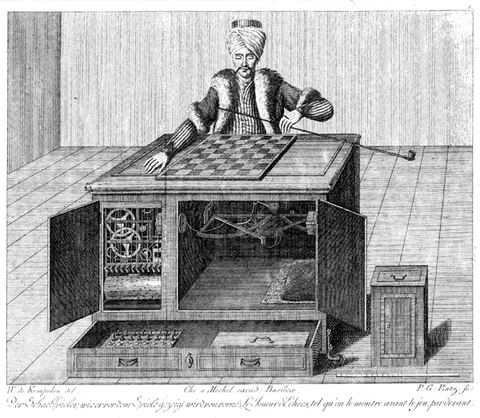
Yeah. All right. Did you know Mechanical Turk, I think, is shutting down?58Mechanical Turk shutting down — in August 2026 Amazon announced it would close the platform on September 30, 2026, 21 years after launch; it had stopped accepting new requesters on July 30. The company gave no reason. Like, I don't think it's necessary anymore. Isn't that crazy?
It's just so interesting, from 12 years ago to today.
Yeah. Lots has changed.
09The 60-20-20 rule and what a harness is
Build with room for future models, and keep retesting your harness so it doesn't hold new models back.
Yeah.
Okay, so going in somewhat of a different direction, you have this framework that I think is going to be really helpful to people around how far ahead to build, in terms of how far AI is and how far your product should assume AI is going to be. You call that a 60-20-20 rule. Explain that.
I think the numbers are probably fungible here, but I think the thesis is the same, which is, I think as you're building today, and as you're a product developer building using these models, I think the important thing is to keep in mind that these models are consistently changing. And so the capabilities that you have today will not be the capabilities you have tomorrow or the next day. And so you want to actually build features that aren't necessarily always working today, right? So typically when you talk about traditional startup wisdom, I think you're just like, build an MVP that works, right? But I think what you want to do is actually build such that 60% of what you've built works now, and your prototype is at least functional, right? Then there's a set of maybe the 20% where you're like, it's not perfect, but it works well enough, and I can see how the models might get here in the very near future.
And then, here's where I want the models to be. And here I see glimmers of light, and I feel like if I could crack this, this would be an amazing product experience. And I think if you build in that way, you are building a product that works today, but you're setting yourself up to build a magical product experience as the models become better, and also to grow as the models grow too.
I've heard a lot of advice along these lines of how far ahead to build, and the most common is just like, build three months ahead of where the models are going to be. And this feels like a lot more practical, where you can't just bet on the future. You also need to ship some things today that are great and working.
Yeah, it's trying to find that balance, right? And I think also, I find it personally hard, as someone who works on the model, to tell you exactly where the model is going to be three months from now. And so I think using more of your own proxies of, like, where is my product? Where do I see glimmers of light? Where do I see it kind of bridging that gap? I think it's a more concrete way to hopefully ask that same question.
This reminds me of just another way of thinking about how to kind of create a portfolio of product bets on a product team. The way it used to be is, have some ambitious bold bets, but also have a lot of stuff that's very low risk, likely to move the metric, and you want to mix them together. And it's like this is the new version of that.
Have a portfolio of how you're thinking about this.
Of just like, this will work in six months, I promise you.
The other thing that's interesting too is, I think, thinking about how you make sure that your product is agile to the model getting better. I think one thing we've also seen with customers sometimes is they've built a very rigid system around, for example, where the model was, and now the model has gotten so much better, right? So how do you go from where the model was to being adaptable, to consistently continuing to iterate with it, you know?
Yeah, the common kind of advice I hear is that the model is going to eat your harness59Harness — everything around the model in an agent product: the system prompt, tools, skills, memory, context and the logic that drives the agent's loop. for breakfast. That all these things you built, all these optimizations, are just going to go away because the model gets smarter, and you kind of have to take all these things away. There's some advice that I think Boris Cherny60Boris Cherny — the Anthropic engineer who created Claude Code. was sharing, of just, like, get rid of all your skills61Skills — packaged instructions, scripts and resources that an AI agent loads when it needs to handle a particular type of task; the format was introduced by Anthropic in October 2025. once in a while and just see what happens, because often it's now as good as all these things you've built into it.
Yeah, or just consistently retest, right? Because you might be even hampering what you're getting out of the model, out of a new model, because you're trying to force-fit it into your existing structure.
Let me ask you a completely unrelated question, just because I think this might be helpful for folks to understand. There's this term "harness" that people often hear, this idea of there's a model, there's a harness that sits on top of the model. What's the simplest way to understand what a harness is?
Yeah, I mean, I think of a harness as the wrapper around the model, essentially, right? So think of it as, like, what are the system instructions, the tools, the skills, the context that the model has access to, and how can it leverage those things, right? And so what you want to basically do is give the model an environment in which to operate. And that's really what your harness builds out.
So essentially it's a system prompt62System prompt — an instruction hidden from the user that the model receives at the start of every conversation: who it is, how to behave and which tools to use. plus tools that it has access to to do things, and then whatever other context, data, information that it has access to, and skills, right?
All of these things kind of come together to build out your harness.
10How to upskill a PM team
What PMs need most is time and confidence with the tools, which come from colleagues' shared skills and workshops and from the habit of asking whether AI can do the task for you.
Awesome. Okay, that is very helpful. So one other thing I wanted to get your thoughts on. There's a lot of change, obviously. A lot of people are trying to figure out how to thrive in this new world. How are you upskilling and helping your team get better at, and kind of understand what they need to be good at, in this new world? What are just ways you're helping your team develop and kind of survive and thrive in this? Survive and thrive, yeah.
I mean, honestly, I feel like my team is helping my team in a lot of this, actually. I think when you look at the PMs on my team, you see some who have really leaned in and built a lot of skill in leveraging our internal tools, and they're, you know, individuals who play around with the models a lot. And they actually are, I think, amazing assets to the rest of my team, because they build skills that others can use. And one thing we've been starting to do more of is, how do you share a skill that you've built, that is giving you some value in your day-to-day job, with others, right? So that we can actually build out an entire repository that helps the PM team.
PMs who have gotten stronger and more confident in eyeballing data, right, and really looking at it and understanding longer traces63Trace — a detailed log of a model's or agent's work: every step, tool call, response and timing. and trajectories: how can we run workshops with other PMs, so that we kind of all collectively build more of that confidence? And so for me, a lot of it is about confidence building. How do we build everyone's confidence in the tools that we have and their ability to leverage them effectively? And I think that's something that we're trying to build more and more across the team.
So going one level deeper there, what is it you do? So you said workshops: there's PMs that are good at a thing, they teach a workshop to the rest of the PMs. Is there anything else, just very practically, that you do to help people get better at these things?
The biggest thing I would say actually that is needed to get better at these things, and I say this knowing that I am starting to do this, but we are not quite there yet, is actually giving people the time and space. I think when you're just sprinting constantly, it is hard to create the space to actually take a step back and make sure you know the tools well. But once you do, then it accelerates you 10x, right, on the other side. And so a lot of it is about pushing the team to say, like, hey, could we leverage Jetski,64Jetski — Google's internal AI agent for coding and work tasks; according to press reports, it's an internal version of Antigravity, and Gemini engineers have been required to use it. our internal tool, to do this, right? And hey, I have a skill that I use to do this. Do you want to try?
Right? And actually building that kind of set of skills, if you will. And actually, I think sometimes the most practical thing to do is actually build a skill to do something. And when I say skill, I don't mean the human skill, I mean the technical skill to do it. And then that skill gets shared to others, that builds more confidence. That then leads to someone else building another skill or improving that skill. And now you have this iteration flywheel, which I think is good.
Does Google still do the 20% thing?6520% time — Google's famous practice of letting employees spend a fifth of their working time on their own projects; according to the company, Gmail and AdSense grew out of it. Because that feels like a really good place to spend time on this stuff. Is that still a thing, or less so these days?
I don't know, actually. I do feel like all my PMs are working like 150%. So there is also that.
Okay, so you could do 100%, you get your 20% out of the 150%.
Yeah, or you could do 170%, I guess, instead. But no, I think actually one of the things we're working on is a two-day workshop in November, where we're going to actually pull all the PMs out of their day job for two days and just actually give them the space to build and play with the tools that we have. I think just giving yourself even that mind space to be like, hey, here's something I did.
The other rule of thumb that I've heard people share, and I've been starting to adopt myself, is, if you have to do something twice, do you need to do it yourself, right? Or can you outsource it? And some things, yes. Obviously, like writing a strategy twice, you should probably still be writing it yourself. But there's other aspects of this where it's like, actually, how replicable is this, and how much can I use the models to help me with this task?
Yeah, there's this thought I've been having, that one of the most important new habits to build is to insert between stimulus and response.66Between stimulus and response — Lenny is riffing on a popular quote usually attributed to psychiatrist Viktor Frankl: "Between stimulus and response there is a space. In that space is our power to choose our response." Say I have a thing to do, and then I'm going to go do it. You have to insert this question: can AI do this for me? And then try. And I find that I've actually built that habit much more strongly over the past few months, and it makes a huge difference, because then you start building all these little workflows and automations. I'm doing a lot of Grok Botting.67Grok Bot — xAI's AI agents (in beta since August 2026): each bot runs on its own cloud computer, connects to the user's work services and carries out multistep tasks. "Grok Botting" is Lenny's coinage. And it's just like, once you realize you should be doing that more and more, you really start to get the benefits of this, versus, like, "I don't know what to do with it."
And you know what I found is, you really just need one example where that works really well to change your mindset. And I think that's what happened to me, at least. I feel like it was hard for me to get out of my mindset of just doing what I knew how to do, until I started being like, oh, actually, to your point, set that interim period of: actually, can the model help me do this? And the minute you take one instance to do that, and you're like, actually, this was really helpful for me, you start being like, oh, actually, now I'm going to try throwing this at the model, and now I'm going to try throwing this at the model, because your confidence in what it can do for you grows.
Yeah. Yeah. That's exactly my experience. Once you see what it can do, that habit is reinforced, like the neural pathways start to build of, like, oh yeah, wait, let's see if Grok Bot can do this for me.
11Why Google still doesn't have its own agent
Asked why other companies' agents are the ones using Google data, Tulsee hedges: watch this space.
Let me actually ask you a question along these lines. I had Josh Woodward68Josh Woodward — Google vice president who runs Google Labs and the Gemini app. His Lenny's Podcast episode came out on October 11, 2026. on the podcast recently. I asked him the same thing; I'm curious what your answer would be. It feels like every AI assistant launching these days is taking all this juicy Google data: my Gmail, my Google Calendar, my Docs. You sign up, you connect all your Google data, it does all these magical things with it. There's Grok Bot, there's Muse,69Muse — Meta's personal AI agent, launched in the US on September 8, 2026: it connects to email, calendar, stores and payment services and runs errands in the background. there's Instinct,70Instinct — a personal AI assistant from the startup Spear Street Technology that you talk to by message in iMessage and WhatsApp; it went viral in Silicon Valley in the summer of 2026. Dots now. Google does not yet have anything that people get really... I know there's Spark,71Gemini Spark — Google's personal AI agent, announced at I/O on May 19, 2026: it runs around the clock and connects to Gmail, Calendar and Docs; Google AI Ultra subscribers got it first. I think, which is trying to be this. I'm curious just why Google hasn't launched something awesome yet, versus letting everybody take all my Google data and do these magical things with it.
Yeah, I mean, look, we want Google data to power magical experiences.
Like, I think that is true.
I think in terms of what awesome looks like, I think stay tuned. You know, the team is working on some amazing things. So I'm really excited about where this can go. Part of what we're trying to figure out also, I think, is, again, where to meet users where they are, and where to build that experience, and what does that look like? I like to think there are already a number of awesome experiences that you can already have in our Google products, but I think you are right that there is more work we need to do here on this front.
All right. That was similar to what he said, which is, watch the space.
Watch this space.
And the advantage you all have, similar to Apple, is once you get there, the distribution advantage is very strong, and things can go really well really quickly.
12Burnout and the never-ending treadmill
Tulsee hopes AI can ease burnout by taking over grunt work, since people burn out not from hours alone but from chaos and work they don't enjoy.
Okay, so coming back to this kind of workload question, something that I've been trying to talk with more guests about: this idea of, just as AI allows us to do more, everyone's just doing more. And there's a lot of burnout that happens, because it's just like, oh no, I got to unblock my agent. Oh, I could be doing so much more. All these things could be happening. And, you know, there's pressure from above: do more, do more. AI can let us do more. Is there anything you've done on your team to help people avoid burnout, not get hooked on this never-ending treadmill of doing more? And I think part of it is, actually, we need to do more now, because the competition is fierce, and it's this really rare time in history when a whole new technology enables so much more. So, you know, there's a bit of like, okay, this is actually the time to go really long. But then there's also this tweet, I think, about: what's the word for a marathon and a sprint?
Yeah. Marasprint.
Exactly.
Sprintathon. Yeah, I think, I mean, if you ask my team, I think they would say, hello, we are working a lot. I think every single person on the team right now is putting in all of the hours, right, across the board. And so I do think this is an area that I'm actually asking myself about: how do we create a sustainable work environment for the team? So, you know, stay tuned as I also think about this. But one thing I'll say, at least for me personally, is I think burnout comes not just from working a lot. It comes from, I think, two places.
I think it comes, one, from when you feel like there is churn and chaos. I think that introduces burnout. I think the other thing that introduces burnout is work that you don't enjoy. When you feel like you are doing a lot of work and it feels like grunt work or a waste of time, I think that introduces burnout. I think when you are working on something that you're passionate about or you're excited about, yes, it is exhausting, and we should figure out sustainability, but I think it also brings more joy, right? And so I think actually, to our previous, you know, conversation about how these tools can help, I'm actually hopeful that if we can set this up well, these tools actually help with burnout, because they actually remove some of the grunt work or the frustrating parts of your job, and actually enable you to spend more time thinking, and more time being creative, and more time doing the parts of the job that you actually want to do. And that hopefully is a bit of an unlock when it comes to burnout, especially if you're spending this many hours on the job.
Yeah, I did this survey of how tech workers are feeling, and one thing that's clear is more hours does not equal burnout. A lot of people are working the hardest they've ever worked, but they're having the best time they've ever had in their career. So fun, they're building, they're able to do a lot more, especially PMs. You don't have to sit around and wait for engineers as much. You're just building, you're prototyping.
You're talking to interesting customers, you're thinking about interesting problems. And I think a lot of the team, I like to think, is here because they want that. You know, they're really motivated and excited by that. And so for me it's about, okay, then how do we pull out the friction parts of their work that are likely to induce burnout, right? And what does that look like?
And also find work that is meaningful, and that they value and are excited to spend lots of hours on, versus they have to.
And that's different for every PM too. Like, if you pick two PMs on my team, I think they would tell you meaningfully different things about why they come to work every day and what they find value out of. And so I feel like part of it for me, as an org leader, also is to think about what motivates the individual, and how do we make sure that they are set up for success in that setup too.
13AI slop and how AI changed the PM job
The model should supply a doc's data and the person its insight, and a PM no longer just writes requirements but backs them up.
Another challenge people have these days is AI slop:72Slop — a dismissive term for mass-produced, low-quality AI-generated content. basically lots of docs being sent to them that are written by AI, and it becoming very annoying to have to sift through endless docs. It used to be a lot of the issue was spending time writing docs, and now it's like reading docs is the problem, because it's just all this AI-written stuff. Do you have any kind of, I don't know, processes or policies you've put in place in your team to help avoid this rise of AI-written content across the teams?
One of the things that we talk about a lot is, where are these docs useful, right? So, for example, I think where AI-generated docs are actually quite helpful is after you launch something, and let's say two weeks later you want to pull the latest of, like, who's using it, how are they using it, what's the feedback? That's the kind of document that AI is fantastic for, right? Because it will actually do that just so much faster than you, right? It will go and pull from various dashboards and metrics. It'll give you an update. It'll pull kind of strengths and weaknesses. It'll pull from Twitter analysis and, you know, Reddit or whatever.
And so I think one of the things we talk about is, be intentional about where is AI helping you drive content in the doc that is helpful, versus where is it content that should come from you, right? Where is it insight? And so what you should be providing is the insight, what the model should be providing is the data. And so I think if you can separate those two things, then hopefully you find the right balance of the benefit here. I would say the other thing is, we're investing a lot more as a result of that in how do you create the right skills to get the right data, so that we can structure these artifacts really well. That then hopefully creates more space for the creative thinking and the creative writing that we want more people to spend time doing.
That's actually something I was wanting to ask about. So in terms of the PM role, AI has clearly made a big dent on prototyping. You can prototype till the cows come home now, versus having a designer or an engineer build a thing. So that's clearly a place the role has changed with AI. The other area, which you just mentioned, is data. PMs can do a lot more data analysis. What would be, like, behind prototyping? What are the biggest areas AI has most changed the job of a PM in the past couple of years, would you say?
Yeah, prototyping is a great one. I think you're right that data science is probably... like, I think you are more empowered to have the data at your fingertips to make data-driven decisions. I also think, actually, to our earlier conversation, you know, you see these on social a lot, these kind of posts of like, oh, blank is the new PRD, whatever blank is. A prototype is the new PRD, evals are the new PRD, data is the new PRD. But I think actually what that meaningfully shows is you've moved the PM from being someone who just writes a set of requirements down and then assumes that somebody else, whether that is a data scientist or an engineer or a researcher or designer, will figure out the meat behind it. You've moved that one step further, to say: no, your job is no longer just writing down a set of requirements. Your job is actually going one step further, to have some heft to that, whatever format that heft takes.
14Lightning round: Exhalation, Severance, Wispr Flow and Indian dance
Tulsee recommends Exhalation and Severance, can't do without Wispr Flow, and tries to put herself where she can get lucky.
Awesome. Okay. That aligns with a lot of what I'm hearing. Tulsee, is there anything else that you wanted to share? Is there anything else you think you want to double down on that we've talked about, that you want to say before we get to our very exciting lightning round?73Lightning round — a regular segment at the end of Lenny's Podcast episodes: quick questions about the guest's favorite books, movies, products and life mottos.
No, I think that's great.
Okay, we did it. Well, with that, Tulsee, we've reached our very exciting lightning round. I've got five questions for you. Are you ready? There's some music that plays over this that's added in post-production.
You mean does it sound like this?
It's exactly that. We should align it with your drum playing. Okay, first question: what are two or three books that you find yourself recommending most to other people?
Okay, so one, actually, it's... I think it's actually technically a novella, is probably what it's called, but I don't know if you've read Exhalation,74Exhalation (2019) — a collection of stories and novellas by American science fiction writer Ted Chiang, whose novella "Story of Your Life" became the film Arrival. which is a set of science fiction stories. And there's a particular story75"The Lifecycle of Software Objects" (2010) — Ted Chiang's novella about people who spend years raising "digients," digital creatures with artificial intelligence, and try to save them when the virtual world they live in shuts down. It won the Hugo and Locus awards. in that that actually speaks to a set of individuals who are trying to keep a set of digital avatars alive even after the platform decides to deprecate. And I love that book because I think, actually, especially now, in a world where we're thinking about how individuals are going to act with agents, and what kinds of relationships we're building with technology, and what does it mean to be human and interact with the digital world so closely, I think it's just a really beautifully written story. And I think it also evokes a lot of open questions.
So I think that's one. Another that's maybe more kind of standard in PM circles is Creativity, Inc.,76Creativity, Inc. (2014) — a book by Pixar co-founder Ed Catmull, written with Amy Wallace: the studio's history and the principles of its creative culture. which I love. It's the Pixar77Pixar — the American animation studio behind Toy Story, Finding Nemo and Inside Out; owned by Disney since 2006. story, but I think it actually speaks a lot to how do you create good culture, which is something I think a lot about. Like, how do you create culture that actually encourages people to fall down and get back up? How do you create culture that encourages people to be creative with their ideas and push the frontier, which is obviously something we're thinking a lot about here? I also just have been really into, you know, the ACOTAR series recently, but that's...
What series?
That's romantic fantasy.78Romantic fantasy (romantasy) — a genre blending fantasy and romance, one of the bestselling genres of the 2020s, thanks in large part to Sarah J. Maas. So for anyone who's just looking for something fun to read, you should read Throne of Glass79Throne of Glass — Sarah J. Maas's eight-book fantasy series (2012–2018) about a young assassin, Celaena Sardothien. or A Court of Thorns and Roses.80A Court of Thorns and Roses (2015) — a novel by Sarah J. Maas, the first in the series fans call ACOTAR: a loose retelling of Beauty and the Beast in a world of faeries.
I love the spectrum of recommendations in this. Okay. Favorite recent movie or TV show you've really enjoyed?
You know, actually, this was a really hard question, because I've watched a lot of bad movies and TV shows recently, which is unfortunate, actually, that I would not recommend. So there's that. But I did really enjoy Severance81Severance — an Apple TV+ series (since 2022) created by Dan Erickson, with many episodes directed by Ben Stiller. Employees of the Lumon corporation have had their memories surgically split: at work they remember nothing of life outside the office, and vice versa. on Apple TV.82Apple TV — Apple's streaming service, called Apple TV+ until October 2025. Incredibly well done, both stylistically and content-wise. So that's probably top of the list.
Favorite AI product right now, other than Gemini?
Wispr Flow.83Wispr Flow — a voice dictation app from San Francisco startup Wispr: it recognizes speech and inserts already-edited text into any app. I don't know if you're using it, but I have wrist problems, so I have trouble typing for long stretches. And so Wispr Flow has been game-changing for me, actually.
Awesome. You get a year free of Wispr Flow if you become a subscriber of Lenny's Newsletter.84A free year of Wispr Flow — annual paid subscribers to Lenny's Newsletter get a bundle of free yearly subscriptions to products (the Product Pass), including Wispr Flow. Plug, plug, plug.
Oh, I like this.
There you go. Organic recommendations of products I also love. There we go. No, I love Wispr Flow. I use it all the time. Press Function, just start talking, and it just magically transcribes everything.
Amazing. Do you have a favorite life motto that you often come back to in work or in life?
Two that are different, I guess. One is maybe more cliché, which is, you know, everything happens for a reason. I think that's actually just a big life motto for me personally, which is, you know, you can work hard, you will do your best, but sometimes a door will close and another window will open, and you're in a position because you're meant to be there. I think, related to that, though, I love often talking to folks about, like, seek serendipity. I think that actually relates to the first one, but you should always try to put yourself in a position where you have the ability to get lucky. And doing that is about finding yourself in positions where you're challenging yourself, where you're putting yourself out of your comfort zone, where you're trying something new. Those are always places where you are more likely to get lucky.
Fun fact: I gave a TEDx talk called "Losing Serendipity," maybe 15 years ago at this point.
Oh, so are we trying to lose serendipity or find it?
It was about how we are losing it, and that is sad, and that we need more serendipity in our life.
So I'm a big fan of serendipity.
Such a great word. Also, the movie's85Serendipity (2001) — Peter Chelsom's romantic comedy starring John Cusack and Kate Beckinsale, about two strangers who decide to leave it to fate whether they'll meet again. pretty good. I haven't seen it. Okay, it's like a rom-com.
But that's how I've looked at my whole career so far, and I think how I'll continue to. And actually, it's fun, because even with using these AI tools, I think that's another thing that I... yeah.
So much serendipity with AI. Final question. One of your colleagues told me another fun fact about you: that you're a trained classical Indian dancer.86Classical Indian dance — the umbrella term for several traditional dance forms of India, such as Bharatanatyam, Kathak, Kuchipudi and Odissi; they take years to learn, and their gestures and facial expressions tell a story.
I am.
And you've directed cultural festivals for 10,000-plus people.
And I don't know how he knows that, but yeah, I probably told him that.
Okay. And this person said that this may explain how you stay so calm amidst the chaos of frontier model development. I don't know, maybe share some about this dance part of your life.
Yeah, I mean, I love dance. I think it's one of those rare moments where you really can't think about anything else. You have to focus on the movement and the music. And so for me, it's an opportunity for my brain to actually just have a different direction of travel for a period of time. And so I love it. And I think for me also it is a cultural connection point.
Dance is how I've met some of my best friends. It's how I continue to engage socially with so many of my friends. I plan this festival, I've planned it for years, in Portland, Oregon, which is where I'm from. It's called the India Cultural Festival... India Festival. It happens every August. And in fact, this was the first year I did not participate in the festival, because I have a seven-month-old son.
Congratulations.
Thank you. So I was a little bit more distracted this year than normal. But I've been performing at that festival since I was three, and then organizing it. And it's just been a big part of my life, of, you know, how do you bring dance and culture and community together?
Tulsee, you're so full of fun facts that I feel like there's much more. I don't even know that I'm here for the fun facts. Final question: how can listeners be useful to you?
Wow, great question. I mean, A, use Gemini, use Argon, but also use our smattering of products. You know, actually, I was talking about audio just now. If you are a Pixel user on Gboard, try using our Rambler87Rambler — a Gemini-powered voice dictation feature in Gboard that strips filler words and handles mid-sentence corrections. It launched as a Pixel 11 exclusive and reached the Pixel 10 in November 2026. feature. It's awesome. You know, typing on the phone is great. If you are using text-to-speech models, if you're using dialogue, if you're using our Omni models, so try them, give us your feedback, right? We're constantly looking for it, whether you're giving that feedback via a company that you're sharing feedback via, whether you're sending us, you know, a DM, whether you're posting it publicly. I think we want more people giving us the right feedback.
Tulsee, that was awesome. You're awesome. Thank you so much for being here.
No, thank you for having me. This was great.
It was my pleasure. Bye, everyone.
Introthe show's opening music
Thank you so much for listening. If you found this valuable, you can subscribe to the show on Apple Podcasts, Spotify, or your favorite podcast app. Also, please consider giving us a rating or leaving a review, as that really helps other listeners find the podcast. You can find all past episodes or learn more about the show at lennyspodcast.com. See you in the next episode.


