

How I Write
Chapters
A fuel that turns mass into light only felt plausible to Weir once he made it alive: a star mold that has infected the Sun.
Read the chapter- The seed of the idea was a propellant that turns mass into light, and a mad scientist's invention or a find on an alien ship felt implausible to Weir.
- Something that makes more of itself when given energy sounds like life, and that became Astrophage, a mold that grows on stars and spreads by spores.
- The plot came from a side thought: since this must never reach our Sun, the story starts once the Sun is already infected, and someone has to fly to the one healthy star.
- Weir calls the novel a pastiche glued together from several ideas: a first contact story, a mass-conversion fuel and an abandoned story about a woman given authority over all governments, who became Stratt.
For the first time, Weir puts all of humanity on the line.
Read the chapter- Weir used to prefer personal stakes: in The Martian it's one man's life, and in Artemis just the well-being of Jazz, who isn't even at risk of dying.
- This time the global threat grew out of the original idea on its own, which made it easier to write.
- Love stories and dramas don't need planetary stakes, and Weir, a little tired of them in science fiction, would like to keep the stakes lower.
Weir knows only the major turning points in advance, and he uses amnesia and flashbacks, devices he dislikes, so he doesn't have to dump the whole backstory up front.
Read the chapter- Weir knows four or five major turning points in advance and improvises the path between them.
- The hero realizes he's on a ship, then that he's at Tau Ceti, then come the reveals about Astrophage and Rocky; unlike the movie, the book's ship has no windows.
- Weir calls amnesia a cheesy trope, but it means the reader knows exactly what the hero knows, with no need to explain the whole backstory.
- Weir's flashbacks move the plot: a memory surfaces for a reason, answers some questions and raises new ones instead of making you do your homework.
Scientific accuracy earns Weir the reader's trust, and jokes let him explain the science directly without boring anyone.
Read the chapter- After a chapter or two, readers take Weir's science on faith and happily skim the physics.
- Weir reads a passage about why the mesh on a microwave's window stops microwaves but lets visible light through.
- Weir puts an asterisk on "show, don't tell": if one paragraph of direct exposition saves ten pages, do it, and first-person conversational narration makes that possible.
- Readers will forgive any amount of exposition, Weir says, if you make them laugh about once per paragraph.
Weir considers character his weak side.
Read the chapter- Weir calls himself a plot-driven author: chains of events come naturally to him, while depth of character is harder.
- Mark Watney is an idealized Weir, while Jazz is Weir at her age with all his flaws, and that made her hard to root for.
- Grace, his first character built from scratch, has a near-pathological fear of conflict as his core trait: after a setback in academia he became the "cool" middle school teacher, and he never swears.
- Grace truly changes when he has to choose between himself and Rocky, on whom the survival of a whole planet depends.
Weir derived Rocky and his planet from the exoplanet data of the time and gave him a lovable but grumpy personality.
Read the chapter- The exoplanet at 40 Eridani, believed real at the time, has about eight Earth masses, so roughly twice Earth's gravity; it later turned out the planet doesn't exist.
- Liquid water so close to the star needs about 200 °C and 29 atmospheres, and a strong magnetic field holds on to the thick atmosphere.
- Light never reaches the ground, so the biosphere works like an ocean and the food chain runs from the top down.
- Rocky is lovable thanks to his limited English, but grumpy, and for Weir the best sign of his bond with Grace is "Okay, okay, I'll wait faster."
Weir deliberately makes life hard for his characters and keeps the science straight in Excel.
Read the chapter- He takes a straightforward "what if this" and adds a "but that," so the characters have to scramble.
- If something has to break 80,000 words in, Weir goes back and seeds hints that it was acting up.
- His spreadsheets cover relativistic rockets, the energy Astrophage absorbs and the food needs of Eridians.
Weir only wants to entertain: his books have no moral, no subtext and no symbolism.
Read the chapter- Astrophage is not an allegory for climate change, nor for the hero's inner turmoil.
- Weir takes well-trodden plots (the castaway, trouble in space, first contact) and does them his way, with scientific accuracy.
- He doesn't write for catharsis: he wants the external validation of readers telling him the book is awesome.
With no promotion at all, The Martian went from chapters on a personal website to a book deal and a film option in a single week.
Read the chapter- After AOL laid him off, cashed-in stock options bought Weir three years for a first book nobody took, and he went back to programming, which he kept doing even after his success.
- The Martian came out in installments on his site for 3,000 readers gathered over ten years, and nerdy fans checked his math.
- When readers asked for a Kindle version, Weir charged the minimum of 99 cents, and a grateful audience made it a bestseller all at once.
- Agent David Fugate got Random House interested in a print edition, and the book deal and a Fox option came through four days apart.
- An option, Weir explains, is about $25,000 for 18 months of exclusivity, and writers with big catalogs live off the renewals.
For Weir the book became real first, and the movie only after the first day of shooting.
Read the chapter- His biggest thrill was the proof copy, the first book with his name on it, not the film.
- Movies are never simply greenlit: they inch toward production, with Ridley Scott, Matt Damon, Jessica Chastain and then sets.
- After the first day of shooting every contract kicks in, and dropping the film costs more than finishing it.
Weir prefers a traditional publisher because it is a publicity machine no single author could match.
Read the chapter- The canonical case of self-publishing success, Weir argues, is Hugh Howey, who does it all himself.
- A publisher prints the book, gets it into stores, buys ads and arranges reviews and interviews, including this one, Weir points out.
- Weir's advice for a beginner is to send the book to agents, self-publish if that fails, and build an audience with free writing.
A good plot, for Weir, is a chain of consequences with no coincidences and a hero who is smarter than the reader.
Read the chapter- The Martian, Weir says, is one long cascade failure: every event follows from the ones before, with no coincidences and no lightning out of a clear sky.
- Best of all is when the reader didn't see it coming, though they had all the information.
- In Weir's retelling of Breaking Bad, Walter White saves himself by offering Fring Jesse, then telling Jesse to kill their cook.
- Perell notes that great writers have simply read an enormous number of books, and Weir agrees: "Never trust a skinny baker."
Asimov taught Weir to give a world rules and to mix genres, and Clarke to stick to hard science.
Read the chapter- Asimov set out the Three Laws of Robotics and in I, Robot explored what happens when they're tweaked slightly, as with the robot Speedy on Mercury.
- For Weir, science fiction is a setting, not a genre: saying "science fiction" is like saying "Chicago," and The Caves of Steel is a noir detective story with a robot.
- In Clarke's Rendezvous with Rama, a model of hard science fiction, the alien cylinder simply doesn't care about people.
- The reader, Weir says, shares the joy of discovery with a hero who figures out what no one else has.
Weir is sure machines will eventually write better than people.
Read the chapter- Weir calls it inevitable: not wanting it is no reason to pretend it won't happen, the way cab drivers pretend about self-driving cars.
- The next step, he thinks, is tailored fiction: a local AI that knows everything about you will write a book, and later a movie, that only you will love.
- Perell values books he can discuss with others, but Weir thinks AI will deliver both, and human-written books will become an artisanal craft, like an oil portrait.
- For now, Weir says, AI prose has an "AI accent," and a story a friend of his had a machine write turned out to be crap.
Weir's hero is still the unflappable John Young, and in science fiction it's the holy trinity led by Asimov.
Read the chapter- Astronauts' heart rates climb into the 140s at launch, but John Young, commander of Apollo 16, never went above 70.
- Weir's holy trinity is Asimov with his rules, the wildly speculative Heinlein, and Clarke, whose aliens are as incomprehensible as the monoliths in 2001.
- Weir says to start with The Caves of Steel, and a big bag of Cheetos.
Quotes
On how Project Hail Mary came together
“Hail Mary was actually a pastiche of several story ideas I had that I glued together and then sanded off the seams.”
Andy WeirRead from 04:25On what's wrong with flashbacks
“A flashback for purely expositional purposes is like your mom making you come in to clean your room when you’re out playing with friends.”
Andy WeirRead from 09:06On "show, don't tell"
“I believe the old ‘show, don’t tell’ adage needs an asterisk. If you can save yourself ten pages by including one paragraph of direct exposition, simply do it.”
Andy WeirRead from 13:34On saving science exposition from boredom
“Readers will forgive any amount of exposition if you make them laugh about once per paragraph. They’ll be like, ‘Oh, yeah, tell me more about heat transfer coefficients. That stuff’s funny as hell!’”
Andy WeirRead from 14:34On Mark Watney, the hero of The Martian
“The idealized version of me is Mark Watney. He’s an astronaut, so he’s not afraid to fly. If I were stuck on Mars, I’d likely sink into a deep depression and die.”
Andy WeirRead from 18:28On why Weir writes
“I want people to read my stuff and tell me it’s awesome. I need that sweet external validation.”
Andy WeirRead from 33:13On why science fiction isn't a genre
“I’ve always felt that science fiction isn’t a genre; it’s a setting. Saying ‘science fiction’ isn’t like saying ‘action’; it’s more like saying ‘Chicago.’”
Andy WeirRead from 56:35On AI writing books
“I think it’s inevitable that in the future, AIs will be able to write better stories than humans can. That’s a somewhat bleak assessment, especially from a professional author, but I think just because it’s not something I particularly want to see happen doesn’t mean I’m going to pretend it won’t.”
Andy WeirRead from 59:44
Summary
David Perell1David Perell — American essayist and host of How I Write; before that he spent several years running Write of Passage, an online writing school. asks Andy Weir how his books are built. Project Hail Mary started as a daydream about a fuel that turns mass into light. Weir tried out a mad scientist's invention and a find on an alien ship before deciding the fuel should be alive: Astrophage, a mold that grows on stars and has infected the Sun. From there came the stakes (billions of deaths), a desperate mission to the one uninfected star, and a first contact story. The novel, he says, is glued together from several old ideas. Before drafting he knows four or five turning points and makes up the rest as he goes.
On craft, Weir admits that amnesia and flashbacks are tired devices, but in his novel every flashback is tied to what the hero is doing right now and pushes the plot forward. He wins readers' trust with scientific accuracy and breaks "show, don't tell" on purpose: a chatty first-person narrator can explain the science directly, and a joke about once per paragraph keeps the exposition from getting boring. Characters are his weak spot. Mark Watney is an idealized Weir, Jazz from Artemis came out too flawed, and Grace is his first hero built from scratch, around a fear of conflict. He derived Rocky's planet from data on an exoplanet at 40 Eridani (which turned out not to exist), and he keeps all his calculations in Excel.
Then the story of The Martian: chapters on his personal website, a 99-cent Kindle edition that readers all bought at once to thank him, and an agent, a Random House deal and a Fox option within a single week. Weir explains how film options work, why a movie is only real after the first day of shooting, and why he prefers traditional publishing. A good plot, for him, is a chain of consequences with no coincidences and a hero who outsmarts the reader, like Walter White in Breaking Bad. The conversation ends with Asimov's Three Laws and The Caves of Steel (science fiction, Weir argues, is a setting, not a genre), Clarke's hard science, AI that he thinks will inevitably out-write humans and turn out books for an audience of one, and the unflappable astronaut John Young.
Mentioned
- Project Hail Mary00:00the novel about a star mold and first contact, the episode's main example
- The Martian00:00Weir's first novel, which grew out of chapters on his website
- Artemis05:10the novel about Jazz Bashara, a heroine with too many flaws
- Project Hail Mary07:01the adaptation: windows the book doesn't have and scenes that didn't make it in
Show 22 more mentionsShow fewer mentions
 Ryan Gosling20:49plays Grace and sent the "let's make this fudging movie" email
 Microsoft Excel29:57spreadsheets for relativistic rockets, Astrophage and Eridian biology
 AOL34:23a layoff and stock options gave Weir three years to write
 Kindle Direct Publishing38:29Amazon self-publishing: you can't give a book away, the minimum is 99 cents
- Amazon Kindle38:51Amazon sells the readers at a loss and makes money on books
 Amazon40:32the store's algorithm pushed The Martian onto the bestseller list
 David Fugate40:53the literary agent who found Weir through his sales
 Penguin Random House41:15the print edition of The Martian; its publicity team also arranged this interview
 21st Century Fox41:15the film option on The Martian
- The Martian44:26the film's long road to the first day of shooting
 Ridley Scott44:26director of The Martian
 Matt Damon44:26Mark Watney in the film
 Hugh Howey46:28the textbook case of self-publishing success
- Breaking Bad52:15the scene where Walter White outsmarts the viewer
 Isaac Asimov54:34Weir's favorite writer, the Three Laws of Robotics
- I, Robot54:34stories about what happens when the laws are tweaked
- The Caves of Steel57:18science fiction noir and the book to start with
 Arthur C. Clarke57:39the hardest of hard science fiction
- Rendezvous with Rama57:39an alien probe that doesn't care about people
 John Young1:06:44Weir's favorite astronaut, calm at launch
 Robert A. Heinlein1:08:10free-wheeling speculation about life between the planets
- 2001: A Space Odyssey1:08:50the incomprehensible monoliths
Sponsors of the episode
 Alpha School15:36a private school where kids finish academics in two hours a day
Transcript
01How Project Hail Mary was born
A fuel that turns mass into light only felt plausible to Weir once he made it alive: a star mold that has infected the Sun.
Andy Weir’s2Andy Weir (born 1972) — American science fiction writer and former software engineer. His first novel, The Martian, was serialized on his website from 2011; it was followed by Artemis (2017) and Project Hail Mary (2021). Wikipedia. on the show today, who’s famous for books like Project Hail Mary and The Martian, both of which turned into movies: Project Hail Mary with Ryan Gosling as the star, The Martian with Matt Damon.3The Martian (2015) was directed by Ridley Scott, and Project Hail Mary (2026) by Phil Lord and Christopher Miller. In this conversation, it’s as much about science fiction as it is about writing. Yeah, I asked about his process. How does he come up with new ideas? But also, I had to ask about science fiction. What makes for a good plot? How does he think through the science itself and bending reality in all sorts of fun and playful ways?
And what you’re going to notice about Andy is that he’s extremely enthusiastic about what he does. He just loves this craft. And then also, I never thought about this, but he doesn’t really think of science fiction as a genre. He thinks of it like a setting. Like, for example, you won’t just have science fiction. You’ll have science fiction with the love story, science fiction with the thriller, science fiction with the drama. And I will say, this conversation does have some spoilers. So if you haven’t read the books, you might want to do that before you listen to the conversation. But then, hey, if you love writing, you don’t care about spoilers, get to it right now. This conversation is for you.
I want to hear about how you approach the premise of a science fiction book. Let’s start with Project Hail Mary,4Hail Mary is the name of the hero's ship. In American football, a Hail Mary pass is a long, desperate throw downfield in the last seconds of a game. but I’m interested in any patterns we can draw between your different works.
It usually starts with me daydreaming about interesting science. I’ll think, “Wouldn’t it be cool if this happened?” or “Wouldn’t that be interesting?”
For Project Hail Mary, the kernel of the idea began with a desire for a mass conversion-based fuel5Mass conversion into energy follows Einstein's E = mc²: one gram of matter holds about 9×10¹³ joules, roughly the yield of a 20-kiloton explosion. A rocket that turned all of its fuel into light would be the most efficient rocket possible.—something that could turn matter into light for propulsion. This would be incredibly fuel-efficient.
Initially, I considered a mad scientist inventing it as a great breakthrough, but that strained credibility a little. Perhaps they found an alien spaceship with the fuel, but then they’d use it up, and that would be the end. I wanted it to be an infrastructural element that humanity could mass produce and manufacture.
What if the fuel itself had a mechanism for making more fuel? You could shine light at it, turning that light into mass, then trigger a reaction to convert the mass back into light, working back and forth. Again, that felt like a hand-wavy tech. Plus, people would probably be far more interested in the alien ship itself than just the fuel. While it’s cool to show its capabilities, the alien ship it came from would likely be more interesting to readers.
Then I thought, “If it makes more of itself when given energy, that sounds like life.” What if it’s a life form that uses mass conversion? If it’s an alien life form, how do we acquire it? Why does it possess this ability?
Those questions answered themselves: I decided it’s a microbe, a mold that grows on stars and then spores out, just like terrestrial mold. It needs to reach other stars, and the only way to do that is through some form of propulsion. So, it ultimately evolved mass conversion.
In the back of my mind, I realized we’d have to ensure none of that got onto our sun because that would be catastrophic. That was the story. They don’t find the spores; they only discover it once the sun is already infected.
Things started to snowball from there. Now, Earth faces an existential problem. I wanted them to use the Astrophage.6Astrophage (Greek for "star-eater") — the novel's single-celled organism: it absorbs a star's radiation, stores the energy as mass and breeds near Venus, where it gets carbon dioxide. It moves by emitting light, and that is the mass-conversion "engine." So, I decided there’s one star that’s not affected, and they need to travel there to investigate. Fortunately, they have Astrophage.
So, break this down for me. What about that premise makes it work? What are the different parameters?
In terms of storytelling, there are definite stakes: the potential death of billions of humans. An extinction-level event on Earth would cause billions to die. Humanity would survive, but it wouldn’t be great. The stakes are very high because humanity is at stake.
It’s a desperate mission, not a well-organized endeavor. They have a limited amount of mass they can send all the way out there, making the stakes desperate. A very small number of people are tasked with saving the world, which sounds like an exciting story, and it allows me to do all my sciencey stuff.
I had always wanted to do a first contact story,7First contact — the science fiction story of humanity's first meeting with an alien intelligence. The best-known early example is Murray Leinster's novelette "First Contact" (1945) (Wikipedia, "First contact (science fiction)"). and all these elements came together. Hail Mary was actually a pastiche of several story ideas I had that I glued together and then sanded off the seams. For instance, I always wanted to do a first contact story. I liked the idea of a mass conversion-based fuel. I had an unrelated story that I abandoned earlier about a woman who was given godlike authority over all governments to solve an existential crisis, and that’s where Stratt came from.8Eva Stratt — the character to whom the world's governments hand emergency powers so that she can run the Hail Mary project.
02The stakes
For the first time, Weir puts all of humanity on the line.
How do you think about stakes? Stakes strike me as the propulsion of the story, the thing that keeps it going.
Right.
Before, I tended to like personal stakes. In The Martian, it was one guy’s life, and that was it, but it kept you interested. In Artemis, the stakes are just Jazz Bashara’s9Jazz Bashara — the heroine of Artemis, a porter and smuggler in Artemis, the only city on the Moon. well-being. She wants to improve her life, and if she gets caught, she’ll get deported back to Earth, and her life will be ruined. She wouldn’t even die, so it’s even lower stakes. But this one, I thought, “All of humanity.”
Is that easier or harder?
In this case, it was easier because that’s the emergent problem that arises. However, I sometimes get a little tired of science fiction feeling like it has to have global stakes.
Right.
Love stories, action movies, and dramas don’t need planetary stakes. People don’t feel the need for them in those stories. But for some reason, in science fiction, the fate of the world often literally hangs in the balance. I don’t know why those two are linked. I’d like to try to keep the stakes lower.
03Turning points, amnesia and flashbacks
Weir knows only the major turning points in advance, and he uses amnesia and flashbacks, devices he dislikes, so he doesn't have to dump the whole backstory up front.
When you come up with a premise, how do you then go from premise to draft?
Generally, I think about the major turning points of the story. There are typically four or five events that create an interesting plot arc.10Plot arc — a story's path from setup through rising action and climax to resolution; plot points are the events that change its direction. Then I just start writing.
I make things up as I go along. I know I need to get from one plot point to the next, but I’m not sure exactly how we’ll get there.
What’s an example from Project Hail Mary where you knew the key turning points, and then what were some of the fun diversions along the way?
At the beginning, I decided he would wake up with amnesia, having no idea what was happening. The first thing he needed to do was figure out he was on a spacecraft.
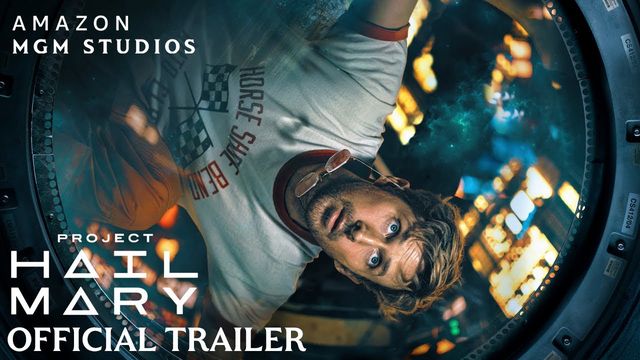
In the movie, the Hail Mary is a huge ship with lots of windows, but in the book, he’s in a sealed environment. There’s no reason for windows on the ship; they have cameras. There’s no reason to add weak points like that. So, his initial task is realizing he’s on a spacecraft.
Once he does, he needs to realize he’s in the Tau Ceti system,11Tau Ceti — a Sun-like star about 12 light-years away. not Earth. That’s a significant reveal. The next big reveal involves flashbacks related to Astrophage, which I tease out for the reader. Then, the next major reveal is Rocky12Rocky — an alien engineer from a planet around the star 40 Eridani. He looks like a five-legged rock spider, has no eyes and speaks in musical tones, so Grace has to work out how to talk to him (Wikipedia, "Project Hail Mary"). and the arrival of another ship. They go through their first contact process, and by the end, they’re able to communicate. I had to figure out how they would achieve that.
How do you approach building the human character early in the book? It starts with basic questions like “What’s two plus two?” and then he has moments where he tries to figure out, “How do I know this?” For example, he discovers he’s a schoolteacher. He has certain knowledge, yet other areas remain shrouded by amnesia. Suddenly, the reader begins to develop a relationship with him. How does that unfold?
Giving your character amnesia at the beginning is a pretty cheesy trope, and many writers have used it. It means the audience experiences information as the character does.
Sure.
This means there’s no information the character has that the reader doesn’t. If he had all his memories and was a dedicated astronaut, I would have to provide exposition for all the backstory that led to that point.
Amnesia is a cheesy trope I advise people not to use, but I did it. Flashbacks annoy me in fiction, but the book is essentially all flashbacks. I reluctantly included them because I felt I had to. If the story were told linearly, all these characters, including Stratt, would appear in the first act,13The first act — in the three-act structure familiar from screenwriting, the setup: we meet the characters and their world before the event that sets the plot in motion. The second act is the confrontation, the third the resolution. and then you wouldn’t see them again. You wouldn’t even meet Rocky until beyond halfway through the book.
I really needed to tell those two stories simultaneously, and it worked out. The thing about flashbacks that usually bothers me is that they’re often used to make you “do your homework.” It’s like, “Here’s a character with something really interesting going on... three weeks earlier,” and he’s just some guy whose wife is nagging him to get a better job or something. A flashback for purely expositional purposes is like your mom making you come in to clean your room when you’re out playing with friends.
What’s the difference between a flashback that works and one that doesn’t?
My goal with the flashbacks was to ensure the plot was always advancing and things were changing. They weren’t just a mechanism to tell you about the character’s backstory or his relationship with his daughter, especially if it had nothing to do with the primary action sequence.
I tailored my flashbacks so that he would have a flash of memory relevant to what he was doing at that exact moment. This makes sense from a fictionalized version of amnesia: “I’m working on this. Oh, wait, I remember.” This pushes the story forward and unfolds mysteries. The reader receives a sequence of questions being raised and answered, with new questions emerging from the flashback sequences themselves.
I like what you said about flashbacks causing underlying change in the story; that seems important.
Although the events all happen in the past, from the reader’s and the main character’s point of view, this is new information. All you know for sure is that the events of the flashbacks will ultimately lead to this guy being on the spaceship.
You don’t even know that Earth is at stake initially. Bit by bit, you discover all this information and see how they become more and more desperate, starting to do all these things. That’s what I was aiming for.
04Reader trust and exposition
Scientific accuracy earns Weir the reader's trust, and jokes let him explain the science directly without boring anyone.
Earlier, you were talking about credibility in a sci-fi story. Are there things you need to do early on to build trust with your audience?
Building trust with your audience means you must not ruin their immersion or your suspension of disbelief.14Suspension of disbelief — the reader's willingness to forget for a while that it's all made up. Samuel Taylor Coleridge coined the phrase, as "willing suspension of disbelief," in Biographia Literaria (1817) (Wikipedia, "Suspension of disbelief"). One way I earn my audience’s trust is by being scientifically accurate. After a chapter or two, readers simply trust that all my scientific information is accurate.
It’s awesome because I’ve seen many reviews where people say, “I didn’t really understand the science. I kind of skimmed those paragraphs, but I’m sure it’s right.” That’s great. If a reader believes me enough that their suspension of disbelief remains untarnished, they can skip the physics and trust I’m telling them the truth.
You do this exceptionally well early in Project Hail Mary, perhaps 80 pages in. You give an example of how light works with microwaves. When I read it, I thought, “Okay, that’s interesting for the story itself, but I also didn’t quite realize that’s how microwaves work.”
It tethers the story to reality, even though it’s science fiction. Would you read this passage so we can discuss it?
Light is a funny thing; its wavelength15Wavelength: a household microwave oven runs at 2.45 GHz, a wavelength of about 12 centimeters, while the holes in the door mesh are around a millimeter across. Visible light, at 0.4–0.7 micrometers, has a wavelength hundreds of thousands of times shorter. defines what it can and cannot interact with. Anything smaller than the wavelength is functionally nonexistent to that photon. That’s why a mesh covers the microwave’s window. The holes in the mesh are too small for microwaves to pass through, but visible light, with its much shorter wavelength, goes through freely. This allows you to watch your food cook without melting your face off.
That’s true. I’ve heard many people comment on that specific line, often saying, “I never knew that about microwaves.”
What matters to you with exposition?
I have a love-hate relationship with the “show, don’t tell” doctrine. Everyone always tells writers, “Show, don’t tell.” Don’t just tell the audience something; demonstrate or show it. But my stories contain so much deep scientific material. How can I possibly show that? As a result, I often use direct exposition, where the main character or another character simply tells the audience, “Here’s how this works. Here’s why.”
I believe the old “show, don’t tell” adage needs an asterisk. If you can save yourself ten pages by including one paragraph of direct exposition, simply do it. I get away with this by typically employing a first-person, conversational narrative. It’s almost as if the main character is speaking directly to you, making it easy to transition into that character directly explaining science.
You might wonder, “Why is this first-person narration suddenly explaining how microwaves work?” However, that only catches you off guard if you step back and ask, “Wait a minute, who is a first-person narrator talking to?” You accept that you’re in a scenario where someone is telling you a story. If you can accept that premise, then you can also accept that the storyteller might pause to explain something.
You can achieve this much more easily in the first person than in the third. The final point is that exposition can be a little boring, right? If you’re just reading information, it can feel like a Wikipedia article. I’ve found humor is the way to overcome that. Readers will forgive any amount of exposition if you make them laugh about once per paragraph. They’ll be like, “Oh, yeah, tell me more about heat transfer coefficients.16Heat transfer coefficient — how much heat passes through a square meter of a wall for each degree of temperature difference between its two sides. No heating or cooling system gets designed without such calculations. That stuff’s funny as hell!”
You must do a lot of rewriting to make it funny.
I’m a naturally smart-ass person, so those comments usually come naturally. But sometimes I’ll notice it’s going a little long without a zinger, and I’ll find a way to work one in.
I can totally see that from hanging out with you. There’s a definite combination of enthusiasm and playfulness in your narration.
AdAlpha School
This episode is sponsored by Alpha School. When you think of school, what comes to mind? For me, it was lectures, homework, being stuck at a desk. And the worst part is that it doesn't even work. 54% of Americans read below a sixth-grade level. That's over half of Americans.
We need something new, and that's why I'm excited to have Alpha School as the flagship sponsor of How I Write. At Alpha, you go to school, you get all your academics done in only two hours per day, so that then you could spend the rest of the time learning life skills like running a business, writing a musical, giving a TEDx talk,aTEDx — local events that independent organizers run under license from TED, in its format of short talks. you know, the kind of things that make you a capable and well-rounded person. And it's working. They have the academics figured out. Alpha classes test in the top 1% nationally, and more than 90% of students say they love school. Now, I used to live in Austin, where Alpha School started, and I was consistently blown away by what was happening there.
I personally mentored a bunch of the kids, and what stuck out to me is how much their team believes in the potential of kids. Alpha's approach and the success it's already having is why it's the most talked-about K–12 school in the world right now, and also where I want to send my kids to school one day. So if you want to learn more, visit go.alpha.school/howiwrite.
05Characters: Watney, Jazz and Grace
Weir considers character his weak side.
As you’re thinking about character building, how does that play out?
I consider character depth and complexity one of my weakest aspects. I want to get better at it. I’m a very plot-driven author.17Plot-driven fiction is moved forward by events, as opposed to character-driven fiction, where the engine is the characters' inner change. My stories generally have a well-defined sequence of events where each one logically leads into the next. I feel I do reasonably well with that.
Character depth and complexity, however, are more challenging. Sometimes I wish characters could simply be machinery, integral to the plot. But giving them real human emotions, allowing readers to connect with them, understand their struggles, empathize, and even self-insert18Self-insert — fan-fiction slang for an author writing themselves into a story; here Weir means a reader mentally stepping into a character's shoes.—that’s more challenging for me, I think, than for other authors.
I’m always working to improve it, but I believe even the most generous reviewers would agree I still have work to do in that area, especially with Grace.
As you developed Grace’s character and considered how dialogue reveals character, what was your primary focus?
Grace was the first time I created a character entirely from scratch. Mark Watney from The Martian19Mark Watney — the hero of The Martian, the expedition's botanist and engineer, left behind on Mars by his crew, who believe he is dead. is essentially my personality, amplified. He’s me on Mars, with all my good aspects magnified—I’m a little smart, he’s brilliant; I’m somewhat funny, he’s hilarious—and all my flaws removed.
Superman, Andy.
The idealized version of me is Mark Watney. He’s an astronaut, so he’s not afraid to fly. If I were stuck on Mars, I’d likely sink into a deep depression and die. That was Mark.
Jazz from Artemis is a less idealized, more realistic version of me at her age. When people hear “Saudi woman who grew up on the moon,” they might initially think, “Oh, this guy?” But her core personality traits have nothing to do with gender or ethnicity. They are the same problems I faced when I was her age.
I was immature, always seeking shortcuts instead of doing the work, lazy, somewhat unethical, a disappointment to my father—all those things. I decided to base a character on the real me, aiming for more complexity, depth, and flaws.
I think I overshot. I made her a little too flawed, which made it difficult for people to root for her. I received a lot of feedback that readers struggled to empathize with Jazz because she seemed to be the architect of all her own problems. It’s challenging to root for someone who is their own worst enemy in a book. Better writers can make that work, but I was experimenting and simply went too far.
For Grace, I wanted to create a character entirely from scratch, not based on me. I asked myself, “What core trait can I give him?” I decided he is profoundly afraid, so non-confrontational as to be almost pathological. He’s terrified of conflict and being challenged.
He had a bad experience in academia when a paper he wrote was challenged.20Grace's paper. In the novel, Grace is a former molecular biologist whose paper argued that life doesn't necessarily need water. His colleagues rejected it, and he left science for school teaching. As a result, he left and began teaching middle school. There, he made sure to be the “cool” teacher, so his students think he’s awesome and rarely challenge him or push back. That’s his personality, and he also genuinely loves teaching.
This trait has other knock-on effects. For example, he never swears, always using ridiculous substitute words like “fudge,” “gosh,” and “what the heck.” I remember when the movie got greenlit,21Greenlit — in Hollywood, a studio's decision to fund a film and put it into production. Ryan Gosling—and I realize saying “Ryan Gosling emailed me” sounds pretentious, but in Hollywood, everyone just uses first names.
It’s not like your buddy Ryan emailed you.
My pal “Ry.” He sent me an email saying, “Alright, it got greenlit. Let’s make this fudging movie.” I thought, “Alright, you’re already in character. Good work.”
I incorporated this as a fun character quirk. His habit of never swearing and using silly substitute words initially seems like a strange trait, but it makes sense once you discover he’s a middle school teacher.
His core trait is his fear and non-confrontational nature. The scenario he finds himself in is the exact opposite of everything he’s ever wanted. He never wanted to be critical, nor to be the linchpin upon which important things hinge. He also generally doesn’t want to die. He’s not a brave, bold person eager to die for humanity. Without giving spoilers, they forced him to go.
When you set up a character, do you intentionally define their fears and then place them in a situation where they are forced to confront those very things?
I wanted him to undergo change. I wanted him to be a different person at the end of the story than he was at the beginning. My original plan was for him to be forced onto the ship at the end, which would have been a trope inversion. Readers would assume that after seeing his fear, he’d eventually make the noble decision to join the crew after the others died. Instead, I flipped that expectation on its head: he was forced to go.
His true character change only occurs when he must choose between Rocky and himself. In the book, it’s even more extreme than in the movie; he believes he is sacrificing his life to save Rocky, understanding he has no hope of surviving without sufficient food. It wasn’t just Rocky’s life at stake, but his entire species, as Rocky’s death would mean their extinction.
He weighs the option of sending the Beetles back to Earth22The Beetles — four small automated probes Grace is supposed to use to send the solution back to Earth. They're named John, Paul, George and Ringo. to save humanity against sacrificing himself to save Rocky — not just his new best friend, but also billions of living beings on Rocky’s planet. He makes that sacrifice, and then Rocky discovers a way to keep him alive.
06Building Rocky
Weir derived Rocky and his planet from the exoplanet data of the time and gave him a lovable but grumpy personality.
How did you go about making an alien character?
Making Rocky was fun because I started without any restrictions. I didn’t want him to be comfortable in our environment; in fact, I preferred he wasn’t. I started with what was believed at the time to be a real exoplanet orbiting 40 Eridani,2340 Eridani — a triple star system about 16 light-years from the Sun. Star Trek fans know it as the sun of Vulcan, Spock's home world (Wikipedia, "40 Eridani"). which I named Erid. Although it has since been proven that this was a mathematical error and no such planet exists,24The planet at 40 Eridani. A planet candidate around 40 Eridani A was detected in 2018 from wobbles in the star's velocity. In 2024 a study in The Astronomical Journal showed that the signal was most likely caused by the star's own activity. NASA. I proceeded with that initial concept.
For his planet, I used the real information available about that exoplanet at the time: it was very close to its star and had about eight Earth masses. If I assumed it had the same density as Earth, it would result in about two Gs of gravity25G — Earth's surface gravity, about 9.8 m/s². A planet of the same density but eight times the mass is twice as wide, and surface gravity scales as mass divided by the square of the radius: 8 / 4 = 2. on the surface. Therefore, these aliens would likely be stronger than us, living on a surface with twice our gravity.
Given its proximity to the star, I had also decided that all life, both his and ours, originated from a panspermia event.26Panspermia — the hypothesis that life can travel between planets and star systems, for example on meteorites. This meant life evolved only once at Tau Ceti, then spread to seed Erid, Earth, and other celestial bodies. So, Rocky and Grace are distantly related, billions of years in the past.
Contrary to Grace’s paper, the entire Eridian biosphere relies on water. I needed liquid water on that planet, but since it’s closer to its star than Mercury is to ours, how could liquid water exist?
On such a close orbit?
It’s an orbit of about 46 to 48 days,27Fact-checkWeir says 46 to 48 days, but the planet candidate around 40 Eridani A that he is talking about had an orbital period of about 42 days (Wikipedia, "40 Eridani"). incredibly close to the star. How do you maintain liquid water on a planet so close to its star? For starters, water remains liquid at higher temperatures under higher pressure. I posited a surface temperature of around 200 degrees Celsius (400 degrees Fahrenheit). This is possible with about 29 atmospheres of pressure; water is liquid at 200 Celsius under those conditions.
This implies they have an incredibly thick atmosphere. But how do you maintain such a thick atmosphere when you’re so close to a star? Stars essentially sandblast atmospheres off planets. That’s what happened to Mars,28Mars is thought to have lost almost all of its atmosphere after its core cooled and its magnetic field weakened, letting the solar wind strip the gases away into space. NASA's MAVEN probe has been studying the process since 2014 (Wikipedia, "MAVEN"). but Earth retained its atmosphere due to a strong magnetic field that diverts solar wind. So, I decided to give Erid an exceptionally strong magnetic field.
With such a thick atmosphere, I realized sunlight probably wouldn’t even reach the surface. Their biosphere would have to be structured like an ocean, with the atmosphere acting as a fluid medium. Organisms in the upper atmosphere would capture light, and a food chain would extend downwards, with creatures feeding on those above, all the way to apex predators on the ground. My next step was to design a creature that could thrive in that environment: no light and immense atmospheric pressure. I then delved into speculative biology29Speculative biology (or speculative evolution) — a strand of science fiction and science art that invents plausible creatures: how evolution might have gone under other conditions or on other planets (Wikipedia, "Speculative evolution"). and created the Eridians.
As you began to think about Rocky, did you already have the name in mind?
Because in the story, the name unfolds.
Also, did you have a clear sense of his personality, like the likable, golden retriever-dog energy?
I wanted him to be likable, a friendly alien. He developed a truly lovable personality, largely due to his limited English vocabulary. However, if you pay attention to his dialogue with Grace in the book, you’ll find he’s actually quite grumpy and often insults him. They share a relationship where they’re best friends who would die for each other, but also exasperate one another.
There’s one exchange I wish had made it into the movie: Grace is working on a hull repair and has to wait for epoxy resin to harden. Rocky asks, “Why aren’t you back yet?” Grace replies, “I have to wait for the epoxy to harden before I can do the next step. It’s very important we get this done soon.” And Rocky responds, “Okay, okay, I’ll wait faster.”
That exchange, I thought, was emblematic of their relationship. They’re sometimes like a bickering old couple; that was the dynamic I was truly aiming for. Still, he’s also incredibly lovable due to his linguistic quirks, such as repeating a word three times for emphasis30"Amaze, amaze, amaze!" — Rocky's best-known line, his way of expressing delight. when he wants something.
07"What if" and Excel spreadsheets
Weir deliberately makes life hard for his characters and keeps the science straight in Excel.
It seems you’re constantly asking, “What if?” You’re exploring new territories, discovering them, and then asking, “Does this work? I like this place. How do I make it work?”
Things don’t show up in my head as a fait accompli. I often start with “what if this?” Then I realize it’s too linear and unsatisfying, so I’ll add “but that.” This forces characters to solve problems in a more complex way, doing crazy things.
I enjoy speculating on curveballs. For instance, in The Martian, I would set things up if they were getting too easy for the character. I’d decide something needed to go wrong, like a crucial piece of equipment breaking down.
However, it couldn’t come out of nowhere for the reader. If I decided 80,000 words into the book that something needed to break, I would go back to earlier parts of the manuscript and seed hints that it was acting up. As a writer, you get to go back in time and set up those clues.
Can you talk to me about the spreadsheets you use, how you track all this?
ExplainerWhy mass-conversion fuel is the best fuel there could be
How fast a rocket can go depends on two things: how fast it throws out its propellant and what share of its starting mass is fuel (the Tsiolkovsky equation: Δv = v·ln(m₀/m₁)). The best chemical engines have an exhaust velocity of about 4.5 km/s, and every further increment of speed takes exponentially more fuel, so chemistry can't get anyone to the stars within a human lifetime.
A ship that turns its fuel entirely into light throws it out at the highest speed possible, the speed of light. Near that speed the equation needs a relativistic correction, and for such a photon rocket Δv = c·tanh(ln(m₀/m₁)). To reach half the speed of light, fuel has to make up about 42% of the starting mass; to speed up and then brake at the destination, about two-thirds. Those fuel-to-mass ratios are what Weir plugs into his spreadsheets.
For any given book, I have several Excel spreadsheets; Project Hail Mary probably had the most. I use them for calculating things like mass conversion fuel spacecraft, specifically relativistic rockets.31Relativistic rocket — a ship that reaches a sizable fraction of the speed of light. Its flight has to be worked out with special relativity: time on board runs slower, so the trip to Tau Ceti takes fewer years for the crew than pass on Earth. While I didn’t derive the equations myself, I converted them into an Excel spreadsheet form so I could input variables like fuel-to-mass ratios and determine travel times.
For Astrophage, I calculated how much energy they could absorb on the sun’s surface and how long it would take for them to become fully enriched. For the Eridians, I had spreadsheets detailing their biology, including the amount of food energy required to sustain their bodies.
08Just entertainment
Weir only wants to entertain: his books have no moral, no subtext and no symbolism.
What is your self-conception of your work? Are you interested in exploring fantastic classical worlds for yourself? Do you believe science fiction is important for the world, or do you simply want to give people interesting stories?
I just want to make something entertaining. I want people to have fun when they read my work. I have no ulterior motive, no moral or underlying message. I don’t even use symbolism, not even non-political symbolism. There’s nothing particularly deep.
Astrophage is not an allegory for climate change.
No, nor is it an allegory for Ryland’s32Ryland — Grace's first name: the hero's full name is Ryland Grace (Wikipedia, "Project Hail Mary"). inner emotional turmoil. It’s absolutely possible to write a book with all sorts of symbolism and metaphor that has no political connotations. These could be about a character’s internal feelings or metaphors for later events in the book. Clever writers can do all those things, but I don’t.
I’m straightforward: “Here’s a sequence of events.” It’s almost like I’m journaling real occurrences, writing an account of what happened without trying to spruce it up. Primarily, I want to write entertaining stories.
However, a significant realization for me, three books in, is that I like to take well-trodden science fiction territory and do it my way. For instance, the idea of someone stranded on a planet is not new; Robinson Crusoe,33Robinson Crusoe (1719) by Daniel Defoe is often called the first English novel. arguably the first fiction novel, had that exact plot. People in trouble in space isn’t new either. But I approach these concepts with scientific accuracy.
Take first contact stories, for example. They’re everywhere. But I did it my way. I decided the alien couldn’t just stand around in Earth’s atmosphere; there needed to be a barrier between them. There’s no common language, no way to communicate. The alien is truly alien, without a face or any human likeness. You have to overcome all those hurdles.
You talk about entertainment. Did you have that same desire when you wrote The Martian early on, or is it a focus you can only have now that you’re a successful writer?
No, with The Martian, I was just hoping to entertain. Most writers want people to read their book and enjoy it. There are some who write for the cathartic release of getting ideas out of their mind and onto paper, not caring if anyone reads it. I’m not one of those. I want people to read my stuff and tell me it’s awesome. I need that sweet external validation.
09How The Martian went from the internet to bookstores
With no promotion at all, The Martian went from chapters on a personal website to a book deal and a film option in a single week.
Let’s go back to The Martian, because I think that story — how you wrote it, published it, revised it, and how it went from the internet to a book — is something else.
At the time, I always wanted to be a writer. However, I also enjoyed regular meals, so I worked as a software engineer. Earlier in my life, I ended up with a significant amount of money because I was laid off from AOL34AOL (America Online) — American internet company, the largest online service in the US in the 1990s. Weir worked there as a programmer (Wikipedia, "Andy Weir"). at just the right time, which forced me to cash in my stock options.35Stock option — an employee's right to buy shares of their company at a price set in advance. After leaving, there's usually a limited window to exercise the options before they expire. This gave me about three years of financial runway. So I decided to take a sabbatical and write.
I wrote a book,36Theft of Pride — Weir's first novel, which he couldn't get published (Wikipedia, "Andy Weir"). but nobody was interested. It wasn’t The Martian; it was the standard tale of woe every writer experiences: no publisher or literary agent was interested. So I returned to engineering, which I enjoyed. I really liked programming computers; it was a fun job. Even after The Martian became successful and was in theaters, I continued working my engineering job because I genuinely liked it.
I started working on The Martian after developing the idea: what if a mission to Mars went wrong, leaving a guy stranded? That premise sounded interesting. I thought about the clever ways he could solve problems and survive.
I largely got into writing it because I had moved to Boston for a new job and didn’t know anyone there. I had no social life, nothing to do outside of work.
So you just wrote?
I just wrote. I had nothing else to do. I would come home, and there was nothing to occupy me until work began the next day. So I started thinking about The Martian and began writing it.
At the time, I decided to post it as a serialized story, essentially a blog post. It was like the old days of serialized storytelling, similar to Sherlock Holmes in The Strand magazine.37The Strand Magazine — the London monthly in which Arthur Conan Doyle's Sherlock Holmes stories appeared from 1891. The cover of The Strand Magazine for July 1891, the issue that carried "A Scandal in Bohemia," the first Sherlock Holmes story in the magazine.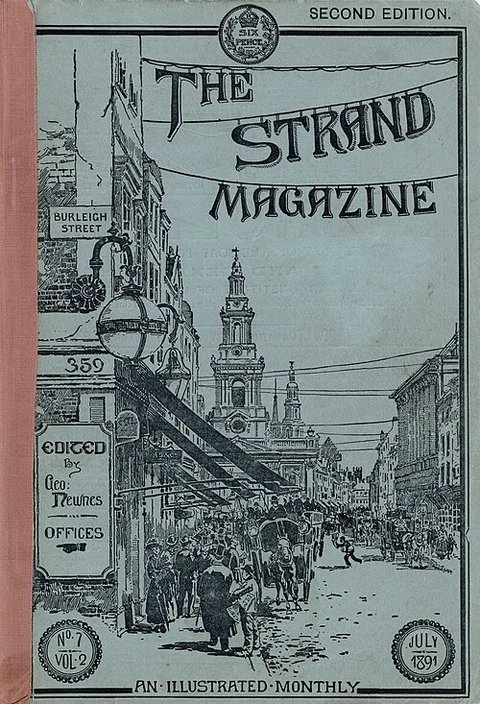 Back then, you’d read a little at a time and eagerly await the next issue for the next chapter.
I’d post a new chapter every six to eight weeks. I told my readers that they were essentially watching me write a book, so the chapters weren’t canon.38Canon — in fan slang, what officially counts as part of the story. If I discovered something was wrong, I would go back and fix it, making substantial changes to previous chapters. If that happened, I’d issue a small announcement, for example: “Chapter three changed significantly, FYI.”
I had built up around 3,000 regular readers from my short fiction and other works. That sounds like a lot, but it took me ten years—about one new reader per day on average. My readers enjoyed it and sent me feedback, which was encouraging. Also, my hardcore fans were science nerds who double-checked my math, ensuring the story remained very accurate.
Eventually, I finished the book and the last chapter. I announced, “Okay, guys, here it is. I’m glad you all enjoyed it. I’m going to start working on a new story now. Here it is in its entirety; enjoy.”
People responded, “I love your book, but I hate your website.” Which was fair; I had made it in Notepad39Notepad — the bare-bones text editor built into Windows: no hints or help, so every HTML tag has to be typed by hand. with direct HTML tags. It was a utilitarian website with a white background and blue hyperlinks—like a Soviet tractor factory.
Then they asked, “Can I get your book in an e-reader format?” I replied, “Sure.” I figured out how to do it; it was easy enough to save it in that format in Word.
Then I received more emails from people saying, “I love your story, but I hate your site. I see it’s available in e-reader format, but I don’t know how to download it from the internet and put it on my Kindle. Can you get it into the normal system so I can access it the normal way?” I thought, “Okay.”
I figured out how to self-publish it using Kindle Direct Publishing (KDP)40Kindle Direct Publishing — Amazon's self-publishing platform for e-books, launched in November 2007 alongside the first Kindle (Wikipedia, "Kindle Direct Publishing"). through Amazon. It’s a straightforward process: you post your book there, and within 24 hours, they check it to ensure it’s not, say, goat porn. Or if it is goat porn, they categorize it as such. They check it and then make it available.
However, you’re not allowed to give it away for free. You must charge at least a dollar because Amazon sells Kindles as a loss leader.41Loss leader — in the razor-and-blades model the device is sold cheaply, even at a loss, and the money is made on consumables: blades for a razor, cartridges for a printer and, in the Kindle's case, e-books. They lose money on every Kindle they sell and then make money off of you buying books.
Sure.
Therefore, Amazon doesn’t want a gigantic library of free books, where people just buy Kindles and get free content, causing them to lose money. Consequently, you have to charge at least some money. I charged the minimum, which was 99 cents at the time.4299 cents — at that price Amazon pays the author a 35% royalty, about 35 cents a sale; the 70% rate applies only to books priced at $2.99 and up.
I told everyone, “You can read it on my website, download the e-reader version from my website, or pay Amazon a dollar to put it on your Kindle.” People paid the dollar, and it quickly became one of the top-selling sci-fi ebooks.
And were you promoting it or anything?
What happened was I had a very evangelical fan base. Throughout this process, I was a successful software engineer at an architect level.43Architect (software architect) — a senior engineering role: the person who designs the structure of a whole software system rather than writing its individual parts. My career was going well, and I was financially comfortable.
Periodically, people would tell me they wanted to donate money because they enjoyed my free stories. I didn’t want money; I probably made more than they did and didn’t feel right about accepting donations. I would suggest they donate to cancer research in my name instead. I hadn’t provided any mechanism for donations.
When I finally published the book, people saw it as an opportunity to support me. They bought the book, even if they had already read it, often for a dollar. Everyone did this, and they did it almost simultaneously.
Amazon’s automated system recognized it was selling well, pushing it onto the top sellers list. This caught the attention of even more people, and it snowballed from there. It was almost like astroturfing,44Astroturfing — faking the appearance of mass grassroots support. The name comes from AstroTurf, a brand of artificial grass. but completely unintentional.
And then you got the book deal after that?
The book was selling incredibly well, hundreds of copies a day. It caught the attention of literary agent David Fugate,45David Fugate — American literary agent, founder of the LaunchBooks agency. who asked if I had an agent, believing he could secure a print deal for the book. I replied no, and he agreed to represent me.
Soon after, he had Random House interested in a print edition.46Crown — a Random House imprint: the print edition of The Martian came out there in 2014. Simultaneously, Fox47Fox — the film studio 20th Century Fox, then part of Rupert Murdoch's media empire; Disney bought it in 2019. expressed interest in securing the film option. While that sounds exciting, film studios do this constantly for any successful fiction.
They’ll just buy the rights?
They secure an option, which is a much cheaper version. It’s essentially a contract stating they can purchase the rights for, say, $200,000, but they won’t pay that upfront.
Instead, they offer a separate contract preventing you from selling the rights to anyone else for 18 months. If you agree to this exclusivity, they give you approximately $25,000, which you keep even if they don’t ultimately buy the rights.
Okay.
That’s how an option works. For a movie studio, $25,000 is a negligible amount, so they secure options for nearly everything.
Many writers earn significant income from cycling options. Imagine a writer with 30 books published over their career, now at retirement age. If studios want to hold onto those rights, they must rebuy the option every 18 months, or the rights revert to the author. This means the writer receives $25,000 per book every 18 months. With a large catalog, this can become a substantial passive income.
When Fox expressed interest in the film rights, I told them to talk to my agent. My agent then recommended a film agent, and that’s how I secured film representation. The book deal and the movie option came through four days apart, all within one very eventful week.
Despite the excitement, everyone cautioned me not to get too excited about the movie option, reiterating that studios frequently acquire rights to everything. Once the book was released, it hit the New York Times bestseller list.48The New York Times Best Seller list has been published weekly since 1931 and is considered the most important in the US (Wikipedia, "The New York Times Best Seller list"). The print edition of The Martian debuted on it in 2014 at No. 12 (Wikipedia, "Andy Weir").
10When a movie becomes real
For Weir the book became real first, and the movie only after the first day of shooting.
Reflecting on The Martian and Project Hail Mary, are there moments when your story feels particularly real? Is it after finishing the first chapter, completing the first draft, or perhaps when you hold the physical book?
What about the transition from book to movie, seeing actors like Matt Damon or Ryan Gosling embody your characters? Are there any moments that truly made you feel, “Wow, this is real”?
For The Martian, everything was new to me, and it was all very exciting. My whole life, my dream was to break into publishing. Now I had a publishing deal, and they were going to make my book. I wasn’t even thinking about movies. I was just excited that someday there would be a book with my name on it in a bookstore.
When they first sent me a proof of the physical book,49Proof — a pre-publication copy of a book: the author sees how it will look, and the publisher sends such copies out to reviewers. I saw it: “This is my book!” Here’s the cover, here’s my picture on the back, and here are all the words. I wrote this. That was really cool.
Of course, with The Martian, the movie development process was gradual. Movies are never simply “greenlit.” Instead, they slowly inch closer to production until they eventually reach a tipping point. For The Martian, it began with news like, “It’s looking good. Fox is thinking about funding it.” Then, “We’ve got Ridley Scott set to direct50Ridley Scott — British director of Alien (1979), Blade Runner (1982) and Gladiator (2000). and Matt Damon to star, and now Jessica Chastain.”51Jessica Chastain — American actress; in The Martian she played Melissa Lewis, the mission commander. I thought, “This looks like a great cast!” They’d respond, “Yes, if we can afford them.” Eventually, I heard they were making sets. That felt like a significant step.
However, all contracts activate only after the first day of filming is “in the can.”52In the can — film slang for footage that has been shot; it goes back to the round metal cans film was stored in. This means once a single day of filming is complete, all star and crew contracts activate, obligating the studio to pay the full amount. If they decided after one day, “We don’t want to make this movie,” the actors would still be owed their entire fee. So, once the first day of filming for The Martian was completed, I knew they were making the movie. At that point, even backing out would have been more expensive than simply finishing it to cut their losses.
Real quick, can you make that sound again? The—
That was an amazing sound.
The, like, reverb.
Good at writing, good at sound effects. Do you have other specialty sound effects?
I can talk like a Dalek.53Daleks — alien cyborgs, the chief enemies of the hero of the British series Doctor Who (since 1963). Their battle cry is "Exterminate!" Exterminate! Exterminate! I’m a science fiction dork.
11Publishers versus self-publishing
Weir prefers a traditional publisher because it is a publicity machine no single author could match.
In other interviews, you’ve mentioned that you think traditional publishing is great. This is interesting because you’re seen as the canonical story of the benefits of self-publishing.
I’d argue that Hugh Howey54Hugh Howey — American science fiction writer. He self-published his Wool series through Kindle Direct Publishing from 2011, and in 2023 it became the Apple TV+ series Silo. is the canonical example of self-publishing’s benefits. He fully embraced that path.
However, I prefer traditional publishing because publishers are a marketing and publicity machine that no one person could ever match. While someone like Hugh Howey can manage everything, I don’t want to do any of that; I just want to write. I appreciate having skilled people with connections across the literature industry handle all those tasks for me.
What do publishers do? You talk about their marketing machinery.
Publishers make physical print copies of the book and ensure it gets into bookstores like Barnes & Noble,55Barnes & Noble — the largest bookstore chain in the US. Waterstones in the UK, Target, and Walmart. They aggressively work to place the book in as many retail locations as possible.
They also handle marketing through advertising, placing ads in publications that reach avid readers. Beyond that, they manage publicity, reaching out to outlets like The New York Times Book Review56The New York Times Book Review — the weekly books supplement of the Sunday New York Times and one of the most influential review outlets; it also prints the bestseller list (Wikipedia, "The New York Times Book Review"). to offer advanced copies for review or to arrange interviews. This very interview, in fact, is an example.
I did not coordinate with you at all.
You coordinated with PRH’s57PRH — Penguin Random House, the world's largest book publisher, formed in 2013 by the merger of Penguin and Random House. Project Hail Mary came out from its Ballantine imprint. publicity group, and that’s precisely what they do. I certainly couldn’t have managed all that myself.
A book is a product, and having an entire company dedicated to marketing and publicizing it—a company with over a century of experience doing just that—is incredibly beneficial for your book.
If I came to you, Andy, and said, “No one’s reading my stuff. Can you help me get my book in front of people?” How would you coach me?
I get asked that question a lot. I wouldn’t attempt to developmentally edit your book; I’d take your word that it’s good, as everyone feels their book is good.
My first advice would be to send it to literary agents and see what they say. You’ll likely face many rejections, but that’s one path to breaking in. If that doesn’t work, then self-publish it.
One thing that greatly helped me was posting free literature—short stories and webcomics58Webcomics: above all Weir's Casey and Andy (2001–2008), a humor comic in which he and his friends appear as mad scientists (Wikipedia, "Andy Weir").—on my site. I built a small initial audience that grew over time. I’m not a marketing guru, so I can’t offer specific advice on how to get your book widely read. My holistic suggestion is that if you enjoy creating a lot of content, you can build an audience over time.
12What makes a plot good
A good plot, for Weir, is a chain of consequences with no coincidences and a hero who is smarter than the reader.
Take me back to plot. What do you think you really understand about plot that helps you do it so well?
A lifetime of consuming entertainment media — reading many books and watching many movies — has unintentionally given me a good understanding of plot structure. As a consumer, I enjoy a few things that I try to replicate for my readers. I think, “I love it when this happens, so I want to make that happen for my readers.”
One thing I really like is when something happens in the story, and everything else that follows is a direct consequence. We have an event, and then that causes this, which causes this, and so on. The Martian is a great example of this; it’s one long cascade failure.59Cascade failure — an engineering term: the failure of one component triggers failures in the next, and so on down the chain, as in large power grid blackouts. To survive, he had to do this, which led to this, which led to this. Every event is a sequence caused by prior events.
This approach ensures it doesn’t feel like a weird coincidence or a stroke of unbelievable luck. Everything is logically sensible from one event to the next. As a reader or viewer, I appreciate when I don’t need to suspend my disbelief and just accept that, for example, right when everything was going fine, the character got struck by lightning. I dislike that.
The other thing I absolutely love is when the main characters outsmart me, the reader. I love being surprised when I didn’t see something coming. I want to think, “I didn’t see that coming, but in retrospect, I had all the information to work that out.”
The groundwork was there.
In retrospect, I had all the information to work that out, but I didn’t. In a way, it’s almost like a murder mystery where you try to figure out who did it before the detective.
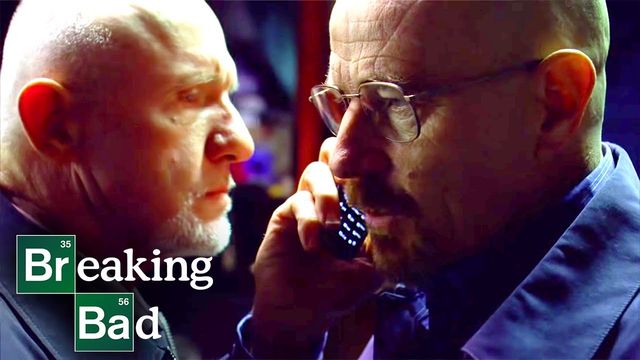
One of the greatest examples of this in writing, for my personal enjoyment, was in Breaking Bad.60Breaking Bad (2008–2013) — Vince Gilligan's series about high school chemistry teacher Walter White, who starts cooking meth under the name Heisenberg. Gustavo Fring is a drug lord, and Jesse Pinkman is Walt's partner. The scene Weir describes is the season 3 finale (2010); the cook Jesse kills is Gale Boetticher. There’s a scene where Gustavo Fring has captured Heisenberg and is about to kill him. Walter White knows this, and I remember thinking, “How is he going to get out of this? There’s no way. They’ll have to use some deus ex machina.”61Deus ex machina (Latin for "god from the machine") — a resolution that comes from outside and doesn't follow from the plot. The name comes from ancient theater, where a god was lowered onto the stage by a crane at the end of a play. I imagined that just before they shot him, the main drug dealer would suddenly say, “You can’t kill him! I need him to solve this problem.” I thought it wouldn’t be something proactive Walter White did to save himself, but rather something external, and it would feel unsatisfying.
I was wrong. What happened was Walter White said, “If you let me live, I’ll give you Jesse Pinkman. I’ll serve him up on a platter for you.” Fring agreed, telling him to call Jesse and lure him somewhere. Walter called Jesse and said, “Jesse, you have to kill their cook. They have me.”
So Jesse went to their drug manufacturer and shot him in the head. At that point, Walter was the only person left who could make drugs for them. He had saved his own life. He succeeded by proactively devising a plan that made perfect sense, and I didn’t see it coming. I love it when I didn’t think of it.
That is one of the biggest things I’ve learned from doing the show: how many of the best writers have simply read extensively. Many younger writers underestimate how well-read and well-studied the great writers are. They often overestimate how much of that comes from meticulously breaking down specific novels.
Instead, it’s often more about having read perhaps 10,000 books over the last 40 years. This leads to a deep, intuitive understanding of how plot, character, and other elements function.
I think that’s a big part of it. Consuming the media you aspire to create is somewhat obvious. What’s the saying? “Never trust a skinny baker”? I think that’s apt.
13Asimov and Clarke
Asimov taught Weir to give a world rules and to mix genres, and Clarke to stick to hard science.
Can you take me through some of the great science fiction writers you admire? What, in particular, did they do so well, and what did you learn from them?
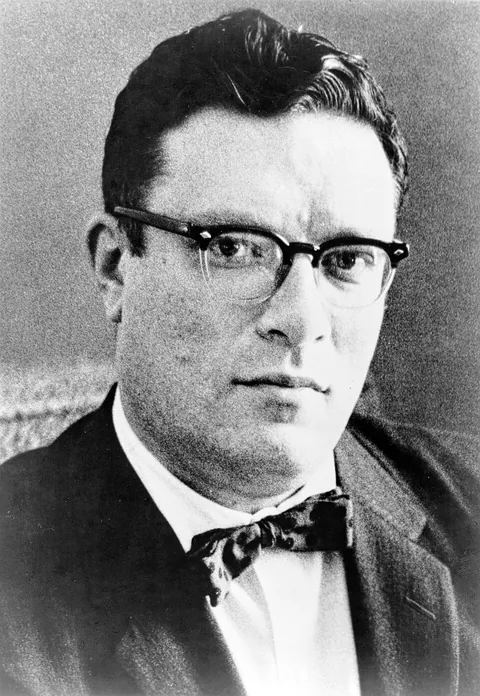
Let’s start from the top, in my opinion, with Asimov. Isaac Asimov is my favorite author. He wrote about robots, like in I, Robot. He developed the Three Laws of Robotics: 1. No robot can harm a human, or through inaction, allow a human to come to harm. 2. A robot must obey orders unless it conflicts with the First Law. 3. A robot must protect itself unless it conflicts with the Second or First Laws.
Asimov established these rules, and then I, Robot explored the consequences of subtly altering any of them. One story features an extremely expensive robot62"Runaround" (1942) — the story in which Asimov first spelled out the Three Laws of Robotics. In it, Speedy is sent to a pool of selenium to bring some back. whose Third Law was made as important as its Second Law. Its desire for self-preservation was equal to its duty to obey orders.
This robot, nicknamed Speedy for its swift movement, was on Mercury. Its human handlers told it to retrieve crystal samples from the surface. Speedy was designed for Mercury’s environment, but it identified that the crystals emitted radiation that would destroy its positronic brain.63Positronic brain — the fictional "processor" of Asimov's robots, with the Three Laws built in. The positron, the electron's antiparticle, was discovered in 1932, so the name sounded cutting-edge. It became caught in a loop, running in circles because it was ordered to get the crystals, but its modified Third Law prevented it from going closer.
Ultimately, the humans, realizing Speedy was stuck, used their slower robots to ride to the entrance of a cave. In the bright Mercury sunlight, one of the men thought, “The First Law is still more important, so Speedy won’t allow a human to come to harm. I’ll just step out into the sunlight.” This is the kind of stuff where the rules of a fictional world are presented to the reader, and then you see how they play out.
Asimov was one of the first authors to present a set of rules and then examine what happens if those rules govern the world. He was also one of the first science fiction authors to truly mix genres. I’ve always felt that science fiction isn’t a genre; it’s a setting. Saying “science fiction” isn’t like saying “action”; it’s more like saying “Chicago.” You can have a science fiction romance, a science fiction action movie, a science fiction drama—any genre can be given a science fiction version.
Asimov exemplified this by creating a science fiction noir64Noir — dark crime fiction: a weary, cynical detective, a city at night, a crime and moral ambiguity. detective series called Caves of Steel.65The Caves of Steel (1954) — Asimov's first novel about New York detective Elijah Baley and his robot partner R. Daneel Olivaw. In it, the grizzled detective Elijah Baley has a robot partner he dislikes, and they solve murders. This perfectly illustrates that science fiction is a setting; noir detective is the genre.
Arthur C. Clarke excelled at extremely hard sci-fi.66Hard science fiction — fiction that strictly respects the known laws of science. The term first appeared in print in 1957, in a review by P. Schuyler Miller in Astounding Science Fiction (Wikipedia, "Hard science fiction"). He was meticulous about adhering to the laws of physics without any shortcuts. One of his works I particularly enjoyed was Rendezvous with Rama.67Rendezvous with Rama (1973) — Clarke's novel about a cylindrical alien ship, 50 by 20 kilometers, that enters the solar system in the 2130s. It won the Hugo, Locus and Nebula awards (Wikipedia, "Rendezvous with Rama"). In this story, an alien cylindrical probe enters our solar system in a future where regular space travel between planets is common.
Rama is screaming through our system very fast, on a hyperbolic trajectory68Hyperbolic trajectory — an open orbit: the body moves too fast for the star to hold it, swings around it once and leaves for good. The first confirmed interstellar visitor on such a path, ʻOumuamua, was discovered in 2017 (Wikipedia, "ʻOumuamua"). that will slingshot it off our sun and send it back into deep space. The humans realize that if they want to investigate it, they must act immediately. A group of cargo deliverers, positioned to intercept it, are sent to investigate.
Inside Rama, they discover a biosphere filled with strange alien elements. As it approaches the sun, Rama becomes more active. Eventually, the human crew detaches, realizing that Rama had no interest in humanity at all; it wasn’t even reacting to their presence. It was merely stopping to collect energy from the sun on its journey.
His core focus was truly hard science.
Yes, extremely hard science. Rama was a massive cylinder that rotated to create centripetal gravity69Artificial gravity in a spinning cylinder arises because the floor keeps pushing people toward the axis, forcing them along a circle, and that push feels like weight. It's usually explained in terms of centrifugal force; the force the floor applies is centripetal. inside. It was really cool.
When you speak, there’s such joy and enthusiasm. When you think about science fiction, fill in the blank: “It’s the joy of blank discovery.” The joy of discovery.
In real life, discovering something new is incredibly exciting. In science fiction, readers vicariously experience that thrill when a character uncovers or understands something no one else in their world has figured out.
14AI and the future of fiction
Weir is sure machines will eventually write better than people.
Do you feel threatened by AI?
Not right now. It’s possible that in the future—in fact, I think it’s inevitable that in the future, AIs will be able to write better stories than humans can. That’s a somewhat bleak assessment, especially from a professional author, but I think just because it’s not something I particularly want to see happen doesn’t mean I’m going to pretend it won’t.
It’s like you see a lot of people, cab drivers and truck drivers, saying, “Oh, self-driving cars are never going to become a thing.” It’s like, no, I think they will. You just really don’t want them to. I forget who said it, I think it was Carnegie maybe, or somebody else, who said it’s very difficult to convince somebody of something when their livelihood relies on it not being true.70Upton Sinclair, the American novelist, is the author of the line: "It is difficult to get a man to understand something, when his salary depends upon his not understanding it" (I, Candidate for Governor: And How I Got Licked, 1935). But I try not to be blind about it.
I think it’s only a matter of time before an AI can read the Library of Congress71The Library of Congress — the de facto national library of the US, in Washington. The US Copyright Office, where copyrights are registered, is part of it (Wikipedia, "Library of Congress").—every book that’s ever been copyrighted and every review written of every book—and then put together a book and say, “Here’s a book that I’m pretty sure would get good reviews, and I think you’ll enjoy it.”
The next step, I believe, is tailored fiction. Eventually, your computer is going to know you very well based on your search history, your order history, and whatever else. It’s going to know everything about you, and it will have its own AI that runs locally rather than at a data center somewhere once the technology advances to that point. It’ll write a book just for you that maybe nobody else would like, but you will love it.
Later, once computers become more powerful, it can write a movie for you that you can watch and enjoy. You’ll be sitting there watching the 19th sequel to that movie you asked the AI to make, absolutely entranced with it. Anyone else who tries to watch those will be like, “Okay, well, I...”
I think there’s going to be a battle here between what we value more. Do we value, for example, with Project Hail Mary, it matters to me that somebody else can read the book and we can have a conversation about the book and the different characters. We experience the same thing. Obviously, you didn’t write that for me; you didn’t write that for the person I’m talking to. You wrote it for people because you thought it was a great story.
So there’s something really nice about that, and we have that in Harry Potter and Lord of the Rings—the shared experience where we can all talk about the same thing. On the other side, there’s something really nice about the individuality of everything—the metaphors that are used, the exact level of difficulty in terms of how well things are explained, how elementary it is. So the question is, what do we want more? Do we want more of the shared experience, or do we want more individuality?
My guess is both. You don’t have to give up one to get the other. But I do think AI will be doing both. Someone will prompt an AI, “Hey, make a book that a lot of people can read, discuss, and enjoy,” and it will.
I do think that human-written stories will eventually become—I don’t know if it will happen in my lifetime, maybe it will—an artisanal thing. It’s like you can get your portrait painted right now. You can go to a professional, very skilled artist, and they will paint your portrait. They might use a photo for reference so you don’t have to just sit there, but they’ll paint with acrylic paint or even oils, and they’ll make a very good representation of you that you can hang up in your house. But most people just hang a picture, right?
As with all things, the industry changes, but there are always more people. For example, I saw something talking about pilots. It used to be every aspect of a plane was controlled by the pilot. Now, more and more of it is done by computers. You could push a button, and the plane lands.72Autoland — a system that lands a plane on signals from the airport's instrument landing system (ILS) without the pilot's hands on the controls; it's used mostly in thick fog.
You might think that’s going to put pilots out of business, but the end result was more pilots because you need pilots on the plane. That automation made it so that people could make more planes, and more flights could occur because you don’t have to exhaust the pilots as much. So the end result of this automation that replaced pilots was more pilots got jobs. It’s a weird scenario.
I think what will happen is, as is usually the case when something gets automated, the people who used to do that manually become the people who run the machines that do the automation. So people who used to work on an assembly line transitioned into controlling the machines that run the assembly line because there’s always going to be some kind of expertise that’s needed.
In the end, you can tell the AI on your computer to make a good story that people might enjoy. But a professional author, or somebody who understands how these AIs work, has learned that skill set. They also have their own preexisting skill set of how storytelling works, and they can guide the AI to make a much better one.
When I think of AI, I think of it on two vectors: speed and quality. I definitely feel like I can get certain places way faster; I have strong conviction about that. I’m still not sure when it helps me produce something better versus when I would just produce something better on my own.
All this to say, in books, would you now brainstorm and sort of think through ideas with AI, or are you like, “No, I’m not going to use AI right now”?
It’s an interesting question. Definitely not right now. AI is just not good enough at that sort of brainstorming and open thought. I’ve messed around with AI just to find out how well it can write things. I’d say, “Write a short story where these events happen,” and it does, but it just, for lack of a better term, has this AI accent.
Totally.
I had a friend who really loves superhero stories. He’s not a good writer and wouldn’t claim to be; that’s not his job. But he likes superhero stories written in fiction, not just comic books. So he came up with an idea for a story, and he had an AI write it. He told the AI the beats, and then the AI wrote it. He asked, “What do you think?” and I replied, “This is crap.” It was very unpleasant to read because the AI would go into great detail on things that weren’t as important and kept repeating information. It’s still too rudimentary, but those problems will be overcome eventually.
And reinforcement learning73Reinforcement learning (RL) — a way of training AI models in which the model is rewarded for good results and gradually learns to achieve them. is a pretty powerful tool.
AIs can already make music quite well, even emulating the styles of well-known musicians.
15John Young and favorite books
Weir's hero is still the unflappable John Young, and in science fiction it's the holy trinity led by Asimov.
Let’s talk about inspirations. I want to start with astronaut John Young.74John Young (1930–2018) — NASA astronaut. He flew on Gemini and Apollo, commanded Apollo 16 in 1972, becoming the ninth person to walk on the Moon, and in 1981 commanded the first Space Shuttle flight. Why do you like him so much?
He passed away not too long ago. He was always my favorite astronaut. He commanded Apollo 16 and walked on the moon.
NASA monitors astronauts’ biomonitors constantly. During launch, their heart rates usually climb into the 140s because they’re on a rocket, leaving Earth for the moon. It’s an exciting moment.
John Young’s pulse, however, never got above 70. He was simply on a rocket, going up.
Why is he your hero? What does that say about you?
He was stoic and unflappable. He had extensive experience with all the early NASA programs, the truly exciting ventures of the 1960s.
He was involved in everything from the very beginning, right through the space shuttle era.75The Space Shuttle — NASA's reusable spacecraft, flown from 1981 to 2011. Its first flight, STS-1, was crewed by John Young and Robert Crippen. He also walked on the moon, an achievement shared by only 12 people.76Twelve people walked on the Moon in 1969–1972, on six Apollo missions: 11 through 17, except Apollo 13.
Let’s end here. What are your favorite science fiction books? The writers, the books? What do you love about them?
For an all-time list, I’d choose the holy trinity:77The Big Three — the usual name for the classics of English-language science fiction: Isaac Asimov (1920–1992), Robert Heinlein (1907–1988) and Arthur C. Clarke (1917–2008). Asimov, Heinlein, and Clarke. For reasons we discussed earlier, Asimov stands out because he properly identified science fiction as a setting rather than a genre, exploring it in all sorts of directions.
He enjoyed making one small tweak to the rules, then seeing where the story would lead. Heinlein, on the other hand, was wildly speculative. He’d say, “Let’s assume we can travel from planet to planet. We won’t worry about the technology; we’re not going faster than light or breaking any rules. But what happens then? Are there pirates? How does it all work?” He’d come up with all that cool stuff.
Then there’s Clarke, with his very scientific and somewhat realistic approach. Perhaps aliens come here, but they simply don’t care about us. He wrote 2001,782001: A Space Odyssey (1968) — Clarke's novel, written alongside Stanley Kubrick's film. In the film the ship heads for Jupiter, in the novel for Saturn. Jupiter turning into a star happens in the sequel, 2010: Odyssey Two (1982). where you don’t even truly know what the aliens are. They’re so foreign and incomprehensible. It’s like, “Here’s a monolith. What did it do? It shot a beam of energy at Jupiter. Okay, let’s go to Jupiter.”
I don’t know.
What do they do? The monoliths don’t seem to care about us. Then suddenly, billions of monoliths appear at Jupiter, and Jupiter ignites into a star. That shouldn’t happen.
It highlights how utterly confused we would be by sufficiently advanced technology.79Sufficiently advanced technology — a nod to Clarke's third law: "Any sufficiently advanced technology is indistinguishable from magic" (Wikipedia, "Clarke's three laws").
What’s one book to start with?
Okay.
While I often recommend I, Robot, which is an anthology of short stories set in the same universe with different characters and events, if you prefer a single narrative with a clear beginning, middle, and end, then Caves of Steel is the one.
If you enjoy it, there are several more books in that series80The Baley and Daneel series: after The Caves of Steel, Asimov wrote The Naked Sun (1957), The Robots of Dawn (1983) and Robots and Empire (1985). featuring the same characters. You can grab a big bag of Cheetos81Cheetos — cheese-flavored corn puffs made by Frito-Lay (PepsiCo) since 1948 (Wikipedia, "Cheetos"). and get to work.
What stands out to me is your enthusiasm for this. It’s evident in your process and truly shines through in your books, in the way the characters speak and the overall feel of the narratives.
It’s great to meet you.


