

How I Write
Chapters
A book has to be finished, and Picoult gathers her material up front, all the way to a trip to the Yupik in Alaska.
Read the chapter- If you've never finished anything, you'll never believe you can, so Picoult says to decide whether to fix or scrap a draft only once you reach the end.
- Picoult gathers 80–85% of her material in advance, so she never finds out halfway through a book that the idea doesn't work.
- In January she flew in a plane full of sled dogs, then rode a snow machine up a frozen river to a house without plumbing or electricity, with a bag of oranges as a gift.
- Her notebook holds trigger words, and she transcribes the recordings herself; she has no assistants, because her "office" is between her ears.
Picoult managed a book a year thanks to a strict routine her children trained her into.
Read the chapter- With a colicky son, she wrote in 15-minute bursts until he cried, and later with her laptop on the steering wheel at nursery school pickup and at swim practice.
- Once the kids started school, eight hours a day became writing time; she still works that way, Monday through Friday.
- She writes on weekends only when a book is nearing the end.
Every Picoult novel starts with a "what if," and Hollow Bones grew out of a postcard about 9/11.
Read the chapter- Picoult calls the reflective part of the work "percolating," and it always starts with the question "what if?"
- A friend sent her a PostSecret postcard, "Everyone who knew me before 9/11 thinks that I'm dead," and Picoult began asking what would make someone use a tragedy like that to disappear.
- Perell recalls Amor Towles's image of a door with a whole house glimpsed behind it.
- The heroine, Molly, lost her mother on 9/11 and 25 years later runs emergency preparedness for Rhode Island; Picoult spent a year researching the postpartum psychosis storyline with a woman who wrote to her from jail.
Picoult feels she doesn't create her characters but hears them, and describes a movie only she can see.
Read the chapter- She calls writing "successful schizophrenia": once a heroine woke her in the middle of the night shouting "I don't like what you're writing for me!", and the five longhand pages she wrote then went into the novel.
- She doesn't invent a book so much as describe a movie only she can see; it turned out her daughter describes writing the same way.
- Storytellers, she says, are born, but technical writing can be learned; a description that once took a page and a half now takes her five words.
A brutal workshop with Mary Morris at Princeton made Picoult a writer, and she still refuses to rest on her laurels.
Read the chapter- Morris sat Picoult on the floor, threw out the first two pages of her story, and the class cut and pasted the rest.
- "You can take it," Morris told her, and anger drove Picoult to rewrite the story again and again until Morris told her to send it to Seventeen; the magazine bought it and a second one.
- Readers pre-order her 30th book sight unseen, but Picoult promises to quit writing the day she starts repeating herself.
Even an author with an army of readers needs a tough editor: what she can't defend to her editor doesn't belong in the book.
Read the chapter- Her editor, Jennifer Hershey, sometimes seems to care more about Picoult's books than Picoult does.
- Picoult looks for a challenge in every book: A Spark of Light, about a shooting at an abortion clinic, is told backward in eight voices.
- To Jony Ive's point that ideas are fragile and need nurturing, Picoult answers that she writes fast and turns in a finished manuscript.
- The fifteen-page editorial letter lists what isn't working, and the author finds the fix; the final word is hers, but what she can't defend to her editor doesn't belong in the book.
Read widely, Picoult says, and great books read differently as you get older.
Read the chapter- Reading shows you where your stories fit in the canon, but you should write in your own voice; while working, Picoult reads books unlike her own.
- Life of Pi and The Invisible Life of Addie LaRue are books she wishes she had written.
- At 13 the description of burned Atlanta in Gone with the Wind made her think "I could do that," and she saw the book's flaws on race only while working on Small Great Things.
- Like Nick Carraway in Gatsby, the mother in her Keeping Faith is an unreliable narrator: you can't tell whether she is harming her daughter or the girl really has stigmata.
Every narrator should be recognizable from any sentence, and where feeling runs strongest, language fails.
Read the chapter- Each first-person narrator, for Picoult, is a pair of wellies stepping into the same stream; any sentence should tell you who is speaking.
- The stronger the feeling in Isak Dinesen, the sparer her language; she says least about what she cared about most, Denys Finch Hatton.
- A mother's goodbye to her son in Perfect Match took Picoult three days of crying for five pages, while she can write 50 pages of a courtroom scene in a day.
- Picoult hears dialogue, and advises everyone else to read their work aloud.
- A novel, to her, is a three-dimensional piece of taxidermy and a libretto the skeleton others build on; characters in a musical sing when words fail them.
A novel on a hot-button issue reaches people who would never pick up nonfiction, and makes them ask why they believe what they believe.
Read the chapter- Picoult writes not for her fans but about what worries her, answering a question for herself.
- Nobody checks out an FBI report on school shooters, but a great many people have read Nineteen Minutes.
- A novel doesn't tell you what to think but makes you hear the other side and ask why you believe what you believe.
Picoult sees the line between literary and commercial fiction as a marketing label.
Read the chapter- There's bad literary fiction and good commercial fiction, and almost all the classics were commercial hits; Austen, Shakespeare and Dickens, Picoult says, were hired hacks writing for the public.
- Alice Hoffman made Picoult a reader again after college, and later her idol turned out to be a friend and a "big sister."
- Hoffman writes about love through the natural world, like a vine, and her books feel like a fever dream.
- Chloe Benjamin's Under Story, Picoult says, is life as it is, "but on steroids."
Picoult is convinced Emilia Bassano wrote some of Shakespeare's plays, and built her favorite of her own novels around her.
Read the chapter- By Any Other Name is a novel about an Elizabethan poet who, Picoult is convinced, wrote some of Shakespeare's plays.
- In college Picoult heard only of male candidates, Marlowe, Bacon and the Earl of Oxford, until she read Elizabeth Winkler's article in The Atlantic.
- Picoult lists the inconsistencies as she sees them: Shakespeare never taught his daughters to read, left not a single book, and never visited the places he wrote about.
- Bassano, by contrast, had a classical and legal education, grew up in a family of musicians and hid that she was Jewish.
The stage of life Picoult is in shapes the "what if" questions she asks.
Read the chapter- Friends recognize their own lines in her books.
- A fantasy of throwing her husband's shirts out of the car window and driving to Mexico became Harvesting the Heart.
- While her kids were growing up she wrote a "series of all the really scary things that could happen to your kids"; once they were grown, she turned to good and evil, abortion, racism and gender discrimination.
Picoult went out with ghost hunters as a skeptic and came home with 29 pennies she can't explain.
Read the chapter- A ghost, by the hunters' account, is someone who missed the bus at a rest stop.
- In an abandoned hospital she saw fireflies in January, and a misty figure appeared on a camera screen.
- In the children's rooms and the locked attic she found coins dated 1969–1973, and the hunters' research later showed that two people had died in the house, in 1969 and 1973.
- The story went into Second Glance, in which a ghost hunter uncovers the history of eugenics in 1930s America.
Picoult's goal is empathy and conversation, so she gives a voice even to people she disagrees with.
Read the chapter- The title Hollow Bones comes from what the heroine's mother says: what makes birds fragile also lets them fly.
- The best response, for her, is "I can't wait for someone else to read this so I can talk to them about it."
- She interviewed a Focus on the Family spokesperson just after her son came out, and the woman didn't know who Matthew Shepard was.
- For DC she wrote five Wonder Woman issues about what Diana's mother, the Amazon Hippolyta, wants from her.
A book won't reach readers today without publicity, and a writer's main tool is being her own editor.
Read the chapter- People now find books through podcasts and BookTok, word of mouth no publisher can pay for.
- In 2024 Nineteen Minutes was the most banned book in America; Picoult speaks out against bans because her readers are mostly adults and she isn't risking her income.
- Her tour runs 30 cities in a row, up to 1,200 people a night, and tickets sold out despite the economy.
- In the American Idol era, without publicity a book won't reach readers, but not every author, Picoult says, should go out in public.
- The main tool is looking at your writing objectively and killing your darlings.
Quotes
On why finishing matters
“If you don’t finish something, you will never believe that you can.”
Jodi PicoultRead from 01:00On hearing her characters
“For a very long time, I’ve called writing ‘successful schizophrenia’ because I get paid to hear voices.”
Jodi PicoultRead from 13:09On why her teacher tore her story apart
“Gathering my courage, I went to her office hours the next day and asked, ‘Why did you do that to me?’ She replied, ‘Because you needed it, and because you can take it.’”
Jodi PicoultRead from 20:15On working with an editor
“If I can’t defend something to my editor, it shouldn’t be in the book.”
Jodi PicoultRead from 27:45On Isak Dinesen's prose
“The key to reading her work is understanding that the things she cares about most are often those she speaks of least.”
Jodi PicoultRead from 35:09On the novel and the libretto
“To me, writing a novel is like taxidermy—you’re creating a three-dimensional object. Writing a libretto, however, is like being a paleontologist; you create the skeletal structure.”
Jodi PicoultRead from 38:39On the "commercial" classics
“Look at Jane Austen, Shakespeare, or Dickens. They were hired hacks, writing by the word, fully for a consuming populace.”
Jodi PicoultRead from 43:11On why authors need publicity
“Authors can no longer sit in an ivory tower, write books, and expect them to reach the masses.”
Jodi PicoultRead from 1:11:24
Summary
Jodi Picoult has published 30 novels and for years put out a book a year. Each one starts with a "what if" question: her new novel, Hollow Bones, grew out of a PostSecret postcard that read "Everyone who knew me before 9/11 thinks that I'm dead." She does 80–85% of her research before writing the first line (for one novel she flew with sled dogs to a Yupik village in Alaska, for another she went out with ghost hunters), and from there her characters take over: she literally hears them and calls writing "successful schizophrenia." Her colicky son taught her to write in 15-minute bursts; today she works "school hours," Monday through Friday.
She learned to write from Mary Morris at Princeton: in her very first workshop the class threw out the first two pages of her story, and then Seventeen magazine bought it. Hence her main advice, to be your own best editor and "kill your darlings," never resting on your laurels even when readers pre-order your books sight unseen. She defends commercial fiction (Austen, Shakespeare and Dickens also wrote for money and for the public) and talks about what she learned from Gone with the Wind, from Isak Dinesen's Out of Africa, where what matters most is said least, and from Alice Hoffman. A story of its own is her novel about Emilia Bassano, who, Picoult is convinced, wrote some of Shakespeare's plays.
The goal of her books is empathy and conversation, so she gives a voice even to people she disagrees with: a white supremacist in Small Great Things, the views of Focus on the Family in Sing You Home. At the end she talks about how publishing is changing: podcasts and BookTok, book bans (in 2024 Nineteen Minutes was the most banned book in America) and the publicity no author can do without today, though not every writer should face the public.
Mentioned
- PostSecret08:27the postcard her new novel grew out of
- Hollow Bones08:27Picoult's new novel about 9/11
 Amor Towles09:47the image of a door at the "what if" stage
- Harvesting the Heart13:31a heroine demands a rewrite in the middle of the night; the novel from the husband's-shirts fantasy
Show 46 more mentionsShow fewer mentions
- Songs of the Humpback Whale17:33her first novel: a thousand pages and five voices
 Princeton University19:09where Picoult learned to write
 Mary Morris19:09the teacher who taught her everything
 Seventeen20:31the magazine that bought two of her college stories
 Jennifer Hershey22:52Picoult's editor
- A Spark of Light23:52a novel told backward in eight voices
 Steve Jobs24:41understood that ideas are fragile
 Jony Ive24:41his speech at Jobs's memorial
- Gone with the Wind28:00the book that made Picoult think "I could do that"
- The Great Gatsby28:00Nick Carraway as an unreliable narrator
- Life of Pi29:07a book Picoult wishes she had written
- The Invisible Life of Addie LaRue29:07another book she envies
 Margaret Mitchell30:11the description of burned Atlanta
- Small Great Things31:21a novel about racism in which one narrator is a white supremacist
- Keeping Faith31:44a mother as an unreliable narrator
 Karen Blixen33:58writes as Isak Dinesen; says least about what matters most
- Out of Africa33:58the subject of Picoult's junior thesis
- Shadows on the Grass34:26Dinesen's second autobiographical book
 Denys Finch Hatton34:47the lover Blixen writes about most sparingly
- Perfect Match35:58a five-page scene that took three days to write
- Nineteen Minutes40:12a novel about a school shooting and the most banned book
- Snow White and the Seven Dwarfs43:03the commercial hit that saved Disney
 Jane Austen43:11a classic who wrote for the public
 William Shakespeare43:11a "hired hack"; some of his plays, Picoult believes, were written by Emilia Bassano
 Charles Dickens43:11paid by the word
 Alice Hoffman43:45Picoult's favorite writer and friend
- The Witches of Cambridge45:00Hoffman's new novel
 Chloe Benjamin47:02speculative fiction about grief
- Under Story47:02life "on steroids"
 Emilia Bassano47:51a possible author of some of Shakespeare's plays
- By Any Other Name47:54Picoult's favorite of her own books
 Elizabeth Winkler48:23the Atlantic article about Shakespeare as a woman
- The Storyteller53:28the nature of good and evil
- Second Glance54:37a novel about a ghost hunter and eugenics
 The Atlantic Paranormal Society54:37the ghost hunters Picoult went out with
- Sing You Home1:02:45a novel about gay rights
 Focus on the Family1:02:45the interview for Sing You Home
 Matthew Shepard1:03:51a Focus on the Family staffer had never heard of him
- Wonder Woman1:04:26five comic issues written by Picoult
- Mad Honey1:05:03a novel cowritten with Jenny Boylan
 Jennifer Finney Boylan1:05:03coauthor of Mad Honey
 TikTok1:07:31BookTok and new readers
 PEN America1:08:21data on book bans
- The Pact1:12:20readers who decided not to take their own lives
 Richard Powers1:14:29another How I Write guest
 Anne Lamott1:14:29another How I Write guest
Sponsors of the episode
 Alpha School15:22a private school that covers academics in two hours a day
Transcript
01Finish the draft, research up front
A book has to be finished, and Picoult gathers her material up front, all the way to a trip to the Yupik in Alaska.
Jodi Picoult’s on the show today, who’s published 30 novels1Jodi Picoult (born 1966) — American novelist, author of My Sister's Keeper (2004) and Nineteen Minutes (2007). Wikipedia. and sold more than 50 million copies of her books. And for a while, she was writing a book a year. But what I admire so much about her is that she clearly has so much fun going about her craft. Like, her research sent her ghost hunting, sent her up to Alaska to go visit Eskimos. And then also, she gets so invested in her stories that she literally hears her characters speaking to her. So how does she do it? How did she go about writing a book a year? Well, that’s what this conversation is all about.
I want to start with your three pieces of writing advice: read a bunch, write every day, and the most interesting one, which is where we’ll end up, don’t stop in the middle of your book.
That’s probably the biggest caveat for beginning writers. Everyone thinks midstream, “This is truly the worst piece of writing that has ever existed on the planet,” and they give up.
I think that’s a psychological hurdle you have to overcome. If you don’t finish something, you will never believe that you can. I tell people to write to the end of whatever they’re writing.
Then you can decide whether you want to fix it or scrap it. But until you get to the end, you won’t ever feel like you’re truly a writer.
At what point do you commit to that? Is it after one word, or one chapter?
It’s different for every writer, because we all approach it differently. I’m often asked how I know if something will work as a book. I conduct at least 80% to 85% of my research upfront.
When I conceive an idea for a book, it’s usually based on a “what if” scenario—something I’m concerned about at the time, whether as a woman, an American, or a mother. That becomes a small sandbox I’ve created. The point of starting there is that I know where I want to go by the end, but my characters will lead me through it.
I have to become an expert on everything they know. That’s when I pause and do a lot of research. That’s a whole different conversation, of course.
By the time I’m ready to write the first line, I’ve done so much research that I already know if it will work. As a writer, I don’t reach the middle of a book and realize it’s not panning out as I expected. I have an outline, I know my characters, and I know if my research will fit.
If the research doesn’t align with what I’m trying to achieve, then I know it will be a challenging process. Sometimes, for research, it gets incredibly difficult. One of the hardest things I ever had to do was find a Yupik Eskimo willing to invite me to his home.2Yupik — an Eskimo people of southwestern Alaska. Picoult made the trip for The Tenth Circle (2006), whose hero grew up in Akiak, a village of about 300 people without running water. In January 2004 she flew on a cargo plane with sled dogs to Bethel and went on from there by snow machine up the frozen river. Picoult's website. This was a man who lived in the wilds of Alaska.
In Alaska?
Okay.
I wanted to go there in the winter. The only way to reach this place, Akiak, Alaska, was complex. I connected with someone I knew in Alaska, a professor who knew someone, who knew someone, who ultimately got me to this man’s house.
It was January. To get to Akiak, you first fly into Anchorage,3Anchorage — Alaska's largest city and main airport; small planes fly from there to remote villages. then take a dog sled plane. You fly with cargo dogs, tied to little loops, while you sit in a seat with all these puppies.

After landing, the Yupik Eskimo village was another 60 miles upstream.460 miles — about 97 km. Akiak lies on the Kuskokwim River, roughly 42 miles (68 km) northeast of Bethel as the crow flies (Wikipedia, "Akiak, Alaska"). In winter, when the river freezes, it becomes a highway. You can travel by dog sled or snow machine.
I chose the snow machine to reach the village. I had been told to bring gifts, so I brought a bag of oranges, which I gave to the man. He sent me home with a whole pack of dried salmon after our interview.
He lived in a very simple house that resembled a reservation home,5Reservation — land held by a Native American tribe in the US, with its own government. Alaska has essentially one reservation, Metlakatla: since 1971 Native lands there have belonged to Native corporations. without plumbing or electricity. They used what they called a “honey bucket” as their toilet.6Honey bucket — Alaskan name for a bucket used as a toilet in homes without sewers; it is still common in the state's rural villages. Nothing about the words “honey” or “bucket” would make you think there’s anything good about it. I conducted the entire interview with him and used that experience to create scenes in the novel.
When you’re there, do you bring a notebook? Are you writing things down?
All of them, of course. In that situation, I was wearing every piece of clothing I owned. It was 43 degrees below zero Fahrenheit,7−43 °F — about −42 °C. so I wore many layers. I had massive gloves made of reindeer skin or something similar. I bring a notebook. Nowadays, I record on my phone. But back then, I was probably recording...
Does it even work when it’s that cold?
I kept it tucked into several layers, so yes, it was working. Back then, I believe it was a tape recorder. I record with their permission, then transcribe what’s recorded.
In my notebook, I usually jot down a word or phrase that sparked an idea. When I review the transcript, I can directly plug those notes in, indicating where a specific thought or conversation belongs within the chapters.
I’m often asked if I have research assistants, but I don’t. I feel like I carry my “office” between my ears, so how could I trust anyone else to know what would be useful to me?
02A book a year with three kids
Picoult managed a book a year thanks to a strict routine her children trained her into.
I love your energy. Explain this to me: You write a book a year.
Not anymore. Now I write a book every two years because I’m old.
Okay.
You’ve been writing a book a year for a long time.
You’re a mom, you do a lot of research, and I assume you still only have 24 hours in a day. How do you think about time and structuring all that?
Having kids, being their primary caretaker, and writing a book a year really helped me codify and format my days. My first novel was published in 1992, right after my first son was born in 1991. I was taking care of him; there was no paternity leave back then.8Paternity leave — in 1991 the US had no federal family leave law. The Family and Medical Leave Act (FMLA), which grants up to 12 weeks of unpaid leave, was signed by Bill Clinton on February 5, 1993 (Wikipedia, "Family and Medical Leave Act of 1993"). It was just me in the house. He had colic9Colic — bouts of long, inconsolable crying in a healthy baby in the first months of life; the cause isn't fully understood, and it usually passes by three or four months. and was a really crappy baby, so there was no free time.
I started learning how to write in 15-minute bursts. I would sit down and write until he started crying or woke up. As he got a little older, and then had two siblings, I learned to write at nursery school pickup. I’d sit with my laptop on the steering wheel and write. I would take it to swim practice, diving practice—anytime there was a window in my day not dedicated to the kids, I was writing. I didn’t have the luxury of a nanny or eight hours a day until they started school. That was a game changer.
Kindergarten changed my life.
Once the three of them were gone for eight hours a day, it was a piece of cake. I suddenly had eight hours to do anything I wanted, and that became my writing time.
Even now that my kids are grown with their own children, I still function the same way. I work Monday through Friday, writing during school hours, sometimes a little later. Around 4:30 or 5:00, I come downstairs from my office, make dinner, and turn back into an ordinary person. I usually don’t write on weekends unless I’m nearing the end of a book; then it feels like there’s a monkey on my back, and I’m pushing to get it done. I treat it like a normal workday.
03"What if": how *Hollow Bones* began
Every Picoult novel starts with a "what if," and Hollow Bones grew out of a postcard about 9/11.
We’ve discussed the active parts of writing—doing research and sitting at the keyboard. What about the more reflective aspects: daydreaming, mind-wandering, letting your imagination run free?
I’ve always thought of that stage as “percolating.” When I’m considering a book before I start writing, it always begins with “what if?” What would I do in that situation? What if this parameter changed?
The origin story for Hollow Bones, my new book, actually came from a writer friend who texted me one night. She sent me a postcard from PostSecret. Do you remember PostSecret?10PostSecret — a community art project Frank Warren started in 2004: people anonymously mail him homemade postcards bearing their secrets, and he publishes them on his blog, in books and on social media. Wikipedia.
I have no idea what that is.
PostSecret started as a Tumblr blog11Tumblr — a short-form blogging platform for images, quotes and reblogs, launched in 2007; in the early 2010s it was one of the centers of youth internet culture. and later became an Instagram handle. People would send in their deepest, darkest secrets on postcards, anonymously published. These secrets could range from “Every Friday, I walk around naked all weekend” to “My husband doesn’t know our child isn’t his.”
My friend sent me a post from 2012 that featured a picture of the Twin Towers with smoke coming out of them. In handwriting at the top, it read: “Everyone who knew me before 9/11 thinks that I’m dead.” I was in bed around 9:30, and my mind just reeled.
I immediately called dibs, as writers do, and couldn’t stop thinking about it. That’s the percolating stage. I wondered, “What would make someone do that? What circumstances would lead you to use a tragedy of that magnitude to disappear?” That question became the sandbox where I started Hollow Bones.
I remember Amor Towles,12Amor Towles (born 1964) — American novelist, author of A Gentleman in Moscow (2016). when he was on the show, described that “what if” stage as finding a door. You see the door, you know there’s something beyond it, and when you walk through, you see the first frame of the house.
Yeah.
You just know you’re somewhere wondrous. He could imagine all the rooms in there; you just need that initial door.
Right.
Then you’re good.
Often, when I walk through that door and see the potential, I immediately think, “How am I going to learn about this?”
In Hollow Bones, the story centers on Molly. Her mother went to a doctor’s appointment on 9/11 when Molly was two months old and never came home. Twenty-five years later, we find Molly as the head of Emergency Preparedness and Response for the state of Rhode Island.13Rhode Island — the smallest US state by area, in New England; its capital is Providence. She dedicates her life to mitigating tragedies, determined that others won’t grow up with the same profound loss she experienced. Many people I spoke with who lost a parent on 9/11 had their lives fundamentally shaped by that hollow absence. This seemed like a fitting path for her character.
So, I then had to figure out how to research her role. I networked my way into understanding emergency preparedness and response.
There’s also an element in this book about postpartum psychosis.14Postpartum psychosis — a rare, severe mental illness in the first weeks after childbirth: delusions, hallucinations, confusion. It affects about one or two in a thousand new mothers and needs urgent treatment. Molly is pregnant, expecting her first child, and worried about being a mother. This opened another significant research area. I might still be struggling with it if something hadn’t literally fallen into my lap by chance.
I receive a lot of mail from readers. One day, I received a letter from a woman who wrote, “I’ve read all your books. You’re often a voice for the voiceless. I’m hoping you’ll tell my story so that what happened to me doesn’t happen to another woman.” She was writing from jail, awaiting trial after killing her three-year-old daughter. She had developed postpartum psychosis after having a newborn son. This letter arrived precisely as I was contemplating that aspect of the story. I ended up spending a year doing research with her.
Can you take me back to the idea of “what if” and that early stage? You have the initial premise, and then how does that lead to plot, character, and the other core parts of one of your books?
Right. I start with that postcard, and the first character that comes to me is Molly, someone whose entire life has been shaped by the loss of her mom. I start thinking about who she is now, who she’s married to, and what she’s doing.
Then I consider: what happens if the person whose job is to literally protect an entire state—to prepare for the worst that can happen—experiences something bad close to home? What if all the preparation in the world can’t protect you?
For me, the “what if” usually starts with an issue or a situation that blossoms into a character or two. Then the characters start to take it away from me. That’s usually when I stop and do the research.
04Characters' voices and the movie in her head
Picoult feels she doesn't create her characters but hears them, and describes a movie only she can see.
Describe that feeling of the characters starting to take over.
This is the hardest thing for me to describe, and it’s weird, because it’s “woo-woo.” I really feel like I don’t create characters; I feel like they just start talking to me. For a very long time, I’ve called writing “successful schizophrenia” because I get paid to hear voices.
Right.
That’s what it’s like. I can hear them very clearly in my head.
There have been times when I was writing. For example, when I was working on Harvesting the Heart, which is my second novel, I remember waking up in the middle of the night. This character was basically yelling in my head, “I don’t like what you’re writing for me!”
I got up and wrote about five pages longhand. I stuck it in a bookshelf because I knew it would come later in the book. When I reached that point, I pulled it out and used it.
So, yes, I hear their voices, and they’re the ones leading and directing me through the story at that point. I wish I could tell you how to create a character, but I don’t feel like I do it. I just feel like they’re sort of there, speaking to me, erupting fully formed out of my forehead, like Zeus and Athena.15Zeus and Athena — in Greek myth, the goddess of wisdom sprang from Zeus's head fully grown and in full armor.
Wow. And how much of it is hearing versus seeing?
When it’s a character, I hear them. But when I’m writing a book, I actually don’t feel particularly creative, crafty, or like I’m picking meticulous words. I feel like I’m watching a movie that none of you can see or hear. My job is to tell you what I’m seeing or hearing.
It’s very “woo-woo,” very much like a medium. I feel like I’m watching something being unfurled before my eyes.
Weirdly, when I wrote a duology of YA books with my daughter16YA duology — Between the Lines (2012) and Off the Page (2015), which Picoult wrote with her daughter Samantha van Leer.—she’s now a writer on her own, writing middle grade17Middle grade — books for readers aged roughly 8 to 12; YA (young adult) is for older teens.—we were in England doing an interview like this. They wanted to separate us because they didn’t want our answers to impact each other.
I finished first and went to eavesdrop on her interview. They were asking her what it’s like to write, and she started describing it like she was watching a movie. I had never talked about that with her; I’d never said that’s what it’s like for me. I thought, “Okay, this is weird. Maybe it’s genetic, right?” Isn’t that wild?
AdAlpha School
This episode is sponsored by Alpha School. When you think of school, what comes to mind? For me, it was lectures, homework, being stuck at a desk.
And the worst part is that it doesn’t even work. 54% of Americans read below a sixth-grade level. That’s over half of Americans. We need something new. And that’s why I’m excited to have Alpha School as the flagship sponsor of How I Write. At Alpha, you go to school, you get all your academics done in only two hours per day, so that then you could spend the rest of the time learning life skills like running a business, writing a musical, giving a TEDx talk,aTEDx — local conferences that independent organizers run under a TED license: short talks of 10 to 18 minutes. you know, the kind of things that make you a capable and well-rounded person.
And it’s working. They have the academics figured out. Alpha classes test in the top 1% nationally, and more than 90% of students say they love school. Now, I used to live in Austin, where Alpha School started, and I was consistently blown away by what was happening there. I personally mentored a bunch of the kids, and what stuck out to me is how much their team believes in the potential of kids. Alpha’s approach and the success it’s already having is why it’s the most talked-about K–12 school in the world right now, and also where I want to send my kids to school one day.
So if you want to learn more, visit go.alpha.school/howiwrite.
Do you feel like there’s a divine part of this, or do you feel like it’s more genetic, internal—something that gives you a unique capacity?
I don’t think it’s divine. I do believe, however, that people are either born storytellers or they are not. You might be born a storyteller and never write a thing in your life. You could be the person who sits at the airport, watches strangers go by, and makes up backstories for them in your head. That’s a storyteller.
You might be the person people gravitate towards at a party because you’re the one who can tell stories and engage. Again, you may never be a writer, but I do believe you’re either born with that skill or habit. That’s the one thing I don’t think you can teach. I do believe you can teach someone to be a better technical writer.
What does that mean?
My first book, Songs of the Humpback Whale, was very big. I had so many brain cells back then. It was a thousand pages, and I had to cut it down for publication.
ExplainerThe songs of humpback whales
Only males sing, mostly in winter, during the breeding season. A song is built from repeated phrases, and the phrases from themes; one rendition lasts from a few minutes to half an hour, and a male can repeat it for hours. In 1970 the biologist Roger Payne released an album of whale recordings, Songs of the Humpback Whale; it sold in huge numbers and became an anthem of the Save the Whales movement, and in 1971 Payne and Scott McVay described the sounds in the journal Science as true songs.
The most remarkable thing is that the songs are passed on as culture. All the males in a population sing the same song and gradually change it together. In 1996–1998 the males off the east coast of Australia switched within just two years to an entirely new song brought by whales from the west coast, which Nature called a "cultural revolution." It later turned out that new songs spread in waves from west to east across the whole South Pacific. Why males sing is still debated: to attract females, to size up rivals, or both.
It featured five different narrative voices: one moving forward, one backward. They intersected in the middle of the book, in the middle of America, with three parallel voices weaving throughout. The entire structure mimicked whale songs, which was a central theme. The book explored the idea that male whales sing to females to convince them to mate. In doing so, they create and modify songs, passing them down—a capacity once thought exclusive to humans.
When I first wrote that book, I was very proud and thrilled it got published. A few years into my career, I was at Simon & Schuster,18Simon & Schuster — one of the largest US publishers, founded in 1924. having already worked with several publishers. They told me, “We’re going to buy your backlist19Backlist — everything an author has published before that is still selling; for a publisher, a steady source of income. and start publishing it. If you’d like to make any changes, please feel free to.”
I wondered, “Should I do that? Will the few people who bought it in hardcover have a different experience than new readers?” I reread it and realized I totally stood by the story, the voices, and the characters. I didn’t want to change anything. However, some of the descriptions that once took a page and a half, I can now convey in five words. I’ve simply become a cleaner and more efficient writer.
05Mary Morris's tough love
A brutal workshop with Mary Morris at Princeton made Picoult a writer, and she still refuses to rest on her laurels.
What do you think you learned in order to do that?
I know exactly where I learned to write: Princeton. I was fortunate to attend a school in the 80s that had an undergraduate creative writing program. I worked primarily with Mary Morris,20Mary Morris — American writer of novels, short stories and travel books. Picoult graduated from Princeton in 1987; Morris advised her senior thesis novel and later taught at Sarah Lawrence College. an extraordinary writer. She absolutely taught me everything I know. I would not be here if not for her.
What did she teach you?
Let me preface this by saying I was the student everyone hated in high school. Everything came very easily to me; I was a straight-A student, did really well on my SATs,21SAT — the standardized test American colleges use in admissions. and so on.
I wrote a short story, very excited for her workshop. I walked into class, and she told me, “I want you to sit on the floor in the middle of the circle of chairs.” She handed me scissors, a glue stick, and construction paper. Then she said, “You can’t say anything. Just do what people tell you to do.”
She then asked the class, “Where does Jodi’s story really start?” A brave soul responded, “Page three.” She confirmed, “That’s right.” She threw the first two pages over her shoulder and spent the next hour and a half getting people to cut and paste my story for me. That’s what I was doing on this paper.
I left there red-faced, humiliated, and utterly upset. Gathering my courage, I went to her office hours the next day and asked, “Why did you do that to me?” She replied, “Because you needed it, and because you can take it.” It was a little tough love.
I was so angry and driven that I edited that story repeatedly. Finally, she told me, “You need to send this somewhere.” I responded, “What are you talking about? I’m writing this for a class!” She said, “Go send it to Seventeen magazine.”22Seventeen — an American magazine for teenage girls, published since 1944.
As a poor college student, I went to Palmer Square,23Palmer Square — a square of shops and cafés in downtown Princeton, across the street from the university campus. found the kiosk that sold magazines, and copied Seventeen’s address without even buying the issue. I then sent my short story to them. A few months later, there was a message on the answering machine in my dorm room—we had answering machines and phones back then. It was an editor from Seventeen magazine, saying, “We’d like to pay you for your story.”
I would have paid them! I was thrilled. I actually thought everyone was pranking me, so I called all my friends first. When I called back, they confirmed they wanted to publish my story, and they even bought a second one. Before I graduated from Princeton, I had two short stories published.
It was a combination of Mary’s tough love and my utter competitiveness to succeed. It was the perfect storm. It made me realize that to be a writer, you must be willing to dismantle your own writing. The reality is, at this point in my career, I’m fortunate to have a following and readers who will pre-order a new book without even knowing what it’s about. It took a long while to get there.
What is this, number 30?
This is my 30th book, which is a huge gift as a writer. It’s something you don’t expect when you’re starting out. When you reach that 30th novel, there’s a tendency to let writers like that slide.
Many writers who make it to the top of the New York Times list24The New York Times best-seller list — the weekly ranking of the best-selling books in the US, published since October 1931; reaching the top is the main mark of commercial success. rewrite the same book, resting on their laurels. I never want to be that writer. I challenge any reader who thinks that’s who I’ve become to tell me, because I will stop writing that day.
06The editor and the editorial letter
Even an author with an army of readers needs a tough editor: what she can't defend to her editor doesn't belong in the book.
For me, part of the writing process means being your best editor. I’m fortunate to have the world’s best editor, Jennifer Hershey.25Jennifer Hershey — publisher of Ballantine Books at Penguin Random House; in 2023 she received Poets & Writers' Editors Award. She’s amazing, and I’ve worked with her for many years.
Sometimes I think she cares more about my books than I do. She’s tenacious and fierce, making every book better. She provides that outside perspective I truly value and want to be nourished by.
Many writers reach a point in their careers where some publishers think, “It will sell, so we don’t have to do much.” I don’t want that. I want to ensure the book is in the best possible shape when it’s released. I also want to make sure I’m writing the best book for the reader at that moment.
For me, that usually involves some kind of writing challenge. Sometimes it’s the topic or the research, like with Alaska. Other times, it’s the structure of a book — something that forces me to be completely on my game while writing.
What’s an example of that?
An example is A Spark of Light. It’s a book about abortion rights in America, written before the Dobbs decision.26Dobbs — on June 24, 2022, in Dobbs v. Jackson Women's Health Organization, the US Supreme Court overturned Roe v. Wade (1973), ending federal protection of the right to abortion. A Spark of Light came out in 2018. I essentially predicted we would reach Dobbs, and during the book tour, everyone told me I was overreacting. I wasn’t.
That book is told in reverse. It’s about a shooting at an abortion clinic, and the entire story moves backward in time. That’s incredibly hard to pull off because your biggest reveal or surprise then has to be the earliest chronological moment.
Right.
I also wrote it with eight narrative voices, which was a nightmare to manage as they all moved backward in time. I must have had more brain cells back then; they seem to be diminishing as I get older. It was a real challenge, structurally very difficult.
I want to return to your tough editing relationship with your editor. At Steve Jobs’ memorial service, Jony Ive, his design director,27Jony Ive (born 1967) — British designer who led design at Apple from 1997 to 2019: the iMac, iPod, iPhone and Apple Watch. spoke about what Steve Jobs truly understood about ideas. Ive said that early on, Steve realized ideas are fragile.28Steve Jobs's memorial was held on the Apple campus on October 19, 2011. Ive said that Steve understood that ideas can be very powerful but begin as fragile, barely formed thoughts, so easily missed and so easily crushed.
They’re like a baby bird: if you hit it too hard, it won’t survive; they need to be nurtured. There’s a part of the creative process that requires toughness and critical thinking, and another part that calls for gentleness and nurturing. Do you agree, and how does that apply to your work?
It’s different for every writer. I don’t need an editor holding my hand while I’m writing. Part of that is because I write quickly.
I remember being very young on my first book tour. Nobody wants to hear from a 25-year-old debut novelist who’s sold four hardcover copies. I was paired with other writers at bookstores, and we’d all talk about our books. One woman would say, “This paragraph took me ten years to craft.” Then I’d get up and say, “I wrote this book in nine months, so this paragraph...”
“...could be ten minutes.”
I write quickly, and I hope my writing is beautiful, lyrical, and all the right things. I think some people are paced differently. Different writers work in different ways.
I’ve never had the luxury of an editor saying, “Let me help you develop this, let me help you craft this from the get-go.” What I actually do is turn in a finished manuscript and say, “Here you go.”
Then she reads it, usually calls me to say, “This is absolutely extraordinary,” and I get really excited. Afterward, I receive the editorial letter and think, “But you said it was extraordinary! What is all this?”
What’s an editorial letter?
An editorial letter is when your editor writes to you, usually with lovely things in the first paragraph, and then spends fifteen pages detailing everything that’s wrong.
Basically, editors don’t edit in the way TV and film often portray. They don’t make corrections for you. They simply say, “This isn’t working for me, and here’s why,” leaving it to you to figure out the solution.
There are times when I’ll look at something and think, “No, Jen, you’re wrong.” If I can defend my position, she’ll listen and say, “Okay, I totally understand that.” I always have the final word because it’s my intellectual property.
However, Jen is so smart and good at her job that when she says something, I always tell myself, “Wait a second. I need to be objective about this. I need to step back and understand her perspective.”
Sometimes it takes longer to wrap my head around, and some changes are harder than others. There are times I’ve stuck to my guns and still believe those were the right decisions; I think Jen would agree with that as well.
If I can’t defend something to my editor, it shouldn’t be in the book. That’s another good example of not resting on your laurels. I could literally say, “Don’t change a word, just copy and print it.” But I don’t want to do that.
07What other people's books teach
Read widely, Picoult says, and great books read differently as you get older.
As you think about building your skills as a writer, how much came from reading other works? I can give you two examples from my own experience. Early on, as a teenager, I found Gone with the Wind29Gone with the Wind (1936) — Margaret Mitchell's novel about Scarlett O'Hara during and after the American Civil War; it won the 1937 Pulitzer Prize. and memorized passages. Later, I read Gatsby30The Great Gatsby (1925) — F. Scott Fitzgerald's novel; the story of the mysterious millionaire Gatsby is told by his neighbor, Nick Carraway. and began to understand the concept of an unreliable narrator31Unreliable narrator — a narrator the reader can't fully trust: one who is mistaken, holds things back or lies. The literary critic Wayne Booth coined the term in The Rhetoric of Fiction (1961). and how it functions.
One of the things I always tell beginning writers is that you need to read, read, read. This is not just so you have a core of literature in the back of your mind when you write; you also need to understand how your stories fit into a broader literary canon. This is especially important for aspiring writers.
It’s fun to play with voice and see if you can write like someone else. Fan fiction,32Fan fiction — amateur writing based on other people's books, films and shows, using their characters and worlds. for instance, thrives on this. However, I don’t advocate for writing in someone else’s voice. You must find your own. Reading broadens your horizons, allowing you to see the scope of a story and the myriad ways stories can be told.
Sometimes I read a book and think, “I wish I had written that.” There are a couple of books in my career that make me feel that way. Life of Pi is one, and The Invisible Life of Addie LaRue is another.33Life of Pi (2001) by Yann Martel won the 2002 Booker Prize. The Invisible Life of Addie LaRue (2020) by V. E. Schwab is about a Frenchwoman who in 1714 is granted immortality, but everyone she meets instantly forgets her. Both are truly about how a story is told and how a legacy is formed. It’s interesting that those are the ones that snag my attention. I can’t believe someone else got to them first. I love feeling that jealousy when I read an amazing book.
I read constantly, very widely, and across many different genres. However, when I am actively writing, I avoid books in my own genre or by writers whose style is similar to mine. This prevents me from unconsciously parroting their work. For example, I might read Romantasy34Romantasy — a genre that blends romance and fantasy. when I’m writing physically, because it’s so different from the kind of story I’m trying to tell.
Can you explain exactly what you took from Gone with the Wind and Gatsby?
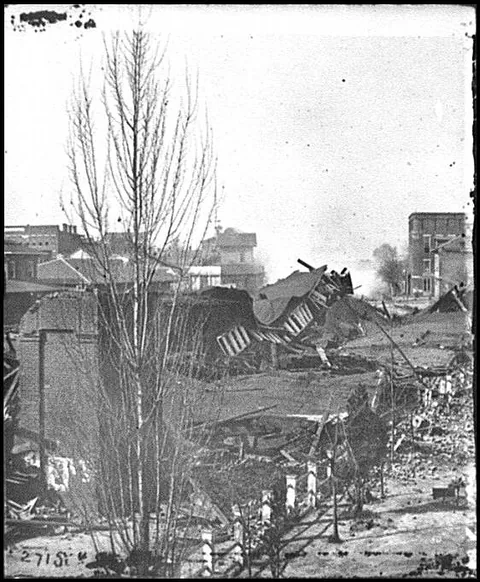
With Gone with the Wind, I distinctly remember a specific moment. I was reading the scene where Margaret Mitchell describes Atlanta after it burned, and it felt like she created an entire world out of words. As a reader, it was the first time I stopped and thought, “I could do that.”
Oh, wow.
I was 13, and I remember having that thought. But I had never met a writer; I didn’t know anyone who did this for a living. So why would I ever consider being a writer? That was the very first time I entertained the idea.
Gone with the Wind is a great example of a book that interests me because my reactions to it change as I age and become a different person. When I was a child, it was all about the language, the creation of that doomed love story between Scarlett and Rhett, and the fascinating interaction between the characters. I completely missed everything about race and privilege in that book because that wasn’t where my head was at the time.
It wasn’t until I was much older, doing research for my own book about racism and white privilege,35White privilege — a concept from American debates about race: the unspoken advantages white people get in society simply because of their skin color. Small Great Things, that I revisited Gone with the Wind. Then I realized there were significant flaws in the book, but it took me a while to get there. A truly great book is one you can return to years later, as a different person, and read in a completely new way.
Regarding Gatsby, with Nick Carraway as an unreliable narrator, I love writing unreliable narrators. It’s incredibly fun because you, as the author, know things the audience doesn’t. To me, that’s a compelling device to engage readers. For example, when I wrote Keeping Faith, the mother functions as an unreliable narrator. You don’t know whether she is actually harming her own child with Munchausen by Proxy or if this seven-year-old girl is genuinely exhibiting the signs of stigmata.36Munchausen by proxy — a disorder in which an adult, usually a parent, fakes or induces symptoms of illness in a child. Stigmata are wounds on the body that mirror the wounds of the crucified Christ. I enjoy playing with that — it’s a layer of deception I get to explore.
08Voices, ellipsis and dialogue
Every narrator should be recognizable from any sentence, and where feeling runs strongest, language fails.
When writing, especially with different narrative voices, it’s crucial that they all sound very distinct. While I’ve mentioned that voices often come to me, when I have multiple first-person narratives in a book, I always imagine it like putting on someone’s Wellington boots and stepping into a stream.
What are wellies?
Wellington boots, the high boots. The stream represents the narrative, and the story moves forward. However, how you feel when you step into those boots — where they pinch, where they rub your calves — is going to be different for every pair.
That’s what I consider when I’m writing a book with multiple first-person narrators. You might hear one person’s voice as a mother, then catch the narrative stream a bit further down with someone else’s voice, and then continue.
It always bothers me when I’m reading a book and can’t quite distinguish the voices. I’ll propose a mantra, and I’d like you to tell me if you agree or disagree: You should be able to read a sentence from any character and instantly know who it is.
Yes, you should. I absolutely believe that.
End of story.
I work very hard at that. Some characters have more florid language, while others are more direct, using a subject-verb-object structure. I think very carefully about this when writing in each character’s voice.
You should be able to tell from my books. When I was in college, my junior thesis focused on Out of Africa by Isak Dinesen.37Isak Dinesen — the pen name of the Danish writer Karen Blixen (1885–1962). Her first book was Seven Gothic Tales (1934); Out of Africa (1937) and Shadows on the Grass (1960) are memoirs of her coffee farm in Kenya. Denys Finch Hatton was an English hunter and pilot who died in a plane crash in 1931. She is known for her Gothic fairy tales. Her fairy tales are densely packed with adjectives and vivid descriptions; they read exactly like Gothic fairy tales.
However, if you read Out of Africa and Shadows on the Grass, her two biographical companion pieces, they seem to be written by a completely different author. What you notice is that the more emotional a moment, the sparer the language becomes, almost Hemingway-esque,38Ernest Hemingway (1899–1961) — American writer known for his deliberately spare style: short sentences, few adjectives, the essential left below the surface (the "iceberg theory"). with a subject-verb-object structure.
In moments where she discusses Denys Finch Hatton, her lover, the language is brutally abrupt, as if words couldn’t possibly convey her emotions for him. It illustrates the trope of ellipsis: as writers, we use words, but sometimes emotion is so intense that language fails us.
The key to reading her work is understanding that the things she cares about most are often those she speaks of least. This was fascinating to me, and I wrote a whole thesis paper on it. It’s also something I consider deeply when I write.
I think about where language breaks down, where emotion is indescribable, and where words fail to carry the plot or feeling forward. You’ll often find examples of this in my books.
Are there certain kinds of scenes you struggle to write because you feel you lack the words to explain them?
The really emotional scenes are usually the hardest. I remember a scene in Perfect Match. The story involves a prosecutor who discovers her son has been sexually abused. Believing her local neighborhood priest is responsible, she shoots him in cold blood.
She later finds out she shot the wrong priest and ends up in jail. At one point, she has to say goodbye to her son. That five-page scene took three days to write because I cried so hard while working on it. I desperately wanted to get it right.
In contrast, if I’m writing a court scene for one of my books, with someone on the stand undergoing direct or cross-examination,39Direct and cross-examination — in an American trial, a witness is first questioned by the side that called them (direct examination), then by the opposing side (cross-examination). I can write 50 pages in a day with no problem. Those scenes are very regimented; I know exactly what I need to say. They don’t carry the same emotional stakes as the more anchoring scenes in a novel.
Consequently, I spend a lot of time on emotional scenes, and they usually take longer. It’s difficult to find the precise words to convey deep feelings, and sometimes, language simply fails us.
How do you write good dialogue?
I hear it. As I’ve said, I don’t feel like I’m writing it; I simply hear it. If dialogue doesn’t come easily, read your work out loud. I particularly think many independently published authors40Self-publishing — an author puts out a book without a publisher, most often through digital platforms like Amazon Kindle Direct Publishing, and then has to find editing and proofreading on their own too. should do this.
I listen to audio versions when I’m swimming, and you can hear all the flaws in your language when it’s read aloud. You’ll catch repeated words in the same sentence, for example. Reading your work aloud is an excellent editing tool to identify these issues.
Absolutely.
And it helps with pacing too.
Absolutely. I’ve always enjoyed writing dialogue, and I do truly hear it between the characters. It’s interesting because I also write for theater now, and strong dialogue is an invaluable skill there.
Plays?
Yes, I write musicals. I’m a librettist.41Libretto — the text of a musical stage work: the plot and dialogue and, in a musical, often the song lyrics; its author is the librettist.
I didn’t know that. How is that writing different?
It’s incredibly different, primarily because it’s collaborative. I work with a co-librettist and songwriters; the four of us function as one mind. We also incorporate input from our director and producers.
To me, writing a novel is like taxidermy—you’re creating a three-dimensional object. Writing a libretto, however, is like being a paleontologist; you create the skeletal structure. The director, actors, costumers, and lighting designers then layer upon that framework. You’re giving them a structure to build upon, not creating the fully dimensional scene yourself.
And, speaking of ellipsis, when characters break into song in a musical, it’s precisely because words have failed them. It’s a really fun process. I started doing it about ten years ago, and in many ways, it reinvigorated my love of writing.
09Fiction's superpower
A novel on a hot-button issue reaches people who would never pick up nonfiction, and makes them ask why they believe what they believe.
What do you love so much about writing?
I love the freedom to explore any subject I choose. This freedom is amplified by the incredible group of readers who follow my work.
I write about things that genuinely upset or worry me. While I’d like to say I think about my fans when writing, I don’t. I’m actually focused on an issue so complex that I want to thrash it out, pick at it, and try to unravel it. I know this approach creates a good book because I’m essentially answering a question for myself.
What has fiction given you that you couldn’t access through nonfiction?
Fiction has a superpower. This is the hill I die on.
I believe people don’t pick up nonfiction, especially on controversial topics. For example, nobody checks the FBI report on school shooters out of a library. However, many people have read Nineteen Minutes, which is about a school shooting in America and how a community can fail a child to the point where they become a shooter.
Readers come to this book thinking it’s fiction, believing these are make-believe characters, and expecting entertainment. If I do my job right, I’ve taken you on a ride. You close that last page having learned something, and you’re still thinking about it.
If I’ve truly done my job right, especially when discussing something particularly controversial—whether it’s racism, abortion rights, the nature of good and evil, or any other question we grapple with in politics—then you’ll ask yourself why you hold the opinions you do.
I believe most of us form opinions when we’re very young, often because our parents, pastors, or friends hold them. Then we just coast, never truly asking ourselves, “Why do I believe that?” We don’t listen to the other side.
My job as a novelist is to ensure you hear the other side. I won’t tell you what to think, but I will ask you to listen, reflect, and consider, “Why do I believe what I believe?” You may not change your mind, but you will have heard someone else’s point of view and perhaps understand why you believe what you believe.
10Commercial fiction and Alice Hoffman
Picoult sees the line between literary and commercial fiction as a marketing label.
As you’ve gone about your writing, do you feel there’s a tradeoff between writing for awards and critical acclaim versus writing for as many sales as possible?
I firmly believe there’s truly bad literary fiction and truly good commercial fiction.42Literary and commercial fiction — a division in American publishing: the first is valued for style and aims for prizes, the second runs on plot and is meant for mass sales. Those labels are marketing labels.
I distinctly remember being a new author. Early in my career, my first novel was published by Faber and Faber, and my second by Viking43Faber and Faber — a London publisher founded in 1929; T. S. Eliot was one of its directors. Viking and Putnam are New York publishers, now part of Penguin Random House.—both rather highbrow.
My third novel was published by Putnam. When selling it, we had to decide where we wanted it to go. We decided to place it with a big commercial house. I would write the same book, doing my best regardless, and if I could reach more readers that way, I was thrilled to do so.
I get upset when people dismiss commercial fiction, calling it “airport fiction” or claiming it won’t stick with you. I don’t believe that at all. In fact, most of the classics we read were commercially popular.
I was about to say that Gone with the Wind, or even Snow White,44Snow White and the Seven Dwarfs (1937) — Disney's first feature-length animated film. Its budget swelled to nearly $1.5 million and Walt Disney had to mortgage his house, but the film took in more than $8 million and became the highest-grossing film of 1938. for example, made Disney so much money. It effectively saved Walt Disney.
Look at Jane Austen, Shakespeare, or Dickens. They were hired hacks, writing by the word, fully for a consuming populace.
The Beatles were huge too.
To me, demeaning commercial writers to elevate literary ones is an arbitrary distinction.
Plenty of navel-gazing literary novels where nothing happens are not particularly well-written. Conversely, some commercial novels are truly beautifully written. I don’t think readers care about these distinctions either; they just want a good story.
Tell me about Alice Hoffman.45Alice Hoffman (born 1952) — American novelist, author of more than thirty novels with elements of magical realism, among them Practical Magic (1995).
Alice was the writer who made me a reader again after college. You spend four years reading what’s on syllabi, so her books were the first I picked up as an adult, no longer in school. I was completely transported.
Alice writes with beautiful prose, incorporating magical realism,46Magical realism — fiction in which the miraculous is woven matter-of-factly into a realistic world and surprises none of the characters; the classic example is Gabriel García Márquez's One Hundred Years of Solitude. which I love. What captivated me was how she makes writing look so easy—as if it just flows effortlessly from her, even though it never is. I was transfixed. She was my favorite writer for a very long time.
Later, as a new writer, I was asked to do an event on Cape Cod,47Cape Cod — a peninsula in Massachusetts, a well-known New England resort. and she was on the panel. I thought, “Yes, I’ll crawl there! I’ll do anything to be at that event!”
You know the saying, “Don’t meet your heroes”? That’s totally wrong when it comes to Alice. I met her, and she was so lovely. I left with her contact information, and we’re really good friends now; she’s like a big sister to me.
Her new book, Witches of Cambridge,48The Witches of Cambridge (2026) — a novel set in 1950s Cambridge, Massachusetts, where the shadow of the colonial witch trials still lingers. is fantastic. Not that I’d ever think otherwise, but it truly is one of her great ones. To me, one of the great joys of being a writer has been getting to know other writers I admire and being able to tell them, “Thank you so much for taking me away for a few hours.”
Tell me about what you’ve taken from her in terms of her sense of character, how she makes reality magical, or her descriptions of love.
Love. She can write about love like nobody else.
What does she do?
I don’t know, it’s witchcraft—literally. It’s the way she combines the natural world. Her writing is always very nature-oriented, with many plants and natural elements.
When she talks about love, it feels like a vine, like heliotrope growing over an arch. You can see it developing, twisting, and getting thicker and thicker. She accomplishes this with words. It’s not how I write, and it’s beautiful to ingest. Her work is so precisely crafted.
To me, Alice’s books feel a little like a fever dream. You dive into them, going for a ride, surfing on beautiful language, but you still get a gut-wrenching, emotional story.
I adore writers who expand our sense of what reality is and can be.
You go about your day, preoccupied with your own thoughts, realizing you’re in the claustrophobia of your own mind. Then, suddenly, you step into somebody else’s descriptions of love or whatever it may be. You think, “Wow,” and regain a sense of awe and wonder.
I’ve been reading a lot of speculative fiction49Speculative fiction — an umbrella term for science fiction, fantasy and other genres built on the premise "what if the world worked differently." lately, and I love it. I love how you can take a nugget of upsetting truth and twist it into something a bit sci-fi.
For example, I loved Chloe Benjamin’s Under Story.50Under Story (2026) — the third novel by Chloe Benjamin, author of The Immortalists (2018): its heroine, the mycologist Laurel Salter, goes to work at a research station in Antarctica. It’s almost like a parallel universe, based around grief. It explores what changes you might make in your life if you thought things could be different, and how those changes would affect who you become.
It’s a science fiction novel grounded in reality, heart, and emotion. It’s not Dune;51Dune (1965) — Frank Herbert's novel about the struggle for the desert planet Arrakis, one of the best-known science fiction books. it’s more like your current life, but on steroids.
The stories that always affect me most are the ones that stretch over a vast array of time. Something about that just makes me weep.
The Invisible Life of Addie LaRue is such an incredible book. I wish I had written that one.
11Emilia Bassano and Shakespeare
Picoult is convinced Emilia Bassano wrote some of Shakespeare's plays, and built her favorite of her own novels around her.
Tell me about Emilia Bassano.
Emilia Bassano is at the heart of my book, By Any Other Name. Of all my books, this is my personal favorite; it probably resonates the most with me as a writer. Emilia Bassano was a real person who lived in Elizabethan England.52Emilia Bassano (married name Lanier, 1569–1645) — one of the first Englishwomen to declare herself a professional poet, with the collection Salve Deus Rex Judaeorum (1611). Her father, the court musician Baptista Bassano, died in 1576, after which she was brought up in the household of Susan Bertie, Countess of Kent. Wikipedia. From my research, I fully believe she wrote some of Shakespeare’s plays but did not receive credit.
ExplainerThe Shakespeare authorship question
Doubts about Shakespeare's authorship appeared only in the mid-19th century, more than two hundred years after his death. In 1857 the American Delia Bacon published a book arguing that the plays were written by a circle led by Francis Bacon. In 1920 the English schoolteacher Thomas Looney proposed the Earl of Oxford, today the most popular candidate among doubters, even though Edward de Vere died in 1604, before The Tempest and other late plays were written. Emilia Bassano was put forward in the 2000s by the researcher John Hudson.
The doubters' arguments are the same as Picoult's: humble origins, not a single book in his will, illiterate daughters. Shakespeare scholars answer that the Stratford grammar school taught Latin and the classical authors, that Shakespeare took his plots and foreign settings from books, and that his contemporaries named him as the author outright: Francis Meres in 1598, Ben Jonson, and John Heminges and Henry Condell, actors in his company, who compiled the First Folio in 1623.
As an English major in college, I recall names of potential Shakespearean authors being debated in the 80s, but they were always men: Marlowe, Bacon, and the Earl of Oxford.53The Shakespeare authorship question — the debate over who really wrote Shakespeare's works. The best-known "candidates" are the playwright Christopher Marlowe, the philosopher Francis Bacon and Edward de Vere, 17th Earl of Oxford. Most Shakespeare scholars hold that Shakespeare wrote them himself. I’d never heard a woman proposed as a candidate until I read Elizabeth Winkler’s Atlantic article.54Elizabeth Winkler — journalist; her article "Was Shakespeare a Woman?" ran in The Atlantic in June 2019, and she later wrote the book Shakespeare Was a Woman and Other Heresies (2023). She pointed out that Shakespeare wrote these incredible, three-dimensional, egalitarian women—which is what attracted me to the plays.
Yet, he had two daughters whom he never taught to read or write.55Fact-checkNot quite true of both daughters: the signature of the elder, Susanna Hall, survives on two documents, so she could at least write her name, and her tombstone calls her "witty above her sex" (Wikipedia, "Susanna Hall"). I immediately thought, “No, I don’t buy it.” The more I began to dismantle the inconsistencies in Shakespeare’s life, the less sense it made. How could he have written what he did with a limited education, without ever leaving England, speaking other languages, or playing a musical instrument?
Despite more references to musical instruments in his work than in any other body of work, these details didn’t add up. For instance, when he died, he didn’t own a single book.56Shakespeare's will (1616) lists a house, money, silverware and the famous "second best bed" for his wife, but not a single book; this is a mainstay of the doubters' case. He gave away many possessions, but not a single book. Lending libraries didn’t exist then for research, and he never visited the places he wrote about.
My deep dive into Emilia revealed she was educated in a way most people were not. Her family, from Bassano del Grappa, Italy, consisted of incredible musicians. Many Bassanos became the recorder consort to King Henry VIII and later to Queen Elizabeth.
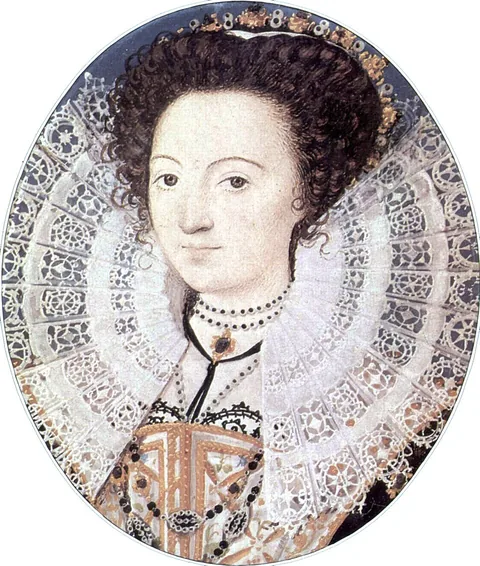
She emigrated to England with her father.57Fact-checkEmilia Bassano was born in London: she was baptized at St Botolph's, Bishopsgate, in January 1569. It was her father who had moved from Italy to England; the family served as musicians at the court of Henry VIII (Wikipedia, "Emilia Lanier"). When he died when she was about seven, her mother went to work elsewhere, so Emilia became the ward of the Countess of Kent. The Countess of Kent, a remarkable woman, decided to educate her.
Emilia received a full classical education, similar to what one would get at Oxford or Cambridge—a level of education Shakespeare himself is doubted to have achieved. She also gained a full legal education, which, strikingly, appears frequently in the plays.
She was Jewish,58Jewish ancestry of the Bassano family is a hypothesis held by some researchers: the evidence is circumstantial, and the question remains disputed (Wikipedia, "Emilia Lanier"). but had to conceal her faith in England, as Judaism was not permitted.59Judaism in England — Edward I expelled the Jews from England in 1290; they were officially allowed back only in 1656, under Cromwell. As I mentioned, she came from an incredibly musically talented family. All these aspects of Emilia align with the plays in a way that Shakespeare’s life simply doesn’t.
12Life in the books
The stage of life Picoult is in shapes the "what if" questions she asks.
I’m curious to hear how your personal experiences, relationships, and life events end up in your books.
I will say I’m a terrible friend because if you talk to me, I might steal a conversation for a character. I do that all the time. Friends who read my books often ask, “Didn’t I say that to you?”
When my kids were growing up, my books’ trajectory shifted significantly. If you examine them, you’ll see a clear evolution. For instance, Songs of the Humpback Whale is fundamentally about the relationship between a mother and a daughter. At the time I was writing it, the daughter was 15, and I was 21, while the mom was 35, making me closer in age to the daughter.
Later, I got married and started writing about relationships and the idea of them ever truly being 50/50. After I had my first son, Kyle, who was colicky, it was a rough time. I used to have this recurring fantasy: I’d go to the cleaners with my husband’s shirts, unroll the window, and throw them out one by one. Then, I’d drive all the way to Mexico and live in a hut on the beach.
One day, I was pushing Kyle in his stroller alongside a friend who also had a baby. I confided this fantasy to her, and she stopped, saying, “I think about that all the time.” That’s when I knew that would be my next book, which became Harvesting the Heart. There’s a scene in the book where that actually happens, and for a long time, my husband wouldn’t let me take his shirts to the cleaner.
As I continued having kids, I started writing what I call the “entire series of all the really scary things that could happen to your kids.” This included everything from illness to kidnapping to gun violence. I always joke to my mom that one day I’ll write about putting your parents in a nursing home, so she better watch out.
My life stage tends to inform the “what if” questions I explore. When my children became contributing adult members of society, my scope broadened. I started looking at issues like the nature of good and evil in The Storyteller,60The Storyteller (2013) — a novel about a baker named Sage who learns that her elderly friend served in the SS, and he asks her to help him die. abortion rights in A Spark of Light, racism in Small Great Things, or gender discrimination in By Any Other Name. Since I’m not as worried on a personal level anymore, the things that concern me are more global issues.
I think one of the biggest takeaways from this conversation so far is the importance of asking, “What if?”
Look at a gate and ask, “What if?” Look at the light and ask, “What if?” Look at someone’s dress, whatever it is. There’s something about that exercise that gives your imagination momentum, isn’t there?
And change one dynamic of it. You watch something on the news and think, “What if this had happened instead? What if it happened here instead of there?” How does that change the story?
13Ghost hunting
Picoult went out with ghost hunters as a skeptic and came home with 29 pennies she can't explain.
Tell me about ghost hunting.
For my book Second Glance, I wanted to write a ghost story, and I knew I had to find a ghost. When I was doing research, I started with the Atlantic Paranormal Society61The Atlantic Paranormal Society (TAPS), based in Warwick, Rhode Island, was founded by Jason Hawes in 1990; since 2004 its members have starred in the reality show Ghost Hunters. Wikipedia. because they were the closest ghost-hunting society to where I live in New England.62New England — the six states of the northeastern US: Maine, New Hampshire, Vermont, Massachusetts, Rhode Island and Connecticut. The guys had a website, and I wrote to all three founders, thinking they would never get in touch with me.
They wrote back within 20 minutes, saying, “Come on down. We’ll teach you about ghosts.” I went to Rhode Island, which is a very small, very freaky state, and they took me out to dinner. The first thing they wanted to explain was why some people become ghosts and others don’t.
They said, “Dying is like getting on a bus. You’re supposed to go to the end of the line, get off, and continue on. But sometimes the bus stops at a rest stop, and you go to use the bathroom. When you come back, the bus is gone. That’s a ghost.” I wasn’t buying any of it.
We then went to an abandoned mental institution in Providence that closed in the 1970s. It was January and very cold. We parked in a field facing backward to make an easy escape, because when you’re ghost hunting, you’re usually trespassing.
I had my hair tied back and was wearing a black jacket. They took me first to an old exercise room. There was a creepy pool with stuff floating in it, and all the windows were boarded up. I’m pretty short, so I peeked in, and what I saw looked like fireflies all over the room. Since it was January in New England, fireflies shouldn’t have been there.
One of the guys took a picture with his digital camera, and the fireflies turned into these big balls of light. A ghost hunter would call this a globule,63Globule — ghost hunters usually call such glowing balls in photos "orbs"; skeptics explain them as dust or water droplets near the lens reflecting the flash. or energy changing form. Again, I was not buying any of this.
Then we walked to another area where a building had burned down with people inside. As I walked next to one of the guys, all the hair stood up on the back of my neck. Before I could say anything, he took his camera and pointed it behind us. What showed up on the screen was a white, misty, wraith-like thing, even though it was pitch black behind us. I thought, “Alright, maybe they have a point.”
At that point, they went on a ghost-hunting call. These are people who contact them because they feel they have a paranormal entity in their house.
We crossed the border into Massachusetts. This family had been hearing moans, groans, bumps, and thumps in their attic. We went up to the attic, which had a padlock door. They gave me the key, and I opened it.
They set up a video camera to record for hours, planning to review the footage later. Then they went downstairs to talk to the homeowners. I was the last one out; I closed and locked the door.
I stopped on the second floor. The family had two children, a 6-month-old and a 22-month-old. Both were in cribs in separate rooms. Their rooms were pristine; no toys, books, or clothes were on the floor. While that might be paranormal in itself, the children were fast asleep.
When I went downstairs, they were talking about the family’s experiences: coming home to find every tap running, or all the cereal spilled from the cabinets in a pile on the kitchen floor. One night, they heard calliope music64Calliope — a steam organ with whistles, heard at fairs, on carousels and on riverboats. and found a child’s toy piano playing on the attic stairs without any batteries.
When I heard this, I said, “I’m going to go check on your children.” I went upstairs, and in the first child’s room, where the floor had been clear, there were now seven pennies arranged in an L-shape around the edge of the crib. All were dated between 1969 and 1973.
I picked them up and put them in my pocket. In the next child’s room, which had also been clear, I found another seven pennies, all dated between 1969 and 1973.
Finally, I went to the attic. I unlocked the padlock, went inside, turned on the light, and found another 15 pennies under the video camera tripod. They were all dated between 1969 and 1973.
This was back when pennies were more common, but it would have been rare to find even one penny that old, as they had been minted 20 years earlier.65Fact-checkShe says the coins were 20 years old. Second Glance, the book she went ghost hunting for, came out in 2003, so the 1969–1973 pennies were about 30 years old at the time (Wikipedia, "Jodi Picoult"). I found 29 of them in total, and I still have all the pennies.
The ghost hunters ended up going back to the house two more times to record, and they eventually did historical research. They said they believed something paranormal was there. Two people had died in that house: one in 1969 and one in 1973.
It was crazy. I wouldn’t have believed it if I hadn’t seen it with my own eyes. They’ll tell you the same thing: “Don’t believe it. Be a doubter until you see something yourself.”
So, do I have a cool job?
No. How do you go from that crazy penny story from 1969-1973 to getting that into a novel?
That is in the novel, in Second Glance. The book is about a ghost hunter who can’t find any ghosts. He’s brought into a land development challenge where a group of local Abenaki Indians66Abenaki — a Native American people of the Algonquian language family from northeastern North America: Vermont, New Hampshire, Maine and southern Quebec. are upset because the developer wants to develop what they think is a burial plot.
ExplainerEugenics and forced sterilization in the US
Indiana passed the first law on sterilizing the "unfit" in 1907, and about thirty other states followed. In 1927, in Buck v. Bell, the Supreme Court upheld such laws as constitutional; Justice Oliver Wendell Holmes wrote in the decision: "Three generations of imbeciles are enough." In all, more than 60,000 people were forcibly sterilized in the US: the poor, patients of psychiatric hospitals and institutions, members of minorities; California sterilized the most, about 20,000.
Many of the laws were modeled on Harry Laughlin's "Model Eugenical Sterilization Law" (1922). The Nazi law of 1933 largely followed it, and in 1936 Heidelberg University gave Laughlin an honorary degree. In 2021 the Vermont legislature formally apologized to the people harmed by the state's eugenics policies and their descendants.
What he uncovers is not just a ghost, but a historical fact from the 1930s, when America was in the business of eugenics, sterilizing people deemed an economic and social drain on society. Most of these individuals were Abenaki Indians or Catholic French Canadians. In fact, the work done in places like Vermont, Virginia, and California became the basis for Hitler’s Final Solution.67Eugenics in Vermont — from 1925 to 1936 the state was home to the Eugenics Survey of Vermont, run by the zoologist Henry Perkins, and in 1931 it passed a sterilization law under which at least 250 Vermonters were sterilized. The Nazi sterilization law of 1933 was drafted with American laws in mind. Wikipedia.
14Empathy and conversation
Picoult's goal is empathy and conversation, so she gives a voice even to people she disagrees with.
Wow. How much do you think about theme when you’re writing? We talked a little bit about what you want to say. In school, theme is the core thing people talk about. Is that something like—
I remember writing essays in fourth grade, asking, “What is the theme of this?” I never think about theme.
If I hear the word “motif” one more time...
Sometimes I think about metaphor more than I think about theme. In Hollow Bones, for example, the title comes from a character who, as a child, freaked out when she saw a mother bird pushing a baby bird out of a nest. Her own mom told her, “Birds have hollow bones.68Hollow bones — many bird bones are hollow inside, with air spaces and thin struts: the skeleton is light but strong, which helps them fly. Just watch.”
The things that make them so fragile also make them capable of flight. That idea becomes a metaphor in the book. I focus more on those kinds of metaphors than on explicit themes.
What are you pursuing when you write? Is it enjoyment for readers, clarity, or beauty? What is your primary goal?
Empathy and conversation. That’s what I’m pursuing. I hope people finish my books and start talking. My favorite thing to hear is, “Oh my God, I can’t wait for someone else to read this so I can talk to them about it.” That not only keeps your story alive, but it keeps why you wrote the story alive.
I spend so much time ensuring my books present different points of view, perhaps ones you’ve never heard before. In Small Great Things, one of the narrators is a white supremacist,69White supremacist — an adherent of the ideology of white racial superiority. which was not an easy character to write. For Sing You Home,70Sing You Home (2011) — a novel about a music therapist who falls in love with a woman after her divorce and goes to court with her ex-husband over frozen embryos. a book about gay rights, I conducted research with Focus on the Family.71Focus on the Family — an evangelical organization in Colorado Springs, founded by the psychologist James Dobson in 1977. Its conferences claiming that homosexuality can be "healed" were called Love Won Out: Focus on the Family ran them from 1998 and handed them over to Exodus International in 2009.
I was writing that book when my oldest son had just come out to us. Suddenly, I wasn’t writing theoretically; I was a mom on a mission. When I interviewed the public information officer from Focus on the Family, I asked, “Do you worry that the rhetoric you’re using—all about ‘pray away the gay’ and ‘Love Wins Out’ seminars72Fact-checkShe says "Love Wins Out"; Focus on the Family's conferences were actually called Love Won Out (Wikipedia, "Love Won Out"). to obliterate gayness—will lead to acts of violence against the LGBTQIA community?”73LGBTQIA — lesbian, gay, bisexual, transgender, queer, intersex and asexual.
She replied, “Thank goodness that’s never happened.” Sitting there, I felt a flush of heat rise up my face. I asked, “Do you know who Matthew Shepard74Matthew Shepard (1976–1998) — a University of Wyoming student. In October 1998 two men beat him and left him tied to a fence because he was gay; he died six days later. The 2009 federal hate crimes law bears his name. is?” She looked at me, puzzled, and asked, “Who?”
I excused myself for a moment, went to the bathroom, and splashed water on my face. It was incredibly difficult to take off my “mom” hat and put on my “interviewer” hat so I could finish the interview and write that character into the book. That’s the responsibility I feel I have to my reader: to ensure all sides of an issue are represented, even if they are ones I don’t agree with.
Tell me about writing graphic novels, specifically Wonder Woman.
That was a total fluke. I was sitting at my desk one day, not even remembering what book I was working on, when I received an email from an editor at DC Comics.75DC Comics — the American comics publisher, home of Superman, Batman and Wonder Woman. He said they were interested in having me write a few issues of Wonder Woman,76Wonder Woman — the DC Comics heroine; Picoult wrote issues 6–10 (2007), later collected as Wonder Woman: Love and Murder. and I would only be the second woman to write her since her conception in the 1940s.
I thought, “That’s really flattering, but no, I don’t have time for that.” When I went downstairs for dinner, I told my family about it. My kids all stopped, looked at me, and said, “Mom, you have to write Wonder Woman!”
So I agreed. It was probably my first collaboration, predating my work with my daughter, writing Mad Honey with Jenny Boylan,77Jennifer Finney Boylan (born 1958) — American writer and transgender activist. She and Picoult cowrote Mad Honey (2022). and my theater writing. It was a complete experience because I wasn’t just trying to be true to the existing lore; I also had input from an editor and a penciler.78Penciler — the artist who draws a comic's pages in pencil; an inker then goes over them in ink, and a colorist adds color.
Instead of focusing solely on language, I had to consider how to represent a story visually. I learned about bleed pages79Bleed page — art that runs past the edge of the page and is trimmed at the printer, with no white margins, so it feels bigger and more vivid. and how to make scenes pop. This was such a different and foreign thought process for my brain, as I don’t naturally write in pictures. I felt like I had to learn on the job very quickly.
If they hired me to be the second woman to write her, I wanted to leave my fingerprint on it. I considered what every woman has that Wonder Woman hadn’t explored yet. Every woman has issues with her mother. So, I decided to write that for Diana Prince.80Diana Prince — the civilian name of Wonder Woman, the Amazon princess Diana. Her mother, the Amazon queen Hippolyta, comes from Greek myth. Wonder Woman’s mother is Hippolyta, the Amazon. I created a five-story arc about Hippolyta wanting her daughter to be something Wonder Woman no longer desired to be.
15Business, bans and publicity
A book won't reach readers today without publicity, and a writer's main tool is being her own editor.
How much do you think about the business of writing? We’ve talked so much about the craft, but what about the economics of it all?
A lot. Every two years, I publish a novel, and every two years, the entire landscape of publishing changes. I’ve been in the industry long enough to marvel at how it keeps reinventing itself.
Even at a basic level, I’m here doing this podcast because podcasts are where people are finding books now. That wasn’t true two years ago.
Yes, all you authors reaching out.
That’s a new and interesting development. The fact that these podcasts are being filmed now, allowing people to watch them, is also new. The change in publishing itself, from five big houses81Five big houses — the Big Five of US publishing: Penguin Random House, HarperCollins, Simon & Schuster, Hachette and Macmillan. to the rise of smaller presses, independent publishing, and self-publishing, has completely transformed the landscape.
BookTok.
BookTok is huge.82BookTok — the book community on TikTok; readers' videos there have a noticeable effect on book sales. It’s the only reason I have a TikTok account. I created one to see if I could understand its appeal, as it’s the one thing a publisher can’t pay for: word-of-mouth. I wanted to engage with that community, viewing it as a new and exciting avenue.
It has been cool. Many attendees at my events, typically between 25 and 35, tell me they discovered my books after hearing me speak on TikTok. They enjoyed what I had to say and decided to read my work. This represents a whole new way people are finding my books, which is remarkable after all this time.
I frequently consider these aspects of publishing. Another major concern is the rise of book bans in this country. I’ve become a vocal, outspoken critic of them.
In 2024, Nineteen Minutes was the most banned book in America,83Most banned book — according to PEN America, in the 2023–2024 school year Nineteen Minutes was banned in US schools more often than any other book, 98 times. PEN America. and I am currently the fourth most banned author. Book bans have increased 1100% since 2020, with PEN America84PEN America — an American writers' free expression organization founded in 1922; among other things it tracks book bans in US schools. citing 23,000 individual titles targeted.
Initially, they targeted LGBTQ and BIPOC85BIPOC — Black, Indigenous and people of color. books and authors, then shifted to mature content, where my books often fall. For many authors, especially those writing for young adults, these bans directly impact their livelihood, as they rely on sales to school libraries. This isn’t the case for me. My readership is primarily adult, so school bans affect a smaller subsection of my audience. I feel duty-bound to speak out because I have a platform and can do so without it threatening my livelihood or income.
Returning to the business of publishing, how do you track the changes? Do you have specific resources or conversations with other authors that help you track these changes? And as you launch a new book, how do you approach its strategy?
I have the best team in publishing; they are amazing. It literally feels like an army behind me. We’re all marching together, and I’m at the front. It’s the end of Act One in Les Mis,86Les Misérables — the first act of the musical ends with the song "One Day More," hence the joke about the first day of the tour. right?
Sorry.
It’s “One Day More.” Well, this is day one of the tour. My team informs me about changes in the landscape, how and where we should pitch each new book. I’m currently on a tour unlike anything I’ve seen an author do in years: 30 cities, a different one every day. It’s intense, with events hosting up to 1200 people.
When tickets went on sale for this book, I was concerned. The economy in America is not in a good place, and when people must choose between groceries, gas, or a book, I know what most would pick. Yet, the tickets sold so fast. This told me that people need joy and self-nurturing right now. Hopefully, they trust me enough to deliver a story that makes that choice worthwhile. That means the world to me.
My team designs our public strategy and keeps me informed. Most of the time, I’m simply in my office writing or researching, not thinking about these things.
Where do you rank on the scale of publicity? Is it super important, part of your job as an author, or more of a ‘Field of Dreams’ approach87Field of Dreams (1989) — a film with Kevin Costner in which the hero hears a voice saying "If you build it, he will come" and builds a baseball field in his cornfield. The line became a saying. where if you build it, they will come?
It’s 100% publicity, not just writing the best book. We’re in an era I call the “American Idolization” of publishing.88American Idol — a TV singing competition on the air since 2002, in which viewers pick the winner. Authors can no longer sit in an ivory tower, write books, and expect them to reach the masses. That approach doesn’t work. There’s a lot of noise out there; if you have something valuable, you must ensure people know it.
I’m an anomaly; I love talking to people, doing events, and meeting my readers. Hearing what my stories have meant to them is the final piece of the equation for me, as they reveal how the book was received.
When you write fiction, you don’t expect to change someone’s life, but occasionally you do. I’ve received many letters from readers. The most impactful are from teenagers who read Nineteen Minutes and said, “I thought of bringing a gun into school, but I read this book, and I’m not going to.” That is profoundly life-changing for me as an author.
Others who read The Pact89The Pact (1998) — a novel about two neighboring families whose teenage children, in love with each other, make a suicide pact. have shared, “I was feeling suicidal, but I’m going to tell an adult today.” That is deeply meaningful. Then there are those who used Mad Honey or Sing You Home to come out to their families, fostering relationships, like one who reconnected with her grandmother after ten years. It’s all about empathy through stories, empathy through novels.
Because I enjoy it and I’m an extrovert at heart, I don’t mind the publicity aspect. It’s genuinely fun. Many authors, in my opinion, shouldn’t leave their houses for publicity; it doesn’t serve them well. While some storytellers excel only on the page, others can tell stories face-to-face and in public in a super engaging way. Those are the authors who should be out meeting their fans.
Last question: If we were co-running a university seminar, working together on the curriculum, what would you want writers to truly understand?
You have to learn how to be your own best editor. People will help you along the way, and you should absolutely seize those opportunities every time you see one. Don’t reject the advice of your publisher or your publishing company.
Figure out what publishing format works best for you. This could be a traditional format, where it might take a very long time to get an agent90Literary agent — a go-between for an author and publishers: the big American publishers rarely accept manuscripts without an agent, who takes a cut of the author's income, usually 15%. but you have a publishing company behind you, or you might choose to self-publish and do much of the work yourself.
The biggest tool, the most important tool, the one you’ll reach for the most in your toolbox, is being able to look at your own writing with objectivity and “kill your darlings”91"Kill your darlings" — old advice to writers to cut ruthlessly what the author loves but the text doesn't need. It goes back to a 1914 lecture by Arthur Quiller-Couch: "Murder your darlings." to make it a better story.
Thank you very much. Thanks for your energy. Thanks for your passion. That was fantastic.
Thank you so much. Thanks for doing this.
And congratulations on the new book!
There we go.
That’s my conversation with Jodi Picoult. If you liked it, you’ll also enjoy my conversations with Richard Powers92Richard Powers (born 1957) — American novelist; his novel The Overstory (2018) won the Pulitzer Prize. and Anne Lamott.93Anne Lamott (born 1954) — American writer, author of the book on writing Bird by Bird (1994).


