

How I Write
Chapters
A teenage vow, voracious reading and copying other people's writing by hand made Gilbert a writer, and she begs aspiring artists not to go into debt for an MFA.
Read the chapter- At fifteen or sixteen, Gilbert performed a ritual and vowed to write no matter what; writing felt like her first encounter with the divine.
- Like Cheryl Strayed, she kept notebooks of favorite passages copied by hand from novels, the way a painter friend learned by sketching other artists' work in museums.
- She read everything in sight: her father's library (Roth, Updike, Irving, Hemingway, Faulkner) and even shampoo bottles, and in college she read every book on NYU's undergraduate English reading lists without taking the classes.
- An MFA makes sense, she says, only if you're wealthy or get a full scholarship, because starting an artist's life in debt is a nightmare.
Creativity is a divine partnership: some of the work you do yourself, some happens through you, but the second kind is rare.
Read the chapter- Asked whether she creates or is a channel for inspiration, Gilbert answers "yes": both.
- The Signature of All Things feels to her like a book that's better than she can write; the summer she wrote it is almost a blackout.
- To create, you have to kick the critics, rivals and admirers out of the room, and finally leave yourself; writing gave her what meditation was supposed to.
- That altered state is a tiny fraction of forty years of work: chasing it is pointless, and daily discipline prepares the ground for it.
Gilbert writes the way a farm runs: in seasons, with early mornings and short daily sessions of 45 minutes.
Read the chapter- Perell recalls a video of Avicii in the studio, tense and unsure of himself, while Chris Martin calls him a genius: creativity has a real mundanity to it.
- Gilbert doesn't write every day: a season of research and preparation makes up 90% of the work, followed by three or four months of writing, for which she clears her calendar in advance.
- Her rule is a 45-minute timer with no getting up and no internet; three sentences make a good day, and on the first day you want to keep going, get up and leave so you don't break the rhythm.
- She tells people not to quit their day jobs: you don't need eight hours a day, you need an hour before work; the brain can stay in the furnace for about an hour, then lie on the floor and do nothing, just don't scroll.
- In the last 50 or 100 pages she gets what her family calls "barn fever": like a horse that has spotted the barn, she stops eating and sleeping.
Ideas arrive like visitors from outside, and sometimes characters should take the wheel, but a complex book needs a map.
Read the chapter- Even scientists and atheists say an idea "came to them"; personifying that feeling as muses, Gilbert argues, is saner than believing everything comes out of your own brain.
- Hilary Mantel pulled up a chair beside her and talked to Thomas Cromwell while writing Wolf Hall.
- Gilbert left the final love story in City of Girls to her characters; a romance novelist friend taught her to create the characters, put them together and let them do what they would do.
- For The Signature of All Things, spanning 150 years and several generations, she wrote a 70-page synopsis; preparation is like a house painter taping everything off so he can grab the roller and just go.
Criticism has never helped Gilbert, so the very first reader, in her view, has to be purely supportive.
Read the chapter- Gilbert feels most like herself when she's alone and writing: the ego has left the room.
- Criticism has never made her better, and people who advertise themselves as brutally honest can't wait to brutalize.
- By Brené Brown's standard, first readers must want you to succeed, have taste you trust and know how to say tenderly what isn't working.
- Perell argues that supportive shouldn't mean mere validation, but Gilbert insists the very first reader should only be supportive; she hears the truth anyway in how her friend's energy dips when she reads aloud.
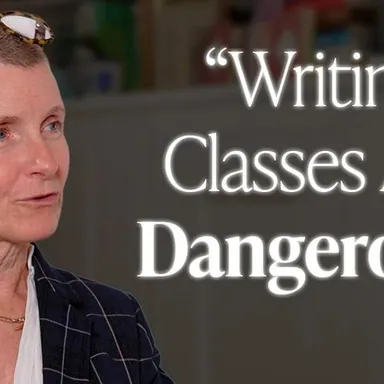
- College writing classes struck her as a dangerous room full of cruel "lunchroom politics," so she decided to find her voice somewhere else.
Gilbert's graduate school was not a classroom but the Coyote Ugly bar, a diner and the isolated communities of Maine.
Read the chapter- In 1990s New York she had an apartment for $900, could work four bar shifts and be an artist, and she now sees it was a golden age.
- Behind the bar she watched a nightly show of hundreds of voices and stories, a reverse stage; the movie Coyote Ugly was based on her article about the bar.
- Told as a teenager to "write what you know," she felt she knew nothing but her field hockey team, so she went to school in New York and became a traveler.
- As a journalist she sought out subcultures so siloed they seemed frozen in amber, like Maine's lobstermen and island communities, which had no idea the wider world was different.
Gilbert learned the novel from Dickens: never let the reader get lost, start with place and era, and listen for an era's voice in its letters.
Read the chapter- Her agent explained that a story collection was hard to sell, so Gilbert set out to learn novel writing from Dickens.
- Dickens's characters are so distinct you remember them when they reappear hundreds of pages later; her service to the reader is to make sure they never get lost.
- She starts with the setting in time and space, then the characters, and plot comes last and is hardest for her.
- Perell recalls Lee Child comparing a setting to a song's key; for City of Girls, Gilbert spent a year or two reading 1940s novels, John O'Hara, old issues of The New Yorker and letters in which people simply chatted.
Gilbert still collects her research with the analog system a high school teacher taught her: index cards in shoeboxes.
Read the chapter- Mr. Kisko taught her the system in 1983: a shoebox, cards sorted by subject, each with a source key and page number, like "A14."
- Each character gets a section for lines, phrases, clothes and hair, so when it's time to write she pulls out that character's cards and builds them on the page.
- Gilbert once left a shoebox with two years of research on a Metro-North train; she got it back, but now she photocopies the boxes every few weeks.
Research means going to the place, finding the person who holds the key, and handing the manuscript to people who can catch the "omelets."
Read the chapter- A week isn't enough, Gilbert says: go to the place, dig through the historical society of the smallest town, look for uncatalogued ephemera and talk to older residents.
- She gave her manuscript of Snow Forest, set in Russia, to Russian geologists and writers to find the "omelets," slips like Americans eating omelets instead of hot dogs at a baseball game.
- On every research trip the main thing is to find the person who holds the key and can open up a whole world.
- In Tahiti she worked from a list (a cave, a waterfall, the beach where Captain Cook landed) and only on arrival learned that the beach had black sand.
For decades writing was the solid ground under Gilbert, but she now thinks it's dangerous to build your identity even on that.
Read the chapter- Whatever collapsed in her life, writing remained the place where Gilbert knew who she was.
- Grief felt to her like a head injury: six weeks after Rayya died she threw herself into City of Girls, her most champagne-happy book, and wrote the book about Rayya only seven years later.
- She now thinks it's suboptimal to identify with anything that can be lost, even writing, and that she may have to let go of that lifeboat too.
- A private journal helps her "remain visible to yourself," as a note from a 12-step meeting on her desk says.
- Rob Bell's "seven Robs ago" and Springsteen's "they're all in the van" capture how we change while keeping everyone we've been.
Writing is still fun, easy and profitable for Gilbert, even though the business feels harder for everyone than ever.
Read the chapter- When John Hodgman asked why she writes, Gilbert said, "Because it's fun, easy and profitable," and in a strange way it's true for her.
- The big magazine paychecks are gone, but Substack has arrived, where, as Perell notes, she has 200,000 subscribers.
- Attention has been hijacked by the distraction industry, fewer people make most of the money, and fans don't know about her new books even though they follow her.
- Publicists spend their lives putting out internet fires, and Gilbert doesn't share the fear of AI: humans already write better novels than she does, and that doesn't stop her.
Artists have always complained, so whining gets you nowhere, and a burned-out field needs rest, which is why Gilbert took six months off writing.
Read the chapter- "Steal a camera if you have to, but stop whining and get back to work": Herzog wrote this to a friend of Gilbert's, an aspiring Italian filmmaker in Rome.
- For almost forty years she has heard that this is a hard time to make art, and it seems there is never a good time.
- Burned out, Gilbert took her first six-month sabbatical with no writing: no flying, walking the dog, healing an injury, clearing out the house and seeing friends.
- Fields need seasons when they lie fallow, or the soil is destroyed.
For Gilbert, Eliot, Saunders and Mantel stand for fearlessness, genius without cruelty and a historical novel that feels alive.
Read the chapter- George Eliot was fearless and cunning as a fox: she took a man's name to get published, as foxy as Whitman writing newspaper puffery for his own book.
- George Saunders is a genius who isn't a jerk, proof that genius doesn't excuse treating people badly.
- Hilary Mantel's Wolf Hall is a historical novel, a literary masterpiece and a modern book without a single anachronism, and Gilbert studies it like the Torah.
- Bad historical novels pile on twee research details, while Mantel's characters feel alive, as if Cromwell really sat in the room with her.
The world is worth stubbornly enjoying even while it burns, and Gilbert wants students to get out of the classroom and into life.
Read the chapter- The "stubborn gladness" in Jack Gilbert's poem "A Brief for the Defense" is about enjoying the world even as it's on fire; Gilbert has the words tattooed on her arm in white ink.
- When she feels connected to God, she often hears: "What a pity it would be if no one saw this."
- She wanted to tell MFA students at the University of Tennessee to get out from under the fluorescent lights and roll around in the world, even if it hurts.
- She also wanted them not to go into debt and to get jobs working with people instead of chasing grants: do more, think less.
Quotes
On what her work is made of
“Much more of what I do is discipline than inspiration.”
Elizabeth GilbertRead from 10:44On the daily 45 minutes at the desk
“The magical trick is this: the first day you want to keep going, don’t.”
Elizabeth GilbertRead from 14:27On why not to quit your job to write a book
“You don’t need eight hours a day; you need an hour a day.”
Elizabeth GilbertRead from 15:57On who shouldn't see your draft
“My experience with anyone who advertises themselves as brutally honest is that they can’t wait to brutalize it.”
Elizabeth GilbertRead from 27:34On writing as an anchor in grief
“At this point in my life, I consider it suboptimal to identify yourself as anything that can be lost, because everything can be lost.”
Elizabeth GilbertRead from 52:28On why writing is fun for her
“Many wouldn’t find it fun to spend three years studying 19th-century moss, but to me, that’s the most fun you can have.”
Elizabeth GilbertRead from 57:00On why AI doesn't scare her
“I don’t write novels to write the best novel; I write novels to write the best novel I can write.”
Elizabeth GilbertRead from 1:03:42On George Saunders
“I love a genius who’s not a jerk because it proves all the jerk-geniuses wrong when they claim, ‘I have to be a jerk because I’m a genius.’”
Elizabeth GilbertRead from 1:09:15
Summary
At sixteen, Elizabeth Gilbert performed a "witchy" ritual and vowed to devote her life to writing. Forty years later, the author of Eat, Pray, Love and Big Magic tells David Perell that creativity is a partnership between labor and inspiration, but that the state in which a book seems to write itself is extremely rare: her work is above all discipline. She writes in seasons, like on the farm where she grew up: a long season of research and preparation, 90% of the work, then three or four months of writing with a 4:30 a.m. alarm. Her advice to beginners: 45 minutes a day, no internet, no getting up from the chair, and stop even when you badly want to keep going.
On craft: a reader should never get lost in a book, a lesson she learned from Dickens. A novel starts with a place and an era, then come the characters, and plot comes last and is the hardest. Gilbert finds the "key" of an era in old novels, magazines and letters, collects her material on index cards in shoeboxes using a system from a high school teacher, travels to her settings herself, and hands the finished manuscript to experts to catch the "omelets," the slips that give an outsider away. A first reader, in her view, should only be supportive, and a manuscript is best kept away from anyone "brutally honest." She talks people out of MFAs, and especially out of going into debt for one: her own school was the Coyote Ugly bar, a diner and the closed island communities of Maine.
On the personal side: after her partner Rayya Elias died, Gilbert took refuge in City of Girls, her most joyful book, and wrote about her grief only seven years later; she now thinks it's dangerous to build your identity even on writing. Publishing has gotten harder, with readers' attention captured elsewhere, but artists have always complained, and she recalls a letter from Werner Herzog: "Stop whining." The episode closes with George Eliot, George Saunders, Hilary Mantel and the "stubborn gladness" from a Jack Gilbert poem that she has tattooed on her arm.
Mentioned
- Eat, Pray, Love00:00the book many readers know Gilbert for
 Cheryl Strayed01:52also copied favorite passages into notebooks as a teenager
 Ann Patchett04:59"without a full ride, they haven't really accepted you"
- The Signature of All Things07:48the book that's "better than I can write"
Show 20 more mentionsShow fewer mentions
 Avicii11:08tense and unsure of himself in the studio
 Chris Martin11:08"Dude, you're a genius!"
- Big Magic: Creative Living Beyond Fear20:20ideas as a force that comes from outside
 Hilary Mantel21:30talked to Thomas Cromwell while she wrote
- Wolf Hall21:30the book Gilbert rereads most often
- City of Girls22:05a love story the characters decided for themselves
 Brené Brown27:53what first readers should be like
- Coyote Ugly33:00the movie based on Gilbert's article about the bar where she worked
 Charles Dickens37:34the greatest master of character
 Lee Child40:20setting as a musical key
 Rayya Elias51:28Gilbert's partner, and her grief after Rayya's death
 Rob Bell55:23"that was seven Robs ago"
 Bruce Springsteen55:56"they're all in the van"
 John Hodgman56:28"fun, easy and profitable"
 Substack58:43a new way to make a living from writing
 George Saunders1:03:42a genius who isn't a jerk
 Werner Herzog1:04:14"Stop whining, steal a camera"
 George Eliot1:07:57took a man's name to get published
 Walt Whitman1:08:43wrote rave reviews of his own book for the papers
 Jack Gilbert1:12:06"stubborn gladness" from the poem "A Brief for the Defense"
Sponsors of the episode
 Alpha School18:49a private school where students finish academics in two hours a day
Transcript
01The vow and the copied passages
A teenage vow, voracious reading and copying other people's writing by hand made Gilbert a writer, and she begs aspiring artists not to go into debt for an MFA.
We got Elizabeth Gilbert on the show today, and you might know her from books like Big Magic1Big Magic (Big Magic: Creative Living Beyond Fear, 2015) — Gilbert's book on living creatively without fear, in which ideas are a living force looking for someone to bring them into the world. or Eat, Pray, Love,2Eat, Pray, Love (2006) — Gilbert's memoir of the year after her divorce, spent in Italy, India and Indonesia. It spent 187 weeks on The New York Times bestseller list and was made into a 2010 film with Julia Roberts. but her story begins back when she was a teenager and she made a vow to dedicate her life to writing. And now, decades later, I want to ask: What is it that you’ve learned about the craft? Where do you go when the creative well runs dry? How do you tell great stories, build compelling characters? And what advice do you have for aspiring writers? So here we are in my apartment in New York, and here’s my conversation with Elizabeth Gilbert.
Tell me about the vow you made with writing early in your life.
When I was about 15 or 16, I decided to commit myself to writing. I even performed a ceremony, a kind of witchy teenage ritual, where I vowed my life to it.
I’m not sure how much I fully comprehended at the time, but the vow implied a commitment: no matter the cost, no matter what others said, regardless of whether I was good or successful, I would pursue writing. It felt very holy.
From a very early age, the act of writing felt like my first encounter with divinity — something otherworldly, mysterious, and beautiful. It felt like a gift, and I took it very seriously. While there was much in my youth I didn’t take seriously, including my own health and well-being, this commitment to writing was different.
Did you feel that sense of magic as a reader, or was it really as a writer where you felt that?
I certainly felt it as a reader. I was once speaking with Cheryl Strayed,3Cheryl Strayed — American writer, author of Wild (2012), a memoir of hiking more than a thousand miles of the Pacific Crest Trail alone. It was filmed in 2014 with Reese Witherspoon. Wikipedia. and we discovered we had both done the same thing. As teenagers, we were such passionate readers that we kept notebooks where we copied passages we found beautiful.
My notebooks are filled with excerpts, some four or five pages long, where I had laboriously handwritten entire sections of novels, or sometimes just a line or two. Something in me loved it so much that I wanted to absorb it. She did the same thing.
The physicality of it was important. When I started writing, we didn’t have computers, so everything was done by hand. The act of writing these beautiful words myself, imbibing them, did something to me.
I have a friend who is an incredible painter. As an artistic teenager, she would go to museums and draw, filling notebooks with sketches of other artists’ work. That was partially how she learned to draw. Cheryl and I were doing something similar, and it was partially how we learned how to write. Those words looked beautiful and magical to me. I wondered, “How are they doing this?”
Who did you copy?
Whoever was around. I was a voracious reader, influenced by my dad. He read what men were reading in the 60s, 70s, and 80s, so I read those.
Most of what was published then was written by white men of a certain age, especially since my dad was the main reader in our house. I read Philip Roth,4Philip Roth (1933–2018) — American novelist, author of Portnoy's Complaint (1969) and American Pastoral, which won the Pulitzer Prize (1998). John Updike,5John Updike (1932–2009) — American novelist, author of the four Rabbit novels about Harry "Rabbit" Angstrom, two of which won him Pulitzer Prizes. Patrick O’Brian,6Patrick O'Brian (1914–2000) — English novelist, author of a series of naval novels set in the Napoleonic Wars about the friendship of Captain Jack Aubrey and ship's surgeon Stephen Maturin, the basis for the film Master and Commander: The Far Side of the World (2003) with Russell Crowe. John Irving,7John Irving (born 1942) — American novelist, author of The World According to Garp and The Cider House Rules; he won an Oscar for his screenplay of The Cider House Rules. and also Hemingway and Faulkner, as he had those in the library.
I read whatever was in our house: Reader’s Digest,8Reader's Digest — an American family monthly of condensed articles, founded in 1922 and for many years the best-selling magazine in the US. Woman's Day — a women's magazine about home, cooking and family, published since 1931. Woman’s Day magazine, even the back of a shampoo bottle. I just wanted to read everything.
When I went to college, I didn’t study English because I wanted to learn things that I couldn’t learn simply by reading. However, I obtained the reading lists for all the undergraduate English classes at NYU and read every book.
If I came to you and said, “I want to write novels, I want to learn what you did,” would you caution me against getting an MFA?9MFA (Master of Fine Arts) — a graduate degree in creative writing or the arts at American universities, usually two to three years long and, as a rule, paid for by the student. What advice would you give?
If you’re wealthy or receive a full scholarship, and you feel it would be great for you, then certainly. Many great writers have come out of MFA programs.
However, I would beg you on my knees, plead with you as though for my own life, not to go into debt for an arts degree. Starting life as an artist in debt is a nightmare. Please don’t do that.
If you are truly passionate, it feels right intuitively, and you can pay for it out of pocket without hardship, then consider it. My friend Ann Patchett10Ann Patchett — American novelist, author of Bel Canto and The Dutch House. A "full ride" covers all tuition and often living expenses as well. believes that if they don’t offer a full ride, they haven’t truly accepted you into the program; they just want your money. If they give you a full ride, then they genuinely want you there. That’s a harsh perspective, and I don’t know the realities well enough to confirm its truth.
But please, please, please don’t go into debt to be an artist. And also, please don’t go into debt to be…
Anything else to add?
No, just about debt and art. Please don’t. Please don’t.
02Labor and inspiration
Creativity is a divine partnership: some of the work you do yourself, some happens through you, but the second kind is rare.
You once shared a definition of creativity as the divine partnership between human labor and the mystery of inspiration.
This came out of a question someone once asked me, framing it as a binary choice. Do you believe you are the one creating, doing the work and making this thing? Or do you believe you are the channel through which inspiration pours? My answer was yes.
I think it requires a mind expansive enough to embrace both realities as true. It isn’t just me. I can tell the difference between something I did and something I’m watching happen through me, and both are important.
I cannot make the second thing happen. I can, however, provide the labor that allows work to happen. Anyone creative knows about times when they lose track of hours, look up to find the room dark and night fallen, without even knowing where they are. There’s a state of almost being taken over by this thing.
But that isn’t always the case. Sometimes it’s labor; other times it’s simply allowing inspiration to come through. Both are true, and that is what creativity is.
When you get taken over, there’s a sense that you made something, and you wonder, “How did I do that?”
Exactly. If it were only about being a channel, I wouldn’t be so tired from how hard I work, because I truly do work very hard.
Every artist can point to certain things and say, “I don’t remember doing that. It’s better than anything I could consciously create.” I have a feeling about one of my books: “That’s better than I can write.”
Which book is that?
The Signature of All Things.11The Signature of All Things (2013) — a novel about Alma Whittaker, a 19th-century botanist and daughter of a wealthy plant trader, who spends her life studying mosses. Wikipedia. It’s better than I can write; I can’t do that.
I can look at my other books and think, “I did that. I sat down and, through my labor, created it. That shows how well I can write; it’s right there.” But with The Signature of All Things, I feel like, “I didn’t do that.”
I certainly did a lot of the labor, and I remember working very hard. I worked really hard preparing for that book for almost four years. However, I don’t have much memory of the summer I actually wrote it. It’s a bit of a blackout, so I don’t know what that state is, but it’s exciting.
When you’re in that channeling state, what does it feel like?
It doesn’t feel like anything because I’m not truly present. I wish I could remember which French visual artist said that when you prepare to create, you first have to mentally and emotionally kick the critics out of the room.12Kicking the critics out of the room — the American painter Philip Guston used to retell this idea, which he heard from the composer John Cage in the 1950s: when you start working, everyone is in your studio (the past, your friends, enemies, the art world), and then one by one they leave, and if you're lucky, you leave too. Then you must kick out everyone you compete with, followed by all the people who admire you. And then, finally, you have to leave.
You have to leave.
Yes, you also have to go so that this creative act can happen. My experience is that I can’t simply sit down cold and make it happen. But it will come upon me while I’m working.
When I’m in that zone, it doesn’t feel like anything because I’m not present. It’s a blessed relief, like a vacation from having to be myself. It’s a non-normal state of consciousness, or its own altered state.
Every single thing people promised meditation would feel like when I began my spiritual journey13Spiritual journey — in the second part of Eat, Pray, Love, Gilbert spends four months at an ashram in India learning to meditate. is what writing has felt like. Very rarely has meditation itself felt like that. For me, meditation mostly feels like sitting around thinking.
What is that experience? Is it a clear mind? A release? A state of no thoughts?
It can also feel like many other parts of meditation: boring, or looking at your watch, wondering how much longer you have to sit there.
I want to be very clear: the thing we jumped right into, that rarefied altered state where something captures you, and you’re not present for it, then you emerge later to find something done through your hands, is incredibly rare. It’s a minuscule percentage of what my writing life has felt like over the last 40 years. I don’t chase it because you can’t; you won’t get it by chasing it.
Much more of what I do is discipline than inspiration. However, with discipline – sitting down at your desk at the same time every day, being prepared, and making yourself sit there for two hours – that’s the ground that opens you up for the preparation, potentially, for a miracle.
03Farm discipline
Gilbert writes the way a farm runs: in seasons, with early mornings and short daily sessions of 45 minutes.
There’s a real mundanity to creativity. Is “mundanity” a word?
I don’t know. Ask a writer.
There’s a great video where Avicii14Avicii (Tim Bergling, 1989–2018) — Swedish DJ and producer. He co-produced Coldplay's song "A Sky Full of Stars" (2014); Chris Martin is Coldplay's singer. is in the studio with Chris Martin from Coldplay. Avicii is making a sound, and he looks stressed out, not particularly happy, but super focused. Chris Martin hears the sound and says, “Dude, you’re a genius!”
Avicii just replies, “Do you like it?” He seems very insecure. You almost don’t even feel like he’s in the flow.15Flow — a state of total absorption in a task, when you lose track of time and of yourself. The concept was introduced by the psychologist Mihaly Csikszentmihalyi, whose book Flow came out in 1990. The juxtaposition between those two people is wild.
I had good preparation for a writing life because I grew up on a farm.16The farm — when Gilbert was four, her parents bought a Christmas tree farm in Litchfield, Connecticut. There was no TV in the house, and the family read a lot. Farming and agricultural life remain the most operative metaphor for my creative process.
First of all, it’s very hard work. I was taught very hard work from a young age, and I thank my mother for that, even though I didn’t at the time.
Farming, especially animal care, demands unwavering discipline. You can’t skip a day; the animals will suffer. It requires a lot of repetitive tasks.
I also apply an agricultural model of seasons to my work. There’s a research season. I don’t write every day; I write in seasons. I’ve just completed a writing season, but typically there’s a season for research and then preparation, which accounts for 90% of my work. This involves gathering everything I’ll need, as both my fiction and nonfiction usually require extensive research.
Then comes the season of creativity, which feels like summer or spring – the most generative, magical time. You only have a limited window to get it done.
I let everyone in my life know that I’ll be unavailable for a few months. I clear my calendar well in advance, telling people, “We’re leading up to this. I’m going to be writing, so please don’t ask me to do anything between these dates.” This period, usually three or four months, is the golden time – the season of actually creating the work.
And then you’re working farmer’s hours.
I’m working farmer’s hours. I’m up at 4:30, pulling the sun over the horizon.
Especially at the beginning, I write by the clock, not by word count. My best advice for establishing writing discipline is that 45 minutes is a magical number.
Set a timer for 45 minutes, sit down, and the only rules are you cannot stand up from the chair and you cannot get on the internet. If you finish those 45 minutes with just three sentences, that’s a good day’s work. You don’t gauge it by productivity; you gauge it by the duration of your focus.
Do that every day. The magical trick is this: the first day you want to keep going, don’t.
What?
You don’t. I’ve found that if you keep going, suddenly you’re in the zone, sitting for four or five hours, but then you won’t write the next day.
That breaks the discipline. The next day, you’ll wake up thinking, “I don’t have to write because I already wrote for four hours yesterday,” and then you won’t write for four months. That’s my experience.
So, when the timer goes off, get up and leave. That creates a carbonated excitement, a desire to get back to it tomorrow. This way, you don’t burn yourself out.
It’s about being steady, steady, steady. That’s what the first weeks usually feel like. Then the flow starts, and by the end, I’m not even in the room anymore. That’s my tactic.
I like the idea that when you start writing, you just can’t stand for a little while. You’re not allowed to get vertical in the seat.
There’s a Yiddish word, sitzfleisch, which essentially means ‘ass flesh.’ When people talk about discipline, they ask, ‘Do you have the sitzfleisch to do that?’ Meaning, do you have enough cushioning on your backside to stay seated?
It’s hard because you get restless, bored, and frustrated, but it’s not forever. That’s where it feels like meditation; it’s only for a specific period.
That’s why I get squirrely when I hear people say they’re going to quit their job to write a book. No, no, no, don’t do that. It’s too much time. You’ll have too much time on your hands, and you won’t be writing eight hours a day. You don’t need eight hours a day; you need an hour a day.
It’s much better to set your alarm an hour earlier, go to sleep an hour earlier, write for an hour, then go to work. Repeat that pattern. Don’t quit your day job. As you know, I’m not an advocate of that.
So, what’s the other ingredient? Is it just a little bit of time, combined with yearning, desire, and a strong “want to”?
I think we’re unrealistic about how much time your brain can handle being in the furnace of creativity. It’s either the furnace or the graveyard, boring or exciting, but always intense. What your brain has to do, the amount of logic it creates, is exhausting.
I usually can’t sit for more than about an hour before a huge weariness comes over me. But once I’m in the flow, I’ll write for an hour, then get up, and lie on the floor doing nothing. A huge part of my creativity is just lying on the floor doing nothing, because for some reason, it’s physically exhausting.
I think it’s because you’re creating new brain synapses or something. I don’t know why thinking that hard feels so tiring. Being that dialed in and focused, there’s only so much I can take.
It’s good to alternate: write, stop, but don’t stop to scroll. Lay down, shut your eyes. Just stop. Your brain is hurting.
When I’m toward the end of a writing project, I get what my family calls “barn fever,” another agricultural metaphor. It’s like when a horse has been out all day, lagging and exhausted, dragging its feet. But when it sees the barn, it suddenly gets a tremendous burst of energy and runs really fast.
It’s called barn fever because it knows it’s almost over. I get barn fever in the last 50 or 100 pages of a book, where I’m just like, “We’re not eating now, we’re not sleeping now.” That’s when I sometimes call a friend and say, “I’m really afraid I might have broken my brain today.”
That’s suboptimal. I try to lead an orderly enough life so I’m not breaking my brain. But toward the end of the book, it can start to feel like I’ve actually done harm to my brain.
AdAlpha School
This episode is sponsored by Alpha School. When you think of school, what comes to mind? For me, it was lectures, homework, being stuck at a desk. And the worst part is that it doesn’t even work. 54% of Americansa54% of Americans — a figure from a 2020 study based on the international PIAAC adult literacy survey: 54% of US residents aged 16 to 74 read below a sixth-grade level, about 130 million people. read below a sixth-grade level. That’s over half of Americans.
We need something new, and that’s why I’m excited to have Alpha School as the flagship sponsor of How I Write. At Alpha, you go to school, you get all your academics done in only two hours per day, so that then you could spend the rest of the time learning life skills like running a business, writing a musical, giving a TEDx talk,bTEDx — local TED-style conferences that independent organizers around the world have run under a free TED license since 2009. you know, the kind of things that make you a capable and well-rounded person. And it’s working. They have the academics figured out. Alpha classes test in the top 1% nationally, and more than 90% of students say they love school. Now, I used to live in Austin, where Alpha School started, and I was consistently blown away by what was happening there.
I personally mentored a bunch of the kids, and what stuck out to me is how much their team believes in the potential of kids. Alpha’s approach and the success it’s already having is why it’s the most talked-about K–12 school in the world right now, and also where I want to send my kids to school one day. So if you want to learn more, visit go.alpha.school/howiwrite.
04Muses and willful characters
Ideas arrive like visitors from outside, and sometimes characters should take the wheel, but a complex book needs a map.
What do you make of the idea of the muses,17The Muses — in Greek mythology, the nine daughters of Zeus and Mnemosyne who presided over poetry, the arts and the sciences; ancient poets opened their poems by invoking a muse. going back to ancient Greece? In what ways is that concept right, and in what ways are you unsure or disagree?
When I wrote Big Magic, I discussed ideas as an energetic force outside of us that wants to engage with us. That’s what inspiration feels like; it’s what inspiration means. It means breathing in, taking the spirit into yourself. Even empirical thinkers, scientists, and atheists, when asked about their big ideas, will almost always say the idea “came to them.” They use the language of a visitation, and that’s precisely what it feels like.
Creating the idea of muses is a way to name that feeling, to personalize it, and to acknowledge that you are being visited. You are visited by these female spirits who want to create with you. I think that’s actually a more sane way to see it than believing I’m sitting here generating everything out of my own big, beautiful brain. It doesn’t always feel like I’m solely generating it. It often feels like there’s some other presence in the room.
Many writers and artists share this sentiment. Hilary Mantel,18Hilary Mantel (1952–2022) — British novelist, author of a trilogy about Thomas Cromwell, adviser to Henry VIII: Wolf Hall (2009), Bring Up the Bodies (2012) and The Mirror & the Light (2020); the first two won the Booker Prize. She wrote about her childhood sense of the otherworldly in her memoir Giving Up the Ghost (2003). Wikipedia. who wrote the incredible Wolf Hall Thomas Cromwell series, would pull up a chair next to her as if she were talking directly to Thomas Cromwell while writing those books. She genuinely conversed with him. Mantel also spoke about seeing ghosts as a child, so she was very tapped into other realms. She essentially co-wrote that book with Thomas Cromwell, if you read her interviews about it.
I’ve had similar experiences with fictional characters. With my novel City of Girls,19City of Girls (2019) — a novel about Vivian Morris, who arrives in New York in 1940 and falls into the world of the theater; she tells the story in old age. there’s a love story that appears at the very end of the book, though it’s referred to through the first four-fifths. I had the entire book mapped out and planned, but I didn’t know what that love story was actually about. I left it to the characters. By the time they showed up on the page and met each other, I trusted them.
I thought, “What do you guys want to do? What’s your deal with each other? This whole love story is the subject of the book. What is it? What are you to each other?” Because I didn’t know. I just let them take the book and tell their story, and they surprised me.
I learned a bit of that from a friend who is a romance novelist. In my novel The Signature of All Things, there’s a 19th-century woman in a very repressive culture who discovers a cache of erotica and pornography, leading to a big sexual awakening. I was writing about that point, and I knew it would be a plot point, but then I wondered, “Do I want to go in this direction? Will this be embarrassing for her?”
I talked to my friend who writes romance novels and a lot of sex scenes. I asked her, “How do you do that? How do you know how far to go? Where do you pull back?” She said it’s simple: “You just create the characters, put them together, and then let them do what they would do if they were allowed to.” That made so much sense to me. I can do that. I’m a little too much of a control freak to give them the whole book, but I’m open enough to say, “Okay, over to you guys. How are you going to do this?”
Was that the book where you wrote a 70-page synopsis before writing it?
Why did you do that?
I had so much going on in that book that I needed it as a guidepost. It outlined: “Then this happens, then this happens, then this happens.” The book spans 150 years, features multiple generations of characters, and involves many plot twists and turns. I needed that map.
I needed to know where I was going; I knew the last line of that book and needed to know how to get there. That was probably the most controlled I’ve ever been in terms of writing. Once I started writing that book, I wasn’t in that same headspace. The metaphor I always use about preparation is painting a house. The first time I ever did that, I started in a big open space but instantly hit obstacles.
I thought, “Oh, there are window panes here. The furniture is in the way. These radiators are filthy. There’s a big hole in the wall.” I had to back up, start over, and back up again.
An expert house painter, however, removes everything from the room, tapes up every single thing, sands down all the rust spots, cleans thoroughly, and handles every precise detail. This meticulous preparation allows them, when it’s time to paint, to grab that big roller brush and just go. That’s probably the most fun part for the house painter, but the preparation enables that speed. That process also escalated my need to not be in the room as much.
05First readers and critics
Criticism has never helped Gilbert, so the very first reader, in her view, has to be purely supportive.
What emotion do you feel when you’re at your most creative? Is it a tremendous sense of meaning? “Oh, wow, this is so much fun! Whoa, this is exciting!” What exactly are you feeling?
I feel that I resemble myself the most. If it’s okay to say this, when I’m alone and writing, that’s when I feel least full of it. The ego has left the room; there’s no persona. It feels incredibly beautiful.
I would imagine, then, that since you were talking earlier about the critic needing to leave the room, should you invite the critic back in during the editing phase? Is there a benefit to that, or should you keep the critic away entirely?
Criticism has never helped me be a better writer. That is true. It has never helped me improve.
I often warn people to be very, very careful of who they show their work to, or to whom they bring their ideas. There might be a tendency to approach the person in your life who advertises themselves as “brutally honest.” I wouldn’t advise that for a first reader.
My experience with anyone who advertises themselves as brutally honest is that they can’t wait to brutalize it. They use the word “brutal” in their own description. There have been people in my life who didn’t get to see my book until it was in galleys.20Galleys — advance copies of a book that a publisher sends to critics, magazines and libraries before publication.
Brené Brown21Brené Brown — American researcher of vulnerability and shame, a professor at the University of Houston and author of Daring Greatly. Her TED talk "The Power of Vulnerability" (2010) is one of the most popular in the conference's history. has codified what you need in your first readers and creative team. They have to meet a certain standard. First and foremost, they must want you to succeed. It cannot be a competitor or someone who is jealous. They have to genuinely want what is good for you.
They also need to be someone whose taste you trust, and someone who knows how to be tender when delivering unfortunate news. They must know how to discuss what isn’t working in a way that doesn’t defeat you. I have a few people like that in my life. You want to go with supportive people; it’s hard enough doing this without the voices of brutally honest critics in your head. It just wouldn’t work for me.
Crucially, supportive doesn’t mean they’re just going to offer validation. They can’t simply say, “Everything you do is perfect.” They must be supportive in the sense that they want what’s best for you and are willing to gently and tenderly offer feedback now, so it leads to the best final product.
Respectfully, I slightly disagree.
Great.
I think the very first person who reads it should just be incredibly supportive.
Really?
That’s surprising.
That’s what I need. Because it’s so scary, and it’s so vulnerable. I have no skin on when I’ve written something. Everything in the first draft is so vulnerable. It’s embarrassing to show to someone.
I think tender, velvet gloves are necessary for the first read. I have a friend who serves this role for me; she’s always my first reader. She always says, “It’s perfect. You’re perfect.” That gives me the fortification I need.
What I’ll do is read it to her, and then I’ll feel energetically where she’s more excited versus where she’s just politely and lovingly listening to me because she’s my friend. I’ll notice, “Your energy’s dipping, so this isn’t working.” I’ll hear it, even though she won’t say it directly. She’ll say, “No, it’s good.” But I can tell 100% by her voice that it isn’t. However, I can also see where she lit up and where that light dimmed.
Just be careful. I’ve seen people be absolutely wrecked by criticism. It’s one of the reasons I didn’t get an MFA. I took a couple of writing classes in college, and I thought, “This is a dangerous room.” I don’t know if I could articulate it at 20, but I knew you could get really messed up in there.
People say things very casually and competently. There’s cruelty, cliques, exclusion, and diminishment – all kinds of lunchroom politics. I also knew I didn’t want to find my voice in a room filled with other young people trying to find theirs. I had to go out and find it someplace else.
06The school of life: a bar and subcultures
Gilbert's graduate school was not a classroom but the Coyote Ugly bar, a diner and the isolated communities of Maine.
The story of your twenties is fascinating. You tried all these different jobs. I want to hear about your time at the bar, working three or four nights a week.
First, I realized what a privileged moment it was to be in New York. When I came back from college, I went to NYU, then explored the world, and returned to New York.
No one has ever moved to New York and thought it was affordable, but it was always more affordable in the past than it is now. I remember in the 90s thinking, “Those people had it so good in the 80s and in the 70s.”
I had an apartment for $900.22$900 — for comparison, median rent for a Manhattan apartment in the 2020s is more than $4,000 a month. I could work four shifts at a bar, pay for my life, and be an artist.
Of course, no one ever knows they are living in a golden age, but I was. I can now clearly see that I was living in a golden age.
I was working. I had also worked at a diner in Philadelphia23Philadelphia — after college, Gilbert moved to Philadelphia and worked as a waitress and bartender to save money for travel. that served the same purpose. For a writer learning about voice, story, and narrative, bartending and waitressing were amazing. I encountered hundreds of people a week, their dramas, their stories, their voices, their expressions, their accents — so many characters.
I was just sitting there; it was like a reverse stage. I was behind the bar, and a theatrical performance was going on all night in front of me. I was even getting paid.
It wasn’t just any bar; it was the Coyote Ugly Saloon.24Coyote Ugly Saloon — a bar in New York's East Village where the bartenders dance on the bar. Gilbert's piece about it, "The Muse of the Coyote Ugly Saloon," ran in GQ in 1997, and the film Coyote Ugly was based on it in 2000. Wikipedia. That’s the bar they made the movie Coyote Ugly out of, based on an article I wrote.
It was wild—humanity unhinged. People were drunk and open, crying, fighting. It was so good.
I remember thinking at the time, “Thank God I’m not sitting in a graduate school classroom right now.” This was my graduate school classroom. The diner was too, and the ranch where I worked, and all these places. This was school; this was life school.
Tell me more about picking up on voice.
I grew up in a family of big characters. My family members were unusual people, so there was eccentricity within my family.
However, from a very young age, I felt restless and desired to know things beyond what was available to me. I felt that world was too small, and I was very hungry to know the wider world.
I also knew I wanted to be a writer. When everyone said, “Write what you know,” I thought, “I don’t know anything!” I only knew my field hockey team. I didn’t have anything to write about.
That’s why I went to school in New York, and it’s why I became a traveler: to expose myself to as many different kinds of humanity as possible.
To your point about voice, you just cannot fathom the range of human character and personality.
It’s so vast.
Yes. Go outside and talk to people. That’s what I did throughout my twenties.
When I started working as a journalist,25Journalism — in the 1990s Gilbert wrote for Spin, GQ and The New York Times Magazine. Her GQ profile of the modern-day woodsman Eustace Conway grew into The Last American Man (2002), a National Book Award finalist. my beat became eccentric, outsider subcultures—people living outside of the mainstream culture.
That was what interested me most. My favorite thing was to enter a subculture so siloed it didn’t even know it was a subculture. They just thought everything was like that, completely unaware that the wider world was entirely different from their own.
Would this be like the Amish?26The Amish — a Protestant community in the US that lives apart and deliberately rejects many modern technologies, such as grid electricity, cars and television.
The Amish are quite aware of how separate they are.
Instead, I would point to going to Maine and working on lobster fishing boats,27Lobstermen of Maine became the heroes of Gilbert's first novel, Stern Men (2000), about the residents of two fictional islands off the Maine coast feuding over fishing grounds. or being in small island communities in Maine.
The stakes of interpersonal conflicts in those tiny, remote islands are high because everyone is intermarrying and warring. There are territory wars, battles, a lot of drinking, violence, and rough living.
Going out on fishing boats off the Maine coast in November is tough. Their world is so contained.
When I was there, their world was almost frozen in amber; they were like Brigadoon worlds28Brigadoon — a 1947 Broadway musical by Lerner and Loewe and a 1954 film by Vincente Minnelli about a Scottish village that appears out of the mist for one day every hundred years and otherwise doesn't exist for the outside world. that I would enter.
I don’t know if that still exists; I assume the world has become more homogenized. But certainly, when I was in my twenties, you could still visit places where people were just doing what they did, having no idea what anyone outside their world was doing.
The outside world—beyond their community or subculture—was a mystery to them. They had never been there. Occasionally, a visitor would drift in, and they didn’t quite know what ‘the world’ was. It was wild.
That was my favorite thing: to disappear into those wormholes with those people.
07Lessons from Dickens: character, place, key
Gilbert learned the novel from Dickens: never let the reader get lost, start with place and era, and listen for an era's voice in its letters.
You were talking about voice earlier. What about reading novels from the 18th or 19th century and learning about the voice of writers like George Eliot and Dickens?
Yes. I started by writing and reading a lot of short stories. My first publication was a short story,29First publication — in 1993 Esquire ran Gilbert's story "Pilgrims" under the heading "The Debut of an American Writer": she was the first unknown writer to debut in Esquire since Norman Mailer. A collection of her stories under the same title came out in 1997. and I had several more written.
When I finally met with an agent,30Literary agent — in American publishing, the go-between for an author and publishers, who sells manuscripts and proposals and usually takes 15% of the author's earnings. A "two-book deal" means a publisher buys two future books from the author up front. she explained that it’s hard to sell a collection of short stories, but with a novel proposal, we could sell a two-book deal.
I didn’t know how to write a novel; I only knew how to write pieces that were 10 or 15 pages long.
That’s when I started studying Dickens. I believe he was the greatest novelist and, of course, the greatest character writer ever.
His characters are all so different. You never have any trouble remembering who someone is.
You can read Bleak House,31Bleak House (1852–1853) — one of Dickens's longest novels, with dozens of characters; it was published in monthly installments. and a character might show up on page 10, disappear, and not reappear until page 380. When they do, you remember exactly who they are.
Do you have a sense of what he does to achieve that?
He makes them so distinctive that there’s no mistaking who anyone is. This is a common frustration for me when people suggest I read their big science fiction or high fantasy series. I often find myself asking, “Which alien general is this? Who’s talking?” Ten pages in, I can’t remember.
My service to the reader is to ensure that you are never lost in one of my books. Dickens had that quality as well. When he began a story, I always felt like I was in such good hands. He knew exactly what he was doing and where he was going. I could simply enjoy the ride without laboring to understand what was happening. That’s why he was a popular and populist novelist.
I am a populist writer. I don’t want to write things that exclude people. I want to write stories that anyone who can read English can enjoy. I don’t want anyone to wonder, “Who is this?” Dickens distinguished each character so precisely that there was never any confusion.
For me as a novelist, the hardest part is the plot. The first thing I always consider is the setting: where in time and space do I want this book to be set? Setting and era come to me first. For City of Girls, I knew I wanted to write a book set in New York City in the 1940s.
Once I have the setting, the next question is, “Who?” Who is it about? Who populates this New York City in the 1940s novel? The last thing I figure out is, “What are they doing? What is the point of this book? What are they up to?” That’s the hardest part for me. However, as I do my research and build the characters and the setting, the plot starts to emerge. I’m not great at advising people on how to create a plot because I struggle with it myself.
When I spoke to Lee Child,32Lee Child — British novelist, author of the thriller series about the former military policeman Jack Reacher. he mentioned that establishing a setting eliminates many possibilities. For example, setting a story in winter in Maine versus summer in Arizona immediately narrows the scope.
It already does.
The range of possibilities is vastly different.
That’s excellent.
He equated it to a key in music. Every song is in a specific key.
B flat.
Exactly.
That’s an excellent point. If my setting is New York City in the 1940s, I then learn the “key” of that era. For a year or two, all I did was read novels from the 1940s, often by authors who are no longer widely read. I delved into John O’Hara33John O'Hara (1905–1970) — American writer, author of the novel Appointment in Samarra; he published more than two hundred stories in The New Yorker. "The Talk of the Town" is the magazine's section of short pieces on city life at the front of each issue. and old issues of The New Yorker to understand what they were discussing in “Talk of the Town” and how people spoke.
Letters are also invaluable. For me as a novelist, reading people’s letters, especially casual ones, reveals how people genuinely spoke at the time. Before telegraphs and telephones, letters were the only means of communication. Often, there were three mail deliveries a day.34The post — in Victorian London, mail in the city center was delivered up to twelve times a day, so a letter sent in the morning could be answered by evening. It was like sending an email and getting a response by noon, then sending another and getting a reply that evening. If you lived in London, you could post something and receive a response that afternoon.
When corresponding across town in this manner, people didn’t have time to be overly formal or artistic; they were simply chatting. That’s how you hear their authentic voices. This research allowed me to grasp the key these voices would be in, providing the closest approximation to how people actually sounded.
08Index cards in shoeboxes
Gilbert still collects her research with the analog system a high school teacher taught her: index cards in shoeboxes.
We’ve been discussing preparation and finding a voice. How does all this research accumulate before you begin the actual writing process?
I have a very elaborate, analog research system. It was taught to me in 1983 in my Western Civilization Social Studies class35Western Civilization (Western Civ) — a survey course in American schools and colleges covering history from the ancient world to modern times. by Mr. Kisko at Litchfield High School, and I’ve used that system ever since.
Shout out, Mr. Kisko.
Shout out, Mr. K. He was a tough but fair teacher.
The best kind.
He was one of the best. He was also incredibly funny. I’ll share one of his lines: He once spoke about William Penn,36William Penn (1644–1718) — a Quaker and the founder of the English colony of Pennsylvania. Quakers are pacifists, so "a good soldier" is dubious praise for one. As a young man, Penn briefly served in the army in Ireland. saying, “He was a good Quaker and a good soldier,” which, of course, meant he was a better soldier than he was a Quaker. It was so funny.
That’s a banger.
He taught us a system: get a shoebox and index cards. You divide them into categories and subjects for your research. When you read a book, you find something you want to note and write it on an index card. At the bottom of each card, you include a key number for the book (A, B, C, D, etc.) and the page number, like “A14.” This way, when you write footnotes, you know exactly which source you used.
Then you file the card under its appropriate subject. For a term paper on the Oracle of Delphi,37The Oracle of Delphi — Apollo's sanctuary at Delphi, where the priestess, the Pythia, delivered prophecies; Greek cities and kings consulted it for centuries. for instance, I had sections for history, poetry, and so on; each topic had its own section.
I adopted this index card system. I love that all the information is self-contained on each card, allowing you to shuffle and organize them freely. Over time, as I research and find something useful for a novel or a character, I write the character’s name at the top of an index card.
For instance, for a character named Vivian, I might note a specific line or phrase she’d use, or describe an item of clothing she’d wear, and then file that card in Vivian’s section within the shoebox. Similarly, if I find information on cars driven in the post-World War II era, I’ll put it in the “Cars” section. Or, if I find details about theaters—architectural specifics, or playwriting ideas for a playwright character—they go into their respective sections.
My shoeboxes fill up, but they remain orderly, each character having their own section. When it’s time to write, you simply reach into Vivian’s box, pull out her cards, and start building her character on the page with all that gathered data. You have all her lines, phrases, costume ideas, hair descriptions. A whole box dedicated to Vivian, allowing you to physically move cards around to shape her plot and character.
While I like this system, the obvious danger is losing everything if, for example, your house catches fire. I once left a shoebox full of research on a Metro-North train.38Metro-North — the commuter railroad linking New York City with its northern suburbs and Connecticut. That was one of the worst days of my life.
Did you ever get it back?
I did get it back, but it shook me so much that I almost feel like I’ve never recovered from it. It represented two years of work. Now, every few weeks, I photocopy those two boxes, ensuring I have an extra copy stored elsewhere.
09Research on location
Research means going to the place, finding the person who holds the key, and handing the manuscript to people who can catch the "omelets."
If we were writing about 1880 Mississippi, and we decided to write a short story with only a week for research, where would I begin?
Start with the weirdest, most out-of-print material. Go to an actual library, not just online, and seek out resources that aren’t readily available digitally.
First, go to Mississippi. Immerse yourself in the place; smell it, feel it, taste it. Being physically present is essential. Then, explore authentic sources. Visit the historical society in the smallest Mississippi town you can find. Ask them, “What have you got here?” That’s your treasure trove.
Seek out ephemera39Ephemera (from the Greek for "lasting a day") — paper odds and ends never meant to be kept: tickets, posters, flyers, menus, postcards. For historians and novelists, a valuable source on everyday life.—items not formally cataloged, perhaps just sitting in boxes in the back of an old building. Then, talk to older residents and gather their stories. A week is a very short amount of time for this. How long is the story?
You need a year, kid.
You need a year, kid.
Give yourself a little more time. That’s your problem. It takes time.
Then, find someone from Mississippi, befriend them, and ask them to read your work. Inquire, “Where have I embarrassed myself here?”
When I finished my novel, Snow Forest,40The Snow Forest — a novel about people who flee Soviet power into the Siberian taiga in the 1930s, due out in February 2024. In June 2023, after protests from Ukrainian readers, Gilbert pulled it from publication; her publisher, Riverhead, said it was postponed indefinitely. NBC News. which was set in Russia, I sought out various Russians of different ages. Many characters in the book were geologists, so I specifically looked for Russian geologists, which I found. I also connected with Russian writers. I gave them my manuscript.
I asked them to imagine they were a Russian writer, writing a novel set in 1930s America based purely on research. What if their characters were at a baseball game, watching, and eating omelets? Any American would immediately question that.
Right? It’s a hot dog.
You might have many other details right, but why is there an omelet? I told them, “Please find the omelets in this book. Find any place where someone with knowledge would say, ‘No, that’s not how it would be. That’s not what they would be eating, or wearing, or how they would be speaking.’”
At that point, I’m past the vulnerable first-draft stage, so I welcome the criticism. I’d much rather be embarrassed in front of you than in The New York Times.41The New York Times — the leading US newspaper; its New York Times Book Review is one of the most influential venues for book reviews. So please, tell me where I got it wrong.
What makes for truly fruitful travel? What considerations do you keep in mind when setting off, if you aim to fuel a book or something you’re working on?
When I go to a place for research, I plan it beforehand and make several stops for specific things I need to see. For The Signature of All Things, I went to Tahiti, which involved extensive preliminary research. For me, it often involves asking, “Who knows someone? Who knows someone who knows anyone with a farm in Tahiti?” I just start asking around.
The main thing is to find the person who holds the key. You’ll meet someone who is the key to that story; they’ll open up the entire world for you. Without them opening that door, you won’t get into that world. So much of it is just continuous asking.
I had a list. I needed to see a cave, knowing there would be a scene set in one, so I needed to see a Tahitian cave. I needed to see a waterfall and experience climbing a cliff beside one. I also needed to visit the specific beach where Captain Cook first landed.
None of my research, done from my house in New Jersey, indicated it was a black sand beach.42James Cook landed on Tahiti in 1769 at Matavai Bay to observe the transit of Venus across the Sun. The beaches there are black volcanic sand. I couldn’t have known that without going there. In my mind, I pictured a Hawaiian beach. When I arrived, I discovered it was a black sand beach. It was a strange bay, with no real waves, just lots of holes and crabs. That was cool; I put it in the book.
I start with destinations and specific things I need to discover and see, but I remain open to being surprised by details I couldn’t have known until I arrived.
10Writing as a lifeboat
For decades writing was the solid ground under Gilbert, but she now thinks it's dangerous to build your identity even on that.
What is your sense of your identity as a writer? Do you pursue greatness, or does it have more to do with the vow you made?
I have definitely pursued greatness. I’ve wanted to be a great writer and have tried to be one. It means a lot to me when people say, “This is a great book.”
When I reflect on the vow I made at 16, it was as if I could mess up everything else – and I have. Relationships can end, friendships can end, family dramas happen, and catastrophes occur, both externally and internally. There has always been this sense that, as a writer, I had that.
I think that’s probably why it felt sacred to me from a very early age. It was where I could truly know who I was and know that I knew how to do this.
Six weeks after my partner Rayya43Rayya Elias — a Syrian-born musician, hairstylist and writer, author of the memoir Harley Loco. For many years she was Gilbert's best friend; in 2016, after Rayya was diagnosed with pancreatic and liver cancer, they became a couple. Rayya died in January 2018. died, I started truly working on the novel City of Girls. I’d been working on it, but I intensified my efforts because I felt so lost in my grief. Grief, as I’ve experienced it, can feel like a head injury – very disorienting, with no ground under your feet.
So I turned to the one thing where I knew I could find solid ground. I knew how to get my shoeboxes, my index cards. I knew how to do my research, create my outline, and write a novel. In writing that novel, I remembered who I was. Oh, right, I thought, I’m the person who knows how to do this. In the aftermath of that great loss and grief, I felt so unmoored; I didn’t know who I was, where I was, or even what I was.
As anchoring as that has been for decades of my life, I now think it’s a little dangerous to rely on it. At this point in my life, I consider it suboptimal to identify yourself as anything that can be lost, because everything can be lost.
Clinging to the idea of being a writer, like it’s a lifeboat, has gotten me through some storms. However, as I become more mature and spiritually cognizant, I realize you might have to let go of that lifeboat too at some point. There might be no ground under your feet. Can you relax into not having an identity at all?
Grief is certainly a difficult emotion. When you experience a difficult emotion like grief, do you cope with it through your writing? Do you then feel compelled to press deeper into that grief and bring it into your work, or do you want to go in the opposite direction?
I use writing for different things, including personal writing. I journal, for example, and that’s mine; it doesn’t belong to the world.
This is where I can remain visible to myself. I have a note on my desk from a 12-step meeting44Twelve steps — the addiction recovery program created by Alcoholics Anonymous in the 1930s, now used by many other mutual-aid groups. that says, “Remain visible to yourself.” Journaling allows me to do that. If I’m not careful, I can become invisible to myself through the torments of the world, where I can get lost. I interpret “remain visible to yourself” as staying in touch with myself, being able to feel and know what’s truly needed.
After Rayya died—and that was the worst grief I’ve ever experienced—I wrote the most upbeat, scintillating, champagne-happy book of my life. I needed to escape the grief. Although City of Girls contains references to grief and loss, I intentionally went in the very opposite direction. I felt like I had to write something fun because I was in so much darkness. That was one way to cope.
Seven years after she died, I wrote the book about her.45All the Way to the River (2025) — Gilbert's memoir about her love for Rayya Elias, Rayya's illness and death, and the addictions they both struggled with. I then had the fortitude to go back, revisit that grief, and write about it very openly. I couldn’t have done that three months after her death.
You get to be many different things, and life has many chapters. This is true for your personal, family, professional, creative, and spiritual lives. My friend Rob Bell,46Rob Bell (born 1970) — American writer and former pastor, founder of the Mars Hill Bible Church megachurch in Michigan and author of Love Wins (2011). when someone brings up something about his past, will sometimes say, “Oh, that was like seven Robs ago.” If they ask, “Are you still into...” he’ll respond, “Oh, yeah, that was like seven. There have been seven iterations of me since then.”
It’s not that you throw any of those parts away. I remember reading an interview with Bruce Springsteen once where he said, “Everyone I’ve ever been, I still am. They’re all in the van.” He meant, “We’re all driving together in the minivan. They’re all still there—every age of me, everything I was interested in. I’m evolving at the same time while still containing all of them.”
11"Fun, easy and profitable"
Writing is still fun, easy and profitable for Gilbert, even though the business feels harder for everyone than ever.
What role does levity and playfulness have in your creativity and writing?
It’s key. My friend John Hodgman,47John Hodgman — American writer and humorist known for The Daily Show and for playing the PC in Apple's "Get a Mac" ads. and by extension, my friend Margaret, always tease me about this. Years ago, John and I were having a deep philosophical conversation about why we write. He was struggling to find his voice. He asked, “Why do you write?” I said, “Because it’s fun, easy, and profitable.”
My friend Margaret and her kids quote that all the time for writing assignments. They’ll say, “Don’t forget, writing is fun, easy, and profitable!” In a strange way, for me, it’s true. Even when a project isn’t “fun,” it’s still more enjoyable than almost anything else. I’d rather deal with the less fun aspects of a writing project than with what other people might consider fun. Many wouldn’t find it fun to spend three years studying 19th-century moss,48Moss — the lifelong subject of Alma Whittaker, the heroine of The Signature of All Things. but to me, that’s the most fun you can have.
It’s “easy” in the sense that I know how to work through the difficulty. When I say it’s easy, I mean that it’s a puzzle, a challenge. For some reason, if I work hard enough and stay with it, I can solve it. It’s a very hard puzzle, but I have a gift for solving that particular kind of puzzle.
As for “profitable,” there’s no other way I would rather make a living. That model has certainly changed in the 35 years I’ve been a published writer. There were ways I used to make a living that no longer even exist.
Like what?
Writing for big magazines, for big money. That world is gone. Some of those magazines still exist, but when was the last time you went to a magazine rack and bought a big, fat September issue49The September issue — the fattest issue of the year for fashion and men's magazines, as advertisers buy the most pages ahead of the fall season. GQ is the American men's magazine for which Gilbert wrote extensively in the 1990s. of GQ magazine and read 50 articles, each 9,000 words long?
That’s how I made a living for a good four years of my life, and it’s no longer available. But Substack50Substack — an American platform for newsletters and blogs with paid subscriptions, founded in 2017. Writers decide what to give away and what to put behind the paywall, and the platform usually takes 10% of payments. exists now.
Right.
And that didn’t exist.
200,000 subscribers. Congratulations.
Thank you. There’s other ways. It’s strange; nobody ever said to go into this to make a living, and yet I did.
How much do you think about the business of writing?
I’ve been thinking about it a lot lately because it feels harder than it used to be. It feels less easy, less fun, and less profitable than it’s ever been, and I’ve been doing it since 1994. It seems a lot of people aren’t having fun anymore.
It’s harder for publishers to capture the attention of a distracted world and let them know a book exists. I believe fewer people are making most of the money, and it’s harder to get a piece of that than it once was. It was never easy; it was always unfair. But now, it feels less easy and more unfair.
As in almost every field I’m aware of in late-stage capitalism,51Late capitalism — a term coined by the German economist Werner Sombart and developed by the Marxist Ernest Mandel in Late Capitalism (1972). In the 2010s it became an ironic online tag for everything absurd in the modern economy. you have to work harder to get less. I’ve been discussing this a lot with people at various levels of publishing. I ask them, “Are you having fun? Are you enjoying this anymore? Do you want to keep doing this? Is this still working?”
Nobody seems to have the answer, but everyone feels like it’s harder.
To talk more about those conversations, what are the fault lines? Why aren’t people having so much fun? Is it fear? Does it simply feel like you have to push harder now?
People’s attention has been so hijacked. The distraction industry has become so huge that people will say to me, “I love you!” They’ll stop me on the street and say, “Your work has changed my life. Big Magic made me into an artist,” or “Eat Pray Love got me through my divorce. You are the most important writer in my life.”
They have no idea that I’ve written three books in the last 10 years. They’ll ask, “Do you think you’ll ever write another book?” I respond, “Do you mean the book I published this year, for which I did a four-month-long, eight-hour-a-day publicity campaign, that you didn’t hear about, even though you follow me on social media and missed it?” They’re simply not seeing it.
It’s an interesting moment because nobody knows what to do about that. I see it as an evolutionary bottleneck,52Evolutionary bottleneck — in biology, a moment when a species' population crashes and only a few survivors carry it on; who makes it through the bottleneck shapes what the species becomes. a moment of crisis where the old ways no longer work, and we don’t yet know what the new way is. This moment is filled with opportunity for someone who might have a new idea. That person isn’t me, but I’m observing. The world is changing and moving so quickly right now. I don’t know what that new thing will be.
We discuss how careful people feel they have to be to avoid being canceled53Being canceled — Gilbert knows this firsthand: in 2023 she pulled her novel The Snow Forest from publication after a wave of online criticism. or inadvertently stepping into controversy. It’s much easier to find yourself in a massive controversy than it used to be. Not everything about that is bad; I believe you should be careful about some of the things you say and write.
However, my dear friends in the publishing industry, especially in publicity and marketing, spend a lot of their lives putting out fires. I don’t know how much fun they’re having doing that. They’ll say, “Oh my God, we didn’t see this coming. We didn’t anticipate that one line would be taken out of this book, put into an early review, jumped on by the internet, and now this person has death threats at their apartment.” This is the world in which people are putting work out; it’s fraught and difficult. My heart goes out to everyone involved, and I don’t know what the future holds.
It’s not my place to know, but it is my place to honor the vow my 16-year-old self made: to keep creating things. It was hard to do in 1984, hard in 1994, hard in 2004, and hard in 2014. Never in history has anyone said, “Go into the arts, it’s easy.” Yet, we do it.
Now there’s AI. I know people who are very concerned, saying, “Within a year, AI will be able to write a better novel than I can.” I tell them, “There are already humans who can write better novels than I can. George Saunders writes better novels than I can. That doesn’t stop me from writing novels.” I don’t write novels to write the best novel; I write novels to write the best novel I can write. Of course, a robot will be able to beat me at that. Humans can already beat me at that. Yet, here we are with the creative urge. What are we going to do? We create.
12Herzog's letter and a field left fallow
Artists have always complained, so whining gets you nowhere, and a burned-out field needs rest, which is why Gilbert took six months off writing.
You were talking about the challenges of making money as an artist. Many years ago, you wrote an awesome piece called “Thoughts on Writing,” in which you included this Werner Herzog quote. I want to read the whole thing: “Quit your complaining. It’s not the world’s fault that you wanted to be an artist. It’s not the world’s job to enjoy the films you make. It’s certainly not the world’s obligation to pay for your dreams. Nobody wants to hear it. Steal a camera if you have to, but stop whining and get back to work.”
He wrote that to a friend of mine.
This was a letter to your friend?
Yes, this friend of mine was an aspiring Italian filmmaker in Rome. He wrote Herzog a letter, essentially crying his heart out about how difficult it is to make films.
I’ve been doing this a long time. In every decade that I have lived and made art, I’ve heard the same thing: “It’s really hard to make art now. This is a hard time to make art. This is a hard climate in which to make art.” I’ve been hearing that constantly for almost 40 years. It’s starting to seem like maybe it’s just never a good time. We certainly weren’t walking around in the 80s saying, “This is a great time to be making art!” Artists have always complained.
So, in the 90s, this friend wrote to Werner Herzog, lamenting, “There’s no funding, no grants. No one’s taking care of me.” Werner Herzog wrote him that letter, which my friend framed in his office. Herzog essentially told him, “Stop whining and steal one. You can’t afford to buy a camera? Steal one.” And he did. Werner Herzog himself stole a camera from film school54A camera from film school — Herzog never actually studied at a film school. By his account, in the early 1960s he took a 35mm camera from the Munich Film School without asking and shot his first films with it; he didn't consider it theft but a necessity. when he couldn’t afford to continue. He walked out of there with a camera, went out into the world, and just did it.
There will always be reasons not to pursue art. There will always be reasons that it’s too difficult or too expensive. Yet, there will always be people doing it.
When you feel your creative well is dry, what do you do?
I stop. I just stopped for six months. For the first time in my life, I took a six-month sabbatical and did nothing. The rule of my sabbatical was no writing.
A friend who knows me really well commented, “You’re going to come out of that with a novel.” I responded, “No, I’m actually not. I’m broken, and I need to stop. Until it feels fun again, I’m not going to do it.” Just now, I feel little tiny sprigs of green starting to come up in my imagination. I was burned out, so I stopped.
Stopping is crucial. To go back to agricultural metaphors, there are fields you cannot overwork. Those fields need seasons where they lie fallow, or you’ll destroy the soil and never be able to create anything again. So, stop and do nothing, or do something completely different from what you typically do.
What did you do?
I rested. More importantly, I focused on what I didn’t do. I didn’t get on a plane for six months, which is wild for me. I spent a lot of time with my dog, and I spent a lot of time walking.
I healed a physical injury. I organized my house, got rid of many things, and spent a lot of time with my friends, having coffee and talking. Just a lot of time. When I’m working on a book, I don’t have time for anyone. So it was really special for me to be able to say, “Let’s go out. Let’s go out again tomorrow. Let’s hang out again Saturday.” I had time; I had nothing on the agenda for four months, and I needed that very dearly.
13Eliot, Saunders, Mantel
For Gilbert, Eliot, Saunders and Mantel stand for fearlessness, genius without cruelty and a historical novel that feels alive.
I want to go through some of your inspirations. I’d like to quickly discuss how these different writers shaped your work, inspired you, and moved you. Let’s start with George Eliot.
George Eliot was fearless.55George Eliot — the pen name of Mary Ann Evans (1819–1880), who chose a man's name so her novels would be taken seriously. She was bold in life too, living openly for more than twenty years with the married critic George Henry Lewes. Her greatest novel is Middlemarch (1871–1872). Her fearlessness as a writer and as a woman was remarkable. She was so self-confident in an era where that was not encouraged. She knew she had the goods, and she knew she couldn’t publish under a woman’s name. She was right in both regards.
She thought, “I’m a boss, and here I am. My name is George Eliot.” She was brilliant and cunning. It was a foxy move—not sexy foxy, but cunning like a fox—to change her name so she could be published. It was as foxy as when Walt Whitman wrote “Song of Myself”56"Song of Myself" — the longest poem in the first edition of Leaves of Grass (1855), which Whitman published at his own expense. Soon after it came out, he anonymously published at least three glowing reviews of it. Wikipedia. and then wrote publicity for it, publishing it in all the local newspapers, declaring, “Walt Whitman has just published a book, and it’s the greatest talent ever of our age.”
Saunders.
I was about to say there’s nobody better, both as a human being and as a writer. I love a genius who’s not a jerk because it proves all the jerk-geniuses wrong when they claim, “I have to be a jerk because I’m a genius.”
Consider George Saunders.57George Saunders — American writer best known for his short stories; his novel Lincoln in the Bardo won the 2017 Booker Prize. He has long practiced Nyingma Tibetan Buddhism. He writes circles around everyone. He’s better than anyone in the game and is a kind, decent humanitarian who always has time for others. He has a Buddhist practice in which he works very hard to become an even better human being. So no, I reject your jerk-like behavior as a side effect of your genius. You’re a genius, and separately, you’re a jerk. You are not a jerk because you’re a genius. You’re using that as a cover for treating people terribly.
Hilary Mantel.
When she blasted Wolf Hall out, I had already read all her books. Talk about an artist who deserves a retrospective. Every one of her books is so completely different. I found out about her, as most people did, with Wolf Hall. Then I went back and realized, “What? You also wrote this? And this? They’re not at all like these other things you’ve written.”
How she wrote a historical novel that was also a literary masterpiece, and also feels incredibly modern without once being anachronistic, is an unsurpassed magic trick. In recent years, in the last 15 years, Wolf Hall is the book I’ve read most often. I study it like it’s the Torah.58Like the Torah — in the synagogue, the Torah (the Five Books of Moses) is read in a weekly cycle, finished in a year and then begun again; studying it is a lifelong pursuit in Judaism. I constantly think, “How did you do that? How in the world did you accomplish this?” She was amazing.
What have you found about her writing that you want to bring into yours?
I’m trying to explain this, but there’s a kind of historical novel where, from the first page, I’m just not buying it. I think, “No, it isn’t. No, you didn’t. No, you’re not.” I’m simply not convinced.
Sometimes there are too many twee little historical novel details, as if somebody did a lot of research, and now we must all suffer for it. For example, “He woke and carefully lit the oil lamp beside his bed, using the...” and I just think, “No.”
Trying to show off.
No, you didn’t. This person isn’t real, and this doesn’t exist. There was something about how vivid and present her characters felt, perhaps because she was sitting there interviewing Thomas Cromwell all day, and he was physically in the room. I don’t doubt for a minute that’s exactly what went down. It feels incredibly of this moment.
14Stubborn gladness
The world is worth stubbornly enjoying even while it burns, and Gilbert wants students to get out of the classroom and into life.
I was pretty struck by these words from the poet Jack Gilbert:59Jack Gilbert (1925–2012) — American poet, no relation to Elizabeth. The poem "A Brief for the Defense" appears in his collection Refusing Heaven (2005). “We must risk delight. We can do without pleasure, but not delight, not enjoyment. We must have the stubbornness to accept our gladness in the ruthless furnace of this world.”
I have “stubborn gladness” tattooed on my arm in white ink.
Oh, wow.
You can’t see it because the light isn’t quite right, but it’s there. Stubborn gladness.
I came across that in my prep, and I thought, “That rocks.”
Does it not?
You have it. Tell me, why get a tattoo?
Because that’s it. That’s everything. That is everything. It’s from his poem called “A Brief for the Defense.” The defense he’s advocating is the defense of enjoying the world even as it’s on fire. He’s not denying the reality of suffering; he’s saying, “And also, we must have the stubbornness to enjoy our gladness in the ruthless furnace of the world.”
Why would the summer mornings be made so fine if they’re not to be enjoyed? There’s so much also going on in the madness, in the inferno, in the cauldron, in the horrible diagnosis, in the addiction. There’s also miracle upon miracle upon miracle unfolding like an opening hand in front of us at all times.
When I’m in deep connection with what I call God, what I’m often being told is, “What a pity it would be if no one saw this.” Could you slow down today and actually see creation? It’s pretty incredible and worth spending a minute with before you just become a list of things to do. Look, smell, taste, touch. When I told you, “When you were writing your imaginary Mississippi, roll around in it.”
Taste it.
Get out there and roll around. I don’t have an MFA, but I did teach for one semester at an MFA program at the University of Tennessee.60University of Tennessee — in spring 2005, Gilbert was a visiting writer in its English department in Knoxville. That’s where I discovered Jack Gilbert’s work; he had taught there the semester before me.
My frustration with the students was that I didn’t want them in that room. I loved them, and some were really great writers, all of them amazing people. I just kept thinking, “Please don’t sit here under these fluorescent lights. Please go out and roll around in the world. Go experience it, even if it hurts. Please don’t miss it.”
Wonderful answer. What else did you want to tell those students?
I wanted to tell them not to go into debt to become artists.
Don’t go into debt.
I wanted to tell them to get jobs. They were trying really hard to get grants, but I wanted them to work. You will learn so much more having a job than you will having a grant.
Go get a job working with human beings, seeing people all day. Go wash dishes on a nuclear submarine. Go do something. I wanted them to be doing a lot more and thinking a lot less.
Doing more, thinking less.
Doing more, thinking less. Yes.
Thank you.
You’re very welcome.
This was fun.
What a delight. Thank you for inviting me.
Of course.
Of course.
It’s been lovely.
Come back anytime.
Don’t go into debt to become an artist.
I’ll try not to.
That’s my conversation with Elizabeth Gilbert. And if you liked it, you’ll also like my interviews with Richard Powers61Richard Powers — American novelist who won the Pulitzer Prize for The Overstory (2018). Anne Lamott — American writer, author of the book on writing Bird by Bird (1994). and Anne Lamott.


