

How I Write
Chapters
For Gladwell, writing is fitting pieces together, and it taxes the same part of the brain as his sense of direction; every writer has to learn their daily limit.
Read the chapter- Some pieces come from him, some he collects, some have been in the back of his head for a while; he arranges them in his mind and on the page.
- Writing and navigation, he believes, use the exact same part of the brain, so after a long session he walks outside and is disoriented for a couple of minutes.
- Very little of his life goes to actual writing: most days go to reporting or arranging to report, and he gets into the flow by day three.
- In chunking theory an expert's chunk is larger, the way a point guard sees the whole court at once, and a writer learns their own chunk, the point of steep diminishing returns.
- He has gotten faster: his first magazine piece took six months, and today he could do it in a week.
What makes a person interesting isn't intelligence or status but specificity, so you should interview whoever can bring the most detail.
Read the chapter- Gladwell's favorite joke is Demetri Martin's addition to the sign "Employees must wash hands before returning to work": "Especially Earl." A minimum of words, and you already know Earl.
- Specificity is what makes eavesdropping fun: we're riveted by conversations that have nothing to do with us.
- A member of Vampire Weekend spent at least half of a two-hour interview on a single line of a song, and through it talked about his whole experience.
- You don't want to interview the most important person but the one who brings the most specificity; the writer can set the context.
Great interviews come from granular detail: cardiac surgeon John Puskas describes surgery in centimeters, not generalities.
Read the chapter- Puskas is an old-school Canadian, proper and plain-spoken at once, the type who lives in Toronto's Rosedale and plays tennis at his cottage on Lake Muskoka.
- Puskas describes minimally invasive surgery through an incision four centimeters long and six deep; a number in every sentence doesn't tire you but builds symphonically.
- He compares teamwork at the operating table to switching from singles tennis to soccer, and you realize how much tennis means to him.
- The writer, Gladwell says, supplies the big picture, and the subject supplies the granularity.
A doctor's point of view carries readers of a book on gun violence away from ideology, because medicine is one of the few professions without hardened partisan lines.
Read the chapter- Perell notes that the subject of guns instantly triggers the usual right- and left-wing responses, and asks how specificity helps get beneath those abstractions.
- One chapter is Dr. Eddie Cornwell, who has probably treated more gunshot wounds than anyone in history, recounting the hardest case of his life.
- The more time the reader spends inside a physician's head, Gladwell hopes, the more they forget any prior ideological position.
- Context shows through only once: when two kids who shot each other arrive, Cornwell sends the less critical one to another hospital so their families won't continue the fight in the waiting room.
The newspaperman's fear that the reader will leave forces you to keep mysteries alive and ration information, the way thrillers do.
Read the chapter- As an old newspaper man, Gladwell is fatalistic: readers will leave, often before the end, so the opening and the mysteries that trap them matter most.
- Mysteries and spy novels play the same game, carefully titrating information and twists.
- Lee Child is a master of specificity who writes a bar fight so that you believe it's actually possible.
- The Day of the Jackal is close to a how-to guide that luxuriates in logistics: the weapon, the moves across Paris, a minute-by-minute schedule.
A writer who can do character and mood, as le Carré does, doesn't need an elaborate plot.
Read the chapter- Le Carré hands out facts incomplete and in the wrong order, then circles back to fill the holes, and that's what keeps you engaged.
- You feel like you're walking next to Smiley as he trudges through the rain on a gloomy London night.
- Gladwell told a friend writing her first novel that because her characters and language were so good, she didn't need a complicated plot; elaborate plots cover up for not being able to write.
- The painting in his bedroom shows only a woman on an unmade bed, yet the mood is overwhelming, and some writers likewise do one thing so well that nothing else matters.
Gladwell tells stories his own way because he can't inhabit a single character the way Michael Lewis does.
Read the chapter- Michael Lewis and Janet Malcolm can go deeper and deeper into a character; Gladwell can't, which is why he tells stories unconventionally.
- Lewis generously presents his subjects warmly and on their own terms, while leaving very little of himself on the page.
- On Watergate, Woodward would find the important story, while Lewis would fall in love with Nixon's secretary, Rose Mary Woods, and tell her story instead.
- Lewis's skill made Billy Beane and baseball analytics gripping, while Gladwell turns down stories that lack intrinsic interest.
Gladwell finds new material through built-in commitments and hours-long conversations with no agenda, and he thinks memory is undertheorized in creative work.
Read the chapter- His podcast Smart Talks with IBM forces him each season to look for stories in a world he otherwise wouldn't touch.
- He meets an interesting person for two hours every three weeks with no agenda until he has 15, 20 or 25 hours of tape; the practice began with Paul Simon, who asked after every meeting when they'd meet again.
- Only in hour 12 did an ICU doctor mention that he had been the defense's single expert witness against fifty for the prosecution, and they won.
- Larry Bird reconstructed a game from about fifteen years earlier in detail, and Bill Russell in his eighties recalled a college game precisely.
- In his late seventies Paul Simon remembered the B-side of a 45 he heard at eleven; memory is an archive of patterns, Simon is "his own walking LLM," and that, Gladwell thinks, explains his sustained creativity.
A writer owes readers an overarching "why" to file the facts under, though with age Gladwell tolerates more ambiguity.
Read the chapter- Readers need an overarching "why," a place to file the information, because people are theory-poor.
- Gladwell admits he got cute giving fun names to everything, but he still thinks the impulse was correct.
- Perell reads the opening of Blink, that snap decisions can be as good as deliberate ones, and Gladwell hears his newspaper past in it and the anxiety of being abandoned.
- The further he gets from newspapers, the more ambiguity he allows himself.
Making people laugh is far easier than making them cry, and tears have to be earned through hours of conversation.
Read the chapter- Sitting on a stool, Bill Cosby showed comedians they didn't have to chase the laugh nervously.
- Laughter can be cheap, often just a side effect of processing unusual information, while tears are serious business.
- The eight episodes of The Alabama Murders build to a woman's account of trying to save Kenny, a man on death row, and learning of his execution.
- She said "I do what I always do" about fifteen hours into their meetings, and Gladwell organized the whole story around that moment.
Gladwell takes in powerful information by ear, so his audiobooks use the real tape, and he thinks writers massively undervalue audio.
Read the chapter- You don't need to see his mother to understand her, he says; you need to hear her.
- His audiobooks use the original interviews, and reading out someone's quote when you have the audio strikes him as madness.
- The audiobook of The American Way of Killing opens with Drew Holcomb's song "Troubles," about a father driving his kid to school and hearing about a shooting, which sets the mood better than he could in the book.
- He collects audio as he goes, which is why the printed book reads like a screenplay; Talking to Strangers sold far more in audio than in print.
It pays to delay your conclusions, and a story can get the neatness the messy world lacks from a clearly drawn character.
Read the chapter- A distant, hostile person is almost always going through something that has nothing to do with you, so it's better to delay your reaction.
- Gladwell regrets backing the "Broken Windows" theory in The Tipping Point only four years into New York's crime turnaround.
- An indeterminate ending works if the reader has had a satisfying encounter with a character.
- In science writing a mystery can stay unsolved if the character is compelling.
Readers sense a story's pace the way runners sense a split, and they walk away when the author gets it wrong or loses confidence.
Read the chapter- Distance running is the controlled release of effort, and a story works the same way.
- At the last Olympics Jakob Ingebrigtsen, the greatest 1,500-meter runner in the world, misjudged his pace over the first two laps, and the race became fascinating because everyone knew a reckoning was coming.
- If the author seems anxious, front-loads too much or holds back for no reason, readers get frustrated; Gladwell quits 400-page thrillers on page 395.
- Four twists at the end and tacked-on endings, Gladwell says, give away writers who have lost confidence, and Perell hears the same nervousness in a voiceover a studio plopped into a movie.
From songwriters and ads Gladwell learns economy of expression: a minute can do a lot.
Read the chapter- From songwriters Gladwell takes economy of expression, the same thing that fascinates him about ads with 30 seconds or a minute.
- In a Heineken ad, tipsy friends sing in a cab and the grumpy driver turns up the radio and joins in, "six or five powerful things" in one minute.
- Perell brings up "I Gotta Feeling," which just lists the days of the week, and Gladwell recalls "Friday I'm in Love": when those songs work, they work forever.
Gladwell would build a writing course around asking questions, because other people have stories and your job is to find them.
Read the chapter- Everything begins with the ability to ask good questions, appreciate what's interesting in someone and remember it's about them, not you.
- The first assignment is to record your parents for 45 minutes, transcribe it and turn it into a short article.
- A 14-year-old doesn't need to invent a story; other people have stories, and the job is to find them.
- For the final class he'd bring in someone with a secret, and the students would have to figure it out.
Quotes
On what makes a person interesting
“Specificity doesn't require you to be smarter or necessarily more informed than anyone else; it simply makes you more interesting.”
Malcolm GladwellRead from 06:26On elaborate plots
“People create elaborate plots when they haven't mastered the other stuff. They're just covering up for the fact they can't write, or their characters are cardboard.”
Malcolm GladwellRead from 21:59On Michael Lewis versus Bob Woodward
“Remember Nixon's secretary, Rose Mary Woods? If Michael were trying to break the Watergate story, he would never get past her. He'd spend his whole time falling in love with her, telling her entire story.”
Malcolm GladwellRead from 25:06On Paul Simon's memory
“He draws effortlessly and precisely from an enormous archive. He is his own walking LLM; he has infinite resources for summoning facts, riffs, and musical ideas.”
Malcolm GladwellRead from 32:50On why laughter is easier than tears
“Laughter can be cheap, a side effect of processing unusual information. Sometimes it's meaningful, but often it's not. Tears, on the other hand, are serious business.”
Malcolm GladwellRead from 39:08On nonfiction audiobooks
“Why bother reading someone's quote when it's audio? Play the tape. Let's hear them speak.”
Malcolm GladwellRead from 43:30Gladwell on betting on "broken windows"
“Why, in year four of the New York City crime turnaround, did I back a horse? In retrospect, I was an idiot.”
Malcolm GladwellRead from 47:14On teaching teenagers to write
“I think kids often feel the burden is entirely on them, which inhibits their writing. They think, ‘I don't know what story to tell.’ But we're not asking them to tell a story; that's the last thing I want. Other people have stories. Go and find out what they are.”
Malcolm GladwellRead from 57:05
Summary
David Perell asks Malcolm Gladwell, author of The Tipping Point, Outliers and David and Goliath, to explain one thing: how he tells a story. The key word of the conversation is specificity. What makes a person interesting isn't intelligence or being well informed but the ability to bring precise detail into a story, so Gladwell looks not for the most important sources but for the ones who will give him the most detail. His example is the cardiac surgeon John Puskas, who describes an operation in centimeters and compares it to switching from tennis to soccer. And in his new book on gun violence, The American Way of Killing, a trauma surgeon's account leads the reader away from the ideological fight.
The second theme is the newspaperman's fear that the reader will leave. Hence the puzzles and carefully rationed information, as in Lee Child, The Day of the Jackal and le Carré, and the duty to give the reader an overall "why," a frame to hang the facts on. With age, Gladwell has grown more comfortable with ambiguity: a story's tidiness, he says, can be traded for clarity of character. He talks about hours-long conversations with no agenda, where stories surface in the twelfth or fifteenth hour, about memory as an archive of patterns in great athletes and in Paul Simon, and about why it's easier to make people laugh than cry.
Toward the end, sound: Gladwell's audiobooks use the actual interview tapes, and his new book opens with a song by Drew Holcomb. He compares a story's pacing to how a runner spreads effort over 1,500 meters and admits he abandons thrillers on page 395 when the author has lost confidence. The writing course he would teach would begin with interviewing your own parents: other people have stories, and your job is to find them.
Mentioned
- Outliers: The Story of Success00:00one of Gladwell's best-known books
- David and Goliath: Underdogs, Misfits, and the Art of Battling Giants00:00one of Gladwell's best-known books
 The New Yorker00:00the magazine that runs Gladwell's essays
 Demetri Martin05:28author of Gladwell's favorite joke
Show 22 more mentionsShow fewer mentions
 John Puskas08:40a model interview for detail
- The American Way of Killing: The Invention of an Epidemic12:28Gladwell's new book on gun violence
 Edward Cornwell III13:04the surgeon at the center of one of the new book's chapters
 Lee Child18:03a master of specificity
- The Day of the Jackal18:10a thriller as a how-to manual
 John le Carré19:28stories out of order and the power of mood
 Michael Lewis24:10the art of inhabiting a character
 Bob Woodward25:06goes for the important story, not the character
- Moneyball: The Art of Winning an Unfair Game26:12a dull subject Lewis made gripping
- Moneyball26:48the hard road to adapting Lewis's book
- Smart Talks with IBM27:54the podcast that pushes him toward new subjects
 Paul Simon29:18hours of conversation and a memory for music
 Larry Bird31:11remembers old games in detail
 Bill Russell31:35remembers a game from college
- Blink: The Power of Thinking Without Thinking35:09the book's opening as its premise
 Bill Cosby37:45the "relaxed comedian"
- The Alabama Murders39:36Gladwell's best podcast, in his own words
 Drew Holcomb43:46his song opens the audiobook
- Talking to Strangers: What We Should Know About the People We Don't Know46:21sold more in audio than in print
- The Tipping Point: How Little Things Can Make a Big Difference47:07the bet on "broken windows"
 Jakob Ingebrigtsen50:07an Olympic final lost on pacing
 Heineken54:04the one-minute ad with the singing cabbie
Sponsors of the episode
 Alpha School15:43a private school where kids cover the curriculum in two hours a day
Transcript
01Writing as a puzzle
For Gladwell, writing is fitting pieces together, and it taxes the same part of the brain as his sense of direction; every writer has to learn their daily limit.
Malcolm Gladwell's1Malcolm Gladwell (born 1963) — British-born Canadian journalist and author. He worked at The Washington Post from 1987 to 1996 and has been a staff writer at The New Yorker since 1996. Since 2016 he has hosted the podcast Revisionist History, and with Jacob Weisberg he cofounded the audio company Pushkin Industries. Wikipedia. on the show today, who's one of the most influential nonfiction writers in the 21st century. You know him from books like Outliers,2Outliers: The Story of Success (2008) — Gladwell's book on what success is made of: background, culture, luck. It popularized the "10,000-hour rule," the amount of practice supposedly needed for mastery. The Tipping Point,3The Tipping Point (2000) — Gladwell's first book: ideas, products and behaviors spread like epidemics, and small changes can sometimes set off big ones. David and Goliath,4David and Goliath (2013) — Gladwell's book on how underdogs beat the strong and why apparent disadvantages can turn out to be advantages. his essays in The New Yorker.5The New Yorker — the American weekly magazine (since 1925), known for long reporting, essays and cartoons. Gladwell has been a staff writer there since 1996. And I said, Malcolm, I want to learn one thing from you. I want to learn how you tell a story like you do. What is it that you do to find the facts, find the narrative, do your research, and just weave it all together into this story that's compelling, that brings me through, that changes my worldview, that's easy to remember? I want to know how you do all that. And if you want to learn to tell a great story, well, you're in the right spot. Here's my conversation with Malcolm Gladwell.
My first question concerns the connection between writing and puzzles. In what ways is writing like constructing a puzzle for you, and in what ways is it different?
That's the pleasure of it. It's about assembling pieces. Some pieces come from me, some I collect, and some I've had in the back of my head for a while. I arrange them in my mind and on the page.
When I'm deep in writing, I often have the sensation that when I get up and go outside, I don't know where I am. I've thought about this a lot, and I believe it's because I'm using the exact same part of my brain for writing as I do for my sense of direction. To know where you're going, you visualize a series of steps in your mind that lead to a specific conclusion.
When I've so thoroughly exhausted that particular module of my brain through writing, I can't navigate when I go outside, even in a more trivial way. I'm disoriented for a couple of minutes before I finally realize where I am.
Following that point, and extending the sense of direction analogy, do you believe there's a certain amount of daily time or consistency you need in your writing to maintain that sense of direction and spatial awareness of where you are in the piece, while holding all the necessary information in your head?
Unfortunately, very little of my life is given over to writing, far less than I would like. Most of my days are spent either reporting or arranging to report. Logistics and background preparation consume an enormous amount of time. So, actual writing is relatively rare.
However, when I'm in the middle of a writing session, as I am right now, I notice how quickly I get into the flow.6Flow — the state of complete absorption in a task, when the work seems to do itself and time flies. The concept comes from the psychologist Mihaly Csikszentmihalyi. It takes a couple of days, but by day three, everything starts to make sense again. I've engaged that muscle. Some fiction writers write every day; I've always been fascinated by what that would feel like, because I've never done that.
That daily consistency.
Except when I was a newspaper writer, but that's a different type of writing.
I've heard you say that most writers overestimate how much writing they can get done in one day. So, despite your current schedule, is there still an element of consistency you aim for?
The neurological notion of chunking7Chunking — in cognitive psychology, grouping separate pieces of information into larger meaningful units, "chunks." George Miller introduced the idea in "The Magical Number Seven, Plus or Minus Two" (1956), and in 1973 William Chase and Herbert Simon showed that chess masters remember positions in exactly such large chunks. Wikipedia. is crucial. One comes to understand what their "chunk" is. In classic chunking theory, the expert is someone whose chunk is larger than everyone else's. For instance, a great basketball point guard8Point guard — the basketball player who brings the ball up and runs the team's offense; more than anyone, he needs to see the whole court.'s chunk is the entire court simultaneously. They can look at it and make sense of the whole thing. An eight-year-old playing basketball, however, has a chunk that's just the player in front of them.
As a writer, I believe you learn to understand your own chunk—how much information you can process and make sense of within a given period. I always know very clearly when I'm done for the day, when I've reached the point of steep diminishing returns. It's when I realize I've exceeded my maximum for that moment.
Has that maximum increased over the course of your career, similar to a runner's endurance?
It's a little bigger than it was. The challenge is that we have far more distractions now than we did earlier in my career. However, my levels of self-discipline have probably increased. I'm certainly much more efficient than when I started out.
Initially, I was quite a slow writer. I remember working for six months on my first magazine article when I was twenty or twenty-one years old. I wasn't working on it every day, but it took a long time to get it finished. Today, I would have completed that in a week.
02Specificity makes you interesting
What makes a person interesting isn't intelligence or status but specificity, so you should interview whoever can bring the most detail.
Talk to me about the idea of looking for people closer to the front lines. You once described it as seeking out individuals who are almost five levels down in an organization.
I've always been fascinated in storytelling by specificity. When I think about what makes somebody interesting or funny, it is almost always their particular talent for bringing specificity to what they articulate.
My favorite joke, one I think about every single day, is by the comic Demetri Martin.9Demetri Martin (born 1973) — American stand-up comic and actor, known for short one-liners, wordplay and drawings. It's the greatest joke of all time. His setup involved thinking of phrases whose meaning was altered by adding the minimum number of words. He's obsessed with language.
One of his best examples involves a restaurant bathroom sign that reads, "Employees must wash hands before returning to work." He adds, "Especially Earl." It's one of the greatest literary jokes of all time. It's brilliant because you immediately imagine Earl. In an instant, you know Earl, and suddenly the idea of staying in that restaurant becomes impossible. You have to leave.
I've thought of that joke often. I realize that when I respond to people or friends I find interesting, it's because they bring that level of specificity to their conversation. Specificity doesn't require you to be smarter or necessarily more informed than anyone else; it simply makes you more interesting.
Part of what makes eavesdropping on a conversation so much fun is the sheer amount of specificity. You have no context. Women, in my experience, are actually better at this than men, and for a good reason. Now that I am married with children, I understand why women have more specificity: they need it.
You listen to conversations with no relevance to you, simply because you're attracted to the specificity of it. When someone says, "And then she called me, and this is what she said," you are riveted.
I remember interviewing one of the guys from Vampire Weekend10Vampire Weekend — American indie rock band formed in 2006 by Columbia University students in New York. Its albums Modern Vampires of the City (2013) and Father of the Bride (2019) won the Grammy for Best Alternative Music Album. for two hours. At least half of the interview, he discussed a single line in a song. He used this incredibly specific piece of music and lyrics to talk about his entire experience. It wasn't intentional; he just happened to want to focus on that particular detail that day. Rick,11Rick — the producer Rick Rubin: with him, Bruce Headlam and Justin Richmond, Gladwell hosts the music podcast Broken Record (Pushkin). In 2019 Gladwell and Rubin recorded a conversation for it with Vampire Weekend frontman Ezra Koenig and producer Ariel Rechtshaid. especially, kept prodding him for more and more detail. It was fantastic.
When considering whom to interview, you don't want the most important person; that doesn't help you. You want the person who can bring the most specificity to the topic. If you view nonfiction writing as a balance between you and the material, the easiest and often best thing for you to do is set the context. What you want from your subjects is granularity.
03The surgeon who talks in centimeters
Great interviews come from granular detail: cardiac surgeon John Puskas describes surgery in centimeters, not generalities.
There's often more surprising detail in granularity. I recently interviewed a cardiac surgeon named John Puskas,12John Puskas — one of the pioneers of off-pump coronary bypass surgery, done on a beating heart without a heart-lung machine: in 1997 he performed the first triple bypass on a beating heart with minimally invasive instruments. Since 2024 he has headed cardiothoracic surgery at Emory University Hospital in Atlanta. Wikipedia. one of the pioneers of minimally invasive cardiac surgery. He's a huge figure in that world, a Canadian.
His Canadian background is important because he embodies a certain type of old-school Canadian: very proper, English in a way, but also very plain-spoken. It's a peculiar combination. I've met this type so many times in my life; I know where they live—a certain neighborhood in Toronto called Rosedale.13Rosedale — one of Toronto's oldest and wealthiest neighborhoods, lined with mansions from the late 19th and early 20th centuries.
There's something a little early 20th century about them. They wear proper shoes, speak very precisely, but also have a kind of earthiness. He grew up in a mining town in northern Ontario but fits this description perfectly. He is now a fancy surgeon at Emory.
The interview with him was exceptional, a 99th percentile interview. There's a moment where he describes the problem with traditional cardiac bypass surgery:14Coronary bypass surgery — an operation in which a blood vessel taken from the patient, for example from the leg or chest wall, is sewn in to route blood around a blocked heart artery. In the classic version the breastbone is cut open, and the heart is stopped and connected to a heart-lung machine. "I cut down your sternum, pry open your ribs, and the heart is in front of me. I hook it up to an external machine, then I sew on an artery I've taken from somewhere."
ExplainerHow bypass surgery is done on a beating heart
In classic coronary bypass surgery the heart is stopped and a heart-lung machine pumps blood in its place, which makes it easier for the surgeon to sew a graft onto a motionless artery a couple of millimeters wide. But the machine sets off an inflammatory response in the body, and clamping the aorta carries a risk of stroke. Off-pump surgery on a beating heart does without the machine:
- a stabilizer — suction pads on a jointed arm — holds a small patch of heart around the artery still while the rest of the heart keeps beating;
- while the stitches go in, the artery is clamped or fitted with a temporary tube so blood keeps flowing past;
- in the minimally invasive version the breastbone is not split: the graft goes in through an incision of a few centimeters between the ribs, sometimes with a robot.
The technique is harder, and large randomized trials have not shown a clear advantage on average: in ROOBY (2009) beating-heart grafts were more often blocked after a year, and CORONARY (2012, almost 4,800 patients) found no difference in outcomes. So in the US and Europe most bypass operations are still done on the machine, while the method's advocates argue that it pays off most for high-risk patients in experienced hands.
He was a pioneer of minimally invasive surgery, where you don't cut open the chest. Instead, you make a small incision, insert a camera, and use thin, long instruments—sometimes with a robot. You sew everything without stopping the heart; the cavity is a narrow, deep space.
At one point, he describes why minimally invasive surgery is different. He offers no broad context about the struggle to get surgeons to adopt new methods or the long-term implications. He focuses on what it means to look through an incision that is four centimeters long and six centimeters deep with these tiny scissors.
His description is like poetry. He uses a number in every sentence, which would normally work against you if there were too many numbers, as they can trouble the reader or listener. However, he uses them so artfully and beautifully that it builds symphonically.
Everything is in centimeters, which is lovely and makes sense, as that's how a surgeon would think: "the four centimeters and the eight centimeters." He explains that if he moves his hand half a centimeter, it disrupts his neighbor's hand on the operating table, highlighting their need to collaborate.
Then he says, "What we're playing now isn't singles tennis; we're playing soccer." After listening to him, you realize he plays a lot of tennis. He chose that analogy because tennis is emotionally meaningful to him.
He's essentially saying he had to give up something he loved and play soccer. This patrician Canadian does not play soccer; he's never been near a soccer field in his life. He plays tennis at his cottage in Lake Muskoka.15Muskoka — lake country north of Toronto where well-off Ontarians have traditionally kept summer houses, which Canadians call "cottages." Lake Muskoka is the largest of its lakes. This level of detail was great because he wasn't addressing the larger issues, which I could do. He was giving me the granular, bird's-eye view.
04A doctor instead of ideology
A doctor's point of view carries readers of a book on gun violence away from ideology, because medicine is one of the few professions without hardened partisan lines.
I want to talk about specificity in your new book. I was talking to my aunt this morning; she asked what you were working on. I told her it was a book about gun violence.16Gun violence — in the US, the standard term for all deaths and injuries from firearms: homicides, suicides and accidents. In 2021 almost 49,000 people died from gunshots in the country, more than half of them suicides. Immediately, I found myself anticipating the typical right-wing and left-wing responses, quickly shifting the conversation to abstractions and ideologies.
My question is, as you investigate such a topic, how do you use specificity to uncover truth beneath those ingrained abstractions?
There were deliberate narrative choices in writing that book to achieve precisely that.
One chapter focuses on Dr. Eddie Cornwell,17Edward (Eddie) Cornwell III (born 1956) — a trauma surgeon from Washington, D.C. He ran trauma surgery at Johns Hopkins Hospital in Baltimore, and since 2008 he has chaired the department of surgery at Howard University College of Medicine and served as surgeon-in-chief of its hospital. His father, Edward Cornwell Jr., was also a surgeon and taught at Howard. a surgeon recounting the hardest case of his life. Eddie has probably treated more gunshot wounds than anyone else in history. He's a patrician African American from Washington D.C., a third-generation surgeon of a very particular type.
I love that story. It's a great narrative about how he saved a child who should have died from gun violence. He develops a bizarre, unusual interpretation of why he succeeded: the child was hit in the scrotum, which he comes to understand as the key to survival.
That story is so important in the context of the book because physicians take us far from ideology. It's one of the few professions uninfected by hardened partisan lines. The more time I can spend inside a physician's head, the more I forget how politics distorts our understanding. By the end, I hope the reader is so transported that they've forgotten any prior ideological position.
His perspective also differs greatly from ours. He simply sees the fruits of violence; he isn't tasked with stopping it or getting involved in policy debates. Patients show up in his ER. There's a moment in that story where two kids, both injured because they shot each other, arrive at the hospital. His first task is to ensure their families aren't in the waiting room together, as they would continue the fight.
That's the only moment he has to step outside his medical role and understand the broader context. He sees daily that what arrives in his ER is the outcome of grievances, disputes, and arguments—not grand conspiratorial violence, but systemic conflicts. He knows he has two families potentially meeting in the waiting room, so he sends the less critical case to another hospital to prevent a confrontation. This offers a glimpse, but then you're deeply immersed in his point of view.
AdAlpha School
This episode is sponsored by Alpha School. When you think of school, what comes to mind? For me, it was lectures, homework, being stuck at a desk. And the worst part is that it doesn't even work. 54% of Americans read below a sixth-grade level.a54% of Americans — a figure from a 2020 Gallup study for the Barbara Bush Foundation: that share of American adults aged 16 to 74 read below a sixth-grade level. That's over half of Americans.
We need something new, and that's why I'm excited to have Alpha School as the flagship sponsor of How I Write.bHow I Write — David Perell's podcast, in which he asks writers, journalists and entrepreneurs how they write. At Alpha, you go to school, you get all your academics done in only two hours per day, so that then you could spend the rest of the time learning life skills like running a business, writing a musical, giving a TEDxcTEDx — local conferences that independent organizers run under a TED license, with short talks in the TED Talks format. talk, you know, the kind of things that make you a capable and well-rounded person. And it's working. They have the academics figured out. Alpha classes test in the top 1% nationally, and more than 90% of students say they love school. Now, I used to live in Austin, where Alpha School started, and I was consistently blown away by what was happening there.
I personally mentored a bunch of the kids, and what stuck out to me is how much their team believes in the potential of kids. Alpha's approach and the success it's already having is why it's the most talked-about K–12 school in the world right now, and also where I want to send my kids to school one day. So if you want to learn more, visit go.alpha.school/howiwrite.
05The reader can always leave
The newspaperman's fear that the reader will leave forces you to keep mysteries alive and ration information, the way thrillers do.
As you're writing stories, thinking through the pacing and the reveal of information, what is it that you focus on?
As an old newspaper man, I'm acutely aware that readers will leave. There's a fatalism about it; they'll often leave before the story is over. So you're constantly anxious about keeping them engaged for as long as possible.
That means spending a lot of time on the beginning, of course, but also keeping mysteries alive so the reader can't leave. They're trapped because they need to know the answer. That's why I appreciate mysteries and spy novels so much; they play the same game. It's about the careful titration of information, twists, and other elements to keep you involved.
What did you take from Lee Child?18Lee Child (born 1954; real name Jim Grant) — British author of the Jack Reacher thrillers (since 1997).
Lee Child is all about specificity; he's a master of it.
However, genre-wise, you could argue that Day of the Jackal19The Day of the Jackal (1971) — Frederick Forsyth's debut novel: a hired killer code-named the Jackal plots to assassinate French President Charles de Gaulle on behalf of the OAS, the underground organization opposed to Algerian independence. Wikipedia. is the most important book because it's essentially a how-to guide. The entire book is consumed with the intricate details of how the Jackal plots and executes the assassination of a major political figure. No one had really done that before, as far as I know. It's not quite a how-to guide, but it's very close. It luxuriated in these details.
It shows you the weapon, how to take it apart, how to put it back together. It provides a minute-by-minute examination of this character's day: moving across Paris, meticulously managing his time, meeting a woman, taking her home, then having to kill her in the morning. This logistical lens is its genius.
You might not think about the mechanics of beating up four men in a bar. You see the cartoon version in a TV show, but it's never explained. It's a trick. He20He — Lee Child again: his hero, the former military policeman Jack Reacher, regularly takes on several opponents single-handed, and every fight is spelled out in full detail. writes it in such a way that you begin to believe it's actually possible if you know what you're doing.
06Le Carré and the power of mood
A writer who can do character and mood, as le Carré does, doesn't need an elaborate plot.
Tell me about John le Carré21John le Carré (real name David Cornwell, 1931–2020) — British spy novelist who served in MI5 and MI6 as a young man. George Smiley is his best-known character, the unassuming intelligence officer of Tinker Tailor Soldier Spy (1974) and other books. Wikipedia. and the idea of disordered stories.
This is really important because it affects how you appreciate the story. You're getting information, not in a logical order, but in an incomplete one. He eventually fills in all those gaps. Narratively, there's a lot of circling back and filling in holes as you delve deeper into the book. You learn many facts in the wrong order. That's what engages your interest.
He sustains this engagement because he's masterful at creating a mood. You don't feel like Smiley is a friend of yours, but you do feel like you're walking next to him as he trudges through the rain on a gloomy London night with his raincoat. I've rarely read someone who so completely immerses me in that world.
Is it like an arm on the shoulder, sitting on the couch with you, or is it something else?
I feel I know it without having any firsthand experiences. In some of his earlier books, his ability to capture the dreariness of post-war London life is spectacular. Because he can do that, he's permitted all kinds of liberties in other areas.
I have a friend, a non-writer, who was writing her first novel. She's incredibly, startlingly gifted. I was talking to her about her gift for characterization. Her writing is remarkable; there are paragraphs that are like jewel boxes. If I showed them to you, you'd be stunned.
She asked me to respond to her manuscript. I told her, "You have to understand that because that part of your writing is so good, we don't need a long, complicated, engrossing plot. We're happy meeting these characters and are in love with the language. Just give us enough plot to activate another part of our brain."
People create elaborate plots when they haven't mastered the other stuff. They're just covering up for the fact they can't write, or their characters are cardboard. If you can do character like le Carré can, and if you can do mood, then you can meander along with these wonderfully elusive plots.
Is the point here that it really helps to have a keen awareness of the specificity of your true gift, and then to lean into that, rather than trying to do everything?
I was very late to any artistic appreciation. We moved into a new apartment in the city, and I had to buy art for the first time in my life. I bought a painting and put it in our bedroom. I'm stunned every time I look at it by the difference between its figurative meaning and the mood it elicits.
It depicts a woman on a bed, her face unseen, the bed unmade. This painting is ginormous, about four by six feet. If you look at it up close, it's not an incredible feat of portraiture. But the mood it evokes is so overwhelming. It's moving, it's complicated. I've seen it a hundred times, and it hasn't lost any of its appeal. I'm just in awe of it. That's incredible.
I feel that way about some writers. They can do that one thing so well that everything else becomes less important.
07Michael Lewis and Woodward
Gladwell tells stories his own way because he can't inhabit a single character the way Michael Lewis does.
Do you know what the genesis was for the style you developed of starting with the story and then having that story unfold? Where did that come from? If I look at it culturally, I think it goes back to you.
Very early in my life, I fell in love with Michael Lewis's writing.22Michael Lewis (born 1960) — American journalist and author of Liar's Poker (1989), Moneyball (2003), The Big Short (2010) and Going Infinite (2023). His books are built around vivid characters. I always thought that Michael Lewis, among others—Janet Malcolm23Janet Malcolm (1934–2021) — American journalist who wrote for The New Yorker from the 1960s; author of The Journalist and the Murderer (1990), about the relationship between a journalist and their subject. would be another example—are writers who do something I cannot: they inhabit a character and sustain your interest as they go deeper and deeper into that character. They do it in very different ways.
Michael can go and hang out with somebody, bring that person to life, and allow them to present themselves on their own terms. That's a beautiful, generous thing he does. That's why we're so drawn to his writing; there's this incredible generosity to it. He gives a warm reading of their world because he's chosen them and has warm feelings toward them. But there's very little of Michael in it.
I once wrote something distinguishing Michael Lewis and Bob Woodward,24Bob Woodward (born 1943) — the Washington Post reporter who broke the Watergate scandal with Carl Bernstein. He writes big investigative books about presidents. saying they're totally different for Watergate.25Watergate — the political scandal of 1972–1974: people tied to Nixon's reelection campaign were caught breaking into Democratic Party headquarters at the Watergate complex in Washington, and the administration's attempts to cover it up led to Nixon's resignation in August 1974. You don't want Michael Lewis. Remember Nixon's secretary, Rose Mary Woods?26Rose Mary Woods (1917–2005) — Richard Nixon's longtime personal secretary. She admitted to accidentally erasing about five minutes of the famous 18½-minute gap on one of the Watergate tapes. Wikipedia. If Michael were trying to break the Watergate story, he would never get past her. He'd spend his whole time falling in love with her, telling her entire story. It would be a completely different story, not about Watergate. He would find his own little tangent.
Woodward finds the truly important story and gathers an enormous amount of information in service of that. Michael wants the character. He would fall in love with the character and bring them to life in a lovely way. I can't do that. I don't know how. I could never write an entire book about one person; I've actually tried.
So, my long answer to your question of why I tell stories that way is because I don't think I can tell stories in a conventional way.
How much stock do you place in the intrinsic entertainingness of a subject? I'll give you an example: Michael Lewis finds Billy Beane,27Billy Beane — general manager of the Oakland Athletics, who built competitive teams on one of the smallest budgets in baseball by relying on statistics. He is the hero of Michael Lewis's Moneyball (2003). The film adaptation (2011, with Brad Pitt as Beane) was first being made by Steven Soderbergh, but in 2009, days before shooting, Sony halted the project; Bennett Miller eventually directed it. who's taking sports analytics, applying it to baseball, and it's just numbers. When I look at that, I think, "Interesting story, but not going to be a riveting narrative." Yet he found a way to do it. Is that a skill he possesses, or do stories carry this intrinsic entertainingness?
In his case, it is a skill he has. I will turn down a story if I do not think it has intrinsic interestingness.
The story of how it was turned into a movie involved many people who tried and failed. They went through draft after draft. The film was shot, but then it had to be massively re-edited for the exact reason you just stated: the story was not intrinsically interesting. Michael made it interesting.
I do not have faith that I can make something that lacks some fundamental, crucial narrative element into a good story.
08Aimless conversations and memory
Gladwell finds new material through built-in commitments and hours-long conversations with no agenda, and he thinks memory is undertheorized in creative work.
Earlier, you mentioned the increase in discipline over your career and your ability to sit down and be more efficient.
In preparing for this, I noted your vast level of curiosity and the number of subjects you have explored. To achieve that, you must place a lot of weight on what is in the periphery of your vision. How do you adjust your peripheral awareness?
That has changed over the years. Now, I very deliberately do things professionally that expose me to new subjects.
For example, I host a podcast with IBM called "Smart Talks with IBM.28Smart Talks with IBM — a podcast from Pushkin Industries and iHeartPodcasts hosted by Gladwell. The guests are mostly IBM executives and clients, and every episode is paid advertising for the company." This involves me interviewing or telling stories about some of their clients. While some might ask why I would do that, I find it essential to my practice. It exposes me to a world I would otherwise have no connection to.
I build things into my life that compel my curiosity in certain directions. The podcast is one such example. I have a certain number of episodes to complete, and I do not know what they will be at the beginning of the season. This compels me to look everywhere. It is a very useful compulsion that I have built into my life.
What are you doing as you look for these stories? Are you trying to find the story, the interesting angle, or the one-liner? What enters your mind right before you have that "Aha!" moment?
Recently, over the last couple of years, I started a new practice. I find someone and, without any agenda, propose, "Let's meet for as long as we want. Let's get together once every three weeks and talk for two hours." I end up gathering 15, 20, or 25 hours of tape.
I was inspired to do this by my experience with Paul Simon.29Paul Simon (born 1941) — American singer-songwriter, one half of Simon & Garfunkel. Hours of conversation with him by Gladwell and his old friend, the musician Bruce Headlam, became the audiobook Miracle and Wonder: Conversations with Paul Simon (Audible, 2021). I approached him, saying I would love to write something about him, and he agreed. Initially, I thought I would meet with him only twice, but at the end of every meeting, he would ask, "When are we meeting again?" He was simply enjoying it, and so was I. I did not know where it was headed. Each time my friend Bruce30Bruce — Bruce Headlam, Gladwell's longtime friend and a musician; with him and Rick Rubin, Gladwell hosts the music podcast Broken Record. and I interviewed him, we uncovered more than we expected.
This led me to make it an intentional practice. I have done this four or five times now. With one current project, I finally understood why I was doing it around hour 12. I was speaking with an ICU doctor I had used for another story. I found him interesting and suggested we just talk, having no idea where it might lead.
Then, in hour 12, he told me he had testified in a murder case. "Tell me about that," I said. He explained, "The prosecution called 50 expert witnesses. The defense called one. I was that one witness, and we won."
There...
...we are.
That is it.
That is it! It turned out to be quite the story. After that, I knew exactly what I wanted.
In your conversations with Paul Simon, a line stuck out to me: "I have always thought that memory is undertheorized in the creative process." Please elaborate on that.
It dates back to something I first learned when someone interviewed Larry Bird,31Larry Bird (born 1956) — the Boston Celtics star of the 1980s, a three-time NBA champion (1981, 1984, 1986) and the league's MVP three years running (1984–1986). the basketball player. In that interview, they asked Bird about a game from about 15 years prior, and he reconstructed it in extraordinary detail. I then learned that many athletes can do this.
Bill Russell,32Bill Russell (1934–2022) — Boston Celtics center and eleven-time NBA champion (1957–1969). Before the NBA he won two straight NCAA titles with the University of San Francisco (1955, 1956). for instance, when interviewed in his 80s, recalled with exceedingly precise and accurate detail the circumstances of a game he played as a kid in college. This led me to believe that for people at the top of their field, memory serves an essential function.
One of the obvious applications relates to "chunking"—how you increase the size of your mental chunks. Your memory acts as an archive of patterns. You have so many patterns in your head that you can apply them even when you seem to be in unfamiliar territory; you are, in fact, in familiar territory. This is incredibly useful for a basketball player or a golfer.
I also began to wonder about this with Paul Simon and his memory for the music of his youth. He was in his late 70s when we spoke, and he had incredibly precise memories of the B-side of a 4533A 45 — a vinyl single played at 45 rpm. The A-side carried the main song, the B-side an extra one, often little known. he heard when he was 11 years old.
I realized this must be a key part of his sustained creativity. He draws effortlessly and precisely from an enormous archive. He is his own walking LLM;34LLM (large language model) — the kind of neural network behind ChatGPT: trained on an enormous body of text, it instantly pulls out whatever it needs. he has infinite resources for summoning facts, riffs, and musical ideas.
As I have said, I do not think I have seen enough theorizing about this, perhaps because I have not looked hard enough. Still, it seems critically important.
09Give the reader a "why"
A writer owes readers an overarching "why" to file the facts under, though with age Gladwell tolerates more ambiguity.
We have talked a lot about specificity, which is a big part of your writing. On the other side, there are general observations and broad points. How do you think about the balance, the interplay, and the harmony between those two?
You have an obligation, if you write like I do, to give people tools to organize their experience. Things are much more powerful if you provide an overarching "why." This not only makes sense of the world but also helps retain information.
If you're nervous about your listener or reader abandoning you, you try harder to give them something to hold on to—a place to file the information. Explaining that superstructure is crucial for ensuring your message is heard.
I don't do it as much as I used to; I overused some of that. I got very cute, always coming up with fun names for things,35Fun names — in The Tipping Point, for instance, Gladwell boiled his ideas down to "the Law of the Few," "the Stickiness Factor" and "the Power of Context." which got a little out of hand. But the impulse was correct: you want to organize experience for people, because people are theory-poor.
I caught this example from Blink36Blink (2005) — Gladwell's book on snap judgments and intuition: when decisions made in a couple of seconds are as good as deliberate ones, and when they fail us. and felt you were setting the premise. I'm curious to hear your thoughts.
We live in a world that assumes the quality of a decision is directly related to the time and effort that went into making it. We believe we are always better at gathering as much information as possible, trusting only conscious decision-making. However, there are moments, particularly in times of stress, when haste does not make waste, and our snap judgments and first impressions can offer a much better means of making sense of the world.
The first task of Blink is to convince you of a simple fact: decisions made very quickly can be every bit as good as decisions made cautiously and deliberately.
It's like setting the premise for where we're going. Talk to me about that.
What you're reading echoes my newspaper past. You wouldn't phrase it exactly that way in a newspaper, but the intention is very journalistic. It's about being clear and organized in storytelling. The goal is for the reader to quickly grasp the information and move on.
This approach stems from the writer's anxiety of being abandoned. As I've moved further from newspapers, I've lost some of that anxiety. Now that I'm older, I tolerate more ambiguity in my writing. That piece, however, has little room for it.
10Laughter and tears
Making people laugh is far easier than making them cry, and tears have to be earned through hours of conversation.
That reminds me of comedians. They talk a lot about their nervousness, their anxiety about the lack of a laugh. Many say it's taken years to go 30 seconds, even a minute, without a laugh. This allows them to delve into deeper material in their comedy.
It's funny. I'm obsessed with Bill Cosby,37Bill Cosby (born 1937) — American comic and actor, star of The Cosby Show (1984–1992). The "later troubles" are accusations of sexual assault from dozens of women: Cosby was convicted in 2018, and in 2021 the Pennsylvania Supreme Court overturned the conviction. who, for many comedians, was the gold standard. His astonishing self-confidence on stage allowed him to delay.
Sitting on a stool, not standing, he had a rhythm that ran counter to that anxiety. That's why many comics were drawn to him, realizing they didn't have to nervously pursue laughs.
Ignoring his later problems, his approach was revolutionary. The "chill comedian"—what an oxymoron—revolutionized comedy.
We seem over-indexed on humor compared to other things, and I've wondered why. We live in a very fast, warp-speed culture. Comedy is something you can get quickly. Other virtues can't be acquired as fast. Perhaps that's why we're so drawn to it.
This always gets me in trouble with comedians I tremendously admire, but getting someone to laugh is far easier than making them cry. It's not even close. Laughter can be cheap, a side effect of processing unusual information. Sometimes it's meaningful, but often it's not. Tears, on the other hand, are serious business.
ExplainerThe Kenneth Smith case
On March 18, 1988, Elizabeth Sennett, the wife of pastor Charles Sennett, was murdered in Colbert County, Alabama. Her husband, deep in debt and counting on her insurance, had ordered the killing; the two hitmen, John Forrest Parker and 22-year-old Kenneth Smith, were promised $1,000 each. A week later, as the investigation closed in on him, Charles Sennett shot himself.
- Parker was executed in 2010.
- At Smith's retrial in 1996 the jury voted 11 to 1 for life imprisonment, but the judge overrode it and imposed a death sentence. Alabama abolished judicial override only in 2017, and not retroactively.
- In November 2022 the first attempt to execute Smith was called off: the team could not set an IV line for the lethal injection before the warrant expired.
- On January 25, 2024, Smith was executed with nitrogen gas, the first execution of its kind in the world.
In what I consider my best podcast, last year's "The Alabama Murders,38The Alabama Murders — a season of Gladwell's podcast Revisionist History (Pushkin, 2025) about the case of Kenneth (Kenny) Smith, convicted of the 1988 murder-for-hire of Elizabeth Sennett, ordered by her husband. In January 2024 Alabama executed Smith, the first execution in the US to use nitrogen." there's a pivotal moment. It all builds to a moment in the eighth episode where a woman, whom we've come to know, tries to save a man on death row in Alabama. We learn she failed, and she describes the moment she learned of his execution.
We'd built to this over seven episodes, three hours of content, and I don't think anyone could listen to that moment without crying. The power stemmed from the fact that I'd sat with her for many hours, as I mentioned earlier. She told that story maybe 15 hours into our meetings, so I had earned that moment. She didn't just volunteer it; we'd established rapport and trust over repeated meetings to reach that emotional core.
She described sitting in her Brooklyn home when she received a call from Death Row in Alabama, informing her that Kenny was gone. She recounts, and I'll never forget this incredible detail that makes you cry, that when I asked what she did, she replied, "I do what I always do. I lit a candle and said a small prayer."
You then realize this wasn't her first case. She had tried to save many lives on death row before, and she always failed. We had been with her through one case, and at the emotional crux, you suddenly learn this wasn't a one-off.
"I do what I always do."
I do what I always do. To this day, when I hear that, it still strikes me as incredible. I remember being a wreck when she was saying that because I had been with her for 12 hours.
Listening to the tape, I realized I needed to organize the entire story around that moment. This organization involved a three-hour buildup, thousands of words leading up to it, because I knew if I could get you there, you would then understand my objective.
11Sound and audiobooks
Gladwell takes in powerful information by ear, so his audiobooks use the real tape, and he thinks writers massively undervalue audio.
Talking to you, I truly understand what audio has done for you as a storyteller. I can feel it now, especially considering your extensive early writing career, followed by your work with podcasts. Podcasts, music, and sound have a unique ability to deliver information and reach emotional frequencies that are much harder to achieve through writing alone.
I love audio so much. I think it's because, like many people, I process a great deal of information orally, especially powerful information. I don't think I'm alone in that.
When I think of my mother,39His mother — Joyce Gladwell, a Jamaican-born psychotherapist and author of the memoir Brown Face, Big Master (1969). I think of her voice; she has a very distinctive one. I often describe my mother to friends and say, "I wish you could meet her." By that, I don't mean you need to see her to understand her; you need to hear her.
Are writers undervaluing audiobooks?
Massively! We don't treat them seriously enough. We produce all our audiobooks using real tape. If I interview someone in the course of writing a book, I then use that original audio for the interview in the audiobook. It becomes an audio documentary, like an extended podcast.
The idea that anyone would ever produce a nonfiction audiobook any other way is madness to me. Why bother reading someone's quote when it's audio? Play the tape. Let's hear them speak.
For the audiobook of American Way of Killing,40The American Way of Killing: The Invention of an Epidemic — Gladwell's new book on why the US has far more homicides than other rich countries. Published by Little, Brown; release date September 29, 2026. I have a friend, Drew Holcomb,41Drew Holcomb — American singer-songwriter from Nashville, frontman of Drew Holcomb & The Neighbors. a very interesting singer in Nashville. I called him, sent him the book, and asked him to read it. I told him that if any of his music suited the content, I wanted to use it.
Oh, cool.
He read the book and got back to me. He said there's a song he wrote called "Troubles" that he thought would work. I said, "Okay." I looked it up and listened to it, and I was in tears.
Now, the book begins with him singing "Troubles." In two and a half minutes, he accomplishes something I couldn't do in the book, which is setting the mood. It goes back to what Lee Child says42Earlier, Gladwell talked about the ability to set a mood in connection with John le Carré, not Lee Child. he can do, using that song at the beginning. Now I'm fully immersed.
The song describes Drew taking his kid to school, hearing about a mass shooting at another school, dropping his child off, and then going home to write this lament. That emotional space is exactly where I wanted to be.
I didn't want to have to convey that feeling myself; it felt wrong. Why should I be hearing about 25 kids killed in Texas43Kids killed in Texas: the deadliest school shooting in Texas happened on May 24, 2022, at Robb Elementary School in Uvalde, where 19 children and two teachers were killed. while driving my own kids to school? That was precisely the emotional register I wanted in the book, and it was perfectly captured in the song.
Why would I produce the audiobook without that song? It would be absurd. I would have paid him an infinite amount of money for it—don't tell him he gave it to me for free. I would have said, "Name your price, Drew. I need it. I can't do without it."
How do you produce your audiobooks? For example, if your book comes out on September 29th and you've just finished writing it, how does your process change to produce the audiobook?
It's different only in the sense that I collect all my audio as I go along. When I'm writing, you'll notice in the print version of American Way of Killing that large sections of text read like a screenplay, with many chunks of quoted speech. This is influenced by the fact that I'm already thinking about it as an audio piece while writing.
So really, the audiobook begins...
Audiobooks have definitely changed the way I write books. In some of my books, I've sold more audiobooks than print books.
I think of Talking to Strangers44Talking to Strangers (2019) — Gladwell's book on why we are so bad at understanding people we don't know, and how those mistakes lead to tragedy. Just as he describes above, Gladwell built the audio version from real recordings and archival sound. as an audiobook.
That one sold way more, which is very unusual.
12Don't rush to conclusions
It pays to delay your conclusions, and a story can get the neatness the messy world lacks from a clearly drawn character.
Tell me about this quote: "It's a mistake to make up your mind too soon."
From everyday interactions, if you simply delay your conclusion, you are much better off. Imagine talking to someone who seems distant and hostile. Your normal reaction is to take umbrage, but if you delay that reaction, you invariably find out that something terrible has happened in their life, and it has nothing to do with you.
The penalties associated with premature conclusions are so large. You invariably end up being defensive and protecting something in the back of your mind.
I made that mistake with The Tipping Point. I fell in love with the "Broken Windows" theory.45Broken windows theory — the idea of criminologists James Q. Wilson and George Kelling (The Atlantic, 1982) that if small signs of disorder such as broken windows go unchecked, serious crime rises too. Even before the book, in his 1996 New Yorker article "The Tipping Point," Gladwell used it to explain the sharp drop in New York crime that began in the early 1990s. Wikipedia. How many times have I regretted that?
Source: New York State Division of Criminal Justice Services, Index Crimes by County and Agency, total for the city's five counties; 1996 is the year of Gladwell's New Yorker article "The Tipping Point"
Why, in year four of the New York City crime turnaround,46New York's crime turnaround — homicides in the city peaked in 1990 (2,245) and had fallen roughly threefold by 2000 (673). Criminologists still argue about why. did I back a horse? In retrospect, I was an idiot. Why would I do that? I was in my thirties; I had plenty of time to wait.
How do you think about neatness in terms of storytelling? On one hand, a good story is clean, neat, and simple. On the other hand, the world is messy and all over the place.
If you simply present it as messy, that's not helpful to an audience. How do you balance those two things?
You can satisfy the demand for neatness with your characters, even if it's not present in the story itself. Going back to the example of my friend who wrote that book, where the characterization and language are so beautiful, my point was, you don't need a perfectly plotted story.
It's the same idea if you want to tell a story with an indeterminate ending: just make sure the reader has a satisfying encounter with a character. It's possible to connect meaningfully with people without necessarily resolving all their ambiguities or complexities. If I've given you a clear sense of who that character is, then you'll be fine with uncertainties in the broader narrative.
Consider a lot of science writing. I meet someone trying to unravel a mystery, and by the end, we haven't unraveled it. We've just gotten a little closer; we're still somewhere in the process. But if the character is compelling, I'm fine with that.
13Pacing: a lesson from running
Readers sense a story's pace the way runners sense a split, and they walk away when the author gets it wrong or loses confidence.
You've obviously studied many musicians. I'm also reminded of basketball, like when we talked about Larry Bird and Bill Russell. How much have you considered your own career as akin to an athlete or a musician, with that same intensity, discipline, and persistence of improvement?
A little bit, in the sense that I'm a runner. I'm a distance runner, and distance running is all about the controlled release of effort; it's an exercise in sophisticated physical titration. In mile one, you could run much faster, but you deliberately don't because you want to last for mile ten.
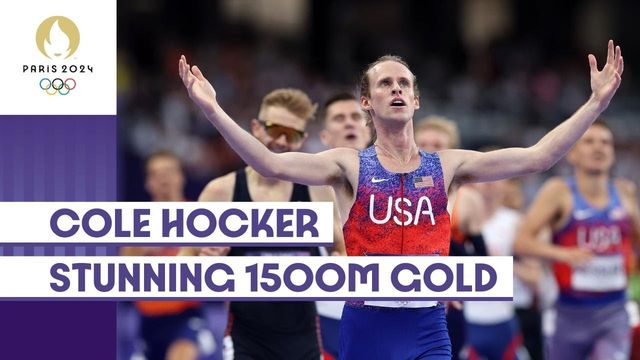
Jakob Ingebrigtsen47Jakob Ingebrigtsen (born 2000) — Norwegian runner and 1,500-meter Olympic champion at Tokyo 2020. In the Paris 2024 final he led from the start, but three runners passed him on the last lap and he finished fourth (3:28.24); American Cole Hocker won in an Olympic record of 3:27.65. A few days later Ingebrigtsen won the 5,000 meters in Paris. lost the 1500 meters in the last Olympics because he miscalculated by literally half a second how he titrated his energy over the first two laps. He knew it immediately. He went out in his first lap, saw the split, and realized he was doomed. He was leading at that point, the greatest 1500-meter runner in the world, trained for this moment. Yet, those of us who are runners saw that split and instantly knew.
The entire race suddenly became incredibly fascinating because he was managing the consequences of his misjudgment. He failed to titrate his energy precisely enough. To the untrained eye, the margin of error was tiny. He was still leading, looking relaxed and strong, but we all knew reckoning was coming.
How does that apply to you as a writer?
I've thought about that as a useful lesson for crafting a satisfying story. I believe people are much more sophisticated in how they consume narratives than we realize. They disengage when a story ceases to captivate them, and one of the key things they notice is the pace.
If your pace is off—if they sense you're anxious, front-loading too much, or holding back for unjustifiable reasons—they become frustrated. I'm an extreme example of this: I will read a 400-page thriller and stop on page 395 if I believe the author has violated those rules.
Okay, that's insane. You've really done that?
So many times. I'm done with you. I cannot believe you just did that. What are you doing? I just walk away in disgust.
If I get 395 pages in, I'm making it to the end.
I have a stack of books that I've read almost to the end but then stopped because I just get so utterly frustrated.
What are your other reading pet peeves?
I dislike multiple endings in thrillers. You have one shot; you don't need four twists. If you have four twists at the end of a thriller, you're a bad thriller writer. It shows you've lost confidence. You can sense when writers lose confidence in their material. This is even more apparent with moviemakers.
Absolutely.
Or the editor or the studio chief. You can see precisely where they lost confidence, and all the air goes out of the room. At that point, you just want to leave, thinking, "You guys don't believe in this story. Why should I?"
When they resort to tacked-on endings, it implies, "If you can't find a way out of the problem you've established, what are you doing? Why did you even start?"
Sometimes you're watching a movie and you think, "Ah, the studio watched it, and someone high up thought there was a hole in the story." You can tell because the writing's register is different. They plopped it into the script, and you hear it. Sometimes it's a voiceover,48Voiceover — the textbook example: for the theatrical release of Blade Runner (1982), the studio added a voiceover by Harrison Ford's character explaining what was going on. The 1992 director's cut removed it. with the narrator doing it. You'll be in the movie and think, "There it is. Come on."
They got nervous. You have to trust and have faith in your story if you're going to tell it properly.
14Everything in a minute
From songwriters and ads Gladwell learns economy of expression: a minute can do a lot.
What have you learned from songwriters? Have those lessons come into your work?
Just the economy of expression. It's the same reason I'm so fascinated with advertisements, though on a more extreme level. In an ad, I have 30 seconds or a minute, and the idea that you can do something meaningful in that time is fantastic to my mind. The constraints are immense.
There's a Heineken ad49Heineken — the Dutch brewer, founded in Amsterdam in 1864; its lager of the same name is one of the best-known beer brands in the world. I love so much that I tracked down the guy who made it and interviewed him for no reason; I never even used the tape. In the ad, it's the end of the night, and a few friends are tipsy at a bar, taking a cab home, as they should. They all start singing along in a slightly tipsy but fantastic manner. Halfway through, the grumpy cab driver turns up the radio and joins in.
That's the ad. It's so good. It's just a minute long, yet it evokes so much. It warms your heart and makes you want to get a Heineken. They're having fun—it's two girls and a guy, so the dynamic isn't complicated. They're just having good, honest fun, taking a cab home responsibly, singing in public (which we all secretly want an excuse to do), and they even converted the cab driver. That's about six or five powerful things packed into one minute.
What I love about comedy and songwriting is that if it works, it works. Take that song by the Black Eyed Peas, "I Gotta Feeling.50"I Gotta Feeling" — the Black Eyed Peas' 2009 hit, which topped the Billboard Hot 100 for 14 straight weeks." They simply list the days of the week: Monday, Tuesday, Wednesday, Thursday, Friday, Saturday, Saturday, and Sunday. Yet, it just works. I love that song. I really appreciate the idea that if people like something, then it's good.
There's another great "Days of the Week" song from the 80s.51Fact-checkGladwell places the song in the '80s, but "Friday I'm in Love" by the British band The Cure came out in 1992 (Wikipedia, "Friday I'm in Love"). It lists every day of the week, Thursday included: "Thursday never looking back." The chorus goes something like, "Thursdays I'm in love," doesn't it? Do you know that one?
"Friday I'm in love."
"Friday I'm in love." When those songs work, they work forever.
15A writing course by Gladwell
Gladwell would build a writing course around asking questions, because other people have stories and your job is to find them.
Last question. Imagine you're given the opportunity to teach a semester-long writing class, sharing the insights you've gained. What would you tell the students? How would you structure the curriculum? What core lessons would you aim to impart?
It's all about asking questions. Everything begins with your ability to ask effective questions, to understand their purpose, and where they originate. It involves appreciating what's interesting in someone and being generous in that process. You must understand that it's about them, not you.
Everything flows from this. I would conduct endless exercises in question-asking. I'd have the students go home, interview their parents, and bring the transcripts back to class. We would go through those transcripts. I'd then have them write articles that are essentially enhanced versions of these interviews. Understanding that writing an article about someone or something is simply a form of interview is key. The interview is everything; you're just filling in the blanks.
It's perfectly fine for a 14-year-old if the process begins with someone else providing the content. I think kids often feel the burden is entirely on them, which inhibits their writing. They think, "I don't know what story to tell." But we're not asking them to tell a story; that's the last thing I want. Other people have stories. Go and find out what they are.
Think about how many people, when asked about their parents after they've passed, say, "I never talked to them about that. I wish I had."
My advice: skip class, sit down with your parents, take out your phone, and just record them for 45 minutes. Run it through an AI transcription service, bring the transcript back tomorrow, and let's craft a short article about your parents and where they came from. That's where we'd start on day one. We would then build from there.
For the final class, I'd bring in someone with a secret. The class would have to figure out what that secret is; I wouldn't tell them anything else. This person would sit in the middle of the room, and we'd see if we could get there.
I would love to take that class. Malcolm Gladwell, thank you very much. It was great to meet you.
That was really fun, David. Thank you.


