

How I Write
Chapters
Comics avoid writing because a blank page means staring failure in the face, and Normand gets around it by writing on his feet and by hand.
Read the chapter- Normand agrees with Colin Quinn that a lot of comics don't write because writing proves you're not a genius, and "I write on stage" just means "I'm too lazy to write."
- He can't sit staring at a page, so he paces his office holding the pen like a microphone.
- He memorizes a finished joke because a joke is a house of cards: change one word and the laugh is gone, and in one night he can tweak it over four sets.
- On paper, Normand says, he can write anywhere and scratch things out, while a screen with a cursor feels too restrictive.
Normand admires Groucho Marx for top-notch jokes inside total silliness, and Larry David for going to dark places and mining his own life.
Read the chapter- Groucho Marx, in Normand's words, was a human cartoon whose jokes were top-notch one-liners, like the elephant in his pajamas.
- Larry David goes to darker places, race, religion, the Holocaust, where Seinfeld never would.
- The scene where Larry thanks a husband for dinner but not his wife came, as David said in an interview, from his own experience.
The goal for the best comics isn't to shock but to cross the line, get away with it and bring the room back.
Read the chapter- If you've been thinking about something for ten years, Normand says, there's probably something to it.
- The goal isn't just to be offensive but to get away with it, and Normand calls Louis C.K. the master of that.
- Bill Burr can lose a room and win it back, but it took him a long time bombing to learn how, Normand says.
- Normand himself is scared of silence and wants a laugh every ten seconds.
Comics no longer have to wait for TV, but the job now means far more work: each one is a one-man band.
Read the chapter- A podcast, Normand says, is improv, while a stand-up bit can be honed for a year.
- Comics used to wait for Letterman and The Tonight Show, and now they cut their own clips, run podcasts and tour.
- Killing on the couch next to the host is way harder than killing on stage, Normand says.
- Normand quotes Neal Brennan: the comics doing best are the ones who write the most.
For Normand, Nate Bargatze's George Washington sketch shows how structure, clean material and simplicity make something funny.
Read the chapter- "Why do we call it soccer?" isn't funny on its own, Normand explains; it gets funny when you keep digging deeper.
- Without profanity there's no crutch, so in clean comedy the idea itself has to be funny.
- The audience has to get it immediately and involuntarily, which, Normand says, is why comics lean on stereotypes.
- Normand sums up Bargatze's shtick as "I'm kind of dumb, and so are you, but I'm willing to admit it."
The setup is the easy part of a joke, and the twist is all the work.
Read the chapter- The setup, Normand says, should be simple, concise and set the table.
- A twist has to surprise even the writer, which is why it takes so much trial and error.
- The first crime writer could get away with "it was the husband," but now you have to stay eight steps ahead of a savvy audience.
A joke works when all the information adds up to a surprise, and a tag adds one more laugh.
Read the chapter- In Normand's joke his wife likes lesbian porn, he likes interracial, and they compromise on a WNBA game: all the information adds up.
- He wrote it in a Baltimore hotel room, but the only way to know if a joke works is on stage, and nine times out of ten it doesn't.
- A tag is an extra laugh on the way out: just like after the game, he "paid her horribly."
A chunk is a run of jokes on one subject, and it takes more work and more tools than a one-liner.
Read the chapter- A chunk is a bunch of jokes under the umbrella of one subject, and Normand is working on one about casinos.
- Jim Jefferies' fifteen minutes on guns, which Normand calls probably the best chunk ever written, hits every angle and ties it all together at the end.
- A chunk, Normand agrees with Perell, needs a tool belt of one-liners, misdirects and callbacks.
The PayPal joke always works because everyone knows the stereotype.
Read the chapter- Normand pulls out "I met a Jewish girl on that dating app… PayPal or something" when he's bombing.
- Everyone knows the racist tropes, so by laughing, the audience admits it thought of the same thing.
Seinfeld taught Normand to move on stage and not to show the audience it's an act.
Read the chapter- Seinfeld told him to stop just standing there and to act the joke out.
- It's funnier if the audience thinks that's just how you are, like Steven Wright, so Seinfeld advised against talking about your act.
- Up close Seinfeld was a total pro: Transcendental Meditation, a shared green room, pizza and wine after the show.
- To absorb the fact that he was opening for Jerry, Normand walked 50 blocks home.
Louis C.K.'s bit shows that laughter can carry an audience to an uncomfortable truth, if critics let the comic finish the joke.
Read the chapter- Louis C.K., Normand says, catches the audience being fine with one thing and bothered by another.
- Perell argues that laughter makes the wall plushy, so the comic can go further toward the actual truth.
- Normand tells critics that the joke is still being tested and asks them to let the comic get to the punchline.
- Louis C.K., Burr and Rock, in Normand's view, are like boxers who take a lot of punches, bombing included, and still win.
Comedy is learned only through failure, and the craft is packaging an idea so the audience can absorb it.
Read the chapter- Comedy is mostly failure, Normand says, and the only way to learn it is to do it.
- Seinfeld told him that figuring out an idea and packaging it so people can absorb it is literally the craft.
- Sometimes, Normand explains, it's enough to swap the front and the end of a joke.
Most new jokes don't survive, and a good one takes thousands of performances to get from notebook to special.
Read the chapter- Normand's week has two podcasts, three shows he runs in New York at about three sets a night, and headlining gigs in another city on weekends.
- He tried his funeral bit for three weeks, and then it had to go.
- A joke is performed thousands of times before a special, and proven jokes set the bar for new ones.
Finding your voice isn't a discovery but getting comfortable enough on stage to be yourself, and it took Normand years.
Read the chapter- Normand's voice was right under his nose and only showed up about ten years in, when he went after a heckler.
- Normand recalls Bill Burr saying he didn't start killing until he stopped caring, and compares Joey Diaz to an uninhibited baby.
- Of a Chappelle joke, Demetri Martin said "a little easy" and Chris Rock said "that's why it's good," and Normand took that as a lesson.
Late-night shows no longer put butts in seats, and Normand would teach comedy as joke writing plus stage presence.
Read the chapter- A Tonight Show spot, Normand says, gets maybe a hundred thousand views, while a club clip gets a million.
- His course would cover types of jokes, homework and performing in front of the class.
- A friend told Normand he came to New York on the "hard" level and still beat the game.
Quotes
Colin Quinn on why comics don't write
“A lot of comics don't like to write because writing proves that you're not a genius.”
Mark NormandRead from 00:41On edgy jokes
“The goal is not just to be offensive or be edgy, it's getting away with it.”
Mark NormandRead from 06:48Why you can't rehearse a joke alone
“Comedy, you have to do it in front of other people. Sadly, it's the only way. Imagine if surgery was like that. ‘I don't know if this surgery's gonna work. Let me cut your face open,’ you know?”
Mark NormandRead from 19:43On the PayPal joke and racial stereotypes
“You get the joke, which means you're just as big a piece of shit as I am.”
Mark NormandRead from 24:42What opening for Seinfeld felt like
“I was a janitor for a while, I moved furniture, going all that way, and then opening for Jerry. I mean, it was too much to comprehend, so I had to, like, walk for 50 blocks to just absorb it all.”
Mark NormandRead from 27:19Seinfeld on the craft of comedy
“That's literally the craft of what comedy is, is figuring out an idea and packaging it to where people can absorb it.”
Mark NormandRead from 33:16How Bill Burr started killing
“I mean, Bill Burr famously said, ‘I didn't start killing till I stopped giving a fuck.’”
Mark NormandRead from 41:05What Normand overheard from Chris Rock
“I heard Demetri Martin go, ‘That's funny, but a little easy.’ And Chris Rock goes, ‘That's why it's good.’”
Mark NormandRead from 42:21
Summary
Mark Normand moved to New York in 2006 barely knowing how to tell a joke; now he puts out Netflix specials and has opened for Jerry Seinfeld. A blank page, he says, proves you're not a genius, which is why so many comics avoid writing. He paces his office holding the pen like a microphone and writes down by hand whatever sounds funny. Then a joke gets worked out on stage for weeks: three sets a night at the shows he runs in New York, plus headlining gigs in other cities on weekends. Once a joke is done he memorizes it and leaves it alone, because a joke is a house of cards. Most ideas don't survive: he spent three weeks on a funeral bit before throwing it out. Old, proven jokes set the bar for new ones.
On how a joke is built: the setup is the easy part, and all the work is in a twist that surprises even the writer. Normand takes apart his joke about porn and the WNBA and the tag that follows it, explains that a chunk is a run of jokes on one subject (the best ever, in his view, is Jim Jefferies' fifteen minutes on guns), and shows how flipping the front and back of a joke can rescue a misdirect, as with his PayPal line. Simplicity is mandatory: the laugh has to be immediate and involuntary. Clean comedy is harder, because without profanity there's nothing to lean on. The goal isn't to shock but to get away with it, the way Louis C.K. and Bill Burr take a room past the line and bring it back. Normand himself is scared of silence and keeps the pace fast.
Lessons from the masters: Seinfeld told him to move, act the joke out and never remind the audience that it's an act. Chris Rock once remarked that making a joke accessible is a skill too. Normand found his own voice about ten years in, while going after a heckler. Late-night TV, he says, has lost its weight: a clip from a comedy club will outdraw a Tonight Show spot. And if he taught comedy, he'd teach two things: writing jokes and holding the stage.
Mentioned
 Netflix00:00Mark Normand has several specials on Netflix
 Jerry Seinfeld00:00Normand's idol, whom he later opened for on tour
 Chris Rock00:00one of Normand's teachers: making a joke accessible is a skill too
 Colin Quinn00:41writing proves you're not a genius
Show 23 more mentionsShow fewer mentions
 Groucho Marx04:13a "human cartoon" with top-notch zingers
- Animal Crackers04:35the Marx Brothers film with the elephant-in-my-pajamas joke
 Larry David05:18darker subjects than Seinfeld's
- Curb Your Enthusiasm05:24the shoes episode and the dinner-check scene
 Louis C.K.06:48the master of getting away with it
 Bill Burr07:46loses the room and wins it back
 Albert Einstein08:53a line attributed to him about staying with problems longer
 Neal Brennan11:23the best comics write the most
 Nate Bargatze13:01the George Washington sketch
- Saturday Night Live13:01where the "Washington's Dream" sketch aired
 Jim Jefferies22:09the best chunk ever, in Normand's view: his bit on guns
 PayPal23:33the Jewish dating app joke
 JDate23:54the real Jewish dating app
 Steven Wright25:36audiences believe that's just who he is
- Seinfeld27:19the show Normand watched with his parents
- Louis C.K.: Oh My God27:47the special with the "Of Course, But Maybe" bit
- We Might Be Drunk34:24Normand's podcast with Sam Morril
- Tuesdays with Stories34:24Normand's podcast with Joe List
 Joey Diaz41:41the most comfortable man on the planet
 Dave Chappelle42:15the Mona Lisa joke
 Demetri Martin42:21"funny, but a little easy"
- The Tonight Show43:52a spot gets fewer views than a club clip
- Jeopardy!45:32a smart person freezes under the lights, and so does a comic on stage
Sponsors of the episode
 Alpha School11:42a private school where students finish academics in two hours a day
Transcript
01Writing proves you're not a genius
Comics avoid writing because a blank page means staring failure in the face, and Normand gets around it by writing on his feet and by hand.
Mark Normand1Mark Normand (born 1983) — American stand-up comic from New Orleans: he started performing there in 2006 and now lives in New York, in the West Village. Wikipedia. is on the show today to teach us how to write good comedy. And it's easy to see him as a super successful comedian, multiple Netflix specials,2Netflix specials — a special is a solo stand-up show filmed for TV or streaming. Normand's hour-long specials Soup to Nuts (2023) and None Too Pleased (2026) came out on Netflix, and before that he had a half-hour episode in its anthology The Stand-Ups. He released the special Out to Lunch (2020) himself on YouTube. Wikipedia. top of the food chain, but no. He moved to New York in 2006, back when he was a nobody, barely knew how to tell jokes. And this interview, it tells the story of how he worked his way up from admiring Seinfeld3Jerry Seinfeld (born 1954) — American stand-up comic and master of observational comedy; with Larry David he created the NBC sitcom Seinfeld (1989–1998), in which he played himself. from afar to actually opening for him on tour in all these different cities. So I said, “Mark, okay, you gotta teach me. What did you learn from Seinfeld? What did you learn from Chris Rock4Chris Rock (born 1965) — American stand-up comic and actor who made his name in the 1980s with material about race; Rolling Stone ranked him fifth on its list of the 50 best stand-up comics of all time. and Groucho Marx5Groucho Marx (1890–1977) — American comedian, the most famous of the Marx Brothers and a master of the instant wisecrack; he worked in vaudeville, on Broadway, in film, on radio and on television. to take jokes from, like, a little seed of an idea in my head to the main stage on Netflix?”
All right, tell me about this quote.
“A lot of comics don't like to write because writing proves that you're not a genius.” That's great. That's why Quinn is the man. He's kind of the godfather of New York comedy, Colin Quinn.6Colin Quinn (born 1959) — American stand-up comic who anchored Weekend Update on Saturday Night Live in 1998–2000. His one-man show Long Story Short (2010) was directed on Broadway by Jerry Seinfeld. That quote is great because nobody wants to write. Writing is a challenge.
More comics could be writing. But they go, “I'll figure it out up there. I'm kind of a funny guy. I'll figure it out on stage.” They always say, “I write on stage,” which just means “I'm too lazy to write.”
What do you think that is?
I think it's just work. I think comics are inherently lazy, you know, and writing is hard because you're staring failure in the face. You know, you're just looking at a blank paper like, “Hey, I thought I was funny. Where is it?” You know, nothing's coming to me. So you actually have to sit there and deal with that, and that's pretty uncomfortable.
It's the hardest thing to do because you gotta face yourself. It's not just a blank page, it's a blank page going, “Prove it. You think he's so good, you think he's so funny, you think he's so clever. Let's see the writing. Where is it?” So you're just looking at a mirror, basically.
You feel like you go out and take a bunch of notes, or you kind of sit there, stare at the ceiling, like, wait for something to come to me?
What I do, because the staring at the paper just doesn't work for me. So I pace. Pacing is my move because you get some movement. Now you're flowing, and I feel like walking and talking makes your juices go a little bit. I hold the pen like the microphone.
As I'm writing, I'm like walking around in my office and I'm like, “Then the guy said this and—” And then whatever sounds kind of funny, I'm like, “Let me write that part down.” So then I have that, and then once I have, like, a structure, I'll put it all together and make it sound like a package, like a piece.
I feel like a lot of your jokes, they're like very well written out. You know what I mean? There's some people, some comedians who, they're giving a joke and it's kind of wandering all over the place. Yours are like almost as if you've memorized what you said. They're very tight, like Seinfeld-esque in that way.
Oh, it's definitely memorized. Well, I think a knock on me is that I could use a little more loosey-goosey. I could use a little more… less rigid writing. But to me, a joke is so flimsy, like if you change one word, it doesn't get a laugh. So if I got it down, I'm keeping it that way. So that's why it seems so tight, so written, because if you change one thing, it might fall apart.
It's a house of cards.
So then what are you doing? You're writing a joke, performing it, writing a joke, performing it, and then tweaking little words here and there.
The whole time. Yeah, I did four sets7Set — a single performance, usually at a club: from five minutes at an open mic to an hour for a headliner. On a single night in New York a comic can do several sets at different clubs. last night, that's the whole night. It's just, what if I said “the” here? What if I said “and” or paused here? And you just keep trying that over and over, and then eventually, after a million tries, you figure out this is the ultimate best way to say it. And then you memorize that and there's your joke.
Why do you do handwritten?
I think handwritten, it gets out cleaner. It's more this. Once I'm doing this — I'm not a great typer, but once I'm doing this, it's over. Like, it's not the same thing from here to the screen, but the writing feels the same. You can scratch stuff out, you can put something up here, down low. The screen is too restrictive to me. I gotta press enter to go down here, and then it puts you back up, and then there's a cursor.
I like to go wherever I want to go. So, like, I'm all about the less restrictions, the better. So I just write shit down on anything. And then I transfer it to a bigger notebook, and that's where I write more of it out. These are just kind of bullet points.
You know what I like about it? It's just proper messing around. Like, you can't get too fancy in a creative process.
No, no, I agree. I agree. When you try to get too fancy, now you're interfering with the… You just want to get the ideas out of you and on something. So the more natural that is, the better.
02Groucho, Larry and Seinfeld
Normand admires Groucho Marx for top-notch jokes inside total silliness, and Larry David for going to dark places and mining his own life.
What is it that you picked up from Groucho Marx?
Everything about him was funny. He looked funny, he sounded funny, the jokes are funny, he moved funny. He's such a weird, unusual guy. He's a New York Jew who grew up singing and then just got into comedy and he did vaudeville.8Vaudeville — the American variety show of the late 19th and early 20th centuries, made up of separate acts: singers, comedians, acrobats, magicians. Until talking pictures, it was the main training ground for American comedians. So I don't know if you ever see any Marx Brothers movies.9The Marx Brothers — a comedy troupe (1905–1949): Groucho, Chico, Harpo and, in various years, Gummo and Zeppo. They started in vaudeville, moved to Broadway and made 13 films; the American Film Institute put five of them on its list of the 100 funniest American movies. They're all over the place. They did that live.
They did that before movies were invented.10Fact-checkNormand says the Marx Brothers performed "before movies were invented." In fact film is older than the troupe: the Lumière brothers were making films from 1895, while the Marx Brothers started performing in 1905, spent two decades in vaudeville and on Broadway, and came to the movies with The Cocoanuts (1929) (Wikipedia, "Marx Brothers" and "Auguste and Louis Lumière"). So those guys are running around a stage, jumping on tables and grabbing tits and shooting each other with water cannons and all this stuff. And it was hugely popular, and then they got into movies and the jokes are really good. Like, for a guy that silly, the jokes are incredibly well written. Like, “I shot an elephant in my pajamas the other day. How he got into my pajamas, I'll never know.”11The elephant in his pajamas — Groucho's line from the Marx Brothers film Animal Crackers (1930): "One morning I shot an elephant in my pajamas. How he got into my pajamas I'll never know."
That's a great joke. So it's amazing to me that in the '30s and '40s, these guys were writing that sophisticated and being that silly. So there's something cool about a guy who's just a human cartoon, but also the jokes are like top-notch zingers, top-notch one-liners.12One-liner — a joke of a sentence or two, with setup and punchline packed together; masters of the form include Groucho Marx and Steven Wright.
ExplainerWhy the elephant in pajamas is a linguists' favorite
Groucho's joke rests on syntactic ambiguity. In "I shot an elephant in my pajamas," the phrase "in my pajamas" can attach to the verb (I was wearing my pajamas when I shot) or to the elephant (the elephant was wearing my pajamas). The listener picks the first reading without hesitation because the second is absurd, and then the follow-up, "How he got into my pajamas I'll never know," forces the first sentence to be reparsed the second way. It's a misdirect in its purest form: the setup offers the familiar parse, and the punchline breaks it.
That's why the line from Animal Crackers (1930) turns up in computational linguistics textbooks. In the book on the NLTK library for Python, for example, it serves as the model of a sentence with two parse trees: both are grammatical, and a program, unlike a person, has no way to throw out the absurd one.
“I'll never forget a face, but in your case, I'll be glad to make an exception.”13"I never forget a face…" — another wisecrack attributed to Groucho Marx: "I never forget a face, but in your case I'll be glad to make an exception."
Yeah, see, there you go.
It's funny because you do pull from Seinfeld, you do pull from Larry David.14Larry David (born 1947) — American comedian and writer, co-creator of Seinfeld; he created and stars in the HBO series Curb Your Enthusiasm, in which he plays himself. How do you pull from both of them?
Well, Larry has a darker bent, you know, he's a little more sex, race, Judaism, religion. He'll go deep into that stuff. Seinfeld's more like zoning in on minutiae, whereas Larry David is more, “Why do black people… What's with the watermelon and black people?”15Black people and watermelon — a racist stereotype about Black Americans' supposed love of watermelon. It spread after the abolition of slavery, when cartoons and postcards mocked freed slaves who grew and sold watermelons. Like, he goes to these bigger, kind of darker issues. I mean, you see it on his show. He's got shows about, like, Nazis, and this one episode where his shoes get muddy, so he goes in the Holocaust museum16The shoes episode — "The Mormon Advantage," the Season 11 finale of Curb Your Enthusiasm (2021): at an event at the Holocaust Museum in Los Angeles, Larry soils his own shoes and walks off with a pair from the exhibit. and takes the old shoes, you know, which is hilarious, but Seinfeld would never do that.
He has a great one where he's out to dinner as a double date, him and his wife, some other guy and his wife, and the other guy goes, “I'll get the check.” And he goes, “Wow, thank you, thank you, Bob.” And the wife goes, “Well, aren't you gonna thank me?” And he's like, “Why would I thank you? It's his money.” And she flips out, but he's right.
It is his money. So why is he thanking the other lady? So he, in an interview I listened to, talked about that. He's like, “I know that's psychotic. That actually happened to me. I didn't say it at the time, but I knew this is funny. So I wrote it down later and made a show out of it.”17Curb Your Enthusiasm — the HBO series in which Larry David plays himself. In Season 3 (2002), Larry offends Susan Braudy by declaring that the money in her family is earned by her husband, Stu, not by her.
I love those little moments in life.
03Getting away with it
The goal for the best comics isn't to shock but to cross the line, get away with it and bring the room back.
Well, I feel like really good comedy bits, they often get at something that's so core in life that they kind of just recur in your brain because you're like, “Oh, I'm seeing that, it's like that bit. I'm seeing that, it's like that bit.” They kind of live with you, you know what I mean?
Oh, yeah, completely, completely, yeah. I got a lot of jokes that are just things that have been swirling around my head for 10 years, and I'm like, “I gotta find a way to get this out. There's something funny here.” And if you keep thinking about something, it's probably got something to it. And it's so cool to be the comic who nails that observation, because everyone's been through that. And so he gets to be the one who grabs it and runs with it. The goal is not just to be offensive or be edgy, it's getting away with it. Like, Louis C.K. is the great one at that,18Louis C.K. (born 1967) — American stand-up comic and director, winner of six Emmys. In 2017, after a New York Times report, he admitted to several instances of sexual misconduct; he returned to the stage in 2018. where he'll do a pedophile joke where you're like, “Ugh,” and then he flips it, and now you're laughing and you're like, “He got away with it.”
I feel like in a lot of my favorite jokes where they got away with it, there's like a certain sequencing. Like, I'm gonna say something, you're gonna agree with it. “Okay, I'm with you, I'm with you.” Now I'm gonna stretch it a little bit. Yeah. I'm gonna stretch it a little bit, stretch a little bit. And now the fourth thing that they said, if they had said that first, they would have been shot in the head. But by the time that they've done the other three, they get to the fourth and you're like, “Man, that's…”
Exactly. And that's really a skilled comedian. Like, Bill Burr is great at that,19Bill Burr (born 1968) — American stand-up comic and podcaster, known for his angry, confrontational style and jokes on touchy social subjects. where he's losing you so much, there's so much air in the room,20So much air in the room — comedians' word for the dead silence where a laugh was supposed to be. where you're like, “I kind of hate this guy. I'm actually turning on this guy.” And then he has a thing at the end and it brings you all back, and not just that, you're glad you went there. So, like, that is a really skilled comedian, but it takes a lot of guts to go that far, because that means he had to bomb for a long time21Bomb — stand-up slang for a set where the audience doesn't laugh. The opposite is to "kill." to learn how to get it back and where the line is and all that. So that is like next-level stand-up comedy, but there's like five people on earth who can do that.
Yeah, for you the pacing's a little faster.
Very quick. I'm a big wuss. I just want to get as many laughs as possible. I'm scared of silence. When you're quiet, I'm freaking out. So, like, I have some trigger, some childhood bullshit, I guess, where I think my parents were not that interested. So I'm like, maybe it goes back to my childhood, where I'm like, “I gotta get a laugh every 10 seconds or else they hate me.” I mean, you can do the long, drawn-out whatever, but you're gonna pay for it getting there. Like, you're gonna pay learning that.
Einstein has a great quote. He says, “I'm not smarter than anybody, I just stay with problems longer.”22Fact-checkNormand quotes this as Einstein, but the attribution has no basis: the earliest known source is the collection Bite-Size Einstein (1996), and Alice Calaprice's The Ultimate Quotable Einstein lists the line among those probably not said by Einstein. Quote Investigator. And I think great comics are like that. They'll just really… “I know there's something here. I gotta figure this out.” And they'll bomb with it, and audiences are like, “This guy sucks, he's lost it,” but you're like, “Ah, I just need more time.”
Just relax.
04Podcasts, late night and the one-man band
Comics no longer have to wait for TV, but the job now means far more work: each one is a one-man band.
How is being funny on a podcast different from the kind of comedy that works in stand-up?
Well, it's completely different. It's all pretty much improvisational. You'll only be able to be funny with the stuff that's being given. If you're showing me a newsreel or you have a story and I zing in the story, it's all improv. So you gotta be funny off the cuff and funny quick, whereas stand-up, you can write it and hone it over a year. Comics used to fuck around all day, you know, be hungover, eat a big meal at 3 p.m., and then maybe do some writing, smoke some weed, then do a show at night, and that was our job.
Now comedy is a full-time job. There's so much extra shit in comedy now that people have forgotten about stand-up, the actual art of it. I could name five guys who are unbelievable on podcasts, so funny, so quick, but you see them live and you're like, “Well, that was kind of weak.” It's a bittersweet thing, because before, you had the industry. “Hey, when's David Letterman23David Letterman (born 1947) — American TV host who ran late-night talk shows for 33 years: Late Night on NBC from 1982 and Late Show on CBS until 2015. gonna put me on? When's The Tonight Show gonna put me on?24The Tonight Show — NBC's late-night talk show, on the air since 1954; its hosts have included Johnny Carson (1962–1992), Jay Leno and Conan O'Brien, and now Jimmy Fallon. For a long time a spot on it was a stand-up comic's main ticket to a career.
When am I gonna get an HBO hour special?” You had to wait for the industry, but there was a lot less work. You could do the same hour for 10 years. Now it's, I gotta cut a clip, I gotta tweet, I gotta post something, I gotta write about the news, I gotta write my own act, I gotta do a podcast, I gotta do another guy's podcast, I gotta go on the road. So now it's like you're a one-man band, where before you could just be like, “I'll get on The Tonight Show.” Which maybe they wouldn't have you, and you had no career.
Now you can make your own career, but you're gonna do a lot more work.
How do you prep for one of those late-night shows? Because that kind of seems in the middle of the pod and a stand-up, right?
Sitting on the couch,25The couch — the guest seat next to the host's desk on American late-night shows: that's where the conversation with the host happens, as opposed to a prepared stand-up set. that's next level, guys. Like, that's like a… Because the stand-up, you can prepare. The couch is pretty much like, let's see how quick you are in front of a live audience, in front of the world, with cameras, and you got to be funny. So you could prepare a little, but that's really a lot off the cuff. That's impressive. Killing on the couch is way harder than killing on stage.
You know, Neal Brennan26Neal Brennan (born 1973) — American comedian and writer who created the sketch show Chappelle's Show (2003–2006) with Dave Chappelle. said, “All the comics who are doing the best write the most.” He's like, “That's it, plain and simple. All these guys you've heard of, they just write the most.” There's so many different comics, but I like them all. You know, you like baseball? Most of the players are kind of similar, you know, but comedy, it's like so many different flavors.
AdAlpha School
This episode is sponsored by Alpha School. When you think of school, what comes to mind? For me, it was lectures, homework, being stuck at a desk. And the worst part is that it doesn't even work. 54% of Americansa54% of Americans — a 2020 Gallup estimate for the Barbara Bush Foundation, based on PIAAC survey data from 2012–2017: that share of adults aged 16–74 read at roughly a sixth-grade level or below. The makers of PIAAC, however, advise against converting their levels into school grades (Snopes). read below a sixth-grade level. That's over half of Americans.
We need something new, and that's why I'm excited to have Alpha School as the flagship sponsor of How I Write. At Alpha, you go to school, you get all your academics done in only two hours per day, so that then you could spend the rest of the time learning life skills like running a business, writing a musical, giving a TEDx talk,bTEDx — short-talk conferences that local organizers run under a license from TED. you know, the kind of things that make you a capable and well-rounded person. And it's working. They have the academics figured out. Alpha classes test in the top 1% nationally, and more than 90% of students say they love school. Now, I used to live in Austin, where Alpha School started, and I was consistently blown away by what was happening there.
I personally mentored a bunch of the kids, and what stuck out to me is how much their team believes in the potential of kids. Alpha's approach and the success it's already having is why it's the most talked-about K–12 school in the world right now, and also where I want to send my kids to school one day. So if you want to learn more, visit go.alpha.school/howiwrite.
05Nate Bargatze's Washington
For Normand, Nate Bargatze's George Washington sketch shows how structure, clean material and simplicity make something funny.

You know what I just watched recently that I thought was so well written? It was Nate Bargatze's27Nate Bargatze (born 1979) — American stand-up comic known for clean comedy and a deadpan, monotone delivery; in 2024 he was the top-grossing comedian, selling more than a million tickets. America, George Washington.28"Washington's Dream" — a sketch from the October 28, 2023, episode of Saturday Night Live hosted by Nate Bargatze. His George Washington tells his soldiers about his dream: a country with its own system of weights and measures.
Oh, that's a great sketch. Oh my goodness, man.
Like, to me, that was real art, because you just take something like, “We're gonna found this country.”
Yeah.
And you spend like five minutes just finding all these ridiculous things about the way we do things, the metric system, why we call football soccer. And when someone just finds all the things and keeps finding new things, it's almost funny because they're finding things at the bottom of the well that you didn't think went any deeper.
I know, and that's what's cool about comedy. You can go in on anything and make it funny as long as you present it right. It's all about the structure. That joke is all structure. It's not funny if I go, “Why do they call it soccer? Why do we call it soccer?
They call it football.” That's not funny. But if you start digging deeper into it: “Well, they actually use their foot. So they use their foot, so it should be called football. Well, you use your foot in football, in American football too, but yeah, that's just the kicker.” Now you're just going in and in, and the more you go in, the funnier it gets, and that's comedy.
And then to put George Washington as the delivery system is even funnier. So that's good writing there. And that went crazy viral. And it's clean, clean too.29Clean comedy — stand-up without profanity, raunch or crude subjects, the kind that can go on TV or play to a family audience.
You think it's way harder to do clean comedy?
I think it's more challenging, yeah.
I think clean comedy hits harder because if you go neutral, you really gotta hone in on something funny. Like, the idea itself has to be funny or else the whole thing won't work. And the same with clean. Anybody can go, “I'm bombing — my dick's weird.” See? I got a chuckle out of you.
Like, that's an easy parachute to pull. But if you do a joke about stairs, stairwells, the idea has to… the merit has to be there, because you can't… It has no crutch.
How important is simple?
Yeah, simple, I think, is almost necessary. It's not just important, simplicity. And this is going to be controversial, but a lot of people get mad if you do racial stereotypes on stage.
But the only reason comics do them is because we all know them. You have to be understood. The audience has to get what you're saying. You have to click into the audience's head immediately. There can't be any, like, “What? Oh, I get it now.”
It has to be immediate and involuntary. So that's why simple is key. Simple is key. Also, Nate is the perfect guy to do that sketch, because Nate's a brilliant comic, but his whole shtick is “I'm kind of dumb. You are too, but I'm willing to admit it.” And when I admit it, you're gonna go, “I do that too.”
And that's why it's funny. And that's why he's great, and that's why he works so well, because everyone's had a dumb-person moment. We've all had a moment where we're like, “Yeah, I get that,” but you don't actually get it. And he taps into that.
06Fire round: setup and twist
The setup is the easy part of a joke, and the twist is all the work.
I want to do like a little fire round, where I want to ask you about the different parts of comedy, and I want to hear your take on how you think about it.
All right, I love it.
The setup for a joke.
Oh, well, the setup's the easy part. The setup is just like, “This funny thing happened to me,” but the punchline is hard, because the punchline has to make sense and surprise you. So I have to think of a thing that would surprise you. But how do I think of something that's going to surprise you?
It has to surprise me, but how do I think of a surprise? You see what I'm saying? Like, a surprise is a complete twist that makes your brain go, “Oh, I didn't see that coming.” So how the fuck do I think of a thing that people don't see coming? I can't see it coming either. But I still got to figure it out.
So that's why it takes so much trial and error. So setup is important, but the setup is easy. The setup should just be simple, concise, and set the table.
So now you've set up the joke, how do you begin to think about the twist?
The twist is hard. That's the hard part.
That's where you gotta almost kind of go into this weird quadrant of your brain that you don't know you have, because how the fuck do you think of a twist? You know, a twist is the opposite of what we think of. That's why it's a twist. So you have to come up with that, and that's the hard part. You know, when people are up there and bombing, you're mad as an audience member, because you're like, “Well, your job is to have the twist.” That's the whole thing in comedy, is the twist.
So, like, if you're not doing that, why am I paying money to watch you? So I think the punchline is everything. It's got to be good. That's why I get so jealous of these early writers, because all these tropes weren't done yet. “Everybody's going to think it's the husband, but it's not the husband. Well, they think it's the husband, so then I'll make it the other guy. But then they're probably thinking, oh, obviously you think it's the husband, so it's going to be the other guy.” So he has to go eight steps ahead of them, but the first crime writer30The first crime writer — the first modern detective story is usually considered to be Edgar Allan Poe's "The Murders in the Rue Morgue" (1841). could be like, “It was the husband.”
You know what I mean? Like, because no one had done it yet. And it's the same with comedy. In the '50s, you could be like, “My aunt's fat.” And they're like, “Ah, he said his aunt's fat.”
That's crazy.
But now you gotta have eight different, you know, twists before “the aunt's fat,” just because we're getting savvier as things go on. That's why you see a lot of irony, you know, you see a lot of irony in comedy, where we're making fun of the fact that we're doing comedy, you know, because you have to find some new twist. That's why he's a good writer, because he's got eight different plot points, but he has to think of those. He has to think what you're thinking and go ahead of it. And that's not easy.
07Porn and the WNBA
A joke works when all the information adds up to a surprise, and a tag adds one more laugh.
Can you break down a twist for me, like in a joke, how you thought about it?
Yeah, yeah. I have a joke now. This joke took forever to write. I've said it before, so I don't mind giving it away. But I tried… trying to spice things up with the wife. Once you have a kid, you gotta keep it, you know, keep the magic alive.
And I said, “We should watch porn together.” And she said, “Okay, I like lesbian porn.” And I was like, “Eh, I like interracial.” So now that's the setup. Now you got the information. You guys, she likes lesbian porn, I like interracial.
So there's a… we need… there's a divide here. How are we gonna watch porn together if we like different porn? “So we compromised and watched the WNBA game.”31WNBA — the US women's professional basketball league, founded in 1996. Its salaries are many times lower than those in the men's NBA. And the joke kills. I fucked it up because I had to explain half of it, because we're doing a show, but the joke kills, and it's like a bulletproof joke, works every time, but all the information adds up. So no one sees it coming, because you got lesbians, and black, black and white.
WNBA is the perfect combination of those two, but no one sees it coming. So the joke has to make sense and catch you off guard. That's a twist.
Do you remember how you developed that joke?
I remember where I was, I remember being excited when I wrote it. I was in a hotel room in Baltimore. I did a show in Baltimore, and I wrote it, wrote that day. I was like, “Maybe I'll try this.” But even then you don't know if it's gonna hit, because, you know, you want to learn the guitar, you can do that alone in the garage.
Comedy, you have to do it in front of other people. Sadly, it's the only way. Imagine if surgery was like that. “I don't know if this surgery's gonna work. Let me cut your face open,” you know? But comedy has to be in front of a person or people.
And I remember thinking, “Hey, that's pretty good. I think it's pretty good.” And I tried it, it worked, thank God. But nine out of ten, it doesn't work.
Tell me about a tag joke.32Tag — a stand-up term: a short extra joke right after the punchline that squeezes one more laugh out of the same premise. What's that?
Tag is fun. Tag is an extra laugh on the way out. So you do the punchline, gets a nice laugh, and now, for your momentum, you can say a tag. So the WNBA joke, I say, “So we compromised and watched the WNBA game,” laugh, and then I go, “And just like after the game, I paid her horribly.” Tag. So I'm getting a tag, like, you think, “What else is funny about the WNBA?
Oh, they get paid badly. They make way less than men. So I'll make that a joke.” And now I'm paying my wife for sex, which is funny. So it's a tag off of the big punchline. So it's kind of like a little mint after the dinner, you know?
08Chunks
A chunk is a run of jokes on one subject, and it takes more work and more tools than a one-liner.
Right. Chunk.33Chunk — comics' word for several jokes on one subject that run together as a single bit.
Chunk. Love a chunk. Chunk is, you got a bunch of jokes about one subject. Like, Jim Gaffigan34Jim Gaffigan (born 1966) — American stand-up comic known for clean comedy, with multiple Grammy nominations. has like a 10-minute joke, or chunk, on ketchup.
You know, Seinfeld does a chunk about marriage or a chunk about his kids, and it's a bunch of different jokes in the umbrella of marriage, under the umbrella of marriage. So a chunk is really good, because that means you really worked hard on it. You see me do a one-liner, you're like, “Yeah, that's a good joke, whatever, that's quick,” but a chunk is like, that means you had a big subject matter and got jokes throughout the whole thing. You don't do as many of those. But I'm getting better at them, because I'm being less of a pussy on stage, because I've been doing it so long. So I got a few chunks in my… I got a chunk of mine, casinos, now, and it's cooking. It's got a laugh all the way through, big ending, just about how… just me observing. I play a lot of casinos, and casinos have so much comedy in it.
You know, the guy smoking on a respirator, the fact that I'm trying to add numbers while getting free drinks and getting yelled at, and I'm dyslexic. So many funny things about a casino. The guy's got a limp, he's given his whole life savings to this machine, blah, blah, blah. So I don't want to give anything away, but that's a chunk on a casino.
Tell me more about what was harder for you early on about writing chunks.
Well, a chunk is… it's hard because you need multiple jokes about one subject. Jim Jefferies probably has the best chunk ever written, I'd say. He does a 15-minute bit on gun violence,35Jim Jefferies (born 1977) — Australian stand-up comic. His bit on gun control was part of his special Bare (Netflix, 2014) and spread widely online. and the brilliance of it is he hits every angle.
He's like, “Owning a gun is so crazy. Why would you ever want to own a gun?” Joke, joke, joke, joke. “Hey, how stupid it is to have a gun in your house. This many people die a year of guns,” blah, blah. Then he goes, “I got robbed. Maybe I should get a gun. This is why having a gun is a good idea.” And now he hits that angle. So now he's gone taking you one way, you completely agree, he's getting huge laughs, and then he takes you a whole other way, and then you completely agree, and he's getting huge laughs, and then he ties it up at the end, but it's 15 minutes or something.
Give it a Google. It's on YouTube. It's like got millions of views. He hits every possible angle of gun ownership. The good, the bad, the funny, the stupid, the crazy, the old stories, personal, whatever. Check it out.
Well, I think part of what's cool about a chunk is now you've set so many tools up that you can start bringing things together. You do callbacks.36Callback — a joke that brings the audience back to a subject or line from earlier in the set. Like, there's a certain range of emotion that you have in a chunk that you don't have when you haven't established all that context.
That's true, that's true. And you have to have a good tool belt. You have to be able to do a quick one-liner about that, a quick misdirect over here,37Misdirect — a technique in which the setup leads the listener to one conclusion and the punchline swerves to another. a callback there. It's a lot of different… it's a skill set.
09The misdirect: PayPal
The PayPal joke always works because everyone knows the stereotype.
Let's talk about the misdirect. I like the PayPal one.
Oh, thanks, thanks. That's a classic. That joke never doesn't work. Easy, quick. When I'm bombing, I'll pull this joke out just to, like, get some goodwill with the audience. So I say, “I met a Jewish girl on that dating app… What's that one called?
PayPal or something like that.” That's the joke. And it was… JDate is the real one,38JDate — an American dating site for Jewish singles. but Jew money, come on. And I'm not anti-Semitic or whatever, but people equate Jews with money, or they know the stereotype, everyone knows it. That's the one funny thing about racism. Everyone knows every racist trope in the world.
It's almost like we were taught them in school. Everyone knows them. Nobody knows the Pythagorean theorem or the scientific table, or whatever, the periodic table, but everyone knows every single… I say “Chinese,” you're thinking of three right now. We just know them. So I'm not saying they're real… they're not real… they're probably real. But that's the beauty of that joke, is you thought of it.
You get the joke, which means you're just as big a piece of shit as I am. Always kills. Jews like it, non-Jews like it, Nazis like it, Palestinians like it, Israelis like it. Seinfeld loves that joke, he told me. So yeah, that's a fun joke.
10Opening for Seinfeld
Seinfeld taught Normand to move on stage and not to show the audience it's an act.
Didn't you go on tour opening for Seinfeld?
A couple times, yeah. Yeah, yeah, very exciting. We did the Beacon, four shows at the Beacon.39The Beacon Theatre — a concert hall on Broadway, on Manhattan's Upper West Side.
Man, what'd you learn from him?
I was a classic New York comic, where I would just stand there and tell jokes, tell jokes, tell jokes.
And he's like, “What are you doing? Move around. It's already kind of boring. You're standing there just talking. They're staring at one guy on stage, you kind of stand there. Move and be in the joke, show the joke.
When you're fighting with a person, fight, and, you know, act it out a little bit.” So I was like, “Oh shit, all right.” I thought moving around was like… What am I, Dane Cook?40Dane Cook (born 1972) — American comedian at the height of his popularity in the 2000s, known for his high-energy, always-moving stage style. What am I? I thought it was kind of, like, not cool to move. I thought just standing there was cooler.
And then he said, “Maybe don't show them you're doing comedy. Just act natural,” you know, because sometimes a comic will be like, “I told that joke last week,” and he's like, “I don't love that, because you're telling them that these are jokes. It's actually funnier if they think this is just how you are,” you know? Like, you know Steven Wright?41Steven Wright (born 1955) — American comedian, master of absurd one-liners delivered in a flat, deadpan monotone. The one-liner guy? One-liner guy with the big hair, he's balding, he's super low energy.
If you actually think that's who he is, it's way funnier than just the guy who's doing that on stage. And Seinfeld was saying that to me. He's like, “You don't want to talk about your act, because they don't want it to be your act. They just want you to be funny.”
It's like the unnatural art of making it look natural.
Yes, there you go.
That's a nice, nice succinct way to say it.
Was there anything from, like, being up close and just seeing him from up close to learn?
Of course, yeah. He was such a pro. He would do his little meditation. He does TM, Transcendental Meditation.42Transcendental Meditation (TM) — a technique developed by Maharishi Mahesh Yogi: silently repeating a mantra for 15–20 minutes twice a day. Seinfeld has practiced it for about half a century and promotes it with the David Lynch Foundation. He does that. He likes to hang out.
Like, we had this… we shared a green room, which I thought, like, “I'll get out of this guy's hair. He's a, you know, star, celebrity, big time. I'll open for him. I won't bother him.” But he's like, “No, no, come in here. We're gonna sit on this couch together and talk and hang,” which was super cool, because I'm like, “Oh my God, that's what I want to do too, but I don't want to bother the guy.”
And then we got pizza after and drank wine and talked about comedy, and it was a really crazy experience. I had to wear a suit, which I never do. I had to be clean, and we did that pizza date after, and I remember he got into a black car. He's like, “You good?” We were in the middle of, like, Midtown Manhattan at like two in the morning, and I was like, “I'm walking home.” I walked from Midtown to the West Village,43Midtown to the West Village — Midtown is Manhattan's business center, roughly between 34th and 59th Streets; the West Village, where Normand lives, is a residential neighborhood to the south. Fifty blocks is about two and a half miles: twenty north–south blocks in Manhattan make roughly a mile. because I had to, like, decompress.
It was such a surreal experience. So yeah, it was pretty… I mean, it's a guy I grew up watching with my parents on Must See TV on NBC,44Must See TV — NBC's name in the 1990s for its Thursday night lineup, which included Seinfeld and Friends. struggling for, you know, years as a poor open-micer, eating ramen noodles, bombing, not making any money. I was a janitor for a while, I moved furniture, going all that way, and then opening for Jerry. I mean, it was too much to comprehend, so I had to, like, walk for 50 blocks to just absorb it all.
11"Of Course, But Maybe"
Louis C.K.'s bit shows that laughter can carry an audience to an uncomfortable truth, if critics let the comic finish the joke.
You know, you said something earlier that I thought was really good, of… There was a good kind of joke thing where what you can do is say something where it's like, “I said it, I'm a piece of shit. But also, you're a piece of shit for actually laughing.” Louis C.K. has an amazing bit called “Of Course, But Maybe.”45"Of Course… But Maybe" — the bit that closes Louis C.K.'s special Oh My God (HBO, 2013). He first states the obvious, decent thought ("of course…"), then the unacceptable one ("…but maybe"): about kids with nut allergies, about slavery and more.
Oh, it's one of the best jokes of all time. It is. You know your stuff.
I just, I love that sketch. I've probably listened to that sketch 20, 30 times, because it is so well constructed. And, you know, he talks about at the end, like, slavery and stuff like that. But he set all these things up at the beginning, and he goes, “You laughed about kids with peanut allergies at the beginning. You're in this with me now.”
And you're like, “Fine, I am an awful human being too.” So many things I could say about that joke. One, as a comedy writer, I know how hard that joke was to get to, to finish. Just introducing those topics to people when that joke isn't ready must have been horrifying. You know, that shows his skill, that he could get to the end and figure that joke out, because he went through hell to figure that joke out. Like, “You think slavery is what?
What, are you crazy?” But if it's not constructed and finished yet, you're gonna look like a psychopath. So that one is… I can't believe he even got there. But two, he's the king of those kind of moments where you go, “Oh, you laughed at this,” because now he's tapping into psychology. He's like, “Isn't it weird that that didn't bother you, but this does?” He has another great joke where he talks about, he walked by a, like, a store, in the storefront there was a wheelchair for sale.
He's like, “It's weird there's wheelchairs on display. Like, oh, maybe I'll buy one, you know, like it's an impulse buy.” He's like, “No, if you need a wheelchair, you go get a wheelchair. No one's ever like, ‘Oh, maybe I'll pick up a wheelchair. I'm already crawling on the sidewalk legless,’” you know.
And then he goes, “I'm crawling on the sidewalk legless because of the Boston bombing.”46The Boston Marathon bombing — on April 15, 2013, two bombs near the finish line killed three people and injured more than 260, some of whom lost legs. And the crowd goes, “Ooh,” and he goes, “Isn't that weird? You were okay with him crawling legless, but now that you know how he got legless, I'm the asshole. Why didn't you care before? Now you care because you know how? You don't care about a regular handicap.”
You know, it's a brilliant observation. And that's what he's so good at. He can keep… he has a joke, but he's going further. And I think that's why he's so popular, because he's the only guy to go that extra step, where he gets into your brain and goes, “Why'd you do this and not that?” Yeah. No one else does that.
So much of good comedy is, it's like, “We're happy with the truth. Tell me the truth.”
Yeah.
“All right, I'll tell you the truth.”
“Okay, now I'm feeling uncomfortable.” Right. “Okay, let's stop here. Let's stop here.” But what you're doing with comedy is you're making kind of that wall a little bit plushy, a little bit soft.
Yes, yes.
And now, because you're laughing, you can keep going, keep going, keep going, keep going. You're creating all this tension and oxygen. You're kind of making people feel uncomfortable, but now you've gone farther into the actual truth, and you've been able to shine a light on something that we haven't shined a light on before.
Exactly. And that's why it's so frustrating for comics when people get so offended or call you a name, like you're a sexist or whatever. And I'm like, “I'm trying to get to those Louis C.K. places, and you're already coming at me. You gotta be a little more open-minded. I know you're trying to be a hero and save the world and be an activist, but you're actually hurting art.
You know, let us get there before you write an article and call us a piece of shit, because we're trying to get somewhere.” And that's what I don't think these people understand about comedy. It takes a lot of bombing and trial and error to get to a great punchline, or these moments, like you just said, but they want to… they're quick to call you out. You're like, “That's not who I am. I'm just testing stuff to get to the final product.”
I'm amazed at how fast he sets it up. He goes, “I have a category in my head, it's called Of Course, But Maybe.” And right there you're like, “What's this about?” You're immediately hooked. So simple.
Yeah, but that's part of the skill. Everybody thinks funny, funny, funny, but it's also the setup of the writing and the structure of the writing. I always think of him and Bill Burr and Chris Rock, they're kind of like a boxer. You ever watch UFC47UFC (Ultimate Fighting Championship) — an American company, the world's largest mixed martial arts (MMA) league. or boxing or anything?
Yeah, a little bit.
Well, some of the best fighters can just take a lot of hits and still win, right? And I think those guys are like that. Like, they kind of have to bomb a lot to get to that win. And I get hit a few times, I'm like, “All right, I better win this fight real quick and end this, because I'm being punched in the face a lot.” They can take a lot of punches and, you know, still get to the end.
12The craft is failure
Comedy is learned only through failure, and the craft is packaging an idea so the audience can absorb it.
How did you go about learning the science, the craft, the technical side of this?
Sadly, it's mostly failure. Comedy is mostly failure. If you're doing it at a high level, it's a lot of failure. You know, just like trying a new joke, bombs, get a tough crowd, you have a heckle, you try to get the heckler and your line sucked. You know, it's just a lot of failing. I think learning it is just doing it. That's the only way to learn, is to do that. It's like, I yelled at… I didn't yell, but I was talking to Seinfeld once, and I was like, “It annoys me how these crowds, they get weirded out by this and that. I just want them to understand. I just want them to get what I'm talking about. I have to do so much explaining.” And he's like, “Yeah, that's what we're doing here.
That's literally the craft of what comedy is, is figuring out an idea and packaging it to where people can absorb it.” You know, I just wanted them to… I just want them to get my jokes, but you still have to make them get it.
Tell me about this idea of turning the joke backwards.
Oh, how do you know about that?
I did my research.
Oh man, you're good. Well, sometimes… I don't know if I can think of an example off the cuff, but sometimes you have a joke and you're like, “I know there's something here, but it's not hitting. What the hell am I missing?” And then sometimes you just flip the front and the end of the joke all the way around, and it works. Like, you had the pieces, but they were in the wrong order. So sometimes you got to flip a joke. Like, let's say I said, you know, “PayPal sounds like a Jewish dating app.” Not that funny. But if you go, “Hey, I was on a Jewish dating app the other day, PayPal,” big laugh. So I don't know if that's a bad example, but I'm just showing you that you could change the beginning and the end, and it could kill much harder.
13A comic's week
Most new jokes don't survive, and a good one takes thousands of performances to get from notebook to special.
What is a day, a week like for you?
Monday I do podcasting with… I do two podcasts. So I do one with Sam Morril and one with Joe List.48Normand's podcasts: with Sam Morril he hosts We Might Be Drunk, and with Joe List Tuesdays with Stories (since 2013). Usually Monday I'll do Joe List, we do Tuesdays with Stories. Then I do a bunch of shows that night, and I run three shows in the city. So I run a show Monday, a show on Tuesday, and a show on Wednesday.
When you say “run a show,” that means…
I produce it. Like, I… I have a guy who I book it with, I do the show every week, I try to promote it every week. So they've been going on so long, and I've kind of got it down to, like, self-sustaining.
And these are live shows?
These are live shows, yeah. These are live showcase stand-up shows,49Showcase — a show where several comics each do a short set, while a host introduces them and keeps the room going. where it's five comics and a host. So we have to book it every week, and you have to get people in every week. So it's kind of a lot. But I've got it now, I've been doing them for years, so they kind of work on their own. Just fills up automatically.
People ask me, “Hey, can I do it?” I say, “Come on by.” So that's good. But I got one every night of the… every Monday, Tuesday, Wednesday. So those nights I'm already good for shows. So I usually do about three shows a night on Monday, Tuesday, Wednesday. Thursday, Friday, I fly to a city to do a headlining gig at the club.50Headliner — the main act of the night at a club: goes on last and does the longest set, after the host and the opener.
So I'll do… This run, I'm going to Seattle. So I'm doing two shows in Seattle on Friday, two shows on Saturday, and then I fly home Sunday. And that's every week. That's how I pay my rent, is those weekend gigs. And I'm booked out through January, every weekend. So I'm with my kid all week.
He goes to bed, I do spots at night, come back, wake up. I got home at 1 a.m. last night, woke up at 7 a.m. with the baby. You know, you feed the baby, you do that, came here, then I'll go back home, write, play with the kid. He's with the wife now.
I'll do three shows a night.
And so when you say “go back, write,” are you thinking about what you're gonna write today? What are you thinking about in terms of the game plan for what that's gonna look like?
The writing is always up here with the new ideas. Like, some ideas were new and I cracked the code and I finished it. So those are on the shelf. Those are done, those are in the act. You know, that's like my A-list roster of my baseball team. But now I need a new… You always need new material, because you have to build an hour.
So then you put an hour51An hour — comics' term for a full solo show, about an hour of material, which is what gets filmed as a special. on Netflix in a year or whatever. So I got like five new ideas that I'm always tinkering with. So these are just ideas. Like, “funeral” was just a funny idea I had. It was something about how it's weird you dress up for a funeral, because you shouldn't. You, you know, you dress up for nice things, like a wedding or a graduation. A funeral is a sad day.
Shouldn't you show up in pajamas or, you know, looking like hell? And then I thought, it's also weird, you always hear, like, “This guy's funeral, he had 10,000 people there,” or 5,000, “He was so popular, he had a hundred people at his funeral.” And I'm like, “Yeah, but that sounds like a bunch of people just wanted to see he was dead,” you know? And I thought, “Oh, that's gotta be… that's kind of something.” It didn't work, or it didn't work enough. It did okay, but it was like, “Ah, yeah, yeah.” But I need a booming laugh, so I got rid of it. So I tried it a bunch and it didn't work, and that was three weeks of trying it, and big waste of time, didn't work, and that's most of comedy.
And you use notepad, not computer, and walk around?
Yes, yes. So I write down an idea, “funeral,” boom, right there, and these are the ones I take to stage. But “funeral” was up here. Bring it to my office, use a big scratch pad, like a big ringed notebook, and I just write out “funeral.” Pace, pace, pace. “Funeral. Oh, you dress up. Oh, a bunch of people showed up. Oh, they want to see you dead.” I write all that down, and then I make it a joke, put it in joke form, try it in front of an audience a couple times, change it a couple more times, change it again a couple more times. This is weeks we're talking. Not what I wanted, got rid of it.
How many times do you rehearse a joke before it goes on the special?
Oh, thousands, thousands, thousands, because once you write a good joke and it's in the act, you can use that joke to prop up the new jokes.
So, like, “Hey, killer joke, killer joke, killer joke. All right, now I'll try the new one.” So you're up here killing, killing, killing. Then you try the new one, and it's, “Man, that new one sucked.” It did not get anywhere near that. So now you have a bar. So you need those old jokes that work to set your bar.
So when the new one does as well as the other ones, you're like, “This new one might be varsity,” you know? So you need the old jokes as a barometer to try the new ones. It's all for new material. That's what we're doing here, just trying to build new material.
14Finding your voice
Finding your voice isn't a discovery but getting comfortable enough on stage to be yourself, and it took Normand years.
Tell me about finding your voice as a comedian.
The voice thing is so weird, because it's hard to find it.
I try… I probably didn't find it for 10 years. Because you can't explain your voice. It's hard to explain it. It's like this random thing in the ether. It's like a feeling more than something you can explain. It's not tangible.
So I had a couple things. One guy, I asked him, he was an older comic. I was desperate. I was like, “How do you find your voice? What is this voice everybody's talking about?” And he goes, “Well, look at, like, 10 of your jokes and see what the commonality is in all these jokes. Like, why are these jokes?
Why are you talking about this? Why these topics?” I tried that, that didn't really do it. And then I got heckled. I was kind of struggling, and I got heckled, and I went in on the guy, and that started working. And I remember thinking, like, “This is me.
I'm being me.” And it's weird, because it's right under your nose. You know, you ever see those movies where the guy and the girl are friends and they fall in love, and they're like… they've been friends for 10 years, but they never even thought about being in love. But then one day they just fall in love, they're like, “Wow, what are we doing? We're perfect for each other.” That's what the voice… It was right under your nose the whole… It's literally your voice, and it's right under there, and then you finally find it, and then you start writing and you're like, “Oh, this is me.
This is a very me joke.” And then somebody else comes up and they're like, “Oh, I had a joke idea, but it's too you.” And you're like, “Oh, wow, okay.” So then you have a… Now you have a voice, but it took forever for me.
I feel like there's a point in anyone's creative process where people start off and they're a little bit desperate. So, like, maybe in comedy, like, they're desperate for the laugh. They're desperate for the laugh. And you can kind of see them, like, it's almost like they're clawing the audience: “Laugh at me, laugh at me.” But then there's a point, like, this is a certain kind of creative maturity, where they're just no longer desperate.
Yeah.
They have that inner conviction, that confidence. And then I would imagine in comedy, now you're happy to have some space with no jokes.
Yeah.
You're happy to… “Hey, I can now set up a proper story, knowing that the payoff at the end is going to be really good,” right? Cost of that: no laughter for 90 seconds.
I think you nailed it. I mean, Bill Burr famously said, “I didn't start killing till I stopped giving a fuck.” You know, because you go up there and go, “Please like me, please like me.” You're living and dying on it for every laugh, you know, whereas he's like, “I don't give a shit if you like me.” And so that makes the audience kind of go, “Well, let's listen. This is interesting.”
It's like a girl. You hit on a hot girl. You know, when you're hitting on a hot girl and you're like, “Just be yourself.” Who am I? What the hell is myself? What do I do with my arms normally?
You know? That's what finding your voice is like. You're like, “What do I do?” But it's you the whole time. The whole time, it's just being you. And then with your friends, you're like, “Oh man, I was watching this,” you fart, whatever.
That's your voice, but you can't do it unless you're comfortable, and it takes years to get comfortable. It's really not finding anything, it's really just getting comfortable and letting you be you. So Joey Diaz52Joey Diaz (born 1963) — American stand-up comic and actor, born in Havana. is the most comfortable man on the planet. I mean, the guy walks out… You know, you ever put a baby in the middle of a room? Everyone's watching the baby, because the baby has zero inhibitions, just does whatever. It rolls over, it takes a shit, it spits up, it screams, it cries, it picks something up.
You can't stop looking at it. But everyone else in the room is boring as shit, because they're trying to be what you think they're supposed to be.
Talk about the story when you're watching Chappelle,53Dave Chappelle (born 1973) — American stand-up comic who created Chappelle's Show (2003–2006) with Neal Brennan; in 2006 Esquire called him "America's comic genius." you're with Chris Rock.
Well, they were over there. I didn't want to bother them. I was like an open-micer, so this… years ago. This is years and years ago. But these guys, I study these guys, they're like superheroes to me. So I see Demetri Martin54Demetri Martin (born 1973) — American comedian known for deadpan one-liners, jokes set to guitar and drawings; he was a correspondent on The Daily Show in 2005–2008. and Chris Rock, which is already, like, a weird combo, and they're watching Dave Chappelle, and this is maybe 10, 11 years ago, and I stood kind of near them. I didn't… I didn't dare bother them. But Dave Chappelle told a joke, something about the Mona Lisa, I can't remember the joke, and it got a huge laugh, and I heard Demetri Martin go, “That's funny, but a little easy.” And Chris Rock goes, “That's why it's good.” And I remember being like, “Ooh, I just got a nice nugget out of that.” Demetri Martin's like, “It's a little lowbrow, a little easy to think of,” and I think Chris Rock's saying, “That's why it's great,” because this great comic, this smart comic, has made his idea incredibly accessible, which is also a skill.
Dude, I think in a lot of different art, what makes people appreciate it, at least marvel at it, I think one of the highest compliments is, “Man, I should have thought of that.”
Exactly. That's exactly Chris Rock's… That's a different way to say it.
But we do it with everything. You see Jalen Brunson55Jalen Brunson — point guard for the New York Knicks (since 2022). shoot a three and you go, “He makes it look easy.” It's not easy, but he makes it look easy, and that's what I think Chris Rock was saying.
15Late night's decline and a comedy course
Late-night shows no longer put butts in seats, and Normand would teach comedy as joke writing plus stage presence.
What's going on with late-night comedy? Seems like it's kind of dying.
Yeah, big time. Big time.
You only do it now just for the fun of it.
For the cachet.
Source: Associated Press, citing Guideline data (Fortune, July 2025)
Yeah, the love of the game. I don't even know if it has much cachet anymore. You know, I hate to… I know the booker of The Tonight Show, he's a nice guy, and I hate to say this, but you do The Tonight Show, you get the suit on, you go to 30 Rock,5630 Rock — the 30 Rockefeller Plaza skyscraper in Manhattan, NBC's headquarters, where The Tonight Show Starring Jimmy Fallon is taped. The marquee at the entrance reads NBC Studios, with signs for the Rainbow Room and the observation deck above it.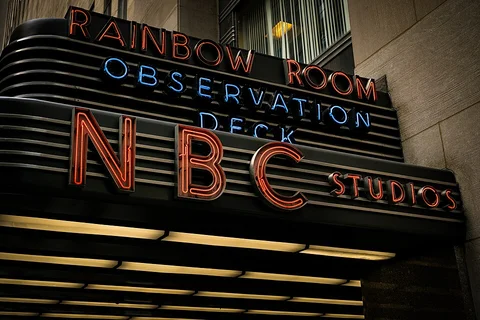 you sit around, you get your hair cut, all this stuff, you work on the set, and then it comes out and you're like, “Hey, that got maybe a hundred thousand views,” but then you can just shoot a video of you on a comedy club, post it, and it'll get a million. So I think it's cool. I think it's a great kind of comedy day. You go there, “Oh, who's the other guest?
Oh, it's Katie Holmes. Hey, that's fun. Oh, it's The Rock.57The Rock — the nickname of actor and former wrestler Dwayne Johnson. That's cool. I'm on a show with The Rock. I'm talking to Jimmy Fallon.58Jimmy Fallon (born 1974) — American comedian, host of The Tonight Show since 2014 and of Late Night before that (2009–2014).
This is awesome.” But at the end of the day, it doesn't deliver, it doesn't put butts in seats. Sadly. And I hate to say that, because it's a, you know, it's an American tradition. It's like an establishment… or it's an institution, but it doesn't have the weight that it used to.
You're invited to, like, some fancy college, and you got to give the class on how to do good comedy. You got a semester or something. How do you think about what am I going to teach these kids?
Ooh, well, I gotta say, anybody who's ever taught comedy usually sucks at it, I've noticed, or has never made it. But that's a tough one, because I think I would teach the writing fundamentals and stage presence. Because there's so many factors involved in stand-up comedy, but I think the two most important are standing on stage, being able to deliver a joke, and how to write a joke. So I would go deep into that.
And what do you teach in terms of how to write a joke, those writing fundamentals?
I think I would teach them the type of jokes — there's misdirect, there's nostalgia, there's dirty, there's, you know, twist or whatever. But I think I would teach those styles, give examples of those, have them do a homework assignment where they write their own version of one of those, and then I'd obviously make them stand in front of the class, tell the jokes, so they have to feel how that feels. It's a whole… You know, like, you can be a smart guy, but you go on Jeopardy!,59Jeopardy! — the American TV quiz show, on the air since 1964. While contestants write their answers in the final round, the tune "Think!" plays: that's the "doo-doo-doo-doo." you got those lights on you, you got that “doo-doo-doo-doo.” You're like, “I know the answer, but I'm panicking right now.” It's the same with stand-up. You can be a funny guy, but once those people are staring at you, you go… you go scatterbrain, you know?
It's like a fistfight. You can learn how to fistfight all day long, but once you're in the schoolyard with the bully in front of you, that's a whole different world. So you gotta learn joke writing, and then you gotta learn how to stay on stage. Still keeping it natural.
You don't want to go joke one, joke two, joke three.
You know, you gotta have, like, a through line or a transition. So that's all part of it too. So yeah, I would just… I think making them write a set and then performing the set is the most important thing.
Well, Mark, congrats, man.
Hey, thank you. I don't know on what, but I'll take it.
It's just crazy. It's like, you know, 2006, moving to New York, and now this.
Yeah, my friend said I came here on the video game level “hard,” and I still beat the game. So I'll take it. Yeah, but that's a whole other podcast.
Good to meet you.
Hey, good to meet you. Good to be here.


