

Founders
Chapters
Senra built this episode about the most successful manga artist from interviews rather than a book, because there are no biographies of Oda and he is an extremely private man.
Read the chapter- Every few months Ramp CEO Eric Glyman texts Senra asking for an episode on Oda.
- One Piece is the best-selling manga and comic book series in history, with more than 600 million copies, and Oda holds the Guinness record for a series by a single author.
- Oda doesn't even allow his face to be photographed, so Senra spent a week reading his interviews and put together notes in Oda's own words.
- Oda decided to become a manga artist at four, started One Piece at 22, is now 51, and the series is still running.
Oda makes the product he wants to use himself and doesn't try to please the whole world.
Read the chapter- The market was crowded with stories of heroes saving the world, and Oda wanted something else; Senra recalls Thiel's argument that differentiation is the whole game.
- Oda says it's impossible for him to create a series with the whole world in mind: if Japanese kids like it, so will everyone else.
- Senra compares this to Pixar, where Catmull believed that if you make what you want to watch yourself, others will want it too, and to great ad men like Ogilvy, who knew that what works in one country works in others.
Oda has no personal life separate from his work, and he has been stockpiling ideas since childhood.
Read the chapter- When he meets someone, Oda immediately thinks about how to use it in his manga.
- He has been planning manga since childhood, so he has a whole notebook of ideas and they never run out.
- Much of his work starts from people's wishes: "I wish my arm would stretch so I could reach that drink over there" is how rubber-bodied Luffy came about.
- His process runs from storyboards and the editor through pencils and ink to characters and backgrounds, and his key rule is that as few people as possible touch the work.
Oda can't delegate, draws for his 15-year-old self and pushes himself to his physical limit.
Read the chapter- Senra recalls the line from Insanely Simple that a project's quality is inversely proportional to the number of people involved, and Tobi Lütke's view that the best team size is one.
- Oda changes the style of the series so he himself doesn't get bored.
- Oda's real secret is that new ideas come only when you think without sleeping or eating, and before a deadline he sleeps three hours, from 2 to 5 a.m.
- Manga is read alone, so Oda draws for his 15-year-old self, which is also why he says he doesn't feel the pressure of success.
Senra sees Steve Jobs in Oda: both start from a product they love themselves and stubbornly push for the best.
Read the chapter- Jobs said he would rather gamble on his vision than make me-too products, and that commerce is never the starting point: you start with the product.
- Jobs told Michael Moritz his taste wasn't that different from other people's; the difference was his stubbornness about making things great, and greatness takes not money but time and perseverance.
- Jobs's point, as Senra puts it, is that the standard is yourself, but only if you refuse to let yourself off the hook.
Oda knows only the ending of One Piece, and that gives him freedom along the way.
Read the chapter- Oda builds story arcs that lead toward the ending he already knows.
- Senra recalls Amazon's principle from the book Working Backwards: "Be stubborn on the vision but flexible on the details."
- A man who worked with Henry Ford for 40 years wrote in My Forty Years with Ford that a set policy was next to impossible with Ford, because he was an experimenter by nature.
- Oda complains that choosing what to draw is harder now, and Senra recalls Jimmy Iovine: experience takes away the innocence and ignorance that helped you keep things simple.
Oda decided at four to become a manga artist, and because of his idol Akira Toriyama he aimed specifically for Weekly Shōnen Jump, where One Piece began running in 1997.
Read the chapter- Senra says he too makes his podcast alone and likes to keep everything under control.
- At four Oda decided to become a manga artist so he wouldn't have to get a "real job."
- Because of Akira Toriyama, the creator of Dragon Ball, Oda wanted to publish specifically in Weekly Shōnen Jump.
- At 17 his Wanted! took second place for the Tezuka Award, which got him work at the magazine, and in 1997 One Piece began running there.
For years Oda slept three hours a night and worked without days off, because an extra hour of sleep felt to him like an hour lost to the manga, and he expects the same devotion from his editors.
Read the chapter- For about 15 years Oda went to bed at 2 and got up at 5, and when young he slept two hours per 48, in 15-minute naps.
- Monday to Wednesday went to story and storyboards, Thursday to Saturday to drawing with assistants, and Sunday to color illustrations and covers.
- In his twenties Oda was ready to miss a parent's funeral, and he told a new editor to be prepared to "die for One Piece."
- Oda sees his family about once a week, partly because time with them relaxes him so much that it throws off his work mood.
Oda draws everything that moves himself and jealously guards every adaptation.
Read the chapter- Oda draws the people, animals, crowds, smoke, clouds and ocean, while assistants do backgrounds and supporting details.
- For the Netflix series Oda read the scripts and acted as a "watchdog," and Netflix agreed not to release the show until he was satisfied.
- Oda wants editors to give feedback rather than propose plots, and after an editor criticized his female characters he practiced all night and studied The Little Mermaid frame by frame.
- Oda expected the series to last five years, and in 2027 it turns 30.
Oda's home looks like an amusement park so young manga artists can see how rich a master can get, and he sent the secret of One Piece to the ocean floor in a chest.
Read the chapter- Oda's house has arcade games, a miniature train, a life-size Terminator, a pet jellyfish and a shark's head over the toilet.
- Oda wants young manga artists to see how rich and successful a master of manga can become, and his fortune is estimated at $250–500 million.
- The answer to the mystery of One Piece lies in a chest at the bottom of the ocean and will be revealed when the manga ends.
Oda can't stop, and he invents whole branches of the story on deadline.
Read the chapter- Senra sees a paradox in Oda making a story about freedom and adventure at the cost of an extremely restricted life.
- Oda drew in the hospital and talked to an editor on the phone for 12 hours, and another editor began feeling phantom phone vibrations.
- Oda keeps 17 notebooks for a single story arc, plus four more on the characters' special powers.
- The Supernovas, who weren't in his notebooks, Oda invented in a few hours when an editor felt the storyline needed more excitement.
Oda keeps to his own path: he stayed loyal to Jump, never shows his face and believes artists should create trends rather than follow them.
Read the chapter- One Piece was turned down three times, but Oda didn't take it to a rival magazine, because his idol Toriyama worked at Jump.
- Even at 17 Oda gave a newspaper a self-portrait instead of a photo.
- An artist, in Oda's view, shouldn't follow fashion but make popular what he himself finds interesting, and Senra recalls Edwin Land's motto.
- After One Piece, Oda dreams of becoming a perpetual traveler and visiting hot springs around the world.
Senra sees three constant traits in Oda: a tolerance for repetition, discipline combined with spontaneity, and imagination as the organizing force of his life.
Read the chapter- Senra calls tolerance for repetition a tolerance for depth and cites Elon Musk repeating his algorithm and Bezos saying for 20 years that it's "Day 1" at Amazon.
- Senra compares Oda's mix of discipline and spontaneity to George Lucas's rule that at the desk you can either write or do nothing.
- Imagination is the organizing force of Oda's whole life, producing a story almost 30 years long out of one head.
Like Seinfeld, Oda believes the right way is the hard way: he keeps looking for a better idea until the last minute and can't work more efficiently, even though he'd like to.
Read the chapter- Seinfeld said, "If you're efficient, you're doing it the wrong way," and credited the show's success to micromanaging everything.
- Oda keeps thinking about the story right up to the deadline, or he doesn't feel he gave it everything.
- Oda would like to work systematically and have free time, but says his nature won't allow it, and ideas come only at the desk, while drawing.
- Senra calls the tension between creative ambition and the physical limits of a human life the central theme of Oda's biography.
Quotes
Oda on where work ends
“I cannot separate my personal life and my manga creating life. Everything I do can be connected to my manga. If I run into somebody, I immediately think, how can I use this in my manga?”
David SenraRead from 03:24Oda on his real secret
“The only way that I can think of a new idea is to think about it without sleeping or eating. That's the only way that I know, because humans can only come up with truly new ideas when they reach their limit.”
David SenraRead from 06:40Whom Oda draws One Piece for
“You read manga by yourself. So whenever I draw manga, I only have one reader in my mind: myself as a 15-year-old.”
David SenraRead from 07:06On Oda's obsession
“Reflecting on the intensity of his ambition in his 20s, Oda admitted that he had been so devoted to creating manga that he was willing to miss a parent's funeral if it conflicted with his work. This intensity continues. He told a new editor to be prepared to die for One Piece.”
David SenraRead from 15:06On a life given to One Piece
“The central paradox of Oda is that he has dedicated almost his entire adult life to writing a story about freedom and adventure while accepting an extraordinary restrictive life in order to create it.”
David SenraRead from 20:16On being Oda's editor
“Another one of his editors reportedly became so conditioned to receiving his calls that he experienced phantom phone vibrations. This editor slept with his phone resting on his chest so that he wouldn't miss a call.”
David SenraRead from 21:13On Oda's defining trait
“And I believe that tolerance for repetition is really just tolerance for depth.”
David SenraRead from 24:30Seinfeld on why he doesn't need consultants
“If you're efficient, you're doing it the wrong way. The right way is the hard way. The show is successful because I micromanage it.”
David SenraRead from 30:04
Summary
Eiichiro Oda created One Piece, the best-selling manga in history, with more than 600 million copies in print. There are no biographies of him and he doesn't show his face, so David Senra built the episode from two decades of Oda's interviews: in effect, an account of how he works in his own words.
Since his youth Oda has drawn the manga he would have wanted to read at 15, and he deliberately avoids doing what everyone else does; Senra compares this to Peter Thiel's Zero to One, Ed Catmull's Pixar and Steve Jobs. Oda can barely delegate: he draws everything that moves himself, lets as few people as possible touch the work and sleeps three hours a night before a deadline, and truly new ideas, he says, come only when you're at the limit of your strength. He has known the ending of the story from the start but improvises along the way; that is how nine new rookie pirates, the "Supernovas," appeared in a matter of hours.
Senra picks out three traits that recur in every interview: an extraordinary tolerance for repetition (and therefore for depth), iron discipline combined with spontaneity, and imagination as the organizing force of his life. Like Jerry Seinfeld, who micromanaged his show, Oda believes the right way is the hard way: he keeps looking for a better idea until the last minute, even as he dreams of becoming a perpetual traveler once One Piece is finished.
Advice
Don't build an undifferentiated business that looks like everyone else's: failed companies all have in common that they couldn't escape competition.
Make a product you want to use yourself: human desires are more universal than they seem, and what you like, others will probably like too.
Keep as few people as possible on your most important work: a project's quality drops with every person added, and a single author can reach heights a team can't.
To make something great, look not for more money but for more time and perseverance, and measure the result against your own bar without letting yourself off the hook.
Be stubborn on the vision and flexible on the details: when you know exactly where you're going, you can improvise freely along the way.
Pick a handful of principles and repeat them for years, to the point of tedium: that's how Musk drills in his algorithm and how Bezos kept saying "Day 1" for two decades.
Mentioned
 Eiichiro Oda00:00the subject of the episode
 Eric Glyman00:00asked Senra for an episode on Oda
- One Piece00:00the best-selling manga in history
 Peter Thiel01:54differentiation is the whole game
Show 29 more mentionsShow fewer mentions
- Zero to One01:54"All happy companies are different"
 Ed Catmull02:19make what you want to watch yourself
 Pixar Animation Studios02:19Eiichiro Oda’s account of making One Piece reminds Senra of how Ed Catmull described building Pixar.
 David Ogilvy02:54what works in one country works in others
- Insanely Simple: The Obsession That Drives Apple's Success05:18quality is inversely proportional to the number of people
 Tobi Lütke05:18the best team size is one
 Steve Jobs07:26a bet on vision instead of me-too products
 Michael Moritz08:21interviewed Jobs
- Working Backwards: Insights, Stories, and Secrets from Inside Amazon08:55"Be stubborn on the vision but flexible on the details"
 Jeff Bezos08:55Amazon's principle and "Day 1"
 Henry Ford09:19an experimenter by nature
- My Forty Years with Ford09:19Senra compares Oda with Henry Ford, whose colleague recalled that Ford held to his goal while constantly experimenting with how to reach it.
 Rick Rubin10:09his podcast episode with Jimmy Iovine
 Jimmy Iovine10:09a beginner's ignorance helps keep things simple
 Akira Toriyama13:17Oda's greatest idol
- Dragon Ball13:42Oda’s admiration for Akira Toriyama made him want to serialize One Piece in the same magazine as Dragon Ball.
 Weekly Shōnen Jump13:42the magazine that runs One Piece
 Netflix16:15the live-action One Piece series
- One Piece16:46Senra highly recommends it
- The Little Mermaid17:29Oda studied it frame by frame
 Edwin Land24:03"Don't do anything that someone else can do"
 Polaroid24:03Senra compares Oda’s approach to the motto of Polaroid founder Edwin Land, who urged people to do what no one else could.
 Elon Musk25:11the algorithm he repeats endlessly
 George Lucas26:24write or do nothing
- Star Wars26:24Oda’s hours at his desk remind Senra that George Lucas kept regular hours writing Star Wars even though he disliked writing.
 Jerry Seinfeld29:15"The right way is the hard way"
 Harvard Business Review29:15the Seinfeld interview
- Seinfeld29:44Senra recounts an interview about Jerry Seinfeld and Larry David writing the show together and how burnout helped bring that arrangement to an end.
 McKinsey & Company29:44"Are they funny?"
Sponsors of the episode


Transcript
01The most successful manga artist
Senra built this episode about the most successful manga artist from interviews rather than a book, because there are no biographies of Oda and he is an extremely private man.
So every few months, my friend Eric Glyman,1Eric Glyman — cofounder and CEO of Ramp, the American fintech company (corporate cards and spend management) founded in 2019. Ramp is one of Founders' sponsors. who's the CEO and co-founder of Ramp, will text me, "Do an episode on Eiichiro Oda." So Eiichiro Oda is the legendary creator of One Piece.2One Piece — a manga about the pirate Monkey D. Luffy, who is searching for the legendary treasure called the One Piece to become King of the Pirates. It has run in Weekly Shōnen Jump since July 1997. He is the most successful manga artist of all time. And so manga is just a Japanese term for what we would call in the West comics or graphic novels. So Oda's creation One Piece is one of the most successful and highest grossing media franchises in history. It's the best-selling manga and comic book series in history also, with over 600 million copies in circulation worldwide.
Source: Wikipedia, "List of best-selling manga"; some figures are copies in circulation rather than sales
In fact, Oda has the Guinness World Records for the most copies published for the same comic book series by a single author.3The Guinness World Record for "most copies published for the same comic book series by a single author" went to One Piece in 2015: 320,866,000 copies as of December 2014. Guinness World Records. The print run passed 600 million in March 2026. But the reason Eric asked me to do an episode on him is because Oda's often described as a maniac because he's got this insane work ethic, a very eccentric lifestyle, and essentially just this inhuman daily schedule. And so what I want to focus on is the details of how he lives and runs his life because I feel his habits are truly extreme. So I want to do a, basically, How Eiichiro Oda Works episode. Now there's no books or biographies on him. In fact, he's intensely, extremely private.
02Manga for himself
Oda makes the product he wants to use himself and doesn't try to please the whole world.
He doesn't even allow his face to be photographed. So what I've done is spent the last week going through all of the interviews I found on him and then made an outline essentially in his own words of him describing how he works and how he built, again, one of the most successful media franchises in history. And so one of the things I love most about Oda is the fact that he is just designing the product that he wants to use. He says, "I set out to draw the manga I wanted to read when I was young. When I started, I had to draw things that didn't exist to get attention. There were plenty of heroes who fight demons and save the world."
"The market was saturated with that kind of story. I wanted to do something different." So he knew by the age of four what he wanted to do for a living. He wanted to be a manga artist. He was 22 when he starts creating One Piece. It's still ongoing to this day, and he's 51 years old.
And so when I read this part of the interview and he's like, "I wanted to do something different," I thought of Peter Thiel's book Zero to One, which, again, if you could summarize it, essentially differentiation is the whole game. Over and over again in that book, Peter will say, do not build an undifferentiated commodity business. He has this great line in there where he says, "All happy companies are different. All failed companies are the same. They failed to escape competition."4"All happy companies are different" — Thiel's twist on the first line of Anna Karenina: "Happy families are all alike; every unhappy family is unhappy in its own way." It is also the title of a chapter of the book; Thiel's full line is "All happy companies are different: each one earns a monopoly by solving a unique problem. All failed companies are the same: they failed to escape competition." Even in his early 20s, Oda knew he would lose if he just did the same thing that everybody else was doing.
And then Oda talks about what he was trying to do. "The most important thing is to respect the fans." He was a fan himself. He says, "It's basically impossible for me to create the series with the whole world in mind. I don't even try." The deeper I got into reading and researching how Oda works, it reminded me very much of the way that Ed Catmull5Ed Catmull — computer graphics pioneer, cofounder and longtime president of Pixar. He described how Pixar makes its films in Creativity, Inc. (2014). would talk about the way he built Pixar.
Their approach is almost identical in spirit. They essentially just put faith in the simple idea that if they made something they wanted to see, that others would want to see it too. And so he goes back to the fact that, hey, this is impossible. "I can't create the series with the whole world in mind. I don't even try. I assume that if Japanese children enjoy it, so will everyone else."
"So I don't worry about it." And I love the implication of what he's saying here, that human desires are much more universal than they are local. In fact, when I'm reading this, this is something that — one of the most important ideas I came across when I was studying David Ogilvy6David Ogilvy (1911–1999) — British advertising man, founder of the agency Ogilvy & Mather and author of Confessions of an Advertising Man; often called "the father of advertising." and really any of the people that built very valuable advertising agencies, they would talk about the fact that what works in one country almost always works in other countries as well. So then Oda is asked, how do you keep coming up with such amazing stuff this far in the game? This is his answer: "Having to create manga every week really cuts down on the time you have to think about the story."
03A life that is all manga
Oda has no personal life separate from his work, and he has been stockpiling ideas since childhood.
"And I believe that the more time you have to think, the better the creation. I cannot separate my personal life and my manga creating life. Everything I do can be connected to my manga. If I run into somebody, I immediately think, how can I use this in my manga? That is just the way that I work. Everything in my life is about my manga."
"I've planned to create manga ever since I was a kid, so I have a huge stockpile of potential ideas. I never run out of ideas or worry about having to come up with a new setting. I have a notebook with all these ideas crammed in there. So I just open it up when I need something new. In terms of my process, I like to imagine different possibilities. Like, it would be cool if things went like this, or it would be cool if something like that existed."
"A lot of it is based on people's dreams or desires. Like, I wish my arm would stretch so I could reach that drink over there." So he's talking about the main character, which is Luffy,7Monkey D. Luffy — the hero of One Piece, captain of the Straw Hat Pirates. His body is made of rubber because as a child he ate the Gum-Gum Devil Fruit; like everyone who has eaten such a fruit, he can't swim. is made out of rubber and his arms and entire body stretch. And so one of the main themes running through every single interview I've ever read about Oda is this: he's got this very fertile and vibrant imagination. And then he puts no limit on where that idea can take him. And so in one of these interviews he literally just breaks down the process of what he's doing.
He says, "I start with the storyboards8Storyboards (in manga, the "name") — the rough draft of a chapter: the layout of pages and panels, the characters' poses and the dialogue. The editor judges the chapter from it before any final art is drawn. and then I send them to my editor. Once he says they're good, I blow those up and place them on manga paper. I add in where the text will go and start the penciling and then the inking. I draw the characters and then the backgrounds are added in. I try to have the least —" this is the most important part of this section, this is why I'm reading to you — "I try to have the least number of people possible touching the work."
04A perfectionist at his limit
Oda can't delegate, draws for his 15-year-old self and pushes himself to his physical limit.
"If too many people are involved, I often end up not being satisfied with the final product." He describes himself as a perfectionist. He is also almost fundamentally incapable of delegating. This will come up over and over again. These interviews take place over two decades. And what I loved about it is his philosophy, his approach to work was remarkably consistent since the very beginning.
This idea, it's like, hey, if too many people are involved, I end up not being satisfied with the final product. We're going to go back to that idea over and over again. There's this great book on Steve Jobs called Insanely Simple.9Insanely Simple (2012) — a book by Ken Segall, who spent twelve years as creative director at the ad agencies working for Steve Jobs at NeXT and Apple; he also came up with the name iMac. There's a great line from Insanely Simple that I thought of when I read this: "The quality of work resulting from a project is inversely proportional to the number of people involved in the project." I had the opportunity to sit down and speak to Tobi Lütke and had this great conversation with him.
Tobi Lütke is the founder of Shopify, and I had a conversation and did an episode on my other show10The other show — the podcast David Senra, where Senra talks with entrepreneurs. The episode with Tobi Lütke, "Tobi Lütke: 21 Years of Building Shopify," came out in January 2026. with Tobi, and he said something in that conversation that was interesting. He said, "Inside Shopify, we think the best team size is one because a single author can hit high notes that are unreachable by a team." So then Oda goes back to this idea: I'm creating this for myself with a single individual in mind. I think he says he creates it with the 15-year-old version of himself. Would the 15-year-old Oda like to read this comic that's in front of him? And then he also talks about the fact that he pushes himself to the very limit.
If you are anti-delegation, if you're a perfectionist, if you have a seven-day — you know, he's got a seven-day-a-week schedule, he's got a deadline, he has to update the story every seven days — he's going to have to push himself to the physical limit. He says, "The thing is, I get bored easily. So if my manga was just about the action or the comedy or tear-jerking moments, more than anybody, I would get bored. So I change up the style of the series to keep up my motivation to draw the series. You want to know my real secret?"
"I think of the plots and scenes when I'm tired. The only way that I can think of a new idea is to think about it without sleeping or eating. That's the only way that I know, because humans can only come up with truly new ideas when they reach their limit. So every time I'm done with my manuscript,11Manuscript (Japanese genkō) — in manga, the finished pages of a chapter that the artist hands in to the editors by the deadline. I am completely exhausted." He talks about this over and over again, that when he's approaching a deadline he will sleep just three hours a night, normally between the hours of 2 a.m. and 5 a.m.
And so like a decade, decade and a half into his career, he was asked, what's your secret for dealing with success? That's what he said: "To this day, I've never truly felt pressure about becoming successful. I always try to stay focused on making manga for just a single audience. You read manga by yourself. So whenever I draw manga, I only have one reader in my mind: myself as a 15-year-old."
"I have no idea how other people would feel. So I turn back to the 15-year-old me to make a judgment on what is awesome or not. I always try to stay true to myself, and somehow it resonates with the kids who read my manga." There was so many times when I'm reading these interviews that Oda does that I'm not thinking about him. I'm not thinking about manga. I'm thinking about Steve Jobs.
05Oda and Steve Jobs
Senra sees Steve Jobs in Oda: both start from a product they love themselves and stubbornly push for the best.
I guess I have Steve Jobs on the brain.12Steve Jobs on the brain — a running joke on Founders: Jobs is the show's most frequent subject, and whoever Senra is reading about, he will end up quoting Jobs. It would just come up over and over again. So I want to read a couple of the quotes that came to mind when I got to this section, this interview of Oda. And this is Steve talking. He says, "We cook up new products. You never really know if people will love them as much as you do."
That's exactly what Oda just said. Another Steve Jobs quote about this: "We're gambling on our vision, and we would rather do that than make me-too products." And then Steve continued, "Sure, what we do has to make commercial sense, but it's never the starting point. We start with the product and the user experience." Very similar to what Oda just said. His starting point is: would the 15-year-old version of me think this is awesome?
And then I thought of this quote from Steve Jobs when he was being interviewed by Michael Moritz.13Michael Moritz covered Apple for Time magazine in the early 1980s and in 1984 published The Little Kingdom, a book about the early Apple. He later became a venture investor and led Sequoia Capital for many years. This is what Jobs told Michael Moritz. He says his taste wasn't that different from other people's; the difference was that he got to be really stubborn about making things as good as everyone knew they could be. And then Steve said, "Making something great rarely takes more money. It just takes more time and a willingness to persevere." His point is that the standard is himself, but only if you refuse to let yourself off the hook. And then another thing I found really interesting about Oda is he's a perfectionist, he's very set in his ways, but he has this great ability to improvise.
06Know the ending, improvise on the way
Oda knows only the ending of One Piece, and that gives him freedom along the way.
So he says, "I only have the ending of One Piece in my mind and nothing else." He continues, "But knowing the end point, I weave the story and make story arcs that build up to it." So there's this great book called Working Backwards.14Working Backwards: Insights, Stories, and Secrets from Inside Amazon (2021) — a book by Colin Bryar and Bill Carr, who worked alongside Bezos at Amazon from the late 1990s. The title comes from Amazon's method of starting a new product with the press release for the customer. It's on the way, basically, how Jeff Bezos works. And when Jeff Bezos was running Amazon, there was a phrase inside Amazon that would be repeated over and over and over again, decade after decade. It says, "Be stubborn on the vision but flexible on the details."
That's a statement I think Oda would agree with. I think that's the way Jeff Bezos worked. One of my favorite books on Henry Ford — I've read, I don't know, what, 10 books on Henry Ford — there's this guy that worked with him for 40 years, and he wrote this book called My Forty Years with Ford.15My Forty Years with Ford (1956) — the memoir of Charles Sorensen (1881–1968), who worked for Henry Ford for almost forty years, ran production and helped create the moving assembly line. And there's a quote inside that book that is about Henry Ford but sounds a lot like Oda: "With the obvious exception of his single-purpose goal of a cheap car for the masses,16A cheap car for the masses — the Model T: Ford built it from 1908 to 1927 and, making assembly-line production ever cheaper, sold more than 15 million. a set policy was next to impossible with him. It was impossible because by nature he was an experimenter." And the way I think about what Oda was saying is, because he knows exactly where he wants to end up.
He says, you know, I have the ending, I already know how this thing is going to end. It frees him to improvise how to get there. And I think that's one thing he has in common with a lot of history's greatest entrepreneurs. Let's go back to this: "I draw a lot of color illustrations. Recently it takes me more time to think about what to draw than to actually draw it."
"But if it's an incomplete idea, I would get bored while drawing. So until I find something that I really want to draw, I just think, sometimes the entire day. I feel like now it's harder to choose what to draw than when I started serializing One Piece." I think I told you this before, but one of my favorite all-time podcast episodes that I've listened to in the last few years was on Rick Rubin's podcast. He interviewed Jimmy Iovine, and Rick was talking about the very first time he ever met Jimmy, because Jimmy's exactly 10 years older than Rick.17Rick Rubin (born March 10, 1963) — producer, cofounder of Def Jam Recordings and host of the podcast Tetragrammaton. Jimmy Iovine (born March 11, 1953) — producer and recording engineer, cofounder of Interscope Records and Beats Electronics. The age gap between them is ten years minus a day. They had very similar careers. Essentially, the way Rick says it is, like, everything I did, Jimmy did, you know, 10 years before I did.
And on this podcast episode, Rick tells a story — the first time he ever met Jimmy Iovine. I think Rick said he was 19 years old, and he said he was startled by something Jimmy told him, because Rick went and played Jimmy some music, and Jimmy's response was, "I wish I could make something that simple." And Rick's like, "I'm sure you have. What do you mean?" And Jimmy Iovine's point was that the innocence and your ignorance that you have when you're a beginner, it leaves. But that ignorance and that innocence is very powerful. And one of the problems with the inability to make something as simple as you could do when you first started out is that you just have too much information, that you no longer know when you should just stop.
And the way Jimmy describes this is in this great maxim where he says, "I wish I didn't know now what I didn't know then."18"I wish I didn't know now what I didn't know then" — a line from Bob Seger's song "Against the Wind" (1980).
AdRamp
Before we get back into how Eiichiro Oda works, I want to tell you about Ramp. I told you that my friend Eric Glyman, the co-founder and CEO of Ramp, is the one that told me about Oda. I want to read this letter that Eric recently wrote to tell you about Ramp. Eric wrote, "Seven years ago, KarimaKarim Atiyeh — Ramp's cofounder and CTO. and I wrote our mission on a Post-it note: save companies time and money. Today, 85,000 businesses use Ramp to save over a billion dollars a month."
"In September alone, we saved them 1.5 million hours. That's like giving 9,000 people a working month back. Our mission hasn't changed, it's just gotten bigger. This year we built Stack for faster closes, accounts receivables to get you paid, AI spend management to measure your return on intelligence, Router to pick the right model, Glass so your team only learns things once,bStack, Router and Glass — Ramp's 2026 products: Stack is an AI system for accounting firms that takes over the month-end close; Router (router.com) sends each request to the right AI model; Glass is an AI workspace for a company's employees. plus 476 more features. We are building a company that helps you build a great company. Chapter one was about what we could build."
"Chapter two is about what you can, and the job is not finished." That is the end of Eric's letter. If you are not already running your business on Ramp, now is a great time to join 85,000 of the world's most ambitious companies that are growing 3.2 times faster than the average American business. These are companies like Uber, Anduril, Visa, Stripe, and Shopify that run their businesses on Ramp. Many of the top founders and CEOs I know run their business on Ramp. I run my business on Ramp, and you should too.
Go to ramp.com today to learn how they can help your business save time, save money, and grow revenue. That is ramp.com.
07An idol and a magazine
Oda decided at four to become a manga artist, and because of his idol Akira Toriyama he aimed specifically for Weekly Shōnen Jump, where One Piece began running in 1997.
And so I think some background on his early life and who influenced him would be helpful to understand, you know, this like zealous approach to his work. And one I find personally attractive, I guess, is the way I would describe this. I think of Founders in a very similar way that Oda thinks of what he's doing. I like the fact that it's one of the only podcasts in the world made by a single individual.
I like having control over it. I like feeling close to it, I guess, is the way that I think about it. And I'm sure if I got a chance to talk to Oda, that's the way he would feel about his work. But it starts back from, like, very early age. Like, at the age of four, he said that he resolved to become a manga artist in order to avoid, quote, "having to get a real job." Then he talks about the fact that his biggest influence on his life was Akira Toriyama. There's no way, by the way, I'm pronouncing any of these Japanese names or words correctly, so I apologize in advance.
But Akira Toriyama was the manga artist that created Dragon Ball.19Akira Toriyama (1955–2024) — creator of the manga Dr. Slump and Dragon Ball; Dragon Ball ran in Weekly Shōnen Jump from 1984 to 1995. And he is the reason that Oda wanted to serialize One Piece in the same magazine, so Weekly Shōnen Jump.20Weekly Shōnen Jump — Shueisha's weekly manga magazine, founded in 1968. Shōnen is Japanese for "boy, youth": the magazine is aimed at teenagers. It has published Dragon Ball, Naruto and One Piece. And the way that Oda got a job before he created One Piece at that magazine was interesting. So at the age of 17, Oda submitted his work, which was called Wanted!, and won several awards, including second place in the coveted Tezuka Award.21The Tezuka Award — a contest for new manga artists run by Shueisha, the publisher of Weekly Shōnen Jump, and named after Osamu Tezuka. Oda's Wanted! took second place in the second half of 1992. Wikipedia. That got him a job at Weekly Shōnen Jump magazine. And then just a few years later, in 1997, One Piece began serialization in that magazine, in Weekly Shōnen Jump.
08Routine and obsession
For years Oda slept three hours a night and worked without days off, because an extra hour of sleep felt to him like an hour lost to the manga, and he expects the same devotion from his editors.
And so that was in 1997. In 2016, in this interview, Oda described going to bed at 2 a.m. and waking up at 5 a.m. He said he had maintained that schedule for roughly 15 years. When asked why he didn't sleep more, he explained that an extra hour of sleep meant losing an hour he could spend working. He even said that planning to sleep four hours made him dread wasting that additional hour.
ExplainerHow a weekly manga magazine works
Nearly every big manga first comes out in chapters in a magazine, and Weekly Shōnen Jump is the best known of them.
- The magazine comes out every week with around twenty series in each issue. For every issue the author delivers a new chapter of fifteen to twenty pages, and keeps it up for years with only occasional breaks.
- Each manga artist has an editor at the magazine. The author first shows the editor a storyboard of the chapter, the editor revises or rejects it, and only then does the finished drawing begin.
- Every issue carries a survey in which readers mark their favorite series. The editors use the results to decide what continues and what ends: a new series that ranks low can be cancelled within a few months.
- Assistants help with backgrounds, hatching and screentone; the story, the storyboards and the main characters stay with the author.
- The chapters are later collected into volumes called tankōbon, roughly ten chapters each. Record figures like One Piece's 600 million copies count these volumes.
After submitting a manuscript, though, he would allow himself a day of longer sleep. When he was younger, he said he was sleeping approximately two hours every 48 hours, broken into 15-minute naps. A published account of his 2015 production schedule described the following rhythm: Monday through Wednesday, he would write the story, dialogue, and rough storyboards. On Thursday through Saturday, he would draw and finish the manga with his assistants. On Sunday, they do color illustrations, covers, and then the artwork.
He was effectively running a continuous creative production cycle. And then this gets into his extreme mentality. Reflecting on the intensity of his ambition in his 20s, Oda admitted that he had been so devoted to creating manga that he was willing to miss a parent's funeral if it conflicted with his work. This intensity continues. He told a new editor to be prepared to die for One Piece. A former editor recalled Oda greeting him with a startling instruction, translated as "Die for One Piece."
The editor explained that Oda expected anyone working with him to demonstrate the same extraordinary commitment to the manga that he demanded of himself. Another editor said that he might someday encounter a writer more talented than Oda, but doubted he would ever encounter anyone who worked harder. In a 2022 interview, he described seeing his family only about once a week, partly because he found family time so relaxing that it disrupted his working intensity. And then it goes into this extraordinary creative process. He personally draws nearly everything that moves, including smoke, clouds, and waves. Oda has assistants, but historically he has insisted on personally drawing every living or moving element.
09Handing control to no one
Oda draws everything that moves himself and jealously guards every adaptation.
That includes people, animals, crowd scenes, smoke, clouds, and the ocean. His assistants handle backgrounds and other supporting details. He explained that assigning moving elements to other people produces subtle inconsistencies in the art. Even with this enormous franchise behind him, he has resisted turning its central artwork into an assembly line operation. And then, of course, because the comic is so successful, it's adapted into, you know, cartoons, other forms of media. There's this great show on Netflix I actually started watching as I started researching Oda.

It's a live-action adaptation of One Piece22One Piece — the live-action series that came out on Netflix in 2023; Oda is one of its executive producers. In an open letter in May 2023 he wrote that Netflix had promised not to release the show until he was satisfied with it. TheWrap. that I actually highly recommend. I thought originally I would just watch it with my son. I watch it way more by myself, and I find it very engaging, actually. But then Oda talked about the fact that, again, he's perfectionist in everything. He has such a hard time handing it over to somebody else. He just refuses to do that.
And he says, "Netflix agreed that they wouldn't go out with the show until I agreed it was satisfactory. I read the scripts, gave notes, and acted as a guard dog to ensure the material was being adapted in the correct way." And then he even instructs his editors about this. He specifically instructed his editors not to give him too many story ideas. Oda preferred editors to evaluate his work rather than invent the material for him. His reasoning was simple.
If an idea comes from someone else, he would feel less excited about drawing it. He wanted complete creative ownership, and he welcomes honest criticism from his editors. An earlier editor told Oda that he wasn't drawing attractive female characters. Oda said the remark bothered him so much that he couldn't sleep. Instead, he spent the entire night practicing. He also studied hand-drawn Disney animation, advancing through movies like The Little Mermaid23The Little Mermaid (1989) — Disney's film of the Andersen fairy tale, usually counted as the start of the Disney Renaissance. It was the studio's last feature hand-painted on cels. frame by frame to copy expressions and understand how the animators communicated emotion.
And it was also interesting that he didn't think One Piece was going to be his life's work. He originally expected One Piece to take just five years. When Oda began publishing One Piece in July 1997, he imagined the entire adventure lasting approximately five years. In a 2022 interview, he admitted he had badly underestimated the scope of what he was creating. The original five-year plan had grown into a series approaching its 30th anniversary in 2027. He says he has repeatedly underestimated how much time remains until the ending.
10A funhouse home and a chest on the seabed
Oda's home looks like an amusement park so young manga artists can see how rich a master can get, and he sent the secret of One Piece to the ocean floor in a chest.
Okay, another thing about this. So we have this maniacal work ethic, this intense desire for control, this unrelenting perfectionism. He's also a very eccentric dude, as you can imagine. And this comes down to his living and workspace, which you can actually see some of this on YouTube. His house doesn't really look like a home. It looks more like an amusement park.
So I took note on some of the things that just happened to be in his house. So he's got a bunch of arcade games. He's got a miniature train. He's got an elaborate dragon-themed bathroom. He's got a giant stuffed giraffe, a life-size Terminator, a pet jellyfish, a shark's head coming out of the wall above his toilet, and there is mess and clutter everywhere. And inside his house he throws giant parties too.
And one of the reasons he does all this is really interesting. He actually says that he deliberately wants younger manga artists to see how wealthy and successful a great manga creator can become. So the estimates of his net worth is anywhere from like 250 to 500 million dollars. And they estimate he makes somewhere between 20 to 40 million a year from his creation. He also likes to have fun, and again, it goes back to this very vibrant imagination he has. He literally had the secret of One Piece placed in a treasure chest at the bottom of the ocean24The secret in the chest — in March 2026, when the manga passed 600 million copies with volume 114, the official One Piece account released a video: Oda wrote down the secret of One Piece and of Monkey D. Luffy on a single sheet for the first time, the sheet was torn in two, and the half with the answer was sealed in a chest and lowered to the seabed, 651 meters down, at an undisclosed location. The dive was overseen by scientists from the Japan Agency for Marine-Earth Science and Technology (JAMSTEC). The contents are to be revealed when the manga ends. Animehunch. to celebrate the 600 million copy milestone.
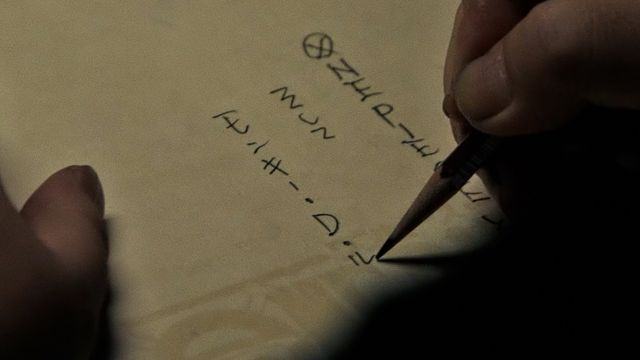
Oda wrote down the truth about the treasure called One Piece and about Monkey D. Luffy, who's his main character, on a sheet of paper. The paper was then divided, and the revealing portion was placed in a treasure chest and submerged on the seabed as part of a promotional project. The plan is to retrieve it and reveal its contents after the manga concludes. After nearly three decades of asking fans to search for a fictional treasure, Oda arranged to put a real treasure into the bottom of the ocean. And this is more about this just love and this obsession with his work that I find very interesting.
11Work as compulsion
Oda can't stop, and he invents whole branches of the story on deadline.
What makes Oda so unusual isn't simply the amount he works, is that he appears to get an extraordinary amount of personal fulfillment from the work. He described drawing manga as a pastime rather than a stressful occupation, even as he acknowledged the extraordinary demands it places on his life. The central paradox of Oda is that he has dedicated almost his entire adult life to writing a story about freedom and adventure while accepting an extraordinary restrictive life in order to create it. I think it's probably obvious to you by now. I don't think — I think this is compulsive. I don't think he can actually help it.
Here's a great illustration of this. He brought his drawing equipment to the hospital because he couldn't stop working. He brought his tools and continued producing artwork. Rather than being relieved at having a break, he felt anxious about not drawing. He compares his weekly manga production to a race in which another deadline is always approaching. And then we go back to this idea where he said there is no separation between his life and his art, his life and his work. He once spent 12 consecutive hours on the telephone discussing a single story with his editor.
His editor actually fell asleep during the conversation. They were having a creative discussion about stories, characters, and what should happen next. Another one of his editors reportedly became so conditioned to receiving his calls that he experienced phantom phone vibrations. This editor slept with his phone resting on his chest so that he wouldn't miss a call. Eventually he began feeling vibrations when the phone wasn't actually ringing. Oda routinely calls editors at unusual hours and becomes annoyed when they don't answer.
And then the amount of work that he does that you never see is just incredible. He has 17 separate notebooks devoted to a single story arc. In this interview he also showed four separate notebooks dedicated to characters' special abilities. The amount of material that Oda maintains behind the scenes is staggering. Then it goes back to this idea that he gets anxious, and I would say borderline depressed, when he feels he's not doing his best work. "I am a total wreck when I can't do my job well."
"I wind up moping if I don't feel like I fully completed a good story. I cannot rest until I make up for it the next week." This goes back to the idea that he knows where the story ends, but he improvises along the way. He invented some of the most important characters in One Piece almost at the last minute. The pirate characters collectively known as the Supernovas25The Eleven Supernovas — rookie pirates with bounties of more than 100 million berries who all turn up at the Sabaody Archipelago at once; among them are Luffy and his crewmate Zoro. became central to the series, but Oda revealed that he hadn't planned them in his original notebooks. When an editor expressed concern that this storyline needed more excitement, Oda spontaneously created nine additional rookie pirates.
12Be different, stay hidden
Oda keeps to his own path: he stayed loyal to Jump, never shows his face and believes artists should create trends rather than follow them.
Accounts of the editorial meeting described the designs emerging within just a few hours. Oda had created a vast new branch of his fictional universe under immediate deadline pressure. Then it goes back to his early life, the fact that he wanted to be like his hero. One Piece was rejected for serialization three times, but Oda refused to take it to a competing magazine. He was asked why he hadn't tried other major manga magazines. His answer was that he wanted to publish in Weekly Shōnen Jump because that's where his hero, Akira Toriyama, had worked.
He wanted to succeed where his idol had made history. And then more about the fact that he's intensely private. You see these interviews with him, and they always, like, blur out his face. He's like this at 51, he was like this at 17. At 17, he refused to let a newspaper publish his face, so he drew himself instead. This is after he won a major manga competition.
He says despite his achievement, he didn't want people knowing what he looked like. And then we go back to his insistence on being differentiated. He believes artists should create trends rather than follow them. He discouraged artists from simply adapting their work to whatever was currently popular. Instead, he argued that their responsibility was to take something they personally found interesting, even something the general public didn't understand yet, and make it popular. He believed that artists possessed a rare ability to change public taste rather than merely satisfying existing demand.
I think Oda would agree with Edwin Land,26Edwin Land (1909–1991) — inventor of instant photography, who founded Polaroid in 1937; the company released its first instant camera in 1948. the founder of Polaroid and Steve Jobs' hero, whose personal motto was, "Don't do anything that someone else can do." And then we get back to this tension in his life, the fact that he has spent his life essentially chained to a desk, all the while building this fictional story about, you know, constantly traveling, being an adventurer. So he was talking about, okay, well, what happens after you conclude One Piece? Like, what is your life going to be like? His dream after finishing One Piece is to become a perpetual traveler.
13Oda's three traits
Senra sees three constant traits in Oda: a tolerance for repetition, discipline combined with spontaneity, and imagination as the organizing force of his life.
After finishing his manga, he imagined traveling continuously, sleeping in a different place every night. He also said he wanted to travel around the world visiting hot springs27Hot springs (Japanese onsen) — baths fed by natural hot water; trips to onsen are one of the most beloved ways to relax in Japan. for the rest of his life. For a man whose life has been structured around the relentless repetition of weekly deadlines, the fantasy of constantly moving somewhere new is enticing. And so there's these recurring characteristics that stand out when you're reading. Again, I found him to be remarkably consistent over, you know — these interviews take place, like I said before, over multiple decades, yet he's got these three recurring characteristics that just reappear over and over again. Number one, he's got this extraordinary tolerance for repetition. And I believe that tolerance for repetition is really just tolerance for depth.
As you and I see in these biographies over and over and over again, if you focus on one thing long enough, you discover truths that the distracted miss. And I just love that line, "extraordinary tolerance for repetition." We've talked about this over and over again, the fact that many of these great companies, many of these great founders, they identify a handful of principles and they repeat those principles for decades through maddening repetition. If you listen to the episode I did on How Elon Works, it talks about in that episode, Elon repeats the algorithm28Musk's "algorithm" — five steps from Walter Isaacson's biography Elon Musk (2023): question every requirement, delete unnecessary parts and processes, simplify and optimize, accelerate cycle time, and only then automate. so much, over and over again, in so many of these meetings, that people literally — the people he's talking to mouth the words before they come out of Elon's mouth. You see this in the actions of great entrepreneurs too. Go and read all of Jeff Bezos's shareholder letters.
The very first one he writes in 1997, where he talks about it's Day 1.29"Day 1" — in his first letter to Amazon shareholders (1997), Bezos wrote that for the internet, and if Amazon did well, for Amazon, "this is Day 1." He attached that first letter to every one that followed. He wrote his last letter in 2021, before stepping down as CEO. He repeated that it's Day 1 for Amazon for two decades. What's also interesting is every subsequent — I think he wrote what, 21, 22 shareholder letters after that — at the end of every single one, he reprints the very first one. Bezos too had a tolerance for repetition. These people that get really great at what they do, they work on consistency relentlessly. The second thing that jumps out to me about Oda: he is simultaneously, excessively and extremely, disciplined and spontaneous.
And I think the greatest illustration of this is he's talking about, hey, it's getting harder and harder to draw all these things, and sometimes I just have to sit at my desk and think. Reminded me of George Lucas when he was writing Star Wars. I think his schedule, if I remember correctly, is something like, I want to say, like 8:30 to 5:30 every day, and he had a simple rule. He could either sit — because he hated writing. He loved making films, but he hated writing, but he was also a control freak, so he wanted to write the films that he was going to make, right?
And I think the simple rules that he gave himself was: I can sit at the desk and I can write or do nothing. He refused to allow himself to be distracted. He can't pick up a book, can't watch TV, can't do anything else. You can either write or you do nothing. And then finally, the thing that jumps out and repeats over and over again to me about Oda is his imagination appears to be just the organizing force of his entire life. It's incomprehensible to me that from a single mind you have this story coming out that's almost 30 years in the making.
This has got to be one of the most incredible creative acts in human history.
AdVanta, AppLovin
And then before we get back into this, I need to tell you about Vanta. Vanta, Vanta, Vanta. When you're building a company, you learn that trust is what closes deals. That is what Vanta helps you do. You may have the best product, but no buyers will sign a contract without proof of your security.
That's where Vanta comes in. Vanta is the leading agentic trust platform that not only gets you compliant fast,cCompliance — audited proof that a company meets security and data protection standards such as SOC 2 or ISO 27001; without such a report, large customers often won't sign a contract with a software vendor. but keeps you compliant by continuously monitoring your controls, so your deals keep moving and your engineers can keep building. Now you can access the Vanta agent everywhere you work, even if your team lives in Claude or Cursor.dCursor — an AI-powered code editor from Anysphere; Claude — Anthropic's AI assistant. That's why Vanta is trusted by more than 16,000 companies, companies like Ramp, and that is saying a lot, because Ramp loves building its own tools. Vanta will help you win trust, close deals, and stay secure faster and with less effort. Go to vanta.com/founders and you'll get a thousand dollars off.
That is vanta.com/founders. Earlier in this episode, I mentioned how Peter Thiel wrote about the importance of differentiation in his book Zero to One. Also in the book, he wrote one of my all-time favorite quotes, which is, "The single most powerful pattern I have noticed is that successful people find value in unexpected places, and they do this by thinking about business from first principleseFirst principles — reasoning that breaks a problem down to basic facts known to be true and builds the solution up from them, rather than by analogy with what others do. Senra often opens this ad read with the Thiel quote. instead of formulas." And that is exactly what AppLovin has done with their advertising platform. AppLovin connects you with over a billion potential new customers in mobile games.
AppLovin allows you to capture undivided attention. AppLovin ads are full-screen videos that are watched for an average of 35 seconds. That is retention that blows other ad platforms out of the water, and you can launch on AppLovin in minutes. You set the goal, and AppLovin achieves it. No complex setup, no expertise needed, and AppLovin scales quickly. Other businesses have seen immediate results, scaled to hundreds of thousands of dollars of spend per day, and increased their revenue by millions.
So you want to get started quickly, before all your competitors are on AppLovin, and you can do that by going to applovin.com. That is applovin.com.
14The right way is the hard way
Like Seinfeld, Oda believes the right way is the hard way: he keeps looking for a better idea until the last minute and can't work more efficiently, even though he'd like to.
And then let's go back into this incredible work ethic. He's a perfectionist who has repeatedly admitted that he cannot make himself work in a more efficient or conventional way, even when he desperately wants to. One of my favorite things I have saved on my phone is — a few years ago, Jerry Seinfeld was interviewed by the Harvard Business Review, and I just got to read this excerpt from the interview because it's exactly — again, most successful TV show of all time, most successful manga. They're literally doing it the exact same way.
So Jerry Seinfeld's asked, "You and Larry David30Larry David — American comedian and writer who created Seinfeld with Jerry Seinfeld and was its head writer for the first seven seasons; he later made the HBO series Curb Your Enthusiasm. wrote Seinfeld31Seinfeld (1989–1998) — the NBC sitcom about four friends in New York, "a show about nothing." One of the most successful series ever: Seinfeld turned down a tenth season even though NBC offered him $5 million an episode, and by 2010 reruns alone had brought in $2.7 billion. together without a traditional writers' room,32Writers' room — the usual way American television series are written: a group of writers comes up with stories and jokes together, and the head writer turns them into scripts. and burnout was one reason you stopped. Was there a more sustainable way to do it? Could McKinsey33McKinsey & Company — the American management consulting firm founded in 1926; the oldest and largest of the "Big Three" strategy consultancies, along with BCG and Bain. or someone help you find a better model?"34"Life's Work: An Interview with Jerry Seinfeld" — an interview in the January–February 2017 issue of Harvard Business Review, conducted by Daniel McGinn. HBR. Jerry Seinfeld responds, "Who's McKinsey?" The interviewer says, "It's a consulting firm." Seinfeld responds, "Are they funny?"
The interviewer says, "No." Seinfeld says, "Then I don't need them. If you're efficient, you're doing it the wrong way. The right way is the hard way. The show is successful because I micromanage it. Every word, every line, every take, every edit, every casting."
"That's my way of life." And Oda works the exact same way. Oda admitted that he deliberately keeps thinking until the last possible moment before a deadline. He says he never managed to become the kind of creator who finishes work comfortably ahead of schedule. He acknowledged that finishing earlier would give him more personal time and make life much easier for him. But then he said something extraordinary: that unless he keeps working on the story right up until the deadline, he didn't feel he had done his best.
He equated using every available minute with giving his maximum effort. After 12 years of success — this is a different interview — he admitted he still couldn't figure out how to produce stories efficiently. He said he wished he could produce his manga in a systematic, professional manner, that he wished he would be able to generate stories reliably and finish them on time and then have more free time. But he concluded that his personality wouldn't allow it. He could not stop searching for a better idea merely because the story was good enough. He says that for his best ideas to come, he has to sit at his desk and draw his way toward them.
He rejects the idea that he's a genius who simply had brilliant ideas while walking down the street. Instead, he describes sitting at his desk, thinking intensely and making drawing after drawing until the ideas appeared. The process of drawing itself helps him discover what he wants to say. Oda repeatedly chooses what he finds creatively exciting over what would make his life easier. He could delegate more, draw less, simplify his plots, create fewer characters and finish manuscripts earlier, but by his own account, he finds it extraordinarily difficult to accept compromise. That tension between his creative ambition and the physical limits of a human life is the strongest central theme in the biography of Oda.
And that is where I'll leave it. That is 439 books down, 1,000 to go,35"439 books down, 1,000 to go" — Founders' signature sign-off: Senra counts the episode number as the number of books he has read for the podcast, and by his count he has another thousand ahead of him. and I'll talk to you again soon.


