

David Senra
Chapters
Lütke sees Huang's resignation as a huge loss: Nvidia is the product of one man's vision, and custodians won't be able to keep it going.
Read the chapter- Huang resigned four days after allegations of an affair, which quickly turned into a story about a Chinese spy, followed by two more alleged affairs.
- Senra reads Lütke's post saying that Nvidia ends today and is replaced with "a thing cosplaying Nvidia."
- As a teenager, Lütke donated blood at three German hospitals in a row to afford an Nvidia Riva TNT graphics card.
- Huang, Lütke says, kept investing in CUDA for ten years while nobody understood it, and with AlexNet graphics accelerators became AI machines.
- Everyone in the West is richer because Nvidia exists, so the burden of proof for removing its founder should be far higher.
A founder has no successor: the company he built ends the day he leaves, and even the best manager only extends its runway.
Read the chapter- Senra reads from Michael Moritz's foreword to Return to the Little Kingdom: CEOs are products of educational and institutional breeding, while the best founders are irrepressible forces of nature.
- Lütke calls Tim Cook the best ever at taking over from a founder, but credits Apple's market cap gains under him to products developed under Jobs.
- A company can sometimes be refounded, but the odds that something just as valuable replaces it are very low.
Only founder-run companies dare to reinvent themselves: Meta, mocked for its spending, is now at the AI frontier.
Read the chapter- Senra recounts an investor saying Meta would change least if its founder left, and calls the investor an idiot.
- Lütke recalls how everyone criticized Meta's expensive researcher hires a year or two ago; now it is an AI lab at the Pareto frontier, and other companies with the same resources didn't make that call.
- The best book on why founder-run companies work, Lütke says, is Burnham's The Managerial Revolution, written before the word "founder" was in use.
Lütke wants people to distinguish those who created wealth from the rest: builders already put up with derision, but if it becomes a matter of physical safety, many will simply opt out.
Read the chapter- Shopify exists because of a couple of decisions Lütke made in 2004 and his choice to keep at it for 22 years.
- He owns 5 or 6% of Shopify; the other 95% belongs to the public, employees and early backers.
- Money enters the world at the moment a product is created, and it is what pays for healthcare and safety nets.
- Lütke is appalled by polls in which up to 60% of people on one side of the political spectrum say violence against CEOs can be justified.
Bezos suggested to Senra that entrepreneurs be measured by the wealth they created for others, not what they own, and Lütke explains why an economy without growth can only redistribute.
Read the chapter- Senra told Bezos he had built a magic button that delivers anything in two days, and people put a guillotine in front of his house.
- Bezos thinks the Forbes 400 turns wealth into a competition and suggests counting this way: of Amazon's $2 trillion, he owns $200 billion and helped create $1.8 trillion for others.
- Senra proposes that he and Lütke build such a list together with AI.
- For Lütke, redistribution is secondary: once growth stops, a dollar can only be taken from some to give to others, as in the Middle Ages, before steam power, when everything went to the landed gentry.
An anonymous donation is morally pure, but a public one sets an example and draws more money to the cause.
Read the chapter- Senra tells of an entrepreneur who anonymously gave about $50 million to a Los Angeles group that helps former gang members, and notes that Carnegie made sure everyone knew the libraries were his.
- Senra calls Michael Dell, who is giving money to American kids while he's alive, the country's most beloved multibillionaire, and Lütke calls the kids accounts a breakthrough piece of infrastructure.
- Lütke's father-in-law, Bruce McKean, made an enormous anonymous gift to CAMH, and the family spent years persuading him to own it.
- Lütke doesn't buy the idea that robber barons atoned for guilt with libraries, and names Bill Gates as the last to follow that template.
Making products and services for other people is already virtuous, and the market is smarter than any of us; without competition, only founder-run companies keep getting better.
Read the chapter- The superintelligence of Toronto lets Lütke call a plumber without knowing anything about plumbing.
- The oldest clay tablets, Lütke says, are merchants' tallies of goods carted to the next town, some 12,000 years ago.
- Lütke opposes monopolies, yet Nvidia had no real competition for years and still released new cards every year; tensor cores, which gamers used for Call of Duty, turned out to be the key to AI.
Huang personally reviewed big orders and made sure startups got chips, and his downfall, Lütke thinks, is too neatly choreographed.
Read the chapter- From the stories Lütke has heard, Huang could have made more money but kept supply for the smaller players.
- Huang championed open-source AI, which Lütke thinks very likely has something to do with his removal.
- An affair, a Chinese spy, two more affairs: to Lütke it reads like a takedown story in a book, and the question is who benefits.
The Web 2.0 era, when programmers typed code into an editor, is over, replaced by a new and, Lütke believes, better job.
Read the chapter- Lütke urges everyone to watch DHH's Rails World talk declaring that programming is no longer a job.
- In the early 2000s Lütke, DHH and their generation figured out how to build real software in the browser, and Lütke dates the true starting point to Basecamp's 2004 release.
- Companies like Shopify were built on open-source Ruby on Rails and sold subscriptions customers could cancel at any time.
- Now programmers are makers who talk to their computers in wishes and think about the system they want.
When AI-driven development disappoints, the usual cause is unambitious prompting: AI needs to understand the problem, not be told the solution.
Read the chapter- Lütke has realized his ambition of being a full-time technologist: he contributes to Shopify's core systems, and the whole company uses his tools.
- He sits down with people and has AI cluster their prompt history by type to show where they imposed their own solution.
- Most of the work becomes what he calls verification engineering: writing acceptance tests that prove the result is good.
- Formal verification, which Lütke once knew only from mathematicians using Lean, has become in his view the most important field in engineering.
The industry spent decades building abstractions for developer productivity, but agents don't need productivity; they need strict rules.
Read the chapter- Engineers were scarce, so everyone used frameworks like Ruby on Rails, where a database query is one line.
- Abstractions ate almost all the gains in computer speed: a 1984 Macintosh opens its word processor instantly, while Word shows a splash screen for 30 seconds.
- Engineers hate strict linter rules, but agents love them and will happily write tens of thousands of lines without layers of abstraction.
Agents produce more code than humans can review, so models and proofs have to check it, and then software becomes nearly bug-free.
Read the chapter- Lütke suggests asking Claude Code to find all implicit state machines, then build a TLA model and scan for vulnerabilities with Vercel's DeepSec, which turns up a thousand bugs.
- Most companies, he says, are in some form of code red, and all human-written production code will have to be replaced within six to 12 months, for instance by rewriting it in Rust.
- Software will be 100 times faster, start instantly even on a 10-year-old laptop, and reshape itself for each user.
Accelerating your current tasks isn't enough: AI has to be learned like a guitar, approached with a problem and an openness to unexpected solutions.
Read the chapter- Senra compares this to the DeepMind documentary: AlphaGo got further than humans once it started making moves like Move 37, and Lütke says that is exactly what is happening in programming.
- Almost all engineering at Shopify now runs through "factories," constellations of AI agents with different jobs.
- Software will have to be rewritten both for cybersecurity and because of a coming crunch in compute and hardware next year.
Lütke learns in small groups of peers where everyone has to contribute to keep up, and his advice is to be too good to ignore.
Read the chapter- Senra relays that DHH says Tobi nerd-sniped him into AI, and that Sam Altman learns more from Lütke about how founders use ChatGPT than from anyone else.
- Lütke hasn't taken a weekend off work this year and feels every decision in his life prepared him for this moment.
- He says he has shared the edge of his own understanding: ambitious prompting, implicit state machines, linting and formal verification.
Lütke compares the gap between people who have mastered agents and everyone else to a modern factory against a medieval blacksmith: time is no longer the constraint, money is.
Read the chapter- You can make a decision on Friday and show up with production code on Monday.
- Over a weekend Lütke rewrote Shopify's internal code hosting system, based on his own walgit, because pull requests are now merged 10 to 100 times faster.
- No one would once have rewritten a database layer, since it took a team of rare specialists a year; now it's worth $2,000 of tokens.
At Shopify the best engineers work on internal tools, which prepared the company for AI; a tool becomes a customer product only once it is deeply understood.
Read the chapter- According to Senra, DHH begged to buy Shopify's internal tools, which are better than anything he could purchase.
- Elsewhere internal tools are a job for interns; at Shopify they are high status.
- Lütke compares the mood inside Shopify to magic and doubts even Renaissance Florence felt like this.
- A billion people will be able to make things on computers, because the main tool is now language, any language.
When software is sluggish, people blame themselves rather than the computer; AI can fix that and push people toward their own projects and entrepreneurship.
Read the chapter- People aren't mad at Word when page breaks behave strangely; they decide they're bad at computers.
- If you want to throw a computer in the garbage, Lütke says, that's the computer's fault, not yours.
- Fast, clear software will help people do their jobs, then take on their own projects and maybe start companies.
The point is free markets, not capitalism; Lütke worries that vilification and violence will scare people away from entrepreneurship just as starting a business becomes possible for everyone.
Read the chapter- Senra quotes Richard Branson's definition: all business is an idea that makes somebody else's life better.
- Lütke calls patents a monopoly justified perhaps only for drugs, and GDP growth really energy growth.
- He asks why the media vilifies company builders to the point of drumming up violence, even as new business formation, by the numbers he checked, is at an all-time high.
- Senra sums up: all you need to do is use technology to build products that make other people's lives better.
Quotes
On what Nvidia makes
“Nvidia's product is that it takes essentially rocks and makes them think.”
Tobi LütkeRead from 01:00On what's left after a founder leaves
“But really, in all situations, you're having a transition from one thing to another, and the company that was under the founder ends the day the founder is no longer in charge.”
Tobi LütkeRead from 07:51On markets
“Markets are the original form of superintelligence. We are all part of markets that are vastly more intelligent than us.”
Tobi LütkeRead from 24:15On why AI disappoints developers
“My main advice, when people are not quite able to get all the value out of this AI-driven development, it's usually insufficiently ambitious prompting.”
Tobi LütkeRead from 35:32On how to think about AI
“I think AI is best thought of as an instrument.”
Tobi LütkeRead from 48:58On the gap between agent users and everyone else
“I think it's the biggest gap of productivity that's ever existed in any industry, even in any time, probably.”
Tobi LütkeRead from 54:27On who's to blame when computers frustrate you
“If you want to throw a computer across the room or in a garbage bin or so, that is not your fault. That is the computer's fault.”
Tobi LütkeRead from 1:02:54
Summary
David Senra's second conversation with Tobi Lütke opens on Jensen Huang's resignation from Nvidia. Lütke argues there is no such thing as succession for a founder, that Nvidia without Huang will be run by custodians, and that the scandal looks suspiciously like an orchestrated takedown. From there they turn to where money comes from: Lütke owns 5 or 6% of Shopify and asks people to look at the other 95%, Senra relays Jeff Bezos's idea of ranking entrepreneurs by the wealth they created for others rather than what they own, and both worry that violence against CEOs will scare off future founders.
The second half is about the end of the Web 2.0 programmer job. Lütke says most people get little from AI because their prompting isn't ambitious enough, that AI should be learned like an instrument, and that code written by agents has to be checked with formal verification rather than human review. He predicts software that is nearly bug-free and instant, and offers proof: over a weekend he rewrote the system that hosts all of Shopify's code.
Advice
If AI isn't helping your team much, audit its prompts: have the AI cluster the prompt history and look for places where people imposed a ready-made solution instead of describing the problem.
Give AI the problem, not the method, and put your effort into acceptance tests that show for certain the result is good.
Ask AI to find every implicit state machine in your code base, make them explicit, check them with a TLA+ model and run a vulnerability scan: that's how hidden bugs surface by the hundreds.
Build a small group of peers where staying in means contributing, so learning sustains itself.
Put strong engineers on internal tools: they can ship fast and get feedback from colleagues, and the infrastructure pays off when new technology arrives.
Build tools for yourself first, and turn them into customer products only once you deeply understand what works and what doesn't.
Mentioned
 Jensen Huang00:02Lütke considers him an irreplaceable founder and his post-scandal exit a mistake by Nvidia's board.
 NVIDIA01:00the company that, in Lütke's words, makes rocks think; without Huang, he argues, it becomes a thing cosplaying Nvidia.
- RIVA TNT01:22the graphics card teenage Lütke paid for by donating blood at three hospitals in a row.
 CUDA02:00the platform Lütke says Huang kept funding for ten years despite the naysayers.
Show 43 more mentionsShow fewer mentions
 AlexNet02:00Lütke calls it the first model trained on graphics cards, the start of Nvidia's AI era.
 Michael Moritz05:58Senra reads his foreword's line about the distance between a founder and a CEO.
- The Little Kingdom: The Private Story of Apple Computer05:58Moritz's book on Jobs; the founder-versus-CEO line comes from the foreword to its new edition.
 Steve Jobs05:58the subject of Moritz's book; Lütke says all the products behind Apple's market cap growth under Cook were developed under Jobs.
 Tim Cook07:15to Lütke the best manager ever to follow a founder, because he extended the runway of Jobs's products.
 Apple07:51Lütke's example of a manager keeping a founder's direction.
 Meta Platforms10:47Senra recounts an investor's claim that Meta would change least without its founder; Lütke counters that only a founder would have made its costly AI bet.
- The Managerial Revolution11:46in Lütke's view the best book on why founder-run companies are so effective.
- James Burnham11:46author of The Managerial Revolution; Lütke calls him John.
 Shopify12:36Lütke stresses that 95% of his company's value belongs to the public, employees and early backers, not him.
 ChatGPT13:48Lütke cites paying for a subscription as an example of value that exists only thanks to builders.
 Jeff Bezos15:52suggested to Senra a ranking of the wealth entrepreneurs create instead of a list of the richest.
- Forbes 40016:46the ranking Bezos, per Senra, thinks is harmful because it turns wealth into a competition.
 Amazon17:01Bezos's example: of its $2 trillion market value, he created $1.8 trillion for others.
 Andrew Carnegie20:29Senra's example of a philanthropist who built libraries and made sure people knew they were his gift.
 Michael Dell20:29Senra calls him America's most beloved billionaire for giving money to kids while he's alive.
- Trump Accounts21:34the kids accounts Lütke sees as breakthrough infrastructure for giving.
 SpaceX21:34Lütke mentions talk of depositing its shares into kids accounts.
 Elon Musk21:34according to Lütke, also planning to give to kids accounts.
- Bruce McKean22:14Lütke's father-in-law, whom the family spent years persuading to put his name to a huge anonymous gift.
- Centre for Addiction and Mental Health (CAMH)22:14the Toronto mental health hospital that received McKean's gifts.
 Brad Gerstner23:27with Dell, per Senra, started the wave of giving to kids accounts.
 Bill Gates23:36to Lütke the last to follow the robber-baron template: get rich, then atone with philanthropy.
- Call of Duty26:02Lütke jokes that Nvidia's tensor cores first sped up this game before proving essential for AI.
 David Heinemeier Hansson30:15Lütke's friend and a Shopify board member; Lütke urges everyone to watch his talk on the end of hand-written code.
 Basecamp32:13DHH's product, whose 2004 release Lütke sees as the starting point of Web 2.0.
 Ruby on Rails32:56DHH's framework, which Shopify is built on; Lütke uses it to explain abstractions.
 Lean37:21Lütke knew formal verification only from mathematicians formalizing proofs in Lean.
- Macintosh40:26Lütke's example of a 1984 computer that opens its word processor instantly.
- Microsoft Word40:26Lütke's example of software that takes 30 seconds to load and mangles page breaks.
 Omarchy41:05DHH's Linux distribution, which Senra says installs faster than a new Mac sets up.
 Claude Code43:06Lütke suggests asking it to find every implicit state machine in your code.
- TLA+43:49the language in which, per Lütke, AI should model a system to find "a thousand bugs."
- DeepSec43:49the tool Lütke recommends for finding vulnerabilities after model checking.
 Vercel43:49the company that made DeepSec, which Lütke praises.
 Rust45:19the safer language Lütke expects code to be rewritten in.
 Demis Hassabis48:31Senra recalls a documentary about him and DeepMind to ask whether AI programming resembles AlphaGo.
 Google DeepMind48:31the lab whose AlphaGo, Senra says, went beyond humans once it came up with its own moves.
 AlphaGo48:31Senra recalls its Move 37, and Lütke says the same is happening in programming.
 Sam Altman51:28according to Senra, learns more from Lütke about how founders use ChatGPT than from anyone else.
- walgit54:54Lütke's Git server, the basis for his weekend rewrite of Shopify's internal code hosting.
 GitHub56:04Lütke explains it was good enough while humans wrote code slowly.
 Richard Branson1:04:01author of Senra's favorite definition of business: an idea that makes somebody else's life better.
Sponsors of the episode
 Router by Ramp08:48picks the most cost-efficient AI model for every request to cut inference spend.
 AppLovin09:42ads in mobile games reaching more than a billion people.
 Dots29:09OpenAI's personal AI agent in ChatGPT that works in the background.
 Deel46:47hiring, paying and managing workers anywhere in the world.
- Founders1:09:24Senra's other podcast, about entrepreneurs' biographies.
Transcript
01Why Huang can't be replaced
Lütke sees Huang's resignation as a huge loss: Nvidia is the product of one man's vision, and custodians won't be able to keep it going.
Give me your thoughts on the firing of Jensen.
I mean, with your own timeline, it's… I mean, he resigned.1Huang's resignation — Jensen Huang stepped down as Nvidia's president and CEO on November 12, 2026; CFO Colette Kress became interim CEO. Huang has denied compromising national security or Nvidia's secrets. Game Developer He resigned, I think, four days after some allegations of him having an affair, which I think in short order evolved into an affair with a Chinese spy. And then there was, like, a TikTok of, like, another person, another person. I think we're up to three or so alleged affairs, then a resignation. And so, yeah, what are my thoughts? I mean, yeah, don't have affairs is definitely sort of the first thing that comes to mind.
This is why I just asked you the question, and I'll just read this to you real quick. These are your own words: "There's no replacing a founder like Jensen. There never has been, and there can never be a true succession for a founder like him. Nvidia ends today, and it's replaced with a thing cosplaying Nvidia.2Lütke's post — Lütke wrote this on X after Nvidia announced Huang's departure, calling the board's decision a "generational blunder." With Cohere CEO Aidan Gomez he signed the Stand with Jensen open letter asking for Huang's reinstatement pending an independent investigation. BetaKit It will be run by custodians3Custodians — Lütke's word for managers who preserve what they inherited rather than create something new, the opposite of founders. He keeps using it for the managers who take over from a founder. trying and failing to preserve the flame he ignited." So really the reason I asked you the question is, like, your thoughts on why founders like Jensen, and I would say most founders, are irreplaceable.
Yeah, and especially Jensen, because he's one of one. We see the Nvidia of now, right? Like, what is it, a four-plus-trillion-dollar company.4Nvidia's market value — in July 2025 Nvidia became the first company worth $4 trillion, and in October 2025 the first worth $5 trillion. Nvidia's product is that it takes essentially rocks and makes them think. It's the closest thing to magic humanity has ever come. It is something that is so clearly a product of his indomitable vision.
When I was a teenager, I made my money… I sold things to my classmates, I had a paper route, because I was trying to make money for the things that I wanted, usually computer upgrades. Then I fell short. I went to donate blood, because the hospitals were paying you in Germany for this,5Paid blood donation — in Germany, hospital and private blood centers pay donors an expense allowance, usually a few dozen euros; the Red Cross doesn't. Lütke was born in 1980, so he was making these rounds at about 18. and they were not integrated, so you could make rounds. And I remember donating blood in three different hospitals in a row to make enough money to buy the most magical device, what's called a Riva TNT,6Riva TNT — Nvidia's 1998 graphics chip and one of the company's first hits. TNT stood for TwiN Texel: two pipelines each applied a texture per clock, and 32-bit color gave it a visibly better picture than its main rival, 3dfx's Voodoo2. one of Jensen's products, a 3D accelerator. Like, this was a very, very long time ago.
Jensen has been part of this industry and has kind of ignited the magic, the spark of his industry, in a very real way. Like, accelerating linear algebra7Linear algebra — a 3D game scene is thousands of triangles, and rotating and projecting them onto the screen means multiplying matrices and vectors. Graphics cards accelerate exactly those operations, and it later turned out that neural networks run on the same matrix multiplications. made the video games that we know today. But this dogged pursuit of his, just making this better and better and better, the vision of making them programmable: CUDA.8CUDA — Nvidia's platform, introduced in 2006, for programming a graphics card to do any computation, not just graphics. For years it looked like an expensive pet project of Huang's, until people started training neural networks on it. For 10 years no one knew what CUDA really did. People didn't get it. And yet, I don't know how you preserve something where you have only naysayers. It's a huge investment. The investors were like, why are you doing this? And then the dawn of AlexNet,9Fact-checkNot quite: AlexNet (2012) was not the first neural network trained on GPUs; researchers had done that before, for example at Stanford in 2009. But AlexNet, trained on two Nvidia GTX 580 gaming cards, won the ImageNet image recognition contest by a wide margin and set off the deep learning boom. Wikipedia which was, I think, the first machine learning model that was trained on these graphical accelerators. GPUs are not like… These are graphical processing units. You can't even plug a monitor into them anymore,10GPUs without displays — data center accelerators such as Nvidia's H100 have no video outputs: they're compute cards, though they're still called graphics processing units. but they're still called GPUs. So that's all Jensen.
Jensen has given us the gift of a graphical accelerator, given us the gift of a machine that does something so fast that we can use it to make synthetic intelligence now, and God knows what else, and all these industrial things. It is a singular company he's built. It's a company around a vision that if you just take a thing that's really, really important and make it unbelievably good, even in the presence of no competition, just dogged pursuit of absolute excellence for its own sake, we would reap the benefits from this. And on top of that, now that everyone needs this product, literally the most valuable product on planet Earth, he's been, like, a statesman presiding over this incredible responsibility of allocating these things, where they go, and bootstrapping the industry and supporting everyone.
Source: Nvidia annual reports
Jensen is, like, irreplaceable. It's Jensen's exoskeleton, right? And so, look, extramarital affairs, obviously, like, marital indiscretions, these are not good things. But it's just, like, only Jensen can run Nvidia. It's a nutty thing. I mean, you can put him on administrative leave11Administrative leave — a temporary suspension from duties, usually with pay, while an internal investigation runs. or, like, figure out something. But he built this company. The company is worth, what, again, I think I remember it's over four trillion dollars. And that's all value on planet Earth that didn't exist without him seeing this, without him building this. Everyone is a good deal richer in the West because Nvidia exists. That creates money out of nothing and creates these products out of the potentiality of the ether, and then more value exists in the world, and then you can build products on top of them, which are even more value entering the world. And this is, like, trillions and trillions and trillions of dollars.
And if this stops now, because we are turning Nvidia into some kind of legacy company, because the knuckleheads on his board just kind of seemingly have made a snap decision in the face of scandal or whatever, in the eye of the storm, it's crazy to lose this. And I just think that there's kind of no track record of custodians truly managing to prolong something that's running as red hot as Nvidia. I think this is of societal impact. Progress on planet Earth, at some point, if you can measure it, like 10 years from now, 20 years from now, you might look at a chart and you could potentially mark the moment where, after the current set of decisions have played themselves out in the market, there will be a deceleration because of this. Because, again, it's an unbelievably hard thing to run a high-functioning large company that's doing important things.
And there's really not many people who can do it. And I don't think there's really anyone who can do it, definitely for Nvidia, as well as him. So, like, well, we need to preserve people in this world as long as we want them. And we also should celebrate people for what they truly accomplished. And who knows what the real story is and what all the components are to it, but the burden of proof needs to be much, much, much higher for saying that he's not the right person for running this company.
02The distance between a founder and a CEO
A founder has no successor: the company he built ends the day he leaves, and even the best manager only extends its runway.
Yeah, I think what we were talking about before we started recording was, both of us… Like, the last time we had this conversation,12The last conversation — Lütke's first episode of this show came out in January 2026 and ran more than two hours. you're like, oh, we actually have the same job. Both you and I are trying to create more entrepreneurs. And maybe I'm so deep in the ocean, I don't understand that the water is wet,13Water — Senra is riffing on the parable of fish that don't know what water is: what you live in all the time, you stop noticing. David Foster Wallace made it famous in his 2005 speech "This Is Water." but the idea was unfathomable to me that, when people were like, oh, Jensen's gonna lose his job, people were speculating, it's like, this is impossible. The founder is so important, because we have a deep understanding of how important they are. I just want to read something to you, because Michael Moritz14Michael Moritz — a Time journalist who got inside access to Apple in the early 1980s and wrote a book about it, then became a partner at Sequoia Capital and invested in Google, PayPal and YouTube. wrote this book on Steve Jobs called The Little Kingdom.
He publishes it, Steve Jobs is still there. I think Steve Jobs is 30 years old.15The Little Kingdom — the book came out in 1984, when Jobs was 29; a year later he was pushed out of Apple. In 2009, Michael Moritz writes an updated version called Return to the Little Kingdom. And in the foreword, he has one of the best lines, because when I was reading your tweets about Jensen, this is what popped to my mind. He talks about the difference between the founder and a professional CEO. He says, "There's no greater distance known to man than the single footfall that separates a CEO from a founder. CEOs are, for the most part, products of educational and institutional breeding. Founders, at least the very best of them, are unstoppable, irrepressible forces of nature." And I think your perspective, and what you were tweeting on Jensen, is, like, he is a force of nature. There is no repeating him, and there is no replacing him.
There is no such thing as a succession for a founder. You can have a succession plan in a structured sense of moving a founder-run company and transitioning it into a custodial-run company, a managerial company, if you will. And there's obviously success stories in the managerial world too, right? I mean, Tim Cook16Tim Cook — succeeded Jobs as Apple's CEO in August 2011 and ran the company until August 31, 2026; he is now executive chairman, and John Ternus became CEO. That's why Lütke speaks of him in the past tense. did a very, very good job extending the runway of products that were created, like keeping, like, building them on the clock and so on. I think there was even one or two new products under his leadership.17Fact-checkUnderstated: under Cook, Apple launched the Apple Watch (2015), AirPods (2016), the Vision Pro headset (2024) and its own Mac processors (2020). Wikipedia So something kept working.
He's presumably the best in the world that's ever existed in terms of taking over from a founder and actually keeping the direction. Now, a lot of the market cap increase was during his time, and he should get the credit for it, but you have to allocate the market cap to the products, and the products were all developed under Steve. So it can be done in this way. There's even a case to be made that it is possible to potentially give a company a refounding event.18Refounding — the moment a company decides anew why it exists and rebuilds itself around a new mission, as if founded a second time. There's examples of this too. But really, in all situations, you're having a transition from one thing to another, and the company that was under the founder ends the day the founder is no longer in charge. And maybe if you're lucky, it's replaced with something else valuable. If you're extremely lucky, maybe it's going to be replaced with something that might even be more valuable. But I think the betting odds are just really, really low there.
AdRouter by Ramp, AppLovin
One of the things I love about Ramp is their mission is easy to understand. They want to help your business save time and money, and that is why they have built Router.aRouter — Ramp's service that sends each request to the AI model that delivers the needed quality for the least money. Do me a favor: while you're listening to this, go to router.com. Router was built to reduce your company's inference costsbInference — running an already trained model: every answer to a request. Model providers charge for it by the token. by matching every request to the most efficient AI model. Router automatically balances cost, speed, and quality of output.
Router is built for CTOs and loved by CFOs. Your engineering team gets the best model for every workload, and your finance team gets lower inference spend. One customer of Router has the perfect description of why your company should be using Router: "Choosing the right model makes a meaningful difference to our AI spend. We run billions of tokens through Router and have reduced our model costs by 92%." Tokens are money. Save both. And you can do that by going to router.com.
One of my all-time favorite quotes is from the book Zero to One,cZero to One — Peter Thiel's 2014 book about building companies that create something fundamentally new. Senra repeats this quote in every AppLovin read. and it says, "The single most powerful pattern I have noticed is that successful people find value in unexpected places, and they do this by thinking about business from first principles instead of formulas." That is exactly what AppLovin has donedAppLovin — an American company running an advertising platform for mobile apps and games. with their advertising platform. AppLovin connects you with over a billion potential new customers in mobile games. AppLovin allows you to capture undivided attention.
AppLovin ads are full-screen videos that are watched for an average of 35 seconds. That is retention that blows other ad platforms out of the water. And you can launch on AppLovin in minutes. You set the goal, and AppLovin achieves it. No complex setup, no expertise needed. And AppLovin scales quickly.
They can put your ads in front of over a billion potential customers. Other businesses have seen immediate results, scale to hundreds of thousands of dollars of spend per day, and increase their revenue by millions. So you want to get started quickly, before all of your competitors are on AppLovin. And you can do that by going to applovin.com. That's applovin.com.
03Only founders reinvent their companies
Only founder-run companies dare to reinvent themselves: Meta, mocked for its spending, is now at the AI frontier.
Why do you think this is so widely misunderstood, the importance of the founder? Like, let me give you an example. A friend of mine was talking to somebody, and this person said, out of all the technology companies that are still founder-led, the one that would be the least different if the founder left was Meta. And I go, what? I go, who's this person? And they're like, this person's an investor. I go, no, that person's an idiot.
Yeah, no, that is completely wrong. People always have it both ways. Like, you know, just a year ago or whatever, maybe a year and a half ago or two, maybe max, everyone's complaining about, suddenly Meta is hiring all these researchers for a lot of money,19Meta's hiring spree — in summer 2025 Zuckerberg set up Meta Superintelligence Labs, paid $14.3 billion for 49% of Scale AI and brought in its founder Alexandr Wang, and poached researchers from OpenAI, Google and Apple with packages worth tens to hundreds of millions of dollars. and that doesn't make sense. And now they have frontier level… Like, Meta is an AI lab at the full Pareto frontier.20Pareto frontier — here, the set of models that can't be beaten on one measure without losing on another, say quality at a given price. Being on it means offering one of the best options in its class. Like, try that. There's a lot of companies in the world now who have the resources of Meta, and none of them have made that decision. So reinventing your own company is an aspect of founder-run companies, and you can point at basically any founder-run company.
ExplainerBurnham's The Managerial Revolution
American philosopher James Burnham published the book in 1941, after breaking with Trotskyism. His central thesis: in advanced countries, power is passing from capitalist owners to managers, the directors, engineers and administrators who run factories and agencies without owning them. Burnham saw the American New Deal, the Soviet planned economy and Nazi Germany as versions of the same thing: rule by a new managerial class.
- Burnham set managers against not "founders" (he doesn't use the word) but the 19th-century capitalist entrepreneur who both owned and ran his business.
- The book was widely debated: George Orwell wrote an essay on it, "Second Thoughts on James Burnham" (1946), and the world of three superstates in Nineteen Eighty-Four echoes Burnham's predictions.
Now, I can go into a bit of my junk science take on why this is, but it depends on where you want to go in this conversation, really. Because I think it is understudied, what is the operating bit that's causing founder-run companies to be so effective. But it's not a new topic. I mean, probably the best book on this topic I've read is written by John Burnham,21Fact-checkNot quite: the author is James Burnham, and the book came out in 1941, when World War II was already underway. Britannica called The Managerial Revolution. I think he wrote this before World War II. They didn't have the word founders. I think he called them the bourgeois entrepreneur or something like this. But it nails the thesis, and it's underdiscussed.
04Builder billionaires and the threat of violence
Lütke wants people to distinguish those who created wealth from the rest: builders already put up with derision, but if it becomes a matter of physical safety, many will simply opt out.
And I think it's causing people to make a lot of principal sort of category mistakes,22Category mistake — philosopher Gilbert Ryle's term for assigning something to the wrong category. Lütke means that all billionaires get judged by the same yardstick, whether or not they created wealth. like billionaires that are universally hated. And people are allowed to hate whoever they want, but it is really, really crazy to not make a difference here between builder billionaires and others. You know, again, the people who build companies, people who build products, or there's at least one billionaire who wrote books, they are adding value to the world in a way that would simply not exist otherwise. Someone has to start the book, and someone has to write it. Someone has to start a company. I started Shopify. It exists because of a couple of decisions I made in 2004,232004 — that year Lütke opened Snowdevil, an online snowboard shop, and the engine he wrote for it became Shopify in 2006. and then the decision to keep at it for 22 years.
I'm really not responsible for all the value of Shopify. This is a team production. We have thousands of people who work here. And I own a very small percentage of the company. It's like 5, 6% at this point.24Lütke's stake — thanks to a special founder share, Lütke controls about 40% of Shopify's votes, though his economic stake is much smaller. So 95% is owned by, you know, the public, by employees, by early people who took bets and who took huge risks. This is how money is created. We want great societies.
We want fair societies. We want people to not suffer, people to have healthcare, people to have options, people to have safety nets. And so all these kind of things are created from an energy in the form of money that is created by the entrepreneurial spark, mostly of taking potentiality, like potential that's out there, and converting this into products and services that we then trade for each other. And the money comes into the world at the moment of product creation. Jensen and his teams are taking sand and rock and making it think and be able to answer your entrepreneurial questions that you secretly harbor in the quest of one day starting your own company. That is a thing that only is possible, and is extremely valuable to you, and therefore you are happy to pay for the ChatGPT subscription, because of all the work by the builders.
I think it's hugely important to have a more balanced view of the importance of makers in society, because, again, it's a pretty tough job by itself. And I think most founders can deal with the sort of constant derision. Founders and entrepreneurs tend to be used to lots of naysayers along the journey. You have to overcome a lot of people telling you you shouldn't be doing this. So there's some sort of school of hard knocks there that everyone's gone through, and that's okay. The moment it becomes a safety issue, right, which it increasingly becomes, that will just mean a lot of people will opt out.
So what do you mean, safety issue?
Well, I mean, we've seen assassinations of CEOs now.25CEO killing — on December 4, 2024, UnitedHealthcare CEO Brian Thompson was shot dead in Manhattan; Luigi Mangione was charged. Some social media users openly cheered him on. There's a lot of violence. There's polls which say that occasional violence against CEOs can be justified, which I think up to 60% of people on one side of the political spectrum agree with. Come on. That's fucking insane. I mean, this is also a consequence of telling everyone that all problems come from someone else being rich.
05A list of wealth created instead of the Forbes 400
Bezos suggested to Senra that entrepreneurs be measured by the wealth they created for others, not what they own, and Lütke explains why an economy without growth can only redistribute.
I think your framing is really smart about, okay, everybody's focused on the fact that you own 5% of Shopify, and they can do the numbers, and it seems like a big number. But you're like, what about the other 95%? So it's a big number because of all the value that was created. I got to spend time with Bezos. He's one of my favorite entrepreneurs, obviously one of the greatest ever. Fucking crazy, the complexity and the performance of the company and everything else that happened.
And so we were supposed to meet for 30 minutes, because he listens to my other podcast, Founders. And I think he's gonna do this show. But we were supposed to meet for 30 minutes. We wanted to talk for three hours. And one of the things I told him, which was the most insane thing ever… I was like, dude, you made a magic… He's done a lot of stuff, but I go, you made a magic button I can press, and anything I want in the world comes to my house in two days, and now it's like six hours, or it's even crazier. And I go, and they put a fucking guillotine26Guillotine — in August 2020, protesters demanding higher pay for Amazon workers set up a mock guillotine outside Bezos's Washington, D.C., home. in front of your house.
Yeah, right, right. Exactly. You made a magic button that I could press, and anything… Like, that's an insane thing. And one of the ideas he had was, he thinks the Forbes 400 list27Forbes 400 — Forbes magazine's annual ranking of the 400 richest Americans, published since 1982. is actually, like, really detrimental to society, because it's like, this person has 200 or 100 or 50, and it makes it some kind of competition.
He goes, there should be a list of how much wealth the entrepreneur has created. He goes… I think at the time, I forget the market cap, but we'll just make this up. Amazon's worth 2 trillion dollars.28$2 trillion — Amazon's market value first passed $2 trillion in June 2024; Bezos then owned about 9% of the company, roughly the 200 billion he mentions. I own 200 billion of that 2 trillion, which means I created, or I helped create, 1.8 trillion for others.
Yes.
The idea that we haven't built… I love you, you're like, we can just put things into existence with AI now. We should just build this together and just have a fucking list, and then we'll just put it everywhere, about the wealth created by other people.
I completely agree. And it's just like, again, where does the money come from? It seems a question that a lot of people just are not curious about. But it is the most important question, because only when you understand it do you understand who are people on the side of human thriving truly, right? Like, don't get me wrong, the redistribution of money is also an incredibly important topic, but clearly it's a secondary topic to creating it, because first you need to make something, and then you can figure out who needs help, right? And so in a lot of parts of the world, in the West, we are no longer concerning ourselves so much with the creation of money, and a lot more with redistribution. And the problem is, if this continues, at some point the growth stops, at which point you only have redistribution. And the only way to then get one dollar from one side, where you think it shouldn't exist, to a place where you think it's needed, even if you're right about this, you have to take something away from others. And this is where things get really, really, really bad, because that's basically the situation that the Middle Ages were in.
That's where there was no growth. We didn't have steam power. The only way to bring more kinetic energy into the world was by someone being born, like a human or a beast of burden. And that was very slow. So the growth was basically nothing. Therefore the only thing that existed was rivalrous competition for resources, and therefore it all went to the landed gentry, or you went on conquest for resources. And that's a bad world. This is a world we rejected and replaced with a vastly better world, where we allow people with a vision to create things, to make goods, make services for each other, which then brings more money onto planet Earth, into the economy, that is what GDP growth is, and then incentivize this kind of behavior by allowing people to own a very small fraction while sharing almost all of it with civic society. And so this is a beautiful system.
06Why giving should be public
An anonymous donation is morally pure, but a public one sets an example and draws more money to the cause.
There's something that popped in my mind. I actually think it's a problem that I didn't think of until we're talking about this now. Plenty of examples of well-known entrepreneurs that are giving away money quietly and anonymously. They're like, I want to do this, but I don't want any credit back. There is an organization… Like three or four days ago, I was in downtown LA. There's an organization that is helping rehabilitate gang members. A lot of them came out of prison, a lot of them are covered in tattoos. They're doing tattoo removal, they're getting them jobs, they're getting them education, and it's completely one-off donations. And a world-famous wealth creator, entrepreneur that built products, donated, I forgot the amount now, it was like 50 million, but they insisted it was anonymous.
The problem with that now, listening to you speak, is just like, okay, so it's public how much your stock is worth, and at the same time all these entrepreneurs, the wealth is public, they're doing all this great stuff for society and giving back, but they insist it's anonymous. We can go back to history, you and I both share a love of history, and it's like, well, what did Carnegie do?
Carnegie spent a ton of his wealth building, I think, a couple hundred of the libraries29Fact-checkUnderstated: Andrew Carnegie paid for 2,509 libraries, 1,689 of them in the United States. The first went to his hometown of Dunfermline in Scotland, the first American one to Braddock, near Pittsburgh, where his steel mill stood. Britannica at the time, obviously no internet, in communities, that made a difference. And he insisted on starting in communities where he got his resources from, like a lot of the natural resources you need to make steel. And as a result, he made society better, but then he made it known that it was his. Now, you could say he did that for fucking ego and everything else, but I think that is actually important. Doing anonymous donations to me is, like, the highest form of giving, but especially when we're all connected, you almost have to kind of let people know what you're doing. Think about one of the most beloved multi-multi-billionaires in the country right now. I would say it would be Michael Dell.
You're not going to find a lot of people that hate Michael Dell. He's one of my personal heroes. I love him. He's been so supportive of me. His books are amazing,30Dell's books — Direct from Dell (1999) and Play Nice But Win (2021). the way he thinks. He's just an incredible person. I get to spend a ton of time with him. And I think what he's doing is one of the best things I've ever seen. It's like, I'm not gonna wait till I die to give the money away. I'm gonna do it now, and I'm gonna do it for the kids of America.31The Dells' gift — on December 2, 2025, Michael and Susan Dell pledged $6.25 billion: $250 into the Trump Accounts of 25 million children aged 10 and under who missed the government's newborn deposit. NPR
Yeah. These kids accounts32Kids accounts — Trump Accounts, children's investment accounts created by a 2025 U.S. law: the government deposits $1,000 for children born in 2025–2028, and family, employers and philanthropists can add their own money. It can be withdrawn at 18. were, I think, one of the most important sort of breakthrough pieces of infrastructure that has been built in recent times, right? Because there's, I think, a way to do this now, give money to all the kids. I think there's some talk about depositing shares of companies into accounts, doing this for shares of SpaceX. I think Elon said he's doing the same thing. This is a wonderful form of giving, which is, I think, very novel. It skirts around a lot of the problems that always exist with giving. So, like, I'm conflicted on the anonymous donation thing.
I'm partial to it, but it is somewhat selfish, counterintuitively. The largest charitable donations in Canadian history, I'm proud to say, was done by a family member of mine. Like, Bruce McKean,33Fact-checkOverstated: Bruce McKean's gifts, about C$203 million to the Centre for Addiction and Mental Health, are the largest in Canadian history for mental health, but not overall: James and Louise Temerty, for example, gave C$250 million to the University of Toronto's medical school in 2020. McKean provided Shopify's first money, and he was revealed as the donor in 2024. The Logic like, financed the company, my father-in-law, did a very, very large anonymous donation, and we convinced him over years to eventually own it. It built, I think, CAMH,34CAMH — the Centre for Addiction and Mental Health in Toronto, Canada's largest mental health hospital. McKean's money funds research and a new building named after him. the mental health research hospital in Canada. The reason why it was important to own it is because if you do it anonymously, it's sort of unambiguously morally pure, for sure.
However, money is a form of directed energy. It comes with a lot more than just the monetary value. I think you want to make it a high-status thing to do this type of donation, like, this is well researched, this is a cause that's important to me, and funnel it in that direction, because you give signal to everyone else. First of all, other people can see themselves in this act of putting money into a cause that's really important to them. And then also you're just creating an amplification effect. Like, there's more money flowing into this cause now.
Because this is what… Michael Dell, Brad Gerstner35Brad Gerstner — founder of the investment firm Altimeter Capital; his Invest America initiative inspired the Trump Accounts. started this, and now everybody's coming in. They're like, this is a great idea. Yeah, I didn't think of that before. I have resources, why don't I do that too?
I don't even think it's necessarily true in this way, but the mainstream understanding of the robber baron times36Robber barons — the label for late-19th-century American magnates such as Carnegie, Rockefeller and Vanderbilt, accused of monopoly and exploiting workers; many later became the biggest philanthropists of their time. was that there's a lot of labor exploitation. So you would basically accumulate guilt along the way of creating wealth, and then you would sort of make it okay by building libraries or so. That is a template. That was sort of a compact that existed until, I think, recent times. I think the sort of last person to go for the compact was, I would say, Bill Gates,37Bill Gates — Microsoft fought a U.S. government antitrust case in 1998–2001, and in 2000 Gates and his wife started their foundation. In 2025 he announced he would give away nearly all his fortune and that the foundation would close in 2045. sort of infamously, right? At least the narrative arc. Again, I don't really believe in the guilt part of this.
07Markets are the original superintelligence
Making products and services for other people is already virtuous, and the market is smarter than any of us; without competition, only founder-run companies keep getting better.
Because, again, I think the real virtuous thing that you can do, in my own philosophy here, is, like, what is more virtuous to do than create products and services for your fellow humans, right? That already is the thing that you're supposed to be doing, right? The money component is like… Humans make markets. Markets are the original form of superintelligence. We are all part of markets that are vastly more intelligent than us. They in real time change the prices of everything based on supply and demand.
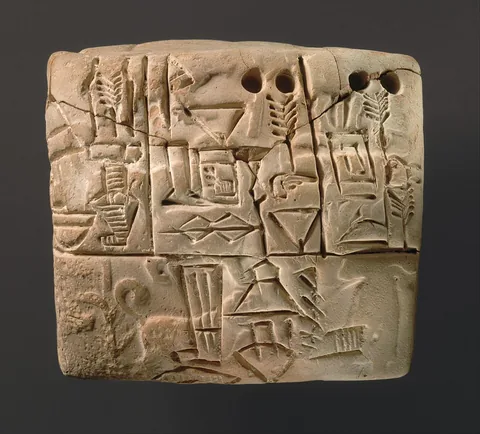
If there's demand for something, supply will exist. In my city, I can just call a plumber and fix everything in my house if that needs fixing. I have no idea how to do this. And I don't need to face up to the reality of being completely incompetent in these matters, because the superintelligence of the city of Toronto allows me to just solve this problem on demand for myself. Markets exist everywhere. The oldest writings we find, like clay tablets, are just things where a bunch of people go to the other town over with a cart full of goods, and they tally who owns what, so that they can track who will make what profit. Those were entrepreneurs of their times. This is like 12,000 years ago or something.38Fact-checkOverstated: the oldest writing, administrative clay tablets from Uruk in Mesopotamia, is about 5,200 years old. The clay counting tokens that writing grew out of appeared about 10,000 years ago. Britannica And we are creating markets. Free humans create markets amongst each other. They make goods for each other. They make compensation for this, which then allows them to do more of it.
And this is just what happens in a free society, right? I'm not a full laissez-faire capitalist. I think you need to avoid monopolies. You need to ensure that every space of value has competition in it. If competition stops, it very, very rarely goes well. The examples of where it went well are usually the founder-run companies, right?
Like, I think Nvidia had no true competition for a very, very long time. Yet you would never notice, because like clockwork, every year there was a new revision of the cards with new features. Suddenly we had tensor cores,39Tensor cores — units in Nvidia chips that multiply small matrices in a single clock. They debuted in 2017 in the V100 data center accelerator on the Volta architecture and reached gaming cards in 2018, where they power DLSS upscaling. and we had no idea why anyone would want them, because we used them to make, I don't know, Call of Duty run better, right? So why do we need tensor cores? But turns out tensor cores were the entire reason we needed them in the end, because that's what you need for AI acceleration. That was not a product of fierce competition, that was a product of vision. So in a market or in a space where you have people following true mission, you don't need to rely on markets and competition to get the best outcomes. In all other cases, you do. The moment the custodians take over, the motivation will be induced externally, rather than being an intrinsic burning flame that needs to be fed to glow brighter and brighter.
08How Huang allocated chips, and why the ouster looks like an op
Huang personally reviewed big orders and made sure startups got chips, and his downfall, Lütke thinks, is too neatly choreographed.
To tie that idea to what you referenced earlier, that you viewed Jensen as, like, the statesman of the entire AI industry.
Again, getting these GPUs… Without them you can't do AI training. There's no other address you can call. You need a lot of them, and if you place a large order, Jensen will review every one of those orders. I mean, he makes plenty of money, so he's fine, but at many times he could make a lot more money. And again, I have no insider information here, it's just, you know, the stories I hear or what I'm being told: he always made sure that there's availability for the smaller guys, the startups. Presumably he wants more customers in the future, so there's some self-interest in this, but he doesn't have to do it. He made sure that these things were available to everyone. He championed open-source AI,40Open-source AI — models with open weights that anyone can download and run. Nvidia releases its own family of open models, Nemotron, and invests in open-model startups. which has a very high likelihood of being involved somehow in these events, because there's a lot of people who really, really, really do not want open-source AI to take off, and Nvidia was heavily investing in them.
I should say more about that. I should say… So, like, again, we'll get more information. This might look dumb in retrospect, and I might be completely wrong. But this looked like an op. Let's be honest. This was, like, surgical. Affair, Chinese spy, another affair, another affair. Now, of course, he did potentially have those affairs. Maybe there's even a Chinese spy component, because currently it just looks extremely unlikely that that's a real thing from the information right now. But this is an op, right? This is, like, choreographed. It's too organized.
This is exactly how you write it in a book as a takedown story. The question is, who's benefiting from Jensen not having this job? And there's a pretty large list, and there's multiple motives that could exist. So I think we need to understand the real story. But what's frightening is how quickly you can unseat someone who started a company 33 years ago4133 years — Huang founded Nvidia in April 1993 with Chris Malachowsky and Curtis Priem and had been its CEO ever since. and turned it into the most valuable company on planet Earth, doing an incredibly good job running it, and again having to make enormously important decisions, you know, about allocations and a roadmap of, you know, the currently most important product on planet Earth, really. So, yeah, there's clearly more to the story.
AdDot in ChatGPT
The best founders are relentless about saving time and only focusing on what matters most. The founder of FedEx, Fred Smith,eFred Smith — founded FedEx in 1971 and led it for half a century; he died in 2025. had this great line that he would repeat. He would say, "You have to be absolutely brutal in the management of your time." That is why many of the best founders in the world are using Dot in ChatGPT.fDot — OpenAI's always-on personal agent: each "dot" has its own cloud computer and carries out tasks in the background. It was unveiled at DevDay in September 2026. Dot is OpenAI's AI agent that works for you continuously, even when you're not actively using ChatGPT. Dot works across your apps, can execute multi-step tasks, and help you stay organized.
You give it a responsibility and it starts working, giving you more time to focus on the work that matters most. One way that I use my Dot is to help me research upcoming guests. It reads my email and keeps an eye on my calendar, so it knows who my upcoming guests are. It then finds relevant information, interviews, articles, and their top posts on X. 24 hours before we record, my Dot sends me a document with detailed notes and links to everything. What used to take you hours, Dot can do in minutes.
Save more time and keep your business moving with Dot. Dot is included with ChatGPT Pro, Business, and Enterprise plans. Again, that is chatgpt.com/get-dot.
09The programmer job is over
The Web 2.0 era, when programmers typed code into an editor, is over, replaced by a new and, Lütke believes, better job.
All right, so let's transition to what you were saying earlier. I think we were talking about this before we started recording. I had your close friend DHH42DHH — David Heinemeier Hansson, creator of Ruby on Rails, CTO of 37signals and a longtime friend of Lütke's. He has been on Shopify's board since November 2024. on the show. He's just like a bottle of energy. I think you just, like, tee him up and he just goes. I think that's probably the episode I spoke the least in, because I've also been a fan of his writing for like 15 years.
So I was like, shit, it's kind of cool now. Like, you know, we had dinner the night before, we were hanging out at his house. It's really cool to get to meet the people you admire. And, you know, a lot of his writing shaped my thinking as well about how to build a business. You said something interesting, where you're like, well… And I watched his speech about him no longer being a programmer, and he puts, like, the day, like, 2026 is when it all ended. So you said something fascinating. You were like, well…
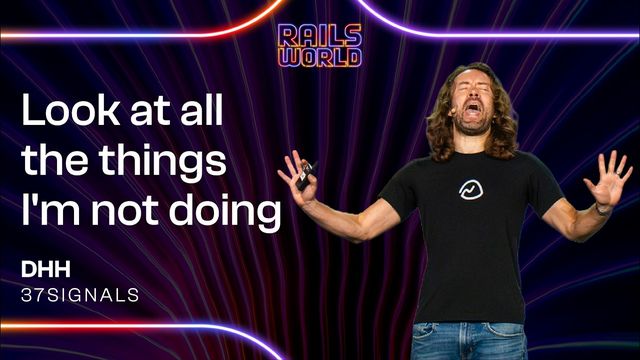
This is, like, a talk he did at the Rails World conference,43Rails World — the annual Ruby on Rails conference. In 2026 it was held in Austin, and in his opening keynote DHH announced he no longer writes code by hand: "pencils down." of, again, a technology a lot of us used to build our companies, Shopify included. I recommend even for non-programmers to watch at least these clips, because I think David did an enormously good job here, like, framing something that's really, really important. And the entire audience there was there to learn about what's next in this technology. And David basically said, this is no longer a job.
We'll link it down in the show notes, but explain how you said Web 2.0… Web 2.0, because I love how you tie everything back. Like, you're always looking back to figure out what's happening going forward too. So Web 2.0 as of 2026 is dead. That idea. Can you just explain that in totality?
You'll hear me say a lot of similar things to what David, I think, articulated better than I will be able to. These are things we've been talking… We have a hobby together doing endurance racing,44Endurance racing — DHH has raced the 24 Hours of Le Mans since 2012 and won his class there in 2014; in 2025 Lütke began racing with him in the American IMSA series in an LMP2 prototype. and these are things we've been philosophizing. I mean, we've been part of one of the greatest creative periods in human history, with jobs that allowed us to be not just participants, but also make a dent into them, like, really sort of early 2000s. It was called Web 2.0.45Web 2.0 — a mid-2000s term popularized by O'Reilly Media's 2004 conference: websites become applications, and users create the content. Gmail, Flickr, Basecamp and YouTube were all Web 2.0.
It's not a term that's important, but it's a term that's important to me. It was a lot of us basically raising our hands and saying, hey, we have figured out how to take this, like, academic document viewer called the web browser and use it to make software. It's sort of very different from the way we're making desktop software in all these important ways, because there's some restrictions in the medium, and of course, like, a client-server architecture and so on. But, like, we figured out how to make good web applications. In fact, David's best known product is Basecamp,46Basecamp — 37signals' project management app, launched in February 2004. DHH extracted Ruby on Rails from its code and open-sourced it the same year. and I think it really could be associated with the true starting point, at its release in 2004. So the browser's not good enough.
We figured out some sense of mastery over the technologies, and we know how to put it together for making phenomenal products. And then enormous amounts of the technology industry are companies that use David's technology, Ruby on Rails,47Ruby on Rails — a web application framework in the Ruby language (2004). Shopify, GitHub and Airbnb were built on it. again, including Shopify. So we built these companies. Again, we made gifts for each other in the open source world, and then we took those to make gifts for our customers that we charged some money for. And then our customers, if we did a great job, then through the wonders of the market, they subscribed. In most cases, they could cancel at any moment. This is true for Shopify.
So it's a very, very honest relationship of value exchange. You know, this is this industry of Web 2.0, and we are in the AI age. And at least the jobs that we had, of a computer programmer, which I associate with, you know, typing characters into a terminal or editor to program computers, that doesn't exist anymore. I mean, there might be practitioners still, and there might be, like, some situations where you really, really, really want to tweak exactly everything, but, like, that's very fleeting now. So really there is a period where this existed. It's over now.
And everyone who used to be a computer programmer has started a new job now. And I think in almost every way it's going to be a better job. It's like, we are now just creators of things. We are makers. We are talking to our computers in the form of wishes. We are thinking much harder about the system we want, instead of just the next step to getting somewhere that's, like, good enough. We are thinking about what could be. There's vastly more ambition. There's vastly more back and forth. I can go in all sorts of depth here on what this job now is.
10Insufficiently ambitious prompting
When AI-driven development disappoints, the usual cause is unambitious prompting: AI needs to understand the problem, not be told the solution.
Explain what you mean by there's now more depth.
I truly live in this world now. Since we last talked, I have realized my life's ambition of becoming a full-time technologist, creator of products at a kickass company. Like, that's what I always wanted. I started a company because I couldn't find a company that I would call a kickass company. I felt I had to create it. I became the CEO partly by cleverly hiring everyone under myself,48CEO — Lütke is joking: he became Shopify's CEO in 2008, two years after launch. and to preserve the flame of a great company, because that's easy to screw up. But mostly I created the jobs I really, really wanted for other people. And now I can, at the same time, while doing my job, also be someone who makes things.
So I'm making, I think, pretty cool, I hope everyone agrees, contributions to, like, Shopify core systems. I built products, I built tools and technologies that thousands of people use in the company. In fact, everyone uses in the company. That is remarkable. My main advice, when people are not quite able to get all the value out of this AI-driven development, it's usually insufficiently ambitious prompting. It's really phenomenally interesting to sit down with people. And sometimes, funnily enough, I just sit down with them and start asking them how they prompt. I ask them, hey, go through all the history of prompting. Like, I literally go to the AI, and we say, go through all the prompts and just sort of cluster them in types of prompts, and, like, give us good examples of prompting, and especially start, beginning, mid of project, and just analyze it.
And, like, you know, the AI can actually do the meta-analysis itself. And then we look through this and just say, look, you had some preconceived notions about how to solve the problem. You told it to, like, investigate, which is good, but you didn't understand the problem. So give it a chance to actually say there might be much better ways to solve it. Or maybe this isn't a problem at all if we change something else over here. So often working with the machine is actually, in a way, trying to inspire it to understand the problem you're trying to solve. And then most of the work ends up becoming… It's not a good term, but for the lack of a better one, we call it verification engineering, which is, like, creating acceptance tests:49Acceptance tests — checks that describe what a system must do from its customer's point of view; when they pass, the work can be accepted. Lütke's idea is that humans write these criteria and AI writes the code. here is how you know for sure that the thing that was created is good.
11Agents want rules, not abstractions
The industry spent decades building abstractions for developer productivity, but agents don't need productivity; they need strict rules.
Again, I'm not gonna bore you with the technologies that are going into this, and also I think all of it is going to change, because we're sort of working with what we've got right now. But this will be a huge part of our industry now, where we make sure that we use automated systems to know that a system is known to be good. We had unit tests before, we had static typing50Unit tests and static typing — a unit test checks one piece of code against given examples; static typing checks before the program runs that, say, a function expecting a number isn't handed a string. It's the simplest form of proving correctness. before, which are sort of… At least static typing is sort of formal verification. But the field of formal verification is now by far the most important field in engineering. Look, I've lived in this industry. I pride myself on knowing almost everything that's going on, to the degree that one human can. Formal verification was a thing I knew existed in academia, and knew mathematics was using things like Lean51Lean — a language and environment for formal proofs created by Leonardo de Moura (2013). Mathematicians translate proofs into Lean and the computer checks every step; AI models that solve olympiad problems train on it too. to formalize proofs, but I probably knew this from AI research. And I had no idea that this was going to be the most important part of engineering in the future, and now it is. And so this is how quickly everything…
Explain why it's going to be the most important part of engineering.
Because you can prove that a system is correct. And this is extremely important for complex systems. Like, let me say something about what I've learned here about agentic engineering.52Agentic engineering — development in which AI agents write the code while humans set the tasks and rules and check the results. And this is specifically when you're rebuilding systems with agents. And tying this back to David and Ruby, and why David proclaimed pencils are down: we are no longer hand-chiseling code, we are now working with agents. We didn't have enough engineers in the world, or even close.
Probably 0.1% of the amount there was demand for. Like, it's just too few people went into this. Maybe it's an aptitude thing, but I think for whatever reason, there was just way more demand than supply of engineers, because there was so much demand for writing code. Therefore, the most important thing that most of us could work on… And this is why you hear so much about frameworks. Like, Shopify is built on top of Ruby on Rails. I said this, like, three times already. That's a really, really important thing.
What is Ruby on Rails? Ruby on Rails is a framework that just sort of, like, constrains the possibility space and just sort of says, here's a known good way of building a web application. It's full of abstractions, and abstractions are sort of pretension. Like, you pretend that something is simpler than it is. You can talk to a database by just making a new object and telling it to find, find by name one,53Find by name — in Rails it's one line such as User.find_by(name: "…"); the framework writes the SQL, opens the database connection and turns the result into an object. and it does all the hard work of plumbing these things together and dealing with wire protocols and the complexities of retry logic and busy databases. And all these things are kind of pretended to not exist in an abstraction.
So what are abstractions? Our entire industry was, like, build abstractions. Why? Because abstractions cause productivity. They actually, unfortunately, have a lot of negative consequences, but none of this mattered, because we needed productivity, productivity over everything. We needed to get one engineer to be able to write 10x, 100x the code of an engineer who wouldn't use these abstractions.
So productivity was absolutely everything. And we invested, one could say wasted, almost all the advances of computers getting faster simply for productivity gains. Like, we made higher and higher stacks of abstractions. This is why when you find a really old computer and start it, like an old Mac or so, it just boots in no time, and you start an application, it's there. And it's like, this thing is from… Like, try this with a Macintosh.54Macintosh — Apple's first computer by that name came out in January 1984, bundled with the MacWrite word processor. This thing is from '84, and, like, the word processor opens instantaneously. Why does today, when I start Word, have a splash screen that takes 30 seconds, right?
DHH is doing this. I love the… He's like, I bought a new Apple computer, it took 40 minutes, and then his new Linux operating system…55Omarchy — the Arch-based Linux distribution DHH put together in 2025; it installs in minutes and comes set up for developers. Oh my God, yeah.
Yes, yeah. Like, you can install the entire thing faster than you can probably load Word, right? And so why is this? Because we were extremely wasteful, because we had to be, because we needed productivity. Okay, all this to say: we don't need productivity anymore. So this is crazy, right? Like, so working with agents is actually in so many ways the opposite.
No engineer wants to work in a code base with insanely strict rules. These are called linter rules,56Linter — a program that checks code against rules: style, bans on certain constructs, team conventions. right? Like, rules which say, yes, you wrote valid code, it might even work, but it's not allowed around here, for reasons that are important to the code base. So valid code becomes errors, because every company has their own way of doing things and bans certain ways and allows certain ways. These things are seen as tools of oppression. You have to, like, not go too far, otherwise no engineer wants to work on your code base anymore, because it's, like, oppressive.
The agents love them, because you give them rules. They love rules, but not abstractions, because they are perfectly happy to write tens of thousands of lines of code that are correct for the thing they're doing. And they don't want to go through 10 files and read all the layers and layers and layers that the abstract tower of Babel has built up to understand what the actual consequences are. Okay, that's important. So we need to write code entirely differently now with agents. How do we know that it's good?
12Implicit state machines and nearly bug-free software
Agents produce more code than humans can review, so models and proofs have to check it, and then software becomes nearly bug-free.
ExplainerImplicit state machines and TLA+
A state machine describes a system as a set of states and allowed transitions between them. A checkout, for example, might have the states "cart," "awaiting payment," "paid," "canceled," "refunded." In ordinary code such a machine is almost never written down explicitly: it's smeared across flags, conditions and database fields, and nobody knows for sure whether an order can, say, end up both "canceled" and "paid."
- Making the machine explicit means listing every state and transition in one place. Lütke suggests handing that to AI: "find all implicit state machines in this code base."
- The next step is a model in TLA+, Leslie Lamport's specification language. A model checker explores every reachable state of the model and finds a sequence of steps that breaks a stated property, even one that happens once in a million runs.
- That's how formal verification differs from tests: a test checks examples a human thought of; a model checker checks every case the model allows.
Because now they are producing too much code to review. Because another aspect of building abstractions is the end result of code is not that much. Therefore we can have humans reread this in the form of a code review to make sure that it's okay. Code review is basically our human-run formal verification, shitty version of it. All this is changing now. So formal verification now is actually specified. You basically say, this system has this many states that can exist.
Here's, like, a model of the state machine57State machine — a description of a system as a set of states and the transitions between them: for an order, say, "cart," "paid," "shipped," "returned." that runs the Shopify checkout or something. And now please verify that every single possible state the system can get into is actually thought through and is tested and is specified. What you will invariably find… Everyone can try this, everyone who has, like, any code base can try this. Go into something like Claude Code58Claude Code — Anthropic's coding agent: it works in the terminal, reads and edits code, and runs commands and tests on its own. and just ask your AI: find all implicit state machines in this code base. You say, get me all the state machines that are implicit currently and sort of ad hoc in the system, and make them explicit. First of all, you will learn so much about human failings in writing code.
You will immediately realize we were not as good at writing code as we all thought, because the machine will make everything better the moment you tell it. And then afterwards you say, now make… It's called a TLA model.59TLA+ — Leslie Lamport's formal specification language (1999). A model in it describes every state of a system, and a model checker explores them looking for violations; Amazon Web Services uses it to check its distributed systems. It's like, it'll change 15 minutes after this podcast is released, how we do these things, but right now you ask it, now make a TLA model for it to make sure that all the cases are specified. You will find a thousand bugs in your code base, any code that we've ever pointed it at. Then afterwards, you go and say, okay, by the way, use some tool. Vercel made a great tool called DeepSec.60DeepSec — Vercel's open-source tool, released in May 2026: AI agents hunt for vulnerabilities across a whole repository and revalidate every finding before showing it to people. Use DeepSec to look for security vulnerabilities in my code.
And then you will definitely not think that humans should be writing any code anymore after that's done. We are currently in the midst of an unbelievable awakening of cybersecurity, which is like… I think most companies are in some form of code red, just trying to fix everything. And we probably have to replace all human code that's running in production on planet Earth within the next probably six to 12 months. So a way to do it is either by improving existing code bases to be sound, through prompts and things like I mentioned, or by building verification systems that make it so that you can really specify what the actual system truly should be, that you make sure that it's all considered, which is something you can collaborate with great AI on.
And then, against these formal verification methods, maybe unit tests, maybe production traffic, whatever you have, you will rebuild a completely net new code base in a safer language than the one you might have used before, like Rust61Rust — a programming language whose compiler rules out a whole class of memory errors, which Microsoft and Google estimate account for about 70% of serious security vulnerabilities. or something like this. That will be the code of the future. Many, many consequences in this that are side effects of this kind of activity. I think software will basically be near bug-free. It will be 100x faster in many instances. We'll definitely get back to the world where things just start instantaneously, and we will be amazed by how much you can do with a run-of-the-mill, or even with a 10-year-old laptop, all of a sudden.
The quality of our software is going to just go through the roof. Computers will do the things that their users want. If computers don't do the things that their users want, you will tell your computer that you would like it to be able to do something different, and it will rewrite the parts that are involved in the thing that you didn't like before. We will live in a world where our computers are entirely malleable,62Malleable software — the idea of programs that users themselves can reshape, instead of waiting for the developer to do it. in a sense that it's going to be the computer that supports you and your job perfectly, in exactly the way you want. Potentially not a computer at all, potentially just fully automated in the cloud, potentially behind an AI that you talk to. Both are options for everyone, and all of this is going to happen extremely fast now.
AdDeel
Deel is how the best founders turn the world into their talent pool. I've been studying how history's greatest founders operate for a decade, and one thing they all have in common is they understand that recruiting and hiring the very best talent is your most important priority. A players recognize other A players,gA players — a nod to Steve Jobs's principle that strong people hire strong people, while mediocre ones hire people weaker still. which is why top companies like Ramp, Shopify, ElevenLabs, Uber, and DoorDash all use Deel. Many of the top founders I know have personally invested in Deel after using their product. And what they discovered is that Deel is the best company in the world at building infrastructure for global hiring.
Deel will help your business hire, pay, and manage any worker anywhere in the world, so you can retain the best talent anywhere and spend the rest of your time focusing on what you do best: delivering value to your customers. The founder of ElevenLabs has a great description of the value Deel can give your company. He said, "We built ElevenLabs to break down language and communication barriers, with Deel enabling us to hire and support exceptional talent anywhere. We can accelerate our innovation and bring more voices, stories, and ideas to every corner of the world." Deel is trusted by over 40,000 companies and growing fast. Learn how they can help your business by going to deel.com/senra. That is deel.com/senra.
13AI as an instrument
Accelerating your current tasks isn't enough: AI has to be learned like a guitar, approached with a problem and an openness to unexpected solutions.
Okay, I'm trying to understand everything that you just said, and it's very fast. Thank you for doing that, by the way. That was incredible. But it started from this point where you're like, well, the big issue here is insufficiently ambitious prompting, right? And then the more you spoke from that starting point, I almost feel like you're describing the difference between human intelligence and artificial intelligence. When we went through these prompts, you're assuming too much that you actually identified the right problem, or that you knew, maybe you had an inkling, how to solve it.
There's a weird thing that happened in my mind while I'm listening to you speak: that documentary they did on Demis and DeepMind, right? And they talked about how at the very beginning they studied every move that humans could possibly do in Go. And then eventually that only got them so far. But what got them even further is the machine coming up with things that humans would never even comprehend or even think of. Move 37?63Move 37 — a move by AlphaGo in the second game of its March 2016 match against champion Lee Sedol. Commentators took it for a mistake; by the program's own estimate a human would play it with a probability of 1 in 10,000. It proved decisive, and AlphaGo won the match 4–1. Something like that. Is that… You're describing a very similar thing in programming, yes or no?
That's exactly what I'm doing. AI certainly is an excellent current task accelerator, and I think this is how it's usually used. I think AI is best thought of as an instrument. If you first pick up a guitar, maybe on one string you can maybe even figure out how to play a melody or something like this, but you don't really know how to produce music. It takes a while, right? And of course, there's no difference between, truly, a guitar you can pick up just like this and what, I don't know, Hendrix plays. At a certain point you understand… You can play an instrument truly because you understand it at a level.
It's a small group of people, but there are people in the world who can play AI at this level, who are really understanding the tools, even though it's a very fast-moving space. And I think I'm reporting back a little bit from what the world looks like from that perspective, in that, instead of accelerating your tasks, learn the instrument. Learn how to work with AI in such a way that you provide it with the problems you want to solve, show up with an openness for a wide variety of solutions, because it turns out there often are things that you might never have thought of.
ExplainerHarnesses and agent "factories"
A language model on its own only continues text. To write and run code it needs a harness: a program around the model that gives it tools (terminal, files, browser), keeps context and decides when to stop. Claude Code and Codex are examples of coding harnesses.
- What Lütke calls a "factory" is the next level: several agents with different roles (one plans, others write code, others review and test) talking through chat or a message board, roughly like departments in a company.
- Such setups take on long tasks that run for hours or days, such as rewriting a whole subsystem, rather than single requests.
- According to Lütke, almost all engineering at Shopify now runs through factories like these.
With the tools becoming more sophisticated… It's not just the AI that's turning sophisticated, it's also what's called the harnesses64Harness — the software around a language model that gives it tools, memory and a work loop; Claude Code and Codex are harnesses for coding. that are using the AI that are becoming more sophisticated. Almost all engineering at Shopify now is happening through these things called factories, which are, like, constellations of AI agents with different jobs, kind of loosely mirroring what organizations were like, who collaborate with each other, through chat or through message boards, to accomplish much more long-horizon tasks. It's much better to be more ambitious with AI and have it do reps on solving the problem than it is to accomplish tasks, because I think accomplishing just tasks keeps you in a sort of smaller frame of reference, which I think will be very hard to get to the right places, at least in the engineering world, fast enough.
Again, because… And this is sort of the other part: cybersecurity, number one, and then also a resource crunch that's probably gonna happen with compute in the next year. There's really good reason why a lot of software probably has to be rewritten. We need it to run faster, to use fewer resources, because if you want a laptop next year, by now, like, everything is getting very, very tight in the supply chains.65Supply crunch — since late 2025, prices of memory chips have soared as manufacturers shifted capacity to memory for AI accelerators, and laptops and phones have been getting pricier. And also it's just, human software is just not secure enough.
14How Lütke stays at the frontier
Lütke learns in small groups of peers where everyone has to contribute to keep up, and his advice is to be too good to ignore.
How do you make your own self maximally ambitious? Like, are there other people that you're going to to learn? Like, okay, so I guess we'll back up, because we talked about… You're like, dude, I love the Sam Altman episode you did, but I had to skip over the first five minutes. But this is not something I'm prompting. So DHH comes on the show, and he's like, Tobi nerd-sniped me.66Nerd sniping — from an xkcd comic: handing a technical person a problem so interesting they can't tear themselves away. DHH means Lütke got him hooked on AI. I didn't know anything about AI, I was dismissive, and now I'm, like, envious that I can't think about AI the way he does.
I hear this from a million different founders, by the way, on and off the show. And then Sam Altman, I'm just fucking sitting with him before we start recording, he started bringing up Tobi, and the fact that he learns more about how CEOs and founders are using his product from you than anybody else, and you give him this crazy feedback. So, like, obviously people are looking to you, but who are you learning this stuff from? Are there resources, specific people, companies? And how are you making sure that the same advice you're giving other people, like, be maximally ambitious, how are you doing that for yourself?
I'm extremely fortunate, in that I think if you can create self-sustaining small groups, like [unclear] small alliances, like within Shopify… I just have groups of people where everyone is kind of at the same level, and it's like, maybe there's the implicit "you're part of this particular club because you can keep up," and to keep up you also have to contribute. So, like, there hasn't been a weekend this year that I basically didn't work throughout the entire weekend, because I have zero ability at this point to stay away from progress, computers, and stuff like this. I don't know, I'm made for this moment. I didn't know this, but every decision I've made in my life pointed at this moment, to be maximally prepared and useful.
But I certainly think about it this way. Again, if you want to be successful in life, it's very simple: you just have to be too good to ignore,67Too good to ignore — an echo of comedian Steve Martin's advice, "Be so good they can't ignore you," which is also the title of a 2012 book by Cal Newport. and there's opportunities. You gotta be, like, amongst the first people that are being called when something interesting happens, or you need to be the obvious choice when a position… Like, be too good to ignore. That's all. Figure out your own way there. That's up to you. That's a beautiful thing: there's millions of ways to do it, but be too good to ignore.
In Shopify, I have, like, groups of people that I can talk to who are way ahead of me on many, many things, and I can learn from them and so on. So it becomes self-sustaining. These groups exist in many companies. A lot of people share what they know on X or in podcasts. Like, I mean, I unspooled close to the edge of my understanding earlier here: the talk track of insufficiently ambitious prompting, the underscore around implicit state machines, the fact that we have to move from productivity towards much more constrained systems, through linting and through formal verification, that circumscribe this problem space in which you want things solved by the AI. You do all those kind of things, and you can outcompete everyone who doesn't understand them right now, right? So, like, there's a lot of sharing.
15A weekend rewrite
Lütke compares the gap between people who have mastered agents and everyone else to a modern factory against a medieval blacksmith: time is no longer the constraint, money is.
Can you say more about the gap between the productivity, the people that do understand what you're saying and the people that do not?
I think it's the biggest gap of productivity that's ever existed in any industry, even in any time, probably. It's incomparable. It's a modern factory versus a medieval blacksmith kind of territory. There's so many zeros in terms of difference. Time has almost stopped being a concern. The variable is just how much are you willing to invest in terms of cost.
Wait, I don't understand why time [unclear].
Again, it's called building factories. It's a dumb term, and it will be renamed. If you have, like, an agentic factory that really works well in the problem domain you're trying to solve problems in, you can make a decision on Friday, and you show up on Monday with production code. I'm not making this up, I literally just did this. Like, I completely rewrote our entire… Like, I mean, not entire thing, but, like, I rewrote… It's a figurative term at this point, not to be taken literally… The system of our internal source repository system that hosts all the code in Shopify, quite better, sort of loosely based on a tool I shared called walgit68walgit — an open-source Git server in Rust that Lütke wrote over a weekend and released in August 2026: repositories live directly in object storage with no database, so even a huge monorepo downloads quickly. a while ago. Yeah, that's in production. Thousands and thousands of engineers, plus the rest of the company, everyone commits into this thing. I had to update it because we are now merging pull requests at a rate which is, like, I don't know, 10 to 100 times higher than it has been at any other point in history in a company, because of the acceleration. So it needed to be faster. So now it's faster. And that was a weekend project, not a multi-year rewrite.
Okay, so that was a weekend project. Five years ago it would have taken how long?
I don't even know if you would do it, because it's kind of why you would use GitHub. And the reason why you would use GitHub is because GitHub was perfectly good enough for the pace at which humans wrote code, which is, like, you work for weeks and then you make a pull request. Maybe there's multiple pull requests at the same time, but it's bounded by the amount of engineers you have. And so it never gets, like, that crazy.
But now, if you decide, I need to rewrite our entire database layer of the system, because I have this beautiful idea that can cause millions of lines of simplification in the systems that we then have to rewrite in Rust, so, like, doing pre-work, basically, to make the next task cheaper and more solvable, then you can build all of that in a day. You would never ever have done this, because it's too hard. It's a too-hard thing, because you'd have to find people with specialized skills to staff it. You would then have to keep them being a really, really jiving team for a year. And at the end you get something that you then can check to figure out if your assumptions were right. In a company that makes software for entrepreneurs and commerce and so on, that's too much of a side quest. But now it's, like, it's worth the $2,000 of tokens, right?
16Internal tools and the magic inside Shopify
At Shopify the best engineers work on internal tools, which prepared the company for AI; a tool becomes a customer product only once it is deeply understood.
So you just mentioned your mission. So DHH, when he was on the show… So he's on the board of Shopify,69DHH on Shopify's board — Hansson joined in November 2024; he has known Lütke for more than twenty years, since Lütke was on the Rails core team. and he says, you should see some of these internal tools that they're building. It's, like, better than anything that I could buy, in his words. And he was, like, begging for you to give them or sell them to him, right? How do you decide what are these tools you're gonna open source? What are you gonna keep for yourself? What could you sell as, you know, additional services to your customers?
So Shopify's always been an internal tool company, which makes sense, because we are a tooling company, right? We make tools. We're toolmakers in Shopify. We make tools for entrepreneurs. Therefore, we make tools for making tools for entrepreneurs. It's very, very native to us.
I think we talked about this before in an episode already. This culture of internal tools, it's a bit of a two-sided coin sometimes, maybe, because we do put a lot of effort… It's a very high status thing in Shopify to work on internal tools. In every other company, as I understand it, it's not the best people on board. It's the hardship assignment inside of a company. It's usually when you get some interns, you put them on an internal tool.
Yes, yes, yes. And you're saying in Shopify…
Yeah, in Shopify it's opposite. So, like, maybe not quite the opposite, but it's some of the best engineers work on internal tools. We found this to be correct for us and easily worth it. So guess how prepared we were for the AI age because of this? Now we already have a culture of internal tools. We have all this infrastructure for internal tool making.
The AIs can now auto-complete basically every internal tool. Internal tools are wonderful to work on, because you can just deploy them, and your colleagues say if it's any good. And if it isn't, you make changes. And if you need some downtime, who cares? Like, production software is, like, I mean, you need, like, four nines of uptime70Four nines — 99.99% availability: a service can be down no more than about 53 minutes a year. and whatnot. And, you know, I'll show you some stuff after the episode. I can easily blow your mind.
It's, again, the way Shopify feels internally right now… And I really, really hope this is true for everyone else who's so lucky to work in tech companies: it is magic. It is absolute magic. Like, we are all kind of wizards conjuring up beautiful new things, almost from spells we cast into factories and agents and AIs. And it's just… I've never seen anything like this. I mean, I really hope that, for instance, Florence might have felt like this during the Renaissance, but I kind of don't even think so, right? Because it's just crazy.
I think people have not fully priced in71Priced in — a market term for an expected event already reflected in asset prices. Lütke's point is that people haven't yet grasped how much will change. and understood how amazing things are going to get now. There's such a limiting factor that existed around software. There's so many creatives. Like, we're gonna have a billion people easily who will make things on computers. And, man, there is a lot of incredible brains and incredible minds that just cannot make things right now, because they just didn't have the skills until recently.
But learning how to work with these systems is getting easier every day, and it involves using language as the main tool, and it will support any language. So it's not even like you have to learn English first. It's such a positive thing, in my mind. And we definitely have very much arrived in this sort of world. I think we are tracking very early, but, my God, is it nice. What we want to do is, we want to get our customers to be, like, the part of industry that's sort of experiencing this first as well.
So this is the products we are creating. Again, first we create products for us, because we need to understand the new tools that exist to a degree that we can play them like an instrument. And only after we've figured out what works, what doesn't, does it make sense to productize it into our core products, because otherwise it doesn't come from a point of fantastical insight. And I think software that doesn't come from a point of fantastic depth of insight is transient, and there's too much of it. It may be worth a little bit for a moment, but it will always be replaced once the sort of beautiful hidden harmony72Hidden harmony — a nod to Heraclitus: "The hidden harmony is better than the obvious." behind all the tools that people have created has been spotted, and then is taken as a core foundation on which entirely new products are being built. And that moment is now rapidly arriving.
Like I said, software will become fantastical, malleable, essentially bug-free, incredibly fast, just delightful in every way it can. People don't have to care about software. For people it just has to work. But the makers of the software should love it and be proud of what they've built, because otherwise there's no chance that people will like it, and it's not worthy of creating true fans,73True fans — from Kevin Kelly's 2008 essay "1,000 True Fans": a creator needs only a thousand people who will buy anything they make. which is, I think, what great, great software does.
17Computers shouldn't make you feel bad
When software is sluggish, people blame themselves rather than the computer; AI can fix that and push people toward their own projects and entrepreneurship.
Say more about the fact that you don't think how great things are going to be is priced in.
First of all, because the shape is going to change. Initially, I thought what would happen is, first, the quality of all existing software is just going to go up. Again: bug-free, fast, no splash screens anymore, this kind of stuff. Again, this doesn't sound like much, but people love their computers when everything happens instantly, and they really, really dislike computers, and usually feel it's their own fault somehow, when everything is sluggish and they can't accomplish things, when software is too verbose and too complex, or you can't find where the feature is that you want. Like, if you've ever been in, I don't know, Word, and you just sort of try to get the page breaks right, and there's some things that just go to the next page, you don't quite know why. And people oddly never end up being mad at Word for that.
People end up thinking they are bad at computers, right? They internalize this, but then also that's a negative feeling. And then they don't want to use computers to solve problems, which I also understand, because they made them feel bad. And I don't think a computer should ever make anyone feel bad about themselves. If you want to throw a computer across the room or in a garbage bin or so, that is not your fault. That is the computer's fault.
Now we can fix this and make things just work the way people want. And at worst, you ask the question and it will help you. That by itself will cause more people to accomplish their tasks at work, and then potentially, due to much, much better experiences, be more ambitious, maybe in the off hours, with their own projects, and that will also work. And then that might lead to times where people might reach for, you know, the institution of entrepreneurship to make products that you can sell and that you can share with others. And I think, again, these are the things I want to see. That's my, like, entire philosophy and bias. So I state those as the most important things to accomplish, because they're the most important things for me.
18Free markets and founders under threat
The point is free markets, not capitalism; Lütke worries that vilification and violence will scare people away from entrepreneurship just as starting a business becomes possible for everyone.
I'm going to interrupt you, because what I love about you, and why I like our conversations, is because you're an evangelist for entrepreneurship. And the greatest definition of a business I ever heard actually came from Richard Branson,74Richard Branson — British entrepreneur and founder of Virgin Group, which spans a record label, airlines, mobile service and space tourism. and he says, all business is an idea that makes somebody else's life better. And so what you've just beautifully described for us is the fact that these tools, this new technology, if you embrace it, it just allows you to make products that make other people's lives better.
Yeah. I completely agree with what Richard said. The entrepreneurship part of it is essentially just saying, hey, I got something that I think is good enough to join the market with it, making it available, through the wonders of the market, to the system that shares it with everyone. Now, once it's on the market, people can access it, they can exchange money for it to gain it. And of course, that money is a form of energy directed backwards at the person who created it, which then causes more of these products to be created, more iteration, better products, maybe a next version of it later. I just feel we need to appreciate the system more.
I always, like, cringe when I see people talk even about capitalism and stuff like this. Capitalism is not the point of it. Like, free markets are the point, right? Capitalism is just sort of, like, a term that usually is offered in by talking about the sort of small bits and pieces around the margins where the markets stop being free, usually in the form of monopoly, or often regulations, frankly. Patents are monopolistic, right? And disable the free markets. They might be worth it societally, especially for drugs, but nowhere else are they beneficial, and we still do them.
Capitalism can go either way. Free humans are entrepreneurial in the form of putting things into a market. The quality of our lives is determined by how vibrant this market is, and how many ideas and how many products and how many services are shared for it. And so it is our project on planet Earth, as part of any nation, I believe, to cause the market to become more vibrant, right? Like, to make more products, to put them there, to create value, to take it out of the potentiality of planet Earth and make it actually realizable. Then the market grows. We call this GDP growth, but really it's energy growth.
Because of all of it expanding, that means there is more opportunity, there is more story, there are more successful people that might speak to you as models, and you think you can potentially do the same thing as that person that you're observing. And as long as all these pieces fit together, man, are we in a good shape here. And I believe that almost anything that makes this flywheel75Flywheel — an image from Jim Collins's Good to Great (2001), adopted by Bezos: every push spins the system faster until it gains momentum on its own. go slower leads to less human thriving. Obviously, I'm very far now, with my explanation, out of the Overton window76Overton window — the range of ideas a society considers acceptable to discuss; the concept comes from American policy analyst Joseph Overton in the 1990s. here of how people tend to think about these markets. But am I wrong?
And if I'm not, at least broadly, why is the current narrative in media, outside of your wonderful podcast and very few other places, so different about this? Why are the people who are building and creating companies so maligned, to the point of drumming up violence? Now, everyone has a different tolerance for these kind of things. And, again, the economy is our collaborative multiplayer game, and the market is the thing that we're all trying to make go faster, because it leads to more thriving, a more vibrant society. If the destination of participation, again, this moment of entrepreneurship, a moment where you declare, I've got something that I'm going to try in the market, if that is starting to come just with too many downsides, especially in terms of bodily harm, man… Just when we are going to go into the time of maximally most distributed participatory potential and opportunities that probably planet Earth will ever see.
More people could make companies and create products than ever before, and so many people will opt out because, fuck, that's not worth it. I think that's dangerous, and I think it benefits no one. The good news is, I just looked at the labor bureau numbers: new business formation is at an all-time high.77New businesses — applications to start a business in the U.S. are counted by the Census Bureau (Business Formation Statistics). Since 2020 they have run at about 5 million a year, against 3.5 million in 2019. Census Bureau It is actually increasing. So right now things are looking good. But I think there's very, very, very, very troubling trends here that need to be reversed. Otherwise, this is gonna go poorly.
It is so unbelievably important to just, like, spend a moment celebrating the good parts of what's happening when anyone starts a company, small and big. And it's so important to tell the stories in a way that I think they become relatable. Like, all the entrepreneurs are just people. They've decided to pick up a lot of skills along the way and put themselves out there. They're just trying to make goods and services for each other at the end of the day. That's my definition of an entrepreneur. Has idea, does them.
As the first person on the receiving end of what you just said, the main takeaway that I took away, and that I hope the people listening take away, is that all you need to do is just use technology to build tools or products that make other people's lives better. As always, man, thanks for making the time.
Thank you.
I hope you enjoyed this episode. Please remember to subscribe wherever you're listening and leave a review.
AdFounders
And make sure you listen to my other podcast, Founders.hFounders — Senra's first podcast, running since 2016: each episode breaks down the biography of one entrepreneur. For almost a decade, I've obsessively read over 400 biographies of history's greatest entrepreneurs, searching for ideas that you can use in your work. Most of the guests you hear on this show first found me through Founders.


