

How I Write
Chapters
Dropping outlines, Koontz says, made him a bestseller: his characters got free will, and he writes so that he never gets bored.
Read the chapter- The book kept getting better than the proposal, and the publisher would say it wasn't what they bought.
- Outlining a 300,000-word novel was unthinkable, and once he quit outlines he went from an okay seller to a bestseller.
- If you aren't laughing or crying over the page, he says, something has gone wrong.
- A couple of writer friends who took his advice and stopped deciding for their characters came to love the work far more.
Koontz tells the strangest story of his life and can't decide whether it was an ominous sign or praise from above.
Read the chapter- On the bottom floor of the house under construction, his realtor asks about the room on the left, and they walk into an empty room about 20 by 16 feet.
- The room isn't on the blueprints, and the next day the spot is solid drywall with a two-foot-thick concrete support wall behind it; his stone craftsman friend says he'd believe it from no one but Koontz.
- Koontz then remembers that in his new novel, The Desperate Mother, hallways lead somewhere new and rooms aren't where they should be.
- He can't tell whether it was an ominous sign or a higher power saying "attaboy" for convincing details.
A writer who accepts that the world is beyond comprehension, Koontz argues, understands characters and people more deeply.
Read the chapter- Koontz can't make such things happen, but quantum mechanics tells him the world is far stranger than we assume.
- Nearly everything people believed 200 years ago has been overturned, and "the science is settled," in his view, isn't science.
- Once you admit you control nothing, you start to understand characters and people more deeply.
- Cormac McCarthy's early books, The Orchard Keeper and Outer Dark, are very strange yet feel true; McCarthy later moved away from that style, and Koontz missed it.
For decades Koontz has polished his language, but character, one the reader can empathize with, is number one in fiction for him.
Read the chapter- Imitating Hemingway's minimalism, Koontz says, writers gave up half their tools; he brought back metaphor and simile and polishes language most of all.
- Backstory like "his mother died when he was six" isn't characterization, and character is number one in all fiction.
- You have to fall in love with the heroine of The Friend of the Family, who grew up in a freak show, and men write to Koontz that it's the first book that ever made them cry.
- Tears come from the suffering of a character who resembles you, so you believe it could happen to you too.
- With stronger characters, Koontz thinks, Jaws would have done even better; he is proudest of a dialogue with a backwoods drug boss in one of his Jane Hawk novels.
Koontz won't use AI: a story built with it can't be copyrighted, and a machine can't know the world in all its sensuality.
Read the chapter- A story built with AI can't be copyrighted, and publishers don't want what they can't control.
- AI is assembled from millions of books, so its writing inevitably carries other people's sentences, and lawsuits.
- Perell reads the psalm about idols with mouths that cannot speak; Koontz answers that without touch, taste and smell you can't know the world in all its sensuality.
- AI could get beyond our control, but in Koontz's view it won't be stopped; the only question is whose AI will dominate.
Ideas surface as Koontz writes, and he allows that they come from both the subconscious and a higher power.
Read the chapter- He starts with only the opening sequence, and ideas surface as he writes, from the subconscious or from a higher power.
- Some turns later prove to be buried memories, and for others Koontz looks up and says "thank you."
- He gets up at 4:35 or 5 and works from 6 until 4 with no lunch, about ten hours a day.
- Leaving reality for ten hours a day for a world you're making is healthy, he says, if you are the one in control.
Mixing styles, Koontz says, makes both a room and a novel better.
Read the chapter- Koontz loves language and reads poetry, and most of his friends are cabinet makers and stone fabricators rather than writers.
- Publishers have spent his whole career complaining that he mixes genres and doesn't write the same book twice, then ask for a repeat after each hit.
- Mixing styles makes rooms better than cookie-cutter design, and novels too.
- The tension of getting things exactly right brings peace; vicious critics can't say anything worse than what Koontz tells himself daily.
Koontz learned character from John D. MacDonald, dialogue from Evan Hunter and language from poets.
Read the chapter- Fresh out of college, Koontz read 34 of John D. MacDonald's books in 38 days; his pages on a character in mid-story taught Koontz that a character can carry a novel.
- Koontz quotes Kurt Vonnegut: MacDonald's books would be the best find for aliens trying to understand humanity.
- In Evan Hunter, the author of The Blackboard Jungle, dialogue drove the story; characters should be recognizable by their voices.
- For The Friend of the Family, Koontz looked up whom guests like Groucho Marx were married to at the time, and he picks up the speech of an era from good movies of the period.
- He has read Eliot's Four Quartets hundreds of times, and haiku teaches writing about death and love without naming them.
Chasing extremes destroys artists, and Koontz consciously chose a different life from his family's.
Read the chapter- His friend Vaughn Bodē, a brilliant cartoonist, chased ever more extreme experiences and, as Koontz tells it, ultimately committed suicide; Bodē refused to let Koontz's introduction about his obsession with death be published.
- An artist can make a piece in a day, while a novelist works on the same thing for a long time and can't go as "over the top."
- His horrible childhood only taught Koontz how to write sociopaths, and he decided consciously that his life would be different.
Historians in 2150, Koontz thinks, will call ours an age of pessimism, though fiction should lift people up.
Read the chapter- Koontz traces this pessimism to the bomb and the fear that we can destroy the world.
- He offers Y2K, the COVID response and fear of global warming as examples of how easily people fall into mass fear.
- The more negative the book, the likelier its success, Koontz says, though fiction should lift people up, as Dickens did.
- Online celebration of an insurance executive's killing is, to him, a step toward a war of all against all.
Koontz tells new writers to write what they love, because success can't be predicted anyway.
Read the chapter- If you don't write what you love, you'll end up disliking your own work.
- Formulas like "Jaws plus an alien invasion" never work.
- The book you think is your best may sell 20% below expectations, and the one you doubted may resonate.
The best twist, for Koontz, is one the author didn't see coming either, as in Intensity.
Read the chapter- Chyna, a waitress, goes to Napa with a friend; that night a serial killer in a motorhome kills everyone but her.
- Chyna hides in the motorhome, gets out at a gas station and hears the killer boast of a captive girl in his basement.
- Instead of going to the police, she sneaks back into the motorhome to save the girl; Koontz first thought nobody would do that, but her past made it logical.
- Asked whether he pounds the keyboard in a trance, Koontz says it's a lot calmer than that: he polishes every page three times.
Koontz writes suspense, not horror, because uncertainty is the essence of life.
Read the chapter- Koontz won't watch bloody movies and has always fought to keep the word "horror" off his books.
- A book without suspense isn't realistic, because we don't know what will happen an hour from now.
- People naturally want characters they like to succeed, which is why books where everyone dies rarely do well.
His future wife's Italian Catholic families showed Koontz that happy families exist.
Read the chapter- His father was "a mess," two of his father's brothers took their own lives, and Koontz doubts his father was his biological father.
- Dating his future wife in Johnstown, he saw for the first time so many happy, welcoming families.
- Catholicism, when it works, produces loving families, Koontz says; the Italian background bound people together too.
To let the mystical into your writing, Koontz says, keep an open mind: the universe is stranger than we will ever understand.
Read the chapter- A dyed-in-the-wool atheist, in Koontz's view, won't connect with the mystical.
- Thousands of parts in a cell and protein chains with every molecule in its place are, for Koontz, a sign that the world was made with intention.
- Not a day goes by without something astonishing he has to tell his wife about.
Quotes
On giving up outlines
“When I stopped outlining, I suddenly went from being an okay seller to a bestseller.”
Dean KoontzRead from 01:59On the room that isn't on the blueprints
“We had been standing in the middle of a room that, according to the plans, shouldn’t exist.”
Dean KoontzRead from 06:26On letters about The Friend of the Family
“It’s interesting because I often get letters from women saying they cried, but this book is bringing me mail from men who tell me it’s the first time they’ve ever cried reading something. They couldn’t stop crying. And I think, ‘Yes, I broke you down. That’s very good.’”
Dean KoontzRead from 18:58On what AI will never have
“To create the best possible work, you must know the world in all its sensuality. No artificial intelligence will ever possess that.”
Dean KoontzRead from 25:58On where the best passages come from
“Then there are other things so strange that in every book, a few times, I literally look up and say, ‘Thank you.’ That’s the only way to explain it, and those are often some of the best moments in the book.”
Dean KoontzRead from 28:50On vicious critics
“I’m always amused by vicious critics who clearly want to upset you with their phrasing. If they understood how much I critique myself daily, they’d realize nothing they say could upset me as much.”
Dean KoontzRead from 35:06On Koontz's childhood
“My horrible, tumultuous childhood was of no value, except that it taught me how to write about a sociopath.”
Dean KoontzRead from 47:36Advice for new writers
“I always tell young writers who are just starting out: don’t scope the market. Don’t look for what’s popular and then try to write that. Write what you love as a reader.”
Dean KoontzRead from 55:36
Summary
David Perell's second conversation with Dean Koontz, the author of more than a hundred novels, was recorded in the writer's library, and this time it's about mysticism and wonder rather than daily routines. Koontz explains how dropping outlines turned him into a bestselling author: his characters get free will, and he writes so that he never gets bored, laughing and crying over the page. Then comes a story he never meant to tell in public. Walking a realtor friend through the house he is building, the two of them stepped into a room that isn't on the blueprints, and behind which stands a two-foot-thick concrete wall. Days later he remembered that his new manuscript, The Desperate Mother, has rooms that aren't where they're supposed to be. That sets up the big idea of the conversation: the world is beyond comprehension, science is never settled, and a writer who accepts this understands people more deeply.
On craft, character comes first. Koontz recommends learning character from John D. MacDonald (he read 34 of his books in 38 days), dialogue from Evan Hunter, and language from Eliot's Four Quartets, Robert Frost and haiku. Men write to tell him The Friend of the Family is the first book that ever made them cry, while Jaws, in his view, was held back by weak characters. He doesn't use AI: a story built with it can't be copyrighted, and a pastiche of other people's books invites lawsuits. Perell answers by reading Psalm 115, about idols that have eyes but cannot see. The routine hasn't changed: six in the morning to four in the afternoon with no lunch, and every page polished three times.
The second half is about staying sane (the story of his cartoonist friend Vaughn Bodē) and about the pessimism of the age: historians in 2150, Koontz thinks, will see a string of panics, from Y2K to COVID and climate, when fiction ought to lift people up the way Dickens did. Using Intensity, he shows that the best twist is one the author didn't see coming either: the heroine climbs back into a killer's motorhome to rescue the girl he holds captive. He closes by recalling how his wife's Italian Catholic relatives showed him that happy families exist, and tells anyone who wants more of the mystical in their writing to keep an open mind: the universe is stranger than we will ever understand.
Mentioned
 Cormac McCarthy13:46his early novels as an example of a strange world that feels true
 Ernest Hemingway16:18the minimalism everyone imitated
- The Friend of the Family18:34the Koontz novel that makes even men cry
- Jaws21:32a strong plot held back by weak characters
Show 9 more mentionsShow fewer mentions
 John D. MacDonald36:41the first writer who taught Koontz about character
 Kurt Vonnegut38:04on MacDonald's books as a find for aliens
 Charles Dickens38:04the benchmark for character, and fiction that lifts people up
 Evan Hunter38:54a master of dialogue
 T. S. Eliot42:13Koontz's favorite poet
- Four Quartets42:13read hundreds of times
 Robert Frost42:59down-to-earth, colloquial poetry
 Vaughn Bodē44:41a cartoonist friend undone by the chase for extremes
- Intensity57:07a twist even the author didn't see coming
Sponsors of the episode
 Alpha School14:44a private school where kids finish academics in two hours a day
Transcript
01Giving characters free will
Dropping outlines, Koontz says, made him a bestseller: his characters got free will, and he writes so that he never gets bored.
I’m sitting here in the library of Dean Koontz,1Dean Koontz (born 1945) — American author of suspense novels that mix thriller, the supernatural and science fiction, among them Phantoms and Odd Thomas. He grew up poor in Pennsylvania with an alcoholic father and has long lived in Southern California. Wikipedia. who’s written more than a hundred novels and sold more than 500 million copies of those books. Now, this is my second time having Dean on the show. The first time, we talked about writing practices, routines, rituals, the standard stuff we do on How I Write. But this time was different. We talked about the supernatural, mysticism, and how to cultivate a sense of wonder both in life and on the page. And the vibe of this conversation is like two friends sitting in a cabin, old friends talking about life, the world, and how to write.
I want to start by talking about your decision to stop outlining. Outlining seemed to be a big part of your early career, but then you decided to stop, wanting to give your characters free will.
There were many reasons for it. One of the key factors was that I was published and selling well enough to write an outline, give it to the publisher, receive a contract, and get half the money upfront.2Half the money upfront — the advance: money a publisher pays an author on signing, against future royalties. It is usually paid in installments, for example on signing, on delivery of the manuscript and on publication. An established author can often sell a book on the strength of an outline before writing it. I would then write based on their money.
However, book after book, my imagination would ignite more as the story progressed. Things would change, improve, and the book would deepen. Then, upon delivery, the publisher would say, “This isn’t exactly what we bought.” That annoyed me immensely. I felt I was creating something better than what I had originally sold them, but they were fixated on the initial idea. This constant complaint was a major motivator.
I finally said, “No, I’m not doing this anymore. I’m not inviting that complaint.” That decision played a significant role. It also coincided with the moment I was about to embark on a 300,000-word novel.3300,000 words — about three times a typical novel: an ordinary genre book runs 80,000–100,000 words, roughly 300–400 pages. I didn’t realize it would be that long, but I knew it would be extensive, and I couldn’t imagine outlining all of it.
When I stopped outlining, I suddenly went from being an okay seller to a bestseller.4Bestseller — according to Wikipedia, the book that lifted Koontz out of the "midlist," where books sell unevenly, was Strangers (1986), his first hardcover bestseller. Since then 14 of his hardcovers and 16 of his paperbacks have reached No. 1 on The New York Times bestseller list. It was one of the best career decisions I ever made: to stop outlining and just write.
Tell me about what emerged from that. You talk about free will in the characters. Also, I’ve gathered that you have a very low tolerance for boredom, and because of that, you feel compelled to entertain yourself on the page.
That’s absolutely right. People passing by my office door might hear me either laughing out loud at what’s happening or shedding tears over it. That’s because you become so deeply involved.
If I’m suddenly not that involved, something has gone badly wrong. I have to stop and consider: if I’m not entertaining myself, if this isn’t moving me one way or the other, then I need to backtrack and see where it went wrong. That’s partly why.
As we discussed last time, it’s about giving the characters free will. Don’t tell them what to do; let them do what they will. It’s a very strange, almost mystical experience.
I’ve learned that if I can convince a friend to work that way—something I’ve mostly resisted because they have their own methods—it’s transformative. To the one or two I’ve advised, “Stop thinking too much about what the character is going to do next. Just keep writing and see what happens.” If you’re not giving it so much managerial thought, if you’re not trying to manage the character, but just letting them be who they are, it sounds strange. However, a couple of writers who made that change now love it so much more.
02The room that wasn't there
Koontz tells the strangest story of his life and can't decide whether it was an ominous sign or praise from above.
You used the words “strange” and “mystical.”
The world is a very strange place. I’ll tell you a story I thought I wouldn’t tell publicly, but now I think I will.
That’s a big reveal.
We’ve been building a house for years. It became very complicated because many excellent craftsmen have left California. As a consequence, you have to wait for the truly skilled craftsmen; you can’t just schedule them consecutively. This house has been under construction for a long time. It’s on three floors, and we’re nearing completion on the bottom floor.
A friend, who is a realtor and has handled our property transactions since we moved to California, called me one day. She said, “I’d like to see the house you’re building and what it’s going to look like.” I told her, “It’s only about three minutes away. I’ll meet you there and walk you through, as there’s a lot of ongoing construction.”
We went up, showed her the grounds, which were almost complete. Then we walked through the three floors, starting at the top and going all the way down. We were on the bottom floor, in the main hallway, where two things were left to be done. On the right was what would become an open wine cellar. On the left side, there was nothing but drywall, but it would eventually have wall paneling.
I showed her pictures of the unfinished wine cellar. Then I said, “Now, we’re heading to the manager’s office.” She asked me, “What’s the room over there on the left?” I turned around. There was no room on the left, but there was a doorway — an open frame with no door.
I thought, Mamie, is my age getting to me? I didn’t remember a room there; I didn’t know what it was. So we stepped inside. Every other room in the house was underway, filled with tools, machines, and supplies. But this room had none of that. It was just drywall, about 20 feet long by 16 feet wide.
When I got home, I pulled out the blueprints. There was no room indicated there. I asked my wife, “Where are the latest blueprints?” She replied, “Those are them.”
I told her about the realtor and me walking into that room. We had been standing in the middle of a room that, according to the plans, shouldn’t exist. Now, we had to find out why the contractor built it and why we were unaware.
The next day, I approached a personal friend we’d hired, who was an excellent stone craftsman. I asked him, “Dave, can you explain something to me? What is this room downstairs?” I described what I was talking about. He replied, “There is no room there.”
I said, “That’s what I thought until yesterday. But I came here with someone, and there was a room there. We walked into it.” So we went downstairs to that spot. It was solid drywall.
Even stranger, an open section beside it, covered in plastic, was meant to be a chase for something.5Chase — a channel in walls or floors that carries pipes, ducts and cables; it is closed up with drywall later. It wasn’t fully drywalled yet, so you could see past it, behind where the room would have been. Behind it was a solid, two-foot-thick concrete structural support wall. There never could have been a room there, nor a doorway, unless someone cut through that two-foot-thick wall. It was the strangest thing I’d ever encountered. You think I’m making this up?
I do.
I am not making this up.
What?
We stood there, and Dave looked at me. He said, “If it were anyone else, I’d think you were crazy, but I’ve known you for 40 years.” I suggested, “We can go get the realtor; I’m sure she’ll confirm she walked into that room with me.”
My first reaction was how ominous it felt. It’s my nature to consider the darker possibilities. For several days, I couldn’t shake the feeling, wondering, “What am I supposed to make of something like that?”
Around that time, I had sent a new manuscript to my agents,6Literary agent — a go-between for an author and publishers: sells the rights to a book, negotiates the contract and advance, and takes a cut of the author's income, usually 15%. titled The Desperate Mother.7The Desperate Mother — Koontz's new novel, unpublished at the time of recording. It appears to be a ghost story but isn’t. It seems to be about a haunted house, but it’s something nobody will anticipate, coming as a big surprise. My agents suddenly called, expressing their enthusiasm for the manuscript. I was thrilled about that.
Then I suddenly realized that in that story, which purports to be a ghost story, there are hallways in a house that lead to places they didn’t before. There’s also a room or two that isn’t where it’s supposed to be. I had completely forgotten that detail.
Now, looking back, I don’t know if it was ominous or if some higher power was simply saying, “Attaboy, you made the details very convincing.” I don’t know what to make of it. Talking about it openly on the air will probably make me sound like I’ve lost my mind.
But it’s the strangest thing that’s ever happened to me. I’m thankful I didn’t walk into it alone. Someone else was with me, and we both entered it. Neither of us would ever say we were somewhere else in the house, because I know we were directly across from the wine cellar.
03A world beyond comprehension
A writer who accepts that the world is beyond comprehension, Koontz argues, understands characters and people more deeply.
Forgive my imprecise language, but I’m trying to understand something. Do you feel there’s a supernatural or mystical element at play? Perhaps a portal that can open, either consciously or unconsciously, allowing more of that realm to appear or for you to become aware of it?
I don’t think I can make it happen. Otherwise, I’d be sitting here right now trying to show you how cool this is.
I read a lot of quantum mechanics8Quantum mechanics — the branch of physics that describes particles at the scale of atoms. Its conclusions defy everyday intuition: a particle can be in several states at once until it is measured, and "entangled" particles stay linked at any distance, which is why it is so often cited as proof of how strange the world is. and other science, and I know the world and the universe are much stranger than we often assume. It’s a very strange arrangement, and there’s much about it that we don’t know and probably never will. I think it’s possible that once in a while, something of that truth manifests for you.
When you have such an experience, you might open a door for more of it. Once you stumble upon a mysterious but true element of the world, you may encounter others in the future. As a writer, you should remain open to the idea that the world is beyond comprehension.
Consider science, for example. You often hear phrases like, “The science on this is settled,”9"The science is settled" — a stock phrase of American debates about climate, and later about COVID, used to end an argument. Its critics, like Koontz, reply that science is never final. or “The science on that is settled.” Science is never settled; it’s impossible for it to be. That isn’t science. Science constantly overturns everything we thought we knew.
Think about what people believed about the human body or the nature of the universe 200 years ago.10200 years ago — in the 1820s doctors still treated patients by bloodletting and blamed epidemics on "miasma," poisonous vapors; Pasteur and Koch established the germ theory of disease only in the second half of the 19th century. That there are galaxies beyond the Milky Way became known only in the 1920s. They thought it was truth, but almost all of it has been overturned. Even things we thought we knew 40 or 50 years ago are now completely different. To think we can explain any of it is simply not the case.
If you are willing to relax your view of the world and everything in it, and accept that it’s all beyond comprehension, then things start coming to you as a writer that are much more valuable. I don’t just mean strange storylines; I mean the way you handle a character and delve into their depth. You stop thinking about psychology in the same way.
We don’t understand the human mind any more than we understand much else. We tell ourselves we do because we are easily scared. We are so frightened of reality that we want to feel we can control it. Throwing our hands up and admitting we don’t control anything opens the door to a better understanding of people and the world.
The words that come to mind for me are awe, wonder, and mystery. All of those words encompass the humility of knowing that we don’t know everything, but also a never-ending curiosity. We are always searching and yearning for more.
Consider Cormac McCarthy,11Cormac McCarthy (1933–2023) — American novelist. The Orchard Keeper (1965) was his first novel and Outer Dark (1968) his second. The Coen brothers filmed No Country for Old Men (2005), and The Road (2006) won him the Pulitzer Prize. whose early work is amazingly structured this way. If you read his earlier books, like The Orchard Keeper or Outer Dark, they are very strange, yet they feel utterly real.
When he started drifting away from that style in books like No Country for Old Men or The Road — which are great books on their own — I missed his older approach. His earlier take on the world was so mysterious, yet very compelling, and felt like the truth.
His later books were still good, but he had moved away from that particular style. I’ve often wondered why, especially now that he’s gone.
AdAlpha School
This episode is sponsored by Alpha School. When you think of school, what comes to mind? For me, it was lectures, homework, being stuck at a desk. And the worst part is that it doesn’t even work. 54% of Americansa54% of Americans — a figure from a 2020 Gallup analysis of data from PIAAC, the international survey of adult skills: 54% of Americans aged 16 to 74 read below a sixth-grade level. It refers to adults, not schoolchildren. read below a sixth-grade level. That’s over half of Americans.
We need something new, and that’s why I’m excited to have Alpha School as the flagship sponsor of How I Write. At Alpha, you go to school, you get all your academics done in only two hours per day, so that then you could spend the rest of the time learning life skills like running a business, writing a musical, giving a TEDxbTEDx — conferences that local organizers such as universities, schools and cities run under a TED license, with the same short-talk format and brand as the main conference. talk, you know, the kind of things that make you a capable and well-rounded person. And it’s working. They have the academics figured out. Alpha classes test in the top 1% nationally, and more than 90% of students say they love school. Now, I used to live in Austin, where Alpha School started, and I was consistently blown away by what was happening there.
I personally mentored a bunch of the kids, and what stuck out to me is how much their team believes in the potential of kids. Alpha’s approach and the success it’s already having is why it’s the most talked-about K–12 school in the world right now, and also where I want to send my kids to school one day. So if you want to learn more, visit go.alpha.school/howiwrite.
04Language and character
For decades Koontz has polished his language, but character, one the reader can empathize with, is number one in fiction for him.
What are some of the things in your writing that you tried to cultivate over the decades? What aspects did you want to expand upon?
A lot of it has to do with the English language, which I think is absolutely beautiful. We seemed to give up using all the tools in a writer’s toolbox once Hemingway12Ernest Hemingway (1899–1961) — American writer, winner of the 1954 Nobel Prize in Literature. His "iceberg theory" was to write sparely about what is visible and leave the essential below the surface for the reader to sense, which is the unspoken depth beneath the simplicity that Koontz is talking about. became so successful with his minimalist approach. He became the most imitated writer in history, I believe, by many people who couldn’t quite do what he did. Beneath his simplicity lies a great sense of the unknown and the mystical dimensions in people’s lives, which are not spoken of but are perceivable.
I grew tired of reading flat prose, so I started exploring. I decided to use more metaphors and similes, but always in a cautious way. The biggest thing for me has been polishing language.
We discussed this before, but I consciously moved at one point to trying to bring the reader along not just with the story or the character, but with the language itself. If you can combine those elements, and the language flows well, it can be highly compelling.
This includes thinking about getting into a character’s background and backstory in ways that are quick and simple, yet deeper than merely stating, “His mother died when he was six, and he has never been quite the same since.” That isn’t wonderful characterization. There are ways to bring a character to life more vividly.
To me, character is number one in all fiction. If the characters are not well-conceived and emotionally involving — whether appealing or disgusting — then the story isn’t going to work.
What does a good character need to have? Do you need to love them, or have compassion for them? Do you need to understand their motivations?
Yes, certain books demand it. You have to fall in love with this book. The Friend of the Family13The Friend of the Family — Koontz's novel published in January 2026: the fictional memoir of a girl who grew up in a traveling carnival freak show. in this one, for instance, has a character who is so immensely appealing. The book is set in the 30s and 40s, and you have to fall in love with this character because of the story’s themes and how it unfolds.
I’ve received so much mail from readers who talk about crying while reading it. It’s interesting because I often get letters from women saying they cried, but this book is bringing me mail from men who tell me it’s the first time they’ve ever cried reading something. They couldn’t stop crying. And I think, ‘Yes, I broke you down. That’s very good.’
But that emotion can’t be achieved cheaply. You have to truly care about the character and what they endure. It’s not just the character’s suffering that brings tears; it’s the suffering of a character you feel resembles you in some way, or whose worldview and approach to life you understand.
Then, you can begin to imagine that what happened to them could conceivably happen to you. That’s where empathy arises.
The story is told entirely from her point of view. She introduces many other characters, including some famous individuals, because she’s adopted by a film family—film producers—and moves in new circles. Since she was once in a carnival freak show, she’s unaccustomed to such environments.
Consequently, you have to fall in love with her and believe her perception of other people. Only then can the true emotion emerge.
Trying to touch people is another aspect. The first part of my career focused on exciting and thrilling readers with edge-of-your-seat suspense. But as I’ve progressed, I’ve thought, ‘I’d like to make someone think about this and be moved by it—moved to tears, laughter, or even anger.’
The longer I write, the more important it becomes that the emotional content is not only present but genuinely resonates with the reader.
Did he influence14The episode doesn't say whom Perell is asking about: in the recording the question comes right after Koontz's remarks about emotion in fiction, with no name before it. — Editor's note. your characters in any way?
Yes, in a key way. I’ve discussed this before, though I’m not sure if I did with you. Generally, I don’t talk about other writers’ works.
However, this person is gone, and everyone knows the novel. If you read Jaws,15Jaws (1974) — Peter Benchley's (1940–2006) novel about a man-eating shark off a resort island. Steven Spielberg filmed it a year later. there’s nothing compelling about the characters themselves. It’s the situation and the plot that drive the story. I believe if the characters had been more compelling, the book would have been even more successful.
So, I look to MacDonald16John D. MacDonald (1916–1986) — American author of mysteries and thrillers. Travis McGee, a Florida "salvage consultant" who lives on a houseboat, is the hero of 21 novels (1964–1985), each with a color in the title. Both Cape Fear films (1962 and 1991) are based on MacDonald's novel The Executioners (1957). for character development, and Twain secondarily.17Mark Twain (1835–1910) — American writer, author of The Adventures of Tom Sawyer and Adventures of Huckleberry Finn. Hemingway wrote that all modern American literature comes from Huckleberry Finn. Many writers are quite good at character, but one scene, in particular, stands out for me, if I can trust others’ feedback. It’s in one of the five Jane Hawk novels.18Jane Hawk — heroine of five Koontz thrillers (2017–2019), an FBI agent who starts her own investigation after her husband's death and becomes a target herself. The series opens with The Silent Corner.
Jane Hawk is a rogue agent the FBI is trying to kill, so she’s constantly on the move. At one point, she finds herself in Arkansas, seeking a car that no one will recognize as hers.
Because of her past actions as an agent, she knows a backwoods crime boss who produces drugs. It’s entirely a backwoods operation, not like the mafia; more of a hillbilly kind of setup.
He’s very wise, but his education is entirely from the streets. So, he speaks in a particular way. You don’t fake the accent because it always sounds funny, but you capture it in the sentence structure and word choice.
That sequence was some of the most fun I’ve ever had writing dialogue. It must have worked because I received a huge amount of mail about it.
05AI and the psalm about idols
Koontz won't use AI: a story built with it can't be copyrighted, and a machine can't know the world in all its sensuality.
I meant to ask you this: given everything you’ve said, how do you feel about AI as it pertains to writing? Do you believe writers shouldn’t use it, or do you take the stance, ‘I won’t use AI, but it’s new technology, and creators have always embraced new technologies’? Where do you stand on that?
There are practical matters, and then some that are just personal. Practically, if you use AI for more than fact-checking—if you actually use it in the construction of a story and so on—you can’t copyright it.19Copyright for AI writing — the US Copyright Office protects only human authorship: text written entirely by AI gets no protection. In January 2025 the office clarified that AI-assisted work is protected to the extent it shows human creative contribution. Exactly. Nobody wants to publish something they can’t control.
Secondly, I don’t think that will change for one major reason. AI has scanned millions of books and built itself from that data. Inevitably, when it writes, it creates a pastiche.20Pastiche — a work assembled from imitations of other styles and borrowed elements. The word is usually neutral, but Koontz means a patchwork of other people's texts.
It combines elements, and you’re bound to find sentences that originated in somebody else’s copyrighted work. You’ll get sued.21Lawsuits — so far the big cases about books and AI target the model makers. In 2023 the Authors Guild sued OpenAI on behalf of 17 writers, George R. R. Martin among them, for training ChatGPT on their books, and in 2025 Anthropic agreed to pay authors $1.5 billion to settle a suit brought by the novelist Andrea Bartz and others; the court approved the settlement in 2026. I don’t think we could ever get past that. Consequently, I don’t use AI, nor do I have any desire to.
You were talking about AI being a pastiche. It can’t see, it can’t hear. Listen to this from Psalm 115:22Psalm 115:4–8 — in the numbering of the Hebrew Bible and most English translations. In the Septuagint and Vulgate numbering, used by the Orthodox and older Catholic Bibles, it is Psalm 113:12–16. “Their idols are silver and gold, the work of man’s hands. They have mouths, but they cannot speak; eyes, but they cannot see; ears, but they cannot hear; noses, but they cannot smell; hands, but they cannot feel; feet, but they cannot walk; they cannot make a sound with their throat. Those who make them will become like them, everyone who trusts in them.”
Oh, chills on my back. How bizarre is that? What Psalm is it?
Psalm 115, verses 4 through 8.
Wow. That may have just told us our fate. You’ll never get an artificial intelligence that can have a sense of touch or taste. It might see, but it can’t experience touch, taste, or smell, and therefore it can’t experience the world the way we do.
That’s essential to writing. To create the best possible work, you must know the world in all its sensuality. No artificial intelligence will ever possess that.
They’ll always be alien to some degree. AI could do wonderful things, but there’s also the potential for it to become completely beyond our control. People in that field are aware of this, and it terrifies them.23It terrifies them — in May 2023 hundreds of AI researchers and AI company leaders, among them Sam Altman, Demis Hassabis and Dario Amodei, signed a one-sentence statement: "Mitigating the risk of extinction from AI should be a global priority alongside other societal-scale risks such as pandemics and nuclear war." But will it be stopped? No.
Ultimately, what is it about? It’s about the drive for power. Will we have it, or will the Chinese have it? Everyone will develop their own AI. The question becomes, who will have the dominant AI? And anything that is solely about power at its core is unlikely to be more beneficial than not. That’s just my personal opinion.
06Where ideas come from
Ideas surface as Koontz writes, and he allows that they come from both the subconscious and a higher power.
Can you describe how you daydream and think through these plots and narratives? For example, as I’m sitting here with you now, is 5% of your mind already occupied with the story you’re currently working on?
It’s not easy to explain how these books evolve. I don’t daydream about the future. I don’t work on an outline, so I don’t even think about it in advance.
I have the opening sequence in mind and begin writing. As it proceeds, a part of my mind asks, “Where does this go?” I don’t want to write 30,000 words only to discard them because I have no idea where to go.
I believe my subconscious works on it. As I write, ideas emerge, and I have to believe they come from my subconscious. Otherwise, I would have to believe a higher power is feeding me these thoughts. Things happen where I wonder, “Where did I get that?” It’s either coming from some source outside of me, or from a deeper place within that I’m not fully in touch with.
Make the best case for each one.
I tend to the mystical, so I lean toward a little of both. Sometimes, I write something and only in retrospect realize why that turn of events occurred to me. I see it was related to something that happened to me or a friend; it was buried deep inside and surfaced when I needed it.
Then there are other things so strange that in every book, a few times, I literally look up and say, “Thank you.” That’s the only way to explain it, and those are often some of the best moments in the book.
If the process wasn’t so mystical when it’s working well, I don’t think I’d want to do it for as long as I have. It’s the mystery of how it all comes together, and why it does, in ways that can be incredibly exciting because you didn’t see it coming. You think, “Oh, wow, this took a sudden turn that’s going to add depth and quality to the story.”
What kind of routine do you follow these days?
The same.
Same as it’s always been.
As it’s always been.
So that’s how many hours every day, seven days a week?
I stop a little sooner now than I used to, at 4 o’clock. I’m usually up around 4:35 or 5 AM, and by 6 AM, I’m at work. I work straight through, without lunch, until I quit. That’s about 10 hours a day.
When you’re deeply engrossed in writing, stepping out of the world we live in for 10 hours a day and entering a world you’re creating, it disassociates you from reality in a beneficial way. Unlike those who land in institutions because they’re disassociated from reality, when you control that disassociation, it’s a great thing.
07A house like a novel
Mixing styles, Koontz says, makes both a room and a novel better.
What is it about the craft of writing that you love so much? What makes you say, “I’m never going to stop this”?
What else would I do? Get in trouble with the police?
Come on, we can go commit some crimes. We can get all sorts of hooligans out here.
Give me something for writer’s block.
Exactly.
The beauty of the language, again. I read a lot of poetry for pleasure, which also focuses me on language. I just love creating something that wasn’t there.
I think that’s one reason most of my friends, developed over the years, are not necessarily writers. Many are in the building trades, like cabinet makers or specialists in stone fabrication. The really good ones approach their work with the same passion as any good filmmaker or writer.
I’m curious to hear how you think the aesthetic of your house is similar and different to your writing. I find it very intentional and precise. The pieces have character from diverse places, and there’s a lot of editing through removal.
I’ve also noticed you’re very intentional about where the eye goes. As I walk through your house, I can see you want me to focus, first here, then there. Is that like your writing?
Yes, I hadn’t thought of it, but you’ve just made me realize something. Throughout my career, the biggest complaint from publishers has been that I don’t write the same book every time. I don’t stick to one genre; I combine them.24Mixing genres — Koontz's books are sold as thrillers, but they contain horror, fantasy, science fiction, mystery and satire. In the 1970s editors convinced him that an author who jumps between genres loses old fans without finding new ones, so he published many early books under pen names: Leigh Nichols, Brian Coffey, Owen West and others. I believe I was the first writer to do that.
I’ve had long arguments with publishers who initially hate a book, but then it’s released to the public and becomes a success. Suddenly, they’re fine with it, but then they want me to write the next book exactly like that one.
If we are open to mixing certain things, both design-wise and architecturally, we can create tableaux and vignettes that are far better than any cookie-cutter design. This holds true in novel writing. If you introduce an incredible twist into a novel that largely seems like a character study, publishers will likely say no. However, you learn over time that a willingness to be eclectic, with foresight, works just as well in a novel as it does in creating a beautiful room.
When I consider your output, I think of ambition and determination. These qualities often suggest tension and a kind of negative self-talk, almost a way to lure oneself into the work. Yet, when I spend time with you, I feel exactly the opposite: a tremendous sense of peace and calm. How does that make sense?
It makes sense because the two can coexist sometimes. The absolute obsession and tension of getting something done exactly as you want it gives you peace as you achieve it.
Attacking things that don’t work, repeatedly trying to fix them, upsets your mental balance. Alternatively, you might tackle a task, make it work, and then realize it was a fool’s errand, a waste of time. You have to be very self-critical about your own work.
I’m always amused by vicious critics who clearly want to upset you with their phrasing. If they understood how much I critique myself daily, they’d realize nothing they say could upset me as much.
We try to surround ourselves with people who are not problematic—people who don’t disturb things, who are like family, and who share a similar attitude about life. This creates a space where you can deal with all the other troubles that come with any career. You’ll inevitably encounter frustrating situations. As a writer, this happens frequently, as you often hand your work over to people who don’t understand it, and then they tell you you’re doing it wrong.
You once told me that the thing about common wisdom25Common wisdom — the line echoes Voltaire's Philosophical Dictionary: "Le sens commun est fort rare," usually rendered in English as "common sense is not so common." is that it’s not very common, and little of it is wisdom.
Peace of mind is important to me. That’s why my home must be a place that relaxes me.
08Teachers: MacDonald, Hunter, Eliot
Koontz learned character from John D. MacDonald, dialogue from Evan Hunter and language from poets.
Whose books should I read to learn about character, and what will I learn?
The first writer who taught me about character was a suspense writer named John D. MacDonald. He had a hugely popular bestselling series featuring a character called Travis McGee. When I discovered MacDonald, fresh out of college, I read his first book and then devoured 34 more. I couldn’t get enough.
You said 34 books in 38 days.
It was 38 days. All I did was read MacDonald’s books. His books were mostly 60,000 to 80,000 words, not the longer 100,000 to 150,000 word novels.
He would then pause the narrative and write three, four, or five pages about a character. The first time I encountered this, my initial thought was, “What is this? I want to read the rest of the story.” But by the end of those character pages, when the narrative resumed, I was actually thinking, “No, I want to know more about this character!”
That was when I first realized a compelling character can carry an entire novel. If the character isn’t captivating, the novel will never work as well as it should.
Kurt Vonnegut once said26Kurt Vonnegut (1922–2007) — American novelist, author of Slaughterhouse-Five. Koontz paraphrases him; Vonnegut's well-known line about MacDonald reads: "To diggers a thousand years from now, the works of John D. MacDonald would be a treasure on the order of the tomb of Tutankhamen." about John D. MacDonald, “If thousands of years from now, some alien race came to Earth after humanity had been extinct for millennia, and they stumbled across John D. MacDonald’s work buried under the ruin of a house, it would be the greatest finding they could ever make to understand how the human race worked.” Vonnegut was right. This was all because of character. While the stories are compelling and move quickly, no one was better with character. He was as good as Dickens.27Charles Dickens (1812–1870) — English novelist, author of Oliver Twist, David Copperfield and A Christmas Carol. His characters (Scrooge, Mr. Pickwick, Uriah Heep) became household names.
Who could I read to learn about dialogue from?
Evan Hunter, not his real name,28Evan Hunter (1926–2005) was born Salvatore Lombino and legally changed his name in 1952. The Blackboard Jungle (1954) is a novel about a teacher at a troubled New York school, filmed a year later. As Ed McBain he wrote the 87th Precinct police novels, and under his own name the screenplay for Alfred Hitchcock's The Birds. was a famous writer. He wrote The Blackboard Jungle and many other renowned novels under that pseudonym. He was very facile and excellent at dialogue. His dialogue often propelled the story forward.
What matters in good dialogue? When you say someone is good at dialogue, what did they get right? What did they fundamentally understand?
You must capture the speaker’s rhythm and how they construct sentences, as everyone does so differently. Consider their origin and potential accent, though you generally shouldn’t write accents directly. Ultimately, good dialogue comes from remembering who the character is; they shouldn’t all sound alike.
Is it too much to say that you should be able to read any sentence and know who’s talking?
That might be a little tough. However, if someone pulls a book off the shelf and reads a page-long exchange between two characters you’ve previously read, you should be able to identify them by their voice.
When you have a book that’s set in a different time period, how do you think about making that scene feel real? What about the attention to detail and learning about the different time period?
I watch good movies from that period, as they often contain great dialogue. In Friend of the Family, there was a double challenge. Famous people constantly appear in the story because the successful film producers who adopt the protagonist, giving her a real life at 19 after she grew up in a freak show, host dinner parties with guests like Groucho Marx.29Groucho Marx (1890–1977) — American comedian, star of the Marx Brothers comedies of the 1930s.
You have to research those lives, finding out who they were married to at the time and how they would have spoken to their spouses. These details are often overlooked but are interesting. It’s the kind of research that’s actually fun to do when writing a book.
You were talking earlier about reading poetry. Can you tell me about the kind of poetry you read and how it has expanded your sense of reality?
T.S. Eliot30T. S. Eliot (1888–1965) — Anglo-American poet, winner of the 1948 Nobel Prize in Literature. The cat poetry is Old Possum's Book of Practical Cats (1939), the basis of the musical Cats. Four Quartets (1936–1942) is a cycle of four poems about time, memory and faith. was number one for me. Not so much his cat poetry, though that is wonderful. It’s amusing, but The Four Quartets are those works I’ve probably read hundreds of times. Every time I read it, there’s something new.
Its richness of language achieves a depth that impacts you. It’s highly intellectual language, almost affected; he wants you to be impressed.
Robert Frost,31Robert Frost (1874–1963) — American poet, four-time Pulitzer Prize winner. He wrote about rural New England in plain, conversational language; his best-known poems include "The Road Not Taken" and "Stopping by Woods on a Snowy Evening." on the other hand, writes very down-to-earth, colloquial poetry. Some of it is very clever.
Haiku32Haiku — Japanese three-line poems, traditionally of 17 syllables (5–7–5). Usually a glimpse of nature with a seasonal marker, behind which lies an unspoken feeling; the best-known master is Matsuo Bashō (17th century). has also deeply affected me due to its succinctness. You might initially think you grasp the poem’s point or that it’s just a glimpse of nature. However, after thinking about it two, three, or four more times, you realize it’s a poem about death or love, without ever explicitly mentioning those words.
I find that valuable for a novelist because it relates to what we discussed earlier: writing about something without being too on-the-nose. It’s about describing something in a unique way, different from how someone would normally describe it. That approach works with your soul, not just your mind.
09Staying sane
Chasing extremes destroys artists, and Koontz consciously chose a different life from his family's.
You’ve been able to stay pretty sane and do high-quality work for many decades.
There are different opinions on that.
Some artists create great work for eight or ten years, sometimes even less, then seem to lose their minds. They have a crazy hot streak and then don’t achieve much for the rest of their lives.
Do you think there’s something about that more extreme way of living that allows for certain creative output, which you might sacrifice if you pursue a more sane creative process? Or do you believe in simply being sane, treating it as your job, having discipline, and doing your work?
I had a friend whose career followed that exact path. He was a brilliant cartoonist named Vaughn Bodē.33Vaughn Bodē (1941–1975) — American underground comics artist, creator of Cheech Wizard. He died at 33; according to Wikipedia, the cause was autoerotic asphyxiation, and his death is considered an accident rather than a suicide. He had a significant following for a portion of his career and was a genius. However, he was extremely “out there” and became increasingly so, ultimately committing suicide.
He could never find peace, always searching for that next extreme experience. That path only leads to one place.
Within a year of his death, someone was compiling a book of his work and asked me to write an introduction. Vaughn had agreed I would write it, and I accepted. I knew Vaughn well enough to realize he’d be fine with me writing exactly what I thought, as he was always very blunt with everyone.
I wrote what I believed was true about his artwork, offering high praise. Yet, at one point, I stated that it all came down to someone obsessed with understanding death. He became very upset and refused to allow that introduction to be published. We didn’t exactly fall out, but we became somewhat estranged.
Staying grounded is crucial. I think it’s harder for a novelist.
Is it harder for a novelist to stay grounded, or easier?
I think it’s harder for a novelist. Do you think it’s easier for someone like a cartoonist, and if so, why?
I believe it’s because artists can move so fast. Vaughn could produce amazing work in a day. Some of the most famous artists of our time have created thousands of canvases.
With a novel, you must spend much more time on the same thing. You can’t go quite as “over the top” as you might with digital art. I don’t know for sure, but I also think I was lucky in many ways.
My horrible, tumultuous childhood was of no value, except that it taught me how to write about a sociopath. At some point, I made a conscious decision that my life wouldn’t be as dysfunctional as my family’s or my father’s.
10An age of pessimism
Historians in 2150, Koontz thinks, will call ours an age of pessimism, though fiction should lift people up.
Let’s fast forward to the year 2150. Imagine historians writing about the literature of our time—its style and approach. What will they say about our current age?
They’ll probably note it as an age of pessimism, for sure. This pessimism has been ongoing for a long time. I believe its root lies with the atomic bomb. It’s in the back of everyone’s mind, even if not openly acknowledged. We are now capable of destroying the world.
I don’t understand why so many people are negative. I’ve witnessed individuals become negative about certain things, and then as culture and politics shift, they disapprove of the very things they once approved, simply because those who disapproved of them have adopted some of their ideas. The level of anger constantly amazes me.
We all get one life; make the most of it. Being perpetually upset manifests in very odd ways. In my lifetime, I’ve seen panic set into a large swath of the population.
What kind of panic?
Let’s consider Y2K.34Y2K — the fear that computers storing years as two digits would read 2000 as 1900 and fail on the night of January 1, 2000. Hundreds of billions of dollars were spent fixing systems around the world; no serious failures followed. You’re so much younger than me, I don’t know how well you remember it. Everyone I knew thought the world was going to end. Computers would stop, blow up, and trigger the nuclear arsenal when the clock clicked over. No matter what knowledgeable people said, the panic just grew. Then, of course, we reached that midnight click, and nothing happened.
That was one instance. The COVID response was another. I thought I was losing my mind. I would see people alone in cars wearing masks, or in supermarkets where they had squares on the floor, forcing people to stay six feet apart. Six feet wouldn’t prevent transmission if the virus was present, and a paper mask wouldn’t stop anything.
Partly, this panic was encouraged by incompetent people in higher office. But it showed how easily people fell into widespread fear. Yes, we wish the planet were in better shape, but it has gone through far worse than anything human beings have done to it, and it’s still here.
Consider the panic over global warming. In periods of human existence, this planet was four or five degrees warmer than it is now. Yet, we’re in a panic that it might get a degree or two warmer.35A degree or two — the 2015 Paris Agreement aims to hold global warming "well below" 2 °C above pre-industrial levels and to pursue efforts to limit it to 1.5 °C. It has been far warmer in the past. There was a time when Greenland had vineyards,36Vineyards in Greenland — Norse settlements existed in Greenland from about 985 into the 15th century, during the Medieval Warm Period. There is no evidence of vineyards there; grapes appear in the sagas of Vinland, the lands in North America the Vikings sailed to from Greenland. only a few centuries ago.
This doomsday thinking bothers me. If you truly believe everything is hopeless, that we’re inevitably going to destroy our civilization, then you’ll either talk others into it or talk yourself out of finding joy in life.
What will they say about the writing style of this time? This certainly isn’t the age of romanticism or maximalism.37Romanticism and maximalism — Romanticism was the movement of the late 18th and early 19th centuries that prized feeling and imagination. Maximalism in fiction is the opposite of minimalism: long novels crammed with detail and digressions, as in Thomas Pynchon or David Foster Wallace.
When something new comes along and becomes successful, I want to buy the book, even if it’s not typically my kind of thing. I want to read it to understand why it’s suddenly so popular. What I keep noticing is that the more negative and darker a work is, the more likely it is to succeed.
The negativity in the writing of our time is striking. It’s sad because fiction can be greatly uplifting, and life is hard enough. We need that uplift. Dickens wrote novels that were true to life but left readers feeling that life had value, meaning, and purpose. I think much of the writing of this time shows very little of that.
There’s an insistence in your work and worldview that life does have meaning, that there is a purpose. People have souls. Wake up, people.
If everyone believed life had no meaning, we would be living in a Mad Max scenario.38Mad Max — George Miller's Australian franchise, launched with the 1979 film: a post-apocalyptic world where the law is gone and the strongest survive.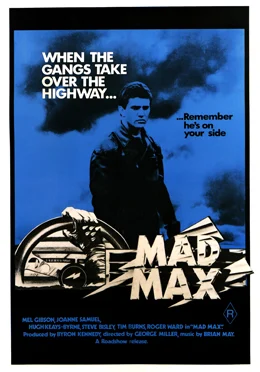 What would be the point of going to work? What would be the point of treating anyone fairly or humanely?
Consider the insurance executive who was shot in the back and killed.
In front of the Hilton39Brian Thompson, CEO of UnitedHealthcare, the largest private health insurer in the US, was shot dead on December 4, 2024, outside the New York Hilton Midtown in Manhattan. Luigi Mangione, 26, was charged with the killing. in New York.
How many people online celebrated that? He didn’t own the insurance company, and it wasn’t even the company the killer had insurance with. None of it made any sense whatsoever.
If you don’t have respect for the life of someone you disagree with, it will become a war of all against all,40"War of all against all" (Latin bellum omnium contra omnes) — Thomas Hobbes's phrase for the natural condition of people without a state (De Cive, 1642, and Leviathan, 1651). and there will be no civilization.
We are walking on a tightrope in our time. Someone centuries from now will look back and find it strange that in an era of unprecedented plenty, which is what we’re living in, people were so negative about life.
11Don't scope the market
Koontz tells new writers to write what they love, because success can't be predicted anyway.
When you think about writing and selling books, do you intentionally aim to sell a lot of copies? Or, assuming that’s the goal, how much do you focus on simply writing a good story, trusting your gut and intuition, versus getting in tune with the culture and giving people a product they want?
I always tell young writers who are just starting out: don’t scope the market. Don’t look for what’s popular and then try to write that. Write what you love as a reader. I believe that’s the only way to go, because otherwise, you’ll reach a point where you don’t like what you’re doing.
The other problem is you can spend all your time scheming, thinking, “This works, that works. Why don’t I combine Jaws with an alien invasion story?” That never works.
When you’ve been doing this for a while, at least in my case, you reach a point where you have no idea what will sell and what won’t. You might think you’ve written your best book ever, only for sales to be 20% less than expected, with people saying, “It was good, but I didn’t like it as much as this or that.” Sometimes, I like a book and think, “They’re not going to like this one as much,” yet it resonates and brings truth.
Ultimately, you’re not in a position to determine what readers will respond to.
12A twist the author didn't see coming
The best twist, for Koontz, is one the author didn't see coming either, as in Intensity.
What have you learned about crafting a plot twist?
Plot twists are best if you, as the writer, don’t see them coming either.
You, as the writer. I, as the reader.
As a writer, I can give you the clearest example using a novel called Intensity,41Intensity (1995) — a Koontz novel, adapted as a TV miniseries in 1997. published many years ago. I’ll need to tell a condensed version of the story.
The entire book is intense, never letting up for a second. The lead character, Chyna, is a waitress. She goes away for a weekend with a friend she works with. Her friend’s parents live in Napa,42Napa — the valley in California north of San Francisco, the best-known wine region in the US. in wine country, so they travel there.
Chyna had a difficult childhood. Her mother was neglectful, constantly involved with dangerous men. Chyna developed a mantra as a child for when things became truly bad: “Chyna Shepherd, untouched and alive.” Even as an adult, facing a terrifying situation, she would repeat this to herself.
When I started the story, I only knew this much: she goes to Napa with her friend for a wonderful weekend.
However, on their very first night, a psychopathic serial killer, who travels the country in a motorhome, pulls up. He had been surveilling the property and family habits. He enters the house and kills everyone except Chyna. She is the only one quick enough to realize what is happening and successfully hides.
She believes he took her friend to the motorhome, and that her friend is still alive. Chyna escapes the house while he is still inside, though she doesn’t know what he’s doing. She goes to the motorhome, intending to untie her friend and help her escape. Once inside, she discovers her friend is already dead; he had taken the body.
Now, Chyna just wants to get out. The killer returns, enters the motorhome, closes the door, and drives away. He doesn’t know she’s hidden in the back.
I initially thought the story would be about her escape. The killer’s first stop is to refuel his vehicle and go into a convenience store. This is where she gets out. I’m revealing an early plot point, but it happens very soon.
In this earlier time period, the pump had to be unlocked.43Unlocking the pump — at many American gas stations the cashier switches the pump on: you pay inside first, then fill up. While he’s inside paying, Chyna gets out and hides underneath the motorhome. When he starts pumping gas, she slips into the convenience store, believing she will find help there.
Before she can explain that she just escaped from his motorhome and identify him, she sees him returning. She has to hide again, running to the back of the store. He enters, intending to kill the two employees. But first, he boasts about a beautiful young girl he keeps hostage in his basement at home.
When this happened, I initially thought, “Oh, now she’ll get the police.” But then I realized, “Oh, my God, no.” Because of her childhood trauma—the constant terror from men around her mother—Chyna now knows there’s a young girl, about 14, being held hostage. The killer’s vehicle has no license plates; he removes them, and he would shoot any cop who stopped him. This was also before cell phones were common.
She needs to find a phone. But then she thinks, “I know it’s a motorhome, but by the time I tell someone, where will he have gone?” He had shot up the phones in the convenience store, so it might take her 15 or 20 minutes to find a working phone, and he could disappear.
The moment this thought entered my head, I knew it was a choice no one could resist. This is only 15 to 20% into the book. Chyna goes back out to the motorhome right after he’s killed the people in the store. Before he gets back in, she sneaks back inside to hide. Her goal is to go to his home and rescue that girl.
My initial thought was, “No one would do that.” But then I considered her past, her self-respect, and her self-image. It made sense. This decision transforms the book into an unstoppable read. Even when you finally realize what he’s done, he’s brought her home and starts playing a cat-and-mouse game with her, making it utterly unputdownable.
I have this image of you just hammering the keyboard, completely immersed, as if you’re channeling something greater. Is that what it’s like?
It’s a lot calmer than that. I polish every page three times, so it’s incremental movement. But there are moments when you get swept up in it, even though you know it’s not real. It’s easier for a reader to get lost in a story and accept its reality than it is for the creator. You’ve made all the connections; it’s like a cabinet you’ve built, so you know all its secrets.
However, there are times when it becomes so captivating. I’ll finish a chapter, then go back and work on each page repeatedly until it’s perfectly smooth. I truly have fun when I’m doing it. There are days when it isn’t fun—when something with your body chemistry or whatever just prevents it from working. Those days are depressing. But more often than not, it’s a lot of fun.
13Suspense, not horror
Koontz writes suspense, not horror, because uncertainty is the essence of life.
I went to the movies yesterday, and they had some horror previews. I thought, “This is the worst thing ever; I do not enjoy it at all.” What is it about those kinds of stories that you love?
I don’t particularly enjoy those kinds of stories. I like suspense,44Suspense — Koontz is often filed under horror, but his books are marketed as suspense thrillers. but I don’t like horror, and I’ve always fought to keep that word off my books. I cannot watch a bloody movie; if there’s a lot of blood, I’ll stay away. I’ve turned off movies with excessive violence.
I do like suspense. I may have said this to you before: a book without suspense is not a realistic story. Suspense is central to our lives. We don’t know what will happen an hour or a day from now. We always live on the edge, and we push that thought away because otherwise, life wouldn’t be very tolerable. But it is the essence of our lives.
So if you’re going to write something truly compelling, there will be suspense. But it doesn’t have to be horror, and it doesn’t have to be something so disgusting.
What creates suspense? Is it a combination of desire, uncertainty, and stakes? What I’m hearing you say is that life is intrinsically, inherently suspenseful; you just have to bring that onto the page.
One thing always worth keeping in mind, no matter how cynical you may be about humanity, is that it’s human nature—except for the sickest among us—to want to see a character succeed when you like them in a story. Just as it’s human nature to want to see people we like in our lives succeed, and to feel bad when they fail.
If a character can be shown to logically succeed and move forward, that’s what uplifts a reader. It doesn’t have to be something that makes you a more noble human being. That aspect of seeing someone succeed in life, gain understanding, and achieve a goal after much hardship can be very satisfying to a reader.
That’s why books where everyone dies at the end don’t often succeed particularly well.
14Family and Catholicism
His future wife's Italian Catholic families showed Koontz that happy families exist.
What about the Catholic worldview45Catholicism — Koontz did not grow up Catholic; he converted in college and has said the faith became a counterweight to the chaos of his family. He compares his view of it to G. K. Chesterton's: Catholicism encourages "delight in the gift of life." has most informed your writing and how you approach great storytelling?
I think what I got out of it was realizing my family was totally dysfunctional. My mother was a great human being, but my father was a mess. Many people on my father’s side of the family were just as messed up as he was; it was a family-wide issue.
He had two brothers who committed suicide. One was likely in his fifties, another in his twenties, and one was my father’s twin.
So your dad would have been older. Did he have you after one of his brothers had already committed suicide?
No, no. His youngest brother was 28, and my father’s twin. I was born around that time. There’s also the issue of whether my father was actually my biological father. I don’t know if we’ve discussed this, but there’s reason I believe he wasn’t.
Anyway, I saw so much dysfunction on his side of the family. On my mother’s side, people weren’t quite so psychologically messed up. However, there was a lot of hostility among family members. People would suddenly decide they weren’t speaking to each other, and it would last for years. So there was dysfunction there as well.
Then, when I started dating my wife, she was Catholic, and I wasn’t. I didn’t have much money, so for a weekend date, we would drive to Johnstown46Johnstown — a city in western Pennsylvania. Koontz grew up in Bedford, in the same state. and spend a day visiting each aunt and uncle’s house. These were all Italian families. Everywhere we went, you were welcomed no matter who you were. I was nothing like an Italian family, and it was always “mangia mangia,”47Mangia, mangia! — Italian for "Eat, eat!" with food constantly placed in front of me.
They’re so loud and fun!
They all had homemade wine in the basement. I would come back from those visits, and it started to affect me on a fundamental level. I thought, “I’ve never seen so many happy families.” People were having fun and they were welcoming.
I started to attribute this to Catholicism when it works. When it truly works, it produces loving families. When it doesn’t, it produces some of the issues we’ve seen in the news over the last couple of decades.48The news of the last couple of decades — Koontz doesn't specify. The biggest Catholic Church stories of those years were the scandals over sexual abuse of children by priests and its cover-up; in the US they were exposed in 2002 by The Boston Globe's investigation. In my family, that wasn’t possible because there wasn’t a faith element holding them together.
I think an equal amount of that came from their Italian background, which also gave them a connection. Although my father’s side was all from the same background, that didn’t help them stay together.
15Letting in the mystical
To let the mystical into your writing, Koontz says, keep an open mind: the universe is stranger than we will ever understand.
I’m listening to this conversation and want to invite more of the mystical into my writing. Not in a “I want to be more spiritual” or “I want to find God” sense, but more like channeling something deeper. What would you tell me?
You need a very open mind to everything. If you’re going to be a dyed-in-the-wool atheist, you won’t connect with the mystical, whatever the mystical may be. You have to have an open mind to the notion that the universe is stranger than we’ll ever understand.
Once you educate yourself about the human cell, you’ll see there are thousands of parts in every cell, without any one of which the cell doesn’t function.49Without any one of which the cell doesn't function — this is the "irreducible complexity" argument the biochemist Michael Behe set out in Darwin's Black Box (1996): a system that breaks without any one of its parts supposedly couldn't have evolved and was designed. It is a central argument of intelligent design; the scientific community rejects it. We didn’t know this in the 1800s; we’ve only learned this in the last half-century. All we keep finding are new chains of proteins50Protein chains — a protein is a chain of amino acids, usually from a few dozen to several thousand; these are what Koontz calls molecules. The order of the amino acids determines how the protein folds and whether it works. in the cell that are unique. Some of these protein chains are hundreds of molecules long, and every molecule must be exactly where it needs to be.
There’s something about the world’s intricacy. It doesn’t matter whether you believe in a religious faith or not; you just have to be open to the fact that it’s not simply “there”—it’s there with intention. If you open your mind to its intricacy and learn something about it, that wonder will overpower you.
Not a day goes by that I don’t see something, either here or when I’m out, that I have to tell Gerda51Gerda Koontz — the writer's wife; they have been married since 1966. about in the evening. I’ll ask, “Can you believe this would happen, or could happen?” It doesn’t matter if you have doubts. It’s simply about opening yourself to see the wonder of everything and how astonishing it all is.
Dean, thank you very much.
Good seeing you again.
It’s great to see you. That was my second time having Dean Koontz on the show. If you liked it, go check out the first conversation we recorded together.


