

How I Write
Chapters
Flynn never builds tension on purpose: her thrillers run on characters who sabotage themselves.
Read the chapter- She never consciously constructs suspense; she layers crises and weird twists, as if you were being slowly pulled on a rope toward a closet with a creature in it.
- Dread works best dished out in little pieces: Nick flubs his interview with the cops, then accidentally flirts with the woman who brings him a casserole.
- She likes putting a character's own nature in the way, because people really are their own worst enemies, as Camille is in Sharp Objects.
- Genre labels don't matter to her as long as people see her books are character-driven, and her model is Scott Smith, author of A Simple Plan and The Ruins.
Flynn sets her books in the Midwest because it hasn't been overused and can be made more gothic, and Amy had to be dragged somewhere with no room to play.
Read the chapter- Flynn wrote a hundred pages of Gone Girl set in Chicago, but Amy had to be pulled from New York to a place that offered no chance to remake herself.
- The Midwest is neither Southern noir nor big-city noir; everyone thinks they know New York, but the heartland can be made more gothic.
- As a young magazine journalist in New York, Flynn messed with people by saying that in Missouri they kill puppies and rob liquor stores on Saturdays, and they'd reply, "I respect your culture."
Flynn has been comfortable with the dark since childhood, and she sees true crime as a way to talk about women's anxiety.
Read the chapter- Her theory is that some people love to flip over a rock and see what's underneath and some don't; Perell is the second kind, even though he adores Gone Girl.
- Her film-professor father took her to Alien at seven because it had a female hero, and she came out in tears, begging Ripley to save Jonesy.
- Someone told her that men's fallback topic at a party is sports and women's is true crime, a way to talk about the fear of walking through a parking lot.
- It doesn't occur to her six-foot-two husband right away that she can't just go for an evening run on the beach alone.
Flynn wrote Sharp Objects because women were denied the right to be evil, and she insists a heroine has to be interesting, not likable.
Read the chapter- Flynn finds it sexist to think only men can be evil: that idea left women the role of helpmates, and there are plenty of antiheroes and hardly any anti-heroines.
- At the height of chick lit, books about shopping, shoes and getting a man, she missed stories about women with dark sides.
- A character has to be interesting, not likable; publishers turned her down, insisting women wanted to read about Bridget Jones, not Camille Preaker, and Gone Girl proved them wrong.
- A photograph called "Livia," a little girl with braids and a pinafore and an "I'm going to mess you up" look, became Amma in Sharp Objects.
Writing is stubbornness and joy, and exercises get you out of a slump.
Read the chapter- You have to sit in the chair through many miserable days and maybe a hundred pages in the wrong direction; Flynn wrote three versions of Gone Girl.
- You can tell when a writer is having fun and doing pirouettes, like Martin Amis when he's "cooking" or Joyce Carol Oates writing half a chapter from a dog's point of view.
- On hard days she writes three good pages just for the joy of it, even if they never make the book.
- Amy's "Cool Girl" monologue grew out of one such exercise, a screed pounded out in one afternoon; Flynn kept taking it out of the book and putting it back.
- She has bonus material on her laptop: Nick's first-grade parent-teacher conference from the teacher's point of view, and a chapter narrated by Amy's boarding school roommate.
Flynn finds out who the killer is along with the reader, then plants the clues honestly.
Read the chapter- When you're stuck, keep writing, and don't start another book, because you'll hit writer's block in any book.
- The killer of the final Sharp Objects wasn't even a character in the first draft.
- As a child reading Agatha Christie, she felt like a cheated customer if she couldn't have known the answer, and now she's obsessive about making every mystery earned.
A slow burn works if it is earned, and a bonkers plot rests on nailed-down logistics.
Read the chapter- The first part of Gone Girl is the clicking of a roller coaster going up; many readers nearly put the book down, but Flynn thinks readers and audiences get too little credit.
- As a TV critic she hated characters yelling "Hello? Hello?" into a dead line, and plans to call made without exchanging numbers.
- To make readers follow her into the bonkers parts, she covered her basement walls with sticky notes about details: was Zima still made in 1997, could the FBI date ink.
- She talks to people only after writing, and asks not "would it happen?" but "could this possibly happen?"
A decade at the magazine taught her to take apart the mediocre, and horror taught her to trap characters.
Read the chapter- The hardest part was explaining why a TV show earned a C, and that is where she grew as a writer.
- The magazine taught her that no muse is coming to save you: writing is a job, and you can't wait until you're in the mood.
- Carpenter's Halloween is his least scary movie to her, while Alien was instructive: trap characters not in a spaceship but with themselves.
Flynn hides tributes and private jokes in her place names, and picks character names by people's reactions and by birth year.
Read the chapter- Carthage is her ode to Who's Afraid of Virginia Woolf?, one of the influences on Gone Girl; there is a real Carthage, Missouri, so her town became North Carthage.
- On lonely days she slips in jokes to amuse herself, like the smell of Desi's mother.
- She almost named Nick Ben, but in her survey Nick drew the strongest reactions, from "the greatest guy" to "the biggest jerk."
- She picks names on the Social Security baby names site by the character's birth year: Gen X has countless Jennifers, today's three-year-olds hardly any.
Pop culture has taught us to perform our feelings, and social media made it worse.
Read the chapter- Nick in the novel wonders whether anyone can still be genuinely amazed, the way people were seeing an elephant for the first time a century ago, when we've seen everything on a screen.
- At a small gathering when she was engaged, Flynn caught herself putting her hands over her mouth as if to cry over a gift, like women in the movies.
- Videos filming reactions to "Luke, I am your father" stop being reactions and become performances for the camera, "nesting dolls of madness," and she worries about her own kids.
Gone Girl was considered unadaptable, but Fincher turned out to be Flynn's best collaborator and editor.
Read the chapter- At twenty-two she saw Fincher's Seven and went straight back in for the next showing, and later he directed Gone Girl.
- The book was number one on the bestseller list for about ten weeks, yet everyone said it couldn't be adapted, because so much of it is internal.
- Flynn brought the script in at exactly 120 pages, and Fincher's first suggestion was to put more of the book back in.
- As an editor, he asked why every scene was there: if you can't articulate why, it probably shouldn't be.
A strong voice can't be faked; it grows out of closeness to a character.
Read the chapter- Flynn is a "voicey," "look at me" author, but a voice that is big on purpose comes out fake, like chasing trends such as vampires after Twilight.
- She knew she had Amy's voice when, in a supermarket line, she wanted to call Amy and complain about the woman ahead of her.
- Even on the set of Jackass: The Movie, reporting for Entertainment Weekly, she kept thinking about Camille, something like method acting.
Flynn writes the first paragraph last, and mystery gives a story its engine.
Read the chapter- The first sentence is intimidating, so she dives in a few paragraphs later and adds the opening at the end; her husband can't stand the first line of Sharp Objects.
- "What are you thinking?" and the other questions at the start of Gone Girl pose a mystery not just about Amy but about the marriage.
- Her first attempts to write about female violence were a string of awful conversations, until Lehane's Mystic River showed her that mystery provides engine and discipline.
Flynn looks for books that start arguments and teaches authors to trust their voice.
Read the chapter- A reader who slams the book down and says "I hated this" is better, for her, than one who forgets the book the next day: hate is a reaction too.
- With consolidation and fear about the future, publishers take fewer risks, and Sharp Objects might not get published today.
- "More voice" is her most common note to the imprint's authors, and to keep voice from turning into caricature you need confidence, writing where you feel surest.
Writing, for Flynn, is learned by writing rather than reading about it, and envying better writers is part of the craft.
Read the chapter- Her class would be built on quick in-class exercises on an assigned scene, then sharing, so everyone learns their strengths and weaknesses.
- King's On Writing and Lamott's Bird by Bird helped her, but at some point you have to stop reading about writing and just write.
- Her weakest spot is plot, which is why she tricks herself into plotting by writing mysteries.
- Jealousy is one of the most important parts of being a writer; Flynn envies Joyce Carol Oates and Kate Atkinson, who can make you cry and laugh within three pages.
Quotes
On how Flynn messed with New Yorkers
“‘Let's get some pancakes, kill a puppy, and rob a liquor store because that's what we do in Missouri on Saturdays.’ They'd reply, ‘I respect your culture.’”
Gillian FlynnRead from 07:51On female evil in fiction
“It felt a little sexist to think that only men could be evil.”
Gillian FlynnRead from 14:15On why publishers rejected Sharp Objects
“We received so many rejection letters that basically said: ‘Men don't want to read books by women, and women don't want to read books by women who write about non-aspirational characters.’”
Gillian FlynnRead from 21:53On how Flynn writes mysteries
“I figure out who the killer is as I write; I don't go in knowing the ending.”
Gillian FlynnRead from 34:20On what Flynn learned from David Fincher
“If you can't articulate why something's happening, it probably shouldn't be there.”
Gillian FlynnRead from 1:01:47On how Flynn knew she had found Amy's voice
“A woman in front of me, in a ten-item lane, had about 22 items. I thought, ‘Oh, Amy would not like this,’ as if she were my real friend.”
Gillian FlynnRead from 1:05:35On readers who slam the book down at readings and say they hated it
“For me, that reaction is great because it means you thought about it.”
Gillian FlynnRead from 1:14:12On the writing class Flynn would teach
“Being jealous of other writers is actually one of the most important parts of being a writer.”
Gillian FlynnRead from 1:21:02
Summary
Gillian Flynn, author of Gone Girl, Sharp Objects and Dark Places, tells David Perell she never builds suspense on purpose: her thrillers run on characters who are their own worst enemies, and dread accumulates when the trouble is handed out piece by piece. All three of her novels are set in Missouri and Kansas, because the Midwest, unlike New York, hasn't been written to death and can be made more gothic. She has been at home with dark material since childhood (her father, a film professor, took her to see Alien when she was seven), and her theory is that true crime gives women a vocabulary for a constant, low-level anxiety. She wrote Sharp Objects because women were denied the right to be evil: publishers insisted women only wanted to read about heroines they could aspire to be, and Gone Girl proved them wrong.
On craft: Flynn writes mysteries without knowing who the killer is (in the first draft of Sharp Objects, the eventual killer wasn't even a character), then rewrites and plants the clues, because every mystery has to be earned. When you're stuck, she says, keep writing rather than starting a new book, and write "three good pages" a day just for the joy of it: that is how the "Cool Girl" monologue was born. A slow burn can still work today if it is earned; details have to be nailed down, and names picked by birth year from the Social Security baby names site. Ten years at Entertainment Weekly taught her not to wait for a muse: writing is a job.
Gone Girl was considered unadaptable, but David Fincher, whose Seven she once watched twice in a row, turned out to be her best collaborator and editor, making her explain why every scene was there. A character's voice, Flynn says, can't be faked; you earn it by spending so much time with a character that you want to call Amy from the supermarket checkout line. Dennis Lehane's Mystic River showed her how mystery gives a story its engine and discipline. At her imprint, Gillian Flynn Books, she looks for books people argue about, and her most common note to authors is "more voice." The writers she envies are Joyce Carol Oates and Kate Atkinson.
Mentioned
- Gone Girl00:00one of Perell's favorite books
- Sharp Objects02:52Flynn's first novel about female violence
 Scott Smith04:32writes characters who bring everything on themselves better than anyone
- The Thing09:31on the bill at Flynn's Halloween "Gorebecue"
Show 20 more mentionsShow fewer mentions
- Alien10:03the film her father took her to at seven
 Martin Amis26:58pounds his chest when he's "cooking"
 Joyce Carol Oates27:12Flynn's favorite writer
 Agatha Christie36:45where her love of mysteries began
 Entertainment Weekly43:41ten years on staff, including as TV critic
 John Carpenter45:43her idol, though Halloween doesn't scare her
- Halloween45:43in Flynn's view, Carpenter's least scary film
- Who's Afraid of Virginia Woolf?47:20the source of Carthage and one of Gone Girl's influences
- Dark Places50:28the made-up town of Kinnakee
 Popular Baby Names50:28how Flynn picks characters' names by birth year
- Star Wars55:34videos filming reactions to "Luke, I am your father"
 David Fincher57:11director of the adaptation, "the best collaborator"
- Gone Girl57:23Perell watched it two nights in a row
- Se7en57:55Flynn watched it twice in a row
- Twilight1:04:20an example of a trend not to chase
- Jackass: The Movie1:06:01the shoot she covered for Entertainment Weekly
 Dennis Lehane1:11:27showed her that mystery gives a story its engine
- Mystic River1:11:27the novel she read in one night
 Gillian Flynn Books1:12:47Flynn's imprint
 Kate Atkinson1:21:30the writer Flynn envies
Sponsors of the episode
 Alpha School19:39a private school where academics take two hours a day
Transcript
01Suspense that happens on its own
Flynn never builds tension on purpose: her thrillers run on characters who sabotage themselves.
Gillian Flynn is the author of one of my favorite books of all time, Gone Girl.1Gone Girl (2012) — Flynn's third novel: on the day of their fifth wedding anniversary Amy Dunne disappears, and suspicion falls on her husband, Nick. Chapters from Nick's point of view alternate with Amy's diary. By 2016 it had sold more than 15 million copies. Coming to the episode, I was like, who am I going to get here? Who is the kind of person who could write such a crazy, bloody mystery? And she ended up being super fun, light, down-to-earth, and we spent the whole time talking about what she loves, which is books and the craft of writing, how to write a great novel. And after Gone Girl became a hit, she decided, “Hey, let’s turn this into a movie.” So she sits down, writes the screenplay, teams up with David Fincher,2David Fincher (born 1962) — American director of Seven, Fight Club, Zodiac and The Social Network; he made Gone Girl in 2014 from Flynn's own screenplay. and that movie ended up getting nominated for an Oscar.3The Oscar — Gone Girl received one nomination: Best Actress for Rosamund Pike, who played Amy. Flynn's screenplay was not nominated.
So I said, “Hey, you’ve got to tell me what you learned from Fincher, why you write like a method actor,4Method acting — the American "Method" of Lee Strasberg grew out of Konstantin Stanislavski's system: the actor builds a role from their own feelings and memories, and sometimes stays in character off set. how you think through plot, character, the beginning of a novel.” And she said, “I’ll tell you all that, but also what it’s like once you get to know your character so deeply that you’re at the supermarket or something, and all of a sudden it’s like they’re there with you. You can actually hear them talking to you. And that’s when I know that I have the character down.” So here’s my conversation, my awesome conversation with Gillian Flynn.
In your stories, there’s a sense of impending doom, a beat that keeps building. You know the bass is going to drop, the hammer is going to fall. It just builds and builds. Is that something you do consciously?
That’s an interesting question. The answer is no. I am never consciously building suspense, ever. To be honest, it would make me sound cooler if I said I did it on purpose.
I feel like I’m building a story, layering crisis upon tension, unsettling moments, and weird twists. I want it to be an unraveling that leads directly to awfulness. I like the sensation of knowing you’re being pulled with a rope around your waist toward a dark corner or a closet, unable to control it, slowly, deliberately, to mess with you. It’s as if the creature in the closet is enjoying your fear.
So with this dark corner, this creature in the closet, are you consciously thinking, “We need to get there slowly”?
Yes. What’s the most anxiety-inducing thing to do? Dish it out in little pieces. That includes little twists, turns, and crazy moments.
For instance, with Gone Girl, you have Nick. His wife is gone. Now he’s flubbing the interview with the cops, making himself look bad. Then he takes a selfie, accidentally flirting with someone bringing him a hot casserole.5Casserole — in the US, especially in the Midwest, neighbors traditionally bring a casserole to a family going through grief or trouble.
It’s that sensation of people getting in their own way and contributing to the problem. I enjoy having my characters suffer. In Sharp Objects,6Sharp Objects (2006) — Flynn's first novel: Camille Preaker, a reporter with a long history of cutting herself, returns to her hometown of Wind Gap, Missouri, to write about the murders of two girls. In 2018 HBO made it into a miniseries starring Amy Adams. Camille is a tortured character. She’s self-harmed; she’s back in a bad place. She makes decisions, then tries to undo them as she solves the mystery.
I like putting those little tweaks of a person’s own character in the way because I always feel there’s a reason for the phrase, “he’s his own worst enemy.” There are a million times a day when I think, “Gillian, why do you always do that? You’re going to do this someday and end up in prison because why can’t you stop?” I say that all the time to myself.
Wait, so is that something you’re conscious of? Say you have a character, and these are the ways they’re “killing themselves.” Do you then smash the plot against those character traits to bring it to life?
If you ever want to edit me, I would love your help, because you’re really helping me figure out how I’m doing things. Yes, I think that is what I enjoy doing. I always say my thrillers are character-based. That is the one thing I insist on. Throw me whatever genre you want. If you want to call me a mystery writer, a thriller writer, or say I just do this or that, that’s fine, as long as you acknowledge that I’m character-driven.
The twist of Gone Girl wasn’t the reason I wrote it, truly. It’s the idea of building a character. Writer Scott Smith7Scott Smith — American novelist and screenwriter. His novel A Simple Plan (1993) is about three men who find more than $4 million in a crashed plane; Sam Raimi filmed it in 1998, and Smith's screenplay was nominated for an Oscar. The Ruins (2006) is a horror novel about American tourists in the Mexican jungle. Wikipedia. does it better than anyone in the world. If anyone wants to read The Ruins or A Simple Plan, I cannot recommend them more. Scott’s one of my favorite writers, and that’s what he’s great at: everything that happens is the character’s fault, yet it’s just them being themselves.
It’s about how different people affect each other in certain situations, creating this crazy miasma that we’re all trying to make our way through. You meet bad people along the way, you do bad things, and that’s what interests me.
02The Midwest instead of Chicago
Flynn sets her books in the Midwest because it hasn't been overused and can be made more gothic, and Amy had to be dragged somewhere with no room to play.
Earlier, I asked in what ways characters smash against the plot. In what ways do they smash against the world they’re in? Take Gone Girl, for example. You’re in the Midwest,8The Midwest — twelve states in the central and northern US, from Ohio to Kansas and Nebraska, including Missouri and Illinois with Chicago. Farm country and small towns, the "heartland." in Missouri, having moved from New York. What is the role of setting in your books?
Setting is very important to me. All three of my books have been set in either Missouri or Kansas. I started with Missouri.
I initially wanted to set Gone Girl in Chicago because I was interested in a big city vibe. I’ve lived here for 20 years, and it was originally set here. I wrote a hundred pages in Chicago, but it didn’t make sense. Amy had to be pulled from her beloved New York to somewhere she didn’t want to be. Chicago offers too much opportunity to remake oneself, which is exactly what a sociopathic narcissist like Amy would socially like to be able to do – to drop people and burn them. They need room to play.
I needed her to be dragged somewhere else and feel resentful about it. I thought, “Someone from New York would not like to be around a bunch of Missourians.” That would be great.
I do love the Midwest, partly because a writer can play a lot with it; it hasn’t been overused. It’s not Southern noir,9Noir — dark crime stories with cynical characters and fateful turns. Southern noir moves them to the American South, big-city noir to places like New York and Los Angeles. which is its own thing, nor is it big city noir. New York, for me, was harder to write about in Gone Girl than any part of Missouri. New York has been written about and portrayed in movies so much that everyone thinks they know what it is, even if they’ve never lived there or visited.
You have an idea of New York, whereas, unless you’ve lived there, you don’t know what a specific area of the country in the Midwest is like. I’ve embraced it because you can make it more gothic.10Gothic — in fiction, a mood of gloom, decay, family secrets and the grotesque. The US has a tradition of Southern Gothic (William Faulkner, Flannery O'Connor), and the Sharp Objects series is often filed under it. I feel like I have more authorial vision, the ability to create a fictionalized version, and have people who call us a “flyover state”11Flyover states (flyover country) — a dismissive nickname for the interior of the US, which people on the coasts mostly see from a plane window. think, “Oh, maybe it is like that.” It freaks people out more because they’ve never seen it before.
When I moved to New York as a young magazine journalist, people would ask, “So you’re from Kansas City?”12Kansas City — the name of two neighboring cities on either side of the Missouri-Kansas state line. Flynn was born and raised in the Missouri one. It was as if I was a strange breed of creature. I would mess with people, saying things like, “Let’s get some pancakes, kill a puppy, and rob a liquor store because that’s what we do in Missouri on Saturdays.” They’d reply, “I respect your culture.” I feel like you have a license to play a lot with that setting.
03Under the rock: horror and true crime
Flynn has been comfortable with the dark since childhood, and she sees true crime as a way to talk about women's anxiety.
What is your relationship with darkness and evil? It feels to me like you’re comfortable exploring those themes in a way most people aren’t. Most people have an aversion; they get too close to the devil...
...and they run the other way.
But you seem comfortable with darkness.
I always have been. My theory is that there are two kinds of people in the world: those who like to flip over a rock and see what’s underneath, and those who do not.
Not me.
You don’t.
No way.
Really?
No way. That’s what’s so interesting about why I love Gone Girl so much — I do not like flipping over the rock.
Right.
Gone Girl is an investigation of the underside of it.
Okay, that surprises me. Do you like horror movies? I love horror movies.
I hate horror movies.
I love horror movies! You have to come to our annual Gorebecue if you’re available on Halloween. We all dress up and watch horror movies all day, eating greasy, scary, bloody-looking barbecue.
I will do it one time. You have a one-time valid offer.
We’ll be watching The Thing13The Thing (1982) — John Carpenter's horror film about polar researchers hunted by an alien that takes the form of its victims. Like Alien, it is famous for scenes of creatures bursting out of bodies. and Alien,14Alien (1979) — Ridley Scott's film about a spaceship stalked by an alien predator. The only survivors are warrant officer Ellen Ripley (Sigourney Weaver) and the ship's cat, Jonesy, whom she saves. though. There will be a lot of things exploding out of people’s bodies while you eat the ribs. That’s the key.
Did your dad introduce you to horror movies?
Yes, that’s true. I really think that’s part of the reason I have such a comfortable relationship with dark and scary things. My dad was a film professor when I was growing up, and he was great about taking me to films. Going to the movies together was our first father-daughter activity.
That said, looking back, he might have erred, as my mom would say, by taking me to some movies when I was too young. I think I was seven when I saw Alien, and I was absolutely terrified. I remember him telling me, “Gilly, we’re going to see Alien today. Alien is really important because it has a heroine, a female hero. It’s important for you to see it.” I think that’s how he justified it to my mom after he handed me back to her, and I was crying, “Ripley, no! Save Jonesy!”
So, when you watch a horror movie, when you investigate the underside of the rock, do you enjoy it? What emotion or feeling are you having?
I enjoy it. I prefer to say it’s research, or that I look at it a little and then pull back, but I’m very comfortable with it. I watch way too much true crime15True crime — nonfiction books, podcasts and series about real crimes. The genre's latest boom is usually dated to the podcast Serial (2014). and scary stuff. I like romantic comedies too, but I really gravitate towards the scary stuff. It gives you a vocabulary to talk about anxiety.
Is it healthy for everyone? I have a theory about why the true crime audience is so largely women. Someone told me the other day that men have sports as their fallback at a party, and women now go to true crime. I thought that wasn’t wrong.
The more pure, casual conversations I have – “Hey, how’s it going? What are you doing? What are you watching?” – I hear so much true crime talk. I think women use it to analyze relationships and danger, and to discuss the fear of moving through the world as a woman. Unfortunately, we are always taught to think that you may walk out of your house, and there’s a possibility someone may want to take you, and you’ll never be seen again. Horrible things could happen.
We’re taught you can’t walk through a parking lot without being alert; you are forced, by necessity, to remain vigilant. Hopefully, you go through life not overly scared, still able to do all the normal things. I still walk through parking lots, but I tell people where I’m going. It’s something you have to do.
Men don’t understand that as much. My husband is a six-foot-two guy. He’ll say, for example, if I’m in a hotel, “I just got here at 7 o’clock...
...all I want to do is take a run on the beach.” He’ll ask, “Why don’t you?” Of course, I can’t. Then he’ll realize, “Oh, right. Don’t do that. What was I thinking?”
I think true crime gives us a way to deal with that constant anxiety. If I’m walking down the street, I have to be aware of what’s behind me. I have to keep an ear out, always keeping one little piece of my awareness focused on potential threats. There’s a relief in being able to talk about what if the worst thing does happen.
04Female evil and unlikable heroines
Flynn wrote Sharp Objects because women were denied the right to be evil, and she insists a heroine has to be interesting, not likable.
Tell me if you agree or disagree with this characterization: I was talking to a friend and told her you were coming on the show. She said, “Oh man, I cannot wait for that. She understands feminine evil better than anyone I’ve ever seen.”
Thanks to your friend.
Agree or disagree?
I’ve thought a lot about female evil. In a way, it was because I felt we weren’t properly represented. It felt a little sexist to think that only men could be evil.
I always pushed back against the idea that women are too kind, that a woman would never do something like this, would never hurt someone. That’s demonstrably incorrect if you look anywhere in the world or talk to any woman who knows other women. It was damaging not to examine this, because it left women with only the idea of female characters in film, TV, or books as helpmates. They were always helping the husband, bucking him up, keeping him in line, or fighting him. Even if she was tough, she was the one who punched the bad guy in the face and took the fall.
I remember when I was writing Sharp Objects, it was the height of a certain type of literature. I define chick lit16Chick lit — light fiction about young urban women, their jobs, shopping and love lives. The genre peaked in the late 1990s and 2000s: Bridget Jones's Diary, Sex and the City, Confessions of a Shopaholic. Sharp Objects came out in 2006. as those books about shopping, shoes, and how to get a man. That genre was at its peak, and while it was fun, I wasn’t angry about it, but I kept thinking, “Where are the stories about people who are more like me, who don’t care about shoes?” — I don’t know if the camera caught that — “And who have dark sides, who have seen dark things?” I felt it was important to explore that.
Part of the reason I wrote Sharp Objects was to examine what violence looks like with women. We know plenty of antiheroes; you could name almost every book written by a man as practically featuring one. I thought, “How many anti-heroines, as my dad would say, are there?” What can we think and talk about regarding them? So, I really just wanted to write about that. That’s how the whole thing started.
The male anti-hero is a trope, right? We all grew up with it. You can name a zillion examples: any cowboy movie, any gangster movie, much deep literary fiction. There’s often an anti-hero. That was readily visible, named, pointed to, and talked about, whereas women were left out.
As an English major in college and then in journalism, I kept thinking we were really missing something as a whole. I’m not trying to make myself sound like I was out to do some important thing and change society, but there was a darkness here to be examined in a new and interesting way. If someone wasn’t going to say something about it, I would raise my hand.
What tools does the novel afford you to look at that clearly, to rotate feminine evil as you examine it from all these different layers and perspectives?
It’s wonderful to have a novel. Having adapted two of my novels17Two novels — Flynn wrote the screenplay for Gone Girl (2014) herself and, with Marti Noxon, the scripts for HBO's Sharp Objects miniseries (2018). Dark Places was filmed in 2015 without her involvement in the script. and knowing how things need to change to work on screen, I can say a novel is a luxury. You can go inside someone’s head, which allows you to really delve into their psyche.
If you’re with one of the characters, you gain a deeper understanding of how they became who they are. Going back to someone’s childhood often provides insight into their character, offering an appreciation rather than just dismissing them.
That’s what I wanted to do with my female character: make her more layered. I didn’t want to simply portray her as a crazy, evil troublemaker; that doesn’t interest me. What does interest me is a tortured character, lashing out, hurt, angry, and sad, acting in ways you don’t traditionally see women act.
We’re supposed to nurture, find the best in people. Theoretically, we’re the ones who smooth things over, comfort, tend, take our lumps, and put on our big girl pants.
I don’t know about anyone else, but I often act horribly. I’m not a murderer, but if you amplify that behavior twentyfold, you can reach that point. I just wasn’t seeing any women who were more than lovably stupid, I guess.
AdAlpha School
This episode is sponsored by Alpha School. When you think of school, what comes to mind? For me, it was lectures, homework, being stuck at a desk. And the worst part is that it doesn’t even work. 54% of Americans read below a sixth-grade level.a54% — a figure from a 2020 Gallup study for the Barbara Bush Foundation: more than half of American adults aged 16 to 74 read below a sixth-grade level, that of a roughly twelve-year-old. That’s over half of Americans.
We need something new, and that’s why I’m excited to have Alpha School as the flagship sponsor of How I Write. At Alpha, you go to school, you get all your academics done in only two hours per day, so that then you could spend the rest of the time learning life skills like running a business, writing a musical, giving a TEDx talk,bTEDx — TED-style conferences run under license by independent organizers, with short talks of up to 18 minutes. you know, the kind of things that make you a capable and well-rounded person. And it’s working. They have the academics figured out. Alpha classes test in the top 1% nationally, and more than 90% of students say they love school. Now, I used to live in Austin, where Alpha School started, and I was consistently blown away by what was happening there.
I personally mentored a bunch of the kids, and what stuck out to me is how much their team believes in the potential of kids. Alpha’s approach and the success it’s already having is why it’s the most talked-about K–12 schoolcK–12 — American schooling from kindergarten (age 5–6) through 12th grade, the last year of high school. in the world right now, and also where I want to send my kids to school one day. So if you want to learn more, visit go.alpha.school/howiwrite.
When you think about a character, what matters? Should they be lovable, likable, or interesting? Do we need to relate to them? Even if they’re evil, do we need to understand why they’re acting that way? What is the most important factor when you begin to structure a character?
I say nothing matters, except: are you interested in knowing more about this character? I’m sure this won’t surprise you, but I absolutely reject any notion that my characters should be likable. I flat out reject that.
I believe I’ve proven that people simply want an interesting character; they don’t need a likable female character. I remember when we were shopping around Sharp Objects. I had written my first book and had my first agent,18Literary agent — the go-between for an author and publishers: sells the manuscript and its rights and takes a cut of the author's earnings, usually 15%. and we were ready for bidding.19Bidding — when several publishers want a manuscript, the agent holds an auction, and the rights go to the highest bidder.
We received so many rejection letters that basically said: “Men don’t want to read books by women, and women don’t want to read books by women who write about non-aspirational characters.”
“Women want to read about characters they want to be like,” I was told. “They want to read about Bridget Jones because everything ultimately turns out great for her and she’s adorable. But they wouldn’t want to read about Camille Preaker because she’s Camille Preaker.” I just didn’t believe that was correct. The one thing I’m proudest of with Gone Girl is that we proved, once and for all, that that is absolutely wrong.
What makes a character so compelling that you want to read more about them?
It’s trying to figure out their motivation. Who is this person? When I’m gripped by a character, it’s because I want to know what’s driving them; I don’t understand them.
I’m usually more interested in characters different from me, rather than those who are necessarily like me. I already know enough people like myself; I don’t necessarily need to read more about my own life.
While many people find comfort or interest in relatable characters, I tend to be more interested in characters who seem to have a secret, or I’m trying to figure out what happened, or they’re making strange choices.
Not everything is adding up.
Exactly. That’s always what motivates me to learn more about a character.
Tell me about this photo.
Oh, my gosh, my diabolical little girl! Isn’t that a great photo? I looked at that photo a lot while writing Sharp Objects. I love it.
It’s called Livia, for the Empress Livia,20Livia Drusilla (58 BC – AD 29) — wife of the emperor Augustus. Roman historians, and Robert Graves's novel I, Claudius after them, portrayed her as a schemer who cleared the way to power for her son Tiberius, poison included. who was notably diabolical. I love it because this little girl, with her braids and pinafore, looks like everything a little girl should be. But there’s something in her eyes and the purse of her lips that suggests, “I’m going to mess you up.”
That was Amma21Amma — Camille's 13-year-old half-sister in Sharp Objects: a model little girl at home, and the ringleader of a pack of friends around town. in Sharp Objects. It embodied the idea that just because women and girls present one way—with ribbons, bows, and little dresses—you shouldn’t assume that’s all there is.
So that photo embodies that idea.
For me, it really does. I haven’t seen that photo in a while. I’m glad to see it again. I think I have a print of it somewhere. It’s haunting. There’s something about her pupils floating near the top of her eyes that always gets me.
05Stubbornness and three good pages
Writing is stubbornness and joy, and exercises get you out of a slump.
Beware. With your process, how much of it is the joy of typing at the computer versus the dogged stubbornness of just keeping going?
It’s both. The one thing I always tell people who want to be writers is this: You have to write. You have to sit in the chair. It’s going to be painful. You’ll have many miserable days where you don’t know what you’re doing and feel like you’re writing a hundred pages in the wrong direction. You very well might be.
I truly wrote probably three versions of Gone Girl before I figured out what I was trying to write. A lot of writing is stubbornness. A lot of getting published is just being a stubborn human who decides, “I’m not going to let this book beat me.” You just have to keep at it.
Some of it is the joy of writing, and no one would do it if there weren’t wonderful joys. When you’re hitting a streak, there’s nothing better. It feels brilliant. Maybe you’ll look at it the next day and think, “What have I done? What is this?” But that’s the initial fun of it.
You can tell when a writer is enjoying themselves. I can always tell when a writer is doing our version of pirouettes and dancing, floating through the air like a murmuration of birds. They’re showing what they can do, showing off and enjoying the art of writing.
When Martin Amis22Martin Amis (1949–2023) — British novelist, author of Money, London Fields and Time's Arrow, one of the great stylists of his generation. is “cooking,” you can feel him pounding his chest like a gorilla, thinking, “This is amazing!” You’re like, “Let’s go, Martin, go!”
Joyce Carol Oates,23Joyce Carol Oates (born 1938) — American writer, author of more than sixty novels and winner of the National Book Award. Fox (2025) is a mystery about the death of a teacher at an elite boarding school in a fictional New Jersey town, told through many characters' eyes. my favorite writer, does that a lot. Her book Fox, which came out last year, has half a chapter, maybe more, written from the point of view of a dog. You would think that would be silly, but in her hands and brain, it becomes so good that you feel you know what it’s like to be a dog.
You can tell she’s just doing it because it’s fun. It feels like she’s doing it to see if she could. I love it when writers say, “I just really want to write this.” When you have enough of those scenes, then you have your book.
Sometimes I have days where I just tell myself, “Write three good pages.” It doesn’t have to move the plot forward or establish anything. You may not even keep it. Just sit down and write three good pages that make you happy for the joy of writing.
That’s my other tip for writers. You’ll have plenty of days, but if you can literally say every day, “I’m just going to write three pages that make me happy, that are something to do with this book...”
The “Cool Girl” monologue24"Cool Girl" — Amy's riff in the second part of Gone Girl about the woman who shapes herself to male fantasies: loves football, beer and hot dogs, never gets angry, and stays thin anyway. One of the most quoted passages in the novel; in Fincher's film Rosamund Pike delivers it. started out that way. It was a writing exercise because I was stuck and didn’t know what the book was. So I decided to do one writing exercise.
Nick and Amy had many iterations before that. At one point, Amy’s parents ran a bespoke dating agency that guaranteed matching couples for life and marriage. That felt too on the nose. Then Nick and Amy were competing magazine columnists for the man’s and woman’s side. I thought, “Nah, I’m reading an Aaron Sorkin script.”25Aaron Sorkin — American screenwriter, creator of The West Wing and writer of The Social Network, known for rapid-fire, witty dialogue.
Ultimately, I figured it out: Amy would write about women’s issues for a women’s magazine. I decided to write an essay of hers for the magazine, something that would sound like her. So I wrote an essay called “Don’t Call Me the Fucking Cool Girl.”
I wrote it as a full-on screed in one afternoon, just pounding it out. When I’m really getting into my writing, I start sweating and hunching over. I get very physical about it, like a method writer. I was just angry, screaming it out. My husband was very afraid of me that day.
Then I finished. My rule with myself is that you can’t use any writing exercises in a book because then you’re writing it for the book, not for the original reason, and you’ll be too self-conscious.
So I had it in the book, then I took it out, then put it back in. I kept going back and forth, thinking, “I really like it,” but then, “Oh, take it out.” I’m so glad I kept it in the book, given what I hear from people about how much it meant to them.
It’s badass. The language is so forceful; the writing is cool.
It really was one afternoon. I don’t think I changed much that I remember. It’s not presented in the book as a separate thing; it’s just woven in. I went back and forth wondering, “Did I earn a spot here? Is she suddenly randomly talking about a Cool Girl screed?”
That’s like your hit single from the album.
That’s my single.
Do you feel when you’re making that, ‘This could be the single?’
No, I put it in because I liked it. In the end, I thought, “It’s only a page. If people don’t like it, they won’t think of it again because it’s not taking up much space.” But I really like it, so I’m going to put it in.
What are the other writing exercises you do?
I often write a single scene with a particular character that isn’t set anywhere in the book. For instance, on my battered laptop, I have Nick’s first-grade parent-teacher conference written from the teacher’s perspective. It describes how she perceived his parents when he was little, particularly his dad, which gave me insight.
That insight into Nick’s relationship with his dad eventually made it into the book. But that little piece was just a standalone section. I also have a pretty great chapter written from the point of view of Amy’s boarding school roommate. Someday, I’ll release it like a secret DVD extra.
It’s similar to that. Sometimes these exercises help me figure things out in the book. Other times, they simply keep me writing. A lot of writing involves managing self-hatred and the loathing of not being able to write the way you believe you should have that day. All the hopes for the day vanish, leaving you wondering, “Where is my life going? What did this day accomplish?”
But sometimes, this process really saves you. You can tell yourself, “I am a writer. I wrote three good pages today.” Even if they won’t be in the book, it proves I can write. It also keeps me thinking about the book. For me, it’s a great solution to writer’s block.
06Writing without knowing the killer
Flynn finds out who the killer is along with the reader, then plants the clues honestly.
Fill in the blank for me: When you get stuck as a writer, do blank.
When you get stuck as a writer, keep writing. It’s important not to stop. Don’t abandon the book just because you’ve hit a writer’s block. And don’t start another book. That was a crucial lesson I learned.
I spent most of my twenties learning not to hit a difficult section of a book and think, “Oh, maybe this isn’t the right book to write.” Because then you’ll write fifty pages of another book, hit another difficult part, and think, “Oh, maybe this isn’t the correct book either.”
It’s not about the book; it’s because you’ll always encounter writer’s block. In any job, you’ll hit a point where you need to problem-solve. Writing is just another form of problem-solving, but it feels more personal.
Can you walk me through your process for revealing information in a mystery? There’s what you, the author, know will be the answer, what’s actually true, and what the reader knows. How do you approach that sequential release of information, and perhaps even the art of misdirection?
For me, what helps in a mystery is not plotting it out. I figure out who the killer is as I write; I don’t go in knowing the ending. I’m not necessarily advising this method, but it’s how I do it, and why I prefer writing this way.
When I reach the end, I often think, “Huh, that person’s the killer. Weird, I didn’t know that.” Then I have to go back and drop in the correct clues to lead the reader there.
For instance, in Sharp Objects (no spoilers here), the person who became the murderer in the final book wasn’t even a character in the first draft; they didn’t exist. The murderer was someone else entirely. I reached the end, and people would say, “Oh, I thought so-and-so did it.” I’d reply, “Me too! It was crazy!” But then it wasn’t.
This process essentially does the work for you. You’re not giving anything away because you have nothing to give away. As the author, you’re chasing leads, wondering, “Maybe this interesting character is the killer? Can I work with this ball of clay over here? This is kind of fun.” The reader goes along with me because I’m writing as if I don’t know who the killer is.
In a way, I don’t have to undo anything. I just go back and do a lot of rewriting, inserting all those guideposts, making sure they’re subtly placed.
I am obsessive about making sure every mystery is earned. If you go back and trace everything, you’ll see I earned it. I’m very particular about whether you’ve earned what you want to achieve. Whether it’s the suspense or anything else, you have to build it up correctly. I find writing it through without knowing the ending, then going back for all the rewrites, is really helpful. It allows for an initial creative gush, followed by a more strategic placement of clues.
Who taught you about “earned mysteries”? Where did you pick that up?
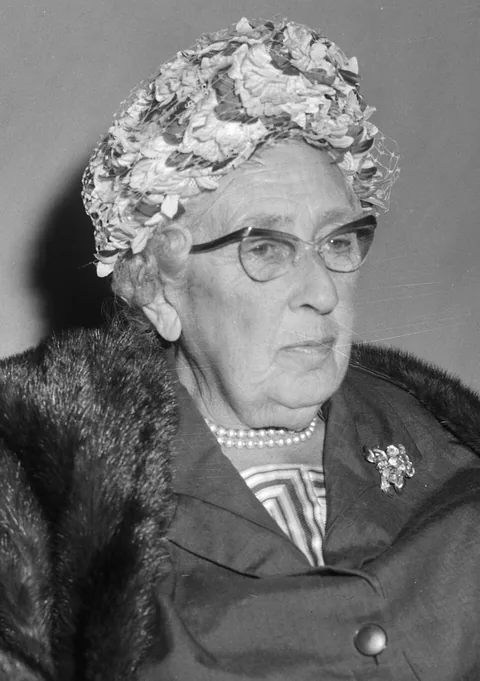
It stemmed from my love for mysteries. I started with Agatha Christie as a kid, and I love her work so much. Even as a kid, reading or watching mysteries, I’d think, “How would I have known that?” It always felt like being a cheated customer. It felt absolutely cheap.
I don’t like to read books where the twist feels cheap or comes out of nowhere, like a “surprise!” The reveal has to be earned. Those books usually aren’t character-driven, especially if they pull a big reveal out of nowhere.
So, as you’re writing the book, do you feel an epiphany, thinking, “That’s it!” and then continue writing from there?
Is that the feeling? You’ve got it.
It really is like that. It’s like, “Oh, yes, that’s fun!” As a writer, you have to enjoy your own company. You need to step away and ask yourself, “Is that cool? No, it’s not. Wait, yes, that’s cool!” It’s that moment when you think, “I think I got it.” That’s a great moment, feeling like you’ve nailed something, especially if I figured out something early.
07Slow burns and nailed-down details
A slow burn works if it is earned, and a bonkers plot rests on nailed-down logistics.
How do you think about the pacing, exposition, and context setup in a book? We live in a culture that moves so fast now, with so much advice to be quick: get to the point, dive into the narrative, start with the most intense moment. For example, start with the part where they’re being eaten by a bear, like the beginning of Casino Royale. But Gone Girl isn’t really like that; it’s a little bit slow.
That first part, leading up to the big twist, is a very slow burn. Frankly, Gone Girl was lightning in a bottle. I’d be interested to know if it were released now, whether people would find that first part too slow, given how much faster our society has become.
As you mentioned, I also work in TV and movies. The most common note we receive is that audiences will turn it off if something doesn’t happen in the first five minutes. There’s a perception that slow burns no longer exist, but I completely disagree. I think that’s wrong; we aren’t giving humans enough credit. It simply has to be a good slow burn. If you’re going for a slow burn, you have to earn it and keep people interested.
With Gone Girl, I knew the twist was going to happen. I didn’t know how it would end, but I knew the twist was coming, and for it to be impactful, you have to “torture” people for a while, leading them along. I always describe the first part as the clicks of going up a roller coaster when you really don’t want to be on it. It just keeps clicking, going higher and higher.
Many people told me they were close to putting the book down because they wondered where it was going, or they were tired of the relationship drama. I don’t know if people today, especially with articles like The Atlantic’s cover story “The End of Reading,”26"The End of Reading" — in summer 2026 The Atlantic ran a cover story by Rose Horowitch arguing that America is entering a "post-literate" age, with fewer and fewer adults reading books. have the patience. It’s a terrifying time to be a writer, in a way. Yet, I don’t think we give our readers and audiences enough credit; they will engage with a slow burn as long as something is actively happening. That’s why in Gone Girl, Nick is getting in his own way, and then things are piled on him—there’s the disappearance, then the girlfriend revelation. It keeps building.
When you were a TV critic, what was the one thing you would see in movies, TV shows, or stories that infuriated you the most? Some stupid trope or dumb cliché that made you want to smash your computer against the window?
Oh, I could think of a zillion things. My biggest pet peeve, one I still sometimes have to deal with, is characters yelling into phones. When they keep saying, “Hello? Hello? Hello?” after someone has clearly hung up, it doesn’t build suspense; they’re just yelling into a dead line.
I also dislike when plans are made on screen without proper explanation. For example, when characters say, “It’s great to meet you. Let’s get coffee. I’ll call you,” but they haven’t exchanged phone numbers. The OCD writer in me always thinks, “How are they going to do that? You’re cheating!” Of course, no one wants to hear characters exchange contact information on screen, but it highlights the importance of nailing down details.
As wild as my books get—with children with missing teeth in lakes,27Missing teeth — in Sharp Objects, the murdered girls have had all their teeth pulled. or Gone Girl, which I’ll admit goes to a bonkers place—I believe people follow me there because I nail down the logistics and realities, making it feel real. When I was writing Gone Girl, my unfinished basement had a little creepy “mother-in-law apartment”—really just a room. To remind myself to nail down details, I’d write things on sticky notes and put them on the wall. You’d see these fluttering sticky notes everywhere.
I reminded myself of everything, like, “Wait, I have a joke about Zima28Zima — a clear malt beverage from the Coors brewery, fashionable in the 1990s; it was sold in the US from 1993 to 2008. in Gone Girl, but was Zima still being made in 1997?” Or, “If Amy wrote in pen, couldn’t the FBI test the date that was written?” I fixed those details.
It’s funny because I don’t necessarily like to do research. I don’t talk to a zillion cops or do ride-alongs29Ride-alongs — American police departments let journalists, writers and other civilians spend a shift in a patrol car. because I don’t consider myself someone who writes procedurals. So, I’m not as interested in nailing down police work, but I also don’t want to get it wrong. I always write my books, then go back and talk to people, asking, “Could this possibly happen?” Not “would it happen?” or “is it the most likely scenario?”, but “could it possibly happen?” Then I just hope I’m not too far off.
08The Entertainment Weekly school and lessons from horror
A decade at the magazine taught her to take apart the mediocre, and horror taught her to trap characters.
How do you think your writing is different now? You did all that writing about film and TV, and you’ve since stripped that out of your bio. How has it changed?
Would I even be a writer? Would I be an author? I don’t know. The 10 years of magazine work at a weekly magazine like Entertainment Weekly,30Entertainment Weekly — the American magazine about film, TV, music and books, founded in 1990. Flynn joined in 1998, became its TV critic and was laid off in December 2008. writing and thinking about film, TV, and books, and discerning what made something good or not good, was incredibly influential.
When I became the TV critic, it was particularly tricky trying to figure out why a TV show earned a C. We graded on an A to F scale.31A to F — Entertainment Weekly graded what it reviewed like American schools do: A is excellent, C mediocre, F a failure. The A’s and D’s were obvious. The challenge was understanding what made something a C, a C minus, or a C plus—what didn’t quite happen. That’s where I felt I grew significantly as a writer.
The kind of writer I am now does all that thinking: “Oh, this is a placeholder scene when it actually needed a rewrite.”
Working for Weekly also taught me there’s no muse that’s going to come and save you. That’s just not going to happen. You can’t wait until you’re in the mood to write; writing is a job. While I like to think it’s also an artistic invocation, it’s a job if you want it to exist. You have to treat it like one.
It definitely taught me that you may not be in the mood, but if you start, you might get that motion going. You might also have a crummy day and need to go home, have dinner, and then work two hours to get it right. That idea demystified writing in a really helpful way for me.
That’s a good turn of phrase. Can you tell me more about what tools from horror you brought into your books?
For me, the horror that scared me most wasn’t the serial killer stuff. I worship John Carpenter,32John Carpenter — American director and a master of horror: Halloween (1978), about the killer Michael Myers, The Fog (1980), The Thing (1982). but Halloween is actually his least scary movie to me.
It was less about that, and more about the idea that something bad and ominous is happening. For instance, Alien was really instructive. I like putting people in a place where they’re trapped.
To me, being trapped isn’t necessarily in an alien spaceship or an Antarctic science station. It’s within themselves. It’s a small, internal place. It’s the idea that no matter where you go, there you are. Trap people with themselves, with people who will lead them to become even worse versions of themselves. Then you can start having a little fun.
09Carthage, Nick and a thousand Jennifers
Flynn hides tributes and private jokes in her place names, and picks character names by people's reactions and by birth year.
Talk to me about what’s in a name. In Gone Girl, Carthage is a name that immediately strikes you as a deliberate choice, not an accident. Then there are names like Nick and Amy, which are a bit more nondescript, and the bar, which is deliberately bland.33The Bar — that really is the name of the bar Nick runs with his twin sister, Margo.
Talk to me about all those.
Carthage is my ode to Who’s Afraid of Virginia Woolf?34Who's Afraid of Virginia Woolf? (1962) — Edward Albee's play in which a middle-aged couple, George and Martha, spend a night tormenting each other and a young couple of guests with cruel "games." It is set in the fictional college town of New Carthage, hence Flynn's Carthage. It was filmed in 1966 with Elizabeth Taylor and Richard Burton. A production with Gillian Anderson and Billy Crudup is running at London's @sohoplace theatre from September to December 2026.
When we see that, do you expect the reader to recognize it as an ode?
That’s for me, and for you, if you know the play. That play was one of a couple strange things that really influenced Gone Girl. That incredibly toxic marriage of two people who can’t stop playing games with each other. I would love to see the London Gillian Anderson version coming up; I’m trying to figure out how to get there.
That was a fun little thing I threw in. Weirdly enough, there’s a Carthage, Missouri,35Carthage, Missouri — a real town in Jasper County, in the southwest of the state. in a different area of the state, so I named my fictional town North Carthage.
I get a lot of angry notes from people saying, “There is no North Carthage!” I know. I was trying to respect the original Carthage.
As a writer, on those lonely days, you throw in certain things just to amuse yourself and make yourself laugh. For instance, Desi’s mom36Desi Collings — Amy's wealthy ex-admirer from her boarding school days. His mother, Jacqueline, does not appear in Fincher's film. — a weird character who didn’t make it into the movie for space reasons. I remember Nick, she’s doing this weird, slightly flirty, slightly predatory thing with him, messing with his mind. Then he gives her a hug goodbye and notes that she smells faintly vaginal.
That was just me on a bad day, typing away, thinking, “Ah, screw it. She probably smells like a vagina.” That got me through. My other tip for aspiring writers is to amuse yourself along the way, because it can be lonely sometimes.
So that covers Carthage. Now, Nick and Amy. I cannot remember at all why I named her Amy. I just don’t recall the process. I wanted them to have normal names.
I like the name Nick, too. I surveyed a lot of people about Nick in particular, asking what a likable guy’s name would be. I got the weirdest feedback. I was going to name him Ben originally, which would have been fun for Ben Affleck37Ben Affleck played Nick in Fincher's adaptation (2014). and easy for him to go by. But too many people liked Ben. In my research, everyone had a strong reaction to Nick. Everyone either knew a Nick who was the greatest guy, or they’d say, “You can’t name him Nick! I knew the biggest jerk, and his name was Nick.” I thought, “That’s kind of fun. I’ll use Nick.” So that’s what I did. I believe that’s where Nick came from.
And then there’s the bar, with its nondescript name, I suppose. But instead of focusing on that, is there a generalizable principle you have when thinking through names of places and people?
One of my very favorite things when writing a book is naming my characters. I could talk about this with you all day. I love names and the process of naming.
I also enjoy making up city names, like Wind Gap in Sharp Objects or Kinnakee, Kansas, in Dark Places.38Dark Places (2009) — Flynn's second novel: Libby Day, who as a child survived the murder of her mother and sisters on a Kansas farm, begins years later to doubt that the killer was her brother Ben, convicted on her testimony. It was filmed in 2015 with Charlize Theron. For character names, I always use the Social Security baby names website.39Social Security baby names — the US Social Security Administration publishes the most popular baby names for every year since 1880, based on applications for Social Security numbers. It’s truly the greatest resource if you enjoy names, as you can cross-reference the most popular names by state, time period, and decade. It lists names from one to a thousand for every year.
I like to be year-specific. For example, in my Gen X generation,40Generation X — Americans born roughly from the mid-1960s to 1980; Flynn was born in 1971. there are countless Jennifers.41Jennifer — according to the Social Security Administration, the most popular name for girls born from 1970 through 1984. If you saw a three-year-old named Jennifer today, you might think, “What a unique name!” Yet, while they might exist somewhere, they’re very rare.
So, I consider my character’s age and think, “What might their name be?” If it’s not in the top thousand, I then decide if I want to give them something truly unusual. I really appreciate that specificity.
10Reactions for show
Pop culture has taught us to perform our feelings, and social media made it worse.
Let’s discuss finding your voice as a writer. In what ways is that a worthy thing to consider, and in what ways is it merely hype?
I also want to add that you’ve said profound things about how our world is saturated with pop culture. When someone dies, for example, it’s no longer purely about your own reaction. You become so conscious of how the media portrays reactions to people losing loved ones.
I feel as if I suddenly adopt that character.
We are now modeled on how to react to everything. In Gone Girl, Nick has a whole passage where he questions if anyone can truly experience anything — genuinely be shocked or joyful — in the way they might have 100 years ago when seeing an elephant for the first time. We’ve seen everything there is to see.
That was 12 years ago, before the real rise of social media. I was fortunate enough to write Gone Girl before all of that, so I didn’t have to worry about how social media would handle certain situations. However, it is becoming increasingly difficult. Nick says in the book that it’s harder to be an actual human because you’re constantly examining yourself. At least, I am. It sounds like we’re similar in wondering, “Am I reacting authentically, or am I performing the expected reaction?”
I remember writing the book around the time I got engaged — we’ll examine that later; happy anniversary, honey! At a small gathering, someone was passing around gifts for the bride. I opened a lovely one, and I did something I’d never done before or since: I put my hands over my mouth, as if I were about to start crying, saying, “Oh my gosh, thank you, guys!” I caught myself, realizing I was only doing it because I’d seen women react that way so often in media, dabbing away tears with napkins. I don’t cry that way, and I was being performative.
Now, I worry about my sweet children and preserving their weird, adorable, kooky, dark-natured selves, making sure they aren’t just regurgitating reactions they’ve seen on social media. It’s really important.
In Gone Girl, you went a step further by writing, “I’ve literally seen it all. And the worst thing, the thing that makes me want to blow my brains out, is the secondhand experience is always better. The image is crisper, the view is keener. The camera angle and the soundtrack manipulate my emotions in a way that reality can’t anymore.”
I believe that’s precisely why we’re all addicted to social media and YouTube. It often is better. In the same way you romanticize a memory — if it was good, it becomes dreamier, and you forget the lost luggage or whatever unpleasant parts of the trip there were. You have that kind of polished memory. Even better is seeing someone else’s version of your memory, which has been sound-corrected, visually framed, and made perfect.
I think we risk losing our imaginations because we have such a constant firehose of content coming into our eyeballs every second. For example, there was a trend, particularly in parent groups, where people would record their kids or someone who hadn’t seen Star Wars reacting to “Luke, I am your father.”42Fact-checkFlynn quotes Darth Vader's line from The Empire Strikes Back (1980) the way it is usually remembered, "Luke, I am your father," but the actual line is "No, I am your father" (Wikipedia, "Darth Vader"). You started seeing people clearly faking being surprised at that moment. Then others would discuss whether or not they were genuinely surprised.
It begs the question: where is the real reality once you’ve gone past the seven-year-old kid who initially had his own reaction? You made it a strange situation by recording it. He knew he was supposed to have a reaction because you were filming him, so you were influencing it. It just feels like nesting dolls of madness to me.
11Fincher and the unadaptable book
Gone Girl was considered unadaptable, but Fincher turned out to be Flynn's best collaborator and editor.
How is writing a book different from writing a movie? What does a movie afford you that a book doesn’t?
I felt, and still feel, incredibly lucky to have adapted Gone Girl and to have those two exact...
...and to work with David Fincher! That is so cool.
We were talking about liking a movie enough to see it multiple times. I even got to tell him that story when I met him.
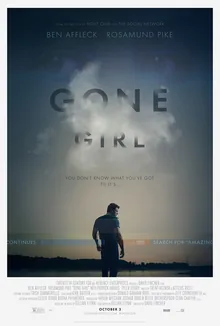
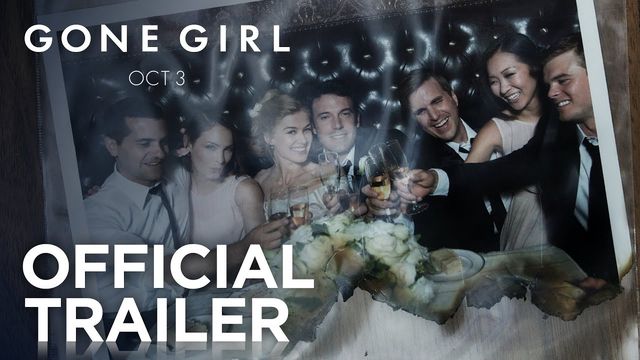
I went to see Gone Girl. I remember seeing it with my friend Garrett in Pennsylvania one night, and then I went back the very next night. Afterward, I read the book in about three days and was completely amazed. It was a shock to my system, an electrical jolt. It’s been about 12 years, and I...
...still feel it viscerally. That just makes me so happy. Thank you!
Story’s fucking awesome. I do not swear a lot, but that story is worthy of the F-word.
Mine was Seven.43Seven (Se7en, 1995) — David Fincher's thriller about two detectives (Brad Pitt and Morgan Freeman) hunting a serial killer who picks his victims according to the seven deadly sins. I got to tell Fincher when I met him that I had moved to LA right out of college, right out of KU.44KU — the University of Kansas, a public university in Lawrence, Kansas. Flynn graduated with degrees in English and journalism. I decided to take myself to the movies, which is what I do. I saw Seven in the theaters. I went out to get in my car, saw the next showing was coming up, and thought, “I think I’m just going to go back in and watch that.”
To then have David Fincher direct Gone Girl was unbelievable. It felt like a full circle moment, coming back to LA. I wanted to go back to my little 22-year-old scared self and say, “It’s going to turn out okay with this movie you’re seeing.” That part was really neat.
To have Fincher, and to write both sides, I truly feel I can speak to what makes one easier or does one thing better than the other. With Gone Girl, the trickiest part was how internalized it was.
So internalized.
It had so much character. We had shopped it all around town, believing it would be a movie. It was a number one book for weeks and weeks, but no one wanted it. No one wanted to buy it; no one wanted to be my agent. They thought it wasn’t adaptable. Everyone kept telling us it was not adaptable. It was number one on the bestseller list45The bestseller list — the leading one in the US is compiled by The New York Times. Gone Girl held the top spot for eight weeks. for, I think, ten weeks. By the time anyone wanted it, they were just like, “No, you can’t do it.”
They had a point. They were ultimately wrong, but I totally see why.
I begrudge the publishing industry for saying men don’t read women’s books because that’s a lie. It’s also a lie that women don’t read non-aspirational female characters. I don’t blame the idea that it would be hard to adapt, but I felt there was enough there—enough plot. It had a massive amount of plot; it’s a piece of clockwork where something’s always moving and happening.
I knew I had that, and I knew I had some interesting characters. I thought, “I do think this can happen.” Thankfully, Fincher read my first script and was willing to work with me. He was the greatest collaborator a person could ever have.
What did you learn from him?
Oh God, everything I know about screenwriting. I’m so grateful.
We have the same dark sense of humor and liked the same things about the book. You’d think that would be a given, but I’ve learned it’s really not. Some directors come in because they think something will be a hit, or they can cast a big name; they see it as a commodity. He, however, came in truly knowing and liking the book.
The first thing he said to me was because I had made the script exactly 120 pages. Everyone says a page a minute,46A page a minute — the screenwriters' rule of thumb: one page of a script in standard format runs about a minute of screen time. so a 120-page script is a two-hour movie. If you go any longer, they’ll think you’re this darling novelist who can’t “kill her babies.” I didn’t go over, but the first thing David said was, “Let’s put more of the book back in here. Let’s see as much as we can.”
It’s like a two-and-a-half-hour movie.47Two and a half hours — Gone Girl runs 149 minutes.
Yes, it’s still not a short movie. He works harder than anyone I know.48Works harder than anyone — Fincher is famous for shooting many takes: according to producer Ceán Chaffin, on Gone Girl he averaged up to 50 takes per scene. He doesn’t phone anything in, even down to an insert shot;49Insert shot — a short cutaway, usually a close-up of a detail: a hand, a note, a phone screen. he doesn’t mess around. I appreciated that. He’s always willing to go back and see if there’s more to be gained from something.
In my experience, at least – I don’t want to speak for his experience with anyone else – I felt he was a great editor. Like how a book writer has a good editor, he performed that function for me. That means asking the writer questions, pushing a little, asking, “Why is this happening here?” If you can’t articulate why something’s happening, it probably shouldn’t be there.
I learned that from him because he was incredibly collaborative and willing to work with me. I would get partway through articulating why I liked a scene or a moment, and sometimes by forcing me to articulate it, he made me hone it better. I’d realize, “Oh, right, that’s what I’m trying to do.” He made me say it out loud and explain it, which gave me better awareness, and the scene became better because of it. Or we’d get partway through and decide, “Crap, fine, it goes.”
12A voice you have to earn
A strong voice can't be faked; it grows out of closeness to a character.
What makes for a good narrator? You’ve clearly had a lot of fun with narration over the years.
I love narrators.
I love them too.
I’m a very strong first-person writer. My second book, Dark Places, was told by three different characters: one primary narrator in the first person, and two others in the past, not in the first person.
I enjoy first-person narration because I think I’m a “voicey” author. I like a strong voice; that’s what attracts me to the writers I read. I mean, the writer’s voice – exactly. For me, it goes back to having fun and thinking, “Look at me!”
The old “look at me” gorilla.50Gorilla — a callback to Flynn's Martin Amis, who, she says, pounds his chest like a gorilla when he's on a roll.
Exactly. This is so much fun. You can really show off, I guess, in a big, loud, “look at me” sort of way.
So many writers try to do that—showing off, the “look at me” approach—and it sounds so ugly, so writerly.
It makes them...
Puke. So, what are they doing wrong that the writers you like are doing right?
It’s a question of self-consciousness and intention. If you set out to write in a “big voice,” it’s probably not going to be authentic. You’ll be faking it.
I always tell people not to chase trends when seeking publication. For example, don’t write about vampires just because Twilight51Twilight — Stephenie Meyer's novel series (2005–2008) about the high schooler Bella and the vampire Edward, and its film adaptation (2008–2012). In its wake, publishers put out a flood of vampire novels. was popular at the time. You can’t chase or imitate trends successfully.
If people try to create a big, daring voice, they’re likely getting in their own way by being self-conscious. You have to find the voice first, and then that voice might be big. You can’t simply decide to write in a deliberately loud, ostentatious way.
Is that something you consciously tried to cultivate? If so, are you conscious of having defined that voice, or do you feel it more intuitively? Perhaps you don’t think about it at all, and it simply emerges.
There’s an organic nature to it; sometimes it just comes out. As you develop a character, figuring out how they sound and think, the deeper you get into their mind, the stronger their voice becomes.
Some of it is about earning the voice. The more time you spend with a character, the bigger their voice becomes, because it’s bigger in your head.
I knew I had Amy’s voice when I was standing in a supermarket line one day. A woman in front of me, in a ten-item lane, had about 22 items. I thought, “Oh, Amy would not like this,” as if she were my real friend. I imagined calling her to say, “You will not believe this lady in front of me!”
It was the same with Camille in Sharp Objects. I knew I had Camille figured out. I remember I had a day job at Entertainment Weekly, and I was out filming Jackass: The Movie52Jackass: The Movie (2002) — the feature film spun off from MTV's Jackass, in which Johnny Knoxville, Chris Pontius, Steve-O and others perform dangerous and lewd stunts. Flynn worked at Entertainment Weekly until late 2008; the Lord of the Rings trilogy was shot in New Zealand in 1999–2000, The Hobbit in 2011–2012. with the Jackass guys, and then I was in New Zealand with the hobbits.
Worked on the Jackass movie.
Oh, yes. You should find the article I wrote on it; I think it was a cover story. It starts out with Pontius,53Chris Pontius (born 1974) — a member of the Jackass crew, known for bits like Party Boy, in which he dances in public wearing nothing but a G-string. and I don’t know why I’m lowering my voice, but he was swinging his — yes, exactly, kids, don’t listen to this part — swinging his penis around in front of me. He had a trick where they’d say, “Pontius, do the helicopter!” So I was getting “helicoptered” on the set of Jackass: The Movie.
Then I’d go back to write a really dark scene about death, murder, and children missing teeth. I’d close my eyes, and the image of Pontius’s penis would still be going around and around. It was a weird time.
Despite all that silliness, I’d still think about Camille. I’d consider what I would tell her, almost as if she were a real person. Even with all that madness, I was still writing Sharp Objects because I felt I just had her. I almost felt like I owed her.
Her voice, I believe, comes from that. You have to be willing to give yourself over. I’m making it sound almost mystical and magical, which it’s not, but for me, it’s akin to method acting—really putting that person in my skin.
13Opening lines and the engine of mystery
Flynn writes the first paragraph last, and mystery gives a story its engine.
Regarding the beginning of a book, how much do you think about those first words, sentences, and paragraphs? Do you consider them as creating the mood, setting the tone for the entire book?
At first, I don’t think about it much because it can be intimidating to declare, “I’m going to write the first sentence of my book.” I never think of it that way. I always imagine myself diving in a few paragraphs later. Then, once I’ve completely finished the book, I go back and add the first paragraph.
With Sharp Objects, I recall the opening line, “My sweater was new, stinging red and ugly.” My husband absolutely hates it.
That’s the one.
He thinks it just doesn’t do the book justice. He says all my other first sentences are so good, and I should have gone back and fixed Sharp Objects. But that was before I knew him.
However, with Gone Girl, I like the opening.
“When I think of my wife, I always think of her head. The shape of it.”54The opening of Gone Girl in full: "When I think of my wife, I always think of her head. The shape of it, to begin with."
That sets a tone. Once you know who Nick is, you understand the direction it’s coming from. It creates a mildly uneasy feeling: why is this man thinking of the back of his wife’s head?
What’s the role of the five questions where he says, “What are you thinking, Amy?” — the question I’ve asked most during our marriage, if not out loud, if not to the person who could answer? I suppose those questions storm cloud over every marriage: “What are you thinking? How are you feeling? Who are you? What have we done to each other? What will we do?”
Those are the questions of the book, and it starts answering them as you read. To me, that establishes the book’s mystery: not just what happened to Amy, but also what happened to their marriage.
Having written it as a recently married woman, I was asking those questions a lot at the time. I was contemplating what it means to be joined with someone for life. They do change you, and you change them. If the relationship is toxic, then you’re each getting poison back and forth.
What makes mysteries such a good way to do character study?
It’s such a great way to do character study for someone who doesn’t know how to write a novel. I tried for so long to write Sharp Objects. I wanted to write about female violence – how it’s generational and cyclical – but I didn’t know how to do it.
My early attempts were basically a series of awful conversations. One character would ask, “What’s up with women and violence?” and another would respond, “It’s horrible. We’re really violent, as it turns out, even though people don’t think we are.” I’d realize it wasn’t working, move them to another room, and they’d just keep talking. At one point, there was even a bird trapped in the character’s house that they were attacking. It was going nowhere.
Then I read Dennis Lehane’s Mystic River.55Dennis Lehane — American author of crime novels set in Boston. Mystic River (2001) is about three childhood friends whose paths cross again after the murder of one man's daughter; Clint Eastwood filmed it in 2003. It’s one of the very few books I can honestly say I read in one sitting, straight through the night. I came into work the next morning exhausted, but exhilarated, thinking, “I got it! I figured it out!” Dennis Lehane showed me that mystery could provide the engine and discipline to move the story along.
This way, I could explore all the themes I wanted, but by attaching them to the engine of mystery, I would be forced to keep the plot moving. It would allow me to make it a larger, more thematic story, and less overtly obvious.
Engine, discipline. Why those words?
They force you to have a plot. My thoughts don’t naturally come with a plot. I think of the character first, then I create the plot to go along with them. I’m creating the mystery as I’m figuring out the character, so they blend together. It forces you to keep moving because the next clue has to happen.
14The imprint and "more voice"
Flynn looks for books that start arguments and teaches authors to trust their voice.
You have your own imprint56Imprint — a publishing brand inside a publishing house, with its own curator and its own focus; its books come out under its name. called Gillian Flynn Books,57Gillian Flynn Books — an imprint of the independent New York publisher Zando, which Flynn has headed since 2021, choosing books by other authors for it. and on the site, the top lines say: “stories with teeth, biting, voice-driven, and thrilling.” At the bottom, it says: “designed to start conversations and leave you reeling.” Why did you choose those words?
The most important thing to me when someone reads my book is not whether they like it. It doesn’t bother me if you don’t. That may come from having been a critic for a long time; I believe if you can dish it out, you should be able to take it. Reading my own reviews, I sometimes think, “That’s not fair, that’s incorrect.” Other times, I’ll admit, “You’re right. You caught me; that part sucked. Yes, you’re correct, critic.” I have the ability to distance myself and appreciate that.
People have come up to me at readings, slammed the book down, and declared, “I hated this book! I’m only here because my book club made me.” I always respond, “Tell me, what did you hate about it? Let’s get into it.” For me, that reaction is great because it means you thought about it. I’d much rather have that than someone saying, “I liked it; it’s good,” and then never thinking about it again. I don’t want a book that just washes over you and then is forgotten.
I want people to think about what I write on some level. I want them to be entertained, but also to think and want to talk about it with someone, to debate it. I like conflict, or being conflicted about a character—liking them, not liking them, not knowing if they’re good, or being frustrated by them. All those things are closer to reality.
And with the imprint, you’re trying to do that for other books.
That’s what I want.
Am I inferring correctly that you think this is important not just for your own books, but that we need more of that generally?
We need more of that. Especially right now, with all the consolidations happening,58Consolidation — in 2013 Penguin and Random House merged into the world's largest trade publisher, Penguin Random House; in 2022 a US court blocked it from buying Simon & Schuster as a threat to competition. and all the fear about the future of writing, reading, and art. People are scared, so they’re only wanting to give contracts to writers who are already established, perhaps with another platform,59Platform — in publishing, an author's own audience (followers, a show, a column) that guarantees sales in advance. or for easily consumable, “edible” material that will be a quick hit.
The weirder, quirkier, outsider-y stuff, with strange angles that I tend to like, isn’t getting as much risk taken on it. Would someone have published Sharp Objects now? I don’t know. If the belief that women would only read aspirational stories were still in place, would anyone have even bothered to take a risk on it?
Now, with the books given to you, what feedback do you find yourself giving authors most often?
Voice. Give me more voice.
More voice.
More voice. I want to be very clear that I am not their editor. I read the manuscripts and give general feedback, but an editor actually does the hard work. I don’t want to take anything away from the wonderful editors at Zando60Zando — an independent New York publisher founded in 2020 by Molly Stern, formerly publisher of Crown and editor of Michelle Obama's memoir Becoming. Its books are distributed by Penguin Random House. who handle that.
Often, the feedback is, “Trust your voice. You didn’t give me enough here.” Authors might say, “No, I thought I was giving too much.” And I’ll respond, “No, no, no, let’s revel in it.” I like those stories; the voice is usually already there. To me, these are books you think about, you talk about the characters.
Every book I’ve published on the imprint—and I’m so proud of them—is a book I would pick up and give to someone, saying, “It’s going to be a trip,” or “You’re going to love this; the narrator is insane,” or “You won’t believe this,” or “It ends up in the craziest place you’ll ever imagine.” Not a book where I’d say, “I’m sure you’ll like this because everyone likes it.” That’s the kind of book I want to publish.
What I’m trying to work out is this: Let’s say I submitted something, and you said, “Give me more voice. I want to hear more David.” My worry is that in the next draft, I would almost become a caricature of myself, being too much and insincere.
How do I crank up the volume on my voice while maintaining sincerity, authenticity, and integrity?
That’s a great question. It’s about having the confidence to know your character, your place, or whatever it is that makes you passionate about writing that book.
I’ll probably want more of that because that’s usually where the writer is most confident. They’re feeling their happiest, most themselves, most authoritative. Live in that space.
I can feel if the voice is a little watery. If you’re not as confident, then get confident about it. Whatever it takes for you to be confident in a section of your book, to know it belongs there, you need to justify it. Give me more.
15A writing class and envy
Writing, for Flynn, is learned by writing rather than reading about it, and envying better writers is part of the craft.
Last question: Imagine you’re invited to teach a semester-long writing class at Northwestern,61Northwestern University — a private university in Evanston, outside Chicago. Flynn earned her master's in journalism at its Medill School. teaching people to do what you do. How would you structure the curriculum? What would you try to get the students to understand?
I would structure it with a lot of in-class writing exercises and then sharing. You learn best by writing.
I spent what might be considered unnecessary time reading about how to write, always thinking, “I can’t start yet; I need to read one more book to figure out how.” The truth is, there’s no single correct way to write.
Books like Stephen King’s On Writing or Anne Lamott’s Bird by Bird62On Writing (2000) — Stephen King's memoir and writing manual. Bird by Bird (1994) — Anne Lamott's book on writing. The title comes from her father's advice to her brother, who was behind on a school report about birds: "Bird by bird, buddy. Just take it bird by bird." are amazing and helped me become a writer. But eventually, you have to write.
I think the exercise of writing quickly is vital. For example, I might say, “Here’s the topic: a father and daughter. She’s 13, just got her period, and there’s no mom around.” Write that scene and see what people come up with. That way, they can figure out their strong suits. Or perhaps, “The mom’s dead, and he kills her.” Just write the scene.
Everyone who wants to write has strong and weak points. I’ve always thought my weakest and least favorite part is the plot. That’s why I trick myself by writing mysteries; I enjoy them, so I can trick myself into developing a plot.
For some people, it will be the voice; for others, a sense of place, internal dialogue, or something else. That way, each student could slowly figure out their strong and weak spots during the course of the class, see what others come up with, and even get jealous. Being jealous of other writers is actually one of the most important parts of being a writer.
Who are you jealous of?
Joyce Carol Oates. I’m jealous of Joyce Carol Oates.
I’m jealous of people who write in a similar vein to me, but better. Take Kate Atkinson.63Kate Atkinson — British novelist. Her first novel, Behind the Scenes at the Museum (1995), won the Whitbread Book of the Year; later came Life After Life and the detective series about private investigator Jackson Brodie (since 2004). I’m so jealous of her. I think she’s one of the great writers working today, not just a great thriller writer, but a great writer overall.
I cannot do what she does. She’s moved beyond it, but she certainly started in the mystery genre. I read her work and think, “Curse Kate Atkinson!” She makes me cry, weep, and laugh within three pages. I’ll go back and reread her stuff, wondering, “How did this magic happen?”
It’s people who do things where I just think, “I’ll never get there.” I know I have my own strengths, and I’m not sad about it, but I will never be at her level. I just don’t have that game.
Never be able to cook that sauce.
Never.
This was so fun. You’re the coolest and so talented.
I wish I’d finished my next book64The next book — since Gone Girl (2012), Flynn has published only the short story The Grownup (2015), which won an Edgar Award. As of 2025 she was writing a fourth novel, a psychological thriller, for Penguin Random House. sooner. I will come back. Let’s do this again.
So great to meet you.
You too. Thanks for having me.
Thank you.


