

Huberman Lab
Chapters
Greene locates people's calling in their childhood passions, and Huberman sets out the episode's subject: the sublime, which you can touch every day.
Read the chapter- In the cold open, Greene says people don't know their calling because parents and teachers drowned out their childhood passions, and those other voices have to be cut away.
- Huberman has recommended "Mastery" to students for years and says the topics Greene covers today are more important than all the rest.
- The subject is the sublime, and Huberman promises Greene will give tools and examples for touching it in daily life.
Greene's new book is about the experience of being alive: how to get out of the cramped circle of habitual perception through the doorways of the sublime.
Read the chapter- Greene pictures consciousness as a circle in which everything is familiar and the same: it is wide in childhood and shrinks with age.
- Greene reads the Latin sublime as "up to the threshold" and calls the sublime a set of doorways out of the circle, a mix of pain and pleasure.
- Unlike any of Greene's other books, every chapter ends with exercises for bringing its ideas into daily life.
The stroke canceled the adventure book Greene had planned, and he found the sublime in the everyday instead: out the window, in the backyard, in a mug on the table.
Read the chapter- Greene recalls a peyote trip in Mendocino in his youth and says that 20 years ago he planned a book with ayahuasca, the Amazon and swimming with dolphins, but the stroke canceled all of it.
- On the first day after the stroke, the sky, clouds and trees outside the hospital window looked to Greene as if he had just been born.
- The sublime, for Greene, is seeing things like a mug on the table as they are, not by their use or function, the way children do.
- Ten days after eye surgery, the skin grafted from Greene's ear is already growing back, and he calls the body itself sublime.
An injury to the brain or a quirk of vision can open up new perception, and Huberman asks whether simply thinking differently about it can do the same.
Read the chapter- Michael Murphy, one of Esalen's founders, now 96, began appreciating colors and shapes differently after a recent blackout and fall.
- Huberman brings up Chuck Close and Greene brings up El Greco as artists whose visual "deficits" shaped their art.
- Huberman asks whether you can reach the sublime just by thinking differently about your current perception, or whether the perception itself has to change.
Intense attention, in Gurdjieff's teaching, wakes up people who are normally sleepwalking through life, and it takes no drugs.
Read the chapter- For Gurdjieff, attention is what makes us human, yet most people sleepwalk through life.
- The self-remembering exercise is to focus deeply on a moment and tell yourself, "I will remember this."
- After months of practice, Gurdjieff's student Ouspensky saw houses that looked almost alive, then "woke up" at a tobacconist's across town and realized how asleep he usually was.
- Meditation can have the same effect, Greene says, and he meditates every morning.
Huberman worries that the sublime turns people into oddballs who marvel at ants, and Greene replies that this is simply seeing the world without the brain's filter.
Read the chapter- Huberman describes experiments in which people's eyes are reversibly paralyzed: the image vanishes, because the nervous system responds to change.
- Huberman asks where meaning ends and projection onto trivia begins, as on MDMA, when you can love a song on repeat for four hours.
- Greene answers with Huxley: the brain filters and prunes the world down to the familiar, and the sublime is seeing it without that pruning.
Emotional seeing isn't madness, Greene argues: we constantly put emotions into things, and our culture has become too rational.
Read the chapter- Cézanne, Greene says, called himself "the consciousness of the landscape," stared at an apricot tree for hours and saw an almost erotic relationship between the apricot and the sun.
- We see the word, the category "tree," rather than the tree itself.
- People keep anthropomorphizing AI, which Greene calls a machine that isn't conscious, and to him that shows we always invest things with emotion.
Perception can be tuned like a camera, in spatial scale and frame rate, and Huberman sees that as key to accessing the sublime.
Read the chapter- Huberman says he could spend a whole day on the spot where the barbed wire meets the wood on an old fence line along Highway 101.
- Dacher Keltner, Huberman recalls, says awe comes from a quick shift from small spatial scales to large ones.
- You can raise your frame rate by watching your espresso pour, or take bigger snapshots by lying in the yard and watching the clouds.
- In their last conversation, Huberman's dying graduate advisor told him she had begun noticing the tiniest things, like her daughter's hair moving as she walked into the room; her "frame rate" had changed.
Childhood is remembered so vividly because there was space between thoughts and time flowed inside the child rather than past him.
Read the chapter- In childhood, Greene says, there were gaps between thoughts, while now, especially with the "Instagram model," the stream of consciousness is broken into splinters.
- Having lost his family and his homeland, Nabokov tried in "Speak, Memory" to recreate the experience of childhood itself.
- In Greene's image, a child is inside the river of time, while an adult stands on the bank and watches it pass.
- Greene's 40-minute meditations sometimes pass without his noticing, and time feels like it's inside him.
Time stretches at the edge of life: the dying brain dissolves its usual constructs, and seconds hold years.
Read the chapter- Huberman recalls that his advisor, lucid about a week before her death, seemed to have an avalanche of new and beautiful information pouring in, like many years of experience.
- The dying brain, Greene says, loses time, the self and the social pressures of life, which is why many near-death experiencers feel ecstasy.
- The climber Albert Heim relived his whole life during a 15-second fall, and after he wrote about it, hundreds of similar accounts came to him.
The rhythm of another creature, whether fish, octopus or dog, changes our sense of time.
Read the chapter- The unpredictability of fish in a tank, Huberman says, forces him to let go of anticipation, and perception opens up.
- The man in "My Octopus Teacher," Greene says, lived "in her time," the time of an octopus that lives three years at most.
- Owner and dog, Huberman says, entrain to each other's rhythm.
- Huberman once had as many as 40 cuttlefish in his lab and notes that the males sometimes camouflage as females.
Attention splintered by social media makes people easy to influence, and the brain, Greene argues, needs slowness.
Read the chapter- Social media, Huberman worries, locks us more firmly each year into one rhythm and a constant expectation of novelty.
- People who can't focus, Greene says, are much more vulnerable to advertising and other people's influence.
- Olympic champion Eileen Gu, as Huberman tells it, credits her speed to slowly thinking about her own thinking.
- Greene recalls a quote from quarterback John Elway: on the field, everything "slowed down" for him.
Reporting on life as it happens takes something away from the experience, and for Greene slow handwriting produced a different book.
Read the chapter- Most people, Huberman says, are already thinking about how they'll report an experience while still having it, like the crowd filming a concert.
- After the stroke Greene couldn't type and wrote the book by hand, recopying each story several times.
- Slow writing, Greene says, changed his thought process and the text itself.
The sublime begins where the social world ends, and technology blocks the way unless it serves the experience rather than your followers.
Read the chapter- Even in Yosemite, Greene says, we're still on our phones and inside the bubble of the social world.
- Religion and spirituality, in Greene's account, began with our ancestors' fascination with the nonhuman: plants, mastodons, the sky.
- Greene calls climbing a mountain an incredibly sublime experience, unless you're filming it and looking at a screen.
- Images from new telescopes and NASA are Greene's example of technology serving the sublime when it's about the experience, not your followers.
Experiencing something and reporting on it use different brain circuits, and the best experience comes from being inside the work or the music.
Read the chapter- For Huberman, the adventure was in the microscope, while writing papers and giving talks was a different job entirely.
- Rick Rubin, Huberman says, encourages artists to forget how they'll be perceived in order to do their best work.
- Greene is learning to get inside music, and while listening to Horowitz play Scarlatti he relives the composer's experience.
- Greene did the same with the Grateful Dead's long instrumental pieces at '70s concerts, while someone recording a concert, he says, isn't inside the music.
Handwriting, Greene argues, taps the ancient link between hand and brain and changes thinking in a way dictation can't.
Read the chapter- Greene filled more than a hundred notebooks, dictated only at the very end, and finds transcription software quite primitive.
- The link between hand and brain, Greene says, is ancient, and handwriting brings a different flow of time.
- Huberman points out that sepia, Greene's favorite ink color, originally came from cuttlefish ink.
- According to Huberman, people's hands go still when they choose their words carefully and start moving once their speech flows.
Your life's task, Greene says, has to be dug out of childhood passions and out of what repels you, and that takes weeks.
Read the chapter- In third grade, an exercise to make words out of "carpenter" thrilled Greene, and he always knew he had to be a writer.
- Greene compares the search to archaeology: digging early passions out from under the voices of parents and teachers.
- Greene never lasted more than 11 months at any job and says that what you hate and what frustrates you are clues too.
- The search, he says, takes journaling, memories and sometimes weeks of work.
The stroke made Greene more emotional, and the sublime became a feeling for him rather than an idea.
Read the chapter- After the stroke, Greene would suddenly start crying or feel a wave of ecstasy for no reason.
- He began to feel far more for people in wheelchairs.
- The sublime, Greene says, was no longer an intellectual thing, as it would have been 20 years ago, but a feeling inside him.
- Greene chose to see the stroke as a blessing: he was a bird in a cage that had to find a way to sing in it.
The sublime, for Greene, is an experience of intensity that comes from a brush with death and from the flow of mastery, not from social power.
Read the chapter- A near-death experience, Greene says, completely changed 50 Cent, with whom he wrote "The 50th Law."
- The greatest math discoveries come in your 20s and early 30s, Greene says, while biology, Huberman adds, is a long, cumulative career.
- In moments of flow, a person and their work become one, and ideas seem to come from outside.
- Greene can't find anything sublime in master manipulators such as Bismarck and Cesare Borgia.
Falling in love, Greene says, means falling with your defenses down, and that kind of love is a rebellion against a cynical culture.
Read the chapter- Love, for Greene, unites the physical and the spiritual and turns an object into a subject.
- Falling in love requires dropping your defenses, and the fear of being abandoned stops the fall for both people.
- Loving without defenses is rebellion against cynicism, and 13th-century courtly love was a rebellion too.
The culture is against love: distrust of a partner is largely planted from outside, and hostility toward the other sex, Greene argues, is fear of your own opposite side.
Read the chapter- Huberman admires an acquaintance, a public figure, who got married in a stealth way with only the closest people.
- The voice of distrust toward a partner, which Greene calls a demon, is largely social.
- Huberman talks about a split between the sexes that is really about distrust, pointing to incels, and Greene sees the Andrew Tate worldview as fear of one's own feminine side, absorbed from one's mother.
The need for the transcendent, Greene says, comes from knowing we will die, and losing it is part of what is driving the world mad.
Read the chapter- The need for something higher, Greene says, comes from being aware of our mortality.
- With the Enlightenment and later the Industrial Revolution, the sense of God faded from Western experience.
- Greene says the world looks like a madhouse to him and believes the loss of the transcendent is partly why.
- Greene finds a deep spiritual component in discoveries about the brain and the cosmos and thinks they can restore a sense of being part of something larger.
Greene is fascinated by how ideas turn into their opposites, and finds the sublime in science, made by people.
Read the chapter- Pasolini, a Marxist and pretty much an atheist, made a truly spiritual film, "The Gospel According to Saint Matthew."
- Greene asks how a religion of loving those furthest from you became a philosophy of division and hatred.
- Two newspaper articles, one on planets where life might evolve more easily and one on an early bird fossil found in China, make Greene think about how fragile life is.
- The early internet of the 2000s, Greene says, was a realm of freedom and has turned into something ugly and dark.
To avoid sliding into drama or numbness, you have to slow down and wake up your senses, which, Greene says, aren't atrophied forever.
Read the chapter- Every morning Huberman imagines walking a tightrope between drama and numbing out.
- Greene puts his phone in a drawer but admits he feels its pull too.
- The hunter Dersu Uzala, who talked to a tiger, showed Arsenyev a power of the senses that the man of science had lost.
- Atrophied senses can be reawakened by putting yourself in a different environment: the desert, a mountain, the ocean or your own backyard.
Greene can't do another seven-year book and is thinking about a short book on the invisible and a novel about tech overlords.
Read the chapter- To what Huberman calls "the meanest question I could possibly ask," what comes next after seven years of work, Greene answers that he no longer has the energy for a book like this one.
- He has in mind a shorter book about what shapes our lives but can't be seen, about "negative space."
- Greene is also toying with a novel on the psychology of the people creating a "slightly monstrous" technological future.
- Huberman admits he long ago "apprenticed himself" to Greene without asking permission.
Quotes
On the first day after his stroke
“And I'm looking out the window and everything looks so different to me. It's as if I had just been born.”
Robert GreeneRead from 09:39On Ouspensky's lesson
“We don't realize how asleep we are because we don't have that contrast to what it's like to be fully awake.”
Robert GreeneRead from 21:50On AI
“People are continually anthropomorphizing AI. It is a machine. It's not conscious.”
Robert GreeneRead from 28:43On time in the age of social media
“So when you're living, particularly nowadays with the Instagram model, where your attention is broken up into millions of little splinters, time has this rhythm that's just not life.”
Robert GreeneRead from 35:11On how Greene knew he'd be a writer
“I never lasted more than 11 months at any single job in my entire life. So knowing that I could not work for other people, the only thing I could do was write books.”
Robert GreeneRead from 1:21:26On his stroke
“And to me, the way I look at it is, if I see it as a curse, I become a bitter person and I just shrivel up. But if I see it as a blessing, it's a much different experience.”
Robert GreeneRead from 1:26:47On writing after the stroke
“And I had to accommodate myself to a cage, and I had to find a way to sing inside my cage.”
Robert GreeneRead from 1:27:25On love
“And I want to tell you that the act of loving a person and letting go of all your defenses is a form of rebellion against the ugliness in this world.”
Robert GreeneRead from 1:40:52
Summary
Andrew Huberman's latest conversation with Robert Greene, author of "The 48 Laws of Power" and "Mastery," is about his new book, "The Law of the Sublime." For Greene, the sublime is an experience that knocks us out of the habitual circle of perception, where everything is familiar and the same, and mixes pain with pleasure. He conceived the book twenty years ago as a string of adventures (ayahuasca, the Amazon, dolphins), but after his stroke, unable to travel or type, he spent seven years writing it by hand and realized that the sublime is open to everyone: in a hospital window, in a tiny backyard, in a mug on the table. The main tool is attention. Greene retells Gurdjieff's exercise of "self-remembering" and the experience of Ouspensky, who "remembered himself" long enough to see how deeply asleep he usually was.
The talk then turns to time. Huberman describes the "frame rate" of perception, and how his dying graduate advisor began noticing the tiniest things; Greene talks about the empty space between thoughts in childhood, Nabokov's "Speak, Memory," the climber Albert Heim's near-death experiences, and how a man who befriends an octopus starts living on its time. Both worry about phones and social media: fragmented attention makes people easy to influence, and the brain, Greene argues, needs slowness, like Eileen Gu, who thinks about her own thinking, or John Elway, for whom the game "slowed down." Hence the handwriting: more than a hundred notebooks, sepia ink (once made from the ink of cuttlefish, which Huberman kept in his lab) and a discussion of how the hands are linked to speech.
The second half covers finding your life's task (go back to childhood passions and pay attention to what irritates and repels you), the stroke that made Greene more emotional, flow and inspiration, and the "sublime of love": falling in love means falling, dropping your defenses, which a culture of cynicism and war between the sexes doesn't forgive. Greene believes the loss of religious feeling is partly what is driving the modern world mad, and that science, art and sharpened senses can bring back the transcendent, as with the hunter Dersu Uzala, who talked to a tiger. At the end: plans for a short book on the invisible and perhaps a novel about the psychology of tech overlords.
Mentioned
- The Laws of Human Nature01:05Greene's book on what drives human behavior
- The 48 Laws of Power01:05Greene's first book
- The Art of Seduction01:05the book Huberman calls "The Laws of Seduction"
- Mastery02:52Huberman's favorite book, about the life's task
Show 45 more mentionsShow fewer mentions
- The Law of the Sublime02:57Greene's new book, the subject of the episode
 Abraham Maslow04:52peak experiences and "impulse voices"
 Aldous Huxley07:39mescaline and the brain as a filter
- The Doors of Perception07:39Huxley's essay on "Mind at Large"
 Esalen Institute15:43the Big Sur retreat Huberman loves
 Michael Murphy15:43the Esalen founder who saw the world differently after a fall
 Chuck Close16:30an artist with visual "deficits"
 El Greco16:39strange, elongated figures
 Jill Bolte Taylor18:11the neuroanatomist who described her own stroke
 George Gurdjieff18:26the mystic and his self-remembering exercise
 P. D. Ouspensky20:36Gurdjieff's pupil who "woke up" at a tobacconist's
 Paul Cézanne27:15"the consciousness of the landscape" and the apricot tree
 Dacher Keltner31:25the researcher who studies awe
 Vladimir Nabokov35:57obsessed with his magical childhood
- Speak, Memory36:47an attempt to recreate the experience of childhood
 Albert Heim41:31the first to study near-death experiences
- My Octopus Teacher45:13the film Greene calls "My Friend the Octopus"
 Craig Foster45:13the filmmaker and subject of the octopus film
 Eileen Gu52:40speed as the fruit of slowness
 John Elway54:26the game that "slowed down"
- Hubble Space Telescope1:00:49images of space made accessible by technology
- Vera C. Rubin Observatory1:00:49new telescopes and the sublime
 Rick Rubin1:03:05forget how you'll be perceived
 Domenico Scarlatti1:03:33music Greene is learning to get inside
 Vladimir Horowitz1:03:33his recording of Scarlatti's sonatas
 Grateful Dead1:05:16'70s concerts and long improvisations
 Wispr Flow1:08:10the app Greene used to transcribe his dictation
 Visconti1:11:09the Homo Sapiens fountain pen and inks
 Edward Chang1:12:27the neurosurgeon on the hand and speech
 Howard Gardner1:19:27types of intelligence
 John Keats1:25:14"a life of sensations rather than of thoughts"
 Martin Picard1:28:54mitochondrial energy and focus
 50 Cent1:30:29a brush with death
- The 50th Law1:31:05the book written with 50 Cent
 Albert Einstein1:32:02flow and the theory of relativity
 Otto von Bismarck1:34:26a great manipulator without the sublime
 Cesare Borgia1:34:26another manipulator
 Andrew Tate1:45:23the war between the sexes
 Pier Paolo Pasolini1:54:01the atheist who made a film about Christ
- The Gospel According to St. Matthew1:54:01the film Greene recently rewatched
 Friedrich Nietzsche2:00:50a shared interest with an online friend in Thailand
 John Coltrane2:00:50another shared interest
 Vladimir Arsenyev2:05:05the scientist who met Dersu Uzala
 Dersu Uzala2:05:05the hunter with heightened senses
- Dersu Uzala2:05:05the film of Dersu's story
Sponsors of the episode
 David13:11Bronze Bar protein bars, a fifth box free when you buy four
 Eight Sleep13:11the Pod 6 cooling and heating mattress cover, up to $200 off
 AG142:52AG1 Pro, a free bottle of omega-3 with CoQ10 with your first subscription
 LMNT1:15:11a sugar-free electrolyte drink, a free sample pack
 Function Health1:35:24more than 160 lab tests, $50 toward membership
Transcript
01Life's task, and meet Robert Greene
Greene locates people's calling in their childhood passions, and Huberman sets out the episode's subject: the sublime, which you can touch every day.
Welcome to the Huberman Lab podcast, where we discuss science and science-based tools for everyday life. I'm Andrew Huberman, and I'm a professor of neurobiology and ophthalmology at Stanford School of Medicine. My guest today is Robert Greene. Robert Greene is a renowned author of books such as The Laws of Human Nature,1"The Laws of Human Nature" (2018) — Greene's book on the mechanics of human behavior, from irrationality and envy to the herd instinct. The 48 Laws of Power,2"The 48 Laws of Power" (1998) — Greene's first and best-known book: rules of power illustrated with examples from history. and The Art of Seduction.3"The Art of Seduction" (2001) — Greene's second book: types of seducers and the tactics of seduction, through historical examples. Another one of his books, entitled Mastery,4"Mastery" (2012) — Greene's book on how people find their calling, learn from mentors and become masters. remains one of my all-time favorite books and is one that I have recommended to the students I've taught in classes, in my laboratory, and to my friends and family and acquaintances for years. But with all of that said, I do believe that the topics Robert discusses today are the most important of all, and I don't say that lightly.
Today we talk about the sublime5The sublime — a concept in aesthetics: the experience of something vast, threatening or incomprehensible, in which delight is mixed with awe. The classic accounts are by Pseudo-Longinus, Edmund Burke and Immanuel Kant. and how to access the sublime. For many of us, we hear the sublime, and it sounds abstract, but today Robert explains that accessing the sublime in your daily life is not only possible, but is truly the key to a great life, one full of rich experiences in your work, your relationships, your relationship to yourself, to animals, and even to the galaxies. And importantly, today Robert provides tools and examples for how to access the sublime in daily life. So it's probably obvious by now that I'm a huge fan of Robert Greene as the person and his books and his teaching, including his teachings in today's conversation. You're in for a real gift with this one, so enjoy.
Before we begin, I'd like to emphasize that this podcast is separate from my teaching and research roles at Stanford. It is, however, part of my desire and effort to bring zero cost to consumer information about science and science-related tools to the general public. In keeping with that theme, today's episode does include sponsors. And now for my discussion with Robert Greene. The Robert Greene, welcome back.
Andrew Huberman. Well, thank you.
02What "The Law of the Sublime" is about: the circle of consciousness and the doors out
Greene's new book is about the experience of being alive: how to get out of the cramped circle of habitual perception through the doorways of the sublime.
I'm not shy about my adoration of your book Mastery.
Oh, thank you. Thank you.
Long before I had a podcast, I recommended it to students in my courses related to biology and neuroscience when they would ask for book recommendations. I have a signed copy, thanks to you, on my shelf. I return to it often, and I'm thrilled you've written this new book, The Law of the Sublime.6"The Law of the Sublime" — Greene's new book, published by Viking in 2026. I'm so excited. I haven't read it yet because I just got it from you today, but my question is pretty straightforward. So if The 48 Laws of Power was about how the world is constructed and how to navigate it, and Mastery was about mentorship and how to realize our unique gifts and potential, and The Laws of Human Nature — you've written a lot of books, my friend — is how we understand ourselves and others in the context of general principles, The Law of the Sublime is about…
It's about experience. It's about how you experience your day-to-day life, not in terms of success or power or dealing with other people, but just your sense of how you experience being alive and how you kind of open yourself up to the strangeness of this world that we inhabit. So I think a lot of our experience now, how we process our thoughts and emotions, is being kind of programmed and controlled in ways we're not aware of. So I like to think of consciousness as this kind of mental space that we inhabit. I envision it in this book as a kind of a circle, right? Although there's really no limits to our consciousness. But this is a circle in which our thoughts kind of move around within sort of certain limits, our behavior, our emotions, what we think of the world, what we think of as reality, right?
And within that circle, our experience of life can be kind of constricted. It can be kind of the sameness. Everything seems sort of familiar. Yes, you'll have kind of experiences that might stand out, but they're all still sort of similar. And then you go on a vacation, you climb a mountain, you come back to your daily routines, it doesn't really stick in you, you know, like when Maslow describes peak experiences7Abraham Maslow (1908–1970) — an American psychologist and one of the founders of humanistic psychology. He used peak experiences for rare moments of ecstasy, clarity and oneness with the world. that kind of change you. And so I'm interested in that level of experience that shakes you up, that gets you out of that circle, that makes you aware that there is another reality out there.
So I have a chapter in the book about how the brain constructs what we consider as reality. It constructs how we perceive the world. It constructs an ego, a self, and all these other things. But there's something else out there. There's another way of experiencing the world. And so the sublime is something that lies outside that circle, right? There are these points. I compare them to doorways. So the word sublime in Latin means up to the threshold of a door, sub limen,8The Latin sublimis ("high, lofty") is traditionally traced to sub ("under, up to") and limen ("threshold, lintel"); the same root gives subliminal. limen meaning a threshold, right? And so in these doorways to something outside the circle, you're moving closer to it and you're peering through it and you're realizing there's something else, there's something else out there that's not part of your daily experience, and it shakes you up. It gives you a kind of shock. The sublime is a mix of pain and pleasure.
The pain is it's outside my comfort zone. It's not what I'm familiar with, but the pleasure is the newness of it, the novelty, the excitement that it generates. And so each of those doorways that I mentioned are chapters in this book, but I'm trying to get you outside of this. So the circle could be rather small. When you were a child, when you were born, that circle was rather large because the world was so new and fresh and unfamiliar, and you were excited about everything and your imagination was animating everything around you. And then as you get older, it kind of gets smaller and smaller and gets constricted and flat, and you're not using your imagination. Everything gets kind of dead to you. And so I'm trying to enliven, alter your experience of life itself at its roots, at the very roots of your consciousness.
And unlike any of my other books, each chapter ends with exercises that you can use to kind of bring these ideas that I've introduced to you in this specific chapter into your daily experience. Because I don't want this to be an academic book about the sublime and the brain and all these other things. I want it to be something that you incorporate into your daily life.
03Drugs, a stroke and the sublime in the backyard
The stroke canceled the adventure book Greene had planned, and he found the sublime in the everyday instead: out the window, in the backyard, in a mug on the table.
Do you march through these sorts of — I want to say doors to perception, but that was Huxley.9Aldous Huxley (1894–1963) — the English writer, author of "Brave New World." In the essay "The Doors of Perception" (1954) he described his experience with mescaline; later he experimented with LSD as well. The essay's title is a line from William Blake, and the band The Doors took its name from it. That was Huxley, right? And he championed the use of LSD to get access to and go through some of those doors. And mescaline. He was heavily into mescaline. Maybe we'll talk a little bit about psychedelics and altering perceptual windows, but I think most people are very familiar with the fact that their daily life and their perceptions are very heavily constrained.
Certainly once we reach adulthood, our experiences might not be mundane, but they're certainly repetitive. In the book and just in general, are you a fan of accessing what you refer to as the sublime on a regular basis? Is this something that we can do, like, daily through micro practices? Or is there real value also in things that really take that sphere of everyday experiences and really turn it into a completely different shaped object?
I think both. So what happened to me, I did a lot of drugs when I was in my early 20s, in my late teens, and they had a lasting effect on me. I can remember taking one particular trip on peyote10Peyote — a small cactus from Mexico and southern Texas that contains the psychedelic mescaline; Indigenous peoples have used it in rituals for centuries. in the town of Mendocino,11Mendocino — a small town on the Pacific coast of Northern California, about 150 miles north of San Francisco. up on the coast in Northern California. And I'll never forget the experience and how it altered how I look at just life itself, right? The simplest things. And so when I had the original concept for this book 20 years ago, I was going to have things like that. I was going to take drugs like that. I was going to do ayahuasca.12Ayahuasca — a psychedelic brew of Amazonian peoples made from the Banisteriopsis caapi vine and the leaves of DMT-containing plants. I was going to go to the Amazon. I was going to do all these adventures, swimming with dolphins, seeing chimpanzees in the Gobi National Forest.13Fact-checkThe Gobi is a desert in Mongolia and China, and there are no chimpanzees there. The best-known place to watch wild chimpanzees is Gombe Stream National Park in Tanzania, where Jane Goodall worked from 1960 (Wikipedia, "Gombe Stream National Park"). Then I had my stroke,14Greene had a stroke in 2018; since then he has trouble walking, and he wrote "The Law of the Sublime" during his recovery. right? And so my stroke made it so that my near-death experience kind of brought the sublime back to me in a very real sense.
I want to write this book, but I can't travel. I can't do any of these things that I thought I could do. I could take the drugs, but it'd be a little bit dangerous considering I can't walk very well and my balance is bad. So sitting there in my office, how do I write this book without those kinds of experiences? And I recalled, just after my stroke, I'm sitting in the hospital bed the first day after, kind of trying to process what had happened to me. And I'm looking out the window and everything looks so different to me. It's as if I had just been born. Everything looks strange. The sky is blue. It's weird. Clouds are passing. I'm seeing birds in there, I'm seeing trees swaying in the wind. I'm going, "God damn, this world is insane."
It is so beautiful. It is so marvelous. I've never noticed it before. It has this incandescence to it, right? And then it faded, that feeling faded, because it was the shadow of death that had come over me, and death can create that kind of effect on you. Then I'm home and it's kind of missing, and I'm wondering how am I going to be able to get the sublime, experience it, in order to write about it.
I start looking out my window again and sort of the feelings start coming back. And then I sit out in my backyard, which is not very large, and I'm seeing, like, there's this whole world in the backyard. It's not the Amazon, it's not Africa, but it's filled with all these insects, all this life, their flowers, their trees. So my point is the feeling starts coming over me that the sublime is part of our everyday life. It's everywhere around us, right?
You could look at this cup here that's in front of us. Normally we just see a cup that we use to drink out of. But in the sublime, and sometimes on drugs, and sometimes after death, you look at it, it's this weird shape. It's this funny color, this handle. It maybe even seems to be alive in some ways. It's got this material aspect to it, nothing to do with its use value. When you take drugs, you know, even on cannabis, something goes off in your brain where you're looking at things as they are and not as their uses and their functions, and the colors and the shapes and the materials strike you just for what they are, as they did when you were a child.
So my point is it's all around you. Your body is the product of 800 million years of evolution. Your nervous system was like the first eyes in the Cambrian explosion,15The Cambrian explosion — the appearance, rapid by geological standards, of most major animal groups about 540 million years ago; the first complex eyes, in trilobites for example, date from the same period. when they first evolved eyes and optic nerves and a nervous system, right? It's inside of your body. You are a product of all of evolution. Your body is utterly weird and sublime, that it operates automatically.
You know, I just had surgery on my eye because I had a little sort of cancerous melanoma there. The surgeon cut into it. He cut in, you know, it was pretty violent. He had to take skin from my ear and replace it there. It's only 10 days later and the skin is growing back. It's insane. It's miraculous what the body can do. So the sublime doesn't have to be these extraordinary things. Just your day-to-day life is filled with these quasi-miracles.
AdDavid, Eight Sleep
I'd like to take a quick break to acknowledge one of our sponsors, David. David makes protein bars unlike any other. Their newest bar, the Bronze Bar, has 20 grams of protein, only 150 calories, and zero grams of sugar. I have to say these are the best-tasting protein bars I've ever had, and I've tried a lot of protein bars over the years. These new David bars have a marshmallow base and they're covered in chocolate coating, and they're absolutely incredible. I, of course, eat regular whole foods.
I eat meat, chicken, fish, eggs, fruits, vegetables, etc. But I also make it a point to eat one or two David bars per day as a snack, which makes it easy to hit my protein goal of one gram of protein per pound of body weight. And that allows me to take in the protein I need without consuming excess calories. I love all the David Bronze Bar flavors, including cookie dough, caramel chocolate, double chocolate, peanut butter chocolate. They all actually taste like candy bars. Again, they're amazing, but again, they have no sugar and they have 20 grams of protein with just 150 calories.
If you'd like to try David, you can go to davidprotein.com/huberman. Right now, David is offering a deal where if you buy four cartons, you get the fifth carton for free.
Today's episode is also brought to us by Eight Sleep. Eight Sleep makes smart mattress covers with cooling, heating, and sleep tracking capacity. Eight Sleep just launched the Pod 6, which is their most advanced sleep system. The Pod 6 is half the size of their previous models. It's 20% faster with its cooling and heating, and it has nine times as many sensors for tracking your sleep.
The reason why Eight Sleep is so effective at improving your sleep quality and duration is because it helps control your core body temperature. And the reason for that is that in order to fall and stay deeply asleep, your core body temperature has to drop by about one to three degrees. And to wake up feeling completely refreshed and energized, you actually want your body temperature to be increasing in the final hours of your sleep. Eight Sleep automatically regulates the temperature of your bed throughout the night and is monitoring your sleep and dynamically adjusting the temperature of your sleep environment so you get the maximum amount of deep sleep and rapid eye movement sleep. I've been sleeping on an Eight Sleep mattress cover for nearly five years now, and with each new iteration of Eight Sleep, it gets better and better at figuring out what my body needs in order to get the best possible night's sleep.
If you would like to try Eight Sleep, go to eightsleep.com/huberman to get up to $200 off their new Pod 6. Eight Sleep ships to many countries worldwide, including Mexico and the UAE. Again, that's eightsleep.com/huberman to save up to $200.
04Can you change perception without drugs or a stroke?
An injury to the brain or a quirk of vision can open up new perception, and Huberman asks whether simply thinking differently about it can do the same.
Two weekends ago, I was up at the Esalen Institute16Esalen Institute — a retreat center in Big Sur on the California coast, founded in 1962 by Michael Murphy and Dick Price; the cradle of the 1960s human potential movement, with workshops in psychology, meditation and bodywork. in Big Sur, and I love it. Amazingly beautiful place. I hope everyone gets the opportunity to visit at least once. It's a spectacular place. One of the founders, Michael Murphy,17Michael Murphy (born 1930) — an American writer, co-founder of Esalen and author of books on sport and spiritual practice ("Golf in the Kingdom"). is now 96. And he was describing — we don't know if it was a stroke or it was some other event, but he had sort of a blackout and fall recently. He's very clear-headed and, fortunately, still mobile, but he was talking about the aftermath of that experience and how his sort of pixelation of the world was altered in some way that has now allowed him to appreciate all these different colors and shapes in the same environment that he's spent so much time in. So it matches very well what you described.
And artists like Chuck Close,18Chuck Close (1940–2021) — an American artist known for huge photorealistic portraits painted on a grid. He had prosopagnosia, an inability to recognize faces, and from 1988 he was partly paralyzed and painted with a brush strapped to his hand. who had, you know, visual, quote-unquote, deficits that allowed them to do incredible art at a different kind of spatial scale.
The famous example is the painter El Greco,19El Greco (1541–1614) — a Greek-born painter who worked in Spain, known for elongated, stretched-looking figures. Most art historians reject the popular theory that astigmatism was the cause: the elongation was a deliberate Mannerist device. with, you know, his odd shapes and how he figures the human body is so weird. It's like looking through a concave mirror or something. He had some kind of eye problem, right? There's lots of examples of artists like that.
So it raises this question for me, which is: to access the sublime, is it sufficient for us to just think about our current perceptions differently? Like, so taking away drugs, taking away strokes, the level of perception that I have now, my perceptual abilities to hear music a certain way and see the world a certain way, feel touch a certain way, they're constrained, but they're pretty vast. This is true for everybody. But I do have the option to think about them differently. Is that one portal into the sublime, or do we actually need to change our perception, our default perception?
Because what you described for you, or what Michael Murphy described for him, was forced upon them, right? On you. And you turned it into gifts, not the least of which is components of the book. But for most people — and drugs will do this too, right? But is there a portal to the sublime through just thinking about our current perception, sans drugs, sans brain events, just differently? Just to decide, "I'm going to look at this mug differently," and it will have some meaningful output?
05Gurdjieff, Ouspensky and the self-remembering exercise
Intense attention, in Gurdjieff's teaching, wakes up people who are normally sleepwalking through life, and it takes no drugs.
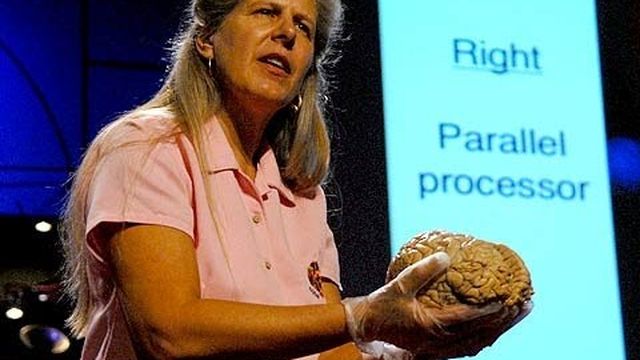
Yes. So I talk in the book — there's a chapter which I call the neurosublime, where I'm talking about how the brain constructs the world around us, and I discuss — I don't know if you've ever had Dr. Jill Bolte Taylor20Jill Bolte Taylor — an American neuroanatomist. In 1996, at 37, she had a severe stroke in her left hemisphere, and she described experiencing from the inside the shutdown of her speech and sense of self in "My Stroke of Insight" (2008) and in one of the most popular TED talks. on your show.
I have not.
But I discuss her stroke and what it did for her. But then there's this Armenian mystic named Gurdjieff,21George Gurdjieff (1866?–1949) — a mystic and spiritual teacher from Alexandropol (now Gyumri) in Armenia, born to a Greek father and an Armenian mother. His teaching is known as the "Fourth Way": people live as if asleep and can "wake up" by working on their attention. right? Amazing man. It was the turn of the 20th century, and he visited all of the most esoteric cults in the Middle East and the Far East because he had this idea that they were about to disappear, and he wanted to glean all of their secrets and create this new kind of philosophy that would alter human consciousness.
And he had this experiment. He said what makes a human being human is our attention. So an animal — and God bless, I love animals — but their attention is generally somewhat limited to what's in front of them, to their needs to survive. They're not looking up at the sky and wondering about what's going on, right? They're not thinking about what's on the other side of that mountain and what's happening. So we have the ability of this incredible attention. And when we pay attention to something and we focus on it, we kind of alter our brain chemistry, and something magical can happen.
And he had this notion that people are just sleepwalking through life, that they're not awake. He said if a human being were truly awake, there would not be wars, we would not be killing each other, there would not be all this misery that we inflict on fellow humans, right? We're asleep. We're not aware of what we're doing.
ExplainerGurdjieff's self-remembering
Gurdjieff taught that ordinary people live "mechanically": they react, speak and act like machines without being aware of themselves; in other words, they sleep while awake. The core exercise of his school is self-remembering: holding "divided attention," seeing at once the object and the self looking at it ("I am here, I see this"). The exercise sounds simple, but attention slips within seconds. In "In Search of the Miraculous" (1949), P. D. Ouspensky described practicing it while walking through St. Petersburg and seeing the city with unusual vividness, then "waking up" somewhere else and realizing he had long since stopped remembering himself. For Gurdjieff, that discovery is precisely the first step: seeing that you are asleep.
He had this exercise, he calls it self-remembering. I talk about it in the book. And he says you have an experience at a moment in life and you focus on it deeply and you tell yourself you're remembering it. You're going to remember it. Because what happens is, what happened three years ago on a day in July, you'll never remember what happened there because you were asleep. You weren't paying attention. There are moments in life where you're paying attention, where you get some kind of shock, and you remember it. He wants you to have that kind of focus every day. So he has this exercise where you look at things deeply and just focus on them. "I'm remembering, I'm remembering, I'm experiencing it in the moment."
And he had this pupil named Ouspensky,22P. D. Ouspensky (1878–1947) — a Russian writer, mathematician and esotericist, a pupil of Gurdjieff. His book "In Search of the Miraculous" (1949) is the main account of Gurdjieff's teaching; it also describes his experience of self-remembering on the streets of St. Petersburg. a very famous Russian mystic, who was deeply depressed, who was suicidal, and he became a pupil, a disciple of Gurdjieff. He starts practicing this. He looks at a vase of flowers in his room, focusing and attending to it. "I'm remembering it, I'm seeing it, I'm here today, I'm looking at it." After 30 seconds, your mind wanders, he can't do it. But then after a minute, he notices that that flower starts looking different in the degree of his focus and attention on it, just as it is, as he's telling himself, "I'm going to remember it. In three years, it'll be stamped in my memory."
He gets better at it, and then he walks outside after months of practicing this, just looking at things, simple objects. And suddenly the houses look different to him. They look like they're almost alive. Everything is intense. He's walking outside and he's got this attention, this focus. The world is altering. And then suddenly he finds himself in a tobacconist completely on the other side of Moscow or St. Petersburg, I don't remember which city.
Because what happened? He realized that at a moment he fell asleep and he wasn't remembering things. And three hours later he was on the other side of town in a tobacconist buying cigarettes. And what he realized is he had this intense focus, remembering, where he's awake. And now it made him realize that normally in life you are asleep. We don't realize how asleep we are because we don't have that contrast to what it's like to be fully awake.
So my point is it's an exercise that can literally alter your neurology in some way, can alter how you perceive things. It doesn't require drugs, it requires this kind of intense focus. And meditation can have the same effect. I do meditation every morning. They've proven that meditation literally alters your brain. There's literally something — your thoughts can alter the matter of your, the wiring of your brain. So you don't need drugs. Drugs are a wonderful gateway, and Huxley describes it beautifully. But there are practices among Tibetan Buddhists, Zen Buddhists, where they get similar kinds of effects through meditation, right? Or through some of these practices that I mentioned.
06Do we see the world as it is?
Huberman worries that the sublime turns people into oddballs who marvel at ants, and Greene replies that this is simply seeing the world without the brain's filter.
ExplainerWhy a motionless image disappears
The eye is never still: besides the noticeable jumps called saccades, it constantly makes tiny involuntary movements: drift, tremor and microsaccades. Take them away (in experiments in the 1950s and 1960s, the image was "locked" to the retina with a small mirror or a tiny projector mounted on a contact lens) and within seconds the picture fades and vanishes, then resurfaces in fragments. The reason is that neurons in the visual system respond to change and quickly stop passing on a constant signal. Everyday relatives of the effect are a spot in your peripheral vision fading if you stare at one point long enough (Troxler fading, described in 1804) and getting used to the smell of a room.
There's this wild finding in neuroscience, visual neuroscience, that comes to mind that I'll just briefly share with you. If you want to reflect on it, great, and if not, then certainly just tell us. So we assume that when we look at something, our perception of it is pretty stable, but there's this really cool set of experiments where they paralyze the eyes of people in a reversible way. And you quickly find that if you look at something, they can perceive it and then it disappears, because our nervous system — our eyes move, these little saccades,23Saccades — the rapid, jerky eye movements, several a second, by which the gaze jumps from one point to another. as you know — but it's all about change, in the same way that you walk in a room, it smells really good, and then the smell disappears, but it didn't disappear. You got this habituation.24Habituation — the weakening of the nervous system's response to a repeated or constant stimulus.
This happens everywhere in the nervous system. Then there's this wild finding that if you continue to have people look at the same location, the percept of what was there changes in a significant way. And of course the physical attributes of the thing didn't change, but the perception, the conversion of those photons into what we perceive, the abstraction of what's out there, changes. I think it matches precisely with what you're describing. What's so incredible in the example you gave is that the person was able to sort of maintain that shifted perception for long periods of time.
It's almost like it enters the memory system. We can get back to the perception, but also the state that we were in of being, quote-unquote, awake. I find that remarkable because the mug, the vase, the flower — they're beautiful, certainly flowers — but in some sense they're trivial too, right? Like, there's nothing inherently interesting about a mug until I start creating a story about it. Like, people designed this, it's got all these wonderful… But you really have to go down that rabbit hole. So the question I have is: given how malleable our perceptions are, what quality of meaning is actually meaningful?
Because, like, on drugs — and this is one of the problems with psychedelics or MDMA, for instance, one has to be very careful, certainly on MDMA, which is an empathogenic drug,25MDMA ("ecstasy") — a synthetic psychoactive drug classed as an empathogen, a substance that heightens feelings of closeness and empathy. right? Because you can hear a song and you can fall in love with your love for that song on repeat for four full hours, which is perhaps interesting. There might be an insight or a few there, but in some sense one could say, well, that's trivial. You assigned a meaning to something that's trivial. And I think that's where people get scared, that if they start to go through these portals to the sublime, they're going to end up kind of weird, that they're going to be the person that's like, "Did you see how many ants are crawling up that curb?" And you're like, "Yeah, it's cool," but, you know, if you go down there, I'm sure it's pretty cool, right? But most people don't want to be that guy or that lady all the time, because we have a name for that and it's not kind. None of us want to be the crazy person who's creating meaning out of the trivial. So how do we cope with that?
Because the way I'm looking at it is you're actually seeing things as they are, because your brain is filtering down things for you and creating this familiarity and this sameness so that your mind isn't overwhelmed with chaos, so that you can get through the — you know, Aldous Huxley in The Doors of Perception was calling it the Mind at Large26Mind at Large — an idea from "The Doors of Perception": following the philosopher Henri Bergson, Huxley argued that the brain works as a "reducing valve," letting through to consciousness only a trickle of what the mind could perceive. — that if you didn't have this filtering, you would be seeing all of these incredible things. But the mind is like this little funnel that just kind of filters and prunes everything that you see. So I'm talking about the sublime not as something crazy, not as, like, "Oh, there could be a bunch of ants." This is how the world actually is. You're awakening to how things actually are outside of the pruning of your brain.
07Cézanne, apricots and anthropomorphizing AI
Emotional seeing isn't madness, Greene argues: we constantly put emotions into things, and our culture has become too rational.
So I talk in the book about the artist Cézanne,27Paul Cézanne (1839–1906) — the French Post-Impressionist painter who painted Mont Sainte-Victoire near his native Aix-en-Provence dozens of times. His words "The landscape thinks itself in me, and I am its consciousness" were recorded by the poet Joachim Gasquet. who was obsessed with vision and the visual arena and how he could alter his vision by focusing on things, right? And so his expression was, we humans are given consciousness so that we can spread consciousness everywhere. So his saying was, "I am the consciousness of the landscape." I am making the landscape come to life and think and be alive, right? So he had this idea that mountains are actually living, breathing things and that his mind is giving them life. And he looked at trees like that. He would stare at one tree outside of his house. It was like an apricot tree, and he would just start trying to focus on what it was, what it actually is. We don't look at things like that anymore. We just see the word tree, we see the category tree. He was seeing the apricots on it, and he was seeing the apricots getting larger as the sun was hitting them, right, getting sweeter and sweeter, and to him it was like an erotic relationship between the apricot and the sun. Now, you might say that's insane. I don't think so. I think it's actually beautiful. I think our minds are allowed. We're not just rational creatures. We are creating emotions through everything we see.
And so I get a little bit frustrated with how rational our culture has become. So for example, AI, which is the talk — everyone's talking about it now. People are continually anthropomorphizing AI. It is a machine. It's not conscious. It is a machine that we have programmed. And yet even these very rational scientists are talking about it as if it's conscious. They're anthropomorphizing it. We are creatures that are constantly putting emotions into things. I don't think it's irrational, because I think science has that basis in it as well. I'm just saying that our thoughts have become so limited and constricted that the ability to see a vase of flowers and see it as this intense, strange, miraculous thing — to actually focus on its colors and the life that it has, and how in cutting it and putting it in this water you're keeping it alive, but it's actually cut, so it's not really living. It's just strange. So it's not your imagination putting… It's actually seeing things as they are, which we don't do. Am I crazy?
08Scales of space and time: fence lines and frame rates
Perception can be tuned like a camera, in spatial scale and frame rate, and Huberman sees that as key to accessing the sublime.
You're definitely not crazy. And by the way, I'm totally on board with this notion and the practice of looking at things differently in order to experience life differently, to extract more real meaning from life. Many times growing up in California — I've been here 51 years — I can remember driving along Highway 101,28Highway 101 and 280 — California freeways; 101 runs along the coast from Los Angeles to San Francisco and on north, 280 down the San Francisco Peninsula past Stanford. and I would stop and, you know, I'd pee on the side of the road, and I would see some beautiful fence lines. I love fence lines. And I would think, "Oh, this fence line looks so old, with barbed wire."
What is your interest in fence lines? I'm curious about that.
I don't know. I just think they're beautiful, and there are a lot of old fence lines along 280 and along 101 when you drive from Southern to Northern California, and just big fields, you know, still undeveloped to this day. And occasionally you'll see, like, what looks like an old cabin that no one's bothered to take away. It's falling over. And I would need to get someplace, so I would get back in my car and drive away. But inevitably, when I would get out and pee, I'd look at the fence line and I'd think there's so much interesting detail just in this little interface between the barbed wire and the wood on the fence line. And I still have this thought, I'm like, I could spend all day there, but I have to go someplace else, you know? And then I realize there are an infinite number of spatial scales that we can look at things.
I think we can agree that's true. And then there are an infinite number of temporal scales that we can look at things and experience things. And this is the thing I'd like to get your thoughts on. So the spatial scale is pretty straightforward for most people to digest. So you say, okay, well, I can look at something very small in my environment, the texture of something, or I can look at the whole environment. And we had Dacher Keltner29Dacher Keltner — a psychologist at the University of California, Berkeley, who studies emotion; author of "Awe" (2023). He has been a guest on Huberman Lab. on the podcast. He's a Berkeley scientist who studies awe, and he said that the experience of awe comes about when we transition quickly from focusing on small spatial scales to big spatial scales, like walking through a forest and suddenly there's a huge vista.
Oh, wow.
You know, you're in Yosemite and all of a sudden you reach a peak and it's like… And vice versa, big spatial scales to small spatial scales. But most people experience going from small spatial scale to big. Okay, so that makes sense. But the time domain is one that is very intriguing to me, because on a daily basis we're constrained by the circadian rhythm — when we're awake, when we're asleep. No escaping that.
But we tend to move through life, I realized a couple of years ago, with the same kind of snapshot speed, the same frame rate. You make your coffee, you do your thing, you know, but you can slow this down by taking a higher frame rate. You can stop and watch your espresso pour with immense amounts of temporal detail, so you're collecting more information. You can't do that all day, won't do anything else. But we can also slow things down, like lie in the yard and look at the clouds pass and start taking bigger snapshots. And this to me feels like a critical piece of this perception, of accessing the sublime, because what your story about this gentleman who realized he was in a dream tells us is that the space-time filter — we're talking about physics, but not the cosmos — the space-time filter, like how we move through life, the speed of our camera and the pixel density of our camera, the resolution of our camera, is everything.
And forgive me for going long here, my audience is probably already saying, "Let your guest speak." But the best example I have is my graduate advisor,30Huberman's graduate advisor at the University of California, Davis, was neuroscientist Barbara Chapman, a specialist in the development of the visual system. She died of cancer in February 2013 (Society for Neuroscience obituary). who died at 50, a remarkable woman, was dying of cancer, two girls, and married to a scientist. I was very, very close with her family. And I will never forget our final conversation. And she was telling me about some of the goodness she had experienced recently. And she did share with me that she had started, in the realization that she was going to be dead soon, to think about the tiniest things in the space and time domain. Like, they're all redheads in that family, bright red hair — like the curls of her daughter's hair moving when she walked into the room to see her. Her frame rate was changing. And I find this to be moving and also, in some way that I don't yet understand, informative, for those of us that hopefully, fortunately, are not close to the end, or who are. So what is your thought about the time domain, this temporal parsing of experience?
09Childhood time and Nabokov's "Speak, Memory"
Childhood is remembered so vividly because there was space between thoughts and time flowed inside the child rather than past him.
I had this thought a while ago that what made childhood so interesting and weird, and why we remember it the way it was, and why it was so intense, was that there was this space between thoughts, and that had a big play on our conception of time, right? So now our stream of consciousness is like broken up into a million different fragments. I'm thinking of you right now, in two seconds I'll be thinking of my cat. You know, it'll bounce back and forth. The thoughts are just continual.
But when you were a child, there was like this space. You would think something, then there would be this kind of emptiness. There would be like a minute would go by, there wouldn't be another thought, then there would be another one. And that space in between thoughts created a different rhythm of life. So when you're living, particularly nowadays with the Instagram model, where your attention is broken up into millions of little splinters, time has this rhythm that's just not life. It's just not how life should be. It's just way too fast. It's way too broken up. But that sense of there's a space between my two thoughts, there's like this emptiness, creates this kind of flow of time that's much different.
So I talk in the book about the childhood experience of time, which kind of fascinates me. And so I have the example in there of this writer Nabokov,31Vladimir Nabokov (1899–1977) — the Russian-American writer, author of "The Defense," "The Gift" and "Lolita"; a lifelong student of butterflies, he worked as an entomologist at Harvard. He spent his childhood between St. Petersburg and the family estate of Vyra outside the city. the famous novelist, who was obsessed with his childhood. And the reason he was obsessed with it was he had this kind of magical childhood growing up in Russia. His father was wealthy. They had this amazing villa out in the country. His life was just full of all these adventures, and he studied butterflies intensely, and then the Russian Revolution breaks out. His father is murdered32Fact-checkThe writer's father, the liberal politician Vladimir Dmitrievich Nabokov, was not killed in the revolution: Russian monarchists shot him in Berlin in 1922 as he shielded Pavel Milyukov (Wikipedia, "Vladimir Dmitrievich Nabokov"). as someone who's wealthy. They have to leave Russia. His mother dies in an apartment in Berlin.33Fact-checkNabokov's mother, Elena Ivanovna, died in Prague in 1939, not in Berlin; Nabokov left for the U.S. with his wife Véra and their son in 1940, from France. His brother Sergei died in the Neuengamme concentration camp in 1945 (Wikipedia, "Vladimir Nabokov"). He has to flee with his Jewish wife to New York because the Nazis are there. His brother dies in a concentration camp.
His whole family is gone. He can never return to Russia because Stalin is now in power, right? He has no photographs, no memorabilia, no family left, but he has this memory of this magical childhood. And so his experiment — he wrote a book called Speak, Memory,34"Speak, Memory" — Nabokov's autobiography of his childhood and youth in Russia and in emigration; the first version came out in 1951 as "Conclusive Evidence," the final one in 1966. He also retold it in Russian as "Drugie berega" ("Other Shores," 1954). in which he tries to recreate the experience of his childhood in the adult mind, remembering it, not remembering facts, but remembering the experience. And so he talks a lot about time. And so the image is that when you're a child, time is something that's inside of you.
Our concept of time is something outside, it's abstract, right? The minutes are passing. So the image I use is like time is like a river, it's a flow. And when you're a child, you're in the river and you're feeling the flow and moments are passing by. It's living inside of you. When you're an adult, you're on the shoreline and you're looking at time passing by, and you can look at the past, the future, wherever your mind takes you, and time has this different rhythm.
But when you're a child, it's inside of you, you're part of that flow. And he remembers that he was thinking at times, like, "My God, we're all alive at the same time." We're all these humans bathing in this river at the same time. We're alive, we feel it. I don't know if this concept is too abstract for you to understand, but in my meditations, as I'm thinking about the passage of time — because what will happen when you meditate — I meditate for 40 minutes, and sometimes it, like, passes by and you're not even aware. Your concept of time is altered by the slowness of this process, right?
And I will feel that time is inside of me, that I have this flow. It's a physical sensation of time passing. I'm alive moment to moment. I'm inside the present moment. Time has this different rhythm. And that is a sublime experience of time. And I take readers through that exercise of the actual river, and actually feeling yourself inside the river and feeling the flow of time. It has a much different effect on our consciousness when you go through this process.
10The sublime of death and near-death experiences
Time stretches at the edge of life: the dying brain dissolves its usual constructs, and seconds hold years.
I have an absolute obsession about this time perception thing, in no small part because as a younger person I realized I could look at the fence line in great detail or keep moving on — and this conversation with Barbara. It was our last conversation before she passed. I went on to realize it's not uncommon that as people get closer and closer to the end, provided they are lucid — and she was — it's as if there was an avalanche of new and beautiful information pouring in. And I should point out this was not the report of somebody who was, like, kind of drifting away. I mean, that was part of the sadness of it all: she was very present. But in that presence, she was able to extract what seemed like many, many years of experience.
And she was a very calm person always, and in a very non-anxious or urgent way, it's as if the end was coming, and instead of freaking out, her perception, the camera onto the world, just became super high resolution and, you know, near-infinity frame rate. And she was just reporting these things.
This is as she's dying?
Well, she was about a week out at that point. So close, yeah.
I have a whole chapter on death and the death sublime and near-death experiences.35Near-death experiences — what people report after clinical death or mortal danger: a light, a tunnel, leaving the body, a life review. The term was popularized by psychiatrist Raymond Moody in "Life After Life" (1975). And what often happens in the death process is the brain is dying as well, right? And as the brain dies, some of the things, the constructions of the brain, such as time, right, and such as vision, and such as the self, start breaking down, start dissolving. Near-death experiencers have this sense sometimes of ecstasy as they're dying. Now, not all of them — in the studies of near-death experiences, about 85%, I'm just throwing out that number, are positive, but then there's the hellish near-death experience. So they're not all angels and beauty and stuff, but a lot of people are dying and they feel the ego dissolving and they feel the sense of abstract time dissolving. They feel all the social pressures of life dissolving, and they're ecstatic, they're elated. It's like a liberation, right? It's the sense that time is actually much more plastic than we think it is.
The first person to study near-death experiences was in the 19th century. It was this man named Albert Heim.36Albert Heim (1849–1937) — a Swiss geologist who studied the Alps. As a young man he fell while climbing and experienced racing thoughts and a review of his life; in 1892 he published "Remarks on Fatal Falls," with accounts from climbers, soldiers and workers who had survived falls, one of the first descriptions of near-death experiences. He was a Swiss man. He was an alpine climber when he was very young, and when he was like 21, he fell as he was climbing. He was going to die. It was like a hundred-foot fall. And as he's falling, suddenly he remembers his whole life, right? All these things, he starts revisiting it. And then later he wants to analyze it, and he goes, "In 15 seconds of a fall, I had experienced, like, years of things happening," right?
The condensation was insane. He wrote an article about it, and suddenly hundreds of other articles start coming to him of people who had near-death experiences, who fell in climbing accidents and had the same experience. And people who jump off the Golden Gate Bridge37The Golden Gate Bridge — the suspension bridge over the strait at San Francisco, about 220 feet above the water; one of the most common suicide sites in the world. Only a handful of people have survived the jump. — the few who survive, and there are some people who survive — speak of the same thing. Their experience of time as they're falling and as they're about to die is completely altered. And in just those 10 seconds, it's as if they lived, like, five years or something. So our sense of time is not so logical and rational as we think it is, and we can alter our perception of time literally by how we think and how we experience life.
AdAG1
I'd like to take a quick break and acknowledge our sponsor, AG1. I'm excited to share that AG1 has just launched their newest formulation, AG1 Pro. AG1 Pro takes the clinically backed AG1 formula, which is a blend of vitamins, minerals, probiotics, and adaptogens, and adds three important new ingredients: creatine monohydrate, calcium HMB,cHMB (beta-hydroxy-beta-methylbutyrate) — a metabolite of the amino acid leucine; a sports supplement that, according to some studies, slows the breakdown of muscle protein. and zinc carnosine. Each serving has five grams of creatine monohydrate to support muscle strength and performance, as well as brain health, calcium HMB to support muscle recovery and reduce muscle breakdown, and zinc carnosine to support and improve the lining of your gut. All three of these ingredients have compelling science to support them, and therefore I love seeing them added to the existing AG1 formula.
As most of you know, I've been taking AG1 every day for nearly 14 years now. I started taking it long before I even knew what a podcast was. It's a great product, and it's now made even better with the new AG1 Pro formula. If you would like to try AG1 Pro, you can go to drinkag1.com/huberman to get a special offer. AG1 is giving away a free bottle of omega-3 coenzyme Q10 with your first subscription. Again, go to drinkag1.com/huberman to get a free bottle of omega-3 coenzyme Q10 with your first AG1 subscription.
11Aquariums, an octopus and the time of other species
The rhythm of another creature, whether fish, octopus or dog, changes our sense of time.
One of the reasons I love aquaria, and I have so many fish tanks, is that whether there's one fish or octopus or many, when you look at a fish tank or an ocean scene of any kind, the mind enters this weird state, because you can't control, nor can you predict, what's going to happen next. If a fish is swimming leftward, you sort of predict it will continue to swim leftward, but then as soon as you predict that, it moves. And so you sort of have to let go of your anticipation of what's going to happen next. There's some constraints, but it puts my mind into this — it's almost like it releases something. The expectation component just has to unlatch. And in that, I think you get additional perception.
That's interesting. It just unlatches. I mean, there's nothing you can do. I think looking at the shore, at the ocean, is the same. The waves roll in. Generally, you know, objects fall down as opposed to up, we know this, but I think it's the presence of unpredictable things. We just accept it, and then the brain just goes someplace new and, I think, useful.
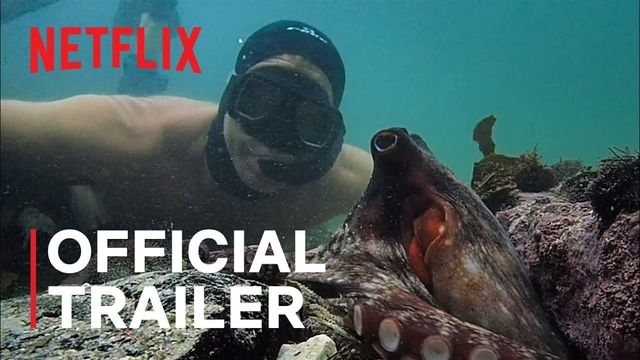
This is slightly off what you're saying, but there's a story in there about a man who had a relationship with an octopus, so I think you can relate to that. He did that famous movie, My Friend the Octopus.38Fact-checkThe film is called "My Octopus Teacher" (2020): South African filmmaker and free diver Craig Foster spent a year filming his friendship with an octopus in a kelp forest off Cape Town. It won the Oscar for best documentary feature (Wikipedia).
Oh, yeah. Right, right.
But he actually has a story about — he wrote a book about it, and he essentially decides that he's going to cold dive off the coast of South Africa, where he grew up, incredibly cold temperatures. There's a kelp forest,39Kelp forest — stands of brown kelp, up to tens of meters tall, in cold coastal waters. The forest off Cape Town is called the Great African Seaforest. which is kind of a strange concept, right? It's a forest underwater of all this magnificent kelp, and the weirdest creatures live in there, including octopus. And he's not going there looking for octopus, he's free diving in this very cold water, exploring this insane landscape, and he comes upon an octopus, and they slowly become friends, and they have a slightly erotic relationship.
It's clear from the way he describes it that there was, like, this love interest and this sort of eroticism, because at one point the octopus, you know, grabs his arm and he can feel it, and it's pretty intense. And then at one moment the octopus has grabbed him and they float together to the top. And it was like this love thing going on between them, right? And then, of course, as you know, the octopus dies, right? And he's heartbroken about it, and that's when he decides he's going to do this. Well, he's been filming the whole thing, and he's going to create this film.
But my point is, in the six or eight months that he had this relationship, quote-unquote, with this octopus, his whole concept of time was altered because he was living in her time. It was a female, obviously laid eggs and died. Imagine, an octopus lives for three years at most. He saw all these intense experiences. It got attacked by a shark, it lost some of its limbs, the limbs grew back. It lives three years. What is its sense of time? Compressed in those three years is just all of these incredible experiences. And he felt, in being close to this octopus, he was living in her time period. Time was passing at a much different rhythm as he was living in her world. And so the idea is that there are insects that live for, like, a month, right? And so our experience of time is relative to our time span as well.
And in these kinds of encounters with other species, we can in some ways alter our concept of time. If you try to experiment with that with your dog, you might find something similar. How does your dog experience time?
I feel like this conversation was, like, designed to enchant me. So I'm just — thank you. You know, having had dogs and now another puppy, I'm familiar with the rhythm. You entrain to their rhythm and they to you. This is a big part of the relationship. Like, the daily walk becomes a prerequisite. It's not an option. The dog needs it, and you learn to love everything about it. And that word feels really relevant here, entrainment.40Entrainment — the syncing of the body's internal rhythms to external cues: that's how the circadian clock locks onto light, and how the rhythms of two people, or of a person and a dog, adjust to each other. You know, we're bound to this circadian rhythm, this 24-hour rhythm, as I mentioned earlier. Nobody escapes it. Some people need more sleep than others, but nobody escapes it.
But with everything else, we're sort of entrained to a particular schedule, and our body learns to anticipate things and adjust our perception, our energy levels, to when we exercise, when we work, when we see our significant other and/or dog or both. The idea that we can access different time perception references, time domains, through interactions with other species is, like, absolutely thrilling to me. Absolutely thrilling.
And I will say, having had several octopuses now, and cuttlefish prior to that — I had many cuttlefish in my lab in San Diego. I think we had 40 cuttlefish at one point, and they're like little underwater monkeys. They're also incredibly intelligent and do all sorts of wild stuff. They can change colors, beautiful camouflage ability, and they can camouflage half their body. The males sometimes in the wild will camouflage as females and then enter a clutch of females and then mate with them. You know, a separate podcast could discuss the ethics, or lack thereof, of that, but in any case, I think they're referred to in the scientific literature as "sneaky fuckers.41"Sneaky fuckers" — evolutionary biologist John Maynard Smith's half-joking term for males who mate on the sly, getting around stronger rivals. In the giant Australian cuttlefish, small males do this by taking on the coloring and posture of females." Doesn't sound very scientific to me.
Well, you know, evolutionary biologists — there are sort of two rules, is the joke. They tend to hyphenate their names even if they aren't married. It's sort of a weird quirk of evolutionary biologists. And the other is that they love to insert cursing into their scientific papers. It's like a thing. No idea.
12The phone, susceptibility to influence and slowness
Attention splintered by social media makes people easy to influence, and the brain, Greene argues, needs slowness.
In any case, my mom's an avid gardener, and she spends time with her tomato plants and her plants. I think that we can access these different time portals through interactions with plants. What you're describing — and the reason I'm enchanted — is that it's really like the richness of life is available to us when we let go of our kind of mostly human-made things. And I don't want to focus on the negative, because there are certainly positive attributes of technology, but I'm concerned that something about excessive use of social media is — you said earlier that we're programmed — that with each passing year we're becoming more and more locked to one space-time relationship.
And expectation of dopamine updating42Dopamine — a neurotransmitter that, in Huberman's favorite framing, is less about pleasure than about wanting and anticipating reward; a social media feed keeps feeding it novelty. and novelty, etc. And going away for a weekend without the phone, or getting a total night's sleep without the phone in the room, not looking at it for the first 30 minutes of the day — I think anyone who's done those things will say that it significantly alters and improves one's experience of the rest of the day. So maybe we are being programmed, not to sound paranoid.
Well, we are, and it's — whose interest are we being programmed for? I mean, is it just to make money? Because if people's attention spans are constantly being splintered this way, it's harder to focus. You're much more vulnerable to influence, right? To advertisements, to all kinds of gimmicks and things that are being implanted in your brain, because you're not able to focus deeply enough and think independently. So there's that danger.
And then on the level of Mastery, in which I'm talking about how the human brain functions and what it wants and what it needs as nourishment, is it needs slowness. It needs the slow pace of learning, bit by bit by bit, progressing. And then the brain alters as new pathways are created. And so you are literally in charge of your brain, the landscape of your brain. And when it's this other rhythm that people are programming for you, it's a landscape like a desert. There's no life coming up in it. There's no connections that are happening. And you're so much more vulnerable to people's influence, right? And that's, to me, the scary part.
Yeah. One of the most impressive things I saw in the last year or so is this gold medalist at the Olympics, a freestyle skier, this woman who's at Stanford. I think her name is Eileen Gu.43Eileen Gu (born 2003) — a freestyle skier from California who competes for China; 2022 Olympic champion in big air and halfpipe. She studies at Stanford. There's a press conference where somebody asks her, "What do you do to, like, train your mind? You seem so articulate and so sharp." And in my mind I'm thinking, you know, Eileen is clearly, you know, far to the right of average on many, many things, right? But at Stanford and elsewhere — but I will say often at Stanford — you encounter this phenotype. Like, people extremely articulate and very fast and very present. It's like a thing. And again, not just at Stanford, but there are a lot of them among the undergraduates, especially.
So her answer is incredible. Her answer was about slowness, not about speed. Her answer was that she spends a lot of time in her head thinking about her thinking, pressure-testing her beliefs and understanding. And from that, she realized she can shape her thoughts through neuroplasticity and become the person she wants to be. And then, in a very delightful way, she throws in that she's young and therefore she also still has plasticity. So she's not done, she's still going. But the interesting part about it — there are many interesting things about her, but the interesting part of that was that the speed that she can access is the reflection of the slowness, the slowing down rather, of her process to get there. And I think it's a wonderful example, because we only see the end product. And we think she skis and she's brilliant and she's articulate, and everything for her must just go, you know, fire off at 12 cylinders all the time.
Well, I read a quote a long time ago from the quarterback John Elway,44John Elway (born 1960) — the Denver Broncos quarterback from 1983 to 1998, who won back-to-back Super Bowls (1998, 1999); a member of the Pro Football Hall of Fame. the great Denver Broncos quarterback, and he said the secret to his incredible success was that everything slowed down on the football field. Because normally things are happening at hyper speeds, right? You wonder how can anybody function. He says, "I got to a level where everything was just slowing down, and I could see exactly where things were moving." So his brain, through mastering a process, which is what I describe in that book, is able to literally slow things down and see things that other people couldn't see.
13Living it or reporting it: a book written by hand
Reporting on life as it happens takes something away from the experience, and for Greene slow handwriting produced a different book.
I'd love your thoughts on experience versus report of experience, and different ways to report experience. Here's my motivation for this question. I think people are experiencing things, but a lot of times they're recording it now as they do it, in order to share it with other people. And the motivation for that is entirely understandable. You look at a concert, everyone's filming the concert and they're sharing it with the people who can't be there. So there's a really nice component to it.
But if somebody, let's say, goes on a big adventure, a long backpacking trip in Yosemite or down to the Amazon — some people are doing that and not reporting it to anyone. But I think now, because of camera phones and social media, most people are thinking about if and how they will report the experience they're having, if not in real time, later. And you, on the other hand — although there are clips of you on podcasts and so forth on social media, we're all grateful for that — you've chosen to do the long-time-scale reporting of your adventures and experiences.
And movies are like that too — a couple hours, but still long-form compared to social media. And you beautifully describe this thing about entering the time scale of the octopus's life or the dog's daily experience. And I was thinking to myself, well, kind of like movies I've fallen in love with, concerts that transformed me — you know, they require that I actually just be there and not think about the export of that experience at all. So once again, I'm wondering, are we limiting ourselves? Are we getting locked into the technology that is really limiting our experience? And what was the value for you in doing a long-term writing of this book?
Well, it was more than long-term writing, because I couldn't type. So my left hand is still kind of frozen. And so I had to handwrite the entire book. You're talking about slowness. I had a system of two bookstands, one next to each other, a notebook. I would write a story in the notebook by hand. I would then edit it by hand, recopying what I had written and occasionally changing a word, and then going back and doing the same thing there, and then going back and doing it again. So it altered my thought processes, because I was used to typing very fast, right? This was a whole different layer of thinking that I had to go through, because when you're handwriting, your thinking really has to slow down. You have to focus very deeply because you can't, like, quickly change things, right? So it created for me a different kind of book, I think, that slowness factor.
14Beyond the human: ancestors, mountains and telescopes
The sublime begins where the social world ends, and technology blocks the way unless it serves the experience rather than your followers.
But part of the sublime is getting outside the human realm, right? So we live in this period where we never interact with anything that's not human, right? So even if you're in the wilds, you're in Yosemite or something, you're still with your phone, you're still navigating with your phone, you're still recording it so people can see you. You're immersed in the social human world, right? And it's this little bubble that you live in, but life is much greater than the human. There's a universe, there's a cosmos, there's animals, there's landscapes, there's the weirdness of being alive, there's time — all these things that you can explore and you can alter.
But if you're so locked into the human social world, you cannot access the sublime, right? And in ancient cultures — there's a lot of things in there about our indigenous and our ancient ancestors, because I'm obsessed with that as I am with childhood. And for them, they look at the world and they see plants coming up out of the ground. They see enormous mastodons45Mastodons — extinct proboscideans, relatives of elephants; in North America they survived until the end of the last ice age, about 11,000 years ago, when humans were already there. and bears that are twice the size of what bears are now. And they are obsessed with what isn't human. And that's where religion starts from, and that's where spirituality starts from: all these things that transcend the human, and how insane it is that life dies and then re-emerges out of the ground, that these large animals are created. So part of being human is this obsession with what isn't human, what transcends us as a species, fascination with just the elements, with the clouds, with the sky, with everything around us that isn't just the social world.
And so when you're so locked in — and you have to climb a mountain. I have a lot of things in there about climbing mountains, which can be an incredibly sublime experience, because if you think about it, you're literally climbing up the side of something that's millions of years old, that predates humans, right? That emerged out of the ground out of this incredible process. You're climbing into the sky. You're there, you're almost like a bird, right? The oxygen levels are changing, your brain is changing. Climbing a mountain can be an incredibly sublime experience. And mountain climbers have reported some of the most sublime experiences, because at every moment, particularly rock climbing, they could die, right? And the intensity of life and death just makes it an addiction. But if you're climbing the mountain and you're filming it and looking at it and navigating through it, you're not experiencing the mountain itself.
So the technology is actually a major roadblock to experiencing the sublime. It doesn't have to be. You could use it as a tool and an instrument. So I looked online for things that are going on with space and the new telescopes that they have launched and the images from NASA about our universe. That is utterly sublime, and I can't access that directly. I can't climb into the sky and see these things. So I'm not totally against technology. You can use it to sort of mine these incredible things that science is uncovering, but it's not about my reporting it back to other people. It's not about the social aspect of the Hubble,46Hubble — the NASA and European Space Agency space telescope, in orbit since 1990. of the Vera Rubin telescope,47Vera C. Rubin Observatory — an observatory in the Chilean Andes with the world's largest digital camera; it released its first images in 2025. It is named after astronomer Vera Rubin, who found evidence for dark matter. and, you know, what it means to me and my ego, and how people who are my followers can follow that. It's just about the experience itself, right? So technology can be used for the sublime if it's not about your influencing and the social element.
15The microscope, concerts and music from the inside
Experiencing something and reporting on it use different brain circuits, and the best experience comes from being inside the work or the music.
Is it fair to say that when we try to experience life at the same speed that we're going to report those experiences, something crucial is lost? Because one of the great joys for me in doing laboratory science — which I haven't done in a few years, we shut my lab basically in 2023, '24, because my postdocs moved on and I was doing this other podcast thing — was I would spend years looking at things down the microscope, collecting data, observing things. And of course the job of a scientist is to then take those observations and put them into photomicrograph form and put them out into the world for evaluation and sharing. But the process of writing a paper is a whole different biz, of going to seminars and talking about the work.
It's at a completely different speed, or a completely different spatial scale, but the adventure was down the microscope. The report of the adventure was in papers and at meetings. I never thought about the meetings or the paper as I was doing the work. It's a totally different set of brain circuits. And that's sort of a bit of what you're describing here.
And I wonder — you know, our mutual friend Rick Rubin,48Rick Rubin — the American music producer, co-founder of Def Jam, who has worked with the Beastie Boys, Johnny Cash and Red Hot Chili Peppers; author of "The Creative Act" (2023). He has been on Huberman's show several times. he talks a lot about how he encourages artists to forget about how they're going to be perceived in order to do their best work, which then, of course, is perceived in the best way. But you have to get out of the delivery mode. And so going to a concert and filming yourself for the rest of the world there, it's like a collision of brain circuits, and it's almost like it detracts from the experience.
Yesterday I was driving back from Topanga.49Topanga — a canyon and community in the Santa Monica Mountains on the west side of Los Angeles, known for its artists and musicians. I was being in a limo, chauffeured back to my house, and I'm listening to music. And I'm listening to this recording of Scarlatti,50Domenico Scarlatti (1685–1757) — the Italian composer of 555 keyboard sonatas. this composer, by Horowitz,51Vladimir Horowitz (1903–1989) — the Kyiv-born American pianist, one of the greatest virtuosos of the 20th century; his Scarlatti sonatas are among his best-known recordings. the famous pianist. And I'm trying to, like, get inside of each note and follow the music as it flows. And it's very difficult, my mind was continually wandering. But as I'm going inside the flow of the music — which alters your experience of time, by the way — I'm starting to see things in the music itself.
And I'm thinking the rhythms and the patterns and certain falling of notes have this emotional effect that's very interesting. And so I'm thinking along with the music, and I'm inside the notes, and I'm inside the progression, and I'm inside the mind of the composer who composed it. I'm reliving his experience as he composed the music. And so the music has this level of experience, this level of being inside of it, that can be very powerful, because music is utterly sublime. I have a lot of things in there about music, because music takes us back to our pre-verbal roots. Birds sing. Language probably evolved from music itself, right? Instrumental music doesn't have words, but it feels like the essence of our emotions, of our consciousness, right? So when you're able to enter into music — and I have an exercise where you think musically, and you follow the notes and you follow the logic and the progression — it's a very sublime experience.
But if you're at a concert, first of all, it's a little harder to concentrate, because the music is of a different order, but you can still do that. I remember — I'm going to date myself, and people are going to be laughing at me — but I would go to Grateful Dead52Grateful Dead — the San Francisco rock band (1965–1995), known for hours-long concerts with extended improvisations. concerts in the '70s when I was in college. And what I'm doing with Scarlatti, I would do with some of their long instrumental pieces, which were quite sublime. So when you're doing that, you're not inside the music. You're, like, recording it. It's just like entertainment or something to stimulate you on this base level. There's a way of experiencing things where you're inside them and not outside. And movies are the same way.
When I watch a movie, particularly of a different period of time or from the past, I like to feel like I'm inside the actual movie itself, that I can experience it as if I am there. So when you're so immersed in how other people are looking at you, and your only way of thinking about it is in terms of how other people are seeing it, you're not experiencing the actual cultural moment. And culture can and should be sublime if you experience it differently.
And it seems that our best experiences will always come about from being really present to that work and experience. I mean, in a perhaps overly simplistic way, going to a concert and choosing to not merge with the performers, but rather merge with people who aren't there, means that you are in many ways not there. Again, I get the motivation of people wanting to share, but it's a bit of a gimmick and a heck of a trap, because ultimately the sum total of your life is these experiences that are mundane, but, as you've pointed out, you can convert those into sublime experiences. And the big stuff, the peak experiences, I mean, those are awesome too. And there's no reason to not report things, but I do think that the speed of the reporting, and the fact that it happened separate from the experience, seems very, very important.
I think about, like, a news anchor: "I'm here at the storm, and the storm is…" So they're experiencing the storm, but they're also just trying to get the message out, right? And so you can convey something about the storm, but they're not really in the experience. They're in the experience of reporting it, right? But if they were to film themselves walking through it and getting blown around, right? And then later you would think about how that would be transmitted. There's this way in which we fractionate ourselves through technology, which raises a question.
16Why by hand: notebooks, sepia and hands that talk
Handwriting, Greene argues, taps the ancient link between hand and brain and changes thinking in a way dictation can't.
I was thinking this before: you opted to write the book by hand as opposed to using audio recordings. Why was that? Because you could have easily just sat with hands still and done that.
So in the end, I filled over a hundred notebooks with my handwritten things. Literally, I can show you in my garage. But at the very end, when I thought things were good enough, I would use Wispr53Wispr Flow — an AI-powered dictation app. transcription, okay? And then I would print it out and edit by hand again, and then finally dictate it again one final time and edit it with one hand. Okay, so the slowness was intense.
But you know this as a neuroscientist: the relationship between the brain and the hand is a very, very powerful one. It has very ancient roots. So many of the neural pathways involve the hand and the brain, because that's where our intelligence evolved: picking up things and manipulating them and creating tools. The relationship between the brain and the hand is very, very powerful. So when you handwrite, you're using the brain differently than when you type and look at a screen. It's a different flow of time, okay? And then if you just dictate into the computer, it's even more alienating in a way, because your hands aren't involved at all. At least in typing they are.
And so to me, when I tried to immediately dictate it, something was lost. I didn't feel like I was expressing something deep, because my hand literally has to be involved in the creation of it. And I would find, first of all, the transcription things — you know, AI is so sophisticated, but the transcription things are actually quite primitive. They don't do punctuation. They don't exactly hear what you're saying. So you'll have to go back over a lot of it. It can be very frustrating. It's not like I'm creating oral literature. I'm not Homer.54Homer — the legendary ancient Greek poet credited with the "Iliad" and the "Odyssey"; for centuries these poems were passed down orally, recited from memory. I'm not singing a ballad of people that I've memorized. And so it's like this immediate thing that's coming out of you. Whereas writing by hand, you have to think. You have to sit there and ponder each movement of your hand and the ink.
I also got heavily into ink, I have to say. So I'm a fetishist, because handwriting is a very sensual experience, where this isn't. And so I got all these fountain pens, and I buy all these different colored inks from this company in Italy, and the inks had this beautiful kind of flow to them and a feel to them, to actually see ink on a page. So handwriting is a kind of a sensual experience if you go through it, right? Like calligraphy can be a very sensual experience. So people would say, "Why don't you just dictate your book, Robert? It's so easy." But it wasn't me. It wasn't natural to me. And so I had to have recourse to the handwriting aspect.
I have a question and a perhaps interesting tidbit to share about the hands and handwriting. What color ink are you — black, blue-black, or blue?
I had different colors. So there's this company called Visconti, an Italian company. They make wonderful fountain pens. And they have this one fountain pen called Homo Sapiens,55Visconti — a Florentine maker of fountain pens. The Homo Sapiens model is made of resin mixed with basaltic lava from Mount Etna. which is my favorite. And they have these beautiful bottles of ink. And I have sepia, which I love, it's a beautiful color. Sepia, it's this weird brown, yellow-brown. For an ink, it's magnificent. I have black, I have turquoise, and I have red, and then I also have green, but I don't use the green very much. So I would mix up the colors, because each day I said, "Look, what color do I feel like today? Oh, I feel like writing in red," you know. But then I'd always end up going back to sepia, because I love that sepia color.
This is clearly being communicated through the universe to us. You know, the origin of sepia56The Latin name of the cuttlefish, Sepia, comes from the Greek. From the 18th and 19th centuries, the brown pigment sepia was made from the cuttlefish's ink sac and used for writing and drawing; the brown tones of old photographs are called sepia too. The dwarf cuttlefish Sepia bandensis, the very species Huberman's lab worked with. is from the ink of the cuttlefish. So we worked on, or had, as I prefer to say it, Sepia bandensis, which is the dwarf cuttlefish. So the Latin name of the cuttlefish is actually Sepia. And their ink was the original source.
Is the ink that color that comes out of the fish?
I mean, depending on the water environment they're in and the lighting. But yeah, that's the origin.
The hand — you may or may not know, I learned this from my good friend Eddie Chang,57Edward (Eddie) Chang — an American neurosurgeon and chair of neurological surgery at the University of California, San Francisco (UCSF); he studies how the brain controls speech and develops brain–computer interfaces that turn the brain signals of paralyzed people into speech. who we were discussing earlier, the chair of neurosurgery at UCSF, one of the leading expert neuroscientists on speech and language and epilepsy, and a true savant of all things neuro and more. He told me that the hand representation in the brain isn't just close to, but is nested inside the language areas. The Italians tell us this right away: they move their hands as they speak. And then recently, when recording my audiobook58Huberman's book "Protocols: An Operating Manual for the Human Body" came out in September 2026. — it's the first book I've ever written — I found that if I didn't allow myself to move my hands and gesticulate with my hands, it was harder to enunciate properly. So he said, "Oh, of course, because there's all these feedback loops." And you start to look at this across cultures, or even individuals, and you see that when people are trying to formulate their sentences very carefully and punctuate them in their mind as they speak them, their hands tend to go still. And then when they hit a sort of verbal flow, their hands spontaneously start to move. So there's a direct linkage there. There's no question.
Also, our language reflects that: I grasp an idea. People have analyzed the number of words for thinking and knowledge that have to do with the actual grasping and the use of the hand. So I often think about this: our particular consciousness has a pattern to it that is very much constricted by language and grammar, right? So we have a subject and an object, right? And most languages have that, although some don't. The subject and the object, which makes us think of cause and effect, right? We think of past, present, and future. We have those tenses, so we always are thinking in terms of sequences.
So I have the thought experiment in my head of an alien form of life, an alien form of intelligence and consciousness that had a different structure of grammar that wasn't based so much on the hand and these kind of abstract concepts — what would their language be like? It would be very different from our own, but it makes you realize that our language sometimes can restrict what we think,59The idea that language sets the limits of thought is known as the linguistic relativity hypothesis, or the Sapir–Whorf hypothesis; most linguists reject its strong version. An alien language that rewires the perception of time is the plot of the film "Arrival" (2016). and we're always within those parameters. But the relationship of thinking and the hand, and also vision, because so many of our thoughts about knowledge have to do with seeing: "Oh, I see. I see what you mean," kind of thing. You don't literally see, but we use visual metaphors all the time, and hand metaphors.
AdLMNT
I'd like to take a quick break and acknowledge one of our sponsors, LMNT. LMNT is an electrolyte drink that has everything you need and nothing you don't. That means the electrolytes sodium, magnesium, and potassium, all in the correct ratios, but no sugar. Proper hydration is critical for brain and body function. Even a slight degree of dehydration can diminish your cognitive and physical performance. It's also important that you get adequate electrolytes.
The electrolytes sodium, magnesium, and potassium are vital for the functioning of all cells in your body, especially your neurons, or your nerve cells. Drinking LMNT makes it very easy to ensure that you're getting adequate hydration and adequate electrolytes. My days tend to start really fast, meaning I have to jump right into work or right into exercise. So to make sure that I'm hydrated and I have sufficient electrolytes, when I first wake up in the morning, I drink 16 to 32 ounces of water with an LMNT packet dissolved in it. I also drink LMNT dissolved in water during any kind of physical exercise that I'm doing, especially on hot days when I'm sweating a lot and losing water and electrolytes. LMNT has a bunch of great-tasting flavors.
In fact, I love them all. I love the watermelon, the raspberry, the citrus, and I really love the lemonade flavor. So if you'd like to try LMNT, you can go to drinklmnt.com/huberman to claim a free LMNT sample pack with any purchase. Again, that's drinklmnt.com/huberman to claim a free sample pack.
17How to find your life's task
Your life's task, Greene says, has to be dug out of childhood passions and out of what repels you, and that takes weeks.
I'd like to talk a little bit more about childhood. And I know I've asked you this in a previous meeting, but long ago, when I read Mastery, I was just, you know, clubbed over the head, in the best possible sense of the phrase, with the statement that you made that some event early in life, for each of us, kind of portends what we should or ought to explore later in life. Like, that there's some unique event that places some unique capacity, curiosity, hunger in us to go do something that is uniquely us. No other person had that experience and the experiences that follow that would allow them to do that thing. What is your suggestion for people who want to think about what that seed event might have been, if they don't know? Like, how do we know what that thing was for us if we're, like, 12 years or older?
I was always clear for myself about what that was, because I was obsessed from a very early age with words. I just thought words themselves are very strange and very weird, that we have these words that mean things. And I remember, I think it was in the third grade, my teacher put up the word "carpenter," and she said, "Now try and see how many words you can form out of those letters." And for some reason that just excited me so much, that with these little individual letters you could create all these different words, right? I don't know why, I can't explain it. There's no logic behind it. But it seemed like letters and words were magical, and that always attracted me. So I always felt a connection — I knew I had to be a writer, because I had that weird connection to words themselves, not just what they meant, but the sounds of them, right? Obsessed me.
ExplainerHow Greene suggests finding your life's task
In "Mastery" (2012), Greene divides the path to mastery into three stages: the apprenticeship, the creative-active phase and mastery itself. It all starts with finding a calling, a life's task. Greene locates its source in a "primal inclination": as children we are inexplicably drawn to certain subjects and activities, to words, to animals, to machines. His example from the book is Einstein, who at five was entranced by a compass his father gave him.
- Return to your origins: remember what fascinated you as a child on its own, without prompting from adults.
- Occupy the perfect niche: narrow your interest until you find a field where you have no rivals.
- Avoid the false path: money, prestige and parental expectations lead you away from your calling, while revulsion and irritation tell you the path is wrong.
- Let go of the past and find your way back: a calling can change shape, and what is lost can be recovered, even after a collapse. In "The Law of the Sublime," Greene returns to the theme in a chapter of its own.
But after writing Mastery, a lot of people would come to me — because I talk about your Life's Task, and I also have a chapter in the new book about this concept. And they would say, "Robert, I don't know what my life's task is. I'm in my 20s. You write about it, you write about Da Vinci, you write about all these other people and stuff. I have no idea." And I had to go across this barrier, because I never had that experience. I always knew that it had to be writing. So I had to try and understand their perspective — which is, in teaching, good teachers know that they know more than their students, but they have to put their minds in the minds of the students who don't know enough. So you have to kind of lower yourself into their way of — not lower, but get inside their less knowledgeable experience. So I had to go like, why wouldn't they know it?
Why wouldn't they have it? Because if you think about your early childhood, you had those moments, right? You knew that you would love this, you love kicking a ball. I loved sports, right? You knew that you loved music and sounds. I talk a lot about Howard Gardner and his five frames of intelligence.60Fact-checkIn "Frames of Mind" (1983), Harvard psychologist Howard Gardner identified seven intelligences, not five: linguistic, logical-mathematical, musical, spatial, bodily-kinesthetic, interpersonal and intrapersonal; he later added an eighth, naturalistic (Wikipedia, "Theory of multiple intelligences"). You had one of them.
But thinking deeply about their experience, I came to realize that, first of all, they've lost a deep connection to those childhood experiences, to those moments. They've forgotten about them. Why have they forgotten about them? Maybe they weren't as intense as mine was, but also what happened was all these other voices intervened, right? Their parents told them what they should love, what they shouldn't love. They had to learn math and they didn't want to learn math. The teachers told them what they were good at. They get funneled through this system, which kind of constrains your brain into a certain career path. "This is what you have to learn," right? And they hear a thousand different voices in their head, and they have no connection to what they really love, to what Abraham Maslow calls your impulse voices61Impulse voices — Abraham Maslow's phrase for the inner signals of one's own tastes and desires, which people stop hearing over the voices of parents, authorities and tradition. — voices inside of you that are natural, that are physiological inside of you. They don't hear it anymore. And so I had to kind of realize that we have to cut out all of those voices.
And I would go through this process, and I compared it to, like, archaeology. We were digging and digging and digging into their childhood for little fossils of information. I would kind of go through a process of, "Can you remember certain moments in your early…? What are your earliest childhood memories? What are memories of things that were very exciting to you?" We literally had to go back into their childhood to uncover those moments where something sparked and they were excited, not because their parents told them, but because it was them.
And for me, it's a hard concept to understand, because I always had that, but people lose touch with what their own bodies, what their own impulses, their own desires are telling them. And so we would cut through all of the other noise. I would also go through this process of, "You're in your 20s. What is it that you hate? What repels you? What repulses you?" For me, I hated working for other people. I'll just lay it out straight. I hated the egos, I hated the political games. It wasn't about results. It was about currying favor with the boss and how good you were with the charming stuff. I hated it. I never lasted more than 11 months at any single job in my entire life. So knowing that I could not work for other people, the only thing I could do was write books. It's the only profession for me where I didn't have a boss, essentially. I mean, you kind of have a boss, but anyway — what is it that you hate? What are the things that you can't do, that when you do them, they just feel wrong?
And a lot of it is when you were frustrated — that's a key moment in your life. What is frustrating to you? Listen to that voice, because it's part of that Life's Task, that inner voice that's talking to you, saying, "This isn't you, this doesn't fit you." Listen to it, and don't just see frustration. See something positive. It's telling you something about how you've taken a wrong path in life. It's not easy. And I sometimes spend days with these people, and weeks trying to help them, and I've had some success, but it takes time. You know, you have to be willing to commit to the time, and you have to journal, and you have to write about yourself, and you have to go deep into your memories. You have to think about your childhood, and you have to go back into those moments that had nothing to do with what other people were telling you.
18How the stroke changed Greene
The stroke made Greene more emotional, and the sublime became a feeling for him rather than an idea.
I've heard two different notions about how great ideas and insights come to us. One is in the doing — you know, we're drilling, drilling, lathing, lathing away at ideas or a physical thing — and the other is that they come to us spontaneously, away from the attempt to get to an answer. Like in the shower or while running or doing something. And I wonder for you, has that process of insight and epiphany changed, when comparing before to after your stroke? I mean, you're still fairly mobile, you're clearly very articulate, but I wonder, are your ideas coming in at a different rate or in different places because of changes in your physical life?
I'll tell you what happened, and it's very interesting. I noticed after my stroke that I was more emotional. I had less control over my emotions. I would suddenly start crying, and I don't really know why I was crying. I would suddenly feel kind of a wave of ecstasy. Why is it happening to me? And then I did a little bit of research — and you would know more about this — but a stroke affecting the right side of the brain often has that effect on stroke victims. The left side is language and logic and reasoning powers. The right side — and there's a lot of clichés involved in the left-right things,62The idea of a "logical" left hemisphere and an "emotional" right one is a big simplification: there is asymmetry (in most people, speech is controlled mainly by the left hemisphere), but almost all complex functions need both. and I understand that — but the right is a more kind of holistic and more kind of emotional part of the brain. And so I was feeling on a deeper level. I was also feeling so much more empathy for people, right?
Like, I would see other people who were handicapped, who were still in a wheelchair, and I would almost want to cry. I'd almost, like, "Damn it, I understand your weakness. I understand the feeling of helplessness." So my brain shifted into something more emotional. I saw a quote from the poet John Keats,63John Keats (1795–1821) — the English Romantic poet. The line "O for a Life of Sensations rather than of Thoughts!" comes from his letter to his friend Benjamin Bailey in November 1817. one of my favorite poets, and it said, "Oh, to have a life of sensations instead of thoughts." And so you can think emotionally, you can think through sensations, you can empathize, you can feel your way into things, and it's a different form of thinking. And it made me realize how much your brain and the structure of it alters how you think and how you relate to the world.
So something I have no control over, a stroke, altered me in this weird way. It made me more emotional. So it makes you realize how much the brain controls who you are and how you experience life. And so I had this much more kind of intuitive feel for the subject. The sublime was no longer an intellectual thing, like it would have been 20 years ago. It was a feeling inside of me. And when I wrote a story, it would resonate inside of me, and I knew that it was right. And if it felt too intellectual, I said, "This isn't working for me."
So would you say your stroke sort of freed you up to some extent, to allow certain things to come out that, like, you know, maybe before you would have self-edited?
I think so. And I think — I don't know, it's going to sound woo-woo, it's going to sound like I've gone off the deep end — but it felt like the stroke happened for a purpose, right? And to me, the way I look at it is, if I see it as a curse, I become a bitter person and I just shrivel up. But if I see it as a blessing, it's a much different experience. And the blessing was that I had to find the sublime in the smallest details.
Readers aren't going to be able to trek through the Gobi Desert. A lot of them aren't going to be able to swim with dolphins. They can't have these adventures, but everyone lives in a house, in a room. We all feel kind of constricted. I can now bring the sublime to the level of your daily experience, because — the image that came to me when I sat in my little office trying to write the book was that I was a bird in a cage, right? I used to be flying around and having all this fun, and now I was in a cage. And I had to accommodate myself to a cage, and I had to find a way to sing inside my cage.
And so a lot of people are like that. They don't have access. They don't live in mansions, they don't have magnificent gardens, they live in small apartments. And I don't want to give this feeling like the sublime is some elite experience that only rich people can have. The point of the book is that the need for a transcendent experience, which is what the sublime is about in many ways, is as important a need to humans as clothing, as shelter, as companionship, as anything else. It's deeply, deeply embedded in our nature, right? So I wanted it to feel like everybody can have access to it. So if a stroke victim whose life is so limited can find their way to the sublime, then that means that anybody can find their way. And that's how I wanted to write the book.
19Burning bright: 50 Cent, mathematicians and flow
The sublime, for Greene, is an experience of intensity that comes from a brush with death and from the flow of mastery, not from social power.
What I'm about to ask is somewhat of a merge between some of your prior books — about power, about personalities, about performers — and the newest book coming out soon, about the sublime. And in order to try and make this succinct, I'll just do this in bullet points. We've had a lot of discussions on this podcast about mitochondria, which are the powerhouse of the cell, and energy and so forth. And one guest in particular, Martin Picard,64Martin Picard — a biologist at Columbia University who founded the field of "mitochondrial psychobiology": he studies how mitochondria link psychological stress and health. He has been a guest on Huberman Lab. who's an expert in mitochondria, talked about directing mitochondrial energy toward particular endeavors. Focus is what creates our lives and us, people's experience of us and our experiences. There are these people throughout history who seem to have so much energy, and to focus that energy so intensely, and do incredible things in art and, you know, oration. You know, we might call this charisma.
And they often died early. And I've been really intrigued by this. Like, maybe their energy was packed in space and time and focused into such a dense beam that they couldn't go on a long time, right? And this is really woo, what I'm about to ask. But in researching and writing The Law of the Sublime, did you ever think about, like, what was the experience of some of the people that you had written about earlier?
Like the intense life of somebody like 50 Cent,6550 Cent (Curtis Jackson, born 1975) — the American rapper, actor and entrepreneur. In 2000 he was shot nine times outside his grandmother's house in Queens; he survived, and three years later his debut album "Get Rich or Die Tryin'" was the best-selling album in the U.S. the intense life of some of the people you wrote about in The Laws of Seduction,66Fact-checkGreene's book is called "The Art of Seduction" (2001), not "The Laws of Seduction" (Robert Greene's site). who are these extreme examples of life energy funneled through a particular personality and style — and many of whom… I mean, 50's still around, but many of whom die early. Does that ever come to you as an idea? Like, this isn't the slow-paced life. These are people that I see burn hot, make huge contributions, and the flame goes out.
The sublime is often like an experience of intensity, right? So concentrated in a particular moment, it's a very intense experience, like a candle that's kind of burning. 50 himself, he had a near-death experience. And in the last chapter of the book I did with him,67"The 50th Law" (2009) — the book Greene wrote with 50 Cent, about fearlessness, drawing on the rapper's life. Its last chapter is titled "Confront Your Mortality — The Sublime." I call it the Sublime. And I feel like his near-death experience has completely altered him. And although we see this figure of this entrepreneur and this kind of thug and this guy with beefs, and he's always putting people down — that'd be the last thing you'd think of as sublime. But I know 50. I was with him. I spent six months by his side. I studied him deeply. And his closeness to death altered him, and he actually has great access to that kind of energy that came from his near-death experience.
Now, other people whose sense of power is only about the social, I don't feel a sense of the sublime. But if you're, like, a great writer, or you're a scientist like Albert Einstein — he didn't die young, I don't think.
No, no. He didn't. And biologists on average tend to have good long careers. Mathematicians have briefer careers.
Well, the mathematicians are interesting, because it's a known fact that the greatest math discoveries are in your 20s and early 30s, and then it just kind of dries up.
Yeah. I think the Fields Medal68Fields Medal — the highest honor in mathematics, awarded every four years to two to four mathematicians under 40: under the rules, a laureate must not turn 40 before January 1 of the award year. can only be given to people, I think it's 40 years and younger.
Biology is a more cumulative type of career. You have long careers that are successful along the way and accumulate a rich amount of knowledge. Math is a quick burn. I wonder why. It's very weird like that. I don't know. I mean, I'm intrigued by the fact that child prodigies — their peers eventually catch up to them. People catch up.
ExplainerFlow
The concept of flow was introduced by psychologist Mihaly Csikszentmihalyi (1934–2021), who used it for the state of complete absorption in a task described by the artists, chess players, climbers and surgeons he interviewed. In flow, a person is entirely focused on the task and loses the sense of watching themselves from outside; time either stretches or flies by, and the work becomes its own reward. Flow arises when the difficulty of a task is slightly above your usual skill level, the goal is clear and feedback is immediate: too easy is boring, too hard is anxious. His main book is "Flow: The Psychology of Optimal Experience" (1990). Greene sees flow as one of the doorways to the sublime: the person and what they are doing merge, and that is a way beyond the ego.
Like with Mastery: people who go deep, deep into a field and then burn themselves out, the sublimity is in the sense of flow that they have. So the sublime, as I say, is kind of a transcendent experience. You're getting outside of your ego, you're getting outside the narrowness of your own little limited world, and you're experiencing something wider, right? When you study chess deeply, or Einstein with the theory of relativity, or whatever the field is, painting or whatever, you have these moments of intense flow where you and the thing that you're creating are one. You're outside of yourself. It's almost like an out-of-body experience, right?
And I talk in the book about the feeling of inspiration, which is something that goes back thousands of years, and people report it. And I've experienced it myself, where ideas seem to be coming to you from the outside. You can't explain why this epiphany happened. There's no logic, there's no order to it. It's almost as if somebody is breathing inside of you, which is the origin of the word "inspired": to breathe into something. So when you're so deeply immersed in a subject, you're having this kind of moment of flow and this kind of transcendent experience, and ideas are coming to you from the outside, and you don't even know why or how, and it is utterly sublime.
So that is a connection between some of my earlier work and the later work. But a lot of these kind of master manipulators, like an Otto von Bismarck,69Otto von Bismarck (1815–1898) — the Prussian and German statesman, the "Iron Chancellor," who unified Germany in 1871; a frequent figure in "The 48 Laws of Power." or like some of the Cesare Borgia,70Cesare Borgia (1475–1507) — an Italian cardinal turned military commander, son of Pope Alexander VI; Machiavelli's model of the ruthless ruler in "The Prince." I can't really find anything sublime in their experience. I try to write about the dark side of human nature in the sublime book, and how we can see something sublime in it — kind of the dark side of the sublime. There's something sublimely evil in the world, right? But that's really kind of another story. But the feeling when you're playing the piano and you feel like you and the keyboard are one, or you're playing chess and you and the chessboard are one, is a totally sublime moment, a totally sublime experience. So Mastery, of all my books, is the one that's closest to the sublime.
AdFunction
I'd like to take a quick break and acknowledge our sponsor, Function. Function provides over 160 advanced lab tests to give you a clear snapshot of your bodily health. This snapshot gives you insights into your heart health, your hormone health, autoimmune function, nutrient levels, and much more. They've also recently added access to advanced MRI and CT scans. Function not only provides testing of over 160 biomarkers key to your physical and mental health, it also analyzes these results and provides recommendations for improving your health from top doctors. For example, in a recent test with Function, I learned that some of my blood lipids were slightly out of range.
As a result, I decided to start supplementing with nattokinase,dNattokinase — an enzyme from natto, Japanese fermented soybeans, sold as a dietary supplement. LDL — low-density lipoprotein, "bad" cholesterol. which can naturally help reduce LDL cholesterol, and it did. In a follow-up test, I could confirm that this strategy worked. My blood lipids are now back exactly where I want them. Comprehensive lab testing of the sort that Function offers is just so important for health. I mean, how else are you going to know what's going on under the hood? And while I've been doing blood work for years, it used to be time-consuming, complicated, and expensive.
In fact, I used to spend thousands of dollars per year trying to get this kind of data, and the data, frankly, were not all that good. But now with Function, it's extremely easy and affordable. A Function membership is only a dollar a day, $365 a year. And if you think about the information it provides and the health challenges it helps you avoid and the proactive things that it can do for you to enhance your health, I truly look at it as a savings. To learn more, visit functionhealth.com/huberman and use the code Huberman for a $50 credit towards your membership. Again, that's functionhealth.com/huberman.
20The sublime of love
Falling in love, Greene says, means falling with your defenses down, and that kind of love is a rebellion against a cynical culture.
Several times you said that accessing the sublime is about relating as a human to things that are not human. Is there any way to access the sublime through human-human interaction?
Yes, most definitely. So I have a chapter called the Love Sublime. And it's not The Art of Seduction, and people are going, "Robert, have you changed?" And I go, "Well, no, seduction is a book in itself, but love is something different." And so I talk about the sense of falling so deeply in love with another human being that you lose a sense of your own ego. And the chapter is called "Escape the Prison of the Ego: The Love Sublime."
And the idea is, the human being — there are two sides to us. We're physical, we have an animal side, but we have something else. And I would hate to use the word, but I would say it's spiritual, right? And so if the only interest in the other person is about sex, there's some level of satisfaction to it, but there's also an emptiness that goes with it, right? But if it's just about religion and about, you know, going to church or whatever, there's nothing physical in it. And it doesn't feel so deeply human.
It's just the spiritual, but I'm a human being. I have a body. I have sexual desires. I have all these other things going on inside of me that religion has nothing to do with. Love is an area where you can combine the physical and the spiritual into something very, very, very profound. And I say it's kind of the ultimate human experience that we can have, because your physical attraction to someone turns into something spiritual.
People are objects: we cannot see inside of them. But in love, that object becomes a subject. They become something that's inside of them. You can feel their experience. They become a part of you. Now, people are wondering, well, how often does that ever happen? You know, that doesn't sound like my experience. What I try to explain is, the metaphor we use is "falling in love," and it's very eloquent. So it's literally a sense of falling. And falling has an element of fear, right? That's what you have to understand. Love isn't about comfort and security and Russell Stover71Russell Stover — an American brand of boxed chocolates, a traditional Valentine's Day gift. chocolates and handing out red roses on Valentine's.
There's something dark and terrifying about it, because you're falling. You're letting go of your defenses and you're being vulnerable, like an animal that's exposing its belly. And that's a frightening experience. And what happens to people is, as you start falling, you stop and you go, "I don't completely trust this person. I'm becoming vulnerable. And if I become vulnerable" — this isn't conscious, it's unconscious — "they can hurt me. They could abandon me." And the feeling of abandonment is perhaps the most primal, horrible emotion for a human to have. It goes back to our early, early childhood experiences, right? And so we stop falling and we start going, "I'm not so sure about that. Maybe they don't love me as much, or maybe I can't trust them." And as you go through that process, the other person senses it in a very primal way as well.
And they stop falling because they can feel that you're not falling along with them. If you fell completely and you lost your defenses, the other person would be invited to fall along with you. And so the reason you've never experienced it in your life is you don't want to be vulnerable. And that's very natural in the modern world, because our life is harsh and there's so many intrusive things going on. You want to defend yourself. I'm trying to tell young people in particular that you live in a culture that does not want you to be in love with someone.
They demean love, they demean that aspect of it, they think of it as sentimental and old-fashioned, the concept of love that I'm bringing out right now. And I want to tell you that the act of loving a person and letting go of all your defenses is a form of rebellion against the ugliness in this world. You're doing something different. You're rebelling against all the narcissism and all the defensiveness and all the closed-off elements in our culture, and you're saying, "Fuck you to that culture. I'm going to fall in love with a single individual, and it's going to be an incredible, transcendent, sublime experience."
I want to bring that back into the culture, because in the 13th century we had this new thing called courtly love,72Courtly love (French amour courtois) — the medieval ideal of a knight's love for a noble lady as service and spiritual elevation. It emerged in the late 11th and 12th centuries in Provence, in the songs of the troubadours, and spread across Europe from there. right? And it's where our whole notions of Western love came from, right? Troubadours writing about it, and the sense of love was a physical and a spiritual experience, and it was kind of sacrilegious, because only Christ should be a spiritual experience. So there was something very kind of rebellious about this idea that loving a man or a woman could actually be a spiritual experience. I'm hoping in that chapter to bring back that value, particularly among young people, because they're so afraid of being vulnerable. They're so afraid of being hurt. And being hurt is okay. It's a very important human emotion to go through. Rejection and feeling hurt is actually an experience that will grow you in a way. And never allowing that falling process to occur — I don't know, you're going to miss something very deep in life.
21Distrust between the sexes, and the feminine in men
The culture is against love: distrust of a partner is largely planted from outside, and hostility toward the other sex, Greene argues, is fear of your own opposite side.
It does seem that people are in a very self-protective mode these days. Part of me wants to say it's because of the need for every experience, including love, to be reported on — you go back to that — but I think it's true. You know, that people are going to have to post it and it's going to have to be shared. Actually, I found recently a friend got married — we're not real close — but in a really stealth way. And I wasn't close enough to them to be invited, and I was like, that's pretty awesome. They just went and got married with their closest people, completely stealth. This is a public-facing person; nobody knows it. And the reason I think it's awesome is because it means it was just for them. And, you know, they're early in the relationship, but that's pretty darn cool.
As opposed to the need to project it out to the world and tell everybody. And — I have this, I call it this demon. It's inside of you, it's a voice that's constantly telling you to mistrust the other person and to feel like something is wrong in the relationship. It's a demon inside of you that's speaking to you, and a lot of it is social. Your friends will fill you with doubts about the other person. "It's not cool to be so involved with another person. You're being egotistical, you're cutting yourself off." You're going to hear these voices, and that's what I meant about the culture being kind of against this whole thing.
And so the social element is actually playing a very large part, in the fact that you don't want to make a fool of yourself, for instance. You want people to think that you're cool, that, you know, you can sleep with many different women, that you're not such a sob, you know, you're not gullible, kind of thing. And so it's a kind of a cynicism and a hardness that I find very dangerous, because the sublime is kind of letting go of things, and it's almost like softening yourself to the world and letting the world enter into you and kind of transport you. And that's what this kind of love sublime is inviting you into.
Well, and the incel movement73Incels ("involuntary celibates") — an online subculture of men who blame women and society for their lack of relationships; its communities are known for bitterness and misogyny. is the ultimate extreme of this, although now, in large part because of recent events, we're also seeing something kind of analogous to the incel movement on the female side. They have a name for it.
I can't remember what it is, but yeah.
Yeah. I don't want to go down the socio-political rabbit hole, but there's a big divide right now that is really about lack of trust. Love has been kind of relegated to the idiot's path. I don't believe that, but that's certainly what it seems like out there.
Just addressing the Andrew Tate74Andrew Tate (born 1986) — a former kickboxer and online influencer popular with young men for preaching "male supremacy" and contempt for women. Since 2022 he has faced charges of human trafficking and rape in Romania and the UK; he denies them. kind of experience of the world, and sort of the alienation from the opposite sex and seeing them as kind of the enemy, is a very troubling thing. And what it is, is it's like a fear of your own self, because every man has a feminine side to him, unavoidably. And why? Because our closest relationship as a baby was with our mother, a female, right? And we internalize her voice, we internalize her energy very deeply, in a way you can't even remember, and our attractions to women are very much impressed upon us by our relationship to our mother. We were helpless, for God's sake, and a woman was dominating our lives. We were dependent on her, right? So imprinted in you — besides the fact that you as a man have a fair amount of estrogen in you as well — there is a female component to your psyche.75The idea of a feminine side to the male psyche, and a masculine side to the female one, goes back to Carl Jung, who called them the anima and the animus. And women have the same thing: there's a masculine side to their psyche.
And when you split it off, and women are the enemy, men are the enemy, you are actually the enemy of yourself. You are actually denying something deep about your own nature. I'm not trying to say anything against homosexual relationships, please don't get me wrong. But the idea of a man and a woman: you're bringing together your feminine side and their masculine side, and you're merging it. And there's something kind of complete and wondrous about it. You're opening yourself to your own nature. And when you're angry at the other sex, you're actually angry at yourself in a deep way. You're afraid of the feminine that is deeply embedded inside of you.
22Religion, the death of God and the need for the transcendent
The need for the transcendent, Greene says, comes from knowing we will die, and losing it is part of what is driving the world mad.
You sort of touched on spirituality and religion and notions of God. I think any conversation about the sublime — at least this conversation, I feel like — would be incomplete if we didn't address that, that for many people, not all, but for many people, a literal love relationship where they love God and they feel that God loves them is a profoundly important part of their life experience. It's not just consoling, but it really gives them access to levels of perception and experience that are irreplaceable by humans. So I'll just say it directly: I don't get the sense that you're a religious person — you can correct me if that's wrong — but everything you said, you know, accessing the sublime is about the relationship to the non-human. Even the pain and pleasure piece, like, you know, the depictions of Christ on the cross is a painful image, but then there are these loving images of… That's Christianity, but you get the idea.
So where does the concept, and for you the experience, of spirituality, religion, and God match up with the sublime? Where does it not square with your own experience?
I don't know. It's a very complex issue. So there are different forms of religion. In Buddhism, there really isn't a concept of a higher being. It's that you yourself are Buddha. Buddha is mind and mind is Buddha,76"This very mind is Buddha" — a formula of Chinese Chan Buddhism, associated with the eighth-century master Mazu Daoyi. so it's inside of you, kind of thing. And there's some elements of Christianity that way. But when I look at the earliest religions, indigenous religions, and spirituality in the pagan world — because I have a chapter on pagan religion in the book — I say that this need to feel transcendent, to feel connected to something higher than the individual life, is deeply, deeply sublime. It's a deep human need, okay?
And so why do we have this need for belief in something higher than ourselves? It's because we're aware of our death. We're aware of our mortality, unlike any other animal that we know of. Animals intuit the moment that they're going to die, but they don't think about it. We have the ability to think about our death, and it cripples us. If I'm going to die, why write a book? Why bother? Why spend all these years doing things? It's going to cancel everything out. There's no meaning or purpose to my life. So our awareness of death makes us go in search of something higher, of something deeper — a deeper and deeper need inside of us. And religion for centuries played a huge, huge role in satisfying that need, and it was a very important need, and it kept, to some degree, a level of sanity among humans.
And then in the 18th century — we can pretty much pinpoint it — is when religion really started to fade in Western experience at least, right? With the Enlightenment and certain philosophers and the birth of science, and then the Industrial Revolution, the sense of God faded from our experience. People are still religious today, but this sense of it being a living presence that was with you every… If you study Western civilization in the 14th century, God was a part of everything that you thought and did. Everything you saw, every food that you ate, every element of life was embedded in the sacred, right? We humans lost that.
ExplainerHow "the sublime" became a concept
The first treatise on the sublime is "On the Sublime" (1st century AD) by an unknown Greek author known as Pseudo-Longinus: he wrote about speech that doesn't persuade but overwhelms and "carries us out of ourselves." Europe rediscovered the treatise after Nicolas Boileau's French translation (1674). In 1757, in "A Philosophical Enquiry into the Origin of Our Ideas of the Sublime and Beautiful," Edmund Burke separated the two concepts: the beautiful is pleasant and well-proportioned, while the sublime (vast, dark, threatening) produces a "delightful horror," pleasure mixed with fear. In the "Critique of Judgment" (1790), Immanuel Kant distinguished the mathematical sublime (infinity, the starry sky) from the dynamical sublime (a storm, the ocean, a volcano): imagination fails before them, and reason becomes aware of itself as superior to any force of nature. The Romantics (Wordsworth, Shelley, the painter Caspar David Friedrich) made the sublime the central experience of nature: mountains, chasms and storms took the place of the awe that religion used to provide.
And then in the 19th century, the Industrial Revolution happened, science, the world is changing, and people started to rebel against that. They were frightened of it. And there was the Romantic movement. And that is when the word sublime came into our language77Fact-checkThe word sublime existed in English long before the Romantics, and it became fashionable as an aesthetic concept in the late 17th and 18th centuries, after Boileau's translation of Pseudo-Longinus's treatise "On the Sublime" (1674) and Edmund Burke's book (1757) (Britannica, "Sublime"). and became very popular. The Romantic poets and philosophers popularized the word sublime.
So my point is that we've reached this point where I believe — although there are a lot of religious people — the really deep sense of spirituality, the really deep sense of something larger than you, that lives inside of you, that you are a part of and that is guiding your life, is lost. And with it, a very, very important part of our life is lost. Religion was an anchor in our lives, and now it's gone. Now, I'm not saying that I'm a believer, I'm just noting this phenomenon. And I feel like the loss of religion, the loss of a sense of something transcendent, is what is partially making us insane right now. I look at the world and I feel like it's a madhouse. People are just going berserk. They're so disconnected from their bodies, from their lives, from everything, from their environment.
And so the loss of God, the death of God,78"God is dead" — Friedrich Nietzsche's famous formula from "The Gay Science" (1882) and "Thus Spoke Zarathustra": it is not about theology but about faith ceasing to be the foundation of European culture. the death of religion, was a very, very painful moment in our history and in our psyche. And in some ways, getting back to a kind of a transcendent experience can solve this, can help us, can get us back to a very elemental need in us. And in an odd way, I find that the discoveries of science have a very deep kind of spiritual component. What we're learning about the human brain is insane. You know, I'm not saying it was a creator about it, but there's something absolutely transcendent about studying the human brain. Learning about the cosmos, learning about the Big Bang, is to me like a spiritual experience. And so we can recover some of that in the modern world. We don't necessarily have to go back to organized religion, but a sense of feeling that we are part of something much larger than our individual lives is an actual critical component to our experience.
23Pasolini, the Gospel and science as the sublime
Greene is fascinated by how ideas turn into their opposites, and finds the sublime in science, made by people.
I really appreciate those thoughts and insights. I was thinking about your book, The Law of the Sublime, as a portal into richer experience. I wasn't thinking about the macro there. Were you thinking about the sort of macro offering, and hope for the book to have that impact, as you wrote it? Or is that because you wrote it across many years — seven years, you said — and so it sort of happened in parallel with the madness taking over the world?
It was always in the back of my mind, but it's a grandiose ambition, so I don't want to be grandiose. But I tell you, recently I saw a film that I love by this director Pasolini,79Pier Paolo Pasolini (1922–1975) — the Italian director, poet and writer, a communist and openly gay. His "The Gospel According to St. Matthew" (1964) follows the Gospel text almost word for word, with nonprofessional actors, shot in southern Italy. the Italian director, and it was called The Gospel According to Saint Matthew. And literally Pasolini, who was a homosexual Marxist and was pretty much an atheist — he grew up in Italian Catholic culture — he kind of fell in love with the idea of Christ. And he did a film literally recreating the Gospel According to Matthew, the book of Matthew in the New Testament. He uses all of the words from that book, and he chronologically goes through all of the experiences of Christ, and he uses non-professional actors. The guy who plays Christ is like a 19-year-old Spanish student of mathematics.80Fact-checkChrist was played by Enrique Irazoqui, a 19-year-old student from Spain, but he studied economics, not mathematics (Wikipedia, "The Gospel According to St. Matthew (film)").
He just plucked him out, right? And the movie is actually a very spiritual experience, because it literally feels like you're there, and you can literally understand where it comes from. I was raised Jewish, but when you read the New Testament, it's beautiful, and the ideas in it are beautiful. So I went back and I reread the book of Matthew, and I'm going, how can a philosophy that is so much about love… And there's an expression in there where somebody asks, "Well, should I love my neighbor?" And Christ says, "Anybody can love your neighbor. What you need to love is the person who's not your neighbor."81The closest passage is in the Sermon on the Mount: "Love your enemies… For if ye love them which love you, what reward have ye?" (Matthew 5:44–46). The parable of the Good Samaritan, which answers the question "Who is my neighbor?", is in the Gospel of Luke (10:29–37). You need to love the person furthest away from your experience, the marginalized, the people that normally are hated.
How can a religion that expresses that end up now being this kind of philosophy of division and hatred and marginalizing and polarization and victimization? How is it that we take something and turn it into its opposite? It's something maybe I'll write about in another book, because it's a phenomenon that fascinates me.
I don't claim to know the answer deeply, but my reflexive response is: by taking something that's not of humans, and humans contorting it, perverting it into something that's of them. Right? You know, and I think perverted is the operative word there, right? It's, I think, stolen spirituality. It's manipulated. And is it fair to say that one of the major barriers to the sublime is focusing on things that are of humans too much? I mean, humans do incredible things, but — and is it then fair to say that maybe the world's losing its mind because we have too much awareness of what other humans are doing all the time, and it's blocking our awareness of all the other stuff around us?
I was reading the newspaper this morning, which I do every morning, and there were two articles in there. One was: they're beginning to alter their idea of where alien life could evolve. There are these planets out there — I think they call it K7 or something, I don't know — they're around a star that is much larger than our sun82Fact-checkIt is less massive stars, not larger ones, that burn longer than the Sun. Orange dwarfs of spectral class K, which includes the K7 subclass, are smaller and cooler than the Sun and live for tens of billions of years; astronomers consider their planets candidates for "superhabitable" worlds (Wikipedia, "K-type main-sequence star"). and that therefore burns rather more slowly. And they're perfectly round. They're not marked by all these meteors that would have hit planet Earth, and because they're a perfect distance from the sun, they probably have water, and probably life forms could evolve on these planets. And they were calling it — it would be like a paradise of evolution. I can't remember the specifics of why they say that, but it would be an environment much more conducive to life than planet Earth.
And it was speculating: it took us almost 4 billion years to evolve intelligent life on planet Earth, and that's probably why we haven't encountered other alien intelligent life forms, because it takes so long to develop, right? But on these planets, their star won't burn out, they've probably been around much longer, there probably could be intelligent life, right? I'm thinking, that's one article in the paper — people should be, like, exploding over that thought. Because what it does is it makes you realize our own planet, and how weird it is that life evolved on it. And it was a very precarious experiment. It almost never happened. So it makes you realize how precarious life is on planet Earth.
The other article I read was about dinosaurs, and this fossil that was discovered in China of an early bird. It's the most preserved fossil of a bird in the dinosaur era. Because what is the relation? Birds evolved from dinosaurs. We know that. But there were also flying pterosaurs83Pterosaurs — flying reptiles of the Mesozoic, relatives of the dinosaurs but not dinosaurs themselves; the first vertebrates to master powered flight. Birds descend from small predatory dinosaurs. — there were flying reptiles that weren't dinosaurs, right? And they were explaining how beautiful the flight — how they took to flight and the different forms of flight that occurred. I'm thinking, my God, our planet — just imagine what that life was like back then, how insane it was that there were dinosaurs, how insane it was. My point is, we could be immersing ourselves in all of these insane things that science is revealing to us. It could literally alter our minds and our relationship to people, to life. When you realize that life was this thin experiment that almost never happened, it alters how you look at things, right?
So yeah, we have to get outside the human, but scientists are the ones who are uncovering it. Humans are this insane creature that is able to uncover the secrets of the universe, right? So in essence, I try and say in the book, we are sublime, that we can do that, that we can uncover what is not human, and the laws of the universe, and things going on. So it's not like the human is this ugly thing. If you think of science, it's built up of hundreds of thousands of individuals' work, research papers, people immersing themselves in details and then uncovering these fantastic things, right? So to me, science is a sublime phenomenon, and it's humans uncovering these insane stories. It's not like I'm saying I hate humans and you guys have to immerse yourself… It's actually the opposite. We have uncovered these phenomenal stories. We are the creators of what is sublime.
And so to me — I can remember the early days of the internet, back in the early 2000s, where it wasn't what the internet is now. It was actually a realm of kind of freedom. I could connect to somebody in Thailand who was interested in Nietzsche,84Friedrich Nietzsche (1844–1900) — the German philosopher, author of "Thus Spoke Zarathustra"; one of the central figures in Greene's books. as I am, and was interested in John Coltrane,85John Coltrane (1926–1967) — the American jazz saxophonist, creator of the album "A Love Supreme" (1965). as I am, and we could talk and we could connect, and we could see: "Yes, you come from a very different culture. Why are you interested in these things?" And it would be very fascinating. It was this realm of freedom. It was like a giant human brain. So technology could be sublime. It could lead to a paradise. Humans have a sublime quality, but we also have the capacity for something much different. And look at what the internet has become. It's become something that is not like it was in the early 2000s. It turned into something very ugly and very dark.
24Drama, numbing out and awakening the senses
To avoid sliding into drama or numbness, you have to slow down and wake up your senses, which, Greene says, aren't atrophied forever.
Yeah. I have thought for a while now that the real problem with humans is our propensity to get absorbed by drama and by numbing out. In fact, my mental practice in the morning — I do a short meditation, very brief, and do the sunlight thing86Morning sunlight is one of Huberman's signature "protocols": he advises getting outside in the first hours after waking to set your circadian rhythm. and the rest — but I have this imagery that I implant in my head of, like, a thin, almost like a tightrope that I have to walk. And on either side is, like, a slide down — not to the death, but on one side is drama and the other side is numbing out. And I do realize that you have to get a certain distance, and then that tightrope turns into more of a flat surface that you can rest on and stay.
But those early hours, like, wow, you know, I need to do that, because otherwise there are too many things, algorithms and so forth, that can just yank me down either side of that tightrope, and it's not good.
I realize that you put actionable tools in the book, but I'm pulling from what we've discussed so far. I'm hearing that an important component to accessing the best of what is human, but also the non-human, in order to enrich one's life and access the sublime, is a slowing down. So that means intentionally not leaping onto the time scale, the rhythm, of just anyone — to be very deliberate about that — or just anything.
And I do hear you loud and clear saying that, you know, humans have a tremendous amount of value to offer our lives, and not just in love, although certainly there, as you described. But it does seem that it's getting harder and harder to have a great life. Even with resources, the challenge becomes not getting yanked down the sides of this, you know, imagery. So I think we can easily see the barriers to a good life, to the sublime. If you want to just toss out a couple other tools or ways to access the better version of ourselves so that we can get to the sublime — you mentioned meditation, writing by hand. These might seem, you know, simple, but they're very profound ways to get there. Do you keep your phone out of the room when you work, when you relate to other people?
I do, but of course I'm human, and it tempts me, and I understand the addiction. So there's a slight hypocritical side to me, because I can feel it, and I do have to take the phone and put it in the drawer, and I'm getting better and better at it. But you talked about numbness. I think a lot of the sublime is a function of your sensitivity to the world. So you were born with these senses, like any creature, that are open, that are constantly giving you feedback from the environment, right? That's what senses are for. That's what they're designed for. So you don't die. So you see there's a tiger over there, and it doesn't kill you. Your senses are there to connect you to your environment, to connect you to the outside world.
I have a story in the book about this Russian scientist87Vladimir Arsenyev (1872–1930) — a Russian military surveyor, geographer and writer who explored the Ussuri region in the Russian Far East. He described his 1902–1907 expeditions in "Across the Ussuri Kray" and "Dersu Uzala." at the turn of the 20th century, who's a geographer, who's sent to Siberia to kind of discover, to map, give a map of Siberia, the forest there called the taiga. And he encounters in the middle of this an indigenous hunter named Dersu Uzala88Dersu Uzala — a Nanai hunter (the Nanai were formerly called the Gold) and Arsenyev's guide, who died in 1908; the hero of Arsenyev's book "Dersu Uzala" (1923) and of Akira Kurosawa's 1975 film of the same name, which won the Oscar for best foreign-language film. — famous book, and then a movie was made of it. He's part of this indigenous culture called the Gold, which is on the brink of extinction, and he's a lone hunter and trapper. And the Russian scientist invites him to join their expedition as a scout, because he's intrigued by this man. He slowly realizes that this man has an intelligence and a sensitivity to the environment that is far superior to anything that he possesses. He can read the sky and the climate, and he knows the weather that's coming. He can see the birds and know what it indicates.
At one point, they encounter a tiger. They hear a tiger growling through some bushes. And a Siberian tiger89Siberian tiger, also called the Amur tiger — the largest tiger subspecies; it lives in Russia's Primorye and Amur regions, the very places Arsenyev traveled. is not something you want to mess with, right? And so the Russian guy gets frightened. He's got a frightened reaction. He picks up his rifle, and Dersu says, "Put that rifle down." He, like, screams at him. He walks up to the tiger, which he calls Amba,90Amba — the name the Nanai and other peoples of the Amur region gave the tiger, a sacred animal for them. and he goes, "Amba, calm down. We're not here to hurt you. We understand you, this is your forest. We respect you. We will not harm you." And the Russian guy's freaking out. And the tiger walks away.
And at the end of the story, Dersu ends up getting murdered by some people who were stealing his trappings, whatever. He goes, "We humans have lost something. If only we could keep our scientific culture" — and he is a scientist — "but also have these powers of our senses, we would be another animal. We would be insane. We'd be insanely powerful, and we wouldn't be so destructive." We have powers that come through the senses. It's a form of intelligence, right? And when our sensory experience is so limited, as it is as we live in towns and cities, it's so same. We're not really listening to sounds, we're not really smelling things, we're not really looking. Our thoughts become constricted.
We think we're just intelligent animals, but we're physical creatures. Our intelligence is modeled after our senses. And if we only see the same things, our minds kind of atrophy. And our creativity and our inventiveness came from being in these environments that were dangerous, and we had to see and think and feel our way into the world, right? So a lot of the sublime is a function of your sensitivity. You can recover that.
It's not like your atrophied senses are forever like that. You can put yourself in these environments. You can go to the desert, you can walk through the desert, and you can feel the emptiness and the silence and the lack of vegetation, and let the environment inhabit you, and your senses will awaken. You can go to a mountain, you can swim in the ocean, you can sit in your goddamn backyard and encounter it, like I did with my sublime book. Your senses are waiting to be awakened. If we took somebody who was, like, a stockbroker on Wall Street, with the most atrophied senses you can imagine, and we gave him a shot of LSD or peyote, suddenly it would all open up. He would have these experiences as well. So the point is, it's not dead, it's there. It's wanting to be awakened, like that guy who I said had his self-remembering experiences. It awakened him. It can happen at any moment, but it's a function of your sensitivity to the world, and how you use your senses to let the world inside of you and enclose yourself in this little kind of citadel.
25Greene's next book
Greene can't do another seven-year book and is thinking about a short book on the invisible and a novel about tech overlords.
What I'm gathering is that our ability to be sensitive, to feel things with a lot of intensity, and to really be explorers, like curious explorers, are key portals to this thing that you're calling the sublime. And we could spend all day thinking about the barriers to the sublime, but one thing that I do appreciate about the way human brains are wired — it's one of the great gifts of the human brain — is that whatever we focus on tends to exclude other options. So if we go toward drama and numbing out, it excludes other options for some period of time. If we move toward what we're curious about and heightening our sensitivity, those exclude the bad options.
And one thing that I love about you so much, man, is that you talk about power, sensitivity, but in particular power, through this really benevolent lens. Like, these days that word is so loaded, and there's clearly awful forms of power. But even the way you describe the sensual and the erotic, right? These are also loaded terms now, unfortunately, because of the way the world is and where, you know, we currently are. But I have great hope for this book to not just educate people, but to transform them, and to transform the way they interact with the world and each other. I haven't read it yet, so that's quite a statement. But based on everything you've told us — if you would, I'd like to ask you one final question. And it's the meanest question I could possibly ask.
I look forward to it.
Yeah, I had a feeling you would. Okay. You know, as somebody who just finished a book by hand after seven years, and really grinding it out — and God bless you for doing it — and have written all these other amazing books that I have read and that I do love: what's the next book?
Oh, shit.
Or is there a seed of something in your mind that you're willing to share? And no is a perfectly good answer, obviously.
Well, I have two strains. I know I can't do another book like this, because I'm heading into my late 60s and I don't have the energy. I had a stroke, and I just can't put myself through it. I can't wait seven years, because I don't know how much life I have left.
You're going to be around a while, man.
All right, I hope.
You're doing all the right things.
Okay, I'm trying, but you never know, because people who are survivors of strokes often don't have a long life expectancy. It happens, particularly at the age it happened to me, because you're prone to other things happening unless you're very careful. So I can't do another big project.
But I'm kind of obsessed with something — it's very hard for me to describe verbally, but it has to do with the invisible. How many things affect our lives that you cannot actually see, and that are very powerful, but that if you could see, it would alter your experience. So to give you an example, we can't see the future. We have no knowledge of the future. But things are happening right now, in our present moment, little trends that are going to create the future. And if we could somehow see them, if we could kind of crystallize them into some form, we would have this kind of knowledge of where we're headed, and it would be very powerful. And there are people in history who demonstrated a high ability to predict what was coming, and they fascinate me. They like to live outside of their time.
But we live in these abstract spaces where everything is symbolic to us. We just live in these abstract worlds, and they're invisible, and we're not aware of their influence on us. And I want to kind of make visible all of these things that you don't think about that are affecting your life. It's a weird concept in my head, and I've kind of detailed on pen and paper some examples and things, but it's going to be a shorter book, and it's going to be about negative space,91Negative space — a term from art and design: the empty space around and between objects, which forms a shape of its own. about seeing what's not there as opposed to what's there, what's missing in the picture.
The other thing is, I'm toying with the idea of writing fiction, because it would be an insane challenge for me. It'd be using a different part of my brain. But I'm kind of fascinated with the tech world and how it's so misguided, and where did it come from, and what is it about humans that have created this kind of slightly monstrous future that we're headed towards. And I've known some of these tech overlords. I've met them, and I'm kind of interested in their psychology and where it came from, and what is the origin of this form of thinking that I find very, very dangerous, right? And so it's very inchoate, it's very much nebulous, but I'm toying with these characters, and I'm researching it, and I'm going deep into the origins of these deep levels of alienation that are being birthed in this present moment through our technology. And fiction will give me the ability to kind of go inside their minds in a way that I can't really do with nonfiction, right?
So I find what I want to express about this dangerous world we're headed to is more suited for fiction than nonfiction. So those are two ideas I'm toying with, and hopefully my life goes on long enough to try and create them.
I really appreciate you sharing where your deliberation is around that. I have great confidence you'll be around a while. Come on now, you're doing all the right things. You're exceedingly sharp, and exceedingly kind in taking the time to come talk about the book and share these ideas with us. Again, I'm super excited to read it. You're a real role model to me, and have been for a long time. You really are. I mean, ever since I read Mastery, I was like, "Oh, shit, man, this book, this guy…" You know, and you're a few years older than me,92Fact-checkThe gap is bigger: Greene was born in 1959 and Huberman in 1975, so Greene is 16 years older (Wikipedia, articles on Robert Greene and Andrew Huberman). not terribly much older, and so that's always been a goal of mine: to, you know, identify people for whom I could really model some components of my life and career after, even if the specifics are different. And it's been great thus far. So I appreciate you.
I'm very humbled by that.
Yeah. Well, you didn't know it, but I apprenticed myself to you without asking your permission.
You're like a giant in this world, and I feel very humbled by that.
You were truly… in your light. Thank you so much, Robert, for coming here.
Thank you, Andrew. Let's get together soon.
Yeah, yeah. Maybe we do that psychedelic journey together.
Oh my God, I'd love it.
We won't livestream it. We're just going to have the experience.
No one's going to hear about it, right?
Yeah. Just — thank you. Thanks for being you. Thanks for being such an incredibly powerful and thoughtful writer, and keep going.
Thank you so much, Andrew. I really appreciate it. Thank you so much for the opportunity. I really appreciate it.
We'll do it again.
Okay. I look forward to it.
Thank you for joining me for today's discussion with Robert Greene. To learn more about his work and to find links to his various books, including his new book, The Art of the Sublime,93Fact-checkThe book is called "The Law of the Sublime," not "The Art of the Sublime" (Penguin Random House website). please see the links in the show note captions.
If you're learning from and/or enjoying this podcast, please subscribe to our YouTube channel. That's a terrific zero-cost way to support us. In addition, please follow the podcast by clicking the follow button on both Spotify and Apple. And on both Spotify and Apple, you can leave us up to a five-star review, and you can now leave us comments at both Spotify and Apple. Please also check out the sponsors mentioned at the beginning and throughout today's episode. That's the best way to support this podcast.
If you have questions for me or comments about the podcast or guests or topics that you'd like me to consider for the Huberman Lab podcast, please put those in the comments section on YouTube. I do read all the comments. And if you're not already following me on social media, I am Huberman Lab on all social media platforms. So that's Instagram, X, Threads, Facebook, and LinkedIn. And on all those platforms, I discuss science and science-related tools, some of which overlaps with the content of the Huberman Lab podcast, but much of which is distinct from the information on the Huberman Lab podcast. Again, it's Huberman Lab on all social media platforms.
And if you haven't already subscribed to our Neural Network newsletter, the Neural Network newsletter is a zero-cost monthly newsletter that includes podcast summaries, as well as what we call protocols, in the form of one- to three-page PDFs that cover everything from how to optimize your sleep, how to optimize dopamine, deliberate cold exposure. We have a foundational fitness protocol that covers cardiovascular training and resistance training. All of that is available completely zero cost. You simply go to hubermanlab.com, go to the menu tab in the top right corner, scroll down to newsletter, and enter your email. And I should emphasize that we do not share your email with anybody. Thank you once again for joining me for today's discussion with Robert Greene.
And last but certainly not least, thank you for your interest in science.


