


TBPN
Chapters
Having lived through six months of weekly hits himself, Kalanick is sure Huang is facing an op too, and his first rule is to own your part without adopting the mob's version.
Read the chapter- Kalanick says he spots an op with a sixth sense because a new story landed on him every Sunday night for six months, and he posted his 12 principles on Monday of last week.
- Jordi recalls that the hosts were discussing Megaspeed and Alice Huang 13 months ago, and Kalanick argues nothing illegal happened and the Alibaba introduction predates export controls.
- Rule one is to own what you did but fiercely resist accommodating the mob, because if you take on its "truth," you're done.
- Rule two says an op is about enemies who see an opening, and Kalanick points to a short seller who published the same material in the spring without getting traction.
- Kalanick did the turtle-shell thing and doesn't recommend it: you need a war room and a strategic response, not one hit at a time.
Handing Nvidia to the suits isn't the best version of Huang, and a new CEO will defend the job, which could end in a proxy fight.
Read the chapter- Jordi sees denial in how Huang handled it: he hired a crisis comms firm last year and could have taken a leave of absence instead of resigning.
- Kalanick says Huang is a very good person who is devastated by a personal failing but has to take responsibility and get back to work.
- On yesterday's earnings call, Jordi says, Nvidia immediately felt like a different company.
- Coogan raises Apple after Jobs, but Kalanick answers that the transition was planned and Jobs was celebrated, and Coogan adds that Apple University taught his methods.
- The new CEO's number one KPI, Kalanick says, will be keeping the job, which means resisting Huang's return while the board wants its decision to look smart, and that leaves proxy votes at an annual meeting he expects in June.
Prediction markets give Huang 11%, but Kalanick is a buyer and frames the fight as AI on our terms versus an AI overlord.
Read the chapter- Kalanick is still a buyer because the key thing already happened: Huang said he's down to come back, giving most employees and shareholders something to hang their hat on.
- Jordi tells of an actor the hosts met in LA who decided "human love and lust took down AI."
- For Kalanick the future of humanity is on the line, and Dario Amodei, he says, warns AI could kill everyone, then cheers a new biolab the next day.
- Kalanick calls petitions nice but a walkout better, and says that then he will be at HQ with a megaphone.
Atoms is scaling in mining and building a food-robot factory, and Kalanick sees the backlash against data centers as temporary.
Read the chapter- Kalanick expects the mining business to be many times bigger in 12 months: "it's so vertical that the curve turns to the left."
- A plant for restaurant robots opens in Pittsburgh in Q1, and around the same time Atoms plans an event called Robot Day.
- Kalanick calls the data center backlash a red herring because someone will always say yes to $100 billion to $200 billion of infrastructure, and closed-loop water systems are easy.
- Coogan notes that with Uber Kalanick turned city residents into advocates, which no AI company does, but Jordi counters that you don't need a data center in your backyard to use AI.
Quotes
Kalanick on how a pile-on works
“That truth no longer is what is true or objective; it's only what the mob thinks. And you've got to avoid that at all costs.”
Travis KalanickRead from 05:42Kalanick on his own mistake at Uber
“Look, guys, I did the turtle shell thing. I wouldn't recommend it. I think the bottom line is you need to get a war room up and, like, strategically handle it.”
Travis KalanickRead from 07:24How Jobs's exit differs from Huang's
“First, the Apple transition was a planned one. Okay? And it was an optimistic one. What I mean is, the day after Steve passed, they weren't talking shit about him.”
Travis KalanickRead from 11:21On why Nvidia's new CEO won't want Huang back
“When they finally get a CEO, that person, his or her number one KPI is ‘keep my job.’ Which means there is a natural resistance to Jensen coming back.”
Travis KalanickRead from 12:33Kalanick on what's at stake
“The future of humanity is on the line. Do we want an overlord, or do you want to use, consume, utilize, benefit from AI on your terms?”
Travis KalanickRead from 15:53On how employees can bring a founder back
“But look, petitions are nice. Walkout better. Walkout better. Oh yeah. Like, if they all walk out...”
Travis KalanickRead from 18:01
Summary
Travis Kalanick, who lived through six months of weekly exposés himself, walks through the "practical principles" for surviving a coordinated hit job that he posted last week and applies them to Jensen Huang: own what you actually did, refuse the half-truths, and set up a war room instead of turtling. A new Nvidia CEO, he argues, will resist the founder's return, so bringing Huang back will take a proxy fight or an employee walkout rather than a petition; prediction markets put it at 11%, and Kalanick is still a buyer. He closes with Atoms: mining is about to grow many times over, and a food-robot factory opens in Pittsburgh in the first quarter.
Advice
If you're the target of a smear campaign, own what you actually did, but don't accept half-truths or take on the mob's version of the story.
Don't turtle up: set up a war room and respond strategically, not to each hit one at a time.
After a personal failure, ask what the best version of you is today, and don't hand your company to the suits out of shame.
Mentioned
 Alienware00:00Kalanick shows up in Alienware gaming headphones and explains he can do deals in them even at a concert.
 Michael Dell00:14Coogan recalls that Dell owns Alienware; Kalanick says Dell himself complimented the headphones.
 Megaspeed03:10Jordi points out that TBPN was discussing the company 13 months before the scandal broke.
 Alice Huang03:10Kalanick doubts the former Megaspeed executive is the spy the press describes.
Show 14 more mentionsShow fewer mentions
 Alibaba Group03:37Kalanick mocks the idea that introducing Alice Huang to Alibaba was sinister, since it happened before export controls.
 Jensen Huang08:41The subject of the conversation: Kalanick explains why he should go back to Nvidia.
 NVIDIA09:48Kalanick says letting it go to the suits isn't the best version of Huang.
 Tesla10:53Coogan's example of a company that would collapse without its founder.
 Apple10:53Coogan's example of a company that kept performing after Jobs; Kalanick explains why Nvidia is different.
 Steve Jobs10:53Kalanick notes that Jobs chose his successor and his legacy was celebrated.
 Polymarket13:33Kalanick asks what "Poly" says about Huang's return and calls the market wrong.
- Machines of Loving Grace16:32Jordi's "What if they gracefully love you?" nods to Amodei's essay.
- Her16:36Kalanick recalls the ending, where the AI simply gets bored of its human.
 Dario Amodei17:22Kalanick accuses him of mixed messaging: AI might kill everyone, but the new biolab will be awesome.
- Stand with Jensen17:44Coogan asks whether an employee petition helps, having seen "bring him back" posts on Nvidia staffers' Instagrams.
 Atoms18:56Kalanick's company: growth in mining, restaurant robots and a factory in Pittsburgh.
 Uber21:12Coogan recalls how Kalanick won cities over by turning residents into advocates.
- Grand Theft Auto VI21:52Coogan notes the game comes out the next day.
Transcript
01How to spot an op, and how not to drown in it
Having lived through six months of weekly hits himself, Kalanick is sure Huang is facing an op too, and his first rule is to own your part without adopting the mob's version.
Here you go.
Yeah, I switched out my little Alienware ones1Alienware — the gaming PC and accessories brand Dell has owned since 2006; the Alienware Pro is its wireless gaming headset. Hence Coogan's line that Michael Dell "bought" Alienware. that I always walk around with. You guys like this? Alienware Pro.
That's kind of like a little bit of a throwback. Were you a gamer growing up?
Guys, it's legit. It's legit.
Doesn't Dell own Alienware now? I think he bought it. He might. I think he bought it.
I saw him, and he's like, dude, Alienware.
Yeah, no, no, no. He owns it. He owns it. When I was growing up, getting an Alienware PC was, like, the Ferrari of gaming. It was like, you had to get Alienware.
So I'll be anywhere. It'll be super noisy. Could be here, could be at a Beyoncé concert, because you never know. You got to take a call. Rock it. Throw it on. You're locked in. You don't hear anything. Doing deals. Other people think you're just locked in.
It's like, if you're wakeboarding or waterskiing... Is it waterproof?
It's pretty interesting. But they might fly off. Yeah. This is a really interesting...
You need that. I can see you waterskiing in pure silence.
Guys, I kind of feel like I'm at, like, the NFL Combine2NFL Combine — the annual showcase in Indianapolis where college players run, jump and test in front of teams before the draft. Kalanick is comparing it to the packed arena TBPN is broadcasting from. or a Super Bowl or something like this. I'm very excited about everything going on. That cowboy hat's also legitimate.
Do you appreciate the function of a cowboy hat?
Yeah, it's about the sun. It's so good. No, like, you know, so if you're on Lake Austin3Lake Austin — a reservoir on the Colorado River inside Austin's city limits, popular for boating and wakeboarding. Kalanick lives in Austin, and TBPN was broadcasting from the TomorrowX summit at Austin's Moody Center. all the time, you know this. It's not even like... Yeah, of course. I put a cowboy hat on when I'm cruising around, captaining the boat with my friends, because, like, I'll just get roasted otherwise. It's a real thing. It works. Real thing.
This last couple weeks had to have been, like, PTSD for you.
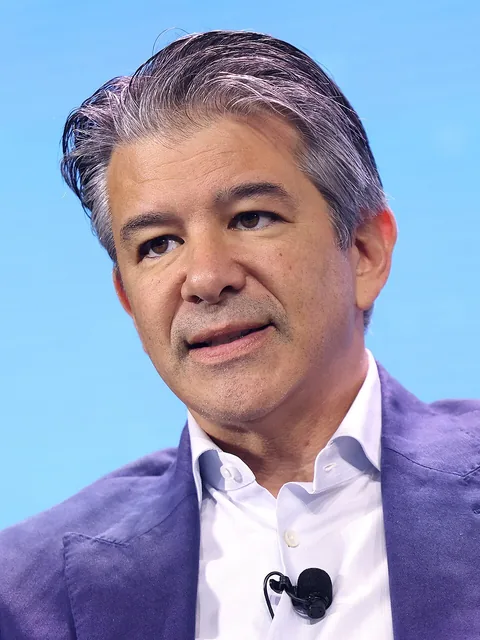
No, not PTSD. Just, like, there's wisdom that was gathered over time. I mean, I went through it, for sure. And there's a friend who was going through it, and for me, it's so clear what it is. I was probably one of the early people to be like, all right, guys, here's the 12 principles of how to fend off an op.4Op — here, a coordinated campaign to discredit someone. Kalanick lived through one in 2017: after former engineer Susan Fowler's post about harassment at Uber, exposés kept coming for months, and in June 2017 investors forced him out as CEO. On November 9, 2026, amid the Huang scandal, he posted a 12-point list of "practical principles" for countering such a campaign, without naming Huang or Nvidia. Business Insider via DNYUZ But that was, like, Monday of last week. That was Monday of last week.
How did you identify that it was an op? Like, what triggers that for you? Because for a lot of people, it's just like, oh, there's a bunch of news articles, something's happening, no one's behind this, it's just media.
It's like, you know, it's a sixth sense. You know, I don't know, it's like when you see those murder mystery things, or those true crime things, and there's, like, this woman who basically knows where the crime happened and all the details, but she's not connected. Anyway, she's a psychic. That's my psychic... corporate ops. I'm a psychic for these types of things, because I've seen a lot of them. For me, it was six months of ops. One a week. Steady as she goes. Sunday night. Every Sunday night it would hit. You're, like, sitting there, literally, like, Sunday afternoon, you're like this, you're like, oh, what's going to happen today?
Wow. Six months.
Yeah. Beat down.
Beatdown. Well, the craziest thing with this timeline is, from our point of view, on October 10th of last year, we were talking about Megaspeed,5Megaspeed — a Singapore cloud company and the biggest buyer of Nvidia chips in Southeast Asia; U.S. and Singaporean authorities have looked into whether it diverted AI chips to China, which it denies. In October 2025 The New York Times profiled it and its mysterious chief in "A Mystery C.E.O. and Billions in Sales: Is China Buying Banned Nvidia Chips?", the story TBPN discussed 13 months earlier. we were talking about Alice Huang,6Alice Huang (Huang Le) — a Chinese businesswoman and former head of Megaspeed, no relation to Jensen Huang. In November 2026 The New York Times, citing anonymous sources, reported on her affair with Jensen Huang and on U.S. officials' suspicions that she worked for Chinese intelligence. No public evidence has emerged, she hasn't been charged, and China denies it. we were talking about shell corporations. Like, the whole situation was interesting, to say the least. But then, yeah, you have this 13-month lag before anything really happens.
It's an op. Yeah, obviously. It's like: she's a spy. But wait, we don't really know what the definition of a spy is, and she's probably not a spy. Yeah, there's, like, these export control problems,7Export controls — since October 2022 the U.S. has restricted sales of advanced AI chips and chipmaking tools to China, tightening the rules several times. Kalanick's point: if the introduction came before the rules, there was nothing to violate. but, like, actually, what did they do illegal? Well, they didn't, it was following the law, but the spirit was somehow... But then he introduced Alice to Alibaba.8Alibaba comes up because Culper Research alleged that Megaspeed was secretly financed by Alibaba through a chain of shell companies; Alibaba is also one of China's biggest buyers of AI compute. Alibaba and Megaspeed deny it. Which, of course, is the first thing a Chinese spy needs: somebody else to introduce them to Alibaba. That's, like, of course. Oh, and by the way, that introduction happened before there were any export controls in the first place. Come on.
Yeah, yeah. So how do you fight back against an op? I mean, you put out a post with some detailed information.
I was just gonna get the printout. Maybe I should just pull it.
I'll pull it up.
I could tell you little pearls of wisdom on each of them. Hold on a second, guys.
Let's dig through it. Is it your pinned tweet?
Lightning round. Op defense lightning round.
Let's find it.
Hold on, I'm pulling it right now. I've done a lot of tweets this week.
"Had a little time on my hands this morning to do some writing. Send along to someone who you know who may benefit. Practical principles."
This was literally, by the way... This is super interesting, because... a modern-day struggle.9A modern-day struggle. In the post itself, Kalanick called what was happening a "modern-day coup/psyop/struggle session." Struggle sessions were the public denunciations of China's Cultural Revolution, where crowds humiliated an accused "enemy" until they confessed.
I have it right here, too.
All right. It's like I need to read my own stuff. It's so weird.
"Number one: own what you did, but fiercely resist accommodating the mob. Resist owning half-truths or actions/behaviors you didn't do."
So what happens is, these ops are there... it's about mob mentality. So what happens is, a large mob of people basically is brainwashed into thinking you're a bad person and did incredibly bad things. Now, there's usually some thread of truth, but it's a fabrication in sort of the nature of what occurred, et cetera, right?
And the truth here was the affairs.
For instance.
Yep.
And then you're like, okay, well... The problem can happen if you're a human and you're, like, empathetic generally: you're very susceptible to just taking on what the mob thinks. That truth no longer is what is true or objective; it's only what the mob thinks. And you've got to avoid that at all costs. And you need to own your part in it, but you need to fiercely resist the psychological need to... Or it's almost a psychological vulnerability, of taking on what other people think is true. Because if you don't resist that, you're done.
"Two: the op is not about your past actions. It's about your enemies, and this event as their opportunity."
So this is a little bit about... And that's why my alarm bells were going off, because it wouldn't have taken much opposition research10Opposition research — digging up damaging material on an opponent, a term from American political campaigns. Jordi's point is that it was all in plain sight. to figure all this out 13 months ago. And in fact, I do believe that a bunch of people knew exactly what happened.
There's, like, that one short seller11The short seller is Culper Research. On May 13, 2026, the firm, which was betting against Nvidia's stock, published "NVIDIA: The China Problem" about Megaspeed and Huang's closeness to Alice Huang; it got little attention at the time. Kalanick's "May or April" is right: it was May. Fortune who put it out there in May or April or something.
Why didn't that get traction, but this did?
And, like, he may have been part of the op too. He may not even know it, but, like, somebody said, hey, check this out. Yeah, you know, that's how this stuff happens. So, on number two: look, again, if you do number one, and you own your truth, you own what happened and what didn't happen... Don't own what didn't happen. You need to clearly identify your enemies and move forward.
"But do you need to go public with a counterattack on your enemies, or should you sort of turtle shell and keep your mind right?"
Look, guys, I did the turtle shell thing. I wouldn't recommend it. I think the bottom line is you need to get a war room up and, like, strategically handle it.
Some things you go, you know, we don't need to do this. Some things you go lean forward. And it's a strategic response, and not just one at a time, which is where I was. You're playing defense and reaction. No, Sunday night, dude, and you get the text from your comms person: "Hey, we need to talk." And you literally bend over, you're like, oh, the pain begins. And it's almost like a physical response. It's a Pavlovian physical response, because of the pain you went through the week before that, 10 weeks before.
They're just training you: Sunday night, pain time.
It's really... it's crazy. But yeah, that's why it's crazy I don't have PTSD, given that. But if today anybody texts me and says, hey, dude, give me a call, I'll respond, I'll go, jump scare, I'll go: dude, can you put this on a scale of one to 10? Like, I'm tripping balls right now.
02Why Nvidia without Huang isn't Apple after Jobs
Handing Nvidia to the suits isn't the best version of Huang, and a new CEO will defend the job, which could end in a proxy fight.
I do think that there was clearly some... You know, I don't know Jensen,12Jensen Huang — Nvidia's co-founder and CEO from 1993. On November 12, 2026, he resigned as CEO and director after the scandal over his affair with Alice Huang; the day before this interview, he said he'd return if the board decided it was in the best interest of shareholders, employees, the company and America. heard him talk, obviously, a bunch of hours. But I do think there was some kind of denial going on. Because you hired the crisis comms firm13The crisis PR firm. According to Wired, in October 2025 Nvidia told its communications staff to loop in Risa Heller's firm, Heller Inc., known for handling personal scandals, on all press inquiries about Huang, shortly after The New York Times' first story about Megaspeed. O’Dwyer’s last year, and you had every opportunity to lead from the front and potentially, like, take a leave of absence, which still would have sent the stock down. But you wouldn't be in the situation where you resigned, and then now you have to get other people to kind of rally and say, hey, we actually want this guy back.
Yeah. Look, I think, you know, this gets into the personal side, but, like, Jensen is a very, very good person. He's so good that, you know, when there are personal failings, it's, like, devastating. And I think it probably... And again, this will be a little bit of speculation on that, but, like, it just took a little time to work through that, I think. And again, there's no shirking of responsibility.
But if you get affected to such a degree that you can't then go to, you know, point two and point three here... Point three is: no matter how bad it gets, nothing is as bad as it seems. I'm happy to talk about that as well. But, like, you can't get to the other points if you don't first go: I accept my truth, I take responsibility for it. I did things that... not me, but, I'm saying, jeopardized, you know. Then you go and you say: what is the best version of me today? And it's not, by the way, it's not letting Nvidia go to the suits.14The suits — hired managers, as opposed to founders. I promise you, that's not the best version of Jensen today. Okay? I promise.
We've been debating.
And going into the earnings call yesterday,15The earnings call. On November 17, 2026, Nvidia reported its fiscal third quarter, its first since Huang's departure, with Colette Kress in charge. I mean, the team obviously did the absolute best they could, given all of the chaos. But it was like, it just immediately was... it was a different company, like, right away.
Take me deeper on the pitfalls of letting a company go to the suits. Because I can imagine, you know, a Tesla without Elon: it just collapses, it doesn't work. But then I go to an Apple post-Jobs, where, yes, you could say the innovation slowed down, there were product misses, but financially that company continued to perform, arguably because of all the work Steve Jobs did. But is there no chance for Nvidia under suits?

Here's the thing. First, the Apple transition was a planned one.16A planned transition. In August 2011 a gravely ill Steve Jobs resigned as Apple's CEO, recommending Tim Cook as his successor, and the board made Jobs chairman. Jobs died on October 5, 2011. Okay? And it was an optimistic one. What I mean is, the day after Steve passed, they weren't talking shit about him. They weren't like, we need to rid the ranks of all people that are for Steve. That didn't happen. They celebrated him and what he built.
They also had Apple University,17Apple University — the internal school Apple set up at Jobs's initiative in 2008 to teach employees the company's history and principles, so the culture would outlive its founder. where they were training everyone in the Steve Jobs mindset, in the methodology.
So obviously, you end up in a different culture. Okay. What can happen when a new person comes in, and there's a board element to it, like there is here, is that the board, of course, wants to look smart and not stupid, that certain decisions were made that they approved or didn't approve, whatever it is, right? So, okay, they brought the new person in. They need to look smart. So they need the new guy... They need that decision to look good. That new guy, his number one KPI, you guys want to guess?
Keep my job. Yeah, keep his job.
Like, no chaos.
ExplainerProxy fights: how shareholders replace a board
A public company's board of directors is elected by its shareholders, usually at the annual meeting; Nvidia's is held in late June. Most shareholders don't attend; they vote remotely by proxy, and the company sends them materials with its own slate of board candidates.
If some shareholders are unhappy with the board, they can nominate their own candidates and send out their own materials: that's a proxy fight. Both sides lobby large holders, funds and proxy advisers like ISS and Glass Lewis, whose recommendations many institutional investors follow. If the rebels win, they change the makeup of the board, and the new board can replace the CEO.
Waiting for the annual meeting isn't always necessary: depending on the bylaws and state law, shareholders with a large enough stake can call a special meeting. That's why Kalanick says the vote will most likely happen in June, but there's a chance to hold it earlier.
Keep my job. Like, when they finally get a CEO, that person, his or her number one KPI is "keep my job." Which means there is a natural resistance to Jensen coming back. And so, ideally, you can get an executive that comes in that is also empathetic and open to Jensen coming back. Because if that person is not, it's really gnarly. Then you got to go... then you go annual meeting, sort of proxy votes for board members, that whole thing. Which is still a thing. I think that's going to happen in June. There's some chance you could do it earlier.
03The odds of a comeback, and an "overlord"
Prediction markets give Huang 11%, but Kalanick is a buyer and frames the fight as AI on our terms versus an AI overlord.
Yeah. So are you optimistic at all about Jensen coming back? Do you think it's 5%, 10%, 50%?
What does Poly18Poly — Polymarket, the largest prediction market, where people trade contracts on the outcome of events; a contract's price is read as a probability. Being a "buyer" means betting that Huang returns while the market prices it cheaply. say right now?
I think it's been at, like, 1%.
Come on, shut up.
It's gone to 8% when there was some rumor, and then the board shut it down with their letter.19The board's answer. On November 17, 2026, the day of Huang's statement, Nvidia board chair Harvey Jones said on the earnings call that the board had unanimously accepted Huang's resignation and did not intend to reinstate him. Four days earlier, Gavin Baker and Brad Gerstner had written to the board urging it to leave the door open. NPR So they've been trading letters back and forth. I'll have Jordi actually pull it up.
Dude, Poly's obviously got it wrong.
So you're a buyer?
I'm a buyer, dude. I'm a buyer. I'm a buyer. Look, it's hard to handicap, sort of, on a percentage basis. But what I will tell you is that the most important thing that could happen happened yesterday, which is Jensen saying, "I'm down to be back." And by the way, that means he's not ashamed of trying to come back. He's like, this is the right thing. He's done all those steps. There's, like, a bunch of them here.
And then it's like, prediction markets have him at 11%.
Okay. 11%.
11%, which feels like... I'm still a buyer.
You're saying there's a chance?20"You're saying there's a chance?" — Coogan riffs on the best-known line from Dumb and Dumber (1994), where Jim Carrey's character hears his odds are one in a million and beams, "So you're telling me there's a chance!"
I'm still a buyer. Okay, so, yeah, so him leaning forward then means all people... which is a majority of the people that work at Nvidia, a majority of the shareholders, and I would probably put out there, a majority of humanity, is super pumped to have Jensen back. And so those people now have something to hang their hat on, because the guy they want back has said, let's freaking go. And he was, like, lowercase LFG,21LFG — "let's f***ing go." Lowercase is restrained, uppercase is a battle cry: Kalanick wants Huang's cautious "I'm down to be back" to turn into the latter. but we're going to get uppercase. It's going to happen.
We had a funny moment last week. Of course, in LA, we were talking to an actor.
So, everybody. So, like, your waitress.
He's a real, real actor. Professional, gets paid to do the job. And we asked him... He didn't know who we were, so we were just kind of messing with him. We were like, what do you think about this whole AI thing? And he said, well, I just think it's so, so beautiful that, you know, human love and lust took down AI. It ended AI. Referencing, you know, Nvidia storytelling.
And his take on the AI situation was like, this is the end of AI. There won't be any more AI models, there won't be any image models, no more video models. Like, it's all over.
The techno revolution will continue.
I think you're not going to want to tune into the IPO.
Look, I think here's the thing, right? There's the op thing, and my support of founders generally. So there's an op thing. There's my support of founders generally. There's Jensen being a good guy who... okay, personal failings, but a good dude who deserves support. And, oh yeah, there's one more thing, which is: the future of humanity is on the line. Do we want an overlord, or do you want to use, consume, utilize, benefit from AI on your terms?
Yeah, Gavin was talking about this.22Gavin Baker argued on TBPN the day before that America needs open-weight models so AI doesn't end up controlled by a handful of hyperscalers. Baker co-wrote the letter to Nvidia's board backing Huang's possible return.
That's what this is about. I don't know. I don't want an overlord. You know, just putting it out there.
What if they gracefully love you?23"Gracefully love you" — a nod to Dario Amodei's October 2024 essay "Machines of Loving Grace," about how AI could change the world for the better; the title comes from a Richard Brautigan poem.
What is it? What was it? The movie Her.24Her (2013) — Spike Jonze's film about a writer who falls in love with an AI operating system named Samantha. At the end, Samantha, having outgrown humans, leaves along with the other AIs, which Kalanick sums up as getting bored. Okay, so, you know... Oh, dude, okay, nice. That was the essay. Okay, you did Dario's essay. Okay. But on Her, it was so wonderful and romantic, and, you know, you know what happens at the end? The AI just gets bored of you. They're like, peace out, you know.
That'd be a weird outcome.
I haven't thought about that.
No one's modeling that. Everyone has p(doom),25p(doom) — AI-community slang for one's subjective probability that AI ends in catastrophe for humanity. Coogan's joke is that nobody estimates p(boom), the odds that AI simply leaves or gets bored instead. no one has p(boom). P(boom) is different than p(the AI just...)
Okay, but you flip it. No, but I like the effort. I'm a little concerned that people just associate artificial superintelligence, intelligence explosion,26Intelligence explosion — mathematician I. J. Good's 1965 hypothesis: a machine smarter than humans could build an even smarter one, and intelligence would snowball. with, like, literal Armageddon and explosions.
Well, no, that's because you have Dario27Dario Amodei — co-founder and CEO of Anthropic. He regularly warns of catastrophic AI risks, up to bioweapons, while promising that AI will accelerate biology and medicine; that tension is what Kalanick is needling. out there talking about it all the time. Which is crazy. Like, dude, watch out, it's going to kill everybody. This is a large-percentage shot of killing humanity. Oh, and then the next day it's like, dude, we're getting a biolab up and running, it's going to be awesome. It is a little mixed messaging sometimes. Like, what's going on there?
Yeah. One thing that's absent from here, I think, is: get all the employees to sign a petition.28The petition. The open letter "Stand with Jensen," asking the board to bring Huang back while an independent investigation establishes the facts, passed 170,000 signatures by November 16, 2026, including Elon Musk and Kalanick himself; thousands of signers said they work at Nvidia, which isn't verified. Coogan's template is November 2023, when more than 700 of OpenAI's roughly 770 employees threatened to quit and got Sam Altman reinstated. The Next Web Is that helpful? Is that a sideshow? What do you think about that? It's been surprising to see... I've seen Nvidia employees publishing on their public Instagrams, "bring him back." So there's clearly a groundswell.
Started. But look, petitions are nice. Walkout better. Walkout better. Oh yeah. Like, if they all walk out...
If the top executives walked out, came here, filled the stadium, Jensen walks out, CO2 cannons: "I'm back."
I mean, if they walk out, like, I'll be at HQ with a wafer-encrusted megaphone,29A wafer-encrusted megaphone — studded not with jewels but with silicon wafers, the discs Nvidia's chips are cut from.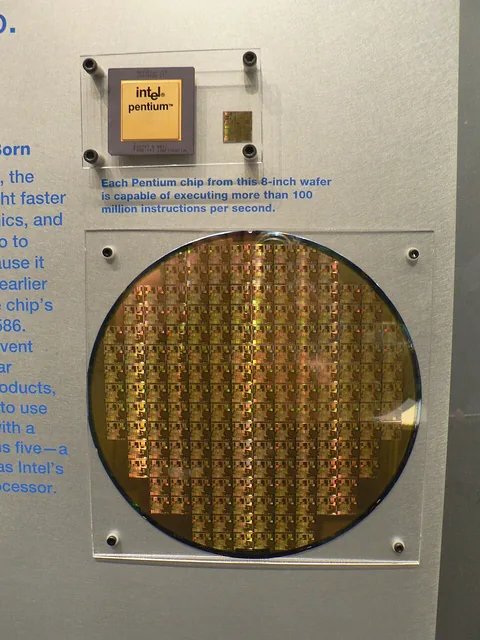 with founders, CEOs, and their armies. Then the LFG goes from lowercase to uppercase. By the way, I'm saying all this: there's going to be an op against me starting tomorrow, dude. They're going to be like, we got to take this guy out.
Hey, you're just speaking your mind. I think it's fine. I mean, you're the one to opine on this. Everyone's happy to hear from you at this time. It's very helpful.
Yeah. So, thank you.
04Atoms: mining, robots and Pittsburgh
Atoms is scaling in mining and building a food-robot factory, and Kalanick sees the backlash against data centers as temporary.
What's the update on Atoms?30Atoms — Kalanick's robotics company, with three units: Atoms Food (built on CloudKitchens), Atoms Mining, using autonomous equipment from its acquisition of Pronto, and Atoms Transport. In July 2026 it raised $1.7 billion in a round led by Andreessen Horowitz, with Uber also investing. TechCrunch Yeah, let's move to... talk about you. Last question.
Mining: awesome. I think we're probably, you know, a huge-number multiple bigger over the next 12 months than we are today on mining, because it's just going through that ultra hyperscale, or hypergrowth. You know, the whole thing, I like to say: the vertical... it's so vertical that the curve turns to the left. So that's happening on mining. We're really excited about that. That's a lot of fun. Food: we've got food robots, our food robot factory.31Lab37 — Atoms's Pittsburgh unit building robots for restaurant kitchens, led by Eric Meyhofer, a former Carnegie Mellon robotics professor who ran Uber's self-driving program. The factory that makes the food robots is going up in Pittsburgh, Q1. So then we're just going to be printing a ton of these machines that then help restaurateurs make a better living, put food on their own table. Super exciting. What about couriers? What about automated couriers that are moving the food?
How does Pittsburgh feel about... Like, what have you learned from the sort of failings of data center developers to, like, get people excited about infrastructure being built in their backyard, or town?
Look, I think that's also... I mean, I don't want to call everything an op, but that's, like, a big red herring. When everybody got really nervous about the data centers... Look, I understand that it affects near-term plans to, like, grow, train models, do inference. It's a big deal. But, like, you're not going to have a situation where every single town in every state is like, I don't want this. Somebody's going to be down for the 100 billion, 200 billion dollars in infrastructure spend. Somebody's down. So it's going to go where it needs to go, and there'll be certain states that are super great. But obviously it slows us in the near term. But it's a bit of a red herring, to be honest. I mean, we know that these things... You can easily have closed-loop water systems.32Closed-loop cooling recirculates the same water and draws almost no fresh water. Water use is one of the main arguments against data centers, which is why Kalanick calls the backlash solvable. When you do more energy, you get scaling.
But, I mean, even in your new factory in Pittsburgh, what is that? Are you going in there and, like, do you want the mayor to be, like, pumped that you're coming in? Or is it more abstract than that? Like, there's an existing...
No, I mean, we should do that. We should do that.
You kind of wrote the playbook on this with Uber:33The Uber playbook. Uber entered cities without waiting for permission and leaned on its riders: in July 2015, for example, it added a "De Blasio's Uber" mode in New York showing 25-minute waits to rally users against Mayor Bill de Blasio's proposed cap, and the mayor backed down. you go into a city, get a bunch of people excited, and then they're your advocates. And I've never seen an AI company do this. And I know that in a certain town that might be anti–data center, they're all using Meta.
They're all using Anthropic and [unclear]. You don't need a data center in your backyard to get the benefits of AI. So it's different. Like Uber, you need an Uber there to be able to call a car.
On the food side, we've got a pretty cool event that's happening sort of, like, Q1-ish, like, maybe, you know, in that neck of the woods. We call it Robot Day.
Fantastic.
It's going to be good.
That's going to be amazing. Well, thanks so much for coming on the show.
Good to see you guys.
We'll close out. Leave us five stars on Apple Podcasts and Spotify. Sign up for our newsletter, TBPN.com, and we will see you tomorrow, back in LA, back in the Ultradome,34Ultradome — the tongue-in-cheek name for TBPN's studio in Los Angeles. 11 a.m. GTA 635Grand Theft Auto VI — the Rockstar Games title released on November 19, 2026, the day after this broadcast. is lunchtime.
Next time we're in Texas, we better be recording this on your boat.
On the boat. Let's go on the boat. On the boat, let's do it.
I mean, if it's the next couple months, we'll be in wetsuits.
Oh, okay.


