

Acquired
Chapters
Ben calls Rolex a cascade of paradoxes, a famous brand run as a secretive company, a luxury good sold by the million and a big business built on a dead craft, which is why this episode is about the business of watches rather than watches.
Read the chapter- The company is owned by a charitable foundation, the Hans Wilsdorf Foundation, discloses nothing, and Ben reckons it is even more secretive than IKEA or Mars.
- Over a million people a year buy a Rolex at an average price of $13,000, and Ben estimates that roughly ten times more Rolexes are sold than Birkins.
- The most successful Swiss watch company wasn't founded in Switzerland or even by a Swiss person.
- A $10-plus billion business makes watches that, as Ben puts it, can't tell time as well as his Apple Watch or even a $10 Casio.
An orphaned outsider from Bavaria learns the watch trade from the inside, starts his own firm in London and finds in Bienne the movement maker on whom all of Rolex would be built.
Read the chapter- Wilsdorf was born in 1881 in Kulmbach to a Protestant family and lost both parents at 12, and David points out that the founders of Louis Vuitton and Hermès were orphans too.
- As a secretary at the Geneva watch exporter Cuno Korten he handled British clients, and when he had three accurate pocket watches certified at the observatory, the firm realized chronometer certification helped move product.
- In 1905, at 24, Wilsdorf starts Wilsdorf & Davis in London with Alfred Davis's capital, assembling the best Swiss movements and cases, though at the time the dial carried the retailer's name.
- Jean Aegler of Bienne made miniature movements that were also highly accurate, and their handshake deal lasted 99 years, until Rolex bought Aegler in 2004.
Wilsdorf bet on the wristwatch before the market was ready, coined a Kodak-style name for it and got the Kew observatory to vouch for its accuracy.
Read the chapter- After reading that soldiers in the Second Boer War wore wristwatches, Wilsdorf placed the largest order in Aegler's history, though Ben notes the market didn't really arrive until World War I.
- The first real buyers of precise wristwatches were in the far reaches of the empire, Australia, South Africa and especially India, where people rarely wore a jacket or vest.
- Wilsdorf wrote that a good genie whispered "Rolex" in his ear on the upper deck of a London bus, and Ben hears both the rolling of a crown and the tick of a watch in it.
- In 1910 a wristwatch movement earned its first chronometer rating at a Swiss horology school, and on July 15, 1914, after 45 days of testing, an Aegler movement received the first Kew Class A certificate ever given to a wristwatch.
The war made the whole world want wristwatches, but anti-German sentiment and British tariffs pushed the company to Switzerland, home of a centuries-old watchmaking tradition.
Read the chapter- In 1915, amid anti-German fervor, Wilsdorf & Davis renamed itself the Rolex Watch Company, even though Wilsdorf was by then a naturalized British citizen.
- Britain imposed a 33% import tax on watches and in 1916 banned imports of gold and silver, so assembly moved to Bienne and, in 1919, headquarters moved to Geneva.
- Ben traces Switzerland's dominance to Calvinism's ban on frivolous jewelry, long winters, the établissage system of tiny workshops in the Jura Mountains and Huguenot refugees from France.
- In 1919 and 1920 Hermann Aegler, the founder's son, bought about 15% of Rolex and joined its board while Rolex bought shares in Aegler, though David believes there was still no formal supply contract.
Demand for wristwatches exploded after the war, but dust and moisture ruined them, and Rolex won the race to waterproofing with a purchased patent and a splashy launch.
Read the chapter- David explains that waterproofing was shorthand for keeping out dust and humidity, and that the earlier hermetic cases put the watch inside a second case that had to be opened every day to wind it.
- In October 1925 Wilsdorf, who like Forrest Mars read the Swiss patent register religiously, bought a patent for a moisture-proof winding crown, and in July 1926 he registered the Oyster name.
- In 1927 Mercedes Gleitze attempted a vindication swim across the Channel with an Oyster on a chain around her neck, and although she didn't finish after 10 hours, Wilsdorf bought the Daily Mail's front page the next day.
- David says ladies' models outnumbered men's 2 to 1 in Rolex catalogs until World War II, and that Rolex buyers today are still roughly half men and half women.
Self-winding freed Oyster owners from unscrewing the crown, and with accuracy and waterproofing it became the third pillar of a quality mechanical watch.
Read the chapter- Winding an Oyster meant unscrewing the crown, and David bets at least half of humanity wouldn't be fastidious about screwing it back in.
- Ben walks through the mechanism: a mainspring in a barrel stores about three days of energy, an escapement with a pallet fork and a balance with a hairspring release it beat by beat, and accuracy rests on the physical properties of the metals.
- British inventor John Harwood patented a hammer-style self-winding system, and his patent locked Rolex out of the UK until his company went bankrupt in 1929.
- In the early 1930s Rolex patented a silent rotor that spins freely in both directions and is still the industry's main self-winding method, and in 1934 it launched the Oyster Perpetual along with the steel-and-gold Rolesor look.
- In 1936, Ben says, Rolex took all of Aegler's production, and Aegler added Rolex to its name.
World War II turned precision watches into tools of a technical war, and afterward Rolex used a "three putt scheme" to get a Datejust onto Eisenhower's wrist and break into America.
Read the chapter- Cut off from Britain, Rolex made its first dive watches for the Italian Navy through its Italian retailer Panerai, and later smuggled watches into Britain via Spain, Portugal and Gibraltar.
- David says Royal Air Force pilots in the Battle of Britain wore Rolexes, while Ben pushes back that Omega was the leading brand at the time.
- The 50,000th, 100,000th and 150,000th certified chronometers, all Datejusts, went to Swiss general Henri Guisan, Winston Churchill and Dwight Eisenhower, who became president in 1952.
- With the J. Walter Thompson agency, Rolex launched the US tagline "Men who guide the destinies of the world wear Rolex watches."
- Legend has it that the Cyclops date magnifier came from a drop of water on Wilsdorf's Datejust, and Ben jokes that they made this one up.
Once any Swiss maker could match Rolex's technology, André Heiniger began selling what the watch says about its owner rather than its precision.
Read the chapter- Heiniger joined in 1948, brought in J. Walter Thompson, opened up the American market and later started working with Mark McCormack's IMG.
- From 1953 to 1955 Rolex launched the Turn-O-Graph for timing international business calls, the Milgauss for CERN scientists, the Explorer, the Submariner and the GMT-Master for Pan Am pilots.
- The Explorer is tied to Hillary and Tenzing Norgay's Everest summit, though Ben notes that Hillary himself preferred his Smiths watch.
- Jacques Cousteau wore Rolexes while filming The Silent World and Sean Connery wore a Submariner in Dr. No in 1962, and Bond stayed with Rolex until 1995.
- Through IMG Rolex signed Palmer, Player and Nicklaus, then Tiger Woods and Roger Federer, and Ben stresses that the strategy is only the best.
A chronograph nobody wanted for years turned into the foundation of the modern watch collecting market after an inexplicable craze in Italy.
Read the chapter- In 1962 Rolex became the official timekeeper of the Daytona International Speedway, and from 1963 it called its chronographs Daytonas, a name Americans can read and pronounce.
- Joanne Woodward gave Paul Newman a Daytona engraved "Drive carefully–Me," in 1984 he handed it to his daughter's watchless boyfriend, and David recalls that it later sold at auction for about $17.5 million.
- In 1986 Italian dealers, for reasons nobody knows, began snapping up Paul Newman–dial Daytonas, and prices shot past $30,000 for a watch that had been worth about $200 on the secondary market.
- The 1967–1970 "If you were…" campaign sold the lifestyle of people at the top of their fields, from Concorde pilots to divers and climbers, rather than those who command the world.
- From the 1980s on the Daytona was the one model you couldn't just buy off the shelf, and David quotes the forums: it's not a waitlist, it's a wishlist.
Ben's side quest shows how quartz turned the watch into a technology product that rode a semiconductor-style cost curve and wrecked a Swiss industry built on skilled labor within a few years.
Read the chapter- In 1945 Switzerland made 85% of the world's wristwatches, 19 million from 2,500 small companies, and by 1973 it peaked at almost 90 million watches a year.
- Bell Labs built the first quartz clock in 1927, the size of a room, but quartz needed integrated circuits to reach the wrist, which happened with the 1969 Seiko Astron that cost as much as a new car.
- Quartz watches fell 1,000x in price, Switzerland's share dropped to 15% by 1980, and Hong Kong was exporting 126 million watches a year.
- Rolex, owned by a foundation and outside the Swiss cartel, could wait it out, and a new market of aficionados who valued complexity, artistry and rarity grew in place of the old one.
- David argues that lifestyle alone can't defend against technology disruption, but a luxury strategy can: managing the market, limiting supply and not chasing demand with price.
Rolex watched Omega show what not to do and Blancpain and the auction houses show what to do, then bet on mechanical watches at scale.
Read the chapter- Omega, whose watch went to the moon, blew a lead in the ninth inning, as Ben puts it, by rushing into quartz, multiplying models and price points and diluting its brand, while Rolex kept to six or seven iconic models.
- In 1983 former Omega executive Jean-Claude Biver bought Blancpain and relaunched it as a mechanical-only brand with the slogan "Since 1735, there has never been a quartz Blancpain watch, and there never will be."
- Auctions taught the market to prize rarity, and Patek Philippe's Calibre 89 sold for over $3 million.
- Rolex made only small runs of the Oysterquartz, and Lucien Trueb wrote that André Heiniger believed wealthy people don't need an instrument that tells time.
- In a 1978 Gallup survey eight in ten Americans had never heard of Rolex, and less than 20 years later eight in ten had.
A foundation that doesn't need profits let Rolex wait, and under Patrick Heiniger the company integrated vertically so that every watch would be of uniform quality.
Read the chapter- Wilsdorf created the foundation in 1944 after his first wife died, its primary purpose is the continued operation of Rolex, and Ben says that means the CEO can survive three bad years in a row.
- Ben argues Rolex is an exceptionally well-made industrial product rather than luxury, and that luxury watches are Audemars Piguet and Patek Philippe.
- David counters that Rolex is a luxury company extraordinaire because, like Hermès, it manages the market instead of participating in it.
- Patrick Heiniger, CEO from 1992, bought Aegler in 2004 for a rumored billion Swiss francs and consolidated production from about 30 locations to four.
- Rolex bought its bracelet maker, forges its own metals, builds its own machines and, as David describes, designed one hallway twice the width of its biggest machine.
In 2008 Rolex held its prices and spent more on US marketing, and Ben argues that today's scarcity comes not from a luxury pose but from a refusal to destabilize the next hundred years.
Read the chapter- While rivals cut prices and ad spend, Rolex didn't cut prices, kept sponsoring the US Open and doubled down on marketing in the US, where a watch aficionado market was just taking off.
- Rolex sells through 1,500 authorized dealers and dictates their terms, but Ben notes it doesn't actually know its customers, because the data belongs to the dealers.
- Rolex bought its biggest retailer, Bucherer, in 2023 for a rumored $5 billion, and Ben thinks the main reason was so that no one else would own it.
- Ben calls the dealer waitlists a customer-hostile experience Rolex could fix by managing them centrally, while David cites luxury's anti-laws of marketing, such as making it difficult for clients to buy.
- Rolex raises production only slowly because, as Ben puts it, it's very hard for a business to get smaller than its biggest year, and he points to Cartier, which he says had to destroy hundreds of millions of dollars of inventory in 2016.
Rolex takes 30% of Swiss watch industry revenue and could be worth well over $100 billion, while its second brand Tudor, in Ben's view, serves as a lab and a shield.
Read the chapter- David first sees Tudor as a release valve that can scale with third-party movements, while Ben sees an innovation lab and a mid-market fighter, because "the shield protects the crown" and Rolex never has to punch down.
- By the estimates Ben cites, Rolex makes 1.1 to 1.2 million watches and about $11 billion in revenue, while Cartier and Omega each have 7.5% of the industry's revenue.
- Switzerland makes 2% of the world's watches but takes 45% of the dollars, and Ben guesses Rolex's operating margin is closer to 40%.
- Using Hermès as the comp, Ben puts plausible values between $40–50 billion and $200 billion before cash and real estate, and David has zero doubt it's worth over $100 billion.
- To Ben, Rolex is Porsche and Patek Philippe is Ferrari, and Rolex has found the spot where it can multiply two big numbers, units and price.
David's quintessence is that Rolex sits at the perfect point on the curve of price and quantity, and Ben's is that mechanical watches now do a completely different job, which makes Rolex a mirror image of Apple.
Read the chapter- In 7 Powers terms the hosts see branding and category ownership today and scale economies after the 1990s, while David insists the luxury playbook exists outside the framework.
- Ben thinks Rolex's only real bet-the-company move was the huge early order from Aegler, and that afterward its resources and structure let it make rational, low-risk moves, while David suspects Rolex would credit continuity.
- The Apple Watch, Ben says, helped the high end but destroyed $500 to $1,000 mechanical watches and fashion watches, and left the category without a functional alibi.
- Ben observes that Rolex is both the watch you want when you start getting into watches and the one you end up at, and that its website and videos look just like Apple's.
- Ben closes with the trivia that Rolex uses ultraviolet lithography for Daytona gears, and the carve-outs are Bluey, the Armchair Expert podcast and the ElevenReader app.
Quotes
On what Rolex really sells
“When you buy a Submariner or a Daytona or even a Datejust, you are not buying Swiss history here. You are buying 20th century modernity”
David RosenthalRead from 09:16On the lines for the Daytona
“If you go browse the forums, the lingo that I read is the Daytona is not a waitlist. It’s a wishlist.”
David RosenthalRead from 2:44:51How Blancpain set itself against quartz
“But if you value traditional craftsmanship, you buy a Blancpain. We are selling champagne and caviar, and they’re selling calculators over there.”
Ben GilbertRead from 3:14:32Why Rolex stayed loyal to mechanical watches during the quartz crisis
“Wealthy people don’t need an instrument that tells time. They want a beautiful and exclusive object on their wrist.”
Ben GilbertRead from 3:19:57What Rolex is really compared with
“The typical Rolex buyer is not comparison shopping with Patek or any other brand. They are comparison shopping with do I buy this Rolex or do I upgrade my 911?”
David RosenthalRead from 3:56:39Rolex and Patek Philippe in the car world
“Bottom line of what I’ll stick to is Patek is Ferrari and Porsche is Rolex.”
Ben GilbertRead from 4:12:09On the time horizon of a luxury brand
“The goal of managing a successful luxury brand is to manage for the long-term. By the long-term, I mean centuries.”
David RosenthalRead from 4:29:40Why people buy mechanical watches today
“Nobody for any reason needs a watch. It has no functioning alibi anymore. It is a pure display of, I feel like a better version of me when I wear this.”
Ben GilbertRead from 4:39:38
Summary
Rolex is a cascade of paradoxes. It's one of the best-known brands in the world and one of the most secretive companies: a charitable foundation owns it, and it discloses nothing. It sells more than a million watches a year and still keeps buyers on waitlists. It's the most successful Swiss watch brand, though it wasn't founded by a Swiss or in Switzerland. Ben Gilbert and David Rosenthal start in 1881, when Hans Wilsdorf is born in Kulmbach, Bavaria. Orphaned young, he works as a clerk for the Geneva watch exporter Cuno Korten and in 1905 founds Wilsdorf & Davis in London. That same year he strikes a deal with the movement maker Jean Aegler of Biel, a handshake agreement that lasts 99 years.
Wilsdorf believes in the wristwatch before the market does, invents the name Rolex on the model of Kodak and in 1914 wins a Kew Observatory precision certificate for a wristwatch. World War I makes wristwatches essential, while British tariffs and anti-German sentiment push the company to Geneva. Rolex builds its product on three pillars: the chronometer, the waterproof Oyster and the self-winding Perpetual. After World War II the hosts see a "three-putt" play: the Datejust, Churchill, Eisenhower and the slogan "Men who guide the destinies of the world wear Rolex watches." Under André Heiniger Rolex becomes a lifestyle brand: the Explorer, Submariner, GMT-Master and Daytona, testimonees from Arnold Palmer to Roger Federer, and James Bond.
A separate part is Ben's side quest on the quartz crisis. The 1969 Seiko Astron turned watches into a technology product, and by 1980 Switzerland's share of the world market had fallen from 85% to 15%. Rolex, independent thanks to its foundation, waited. Omega rushed into quartz and diluted its brand. Jean-Claude Biver revived Blancpain as a purely mechanical brand. Auctions and the Italian craze for the "Paul Newman" Daytona created a collectors' market. Rolex bet on mechanical watches and, under Patrick Heiniger, integrated vertically, buying Aegler in 2004.
Today Rolex makes an estimated 1.1–1.2 million watches and about $11 billion in revenue a year, 30% of the entire Swiss watch industry, and could be worth more than $100 billion. The hosts argue over whether it's luxury: for Ben, Rolex is Porsche and Patek Philippe is Ferrari; for David, Rolex is the model luxury company because, like Hermès, it manages its market rather than competing in it. They discuss waitlists, the Bucherer acquisition, Tudor and the Apple Watch. David's quintessence is the perfect point on the price-quantity curve; Ben's is that mechanical watches now do an entirely different job than they used to, and Rolex is the mirror image of Apple.
Advice
Define your market by the job the product does for the customer, not by the product itself: when technology takes over the old job, a market may open up for an entirely different one where you're strong.
Once you've made a product people love, don't redesign it; refine it a little every few years, so buyers know it won't go out of date and they're buying the same thing their grandfather once bought.
Increase production slowly and stay below real demand: it's very hard for a business to shrink after its peak, and overproduction ends in destroyed inventory.
If your company's main asset is its brand, don't squeeze out maximum margin in good times: sacrificing profit to strengthen the brand pays off over decades.
Mentioned
 Rolex02:03the company whose story the episode tells
 Hermès03:07the Birkin bag and a model of the luxury strategy
- Apple Watch03:51more accurate than a Rolex, but not a competitor
 Hans Wilsdorf05:45Rolex's founder
Show 81 more mentionsShow fewer mentions
- Alfred James Davis20:10Wilsdorf's partner and brother-in-law
 Jean Aegler25:14the Biel maker of miniature movements
- Aegler26:43supplied Rolex movements for 99 years, bought in 2004
 Eastman Kodak34:09the model for an invented name
 Marc Bridge48:48a dissertation on the revival of the Swiss watch industry
- Rolex Oyster58:48the first truly waterproof wristwatch
 Mercedes Gleitze1:04:36swam the English Channel with a Rolex Oyster
 Daily Mail1:07:23the front-page Oyster ad
- Mad Men1:10:10the era of professional advertising
 Hodinkee1:11:44the leading watch publication
 John Harwood1:28:09the British patent on self-winding
 Officine Panerai1:40:39the first dive watches, made by Rolex
- Rolex Datejust1:47:00the 1945 anniversary model with a date
 Henri Guisan1:48:25the first of the "three putts"
 Winston Churchill1:49:06the 100,000th Rolex chronometer
 Dwight D. Eisenhower1:49:26a US president with a Datejust on his wrist
 J. Walter Thompson1:50:40Rolex's ad agency
 André Heiniger1:56:13Rolex CEO and architect of the lifestyle era
 CERN2:01:51the Milgauss for scientists
 Edmund Hillary2:03:47Everest and the Explorer
 Tenzing Norgay2:03:47Everest and the Explorer
- Rolex Explorer2:05:26a watch for expeditions and Everest
- Rolex Submariner2:06:11the dive watch, a franchise of its own inside Rolex
 Jacques Cousteau2:08:16Rolex in the deep in "The Silent World"
- The Silent World2:08:41Cousteau's film that made the underwater world famous
- James Bond2:10:17wore a Submariner from 1962 to 1995
- Dr. No2:10:17the first Bond film, Connery with a Submariner
 Ian Fleming2:10:30a Rolex man himself
 Sean Connery2:10:54the Submariner in "Dr. No"
- GoldenEye2:11:21Bond switches to Omega
 James Cameron2:15:49Deepsea Challenge at the bottom of the Mariana Trench
- Rolex GMT-Master2:16:50a watch for pilots of the jet age
- Boeing 7072:16:50the start of the jet age and jet lag
 Pan American World Airways2:17:14the GMT-Master for pilots
- Omega Speedmaster2:20:04the "Moonwatch," the main blemish on Rolex's strategy
 Jack Swigert2:20:28a GMT-Master on Apollo 13
 IMG2:23:14the agency that built the testimonee system
 Mark McCormack2:23:14IMG's founder
 Arnold Palmer2:23:14the first of golf's Big Three
 Jack Nicklaus2:23:14golf's Big Three
 Roger Federer2:24:39the leading testimonee in tennis
- Rolex Cosmograph Daytona2:29:36the chronograph nobody wanted at first
 Paul Newman2:31:54the "Paul Newman" Daytona
- Winning2:31:54after this film Paul Newman became a racer himself
 Joanne Woodward2:32:18gave Newman an engraved Daytona
 Ben Clymer2:46:15Hodinkee's founder, who helped with the episode
 Joe Thompson2:46:40a watch journalist who witnessed the quartz crisis
 Bulova2:50:10the tuning-fork Accutron watches
- Bulova Accutron2:50:10a tuning-fork watch, a sustaining innovation
 Bell Labs2:51:41the first quartz clocks
 Seiko2:54:16the Astron, the first quartz wristwatch
- Seiko Quartz Astron2:54:16the first quartz wristwatch
- Hamilton Pulsar2:56:37the LED watch that flopped
 Swatch Group3:00:22the rescue of the Swiss industry
 Fossil Group3:03:12a lifestyle brand without a luxury strategy
 Omega3:08:10the main rival, which lost its lead
- Porsche 9113:11:36a model of slow iteration on one product
 Jean-Claude Biver3:12:52revived Blancpain
 Blancpain3:13:04mechanical watches as luxury
 Patek Philippe3:15:51the Calibre 89 and the auctions
- Patek Philippe Calibre 893:15:51a $3 million watch that started the craze for complications
 Hans Wilsdorf Foundation3:22:10Rolex's owner
 Audemars Piguet3:25:29luxury, according to Ben
 Patrick Heiniger3:26:47Rolex's vertical integration
 James Dowling3:28:57co-author of The Best of Time
- The Best of Time: Rolex Wristwatches: An Unauthorized History3:28:57a history of Rolex
 Bucherer3:40:46the largest dealer, bought in 2023
- The Luxury Strategy: Break the Rules of Marketing to Build Luxury Brands3:50:47the anti-laws of marketing
 Richemont3:52:20the watch industry's turn to luxury
 Cartier3:52:20the watch industry's turn to luxury
 Tudor3:57:34the Hans Wilsdorf Foundation's second brand
 Arvind Navaratnam4:03:56an analysis of the Rolex business
 Morgan Stanley4:04:20an industry report with LuxeConsult
 Porsche4:11:07"Rolex is Porsche"
 Ferrari4:11:23"Patek is Ferrari"
- 7 Powers: The Foundations of Business Strategy4:25:18the analysis framework
 Jony Ive4:36:05promised to destroy the Swiss watch industry
 Apple4:50:33Rolex's mirror image
- Bluey4:53:21David's carve-out
- Armchair Expert4:54:15the podcast where the hosts discussed the NFL
 ElevenReader4:54:35Ben's carve-out
Sponsors of the episode


Transcript
01The paradoxes of Rolex
Ben calls Rolex a cascade of paradoxes, a famous brand run as a secretive company, a luxury good sold by the million and a big business built on a dead craft, which is why this episode is about the business of watches rather than watches.
Hey, Acquired listeners. We’ve placed this episode on Rolex toward the top of the podcast feed since people frequently say it is one of their favorites and a great place to start listening. It was recorded on February 23rd, 2025.1February 23, 2025 is when the episode was released; that's the date given in its description.
All right, David. What’s on your wrist?
Well, currently on the wrist is my stainless whiteface Daytona2Daytona (Cosmograph Daytona) — Rolex's chronograph, made since 1963 and named after the racetrack at Daytona Beach, Florida. that my dad gave me. I think it was still quite popular when he gave it to me, probably close to 15 years ago, but not like it is today.
A strong choice. I’m actually also wearing a Daytona that I am borrowing from a good friend of the show.
Love it.
Well, fun fact for listeners. The watch that David is wearing is the one that I was wearing during the Morris Chang interview3Morris Chang — founder of Taiwan's TSMC, the world's largest contract chipmaker. Acquired recorded an interview with him shortly before this episode. when we wanted to foreshadow that this was our next episode.
And in front of me here now in my hand but not on my wrist, is my other Rolex that my dad gave me a long time ago. My Rolesor4Rolesor — Rolex's trade name for combining steel and gold in one watch: for example, a steel case with a gold bezel and gold center links on the bracelet. Datejust.5Datejust — a 1945 Rolex model: the first self-winding wrist chronometer to show the date in a window on the dial.
Dude, you got to go one on each wrist.
Great.
All right.
Welcome to the Spring 2025 season of Acquired, the podcast about great companies and the stories and playbooks behind them. I’m Ben Gilbert.
I’m David Rosenthal.
And we are your hosts. All you need for timekeeping is something that happens at a constant rate and some way to count it. It could be sand in an hourglass, it could be a weight being pulled down by gravity on a grandfather clock, slowly turning the hands, moderated by the tick-tock of a pendulum. Or it could be a mechanical watch on your wrist, driven by a complex and beautiful array of hundreds of gears and springs. Today, listeners, we tell you the story that we can’t believe we haven’t already told on Acquired—Rolex.
Rolex is a cascade of paradoxes. It’s one of the best-known brands in the world. But despite that, it’s one of the least-known companies in the world. They’re privately held by a charitable foundation, the Hans Wilsdorf Foundation, so they don’t have to disclose anything, and really they never do. They’re one of the most secretive companies that we have ever studied. And David, check me on this, I think they’re even more secretive than IKEA6IKEA — the Swedish furniture chain; most of its stores belong to Ingka Group, which in turn is owned by the Dutch Stichting INGKA Foundation. or Mars.7Mars — the American maker of candy bars (M&M's, Snickers) and pet food; a private company wholly owned by the Mars family.
Oh yeah. It’s funny that the closer to the present day we get, the less we know.
Totally. They operate like an intelligence agency over there.
Like James Bond, one might say.
Or one might not say. Listeners, they make watches that everyone wants to buy, but nobody seems to be able to get with famously long and opaque lists at retailers. Except, of course, over a million people a year actually do buy one for an average price of $13,000 each. That is until you walk out of the store, then they instantly become worth more, at least for a lot of the models these days.
To your point about paradoxes of Rolex, this is one of the greatest ones. It is absolutely one of the very, very top, top tier luxury brands in the world. And yet they also sell a lot of units. Hermès8Hermès — the French luxury house founded by Thierry Hermès in Paris in 1837 as a harness workshop; Acquired devoted an episode to it. doesn’t sell a million Birkins9Birkin — the Hermès bag created in 1984 after the company's head, Jean-Louis Dumas, met the actress Jane Birkin; it's handmade and sold only in Hermès stores. every year.
There are probably 10 times more Rolexes sold than Birkins sold, or at least on that order. It’s a success built on the back of craftsmanship, engineering, and manufacturing, honed and perfected over 120 years. It’s one of the greatest brands in the world built meticulously and so intentionally, David.
My favorite part of the paradox, this is the story of the most successful Swiss watch company, but it wasn’t founded in Switzerland or even by a Swiss person.
No, no, it was not.
It’s a $10-plus billion revenue business performing a dead craft obsoleted by the digital world. They make a watch that can’t tell the time as good as my Apple Watch, or even a $10 Casio for that matter. So what is going on here? How did Rolex become Rolex? This is a story we’ve been giddy to share.
Oh, so excited.
Well, one big disclaimer upfront. Much like how our NFL episode10NFL — the National Football League, the top league of American football (32 teams); the NBA is the top US basketball league. Acquired has done episodes on both. wasn’t about football and our NBA episode wasn’t about basketball, this episode isn’t really about watches. It’s about the business of watches.
If you want to know every time an episode drops, check out our email list. It is the only place where we will share a hint of what our next episode will be, and we’ll share corrections, updates, and little tidbits that we learn from previous episodes. That’s acquired.fm/email, or click the link in the show notes. Join the Slack. Come talk to us about this episode with the whole Acquired community afterwards, acquired.fm/slack. And if you want more Acquired between monthly episodes, check out ACQ2,11ACQ2 — Acquired's second show: interviews with founders, CEOs and investors. our interview show where we talk to founders, CEOs, and investors who are building businesses in areas that we’ve covered on the show. The most recent one was a very fun interview we did with a friend of the show, Guillermo Rauch, the founder and CEO of Vercel,12Vercel — the cloud platform where developers deploy websites and web apps, and the creator of the Next.js framework; Guillermo Rauch, author of the Socket.IO library, founded it in 2015. about really the whole history of web development frameworks and their latest and greatest product, v0,13v0 — a Vercel service that generates a web app's interface and code from a plain-language description. a startup within a startup that lets you code web apps from scratch in just English instead of a programming language.
Search ACQ2 in any podcast player.
And listeners, this is not investment advice, but you can’t invest in this and you can’t invest in many of the other great brands that we are going to talk about on this episode either. There’s something remarkable about the companies we wish we could invest in, but actually we can’t. So this show is for informational and entertainment purposes only. David, where do we start our story?
02Hans Wilsdorf, Wilsdorf & Davis and Aegler (1881–1905)
An orphaned outsider from Bavaria learns the watch trade from the inside, starts his own firm in London and finds in Bienne the movement maker on whom all of Rolex would be built.
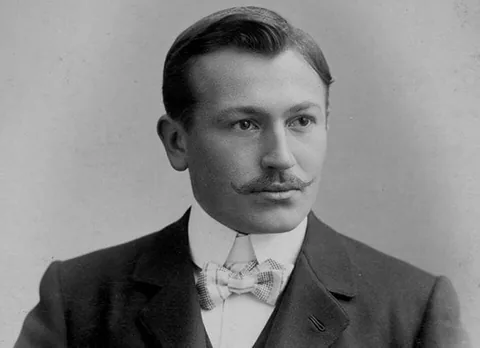
All right. We start, as is so often the case with these big old European companies back not in the last century but even the century before that, on March 22nd in 1881 in Kulmbach, Bavaria, about 30 miles north of Nuremberg in present day Germany, where Hans Eberhard Wilhelm Wilsdorf is born to young Anna and Johan Wilsdorf.
And you might say this sounds like a German name. Bavaria wasn’t a part of Germany, right?
Well, I was just going to get to that. Technically it’s not Bavaria anymore. Technically, it is part of the German empire, but this is a very, very recent development.
The Count, Otto von Bismarck, had only just 10 years earlier, convinced Bavaria to join forces and unite with Prussia to form the greater German state/German empire14The German Empire was proclaimed at Versailles on January 18, 1871, after victory in the Franco-Prussian War. Bavaria joined while keeping its own king. in the aftermath of the Franco-Prussian War, where they battled Napoleon III over in France.
But as far as young Hans and his family are concerned, they’re Bavarian. They don’t identify with this Germany thing. This is foreign to them. They are also Protestant, not Catholic, which puts them in the great minority in Bavaria at the time.
Now, I say all of this deep European history here for two reasons. One because it’s a fun story and calls back to our Hermès and LVMH episodes,15LVMH (Moët Hennessy Louis Vuitton) — the world's largest luxury conglomerate, formed in 1987 by the merger of Louis Vuitton and Moët Hennessy and controlled by Bernard Arnault. and it’s going to call back very directly to those episodes in a minute here.
Also I think it’s important to paint the picture of Hans is, even from birth, he’s this consummate outsider. He doesn’t really fit in in any national or religious identity in the either established or changing European order at the time. He doesn’t really have a country, he doesn’t really have a religion or a people. He floats between the seams of Europe, which Rolex itself is going to do, as we shall see in a very big way.
Now, back to young Hans and his family. His father, Johan, came from a line of successful ironmongers, and very likely Hans was destined to go into this business as well. However, when Hans is 12 years old, tragedy strikes and both his father and his mother die within a couple of months of each other. He’s orphaned, just like, this should sound familiar, Ben.
Oh yeah. Louis Vuitton16Louis Vuitton (1821–1892) — founder of the house of Louis Vuitton. He lost his mother at 10, his father died soon after, and at 13 he left home and walked to Paris, getting by on odd jobs (Wikipedia, "Louis Vuitton (designer)"). and Hermès.
This is absolutely freaking nuts. The founders of arguably maybe the three biggest and most significant luxury brands in the world today, were all orphans from the 1800s. This is wild.
And I wonder how much of a statistical bias there is here. If we were studying anyone from this era, how many of them would be orphans because of disease and war and…
All sorts of stuff.
Just lots of people died for lots of reasons.
Totally true. But it’s just so interesting. These brands, much less so Rolex, but Hermès, LVMH are so steeped in European history and the tradition of the nobility, but it’s actually these orphaned outsiders that founded them.
I think it’s a great point. Rolex doesn’t share that heritage at all. This is not steeped in nobility. This is not an artifact like a leather bag or a saddle that any king has ever had.
When you buy a Submariner17Submariner — Rolex's dive watch, introduced in 1953: the first wristwatch waterproof to 100 meters. or a Daytona or even a Datejust, you are not buying Swiss history here. You are buying 20th century modernity, as we will get into.
So in the wake of this tragedy, Hans and his brother and sister are placed in the care of his uncles. The uncles decide that they are going to sell the family ironmongering business to fund sending Hans and his siblings off to boarding school.
Hans would later write in this amazing document that is essentially his autobiography. It’s the first volume of a four book set that the company published in 1945 for the company’s 40th anniversary, the ruby jubilee. Hans writes, “Our uncles were not indifferent to our fate. Nevertheless, the way in which they made me become self-reliant very early in life made me acquire the habit of looking after my possessions, and looking back, I believe that it is to this, that much of my success is due.”
Hans goes off to boarding school and becomes an excellent student there. He excels in math. He also excels in foreign languages, particularly English. While he’s there in boarding school in Bavaria, he meets a friend who is from Switzerland.
He develops an interest in that country. He no longer really has any family ties or anything to Bavaria anymore. Doesn’t really care about Germany. He’s like, oh, great. Switzerland seems like a good place. I’m going to go live there when I graduate, which he does.
He moves to Geneva and he finds work there first for a large pearl merchant. This business was buying raw pearls from fishermen, and then selling them to the famous Swiss jewelers there in Geneva.
Then he joins another local trading company in an adjacent industry to the jewelry business, a firm called Cuno Korten.18Cuno Korten — a watch firm in La Chaux-de-Fonds, one of the centers of Swiss watchmaking in the Jura mountains. Wilsdorf joined it in 1900 as an English-language correspondent and clerk on a salary of 80 francs. Cuno Korten turns out isn’t in just any industry as far as Switzerland goes. They’re in the industry besides banking. They’re in the watch trade.
Well, you need something to bank.
You need something to bank, exactly.
A country can’t just have banking as an industry. It needs a real economy to build banking on top of.
Exactly. You start with jewelry, watches, then you get into banking. Cuno Korten is actually a major player in the watch trade. Now, they’re not watch makers, they’re watch exporters. They are facilitating the trade of all these best-in-the-world Swiss watches out of Switzerland and into other countries around the world.
At this time—this is the late 1890s—Cuno is doing about a million Swiss Francs worth of business a year. Now, I don’t know exactly what the Swiss Franc to US Dollar exchange rate was at 1900, but today the Swiss Franc is stronger than the dollar. It’s about 1:1.19Before World War I the franc was pegged to gold (the Latin Monetary Union, 0.29 grams of gold), while the dollar was worth about 1.5 grams of gold, so a dollar bought about 5.2 francs. A million francs then was about $190,000.
They’re pretty close.
So call it a million dollars of business a year in the 1890s. This is big. They’re a big player.
And it’s important to remember, too, it’s not like watches were this little corner of the Swiss economy. Exporting watches was a huge part of the Swiss economy and a huge employer in the nation.
Now, we’re saying watches here. It’s important to note what were watches at the time. They weren’t something you wear on your wrist. It was not wristwatches because basically Hans and Rolex hadn’t invented that yet. They didn’t exactly invent it, but hadn’t popularized it yet. We’re talking about pocket watches. That’s what the industry was at this time.
And part of the reason is functional. Pocket watches were bigger. The movement to accomplish a certain amount of precision didn’t require as little teeny tiny of tools. You had more margin of safety in bigger watches. Whenever anyone tried to make a watch and put it on the wrist, at this point in history, it was usually fragile or really inaccurate or actually worn more as jewelry. They actually didn’t call them wristwatches. They called them wristlets,20Wristlets — what wristwatches were called in the late 19th and early 20th centuries: they were considered women's jewelry, while men carried pocket watches. and they were mostly worn by women.
Wristlets, yes. We’ll get more into that later. I know you’re chomping at the bit to give the technical explanation of the crazy human craft and engineering that goes into watches.
It’s amazing. It’s so unbelievably cool.
But back to the Hans story for the moment. The job that young Hans gets here at Cuno turns out to be pretty pivotal for him and the future of Rolex. He is a secretary, which means that he’s answering letters from clients all around the world, and then responding and coordinating with them. Remember, he’s really good at languages, and what is his best language? English. So he’s coordinating with most of their clients in the British market in the UK.
And he sits at this really interesting choke point of the whole industry, where he understands how all the producers are laid out and how the whole value chain21Value chain — the sequence of links from raw materials to the buyer, each adding value to the product; Michael Porter popularized the concept in "Competitive Advantage" (1985). works on the Swiss side of things.
He’s seeing the market prices and price action happen for all different types of watches from different makers in different parts, et cetera, but he’s also getting to know the buyers in Britain who are not individual people. These are retailers, these are the jewelers in Britain. These are the distribution points for watches.
He’s getting the perfect business market, strategic background distribution relationships for going on to ultimately found Rolex. But it’s not just that he falls in love with the business of watches there. He also falls in love with the objects and watches themselves and their performance.
He starts this habit of he would take home batches of pocket watches at night and he would run his own tests for accuracy on them on the product that Cuno Korten was trading in. He would set them all at the same time, let them go overnight, and then he would check them in the morning how much they were disparate from one another and check their accuracy.
The legend goes that one day he gets the idea that he’s going to take three watches that he’s found to be quite accurate in this whatever this recent batch that he’s testing is, he’s going to go get them tested at the local astronomical observatory, and have them measured these watches according to the strict observatory timekeeping tests, which are also called chronometer tests.
If you’ve ever heard the term chronometer, a chronometer is a timekeeping piece—could be a watch, could be a larger clock, could be all sorts of devices—that has passed these astronomical observatory tests for being accurate enough for celestial navigation.
David, I’m looking down at this Daytona right now, and it says Rolex Oyster Perpetual, which all three of those words we haven’t gotten to yet. Superlative chronometer, officially certified22Superlative Chronometer Officially Certified — the inscription on Rolex dials. The movement is tested by the Swiss bureau COSC (tolerance −4/+6 seconds a day), and since 2015 Rolex has also tested the finished watch to its own standard of −2/+2 seconds a day. cosmograph.23Cosmograph — Rolex's name for its chronograph, a watch with a stopwatch function; the Daytona's full name is the Cosmograph Daytona. A lot of words in there that we will get to, but at the moment where we are is chronometer, officially certified.
Yes. Today this is like, oh cool. That’s cute. Your mechanical watch is officially certified that it keeps good time. Back then, this is critically important. Celestial navigation, if you’re involved in anything in shipping, the maritime trade, is critical. If you have a crappy timepiece…
You’re going to go to the wrong place because you’re using it for navigation. To your point, observatory chronometer certification, no one’s doing it for my pocket watch that I can set to the local church bell or whatever whenever I need to reset it.
But young Hans has this idea, he goes and does a, guess what? These three pieces that he takes, these pocket watches pass the test, and they get certified as chronometers. He takes them back to his bosses at Cuno and they’re like, whoa. Well let’s go to market. Slap that on the tin baby.
It’s this aha moment of Cuno and then soon the rest of the industry realizes, oh, actually chronometer certification on pocket watches helps us move product here.
The other thing to realize here is we are in an era where this era would last the next 100+ years. But an era where having a watch is super important. It’s not a fashion accessory. It’s not a nice-to-have. Without a pocket watch, if you are leaving your house and moving about in the world, you’re lost. It’s almost like not having your phone today where you feel like I’m floating. It’s very uncomfortable.
Totally. It’s even more than you’re saying. It’s like a smartphone in that you need it to function, but pocket watches are also like smartphones today and that they’re fidget devices. If you’re out in the world and you’re waiting in line or you don’t know what to do with your hands, you’re in a socially awkward situation, whatever, you take your pocket watch out, you’re going to open the clasp. This is what people did. It was just so ingrained in everyone’s day-to-day existence just like a smartphone is today.
It’s an essential tool for moving about the world, which explains how it’s such a huge industry that moves the needle for the nation of Switzerland, how there are these businesses that can be exporting a million dollars worth over 100 years ago, and why there’s so much attention being paid to it. It’s not a random accessory. It is an essential piece of life, a tool.
Totally. So after working at Cuno for a couple of years and liaising with the British market, in 1903 Hans decides that, hey, I’m good at English, I like London. I might actually want to move there. He moves to London at age 22, and he goes to work for another watch company there in London locally. We actually don’t know the name. I don’t think anybody has ever found the name.
What you and I read probably five books between us and wasn’t in any of them.
Yeah. He works there for two years and he writes, “Two things struck me most forcibly about my new employers,” this British watch company. “On the one hand their commercial competence, and on the other hand their lack of specialization. I soon gained confidence in myself, and in 1905 at the age of 24, decided to set up in business alone feeling that my training and education had prepared me.”
He strikes out on his own, starts his own watch importing company there in London. But remember the specialization piece that’ll come back in a sec. Hans is out on his own. There’s one problem, though. In order to do what he wants to do, which is import Swiss watches and sell them directly under his own banner where he makes and keeps the profits there in London, he needs some capital in order to finance the buying.
Got to place the order.
Yes. So through his lawyer, he gets connected with a local man in London named Alfred James Davis, who has some money to invest. They meet through the lawyer, they hit it off immediately, and decide to go into business together. Thus in 1905, Wilsdorf and Davis Limited, the world-famous merchant watch trading firm is born. And yes, none of you know Wilsdorf and Davis. However, Wilsdorf and Davis Limited is Rolex as we shall see.
Now, it’s often said that if you read anything about the history, people will tell you, oh, well Davis was Hans’s brother-in-law. He married Hans’s younger sister Anna. That is true. But I believe that didn’t actually happen until after Hans and Alfred went into business together. I think Anna met Davis through Hans.
But really it is Wilsdorf’s company. It’s funny that Davis’s name is on it. I get the sense he’s mostly capital. Yeah, he is there a little bit, but it’s almost as if Atari instead of being Atari is Bushnell and Valentine.24Atari was founded by Nolan Bushnell, and one of its first investors was Don Valentine, founder of the venture firm Sequoia Capital. That’s the equivalent here.
I think that’s right. Obviously they get closer over time as they become family when Davis marries Hans’s sister. But yeah, I think this is Hans’s business. He’s running it. Davis trusts him.
So what is the business doing?
Well the business plan when they get going is they’re going to do what Hans has been doing his whole career at this point in time, which is importing Swiss-made, highest quality in the world watches into the London market where there is high demand for them.
And they’re not selling directly to consumers, right?
No. Just like back at Cuno Korten, the buyers are, the retailers are the jewelers. No end consumer had any idea who made their watch at this point in time. They would walk into the retailer, say, give me a fine Swiss watch, sir, and the retailer would sell it to them.
And the retailer would take one out from the case. You look down at the face of the watch, the face of the watch has the retailer’s name on it, and you’re just trusting that the retailer bought a good watch from some importer, who bought a good watch from someone on the Swiss side, who managed to create a good watch by putting a movement, a case, and all that together.
Now, there’s a little bit of detail in there where sometimes the importer would import a fully-built watch. Sometimes, the importer would just import a movement, then they would import a case differently, and then they would put together themselves. But this was the craziest thing that struck me, is the retailer is the brand on the watch at this point in time.
There is no brand for the product.
Wilsdorf and Davis is occupying the spot in the value chain, where they are importing the watches, and then selling them to retailers to brand.
Now you said there a minute ago something really important, which is there were two ways that this would happen. You would either import fully-finished watches from Switzerland, a whole product so to speak, and either trading firm like Wilsdorf and Davis would do this, or Cuno Korten would export it, or maybe the retailers would buy directly from Cuno Korten, et cetera.
If they were big enough.
If they were big enough, yup. What Wilsdorf and Davis are doing is they’re saying, well, Hans knows through his time at Cuno Korten all the best movement makers, all the best case makers.
He operated one click up the value chain, aggregating on the Swiss side.
Exactly.
So now that he’s operating down on the importer level one click down the value chain, he’s like, I can still aggregate all these producers and start building a watch myself.
He’s not making anything, but he is assembling the finished product. He would have watchmakers there in Britain assemble the best movements that he would import from Switzerland with the best cases that he would find, and that was part of his value that he’s adding to the industry here.
And this is probably an important time. There is so much lingo in the watch industry, and we’re going to do our very best on this episode to demystify it. Movement, in layspeak, is the whole inside that makes the watch tick and drives the hands.
Not the dial, right?
Correct. No dial, no hands, no case, no glass front.
And the movement, I think like you said, is the critical piece.
Absolutely. That’s the hard thing.
Case is important, dial’s important, hands are important, but that’s all aesthetics. As far as performance goes, 100% movement. It’s like semiconductor production. If you’re a movement maker, you’re like TSMC here.25TSMC — the world's largest contract chipmaker: it makes chips designed by Nvidia, Apple, AMD and others. In the same way, a movement maker builds the "guts" of watches sold under other brands.
Chronometer officially certified refers to the movement. Actually, in fact, only the movements are tested not the whole final case watch.
Not the finished watches, yes.
So David, who is he importing movements from, and how does he meet said movement maker?
Well, that brings us to the other half of the Rolex equation. One Jean Aegler based in Bienne,26Biel/Bienne — a bilingual city in the canton of Bern at the foot of the Jura mountains, one of the main centers of Swiss watchmaking since the 19th century. Rolex, Omega and Swatch all operate there. Switzerland, which is in the mountains of the north of the country.
Importantly not Geneva.
Yeah, not Geneva. Geneva’s in the southwest of the country in Switzerland right next to France. Aegler runs this movement workshop up in what is then a tiny little town in the Swiss mountains. It turns out that he’s actually like a generational talent at watch movement making. In particular, what he’s really, really, really good at is making movements that are accurate and on par with the highest quality, most precise, most accurate movements out there on the market, but are also much smaller in size. He’s making miniature movements.
Hans had gotten to know Jean when he was working at Cuno Korten, and thought like, oh hey man, this guy’s a diamond in the rough up there in the mountains. He’s as good or better as any movement maker.
And he’s making these miniature movements before there’s a real market. It’s almost like he’s just doing it because it’s the hardest thing he can think of.
Totally. It’s like his hobby horse. I’m going to push the limits of human achievement of how small I can make this thing. I think he’s probably known and respected in the industry, but wasn’t a large player. Hans is like, oh, actually this guy is my ticket to differentiation here.
I’m keeping his address so I can write him a letter when I get to…
I start my own company.
Yeah.
So here we are at the beginning of Wilsdorf and Davis. Hans is importing these movements from Aegler, that he’s putting into cases, selling his watches here in the UK. This is 1905. This carries through, this relationship, for the next 99 years, until Rolex finally buys Aegler in 2004,27Aegler — the movement manufacturer in Biel; in 2004 it became part of Rolex, which has made its own movements ever since. where Aegler is making the movements for Rolex watches. I don’t think there’s ever any real formal arrangement here. It’s basically a handshake deal.
That’s correct. We will make your movements. Handshake deal for 99 years.
All of Rolex, everything it becomes, this is the basis of it.
So they weren’t exclusive yet. In 1905, they’re placing their first order and there’s already a little bit of a dance that’s starting to happen, where of course the front of the watch on the dial is unsigned, so the retailer can put their name there. This already is starting to rub Hans the wrong way. He feels like these are my watches. Why is the retailer get to put their name on it?
So he goes to Aegler and says, the ones we’re going to sell, these are Wilsdorf and Davis watches. I understand you made the movement, but we got to brand it somewhere. He gets Aegler to buy in on this idea that on the movement they’re going to put a W and D. Then also inside the case back for whoever they’re buying the case from, they also inscribe W and D.
That’s the state of things here in 1905 and those first few years after, is there’s a W and D on the inside case back on the movement, but not on the face of the watch.
Which gets into the type of watches that they’re making here. Now, we’re still in pocketwatch land. The wristwatch vision hasn’t really entered Hans’s brain yet, even though Aegler’s specialty is these small miniature movements.
Remember what Hans said about his earlier British employers and their lack of specialization. He continues in his autobiography talking about how he decided to do things differently here at Wilsdorf and Davis. “I undertook the financial side and management of our concern. From the very outset, our success was assured by our fundamental policy to trade only in specialty horological products and especially in new lines.
The first specialty we adopted was the traveling watch called a portfolio watch cased in the finest quality leathers. This line I immediately placed in large quantities on the market, the range covering every possible style and design.”
Again, we’re not at wristwatch yet, but he’s like, the way that I’m going to succeed and break through here is through differentiation.
Yes, to do something different. It’s like we always talk about. The most important thing to build a huge, successful business is to do something different and unique that people have to come to you for and can’t go to the commodity markets. Now that doesn’t necessarily mean you’re right.
Yeah, because he is not right with traveling watches.
We don’t tell any of the stories here on Acquired of all the people who wanted to do something extremely unique and different and was not what the market wanted. But it’s the classic, you have to be contrarian and right.28Contrarian and right — an investor's maxim: outsized returns come only from a correct bet the majority disagrees with; being right along with everyone else isn't enough.
Yeah. I don’t know. I guess reading what Hans wrote there, maybe he was right. It sounds like the traveling watch was a success enough. He probably thought it was a success at the time.
03Wristwatches, the Rolex name and Kew-A (1905–1914)
Wilsdorf bet on the wristwatch before the market was ready, coined a Kodak-style name for it and got the Kew observatory to vouch for its accuracy.
Then as legend has it, one day, shortly after starting the company and focusing on these travel watches, Hans is reading an account of the Second Boer War in South Africa.29The Second Boer War (1899–1902) — Britain's war in South Africa against the Boer republics, the Transvaal and the Orange Free State. Ben, I never knew that all of my AP European history lessons30AP European History — an advanced European history course in American high schools (Advanced Placement); passing its exam earns college credit. are going to…
I tweeted this yesterday.
I know. Who knew that our livelihoods would depend on AP European history someday.
That’s right.
Anyway, Hans is reading an account of the Second Boer War in South Africa. He reads that the soldiers that had fought had worn wristwatches so that they could coordinate their movements and their firing times, and all the troop movements even while they were holding guns.
Do you know why in particular this war had them wearing wristwatches?
Oh, I don’t. I just assumed that the technology had progressed enough. Because wristwatches existed at this point in time. They just weren’t thought of as serious watches.
That was part of it. Climate.
Oh yes, of course.
They can’t wear their jackets, and so they can’t reach into their pocket and grab a pocket watch.
Of course, because it’s hot there.
Yup.
Well, climate is going to become important again here in the development of the wristwatch industry. The soldiers and officers there would use these wristwatches because even though they weren’t as accurate as pocket watches, like you said, Ben, you probably weren’t wearing a jacket. Even if you were wearing a jacket, like if you’re engaged in battle, you are going to stop, put your gun down, take your pocket watch out of your vest, open the case. No.
The axis upon which you evaluate value is a different axis than when you’re hanging out on the streets of London.
Yes. Supposedly, as Hans is reading this, like a bolt of lightning, he has the key insight. Well, hell, it’s not just soldiers these days. It’s actually a lot of people in the world that could benefit from having an accurate timepiece on their wrist, that they could just turn their wrist, look down, and look at instead of a pocket watch.
Now, the funny thing is he calls Aegler, maybe he writes to Aegler, I don’t exactly know.
He sends him a text.
He places the largest order in Aegler’s company history, several hundred thousand Swiss francs for a bunch of these tiny movements. The great irony, this whole thing is he’s kind of wrong. The time was not right for wristwatches yet. The Boer War was not the shove that the world needed to say, whoa, wristwatches. The soldiers come back from the Boer War, and it’s still the wristlets era. There’s not really enough inertia to make it take off everywhere.
Now it’s okay, because Wilsdorf and Davis is still this small company. They don’t need that big of a market to address, to feed the needs of the business. But it would be another 10 years before World War I happened, and you had this incredible unfortunate tailwind saying, oh my God, we need tons of wristwatches now.
There does start to be a market for serious timekeeping, wristwatches, particularly in the far reaches of the empire, so Australia, South Africa, of course after the Boer War, and especially India. These are places where you’re probably not wearing a jacket or a vest that much. This is the initial seeds of the wristwatch market for Wilsdorf and Davis.
So interesting.
But Hans is a true believer at this point in time. He thinks this is going to be the future way beyond just the empire. People in Britain are going to want this too. It’s obvious to him why you wouldn’t want to have to reach into your vest to bring out your pocket watch.
He’s like a zealot.
He’s a total zealot. He is like, all right, we’ve got this killer product. We’re first to market. We’re basically going to invent this whole market. We need a name for the product. We need something that’s going to make consumers know to ask for this product, for our watches. We need to coin the term for the industry.
He’s inspired here by the Kodak camera,31Kodak — George Eastman's camera, released in 1888. Eastman's company was called the Eastman Dry Plate Company, then the Eastman Company; it took the name Eastman Kodak only in 1892. which by then had been around for a while and was made not by the Kodak company, but by the Eastman company. Kodak, I believe, was the first invented product brand name, and it was a name that meant nothing.
I think that’s right, and it intentionally meant nothing. It was easy to pronounce, it was easy to say. You could see it once. It was very memorable.
It worked in any language. It was five letters. It had a great sound to it. Supposedly Eastman came up with the name Kodak, with his mother using an anagram set. He said that there were three principal concepts that he was looking for in the name. One, it should be short, easy to pronounce, it should work in any language, and it should not resemble any other name or be associated with anything else.
Anyway, Hans takes inspiration from this, and he decides that he needs a Kodak for his new wristwatch. He writes, “I tried combining the letters of the alphabet in every possible way. This gave some hundred names, but none of them felt quite right. It was one morning when I was sitting on the upper level of a double decker bus,” powered at that time by horses, “driving alongside Cheapside in London,32Cheapside — a street in the City of London; in the Middle Ages it was the city's main market. that a good genie whispered in my ear, Rolex.” He’s good at mythmaking.
Many startups are named this way today.
Totally. A few days after this fruitful journey, the Rolex brand was filed and then officially registered in Switzerland by Wilsdorf and Davis. Now, this is a brand name. This is not yet the company name. It’s Rolex by Wilsdorf and Davis. They trademarked it in Switzerland. A couple of years later, they trademarked it in London.
It’s short, it’s easily pronounceable, it’s memorable. It’s the same in every language. But there is this one other characteristic that makes it really perfect, which is when you hear Rolex, you can think about rolling a crown of a watch. That little knob that’s sticking out from it that you use to wind the clock. It channels that.
There’s also the X, has a timekeeping feel to it also. It almost is like the tick, tick, tick, tick, tick, tick, tick. A Rolex feels like maybe you’re turning the crown until it hits the end or something like that. You can intuit the type of product that would be called Rolex.
Totally. Hans is like, okay, great. I’ve got my Kodak name, I’ve got the brand, invent this new category. How am I going to legitimize this with customers?
Well, I have this one cool trick that I used before.
Exactly. I had the one cool trick. I’m going to do the one cool trick just with wristwatches instead of pocket watches. In 1910, he sends the first wristwatch movement to the School of Horology in Switzerland to be awarded the world’s first wristwatch chronometer rating.
Which is a big deal because people just did not think these things were accurate before. And without Aegler, they weren’t.
Exactly. Now getting certified at the School of Horology in Switzerland is nice and all, but this isn’t an astronomical observatory. This doesn’t carry the same weight as something like, say, the Royal Observatory there in England. So Hans and Aegler keep working on these products, refining the movements. Aegler’s getting better and better at making wristwatch movements that are truly great.
1910 goes by. 1911 goes by. We’re here in 1912. Wilsdorf asked Aegler specifically, hey, can you produce a wristwatch capable of achieving an observatory timekeeping certificate? And David, as you mentioned, the royal observatory and Aegler says, let me try and let me get to work. It still takes a couple of more years.
So he works for two years. Then finally in early summer, 1914, Hans takes one of Aegler’s movements to the Kew Royal Observatory in England for testing. Now, Kew is not only a well-respected observatory for astronomical and specifically timepiece testing there in England. It’s where all the marine chronometers for the British Royal Navy are tested. The British Royal Navy, at this point in time, we’re talking the British Empire, the greatest Navy in the world.
And it takes 45 days. They put it through the wringer to make sure that this marine chronometer is going to get our soldiers, our sailors, where they need to go.
And even more than that, it is of course affiliated with the other great observatory in England, the Greenwich Royal Observatory, which was where Greenwich Mean Time33Greenwich Mean Time (GMT) — mean solar time at the meridian of the Royal Observatory in Greenwich; in 1884 the International Meridian Conference adopted it as the prime meridian. was invented. We’re talking probably the most important timekeeping institution in the world.
Have you been there, David? To Greenwich?
No. I want to go. Have you?
There’s an awesome museum with the history of timekeeping. When I spent some time in London a summer 15 years ago, I went and spent a day there. It was amazing.
Oh, we got to go.
Yeah.
We’ll stop by on our way to Geneva.
Perfect.
Again, here we are. It’s early summer 1914. Hans has submitted this wristwatch movement to Kew. After the 45-day rigorous battery of testing, on July 15th, 1914, it comes back, it passed, and it receives the First Class A Precision certificate known as the Kew-A certification ever awarded to a wristwatch.34The Kew Class A certificate had previously been given only to marine chronometers. Rolex itself calls it the first certificate of that class ever earned by a wristwatch. The photograph shows the observatory in west London.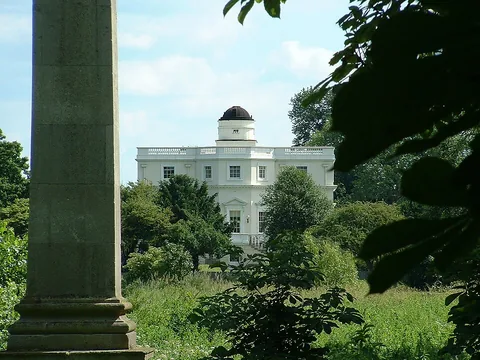 Cause for great, great celebration and fanfare all around the world, except that it is three weeks after World War I starts.35The Kew certificate was issued in mid-July 1914: two and a half weeks after the assassination of Archduke Franz Ferdinand (June 28) and about two weeks before the war began; Austria-Hungary declared war on Serbia on July 28, and Britain entered on August 4.
So between the time that Hans had brought the watch in for testing and when it finally gets the certification, Archduke Franz Ferdinand36Franz Ferdinand — heir to the Austro-Hungarian throne; on June 28, 1914, in Sarajevo, he was shot by the Bosnian Serb Gavrilo Princip. is assassinated in Bosnia by a Serbian nationalist. The whole rat’s nest of European alliances gets triggered, and next thing you know, the whole world is at war.
On the one hand, nobody cares about watches. There’s a war breaking out. On the other hand…
04World War I and the move to Switzerland
The war made the whole world want wristwatches, but anti-German sentiment and British tariffs pushed the company to Switzerland, home of a centuries-old watchmaking tradition.
Everybody cares about watches, exactly. World War I is truly the first crucible moment for Rolex because it’s the best thing that ever happened to the company in the industry. It made the whole world care about wristwatches.
Also, it’s very directly the worst thing because all of a sudden anti-German sentiment in Britain goes through the roof. Totally insane. There are all sorts of horrible propaganda. I didn’t realize this until now. Do you know why British people call German Shepherds, Alsatians?
Yeah, because they don’t want to call them German.
It’s because of this.37Alsatian — what the German Shepherd came to be called in Britain after World War I; the Kennel Club restored the name German Shepherd Dog only in 1977. There are all sorts of racism against Germans in England and in Britain, which is utterly ridiculous because the British royal family was German.
Queen Victoria married Prince Albert.38Prince Albert of Saxe-Coburg and Gotha (1819–1861) — Queen Victoria's husband from 1840. Their son Edward VII became the first British king of the House of Saxe-Coburg and Gotha. Prince Albert was a German prince. The whole British royal family was German. This is when they changed their name to Windsor, because before Windsor, their family name was Saxe-Coburg-Gotha.39The Windsors: in 1917 King George V changed the dynasty's name from Saxe-Coburg and Gotha to Windsor, after Windsor Castle.
Which isn’t going to play well when you’re at war against the Germans.
No, no, no, no, no, no.
Speaking of things that aren’t going to play well when you’re at war against the Germans, you’re not building a strong consumer brand in Britain in 1914 called Wilsdorf.
If the British Royal family is rebranding…
Changing their name, yeah.
Wilsdorf and Davis also needs to rebrand, despite the fact that at this point, Wilsdorf is a naturalized British citizen.
And feels no affiliation to Germany. He really doesn’t ever in his life consider himself German.
Totally. But this is the birth of the company Rolex. In 1915, they renamed the whole company after the brand name Rolex, and the Rolex Watch Company Limited is founded.
Well, David, I was about to ask you, how does this become a Swiss watch company? And the answer is definitely right around this time in World War I.
AdServiceNow
All right, listeners, now is a great time to thank our longtime friend of the show, ServiceNow. So David, here’s a question that I do not think most enterprise CIOs or CEOs could actually answer today if they were asked: How many agents actually run inside your business?
Yes, I don’t think anybody really knows. And of course, then there’s the harder questions, like: What can they access? And who gave them that access? And is any of this paying for itself?
ServiceNow has an answer to all those questions: the Super Intelligence Control Tower. As friend of the show, CEO Bill McDermott says, it’s the one place to see, secure, measure, and help govern your agents, models, and workflows across your entire business, no matter who built it.
Yep. So for example, it finds the agent that someone in procurement spun up on their own and then tracks what it’s doing and its ongoing cost. When the CFO inevitably asks whether any of this is working and if there’s ROI, you’ll be ready with the number.
And importantly, if something goes wrong, it can detect and revoke access immediately. There’s even a kill switch built into the product. And ServiceNow is uniquely positioned for this because they’ve spent the last 20 years building the operating backbone of the enterprise, from IT to HR, sales, service, and cybersecurity.
They know how work gets done, helping support over 100 billion workflows a year across more than 90% of the Fortune 500. The world’s most complicated businesses, like many that we’ve covered here on Acquired, already run on ServiceNow. And now they’re running their AI there too. If you’re trying to turn AI ambition into real outcomes, just go to servicenow.com/acquired and just tell them that Ben and David sent you.
So how are we getting to Switzerland?
How does Rolex become a Swiss watchmaking company? Well, obviously the anti-German sentiment was part of it. I think if that were the only factor, Rolex probably would’ve stayed in England.
At this point, Wilsdorf is a naturalized citizen.
His wife is British.
The company is called Rolex now, or they’re working on it. It would’ve been fine.
However, the other reason that World War II in Britain is bad for business for the new Rolex company is that Britain imposes a 33% import tax on watches40The McKenna duties — 33⅓% duties on imported cars, films, watches, musical instruments and other "luxuries," introduced by Chancellor of the Exchequer Reginald McKenna; for watches they took effect on September 29, 1915 (Hansard, 1917). early on in the war. That’s going to kill your importing business.
It’s interesting. I read that and yeah, it’s going to make it tougher. It’s crippling, but still you could run a business. You could figure out how to pass those prices along to customers. That’s often what happens in the case of tariffs.
But one year later, at the beginning of 1916, the British government puts the nail in the coffin. They completely banned the import of all gold and silver. They made it impossible for Wilsdorf to build this business based out of Britain.
A lot of times he’s actually exporting the watches for sale in colonies, or he’s importing a movement. He’s importing a case, or maybe he’s taking a local British case, putting it together, making a Rolex watch, and that it’s getting shipped out somewhere else. He’s sitting there thinking, I can’t get these precious metals and I’m paying out the nose for these movements. This is stupid to run my business here.
I assume then as now, Rolex’s margins41Margin — the share of profit in the price: revenue minus cost, divided by revenue. in the precious metal watches are way, way, way higher than in non-precious metal watches.
It’s insane. A $10,000 watch becomes a $30,000 watch when…
You add gold to it, or platinum, or whatever, yup. The delta between…
It’s like Apple selling memory.42Apple charges far more for iPhone and Mac models with more storage than the extra chips cost: the device is nearly the same, but the markup runs to hundreds of dollars.
Exactly.
Interestingly, in the hype of 2020–2022,43During the pandemic, demand for watches soared, and steel Rolexes sold on the secondary market well above retail. Prices peaked in early 2022 and then started falling. the precious metals were actually easier to come by as a customer because there was so much less demand to go buy a $30,000, $50,000, $100,000 watch, that those would be lying around while the steel ones were flying off the shelves and there were huge lines for them.
Totally. On the back of this, in 1916, Rolex first moves the assembly of the watches to Bienne in the Swiss mountainside near where Aegler is.
Which makes sense. They set up an office and basically say, hey, you’re making the movements next door. We’re going to put a case on them right here.
And then be able to export from Switzerland now to countries all over the world and not go through Britain first. Ultimately, after the war in 1919, Hans moves both himself and the official company headquarters to Geneva, where of course it still is to this day. And even to this day—this is crazy—design, sales, marketing, and, I think, final assembly all happen in Geneva while production of the movement still happens up in the mountains in Bienne.
It’s super interesting. It would make sense if you are Britain to throw on some tariffs to finance your war; you got to finance it somehow. At the same time, it also makes sense if you’re a business operating in Britain in this time to say, and I’m moving to Switzerland.
But there’s this alternative reason to move the business to Switzerland, and Hans knows it. If he’s going to build a globally-renowned watch company, he wants to do it in Switzerland. This company becomes Rolex of Geneva, not just Rolex.
Again, I’m going to look at this watch all the way down at the bottom. Swiss made.44Swiss made — a marking that, under Swiss law, may be used only if the movement is Swiss, the watch is designed, assembled and inspected in Switzerland, and at least 60% of its production cost is incurred there. Don’t you forget it. Or you look at a Patek Philippe.45Patek Philippe — a Geneva watch manufacturer founded in 1839, one of the most prestigious brands, owned by the Stern family. Geneve right there on the face of every Patek Philippe watch. They are extremely proud of this.
Geneve. I love it. Genève, Ben. Genève.
Oh, I’m going to hear about that one, aren’t I?
It’s okay. We’re ugly Americans here.
Okay. Then the question is, why does Geneva have this prestige? Why is Switzerland an amazing place for watchmaking? Well, David, will you indulge me and let me wind the clock back? I actually thought you were going to start the timeline for this episode back in the 1500s. I was shocked that you only started it in the 1800s. Perhaps this is a good time to go and tell the history of watchmaking in Switzerland story.
By all means.
Okay, great. A lot of this comes from Marc Bridge, who is the founder and CEO of At Present, a marketplace for unique jewelry from independent artists. Marc is one of David and my very best friends, and insanely coincidentally and lucky for us, you listeners, he wrote his master’s thesis 20 years ago on the Renaissance of the Swiss watch industry.
Amazing.
He sent me a copy of it. We’re going to link to it in the show notes. It’s awesome to have this resource available just very conveniently from one of our best friends.
All the way back in the 1500s, Geneva was a center of activity for the Protestant Christian world led by John Calvin.46John Calvin (1509–1564) — French Reformation theologian; from 1541 until his death he led the church of Geneva, making the city the main center of Protestantism. If you know anything about Calvinism, it is very focused on moral uprightness.
The Protestant work ethic.47The concept comes from Max Weber's "The Protestant Ethic and the Spirit of Capitalism" (1905): Weber linked the rise of capitalism to the Protestant, especially Calvinist, attitude toward work and thrift.
One of these tenets was banning frivolous things like ornamental jewelry. Local goldsmiths and jewelers instead focused on watchmaking, since watches served a real function in the world and were not frivolous. It was this exception to the rule if you had that skillset.
There’s also, human beings are human beings no matter what rules you impose on them. It’s like life finds a way,48"Life finds a way" — the line of mathematician Ian Malcolm (Jeff Goldblum) in "Jurassic Park" (1993). David turns it into "status always finds a way." status always finds a way.
That’s 100% right. So you’ve got the rise of Calvinism. Along with that religious reason that’s causing this local pivot of industries, you have one of climate too. There are these long, harsh winters. An industry that could be done indoors in a small physical footprint was perfect.
If you’re going to go pick a profession out of a hat to have in Switzerland, mountainous country, long, cold winter, this is a great one. Especially because it’s so valuable at this point in time, you can become an important player in the European economy, making something that you can make in your climate.
Third, there’s a cultural reason. David, are you familiar with the term établissage?49Établissage — a system in which watch parts were made separately by small workshops, and an établisseur bought them and assembled finished watches. The word is French: that's what the system was called in French-speaking Switzerland.
Ooh, no.
Are you sure?
It’s supposed to be Swiss, not French.
I was going to say.
I’ve been to Geneva and I’ve been to other places in Switzerland, but I know very little about its culture and history. Talk to me about terroir.50Terroir — the combination of soil, climate and local tradition that gives wine and other products the distinctive character of a place. I know exactly what you’re talking about, but établissage, I don’t know.
Okay. Well it’s Swiss for establishment, basically. But what établissage means in this context is that it’s this economic system that they established in the area of the Jura Mountains,51The Jura — a mountain range along the French-Swiss border. Since the 18th century the Swiss Jura has been the heart of watchmaking; the watch towns of La Chaux-de-Fonds and Le Locle are UNESCO World Heritage Sites. where very small independent companies, often 1–10 people, could focus on something small, like a single component, and then you’d have dozens of these small companies work together to create the finished product. It’s almost like a distributed manufacturing system.
Ah, so this is where Aegler comes from. This is why he’s got the workshop in the mountains.
Établissage, yup, exactly. With this specialization of labor in small companies, you could get really, really good at your tiny part, making, say, hair springs52Hairspring — the ultrathin spring that makes the balance wheel oscillate at a constant rate; the watch's accuracy depends on it. Ben explains how it works around 1:22. that we’ll talk about later, or these essential elements of watch movements. These tiny companies by artisanal craftsmen, these very labor-intensive companies got really, really, really good and pretty efficient at making their one thing. That’s the backdrop of how the Swiss are producing things.
Lastly, in the late 1500s, the French had been rising as a watchmaking powerhouse. When the balance of power changed in France and the Catholics came to power, the French Huguenot refugees53Huguenots — French Protestants. Major waves of emigration, including to Geneva, followed the St. Bartholomew's Day Massacre of 1572 and the revocation of the Edict of Nantes in 1685. who had talents in jewelry, metalwork, and watchmaking, fled to Geneva.
These are the Protestants that got kicked out of France.
That’s exactly right. The Protestant safe haven of Geneva, they brought their watchmaking expertise. Or if they didn’t have watchmaking expertise, that’s all they could really do if they were jewelers or metal workers since you can’t make anything too shiny and too off-putting.
This is how Switzerland gets the reputation as the watchmaking capital of the world.
Exactly. Basically, this creates centuries of momentum, especially in this distributed établissage system of how Swiss watches were made. I think about it as this beautiful blend of French beauty and appreciation for aesthetic and Swiss precision.
Well, it sounds like Switzerland itself. It’s a blend of French beauty and German precision. I love it. That’s definitely one big reason why Hans is like, okay, we got to move Rolex to Geneva to participate in this tradition as we’re now going to be selling to the world.
But the other reason is after World War I, they’re like, well, we’re going to be selling to the world now. Britain is still going to be our largest market likely, but every country in the world is fighting, or at least every European country has troops fighting in World War I. They’re all seeing the benefits of the wristwatch. This is going to be way, way, way bigger after World War I. I need to be able to serve the whole world.
So they want to be in a neutral country.
Yeah. He just experienced like, oh, Britain puts these tariffs on, and gosh, well I didn’t really have a market for Rolexes in Germany before, but if I did I wouldn’t have been able to sell in Germany. I don’t want that to happen in the future.
Who’s not going to put on a big tariff to finance a war? Switzerland.
Switzerland, yeah.
Super interesting. You know what else happens in 1919? Well, now that we’ve set up shop next to Aegler for putting their movements in our cases, it’s time for us to get a little bit closer.
Rolex and Aegler arranged for a deal where in 1919–1920, Hermann Aegler, who’s the son of the founder Jean, buys shares in Rolex—unclear what the purchase price was; that seems to have been lost to history—and joins the board. He owns about 15%. The board is Wilsdorf, Davis, and Aegler.
There’s a second part of the deal, which is Rolex actually buys shares in Aegler too. This one’s less talked about, but there were two companies that were big purchasers of the movements. It’s Rolex and Gruen,54Gruen — an American watch company from Cincinnati, founded in 1894 by German immigrant Dietrich Gruen; one of the largest US watch firms, it lasted until the late 1950s. and both of them were watchmakers. Gruen, I think, was American. It was their second biggest client. Both of them bought Aegler shares also.
Because Rolex did not focus on the American market until after World War II.
Correct. The companies are a little bit more joined at the hip, but still not an exclusive partnership.
And like we said before, I believe still, even though there’s this equity relationship, there’s no formal contract governing the provision of movements here.
Crazy. But it’s in both their best interest to keep it going.
05The Oyster and Mercedes Gleitze
Demand for wristwatches exploded after the war, but dust and moisture ruined them, and Rolex won the race to waterproofing with a purchased patent and a splashy launch.
Of course. Here we are now. World War I is over. We’ve had the ChatGPT moment,55ChatGPT — OpenAI's chatbot, released on November 30, 2022; a million people used it within five days. A "ChatGPT moment" is when a technology that has long existed suddenly goes mainstream. shall we say, for wristwatches. All these soldiers from countries all over Europe in the world experience the power of having an accurate watch on your wrist. They go home to their civilian lives. They want to bring it into their life. Who makes the best and most accurate wristwatch, chronometer, timekeeping pieces in the world? Rolex. Of course, they’re going to buy Rolex.
No, that’s not true.
No. That is not what they’re going to do.
It’s Omega, right?56Omega — the Swiss watch brand founded in 1848 by Louis Brandt, now part of Swatch Group. Its Speedmaster was the first watch on the Moon.
Well, I think it’s lots of companies. Basically, the market went from the very early adopters in the British dominions—far-flung reaches of the British Empire before—to now all of a sudden it’s this giant European-wide market, most of which, they have no idea about Rolex.
They’re like, Rolex? Whatever. I don’t know what Rolex is. I’ve never heard of such a thing before. I think it was everybody was now rushing in. And even though Rolex had this history, probably had the best product, it just didn’t matter.
There was just massive demand for this new product category of which there were many good options.
And also there was massive demand. But it was like search engines before Google. The product still sucked. Even really, in many ways the Rolex product. Rolex probably kept better time than competitors.
They were Kew-A certified.
Kew-A certified, right. But if you’re wearing a wristwatch, it’s a lot more exposed to the world than the pocket watch. You talked a little bit about how complex and delicate these movements are, and especially in a miniature movement that goes into a wristwatch, any dust, any water, any humidity that gets into the case is going to jam up your movement and your watch is going to fail.
Yup.
So finally, I had this aha moment when I’m doing the research for this episode. I’d always thought it’s just ridiculous. You go look at the watch market now, Rolex is all the other brands that are waterproof to 57,000 million meters. I’m just like, what? There’s no depth that exists.
David Rosenthal, watch aficionado, ladies and gentlemen.
Exactly. But why? Who cares? I was like, oh, this is why waterproof watches are a big thing. It’s not about water, necessarily.
It’s actually dust more than water.
It’s dust, it’s humidity. If you’re waterproof, that’s shorthand for saying you’re element proof, you’re durable. Nothing is going to get inside this watch and mess up your movement if water can’t get in.
You could subject it in 100 meters of still water and no impurities would get in.
You could throw it to the bottom of the ocean and it’ll keep time forever, et cetera. Like, oh, this is why this is important.
And servicing was a big deal. You had to get your watch serviced often, and the more dust, humidity, and stuff got in there, it might just break entirely.
Exactly.
Great. I like where you’re going, David. There are basically three big pillars of what makes a Rolex a Rolex, or frankly, what makes a good mechanical watch, a good mechanical watch. There’s precise, there’s officially certified chronometer, and there’s the other two. What’s the second one?
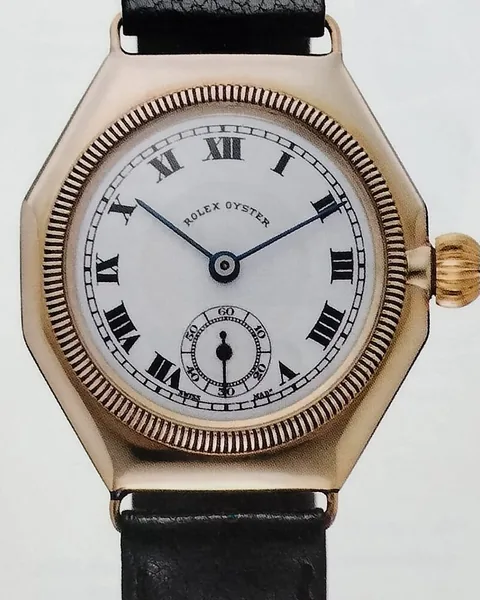
Oyster. Like I said, there’s demand for these products, but they all suck because they’re not element-proof. Well, Oyster is Rolex marketing speak for waterproof. There’s this great race among high-end Swiss watchmakers to now produce a waterproof wristwatch.
A Swiss case-making company called Francis Baumgartner, which supplied cases to Patek and many other great watch brands in the early 1920s, invent a new case style called the hermetic. You’ll notice that your Rolex does not say hermetic. The way they do it is they put the watch case inside another watch case.
Oh, that’s right. This is the weird hinge thing, right?
It’s like a scuba helmet. They take a watch and they put it inside a scuba helmet that is waterproof. So it works. It does make watches water- and element-proof, but it’s big, it’s ugly, and most importantly, you have to unscrew the outside case, the seal, and take out the inside case every day in order to wind the watch.
Because famously, the crown is the most dangerous entry point for water or dust, so you can’t leave the crown sticking out of the hermetic case or it would defeat the purpose.
Yup. That’s the state of play through the early 1920s. Rolex gets into this too. They buy cases from Baumgartner and they make these hermetic watches. You can go find them. You see pictures of them in collector’s books.
It’s got a hinge on the left side and a little clasp on the right side that goes around the crown.
Yup. Then—this is so awesome; this is like a Forrest Mars moment57Forrest Mars Sr. (1904–1999) — son of the founder of Mars and creator of M&M's (1940–1941) and other brands; in 1964 he took control of his father's company. from Hans—in October 1925, two Swiss case makers file a patent for a moisture-proof winding stem and button.58The patent on the screw-down winding crown was filed by the Geneva craftsmen Paul Perregaux and Georges Peret; Wilsdorf bought the rights to the invention in 1926. Ben, just like you’re saying, it’s the crown of the watch, the winding system and the button where water or dust is most susceptible to getting into.
Yup. Mind you, Rolex has been dying to solve this problem. They had at least three failed attempts to create a waterproof seal in-house.
The whole industry has, and Hans, like Forrest Mars, reads the Swiss patent filing register religiously every day. He is reading all of the patents that are getting filed in Switzerland. He sees this patent get filed and he’s like, this is it. I got to get this right now.
He goes to the two guys that invented this, buys the patent, and makes it exclusive to Rolex. This turns out that this is the key component to making a waterproof mechanical wristwatch that doesn’t need to be put in a jar.
When I was reading this, I thought, oh man, Rolex didn’t actually invent the Oyster case. They just watched someone else do it. But that doesn’t really matter. They saw that this was absolutely essential, and Wilsdorf jumped right on the opportunity and said, who cares who came up with the idea? We are in the position to commercialize it, to roll it out across all of our watches. I need to strike first.
This is his genius. He’s not a watchmaker. Rolex were not watchmakers until they finally bought Aegler in 2004. Hans’s genius is he sees the vision for where the market’s going. He recognizes talent and innovation. He pulls it together and makes it commercially viable and marketable, in a way that this patent got filed in the Swiss Patent Register. Any of the other watch companies who desperately wanted to solve this problem could have seen it too, but he jumped on it. Really, he’s like the Mark Zuckerberg of his time.
Ooh, that’s a good analogy.
Yeah. It is Instagram and then copying stories from Snap.59In August 2016 Instagram launched Stories, a near-exact copy of Snapchat's stories: posts that disappear after 24 hours. Hans doesn’t care. He is like, I’m going to market this and I’m going to make this the most successful thing possible. I don’t care that we didn’t invent it.
It needs to be in our product. That’s interesting.
For anyone who’s a watch person who’s wondering what actually was in the patent, it’s essentially for the screw down crown, the hermetic seal on the all Oyster watches going forward. Of course, it’s named the Oyster because oysters seal when they’re closed. It’s a perfect thing to name it after.
Everything works on a threaded system. The back of the watch screws into the middle part of the case, and then the crown can screw out also. You have these airtight watertight threads that keep any impurities out.
So in July 1926, Hans and Rolex goes and registers the product name, Oyster. This is really, really big. Hans, he’s like, I am going to go big. Everybody in the whole world needs to know the Rolex name, needs to know that we are the exclusive owners of the oyster system. He prepares to spend in Britain alone annual expenditures of over 10,000 pounds just on advertising for the Oyster models.
Dude knows how to build a brand. He’s already naming components. He’s not just marketing Rolex. This is Rolex, the only watch that has Oyster.
Oyster technology. A18 Bionic.60A18 Bionic — Apple's processor for the iPhone 16 (2024). Apple too gives brand names to components the buyer never sees. Really the parallels to Apple are just incredible.
Four hours from now, I was going to make that point, but…
So he’s prepared to spend all this money. He’s got the product, but he’s like, we got to do a big launch. I don’t want to just buy regular ads in the newspaper here. So in 1927, towards the end of the year, the timing is right.
That brings us to a young British woman named Mercedes Gleitze. Now Gleitze was a secretary and bilingual stenographer in London, much like young Hans was back at Cuno, who happened to have a unique hobby of endurance swimming in the river Thames in her free time.
Which is insanely cold.
Very cold. I assume even back then quite polluted. But so be it. She was so good at endurance swimming. Apparently, she would swim for 10 hours at a time in the River Thames. In October of 1927, she decided that she was going to attempt to swim across the English channel.
Maybe even more cold.
Definitely cold, definitely pretty choppy. And she did. She became the first British woman to successfully do so that year in October, 1927. However, a couple of days after she completed her swim, another woman emerged and claimed to have also swam the channel, but have done it faster.
Now it turns out that that actually was a hoax. Mercedes knew it was a hoax. But in order to reprove herself, she decided to stage a vindication swim61Mercedes Gleitze swam the English Channel on October 7, 1927. Soon after, Dorothy Cochrane Logan claimed a faster swim but then admitted it was a hoax. The "vindication swim" took place on October 21, 1927, with a Rolex Oyster hanging on a ribbon around Gleitze's neck, and on November 24 Rolex ran a full-page ad in the Daily Mail. that gets hotly covered by the press.
Which mind you, she’s doing this vindication swim. She’s already spent 15 hours swimming across the channel.
It’s a miracle, she’s still alive at this point. Hans is like, oh, this is our moment. This is exactly the spectacle that we need. He comes up with the brilliant marketing stunt of he is going to get Mercedes to do this vindication swim while wearing a new Rolex Oyster model. What Rolex doesn’t talk about to these days is a footnote to history of it wasn’t actually on her wrist.
It’s on a lanyard around her neck.
Yeah. It was on a small chain that she wore around her neck. But nonetheless, this is an incredible stunt.
Nothing ruins a good story like data. Let’s just smooth it over.
This is still featured prominently on the Rolex website today.
Mercedes’s photo is everywhere. But it doesn’t matter. At the end of the day, who cares if it was on her wrist or not?
She also doesn’t actually make it. But that doesn’t matter either.
That’s the other crazy thing. I think it was an especially cold day or especially choppy or something. She makes it 10 of the 15 hours. The design of the test is a little bit arbitrary. This is a watch. While it wasn’t on the wrist and it didn’t make it all the way from England to France…
It was still in the water for a long time.
For 10 hours.
Pretty good. Product testimonial, shall we say?
For a testimonee.62Testimonee — Rolex's term for the athletes, explorers and artists who represent the brand over many years.
So Hans, after this event happens, the next day he buys the front page of the Daily Mail newspaper,63Daily Mail — a British daily founded by the Harmsworth brothers in 1896, one of the country's first mass-circulation newspapers. which is a nationally syndicated newspaper in Britain at the time. I didn’t realize you could do this back in the day, you could actually buy the front page as an advertisement.
I think it was common. I think it was a while before the front page was actually dedicated to editorial. Early on it was very common for it to be a full-page ad.
So Hans does this and proclaims the success and announcement of the world’s first waterproof wristwatch, fully enclosed in its own case without a second hermetic seal around it, and the triumphant launch of the Rolex Oyster.
This is how Rolex tells the story. After I had heard this told a few different times, I expected to see this full-page ad written in a certain way. It is buried. Maybe this is what the advertising style was back in the day. But the big words are not watch survives English Channel swim. The big words are Rolex Oyster. It says Rolex introduces for the first time the greatest triumph in watchmaking.
Okay, I still don’t know what it is. Then I see a picture of a woman’s face. Then it says, send for this colored brochure. It’s free, telling you to send in for more information. Then there are four sketches of the different watch faces you can get of the Rolex Oyster. Then it says the wonder watch that defies the elements. There are words all over the place.
You finally, finally get to the tiniest text in the entire thing, maybe the second tiniest font in this little corner. It says moisture proof, waterproof, heat proof, vibration proof, cold proof, dust proof.
Either Rolex hadn’t found their groove in advertising yet, or maybe people just read a lot more words back then. But if you put this up today, our Tik-Tok-tified brains would be like, don’t care. Next. There are way too many words. They completely bury the lead that she did a channel swim with this thing and it survived.
It’s hard to know how much of this is just the state of the art in advertising at the time, versus Hans designed and wrote all that himself. One of his maniacal control things was, I believe, up until he died or pretty close to it, he did all the creative for all the advertisement.
Oh, I didn’t realize that.
We’ll get to it later. But they do bring on the J. Walter Thompson agency64J. Walter Thompson — an American ad agency, one of the oldest in the world, tracing its history to 1864. In 2018 it became part of Wunderman Thompson. before he dies. Probably the rest of the company’s like, all right Hans. We got to professionalize a little bit here.
That’s when they get extremely good is in the 1960s.
Extremely good.
But I think it’s fair to say there are two interesting takeaways here. One, they hadn’t found their groove in advertising yet. Two, advertising hadn’t really been professionalized in a way that we would see in the Mad Men era.65"Mad Men" — the 2007–2015 American TV series about Madison Avenue ad men in the 1960s.
Totally. We’re still before World War II here. We’re not yet in the modern world. The other thing that’s really interesting is there was something about this that was sitting with me too doing this research. This is a major, major, major moment. The Mercedes Gleitze moment, the first brand ambassador of Rolex. It’s interesting that the moment and the person that Hans chose for this launch was a woman.
Super interesting.
Back in 1927. Super interesting. Yes, the wristwatch was a ladies item before World War I. But after World War I, really I would think the big market is the men’s market. It’s interesting. I dug into it. In this era, Rolex still was primarily a ladies product. The men’s market was growing. But if you look at their product catalogs, really up until World War II ladies models outnumbered men’s models 2:1.
Whoa. These are the little Prince watches?66Rolex Prince — a rectangular 1928 watch with a large separate seconds dial at the bottom; it was nicknamed the "doctor's watch" because it made taking a pulse easy.
Yup. Definitely, Hans’s vision was a wristwatch is for everybody, men and women, but it’s interesting that they were really women-focused. Then we did a little more digging and asked some friends. Even to this day, I believe the market of buyers for Rolex watches is basically 50/50 men and women.
Which is insane. I never would’ve guessed that, especially because much of my research was lurking on the Rolex and watches subreddits,67Subreddit — a topic section of the Reddit forum, such as r/rolex or r/Watches. which are a very particular type of dude. It comes across as a very male thing, at least the way that I’m exposed to watches. You read the amazing journalism about watches on Hodinkee68Hodinkee — an American online watch publication and watch shop, founded by Ben Clymer in 2008. and the whole world around appreciating watches. It’s male-focused.
It’s like a Porsche 911.69Porsche 911 — Porsche's sports car, made since 1964; over 60 years its look has changed very slowly, and a huge fan community has grown up around it.
It’s amazing that Rolex’s history indexes so heavily to women, and that even today they move a lot of units to women, even though that’s not where I come across Rolex in my day-to-day.
It’s certainly not where the enthusiast market is focused. But it’s one of the really unique things about Rolex. So many of the other really, really high-end watch brands, with Cartier as an exception,70Cartier — the French jewelry and watch house founded in Paris in 1847; part of Richemont. I think really are men’s brands.
Oh yes.
Whereas Rolex, yeah, it really is 50/50.
Amazing. All right, so that’s Mercedes Gleitze.
That’s the Oyster story. That really is a huge watershed moment for Rolex and for the wristwatch industry.
And she’s effectively the first testimonee. I’m not sure they’d come up with that terminology yet, but this is something that they would lean heavily into as their means of marketing in the future. They would hate you calling it a brand ambassador.
Partner. It’s Rolex partner is what they call it.
No, I think it’s testimonee. I’m pretty sure it’s this very particular word that they wanted to invent and have to themselves. It’s different from influencer marketing. It’s different from the way that someone appears in advertising a perfume for a five-year deal. I think it’s this very long-term–oriented, you are a part of the brand and you are a part of the brand for your lifetime.
06Perpetual: how mechanical watches work
Self-winding freed Oyster owners from unscrewing the crown, and with accuracy and waterproofing it became the third pillar of a quality mechanical watch.
Flashing all the way forward, it’s Roger Federer71Roger Federer (born 1981) — Swiss tennis player and 20-time Grand Slam champion who retired in 2022. A Rolex partner since the early 2000s. is the purest embodiment of this today, but that is to come in the future. It turns out though, back to the product of the wristwatch, Oyster was huge. But it had a problem. Ben, like you said, the key to making it work, you didn’t have to have the whole scuba jar that you enclosed the whole watch in. But the crown had to screw down. The crown had to screw down like a jar.
That meant that when you went to go wind the watch, you had to unscrew the crown, pull it out, wind the watch, expose it to the elements, and then screw it back in. Well, if you know anything about humans, probably at least half the humans on the planet are not going to be exactly fastidious about screwing their crown back in.
There are three pillars to what makes this a breakout product, that enables the wristwatch to really have its iPhone moment. That third of being perpetual, of being self-winding, is the magic.
These things are so intrinsically linked, I didn’t realize until getting so deep into the research, self-winding watches are cool on their own. But just like before I was like waterproof? Whatever. Why is that important? Self-winding, yeah, seems cool. But how hard is it to manually wind your watch? That’s what people were doing with pocket watches for centuries. It’s actually because it’s tied to the Oyster and the screw down mechanism, if you forget to screw your crown back down, you lose the element proofness of the Oyster.
Yes. Ah, okay. I can’t wait. The way that the perpetual movement works is totally genius.
AdLegora
All right, listeners, now is a great time to talk about one of our favorite companies, Legora, the agentic operating system for legal work.
Yes. Most of you have dropped a contract into a chatbot by now, but as a lawyer, how far can that really take you? It’s never seen your firm’s precedents. It doesn’t respect confidentiality, and you can’t check where its answer came from.
So Legora’s founders approach this the way that great founders do. Early on, the team moved into the office of a big law firm in Stockholm and learned for months how the work actually gets done. A couple of thousands of enterprise customers and 100,000 users later, they still work that way. They employ 100 legal engineers on staff. These are lawyers sitting inside of firms and legal departments to deploy Legora onto live situations, like the deal closing this week or the policy review due Friday.
The product has gotten very powerful in a short period of time. A year ago, the goal was a good answer from a chatbot. With the Legora agent, you hand it the work and it comes back with a plan. Tasks like running diligence on a data room or reviewing a new vendor contract get completed inside the tool you use every day, like Microsoft Word, and against your own precedents and playbooks. Every finding is sourced. The lawyer directs the work and signs off before the system executes any steps.
Every legal team can get access to the same AI models, so the models themselves do not give you an edge. What you can do with your own data, people, playbooks, that’s the whole game.
Today, over 100,000 legal professionals at more than 1,800 law firms and in-house legal teams in over 50 markets use Legora. And when Legora goes head-to-head with its top competitor in a pilot, it wins 70% of the time.
A demo is one thing, but what matters most is an associate who reaches for it at 2:00 in the morning during a closing, or whether a general counsel trusts what it says before the board meeting. So if your legal team wants to check it out, whether you’re at a firm or in-house, go to legora.com/acquired and be sure to tell them that Ben and David sent you.
So back to Oyster and leading into the need for self-winding and the perpetual element of Rolex. If you can create a self-winding wristwatch, well all of a sudden the element proofness of the Oyster works fine for everybody because nobody actually has to unscrew the crown.
You never have to pop out the battery and put in another one. You never have to charge your Apple Watch. You name the analogy, but you just…
Set it and forget it.72"Set it and forget it!" — the catchphrase from Ron Popeil's infomercials for the Showtime Rotisserie electric grill.
Yup. You walk around all day, your watch keeps perfect time-ish, it’s waterproof, and you never need to wind it. Sounds like an amazing product. Who doesn’t want that?
That’s a Steve Jobs–like product right there.
Before going into the nuance of how Rolex’s particular self-winding mechanism works, I think this is a good time to explain how mechanical watches work at all, what the key components are, and frankly…
It’s like alchemy.
Because one of the coolest things ever done to prepare for an Acquired episode was go learn how a mechanical watch works. At a high level, you need two major components to make a timepiece. First, a way to store energy and second, a way to release that energy in a predictable and precise interval.
Which seems like, oh yeah, of course you could do that these days with a battery in electronics. But imagine doing that without a battery and without electronics.
Exactly. Yes, on that first one, storing energy, there is something called a main spring. Did you read about this in the research, David?
A main spring can store potential energy. Imagine a foot-long, skinny piece of metal that you wind real tight and you stuff into something called a barrel. This looks like a film strip that’s stuffed inside a film canister, that you’d see a stack of canisters in a projector room at a movie theater. That’s what you should imagine, a real tightly wound mainspring inside that barrel.
Now interestingly, to your point David, this begs the question, what is a battery?
Yes. I said a battery. Technically, that is a battery.
It’s a mechanical battery since it’s a way to store potential energy to be used later. Now amazingly, the way a mechanical watch works these days is so energy-efficient that the mainspring can store on the order of three days of potential energy to tick the watch forward. It’s amazing.
Amazing.
Okay, so moving on. Obviously this isn’t sufficient on its own. If you just release the main spring in the barrel, it would spin around real fast. It would make all the gears spin and you’d let all the energy out at once.
And break the watch.
So you need something to control the energy release from that main spring and do it in slow fixed time intervals.
All mechanically.
Yes. You need something to make the watch tick.
Hey-o.
Yes. Watchmakers call this an escapement.73Escapement — the mechanism that releases the mainspring's energy to the gears in measured portions. Nearly every mechanical watch uses the lever escapement, invented by the Englishman Thomas Mudge around 1754. Now, an escapement in a mechanical watch has two key components to harness that potential energy from the mainspring. One is a pallet fork—come back to that—and two is something called the balance.
How does a pallet fork work? Well, a pallet fork looks like a little T with teeth on the edges of the top of the T. It moves back and forth, a tick and a tock, like the pendulum of a grandfather clock. As it flicks back and forth, it moves all the gears on the watch forward, one tick or one beat.
And there’s this element that this may be several steps down the chain, where it’s actually usually the hour movement that then drives all the other movements off of that?
It depends on the watch and what complications are in it,74Complication — any function of a watch beyond hours, minutes and seconds: date, day of the week, chronograph, moon phase, perpetual calendar, minute repeater. things like that. But yeah, the important thing to know is when one beat happens, when the pallet fork enables everything to move forward one beat, what it’s really doing is allowing what’s called the escape wheel to turn one click and that drives whatever else is in the gear train for that particular watch.
Got you, which some watches are just hours and minutes. Some watches are hours and minutes and seconds. Some watches are dates, day, moon phase, what you had for breakfast, et cetera.
And with these complications which are the features, it’s really amazing because you can think through what the algorithm would be to make such a complication. But when you’re thinking through it, you’re thinking like a programmer. You’re saying, well if this then that, if the date is 31 days…
These are not computers.
Right. All of the logic is encoded mechanically in a gear train. It’s beautiful. Where we left off here is our escapement where we’ve got the pallet fork, it’s this little T, and it’s a tick and a tock. It flicks back and forth, and moves the gears all forward one tick.
How do you get it to tick back and forth? What is the mechanism by which this pallet fork goes to tick-tock, tick-tock, tick-tock? This is where we introduce a big hero of the whole mechanical watch story. The balance.
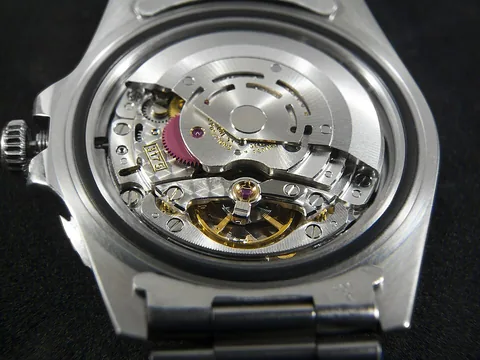
The balance also has two parts. There’s a balance wheel and a hairspring. These two things are stuck together around the same center point. Picture the wheel of a bike. That would be the balance wheel, like a hula hoop. Then the gears go around the same axle on a bike. You can imagine that you’ve seen the rear wheel of a bike. In this analogy, those gears are the hairspring and the outer wheel is the balance wheel. That’s what this component looks like.
The hairspring looks really cool. It is another coiled-up piece of metal, although it’s much looser and more fluid than the tightly wound mainspring that we talked about earlier. Unlike everything else that is incredibly tight inside a watch, this component, the balance almost floats and it moves with really low friction. It’s weird because it’s the opposite of everything else that’s in the whole watch.
The way it works is the hairspring spins really fast in one direction. For anyone who’s ever taken a spring and tried to uncoil it you note that it only goes so far and then it wants to go back to its resting position. And then you try to go the other direction and tighten it a little bit. That doesn’t work either. It wants to go back to its natural resting position. That’s what’s happening here.
You’ve got the hairspring, which spins really fast in one direction, and then the energy that it has stored is overcome by the mechanical resistance of unwinding the spring. It stops and then it spins real fast in the other direction. This cycle goes back and forth, spinning back and forth, tick and tock, and flicking that pallet fork back and forth to continually release one little interval of energy and one little advance of the whole gear train. It is beautiful.
Amazing. You can totally see why for the right person, this is like a Porsche 911 or it’s just catnip. You can’t get enough of this.
That’s exactly right. You end up with fancy names and proprietary things that Rolex makes in the far future called a Parachrom hairspring75Parachrom — a hairspring made of a paramagnetic alloy that Rolex patented and has used since 2000 (first in the Daytona): it resists magnetic fields, temperature changes and shocks. that has these amazing renders, animations, and videos of how it works. It’s gorgeous.
Now this happens really fast. This isn’t like I just described it, where you go really far in one direction and then you run out of energy and then you come back. This happens three, four, five, six times per second depending on the watch. That’s if you hold a watch up to your ear and you hear tick, tick, tick, tick, tick, tick, tick, tick, tick, tick. These beats that’s what you’re hearing. The pallet fork drives that whole gear train, releasing energy that powers the hands and all the other complications, the day, the date, et cetera, at exactly the right pace.
When you take a step back and you look at it all, the craziest thing is that it depends on the exact physical properties of the metals that are used. The time is literally kept by the physical laws of the universe. Elasticity, tensile strength, inertia, potential energy stored by specific materials. They have this down to such a precise science today that watches keep time, certified chronometers keep time within two seconds per day.
Bonkers.
It’s awesome. I just named four parts of a watch. There are 200 parts. This is an oversimplification, but the general concept of how a watch works.
The other parts are also amazing. Things like there are jewels in the watch because all of these gears need to turn on things that create friction, so you need extremely low friction things. Well, it turns out that actually rubies and sapphires76Watch jewels have long been synthetic: rubies have been grown using Auguste Verneuil's method, published in 1902. that are milled into little nuts are the best way to do that. There are actual jewel stones inside your watch that are being used for mechanical purpose.
And because jewels can be really hard minerals and you don’t want these things to wear out. When you’re slapping something back and forth six times per second, you want to make sure that… Most Rolex watches don’t need to go in for service until every—I don’t know—once a decade? It’s crazy that these things just don’t wear out.
Gosh, the Daytona I’m wearing right now, I don’t think it’s ever been serviced. It’s at least 15 years old, if not more than that, and keeps time perfectly.
It’s so cool. This is a 500 year old art, the idea of the mainspring that applies energy to an escapement that has a balance wheel and a hairspring to oscillate it back and forth. This isn’t new. Every piece of digital technology, heck, most analog technologies are invented after this.
Totally. To bring us back to the perpetual on your Rolex watch, you can imagine that adding this element of self-winding to the insane complexity that has been developed over centuries with extreme tolerances that are already in these watch movements, not exactly a trivial thing to do. You can’t just code it up in software.
No. In particular, what we’re talking about here is, remember I talked about the mainspring that stores three days worth of energy inside the barrel all coiled up? There’s a ton of resistance on that. If you pop open a crown on a watch and you go to turn it with your thumb, it’s hard to turn. If you’re going to come up with a self-winding mechanism, you need some way in which you are using mechanical advantage to wind something that’s already wound really tight, even tighter.
So here we are in the late 1920s. Right around this time, a British watch inventor named John Harwood77John Harwood (1893–1964) — British watchmaker who patented a self-winding wristwatch in 1923. Watches under his patent were made by, among others, Switzerland's Fortis; they had no winding crown, and the hands were set by turning the bezel. comes up with an automatic system for watches. Now interestingly, that wasn’t his end goal. He was trying to create a waterproof system just like Rolex was.
The way that he went about it was he said, oh yeah, like we were talking about, it’s the winding crown that is the weakest link in the element proofness of a watch. What if I just start by eliminating the winding crown? Can I do that?
Supposedly, he gets inspired one day by watching children play on a seesaw. That gives him the idea for his method of how he creates something called the hammer system of hammer going up and down and hitting different ends inside the watch as the wrist moves around.
You can imagine that turning a crank, crank, crank, crank, crank.
Yup. So he invents this system, and just like his Swiss counterparts who invented what became the oyster system under Rolex, he patents it. Now, what he decides to do, is rather than making a watch out of this, he’s going to create a company that’s just an IP company and he’s going to license this self-winding IP to other watchmakers, which he does. A couple of watchmakers out there take him up on it and incorporate it into their products.
However, it doesn’t prove too popular in the marketplace because a consequence of how he designed the system, the manual winding capability and the crown is eliminated entirely. If your watch stops, if you don’t wear it and you lose the charge in the main spring, good luck getting it going again. You got to wear it for days or whatever to just get the energy back in there. Then you can set the time.
Oh, interesting.
So it’s a pretty big flaw in this watch. But because of how the patent was granted, at least in the UK, he and his company end up holding the rights to all self-winding watch technology.
Wow. That is broad.
In Britain, yeah. No matter what the method is. Or at least that’s my understanding.
Brutal.
Hans, of course, and Rolex sees this. He knows he needs an automatic system for the Oyster to really unlock the potential of the product, and fully break the wristwatch product for the marketplace here. But his hands are tied. He can’t do anything, at least in Britain as long as Harwood has this patent. Hans knows that ultimately the method that Harwood uses is not good. He’s not going to license from Harwood because he knows it’s an inferior implementation.
Then fortunately, fate strikes and the market does its thing. In 1929, Harwood’s company goes bankrupt. Probably aided along by the stock market crash from 192978The 1929 stock market crash — the collapse of the New York Stock Exchange in late October 1929 (Black Thursday, October 24; Black Tuesday, October 29), which set off the Great Depression. and the entering into the Great Depression, et cetera. Finally, the door is now open for Hans and Rolex to complete the product here.
While we’re here in 1929, just a quick reference point for folks. There was an article published at this time that said you could get a Rolex for as little as $25. Even if you inflation-adjust that,79Inflation-adjusted — Ben's signature move: he keeps converting old sums into today's money. By the US consumer price index, $25 in 1929 is about $450–470 today. it’s $450 today. Or for as high as $1000, which is $18,000.
Rolex’s top of their line today is a lot more than $18,000, and the bottom of their line is a lot more than $450. But that gives you a sense of the type of wealth you would need in order to purchase a Rolex at this point in history. It was a meaningful purchase, but not a purchase reserved for only the elite class.
Definitely not. Rolex at this point is not a luxury brand. It’s going to transform into one over the ensuing decades, but no. Now Hans was really, really focused, and his genius and contribution to the field was on creating the product of the wristwatch. He wanted the wristwatch to be on every wrist in the world, which he achieved.
Here we are in the early 1930s. After a couple of years of work, Rolex finally cracks it and patents their own “rotor” self-winding system,80The Perpetual rotor: Rolex patented its self-winding mechanism with a rotating rotor in 1931. which still to this day is the primary method of self-winding across the entire industry. This is a perpetual rotor at the back of the watch case, that spins around in both directions and captures kinetic energy as the wearer moves their wrist around.
Importantly, unlike the hammer movement, it spins 360 freely in either direction. It’s not hitting anything. One of the other problems with the Harwood system was when the hammer struck each end, it made a noise.
Oh, really?
Yeah. You’d wear your watch and you’d go like, clack, clack, clack, clack, clack. One of the initial marketing points for the rotor system, the perpetual system that Rolex comes out with is the silentness of it. They call it the silent self-winding system.
Oh, that’s really interesting. It’s genius. I’m sure people have seen videos or photos of a self-winding watch. Imagine a disc that sits around a center point and then you cut off half the disc.
What happens is whenever you’re swinging your wrist around or because it’s a near frictionless system, whenever you tilt the watch at all, the heavy side of the rotor falls down due to gravity to whatever side is lower. You’re just constantly all day inadvertently spinning this perpetual rotor around and around and around, and using that to wind the mainspring.
It’s an incredible innovation and feat of engineering, stacked on top of all these other incredible feats of engineering that go into mechanical watches. When they first start—you’re adding a new layer to the movement when you do this in the back of the watch—it makes the watch’s back protrude a little bit.
Oh, the bubble back?
Yeah. These early Oyster Perpetuals that are first launched into the market are known by collectors as bubble backs now because the back of them sticks out a little bit onto the wrist off of the lugs.
It’s so cool. The other fun thing about this is it is legitimately an invention by Rolex. Oyster was licensed, the credit for how accurate they were was really all Aegler’s innovation. This is the first time we’re really seeing Rolex R&D figure out some brand new breakthrough contribution to the watch world.
And once this is in place, these are the three key pillars of Rolex technology, and really all mechanical wristwatch technology of quality from this point forward. You’ve got the accuracy, the Chronometer Observatory–certified, you’ve got waterproofness, element proofness via the Oyster, and now you’ve got self-winding with the Oyster Perpetual.
Here it is. It’s all here.
So in 1934, they launched the full system, the Oyster Perpetual chronometer, the bubble backs known by collectors. For the first time, they introduce a new look for the watches, a two-tone mix of steel and gold for these new Oyster Perpetuals that they call Rolesor. It really just rolls off the tongue.
Right there on your wrist, David.
Right there. Not on my Daytona, but it is on my Datejust. This is the gold and steel mix that is now just an iconic Rolex look.
And that’s where that center link is the gold and the outer two links are the steel.
Now you’re talking about the bracelet there. Bracelets for a long, long, long time are made by third party companies. Rolex contracts them out. But that look even goes onto the case itself.
Oh, okay.
The bracelet usually echoes the case. But combining gold and steel within one watch encasement was a new look, shall we say, from Rolex at this time.
You know what else carries through to today, which is interesting? Rolex and just most tool watches81Tool watch — a watch built for a specific job: diving, flying, expeditions. Sturdy and legible, with features like a rotating bezel. have fluted bezels.82Bezel — the ring around a watch crystal. A fluted bezel with fine ridges is a signature detail of classic Rolexes such as the Datejust and Day-Date. The flutedness is because it makes it easier to grip. So when you need to screw the back off, that was the original reason for fluting, was to give you a screw head effectively to get leverage to pop it off.
Love it.
While we’re in the early 1930s, just to breeze us through a bunch of other interesting stuff that’s happening, the first time the crown, the logo, the five point crown starts appearing is 1931.
1931 was a weird year because Rolex was just starting to figure out this perfect product mix. At the same time, the world is heaved into a great depression, and the British pound is devalued.83On September 21, 1931, Britain left the gold standard (the Gold Standard (Amendment) Act 1931), and the pound fell sharply. Exports out of Britain drop by two-thirds. Crisis happens.
Rolex is looking to internationally diversify. They open new offices in Paris, Buenos Aires, and Milan. They organize these trips to South America, the West Indies, China, Japan. They’re really trying to figure out how do we stabilize things while the world is in crisis. But they’ve got the right product in market.
I feel like there’s an old Sequoia saying, or at least a Mike Moritz84Michael Moritz — venture investor who led Sequoia Capital for many years. saying that recessions are the best time to innovate, because coming out of the recession, you’re going to have the best product ready to hit the gas.
And fewer competitors.
Exactly.
I will say, very interestingly, in 1932, Omega released a waterproof watch, which is, I don’t know, half a decade after Rolex. This is considered to be the world’s first dive watch.85Omega Marine (1932) — often called the first production dive watch. No one talks about this today. You hear dive watch, you think Rolex, but Omega had the first dive watch.
You think Submariner, yeah. Ooh, I’ve got some really, really, really fun World War II dive watch stuff in a sec, but before we get to World War II.
Okay. In 1936—I feel like this is a big moment, kind of exactly what you were saying, as your competitors fall off a cliff due to economic hardship, there’s an opportunity if you have the right product that’s working well in the market to consolidate power—this is when Rolex goes to Aegler and says, hey, we want to take all of your production.
Gruen stops buying movements from Aegler. This is where I think Rolex may have bought the shares back from Aegler. But again, we don’t know and we’ll never know because no one at Rolex will ever talk about that. This is also when Aegler adds Rolex to its name.
The Aegler manufacturer of Rolex watches.
07World War II and "Men who guide the destinies of the world"
World War II turned precision watches into tools of a technical war, and afterward Rolex used a "three putt scheme" to get a Datejust onto Eisenhower's wrist and break into America.
Yes. Take us into World War II.
At the beginning of the war in 1940, remember Rolex is in Switzerland, exporting to the UK which was still by far their biggest market, gets cut off. Supply lines from central Europe to the UK are cut off after France falls.86In May–June 1940 Germany defeated France in six weeks; on June 22 France signed an armistice, and the collaborationist Vichy regime came to power.
Rolex and all the other Swiss watch makers are like, well shoot. Okay. If we can’t get to England, we got to go find other markets to sell to. It’s like the beginning of COVID when all these companies were making up other products and doing all sorts of stuff. This is my very favorite sidebar piece of trivia.
Ooh, I have no idea where you’re going.
Do you know what Rolex did in Italy during this time?
I have no idea.
They’re casting about, they’re trying to find something. Their retail partner in Italy gets a contract from the Italian Navy to supply watches to their divers. This Italian retail partner comes to Rolex and is like, hey, we got a contract for dive watches. Can you make dive watches for us? Rolex is like, yeah, sure, we can do that. We are sitting on our hands here at our factories.
Which is funny because this is a decade-and-a-half before the Submariner.
This is the first dive watch that Rolex makes. Can you guess the name of the Italian retail partner?
I feel like it’s going to be a, I don’t know, car company?
No. It’s even more on the nose. This is Panerai.87Officine Panerai — a Florentine firm founded by Giovanni Panerai in 1860 that supplied precision instruments to the Italian navy. Its first Radiomir watches for combat divers (1936) were built on Rolex cases and movements. This is the Panerai watch.
Oh really?
Rolex makes the Panerai watch. Anybody who knows Panerai, famous, very art deco style dive watch. They have two main models now. The Luminor and the Radiomir.88The names come from the luminous compounds on the dials: Radiomir was a radium-based paste, and Luminor a safer tritium-based compound that later replaced it. Panerai was a retailer before World War II. They weren’t a watchmaker. Then after the war, Panerai kept going making these watches. Isn’t that amazing?
Totally amazing. This also underscores another reason why Switzerland was such a watchmaking powerhouse. This is a very engineering-heavy industrial thing. They didn’t have to devote any resources to the war because they were completely neutral. All of their craftspeople and machinists and everything can keep making watches.
Yup, and here they are selling to the Italian Navy on the axis side. Meanwhile, the thing that they’re most focused on is trying to figure out some way to start re-exporting to Britain, selling to their old main market on the allied side.
They do figure out later in 1940 how to get watches back into Britain. They launder them first through Spain and Portugal, and then through the Strait of Gibraltar, get up to Britain.
This becomes critical. World War I made the market for the wristwatch, but World War II made the precision wristwatch market super important. If you’re a soldier in the trenches in World War I, yeah, you need to coordinate movements and time and whatnot. If you’re a military service member in World War II, it is a very technical war involving a lot of technology involving airplanes, involving aircraft carriers.
And synchronized attacks.
All sorts of things—tanks, synchronized attacks, all this stuff, stealth. The air Battle of Britain89The Battle of Britain — the air battle of July 10 – October 31, 1940: the Royal Air Force kept the Luftwaffe from winning air superiority, and Germany abandoned its invasion of Britain. is such a key moment in the war key theater. All of these British Royal Air Force pilots are all wearing Rolex watches, because at this point Rolex makes the best wristwatch.
It is the most accurate, the most weatherproof to all the elements. You’re going through all sorts of pressure changes going up, going down. These “cabins,” if you could call them that of World War II fighter planes, there’s no pressurization in there. These watches need to be able to withstand a lot of elements. Usually you’re navigating by them, you might be flying in the dark.
Super, super important stuff.
Again, I would push back. I would suspect Omega is the leading brand at this time. Omega was thriving in the 1940s, 1950s, even into the 1960s in the Swiss watch world.
That is definitely true. Rolex weren’t the only ones that were selling to both sides here. But nonetheless, World War II is really changing the nature of what you need out of a wristwatch.
Air battles are maybe the most visceral. But then you start to think about all the other stuff that went into World War II. There’s radio communications, there’s radar, there’s early computing, there are nuclear weapons and technology coming out of that. There are scientists that are building all these things. Time is like a really, really important element for this stuff.
You’ve really got this birth of a new military use case, but then soon to be transitioned to professional need for watches and for time in the world.
So interesting. Well, coming out of the war is really when Rolex starts to figure out their product lineup. We talked about, oh, they had the perfect product at the perfect time with this Oyster Perpetual, officially certified chronograph.
Well, what that looked like in product form was all kinds of crap. They all said that and that’s how they all worked. But the cases were everything you could imagine. It’s not like you could browse on their website and see we make these six main families of watches with these sub variations underneath. It was far from it.
You look at these old advertisements and catalogs and you’re like, I don’t even know what that thing is called because it just looks so different from everything else. As they’re coming out of the war, this is when they’re starting to figure out, oh, a standardized product lineup. Not quite yet, but soon we’re going to build brand around each one of these things, who it’s for, and what it says about you if you wear this type of watch.
You are foreshadowing tool watches or sport watches. A watch for a specific technical use case, or more accurately a watch that says something about you as the wearer.
That is the legacy of World War II to come on the product side. But first just on the market side, as soon as the war is over, there’s no more European market. Europe is in shambles. But you know what market there is, is America.
Yeah, who didn’t have their cities all just destroyed and bombed to oblivion, has disposable income, and GIs returning home.
Who is atop the new world order now, at least on the capitalist side. I don’t think communists were buying a lot of Rolexes.
I’m sure there are some crazy stories about black market communist dealers of Rolexes to Russia post-World War II. I’m sure that happened.
There must be. I’m pretty sure Castro famously loved Rolexes.90Fidel Castro (1926–2016) — Cuba's leader from 1959 to 2008. The best-known photo is from 1963, at a meeting with Khrushchev in the Kremlin: he wears two Rolexes on his left wrist at once, a GMT-Master and a Submariner.
I think he even wore two. There are like some photos of him where he is wearing two Rolexes.
Amazing.
I’m looking it up right now.
Nothing screams communism like multiple Rolexes on your wrist.
Here it is. He’s wearing, I think, a Rolex GMT91GMT-Master — a 1955 Rolex model created for Pan Am pilots: an extra 24-hour hand and a rotating bezel show the time in a second time zone. More on it around 2:16. and a Submariner on the same wrist.
He referred to one as a backup in case the first stops working. But that’s extremely unlikely. I suspect it’s to keep Moscow time.
Or he just wanted to wear two Rolexes on his wrist because he could.
Exactly.
Okay. Well the non-black market for Rolex is after the war, if you’re going to go somewhere, you’re going to go to America. Hans and the company devised just about the most genius three putt scheme92Three-putt — in golf, taking three putts on a green instead of the regulation two counts as a mistake; that's what makes the hosts' name for Rolex's brilliant three-step scheme a joke. to get there imaginable.
Get this. In 1945—
Rolex would never three putt.
Tiger Woods93Tiger Woods (born 1975) — American golfer and 15-time major champion. He wore Rolex early in his career, then switched to TAG Heuer, and returned to Rolex in 2011. wouldn’t. Rolex brand testimonee. Okay, 1945 right after the war ends is also the 40th anniversary of the founding of Wilsdorf and Davis, the Ruby Jubilee of the company. For the occasion, Rolex launches their finest model yet, the Datejust. This is the first modern Rolex, still an iconic watch sold by the company today. It’s just beautiful. I’ve got one here in front of me.
For a lot of people, if they don’t picture a Submariner, when you hear Rolex, they picture a Datejust.
Or a Daytona, but we’ll get to that. Launched alongside the Datejust is the Jubilee bracelet, which is the iconic beaded Rolex bracelet we all know now. They name it the Jubilee. Hans—remember he wants to get into the American market—initially wanted to call it the Victory bracelet. But his Swiss colleagues were like, that’s not very Swiss. We are neutral. So it becomes the Jubilee bracelet.
Beautiful. It goes great with a fluted bezel. It just adds a little more pizazz to the wrist.
Right around this same time, Rolex manufactures their 50,000th officially certified Swiss chronometer, and just happens of course that that model is the new Datejust.
Hans decides that he is going to give this very special Rolex watch to the Swiss general, Henri Guisan,94Henri Guisan (1874–1960) — commander-in-chief of the Swiss army during World War II. who led Switzerland through the war. National hero in Switzerland. The Dwight Eisenhower of Switzerland,95Dwight Eisenhower (1890–1969) — American general, Supreme Allied Commander in Europe in World War II and the 34th president of the US (1953–1961). one might say.
What does that even look like to lead Switzerland through the war?
That’s a good question.
A lot of sitting.
Well, remember this is a three putt. This is just the first putt here. Guisan gladly accepts this great watch. Well Rolex is really ramping production here now, so it turns out a few months later they make their 100,000th chronometer that they have certified here.
Oh, this one goes to Winston Churchill.
This one Hans goes to General Guisan, newly christened Rolex convert and says, would you please on our behalf offer this to your dear friend, sir Winston Churchill?96Winston Churchill (1874–1965) — British prime minister during World War II (1940–1945) and again in 1951–1955. Winston Churchill accepts. Now Winston Churchill is a Rolex man.
Well, in less than a year later, Rolex made their 150,000th officially certified chronometer, once again in the now new top of the line Datejust model. Who does Hans go to for this one? Through not directly but with some influence of the fact that his friend Sir Winston Churchill wore it, he goes to General Dwight D. Eisenhower, American hero, leader of the Allied Forces, architect of the Allied victory in this new world order. Eisenhower, because his good friend Churchill wears Rolex, says, how could I not accept? And so now Dwight Eisenhower becomes a Rolex man.
Then a few short years later in 1952, Eisenhower becomes president97Eisenhower was elected president in November 1952 and took office on January 20, 1953. of the United States of America, with his iconic gold Rolex Datejust on his wrist at almost all times.
This is the very first time that Rolex gets the idea of what all of their future marketing and positioning will be, which is those who command the world wear Rolex.
So at this time, Rolex finally brings on a third-party advertising agency, the J. Walter Thompson advertising agency in New York. Rolex and J. Walter Thompson, in collaboration after Eisenhower becomes president wearing his Datejust, launch a campaign in the US almost literally what you said, Ben, the tagline of the campaign is, men who guide the destinies of the world wear Rolex watches.
They printed this.
That is on the advertisement.
All over magazines across America. Maybe the world, too, I don’t know. It’s incredible.
Men who guide the destinies of the world wear Rolex watches. Shameless.
So many things to say. Obviously, today that would be people not men. But it’s also literally true. You got Eisenhower, you got Churchill, you got Castro wearing Rolexes.
I’m going to save for later in the 1960s and 1970s, some of their advertising campaigns. But there are a few sentences that we just have to say do show up, that is along these lines. There’s one that is, when a man has the world in his hands, you expect to find a Rolex on his wrist.
This is Don Draper.98Don Draper — the protagonist of "Mad Men" (played by Jon Hamm), a brilliant creative director at a 1960s New York ad agency. This is better than Don Draper.
A Rolex will never change the world. We leave that to the people who wear them.
Oh. We can just end the episode here.
Now that is brand positioning.
That is true brand positioning. The fact that they engineered getting one on the wrist of the president of the United States is so genius.
And interestingly, even though they started with Mercedes Gleitze this idea of human achievement, accomplishment, and the top of their field, they aren’t doing that in this era. It is about the people who command the world. They later on come back to achievement and the people who are scientists—again, I’ll save it for the 1960s and 1970s—this is a very clear positioning of those who command the world.
Now the problem, I guess, with those who command the world as just absolutely gangster as it is, is ultimately you’re talking about a small market. Now it’s great aspirational, it helps the brand halo and whatnot, but more people, especially as we enter the 1950s and 1960s, want to be Arnold Palmer,99Arnold Palmer (1929–2016) — American golfer, seven-time major champion and the first client of sports agent Mark McCormack; together they turned a golfer into an advertising star. shall we say, than want to be Dwight Eisenhower.
One final little product sidebar on the Datejust that I just love. The original Datejust had the date window. It’s called the Datejust because it’s a regular watch with a little window on the dial that has the number of the date of the month in there.
In place of the three. If you’re picturing one today, you probably picture that magnifier that’s sitting on this.
Well, the magnifier, the cyclops eye100Cyclops — the convex lens over the date window that magnifies the numeral 2.5 times; it appeared on the Datejust in the early 1950s. A Rolex Datejust 16013 (1980s): the date window under the Cyclops lens. in Rolex marketing speak, of course. The legend of how that came about is Hans’s second wife, Betty Wilsdorf Mettler—his first wife Anna101Fact-checkThe hosts call Wilsdorf's first wife Anna; in fact she was an Englishwoman, Florence Frances May Crotty, whom he married in 1911 and who died in 1944 (Wikipedia, "Hans Wilsdorf"). died tragically in 1944, right before the end of World War II—that is actually when Hans sets up the Hans Wilsdorf Foundation and puts all of his ownership of the company into it.102The Hans Wilsdorf Foundation was established in 1945; since the founder's death in 1960 it has owned all of Rolex's shares.
Famously, he never had any family heirs. There was no one to pass the company to, so he creates this foundation.
His second wife, Betty, loved the Datejust, and still to this day, the Lady Datejust, I believe, is the single best-selling model in the Rolex catalog.
Well, yeah. They have eight watches for men and one for women. Of course that one’s good, 50% are bought by women. Women wear Submariners and stuff too, but like, come on. You’re concentrating 50% of your sales into one “model.”
Betty loved the Datejust but had a tough time reading the small numbers of the date in the window. As the story goes, one day while Hans is getting ready in his bathroom in the morning, he’s wearing a Datejust and a drop of water drips onto it right above the date window, and it magnifies the date that he—
I’d say you can’t make this stuff up, but they made this stuff up.
They made this stuff up, yeah. He shouts, I got it. I got it. It’s like the eureka moment in the bathtub.103According to legend, Archimedes, having figured out in his bath how to check whether the king's gold crown had been adulterated with silver, ran into the street shouting "Eureka!" ("I have found it!"). That is the inspiration for the Cyclops window of the Datejust.
If you’re at Rolex and you’re listening to this, and you want to tell us no, it really is true, hello@acquired.fm.
We will happily come to Geneva and talk to you about it. Okay, so Ben, as you were saying though, the Datejust.
08Professional watches
Once any Swiss maker could match Rolex's technology, André Heiniger began selling what the watch says about its owner rather than its precision.
It’s a dress watch. It’s a watch that you wear if you are commanding the world, you’re wearing a suit, and you are amongst other respectable people. But what Rolex does from 1950 onward is yeah, of course we make that. But we want to make a watch that you can wear while you’re doing your extreme activity. That’s going to look great when you show up to dinner afterwards too.
And that is the core of the brand today, which gets built in the 1950s under André—
Sports watches.
It’s sports watches, it’s the Submariner, it’s the Explorer,104Explorer — Rolex's expedition model, introduced in 1953 after the first ascent of Everest. it’s the GMT Master, it’s the Daytona, the modern sport watches. And like you said, these are very different from what Churchill and Eisenhower are wearing.
André Heiniger,105André Heiniger — Swiss executive who ran Rolex from 1963 to 1992. He was succeeded by his son, Patrick Heiniger. the second CEO of Rolex after Hans. André joined the company in 1948, right after the war. He was a former lawyer, I believe, by training. He first goes to South America and runs the South American market for Rolex. Then he comes back to headquarters in Geneva and becomes the director of marketing.
He’s the one who brings on J. Walter Thompson. He’s the one who does the Destinies of the World campaign. Then in 1955, I believe, he becomes the director of watches. Bringing on J. Walter Thompson, revamping the marketing message, opening up the Americas market and really the US market, that’s his purview here. Later on, he starts working with Mark McCormack and IMG, which is the talent agency that we’ll get into for the testimonees.
What André realizes is that now here in the 1950s and into the 1960s ahead, all the technology, engineering, and innovation that went into Rolex in the 1930s to perfect the product of the wristwatch is no longer defensible. You mentioned Omega, but basically anybody else, certainly any other Swiss company, can make a perfectly on-parity watch to what Rolex can make at this point in time.
There are 30 Swiss companies doing this, especially because of the établissage, all of the component manufacturers are outside the brand. You just go around all the component manufacturers. Rolex is a little different because they have Aegler. But in general, you can go around to find all the different tiny little shops that are making each of these components, buy it, and make a watch.
Totally. All the stuff that Hans was a genius at isn’t going to cut it in terms of differentiation for this new era. What Rolex now needs to do is move beyond what the actual product is on your wrist to more what does it say about you that you’re wearing it, to the brand of the company itself, what it’s signaling, what it means about you. This is the first step towards becoming a luxury brand.
I don’t know that André and they were thinking about it necessarily as luxury yet—and it’s not really luxury yet, it’s much more lifestyle at this point in time; it would later become luxury—but this is his real, real genius. From 1953 to 1955, Rolex—and again, Hans is still running the company; he dies in 1960—Hans, André launch a whole suite of wild new models, very different from the Datejust and the Oyster Perpetuals that we were talking about before.
This is the Explorer, the Turn-O-Graph,106Turn-O-Graph — a 1953 model, originally called the Monometer: the first Rolex with a rotating bezel graduated in 60 minutes. the Submariner, the Milgauss,107Milgauss (from the French mille, "thousand," and gauss, the unit of magnetic induction) — Rolex's 1956 antimagnetic watch, developed and tested with CERN scientists and rated for fields up to 1,000 gauss. and the GMT-Master. These are what are then initially called the tool watches, but quickly morph into becoming known as the sport watches.
The industry refers to them as sport watches or tool watches. Rolex calls them professional watches, which is funny because it’s the opposite of what you—oh, a professional watch you would think is the Datejust, but they’re thinking about it as more of like a professional race car driver. That’s their—
A professional pilot.
Yes. You’ll continue to see this in everything that is in the Rolex universe is we don’t want to be lumped into any category, so we have to refer to something entirely different such that we can’t be put into a box. They don’t make sports watches. They make professional watches. In the same way that there’s something called the Rolex Way.
You mean like the Vision Pro108Apple Vision Pro — the mixed reality headset on sale since February 2024. Apple avoids the terms "virtual" and "augmented reality" and calls it a "spatial computer." is not augmented reality?
Exactly, the Rolex Way. There’s this YouTube video they put out describing the Rolex Way, and they just list all the things that they’re not. It’s not limitless because that’s too limiting. Everything in the Rolex universe needs to be described in a way that it’s too impossible for you to describe. It’s just simply Rolex.
Amazing. Okay, back to this suite of really world-changing tool watches, or at least watch world-changing tool watches.
Professional watches, David.
Professional watches, I’m sorry. First is the Turn-O-Graph, as perhaps foreshadowed by that really great name there.
What a horrible name.
That’s the least successful of these watches that they launch. You’re not going to be buying any Turn-O-Graphs from authorized Rolex dealers these days.
But David, if you look at a Turn-O-Graph, what’s the original one look like?
Well, it looks like the GMT-Master, we’ll get back to that in a sec. The key professional feature of the Turn-O-Graph was it had a rotating bezel around the dial, around the face of the watch that you could use for timing different events. The way Rolex marketed this as this was going to be for international business people who were making international phone calls and needed to time the length of the phone call.
Really? I never. That’s funny. Swing and a miss.
Swing and a miss. Not exactly really a romantic lifestyle you want to be associated with.
Saving pennies on your, I guess at the time it was saving $10 at a time on your long distance calls.
Sure. But it’ll come back. The next least successful one is the Milgauss.
I love this watch.
I know. This one is awesome. This has a whole second life. It was designed in association with the engineers at CERN109CERN — the European Organization for Nuclear Research near Geneva, the world's largest particle physics laboratory, founded in 1954. in Switzerland, the particle accelerator, for scientists who are working while exposed to strong magnetic fields. The idea was that this Milgauss was so well-protected from magnetic fields that you could wear it in these environments and it would still tell accurate time.
Which you can understand why this would be a big deal. If you have a metallic hairspring that is the primary thing making your watch tick, you walk into some of these environments that scientists are operating in and yeah, your watch is going to speed up or slow down.
Yup, so a little more romantic than timing international business calls in terms of the inspiration for this, but not a large market for people who are scientists or aspiring to work in strong magnetic field areas. They discontinued that after a couple of years,110Fact-checkThe hosts say it was discontinued after a couple of years; in fact, in the 1960s the first Milgauss (ref. 6541) was replaced by ref. 1019, which was made until 1986, and the model returned in 2007. In 2023 Rolex discontinued the Milgauss again (Wikipedia, "Rolex Milgauss"). but then they bring it back in 2007. It’s awesome. It’s got this lightning bolt second hand on it.
It’s so cool. And the colors are great. It’s got this really fun orange… I’ve been contemplating whether I want to get an Explorer or a Milgauss. It’s effectively the same watch, but the Milgauss has this very fun scientific origin and look to it.
Ooh, I could totally see you rocking either one.
It just feels me, doesn’t it?
Yeah, it does. You definitely have got the Explorer. You love exploring, backpacking. You’ve got that great iconic picture. Is that picture of you and your dad still up in…
Oh yeah. Behind me in my home studio? Yup. Backpacking Iceland.
Yup. But I feel like the Milgauss might be more you.
I know. Both great watches.
Oh, both great watches. Okay, that’s number two. Then the first really big one, the Explorer, Ben, like you were talking about.
Which the story is so awesome for this.
So awesome. Supposedly it is made in honor of Sir Edmund Hillary and Tenzing Norgay’s summit of Mount Everest, the first human summiting of Mount Everest.111The first ascent of Everest: New Zealander Edmund Hillary and the Sherpa Tenzing Norgay reached the summit on May 29, 1953, as members of John Hunt's British expedition.
1953, I think?
I believe it was 1953, yes.
And they wore an Oyster Perpetual up, that was a prototype of what the Explorer would be.
Yup. All of these tool watches here—sorry, professional watches—all of them, they prototyped in partnership with various people who were living these lifestyles, doing these human achievements. Now, the legend is that Sir Edmund Hillary and Tenzing Norgay were working with Rolex, wearing Rolexes, summiting Everest wearing Rolexes.
That is in the marketing today. That is the lore around the brand today.
And importantly, both of them become official Rolex testimonees, brand ambassadors, partners afterwards. They will, for the rest of their lives, tell you how much they love Rolex.
However, Sir Edmund Hillary did not prefer his Rolex. He had a Smiths watch112Smiths — a British watchmaker. According to the company, Hillary wore a Smiths De Luxe at the summit; Rolex supplied the expedition with Oyster Perpetual watches. that he preferred to wear.
And I think the Smiths was the official outfitter of the expedition, and Rolex was not.
I do believe both watches ended up on the summit. I think that it’s likely, whether it was on wrists or in backpacks or what the deal is, but it’s just funny that there’s super tightly associated with Rolex is that summiting of Everest and like eh, they were interested. It was there.
Yup. But the Explorer designed for withstanding extreme pressure changes, being able to go up to the summit of Everest and still work fine. Gosh, imagine yet another modern endeavor where timekeeping is critically important and means the difference between life and death. You need to rely on your watch when you’re summiting Everest.
It’s a really robust watch. There are not a lot of moving parts, there are not a lot of complications. There’s not a spinning dial.
Easily readable in the elements.
Exactly.
That’s the Explorer. It goes on to become iconic, extremely popular still to this day. Then there’s the Submariner, an equally fun origin myth story, shall we say.
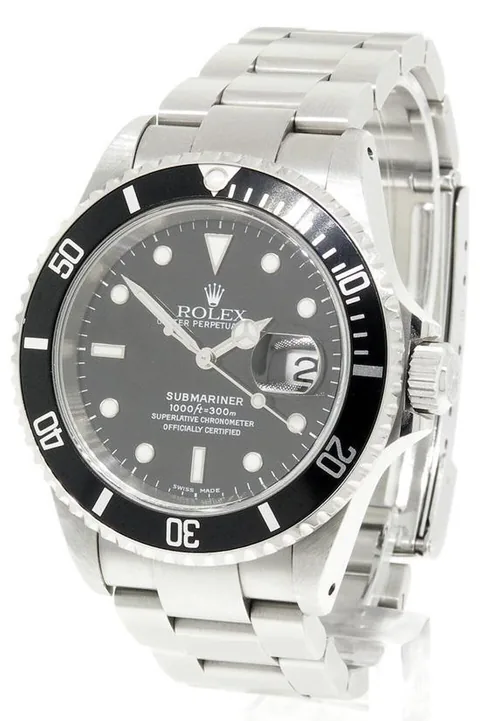
If you separated Submariner from Rolex, Submariner may actually be a bigger deal. Submariner is its own whole franchise.
Absolutely.
Almost in the way that’s like what if you separated the Dallas Cowboys113Dallas Cowboys — the NFL team from Dallas, founded in 1960; by Forbes's estimates, the most valuable sports team in the world. from the NFL? Who’s the more important brand? The Sub is. If you’re going to get a Rolex and you’re intending to have multiple, you should start with the Sub because it’s just so iconic.
You’re right. It is really its own world.
It was Sean Connery’s watch114Sean Connery (1930–2020) — Scottish actor, the first to play James Bond on film. even before when he started playing James Bond.
All right. Let’s get into it. The Submariner is the Rolex professional diving watch. As we talked about, not the first dive watch that Rolex made. That would be the Panerai.
But that’s not what you know. What you know is the Sub is a great dive watch that Rolex makes and defines a category.
Yes. Works and is waterproofed down to 100 meters in depth. Not a lot of people who are buying these things are going down to 100 meters. But there we go.
Although I must say, I think this is an overlooked thing about this category. That’s 100 meters in depth if there were no pressure changes and you weren’t whipping your hand around. It’s nice to have 100 meters of depth so that if you’re going 20 meters in depth and things happen, you might at some given second while you’re whipping your arm around or something weird happens underwater, approach the limit even though you’re actually far from 100 meters below.
I believe at some point, Rolex starts actually testing their watches to significantly greater depth than what is advertised for this reason.
That’s correct. Most of them I think are at 10% extra margin of safety, but I think the dive watches are an extra 25%.115Under the ISO 6425 standard (1996), watches labeled as dive watches are tested at 25% more pressure than rated: a "200-meter" watch as if at 250 meters.
You don’t want to be like, oh, I’ve got a 300 meter depth watch, and get down to 300 meters and think you’re good, but actually go to 305.
A 100-meter waterproof watch is nice, even just for going in swimming pools. I’m not sure I would want a 10 meter waterproof watch. It feels dangerous.
But it’s not really about the waterproofness here. Around this time, 1952–1953, much of popular culture is focused on a Frenchman named Jacques Cousteau. Probably rings a bell to many of you. Jacques Cousteau was the first world-famous undersea explorer. He actually invented scuba diving.
Oh, interesting.
He was a total renaissance man, genius. In 1953, he’s filming the documentary, The Silent World,116Jacques-Yves Cousteau co-invented the Aqua-Lung with engineer Émile Gagnan in 1943. "The Silent World," made with Louis Malle, won the Palme d'Or at Cannes in 1956 and then the Oscar for best documentary. in the Mediterranean Sea that is going to go on to win the Oscar, the Academy Award for best documentary, I think, in 1956. But the whole world is watching these exploits, discovering the depths of the ocean, this whole alien world for the first time along with Jacques. He’s doing so and going down in these machines while wearing Rolex watches.
Great.
So great. Now interestingly, there’s not an actual formal relationship between Jacques and Rolex. Actually, Rolex was formally working with another undersea explorer who didn’t become nearly as famous. Nonetheless, Jacques was a Rolex fan, was wearing Rolexes while doing all this, as was much of his crew. Then when the movie comes out, they’re all wearing these Rolexes.
And it’s important to remember for people who scuba dive out there, you have a dive computer117Dive computer — a wrist device that uses a pressure sensor to track depth, time underwater and a safe ascent profile (decompression). these days. I remember when I got Patty certified. Even your very first few dives, you’re not wearing a dive watch. You’re using a dive computer. At this time, this was a legitimate tool that you needed. It’s not going to tell you your depth the way that a dive computer is, but in order to know your total bottom time, and…
In the same way if you’re summiting Everest, well even more so than if you’re summiting Everest, you really need a Submariner, a dive watch if you’re diving.
This isn’t cute. This is an essential tool to complete this extreme task.
That’s great for marketing here. But then 1962, the very first James Bond movie, Dr. No, comes out.118"Dr. No" (1962) — the first James Bond film, directed by Terence Young from Ian Fleming's novel, with Sean Connery as 007. Connery wore a Rolex Submariner 6538. The example shown dates to about 1958 and has the model’s distinctive large winding crown.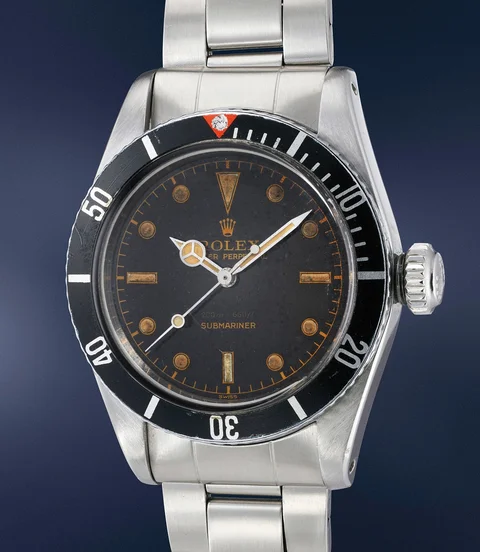
As it is written in Ian Fleming’s James Bond books.119Ian Fleming (1908–1964) — British writer, author of the James Bond novels.
Yes, because of course Ian Fleming himself was a Rolex man. Of course James Bond wears Rolexes. Now canonically—I didn’t know this until doing the research—did you know that at least according to Ian Fleming canon, James Bond’s mother is Swiss and his father is British,120Bond's parents: in "You Only Live Twice" (1964) Fleming writes that Bond's father was a Scot, Andrew Bond, and his mother a Swiss woman, Monique Delacroix, from the canton of Vaud. kind of like you might say Rolex itself is.
Oh, interesting.
So Sean Connery wears a Submariner in Dr. No. Then Connery, I believe, would wear Subs for all of his Bond movies. Ben, like you said, was in real life a Sub guy himself.
I think that’s right.
There is no bigger. If you’re trying to build a lifestyle brand, one of the first lifestyle brands in the modern world, there’s nothing better that you could do.
And this persisted from 1962 until 1995.
Yes, with GoldenEye.121"GoldenEye" (1995) — Martin Campbell's Bond film, the first with Pierce Brosnan as 007. This was Bond’s first film wearing an Omega. The manufacturer’s photograph shows the quartz Seamaster Professional 300M with the blue wave-pattern dial, reference 2541.80.00.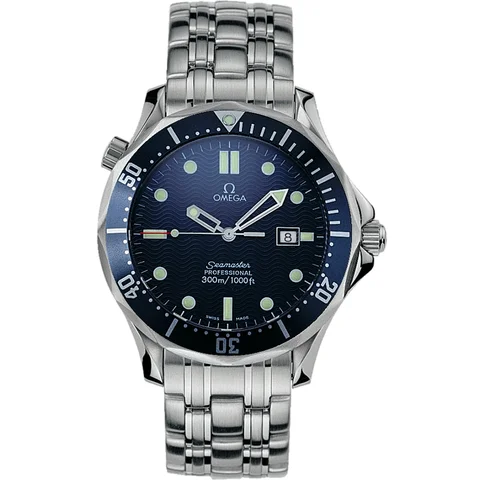
When Pierce Brosnan came in, they wanted to refresh Bond’s brand image, and they chose Omega for that one.
Oh wow. That’s really charitable of you to the Bond franchise there.
No, it is.
Now, come on. Omega paid them a boatload of money for product placement.
They did eventually, but initially it was not a paid placement.
Really?
Yeah.
I was almost certain that 1995 was when they decided to bid out all the stuff.
Well, let’s put it this way. If it was bid out, Rolex would decline to bid because Rolex does not engage in paid product placement.
That’s why I assumed the only way Bond would stop wearing Rolex. I guess maybe you could make an argument that you’re trying to reboot the franchise around Pierce Brosnan. Pierce Brosnan maybe is more of an Omega guy than a Rolex guy.
There’s some weird line that they used around trying to reboot him with more of a European modern flair or something.
Come on. No way. I don’t believe it. They freaking bid it out. There’s no way that James Bond is not a Rolex guy.
And certainly eventually Omega is paying a boatload of money to the James Bond franchise, so much so that there’s a bump in Omega sales every five years when a Bond movie comes out. A huge bump.
GoldenEye was when BMW launched the Z3 Coupe,122Fact-checkThe hosts say the Z3 Coupe; "GoldenEye" featured the BMW Z3 roadster, launched the same year, 1995, while the closed-body version appeared only in the late 1990s (Wikipedia, "BMW Z3"). right? So GoldenEye was totally product placement central.
And now Bond movies, the whole budget’s covered by product placement.
They only exist for product placement.
I don’t know. One of the sources I found on watchesofespionage.com details, apparently the costume designer reached out to Omega and was given for free a Seamaster.123Omega Seamaster — Omega's longest-running line, made since 1948; Bond has worn it ever since "GoldenEye." There’s, I think, even a quote, “There was no product placement incentive in 1995 whatsoever. I went to them and of course they were interested, but it was no more than helping us. They gave us watches for nothing.”
It definitely turned into a back-up-the-truck boatload of money thing. But the Omega fans will insist that it was an organic thing at first.
Okay, maybe that’s right. Anyway the point is, from 1962 until 1995, if you like James Bond and you wanted to have a little bit of James Bond in your life too, then you wanted to wear a Submariner on your wrist.
It’s perfect. James Bond does a lot of diving, and then he goes right from defusing the undersea bomb with the Bond girl, to then popping up and going to this high class dinner afterwards. He’s all wearing the same watch the entire time.
It’s perfect. Super fun, little coda on the Submariner. A few years later in 1967, do you know the story of the Sea-Dweller,124Sea-Dweller — a 1967 model waterproof to 610 meters, with a helium escape valve; it went on sale only in 1971, after Rolex got a patent on the valve. which I believe is still in the Rolex lineup to this day?
It is. Is this the one that’s like the super Sub? That’s like a Submariner, but you can go real deep.
It’s the super Sub, yes. Rolex develops this in partnership with the French undersea exploration company, COMEX.125COMEX (Compagnie maritime d'expertises) — a French deep-sea diving company founded in Marseille by Henri-Germain Delauze in the early 1960s and a pioneer of saturation diving. Its divers have worn the Sea-Dweller since 1977. There’s this issue where helium would get trapped in the watch126In saturation diving, divers live for long periods in hyperbaric chambers breathing a helium mix. Tiny helium atoms seep into the watch case, and during decompression the pressure inside can pop off the crystal; the valve lets the helium escape. in the Submariner, and the pressure would break it as you’re coming back up.
They developed the Sea-Dweller, which is waterproofed down to 600 meters, and has a special helium release valve. This is ridiculous. No person who is going to buy these actually is going to use this stuff except for COMEX employees that are being issued them. But it adds to the romance, it adds to the this is a lifestyle purchase.
Okay. If you’re already taking us from Submariner to Sea-Dweller, you got to take us to Deepsea Challenge. This is the ultra ultra version.
All right, go for it.
So they develop a watch. This thing is so thick, you’re not putting this on your wrist. But they design a watch and they said, well what if we take this idea of originally the Submariner, then the Sea-Dweller, and we make this thing called the Deepsea.
And there was an earlier version of this before James Cameron, right?
Yeah. Well the Cameron one, I believe, is the Deepsea Challenge, which is an extra, extra version, and the challenge is the one that’s the 11,000 meter, whereas the regular Deepsea is just regular all 3900 meters. You get the Deepsea for 3900 meters. The Deepsea Challenge to really get to the bottom, the 11,000 meter.
James Cameron, on a manned submersible, takes the Sea-Dweller Deepsea Challenge—it actually is, I think, all of those brands; they include the sub-brand with the parent brand in this thing—down to the Marianas Trench to the deepest part of the ocean.127Cameron's dive: on March 26, 2012, James Cameron descended alone to the bottom of the Mariana Trench in the Deepsea Challenger submersible. An experimental Rolex Deepsea Challenge watch was mounted on its manipulator arm.
This thing is clipped onto the outside of the submarine because it’s useless to have it inside. Humans would get crushed by this pressure if they were on the outside. But the watch keeps perfect time, keeps all the water out all the way to the deepest part of the ocean.
Amazing.
And of course James Cameron testimonee.
Yes, of course, of course. So that’s going down to the bottom of the sea, very romantic lifestyle association.
By the way, isn’t it interesting? All these are in English. All these watches have English names.
Yeah, what’s the market here? It’s American. Come on.
So take us airborne, David.
Yeah, so we’ve gone down. Now we’ll go up. That brings us to the GMT-Master, the Greenwich Mean Time Master. In 1955, Boeing launched the 707 commercial jet airliner based on an Air Force air-to-air refueling tanker design.128Boeing 707: its prototype was the Boeing 367-80, which was also the basis for the KC-135 military tanker. Pan Am ordered 707s in 1955. I didn’t know that until this episode.
Neither did I.
And the next year in 1956,129Fact-checkThe hosts say 1956; in fact the Boeing 707 first flew on December 20, 1957, and Pan Am began scheduled 707 service on October 26, 1958 (Wikipedia, "Boeing 707"). Pan Am, the iconic American airline,130Pan Am — an American airline (1927–1991), for decades the main US international carrier. begins flying intercontinental jet flights with the Boeing 707 for the first time. The jet age for the consumer is born, and along with it jet lag.131Jet lag — disrupted body rhythms after a fast flight across several time zones: sleeplessness at night, drowsiness by day. It’s a new concept. If you traveled across continents before you didn’t move fast enough, that you experienced jet lag.
Pan Am is worried about the effects of jet lag on its pilots. The pilots are going back and forth all the time across the Atlantic Ocean or the Pacific Ocean or whatever. They decide that the best thing to do is to keep the pilots operating on their home time.
Let’s say the pilots are based out of New York, they need to operate on New York time, even if they’ve just landed in London. The way that they’re going to do that is they’re going to work with Rolex and develop a new professional watch for their pilots that can for the first time tell time simultaneously in two different time zones.
Amazing.
So Rolex takes the failed Turn-O-Graph, which isn’t selling well, but has the rotating bezel, remember?
Bidirectional rotating bezel, importantly, because the Submariner is just one. Well maybe not at first, but eventually becomes just one so you don’t screw up and do something you don’t want to with it.
Yup. They change the markings on the bezel from 60 minutes or 60 demarcations that it was on the Turn-O-Graph to 24 hours. Then they add in a fourth hand on the movement that moves at a 24 hour movement. All of a sudden you can now on one single watch face keep track of two different time zones, and the GMT-Master is born. You are the master of time with this watch.
Legitimately, very, very useful. Whenever you and I travel for Acquired, I set the complication in the lower right of my Apple Watch to be the home time, because it’s just really nice to keep track of home time in addition to where I am right now.
Totally. That’s pretty cool. Eventually they launch two-tone on the rotating bezel, the most famous of which being red on one half and blue on the other half, the Pepsi model. So cool.
They do all these great limited editions. The Sprite.132Sprite — the nickname of the 2022 GMT-Master II with a green-and-black bezel, the first GMT-Master II with its crown on the left.
The Batman, gray and black.133Batman — the nickname of the 2013 GMT-Master II with a blue-and-black ceramic bezel; Rolex released the gray-and-black bezel in 2024 (Wikipedia, "Rolex GMT Master II").
It’s great. The community comes up with little nicknames for all the different color schemes that they do here.
Super, super fun. Now this is for air travel and jet travel, but of course the pinnacle of 1960s and 1970s romance up in the air is not air travel but space travel.
ExplainerHow the Speedmaster became the "Moonwatch"
In 1964 NASA needed watches for the Gemini astronauts. Agency staff bought chronographs from several brands and put them through a battery of tests: heat up to 93 °C (200 °F) and cold down to −18 °C (0 °F), vacuum, humidity, shocks of up to 40 g, acceleration, vibration and noise up to 130 decibels. Only the Omega Speedmaster survived them all, and in March 1965 NASA qualified it for crewed flights.
In June 1965 Edward White wore one on the first American spacewalk, and on July 21, 1969, Buzz Aldrin stepped onto the Moon in a Speedmaster: Neil Armstrong's watch stayed in the lunar module as a backup timer because the onboard one had failed. Ever since, Omega has sold the Speedmaster Professional as the Moonwatch, a story Rolex has nothing to match.
Yup. Oh yes.
Which brings us to the Apollo missions, for which standard issue from NASA is the Omega Speedmaster.134Omega Speedmaster — Omega's chronograph, made since 1957. In 1965 NASA qualified it for crewed flights, and in 1969 it went to the Moon with the Apollo 11 crew.
Which again, I will say bolsters my case that in the 1940s, 1950s, 1960s, Omega was the big brand. Rolex had a target in mind to beat, and that target was Omega who was bigger.
But even though Omega was standard issue on the Apollo missions, not all of the Apollo astronauts chose to wear their standard issue watches. If you go to Rolex headquarters, there is an incredible signed picture from Apollo 13, the Apollo 13 mission, the Tom Hanks movie, signed by astronaut Jack Swigert, a character who’s played by Kevin Bacon in the movie.135Jack Swigert — command module pilot of Apollo 13 (1970). In Ron Howard's film "Apollo 13" (1995) he is played by Kevin Bacon.
“To my longtime friend, René Jeanneret,” who I believe was Rolex head of communications at the time, “who enabled me to always be on time.” Jack and, I think, maybe some of the other astronauts, too, preferred GMT-Masters and wore their GMT-Masters during the Apollo missions.
Interesting. Like you said, the Omega Speedmaster famously is the moon watch. In many ways, it’s the big blemish in Rolex’s whole strategy of being the brand for people who accomplish the greatest heights in human history. But this is a great little way to slide in and take a little slice of that history too. And by the astronaut’s choice, much like Sean Connery.
What could be better? Not going to wear this inferior product. Now, I’m sure this is Rolex’s version of history, but supposedly NASA reached out to Rolex first because they knew that test pilots preferred GMT-Masters. But there was a mix up in Rolex’s New York purchasing office that led to this mishap of Omega being selected instead.
If you work at Omega, please contact us and tell us what is the real version of this story. We know no one at Rolex is going to call, so let’s hear at least Omega’s side of this.
Whatever the case, this is all just building so much legend and lore, romance, and the ultimate lifestyle brand here. And like I said earlier, this really is the architecting of André Heiniger. We talked about the J. Walter Thompson relationship, but I had mentioned Mark McCormack and IMG, starting here in the mid-1960s with IMG is when they really turbocharge and formalize this testimonee brand ambassador partnership relationship.
And they are doing two-pronged here. These professional watches are happening, but they’ve also advanced their dress line.
They’ve come out with the Day-Date.136Day-Date — a 1956 Rolex model, the first watch to show both the date and the day of the week spelled out in full. It's made only in gold or platinum and gave its name to the President bracelet with three rounded links across.
The President, as it’s nicknamed.
The President. It was so ironic that the first president to wear a Rolex wore a Datejust, not a Day-Date.
But future presidents wore Day-Dates.
Yes. But anyway, back to IMG. IMG was the first modern talent celebrity endorsement agency, and really visionary of Mark McCormack to have founded in 1960.137IMG (International Management Group) was founded by Mark McCormack in 1960; its first client was Arnold Palmer. He brokered tons of celebrity endorsements. He works with Rolex, and they sign the “big three” in the golf world. First Arnold Palmer, then Gary Player,138The Big Three — Arnold Palmer, South Africa's Gary Player and Jack Nicklaus, the leading golfers of the 1960s, credited with turning golf into a global commercial sport. and then Jack Nicklaus. For their whole careers, I believe probably their whole lives, they are Rolex men.
That is effectively the blueprint for everyone from Federer to Tiger Woods forward.
Just in golf if you go forward, Tiger Woods, Annika Sörenstam, today Scottie Scheffler, Jordan Spieth, Justin Thomas, Brooke Henderson, Lydia Ko. Not everybody, but at least a large share of the best players are Rolex players.
Well it’s interesting because when you list them off like that, yeah it sounds like a large group, but I think the strategy is not a lot, the strategy is only the best.
A large share of the very best players.
And that goes for individual athletes. But it also goes for which events they sponsor. I was talking to Ben Clymer at Hodinkee, and he pointed out that they don’t just sponsor PGA Tour.139PGA Tour — the main men's professional golf tour in the US: a series of tournaments nearly every week of the season. They sponsor The Masters.140The Masters — one of golf's four men's majors, held every April at Augusta National in Georgia; play is by invitation only. They’re not going to really mess around much beyond that. Similar to tennis, like yeah, we’ll do Wimbledon.141Rolex has been Wimbledon's official timekeeper since 1978; it was the company's first tennis partnership.
And now they do all four grand slams.142Besides Wimbledon, Rolex has been official timekeeper of the Australian Open since 2008, the US Open since 2018 and Roland-Garros since 2019.
Ah, okay.
So yeah, arguably tennis, especially post Federer, is even more iconic Rolex than golf is. They partner with many of the top, top players in the world. But Federer really was transformational.
I think that’s right.
I don’t think the Federer-Rolex relationship is quite like a Michael Jordan-Nike relationship,143Nike made the first Air Jordans for Michael Jordan in 1984, his rookie NBA season, and they went on sale on April 1, 1985; the line grew into a separate Jordan brand. but it’s in that next tier of great athlete partnerships.
There are a couple of really interesting things about golf and tennis, specifically, for Rolex. One, just the overall brands of the sport mesh very well with Swiss luxury watch companies. But also even going all the way back to the 1930s and the Wilsdorf days, the Hans days of Rolex, proving that you could keep accurate time while playing golf or tennis was a really key marketing message because you’ve got the shocks impacting the wrist of hitting the balls all the time.
Think about that hairspring, think about that delicate balance wheel floating there, carefully ticking back and forth, hovering. The vibrations—I don’t really understand how it keeps working perfectly.
Totally. It’s also the type of sport where you can be an elite, top of the world player for a very, very long time as opposed to other sports. Think about Federer’s career, think about Arnold Palmer’s career, Jack Nicklaus. These people had multiple decades of dominance being at the pinnacle of human achievement.
That’s right.
That wraps up the iconic tool, sport, professional watches.
No, it doesn’t. There’s a thing you haven’t said.
09The Daytona and Paul Newman
A chronograph nobody wanted for years turned into the foundation of the modern watch collecting market after an inexplicable craze in Italy.
Except for the model that both of us are wearing on our wrists right now. The Daytona really created a market in and of its own.
And completely changed the mechanical watch market, period.
The Daytona, through a complete accident of history, as we shall see in a minute here…
Created a phenomenon.
Created the modern watch collector market. And all of the crazy prices, auctions, and insanity that occurs today, I think you can say really is all because of the Daytona.
It’s one component of it, David. I don’t want you to oversell. I’ve got a lot.
Okay. At least from the Rolex side of things, the Daytona is what created all of it.
AdVanta
All right, listeners, now is a great time to tell you about longtime friend of the show Vanta. So David, I want to paint a picture that many founders listening will recognize. You’re about to close your biggest customer yet. The product team has hit a bunch of milestones. The sales team built this fantastic relationship. Everyone at the potential customer is fired up. Your legal team has the contract done, but then an email comes in from the security team.
Ah, yes. It’s usually a very polite email asking something like, “Before proceeding, could you share your SOC 2 report?” Or, “Do you mind sharing your ISO 27001?” If you don’t have one, that deal just went from closing this month to closing next quarter, maybe. Now you have to go find an auditor, go through every system, write the policies, and then prove that you follow them.
Right. Or you could just use Vanta. They are the leading agentic trust platform, which means that you can connect it to your systems at your company and it automatically pulls all the relevant data, and it tells you exactly what’s missing for a SOC 2, an ISO 27001, or whichever framework your customer asked for. Vanta gets you through the audit, and then it keeps going. It watches your controls every day afterwards, so the report that you hand to the next customer is still true.
Yep. And even more impressive is the Vanta agent. It continues to run in the background so it can find the issues and draft the fixes. This is the work that eats weeks of an engineer’s time before an audit, and now it mostly just gets done before anyone has to ask.
And the results are super impressive. A recent industry report says that Vanta’s customers see a 526% return over three years and that it pays for itself within the first three months. If you’ve ever had one of these security emails stall a deal, you know exactly how that math works.
More than 16,000 companies now run on Vanta.
16,000. Listeners, there were 2,000 when David and I started working with Vanta.
That’s incredible what they’ve accomplished. And these are companies from large enterprises like Atlassian and Snowflake to the new guard like Ramp and Cursor.
We’ve been fans of Vanta for years, and hundreds, like literally hundreds, maybe even at this point thousands of Acquired listeners have become Vanta customers over that time. If you want $1,000 off, check out vanta.com/acquired. That’s V-A-N-T-A.com/acquired, and just tell them that Ben and David sent you.
Okay, so David, the Rolex Daytona.
Ooh, yes. The instant worldwide sensation. Or not. The Daytona, unlike all of Rolex’s other watches, is a chronograph, or as they call it a cosmograph.
Because again, this is Rolex.
We can’t use industry standard terms. What is a chronograph? A chronograph is a very fancy term for a stopwatch.
However complicated you thought a regular mechanical watch was, now add in something like the Daytona, where you also have a full seconds hand on the main dial that counts seconds and then another dial to count minutes, and then another dial to count hours, all in addition to the regular watch function.
There are four dials on the watch face of the Daytona. Incredible. Now it turns out, Rolex has actually made a chronograph for a very long time. This was the first tool watch that they introduced way back before World War II, before André Heiniger, before anybody was thinking about this stuff.
And in large part it looked like this, but there was no craze around it.
So in 1962, Rolex becomes the official timekeeper of the then relatively new Daytona International Speedway144Daytona International Speedway — the racetrack in Daytona Beach, Florida, opened in 1959; it hosts NASCAR's Daytona 500 and a 24-hour sports car race. in Daytona Beach, Florida. To commemorate this great moment, the next year in 1963, Rolex officially starts calling their chronographs, which again, they’ve been making for three decades at this point, Daytonas.
They thought about Le Mans145The 24 Hours of Le Mans — a 24-hour sports car race on a circuit outside the French town of Le Mans, held since 1923; the world's most prestigious endurance race. because they were also very closely involved with Le Mans, the race in France. But to the name Rolex, this has to have international appeal and can’t have silent letters that Americans can’t pronounce. What’s better than Daytona? I can look at the word. I can say it out loud.
And again, like we’ve been talking about, the market is America post-World War II. And what could be more American glamor in 1962 than Daytona Speedway, fast cars, movie stars.
Twenty-four-hour race.146The 24 Hours of Daytona — the round-the-clock race at this speedway. The first race, in 1962, lasted three hours; it became a 24-hour race in 1966. Since 1992 Rolex has been its title sponsor (the Rolex 24 at Daytona), and winners receive a Daytona.
Beaches. Yeah, 24-hour race. It’s perfect. Then a couple of years later, one of the true leading men actors of the day, Paul Newman, stars147Paul Newman (1925–2008) — American actor and director, one of Hollywood's biggest stars of the 1950s–1970s, and from the 1970s a professional racing driver. in a 1969 film called Winning,148"Winning" (1969) — James Goldstone's film about a racing driver who dreams of winning the Indianapolis 500, starring Paul Newman and Joanne Woodward. about being a race car driver. After he stars in the movie, well, guess what? He develops a hobby of becoming an actual race car driver.
His equally famous wife, the actress Joanne Woodward,149Joanne Woodward (born 1930) — American actress who won an Oscar for "The Three Faces of Eve" (1957); Paul Newman's wife. gifts him with a Rolex Daytona of his very own for his racing activities with the immortal inscription on the back, “Drive carefully–Me.” Again, we’ve been talking romance, lifestyle development.
Iconic.
You can’t get any more iconic than that. It’s perfect. You can totally see how this would set off an absolute insane craze in the market.
Except, to your point, it doesn’t right away.
Except it doesn’t. There are so many of these moments in Rolex history, really in all the stories we tell, where the company does everything in their power to align the stars perfectly and it doesn’t work. But then a butterfly flaps its wings150The butterfly effect — an image from chaos theory: in a complex system a tiny push can have huge consequences. The name comes from meteorologist Edward Lorenz's 1972 talk "Does the Flap of a Butterfly's Wings in Brazil Set Off a Tornado in Texas?" several years later and all of a sudden it does.
Say in Italy.
So 1969 is when Paul Newman stars in this movie. It’s some time in the next year or so after that, when Joanne gives him this watch. Paul Newman absolutely is iconic at this point in time. He’s being photographed all over the world. He’s a leading style figure. He’s in magazines and this is his watch. He’s wearing this watch, and he wears it for about 10–15 years or so.
Then one day in 1984, so long, long, long time later, lots of history passes, which we will come back to, his daughter Nell has her boyfriend over. Paul asks the daughter’s boyfriend, does he know what time it is? And the boyfriend replies, I don’t know. I don’t have a watch. Paul on a whim says, here, take this one. It keeps good time, and gives the boyfriend the watch, the Paul Newman Daytona.
I actually didn’t know this story.
Swear to God this is true.
This watch sold at auction for the most money, ever.
Ever. I think it was $17.5 million.151Paul Newman's Daytona sold at Phillips in New York on October 26, 2017, for $17.8 million. It was consigned by James Cox, the very boyfriend of Newman's daughter.
Here, take this one. It keeps good time.
And at the time the market such as it existed for Daytonas, the secondary market for Daytonas was like a $200 watch. Hey, I like the boyfriend. Sure, have a watch. I’m done with it. Man, to have been the boyfriend. Because two short years later in 1986, for whatever reason it is unknown, a bunch of dealers in Italy start snatching up versions of the Daytona from the era when Paul Newman’s Daytona was made.
And it’s important to say here, in Italy there is a real watch culture. This is true in various parts of Europe at this point in time, in a way that in America there’s actually not watch culture. They want to market to Americans. There’s all this rising wealth, people want to celebrate their successes and all that and they’re trying. But America doesn’t have a watch culture the way that Italy had both a collecting culture and a style culture.
Which is why there are secondary market dealers in Italy. One rumor is that around this time in the early 1980s, Paul Newman had been on the cover of an Italian style magazine wearing the watch, obviously taken before he gave it to the boyfriend. Maybe that was the reason that people in Italy decided this is a cool watch. Nobody really knows and nobody has ever been able to locate that magazine cover, so who knows?
Well for whatever reason, a butterfly flapped its wings and Italians thought that the watch was cool. So the dealers start buying up the “Paul Newman style” Daytona, which is a specific style, was made for a couple of years by Rolex in the late-1960s, early-1970s. It had an art deco style face to it.
And a very particular color scheme that featured red around the edges as well.
Red around the edges, around the track where the minutes and seconds are kept, but also very specific font.
Also, we should say, we haven’t said yet that on the Daytona and really all chronographs, there’s a very cool feature which is around the edge. This gives the watch its signature design. There is units per hour. I don’t know if it’s logarithmic, but maybe I should work out the equation in my head. Maybe it is logarithmic. It starts at, on the version I’m wearing 400 and goes all the way down to 60.
What that means is if you press start and you drive one mile and then you press the same button again to stop wherever the second hand is pointed around the edge of the watch was your miles per hour for that one mile that you drove.
If I was able to drive one mile in one minute, then it’s going to come all the way around and it’s going to be pointed all the way up to the top and it’s going to say 60. But it goes up to 400152Tachymeter scale — used to measure average speed over a known distance. The scale is calculated as 3,600 divided by the number of elapsed seconds. because of race car drivers.
That’s awesome. I actually did not know that that’s what those numbers—
No, you got to be kidding me. You own this watch.
I know. Well I haven’t thought about this watch in 15 years.
For anyone who’s trying to figure out what’s going on over in David land, David used to work in investment banking,153Investment banking — deal work: banks help companies issue stocks and bonds and buy and sell businesses. College graduates are hired as analysts, with grueling hours and big bonuses. and this was a part of the uniform when you got out of college.
Well, here’s the whole story. My dad is big into watches, has been for a long time starting probably when I was in high school and college. He got really big into watches and watch collecting, so early before the market here in America.
That’s before it took off in any way in the US.
Totally. And I thought he was insane. I was like, why are you blowing all this money on watches?
Which back then it actually wasn’t that much money.
Regardless. I graduated, I go to work in investment banking, and back then and I’m sure still to this day, investment banking had a watch culture. My dad gave me a couple of watches to wear, one of which was this stainless white face Rolex Daytona, which is an incredible piece. It was an incredible gift back then. I was like, oh, this is super cool. All my colleagues, especially the senior bankers were like, who is this freaking kid?
That this is not a, I got my first bonus, so I went and bought a Rolex. This was an it watch.
This is not an analyst watch.154Analyst — the junior rung at an investment bank. Above it come associate, vice president, director and managing director, the senior banker who brings in clients. I don’t know if it was necessarily a managing director watch, but it was probably something that like if you made VP you would go get something like this. It was odd for me to wear it and paradoxically it actually killed my interest in watches and desire to wear them because I realized it was weird for me to wear this watch. Then I was like, you know what? I need to just stop. Especially when I got to the west coast, I was like, I should just not wear watches. This is too much.
I need to get my bearings again.
Exactly. Then I didn’t wear watches at all, nothing on my wrist until the Apple Watch. Then when the Apple Watch came out, I’ve worn that every day since until we went to Taiwan. We were like, well, we should do a little Easter egg,155The Easter egg here was the watches the hosts wore during their interview with Morris Chang, recorded in Taipei in January (David recalls the trip around 3:57). and we broke out the watches out of the safe.
So cool.
The question going forward is, listeners, if you’re listening to this a few months, years in the future, the question will be, do I keep wearing this? Do I go back to the Apple Watch? What do we do? I don’t know.
We’ll see. But what you’re foreshadowing here, though, is the hype over that Paul Newman dial.
Which, to be clear, I’m not wearing a Paul Newman dial.
Trickled out into the rest of the Daytonas. It made any Daytona extremely desirable.
Just sticking with the Paul Newman models here in 1986. Prices for some of these models shoot to $30,000-plus.
In 1986 dollars.156By the US consumer price index, $30,000 in 1986 is roughly $85,000–90,000 in 2025 dollars.
Yeah, for a watch that Paul Newman gave away to his daughter’s boyfriend two years before and was worth $200. Ben, you’re right. This one event didn’t create the global watch collecting and investing market period, but it was part of it.
Absolutely was part of it.
This was a huge moment of, oh wow, these things aren’t just purchases. They’re investments and you can trade in them.
Put a pin in that. There’s a whole world of 1970s and 1980s, that’s this almost parallel universe to Rolex that we’re going to go into here in a minute. Before we do that, it’s worth resuming our history of Rolex advertising.
Concurrent with releasing all of the professional watches, Rolex expanded their aperture in their marketing. It went from just men who guide the destinies of the world wear Rolex to suddenly you’ve got these scuba divers, these pilots, and these race car drivers now at the Daytona, and they’re wearing the professional watches for their craft. We can probably sell a lot of watches by selling that lifestyle.
This is where the expansion goes from just commanding the world to human achievement, those who sit atop their fields. In 1967–1970, there’s this great campaign. They launched the “If you were…” campaign. We’ll put some links in the show notes, but Google this. I’m sure we’ll tweet it, so you can see it on our Twitter account. Big bold Helvetica font.157Helvetica — the sans-serif typeface created in 1957 by the Swiss Max Miedinger and Eduard Hoffmann; one of the most widely used typefaces in the world. If you were flying the Concorde tomorrow,158Concorde — the Anglo-French supersonic airliner: first flight in 1969, scheduled British Airways and Air France service from 1976 to 2003. It flew from London or Paris to New York in about three and a half hours. you’d wear a Rolex. Picture of the Concorde going supersonic. Picture of the GMT-Master.
So great.
This is what these pilots at the top of their field are actually wearing. They stayed a million miles away from features and it was all lifestyle advertising. This is the person you would be if you owned this watch. There’s a version speaking at the UN. If you were speaking here tomorrow, you’d wear a Rolex.
If you were climbing here tomorrow.
Yes. Diving down to great depths, taming oilwell wildfires. I think there’s even one where they’re walking in a volcano. It’s just this brilliant campaign that, again, this is the late 1960s. It’s everything we’ve learned from the Mad Men era of advertising, completely the opposite of the Mercedes Gleitze era. We are leaning heavily into who could you be.
I do think this was the very first chip of what made Rolex a real challenger to Omega, who had been the standard big Swiss watch brand. Rolex was really the one to bring lifestyle advertising to bear.
Also, I know I keep harping on this Omega thing. Omega was actually worn by the soldiers in the Boer War that Hans had recognized.
So they had the history, too.
They had the history too, yeah.
Those incredible ads, that was really peak Rolex lifestyle era, this second era of Rolex, of moving beyond the product to selling the lifestyle. The Daytona was part of that. Then in the 1980s when the Italian thing happens, the Paul Newman thing happens, and the collector’s market gets built, I think the first real big move that Rolex makes into the luxury world.
It did create the one model in their lineup where it had real hype around it. That just stayed true for decades. Even in, I don’t know, 2010 or something, you could walk into a jeweler who’s an authorized Rolex dealer and you could just buy something out of the case, which you cannot do today.
You could buy a Submariner, you could buy an Explorer, you could buy a GMT-Master, you could buy a Datejust.
But you couldn’t buy a Daytona. That from this 1980s forward was always this spot in their lineup where, eh, we’ll have to call you about that one.
Today, if you want to buy a Rolex of any model, you go in and you put your name on the waitlist. Then at some point in time—could be a couple of months, could be a couple of years—you’ll get the call that your model is available. The Daytona is, I think, the only model where there is no waitlist.
I don’t think that’s true.
Is that not true?
It’s impossible to say that because they work through authorized dealers, so it’s not up to Rolex. And it varies greatly dealer to dealer. I think they’re actually called Rolex retailers now.159Official Rolex Retailer — what the company now calls the stores allowed to sell its new watches; colloquially they're still known as ADs (authorized dealers). They changed it from authorized dealer, but it’s whatever the local dealer’s policy is.
Interesting.
At least historically. It might be changing amidst the insanity right now.
If you go browse the forums, the lingo that I read is the Daytona is not a waitlist. It’s a wishlist.
It’s awesome.
Like most of the other models, if you want one and if you get on a list at an authorized dealer, at some point in time your turn will come up. Whereas with a Daytona, it’s like, yeah, you can express desire.
I have a few things to say on this, but let’s wait till we get to the present day. We have the entire watch industry is going to fall apart and then get rebuilt from scratch. We have that in between where we currently are and where we’ll end up.
All right, let’s go there.
All right.
Take us back.
10The quartz crisis
Ben's side quest shows how quartz turned the watch into a technology product that rode a semiconductor-style cost curve and wrecked a Swiss industry built on skilled labor within a few years.
This was a whole side quest that I did this episode.
Nice term. Look at us getting all Gen Z.
David and I interpreted the assignment differently.
Okay. Well you were just pandering to Gen Z right now.
Do an episode on, how would I…?
A side quest interpreting the assignment.
I’m sorry. Is this Gen Z lingo? I don’t even know.
I’m pretty sure it is.
Oh. Anyway, we interpreted the assignment differently of do an episode on Rolex. David viewed it as go as deep as possible on the entire history of the brand itself, the company, the relationship with Aegler, and each of the watch models. I heard it as go fully understand the entire watch industry and contextualize Rolex’s role within it.
Here it goes. Here’s my best David Rosenthal impression for the quartz crisis.160The quartz crisis — the collapse of the Swiss watch industry in the 1970s and early 1980s, when cheap, accurate quartz watches from Japan and Hong Kong took over the market. In Japan the same events are called the quartz revolution. And I have two huge thank yous for this section. Ben Clymer, the founder and CEO of Hodinkee. I spent hours pestering Ben and having phone calls with him. I probably read 30 things on Hodinkee. On the modern watch era, it’s the definitive place to read about watch culture.
Secondly to Joe Thompson.161Joe Thompson — American watch journalist who has covered the industry since 1977, spent 17 years as editor-in-chief of WatchTime and in 2017 moved to Hodinkee as its first executive editor (National Jeweler). Joe is the journalist in the industry. Most recently, he’s the executive editor of Hodinkee. But over the last 40 years he has written all the canonical pieces. He was the editor of WatchTime magazine. He’s one of the only people ever to get an interview with a sitting Rolex CEO. He lived the quartz crisis firsthand, and was flying around to Geneva, Taiwan, and Japan, and reporting on it live.
You’ve mentioned the quartz crisis, also known as the quartz revolution. What is this?
All right. Here we are in the early 1970s. The Swiss are riding high. They’re the undisputed champs of watchmaking. That’s where we left our heroes here. At one point, the Swiss actually made up as much as 85% of the world’s total wristwatches. Eighty-five percent of the market they had, this is in 1945. It’s right after the war.
The analogy here is like TSMC in Taiwan. Making mechanical wristwatches is an extremely difficult specialized skill.
They made 19 million of the total 21 and a half million that year. Another thing to contextualize it, because you can understand what is coming and how technology disruption will happen, this 19 million watches produced was by 2500 individual companies, 90% of which employed fewer than 50 people.
Completely decentralized means of production. In many ways, actually the Taiwan metaphor totally extends. It’s like Switzerland was Hsinchu Science Park,162Hsinchu Science Park — a technology park in northwestern Taiwan, founded by the government in 1980; home to TSMC's headquarters and hundreds of other chip companies and their suppliers. and these places all sort of knit together and collaborate.
I was going to say the exact same thing.
This is an industry built on skilled labor, fragmented across a ton of suppliers, very little of vertical integration.163Vertical integration — when a company owns the links of the chain itself, from raw materials and parts to assembly and sales, rather than buying from suppliers. Someone makes the movement, someone makes the hand, someone makes the case, and all this happens in one of the most expensive labor environments in the world.
Geneva isn’t cheap.
It’s amazing that there was this labor-intensive industry in Geneva. All right, so that was 1945. Three decades later in 1973, it’s still going strong. The Swiss peaked at almost 90 million watches made in 1973.
Up from 19 million 28 years before. They’re now at 90 million watches, handmade, in this crazy production process per year. We keep alluding to this quartz crisis, but the quartz was not the first revolutionary new technology that was supposed to disrupt mechanical watches. There was a half step along the way to a technology that turned out to be a detour that actually wasn’t the future. David, do you know what that is?
Oh, I would guess digital timekeeping, but…
That’s quartz, yeah. What else vibrates like a quartz crystal? What do you think could oscillate to keep time?
Something radioactive?
A tuning fork.
That’s a great weird thing in history. Part of this also comes from Marc Bridge’s great research paper.164Marc Bridge — founder and CEO of the jewelry marketplace At Present and a friend of the hosts; they thank him at the end of the episode, around 4:56. The whole Swiss watch industry had been marketing that you can judge the quality of a watch by its timekeeping, and then suddenly this tuning fork watch comes out. They’re no longer the best at timekeeping. Mechanical watches are worse than the tuning fork watch.
There’s this crazy watch that comes out, the Bulova Accutron.165Bulova Accutron (1960) — a watch in which a tuning fork vibrating at 360 hertz replaces the balance wheel; it was developed by Swiss engineer Max Hetzel. In practice, though, the Accutron wasn’t a disruptive technology. In the Clayton Christensen term,166Clayton Christensen (1952–2020) — Harvard Business School professor and author of the theory of disruptive innovation from "The Innovator's Dilemma" (1997). it was a sustaining innovation.167Sustaining innovation, in Christensen's terms, improves an existing product for existing customers, and market leaders usually handle it themselves. A disruptive one starts out worse and cheaper, comes from below, from newcomers, and eventually displaces the leaders. It took the existing thing and made it a little bit better. The watch still required, though, hundreds of components and handmade craftsmanship in order to make it.
It’s still difficult to make.
Right. This meant that the existing companies would have to integrate into their own workflow to produce it, but there really wasn’t a wide open window for some new entrant to use it as a disruptive force. That’s the thing that you need is can a new producer come in and take a radically simpler approach?
Like, say, a Japanese company.
Right. So quartz. Well, we all think, oh, quartz comes from Japan and Seiko.168Seiko — the Japanese watch company founded by Kintaro Hattori in 1881; in 1969 it released the Astron, the first production quartz wristwatch. Then that was this huge disruption of the Swiss watch industry. People had been exploring quartz technology for a very long time. In fact, the first quartz clock was created all the way back in 1927. Do you know where, David?
Well I know the Swiss themselves were doing big industry-wide consortiums.
Correct, but that was in the 1960s and 1970s. In 1927, who possibly could be doing research with quartz technology to use for timekeeping?
I have no idea.
It’s in America. Cutting edge technology research.
Bell Labs.
Bell Labs.
Yeah, okay. There we go.
In New Jersey, the first quartz clock is created.169The first quartz clock was built in 1927 by Warren Marrison and Joseph Horton at Bell Telephone Laboratories, AT&T's research center, where the transistor was later invented.
Now unfortunately, in 1927, the Bell Labs quartz clock was the size of an entire room.
The ENIAC of clocks.170ENIAC — the first general-purpose electronic digital computer, built in 1943–1945 at the University of Pennsylvania under John Mauchly and J. Presper Eckert; it filled an entire room.
Yes. Okay, we’ve been describing the quartz crisis. What is it? How does it actually work? How do quartz watches function? Instead of a main spring that you have in a mechanical watch, you have a battery. Pretty straightforward. Instead of an escapement, you vibrate the quartz crystal.
Quartz has this crazy thing where if you apply an electrical current and it’s shaped a certain way, they can vibrate at exactly 32,768 hertz.17132,768 is 2¹⁵. A chain of fifteen dividers, each halving the frequency, turns the crystal's vibrations into exactly one pulse per second.
That’s right. I remember seeing that number.
It is weird. This is called the piezoelectric effect.172The piezoelectric effect — a crystal produces an electric voltage when squeezed and, conversely, deforms under voltage. It was discovered by the brothers Pierre and Jacques Curie. Interestingly, that was discovered all the way back in 1880 in Paris.
The other important thing you need to know about a quartz watch is it requires an integrated circuit. The modern quartz watch is dependent on using an IC to count the quartz vibrations and transform them from 32,768 hertz to 1 hertz to tick one second at a time. Or if you’re using a digital watch to increment the seconds by one each time.
So by the time you get to the early 1970s, you’ve now got integrated circuits.
That’s exactly right. The first quartz watch that hit the market in 1969 from Seiko was dependent on the invention and miniaturization of the transistor and integrated circuit before it could actually happen. That’s why we’re stuck waiting from the 1920s all the way to 1969 before it can be used in a watch.
So really the whole thing is Bell Labs.
Exactly right. And everything we’ve talked about so far is a manufacturing story, it’s a craft story, it’s an apprenticeship story. This is a technology story. Amazingly, as you pointed out, the Swiss did see this coming. Just like how Kodak famously invented digital photography in their lab,173The first digital camera was built in 1975 by Kodak engineer Steven Sasson. The company didn't seriously pursue the invention, protecting its film sales, and went bankrupt in 2012. the Swiss saw what happened with the tuning fork, and they wanted to be ready.
So in 1967, two years before the Japanese debut of the Seiko Astron, there was a quartz chronometer in a lab at CEH,174CEH (Centre Électronique Horloger) — the Swiss watchmakers' research center in Neuchâtel, founded in 1962. Its Beta quartz prototypes took the top places at the Neuchâtel Observatory chronometer competition in 1967. which is Switzerland’s electronics watch laboratory, that was twice as accurate as a mechanical watch. They just didn’t actually have an impetus to be first to market. This is really dangerous for our industry. We’ve made it.
Let’s keep this in the lab.
So over to Japan, the Seiko Astron is launched in 1969.175Seiko Quartz Astron — the first production quartz wristwatch; it went on sale in Tokyo on December 25, 1969, for 450,000 yen. You would not have guessed it was going to disrupt the whole industry. It cost as much as a new car, and it wasn’t more accurate. It could be off by up to five seconds a day. What’s the big deal?
But just like semiconductors, they get on the learning curve.176Learning curve (in economics, the experience curve) — the pattern whereby every doubling of cumulative output cuts unit cost by a constant share. That's how transistors and chips got cheaper for decades.
That’s exactly right. It’s a technology story. It’s based on semiconductors. The price value curve that it would follow actually looked a lot more like the early PC from the Microsoft episode we did. The fact that it’s in watches, because that’s the consumer need that’s being filled, actually isn’t relevant for predicting how much better it’s going to get. You should be looking at the technology.
The quartz watch starts at this Toyota Corolla price point, comes down in price 1000x. It used way fewer parts and required very little know-how to assemble it. You could invest upfront in machinery and have very, very, very low variable costs and labor costs. For the first time in watchmaking, you had economies of scale177Economies of scale — the bigger the output, the lower the unit cost, because fixed costs are spread over more units. and operating leverage.178Operating leverage — when most costs are fixed (factories, equipment, R&D) and variable costs are small, almost every additional unit sold drops to profit, and profit grows faster than revenue. It was a technology product in an artisan market. This whole thing, once it gets going, happens so fast.
And in the early days, the Swiss industry and a lot of makers, including Rolex, released their own quartz models too.
Hold onto that for a second. Here’s how the quartz revolution went, and the Japanese think of it as the quartz revolution. The Swiss think of it as the quartz crisis. By the end of the 1970s, you could get a quartz watch for cheaper than a mechanical watch. It was more accurate.
Here in 1979, mechanical watches are for the vast majority of scenarios, functionally obsolete. Unless you are an astronaut or a pilot or an adventurer who prefers a spring over a battery that could die, there is no practical reason to ever buy a mechanical watch again.
And the Olympics179Omega has been the official timekeeper of the Olympic Games since 1932, starting with the Los Angeles Games. are being timed with quartz timepieces.
And interestingly, Omega quartz at the Olympics.
Interesting.
But obviously, this is not the end of our story, and mechanical watches would go on to be a better business than ever 50 years later. Very different, but much greater in revenue than ever before. There’s this wild thing that our beautiful mechanical watch hero protagonist here is now obsolete functionally.
There were a few iterations of how this went. The American firms tried to make quartz watches with LED technology. The Hamilton Pulsar came out in 1972.180Hamilton Pulsar — the first electronic digital wristwatch with an LED display; the American firm Hamilton put it on sale in 1972. These were really cool and you look at them, but in the long run they were a complete failure.
You had to push a button to turn the LED on. It actually took both hands to read the time. One to wear the watch, one to push the button. Some companies followed into the market starting in 1974 and will be very familiar to Acquired listeners. National Semiconductor,181National Semiconductor — an American chipmaker founded in 1959; Texas Instruments bought it in 2011. Fairchild Semiconductor.182Fairchild Semiconductor — founded in 1957 by the "traitorous eight" engineers who left William Shockley; its alumni went on to found Intel, AMD and dozens of other Silicon Valley companies.
TI got into this market too.183TI (Texas Instruments) — the Dallas chipmaker whose engineer Jack Kilby built the first integrated circuit in 1958. Yeah. There we go.
Yup. Then came the stampede. Commodore.184Commodore — Jack Tramiel's American company: it started with typewriters and calculators and later became famous for the Commodore 64 home computer (1982). Intel, HP, Hughes Aircraft,185Hughes Aircraft — an American aerospace and defense company founded by Howard Hughes in 1932; it made radars, missiles and satellites. dozens of companies flooded in.
Hughes Aircraft getting into the market. Wow.
These companies made integrated circuits, so they thought, well, we can make consumer products around them too because we make the internals. But A, they weren’t great at building brands. These were all B2B companies.186B2B (business-to-business) — companies that sell to other companies rather than to consumers. And B, they were horribly commoditized. This market immediately became commodity, had no barrier to entry,187Barriers to entry — whatever keeps newcomers out of a market: expensive factories, patents, a brand, supplier relationships. Without them a profitable niche quickly fills with competitors, and prices fall to cost. and all the profits immediately got arbitraged out. LED failure.
The next step is two-fold. One, quartz movements powering analog watch faces. This has started with the Seiko Astron. This was the thing that the Japanese did first in 1969. The other branch, which every listener will know well, is digital LCD watches with liquid crystal displays that ended up being vastly superior to LEDs since they were always on. These also worked on a quartz movement. Seiko, Citizen, and later Casio188Citizen — a Japanese watch company tracing its history to 1918 (the Citizen name dates from 1930). Casio — a Japanese electronics maker founded in 1946; its first watch, the Casiotron, came out in 1974. were extremely successful for a time making these out of Japan.
Hong Kong becomes the powerhouse for inexpensive manufacturing of all of this, along with Taiwan, South Korea, and mainland China. Think about this. 1969 the Seiko Astron launches. 1975 is when the Swiss are going, oh crap, then within four years it’s over. Quartz completely ran the table.
By 1980, Hong Kong was already exporting 126 million watches a year, half of which were digital. Switzerland at peak made 90 million. Then boom, a few years in, Hong Kong has 126 million.
By 1981, the next year, Japanese watch exports surpass Switzerland. Seiko actually was great at brand building, advertising, messaging in a way that the American B2B semiconductor firms were horrible at. Then 1985, just four years after Japan meets Switzerland, Japan’s exports are 3x Switzerland.
Wow. The absolutely incredible thing is now that you all know this, this is the backdrop that the Paul Newman craze happens.
The Swiss market’s global share would fall from that 85% at peak in 1945 to just 15% by 1980. The number of firms fell from 2000 companies in 1960 to fewer than 500 in 1980. Just absolutely destroyed. Quartz output accounted for only 3% of units in 1975. By 1979, 31% of new watches were quartz-powered.
From 1975 to 1981–1982, you just have a complete running of the table. At least for the old reason of why you would buy a mechanical watch, there is zero reason to buy that anymore. Zero.
This is massively impacting the entire Swiss economy, right?
Yeah, extinction event for this huge industry for them. There’s a whole separate story about the founding of Swatch Group189Swatch Group was formed in 1983 as SMH, from the merger of two struggling conglomerates, ASUAG and SSIH (which owned Omega and Tissot), under Nicolas Hayek. It has been called Swatch Group since 1998. and how many of the Swiss brands were rolled together, or a bunch of them went bankrupt, or they got sold off to conglomerates.
But interestingly, Rolex was independent. They were owned by a foundation. They had no shareholders. They also managed to resist joining the Swiss cartel190The Swiss watch cartel — a system of agreements among manufacturers that the state legalized in 1934: production and export permits, and control over the output of parts and movements through the ASUAG holding company (1931). The restrictions were gradually relaxed from the 1950s (Historical Dictionary of Switzerland, "Statut horloger"). that was all colluding on what’s our national strategy here. They could do their own thing. They watched, this certainly happened, they had a lot of fear around it, but they weren’t as caught up as the rest of the Switzerland companies that were all super, super dependent on each other.
The whole watch world by volume became almost entirely quartz. The market for time telling as a function went entirely to quartz, full stop. But a new massive market emerged that had been lurking in basically niche auctions, which was watch aficionados who valued pieces for their complexity, their artistry, and their rarity.
Rolex figured out how to build this enormous, bigger than ever before business in this completely new market, A, of enthusiasts who drive the excitement, that’s the auction house world, but then B, in this lifestyle aura of success.
This is where we told it as part of the Daytona story, because that’s where it belongs. But the Italian affair, the Paul Newman affair is the luckiest thing that ever happened to Rolex because this gave them the golden opportunity to do that.
This has finally clicked in my head. It’s not that the mechanical watch made a comeback, it’s that there was an entirely new market that it turned out to be the perfect thing for after their initial market got wrecked.
I think there’s also another level of nuance here too. Rolex was better positioned than most of the other Swiss companies because they had already transitioned to lifestyle. However, that would not have been enough.
Eventually, Seiko and Citizen were also going to transition to lifestyle companies, and that in and of itself, what wearing your watch says about you isn’t defensible in the long run against technology disruption. Wearing an Apple Watch. What model, what style, what band says a lot about you too. I wear my Hermès band on my Apple Watch.191Apple Watch Hermès — a joint Apple and Hermès line with leather bands and signature dials, made since 2015. That says a lot about me.
But what is defensible is a luxury strategy.192The luxury strategy — the concept from Jean-Noël Kapferer and Vincent Bastien's book "The Luxury Strategy" (2009): a luxury brand doesn't compare itself with competitors, doesn't cut prices and manages scarcity. A luxury strategy expands to managing the entire market and overall brand management. It’s managing the secondary market and supply on it. It’s doing things like, oh, the Paul Newman craze is happening. Let’s pull the model from the market. It’s vertically integrating to ensure absolute product consistency.
It’s instituting waitlists. It’s killing or pausing your most successful products. It’s not changing your price in response to demand shifts. A purely lifestyle company wouldn’t do all of those things. Remember Fossil,193Fossil — an American company founded in Texas in 1984 that makes fashion quartz watches and accessories. the US watch company that is now basically bankrupt? They were a lifestyle watch company, but they were not a luxury company.
Yeah. That was the fashion watch craze where the quartz technology enabled a whole wave of $25 watches where you could own five, six, seven of them, and wear with different outfits. That was an interesting market for 20 years before technology obsoleted that one too with the smartwatch.
Interestingly, do you know what Swatch stands for?194Swatch — the plastic quartz watch the Swiss launched on March 1, 1983, in answer to Japanese quartz. The name is usually explained as "second watch"; another version has it as "Swiss watch."
I always thought Swiss watch group, but…
That’s the common perception of it. It’s second watch. These watches are so cheap. You can have a second one.
Exactly. There you go. That is a perfectly viable lifestyle strategy. These watches are so cheap, you can have a second one and each one says something different.
It’s a fashion strategy, but it’s not a luxury strategy, and it’s still subject to a functional displacement like what happened with the Apple Watch.
Totally.
Okay. We’re at this complete demise of Switzerland here. We’re thinking about how it could get better in the future. But there’s a whole parallel story, which is the renaissance of mechanical watches. How they come to fill this new market, to be this perfect product for a new market.
AdStatsig
All right, listeners, now is a great time to talk about one of our favorite companies, Statsig.
Yes, there is a reason why the best product teams rely on Statsig, whether they are iterating on their core product features or shipping AI-powered experiences at scale.
Yep. In the crazy speed of today’s AI world, shipping fast is just table stakes now. It’s basically trivial to build and deploy your app constantly. The real advantage is how quickly you learn what changes actually created value for customers and how fast you can use that signal to guide what you ship next.
This is where Statsig comes in. It brings experimentation, feature flags, and product analytics into one unified system, so teams can ship safely, test rigorously, and directly link what they changed to how users actually behaved.
So if you want to make learning your competitive advantage, whether you’re building new AI experiences or just evolving your existing core product, go to statsig.com/acquired to get started.
11How Rolex answered quartz
Rolex watched Omega show what not to do and Blancpain and the auction houses show what to do, then bet on mechanical watches at scale.
Okay, a thing that I had a hard time figuring out until really the end of our research process, how did Rolex respond to the quartz crisis?
We knew that there was this transition that happened to luxury, and it was in response to the quartz crisis. But you go read all the stuff that’s out there and nobody actually chronicles this.
No one connects the dots. They talk about quartz crisis, creation of Swatch group, saving what’s left of the Swiss watch industry. And then separately, they talk about Rolex through the years, building the lifestyle, brand, all the race car stuff, and the advertising. But Rolex was in Switzerland during the quartz crisis. Connect these dots please.
And the end of the story—spoiler alert—is Rolex is doing probably $10-plus billion in annual revenue, way, way more than any other company in this space.
Dude, Rolex is 30% of the revenue in the entire Swiss watch industry. It’s insane.
So there’s a lesson here.
In part, the lesson is it is incorrect to describe markets by the products in them. You should describe markets by the job to be done.195Jobs to be done — Clayton Christensen's approach: the customer "hires" a product for a specific task, and markets are defined by those tasks, not by the products themselves. The market of wrist-based time telling was no longer available to the Swiss. It entirely went quartz. But there was a market for something different that the Swiss were great at if they were set up and positioned correctly, and managed correctly.
I think that’s the lesson here. This isn’t the high-end of the watch industry and the low-end of the watch industry. These are two completely different customer needs.
Totally different things. There’s an arc to this story. Rolex sits back, they see what not to do, they see what to do, and then they do it.
Here’s my attempt at chronicling what happened, and I would love feedback from watch nerds if there’s anything that I missed here. But this is how it seemed to be after reading five books, talking to Joe, talking to Ben, talking to all sorts of friends in and around the industry.
There are three concurrent stories here, none of which are Rolexes. There’s the Omega story, then there’s an unlikely corner of Swiss watchmaking with Blancpain, and then there’s the auction houses. Once you get those, you then get the Rolex story.
First is Omega. They blew a lead in the ninth inning. That’s the only way to put it.
As you being my foil throughout the episode here being like, actually David, Omega was also big, maybe bigger than Rolex the whole time.
Totally. Coming into the 1970s, they just had their watch land on the moon in Apollo 11. They’re the sponsor of the Olympics. They’re an iconic brand. Incredibly—Joe Thompson tipped me off to this—in a study conducted by Gallup in 1978,196Gallup — the American polling company founded by sociologist George Gallup in 1935. they asked the question, have you heard of Rolex? Eight out of 10 Americans in 1978 answered no.
Less than 20 years later, 8 out of 10 said yes. Rolex did something incredibly right between 1978 and 1998 to go from 20% brand awareness to 80% brand awareness.
Over to Omega. As late as 1977 in the quartz crisis, Omega is still the third largest watch brand in the world behind Seiko, the darling of the quartz revolution, and Timex,197Timex — an American brand of inexpensive watches from Connecticut; the company traces its history to 1854. which was the volume player on the American side of quartz. In many ways they should have been Switzerland’s most likely horse to ride this thing out. But they reacted extremely poorly.
What did they do first? A whole bunch of models. What did they do second? Go heavy into quartz. What did they do third? Throw the kitchen sink at strategy. Just make a bunch of models, bunch of price points, really diluted the brand. They licensed the brand out to other companies.
From afar, this just looks like panic. Instead of thinking what are we uniquely best at in the world and trying to lean into that, Omega thought this quartz thing is absolutely essential to get right. It’s the future, so we have to switch all of our production to it.
This is essentially what the whole Swiss industry did. They either fell into this trap where they went bankrupt or got rolled up. Breitling,198Breitling — a Swiss watch brand founded by Léon Breitling in Saint-Imier in 1884, known for pilots' chronographs. Heuer, you name it.199Heuer — the brand founded by Edouard Heuer in Saint-Imier in 1860. In 1985 the holding company Techniques d'Avant Garde took control, and it became TAG Heuer; LVMH has owned it since 1999. The only issue that the big glaring one here in hindsight is that quartz required a completely different set of competencies to do it well. A totally different culture, a totally different headcount, and a totally different cost structure.
Like you’re saying earlier, quartz is a fixed cost,200Fixed costs don't depend on output (factories, equipment, R&D), while variable costs grow with every unit (materials, hand labor). Quartz is a business of the first kind, Swiss mechanical watchmaking of the second. it’s a technology business with fixed cost leverage. Swiss mechanical watchmaking is a variable cost business.
They happen to both tell time, but the means of how they tell time, the two types of companies that you need to build to get there are entirely different. They shouldn’t resemble each other at all.
The other thing that killed them is that they had these agencies locally. Omega would import their movements, and then the agency could design their own case to suit the local market.
Interesting. There weren’t international standardized models.
To build brand around.
Interesting, yeah. That is a major luxury no-no. A Birkin is a Birkin, people.
Exactly. Rolex by this point, the late 1970s, are importing whole watches, they’ve got their core 6–7 watches that people really find iconic, and they’re leaning into this idea that you need one single global brand and product line.
It’s so funny. If you look at some of the really enthusiast-type historians out there, they bemoaned that Rolex stopped innovating after the golden era in the 1950s where they introduced all the sport watches. It’s like, no, no. That’s the point. They got the core product lineup set, and then they rode that horse.
Once you create the Porsche 911, you should just tweak the Porsche 911 once every 7–8 years. That way, you can buy a 911 just like your grandfather bought a 911. That, I think, is a huge piece of what Rolex got right that a lot of other people got wrong.
To close the Omega story—this is crazy—it’s the company that governments and militaries wanted to work with. It’s the company that Rolex was trying to beat with all their innovative ads and positioning. This is the first company to ever launch a dive watch before the Submariner. They rushed into here’s how we fight the quartz crisis head on when they were just not built to be a part of that at all. This is the place where we see the divide where Rolex becomes Rolex and Omega make cool watches but it’s not the brand.
They pay a lot of money to MGM201MGM (Metro-Goldwyn-Mayer) — the Hollywood studio that co-owns the rights to the James Bond films with Danjaq, the Broccoli family company that owns the producer Eon; Amazon has owned MGM since 2022. to be in James Bond movies.
So that’s Rolex sitting on their hands, watching Omega and going, okay, don’t do that. But of course Rolex had the cash to do it. Rolex is a privately owned, very successful, very wealthy company, where they could take two or three years and see how it plays out. If your ownership structure is different or you have debt or you’re not as profitable, you don’t have that luxury. You don’t have the margin of safety to do that.
Chapter two, a guy named Jean-Claude Biver,202Jean-Claude Biver (born 1949) — Swiss watch executive who revived Blancpain and ran Hublot and LVMH's watch division. he’s an exec at Omega of all places, resigns out of frustration. This thing sucks. They’re so timid.
He’s the Morris Chang of Omega.203Morris Chang spent a quarter century at Texas Instruments but never became its CEO; he left in 1983 and founded TSMC in 1987.
Exactly. So in 1983, Biver buys Blancpain, which was popular in the 1950s, but had disappeared. He buys it with this idea that I’m going to resurrect this thing as a mechanical-only luxury brand.
That’s not the way that the rest of Switzerland was thinking. They were thinking, how do we take our big, bloated, old world companies and ride it out in this tech transition? He’s like, I’m just going to buy the brand. The goal is to do limited production handcrafted watches, and the scarcity and the high cost to make them will lead to these high prices. He picked up this brand again because everyone’s panicking for nothing. Inflation adjusted, I think, is like $16,000.204By most accounts, Biver and Jacques Piguet paid about 22,000 Swiss francs for the rights to the dormant brand; sources differ on both the sum and the year of the deal (1981–1983).
This is like the Bernard Arnault story buying Louis Vuitton out of Boussac.205Fact-checkDavid says Arnault bought Louis Vuitton from Boussac; in fact, in 1984 Bernard Arnault bought the bankrupt Boussac group itself, which owned Christian Dior; he got Louis Vuitton later, by taking control of LVMH in 1989 (Wikipedia, "Bernard Arnault").
That’s exactly right. He would go on to sell it a decade later for 60 million Swiss francs.206Blancpain — the brand founded by Jehan-Jacques Blancpain in 1735; Biver bought it with Jacques Piguet in 1983, and in 1992 they sold it to SMH, the future Swatch Group.
Nice. Which back then, that was real money.
Yeah. So Biver comes up with this advertising slogan, marketing genius, to describe the essence of the brand. It’s an old brand he bought. Here’s the slogan. “Since 1735, there has never been a quartz Blancpain watch, and there never will be.” It’s a great slogan because quartz is 13–14 years old, but he invokes 1735. For the first few hundred years it was impossible to have a quartz Blancpain watch.
Perfect.
The idea is if you want to buy a commonplace machine-made quartz watch, go right ahead. But if you value traditional craftsmanship, you buy a Blancpain. We are selling champagne and caviar, and they’re selling calculators over there.
Rolex is watching this all play out and they’re like, oh, that’s the playbook.
Yes. Joe Thompson has this great quote that it was a feat of jujutsu to take the weakness of the mechanical watch, the old technology, inaccurate, labor-intensive, expensive to produce, and turn them into strengths. Old world craftsmanship, supported by these artisans in accord with 400 year old traditions to make these rare, expensive masterpieces.
Blancpain and Biver should get a lot of credit for this move, but in practice they had nothing to lose. It’s a fun Hail Mary to try this approach. I don’t even think Biver could have predicted how well this strategy would end up working for Rolex. I think this was a fun demonstration. Okay. Blancpain, the right strategy, at small scale, with nothing to lose.
Chapter three, auction houses. The mechanical watch Renaissance really came first from auction houses. If you think about what auctions do, they value things that are rare. For a long time, this meant vintage pieces. Old things mostly fall apart. That means the ones that are surviving, we can pay a lot of money for them.
Well, mechanical watches, even the new ones are becoming rare. The whole market’s going away. Companies are going out of business. You’ve got these few extremely high-end producers like Patek Philippe that could fetch more than ever at auctions even new. Patek is the poster child for this. They came out with this thing called the Caliber 89. Have you heard of this watch?
I am very familiar with Patek, but I have not heard of this watch.
This thing, you’re not wearing it on your wrist. It is multiple pounds in weight. You hold it with two hands. It’s the most complicated watch ever made. They required computer-aided design to manufacture it.
The strategy in 1979 internally at Patek was for our big anniversary celebration in 10 years—so in 1979–1989—we want to make the most complicated watch ever made. It was something like 30 complications. This thing made people go nuts. At an auction house it sold for over $3 million.207Patek Philippe Calibre 89 (1989) — a pocket watch with 33 complications and 1,728 parts, weighing more than a kilogram. Landmark high.
It gets mentioned on Saturday Night Live208Saturday Night Live — NBC's sketch comedy show, on the air since 1975; many well-known American comedians came through its cast. in a skit for who would pay $3 million for a watch. Completely high watermark, completely kicks off this new craze of complication makers. People see it and they think, oh, I have to add as many complications as possible to my watch. They got a little goofy. Interestingly, Rolex never participated in that.
No. Again, they do their own thing.
And they want to make best engineered, extremely functional, extremely reliable, not the most flair, not the most artistic, not the most any of that. It is the 911 that you could have bought 30 years ago is the 911 that you have today, but the one today is better engineered.
This auction house story from 1977 to 1985 is essentially the only interesting part of the mechanical watch world. Then it sparks the idea that hey, new mechanical watches, especially these crazy complication ones can be really interesting too. Right around 1985, that’s the same time that the Paul Newman dial goes nuts in Italy. I really think a huge piece of this story is that the auction house market sparked the interest in the new watches.
It totally, totally did.
Like highlighted rarity.
Okay. We’ve got Omega what not to do. We’ve got Blancpain, what to do at small scale with nothing to lose. We’ve got the auction houses taking the used market, for lack of a better term, and sparking the new market. What’s Rolex doing? Well at first they explored quartz like everyone else, but very carefully.
The Oysterquartz.209Oysterquartz — quartz versions of the Datejust and Day-Date with Rolex's own movement, made from 1977 to 2001, about 25,000 in all.
The Oysterquartz.
It feels profane to even say that.
I want one. I actually think they look extremely cool. They’re very angular. They’ve got this integrated band into the watch face. I quite like it. They poured a huge amount of R&D into quartz watches, but they didn’t productize most of it.
They did these small runs of this Oysterquartz, which it was a very Rolexy way to do quartz that a lot of people have called over-engineered. But they pretty quickly got to this idea that if they wanted to lean into mechanical as a differentiation, even though it was a worse timekeeper and emphasized brand lifestyle, the incredibly complex thing that was going on in the mechanical watch process, they should just lean into that and the romance of it. Quartz just violated their ability to tell that story.
There’s a great passage in the book Electrifying the Wristwatch, which is Lucien Trueb’s book.210Electrifying the Wristwatch (2013) — a book by Swiss author Lucien Trueb (with Günther Ramm and Peter Wenzig) on the history of electric and quartz watches, mainly from 1950 to 1985. It says, “André Heiniger was a true visionary. His opinion was that the originally very costly quartz would soon be banal. This had already happened with transistor radios, TV sets, and pocket calculators.
Top quality mechanical movements would always remain expensive and exclusive due to the large amount of highly qualified labor required for manufacturing these parts and assembling them. The inescapable fact that a mechanical device can only tell time approximately could easily be hidden by writing ‘superlative chronometer officially certified’ on the dial. Wealthy people don’t need an instrument that tells time. They want a beautiful and exclusive object on their wrist.”
It’s amazing. It’s like this full circle moment back to the original wristwatch market, which was as ladies jewelry, where part of the signifying aspect of it was, I don’t care about the accurateness of the time. I care about its beauty and what it says about me.
That’s exactly right. The thing I was trying to dig on this is, was this a risk that Rolex took? Was it counterintuitive? I asked Joe Thompson about it, and he said, “In the late 1970s, every watch reporter knew one thing. Mechanical watches were doomed. Every company told you that, including all those in Switzerland. It was a tremendously ballsy move to continue emphasizing the mechanical watch.”
But they also were like Jensen or Morris211Jensen Huang (Nvidia) and Morris Chang (TSMC) both bet their companies more than once; Acquired has done episodes on both. were like, well yeah. I bet the company, but I knew I’d be right. They took their time, they waited, they watched what not to do, and then they saw the playbook with Blancpain of what to do, then they hit the gas.
And they were starting to see what was happening in Italy as you described. The other thing that was making it take off in Italy is the Daytona became part of a uniform. For young men, wearing a bomber jacket and a stainless steel chronograph on your wrist was a look.
All right, I need to go get a bomber jacket now. Midlife crisis, here we come.
But yes, I think your thinking about Jensen is exactly right. I also think Rolex had a built-in hedge because of their independence and because of their cash position. Everybody else is just going to do all the scrambly stuff fast. They’re all super reliant on each other, and they’re all overextended. Rolex is this incredibly conservative company.
12The foundation, luxury and vertical integration
A foundation that doesn't need profits let Rolex wait, and under Patrick Heiniger the company integrated vertically so that every watch would be of uniform quality.
But we should say another word on that now. In 1944, when Hans’s first wife died, he created the Wilsdorf Foundation. He put all of his ownership into that foundation. Much like the IKEA Foundation that we talked about on that episode, the primary purpose of the Wilsdorf Foundation is to ensure the continued operations of Rolex.
ExplainerWhy a foundation holds Rolex tighter than shareholders would
- No owners. Under Swiss law a foundation (Stiftung) has neither shareholders nor heirs: its assets are bound forever to the purpose written in its charter, and a government foundation supervisory authority makes sure the charter is followed. The foundation's board can't sell Rolex or pay out its profits.
- What it owns. The Hans Wilsdorf Foundation owns Rolex and Tudor. It publishes no reports but is known as one of Geneva's biggest philanthropists, funding scholarships, social housing and culture; its money paid, for example, for the Hans Wilsdorf Bridge over the Arve, opened in 2012.
- What this gives Rolex. It doesn't have to please the stock market, fear a takeover or show growth every quarter. That's why it could wait out the quartz crisis and hold its prices in 2008.
It’s even more ironclad than IKEA, because IKEA is this rat’s nest of all these different structures, and all these different country foundations that they’re in. Rolex is just one foundation in Switzerland. The most ironclad privacy foundation–friendly laws in the world.
Now the foundation is also a charitable foundation and disburses huge amounts of money, much of it locally there in Geneva. But make no mistake. They’re not responsible for shareholder return, profits. Number one is continued operations of Rolex.
They can have three bad years in a row, and the CEO might not get fired. And they’re playing a different game. Very emblematic of this, in 1978, right in the middle of the quartz crisis, this is when Omega’s throwing stuff at the wall, they released the Sea-Dweller 4000.212Sea-Dweller 4000 (ref. 16660, nicknamed the Triple Six) was made from 1978 to 1989; it was the first Rolex tool watch with a sapphire crystal. More of the same. You know? What should we do? More of the same.
Let’s go down to 4000 meters.213Fact-checkThe hosts say 4,000 meters; in fact the 4000 in the name is feet: the Sea-Dweller 4000 is rated to 1,220 meters (Wikipedia, "Rolex Sea-Dweller").
Rolex had this built-in hedge. They would’ve been in great shape if they needed to go quartz. They had the brand, they had developed the technology to do it well.
They had the product, Oysterquartz.
They just hoped it wouldn’t come to that. Also, as we’ve talked about, it would require dramatic change at Rolex if it became a quartz company. They really just wanted to be able to make their six watches.
I think if they had gone quartz, Rolex would be fine today. That would be a way to build a good business. But the way to potentially build a great business was to try this crazy Blancpain-esque strategy, but at scale with one of the biggest and most successful brands in the world.
I think the important thing is they maintained the option to go play the other strategy that Omega was playing if they really needed to, but they just hoped it wouldn’t come to that.
And it didn’t.
Yup. By 1989 it’s extremely clear that their strategy is working. Along with Patek Philippe, they had record sales that year. Record amidst this craziness.
Patek was similar to Rolex in their strategy. They had early exploration into quartz, but they came to the same conclusion. Our company is not going to be good at this, so we either need to die trying, or we need to really lean into this heritage handcrafted craftsmanship thing. But it’s actually an easier decision for them because they’re only making 9000 watches a year at this point. Rolex is making 100,000.
It really was, as you say, an incredibly well-managed but ballsy decision on Rolex’s part. Patek also, at least now, I don’t know if it was the case back then, they’re in a very different part of the market than Rolex. They’re in the dress watch complication world.214Dress watch — a thin, understated watch, usually on a leather strap, that slips under a shirt cuff; the opposite of sports and tool watches.
Yes. Listeners, we’ve been lying to you this whole episode. Rolex is actually not a luxury company.
Oh, interesting. I would totally disagree.
That is my opinion. It’s arguably not even a craft product. It’s an exceptionally well-made industrial product with exquisite engineering and amazing branding. But the luxury world of watches, it’s Audemars Piguet,215Audemars Piguet — a Swiss watch manufacturer founded in Le Brassus in 1875, known for the Royal Oak; it remains a family company. it’s Patek Philippe.
These watches sell for 8, 10, 30 times as much as Rolex watches, and they produce way fewer of them. Rolex is an industrial engineered, beautiful, consistent, reliable product. It’s not art or complications or fashion. It’s mass. This thing sells a million one, a million two products a year.
I agree with you. I think maybe our definitions of a luxury company are different. If you were to define a luxury company as the most expensive, highest end items, yes totally agree. That is not Rolex. That is Patek, that is some of the other low volume companies.
The reason I think that Rolex is a luxury company extraordinaire is managing the market as opposed to participating in it. To me, that’s what Hermès does better than anybody else out there. They manage the market.
They’re in control.
They’re in control, and Rolex does the same thing.
Rolex is in control.
Rolex is completely in control. They could sell their products for much, much more than they do, and they do not because it is the right long-term decision to do so. There’s a whole bunch of other elements to the luxury strategy that they manage with, which really comes into the next CEO, André Heiniger’s son Patrick, who takes over in 1992.
And if we look at luxury versus premium,216Luxury versus premium — a distinction the hosts drew in their LVMH episode: a premium product is bought for its quality and specs, a luxury one for what it says about its owner. David explains it in the next line. those definitions we used on the LVMH episode, it is absolutely luxury.
You’re not buying Rolex for the features. You’re buying Rolex for what it says about you. And they are a high volume luxury player. Again, in comparison to a Patek or Audemars or something like that, yes.
I think the Birkin bag is a really good comp for it because pricewise, they’re actually pretty similar. You can get a Birkin for, I don’t know, $12,000–$15,000. It’s an insane amount of money, but relative to what they could charge or what the secondary market prices are.
Totally fair. All right. Take us to 1990.
So everything we’ve been talking about managing through the quartz crisis and this transition to luxury, the auction houses, the Paul Newman craziness, in 1992 André retires and his only son Patrick takes over as CEO. He had joined in 1986 as commercial director right at the height of the Paul Newman craze and all of this that we’ve been talking about.
What Patrick really did within Rolex was he vertically integrated the company. He presided over, most importantly, the Aegler acquisition in 2004 for rumored roughly a billion Swiss Francs. Rolex buys Aegler and makes it officially in-house.
But the other thing that he did that people talk about, he consolidated all the factories, every physical location where parts that went into Rolex watches were made, whether those were in-house Rolex made or a third party supplier, from, call it, 30 different locations throughout Switzerland down to 4. Four big, massive, consolidated sites where they own and produce everything in-house.
This is super important and all in service of this luxury strategy of brand management. I owe a big thank you to James Dowling, one of the co-authors of The Best of Time,217The Best of Time: Rolex Wristwatches: An Unauthorized History — a book by James Dowling and Jeffrey Hess, an unofficial history of Rolex wristwatches. which is a great Rolex history. He’s actually working on a new book that’s going to come out in October, the Rolex Legacy. He helped me understand this.
Ben, what you were talking about a little while back, about what Omega did, where you had the core movement, but then you had different end models, cases, and products in different regions around the world, that is the absolute opposite of what you need to do as a luxury company.
It can’t be like this one’s better than that one, or different levels of quality, or these imperfections here. Absolutely not. That is critically important, because all the clientele that are buying these products are global clientele. They’re comparing it against one another. You can’t sweep this stuff under the rug.
In the watch industry because of Ben, what you are saying, that there was this history of all these fragmented, different, little suppliers who are providing all these different parts to the different end brands, you had a wide variation in quality among products. Patrick said we need to make sure every Submariner that comes in a Rolex box is of uniform quality.
So he shrinks the suppliers from 27 down to just 4. Rolex bought their bracelet maker, they started forging their own metals in house, gold, steel, you name it. Proprietary stuff beyond just their famous 904L steel.218904L steel is more corrosion-resistant than the 316L usual for watches. Rolex began using it in 1985 and later branded it Oystersteel. And they brand it.
Rolex nerds all recognize Rolesor, Oystersteel, and Everose.219Everose — Rolex's patented 18-karat rose gold alloy (at least 75% gold, plus copper, palladium and indium) that doesn't fade over time; Rolex has cast it in its own foundry since 2005 (rolex.com). They already had a lot of control over their future from before, from their private ownership, but now they really do because production is also in their own hands.
And this also starts to build into the lore just like Hermès has. Oh, we have artisans that we train. We have our own schools, our own pipeline, and there are 8000 people that work in ateliers that we’ve developed in France.
Rolex now has the same thing in these four mega sites. They have their own technology, their own people, their own machines in, when was this, 2015, I think? They invited four bloggers, Ben and James were two of them to come and tour the facilities.
Ben Clymer has this unbelievable piece on Hodinkee about his experience.
You read these pieces, you see the photos, and you hear them talk about all of our machining, all of our tooling we make in-house, custom. And we’ve designed these facilities to be able to fit, like there’s this one giant hallway, and Ben and James are like, why is this hallway so big? Oh, well we designed it so that the width of our biggest machine that we have, we multiplied that by two, so that we can get bigger ones in the future.
It’s all about vertical integration, and this creates that uniformity, that myth, and that uniqueness of what you’re buying when you buy a Submariner, a Daytona.
It is so true. After I read Ben’s piece, I took a step back and thought, huh. Rolex actually is the highest quality thing. It’s the brand. But who else makes their own machine that is going to open and close the clasp a thousand times in just a few minutes to test it? Who else is forging their own metals? Who else makes all their own movements?
Who else is quietly inventing new components of the watch and then not advertising them because they just wanted to make it a little bit better, even though they kept the reference number the same? They’re going to absurd lengths to make these things the highest quality engineered and produce products in the entire industry or in any other industry too.
13The 2008 crisis, dealers and scarcity
In 2008 Rolex held its prices and spent more on US marketing, and Ben argues that today's scarcity comes not from a luxury pose but from a refusal to destabilize the next hundred years.
Totally. That’s the product and production side. That’s the story of Patrick’s time as CEO. In 2008, sadly he develops a health issue and ends up passing away way too young.220Patrick Heiniger stepped down as CEO in 2008 for health reasons; he died in 2013. They transition leadership first to Bruno Meier221Bruno Meier ran Rolex from late 2008 to 2011 and Gian Riccardo Marini, previously head of Rolex Italia, from 2011 to 2014; in 2014 Jean-Frédéric Dufour, who came from Zenith, became CEO. who had been the CFO, then in 2011 to Gian Riccardo Marini, who was a 40-year Rolex veteran and had come up through Italy.
And this is weird to have two new CEOs in short succession. Over 90 years, they had three CEOs. That speaks to the ethos of small, iterative changes over long periods of time. What other companies had three CEOs in the better part of a century?
I think it was just an accident of timing that they then had these two CEOs for relatively short tenure and just was because they were older, but they were both long-term Rolex veterans.
What they do together through 2008 and the financial crisis,222The 2008 financial crisis — the global crisis that began with the collapse of the US mortgage bond market; it peaked with the bankruptcy of Lehman Brothers on September 15, 2008. The downturn that followed in the US is called the Great Recession. I think is the other side, the demand side of the equation that cements in my mind, Rolex being a luxury player, is the financial crisis was huge for the watch industry, in a counterintuitive way. I remember I lived through this as a banker on Wall Street, right out of college.
I graduated in 2007, and that first year that I was on Wall Street before the crash was the height of watches. It was borderline okay for me to wear my Daytona because it was good times. But everybody was spending their bonuses on Swiss watches. The craze was on, then the crash happened and all that dried up overnight. Austerity was the name of the day. That really, really hurt a lot of other watch brands who then cut their prices to try and save revenue. Rolex didn’t do that.
And zeroed out ad spend.
Rolex didn’t cut prices, didn’t stop sponsoring the US Open.
This is another spot where if you’re Rolex, you’re like, well how long is this financial crisis going to last? Five years? What’s five years? It’s probably more like two years. We don’t have shareholders. I don’t need to make my quarter. I don’t need to make next year. We have enough cash cushion that we can ride this thing out. We’re going to make the right 5, 10, 20 years bets. This is all noise.
Interestingly, Rolex actually massively doubled down on their marketing spend in the US during the 2008 financial crisis while everyone else is not only cutting marketing spend, but cutting prices on existing products in stores to move inventory as you said.
The first time I saw this, I was like, who at Rolex? How did they make this decision? How could you possibly make this bet? And then as you start to learn more about it, it’s an obvious move. There’s a secular thing that’s happening, which is the American watch aficionado market. It really wasn’t a thing until the early 2000s, but it was really starting to take off.
This is when Ben founded Hodinkee.
Exactly. Enthusiast blogs, YouTube channels. Not yet in 2008 YouTube channels, but here’s an example. Rolex and other Swiss watch brands used to throw these events to generate interest in their watches. It would be for one person we talked to called them old, fuddy-duddies who would show up, or they would be for Chinese tourists and they would have them in the Chinese language. That’s how small America’s watch aficionado market was in the early 2000s.
By 2006, 2007, 2008, it’s really taking off. It’s just the logical move to double down on this. In retrospect it looks so ballsy, but given Rolex’s unique position versus what everybody else could do, the opportunity’s there for the taking. Advertise hard, go get that new customer.
Here’s the thing. This was the easy half of the decision for Rolex was to double down, keep going during and after the great financial crisis. That’s easy. Of course, textbook playbook the thing to do when you’re in a position like Rolex. The hard thing was the watch industry did a hard bounce back up in the next couple of years once the Fed kicked in223The Fed (Federal Reserve) — the US central bank. In response to the crisis it cut rates to near zero and bought bonds for years (quantitative easing), which pumped up asset prices. in response to the financial crisis.
As crazy as things felt in 2007 in the watch market, by the time you get to 2011, 2012, 2013, we’re way beyond that in excesses. Many of the other brands totally did this whiplash see-saw thing, where they were pricing really high, trying to become exclusive before 2008. 2008 hits, they panic, they cut prices, they cut marketing spend.
Now, the market comes roaring back. All of a sudden, they’re raising prices back up again and trying to cash in on the good times. What does Rolex do? They stay the course. Same thing. They don’t raise prices, but they control supply.
Well, they raise prices slowly every year. It’s a modest price increase every year that sets the floor. Frankly, if they do it over enough decades, everybody just believes forever that these things are going to appreciate because it’s almost like they’re the Fed, and they’re guaranteeing a certain rate of return on these things.
There is this really awesome New York Times article in the last couple of months talking about this dynamic, how all the other luxury houses over the past couple of years during the post-COVID craziness, really raised prices and price gouged themselves out of the market once the reset happened.
Hermès didn’t, and Rolex followed this exact playbook over the last 10 years of not price-gouging themselves out of the market, but intentionally limiting supply, letting the secondary market go nuts, and then but keeping an even keel for themselves. Now that there’s been a bit of a reset, they’re stronger than ever I think.
All right. This is a question I had on my list to ask you. A very, very common narrative about Rolex right now is they have burned all of their biggest fans. These waitlists have gotten out of hand, the authorized dealers are being disrespectful, they are intentionally limiting supply. Have they gone too far in their unavailability?
I think it’s a really good point. One dimension where Rolex historically has been very different in their strategy versus Hermès or other luxury companies, is they don’t control the last mile of retail224Last mile — the final link on a product's way to the buyer: the store, delivery, the moment of sale and the customer relationship. and the customer relationship. They’ve always had the authorized dealer model as we talked about.
Right now, or at least until recent times, these crazy waitlist things are actually somewhat out of Rolex’s control, in a way that Hermès or Louis Vuitton or Chanel225Chanel — the French fashion house founded by Coco Chanel in 1910; a private company owned by the Wertheimer brothers. or the like, they’re managing their own customer relationships. Rolex doesn’t have their own stores. This was one of my really big questions as I was doing the research, why? It seems obvious. They should have their own stores. This works so well for LVMH, Hermès, and et cetera. Why doesn’t Rolex do this?
Historically, at least, the key difference between Rolex and other luxury houses, is Rolex is a one category company. Hermès can have their own stores because they sell furniture, ready-to-wear, jewelry, and handbags. Even though in any one category, they sell a lot less of a given SKU, like far fewer Birkin bags than Rolex sells watches. The totality of all the products they sell allows them to support a dedicated, owned, and operated retail footprint.
I don’t buy this.
You don’t buy this for a second? Okay. Well I do think this is changing now.
Rolex has 1500 authorized dealer locations, and if all 1500 of those were Rolex stores, they would absolutely do a great job paying rent. They don’t need to sell a whole bunch of other things to lure people into the store though.
Well, I think that’s true now and I think that’s why they bought Bucherer in 2023.
Oh, okay. All right, let’s have that debate now. Let’s come back to scarcity. Why buy Bucherer?
2023, they spend a rumored $5 billion.
Five?
Yeah, that’s what I read. Nobody knows the details of the transaction. But to buy one of, if not their largest single retail partner, the jeweler Bucherer.226Bucherer — a Swiss jewelry and watch chain founded in Lucerne in 1888, one of the world's largest watch retailers. Rolex announced its purchase in August 2023; the companies didn't disclose the price.
And they have a 100-year-old relationship. This was one of the first retail partners for Rolex in the super early days. Actually, this alliance plus the Aegler alliance helped them stay out of the Swiss cartel. In many ways they have Bucherer to thank for their independence and their freedom while the rest of the industry was panicking. They’ve got this tradition.
But the question is, everybody jumps to, shouldn’t they own their own retail? They own everything else. Shouldn’t they own their own retail? Why? What are the reasons? Well, there’s control over the buying experience, and to your point, list management.
As waitlist management becomes more important, I think that becomes more critical.
That’s legitimate. There’s eking out every dollar of margin and there’s getting full visibility into data on customers, which actually is interesting. They don’t get that today. They don’t have their customer’s email address or names or addresses because that data belongs to the authorized dealer. Rolex doesn’t actually know who’s buying their product or who likes their product, which is crazy for a modern company of this scale and size.
Well then, the elephant in the room to me with all this is all these authorized dealers sell other brands too. Bucherer sells Omega.
And Bucherer uses the fact that they’re a Rolex dealer to attract those other brands, and to attract the customers who will buy a bunch of stuff in the store. Once you have Rolex—someone in the research put it to me—you’re a made man.
But historically, Rolex has been like, that’s fine. Sell Patek, sell Audemars, sell Omega in the same physical location. Will that change now?
Right. Okay, just walk through the logic tree. Rolex mostly didn’t need to take on the burden or the fixed costs or the complexities of owning retail. Rolex dictates terms to retailers on how their products should be sold, displayed, marketed. They have exacting standards, and over time retailers actually have less room to differentiate their own brand and experience.
Increasingly, you walk in and you’re like, oh, is this a Rolex store? And Rolex doesn’t have to take on managing the store. They have 16,000 employees doing $10 billion a year in sales.
Amazing.
This business is so efficient from a headcount perspective, and everybody talks about it like it’s craftsmanship. It’s high economies of scale production. Yeah, there are people working on these things, but there’s a tremendous amount of machines and they don’t have to operate the stores. But they mostly get all the good parts of highly controlled retail experience without having to also be in the very crappy retail business.
Industry-wide, third-party retailers make a 37% gross margin227Gross margin — the share of revenue left after the cost of goods; for a store, the difference between the retail and wholesale price. Rent, salaries and other expenses still come out of it. after they mark up from the wholesale price. That’s their margin. For Rolex in particular, it’s lower than average because Rolex, you only get to keep 33%–34%. I’ve heard that actually went down 1% this year.
Rolex gets to have their cake and eat it too by not owning retail stores and having all the benefits of as if they did, at least over the last 30 years or so. I think your points are valid about they are increasingly wanting that customer touchpoint, especially as it comes to things like waitlists.
The thing about Rolex in pursuing this strategy until now, at least, they don’t necessarily do things for the gross margins. This is a foundation-owned company. They do things for long-term strategic reasons.
I think if at least you buy the premise that if they were to operate their own retail locations, they would be pushed by customers to have more things in those stores than just the six or seven core Rolex models, which you probably can’t walk out of the store holding one of them anyway. You’re just going there to sign up for a waitlist.
Which again is a very different experience than the Hermès retail experience. You can’t walk out of there with a Birkin, but you sure as hell can walk out of there with a scarf, a piece of furniture, or an Apple Watch strap, et cetera.
It is astounding that Rolex has had the discipline to remain just a watch company. Imagine the opportunity to become a fully-diversified luxury company. Rolex jackets, Rolex sunglasses, Rolex fragrance, Rolex you-name-it. Rolex luggage. Why are they not in the luggage business?
You could make 904L steel carry-ons.
Make Rimowa look like child’s play228Rimowa — the German luggage maker known for its grooved aluminum cases, founded in Cologne in 1898 and owned by LVMH since 2016. here. I suspect that this is part of the reason not to have gone directly into retail. Maybe. I don’t know.
I don’t think so. Do you think Rolex is going to give into customers saying, I wish I could buy other things in this store or ignoring the free money?
I could be way off base here, but just really imagine. Okay, what does it take to operate these retail locations? These days you’re competing for physical space with LVMH. You are in the most expensive, highest rent, highest-end places on earth. Again, you may not necessarily care about your margins. Maybe you can take that hit and they have tons of cash. Maybe you can even buy the real estate.
But just as a shopper experience for the people that are now visiting those locations, they want to go and they want to have an experience. They walk out with product. If there’s a Rolex-only store and all there is is the six, seven, eight models there that you cannot walk out of the store with, what is it doing?
It’s a high-end Bonobos.229Bonobos — an American menswear brand known for its Guideshop showrooms, where you can try clothes on but not take them home: purchases are shipped.
Yeah, it’s a high-end Bonobos.
Except you have no idea when you’ll get the call.
Exactly. Now compare that to a Bucherer where you can’t walk out of there with Rolex, but you can walk out of there with a…
A whole bag full of TAG Heuers.
Exactly. And it’s a non-exclusive market. Anybody who’s a watch collector isn’t just a Rolex collector. I’m sure there are some people, but I think for a lot of people who love Rolex, they’re also going to own a Panerai or they’re going to own a whatever, and that doesn’t hurt their relationship with Rolex.
Fair. The question remains, why did they buy Bucherer? Here’s my supposition. Yes, it will help them improve their economics for watches that they sell through Bucherer, but not why they did it. Yes, it will help them improve leverage over other retailers, but they didn’t need that.
They already do things like, gee, it would be nice if you wanted to remain a Rolex authorized dealer if you sunk a whole bunch of capital costs into rebuilding this part of the store to make it better. Oh no, no. We mean you. We would like you to do that. We will get back to you this December if we’re going to renew the contract for next year for you to stay a dealer or not. But let us know in those renovations.
They have all the leverage, all of it. I don’t think it’s like, oh now we own this retailer. They didn’t need that at all. It will also let them have a tighter grip on watch allocation and the customer touchpoint.
Waitlist management, which I agree is a huge liability for them right now.
But they didn’t need to own the AD to do that.
They had the leverage to take control anyway.
They could easily have said, hey, in the contract for next year’s renewal, we’re putting in a clause that you are no longer allowed to maintain waitlists on your own for customers. We’re centralizing that, and if we catch you doing it, you lose your license for the next year.
Great point.
They absolutely could have done that. Now maybe they didn’t feel that was ethical. They’re like, look, it’s the dealer’s business. We have to let them run their business. But you could solve this without buying someone who represents 8% or whatever Bucherer is of their total sales.
I honestly think the biggest reason to do it was so no one else buys it. Bucherer is a 100-year-old relationship. The family didn’t have anyone to pass it to. They’re looking to sell. Rolex is a very private company. They don’t want anyone else owning an asset that has a lot of visibility into Rolex itself since they sell so much of Rolex’s inventory. They don’t want a public company to own it and start reporting how many Rolex watches were sold that year through that. That’d be horrible for Rolex.
And I’m sure LVMH would’ve loved to have owned Bucherer.
Absolutely. They own Sephora.230Sephora — the French cosmetics and perfume chain, owned by LVMH since 1997. You don’t think they want to own Bucherer? And Bucherer also comes with Tourneau, the American retailer,231Tourneau — the largest US chain of watch stores, founded in 1900; Bucherer bought it in 2018 and later rebranded the stores under its own name. which I’m sure Rolex doesn’t really want to own Tourneau, but here they are. I think it was so no one else buys it.
I think you’re probably right.
I do agree, though, the reason that people are all up in arms about this, I never got the call from my authorized dealer and the whole waitlist thing, is because waitlists were only really a thing for until honestly 2015 for steel Daytonas. The rest of it, you could just buy.
It’s this whole, new notion of having the privilege to go spend $7000–$20,000 on something and getting told no by the local jeweler, that’s crazy. Most of the time they’re going to say yes, absolutely. Let me walk you to the checkout aisle.
Because it’s a new notion, the old way of doing it, they basically didn’t have the infrastructure to have a properly managed… I know you are taking out the luxury strategy and you’re showing me the page of—
May I please remind you of Anti-Laws of Marketing232The anti-laws of marketing — the list from Jean-Noël Kapferer and Vincent Bastien's "The Luxury Strategy" (2009), the bible of luxury management. number six—dominate the client—and number seven—make it difficult for clients to buy. Oh, also number five—do not respond to rising demand.
But honestly until 2015, you could just buy a Rolex from most of them, except for the ones that they deliberately wanted to use as hey, this one’s hard to get. I should just be able to walk in and buy a Sub, you know?
That’s how customers feel because that’s how it always was. Then each AD is using their own mystical portal of waitlist, which really means how many Instagram followers do you have? Or are you famous enough for me to allocate one of the six that I get to sell this month to you? It’s a customer hostile experience.
If Rolex just put in the contracts, guess what? We’re managing the list. We’re going to actually manage it, and we’re going to publish how it works, I think they can earn a lot of customer goodwill, they wouldn’t have to go buy a bunch of retailers and figure this whole thing out.
Totally agree. They absolutely could do that.
I will say I don’t think Rolex wanted to be in the luxury business. I think they wanted to be a lifestyle brand. I think they wanted to have fantastic engineering. I think they wanted to continue making things a little bit better every year. They wanted to have the very best brand they could with customers. But I think global luxury happened to them.
And they didn’t really have a good choice after the quartz crisis, other than to do this.
I heard an anecdote that Richemont,233Richemont — the Swiss luxury holding company founded by Johann Rupert in 1988: Cartier, Van Cleef & Arpels, IWC, Jaeger-LeCoultre, Panerai and other brands. and in particular Cartier decided that they were going to start acting like a luxury watch brand, and they reconvened the watch industry around them in a luxury way. An example being to compete with Baselworld or the Basel Fair.
Richemont started their own thing in Geneva234The Geneva watch fair (SIHH) has been held by Richemont since 1991 and is now called Watches and Wonders. Rolex moved there from Basel in 2020, and Baselworld folded after the biggest brands left. and they said, look, the industry gathers here in Geneva now and we’re going to be fancy about it. No one’s eating bratwurst anymore on the show floor. We’re going to sell watches to customers with champagne, caviar, and a presentation ceremony. If you’re not doing that, guess what? That’s what watches are now.
I don’t think Rolex was the driver of that, I guess is what I’m saying. I think the industry went that way, and they happened to be the most prestigious high-volume player in it. They’re trying to figure out what it means to be an accidental luxury brand.
I can totally believe that. Go back to Hans Wilsdorf. That was totally not his vision for the company. His vision was a Rolex watch on every wrist.
Okay. Now that we’re over in scarcity land, I want to revisit the question. Have they gone too far in their unavailability? Well, the main reason, I honestly believe this, that they didn’t ramp production to meet customer demand isn’t positioning. It’s not, we’re a luxury brand. We don’t do that. It is, they don’t want to destabilize the business.
Good times come. Bad times come. We do not want to be the brand that ramped 20% in one year and is now slashing MSRP, which lots of watch brands have to do, and embarrasses their customers who just bought it at full price and now suddenly it’s 20% off. That’s a horrible way to destroy your brand.
Cartier overproduced watches in 2016235This refers to the buyback of unsold watches: from 2016, Richemont, Cartier's owner, took back excess stock from dealers, above all Cartier watches in Hong Kong and China, so they wouldn't be dumped at a discount on the gray market. The buybacks cost €481 million over 2017–2018, and some of the watches were broken up for parts (Quartz, 2018). and had to destroy hundreds of millions of dollars of inventory. This kind of thing doesn’t happen to Rolex. Very incremental, slow increases to production over time. That’s the thing that has served them well. They never want to be anywhere close to the line of what the real demand is. There’s this business physics lesson here. It’s very hard for a business to ever get smaller than its largest ever.
It’s like a down round236Down round — a funding round at a lower valuation than the previous one: earlier investors are diluted, employee options lose value and reputations suffer. in venture-backed companies.
Yeah. Customers don’t like it, employees don’t like it. It’s hard to shrink your overhead to rational new realities after bubbles pop. It just doesn’t feel the same as when it was always your biggest best year ever. I think Rolex just really doesn’t want to ever be in a position of that.
They’re like conservative to a fault on slow, modest increases in production, slow changes. When there’s a bubble and a whole bunch of new fans of your brand come in, it’s like an immovable object meeting an unstoppable force. They’re just not going to meaningfully ramp.
The biggest thing they did do is they started this new production facility construction237The new facility is being built by Rolex in Bulle, in the canton of Fribourg: announced in December 2022, it represents an investment of about a billion francs and 2,000 jobs and is due to open in 2029 (swissinfo). that will be open in 2027 or something. But even that, I don’t know, that’ll be maybe 10%, maybe 15% bump when that comes online. But I think they’re torn right now because they don’t want to have all these customers whose demands they can’t meet, but they also don’t want to risk destabilizing the next 100 years.
New demand is actually a risk if you’re taking a very long-term view.
And managing valuable customers who want a long-term relationship with you, and who are angry while you’re trying to protect your own stability is hard.
Which, coming back to the waitlist, I think this is the positive justification for a waitlist. Making sure that those people who become clients, buy your products, and participate in your brand really want it, and aren’t just there because it’s the hot flavor of the week and they’re going to be gone next month.
Rolex cares about that, but not as much as Patek Philippe. Patek Philippe, they want to make sure that they are appeasing the collectors and the true fan. Rolex, I think they acknowledge that they’re very commercial. They’re here for the executive who got a promotion, the doctors, the dentists, the lawyers, and the finance guys. That’s their bread and butter. I don’t think they want to lose the brand patina with that huge volume of material wealth in aggregate.
James Dowling again put this to me in a really good, visceral way. The typical Rolex buyer is not comparison shopping with Patek or any other brand. They are comparison shopping with do I buy this Rolex or do I upgrade my 911?
That’s interesting. One more rumor I heard, and this should totally justify Rolex isn’t happy that they’re not able to make enough watches, like really maintain this. Steel Daytonas, sure. Rainbow whatever,238Rainbow — a gold Daytona with a bezel of 36 sapphires graded by color like a rainbow; the model joined the regular lineup in 2012. sure. Those can maintain rare. But Submariners should be on shelves, or at least two weeks later you should get a call about it.
I heard that in 2020 to 2022, they asked employees to come in six days a week instead of five to meet demand. If that’s true, that’s a pretty telling symbol about how they feel about it.
14Tudor, the numbers and valuing Rolex
Rolex takes 30% of Swiss watch industry revenue and could be worth well over $100 billion, while its second brand Tudor, in Ben's view, serves as a lab and a shield.
Now is a good time, I think, to bring up, there’s one more piece of Rolex the corporation and the story, which for the longest time, I think, both of us were totally puzzled by. When we were in Taipei to interview Morris in January, we went into Taipei 101239Taipei 101 — a 101-story, 508-meter skyscraper in Taipei with a shopping mall on its lower floors; the world's tallest building from 2004 to 2010. and we were walking around in the shopping mall. We walked by Tudor.
Well, it was an authorized dealer that had both Rolex and Tudor, which I think a lot of ADs or maybe all ADs, if you take Rolex, you have to take Tudor.
What is Tudor? Tudor, like the British royal Tudor family,240The Tudors — the English royal dynasty (1485–1603) of Henry VIII and Elizabeth I. For a long time Tudor's logo was the Tudor rose; in 1969 a shield replaced it (tudorwatch.com). is Rolex’s sub-brand.
Sort of. Technically, it’s another company owned by the Hans Wilsdorf Foundation, but in practice, yeah.
This is Rolex’s sub-brand. Ben, to your earlier point, if you’re going to make an argument that Rolex does not want to be a luxury company, a textbook violation of the luxury strategy is to have a sub-brand. We’re like, what the hell is this Tudor thing? Why do they have it? And if you look at the Tudor products, a lot of them are the Rolex products.
Dude. Okay. Tudor was started by Hans Wilsdorf in 1926,241Tudor: Wilsdorf registered "The Tudor" brand in 1926 and founded the company Montres Tudor SA in 1946. with the stated purpose to be a more affordable brand to Rolex while maintaining high-quality standards. Originally, they actually were Rolex cases and bracelets, but with off-the-shelf movements from a third-party vendor, ETA,242ETA — Switzerland's largest maker of watch movements, based in Grenchen; part of Swatch Group, it supplies movements both to the group's brands and to competitors. which is actually now part of Swatch Group, versus the ones that Rolex was getting from Aegler. You’d look at it, and it would look like a Submariner.
Totally. You walk into a Tudor authorized dealer, you go on the website and you’re like, wow, that sure looks like a GMT-Master, that looks like an Explorer, and that looks like a Submariner.
Even today, it almost feels like knock-offy, except that the Rolex knock-offs are shockingly good. You go a decade owning a knock-off and not realizing it.
Yup. So for the longest time, I—at least I think you were too—what is going on here? And then we realized the real limiting factor to Rolex production is movements. Movements are the hard thing to make. All their movements are Aegler movements now in-house Rolex movements, Tudor does not use Aegler movements, does not use Rolex movements. They use third-party movements.
This is funny. I hadn’t had this insight.
Tudor is the release valve here. They can ramp up production of the Tudor “Submariner” or “GMT-Master” or “Explorer” or whatever with third party movements, and that’s okay.
But what do you mean release valve? Customers can’t get a Rolex, so they get a Tudor.
I think that probably rarely happens, but to Hans’s original vision of I want everybody to be able to own a Rolex, this is the way that they can have that happen.
I don’t think that’s it. I don’t think they care at all about that. Here’s my logic. It is a shockingly low percent of Rolex’s production. Less than 1%. If that were true, they would sell Tudors in volume.
Let’s take a Black Bay.243Black Bay — Tudor's dive watch in the spirit of the 1950s Submariner, made since 2012 and now the brand's main line. This is sort of the Tudor Submariner, $4000. Most people don’t know or care about the Black Bay. If they walk in thinking they want a Rolex, they’re not walking out with a Black Bay. They sell so few of these things. What are they doing?
I think it’s an innovation lab. It’s a way to protect Rolex’s brand, because if there’s something new and interesting that might be a fad, that customers seem to be caring about in the watch world, Tudor can go and implement it, and they can figure out how to produce it. If it’s a flop, that’s fine. The watch aficionados who know about Tudor expect them to come out with weird stuff that flops. But if it’s durable, then Rolex might get it in 5–10 years with even more polish and thoughtfulness.
They’ve tested all sorts of stuff with Tudor—dial colors, ceramic bezels, titanium watches. A lot of these now are slowly making their way into Rolexes. I think the key thing is they can use Tudor to go and compete with Omega, TAG Heuer in the mid-market, and Tudor basically can punch up so that Rolex doesn’t ever have to punch down.
I heard a great phrase that the shield protects the crown.244A play on the logos: Tudor's is a shield, Rolex's a crown. The Tudor shield protects the Rolex crown, which makes total sense. It’s so that they don’t ever have to risk doing something dumb chasing a competitor with Rolex, and Tudor can always go figure it out.
I love it. It’s like we used to think about the LP show.245LP Show — Acquired episodes for paying subscribers only, whom the hosts jokingly call LPs (limited partners, the investors in a venture fund). ACQ2 is Acquired's second show, with interviews. It’s our innovation lab.
And we still think about ACQ2 that way. If this is something we find interesting but we wouldn’t do it on the main show, or we just don’t have a place in our lineup for it, yeah it makes sense, and it still provides value for all sides. It’s still great for listeners, it’s still great for the guest, it’s still…
Great for us, yeah.
But what is it? It’s less than 10% of our show’s listenership. It’s a great experimentation ground.
The real watch nerds will tell you that they actually love Tudors, even though it’s a $4000 watch. The movements are incredibly high quality, and I think consumers actually might be getting a pretty good deal on Tudor watches.
If I go out tomorrow and buy an Explorer, that’s whatever MSRP is for $8000 or something, Rolex is making phenomenal margins on that thing. Tudor, they don’t sell that many of them. At a $4000 price point, that’s only $2500 wholesale for a very high quality movement, and there’s not a lot of them made, so economies of scale are really low.
Whatever the fixed costs are, there are not that many watches to amortize those across. I think there’s actually pretty significant upfront fixed costs. I don’t know. I’m sure they’re not losing money by having Tudor, but it’s a great deal for customers.
You’re totally right. I like your rationale better than mine.
Well, we both had a lot of good conversations to try to figure this out because you and I were texting each other, we were like, what are they doing? This is the worst luxury company ever.
Okay, well to wrap up at least the history here, level set us on today. What is the company today?
First of all, no one knows, but there’s a lot of really good ways to guess. Two great shout outs here. One is to our good friend of the show, Arvind Navaratnam.246Arvind Navaratnam — investor and founder of the investment firm Worldly Partners, known for detailed research on the decades-long histories of public companies. He, as usual, did an amazing long-form write-up of the business of Rolex, and he found awesome public sources of data. We’ll link to that in the show notes.
Secondly, the industry report that everyone refers to is this Morgan Stanley LuxeConsult Report,247The Morgan Stanley and LuxeConsult report — an annual estimate of Swiss watch brands' sales prepared by the bank Morgan Stanley and Oliver Müller's consulting firm LuxeConsult. Private companies like Rolex don't publish their numbers, so the whole industry cites this report. who sent us a copy in preparation for the episode. We did our own ways of trying to guess at these numbers in the shape of the business today, then we looked at the Morgan Stanley one and thought, okay, what’s the most reputable, well connected person who’s networking with all the dealers coming up with?
I would bet all this is within 10%–20% of right. I think they make about 1.1 million watches a year, maybe a little higher. Morgan Stanley said 1.24, so think 1.1–1.2 million a year.
Sounds right to me.
For revenue, think about it as around $11 billion in revenue that they do in sales. The interesting thing is to start to look at market share. The share of the Swiss watch market that Rolex has by revenue is completely insane. Morgan Stanley and LuxeConsult estimate at 30.3% of the whole Swiss watch industry. No one else even comes close. Cartier and Omega have 7.5% each. Truly the number two and three player are at, what is that, a quarter?
Yeah. The number two and three players are at slightly less than half of the scale of combined of Rolex.
Exactly. Patek Philippe is at 5.6%, again by revenue. Patek Philippe makes fricking expensive watches, and they still only are at 5.6%, one-sixth of Rolex. Audemars Piguet is at 5%, then you just have massive fragmentation down from there.
Rolex makes something that isn’t crazy expensive, but it’s pretty expensive, and they sell the absolute crap out of them. On a unit basis—that was revenue that we just talked about—they make something like 15 times the number of watches that Patek Philippe makes, 22 times Audemars Piguet. It’s crazy. People even talk about these brands like they’re in the same sentence just based on the volume of output.
They’re totally different segments of the market.
In terms of price, Rolex’s average selling price, not Rolex’s price, but what the retailers sell it for, it’s around $13,000. Audemars Piguet is $48,000. Vacheron Constantin248Vacheron Constantin — a Geneva watch manufacturer founded in 1755; part of Richemont. is $38,000. Patek Philippe, $40,000. Totally different categories.
This is part of my argument that Rolex really isn’t luxury at all. They have hit the sweet spot in the market. If you think about a curve like an XY axis, they have found the sweet spot where you can maximize revenue, where you just sell an absolute ton of watches that let people express something about themselves. But you stay away from that insanity of the true luxury market that limits you to a very small number of production. They’re almost like their own thing entirely.
It’s interesting. The secondary market really lets them do this, I think. Even though the model lineup of Rolex has remained stable for so many decades now or relatively stable for so many decades, because of the minute changes in all the reference numbers in the models, you actually have incredible scarcity and rarity for—
For people who care. You segment the market.
Yeah, certain flavors, and that can become the multi-hundred thousand dollars watch market for Rolex, the multimillion dollar watch market for Rolex. They can participate in the same thing that Patek and Audemars, et cetera are participating in. Just do it through the secondary market.
Or even special editions in the primary. You look at the rainbow dial Daytona.
Oh, the emoji watch. That thing is pretty baller.
They can do these extremely. They play in Patek Philippe land, both to your point in the secondary market, but also in their limited edition special watch market.
But I think if they weren’t as strong a player in the secondary market, because obviously they don’t really monetize that directly, I think they wouldn’t then have the permission to go put out these special editions that sell for a couple of hundred thousand dollars in the primary market.
The thing they’ve done so genius and beautifully well is to create something that the whole world knows about, that everybody looks at as a sign of success, that you’ve made it, that you’re like those divers, you’re like those pilots, and you’re like those explorers. If you have one, and because it’s universally agreed upon, as global wealth grew, they basically just got to index it.
Think about it. I certainly don’t want to imply that a Rolex is not a lot of money. It is a lot of money that is inaccessible to the vast majority of people. However, let’s say you work a solid white collar job in America these days. You get a big promotion, you have a big life event, you have a kid, et cetera. Is it reasonable that you could purchase a Rolex?
It’s right on the edge of unreasonable, which is exactly where they need to be to have this market.
Exactly. If you make sacrifices, you can probably do it, depending on what your salary is.
Truly since the 1950s, there is a wealth class that has emerged. Doctors, lawyers, finance people, recently tech people if they can really figure out that market, that absolutely can go buy a $10,000-plus watch if it’s the thing they choose to buy.
A Porsche 911 is not. It is completely inaccessible. It is an impractical car for 10 times as much money. It’s a pretty sweet little market to have that it’s this almost unreasonable thing that a whole lot of people can buy.
And to your point about the confoundingness of luxury, I still maintain it. It is managed in the same fashion as the world’s best luxury brands. However, it sounds a lot like a BMW to me or a Mercedes. A Mercedes or a BMW, again, most people can’t afford them and don’t buy them or lease them, but for a lot of people, well beyond the 1%, if it’s something you really want in your life, there’s probably a way you can make it happen.
Well most people finance BMWs, but nobody’s… Well, I think people probably finance Rolexes.
I think there are ways to finance Rolexes.
It’s interesting. I did some thinking about allegories to other categories like handbags or fashion or cars. It’s quite tempting to say that Rolex is Louis Vuitton and that Patek is Hermès, but Rolex isn’t quite Louis Vuitton. That’s not giving Rolex enough credit.
It’s not managed like LVMH at all.
They are very careful stewards of the brand in a way that Louis Vuitton will slap it on t-shirts. My best comparison that I think I came up with is Rolex is Porsche. I know there are different categories of price, but cars are expensive things, and you do need one anyway.
It’s real scale manufacturing with a high quality engineered product, with extremely good margins, differentiated by their brand. You stick to six core models, you iterate and refine each one of them once or twice a decade. The Submariners, the 911. You can buy what your grandpa had 50 years ago and it still looks modernized. And it’s actually a pretty good comp to call Patek Philippe Ferrari.
Totally.
We don’t care what you think. We are making this for us, we are making it for collectors. It’s…
Very small volume production.
Very small volume production. It’s five times more expensive.
Totally, and that’s a completely different market. Ferrari, Lamborghini, you’re talking million dollar-plus cars, is a very, very different thing from an $80,000 car.
Bottom line of what I’ll stick to is Patek is Ferrari and Porsche is Rolex.
And it’s a really good business to be in.
It’s ideal to your point. They have found the ideal point on the curve here.
I think that’s it. They multiplied two pretty big numbers together instead of one big number and one small number. The way it manifests in watches is unique and different from other markets too. Thirty percent of the Swiss watch industry. Other categories don’t have this outsized winner. Even in handbags where Louis Vuitton is so… They print money, somewhere around 20%.
I think Rolex defines the category of watches. Hermès doesn’t do this, Louis Vuitton doesn’t do this, Porsche doesn’t do this. Those are all much more fragmented markets.
Totally.
And for people who think we’re like blowing smoke here of how is Rolex not high-end luxury, Rolex, we were just saying, average price of $13,000. You look at Richard Mille.249Richard Mille — a Swiss brand of ultra-expensive sports watches made of lightweight composites; its first watch, the RM 001, came out in 2001. It makes only a few thousand watches a year. This is a $280,000, maybe $300,000 average price point.
Jacob and Co,250Jacob & Co — a New York jewelry and watch brand founded in 1986 by Jacob Arabo, known for flamboyant gem-set watches with complex movements. $100,000. Audemars Piguet that we were just talking about, Van Cleef,251Van Cleef & Arpels — the Paris jewelry house founded in 1896; part of Richemont. Patek Philippe, Vacheron Constantin, Blancpain, Piaget.252Piaget — a Swiss brand of jewelry watches and ultrathin watches, founded in 1874; part of Richemont. These are all meaningfully more expensive average price points than Rolex. Rolex is the name you know, but it’s not the most expensive watch by a mile you could buy. There are 15 other brands that are higher end. But success in America in owning a nice watch is a Rolex.
I think that’s what’s so amazingly unique about this company.
Okay. Employee count. They have about 16,000 people worldwide. About 9000 of those are in Switzerland. I had a lot of fun trying to size this market, trying to figure out Swiss watches versus watches.
The Swiss watch industry is something like $35 billion wholesale before the retail markup across all players, including the super high-end, Omega, Swatch, and everyone else. Rolex does about $11 billion of that $35 billion, which we’ve talked about, holy crap. But where it gets very interesting is when we zoom out from just Swiss watches. Switzerland produces 2% of the world’s watches. Two percent.
And everything else is a $10 piece of crap.
And to put some real numbers on that, Switzerland makes 17 million watches a year. Most estimates are that there are between 700 and 900 million watches made in the world every year. Seven to 900 million, including smart watches, cheap $25 watches, you name it.
This 2% of units sold that happens in Switzerland accounts for 45% of the dollars in all watches. Smart watches, Timexes, all the stuff that’s made in Hong Kong and China. Two percent of units are made in Switzerland, and 45% of the revenue is captured there.
Apple alone ships way more Apple Watches every year than the entire Swiss watch industry. Way more.
Oh absolutely. Estimates on the smartwatch industry are like 80 million smart watches a year.
I think Apple, depending on the year, does like 30 to 50.
It’s funny, the 17 million watches, that includes a whole bunch of Swatches and fashion watches. Switzerland makes a lot of quartz also. It is true that 45% of the dollars come from 17 million watches out of 700–900 million. But it’s actually even more concentrated than just that 17 million because none of the quartz watches contribute that much to the revenue.
To make that point, specifically, 86% of Switzerland’s watch export comes from mechanical watches. That whole move in the quartz crisis to lean hard into mechanical really, really, really worked from a dollar perspective. So 40% of all watch revenue in the world came from Swiss mechanicals. Mechanicals.
Amazing.
So then you start to look at net profit. Well, Rolex has 30% of the Swiss market by revenue, but probably even more by profit.
It’s totally an Apple situation here.
Morgan Stanley and LuxeConsult estimate that of the $35 billion in total revenue for Swiss watch manufacturers, there’s about $11.8 billion of total profit, implying that the industry-wide operating margin253Operating margin — operating profit as a share of revenue: what's left after the cost of goods and all running expenses (salaries, advertising, rent), but before interest and taxes. is 29%. Do you think Rolex has an operating margin of just 29%?
Hell no.
And frankly, there are a lot of people in this category who have negative operating margin. There are these big conglomerates that are trying to get into watches. They’re not generating a lot of profit there right now.
There are a lot of estimates between 30% and 40%. I would bet it’s way closer to 40% for Rolex’s operating margin. My best guess is that while they account for 30% of the industry’s revenue, it’s in the neighborhood of 40% of the total Swiss profit.
Totally agree. They’re also so vertically integrated except for retail, that you have to imagine that ultimately that would create a better profit structure too.
Has to be. Then you get to balance sheet.254Balance sheet — the statement of what a company owns (cash, real estate, investments) and what it owes. Ben is estimating how much cash Rolex has piled up over decades of profits. This is truly anyone’s guess. They’re spitting off something like $3 billion–$3.5 billion a year, maybe more, maybe $4 billion. And they’ve done, call it, $2 billion–$3 billion for at least a decade or two. It’s not crazy to think that they’ve piled up $50-plus billion in cash even before investment returns.
It’s totally an IKEA situation. There are tons and tons of cash sitting there.
And in IKEA we could see it in annual reports. I have no idea what Rolex’s assets look like.
So the Hans Wilsdorf Foundation, of course doesn’t publish any numbers publicly, but they have said, and people have estimated that they give away around 300 million Swiss francs every year, which by your numbers would be about one-tenth of the cash that the business is generating.
Or less.
And still that makes them one of the most active annual disbursing foundations on the planet.
It’s unbelievable. It’s a very broad base of philanthropic initiatives—environmental, science, arts—and it’s not like they’re just doing things that help Rolex. This is a very legitimate charitable foundation, not to mention it seems like they’re just giving money away all over Geneva.
This is the coolest thing about it. A core part of the mission of the foundation that Hans put in its by-laws is to help the city and people of Geneva. I think they’ve found over the years, come to a belief that the best way to do that often is just giving people money.
If people need money—a family can’t make rent, have a health issue come up or something—they can apply for grants and they’ll just give them money, and they don’t make a big deal about it.
It’s pretty interesting. One thing they definitely do with their money—again, I think it’s safe to just ballpark, there’s $50 billion before investment returns sitting there, but again, plus or minus 50%—they own some of the most expensive real estate in the world.
They own their own buildings in Switzerland. They own in the Bond Street house area255Bond Street — a street in London's Mayfair, the city's main street for luxury shops. in London some really, really prime real estate. In Milan, in Melbourne, in Tokyo, famously in New York City, there’s a gorgeous building that they’re building about a block from Rockefeller Center256Rockefeller Center — a complex of 1930s skyscrapers in Midtown Manhattan that includes Radio City Music Hall. and Radio City Music Hall. The old Rolex building was nice. This new one that’s going to be done next year, the architectural drawings look unbelievable. They own a building in Manhattan.
Hey, you got to put the money somewhere. Real estate is as good a place as any.
They own a lot of real estate in Geneva. They own a big service center in Dallas, the school in Pennsylvania.257Lititz Watch Technicum — a watchmaking school in the town of Lititz, Pennsylvania, opened by Rolex in 2001; tuition is free. Hilariously, they just bought the building where Omega has their flagship store in Geneva. Omega makes a rent check out to Rolex every month.
Amazing.
That’s not in the category of asset management, but it is in the category of spite. I don’t know. It’s pretty funny.
A 100% safe assumption that there’s a boatload of money sitting there.
So that’s the shape of the business today. The question is how would you value it. If this were a publicly-traded company today, you could look at it based on a sector multiple258Multiple — how many times a company's value exceeds its annual profit, revenue or another metric. Private companies are often valued at the multiples of similar public ones. of other watch companies. But come on, applying the Swatch multiple is not the right way to value Rolex.
Maybe Patek Philippe since it’s also a vertically-integrated, very strong brand, but it’s privately held. We have no idea. Patek Philippe is very Rolex-y in a lot of ways, other than the fact that they’re multiplying a big number by a small number instead of two pretty big numbers.
You could look at conglomerates like LVMH or Richemont, but there’s too much other stuff in there. Rolex is a pure-play mono brand with the leading brand in the sector.
There’s only one comp for this business.
There are maybe two with Porsche and Hermès, but I think you’re right that’s Hermès. I’m assuming that’s where you’re going.
That’s where I was going, yeah.
Porsche trades at 15x earnings,259P/E (price to earnings) — market capitalization divided by annual net profit: "15x earnings" means investors pay 15 years' worth of profits for the company. Hermès trades at 60x earnings. My best estimates on Rolex’s growth rate is actually in the same neighborhood as Hermès’s growth rate. Hermès’s margin profile is also pretty similar to a 40%-ish operating margin.
That’s where this business differs from Porsche.
I actually think if growth rate’s close and if the operating margin’s close, and if it’s a single premium brand that’s the best in the sector is the same, you totally could value it at what Hermès is valued at.
Which is roughly a 20x revenue multiple.
Or a 60x earnings multiple.
But we have no idea what Rolex’s earnings are.
But I think you can back into Rolex’s earnings being in the neighborhood of $3 billion–$4 billion a year, pre-tax, pre all this stuff, I think. But you’re right. Maybe you just put it on the revenue multiple.
Well, okay. Here would be an argument for putting it on the revenue multiple. Again, not that you could ever do this, because this business is never going to trade. But there are a million things that Rolex could do differently to improve their operating margins, and they’re just not going to.
There’s the long-term aspect of like, well, if they were to do that, then that would erode their positioning in the space.
So all this to say, the range is too wide to just give you a single number and say, here’s what I think Rolex is worth. But there are plausible scenarios all the way from $40 billion–$50 billion to $200 billion.
I agree.
Before assets. That’s just enterprise value.
Before any cash they have in the balance sheet, real estate, God knows what other investments they have.
This is insane.
There’s no way that this business is worth $40 billion. I don’t know if it’s worth $200 billion, but it’s worth $100-plus billion, zero doubt in my mind.
And before assets, keep in mind, market cap includes assets.260Market capitalization — the value of all of a company's shares at the market price. It includes cash and real estate too, which is why Ben notes that his estimate covers only the business itself. If this thing were to publicly trade listing with its assets, it’s probably top 50 companies in the world.
Again, Hermès has a €292 billion market cap. Depending on what the assets are within Rolex, yeah.
There’s a chance this thing’s worth more than American Express or Goldman Sachs or Adobe or Pepsi or Disney or Qualcomm or AT&T.
Kind of like the Rolex business better than a lot of those businesses. All that to say this all feels profane because…
Ugh, they would never.
Yeah, can’t trade this thing.
I think the issue, if I were to buy any shares of Rolex, would be that I could never do anything with them because I could never sell the shares.
Well, you’d have to ask yourself, why am I getting these shares? Who is selling them to me? Is it a fake? Which, by the way, we didn’t talk about that. I don’t think it’s worth much detail, but I think actually for a long time the fake market was great for Rolex.
Interesting.
Just that Rolex certainly was, and I’m sure probably still is the most faked, certainly watch brand if not any brand in the world. I think that was good for them, not so much recently.
Because it raised awareness while they were still…
Raising awareness and then building the prestige of the brand.
I’d say 1990s and maybe early 2000s, probably a good thing. You go to New York City and hope to get to Canal Street261Canal Street — a street in New York's Chinatown, famous for decades for selling knockoffs. to try to buy some fake Rolexes on your trip to New York. I think that’s totally right.
Exactly. It just adds to the myth and the legend.
Yeah, but now…
Now, yeah. Probably not a big deal.
It’s also so weird that these fakes are so good. You can go to reasonably reputable online retailers and not be sure that you’re getting an authentic Rolex. A lot of times it’s the wrong movement in the right case, or part of it’s counterfeit but not all of it. All right, should we move into analysis?
Let’s do it.
15Analysis and quintessence
David's quintessence is that Rolex sits at the perfect point on the curve of price and quantity, and Ben's is that mechanical watches now do a completely different job, which makes Rolex a mirror image of Apple.
All right. Power. This is where we use Hamilton Helmer’s framework of seven powers2627 Powers — the framework from Hamilton Helmer's book "7 Powers" (2016) that Acquired uses to close its analyses: scale economies, network economies, counter-positioning, switching costs, branding, cornered resource and process power. to analyze what is it that helps a business to achieve persistent differential returns, or what makes this business more profitable than their closest competitor sustainably. So branding…
Quite the task for us here.
Should we just move on or…
Just for new listeners, the seven options are counter positioning,263Counter-positioning — a power in Helmer's framework: a newcomer adopts a business model the incumbent can't copy without harming its core business. scale economies, network economies, switching costs, process power, branding, and cornered resources.
I think the interesting thing is to stack them against who is their closest competitor. In some senses it’s Patek Philippe. In some senses, I would say it’s Omega.
In some senses it’s Apple.
That I completely disagree on. I’ll go to the mattresses on Rolex. It’s not a time telling device. This has nothing to do with function.
Totally agree. However, there’s only so much real estate space on your wrist, and most people are not going to wear two things on each wrist.
I’ve been dual watching all week one on each wrist and it’s a little much.
Oh, do you feel a little funny?
Feel a little funny. You’re right. It is competitive for wrist real estate, and it’s irrelevant that they both tell the time.
Neither of them tells the time.
One is a piece of craftsmanship on my wrist and the other is notification center.
Totally. And fitness.
Yeah. And is actually a huge reason I wear my Apple Watch, and I’ve worn it every day to bed for nine years.
Same. Just that instrumenting of both calories and sleep. Same every day for years and years.
Okay, so that’s competitive. But interestingly, I don’t think about the prices of those since they don’t achieve the same function. I don’t compare their prices. When you’re thinking about what enables Apple’s profits versus Rolex’s profits, if I go buy a Rolex, I will pay about 10 times more than I paid for my Apple Watch.
In some ways this is a silly exercise because the whole point of the last God knows how many hours here is they actually don’t have any competitors. There’s nobody for them to counter position against.
I think the interesting thing is to think about in the 1940s, 1950s, and 1960s, what was the source of their power? What activities were they performing that gave them power? Because today’s almost boring. It’s just branding, I think.
Branding and just category ownership. Well, there just is nobody else.
In 1985, it was interestingly capital structure.264Capital structure — what a company's money is made of: equity, debt, who the shareholders are and what they expect. Rolex has neither debt nor shareholders demanding quarterly profits. Why did Omega do dumb stuff and Rolex didn’t? That doesn’t really fit into this framework. That’s not about strategy, that’s about tactics. That’s a failure of execution to make the wrong decision.
I think maybe the more interesting question is, rewind back to the lifestyle era, post–World War II when they’re launching all the professional watches, the sport watches. Was that counter positioning versus the rest of the industry?
I don’t think so, because I don’t think they were doing anything that the rest of the industry couldn’t. They were executing really well on a brand strategy that was really cohesive with their product strategy around the professional watches. But I don’t know that their competitors couldn’t do that. There was some structural reason why they couldn’t.
Quartz was counter positioned against Switzerland, but I don’t think Rolex was counter positioned against other Swiss. I think it was tactics.
Good point. I agree.
The only other one I could see on here is once they hit escape velocity in the 1990s, scale economies is a big one. The reason why they truly are among the very highest quality watches in the world is because they throw their scale economies around. They do absolutely unreasonable things to engineer and build and test these watches that other people in the industry just can’t.
And their leverage over retailers too. I think at the end of the day, though, I maintain that we can debate the semantics of luxury products, price points, et cetera. This company is managed like the best luxury companies, and that playbook exists outside of seven powers.265Playbook — Acquired's segment at the end of an analysis where the hosts write down the company's lessons; that's where they head next.
I know. It is.
The goal of managing a successful luxury brand is to manage for the long-term. By the long-term, I mean centuries. You’re actually willing to sacrifice huge amounts of profits to do so.
Oh, right. It would be wrong to look at this year’s or even the next five years operating profits when analyzing a business like this.
Totally. You almost want to have a worse margin structure at any given moment, especially during the good times.
If it strengthens your intangible asset. That’s an interesting insight. Playbook?
Playbook.
If I were to pose the question to you, how does Rolex have 30% market share of dollars when the next highest only has 7.5%? What’s the main reason? Why are they able to have such a massive lead in this industry?
And maybe let me lead the witness with like a little bit of what I’m stuck on. When did Rolex actually take risk? Because typically outsized winners with outsized rewards come from doing something risky or counterintuitive at the right time. A lot of the time I think Rolex just made a rational decision.
And executed better than anyone. I’m thinking about the three putt to get on the wrist of Eisenhower.
Or had really good ideas.
Or the lifestyle marketing and working with both J. Walter Thompson and IMG and the testimonees. They just did better than everyone else, and that advantage compounded over time.
Was it really a risk how they played the quartz crisis? I don’t know. They looked around and they were in a privileged position where they had the resources and the structure to do that.
The same with 2008. Did they take a risk? Not really. They did the logical thing and they had the structure and resources to pull it off to go hard into marketing in the United States. I think a lot of the time they just had resources and structure that let them find these opportunities to do a rational, logical, low risk thing, and continue to pull away from competitors.
Maybe it’s a little dangerous to speak for Rolex because Rolex doesn’t speak and nobody speaks for them. But I suspect if they were to answer the question, they would say some version of continuity.
Not that there haven’t been major changes in different eras of the company, but they have stuck with a strategy, a positioning, a product lineup, and a culture longer than just about anybody else.
I was reflecting on the question. The one time I think they really did take risk was the wristwatch order from Aegler. That’s not the answer to why they have 30% market share today, but that was huge.
That’s the only real bet the company move. When they did that, that huge order—I don’t think we talked about this—that they placed was for five times the capital that they had in the business. Either it was a multi-year order or they financed it and probably both.
I’m sure Aegler extended them some credit.
But yeah, since then they made really, really shrewd decisions executed immensely well.
I think that’s the answer.
It feels very Swiss.
Yes it does. All right. Another weird playbook question I have for you. Occasionally, they do these weird exceptions to the rule, like the jigsaw puzzle Day-Date266The "puzzle" Day-Date — a Day-Date 36 with an enamel jigsaw puzzle dial, introduced in 2023: instead of days of the week, the window shows emojis and short words such as "Happy" and "Peace." with the emojis.
The emoji watch.
Or Domino’s pizza deal.267Domino's Pizza has since the 1970s rewarded its best store managers with Rolex Oyster Perpetual Date watches bearing the Domino's logo on the dial.
They’ve got just enough whimsy.
Is it whimsy? It’s not a cohesive weirdness. That’s the thing. You look at Hermès and you’re like, oh, all of the fun that you’re having is the same sort of fun. This is like once every 10 years they make a befuddling decision that doesn’t seem super impactful on their strategy, so I guess it was fine.
Tudor with Tiger Woods268Tiger Woods represented Tudor from 1997, right after his first Masters win, until the early 2000s; the brand made the Prince "Tiger" chronograph for him. He later moved to TAG Heuer and in 2011 signed with Rolex. as the spokesperson. Why would you blow Tiger Woods on Tudor? It’s just occasionally these very odd, how did this make it out the door things about Rolex, and I don’t really have an answer for how that happens.
Sometimes I think it works really well. I don’t know sales numbers. Nobody does. But the relaunch of the Milgauss, awesome. Great decision.
Totally. It’s also funny the way that they do product naming. Man, the Milgauss used to basically be a Submariner, and when they relaunched it, it was basically an Explorer. The only thing it has in common is the name and the fact that it can go up to 1000 gauss.
Similar to the Explorer II.269Explorer II — a 1971 Rolex model for cavers: an extra 24-hour hand helps tell day from night where the sun can't be seen. Completely new watch, different than the Explorer. The GMT-Master II. Basically a GMT-Master exactly. What does II mean when they release a sequel to a watch? How come the Deepsea Sea-Dweller270Rolex Deepsea (Sea-Dweller Deepsea) — a 2008 model waterproof to 3,900 meters. is both a Deepsea and a Sea-Dweller? Their product naming is confusing.
All right. We touched on smart watches a little bit. It’s worth a minute of analysis here. The Apple Watch comes out in 2014.271Apple Watch was unveiled in September 2014 and went on sale in April 2015. Fascinatingly, and I’m not sure if this is counterintuitive or not, I don’t remember 2014 thinking about the watch industry because I didn’t, but it was the best thing to ever happen to Rolex, Audemars Piguet, Patek, et cetera. A huge amount of awareness raised for the category.
Oh, now I wear a thing on my wrist. Oh, I spent hundreds of dollars on the thing. Would I be open to spending thousands of dollars on the thing? Huh, I never even thought about that before. I’ve had a smartphone for a long time, so I haven’t been wearing anything on my wrist. Yeah, sure. Maybe. Oh, other people I look up to are doing that? Okay. Yeah. I guess I’m potentially into going up one level, even from a smartwatch. It was this very strange progression that definitely helped them.
However, it destroyed low-end luxury. Longines,272Longines — a Swiss watch brand from Saint-Imier, founded in 1832; part of Swatch Group. Tissot,273Tissot — a Swiss watch brand from Le Locle, founded in 1853; part of Swatch Group. TAG Heuer, anybody that was making a “luxury” mechanical watch between $500 and $1000, why?
Toast.
Complete toast. It doesn’t signal anything. I spent the same amount of money on this obsolete thing that I could have spent on an Apple Watch. Why? Are you stupid?
It’s funny. There’s a great New York Times piece before the Apple Watch that quotes a source at Apple as saying that Jony Ive274Jony Ive — Apple's longtime chief designer. A column by Nick Bilton in The New York Times (September 2014) quoted what he had told colleagues: "Switzerland is in trouble, they just don't know it yet." was bragging around the company about how the forthcoming watch from Apple was going to destroy the Swiss watch industry.
Really? Well, I guess the Edition, they really did think they were playing here.
Well, it’s hilarious because he was both 100% spot on and 100% wrong. He was spot on that, like you were saying, this lower fat end of the market in the Swiss industry, to the extent it even existed after the quartz crisis, this was the total final nail in the coffin. But for the high end, like luxury Apple Watch Edition,275Apple Watch Edition in an 18-karat gold case went on sale in April 2015 for $10,000 to $17,000; a year later Apple dropped the gold version. gold Apple Watch, get out of here.
It’s crazy. The Apple Watch, it’s weird how they managed to decimate the low-end, but no one took the Edition seriously. The Apple Watch addressed a completely new market. High-end watch people weren’t going to buy an Apple Watch, period, but for all the new people who were willing to buy an Apple Watch, there was no reason to buy a $10,000 watch.
And for a small subset of those people who bought Apple Watches, it then became the gateway into the high-end mechanical watch industry. Again, because of the way the market works, it doesn’t matter that that’s a very small number of people. Those very small number of people are spending a lot of money.
That’s exactly right. The other thing that it destroyed is the fashion watch industry. We didn’t touch on that this episode just because it was one more story that we couldn’t fit in. But the whole Swatch…
Swatch group is an amazing story.
Fossil, who else? Guess? In the 1990s, these quartz watches suddenly made $25 watches possible. That market went entirely away with the Apple Watch. The Fossil watch stock went down 99% since the Apple Watch came out. That product category doesn’t exist anymore.
You know what would be amazing and will never happen? You know how car manufacturers except for Tesla have CarPlay and Android Auto?276CarPlay (Apple, 2014) and Android Auto (Google, 2015) — systems that put a smartphone's interface on a car's screen. Tesla doesn't support them. There needs to be Apple Watch play for high-end, especially mechanical watches. Never going to happen, of course. But I would love that.
I don’t even understand what you mean by that.
Where Rolex would get the fitness tracking.
Oh, that’s funny. The question is, is there someone at Rolex who’s working on this? Do they treat it the same way they treat quartz? Or do they feel entirely safe? Is there a research lab somewhere that’s trying to figure out what a Rolex smartwatch looks like?
I’m sure there is, and they’re never going to release it unless they absolutely have to.
No, those people must be pariahs around the building.
Talking about smart watches makes me remember this moment that we didn’t talk about was when the smartphone came out and really when cell phones came. Think the popularization of cell phones, 2002-ish, 2003-ish. Certainly by 2010 when smartphones were popular, that was the moment you didn’t need a watch anymore.
But in the very recent history, pre-2005, you needed a watch. Everybody needed a watch. Now, it’s just a thing you don’t need. There’s no more functioning alibi for this category. Everybody needs a car. Yeah, you can go spend a lot of money and buy a 911, but you have the functioning alibi of, well, I needed a car and I wanted a car. I like driving. Or a handbag.
Tell that to your spouse.
Look, I needed this because I need a purse. I got to carry stuff with me. Nobody for any reason needs a watch. It has no functioning alibi anymore. It is a pure display of, I feel like a better version of me when I wear this. That’s the only reason why I’m owning this thing. Oh, I love the gears, and I do truly. The engineering is so unbelievable to me, but it’s a much weaker, thinner alibi than these other categories.
Which probably also is no accident that it coincides with its real take-off as a luxury item.
Okay, in the vein of a functioning alibi, here’s a question I have for you. Why did this become the status symbol associated with success? This 200 geared steel thing that I wear on my wrist? Why not something else? What was it about this object?
Easy answer, obvious. It was for basically the entirety of the 20th century, the only acceptable form of male jewelry. Not to say that the women’s watch market wasn’t also big and important. It was, but it also bled into the jewelry market. In the man’s world, this is men’s jewelry.
You could wear your wedding ring and your watch.
It was the only broadly socially acceptable form of jewelry for men.
That’s interesting. For a long time it was, well you need to have one.
There’s a functioning alibi.
But there’s not for jewelry for the practical man who doesn’t need jewelry. I was a little bit setting you up. Then the follow up question is, can a status symbol stay a status symbol even after you get 100 years away from the last time it had utility?
Thirty to 40 years is one thing. I remember my parent, I remember my grandparent. But what about five generations after anyone really legitimately believes that the utility of a watch is justified?
Is there a risk that this becomes a version of the home telephone or something like that at some point? Or the fax machine?
I don’t think pieces of technology.
Maybe that’s a bad analogy.
I’m trying to think of something else that had utility, then became a status symbol, then we got so far away from its utility that it just failed to be a credible thing that people decided to use for their status anymore. It just became too thin of an alibi.
Well maybe to my previous answer, maybe over time these just become bracelets and jewelry.
I could see that. I don’t know. I don’t know the real answer to this, but I’m trying to think of other…
I don’t think it’s happening anytime soon, though.
All right. I’ve got just two more. One, we talked a lot about slow iterations and don’t change the line too much. The real answer here is that it helps your customers feel smart. There is great value in the fact that when I look down at my wrist and you look down at yours right now, the thing that they’re selling today is pretty much the same thing. Because of that, it means I made a good decision 20 years ago when I bought this. Of course I didn’t buy this one and you didn’t buy that one.
You’d feel really dumb if you bought a Turn-O-Graph.
And you’d feel really dumb if you bought the iPhone 3G and then two years later the iPhone 5s is out,277Fact-checkThe hosts say two years later; in fact five years passed between the iPhone 3G (July 2008) and the iPhone 5s (September 2013) (Wikipedia, "iPhone 5s"). and you’re like, whoa, that was a dumb decision to buy that product. Or at least that now I own something that’s not valuable. It helps Rolex’s long-term value to help their customers feel like they made a good decision when they bought the product.
Then the last one, have you ever heard the phrase former Rolex employee?
No. I’m sure that’s by design.
I only did once in the research. You start working at Rolex and you stay there. It’s a loyalty thing but it’s also an incentives thing. I think they pay very well, great benefits, great perks. You’re at the best company in the industry. This works really well for their secrecy.
And they’re actually doing cutting-edge stuff. It’s not like you’re just sitting there cranking the machine every day.
That’s absolutely right. Although, I’m sure a lot of people are sitting there doing the final finishing of their 10,000th Submariner they’ve done final finishing on.
Oh, yeah. But it’s constantly changing the parts that are going into it, how it’s done into all of it.
That’s true. All right. Quintessence.278Quintessence — Acquired's final segment: each host boils the analysis of the company down to one main idea. Time to land the plane.
Ah, land the plane. I had this blank. I often have this blank going in because I feel like we arrived there throughout the episode. Mine is Rolex is positioned at the perfect point on the curve of price and quantity. They’re the most optimally-positioned supply-demand curve company I think we’ve ever covered.
That’s interesting. The curve being supply-and-demand. I was thinking of the curve of units and price, but I guess that’s the same thing as supply-and-demand.
I think it’s the same thing.
That is certainly how you get 30% market share by revenue. That’s certainly how you produce $10 billion a year making watches. That makes total sense.
And how you have a waitlist years and years long for most of your models while also making over a million units a year.
They make so many people think they are buying something very special.
And they are.
And they are. That’s why I have great admiration for this company. We’ve thrown a lot of missives here and there, but we should just say like this is an unbelievable fantastic company that makes a remarkable product, and the strategy and execution by which they’ve executed that is best in the world ever.
I have one more addendum appendix that I did write down ahead of time to my quintessence that I will say before I hand the floor over to you. There’s no way to know for sure. Of course he’s been dead a long time, so it could be way off base.
As best as I can tell, Hans Wilsdorf seems like he was a really great dude. That’s not always the case of protagonists that we cover or founders that we cover here on Acquired. Sometimes, we cover actual Nazis. But, I could be wrong. Maybe he was a big jerk and that’s just been lost to history because there’s not that much out there.
But he seems like he was a genuinely good person. I get the sense he really loved and was devoted to both of his wives, then devoted himself to the company and the legacy even though he never had children, and then putting the foundation together obviously was, in very large part, motivated by the long-term legacy of the company.
But also this foundation gives away 300 million Swiss francs a year. A huge portion of it just directly giving money to people in need in Geneva in their hometown. That’s amazing. He also made a star out of this secretary in London, Mercedes Gleitze, in 1927. He seems like a genuinely really good dude.
It’s pretty cool.
People ask us every now and then, oh do you have to be a certain type of person to found a company like this?
Still yes.
Well, I think you have to be crazy. But sometimes people ask, do you have to be ruthless or do you have to be a bad person or whatever? I think just on this dimension it’s just a microcosm of the world. Some people are good, some people are not good.
Well, you just have to be extremely something, and that extremely something has to fit well with your product, your market, and your timing. But that something is variable.
All right. I’ve got a quintessence and then I’ve got a fun notion to leave you with. I know it’s blasphemous to put things after a quintessence but…
Hey I did it. You can do it.
My quintessence is that calling this the high-end of the watch industry or the middle-end of the watch industry or whatever is just wrong. Mechanical watches are an industry today that serves an entirely different job to be done than they ever served in the past. This is a new industry that has nothing to do with telling the time, and is just goofy to compare to other “parts” of the watch industry, like the smart watch, the quartz watch, the fashion watch. They look the same, so we call them watches?
They both occupy wrist real estate.
Right, but we should define markets by the actual job to be done for customers. It is so, so, so incredible that coming out of the quartz crisis, this company found a completely new job to be done for their product, and had positioned themselves there the previous two decades with the professional watches, the tool watches, and the advertising.
Could not agree more.
So here’s the thing to leave you with. Rolex, interestingly, is the watch you want when you start getting into watches. But then it’s also the watch you end up at after you study the whole industry. You go through these exotic steps along the way on your journey with more artistry, more complications.
Certainly, you’ll find more expensive price points. But when it comes down to the most exquisite engineering, quality, serviceability, for a mechanical watch that is precise, waterproof and self-winding. Amazingly, the brand with mass appeal, that all the newbies want, that sells a million a year, is also the one of the highest quality.
A different version of this that I read somewhere, I don’t remember where in the research, was Rolex is a company that the more you study it, the more you like it.
I didn’t want to record this episode because it meant I was going to stop researching. Truly I have loved just bathing myself in this industry, this company, and their products.
Well boy, Ben, do I have good news for you. Because if you decide to go down the watch rabbit hole, it is deep. It is deep out there. The watch product blogs, Hodinkee, and everything beyond it.
I also came to this realization when you describe this curve, when you start it’s Rolex and when you finish it’s Rolex, and it’s a company that owns this category and all that, the comp is Apple.
If you go to Rolex’s website and you click any watch, it looks just like an Apple product page. The named components inside the proprietary Parachrom hairspring, akin to a neural engine279Neural Engine — Apple's processor block for machine learning tasks (since 2017); Liquid Retina is Apple's brand name for its LCD screens (since 2018). or a liquid retina display.
Their YouTube channel looks exactly like Apple’s high gloss promotional videos, products whizzing through space, plunging into water. The product is both mass produced and high margin. There’s a big brand premium, but it’s also the highest quality engineering in the industry.
Their financials look so good because they found the spot on the curve that lets them multiply two large numbers together. The large number of units and dollars per unit.
Billionaires have iPhones, people buying their first smartphone have iPhones, and unlike handbag or car categories, the phone and smartwatch do have a single company that defines it. Apple. Rolex and Apple are mirror image companies in a lot of ways.
Totally. Well I guess we got to do Apple now.
I guess so.
That is not going to be one episode.
No, and in retrospect, this one shouldn’t have been, either.
I don’t know where we would’ve broken it up though is the thing.
Eh, pre-quartz crisis post. But here we are. Thank you listeners.
Yeah, thanks listeners. This was a blast.
It really was. David, I have one piece of trivia for you.
Oh, before carve outs.280Carve-outs — the segment at the end of every Acquired episode where the hosts recommend books, shows, apps and things unrelated to the episode.
Ooh. Can it top my Panerai trivia, though?
That was pretty good.
I’m pretty proud of that one.
Rolex has gotten so sophisticated in its manufacturing, that they actually use ultraviolet lithography281UV lithography — a way to make parts with micron precision: ultraviolet light exposes a photosensitive layer through a mask, the shape is developed and then filled with metal by electroplating. Watchmakers use it (as UV-LIGA) to make gears, springs and escapement parts. in making their watches.
Hell yeah.
It’s not etching silicon because God forbid they should ever get anywhere near a semiconductor. It is etching a very specialized and precise type of gear that in the Rolex Daytona ensures the teeth are perfectly meshed together. So when you start your chronograph, there’s no jumping around, there’s no accidental tick back. It just starts exactly right.
Oh, that’s amazing.
I actually have one more piece of trivia for you, too.
Oh, lay it on me.
David, what watch company holds the record today for the watch that’s gone the deepest in the ocean?
This has got to be a trick question. It is of course Rolex. It went down the, but I’m assuming no.
Omega. But to Rolex’s marketing ability, guess what everyone thinks it is?
Wait, how did Omega go deeper? I thought Rolex went down the trench.
As you know, the Rolex Deepsea Challenge happened in 2012, and in 2019 the Omega Seamaster Planet Ocean Ultra Deep Professional282Omega Seamaster Planet Ocean Ultra Deep: in 2019 Victor Vescovo's Five Deeps Expedition dove into the Mariana Trench in the submersible Limiting Factor; these watches were mounted on its manipulator arm and reached a depth of about 10,900 meters. went 20 meters deeper.
What did they do? Drill a hole in the ground at the bottom of the trench?
I think they found a deeper part of the trench or something. David, this is just the most classic, classic Omega versus Rolex thing in the world. If you technically look at something, it doesn’t actually sit at the top. But for all intents and purposes they do.
Amazing.
All right. Carve outs.
Carve outs. I just have one. Between the incredible amount of research for this episode and my entire family of ladies all being very, very sick with the flu over the last week-plus, I have literally had zero time for anything else in my life.
I have a carve out that I don’t think I’ve ever made a carve out before, but maybe impacts my life more than anything else, and I owe an extreme debt of gratitude to, for entertaining my very, very sick three-year-old over the last week, which is Bluey.283"Bluey" — the Australian animated series for preschoolers about a blue heeler puppy named Bluey and her family; created by animator Joe Brumm, it has aired since 2018, commissioned by Australia's ABC and Britain's BBC.
Thank you so much Joe Brumm and the Australian Broadcasting Company for creating the most wonderful children’s cartoon ever that my 3-year-old and millions and millions and millions of others out in the world will sit and watch, and I can watch with her and will not make me want to rip my eyeballs out.
Great. My 15-month-old will be into that soon enough, and I am sure I’ll take your recommendation.
Oh dude, it’s so good. It’s so good.
Oh, great.
There is not even a comparison. It is the greatest children’s content ever created.
All right, soon.
You’re in for a real treat.
Great. I have two. One is on the podcast Armchair Expert.284Armchair Expert — the podcast of actor Dax Shepard and Monica Padman. David and I went and joined Dax and Monica a couple of weeks ago to review the business of the NFL. It was very fun to do an update to our episode and to do it with Dax and Monica, who are just great.
My second one is an app called ElevenReader by ElevenLabs.285ElevenReader — an iOS and Android app that reads books, articles, PDFs and other texts aloud in AI-generated voices; it launched in June 2024. It's made by ElevenLabs, a speech synthesis company founded in 2022. I’m sure it does more, but the thing that I use it for, which is totally amazing, is you either paste a link or the killer use case for me you upload a PDF, and in a very convincing AI voice that sounds remarkably human, it will read you something that was text.
I’m the person 15 years ago who was highlighting emails, right-clicking and using Apple’s built-in speech thing on laptops to read it to me, because I’m so much better at processing information audioly than visually.
For this episode, I had so many PDFs to read as a part of my research that were not audio books, that were not podcasts. I willed myself to read two physical books because this fricking Rolex is a whole pile of coffee table books is how people have published these. There are no Kindles or anything available.
ElevenReader totally saved my butt by letting me listen to a large amount of what I needed to research. The app is just awesome if you like turning text into a very compelling human-narrated voice.
Nice. I would say I have to give it a try, but fortunately I think this is a great strength of Acquired is…
You have the opposite.
We have the opposite research consumption styles. I need physical hard copies in front of me with a pencil that I am writing on.
And I’m best on a 10 mile run listening to something and stopping to take notes along the way.
Love it.
All right. You can click the link in the show notes to learn more.
Special thank you to all the Rolex aficionados, buyers, dealers, and fans that we spoke with. A few in particular that we want to thank on air are Marc Bridge, the founder and CEO of At Present, a jewelry marketplace and good friend of David and mine.
Ben Clymer, the founder and CEO of Hodinkee, who let me talk his ear off and answer a zillion questions over text. Thank you so much, Ben. Hodinkee rocks.
Joe Thompson, executive editor of Hodinkee, legendary watch journalist. I even have in my inbox right now, Joe is sending me more follow-up information that I managed to see just in time to get the right stats into the episode. So Joe, you rock. Thank you so much.
That’s amazing. Thank you as well. Big thank you to James Dowling, co-author of The Best of Time, which is I think probably we went through all the big coffee table books on Rolex and probably the best one out there. Regardless, really, really great.
I thought The Rolex Story was good by Heel.
That’s a good one. James was very generous with his time, especially because he was right in the middle of crunch for his deadline for his next Rolex book, The Rolex Legacy, coming out in October. So thank you James.
Also, thank you to Sleepwell Capital on Twitter, who a year ago, DMed us and was like, you guys got to do Rolex and then pointed us to a whole bunch of resources out there on the internet. That was very, very helpful.
And thank you to the over 100 people who have either in Slack or an email told us to do Rolex over the years. This is probably our most requested episode.
There are going to be at least 100 of you that listen to this.
To Morgan Stanley and LuxeConsult for providing the industry research report was very helpful, and always to Arvind Navaratnam at Worldly Partners for his fantastic write-up on the company that we will link to from the show notes.
If you like this episode, go check out LVMH, Hermès, or Porsche by searching in any podcast player. Listen to ACQ2, because we won’t have another episode for another month, so enjoy our conversation with Guillermo Rauch, the founder and CEO of Vercel, in the meantime. And come join the Slack, acquired.fm/slack. Hang out with all the other smart, kind members of the Acquired community. And you can sign up for email updates to make sure you don’t miss corrections or trivia in the future, acquired.fm/email.
With that, listeners, we’ll see you next time.
We’ll see you next time.


