

Business Breakdowns
Chapters
From the inside Opendoor turned out sturdier than Nejatian expected, and its main problem was outside consultants with nothing at stake.
Read the chapter- Matt recalls that in February 2025, while still at Shopify, Nejatian was ready to sell all his possessions, lever up and take Opendoor private, and that he ended up becoming CEO in a much more traditional way.
- Nejatian clarifies that it was his wife who wanted to sell everything to buy Opendoor, or at least she was the one who got him thinking about it.
- The models, databases and processes were in much better shape than he expected: as in Raiders of the Lost Ark, there were people inside who had kept guarding the cup.
- The first crack at attached services went better than he expected, even though he has done attach services his whole career.
- What shocked Nejatian was that outside consultants with almost no stake in the outcome had run the company for so long, and he calls the resulting opex stupid and spent on the wrong things.
Nejatian says the view of Opendoor as a real estate asset manager with software is fundamentally wrong: it is a market maker, and its job is precisely not to hold homes.
Read the chapter- Matt admits he first saw Opendoor as a real estate asset manager built around tech and asks about the capital intensity that traditional East Coast investors get hung up on.
- Nejatian answers that calling Opendoor an asset manager that happens to have software is like calling early Amazon a book warehouser: Amazon did warehouse books, but that's not where the leverage came from.
- He says people in New York were wrong about this, but so were people in San Francisco and even some people inside the company.
- A prop desk, Nejatian explains, holds assets for profit, while a market maker's job is to not hold them, and Opendoor is a market maker.
- Nejatian calls Opendoor's underwriting engine the best in the business, but stresses that what matters is where it is pointed: Citadel also gathers a huge amount of data for a purpose.
Nejatian bets on fast turnover at tight spreads, because a constant flow of deals gives Opendoor information the rest of the market lacks.
Read the chapter- Nejatian names cost of capital as Opendoor's first edge: it is bigger than any other buyer and seller of homes, though the company had not made full use of its strong capital markets team.
- Just as card counters at the blackjack table play every hand to get more information, Opendoor buys lots of homes and sells them quickly to get live feedback on clearance prices, renovation and demand.
- Nejatian says anyone scraping MLS data is 90 to 120 days behind Opendoor, but that advantage is useless if you insist on a high margin on every trade.
- Wide spreads backfire: someone who thinks their home is worth $400,000 will only take $300,000 if they know something the buyer doesn't, so the buyer is paying for a negative feedback loop.
- If the deal is faster, cheaper and more certain than listing with realtor fees, taxes, holding costs and a 90-to-120-day wait, a rational seller says yes, and Opendoor still has room for margin and for attaching title, escrow and mortgage.
Nejatian pushes back on Matt: Opendoor's sellers are no longer just people who need to move fast, but anyone for whom the deal is simply better.
Read the chapter- Matt suggests people pick Opendoor for speed and to avoid the hassle of a sale, and Nejatian replies that this shrinks the customer base too much.
- Some time ago, Nejatian says, the people selling to Opendoor were those who had to move fast even at a high cost: death, divorce, delinquencies.
- The Watsons, a family the company described in its earnings, were in no rush to move from California to Colorado, yet they bought a home from Opendoor, took its mortgage and sold their old home to it because it was a great deal.
- Nejatian promises spreads will keep getting tighter and wants people to think of Opendoor when they move the way they think of Uber or Amazon.
A large profit pool surrounds every home sale, and Nejatian wants to bundle it into a single purchase, starting with a checkout for real estate built on title and escrow.
Read the chapter- Nejatian lays out the pie: 6–7% in transaction costs, 1–2% for title and escrow, 300 to 400 basis points of mortgage margin, 100 to 200 for insurance, plus home care, satellite and solar.
- The fragmented players in this stack all have low NPS scores and all pay for customer acquisition and information gathering, he explains, while Opendoor doesn't, and that is the opportunity.
- Nejatian calls real estate the single largest market in the world, far bigger than the stock market, and says it feels like a flaw in the matrix that there is no $100 billion public real estate company in the US.
- To simplify a system you need a thin waist, the way checkout works in e-commerce, so title and escrow come first, then the mortgage product already live in Colorado, then home warranty and insurance.
- Nejatian also sees Opendoor as a natural solar provider, since many of the homes it buys have leased panels, and points out that people once bought a car's engine separately from its body, while a home is still bought from a couple of dozen parties who all hate each other.
Nejatian argues that fear of attach complexity is FUD spread by point-solution vendors: for most customers these services are vanilla.
Read the chapter- Matt asks whether every attached service adds friction, for instance when a mortgage or insurance doesn't go through, and Nejatian tells him he is straight up wrong.
- Nejatian blames FUD from point-solution vendors and cites Shopify Payments and Shopify Tax, both used by basically everyone, even though a payment provider would warn a New York restaurant that tax is too complicated to combine.
- For 80% of people, he says, all of these services are relatively vanilla, and they shouldn't pay for the complexity of the other 20%.
- The buyer of a $14 million mansion with no US residency and trusts all over the world can go elsewhere, Nejatian says, because Opendoor is building one-click mortgage, title, escrow, buying and selling for a teacher in Kansas City.
Nejatian is willing to give up some growth so that Opendoor lives on its own cash flow, and a small engineering team is enough because everyone else works with AI.
Read the chapter- His wife put a workout bench and weights at the bedroom door so he couldn't miss them, and Nejatian says Opendoor needs that energy, because it lacked discipline while it could keep going back to the capital markets.
- Nejatian admits he is forgoing areas of growth he wouldn't forgo if he had lots of profits, and calls it painful but healthy discipline.
- Opendoor has fewer than 70 engineers, including an ex-signals intelligence officer as head of data and several YC founders, and Nejatian says he knows what every one of them is working on.
- Engineers, he says, should build systems that give others leverage rather than maintain a service that calculates RSU allocations, and anyone who can't write a SQL query with Claude, ChatGPT, Codex or Grok shouldn't work at a tech company.
- The PR consultants rage quit when Nejatian joined, and their work is now done on the side by the head of internal comms, who, like everyone else at the company, spends most of her time in Claude.
Quotes
On why Opendoor isn't an asset manager
“Saying Opendoor is an asset manager that happens to have software is like saying Amazon in its early days was a warehouser of books that just happened to have software.”
Kaz NejatianRead from 05:24On why Opendoor buys so many homes
“card counters at the blackjack table play every hand. The reason they play every hand is to get more information.”
Kaz NejatianRead from 07:45On why a wide spread backfires
“The only scenario under which you will not tell me to take a hike is if you know things I do not know. I am paying for a negative feedback loop.”
Kaz NejatianRead from 09:12On how big Opendoor could be
“There isn't a hundred billion dollar market cap real estate company in the public markets in the US. That does feel like a flaw in the matrix.”
Kaz NejatianRead from 14:43On how Americans buy a home
“But the way we buy a home is we deal with a couple of dozen different parties in the system, and they all hate each other.”
Kaz NejatianRead from 17:55On who Opendoor is for
“The dudes living where you live with their Maseratis can go to someone else.”
Kaz NejatianRead from 20:37On what everyone at a tech company should be able to do
“if you cannot, using Claude or ChatGPT or Codex or Grok, write a SQL query, you should not be working at a tech company.”
Kaz NejatianRead from 24:52
Summary
Matt Reustle recorded this conversation with Opendoor CEO Kaz Nejatian right after the company's first-quarter 2026 earnings. Nejatian came to Opendoor from Shopify, and back in February 2025 he was ready to take the company private. From the inside it turned out sturdier than he expected: the pricing models, data and processes were in good shape, and the attached services took off faster than he had planned. What shocked him was something else: for years decisions had been made by outside consultants with no stake in the outcome, and operating spend went to the wrong things.
The core idea of the episode is that Opendoor is a market maker, not a prop desk or a real estate asset manager. It makes money not by holding homes but by buying and selling them quickly: like a card counter at the blackjack table, it plays every hand for the information and sees the market 90 to 120 days ahead of anyone scraping MLS data. So the bet is on velocity, not spread. A wide spread scares off sellers who know more about their home than the buyer does, while a tight spread makes the deal genuinely good for the customer, and the sellers are no longer just people who need to move in a hurry.
Then come the attached services: around a home sale sit 6–7% in transaction costs, title and escrow, mortgage, insurance, home warranties and even solar panels, and all of it can be bundled into a "checkout for real estate." Nejatian believes the complexity of these services is overstated by the people selling point solutions: for 80% of people they're vanilla. He closes on discipline: the company has to live on its own cash flow, it has fewer than 70 engineers, and everyone else solves problems themselves with Claude.
Advice
Don't hand key decisions to outside consultants: they have no stake in the outcome, and the money starts going to the wrong places.
To simplify a complex system, find its "thin waist," a single layer like e-commerce checkout that all the logic runs through, and build that first.
Build for the 80% of ordinary customers instead of bending the product around the complex 20%; otherwise the mass market pays for someone else's complexity.
Don't get used to raising money from the capital markets again and again: live on your own cash flow, even if it means giving up some growth.
Keep the engineering team small enough that you know what each person is working on: scarcity leaves no room for wasted work.
Have engineers build systems that give leverage to everyone else rather than maintain chores like RSU calculations: with AI, anyone can write their own SQL query.
Mentioned
 Opendoor Technologies01:24the company the whole episode is about
 Shopify02:07where Nejatian came from; the Shopify Payments and Shopify Tax example
- Raiders of the Lost Ark03:12the comparison with the people guarding the cup
 Amazon05:24early Amazon was more than a book warehouse
Show 7 more mentionsShow fewer mentions
 Citadel LLC06:30a company that gathers data for a purpose
 Uber12:39how Nejatian wants people to think of Opendoor
 Y Combinator24:09YC founders among Opendoor's engineers
 Claude24:52what nearly everyone at Opendoor works in
 ChatGPT24:52anyone should be able to write a SQL query with it
 Codex24:52anyone should be able to write a SQL query with it
 Grok24:52anyone should be able to write a SQL query with it
Sponsors of the episode
 Portrait Analytics00:00an AI platform for investment research, free trial
Transcript
AdPortrait
This episode is brought to you by Portrait. Portrait was built by former buy-sideaBuy side — those who buy securities and manage money: funds, asset managers, hedge funds. The sell side is the banks and brokers that sell them securities and research. investors, and they understand great investing isn't just about having more information from low-quality sources. It's about having the right information organized the right way. And if you listen to the show, you appreciate diligence consists of many things: diving into the history of a business, framing the nuanced competitive dynamics, tracking key signposts around your thesis. And historically, that would take up material time that you do not have. But Portrait is basically like adding an army of analysts to your team.
It's powered by an AI system specifically designed for investment research workflows. So you get nuanced idea generation. Portrait assesses the same types of qualitative attributes that we discuss on this show, and that can help identify businesses which fit your frameworks. Portrait also customizes research report generation. And third, there's intelligent thesis monitoring, and that's where Portrait assesses thousands of data points across value chains each day, extracting the insights driving the business. Again, all this work would typically take hours and hours and hours. It's at your fingertips now. Visit portraitresearch.com to start your free trial today.
01What Nejatian found inside Opendoor
From the inside Opendoor turned out sturdier than Nejatian expected, and its main problem was outside consultants with nothing at stake.
This is Matt Reustle, and today I have Kaz Nejatian, CEO of Opendoor,1Opendoor — an American company founded in 2014 that buys homes from owners for cash based on an online valuation, then renovates and resells them. The model is called iBuying (from instant buying). fresh off the first quarter 2026 earnings release. And we get into what is driving the strong execution quarter to quarter here. We've seen the product rollouts, the sales velocity, and the margin improvements that have Opendoor EBITDA positive as of April 1st, 2026,2Fact-checkMore precisely, Opendoor's release says that as of April 1 the company is adjusted EBITDA (earnings before interest, taxes, depreciation and amortization) profitable "on a 12-month go-forward basis." For the first quarter of 2026 itself, adjusted EBITDA was negative, at minus $31 million (Opendoor's Q1 2026 release). and on track to be adjusted net income positive3Adjusted net income — net income excluding one-off items and stock-based compensation. Opendoor is aiming for it to turn positive by the end of 2026, also on a 12-month go-forward basis; in Q1 the adjusted net loss was $49 million. by the end of the year. Kaz is a fascinating CEO to watch, to follow, to listen to, and he does not disappoint. So please enjoy our conversation.
I actually want to start bigger picture here. If you go back to February 2025, you are still at Shopify,4Shopify — the Canadian e-commerce platform that powers millions of online stores. Nejatian joined it in 2019 and was its chief operating officer from 2022 to 2025. you're ready to sell all of your possessions, lever up and buy Opendoor, take it private.5Take private — buy out a company's public shareholders and delist it. According to The Real Deal, in February 2025 Nejatian texted Opendoor co-founder Keith Rabois that he wanted to take the company private; he was named CEO in September 2025. You end up becoming the CEO in a much more traditional way, I would say. But if you just look back on your thesis then, compared to where you are now, having run the business for some period of time, how much has changed since you've taken over and been inside the operation?
Like two things. First, it was my wife that wanted to sell all of our possessions to take Opendoor, or at least she was the one who encouraged me to think about it. But there are two things that have actually held in my mind. I like to try to be thoughtful about this. The first is the company is actually structurally in much better shape than I thought it would be. Like the underlying models of the company, the underlying databases, the underlying processes are just in much better shape than I expected they would be.
I think the company had kind of started this doom loop of going down and down and down, but it does feel a lot like in Raiders of the Lost Ark when there's a guy guarding the cup.6Fact-checkThe knight who has guarded the Holy Grail for centuries appears in Indiana Jones and the Last Crusade (1989). In the first film of the series, Raiders of the Lost Ark (1981), Indiana Jones is after the Ark of the Covenant (Wikipedia, "Indiana Jones and the Last Crusade"). There's a bunch of people here who were still guarding the cup and that had kept it in a really decent shape. But actually the underlying model is just honestly in just very good shape. We've invested a lot in it, but I'm actually very impressed.
Second, I significantly underestimated the attach opportunity.7Attach — add-on services sold to a customer along with the main purchase; the attach rate is the share of customers who take them. For Opendoor that means mortgage, title and escrow, and insurance. I have basically done this whole attach services thing my whole career, and I did not expect our first crack at this to go so well. Those are two upsides. Generally, I've just been very impressed. The main downside, honestly, is, just to be very self-reflective, I was honestly shocked by how the company was basically being run by outside consultants for so long. Like it feels like the people who were making decisions for the company basically had almost no stake in the outcome of those decisions. So the opex8Opex (operating expenses) — the cost of running the business day to day: salaries, rent, marketing, contractors. was just honestly stupid, and not just stupid, but like spent on the wrong things. And I think that was actually offensive.
02A market maker, not an asset manager
Nejatian says the view of Opendoor as a real estate asset manager with software is fundamentally wrong: it is a market maker, and its job is precisely not to hold homes.
Based on the opex metrics today versus when you stepped in, you've done something about that. So I think it's been reflected in terms of your actions. I want to go back a little bit to your point on the attachment and even just higher level. When I first came across Opendoor, I had a very simple view that it was essentially a real estate asset manager based around tech. And that is overly simplified, but you clearly distinguished it as a software platform. How do you think about the capital intensity and the underwriting9Underwriting — assessing risk and a fair price before a deal. For Opendoor, it means estimating what a home is worth, what the renovation will cost, and how much and how fast it can be resold for. skill set required to run the business when you're clearly aiding all that with the technology? But how do you think about that aspect of it, which I think many, let's say, traditional investors, the East Coast types,10East Coast types — traditional investors in New York and Boston, focused on balance sheets and cash flow, as opposed to the tech-minded West Coast and its bets on growth. can get hung up on?
I think that the underlying assumptions about the business are just fundamentally wrong. And by the way, I say the underlying assumptions are fundamentally wrong. Those assumptions were held by some people inside the building for a while. So it's not like people in New York were wrong, people in San Francisco were also wrong. Saying Opendoor is an asset manager that happens to have software is like saying Amazon in its early days11Early Amazon — Jeff Bezos launched Amazon in 1995 as an online bookstore, and for its first years the company sold mostly books. was a warehouser of books that just happened to have software. Did Amazon warehouse books? Sure, but was it a warehouser of books? No. Like that's not where the leverage comes from, right?
ExplainerMarket maker versus prop desk
Both come from the stock market and trade with their own money, but they make it in different ways.
- A prop desk (proprietary trading desk) is a unit of a bank or firm that buys assets expecting them to rise. Its profit comes from a good bet and from holding the position, so deep analysis of each asset and patience matter most.
- A market maker constantly quotes a price to buy and a slightly higher price to sell, and earns the difference, the spread, across a huge number of trades. It tries not to hold assets: the faster the turnover, the less risk that prices move against it, and the more trades, and therefore market data, it gets.
Nejatian puts Opendoor in the second camp: it buys homes from owners and resells them quickly, and it makes money not on rising home prices but on a high volume of tight-spread deals, the data they generate, and the attached services it sells.
The very real difference between being a prop desk and a market maker: like if you're a prop desk and you hold assets for profit, you do one set of things. If you're a market maker and your fundamental job is to not hold assets for profit, you do a different set of things. Opendoor is a market maker, not a prop desk, at a core asset level.
So do we have to be very good at underwriting? Damn right we do. We have the best underwriting engine in the business. There's nothing close to it, right? And I say this as an honest-to-goodness nerd. But there is a very real difference about where that underwriting engine is pointed towards. If you look at a company like Citadel,12Citadel — Ken Griffin's financial empire: the hedge fund Citadel and a separate company, Citadel Securities, one of the largest market makers in the world. Citadel gathers a crap ton of data. Why do they do it? Like the end matters as much as the means matter.
03Velocity over spread
Nejatian bets on fast turnover at tight spreads, because a constant flow of deals gives Opendoor information the rest of the market lacks.
I'm coming to appreciate many people got caught up with "trust the process."13Trust the Process — the motto of the Philadelphia 76ers under general manager Sam Hinkie (2013–2016): the team deliberately lost to get high draft picks and build a strong roster. I think you're really like "trust the outcome" and "trust the end point." You're putting that into vogue, which I can appreciate. And on that point, I think it's a really great way to distinguish market maker versus prop desk. It gets into this concept around spread14Spread — the difference between the buying price and the selling price. For Opendoor, it's the gap between what it pays a seller and what it resells the home for. versus velocity. What does it mean in practice to really focus on velocity?
Is it really focusing on markets where there's higher turnover of homes? Is it really just focusing on capturing less spread, therefore we can sell faster? If you were to rank the really important drivers to that focus on velocity, what would those be?
If you think about it, Opendoor has an embedded advantage compared to every other buyer and seller of real estate in our cost of capital.15Cost of capital — what money costs a company: interest on its debt and the return its shareholders expect. The lower it is, the cheaper it is to finance buying homes. We're just bigger, right? We're just relatively big. We have a very great capital markets team, but that has not been adequately used by the company. The best reason why you want to always be in a flow market: at the end of the day, like card counters at the blackjack table16Card counting — a way to beat the casino at blackjack: the player tracks which cards have been dealt and raises bets when the deck is rich in high cards. The mathematician Edward Thorp popularized it in Beat the Dealer (1962). play every hand. The reason they play every hand is to get more information.
Source: Opendoor, Q1 2026 results
Like the information is the point, right? When we buy lots of homes and sell them very quickly, we get very live feedback about actual market conditions, not just about the clearance price, also about the renovation process, also about the demand that impacts every other demand. We actually pick up data in a way that no one else does. And by the way, we're ahead of the market. So even if you were scraping all data you could from MLSes,17MLS (Multiple Listing Service) — the databases of homes for sale run by local associations of real estate agents in the US. Most home sales go through them. you'd be like 90, 120 days behind us because we're picking it up live. We have access to data in a way that like very few people do, right?
Like when you are a market maker on a stock exchange, everyone sees the up and down. We have a 90 to 120 day advantage on the market. It's a very real thing, but you can't use that advantage if you decide you want to have very high margin on every single trade. Right?
Let's say you want to have high spreads in buying an asset. So I come to you, you think your home is worth $400,000. I agree it's worth $400,000. If I offer you $300,000 for it, you will tell me take a hike. The only scenario under which you will not tell me to take a hike is if you know things I do not know. I am paying for a negative feedback loop. I'm not actually getting $100,000 of spread. There isn't that much arb18Arb (arbitrage) — profiting from a price gap on the same asset; here, the chance to buy a home well below its true value. in real estate. But if I actually am able to have very tight spreads such that you can say, look, if I list my home, I have to pay realtor fees,19Realtor fees — in the US the seller traditionally paid 5–6% of the price, split between their agent and the buyer's agent. In 2024 the National Association of Realtors (NAR) changed the rules under a legal settlement, but commissions remain the biggest cost of selling. taxes, holding costs, I have to have odds of the home falling through, I have to have 90 to 120 day hold periods, that has a cost to me.
If I can add those up and I can come to you saying, look, I will do it for you faster, cheaper, more certain, you'll say yes to me as a rational human being. And I still have significant room for margin. If I can compress that so I can buy from you at a better deal with more certainty than you would selling on the market, and sell to the next person at a better deal, more certainty than they would buying from the market, I'm just increasing my information advantage. And by the way, as we've shown, we also have significant attach opportunities, right?
We own a title and escrow business,20Title and escrow — required steps in a US home sale. A title company checks that no one else has claims or liens on the home and insures against them; an escrow agent holds the money and documents until all conditions are met. which is growing very quickly. We have a mortgage product, which is like just excellent. And the things you need to do to underwrite a home to acquire it, underwrite a home for mortgage, and underwrite a home for insurance are all identical to each other. In a traditional market maker world, like in the stock market, the attach opportunities aren't as significant, whereas in this world, the attach opportunities are significant. So as long as I can move fast, the business works.
04Who sells to Opendoor
Nejatian pushes back on Matt: Opendoor's sellers are no longer just people who need to move fast, but anyone for whom the deal is simply better.
If I were to ever want to sell my house, why would I pick Opendoor? Because I could do it faster. I could get the offer quickly, the likelihood of closing. I know there's still, you know, not every contract you go into closes, but that's focused on speed and almost removing the inconveniences associated with real estate sales, which there are many. Would you say that's an accurate depiction, or am I shrinking the customer base too widely when you think about who the ideal partners are?
No, you're shrinking the customer base too widely. I think what you're saying was true of the company some time ago, where the people who sold to Opendoor were people who wanted to move fast at a high cost, right? Death, divorce, delinquencies.21Death, divorce, delinquencies — real estate talks about the "three Ds" (death, divorce, debt): the main reasons people sell a home in a hurry without haggling. Nejatian swaps debt for delinquencies, missed payments. If you look at the family that we talked about in earnings, the Watsons, they weren't in that much of a rush. They wanted to move from California to Colorado. They could have moved at any time.
But Opendoor, they bought a home from Opendoor because it was a great deal. They took a mortgage from Opendoor because it was a great deal, and they sold the home to Opendoor because it was objectively a great deal. But it wasn't that like they value certainty, obviously, but they could have tested the market and they would have been worse off. My job is to go to a family and say the product genuinely is better for you. And that's what we want to do, right? And by the way, like overwhelmingly that is true.
Like now, we are going to get better and better at this, our spreads are going to get tighter and tighter over time. But my job is to make sure that when you want to take your next move and you want to buy a home, sell a home, you think of Opendoor the way you think about Uber, the way you think about Amazon, the way you think about your market maker.
05Attached services and a checkout for real estate
A large profit pool surrounds every home sale, and Nejatian wants to bundle it into a single purchase, starting with a checkout for real estate built on title and escrow.
To your point on attachment possibilities, you've started to roll out some of these various options out there. And I am curious when you think about long term, that spread being tight, seeing more velocity going through, what do those represent just in terms of the profit pool and the pie for the business?
ExplainerWhat goes into a US home sale
Selling a home in the US runs through a chain of independent players, each taking a cut:
- Agents. The seller's and buyer's agents traditionally split 5–6% of the price; after the National Association of Realtors' (NAR) 2024 settlement the rules for paying the buyer's agent changed, but commissions are still the biggest line item.
- Title and escrow. A title company verifies that no one else has claims or debts on the home and insures the buyer and the lender against them; an escrow agent holds the money and documents until every condition of the deal is met.
- Mortgage. A bank or mortgage company assesses the borrower and the home and earns on originating and servicing the loan.
- Insurance and services. No lender will issue a mortgage without homeowners insurance; home warranties, home care and solar panels often come on top.
Each of these players finds its own customers and gathers its own data on the home. Nejatian's bet is to bundle their services into a single purchase: Opendoor already assesses the home when it buys it, so it can sell the mortgage, title and insurance at little extra cost.
What are the things that naturally attach to real estate and what are the embedded margin, or at least the embedded gross cost opportunity, right? There's a transaction cost of 6 to 7%. Everyone understands it. The title and escrow cost of 1 to 2% there. There is mortgage, where the average margin is 300, 350, 400 basis points22Basis point — one hundredth of a percentage point: 100 basis points is 1%. there. There's insurance, where the average margin is, you know, 100, 200 basis points there.
There is home care, there's satellite, there's solar, all these things add up, right? Some of these are friction, some of these are premium products. Some of these are things you have to have. Like mortgage isn't an option for most people. You have to have a mortgage provider. Now, if I can take a series of services in a highly fragmented market, all of whom have very low NPS scores,23NPS (Net Promoter Score) — a measure of customers' willingness to recommend a company: the share of promoters minus the share of detractors. and jam them all together and say, great, all the profit made by all these players in the stack and all the inefficiencies by all these players in the stack, because they all have to pay for CAC,24CAC (customer acquisition cost) — what a company spends on marketing and sales to win one customer. and I don't, they all have to pay for gathering of information, I don't. That's like the opportunity.
And look, it is the single largest market in the world.25The largest market in the world — by the consultancy Savills' estimate, all the world's real estate is worth about $380 trillion, most of it housing. That's several times the value of all the world's stocks. It is significantly bigger than the stock market. And I think you can believe like whatever you want about the underlying business of Opendoor. Like you can just, you have a variety of opinions about Opendoor and me. What I think is very hard to say is that the largest real estate company on the public market in the United States should not be very large. There isn't a hundred billion dollar market cap real estate company in the public markets in the US. That does feel like a flaw in the matrix.
On the attachment opportunities, you are often mentioning that you don't like to announce or tease products before they are formally launched. But if you just think about prioritization, which is a big thing for you in rollouts, do you have an order of operations or an order of focus when it comes to mortgage, title and escrow, attachment rate, just generally speaking, anything along those lines?
What you want to create in order to simplify a system is a thin waist.26Thin waist — a systems architecture principle: many different components above and below, and one simple shared layer in the middle that they all interact through. The classic example is the Internet Protocol (IP), which any application and any network passes through. Right? You want to be able to actually have a thin waist so you can simplify the rest of it. For e-commerce, that's checkout. Right? The checkout is what actually runs the business logic on either side of a transaction.
That doesn't exist in real estate. So for us, the priority is creating checkout for real estate in the United States. That by necessity means we care a lot about title and escrow. Like title and escrow is a thing we care a lot about. On title and escrow, like once we solve that, lots of other things in the system just become simpler. It's public that we have a mortgage product live in Colorado and we'll have a bunch of other states soon.
That's obviously second. I think home warranty27Home warranty — a service contract popular in the US: for an annual fee, a company repairs or replaces heating, air conditioning, plumbing and appliances. is very high on the priority stack, then insurance, and then a bunch of other services. I think, for what it's worth, I think like it's not that hard to imagine why Opendoor is almost an ideal provider of solar services.
Give me that vision.
We buy homes. Lots of homes we buy lease their solar panels from someone else.28Solar leases — a common US arrangement: a company installs panels on the roof for free and the homeowner pays it monthly. The company keeps ownership of the panels, so when the home is sold the lease has to be transferred to the buyer. It's very easy to imagine how we can buy those solar panels and then lease them to the next seller. That's just the easiest version of it. There's a couple of versions that get slightly more complicated, but more importantly, just go down the stack of financing. You're an ex-banker,29Ex-banker — Matt Reustle spent about a decade at Goldman Sachs, in sales and trading and in research. you're good at this. So imagine like what it takes to underwrite the risk of any given asset class.
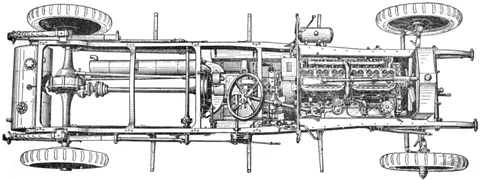
How correlated is a risk to leasing someone a solar panel to the underlying home? How correlated is that risk to a mortgage? How correlated are all these risks to insurance? And I think that you'll get to a point where... Cars have a very interesting history. You used to buy your engine separately from the carriage. It was like actually a real thing.
The people who make the body of the car, the people who make the engine, and you'd just go and buy them, but we decided that was exceptionally dumb. But we still buy homes the same way. The way we buy cars is we usually get financing from the person who sells us the car. And the car usually comes the way we want it. But the way we buy a home is we deal with a couple of dozen different parties in the system, and they all hate each other. It's a very, very weird hack on the system that has been maintained.
06Won't attached services slow the deal down?
Nejatian argues that fear of attach complexity is FUD spread by point-solution vendors: for most customers these services are vanilla.
When you think about introducing those various things that you could attach to the purchase or sale of a home, each one does potentially involve friction. You know, the mortgage doesn't go through or the insurance, any one of these things. How do you solve for that when yes, it's naturally, you know, it would be a great thing, but could they add friction, slow things down in terms of velocity? Tell me where that thesis is wrong or how you solve for that.
Matt, I think you're just straight up wrong. Man, I think there's a very real thing. I think there's a lot of FUD30FUD (fear, uncertainty and doubt) — discrediting a competitor or a new solution by stoking fears rather than citing facts. that comes from people who provide point solutions31Point solution — a product that handles one narrow task, as opposed to a platform that brings many tasks together. that say, my point solution is so complex that you could possibly never mix it with another one. Let me give you an example. We have two products at Shopify, Shopify Payments32Shopify Payments — Shopify's own payment processing, launched in 2013 on top of Stripe, so a store doesn't need a separate payment provider. and Shopify Tax,33Shopify Tax — a Shopify service that calculates sales tax across US states and localities on its own and flags where a store needs to collect it. both of which had extremely high penetration rates and are used by basically everyone. If you happen to own a restaurant in New York and you went to your payment provider and said, hey, I'm considering getting this tax, can you do tax for me? Oh no, you should stay with us because it's so complicated.
Look, are there complexity in the system? Of course there are. Of course there are. But for 80% of people, 100% of these services are relatively vanilla. 80% of people are the margin opportunity that pays for 20% of complexity. That just seems terrible for those 80%. So do I think someone who wants to buy a $14 million mansion, who has no US residency, who has trusts all over the world and multiple cars, should be able to use, you know, Opendoor home loan and Opendoor insurance and all the other services we provide? No, I don't think they should use us. But I don't think the average American living in South Dakota should pay for that subsidy. Like our job is to make life easier for the average person, like the school teacher, the plumber, the electrician.
Like they should not have to pay more because complexity exists in the system. And by the way, I say this as a guy who has complexity in his life. There's no reason why the average person should subsidize my life. That sounds insane. But like that's what we have, that's the world we live in, right? My job is this at Opendoor. I want the teacher in Kansas City to have a one-click mortgage, title, escrow, and home buying experience and home selling experience. That's what we're going to work on. We're going to solve this for a teacher in Kansas City. The dudes living where you live with their Maseratis can go to someone else.
07Discipline, 70 engineers and AI
Nejatian is willing to give up some growth so that Opendoor lives on its own cash flow, and a small engineering team is enough because everyone else works with AI.
No Maseratis in the garage. In terms of the go-forward, you brought up multiple times, you know, you have this path to profitability, but also you're not afraid to invest in the business. And I just want to think about that philosophically, how you approach that, because, you know, sometimes you want to heavily invest when there's an opportunity to go after something. You've made it clear, that path to profitability at certain points in time in terms of EBITDA positive and adjusted net income positive by year end. How are you balancing that with whatever need there is to reinvest back in the business, or how are you going to balance the investment back in the business with that?
My wife wanted me to work out, so she bought me some weights and a bench, and then I like just totally ignored them and didn't work out. So she then put the bench at our bedroom door and the weights on it, so I couldn't get out of the bedroom without actually seeing those things. I think Opendoor requires some of that energy. I think Opendoor has had too little discipline when it comes to being a for-profit business, because it has been able to reach for capital markets over and over again. And I think that has been actually bad for Opendoor.
So I think it's incredibly important for us to be incredibly disciplined, and this will be painful as hell. It'll just be painful. This will hopefully be the last job I ever have, and I care about my job and the company I'm running a decade from now. And the best thing I can do for that company is ensure this company is the most disciplined and most aggressive tech company in the market. That's the real answer. Now, am I forgoing area of growth that I would not forgo if I had lots of profits?
Yes, I am. For sure I am. But I think there's a very real thing, man, where I think this is healthy discipline. I think it's healthy. And I think it's important that Opendoor be funded by its cash flow. I think it actually would surprise people to learn how few engineers work at Opendoor. Opendoor has fewer than 70 engineers. I think that would surprise most people. We're getting a crap ton done with those 70 engineers, but I promise you, I know what every single one of them is working on, because we don't have the luxury of waste.
I heard you mention in another interview that you've had some people make some pretty powerful changes within the business along the lines of engineering changes, but they did it with AI systems. So it's actually a nice segue into that question. I mean, how much is your ability to operate with 70 engineers just the power of both those engineers and those without an engineering background able to do a lot more in that regard?
Our engineers are just excellent, just genuinely excellent. Our head of data is an ex-signals intelligence officer34Signals intelligence (SIGINT) — intelligence gathered by intercepting and analyzing radio signals and electronic communications. who used to run a very complicated system for one of the world's largest militaries. We have multiple YC founders35YC (Y Combinator) — Silicon Valley's best-known startup accelerator; startups go through it in batches. Nejatian went through YC with his payments startup Kash. in the building that have joined in the last few months, two from my batch at YC alone. So we have like excellent, just genuinely excellent engineers here. So we have excellent engineers, but there's like a division of labor between the systems that create leverage for other people and those front ends,36Front end — the part users work with directly: the interface on top of the systems that do the underlying work. right? So our engineers spend their time creating systems that allow other people who are not engineers to create leverage for themselves.
When I got here, we had an entire service whose job was to calculate, and was maintained by an engineer whose job was to calculate, RSU37RSU (restricted stock units) — shares a company promises an employee and delivers in installments on a schedule, usually over several years. allocations for employees. I can't tell you how nutty a waste of time that is for an engineer, but basically all companies have this. I'm like, why is an engineer working on this? Like, look, if you cannot, using Claude or ChatGPT or Codex or Grok,38Claude, ChatGPT, Codex and Grok — AI assistants: Claude is Anthropic's, ChatGPT and the coding agent Codex are OpenAI's, and Grok is from Elon Musk's xAI. write a SQL query,39SQL — the query language for databases, used to pull and aggregate data from tables. you should not be working at a tech company. This is a tech company. I can see actually our head of internal comms right there.
Our PR consultants all quit when I joined. They actually rage quit. And I can tell you, our head of internal comms, who now actually, side of her desk, does this work for us, spends most of her time on Claude. And so does everyone else in the company. And I think that is different than most other companies.
Thank you very much for taking the time after that conference call40Earnings call — a call where a public company's management discusses quarterly results with analysts and takes their questions. that you just had. I appreciate it. And I will say the words that are always important after earnings: congrats on a great quarter.41"Congrats on a great quarter" — the stock phrase analysts open their questions with on earnings calls; it has long been a running joke. Have a great day, dude.
Likewise.
IntroBusiness Breakdowns outro
Business Breakdowns is a series of conversations with investors and operators diving deep into a single business.
All opinions expressed by hosts and podcast guests are solely their own opinions. Hosts, podcast guests, their employers, or affiliates may maintain positions in the securities discussed in this podcast. This podcast is for informational purposes only and should not be relied upon as a basis for investment decisions.


