

MTS
Chapters
Agarwal believes in humanoids on a 20-30 year horizon, but for the next decade he thinks legs are unnecessary for almost every task.
Read the chapter- Sophia says 2026 looks like the year of the humanoid: very many companies are building them and a lot of money is going in.
- Agarwal defines a humanoid as a human-like figure with two legs, not a robot with two arms on a wheeled base.
- Almost everything automated has wheels or wings: drones, autonomous cars, autonomous material handling in warehouses and factories. Wheels are worse than legs only in edge cases such as homes and sidewalks.
- Without legs, cost, battery life, center of gravity and safety all become an order of magnitude easier, better and cheaper, he says.
Agarwal separates general-purpose robots from generalized intelligence: intelligence will become general and cheap, hardware will be chosen for the task, and customers will pay for software and deployability.
Read the chapter- Sophia asks whether consumers really adopt a single-purpose robot first and only later move to a general-purpose one.
- Agarwal says roboticists are blown away by how much Astra understands the physical world without being trained for it, and expects general models to keep surprising people, as they have in the LLM world.
- For most manufacturing and logistics tasks you do not need a five-fingered hand: a two- or three-finger gripper or swappable toolkits will do, and a robot built for every task is the pitfall.
- Form factor depends on the use case: TerraFirma, a portfolio company, builds machines that look like bulldozers and excavators, while manufacturing companies use wheeled or pedestal-based robots with one or two arms.
- Components are an order of magnitude cheaper than when the firm backed Kiva 20 years ago, so value is moving to intelligence, software and deployability.
In early-stage venture Agarwal bets on a founder with a vision, and what convinced him about Kiva was Mick and the simplicity of his idea.
Read the chapter- Sophia notes that in 2004 Kiva had no revenue, no product and no customers.
- Agarwal knew nothing about hardware or warehouses, but within five or 10 minutes of the first meeting he told his colleague it was the best founder and pitch of his career.
- Mick's idea: instead of workers spending 90% of their time walking to shelves, robots bring the shelf to the worker.
- Mick was the first person to introduce him to the phrase "we're turning atoms into bits," and those two things were enough for the first check.
- Little money went to robotics companies even at Series B, C and D, and the firm led every round.
Agarwal confirms the trend: software is becoming a commodity, and founder ambition has grown from productivity tools to factories and space.
Read the chapter- When the firm met Mick in 2004, talent in the physical world was rare; now Agarwal sees an explosion of it.
- In software everyone fears the frontier labs: if intelligence goes to zero and agents write the code, any software is commoditized, and even CUDA, he says, is no longer Nvidia's moat.
- In the cloud era a nice workflow tool could grow into a unicorn, but now founders build in space, bring factories back to America and work on defense.
- As an investor he finds this more exciting than funding the next workflow productivity application, which he says was the story of venture capital for the last 15 years.
- Sophia recalls her tweet: in 2013 the peak of ambition was Dropbox, and today founders are building rockets and curing cancer.
Agarwal advises going where industry actually works and filling the gap left by a retiring generation of craftspeople.
Read the chapter- He suggests going to the Midwest, looking at the automotive supply chain, and standing at a port and a dock.
- Not only jobs but skills have left the United States: 60-year-old craftspeople retire without passing on what they know, and intelligence and robotics can fill that gap.
- Shopify, Alibaba, TikTok and Facebook let three people build a brand the size of Colgate or Procter and Gamble, and in the same way, he says, the next generation will build factories and logistics businesses the size of the largest industrial companies.
- Bain Capital Ventures has a whole team of partners focused on such companies.
Quotes
On why robots do not need legs
“I mean, there's a reason why, you know, most things in the world that are automated have wheels or wings. You know, we don't walk from point A to point B. We drive or we fly.”
Ajay AgarwalRead from 02:04On what dropping the legs buys
“And by eliminating the legs, you know, the cost, the battery life, the center of gravity, safety, I mean, everything gets an order of magnitude easier, better, cheaper, faster.”
Ajay AgarwalRead from 02:56On the five-fingered hand
“for a vast majority of manufacturing use cases and logistics use cases, you don't need a five-fingered hand.”
Ajay AgarwalRead from 05:07On whom a venture investor should back
“You lean into founders that are, you know, extraordinary, that have a vision that the world hasn't yet seen. And also a vision that once you hear it, your initial reaction is, that's so simple. Why didn't I think of that?”
Ajay AgarwalRead from 09:17On why software becomes a commodity
“if intelligence goes to zero and software coding is completely automated with agents, you know, any kind of software is all of a sudden commoditized.”
Ajay AgarwalRead from 11:05On the ambition of the cloud era
“in the cloud era where, you know, some cool workflow tool that drove a little bit of productivity, you could build a nice company and, you know, get to a billion dollar valuation and be a unicorn.”
Ajay AgarwalRead from 12:00On vanishing skills
“You don't have that 60-year-old craftsman or tradeswoman that has done this one particular job their entire life and they retire and those skills aren't being transferred.”
Ajay AgarwalRead from 14:09
Summary
Bain Capital Ventures partner Ajay Agarwal tells Sophia Dew why he does not believe in two-legged humanoids for the next decade: nearly everything automated already runs on wheels or wings, and without legs a robot is an order of magnitude cheaper, safer and longer-lived on a battery. Robot intelligence, he says, will be general while the body is fitted to the task, and as hardware gets cheaper customers will pay for software and deployability. He recalls backing Kiva in 2004 because of its founder, and argues that the best founders are leaving software for the physical world: coding agents are turning any software into a commodity, and ambition has grown from workflow tools to factories, space and reindustrialization.
Advice
Don't build a robot for every task: for most manufacturing and logistics work, a two- or three-finger gripper with swappable tools is enough.
Back the founder whose vision the world hasn't seen yet but which, once you hear it, makes you ask: why didn't I think of that?
Look for ideas in the physical world: go to the Midwest, to auto plants and ports, and see how they work.
Look at industries where craftspeople retire without passing on their skills: intelligence and robotics can fill that gap.
Mentioned
- Bain Capital Ventures00:38Sophia introduces Agarwal as its partner, and at the end he says a whole team of partners there funds physical-world companies.
 GPT-6 Astra03:46Agarwal's example of generalization: roboticists are amazed by how much it understands about the physical world even though it was not trained as a physical AI model.
 TerraFirma06:20A portfolio company Agarwal uses to show form factor following the task: full-stack construction robotics that looks like bulldozers and excavators.
- Kiva Systems07:01He recalls that when the firm backed it 20 years ago components cost an order of magnitude more, then tells how the firm wrote its first check with no revenue or product and led every round.
Show 11 more mentionsShow fewer mentions
- Mick Mountz08:25Kiva's founder, whom Agarwal called the best founder of his career after one meeting: he came up with bringing shelves to workers and said Kiva was "turning atoms into bits."
 CUDA11:05Agarwal says Nvidia's software, one of the greatest software moats in history, is no longer a moat because of coding agents.
 NVIDIA11:05Its CUDA platform is his example: if agents write the code, even that kind of software becomes a commodity.
 Dropbox13:11Sophia recalls her tweet: in 2013 it was the peak of Silicon Valley ambition, while today founders build rockets and cure cancer.
- Abundance13:39Sophia wants to close on abundance, which she calls a big trend, and asks where a founder who wants to take part should start.
 Shopify15:03The first of the platforms that, in Agarwal's telling, set off the e-commerce explosion and let three people build a huge consumer brand.
 Alibaba Group15:03He names it among the platforms where a small team can grow into a Colgate-scale brand, and expects the same for factories and logistics.
 TikTok15:03He puts it on the list of platforms that launched the e-commerce explosion.
 Facebook15:03It closes his list: with such platforms three people create a consumer brand, and he expects industrial companies to appear the same way.
- Colgate-Palmolive15:03Agarwal's yardstick of scale: a brand of this size can now be built by three people using e-commerce platforms.
 Procter & Gamble15:03His second yardstick for a consumer brand; he says the next generation will build factories and logistics companies of the same size.
Sponsors of the episode
 Lovable07:32build apps from a description: editable code, GitHub sync, a ready backend and an MCP server
 ElevenLabs16:12AI that communicates at human level in any channel
 Neon16:12a backend for startups, up to $100,000 in credits
 Kong16:12a platform for connecting APIs, language models and agents
 Larridin16:43measuring the return on AI investment
 MongoDB16:43a data platform, up to $15,000 in Atlas credits
 Chargebee16:43billing and monetization for the AI era
 ClickHouse17:14a real-time database for apps and agents
 Horizon3.ai17:14security testing: hacking your own infrastructure with AI
 SRS Acquiom17:33shareholder representative, payments and escrow for M&A deals
 Blitzy18:05autonomous software development for enterprise codebases
 AdQuick18:05out-of-home advertising that scales like digital
 Arena18:05measuring AI performance in the real world
 VCX18:24a public ticker for private tech companies
Transcript
01Why a two-legged humanoid is the wrong form factor
Agarwal believes in humanoids on a 20-30 year horizon, but for the next decade he thinks legs are unnecessary for almost every task.
Hello, everyone, and welcome back to MTS. Today we are joined by AJ Agarwal, who is a partner at Bain Capital Ventures,1Bain Capital Ventures is the venture arm of the Boston investment firm Bain Capital. Agarwal has been with Bain Capital since 2003, led its early investment in Kiva, and now works on physical AI: robotics, logistics and industrial automation. (team profile) to talk about the future of physical AI, humanoid robots, and all of AJ's hot takes. So AJ, welcome to MTS.
Hi, Sophia, good to be here. Yeah, excited to chat.
Great to talk. I know. I think humanoid robots are all the rage. And it's funny because I'm a host, so I'm always talking to founders about what they're building and what's the latest. And feels like 2026 is the year of the humanoid. There's so many companies who are building humanoid robots, a lot of money that's going into this.2Money in humanoids. According to Dealroom, by early October 2026 startups building humanoid robots had raised $11 billion in venture funding, more than double the record 2025 total. (Dealroom)
And so wanted to get your perspective on the humanoid robot trend. Do you think this is overhyped?
Well, first, you know, I think it depends on what you define as humanoid. I think of humanoid as a human-like figure with two legs. You know, sometimes humanoids are referred to with two arms and a wheel and a base,3Wheeled humanoids are a human-like torso with two arms on a wheeled base, like 1X's EVE. The two-legged kind Agarwal means is like 1X's home robot NEO or Tesla's Optimus, pictured here. but I think of it as something that looks like a human with legs. And, you know, I love the ambition. I think if you look out far enough, 20, 30 years, you know, I think the humanoid vision is going to become a reality. But if you shorten the time frame a bit to the next decade, I just think it's the wrong form factor for the majority of use cases.
I mean, there's a reason why, you know, most things in the world that are automated have wheels or wings. You know, we don't walk from point A to point B. We drive or we fly. And that's why you've seen success with drones. That's why you've seen success with things that have wheels, autonomous cars and autonomous robots and autonomous material handling inside warehouses and factories. And yes, while there are a set of edge cases in people's homes and sidewalks where, you know, a wheeled robot may be less ideal, but for the vast majority of near-term opportunities in industrial and manufacturing, and frankly, even in people's homes, when you think about the sheer number of people on the planet who live in a single-floor house, you don't need the legs.
And by eliminating the legs, you know, the cost, the battery life, the center of gravity, safety, I mean, everything gets an order of magnitude easier, better, cheaper, faster. So we're not a believer in humanoids as the right embodiment for the next decade.
02Intelligence is general, the body is built for the task
Agarwal separates general-purpose robots from generalized intelligence: intelligence will become general and cheap, hardware will be chosen for the task, and customers will pay for software and deployability.
Yeah, as the right form factor. There's this other debate around not just humanoids, but more when it comes to general purpose robotics at scale, where some people are saying, hey, consumers don't typically just adopt a full general purpose robot. Rather, they adopt a single purpose robot that works really, really well, really efficiently, then they build up trust, and then they can go to the next technology. They don't just ultimately leapfrog. Wanted to get your take there. Do you think that's true?
Well, you know, I think it depends on the use case. And I would separate general purpose robots from generalized intelligence, you know, and I do think we are seeing both from, you know, the robot foundation labs4Robot foundation model labs are startups such as Physical Intelligence and Skild AI that train one large model to control robots of different designs. Agarwal sets them beside the frontier labs (OpenAI, Anthropic, Google DeepMind), whose models are general-purpose and not built for robots. as well as from the Frontier labs, that we are seeing emergent properties and generalizability in robot intelligence. In fact, you know, I think roboticists have been blown away by, you know, how much Astra5Astra is GPT-6 Astra, OpenAI's flagship model, released on September 3, 2026. It is a general-purpose language model, not a robotics one, which is why Agarwal uses it for his generalization argument: its grasp of the physical world, he says, appeared without specialized training. understands the physical world, even though it’s not trained specifically as a physical AI-oriented intelligence model. And so I think that's going to continue where you're going to see, you know, the notion of intelligence and generalized intelligence continue to pace the frontier. That intelligence is going to become more ubiquitous and cheaper, and that's going to unlock, you know, tremendous opportunities.
But then when you think about all the other pieces that have to come together to deliver a fully deployed physical AI system or robotic system, you know, the embodiment, the linkage between intelligence and actions, the feedback loop, safety, the environmental factors, deployability, maintainability. You can't have these things breaking every other day.
That's where I think you're going to see, you know, companies and businesses decide, look, let me, you know, make some trade-offs. And for a vast majority of manufacturing use cases and logistics use cases, you don't need a five-fingered hand. You know, you can get away with, you know, a two-finger gripper or three fingers or a robot embodiment with multiple toolkits that you can swap out for particular tasks that's dramatically easier and simpler than trying to build something that can potentially do everything. And I think that's sort of the pitfall with humanoids and with embodiments that are designed to handle any task in the world.
You know, and so that's why I distinguish between that side of the equation and what I call the intelligence side of the equation, where we are going to see more and more examples of generalized intelligence. And we've seen that, you know, in the LLM world, that the general models continue to surprise people on how well they do against specialized models, and I think that's going to be true in the physical world as well.
Do you have any opinions on which type of form factor you think will win?
I don't know. I mean, it depends on the use case, you know. We have a company, TerraFirma,6TerraFirma is an Austin startup founded in 2024 by SpaceX alumni, making semi-autonomous excavators, bulldozers and loaders for earthmoving. In July 2026 it raised about $115 million; Kleiner Perkins led the Series A and Bain Capital Ventures took part. (SiliconANGLE) that, you know, is full stack robotics for construction, and the form factors they're leveraging are things that look like bulldozers and excavators and so forth. You know, our companies focusing on the manufacturing world are typically, you know, wheeled or pedestal-based robots with one or two arms. You know, sometimes that's a, you know, more of a cobot type arm,7Collaborative robot (cobot): an arm that works beside people without a safety cage. Its speed and force are limited, and it stops when it bumps into a person. An industrial arm is faster and stronger but works behind a fence. sometimes it's an industrial arm, depending on throughput and capability. You know, the hands and the end effectors,8End effector is whatever sits at the end of an arm in place of a hand: a two- or three-finger gripper, a vacuum cup, a welding torch. It is often swapped per task, which is the "swappable toolkit" Agarwal mentioned a moment earlier. I think there's kind of a range of things, and so I think all of that is, you know, going to have to be configurable.
And I think the good news is the hardware components have come down in cost and availability. I mean, when you think about 20 years ago when we backed Kiva,9Kiva Systems was a Massachusetts company founded in 2003 whose robots carried shelving units around e-commerce warehouses. Kiva raised $33 million, $20 million of it from Bain Capital Ventures. Amazon bought it in 2012 for $775 million in cash; today it is Amazon Robotics. (Wikipedia) the cost of any of these components was literally an order of magnitude higher than today. So arms and motors and actuators and sensors, they're all getting cheaper. And so I think as a result, the value creation is going to come increasingly from the intelligence, from the software, and from the deployability. And that's what the customers are ultimately going to pay for.
AdLovable
I want to shout out our sponsor Lovable. You know the app you've been meaning to build, the internal tool, side project, or product you'd otherwise lose a weekend to? With Lovable, you get software you can ship today. That includes an editable codebase you can inspect and change, plus two-way GitHub sync. Lovable also handles the backend and infrastructure, including managed Postgres, auth, storage, hosting, payments, and more, so you don't have to wire it all up yourself.
And through Lovable's MCP server, you can create and deploy your project directly from the agents you already use. Turn ideas into software people love with Lovable. Lovable.dev. Now, on to the episode.
03Why Bain backed Kiva with no revenue and no product
In early-stage venture Agarwal bets on a founder with a vision, and what convinced him about Kiva was Mick and the simplicity of his idea.
Yeah, I wanted to talk about Kiva for a moment because this is really interesting. Back in 2004, I mean, Kiva had no revenue, it had no product, it didn't have any customers. How did you know to invest there? Like, what did you see that maybe other people missed?
Well, you know, I think that in early stage investing, you know, it was true then, it's true today, it comes down to the founders and backing a founder with a vision. And I think the best founders, even if the idea seemed crazy at the time, you know, are able to convince, you know, the world that this is the future. And, you know, despite the fact that I didn't know anything about hardware, I didn't know anything about robots, I didn't know anything about automating, you know, e-commerce fulfillment warehouses, what I did know was that Mick10Mick Mountz was Kiva's founder and first CEO. The idea came to him at Webvan, the online grocer that went bankrupt in 2001: its warehouses were built to move pallets and cases, not to pick individual orders. (Wikipedia) was an extraordinary founder. And, you know, as I like to share, within five or 10 minutes of that initial meeting, I turned to my colleague and said, this is the best founder and pitch I've heard in my entire short career at the time in venture capital.
And so, you know, that's what I've learned through that experience. You lean into founders that are, you know, extraordinary, that have a vision that the world hasn't yet seen. And also a vision that once you hear it, your initial reaction is, that's so simple. Why didn't I think of that? And that was his brilliance. He said, look, instead of having workers inside this giant warehouse with rows and rows of shelves where the workers are spending 90% of their time walking to the shelf and grabbing the item, let's just have robots bring the shelf to the worker.11Goods-to-person is the warehouse term for a setup where the picker stays in place and the goods are brought to them. A Kiva robot drives under a shelving unit, lifts it and carries it to the employee.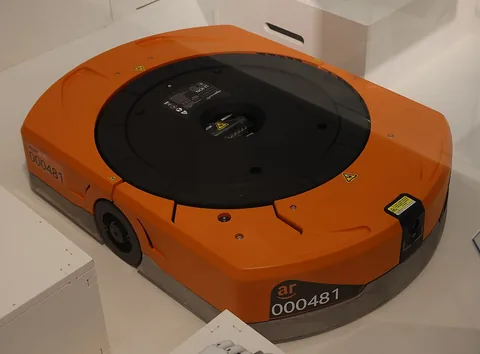
And that simple insight of a human going to the goods and instead turning it to goods coming to the people, you know, that was what he embodied. And he's the first person that I've ever met that introduced me to the phrase of, you know, we're turning atoms into bits.12Atoms and bits is the contrast between physical things and information popularized by Nicholas Negroponte in Being Digital (1995). Agarwal himself calls Kiva a software company disguised as a robotics company. (Agarwal's profile) And so those two pieces, I think for us were enough to say, you know, let's write that initial check. And then, you know, through the history of that company, you know, there was very little funding for robotics companies, even at the Series B and C and D and subsequent rounds. So we ended up leading every single round of that company. And, you know, it worked out, and Mick did a phenomenal job.
04Why the best founders are moving from software to hardware
Agarwal confirms the trend: software is becoming a commodity, and founder ambition has grown from productivity tools to factories and space.
Yeah, I wanted to get your perspective because of course you are at the venture layer. So you get to understand what's happening at a macro level. But from my personal experience, I'm seeing a lot of founders who maybe traditionally would have built a software product who are now all pivoting into hardware or at least building software for hardware, and so I am curious to get your intel here. Is this a wider trend that's happening amongst the type of businesses that are being created today?
Absolutely, and I think it's great.
I mean, you know, when we met Mick in 2004, we met [unclear] in 2018, you know, those kind of founders, that kind of talent in the physical world was few and far between. I think what we're seeing now is just an explosion of talent. I mean, the best and the brightest are coming into this world, because who wants to build the next, you know, piece of workflow software? I think in the software world, everyone's worried that anything they build is going to get disrupted by the Frontier labs. You know, if intelligence goes to zero13The price of intelligence heading to zero is a common thesis in the industry. In his essay "Three Observations" (February 2025), Sam Altman wrote that the cost of AI at a given level of capability falls about 10x every 12 months. (Altman's blog) and software coding is completely automated with agents, you know, any kind of software is all of a sudden commoditized. I mean, people are talking about CUDA,14CUDA is Nvidia's platform for programming its GPUs. Most AI software is written on it, and porting that code to rival chips is slow and expensive, which is why CUDA is considered Nvidia's main advantage. In 2026 there were examples of coding agents porting such code to AMD's ROCm platform, and in July AMD released ROCm.AI, which works with agents such as Claude and Codex. (HPCwire) you know, Nvidia software no longer being a moat, you know, which has been one of the greatest software moats in history, because of the power of AI, you know, coding agents and the power of the LLM.
So I think that's why we're seeing this rush into the physical world. But I think the other piece is there's also a different level of ambition that I'm seeing in founders today versus, you know, in the cloud era where, you know, some cool workflow tool that drove a little bit of productivity, you could build a nice company and, you know, get to a billion dollar valuation and be a unicorn. And that was kind of the level of ambition. But now you're seeing people who are trying to, you know, create things in space. They're building, you know, robots to bring factories to America. You're seeing people building, you know, things in the supply chain and manufacturing to support the aerospace and defense, you know, complex and ecosystem to support American national interests15American national interests is almost word for word the formula of Andreessen Horowitz's American Dynamism practice: companies that serve national interests, such as defense, space, manufacturing and supply chains. Venture is betting seriously on the theme: in January 2026, out of $15 billion in new capital, a16z earmarked $1.18 billion for American Dynamism. Axios and bringing jobs back to the United States.
And so I think those kinds of things, you know, are really what's energizing where founders want to feel like they're making a difference to the world, to society, to scientific advancement, to reindustrialization. And, you know, as an investor, that's certainly more exciting than funding the next, you know, workflow productivity application, which I think was sort of the story of venture capital over the last 15 years.
Completely. I couldn't agree more. I think I even tweeted this a week or two weeks ago, where in 2013 the peak of our ambitions was like the top company was Dropbox,16For a sense of the ambition then: in January 2014 Dropbox raised about $250 million at a $10 billion valuation, one of the most valuable private companies in Silicon Valley at the time; its 2013 revenue was over $200 million. TechCrunch right? Like that was the company and they did an amazing job and they were the ones who like did it. They were the peak of Silicon Valley innovation. And then today you have people and founders who are trying to build rockets and cure cancer and just the scale of our ambition has really, really grown.
05Where a founder should start in the physical world
Agarwal advises going where industry actually works and filling the gap left by a retiring generation of craftspeople.
I definitely agree with so many things I want to get into. I know we only have a minute left, but I guess I want to end on this abundance note17Abundance is one of the buzzwords of 2025-2026. Ezra Klein and Derek Thompson's book Abundance (March 2025) calls on America to build again, in housing, energy and infrastructure, and became a New York Times bestseller; conferences and a whole movement grew up around it. Wikipedia because this is very much a big trend that's happening right now. Just the types of things people are building are just so ambitious and the scale and speed of them are something like we've never seen before. And so if you are advising a founder right now who recognizes that this is happening and wants to get involved, how should they get started?
Well, I think if you wander around the physical world, you go to the Midwest, you are inside the automotive industry in the supply chain. You know, you go and stop at a port and a dock and see what happens there. I mean, there is just a myriad of opportunities. And I think what we're seeing in the physical world is not only the jobs left the United States, but the skills and knowledge have left the United States or in many industries, they're aging out.18By Deloitte and the Manufacturing Institute's 2024 estimate, US manufacturing will need up to 3.8 million new workers in 2024-2033, partly to replace retirees, and about 1.9 million jobs could go unfilled if the shortage of workers and skills is not addressed. Deloitte You don't have that 60-year-old craftsman or tradeswoman that has done this one particular job their entire life and they retire and those skills aren't being transferred. And so I think that's the opportunity and gap that intelligence and robotics can try and fill so that we can have a new generation of entrepreneurs here building in the physical world.
And just like we've seen an explosion in e-commerce, you know, thanks to Shopify and Alibaba and TikTok and Facebook where three people can create a massive consumer brand on the scale of, you know, Colgate or Procter and Gamble,19For scale: Procter & Gamble's revenue for fiscal 2025 was $84.3 billion and Colgate-Palmolive's for 2025 was $20.4 billion. Both were built over nearly two centuries: P&G was founded in 1837, Colgate in 1806. P&G, Colgate-Palmolive I think we're going to see entrepreneurs in this next generation build factories and machines and logistics businesses that are the scale of the biggest, you know, industrial companies in the world. So that's the opportunity we're super excited about it. We're funding companies like that, you know, here at Bain Capital Ventures. And it's not just me, you know, a whole team of partners that are focused on this arena. So always love talking about it. Lots to do.
And super fun to be on here with you, Sophia.
Lots to do. Well, really appreciate you for joining us today on MTS. I completely agree and exciting getting to be someone who gets to speak to founders every single day because I recognize that's happening as well, but wanted to get your perspective from the venture standpoint about what is happening at a macro level here. So really appreciate you, AJ, for joining us today on MTS.
Yeah, thanks so much. Great to be here. All right, talk soon.
AdElevenLabs, Neon, Kong, Larridin, MongoDB, Chargebee, ClickHouse, Horizon3.ai, SRS Acquiom, Blitzy, AdQuick, Arena, VCX
A huge thanks to MTS sponsors.
ElevenLabs, AI that communicates at human level across every channel and modality. 11labs.io/MTS. Scale your startup on Neon. Millions of developers and startups have already chosen Neon for their back end. Start on the free plan or get up to $100,000 in credits for your startup at neon.com/MTS. Special thanks to our sponsor Kong, the AI connectivity platform.
Connect APIs, LLMs, agents, and systems with serious security and governance. Konghq.com.
Finally prove what your AI investment is worth with Larridin. Head to larridin.com today to start measuring your AI's bottom line. MongoDB, trusted to run critical applications by 75% of the Fortune 100, the intelligent data platform for the era. Apply today for access to up to $15,000 in Atlas credits, dedicated technical support, and exclusive events and go-to-market opportunities. MongoDB.com. Chargebee, billing and monetization infrastructure for the AI era.
Chargebee.com. ClickHouse is the real-time database built to keep up with every query your apps and agents send its way. And it now runs Postgres, observability, and AI tooling on one platform. Learn more at clickhouse.com. You ship fast. So do attackers. Don't assume you're secure.
Prove it. Horizon3, go hack yourself with AI. Visit horizon3.ai/nodezero. The key ingredient in today's M&A, SRS Acquiom. Learn why their shareholder rep, payments, and escrow solutions have been used by 96% of top global PE firms and 88% of top global VCs at srsacquiom.com/MTS. That's S-R-S-A-C-Q-U-I-O-M.com/MTS.
Blitzy, autonomous software development for enterprise codebases. Ship 5x faster. Blitzy.com. AdQuick, make your brand a billboard, out-of-home advertising as easy to scale as digital. AdQuick.com. Arena, measuring AI performance in the real world. Arena.ai.
Support for the show comes from VCX, the public ticker for private tech. The U.S. stock market started history's greatest wave of wealth creation. From factory workers in Detroit to farmers in Omaha, anyone could own a piece of the great American companies. But today, our most innovative companies are staying private longer, which means everyday Americans are missing out. Until now, introducing VCX, a public ticker for private tech.
Visit getVCX.com for more info. That's getVCX.com. Carefully consider the investment material before investing, including objectives, risk, charges, and expenses. This and other information can be found in the Innovation Fund prospectus at getVCX.com.
This is a paid sponsorship.


