


Business Breakdowns
Chapters
Younis argues that physical AI will be orders of magnitude bigger than digital AI, because almost everyone deals with machines and because AI here takes over jobs people already don't want.
Read the chapter- Applied Intuition's mission is to make a billion machines intelligent, and Younis calls self-driving cars just one example, the way Instagram is one app on a phone.
- Physical AI faces three constraints a chatbot doesn't: safety around people, hard real-time limits, and cost, since the model has to run on silicon that's affordable for the use case.
- It eases some of the worst jobs on the planet: the average American farmer is 58, trucking has record driver shortages, and mining is 1% of the world's workforce but 8% of workplace deaths.
- Autos alone are 3% of global GDP, Applied also works in trucking, defense, construction, mining, agriculture and robotics, and Younis notes that sophisticated investors value Waymo alone at $126 billion.
- Looking back in 25 years, Younis predicts, people will talk about more than code-completion products, and physical AI companies will reign in everyone's minds.
Applied Intuition sells intelligence into other companies' machines the way a chipmaker sells silicon: either as finished models or as the tools customers use to build their own.
Read the chapter- One half of the company puts models on machines: it develops, trains, deploys and evaluates them and makes sure they're safe.
- Writing software for a combine, a car and a humanoid are all different, and for almost a decade Applied has been abstracting software from that hardware, the way Android, where Ludwig was an early Android Automotive engineer, runs on thousands of devices.
- The other half is off-board software and development tooling, and customers buy the development environment, the models, or both.
- Younis calls Applied a B2B product company that looks a lot like a chipmaker, except its platform is intelligence instead of silicon.
The founders deliberately passed on robotaxis and started with tools, and each new bottleneck, first the operating system and then the models, added a product.
Read the chapter- Younis, formerly COO of Y Combinator, tells founders that timing is everything: most companies die because they're too early, and rarely because they're too late.
- Working together at Google in the early 2010s, Younis and Ludwig passed on a robotaxi company because neither the technology nor the business model existed yet, and GM's 2016 purchase of Cruise pulled them back to autos.
- Where autos go, Younis says, defense, construction, mining and agriculture follow, and the whole industry is headed for a "Teslafication" in which machines become software-first.
- Carmakers won't buy safety-critical software from a young company, and a team of 50 can't build an autonomous vehicle, so Applied started with tools.
- Ludwig recounts how, after tools, the onboard operating system became the bottleneck, which led the company to its own vertical autonomy stack, and work done for one vertical carries over to the others.
Ludwig and Younis say Dana dramatically lowers the barrier to building physical AI, and a general-purpose LLM can't do the job because the model is only about 1% of the solution.
Read the chapter- High schoolers can now build iPhone apps, but a campus delivery robot or a robot vacuum means stitching together a pile of disparate tools and then deploying the software on a physical machine.
- Applied builds autonomy on its own tools, which makes it its own least patient customer, and thousands of customer engineers who use Cursor and Claude kept asking for the same thing for physical AI.
- Ludwig says every tool now has an API, and an agent working in plain English orchestrates workflows that used to mean switching among 20 different tools.
- Younis walks through an autonomous lawnmower: sensors, compute, understanding the yard, scenarios in simulation run in the cloud, the first real deployment and the feedback loop, and he concludes that "you can't do that all in an LLM," because LLMs are made for a different environment.
Data from one kind of machine improves models for very different ones, and Ludwig sees imitation learning combined with reinforcement learning as the path to physical AI at scale.
Read the chapter- Younis describes the data loop: a machine flags scenarios it struggled with, and the model is improved with examples of humans driving them or in a synthetic environment.
- Data from the L4 autonomous trucks Applied operates in Japan improves models in quite different environments, because the model gains a sense of real-world physics.
- Digital AI trains on the internet, while nearly all physical AI data is proprietary, and Ludwig calls Applied's high-quality data collection stack a fundamental moat.
- End-to-end models trained by imitation often fall short of production quality, so Applied adds high-performance reinforcement learning in simulation to smooth out the problem cases.
Intelligence reaches machines far more slowly than phones, but Younis says the same friction makes Applied's position hard to dislodge.
Read the chapter- A new model runs on your phone and laptop right away thanks to browsers, operating systems and app stores, while machines have no such standards, and manufacturers and farm or mine operators all add friction.
- Someone who bought a Honda Accord yesterday will drive it for 10 or 15 years even if self-driving becomes free tomorrow, since more than half of Americans have modest savings.
- The flip side is a moat: a supplier that has made a mine or a farm autonomous is as sticky as a chipmaker whose chips are in a lot of machines.
Younis describes Applied as a deliberately boring licensing business in which autos are only a minority of revenue.
Read the chapter- Applied makes its money on licenses, has a little over a thousand engineers, and Younis wants it to be "very innovative on our technology" and "very boring on our business model" rather than the other way around.
- BlackRock led the latest round and Fidelity the one before, and Younis tells founders that customers should clearly understand how and where you make money.
- Customers are mostly machine makers, but also mine and port operators, and revenue is spread fairly evenly across the verticals, with autos the smaller part.
- The first offices were Detroit, Japan and Germany, where Younis had lived, followed by Washington once the company moved into defense.
The founders say Applied has no direct competitors, and new hardware companies like Prometheus and Atoms look more like future customers.
Read the chapter- Younis doesn't see Waymo as a competitor: it sells rides to consumers, while Applied sells technology to manufacturers.
- He sticks to the classic YC model: know your competitors and fight them hard, but don't let them define your future.
- If the sun were a basketball, Earth would be a pin many tens of feet away, and physical AI markets, in Younis's view, are just as vast and empty, so many companies can win at once.
- Younis thinks the company could grow ten times or much more, pointing to how big SpaceX, Anthropic and OpenAI have become.
- Ludwig calls the new ventures from Bezos and Kalanick potential customers, and Younis recalls that Google was founded in 1998, when the search market already looked saturated.
For the founders, capital is just one variable in the mission and the best product is what matters, and the future with physical AI, Younis says, is above all safer.
Read the chapter- Younis insists the company tried to spend the roughly billion dollars it raised but simply grew faster than it could.
- He treats capital as one variable: whether the bottleneck is money, technology or product, the company fixes it.
- In safety-critical systems an okay product won't do, so the first thing Younis thinks about in the morning is making the best products in the business.
- There are almost no public physical AI companies to compare against, and Younis calls Applied the category leader.
- In three to five years autonomous vehicles will be common in many more cities and shuttles and delivery robots on campuses, and Younis expects machines that take care of us to be taken for granted, like a supercomputer in your pocket.
Quotes
On physical versus digital AI
“In digital AI, there's a lot of like teeth gnashing and hand wringing about what's going to happen to, you know, accountants and maybe even podcast hosts. And, you know, in the physical AI world, it's very, very different. Like the AI can't get there fast enough.”
Qasar YounisRead from 05:48On why startups die
“Most companies fail because they're too early. Rarely do they fail because they're too late.”
Qasar YounisRead from 13:23On why a general-purpose model isn't enough
“But when you're dealing with things that have a very deep safety critical component, things where lives are literally on the line based on what is being developed, and they require a very complex development tool chain, just the model is not enough. That's like 1% of the full solution.”
Peter LudwigRead from 24:40On Applied Intuition's business model
“I always say, you know, we want to be very innovative on our technology and we want to be very boring on our business model.”
Qasar YounisRead from 35:32On how big the markets are
“Well, if you actually have that at scale and the sun is like the size of a basketball, you know, the Earth is like many, many tens of feet away and it's like a little pin. It's like the head of a ballpoint pen.”
Qasar YounisRead from 40:51On whether to fear Bezos entering physical AI
“Like that's like saying Jeff Bezos is starting a software company.”
Qasar YounisRead from 43:14On the billion dollars Applied didn't spend
“Just to be very clear, we've tried to spend it. We've just been fortunate enough to grow faster than that.”
Qasar YounisRead from 44:13
Summary
Applied Intuition builds the "brains" for other companies' machines, and the tools those companies use to build such brains themselves: a carmaker, defense contractor or mining-equipment maker can buy autonomy from it outright or develop its own on its platform. Co-founders Qasar Younis and Peter Ludwig compare the company to Nvidia: Nvidia sells chips into everyone's machines, Applied Intuition sells intelligence, without making a single machine of its own. Their thesis is that physical AI will be orders of magnitude bigger than digital AI, because autos alone are 3% of global GDP and because here AI takes over the hardest and most dangerous jobs, which already go unfilled.
The company started in 2017 with development and simulation tools, since no carmaker would trust safety-critical software to a young startup. Then the onboard operating system became the bottleneck, and after that its own autonomy models. The centerpiece of the episode is Dana, a new agentic platform that pulls dozens of physical AI development tools into one interface. Ludwig explains why a general-purpose LLM can't do this job: the model is only 1% of the solution, and nearly all physical AI data is proprietary. He sees imitation learning combined with reinforcement learning as the path to physical AI at scale.
The business model is deliberately boring: licensing, with a little over a thousand engineers. Autos are a minority of revenue; the rest is split among trucking, defense, construction, mining and agriculture. Younis says there are no direct competitors, because the markets are too big for companies to get in each other's way. The company has barely touched the roughly billion dollars it raised, growing faster than it can deploy it. And the future, in Younis's view, is above all safer: fewer accidents on roads, farms and in mines.
Advice
Get the timing right: a product two years ahead of its market burns cash waiting for demand, which is the most common way startups die, while being late rarely kills anyone.
Start with what customers will actually buy from a small company: carmakers wouldn't trust a newcomer with safety-critical software, so Applied began with development tools.
Ambition isn't enough, the idea has to be right: test it from first principles, even when everyone says tools are a bad business and vertical beats horizontal.
Be your own toughest customer: internal teams that run on your tools give the harshest and fastest feedback.
Be innovative in technology and boring in your business model: customers should clearly understand how and where you make money, and what you won't do.
Watch your competitors and fight them hard, but don't let them set your future: in a big enough market everyone can win, and if you lose, it's your own fault.
Mentioned
 Applied Intuition02:17the subject of the episode: intelligence for other companies' machines
 NVIDIA02:17the horizontal company Applied compares itself to
- Dana02:17the new agentic platform for physical AI
 Waymo08:51the robotaxi company valued at $126 billion
Show 31 more mentionsShow fewer mentions
 Palantir Technologies09:06a company with the same mystique
 Android Automotive OS10:27Ludwig was one of its early engineers
- Android10:27the model of an OS that runs on thousands of devices
 Y Combinator13:01Younis was its COO
 Sam Altman13:01president of Y Combinator at the time
 OpenAI13:01founded during Younis's YC era
 Cruise13:01the self-driving startup YC funded and GM bought
 Scale AI13:01another YC company from that era
 Google13:50where the founders led engineering teams
 General Motors14:54the founders' family roots in the auto industry
 Kettering University14:54the former General Motors Institute, where Younis studied
 Caterpillar15:13mining equipment as a "cousin" of the car
 Komatsu15:13likewise
 John Deere15:13combines as a "cousin" of the car
 General Dynamics15:13the defense example
- Infantry Squad Vehicle15:13a military vehicle as a "cousin" of the car
 Tesla15:47the model vertical company and software-first car
 Claude23:34a tool customer engineers already use
 Cursor24:05likewise
 Anthropic24:40a maker of general-purpose models
 Linux25:14you can't write the Linux kernel with one LLM
- Claude Fable33:27a new model that works on your phone and laptop right away
- Honda Accord34:01the example of a car people drive for 10 to 15 years
 BlackRock, Inc.36:02led Applied's latest round
 Fidelity Investments36:02led the round before that
 SpaceX41:34an example of a giant hard tech company
 Jeff Bezos42:08founded Project Prometheus
 Project Prometheus42:08a new physical AI company
 Travis Kalanick42:08founded Atoms
 Atoms42:08Kalanick's robotics company
 TerraFirma42:08a new robotics startup
Sponsors of the episode
 Portrait Analytics00:00an AI platform for investment research
 Colossus01:28podcast episodes and the weekly newsletter at joincolossus.com
Transcript
AdPortrait, Colossus
This episode is brought to you by Portrait. Portrait was built by former buy-side investors,aBuy side — the investors who buy securities and manage money: mutual funds, asset managers, hedge funds. The sell side is the banks and brokers that sell them securities and research. and they understand great investing isn't just about having more information from low quality sources. It's about having the right information organized the right way. And if you listen to the show, you appreciate diligence consists of many things. Diving into the history of a business, framing the nuanced competitive dynamics, tracking key signposts around your thesis. And historically, that would take up material time that you do not have.
But Portrait is basically like adding an army of analysts to your team. It's powered by an AI system specifically designed for investment research workflows. So you get nuanced idea generation. Portrait assesses the same types of qualitative attributes that we discuss on this show, and that can help identify businesses which fit your frameworks. Portrait also customizes research report generation. And third, there's intelligent thesis monitoring, and that's where Portrait assesses thousands of data points across value chains each day, extracting the insights, driving the business.
Again, all this work would typically take hours and hours and hours. It's at your fingertips now. Visit portraitresearch.com to start your free trial today.
This is Business Breakdowns. Business Breakdowns is a series of conversations with investors and operators diving deep into a single business. For each business, we explore its history, its business model, its competitive advantages, and what makes it tick. We believe every business has lessons and secrets that investors and operators can learn from, and we are here to bring them to you. To find more episodes of Breakdowns, check out joincolossus.com.
All opinions expressed by hosts and podcast guests are solely their own opinions. Hosts, podcast guests, their employers or affiliates may maintain positions in the securities discussed in this podcast. This podcast is for informational purposes only and should not be relied upon as a basis for investment decisions.
01What physical AI is and why it's bigger than digital AI
Younis argues that physical AI will be orders of magnitude bigger than digital AI, because almost everyone deals with machines and because AI here takes over jobs people already don't want.
Today we are breaking down Applied Intuition. Our guests are co-founders Qasar Younis1Qasar Younis — co-founder and CEO of Applied Intuition. A mechanical engineer by training, he worked at Bosch, co-founded TalkBin (bought by Google), led product on Google Maps and then served as COO of Y Combinator. and Peter Ludwig,2Peter Ludwig — co-founder and CTO of Applied Intuition; before that he spent five years at Google working on Android Automotive and Google Maps. who started the company in 2017 with a mission to make a billion machines intelligent. The simplest way to understand Applied Intuition is that it builds the brains for machines and the tools other companies use to build those brains. If a manufacturer wants its tractor, truck, or mining vehicle to drive itself, it can buy the intelligence from Applied Intuition or use its platform to develop its own. Just as Nvidia3Nvidia — the largest maker of GPUs and AI chips. Its chips are in cars too: the Nvidia Drive platform is the onboard self-driving computer for many automakers. sells chips into everyone else's machines, Applied Intuition sells intelligence into everyone else's machines across automotive, defense, mining, agriculture, and robotics without building any single machine itself. We discuss why the most important companies of the next 25 years will all be physical AI companies,4Physical AI — AI that acts in the real world through machines: self-driving cars, robots, drones, industrial equipment. Unlike "digital" AI such as chatbots, it has to understand physics, work in real time and avoid hurting people. Dana,5Dana — Applied Intuition's agentic platform for developing, testing and deploying physical AI, announced in July 2026, a few days before this episode. Early customers include Komatsu and Isuzu. their new agentic6Agentic — built on AI agents: models that don't just answer a question but carry out multistep work themselves, calling tools, running programs and checking the results. platform for developing and deploying these systems, and how the company raised a billion dollars without spending any of it. Please enjoy this breakdown of Applied Intuition.
I know a lot of the story we're going to tell today is going to be about a single business, Applied Intuition, but it's also really the story of the physical AI market and how far autonomous technology has come, and you two see this across as many industries as about anyone. Maybe just describe the state of the physical AI market, how the whole landscape feels to you now in 2026, and maybe some of the important key hash marks on the timeline since when you started the company in 2017.
In our case, in Applied Intuition's case, our mission is to make a billion machines intelligent. One simple way of that you could think of is self-driving cars. Those are intelligent machines, but it's one example, like Instagram is an app on the phone. There's many also other apps. So physical AI is this intersection of AI and hardware typically, but in the real world. Humanoids7Humanoid — a human-shaped robot with two legs and arms, designed to work in environments built for people. Tesla (Optimus), Figure, Agility Robotics, China's Unitree and others are developing them. falls into this as well as a category.
The particular technical challenges of physical AI are quite different from digital AI, which is like your LLMs8LLM (large language model) — a model like GPT or Claude: a neural network trained on huge amounts of text that can answer questions and write text and code. and your information retrieval systems, like chatbots, stuff like that, because you have the constraints of the real world, you have the safety criticality of the physical world. Often when we're talking about moving machines, they're moving in a time and space with humans and suddenly that becomes something you have to really think about safety. The real-time nature of the problem. So if you ask a chatbot, tell me about Peter Ludwig, it can take 20 seconds to process that information. But when you're flying down the highway, a humanoid is making a decision, there's very hard real-time constraints there. And then probably an underreported aspect of physical AI is the dollars. You need to put this on machines and on silicon that is affordable within the use case that you're talking about. You don't just throw endless compute at processing something. You have to do it in a compute envelope,9Compute envelope — the limits a model on board a machine has to fit within: how much computing power it has, how long it has to respond, and how much the chip itself can cost. not only a time envelope, but also like a cost envelope.
It's useful also thinking about the separation of digital AI and physical AI, right? So digital AI, typically thinking about what you're using on your desktop or your mobile phone, where there's a screen that's showing you the result of the AI. And then where that crosses into physical AI is when anything is in the real world actually moving. I think this is where the real impact on the economy will happen when you talk about all of the industries that fundamentally have moving things. So think about anything from industrial companies, manufacturing, use cases in healthcare and energy, there's so many different fields where in order to get the benefits of AI, you actually have to impact these physical systems.
Just to add on to that, by putting self-driving and intelligence on machines, we're really making some of the worst jobs on the planet easier. In digital AI, there's a lot of like teeth gnashing and hand wringing about what's going to happen to, you know, accountants and maybe even podcast hosts. And, you know, in the physical AI world, it's very, very different. Like the AI can't get there fast enough. If you look at like farming, the average American farmer is 58 years old.10According to the 2022 US Census of Agriculture, the average American farmer is 58.1 years old, up 0.6 years from 2017. Source. We have record shortages in long-haul trucking.
Source: International Labour Organization, "Mining: a hazardous work"
Mining as an example is 1% of the world's workforce, but accounts for 8% of work-related fatalities. I mean, you can kind of peel that back, like why do people not want to work on mines? These are difficult jobs. People are just choosing. They don't want to be away from family and unsafe circumstances. The impact can be very, very quick and very, very significant in areas where there's a lot of demand.
And so I think that's one of the important things to keep in mind, which is very different in physical AI than frankly digital AI. I think when we look back 25 years from now about this particular state of business and technology phase that we're going through, we're really going through a lot of changes very, very quickly. My hunch is I don't think we're going to only be talking about code complete products.11Code completion — here, AI coding tools such as Cursor, Claude Code and GitHub Copilot that complete and write code for developers. In 2025 and 2026 this was the fastest-growing use of LLMs. Those are important and you can kind of see how big of an impact just that use case is making as a proxy to how big of an impact that AI can have on society. I think when you look back 25 years from now, I think physical AI companies are going to be the ones that really dominate everyone's mind.
And Qasar, I know you have this whole notion that the physical AI market is going to be orders of magnitude much larger than the digital AI market. Maybe just unpack why you think that and just help us appreciate this market.
Look at industrials as a category, a huge category of the economy is, you know, roughly 5% of GDP. Automotive of that is the largest of the industrials, which is 3% of global GDP, which is an astronomically high number. And so when automotive, which is personally owned passenger vehicles, when they become intelligent, the impact to all the people that interact with cars every day, which is essentially everybody on the planet, is really, really big. If you're sitting in an airport and you look around the gate, how many people have interacted with a car versus how many people wrote software that day. So then you go into the, let's say, other verticals. So Applied Intuition, we play in all of these verticals.
We are the only company on the planet that does this. This includes the Chinese ecosystem and others. So the other verticals that we're in are commercial trucking, defense, construction, mining, agriculture, robotics. And each of those verticals is very, very large in itself, whichever way you want to define it, in just pure GDP numbers, growth numbers, number of people employed in those sectors, almost in every measurable way. Sometimes the markets get so big they're almost like hard for folks to put their head around. But I mean you can just use like robotaxi12Robotaxi — a driverless taxi hailed through an app. In the US such services are run by Waymo, Zoox (Amazon) and Tesla. as one instantiation of self-driving cars.
And you have Waymo being valued at 126 billion dollars13Waymo — the Alphabet company that grew out of Google's self-driving car project; it runs robotaxi service in several US cities. In February 2026 it raised $16 billion at a $126 billion valuation, nearly triple its 2024 valuation. by fairly sophisticated investors. They're not valuing Waymo at 126 because they just want a high valuation, it's because the impact can be very, very large. And that's one part of one of those markets.
02What Applied Intuition sells
Applied Intuition sells intelligence into other companies' machines the way a chipmaker sells silicon: either as finished models or as the tools customers use to build their own.
And before we go any deeper, Applied Intuition, in my sense, almost has this like Palantir14Palantir — a US company that makes data analysis software for intelligence agencies, the military and corporations. For years it had a reputation for secrecy: what exactly it sold was hard to explain even to investors. mystique around it, where it's actually very hard to describe what it is and what you guys do. So maybe just to orient us, literally describe as simply as you can what you guys actually build and sell.
Applied Intuition is a physical AI company. We take intelligence, so we take AI and we put it on machines and make those machines smarter. So whether it's having them drive themselves or whether your ability to interact with them and have intelligent interactions, just like you would with your phone, but with the context of the real world. So a lot more sensors, a lot more information. And then we do all the stuff that you would think in order to get there. So we develop our own models, train and deploy those models, we evaluate those models, we make sure that they're safe.
That's one, let's say half of the company, we're putting models on machines. And that's way more complex than even what I just said because the machines have a huge diversity in them. When you're putting something on a phone or a laptop as a developer, you have these great operating systems that abstract hardware away from software.15Hardware abstraction — the layer of an operating system that hides the differences between devices: the same app runs on phones with different processors, screens and sensors, because the OS translates its requests for the specific hardware. Well, if you're writing software for a combine, that's very different than writing software for a car, which is very different than writing software for a humanoid. We've done a lot of that hard work in nearly 10 years. The company is almost 10 years now in abstracting away all these different types of hardware from the software.
And Peter was one of the early engineers on Android Automotive.16Android Automotive — a version of Android that runs directly on a car's head unit rather than mirroring a phone, as Android Auto does. The first production cars with it were the Polestar 2 and the Volvo XC40 Recharge in 2020. Android is basically known for this. It runs on thousands of different devices and it's the same operating system. So we kind of do that, except we're doing it with the intelligence on top. And then the other half of the company is all the offboard software,17Offboard software — everything that runs not on the machine itself but in the office and the cloud: development tools, simulators, data labeling and storage, model training. Onboard software runs on the machine. the development tools that you would use to develop that intelligence. And so we're a B2B company18B2B (business to business) — a company that sells to other companies rather than to consumers (B2C). in the sense that we're an enterprise company.
We sell to other enterprises. And enterprises meet us in one of those two ways and sometimes in both ways. They're buying the development environment from us so they can make their own intelligent machines, or they just buy the models and they put them directly on the machine that way. It's a technology provider. We really are two big product areas. We have forward deployed engineers,19Forward deployed engineers (FDEs) — engineers who work on site with a customer, adapting the product to its needs. Palantir made the model famous; many AI companies have since adopted it. we call them something else, but most, vast majority of our workers, we're like a product company. In that way, we're much more actually like a silicon company. Like we're a technology provider. It's almost like you think about chips, they go into all these different machines and they can do all these different things, but they're kind of a platform and we're kind of like that, except our platform isn't silicon, it's intelligence.
Imagine that you run a company that makes some kind of machine. Again, this maybe is in transportation, something in robotics or something in healthcare, and you want to make this machine intelligent, right? So the machine, let's say, has sensors and actuators, and you want it to do something intelligently. How do you actually do that? Well, if you want to develop the technology yourself, you're going to need a really strong tooling platform to actually do that development. And so Applied Intuition, we make and we sell that tooling platform used by engineers at the company that's building that machine. Or maybe as the maker of the machine, you actually want to purchase more of a complete solution that can make the machine intelligent almost out of the box. We also make more of those complete solutions, which we then sell to those companies as well. We have that spectrum from tools to solution. Then we license this technology out to the industry.
03How Applied started with tools and grew into an autonomy stack
The founders deliberately passed on robotaxis and started with tools, and each new bottleneck, first the operating system and then the models, added a product.
I was in San Francisco last week, and basically every other car now is a Waymo or some other autonomous vehicle. And it's kind of cool to see the explosive nature of that technology. But there are also a bunch of other technologies, whether it's drones or humanoids, robotics, mining technology, farming technology, et cetera, that if we had them, it would be amazing and we could immediately see how valuable the potential would be. But it's very hard to actually predict how long and the timelines these things play out on. And you've been able to develop tools across a bunch of these different technologies. I'm curious how you were able to stay flexible and be able to build tools and systems for these technologies which are hard to predict out.
Before Applied Intuition, I was the COO at Y Combinator.20Y Combinator (YC) — Silicon Valley's best-known startup accelerator, founded in 2005. Its alumni include Airbnb, Dropbox, Stripe and Coinbase; Sam Altman was its president from 2014 to 2019. Sam Altman21Sam Altman — CEO of OpenAI. He was president of Y Combinator from 2014 to 2019 and in 2015 became one of the founders of OpenAI. was the president. I was a COO. I ran the firm. It was the era of where OpenAI is created and it's the era where we fund Cruise22Cruise — a self-driving car company founded in 2013 that went through Y Combinator. General Motors bought it in 2016 and shut down its robotaxi program in December 2024. and Scale23Scale AI — a company that labels data for training AI; it went through Y Combinator in 2016 and started by labeling images and lidar data for self-driving cars. In 2025 Meta invested about $14.3 billion for a 49% stake. and a bunch of other great companies that are kind of in the space now. I give that context because the most important thing, especially for founders who are listening, is timing is everything.
If you build a technology that's maybe two years too early, the market is not ready to consume it and you burn a lot of money waiting for the market to mature, which by the way I think is the default failure case. Most companies fail because they're too early. Rarely do they fail because they're too late. The opposite though is you can also be too late where it's just very competitive. There's lots of players, the margins in the market are kind of being destroyed. And I'm an engineer, but I also did a grad degree at HBS, I'm an MBA.
That aspect of market dynamics is sometimes under-emphasized as well. So with that context, how did we navigate nearly a decade ago? Peter and I took making this company in an extremely intentional way. We didn't just guess our way into it. Part of it's because we're old. So we'd done companies before and we'd led large engineering teams at Google and other places.
We have, you know, technical experience. But part of it is also just being very, very intentional about putting these constraints on. And so initially what we envisioned was, the first time we talked about working on a company together, even before I was at YC, when we were working together at Google, was, hey, we should maybe do a robotaxi company. And we concluded at that time, this was in the early teens, that simultaneously the technology hasn't really been figured out, which means you're going to be too early, you're going to spend a lot of money waiting for the technology to manifest itself into a production product. And then secondly, the business model hasn't been figured out. Like how is a robotaxi going to be really a profitable venture?
I ended up at Y Combinator. Peter stayed at Google. And then fast forward, we funded Cruise at Y Combinator and Cruise was bought by General Motors. So I went undergrad at the General Motors Institute.24General Motors Institute — an engineering school in Flint, Michigan, that trained engineers for GM; since 1998 it has been called Kettering University. I worked at General Motors. Peter's father, grandfather worked at General Motors. So we're both Detroit guys. Our family roots are very deeply in the automotive industry.
In 2016, when Cruise was acquired, it was acquired by none other than General Motors, we started talking again about what's happening in this industry. This industry at the time specifically was automotive. Where automotive goes, that's where honestly defense goes and that's where construction and mining goes and that's where agriculture goes, because the ways that you build a haul system, you know, if you're Caterpillar or Komatsu,25Caterpillar and Komatsu — the world's two largest makers of construction and mining equipment, American and Japanese. Both make haul trucks that carry ore and earth, and some of these already run in mines without drivers. or a combine like John Deere,26John Deere (Deere & Company) — the world's largest maker of farm equipment, tractors and combines; founded in 1837. is actually kind of like a cousin product to a car. Or if you're General Dynamics27General Dynamics — a US defense contractor: Abrams tanks, Stryker armored vehicles, nuclear submarines. and you're building an infantry squad vehicle28Infantry Squad Vehicle (ISV) — a light nine-seat Army vehicle based on the Chevrolet Colorado pickup. It is built by GM Defense, General Motors' defense unit, not by General Dynamics. or troop mover or something like this.
When we said, okay, well, where is this industry going? This industry being automotive, we're like, well, there's going to be kind of like the Teslafication29Teslafication — turning the car into a software product on the Tesla model: a centralized onboard computer, over-the-air software updates, features added and sold after purchase. of this industry. These machines are going to get smart. They're going to be software first, and then you're going to have all these tools that are going to actually enable that to happen, for fleet management to updating software to literally testing the software to make sure it's dependable. First principles,30First principles thinking — breaking a problem down to its basic facts and building a solution from scratch rather than by analogy with how things are usually done. Elon Musk popularized the idea in Silicon Valley. so I'm just kind of enumerating this for people who are going to start companies themselves. We thought, okay, well, if we make software right now and try to sell it to the manufacturers, they are not going to consume it from a little young company because they're safety critical systems.
You need a lot more track record and heft, and they're frankly very complex systems. A team of like 50 people cannot build an autonomous vehicle. There's too many subcomponents and complexities. And so we started with tools. And one thing we're here to talk about really is our biggest product launch in that fundamental category of the company, which is a product called Dana, which is an agentic platform in order to do everything we've been doing for the last almost 10 years, but doing it in a much more AI-first way. But that's kind of how we started.
Since you brought up Dana, helpful context for everyone, if we trace the evolution of the business, you mentioned that you started with tools instead of the vertically integrated route building the autonomous vehicles. So you start with tools, you build the OS, now you have the autonomy stack,31Autonomy stack — all the software that lets a machine drive itself: perception from sensor data, predicting what other road users will do, path planning and control. and now you have Dana. Peter, maybe it's helpful for you to walk us through the history of that evolution and how it all plays together.
Firstly, I would say something that we knew when we started almost 10 years ago was just that the technology is still going to change a lot. There's a lot of advanced engineering and research that works in this entire field. A way that you can be part of that, but not be, let's say, overly exposed to any specific implementation is to think more horizontally. And so for us, that meant initially really focusing on tools and then building tools in such a way that we could continue adding on to the platform, and just recognizing that the technology itself, when we talk about physical AI and advanced autonomous systems, almost every two years, there's some sort of breakthrough that changes how you have to think about these things. If you're not dynamic enough in understanding how to adapt that latest technique, that latest breakthrough, then you can become almost obsolete in that sense.
And that's been really baked into Applied DNA. It's almost like this internal disruption that we sort of have to do to ourselves to make sure that we stay on top of things. And so tools was a great way of doing that initially and doing that horizontally across all these industries. What happened after a few years of working on tools is you hit a point deploying this technology onto machines that the problem's much larger than just the tools. And you have to think, well, what are the bottlenecks? What are the rate limiting factors?
Again, sort of with this North Star of we want to have a big impact, we want to make a billion machines autonomous, we want to do this safely and efficiently, you hit this point where all of a sudden the operating system actually becomes a bottleneck, like deploying this technology onto the vehicle itself. It sort of forced us into that business and we had to build a really good solution that allows you to deploy software onto machines, to update that software reliably, to have all the right diagnostics, and running advanced models, neural networks on machines is extremely complicated. Sometimes it gets trivialized and people think about, oh, it's just about the model, but really there's about a thousand different problems you have to solve to make this all work. And the operating system piece is a really big part of that.
And so we had to solve that. And once we had those two components, right, we had the tooling platform, we also had the operating system platform. Then we have to start thinking about creating more of that full solution. And that's what brought us really into the vertical autonomy stack, doing more of these models ourselves and making those available to customers. And now we have a really complete and very compelling offering in a lot of these areas.
ExplainerHorizontal and vertical companies
Tech companies are often divided into vertical and horizontal ones. A vertical (vertically integrated) company makes the whole product itself, from components to what reaches the end customer: Tesla designs its own chips, writes its driver-assistance software, builds its cars and sells them directly. A horizontal company makes one layer and sells it to many companies that build their own products on it: Nvidia supplies chips to every server and car maker, and Android runs on phones from many brands. The upside of vertical is control over the whole product and keeping all the margin; the upside of horizontal is a much bigger market, since competitors buy the same layer. Applied Intuition chose horizontal: its tools, OS and models are sold to manufacturers in different industries, and what it builds for one industry is reused in others.
Yeah, I think also worth highlighting this concept of like a horizontal company versus a vertical company. The vertical companies, it's kind of easy to understand, like a Tesla is a vertical company. A horizontal company is like an Nvidia. It's a company that sells this technology across a broad base of customers who then package it together into something and take it to market. It was important that the stuff that we built for one vertical could be used in other verticals. And so we also put that constraint on.
So again, for the founders at home, it's not enough that you have like ambition in building a company. Your ideas also have to be like correct. Almost like 10 years ago, the question always was like, well, why tools, is like a bad business, and why be horizontal? Vertical is the right answer. You know, I really implore everybody to really think from first principles, and our results speak for ourselves. And I attribute that to our technical strategy of putting the stuff that we make in automotive onto defense, putting the stuff we make in defense onto construction and mining and so on.
04Dana, an agentic platform for physical AI
Ludwig and Younis say Dana dramatically lowers the barrier to building physical AI, and a general-purpose LLM can't do the job because the model is only about 1% of the solution.
I know you guys have this like grand vision, and you guys mentioned it, of getting to a billion intelligent machines over the next decade. We're here to talk about Dana and how that's going to enable and unlock that possibility. Maybe just talk about what Dana is and how that's going to help us get to that future.
Yeah, so Dana is our new agentic platform for physical AI. This really is the culmination of pretty much everything we've worked on now over the last decade. And it makes developing these systems so much easier than it has been in the past. It's important to understand why that's important at the outset, though. So building physical AI is extremely complicated. Like if you ask, why don't we have intelligent robots and intelligent vehicles everywhere today?
It really comes down to building this stuff is really hard. That is the limiting factor in it. We know how to make the chips, we know how to make the hardware for these systems. It's more so actually developing all of this technology and getting it to work is very, very difficult. Our engineering tools over the last 10 years, they are addressing parts of this, but now with modern AI and with this new Dana platform, we're really drastically reducing the barrier to entry to building physical AI and deploying it in the real world. With that lowering of the barrier to entry, I think it's going to make it far easier to build a very large variety of solutions and really supercharge our customers.
Use an example: if you're building an app for an iPhone, like high school kids can do that now because there's all these things that exist and that make it easy. And with the new coding platforms, like vibe coding platforms,32Vibe coding — programming in which a person describes in words what they want and an AI writes the code, with the person barely looking at it. Andrej Karpathy coined the term in February 2025. it's easier than ever to make a web app, super, super simple. It's very hard to do that in terms of robotics. If you wanted to build like a delivery robot for college campuses or like a little vacuum that cleans your house, it's a pretty daunting thing, even for hobbyists and computer scientists, like you have to patch together lots and lots of disparate products and tools. And then you have to somehow figure out how to deploy that software onto that physical machine. Dana really is that, along with the fact that it brings a lot of that agentic power in writing software purely just for like web applications.
The thing that Peter's really emphasizing and the thing that we really want to do is just lower the bar. So anybody out there, starting with engineers, but ultimately really anybody can develop robots. And I think that really takes us much, much closer to that mission. I think frankly speaking, it wasn't possible a few years ago because we didn't have the intelligence, literally the models that would help us create Dana and then for end users to use Dana to actually create intelligence.
How much of the drive to build Dana was building where the puck is going, and how much of it was these are customer pain points or friction points, and maybe we can enumerate some of them, and that we need to go ahead and build the solution for them. And this is just like the next evolution of the stack that we're building, right? Tools, OS, autonomy stack, and now we have Dana. How much of it was like outside in versus inside out?
Both. I say both, is we use our own tools to develop autonomy as well. So we're our own customer and those are different parts of the company. And I would say our most aggressive customer feedback comes from internally, where there's like very little patience for anything that doesn't work quickly and fast and on first try. We're an enterprise company and for almost a decade, we've been deploying tools to customers and we get feedback from many thousands of engineers who depend on us. They're also using things like Claude.33Claude — Anthropic's family of AI models and chatbot, especially popular with programmers.
So then it's very natural for, if you're using Cursor34Cursor — an AI-powered code editor and one of the most popular vibe coding tools, made by Anysphere. and Claude, and say, hey, where is the Claude, Cursor thing, but in physical AI? And we're the company to develop that. I mean, this is just, frankly speaking, our bread and butter. I think if you're in the space, it's very obvious. It should be that easy, just like it is to use one of the major coding platforms.
Help us understand why Applied Intuition is uniquely positioned to go ahead and build this rather than another company. Or as you said, like there are other generic AI assistants or coding agents that could potentially do some of this. What's so different about Dana and why Applied Intuition specifically?
So it's important to understand a bit more about the technology itself. So the general purpose models that come from companies like Anthropic or OpenAI, those are great and they're very useful for very general purpose tasks. But when you're dealing with things that have a very deep safety critical component, things where lives are literally on the line based on what is being developed, and they require a very complex development tool chain,35Toolchain — the set of programs development passes through: editors, compilers, simulators, testing and deployment systems. just the model is not enough. That's like 1% of the full solution. The Dana platform itself, right? This is building on top of everything that we've built over the past 10 years.
Everything has an API,36API (application programming interface) — the interface through which one program controls another. A tool with an API can be used not only by a person through a screen but also by an AI agent. has been re-architected to work in a model with AI agents at the forefront. These very, very complex workflows to actually build physical AI, they maybe would require switching between 20 different tools in the past for different tasks and deeply understanding this precise flow of information between all of those things to accomplish your end goal. So to actually make a physical AI system work, there's many, many layers to that technology stack. For example, it's like, why couldn't you use Claude to build the Linux kernel?37The Linux kernel — the core of the Linux operating system, developed since 1991 by thousands of programmers worldwide; it has tens of millions of lines of code. Almost all servers, Android and many embedded systems run on Linux. It's like, well, because the Linux kernel is actually a very, very complex piece of technology that's been built out over many years and using many, many other different tools. The same thing in physical AI.
Like fundamentally, these technologies are very, very complex. And now with Dana, all of those complex workflows can be very seamlessly orchestrated from an agentic interface where you're able to write things in plain English and receive answers in plain English and do very detail-oriented things that are very deep in data science and production deployment of this type of AI.
Use an example. Let's use an autonomous lawnmower. What are all the things that you need? First, you need some sensors. You need some compute. Then you need to create a software package that understands this is the yard I'm going to work in. This is the physical space I'm going to work in. And don't go in other places. So now the sensors have to understand that physical space. Then you want to create scenarios that that lawnmower has to successfully pass in simulation. So you need a simulation framework. And so how do you simulate your backyard?
And so that also is complex. Simulation itself is a massive industry. There are companies that are worth tens of billions of dollars that only do simulation.38The biggest example is Ansys, the engineering simulation software maker that Synopsys bought for about $35 billion in July 2025. And that's where we started, our bread and butter was in simulation, in the world model universe.39World model — a model that predicts how the environment will change in response to a machine's actions. It lets you play situations out in simulation without going on the road. So now that you have a simulated backyard, okay, so now you have scenarios in a simulated backyard that you can run again and again, and you have to do that in the cloud. That is a whole orchestration that needs to happen.
And then ultimately once you're performing at a certain level of efficiency and fidelity, then you're going to deploy that first version onto the physical lawnmower. And then a bunch of things are not going to work. And you have to figure out, well, why didn't it work? Why didn't the actuation happen as you thought it would? Why are the control systems maybe not behaving? And so then there's a whole loop of feedback.
You can't do that all in an LLM. It's not made for that. LLMs are really made for a different environment. So we keep hammering things like the hardware interface or the safety criticality, but it's frankly speaking under-emphasizing how just different it is to build a web app versus an AI product in the physical world.
Also in that process, right, you're doing model training and evaluation. You're doing data collection and post-processing of that data. These are very complex systems, but that exact analogy, you can apply that really to any kind of machine or any kind of robot, and those same things apply.
05The data loop and reinforcement learning
Data from one kind of machine improves models for very different ones, and Ludwig sees imitation learning combined with reinforcement learning as the path to physical AI at scale.
Your team, while we were prepping, actually described this very beautiful loop where you can take information and data that you're getting from a tractor or an underground mine, and then that's relevant to, let's say, like a drone or autonomous vehicle, that's also relevant to an autonomous sea vehicle. And they all kind of feed into this broader platform and inform how the platform gets made. I would love for you just to kind of describe that loop and how that helps build a general purpose broader platform.
An AI system really is always two big components. One is the actual platform that you develop the intelligence, and the other is the actual intelligence. So it's almost like the world model and then the actual intelligence that you'll deploy on the machine. On that second half, on the intelligence that you're deploying on the machine, the way to think about it is this data engine.40Data engine — a closed loop: machines in the real world find hard cases, these are collected and labeled, the model is retrained on them, and the new model goes back onto the machines. Andrej Karpathy made the term famous while leading AI at Tesla. It's a feedback loop. So as the car is in the real world, consumes data and it consumes the world around it and creates data packages, it also is not successfully navigating specific scenarios.
So you can almost mark, hey, the car had difficulty in doing this. So then how do you help the brain on the car navigate that scenario that it wasn't able to navigate last time more successfully next time? Well, you can do it a couple of ways. You can expose it to lots of scenarios that humans maybe have already literally human driven. So it imitates how humans handle that scenario. You can create a synthetic environment where you show it, this is how you would navigate this type.
And there's a bunch of techniques, but the macro point is there's a data loop. It's just feedback. So the machine interacts with the scenario it can and cannot navigate. Now step back, don't just make that a car. Make that any type of machine. It can be a drone, it can be a mining dirt mover, it can be a combine, and the same thing happens.
ExplainerThe SAE levels of driving automation
The Society of Automotive Engineers' J3016 standard divides driving automation into six levels. L0 is no automation, only warnings. L1 is help with one task: holding speed or staying in the lane. L2 steers, accelerates and brakes on its own, but the driver must watch the road at all times (this is how Tesla Autopilot and most modern driver-assistance systems work). L3 drives itself in certain conditions and lets the driver look away, but the driver must take over when asked. L4 drives itself fully within a defined area or set of conditions with no driver needed, as Waymo robotaxis and driverless trucks on fixed routes do. L5 is full autonomy anywhere, in any conditions; no such system exists yet.
The interesting thing we've learned in our development of intelligence and just models is, as we take scenarios from, let's say, a drone, or we run autonomous trucks right now, L4 trucks41L4 — the fourth of six levels of driving automation in the SAE classification: the vehicle drives itself within a defined area or route, with no driver needed. in Japan,42Since 2024 Applied Intuition has been developing autonomous trucks with Isuzu; since 2025 they have run on Japanese public roads with a safety driver, and by 2026 on a 450-kilometer route between Tochigi and Aichi prefectures. Source. we take data from those trucks, it actually makes the performance of models in fairly different environments better. So what's really happening is the model is getting a sense of physics in the real world. This should elicit some corollaries in the chatbot universe. Chatbots used to be very, very specific. Transformers43Transformer — the neural network architecture introduced by Google researchers in the 2017 paper "Attention Is All You Need." All modern LLMs are built on it, and now many models for self-driving and robotics are too. happen and general chatbots now actually can perform really, really well. The same thing has happened in self-driving. We just benefit a lot from that because we see this diversity of data in all these different use cases. And so it feeds that data loop and the data engine.
It also gets to a bit more of the distinction between digital AI and physical AI, right? Because in digital AI, you're thinking about these general purpose models, those are oftentimes trained on the internet plus maybe some extra data that the model company has built, and that's usually text data. But in physical AI, almost all of the data is actually proprietary, right? It's like data that we ourselves are collecting through our own vehicles and partnerships that we have with our customers collecting that data, because you're ultimately building these models on data that's just not available on the internet.
While we're on the topic, Peter, maybe you could talk about the quantum of data that you're able to collect, it's almost unimaginable across all the different vehicles and machines and industries and applications. I'm thinking of like this mega brain or gigabrain in a way. Maybe just talk about the data that you're able to collect and then the actions that you're able to take on top of that data that maybe no one else is able to do.
We do have an enormous amount of data, that is fact. It's very meaningful because, first off, it's just expensive to do, but it's also very difficult. The actual tech stack required to do reliable high quality data collection is surprisingly deep and complex. And there's not that many companies around the world that really have a very high quality tech stack for doing data collection for physical AI. That's a pretty fundamental moat44Moat — a durable competitive advantage that keeps rivals from taking the business; Warren Buffett popularized the term. and long-term advantage that we have. There's also all of these other very deep things that are unlocked based on that data.
ExplainerImitation learning and reinforcement learning
An end-to-end driving model can be trained in two ways. Imitation learning shows the model recordings of people driving and teaches it to repeat their actions: it's fast and works well in typical situations, but the model struggles with what is rare in the recordings, and small errors accumulate and carry it into situations it has never seen. Reinforcement learning (RL) teaches the model by trial and error: it acts on its own and gets a reward or a penalty for the outcome. For machines this is done in simulation, where millions of rare and dangerous scenarios can be run safely. So the two are combined: a base model is trained to imitate people and then refined with reinforcement learning in a simulator, smoothing out its weak spots. The same recipe, pretraining on data followed by reinforcement learning, has become standard for language models too.
There's this combination of imitation learning45Imitation learning — a model learns to repeat human actions from recordings of how a person performed them, for example how a driver drove a car. with reinforcement learning,46Reinforcement learning (RL) — a model learns by trial and error: it acts on its own and gets rewarded for good outcomes and penalized for bad ones. which we're very, very deep in, which I think this is really the critical unlock to scaled physical AI. So a lot of the talk right now in autonomy is this topic of end-to-end models,47End-to-end model — a single neural network that takes sensor data as input and directly outputs control commands, instead of a chain of separate perception, prediction and planning modules written by engineers. where you can take data that's been collected, you can train a model off of that data using something called imitation learning. And that allows then a machine to effectively mimic what was being done in that training data. That's great. And it's been proven that it's very effective, but oftentimes it doesn't actually get you to a fully productionizable solution. What we've now added and really innovated on in a big way and done a lot of research and actually published a lot on as well is reinforcement learning.
And so you take that base imitation learning model and you complement that with a really powerful simulation environment using very highly performant reinforcement learning. And that can actually smoothen out a lot of the problem cases that you'd get with pure imitation learning. And we see this as the technical path towards large scale, widely deployed physical AI. And I think we have some pretty unique advantages across the spectrum right now.
06Why physical AI spreads slowly
Intelligence reaches machines far more slowly than phones, but Younis says the same friction makes Applied's position hard to dislodge.
Are there other rate limiters that we should discuss? Obviously Dana is a huge unlock. Peter, you were mentioning how the operating system is a rate limiter in terms of like it's just very hard to design, develop, build, test, analyze all these different systems, and Dana's now going to be able to go ahead and do that. Are there other rate limiters, whether it's anything from like the chips to the sensors to the actuators to materials, like power is like a big issue now, or anything that's around the actual technology that you're building that worries you?
The diffusion of this technology will be at very different rates and very different ways. Fable48Claude Fable — Anthropic's line of most powerful publicly available models: Fable 5 came out on June 9, 2026, a month and a half before this episode. comes out, it can work on your phone and your laptop, because those environments are quite standardized because of the browser and the operating system and a bunch of other things, app stores and payment methods and stuff like that. So it's very easy to consume that intelligence as an end user. There's just impedances in order to diffuse this intelligence into physical machines. It could be manufacturers, it could be the operators of the farm and the mine. So there's a lot of other things that kind of get in the way.
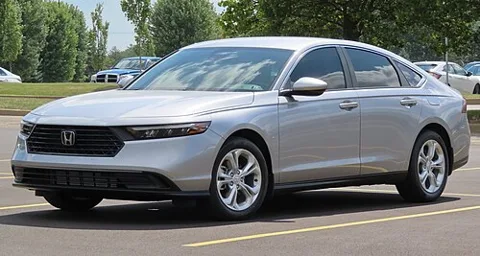
And just as importantly, like the actual dollars. When people talk about self-driving cars, I always like to use passenger vehicles because everyone can kind of understand; it's maybe a little harder to grok like ports. In terms of your personal vehicle, let's say you just bought a Honda Accord yesterday, and then tomorrow self-driving is available for free. Well, you still own that Honda Accord. Over half of Americans live on a fairly small savings account. So when they buy a car, it's a big deal and it's a big purchase.
And they're going to use that car for 10, maybe 15 years, regardless of what the other product that's available in the market is, just because of the nature of economics and how much money that they have. And so the diffusion of this intelligence into machines has a lot of different complexities that you won't see on a desktop or on a phone. But I think those are also moats. Like once you figure out how to make a mine autonomous or a farm autonomous, we as a technology provider in that ecosystem, I think, are really advantaged because we're really in there. Again, just the same way silicon is so sticky. Once you're a chipmaker and your chips are in a bunch of machines, that's a real deep moat. And we're both the disadvantages and advantages of those realities.
07Business model, customers and offices around the world
Younis describes Applied as a deliberately boring licensing business in which autos are only a minority of revenue.
This is a business podcast, so we definitely need to talk about the actual business. I'm curious how you would break down the revenue for Applied Intuition. There could be different buckets for this. One could be software, which has one margin profile, services could be another, or consulting. Maybe just break down the different components of revenue.
We are a very classic product business. The way we make money is licensing. It's really a straightforward relationship with customers. We do kind of a weekly live all-hands inside the company, and we're a little over a thousand engineers, to give some scope of how big the company is. I always say, you know, we want to be very innovative on our technology and we want to be very boring on our business model. And when it's the other way around, that's when maybe you get into trouble, when you have a very boring product but very innovative ways to, like, do accounting around them.
I think probably evidenced by the fact that our last round was BlackRock,49BlackRock — the world's largest asset manager. Together with Kleiner Perkins it led Applied Intuition's Series F in June 2025: $600 million (of which $200 million was new money for the company and the rest a buyback of shares from employees and early investors) at a $15 billion valuation. Source. and Fidelity50Fidelity Investments — one of the largest US asset managers, known for its mutual funds; it also invests in late-stage private companies. before then. So these are very traditional conservative investors who do actual diligence, not to say that venture investors don't. Why I bring that up is I think as a founder and as a company, and speaking to other founders here, it should be really easy to understand your business. Your customers should have a very clear understanding of your incentives and your motivations and how and where you make money and where you don't make money and what you don't want to do. So for us it's, let's make your products, that's our end customers, let's make them better. And we make them better by putting some intelligence into them.
Can you talk about the actual customer base? I was reading that like 18 of the top 20 automotive manufacturers are your customers. And you guys expanded the category. I think you were talking about like we're not just land autonomy anymore. We're sea, we're space, a lot of other industries that you guys are going to. Maybe just give the audience a sense of the different customer buckets that you guys work with. And to my understanding, it's also quite global. So give us a little bit of a feel of the different countries that you guys work with too.
Our customers typically, but not exclusively, are manufacturers. So they're people who make physical machines. And I say not exclusively because we also work with folks like somebody who's, let's say, a mining operator or somebody who runs a port and they're automating kind of a heterogeneous mix of machines. And those machines have to talk to each other and work with each other. And we provide, again, either Dana, the platform that is the tooling side, or the actual intelligence that a manufacturer would use and then kind of embed into their machines and make their machines more intelligent. On the verticals in terms of the buckets, it's all the ones that are the big verticals that make machines and deploy machines in the real world.
It's automotive, it's commercial trucking, it's defense, it's construction, mining, agriculture. I think, you know, in the short horizon, robotics, humanoids, space, like anywhere where there's the physical machine that's moving around people or goods or information. And so that's the verticals. And it's frankly fairly evenly split. I think a lot of times people think we're like an automotive-only company. It's frankly a minority of our business, quite evenly split.
And we're also quite international, as you mentioned. So we really work across the globe. Our first international offices were almost right when the company started. Again, that's also part of the founding story. You know, I've lived in Japan and Germany, and so obviously opening offices in Detroit, Japan, and Germany as literally the first three offices for us makes sense. And then as we got into defense, going to DC, all fairly logical things.
We always like to be close to our customers, and that's a good reason to have international offices, but also there's a lot of engineering talent, frankly speaking. This is not just, as Peter mentioned earlier, you have to know AI and you have to know how to like optimize models. There's a lot more to our technology. We find people really around the globe that can help us succeed in our mission.
08Competitors and the new wave of hardware companies
The founders say Applied has no direct competitors, and new hardware companies like Prometheus and Atoms look more like future customers.
From an outside-in perspective, it's actually quite hard to pin exact direct competitors. There are synthetic data providers. You could have big platforms like Nvidia. You mentioned Tesla, which is like more of the vertically integrated, they're full stack operators. I'm curious how you guys think about competition and whether there are some companies that you feel are in your path.
Conversations like this, it's important to define the word competition, because there's a lot of companies that play in, let's say, self-driving, but that doesn't necessarily make them competitors. Waymo as an example, and we're both ex-Googlers. Is Waymo a competitor? Not really, mainly because they don't take money out of the bucket that we're taking money out of. We're selling, let's say, to manufacturers, Waymo is doing a robotaxi to consumers. Now, if we did a robotaxi to consumers or Waymo was selling to manufacturers, then you're more direct competitors, but it's not really a competitor.
You're correct that there isn't really an Applied Intuition, frankly, out there, but there are many companies that compete with portions of our business. So there are companies that make something in construction or mining, or they'll make something in automotive. From our own team, we get asked these questions all the time about, you know, how should we think about competitors and things like that. I fall into the classic YC model here, which is you should be aware of the competitors, you should fight them aggressively, but you can't let them dictate your future, because they are a different company with different skills. And these markets are really, really, really big. Competition becomes really important if you are in a small town and there are a thousand people who live there and the thousand people are going to go to one shoe store or two shoe stores. Then competition becomes really important because it is a little bit of a zero sum game. There's a finite amount of shoes they're going to buy. In our business, the market is growing so rapidly and so aggressively that, let's say you wrote down all the subcompetitors for Applied, all of them could be successful and Applied Intuition could be successful, because the markets are so big.
One way also to think about this, again, I'm talking to founders here of young companies, you know, if you have kids, you see like the image of the universe where they show the sun, Mars and Earth and stuff. It's just there to understand where the Earth is in relation to Saturn and Jupiter. Well, if you actually have that at scale and the sun is like the size of a basketball, you know, the Earth is like many, many tens of feet away and it's like a little pin. It's like the head of a ballpoint pen.51If the sun (about 865,000 miles across) were shrunk to a 9.5-inch basketball, Earth would be a speck under a tenth of an inch wide about 85 feet away. And so all this vastness is this black empty space. Markets are kind of like that. People focus a lot on how close these companies kind of look to each other, but the markets are so vast and so big, they actually don't really impact each other's gravity.
And I fall very much into the view that if we don't succeed, it's because of us. So if we execute, we're going to do fantastic. And I think this company can be honestly certainly 10x, if not much, much bigger. And I think before, when we used to say things like this, like there will be a multi-hundred billion dollar physical AI company, people would say, well, that doesn't really make sense. Now you see with companies like SpaceX and Anthropic and OpenAI how big they've gotten. And they're hard tech companies52Hard tech — companies that solve difficult engineering and scientific problems and make physical things or fundamental technology, such as rockets, chips, robots or frontier AI models, as opposed to apps and services. that are just really focused on one thing, and you just see, wow, these markets are really big.
There does seem like there's a real renaissance of people building physical and hardware companies: Bezos and Prometheus,53Prometheus (Project Prometheus) — a startup Jeff Bezos founded in 2025 with Vik Bajaj, a former Google X executive; both are co-founders and co-CEOs. It develops AI for engineering and manufacturing. you have Travis Kalanick and Atoms,54Atoms — a robotics company from Uber co-founder Travis Kalanick. In July 2026 it raised $1.7 billion in a round led by Andreessen Horowitz. and I think literally just today, a company called like TerraFirma55TerraFirma — an Austin construction company that does earthworks and site preparation with robotic equipment; it raised $115 million in July 2026. It works in construction, not mining. or something that's building robotic mining technology. It does seem like there's a lot of urgency and ambition to build into the physical world. And it's hard to imagine any of these new entrants building physical technology without some sort of intelligence baked into it. So I wonder how that's playing out and how you guys think about it, and whether that may or may not dampen some of the demand for your solutions.
These are all potential customers for us. It's great that many more hardware companies are starting. And so much of this has to do, again, with the barrier to entry that we talked about earlier. If building an intelligent hardware system is an extraordinarily daunting task, very few companies are going to do it. But once it becomes more achievable by a reasonable sized team with a reasonable amount of funding, then all of a sudden you can have hundreds or thousands of organizations building all kinds of things. And we can imagine what those things could be, but a lot of it, it's going to be the creativity of humanity that comes up with these new physical AI use cases.
Just to echo Peter, I think these folks could definitely be customers of the company because we provide that platform in order to develop this technology. History is such a great way to learn about these things. Google is started in 1998, when there's multiple search engines that are already public.56Google was founded in September 1998. By then the search engines Yahoo, Excite, Lycos and Infoseek had all gone public, all in 1996. And I think if we were having this podcast in '98 and said there's a new company coming up, you would say, well, the market's already saturated. These markets are really, really big. The instinct always is, oh, should you be worried that Jeff Bezos is going to start a physical AI company? Like that's like saying Jeff Bezos is starting a software company. Definitely we are also a software company, but it doesn't necessarily mean anything as ominous and as negative as that is.
09The unspent billion and the future
For the founders, capital is just one variable in the mission and the best product is what matters, and the future with physical AI, Younis says, is above all safer.
I heard this crazy stat that you basically haven't spent any of the money that you raised, and you raised a non-insignificant amount of capital, somewhere in the range of a billion dollars, and you've built this company to be self-funding. So the question that's begged to be asked is why have you raised that amount of money? And how do you broadly think about allocating, deploying capital?
Just to be very clear, we've tried to spend it. We've just been fortunate enough to grow faster than that. In every fundraise, we always start off with, like, we intend to spend this money. We don't intend to raise it and put it in the bank. So that's one. As we look at resource allocation, we want to be very thoughtful, but not so conservative that we become vulnerable to an emerging company that wants to, let's say, be less frugal or something like that.
I think as we look forward, we're fortunate enough, partly because of our track record, partly because of what we did as technologists and engineers before we even started this company, that we could raise very significant amounts of capital from the markets if we needed to. I think the way we think about this is, hey, this is our mission. If, as Peter was talking about, the bottleneck is capital, then we should take care of that. If it's technology, we should take care of that. If it's customers, we should take care of that, or products that we need to build. So it's just one variable in the path in the mission.
And when we see it being constrained, we fix it. I think also we're getting to the size and scale that I think we could deploy a lot more capital much more effectively. So something we always talk about and think about, but I wouldn't say it's like the first thing I'm thinking about in the morning. The first thing I'm thinking about is how do we make sure we're making the best products in the business? If we make the best products in the business, a lot of things take care of themselves, because unlike other businesses, the product really matters here. A lot of businesses, the products can be okay, but not in safety critical systems.
Similar to maybe the challenge of pointing to a direct competitor, if I force you to point to a public company or a basket of public companies that would be helpful for an investor to value Applied Intuition with, where would you point them to?
There's not many publicly traded companies around, frankly, anyone that directly plays in this physical AI world. But I think that's why there's enthusiasm around Applied Intuition, is like, I think if you listened for the last hour and had your thinking brain on, it's pretty easy to understand the problem and the solution. We're the category leader in physical AI and it's a big market. So that's the punchline why we get such enthusiasm, honestly, from engineers and from investors alike.
The companies that you've been fortunate to work with are kind of a who's who of leaders across all these industries that we talked about, right? You have defense, you have automotive, you have farming, industrial, manufacturing, etc. And you have such a unique perch and vantage point. Looking maybe three or five years out, what's the most interesting ways you think the future will be different than today?
The future is safer, and this is not to be understated or made to be pithy. If you know anyone who's gotten in a car accident or who's been in a workplace accident at a farm or a mine, it's absolutely devastating in a way that is hard to quantify, because it impacts everything they do forever, the rest of their life. That's huge. As we started off, you mentioned how in San Francisco, you see self-driving all around. That's going to be way more common in many, many more cities and many more companies, not just Waymo or Tesla who are fielding those products. And then as you go to other places, you go to college campuses, you'll see shuttles and you'll see food delivery robots more and more.
You already see some of them, but you'll see this at an increasing rate. And before you know it, just like having a supercomputer in your pocket is taken for granted, having machines move around you and take care of things for you and take care of you, I think will be taken for granted, and that's like a very positive thing.
Peter, Qasar, it's been a pleasure. Thank you for your time.
Yeah, thanks for having us. It was fun. Thanks for having us.
AdColossus
To find more episodes of Breakdowns, ranging from Costco to Visa to Moderna, or to sign up for our weekly summary, check out joincolossus.com. That's J-O-I-N-C-O-L-O-S-S-U-S dot com.


