
Founders
Chapters
In the passage Senra opens with, Chung explains that the nickname "the bulldozer" was not meant kindly, and that behind his drive lay careful planning.
Read the chapter- The people who called Chung "the bulldozer" saw him as an uneducated upstart who dug first and thought later.
- Chung writes that he thought long and hard about every project and only looked reckless from the outside.
- He was told he couldn't build a highway that cheaply, that a shipyard was crazy, that you couldn't move heavy underwater equipment by barge.
- Chung's motto was "shorten the time": if you haven't found a way, you haven't thought hard enough.
Senra calls this the most inspiring autobiography he has read because its author went from destitution to the richest man in Korea, and the son's preface remembers above all his father's daily struggle.
Read the chapter- As a child Chung ate tree bark to survive, and he died the richest man in Korea.
- In the preface his son writes that his father built the nation literally: infrastructure, schools, hospitals and Korea's largest charitable organization.
- When someone called a project impossible, Chung famously answered "Did you try?", though all his formal schooling came to six years.
- From books Chung learned that life is a series of days, and that finding meaning in daily life may matter even more than in life as a whole.
- Chung said that 90% of his life was full of joy and meaning.
In the prologue Chung writes that Hyundai weathered fifty stormy years, and the book's central idea is that time is handed out equally and success depends on how you use it.
Read the chapter- Chung's father was a farmer from birth to death, and Chung revered him above anyone.
- Over fifty years Korea went through colonialism, war, a student revolution, a coup and a president's assassination, and Hyundai held steady.
- Chung writes the book to show young people that with firm conviction and focused effort anyone has an equal chance.
- Chung calls time the one capital given to everyone equally and credits his success to making the best use of it.
Rural poverty convinced Chung that the city was his only hope, and at 19 he ran away from home for the fourth and final time.
Read the chapter- His father talked the runaway Chung into coming back because the eldest son is the pillar, and without the pillar the family collapses.
- Finding his son at a bookkeeping school in Seoul, the father called him a nobody chasing a stupid dream, and wept.
- Senra explains that the father spoke from fear, not disbelief, and that Chung refounded the family and changed the trajectory of all his descendants.
- The family was so poor that human waste was hoarded as fertilizer, and after harsh winters they survived on tree bark.
- The last straw was his parents fighting over food: at 19 Chung left home for the fourth and final time.
Hard work turned a rice delivery boy into a shop owner within a few years, but two years later the Japanese authorities took the shop away.
Read the chapter- After running away, Chung took any work he could find: at a moving company, as a farmhand, hauling stone and logs, as an errand boy.
- A delivery job at a rice shop, with a free sack of rice a month, seemed to Chung like the height of his ambitions.
- He came in first, swept the entrance and put everything into every delivery, because half measures don't exist in his world.
- Two years later the owner sold Chung the shop, and at 24 he set out to make it the best rice shop in Seoul.
- When Japan went to war with China, rice was rationed and every rice shop in Korea was requisitioned.
A new business burns down, but Chung wins a second chance.
Read the chapter- The repair shop, opened with money borrowed from a moneylender, burned down along with the customers' cars.
- Chung begged the moneylender for another 3,500 won and opened the shop again, without a license.
- Instead of waiting to be shut down, he went to the police section chief's house every morning for a month until the man gave in.
- Bedbugs in the workers' barracks that bowls of water under the table legs couldn't stop dropped from the ceiling instead, and Chung concluded that if bedbugs can do it, so can people.
The Japanese take the repair shop too, but Chung has no doubt he'll be the richest man in Seoul.
Read the chapter- In wartime his shop was forcibly merged with another, and Chung says that for the first and only time in his life he was out of work.
- The family of twenty that Chung had moved to the city lived in a small house.
- Passing the Government-General Building with his mother, Chung promised to live in a house bigger than that, and she told him to come back down to earth.
After the war Hyundai is born, and Chung spots where the big money is.
Read the chapter- Hyundai Motor Service replaced engines for the US Army, welded Japanese trucks together and converted gasoline cars to charcoal.
- A repair contract brought in 300,000–400,000 won and a construction contract up to 10 million, and Chung saw that the difference wasn't effort but the scale of the industry.
- His partners said no, but Chung answered "Watch me" and went into construction, convinced that success is 90% determination.
The Korean War drives Chung out of Seoul twice, but brings him work.
Read the chapter- Chung says he naively trusted the government and waved off his brother-in-law's advice to stock up on rice, so the family had to flee with only the clothes on their backs.
- When he came back he found his house and factory looted and went straight back to work for the US Army.
- After the second retreat his workers lived in his yard in Busan and everyone ate together from borrowed pots.
- Once Seoul was retaken, Hyundai had a near monopoly on construction for the US Eighth Army.
Raised in desperate poverty, Chung ran his company hard and, like Steve Jobs in Nolan Bushnell's telling, had one speed: go.
Read the chapter- His son's first memory is of creditors smashing the floor with an axe and demanding their money.
- Chung gave his people no time to warm up, told them to finish "by tomorrow morning" and admits that roaring was the only way he knew to talk to them.
- Trust grows like a tree, Chung says, which is why a reliable, highly profitable business takes so long to build.
- Nolan Bushnell said Steve Jobs had one speed, go, and Senra sees the same in Chung.
- The poor man has to work 10 to 20 times harder than the rich man, Chung writes, and Korea had no resources, only the strength and determination of its people.
Chung grew the dream of a shipyard from a tiny idea, and when no one would fund it and he gave up, President Park shamed him back into it.
Read the chapter- Chung nurtures an idea the size of a grain of rice until he can see the whole project, and that is how the shipyard dream began, though he had never built even a boat.
- Senra recalls a billionaire telling him over dinner: "You can put a boat on a ship, you can't put a ship on a boat."
- Neither the Japanese nor the Americans would fund the shipyard, and for the first time in his life Chung gave up.
- President Park ordered that the government never deal with Chung again, then asked whether he had thought it would be easy, and told him to get on the next plane.
Chung found a buyer "crazier than him" and borrowed against his order for ships from a yard that didn't exist, much as Daniel Ludwig once got his start.
Read the chapter- Chung offered buyers ships from a yard that didn't exist yet and promised to get the loan afterward.
- A Greek named Livanos, Aristotle Onassis's brother-in-law, agreed to buy two Hyundai ships at a dirt-cheap price.
- Chung put the 1.4 billion won down payment in the bank and asked for a shipyard loan against it.
- Senra recalls how Daniel Ludwig borrowed to buy tankers against long-term contracts to haul Standard Oil's oil.
In the last third of the book Chung lays out his philosophy: time, not age, defines a life, businesses should be built rather than bought, and luxury breeds corruption.
Read the chapter- Past 85, Chung is still fully absorbed in work: while others hesitate, he has already started.
- Buying someone's company on the cheap, to Chung, is profiting from their misfortune, so any business he wants he starts himself.
- Chung sees himself as a laborer who just has some money: he rejected a separate executive elevator and scolded workers for laying carpet at a site, because corruption follows luxury.
- Hardworking people, in Chung's view, live a hundred times more productively than the lazy, and he doesn't trust the lazy.
Chung credits positive thinking for his good life: he never felt deprived and always believed tomorrow would be better.
Read the chapter- Chung never felt deprived, even when he worked the fields on an empty stomach and couldn't take his eyes off the treats at the market.
- Chung was sure tomorrow would be better than today, and with that thought he was always happy.
- Living well, to Chung, means giving your all and living in the present while dreaming of the future, whatever circumstances you were born into.
- Senra ends the reading with Chung's line that the best workers have nothing but the next task and a passion for the work.
Quotes
Chung's famous answer
“When someone said that a proposed project would be impossible, his famous response was, 'Did you try?'”
David SenraRead from 04:21The father to the son who ran off to Seoul
“But you, what are you? A nobody. And a nobody like you isn't going to make it. You will throw our family out into the streets, blindly chasing after this stupid dream.”
David SenraRead from 11:56Why Chung's father was so harsh
“And then you realize, as the story goes on, he's not saying that because he doesn't believe in his son. It's the opposite. He loves his son. His father is deeply afraid.”
David SenraRead from 12:31What the bedbugs taught Chung
“I'm no bedbug. I'm a man. If these bedbugs can do it, why can't we men do it? We just need to stick to it and not quit.”
David SenraRead from 23:03Why Chung went into construction
“This difference in profit was not due to our own lack of effort. It simply reflected a difference in the scale of the two industries. I thought to myself, for the same amount of effort, why not go for the real big bucks?”
David SenraRead from 25:48A billionaire on his "boat"
“You can put a boat on a ship, you can't put a ship on a boat.”
David SenraRead from 34:28How to sell ships from a shipyard that doesn't exist
“I just need to find somebody crazier than me to say yes.”
David SenraRead from 37:59Chung on luxury
“After luxury comes corruption. I have never seen a country prosper with a leader who enjoys luxury.”
David SenraRead from 43:51
Summary
David Senra rereads the book he calls the most inspiring autobiography he has ever read: Born of This Land by Chung Ju-yung, the founder of Hyundai. The son of a poor farmer, he ate tree bark as a child and ran away from home four times before settling in Seoul as a rice delivery boy; some eighty years later he died the richest man in Korea. Senra reads the preface by Chung's son, the prologue and the chapters on his childhood, and shows that behind his father's harsh words, calling the boy's dream "stupid," was fear, and that Chung went on to pull his whole family out of poverty.
Then comes a string of rises and disasters: the Japanese colonial authorities take away his rice shop and his auto repair shop, the repair shop burns down, and the Korean War drives Chung out of Seoul twice. What saves him is stubbornness ("if bedbugs can do it, why can't we?"), an eye for the size of an industry, and a habit of acting before everyone else. The best story is the shipyard: when Chung was ready to give up, President Park Chung-hee shamed him into carrying on, so he sold ships from a yard that didn't exist yet to a Greek named Livanos and used the order to get a loan. Senra compares the scheme to how Daniel Ludwig got his start.
The last third is Chung's philosophy: time is the one capital everyone is given in equal measure; no buying up other people's companies; no luxury for the bosses; hard work and positive thinking as the way to a good life, one that by his own account was 90% joy and meaning.
Advice
Don't wait for a problem to come to you: Chung visited the police chief every morning for a month and saved his unlicensed repair shop that way.
Pick your industry by its size: the same effort in a big industry pays many times more than in a small one.
If everyone thinks your idea is crazy, find one customer who is crazier still: a signed order can be turned into a loan for something that doesn't exist yet.
Treat time as your main capital: make a plan and throw yourself into the work right away while others hesitate.
Don't set management apart from the workers or spend on luxuries for the bosses: it erodes trust and leads to waste.
Mentioned
 Chung Ju-yung00:00the subject of the episode
 Hyundai Group00:32the group of companies Chung built
- "Born of This Land: My Life Story"02:13Chung's autobiography
 Chung Mong-joon02:39Chung's son, author of the preface
Show 12 more mentionsShow fewer mentions
 HD Hyundai Heavy Industries04:21the world's largest shipbuilder
 Hyundai Engineering & Construction07:46turned 50 in 1997
 Nolan Bushnell32:57said Jobs had one speed
 Atari, Inc.32:57Senra recalls how Atari founder Nolan Bushnell hired Steve Jobs at nineteen and became his mentor.
 Steve Jobs32:57worked for Bushnell at 19
- "Finding the Next Steve Jobs: How to Find, Keep, and Nurture Talent"32:57Senra compares the Hyundai founder’s readiness to act with Nolan Bushnell’s description of the young Steve Jobs.
 Park Chung-hee35:30wouldn't let Chung abandon the shipyard
 George S. Livanos37:59bought ships from a shipyard that didn't exist
 Aristotle Onassis38:17Livanos's brother-in-law
 Daniel K. Ludwig38:51borrowed against shipping contracts to build tankers
- "The Invisible Billionaire: Daniel Ludwig"38:51Ludwig's biography
 Standard Oil38:51the customer whose oil Ludwig hauled
Sponsors of the episode


Transcript
01The bulldozer
In the passage Senra opens with, Chung explains that the nickname "the bulldozer" was not meant kindly, and that behind his drive lay careful planning.
"For a long time I was known as the bulldozer.1The Bulldozer — Chung Ju-yung's nickname in Korea, for his drive and his habit of flattening any obstacle. The same nickname later stuck to Lee Myung-bak, who ran Hyundai Engineering & Construction and was president of South Korea in 2008–2013. I don't think this nickname came just from my hard-driving work ethic. I imagine that comparing me to a heavy steel body that drives over piles of rubble was not meant to be flattering. It was meant to depict me as an uneducated upstart who dug up the ground first and then thought about it later. It's obvious that I had not received much schooling, but not receiving formal education does not mean one is lacking in wisdom. It is a mistake to think that broad and deep knowledge can only be obtained through formal schooling.
"I think harder, work harder, have greater courage, and am more active than others. Before starting any project, I spend an enormous amount of time and effort thinking, analyzing and planning every detail. When it's time to implement these plans, it may look like I'm working off the cuff or even recklessly, but if I hadn't first sat down and planned everything out, the Hyundai Group2Hyundai (Korean for "modernity") — the group of companies Chung founded in 1946–1947. A classic Korean chaebol, a conglomerate controlled by one family; after the 1997 Asian financial crisis and a feud among Chung's sons in 2000, the group split into several independent ones, the largest being Hyundai Motor Group and HD Hyundai. of today could never have existed. When attempting something difficult, people utter the words 'wrong' or 'impossible.' They said we couldn't build a highway so cheaply.3The highway — the Gyeongbu Expressway between Seoul and Busan, more than 400 km long, built in 1968–1970. Hyundai did most of the work, and the road was finished in about two and a half years. They said it was crazy for us to build a shipyard.
"They said it wasn't possible to move heavy underwater equipment by barge.4Underwater equipment by barge — a reference to the industrial port of Jubail in Saudi Arabia, a contract Hyundai won in 1976: the huge steel structures for the offshore oil terminal were fabricated at the Ulsan shipyard and towed by barge across the Indian Ocean. It wasn't just once or twice that I received this kind of treatment from people. People who only thought with their common sense and shunned adventure often found my way of doing things ridiculous and ignorant. I am someone who believes that if a person limits themselves to the fixed ideas inherent in common sense, they will not be very creative. People with a strong will to succeed have unlimited potential and creative abilities. By bringing together all of this potential, the collective energy of people can be unleashed.
"My motto is 'shorten the time.' This was the surest way for improvement. If you search for a method, it will come to you. If you can't come up with a method, it's because you didn't think hard enough. The Hyundai of today was built by pushing aside all of our problems like a bulldozer. My performance as a bulldozer in thought, calculation, and prediction was the product of a modest intellect. By thinking and trying harder than others, I continued to push ahead in all of my endeavors."
02The son of a poor farmer
Senra calls this the most inspiring autobiography he has read because its author went from destitution to the richest man in Korea, and the son's preface remembers above all his father's daily struggle.
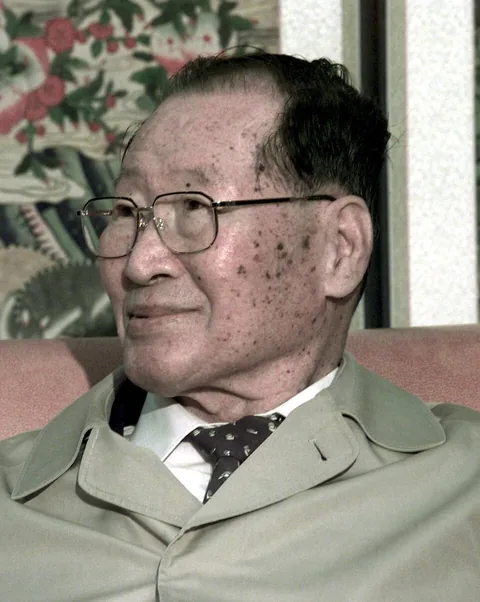
That was an excerpt of the book that I'm going to talk to you about today, and the book that I call the most inspiring autobiography I have ever read. The book is called Born of This Land: My Life Story by Chung Ju-yung.5Born of This Land: My Life Story — Chung Ju-yung's autobiography. The Korean original came out in the late 1990s; the English translation, with a preface by his son, was published by the Asan Academy in 2019. I haven't read this book in probably at least five years.6Five years — Founders' first episode on this book, #117, came out in March 2020. The reason I say this is the most inspiring autobiography I've ever read is because he is the son of a very poor farmer. He grew up in complete destitution in Korea, so much so that he had to eat tree bark to survive.7Tree bark — in poor Korean villages, in spring, when the autumn stores had run out and the barley wasn't yet ripe, people ate pine bark and roots. This hungry season was called the "barley hump" (boritgogae).
And yet over 80 years later, he dies as the wealthiest person in Korea.8He dies — Chung Ju-yung died on March 21, 2001, at the age of 85. So I'm going to immediately jump to the preface of this book. Chung wrote this autobiography when he was in his 80s. After he passed away, his son wrote this preface,9His son — the preface to the English edition was written by Chung Mong-joon, Chung's sixth son, a politician and former FIFA vice president. and I think it gives you a great overview of Chung's life. And again, from his adult son's perspective, which I think is insanely valuable for you and I. "My father was a nation builder, figuratively and literally.
"He built so much of the infrastructure and landmarks in Korea that we still use and see around us today. He was a businessman who built one of the most successful companies in the world. He established schools, hospitals, and the largest philanthropic organization in Korea.10The largest philanthropic organization — the Asan Foundation, which Chung set up in 1977; Asan was his pen name, after his home village. The foundation runs a network of hospitals, including the Asan Medical Center in Seoul. However, for me, he was first and foremost my father, who showered me with love and made me who I am today. In the words that he used to describe his own father, he was, quote, 'the progenitor of my body and soul, the bestower of my health, work ethic, frugality, patience, commitment, and devotion, the one man who taught me the morals that have made me the man I am, my greatest mentor.' Reading this book, I felt his presence, as if he were by my side.
"Knowing all the things that he had to go through to provide me with unparalleled opportunities, I now look back on my own life and wonder whether I have truly lived up to his expectations. My most poignant memories of him are not so much his accomplishments. It's how hard he worked day in and day out, how he struggled. Why does one start a business? The usual answer is to provide for one's family and to contribute to the national economy, but we forget just how much of a struggle it is to keep a business afloat. As my father said, you need to, quote, 'pour all your blood, sweat, and tears into trying to make it succeed.'
"From when he was starting his first auto repair shop in a small makeshift garage to when he was building the dry docks for what was to become the world's largest shipbuilding company,11The world's largest shipbuilding company — HD Hyundai Heavy Industries, with its shipyard in Ulsan; Chung broke ground on it in 1972. it was a daily struggle against impending disaster, trying to keep things going when so many things could and did go wrong. His was a lifetime spent making possible the seemingly impossible. When someone said that a proposed project would be impossible, his famous response was, 'Did you try?'12"Did you try?" (Korean "Imja, haebwasseo?") — Chung's most famous line; in Korea it is quoted as the embodiment of his character. My father was a self-taught man. All the formal education that he received was three years of traditional Confucian education at a village school13Village school — a seodang, the traditional Korean school where children learned Chinese characters and the Confucian classics. and three years of elementary school.
"He more than made up for whatever shortfalls through voracious reading." And this is a quote from his father: "Even though my education stopped after the sixth grade, I've always enjoyed reading great books. If my first mentors were my parents, then my second mentors were books. From these books I've learned that life is but a sequence of days. Just as important as seeking meaning in the totality of life, it is perhaps more important to find meaning in daily life." That is probably my favorite sentence in this entire preface, one that I double underlined.
"I've learned that life is but a sequence of days." It's important to seek meaning in the totality of life, but it's more important to find meaning in daily life. I absolutely love that. "He had a wonderfully positive disposition and a rigorous work ethic. He could see the silver lining in even the most dire situation. His recollection of the backbreaking work that he undertook under Grandfather's direction on the tiny family farm illustrates this better than anything else."
And now another direct quote from his father: "Thankfully, I'm a naturally positive person. I was born with the ability to accentuate the positive rather than the negative. Since I was 10 years old, I worked with my father under the scorching sun. I worked all day, never taking time to stretch my aching back. But in all that time, never once did I complain or slack off.
"When the time came to take a short break in the shade, those precious moments when I could feel the cool breeze on my face were like heaven. Returning home exhausted, I slept soundly and woke up the next morning ready to go." Back to his son: "He had the ability to remain unperturbed in the face of seemingly insurmountable difficulties that came from a deep sense of inner peace. My father lived a full life. As he looked back on his life in his later years, he said, 'As a businessman and a hardworking laborer born of this land, I feel an infinite sense of pride that I've contributed my share to this country's breakthrough.14The country's breakthrough — in Chung's lifetime South Korea went from one of the poorest countries in the world to a developed industrial economy; the boom is known as the "Miracle on the Han River." I believe that 90% of my life has been full of joy and meaning.
"'I have truly lived well.' I miss his wisdom, his exuberant optimism, and his ability to rise to any occasion. Most of all, I miss him as only an adoring son can." That is absolutely incredible. Imagine your adult children writing about you that way after you pass away. That is an unbelievably successful life.
03Half a century of Hyundai, and time as capital
In the prologue Chung writes that Hyundai weathered fifty stormy years, and the book's central idea is that time is handed out equally and success depends on how you use it.
And now I'm going to jump right into the prologue, which is now written by Chung, and now he's going to be talking about his own father. "I am the son of a man who lived his entire life as a poor farmer. He was a farmer from birth to death and from head to toe. Though people may view him as a run-of-the-mill farmer no different from any other, I venerated and adored him more than anybody else in the world. I am over 80 years old now. I have lived 20 years longer than my father.
ExplainerHalf a century of Korean history
Chung lists the events Korea lived through between the founding of his construction company and 1997.
- Japanese colonial rule (1910–1945): Korea was a colony of Japan; under wartime laws Chung's rice shop and repair shop were taken from him.
- Liberation (August 15, 1945): after Japan surrendered, the peninsula was divided at the 38th parallel into Soviet and American zones; in 1948 the Republic of Korea was established in the south and the DPRK in the north.
- The Korean War (1950–1953): the North invaded the South on June 25, 1950; Seoul changed hands four times within a year.
- The Student Revolution (April 1960): protests against rigged elections forced the first president, Syngman Rhee, to resign.
- The coup (May 16, 1961): the military, led by General Park Chung-hee, took power. In October 1979 Park was shot by the director of his own intelligence agency.
- Military rule: after Park's assassination the generals took power again, first Chun Doo-hwan, then Roh Tae-woo. Only in 1993 did a civilian politician, Kim Young-sam, become president, hence Chung's "five years of the so-called civilian era."
"He passed away shortly after his 61st birthday. This year, 1997, marks the 50th anniversary of the founding of Hyundai Engineering and Construction.15Hyundai Engineering & Construction — Chung's construction company, founded in May 1947 as Hyundai Civil Industries; in 1950 it merged with Hyundai Motor Service. 50 years is half a century. During these 50 years, Korea endured Japanese colonialism, national liberation, the Korean War, the Student Revolution, the coup d'état, the assassination of President Park Chung-hee,16Park Chung-hee — the general who seized power in a 1961 coup and ruled until October 1979, when he was shot by Kim Jae-gyu, director of the Korean Central Intelligence Agency. Under Park the state handed cheap loans and export targets to big private groups, which is how Hyundai and the other chaebol grew. extended military rule, 30 years of the military dominating Korean politics, and now five years of the so-called civilian era. Hardly a day of tranquility existed in these 50 years of turbulence. Looking back to those times, I am very proud that Hyundai had held steadfast through the storms, survived and matured to this day."
And then he gets into why he's writing the book. "I thought it would be meaningful for me to reflect on my life and better organize my thoughts and experiences, so I agreed to write this memoir. The reason I'm writing this, despite the shortcomings" — he's talking about the fact that he was not an educated person — "is to reinforce my message to the younger generation who will shape the future of this country. With strong conviction and concentrated effort, everyone has an equal chance to succeed. This is one of my most important ideas."
So this is the story of building the company. You know, there's a ton of insights in this book that are very valuable to entrepreneurs, people trying to do something and bring something to life in the world and succeed in business, of course, but it's really his philosophy, his mindset that really inspires me. And he's got all these — he's really gifted at packaging his ideas together. And so this is one of the most important ideas, and this is how he ends the prologue. You know, he was talking about this crazy thing that happened to him over 50 years — you know, I was the son of a poor farmer, I built this company — but it's really this wisdom that I think is the biggest takeaway, hopefully, of the book and hopefully of this podcast. So he said, "Someone once said that time is a form of capital provided equally to everyone. I couldn't agree more. If I can be considered a successful person in my chosen profession, it is only because I was able to do my very best based on strong convictions and made the very best use of this evenly distributed capital."
AdRamp, Router
One of the things I love about RampaRamp — an American fintech company offering corporate cards, expense management and AI tools for finance teams; a regular Founders sponsor. is their mission is easy to understand. They want to help your business save time and money, and that is why they've built Router.bRouter (router.com) — a Ramp service launched in August 2026: it takes requests to language models from different developers and picks a model for each one by price, speed and quality. Do me a favor: while you're listening to this, go to router.com. Router was built to reduce your company's inference costscInference — running an already trained model to answer requests; companies pay for it by volume, in tokens. by matching every request to the most efficient AI model. Router automatically balances cost, speed and quality of output. Router is built for CTOs but loved by CFOs. Your engineering team gets the best model for every workload, your finance team gets lower inference spend. One customer who's using Router had the perfect description of why you should use Router: "Choosing the right model makes a meaningful difference to our AI spend.
"We run billions of tokensdTokens — the pieces a model cuts text into (a word or part of a word); the cost of requests is counted in them. through Router and have reduced our model costs by 92%." Tokens are money. Save both,e"Tokens are money. Save both" — a twist on Ramp's slogan, "Time is money. Save both." and you can do that by going to router.com.
04Running away four times
Rural poverty convinced Chung that the city was his only hope, and at 19 he ran away from home for the fourth and final time.
And so this is when Chung goes into detail about his childhood. "My father's total assets consisted of only a healthy body and a diligent character. My father never took a day off. My father just worked quietly, toiling away in solitude. Father was a man of few words. Even when working beside him all day, I heard him speak at most three or four words. Perhaps the longest conversation we ever had was the time he found me after I had run away from home and tried to convince me to come back. This happened the first time I ran away."
Chung will eventually run away four times. And so this is what his father told him the first time he ran away: "You are my eldest son. No matter how many children there are, the eldest son is the pillar.17The eldest son — in the Confucian order he inherits the headship of the family and is obliged to support his parents and perform the ancestral memorial rites. If that pillar collapses, the family collapses." And then Chung continues: "Another long conversation took place when I ran away from home for the third time."
This is one of the most devastating parts of the book. "My father caught me attending a bookkeeping and accounting school in Seoul." And this is what his father tells him: "Are there any parents in this world who don't want their children to be successful? If you are successful enough to bring your parents and siblings to Seoul and look after them, why would this old man hold you back? But you better not forget that you're just a farm boy who only finished the sixth grade.
"I hear Seoul is crawling with unemployed graduates of vocational schools. But you, what are you? A nobody. And a nobody like you isn't going to make it. You will throw our family out into the streets, blindly chasing after this stupid dream. I am old now, so you need to be responsible for looking out for our family. But since you refuse, we will have to turn to begging."
And then Chung responds: "Even today, I get a lump in my throat when I recall my weeping father crouched down as he uttered these words."
I need to pause here, because the first time I read this book, I was just — it was devastating that anybody could possibly talk to their child like that. "You're just an uneducated farm boy. You're chasing after a stupid dream." And then you realize, as the story goes on, he's not saying that because he doesn't believe in his son. It's the opposite. He loves his son. His father is deeply afraid. He is scared. All he has ever known is a life of poverty on the farm. And the story that Chung tells in this book — he is the founder of the family. He has refounded the family.
Because of Chung's bulldozer-like work ethic, his insane determination — wait till you see what this guy has to go through — because of this unfathomable will to succeed, he pulls his entire family from poverty. Chung is a generational inflection point. You can map out his entire family tree, and you see this one person changed the trajectory of every single other descendant that comes after him. One person did that.
This is why the book is so important. It goes into this. So he just said, "I get a lump in my throat." Remember, he's writing these words when he's in his 80s. "I get a lump in my throat when I recall my weeping father crouched down as he uttered these words." Listen to the next paragraph.
"Later, I brought him to Seoul to live together." And again, this is where you understand his father deeply loved him. "At the time, my schedule consisted of working late nights, barely sleeping, and returning to work early in the morning. Not once did my father tell me to come home early." This is the act of love. Listen to this: "By simply staying awake and waiting until I came home, he demonstrated his unspoken love for me."
He goes back to the childhood. This is a different level of poverty. "Back in those days, human feces, what they call night soil,18Night soil — human excrement collected and spread on fields as fertilizer; in East Asia this was standard practice until chemical fertilizers became common. was the primary fertilizer for our fields." So they're talking about — you could be at your friend's house, you still, if you have to go to the bathroom, you have to run home and shit in a bucket, and if you don't, you might starve to death. "We all made sure to relieve ourselves at home when nature called to add to our essential stockpile of fertilizer.
"We were extremely poor. My mother and father worked their fingers to the bone to make ends meet. Back in those days, farming families were so poor that words cannot capture their suffering and destitution. After harsh winters, we would completely run out of food. We barely managed to stay alive by eating tree bark. While I was toiling on the farm, I would think to myself, will I always be a farmer and never straighten my crooked back?
"A farmer who will never feel full, even for a day? A life like this, to suffer like my toiling father? Is this all there is to life? Such thoughts brought feelings of great frustration. My future seemed bleak. I knew if I continued to live on the farm, my life would be a replica of my father's.
"The sad reality of farming is that no matter how much one struggles, the payoff never equals the amount of work put in. I wanted to leave my hometown and try anything other than farming. I wasn't sure, but I thought that no matter what I did, if I worked as hard as I did at farming, I could make more money. Moving to the city was my only hope."
And then he talks about the day that he finally snapped. "I still vividly remember that my parents' arguments were always about food." So they're fighting about food, and he says, "I murmured, I cannot take this anymore. Any fleeting resolution to remain on the farm evaporated. I was determined to go to Seoul and succeed at anything other than farming. In late spring, after I turned 19, I ran away from home for the fourth time. The fourth time ended up being the last."
05The "Number One in Seoul" rice shop
Hard work turned a rice delivery boy into a shop owner within a few years, but two years later the Japanese authorities took the shop away.
And then, even though he's many, many years from the founding of Hyundai, he names the next chapter "The Birth of Hyundai." So this is like the prehistory of him starting the company that's going to define his life's work, the one that he's going to run for 50 years. At the beginning of every chapter, he has these lines. These are direct quotes from him that I absolutely love: "Do it until nothing more can be done. Give it your all to the very end." And so he runs away.
He takes literally any job he can get. You know, he's doing physical labor. He's got no education, no skills. He worked for a moving company. He worked on another farm because he almost starved to death, and they would actually provide housing for the workers as well. He hauled stone and lumber.
He became an errand boy for a factory. But more important than the list of jobs is how he's thinking at this time. "At every opportunity, I scoured the city for a better job. One lucky day, a rice shop hired me as a delivery boy.19The rice shop — Chung delivered for the Bokheung rice shop in Seoul, and in 1938 he took it over and renamed it Gyeongil, literally "first in the capital." It was a stable job with great benefits." He's talking about being excited at the benefits, the fringe benefits of this job.
You know what that is? He got one bag of rice for free a month. Remember, this is the person that's going to die the wealthiest person in this country, and as a 19-year-old, a 20-year-old, he's thrilled that he's not going to starve to death. "For the first time in my life, I felt optimistic about my future. Every day was full of joy and excitement."
So he's working at this rice shop for years. And this is another devastating line: "I did not reach out to my father, fearing that he would come get me if he found out where I was. Three years passed until I finally wrote him a letter. By then my annual salary had increased to 20 bags of rice, which apparently impressed him. His immediate response was, 'My son, it seems like you made it. I couldn't be happier for you.'
"Whatever I did, I never slacked off. Compared to farming, the workload at the rice store was nothing. Yet I still threw myself into the job just as my father did on his farm. From the very first day, I made sure I was the first to arrive. I would sweep the entrance. Because his son was a lazy bum, the owner began to appreciate my work ethic.
"I realized that even simple tasks require practice. No matter how small the task, such as delivering rice on a bicycle, I poured all of my energy into achieving the best possible result. Half measures, compromises, cutting corners, or being realistic do not exist in my world. Do it until nothing more can be done. Give it your all until the very end. This thought is the very essence of me as a person and the fundamental principle of my life.
"Two years passed, and all my hard work finally paid off. The rice shop owner unexpectedly offered to sell me the rice shop. The delivery boy had now become the owner."
And then you get an insight into his mindset. "I renamed my rice shop Number One in Seoul and aimed to make it the best rice shop in all of the city. This was only four years after I had run away from home. I was 24 years old."
Then he goes into the way he runs his rice shop, which is really the way he does everything in his life. "I was relentless in my search for new customers. I was soaring with confidence, and I dreamt that maybe this shop could become the best in the entire country, not just in Seoul. But the good times did not last." This is the end of the 1930s.
And he says, "The outbreak of the Second Sino-Japanese War,20The Second Sino-Japanese War — Japan's war with China, which began in July 1937 and merged into World War II; Japan diverted Korea's resources to the war effort too. and the Japanese Government-General of Korea21The Government-General — Japan's colonial administration of Korea (1910–1945), headed by a governor-general, usually a general or an admiral. The Japanese Government-General Building in Seoul, completed in 1926 in front of Gyeongbokgung Palace; demolished in 1995–1996.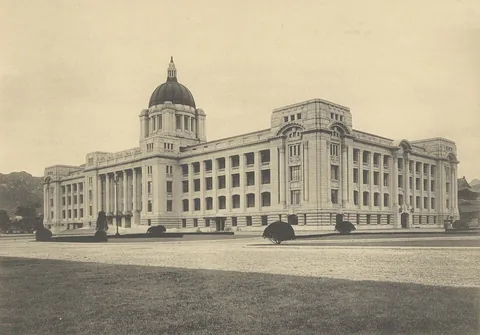 declared martial law. The Japanese authorities instituted a rice rationing system, and all the rice shops in Korea were requisitioned. It had only been two years since I'd become the owner of my own shop." So the government confiscates his business from him. This will happen to him multiple times.
06The repair shop, the fire and the bedbugs
A new business burns down, but Chung wins a second chance.
So because he can't run a rice shop, him and his two friends decide to take over an auto repair shop. Just like the rice shop, it is a small, humble beginning, but he is still ecstatic. "We made good money, and I was ecstatic to have chosen the right industry to get into. However, as the saying goes, bad luck comes in threes." There was a fire in the city, and his repair garage burnt to the ground, and all the cars that were in for repairs were completely ruined. "I could have easily given up under the weight of the debt" — so they had to borrow money to start, essentially they borrow money from, like, private money lenders. So he says, "I could easily have given up under the weight of the debt, but I was determined not to give up.
"I did not want to end up as a failure." So he goes to the private money lender, and he says, "The fire burned everything down, and now I have nothing but debt. But if I stop now, there's no way I'll be able to pay you back. Sir, I beg you, please give me another chance to get this right. Like a man desperately hanging on to the edge of a cliff, I pleaded with him again and again as he continued to stare at me in silence.
"Eventually he agreed to lend me an additional 3,500 won,22Won — colonial Korea used the Korean yen, which Koreans called the won. The sums can't be compared with today's: after the war the currency was replaced and redenominated more than once. and I started another auto repair shop." Now here's the problem: "At the time, a license for an auto repair shop was only given to automobile manufacturers." So it was impossible to get the license for an independent auto repair shop. So he is running an unlicensed auto repair shop, and he is almost sinking under this enormous pile of debt that is on him. He's got the debt from his old business and his debt from the new one.
And so at any given time, he knows the police can come and shut down his business. So what he does — instead of waiting for that, he's proactive. And so he says, "Early each morning I would visit the home of the section chief of the police, and I would plead with him. After a month of this, he finally said, 'Okay, I give up. You certainly ought to be arrested, but how can I detain someone who comes to plead at my door every single morning?'"
And then Chung tells us the lesson he took away from this: "All of this was made possible because I put into practice my motto: do your best until there's nothing more to do."
And so then he goes back in time, in between the time he runs away to the time that he gets the job at the rice shop, okay? He worked at this farm as a laborer, and he has this idea that I've never forgot. This is probably the most memorable idea from this book, and it's the fact that you can emulate, or that you should emulate, bedbugs. This part is incredible. "Whenever I tell people that it was bedbugs that taught me nothing is impossible if one puts in one's best effort, they think I'm exaggerating.
"But this is really the truth. The bunkhouse where I slept as a laborer was teeming with so many bedbugs that it was almost impossible to fall asleep. Some of the other workers tried to think of ways to avoid the bedbugs, but even when they slept on top of dining tables, they were still bitten, as the parasites could climb up the legs of the tables. We put our heads together and came up with the idea of placing a steel pot filled with water under each one of the four legs of the dining table. It worked temporarily. Unfortunately, uninterrupted sleep lasted for only one or two days, and then things went back to the way they had been before.
"The bedbugs were bothering us again. We wondered how this could be possible, considering that the bedbugs would fall into the pot of water if they attempted to climb up any of the legs. One night we decided to stay up to see how on earth they survived the water and managed to bite us. We were completely dumbstruck by what we saw when the lights were turned on. The bedbugs were climbing the walls and dropping from the ceiling onto our bodies. To this day, I cannot forget the shiver down my spine that I felt.
"This made me stop in my tracks and think: even bedbugs think long and hard and use every bit of energy they have to achieve their goal, and ultimately they succeed. I'm no bedbug. I'm a man. If these bedbugs can do it, why can't we men do it? We just need to stick to it and not quit. We need to emulate these bedbugs. Looking back, I can see that my life has just been an unending series of giving all I have until there is no more that can be done.
07Unemployed at 29, dreaming of wealth
The Japanese take the repair shop too, but Chung has no doubt he'll be the richest man in Seoul.
"My service shop was so swamped with orders that we soon started to make a decent amount of money. However, the situation under Japanese occupation steadily worsened. In December 1941, the Japanese imperialists, suffering from megalomania, started the Pacific War23The Pacific War — Japan's war against the United States and its allies, which began on December 7, 1941, with the attack on Pearl Harbor. and issued a Reorganization of Private Companies Order.24The Reorganization of Private Companies Order — Japanese wartime decrees forcing small private businesses to consolidate so that the colony's economy could be put on a war footing. Struggling to wage a war beyond its means, Japan took everything it could from Korea to make weapons, including even brassware and eating utensils.25Brassware — traditional Korean tableware made of brass (yugi). Late in the war the Japanese authorities confiscated metal household goods in Korea, down to bowls and spoons, to melt down for the military. They also forced us to merge with another workshop. It was a merger in name only. In reality, it was a hostile takeover. I had to leave the company. I was 29 years old."
So the Japanese government takes this business too. And this is the state of his life at 29: "I was officially unemployed for the first and only time in my life. At that time, my family of 20 lived in a small house." He had moved his family to the city. So when he says 20, it's his parents, it's his siblings, along with his siblings' spouses and children. 20 people living in a small house.
So then I want to pull out another paragraph again. It just demonstrates the way he thinks about himself. You know, he's not going to allow himself to be relegated to a life of poverty. So he's talking about this flashback where he drives around Seoul when his mom gets there. And so they're on a trolley going through the downtown area, kind of just looking at the sights. And he says, "As we passed by the huge headquarters of the Japanese government, I boasted, 'Mother, one day I'll become the richest man in Seoul and live in a house even bigger than that.' She responded, 'Now listen up, farm boy, you came here with just your two balls. You, the wealthiest man in Seoul in a house like that? Get your head out of the clouds. You have a life to live.' Unfazed, I answered, 'No, I'm going to make it.'"
08From car repair to construction
After the war Hyundai is born, and Chung spots where the big money is.
And so he starts another company after the war. We see his relentless resourcefulness here. He calls this company the Hyundai Motor Service Center.26Hyundai Motor Service — the auto repair business Chung founded in Seoul in 1946; it was the first company to carry the Hyundai name. And at the time, he just had contracts with the U.S. Army. So they were replacing engines at the U.S. Army Ordnance Depot.
And then he takes it a step further. "After a year, we started remodeling Japanese jalopies. We welded together two 1.5-ton trucks to make one 2.5-ton truck. We also modified gasoline cars to run on charcoal or carbide,27Charcoal or carbide cars — vehicles fitted with a gas generator that burned charcoal or wood and fed the combustible gas to the engine instead of gasoline. Calcium carbide mixed with water gives off flammable acetylene. since fuel was scarce."
And so at this time, his entire business just consists of an automobile repair shop. And the next business he starts is going to be a construction company. This is going to be a massive construction company. And I love the way he comes up with the idea to do this. "At the time, construction projects and automobile repair jobs were controlled by the government and the U.S. Army. One day, when I was dropping off my submission for a contract, I happened to witness some construction company representatives receive their construction fees. While I was earning about 300,000 or 400,000 won per contract, these construction companies could make up to 10 million won per contract. I was completely shocked to realize how much money was in construction." And this is so important, his realization here: "This difference in profit was not due to our own lack of effort. It simply reflected a difference in the scale of the two industries. I thought to myself, for the same amount of effort, why not go for the real big bucks?"
And then his partners are like, "Hell no, we're not doing this. We have our nice little auto repair job, we don't know how to do construction." You know, this whole book is basically people — including his parents, like we've seen multiple times — just telling him, "No, you can't do that. Be normal, stop doing this, stop having this ambition, stop thinking you could do more than you currently can." And Chung responding, "Watch me."
"In all my years, I have rarely started a new business without being called reckless. The first time I heard this was when I decided to enter the construction business after running an auto repair shop. But I did not think I was being reckless at all. After all, I had worked as a laborer at construction sites. Construction at that time consisted largely of just two things: repair and maintenance. I thought, what's the difference?
"Success is 90% determination, 10% confidence. I reminded myself of this every time I start a new project. There is absolutely no room, not even 1%, for doubt or apprehension. Though it was difficult to land contracts, the construction industry was quite profitable. I said to myself, we're going to go places."
09War
The Korean War drives Chung out of Seoul twice, but brings him work.
And then just as he gets going, you can already predict what's going to happen. Six months later, North Korea invades South Korea.28The invasion — the Korean War began on June 25, 1950; Seoul fell three days later. And when they hear of the invasion, he says, "My brother-in-law suggested we should buy some rice while we still can. I outright dismissed his suggestion, saying, 'Do you think our army is sleeping on the job? Stop talking nonsense.' I naively placed that much faith in the government. Because I naively trusted the government, I thought Seoul's defenses would hold, but seeing everyone fleeing in panic, I realized the gravity of the situation. I regretted having dismissed my brother-in-law's previous decision to buy the rice. We had to flee Seoul with nothing but the clothes on our backs."
AdVanta
And then, before we get back into this, I need to tell you about Vanta.fVanta — an American company that automates security compliance (SOC 2, ISO 27001 and others), which large customers require of vendors before signing a contract. Vanta, Vanta, Vanta. When you're building a company, you learn that trust is what closes deals. That is what Vanta helps you do. You may have the best product, but no buyers will sign a contract without proof of your security.
That's where Vanta comes in. Vanta is the leading agentic trust platform that not only gets you compliant fast, but keeps you compliant by continuously monitoring your controls, so your deals keep moving and your engineers can keep building. Now you can access the Vanta agent everywhere you work, even if your team lives in Claude or Cursor.gClaude and Cursor — Anthropic's AI assistant and an AI-powered code editor. That's why Vanta is trusted by more than 16,000 companies, companies like Ramp, and that is saying a lot, because Ramp loves building its own tools. Vanta will help you win trust, close deals, and stay secure faster and with less effort. Go to vanta.com/founders and you'll get $1,000 off. That is vanta.com/founders.
And so eventually South Korea fights back,29The counterattack — in September 1950 UN forces under Douglas MacArthur landed at Incheon, and Seoul was liberated on September 28. pushes the North Koreans back over the border, and so now he comes back to Seoul. But again, it's like progress, progress, disaster. Progress, progress, disaster. So he says, "When Seoul was finally liberated, I rushed home, but no one was there. Like my house, the factory had been stripped bare by North Korean soldiers. I immediately went back to work for the U.S. Army."
He's doing construction projects. "I remodeled the Seoul National University College of Liberal Arts and Sciences, but this relative tranquility did not last long. When the Chinese People's Volunteer Army30The Chinese People's Volunteer Army — the troops of the People's Republic of China that entered the Korean War on the North's side in the fall of 1950. Seoul was abandoned again on January 4, 1951; in Korea the retreat is still known as "1·4." entered Seoul on January 4th, 1951, everyone was forced to retreat again. This time, my entire family and all of my workers fled to Busan.31Busan — a port city in the south of the peninsula; during the war it stayed in Southern hands and served as the temporary capital. We got a house in Busan and built temporary living quarters for my workers in the front yard.
"Everyone, down to the lowest technician, stayed with us. We cooked rice on portable cooking stoves and pots we had borrowed. We all ate together. We did whatever was needed to get the job done. In just two months, Seoul was retaken. There was no shortage of work. By then, Hyundai Engineering and Construction had a near monopoly over construction jobs for the U.S. Eighth Army.32The US Eighth Army — the main command of American ground forces in Korea from 1950 to this day."
10A tough boss with one speed
Raised in desperate poverty, Chung ran his company hard and, like Steve Jobs in Nolan Bushnell's telling, had one speed: go.
So the book goes into great detail about all the different businesses, the projects and everything else. It's definitely worth reading in full. I want to pull out just — there's just a few sentences that I think tell entire stories. So it says, "My son's first memory is the creditors who barged into the house, ruining the floor with an axe and demanding their money." I think that's a perfect illustration of the difficulties he had in the very beginning, you know, the first really two decades of building his business.
He goes to visit his brother-in-law, and he says the following: "When I saw with my own two eyes how they were living, my heart sank. I felt so sorry, I was at a loss for words. When I was finally able to gather myself, I said, 'When I get rich, I'm gonna buy you a big house.'"
Then he goes back into the importance of not wasting time if you want to be remarkable. And he really describes the way he runs his business — as you can imagine, growing up like he did in complete desperation, knowing if he fails he literally is going to starve to death, he's gonna have a rough management style. He says, "I think there is nothing more foolish than living a life according to the mantra of doing enough just to get by, not knowing how precious one's time is. In one lifetime, we could become a reverend, an immortalized politician, a scholar, a revolutionary, a writer, a musician, a painter, or a businessman.
"These remarkable people did not take two or three lifetimes to accomplish what they did. They did it in one. If you make full use of your time by living diligently, you can excel in any field. Such a life would be considered a successful one. It is a harsh reality that bold actions are required to develop and operate a company. You just can't build a company with intelligence alone.
"It requires a will to put your thoughts into action. When work needs to be done, there are those who get it done immediately and others who procrastinate. I never give my workers a lot of time to finish a task. 'Get it done by tomorrow morning,' I would tell them. I was a tough boss for everyone everywhere. I know I must have hurt the feelings of many, as growling was the only way I knew how to speak to them.
"I am certain that rigorous examination, training, and encouragement made Hyundai what it is today."
Another great line. I feel like I should rewrite all my notes from this book into maxims, because they're just so memorable. So he has this one, talks about the very beginning of the business, why they take so long to build into these durable, very profitable franchises. He says, "Credibility grows like a tree." Then he goes into some of his philosophies on life.
"Life without hard work and a sense of duty is a life wasted. I believe it is my duty to make the most of what I am given. Whether it's time or money, I believe wasting anything is a sin." Goes back to a love of work and utility. "I am now chairman of a multinational corporation, but I think of myself first and foremost as a builder. I have never lost my sense of pride and confidence as a builder. If there's one thing that I've learned, it's that life is a constant struggle." Then he's talking about why he jumps into all these industries.
You know, he manufactures cars when he has no experience. He builds a construction company, later he's going to build a shipyard, an auto repair shop, and he describes why he just defaults to action. There's a great line. Nolan Bushnell33Nolan Bushnell — cofounder of Atari (1972), the company behind the Pong arcade game; in 1974 he hired 19-year-old Steve Jobs at Atari. was the founder of Atari, but he's also Steve Jobs's mentor — he hired Steve Jobs when he was 19 — and he wrote a book called Finding the Next Steve Jobs,34Finding the Next Steve Jobs — a 2013 book by Bushnell and Gene Stone on how to find and keep creative people, written nearly 40 years after he hired Jobs. I think maybe like 30 years later. And he said that Steve Jobs had one speed: go. And Chung Ju-yung is very, very much the same, has essentially one speed. And he says, "It was bold, bordering on reckless, but we not only survived, we prospered.
"Through such searing experiences, we grew stronger and wiser. There's a saying in Confucianism that true knowledge can only be acquired through direct experience. It is much harder for a poor man to become rich than for a rich man to become richer. South Korea had no resources that would help us catch up to these advanced nations. We only had the strength and determination of our people. The poor man has to work 10 to 20 times harder than the rich man.
11A shipyard from a grain of rice
Chung grew the dream of a shipyard from a tiny idea, and when no one would fund it and he gave up, President Park shamed him back into it.
"With sheer force of will, we made it. Hyundai is a living testimony of what hard work can do." And then the next page, he shares more of his philosophy: "A great idea starts with one single thought. When a small idea the size of a grain of rice is implanted in my mind, I nurture it until it grows into a major project that I can visualize in my head." And so he gives an example of doing exactly this. Hey, it's like, I'm going to build the world's largest shipyard. He had never even built a boat, much less a ship.
I have a funny story for you, real quick. So I got to have dinner with one of the wealthiest people in the world. He's completely anonymous, and he's in his 70s, and he's been working in business since he was like a child. And he's got one of the most impressive boats in the world. And I happen to know that he spent a lot of time on it, you know, a couple months a year, maybe half a year. And so we'd been talking about this earlier in the dinner, and so later on I bring it up. I was like, "Oh, so how many months do you spend on your boat?" And he goes, "I don't have a boat." I go, "What do you mean? You were just saying that you lived on your boat part of the year." He goes, "I don't have a boat, I have a ship." And I go, "What's the difference between a boat and a ship?" And he goes, "You can put a boat on a ship, you can't put a ship on a boat."
It's one of the most memorable things anybody's ever told me at dinner. So we have Chung Ju-yung saying, hey, okay, it's the early 1960s. "There's this dream of a shipyard to be built in the not-too-distant future that was planted in my mind." Remember, he goes, "A great idea starts with one single thought." It's a small idea, the size of a grain of rice. You plant it in my mind, and then I just nurture it until it grows into a major project, okay?
So in his mind, he has this wildly ambitious plan to build Korea's first shipyard. He travels all over the world, tries to raise money, everybody dismisses him, and for the first time in his life he gives up. And he's meeting with the president of Korea, who knew about his plans. And he says, "I told President Park, 'I've gone everywhere, but the Japanese and the Americans wouldn't lift a finger. They mocked us, they belittled our primitive technology. I'm sorry, sir, this just can't be done.' Upon hearing my words, the president turned away from me and only looked to the vice prime minister.
"He said, 'Reject all of Chung's business proposals going forward. Make sure the government never does any business with him again.' Then he clamped his mouth shut and just sat there without saying another word. I sat there for what seemed like a long time when the president finally spoke: 'Chairman Chung, a country's president and vice prime minister for economics35Deputy prime minister for economic affairs — from 1963 the post in South Korea came with leadership of the Economic Planning Board, which drew up the country's five-year development plans. promise you their full support, and you're just rolling over and giving up? Did you think it was just going to be easy when you first said you were going to do this?
"'You knew it was going to be difficult. If you already considered all of this and still went forward, then you need to do it no matter what. You only tried once and you're telling me you can't do it? This must be done. We need to do it no matter what, so get on the next plane.' His strong reaction gave me no other choice.
"I told him, 'Yes, sir, I will try harder,' and I left. I told myself that building this shipyard was a solemn duty and I couldn't escape or be lax about it. President Park had only one desire, and that was our country's development. His passion and determination to build a shipyard moved me deeply. I vowed, no matter what, I will do this. I was exhausted from going around asking for money, but from that day on, I found new strength, ready to run again with renewed determination. I really believe that no matter how difficult building a ship may be, we would be able to do it."
And then he goes back to — okay, kind of snapped out of it. "I cannot believe that I was willing to give up so quickly. It's so out of my character. Once I set my mind to a task, no amount of naysaying will hold me back. The more people say I can't do it, the more determined I am to prove them wrong. As a result, my desire to succeed becomes that much more intense."
12A buyer crazier than himself
Chung found a buyer "crazier than him" and borrowed against his order for ships from a yard that didn't exist, much as Daniel Ludwig once got his start.
So even though he's renewed his determination, he's still failing. Nobody's going to give him money. The shipyard doesn't exist. He's never built a ship before. And so he's got to get really creative.
ExplainerThe shipyard that didn't exist
How Chung Ju-yung found the money for the shipyard in Ulsan is a story Hyundai has been retelling for decades.
- The bank: in 1971 Chung went to London for a loan. As the well-known story goes, he showed Charles Longbottom, chairman of the British shipbuilding consultancy A&P Appledore, who doubted the Koreans, a 500-won banknote bearing a 16th-century "turtle ship": proof, he said, that Koreans were building iron-clad ships back then. Appledore's recommendation helped secure a loan from Barclays.
- The buyer: the bank and Britain's export credit agency needed a confirmed order. The Greek shipowner George Livanos provided it, ordering two supertankers and paying a deposit.
- Construction: the yard was begun in March 1972 on an empty stretch of shore on Mipo Bay in Ulsan and built at the same time as the first tankers. In June 1974 it was formally opened together with the naming ceremony for the first two tankers, and in time it grew into the largest shipyard in the world.
And I've seen this financing scheme used before, and so I'll get to this in one second. But he says, "Even when a Korean company needed a mere million dollars, it had to seek a loan from overseas. That was how poor our country was." And so he says, "I started looking for buyers to purchase ships from a shipyard that didn't exist. Whenever I had a meeting, I would say, 'If you agree to purchase our ships, I'll go get a loan, build a shipyard, and get you your ship.' Most people thought I was crazy."
So he says, okay, everybody thinks I'm crazy, that's fine. I just need to find somebody crazier than me to say yes. That's such an interesting idea. Yeah, I might be crazy, but there's somebody crazier than me, and that person that's crazier than me is going to say yes. So he found a man crazier than him. And he says, "This crazy man willing to purchase our ship was a Greek named Livanos.36Livanos — George Livanos, a Greek shipowner and son of Stavros Livanos. He ordered tankers from Hyundai before its shipyard was even finished."
So this is Aristotle Onassis's brother-in-law.37Aristotle Onassis — a Greek shipowner and one of the richest men of the 20th century. His first wife, Tina, was Livanos's sister, which made Livanos his brother-in-law. And the reason he did this is because Chung convinced him he could buy a Hyundai ship for a dirt-cheap price. And so then Chung describes how this works. He goes to Livanos, says, okay, let's draw up a contract. You agree to buy two ships. So now he has a purchase order.
He gets a down payment on that purchase order of 1.4 billion won. He then deposits that directly into a bank. Then he says, loan me the money to build the shipyard. You see, I have a purchase order. This is the deposit. This is how much this guy's guaranteeing to pay me once these ships are done.
So this guy named Daniel Ludwig,38Daniel Ludwig (1897–1992) — an American shipowner, one of the pioneers of the supertanker and an intensely private man. In 1982 he topped the first Forbes 400 list of the richest Americans, with a fortune of about $2 billion. who I've done, I think, two episodes on — he was the richest man in America in the 1980s, and no one knew who he was. So his biography is called The Invisible Billionaire.39The Invisible Billionaire: Daniel Ludwig — a biography of Ludwig by journalist Jerry Shields (1986). And one way that he gets started when he had no money is, at the time, the U.S. government was breaking up Standard Oil,40Standard Oil — John D. Rockefeller's oil monopoly; in 1911 the US Supreme Court ordered it broken up into 34 companies. and so they needed somebody else to haul their oil. And so he went to Standard Oil, said, "I will haul your oil. I don't have an oil tanker, I need to buy them.
"If you give me a contract" — and if I remember correctly, he got like a 10-year contract saying, you know, if you have an oil tanker, we will pay you X amount of money over the next 10 years. Daniel Ludwig then takes that contract to the bank, uses that as collateral for a loan, takes the money, buys the ship, hauls the oil. And we see Chung is doing something very similar here.
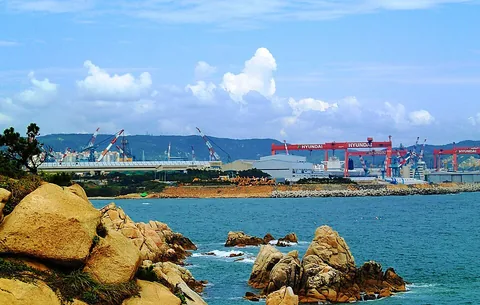
So then Chung goes back to Korea. "When informed that not only we got the loan, but also received two purchase orders, the president was overwhelmed with joy. He told me that the government would help in any way it could and ordered me to start preparations for the groundbreaking ceremony."
AdAppLovin
And before we get back into this, I want to tell you about AppLovin.hAppLovin — an American ad tech company: it sells ads inside mobile games and helps apps acquire users. One of my all-time favorite quotes is from the book Zero to One. In that book, Peter Thiel writes, he says, "The single most powerful pattern I have noticed is that successful people find value in unexpected places, and they do this by thinking about business from first principles instead of formulas."i"The single most powerful pattern" — Senra's favorite quote from Peter Thiel's Zero to One, which he often uses to open this ad read. And that is exactly what AppLovin has done with their advertising platform. AppLovin connects you with over a billion potential new customers in mobile games. AppLovin allows you to capture undivided attention.
AppLovin ads are full-screen videos that are watched for an average of 35 seconds. That is retention that blows other ad platforms out of the water. And you can launch on AppLovin in minutes. You set the goal, and AppLovin achieves it. No complex setup, no expertise needed, and AppLovin scales quickly. They can put your ads in front of over a billion potential customers.
Other businesses have seen immediate results, scaled to hundreds of thousands of dollars of spend per day and increased their revenue by millions. So you want to get started quickly, before all of your competitors are on AppLovin. And you can do that by going to applovin.com. That's applovin.com.
13Time, building it yourself and no luxury
In the last third of the book Chung lays out his philosophy: time, not age, defines a life, businesses should be built rather than bought, and luxury breeds corruption.
And the last, like, third of the book is just a lot of his philosophy on life. Again, we get the benefit of essentially reading the words from somebody in their 80s that has 50 years of experience as an entrepreneur and building companies. He's really talking at this point about finding something you love to do and then doing it until you die. "The years have come and gone, and now I'm in my mid-80s. But age was never important to me. To this day, I remain completely engulfed in my work with no spare time. What has always been most important to me is how I use my time for work. Other than thinking about how to develop and grow my business, I'm actually not very interested in anything else.
"For me, time is the capital that must be managed most wisely. I make a plan, jump headfirst into it, and finish a project in a shorter amount of time than other people. When others are hesitating, I have already begun working. It is not an exaggeration to say that my life was defined by time rather than age. This is how I have lived, and this is how I have succeeded."
And then I love this other thought from Chung, and I actually like the note I left myself five years ago: you don't mistakenly become great. And so Chung says, "Thinking that anything is possible is the first rule of a successful person. If you doubt yourself, then you will only be able to accomplish as much as your doubts let you. If you think you can't do something, then you won't be able to do it."
And then he talks about not acquiring other companies. He's got a very rare perspective on this. "Hyundai had never taken over another company. All my businesses were built the way my father worked his farm, by removing rocks to clear the land and by building one's house from scratch. It is not in my nature to take over someone's business. I'm sure they worked just as hard as I did. How could I take that over just because it wasn't doing well? I know what it's like to create and manage a company and pour all your blood, sweat, and tears into trying to make it succeed.
"Buying someone else's company at a dirt-cheap price is like using their misfortunes as a stepping stone to increase my own profits. For that reason, I hated doing such things. If I want to be in a particular business, I will start it myself." Then he reiterates the fact that he just sees himself as a worker, as a builder. "I began as a laborer. I still see myself as a laborer.
"I just happen to have a little money now. Because I knew hunger, I was particularly sympathetic to those who couldn't afford to bring their lunch to work. I know and understand the difficulties they face. Some time ago, someone proposed installing a separate elevator for executives at the company headquarters. I rejected the idea right on the spot. I truly despise the inflated sense of superiority held by executives who expect different treatment from their workers.
"Why on earth would anyone need a separate elevator? When I visited a construction site one day, the workers were busy laying a new carpet in a temporary building, believing this was a formality they should observe for their boss. With our company motto, 'Diligence, Frugality, Affection,'41"Diligence, Frugality, Affection" (Korean geunmyeon, geomso, chinae) — the Hyundai motto Chung coined. hanging right there on the wall, they should have spared a second to think about the workers laying rails in the deadly scorching heat. I asked, 'Is laying this carpet practicing frugality? What would our workers think if they saw this nonsense?' A carpet was a luxury I despised.
"After luxury comes corruption. I have never seen a country prosper with a leader who enjoys luxury. I've never come across a company that thrives under a luxury-loving, wasteful owner.
"Every once in a while, someone asks me how I became the richest man in Korea. It's a simple question, but it's a rather difficult question to answer. If I were to answer such a question in my own serious manner, I would say the following: I wanted to climb a mountain as fast as possible without any thought of the risks involved, and I have reached the summit before anyone. Without regard for my circumstances, I worked with a do-or-die attitude. Eventually I became the owner of a rice shop. I pushed myself again and ended up owning an automobile repair garage. I pushed myself again and ended up starting a construction company. I've lived my entire life this way. This is how I've ended up where I am today.
"Be diligent. There are those who live their entire lives without doing one tenth or one hundredth of the amount of work they are capable of. I found that those who complain of being tired and bored are the lazy ones. I strongly believe that people must work to live a full life. If you are diligent for a day, you will sleep comfortably for a night. If you are diligent for a month, the quality of your life will noticeably improve. If you are diligent for a year, two years, ten years, your whole life, your accomplishments will be recognized by all. The diligent lead lives a hundred times more productive than the lazy. Their lives are more fulfilling. Unless your life goal is wasting time, then the first thing I recommend is to be diligent. Being diligent forces you to move a lot, to think a lot, and to work a lot. Diligence mirrors your sincerity about living a full life. I don't trust anyone who is lazy."
14Positive thinking
Chung credits positive thinking for his good life: he never felt deprived and always believed tomorrow would be better.
And then he repeats throughout the book the importance of positive thinking. He has an entire section called "Positive Thinking Is the Road to Happiness." "In all of my years, I never thought of myself as underprivileged, even while I was working on the farm on an empty stomach with no hope for my future. I'm a naturally positive person. I was born with the ability to accentuate the positive rather than the negative. Since I was 10 years old, I worked with my father under the scorching sun. In all that time, never once did I complain or slack off. When I went to the market to sell wood, it was difficult to take my eyes off the rice cakes, the noodles and the other delicious treats. I still remember how my shrunken belly growled with pangs of hunger.
"Moving to the city was not an easy decision. After all, I didn't have a proper education, I didn't have any friends or anyone to rely on. I had to do hard labor. But despite all of this, I never once regretted leaving home, and I never complained. If you inherit good health from your parents and learn the value of diligence and hard work, nothing can stop you. Tomorrow will be better than today, and the day after tomorrow will be even better. Knowing this, I've always been happy and full of life.
"Throughout my 80 years, there have been hard times of frustration and harder times of humiliation and defeat, when all I could do was clench my teeth and bear it. But if we set those times aside, I believe that 90% of my life has been full of joy and meaning. I have truly lived well. What does it mean to say someone lives well? What does it mean to live well? What circumstances a person was born into, what position he is in, or what he does for a living does not matter.
"Only when he gives his best and lives fully in the present is a man truly happy. A man who lives fully in the present while dreaming of a brighter future, a man who enjoys his work, who finds happiness in the smallest of things — that man will find success in whatever he does. Such a man is one who lives well. Those who live with an open heart and positive mind are respected by society and play an important role. On the other hand, there are people born with healthy bodies who live useless lives because their perspective towards life is negative. Everyone has the ability to solve his or her own problems.
"But to do this, positive thinking is critical. We should always remember that every major achievement was led by men with positive attitudes. A life without daily self-improvement has no meaning. We live in order to make ourselves better. No one can control where they're born or what kind of family they're born into. These conditions are naturally unique.
"But there is one thing we have in common. Our future will be determined by our effort. Our future is our own responsibility. No matter how hard things seem today, with a positive attitude, we can all find joy in the midst of our troubles. Pounding hardens the steel. I have lived my entire life driven solely by the satisfaction derived from hard work.
"I buried myself in work because I enjoyed the very act of working, and having lived, my soul became one with my work. I am who I am today as a result of my hard work. For the very best workers, there is only the next assignment and the passion for the job."
And that is where I'll leave it. I highly, highly, highly recommend getting your hands on a copy of this book. They're hard to find. Try to locate one, read it from cover to cover. It is the most inspiring autobiography I have ever read, and that is 440 books down, 1,000 to go,42"440 books down, 1,000 to go" — Senra's sign-off on Founders, counting the biographies he has read for the podcast. and I'll talk to you again soon.


