

Lenny's Podcast
Chapters
Lenny invited Rob because his own subscribers told him about the book, which they found unusually practical for finding product-market fit.
Read the chapter- Within a month, two people in Lenny's Slack community independently asked him to get Rob on the podcast.
- Rob "got punched in the face" as a founder, then, as Lenny puts it, helped something like 50 startups go from zero to over a million in ARR.
- Readers say the book lifts a weight by showing that the painful, lonely, weird search for product-market fit is a normal part of the process.
People don't buy because of pain points or value, but when they have an urgent priority their current options can't handle.
Read the chapter- Most founders push and persuade, while a person with pull rips the product out of your hands.
- As a founder, Snyder had hair-on-fire pain, real value and design partners, and still went two years without sales.
- A customer can agree a product is valuable and still not drop their priorities for it.
- P-U-L-L stands for a project on the to-do list, unavoidable, a list of options and their limitations, and without the last two, people do it themselves.
Pull can't be created by persuasion; it's found in a specific person who has all four elements of PULL.
Read the chapter- Financial advisors must keep meeting records, and generic AI note-takers didn't integrate with their CRMs and weren't clearly SEC-compliant, so advisors ripped Jump out of the founders' hands.
- Insurance agents have the same project but no unavoidable reason, so no pull.
- Without the U, people complain but don't buy, and without the Ls, they say "we'll figure it out with Claude Code."
- Pull exists before and independent of you: you can't create it by persuading, only find it.
- Real pull sounds like "How do we get started?", not "That's the future of our industry."
- You don't sell to SpaceX; you sell to its head of legal, who has a project she can't do in-house.
Ideas don't emerge from a whiteboard; you find them by working side by side with future customers.
Read the chapter- The PULL framework sits upstream of the product idea, as a bet that a specific person is stuck.
- If your life depended on it, you wouldn't stop at ten Zoom interviews; you'd go work side by side with potential customers.
- A friend of Snyder's rode along with solar panel installers, then physical therapists, and even tried to buy a franchise.
- You can't brainstorm your way to such an idea, and without firsthand experience you can't make the thousands of decisions about the product.
A pull hypothesis is tested with two slides, and the signal isn't polite enthusiasm but an attempt to buy right now.
Read the chapter- The friend showed the hypothesis to a physical therapist, heard "that's me," then checked it with five more.
- The first slide is "here's what I hear," following PULL, and the second is how you could help.
- The signal to look for is a pharma executive saying, "If you can do that, I will pay you right now."
- A pull-shaped action sounds like "how do we move forward right now," not "we could see using this in Q4."
Your own problem only counts if you'd pay to have it solved, and when there's no pull, ask what the person would pay you to do right now.
Read the chapter- Your own problem counts if you'd have paid someone to solve it, as Emily, Clearly AI's founder, would have back at AWS.
- The framework works for consumer products too, as with Spanx, which its founder sold one-on-one.
- The Hail Mary is asking whether there is anything on their to-do list they would pay you to do right now.
- A startup selling applicant tracking to governments found its first customer in job descriptions that way.
- For an introvert like Snyder, selling gets easier if you think of it as seeing whether someone needs help rather than persuading them.
Building before talking to customers and recruiting design partners are two mistakes that put off meeting reality.
Read the chapter- With AI a prototype takes a couple of weeks, but customer conversations shouldn't wait.
- Design partners buy into the vision, give advice, "play Steve Jobs," and never buy.
- By Snyder's estimate, 90% of the ideas at his startups came from firsthand experience gained on the ground and 10% from founders' own experience.
The first message shouldn't sell but intrigue: short, free of AI personalization and meaningful to the specific recipient.
Read the chapter- Snyder's goal is two to three conversations a day with potential customers.
- Instead of a pitch, "founder magic" works: "you're interesting, I'm interesting," as in "Snoop Dogg invested in us."
- Sam Altman's former chief of staff won't impress an HVAC company, but working at the family plumbing business will.
- AI personalization tells people what they already know about themselves and gives the robot away.
- The LinkedIn benchmarks are 20 requests a day, 30–40% accepting and 30–50% of those replying, and if not, it's the profile or the message.
On the call you surface pull first, without making it an interrogation, and only then describe the solution simply.
Read the chapter- If they have pull, they'll be the ones persuading you to let them buy, so you can stay leaned back.
- Asked "Why did you take the call?", people often fill out the whole framework for you.
- You earn the right to ask by agreeing on the agenda and asking permission for a few questions.
- The call goes on the calendar for 30 minutes, since people overlook shorter slots, and you demo only if you have something to show.
- If five calls leave everyone leaned back and you learned nothing, change the hypothesis, like the startup that went from banking to defense.
- The scariest question on the call is whether their existing options are good enough.
A product doesn't need to be 10x better: if the alternatives can't do the job and you can, you're infinitely better.
Read the chapter- You don't persuade; you find the people for whom the status quo is already not okay.
- The 10x rule doesn't register for Snyder: what matters is how stuck people are with their existing options.
- Snyder tried winning HR software on better UX, but the buyer didn't care about the interface, so there was no pull.
- AI startups have strong pull, and Snyder saw an enterprise deal close in two weeks, where it used to take 18 months.
After "I want to buy" you need a concept and a plan, price comes from the project's value or the alternatives' cost, and free partnerships only hurt.
Read the chapter- A founder selling to pharma skipped the slides, vibe-coded a mock-up in a couple of days and asked what else was needed to decide.
- The bounds for price are the value of getting the project done or the cost of the alternatives, say $50,000 a year, like the consultants.
- A forcing function comes from asking when results are needed by and working backwards.
- To people with pull a free partnership is a negative signal, so it's better to sell a service and automate it as you go.
- You can name a price through a case study, saying some did a project for 80,000 and others went up to a million, and asking how they are thinking about it.
Most of the time the first calls show no pull, and then you review them, write a new hypothesis and, in an emergency, go into goblin mode.
Read the chapter- You review the calls for whether anyone had pull and what you learned, then write a new hypothesis.
- Snyder has seen it right the first time only once or twice.
- Goblin mode is like a dog's zoomies: 20 meetings at a conference or a flight to Europe to reach customers.
- For Teero, the founder's parents went door to door to dental offices.
Every customer will churn until X happens, after which churning would be weird, and the job is to find X and get every customer there.
Read the chapter- Snyder used to be the dog that caught the car, just throwing software over the fence.
- A leading indicator of retention is the point after which leaving is weird, like Mark Roberge's Slack message count.
- Snyder's startup sold to restaurants, and they fell for the product if, in the first two weeks, it warned them an employee was about to quit.
- A horizontal AI workflows product dug into its churn, found freight forwarders who stayed, and became a premium product for them.
- Lenny recalls that even Databricks' founder wasn't sure of the future at $100 million in ARR.
What Snyder calls the most important model: a startup is a factory that repeats one case study over and over.
Read the chapter- The case study goes: someone was trying to do X, their options fell short because of Y, you offered Z.
- The factory has three stations, pipeline, sales and delivery, which the customer pulls themselves through.
- Under the theory of constraints, at any moment you work on the single bottleneck.
- Asking "here's what we deliver — is this relevant to you?" helps qualify customers.
The ideal customer is weird not to buy and weird to churn, and pilots and second products follow the same logic of pull.
Read the chapter- A hell-yes customer is weird not to buy and weird to churn, and your job is to find more of their clones.
- Snyder says not to offer pilots yourself, but to agree if that's the only way the customer buys.
- Founders Snyder is helping launch a second product sell new features to existing customers before building them.
- Founders should sell even at mature companies, where ideas from sales calls worked and whiteboarded ones didn't.
Rob boils it all down to a simple loop: fill out PULL, show it to people, see if they try to buy. Then he takes the quick questions.
Read the chapter- The framework is like a metal detector on a beach: it doesn't guarantee a find, but at least it isn't a spoon for sifting sand.
- Rob's favorites are Christopher Alexander's four-volume The Nature of Order, Pride and Prejudice, Penguins of Madagascar and the AI agent Muse.
- A tar pit idea is copying a clear winner, like Lemlist, with no theory of how you'll be different.
- You won't buy a 100x better printer if you're not blocked.
Quotes
On why people don't buy valuable products
“Because I realized that people can basically just say, ‘Yeah, great, it's great that your product solves our pain points, problems, offers a ton of value, but I'm not going to drop my priorities to buy it.’”
Rob SnyderRead from 05:30On a Jump customer's review
“I think one person literally said, ‘This must be how Alexander Graham Bell felt when he invented the telephone.’ Like, that's a weird thing to say about a product for financial advisors.”
Rob SnyderRead from 11:18On why design partners don't buy
“And if you think about it, the people who actually have something really important they're trying to get done, they don't want to be a design partner. They just want that thing done.”
Rob SnyderRead from 32:07On a cold message that works
“One of the startups that I helped, their message was, ‘Hey, Snoop Dogg invested in us, and I thought you'd find it interesting too. Would you be open to chat?’”
Rob SnyderRead from 35:47On the cost of pushing
“There's a reason I look like I'm 60 and I'm 35, right? Like, don't push.”
Rob SnyderRead from 49:48On the "10x better" rule
“How much better are they than the other generic AI note-takers? Well, if those note-takers don't get the job done, and we do, they are infinitely better.”
Rob SnyderRead from 50:57On the case study factory
“Yeah, we don't make software here. We make case studies.”
Rob SnyderRead from 1:15:44On what the PULL framework gives you
“This is just giving you a metal detector. You might not find metal where you're looking right now, but at least I'm not giving you a spoon.”
Rob SnyderRead from 1:21:04
Summary
As a founder, Rob Snyder spent two years pushing a product the market didn't want, then stumbled onto what works, and he has since helped something like 50 startups get from zero to over $1 million in ARR. That is the subject of his book The Power of Pull, which Lenny's own subscribers were recommending to each other in his Slack community. Snyder's central claim: demand isn't created, it's found. The buyer isn't whoever is "in pain" but whoever has pull: a project on their to-do list (P) that has to happen now (U), where every available option (L) falls short because of its limitations (L). Such a person is a coiled spring, "weird not to buy." His example is the AI note-taker Jump: financial advisors ripped it out of the founders' hands, while insurance agents, whom no one requires to keep meeting records, didn't need it.
From there Lenny and Rob walk through the whole startup journey. Ideas come not from brainstorming but from getting next to future customers, like Snyder's friend who rode along with solar panel installers and physical therapists. A pull hypothesis is tested with two slides, and the signal to look for is an attempt to buy, not praise; when it's missing, you throw a Hail Mary and ask what the person would pay you to do right now. First conversations come from a short cold message that sells nothing, and on the call you surface pull first and pitch help only briefly afterward. Snyder is against free design partners and pilots, and suggests naming a price by offering a case study the customer can react to.
If five calls turn up no pull, you change the hypothesis, and in an emergency go into "goblin mode": fly to a conference or go door to door to dental offices. Once you've found pull, you need to work out the moment after which a customer would be "weird to churn" and get every new customer there. And Snyder suggests seeing the whole startup as a factory that repeats one case study over and over, using Goldratt's theory of constraints to focus on whichever stage, pipeline, sales or delivery, is holding back growth right now.
Advice
Look for ideas in the field, not in brainstorms: work side by side with future customers so you see for yourself where they get stuck.
Test a hypothesis with two slides, the customer's project, why it's urgent and why current options fall short, then how you'd help, and look for an attempt to buy, not praise.
Don't sign up free design partners: they're happy to give advice but don't buy, and people with a real need want the result, not a seat in product development.
Don't sell anything in your first cold message: say something interesting about yourself in a sentence or two and ask for a call.
After five calls with no pull, stop and review what you learned; ask people what they would pay for right now, and change the hypothesis.
Find the moment after which a customer would be "weird to churn," and design onboarding so every new customer gets there as fast as possible.
Mentioned
 SpaceX00:18Snyder's example: you don't sell to SpaceX but to its head of legal, who has a project she's stuck on
- The Power of Pull01:21Snyder's book, which Lenny's subscribers recommended to each other in his Slack community
- The Physics of Startups01:21Snyder's newsletter; at the end Lenny praises its name
- Bob Moesta07:35Snyder compares the "project" in PULL to the job to be done in Moesta's theory
Show 25 more mentionsShow fewer mentions
- Jump09:56Snyder's main example: financial advisors who must keep meeting records ripped this AI note-taker out of the founders' hands
 Alexander Graham Bell11:18a Jump customer compared how he felt to how Bell must have felt inventing the telephone
 Claude Code13:27Snyder's example: a team handling the job itself with Claude Code won't buy anything
- Jen Abel16:20sales expert; Snyder and Lenny recall her advice on enterprise deals and demos
 Nan Yu19:29Lenny quotes him: a product person should feel the customer's pain the way the customer does
 Linear19:29where Nan Yu ran product; later Lenny asks whether Linear wins on a nicer experience alone
 Josh Woodward26:13according to Lenny, he also judges ideas by the twinkle in people's eyes
- Clearly AI27:35a case where "solve your own problem" works: the founder would have paid for this herself
 Amazon Web Services27:35where, according to Snyder, Clearly AI's founder ran into her problem
 Spanx28:28a consumer example: the founder sold one-on-one and solved her own problem
 Steve Jobs32:07design partners, Snyder says, "play Steve Jobs" and never buy
 Floodgate32:49the venture firm Lenny recalls hearing the term "earned secret" from
 Sam Altman36:55"Sam Altman's former chief of staff" as an example of a cold message that gets replies
 Jira51:27Lenny asks why Linear wins customers from Jira; Snyder explains it in terms of pull
- Mark Roberge1:08:06Snyder cites his idea of a leading indicator of retention
 Slack1:08:06an example of such an indicator: the message count after which a team stays on Slack
 Databricks1:10:54its founder told Lenny that even at $100 million in ARR he wasn't sure of the company's future
- The Nature of Order1:21:49Snyder's favorite book, a four-volume work on architecture
 Christopher Alexander1:21:49the architect who wrote Snyder's favorite book
- Pride & Prejudice1:22:07one of two movies Snyder rewatches again and again
- Penguins of Madagascar1:22:07Snyder's other favorite movie, "the other end of the spectrum"
 Muse1:22:26Snyder's favorite AI product: "if it works for me, it can work for anyone"
- Dalton Caldwell1:22:46coined the term "tar pit ideas," which Lenny asks about at the end
 Y Combinator1:22:46the accelerator where Caldwell was a partner
 lemlist1:23:15Snyder's example: copying a Lemlist that has already won is a classic tar pit idea
Sponsors of the episode


Transcript
01Teaser and introduction
Lenny invited Rob because his own subscribers told him about the book, which they found unusually practical for finding product-market fit.
Rob, thank you so much for being here and welcome to the podcast.
Hello. Thank you.
You are the author of The Power of Pull.1The Power of Pull — Rob Snyder's book on finding product-market fit, published by Basic Venture in July 2026. Note the cover: the U in PULL is drawn as a horseshoe magnet. I've got the book right here. You have a newsletter called The Physics of Startups.2The Physics of Startups — Rob Snyder's Substack newsletter on how startups get from zero to their first million in revenue. I don't think I told you this, but the way I learned of you is a very unusual way. I have this Slack community for my paid subscribers.3Slack community — a private Slack that paid subscribers of Lenny's Newsletter get access to. And in the Slack, just in the past month, two different people started threads where they're like, "Lenny, you need to get Rob on the podcast. I have been reading his book and it's extremely useful to what I've been doing." And these are some founders, some product people, and I'm just like, "Well, who is this guy? I've got to find out." And so I reached out, and that's how this came to be.
Essentially, what you've written in this book and what you do in your newsletter is you've basically created a very pragmatic guide to finding product-market fit4Product-market fit (PMF) — the point at which a product has found a market that truly needs it: customers buy, stay and bring others. The main goal of an early-stage startup. and basically going from zero to one,5Zero to one — the path from an idea to a first working product with first paying customers; the phrase comes from Peter Thiel's book Zero to One (2014). and then one beyond. And to give people a reason to believe you, other than what I've already said about people saying how useful this has been, I know you've helped something like 50 different startups get from zero to over a million in ARR.6ARR (annual recurring revenue) — what a company would take in over a year from its current subscriptions and contracts at today's rate. Speak to just where this insight and advice comes from.
Yeah, I did not expect to be writing a book or doing anything like this. I got punched in the face as a founder trying to go zero to one and then randomly figured it out. And then a bunch of my friends started pulling me in to help their startups go zero to one, and I just kind of got obsessed with this stage. It's super interesting, super weird. I feel like there's not a lot of good stuff written about it. And so I've just gotten strangely obsessed with doing zero to one as many times as possible.
I love that. I'm going to read a couple quotes actually from my community to reinforce the things you just said, of what people have been saying about what you've done. And this is really unusual. Even though you just said there's not a lot, there is a lot of content for founders: here's how to find an idea, here's how to find product-market fit. So it's a big signal to me if people are saying this in particular is extremely useful to them, more than anything else out there.
So a few things that people told me in my community. One: "I remember reading the first chapter of his book and feeling the weight lifted off my shoulders, that I'm not some silly, clueless outlier, and that this is a normal part of the process." Another: "Besides all the very tactical stuff, personally I found it normalizing, just how painful, lonely, weird it is to go through finding product-market fit." Finally: "We ran into the same zero-to-one traps Rob describes, building based on what prospects said they wanted rather than what actually got them to say yes."
Wow. You have very nice people in your community. That's super kind.
02The PULL framework: what makes people buy
People don't buy because of pain points or value, but when they have an urgent priority their current options can't handle.
That's true. That's true. All right. Anyway, so there you go. Just to give people... okay, let's pay attention. Okay, give us an overview of the PULL framework.
Yeah, so the PULL framework describes a person who will pull your product out of your hands. Someone who's weird not to buy your product. So we, like, know what pull feels like. It's the thing that's written about with startups, you know, it's the thing that startups that take off have. Your newsletter had insane pull. You grew like that, right? And everybody wants that. And most of us are in the situation where it feels like we are pushing. We're trying to convince people to care, convince them to buy. And it's kind of maybe working. And so pull describes a person who would be weird not to buy. The question is just, what causes somebody to pull a product out of your hands?
And for that, I found a lot of the traditional descriptions of things... Like, when I was a founder, I went out and found hair-on-fire pain points,7Hair-on-fire problem — a problem so acute that the customer, like someone whose hair is on fire, grabs any solution without haggling. A classic yardstick in advice on startup ideas. big problems, offered a differentiated solution that provided real value. We had design partners8Design partner — an early customer who uses an unfinished product for free or at a discount and helps shape it with feedback. A common B2B startup practice that Snyder argues against. using our product every single day. And so I was like, "Okay, cool. Check, check, check, check, check, check. This thing's going to the moon." And then tried to sell it and just got smashed into a wall for two years, pivoting around aimlessly,9Pivot — a sharp change of a startup's direction: a different product, customers or business model with the same team. having no clue why. And then we randomly pivoted, it took off, and I realized that it wasn't the thing that causes people to pull a product out of your hands.
It's not pain points or value props10Value prop (value proposition) — a statement of what benefit a product gives the customer and why it beats the alternatives. or things like that. Because I realized that people can basically just say, "Yeah, great, it's great that your product solves our pain points, problems, offers a ton of value, but I'm not going to drop my priorities to buy it." And so I realized it's about priorities, a certain kind of priority, where somebody's trying to do something. They've got a project on their to-do list, they're trying to do it right now, but they can't do it with their existing tools, methods, or options. In that case, they're like a coiled spring, right? Trying to do something, stuck, and you show up and just offer something that gets them unstuck, that helps them get that priority done. That's when they rip it out of your hands. And the PULL framework is just an acronym for that.
AdWorkOS
This episode is brought to you by our season's presenting sponsor, WorkOS.dWorkOS — an American company whose API gives SaaS products enterprise features such as single sign-on, directory sync and audit logs. The presenting sponsor of this season of Lenny's Podcast. What do OpenAI, Anthropic, Cursor, Replit, Sierra, Clay, and hundreds of other winning companies all have in common? They are all powered by WorkOS. If you're building a product for the enterprise, you've felt the pain of integrating single sign-on, SCIM, RBAC,eSSO, SCIM and RBAC — what large companies require of any software. SSO is sign-in through a corporate account; SCIM is a standard for syncing employee directories automatically; RBAC (role-based access control) is permissions by role. audit logs, and other features required by large companies. WorkOS turns those deal blockers into drop-in APIs with a modern developer platform built specifically for B2B SaaS.fB2B SaaS — business software (business-to-business) sold by subscription as a cloud service (software as a service).
Literally every startup that I'm an investor in that starts to expand upmarketgMoving upmarket — when a startup that began with small companies starts selling to large corporations, with bigger contracts and stricter requirements. ends up working with WorkOS, and that's because they are the best. Whether you are a seed-stage startup trying to land your first enterprise customer or a unicornhUnicorn — a private startup valued at $1 billion or more. Investor Aileen Lee coined the term in 2013, when such companies were rare. expanding globally, WorkOS is the fastest path to becoming enterprise-ready and unblocking growth. It's essentially StripeiStripe — the payments company that turned accepting payments online into a few lines of code. "Stripe for X" is a standard startup pitch for making a hard feature just as easy to plug in through an API. for enterprise features. Visit workos.com to get started, or just hit up their Slack, where they have actual engineers waiting to answer your questions. WorkOS allows you to build faster with delightful APIs, comprehensive docs, and a smooth developer experience. Go to workos.com to make your app enterprise-ready today.
Let's talk through the acronym of PULL, because that goes deeper into this idea.
ExplainerThe PULL framework, using Jump as an example
PULL is an acronym for four conditions that, according to Snyder, must all hold at once for someone to "rip a product out of your hands":
- P — Project. There's something on the person's to-do list they're trying to get done: not "buy software" but "hire more people" or "spend less time on notes."
- U — Unavoidable. A reason it has to happen now rather than later.
- L — List of options. What they could do it with: hire someone, hand it to their team, use tools they already have or what's on the market.
- L — Limitations. Why none of those options is good enough.
The example from the episode is Jump, an AI assistant for financial advisors. Project: spend less time writing up client meetings and entering the notes into the CRM. Unavoidable: according to Snyder, without those records an advisor risks breaking regulatory requirements. Options: generic AI note-takers. Limitations: they don't integrate with the industry's CRMs, and it's unclear whether they meet SEC requirements. The counterexample is insurance agents: same project, but nobody requires them to keep meeting notes, so there's no U, and no pull.
Yeah, so the acronym, P-U-L-L. There's P, project. They have a project on their to-do list. You can think of a project like a job to be done.11Job to be done (JTBD) — a theory that customers don't buy a product but "hire" it to get a particular job done in their lives. The classic example is the milkshake that morning commuters bought to make a long, boring drive more bearable. The theory was developed by Clayton Christensen and Bob Moesta. It's... you know, Bob Moesta,12Bob Moesta — one of the creators of the Jobs to Be Done theory, founder of the consultancy The Re-Wired Group and author of Demand-Side Sales 101; a former guest of Lenny's Podcast. you've had him on, he's amazing. A project is not "I want to buy recruitment software." It's "I want to hire more employees," kind of thing. U, the second one, is unavoidable. This is a thing that I have to do right now. Why now? Why not later? There's some reason why you have to do it now.
The first L is the list of options I consider for doing the project. Could be, again, hiring somebody, could be having our existing team do it, could be using the tools I already have or the tools out on the market. And the second L is limitations. Why are those options not good enough for getting my project done?
Amazing. So the first two are really important there, and it's interesting, the second two feel less important. I'm curious why they're so important. So the first two are essentially, like, I have a problem I need to solve, a job to be done, and this is an urgent problem. So in a sense, this is the hair-on-fire problem very concretely defined. Here's what hair-on-fire looks like: I have, like, a to-do my boss is waiting for me to do, and it needs to happen now. It's not just like a general thing that I need to solve. Why are the second two so important, this idea of other options and why those are not working?
Yeah, so you can imagine a case where, like, a product team, for example, they have a really important thing that has been mandated down. They have a really important feature they need to build, or something that's an unavoidable project on their to-do list, but they're going to do it themselves. So they don't need anything. They won't buy anything unless their existing options aren't good enough. And so it really, really is important that it's not just "I'm trying to do something and I can do it myself, or I can do it with a kind of category leader, I can do it with whatever tool is out there." It has to be something where my existing options are not good enough. So I am, like, stuck. I'm blocked.
03Jump: pull belongs to a specific person
Pull can't be created by persuasion; it's found in a specific person who has all four elements of PULL.
Let's do an example to make this even more real. What's, like, a product or a company that gives us a sense of what... I basically use this as a template. It's like a Mad Libs-y thing13Mad Libs — an American word game from the 1950s: players fill in the blanks of a story with words of the requested type, without seeing the context, and then read the nonsense aloud. In the picture, a homemade Mad Lib on a wall: under each blank is the kind of word it wants (adjective, noun), and the filled-in words are in color. where it's just like P-U-L-L and you fill it out. So let's go. Give us an example.
Yeah, so my friends are at a company called Jump,14Jump — a startup building an AI assistant for financial advisors that records client meetings, writes up notes and enters them into the CRM. In February 2026 it raised $80 million in a round led by Insight Partners. which is an AI note-taker for financial advisors. Very interesting space. They did the same thing I did, by the way. They spent 18 months just, like, hitting their head against the wall, and then finally found pull, tried to sell, and figured it out. But what they found was that financial advisors have a project on their to-do list that is to minimize the amount of time they spend taking notes for client meetings and putting those notes into their CRMs.15CRM (customer relationship management) — a system of record for customers: contacts, meeting history, deals and correspondence. It's a project on their to-do list. The U, the unavoidable, is if they don't take notes and put them into their CRMs, they could go to jail.16Recordkeeping rules — the SEC's Rule 204-2 under the Investment Advisers Act requires registered investment advisers to make and keep records of their business, including communications about recommendations to clients.
So they have to take those notes, but when they're taking the notes, they don't want to be doing that. And so they want to minimize the amount of time, because they don't enjoy doing that. This is not a fun thing. So the list of options they considered to minimize the amount of time were, you know, like a generic AI note-taker. There's a list of all of those out there, but those AI note-takers were not good enough because they didn't integrate with the financial advisors' CRMs, and it wasn't clear if they were compliant with the SEC's regulations on this. And so there's a list of options they really couldn't use.
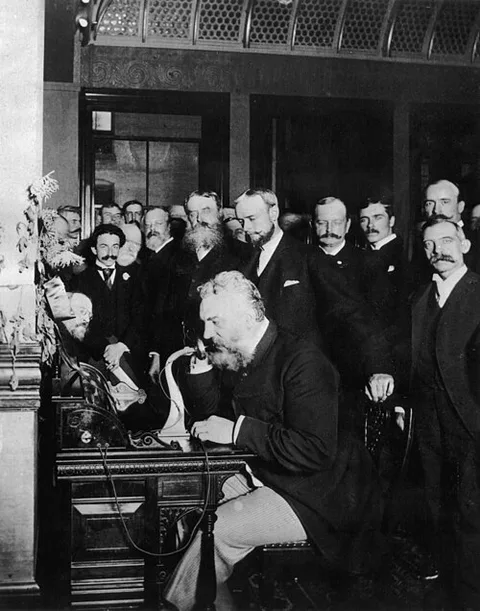
And so when Jump showed up and found that pull, people ripped the product out of their hands. I think one person literally said, "This must be how Alexander Graham Bell17Alexander Graham Bell (1847–1922) — the inventor who received the 1876 patent for the telephone. felt when he invented the telephone." Like, that's a weird thing to say about a product for financial advisors.
Amazing. That's a great testimonial to stick on their website. Okay, what would be, like, a bad version of this? Like, what would it look like if there wasn't pull?
Yeah, so, fun conversation with the Jump team about... they said, "Okay, cool, financial advisors, they have this project. You know who else meets with clients all the time? Insurance agents. So maybe we just go and talk to them." And it turns out they also have the project on their to-do list of minimizing the amount of time they spend taking meeting notes. But the U isn't there, because they're not required to put meeting notes into their CRM. So their existing option, the first L, is not taking meeting notes, which they were already doing. And so you can see the framework kind of doesn't fill out for them, or the force isn't there. They're fine.
That unavoidable piece, I see why that is so important. And this is an example, basically, you need all four here. So that's a good lesson here: all four need to exist for real pull. In the first example, that to-do, to me, doesn't feel like it's a to-do that someone just wrote down. It's kind of this general to-do, just, like, generally save time. Is that an okay P, for a project, to be just a general to-do? Or was this, like, specifically on every financial advisor's to-do list?
Yeah, so it was a thing that, I wouldn't say it's actually something they wrote down on their to-do list, but it was a thing they were doing all the time. It was a part of their workflow, and while they were doing it, they were trying not to do it. Like, I think there's the action I'm doing right now on my calendar, and then the project is my intention while I'm doing it. And so while I'm doing it, the project on my mental to-do list was, like, spend the least amount of time doing this annoying thing.
Got it. And so if a founder or product team is listening to this and they're struggling with their product, it's probably that one of these four is not there.
Yeah, you need all four at once. If you find P without U and the Ls, so you find something that somebody's trying to do, kind of, but they're not actually trying to do it right now, and their existing options aren't good enough, what they'll do is they'll complain and they won't buy. If they have P and U, but their Ls are good enough, they're going to say, "Yeah, that's exactly what we're doing right now, and we're working with Claude Code18Claude Code — Anthropic's AI coding agent, which runs in the terminal and writes and edits code itself. on it. We're going to figure it out."
Something along these lines that you talk about is that this pull exists. It's this thing that is already there, and you're just kind of, I don't know, a hunter looking for the pull and discovering it. Talk a bit about that.
Yeah, this was super liberating when I realized this, because I always thought that I was incompetent. I wasn't good at convincing the market to want my product. And it was from that perspective of, "Okay, I'm building something that's really valuable and people aren't buying. How do I convince them to want it, to buy?" And it turns out this pull, this project on their to-do list, exists before and independent of me, which means I just have to go out there and find it. I don't have to convince people to have pull. And it's like, I haven't quite figured out how to do that, but I think it's very, very hard to do, if it's possible at all.
That feels very familiar, just trying to convince people: "Look, this is so great. It's going to solve so many of your problems." And I love these ideas. I just love how very specific and concrete it makes all of these general pieces of advice around finding product-market fit, coming up with ideas. It just tells you exactly, here's what it looks like.
Something else you talk about, you mentioned this earlier, this idea that it needs to feel weird for them not to buy it. That's, like, the sign that this is right, that it's like, it's weird, why aren't you buying this? Talk a bit about that.
Most people most of the time are, like, fine. It would be weird if they bought our product, given what's on their to-do list, given what they have, given their options. So it'd be weird if they bought. But a person with pull is weird not to buy. They should actually pull the product out of your hands, because they are like that coiled spring. And so if you talk to somebody who has pull, the conversation should basically go like, "Wait a second, you can do what? Okay, how do we get started? Does the product exist yet? How do we get on board?" Whereas basically every other conversation you have with somebody who doesn't have pull can be anything other than that. They can be enthusiastic and nice and say, "Wow, that's amazing. That's super interesting. That's totally the future of our industry. Well, I can see how that would save us so much money." But they're not saying, "I need this right now." And that's how you know they actually have pull.
Those conversations sound very familiar. Okay, so before we get into the whole journey of the startup process and how you can use this framework in that journey, anything else around just the general idea of the PULL framework that's important to share?
One of the main mistakes people make is thinking that pull is a thing that a company has. It's a thing a person has. Even if you're selling enterprise software, you're not selling to the company. You're not selling to SpaceX. You're selling to... just go into your Jen Abel conversation.19Jen Abel — an expert in early-stage B2B sales, co-founder of the consultancy JJELLYFISH and GM of enterprise sales at State Affairs. She has been on Lenny's Podcast three times; Snyder is referring to her episodes on founder-led sales. You're selling to, like, the head of legal at SpaceX, who has a project on her to-do list that they can't do themselves.
That is really useful. So it's not like SpaceX needs this. It's like, say, Jen needs this. And you're saying that that's often a mistake people make. They don't think about the specific person with this need.
Yeah, yeah. It's super common to say, "We sell to, like, mid-market private equity companies.20Private equity — funds that buy stakes in private companies to sell them at a profit a few years later. Mid-market means mid-sized companies." It's like, you don't. You sell to a partner or an operating partner21Operating partner — someone at a private equity firm, usually a former executive, who helps portfolio companies improve their operations. in there who's specifically trying to do X, Y, and Z.
04Where to find ideas: firsthand experience
Ideas don't emerge from a whiteboard; you find them by working side by side with future customers.
Awesome. Okay. So through the lens of this framework, let's go through kind of the key moments of an early-stage startup finding product-market fit. So I want to talk about coming up with an idea, getting your first sales call, closing your first deal, and then kind of scaling from there. So let's start with coming up with an idea. How can people use this framework to help them come up with ideas that are more likely to actually be successful?
As a founder, I have a notebook of ideas that are all like, "What if we built an API for APIs?22API (application programming interface) — the interface programs use to talk to each other. "An API for APIs" is a parody of abstract startup ideas that sound clever while it's unclear who needs them." kind of thing. There are all these product ideas, and the product ideas all sound unhinged. And so I can never tell, between product ideas, what's a good idea and what's a bad idea. Well, fortunately, the PULL framework is a thing that's upstream of your product idea that says, "I believe there is a person who is trying to do X right now, who's basically weird not to buy." And so what I've found to be helpful is to use the PULL framework to stake out a claim and say, "For whatever idea I have, I believe this specific person is stuck. And so I'm going to go and talk to them and see, do they try to buy from me, even before we have a product?"
And so for me, the idea of the PULL framework is to come up with a hypothesis of who has pull and then go and test that. And then the question becomes, okay, how do you find this pull idea, this pull hypothesis? What do you do for that? I have some fairly strong opinions on this. I don't think we take this stage seriously enough. If your life depended on it, would you be doing, like, 10 customer interviews for 30 minutes on Zoom? No, you would go all out. You would go in person. I have a couple stories of friends who have done crazy things to go and do the job with the potential customer, to feel it firsthand, to find that pull firsthand. And they've either built something that they would buy themselves, or they've embedded with people to find that moment when someone is trying to do something and stuck.
Amazing. So the advice here is don't sit around and brainstorm. Don't just look for big markets and figure out where there might be something massive. What you're saying here is, almost, this lens of: if your life depended on it, how would you find a problem that is likely to have real pull? And what I'm hearing here is get in the weeds, get your hands dirty. This reminds me of a quote. Nan, who was23Nan Yu — a product manager who long served as head of product at Linear; a guest on Lenny's Podcast in 2024. the head of product at Linear,24Linear — a software-planning and issue-tracking tool that engineers love for its speed and polished interface. Founded in 2019 by alumni of Airbnb, Coinbase and Uber. now he just went to OpenAI, described what he looks for when he's trying to find opportunities. He describes it as, "I want to feel the pain of the person the same way they feel the pain."
Yeah.
Yeah. And what you're saying is the way to do that is get in there with people building the thing. Is there an example of doing that?
Yeah. So a friend from school, he had no idea what he wanted to build. He had no product idea. He didn't have my notebook, he didn't have any of that. He just said, "You know, I like serving small businesses. I like small business. I'd like to just find somebody I like to serve, and I'll figure out the idea from that." And so he wrote out a list of industries that he thought might be interesting, and then he went and shadowed them and worked with them, rode along with them for days at a time. And so he started with solar panel installers, and he hated them and they hated him. So he moved on to the next one. He eventually worked his way to, like, independent physical therapists, and he went and spent days with them. He loved them. They loved him.
And it was like, "Okay, cool. What is the pull here? What should I do?" And so he watched over their shoulder for days on end. He even tried to buy a physical therapy franchise, was able to see the P&L,25P&L (profit and loss statement) — the income statement: revenue, expenses by line item and the resulting profit. and was actually considering it. And in that process, he came up with something. Like, "Wait a second, it looks like you're trying to do X and are stuck there." And so firsthand experience is what you should do there.
Awesome. So, like, live it yourself. And is the reason you need to do that because if it was easy, basically somebody else would have found the idea? Why do you think it is so important, approaching it this way?
Yeah, I'll give two reasons. One is, you know, these things don't really emerge from a whiteboard. It would be weird if the idea that he eventually wound up finding came to him from brainstorming. Think of how many different ideas he could have come up with. It was something he saw only by observing, where it's unclear that that would have emerged in an interview either. But the second thing is more of a philosophical thing, which is you're building a company to serve this kind of person. The whole point of building a company is to serve somebody, to help them do something. And so if you don't have firsthand experience, how are you going to make the thousands of decisions it takes to actually build something that serves them?
05A pull hypothesis on two slides
A pull hypothesis is tested with two slides, and the signal isn't polite enthusiasm but an attempt to buy right now.
And is the idea, once you have this insight, say with this physical therapy company, you write it out through the PULL framework to kind of pressure test? You call that the pull hypothesis, is that right? So talk about that. Say you have this insight. And I'm curious what he actually found with this physical therapy business, and how to start to think about it through the PULL framework.
Yeah, so you then take that and say, "Okay, this is the kind of idea. I believe this kind of person, this physical therapist, is trying to cut some specific cost on their P&L." I can't actually remember what it was. "Unavoidable for XYZ reasons, and their existing options of getting a consultant to come in and do this weren't good enough for some specific reason. It was too expensive, it was too slow." Wrote out that pull hypothesis. And then what he did next was super important, which was he showed it to that person and said, "Is this you?" Person said, "Oh my God, yeah, that's exactly the thing." He said, "Okay, great. Would you buy something if I helped you get this done?" "Yeah, totally." "Okay, great." And then he said, "I need to go talk to five other physical therapists and just make sure this repeats." And then he did that, and they also pulled, which was the really important thing, to make sure he wasn't just building a product for one person.
What is it that he showed these companies? Is it these four bullet points, with here's the project, here's why it's unavoidable, or is it something else?
Yeah, so I actually recommend having two slides. One slide is basically the PULL framework. You don't have to show them the PULL framework, because no one's going to understand it. You can just say, "Here's what I hear. You're trying to do X right now because of Y, and you've considered this, but it's not good enough for this reason. Do I have that roughly right?" And then the second slide is a kind of conceptual overview of how I can help. "So it sounds like you're looking for a way to cut this line item that's faster than a consultant. We could offer that for XYZ. Does that kind of fit what you're looking for?" And you're looking for the first slide, for them to say, "Oh my God, yes." And the second slide: "Yeah, how does it work? How exactly do we move forward?"
What I love about your stuff is it's very plug-and-play, pragmatic. So we'll actually show a slide of the actual template you have people use to fill this out. So the phrasing, I'll read it from this slide too: "This is the project on your to-do list, and it's unavoidable right now because of this. And options you looked into are this, and they're lacking for this reason." Amazing. I love this. So the idea is you have this little slide that you just create to run by people, and the idea is this is the hypothesis. And what does it look like when there's pull, once you show it to them? Is it, like, they're ready to send you money? Is it their pupils dilate? What do you look for?
Yeah, you look for a couple things. The thing that really, really matters is that they actually try to buy. They say, "Okay, cool, how do we get started?" And they will do that. I have a friend who kind of pivoted around for a while, but he knew he found pull when someone, an exec in pharma, before he had a product, said, "If you can do that, I will pay you right now." So, okay, that's the signal you are looking for. What you're looking for as well is they're leaning in: "Wait a second, you can do what?" What you're not looking for is kind of leaned-out enthusiasm: "Okay, well, tell me more. Well, yeah, we'll think about it. Can you send more information so our team can review that?" Any of those kinds of things, anything that is not like "Okay, how do we actually move forward on this?", it's just not worth your life force going after.
It's interesting how much body language, and just the physical experience of getting excited about an idea, is a sign that it is good. I just had Josh Woodward26Josh Woodward — a Google vice president who runs Google Labs and the Gemini app. on the podcast, head of Google Labs, and he's similarly like, you see a twinkle in their eyes and their eyes just light up. And it's so interesting that that's a sign of pull.
Yeah, yeah, yeah. What you're seeing is, is it weird for them not to buy right now? Are they behaving as if it's weird for them not to buy?
Is there, like, a... you know, there's like the "I will buy this," they say they will buy it, versus a sign they will actually buy it. Is it the body language? How do you know they're serious about it?
So I call it, like, a pull-shaped action. Not a good term, but a pull-shaped action is like, "I need this right now. I am pulling it out of you. How do we move forward right now?" It is not like, "Oh, I could totally see us using this in Q4," kind of thing. That's not pulling towards me, that's a kind of pushing out into the future.
06"Solve your own problem" and the Hail Mary
Your own problem only counts if you'd pay to have it solved, and when there's no pull, ask what the person would pay you to do right now.
Like the urgency of "I need this now." There's always this advice of "solve your own problem," which is different from what you described. Is that a path you recommend, or would you recommend against that?
So a friend, like Emily at a company called Clearly AI,27Clearly AI — a Seattle startup founded in 2024 that automates security and privacy reviews in product development. Its co-founder and CEO, Emily Choi-Greene, previously led Alexa AI security at Amazon. she was in security engineering at AWS,28AWS (Amazon Web Services) — Amazon's cloud division, the world's largest cloud computing provider. and she found something there that she would have paid somebody to solve, but there was nobody out there. And so in that case, it's "solve your own problem," yes, 100%. Where "solve your own problem" falls kind of flat a lot of times is it's a thing that you wouldn't have paid somebody to do for you, but you just think should exist, right? And so you have to be honest with yourself. I have done things where I've built things like, "Oh, I think the world needs this, I ran into this problem." But if I looked myself in the mirror, I wouldn't have said, "Yeah, buy this right now."
Along those lines, is this advice mostly for B2B SaaS sort of software, or is this applicable to, say, consumer apps?
So I am mostly in the B2B space, but I have seen quite a few people... I've been kind of surprised that a lot of people from the consumer space have used this as well. And someone sent me the story of Spanx,29Spanx — a shapewear brand. In 1998 founder Sara Blakely cut the feet off her pantyhose to wear under cream-colored pants to a party, and that was the idea. She started the business in 2000 with $5,000 in savings and sold it herself for a long time, personally persuading department store buyers. which was basically, she did the same thing of selling one-on-one with people, seeing how they reacted, to figure out all the different pieces of what became Spanx.
Yeah, and she solved her own problem, famously. Just tore off her pantyhose, I think that's the story. I guess she needed it now.
I think it was like, yeah, she was going to an event.
So that's a cool example. We're going to talk more about this, but you have this idea of the Hail Mary approach. Talk about that.
So the Hail Mary... so we've been talking about the happy path here. You find something, you're talking with people and they're like, "Oh my gosh, yeah, this is exactly what I need." A lot of the time, that's not going to happen. You're going to get that kind of lukewarm feel. And so what I've tended to find is that's also an opportunity to, what I call, throw the Hail Mary, which is, "Okay, this doesn't seem to be a thing. Is there anything on your to-do list that you would pay me to do right now? That you would pay somebody to take off your plate?" And that's just an open-ended Hail Mary. I've actually seen quite a few startups totally pivot and take off from the Hail Mary, which has been really interesting.
There's one startup, they were trying to sell an applicant tracking system30Applicant tracking system (ATS) — recruiting software for job postings, applications and interview stages. into governments, and they had a call with somebody, and the person was like, "Yeah, that's kind of interesting." But after the Hail Mary question: "Yeah, what I'd actually pay you to solve is this job description thing right now." And that became their first contract. That became their first customer, and they've grown super fast since then.
That's awesome. So the advice here is just, sometimes feel free to just ask, "What problem can we solve for you?"
Yeah, and that leads to how to think about sales. Well, I'll just give a little, and we can dig into this if it's interesting. But I was always kind of nervous to sell, as a mega-introvert and overthinker. It just feels like a lot of pressure, like "I need to convince you to buy." And so that question feels uncomfortable. But if you kind of reframe it in your own head of "I'm just seeing if they need help with anything that they are stuck on, and if they don't, that's fine, but if they do, cool, we can explore if I can help," then it kind of changes your orientation towards sales.
07Traps: building first and design partners
Building before talking to customers and recruiting design partners are two mistakes that put off meeting reality.
I am in the same boat as you, and that's a really nice way of thinking about it. "I'm just trying to solve someone's problem. Why is it so hard?" Before we get to the next step, which is getting your first sales call, basically finding someone to talk to that you don't already know, are there any anti-patterns, or signals, or just traps people fall into when they're coming up with ideas?
Yeah, there are infinite, but the main ones that I have seen that are really, really brutal are feeling like you need to build it yourself first. So you come up with an idea and you're like, "I don't think this is ready for prime time," or "I think people have to see it to get it." And then you go heads-down and build it. Now with AI, you can kind of get that out of your system in, hopefully, a couple weeks instead of months. But you want to face the cold wind of reality as soon as possible. And so don't delay the customer conversations where you can actually find pull.
You're also not a fan of design partners, which is... okay, say more, because this is typically very standard advice, to find design partners.
Yeah, I don't know, maybe in some context it's helpful. I have yet to see it be helpful. What I've seen basically every single time I've seen somebody with a design partner is that you recruit a design partner who, quote-unquote, buys into your vision for the product, and they give a bunch of feedback and never buy from you. They never buy. And you realize that all of their feedback was just them playing Steve Jobs, and it's like "I'm going to help this startup" versus "I have something I'm actually trying to get done." And if you think about it, the people who actually have something really important they're trying to get done, they don't want to be a design partner. They just want that thing done.
I love that. Okay, so your advice is don't set up a bunch of design partners, and we'll go through the process you actually recommend. Okay, so I guess, just to think about this coming-up-with-an-idea step, the core moment is some insight based on being hands-on, living with the people that you will be helping. The term I've heard to describe this idea, I think it was a VC, Floodgate,31Floodgate — a seed-stage venture firm in Palo Alto founded by Mike Maples Jr.; an early investor in Twitter, Lyft and Okta. that uses this: you're basically looking for an earned secret.32Earned secret — non-obvious knowledge about a market or customers that a founder gained from direct experience and that others don't have. Investors value it as a team's main edge at the start.
And your advice here is the way to find that earned secret: either you have lived it at a company, say Amazon, you gave this AWS example, or you're on the ground working side by side with the people dealing with it, and just looking for problems that they have.
Yeah, yeah, cool. And, like, the method kind of doesn't matter. It might come to you in an ayahuasca retreat.33Ayahuasca — a psychedelic brew of Amazonian plants; retreats built around it have become fashionable in Silicon Valley. Here, a joke that insight can come from anywhere. You could get that secret from anywhere. But the things that are most likely to actually work are getting your hands dirty and learning it from reality versus from theory.
So just to follow that thread, say there's a pie chart of, say, the 50 companies you've worked with, where their idea came from. What would be the biggest chunks of the pie chart?
I would say 10% own experience, 90% going and getting firsthand experience. And within that, it's been a bit of... some of them sold the wrong product to figure out what the right product was, but most of them actually go and do the thing firsthand.
And then what percentage ayahuasca retreat? And there's no room for that.
100%. That's mandatory as part of me advising you.
08Cold outreach: landing the first conversations
The first message shouldn't sell but intrigue: short, free of AI personalization and meaningful to the specific recipient.
That's the pull hypothesis. Okay, sweet. Okay, so say at this point you've got a pull hypothesis, there are signs that maybe there's something really good here. The next phase, in my eyes, is finding someone to talk to and sell it to, so basically landing a first sales call. Talk about how you go about landing that call and what happens, kind of, and then we'll talk about actually running the call. But before we get there, just finding people to talk to.
Yeah, this is a fun one. So my goal is actually, I want to have two to three conversations per day with potential customers. But to get there, you have to first get your first conversation. So you can do warm intros,34Warm intro — when a mutual acquaintance introduces you to the person you need, as opposed to a cold message to a stranger. you can do all that kind of stuff. We'll just talk about if you don't have any of that and you need to get people to talk to you cold. The way I typically recommend founders start is to just reach out to your potential customers on LinkedIn or via email. And it's with a very specific kind of message that is not a "Hey, do you have XYZ pain points? Would you like to buy our game-changing solution?" No template you get online is going to get you any responses, except for "Leave me alone."
And so I call it a founder-magic kind of outreach at this stage, which is basically, "You're interesting, I'm interesting, let's chat and see." And this is totally acceptable. One of the startups that I helped, their message was, "Hey, Snoop Dogg invested in us,35Snoop Dogg — the American rapper, also known as an investor in tech companies, including Reddit and Klarna. and I thought you'd find it interesting too. Would you be open to chat?" That's a fun message. Everyone has their own version of that. Everyone who listens to this, or everyone who's a founder, has an interesting message you can send. And you don't have to convince them in the message to buy your product. You just get them to talk with you. This pull exists out there on their to-do list, and so the message doesn't do anything about that. It's just to get them to talk to you. So just say something interesting to cause them to meet with you.
Okay. This is really helpful. So your advice here is don't craft a whole value prop pitch, problem identification. Don't tell them how much pain you're going to solve. It's just, get their attention with something interesting. The Snoop Dogg example is awesome. Any other examples, any other ways of thinking about what might be interesting to someone?
There's been a variety of ones that I've seen. Random ones that are like, "Hey, I dropped out of my PhD, and I'm now working on something for content marketers," right? Something that's just kind of interesting enough there, that's not super magical. There's a variety of different things I've seen, from "I was, you know, Sam Altman's chief of staff,36Sam Altman — the CEO of OpenAI. A chief of staff is an executive's right hand, running their agenda and special projects." right? If anybody sends that message, that will work quite well. It doesn't matter what the rest of the message says. "Thought you'd find it interesting, open to chat?"
And so it's finding something interesting that's worth a conversation with them. What I'd say is it really depends on your end customer too, because if you're doing outreach to, for example, HVAC companies,37HVAC (heating, ventilation and air conditioning) — in the US, a huge industry of small installation and service firms far removed from the tech world. saying, "Hey, I'm Sam Altman's former chief of staff, thought you might find it interesting," they're going to say, "Buddy, I have no idea what the words in this message mean." So it could be like, "Hey, I worked at my family's plumbing company in high school, and now I'm working on this kind of interesting thing. Thought you might find it interesting. Would you be open to chat?"
An implicit element of this is keep it very short. Sounds like it's just a sentence or two.
Yeah.
Okay. And then what's your take on AI emailing a bunch of people versus individually reaching out and thinking about some unique message per person?
I have not seen AI personalization work at this stage. Usually what it does is it tells them something they already know about themselves, and they're like, "That looks like Claude wrote it.38Claude — Anthropic's AI assistant. "Looks like Claude wrote it" refers to the smooth, recognizable style of AI-written text that recipients of cold emails have learned to spot." And so I don't usually recommend that. I also haven't seen personalization be super important here. These messages that I... like I said, that's the entire message that I would send. You don't need to actually have a ton of personalization in it. Or, like, "Hey, I'm going to X conference, we're going to be pitching, would you be open to chat?" Something like that can be good enough without any personalization at all.
All the examples you shared are very simple, and don't have anything to do with them, and just say something interesting, basically. And what you don't recommend is... the idea is you're not trying to sell them immediately. You just want to have a call.
Yeah. And on the call, we'll see if you have pull. If you do, we're going to turn it into a sales call. If you don't, nothing I do is going to change that.
Okay. How many emails slash LinkedIn posts should you start with? Say you're just getting started, trying to find some calls.
Yeah, so I tend to start on LinkedIn, because the kind of people who you and I talk to, they have interesting LinkedIns. And so if you're reaching out to someone, they're going to say, "Oh, okay." So that's going to do a lot of lifting. You can just get started. And so you can add 100, 150 people on LinkedIn per week. Go for that, add 20 a day, and then message them when they accept the connection request. And let's say you connect with 100 people per week, or you send 150. My typical targets for that are 30 to 40% of them should accept your connection request. And then, of them, 30 to 50% should reply, and a subset of them should say yes. The majority of them should say, "Yeah, sure, why not?"
Okay. That's an awesome benchmark. So if you're not at that level, basically your interesting email is not working. You should find something more interesting.
It could be your profile, if people aren't accepting your request. They might look at you and say, "You don't look like somebody I should accept this request from. It looks like you're about to pitch me," right? Or something like that. Or your message just isn't interesting, if you're getting 30 to 40% accepts and then people aren't replying.
AdDX
This season's supporting sponsor is DX.jDX — a platform that measures developer productivity and the return on AI tools in engineering. In 2025 Atlassian announced it was buying DX for about $1 billion. Now that everybody at your company is finally using AI, the question that engineering leaders face is no longer "Are we using AI?" but "Is it paying off?" With DX, you can measure and benchmark the impact of AI adoption across your full product lifecycle. DX shows you where AI is helping developers and where it's creating new bottlenecks. You can also use it to evaluate AI vendors, monitor costs and licenses, and see exactly what's limiting your agents.
That's why hundreds of enterprises, including Snowflake, Sony, and BNY, use the DX platform to measure AI's impact on developer productivity. Visit getdx.com/lenny to get a demo of DX. That's getdx.com/lenny.
09How to run a first sales call
On the call you surface pull first, without making it an interrogation, and only then describe the solution simply.
So say you've landed a call and you're going to do a sales call, say your first one. What is your advice for doing a great job on the sales call?
Mostly two steps in a sales call. There's the pull discovery step, and then there's the kind of conceptual pitch, how-we-might-help step. And so the theory behind a sales call is, again, if you have pull, you're going to rip the thing out of my hands. I don't come into this call wired up, ready to try to convince you to buy, super amped. No, it's just, if you have pull, you're going to convince me to let you buy. And so I approach this with the vibe of just leaned back, excited to chat: let's see if I might be able to help you.
And so I have a very specific structure of a sales call that I recommend, for getting into discovery and then transitioning out of discovery. Basically, you start the call: "Hey, thanks so much for taking the time. I'm sure you get a bunch of people reaching out to you. I'm curious, why did you take the call with me today?" That's a chance for them to say, "You know, you mentioned AI agents, and I've been thinking about this, and I've just been waiting, and I looked at your website," whatever it winds up being. And they fill out the entire PULL framework for you right there. That's ideal. And then you can say, "Oh, that's interesting. Can I ask a couple of follow-ups?"
But most of the time they'll say, "I don't know, you reached out to me, excited to hear what you have to say." Say, "Great." You use what they have just told you and say, "Okay, great. That sounds like a great agenda for today's call. We can do that. Does that sound good to you?" Get their thumbs-up on the agenda. And then you earn the right to ask them some discovery questions about their pull by saying, "Great, okay. Before we get to those items on our agenda, do you mind if I ask you a few questions to better understand your context?" And that way you've earned the right to ask questions. It does not feel like an interrogation to them, because if it does, they're not telling you anything.
Okay, a few tactical questions. One is just, how long should you try to make this call? How long should your invite be for? And then where does a demo fit in? Do you recommend a demo on this call, or doing a separate call for that?
Yeah, so this is almost always a 30-minute call on the calendar. I've found smaller calendar blocks, they don't see them on their calendar, and so they don't show. And so 30 minutes. And then iffy on doing a demo. If you're super early, you probably don't have a demo to show. But later on, you might have a very short demo in your first call.
I guess, because I'm thinking about the Jen conversation I had, and her advice is wait to do the demo. But that's an enterprise sales sort of product, not an early-stage, just-pull-hypothesis phase.
Yeah, totally, totally.
Okay, got it. What's a sign that this meeting went well? Is it this kind of leaning in, pulling it from you feeling?
Yeah, so it's kind of, you're able to surface pull, or you're able to say, "Okay, you don't have pull at all. Help me understand why this isn't relevant to you. What is?" And so you come away with either a filled-out PULL framework, of "Okay, I understand this person's pull, and they are trying to pull," or you understand why they don't have pull.
How many of these calls should you do before you're like, "Okay, there's no pull here, time to move on"?
I don't have a hard... Like, what I tend to do is, if you have five calls and everybody's leaned back and you learn nothing, then there's a sign that something's wrong. And I've seen people do, like, hundreds of calls where they still don't... So do five, and then check in and see what you've learned from the calls. Was there any pull there? Did we learn anything interesting? A startup I was just helping out, they had done, like, five calls into banking, and they just felt nothing. But they got an intro from one of the people, "Yeah, this doesn't seem relevant to me, but you might consider defense companies," and they got an intro into that. They know nothing about defense. And in the first conversation in defense, the person's like, "Holy... are you serious?" And they're like, "Okay, maybe there's something here." And they changed their pull hypothesis.
It feels like a big part of your framework and approach is to just be brutally honest with yourself about whether there's something here. I imagine a lot of founders are just so excited and convinced this is real. And your approach is just like, here's a way to validate that and be really real with what's working or not.
Yeah, I think it's thinking of it as, we're selling to learn, not really to push something. Not to push. We're going to learn, and we're seeing if they try to buy. If they don't, cool, we've learned something. We can kind of keep iterating from there. If they do, okay, great. Now we might have something. Let's see if it repeats.
The whole idea of calling this pull is so smart, because you always hear product-market fit is: you're feeling pull, this boulder is pulling you down, the wind is pushing you. And so not only is it this acronym of what you look for, but it's this reminder: what you're looking for is pull, something pulling.
Yeah, and you can also tell, like, "Do I feel like I'm pushing right now? Do I feel like I'm convincing?" That's a red flag that something, either in your mind or in the conversation, is off. And like, "Okay, cool, let's figure out what that is."
Is there an example that comes to mind when you think about a good sales call, what that kind of feels like, looks like, what a pitch would be?
Yeah, so what you're trying to do is, again, get the pull out of them. And so they say, "You know, I'm trying to make a website, but those typical point-and-click website design things are just too much effort for me." So you have something about pull there. You've kind of pulled that out of them. They've described that. And so the kind of interesting thing is that once you have pull, your pitch is quite simple. What you're not trying to do here is describe this massive product vision or your theory of the problem. You know that they're trying to do X, but blocked because of Y.
And so your pitch in that case is, "Okay, so it sounds like you're looking for something to make a website without all the hassle of a point-and-click thing. Is that roughly it?" And you describe it in a really, really small and simple way, not a really big way. You describe it in a small way, and they say, "Yeah, that sounds like it. How exactly does that work? Tell me more." They're pulling more information out of you. And that's when you know you're starting to be onto something.
And are you in your head thinking through the PULL framework, these four points, and just thinking through, "Okay, is this actually something they need right now, unavoidable? What are their alternatives?" and kind of thinking through all that?
Yeah, those are actually the questions I will ask too. If they don't tell me at the very beginning, when I say "Why'd you take the call?", then I'm asking a question that's kind of like, "Is there anything, as it relates to, I don't know, your QA process,39QA (quality assurance) — software testing. End-to-end testing checks the whole product the way a user sees it. that you're trying to do but you've been unable to do with your existing tools, methods, team, whatever?" Right. And so that question has all the elements of pull in it, so that they can then say, "Oh yeah, actually, we've been trying to automate end-to-end testing, but can't do da-da-da-da-da with our existing tools." And then, if they kind of give me some element there, then I have the framework in my mind. And I know a lot of people actually have the framework in, like, a doc during the call, and they're filling it out live.
And it's like, "I don't think I have the U." And then you ask a question, you're like, "Okay, but is it okay if you don't do that now? Is there some reason you have to do this now, or is this okay to do another time?"
And you're almost scared to ask. You're like, "Oh no, it's not going to work."
Oh, and the scariest one is to say, "Well, I'm sure you've looked into other options. Are they good enough?" And to hear that one, when they're like, "Actually, yeah, we can do it ourselves, and that's good enough." But it prevents you from, again, pushing a product the market doesn't want.
And just spending years of your life trying to make it work.
Yeah. There's a reason I look like I'm 60 and I'm 35, right? Like, don't push.
You look great, Rob. You look great.
Filters.
10The status quo, "10x better," and Linear vs. Jira
A product doesn't need to be 10x better: if the alternatives can't do the job and you can, you're infinitely better.
Oh man. So this touches on something we haven't actually addressed, the specific challenge, which is that there's a lot you have to get over for people to decide to try something new and to buy something new. The status quo is generally fine. They have so many priorities, they have so many things they're dealing with. The bar to get over for people to be like, "I want this, I'm going to buy it now," is really high. And the idea of this framework is to get over that hump.
Well, it's to find the people for whom the status quo is not okay, right? Everyone says, like, "Change is hard," and all this kind of stuff. Well, you're looking for the people who are already trying to change, who don't need convincing.
There's this idea that your product has to be 10 times better than the existing solution4010x better — a popular rule usually traced to Peter Thiel, who writes in Zero to One that a technology must be at least ten times better than its closest substitute to give a company a real advantage. for anyone to care. How do you think about, "Okay, this is better"? They tried alternatives, none of them do it, or some of them do it okay. How much better does this have to be for them to care, or is it okay if it's just a little bit better?
The example with Jump, again, the AI note-taker for financial advisors, is a good one. How much better are they than the other generic AI note-takers? Well, if those note-takers don't get the job done, and we do, they are infinitely better. They unblock something. And so that's kind of how I think about it: how stuck are they with their existing options? And so I don't know about 10x. That thing doesn't quite register in my head. It's really, are they a coiled spring, and how do they respond when I show up?
So I think about a company like Linear, which competes with Jira.41Jira — Atlassian's issue tracker (2002), the standard in corporate software development and often criticized as cumbersome. I don't know if you know... do you know Linear?
Yeah, yeah.
Yeah. So I'm just curious if it applies through this framework. So in my understanding, Linear wins over Jira often because the experience is just better. It's just a beautiful, smooth, well-crafted experience. And so they win a lot of customers because it just feels nice, and engineers really like using it. Do you feel like that works through the PULL framework, or is there something else going on there?
Again, if we use the PULL framework to analyze that situation, what would have to be true is there's a certain kind of person who is trying to do something around issue tracking, and something about Jira's experience is blocking them from doing it, such that Linear's way better experience is actually relevant to them, right? I've made the mistake of taking that analogy and being like, "Okay, so I can just come into a category with way better UX, way better experience, and I'm going to crush it." And I tried it in HR software, and it turned out the user experience was not relevant to the buyer. And so they didn't have pull. They didn't care that their systems look like they're still on COBOL42COBOL — a 1959 programming language for business systems. Many banking and government systems still run on it, which makes it a byword for hopelessly outdated software. or whatever it is. So it wasn't relevant there. But again, the pull theory would say that basically, in the case of Jira versus Linear, there was a kind of person who was kind of blocked by Jira's experience.
And I imagine the stronger the pull, the faster all this stuff happens and grows. I know Linear took a long time to get people using it, to trust it, to switch. And so maybe there wasn't as much of that blocking, and it was more of just like, "Okay, I can just move faster, be happier." It took longer. Do you find that the stronger the pull, the faster the company grows?
Yeah, I've seen a bunch of startups where they go zero to whatever... like, everyone now is going zero to infinity super fast. And it's because they have found these pockets of pull where people will rip a product out of their hands. People will see these AI pitches now and it's like, "Wait a second, it can do X," and buy basically instantly. And I've seen that happen in enterprise. I saw an enterprise deal close in, like, two weeks. And when I was growing up, enterprise deals took 18 months. Like, what the heck?
11Closing the deal and pricing
After "I want to buy" you need a concept and a plan, price comes from the project's value or the alternatives' cost, and free partnerships only hurt.
"When I was growing up." I like that. Okay, so let's move on to the next step. So at this point, you've had your first sales call. I imagine the next step is closing the deal. And it's interesting, because it's still early. You may not even have a product. What does that look like, going from "Okay, I want to buy it now"? What do you do next?
Yeah, so it's kind of going to depend on the size of the deal, but you want to come back with some sort of a concept and some sort of a plan. And so, examples of this: the company I mentioned earlier, selling into pharma, he showed up and just threw a Hail Mary on an intro to a pharma exec. Pharma exec was like, "Oh my gosh, thank you so much for asking. Our current market research is da-da-da-da-da. It's just so bad, it's so slow." And the founder was like, "Okay, I don't even have slides here. I'm just hearing this for the first time. And so it sounds like you're looking for faster market research that looks like the current research you're getting, but, I don't know, it's just better in these kinds of ways. Is that roughly right?" And the exec was like, "Yes, that's exactly it."
And so the founder is like, "Okay, let's do this. What if I come back to you in a couple days with a kind of mock-up of what I think that could look like? And then we can discuss if that fits what you're really looking for, and then decide if we want to move forward." And so in that case, no slides, no nothing. Goes and vibe-codes43Vibe coding — building a program quickly by telling an AI in plain words what you want, barely looking at the code. Andrej Karpathy coined the term in February 2025. a kind of rough layout of what this would look like, gets some feedback on it, says, "Okay, based on that, is there anything else you need to know to decide whether this is a fit that you want to bring into your organization?" Says, "Yeah, what's the price?" And then there's a talk track you can use for price,44Talk track — prepared wording a salesperson uses in typical situations, such as a question about price or an objection. but that's basically it.
Okay, tell me more about this price talk track.
Yeah. So the interesting thing about the PULL framework is that it can help you set the bounds for pricing. So what's the value of getting the project done? Or what are the costs of the alternatives, the Ls? So what's the value of getting this market research faster? Or what is the cost you're currently spending with your market research consultants? Both of those can tell you, okay, the value of market research is, like, X. The cost with consultants is, I don't know, $50,000 per year. And so that gives me a rough boundary to say, "Okay, what if we charged $50,000 a year, the same price as your current market research consultants?" It kind of gives a frame on price that makes it intuitive to your potential customers.
Awesome. Okay. So the way you've written about this closing step, there's kind of two parts. There's the fit, of just, is this a fit? And then it's just a bunch of project management to get the deal closed. So we've spent a lot of time, I think, on the fit. The project management, is there anything there important to talk about?
Yeah, so you did a great episode with Jen, a great couple episodes with Jen, on the sales process. And so in bigger deals, enterprise deals, there's, like, the champion has pull45Champion — someone at the customer who wants to buy and pushes the deal through their own company. and decides, "Yes, I want this." And then you have to do a set of, like, 17 demos, you have to genuflect in front of four committees. There are all of these things that you have to do. For smaller deals, you don't have to do that kind of stuff. It might just be the CEO who's like, "Yeah, cool. Next step is you send me the Stripe link and we schedule an onboarding call." And so the project management step will depend.
My typical recommendation for project management in larger organizations is to have a conversation with the buyer, with the champion, to say, kind of, "Okay, cool, this is the project on your to-do list. When does this need to be showing results by?" They'll say, "Oh, definitely Q1 next year." "Okay, cool." That's a forcing function.46Forcing function — an external constraint, usually a deadline, that makes everyone act instead of putting things off. You work backwards from there to say, "Okay, given that we need to be live in Q1, what is the set of steps that need to happen between now and then, so we can be deployed and showing results by then?" And that is a forcing function for all of the steps in the sales process.
Awesome. So basically asking, "When do we need to show success for this to be a thing that you all roll out?" and then working backwards from that. Okay. At this point, a lot of people would create basically design partnership arrangements, where they're like, "Okay, well, cool, we'll build this with you, we'll figure it out as we go, we won't charge you." Per your earlier point, you are not into design partnerships. I imagine your advice here is just, sell it directly. Don't try to give it to them for free. Don't set up some kind of partnership thing.
Yeah. Yeah. Why shoot yourself in the foot?
And again, the reason not to is because you find that building this kind of design partnership relationship doesn't lead to stuff that actually sells and works.
Yeah, it basically takes something from "I need to solve this right now" to "Okay, now I'm helping you build your product." Like, what are we doing here? So it's a negative signal to people who actually have pull, and it's a positive signal to people who don't.
Awesome. Okay. That totally makes sense. Like, if there's pull, just go with it.
Yeah. And you can sell something that's... you know, you might not have a full platform ready. You can sell something that's more service-shaped early on. I've seen a bunch of startups do that, where they sell, you know, "Okay, we're going to have an AI product manager who can do X, Y, Z," kind of thing. "For now, it's delivered by us, while this thing is working behind the scenes." And so you can kind of frame it so they're not expecting a full, enterprise-grade platform ready next week. They expect something more service-shaped, and you kind of validate that there's real pull there, and you figure out what the actual thing to build is while delivering it, a mix of manual and automated.
Okay, that's really interesting. That's come up a lot on the podcast, especially in go-to-market sales conversations,47Go-to-market (GTM) — everything about how a product reaches customers: sales, marketing, pricing, channels. this idea of services being a great place to start, which historically has been a terrible idea, because the fear is you never actually get to a place where you can automate it, and you're just running a consulting business forever with terrible margins.48Services margins — consulting and services scale by hiring people, so their gross margins are far lower than those of software, which can be sold again and again at almost no extra cost. That is why venture investors have traditionally steered clear of services companies. So you've seen this work, this idea of starting with basically humans doing the thing and then slowly building a product around it that increases margins.
Yeah, it definitely has downsides, right? You definitely can get stuck in a kind of service business kind of thing, but everything has downsides.
Awesome. Yeah. And the idea is AI kind of does more and more of this stuff. And part of it is you learn more and more of what the problems, opportunities are, and things like that, with people doing the work.
Okay.
Going back to price real quick, classically founders are afraid to ask for big numbers and throw out, you know, high prices, knowing that this stuff changes and you'll learn as you go. Any advice for that first price pitch, of what number to throw out?
Yeah, so early on, I'm really more testing willingness to transact versus willingness to pay.49Willingness to transact vs. willingness to pay — the first is whether a customer is ready to buy at all, the second is how much they'll pay. Early on, Snyder tests only the first. And so I don't care about pricing a ton in the early couple of customers. That said, I was just working with a company whose first deal is enterprise, and they've got a big demo day coming up.50Demo day — the day an accelerator's batch (Y Combinator's, for example) pitches to investors; good revenue by then helps raise a round. And so they're like, "How do we get the most possible revenue out of this, so we can look good for demo day?" Totally valid thing to do. In that case, what you do is you throw out a number in a way that doesn't get you slapped.
And the specific approach that I'd recommend for that is almost like using a case study, as a "Hey, react to this kind of case study." And so you'd say, "Yeah, when we talk to others, everyone's kind of done pricing differently. Sometimes it's been a small project for 80,000, other times it's been up to a million. And these are kind of the levers here. And a lot of people wind up in the middle. You tell me, how are you thinking about this?" And so what you're doing is, it's not like me on this side proposing pricing to you on that side. It's both of us looking at an example, a kind of semi-real example of what you've heard from others, of how they think about this, and letting them throw up on that.
12When there's no pull: a new hypothesis and goblin mode
Most of the time the first calls show no pull, and then you review them, write a new hypothesis and, in an emergency, go into goblin mode.
"Throw up on that." I like that. I know this case study concept is actually an important part of this whole framework. I'm going to come back to it. But okay, so let's talk about the next step. So say you have the sales calls, maybe you have two. What kind of comes next after this first batch of sales calls that you're doing?
Yeah, this is where the paths might diverge. So hopefully you're right, and these people have pull. Great. You now have customers. Time to deliver, and start repeating this, and start figuring out how to automate things and just systematize this. You're on the right path. A lot of the time you get kind of a weird set of responses. You learn that the people you thought were weird not to buy are actually weird to buy. It'd be weird if they did buy. They're not behaving in a way where they have pull. And in that case, what I tend to recommend is you just analyze. You go back and review the calls and you say, "Okay, did one actually have pull? Did zero? What have we learned here?" And then you craft a new hypothesis and run it again.
Got it. And I imagine most of the time it's not there. Is that your experience? What's kind of the pie chart of success versus not at this stage?
Yeah, I've seen maybe once or twice where it was there from the beginning. And that's magical. You feel like a hero when you get it right the first time. A lot of times, we're so wrong and backwards that we don't know. And so you just ask a Hail Mary a couple of times, and that gets you on the right path. Or you do something crazy, where a friend just went to a conference and scheduled 20 meetings, and was just like, "I don't know what to do. You tell me what to build for you," or something like that. I call that goblin mode,51Goblin mode — slang for unapologetically dropping social norms and behaving however you like; Oxford chose it as its Word of the Year for 2022. Snyder uses it for a founder's all-out, reckless push to find customers. where you're just going all out and doing unhealthy things to see who will buy something from me right now, to then generate your hypothesis out of.
Say more about goblin mode. This is amazing.
Yeah, you know, like when dogs get the zoomies, right? And they just... that's the thing I have in my mind for what goblin mode is as a founder, where it's like...
And this is a good thing or not a good thing?
It's a break-glass-in-case-of-emergency thing. And I think some founders actually operate like this all the time, where it's like, "Okay, there's actually a conference tomorrow in Europe that has these potential customers there. I can't get them to talk to me. So looks like I'm going to get on a plane right now and go there." Right? It's just doing kind of somewhat crazy things with the goal of getting in front of customers right now. And yeah, some people can do this all the time. Others, like me, who are getting old, I can pull this out once in a while.
Get that goblin mode out sometimes. So the idea there is, and you're saying sometimes this can work, just going nuts, just going and talking to everyone, looking for these earned secrets.
Yeah, and one example of this, it's kind of a crazy example, but a friend's building a company called Teero,52Teero — an American platform that helps dental offices find hygienists for shifts and permanent jobs. which does dental staffing for dental hygienists. And his version of goblin mode was, his parents went door to door to different dental offices to just get people to talk to him about being customers. And that worked. And so it's just, weird stuff like that can work.
Amazing. Okay, so say you do a couple sales calls, say you do five. Is that kind of the idea? Do five and assess? Is that the rough heuristic? Okay. So, to your point, most times you'll find, "Okay, this is not... there's no pull here." What do you do? Do you go back to the beginning, go hands-on with some other small business sort of thing? Or what do you recommend?
Yeah, so, different pathways there. Hopefully you've asked the Hail Mary question, and you've learned something there that's worth double-clicking into.
And the Hail Mary question is just, "Is there anything that we can do right now that is a problem on your to-do list?"
Yeah, exactly. And so you've generated some new information that you can then use to do another set of five. If not, then yeah, you just go back, get some firsthand knowledge, try it again.
Awesome. Okay, so this process is very straightforward. Have a pull hypothesis, fill out this template, do basically cold outbound53Cold outbound — messages and calls to people who don't know you and haven't asked for anything. with a surprising message that'll get people's attention, so they think you're interesting. Do five calls roughly, get a sense: is there pull or not? If there's not pull, throw out some Hail Mary questions, maybe enter goblin mode to look for something, come up with another pull hypothesis, do five more calls, and repeat until you're like, "Oh wow, we've got this pull." And then you have a business.
There we go.
13After the sale: retention and churn
Every customer will churn until X happens, after which churning would be weird, and the job is to find X and get every customer there.
Off to the races. Okay. So say you actually found something, something that is pulling, and people are like, "I need this now." What comes next? There's kind of the building, the onboarding process, and then just keeping them happy. What's that process like? What advice do you have there?
Yeah, so I found that I didn't really have a good way to think about what happens after people buy. And so I felt like the dog who caught the car, and I just kind of threw the software over the fence, and like, "Good luck." What I've learned since then, the hard way, obviously, is that retention is super important, and it's not obvious. And so the way I think about delivery post-sale is that basically everybody who buys is guaranteed to churn54Churn — customers leaving: they stop paying or stop using the product. until X, in which case they're weird to churn. And everything is about figuring out what X is and how you design a bullet train so every customer gets there. And X, you might think of it as, "Oh, they're using the product," or "They have high NPS,55NPS (Net Promoter Score) — a loyalty index based on asking customers, on a 0–10 scale, how likely they are to recommend the product. Fred Reichheld of Bain & Company proposed it in 2003." or whatever it is. It's almost never those things.
Mark Roberge56Mark Roberge — former chief revenue officer of HubSpot, where he built the sales team from scratch; author of The Sales Acceleration Formula and a lecturer at Harvard Business School. has this kind of leading indicator57Leading indicator — a metric that predicts an outcome in advance; here, an action in the first days after which a customer is almost certain to stay. of retention, which for Slack58Fact-checkSlack's threshold was neither 10,000 nor 1,000 but 2,000 messages: according to Stewart Butterfield, teams that had exchanged 2,000 messages had really tried Slack, and 93% of them were still using it (First Round Review). was like, you sent 10,000 messages, or a thousand messages, in your first X amount of time. If you hit that, it's like, it'd be weird if you churned. It's the leading indicator of retention. For my startup, we gave retention software to restaurants. If they got a notification that somebody was going to quit, that they could prevent, within the first two weeks after purchase, they would go insane. They would tell all of their friends about it, and it would be weird if they churned. And so we just designed the onboarding process to that.
And so what I recommend is, once you have a couple people who are saying yes, don't just throw the product over and send them a login and pray. Go deliver firsthand as well. And you're going to learn a ton from that. And keep asking the question, like, "Are you going to churn now? Are you going to churn now?" And try to find the moment when they're like, "Oh, okay, cool, I can't live without this."
I love how your mind works, where it's these formulas and these templates, and just everything is this. And obviously it's not this clean-cut, but it's really helpful, I think, for people to just think of it in these very structured ways, to take these general ideas of what it looks like when things are going well and how to find an idea, to just, okay, here's what you plug in, here's the specific thing, it's working, adjust. So this is great. On the churn piece, what's, like, a sign? "Okay, shoot, everyone's churning." Just, like, a sign of "Okay, they thought they did, but it's not working." Anything there, of just, what's a sign at this stage that maybe it's not working, versus it is?
Yeah. So if everybody's churning, it is unacceptable for you to not figure out why. And so what I've actually seen is, in a lot of cases, for a lot of horizontal products,59Horizontal product — a product for every industry at once (a workflow builder, say), as opposed to a vertical one built for a single industry. you're going to have a lot of user drop-off. One startup I know, they were a horizontal AI workflows product. Cool, join the club, right? But they found, through being a horizontal AI workflows product, that one or two kinds of customers kept using it while everyone else was churning.
And so if a bunch of people are churning, 90%-plus of your customers are churning, first of all, I'm sorry, it sucks. It really... you know, you wake up at 4 a.m. every morning just sweating. But in that, you often can figure out why. And is it something that you're doing, or is it something about them? And that can tell you, okay, who actually had pull, that we can sell, deliver, retain? And for that horizontal workflows product, they found that freight forwarders were using it60Freight forwarder — a company that arranges the shipping of other people's cargo: booking space with carriers and handling paperwork and customs. for one specific workflow. And so they pivoted the entire company to focus on that. And so they went from being this horizontal product with massive churn, low price, to a very premium product for freight forwarders.
There's no point at which it's like, "Okay, we figured it out. We're going to be a massive success." Every moment of the startup journey is an uncertain moment. But what's great about this process so far is, every step you take, it's more and more certain there's something here, at least. And then there's the forever doubt of how big can this get. I remember talking to the founder of Databricks,61Databricks — a cloud platform for data analytics and AI, founded in 2013 by the creators of Apache Spark; Ali Ghodsi is CEO. In August 2026 it raised $5 billion at a $190 billion valuation. which is now, like, a bazillion-trillion-dollar company, and he said something like, even at $100 million ARR, they were still very unclear if this is a thing that will last. And I think it's very common. So that's its own topic, of just like, that's nice to know.
That's nice to know, because everyone, yeah, everyone's like, "How will this become a big thing?" It's like, "I don't know, we'll figure it out."
14The case study factory
What Snyder calls the most important model: a startup is a factory that repeats one case study over and over.
Yeah, it's just kind of one step at a time. And so, in this conversation, the final step in my mind is this idea you have of the case study factory,62Case study — a customer success story: what job they had, what they tried and what they achieved with your product. B2B companies publish these on their websites to help sell. which kind of takes you from things that are starting to work to, "Okay, now we can create a repeatable system that helps us grow." So talk about that, what that looks like, what that's about.
Yeah. So this is the thing that, whenever I talk about it, everyone's eyes just glaze over. And so I haven't found a useful way to talk about this yet. So just pre-warning: I think it's the most important thing in all of this, which is, how do you think about your startup? What's your conceptual model for your startup? You need to have a way to think about your startup to know how to grow it as fast as humanly possible.
So what winds up happening is you find somebody who has pull, you give them a product, a service, a whatever, that they pull out of your hands. So it turns out they were trying to do X, their existing options weren't good enough for Y, and you offer Z that helps unblock them. That sounds a lot like a case study that you would feature on your website. And it's a helpful thing, because, okay, my job as a founder is not to produce a hundred totally different case studies, because that's not scalable. That's not repeatable. I'm looking to build one case study where a customer says "hell yes" before they buy63"Hell yes" customers — Snyder's name for ideal customers: they want the product without persuasion and can't do without it after buying. and after they buy, and just repeat that a million times.
And so that model helped me go from thinking that startups were a bunch of different things, "I need to know all these different things," to, like, no, a startup is just a thing that repeats one case study infinite times. And all the stuff that I do is to build a factory for repeating that case study. And if I do this right, there's a case study where customers say "hell yes," and they pull themselves through each step of the factory. The steps are the pipeline step:64Pipeline — all potential deals at their various stages, from first conversation to signed contract. how do we get people to talk to us? The sales step: how do we turn potential customers into actual customers? And the delivery step of the case study factory, which is: how do we get people who are customers to be weird not to churn? And so everything we do kind of fits into this case study factory.
ExplainerThe theory of constraints and the case study factory
The theory of constraints was developed by Eliyahu Goldratt, an Israeli physicist turned management consultant, and popularized by his business novel The Goal (1984), about a plant manager who saves his factory. The core idea: the output of any system is set by its single narrowest point, the constraint. Speeding up anything that isn't the bottleneck is pointless, because the work just piles up in front of the constraint.
Goldratt proposed five steps: identify the constraint; exploit it to the fullest; subordinate everything else to it; elevate it; once the constraint moves, start over.
Snyder applies this to a startup, which he sees as a "case study factory" with three stations: pipeline (people agree to talk to you), sales (they become customers) and delivery (customers become "weird to churn"). At any moment there is one bottleneck, too few conversations, say, or a low close rate, and that is what to work on until it stops being the bottleneck.
And if you see this in your mind, it radically simplifies a startup, how it works. And then you can use, like, the theory of constraints,65Theory of constraints — Eliyahu Goldratt's management approach: a system's output is set by its narrowest bottleneck, so that is the first thing worth improving. we're going to get really nerdy for a second, from manufacturing, to look at your case study factory and say, "Okay, where is the bottleneck to our growth? Is it that we don't have enough pipeline? Okay, cool. If that's the bottleneck, then that's the only thing that matters right now. Let's solve that bottleneck, and then we'll move to the next one. The next one is our close rate is lower than it should be. Okay, cool, that's our bottleneck. Now we're going to go all in on that." And so the case study factory model gives you a way of thinking about your startup and knowing exactly where to focus at any one point in time.
It's a really interesting way to think about it, where instead of "We are trying to just get more customers closed and more deals closed," we're building case studies. Almost like working backwards from what's the case study going to be of this company we're talking to, say we're talking to SpaceX, and we want it to look consistent across all the companies we're talking to. People call this repeatable sales motions.66Repeatable sales motion — a proven process by which a company finds and closes the same kind of customer again and again. But I like the idea of thinking of it as almost like working backwards from the press release,67Working backwards — Amazon's method: before building a product, the team writes the press release for its future launch and answers to customer questions, then builds what they describe. but for sales. What is the case study we're going to write about SpaceX? "Okay, here's how we got them, here's how we sold them, here's how we delivered it." And then just create consistent, repeatable case studies that you will later be able to share.
Yeah, exactly. And then what sales becomes is kind of like, "Hey, this is the case study that we deliver on. Is this relevant to you or not?" And you can actually show the case study to people, and they say, "Yeah, that's actually what I want as well." And so it becomes this kind of tool, and you can say, "You don't look like our case study, so it's probably going to be a lot of work, and it might not be a good fit." And you can use it for qualification,68Qualification — sorting prospects by whether they fit the product and are worth the time; disqualification is honestly turning away those it won't suit. disqualification, and for people to understand what you do.
That's funny. There's this whole theme now of building software factories,69Software factory — a pipeline in which AI agents write, test and ship code on their own, while people only set tasks and check results. where, you know, the product builds itself. But there's really another version of a factory you're building, which is the broader version, just the sales, the case study factory.
Yeah. Yeah, we don't make software here. We make case studies.
So is that your advice? Just think of it that way, like, "We make case studies here." It's interesting. And it's not like you need to actually share and write up a case study. It's just a mental model for how to think about what you're trying to build, as sales, go-to-market work.
Yeah, totally. And the good news is, if you have the PULL framework, then you just describe here's how we helped them and what they accomplished, and you have a case study.
15Hell-yes customers, pilots and second products
The ideal customer is weird not to buy and weird to churn, and pilots and second products follow the same logic of pull.
Amazing. Okay. There are a couple things I want to touch on, because this is the end of the process, basically. There are a few things I want to touch on that came out of the community, and things you mentioned, real quick. One is, you have this term "hell yes customers." Say more about that. You mentioned, when you're looking for someone to buy it and then use it, there's this idea that you want them to be "hell yes."
Yeah, it's basically somebody who pulls the product out of your hands before they buy, and then afterwards they use it as if it is addictive. And so they might literally say "hell yes," but what matters is they're weird not to buy and weird to churn. And that process is mostly them pulling versus you pushing. That's your perfect-fit customer. Your job is just to find more who are basically clones of them.
Okay. The other point I want to reinforce is, you recommend no pilots, no proofs of concept,70Pilot and proof of concept (POC) — a trial deployment for a limited time or in part of the company before a full purchase. Common in enterprise sales, where they drag deals out. no design partners. Just go straight to "We're going to sell this to you and roll it out, and it's going to be amazing."
Yep. And sometimes you're going to do that, and they say, "Okay, but the way we buy here is we actually need to pilot it." Okay, cool. But don't proactively offer it.
Awesome. Okay. Another big question that came out of the community: from an external perspective, this feels like it's just for startups and founders, but this actually applies, and we mentioned this at the beginning, but just to reinforce this point, for larger companies that are working on a new feature, a new business line, that sort of thing. Talk about if there's anything that you would think about differently through this process if you're at a mature company building a new product.
I'm helping a couple companies launch their second product. And what they are doing is, actually, the founders are like, "Cool, we're doing it again. We're running it back." And the founders are taking this approach to existing customers, because they're going to try to upsell them.71Upsell — selling existing customers an additional or more expensive product. And they are actually selling new features before they've built them. Another example at existing companies is, I can't share the name, but a new product leader at a company was telling me, "Hey, yeah, the way we get our ideas... all of the ideas that have worked have come from sales calls where they said, 'Cool, yeah, you can do X, but could you also do this other thing for us?'" And the products that came out of the customer in the sales calls asking for something that could do that project for them all worked. All the ones they whiteboarded never worked.
So the idea here is you have a product, and you're basically finding these little nuggets of "this could be a thing." And what I'm imagining is then you go through this whole pull hypothesis step by step: put up that hypothesis, talk to five of your existing customers, look for that pull, see if they're going to actually buy it, and then kind of go through the same process. And an important wrinkle here that we haven't reinforced enough, maybe, is that it's the founders that should be doing this, especially in a startup. But it's interesting you said even at a mature company, if it's a new product, the founders ideally are doing that selling.
Yeah, ideally. Not always the case. There are people who are doing zero-to-one stuff, but I just recommend, if you're in that situation and you're a non-founder, really focus on trying to sell the thing and learning through selling, because there are a lot of ways to get lost in zero to one.
Awesome. And then again, if things aren't working, there's this idea that you should have goblin mode, of just, okay, try a bunch of stuff, talk to as many people, get on planes, go have 20 meetings, and just look for something.
Yeah. Hail Mary, goblin mode, all of these things are just your break glass in case of emergency. Time is really valuable, and staying stuck is awful. If you're in this pain cave of zero to one, it's like the worst time of your life. And you just don't want to prolong that. So just get on a plane, go to the office, go in person, do whatever it takes to find something.
16Wrap-up and lightning round
Rob boils it all down to a simple loop: fill out PULL, show it to people, see if they try to buy. Then he takes the quick questions.
Rob, we did it. We went through everything. That was amazing. Is there anything else that you think is important to share, or anything you want to, I don't know, double down on before we get to our very exciting lightning round?72Lightning round — a regular segment at the end of Lenny's Podcast: quick questions about the guest's favorite books, movies, products and life mottos.
Hopefully what's come across is kind of how simple this is: PULL framework, show it to people, see if they pull. There are a lot of ways to overcomplicate this. And there are a lot of ways where we try to solve every variable in our head in advance. And I've found that just PULL framework, sell, see if they try to buy, and think less in that process. It will get you there.
Awesome. That sounds very simple. And I think it's important to know, it's hard to find an idea that actually works, and this is all here to help you save a lot of pain and suffering, building, and feeling like there's something there, wasting a lot of your life doing something that's not going to work.
Yeah, think of it as, like, you know, a metal detector on a beach. This is just giving you a metal detector. You might not find metal where you're looking right now, but at least I'm not giving you a spoon.
"At least I'm not giving you a spoon," meaning for the beach, right? Oh, I see. You have a metal detector versus looking through all the sand with a spoon. Wow, I love that metaphor. And then sometimes you may find a thing and then realize it's not worth anything. Okay, wow, that's a great metaphor. Well, Rob, with that, we've reached our very exciting lightning round. I've got five questions for you. Are you ready?
Let's do it.
First question: what are two or three books that you find yourself recommending most to other people?
Oh gosh. My favorite one is the four-volume Nature of Order series73The Nature of Order — Christopher Alexander's four-volume treatise (2002–2005) on why some buildings and towns feel "alive" and others don't. The title page lists all four volumes: The Phenomenon of Life, The Process of Creating Life, A Vision of a Living World and The Luminous Ground. by Christopher Alexander.74Christopher Alexander (1936–2022) — architect and theorist, author of A Pattern Language (1977). His idea of design patterns carried over into software, giving rise to programming design patterns and the first wiki. It's a book on architecture, a series of books on architecture. Best thing ever.
Never heard that recommendation before.
Those are my favorite.
Favorite recent movie or TV show you've really enjoyed?
I have two favorite movies that we watch repeatedly. One is the most recent Pride and Prejudice,75Pride & Prejudice — the most recent big-screen adaptation of Jane Austen's novel is Joe Wright's 2005 film with Keira Knightley and Matthew Macfadyen. and the second is the Penguins of Madagascar movie.76Penguins of Madagascar (2014) — a DreamWorks Animation spin-off of Madagascar about four spy penguins. Don't know why. Very different. Both ends of the spectrum there.
Favorite or most interesting AI product that you recently discovered, or use, or love?
I've been using Muse,77Muse — Meta's personal AI agent, launched in the US in September 2026: it connects to email, calendar and stores and runs errands in the background. In October 2026 Muse had more than 10 million accounts. and it's like, if it works for me, it can work for anyone.
Yeah, very hot right now. Amazing. Okay, favorite life motto that you often come back to, in work or in life?
Life is what you make of it.
So true. Final question, I'm curious to get your thoughts on this. So there's this idea of tar pit ideas. I had Dalton Caldwell78Dalton Caldwell — a longtime partner at Y Combinator, founder of the music service imeem and the social network App.net. He was on Lenny's Podcast in an episode on lessons from a thousand YC startups. on the podcast. He was a partner at YC,79YC (Y Combinator) — Silicon Valley's best-known startup accelerator, whose alumni include Airbnb, Stripe, Dropbox and Reddit. and he has this term "tar pit ideas,"80Tar pit idea — a term from Dalton Caldwell and Michael Seibel for an idea that seems obvious and simple ("strange that nobody has done it") but has in fact been tried thousands of times, and everyone got stuck, like animals in a tar pit. which are ideas that people constantly have that are just terrible and don't work. And people keep having these ideas, and they keep trying them, and they're just like, "Okay, it doesn't work." Are there any tar pit ideas where you find people keep coming to you and you're like, "Don't do that. It's not going to work"?
Oh, that's interesting. The category of ideas is to go after a space when there is already a clear winner in that space, without any theory on being different. I just keep seeing that. It's just like, "Oh wow, Lemlist just built81Lemlist — a French sales tool for automating cold email outreach, founded in 2018 by Guillaume Moubeche. a sales automation tool, and they're bootstrapped,82Bootstrapping — growing a company on your own money and revenue, without venture capital. and they're growing really fast. So let me just build the exact same thing as them, or something very close." And it's like, okay, but they've already done that thing. And so unless you're like, "Oh, but this kind of customer is unblocked, and so we're going to build something kind of different for them," those ideas almost always don't work. And you feel like you're going crazy, because you're like, "Well, it worked for them. What am I doing wrong?"
And I imagine everyone answers, "But it's better." And as we know, it can't just be a little bit better. And basically you're saying, okay, this is unblocking them, and it's better than all the alternatives, they're just going to go with that thing. But I guess then, you know, this goes into a whole other conversation. Like, what if it's two times better? And I guess your advice there is it's probably not good enough.
There are many things, right? You could give me a 100x better printer for my house, and I won't buy it, because I'm not blocked.
That's a great example. Oh man. Rob, we did it. We did it. Holy cow. We did it. Holy cow. Okay, how can listeners be useful to you? That's our final question.
Oh gosh. If you like the framework, use it, tell other people about it. Check out the book if it's useful, and reach out if you have any thoughts, ideas. This is a theory, framework, model that is just in development. I still feel like I'm kind of scratching the surface on it. This is kind of what I'm going to be doing for the next 10, 20 years. So if you have ways to improve it, reach out and tell me.
Awesome. And your newsletter is exactly that. I don't know how often you're publishing, but it's just like, "Cool, here's another way to think about this. Here's a wrinkle here."
Yeah.
Just the idea of calling it Physics of Startups is an awesome idea.
Thanks.
So we'll point people to the newsletter. Rob, thank you so much for being here.
Thank you.
Bye, everyone.
Introthe show's opening music
Thank you so much for listening. If you found this valuable, you can subscribe to the show on Apple Podcasts, Spotify, or your favorite podcast app. Also, please consider giving us a rating or leaving a review, as that really helps other listeners find the podcast. You can find all past episodes or learn more about the show at lennyspodcast.com. See you in the next episode.


